Article

Impact of Microplastics on Fagopyrum esculentum: Altered Soil and Plant Responses

by
Skaiste Dreskiniene
*,
Modupe Olufemi Doyeni
,
Karolina Barcauskaitė
and
Monika Vilkiene
Lithuanian Research Centre for Agriculture and Forestry, Instituto al. 1, LT-58344 Kedainiai, Lithuania
*
Author to whom correspondence should be addressed.
Agronomy 2026, 16(6), 611; https://doi.org/10.3390/agronomy16060611
Submission received: 4 February 2026 / Revised: 6 March 2026 / Accepted: 10 March 2026 / Published: 13 March 2026

Abstract

Microplastics (MPs) are increasingly accumulating in agricultural soils, posing risks to soil health and plant development. This study evaluated the short-term effects of two common secondary MPs, polypropylene (PP) and polyethylene (PE), introduced via mulch films at four concentrations (0.05%, 0.1%, 0.3%, and 0.5%), on soil properties and the growth of Fagopyrum esculentum (buckwheat). Buckwheat was grown for 50 days under controlled conditions in soil amended with PP or PE MP, and plant growth parameters, soil nutrients, and microbial biomass carbon were measured. Low PP concentrations, particularly 0.1%, stimulated shoot and root elongation, whereas higher concentrations reduced leaf number and biomass. In contrast, PE predominantly showed negative effects, significantly reducing root length and leaf number at 0.3% and above. Neither MP type caused statistically significant changes in soil element contents but affected buckwheat nutrient accumulation. Notably, soil microbial biomass carbon at the early growth stage (Day 29) decreased from ~240 mg C kg−1 in the control to 70–198 mg C kg−1 (17–71% reduction) under PE and several PP treatments. These findings demonstrate that even short-term exposure to MPs can alter key soil parameters and plant physiological responses, with effects strongly dependent on plastic type and concentration, highlighting concerns about continued plastic use in agriculture.

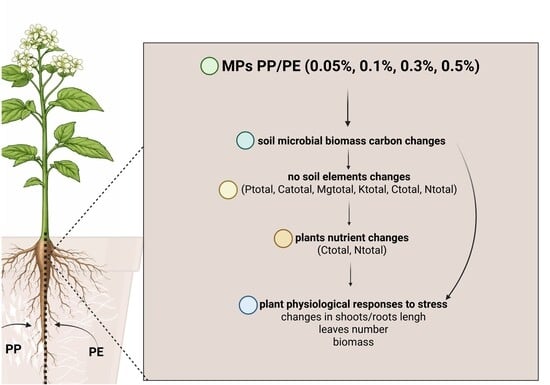
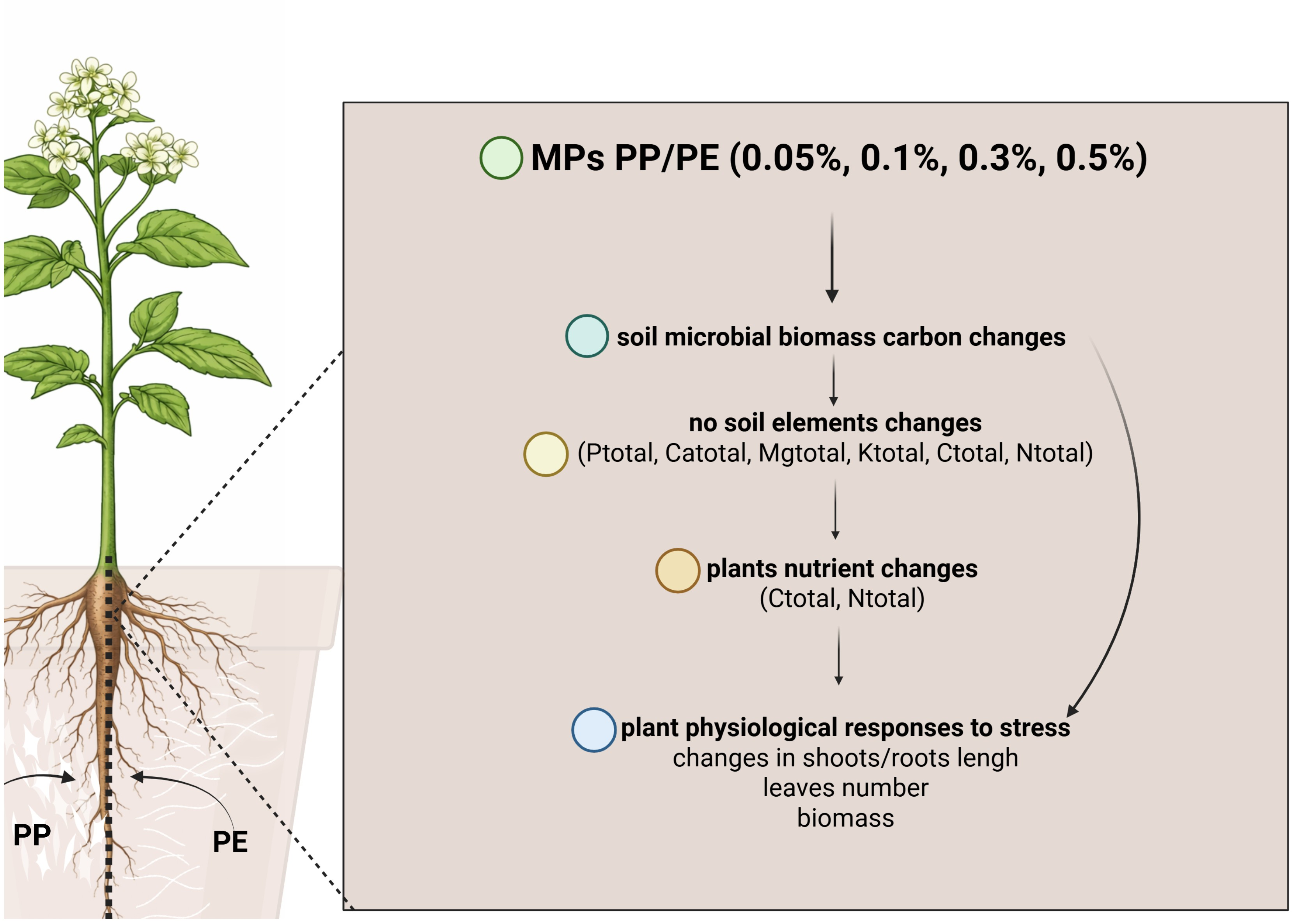
Graphical Abstract

1. Introduction

Microplastic (MP) pollution in agricultural soils has gained significant attention in both scientific and public discourse. In Europe, over 720,000 tons of agricultural plastics are used annually, of which only 24% are recycled. Alarmingly, approximately 34,000 tons are burned in open fields, contaminating around 950,000 hectares of soil [1]. Particular concern surrounds MPs—plastic particles smaller than 5 mm [2,3]—due to their increasing accumulation in terrestrial ecosystems, especially agricultural soils [4]. MPs are categorized as primary (intentionally manufactured small particles) or secondary (formed via fragmentation of larger plastic debris). While primary MPs are less common in farming, secondary MPs are widely present due to the degradation of commonly used plastic materials [5,6]. Their formation is enhanced by environmental stressors such as temperature fluctuations, UV radiation, and mechanical damage [7,8], resulting in long-term persistence and accumulation across soil profiles [9,10].
Plastic mulch films are among the main contributors of secondary MPs in agriculture. These are widely used to conserve moisture, suppress weeds, and enhance yields [11]. More than half of MPs found up to 100 cm deep in soil are attributed to such films [12]. Polyethylene (PE) and polypropylene (PP) are the most frequently detected polymers, largely associated with mulch use [13,14]. Their fragmentation rate depends on film type and thickness [15,16]. MPs also disrupt microbial community structure and may increase the abundance of pathogenic microbes [17].
Similarly, the effects of MPs on plants vary, with some studies showing increased root biomass under certain MPs (e.g., PET and PP), while others reported reduced shoot biomass and species evenness, particularly with expanded polystyrene (EPS) [18]. Additionally, fibers and fragments differ in behavior: fibers may enhance water retention but impede root growth, while fragments more strongly alter microbial composition [19].
Though biodegradable mulch films are considered a more sustainable alternative, their long-term environmental impact and the fate of resulting micro- and nano-particles remain unclear [20].
Given the increasing prevalence of MPs, evaluating the response of resilient crop species is essential. Buckwheat—a pseudo-cereal known for its adaptability to poor soils and cold climates [21]—is a promising candidate. It is valued for animal feed [22], soil improvement [23], and its nutritional and gluten-free properties for human consumption [24,25]. Buckwheat-derived proteins and peptides demonstrate antioxidant and immunomodulatory effects [26], and even its honey exhibits notable bioactivity [27,28]. Recent hydroponic studies suggest that buckwheat shows resilience to low MP concentrations and that mixed MPs do not necessarily lead to additive negative effects [29]. However, studies have been conducted in hydroponic systems, leaving a gap in our understanding of plant and soil responses under real soil conditions.
Despite growing concern about MP contamination in agricultural soils, their effects on soil–plant–microbe interactions remain poorly understood, particularly for crops such as buckwheat (Fagopyrum esculentum). Moreover, most studies focus on primary MPs, while the impacts of secondary MPs derived from agricultural plastics are less explored. Therefore, this study investigates the polymer-specific effects of PE and PP MPs on soil properties, microbial biomass, and buckwheat growth, providing insights into their potential impacts in agricultural systems.

2. Materials and Methods

2.1. MP Characterization

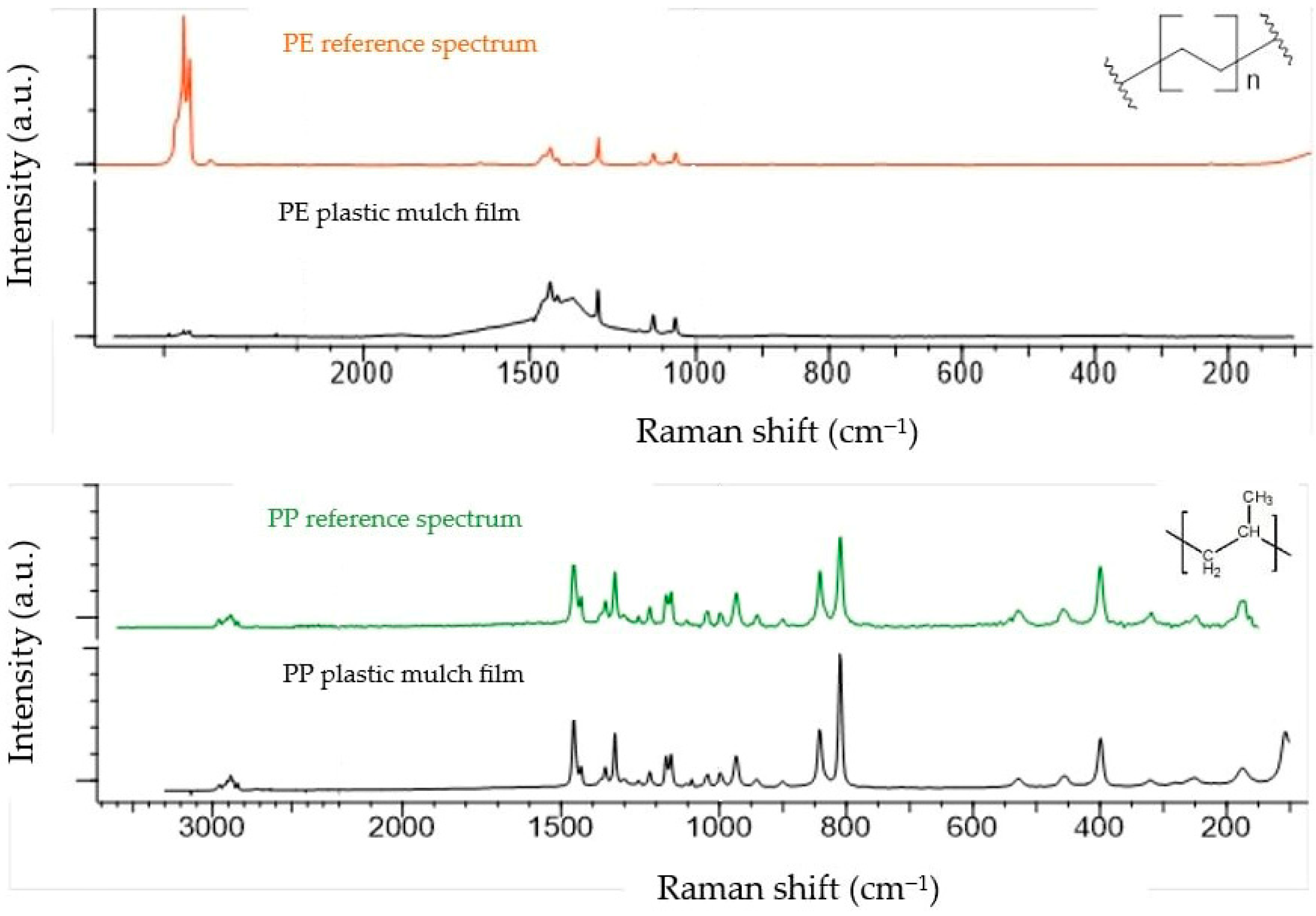
To simulate secondary MP pollution in agricultural soil, two commonly used non-biodegradable, fossil-based plastics were selected: PP agrotextile and PE mulch film. The polymer composition of both materials was confirmed using Raman spectroscopy (RamanStation 400F, PerkinElmer, Waltham, MA, USA) operated at 785 nm with a CCD detector.
The morphology (shape and color) of the MPs was examined under a stereomicroscope ((Nikon AZ100, Nikon Corporation, Tokyo, Japan) [30]. MPs were prepared using the methodology described in a previous study [31]. Briefly, the selected PE plastic mulch was cut with scissors and then sieved through a 4 mm mesh sieve. However, we extracted MPs from PP agrotextile by cutting the material into pieces, mixing with distilled water, blending with a kitchen mixer, and drying in 60 °C. Then, all MPs were exposed in an oven at 101 °C for 24 h.

2.2. Soil Characterization

Soil samples were collected from experimental fields located in Akademija, Kėdainiai District, Lithuania (Lithuanian Research Centre for Agriculture and Forestry; 55°24′ N, 23°52′ E). The soil consists of 53.7% sand, 13.7% clay, and 32.6% silt [32]. Based on available historical land-use and management records, no major or intentional sources of MP inputs have been documented for this area. The soil was classified as Endocalcari—Epihypogleyic Cambisol based on the WRB soil classification system. The pH, total carbon (Ctotal), total nitrogen (Ntotal), total phosphorus (Ptotal), total calcium (Catotal), total magnesium (Mgtotal), and total potassium (Ktotal) of the soil are presented in Table 1.
The soil was dried at 40 °C for 24 h, passed through a <2 mm mesh sieve to remove stones and plant residues, and then thoroughly homogenized. Soil samples for Ctotal and Ntotal analysis were collected near the root zone. In total, 10 mg of soil samples with 3 replications was analyzed using an elemental analyzer (ECS 4010, Costech Analytical Technologies, Valencia, CA, USA). For Ptotal, Catotal, Mgtotal, and Ktotal contents, analysis was conducted according to laboratory protocols. In short, 0.2 g of sample was weighed into Teflon mineralization vessels, and 2 mL of HCl and 10 mL of HNO3 were added, respectively. Covered vessels were left for 15 min and placed in the Microwave Digestion System (MULTIWAVE GO Plus, Anton Paar, Graz, Austria). An automatic sample mineralization system was used at 180 °C, 800 Pa pressure, and 800 W power. Nutrient determination was further conducted with Avio 220 Max ICP–OES (PerkinElmer, Waltham, MA, USA).

2.3. Seed and Pot Preparation

Buckwheat seeds, variety VB NOJAI (Fagopyrum esculentum Moench), were vernalized for 24 h at 4 °C and then surface sterilized using 2% hydrogen peroxide. After thorough rinsing with sterile distilled water, the seeds were transferred to Petri dishes lined with filter paper [33]. Seeds were sown into stainless steel pots, each containing 500 g of homogenized soil mixed with different concentrations of PE or PP MPs, as per Table 2.
The experimental design included nine treatments: four concentrations of PP (0.05%, 0.1%, 0.3%, and 0.5%), four of PE (same concentrations), and a control group (uncontaminated soil). All pots were maintained in a climate-controlled growth chamber under the following conditions: 16 h day at 23 ± 0.5 °C, 8 h night at 18 ± 0.5 °C, and relative humidity of 75 ± 2%. Plants were grown for 50 days, until they reached the flowering stage. This stage is ecologically important, particularly due to its dependence on pollinators for further development [34], and such interactions cannot be replicated in controlled environments. Hence, the experiment was concluded at this stage.

2.4. Contamination Prevention

Several measures were taken to minimize the risk of contaminating samples with secondary MPs that could negatively impact plant growth. For instance, to reduce airborne contamination [35], the experiment was held in a climate chamber. Researchers wore only 100% green cotton coats and avoided synthetic clothing. Additionally, only blue nitrile gloves were used, and all experimental surfaces were thoroughly wiped down before and during the analysis. No fertilizers were used at any stage to avoid any possible secondary contamination from packages.

2.5. Evaluation of Plant and Soil Parameters

At the end of the experimental period, physiological parameters were measured. Shoot and root lengths, as well as total plant height, were measured using a straightedge. The amounts of fresh and dry biomass of shoots and roots were recorded using an electronic balance (precision ± 0.001 g). Following harvest, both buckwheat tissue and corresponding soil samples were analyzed for Ctotal and Ntotal contents. The soil Ptotal, Catotal, Mgtotal, and Ktotal after the experiment were analyzed as mentioned above.

2.6. Determination of Soil Microbial Biomass Carbon

Microbial activity was measured in fresh soil on experimental Days 29, 54, and 79, corresponding to buckwheat sowing, the mid-growth stage (25 days after sowing), and the flowering stage (50 days after sowing), respectively, using the ISO 14240-2:1997 method [36].

2.7. Statistical Analysis

Descriptive statistics (mean, minimum, maximum, and SD) were calculated for all physiological parameters of buckwheat. One-way analysis of variance (ANOVA) was performed to assess significant differences between treatment groups (p = 0.05), followed by Tukey’s Honestly Significant Difference (HSD) post hoc test for pairwise comparisons. Soil element values were analyzed using Dunnett’s test. All statistical analyses and Raman spectrum visualization were conducted using RStudio (version 4.4.2) with Quarto (version 1.5.57), and statistical significance was defined at p < 0.05. The graphical abstract was created using BioRender.com.

3. Results

3.1. Characterization of MPs Before Application

Raman spectroscopy confirmed that the selected samples were composed of PP and PE by comparison with reference Raman spectra obtained from the KnowItAll® spectral library (Wiley Science Solutions). Spectra are showed in Figure 1.
Stereomicroscopy revealed that PP-derived MPs appeared as white fibers, while PE-derived MPs were observed as irregularly shaped film fragments. All MP particles used in the experiment were smaller than 2 mm in size.

3.2. Physiological Changes of Buckwheat

The physiological responses of buckwheat plants to PP and PE treatments at different concentrations are shown in Table 3. Under PP treatment, plant length differed significantly among concentrations (p < 0.05). The highest value was observed at a 0.1% concentration, which was significantly greater (p < 0.05) than the control. The other concentrations (0.05%, 0.3%, and 0.5%) did not differ significantly from either the control or the 0.1 treatment, forming intermediate groups. A similar pattern was found for root length, where plants exposed to a 0.1% concentration exhibited significantly longer roots compared with the control. No significant differences were detected among the other concentrations.
In contrast, leaf number was significantly higher in the control than in all PP-treated groups, indicating a general reduction in leaf production following PP exposure. Likewise, dry biomass was highest in the control group and significantly decreased at the highest concentration. Intermediate concentrations showed moderate biomass values and did not differ significantly from either the control or the highest concentration. In the PE treatment, plant length did not differ significantly among concentrations, as all treatments were assigned the same significance letter (p > 0.05), indicating a lack of measurable effect of PE on shoot elongation. However, root length was significantly affected by PE exposure. The shortest roots were observed at the 0.3% concentration, which was significantly lower than both the control and the other treatment levels.
In both the PP and PE groups, the control treatment resulted in the highest number of leaves compared to the other treatments. A similar trend was observed for dry biomass, where the control also produced the highest values in both groups.

3.3. Dynamics in Nutrients

3.3.1. Soil Analysis

The concentrations of Ctotal, Ntotal, Catotal, Mgtotal, Ktotal, and Ptotal in soil showed only minor variations across PE and PP treatments at different concentrations (Table 4). Overall, the values remained comparable to the control and initial soil, and no significant differences among treatments were observed (p < 0.05).

3.3.2. Buckwheat Analysis

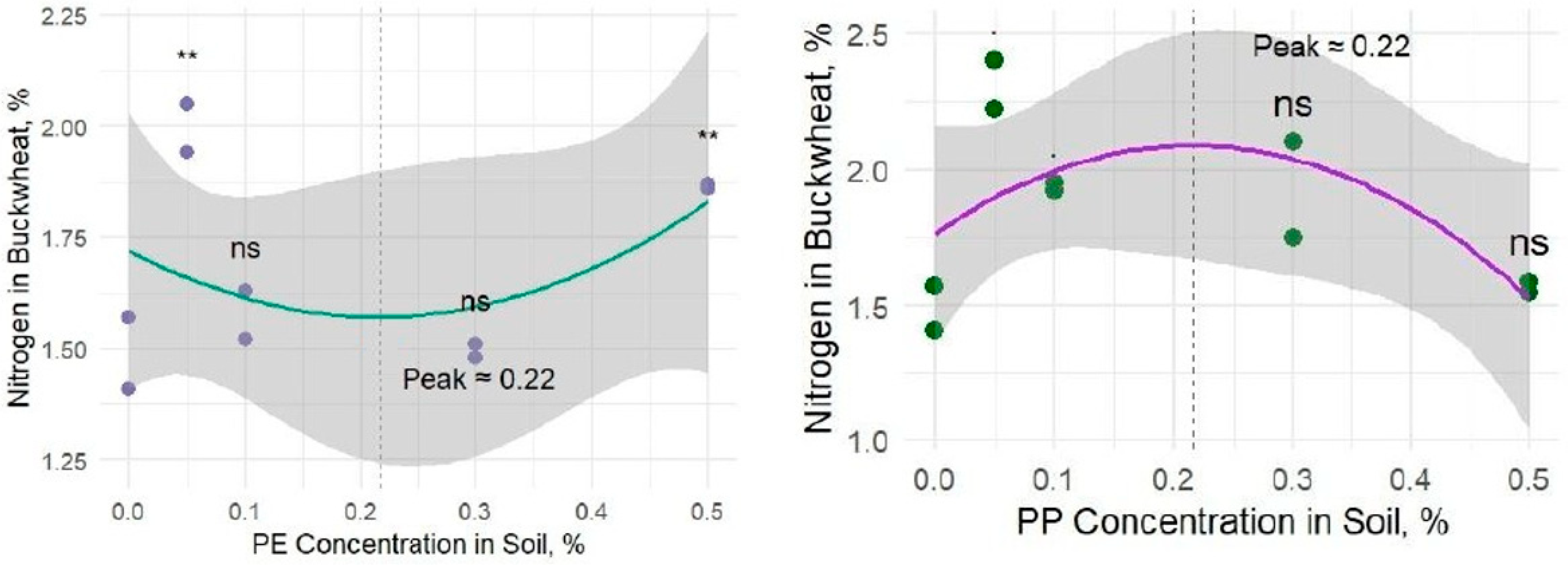
The results shown in Figure 2 indicate that at low PE concentrations (0.05%), the amount of nitrogen in buckwheat increased significantly compared to the control. As the concentration increased to between 0.1% and 0.3%, nitrogen levels dropped, and the differences were no longer statistically significant. Interestingly, at the highest tested level, nitrogen levels rose again and were significantly higher than the control. The PP concentration had no significant effect on Ntotal in buckwheat, as the values did not differ among treatments (p > 0.05).
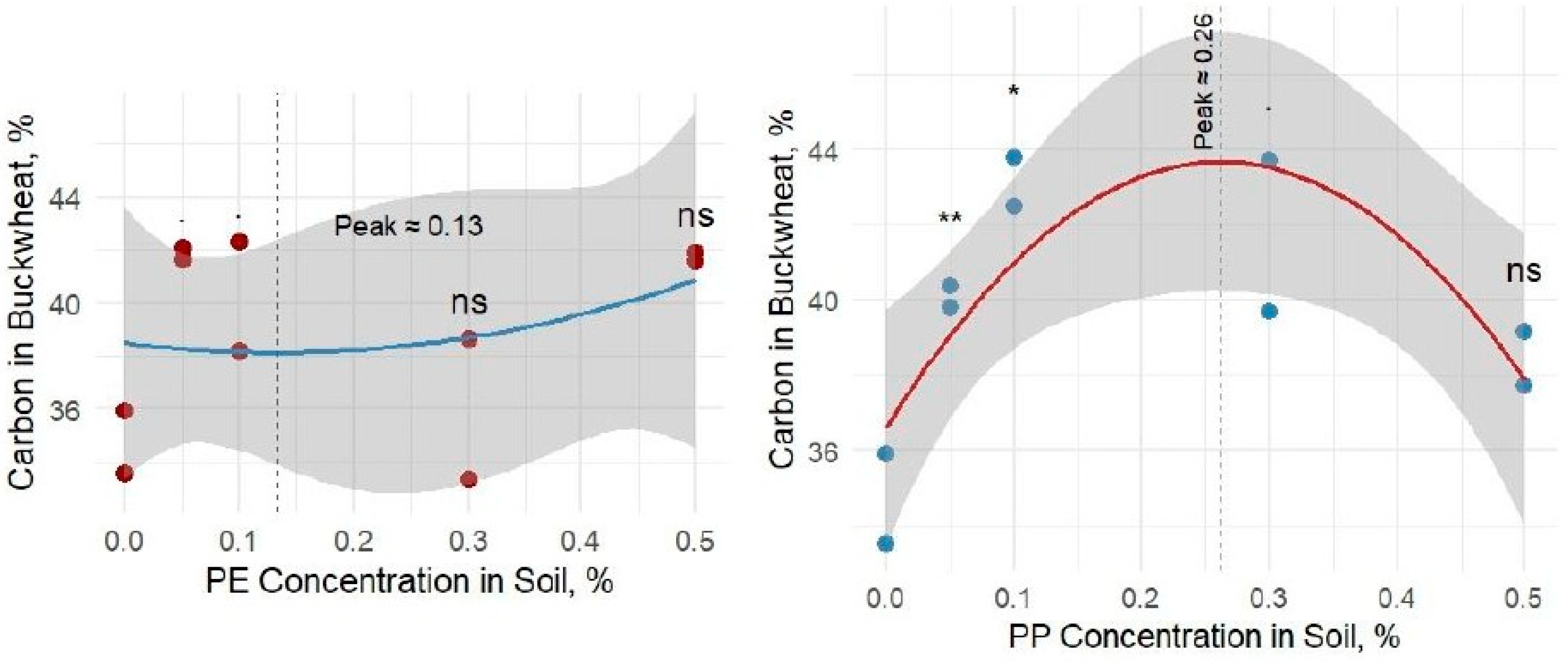
Different concentrations of PE had no significant influence on Ctotal in buckwheat (Figure 3). In contrast, low PP levels enhanced Ctotal in the plants, whereas this effect diminished at higher PP levels when values were compared to control.

3.4. Soil Microbial Biomass Changes

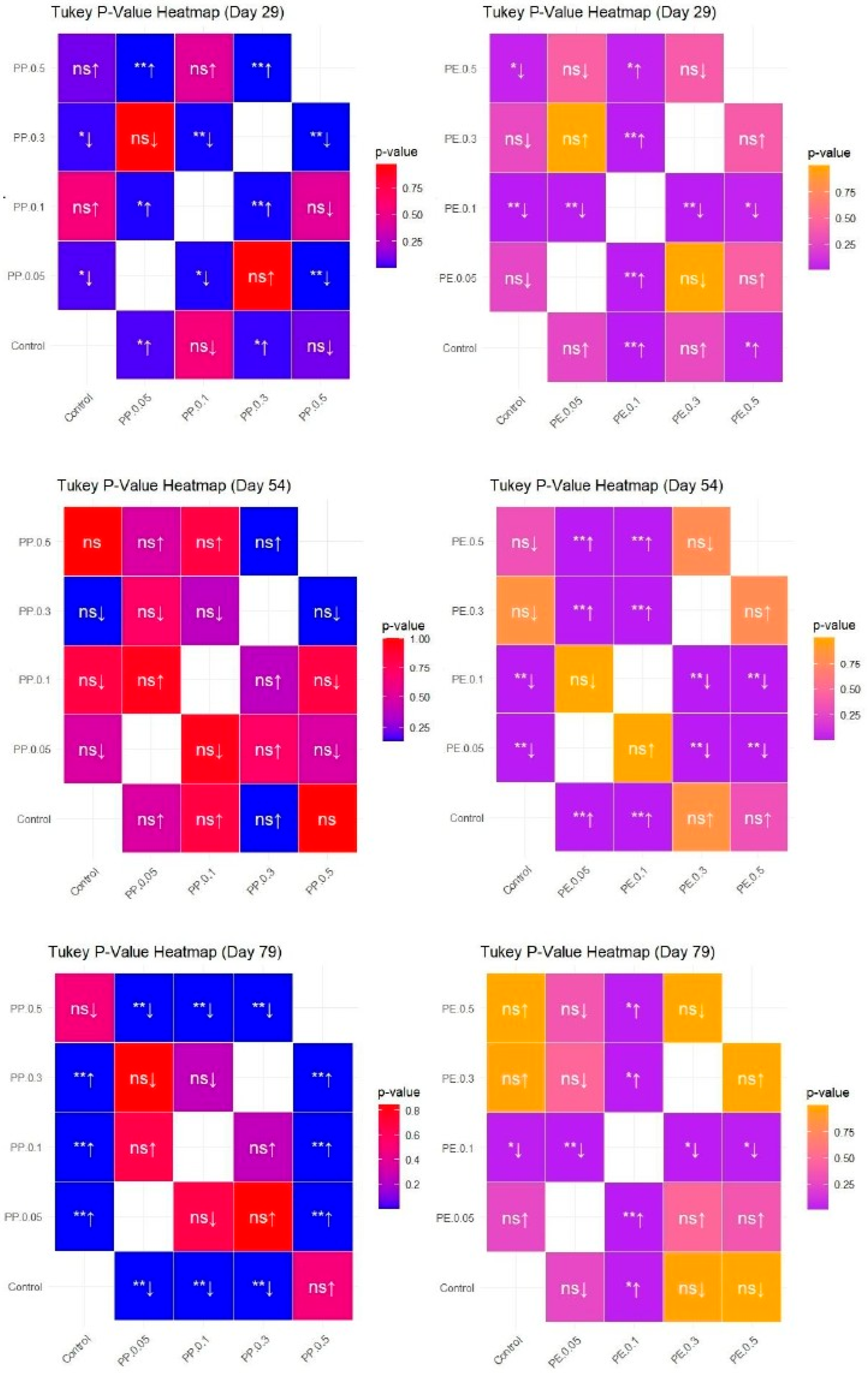
Tukey’s post hoc pairwise comparisons revealed progressive and dose-dependent effects of PE treatments on soil microbial biomass across time points, as visualized in the heatmaps in Figure 4.
On Day 29 (before sowing, when only MP were present in the pots), significant decreases in microbial biomass were observed in the PP groups at the 0.05% and 0.3% concentrations compared to the control. In PE treatments, reductions were detected at the 0.1% and 0.5% concentrations. By Day 54, only the lowest PE concentrations (0.05% and 0.1%) showed significantly lower microbial biomass relative to the control. The strongest divergence in the PP group appeared on Day 79, where nearly all pairwise comparisons within PP treatments were highly significant (p < 0.01), with directional indicators confirming higher microbial biomass in these groups compared to the control. In contrast, the PE treatments on Day 79 were mostly not significantly different from the uncontaminated control soil.

4. Discussion

MP contamination in agricultural soils is increasingly recognized, with estimated concentrations reaching approximately 2914 items kg−1 in European dry agricultural soils [37]. To explore potential exposure scenarios in the future, this study applied relatively high concentrations of two widely used non-biodegradable polymers, PE and PP, and examined their short-term effects on buckwheat growth and soil properties.
Low concentrations of PP (0.1%) stimulated shoot and root elongation, whereas higher doses suppressed leaf number and biomass. In contrast, PE mainly exerted inhibitory effects on root growth and biomass, particularly at 0.1–0.3%. However, growth parameters alone reflect only late-stress outcomes. MPs can trigger early physiological disruptions, including increased MDA and H2O2 levels and enhanced antioxidant enzyme activities (SOD, POD, CAT, and APX), together with reduced chlorophyll content and photosynthetic capacity [38]. Another study also suggests that MP-induced growth inhibition is closely linked to oxidative stress and impaired photosynthesis [39]. Accordingly, future studies incorporating biochemical stress markers and photosynthetic metrics could further clarify the physiological pathways underlying polymer-specific plant responses.
The results of this study indicate that the addition of PE and PP MPs did not significantly alter total soil nutrient concentrations. However, different plastic polymers can influence soil microbial communities in distinct ways due to their contrasting physicochemical properties. PP tends to degrade more readily than PE, producing oxygen-containing functional groups that can influence microbial stress responses and nutrient dynamics, while PE remains more chemically inert [40]. PE MPs have also been reported to suppress key enzymes involved in carbon, nitrogen, and phosphorus cycling, suggesting that different polymers may disrupt microbial metabolism through different pathways [41]. Meta-analytical evidence shows that PE tends to reduce microbial richness, whereas PP increases it, demonstrating polymer-specific impacts on soil microbial community structure [42]. Changes in microbial biomass may also be related to rhizosphere carbon inputs, as root-derived carbon drives microbial activity in soils [43]. Root exudates provide an important source of labile carbon for soil microorganisms, and their composition can change in response to environmental interactions [44]. For example, neighboring plants can significantly modify buckwheat root exudation patterns [45]. Together, these findings suggest that polymer-specific MP effects may occur primarily through indirect interactions involving soil microorganisms and rhizosphere processes, although the underlying mechanisms remain insufficiently understood. Further studies integrating microbial, enzymatic, and molecular approaches are therefore needed to better clarify how MPs affect soil microbial functioning.
Microbial effect changes may indirectly affect plant nutrient uptake through shifts in microbial activity and plant–microbe interactions [46]. In our study, PP had no effect on plant Ntotal but increased Ctotal at low concentrations, possibly indicating a mild stress response, whereas PE induced a U-shaped response pattern in Ntotal, suggesting adaptive or compensatory responses. Such patterns may be linked to MP-driven changes in rhizosphere processes, as MPs can influence nutrient cycling by modifying microbial functional groups involved in nitrogen transformations [47]. However, studies specifically addressing interactions between buckwheat root exudates and MPs remain scarce. Overall, the results highlight that polymer type and concentration determine whether MPs act as stressors or modulators of soil–plant–microbe interactions.

5. Conclusions

This soil-based study examined the effect of secondary MPs derived from plastic mulch films on soil chemical characteristics, microbial biomass carbon, and selected physiological parameters of buckwheat. The results indicate that plant physiological responses, as well as Ctotal and Ntotal contents, varied across MP treatments; however, not all observed differences were statistically significant, and several responses remained within the range of experimental variability.
Soil microbial biomass carbon responded differently to PE and PP MPs, suggesting that polymer type may influence soil biological processes. In contrast, short-term exposure to MPs did not result in statistically significant changes in soil nutrient composition, indicating the relative stability of major nutrient pools under the conditions tested.
This study highlights the need to investigate plants responses to MPs as stressors under conditions that closely reflect natural environments, with special attention to preventing secondary MP contamination during experiments. We recommend additional research to better understand how buckwheat responds to different types of plastic debris in soil and to assess its potential as a cover crop for mitigating MP pollution in natural soil conditions over the whole cultivation period of buckwheat and also recommend that future research evaluate outcomes through a long-term trial to assess durability.

Author Contributions

Conceptualization, S.D.; methodology, S.D., M.O.D., K.B. and M.V.; software, S.D.; validation, S.D., M.O.D., K.B. and M.V.; formal analysis, S.D.; investigation, S.D.; resources, S.D. and K.B.; data curation, S.D., M.O.D., K.B. and M.V.; writing—original draft preparation, S.D.; writing—review and editing, S.D., M.O.D., K.B. and M.V.; visualization, S.D.; supervision, K.B. and M.V. All authors have read and agreed to the published version of the manuscript.

Funding

This research received no external funding.

Data Availability Statement

The original contributions presented in the study are included in the article; further inquiries can be directed to the corresponding author.

Conflicts of Interest

The authors declare no conflicts of interest.

References

  1. European Bioplastics. How Does the Market for Agricultural Plastics and Certified Soil Biodegradable Mulch Film Currently Look Like? Available online: https://www.european-bioplastics.org/faq-items/how-does-the-market-for-agricultural-plastics-and-certified-soil-biodegradable-mulch-film-currently-look-like/ (accessed on 5 January 2026).
  2. National Marine Debris Program. Microplastics. Available online: https://marinedebris.noaa.gov/what-marine-debris/microplastics (accessed on 5 December 2025).
  3. Betts, K. Why small plastic particles may pose a big problem in the oceans. Environ. Sci. Technol. 2008, 42, 8995. [Google Scholar] [CrossRef]
  4. Meizoso-Regueira, T.; Fuentes, J.; Cusworth, S.J.; Rillig, M.C. Prediction of future microplastic accumulation in agricultural soils. Environ. Pollut. 2024, 359, 124587. [Google Scholar] [CrossRef] [PubMed]
  5. Cole, M.; Lindeque, P.; Halsband, C.; Galloway, T.S. Microplastics as contaminants in the marine environment: A review. Mar. Pollut. Bull. 2011, 62, 2588–2597. [Google Scholar] [CrossRef] [PubMed]
  6. Ryan, P.G.; Moore, C.J.; van Franeker, J.A.; Moloney, C.L. Monitoring the abundance of plastic debris in the marine environment. Philos. Trans. R. Soc. B Biol. Sci. 2009, 364, 1999–2012. [Google Scholar] [CrossRef] [PubMed]
  7. Ainali, N.M.; Bikiaris, D.N.; Lambropoulou, D.A. Aging effects on low- and high-density polyethylene, polypropylene and polystyrene under UV irradiation: An insight into decomposition mechanism by Py-GC/MS for microplastic analysis. J. Anal. Appl. Pyrolysis 2021, 158, 105207. [Google Scholar] [CrossRef]
  8. Cheng, Y.-L.; Zhang, R.; Tisinger, L.; Cali, S.; Yu, Z.; Chen, H.Y.; Li, A. Characterization of microplastics in sediment using stereomicroscopy and laser direct infrared (LDIR) spectroscopy. Gondwana Res. 2022, 108, 22–30. [Google Scholar] [CrossRef]
  9. Kim, S.W.; Liang, Y.; Zhao, T.; Rillig, M.C. Indirect effects of microplastic-contaminated soils on adjacent soil layers: Vertical changes in soil physical structure and water flow. Front. Environ. Sci. 2021, 9, 681934. [Google Scholar] [CrossRef]
  10. Wang, X.; Xing, Y.; Lv, M.; Zhang, T.; Ya, H.; Jiang, B. Recent advances on the effects of microplastics on element cycling in the environment. Sci. Total Environ. 2022, 849, 157884. [Google Scholar] [CrossRef]
  11. Yu, Y.-Y.; Turner, N.C.; Gong, Y.-H.; Li, F.-M.; Fang, C.; Ge, L.-J.; Ye, J.-S. Benefits and limitations to straw- and plastic-film mulch on maize yield and water use efficiency: A meta-analysis across hydrothermal gradients. Eur. J. Agron. 2018, 99, 138–147. [Google Scholar] [CrossRef]
  12. Li, S.; Ding, F.; Flury, M.; Wang, Z.; Xu, L.; Li, S.; Jones, D.L.; Wang, J. Macro- and microplastic accumulation in soil after 32 years of plastic film mulching. Environ. Pollut. 2022, 300, 118945. [Google Scholar] [CrossRef]
  13. Piehl, S.; Leibner, A.; Löder, M.G.J.; Laforsch, C.; Bogner, C. Identification and quantification of macro- and microplastics on an agricultural farmland. Sci. Rep. 2018, 8, 17950. [Google Scholar] [CrossRef]
  14. Qi, R.; Tang, Y.; Jones, D.L.; He, W.; Yan, C. Occurrence and characteristics of microplastics in soils from greenhouse and open-field cultivation using plastic mulch film. Sci. Total Environ. 2023, 905, 166935. [Google Scholar] [CrossRef]
  15. Briassoulis, D.; Babou, E.; Hiskakis, M.; Scarascia, G.; Picuno, P.; Guarde, D.; Dejean, C. Review, mapping and analysis of the agricultural plastic waste generation and consolidation in Europe. Waste Manag. Res. 2013, 31, 1262–1278. [Google Scholar] [CrossRef] [PubMed]
  16. Uzamurera, A.G.; Wang, P.-Y.; Zhao, Z.-Y.; Tao, X.-P.; Zhou, R.; Wang, W.-Y.; Xiong, X.-B.; Wang, S.; Wesly, K.; Tao, H.-Y.; et al. Thickness-dependent release of microplastics and phthalic acid esters from polythene and biodegradable residual films in agricultural soils and its related productivity effects. J. Hazard. Mater. 2023, 448, 130897. [Google Scholar] [CrossRef]
  17. Dong, Y.; Gao, M.; Qiu, W.; Song, Z. Effect of microplastics and arsenic on nutrients and microorganisms in rice rhizosphere soil. Ecotoxicol. Environ. Saf. 2021, 211, 111899. [Google Scholar] [CrossRef]
  18. Huang, Y.; Zhao, Y.; Wang, J.; Zhang, M.; Jia, W.; Qin, X. LDPE microplastic films alter microbial community composition and enzymatic activities in soil. Environ. Pollut. 2019, 254, 112983. [Google Scholar] [CrossRef]
  19. Zhang, X.M.; Cao, X.-X.; He, L.-X.; Xue, W.; Gao, J.-Q.; Lei, N.-F.; Chen, J.-S.; Yu, F.-H.; Li, M.-H. Soil heterogeneity in the horizontal distribution of microplastics influences productivity and species composition of plant communities. Front. Plant Sci. 2022, 13, 1075007. [Google Scholar] [CrossRef] [PubMed]
  20. Machado, A.A.D.S.; Lau, C.W.; Till, J.; Kloas, W.; Lehmann, A.; Becker, R.; Rillig, M.C. Impacts of microplastics on the soil biophysical environment. Environ. Sci. Technol. 2018, 52, 9656–9665. [Google Scholar] [CrossRef] [PubMed]
  21. Germ, M.; Gaberščik, A. The effect of environmental factors on buckwheat. In Molecular Breeding and Nutritional Aspects of Buckwheat; Zhou, M., Kreft, I., Woo, S.-H., Chrungoo, N., Wieslander, G., Eds.; Academic Press: London, UK, 2016; pp. 273–281. [Google Scholar] [CrossRef]
  22. Leiber, F. Buckwheat in the nutrition of livestock and poultry. In Molecular Breeding and Nutritional Aspects of Buckwheat; Zhou, M., Kreft, I., Woo, S.-H., Chrungoo, N., Wieslander, G., Eds.; Academic Press: London, UK, 2016; pp. 229–238. [Google Scholar] [CrossRef]
  23. Boglaienko, D.; Soti, P.; Shetty, K.G.; Jayachandran, K. Buckwheat as a cover crop in Florida: Mycorrhizal status and soil analysis. Agroecol. Sustain. Food Syst. 2014, 38, 1033–1046. [Google Scholar] [CrossRef]
  24. Valido, E.; Stoyanov, J.; Gorreja, F.; Stojic, S.; Niehot, C.; Jong, J.K.-D.; Llanaj, E.; Muka, T.; Glisic, M. Systematic review of human and animal evidence on the role of buckwheat consumption on gastrointestinal health. Nutrients 2023, 15, 1. [Google Scholar] [CrossRef]
  25. Awasthi, R.; Yadav, K.K. Buck wheat (Fagopyrum esculentum): A gluten free product. Indian J. Nutr. 2015, 2, 110. [Google Scholar]
  26. Zhu, F. Buckwheat proteins and peptides: Biological functions and food applications. Trends Food Sci. Technol. 2021, 110, 155–167. [Google Scholar] [CrossRef]
  27. Ongalbek, D.; Tokul-Ölmez, Ö.; Şahin, B.; Küçükaydın, S.; Aydoğmuş-Öztürk, F.; Sıcak, Y.; Yeskaliyeva, B.; Öztürk, M. Classification of buckwheat honey produced in Kazakhstan according to their biochemical ingredients and bioactivities by chemometric approach. Food Chem. 2024, 451, 139409. [Google Scholar] [CrossRef]
  28. Deng, J.; Liu, R.; Lu, Q.; Hao, P.; Xu, A.; Zhang, J.; Tan, J. Biochemical properties, antibacterial and cellular antioxidant activities of buckwheat honey in comparison to manuka honey. Food Chem. 2018, 252, 243–249. [Google Scholar] [CrossRef]
  29. Tian, X.; Weixie, L.; Wang, S.; Zhang, Y.; Xiang, Q.; Yu, X.; Zhao, K.; Zhang, L.; Penttinen, P.; Gu, Y. Effect of polylactic acid microplastics and lead on the growth and physiological characteristics of buckwheat. Chemosphere 2023, 337, 139356. [Google Scholar] [CrossRef]
  30. Dris, R.; Imhof, H.K.; Löder, M.G.J.; Gasperi, J.; Laforsch, C.; Tassin, B. Microplastic contamination in freshwater systems: Methodological challenges, occurrence and sources. In Microplastic Contamination in Aquatic Environments; Zeng, E.Y., Ed.; Elsevier: Amsterdam, The Netherlands, 2018; pp. 51–93. [Google Scholar] [CrossRef]
  31. Zhao, T.; Lozano, Y.M.; Rillig, M.C. Microplastics increase soil pH and decrease microbial activities as a function of microplastic shape, polymer type, and exposure time. Front. Environ. Sci. 2021, 9, 675803. [Google Scholar] [CrossRef]
  32. Feiza, V.; Feizienė, D.; Sinkevičienė, A.; Bogužas, V.; Putramentaitė, A.; Lazauskas, S.; Deveikytė, I.; Seibutis, V.; Steponavičienė, V.; Pranaitienė, S. Soil water capacity, pore-size distribution and CO2 e-flux in different soils after long-term no-till management. Zemdirbyste-Agriculture 2015, 102, 3–14. [Google Scholar] [CrossRef]
  33. Zhang, Y.; Zhang, D.; Zhang, Z. A critical review on artificial intelligence-based microplastics imaging technology: Recent advances, hot-spots and challenges. Int. J. Environ. Res. Public Health 2023, 20, 1150. [Google Scholar] [CrossRef]
  34. Liu, R.; Chen, D.; Luo, S.; Xu, S.; Xu, H.; Shi, X.; Zou, Y. Quantifying pollination efficiency of flower-visiting insects and its application in estimating pollination services for common buckwheat. Agric. Ecosyst. Environ. 2020, 301, 107011. [Google Scholar] [CrossRef]
  35. Zhao, X.; Zhou, Y.; Liang, C.; Song, J.; Yu, S.; Liao, G.; Zou, P.; Tang, K.H.D.; Wu, C. Airborne microplastics: Occurrence, sources, fate, risks and mitigation. Sci. Total Environ. 2023, 858, 159943. [Google Scholar] [CrossRef] [PubMed]
  36. ISO 14240-2:1997; Soil Quality—Determination of Soil Microbial Biomass—Part 2: Fumigation-Extraction Method. International Organization for Standardization: Geneva, Switzerland, 1997.
  37. Büks, F.; van Schaik, N.L.; Kaupenjohann, M. What do we know about how the terrestrial multicellular soil fauna reacts to microplastic? SOIL 2020, 6, 245–267. [Google Scholar] [CrossRef]
  38. Sevgi, K.; Sevgi, B.; Leblebici, S. Unveiling the effects of polypropylene microplastics (PP-MPs) on growth attributes and antioxidant defense system in wheat (Triticum aestivum L.). Water Air Soil Pollut. 2026, 237, 625. [Google Scholar] [CrossRef]
  39. Zhang, Y.; Tian, X.; Huang, P.; Yu, X.; Xiang, Q.; Zhang, L.; Gao, X.; Chen, Q.; Gu, Y. Biochemical and transcriptomic responses of buckwheat to polyethylene microplastics. Sci. Total Environ. 2023, 899, 165587. [Google Scholar] [CrossRef] [PubMed]
  40. Dindar, E. Impact of microplastic contamination on phosphorus availability, alkaline phosphatase activity, and polymer degradation in soil. Polymers 2025, 17, 1586. [Google Scholar] [CrossRef] [PubMed]
  41. Su, J.; Zhu, Y.; Chen, X.; Lu, X.; Yan, J.; Yan, L.; Zou, W. Biochar influences polyethylene microplastic-contaminated soil properties and enzyme activities. Agronomy 2024, 14, 2919. [Google Scholar] [CrossRef]
  42. Li, J.; Song, Y.; Cai, Y. Focus topics on microplastics in soil: Analytical methods, occurrence, transport, and ecological risks. Environ. Pollut. 2020, 257, 113570. [Google Scholar] [CrossRef]
  43. Lei, X.; Shen, Y.; Zhao, J.; Huang, J.; Wang, H.; Yu, Y.; Xiao, C. Root exudates mediate the processes of soil organic carbon. Plants 2023, 12, 630. [Google Scholar] [CrossRef]
  44. Sasse, J.; Martinoia, E.; Northen, T. Feed your friends: Do plant exudates shape the root microbiome? Trends Plant Sci. 2018, 23, 25–41. [Google Scholar] [CrossRef]
  45. Eroğlu, Ç.G.; Bennett, A.A.; Steininger-Mairinger, T.; Hann, S.; Puschenreiter, M.; Wirth, J.; Gfeller, A. Neighbour-induced changes in root exudation patterns of buckwheat results in altered root architecture of redroot pigweed. Sci. Rep. 2024, 14, 58687. [Google Scholar] [CrossRef]
  46. Uwamungu, J.Y.; Hou, Q.; Long, M.; Wang, Z.; Rillig, M.C.; Liao, Y. Soil microbial community parameters affected by microplastics and other plastic residues. Front. Microbiol. 2023, 14, 1258606. [Google Scholar] [CrossRef]
  47. Xu, Z.; Wu, X.; Lin, Z.; Fang, X.; Sun, W.; Zhang, S.; Pramono, H.; Xiao, S.; Wang, Y.; Wang, L.; et al. Plastic particles driving cadmium mobility and nitrous oxide emissions: Revealing microbial Fe–N interactions in wetlands. J. Hazard. Mater. 2025, 500, 140524. [Google Scholar] [CrossRef] [PubMed]
Figure 1. Raman spectroscopy results of the selected plastic mulch films.
Agronomy 16 00611 g001
Figure 2. Ntotal content in buckwheat grown in soil with increasing concentrations of PE and PP. Purple/green dots represent individual measured values. The dashed line indicates the estimated peak concentration. The green/purple curve illustrates the fitted quadratic regression, with the shaded gray area indicating the 95% confidence interval. Statistical differences from the control group (0% PE) were evaluated using Dunnett’s test. Significance levels: ** = p < 0.01, and ns = not significant.
Agronomy 16 00611 g002
Figure 3. Ctotal in buckwheat under varying PE and PP concentrations. Blue/red dots represent actual measured values. The dashed line indicates the predicted peak concentration. The blue/red curve shows the fitted quadratic regression model, with the gray area indicating the 95% confidence interval. Statistical differences from the control (0%) were assessed using Dunnett’s test. Significance levels: ** = p < 0.01, * = p < 0.05, and ns = not significant.
Agronomy 16 00611 g003
Figure 4. Soil microbial biomass changes in soil with PP and PE. Heatmaps represent sampling dates (29, 54, and 79 days of experiment). Analysis was performed using one-way ANOVA, followed by Tukey HSD (p < 0.05). Significance levels: ** = p < 0.01, * = p < 0.05, and ns = not significant. Arrows indicate increase (↑) or a decrease (↓) according to compared groups’ microbial biomass.
Agronomy 16 00611 g004
Table 1. Soil characteristics. Values represent means ± standard deviations (SDs) (n = 3).
Physicochemical ParametersValue ± SD
pH5.86 ± 0.13
Ctotal, %2.54 ± 0.05
Ntotal, %0.26 ± 0.01
Ptotal, %0.09 ± 0.01
Catotal, %1.33 ± 0.15
Mgtotal, %0.94 ± 0.1
Ktotal, %0.75 ± 0.09
Table 2. Experiment scheme: concentration of selected plastics and number of replications. Concentration is expressed as % w/w of soil mass.
CtrlPPPE
Concentration, %00.050.10.30.50.050.10.30.5
Replications, units444444444
Table 3. Summary of the effects of PP and PE treatments at different concentrations on the physiological characteristics of buckwheat plants, including plant length, root length, number of leaves, and dry biomass. Data are presented as the mean ± SD, and statistical differences were evaluated using one-way ANOVA followed by Tukey’s HSD test (p < 0.05). Different letters (a–c) within the same row indicate statistically significant differences between treatments.
PP
TraitCo0.050.10.30.5
Plant Length, cm17.39 ± 4.69 a18.53 ± 2.47 ab20.57 ± 3.26 b18.84 ± 3.29 ab17.85 ± 2.96 ab
Root Length, cm2.68 ± 1.16 a2.83 ± 0.96 ab3.78 ± 1.02 b3.50 ± 1.24 ab2.71 ± 1.01 a
Number of Leaves, units5.58 ± 1.26 b4.20 ± 1.11 a4.05 ± 1.28 a4.55 ± 0.83 a3.95 ± 1.00 a
Dry Biomass, mg9.84 ± 4.61 b6.65 ± 3.23 a7.10 ± 3.23 ab7.40 ± 2.60 ab5.31 ± 1.39 a
PE
TraitCo0.050.10.30.5
Plant Length, cm17.57 ± 4.63 a20.24 ± 4.17 a17.20 ± 2.72 a17.39 ± 2.95 a20.12 ± 2.75 a
Root Length, cm 2.68 ± 1.13 b2.34 ± 0.82 ab2.63 ± 1.24 b1.46 ± 1.17 a2.47 ± 1.23 b
Number of Leaves, units5.60 ± 1.23 c4.15 ± 1.04 ab3.60 ± 0.90 a4.15 ± 0.75 ab4.90 ± 0.91 b
Dry Biomass, mg9.80 ± 4.49 c7.95 ± 2.24 cb4.55 ± 1.78 a6.05 ± 1.67 ab6.60 ± 3.38 ab
Abbreviations: Co, control treatment; PE, polyethylene; PP, polypropylene.
Table 4. Effect of PP and PE treatments at different concentrations on the soil elements. Data are presented as the mean ± SD. There are no statistically significant differences between treatments at p < 0.05 (one-way ANOVA, Tukey’s HSD test).
CtotalNtotalCatotalMgtotalKtotalPtotal
Initial soil2.54 ± 0.050.26 ± 0.011.33 ± 0.150.94 ± 0.10.75 ± 0.090.09 ± 0.01
Co2.53 ± 0.05 0.28 ± 0.28 1.32 ± 0.002 0.93 ± 0.01 0.70 ± 0.03 0.09 ± 0.0001
PE0.052.51 ± 0.27 0.30 ± 0.04 1.32 ± 0.05 0.95 ± 0.10 0.78 ± 0.0004 0.10 ± 0.002
0.12.58 ± 0.07 0.27 ± 0.005 1.39 ± 0.36 0.96 ± 0.01 0.75 ± 0.02 0.09 ± 0.0001
0.32.56 ± 0.21 0.26 ± 0.01 1.38 ± 0.02 0.92 ± 0.05 0.76 ± 0.01 0.09 ± 0.003
0.52.56 ± 0.02 0.27 ± 0.005 1.35 ± 0.06 0.91 ± 0.01 0.78 ± 0.04 0.09 ± 0.003
PP0.052.50 ± 0.08 0.26 ± 0.005 1.37 ± 0.1 0.90 ± 0.14 0.79 ± 0.16 0.09 ± 0.02
0.12.55 ± 0.01 0.32 ± 0.04 1.35 ± 0.56 0.96 ± 0.25 0.74 ± 0.15 0.08 ± 0.02
0.32.54 ± 0.18 0.27 ± 0.005 1.36 ± 0.24 0.97 ± 0.010.71 ± 0.002 0.09 ± 0.0005
0.52.57 ± 0.04 0.26 ± 0.005 1.31 ± 0.39 0.94 ± 0.10.71 ± 0.08 0.09 ± 0.004
Abbreviations: Co, control treatment; PE, polyethylene; PP, polypropylene.
Disclaimer/Publisher’s Note: The statements, opinions and data contained in all publications are solely those of the individual author(s) and contributor(s) and not of MDPI and/or the editor(s). MDPI and/or the editor(s) disclaim responsibility for any injury to people or property resulting from any ideas, methods, instructions or products referred to in the content.