1. Introduction
Wheat, as the third most important staple crop in China, plays a strategically vital role in national food security, agricultural production, and macroeconomic stability. The Huang–Huai–Hai (HHH) region serves as a core grain-producing area and a major commercial wheat base [
1]. Although overall wheat production in China has remained relatively stable in recent years, strong-gluten wheat continues to face a persistent supply shortfall. This deficit primarily stems from insufficient investment in science and technology and its comparatively lower economic returns relative to medium-gluten varieties. It is widely recognized that different wheat cultivars exhibit distinct physiological and agronomic responses to variations in sowing date and seeding rate. However, studies specifically focusing on strong-gluten wheat remain scarce. Moreover, given the pronounced spatial heterogeneity in climate conditions and cropping systems across regions, region-specific cultivation strategies—particularly optimized combinations of sowing date and seeding rate—are still inadequately developed. Therefore, increasing strong-gluten wheat production is strategically important. This can be achieved by expanding planting area, adopting tailored agronomic practices, improving resource-use efficiency, reducing import dependence, and supporting rural revitalization.
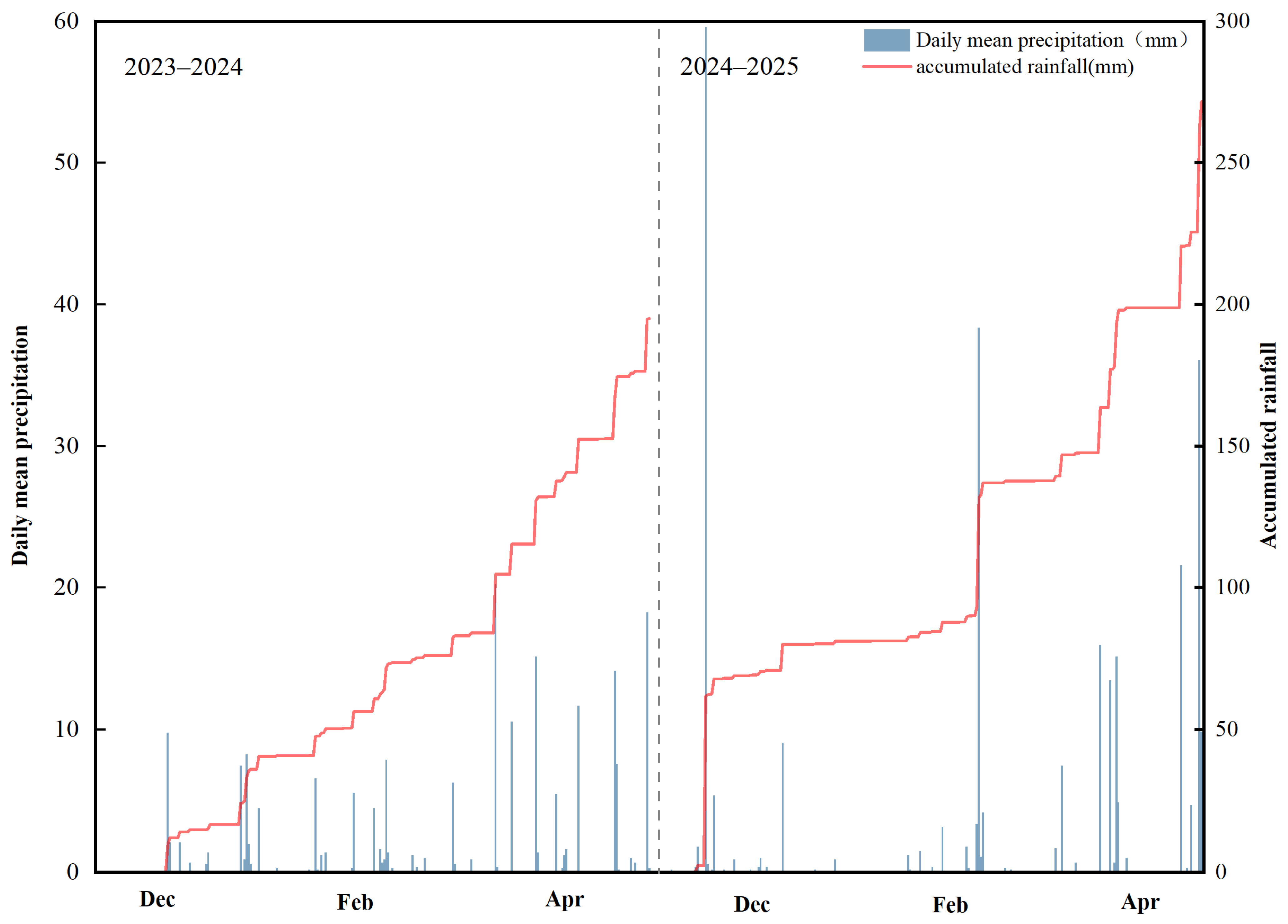
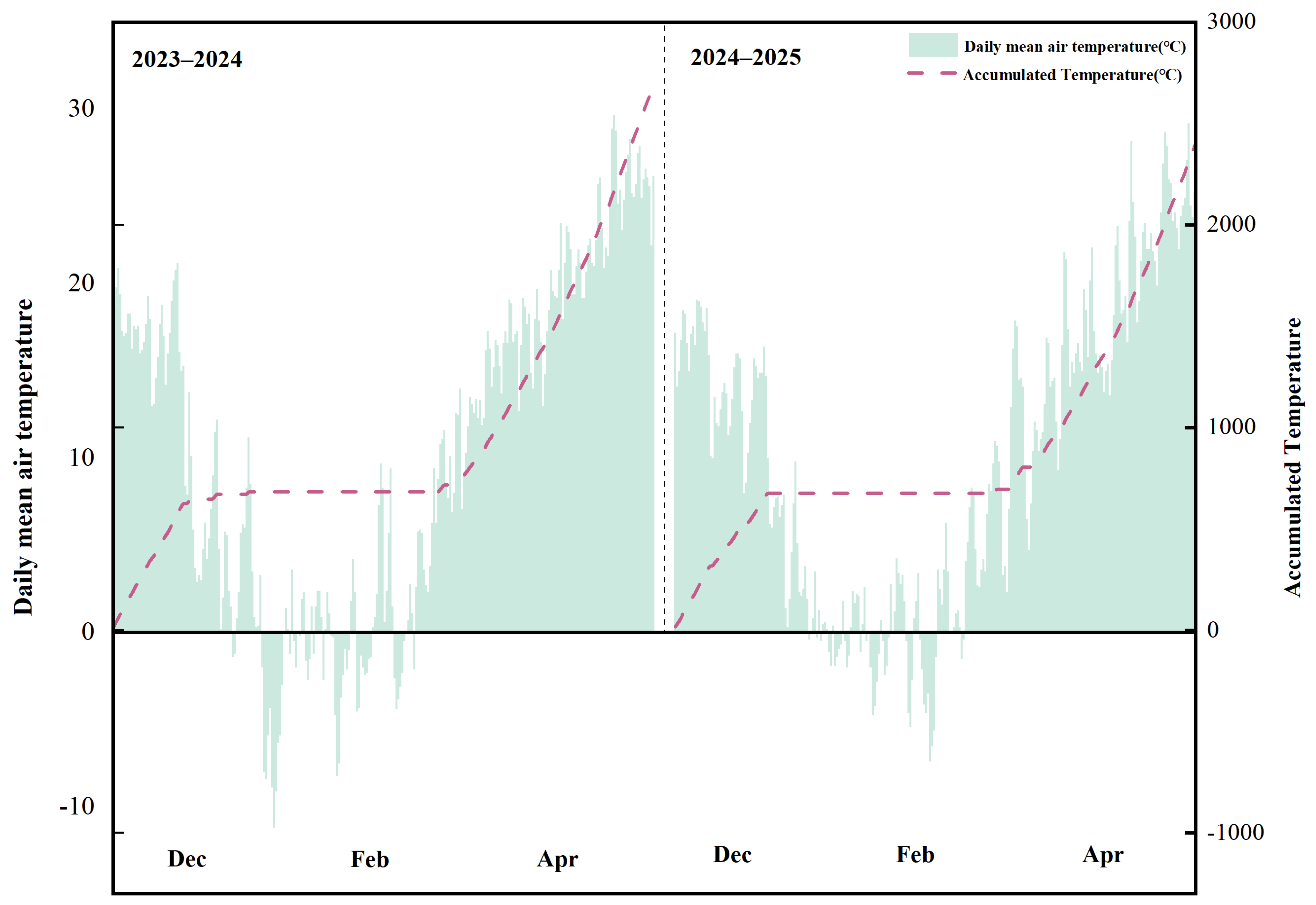
In recent years, climate change—driven primarily by global warming, altered precipitation patterns, and an increasing frequency of extreme climatic events—has significantly impaired global wheat production. These changes have undermined yield stability and amplified interannual yield variability across major wheat-growing regions [
2,
3]. Empirical evidence indicates that rising temperatures have already suppressed yield growth in most parts of the world [
4], with projections suggesting a potential yield reduction of approximately 6% for every 1 °C increase in mean temperature [
5]. In China’s HHH region—a key winter wheat production zone—future warming is expected to improve thermal conditions during the pre-winter period. While this may promote early vegetative growth, it also increases the risk of excessive biomass accumulation and subsequent frost damage. Furthermore, accelerated thermal time accumulation throughout the growing season is likely to hasten crop development, thereby shortening critical phenological phases such as stem elongation and grain filling [
6]. This compression of the growth cycle constrains dry matter accumulation and ultimately reduces grain yield [
7,
8]. Without enough GDD, the plant does not emit autumn tillers. The increase in sowing density (M2, M3) is an attempt to replace the dependence on lateral tillers with the exclusive dependence on main stems. Concurrently, seasonal rainfall during the winter wheat growing period in this region is typically insufficient to meet crop water demands under rainfed conditions. Previous studies have shown that delayed sowing can better synchronize crop water requirements with available precipitation, thereby improving yield [
9]. However, recent autumns have been characterized by more frequent, intense, and prolonged rainfall events [
10], which often delay field operations and compromise seedling establishment. Given these compounding challenges, optimizing agronomic practices—particularly sowing date and seeding rate—is crucial for enhancing the resilience of winter wheat production in the HHH region and safeguarding long-term food security under ongoing climate change.
Wheat yield is determined not only by genetic and climatic factors but also strongly influenced by agronomic management practices implemented in real-world production systems [
11,
12]. Among these, sowing date and seeding rate are two of the most critical agronomic variables governing yield formation [
13]. Under the constraint of maintaining current levels of fertilizer and irrigation inputs, optimizing these two factors offers a highly effective strategy to regulate crop phenology, establish high-yielding populations, enhance the efficient utilization of light, thermal, and water resources, and foster synergistic interactions among yield components—thereby increasing grain yield in alignment with green and sustainable agricultural principles [
14,
15]. Empirical evidence shows that timely sowing enables wheat to capitalize on favorable pre-winter conditions, facilitating robust seedling establishment and maximizing solar radiation interception. When sown early—but still within the locally recommended window—it can extend the grain-filling duration, thereby increasing kernel weight and overall yield potential. Moreover, appropriate sowing timing ensures that key developmental stages coincide with periods of optimal regional light and temperature availability, prolongs the tillering phase before winter dormancy, and enhances photosynthetic efficiency and dry matter accumulation [
16,
17]. In contrast, delayed sowing shifts the reproductive phase into warmer periods, exposing the crop to high temperatures during grain filling. This accelerates senescence, shortens the grain-filling period, and ultimately results in poorly filled grains and reduced thousand-kernel weight [
18,
19]. Similarly, an optimal seeding rate plays a pivotal role in shaping canopy architecture and population dynamics. It modulates the temporal trajectory of the leaf area index (LAI), improves light penetration within the canopy, and balances competition between individual plant vigor and population density, thereby promoting efficient translocation of assimilates to developing grains [
20]. Furthermore, an appropriate plant density can prolong the effective growth period, enhance photosynthetic product synthesis and accumulation, and harmonize the three primary yield components—spikes per unit area, grains per spike, and thousand-kernel weight—laying the physiological foundation for super-high yields [
9,
21,
22]. Critically, sowing date and seeding rate do not act independently; their effects are highly interactive. Identifying the optimal combination of these two factors is therefore essential for constructing an ideal canopy and population structure, maximizing both the accumulation and remobilization of assimilates, and ultimately achieving high and stable wheat yields [
23,
24].
In previous studies, the seeding rate has typically been maintained constant as a core controlled variable throughout the experimental period and has not been adjusted in response to shifts in sowing date. Although this approach simplifies data interpretation and enhances experimental control, it often fails to reflect the adaptive management practices employed in actual farming systems. In the present study, two recently released strong-gluten wheat cultivars with similar vernalization and photoperiod requirements—Zhongmai 578 and Jimai 44—were selected as experimental materials. Following delayed sowing dates and in accordance with local agronomic recommendations for the HHH region, a “late sowing with increased seeding rate” planting strategy was adopted. This study aims to evaluate the interactive effects of sowing date and seeding rate on photosynthetic characteristics, dry matter accumulation and translocation, grain yield, and its components in strong-gluten wheat, with the objective of identifying the optimal combination of sowing date and seeding rate for this wheat type in the HHH region. By doing so, the research seeks to enhance the climate resilience of strong-gluten wheat, strengthen its contribution to regional wheat production, and provide practical, science-based technical guidance for its sustainable cultivation under changing climatic conditions.
3. Results
3.1. Effect of Sowing Date and Seeding Rate on the Flag Leaf SPAD Value of Strong-Gluten Winter Wheat
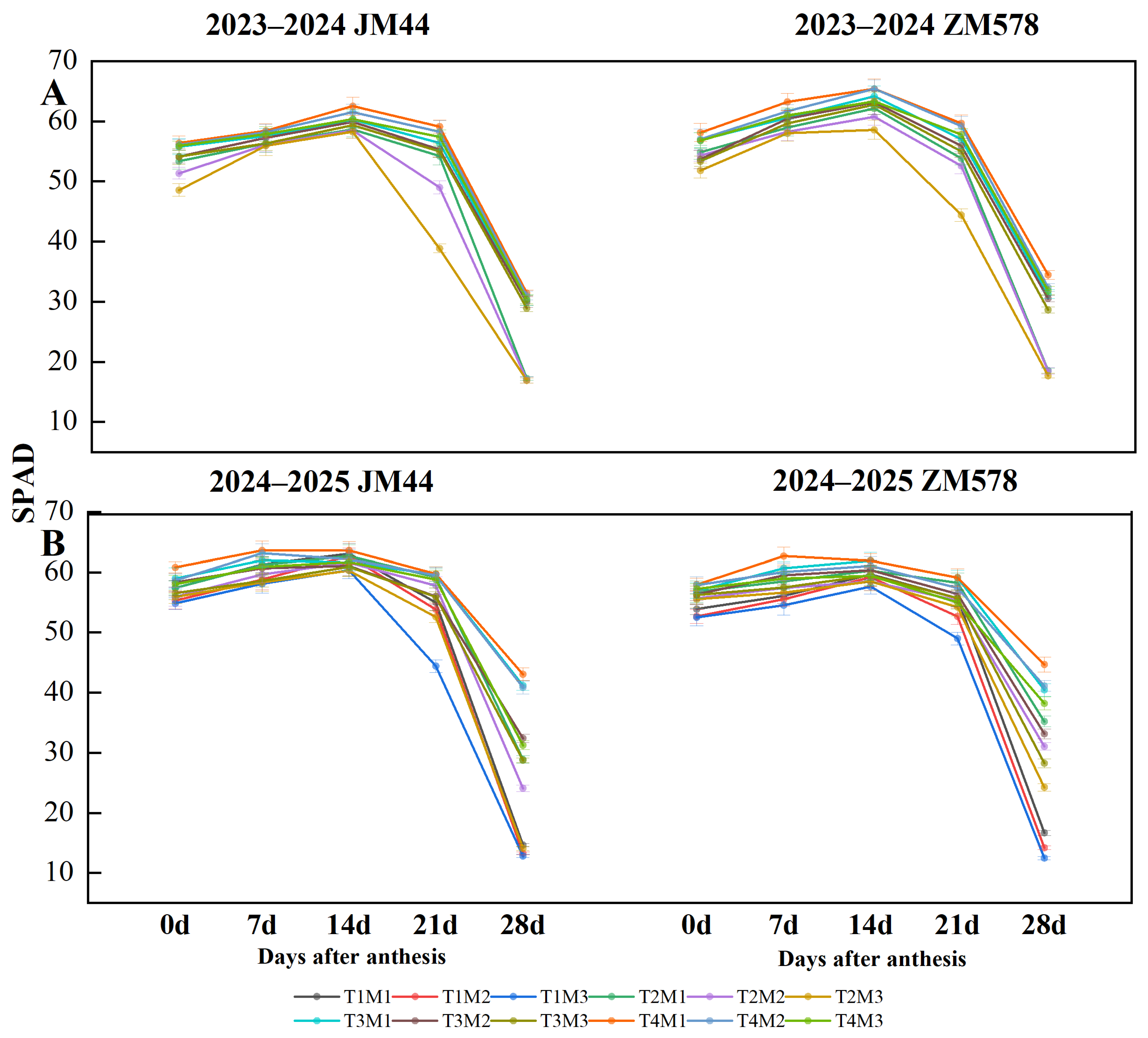
As shown in
Figure 3, the flag leaf SPAD value of both cultivars showed an increasing trend with delayed sowing but a decreasing trend with increased seeding rate. At the anthesis stage in the 2023–2024 season, the SPAD value under the T4 treatment was significantly higher than that under T2 for both cultivars. In the 2024–2025 season, Jimai 44 showed a significantly higher SPAD value under T4 than under T1, while Zhongmai 578 had a significantly higher SPAD under T4 than under both T1 and T2. Across both growing seasons, for the T4 sowing date, no significant differences in SPAD were observed among the three seeding rates (M1, M2, and M3) for either cultivar. At 7 days after anthesis (DAA) in 2023–2024, no significant differences in SPAD were found among treatments for Jimai 44, whereas Zhongmai 578 exhibited a significantly higher value under T4 than under T2. In the 2024–2025 season, both cultivars had significantly higher SPAD values under T4 compared to T1. At 14 DAA in 2023–2024, the SPAD value under T4 was significantly higher than under T2 for both cultivars. In the 2024–2025 season, no significant differences were observed among treatments for either cultivar. From 21 to 28 DAA, across both seasons, the SPAD value under T4 remained significantly higher than under T2 for both cultivars. Additionally, in the 2024–2025 season, the SPAD under T4 was significantly higher than under T1 for both cultivars.
3.2. Effects of Sowing Date and Seeding Rate on Flag Leaf Photosynthetic Characteristics of Strong-Gluten Winter Wheat
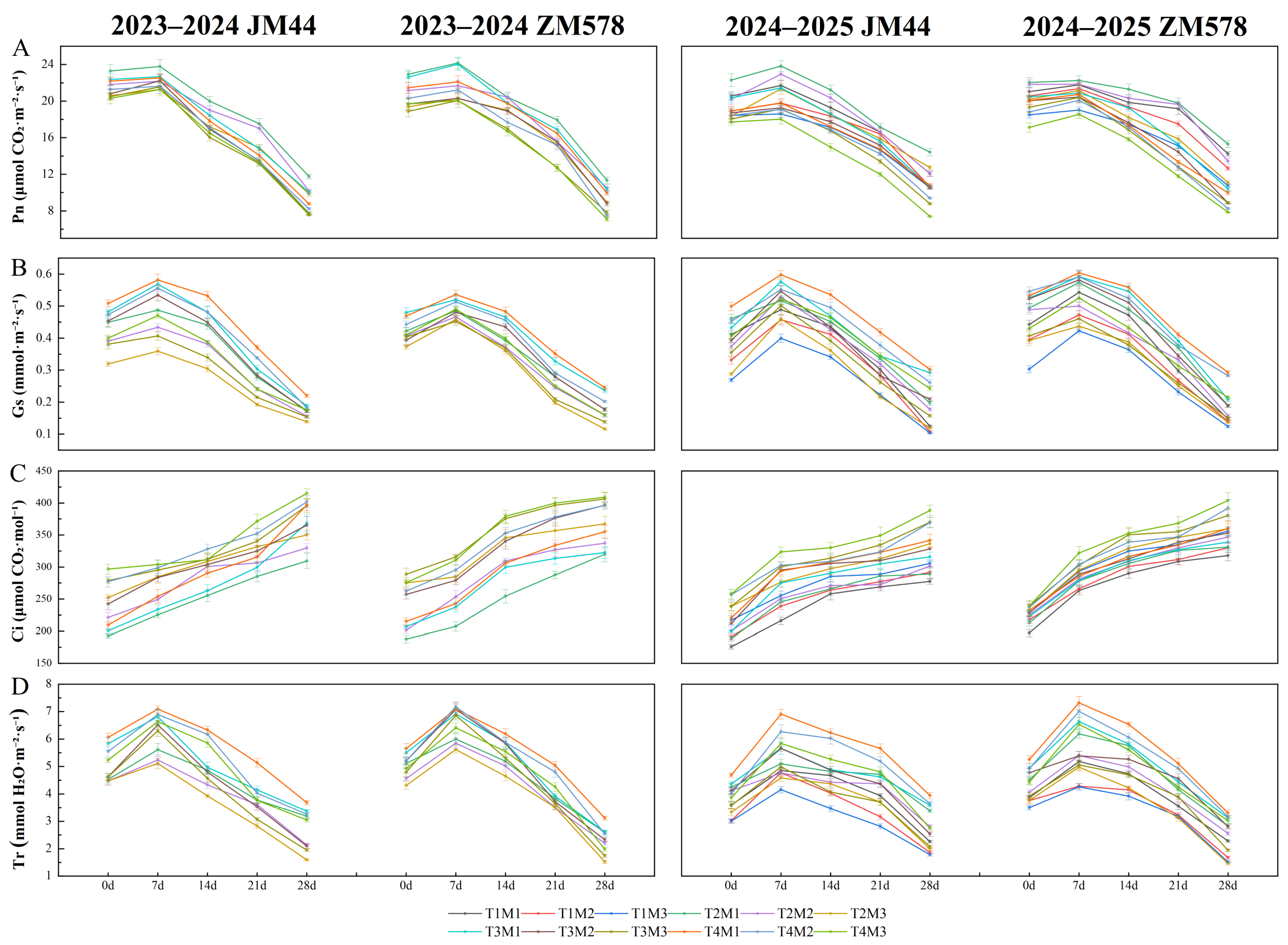
As shown in
Figure 4, the net photosynthetic rate (P
n) of both cultivars across the two growing seasons initially increased and then decreased, or decreased directly, with delayed sowing date, while it exhibited a consistent declining trend with increased seeding rate. The highest P
n values at all measurement stages were observed under the T2M1 treatment, with the M1 rate significantly higher than the M3 rate. In the 2023–2024 season, for Jimai 44, the P
n under the T2M2 treatment was not significantly different from that under T2M1 at 21 days after anthesis (DAA) but was significantly lower at all other stages. At 7 DAA, it showed no significant difference compared with the T2M3, T3M2, T3M3, T4M2, and T4M3 treatments, but was significantly higher than these treatments at all other stages. For Zhongmai 578, the P
n under T2M2 was not significantly different from T2M1 at 14 DAA, but was significantly lower at all other stages. At 7 and 21 DAA, it showed no significant difference compared with the T2M3, T3M2, T3M3, and T4M3 treatments, but was significantly higher than these treatments at the remaining stages. In the 2024–2025 season, for Jimai 44, the P
n under T2M2 was significantly lower than under T2M1 only at anthesis and 28 DAA. At anthesis, 7, 14, and 28 DAA, it was significantly higher than under the T1M2, T1M3, T2M3, T3M2, T4M2, and T4M3 treatments. For Zhongmai 578, the P
n under T2M2 was significantly lower than under T2M1 only at 14 and 28 DAA. At anthesis and from 14 to 28 DAA, it was significantly higher than under the T1M2, T1M3, T2M3, T3M2, T4M2, and T4M3 treatments.
As shown in
Figure 4, the stomatal conductance (G
s) and transpiration rate (T
r) of both cultivars exhibited consistent temporal patterns across the two growing seasons. Both parameters generally increased with delayed sowing and decreased with higher seeding rates. In both seasons, Jimai 44 attained its maximum G
s and T
r under the T4M1 treatment. For Zhongmai 578, the highest G
s (except at anthesis) and the highest T
r (except at 7 days after anthesis [DAA] in 2023–2024) were also observed under T4M1. In the 2023–2024 season, the G
s of Jimai 44 under the T2M2 treatment was significantly higher than that under T2M3 and T3M3 from 7 to 21 DAA. For Zhongmai 578, G
s under T2M2 was significantly higher than under T2M3 and T3M3 from 21 to 28 DAA. In the 2024–2025 season, G
s of both cultivars under T2M2 was significantly higher than under T1M2, T1M3, T2M3, and T3M3 at 14 DAA. At 28 DAA, G
s of Jimai 44 under T2M2 was significantly higher than under T1M1, T1M2, T1M3, T2M3, and T3M3, whereas for Zhongmai 578, it was significantly higher than under T1M2, T1M3, and T2M3. Across both growing seasons, T
r under the T2M2 treatment was significantly lower than under T3M1, T4M1, and T4M2 at all measurement stages for both cultivars.
As shown in
Figure 4, the intercellular CO
2 concentration (C
i) of both cultivars exhibited an increasing trend with delayed sowing date and increased seeding rate across the two growing seasons. In the 2023–2024 season, the lowest C
i at all measurement stages was observed under the T2M1 treatment for both cultivars. For Jimai 44, the C
i under the T2M2 treatment was significantly higher than that under T2M3, T3M2, T3M3, T4M2, and T4M3 at all stages except 14 days after anthesis (DAA). For Zhongmai 578, the C
i under T2M2 was significantly higher than under T2M3, T3M2, T3M3, T4M2, and T4M3 across all stages. In the 2024–2025 season, the lowest C
i at all stages was recorded under the T1M1 treatment for both cultivars. For Jimai 44, the C
i under T2M2 was significantly lower than under T2M3, T3M2, T3M3, T4M1, T4M2, and T4M3. In the same season, the C
i of Jimai 44 under the T2M2 treatment was significantly higher than under T3M3, T4M2, and T4M3.
3.3. Effects of Sowing Date and Seeding Rate on Dry Matter Accumulation at Anthesis and Maturity in Strong-Gluten Winter Wheat
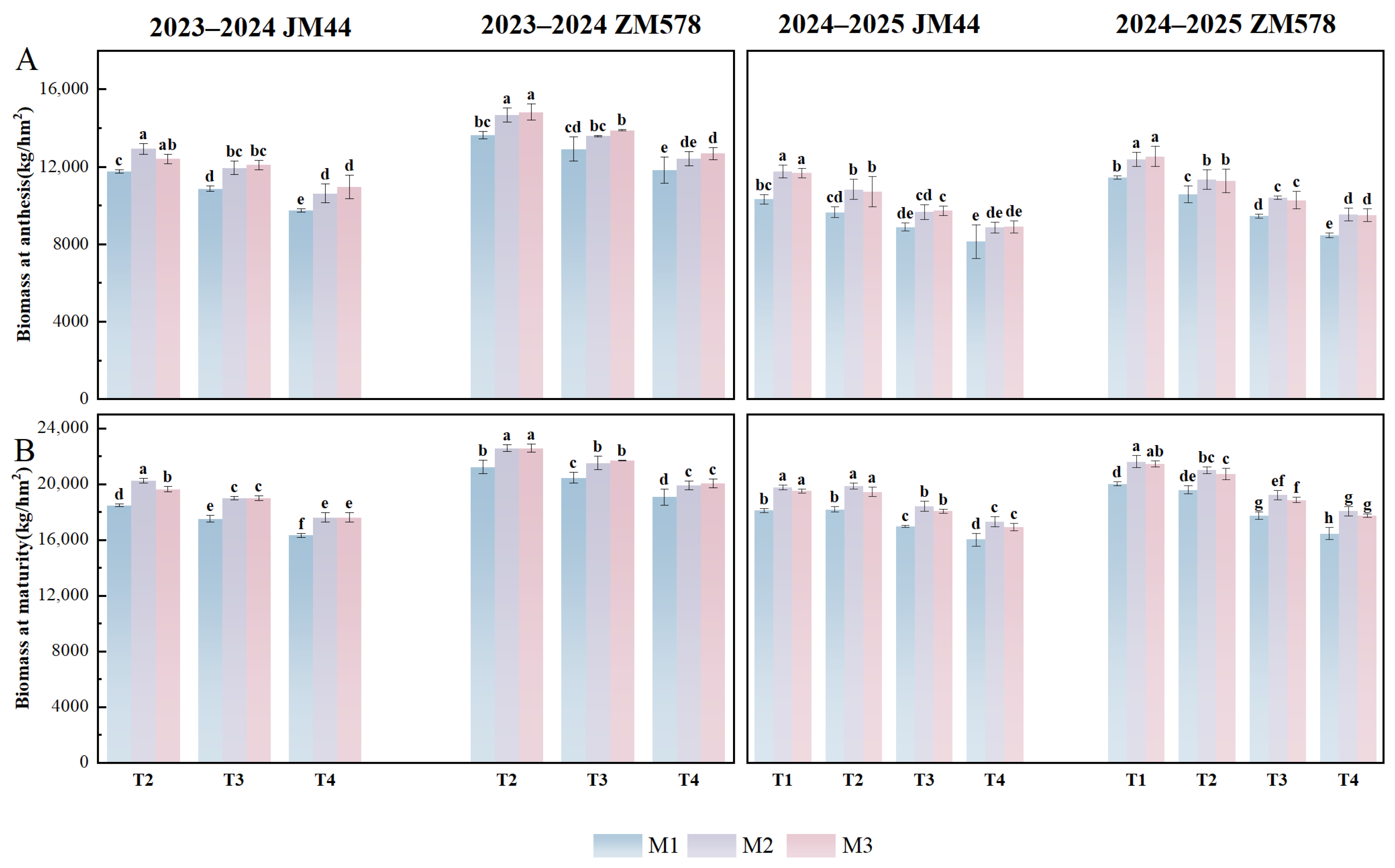
As shown in
Figure 5, dry matter accumulation at anthesis and maturity for both Jimai 44 and Zhongmai 578 decreased with delayed sowing, while it initially increased and then stabilized or slightly declined with increasing seeding rate. The results were consistent across the two experimental years. In the 2023–2024 season, the highest dry matter accumulation at anthesis for Jimai 44 was observed under the T2M2 treatment, which was significantly higher than that under all other treatments. For Zhongmai 578, the highest value also occurred under T2M2, showing no significant difference from T2M3 but being significantly higher than all other treatments. In the 2024–2025 season, the highest dry matter accumulation at anthesis for Jimai 44 was recorded under T1M2, which did not differ significantly from T1M3 but was significantly higher than all other treatments. For Zhongmai 578, the maximum value was also under T1M2, with no significant difference from T2M3 but significantly higher than all other treatments. In the 2023–2024 season, the highest dry matter accumulation at maturity for Jimai 44 was achieved under T2M2, which was significantly higher than that under all other treatments. For Zhongmai 578, the highest value was also under T2M2, showing no significant difference from T2M3 but being significantly higher than all other treatments. In the 2024–2025 season, the highest dry matter accumulation at maturity for Jimai 44 was observed under T2M2, there was no significant difference among T1M2, T1M3, and T2M3, but it was significantly higher than the other treatments. For Zhongmai 578, the highest value was again under T2M2, with no significant difference from T2M3 but significantly higher than all other treatments.
Under the same treatment, Zhongmai 578 exhibited higher dry matter accumulation than Jimai 44 at both anthesis and maturity in both growing seasons, although the magnitude of this difference was smaller in 2024–2025 than in 2023–2024. Under the same sowing date, no significant differences in dry matter accumulation at anthesis or maturity were observed between the M2 and M3 seeding rates for most comparisons in either cultivar.
3.4. Effects of Sowing Date and Seeding Rate on Dry Matter Accumulation and Translocation in Strong-Gluten Winter Wheat
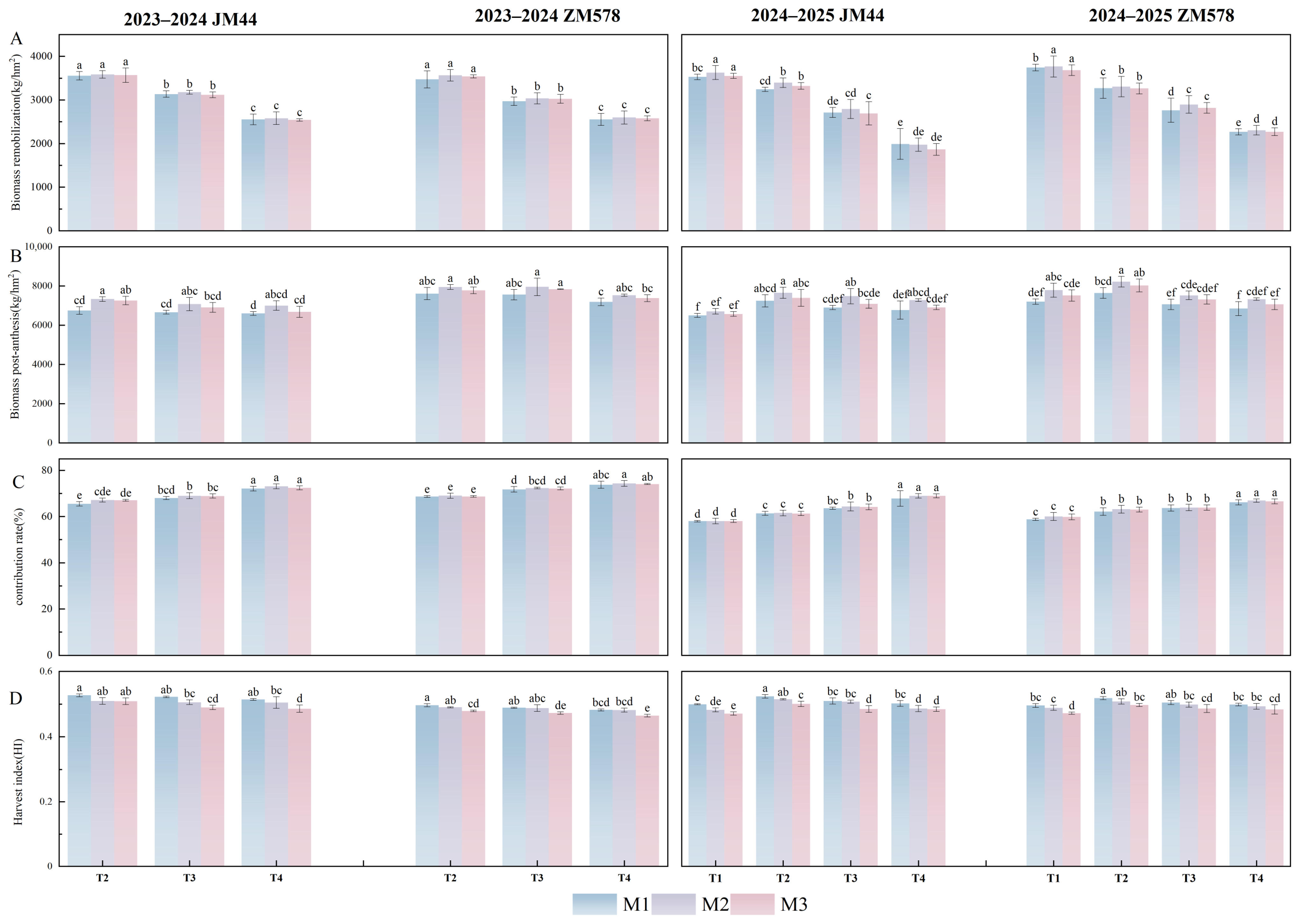
As shown in
Figure 6, the pre-anthesis dry matter translocation of both Jimai 44 and Zhongmai 578 gradually decreased with delayed sowing. With increasing seeding rate, translocation generally exhibited an initial increase followed by stabilization or a slight decline. In the 2023–2024 season, the highest pre-anthesis dry matter translocation for both Jimai 44 and Zhongmai 578 was observed under the T2M2 treatment. Within the same seeding rate, translocation was significantly higher under T2 than under T3, and under T3 than under T4. However, under the same sowing date, no significant differences were observed among the three seeding rates (M1, M2, and M3). In the 2024–2025 season, the highest pre-anthesis dry matter translocation for Jimai 44 occurred under the T1M2 treatment. Under the T1 and T2 sowing dates, no significant difference was observed between the M2 and M3 rates. Under the T3 sowing date, there was no significant difference between M1 and M2 or between M2 and M3, but a significant difference existed between M1 and M3. Under the T4 sowing date, no significant differences were found among M1, M2, and M3. For Zhongmai 578, the highest pre-anthesis dry matter translocation was also recorded under T1M2. Under the same sowing date, no significant difference was observed between the M2 and M3 rates, but both were significantly higher than the M1 rate.
The post-anthesis dry matter accumulation of both cultivars exhibited an initial increase followed by a decrease in response to delayed sowing and increased seeding rate, with consistent patterns observed across the two growing seasons. In the 2023–2024 season, for Jimai 44, the highest post-anthesis dry matter accumulation was recorded under the T2M2 treatment, showing no significant difference from the T2M3, T3M2, and T4M2 treatments but being significantly higher than all other treatments. For Zhongmai 578, the maximum value was also achieved under T2M2, which was significantly higher than that under the T4M1 and T4M3 treatments. In the 2024–2025 season, for Jimai 44, the highest post-anthesis dry matter accumulation was again observed under T2M2, with no significant difference from the T2M1, T2M3, T3M2, and T4M2 treatments but significantly higher than all other treatments. For Zhongmai 578, the highest accumulation was also under T2M2, showing no significant difference from the T1M2 and T2M3 treatments but being significantly higher than all other treatments. Under the same treatment, no significant difference was observed in pre-anthesis dry matter translocation between the two cultivars, whereas the post-anthesis dry matter accumulation of Jimai 44 was slightly lower than that of Zhongmai 578.
The contribution rate of post-anthesis dry matter accumulation to grain yield increased with delayed sowing in both cultivars, while it exhibited an initial increase followed by a decrease with increasing seeding rate. In both growing seasons, the highest contribution rates for both cultivars were observed under the T4M1, T4M2, and T4M3 treatments, with no significant differences among the M1, M2, and M3 seeding rates within the same sowing date. The harvest index (HI) of both cultivars either decreased or showed an initial increase followed by a decrease with delayed sowing and consistently declined with increasing seeding rate. In the 2023–2024 season, the highest HI for Jimai 44 was recorded under the T2M1 treatment, which was significantly higher than that under T3M2, T3M3, T4M2, and T4M3. For Zhongmai 578, the highest HI was also under T2M1, being significantly higher than that under T2M3, T3M3, T4M1, T4M2, and T4M3. In the 2024–2025 season, the highest HI for Jimai 44 remained under T2M1, which was significantly higher than that under T1M2 and T4M2. For Zhongmai 578, the highest HI was again under T2M1, showing no significant difference from T2M2 and T3M1 but being significantly higher than that under all other treatments.
3.5. Effects of Sowing Date and Seeding Rate on the Yield of Strong-Gluten Winter Wheat
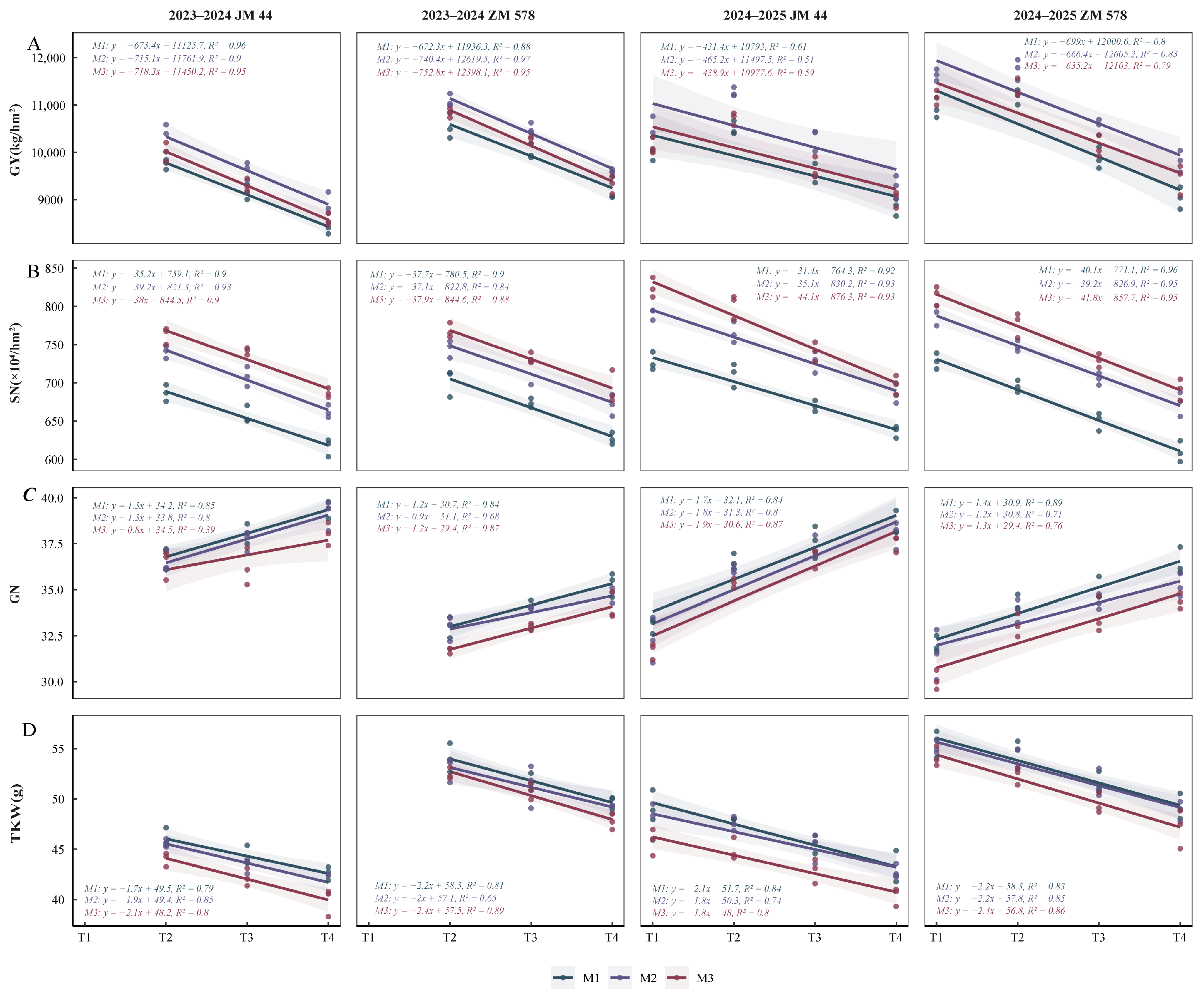
The effects of sowing date and seeding rate on winter wheat yield and its components across the two growing seasons are presented in
Table 4 and
Table 5 and
Figure 7. The response of grain yield to sowing date and seeding rate was highly consistent between Jimai 44 and Zhongmai 578, exhibiting a quadratic pattern—characterized by an initial increase followed by a decrease—in response to both delayed sowing and increased seeding rate. In the 2023–2024 season, the highest grain yield for Jimai 44 was achieved under the T2M2 treatment, which was significantly higher than all other treatments except T2M3, representing a 22.92% increase over the lowest yield observed under T4M1. For Zhongmai 578, the highest yield was also recorded under T2M2, showing a 20.47% increase compared to the lowest yield (T4M1). In the 2024–2025 season, the highest yield for Jimai 44 was again observed under T2M2, which was significantly higher than all other treatments and represented a 27.28% increase over T4M1. For Zhongmai 578, the highest yield was also obtained under T2M2, which showed no significant difference from T1M2 but was significantly higher than all other treatments, with a 30.10% increase over T4M1. Under delayed sowing conditions in 2023–2024, the magnitude of yield reduction for both cultivars followed the order: M1 < M2 < M3, with an overall similar declining trend between the two cultivars. In the 2024–2025 season, for Jimai 44, the yield reduction followed the sequence M1 < M3 < M2, whereas for Zhongmai 578, it followed M3 < M2 < M1. Overall, the yield reduction was smaller for Jimai 44 than for Zhongmai 578, although the linear regression fit (R
2) for Jimai 44 was relatively lower.
Spike number decreased with delayed sowing but increased with higher seeding rate in both cultivars across the two growing seasons. In 2023–2024, Jimai 44 exhibited the highest spike number under T2M3, with the magnitude of reduction due to sowing delay following the order M1 < M3 < M2. For Zhongmai 578, spike number also peaked under T2M3, with the reduction ordered M2 < M1 < M3. In 2024–2025, both cultivars reached their maximum spike number under T1M3. Under delayed sowing, the decline in spike number followed M1 < M2 < M3 in Jimai 44 and M2 < M1 < M3 in Zhongmai 578. Grains per spike increased with later sowing but decreased with higher seeding rate. In 2023–2024, both cultivars showed the highest grains per spike under T4M1 and T4M2. With sowing delay, the increase was greater under M1 and M2 than under M3 for Jimai 44, and greater under M1 and M3 than under M2 for Zhongmai 578. In 2024–2025, Jimai 44 peaked at T4M1 (with no significant difference from T3M1, T4M2, and T4M3), and the magnitude of increase followed the trend M1 < M2 < M3. Zhongmai 578 also peaked at T4M1, with the increase following M2 < M3 < M1. Thousand-kernel weight (TKW) decreased with both delayed sowing and higher seeding rate. In 2023–2024, Jimai 44 had the highest TKW under T2M1 (similar to T2M2), with the decline ordered M1 < M2 < M3. Zhongmai 578 peaked under T2M1 (similar to T2M2 and T2M3), with decline following M2 < M1 < M3. In 2024–2025, Jimai 44 showed the highest TKW under T1M1, T1M2, T2M1, and T2M2, with a smaller decline under M2/M3 compared to M1. Zhongmai 578 peaked at T1M1 (similar to T1M2, T1M3, T2M1, and T2M2), with decline ordered M1/M2 < M3. Grain number per unit area responded quadratically to sowing delay (initial increase followed by a decrease) and then increased and stabilized with a higher seeding rate. In 2023–2024, Jimai 44 peaked under T2M3 (similar to T2M2 and T3M3), while Zhongmai 578 peaked under T2M2 (similar to T2M3, T3M2, and T3M3). In 2024–2025, Jimai 44 reached its maximum under T3M3 (similar to T2M2, T2M3, and T3M2), and Zhongmai 578 under T2M3 (similar to T1M2 and T2M2).
3.6. Correlation Analysis of Traits
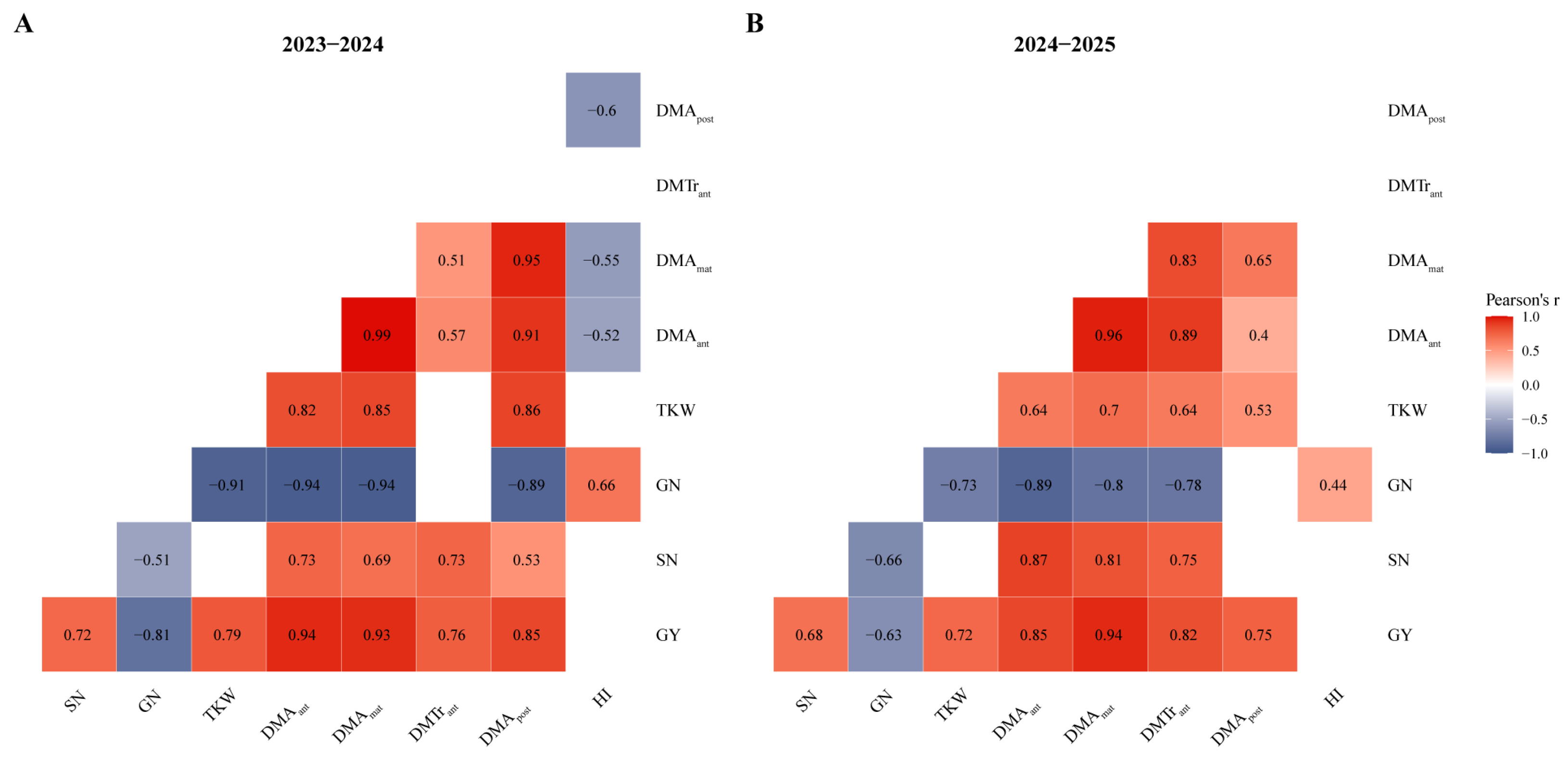
As shown in
Figure 8, grain yield was significantly positively correlated with spike number, TKW, dry matter accumulation at both anthesis and maturity, pre-anthesis dry matter translocation, and post-anthesis dry matter accumulation across the two growing seasons. In contrast, grain yield exhibited a significant negative correlation with grains per spike. Grains per spike were significantly positively correlated with the harvest index, but significantly negatively correlated with spike number, TKW, and dry matter accumulation at anthesis and maturity. In the 2023–2024 season, grains per spike also showed a significant negative correlation with post-anthesis dry matter accumulation, while no significant relationship was observed with pre-anthesis dry matter translocation. In the 2024–2025 season, grains per spike weresignificantly negatively correlated with pre-anthesis dry matter translocation, but showed no significant association with post-anthesis dry matter accumulation.
4. Discussion
Wheat grain yield is predominantly derived (90–95%) from photoassimilates produced during photosynthesis, with the flag leaf serving as the primary functional organ for post-anthesis carbon assimilation [
25]. The SPAD value and P
n of the flag leaf are key indicators for assessing photosynthetic capacity and the efficacy of agronomic practices. Enhancing flag leaf SPAD and P
n, and prolonging the duration of high photosynthetic efficiency are critical for achieving high wheat yields [
25,
26,
27]. The SPAD value directly reflects photosynthetic potential and leaf senescence dynamics; a higher SPAD indicates more efficient light utilization for photosynthesis, thereby promoting dry matter accumulation and robust plant development [
28]. Sowing date and seeding rate influence photosynthetic traits by altering phenological progression and stress responses—thereby affecting the establishment and maintenance of photosynthetic structures—and by modifying canopy architecture and per-plant resource acquisition [
29]. In this study, P
n, G
s, and T
r of both cultivars peaked at 7 days after anthesis (DAA) and subsequently declined. The SPAD value reached its maximum at 14 DAA and entered a rapid decline phase after 21 DAA, whereas C
i continued to rise due to a sharp reduction in carbon assimilation capacity. This period coincides with the critical grain-filling stage; thus, the ability to sustain photosynthetic function directly determines filling efficiency. Early sowing advanced phenological development, leading to premature leaf senescence. In contrast, moderately delayed sowing (e.g., 20 October) increased flag leaf SPAD and P
n in strong-gluten winter wheat, enhancing CO
2 fixation and utilization capacity. This supported a higher grain-filling rate from early anthesis onward, contributing to increased TKW. Conversely, higher seeding rates intensified inter-plant competition for nutrients and light, reducing canopy light penetration. Consequently, flag leaf SPAD decreased, leaf senescence accelerated during later growth stages, the duration of active photosynthesis shortened, and assimilate translocation to grains was impaired—ultimately lowering grain-filling rate, TKW, and yield [
15,
30]. Although G
s and T
r were generally higher under late-sowing conditions, insufficient thermal time (heat accumulation) before winter in late-sown wheat restricted leaf expansion and mesophyll photosynthetic capacity, thereby limiting actual CO
2 fixation efficiency and resulting in significantly lower P
n and grain yield. Overall, the T2M2 treatment (sowing on 20 October at the optimal seeding rate) most effectively promoted flag leaf photosynthesis, enhanced accumulation of photosynthates, and consequently maximized grain yield in strong-gluten winter wheat.
Dry matter accumulation serves as the fundamental material basis for wheat grain yield formation. Its accumulation dynamics and translocation efficiency directly determine yield potential, and enhancing both total dry matter production and its allocation to grains is a key strategy for achieving high yields [
20,
25]. Previous studies have confirmed that dry matter accumulated before anthesis is primarily allocated to vegetative organs—such as roots, stems, and leaves—whereas post-anthesis dry matter production and its partitioning to grains directly determine final yield and exhibit a strong positive correlation with it. Sowing date and seeding rate, as pivotal agronomic practices in winter wheat systems, systematically influence dry matter accumulation and translocation by modulating the efficiency of light and thermal resource capture, canopy architecture, and the source–sink balance [
15,
31]. Timely early sowing enables efficient utilization of late-autumn light and heat resources, promoting robust pre-winter growth and extending the overall growth period, thereby allowing for greater dry matter accumulation at both anthesis and maturity. In contrast, late-sown wheat—despite partially compensating through an accelerated dry matter accumulation rate after green-up—suffers from suppressed pre-winter tillering, resulting in insufficient effective spike number and a markedly shortened growth cycle. Consequently, it exhibits substantial reductions in total dry matter accumulation, pre-anthesis dry matter translocation, and post-anthesis dry matter production [
9,
32]. Adjusting the seeding rate can effectively optimize population structure and enhance population productivity, facilitating a better coordination between pre-anthesis translocation and post-anthesis accumulation, thus supporting high yield. The results of this experiment showed that under late-sowing conditions, a moderate increase in seeding rate partially alleviated the constraint of small population size. By elevating the contribution rate of post-anthesis dry matter accumulation to grain yield, it compensated for the overall deficit in total dry matter production. This represents an adaptive regulatory mechanism by which wheat mitigates the adverse effects of late-sowing stress on population establishment. However, excessively high seeding rates intensify inter-plant competition for light, water, and nutrients, leading to compromised individual plant development, deterioration of key agronomic traits, and ultimately suppressed dry matter accumulation at both anthesis and maturity. Although seeding rate exerts relatively minor direct effects on pre-anthesis translocation and the contribution rate of post-anthesis assimilates to grain yield, it plays a crucial indirect role in yield formation by modulating population size, individual vigor, and light-use efficiency. The findings of this study demonstrate that under the T2M2 treatment (sowing on 20 October at the optimal seeding rate), although dry matter accumulation at anthesis and maturity was slightly lower than under earlier sowing dates, it significantly enhanced post-anthesis dry matter production. By optimizing post-anthesis photosynthetic efficiency and assimilate supply, this treatment compensated for reduced pre-anthesis accumulation and ultimately secured stable, high grain yield. Conversely, when sowing was excessively delayed, even the increased reliance on post-anthesis dry matter could not offset the severe shortfall in total biomass, resulting in significant yield loss.
Wheat grain yield per unit area is determined by three key components: spike number per unit area, grains per spike, and TKW. The coordinated development of these yield components is essential for achieving high productivity [
9,
21]. Grain yield is influenced by multiple interacting factors, including cultivar genotype, climate, soil conditions, and agronomic management practices [
12]. Among these, selecting an appropriate sowing date in combination with a suitable seeding rate is a critical management decision for maximizing yield, with significant implications for regional wheat production. Numerous previous studies have concluded that delayed sowing negatively affects spike number, TKW, and final grain yield [
19,
22,
33,
34]. However, some reports indicate that while delayed sowing reduces grains per spike, it may have no significant effect on TKW [
35]. In contrast, the present experiment found that grain yield responded quadratically to sowing delay—initially increasing and then decreasing—with spike number and TKW progressively declining, whereas grains per spike consistently increased. Similarly, increasing the seeding rate also induced a quadratic yield response (initial increase followed by a decrease), gradually enhanced spike number, but reduced both TKW and grains per spike. The primary reason for these discrepancies lies in experimental design: most prior studies used a fixed seeding rate across sowing dates, whereas this study implemented a “late-sowing with increased seeding rate” strategy—raising seeding density by 52.5 kg ha
−1 for each 7-day sowing delay. Differences in local climatic conditions and sowing intervals further contributed to divergent conclusions across studies. Both cultivars achieved the highest grain number per unit area and TKW under the T2M2 treatment (sowing on 20 October at the optimal seeding rate), resulting in maximum grain yield. These findings align with previous research showing that increasing seeding rate can compensate for yield loss caused by a one-week sowing delay but fails to offset losses from a two-week delay [
13]. Under a given sowing date, a lower seeding rate can moderately enhance grains per spike and TKW. However, compared to the yield gain achieved by appropriately increasing seeding rate to boost spike number, this effect is relatively weak and insufficient to counteract yield reductions induced by delayed sowing. Conversely, excessively high seeding rates lead to unbalanced population structure, intensified inter-plant competition, and ultimately lower yields. In late-sown winter wheat, yield is predominantly limited by spike number. Increasing the seeding rate to raise spike density partially mitigates yield loss by improving the harvest index. Furthermore, throughout the two growing seasons, no lodging was observed in any of the high-density treatments, including T1M3 and T2M3. Although grains per spike may slightly increase under such conditions, the concurrent decline in TKW becomes a critical constraint on final grain yield.



 ,
,