Article

Soil Methanogen and Methanotroph Communities of Four Land Use Types in Dongting Lake Area: Linkages with Potential Methane Production


1
College of Ecology and Environment, National Engineering Laboratory for Applied Technology of Forestry & Ecology in South China, Central South University of Forestry and Technology, Changsha 410004, China
2
Institute of Subtropical Agriculture, Chinese Academy of Sciences, Changsha 410125, China
*
Author to whom correspondence should be addressed.
Agronomy 2026, 16(5), 583; https://doi.org/10.3390/agronomy16050583
Submission received: 30 January 2026 / Revised: 27 February 2026 / Accepted: 6 March 2026 / Published: 8 March 2026
(This article belongs to the Section Agroecology Innovation: Achieving System Resilience)

Abstract

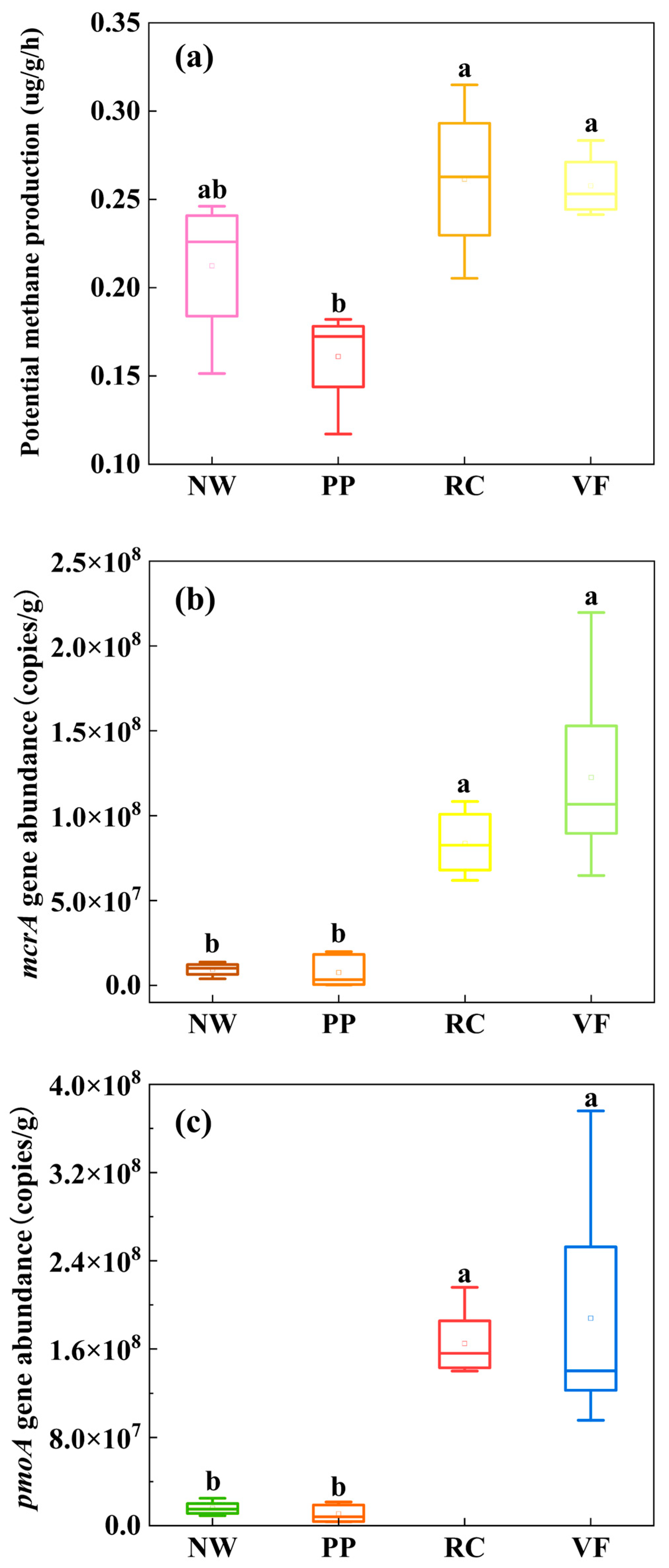
Methane (CH4) emissions are regulated by the balance between CH4 production and oxidation, which are mediated by methanogens and methanotrophs. Little is known about the key drivers of potential methane production (PMP) under different land use types in the Dongting Lake area. This study investigated four land use types (natural wetland, poplar plantation, rice cropland, and vegetable field) in the Dongting Lake area. The effects of land use types on (a) the abundances and community compositions of soil methanogens and methanotrophs and (b) soil potential methane production were investigated. The results showed that the soil potential methane production of the rice cropland (0.26 ± 0.02 µg g−1 h−1) and vegetable field (0.26 ± 0.01 µg g−1 h−1) was higher than that of the poplar plantation (0.16 ± 0.01 µg g−1 h−1). The compositions of methanogenic and methanotrophic communities varied in response to different land uses. The mcrA gene abundance in the rice cropland (0.84 ± 0.05 × 10⁸ copies/g) and vegetable fields (1.23 ± 0.15 × 10⁸ copies g−1) was higher than that in the natural wetland (0.09 ± 0.01 × 10⁸ copies g−1) and poplar plantation (0.08 ± 0.03 × 10⁸ copies g−1). The pmoA gene abundances in the rice cropland (1.65 ± 0.08 × 10⁸ copies g−1) and vegetable fields (1.88 ± 0.32 × 10⁸ copies g−1) were higher than those in the natural wetland (0.16 ± 0.02 × 10⁸ copies g−1) and poplar plantation (0.11 ± 0.03 × 10⁸ copies g−1). In addition, both pmoA and mcrA gene abundances were positively correlated with potential methane production. However, the regression line between pmoA gene abundance and potential methane production showed a shallower slope than that between mcrA gene abundance and potential methane production. These results suggest that soil potential methane production was primarily driven by increased methanogenesis rather than reduced methane oxidation. In addition, soil organic carbon, total nitrogen, water content, and pH were key abiotic factors regulating potential methane production and the abundance and community compositions of methanogens and methanotrophs in the Dongting Lake area.

1. Introduction

Increasing concentrations of greenhouse gases are the primary drivers of global warming [1,2]. Methane (CH4) is atmospherically the second most concentrated greenhouse gas after carbon dioxide (CO2). CH4 is less abundant than CO2, but it has a much higher warming potential (23-fold) and plays an important role in exacerbating global warming [3]. It has contributed to ~16% of the Earth’s temperature increase since 1750 [4]. Among the most pervasive greenhouse gases, CH4 originates from wetlands, rice paddies, and anthropogenic sources, including livestock production and natural gas leaks [5]. In recent years, CH4 emissions from wetlands have increased significantly to approximately 163 Tg year−1. Wetland emissions represent about 22–30% of the total (natural plus anthropogenic) global CH4 sources estimated [6,7,8].
The production of soil CH4 is a complex biochemical process, which is the end product of the degradation of soil organic matter (e.g., soil humus, plant and animal residues, and rice root exudates) under anaerobic conditions [9,10,11]. CH4 generation and oxidation are mediated by two key microorganisms: methanogens and methanotrophs, respectively. There are three main ways for soil methanogens to produce CH4 [11]: (1) CH4 is produced from acetic acid (the main intermediate product of anaerobic fermentation of organic compounds) as substrate, RCOOH → RH + CO2 (R typically denotes a methyl group); (2) reducing CO2 with H2 or organic molecule H as donor or forming CH4 directly with HCOOH and CO; and (3) CH4 is produced from methyl compounds (methanol, methylamine, methylsulfur, etc.) as substrates. In the process of migrating towards the atmosphere, CH4 present in soil or water can undergo partial or complete oxidation mediated by methanotrophs. These microorganisms constitute a specialized group of bacteria that exclusively harness CH4 as their sole source of energy and carbon, thereby playing a pivotal role in the biogeochemical cycling of this potent greenhouse gas [8]. Therefore, CH4 exchange between soil and atmosphere depends on the balance between methanotrophs and methanogens [12,13].
Wetlands—both natural and artificial—are permanently, seasonally, or occasionally covered by shallow water, with water controlling their environment [14]. As one of the most critical wetlands in China, Dongting Lake is a typical river-connected lake [14]. Dongting Lake includes four nature reserves and three important international wetlands [15]. Dongting Lake provides critical ecosystem services, such as soil–water conservation, carbon sequestration, biodiversity/rare species protection, Yangtze River water-resource regulation, and regional ecological balance maintenance [16,17,18]. From 1930 to 2020, a total of 2033.8 km2 of wetlands in the Dongting Lake basin were converted to non-wetland land use types [19]. In the 1970s, poplar (Populus deltoides) was introduced into the Dongting Lake wetlands to protect levees and provide pulp for the paper industry [20]. The poplar forest area increased from 87 km2 in 1983 to 640 km2 in 2007 (accounting for 26% of the total lake area) [21]. The rapid expansion of poplar trees in the Dongting Lake area has resulted in their dominance as the most prevalent species [21]. In addition, the polder area (i.e., farmland and a little residential land) in the Dongting Lake area also increased by 48.84% (4015.54 km2) from 1949 to 1998, attributable to lake enclosure and land reclamation policies [22]. The soil-to-atmosphere CH4 exchange can be modified by changes in vegetation types and cover due to land use management activities [23]. Land use change significantly alters soil methanogenic and methanotrophic communities [24,25,26]. Prior research indicates that vegetation succession may drive a transition of the Dongting Lake floodplain ecosystem from acting as a CH4 source to functioning as a CH4 sink [27]. Soil organic matter, soil water content, nitrogen content, and pH have been shown to affect the activity of methanogens and methanotrophs [28,29,30]. Long-term fertilization (particularly N and P) in farmland soils alters methanogenic abundance and community compositions, sustaining elevated CH4 emissions [13,31]. However, the effects of land use conversion from wetland to poplar plantation and farmland on soil methanogen and methanotroph communities, as well as CH4 emissions, remain poorly characterized, and the trade-off mechanisms between CH4 production and oxidation processes remain unclear.
The objectives of this study were to identify the key ecological factors affecting potential methane production (PMP) and elucidate microbial drivers of potential methane production variations across land use types in Dongting Lake area. In this study, we selected the four most common land use types in the Dongting Lake drainage region (i.e., natural wetland, poplar plantation, rice cropland, and vegetable field), measured the abundances and compositions of methanogenic and methanotrophic communities in the four land use types. We hypothesized that differences in soil nutrients due to land use changes drive shifts in methanogen and methanotroph communities, thereby potentially modulating CH4 production. We also hypothesized that the potential methane production in rice croplands and vegetable fields might be higher than that in natural wetlands and poplar plantations due to elevated nutrient inputs in the plant growing season (e.g., fertilizers).

2. Materials and Methods

2.1. Soil Properties, Experimental Design, and Soil Sampling

The soil sampling site was located at Dongting National Nature Reserve, Yueyang City, Hunan Province, China (112°43″~113°15″ E, 28°59″~29°38″ N). This region experiences a subtropical monsoon climate, with mean temperatures at 17 °C and annual precipitation ranging from 1200 to 1300 mm. The lake area and water level vary with monsoon-driven precipitation, resulting in high water levels and areas during the wet season (May–October) and low water levels and areas during the dry season (November–April) [32]. The soil was classified as limnetic or river moor type, with SOC content of 15.8 ± 2.50 g kg−1, TN content of 0.79 ± 0.14 g kg−1, and pH of 7.86 ± 0.03.
In this study, four land use types were selected: natural wetland (NW), poplar plantation (PP), rice cropland (RC), and vegetable field (VF). They represent the most common land use types in the Dongting Lake drainage region [33]. The wetland is defined as a natural marsh experiencing recurrent inundation during the lake’s wet-and-dry seasons, such as reed-dominated swamps and seasonally flooded grasslands. The poplar forest was artificially transformed from the reed wetland via deforestation and replanting. Since the 1970s, a considerable number of natural wetlands in this region have been converted to plantation forests and agricultural lands, resulting in a large decrease in the wetland area [20]. The farmland that was subjected to high-intensity human disturbance was predominantly rice cropland, with vegetable fields constituting the second most common land use type. The rice cropland received long-term fertilization with nitrogen, phosphorus, and potassium. This cropland underwent periodic flooding during the growing season. Its cultivation model was double-cropping rice. The flooding period lasts seven months annually, followed by winter fallow or legume planting. Vegetable fields undergo long-term fertilization comparable to rice cropland, but are managed through periodic irrigation rather than sustained flooding. The experiment was arranged in a randomized block design. In November 2021, four experimental blocks separated from each other were placed around Dongting Lake. Each block contained all four land use types. A plot (20 × 20 m) was established for soil sampling in each land use. Soil samples (0–20 cm) were collected randomly at 10 points in each plot using a Dutch auger (5.0 cm diameter). Soil samples from the same plot were pooled into one composite sample and homogenized. Thus, a total of 16 soil samples (four land use types × four replicates) were collected. To remove roots and stones, soil samples were sieved through a 2 mm mesh. Soils were then divided into three subsamples: one was stored at 4 °C, and subsequent incubation experiments were conducted to quantify potential methane production (PMP) and preselected soil physico-chemical property analysis; one was quickly frozen in liquid nitrogen and stored at −80 °C for microbial quantitative PCR and high-throughput sequencing analysis of methanogens and methanotrophs; and one was air dried for other soil physico-chemical property analyses. The finalization of all experimental procedures occurred in September 2023.
Soil water content (SWC) was measured gravimetrically through oven-drying at 105 °C for 48 h. Soil pH was measured using a PHS-3C pH meter (INESA Instruments Inc., Shanghai, China) in a 1:2.5 soil–water suspension incubated for 30 min. Soil organic carbon (SOC) was quantified via the K2Cr2O7 oxidation method [34]. Total nitrogen content (TN) was quantified via the Kjeldahl method [35]. Soil total phosphorus (TP) was measured via alkali fusion-molybdenum-antimony spectrophotometry [36]. Ammonium nitrogen (NH4+-N), nitrate nitrogen (NO3-N), and dissolved organic carbon (DOC) were isolated with 0.5 mol L−1 K2SO4 [37]. Soil available phosphorus (AP) was measured using the ammonium fluoride hydrochloride-molybdenum-antimony colorimetric method [38].

2.2. Measurement of Potential Methane Production (PMP)

Potential methane production was measured according to Freeman [39], with minor modifications. In short, the addition of 10 mL anoxic sterile water to 10 g fresh soil in a 125 mL culture bottle provided an overlying water layer. After that, the bottles were sealed with rubber stoppers. At 30 °C, these bottles were dark-incubated statically for one hour. Gas samples were collected from culture bottle headspaces via syringe, followed by injection of an equivalent N2 volume to maintain pressure equilibrium. Gas samples were rapidly transferred into 12 mL vacuum vials (Labco Limited, London, UK), and 28 mL N2 was injected to pressurize for CH4 analysis via a gas chromatograph FID (Agilent 7890A, Santa Clara, CA, USA). At intervals of 1, 30, and 60 min, gas samples were taken. In this experiment, 16 soil samples were collected from four land use types with four replicates each. Three culture flasks were prepared per replicate, yielding 12 flasks per treatment. Cultivation was performed using a DHP-9162 constant temperature incubator (Sailun, Shanghai, China). Potential methane production was calculated based on the following formula:
PMP   ( μ g 1   g 1   h 1 )   =   K × V W
where K is the slope of the linear regression for accumulated CH4 concentration versus time (μg−1 L−1 h−1), V is the culture bottle volume (L), and W is the fresh soil mass (g).

2.3. Soil DNA Extraction and Quantitative PCR

Soil microbial DNA was extracted from 0.5 g of soil according to Gao [13]. NanodropND-1000 (Wilmington, DE, USA) was used to measure DNA concentration and purity. The mals/mcrA-rev [40] and A189F/Mb661R primer sets [41] were used in real-time quantitative PCR (qPCR) to quantify mcrA and pmoA gene abundance. In 10 μL reaction volumes, the mixture comprised the following: 5 μL of SYBR Green Mix II, 0.2 μL of ROX (Takara, Dalian, China), 0.3 μL (0.4 μmol L−1) each of forward and reverse primers, 1 μL (5 ng μL−1) of template DNA, and sterile water to a final volume. Triplicate samples underwent thermal programs via the ABI Prism 7900HT system (Applied Biosystems, Foster City, CA, USA).

2.4. Illumina Miseq Sequencing

The mcrA and pmoA genes underwent Illumina MiSeq sequencing for evaluating methanogen and methanotroph communities, respectively. The mcrA and pmoA genes underwent amplification using mals/mcrA-rev [40] and A189F/Mb661R [41] primer sets, respectively, using forward and reverse primers appended with unique eight-base barcodes at the 5′ end per sample. PCR was performed in 50 μL volumes comprising: 25 μL of 2× Power Taq Master Mix (TIANGEN, Beijing, China), 1 μL each of forward and reverse primers, 2 μL (20 ng μL−1) of template DNA, and sterile water to a final volume [42]. The reaction conditions were set as: (1) For mcrA: initial denaturation at 95 °C for 5 min; 30 cycles of (denaturation at 95 °C for 45 s → annealing at 55 °C for 45 s → extension at 72 °C for 45 s); final extension at 72 °C for 10 min. (2) For pmoA: initial denaturation at 95 °C for 2 min; 5 cycles of (denaturation at 95 °C for 25 s → annealing at 65 °C for 30 s → extension at 72 °C for 30 s); 25 cycles of (denaturation at 95 °C for 25 s → annealing at 55 °C for 30 s → extension at 72 °C for 30 s). Each sample underwent triplicate PCR runs, followed by pooling of the triplicate amplicons and analysis via 2% agarose gel electrophoresis. AxyPrep DNA Gel Extraction kit (Axygen, Corning, NY, USA) was used to purify the targeted bands (491 bp for the mcrA gene and 472 bp for the pmoA gene, respectively), which were excised, and then the QuantiFluorTM-ST was used to quantify the bands (Promega, Madison, WI, USA). The purified amplicons were combined in equimolar amounts and subjected to sequencing on an Illumina MiSeq PE300 platform following the manufacturer’s protocol (Shanghai Majorbio BioPharm Technology Co., Ltd., Shanghai, China), yielding paired-end reads (2 × 300 bp). All mcrA and pmoA gene sequences derived from this study were submitted to the GenBank Sequence Read Archive (SRA) under accession numbers SRP588839 and SRP588877, respectively.

2.5. Processing of Illumina MiSeq Sequencing Data Was Conducted

The raw mcrA and pmoA sequences underwent demultiplexing, quality filtering by Trimmomatic, and merging using FLASH based on these criteria: (i) reads <200 bp were discarded; (ii) reads containing ambiguous bases or >2 nucleotide mismatches in primer regions were removed; (iii) sequences with >10 bp overlaps were assembled; and (iv) unassembled reads were discarded. Following the removal of low-quality reads, primers, and barcodes, Illumina MiSeq high-throughput sequencing yielded 579,489 and 383,129 paired-end reads for mcrA and pmoA genes, respectively. USEARCH 6.1 was then used to identify and remove the chimeric sequences [43]. FrameBot was responsible for the detection and correction of frameshift errors [44]. OTUs and singletons detected in fewer than two soil samples were excluded [45]. The remaining high-quality reads were aligned using the Pynast algorithm [46]. Species-level OTU clustering of mcrA sequences was performed at 70% amino acid identity (equivalent to 97% 16S rRNA similarity) using UCLUST [47]. A database of mcrA gene sequences comprising 10,891 sequences was employed. Representative mcrA sequences were taxonomically classified using the QIIME 1.9 framework [48], and a 70% confidence threshold was applied using a custom mcrA database containing 10,891 sequences [47]. UCLUST was responsible for clustering pmoA sequences into species-level OTUs, which shared 70% similarity and corresponded to 97% similarities based on the 16S rRNA gene [49]. Representative pmoA sequences were taxonomically classified using a custom database comprising 6628 pmoA-related sequences [50].

2.6. Statistical Analyses

One-way analysis of variance (ANOVA) was performed to assess the effects of land use type on the gene abundance and genus-level relative abundance of methanogens and methanotrophs, soil physico-chemical properties, and potential methane production. The ANOVA was performed with R 4.3.1. The Shapiro–Wilk (SW) test assesses the normality of the data distribution. Levene’s Test assesses variance homogeneity across datasets. The LSD test examines differences between treatments when data satisfy normality and homogeneity of variance assumptions. Whenever the variances of data were not equal, Tamhane’s T2 was used to test for differences between treatments. Statistical significance was defined using a threshold of p < 0.05. Linear regression analysis was used to determine the relationships between mcrA, pmoA, and mcrA/pmoA ratio with potential methane production. Principal co-ordinates analysis (PCoA) and analysis of similarity (ANOSIM) were performed to analyze the differences in methanogenic and methanotrophic community composition among different land uses. Canonical correlation analysis (CCA) was used to detect the relationships between soil physico-chemical properties and the methanogenic and methanotrophic communities. Boxplots were created using Origin (v2021). Principal co-ordinates analysis (PCoA), analysis of similarity (ANOSIM), canonical correlation analysis (CCA), and heat map were performed using the ggplot2 package in R 4.3.1.

3. Results

3.1. Soil Physico-Chemical Properties

The pH of the natural wetland was higher than that of rice cropland and vegetable field (p < 0.05) (Table 1). Both soil organic carbon (SOC) and soil water content (SWC) of the rice cropland and vegetable field were higher than those in the poplar plantation and natural wetland (p < 0.05) (Table 1). The soil ammonium nitrogen (NH4+-N) content of the poplar plantation was higher than that in the natural wetland, rice cropland, and vegetable field (p < 0.05) (Table 1). The soil nitrate nitrogen (NO3-N) content of the poplar plantation was lower than that in the vegetable field (p < 0.05) (Table 1). The soil total nitrogen (TN) concentration in the rice cropland and vegetable field was higher than that in the natural wetland (p < 0.05) (Table 1).

3.2. Soil Potential Methane Production and the Abundance of Methanogens and Methanotrophs

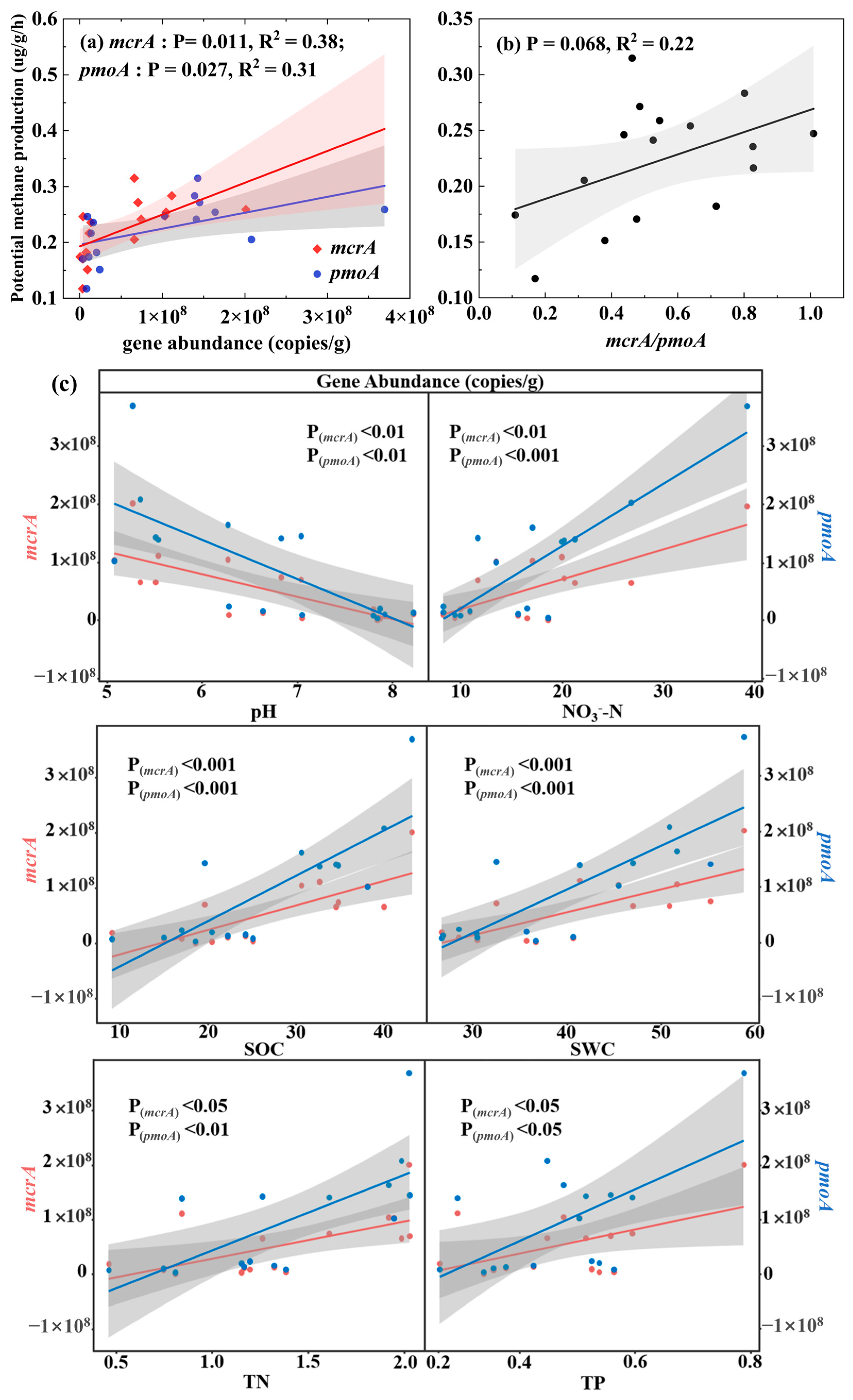
The potential methane production in the rice cropland and vegetable field was higher than that in the poplar plantation (p < 0.05) (Figure 1). The abundance of mcrA and pmoA genes in the rice cropland and vegetable field was higher than in the natural wetland and poplar plantation. (p < 0.05) (Figure 1). The potential methane production had positive correlations with both mcrA gene abundance (R2 = 0.38, p = 0.011) and pmoA gene abundance (R2 = 0.31, p = 0.027) across the four land use types (Figure 2a). There was a positive correlation (R2 = 0.22, p = 0.068) between the potential methane production and the mcrA/pmoA ratio (Figure 2b).

3.3. Community Compositions of Methanogens and Methanotrophs

After bioinformatic processing, high-quality mcrA reads (totaling 579,489 with an average of 416 per sample) were clustered into 1092 operational taxonomic units (OTUs) at a 70% nucleotide sequence identity threshold, and the pmoA reads (totaling 383,129 with an average of 476 per sample) were clustered into 678 OTUs at a 70% sequence identity threshold.
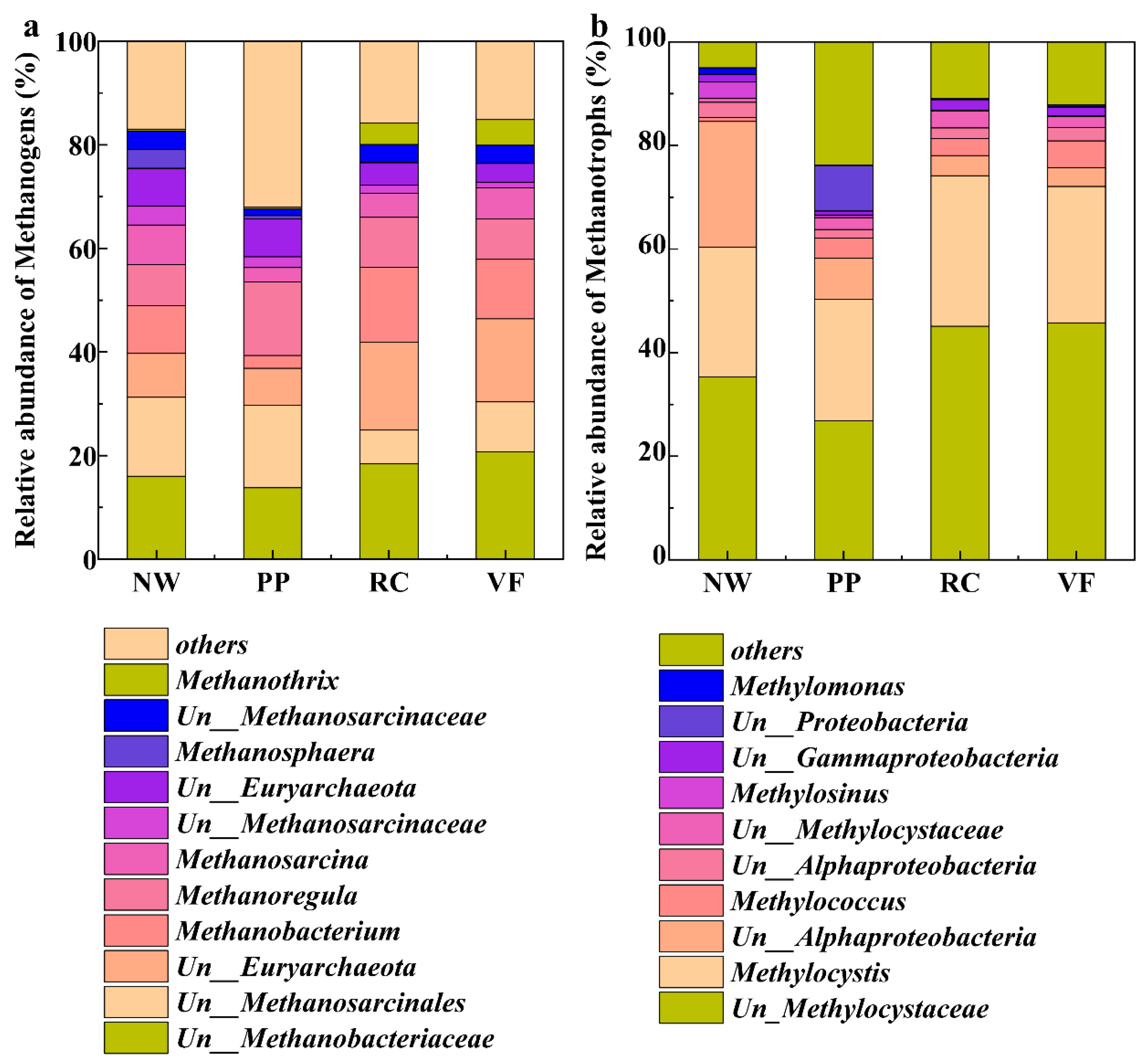
For methanogens, the relative abundance of Methanosarcina in the poplar plantation and rice cropland was 4.59% and 2.99% lower than in the natural wetland, respectively (p < 0.05) (Figure 3a and Table S1). The relative abundance of Methanosarcina in the poplar plantation was 2.99% lower than in the vegetable field (p < 0.05) (Figure 3a and Table S1). The relative abundance of Unclassified-Methanosarcinaceae in the vegetable field was 2.5% lower than in the natural wetland (p < 0.05) (Figure 3a and Table S1). The relative abundance of Norank-Methanosarcinaceae in the poplar plantation was 2.60% and 2.50% lower than in the natural wetland and vegetable field, respectively (Figure 3a and Table S1). For methanotrophs, the relative abundance of Norank-Alphaproteobacteria in the rice cropland and vegetable field was 20.37% and 20.65% lower than in the natural wetland, respectively (p = 0.068 and p = 0.051) (Figure 3b and Table S1). Methanogens and methanotrophs possessed similar genus-level compositions in the rice cropland and vegetable field (Figure 3b and Table S1).
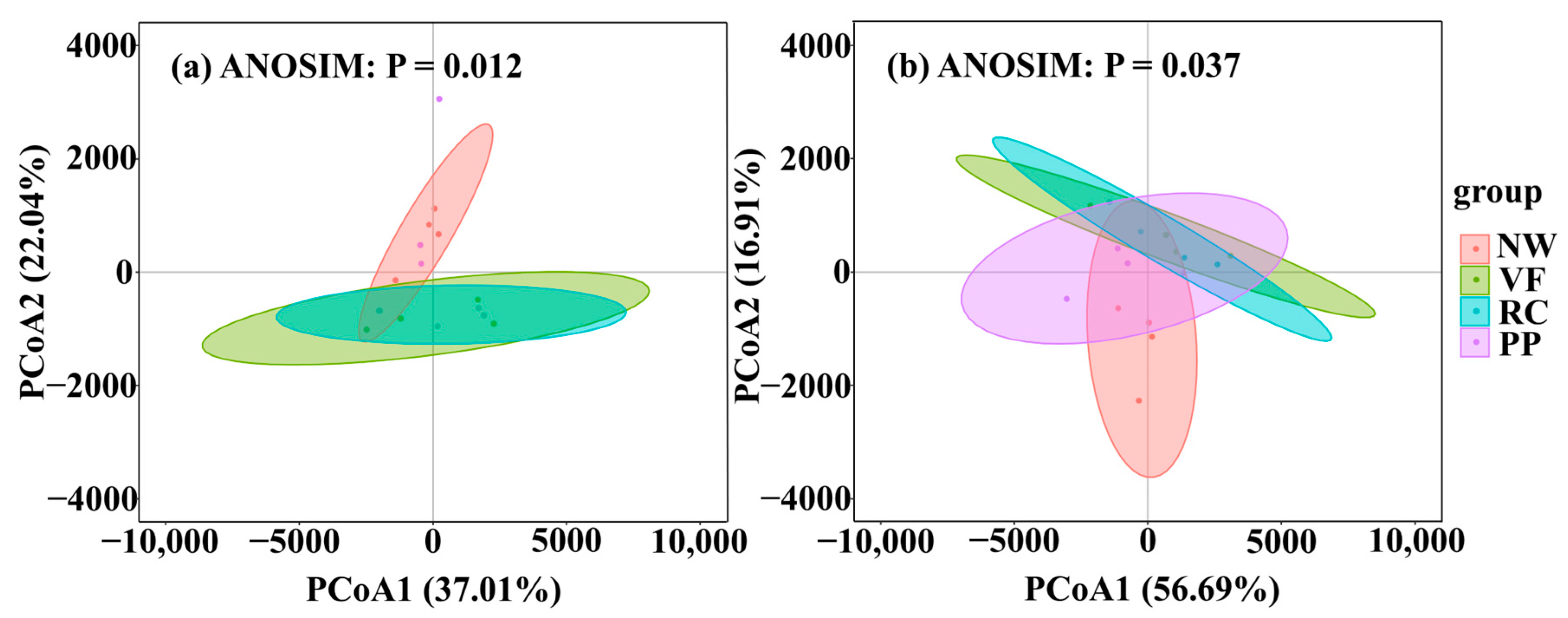
The PCoA analysis revealed that the land use type significantly affected the community structure of methanogens and methanotrophs (Figure 4). The analysis showed that the analytical R values of the mcrA gene and the pmoA gene reached 0.3742 and 0.207, respectively (p < 0.05) (Figure 4 and Figure S1). It explained 59.05% and 73.60% of the difference in methanogenic and methanotrophic community composition, respectively. For both methanogens and methanotrophs, the high overlap of ellipses for rice cropland and vegetable field in the PCoA plot indicates that the community composition of methanogens and methanotrophs in the two land use types is similar (Figure 4).

3.4. The Relationship Between Soil Physico-Chemical Properties and the Methanogenic/Methanotrophic Communities

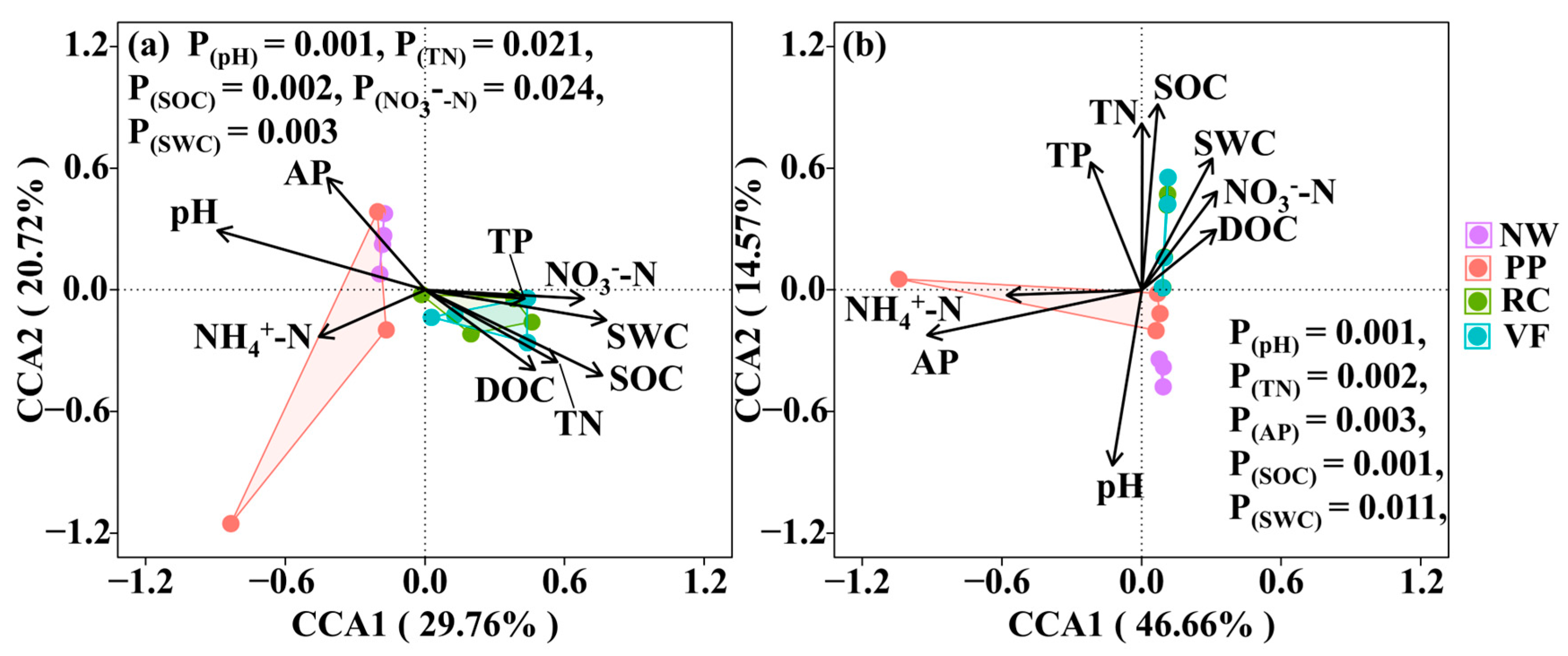
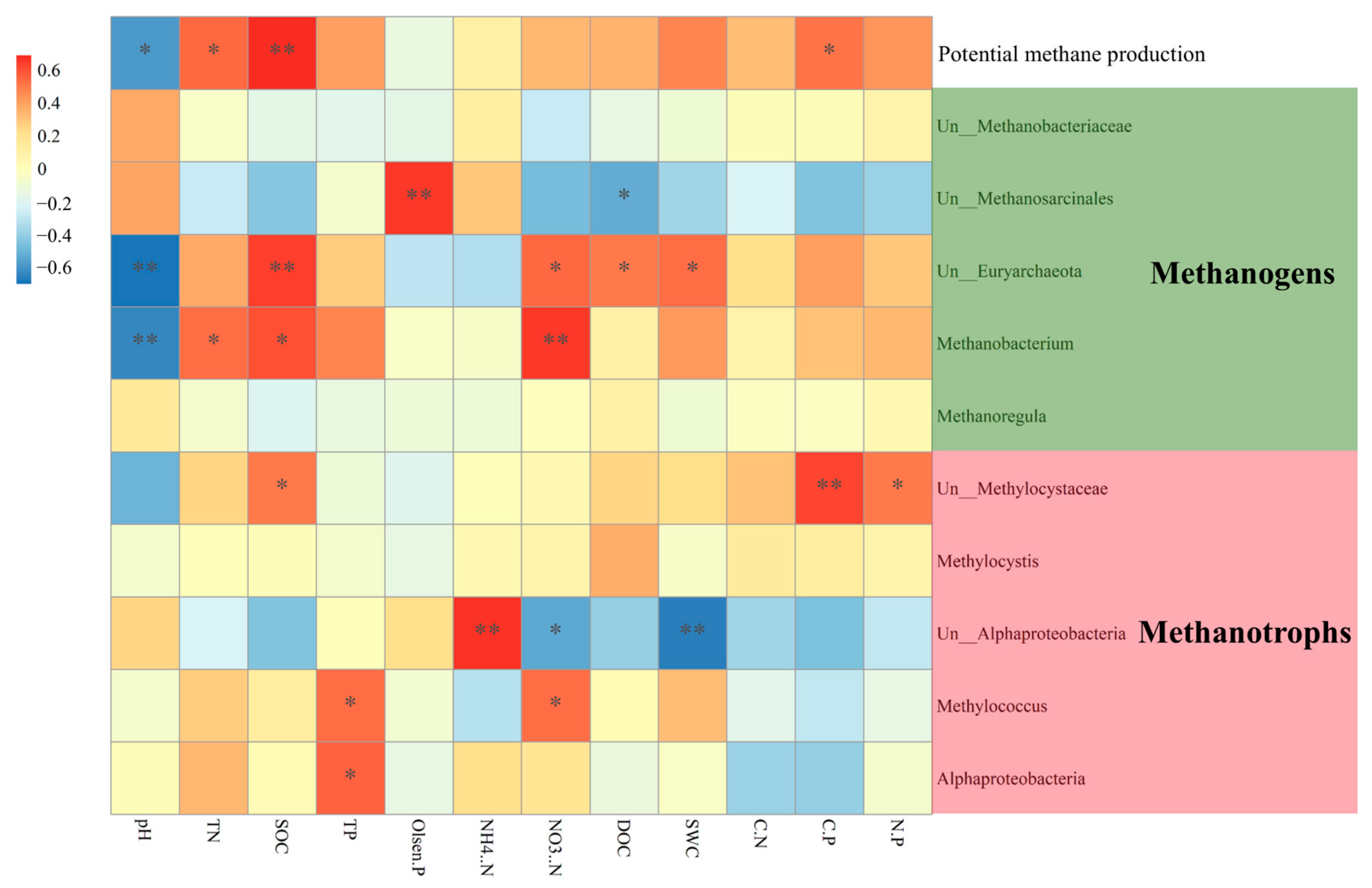
The methanogenic and methanotrophic communities were correlated with multiple soil physico-chemical factors (Figure 5). For the methanogens, soil pH, SOC, SWC, TN, and NO3-N were the significant influencing factors affecting the methanogenic communities (p < 0.05). It explained 50.48% of the difference in methanogenic community compositions (Figure 5a). Moreover, soil pH, SOC, SWC, TN, and available phosphorus (AP) were important factors affecting the methanotrophic communities (p < 0.05). These variables collectively accounted for 61.23% of the variation in methanotrophic communities (Figure 5b). Soil TN, SOC, TP, SWC, and NO3-N were significantly and positively correlated with mcrA and pmoA gene abundance (Figure 2c). Soil pH was significantly and negatively correlated with mcrA and pmoA gene abundance (Figure 2c). Heatmap-based correlation analysis revealed that soil TN, SOC, and C/P were significantly and positively correlated with potential methane production (Figure 6). Soil pH was significantly and negatively correlated with potential methane production (Figure 6).

4. Discussion

It is well documented that soil CH4 emissions are jointly regulated by the CH4 production and oxidation processes [27]. In the present study, the rice cropland and vegetable field exhibited higher potential methane production than the poplar plantation in the Dongting Lake area. This finding is consistent with our hypothesis. In addition, soil total nitrogen and organic carbon in poplar plantation were significantly lower than those in rice cropland and vegetable field in this study. Previous research has shown that soil total nitrogen and organic matter are significantly associated with potential methane production [51,52]. Therefore, differences in soil resource levels may partly explain the higher potential methane production observed in the rice cropland and vegetable field compared with the poplar plantation in the Dongting Lake area. The existing literature reports higher CH4 emissions from cropland soil than from forest soil [53]. This finding suggests that the potential methane production observed in this study is consistent with the actual emission trends reported in the field.
The abundance of methanogens in natural wetland and poplar plantation was significantly lower than that in rice cropland and vegetable field in this study. This pattern is consistent with the observed differences in potential methane production. Kong [31] demonstrated that the mcrA gene abundance regulates CH4 emissions, showing a positive correlation between gene abundance and emission rates. This finding is similar to our results. Although both mcrA and pmoA gene abundances were positively correlated with potential methane production in this study, the regression slope for pmoA versus potential methane production was lower than that for mcrA. These results may indicate that potential methane production was primarily driven by the CH4 production process rather than the CH4 oxidation process. The CH4 oxidation process may largely depend on CH4 production rates and soil CH4 concentrations [54]. Soil water content in this study was a limiting factor for mcrA abundance, as methanogens require anoxic conditions for a certain period to accumulate [55]. Fertilization modifies carbon and nitrogen substrates in cropland soils, alleviates phosphorus limitations, and increases the abundance and metabolic activity of methanogens [13,31,56]. These findings suggest that soil organic carbon, soil water content, total nitrogen, and total phosphorus are widely recognized as critical determinants of methanogenic abundance. This is consistent with our results. In this study, methanogenic and methanotrophic community compositions exhibited significant differences among different land use types. Land use changes drive alterations in soil fertility, thereby impacting the structure and function of soil microbial communities [57,58,59,60]. Our results indicate that soil total nitrogen, organic carbon, water content, and pH are significantly associated with both the abundance and community composition of methanogens and methanotrophs. This suggests that variation in these environmental factors may drive differences in both the abundance and community composition of methanogens and methanotrophs. Overall, soil potential methane production depends on the activity of both methanogenic and methanotrophic communities [31]. Our results indicate that methanogens in the Dongting Lake area may have a greater impact on potential methane production than methanotrophs. The trade-off between methanogens and methanotrophs determines potential methane production.
A limitation of this study is the absence of field monitoring of CH4 emissions. Long-term in situ observations are necessary to verify the findings derived from incubation experiments. In addition, several relevant environmental factors, such as soil redox potential (Eh) and temperature, were not included in the present study. These may limit a comprehensive interpretation of CH4 emissions and associated microorganisms. Future studies should expand the sample size across land use types and seasons to better characterize spatial heterogeneity in CH4 emissions and methane-cycling microbial communities in the Dongting Lake area.

5. Conclusions

In this study, we explored soil potential methane production from four different land uses in the Dongting Lake of China. Intensively managed rice cropland and vegetable field exhibited significantly higher potential methane production than poplar plantation. Significant differences in soil physicochemical properties and methanogenic community composition were observed among land use types, and these variables were significantly associated with potential methane production. High-throughput sequencing revealed significant variations in mcrA and pmoA gene abundance, as well as methanogenic and methanotrophic community composition across land use types. The rice cropland and vegetable field exhibited the highest mcrA and pmoA gene abundances. Soil water content, total nitrogen, soil organic carbon, and pH were significantly associated with methanogenic and methanotrophic community composition. These findings suggest that methanogens play a more important role in regulating potential methane production than methanotrophs in the Dongting Lake area. In summary, significant differences in potential methane production and microbial community structure were observed among land use types in the Dongting Lake area. These findings provide a scientific basis for future land use planning and greenhouse gas mitigation in subtropical wetland ecosystems. The results also provide theoretical support for the “Returning Farmland to Wetlands” and “Returning Poplar Plantations to Wetlands” policy to restore the ecological environment in the Dongting Lake area.

Supplementary Materials

The following supporting information can be downloaded at: https://www.mdpi.com/article/10.3390/agronomy16050583/s1, Figure S1: Results of analysis of similarities (ANOSIM) of the methanogens (a) and methanotrophs (b) community compositions under four treatment soils; Table S1: The relative abundance (%) of Methanogens and Methanotrophs at the genus level under natural wetland (WL), poplar plantation (PP), rice cropland (RC), and vegetable field (VF).

Author Contributions

Conceptualization, D.G.; methodology, D.G.; software, Z.Z.; validation, X.L. and W.Y.; formal analysis, Z.Z.; investigation, X.L. and W.Y.; resources, D.G. and J.Z.; data curation, Z.Z.; writing—original draft preparation, Z.Z.; writing—review and editing, D.G. and J.Z.; visualization, Z.Z. and J.Z.; supervision, M.W.; project administration, W.Y. and M.W.; funding acquisition, D.G. All authors have read and agreed to the published version of the manuscript.

Funding

This study was supported by the National Natural Science Foundations of China (42207339); and the Natural Science Foundation of Hunan Province (2023JJ41046).

Data Availability Statement

The raw data supporting the conclusions of this article will be made available by the authors on request.

Conflicts of Interest

The authors declare no conflict of interest.

References

  1. Al-Ghussain, L. Global warming: Review on driving forces and mitigation. Environ. Prog. Sustain. Energy 2019, 38, 13–21. [Google Scholar] [CrossRef]
  2. Nan, Q.; Xin, L.; Qin, Y.; Waqas, M.; Wu, W. Exploring long-term effects of biochar on mitigating methane emissions from paddy soil: A review. Biochar 2021, 3, 125–134. [Google Scholar] [CrossRef]
  3. Liu, L.; Greaver, T.L. A review of nitrogen enrichment effects on three biogenic GHGs: The CO2 sink may be largely offset by stimulated N2O and CH4 emission. Ecol. Lett. 2009, 12, 1103–1117. [Google Scholar] [CrossRef]
  4. Xu, C.; Zhang, N.; Zhang, K.; Li, S.; Xia, Q.; Xiao, J.; Liang, M.; Lei, W.; He, J.; Chen, G. Coupled anaerobic methane oxidation and metal reduction in soil under elevated CO2. Glob. Change Biol. 2023, 29, 4670–4685. [Google Scholar] [CrossRef]
  5. Waqas, M.; Asam, Z.; Rehan, M.; Anwar, M.N.; Khattak, R.A.; Ismail, I.M.I.; Tabatabaei, M.; Nizami, A.S. Development of biomass-derived biochar for agronomic and environmental remediation applications. Biomass Convers. Biorefin. 2021, 11, 339–361. [Google Scholar] [CrossRef]
  6. Bridgham, S.D.; Cadillo-Quiroz, H.; Keller, J.K.; Zhuang, Q. Methane emissions from wetlands: Biogeochemical, microbial, and modeling perspectives from local to global scales. Glob. Change Biol. 2013, 19, 1325–1346. [Google Scholar] [CrossRef] [PubMed]
  7. Singh, C.; Tiwari, S.; Boudh, S.; Singh, J.S. Biochar Application in Management of Paddy Crop Production and Methane Mitigation. In Agro-Environmental Sustainability: Volume 2: Managing Environmental Pollution; Singh, J.S., Seneviratne, G., Eds.; Springer International Publishing: Cham, Switzerland, 2017; pp. 123–145. [Google Scholar]
  8. Saunois, M.; Stavert, A.R.; Poulter, B.; Bousquet, P.; Canadell, J.G.; Jackson, R.B.; Raymond, P.; Dlugokencky, E.J.; Houweling, S.; Patra, P.; et al. The Global Methane Budget 2000–2017. Earth Syst. Sci. Data 2020, 12, 1561–1623. [Google Scholar] [CrossRef]
  9. Nazaries, L.; Murrell, J.C.; Millard, P.; Baggs, L.; Singh, B.K. Methane, microbes and models: Fundamental understanding of the soil methane cycle for future predictions. Environ. Microbiol. 2013, 15, 2395–2417. [Google Scholar] [CrossRef]
  10. Flemming, H.C.; Leis, A. Encyclopedia of Environmental Microbiology; John Wiley & Sons: Hoboken, NJ, USA, 2002. [Google Scholar]
  11. Conrad, R. Microbial ecology of methanogens and methanotrophs. Adv. Agron. 2007, 96, 1–63. [Google Scholar]
  12. Han, M.; Zhu, B. Changes in soil greenhouse gas fluxes by land use change from primary forest. Glob. Change Biol. 2020, 26, 2656–2667. [Google Scholar] [CrossRef]
  13. Gao, D.; Sheng, R.; Whiteley, A.S.; Moreira-Grez, B.; Qin, H.; Zhang, W.; Zhan, Y.; Wei, W. Effect of phosphorus amendments on rice rhizospheric methanogens and methanotrophs in a phosphorus deficient soil. Geoderma 2020, 368, 114312. [Google Scholar] [CrossRef]
  14. Yang, L.; Wang, L.; Yu, D.; Yao, R.; Li, C.A.; He, Q.; Wang, S.; Wang, L. Four decades of wetland changes in Dongting Lake using Landsat observations during 1978–2018. J. Hydrol. 2020, 587, 124954. [Google Scholar] [CrossRef]
  15. Wu, H.; Xiao, S.; Dai, J. Effect of poplar ecological retreat project on soil bacterial community structure in Dongting Lake wetland. Front. Microbiol. 2022, 13, 1026872. [Google Scholar] [CrossRef]
  16. Sun, Z.; Lotz, T.; Chang, N.-B. Assessing the long-term effects of land use changes on runoff patterns and food production in a large lake watershed with policy implications. J. Environ. Manag. 2017, 204, 92–101. [Google Scholar] [CrossRef] [PubMed]
  17. Hu, W.; Li, G.; Li, Z. Spatial and temporal evolution characteristics of the water conservation function and its driving factors in regional lake wetlands—Two types of homogeneous lakes as examples. Ecol. Indic. 2021, 130, 108069. [Google Scholar] [CrossRef]
  18. Deng, Z.; Li, Y.; Xie, Y.; Peng, C.; Chen, X.; Li, F.; Ren, Y.; Pan, B.; Zhang, C. Hydrologic and edaphic controls on soil carbon emission in Dongting Lake Floodplain, China. J. Geophys. Res. Biogeosci. 2018, 123, 3088–3097. [Google Scholar] [CrossRef]
  19. Li, B.; Wan, R.; Yang, G.; Yang, S.; Dong, L.; Cui, J.; Zhang, T. Centennial loss of lake wetlands in the Yangtze Plain, China: Impacts of land use changes accompanied by hydrological connectivity loss. Water Res. 2024, 256, 121578. [Google Scholar] [CrossRef]
  20. Ren, B.; Xie, Y.; Li, Y. Understory Floristic Diversity in Poplar Plantations in the Dongting Lake Wetlands, China. Wetlands 2020, 40, 1549–1560. [Google Scholar] [CrossRef]
  21. Li, Y.; Chen, X.; Xie, Y.; Li, X.; Li, F.; Hou, Z. Effects of young poplar plantations on understory plant diversity in the Dongting Lake wetlands, China. Sci. Rep. 2014, 4, 6339. [Google Scholar] [CrossRef]
  22. Juanle, W.; Mengxu, G.; Haihui, G.; Eryang, C. Spatiotemporal distribution and historical evolution of polders in the Dongting Lake area, China. J. Geogr. Sci. 2016, 26, 1561–1578. [Google Scholar] [CrossRef]
  23. Raich, J.W.; Tufekciogul, A. Vegetation and soil respiration: Correlations and controls. Biogeochemistry 2000, 48, 71–90. [Google Scholar] [CrossRef]
  24. Wachiye, S.; Merbold, L.; Vesala, T.; Rinne, J.; Räsänen, M.; Leitner, S.; Pellikka, P. Soil greenhouse gas emissions under different land-use types in savanna ecosystems of Kenya. Biogeosciences 2020, 17, 2149–2167. [Google Scholar] [CrossRef]
  25. Nazaries, L.; Tate, K.R.; Ross, D.J.; Singh, J.; Dando, J.; Saggar, S.; Baggs, E.M.; Millard, P.; Murrell, J.C.; Singh, B.K. Response of methanotrophic communities to afforestation and reforestation in New Zealand. ISME J. 2011, 5, 1832–1836. [Google Scholar] [CrossRef]
  26. Dörr, N.; Glaser, B.; Kolb, S. Methanotrophic communities in Brazilian ferralsols from naturally forested, afforested, and agricultural sites. Appl. Environ. Microbiol. 2010, 76, 1307–1310. [Google Scholar] [CrossRef]
  27. Ren, Y.; Lianlian, Z.; Zhengmiao, D.; Yonghong, X.; Chengyi, Z.; Fengjin, X.; Xinsheng, C.; Feng, L.; Yeai, Z.; Rong, S.; et al. Changes in Methane Emission and Community Composition of Methane-Cycling Microorganisms Along an Elevation Gradient in the Dongting Lake Floodplain, China. Atmosphere 2020, 11, 997. [Google Scholar] [CrossRef]
  28. Tate, K.R. Soil methane oxidation and land-use change—From process to mitigation. Soil Biol. Biochem. 2015, 80, 260–272. [Google Scholar] [CrossRef]
  29. Hiltbrunner, D.; Zimmermann, S.; Karbin, S.; Hagedorn, F.; Niklaus, P. Increasing soil methane sink along a 120-year afforestation chronosequence is driven by soil moisture. Glob. Change Biol. 2012, 18, 3664–3671. [Google Scholar] [CrossRef]
  30. Price, S.J.; Sherlock, R.R.; Kelliher, F.M.; McSeveny, T.M.; Tate, K.R.; Condron, L.M. Pristine New Zealand forest soil is a strong methane sink. Glob. Change Biol. 2004, 10, 16–26. [Google Scholar] [CrossRef]
  31. Kong, D.; Li, S.; Jin, Y.; Wu, S.; Chen, J.; Hu, T.; Wang, H.; Liu, S.; Zou, J. Linking methane emissions to methanogenic and methanotrophic communities under different fertilization strategies in rice paddies. Geoderma 2019, 347, 233–243. [Google Scholar] [CrossRef]
  32. Wu, H.; Zeng, G.; Liang, J.; Chen, J.; Xu, J.; Dai, J.; Sang, L.; Li, X.; Ye, S. Responses of landscape pattern of China’s two largest freshwater lakes to early dry season after the impoundment of Three-Gorges Dam. Int. J. Appl. Earth Obs. Geoinf. 2017, 56, 36–43. [Google Scholar] [CrossRef]
  33. Yang, N.; Mo, W.; Li, M.; Zhang, X.; Chen, M.; Li, F.; Gao, W. A study on the spatio-temporal land-use changes and ecological response of the Dongting Lake Catchment. ISPRS Int. J. Geo-Inf. 2021, 10, 716. [Google Scholar] [CrossRef]
  34. Kalembasa, S.J.; Jenkinson, D.S. A comparative study of titrimetric and gravimetric methods for the determination of organic carbon in soil. J. Sci. Food Agric. 1973, 24, 1085–1090. [Google Scholar] [CrossRef]
  35. Boström, C.; Cedergren, A.; Johansson, G.; Pettersson, I. Rapid coulometric method for the Kjeldahl determination of nitrogen. Talanta 1974, 21, 1123–1127. [Google Scholar] [CrossRef]
  36. Kowalenko, C.; Babuin, D. Interference problems with phosphoantimonylmolybdenum colorimetric measurement of phosphorus in soil and plant materials. Commun. Soil Sci. Plant Anal. 2007, 38, 1299–1316. [Google Scholar] [CrossRef]
  37. Wang, M.; Gao, D.; Liu, S.; Yan, W.; Zhao, J. Forest restoration increases energy flow through the fungal channel and decreases energy flow through the herbivorous channel in soil micro-food webs. Soil Biol. Biochem. 2024, 198, 109561. [Google Scholar] [CrossRef]
  38. Tighe, M.; Edwards, M.M.; Cluley, G.; Lisle, L.; Wilson, S.C. Colorimetrically determining total antimony in contaminated waters and screening for antimony speciation. J. Hydrol. 2018, 563, 84–91. [Google Scholar] [CrossRef]
  39. Freeman, C.; Nevison, G.; Kang, H.; Hughes, S.; Reynolds, B.; Hudson, J. Contrasted effects of simulated drought on the production and oxidation of methane in a mid-Wales wetland. Soil Biol. Biochem. 2002, 34, 61–67. [Google Scholar] [CrossRef]
  40. Steinberg, L.M.; Regan, J.M. Phylogenetic comparison of the methanogenic communities from an acidic, oligotrophic fen and an anaerobic digester treating municipal wastewater sludge. Appl. Environ. Microbiol. 2008, 74, 6663–6671. [Google Scholar] [CrossRef]
  41. Holmes, A.J.; Costello, A.; Lidstrom, M.E.; Murrell, J.C. Evidence that participate methane monooxygenase and ammonia monooxygenase may be evolutionarily related. FEMS Microbiol. Lett. 1995, 132, 203–208. [Google Scholar] [CrossRef] [PubMed]
  42. Chen, Z.; Luo, X.; Hu, R.; Wu, M.; Wu, J.; Wei, W. Impact of long-term fertilization on the composition of denitrifier communities based on nitrite reductase analyses in a paddy soil. Microb. Ecol. 2010, 60, 850–861. [Google Scholar] [CrossRef]
  43. Edgar, R.C.; Haas, B.J.; Clemente, J.C.; Quince, C.; Knight, R. UCHIME improves sensitivity and speed of chimera detection. Bioinformatics 2011, 27, 2194–2200. [Google Scholar] [CrossRef]
  44. Wang, Q.; Quensen, J.F., III; Fish, J.A.; Lee, T.K.; Sun, Y.; Tiedje, J.M.; Cole, J.R. Ecological patterns of nifH genes in four terrestrial climatic zones explored with targeted metagenomics using FrameBot, a new informatics tool. MBio 2013, 4, e00592-13. [Google Scholar] [CrossRef]
  45. Zhou, J.; Wu, L.; Deng, Y.; Zhi, X.; Jiang, Y.-H.; Tu, Q.; Xie, J.; Van Nostrand, J.D.; He, Z.; Yang, Y. Reproducibility and quantitation of amplicon sequencing-based detection. ISME J. 2011, 5, 1303–1313. [Google Scholar] [CrossRef]
  46. Caporaso, J.G.; Bittinger, K.; Bushman, F.D.; DeSantis, T.Z.; Andersen, G.L.; Knight, R. PyNAST: A flexible tool for aligning sequences to a template alignment. Bioinformatics 2010, 26, 266–267. [Google Scholar] [CrossRef]
  47. Yang, S.; Liebner, S.; Alawi, M.; Ebenhöh, O.; Wagner, D. Taxonomic database and cut-off value for processing mcrA gene 454 pyrosequencing data by Mothur. J. Microbiol. Methods 2014, 103, 3–5. [Google Scholar] [CrossRef]
  48. Caporaso, J.G.; Kuczynski, J.; Stombaugh, J.; Bittinger, K.; Bushman, F.D.; Costello, E.K.; Fierer, N.; Peña, A.G.; Goodrich, J.K.; Gordon, J.I.; et al. QIIME allows analysis of high-throughput community sequencing data. Nat. Methods 2010, 7, 335–336. [Google Scholar] [CrossRef]
  49. Degelmann, D.M.; Borken, W.; Drake, H.L.; Kolb, S. Different atmospheric methane-oxidizing communities in European beech and Norway spruce soils. Appl. Environ. Microbiol. 2010, 76, 3228–3235. [Google Scholar] [CrossRef] [PubMed]
  50. Dumont, M.G.; Lüke, C.; Deng, Y.; Frenzel, P. Classification of pmoA amplicon pyrosequences using BLAST and the lowest common ancestor method in MEGAN. Front. Microbiol. 2014, 5, 67058. [Google Scholar] [CrossRef]
  51. He, K.; Zhao, J.; Pan, J.; Zhang, Q.; Feng, H. Coexistence networks of soil methanogens are closely tied to methane generation in wetlands on the northeastern of the Qinghai–Tibet Plateau. Front. Microbiol. 2025, 16, 1616051. [Google Scholar] [CrossRef]
  52. Zhou, C.; Zhang, Y.; Li, S.; Jiang, Q.; Chen, H.; Zhu, T.; Xu, X.; Liu, H.; Qiu, S.; Wu, J.; et al. Exogenous nitrogen from riverine exports promotes soil methane production in saltmarshes in China. Sci. Total Environ. 2022, 838, 156203. [Google Scholar] [CrossRef] [PubMed]
  53. Robertson, G.P.; Paul, E.A.; Harwood, R.R. Greenhouse Gases in Intensive Agriculture: Contributions of Individual Gases to the Radiative Forcing of the Atmosphere. Science 2000, 289, 1922–1925. [Google Scholar] [CrossRef]
  54. Tate, K.; Walcroft, A.; Pratt, C. Varying atmospheric methane concentrations affect soil methane oxidation rates and methanotroph populations in pasture, an adjacent pine forest, and a landfill. Soil Biol. Biochem. 2012, 52, 75–81. [Google Scholar] [CrossRef]
  55. Serrano-Silva, N.; Sarria-Guzmán, Y.; Dendooven, L.; Luna-Guido, M. Methanogenesis and Methanotrophy in Soil: A Review. Pedosphere 2014, 24, 291–307. [Google Scholar] [CrossRef]
  56. Hu, H.; Chen, J.; Zhou, F.; Nie, M.; Hou, D.; Liu, H.; Delgado-Baquerizo, M.; Ni, H.; Huang, W.; Zhou, J.; et al. Relative increases in CH4 and CO2 emissions from wetlands under global warming dependent on soil carbon substrates. Nat. Geosci. 2024, 17, 26–31. [Google Scholar] [CrossRef]
  57. Chakraborty, A.; Chakrabarti, K.; Chakraborty, A.; Ghosh, S. Effect of long-term fertilizers and manure application on microbial biomass and microbial activity of a tropical agricultural soil. Biol. Fertil. Soils 2011, 47, 227–233. [Google Scholar] [CrossRef]
  58. Zheng, H.J.; Ju-Pei, S.; Li-Mei, Z.; Yong-Guan, Z.; Yuan-Ming, Z.; Ming-Gang, X.; Hongjie, D. Quantitative analyses of the abundance and composition of ammonia-oxidizing bacteria and ammonia-oxidizing archaea of a Chinese upland red soil under long-term fertilization practices. Environ. Microbiol. 2007, 9, 2364–2374. [Google Scholar]
  59. Huang, J.; Liu, X.; Liu, J.; Zhang, Z.; Zhang, W.; Qi, Y.; Li, W.; Chen, Y. Changes of soil bacterial community, network structure, and carbon, nitrogen and sulfur functional genes under different land use types. Catena 2023, 231, 107385. [Google Scholar] [CrossRef]
  60. Zhu, X.; Yuan, F.; He, L.; Guo, Z.; Wang, N.; Zuo, Y.; Liu, J.; Li, K.; Wang, Y.; Sun, Y. Wetland conversion to cropland alters the microbes along soil profiles and over seasons. Catena 2022, 214, 106282. [Google Scholar] [CrossRef]
Figure 1. Potential methane production (a) and gene copy number of mcrA (b) and pmoA (c) under four treatment soils. NW: natural wetland; PP: poplar plantation; RC: rice cropland; VF: vegetable field. Different letters indicate significant (p < 0.05) differences among land use types according to the LSD test. Box plots show the median values (horizontal lines), mean values (circles), first and third quartiles (rectangles), 1.5× interquartile range (whiskers).
Agronomy 16 00583 g001
Figure 2. Relationship between potential methane production and abundances of mcrA gene and pmoA gene (a), and mcrA/pmoA ratio (b). Statistical analysis was performed using ordinary least-squares linear regressions. The point with red, blue, and black colors indicates mcrA genes, pmoA genes, and mcrA/pmoA ratio, respectively. The solid red, blue, and black lines represent the fitted model, and the colored areas correspond to 95% confidence intervals. Relationship between soil physico-chemical properties and the abundance of mcrA and pmoA genes (c). The point with red and blue colors indicates mcrA and pmoA genes, respectively. The solid red and blue lines represent the fitted model, and the gray areas correspond to 95% confidence intervals.
Agronomy 16 00583 g002
Figure 3. Relative abundance of methanogens (a) and methanotrophs (b) at the genus level under four treatment soils. NW: natural wetland; PP: poplar plantation; RC: rice cropland; VF: vegetable field. Groups with <1% sequence number and Un__Bacteria/Archaea were merged into the “Others” taxa.
Agronomy 16 00583 g003
Figure 4. Results of principal co-ordinate analysis (PCoA) of the methanogens (a) and methanotrophs (b) community compositions under four treatment soils. NW: natural wetland; PP: poplar plantation; RC: rice cropland; VF: vegetable field. Analysis of similarities (ANOSIM) was employed to assess between-group and within-group dissimilarities in sample data. A p-value < 0.05 suggests that between-group differences are greater than within-group variation.
Agronomy 16 00583 g004
Figure 5. Canonical correlation analysis (CCA) showing the key soil physico-chemical properties that influence the composition of methanogens (a) and methanotrophs (b) communities under four treatment soils. NW: natural wetland; PP: poplar plantation; RC: rice cropland; VF: vegetable field.
Agronomy 16 00583 g005
Figure 6. Correlation of soil physico-chemical properties with methanogens and methanotrophs by heat map. Color gradients indicate Pearson correlation coefficients. Red and blue boxes indicate positive and negative correlations, respectively. The color of the squares indicates the strength of the correlation. * p < 0.05, ** p < 0.01.
Agronomy 16 00583 g006
Table 1. Soil physico-chemical properties (means ± SE, n = 4) of the four land use types (i.e., natural wetland, poplar plantation, rice cropland, and vegetable field) in the Dongting Lake area.
Natural WetlandPoplar PlantationRice CroplandVegetable Field
pH7.86 ± 0.03 a7.05 ± 0.42 ab6.04 ± 0.39 bc5.68 ± 0.39 c
TN (g kg−1)0.79 ± 0.14 b1.27 ± 0.52 ab1.80 ± 0.18 a1.60 ± 0.27 a
SOC (g kg−1)15.8 ± 2.50 b22.1 ± 1.81 b31.2 ± 4.31 a37.2 ± 2.29 a
TP (g kg−1)0.37 ± 0.06 a0.47 ± 0.04 a0.50 ± 0.02 a0.54 ± 0.10 a
AP (mg kg−1)10.8 ± 1.01 a12.2 ± 3.89 a8.36 ± 1.20 a7.06 ± 0.89 a
NH4+-N (mg kg−1)8.32 ± 1.40 b32.6 ± 3.52 a12.4 ± 2.82 b11.3 ± 2.24 b
NO3-N (mg kg−1)15.2 ± 1.86 ab9.18 ± 0.62 b19.2 ± 3.22 ab22.9 ± 5.32 a
DOC (g kg−1)2.36 ± 0.61 a1.88 ± 0.33 a3.44 ± 1.07 a3.31 ± 0.74 a
SWC (%)34.9 ± 2.94 b29.1 ± 0.86 b45.5 ± 4.46 a50.2 ± 4.08 a
TN: total nitrogen; DOC: dissolved organic carbon; SOC: soil organic carbon; TP: total phosphorus; SWC: soil water content; NH4+-N: ammonium nitrogen; NO3-N: nitrate nitrogen; AP: available phosphorus. Different letters indicate significant (p < 0.05) differences among land use types according to the LSD test.
Disclaimer/Publisher’s Note: The statements, opinions and data contained in all publications are solely those of the individual author(s) and contributor(s) and not of MDPI and/or the editor(s). MDPI and/or the editor(s) disclaim responsibility for any injury to people or property resulting from any ideas, methods, instructions or products referred to in the content.