Article

Alleviating Selenite Stress in Grapevines Through Strigolactone and Dopamine-Induced Growth and Selenium Uptake


1
College of Horticulture, Sichuan Agricultural University, Chengdu 611130, China
2
Institute of Plant Protection, Sichuan Academy of Agricultural Sciences, Chengdu 610066, China
*
Authors to whom correspondence should be addressed.
Agronomy 2026, 16(5), 582; https://doi.org/10.3390/agronomy16050582
Submission received: 2 February 2026 / Revised: 28 February 2026 / Accepted: 7 March 2026 / Published: 8 March 2026
(This article belongs to the Section Plant-Crop Biology and Biochemistry)

Abstract

To alleviate selenium (Se) stress in grapes, we investigated the effects of the strigolactone analog GR24 (1 μmol/L) and dopamine (DA, 100 μmol/L) on the growth and Se uptake of grapevines under selenite stress (0.5 mg/L). Se treatment inhibited grapevine growth, indicating that Se induced stress in grapevines. Under Se stress, both GR24 and DA treatments increased growth parameters and photosynthetic capacity. In addition, they enhanced peroxidase activity, soluble protein content, and soluble sugar content. Furthermore, both GR24 and DA treatments reduced Se content in grapevines. Compared to Se treatment, GR24 reduced root and shoot Se contents by 4.63% and 25.04%, respectively, while DA decreased root Se content by 7.49% but did not significantly affect shoot Se content. Regarding the translocation factor, GR24 treatment decreased this value, while DA treatment increased it under Se stress. In summary, both GR24 and DA treatments can alleviate selenite stress, promote growth, and exhibit potential in reducing Se uptake in grapevines.

1. Introduction

Selenium (Se) plays a crucial role in the physiological processes of animals and certain microorganisms [1,2]. The soil Se across the globe is heterogeneous, with some agricultural soils being Se-deficient and others Se-rich [3]. While Se can promote the growth of crops, excessive Se can be toxic, causing symptoms of poisoning and inhibiting crop growth and physiological activities [4,5]. Nevertheless, industrial operations and the overuse of Se-based fertilizers have led to Se being released into agroecosystems, potentially exerting toxic impacts on crops [6]. Therefore, identifying effective methods to alleviate Se stress in crops is vital for agricultural production.
Plant growth regulators can regulate plant growth, development, and responses to abiotic stress [7]. Strigolactone, a carotenoid-derived compound, is extensively involved in crop growth, development, and stress response, and its synthetic analog GR24 is commonly used in crop studies [8]. GR24 increases the contents of soluble sugars, soluble proteins, and chlorophyll in crops; upregulates the activities of antioxidant enzymes [superoxide dismutase (SOD), catalase (CAT), and ascorbate peroxidase (APX)]; and effectively reduces levels of lipid peroxidation products [such as malondialdehyde (MDA) and H2O2]. These effects help maintain membrane integrity, alleviate stress-induced damage, and improve photosynthesis [9,10]. Additionally, GR24 alters the root architecture of apple plants by promoting the development of lateral roots, which enhances the uptake of potassium, calcium, and magnesium [11]. Under Se stress, GR24 effectively mitigates Se-induced growth inhibition by increasing root surface area and root vitality in crops like chili pepper, thereby improving water and nutrient uptake capacity [12]. Therefore, GR24 can alleviate stress and promote crop growth.
Dopamine (DA), a catecholamine neurotransmitter [13,14], possesses strong antioxidant capacity [15]. In animals, DA not only regulates neural activity and hormone secretion—thereby enhancing adaptive capacity—but also performs vital physiological functions in plants by controlling diverse cellular processes and increasing resistance to abiotic stress [16,17,18,19]. DA treatment can upregulate the expression of POD, SOD, and CAT genes in crops, thereby enhancing antioxidant enzyme activity and overall antioxidant capacity [20]. Furthermore, DA application suppresses the expression of chlorophyll degradation-related genes, resulting in increased chlorophyll content [21,22]. Additionally, as a signaling molecule, DA promotes mineral absorption in grapes by upregulating genes related to nitrogen metabolism [23]. Collectively, these studies indicate that DA can promote crop growth under stress conditions and enhance the uptake of mineral elements in crops.
Grapes (Vitis vinifera L.) are perennial, deciduous woody vines whose fruits are sweet, juicy, and nutrient-rich, making them highly popular among consumers [24]. However, abiotic stresses can negatively impact grape growth, yield, and quality [25], and high Se concentrations (0.5 mg/L selenite) have been shown to inhibit grapevine growth [26]. Several agronomic measures, such as the application of serotonin, arbuscular mycorrhizal fungi, melatonin, and intercropping, have been shown to influence Se uptake in grapevines under Se (selenite) stress. However, few of these measures are currently suitable for direct field application [27,28]. Therefore, more effective and practical approaches need to be screened for use in actual production. To date, the application of GR24 and DA on the growth of grapevines under Se stress has not been reported. Therefore, we hypothesize that treating grapevines with GR24 and DA may alleviate the effects of selenite stress. In this study, we investigated the effects of GR24 and DA on grapevine growth and Se uptake under selenite stress. The aim was to enhance the tolerance of grapevines to selenite stress, which could provide valuable insights for grape production.

2. Materials and Methods

2.1. Materials

In December 2024, one-year-old ‘Summer Black’ grapevine branches were collected from the vineyard at the Modern Agricultural Research and Development Base of Sichuan Agricultural University, Chengdu, China, and stored in moist sand. In February 2025, the branches were cut with one bud and planted in moist perlite according to the previous study [29].
GR24 was obtained from Beijing Coolaber Science and Technology Co., Ltd. (Beijing, China), and DA was obtained from Shanghai Aladdin Biochemical Technology Co., Ltd. (Shanghai, China).

2.2. Experimental Design

The experiment was conducted in a rain shelter from April to May 2026. When the new shoots of grapevines had developed three leaves, they were transplanted into plastic pots (12 cm in diameter, 10 cm in height) filled with crystal sand (particle diameter 1–2 mm with no Se detected) and then irrigated with Hoagland solution every three days during a seven-day recovery period for regrowth, as some roots were damaged during transplanting. The experiment followed a completely randomized design and included four treatments: (1) control (CK); (2) Se treatment: 0.5 mg/L Se [26]; (3) GR24 treatment: 0.5 mg/L Se + 1 μmol/L GR24 [9,11]; and (4) DA treatment: 0.5 mg/L Se + 100 μmol/L DA [19,22]. Each treatment included three replicates (nine pots per treatment). CK was irrigated with Hoagland solution every three days, while the other three treatments received Se-containing Hoagland solution (0.5 mg/L Se, as Na2SeO3) at the same frequency. Additionally, for the GR24 and DA treatments, leaves were sprayed on both sides with GR24 and DA, respectively, once per week for a total of three applications. Meanwhile, CK and Se treatments were foliar sprayed with distilled water at the same volume, timing, and frequency. The positions of the pots were randomly rotated every three days. All grapevines were harvested one month after the first GR24 and DA applications [29].

2.3. Determination of Parameters

Mature leaves were selected to measure photosynthetic gas exchange parameters [net photosynthetic rate (Pn), stomatal conductance (Gs), intercellular CO2 concentration (Ci), and transpiration rate (Tr)] using a LI-6400 portable photosynthesis system (LI-COR, Lincoln, NE, USA), as described in a previous study [29]. Subsequently, these leaves were collected to determine the contents of photosynthetic pigments (chlorophyll a, chlorophyll b, and carotenoids), the activities of antioxidant enzymes [peroxidase (POD), superoxide dismutase (SOD), and catalase (CAT)], and soluble protein content, following the methods of Xiong [30]. Afterward, grapevines were harvested, plant height and root length were measured, and the tolerance coefficient was calculated (tolerance coefficient = root length in treatment/root length in CK × 100) [31]. Grapevine samples were then dried, and the dry weights (biomass) of roots and shoots were determined, and the root/shoot ratio was calculated (root/shoot ratio = root biomass/shoot biomass). Finely ground dried samples were used to determine soluble sugar and proline contents following the methods of Xiong [30], and to determine Se content using an iCAP 6300 ICP spectrometer (Thermo Scientific, Waltham, MA, USA) [32]. Finally, the translocation factor was calculated (translocation factor = shoot Se content/root Se content) [33].

2.4. Statistical Analysis

Data from three biological replicates were analyzed using SPSS 28.0 software (IBM Corp., Armonk, NY, USA). After standardization (min-max method) and tests for homogeneity (Levene’s method), one-way analysis of variance (ANOVA) was performed, followed by Duncan’s multiple range test (p < 0.05). Pearson’s correlation analysis was used to evaluate the relationships among the different parameters under Se stress. Principal component analysis (PCA) and cluster analysis of these parameters under Se stress were conducted using Origin 2024 software.

3. Results

3.1. Growth Parameters of Grapevines

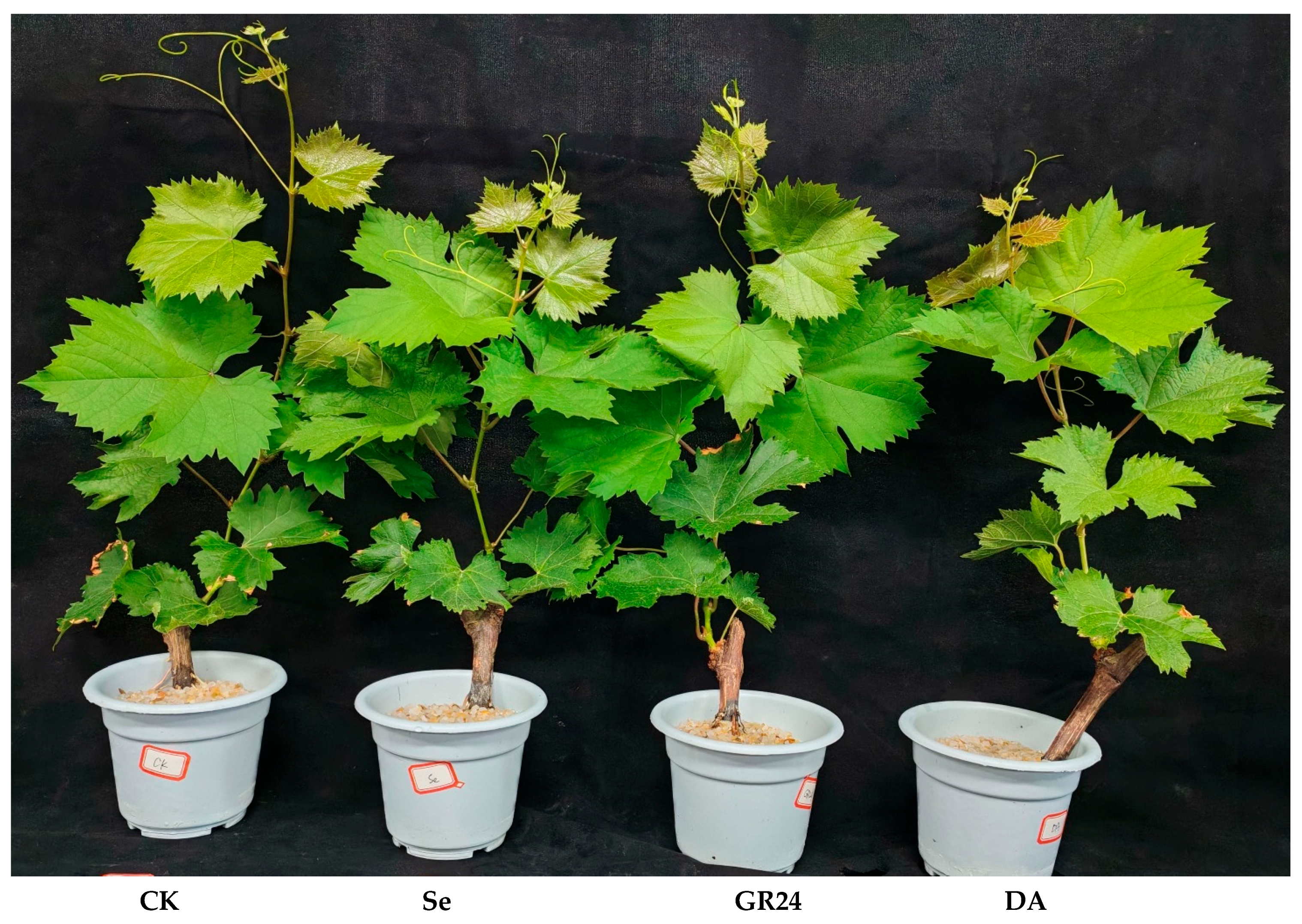
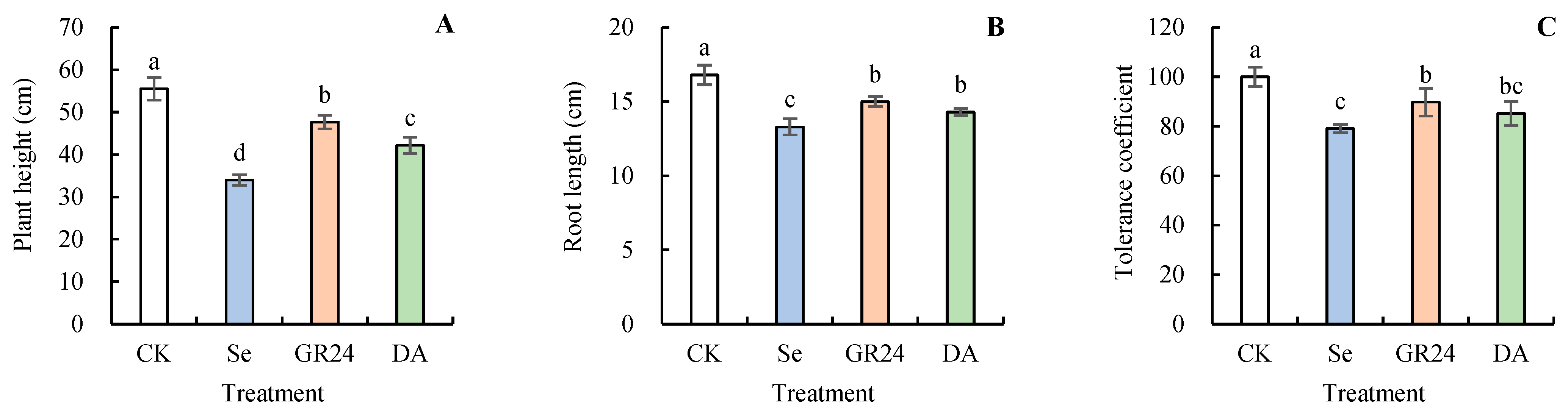
The growth morphology of grapevines is shown in Figure 1. Se treatment resulted in stunted growth of grapevines, while GR24 and DA treatments promoted grapevine growth under Se stress. In addition, Se treatment decreased plant height, root length, and the tolerance coefficient of grapevines (Figure 2A–C). Compared to CK, Se treatment reduced plant height and root length by 38.74% and 20.83%, respectively. GR24 and DA treatments increased plant height by 40.29% and 24.12% and root length by 12.78% and 7.52%, respectively, compared to Se treatment. However, the plant height, root length, and tolerance coefficient under both GR24 and DA treatments remained lower than those of CK. Notably, the plant height under GR24 treatment was higher than that under DA treatment.
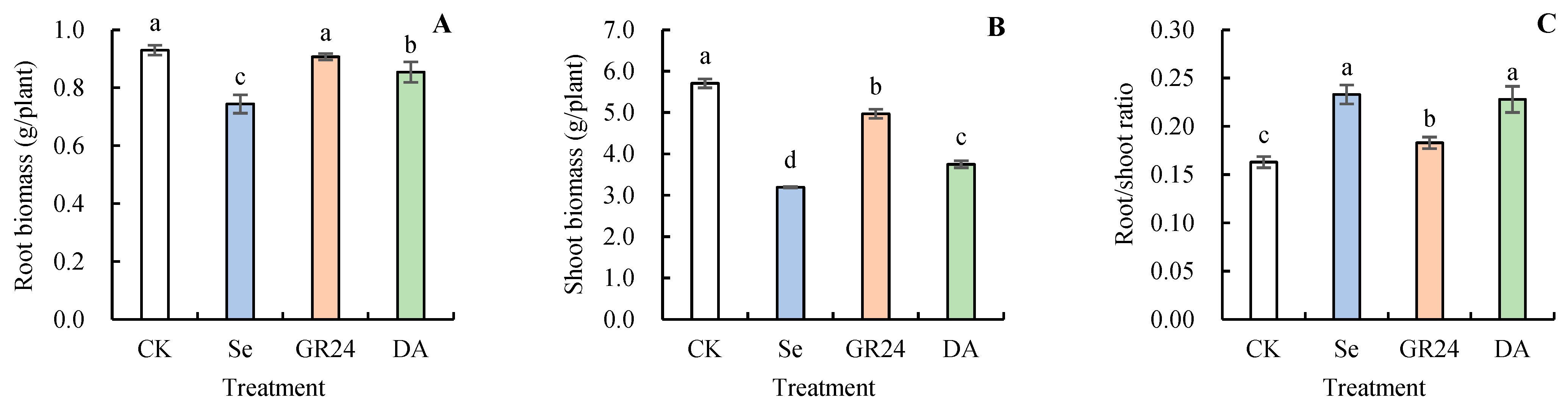
Se treatment also decreased the biomass of grapevines (Figure 3A,B). Compared to CK, Se treatment reduced root and shoot biomass by 20.00% and 44.00%, respectively. In comparison with Se treatment, GR24 and DA treatments increased root biomass by 21.91% and 14.78%, respectively, and shoot biomass by 55.51% and 17.40%, respectively. However, the root and shoot biomass under GR24 and DA treatments remained lower than those of CK, with GR24-treated plants showing higher values than those treated with DA. Moreover, Se treatment increased the root/shoot ratio (Figure 3C), with the ranking as follows: Se treatment ≈ DA treatment > GR24 treatment > CK.

3.2. Photosynthetic Physiology of Grapevines

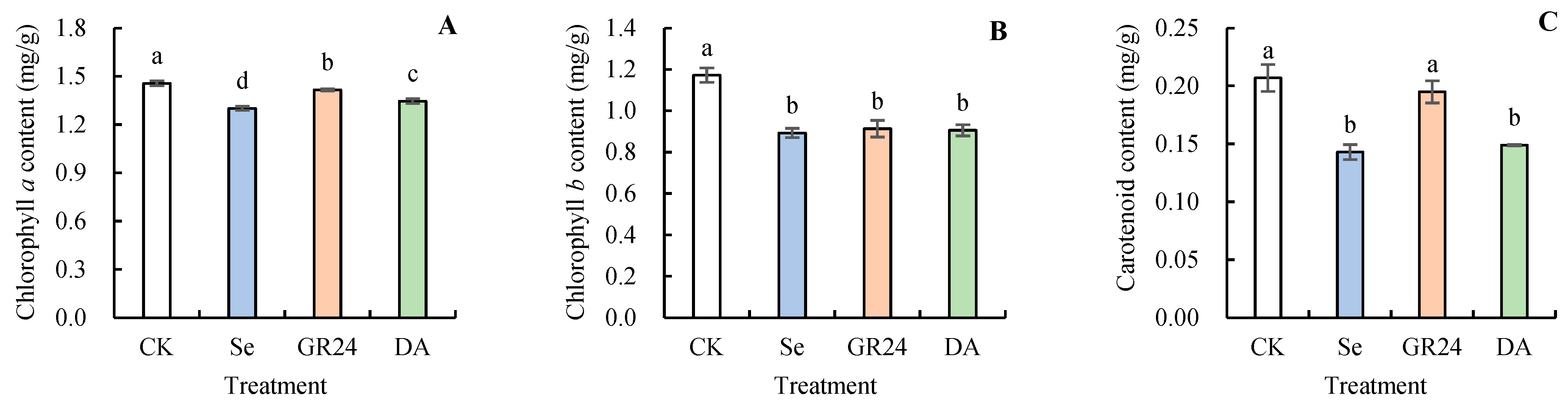
Se treatment reduced the levels of photosynthetic pigments in grapevines (Figure 4A–C). Specifically, Se treatment decreased the contents of chlorophyll a, chlorophyll b, and carotenoids by 10.65%, 23.81%, and 30.92%, respectively. Compared to Se treatment, GR24 and DA treatments increased chlorophyll a content by 8.84% and 3.46%, respectively, but did not affect chlorophyll b content. However, the levels of chlorophyll a and chlorophyll b under GR24 and DA treatments remained lower than those in CK. The carotenoid content followed the order: CK ≈ GR24 treatment > Se treatment ≈ DA treatment.
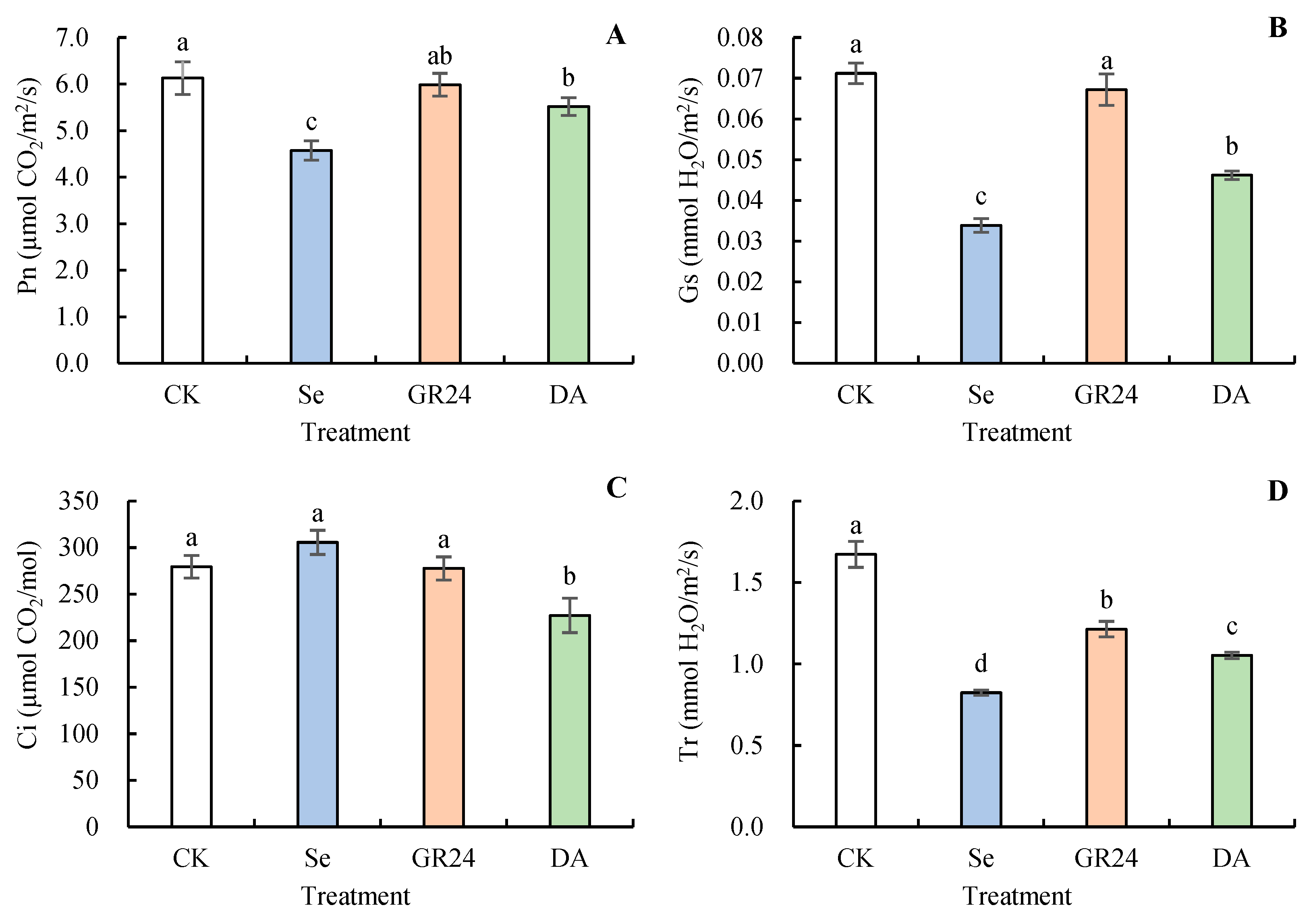
Se treatment decreased the Pn, Gs, and Tr of grapevines but did not affect the Ci, indicating that Se reduced the photosynthetic capacity of grapevines (Figure 5A–C). Under Se stress, both GR24 and DA treatments increased Pn, Gs, and Tr. GR24 treatment did not affect Ci, whereas DA treatment decreased it. There were no significant differences in Pn, Gs, and Ci between CK and the GR24 treatment. However, the Pn, Gs, and Ci under DA treatment were lower than those of CK. The Tr values for both GR24 and DA treatments were also lower than CK, with a decrease of 27.44% and 37.06%, respectively, compared to CK. Except for Pn, the Gs, Ci, and Tr values under GR24 treatment were higher than those under DA treatment.

3.3. Antioxidant Enzyme Activity of Grapevines

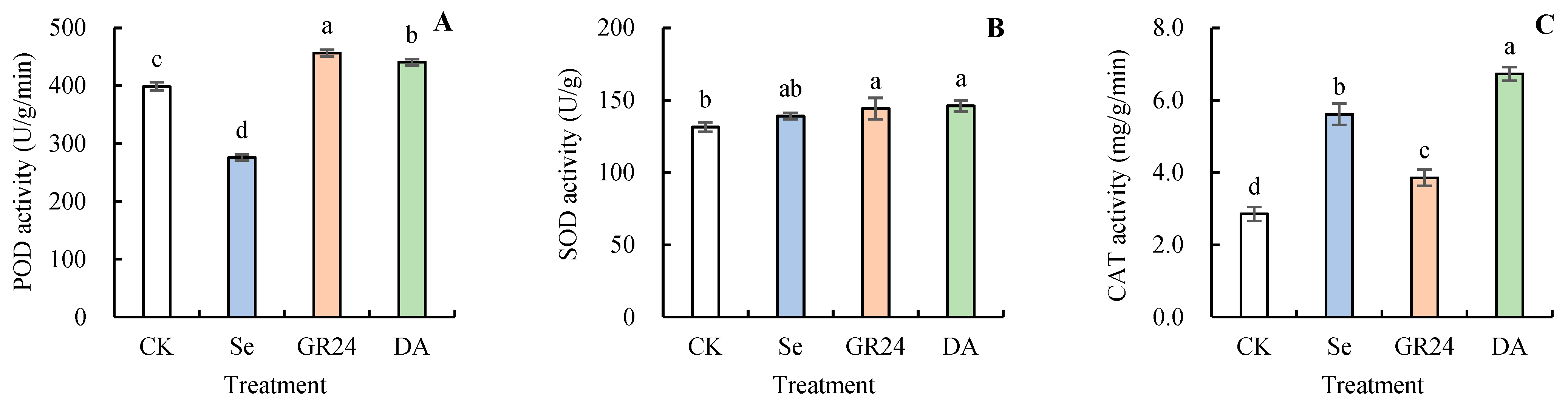
Se treatment reduced the POD activity in grapevines, increased the CAT activity, and had no effect on the SOD activity (Figure 6A–C). Under Se stress, both GR24 and DA treatments increased the POD activity by 65.31% and 59.59%, respectively, compared to Se treatment, and did not affect SOD activity. The POD and SOD activities in grapevines treated with either GR24 or DA were higher than in CK. Regarding CAT activity, GR24 treatment decreased it, whereas DA treatment increased it. The order of CAT activity among the treatments was DA > Se > GR24 > CK.

3.4. Contents of Osmotic Regulatory Substances in Grapevines

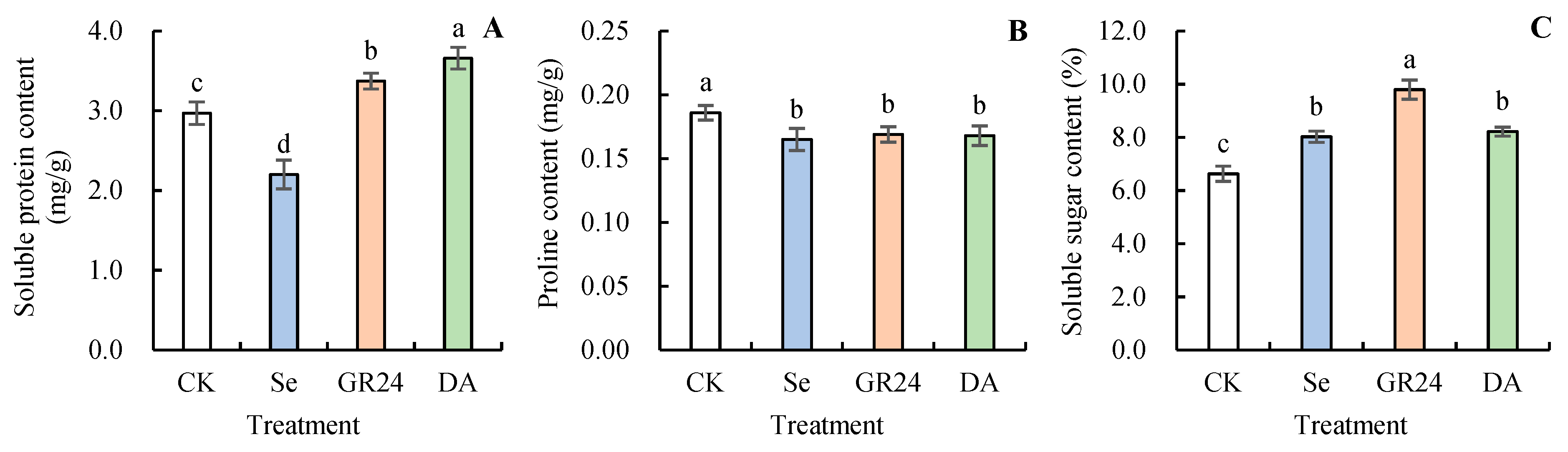
Se treatment decreased the levels of soluble protein and proline and increased the level of soluble sugar in grapevines (Figure 7A–C). Under Se stress, GR24 and DA treatments increased the soluble protein content by 53.18% and 66.21%, respectively, compared to Se treatment, but did not affect the proline content. In addition, GR24 treatment increased the soluble sugar content by 22.08% compared to Se treatment, while DA treatment had no significant effect on soluble sugar content. The levels of soluble protein and soluble sugar in the GR24 and DA treatments were higher than those in CK, whereas the proline content in these treatments was lower than in CK.

3.5. Se Content and Translocation Factor of Grapevines

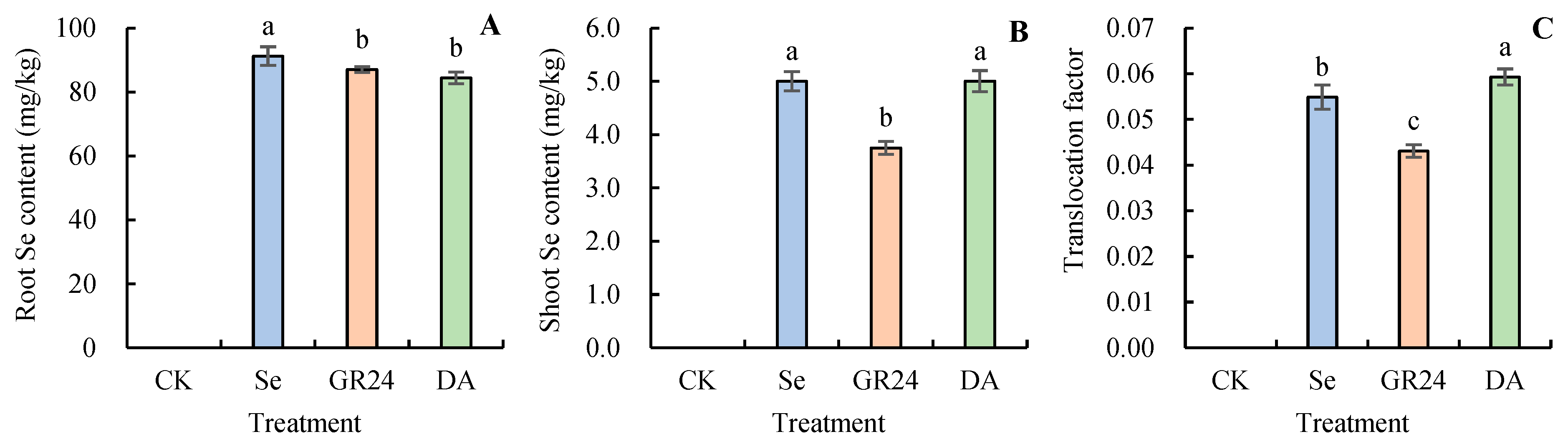
Under Se stress, GR24 treatment reduced the Se content in grapevines (Figure 8A,B). Compared to Se treatment, GR24 reduced root Se and shoot Se contents by 4.63% and 25.04%, respectively. DA treatment decreased root Se content by 7.49% but had no significant effect on shoot Se content. Regarding the translocation factor, GR24 treatment decreased it, while DA treatment increased it (Figure 8C).

3.6. Correlation, PCA, and Cluster Analyses

Correlation analysis was employed to examine the relationships among various parameters under Se stress (Table 1). The root biomass showed a significant or highly significant positive correlation with the plant height, root length, shoot biomass, chlorophyll a content, carotenoid content, soluble sugar content, Pn, Gs, Tr, POD activity, and soluble protein content, and showed a significant negative correlation with the contents of root Se and shoot Se. The shoot biomass showed a significant or highly significant positive correlation with the plant height, root length, chlorophyll a content, carotenoid content, Pn, Gs, Tr, POD activity, and soluble sugar content, and showed a significant or highly significant negative correlation with the CAT activity and shoot Se content. The root Se content showed a highly significant positive correlation with the Ci and showed a significant or highly significant negative correlation with the root length, POD activity, and soluble protein content. The shoot Se content showed a highly significant positive correlation with the CAT activity and showed a significant or highly significant negative correlation with the plant height, root length, chlorophyll a content, carotenoid content, Pn, Gs, Tr, and soluble sugar content.
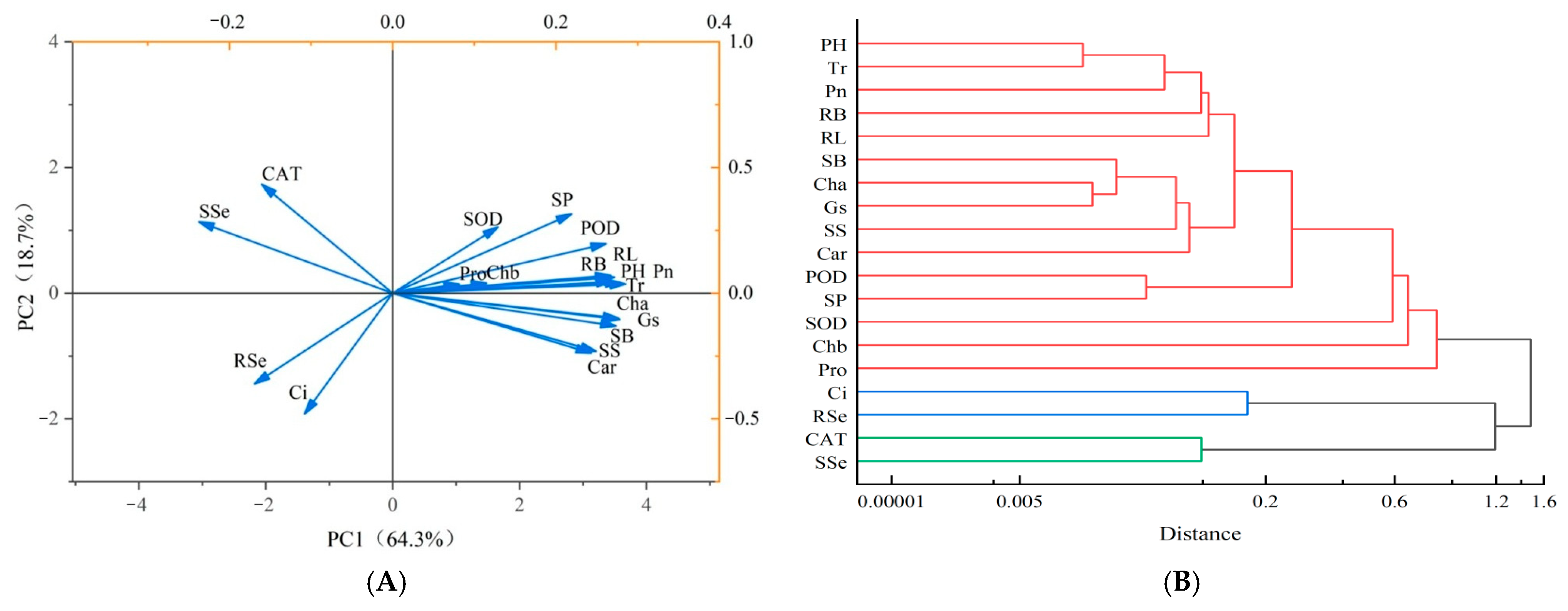
PCA was performed to evaluate the various parameters under Se stress (Figure 9A). The two principal components (PC1 and PC2) explained 64.8% and 18.7% of variance, respectively, with a total variance of 86.4%. The root Se content showed a strong correlation with the Ci, while the shoot Se content exhibited a strong correlation with the CAT activity. The other parameters were strongly correlated with each other. In addition, cluster analysis revealed that all parameters under Se stress were grouped into five categories when the distance was set to 0.6 (Figure 9B). The first category included the shoot Se content and CAT activity. The second category comprised the root Se content and Ci. The third category was proline content. The fourth category was chlorophyll b content. The other parameters were grouped into another category.

4. Discussion

Se exerts dual effects on plant development. At optimal concentrations, Se enhances energy metabolism within plants and promotes growth, whereas high Se concentrations are toxic, inhibiting plant growth [34]. In this study, Se treatment inhibited grapevine growth, as evidenced by reductions in plant height, root length, tolerance coefficient, and biomass, as well as an increased root/shoot ratio—findings consistent with those reported in alfalfa [35]. This inhibition may occur because excessive Se impedes root absorption of water and mineral nutrients, ultimately leading to stunted growth and reduced biomass [36]. Additionally, GR24 treatment improved plant height, root length, tolerance coefficient, and biomass in grapevines, while decreasing the root/shoot ratio. This effect likely arises because GR24 promotes root morphological remodeling, increases root surface area, and enhances root vitality, thereby effectively boosting water and nutrient uptake capacity and alleviating stress-induced growth inhibition [12]. Concurrently, GR24 may mitigate stress damage by enhancing antioxidant enzyme activity in seedlings and accelerating scavenging of reactive oxygen species (ROS), thus strengthening plant resistance [37]. Furthermore, this study showed that DA treatment increased plant height, root length, and biomass, consistent with previous findings [17]. This effect may occur because DA modulates hormonal systems such as indole-3-acetic acid (IAA), helping to mitigate stress-induced damage to root structure and function, thereby maintaining material and energy metabolic balance and promoting growth recovery [38,39,40].
Photosynthesis is fundamental to crop growth and development, with chlorophyll and carotenoids serving as key pigments for capturing light energy during this process. In addition to their roles in light harvesting, carotenoids also possess antioxidant functions [41]. In this study, Se treatment reduced the photosynthetic pigment content, Pn, Gs, and Tr of grapevines, while Ci showed no significant change. This reduction may result from high Se concentrations inhibiting electron transport in photosystem II (PSII), thereby weakening photosynthetic intensity and reducing chlorophyll synthesis. Simultaneously, Se stress accelerates the production of ROS, further reducing chlorophyll content and ultimately decreasing photosynthetic capacity [42]. Previous studies indicate that GR24 treatment can improve photosynthesis under stress by increasing soluble sugar and protein content in alfalfa, enhancing antioxidant enzyme activity, and reducing MDA levels [9,43]. In our study, GR24 application increased chlorophyll a and carotenoid content, Pn, Gs, and Tr in grapevines, while Ci remained unchanged. This improvement may be attributed to GR24’s ability to enhance photosynthetic capacity by maintaining PSII activity and chlorophyll stability [44], upregulating chlorophyll a and chlorophyll b-binding protein precursors [45], regulating membrane protein interactions, and maintaining thylakoid membrane stability [46]. Furthermore, DA application has been reported to enhance photosynthesis in apple leaves, delay chlorophyll degradation, and increase photosynthetic pigment content [47]. In this study, DA treatment increased chlorophyll a content, Pn, Gs, and Tr in grapevines, while reducing Ci, which is consistent with previous findings [17]. This effect may be due to DA’s ability to maintain the integrity of cell walls, chloroplasts, and thylakoid structures—especially by protecting thylakoid membranes—thereby preserving photosynthetic electron transport chain function and promoting light energy conversion and carbon assimilation [48]. Additionally, DA enhances photosynthetic efficiency by elevating indole-3-acetic acid and abscisic acid levels, promoting chloroplast development, improving light capture efficiency, regulating Gs, and reducing water loss [49]. Further studies suggest that DA may effectively maintain chlorophyll content in crop leaves by suppressing the expression of chlorophyll degradation genes [20].
Under adverse conditions, the enhanced or sustained activity of antioxidant enzymes effectively scavenges ROS free radicals, thereby maintaining cell membrane integrity and stability. This process mitigates cellular toxicity by catalyzing the disproportionation of reactive substances to produce H2O2 and O2 [50]. High concentrations of Se induce substantial ROS accumulation in plant tissues, disrupting cellular structures and suppressing both MDA content and POD activity [51]. In this study, Se treatment reduced POD activity while increasing CAT activity in grapevines, consistent with previous findings [52]. This may occur because inorganic Se induces elevated ROS levels, triggering oxidative stress that upregulates antioxidant enzyme activity [53,54]. Simultaneously, GR24 treatment elevated POD activity while decreasing CAT activity in grapevines. This effect likely results from GR24’s ability to regulate ROS metabolic balance, upregulate the expression of antioxidant-related genes, and enhance antioxidant capacity, thereby mitigating stress-induced oxidative damage [44]. For example, GR24 has been shown to increase the expression levels of antioxidant enzyme genes in tomato leaves [55] and may elevate the expression of FaCu-SOD, FaCAT1, and FaPOD2 through specific signaling pathways, thereby boosting antioxidant enzyme activity [56]. These findings suggest that GR24 enhances plant stress tolerance by regulating complex antioxidant mechanisms. In this study, DA application also increased POD and CAT activities in grapevines but had no significant effect on SOD activity. This suggests that DA may enhance grapevine resistance by activating multiple antioxidant defense systems. Research indicates that DA treatment directly reduces ROS levels, enhances the activities of antioxidant enzymes, and promotes the synthesis of antioxidants like glutathione (GSH) and nicotinamide. In addition, DA regulates amino acid metabolism (e.g., isoleucine and histidine) to enhance detoxification capacity and maintains membrane structural stability through the synthesis of specific substances [57,58,59,60]. Furthermore, DA activates the indole-3-acetic acid, jasmonic acid, and abscisic acid signaling pathways and further regulates antioxidant gene expression levels through these endogenous hormones [61], thereby increasing antioxidant enzyme activity in grapevines. Other studies also indicate that exogenous DA application promotes endogenous DA accumulation and that this catecholamine, possessing signaling functions, demonstrates significant ROS scavenging capacity in crops, effectively enhancing crop resistance to stressful environments [62].
Soluble proteins, proline, and soluble sugars act as effective osmotic regulators. Their increased levels play a crucial role in maintaining osmotic balance and preventing osmotic stress from damaging plants [63]. In this study, Se treatment reduced the contents of soluble protein and proline while increasing the soluble sugar content in grapevines. This could result from decreased soluble protein synthesis under Se stress or from the proteolytic degradation of proteins by proteases as grapevines attempt to mitigate stress, leading to lower soluble protein levels [63]. GR24 treatment, on the other hand, increased the contents of both soluble protein and soluble sugar in grapevines under Se stress, which suggests that GR24 enhances the osmotic regulation capacity of grapevines by increasing osmotic regulatory substances, thereby strengthening plant cell osmotic pressure and maintaining normal grapevine growth. GR24 also interacts with proline metabolic processes, further improving plant stress resistance [64]. However, GR24 treatment had no effects on the proline content in grapevines under Se stress in this study, which may be related to the various plant species. The specific mechanism of action requires further investigation. Studies have shown that spraying DA promotes apple development and increases soluble protein content in apples [65]. Similarly, in this study, DA application increased soluble protein content in grapevines but did not affect proline or soluble sugar content, consistent with previous results [23]. DA promotes the activity of key enzymes in nitrogen metabolism, thereby enhancing nitrogen uptake and conversion efficiency in grapevines, boosting amino acid synthesis, and consequently increasing soluble protein content.
Inducing stress resistance in crops through the application of substances can mitigate damage caused by environmental stressors and enhance crop resilience [65,66,67,68]. Most selenite absorbed by crop roots is directly assimilated into organic Se compounds in the roots, with only a small portion of Se being transported to other parts of the plant as inorganic ions [69]. Research indicates that GR24 can mediate apple root growth by altering root architecture, resulting in thicker roots and more abundant lateral root development, thereby enhancing the uptake of nutrients such as potassium, calcium, and magnesium [11]. In this study, exogenous application of GR24 reduced both the Se content and the translocation factor in grapevines, indicating that GR24 exhibited potential in reducing Se uptake and inhibiting Se transport from roots to shoots. This effect is likely attributable to GR24’s regulation of transport proteins [70], which decreases Se accumulation and alleviates Se stress. Other research has shown that DA, acting as a signaling molecule, may enhance mineral uptake in grapes by upregulating nitrogen metabolism-related genes [23]. In our experiment, DA application reduced Se content in grapevine roots without significantly affecting shoot Se levels, suggesting that DA treatment exhibited potential in reducing Se uptake under Se stress. Meanwhile, DA increased the Se translocation factor, indicating an improved capacity for Se transport from roots to shoots. Furthermore, correlation analysis, PCA, and cluster analysis revealed strong associations between root Se content and Ci, as well as between shoot Se content and CAT activity. These findings suggest that Ci and CAT activity play a significant role in Se uptake in grapevines.

5. Conclusions

Under selenite stress, both GR24 and DA treatments promoted grapevine growth by increasing growth parameters, as well as enhancing photosynthetic capacity, antioxidant enzyme activity, and the levels of osmotic regulators. Concurrently, GR24 treatment decreased the Se content in both roots and shoots, as well as the translocation factor in grapevines under Se stress, whereas DA treatment only reduced root Se content and increased the translocation factor. Therefore, GR24 and DA can alleviate selenite stress and exhibit potential in reducing Se uptake in grapevines. In future studies, the potential molecular mechanisms by which GR24 and DA alleviate selenite stress in grapevines should be further explored.

Author Contributions

Conceptualization, Z.F., R.H. and J.W.; investigation, Z.F., F.W., J.Z., H.L. and Y.Z.; data curation, L.L. and X.L.; writing—original draft preparation, Z.F. and F.W.; writing—review and editing, L.L., X.L., R.H. and J.W.; supervision, R.H. and J.W.; project administration, R.H. and J.W. All authors have read and agreed to the published version of the manuscript.

Funding

This work was financially supported by the Sichuan Innovation Team of National Modern Agricultural Industry Technology System (SCCXTD-2024-4), the Chengdu Science and Technology Bureau Program (2025-YF05-00586-SN), and the Sichuan Science and Technology Program (2020JDPT0004).

Data Availability Statement

The original contributions presented in this study are included in the article. Further inquiries can be directed to the corresponding authors.

Acknowledgments

During the preparation of this manuscript, the authors used ChatGPT 4.1 for the purposes of grammar. The authors have reviewed and edited the output and take full responsibility for the content of this publication.

Conflicts of Interest

The authors declare no conflicts of interest.

References

  1. Tang, P.; Huang, R.; Zhong, X.; Chen, X.; Lei, Y. A comprehensive review on selenium and blood pressure: Recent advances and research perspectives. J. Trace Elem. Med. Biol. 2025, 88, 127607. [Google Scholar] [CrossRef]
  2. Binsuwaidan, R.; Masry, T.A.E.; Nagar, M.M.F.E.; Zahaby, E.I.E.; Gaballa, M.M.S.; Bouseary, M.M.E. Investigating the antibacterial, antioxidant, and anti-inflammatory properties of a lycopene selenium nano-formulation: An in vitro and in vivo study. Pharmaceuticals 2024, 17, 1600. [Google Scholar] [CrossRef] [PubMed]
  3. Dinh, Q.T.; Cui, Z.; Huang, J.; Tran, T.A.T.; Wang, D.; Yang, W.; Zhou, F.; Wang, M.; Yu, D.; Liang, D. Selenium distribution in the Chinese environment and its relationship with human health: A review. Environ. Int. 2018, 112, 294–309. [Google Scholar] [CrossRef]
  4. Lzydorczyk, G.; Ligas, B.; Mikula, K.; Witek-Krowiak, A.; Moustakas, K.; Chojnacka, K. Biofortification of edible plants with selenium and iodine—A systematic literature review. Sci. Total Environ. 2021, 754, 141983. [Google Scholar] [CrossRef]
  5. Yuan, J.; Hu, M. Effect of EDDS treatments on FTIR-ATR, SEM-EDXS features and physiological characteristics of Coleus blumei roots under Se stress. Plant Sci. J. 2014, 32, 620–629. [Google Scholar] [CrossRef]
  6. Yang, H.M. Cinnamaldehyde Regulates Ca2+-PAO-H2O2 System to Ameliorate Selenium Stress in Brassica rapa ssp. chinensis. Master’s Thesis, Nanjing Agricultural University, Nanjing, China, 2022. [Google Scholar]
  7. Zhang, Y.; Liu, Y.; Liu, Z.; Han, F.; Yan, P.; He, F.; Wu, Z. The research and application progress of plant growth regulators. Acta Hydrobiol. Sin. 2021, 45, 700–708. [Google Scholar] [CrossRef]
  8. Xiao, L. Chinese scientists made breakthrough progresses in elucidating the molecular mechanism of regulating plant architecture by strigolactones. Chin. Bull. Bot. 2015, 50, 407–411. [Google Scholar] [CrossRef]
  9. Lu, J.; Shen, Y.; Yang, Y.; Li, X.; Li, X.; Liu, D.; Wang, L. Synthetic strigolactone (rac-GR24) alleviates the photosynthetic inhibition and oxidative damage in alfalfa (Medicago sativa L.) under salt stress. Grassl. Sci. 2024, 70, 23–34. [Google Scholar] [CrossRef]
  10. Jariani, P.; Sabokdast, M.; Rajabi, F.; Naghavi, M.R.; Dedicova, B. Enhancing salinity tolerance in wheat: The role of synthetic strigolactone (GR24) in modulating antioxidant enzyme activities, ion channels, and related gene expression in stress responses. Sci. Rep. 2025, 15, 24216. [Google Scholar] [CrossRef]
  11. Jia, J. Effects of Exogenous Strigolactones and Their Inhibitors on Root Growth, Development, and Nutrient Uptake in Apple. Master’s Thesis, Shandong Agricultural University, Tai’an, China, 2022. [Google Scholar]
  12. Chang, D.; Huang, Y.; Tian, M.; Cai, Y.; Meng, J. Effects of exogenous strigolactone on the growth and physiological characteristics of two Primulina species under drought stress. J. Appl. Ecol. 2025, 36, 802–810. [Google Scholar] [CrossRef]
  13. Dubroff, J.; Johnson, D.; Botha, H. State of art of molecular imaging in the diagnosis and treatment of dementia. Am. J. Geriatr. Psychiatry 2024, 32, S31. [Google Scholar] [CrossRef]
  14. Wang, Z.; Han, C.; Liao, X. Synthesis and structure characterization of phosphorylated dopamine derivatives. J. Zhengzhou Univ. (Nat. Sci. Ed.) 2009, 41, 112–115. [Google Scholar]
  15. Jin, X.; Li, L.; Zhao, Y.; Jing, X. Prolong the shelf-life of the pak choi seedlings through the ammonium glycyrrhizinate. Food Chem. X 2024, 23, 101620. [Google Scholar] [CrossRef]
  16. Kulma, A.; Szopa, J. Catecholamines are active compounds in plants. Plant Sci. 2007, 172, 433–440. [Google Scholar] [CrossRef]
  17. Jiao, X. Alleviating Effects and Mechanisms of Exogenous Dopamine on Alkaline Stress in Apple Seedlings. Master’s Thesis, Northwest A&F University, Xianyang, China, 2019. [Google Scholar]
  18. Karalij, N.; Papenberg, G.; Johansson, J.; Wåhlin, A.; Salami, A.; Andersson, M.; Axelsson, J.; Kuznetsov, D.; Riklund, K.; Lövdén, M.; et al. Longitudinal support for the correlative triad among aging, dopamine D2-like receptor loss, and memory decline. Neurobiol. Aging 2024, 136, 125–132. [Google Scholar] [CrossRef]
  19. Zhang, Z. Effects of Exogenous Dopamine and 2,4-Epibrassinolide on Resistance to Ring Rot Disease in Pear. Master’s Thesis, Nanjing Agricultural University, Nanjing, China, 2022. [Google Scholar]
  20. Zhang, Y.; Ma, W.; Zhu, Y.; Liu, X. Effect of exogenous dopamine treatment on postharvest yellowing and antioxidant activity of pak choi. Food Sci. 2025, 46, 287–296. [Google Scholar] [CrossRef]
  21. Endress, R.; Jäger, A.; Kreis, W. Catecholamine biosynthesis dependent on the dark in betacyanin-forming portulaca callus. J. Plant Physiol. 1984, 115, 291–295. [Google Scholar] [CrossRef]
  22. Zhao, K. Effects of Exogenous Melatonin and Dopamine on Growth and Development of Apple Fruit. Master’s Thesis, Northwest A&F University, Xianyang, China, 2021. [Google Scholar]
  23. Shao, Z.; Yang, J.; Chen, Y.; Dai, Z.; Li, D. Effects of dopamine on carbon and nitrogen metabolism in leaves of ‘Shine Muscat ‘grape under delayed cultivation. J. Gansu Agric. Univ. 2026. published online. Available online: https://link.cnki.net/urlid/62.1055.S.20251202.1134.006 (accessed on 1 February 2026).
  24. Zhang, W.; Zhang, X.; Yang, Z.; Miao, X.; Qiu, G. Pesticide residue level and risk assessment in grapes sale in Lanzhou City. J. Anhui Agric. Sci. 2020, 48, 175–178. [Google Scholar] [CrossRef]
  25. Upadhyay, A.K.; Sharma, J.; Satisha, J. Influence of rootstocks on salinity tolerance of Thompson seedless grapevines. J. Appl. Hortic. 2013, 15, 173–177. [Google Scholar] [CrossRef]
  26. Liu, L.; Wang, T.; Sui, L.; Liu, J.; Lin, L.; Liao, M. The selenium accumulation characteristics of grape seedlings. IOP Conf. Ser. Earth Environ. Sci. 2019, 330, 042042. [Google Scholar] [CrossRef]
  27. Wang, J.; Pi, Y.; Li, Y.; Wang, H.; Huang, K.; Wang, X.; Xia, H.; Zhang, X.; Liang, D.; Lv, X.; et al. Transcriptome and metabolome analyses reveal the promoting effects of arbuscular mycorrhizal fungi on selenium uptake in grapevines. Plant Physiol. Biochem. 2025, 219, 109456. [Google Scholar] [CrossRef]
  28. Zhang, X.; Wang, J.; Liu, Q.; Huang, K.; Huang, Y.; Liao, M.; Liu, L.; Wang, T.; Deng, Q.; Lin, L. Intercropping with Solanum sect. Solanum (Solanaceae) increases selenium uptake of ‘Summer Black’ grapevine. Environ. Prog. Sustain. Energy 2024, 43, e14267. [Google Scholar] [CrossRef]
  29. Li, Z.; Fan, R.; Peng, X.; Shu, J.; Liu, L.; Wang, J.; Lin, L. Salicylic acid alleviates selenium stress and promotes selenium uptake of grapevine. Physiol. Mol. Biol. Plants 2022, 28, 625–635. [Google Scholar] [CrossRef]
  30. Xiong, Q.E. A Plant Physiology Experiment; Sichuan Science and Technology Press: Chengdu, China, 2003. [Google Scholar]
  31. Flores-Cáceres, M.L.; Hattab, S.; Hattab, S.; Boussetta, H.; Banni, M.; Hernández, L.E. Specific mechanisms of tolerance to copper and cadmium are compromised by a limited concentration of glutathione in alfalfa plants. Plant Sci. 2015, 233, 165–173. [Google Scholar] [CrossRef]
  32. Bao, S.D. Soil Agro-Chemistrical Analysis; China Agriculture Press: Beijing, China, 2000. [Google Scholar]
  33. Rastmanesh, F.; Moore, F.; Keshavarzi, B. Speciation and phytoavailability of heavy metals in contaminated soils in Sarcheshmeh Area, Kerman Province, Iran. Bull. Environ. Contam. Toxicol. 2010, 85, 515–519. [Google Scholar] [CrossRef]
  34. Ramos, S.J.; Faquin, V.; Guilherme, L.R.G.; Castro, E.M.; Ávila, F.W.; Carvalho, G.S.; Bastos, C.E.A.; Oliveira, C. Selenium biofortification and antioxidant activity in lettuce plants fed with selenate and selenite. Plant Soil Environ. 2010, 56, 584–588. [Google Scholar] [CrossRef]
  35. Peng, Q.; He, H.; Fan, C.; Zhang, X. Effect of selenium on seed germination and seedling growth of alfalfa. Seed 2020, 9, 1–8. [Google Scholar] [CrossRef]
  36. Araujo, M.A.; Melo, A.A.R.; Silva, V.M.; Silva, V.M.; Reis, A.R. Selenium enhances ROS scavenging systems and sugar metabolism increasing growth of sugarcane plants. Plant Physiol. Biochem. 2023, 201, 107798. [Google Scholar] [CrossRef] [PubMed]
  37. Zhang, C. Mechanisms of Alleviation Effects of Exogenous GR24 on Cadmium Toxicity in Barely (Hordeum vulgare) Seedlings. Master’s Thesis, Zhejiang University, Hangzhou, China, 2019. [Google Scholar]
  38. Liu, D.; Guo, G.; Liu, L.; Zhou, C.; Wu, P.; Yang, F.; Wang, Y.; Li, C. Effects of exogenous application of brassionlide on sugar beet growth under alkali stress. J. Northwest Agric. 2018, 27, 1461–1469. [Google Scholar] [CrossRef]
  39. Shi, C.; Chen, T.; Wang, C.; Qin, X.; Liao, Y. Effects of drought stress on seed germination and biomass allocation of root and shoot of different drought resistant wheat cultivars. J. Triticeae Crops 2016, 36, 483–490. [Google Scholar] [CrossRef]
  40. Zhang, K.; Wen, T.; Dong, J.; Ma, F.; Bai, T.; Wang, K.; Li, C. Comprehensive evaluation of tolerance to alkali stress by 17 genotypes of apple rootstocks. J. Integr. Agric. 2016, 15, 1499–1509. [Google Scholar] [CrossRef]
  41. Filek, M.; Kościelniak, J.; Łabanowska, M.; Bednarska, E.; Bidzińska, E. Selenium induced protection of photosynthesis activity in rape (Brassica napus) seedlings subjected to cadmium stress, fluorescence and EPR measurements. Photosynth. Res. 2010, 105, 27–37. [Google Scholar] [CrossRef]
  42. Zhou, Y.L. Plant Biology; Higher Education Press: Beijing, China, 2016. [Google Scholar]
  43. Zhang, X.; Ma, Y.; Qi, B.; Yu, B.; Lv, D.; Qin, S. Alleviation effect of GR24, a strigolactone analogue, on low-nitrogen stress in Malus baccata seedlings. J. Appl. Ecol. 2023, 34, 1592–1600. [Google Scholar] [CrossRef]
  44. Dong, J. Study on the Enhancement of Drought Resistance in Upland Cotton by Strigolactones. Master’s Thesis, Shandong Agricultural University, Tai’an, China, 2025. [Google Scholar]
  45. Mayzlish, G.E.; LekKala, S.P.; Resnick, N.; Wininger, S.; Bhattacharya, C.; Lemcoff, J.H.; Kapulnik, Y.; Koltai, H. Strigolactones are positive regulators of light-harvesting genes in tomato. J. Exp. Bot. 2010, 61, 3129–3136. [Google Scholar] [CrossRef] [PubMed]
  46. Bajguz, A.; Hayat, S. Effects of brassinosteroids on the plant responses to environmental stresses. Plant Physiol. Biochem. 2008, 47, 1–8. [Google Scholar] [CrossRef] [PubMed]
  47. Liang, B. Regulatory Function of Dopamine and Melatonin on Mineral Nutrient Uptake in Malus Under Drought and Nutrient Stresses. Master’s Thesis, Northwest A&F University, Xianyang, China, 2018. [Google Scholar]
  48. Xin, J.; Huang, B.; Yang, J.; Yang, Z.; Yuan, J.; Mu, Y. Role of roots in cadmium accumulation of two water spinach cultivars: Reciprocal grafting and histochemical experiments. Plant Soil 2013, 366, 425–432. [Google Scholar] [CrossRef]
  49. Wei, T.; Lv, X.; Jia, H.; Xu, H.; Zhou, R.; Zhao, J.; Ren, X.; Guo, J. Effects of salicylic acid, Fe(II) and plant growth-promoting bacteria on Cd accumulation and toxicity alleviation of Cd tolerant and sensitive tomato genotypes. J. Environ. Manag. 2018, 214, 164–171. [Google Scholar] [CrossRef] [PubMed]
  50. Xia, M.; Wang, W.; Yuan, R.; Deng, F.; Shen, F. Superoxide dismutase and its research in plant stress-tolerance. Mol. Plant Breed. 2015, 13, 2633–2646. [Google Scholar] [CrossRef]
  51. Silva, V.M.; Boleta, E.H.M.; Lanza, M.G.D.B.; Lavres, J.; Martins, J.T.; Santos, E.F.; Santos, F.L.M.; Putti, F.F.; Junior, E.F.; White, P.J.; et al. Physiological, biochemical, and ultra structural characterization of selenium toxicity in cowpea plants. Environ. Exp. Bot. 2018, 150, 172–182. [Google Scholar] [CrossRef]
  52. Cheng, H.; Chang, S.; Shi, X.; Chen, Y.; Cong, X.; Cheng, S.; Li, L. Molecular mechanisms of the effects of sodium selenite on the growth, nutritional quality, and species of organic selenium in dandelions. Horticulturae 2024, 10, 209. [Google Scholar] [CrossRef]
  53. Ferreira, R.L.C.; Prado, R.M.; Junior, J.P.S.; Gratão, P.L.; Tezotto, T.; Cruz, F.J.R. Oxidative stress, nutritional disorders, and gas exchange in lettuce plants subjected to two selenium sources. Soil Sci. Plant Nutr. 2020, 20, 1215–1228. [Google Scholar] [CrossRef]
  54. Wang, Y.; Yu, T.; Wang, C.; Wei, J.; Zhang, S.; Liu, Y.; Chen, J.; Zhou, Y.; Chen, M.; Ma, Y.; et al. Heat shock protein TaHSP17.4, a TaHOP interactor in wheat, improves plant stress tolerance. Int. J. Biol. Macromol. 2023, 246, 125694. [Google Scholar] [CrossRef]
  55. Lu, T. Alleviation of Adverse Impacts of Low Light on Tomato Plants: New Insight into the Protective Role of Strigolactones. Ph.D. Thesis, Chinese Academy of Agricultural Sciences, Beijing, China, 2019. [Google Scholar]
  56. Gong, J. The Mechanism of Strigolactone Regulating the Response to Low Light Stress in Tall Fescue. Master’s Thesis, Northwest A&F University, Xianyang, China, 2024. [Google Scholar]
  57. Wang, D.; Chen, X.; Hu, X.; Wu, J.; Tan, G.; Feng, S.; Zhou, A. Overexpression of Leymus chinensis vacuole transporter NRAMP2 in rice increases Mn and Cd accumulation. Plant Stress 2024, 11, 100344. [Google Scholar] [CrossRef]
  58. Teng, Y.; Yang, Y.; Wang, Z.; Guan, W.; Liu, Y.; Yu, H.; Zou, L. The cadmium tolerance enhancement through regulating glutathione conferred by vacuolar compartmentalization in Aspergillus sydowii. Chemosphere 2024, 352, 141500. [Google Scholar] [CrossRef]
  59. Zhang, Z.; Tang, Z.; Jing, G.; Gao, S.; Liu, C.; Ai, S.; Liu, Y.; Liu, Q.; Li, C.; Ma, F. Dopamine confers cadmium tolerance in apples by improving growth, reducing reactive oxygen species, and changing secondary metabolite levels. Environ. Exp. Bot. 2023, 208, 105264. [Google Scholar] [CrossRef]
  60. Meng, Z.; Wang, T.; Malik, A.U.; Wang, Q. Exogenous isoleucine can confer browning resistance on fresh-cut potato by suppressing polyphenol oxidase activity and improving the antioxidant capacity. Postharvest Biol. Technol. 2022, 184, 111772. [Google Scholar] [CrossRef]
  61. Pang, B.; Zuo, D.; Yang, T.; Yu, J.; Zhou, L.; Hou, Y.; Yu, J.; Ye, L.; Gu, L.; Wang, H.; et al. BcaSOD1 enhances cadmium tolerance in transgenic Arabidopsis by regulating the expression of genes related to heavy metal detoxification and arginine synthesis. Plant Physiol. Biochem. 2024, 206, 108299. [Google Scholar] [CrossRef]
  62. Ahammde, G.J.; Li, X. Dopamine-induced abiotic stress tolerance in horticultural plants. Sci. Hortic. 2023, 307, 111506. [Google Scholar] [CrossRef]
  63. Zhang, X.; Zhang, L.; Sun, Y.; Zheng, S.; Wang, J.; Zhang, T. Hydrogen peroxide is involved in strigolactones induced low temperature stress tolerance in rape seedlings (Brassica rapa L.). Plant Physiol. Biochem. 2020, 157, 402–415. [Google Scholar] [CrossRef] [PubMed]
  64. Wang, J.; Li, D. The accumulation of plant osmoticum and activated oxygen metabolism under stress. Chin. Bull. Bot. 2001, 18, 459–465. [Google Scholar]
  65. Chen, Y. Effects of Dopamine on Root Development and Physiological Characteristics of Apple Under Salt Stress. Master’s Thesis, Shandong Agricultural University, Tai’an, China, 2022. [Google Scholar]
  66. Huang, J. Study of Chitooligosaccharides on Melon Seedling Quality and Low Temperature Tolerance in Melon. Master’s Thesis, Jilin Agricultural University, Changchun, China, 2021. [Google Scholar]
  67. Liu, T.; Luo, T.; Guo, X.; Zou, X.; Zhou, D.; Afrin, S.; Li, G.; Zhang, Y.; Zhang, R.; Luo, Z. PgMYB2, a MeJA-responsive transcription factor, positively regulates the dammarenediol synthase gene expression in Panax ginseng. Int. J. Mol. Sci. 2019, 20, 2219. [Google Scholar] [CrossRef] [PubMed]
  68. Duan, G. Effects of Simulated Precipitation Patterns Changing on Seed Germination and Seedling Growth of Reaumuria soongorica. Master’s Thesis, Gansu Agricultural University, Lanzhou, China, 2016. [Google Scholar]
  69. Chen, S.; Sun, G.; Chen, Z.; Chen, F.; Zhu, Y. Progresses on selenium metabolism and interaction with heavy metals in higher plants. J. Plant Physiol. 2014, 1, 612–624. [Google Scholar] [CrossRef]
  70. Ashraf, H.; Ghouri, F.; Ali, S.; Bukhari, S.A.H.; Haider, F.U.; Zhong, M.; Xia, W.; Fu, X.; Shahid, M.Q. The protective roles of Oryza glumaepatula and phytohormone in enhancing rice tolerance to cadmium stress by regulating gene expression, morphological, physiological, and antioxidant defense system. Environ. Pollut. 2024, 364, 125311. [Google Scholar] [CrossRef] [PubMed]
Figure 1. Growth morphology of grapevines. CK: control; Se: Se treatment; GR24: GR24 treatment under Se stress; DA: DA treatment under Se stress.
Agronomy 16 00582 g001
Figure 2. Plant height, root length, and tolerance coefficient of grapevines. (A) plant height; (B) root length; (C) tolerance coefficient. Different lowercase letters indicate significant differences among the treatments (Duncan’s multiple range test, p < 0.05). CK: control; Se: Se treatment; GR24: GR24 treatment under Se stress; DA: DA treatment under Se stress.
Agronomy 16 00582 g002
Figure 3. Biomass and root/shoot ratio of grapevines. (A) root biomass; (B) shoot biomass; (C) root/shoot ratio. Different lowercase letters indicate significant differences among the treatments (Duncan’s multiple range test, p < 0.05). CK: control; Se: Se treatment; GR24: GR24 treatment under Se stress; DA: DA treatment under Se stress.
Agronomy 16 00582 g003
Figure 4. Photosynthetic pigment content in grapevines. (A) chlorophyll a content; (B) chlorophyll b content; (C) carotenoid content. Different lowercase letters indicate significant differences among the treatments (Duncan’s multiple range test, p < 0.05). CK: control; Se: Se treatment; GR24: GR24 treatment under Se stress; DA: DA treatment under Se stress.
Agronomy 16 00582 g004
Figure 5. Photosynthetic gas exchange parameters of grapevines. (A) Pn; (B) Gs; (C) Ci; (D) Tr. Different lowercase letters indicate significant differences among the treatments (Duncan’s multiple range test, p < 0.05). CK: control; Se: Se treatment; GR24: GR24 treatment under Se stress; DA: DA treatment under Se stress.
Agronomy 16 00582 g005
Figure 6. Antioxidant enzyme activity of grapevines. (A) POD activity; (B) SOD activity; (C) CAT activity. Different lowercase letters indicate significant differences among the treatments (Duncan’s multiple range test, p < 0.05). CK: control; Se: Se treatment; GR24: GR24 treatment under Se stress; DA: DA treatment under Se stress.
Agronomy 16 00582 g006
Figure 7. Contents of osmotic regulatory substances in grapevines. (A) soluble protein content; (B) proline content; (C) soluble sugar content. Different lowercase letters indicate significant differences among the treatments (Duncan’s multiple range test, p < 0.05). CK: control; Se: Se treatment; GR24: GR24 treatment under Se stress; DA: DA treatment under Se stress.
Agronomy 16 00582 g007
Figure 8. Se content and translocation factor of grapevines. (A) root Se content; (B) shoot Se content; (C) translocation factor. Different lowercase letters indicate significant differences among the treatments (Duncan’s multiple range test, p < 0.05). CK: control; Se: Se treatment; GR24: GR24 treatment under Se stress; DA: DA treatment under Se stress. The Se content in CK was not detected.
Agronomy 16 00582 g008
Figure 9. PCA and cluster analysis of the different parameters under Se stress. (A) PCA; (B) cluster analysis. PH = plant height; RL = root length; RB = root biomass; SB = shoot biomass; Cha = chlorophyll a content; Chb = chlorophyll b content; Car = carotenoid content; Pn = net photosynthetic rate; Gs = stomatal conductance; Ci = intercellular CO2 concentration; Tr = transpiration rate; POD = POD activity; SOD = SOD activity; CAT = CAT activity; SP = soluble protein content; Pro = proline content; SS = soluble sugar content; RSe = root Se content; SSe = shoot Se content.
Agronomy 16 00582 g009
Table 1. Correlation analysis of the different parameters under Se stress.
ParameterPHRLRBSBChaChbCarPnGsCiTrPODSODCATSPProSSRSeSSe
PH1.000
RL0.917 **1.000
RB0.885 **0.874 **1.000
SB0.919 **0.860 **0.852 **1.000
Cha0.899 **0.891 **0.913 **0.959 **1.000
Chb0.4960.4190.3030.2820.2961.000
Car0.794 *0.703 *0.712 *0.960 **0.895 **0.1751.000
Pn0.915 **0.829 **0.889 **0.881 **0.907 **0.3350.795 *1.000
Gs0.940 **0.921 **0.881 **0.976 **0.978 **0.3670.896 **0.871 **1.000
Ci−0.451−0.427−0.447−0.151−0.185−0.1840.059−0.464−0.1841.000
Tr0.981 **0.942 **0.925 **0.936 **0.943 **0.4300.816 **0.956 **0.953 **−0.4351.000
POD0.932 **0.851 **0.909 **0.790 *0.816 **0.3530.6230.924 **0.819 **−0.678 *0.933 **1.000
SOD0.4950.4240.4270.3810.2660.1830.2570.5250.306−0.5970.5100.5811.000
CAT−0.469−0.492−0.413−0.740 *−0.700 *−0.100−0.838 **−0.418−0.714 *−0.531−0.502−0.1980.1371.000
SP0.801 **0.757 *0.838 **0.5910.6390.2850.3720.776 *0.646−0.810 **0.797 *0.950 **0.6070.0571.000
Pro0.2320.2380.1290.2560.304−0.1600.3140.4170.223−0.2840.2810.265−0.066−0.1080.1251.000
SS0.842 **0.802 **0.762 *0.925 **0.909 **0.4760.899 **0.730 *0.943 **0.0720.837 **0.6300.131−0.833 **0.4170.0931.000
RSe−0.580−0.693 *−0.676 *−0.347−0.496−0.279−0.122−0.619−0.4520.833 **−0.624−0.757 *−0.367−0.203−0.837 **−0.355−0.2201.000
SSe−0.748 *−0.723 *−0.690 *−0.915 **−0.908 **−0.309−0.949 **−0.758 *−0.896 **−0.178−0.793 *−0.547−0.1290.899 **−0.288−0.271−0.937 **0.1431.000
** indicates that correlation is highly significant (p < 0.01); * indicates that correlation is significant (0.01 ≤ p < 0.05). N = 9, r0.01 = 0.797, r0.05 = 0.666. PH = plant height; RL = root length; RB = root biomass; SB = shoot biomass; Cha = chlorophyll a content; Chb = chlorophyll b content; Car = carotenoid content; Pn = net photosynthetic rate; Gs = stomatal conductance; Ci = intercellular CO2 concentration; Tr = transpiration rate; POD = POD activity; SOD = SOD activity; CAT = CAT activity; SP = soluble protein content; Pro = proline content; SS = soluble sugar content; RSe = root Se content; SSe = shoot Se content.
Disclaimer/Publisher’s Note: The statements, opinions and data contained in all publications are solely those of the individual author(s) and contributor(s) and not of MDPI and/or the editor(s). MDPI and/or the editor(s) disclaim responsibility for any injury to people or property resulting from any ideas, methods, instructions or products referred to in the content.