Article

Waste Activated Sludge Alkali–Thermal Hydrolysis Liquid as a Soil Amendment: Effects on Pakchoi Cabbage Growth, Soil Properties, and Microbial Community Structure

1
College of Architecture and Environment, Sichuan University, Chengdu 610065, China
2
Laiwu Taihe Biochemistry Co., Ltd., Jinan 250022, China
*
Author to whom correspondence should be addressed.
Agronomy 2026, 16(5), 522; https://doi.org/10.3390/agronomy16050522
Submission received: 15 December 2025 / Revised: 10 January 2026 / Accepted: 19 January 2026 / Published: 27 February 2026

Abstract

Alkali–thermal treatment of waste activated sludge (WAS) can produce a liquid fertilizer (LF) rich in plant nutrients and biostimulants. However, studies on its actual effects on plant growth and soil quality during field application remain limited. This study employed pot experiments to investigate the impacts of LF substitution (0%, 50%, 100%) for urea on pakchoi cabbage yield, soil physicochemical properties, and microbial communities. The results demonstrated that the LF100 treatment (complete substitution) exhibited the most favorable performance in terms of both plant yield and soil quality enhancement. Compared to the CK, LF0, and LF50 treatments, the LF100 treatment increased various growth and soil parameters: fresh and dry weights of pakchoi cabbage by 50.31–110.61% and 52.48–72.00%, respectively; total soil nitrogen by 1.54–9.09%; total soil phosphorus by 13.89–54.56%; soil available phosphorus by 37.51–116.88%; as well as soil urease, invertase, and protease activities by 2.73–9.41%, 17.11–32.52%, and 7.14–36.36%, respectively. Meanwhile, soil microbial diversity in all fertilized groups was higher than in CK, and it increased with the rising LF substitution ratios. Furthermore, the dominant phyla of LF100 soil microbial community included Actinobacteriota, Proteobacteria, Acidobacteriota, and Crenarchaeota, encompassing multiple bacterial genera involved in carbon/nitrogen cycling and nitrogen fixation. Thus, this liquid fertilizer carries resource utilization potential as a urea substitute, offering valuable insights for sustainable agricultural development.

1. Introduction

Although the biochemical treatment process effectively purifies sewage, it transfers and concentrates approximately 50% of the removed pollutants into the activated sludge phase [1]. Consequently, as the primary byproduct of wastewater treatment plants (WWTPs), waste activated sludge (WAS) highly enriches with substantial amounts of carbon (C), nitrogen (N), phosphorus (P), heavy metals, persistent organic pollutants (POPs), pathogenic microorganisms, and other components originally present in the sewage [2,3,4,5,6,7]. Inadequate disposal of WAS may transform it into a secondary pollution source, allowing re-entry into environmental media and posing potential threats to human health and ecological risks [8]. Therefore, achieving safe and efficient WAS disposal and management has emerged as a critical challenge within China’s sustainable environmental governance framework.
WAS alkali–thermal hydrolysis (ATH) for producing sludge-derived liquid fertilizer (LF) has garnered significant attention in recent years as a WAS resource utilization technology. LF is enriched with nitrogen (N), phosphorus (P), potassium (K), polypeptides, amino acids, humic substances, and diverse phytohormones and allelochemicals [9]. Hydroponic experiments with pakchoi cabbage demonstrated that LF enhances nutrient uptake, promotes root elongation, activates ion transport, and stimulates metabolite translocation by elevating indole-3-acetic acid (IAA) content and H+-ATPase activity in seedling roots—collectively accelerating root development and biomass accumulation [10,11]. Moreover, a temperature of 120 °C can effectively inactivate pathogens in WAS; this sterilizing effect is further enhanced under alkaline conditions during alkali–thermal hydrolysis, which also promotes the degradation of certain toxic chemicals [12]. Consequently, it provides a crucial safeguard for the safe agricultural valorization of sludge-derived products. It is evident that LF demonstrates significant potential for promoting crop growth. Currently, conducting systematic field or soil-based experiments to thoroughly validate its comprehensive effects on crop growth quality throughout the entire growth cycle, yield formation, and stress/disease resistance has become a key research focus.
Field and soil-based experiments provide stronger support for the agricultural potential of LF. Research indicated that this type of fertilizer significantly improved crop nutritional quality. For example, applying sewage sludge-derived biostimulants (SS-BS) to rice promoted the accumulation of protein, vitamin B1, dietary fiber, and vitamin E in the endosperm, increasing these by 7%, 7.2%, 23.2%, and 42.2%, respectively, compared to the control (CK). Furthermore, the synthesis and glycosylation of bioactive compounds such as flavonoids were enhanced, thereby boosting the anti-inflammatory and antioxidant activities of rice grains [13]. Moreover, sludge-derived nutrients and biostimulants (SS-NB) significantly enhanced crop photosynthetic capacity by regulating key photosynthetic enzyme activities (e.g., Rubisco, ATP synthase) and electron transport efficiency, thereby promoting carbon assimilation and dry matter accumulation, laying a physiological foundation for yield enhancement [14]. Regarding stress tolerance and disease resistance, SS-NB exhibited multiple regulatory mechanisms. The plant hormone analogues (e.g., IAA, JA) and induced secondary metabolites (e.g., flavonoids, phenolic acids) synergistically enhanced the antioxidant enzyme system (SOD, POD, CAT), mitigated oxidative damage, and activated disease-resistance pathways such as phenylpropanoid metabolism and flavonoid synthesis [14,15]. Notably, different application methods (foliar vs. soil) exerted distinct effects on crop–microbe interactions: foliar application strengthened the positive feedback loop between beneficial leaf-marginal microbes and disease-resistant metabolites, directly enhancing leaf resistance; whereas soil application modulated the systemic disease-resistant metabolic network throughout the plant via root-microbe signaling pathways and suppressed pathogen abundance [15]. Although extensive research has been conducted on the role of LF in enhancing crop yields and improving stress tolerance/disease resistance, studies examining its impact on soil quality during actual cultivation remain relatively scarce.
This study aims to elucidate the effects of LF on crop yield, soil physicochemical properties, and microbial community structure during actual pakchoi cabbage cultivation. Cultivation groups were established with LF replacing urea at 0–100% of total nitrogen (TN) equivalence. Upon completion of the cultivation cycle, pakchoi cabbage growth parameters (e.g., biomass), key soil properties, and soil microbial community composition were systematically quantified to decipher LF-driven regulatory mechanisms that enhance crop productivity within the soil–plant system.

2. Materials and Methods

2.1. Experimental Materials

The waste activated sludge (WAS) was kindly provided by Laiwu Taihe Biochemistry Co., Ltd. (Jinan, China), and was collected from the secondary sedimentation tank of a wastewater treatment system employing an inverted A/A/O (anaerobic-anaerobic-aerobic) process during the treatment of wastewater from the production of citric acid series products. The test soil was collected from the Jiang’an Campus of Sichuan University (30°56′ N, 104°00′ E) in April 2024. Surface soil (0–20 cm) was air-dried, sieved through a 2 mm mesh, and stored for subsequent use. The physicochemical properties of the soil are detailed in Table S1. The dimensions of flowerpots used were 9 × 13.5 × 15 cm (bottom diameter × top diameter × height). Seeds of pakchoi cabbage were purchased from Beijing Jindi Yongfeng Agricultural Technology Co., Ltd. (Beijing, China). Urea (total nitrogen ≥ 46%, supplied by Kunning Wang Agriculture Co., Ltd. (Tieling, China).) was used as the chemical fertilizer control.
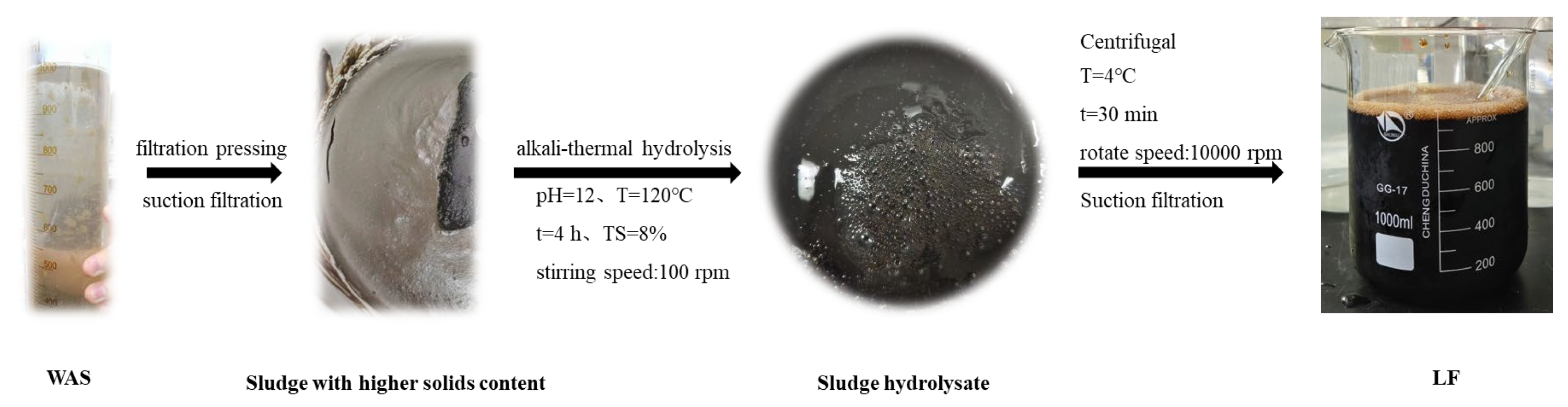
The detailed preparation process of sludge-derived liquid fertilizer (LF) is illustrated in Figure 1. Briefly, the solid content of the sludge (≈15% solids) was adjusted to 8% by adding an appropriate amount of ultrapure water, while the total reaction volume was brought to 500 mL. Subsequently, 10 mol/L NaOH solution was added dropwise to the sludge until the pH gradually reached 12. The conditioned sludge was then subjected to alkaline thermal hydrolysis in a high-temperature and high-pressure autoclave (TEW-V, Taiatsu Techno, Saitama City, Japan) with the temperature and stirring speed set at 120 °C and 100 rpm, respectively. Timing was started once the reactor temperature reached the set point (120 °C) and maintained for 4 h. After the reaction, the heater was turned off and the system was allowed to cool naturally until the internal pressure dropped to zero. The hydrolysate was collected and cooled naturally to room temperature. Finally, solid–liquid separation was performed by centrifugation (10,000 rpm, 30 min, 4 °C) followed by vacuum filtration through a 0.45 µm membrane filter. The resulting filtrate was collected as the LF. The basic properties of LF are presented in Table 1.

2.2. Experimental Design

This experiment included four groups: CK (no fertilizer), LF0 (LF replacing 0% of fertilizer nitrogen, full chemical fertilizer), LF50 (LF replacing 50% of fertilizer nitrogen) and LF100 (LF replacing 100% of fertilizer nitrogen). Each group was replicated five times. The tested pakchoi cabbage were cultivated in plastic pots containing 800 g of air-dried soil, with three seedlings per pot. All pots are arranged completely at random within the greenhouse. The total nitrogen input for all fertilization groups was set at 150 kg TN·ha−1 [16]. Specifically, 40% was applied as base fertilizer at sowing, and the remaining 60% was applied as topdressing in three equal splits starting from the 14th day after planting (at 7-day intervals) [17]. Throughout the experimental period, the total nitrogen input and irrigation water volume were kept consistent across all groups. Pakchoi cabbage was sown on 12 May 2024, and harvested on 17 June 2024, resulting in a growth period of 36 days. During cultivation, the ambient temperature was maintained constant at 26 °C, with a photoperiod of 12 h light/12 h dark. To minimize the impact of microenvironmental variations such as light and temperature within the greenhouse on plant growth, all flower pots should be randomly rearranged weekly [18].

2.3. Determination of Growth and Physiological Parameters

Pakchoi cabbage was harvested 36 days after sowing, and the growth parameters (plant height, crown width, stem diameter, fresh weight, and dry weight) were determined according to standard measurement. To determine the physiological parameters, the midrib was removed from fresh pakchoi cabbage leaves and the leaf tissues were chopped and homogenized. Approximately 0.2 g of the homogenized tissue was immersed in 20 mL of 95% ethanol and extracted in the dark until complete discoloration. The extract without leaf tissue served as the blank control. The absorbance of the pigment extract was measured at 470, 649, and 665 nm (A470, A649, A665) using a spectrophotometer. The chlorophyll and carotenoid contents were calculated according to the following equations (Equations (1)–(4)) [19]:
Chlorophyll   a   ( Chla ,   mg · g 1     FW )   =   ( 13.95   ×   A 665     6.88   ×   A 649 )   ×   V m
Chlorophyll   b   ( Chlb ,   mg · g 1 FW ) = ( 24.96   ×   A 649     7.32   ×   A 665 )   ×   V m
Carotene   ( mg · g 1 FW ) = ( 1000   ×   A 470   -   2.05   ×   Chla     114.8   ×   Chlb )   ×   V 245   ×   m
Total chlorophyll (mg·g−1 − FW) = Chla + Chlb
m: fresh weight of leaves, g;
V: volume of the pigment extract, L.
Peroxidase (POD) activity was determined using an assay kit (A084-3-1, Nanjing Jiancheng Bioengineering Institute, Nanjing, China) strictly following the manufacturer’s instructions.

2.4. Physicochemical Properties of LF and Soil

The contents of As, Pb, Cd, Cr, Cu, Hg, Ni, and Zn of LF were determined by ICP-OES (Agilent 5110, RCL, Los Angeles, CA, USA). The soil total nitrogen (TN) content was determined using an elemental analyzer (Vario EL CUBE, Elementar, Langenselbold, Germany). Soil samples were digested using the H2SO4-HClO4 digestion method, and the total phosphorus (TP) content was measured by the ammonium vanadate-molybdate yellow colorimetric method [17]. Soil pH (NY/T 1377-2007 [20]) and electrical conductivity (EC) (HJ 802-2016 [21]) were determined according to standard methods. The nitrate nitrogen (NO3-N) concentration in soil was analyzed by ion chromatography (ICS-1500, Dionex, Los Angeles, CA, USA). Na+ concentration in LF and ammonia nitrogen (NH4+-N) concentration in soil were analyzed by ion chromatography (ICS-1100, Dionex, Sunnyvale, CA, USA). Available phosphorus (AP) and available potassium (AK) were determined using the NaHCO3 extraction-molybdenum-antimony anti-spectrophotometric method and the NaNO3 extraction–sodium tetraphenylboron turbidimetric method, respectively.

2.5. Enzyme Activity of Soil

The activities of soil urease, neutral phosphatase, and invertase were measured using Solarbio assay kits BC0120, BC0460, and BC4040 (Beijing Solarbio Science & Technology Co., Ltd. (Beijing, China)), respectively, at 37 °C. Enzyme activities were expressed in units of mg NH3-N·g−1·d−1, mg phenol·g−1·d−1, and mg glucose·g−1·d−1, respectively. Soil protease activity was determined using the Gelatins SNPT-F24-N (1620) assay kit (Shanghai Jingkang Bioengineering Co., Ltd. (Shanghai, China)) at 40 °C, with enzyme activity expressed as mg tyrosine·g−1·d−1.

2.6. Soil Microbial Analysis

Genomic DNA of soil microbial samples collected on day 36 was extracted using the CTAB method [19]. The concentration and quality of DNA were measured with a spectrophotometer (NanoDrop 2000, Thermo, Tokyo, Japan), and integrity was evaluated by 1% (m/v) agarose gel electrophoresis. Qualified DNA samples were subjected to paired-end sequencing of the V4-V5 region using the primer set 515F/919R on the Illumina MiSeq platform (Shanghai Meiji Biomedical Technology Co., Ltd. (Shanghai, China)) [22]. Raw 16S rRNA gene sequencing data were used for subsequent bioinformatic analysis and deposited into the National Center for Biotechnology Information Sequence Read Archive under accession number PRJNA1200286.
The bioinformatics analysis workflow for sequencing data is as follows: First, Quantitative Insights Into Microbial Ecology was used to perform quality control on raw sequences to remove low-quality reads, and the UCHIME algorithm was employed to eliminate raw reads with chimeras. Subsequently, high-quality reads were trimmed, filtered, and aligned using the USEARCH (v12 (Edgar, 2024)) software, then clustered into operational taxonomic units (OTUs) based on a 97% similarity threshold. Finally, representative sequences from each OTU were classified according to the Silva 138 database [22]. Alpha diversity calculations, hierarchical cluster analysis, and bacterial community composition analysis were performed using the Majorbio I-Sanger cloud platform (www.i-sanger.com, accessed on 1 November 2025).

2.7. Statistical Analysis

All statistical analyses were performed using IBM SPSS software (version 24.0). Prior to one-way analysis of variance (ANOVA), the assumptions of normality and homogeneity of data were verified. Normality was assessed using the Shapiro–Wilk test, and homogeneity of data was checked with Levene’s test. The data met both assumptions (p > 0.05), justifying the use of parametric tests. Then, the data were subjected to ANOVA, and Duncan’s multiple comparison test was employed to assess the significance of the differences between the means of different samples at a confidence level of p < 0.05.

3. Results and Discussion

3.1. Heavy Metal Content in LF

Heavy metals are the primary limiting factors for agricultural use of sludge. As shown in Table 2, the concentrations of Pb, Cd, Cr, Cu, Ni, and Zn in the raw sludge were 23.9 ± 0.1, 5.2 ± 0.1, 55.1 ± 0.7, 24.3 ± 0.2, 27.7 ± 1.0, and 22.2 ± 1.0 mg/kg, respectively. After alkaline-thermal treatment, the concentrations of Pb, Cd, Cu, Ni, and Zn in sludge-derived liquid fertilizer (LF) decreased by 100.0%, 100.0%, 100.0%, 37.5%, and 23.4% compared to raw sludge, respectively. Moreover, the concentrations of As, Pb, Cd, Cr, Cu, Hg, Ni, and Zn in the LF all fell below the heavy metal limits for Grade A sludge products specified in the Control standards of pollutants in sludge for agricultural use (GB 4284-2018 [23]). This indicates that SS-NB poses minimal risk to agricultural production safety.

3.2. Growth and Physiological Parameters of Pakchoi Cabbage

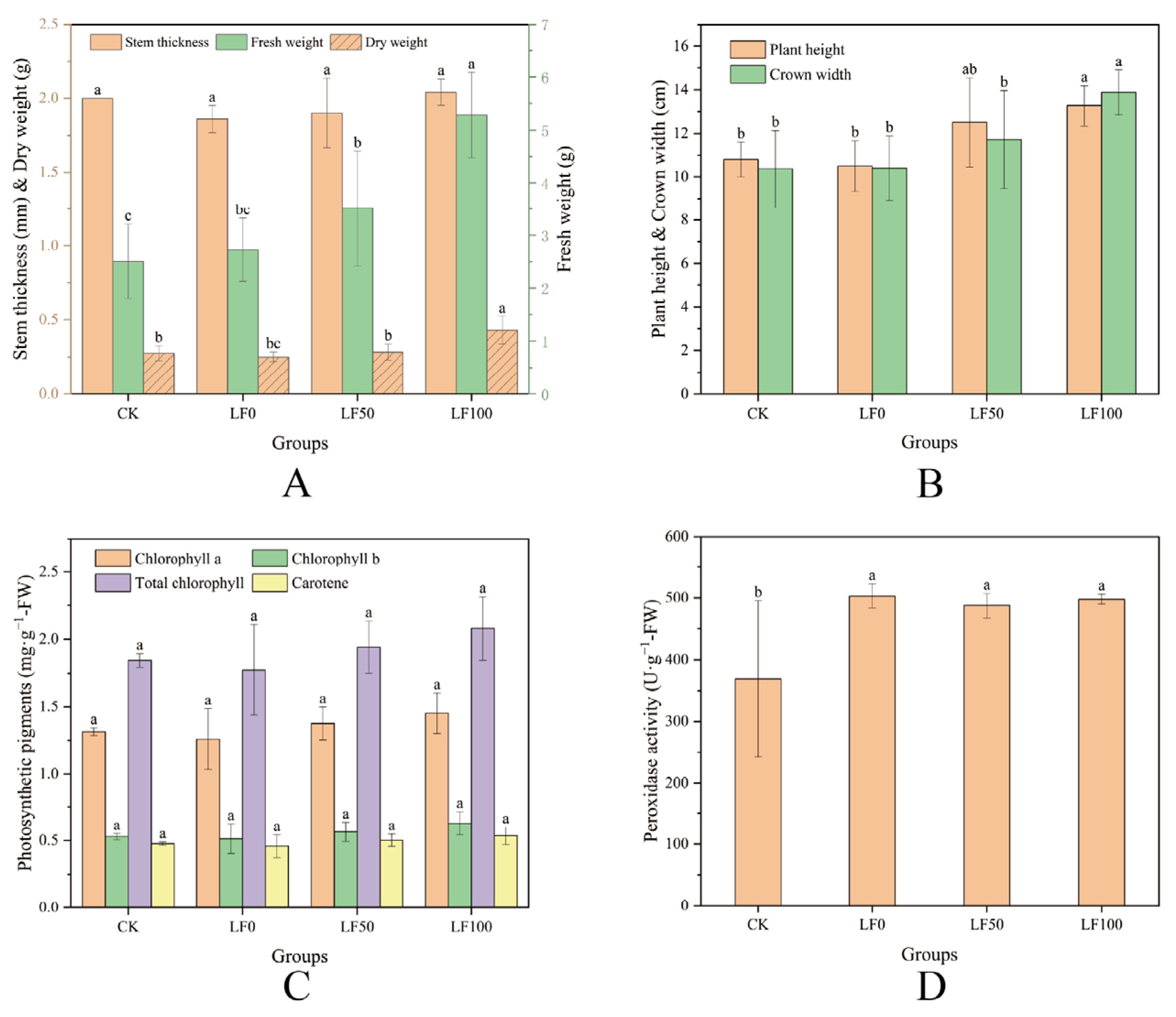
As shown in Table 1, the total nutrient content (N, P, K) of sludge-derived liquid fertilizer (LF) (>11.60%, dry weight) is higher than the national standards for organic fertilizer products (i.e., NY525-2021, 4%, calculated as N + P2O5 + K2O, dry weight), indicating its higher nutrition for crop growth and maintaining soil nutrient equilibrium. The growth indicators of pakchoi cabbage can visually reflect the fertilizer effects. As illustrated in Figure 2A,B, compared with CK (no fertilizer) and LF0 (LF replacing 0% of fertilizer nitrogen, full chemical fertilizer), LF50 (LF replacing 50% of fertilizer nitrogen) and LF100 (LF replacing 100% of fertilizer nitrogen) increased the fresh weight, dry weight, plant height, crown width, and stem diameter of pakchoi cabbage by 29.00–110.61%, 2.92–72.00%, 15.74–26.29%, 12.69–33.98%, and 2.15–9.68%, respectively. This result is consistent with the growth trend of pakchoi cabbage as visually depicted in Figure S1. As the LF proportion increased from 0% to 100%, the growth indicators of each group showed gradient improvements. Compared with LF0 and LF50, LF100 increased fresh weight, dry weight, plant height, crown width, and stem diameter by 50.31–93.91%, 52.48–72.00%, 6.08–26.29%, 18.43–33.46%, and 7.37–9.68%, respectively. These results indicate that compared to urea application alone (LF0), LF significantly promoted pakchoi cabbage growth. The growth response intensified with increasing liquid fertilizer replacement rates, with the highest growth performance observed at full replacement (LF100). Notably, the growth indicators of the LF0 treatment group were lower than those of CK, presumably due to the decomposition of urea resulting in high concentrations of NH4+ in the soil, which inhibits plant growth [24,25].
The content of photosynthetic pigments in pakchoi cabbage leaves can indirectly reflect the physiological effects of LF [26]. As shown in Figure 2C, the chlorophyll a, chlorophyll b, total chlorophyll, and carotene contents in LF50 and LF100 increased by 9.26–22.43% compared to those in LF0/CK. This phenomenon may be attributed to the unique nutritional components in LF and the translocation of amino acids to the leaves [27], thereby enhancing photosynthesis and increasing biomass (Figure 2A,B). Furthermore, the peroxidase (POD) activity in LF50 and LF100 treatments was significantly increased by 32.03% and 34.92% compared to CK (Figure 2D), respectively. As a key redox enzyme, POD participates in stress defense by decomposing peroxides [28,29], while carotene synergistically enhance the scavenging capacity of reactive oxygen species [30,31]. These results demonstrate that LF possesses dual functions of promoting plant growth and improving stress resistance.

3.3. Soil Physicochemical Properties and Enzyme Activity

3.3.1. Effects of Urea and LF Application on Soil pH and EC

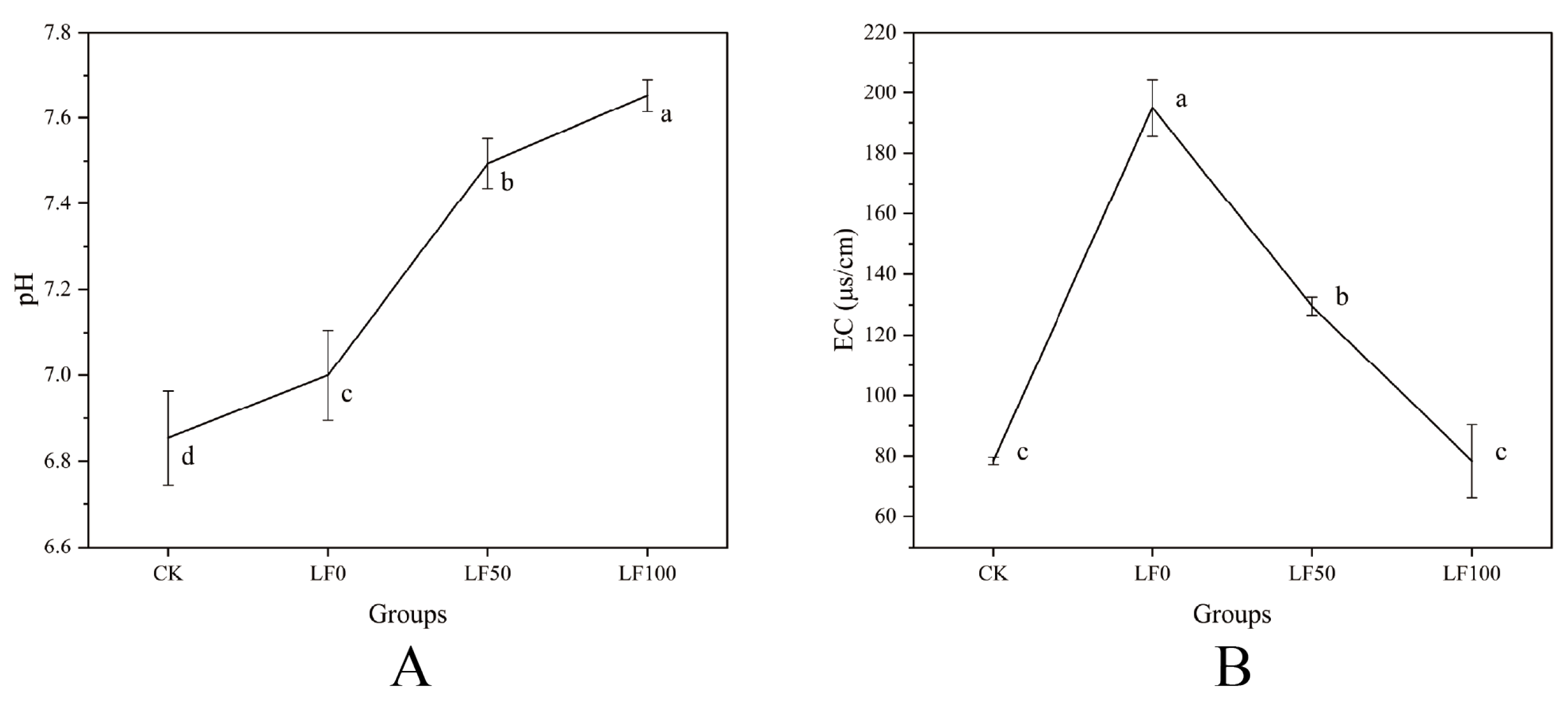
Soil pH and EC under different treatments are shown in Figure 3. The soil pH increased gradually in the order of CK, LF0, LF50, and LF100 treatments. This can be attributed to two aspects: on one hand, the alkaline nature of LF directly elevated soil pH; on the other hand, the abundant organic matter in LF enhanced the activity of nitrogen-transforming enzymes, promoting nitrogen utilization and reducing nitrate accumulation, thereby increasing soil pH [32]. Compared to the original soil (Table S1), LF100 significantly increased soil pH to 7.65 ± 0.04 (p < 0.05). The soil pH in LF50 (7.49 ± 0.06) was similar to that of the original soil (pH = 7.56). In contrast, both CK and LF0 significantly reduced soil pH: the former resulted from proton release by pakchoi cabbage roots [33], while the latter was probably caused by NO3- accumulation in the soil (Figure 4B). These results demonstrate that LF can effectively mitigate urea-induced soil acidification without causing a sharp increase in pHs, which is consistent with the findings of Hao et al. [34]. However, the long-term effects of LF application on soil pH should be monitored.
Electrical conductivity (EC) can serve as an indicator of soluble salt concentration in soil [35]. Compared with the original soil and the unfertilized control (CK), the urea-only treatment (LF0) markedly increased soil EC. In contrast, EC gradually decreased as urea in the fertilizer was progressively replaced by LF (LF50 and LF100), although LF50 and LF100 introduced 205.64 µg and 411.26 µg of sodium which may affect the degree of soil salinization, respectively, into the soil matrix. The EC under LF100 treatment was significantly lower than that of the original soil (p < 0.05), which may be attributed to the improved utilization efficiency of plant nutrient ions resulting from LF application, thereby reducing the accumulation of readily available nutrients in the soil [1]. Overall, the results demonstrate that replacing urea with LF alleviates soil acidification and decreases the risk of soil salinization, with higher LF substitution levels (particularly LF100) conferring the greatest improvements.

3.3.2. Soil Nutrient Characteristics

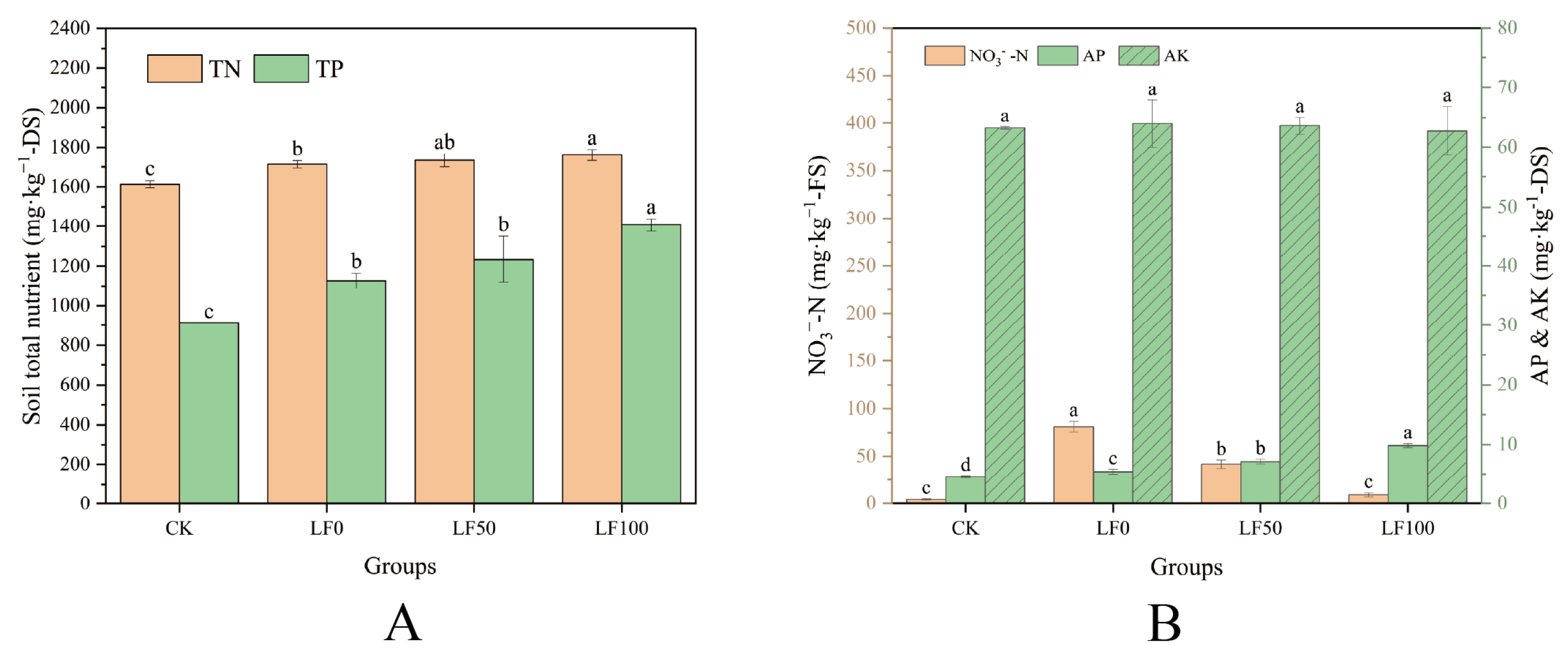
Soil nutrient properties at the harvest stage of pakchoi cabbage are shown in Figure 4. Compared to CK, all fertilization treatments significantly increased soil total nitrogen (TN) and total phosphorus (TP) content (p < 0.05), with LF100 exhibiting the greatest improvement (TN: +9.09%; TP: +54.56%). Analysis of available nutrients revealed no significant difference in available potassium (AK) relative to CK. In contrast, available phosphorus (AP) increased significantly and was positively correlated with the LF ratio, which may be attributed to the input of TP and humic acids from LF [36]. The available nitrogen in the soil includes NH4+-N and NO3-N. NH4+-N concentrations in all samples were below the method detection limit of 0.04 mg L−1. This is consistent with the results of Zhou et al. [37]. NO3-N content decreased significantly with increasing LF proportion (LF100 < LF50 < LF0), indicating that higher LF ratios promote the conversion of nitrogen into organic forms, thereby enhancing soil nitrogen storage. Notably, no significant difference was observed in NO3-N between LF100 and CK, suggesting that plants in the LF100 treatment likely utilized organic nitrogen (e.g., amino acids and proteins) as the primary nitrogen source [38]. In conclusion, the integrated nutrient input from LF exhibits both direct availability and slow-release characteristics—mediated through microbial-enzymatic transformation. This result, discussed in detail in the following section, indicates that LF improvesoil nutrient pool quality and ultimately enhances plant productivity

3.3.3. Soil Enzyme Activities

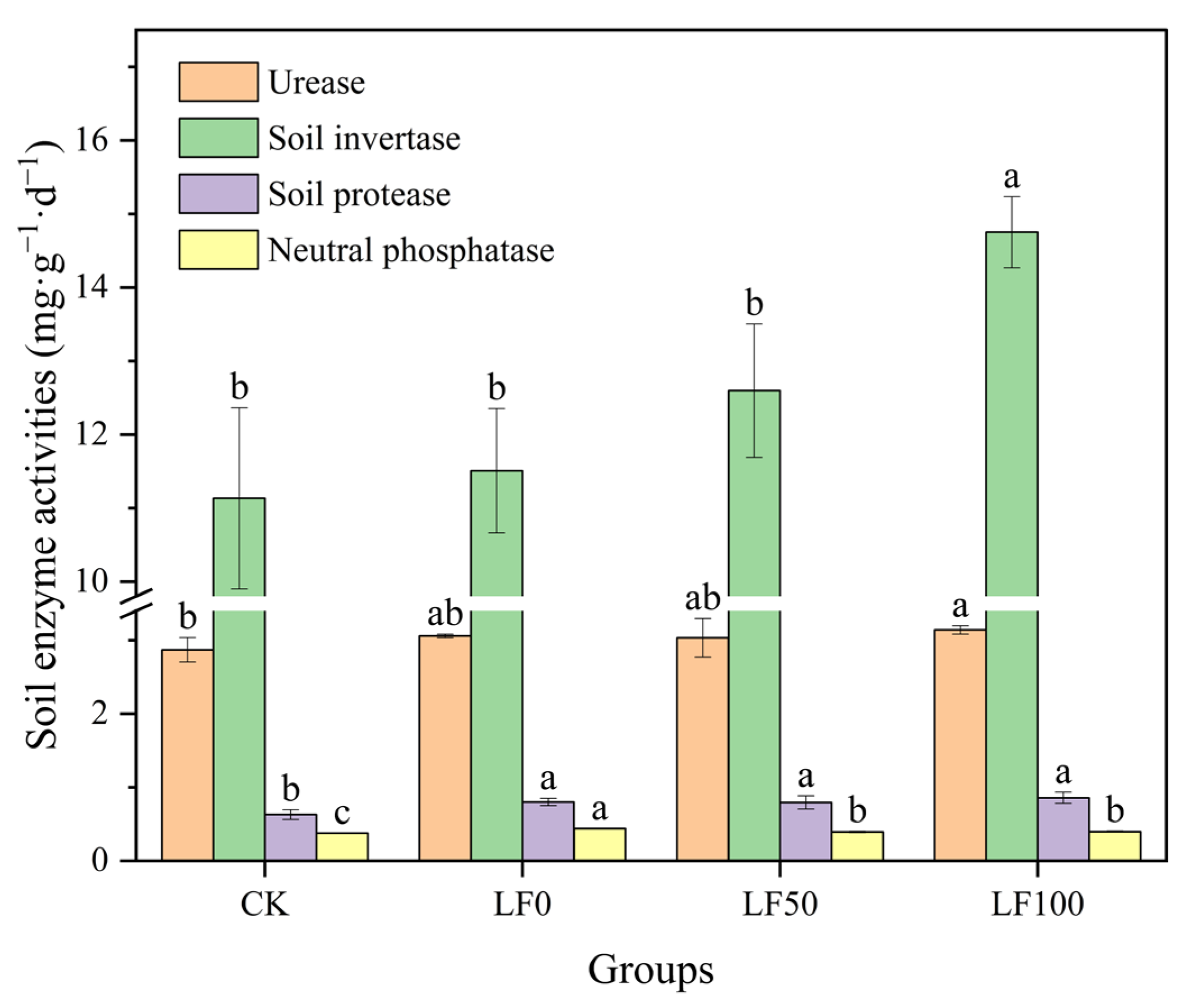
Soil key enzyme activities at the harvest stage of pakchoi cabbage are shown in Figure 5. Compared to CK, all fertilization treatments increased the activities of soil urease, invertase, protease, and neutral phosphatase. Among these, no significant difference was observed in urease activity between LF0 and LF50, while LF100 increased urease activity by 2.73% compared to LF0. Invertase activity gradually increased with higher sludge-derived liquid fertilizer (LF) application rates, reaching 128.19% of that in LF0 under the LF100 treatment. Protease activity in LF100 was slightly higher than in LF0, whereas it was lower in LF50, though these differences were not statistically significant. These findings are consistent with the general consensus that the application of organic and chemical fertilizers enhances soil enzyme activities [39]. In soil, protease catalyzes the hydrolysis of proteins and polypeptides into oligopeptides and amino acids [40]. Urease, together with protease, promotes the mineralization and transformation of nitrogen-containing organic matter, thereby facilitating plant nitrogen uptake [34]. Invertase is a hydrolase that catalyzes the hydrolysis of soluble nutrients. The activities of these three enzymes play crucial roles in soil carbon and nitrogen transformation and cycling [41]. LF is rich in proteins and soluble nutrients, which may explain the higher activities of urease, protease, and invertase in the LF100 and LF50 treatments. In contrast, neutral phosphatase activity was significantly lower in both LF100 and LF50 compared to LF0, consistent with previous studies [34]. This suggests that neutral phosphatase may be sensitive to excessive LF application. In summary, the exclusive application of LF (LF100) was most effective in enhancing soil enzyme activities, promoting nutrient transformation, and improving plant nutrient uptake.

3.4. Soil Microbial Community

3.4.1. α-Diversity

As shown in Table 3, the Coverage index of all samples was ≥0.99, indicating that the sequencing depth sufficiently captured the majority of microbial diversity in these samples [42]. The ACE and Chao indices were used to estimate species richness, while the Simpson and Shannon indices reflected species diversity and evenness. Compared to unfertilized control (CK), the urea-only treatment (LF0) and LF50 (LF replacing 50% of fertilizer nitrogen) increased soil microbial community richness, whereas the LF-only treatment (LF100) resulted in a decrease. Among the fertilization groups, microbial richness showed a declining trend as the substitution ratio of LF for urea-N increased (from LF0 to LF50 to LF100). Overall, microbial diversity in all fertilized groups was higher than in CK, and it increased with the rising proportion of LF. Specifically, the highest diversity observed in the LF100 treatment suggests a more functionally comprehensive and systematic microbial community [43]. This phenomenon may be attributed to the more balanced and comprehensive nutrient input from LF, which promotes the establishment of a functionally robust microbial community, thereby contributing to improved soil quality and enhanced plant growth.

3.4.2. Hierarchical Clustering of Microbial Communities

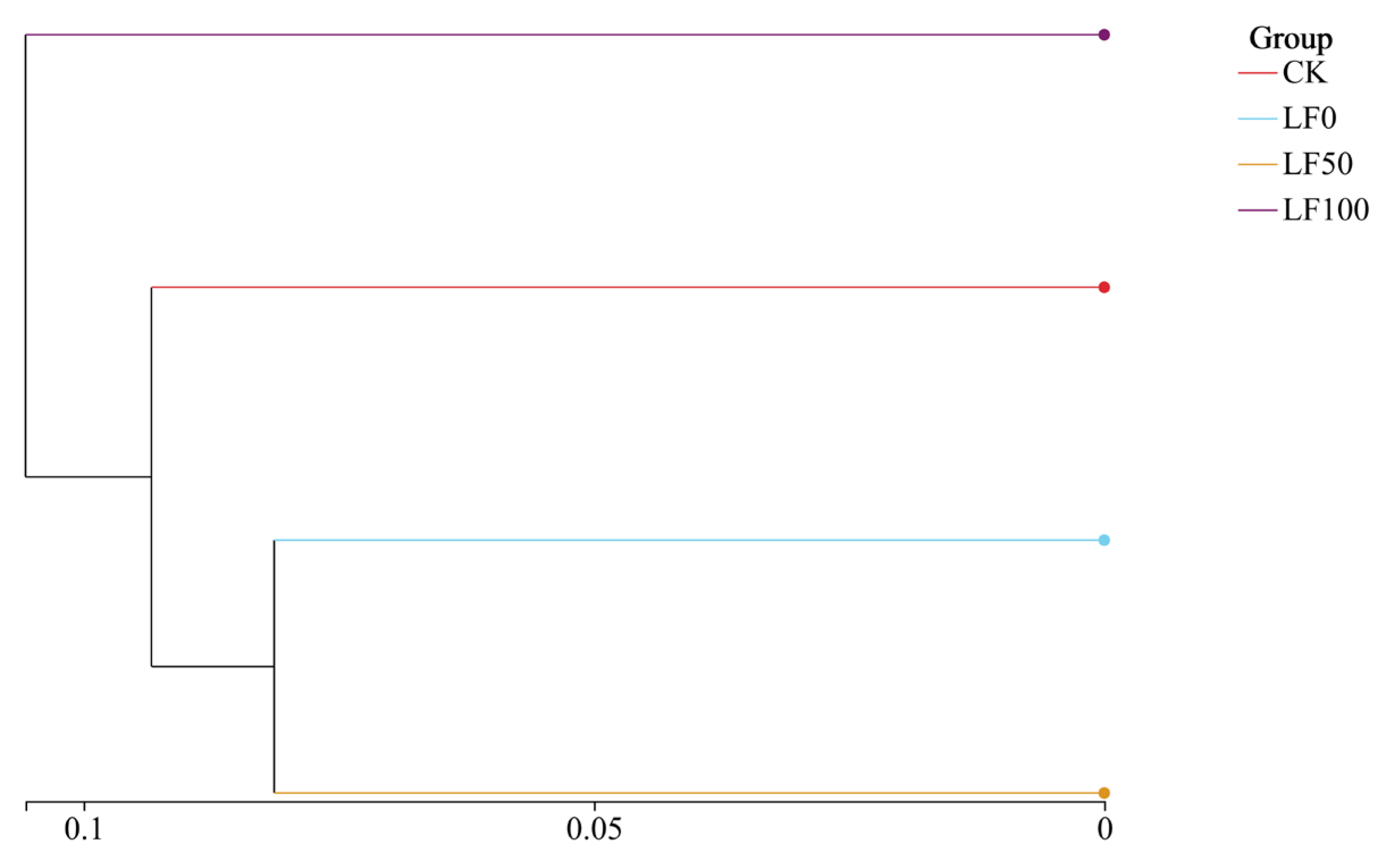
Hierarchical clustering analysis based on Bray–Curtis distance (Figure 6) revealed differences in microbial community structure among samples from different treatments. The analysis identified two major clusters: Cluster I consisted exclusively of LF100, while Cluster II comprised all other samples and was further divided into two subclusters. Subcluster I contained only CK, and Subcluster II included both LF0 and LF50. These results indicate that the soil microbial community structure gradually shifted as the substitution ratio of LF for urea-N increased. This pattern highlights the influence of LF on reshaping the microbial community composition, which may subsequently affect soil ecological functions and plant growth.

3.4.3. Microbial Community Structure

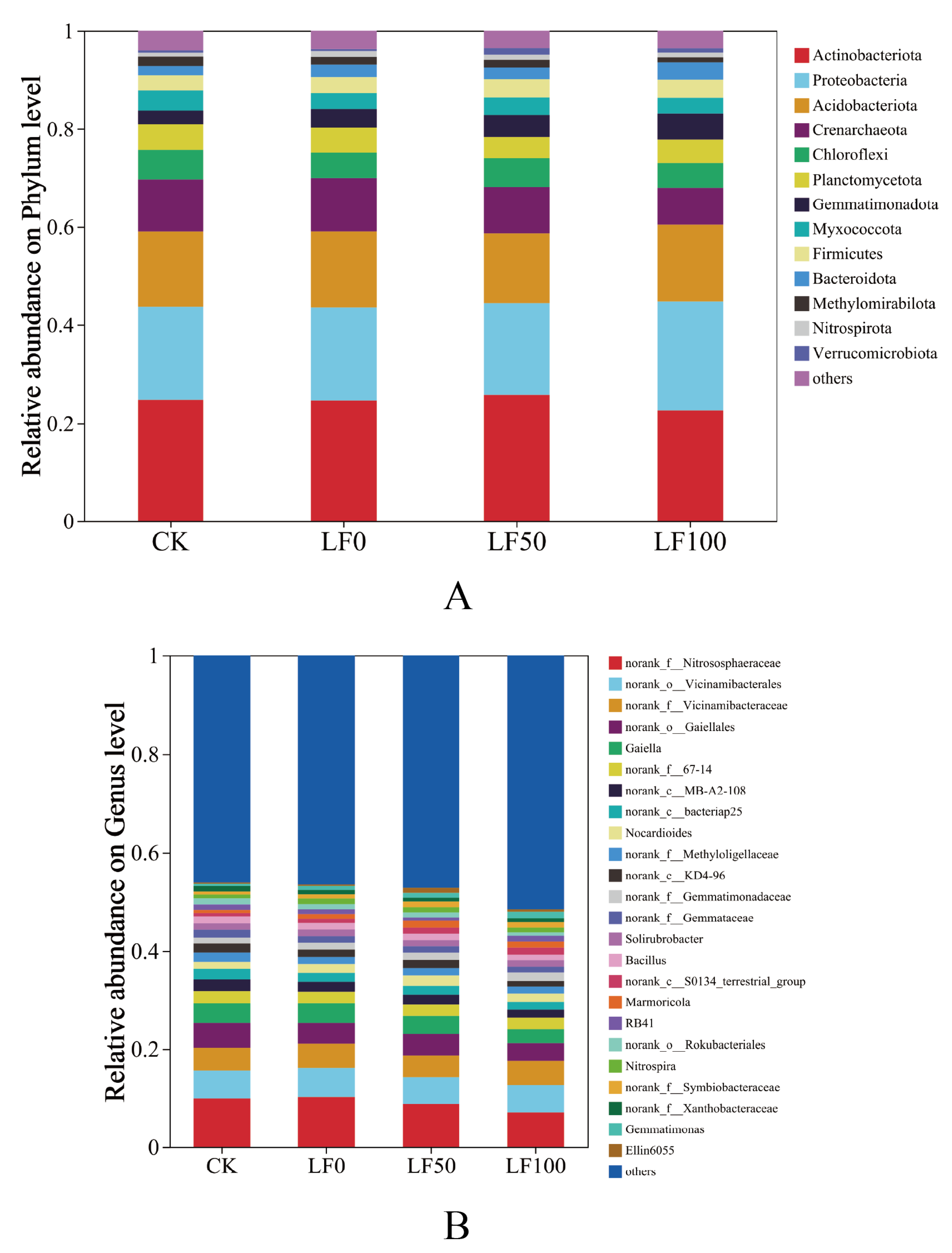
Figure 7 illustrates the soil microbial community composition at the phylum (a) and genus (b) levels. At the phylum level, Actinobacteriota (22.64–25.85%), Proteobacteria (18.59–22.14%), Acidobacteriota (14.22–15.66%), and Crenarchaeota (7.61–10.99%) were the dominant phyla across all fertilization treatments (Figure 7A). Actinobacteriota play important roles in soil carbon cycling (e.g., decomposing recalcitrant organic matter) and nitrogen cycling [44,45]. Their highly abundant genera included norank_o_Gaiellales (3.52–5.01%), Gaiella (2.82–4.04%), norank_f_67-14 (2.33–2.53%), norank_c_MB-A2-108 (1.63–2.38%), Nocardioides (1.40–2.14%), Solirubrobacter (1.25–1.37%), and Marmoricola (0.63–1.42%), all of which are involved in soil C or N cycling and contribute to improving soil organic carbon distribution and nitrogen availability [34,45,46,47,48,49,50]. Proteobacteria encompass a variety of nitrogen-fixing bacteria and play a significant role in soil nitrogen cycling [51]. Key genera within this phylum, such as norank_f_Methyloligellaceae (1.44–1.90%) and norank_f_Xanthobacteraceae (0.77–1.10%), are involved in nitrogen fixation, organic carbon accumulation, and sulfur and nitrogen cycling [49,52]. Acidobacteriota are associated with the degradation of organic matter and carbon and nitrogen cycling in soil [53]. Major genera included norank_o_Vicinamibacterales (5.47–5.95%), norank_f_Vicinamibacteraceae (4.36–4.89%), and RB41 (0.74–1.21%). norank_o_Vicinamibacterales can drive nitrogen and phosphorus cycling to support bacterial growth, while norank_f_Vicinamibacteraceae and RB41 are linked to the degradation of organic matter and nitrogen cycling, respectively [49,54,55]. Crenarchaeota are key contributors to biogeochemical transformations of carbon and nitrogen in soil [56]. The most abundant OTU across the four treatments was the ammonia-oxidizing archaea norank_f_Nitrososphaeraceae (phylum: Crenarchaeota; 7.09–10.21%). Its abundance decreased with increasing LF application. The gradual decrease in soil NO3-N content observed in LF0, LF50, and LF100 may be associated with the reduced abundance of norank_f_Nitrososphaeraceae [57]. Notably, the relative abundance of Proteobacteria in the LF100 treatment increased by 17.08% and 19.10% compared to LF0 and LF50, respectively, suggesting enhanced biological nitrogen fixation potential in the LF100 soil microbial community. Combined with the α-diversity results (Section 3.4.1), the comprehensive nutrient input from LF100 may promote the establishment of a more functionally comprehensive and systematic microbial community. In conclusion, the substitution of urea with LF increased the relative abundance of nitrogen-fixing bacteria and contributed to the formation of a microbial communities with more stable structure and complete metabolic functions. This regulatory effect may improve soil nitrogen retention and nutrient cycling efficiency, thereby supporting plant nutrient uptake and growth.

4. Conclusions

This study confirmed the agricultural application potential of sludge-derived liquid fertilizer (LF) through pot experiments. The results demonstrated that compared to the CK and LF0 treatments, the substitution of urea with LF improved the growth parameters of pakchoi cabbage, including fresh weight, dry weight, plant height, crown width, and stem diameter, with the LF100 treatment exhibiting the most pronounced effects. Under this treatment, the plants also showed the highest photosynthetic pigment content and elevated Peroxidase (POD) activity, which is conducive to crop growth and enhanced stress resistance. The application of LF, particularly LF100, increased the activities of soil urease, invertase, and protease, promoting the transformation of bulk nutrients into plant-available forms and thereby supporting plant development. Furthermore, the structure of the soil microbial community gradually shifted with increasing substitution ratios of LF for urea-N. Notably, the LF100 treatment resulted in increased soil microbial diversity, with dominant phyla including Actinobacteriota, Proteobacteria, Acidobacteriota, and Crenarchaeota—groups that encompass numerous key genera involved in nitrogen fixation and carbon-nitrogen cycling. Specifically, the relative abundance of Proteobacteria in LF100 increased by 17.08–19.10% compared to LF0 and LF50. Therefore, the nitrogen retention capacity and nutrient cycling efficiency of the soil under LF100 treatment were potentially enhanced, laying an important foundation for healthy plant growth. Future studies could integrate multi-omics approaches, such as plant transcriptomics, metabolomics, and soil microbial functional profiling, to elucidate the underlying mechanisms through which LF enhances plant growth and soil quality. Additionally, exploring the feasibility of using sludge-derived LF prepared with CaO as an alkaline agent for improving crop yield, stress resistance, and soil properties in saline-alkali lands represents a promising direction for practical application.

Supplementary Materials

The following supporting information can be downloaded at: https://www.mdpi.com/article/10.3390/agronomy16050522/s1, Figure S1: Pakchoi cabbage after 36 d of pot experiment; Table S1: Physicochemical properties of virgin soils.

Author Contributions

X.-F.L.: Investigation & Formal analysis & Data curation & Writing—original draft. Y.X.: Investigation & Formal analysis & Writing—original draft. S.Q.: Methodology & Conceptualization. Z.S.: Formal analysis & Writing—original draft. J.-F.Z.: Formal analysis & Data curation. Z.-Y.S.: Methodology & Conceptualization & Writing—review & editing. Y.-Q.T.: Project administration & Writing—review & editing. All authors have read and agreed to the published version of the manuscript.

Funding

This work was supported by the Sichuan Provincial Natural Science Foundation (2024NSFSC0124).

Data Availability Statement

Data will be made available on request.

Conflicts of Interest

Authors Sheng Qi, Zhen Shi and Jun-Feng Zhao were employed by the company Laiwu Taihe Biochemistry Co., Ltd. The remaining authors declare that the research was conducted in the absence of any commercial or financial relationships that could be construed as a potential conflict of interest.

References

  1. Hua, Y.; Chen, S.X.; Tong, T.; Li, X.O.; Ji, R.T.; Xu, Q.J.; Zhang, Y.; Dai, X.H. Elucidating the molecular mechanisms and comprehensive effects of sludge-derived plant biostimulants on crop growth: Insights from metabolomic analysis. Adv. Sci. 2025, 12, 2404210. [Google Scholar] [CrossRef] [PubMed]
  2. Ding, Y.Y.; Dai, X.H.; Wu, B.R.; Liu, Z.G.; Dai, L.L. Targeted clean extraction of phosphorus from waste activated sludge: From a new perspective of phosphorus occurrence states to an innovative approach through acidic cation exchange resin. Water Res. 2022, 215, 118190. [Google Scholar] [CrossRef] [PubMed]
  3. Geng, H.; Xu, Y.; Zheng, L.K.; Gong, H.; Dai, L.L.; Dai, X.H. An overview of removing heavy metals from sewage sludge: Achievements and perspectives. Environ. Pollut. 2020, 266, 115375. [Google Scholar] [CrossRef]
  4. Guo, G.Z.; Zhou, S.T.; Chen, Y.J.; Wang, W.Y.; Qin, Y.; Li, Y.Y. Evaluation of bioenergy production and material flow in treating Japanese concentrated Johkasou sludge using high-solid anaerobic membrane bioreactor based on one-year operation. Chem. Eng. J. 2023, 469, 143918. [Google Scholar] [CrossRef]
  5. Kosnár, Z.; Mercl, F.; Pierdonà, L.; Chane, A.D.; Míchal, P.; Tlustos, P. Concentration of the main persistent organic pollutants in sewage sludge in relation to wastewater treatment plant parameters and sludge stabilisation. Environ. Pollut. 2023, 333, 122060. [Google Scholar] [CrossRef]
  6. Yang, W.; Cai, C.; Dai, X.H. Interactions between virus surrogates and sewage sludge vary by viral analyte: Recovery, persistence, and sorption. Water Res. 2022, 210, 117995. [Google Scholar] [CrossRef]
  7. Yoshida, H.; Christensen, T.H.; Guildal, T.; Scheutz, C. A comprehensive substance flow analysis of a municipal wastewater and sludge treatment plant. Chemosphere 2015, 138, 874–882. [Google Scholar] [CrossRef]
  8. Qiu, C.; Xu, W.B.; Wang, Y.J.; Yang, J.K.; Su, X.T.; Lin, Z. Hydrothermal alkaline conversion of sewage sludge: Optimization of process parameters and characterization of humic acid. Environ. Sci. Pollut. Res. 2021, 28, 57695–57705. [Google Scholar] [CrossRef]
  9. Tang, Y.F.; Xie, H.; Sun, J.; Li, X.O.; Zhang, Y.; Dai, X.H. Alkaline thermal hydrolysis of sewage sludge to produce high-quality liquid fertilizer rich in nitrogen-containing plant-growth-promoting nutrients and biostimulants. Water Res. 2022, 211, 118036. [Google Scholar] [CrossRef] [PubMed]
  10. Cai, S.Y.; Zhang, W.Z.; Yang, B.Y.; Zhang, Y.; Sun, P.; Cai, Z.L.; Xiang, L.J.; Wang, D.S.; Zhang, W.J. Alkali-thermal humification treatment for simultaneous plant-growth-promoting compounds production and antibiotic removal from lincomycin fermentation residues. Chem. Eng. J. 2024, 485, 149449. [Google Scholar] [CrossRef]
  11. Hu, A.B.; Ai, J.; Zheng, Y.L.; Li, S.S.; Wang, D.S.; Zhang, W.J. Synchronous biostimulants recovery and dewaterability enhancement of anaerobic digestion sludge through post-hydrothermal treatment. Chem. Eng. J. 2023, 460, 141881. [Google Scholar] [CrossRef]
  12. Barber, W.P.F. Thermal hydrolysis for sewage treatment: A critical review. Water Res. 2016, 104, 53–71. [Google Scholar] [CrossRef]
  13. Yuan, X.; Hua, Y.; Chen, S.X.; Song, Q.; Li, X.O.; Zhang, Y.; Dai, X.H. Sludge-derived biostimulants promote glycosylation of tricin and luteolin in the flavone and flavonol biosynthesis to enhance anti-inflammatory activities of rice. Environ. Res. 2024, 263, 120133. [Google Scholar] [CrossRef]
  14. Hao, J.; Tan, J.; Zhang, Y.; Gu, X.; Zhu, G.; Wang, S.; Li, J. Sewage sludge-derived nutrients and biostimulants stimulate rice leaf photosynthesis and root metabolism to enhance carbohydrate, nitrogen and antioxidants accumulation. Chemosphere 2024, 352, 141335. [Google Scholar] [CrossRef]
  15. Hao, J.; Xu, J.; Li, Q.; Li, Z.; Zhang, Y.; Wang, S.; Li, J. Phyllosphere microbiota and metabolomic insights of sewage sludge-derived biostimulant in enhancing nutritional quality and disease resistance of Pakchoi cabbage. Sustain. Horiz. 2025, 16, 100161. [Google Scholar] [CrossRef]
  16. Pant, A.P.; Radovich, T.J.K.; Hue, N.V.; Miyasaka, S.C. Pak Choi (Brassica rapa, Chinensis Group) Yield, Phytonutrient Content, and Soil Biological Properties as Affected by Vermicompost-to-water Ratio Used for Extraction. Hortscience 2012, 47, 395–402. [Google Scholar] [CrossRef]
  17. Li, L.; He, L.X.; Li, Y.Q.; Wang, Y.F.; Ashraf, U.; Hamoud, Y.A.; Hu, X.; Wu, T.Y.; Tang, X.R.; Pan, S.G. Deep fertilization combined with straw incorporation improved rice lodging resistance and soil properties of paddy fields. Eur. J. Agron. 2023, 142, 126659. [Google Scholar] [CrossRef]
  18. Raja, R.; Shah, K.H.; Sarwar, G.; Anwar, T.; Qureshi, H.; Mehmood, S.; Athar, H.U.R.; El Beltagi, H.S.; Rebouh, N.Y.; Novruzova, L.; et al. Adaptive and eco-biotechnological potential of a desert-derived rhizobacteria in mitigating drought stress through physiological modulation in maize. Biodegradation 2026, 37, 21. [Google Scholar] [CrossRef]
  19. Ai, X.H.; Xin, X.D.; Wei, W.X.; Xie, J.Q.; Hong, J.M. Polysorbate-80 pretreatment contributing to volatile fatty acids production associated microbial interactions via acidogenic fermentation of waste activated sludge. Bioresour. Technol. 2022, 345, 126488. [Google Scholar] [CrossRef]
  20. NY/T 1377-2007; Determination of pH in Soil. Ministry of Agriculture of the People’s Republic of China: Beijing, China, 2007.
  21. HJ 802-2016; Soil Quality—Determination of Conductivity-Electrode Method. Ministry of Ecology and Environment of the People’s Republic of China: Beijing, China, 2016.
  22. Wang, S.P.; Wang, L.; Sun, Z.Y.; Wang, S.T.; Shen, C.H.; Tang, Y.Q.; Kida, K. Biochar addition reduces nitrogen loss and accelerates composting process by affecting the core microbial community during distilled grain waste composting. Bioresour. Technol. 2021, 337, 125492. [Google Scholar] [CrossRef] [PubMed]
  23. GB 4284-2018; Control Standards of Pollutants in Sludge for Agricultural Use. Ministry of Housing and Urban-Rural Development of the People’s Republic of China: Beijing, China, 2018.
  24. Sun, Z.Y.; Li, X.X.; Shuai, W.L.; Wang, S.P.; Tang, Y.Q. Improving the Efficiency of Rice Straw Composting by Addition of a Protein Hydrolysate As a Nitrogen Source. Environ. Eng. Sci. 2021, 38, 703–713. [Google Scholar] [CrossRef]
  25. Wang, S.P.; Li, X.X.; Sun, Z.Y.; Shuai, W.L.; Xia, Z.Y.; Xie, C.Y.; Gou, M.; Tang, Y.Q. Evaluation of physicochemical properties, bacterial community, and product fertility during rice straw composting supplemented with different nitrogen-rich wastes. Bioresour. Technol. 2023, 369, 128462. [Google Scholar] [CrossRef]
  26. Kammoun, M.; Ghorbel, I.; Charfeddine, S.; Kamoun, L.; Gargouri-Bouzid, R.; Nouri-Ellouz, O. The positive effect of phosphogypsum-supplemented composts on potato plant growth in the field and tuber yield. J. Environ. Manag. 2017, 200, 475–483. [Google Scholar] [CrossRef] [PubMed]
  27. Hao, J.H.; Tan, J.Y.; Zhang, Y.; Wang, S.; Zhang, X.K.; Wang, Z.Y.; Li, J. Metabolomics reveals the molecular mechanism of sewage sludge-derived nutrients and biostimulants stimulating resistance enhancement and the redistribution of carbon and nitrogen metabolism in pakchoi cabbage. Sci. Total Environ. 2023, 891, 164330. [Google Scholar] [CrossRef]
  28. Chen, Q.; Man, H.; Zhu, L.; Guo, Z.J.; Wang, X.L.; Tu, J.P.; Jin, G.; Lou, J.; Zhang, L.; Ci, L.J. Enhanced plant antioxidant capacity and biodegradation of phenol by immobilizing peroxidase on amphoteric nitrogen-doped carbon dots. Catal. Commun. 2020, 134, 105847. [Google Scholar] [CrossRef]
  29. Lukacova, Z.; Bokor, B.; Vavrova, S.; Soltys, K.; Vaculik, M. Divergence of reactions to arsenic (As) toxicity in tobacco (Nicotiana benthamiana) plants: A lesson from peroxidase involvement. J. Hazard. Mater. 2021, 417, 126049. [Google Scholar] [CrossRef]
  30. Li, T.; Liu, J.X.; Deng, Y.J.; Xu, Z.S.; Xiong, A.S. Overexpression of a carrot BCH gene, DcBCH1, improves tolerance to drought in Arabidopsis thaliana. BMC Plant Biol. 2021, 21, 475. [Google Scholar] [CrossRef]
  31. Zanga, D.; Sanahuja, G.; Eizaguirre, M.; Albajes, R.; Christou, P.; Capell, T.; Fraser, P.; Gerrisch, C.; Lopez, C. Carotenoids moderate the effectiveness of a Bt gene against the European corn borer, Ostrinia nubilalis. PLoS ONE 2018, 13, e0199317. [Google Scholar] [CrossRef]
  32. Vrede, T.; Ballantyne, A.; Mille-Lindblom, C.; Algesten, G.; Gudasz, C.; Lindahl, S.; Brunberg, A.K. Effects of N:P loading ratios on phytoplankton community composition, primary production and N fixation in a eutrophic lake. Freshw. Biol. 2009, 54, 331–344. [Google Scholar] [CrossRef]
  33. Yan, F.; Schubert, S.; Mengel, K. Soil pH changes during legume growth and application of plant material. Biol. Fertil. Soils 1996, 23, 236–242. [Google Scholar] [CrossRef]
  34. Hao, J.H.; Li, B.B.; Tan, J.Y.; Zhang, Y.; Gu, X.J.; Wang, S.; Deng, Y.; Zhang, X.K.; Li, J. Double advantages of nutrients and biostimulants derived from sewage sludge by alkaline thermal hydrolysis process for agricultural use: Quality promotion of soil and crop. Adv. Sci. 2024, 11, e2307793. [Google Scholar] [CrossRef] [PubMed]
  35. Salem, M.A.; Bedade, D.K.; Al-Ethawi, L.; Al-waleed, S.M. Assessment of physiochemical properties and concentration of heavy metals in agricultural soils fertilized with chemical fertilizers. Heliyon 2020, 6, e05224. [Google Scholar] [CrossRef]
  36. Thu, T.A.; Hien, T.H.; Minh, V.Q. Improving bush bean (Phaseolus vulgaris L.) yield and quality by increasing soil nutrients with organic fertilizer. Legum. Res 2023, 46, 482–488. [Google Scholar] [CrossRef]
  37. Zhou, X.; Yan, Y.; Li, Y.; Liu, L.; Zhou, J.; Dai, C.; Cai, Z.; Huang, X. Application of cellulose-rich organic resource improves soil quality and plant growth by recruiting beneficial microorganisms. Appl. Soil Ecol. 2025, 207, 105909. [Google Scholar] [CrossRef]
  38. Ma, Q.X.; Hill, P.W.; Chadwick, D.R.; Wu, L.H.; Jones, D.L. Competition for S-containing amino acids between rhizosphere microorganisms and plant roots: The role of cysteine in plant S acquisition. Biol. Fertil. 2021, 57, 825–836. [Google Scholar] [CrossRef]
  39. Miao, F.H.; Li, Y.; Cui, S.; Jagadamma, S.; Yang, G.F.; Zhang, Q.P. Soil extracellular enzyme activities under long-term fertilization management in the croplands of China: A meta-analysis. Nutr. Cycl. Agroecosyst. 2019, 114, 125–138. [Google Scholar] [CrossRef]
  40. Greenfield, L.M.; Puissant, J.; Jones, D.L. Synthesis of methods used to assess soil protease activity. Soil Biol. Biochem. 2021, 158, 108277. [Google Scholar] [CrossRef]
  41. Wu, Y.; Zhang, H.H.; Li, J.W.; Wang, Z.H.; Jiang, Y. Adsorption of soil invertase to goethite, gibbsite and their organic complexes and the effects on enzyme catalytic performance. Colloids Surf. B 2023, 222, 113073. [Google Scholar] [CrossRef]
  42. Zhou, Y.; Huang, X.; Ma, S.; He, J. Thermo-alkaline pretreatment of excess sludge: Effects of temperature on volatile fatty acids accumulation and microbial community. J. Environ. Manag. 2023, 342, 118244. [Google Scholar] [CrossRef] [PubMed]
  43. Saleem, M.; Hu, J.; Jousset, A. More than the sum of its parts: Microbiome biodiversity as a driver of plant growth and soil health. Annu. Rev. Ecol. Evol. Syst. 2019, 50, 145–168. [Google Scholar] [CrossRef]
  44. Feng, W.H.; Sánchez-Rodríguez, A.R.; Bilyera, N.; Wang, J.Q.; Wang, X.Q.; Han, Y.H.; Ma, B.X.; Zhang, H.Y.; Li, F.Y.; Zhou, J.; et al. Mechanisms of biochar-based organic fertilizers enhancing maize yield on a Chinese Chernozem: Root traits, soil quality and soil microorganisms. Environ. Technol. Innov. 2024, 36, 103756. [Google Scholar] [CrossRef]
  45. Zhong, L.; Wu, T.; Ding, J.; Xu, W.; Yuan, F.; Liu, B.F.; Zhao, L.; Li, Y.; Ren, N.Q.; Yang, S.S. Co-composting of faecal sludge and carbon-rich wastes in the earthworm’s synergistic cooperation system: Performance, global warming potential andkey microbiome. Sci. Total Environ. 2022, 857, 159311. [Google Scholar] [CrossRef]
  46. Ding, Y.R.; Chen, Y.L.; Lin, Z.Q.; Tuo, Y.Y.; Li, H.L.; Wang, Y. Differences in Soil Microbial Community Composition Between Suppressive and Root Rot-Conducive in Tobacco Fields. Curr. Microbiol. 2021, 78, 624–633. [Google Scholar] [CrossRef]
  47. Gao, Y.C.; Yuan, L.Y.; Du, J.H.; Wang, H.; Yang, X.D.; Duan, L.C.; Zheng, L.W.; Bahar, M.M.; Zhao, Q.Q.; Zhang, W.; et al. Bacterial community profile of the crude oil-contaminated saline soil in the Yellow River Delta Natural Reserve, China. Chemosphere 2022, 289, 133207. [Google Scholar] [CrossRef]
  48. Lan, J.C.; Wang, S.S.; Wang, J.X.; Qi, X.; Long, Q.X.; Huang, M.Z. The Shift of Soil Bacterial Community After Afforestation Influence Soil Organic Carbon and Aggregate Stability in Karst Region. Front. Microbiol. 2022, 13, 901126. [Google Scholar] [CrossRef]
  49. Liu, X.A.; Pang, L.N.; Yue, Y.; Li, H.N.; Chatzisymeon, E.; Lu, Y.Y.; Yang, P. Insights into the shift of microbial community related to nitrogen cycle, especially N2O in vanadium-polluted soil. Environ. Pollut. 2023, 322, 121253. [Google Scholar] [CrossRef]
  50. Zhong, L.; Yang, S.S.; Sun, H.J.; Cui, C.H.; Wu, T.; Pang, J.W.; Zhang, L.Y.; Ren, N.Q.; Ding, J. New insights into substrates shaped nutrients removal, species interactions and community assembly mechanisms in tidal flow constructed wetlands treating low carbon-to-nitrogen rural wastewater. Water Res. 2024, 256, 121600. [Google Scholar] [CrossRef]
  51. Zheng, Y.F.; Cao, X.W.; Zhou, Y.A.; Li, Z.; Yang, Y.Z.; Zhao, D.L.; Li, Y.Q.; Xu, Z.C.; Zhang, C.S. Effect of planting salt-tolerant legumes on coastal saline soil nutrient availability and microbial communities. J. Environ. Manag. 2023, 345, 118574. [Google Scholar] [CrossRef] [PubMed]
  52. Ma, X.D.; Chao, L.M.; Li, J.P.; Ding, Z.Y.; Wang, S.Y.; Li, F.S.; Bao, Y.Y. The Distribution and Turnover of Bacterial Communities in the Root Zone of Seven Stipa Species Across an Arid and Semi-arid Steppe. Front. Microbiol. 2021, 12, 782621. [Google Scholar] [CrossRef] [PubMed]
  53. Huang, J.; Zhou, Z.; Zheng, Y.; Sun, X.; Yu, S.Q.; Zhao, X.D.; Yang, A.M.; Wu, C.H.; Wang, Z.W. Biological nutrient removal in the anaerobic side-stream reactor coupled membrane bioreactors for sludge reduction. Bioresour. Technol. 2020, 295, 122241. [Google Scholar] [CrossRef]
  54. Luo, X.S.; Huang, L.Y.; Cai, X.X.; Zhou, L.H.; Zhou, S.G.; Yuan, Y. Structure and core taxa of bacterial communities involved in extracellular electron transfer in paddy soils across China. Sci. Total Environ. 2022, 844, 157196. [Google Scholar] [CrossRef]
  55. Wang, K.; Zhou, C.T.; Zhou, H.; Jiang, M.; Chen, G.; Wang, C.; Zhang, Z.J.; Zhao, X.D.; Jiang, L.M.; Zhou, Z. Comparison on biological nutrient removal and microbial community between full-scale anaerobic/anoxic/aerobic process and its upgrading processes. Bioresour. Technol. 2023, 374, 128757. [Google Scholar] [CrossRef] [PubMed]
  56. Nicol, G.W.; Schleper, C. Ammonia-oxidising Crenarchaeota: Important players in the nitrogen cycle? Trends Microbiol. 2006, 14, 207–212. [Google Scholar] [CrossRef] [PubMed]
  57. Wu, J.Q.; Wang, M.; Li, P.; Shen, L.Y.; Ma, M.Y.; Xu, B.Y.; Zhang, S.Y.; Sha, C.Y.; Ye, C.M.; Xiong, L.J.; et al. Effects of pig manure and its organic fertilizer application on archaea and methane emission in paddy fields. Land 2022, 11, 499. [Google Scholar] [CrossRef]
Figure 1. The process of LF preparation by alkali–thermal hydrolysis of waste activated sludge.
Agronomy 16 00522 g001
Figure 2. Harvest-time characteristics of pakchoi cabbage: stem diameter, dry weight, and fresh weight (A); plant height and crown width (B); leaf photosynthetic pigment content (C); and peroxidase (POD) activity (D). FW: fresh weight. Lowercase letters (a, b, and c) indicate significant differences among treatment groups within the same index (p < 0.05, Duncan’s multiple comparison test).
Agronomy 16 00522 g002
Figure 3. Effects of different substitution ratios of LF for urea on soil pH (A) and electrical conductivity (EC) (B). Lowercase letters (a–d) indicate significant differences among treatment groups within the same index (p < 0.05, Duncan’s multiple comparison test).
Agronomy 16 00522 g003
Figure 4. Effects of different substitution ratios of LF for urea on soil total nutrients (A) and available nutrients (B). TN: total nitrogen; TP: total phosphorus; NO3-N: nitrate nitrogen; AP: available phosphorus; AK: available potassium. DS: dry soil. FS: fresh soil. Lowercase letters (a, b, c, and d) indicate significant differences among treatment groups within the same index (p < 0.05, Duncan’s multiple comparison test).
Agronomy 16 00522 g004
Figure 5. Effects of different substitution ratios of LF for urea on soil urease, invertase, protease, and neutral phosphatase activities. Lowercase letters (a, b, and c) indicate significant differences among treatment groups within the same index (p < 0.05, Duncan’s multiple comparison test).
Agronomy 16 00522 g005
Figure 6. Hierarchical clustering analysis of the microbial communities across experimental samples.
Agronomy 16 00522 g006
Figure 7. Soil microbial community structure at the phylum (A) and genus (B) levels.
Agronomy 16 00522 g007
Table 1. Basic characteristics of LF.
Protein
(mg/L)
TN
(mg/L)
TP
(mg/L)
TK
(mg/L)
TN + P2O5 + K2O
(Dry Weight, %)
Na+
(mg/L)
19,852.52522.33642.241500>11.608.64
Table 2. Heavy metal content of raw sludge and LF.
Heavy MetalsRaw Sludge (mg/kg, Based on Dry Weight)LF
(mg/kg, Based on Dry Weight)
GB 4284-2018 Limits for Grade A Sludge Products (mg/kg, Based on Dry Weight)
AsNDND<30
Pb23.9 ± 0.1ND<3
Cd5.2 ± 0.1ND<3
Cr55.1 ± 0.771.8 ± 0.4<500
Cu24.3 ± 0.2ND<500
HgNDND<3
Ni27.7 ± 1.017.3 ± 0.1<100
Zn22.2 ± 1.017.0 ± 0.0<1200
ND: not detected, detection line < 0.01 mg/L.
Table 3. Richness and diversity of microbial community.
Chao 1ACE 2Shannon 3Simpson 4Coverage 5
CK3014.00 c3110.00 c6.27 d0.0079 b0.9902 b
LF03141.28 a3282.58 a6.30 c0.0083 a0.9900 c
LF503051.53 b3188.49 b6.32 b0.0070 c0.9900 c
LF1002831.73 d2946.83 d6.38 a0.0055 d0.9914 a
Superscript letters (ᵃ, ᵇ, c, d) indicate significant differences among treatment groups within the same index (p < 0.05, Duncan’s multiple comparison test). 1,2 Community richness. A higher number represented more richness. 3,4 Community diversity. A higher Shannon index represented greater diversity, Simpson was on the contrary. 5 Sampling depth.
Disclaimer/Publisher’s Note: The statements, opinions and data contained in all publications are solely those of the individual author(s) and contributor(s) and not of MDPI and/or the editor(s). MDPI and/or the editor(s) disclaim responsibility for any injury to people or property resulting from any ideas, methods, instructions or products referred to in the content.