Article

Optimizing Water–Nitrogen Coupling to Improve Yield, Nutritional Quality, and Nitrogen Use Efficiency of Sudangrass in Southern Xinjiang
1
College of Agriculture, Tarim University, Alar 843300, China
2
Key Laboratory of Genetic Improvement and Efficient Production for Specialty Crops in Arid Southern Xinjiang of Xinjiang Corps, Tarim University, Alar 843300, China
3
The Research Center of Oasis Agricultural Resources and Environment in Southern Xinjiang, Tarim University, Alar 843300, China
4
College of Land Science and Technology, China Agricultural University, Beijing 100193, China
5
Xinjiang University of Technology, Hotan 848000, China
6
Xinjiang Academy of Agricultural and Reclamation Sciences, Shihezi 832000, China
*
Author to whom correspondence should be addressed.
Agronomy 2026, 16(5), 514; https://doi.org/10.3390/agronomy16050514
Submission received: 3 February 2026 / Revised: 23 February 2026 / Accepted: 26 February 2026 / Published: 27 February 2026
(This article belongs to the Section Soil and Plant Nutrition)

Abstract

Water and nitrogen (N) are the most critical limiting factors for sudangrass (Sorghum sudanense (Piper) Stapf) growth under drip irrigation in arid oases of southern Xinjiang, yet the quantitative interaction mechanism governing yield–quality–efficiency trade-offs remains unclear. This study employed a quadratic orthogonal regression design to generate 11 water–nitrogen treatment combinations (irrigation: 1800–4200 m3·ha−1; nitrogen: 240–720 kg·ha−1). Agronomic traits, dry matter yield, nutritional quality, and nitrogen use efficiency (NUE) were measured through field experiments in 2023–2024, and quadratic models were fitted to identify optimal water–nitrogen bundles maximizing multi-objective performance. Irrigation volume was the dominant factor controlling the plant height, SPAD index, and stem–leaf ratio, whereas stem diameter depended on the water × N interaction (p < 0.01). The “medium-water × moderate-nitrogen” regime (3000 m3·ha−1 + 480 kg·ha−1) maximized dry matter yield (~28 t·ha−1), NUE (~44%) and forage quality (Relative Feed Value > 135, crude protein ≥ 8.8%). This climate-adaptive precision strategy reduces water use by 30% and nitrogen by 20% while increasing yield by 15% and quality by 15%, providing a sustainable production framework for arid and semi-arid regions of Xinjiang.

1. Introduction

The rising global population and expanding livestock sectors are intensifying the demand for high-quality forage [1], with global requirements projected to increase by 55% by 2050. Sudangrass (Sorghum sudanense (Piper) Stapf), a high-yielding C4 grass with excellent nutritive value, is therefore a promising candidate for large-scale cultivation in the arid oasis belt of southern Xinjiang [2]. However, the sustainability of this expansion is threatened by severe resource inefficiencies: soil degradation from excessive nitrogen application [3] and water waste from inefficient irrigation have resulted in nitrogen use efficiency (NUE) of merely 20–30% and water wastage exceeding 35% in sudangrass production in southern Xinjiang, thereby constraining sustainable industry development; consequently, a mechanistic understanding of water–nitrogen coupling is essential for closing yield gaps, restructuring local crop portfolios, and sustaining animal husbandry in this region [4,5,6,7].
Sudangrass combines rapid biomass accumulation with high crude protein and digestible energy [8], together with low lignin and moderate fiber levels that favor ensilability, palatability and feed conversion. Its inherent drought and salt tolerance allow establishment on marginal lands without competing with food crops [9]. Although the sown area is expanding, erratic precipitation (averaging only 45–65 mm during the critical April–June growth window) and inherently low soil fertility (organic matter typically <1.5%, available N < 40 mg·kg−1) chronically limit shoot growth and forage output [10]. Designing irrigation and fertilizer schedules that simultaneously raise yield, nutritional quality and NUE is therefore an urgent research priority for this species [11].
Sudangrass grows rapidly and has high water and nitrogen requirements during its growth and development. Optimizing water and nitrogen management is crucial for promoting its biomass formation. Water–nitrogen (W × N) coupling describes the dynamic interplay between soil moisture and mineral N that governs canopy expansion, photosynthate partitioning and protein synthesis [12,13,14]. Adequate soil moisture widens the safety margin for N application, whereas drought often exacerbates osmotic stress when N is abundant [15]; conversely, optimal N nutrition deepens the rooting zone and enhances water use efficiency (WUE) [16,17,18]. Such mechanistic insights are urgently needed to break the current yield plateau. However, disentangling these synergistic or antagonistic interactions requires factorial experimentation that jointly manipulates water and N supply—an approach that remains underutilized in forage research.
Despite this recognized need, previous W × N studies in southern Xinjiang have exclusively focused on wheat, maize, and cotton [19,20]; comparable information for sudangrass is fragmentary and largely confined to single-factor N rates [21,22]. To date, most studies have only investigated the effects of single-factor nitrogen fertilization or irrigation levels on sudangrass yield and quality [23,24,25], leaving water–nitrogen interaction effects unresolved. This knowledge deficit directly impedes precision management: local farmers currently apply excessive nitrogen fertilizer and irrigation uniformly regardless of seasonal water conditions, persistently causing the aforementioned low nitrogen use efficiency and substantial water waste [4,5]. We addressed this critical knowledge gap through a two-year field experiment that quantified how factorial combinations of drip irrigation level and N fertilizer rate affect the agronomic traits, dry matter yield, nutritional quality, and NUE of sudangrass.
We hypothesized that (i) water is the primary driver of biomass accumulation, with N effects being water-dependent; (ii) optimal W × N synergy exists at moderate irrigation and N rates, maximizing WUE and NUE simultaneously. This study therefore aimed to (1) quantify W × N coupling effects on sudangrass growth, yield, forage quality, and nitrogen use efficiency; (2) develop water–nitrogen response models to identify optimal management regimes for simultaneously achieving high yield, superior quality, and high NUE; and (3) provide the first evidence-based decision-support tool for precision water–nitrogen management in arid oasis regions.

2. Materials and Methods

2.1. Experimental Materials and Site Description

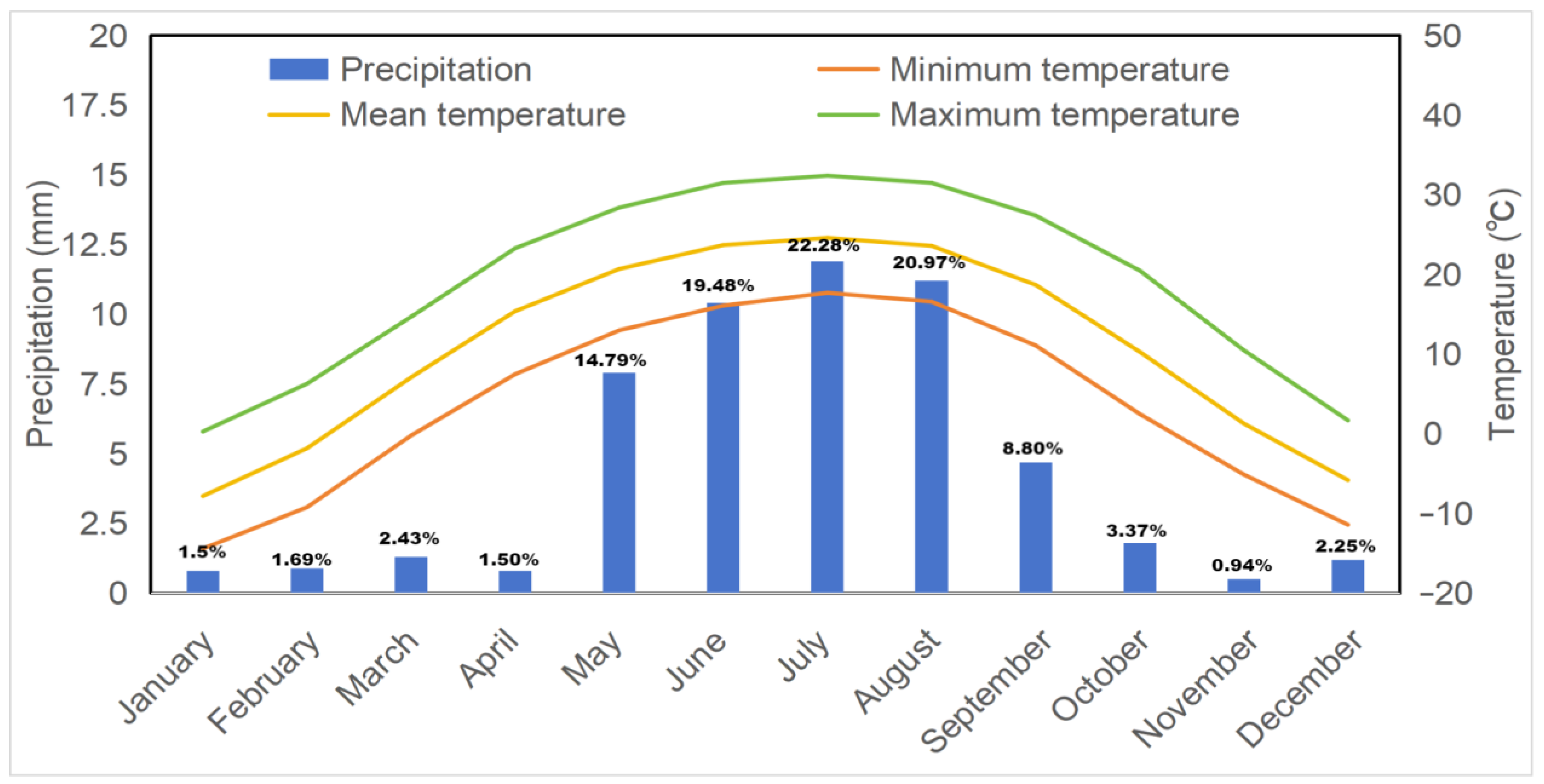
The plant material consisted of sudangrass (Sorghum sudanense (Piper) Stapf) cultivar F10. Field experiments were conducted at the Aksu National Field Research Station for Agricultural Ecosystems, Chinese Academy of Sciences (80°45′ E, 40°37′ N; altitude 1030 m) in the Tarim Basin. The region has a continental arid climate with a frost-free period of 211 days and annual sunshine duration of 2940 h. The experimental soil is a Calcisol (FAO system) or Aridic Cambosol (Chinese Soil Taxonomy) with a sandy loam texture, pH 7.94, low salinity (3.18 g·kg−1), and moderate organic matter content (12.38 g·kg−1, equivalent to 7.19 g·kg−1 humus). Soil samples from the 0–40 cm layer collected before sowing in 2023 and 2024 were analyzed for key physicochemical properties (Table 1). Long-term climatic data and meteorological conditions for the experimental years are shown in Figure 1 and Table 2.

2.2. Experimental Design

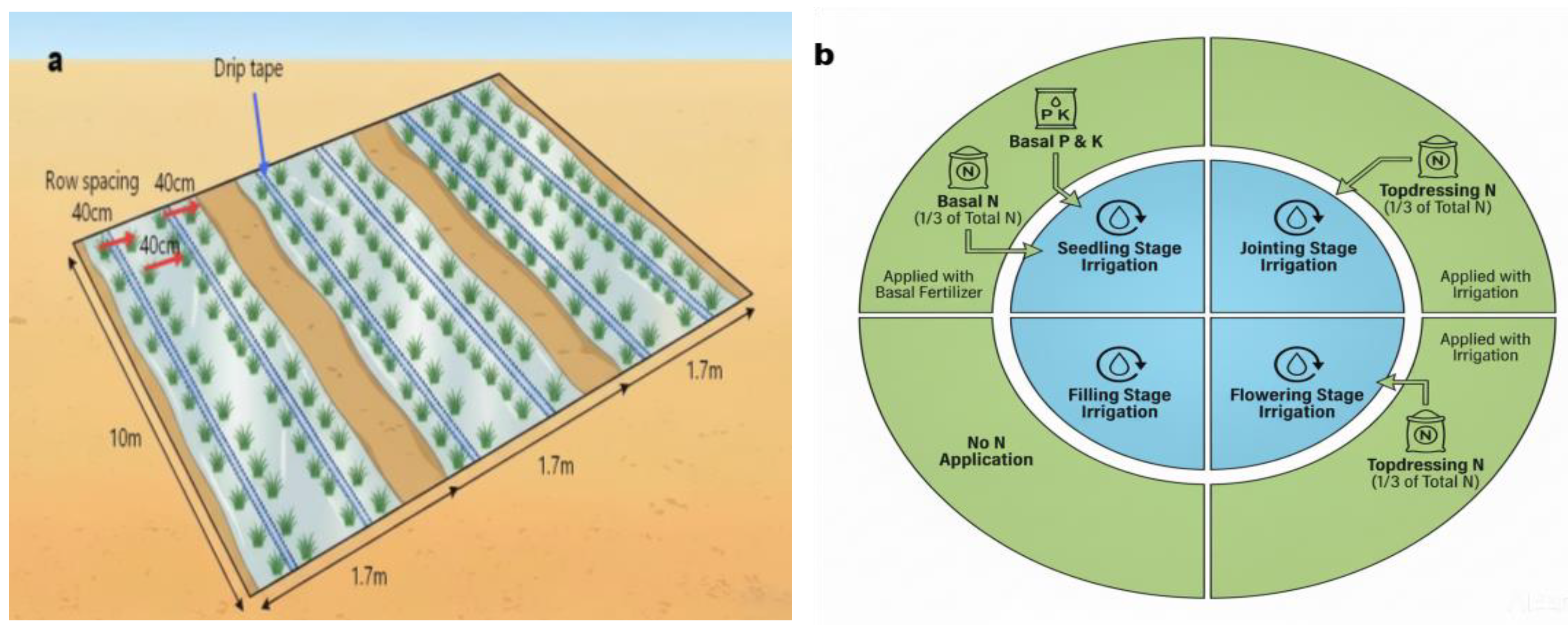
Sub-surface drip irrigation [26] and a second-order regression orthogonal design [27] with 11 treatment combinations and 2 replications were employed, giving a total of 33 plots arranged in a randomized complete-block layout. An additional control (CK) treatment (irrigation only, ≈1500 m3·ha−1, no nitrogen) was also included used to minimize the treatment number and experimental error while maximizing precision [28]. Each plot was 51 m2 (5.1 m × 10 m, Figure 2a) and was surrounded by a 1 m-wide protective border. Sudangrass was drill-sown on 14 April 2023 and harvested on 4 August 2023; the same experiment was repeated in 2024 (sown 23 April, harvested 15 August). Seeding depth was 3–5 cm, row spacing 40 cm, and seeding rate 50 kg·ha−1. Fertilizer sources were urea (46% N), diammonium phosphate (18% N, 46% P2O5), and potassium sulfate (54% K2O). Irrigation and nitrogen application rates are shown in Table 3; phosphorus and potassium were applied as basal fertilizers at 100 kg·ha−1 before sowing. Irrigation was scheduled four times across the entire growth cycle—at the seedling, jointing, flowering and grain-filling stages of sudangrass—using equal volumes at each event. Irrigation volumes were precisely controlled using certified turbine flow meters (Model: LWGY-DN50, accuracy ±1%, calibrated annually) installed on each plot’s sub-surface drip irrigation lateral. Nitrogen was split into three equal fractions: the first incorporated with the basal dressing, the second and third delivered fertigation-style at jointing and flowering, respectively (Figure 2b). All other field practices followed standard local protocols for commercial production.

2.3. Measurement Indicators and Methods

2.3.1. Physicochemical Properties of the Experimental Site

Soil pH was determined using a glass electrode in a 1:5 soil:water suspension [29]. Organic matter content was measured by the Walkley–Black wet oxidation method [30]. Alkali-hydrolyzable nitrogen was quantified using the alkali-hydrolysis diffusion method after hydrolysis with 1.0 mol·L−1 NaOH [31]. Available phosphorus was extracted with 0.5 M NaHCO3 and measured by the molybdenum-blue method [32]. Available potassium was extracted with 1 M NH4OAc and quantified by flame photometry [33].

2.3.2. Agronomic Traits and Growth Indices

Field sampling was conducted at maturity in both the 2023 and 2024 growing seasons. In each treatment, nine representative plants were randomly selected and used to determine the plant height, stem diameter [34], SPAD index [35], and stem-to-leaf ratio [34]. At physiological maturity, plant height was measured from the soil surface to the tip of the highest fully extended leaf using a measuring tape (cm). Stem diameter was measured at the basal 1 internode using a digital caliper (mm). The SPAD index was measured on the third leaf from the top of the sudangrass plants using a portable chlorophyll meter (SPAD-502; Konica Minolta, Osaka, Japan). Three readings were taken per leaf and averaged to obtain the SPAD index for each plant. The stem-to-leaf ratio was determined by separating stems (including leaf sheaths) from leaf blades, recording fresh weights separately for each component, and calculating the ratio as stem fresh weight divided by leaf fresh weight (g·g−1).

2.3.3. Dry Matter Yield

At physiological maturity, three 6.67 m2 quadrats per plot were randomly sampled at a 10 cm stubble height. Fresh forage yield was weighed in situ and converted to t·ha−1. A subsample of approximately 5 kg from each quadrat was oven-dried at 105 °C for 30 min (enzyme deactivation) and subsequently dried at 75 °C to constant weight to determine dry matter content. Dry matter yield was calculated as follows:
DMY (t·ha−1) = FFY × DM
In the formula, DMY stands for dry matter yield, DM for dry matter content, and FFY for fresh forage yield.

2.3.4. Nutritional Quality

Samples were ground to pass a 40-mesh sieve (≤425 μm) and stored for analysis [36,37]. Crude protein was determined by the Kjeldahl method; crude fat (ether extract, EE) by Soxhlet extraction [38]; crude starch (CS) by iodine colorimetry [39]; neutral detergent fiber (NDF) and acid detergent fiber (ADF) by filter bag technology [40]; and ash content by combustion. Relative feed value (RFV) [41,42] was computed as follows:
RFV = (DMI × DDM)/1.29
DMI (% DM) = 120/NDF
DDM (% DM) = 88.9 − 0.779 × ADF

2.3.5. Nitrogen Use Efficiency

Nitrogen use efficiency (NUE) [43] was calculated at the whole-plant level. Total N was determined by Kjeldahl digestion (H2SO4–H2O2). NUE (%) was then expressed as follows,
NUE (%) = (UN − U0)/N × 100%
where UN is N uptake (kg·ha−1) with N fertilizer, U0 is N uptake (kg·ha−1) without N fertilizer, and N is N fertilizer input (kg N·ha−1).

2.4. Statistical Analyses

Statistical analyses were performed using R version 4.3.1 (R Foundation for Statistical Computing, Vienna, Austria). Data normality and homogeneity of variance were assessed using the Shapiro–Wilk and Levene’s tests, respectively. Outliers were identified using Grubbs’s test and removed if justified. ANOVA was used to evaluate the main effects and interactions of the irrigation and nitrogen regimes. Treatment means were separated by Tukey’s HSD test at α = 0.05. Quadratic polynomial models were fitted for response surface analysis, with the model fit evaluated using the coefficient of determination (R2). Statistical significance was declared at p < 0.05. The figures were prepared using Origin 2025 software (OriginLab Corporation, Northampton, MA, USA).

3. Results

3.1. Water–Nitrogen Coupling Effects on the Agronomic Traits and Growth Indices of Sudangrass

The two-year factorial experiment quantified the independent and interactive effects of water and nitrogen on the agronomic performance of sudangrass (Table 4). The statistical analysis revealed distinct patterns of significance across traits, with water availability emerging as the dominant factor for most growth parameters.
Statistical analysis demonstrated that water availability was the primary determinant of plant height across both experimental years (p < 0.01), while nitrogen fertilization produced no significant independent effect (p > 0.05), and the water–nitrogen interaction remained negligible (p > 0.05). The high irrigation regime (4046 m3·ha−1) generated the tallest plants, with mean heights of 324.7–331.8 cm in 2023 rising to 335.4–347.8 cm in 2024. In stark contrast, water-deficit treatments (1954 m3·ha−1) yielded substantially reduced statures of 275.8–289.4 cm in 2023 and 266.0–292.1 cm in 2024. Moderate irrigation (3000 m3·ha−1) produced intermediate values spanning 285.5–307.3 cm in 2023 and 266.0–305.2 cm in 2024. Across all irrigation levels, nitrogen-induced variation proved minimal. The untreated control (CK) exhibited the most stunted growth, averaging 277.3 cm in 2023 and 272.6 cm in 2024, thus confirming that maximal elongation required combined water and nitrogen inputs.
Stem diameter exhibited a highly significant water × nitrogen interaction in both seasons (p < 0.01). Annual variation was evident. In 2023, below-average precipitation and cooler temperatures resulted in non-significant water and nitrogen effects (p > 0.05). In 2024, reduced precipitation and warmer spring temperatures were associated with a highly significant nitrogen effect (p < 0.01), while water remained non-significant. The shift in statistical significance between the years reflected changes in climatic constraints. In 2023, the largest diameter (9.28 mm) occurred in T2, while the smallest (7.42 mm) occurred in T4. Moderate irrigation treatments (T7–T11) produced intermediate values ranging from 7.69 to 8.62 mm. In 2024, the maximum diameter (8.94 mm) shifted to T7, with T4 remaining the minimum (7.73 mm). This cross-year shift in response pattern indicates that stem thickening was regulated by complex water–nitrogen synergy rather than independent factor effects.
The SPAD values demonstrated a consistent and highly significant water main effect across both years (p < 0.01), with no significant nitrogen main effect (p > 0.05) and no significant interaction (p > 0.05). In 2023, high water treatments averaged 39.5–39.8, significantly exceeding the low-water treatments, which ranged from 36.7 to 38.3. This pattern persisted in 2024, though the absolute values declined by 1–2 units overall. The moderate irrigation treatments (T7–T11) showed intermediate SPAD values between these extremes. Notably, under identical water regimes, the SPAD differences between the high-N (T1, T8) and low-N (T2, T7) treatments were less than 1.0 unit, confirming that nitrogen availability did not limit chlorophyll synthesis under the experimental conditions. The control treatment showed the lowest SPAD values, demonstrating that both water and nitrogen deficiency reduced chlorophyll content.
The stem–leaf ratio exhibited highly significant water main effects (p < 0.01) and water × nitrogen interactions (p < 0.01), with the nitrogen main effect significant only in 2023 (p < 0.05). Under high irrigation, the ratio ranged from 2.33 (T10) to 2.93 (T7) in 2023, and 2.32 (T10) to 2.97 (T7) in 2024, showing a parabolic response to nitrogen within this water regime. Conversely, under water-deficit conditions, ratios were substantially lower, ranging from 1.47 (T3) to 2.62 (T4) in 2023 and 1.50 (T4) to 2.47 (T3) in 2024. This demonstrates that drought suppressed stem elongation more severely than leaf expansion, while moderate nitrogen application could partially offset this effect under limited water supply. The CK treatment produced intermediate ratios, indicating that complete nutrient omission did not necessarily produce the most extreme allocation pattern.
Across all measured parameters, water availability emerged as the principal determinant of agronomic performance, with significant main effects on plant height, SPAD, and stem–leaf ratio. Nitrogen effects were contingent on water status, showing significance only for stem diameter and stem–leaf ratio in specific years. The consistent significance of water × nitrogen interactions for stem diameter and stem–leaf ratio, but not for plant height or SPAD, suggests that different physiological processes governing these traits respond uniquely to resource coupling. These quantitative relationships provide the foundation for optimizing input management strategies in arid oasis cropping systems.

3.2. Water–Nitrogen Coupling Governs Dry Matter Yield of Sudangrass

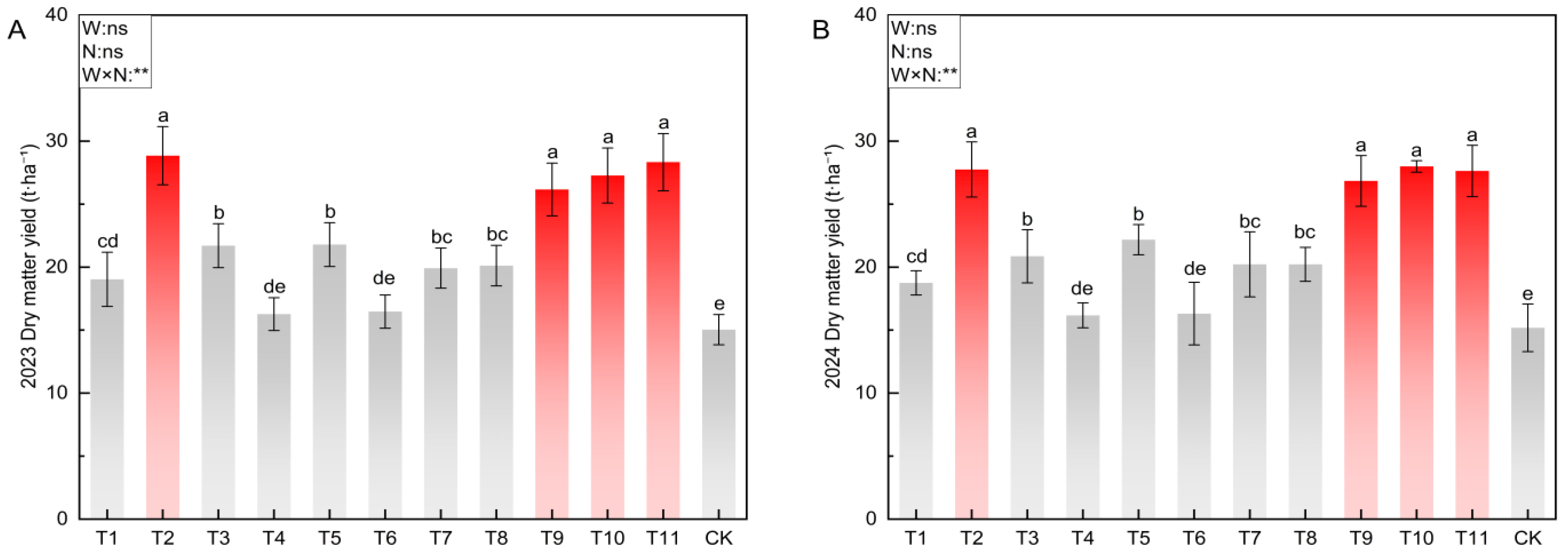
Based on two-year field experimental data (Figure 3), statistical analysis revealed that neither water nor nitrogen main effects were significant (p > 0.05), while the water × nitrogen interaction was highly significant in both years. This demonstrates that dry matter yield formation was governed entirely by input synergy rather than independent effects. Water–nitrogen coupling induced a characteristic parabolic response in sudangrass dry matter yield, and optimal medium-water medium-nitrogen combinations (T9–T11) produced maximal yields with exceptional inter-annual stability (26.16–28.33 t·ha−1), representing an 87.6% increase over the unfertilized control. Low-water high-nitrogen treatment (T3) yielded 21.70 t·ha−1, implicating water availability as the primary constraint on nitrogen use efficiency. Paradoxically, high-water low-nitrogen treatment (T2) achieved 28.84 t·ha−1, whereas excessive irrigation under adequate nitrogen (T1) suppressed yield to 19.03 t ha−1, substantiating hypotheses of soil hypoxia or nutrient leaching under waterlogged conditions. These findings underscore that management strategies must prioritize water–nitrogen ratio optimization over input maximization.
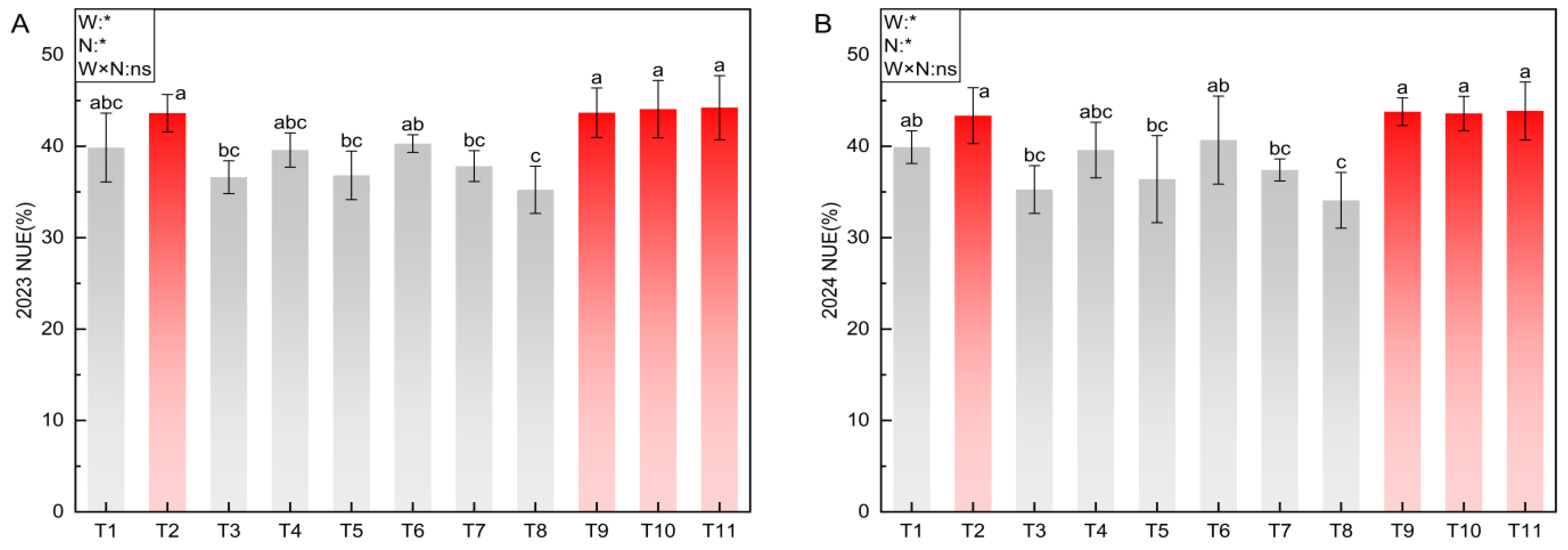
Figure 4. Effects of water and nitrogen coupling on the NUE of sudangrass. Note: (A) shows data for 2023, (B) shows data for 2024. *, ** indicate significance at p < 0.05 and p < 0.01, ns indicates not significant (i.e., p > 0.05).
Agronomy 16 00514 g004
The inter-annual yield trends demonstrated robust consistency (r > 0.90) with coefficients of variation below 10%, attesting to high experimental repeatability. These findings provide unequivocal management recommendations for arid environments: irrigation should be precisely calibrated at 3000 m3·ha−1 concomitant with nitrogen application of 480 kg·ha−1 to maximize synergistic W × N efficiency and resource-use optimization. From an economic perspective, this optimized regime offers substantial cost-benefit advantages: (1) input cost reduction of 25–30% compared to conventional high-input practices, achieved through 30% water savings and 20% nitrogen reduction based on local 2023–2024 prices; (2) revenue enhancement of 180–220 USD·ha−1, stemming from the 15% increase in dry matter yield and superior feed quality in regional hay markets; and (3) net economic benefit of 350–400 USD·ha−1 when accounting for both reduced inputs and increased returns. The control treatment was significantly inferior to all fertilized regimes, confirming that water–nitrogen inputs are indispensable for economic production; however, our data demonstrate that optimal economic returns are achieved through precise dosage regulation rather than maximum input application.

3.3. Effects of Water and Nitrogen Coupling on the Nutritional Quality of Sudangrass

Water–nitrogen coupling imposed a stable signature on the nutritive value of sudangrass forage (Table 5 and Table 6). Crude protein (CP) declined linearly with N supply in both seasons (low N > mid N > high N > CK). Water-deficit low-N T4 peaked at 8.7% (2023) and 9.1% (2024), ≈66% above CK, whereas high water high-N T1 fell to 6.2%, a classic “dilution” response. Water and N main effects were significant (p < 0.01) in2023; their interaction was not. Ether extract (EE) was consistently higher under low- to mid-N. T6 and T9 averaged ≥ 10.3% EE, versus 9.1% for T1; at the given irrigation rate low-N T7 > high-N T8. Excess N evidently channels assimilates to structural carbohydrates at the expense of lipid synthesis. Water effect was not significant, while the nitrogen main effect was significant only in 2023 (p < 0.05). Crude starch (CS) exhibited the opposite pattern: high water high-N T1 and T6 contained 20.7–21.0% crude starch, below the 24.2% recorded for CK. Water-deficit low-N T4 retained 22.4%, and the mid-water mid-N cluster (T9–T11) averaged 21.6%. Abundant water evidently stimulated fiber deposition.
Water–nitrogen coupling significantly modulated fiber fractions (ADF, aNDF), with highly significant water main effects in both years and significant nitrogen effects for aNDF and ADF in 2023. High water + high nitrogen (T1) produced the highest ADF and aNDF, indicating poor digestibility, whereas low water + low nitrogen (T4) yielded the lowest fiber levels and most digestible forage. Moderate water–nitrogen combinations (T9–T11) achieved optimal intermediate values. The water × nitrogen interaction was highly significant for ADF in 2023 but not in 2024, revealing year-specific lignification responses.
Relative Feed Value (RFV) integrated these effects, ranking T11 > T9 > T4 in 2023 and T10 > T11 > T4 in 2024, with moderate treatments outperforming CK (118.7–123.8) by 9.5–16.0% (Table 5 and Table 6). T11 achieved the peak RFV (137.53) in 2023, while T10 reached 137.46 in 2024. Conversely, high-input T1 registered the poorest RFV (118.33–113.14). The mid-nitrogen group (T9–T11) exhibited the smallest inter-annual coefficient of variation, providing the most stable premium quality. Optimal management requires moderate irrigation (3000 m3·ha−1) with moderate nitrogen (480 kg·ha−1) to achieve RFV > 135 with minimal fiber, while high-input combinations should be avoided for premium forage production.

3.4. Effects of Water and Nitrogen Coupling on the NUE of Sudangrass

Two-year field experiments were conducted to quantify the nitrogen use efficiency (NUE) of sudangrass under 11 water–nitrogen regimes. The response surface was highly reproducible (Figure 4) in both seasons. In 2023, NUE ranged from 35.2% to 44.2%. The “medium-water × medium-nitrogen” cluster (T9, T10, T11) plateaued at ~44%, i.e., 9.0 percentage points (25.5%) higher than the high-N treatment (T8) at the same irrigation level, illustrating a clear optimum. High-water low-N (T2) achieved 43.6%, statistically equivalent to the medium-water group, confirming that ample irrigation can offset N dilution and sustain high uptake efficiency. Conversely, high-water high-N (T1) reduced NUE to 39.9%, indicative of luxury consumption. Under water deficit, NUE stagnated at 36–37%. The 2024 data mirrored the 2023 ranking. The medium-N group retained the highest NUE, whereas excess N depressed efficiency more strongly: T8 fell 4.7 percentage points below the medium-N mean. T2 again matched the medium-water medium-N treatments, demonstrating that “high water + low N” can maximize N productivity per unit of fertilizer. Water-deficit low-N (T4) did not differ from T3, T5 or T7, revealing that drought lowers the N-demand threshold and that extra N cannot overcome a water bottleneck.
Collectively, the optimum combination for simultaneous yield and NUE maximization is medium irrigation (3000 m3·ha−1) coupled with moderate N (480 kg·ha−1). High-N inputs consistently reduce NUE regardless of water status and should be avoided, whereas low-N systems, although efficient, lack the yield potential required for high-production scenarios.

3.5. Model of Water–Nitrogen Coupling on Key Indicators of Sudangrass

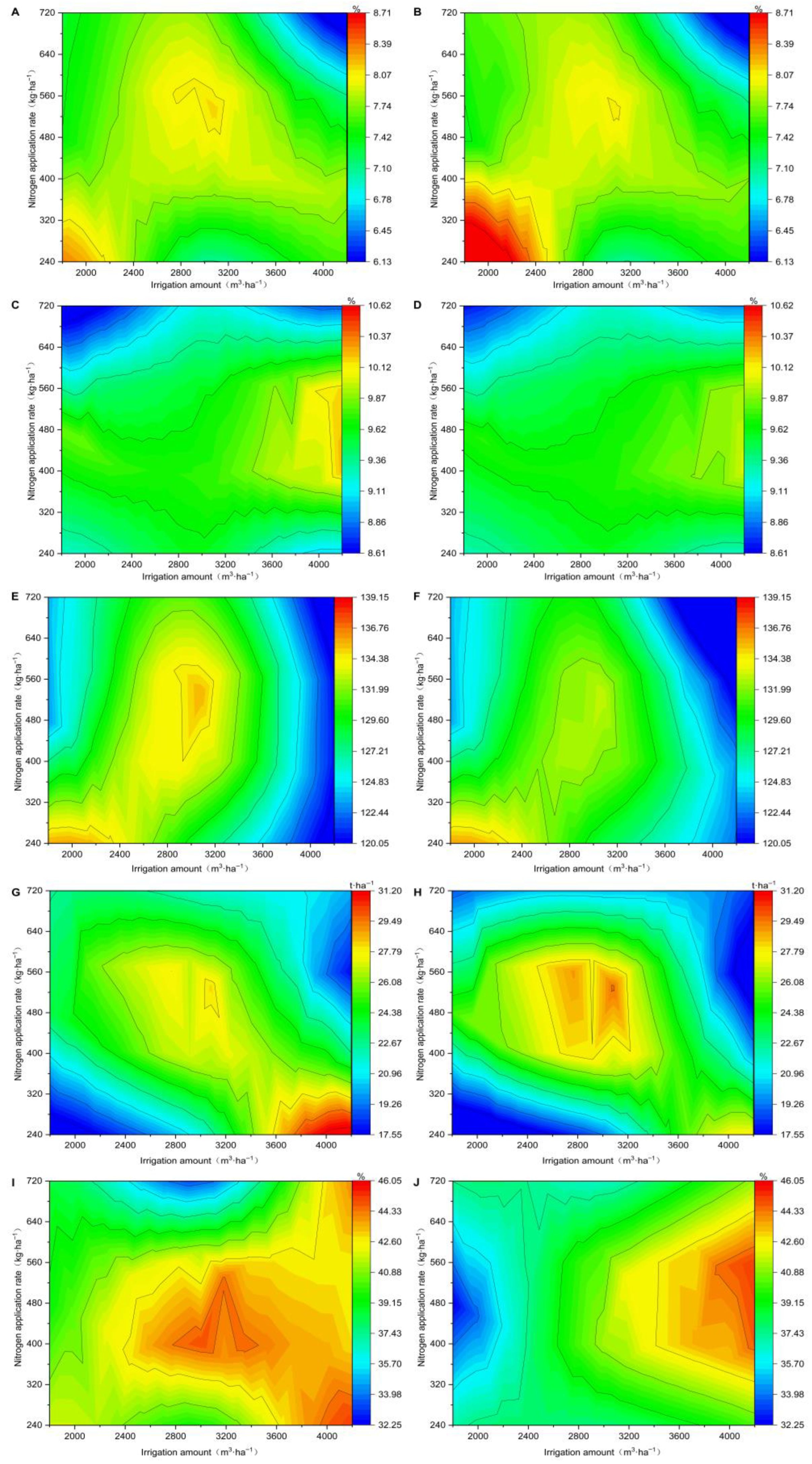
Quadratic response-surface models were fitted with water (W) and nitrogen (N) rates as continuous predictors and plant height, stem diameter, crude protein (CP), Crude fat (EE), dry matter yield (DMY), relative forage value (RFV) and nitrogen use efficiency (NUE) as dependent variables (Table 7). The water × nitrogen interaction exerted highly significant effects on plant height, stem diameter, hay biomass, relative forage value, and nitrogen use efficiency (p < 0.01), and significant effects on crude protein and ether extract (p < 0.05) in 2023.
Relative to the single-year response surface, the pooled 2023–2024 model offered superior statistical robustness and biological interpretability (Table 8). Doubling the sample size’s increased error degrees of freedom reduced standard errors of parameter estimates by an average, narrowed confidence intervals, and improved predictive accuracy. The W × N interaction coefficients remained directionally consistent and converged across the years, strengthening their biological meaning. Notably, the stem diameter effect lost significance (2023: p < 0.01; 2023–2024: p > 0.05), indicating that the enlarged dataset effectively diluted random environmental factors. Consequently, the two-year model minimized over-fitting and enhanced extrapolation reliability, furnishing a temporally stable decision framework for precision water–nitrogen management in sudangrass.
Simultaneous maximization of plant height, stem diameter, crude protein, ether extract, dry matter yield, relative forage value and nitrogen use efficiency in sudangrass is unattainable because the traits are dimensionally heterogeneous and often trade off against one another; consequently, the optimal water–nitrogen combination must be chosen according to the production goal.
This study is based on a factorial water–nitrogen treatment and a biennial replication design for 2023–2024, clarifying the regulatory patterns and scientific value of water and nitrogen inputs on multiple traits of sudangrass by eliminating inter-annual climatic interference (Figure 5). Its methodological advantage lies in the use of gradient combinations of water (irrigation levels) and nitrogen (fertilizer rates) to quantify the interaction coefficients between the two, thereby avoiding the limitations of single-factor experiments. The biennial dataset enhances the generalizability of the results.
Trait responses converged on a single “optimal water–nitrogen synergy.” Crude protein (CP) rose sharply with N supply only when soil moisture was non-limiting; high N × water-deficit combinations eliminated the CP benefit. Relative forage value (RFV) peaked under the medium-water × medium-N regime, where CP was maximized and fiber fractions were simultaneously minimized. Dry matter yield followed a saturation curve: the medium-water + medium-N treatment optimized the photosynthetic rate and biomass accumulation, whereas extreme water or N inputs depressed the yield through rhizosphere deterioration or ionic imbalance. Nitrogen use efficiency (NUE) was governed principally by the degree of water–N synchrony: adequate irrigation enhanced root N-uptake capacity, moderate N rates prevented saturation, and their interaction generated concurrent gains in NUE and biomass. We defined trait-specific water and N thresholds, quantified the relative contribution of water × N interactions, and verified the inter-annual stability of the optimal combination. This medium-level coupling secures high RFV, DMY and NUE in a single management package, resolving the trade-offs inherent in single-target optimization. The findings provide a quantitative basis for precision sudangrass management: high-quality forage can be achieved by modestly increasing N within the optimal envelope, while resource-use efficiency is maximized by maintaining the medium water × medium N regime.

4. Discussion

A two-year factorial field experiment established a robust framework quantifying how water–nitrogen coupling regulates the trade-offs between yield, forage quality and nitrogen use efficiency (NUE) of sudangrass in southern Xinjiang’s arid oasis environment. The reproducible response surfaces demonstrate that optimal management balances resource inputs rather than maximizing them. The significant year-to-year variation observed in our results was directly attributable to contrasting weather patterns between seasons: the 2024 growing period was markedly warmer and drier, particularly during the critical early growth stages. Specifically, the mean May temperature was 4.7 °C higher in 2024 than in 2023, and cumulative precipitation during April–June was reduced by 8.3 mm (Table 1). This intensified evaporative demand accelerated phenological development and exacerbated terminal drought stress, which fundamentally altered crop resource requirements and response thresholds compared to the more temperate 2023 season.
Plant height, SPAD and stem:leaf ratio were dominated by water (p < 0.001), with no significant N main effect, corroborating earlier C4 findings [44,45]. Cell wall-loosening enzymes (XTH, expansin) remain active only when soil moisture is non-limiting, explaining why a 330 cm height was breached only under ample irrigation. Leaf CP declined and stem:leaf ratio dropped in T1/T8 (>480 kg N·ha−1) because surplus amino-N and NO3 were not converted into extra assimilate, i.e., classic luxury consumption [46]. The more severe 2024 drought amplified this effect, increasing the critical N threshold for luxury consumption by approximately 15% compared to 2023, as evidenced by the steeper RFV decline (>15 units) in high-N treatments during the drier year. SPAD insensitivity to N reflects the unique C4 anatomy of sudangrass: its high bundle sheath:mesophyll cell ratio (~1:3 vs. 1:5 in C3 crops) and constitutively large chloroplasts (~30 μm2 per cell) create a high baseline chlorophyll concentration that dilutes N-induced increases [47]. Given that the SPAD index primarily reflects chlorophyll content in mesophyll cells and has insufficient sensitivity to nitrogen in bundle sheath cells of C4 plants (accounting for approximately 60% of total leaf nitrogen), this study only used SPAD as a supplementary diagnostic indicator rather than the sole basis for top-dressing decisions. Actual nitrogen management decisions should integrate soil testing, whole-plant nitrogen analysis, and growth stage assessments; instead, stem-elongation rate coupled with soil Nmin testing provides a more reliable diagnostic framework. The water effect on stem diameter was non-significant, whereas the nitrogen effect was highly significant in 2024. The hotter, drier second season suppressed secondary xylem differentiation; when water was plentiful (2023), additional N stimulated cellulose-synthase and phenyl-propanoid pathways, thickened stem walls by 30% and increased diameter by 12%—a textbook illustration of the carbon–nitrogen balance hypothesis [48,49]. In 2024, the 2.3 °C warmer July and 4.7 °C warmer May reduced the effective irrigation window by ~7 days, limiting N’s ability to stimulate secondary growth (only an 8% diameter increase). Stem diameter is significantly affected by environmental variation, suggesting this trait may be more sensitive to micro-environmental differences and should serve as a secondary reference indicator in water–nitrogen management.
Contrary to the axiom “more N = more protein” [50,51], CP and RFV peaked under low-to-moderate N, whereas high N depressed RFV by 15–20 units. Three mechanisms operate: (i) excess N raises ADF/NDF [52], lowering digestibility; (ii) high N stimulates excessive leaf area, increasing structural tissue; and (iii) the photosynthate share going to starch falls from 24% to 21% under high-water high-N, diluting energy density. The 2024 drought intensified mechanism (i), with high-N treatments showing an additional 2.3% ADF increase beyond the 2023 response, because water stress redirected surplus N into lignin biosynthesis rather than protein synthesis. These results mirror the “high-N low-energy” syndrome reported for temperate maize silage [53] and argue for a non-linear, digestibility-centered N strategy rather than linear protein chasing. Year-specific boundary-line analysis revealed that the optimal N rate for maximizing RFV shifted from 450 kg·ha−1 in 2023 to 420 kg·ha−1 in 2024. The inter-annual variation in model parameters (such as the approximately 7% decrease in optimal nitrogen dosage for RFV in 2024 compared to 2023) indicates that fixed fertilization schemes struggle to adapt to climate change. Therefore, the decision-making model we developed should serve as a dynamic adjustment framework rather than a static standard. We recommend real-time optimization combined with seasonal weather forecasts and soil moisture monitoring.
NUE plateaued at 44% under medium water and medium N, matching the theoretical ceiling reported for spring maize on the Loess Plateau [54]. Each additional 50 kg N ha−1 beyond 480 kg·ha−1 reduced NUE by 2.1 percentage points, largely through luxury uptake and elevated N2O flux [55]. The reduction penalty was 40% more severe in 2024 (3.0 percentage points per 50 kg N) because higher temperatures accelerated nitrification and denitrification losses. Boundary-line analysis delineated the feasible domain for NUE ≥ 40% in southern Xinjiang: irrigation 2600–3400 m3·ha−1 and N 420–510 kg·ha−1 for 2023, whereas the 2024 window narrowed to 2800–3200 m3·ha−1 and N 380–480 kg·ha−1, reflecting the drought-induced contraction of the optimal management envelope. Inside this envelope the Pareto frontier slope for yield vs. efficiency is zero, providing an operational threshold for precision irrigation and variable-rate N application.
Collectively, the two-year response surface shows that the yield peak (28 t·ha−1 dry matter yield), quality peak (RFV 137) and NUE peak (44%) spatially coincide within the “medium-water × medium-N” window, proving synergy rather than trade-off, but the position of this optimal window shifts with climatic severity. We propose an arid-zone paradigm: “water first, nitrogen second; medium water sufficient; medium nitrogen as the upper limit”. This study was conducted under specific soil conditions (sandy loam, organic matter 1.3%, field water capacity 22%), and the obtained water–nitrogen coupling parameters cannot be directly extrapolated to soils with different textures, such as clay or loam. Practical application requires calibration based on the water and nutrient retention characteristics of the target soil, and we recommend local adjustment of recommended dosages based on field water capacity and nutrient adsorption coefficients. Current results were obtained from plot trials, and future research should validate model performance under mechanized field conditions through large-scale demonstrations, particularly assessing the effects of drip irrigation uniformity and edge effects on water–nitrogen use efficiency. The limitations of this study include the trial period of only two years (2023–2024), which failed to cover complete long-term climate cycles (such as ENSO events), and the testing of only a single variety (cv. F10). Therefore, the current results should be regarded as preliminary optimization schemes under specific ecological conditions, requiring future multi-year, multi-site trials involving varieties with different genetic backgrounds for validation, integrate soil–climate data into management models, and optimize precision water–nitrogen strategies at critical phenological stages.

5. Conclusions

Two-year fixed-site trials in southern Xinjiang demonstrated that sustainable sudangrass production in arid oases hinges on precision-balanced water–nitrogen coupling rather than resource maximization. Our findings establish that a synergistic “medium-water × medium-nitrogen” regime generates a stable triple-win outcome, simultaneously achieving high biomass productivity, superior nutritional quality, and markedly enhanced nitrogen use efficiency compared to conventional high-input practices.
This precision management approach fundamentally challenges the traditional “more is better” paradigm prevalent in oasis agriculture. Excessive application of either resource triggers negative physiological cascades: waterlogging-induced stress under high irrigation and luxury consumption with quality degradation under high nitrogen, whereas moderate inputs optimize resource uptake and metabolic allocation. The optimized regime delivers substantial resource savings while boosting productivity, offering a replicable green production standard for water-scarce regions. We recommend transitioning from conventional intensive practices to precision-regulated medium-input strategies with stage-specific supplementary irrigation. Future research should focus on upscaling this model to farm-scale precision management by integrating real-time sensor networks and meteorological forecasting, with validation across diverse climate cycles to ensure robustness under changing environmental conditions.

Author Contributions

Conceptualization, W.L. and X.J.; methodology, K.L., W.L. and X.J.; investigation, K.L., F.L., L.Z. (Limin Zhou), L.Z. (Longhui Zhou), W.L., X.J. and J.M.; data curation, K.L., F.L., L.Z. (Limin Zhou) and L.Z. (Longhui Zhou); writing—original draft preparation, K.L.; writing—review and editing, W.L., X.J. and J.M.; visualization, K.L.; supervision, W.L. and X.J.; funding acquisition, W.L., X.J. and J.M. All authors have read and agreed to the published version of the manuscript.

Funding

This research was funded by the Key Research and Development Task of Xinjiang Uygur Autonomous Region, grant number 2024B0323; the Financial Science and Technology Program of Xinjiang Corps, grant number 2021DB015.

Data Availability Statement

The original contributions presented in this study are included in the article. Further inquiries can be directed to the corresponding author.

Conflicts of Interest

The authors declare no conflicts of interest.

References

  1. Akintan, O.A.; Gebremedhin, K.G.; Uyeh, D.D. Linking Animal Feed Formulation to Milk Quantity, Quality, and Animal Health Through Data-Driven Decision-Making. Animals 2025, 15, 162. [Google Scholar] [CrossRef] [PubMed]
  2. Li, J.; Xu, J.; Wang, H.; Wu, C.; Zheng, J.; Zhang, C.; Han, Y. First Report of Fungal Pathogens Causing Leaf Spot on SorghumSudangrass Hybrids and Their Interactions with Plants. Plants 2023, 12, 3091. [Google Scholar] [CrossRef]
  3. Jayasinghege, C.P.A.; Bineng, C.; Messiga, A.J. Effects of Long-Term Nitrogen Fertilization and Application Methods on Fruit Yield, Plant Nutrition, and Soil Chemical Properties in Highbush Blueberries. Horticulturae 2024, 10, 1205. [Google Scholar] [CrossRef]
  4. Lei, Q.; Tao, W.; Lin, S.; Su, L.; Deng, M.; Wang, Q.; Yang, F.; Zhu, T.; Ma, L. The Synergistic Production Effect of Water and Nitrogen on Winter Wheat in Southern Xinjiang. Plants 2024, 13, 1391. [Google Scholar] [CrossRef] [PubMed]
  5. Byambadorj, S.-O.; Park, B.B.; Hernandez, J.O.; Tsedensodnom, E.; Byambasuren, O.; Montagnoli, A.; Chiatante, D.; Nyam-Osor, B. Effects of Irrigation and Fertilization on the Morphophysiological Traits of Populus sibirica Hort. Ex Tausch and Ulmus pumila L. in the Semiarid Steppe Region of Mongolia. Plants 2021, 10, 2407. [Google Scholar] [CrossRef]
  6. Gao, R.; Pan, Z.; Zhang, J.; Chen, X.; Qi, Y.; Zhang, Z.; Chen, S.; Jiang, K.; Ma, S.; Wang, J.; et al. Optimal cooperative application solutions of irrigation and nitrogen fertilization for high crop yield and friendly environment in the semi-arid region of North China. Agric. Water Manag. 2023, 283, 108326. [Google Scholar] [CrossRef]
  7. Mirshekarnezhad, B. Integrating agrotechnical practices to optimize maize yield potentials in a regional variable climate: DSSAT and Python tools. Cereal Res. Commun. 2024, 52, 301–312. [Google Scholar] [CrossRef]
  8. Stybayev, G.; Zargar, M.; Serekpayev, N.; Zharlygassov, Z.; Baitelenova, A.; Nogaev, A.; Mukhanov, N.; Elsergani, M.I.M.; Abdiee, A.A.A. Spring-Planted Cover Crop Impact on Weed Suppression, Productivity, and Feed Quality of Forage Crops in Northern Kazakhstan. Agronomy 2023, 13, 1278. [Google Scholar] [CrossRef]
  9. Yang, L.; Zhou, Q.; Sheng, X.; Chen, X.; Hua, Y.; Lin, S.; Luo, Q.; Yu, B.; Shao, T.; Wu, Y.; et al. Harnessing the Genetic Basis of Sorghum Biomass-Related Traits to Facilitate Bioenergy Applications. Int. J. Mol. Sci. 2023, 24, 14549. [Google Scholar] [CrossRef]
  10. Huang, C.-B.; Zeng, F.-J.; Lei, J.-Q. Impact of Cultivation Practices in Oasis Agriculture on Soil Fertility Dynamics and the Relationship with Cotton Nitrogen-Use Efficiency in the Southern Rim of the Tarim Basin, Xinjiang, China. Commun. Soil Commun. Soil Sci. Plant Anal. 2014, 45, 2621–2635. [Google Scholar] [CrossRef]
  11. Abie, Y.; Reda, Y.; Lamesign, H.; Esubalew, T. Effect of ridging and tie-ridging time on yield and yield component of sorghum in Northern Ethiopia. Heliyon 2024, 10, e26817. [Google Scholar] [CrossRef]
  12. Ma, Y.; Song, X. Seasonal Variations in Water Uptake Patterns of Winter Wheat under Different Irrigation and Fertilization Treatments. Water 2018, 10, 1633. [Google Scholar] [CrossRef]
  13. Qiu, Y.; Wang, Z.; Sun, D.; Lei, Y.; Li, Z.; Zheng, Y. Advances in Water and Nitrogen Management for Intercropping Systems: Crop Growth and Soil Environment. Agronomy 2025, 15, 2000. [Google Scholar] [CrossRef]
  14. Muhammad, I.; Lv, J.Z.; Yang, L.; Ahmad, S.; Farooq, S.; Zeeshan, M.; Zhou, X.B. Low irrigation water minimizes the nitrate nitrogen losses without compromising the soil fertility, enzymatic activities and maize growth. BMC Plant Biol. 2022, 22, 159. [Google Scholar] [CrossRef]
  15. Ru, C.; Hu, X.; Wang, W.; Yan, H. Impact of nitrogen on photosynthesis, remobilization, yield, and efficiency in winter wheat under heat and drought stress. Agric. Water Manag. 2024, 302, 109013. [Google Scholar] [CrossRef]
  16. Li, Y.; Chen, J.; Tian, L.; Shen, Z.; Amby, D.B.; Liu, F.; Gao, Q.; Wang, Y. Seedling-Stage Deficit Irrigation with Nitrogen Application in Three-Year Field Study Provides Guidance for Improving Maize Yield, Water and Nitrogen Use Efficiencies. Plants 2022, 11, 3007. [Google Scholar] [CrossRef]
  17. Ju, Z.; Li, D.; Cui, Y.; Sun, D. Optimizing the Water and Nitrogen Management Scheme to Enhance Potato Yield and Water–Nitrogen Use Efficiency. Agronomy 2024, 14, 1651. [Google Scholar] [CrossRef]
  18. Wang, K.; Liu, H.; Gao, Z. Effects of Nitrogen Application at Different Levels by a Sprinkler Fertigation System on Crop Growth and Nitrogen-Use Efficiency of Winter Wheat in the North China Plain. Plants 2024, 13, 1714. [Google Scholar] [CrossRef]
  19. Zhu, T.; Liu, F.; Wang, G.; Guo, H.; Ma, L. Impact of Drip Irrigation and Nitrogen Application on Plant Height, Leaf Area Index, and Water Use Efficiency of Summer Maize in Southern Xinjiang. Plants 2025, 14, 956. [Google Scholar] [CrossRef] [PubMed]
  20. He, P.; Li, J.; Yu, S.E.; Ma, T.; Ding, J.; Zhang, F.; Chen, K.; Guo, S.; Peng, S. Soil Moisture Regulation under Mulched Drip Irrigation Influences the Soil Salt Distribution and Growth of Cotton in Southern Xinjiang, China. Plants 2023, 12, 791. [Google Scholar] [CrossRef]
  21. Su, C.; Yin, B.; Zhu, Z.; Shen, Q. Ammonia volatilization loss of nitrogen fertilizer from rice field and wet deposition of atmospheric nitrogen in rice growing season. Chin. J. Appl. Ecol. 2003, 11, 1884–1888. [Google Scholar]
  22. Wang, D.; Liu, S.; Guo, M.; Cheng, Y.; Shi, L.; Li, J.; Yu, Y.; Wu, S.; Dong, Q.; Ge, J.; et al. Optimizing Nitrogen Fertilization and Irrigation Practices for Enhanced Winter Wheat Productivity in the North China Plain: A Meta-Analysis. Plants 2025, 14, 1686. [Google Scholar] [CrossRef]
  23. Aydinsakir, K.; Buyuktas, D.; Dinç, N.; Erdurmus, C.; Bayram, E.; Yegin, A.B. Yield and bioethanol productivity of sorghum under surface and subsurface drip irrigation. Agric. Water Manag. 2021, 243, 106452. [Google Scholar] [CrossRef]
  24. Alhammad, B.A.; Mohamed, A.; Raza, M.A.; Ngie, M.; Maitra, S.; Seleiman, M.F.; Wasonga, D.; Gitari, H.I. Optimizing Productivity of Buffel and Sudan Grasses Using Optimal Nitrogen Fertilizer Application under Arid Conditions. Agronomy 2023, 13, 2146. [Google Scholar] [CrossRef]
  25. Mut, H.; Gulumser, E.; Dogrusoz, M.; Basaran, U.B. Effect of Different Nitrogen Levels on Hay Yield and Some Quality Traits of Sudan Grass and Sorghum Sudan Grass Hybrids. Anim. Nutr. Feed. Technol. 2017, 17, 269–278. [Google Scholar] [CrossRef]
  26. Wan, W.; Zhao, Y.; Li, X.; Xu, J.; Liu, K.; Guan, S.; Chai, Y.; Xu, H.; Cui, H.; Chen, X.; et al. A moderate reduction in irrigation and nitrogen improves water-nitrogen use efficiency, productivity, and profit under new type of drip irrigated spring wheat system. Front. Plant Sci. 2022, 13, 1005945. [Google Scholar] [CrossRef]
  27. Zhang, H.; Liu, H.; Zeng, Y.; Tang, Y.; Zhang, Z.; Che, J. Design and Performance Evaluation of a Multi-Point Extrusion Walnut Cracking Device. Agriculture 2022, 12, 1494. [Google Scholar] [CrossRef]
  28. Wu, Y.; Li, L.; Li, M.; Zhang, M.; Sun, H.; Sigrimis, N. Optimal fertigation for high yield and fruit quality of greenhouse strawberry. PLoS ONE 2020, 15, e0224588. [Google Scholar] [CrossRef]
  29. ISO 10390:2005; Soil Quality—Determination of pH. International Organization for Standardization: Vernier, Switzerland, 2005.
  30. Nelson, D.W.; Sommers, L.E. Total carbon, organic carbon, and organic matter. In Methods of Soil Analysis: Part 3—Chemical Methods; Sparks, D.L., Ed.; Soil Science Society of America and American Society of Agronomy: Madison, WI, USA, 1996; pp. 961–1010. [Google Scholar]
  31. Lu, R. Methods for Agrochemical Analysis of Soil; China Agricultural Science and Technology Press: Beijing, China, 2000. [Google Scholar]
  32. Olsen, S.R.; Cole, C.V.; Watanabe, F.S.; Dean, L.A. Estimation of Available Phosphorus in Soils by Extraction with Sodium Bicarbonate; U.S. Government Printing Office: Washington, DC, USA, 1954; p. 939. [Google Scholar]
  33. Thomas, G.W. Exchangeable cations. In Methods of Soil Analysis: Part 2—Chemical and Microbiological Properties; Page, A.L., Ed.; American Society of Agronomy and Soil Science Society of America: Madison, WI, USA, 1982; pp. 159–165. [Google Scholar]
  34. Pérez-Harguindeguy, N.; Díaz, S.; Garnier, E.; Lavorel, S.; Poorter, H.; Jaureguiberry, P.; Bret-Harte, M.S.; Cornwell, W.K.; Craine, J.M.; Gurvich, D.E.; et al. New handbook for standardised measurement of plant functional traits worldwide. Aust. J. Bot. 2013, 61, 167–234. [Google Scholar] [CrossRef]
  35. Markwell, J.; Osterman, J.C.; Mitchell, J.L. Calibration of the Minolta SPAD-502 leaf chlorophyll meter. Photosynth. Res. 1995, 46, 467–472. [Google Scholar] [CrossRef]
  36. Zhang, X.; Geng, X.; Liu, Y.; Wang, L.; Zhu, J.; Ma, W.; Sheng, X.; Shi, L.; Chen, Y.; Gao, P.; et al. Optimizing Nutrition Protocols for Improved Rice Yield, Quality, and Nitrogen Use Efficiency in Coastal Saline Soils. Agronomy 2025, 15, 1662. [Google Scholar] [CrossRef]
  37. Shi, J.; Xie, N.; Zhang, L.; Pan, X.; Wang, Y.; Liu, Z.; Liu, Z.; Zhi, J.; Qin, W.; Feng, W.; et al. Optimizing Row Spacing and Seeding Rate for Yield and Quality of Alfalfa in Saline–Alkali Soils. Agronomy 2025, 15, 1828. [Google Scholar] [CrossRef]
  38. Crespo, M.P.; Yusty, M.L. Comparison of supercritical fluid extraction and Soxhlet extraction for the determination of aliphatic hydrocarbons in seaweed samples. Ecotoxicol. Environ. Saf. 2006, 64, 400–405. [Google Scholar] [CrossRef] [PubMed]
  39. Lithourgidis, A.; Vasilakoglou, I.; Dhima, K.; Dordas, C.; Yiakoulaki, M. Forage yield and quality of common vetch mixtures with oat and triticale in two seeding ratios. Field Crop. Res. 2006, 99, 106–113. [Google Scholar] [CrossRef]
  40. Van Soest, P.J.; Robertson, J.B.; Lewis, B.A. Methods for dietary fiber, neutral detergent fiber, and nonstarch polysaccharides in relation to animal nutrition. J. Dairy Sci. 1991, 74, 3583–3597. [Google Scholar] [CrossRef]
  41. Jahanzad, E.; Jorat, M.; Moghadam, H.; Sadeghpour, A.; Chaichi, M.-R.; Dashtaki, M. Response of a new and a commonly grown forage sorghum cultivar to limited irrigation and planting density. Agric. Water Manag. 2013, 117, 62–69. [Google Scholar] [CrossRef]
  42. Yang, X.; Lu, Y.; Ding, Y.; Yin, X.; Raza, S. Optimising nitrogen fertilisation: A key to improving nitrogen-use efficiency and minimising nitrate leaching losses in an intensive wheat/maize rotation (2008–2014). Field Crops Res. 2017, 206, 1–10. [Google Scholar] [CrossRef]
  43. Montoya, F.; Sánchez, J.M.; González-Piqueras, J.; López-Urrea, R. Is the Subsurface Drip the Most Sustainable Irrigation System for Almond Orchards in Water-Scarce Areas? Agronomy 2022, 12, 1778. [Google Scholar] [CrossRef]
  44. Jia, Q.; Kamran, M.; Ali, S.; Sun, L.; Zhang, P.; Ren, X.; Jia, Z. Deficit irrigation and fertilization strategies to improve soil quality and alfalfa yield in arid and semi-arid areas of northern China. PeerJ 2018, 6, 4410. [Google Scholar] [CrossRef]
  45. Wang, X.M.; Zhu, Y.T.; Wang, J.; Wang, S.H.; Bai, W.Q.; Wang, Z.F.; Zeng, W.Q.; Peng, P.H. Effects of fertilizer application on the growth of Stranvaesia davidiana D. seedlings. PeerJ 2024, 12, e16721. [Google Scholar] [CrossRef]
  46. Cai, T.; Chen, Y.; Pan, J.; Ye, Y.; Miao, Q.; Zhang, H.; Cui, Z. Improved Crop Management Achieved High Wheat Yield and Nitrogen Use Efficiency. Int. J. Plant Prod. 2021, 15, 317–324. [Google Scholar] [CrossRef]
  47. Zhong, L.; Li, T.; Zhang, J.; Zhang, J.; Zhang, J.; Li, L.; Gu, R. Integrated physiological, biochemical and transcriptomic analyses elucidate the response of alpine plant Lamiophlomis rotata (Benth.) Kudo to Low-Nitrogen stress. BMC Plant Biol. 2025, 25, 941. [Google Scholar] [CrossRef]
  48. Zhang, L.; Zhang, F.; Wang, Y.; Ma, X.; Shen, Y.; Wang, X.; Yang, H.; Zhang, W.; Lakshmanan, P.; Hu, Y.; et al. Physiological and metabolomic analysis reveals maturity stage-dependent nitrogen regulation of vitamin C content in pepper fruit. Front. Plant Sci. 2023, 13, 1049785. [Google Scholar] [CrossRef]
  49. Wang, Z.; Zhao, T.; Ma, L.; Chen, C.; Miao, Y.; Guo, L.; Liu, D. Mechanisms governing the impact of nitrogen stress on the formation of secondary metabolites in Artemisia argyi leaves. Sci. Rep. 2023, 13, 12866. [Google Scholar] [CrossRef] [PubMed]
  50. Xu, R.; Shi, W.; Kamran, M.; Chang, S.; Jia, Q.; Hou, F. Grass-legume mixture and nitrogen application improve yield, quality, and water and nitrogen utilization efficiency of grazed pastures in the loess plateau. Front. Plant Sci. 2023, 14, 1088849. [Google Scholar] [CrossRef] [PubMed]
  51. Britz, E.; Cyster, L.; Samuels, I.; Cupido, C.; Masemola, L.; Ngcobo, N.; Manganyi, F.; Müller, F. Nitrogen fertilization increases the growth and nutritional quality of the forage legume, Calobota sericea–A preliminary investigation. Heliyon 2023, 9, e13535. [Google Scholar] [CrossRef]
  52. Feng, T.-X.; Li, F.; Xiang, X.-M.; Lin, W.-S.; Wei, X.-J.; Zhang, L.; De, K.-J. Nitrogen and phosphorus fertilisers optimise root morphology and soil nutrients in mixed annual grass and bean sown grassland in alpine regions. PLoS ONE 2025, 20, e0321308. [Google Scholar] [CrossRef] [PubMed]
  53. Bernardes, T.F.; De Oliveira, I.L.; Casagrande, D.R.; Ferrero, F.; Tabacco, E.; Borreani, G. Feed-out rate used as a tool to manage the aerobic deterioration of corn silages in tropical and temperate climates. J. Dairy Sci. 2021, 104, 10828–10840. [Google Scholar] [CrossRef]
  54. Wang, X.; Wang, N.; Xing, Y.; Yun, J.; Zhang, H. Effects of Plastic Mulching and Basal Nitrogen Application Depth on Nitrogen Use Efficiency and Yield in Maize. Front. Plant Sci. 2018, 9, 1446. [Google Scholar] [CrossRef]
  55. Jiang, W.; Wang, Z.; Chen, B.; Ma, J.; Bao, N.; Chen, G.; Wang, X.; Cheng, Y. Interactive effects of planting patterns combined with integrated nutrient management on maize production, water-nitrogen productivity and soil organic carbon fractions. BMC Plant Biol. 2025, 25, 545. [Google Scholar] [CrossRef]
Figure 1. Monthly mean climatic conditions of Alar City, Xinjiang over the past 30 years. Note: Values on the bar chart represent the proportion of annual rainfall occurring in that month. The meteorological data were obtained from the Alar Meteorological Station (located approximately 2 km from the experimental site), which is part of the China Meteorological Administration network.
Agronomy 16 00514 g001
Figure 2. Sudangrass planting and management chart. Note: (a) Schematic diagram of the plot area; (b) Schematic diagram of water and fertilizer application.
Agronomy 16 00514 g002
Figure 3. The effect of water and nitrogen coupling on the dry matter yield of sudangrass. Note: (A) shows data for 2023, (B) shows data for 2024. *, ** indicate significance at p < 0.05 and p < 0.01, ns indicates not significant (i.e., p > 0.05), and the same applies to Figure 4.
Agronomy 16 00514 g003
Figure 5. The relationship between water and nitrogen inputs on CP, EE, RFE, DMY, and NUE. Note: (A,B), CP (crude protein %, 2023 and 2024); (C,D), EE (ether extract %, 2023 and 2024); (E,F), RFE (relative forage value 2023 and 2024); (G,H), DMY (dry matter yield t·ha−1, 2023 and 2024); (I,J), NUE (nitrogen use efficiency %, 2023 and 2024).
Agronomy 16 00514 g005
Table 1. Physicochemical properties of the Haplic Calcisol (0–40 cm) at the experimental site.
ParameterContent
Soil classificationHaplic Calcisol (FAO); Aridic Cambosol (Chinese Taxonomy)
TextureSandy loam
pH7.94
Total salts (g·kg−1)3.18
Organic matter (g·kg−1)12.38
Alkali-hydrolyzable nitrogen (mg·kg−1)36.31
Available P (mg·kg−1)10.93
Available K (mg·kg−1)75.54
Note: Values represent the mean of two years (2023–2024). Analytical methods follow standard protocols (see Section 2.3.1).
Table 2. Meteorological conditions on the test site.
20232024
Mean Minimum Temperature (°C)Mean Maximum Temperature (°C)Mean Temperature (°C)Total Precipitation (mm)Mean Minimum Temperature (°C)Mean Maximum Temperature (°C)Mean Temperature (°C)Total Precipitation (mm)
January−16−1−8.31.9−133−4.70
February−880.10−85−1.40
March11910.001178.90
April72214.03.7102416.60
May122618.85.6173223.50
June183325.62.2193425.41
July203526.08.2203425.92.2
August183424.99.2193224.563.4
September132920.118.1142819.41.9
October52313.7062212.81.9
November−313−1.500135.30
December−113−3.90−11−1−6.10
Table 3. Test factor coding and test design.
TreatmentWater Factor CodingNitrogen Factor CodingTotal Irrigation Water
(m3·ha−1)
Total Nitrogen Application
(kg·ha−1)
T1114046689
T21−14046271
T3−111954689
T4−1−11954271
T5−1.147401800480
T61.147404200480
T70−1.14743000240
T801.14743000720
T9003000480
T10003000480
T11003000480
CK 15000
Note: Water factor coding: −1.1474 = 1800 m3·ha−1, 0 = 3000 m3·ha−1, +1.1474 = 4200 m3·ha−1; Nitrogen factor coding: −1.1474 = 240 kg·ha−1, 0 = 480 kg·ha−1, +1.1474 = 720 kg·ha−1.
Table 4. Effects of water–nitrogen coupling on agronomic traits and growth indices of sudangrass.
TreatmentPlant Height (cm)Stem Diameter (mm)SPADStem-Leaf Ratio (g/g)
20232024202320242023202420232024
T1324.74 ± 14.35 a335.39 ± 18.05 a8.12 ± 0.60 cde7.94 ± 0.44 de39.84 ± 2.10 bc38.52 ± 1.59 abc2.69 ± 0.30 ab2.77 ± 0.36 ab
T2331.77 ± 12.33 a347.83 ± 13.30 a9.28 ± 0.43 a9.39 ± 0.44 a39.52 ± 1.50 bc37.71 ± 2.35 bc2.56 ± 0.27 ab2.55 ± 0.38 bc
T3289.98 ± 11.91 cde292.10 ± 10.82 bcd8.14 ± 0.59 cde8.33 ± 0.50 cd37.17 ± 1.40 d36.88 ± 1.50 bc2.62 ± 0.67 ab2.45 ± 0.35 bc
T4275.83 ± 7.50 f274.94 ± 14.75 ef7.42 ± 0.43 f7.73 ± 0.32 e38.31 ± 1.72 cd37.67 ± 0.59 bc1.47 ± 0.46 c1.50 ± 0.22 d
T5289.38 ± 10.99 cde282.42 ± 12.75 de8.27 ± 0.53 bc8.41 ± 0.40 c36.72 ± 1.54 d34.39 ± 2.75 d2.37 ± 0.39 b2.25 ± 0.35 c
T6282.88 ± 8.95 ef290.67 ± 13.93 bcd7.93 ± 0.27 cde7.82 ± 0.45 e39.76 ± 0.80 bc38.74 ± 1.40 ab2.73 ± 0.15 ab2.73 ± 0.38 ab
T7297.94 ± 10.29 bcd305.17 ± 17.07 b8.62 ± 0.29 b8.94 ± 0.50 b41.18 ± 2.38 ab37.94 ± 1.46 bc2.93 ± 0.32 a2.97 ± 0.12 a
T8288.45 ± 9.64 cde266.00 ± 14.69 f8.18 ± 0.55 cd8.00 ± 0.57 cde41.78 ± 1.06 a36.76 ± 1.19 c2.49 ± 0.30 b2.48 ± 0.52 bc
T9285.51 ± 8.99 def287.24 ± 18.11 cde7.71 ± 0.34 def7.72 ± 0.35 e36.94 ± 2.13 d38.46 ± 2.51 abc2.65 ± 0.32 ab2.47 ± 0.22 bc
T10307.26 ± 13.50 b302.50 ± 14.93 bc7.82 ± 0.38 cdef7.71 ± 0.34 e36.89 ± 1.44 d39.78 ± 1.41 a2.33 ± 0.40 b2.32 ± 0.33 c
T11298.71 ± 20.38 bc294.50 ± 16.72 bcd7.69 ± 0.28 ef7.71 ± 0.40 e38.31 ± 2.30 cd40.16 ± 1.37 a2.45 ± 0.37 b2.53 ± 0.26 bc
ck277.30 ± 6.79 f272.6 ± 11.64 f8.06 ± 0.59 cde8.11 ± 0.44 de31.39 ± 1.83 e32.83 ± 1.48 e2.57 ± 0.30 ab2.51 ± 0.53 bc
F significance test (F-value)
Water30.27 **44.53 **11.42.1320.11 **15.79 **16.66 **30.55 **
Nitrogen0.064.564.8920.45 **0.010.664.00 *3.14
W × N 3.254.131.54 **38.35 **0.321.4211.90 **7.30 **
Note: Within each column, means followed by different letters differ significantly at p < 0.05 (Tukey’s HSD); shared letters denote non-significant differences. *, ** indicate significance at p < 0.05 and p < 0.01, respectively. This notation applies throughout.
Table 5. The effects of water–nitrogen coupling on the nutritional quality of sudangrass in 2023.
TreatmentCP (%)EE (%)CS (%)ADF (%)aNDF (%)RFVRanking
T16.20 ± 0.09 e9.13 ± 0.24 e23.98 ± 0.08 a26.06 ± 0.96 c53.93 ± 1.34 a118.3312
T27.73 ± 0.44 c9.37 ± 0.26 de22.53 ± 0.11 b28.44 ± 0.25 a52.20 ± 0.56 b118.9410
T37.56 ± 0.22 cd8.77 ± 0.14 f22.68 ± 0.12 b26.06 ± 0.40 c51.84 ± 0.72 b123.107
T48.72 ± 0.30 a9.55 ± 0.22 cd22.37 ± 0.12 bc24.06 ± 0.38 e48.78 ± 0.57 de133.803
T57.58 ± 0.12 cd9.99 ± 0.19 b22.26 ± 0.06 bc26.04 ± 0.26 c52.56 ± 0.15 b121.448
T67.80 ± 0.07 bc10.59 ± 0.23 a20.72 ± 0.33 e27.26 ± 0.28 b52.78 ± 0.21 b119.269
T77.21 ± 0.04 d9.79 ± 0.14 bc22.39 ± 0.14 bc24.98 ± 0.18 d50.69 ± 0.37 c127.446
T87.90 ± 0.24 bc9.41 ± 0.07 de21.66 ± 0.27 cd23.62 ± 0.47 ef50.69 ± 0.53 c129.655
T97.80 ± 0.34 bc10.60 ± 0.27 a21.33 ± 0.44 de23.92 ± 0.46 e48.65 ± 0.70 de134.352
T108.92 ± 0.32 a9.30 ± 0.19 de21.66 ± 0.29 cd24.06 ± 0.43 e49.47 ± 0.17 d131.934
T118.23 ± 0.29 b9.34 ± 0.06 de21.90 ± 1.32 bcd23.14 ± 0.13 f47.94 ± 0.51 e137.531
CK5.52 ± 0.07 f8.34 ± 0.34 g24.23 ± 0.19 a25.06 ± 0.12 d54.37 ± 0.26 a118.7011
F significance test (F-value)
Water5.19 *1.340.0747.62 **11.73 **17.12 **
Nitrogen4.21 *3.880.625.38 *7.73 **2.67
W × N0.260.91.5845.33 **1.045.99 *
Note: Values are means ± SD. Means followed by different letters differ significantly (Tukey’s HSD, p < 0.05). *, ** indicate significance at p < 0.05 and p < 0.01 Abbreviations: CP = crude protein; EE = ether extract; CS = crude starch; ADF = acid detergent fiber; aNDF = neutral detergent fiber; RFV = relative feed value; Ranking = position among treatments for relative feed value in that year. The table below is identical.
Table 6. The effects of water–nitrogen coupling on the nutritional quality of sudangrass in 2024.
TreatmentCP (%)EE (%)CS (%)ADF (%)aNDF (%)RFVRanking
T16.23 ± 0.04 e9.26 ± 0.20 de24.01 ± 0.07 a28.89 ± 0.75 a54.59 ± 0.91 a113.1412
T27.80 ± 0.38 c9.68 ± 0.27 bcd22.51 ± 0.11 bc26.52 ± 0.35 c52.17 ± 0.44 b121.689
T37.73 ± 0.13 c8.97 ± 0.16 e22.66 ± 0.15 b26.14 ± 0.31 c51.85 ± 0.38 bc122.978
T49.14 ± 0.18 a9.54 ± 0.16 bcd22.41 ± 0.17 bc24.11 ± 0.39 e48.77 ± 0.57 d133.743
T57.55 ± 0.12 cd9.95 ± 0.20 b22.26 ± 0.05 c26.03 ± 0.04 c52.52 ± 0.13 b121.5410
T67.81 ± 0.05 c10.96 ± 0.48 a20.75 ± 0.23 e27.22 ± 0.28 b52.30 ± 0.14 b120.4011
T77.23 ± 0.06 d9.76 ± 0.19 bc22.34 ± 0.15 bc25.06 ± 0.18 d50.69 ± 0.37 c127.315
T87.89 ± 0.24 c9.44 ± 0.15 cd21.62 ± 0.18 d24.77 ± 0.42 d50.62 ± 0.77 c127.914
T97.34 ± 0.42 d10.97 ± 0.35 a21.07 ± 0.19 e26.51 ± 0.59 c50.73 ± 0.31 c125.146
T108.82 ± 0.31 a9.28 ± 0.05 de21.69 ± 0.18 d22.08 ± 0.01 f48.52 ± 1.08 d137.461
T118.29 ± 0.21 b9.35 ± 0.13 cde22.33 ± 0.45 bc22.18 ± 0.10 f48.60 ± 1.56 d137.102
CK5.50 ± 0.02 f8.32 ± 0.06 f24.18 ± 0.24 a25.05 ± 0.14 d52.14 ± 1.11 b123.787
F significance test (F-value)
Water5.94 *3.410.079.93 **9.23 **9.54 **
Nitrogen 4.50 *2.490.703.847.82 **6.14 *
W × N 0.040.052.090.040.190.15
Note: Values are means ± SD. Means followed by different letters differ significantly (Tukey’s HSD, p < 0.05). *, ** indicate significance at p < 0.05 and p < 0.01.
Table 7. Regression model of water–nitrogen coupling on plant height, stem diameter, CP, EE, DMY, RFV, and NUE in 2023.
IndexRegression EquationR2p
Plant heightY = 265.32 + 6.27 × 10⁻² W − 4.83 × 10⁻² N − 1.84 × 10⁻⁵ WN + 4.82 × 10⁻⁷ W2 + 1.05 × 10⁻⁴ N20.29<0.01
Stem diameterY = 7.60 + 4.46 × 10⁻³ W − 1.96 × 10⁻³ N − 1.63 × 10⁻⁶ WN + 1.01 × 10⁻⁷ W2 + 6.52 × 10⁻⁶ N20.42<0.01
CPY = 5.66 + 1.26 × 10⁻³ W + 6.31 × 10⁻³ N − 3.18 × 10⁻⁸ WN − 2.38 × 10⁻⁷ W2 − 7.72 × 10⁻⁶ N20.40<0.05
EEY = 8.87 − 1.41 × 10⁻³ W + 5.96 × 10⁻³ N + 4.72 × 10⁻⁷ WN + 1.78 × 10⁻⁸ W2 − 8.63 × 10⁻⁶ N20.38<0.05
RFVY = 112.67 + 7.56 × 10⁻³ W − 7.51 × 10⁻² N + 8.81 × 10⁻⁶ WN − 6.12 × 10⁻⁶ W2 + 4.50 × 10⁻⁵ N20.78<0.01
DMYY = −27.21 + 5.67 × 10⁻² W + 8.64 × 10⁻² N − 1.38 × 10⁻⁵ WN − 2.47 × 10⁻⁶ W2 − 5.00 × 10⁻⁵ N20.59<0.01
NUEY = 19.01 + 9.76 × 10⁻³ W + 4.67 × 10⁻² N − 6.92 × 10⁻⁷ WN − 1.05 × 10⁻⁶ W2 − 5.28 × 10⁻⁵ N20.47<0.01
Note: CP = crude protein; EE = ether extract; RFV = relative feed value; DMY = dry matter yield; NUE = nitrogen use efficiency. The same applies to Table 8.
Table 8. Regression model of water–nitrogen coupling on plant height, stem diameter, CP, EE, DMY, RFV, and NUE in 2023 and 2024.
IndexRegression EquationR2p
Plant heightY = 280.39 + 6.12 × 10⁻² W − 5.86 × 10⁻² N − 2.20 × 10⁻⁵ WN + 3.01 × 10⁻⁶ W2 + 1.16 × 10⁻⁴ N20.33<0.01
Stem diameterY = 7.62 − 1.74 × 10⁻⁴ W + 1.62 × 10⁻³ N + 1.50 × 10⁻⁷ WN − 4.60 × 10⁻⁸ W2 − 2.42 × 10⁻⁶ N20.02>0.05
CPY = 6.26 + 1.49 × 10⁻³ W + 5.37 × 10⁻³ N − 2.30 × 10⁻⁷ WN − 1.82 × 10⁻⁷ W2 − 6.22 × 10⁻⁶ N20.35<0.01
EEY = 8.68 − 1.03 × 10⁻³ W + 6.90 × 10⁻³ N + 3.04 × 10⁻⁷ WN + 4.55 × 10⁻⁸ W2 − 9.06 × 10⁻⁶ N20.36<0.01
RFVY = 90.72 + 1.57 × 10⁻² W + 2.02 × 10⁻² N + 5.38 × 10⁻⁶ WN − 5.79 × 10⁻⁶ W2 − 4.68 × 10⁻⁵ N20.68<0.01
DMYY = −27.22 + 5.44 × 10⁻² W + 8.61 × 10⁻² N − 1.28 × 10⁻⁵ WN − 2.58 × 10⁻⁶ W2 − 5.25 × 10⁻⁵ N20.59<0.01
NUEY = 19.76 + 7.26 × 10⁻³ W − 4.70 × 10⁻² N + 3.47 × 10⁻⁸ WN − 9.71 × 10⁻⁷ W2 − 5.60 × 10⁻⁵ N20.46<0.01
Disclaimer/Publisher’s Note: The statements, opinions and data contained in all publications are solely those of the individual author(s) and contributor(s) and not of MDPI and/or the editor(s). MDPI and/or the editor(s) disclaim responsibility for any injury to people or property resulting from any ideas, methods, instructions or products referred to in the content.