Article

Green Synthesis of Silver Nanoparticles Using Aqueous Extract of Brucea javanica Residue: Enhanced Herbicidal Activity Against Paddy Weeds and Alleviated Phytotoxicity to Rice

1
Guangxi Colleges and Universities Key Laboratory of Applied Chemistry Technology and Resource Development, School of Chemistry and Chemical Engineering, Guangxi University, Nanning 530004, China
2
Guangxi Key Laboratory of Biology for Crop Diseases and Insect Pests, Plant Protection Research Institute, Guangxi Academy of Agricultural Sciences, Nanning 530007, China
*
Author to whom correspondence should be addressed.
These authors contributed equally to this work.
Present address: Xincheng County Senior High School, Laibin 546200, China.
Agronomy 2026, 16(5), 506; https://doi.org/10.3390/agronomy16050506
Submission received: 21 January 2026 / Revised: 20 February 2026 / Accepted: 24 February 2026 / Published: 25 February 2026

Abstract

The negative impacts caused by synthetic herbicides have necessitated research on environment-friendly and sustainable alternatives. In this study, a novel botanical nanoherbicide was developed through green synthesis of silver nanoparticles (Ag NPs) assisted by aqueous extract of Brucea javanica (BJ) residue. The BJ-Ag NPs were characterized using ultraviolet–visible (UV–Vis) absorption spectroscopy, dynamic light scattering (DLS), zeta potential analysis, X-ray diffraction (XRD), and transmission electron microscopy (TEM) attached with energy dispersive X-ray spectroscopy (EDX). TEM images indicated that the BJ-Ag NPs were spherical with an average particle size of 12.75 nm. Meanwhile, the herbicidal activity against two paddy weeds (Echinochloa crusgalli and Bidens pilosa L.) and phytotoxicity to rice (Oryza sativa L.) were evaluated using the Petri dish method. Compared to the BJ residue extract, the BJ-Ag NPs exhibited enhanced inhibitory activity on the seed germination and seedling growth of two target weeds, while showing alleviated phytotoxicity and partially restored seedling vigor in rice. Obviously, positive impacts on both the weed and crop were obtained after synthesizing Ag NPs using the BJ residue extract. The results in this study demonstrated the potential of the BJ-Ag NPs as a sustainable, crop-friendly nanoherbicide for weed management in paddy fields.

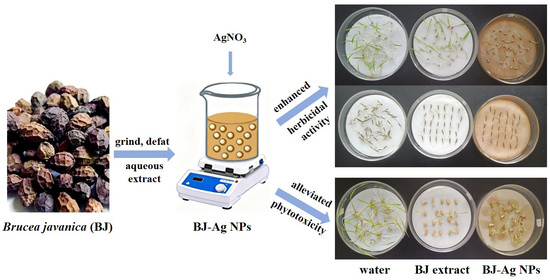
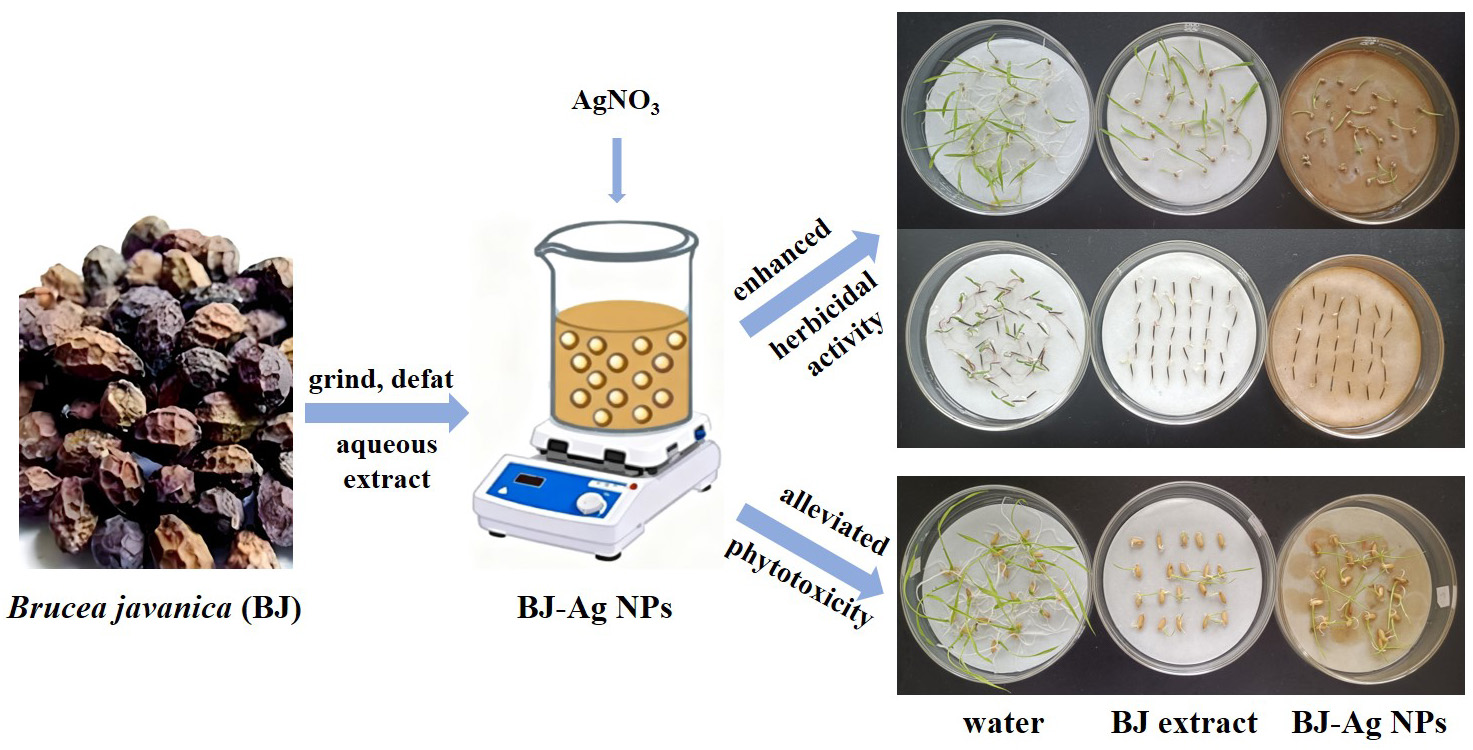
Graphical Abstract

1. Introduction

In recent decades, the widespread and extensive use of synthetic herbicides in modern agriculture has increased crop productivity by reducing the losses from weeds [1]. However, their extensive use has caused noticeable environmental pollution and even posed a threat to human health. To address these issues, it is imperative to adopt sustainable strategies to control weeds and maintain environmental balance. Among them, allelopathy between plants holds great promise for developing into a natural and environmentally friendly approach for weed management [1]. Allelochemicals or byproducts from some allelopathic plants used as bioherbicides (also known as botanical herbicides or phytoherbicides) in sustainable agriculture could offer new herbicide modes of action against weeds and less environmental risks compared to the available synthetic herbicides [1,2]. Meanwhile, nanotechnology has demonstrated particular potential for agricultural applications, offering innovative solutions for crop protection [3,4]. Plant-mediated nanoparticles have diverse applications in modern agriculture, which stimulate plant growth, protect crops from various stresses, enhance crop yield, and improve resource efficiency while reducing environmental pollution [5,6]. The nanoparticles specifically designed to meet agricultural needs, which were named as nanoagroparticles, will facilitate the application of nanotechnology in sustainable agricultural practices [7]. Taking this into account, appropriate nanoparticles synthesized by allelopathic plants could be used as botanical nanoherbicides, providing an innovative and sustainable alternative to synthetic herbicides.
Silver nanoparticles (Ag NPs) are currently emerging as the most fascinating and extensively researched metallic nanoparticles due to their multifunctional applications in various fields. The green synthesis of Ag NPs by using renewable resources, such as plants, has been proposed as a cost-effective, facile, eco-friendly, and biocompatible synthesis method [8]. The plant-mediated Ag NPs have exhibited exciting applications in agriculture [9,10]. Among them, their promise as a nanoherbicide for weed management has gained considerable attention. In our previous reports, Ag NPs synthesized by medicinal or allelopathic plants demonstrated the herbicidal activity to inhibit the seed germination and seedling growth of the noxious broad-leaved weed, Bidens pilosa L. [11,12]. In addition, the phytogenic Ag NPs could act as a growth promoter of wheat varieties during early seedling growth or a nanopriming mediator for promoting seed germination and growth parameters of rice, exhibiting their beneficial effects on crops employed as an emerging seed nanopriming technology [13,14]. While the findings are promising, further research is still necessary to concurrently assess their herbicidal efficacy and crop safety for sustainable weed management in crop fields.
Brucea javanica (L.) Merr., a traditional Chinese medicinal plant, is widely distributed in Southeast Asia and Northern Australia. Brucea javanica (BJ) refers to the dried ripe seed of this plant, also commonly called Yadanzi in Chinese, which has been recognized for its pharmacological properties and therapeutic applications [15,16]. BJ oil extracted from BJ has been developed as a commercially available anticarcinogen agent in China, resulting in a large amount of waste residues [17]. However, many active ingredients still exist in this defatted herbal residue, in which some phytochemicals obtained through the decoction or other extraction processes could be used as agrochemicals. It was reported that the ethanol extract of BJ residue possessed powerful insecticidal activity, and bruceine D isolated from this extract was an effective systemic feeding deterrent for pests [18]. In our previous report, the organic extracts of BJ residue and the isolated bruceines D–F had herbicidal activity, showing that BJ residue was a potential source for the development of botanical herbicide [19]. Up to now, the transformation of the BJ residue into a nanofactory for the green synthesis of Ag NPs has not been reported, which could not only combine the herbicidal activities of allelopathic plants and Ag NPs against weeds, but also utilize the nanopriming effect of Ag NPs on crops.
In this study, phytogenic Ag NPs were synthesized by using aqueous extract of BJ residue, followed by a comprehensive characterization. Furthermore, their herbicidal activity against two paddy weeds (Echinochloa crusgalli and B. pilosa) and phytotoxicity to rice (Oryza sativa L.) were evaluated using the Petri dish method. The BJ residue possessed moderate herbicidal activity against weeds and severe phytotoxicity to rice, while the BJ-Ag NPs increased weed susceptibility and crop resistance to the BJ residue extract. The research aimed to provide a promising alternative to the synthetic herbicides, in which the allelopathic plant-mediated Ag NPs exhibited the potential to act as an effective botanical nanoherbicide for weed management in paddy fields.

2. Materials and Methods

2.1. Materials

Analytical-grade silver nitrate (AgNO3) was bought from Shanghai Chemical Reagent Co., Ltd., Shanghai, China. Sodium hypochlorite (NaClO, analytical grade) was acquired from Kelong Chemical Reagent Co., Ltd., Chengdu, China. The BJ powder was purchased online from the Anhui Bozhou Qin’s Pharmaceutical Store, Taobao, Anhui, China. Rice seeds were obtained from the Rice Research Institute, Guangxi Academy of Agricultural Sciences, Guangxi, China. B. pilosa seeds were collected from the experimental farm of Guangxi University in October 2024. E. crusgalli seeds were supplied by the Plant Protection Research Institute, Guangxi Academy of Agricultural Sciences, Guangxi, China. All seeds were stored at 4 °C until use. All other reagents of analytical grade were used directly without further purification. Unless otherwise specified, deionized water was used for all the experimental procedures.

2.2. Preparation of the Aqueous Extract Derived from BJ Residue

BJ powder was soaked in petroleum ether for 3 days at room temperature to extract oils. The defatted residue was dried in a constant-temperature oven (DHG-9053A, Keelrein, Shanghai, China) at 50 °C and then filtered with a 100-mesh sieve. A mixture of 0.2 g dried BJ residue and 50 mL deionized water was prepared in a beaker and ultrasonicated with an ultrasonic frequency of 40 kHz for a duration of 30 min at room temperature. Subsequently, the suspension was centrifuged twice at a rotation speed of 8000 rpm, each lasting for 5 min. The supernatant was passed through a 0.45 μm membrane for filtration. The resulting crude extract was collected and then adjusted to pH 7 for the following synthesis of Ag NPs and bioassays.

2.3. Synthesis of Ag NPs by BJ Residue Extract

During the synthesis of Ag NPs, AgNO3 solution (0.1 mol/L, 100 μL) was added dropwise to the aqueous extract of BJ residue (10 mL) under magnetic stirring for 180 min at room temperature. The reaction solution was stored at 4 °C for future characterization and application. The solutions of only aqueous extract and only AgNO3 solution in the same reaction condition were used as control experiments.

2.4. Characterization of the Synthesized BJ-Ag NPs

The ultraviolet–visible (UV–Vis) absorption spectra of the aqueous extract and the BJ-Ag NP solution were measured by a UV-5800PC spectrophotometer (Metash, Shanghai, China) with a resolution of 1 nm across the wavelength span between 200 and 800 nm.
The dynamic light scattering (DLS) technique was adopted to measure the hydrodynamic diameter and polydispersity index (PDI) of the BJ-Ag NP solution at a Zetasizer Nano ZS90 (Malvern Instruments, Malvern, UK). Zeta potential values in mV were determined by utilizing the laser Doppler electrophoresis technique with the same instrument. The measurements were performed independently three times with the detector at a fixed angle of 90°, and the temperature was maintained at 25 °C.
The BJ-Ag NP solution was drop-coated on a clean Si (111) substrate for X-ray diffraction (XRD) analysis after being dried at room temperature. The XRD measurement was performed using a D8 Venture X-ray diffractometer (Bruker, Saarbrücken, Germany) at 40 kV and 30 mA with the radiation of Cu-Kα.
Transmission electron microscopy (TEM, FEI Talos F200s, Thermo Fisher, Waltham, MA, USA) was utilized for the morphology characterization and selected area electron diffraction (SAED) measurement driven by an accelerating voltage of 120 kV. The small spot analysis and elemental mapping were performed on an energy dispersive X-ray (EDX) spectrometer equipped on the TEM instrument. The BJ-Ag NP solution was dropped onto a carbon-coated copper grid, and then the sample was allowed to air-dry at room temperature before characterization.

2.5. Herbicidal Activity Analysis

The pre-emergence herbicidal activities of the BJ residue extract and BJ-Ag NPs were evaluated against two weed species (E. crusgalli and B. pilosa) using the Petri dish method [11,12]. All the tested weed seeds underwent sterilization using a 2% NaClO solution for 20 min and then washed thoroughly with deionized water three times. Two layers of filter paper cut to an appropriate size were placed in an inverted Petri dish (90 × 15 mm) and moistened with the test solution (2 mL, aqueous extract or BJ-Ag NP solution used as obtained without a dilution process). Thirty sterilized weed seeds were arranged in 5 × 6 on the moistened filter paper, followed by the addition of 3 mL of the test solution and covering the dish with the corresponding Petri dish lid. Meanwhile, a blank control group was established using an equal volume of deionized water. Each group, including a blank control group and two treatment groups, was repeated in triplicate. Subsequently, all Petri dishes were positioned in a light incubator (GXZ-436D, Ningbo Jiangnan Instrument Factory, Ningbo, China) and cultivated under the controlled conditions at a constant temperature of 25 ± 2 °C with an illumination intensity of 80% and a 14 h photoperiod. To maintain the moisture required for seed growth, an appropriate amount of deionized water was regularly added to the Petri dishes during the cultivation period. The seed germination was observed daily, and the number of germinated seeds was recorded over a period of 7 days. The germination percentage (GP) was estimated by dividing the number of successfully germinated seeds by the total number of seeds that were tested. The root and shoot lengths of the germinated seedlings were measured in mm after a 7-day cultivation. Then, the inhibition rates on seed germination, root length, and shoot length were calculated using the following Equation (1), in which C and T represented parameters from the blank control and treatment groups, respectively.
Inhibition rate (%) = (CT)/C × 100

2.6. Assessment of the Phytotoxicity to Rice

Petri dish experiments were also carried out to evaluate the phytotoxicity of the BJ residue extract and BJ-Ag NPs to rice. After the surface sterilization, twenty rice seeds were placed on filter paper with the arrangement of 4 × 5. Subsequently, the rice seeds were treated and cultivated in the same manner as the weed seeds. The GP and inhibition rates were also calculated as mentioned above. The seedling vigor index (SVI) was calculated according to the previous report, in which SVI was defined as the product of GP (%) and average seedling length (the sum of root length and shoot length) in cm [13].

2.7. Data Analysis

Using ImageJ software (ImageJ bundled with 64-bit Java 8, ImageJ 1.54 g), the sizes of at least 200 particles were measured based on TEM micrographs. Subsequently, the size data were imported into Origin software (OriginPro Learning Edition, OriginPro 2025 (64-bit) SR1) for the statistical analysis to obtain the average particle size, accompanied by the standard deviation (SD) and the corresponding size distribution histogram. The data obtained from the herbicidal activity and phytotoxicity tests were expressed as the mean ± SD derived from triplicate experiments. The differences between the blank control and treatment groups were compared by using IBM SPSS Statistics 26.0 software through one-way analysis of variance (ANOVA) and deemed statistically significant if p value was below 0.05.

3. Results and Discussion

3.1. Visual Inspection and UV–Vis Spectra of the Solutions

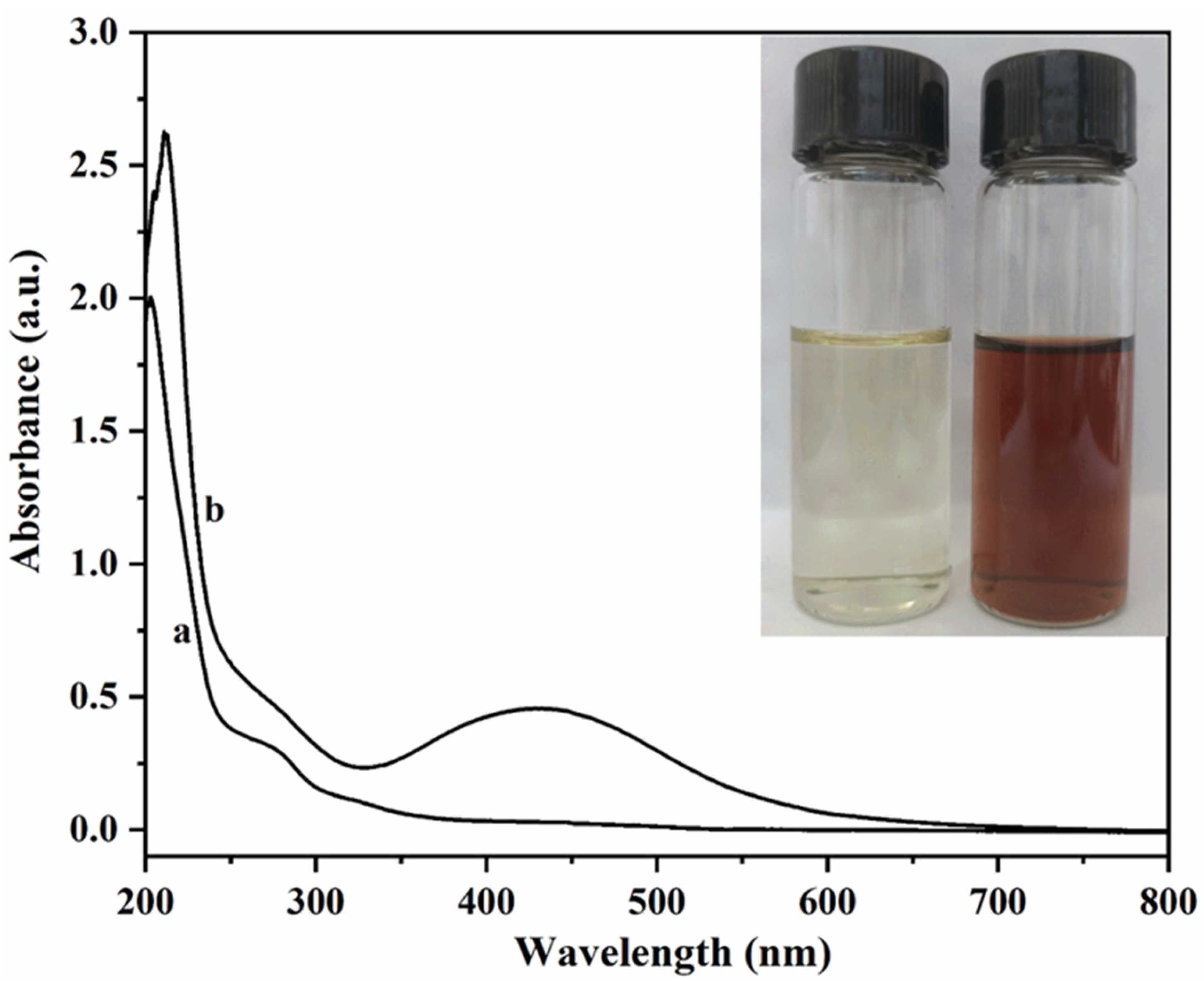
In this study, water was used as the extraction solvent, sonicated at room temperature to obtain water-soluble phytochemicals without the damage of heat-sensitive compositions. During the synthesis of Ag NPs using the BJ residue extract, the color change of the reaction solution was observed by visual inspection, and the results were illustrated in the inset of Figure 1. The aqueous extract obtained from the BJ residue (inset left) exhibited a pale-yellow color, indicating the presence of certain phytochemicals. The color was lighter than that of the BJ rinds aqueous extract obtained by boiling the mixture solution in the previous report [20]. It was evident that the phytochemical constituents in these aqueous extracts were different, which would bring about the diverse synthesis results. After the addition of AgNO3 for 180 min, the reaction solution changed to a reddish-brown color (inset right). This color was characteristic of the Ag NP solution, confirming the successful synthesis of Ag NPs [21,22,23]. It was obvious that the phytochemical amount in the crude extract was suitable to balance effective reduction in Ag+ ions with clear experimental visibility. In contrast, control solutions (aqueous extract alone and AgNO3 alone) showed no obvious color change, which indicated that aqueous extract played a critical role in the synthesis of Ag NPs.
UV–Vis spectroscopic analysis could be used as an indicator during the synthesis of Ag NPs. The absorption spectrum of the BJ residue extract (Figure 1, curve a) revealed two distinct peaks at ca. 203 nm and 273 nm, attributed to the water-soluble phytochemical components in aqueous extract. After reaction with AgNO3, a new, distinct absorbance band appeared at around 429 nm (Figure 1, curve b), corresponding to the surface plasmon resonance (SPR) of Ag NPs. This SPR band arose from the oscillation of conduction electrons and was characteristic of Ag NPs, further confirming the synthesis of Ag NPs [24,25].
The SPR value observed in this study fell within the characteristic wavelength range of 400–500 nm, which was previously reported for the plant-mediated Ag NPs [12,26]. The variations in the SPR peak position could be due to the differences in the phytochemical profile of the plant extract. These bioactive components functioned doubly as both the reducing agent to facilitate the conversion of Ag+ ions to metallic Ag0 and the stabilizing agent to prevent nanoparticle aggregation through the capping effect [23,25].

3.2. DLS Analysis and Zeta Potential Characterization

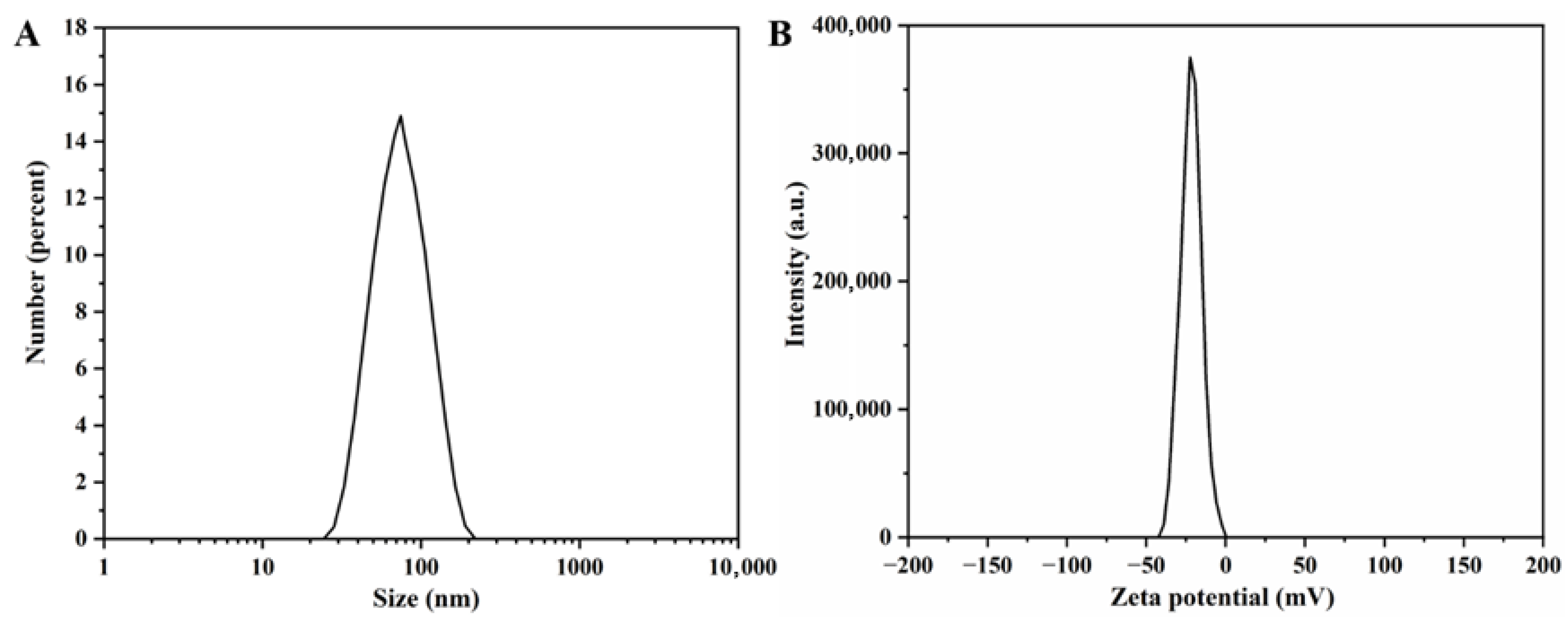
The hydrodynamic diameter and PDI of the synthesized Ag NP solution were measured by the DLS technique. As illustrated in Figure 2A, the size distribution diagram of the Ag NP solution revealed an average hydrodynamic diameter of 72.72 ± 9.51 nm. The PDI was determined as 0.14 ± 0.01, which was significantly smaller among the PDI values reported for the plant-mediated Ag NPs, indicating a relatively monodisperse particle distribution [22,27].
The surface charge and stability of the Ag NP solution could be assessed by zeta potential. The zeta potential diagram of the synthesized BJ-Ag NPs displayed a distinctly sharp peak in Figure 2B with the value of −29.10 ± 6.70 mV. The negative value was common in the phytogenic Ag NPs, which suggested that negatively charged components in the BJ residue extract acted as capping agents, providing the electrostatic repulsion to stabilize the nanoparticles in aqueous solution [28,29,30]. In addition, the zeta potential value confirmed the relatively high stability of the BJ-Ag NPs in the dispersion solution [22,31].

3.3. XRD Analysis

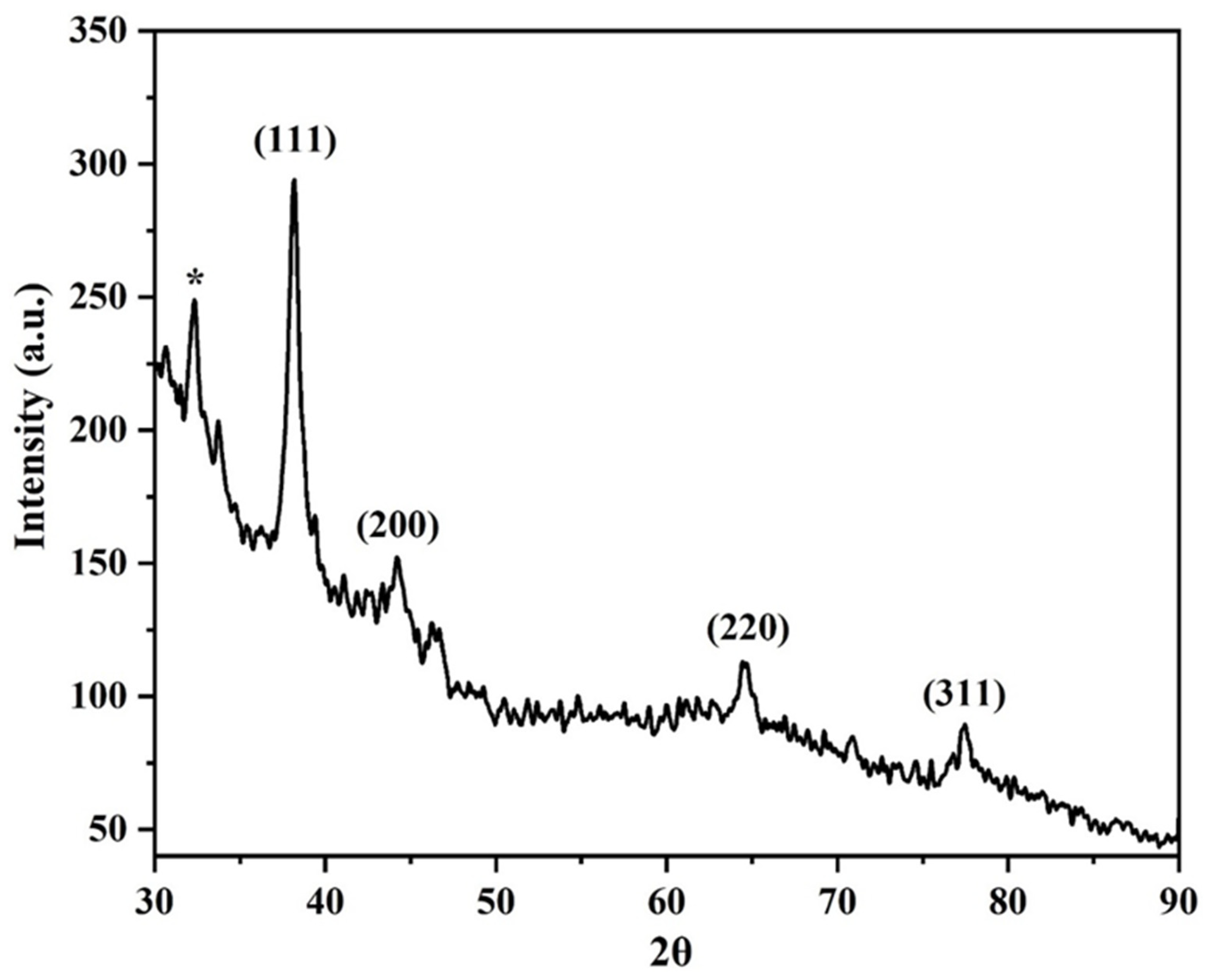
XRD analysis was usually used to characterize the crystallographic properties of Ag NPs, which could provide information about the crystal structure, elemental composition, and phase determination. As shown in Figure 3, the XRD pattern displayed several Bragg reflection peaks within the 2θ range of 30° to 90°. Four peaks illustrated at 38.18°, 44.24°, 64.68°, and 77.48° corresponded to the (111), (200), (220), and (311) diffraction planes of face-centered cubic (fcc) silver, respectively, aligned with the standard JCPDS card No. 04-0783 [32,33]. These distinctive diffraction peaks clearly indicated the crystalline nature of the BJ-Ag NPs. Notably, the (111) diffraction peak exhibited significantly higher intensity, suggesting a preferential orientation of the Ag NPs towards the (111) plane. Furthermore, an unidentified peak labeled with an asterisk at about 32.34° appeared frequently in XRD patterns of the biosynthesized Ag NPs [11,23,24,26,27,33,34,35,36,37,38]. Three possible assignments for this peak were provided in the previous reports. It could be assigned to the reflection from Ag2O [11,38]. It might arise from AgCl formed by the reaction of Ag+ with Cl contained in the aqueous extract [23,34,36]. It might be attributed to the inorganic residual moieties or bio-organic compounds present in the biological extract [24,27,33,35,37]. Considering the subsequent conclusion from the EDX elemental mapping analysis, the last assignment about the unidentified peak was adopted in this study.

3.4. TEM Characterization

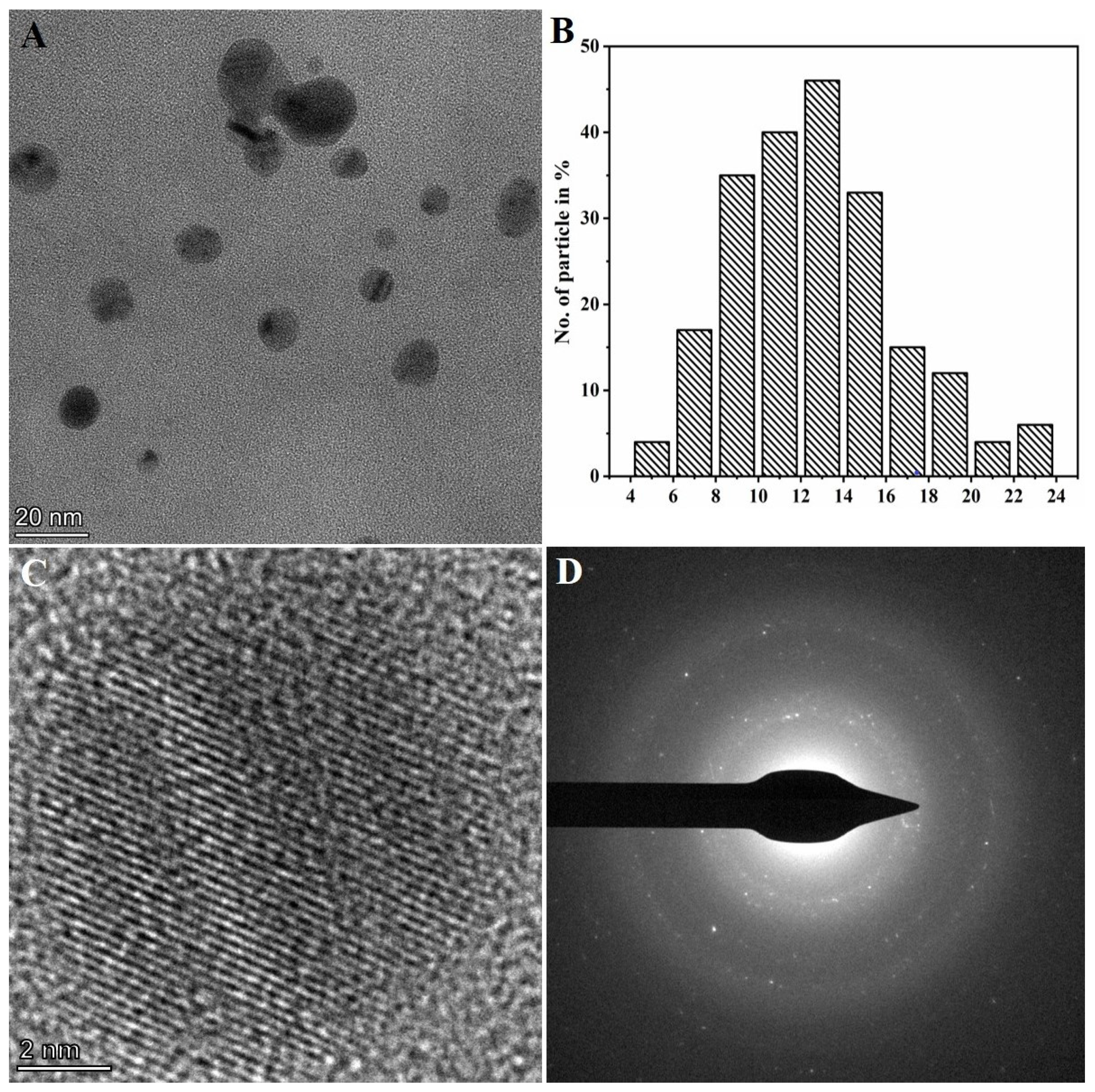
The TEM characterization could provide morphological and structural insights into the synthesized Ag NPs. As shown in Figure 4A, the representative TEM micrograph revealed that most of the nanoparticles were spherical. Figure 4B showed the size distribution histogram counted from TEM micrographs. As illustrated in Figure 4B, the nanoparticles were distributed in the size range from 4 to 24 nm, with an average particle size calculated as 12.75 ± 3.83 nm. This average size obtained from TEM analysis was smaller than the hydrodynamic diameter measured by DLS, probably attributed to the noncovalent interactions and solvation impacts present in the dispersion medium, the existence of hydrated capping agents, or nanoparticle aggregation occurring in the solution [11,31]. A high-resolution transmission electron microscopy (HRTEM) image (Figure 4C) showed a spacing of lattice fringe measuring 0.23 nm, corresponding to the (111) crystal plane of silver [39,40]. The SAED pattern (Figure 4D) displayed concentric rings constituting with intermittent bright spots, matching the (111), (200), (220), (311), and (420) crystal planes of face-centered cubic silver from the innermost to the outermost ring, respectively [11,39]. Notably, this SAED pattern aligned with our XRD measurements, providing clear evidence of the crystalline nature of the plant-mediated Ag NPs.

3.5. EDX Analysis

In this study, EDX was employed to examine the chemical composition and elemental distribution of the synthesized Ag NPs. The point-scanning profile and elemental mapping images were illustrated in Figure 5 and Figure S1, respectively.
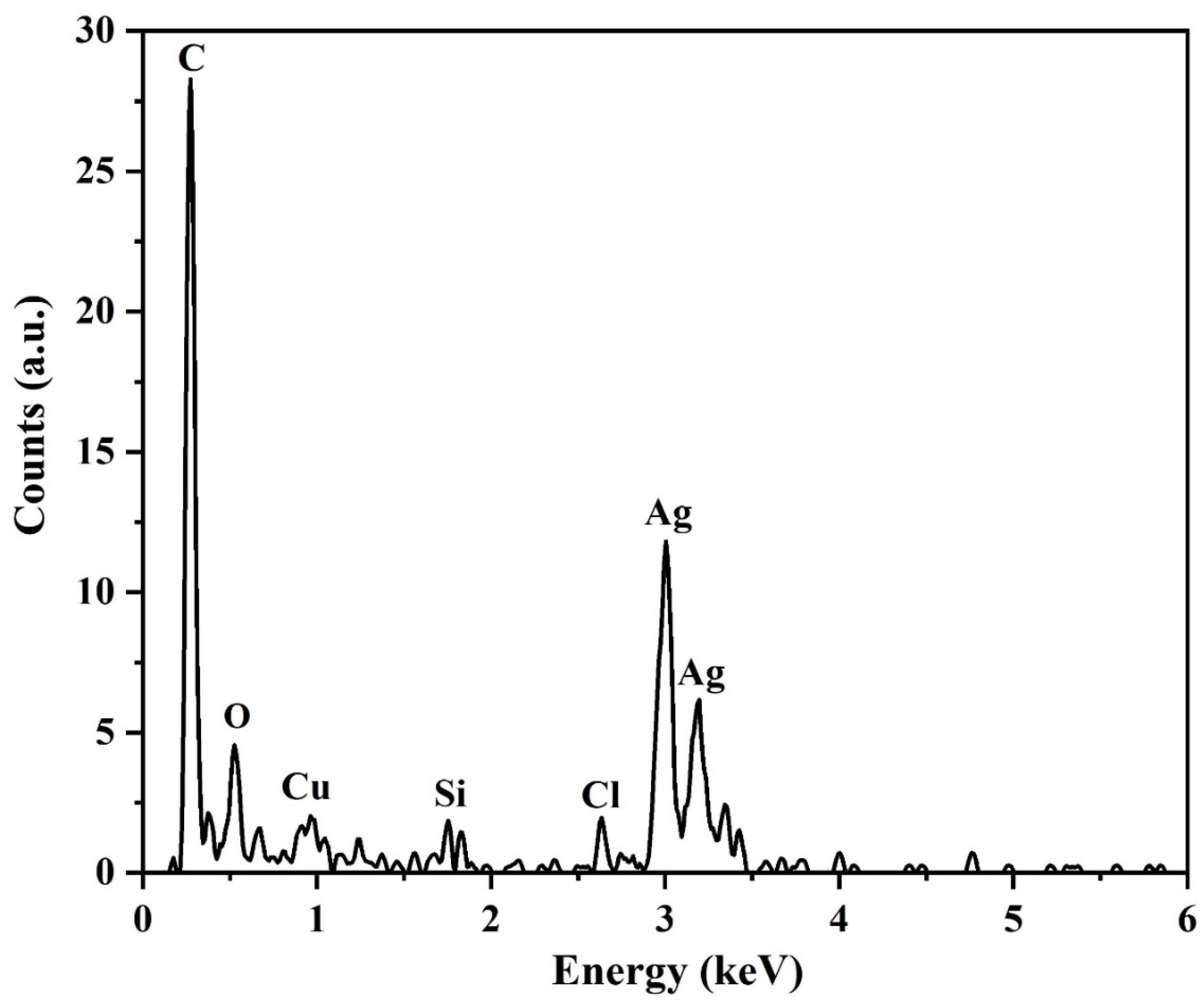
Observed from Figure 5, the EDX point-scanning energy spectrum revealed a prominent peak at around 3 keV, corresponding to elemental silver due to the SPR in silver nanocrystals [33,35]. This characteristic signal confirmed the reduction in Ag+ to Ag0 and the successful synthesis of nanoparticles [14]. The strong C and weak Cu peaks might be attributed to the copper grid covered with carbon, which was used as the sample substrate [11]. Furthermore, the other peaks for O, Si, and Cl, which were possibly attributed to the organic components present in the aqueous extract of BJ residue [26,37].
The corresponding EDX elemental mapping analysis was also performed to understand the elemental location and distribution of the synthesized Ag NPs [41]. Figure S1A showed the high-angle annular dark-field (HAADF)-TEM image, in which the bright spots corresponded to the synthesized nanoparticles. In comparison with the Ag elemental mapping image (Figure S1B), where Ag elements were illustrated as red spots, the distribution pattern of nanoparticles exhibited a good match with that of Ag elements. The result showed that the synthesized nanoparticles consisted of Ag, which further confirmed the successful synthesis of Ag NPs. In addition, the O element (green dots in Figure S1C) and Cl element (yellow dots in Figure S1D) exhibited uniform dispersion patterns. There was no obvious correspondence with the distribution of nanoparticles. Previous studies had suggested that the presence of O and Cl in EDX spectra might arise from the nanoparticles consisting of Ag2O [38] or AgCl [36]. However, the present study not only validated the efficient reduction in Ag+ to Ag0 but also elucidated that the O and Cl signals in EDX analysis could originate from bioactive constituents in the plant extract.

3.6. Herbicidal Activity of the Synthesized Ag NPs

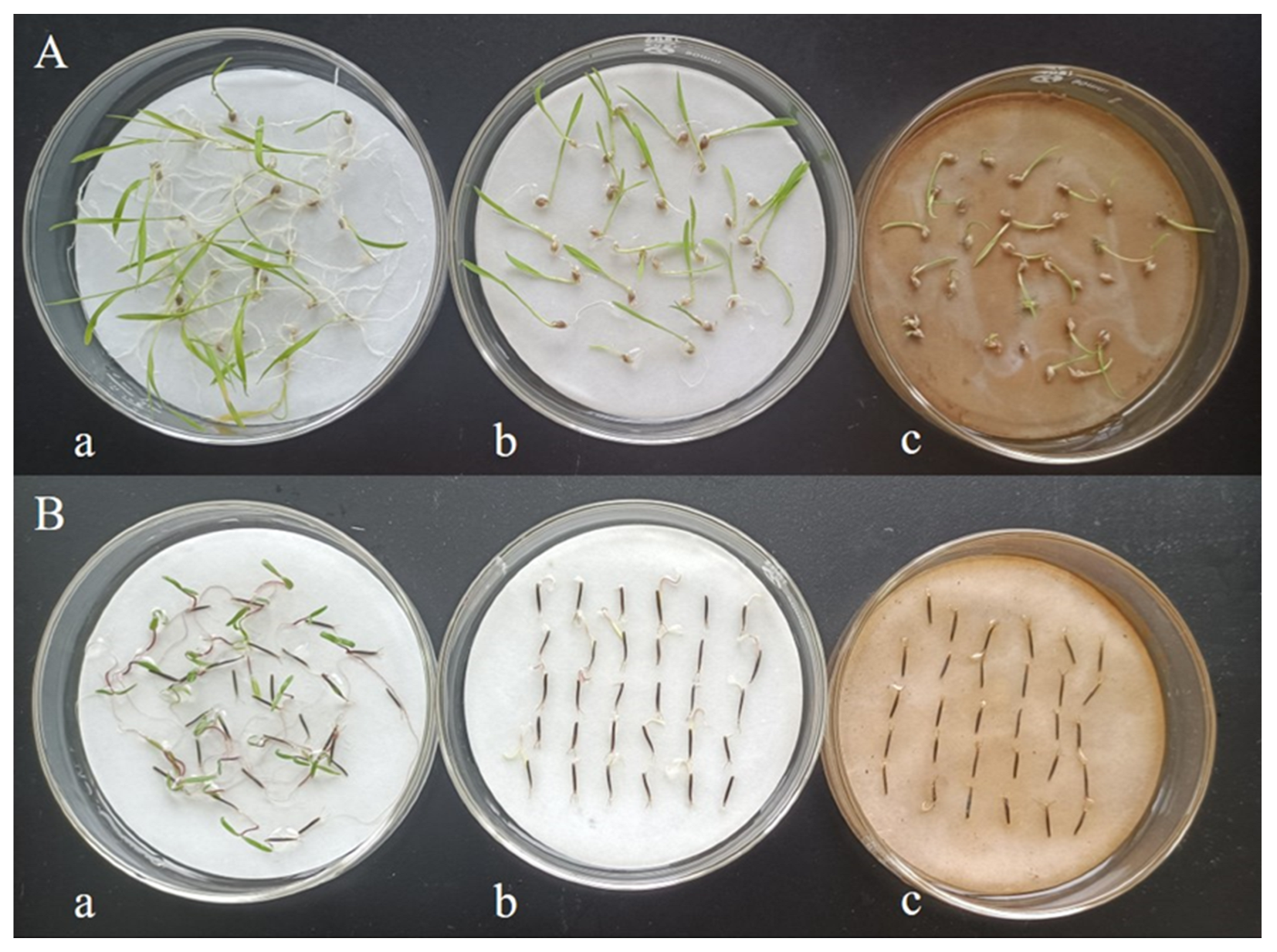
E. crusgalli (barnyard grass), an annual monocot gramineous weed from the Poaceae family, dispersed throughout the world, is one of the most serious noxious weeds in moist cultivated areas, especially rice-growing fields [42]. While B. pilosa (beggar tick) is an annual dicot broad-leaved weed belonging to the Asteraceae family and widely distributed in tropical and subtropical regions worldwide, it is considered a common rice weed adapted to upland growing environments due to its strong and fast invasive growth [43]. The troublesome weeds with heavy infestation can compete with rice for light, nutrients, water, and carbon dioxide, leading to yield losses and an increase in the costs associated with crop production. Thus, E. crusgalli and B. pilosa were selected as the tested weeds in this study. The herbicidal activities of the BJ residue extract and the synthesized BJ-Ag NPs were evaluated using the Petri dish method, and the 7-day cultivation results are illustrated in Figure 6.
Observed from Figure 6A, all of the seeds in three groups germinated, which showed that aqueous extract and the synthesized Ag NPs could not inhibit the seed germination of E. crusgalli. However, it was recorded that the germination was delayed during the seed growth process. After cultivation for 4 days, the GP values were 100%, 83.33 ± 10.00%, and 41.11 ± 1.92% for the three groups, respectively. The GP value reached 100% on the sixth day for the treatment of aqueous extract, while the GP value for the treatment of the synthesized Ag NPs was 96.67 ± 3.33%. The germination was further postponed by one day for the synthesized Ag NPs, with the GP value reaching 100% on the seventh day. It was obvious that the ability to delay germination was enhanced after the synthesis of Ag NPs by aqueous extract.
Unlike E. crusgalli, not all the B. pilosa seeds in the treatment groups germinated, as illustrated in Figure 6B. The treatments of the BJ residue extract and the synthesized BJ-Ag NPs exhibited significant inhibitory effects on the germination of B. pilosa seeds, with the inhibition rates of 45.56 ± 6.94% and 80.00 ± 6.66%, respectively. Compared to the residue extract, the BJ-Ag NPs demonstrated the enhanced inhibitory effect. A clear enhancement effect was achieved through combining the herbicidal activity from the allelopathic plant and Ag NPs, which was also reported in our previous study [12].
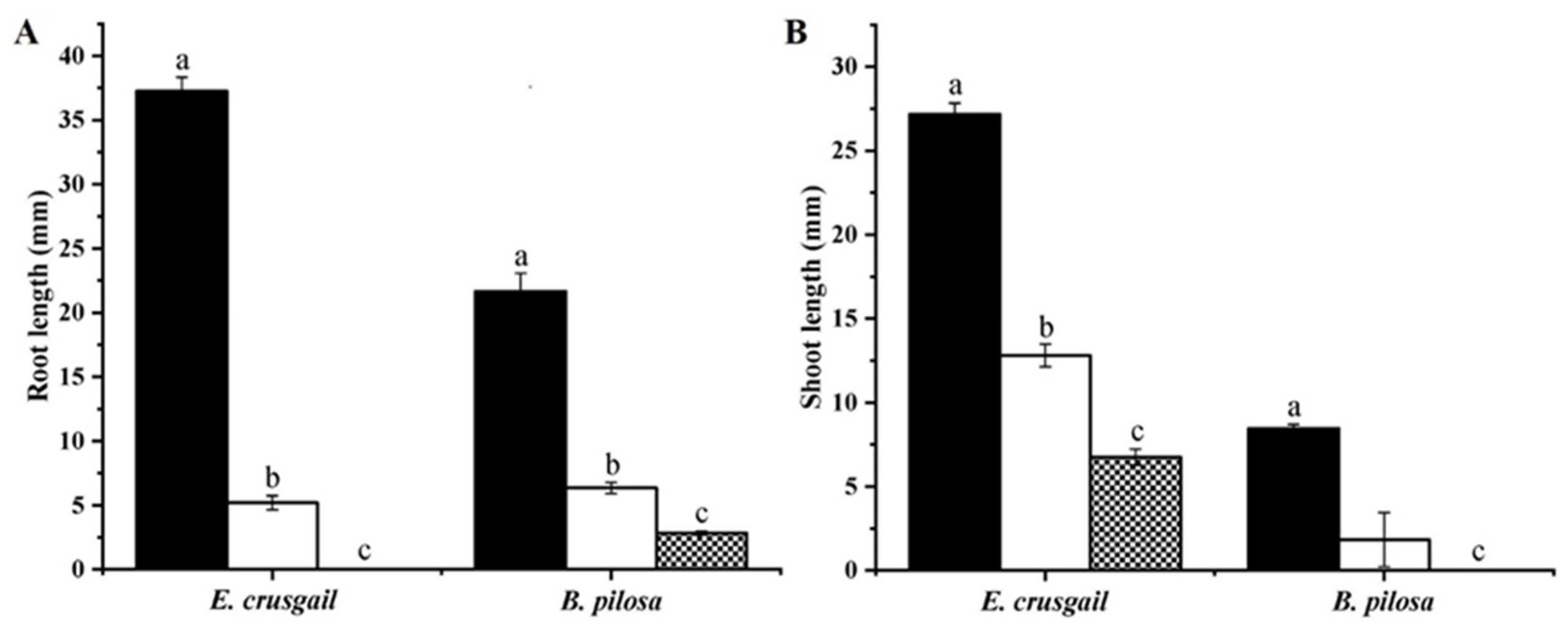
The significant inhibitory effects on seedling growth of both weeds were also observed in Figure 6. The lengths of the root and shoot in each experimental group were measured and shown in Figure 7. Observed from Figure 7A, root elongation was severely suppressed in both weeds compared to the blank control group of deionized water. The aqueous extract exhibited the inhibition rates of 86.08 ± 1.23% on E. crusgalli and 70.68 ± 0.69% on B. pilosa. Meanwhile, the BJ-Ag NPs completely inhibited the root growth of E. crusgalli with the inhibition rate of 100% and reduced the root length of B. pilosa by 86.88 ± 1.21%. Shoot elongation was similarly impacted, as illustrated in Figure 7B. After coupled aqueous extract with Ag NPs, the shoot lengths of both weeds were further suppressed. The shoot length of E. crusgalli was suppressed by 75.14 ± 2.36%, which significantly exceeded the effect exhibited by the aqueous extract (52.86 ± 3.18%). Moreover, the inhibition rate on the shoot growth of B. pilosa was enhanced to 100%. It was worth noting that the inhibition rate on the seedling growth reached 100%. The weed will inevitably perish in the absence of root or shoot development. The complete inhibition of the root growth of gramineous weed (Eleusine indica (L.) Gaertn.) and the shoot growth of broad-leaved weed (B. pilosa) has been exhibited by bruceine D at a certain concentration, which was the active constituent isolated from the n-butanol extract of BJ residue in our previous report [19].
The aqueous extract of an allelopathic plant possessed herbicidal activity on weeds, which was a potential source for the development of a botanical herbicide. It was reported that the main active ingredient (bruceine D) isolated from the BJ residue inhibited the seed germination of B. pilosa, which had been attributed to the suppression of downstream phenylpropanoid biosynthesis by acting on ADTs [44,45]. At the same time, Ag NPs have attracted significant attention due to the promise in agriculture as a nanoherbicide [11]. Researchers have reported that fungus-mediated Ag NPs exhibited the herbicidal activity against Leptochloa chinensis weed in paddy fields by inducing oxidative stress, reducing antioxidant enzyme activities, and increasing cell wall-degrading enzyme activities [31]. In this bioassay, the aqueous extract showed a moderate herbicidal activity, which allowed to distinctly observe the enhancement of herbicidal activity exhibited by the BJ-Ag NPs. After the synthesis of Ag NPs by this aqueous extract, enhanced herbicidal activity was achieved by supplementing the nanoherbicide with a botanical herbicide. If the aqueous extract was regarded as the main herbicide, Ag NPs could play an important role as an herbicide adjuvant in this BJ-Ag NPs nanocomposite.

3.7. Safety Evaluation on Rice Crop

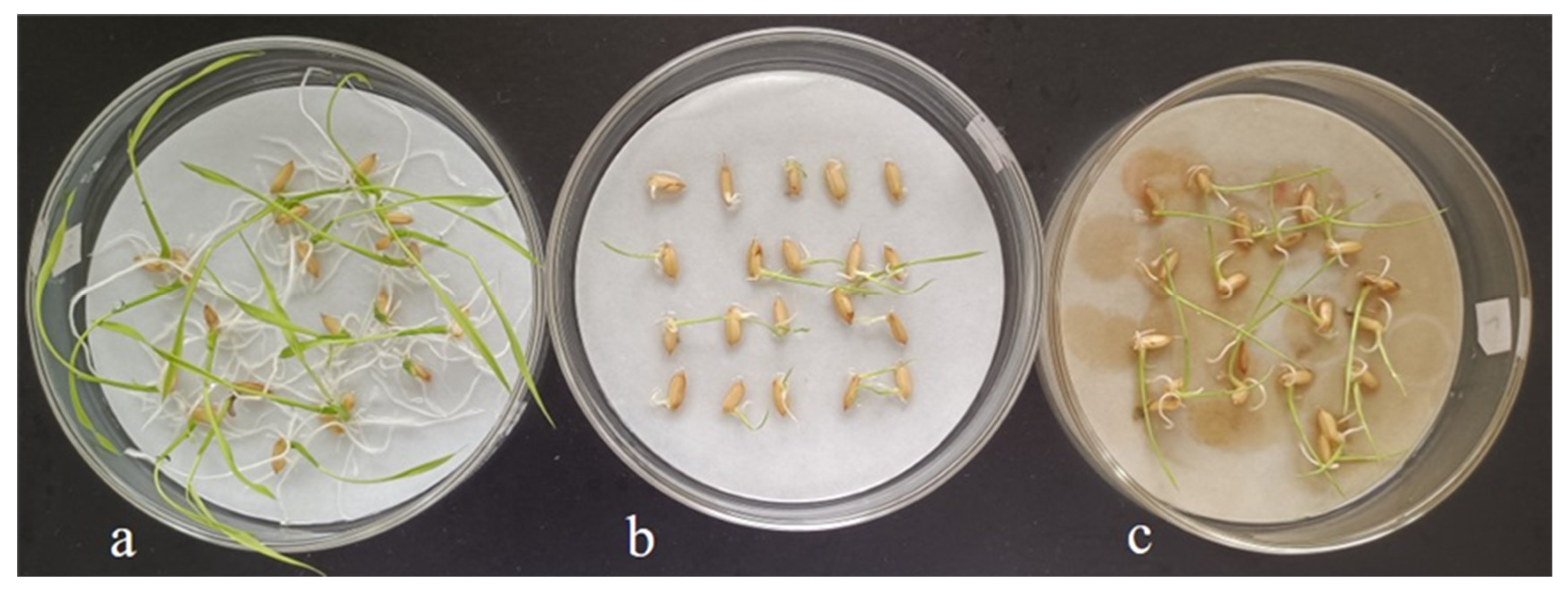
The phytotoxicities of the BJ residue extract and BJ-Ag NPs on rice were evaluated to evaluate their crop safety, and the 7-day cultivation results of rice were illustrated in Figure 8. The inhibition effect of aqueous extract on rice seed germination was observed in Figure 8b with the inhibition rate of 23.33 ± 15.27%. The results showed that the aqueous extract has an obvious phototoxicity to rice. However, all of the rice seeds successfully germinated after the treatment of the BJ-Ag NPs in Figure 8c, which indicated that the plant-mediated Ag NPs did not inhibit the germination of rice seeds. Obviously, the phytotoxicity of the BJ residue extract to rice seed germination was alleviated to a certain extent after the synthesis of Ag NPs by this aqueous extract. However, the delayed germination was recorded during the cultivation process. After the treatment of these plant-mediated Ag NPs, the GP value reached 100% on day 4. In contrast, the GP value of seeds treated with deionized water in Figure 8a achieved 100% after cultivation for 3 days.
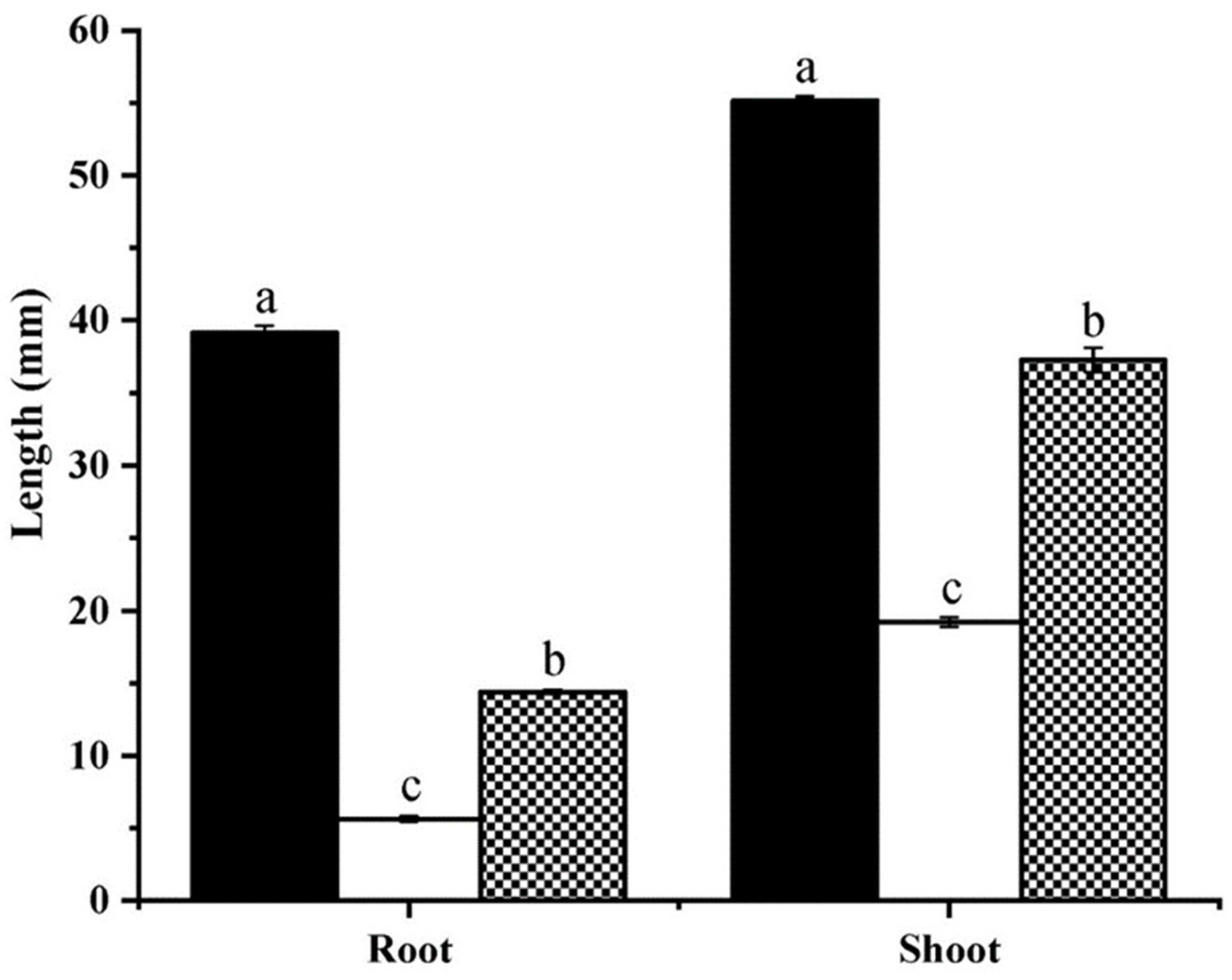
Besides seed germination, the seedling growth of rice was also evidently affected. The lengths of the root and shoot in each experimental group were measured and illustrated in Figure 9. The lengths of seedling were significantly different among the three groups, with the length in the aqueous extract treatment group being the shortest. The aqueous extract significantly suppressed the root growth of rice by 85.59 ± 0.34%, whereas the BJ-Ag NPs caused moderate inhibition of 63.23 ± 0.71%. Similarly, shoot elongation of rice was inhibited more greatly by the aqueous extract (65.36 ± 0.94%) than by the BJ-Ag NPs (32.83 ± 1.51%). In addition, SVI was typically employed to assess the vitality of seeds at germination and early seedling growth stages, offering a more sensitive reflection on the physiological condition of seeds than GP alone in stress environment. The BJ residue extract with the SVI of 190.3 ± 35.4 significantly decreased the vigor index compared to the blank control (943.2 ± 5.8). However, priming with the BJ-Ag NPs partially restored the vigor strength with the SVI of 516.7 ± 9.4. The results suggested that the aqueous extract caused serious phytotoxicity to rice, but the BJ-Ag NPs alleviated the harmful effects of the BJ residue extract on rice. It was reported that the biogenic Ag NPs exhibited a beneficial effect on crops. The phytosynthesized Ag NPs were used as a nanopriming agent to enhance germination and starch metabolism of aged rice seeds [46]. The Ag NPs synthesized by Phyllanthus emblica fruit extract could act as a growth promoter for wheat varieties through mitigating ROS toxicity [13]. The biogenic Ag NPs synthesized from red seaweed extracts promoted seed germination and seedling growth in rice [34]. The Piper colubrinum-mediated Ag NPs exhibited the potential as nanopriming mediators on rice for improved seed germination, growth, chlorophyll content, and gene expression patterns [14]. The fungus-mediated Ag NPs significantly increased the growth parameters and antioxidant enzyme activities in rice [31]. The phytotoxicity from the BJ residue extract might be partially offset by the beneficial impacts from the phytogenic Ag NPs, thereby mitigating the adverse effect on rice. The Ag NPs coupled with the aqueous extract of an allelopathic plant in our study behaved like the safener–herbicide system, in which Ag NPs acted as a herbicide safener-like additive to increase crop resistance to the botanical herbicide [47].
As mentioned above, the aqueous extract of BJ residue possessed herbicidal activity against gramineous weeds and broad-leaved weeds, and phytotoxicity to rice. It was common in the reports on the allelopathic effects of plant extracts, which also brought problems for their application as herbicides in crop fields [48,49]. After the synthesis of Ag NPs by the BJ aqueous extract, the herbicidal activity against weeds was enhanced, and the phytotoxicity to crops was alleviated. Obviously, the Ag NPs present in this nanocomposite exhibited outstanding bifunctional performance, acting as both an adjuvant and a safener-like additive. It was worth paying attention that this BJ-Ag NPs produced positive effects on the weed control and crop protection, underlining its potential as a botanical nanoherbicide in rice agriculture. However, the degree of herbicidal activity and phytotoxicity was dependent on the amount and kind of allelochemical content. In this study, the crude aqueous extract without the quantification of the allelochemicals was utilized directly for the synthesis of Ag NPs. Meanwhile, the presence of Ag NPs also influenced their performance [34]. It was impossible to distinctly make out their individual contributions without the separation of Ag NPs from the BJ-Ag NPs composite. Thus, further research is needed to distinguish their roles and optimize the design of this nanocomposite with suitable efficacy for their herbicidal application in paddy fields.
In this study, green synthesis of Ag NPs using an allelopathic plant was designed to construct a botanical nanoherbicide. However, the environmental fate of Ag NPs in agroecosystems must be critically assessed to ensure their safe application in sustainable agriculture [3]. Ag NPs possess unique physicochemical properties that can influence their behavior in soil–plant systems. These particles with nanoscale size can readily penetrate through the cell membranes of plants, potentially inducing genotoxicity and disrupting cellular functions. Moreover, Ag NPs can contaminate soil, such as accumulation in soil and toxicity to soil organisms [6]. Unlike synthetic herbicides, which have been extensively studied for their environmental persistence, ecological impacts, and degradation pathways, the environmental behavior of Ag NPs is less well-understood. The synthetic herbicides are subject to well-established regulatory frameworks governing their approval, use, and disposal. In contrast, the regulatory landscape for Ag NPs presents distinct challenges with diverse approaches and regulation stringency across different countries [50]. By conducting thorough research and establishing robust regulatory frameworks, we can harness the potential of Ag NPs while minimizing their environmental and health risks.

4. Conclusions

This study presented the green synthesis of Ag NPs assisted by aqueous extract of BJ residue and subsequently evaluated their pre-emergence herbicidal activity and crop safety. The synthesized Ag NPs displayed a predominantly spherical shape with an average size of 12.75 nm. The results obtained from the bioassay indicated that the BJ-Ag NPs not only demonstrated an enhanced herbicidal activity against weeds but also alleviated the phytotoxicity to rice compared to the BJ residue extract. In the BJ-Ag NPs nanocomposite, Ag NPs could serve as a bifunctional adjuvant for the botanical herbicide. Thus, the BJ residue could find a virtuous fate to be reused for the green synthesis of nanomaterials. Meanwhile, the plant-mediated Ag NPs demonstrated significant potential as a botanical nanoherbicide suitable for weed management in sustainable agriculture. However, since the bioassays in this study were performed only in Petri dishes under controlled conditions, it is necessary to conduct pot tests and field trials in further research to verify their applicability to actual paddy systems.

Supplementary Materials

The following supporting information can be downloaded at: https://www.mdpi.com/article/10.3390/agronomy16050506/s1. Figure S1: (A) HAADF-TEM image of the synthesized BJ-Ag NPs and the corresponding elemental mapping images of (B) Ag, (C) O, and (D) Cl.

Author Contributions

Conceptualization, L.D.; methodology, F.H. and L.D.; formal analysis, F.H.; investigation, J.C.; resources, Y.W.; data curation, F.H.; writing—original draft preparation, F.H. and J.C.; writing—review and editing, L.D.; supervision, Y.W.; project administration, Y.W. and L.D.; funding acquisition, L.D. All authors have read and agreed to the published version of the manuscript.

Funding

This research was funded by the National Natural Science Foundation of P.R. China (No. 32360679) and Guangxi Natural Science Foundation (No. 2023GXNSFAA026231).

Data Availability Statement

The original contributions presented in the study are included in the article; further inquiries can be directed to the corresponding author.

Conflicts of Interest

The authors declare no conflicts of interest.

References

  1. Khamare, Y.; Chen, J.J.; Marble, S.C. Allelopathy and its application as a weed management tool: A review. Front. Plant Sci. 2022, 13, 1034649. [Google Scholar] [CrossRef] [PubMed]
  2. Kostina-Bednarz, M.; Plonka, J.; Barchanska, H. Allelopathy as a source of bioherbicides: Challenges and prospects for sustainable agriculture. Rev. Environ. Sci. Bio-Technol. 2023, 22, 471–504. [Google Scholar] [CrossRef]
  3. Singh, D.; Gurjar, B.R. Nanotechnology for agricultural applications: Facts, issues, knowledge gaps, and challenges in environmental risk assessment. J. Environ. Manag. 2022, 322, 116033. [Google Scholar] [CrossRef]
  4. Gupta, C.; Gupta, M.K.; Tripathi, S. Nanotechnology: A promising technology in sustainable agriculture. Discov. Biotechnol. 2025, 2, 12. [Google Scholar] [CrossRef]
  5. Zhao, L.J.; Lu, L.; Wang, A.D.; Zhang, H.L.; Huang, M.; Wu, H.H.; Xing, B.S.; Wang, Z.Y.; Ji, R. Nano-biotechnology in agriculture: Use of nanomaterials to promote plant growth and stress tolerance. J. Agric. Food Chem. 2020, 68, 1935–1947. [Google Scholar] [CrossRef]
  6. Akintelu, S.A.; Olabemiwo, O.M.; Ibrahim, A.O.; Oyebamiji, J.O.; Oyebamiji, A.K.; Olugbeko, S.C. Biosynthesized nanoparticles as a rescue aid for agricultural sustainability and development. Int. Nano Lett. 2023, 13, 15–40. [Google Scholar] [CrossRef]
  7. Baker, S.; Volova, T.; Prudnikova, S.V.; Satish, S.; Prasad, N. Nanoagroparticles emerging trends and future prospect in modern agriculture system. Environ. Toxicol. Pharmacol. 2017, 53, 10–17. [Google Scholar] [CrossRef]
  8. Poudel, D.K.; Niraula, P.; Aryal, H.; Budhathoki, B.; Phuyal, S.; Marahatha, R.; Subedi, K. Plant-mediated green synthesis of Ag NPs and their possible applications: A critical review. J. Nanotechnol. 2022, 2022, 2779237. [Google Scholar] [CrossRef]
  9. Nguyen, N.T.T.; Nguyen, L.M.; Nguyen, T.T.T.; Liew, R.K.; Nguyen, D.T.C.; Van Tran, T. Recent advances on botanical biosynthesis of nanoparticles for catalytic, water treatment and agricultural applications: A review. Sci. Total Environ. 2022, 827, 154160. [Google Scholar] [CrossRef]
  10. Martínez-Cisterna, D.; Rubilar, O.; Tortella, G.; Chen, L.Y.; Chacón-Fuentes, M.; Lizama, M.; Parra, P.; Bardehle, L. Silver nanoparticles as a potent nanopesticide: Toxic effects and action mechanisms on pest insects of agricultural importance—A Review. Molecules 2024, 29, 5520. [Google Scholar] [CrossRef]
  11. Jiang, T.Y.; Huang, J.Y.; Peng, J.S.; Wang, Y.H.; Du, L.W. Characterization of silver nanoparticles synthesized by the aqueous extract of Zanthoxylum nitidum and its herbicidal activity against Bidens pilosa L. Nanomaterials 2023, 13, 1637. [Google Scholar] [CrossRef]
  12. He, F.X.; Wang, Y.H.; Huang, H.M.; Du, L.W. Synergistic herbicidal effects of Nelumbo nucifera Gaertn. leaf extract-silver nanoparticles against Bidens pilosa L. Chem. Biol. Technol. Agric. 2025, 12, 27. [Google Scholar] [CrossRef]
  13. Kannaujia, R.; Srivastava, C.M.; Prasad, V.; Singh, B.N.; Pandey, V. Phyllanthus emblica fruit extract stabilized biogenic silver nanoparticles as a growth promoter of wheat varieties by reducing ROS toxicity. Plant Physiol. Biochem. 2019, 142, 460–471. [Google Scholar] [CrossRef]
  14. Santhoshkumar, R.; Parvathy, A.H.; Soniya, E.V. Biocompatible silver nanoparticles as nanopriming mediators for improved rice germination and root growth: A transcriptomic perspective. Plant Physiol. Biochem. 2024, 210, 108645. [Google Scholar] [CrossRef]
  15. Chen, J.; Yu, D.K.; Li, X.Y.; Deng, Q.C.; Yang, H.; Chen, L.; Bai, L. A review of Brucea javanica: Metabolites, pharmacology and clinical application. Front. Pharmacol. 2023, 14, 1317620. [Google Scholar] [CrossRef] [PubMed]
  16. Xu, W.Y.; Yang, H.M.; Zhou, Y.A.; Guo, R.X.; Liu, J.; Wei, F.; Lin, Y.Q. Potential of traditional Chinese medicine Brucea javanica in cancer treatment: A review of chemical constituents, pharmacology, and clinical applications. Nutrients 2025, 17, 3285. [Google Scholar] [CrossRef]
  17. Yoon, B.K.; Lim, Z.Y.; Jeon, W.Y.; Cho, N.J.; Kim, J.H.; Jackman, J.A. Medicinal activities and nanomedicine delivery strategies for Brucea javanica oil and its molecular components. Molecules 2020, 25, 5414. [Google Scholar] [CrossRef] [PubMed]
  18. Mao, G.L.; Tian, Y.Q.; Sun, Z.; Ou, J.L.; Xu, H.H. Bruceine D isolated from Brucea javanica (L.) Merr. as a systemic feeding deterrent for three major lepidopteran pests. J. Agric. Food Chem. 2019, 67, 4232–4239. [Google Scholar] [CrossRef] [PubMed]
  19. Huang, Y.; Chen, L.; He, B.; Liu, S.Y.; Zeng, D.Q.; Wang, Y.H.; Du, L.W.; Tang, W.W. Herbicidal activity and bioactive components of Brucea javanica (L.) Merr. residue. Arab. J. Chem. 2021, 14, 103228. [Google Scholar] [CrossRef]
  20. Salprima Yudha, S.; Notriawan, D.; Angasa, E.; Suharto, T.E.; Hendri, J.; Nishina, Y. Green synthesis of silver nanoparticles using aqueous rinds extract of Brucea javanica (L.) Merr at ambient temperature. Mater. Lett. 2013, 97, 181–183. [Google Scholar] [CrossRef]
  21. Kumar, P.M.; Murugan, K.; Madhiyazhagan, P.; Kovendan, K.; Amerasan, D.; Chandramohan, B.; Dinesh, D.; Suresh, U.; Nicoletti, M.; Alsalhi, M.S.; et al. Biosynthesis, characterization, and acute toxicity of Berberis tinctoria-fabricated silver nanoparticles against the Asian tiger mosquito, Aedes albopictus, and the mosquito predators Toxorhynchites splendens and Mesocyclops thermocyclopoides. Parasitol. Res. 2016, 115, 751–759. [Google Scholar] [CrossRef] [PubMed]
  22. Rudrappa, M.; Rudayni, H.A.; Assiri, R.A.; Bepari, A.; Basavarajappa, D.S.; Nagaraja, S.K.; Chakraborty, B.; Swamy, P.S.; Agadi, S.N.; Niazi, S.K.; et al. Plumeria alba-mediated green synthesis of silver nanoparticles exhibits antimicrobial effect and anti-oncogenic activity against glioblastoma U118 MG cancer cell line. Nanomaterials 2022, 12, 493. [Google Scholar] [CrossRef] [PubMed]
  23. Yang, Q.; Guo, J.; Long, X.F.; Pan, C.Y.; Liu, G.Q.; Peng, J.T. Green synthesis of silver nanoparticles using Jasminum nudiflorum flower extract and their antifungal and antioxidant activity. Nanomaterials 2023, 13, 2558. [Google Scholar] [CrossRef]
  24. Ajlouni, A.W.; Hamdan, E.H.; Alshalawi, R.A.E.; Shaik, M.R.; Khan, M.; Kuniyil, M.; Alwarthan, A.; Ansari, M.A.; Khan, M.; Alkhathlan, H.Z.; et al. Green synthesis of silver nanoparticles using aerial part extract of the Anthemis pseudocotula Boiss. plant and their biological activity. Molecules 2023, 28, 246. [Google Scholar] [CrossRef]
  25. Essghaier, B.; Hannachi, H.; Nouir, R.; Mottola, F.; Rocco, L. Green synthesis and characterization of novel silver nanoparticles using Achillea maritima subsp. maritima aqueous extract: Antioxidant and antidiabetic potential and effect on virulence mechanisms of bacterial and fungal pathogens. Nanomaterials 2023, 13, 1964. [Google Scholar] [CrossRef] [PubMed]
  26. Hussein, H.S.; Ngugi, C.; Tolo, F.M.; Maina, E.N. Anticancer potential of silver nanoparticles biosynthesized using Catharanthus roseus leaves extract on cervical (HeLa229) cancer cell line. Sci. Afr. 2024, 25, e02268. [Google Scholar] [CrossRef]
  27. Roseline, T.A.; Murugan, M.; Sudhakar, M.P.; Arunkumar, K. Nanopesticidal potential of silver nanocomposites synthesized from the aqueous extracts of red seaweeds. Environ. Technol. Innov. 2019, 13, 82–93. [Google Scholar] [CrossRef]
  28. Sarkar, S.; Kotteeswaran, V. Green synthesis of silver nanoparticles from aqueous leaf extract of Pomegranate (Punica granatum) and their anticancer activity on human cervical cancer cells. Adv. Nat. Sci. Nanosci. Nanotechnol. 2018, 9, 025014. [Google Scholar] [CrossRef]
  29. Hassan, W.A.; Mohammed, A.E.; AlShaye, N.A.; Sonbol, H.; Alghamdi, S.A.; Iamonico, D.; Korany, S.M. Characterization of Amaranthus species: Ability in nanoparticles fabrication and the antimicrobial activity against human pathogenic bacteria. PeerJ 2024, 12, e16708. [Google Scholar] [CrossRef]
  30. Fotoohiyan, Z.; Karimdadi, M.; Sardoei, A.S.; Bovand, F.; Ghorbanpour, M. Green synthesis of silver nanoparticles using Artemisia persica extract and evaluation of their activity on onion gray rot fungus. Biomass Convers. Biorefin. 2025, 15, 5509–5521. [Google Scholar] [CrossRef]
  31. Gulfraz, A.; Yuan, Y.Q.; Bu, Q.; Shafiq, M.; Huang, Z.Q.; Li, M.W.; Dong, Z.X.; An, J.; Chen, Y. Exserohilum rostratum-mediated synthesis of silver nanoparticles: A case study on their bioherbicidal activity against Leptochloa chinensis (L.) Nees. Agronomy 2024, 14, 2784. [Google Scholar] [CrossRef]
  32. Al-Khedhairy, A.A.; Wahab, R. Silver nanoparticles: An instantaneous solution for anticancer activity against human liver (HepG2) and breast (MCF-7) cancer cells. Metals 2022, 12, 148. [Google Scholar] [CrossRef]
  33. Ismail, E.; Mohamed, A.; Elzwawy, A.; Maboza, E.; Dhlamini, M.S.; Adam, R.Z. Comparative study of Callistemon citrinus (Bottlebrush) and Punica granatum (Pomegranate) extracts for sustainable synthesis of silver nanoparticles and their oral antimicrobial efficacy. Nanomaterials 2024, 14, 974. [Google Scholar] [CrossRef]
  34. Roseline, T.A.; Sudhakar, M.P.; Arunkumar, K. Aqueous extraction of red seaweed bioactive compounds and synthesis of silver nanoparticles for agriculture applications. J. Agric. Food Res. 2023, 14, 100769. [Google Scholar] [CrossRef]
  35. Gondwal, M.; Sharma, N.; Joshi nee Pant, G.; Gautam, B.P.S.; Singh, S.; Tumba, K.; Bahadur, I. Bioactivity and catalytic reduction of aryl nitro-compounds by biosynthesized silver nanoparticles using Skimmiaanquetilia. ChemistrySelect 2023, 8, e202203782. [Google Scholar] [CrossRef]
  36. Abd Alamer, I.S.; Tomah, A.A.; Ahmed, T.; Li, B.; Zhang, J.Z. Biosynthesis of silver chloride nanoparticles by rhizospheric bacteria and their antibacterial activity against phytopathogenic bacterium Ralstonia solanacearum. Molecules 2022, 27, 224. [Google Scholar] [CrossRef]
  37. Fouad, H.; Li, H.J.; Hosni, D.; Wei, J.Q.; Abbas, G.; Ga’al, H.; Mo, J.C. Controlling Aedes albopictus and Culex pipiens pallens using silver nanoparticles synthesized from aqueous extract of Cassia fistula fruit pulp and its mode of action. Artif. Cell. Nanomed. Biotechnol. 2018, 46, 558–567. [Google Scholar] [CrossRef] [PubMed]
  38. Elemike, E.E.; Onwudiwe, D.C.; Ekennia, A.C.; Sonde, C.U.; Ehiri, R.C. Green synthesis of Ag/Ag2O nanoparticles using aqueous leaf extract of Eupatorium odoratum and its antimicrobial and mosquito larvicidal activities. Molecules 2017, 22, 674. [Google Scholar] [CrossRef]
  39. Huang, M.Y.; Du, L.W.; Feng, J.X. Photochemical synthesis of silver nanoparticles/eggshell membrane composite, its characterization and antibacterial activity. Sci. Adv. Mater. 2016, 8, 1641–1647. [Google Scholar] [CrossRef]
  40. Parthiban, E.; Manivannan, N.; Ramanibai, R.; Mathivanan, N. Green synthesis of silver-nanoparticles from Annona reticulata leaves aqueous extract and its mosquito larvicidal and anti-microbial activity on human pathogens. Biotechnol. Rep. 2019, 21, e00297. [Google Scholar] [CrossRef] [PubMed]
  41. Singh, R.; Singh, R.; Parihar, P.; Mani, J.V. Green synthesis of silver nanoparticles using Solanum sisymbriifolium leaf extract: Characterization and evaluation of antioxidant, antibacterial and photocatalytic degradation activities. Process Biochem. 2024, 143, 337–352. [Google Scholar] [CrossRef]
  42. Kraehmer, H.; Jabran, K.; Mennan, H.; Chauhan, B.S. Global distribution of rice weeds—A review. Crop Prot. 2016, 80, 73–86. [Google Scholar] [CrossRef]
  43. Makokha, D.W.; Irakiza, R.; Malombe, I.; Le Bourgeois, T.; Rodenburg, J. Dualistic roles and management of non-cultivated plants in lowland rice systems of East Africa. S. Afr. J. Bot. 2017, 108, 321–330. [Google Scholar] [CrossRef]
  44. Tong, Y.; Liu, S.Y.; Yi, S.C.; Qiu, Z.X.; Wang, Y.H.; Zeng, D.Q.; Tang, W.W. Bruceine D, the main active ingredient of Brucea javanica (L.) residue inhibits the germination of Bidens pilosa L. seeds by suppressing phenylpropanoid biosynthesis. Ind. Crops Prod. 2021, 172, 114079. [Google Scholar] [CrossRef]
  45. Tong, Y.; Yi, S.C.; Liu, S.Y.; Xu, L.; Qiu, Z.X.; Zeng, D.Q.; Tang, W.W. Bruceine D may affect the phenylpropanoid biosynthesis by acting on ADTs thus inhibiting Bidens pilosa L. seed germination. Ecotoxicol. Environ. Saf. 2022, 242, 113943. [Google Scholar] [CrossRef]
  46. Mahakham, W.; Sarmah, A.K.; Maensiri, S.; Theerakulpisut, P. Nanopriming technology for enhancing germination and starch metabolism of aged rice seeds using phytosynthesized silver nanoparticles. Sci. Rep. 2017, 7, 8263. [Google Scholar] [CrossRef]
  47. Guo, K.Y.; Deng, X.L.; Peng, Y.J.; Yang, N.; Qian, K.; Bai, L.Y. A MOF-based pH-responsive dual controlled-release system for herbicide pretilachlor and safener AD-67 delivery that enhances the herbicidal efficacy and reduces side effects. Environ. Sci. Nano 2023, 10, 1016–1029. [Google Scholar] [CrossRef]
  48. Mangao, A.M.; Arreola, S.L.B.; San Gabriel, E.V.; Salamanez, K.C. Aqueous extract from leaves of Ludwigia hyssopifolia (G. Don) Exell as potential bioherbicide. J. Sci. Food Agric. 2020, 100, 1185–1194. [Google Scholar] [CrossRef]
  49. Choopayak, C.; Aranyakanon, K.; Prompakdee, N.; Nangngam, P.; Kongbangkerd, A.; Ratanasut, K. Effects of Piper betle L. extract and allelochemical eugenol on rice and associated weeds germination and seedling growth. Plants 2022, 11, 3384. [Google Scholar] [CrossRef]
  50. Singh, K.; Malla, M.; Kumar, A.; Yadav, S. Toxicological concerns of nanomaterials in agroecosystem: Risk, fate, and their analytical and regulatory assessment. Environ. Qual. Manag. 2025, 35, 23. [Google Scholar] [CrossRef]
Figure 1. The UV–Vis absorption spectra of (a) the BJ residue extract, and (b) the reaction solution after adding AgNO3 and stirring for 180 min. The inset displayed the color of the BJ residue extract (left) and the BJ-Ag NP solution (right).
Agronomy 16 00506 g001
Figure 2. (A) DLS particle size distribution diagram and (B) zeta potential diagram of the synthesized BJ-Ag NP solution.
Agronomy 16 00506 g002
Figure 3. XRD pattern obtained from the air-dried powder of BJ-Ag NPs. The labeled peaks corresponded to the distinctive diffraction peaks of the Ag element. The peak denoted with an asterisk indicated the unidentified peak.
Agronomy 16 00506 g003
Figure 4. TEM examinations of the synthesized BJ-Ag NPs. (A) The representative TEM micrograph, (B) particle size distribution histogram generated on counts from TEM micrographs, (C) the typical HRTEM image, and (D) the SAED pattern.
Agronomy 16 00506 g004
Figure 5. EDX spectrum recorded from the synthesized BJ-Ag NPs. The labeled peaks corresponded to the elements contained in the sample.
Agronomy 16 00506 g005
Figure 6. Herbicidal activities of (a) deionized water, (b) aqueous extract of BJ residue, and (c) the synthesized BJ-Ag NPs against E. crusgalli (A) and B. pilosa (B) after cultivation for 7 days.
Agronomy 16 00506 g006
Figure 7. Effects of deionized water (■), BJ residue extract (□), and the synthesized Ag NPs (⁙) on the (A) root length and (B) shoot length of E. crusgalli and B. Pilosa. The data presented in the figure were expressed as mean ± SD for three replicate experiments. Different letters denote statistically significant differences (p < 0.05) based on one-way ANOVA.
Agronomy 16 00506 g007
Figure 8. Phytotoxicities of (a) deionized water, (b) aqueous extract of BJ residue, and (c) the synthesized BJ-Ag NPs to rice after cultivation for 7 days.
Agronomy 16 00506 g008
Figure 9. Effect of deionized water (■), BJ residue extract (□), and the synthesized BJ-Ag NPs (⁙) on the root length and shoot length of rice. The data presented in the figure were expressed as mean ± SD for three repetitions. Different letters indicated a significant difference (p < 0.05) based on the analysis by one-way ANOVA.
Agronomy 16 00506 g009
Disclaimer/Publisher’s Note: The statements, opinions and data contained in all publications are solely those of the individual author(s) and contributor(s) and not of MDPI and/or the editor(s). MDPI and/or the editor(s) disclaim responsibility for any injury to people or property resulting from any ideas, methods, instructions or products referred to in the content.