Article

Appropriate Soil Thickness Can Improve Growth of Machine-Transplanted Seedlings in Factory Seedling Raising Mode

1
Department of Agronomy, College of Agronomy, Hunan Agricultural University, Changsha 410128, China
2
Yuelu Mountain Laboratory of Hunan Province, Hunan Agricultural University, Changsha 410128, China
3
College of Bioscience and Biotechnology, Hunan Agricultural University, Changsha 410128, China
*
Authors to whom correspondence should be addressed.
These authors contributed equally to this work.
Agronomy 2026, 16(4), 440; https://doi.org/10.3390/agronomy16040440
Submission received: 23 December 2025 / Revised: 10 February 2026 / Accepted: 11 February 2026 / Published: 13 February 2026
(This article belongs to the Topic Crop Ecophysiology: From Lab to Field, 2nd Volume)

Abstract

The aim of this study was to investigate the impact of soil thickness on seedling growth in rice machine transplanting. Zhongzu 53 was selected as the test variety, and three different soil thickness treatments were applied: 0 cm (CK), 0.5 cm (T1), and 1 cm (T2). The emergence rate, plant height, root length, leaf age, number of green leaves, total root length, projected area, root surface area, and total root volume were measured. The results demonstrated that, compared with the CK treatment, the seedling emergence rate of the T1 treatment increased significantly by 68.6%, while no significant difference was observed in the emergence rate between the T1 and T2 treatments. The plant height, root length, and leaf age of the T1 treatment were significantly higher than those of both the CK and T2 treatments. In terms of root morphological indicators, the total root length, total root projected area, and number of root tips in the T1 treatment were significantly greater than those in the CK and T2 treatments. Correlation analysis revealed that the seedling emergence rate was extremely significantly positively correlated with the total root number (p < 0.01) and significantly positively correlated with the number of white roots, number of root tips, and total root length (p < 0.05). Grey correlation analysis indicated that the total root number had the highest correlation degree with the seedling emergence rate. Principal component analysis (PCA) results showed that the cumulative contribution rate of PCA1 and PCA2 reached 67.5%. Membership function analysis revealed that the T1 treatment had the highest average membership value, whereas the CK treatment exhibited the poorest performance. In conclusion, an appropriate cover soil thickness can effectively improve the growth performance of mechanically transplanted rice seedlings.

1. Introduction

Rice (Oryza sativa L.) is a crucial food crop both in China and in other parts of the world, with nearly half of the world’s population relying on it as a staple food [1]. However, against the backdrop of China’s rapid economic development, the total area of cultivated land has undergone a persistent contraction. Concurrently, large-scale rural-to-urban migration has precipitated a drastic reduction in the pool of working-age agricultural laborers, thereby fueling a sustained rise in labor costs [2]. Full-cycle mechanization in rice production offers advantages including high operational efficiency, standardized production processes, shortened production cycles, and compatibility with large-scale management [3]. These merits are highly aligned with the current situation of rice production in China, which is confronted with the dual challenges of scarce arable land resources and rising labor costs [4]. The core of mechanical planting technology lies in seedling cultivation, which is a crucial stage in rice production. The growth status of the seedlings directly determines the final grain yield [5]. Stably cultivating high-quality seedlings that are robust, well-nourished, uniformly developed, and suitable for mechanical transplantation is an essential prerequisite for achieving uniform field transplanting and constructing high-yield populations [6,7,8]. In tray-based seedling raising for mechanical rice transplantation, unstable seed germination and seedling establishment are frequently induced by fluctuating external environmental conditions in practical production. The seedling establishment rate serves as the foundation of seedling cultivation for mechanical transplantation; a decline in this rate will lead to uneven seedling distribution, increased missing seedling rate, and consequently compromised quality of mechanical transplanting. During the seedling raising stage for mechanical transplantation, soil mulching over seeds is a simple yet efficient management technique for cultivating high-quality seedlings. At present, research on the optimal thickness of soil cover for rice seedlings remains limited. Existing studies have evaluated the thickness of soil cover in mechanical transplanting trays based on soil weight, indicating that an excessively thin covering layer reduces the seedling establishment rate and causes the phenomenon of seedling emergence with seed coat attached (i.e., “helmeted seedlings”). In contrast, an excessively thick covering layer results in insufficient oxygen supply for seeds, thereby inhibiting seed germination and seedling establishment [9,10]. Therefore, optimizing sowing depth or mulching thickness is conducive to improving the rice seedling emergence rate and the establishment rate.
In studies focusing on the sowing depth of oats, a sowing depth ranging from 5 to 9 cm is feasible under conventional autumn tillage conditions, whereas a sowing depth of 7 cm proves to be optimal under no-tillage in autumn [11]. A study investigating variations in seedling emergence rate, seedling emergence time, seedling morphological characteristics, and dry matter accumulation across eight maize varieties under seven different sowing depth treatments demonstrated that all maize varieties exhibited a gradual decrease in seedling emergence rate and a delayed seedling emergence time with the increase in sowing depth [12]. For the research on peanut covering soil thickness, four treatments with covering soil thicknesses of 2, 4, 6, and 8 cm were established. Among these treatments, a covering soil thickness of 4–6 cm was identified as the most suitable, under which all growth and physiological indices of peanuts reached their optimal levels. Excessively shallow or deep sowing reduced the seedling emergence rate, prolonged the seedling emergence time, and further compromised peanut growth vigor [13,14]. The optimal covering soil thickness varies across different crop species, depending on the inherent seed size of the crops themselves. A consistent trend, however, has been observed that both the seedling emergence rate and the seedling establishment rate decrease with increasing sowing depth, a phenomenon presumably associated with the intrinsic germination characteristics of the crop seeds. Specifically, when the covering soil thickness exceeds the germination potential of the seeds, a negative effect is exhibited in that the seedling emergence rate progressively declines as the covering soil thickness increases.
Specifically, the criterion for assessing rice seed germination is defined as the plumule length reaching half the length of a grain, with the typical plumule length ranging from 0.5 to 1 cm [15]. Nevertheless, studies investigating the effects of varying covering soil thicknesses on the seedling establishment characteristics of machine-transplanted rice within this plumule length range remain relatively scarce, and a unified, standardized operational protocol for machine-transplanted rice seedling production has not yet been established. Based on this, the present study used Zhongzu 53 as the experimental material to investigate the impact of different thicknesses of soil cover on the growth of mechanically transplanted seedlings, aimed to establish the foundation for producing high-quality machine-transplanted seedlings by optimizing the soil cover thickness during the stacked-tray emergence stage, thereby creating favorable conditions for the standardization of subsequent transplanting operations.

2. Materials and Methods

2.1. Experimental Material

The rice cultivar Zhongzu 53 used in this study was sourced from the Rice Institute of Hunan Agricultural University, with all seeds from the same batch of the latest harvest, stored under standard agronomic conditions (4 °C, low humidity, dark). Seed viability was predetermined with a germination rate > 95%, meeting experimental requirements.

2.2. Experimental Design

This experiment was carried out at the Rice Research Institute, Hunan Agricultural University, Changsha, China, in March 2025. Prior to the initiation of the experiment, the tested seeds were subjected to soaking and pregermination treatments to ensure that they possessed a high germination rate and germination vigor. After completion of seed soaking and thorough draining, the seeds were evenly sown in blanket-type seedling trays (specifications: 58 cm × 23 cm × 2.5 cm). Subsequently, three treatments with different soil covering thicknesses were established: CK (0 cm), T1 (0.5 cm), and T2 (1 cm). After sowing, the stacked-tray seedling emergence method was adopted. Once seedlings emerged at 48 h, the seedling trays were placed on the dryland soil in the greenhouse, and a consistent water management regime was implemented for all treatments. Both the base soil and cover soil used in the mat-type seedling trays were commercial substrates provided by Hunan Xianghui Agricultural Technology Development Co., Ltd., Changsha, China, which were formulated by mixing peat, coconut coir, rice husk ash, vermiculite, clay, organic fertilizer, and other ingredients at different ratios.

2.3. Determination Items and Methods

2.3.1. Determination of Emergence Rate

At 7 days after sowing, three 10 cm × 10 cm subsamples were repeatedly taken from the blanket-type seedling tray of each treatment. The seeds in these subsamples were retained after rinsing off the substrate, and the numbers of germinated and non-germinated seeds were recorded to calculate the germination rate.
Emergence rate = number of germinated seeds/(number of germinated seeds + number of non-germinated seeds) × 100% [16].

2.3.2. Determination of Seedling Quality

Three uniformly growing seedlings were selected from three subsamples per treatment, with three biological replicates. The root length (taproot), plant height (rhizome to leaf tip), and stem base width (seedling’s thickest point) were quantified with a ruler. The number of fully green leaves, white roots (<1 cm, white), and total roots were recorded visually. Leaf age was determined by assigning the blade length of a fully expanded leaf as one unit; the length of newly emerged blades was calculated relative to the prior fully expanded leaf. For aboveground and underground fresh weights, samples were rinsed with tap water, blotted gently dry, and separated at the rhizome with scissors. Each part’s fresh weight was measured using an analytical balance (precision: 1/10,000, MettlerToledoME104E, Zurich, Switzerland) [17].

2.3.3. Determination of Root Morphology

For each treatment, three seedlings with uniform growth were selected from three subsamples for root morphological analysis. The root morphological parameters, including the total root length, total root surface area, total root volume, average root diameter, total root projected area, number of root forks, number of root crossings, and number of root tips, were measured using a root scanner (Epson Perfection V800, Epson Co., Ltd., Beijing, China) and analyzed with a root analysis system (WinRhizo, 2019 Standard Edition, Regent Instruments, Quebec, QC, Canada) [18].

2.4. Statistical Analyses

The experimental data were input and organized using Microsoft Excel 2020. Analysis of variance (ANOVA) and statistical significance tests were performed using Duncan’s new complex difference method with DPS 7.05 statistical software. A correlation analysis was performed with DPS7.05, while a principal component analysis was conducted using SPSS Statistics 26. Data visualization was carried out using Origin 2024 and GraphPad Prism 9.5.1.

3. Results

3.1. Effect of Different Cover Soil Thicknesses on Seedling Emergence Rate of Machine-Transplanted Rice

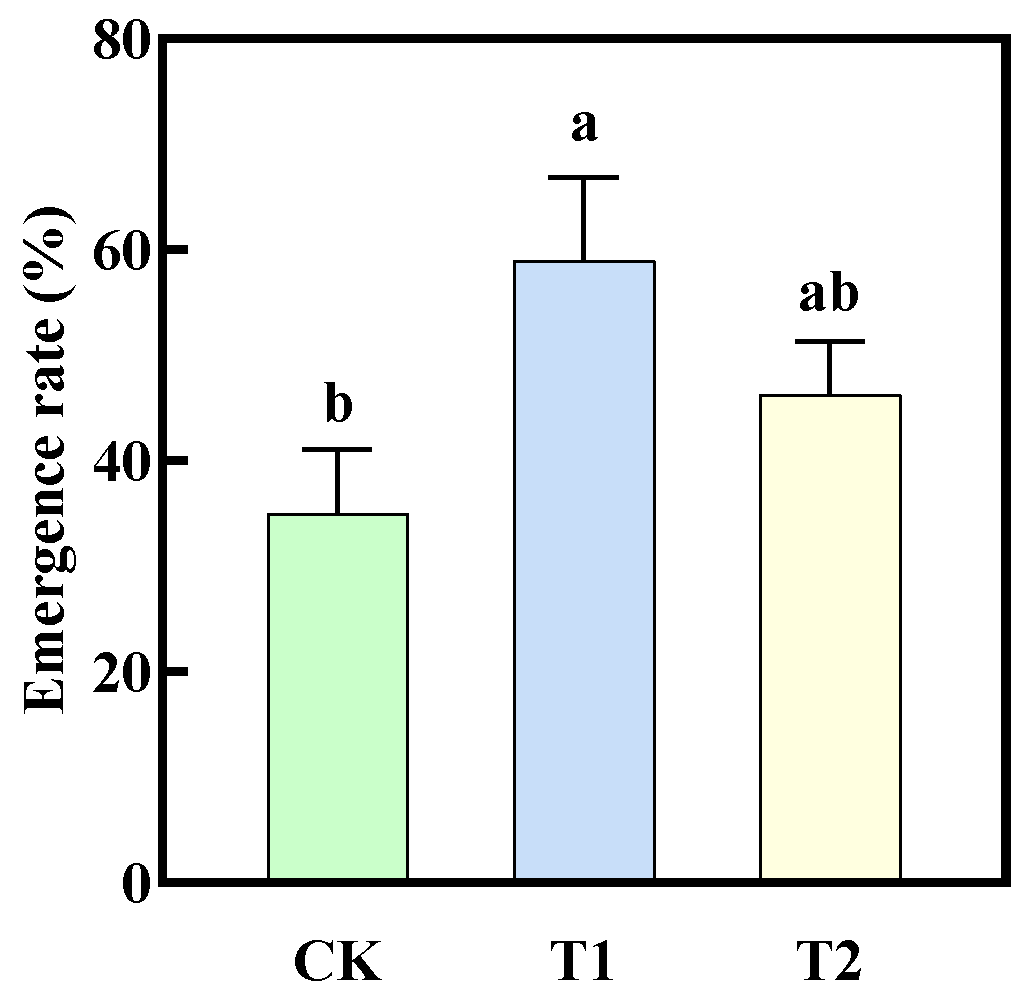
As shown in Figure 1, the seedling emergence rates of the T1 and T2 treatments were 68.6% and 32.4% higher than that of the CK treatment, respectively. While there was no statistically significant difference in the emergence rate between the T1 and T2 treatments, the emergence rate of the T1 treatment was 27.3% higher than that of the T2 treatment.

3.2. Effects of Different Cover Soil Thicknesses on the Growth of Machine-Transplanted Rice Seedlings

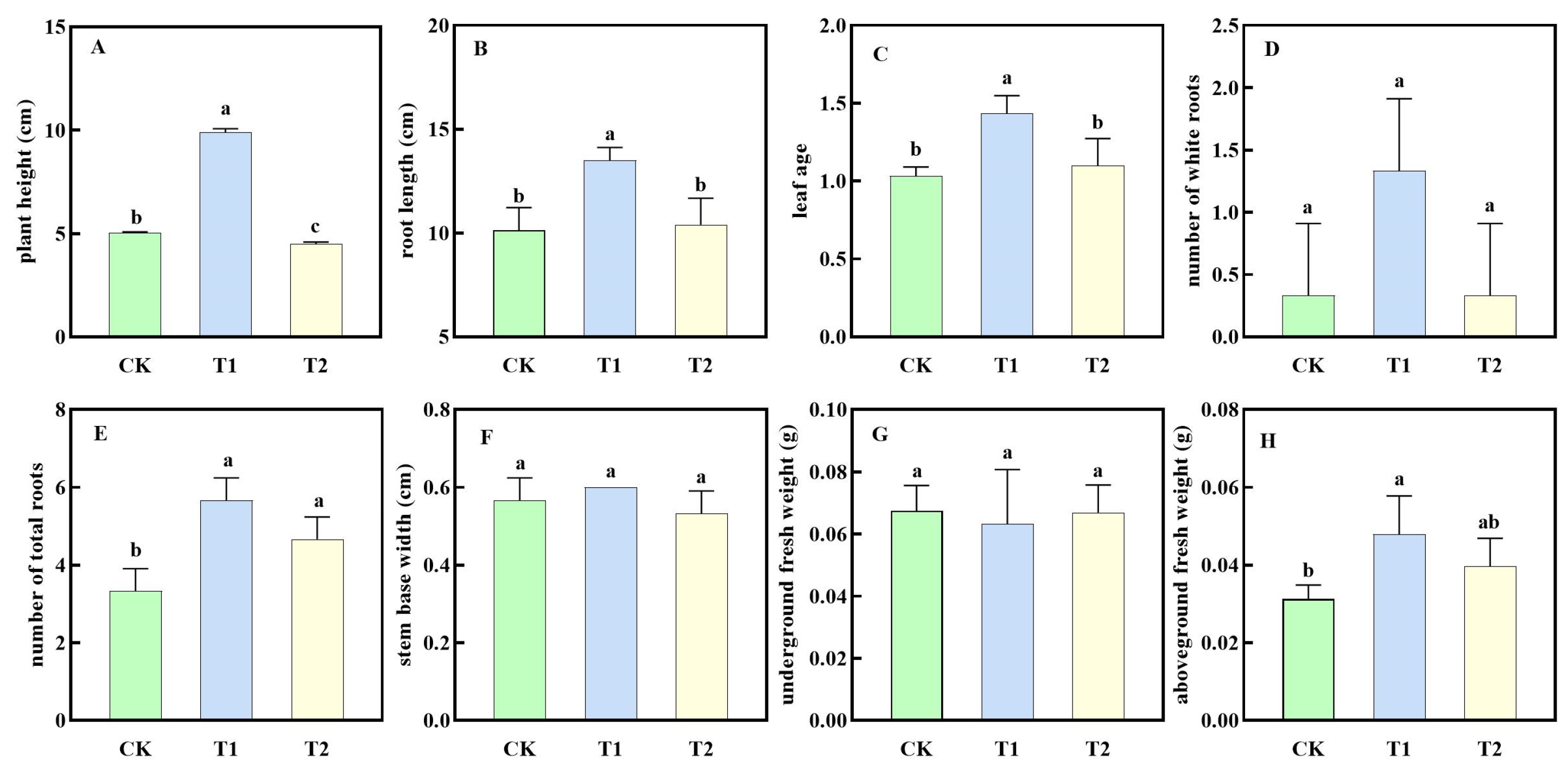
As shown in Figure 2, the plant height, root length, leaf age, total number of roots, and aboveground fresh weight in the T1 treatment significantly increased by 96.7%, 33.2%, 38.7%, 70%, and 53.2%, respectively. Meanwhile, the plant height, root length, and leaf age in the T1 treatment significantly increased by 120%, 29.8%, and 30.3%, respectively, compared with those in the T2 treatment.

3.3. Effects of Different Soil Covering Thicknesses on Root Morphology of Mechanically Transplanted Rice Seedlings

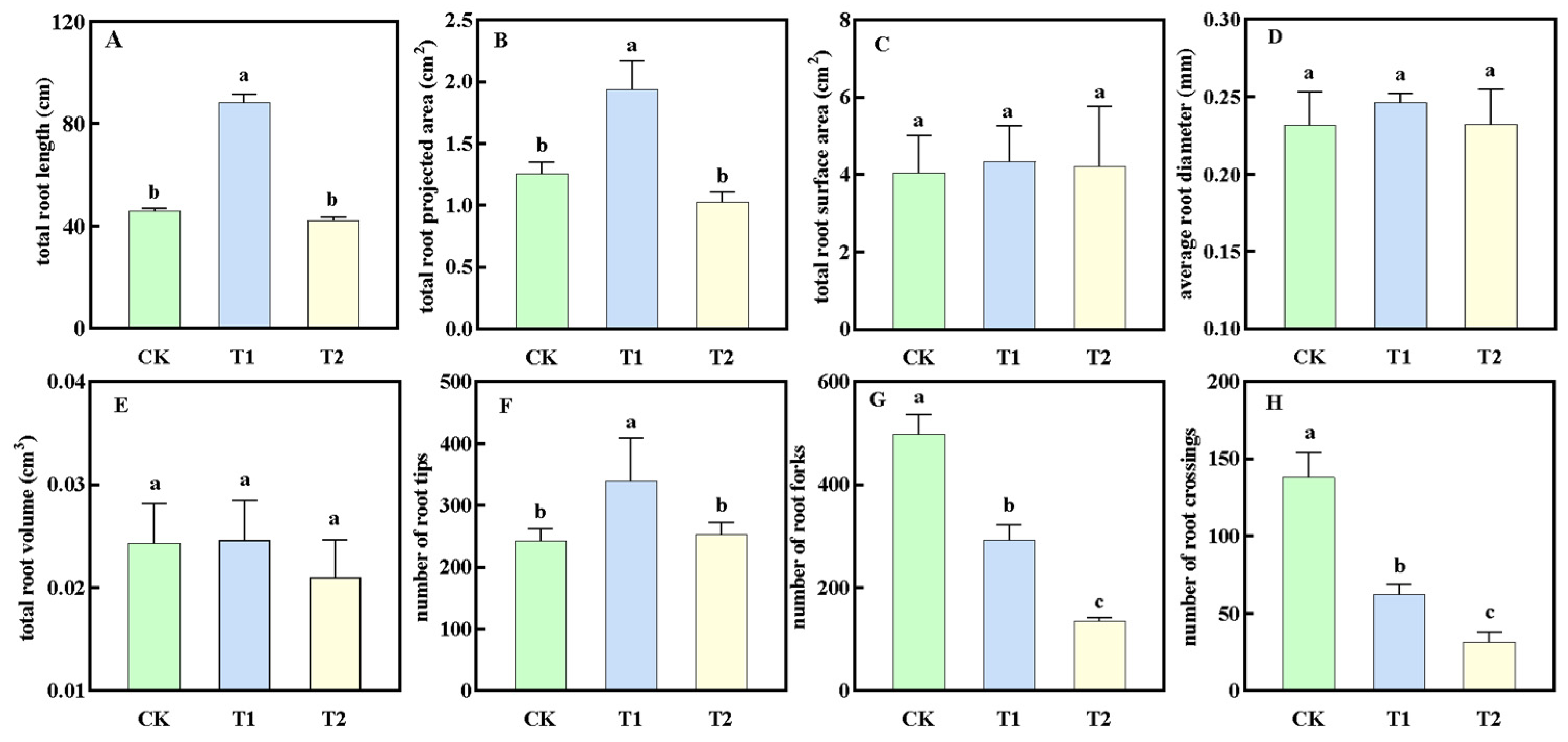
As illustrated in Figure 3, in the T1 treatment, the total root length, total root projected area, and number of root tips increased by 91.9%, 53.8%, and 40.2% compared with those in the CK treatment. Furthermore, in the T1 treatment, the total root length, total root projected area, and number of root tips increased by 108.5%, 88.4%, and 34.6%, respectively, compared with those in the T2 treatment. Compared with the CK treatment, the numbers of root forks and root crossings of rice seedlings in the T1 and T2 treatment decreased by 41.4% and 54.6% as well as 72.7% and 77.1%, respectively.

3.4. Correlation Analysis Between Different Cover Soil Thicknesses and Seedling Characteristics of Machine-Transplanted Rice Seedlings

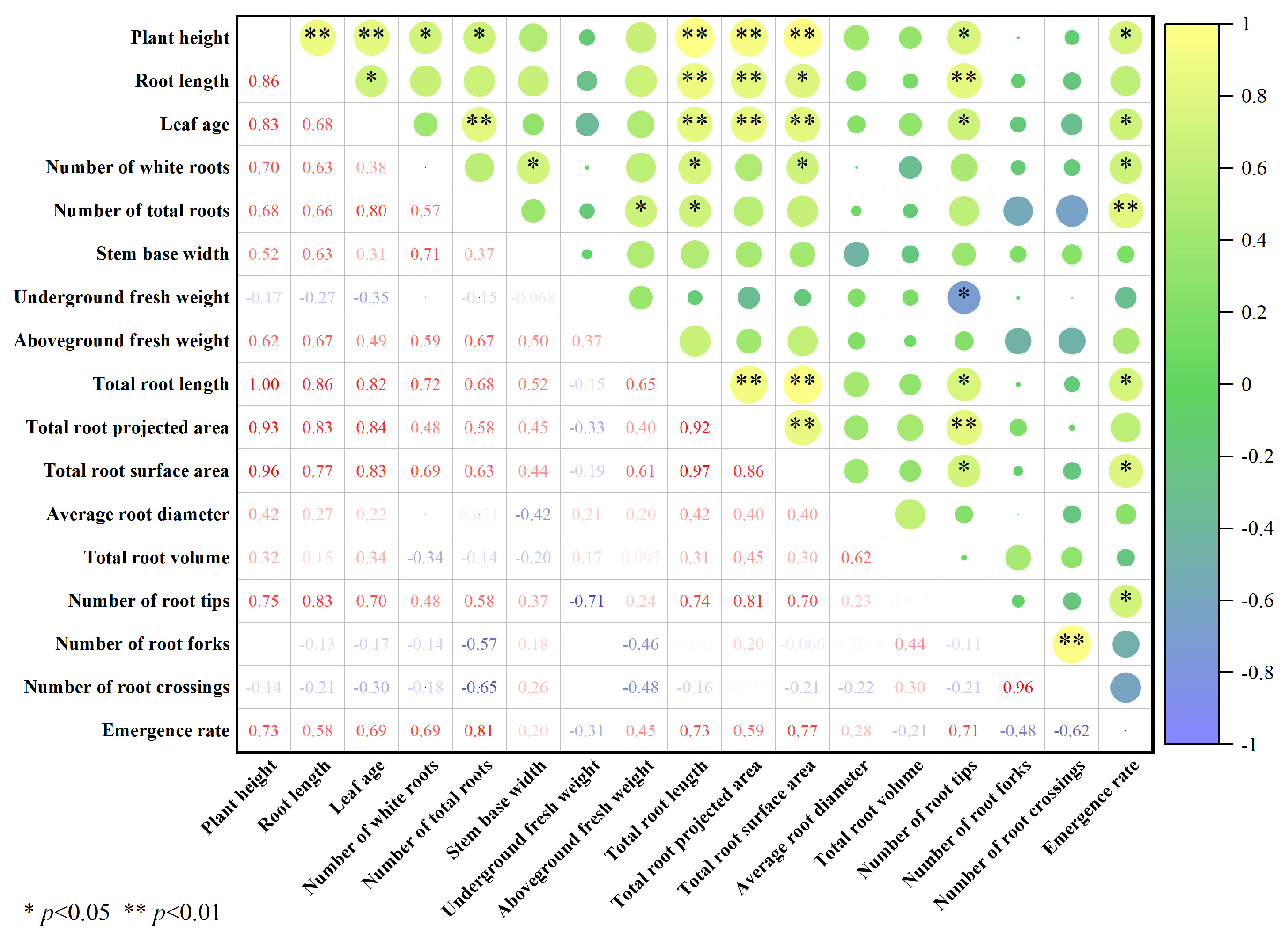
As shown in Figure 4, plant height exhibited a significant positive correlation with root length, leaf age, total root length, total projected area and total root surface area (p < 0.01) as well as with the number of white roots, total number of roots and number of root tips (p < 0.05). Root length was significantly positively correlated with total root length, total projected area and number of root tips (p < 0.01), as well as with leaf age and total root surface area (p < 0.05). Leaf age showed a significant positive correlation with the total number of roots, total root length, total projected area and total root surface area (p < 0.01) as well as with number of root tips (p < 0.05). The emergence rate was significantly positively correlated with the total number of roots (p < 0.01) as well as with plant height, leaf age, the number of white roots, total root length, total root surface area and number of root tips (p < 0.05).

3.5. Grey Correlation Analysis Between Different Cover Soil Thicknesses and Machine-Transplanted Rice Seedling Characteristics

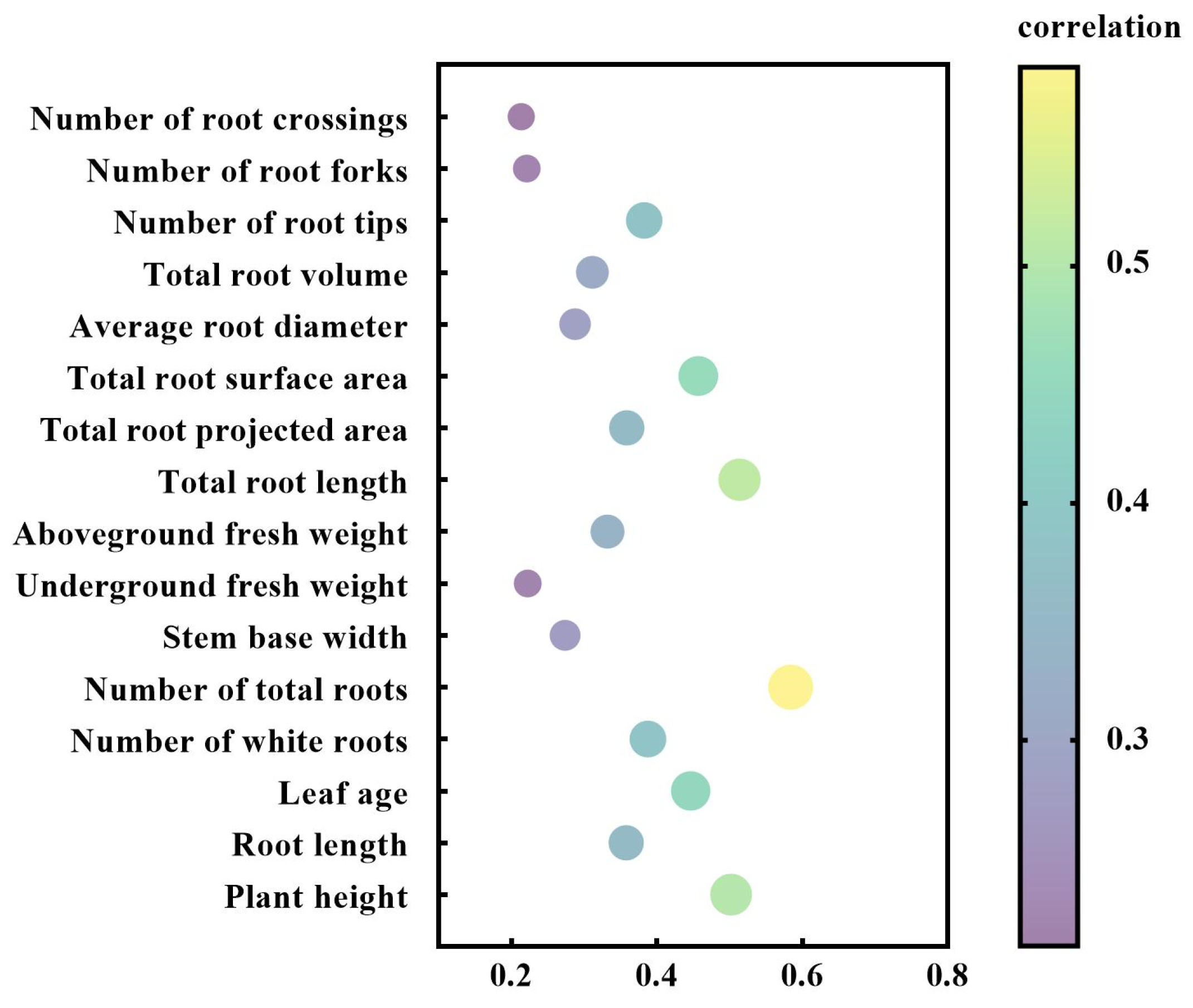
Figure 5 presents a grey correlation analysis between the emergence rate and the characteristics of the machine-transplanted rice seedlings under the various cover soil thicknesses. The results indicate that the plant height, number of total roots, total root length, and total root surface area were strongly correlated with seedling emergence during the seedling emergence process of rice under different cover soil thicknesses. These factors could serve as critical indicators of the impact of cover soil thickness on the emergence rate of machine-transplanted rice. Among these, the grey correlation between the total number of roots and the emergence rate was the strongest, and it most effectively reflected the influence of the cover soil thickness on the emergence rate.

3.6. Principal Component Analysis of Different Cover Soil Thicknesses and Characteristics of Machine-Transplanted Rice Seedlings

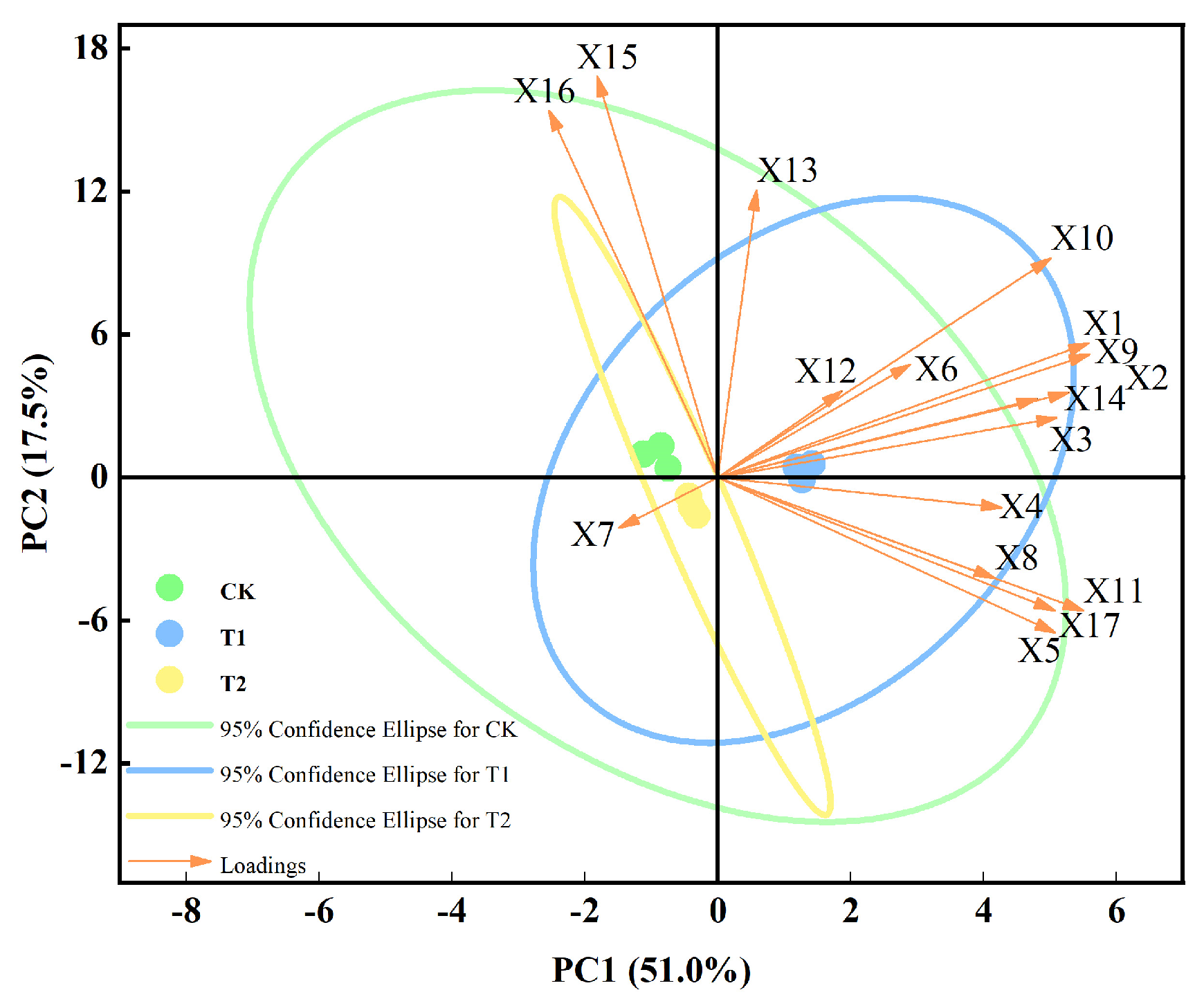
As shown in Figure 6, a principal component analysis (PCA) was employed to assess the characteristics of the machine-transplanted rice seedlings under the various cover soil thicknesses. The results revealed that the cumulative contribution rate of PCA1 and PCA2 was 67.5%, reflecting the influence of the different cover soil thicknesses on the characteristics of the machine-transplanted seedlings. The eigenvalue of PCA1 was 8.68, accounting for 51% of the total variance, with plant height, total root length, and total root surface area being the indicators with the highest positive eigenvalues. The eigenvalue of PCA2 was 2.98, contributing 17.5%, with the average root diameter, number of root forks, and number of root crossings being the indicators with the highest positive eigenvalues. The treatments were evenly distributed across different intervals, indicating significant differences among the treatments.

3.7. Membership Function Analysis of Different Cover Soil Thicknesses and Characteristics of Machine-Transplanted Rice Seedlings

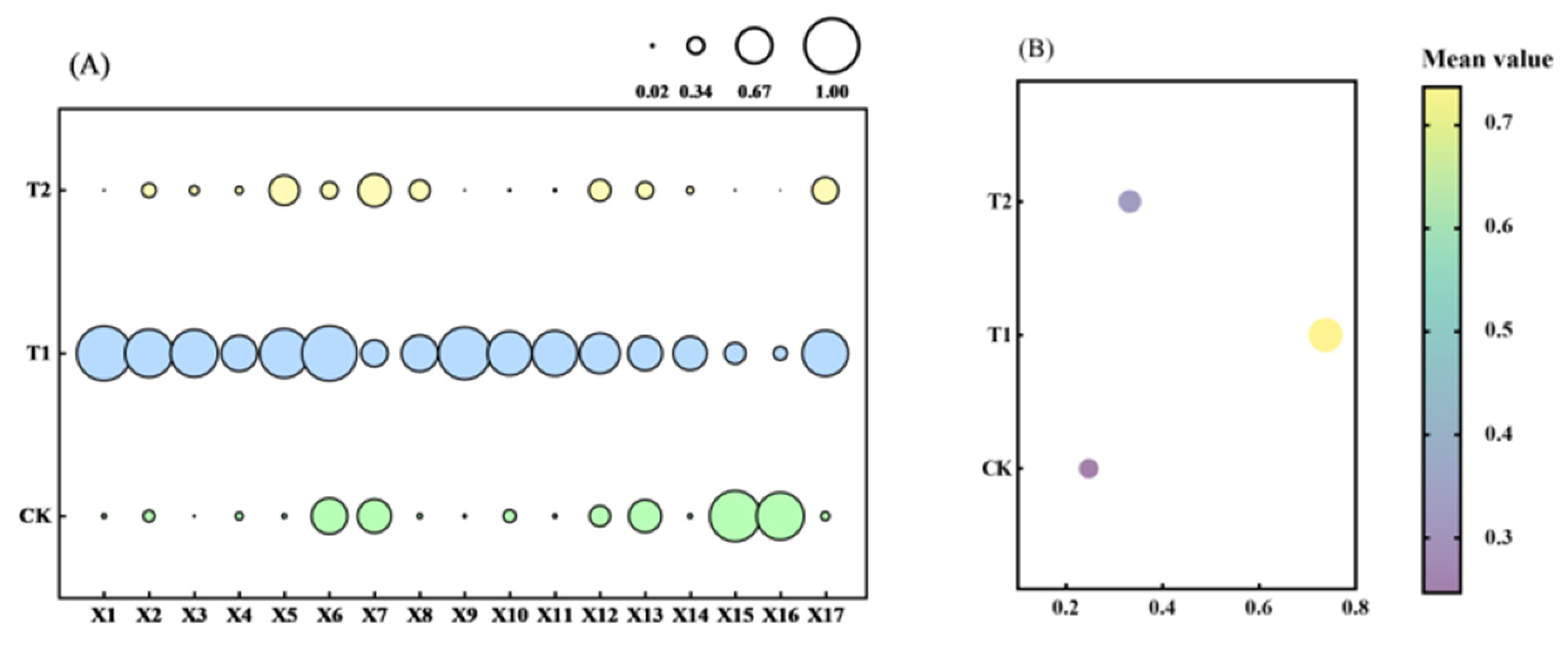
As shown in Figure 7A,B, a membership function analysis was used to evaluate the characteristics of the machine-transplanted seedlings under the different cover soil thicknesses. The results show that the average membership function of T1 was the highest, and the CK performance was the worst.

4. Discussion

The core of mechanical rice transplanting lies in raising healthy and robust seedlings, yet conventional seedling raising methods are highly susceptible to environmental fluctuations. This typically results in a low seedling emergence rate, uneven emergence and poor seedling quality. Consequently, mechanical transplanting is frequently plagued by a high misplanting rate, poor transplanting uniformity and reduced transplanting performance. Improving the uniformity of the seedling population can significantly enhance the precision of seedling picking in mechanical transplanting and reduce the misplanting rate by 2.8% to 4%. Ultimately, these factors have constrained the improvement of rice yield, as well as the development and popularization of mechanical transplanting technology [7,19,20]. The seedling emergence rate is a critical indicator in the rice seedling raising process. In a previous study, germination rate and emergence rate experiments were carried out on 30 rice cultivars under two sowing depth treatments (0 cm and 2.5 cm). The results demonstrated that, compared with the shallow sowing treatment (0 cm), both seed germination rate and emergence rate were significantly reduced under the deep sowing condition (2.5 cm) [21]. In this study, the emergence rate of the T1 treatment was significantly higher than that of the control treatment (CK). Although there was no statistically significant difference in emergence rate between the T1 and T2 treatments, the emergence rate of T1 was 27.3% higher than that of T2. An excessively thick soil covering reduced the seedling emergence rate, while an excessively thin soil covering also exerted an adverse effect on seedling emergence. These findings highlight the crucial role of an optimal soil covering thickness in improving the seedling emergence rate, which is consistent with the conclusions of previous studies.
Not only does the seedling emergence rate reflect the effects of different soil covering thicknesses on rice seedlings, but the morphological indices of the seedlings themselves can also fully demonstrate the impacts of soil covering thickness on the seedling establishment characteristics of mechanically transplanted rice [17]. Mechanical damage to the root system during mechanical transplanting is a key factor causing seedling mortality and prolonged green-up periods, while a robust root system can maintain the integrity of seedling plugs during mechanical operations, reduce root damage from plug disintegration, and ensure rapid root establishment and green-up after transplanting. Root entwining force is a key indicator for evaluating the effective formation of seedling mats in rice seedlings. A higher root entwining force is more conducive to the formation of a mat structure suitable for mechanical transplanting, thereby improving the efficiency and quality of mechanical transplanting. Root traits such as the number of white roots and root length can specifically reflect the root growth status [20,22]. Generally, seedlings with superior performance in plant height, root length, and white root number exhibit better growth vigor. Leaf age is an important indicator for judging the growth process of seedlings; rice seedlings are required to reach the standard of one leaf and one bud at 5–7 days after sowing, whereas seedlings with smaller leaf age tend to suffer from delayed growth and development. The results of this study showed that the plant height, root length, and leaf age of seedlings in the T1 treatment were significantly higher than those in the control treatment (CK) and T2 treatment. The number of white roots, total root number, and aboveground fresh weight followed the order of T1 > T2 > CK, while no significant differences were observed in stem base width and underground fresh weight among the three treatments. The above results indicated that the root development of rice seedlings was significantly improved under the condition of optimal soil covering thickness. Cultivating a well-developed root system by optimizing the soil covering thickness can serve as an important agronomic measure to improve the early-stage quality of rice seedlings for mechanical transplanting.
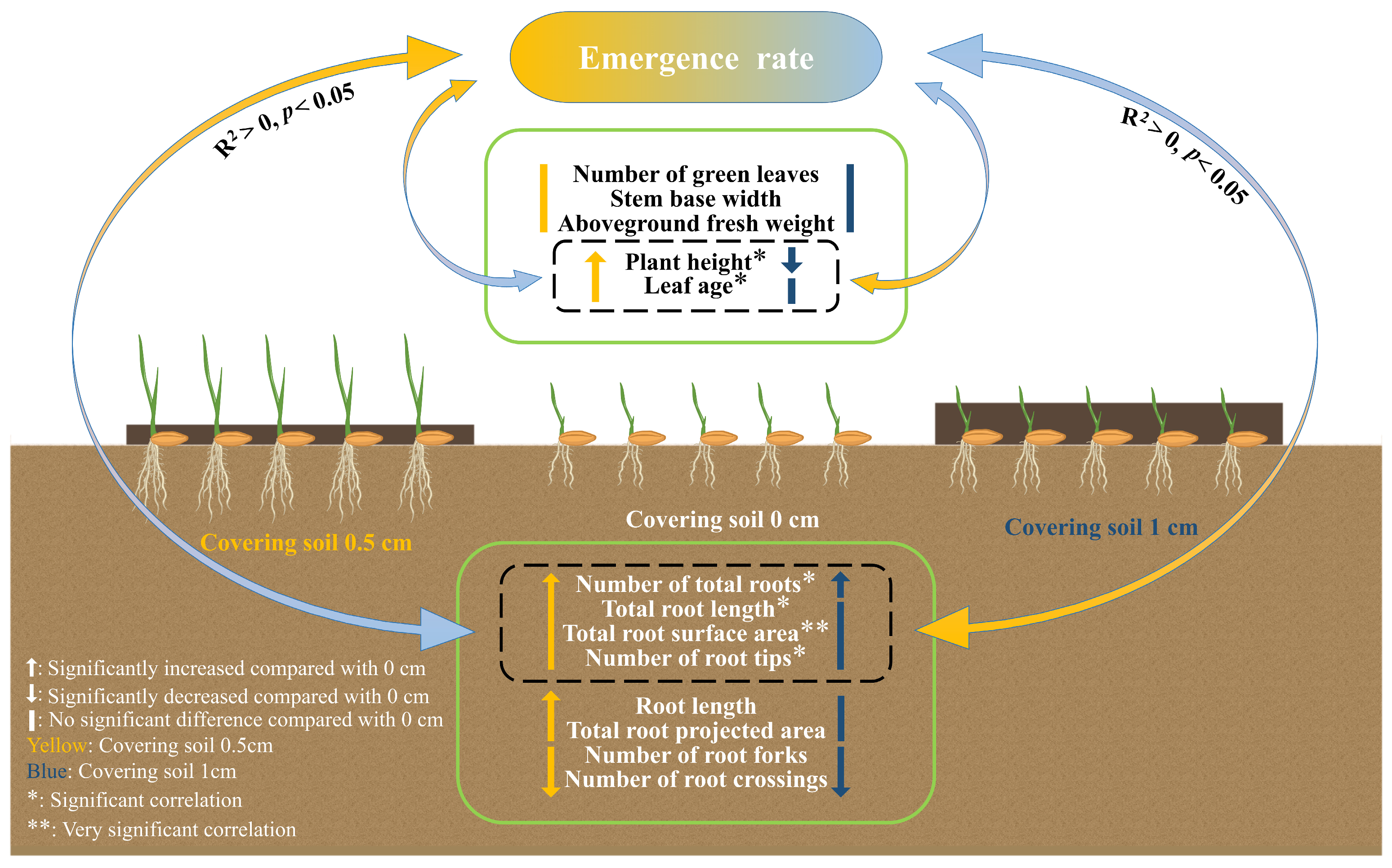
Correlation analysis results indicated that the seedling emergence rate was extremely significantly or significantly positively correlated with plant height, leaf age, total root number, and total root length, suggesting that root growth status can more-intuitively reflect the effects of different soil covering thicknesses on rice seedling quality. Correlation analysis revealed complex interrelationships among multiple indicators of rice seedlings, demonstrating that seedling growth is the result of the synergistic interaction of multiple traits rather than of independent regulation by a single indicator. Simple correlation analysis cannot fully reveal the comprehensive effects of multiple indicators on seedling quality; thus, it is necessary to further adopt multivariate statistical methods such as grey relational analysis and principal component analysis to achieve a systematic evaluation of seedling quality. Grey relational analysis is an analytical method in grey system theory, which can provide an objective basis for evaluating various indicators related to the traits of mechanically transplanted rice seedlings, thereby enhancing the practical application value of the study [23]. The analysis results showed that indicators such as plant height, total root number, total root length, and total root surface area had a high degree of correlation with seedling emergence rate. Among these indicators, the total root number had the highest correlation coefficient with seedling emergence rate, which could most effectively reflect the influence of different soil covering thicknesses on seedling emergence. The above results indicate that root indicators under different soil covering thicknesses can directly reflect seedling quality. Principal component analysis (PCA) can screen out a small number of representative principal components and calculate the scores of various indicators in the principal components, thus realizing the comprehensive analysis of relatively independent but interrelated trait indicators [24]. In this study, 17 indicators were reduced to two principal components through principal component analysis, with their contribution rates being 51% and 17.5%, respectively. The results showed that the eigenvalues of total root length, total root surface area, average root diameter, root fork number, and root crossing number were all positive and relatively high, which were all positive characteristic indicators. This result indicated that the root system had a significant impact on seedling emergence rate. The subordinate function method is an effective multi-factor decision-making method, which is suitable for comprehensive evaluation of phenomena affected by multiple factors [25]. To comprehensively evaluate the effects of different treatments on the growth of mechanically transplanted rice seedlings, the subordinate function method was used for analysis in this study. The results showed that the comprehensive performance of seedlings in the T1 treatment was the best, followed by the control treatment (CK) and the T2 treatment. The regulatory pathways of rice seedling emergence rate, seedling quality, and root morphological indicators under different thicknesses of mulching soil are shown in Figure 8.

5. Conclusions

The results of this study indicated that both absence of soil covering and excessive soil covering could exert adverse impacts on the seedling establishment of mechanically transplanted rice. An optimal soil covering thickness should be maintained during the seedling raising process, as it is conducive to improving the emergence rate and seedling quality of mechanically transplanted rice. Compared with aboveground morphological indicators, the related indices of underground root systems can more directly reflect the quality of seedlings for mechanical transplantation. The results of this experiment indicated that cultivating a robust root system under the condition of optimal soil covering thickness plays a crucial role in improving the quality of rice seedlings for mechanical transplanting. Meanwhile, conducting direct validation evaluations on the operational performance of rice transplanters under different soil covering thickness conditions will serve as an important follow-up research direction of this study.

Author Contributions

L.Z.: Data curation, Formal analysis, Visualization, Writing—original draft, Writing—review and editing. Y.Z.: Data curation, Investigation. X.C., J.L., D.W. and Y.H. (Yukun Huang): formal analysis, investigation. Y.W.: Conceptualization, Project administration, Funding acquisition. Y.H. (Yuan Hu): Resources, Conceptualization, Writing—review and editing. All authors have read and agreed to the published version of the manuscript.

Funding

This research was funded by the National Key R&D Program of China (2023YFD2301404); the Yuelushan Laboratory Breeding Program (YLS2025ZY03020); the Yunnan Provincial Major Science and Technology Special Program (202402AE090036) and the Yunnan Provincial Science and Technology Talent and Platform Program Project (202305AF150119).

Data Availability Statement

All data are contained in the figures and tables of this paper and can be obtained from the corresponding author if there are reasonable requests.

Acknowledgments

The authors thank Cui Wu of Hunan Agricultural University for all her help during the experiment.

Conflicts of Interest

The authors declare no conflicts of interest.

References

  1. Zhao, W.; Chou, J.; Li, J.; Xu, Y.; Li, Y.; Hao, Y. Impacts of Extreme Climate Events on Future Rice Yields in Global Major Rice-Producing Regions. Int. J. Environ. Res. Public Health 2022, 19, 4437. [Google Scholar] [CrossRef] [PubMed]
  2. Zhu, S.; Tian, C.Z.; Hu, Y.R. Chinese migrant workers’ integration into cities and land transfer amid urban–rural population mobility. Int. Rev. Econ. Financ. 2025, 97, 103784. [Google Scholar] [CrossRef]
  3. Min, S.H.I.; Paudel, K.P. Mechanization and efficiency in rice production in China. J. Integr. Agric. 2021, 20, 1996–2008. [Google Scholar] [CrossRef]
  4. Xing, Z.P.; Wu, P.; Zhu, M.; Qian, H.J.; Hu, Y.J.; Guo, B.W.; Wei, H.Y.; Xu, K.; Huo, Z.Y.; Dai, Q.G.; et al. Temperature and solar radiation utilization of rice for yield formation with different mechanized planting methods in the lower reaches of the Yangtze River, China. J. Integr. Agric. 2016, 16, 1923–1935. [Google Scholar] [CrossRef]
  5. Deng, F.; He, L.H.; Chen, D.; Zhang, C.; Tian, Q.L.; Wu, Z.Y.; Li, Q.P.; Zeng, Y.L.; Zhong, X.Y.; Chen, H.; et al. Growth characteristics and grain yield of machine-transplanted medium indica hybrid rice with high daily yield. J. Integr. Agric. 2022, 21, 2547–2558. [Google Scholar] [CrossRef]
  6. Huang, M.; Fang, S.L.; Cao, F.B.; Chen, J.N.; Shan, S.L.; Liu, Y.; Lei, T.; Tian, A.L.; Zou, Y.B. Prolonging seedling age does not reduce grain yields in machine-transplanted early-season rice under precision sowing. Ann. Appl. Biol. 2020, 176, 308–313. [Google Scholar] [CrossRef]
  7. Feng, Y.; Liu, M.; Wang, K.; Ling, Y.; Hu, Q.; Zhang, H.; Zhang, H. Optimal seeding rate enhances seedling quality, mechanical transplanting quality, and yield in hybrid rice. Front. Plant Sci. 2024, 15, 1427972. [Google Scholar] [CrossRef]
  8. Wang, T.; Sun, D.; Xiong, W.; Kuang, F.; Xue, K.; Shi, M.; Zhu, D. Impact of root-stem coupling damage from mechanical transplanting on the growth of large rice seedlings. Plant Growth Regul. 2024, 104, 1075–1086. [Google Scholar] [CrossRef]
  9. Lin, Y.J.; Zhang, J.H.; Hu, Z.H.; Zhu, L.F.; Yu, S.M.; Jin, Q.Y. Research on rice mechanized seedling substrate in China. China Rice 2015, 21, 7–13. [Google Scholar] [CrossRef]
  10. Wang, Y.L.; Li, H.; Lan, T.M.; Zhu, D.F.; Chen, H.Z.; Wu, H. Effect of covering soil thickness in seedling tray on the rice seedlings growth for machine transplanting. Acta Agric. Univ. Jiangxiensis 2022, 44, 311–318. [Google Scholar] [CrossRef]
  11. Chen, C.J.; Wang, B.L.; Wang, C.; Gao, T.; Jiang, X.Q.; Ma, K.C.; Zhu, X.Z.; Li, H.Q.; Jin, X.P. Effects of different till age methods and sowing depth on physiological character istics at seedling stage and grain yield of oats. Jiangsu Agric. Sci. 2018, 46, 85–87. [Google Scholar] [CrossRef]
  12. Yue, L.J.; Wen, T.; Yang, Q.; Li, Z.; Li, Q.; Liu, Y.H. Effects of different sowing depths on seeding emergence of maize. J. Maize Sci. 2012, 20, 88–93. [Google Scholar] [CrossRef]
  13. Xie, M.H.; Chen, H.L.; Zhang, G.L.; Lin, L.L.; Su, W.H. Effects of temperature, soil moisture and sowing depths on the seed germination and seedling growth of peanut. J. Peanut Sci. 2017, 46, 52–59. [Google Scholar] [CrossRef]
  14. Liu, B.X.; Cheng, Q.B.; Zhou, F.; Du, L.J.; Li, X.L.; Kong, F.L.; Yuan, J.C. Effects of seed size and sowing depth on maize seedling emergence and photosynthesis characteristics and protective enzyme activities in seedling stage. Acta Agric. Boreali-Sin. 2020, 35, 98–106. [Google Scholar] [CrossRef]
  15. Du, H.; Wang, L.; Xiong, L.Z. Phenotypic Observations of Rice critical Development Bio-stages. Bio-Protocol 2018, 101, e1010178. [Google Scholar] [CrossRef]
  16. Gao, Y.Z.; Shao, M.H.; Zhang, Y.P.; Zhang, Y.K.; Wang, Y.L.; Wang, Z.G.; Zhu, D.F.; Zhang, Y.B.; Xiang, J.; Chen, H.Z. Effects of the seedling tray overlapping for seed emergence mode on emergence characteristics and growth of rice seedlings. Front. Plant Sci. 2024, 15, 1341318. [Google Scholar] [CrossRef] [PubMed]
  17. Ling, Y.; Liu, M.; Feng, Y.; Xing, Z.; Gao, H.; Wei, H.; Hu, Q.; Zhang, H. Effects of increased seeding density on seedling characteristics, mechanical transplantation quality, and yields of rice with crop straw boards for seedling cultivation. J. Integr. Agric. 2025, 24, 101–113. [Google Scholar] [CrossRef]
  18. Jia, Y.L.; Wang, T.; Zhou, G.Z.; Tang, L.; Yue, X.P.; Liu, X.R.; Cao, T.; Yang, J.; Tao, Y.F.; Deng, F.; et al. Importance of controlling mesocotyl elongation in the development of rice seedlings intended for mechanical transplantation. Front. Plant Sci. 2023, 14, 1213609. [Google Scholar] [CrossRef]
  19. Cheng, S.R.; Ashraf, U.; Zhang, T.T.; Mo, Z.W.; Kong, L.L.; Mai, Y.X.; Huang, H.L.; Tang, X.R. Different seedling raising methods affect characteristics of machine-transplanted rice seedlings. Appl. Ecol. Environ. Res. 2018, 16, 1399–1412. [Google Scholar] [CrossRef]
  20. Shang, Y.; Zhang, P.; Ma, X.; Wu, X.; Chen, Y.; Chen, H.; Zhang, Y.; Xiang, J.; Wang, Y.; Wang, Z.; et al. Effects of Different Types of Pot-Mat Trays on the Growth of Densely Sown Seedlings and Root Morphology of Machine-Transplanted Rice. Agronomy 2025, 15, 1616. [Google Scholar] [CrossRef]
  21. Yang, W.; Xu, D.; Li, S.; Tang, X.; Pan, S.; Chen, X.; Mo, Z. Emergence and seedling establishment of rice varieties at different sowing depths. J. Plant Growth Regul. 2022, 41, 1672–1686. [Google Scholar] [CrossRef]
  22. Chen, H.Z.; Xu, Y.C.; Zhang, Y.P.; Xiang, J.; Zhang, Y.K.; Zhu, D.F. Effect of Pot-Mat Seedling on the Quality of Machined Transplanting and Yield Formation of Super Early Rice. Sci. Agric. Sin. 2019, 52, 4240–4250. [Google Scholar] [CrossRef]
  23. Liu, K.; Chen, Y.; Li, S.Y.; Wang, W.L.; Zhang, W.Y.; Zhang, H.; Gu, J.F.; Yang, J.C.; Liu, L.J. Differing responses of root morphology and physiology to nitrogen application rates and their relationships with grain yield in rice. Crop J. 2023, 11, 618–627. [Google Scholar] [CrossRef]
  24. Kang, Z.; Liu, H.F.; Li, J.X.; Zhu, X.F.; Tian, L. Self-paced principal component analysis. Pattern Recognit. 2023, 142, 109692. [Google Scholar] [CrossRef]
  25. Zhang, W.P.; Kumar, M.; Zhou, Y.F.; Yang, J.Z.; Mao, Y.H. Analytically derived fuzzy membership functions. Clust. Comput. 2019, 22, 11849–11876. [Google Scholar] [CrossRef]
Figure 1. Effect of different cover soil thicknesses on the seedling emergence rate of machine-transplanted rice. The same lowercase letter indicates no significant difference between treatments, and different lowercase letters indicate a significant difference between treatments (p < 0.05).
Agronomy 16 00440 g001
Figure 2. Effects of different cover soil thicknesses on plant height (A), root length (B), leaf age (C), number of white roots (D), number of total roots (E), stem base width (F), underground fresh weight (G), and aboveground fresh weight (H). The same lowercase letter indicates no significant difference between treatments, and different lowercase letters indicate a significant difference between treatments (p < 0.05).
Agronomy 16 00440 g002
Figure 3. Effect of different cover soil thicknesses on total root length (A), total root projected area (B), total root surface area (C), average root diameter (D), total root volume (E), number of root tips (F), number of root forks (G), and number of root crossings (H). The same lowercase letter indicates no significant difference between treatments, and different lowercase letters indicate a significant difference between treatments (p < 0.05).
Agronomy 16 00440 g003
Figure 4. Correlation analysis between different cover soil thicknesses and seedling characteristics of machine-transplanted rice. ** Significant at the 0.01 probability level (p < 0.01); * significant at the 0.05 probability level (p < 0.05).
Agronomy 16 00440 g004
Figure 5. Grey correlation analysis between seedling emergence rate and seedling characteristics of machine-transplanted rice with different cover soil thicknesses.
Agronomy 16 00440 g005
Figure 6. Principal component analysis of different cover soil thicknesses and characteristics of machine-transplanted seedlings. X1: plant height; X2: root length; X3: leaf age; X4: number of white roots; X5: number of total roots; X6: stem base width; X7: underground fresh weight; X8: aboveground fresh weight; X9: total root length; X10: total root projected area; X11: total root surface area; X12: average root diameter; X13: total root volume; X14: number of root tips; X15: number of root forks; X16: number of root crossings; X17: emergence rate.
Agronomy 16 00440 g006
Figure 7. Membership function analysis of different cover soil thicknesses and characteristics of machine-transplanted seedlings. (A): value of the membership function; (B): mean value of the membership function; X1: plant height; X2: root length; X3: leaf age; X4: number of white roots; X5: number of total roots; X6: stem base width; X7: underground fresh weight; X8: aboveground fresh weight; X9: total root length; X10: total root projected area; X11: total root surface area; X12: average root diameter; X13: total root volume; X14: number of root tips; X15: number of root forks; X16: number of root crossings; X17: emergence rate.
Agronomy 16 00440 g007
Figure 8. Regulatory pathways of rice seedling emergence rate, seedling quality, and root morphology indices with different cover soil thicknesses. The symbols ↑, ↓, and | represent an upward adjustment, a downward adjustment, and no significant change in various parameters, respectively.
Agronomy 16 00440 g008
Disclaimer/Publisher’s Note: The statements, opinions and data contained in all publications are solely those of the individual author(s) and contributor(s) and not of MDPI and/or the editor(s). MDPI and/or the editor(s) disclaim responsibility for any injury to people or property resulting from any ideas, methods, instructions or products referred to in the content.