Article

Genome-Wide Identification of the HD-ZIP Genes in Sweet Potato and Functional Role of IbHD-ZIP61 in Anthocyanin Accumulation and Salt Stress Tolerance


1
MARA Key Laboratory of Sustainable Crop Production in the Middle Reaches of the Yangtze River/Hubei Key Laboratory of Waterlogging Disaster and Agricultural Use of Wetland/Research Center of Crop Stresses Resistance Technologies, College of Agriculture, Yangtze University, Jingzhou 434025, China
2
College of Biochemical Engineering, Jingzhou Institute of Technology, Jingzhou 434020, China
3
Hubei Key Laboratory of Food Crop Germplasm and Genetic Improvement/Key Laboratory of Crop Molecular Breeding, Ministry of Agriculture and Rural Affairs, Institute of Food Crops, Hubei Academy of Agricultural Sciences, Wuhan 430064, China
*
Author to whom correspondence should be addressed.
Agronomy 2026, 16(4), 408; https://doi.org/10.3390/agronomy16040408
Submission received: 14 January 2026 / Revised: 30 January 2026 / Accepted: 6 February 2026 / Published: 8 February 2026
(This article belongs to the Collection Crop Breeding for Stress Tolerance)

Abstract

Sweet potato (Ipomoea batatas L.) is a vital dual-use crop, with some varieties being used as leafy vegetables that are rich in anthocyanins. Nevertheless, salinity stress is a challenge to their production. Homeodomain-leucine zipper (HD-ZIP) gene family members encode proteins participating in the regulation of plant defense and secondary metabolism, while the functional study of HD-ZIP genes in sweet potato is still limited. Herein, a total of 66 IbHD-ZIP genes were identified, which were expanded by segmental duplication. Based upon promoter cis-element information and precedent evidence, IbHD-ZIP61, belonging to subfamily I, was selected for functional studies. Functional characterization was conducted via ectopic expression in transgenic Nicotiana benthamiana. The overexpression of IbHD-ZIP61 significantly increased anthocyanin production under normal growth conditions by promoting anthocyanin biosynthetic genes AN1a, AN2, and DFR. Furthermore, transgenic plants displayed better salinity tolerance, which exhibited reduced growth inhibition, increased water status, decreased oxidative injury, as well as elevated activity of antioxidant enzymes. This study validated the coordinated regulation of anthocyanin pathway genes as well as pivotal pathways (NHX2, NCED1, P5CS) during salinity adaptation. These findings demonstrate that IbHD-ZIP61 is a transcription factor linking anthocyanin synthesis and salinity adaptation, thus making it a potential candidate for improving breeding in nutritionally superior and salinity-adapted edible crops such as sweet potato.

1. Introduction

Sweet potato (Ipomoea batatas L.) is a major root crop as well as a versatile dual-purpose species, with certain cultivars specifically cultivated for their tender leaves and stems as leafy vegetables [1]. The foliage of these varieties is rich in dietary protein, vitamins, minerals, and bioactive antioxidants, particularly anthocyanins, making them valuable functional vegetables [2]. Anthocyanin accumulation, often visible as purple pigmentation in leaf veins, petioles, or the entire lamina, represents a key quality trait that enhances both visual appeal and nutritional value [3]. However, the yield and quality of leafy sweet potato are highly susceptible to abiotic stresses, especially soil salinization, which inhibits plant growth, reduces biomass production, and induces oxidative damage in edible tissues [4]. Salt stress has a strong inhibitory effect on the growth of plants through three aspects. First, the low water potential of the soil caused by high concentrations of salt makes it difficult for the roots of the plants to absorb water, thus leading to physiological drought, stomatal closure, and the inhibition of photosynthesis [5,6]. Second, the excessive amount of Na+ ions entering the bodies of the plants competitively inhibits the uptake of other important nutrients, such as K+, which is essential for the normal growth of plants, thus affecting the ion balance of the cells and the activity of metabolic enzymes [6]. Most importantly, the major stress factors of water deficiency and ion toxicity mentioned above interfere with the transfer of electrons in the cells of the plants, thus leading to the generation of a large amount of ROS, which causes oxidative damage, thus attacking the membranes, proteins, and nucleic acids of the cells, thus further intensifying the damage of the structure and function of the cells [7,8]. In a word, the essence of salt stress is a chain reaction. The three stress factors of osmotic stress, ion toxicity, and oxidative damage are a vicious cycle. The latter is a secondary injury caused by the former two, which is the main reason for the inhibition of the growth of plants.
In leafy vegetable crops, anthocyanins act not only as nutritional markers but also as integral components of the plant’s antioxidant defense system, where they help scavenge reactive oxygen species (ROS) generated under environmental stresses such as high salinity [9]. Therefore, elucidating the regulatory mechanisms of anthocyanin biosynthesis is essential for improving both nutritional quality and intrinsic stress tolerance [10]. The anthocyanin biosynthetic pathway is transcriptionally regulated by a complex network of transcription factors. The MBW complex (MYB-bHLH-WD40) is a major established regulator of the biosynthesis of anthocyanins. But there are other transcription factors such as homeodomain-leucine zipper (HD-ZIP) which have recently been identified as significant regulators of this phenomenon [11].
HD-ZIP transcription factors are plant-specific proteins containing a DNA-binding homeodomain and an adjacent leucine zipper motif that facilitates dimerization. These proteins are divided into four subfamilies (I–IV), with members of subfamilies I and II primarily involved in abiotic stress and hormone signaling, while III and IV regulate development and specialized metabolism [12,13]. Notably, several HD-ZIP genes have been directly implicated in the regulation of secondary metabolism. For instance, MdHB1 in apple regulates anthocyanin accumulation in fruits [14], and PuHB40 in pear mediates light-induced anthocyanin biosynthesis [15]. These studies suggest that HD-ZIP proteins may serve as bridges between environmental cues and metabolic adaptation.
Despite these insights, a comprehensive genome-wide analysis of the HD-ZIP gene family in the hexaploid sweet potato is lacking. More importantly, the potential role of HD-ZIP transcription factors in concurrently coordinating anthocyanin biosynthesis and stress tolerance in leafy sweet potato has not been explored. To address this gap, we performed a systematic genome-wide identification and characterization of the HD-ZIP family in sweet potato. Based on phylogenetic clustering, cis-element analysis, and preliminary transcriptome data, IbHD-ZIP61 (a subfamily I member) was selected as a candidate. We hypothesized that IbHD-ZIP61 acts as a positive regulator that simultaneously enhances anthocyanin biosynthesis and salt stress tolerance. Taking into account the genetic complexity and long transformation cycle of sweet potato, Nicotiana benthamiana is widely acknowledged as an ideal heterologous system for rapid in planta functional assays because of its simple diploid genetics, high transformation efficiency with Agrobacterium tumefaciens, short life cycle, and suitability for both transient and stable transformation [16]; therefore, we used it as a tool for the rapid functional characterization of IbHD-ZIP61. Through functional analysis in transgenic Nicotiana benthamiana, we demonstrated that IbHD-ZIP61 overexpression (OE) constitutively elevates anthocyanin content and confers significant salt tolerance by co-activating both the anthocyanin pathway and a suite of stress-defense genes. This study unveils a novel dual-function regulator and provides a valuable genetic resource for breeding high-quality, stress-resilient leafy sweet potato cultivars.

2. Materials and Methods

2.1. Identification and Characterisation of the IbHD-ZIP Gene Family

The genome assembly and annotation materials for sweet potato (Ipomoea batatas L.) were obtained from the Ipomoea Genome Hub (https://sweetpotato.com/; accessed on 11 December 2023). An HMM profile for the HD-ZIP domain (PF00046) was obtained from the Pfam database (http://pfam.xfam.org/; accessed on 11 July 2024) to perform a genome-wide search for the IbHD-ZIPs. The initial potential genes were refined using TBtools-II v2.136 [17]. The suggested IbHD-ZIP genes were subsequently validated by BLASTp searches in the NCBI (https://www.ncbi.nlm.nih.gov/) and PlantTFDB (https://planttfdb.gao-lab.org/) databases, both accessed on 11 July 2024. The presence of conventional protein domains was validated using the NCBI Conserved Domain Database (CDD; https://www.ncbi.nlm.nih.gov/Structure/bwrpsb/bwrpsb.cgi) and Pfam (both retrieved on 11 July 2024). This research found 66 genes, designated as IbHD-ZIP1 to IbHD-ZIP66; their original and assigned nomenclature is detailed in Supplementary Table S1.

2.2. Conserved Motif and Gene Structure Analysis of IbHD-ZIPs

The conserved motifs in the IbHD-ZIP protein sequences were analyzed utilizing the MEME suite (https://meme-suite.org/meme/tools/meme; accessed 12 July 2024), allowing for a maximum of 10 motifs. Domain prediction was conducted with the NCBI Batch Web CD-Search tool. The gene structure (exons, introns, and UTRs) was visualized using the “Visualize Gene Structure” tool in TBtools-II v2.136 [17], based on the genome annotation file in GFF3 format. In the figures, the coding sequences (CDS) are depicted as yellow boxes, untranslated regions (UTR) as green boxes, and introns as black lines.

2.3. Phylogenetic, Collinearity, and Duplication Analysis

Protein sequences of HD-ZIP transcription factors from Arabidopsis thaliana and Ipomoea batatas were obtained from PlantTFDB (last accessed on 12 July 2024). ClustalW was employed to do multiple sequence alignment. The phylogenetic tree was generated in MEGA11 (version 11.0.13) utilizing the Maximum Likelihood method with the JTT substitution model, and branch support was evaluated through 1000 bootstrap repeats. The tree was shown and annotated using iTOL (https://itol.embl.de/, latest accessed on 14 July 2024).
For the comparative genomics analysis, genome sequences and annotations for Ipomoea trifida (ASM357666v1), Ipomoea triloba (ASM357664v1.59), Arabidopsis thaliana (TAIR10.59), Solanum lycopersicum (SL3.0.59), Brassica rapa (Brap_v3.01), Brassica oleracea (BOL.59), Capsicum annuum (ASM51225v2.59), and Oryza sativa (ASM143393v1) were obtained from public databases (NCBI, TAIR, Ensembl Plants, SGN, BRAD). The collinearity data of the 66 IbHD-ZIP genes and their orthologs in these species (refer to Table S2 for accession numbers) were examined utilizing the MCScanX algorithm in TBtools-II v2.136 [17].

2.4. Analysis of Physicochemical Characteristics and Subcellular Localisation

The fundamental physicochemical properties of the IbHD-ZIP proteins, such as molecular weight, theoretical isoelectric point (pI), and grand average of hydropathicity (GRAVY), were calculated using the Protein Parameter Calc tool in TBtools-II v2.136 [17]. Predicted subcellular localization was derived from WoLF PSORT (https://wolfpsort.hgc.jp/; retrieved on 13 December 2024). For experimental verification, the coding region of IbHD-ZIP61 was cloned into the pBinGFP4 vector to generate an IbHD-ZIP61-GFP fusion vector (IbHD-ZIP61-pBinGFP4). This plasmid was then transformed into Agrobacterium tumefaciens strain GV3101. Tobacco (Nicotiana benthamiana) epidermal cells were co-infiltrated with the agrobacterium suspension containing the IbHD-ZIP61-pBinGFP4 plasmid and another agrobacterium suspension containing the nuclear marker H2B-RFP. After infiltration, the plants were maintained in the dark at 25 °C for 24 h before being shifted back to normal light and dark cycles. At 72 h after infiltration, the subcellular localization of IbHD-ZIP61-GFP fusion proteins in leaf samples was detected using a confocal microscope (Leica Microsystems, Wetzlar, Germany).

2.5. Plant Material and Growth Conditions

The plants of Nicotiana benthamiana were grown in an environmental chamber with the following conditions: 16/8 h photoperiod, 25 °C temperature, and 60% relative humidity. The plants were grown in pots, which were 9 cm in top diameter, 8 cm in height, and 6.5 cm in bottom diameter. The pots were filled with autoclaved peat soil, vermiculite, and perlite mixed in equal volumes. The surface of the autoclaved soil was leveled without compacting it. The plant expression vector pCAMBIA1304 was preserved in the laboratory stock. Agrobacterium tumefaciens GV3101 was used in the experiment.

2.6. Generation and Screening of Transgenic Tobacco

Due to the difficulties associated with sweet potato transformation, we chose Nicotiana benthamiana as a model system for rapid functional analysis [16]. Transgenic plants IbHD-ZIP61-OE (overexpression) were produced using Agrobacterium tumefaciens (GV3101)-mediated transformation, as described in a previous study [18]. Putative transgenic plants were first identified by PCR amplification of genomic DNA using gene-specific primers. Transcript levels of IbHD-ZIP61 in PCR-positive plants were determined via qRT-PCR analysis, with NtActin gene served as the internal control, and relative expression was calculated according to the 2−ΔΔCt method [19]. Three independent T0 transgenic lines with the highest IbHD-ZIP61 expression were chosen for further analysis. Homozygous T2 plants were generated by self-pollination of individual T0 lines.

2.7. Stress Treatment and Experimental Design

Four-week-old WT (wild-type) and homozygous T2 transgenic plants were treated with salt stress for 21 days using a 100 mM NaCl solution prepared in half-strength Hoagland’s nutrient solution. For the initial treatment, the salt solution was gently poured onto the soil surface of the pots until drainage was observed at the bottom of the pots. Thereafter, the plants were treated with bottom watering. This was achieved by placing the pots in trays measuring 54 cm × 28 cm × 5 cm. Each tray held 9 pots. Each tray was then poured with 1 L of the 100 mM solution of NaCl every 3 days. This ensures that the soil is uniformly saturated with the solution and maintains a constant saline solution at the roots. Control plants were treated with half-strength Hoagland’s solution devoid of NaCl. This treatment was maintained for 21 days with a total of 7 irrigations. In addition, two types of controls were employed in order to understand correctly the impact of salt stress: a first kind of control (Control (0d)) has been collected at the same time as the beginning of stress, in order to create a reference, and another type of control (Control (21d)) has been submitted to normal conditions throughout all of the test, in order to eliminate the influence of plant development. There were six biological replicates in every case, and all tests were repeated three times.

2.8. Determination of Anthocyanin Content

We measured anthocyanin content using established methodologies [20,21] with some modifications. In summary, leaves were subjected to freezing and subsequently pulverized in liquid nitrogen. The powder was subsequently extracted in darkness at 4 °C for 24 h utilizing 1 mL of methanol with 1% (v/v) HCl. After centrifugation, anthocyanin concentrations were assessed by measuring the absorbance of the supernatant at 530 nm and 657 nm, estimated using the following formula:
Anthocyanin content = (A530 − 0.25 × A657)/fresh weight

2.9. Physiological and Biochemical Analysis

Plant height was measured using a ruler from the cotyledon to the apical meristem at the start and end of the stress treatment. The rate of inhibition of salt stress was calculated using the formula: [(control plant height increment − stress plant height increment)/control plant height increment] × 100%. The determination of relative water content (RWC): Weigh fresh leaf discs and record the weight (FW), float the leaf discs on deionized water until saturated and record the weight (TW), then dry the leaf discs to a constant weight (DW). The formula for calculating RWC is: [(FW − DW)/(TW − DW)] × 100%. The determination of water loss rate of detached leaves: Weigh the detached leaves immediately, then re-weigh them after 4 h at room temperature in the laboratory, and calculate the weight loss percentage of the initial fresh weight. The content of MDA (malondialdehyde), as an indicator of lipid peroxidation, was determined using the Solarbio kit (BC0020, Solarbio, Beijing, China). Activity of SOD (Superoxide dismutase) was assessed based on the inhibition of NBT (nitroblue tetrazolium) photoreduction [22]. Activity of POD (peroxidase) was determined using the guaiacol oxidation method [23], and activity of CAT (catalase) was measured using a commercial assay kit (Solarbio, Beijing, China). Histochemical staining of H2O2 (hydrogen peroxide) and O2 (superoxide anion) was performed using 3,3′-diaminobenzidine (DAB) and nitroblue tetrazolium (NBT), respectively [23].

2.10. RNA Extraction and Gene Expression Analysis

Total RNA was collected from three biological replicates utilizing a Plant RNA Extraction Kit (Solarbio, Beijing, China). The purity and concentration of RNA were evaluated using a NanoDrop Spectrophotometer (Thermo Fisher Scientific, Waltham, MA, USA), resulting in A260/A280 ratios ranging from 1.8 to 2.1 and A260/A230 ratios exceeding 2.0. Integrity was confirmed by electrophoresis on a 1% agarose gel. After DNase treatment to eliminate genomic DNA, first-strand cDNA was generated from 1 μg of total RNA using the PrimeScript RT Reagent Kit (TaKaRa, Beijing, China). RT-qPCR was conducted with TB Green Premix Ex Taq II (TaKaRa) on a QuantStudio 6 Flex Real-Time PCR machine (Applied Biosystems, Foster City, CA, USA). The NtActin gene expression served as an internal reference gene. The expression levels were determined utilizing the 2−ΔΔCt technique [19]. Every reaction was conducted in triplicate. The primers are enumerated in Supplementary Table S3.

2.11. Statistical Analysis and Figure Preparation

Student’s t-test was employed to determine the significance of the differences between WT and transgenic lines under both control and stress conditions. All data are expressed as mean ± standard deviation, with three biological replicates for each sample. Bar graphs of gene expression and physiological parameters were generated using WPS Office software (v12.1.0.24034), and multiple images were merged and labeled using Adobe Photoshop software (v26.3.0). The significance test was conducted using the OmicShare Tools online platform.

3. Results

3.1. Identification, Characterization, and Candidate Selection of IbHD-ZIPs

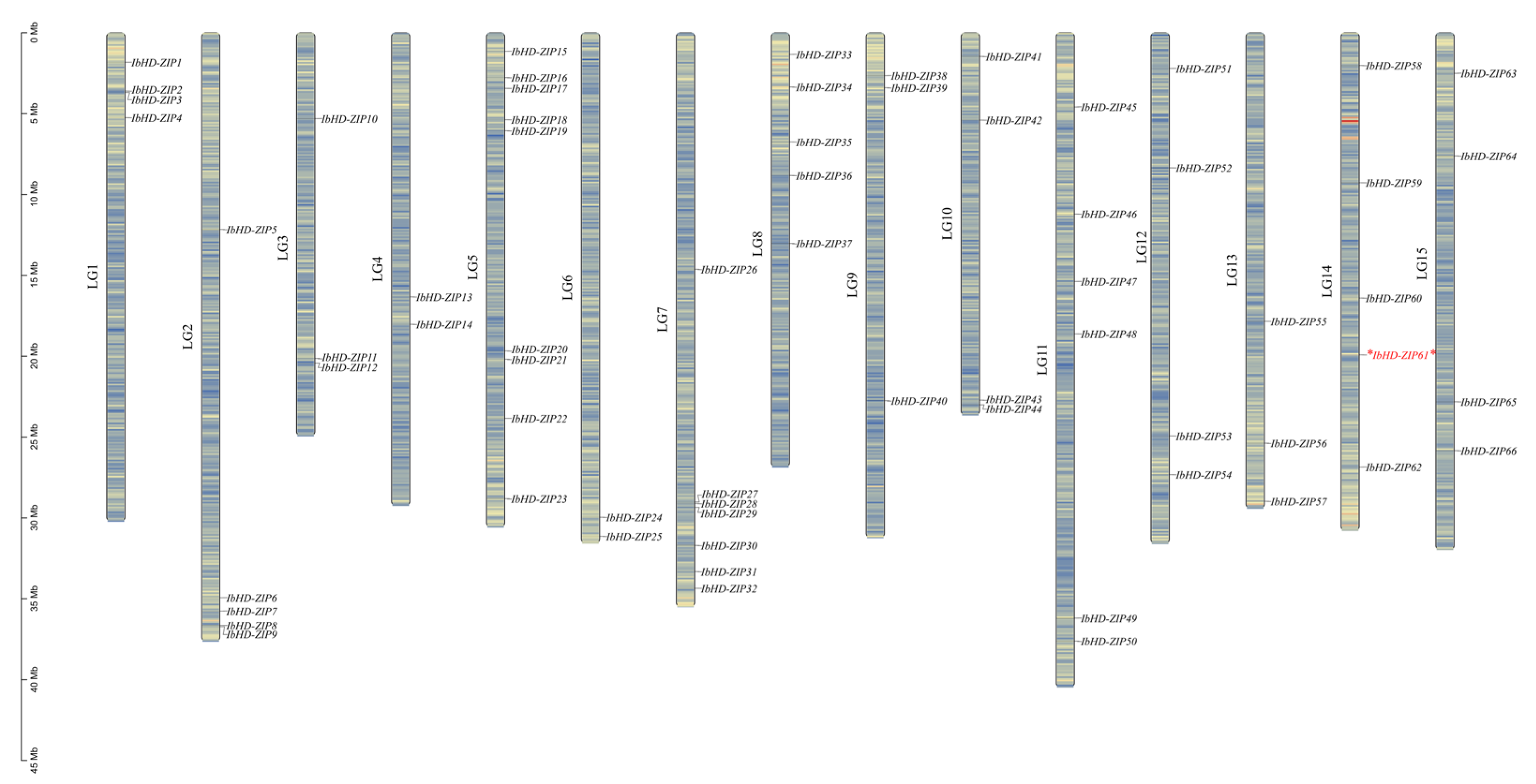
A comprehensive genome-wide analysis was performed to identify HD-ZIP genes in the sweet potato genome. Using the Hidden Markov Model (HMM) profile corresponding to the conserved domains of the HD-ZIP family, a total of 66 candidate IbHD-ZIP genes were initially identified. Their identity as authentic members of the HD-ZIP gene family was further confirmed through rigorous annotation using the NCBI Conserved Domain Database and InterProScan. These 66 genes were systematically classified as IbHD-ZIP1 to IbHD-ZIP66 according to their physical locations on the chromosomes (Table S1 for details). Chromosomal localization analysis (Figure 1) revealed that the IbHD-ZIP genes are distributed across all 15 linkage groups (LG1–LG15), although their distribution is highly uneven. The number of genes per linkage group varies significantly: LG5 contains the highest number of genes (n = 9), followed by LG7 (n = 7) and LG11 (n = 6), whereas LG3, LG4, LG6, LG9, and LG13 each harbor only 2–3 genes. Notably, the genes exhibit a non-random genomic arrangement, with multiple instances of gene clustering observed in specific chromosomal regions. For example, on LG2, IbHD-ZIP genes are concentrated in two distinct intervals: IbHD-ZIP5 in the 10–15 Mb region, and IbHD-ZIP6, 7, 8, and 9 in the 35–40 Mb region. A major cluster of IbHD-ZIP15, 16, 17, 18, and 19 is present in the approximately 0–5 Mb region of LG5. The clustered distribution pattern, especially in subtelomeric regions, indicates that tandem and/or segmental duplication events have likely been crucial in the proliferation and evolutionary diversity of the IbHD-ZIP gene family.
Following the identification of 66 IbHD-ZIP genes, their physicochemical properties were analyzed to characterize structural and functional features. Key parameters—including CDS length (486–4863 bp), protein size (161–1620 aa), molecular weight (18.85–181.93 kDa), pI (4.62–9.64), GRAVY (−1.308 to −0.036), and subcellular localization—are summarized in Table S4. All members exhibit negative GRAVY scores, indicating hydrophilic properties consistent with roles as nuclear transcription factors. Subcellular predictions show 60 proteins localized to the nucleus, supporting their canonical regulatory function. Three (IbHD-ZIP10, IbHD-ZIP40, IbHD-ZIP52) are predicted in chloroplasts, suggesting potential involvement in plastid signaling, while IbHD-ZIP57 is uniquely cytoplasmic, implying a divergent role in post-translational or protein interaction networks.
The selection of IbHD-ZIP61 for functional dissection was driven by its marked differential expression within the HD-ZIP family, as identified through comparative transcriptomic analysis of sweet potato cultivars Fushu No. 7–6 (low anthocyanin) and EC16 (high anthocyanin) in our laboratory (Table S5). This gene was therefore targeted to elucidate its regulatory functions in anthocyanin accumulation and salt tolerance.

3.2. Phylogenetic Analysis of IbHD-ZIPs

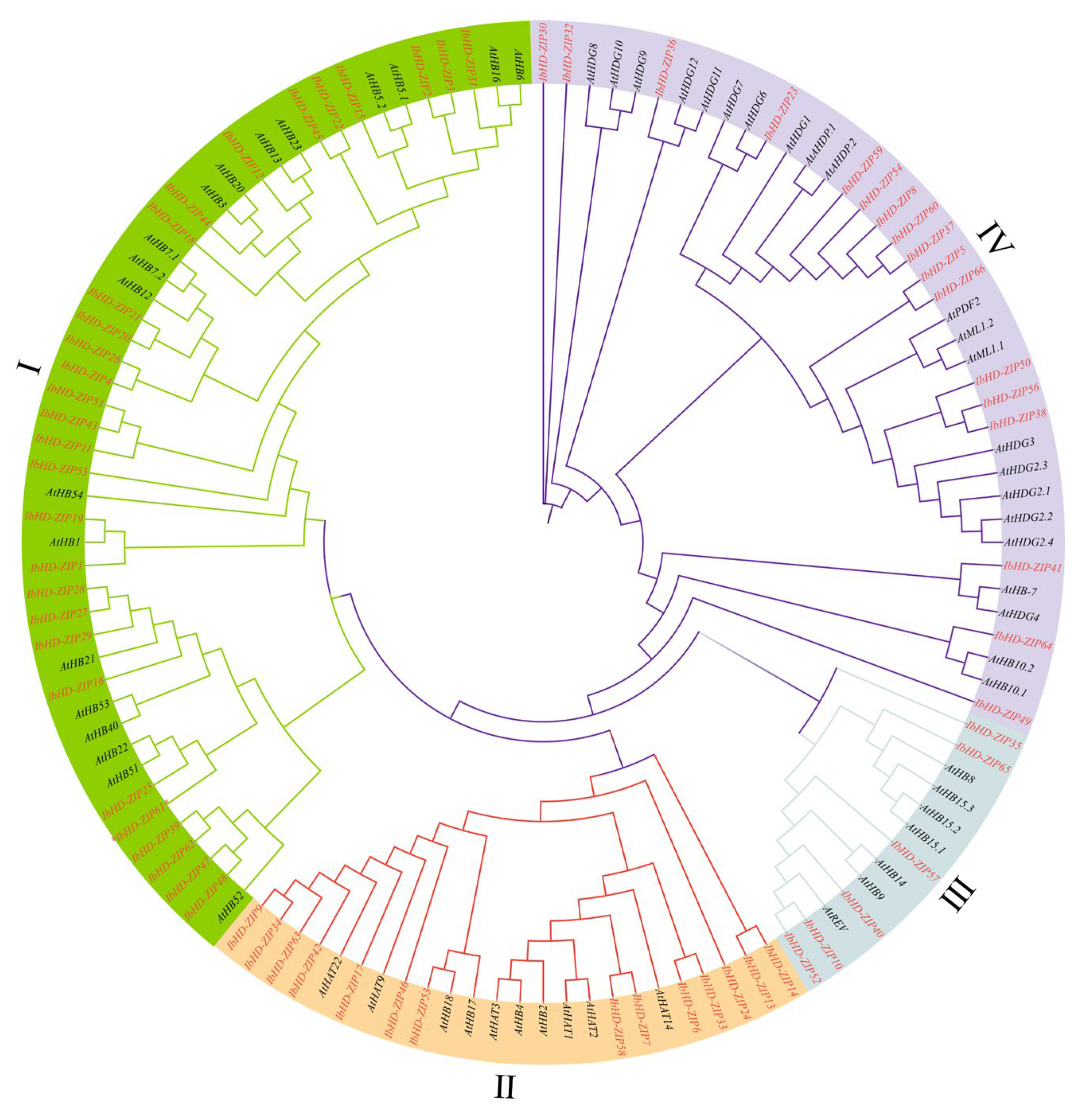
To further elucidate the phylogenetic characteristics of the IbHD-ZIP family and the AtHD-ZIP family in Arabidopsis thaliana, a phylogenetic tree encompassing both species was constructed (Figure 2). This tree is classified into four distinct subfamilies (I, II, III, and IV), comprising 58 AtHD-ZIP proteins and 66 IbHD-ZIP proteins. As depicted in Figure 2, IbHD-ZIP subfamily I represents the largest clade, with 29 members, and IbHD-ZIP61 is clustered within this subfamily. This clustering pattern indicates a close evolutionary relationship between IbHD-ZIP61 and HD-ZIP I members, reflecting the conserved evolutionary origin of this subfamily. In contrast, IbHD-ZIP subfamilies IV and II contain 17 and 14 genes, respectively, while IbHD-ZIP subfamily III is the smallest clade, consisting of only 6 genes.

3.3. Gene Structure and Conserved Domain Analysis of IbHD-ZIPs

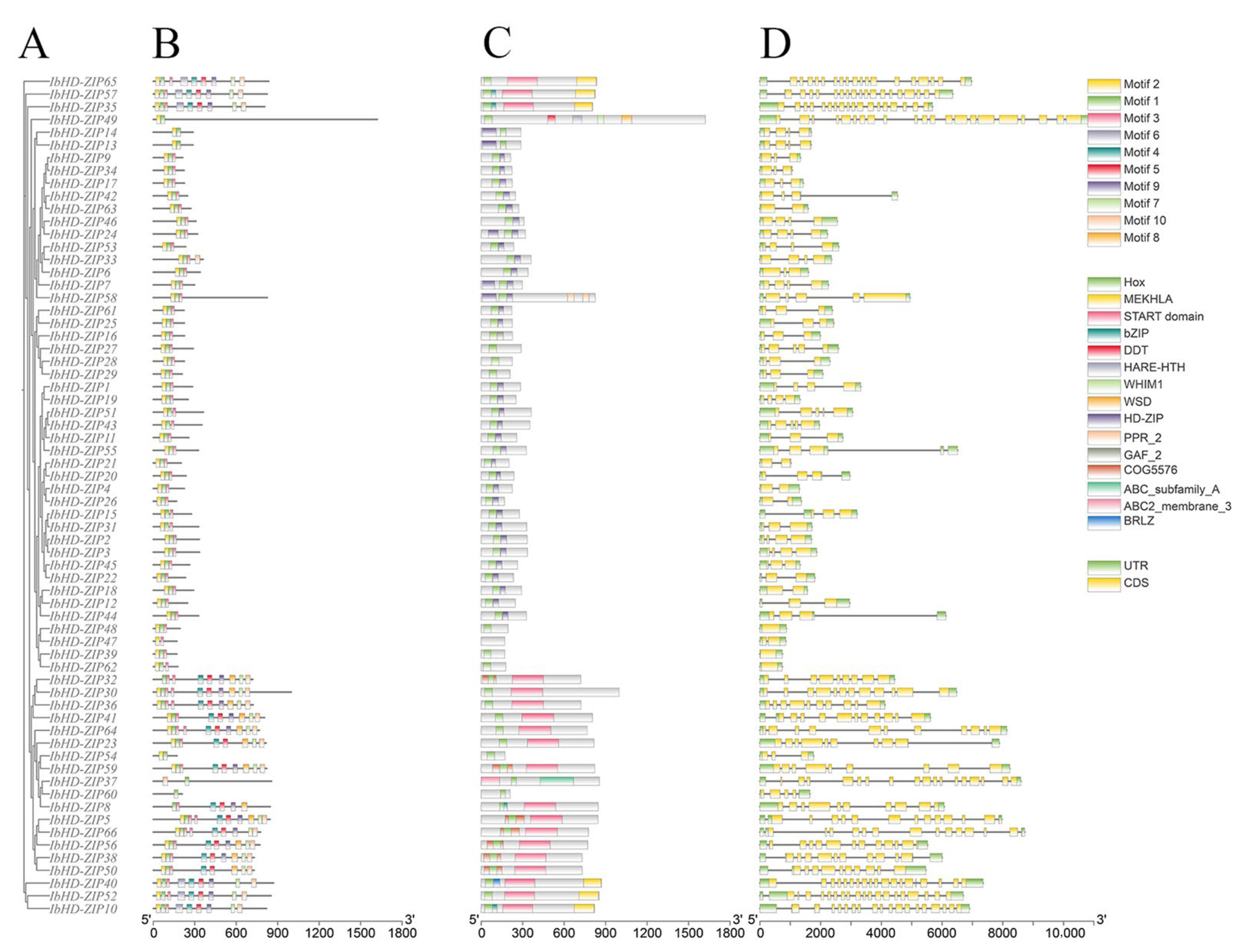
For the analysis of the phylogenetic relationship of the HD-ZIP family in sweet potato, a phylogenetic tree was built using the full-length sequences of 66 IbHD-ZIP proteins (Figure 3A). The phylogenetic tree clearly shows the pattern of differentiation among the family members and supports the classification of the IbHD-ZIP family into four major subfamilies, which is in extremely high agreement with the collinearity/co-evolution analysis of IbHD-ZIPs and their Arabidopsis orthologs (Figure 2). The members of the same subfamily are significantly clustered together, for example, IbHD-ZIP10, 35, 40, 52, 57, and 65, which form a strongly supported clade, representing subfamily III; while the gene clusters presumed to have been generated by tandem duplication, such as IbHD-ZIP27/28/29 and IbHD-ZIP20/21, are closely clustered together in the tree, providing phylogenetic evidence for their origin from recent tandem gene duplications. The IbHD-ZIP61 of interest in this study is a member of a conserved subcluster of subfamily I, together with IbHD-ZIP16 and IbHD-ZIP25, indicating that they may possess functional or regulatory similarities.
Conserved motif analysis of the 66 IbHD-ZIP protein sequences identified 10 distinct motifs (Motifs 1–10), with lengths varying from 21 to 50 amino acids (Figure 3B). Motif 3 is present in all proteins except IbHD-ZIP13, IbHD-ZIP14, IbHD-ZIP37, IbHD-ZIP49, IbHD-ZIP54, and IbHD-ZIP60; Motif 2 is widely distributed except in IbHD-ZIP8, 37, and 60; and IbHD-ZIP60 contains only Motif 1. Based on annotations from the Conserved Domain Database (CDD), Motifs 1–3 were identified as DNA-binding domains (DBDs).
Phylogenetic analysis revealed a subfamily-specific distribution of motifs: subfamily III contains nearly all motifs except Motif 8; Motif 8 is unique to subfamily IV; and subfamilies I and II predominantly contain only Motifs 1–3, except for IbHD-ZIP33, which also contains Motif 10. Further analysis using the SMART and Pfam databases confirmed that Motifs 1–3 correspond to the HD-LZ core domain, involved in DNA binding and dimerization. Motifs 4–10, predominantly detected in subfamilies III and IV, overlap with additional domains such as START and MEKHLA or localize at protein termini, suggesting potential roles in transcriptional activation, protein–protein interactions, or environmental signal perception (Figure 3C).
As shown in Figure 3D, the gene structures of IbHD-ZIP genes exhibit notable divergence among subfamilies, with exon numbers ranging from 1 to 19. Subfamily III members (IbHD-ZIP10, IbHD-ZIP35, IbHD-ZIP52, IbHD-ZIP57, IbHD-ZIP65) contain 18 exons, while IbHD-ZIP40 possesses 19 exons. These genes share similar structural architectures, with sequence lengths averaging approximately 7000 bp, significantly longer than those in subfamilies I and II. In subfamily IV, most members contain 10–13 exons and gene lengths of 6000–8000 bp, except for IbHD-ZIP54 and IbHD-ZIP60, which contain only 3–4 exons. In contrast, subfamilies I and II generally contain 3–5 exons per gene, with lengths ranging from 1500 to 3000 bp, and display considerable structural diversity within each subfamily. All IbHD-ZIP genes contain at least two untranslated regions (UTRs), further supporting structural similarities among members of the same subfamily.

3.4. Gene Duplication and Collinearity Analyses of IbHD-ZIPs

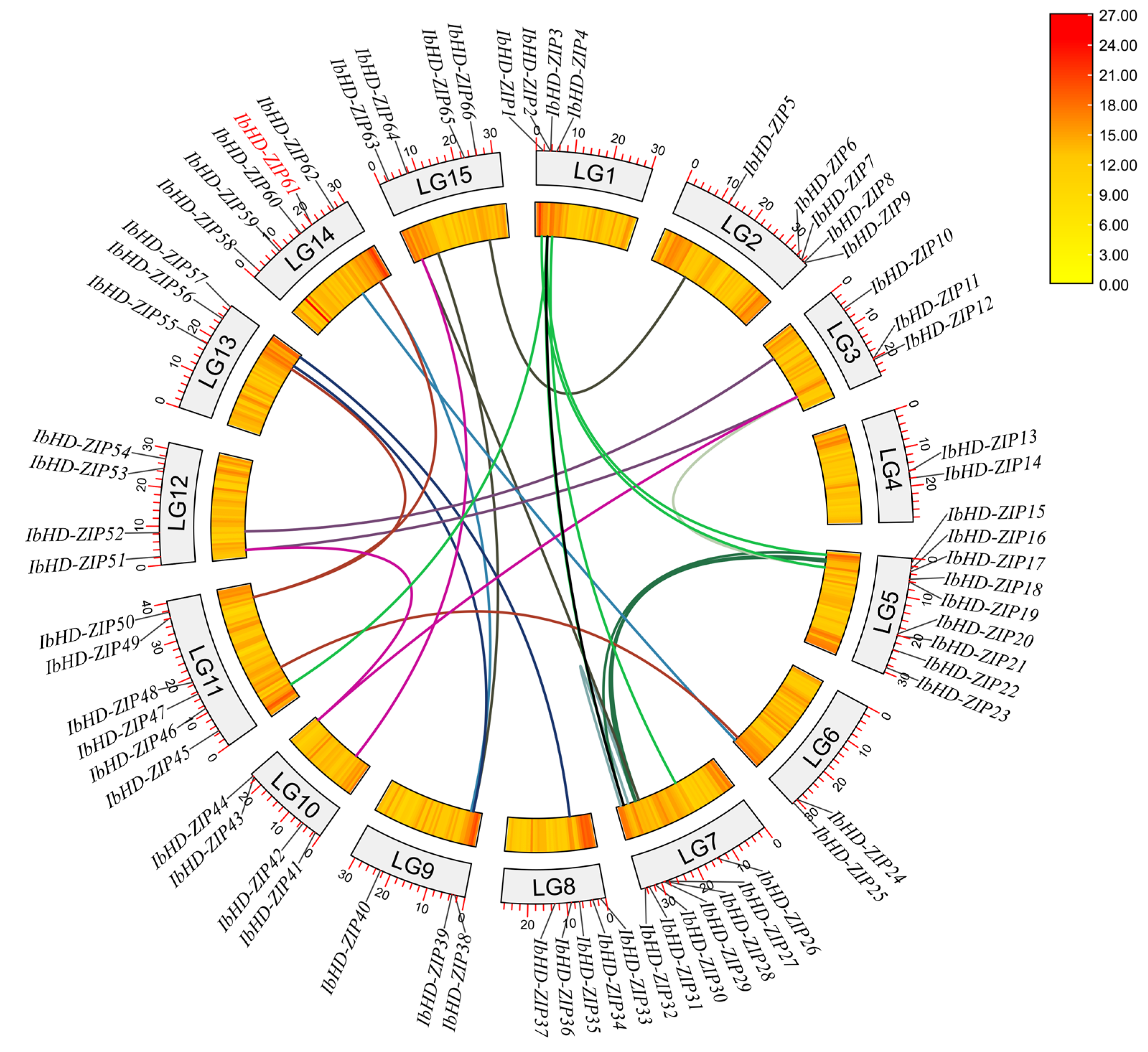
To elucidate the evolutionary mechanisms underlying the expansion of the HD-ZIP gene family in sweet potato, we performed a genome-wide synteny analysis. A total of 30 collinear gene pairs were identified (Figure 4), indicating that segmental duplication has significantly contributed to the family’s expansion. These duplicated pairs were distributed across all 15 linkage groups (LGs), with several regions showing pronounced syntenic conservation. For instance, multiple genes on LG7 (e.g., IbHD-ZIP27 and IbHD-ZIP31) exhibited collinearity with genes on LG1, LG5, and within LG7 itself, suggesting a history of segmental duplications and chromosomal rearrangements.
We also identified tandem duplication events. A notable cluster of three gene pairs, IbHD-ZIP27/IbHD-ZIP29, IbHD-ZIP27/IbHD-ZIP28, and IbHD-ZIP28/IbHD-ZIP29, was identified within a narrow genomic interval on LG7, highlighting tandem duplication as an additional diversification mechanism. The prevalence of inter-chromosomal collinear blocks, particularly between non-homologous chromosomes (e.g., LG1–LG11, LG10–LG15), further supports the role of whole-genome duplication (WGD) or paleopolyploidy in shaping the genomic architecture of the IbHD-ZIP family. Together, these findings provide an evolutionary framework for understanding functional diversification within this gene family.
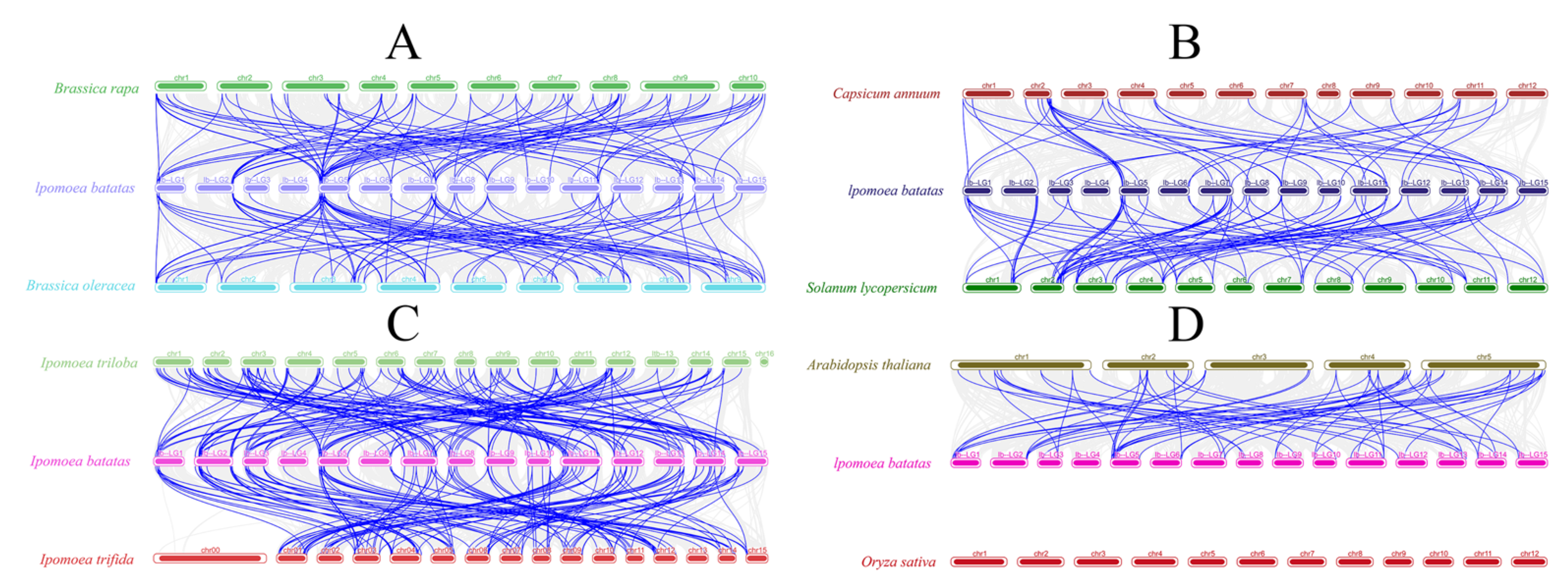
To elucidate the evolutionary trajectory of the IbHD-ZIP family, a comparative synteny analysis was performed between sweet potato and eight representative plant species, including Brassica oleracea, Solanum lycopersicum, Capsicum annuum, Arabidopsis thaliana, Ipomoea triloba, Brassica rapa, Ipomoea trifida, and Oryza sativa (Figure 5). A high number of homologous pairs were identified with the two wild relatives, Ipomoea trifida (116 pairs) and Ipomoea triloba (129 pairs), underscoring their close phylogenetic relationship. Substantial collinearity was also detected with Arabidopsis thaliana (60 pairs), Brassica rapa (78 pairs), Brassica oleracea (78 pairs), Solanum lycopersicum (85 pairs), and Capsicum annuum (46 pairs). In contrast, no homologous pairs were identified with Oryza sativa, reflecting the deep divergence between monocots and dicots in HD-ZIP gene evolution. Table S2 shows the complete set of orthologous gene pairs.
It is worth mentioning here that in the case of Ipomoea triloba and Ipomoea trifida, there are 18 and 19 genes, respectively, that show collinearity with at least two IbHD-ZIP genes. For example, itf02g13540.t1 (Ipomoea trifida) was collinear with IbHD-ZIP17, IbHD-ZIP18, IbHD-ZIP32, and IbHD-ZIP33; similarly, itb02g08970.t1 (Ipomoea triloba) was collinear with IbHD-ZIP17, IbHD-ZIP18, IbHD-ZIP20, IbHD-ZIP21, IbHD-ZIP32, and IbHD-ZIP33. Furthermore, IbHD-ZIP22 was collinear with multiple genes in both wild relatives, suggesting lineage-specific duplication and retention.
Of particular interest, IbHD-ZIP61 showed clear orthology to HD-ZIP III subfamily members in Arabidopsis thaliana, including AT2G36610.1 (ATHB-8) and AT5G03790.1, indicating functional conservation within core eudicots.
In summary, these synteny patterns reveal a history of extensive gene duplication and selective retention during the evolution of the IbHD-ZIP family, providing a phylogenetic basis for functional studies, especially of key members like IbHD-ZIP61.

3.5. Promoter Cis-Element Analysis of IbHD-ZIPs

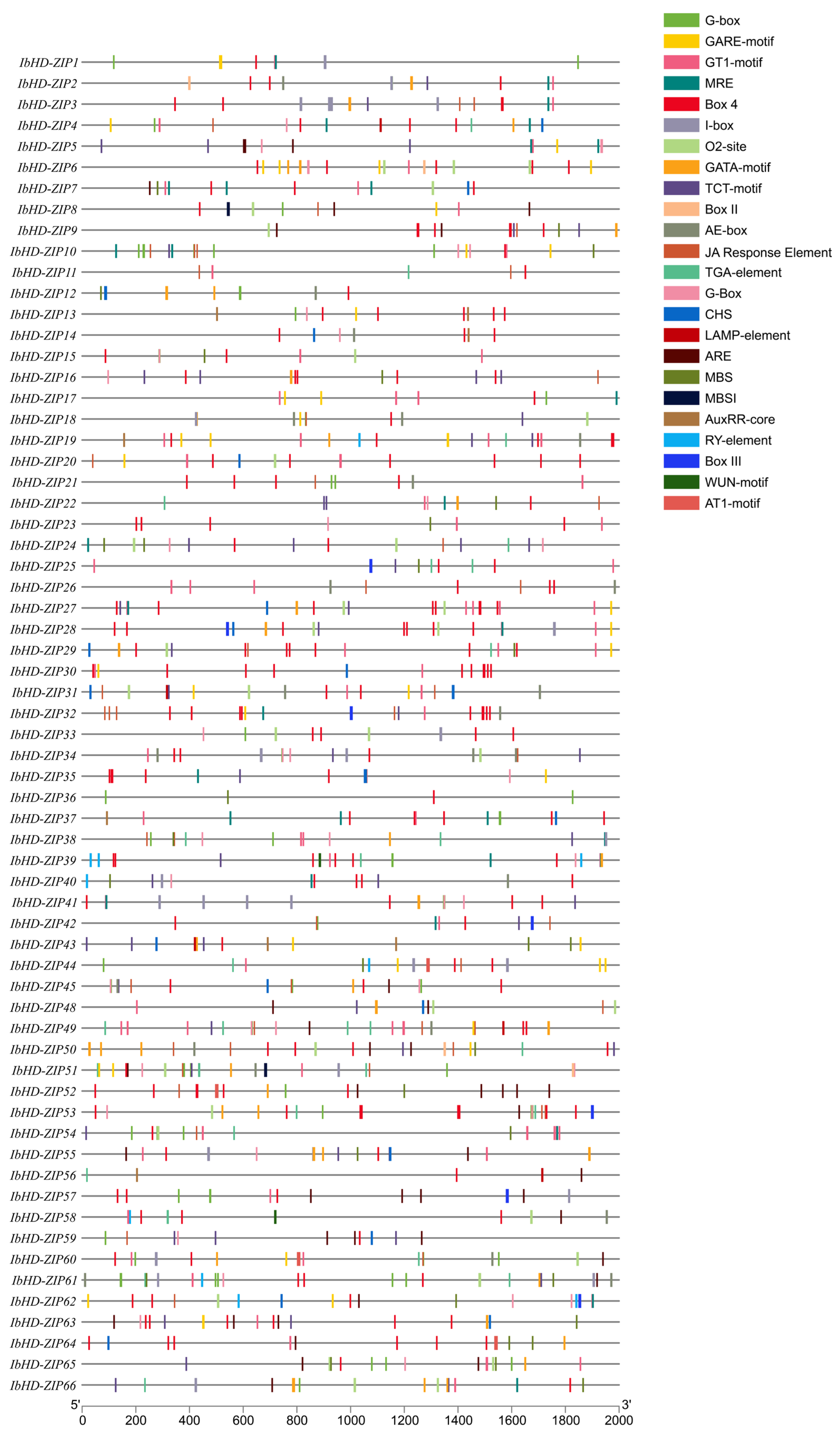
To dissect the transcriptional regulatory mechanisms of IbHD-ZIP genes, we systematically analyzed the 2.0 kb promoter region upstream of their start codons. A total of 28 cis-acting elements were identified, which were categorized into four classes: hormone-responsive, stress-responsive, light-responsive, and core regulatory elements. The differential distribution of these elements reflects the functional diversity of the IbHD-ZIP family in mediating responses to environmental and endogenous signals.
As shown in Figure 6, all promoters harbored core regulatory elements, including TATA boxes and CAAT boxes. Hormone-responsive elements were the most abundant, encompassing ABRE, TCA, GARE/P-box, and TGA motifs. Notably, IbHD-ZIP61 contained the highest number of ABREs (4), along with TCA and P-box elements, indicating its extensive involvement in hormone signaling cascades. Among stress-responsive elements, IbHD-ZIP61 possessed 3 MBS (MYB-binding sites for drought response) and 1 LTR (low-temperature-responsive element) but lacked TC-rich repeats, suggesting a specific role in drought and cold stress adaptation. Analysis of light-responsive elements revealed that IbHD-ZIP61 contained G-boxes and circadian rhythm regulatory motifs, implying potential regulation by light signals and the circadian clock.
Compared with other IbHD-ZIP members, the IbHD-ZIP61 promoter exhibited three distinct features: (1) the highest abundance of ABRE and MBS elements; (2) co-occurrence of LTR and MBS; and (3) dense clustering of multiple responsive elements in the proximal promoter region. These characteristics suggest that IbHD-ZIP61 may act as a key regulator integrating hormone, stress, and light signals to enhance the stress tolerance of sweet potato. This study provides a theoretical framework for further investigating the functional roles of IbHD-ZIP61 in stress-resistant crop breeding.

3.6. Subcellular Localization of IbHD-ZIP61 Protein

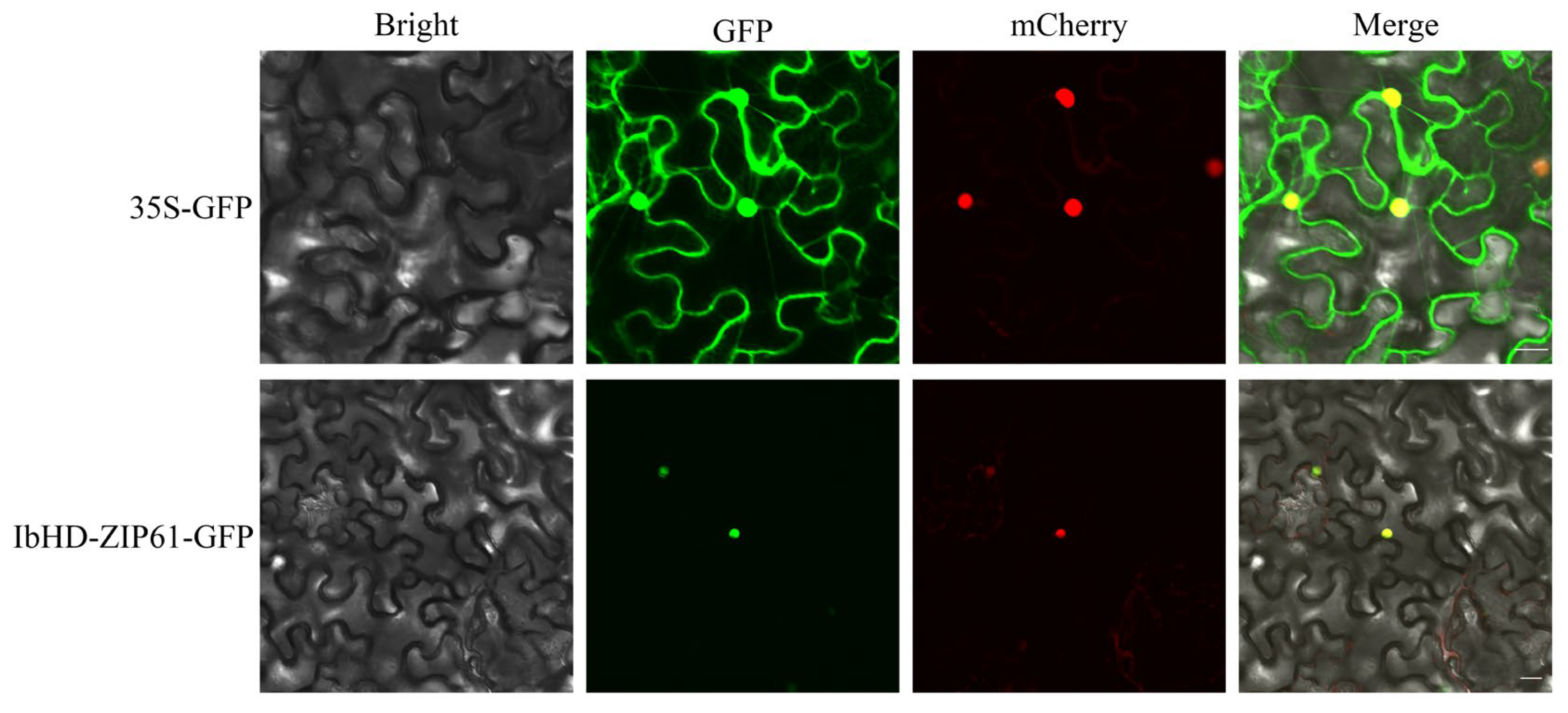
The localization of the IbHD-ZIP61 protein was investigated through transient expression in tobacco leaf epidermal cells, with 35S-GFP as the positive control (Figure 7). The experiment revealed that the IbHD-ZIP61-GFP fusion protein targeted the nucleus specifically, which corresponds with the prediction that it acts as a transcription factor.

3.7. IbHD-ZIP61 Promotes Anthocyanin Synthesis in Nicotiana benthamiana

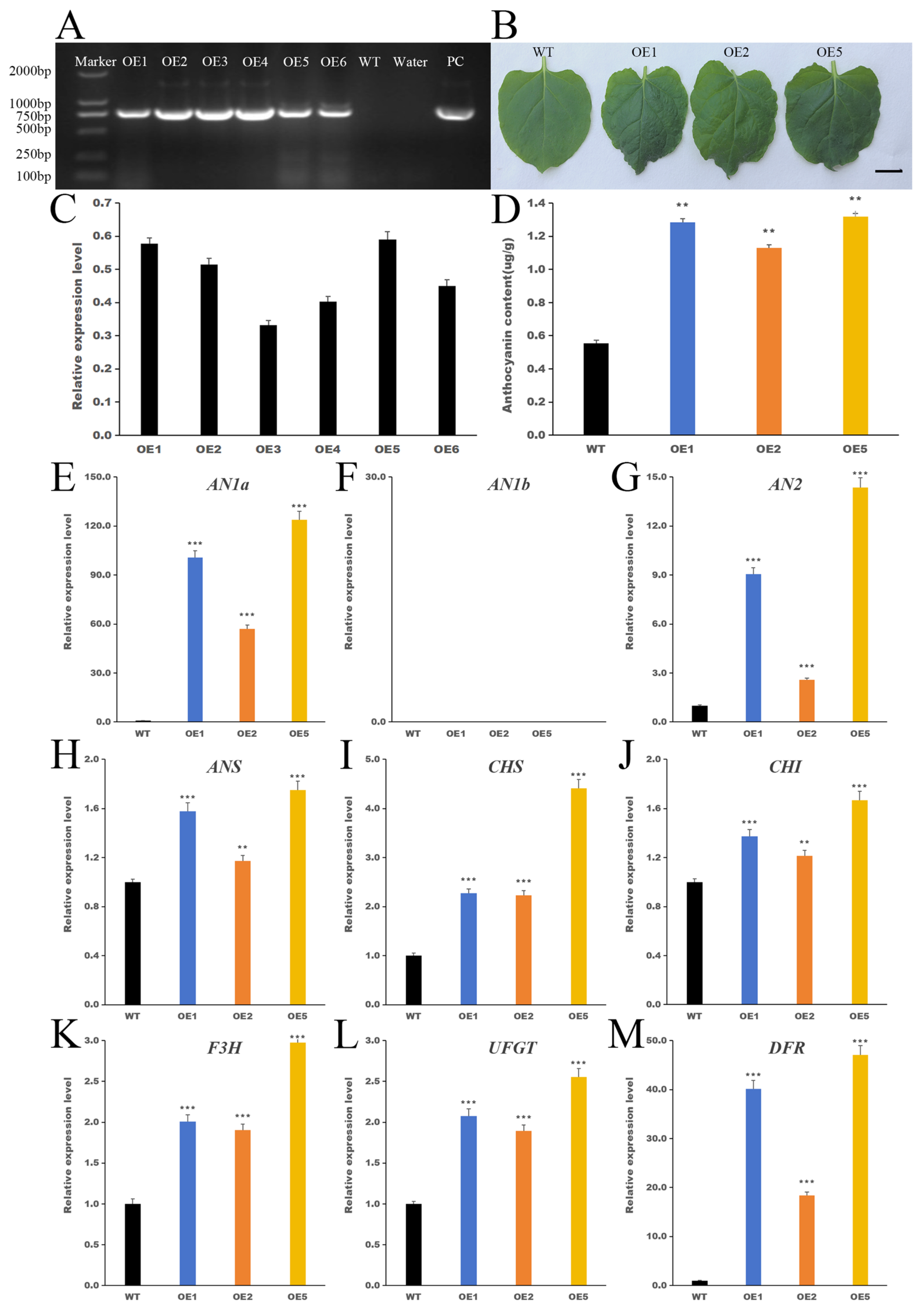
This experiment successfully generated stable overexpression lines of IbHD-ZIP61 in tobacco plants to explore its function. A total of 12 independent lines were obtained via tissue culture methods. After the initial screening by GUS staining, six putative positive lines were identified. To confirm the transgenic plants, genomic DNA was extracted from 20-day-old seedlings, and PCR amplification was performed using the specific primer pair 35S-F/IbHD-ZIP61-ORF-R. Finally, six individual transgenic lines with IbHD-ZIP61-OE were successfully identified (Figure 8A). Three lines with relatively high expression levels, namely IbHD-ZIP61-OE1, IbHD-ZIP61-OE2, and IbHD-ZIP61-OE5 (Figure 8C), were selected for further analysis. Phenotypic analysis showed that, compared to the wild type, the leaf color of the transgenic lines was significantly darker, suggesting a higher level of anthocyanin accumulation (Figure 8B). Quantitative analysis of anthocyanin accumulation in 30-day-old plants showed that the anthocyanin level in the three overexpression lines was approximately twice as high as that in the wild type, and the difference was statistically significant (p < 0.01) (Figure 8D). In addition, transcriptional analysis of the anthocyanin biosynthesis pathway showed that the overexpression of IbHD-ZIP61 had a significant upstream regulatory effect (Figure 8E–M). Notably, the AN1a gene, which was transcriptionally silenced (Ct ≥ 40) in WT plants, was strongly and specifically induced, with expression levels in the three lines being 101, 58, and 124 times that of the WT, respectively (Figure 8E). In contrast, the expression of its paralogous gene AN1b was undetectable in all lines (Figure 8F). Meanwhile, the expression of the MYB component encoding gene AN2 of the MBW complex (Figure 8G) was moderately upregulated (2.6 to 14.4 times). These results suggest that IbHD-ZIP61 can specifically and efficiently activate AN1a but not AN1b.
Consistent with the increased accumulation of anthocyanins and the upregulation of regulatory genes, the expression of multiple downstream structural genes also changed in a coordinated manner in the transgenic plants (Figure 8H–M). Among them, the induction of the key enzyme gene DFR in anthocyanin formation was the most significant (upregulated by 18 to 47 times). The early synthesis genes CHS, CHI, and F3H were moderately upregulated (1.2 to 4.4 times), while the late genes ANS and UFGT were induced to a relatively lower extent (1.2 to 2.6 times). This coordinated upregulation of the pathway, especially the strong induction of the DFR gene, is consistent with the observed pigment accumulation phenotype, indicating that IbHD-ZIP61 is a positive regulator of anthocyanin synthesis.

3.8. Overexpression of IbHD-ZIP61 Enhances Salinity Tolerance

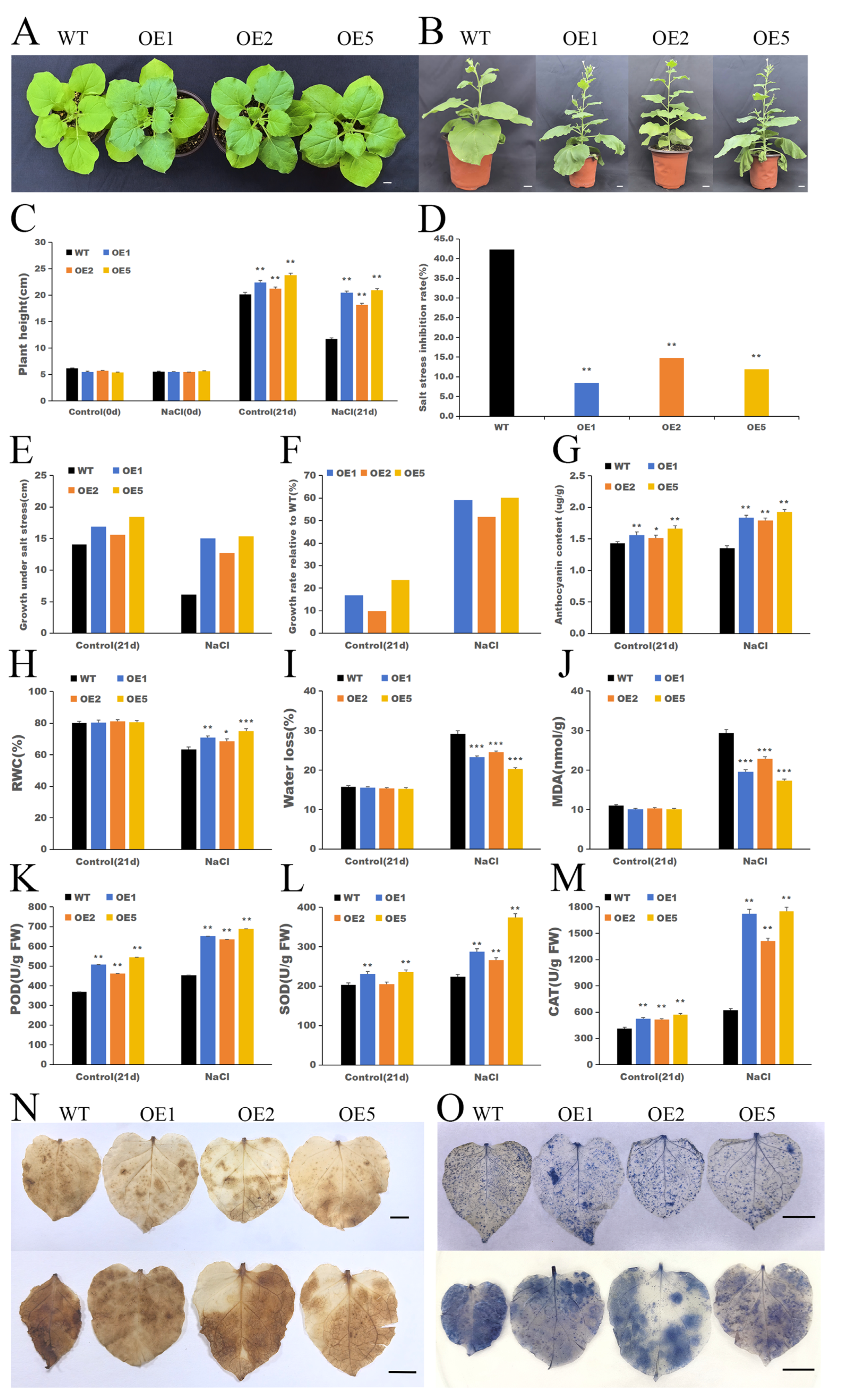
Under normal growth conditions, IbHD-ZIP61-OE transgenic plants lines accumulated significantly more anthocyanins in leaves across multiple developmental stages than the WT plants. To investigate the role of IbHD-ZIP61 in salt stress tolerance, WT and three transgenic lines (IbHD-ZIP61-OE1, -OE2, and -OE5) were treated with 100 mM NaCl. After 21 days, WT plants showed typical salt injury symptoms, including inhibited new leaf expansion, obvious wilting of mature leaves, and severe growth retardation (Figure 9A–F). In contrast, transgenic lines maintained better growth vigor with less phenotypic damage. Although salt stress suppressed height increase in all plants, the suppression was significantly milder in transgenic lines. The final plant height of WT was only 11.17 cm (with an increment of 6.13 cm), corresponding to a height inhibition rate of 42.24%. Transgenic lines reached significantly greater final heights (18.13–20.97 cm), with height increments of 12.7–15.37 cm and much lower inhibition rates (8.48–14.73%). Notably, even under control conditions, the height increment of transgenic lines (15.6–18.43 cm) exceeded that of WT (14.07 cm). These results demonstrate that IbHD-ZIP61 overexpression effectively mitigates salt-induced growth inhibition and enhances salt tolerance.
Under salt stress, anthocyanin content was significantly higher in all transgenic lines than in WT. While salt stress slightly decreased anthocyanin levels in WT compared with the unstressed control, transgenic lines maintained or even increased anthocyanin accumulation under stress (Figure 9G). To explore the physiological basis of the enhanced tolerance, key biochemical and physiological parameters were analyzed. Under salt stress, transgenic plants not only grew better but also had significantly higher leaf RWC than WT (Figure 9H). Their leaf water loss was reduced (Figure 9I), and the level of MDA (Figure 9J), an indicator of membrane lipid peroxidation, was 22.0–40.9% lower in transgenic lines than in WT. Accordingly, their antioxidant enzyme activities (Figure 9K–M) were markedly stronger: CAT activity was 2.3–2.8-fold higher, and SOD and POD activities were also significantly elevated. The results of DAB and NBT staining (producing red-brown and dark blue precipitates, respectively) revealed that the intensity of staining in WT plants treated with salt stress was significantly higher than that of the IbHD-ZIP61-OE plants, indicating that the amount of ROS accumulation in the transgenic plants was significantly lower (Figure 9N,O). These data indicate that transgenic plants suffered less oxidative damage and better maintained membrane integrity. Taken together, our findings suggest that IbHD-ZIP61 overexpression improves salt tolerance in Nicotiana benthamiana by coordinately enhancing anthocyanin accumulation, antioxidant capacity, and cellular water retention.

3.9. IbHD-ZIP61 Modulates the Transcription of Anthocyanin Biosynthetic Genes Under Normal and Salt-Stress Conditions

To further illuminate the underlying mechanism of the function of IbHD-ZIP61 at the molecular level to regulate anthocyanin metabolism, the transcript levels of major genes in the anthocyanin biosynthetic pathway in the WT and transgenic plants were analyzed under control and salt-stressed conditions.
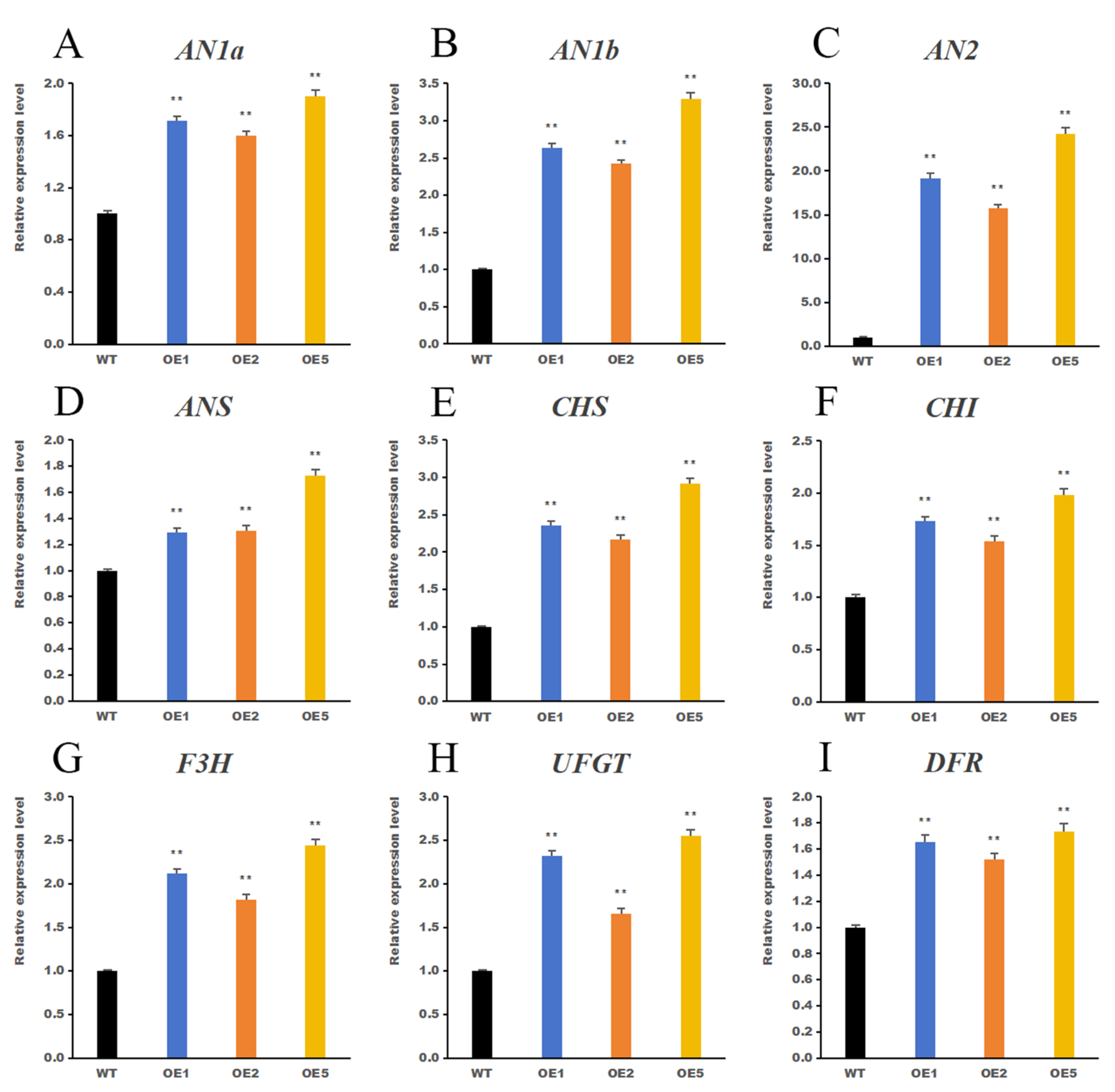
Under normal growth conditions, overexpression of IbHD-ZIP61 activated the expression of core regulatory genes that were barely detectable in WT. Transcripts of the bHLH factor genes AN1a and AN1b were undetectable in unstressed WT plants (Ct ≧ 40, assigned a baseline value of 1.000 for quantification), whereas they were readily detected in all three transgenic lines, exhibiting 1.6- to 3.3-fold higher expression relative to the WT baseline (Figure 10A,B). Notably, the expression of AN2 (Figure 10C), encoding a core MYB transcription factor, was markedly upregulated, showing 15.7- to 24.2-fold increases in transgenic lines OE1, OE2, and OE5. Consistently, most downstream structural genes (Figure 10D–I), including CHS, CHI, F3H, and UFGT, were induced by 1.5- to 2.9-fold. These results indicate that IbHD-ZIP61 functions as a potent activator of the anthocyanin pathway even in the absence of abiotic stress.
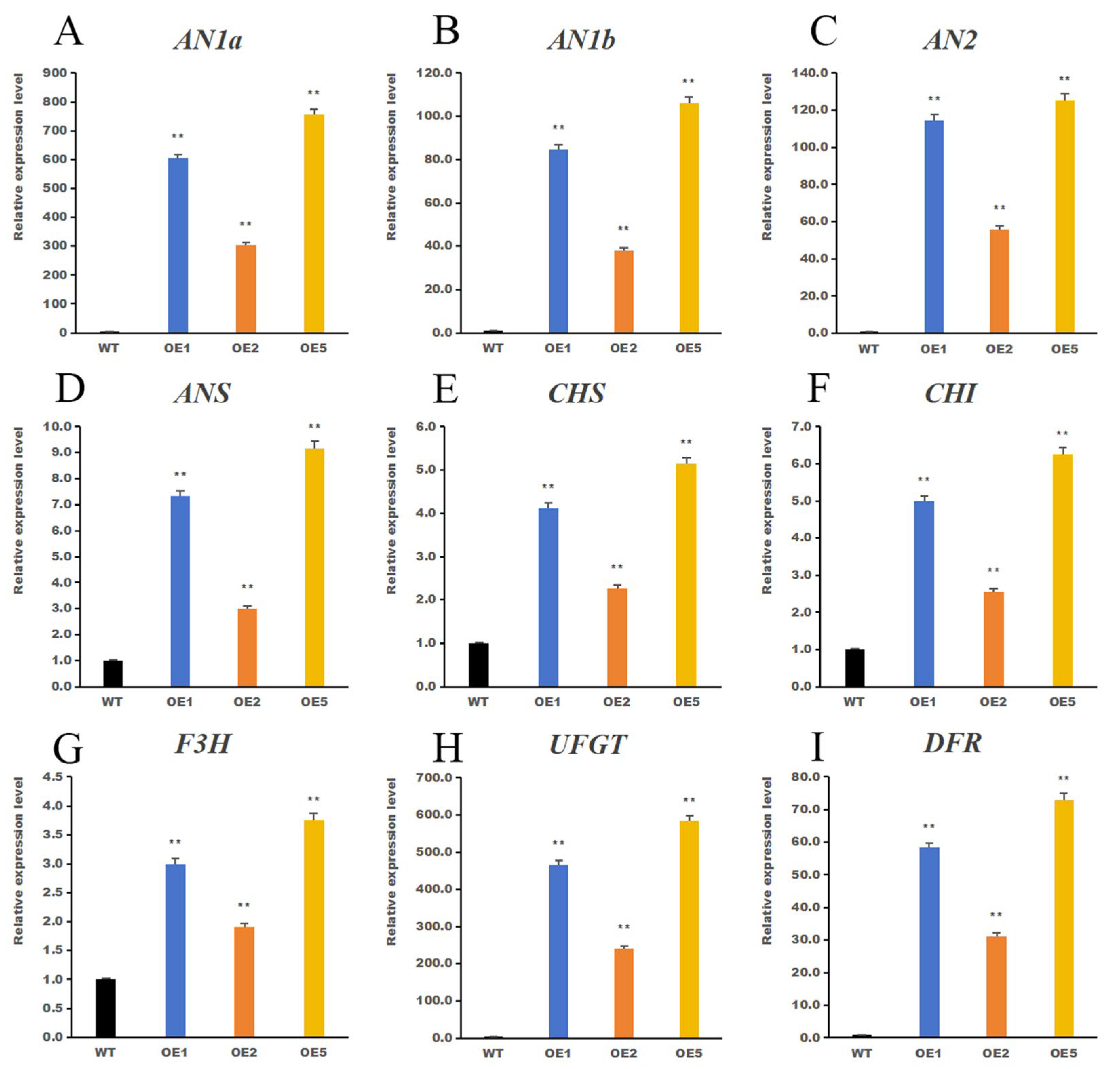
As shown in Figure 11, salt stress induced extensive transcriptional reprogramming, activating the otherwise silent AN1a and AN1b genes in WT plants. This stress-responsive activation was dramatically enhanced in IbHD-ZIP61-OE lines. The most pronounced upregulation occurred in AN1a and the late biosynthetic gene UFGT: in the OE5 line, salt stress elevated AN1a and UFGT expression by approximately 756-fold and 582-fold, respectively, compared to stressed WT. Similarly, AN1b and DFR transcripts were upregulated by over 106-fold and 73-fold in OE5 relative to stressed WT. Additionally, the expression of other pathway genes, including AN2, ANS, CHS, CHI, and F3H, was significantly elevated in transgenic lines under stress. This coordinated, high-magnitude induction across the entire pathway highlights the role of IbHD-ZIP61 as a master transcriptional enhancer that potentiates the stress-induced activation of anthocyanin biosynthesis.

3.10. IbHD-ZIP61 Modulates the Transcription of Genes Involved in Stress Responses

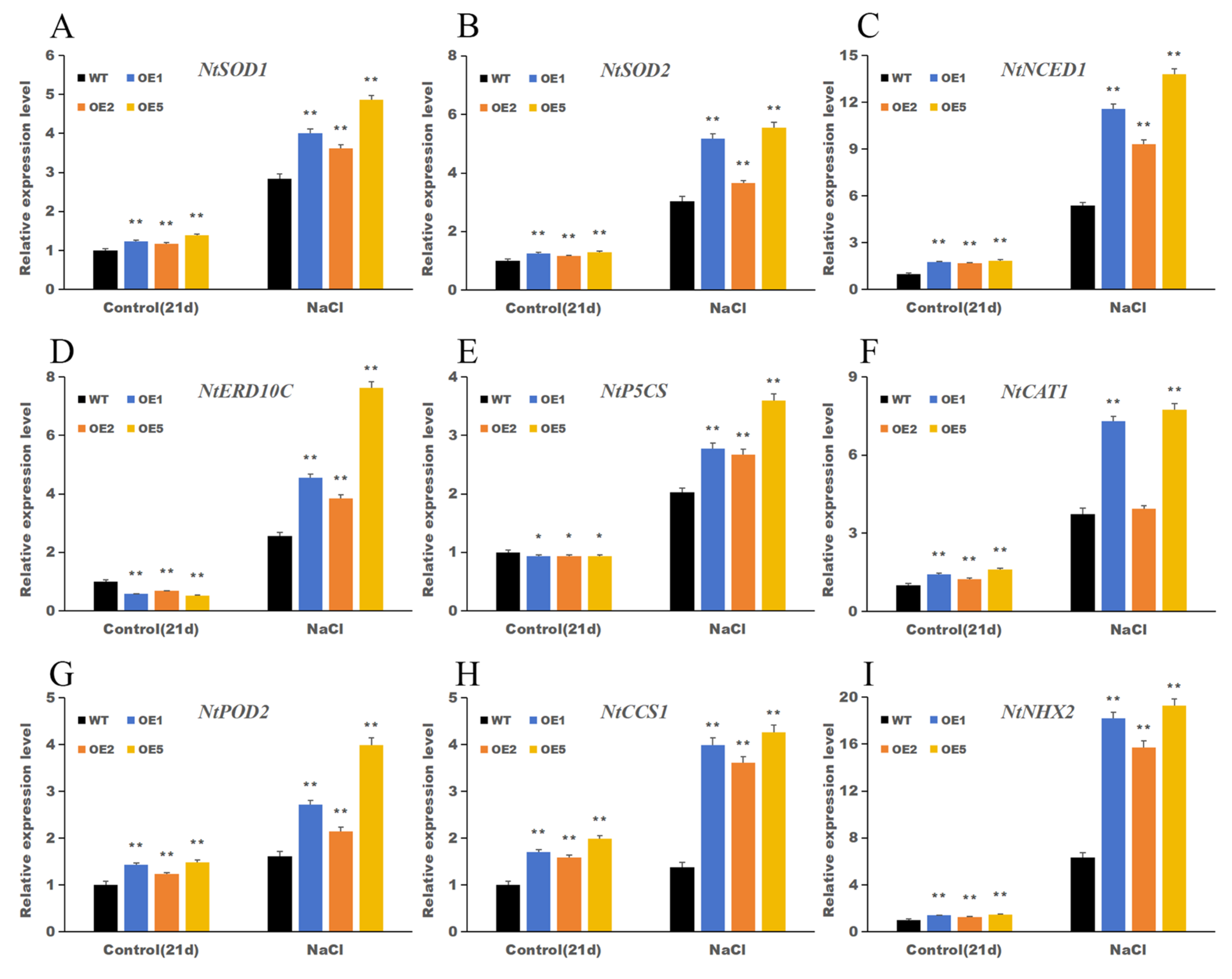
To investigate the role of IbHD-ZIP61 under salt stress, we evaluated its regulation of stress-related transcriptional processes beyond anthocyanin production. The expression profiles of certain stress-responsive genes were analyzed between WT and IbHD-ZIP61-OE plants under both control and stress conditions (Figure 12).
In the IbHD-ZIP61-OE lines under normal growth conditions, the transcript levels of stress-related genes displayed a primed but distinct profile compared to WT. The expression of genes involved in ABA biosynthesis (NCED1) and ion homeostasis (NHX2) was constitutively elevated by 1.7- to 1.9-fold and 1.3- to 1.5-fold, respectively. Conversely, transcript levels of P5CS (proline biosynthesis) and ERD10C (dehydrin) were slightly lower, at 0.53- to 0.94-fold of WT levels. The baseline expression of major antioxidant genes (SOD1, SOD2, CAT1, POD2, CCS1) was uniformly higher (1.16- to 1.99-fold), indicating a pre-activated state of cellular defense mechanisms.
Under salt stress (100 mM NaCl for 21 days), the transcript levels of all analyzed genes increased in both WT and transgenic plants. The extent of upregulation was consistently and significantly greater in the IbHD-ZIP61-OE lines. The expression of NHX2 and NCED1 demonstrated the most significant increase. The transcript abundance of NHX2, which encodes a vacuolar Na+/H+ antiporter critical for ion homeostasis, was 2.9- to 3.0-fold higher in the stressed OE lines compared to stressed WT. Similarly, NCED1, a rate-limiting enzyme in ABA biosynthesis, showed a 1.7- to 2.6-fold higher induction in transgenic plants under stress. The expression levels of core antioxidant enzyme genes such as SOD1, SOD2, CAT1, and POD2 were consistently and significantly elevated in the OE lines compared to the WT during salt stress. Notably, the salt-induced upregulation of ERD10C (involved in cellular protection) and P5CS was also markedly amplified in transgenic plants, with ERD10C expression in the OE5 line being nearly 3-fold higher than in stressed WT.
Collectively, these findings demonstrate that IbHD-ZIP61 acts as a broad-spectrum transcriptional regulator that coordinately enhances the expression of genes across multiple functional modules of the salt stress response, including ion homeostasis (NHX2), stress signaling (NCED1), osmotic adjustment (P5CS), cellular protection (ERD10C), and oxidative stress detoxification (antioxidant enzymes).

4. Discussion

4.1. Identification, Evolutionary Analysis, and Candidate Prioritization of the IbHD-ZIPs

HD-Zip proteins are a type of regulatory factor specific to plants. Their structure contains a homologous domain (HD) for DNA binding and an adjacent leucine zipper (LZ) domain mediating protein dimerization [24]. This family can be classified into four functional subtypes (I-IV) [12]. Subtypes I and II mainly respond to ABA signaling and abiotic stress [25], and subtype III regulates vascular development [26,27]. Subtype IV is involved in epidermal differentiation and the accumulation of secondary metabolites such as anthocyanins [28,29,30].
We identified a total of 66 non-redundant IbHD-ZIP genes in sweet potatoes. Phylogenetic analysis classified it into the above four subfamilies, and this classification pattern was consistent with the results in Arabidopsis thaliana and tomato [24,26,31], confirming the evolutionary conservation of this family. Gene structure and conserved motif analysis provided further support: Members of the same subfamily had similar exon-intron structures, all containing the core HD-LZ domain (corresponding motifs 1–3) [30]. The existence of subfamily-specific motifs (such as the AHA motif of subtype I/II and the START/MEKHLA domain of subtype III/IV) provides a structural basis for their functional differentiation [20,30].
The collinearity analysis results indicated that fragment replication was the main mechanism driving the expansion of the IbHD-ZIP family, and this evolutionary pattern was also reported in cassava, which is closely related to sweet potatoes [32]. Furthermore, a small number of tandem replication gene clusters, including IbHD-ZIP61, may have promoted the innovation and adaptive evolution of local functions [13].
We identified IbHD-ZIP61 as the target gene for in-depth study. Mainly based on three points: Through the comparative analysis of transcriptome data of two vegetable sweet potato varieties with significantly different anthocyanin contents in the early stage of our laboratory, it was identified that this gene showed the most significant differential expression in the HD-ZIP family; This gene belongs to the HD-ZIP I subfamily, and the function of its direct homologous genes has suggested that it may be involved in the stress response [33]; Its promoter region is rich in cis-acting elements such as ABRE, MBS and G-box, indicating that it may have the potential to integrate ABA, drought and light signals to synergically regulate stress adaptation and secondary metabolism [34,35]. Therefore, IbHD-ZIP61 is an ideal target for verifying the hypothesis that “the HD-ZIP gene collaboratively regulates stress resistance and quality formation.
In conclusion, this study systematically depicted the evolutionary map of the HD-ZIP gene family in sweet potatoes and identified IbHD-ZIP61 as the core candidate gene. These findings have laid a theoretical foundation for clarifying the mechanism of the synergistic improvement of sweet potato stress resistance and nutritional quality at the molecular level, and have also provided new clues and genetic resources for molecular breeding.

4.2. IbHD-ZIP61 Positively Regulates Anthocyanin Biosynthesis and Accumulation

HD-ZIP transcription factors are well-established regulators of plant development and stress responses [12], with members of subfamily IV particularly implicated in the regulation of epidermal cell fate and secondary metabolism, including anthocyanin biosynthesis [28,29]. For example, in Arabidopsis, ANTHOCYANINLESS2 (ANL2), an HD-ZIP IV protein, is essential for anthocyanin accumulation in specific tissues [29]. Beyond subfamily IV, accumulating evidence indicates that HD-ZIP I and II proteins—typically associated with abiotic stress signaling—can also integrate into the regulatory networks governing phenylpropanoid and flavonoid pathways [13,36]. This functional overlap is exemplified by the potato HD-ZIP I gene StHOX22, which enhances both anthocyanin content and drought tolerance when overexpressed in transgenic plants [37]. A more recent study in pear further demonstrates that the HD-ZIP I transcription factor PuHB40 acts as a key mediator, translating high-light stress signals (via ROS) into activation of the anthocyanin biosynthetic cascade [15]. Collectively, these findings position HD-ZIP proteins as versatile regulators capable of linking environmental stimuli with metabolic outputs, thereby providing a conceptual framework for investigating the role of IbHD-ZIP61 in sweet potato.
Conserved domain analysis confirmed that IbHD-ZIP61 possesses the canonical HD-LZ core domain, responsible for DNA binding and dimerization [12]. Subcellular localization experiments verified its nuclear localization, consistent with its predicted function as a transcription factor and with the general nuclear localization of HD-ZIP I family members [38]. Functional validation in transgenic Nicotiana benthamiana provided direct and robust evidence supporting its regulatory role. Overexpression of IbHD-ZIP61 resulted in a visually evident and quantitatively significant increase in leaf anthocyanin content—approximately twofold higher than in WT plants across multiple developmental stages (e.g., 47 and 68 days post-transplantation). Crucially, this sustained phenotypic change was underpinned by profound and coordinated transcriptional reprogramming of the anthocyanin biosynthetic pathway. Notably, even under normal, non-stress conditions at 68 days, IbHD-ZIP61 overexpression strongly activated the entire pathway. It induced the expression of core regulatory genes that were barely detectable in WT plants, including the bHLH factors AN1a and its paralog AN1b, and most strikingly, led to a marked upregulation of the core MYB transcription factor gene AN2. This upstream activation cascaded into consistent induction of downstream structural genes (CHS, CHI, F3H, UFGT), a process central to the MBW complex-mediated regulation of anthocyanin biosynthesis [39,40]. These comprehensive data demonstrate that IbHD-ZIP61 functions as a constitutive and potent activator of anthocyanin biosynthesis, independent of external stress signals. The coordinated activation of both master regulatory components of the MBW complex and critical structural genes effectively channels metabolic flux toward anthocyanin production [41].
Our findings establish IbHD-ZIP61, a member of the HD-ZIP I subfamily, as a potent positive regulator of anthocyanin biosynthesis. This role is particularly significant as it reveals a substantial functional expansion of this subfamily beyond its canonical association with abiotic stress responses, highlighting its intrinsic capacity to regulate a major secondary metabolic pathway under standard growth conditions. The mechanism likely involves direct transcriptional activation of core regulators such as AN2 and AN1a, as suggested by their pronounced and specific induction. Future studies involving chromatin immunoprecipitation (ChIP) and electrophoretic mobility shift assays (EMSA) will be necessary to determine whether IbHD-ZIP61 directly binds to the promoters of these target genes. This mode of action parallels mechanisms observed in other systems, where transcription factors directly bind to and activate core regulators of the flavonoid pathway [40]. The coordinated upregulation of the entire biosynthetic cascade—from CHS to UFGT—indicates that IbHD-ZIP61 acts high in the regulatory hierarchy, potentially through primary targets that initiate a cascade activating the full biosynthetic program. The implications of this discovery are twofold: first, it identifies IbHD-ZIP61 as a valuable and reliable genetic target for molecular breeding strategies aimed at constitutively enhancing the nutritional quality of sweet potato via elevated anthocyanin content, without dependence on stress induction. Second, it establishes a novel molecular link between the HD-ZIP I-mediated regulatory network and the anthocyanin biosynthetic pathway. The dual functionality of IbHD-ZIP61—as both stress-responsive and a constitutive activator of anthocyanin biosynthesis—suggests a plausible mechanistic basis for the commonly observed phenomenon of stress-induced anthocyanin accumulation. This hypothesis warrants further investigation through studies examining the interplay between stress signaling pathways and the transcriptional activity of IbHD-ZIP61.

4.3. IbHD-ZIP61 Enhances Salt Tolerance Through Coordinated Activation of Multiple Pathways

HD-ZIP I plays a major role in facilitating abiotic stress adaptation in plants [38,42]. Moreover, recent research has indicated that some genes are coupled with secondary metabolism pathways, specifically anthocyanin biosynthesis, among others [13,15]. For example, phosphorylated PuHB40 protein activation of anthocyanin biosynthesis is induced in response to high-light exposure in pear, thereby connecting ROS signaling with photoprotection [15]. MdHB7, on the other hand, has been identified to increase salt stress resistance in apple by promoting osmoprotectant biosynthesis [43].
In this study, a new function of IbHD-ZIP61 in salt tolerance has been uncovered. The IbHD-ZIP61 overexpressed plants grew better under salinity stress conditions with less wilting, higher water content, lower oxidative injury, and increased activity of antioxidant enzymes [44,45]. Worth mentioning is that these plants maintained anthocyanin biosynthesis under stress conditions, while the WT plants did not. Mechanistically, the IbHD-ZIP61 regulates a two-pronged transcription program. It greatly induces the anthocyanin biosynthesis pathway, including genes like AN1, DFR, and UFGT [46], as well as induces stress-related genes associated with ROS removal, ion transport (NHX2), ABA production (NCED1), and osmolyte (P5CS) biosynthesis [47,48]. IbHD-ZIP61 exerts a tolerant phenotype by co-activating a dual protective mechanism: direct stress resistance (antioxidant enzymes and ion/osmotic stress) and anthocyanin-based antioxidant activity. Anthocyanins are very efficient and stress-inducible ROS-scavengers [48,49], and their biosynthesis has also been incorporated into stress signaling [50]. The targeted production of these pigments and enzymatic antioxidants constitutes a two-layer conserved protective mechanism [51,52]. Hence, IbHD-ZIP61 co-activates these dual protective pathways to strengthen the antioxidative system of the cell.
In conclusion, IbHD-ZIP61 is a transcriptional integrator that promotes salt resilience through defense and metabolic network recalibration. It is thus an interesting target to create plants with resilience and quality through increased anthocyanin production.

5. Conclusions

A genome-wide study on the IbHD-ZIP family in sweet potatoes has uncovered 66 IbHD-ZIP genes that have evolved via segmental duplication. IbHD-ZIP61 has been identified to act as a transcriptional activator that coordinately stimulates anthocyanin pigment biosynthesis and improves salt tolerance. This occurs through the coordinative stimulation of the central anthocyanin biosynthesis pathway and a set of genes involved in antioxidant roles, osmoregulation, and ion homeostasis. Consequently, IbHD-ZIP61 links primary stress response and secondary metabolic processes. The current study offers a valuable resource and a candidate gene for the coordinated enhancement of stress and nutritional qualities in sweet potato breeding.

Supplementary Materials

The following supporting information can be downloaded at: https://www.mdpi.com/article/10.3390/agronomy16040408/s1, Table S1: The list of gene renamings in this study; Table S2: Orthologous HD-ZIP genes between sweet potato and other plants; Table S3: The primers used in this study; Table S4: Basic information of HD-ZIP family genes in sweet potato. Table S5: Detailed annotation information of EC16 vs F7-6.

Author Contributions

Conceptualization, C.C.; Data curation, Q.Z.; Formal analysis, C.C.; Funding acquisition, W.Z.; Investigation, Q.Z.; Methodology, C.C.; Project administration, L.W., W.Z.; Resources, X.Y., W.Z.; Software, C.C.; Supervision, W.Z.; Validation, C.L. and Y.P.; Visualization, C.C.; Writing—original draft, C.C.; Writing—review and editing, W.Z. and T.A. All authors have read and agreed to the published version of the manuscript.

Funding

This research was funded by Funding for seed industry high-quality development of Hubei Province (HBZY2023B002, HBZY2023B002-4).

Data Availability Statement

The original contributions presented in this study are included in the article/Supplementary Material. Further inquiries can be directed to the corresponding author.

Conflicts of Interest

The authors declare no conflicts of interest.

References

  1. Nyathi, M.; Du Plooy, C.; Van Halsema, G.; Stomph, T.; Annandale, J.; Struik, P. The dual-purpose use of orange-fleshed sweet potato (Ipomoea batatas var. Bophelo) for improved nutritional food security. Agric. Water Manag. 2019, 217, 23–37. [Google Scholar] [CrossRef]
  2. Lim, S.; Xu, J.; Kim, J.; Chen, T.; Su, X.; Standard, J.; Carey, E.; Griffin, J.; Herndon, B.; Katz, B.; et al. Role of anthocyanin-enriched purple-fleshed sweet potato p40 in colorectal cancer prevention. Mol. Nutr. Food Res. 2013, 57, 1908–1917. [Google Scholar] [CrossRef] [PubMed]
  3. Zhang, Y.; Butelli, E.; Martin, C. Engineering anthocyanin biosynthesis in plants. Curr. Opin. Plant Biol. 2014, 19, 81–90. [Google Scholar] [CrossRef]
  4. Ahmed, S.; Khan, M.S.S.; Xue, S.; Islam, F.; Ikram, A.U.; Abdullah, M.; Liu, S.; Tappiban, P.; Chen, J. A comprehensive overview of omics-based approaches to enhance biotic and abiotic stress tolerance in sweet potato. Hortic. Res. 2024, 11, uhae014. [Google Scholar] [CrossRef]
  5. Dong, L.; Pan, J.; Guo, P.; You, Q.; Xue, X. Varied responses of Atriplex canescens to different intensities of drought, salinity and their coupled stresses. Ann. Bot. 2025, 137, 471–481. [Google Scholar] [CrossRef]
  6. Liu, M.; Liu, Z.; An, C.; Li, Q.; Wang, Q.; Liu, X.; Geng, X.; Cao, M.; Liao, W.; Wang, C. Role of nitrate reductase, nitric oxide, and S-nitrosylation in salinity stress in plants: A review. Int. J. Biol. Macromol. 2026, 338, 149738. [Google Scholar] [CrossRef]
  7. Akhtar, M.T.; Noor, M.; Lin, X.; Lu, Z.; Jin, B. Flavonoids in Plant Salt Stress Responses: Biosynthesis, Regulation, Functions, and Signaling Networks. Plants 2026, 15, 171. [Google Scholar] [CrossRef] [PubMed]
  8. Bawa, G.; Kong, R.; Chen, X.; Chmielowska-Bąk, J.; Yang, W.; Sun, X.; Sun, M. Signalling Networks Underlying Cell Wall Responses to Salinity Stress. Plant Cell Environ. 2026, 49, 18–31. [Google Scholar] [CrossRef] [PubMed]
  9. Jiang, T.; Zhou, J.; Liu, W.; Tao, W.; He, J.; Jin, W.; Guo, H.; Yang, N.; Li, Y. The anti-inflammatory potential of protein-bound anthocyanin compounds from purple sweet potato in LPS-induced RAW264.7 macrophages. Food Res. Int. 2020, 137, 109647. [Google Scholar] [CrossRef]
  10. Cheng, J.; Yu, K.; Shi, Y.; Wang, J.; Duan, C. Transcription Factor VviMYB86 Oppositely Regulates Proanthocyanidin and Anthocyanin Biosynthesis in Grape Berries. Front. Plant Sci. 2021, 11, 613677. [Google Scholar] [CrossRef]
  11. Wei, Z.Z.; Hu, K.D.; Zhao, D.L.; Tang, J.; Huang, Z.Q.; Jin, P.; Li, Y.H.; Han, Z.; Hu, L.Y.; Yao, G.F.; et al. MYB44 competitively inhibits the formation of the MYB340-bHLH2-NAC56 complex to regulate anthocyanin biosynthesis in purple-fleshed sweet potato. BMC Plant Biol. 2020, 20, 258. [Google Scholar] [CrossRef]
  12. Ariel, F.D.; Manavella, P.A.; Dezar, C.A.; Chan, R.L. The true story of the HD-Zip family. Trends Plant Sci. 2007, 12, 419–426. [Google Scholar] [CrossRef]
  13. Sharif, R.; Raza, A.; Chen, P.; Li, Y.; El-Ballat, E.M.; Rauf, A.; Hano, C.; El-Esawi, M.A. HD-ZIP Gene Family: Potential Roles in Improving Plant Growth and Regulating Stress-Responsive Mechanisms in Plants. Genes 2021, 12, 1256. [Google Scholar] [CrossRef]
  14. Jiang, Y.; Liu, C.; Yan, D.; Wen, X.; Liu, Y.; Wang, H.; Dai, J.; Zhang, Y.; Liu, Y.; Zhou, B.; et al. MdHB1 down-regulation activates anthocyanin biosynthesis in the white-fleshed apple cultivar ‘Granny Smith’. J. Exp. Bot. 2017, 68, 1055–1069. [Google Scholar] [CrossRef]
  15. Zhang, L.; Wang, L.; Fang, Y.; Gao, Y.; Yang, S.; Su, J.; Ni, J.; Teng, Y.; Bai, S. Phosphorylated transcription factor PuHB40 mediates ROS-dependent anthocyanin biosynthesis in pear exposed to high light. Plant Cell 2024, 36, 3562–3583. [Google Scholar] [CrossRef]
  16. Goodin, M.M.; Zaitlin, D.; Naidu, R.A.; Lommel, S.A. Nicotiana benthamiana: Its history and future as a model for plant-pathogen interactions. Mol. Plant-Microbe Interact. MPMI 2008, 21, 1015–1026. [Google Scholar] [CrossRef]
  17. Chen, C.; Chen, H.; Zhang, Y.; Thomas, H.R.; Frank, M.H.; He, Y.; Xia, R. TBtools: An integrative toolkit developed for interactive analyses of big biological data. Mol. Plant 2020, 13, 1194–1202. [Google Scholar] [CrossRef] [PubMed]
  18. Gallois, P.; Marinho, P. Leaf disk transformation using Agrobacterium tumefaciens-expression of heterologous genes in tobacco. Methods Mol. Biol. 1995, 49, 39–48. [Google Scholar] [CrossRef] [PubMed]
  19. Ballester, M.; Castelló, A.; Ibáñez, E.; Sánchez, A.; Folch, J.M. Real-time quantitative PCR-based system for determining transgene copy number in transgenic animals. BioTechniques 2004, 37, 610–613. [Google Scholar] [CrossRef]
  20. Song, Y.; Ma, B.; Guo, Q.; Zhou, L.; Zhou, X.; Ming, Z.; You, H.; Zhang, C. MYB pathways that regulate UV-B-induced anthocyanin biosynthesis in blueberry (Vaccinium corymbosum). Front. Plant Sci. 2023, 14, 1125382. [Google Scholar] [CrossRef] [PubMed]
  21. Rabino, I.; Mancinelli, A.L. Light, temperature, and anthocyanin production. Plant Physiol. 1986, 81, 922–924. [Google Scholar] [CrossRef] [PubMed]
  22. Zhang, G.; Sun, Y.; Li, D.; Shi, L.; Shang, W.; Liu, W.; Wang, G.; Song, Y.; Wang, Z.; He, S. Identification, evolution, and functional characterization of the HSF gene family of Paeonia suffruticosa: Implications for high-temperature stress response. Ornam. Plant Res. 2025, 5, e028. [Google Scholar] [CrossRef]
  23. Li, H.; Liu, Y.; Li, Y.; Yang, Q.; Yang, T.; Zhou, Z.; Li, Y.; Zhang, N.; Lyu, Y.; Zhu, Y.; et al. Heat shock transcription factors regulate thermotolerance gene networks in tomato (Solanum lycopersicum) flower buds. Hortic. Plant J. 2023, 11, 199–210. [Google Scholar] [CrossRef]
  24. Elhiti, M.; Stasolla, C. Structure and function of homodomain-leucine zipper (HD-Zip) proteins. Plant Signal. Behav. 2009, 4, 86–88. [Google Scholar] [CrossRef]
  25. Liu, K.; Han, X.; Liang, Z.; Yan, J.; Cong, P.; Zhang, C. Genome-wide identification, classification, and expression analysis of the HD-Zip transcription factor family in apple (Malus domestica Borkh.). Int. J. Mol. Sci. 2022, 23, 2632. [Google Scholar] [CrossRef]
  26. Baima, S.; Possenti, M.; Matteucci, A.; Wisman, E.; Altamura, M.M.; Ruberti, I.; Morelli, G. The Arabidopsis ATHB-8 HD-zip protein acts as a differentiation-promoting transcription factor of the vascular meristems. Plant Physiol. 2001, 126, 643–655. [Google Scholar] [CrossRef]
  27. Prigge, M.J.; Otsuga, D.; Alonso, J.M.; Ecker, J.R.; Drews, G.N.; Clark, S.E. Class III homeodomain-leucine zipper gene family members have overlapping, antagonistic, and distinct roles in Arabidopsis development. Plant Cell 2005, 17, 61–76. [Google Scholar] [CrossRef]
  28. Chen, S.; Wang, S. GLABRA2, a common regulator for epidermal cell fate determination and anthocyanin biosynthesis in Arabidopsis. Int. J. Mol. Sci. 2019, 20, 4997. [Google Scholar] [CrossRef] [PubMed]
  29. Kubo, H.; Peeters, A.J.; Aarts, M.G.; Pereira, A.; Koornneef, M. ANTHOCYANINLESS2, a homeobox gene affecting anthocyanin distribution and root development in Arabidopsis. Plant Cell 1999, 11, 1217–1226. [Google Scholar] [CrossRef]
  30. Farahani, Y.H.A.; Norouzi, M.; Mohammadi, S.A. Genome-wide identification and expression analysis of HD-ZIP gene family in sunflower (Helianthus annuus L.) under water deficit stress. Sci. Rep. 2025, 15, 34544. [Google Scholar] [CrossRef] [PubMed]
  31. Henriksson, E.; Olsson, A.S.; Johannesson, H.; Johansson, H.; Hanson, J.; Engström, P.; Söderman, E. Homeodomain leucine zipper class I genes in Arabidopsis. Expression patterns and phylogenetic relationships. Plant Physiol. 2005, 139, 509–518. [Google Scholar] [CrossRef]
  32. Ding, Z.; Fu, L.; Yan, Y.; Tie, W.; Xia, Z.; Wang, W.; Peng, M.; Hu, W.; Zhang, J. Genome-wide characterization and expression profiling of HD-Zip gene family related to abiotic stress in cassava. PLoS ONE 2017, 12, e0173043. [Google Scholar] [CrossRef]
  33. Olsson, A.S.; Engström, P.; Söderman, E. The homeobox genes ATHB12 and ATHB7 encode potential regulators of growth in response to water deficit in Arabidopsis. Plant Mol. Biol. 2004, 55, 663–677. [Google Scholar] [CrossRef]
  34. Li, Y.; Bai, B.; Wen, F.; Zhao, M.; Xia, Q.; Yang, D.H.; Wang, G. Genome-wide identification and expression analysis of HD-ZIP I gene subfamily in Nicotiana tabacum. Genes 2019, 10, 575. [Google Scholar] [CrossRef] [PubMed]
  35. Zhao, Y.; Ma, Q.; Jin, X.; Peng, X.; Liu, J.; Deng, L.; Yan, H.; Sheng, L.; Jiang, H.; Cheng, B. A novel maize homeodomain-leucine zipper (HD-Zip) I gene, Zmhdz10, positively regulates drought and salt tolerance in both rice and Arabidopsis. Plant Cell Physiol. 2014, 55, 1142–1156. [Google Scholar] [CrossRef]
  36. Yadav, A.; Kumar, S.; Verma, R.; Lata, C.; Sanyal, I.; Rai, S.P. microRNA 166: An evolutionarily conserved stress biomarker in land plants targeting HD-ZIP family. Physiol. Mol. Biol. Plants Int. J. Funct. Plant Biol. 2021, 27, 2471–2485. [Google Scholar] [CrossRef] [PubMed]
  37. Gonzalez, A.; Zhao, M.; Leavitt, J.M.; Lloyd, A.M. Regulation of the anthocyanin biosynthetic pathway by the TTG1/bHLH/Myb transcriptional complex in Arabidopsis seedlings. Plant J. Cell Mol. Biol. 2008, 53, 814–827. [Google Scholar] [CrossRef] [PubMed]
  38. Li, Y.; Yang, Z.; Zhang, Y.; Guo, J.; Liu, L.; Wang, C.; Wang, B.; Han, G. The roles of HD-ZIP proteins in plant abiotic stress tolerance. Front. Plant Sci. 2022, 13, 1027071. [Google Scholar] [CrossRef]
  39. Buitrago, S.; Yang, X.; Wang, L.; Pan, R.; Zhang, W. Evolutionary analysis of anthocyanin biosynthetic genes: Insights into abiotic stress adaptation. Plant Mol. Biol. 2024, 115, 6. [Google Scholar] [CrossRef]
  40. Xu, W.; Dubos, C.; Lepiniec, L. Transcriptional control of flavonoid biosynthesis by MYB–bHLH–WDR complexes. Trends Plant Sci. 2015, 20, 176–185. [Google Scholar] [CrossRef]
  41. Petroni, K.; Tonelli, C. Recent advances on the regulation of anthocyanin synthesis in reproductive organs. Plant Sci. 2011, 181, 219–229. [Google Scholar] [CrossRef]
  42. Gong, S.; Ding, Y.; Hu, S.; Ding, L.; Chen, Z.; Zhu, C. The role of HD-Zip class I transcription factors in plant response to abiotic stresses. Physiol. Plant. 2019, 167, 516–525. [Google Scholar] [CrossRef]
  43. Zhao, S.; Wang, H.; Jia, X.; Gao, H.; Mao, K.; Ma, F. The HD-Zip I transcription factor MdHB7-like confers tolerance to salinity in transgenic apple (Malus domestica). Physiol. Plant. 2021, 172, 1452–1464. [Google Scholar] [CrossRef] [PubMed]
  44. Mou, S.; He, W.; Jiang, H.; Meng, Q.; Zhang, T.; Liu, Z.; Qiu, A.; He, S. Transcription factor CaHDZ15 promotes pepper basal thermotolerance by activating HEAT SHOCK FACTORA6a. Plant Physiol. 2024, 195, 812–831. [Google Scholar] [CrossRef] [PubMed]
  45. Wu, Z.; Li, T.; Zhang, Y.; Zhang, D.; Teng, N. HD-Zip I protein LlHOX6 antagonizes homeobox protein LlHB16 to attenuate basal thermotolerance in lily. Plant Physiol. 2024, 194, 1870–1888. [Google Scholar] [CrossRef] [PubMed]
  46. Wang, Z.; Wang, S.; Xiao, Y.; Li, Z.; Wu, M.; Xie, X.; Li, H.; Mu, W.; Li, F.; Liu, P.; et al. Functional characterization of a HD-ZIP IV transcription factor NtHDG2 in regulating flavonols biosynthesis in Nicotiana tabacum. Plant Physiol. Biochem. 2020, 146, 259–268. [Google Scholar] [CrossRef]
  47. Ren, A.; Wen, T.; Xu, X.; Wu, J.; Zhao, G. Cotton HD-Zip I transcription factor GhHB4-like regulates the plant response to salt stress. Int. J. Biol. Macromol. 2024, 278, 134857. [Google Scholar] [CrossRef]
  48. Naing, A.H.; Kim, C.K. Abiotic stress-induced anthocyanins in plants: Their role in tolerance to abiotic stresses. Physiol. Plant. 2021, 172, 1711–1723. [Google Scholar] [CrossRef]
  49. Van den Ende, W.; El-Esawe, S.K. Sucrose signaling pathways leading to fructan and anthocyanin accumulation: A dual function in abiotic and biotic stress responses. Environ. Exp. Bot. 2014, 108, 110–117. [Google Scholar] [CrossRef]
  50. Jahantigh, O.; Najafi, F.; Naghdi Badi, H.; Khavari-Nejad, R.A.; Sanjarian, F. Changes in antioxidant enzymes activities and proline, total phenol and anthocyanine contents in Hyssopus officinalis L. plants under salt stress. Acta Biol. Hung. 2016, 67, 195–204. [Google Scholar] [CrossRef][Green Version]
  51. Kovinich, N.; Kayanja, G.; Chanoca, A.; Otegui, M.S.; Grotewold, E. Abiotic stresses induce different localizations of anthocyanins in Arabidopsis. Plant Signal. Behav. 2015, 10, e1027850. [Google Scholar] [CrossRef] [PubMed]
  52. Zhong, Y.; Yan, X.; Wang, N.; Zenda, T.; Dong, A.; Zhai, X.; Yang, Q.; Duan, H. ZmHB53, a maize homeodomain-leucine zipper I transcription factor family gene, contributes to abscisic acid sensitivity and confers seedling drought tolerance by promoting the activity of ZmPYL4. Plant Cell Environ. 2025, 48, 3829–3843. [Google Scholar] [CrossRef] [PubMed]
Figure 1. Chromosomal distribution of IbHD-ZIP genes present in sweet potato. The 66 IbHD-ZIP genes were randomly distributed among the 15 chromosomes of the sweet potato. In the figure, the left scale represents megabases (Mb), and the chromosome numbers designated by black labels involve diverse distribution patterns for IbHD-ZIP genes, with the target gene IbHD-ZIP61 symbolized by a red star (*). The color gradient on the chromosomes indicates gene density (a deeper red denotes higher gene density, while a deeper blue indicates lower gene density).
Agronomy 16 00408 g001
Figure 2. Phylogenetic tree of HD-ZIP proteins in Arabidopsis thaliana and Ipomoea batatas. The phylogenetic tree was constructed by MEGA11 (V11.0.13) software using the Maximum Likelihood method, implementing the bootstrapping method with 1000 bootstrap values, different clades’ colors represent different HD-ZIP subfamilies. IbHD-ZIP members are labeled in red, while AtHD-ZIP members are shown in black, the target gene IbHD-ZIP61 symbolized by a red star (*).
Agronomy 16 00408 g002
Figure 3. Analysis of gene structure and conserved motif for IbHD-ZIPs: (A) Phylogenetic tree among IbHD-ZIPs; (B) conserved motifs of IbHD-ZIPs; (C) SMART conserved HD-ZIP domain; (D) gene structure of IbHD-ZIPs. Note: The phylogenetic tree in (A) is based solely on IbHD-ZIP proteins for structural comparison. The definitive subfamily classification follows Figure 2.
Agronomy 16 00408 g003
Figure 4. Chromosomal distribution and inter-chromosomal relationship of IbHD-ZIP genes; colored lines indicate duplicated pairs of IbHD-ZIP genes, the target gene IbHD-ZIP61 is indicated in red font.
Agronomy 16 00408 g004
Figure 5. Collinearity analysis of the sweet potato genome with eight plant genomes. (A) Brassica rapa (green) and Brassica oleracea (bluish green), (B) Capsicum annuum (reddish brown) and Solanum lycopersicum (dark green), (C) Ipomoea triloba (light green) and Ipomoea trifida (red), (D) Arabidopsis thaliana (light brown) and Oryza sativa (dark red). The chromosomes of different plants are distinguished by differential colors. The gray lines denote the collinear regions, while the blue lines denote collinear HD-ZIP gene pairs.
Agronomy 16 00408 g005
Figure 6. Representation of the distribution of cis-regulatory elements on the promoter regions of IbHD-ZIP genes. The region on each promoter is 2000 bp upstream from the transcription start site for the corresponding IbHD-ZIP gene. Coloring denotes 24 categories of cis-reg elements.
Agronomy 16 00408 g006
Figure 7. Localization of IbHD-ZIP61 protein within epidermal cells of tobacco leaves. The 35S-GFP construct was used as a control. Green fluorescence (GFP channel) represents the signal of 35S-GFP or IbHD-ZIP61-GFP; red fluorescence (mCherry channel) indicates the nuclear marker (NLS-mCherry); merged images show co-localization of GFP and mCherry signals (yellow). Bar = 20 μm.
Agronomy 16 00408 g007
Figure 8. (A) Validation of positive transformation lines; (B) Representative leaves from WT plants and three high-expression transgenic lines, scale bar = 1 cm; (C) Expression levels of IbHD-ZIP61 in six independent transgenic lines; (D) Anthocyanin content in WT and high-expression lines; (EM) Expression levels of genes related to anthocyanin biosynthesis under normal conditions (0 days). The expression levels of AN1A in WT and AN1B in all plants were not detectable by qRT-PCR (Ct value ≥ 40) and were therefore set to a value of 40 for calculation. The expression level of genes in overexpression (OE) lines was quantified using the 2−ΔΔCt method. The data are expressed as mean ± SD (n = 3). Asterisks indicate significant differences from the WT for the same condition (** p < 0.01; *** p < 0.001; Student’s t-test).
Agronomy 16 00408 g008
Figure 9. Physiological and biochemical characterization of WT and IbHD-ZIP61-OE plants under control and salt stress conditions. (A,B) Representative phenotypes before and after stress treatment. Scale bar = 1 cm. Quantitative analysis of: (C) Plant height (cm); (D) Salt stress inhibition rate (%); (E) Absolute growth increment during the salt stress period (cm); (F) Relative growth rate compared to the WT (%); (G) Anthocyanin content (μg/g); (H) Leaf relative water content (%); (I) Water loss rate of detached leaves (%); (J) MDA content (nmol/g); (K) Activity of POD (U/g FW); (L) Activity of SOD (U/g FW); (M) Activity of CAT (U/g FW); (N) DAB staining; (O) NBT staining. Bar means 1 cm. The data are expressed as mean ± SD (n = 3). Asterisks indicate significant differences from the WT for the same condition (* p < 0.05; ** p < 0.01; *** p < 0.001; Student’s t-test).
Agronomy 16 00408 g009
Figure 10. Expression profiles of genes in the anthocyanin biosynthetic pathway in WT and IbHD-ZIP61-OE lines under normal conditions (21 days). Subfigures show the relative expression levels of: (A) AN1a, (B) AN1b, (C) AN2, (D) ANS, (E) CHS, (F) CHI, (G) F3H, (H) UFGT, and (I) DFR. Values are mean ± SD (n = 3; ** p < 0.01 vs. WT, Student’s t-test).
Agronomy 16 00408 g010
Figure 11. Expression profiles of genes in the anthocyanin biosynthetic pathway in WT and IbHD-ZIP61-OE lines under conditions of salt stress. Subfigures show the relative expression levels of: (A) AN1a, (B) AN1b, (C) AN2, (D) ANS, (E) CHS, (F) CHI, (G) F3H, (H) UFGT, and (I) DFR. Values are mean ± SD (n = 3; ** p < 0.01 vs. WT, Student’s t-test).
Agronomy 16 00408 g011
Figure 12. Under salt stress, the expression patterns of genes involved in the antioxidant and stress-responsive genes in IbHD-ZIP61-OE lines and WT plants. Subfigures show the relative expression levels of: (A) NtSOD1, (B) NtSOD2, (C) NtNCED1, (D) NtERD10C, (E) NtP5CS, (F) NtCAT1, (G) NtPOD2, (H) NtCCS1, and (I) NtNHX2. Values are mean ± SD (n = 3; * p < 0.05, ** p < 0.01 versus the WT under identical conditions, Student’s t-test).
Agronomy 16 00408 g012
Disclaimer/Publisher’s Note: The statements, opinions and data contained in all publications are solely those of the individual author(s) and contributor(s) and not of MDPI and/or the editor(s). MDPI and/or the editor(s) disclaim responsibility for any injury to people or property resulting from any ideas, methods, instructions or products referred to in the content.