Article

Aboveground Competition Masks Belowground Competition Between Agropyron cristatum and Artemisia frigida

1
Tianjin Key Laboratory of Water Resources and Environment, Tianjin Normal University, No. 393 Binshuixi Road, Xiqing District, Tianjin 300387, China
2
Faculty of Geography, Tianjin Normal University, No. 393 Binshuixi Road, Xiqing District, Tianjin 300387, China
*
Author to whom correspondence should be addressed.
These authors contributed equally to this work.
Agronomy 2026, 16(3), 378; https://doi.org/10.3390/agronomy16030378
Submission received: 31 December 2025 / Revised: 29 January 2026 / Accepted: 2 February 2026 / Published: 4 February 2026
(This article belongs to the Section Grassland and Pasture Science)

Abstract

Artemisia frigida (subshrub) communities, which are indicators of grassland degradation, are widespread in overgrazed Eurasian steppes. After 4–6 years of enclosure, the community can recover to an Agropyron cristatum-dominated grass community. Understanding the competitive mechanisms between these two key species provides critical insights for the management of semi-arid steppes, where vegetation dynamics are primarily driven by soil moisture. Nevertheless, how soil moisture distribution mediates above- and belowground competition between A. cristatum and A. frigida remains unclear. To address this, we conducted a pot experiment that simulated natural vertical soil moisture heterogeneity with four soil moisture regimes in two soil layers (0–30 cm and 30–60 cm): uniformly dry (D–D), wet upper/dry lower (W–D), dry upper/wet lower (D–W), and uniformly wet (W–W), using both monoculture and mixed planting methods. Key results showed that (1) A. cristatum was more sensitive to soil moisture regimes than A. frigida. Its above- and belowground biomass were significantly higher under moist treatments (W–W, W–D, D–W) than under drought (D–D), whereas the biomass of A. frigida did not differ significantly among water treatments. (2) Compared with monoculture, mixed planting significantly increased the root–shoot ratio of A. frigida but did not affect that of A. cristatum. (3) Competitive ability differed between aboveground and belowground parts: competitive indices (aggressivity and relative competition intensity) revealed that A. cristatum exhibited stronger aboveground competitiveness under moist treatments, while A. frigida dominated aboveground under drought conditions. However, A. frigida consistently exhibited greater belowground competitive ability than A. cristatum across all water treatments in the mixture. These results emphasize that assessments of grass–shrub competition based solely on aboveground indicators may underestimate the competitive advantage of shrubs. Therefore, integrating belowground competitive processes is essential for accurately predicting grass–shrub competition and succession in semi-arid steppes.

1. Introduction

Over recent decades, climate change and overgrazing have driven severe degradation across the semi-arid Eurasian steppes, markedly reducing vegetation productivity and diversity [1]. This degradation has shifted plant communities from perennial grass dominance toward degraded states dominated by the subshrub Artemisia frigida, adversely affecting ecosystem services across local, regional, and global scales [2,3,4]. A. frigida is widely recognized as an indicator species of grassland degradation in semi-arid steppe ecosystems. Prolonged intensive use of A. frigida-dominated grasslands without protective management increases the risk of further degradation into a desertified state [5]. Notably, this degradation is potentially reversible. Previous studies have reported a community transition from subshrub A. frigida to grass Agropyron cristatum dominance after 4–6 years of grazing exclusion [6,7,8]. However, the mechanisms driving this grass–shrub succession remain poorly understood. Understanding the competitive interactions between these two key species offers critical insights for vegetation management in the semi-arid steppes.
In semi-arid steppes, soil water availability and its vertical distribution critically regulate vegetation dynamics [9]. Vertical heterogeneity in soil moisture mediates competitive interactions among species with contrasting root architectures [10,11,12]. Grasses and shrubs possess different adaptations to exploit soil water. Shallow-rooted grasses primarily utilize surface soil water, while deep-rooted shrubs such as A. frigida mainly exploit deeper water sources under arid conditions [13]. However, during periods of high water availability, this partitioning diminishes, as both shrubs and grasses exploit water concurrently within the topsoil profile [14]. This vertical niche separation suggests that their competitive advantages may shift under different moisture regimes. We hypothesize that when the topsoil is dry but subsoil moisture is relatively available, deep-rooted subshrubs like A. frigida gain a competitive advantage over grasses; conversely, grasses are more competitive when topsoil moisture is favorable.
Most previous research on moisture-mediated grass–shrub competition has focused on aboveground interactions [15,16,17,18]. Under moist conditions, grass can effectively outcompete shrubs for light by rapidly increasing canopy height, leaf area, and biomass [19,20]. This pre-emption of light resources is a primary aboveground mechanism through which grasses suppress shrub establishment and growth during wet periods [18,21]. Conversely, numerous field observations and pot experiments confirm that subshrub A. frigida maintains physiological activity under low-water conditions and is commonly distributed in arid steppes/desert grasslands with annual precipitation of approximately 200–300 mm [15,17].
Furthermore, belowground competition also plays a vital role in shaping species interactions and community succession [20,22]. The outcome of grass–shrub competition may be determined not only by aboveground contests for light but also, and perhaps more fundamentally, by the efficiency of belowground water uptake and transport [22]. Evidence suggests that belowground competition can be more intense than aboveground competition in limiting seedling survival and early growth, particularly under conditions of drought or nutrient deficiency [23]. Drought often prompts plants to allocate more biomass to their root systems, while simultaneously suppressing both aboveground and reproductive biomass [24]. However, studying belowground interactions is challenging because roots lack clear morphological traits, which makes it difficult to distinguish species-specific root systems in mixed communities [24]. The belowground competitive interactions between A. frigida and A. cristatum, particularly under varying soil moisture conditions, remain largely unexplored.
Both above- and belowground competition significantly influence community succession, with their outcomes strongly modulated by soil moisture availability and vertical water distribution in water-limited steppe ecosystems. Assessing competitive outcomes solely aboveground may not accurately reflect belowground interactions, potentially leading to misinterpretations of true interspecific relationships. Thus, an integrated understanding of above- and belowground processes between A. frigida and A. cristatum during succession, and their responses to soil moisture variation, remains limited. To address this gap, our study aims to investigate the following questions: (1) How do soil moisture availability and its vertical distribution differentially affect the above- and belowground growth of A. frigida and A. cristatum? (2) How do these moisture conditions alter the competitive relationships between the two species, both above- and belowground? (3) Are aboveground competitive outcomes consistent with belowground outcomes under varying soil moisture regimes? We hypothesize that A. cristatum will achieve dominance under high topsoil moisture conditions, primarily through aboveground competition for light, whereas A. frigida will outperform A. cristatum under D–D or D–W soil conditions via superior root competition. Examining these questions will provide a more integrated perspective on shrub–grass competition mechanisms and offer insights for the vegetation management in degraded semi-arid steppe.

2. Materials and Methods

2.1. Study Site

The experiment was conducted in Xilinhot City, located in the Xilingol League of Inner Mongolia (111°59′–120°00′ E, 42°32′–46°41′ N). The region has a typical temperate continental monsoon climate, with a mean annual precipitation of 100–400 mm, primarily occurring between April and September [3]. In the Xilin Gol grasslands, shrub encroachment has expanded rapidly in recent decades, with an average annual gain rate of 9.41% from 1990 to 2020 [25]. The experiment was carried out from May to September 2023 in a greenhouse located in Xilinhot City.

2.2. Experimental Design

A greenhouse pot experiment was conducted using two factors: soil moisture and planting method, using a 4 × 3 full-factorial design. Four soil moisture regimes were established: (1) D–D: dry upper soil (0–30 cm)/dry lower soil (30–60 cm); (2) D–W: dry upper layer/wet lower layer; (3) W–D: wet upper layer/dry lower layer; (4) W–W: wet upper layer/wet lower layer. The three planting methods were A. cristatum monoculture, A. frigida monoculture, and a 1:1 mixture of both species. This combination resulted in 12 unique treatment groups (Table 1). Each treatment was replicated three times, resulting in a total of 36 experimental cultivation units (pots). The root biomass was measured at depths of 0–30 cm and 30–60 cm, yielding 72 measurements.
These four water treatments were designed to simulate the distinct vertical moisture profiles observed in semi-arid steppes under varying environmental conditions. The vertical distribution of soil moisture in these regions is significantly altered by climate change and overgrazing, typically manifesting in four patterns: (1) Typically, soil moisture decreases with depth, forming a wet upper/dry lower (W–D) profile [26]. (2) However, overgrazing and climate change destroy surface soil structure and reduce vegetation cover, thereby decreasing the water retention in top soil, leading to a “dry upper/wet lower” (D–W) moisture profile [27]. (3, 4) Moreover, extreme drought and precipitation events can produce spatially heterogeneous patterns such as dry upper/dry lower (D–D) or wet upper/wet lower (W–W) profiles [28].
The drought and moist treatments were set at 5–8% and 15–18% gravimetric water content (GWC), respectively. These thresholds were determined based on both species-specific physiology and local field conditions. Previous studies indicate that A. frigida grows normally at a GWC of around 12%, with growth ceasing below 6% [29]. In the study region, field monitoring data further show that soil GWC at 5 cm and 20 cm depths fluctuates between 3.4% and 18.6% during the growing season (unpublished data). The soil texture was determined to be a sandy loam, with a field capacity (FC) of 25.8% and a permanent wilting point (PWP) of 4.7% [30]. The drought treatment (5–8% GWC) imposed severe water stress by maintaining soil moisture at levels near the PWP. In contrast, the moist treatment (15–18% GWC) represented conditions of non-limiting water availability for the plants. All treatment levels were selected to represent realistic ecological soil moisture conditions.

2.3. Transplanting and Plant Cultivation

In early May 2023, soil samples were collected from our field experiment in a degraded A. frigida grassland of a typical steppe region. The soil was sampled from two depths (0–30 cm and 30–60 cm) [6,7,8], air-dried at room temperature, and passed through a 3 mm sieve to remove roots. The processed soil was then transported to the greenhouse for subsequent pot experiments.
On 15 May 2023, at the beginning of the growing season, A. cristatum and A. frigida patches with relatively uniform growth were selected from the field site. Using iron cylinder quadrants (20 cm in height and 30 cm in diameter), intact soil monoliths (20 cm depth with roots) were excavated from patches of both species. A total of 40 soil monoliths from each species were collected and transferred to the greenhouse for transplantation.
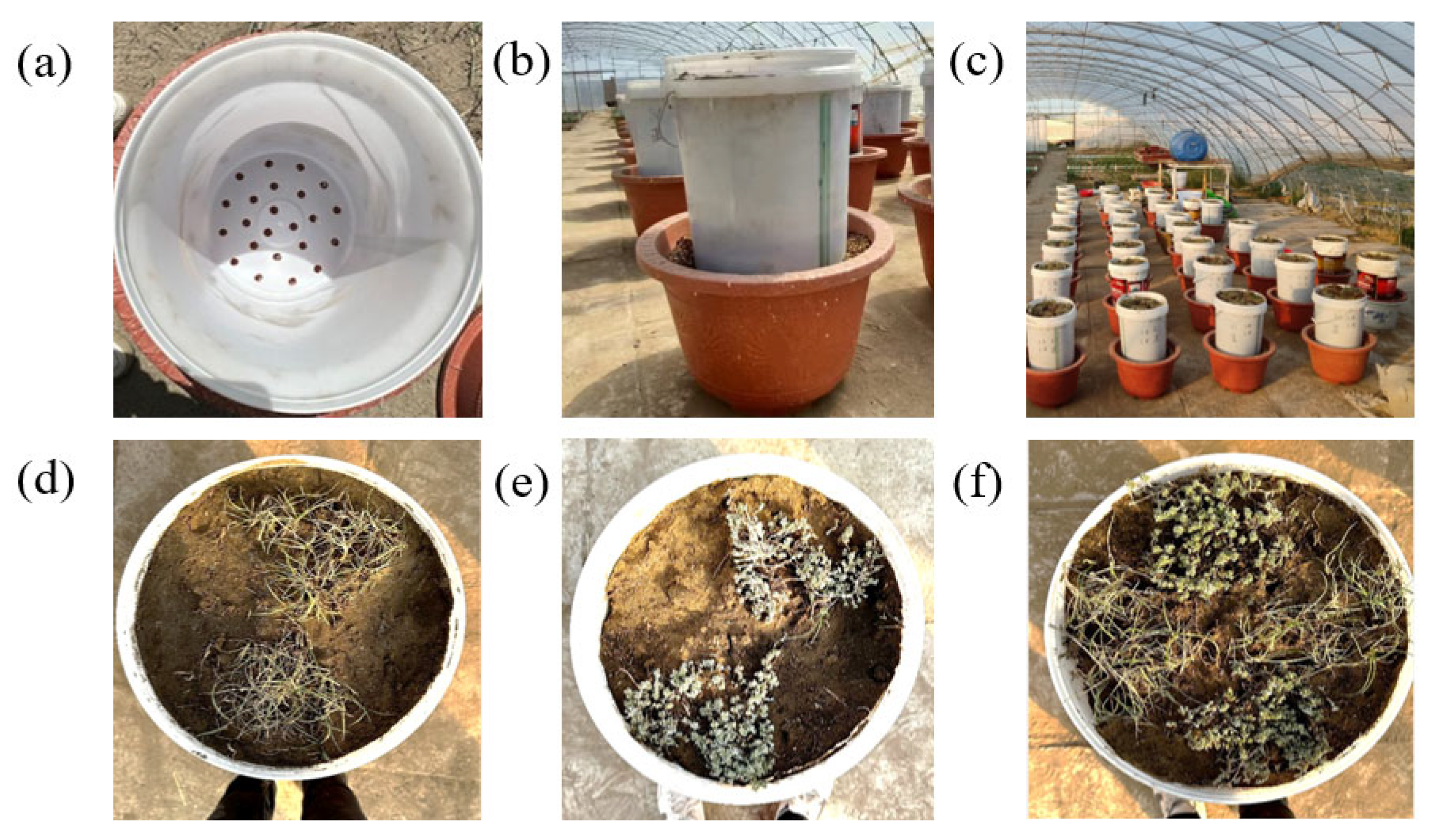
The air-dried soil collected previously was packed into a two-layer cultivation system to simulate the natural vertical distribution of field soils. The upper cultivation bucket (transparent, 30 cm in diameter and 38 cm in height) contained the 0–30 cm soil layer, while the lower bucket (35 cm in diameter and 30 cm in height) was filled with the 30–60 cm soil layer (Figure 1). To allow root penetration between layers, 23 holes (1.5 cm in diameter) were evenly drilled at the bottom of the upper bucket (Figure 1). A 3 cm thick layer of vermiculite was placed between the two buckets to interrupt capillary water movement.
The lower bucket was filled with 23 kg of sieved dry soil and watered with 4 kg of water, while the upper bucket was filled with approximately 20 kg of dry soil, leveled, and watered with 3 kg. The field-collected A. cristatum and A. frigida soil monoliths were then transplanted into the upper buckets (each weighing approximately 10 kg after adjustment), followed by an additional 1 kg of water, resulting in an initial gravimetric soil water content of approximately 15% in both layers.
After transplantation, the soil volumetric water content (VWC) in both the upper and lower layers of each bucket was monitored using a TDR 100 (Spectrum Technologies Inc., Aurora, IL, USA). Initial watering was applied uniformly to all buckets when the average gravimetric water content across soil layers decreased to approximately 10%. Thereafter, to maintain soil moisture within a target range of 15–20%, each pot was irrigated every 3–4 days with 1.5 kg of water added to the upper bucket and 0.8 kg added to the lower bucket. In early July, once seedling roots were observed to penetrate the vermiculite layer and enter the lower bucket, the differential water treatments were initiated. Irrigation for each pot was dynamically scheduled based on real-time TDR measurements. When the soil water content in the wet and dry treatments decreased to 15% and 5%, respectively, 500 g of water was added to restore moisture to its target range. This irrigation volume was determined by TDR monitoring to ensure a gradual increase in soil moisture, thereby minimizing fluctuations and maintaining stable conditions near the predetermined target levels.
The experiment was conducted in a greenhouse kept open for ventilation, under natural light and temperature conditions comparable to those in the field, with rainfall excluded (Figure 1). To minimize positional effects related to potential light and temperature gradients within the greenhouse, all pots were systematically rotated on a weekly basis, with those positioned near the perimeter ventilation openings exchanged with those located in the interior. Nutrient solution was applied once a month to ensure seedling survival and normal growth [31]. During the cultivation period, any weeds that emerge in the bucket should be promptly removed.

2.4. Data Collection and Sample Processing

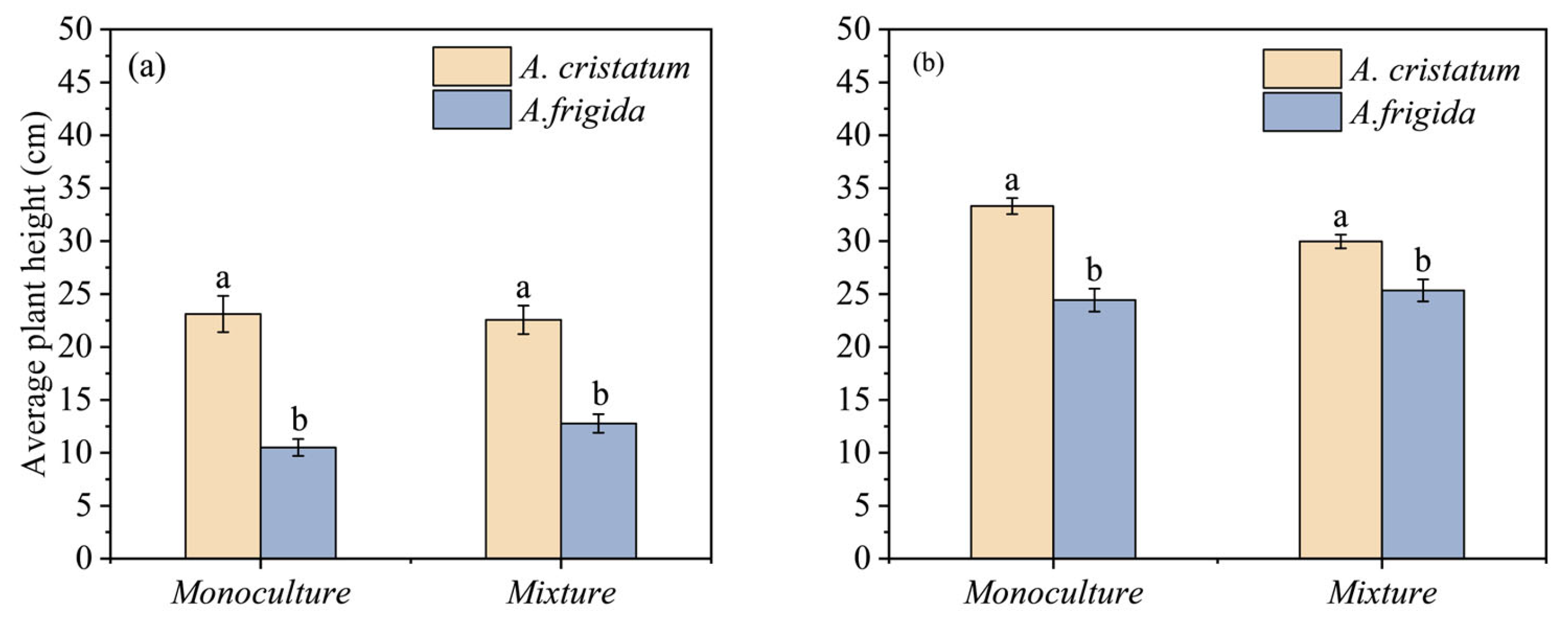
At the end of the growing season (late September 2023), all plants were harvested. Aboveground biomass was clipped at the soil surface, separated by species, oven-dried at 65 °C for 48 h, and weighed. Plant height of A. cristatum and A. frigida was measured in June and September before final harvest.
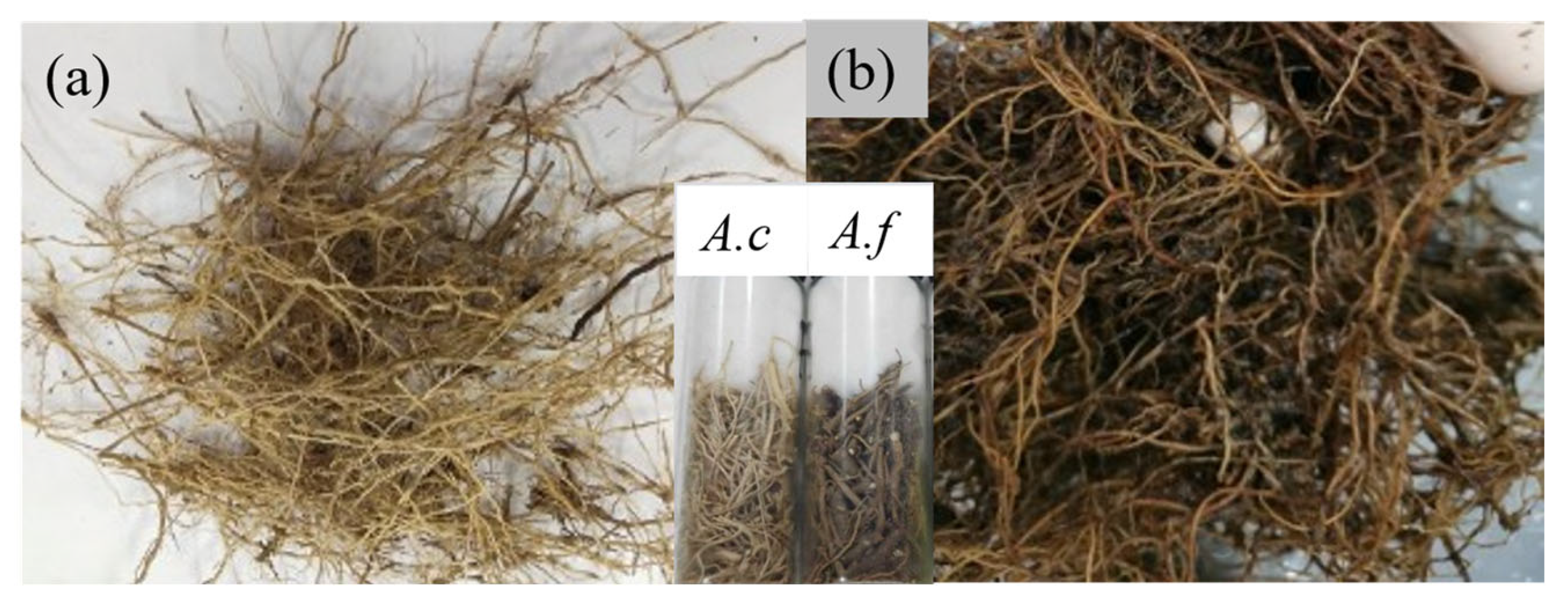
Root samples were collected from two soil layers (0–30 cm and 30–60 cm) using the washing method with a mesh bag (mesh size 0.4 mm) [32]. The samples were washed under running water to remove soil particles and finally decanted (at least four times). Cleaned root samples were then separated into live and dead fractions following the method described by Gao et al. [32]. The root systems of A. frigida and A. cristatum exhibited pronounced differences in color and texture: roots of A. frigida were yellow, coarse, and highly lignified, whereas those of A. cristatum were fine, fibrous, and white (Figure A1). These distinct morphological traits enabled reliable manual separation of the two species’ roots in mixed-planting treatments. Thus, live roots of A. cristatum and A. frigida were manually separated based on morphological traits in mixed-planting treatments. Although visual root identification is subject to potential uncertainty, particularly for fine or overlapping roots in deeper soil layers, the high contrast in key traits (color, thickness, lignification) allowed for consistent and reproducible separation in the majority of samples. After separation, all root samples were oven-dried at 65 °C for 48 h and weighed to determine root biomass.

2.5. Calculation of Competitive Indices

Relative competition intensity (RCI) and the competitive aggressiveness coefficient (A) were calculated based on aboveground or belowground biomass as follows:
RCIa = (Yaa − Yab)/Yaa
RCIb = (Ybb − Yba)/Ybb
Aab = Yab/(Yaa × p) − Yba/(Ybb × q)
where a and b denote A. cristatum and A. frigida, respectively; Yaa and Ybb are the monoculture biomasses of A. cristatum and A. frigida; Yab and Yba represent their biomasses in mixed culture; and p and q are their respective proportions in the mixture. If 0 < RCI < 1, interspecific competition occurs, and a higher RCI value indicates weaker competitive ability of the species. If RCI < 0, the presence of the other species encourages growth [33]. Because Aab = −Aba, only the competitive aggressiveness coefficient of A. frigida (Aba) was calculated. Aba > 0 signifies stronger competitiveness of A. frigida, while Aba < 0 shows dominance of A. cristatum [34].

2.6. Statistics and Data Analysis

All statistical analyses were performed using IBM SPSS Statistics (v27.0, IBM Corp., Armonk, NY, USA). Prior to analysis, the assumptions of normality and homogeneity of variances for the residuals of each ANOVA model were formally tested. The Shapiro–Wilk test was applied to assess normality, and Levene’s test was used to evaluate variance homogeneity across treatment groups. All assumptions were satisfied prior to proceeding with the factorial analysis. A two-way factorial ANOVA (4 soil moisture regimes × 3 planting methods) was employed to examine the main and interactive effects of the two factors on the following response variables: aboveground biomass (n = 36), root biomass in the 0–30/30–60 cm layer (n = 36), and root–shoot ratio. One-way ANOVA was further performed to evaluate the effects of soil moisture in the same planting method on these parameters and these competitive indices (A and RCI). Multiple comparisons of means were performed using Tukey’s test at a significance level of a = 0.05.

3. Results

3.1. Above- and Belowground Biomass of A. cristatum and A. frigida as Affected by Water and Planting Methods

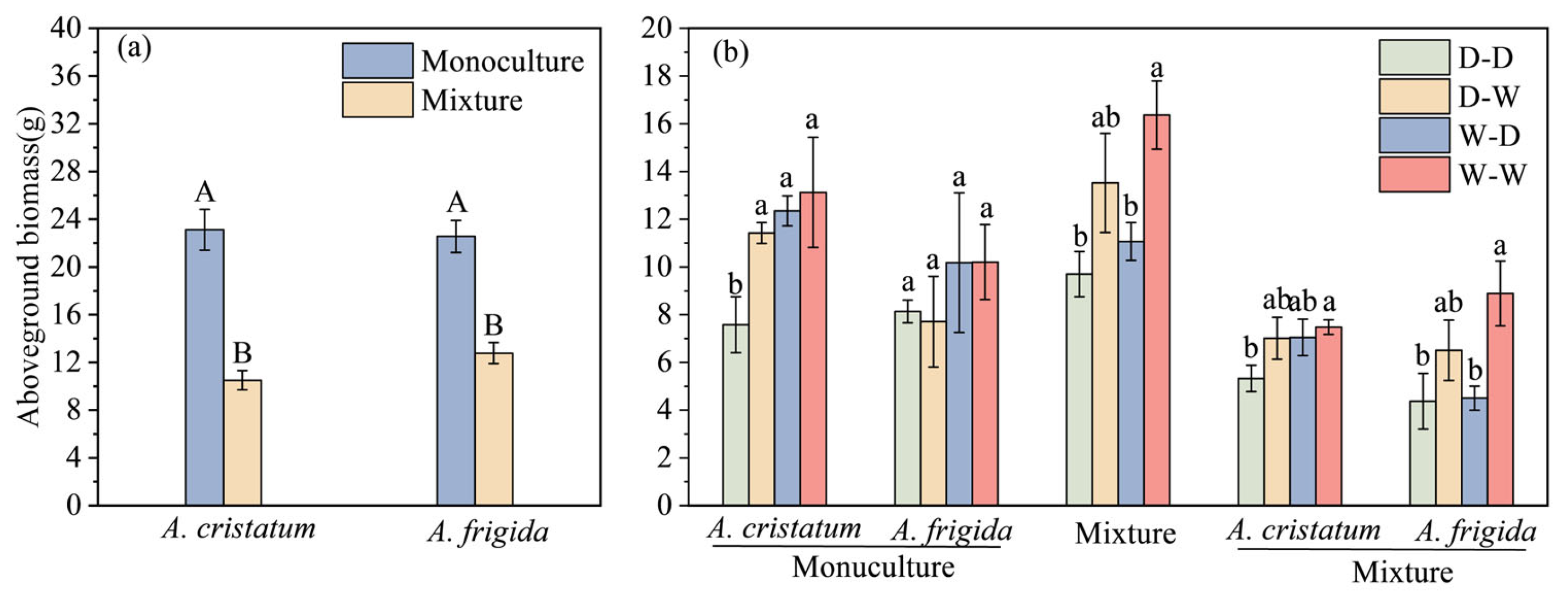
The planting method significantly influenced the aboveground biomass of A. cristatum and A. frigida (Table 2). Compared with monoculture, mixed planting significantly reduced the aboveground biomass of both species (Table 2, Figure 2a). Soil moisture significantly affected the aboveground biomass of A. cristatum but not that of A. frigida (Table 2. In monoculture, the aboveground biomass of A. cristatum was significantly lower under the D–D treatment than under the other three moisture regimes (D–W, W–D, W–W), which did not differ significantly from each other. This pattern was also evident in the mixture: the biomass of A. cristatum was lowest under D–D and significantly higher under W–W treatment. The D–W and W–D treatments resulted in intermediate biomass levels, with no significant difference detected for either compared with the D–D treatment. In contrast, A. frigida showed no significant differences in aboveground biomass among the four water treatments (Table 2).
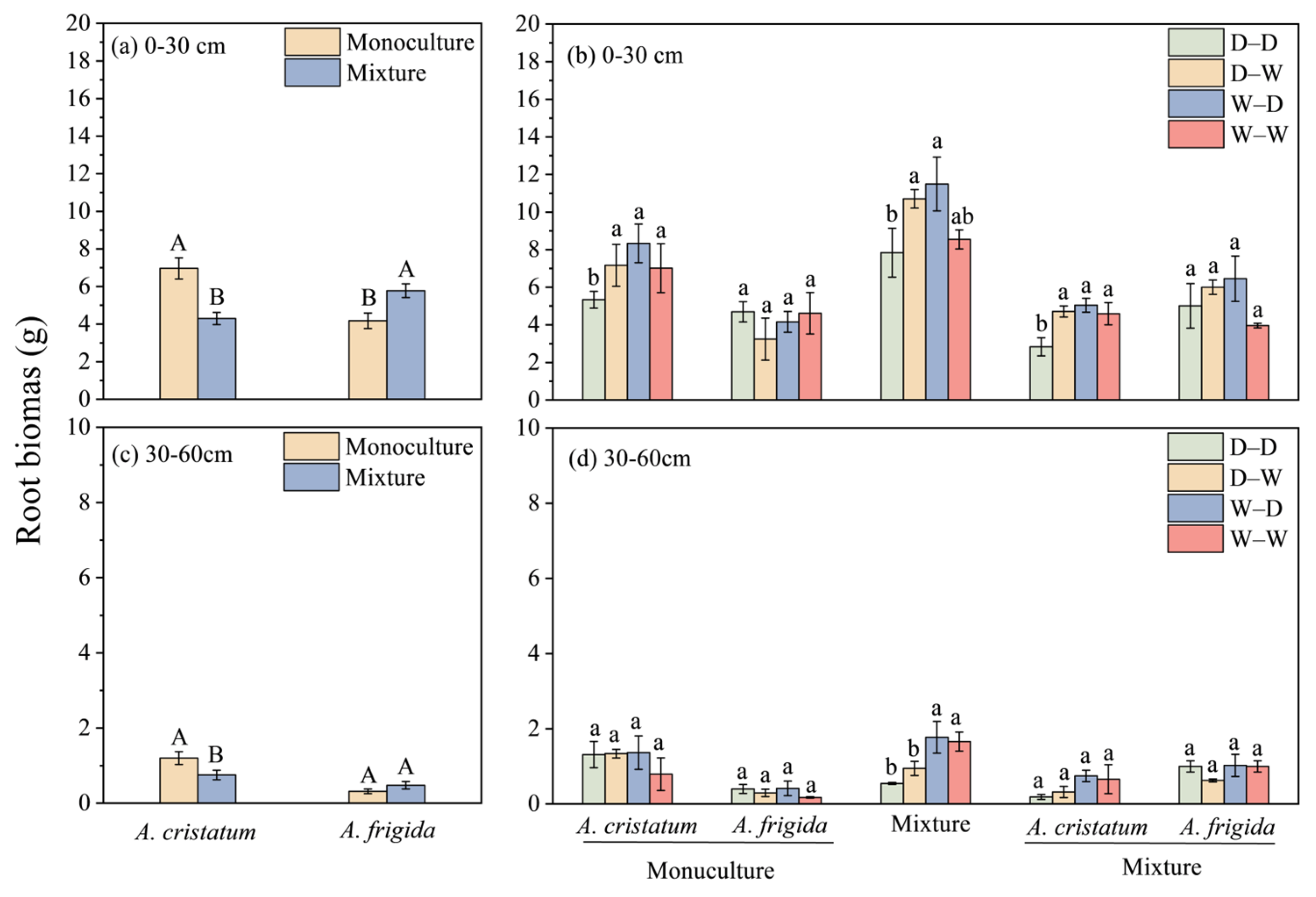
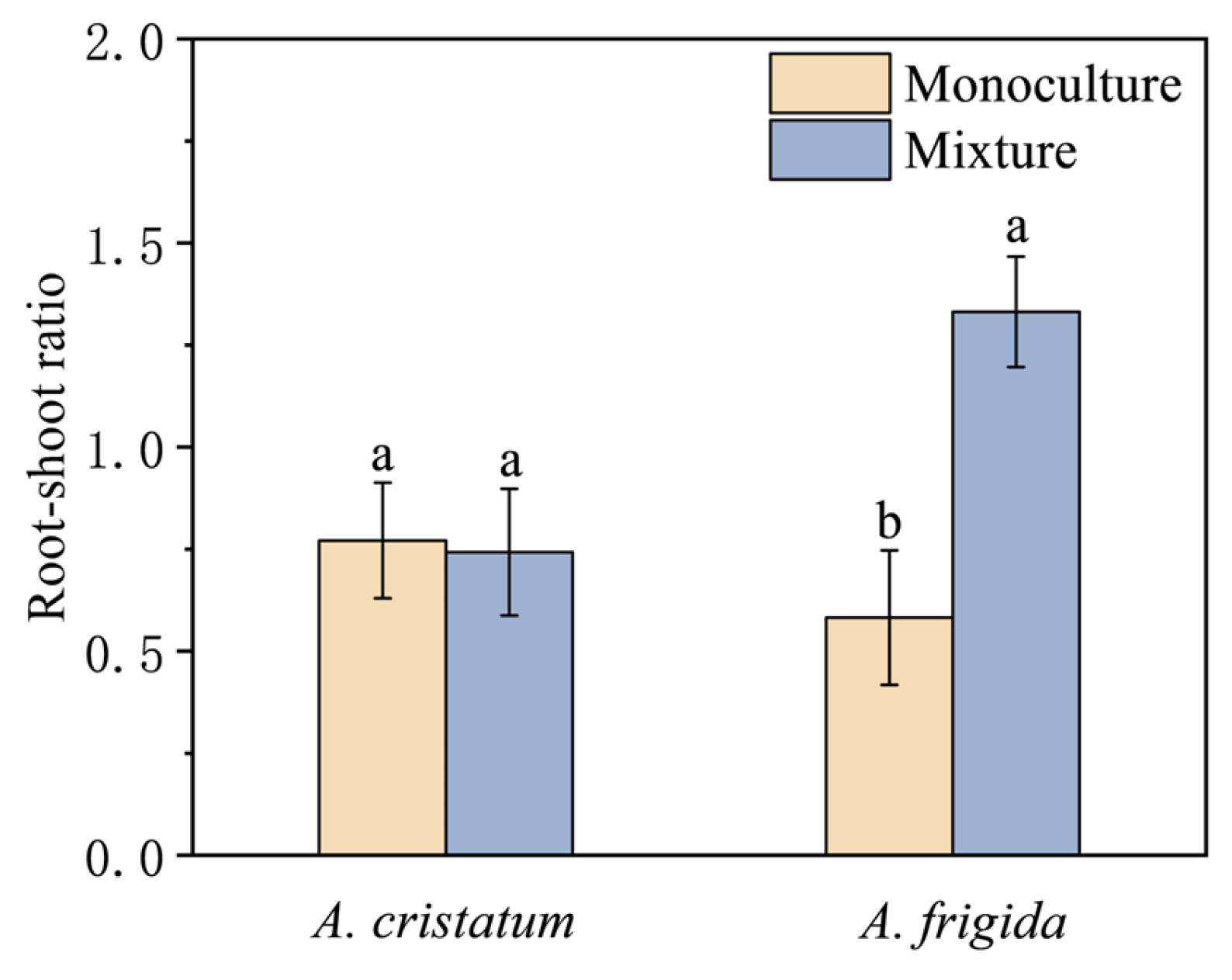
Root biomass was predominantly distributed in the 0–30 cm soil layer and was significantly higher than that in the 30–60 cm layer (Figure 3). The planting methods differentially influenced the belowground traits of the two species (Table 3). Compared with monoculture, A. cristatum showed significantly lower root biomass under mixed planting in both the 0–30 cm and 30–60 cm soil layers. In contrast, A. frigida exhibited significantly higher root biomass in the 0–30 cm layer in the mixture, while no significant difference was observed between planting methods in the 30–60 cm soil layer (Figure 3a). Furthermore, A. frigida displayed a higher root–shoot ratio in mixed planting than in monoculture, whereas the root–shoot ratio of A. cristatum was not significantly affected by either soil moisture or planting method (Table 4, Figure 4).
Soil moisture significantly affected the root biomass of A. cristatum but not that of A. frigida in the 0–30 cm layer (Table 3). In both monoculture and mixture, the root biomass of A. cristatum was significantly lower under the D–D treatment than under the D–W, W–D, and W–W regimes, which did not differ significantly from each other. In contrast, A. frigida root biomass showed no significant differences among water treatments in this layer (Figure 3b). In the lower soil layer (30–60 cm), however, soil moisture did not have a significant effect on the root biomass of either species, regardless of planting pattern (Figure 2b and Figure 3d).

3.2. Above- and Belowground Competitive Interaction Between A. cristatum and A. frigida as Affected by Water and Planting Methods

The relative aboveground competition intensity (RCI) and aggressivity (A) varied between A. cristatum and A. frigida across water treatments (Table 4). RCI values were positive for both species under all four water treatments. The aggressivity (A) values of A. frigida differed among water treatments. Under moist upper-layer conditions (W–D and W–W), A values were negative or close to zero, whereas under dry upper-layer conditions (D–D and D–W), A values were positive (Table 4).
Belowground competitive patterns differed markedly from those aboveground (Table 5). A. frigida generally showed positive or near-zero A values, whereas its RCI was predominantly negative under all water treatments at both 0–30 cm and 30–60 cm soil depths. In contrast, A. cristatum exhibited positive RCI across water treatments and soil depths, except for an extreme negative value of −0.35 occurring under the W–W treatment in the 30–60 cm layer. This outlier resulted from one anomalous replicate among three. The belowground competition indices (RCI and A) of A. cristatum and A. frigida were not significantly different across water treatments at both the 0–30 cm and 30–60 cm soil layers (Table 5).

4. Discussion

4.1. Divergent Biomass Responses of A. frigida and A. cristatum to Soil Moisture Variation

Our results confirm that A. cristatum and A. frigida exhibit distinct growth sensitivities to soil moisture availability. A. cristatum demonstrated high plasticity and dependency on soil water, with both above- and belowground biomass significantly reduced under drought compared with moist treatment (Figure 2 and Figure 3). These findings align with previous studies reporting the strong dependence of A. cristatum on water availability [35,36]. Field observations indicate that tiller number and reproductive shoot production in A. cristatum increase significantly in wet years compared with dry years [37]. Under sufficient water availability, moist conditions may enable A. cristatum to grow more rapidly and attain greater plant height, thereby enhancing its light competitiveness through a taller stature than A. frigida (Figure A2). These traits improve light interception and photosynthetic efficiency, facilitating rapid expansion and dominance in community structure [18].
In contrast, A. frigida exhibited no significant variation in above- or belowground biomass among drought and moist treatments (Figure 2). This insensitivity highlights its xerophytic adaptations, which have a high degree of drought tolerance as documented in previous studies [38]. It has been reported that A. frigida possesses an enhanced capacity for water acquisition and transport, coupled with a conservative carbon investment strategy that favors allocation to belowground structures, thereby promoting the development of an extensive root system (Figure 4, [39,40]). Concurrently, it has been demonstrated that A. frigida maintains superior whole-plant hydraulic conductance under drought conditions, in contrast to dominant grasses, which achieve higher root hydraulic conductivity only under ample moisture conditions [41]. These strategies enable sustained physiological activity during drought, underpinning its dominance in arid grassland ecosystems [42].
In this study, vertical soil moisture distribution had similar effects on the aboveground and root biomass of both species. The lower-layer water supply (D–W treatment) significantly increased both aboveground biomass and upper-layer root biomass of A. cristatum, with effects comparable to those under the W–D treatment (Figure 2 and Figure 3). This may be attributed to water potential gradient-driven hydraulic redistribution, where moisture acquired by deep roots is transported upward to support growth in shallower soil zones and aboveground tissues, thereby enhancing overall plant productivity [43]. Notably, the root system of A. cristatum was observed to extend to a soil depth of 60 cm, although total lower-layer root biomass was only 17% of the upper-layer biomass (Figure 3). This finding updates the traditional view that grasses are generally shallow-rooted plants, indicating that they possess morphological plasticity for accessing deep soil moisture.
The pot experiment indicated that the contrasting biomass responses of A. frigida and A. cristatum to water availability were mainly attributable to species-specific water-use strategies rather than short-term adjustments in root vertical distribution under heterogeneous soil moisture conditions. However, this conclusion is constrained by the relatively short experimental duration (one year), which resulted in limited root biomass development in the deeper soil layer and showed weak treatment effects (Figure 3). For perennial plants, the development of lower-layer roots is a plastic process that requires multiple growing seasons and substantial carbon investment [44]. A one-year trial is therefore insufficient to fully capture long-term root architectural responses to sustained water stress or the cumulative effects of interspecific competition. Moreover, traditional root-separation methods may introduce some uncertainty, particularly in the identification of fine roots in lower soil layers. Accordingly, future studies should integrate long-term field observations with isotope tracing techniques to more robustly elucidate the role of vertical water heterogeneity in mediating competition between A. frigida and A. cristatum.

4.2. Above- and Belowground Competition of A. cristatum and A. frigida Under Different Water Regimes

The above- and belowground competitive relationships between A. cristatum and A. frigida responded differently to water regimes. Aboveground, under moist topsoil conditions (W–D, W–W), A. cristatum was the stronger aboveground competitor, as indicated by the negative aggressivity (A) of A. frigida (Table 5). This is consistent with the light pre-emption hypothesis, where grasses rapidly build a canopy to outcompete neighbors for light under favorable moisture [23]. Conversely, under topsoil drought treatment (D–D, D–W), A. frigida gained a relative aboveground advantage (positive A, Table 5), as its drought-tolerance traits allowed it to outperform the more negatively impacted grass [10,39,40,41].
Belowground, a strikingly different competitive pattern exists than aboveground. A. frigida maintained a consistent dominance across all water treatments (Table 6). This was evidenced by its generally positive belowground aggressivity (A) and its frequent negative RCI values (Table 6). The belowground competitive superiority of A. frigida may be attributed to (1) biomass allocation strategies. The root system of A. frigida shows greater plasticity than that of A. cristatum. In this study, the root–shoot ratio of A. frigida increased in mixtures compared with monoculture under all water treatments, whereas that of A. cristatum remained unchanged (Figure 4). This enhanced belowground investment aligns with observations in other shrubs, which can develop extensive hydraulic networks for water storage and redistribution among interconnected ramets, maintaining a competitive advantage under stress [22]. Such plasticity in belowground allocation represents an important mechanism by which semi-shrub species maintain long-term competitive advantages [45,46]. (2) Allelopathic effects. Although allelopathic interactions were not assessed in our study, prior research has shown that A. frigida releases allelochemicals from its leaves, stems, and rhizosphere soil. These compounds can inhibit root growth in several dominant grass species, including L. chinensis, Stipa krylovii, and A. cristatum [47,48].

4.3. Decoupled Above- and Belowground Competition: Ecological Insights from Grass–Shrub Interaction

A key finding of this study is the dissociation between aboveground and belowground competitive outcomes (Table 4 and Table 5). This decoupling provides an important mechanistic insight into grass–shrub dynamics. This result underscores the necessity of an integrated plant-competition perspective [23,49]. The increased root–shoot ratio of sub-shrub A. frigida in mixture (Figure 4) indicates a strategic shift in allocation when faced with a root competitor, further intensifying belowground competition. A. cristatum, while responsive to the moisture stress, did not exhibit such a plastic belowground response to interspecific competition.
It suggests that assessments of grass–shrub competition based solely on aboveground indicators likely overlook the belowground competitive advantage of shrubs. Research supports that a shrub’s belowground physiological advantage under water stress can pre-determine its competitive success before any visible aboveground interactions occur, as demonstrated in the North American tallgrass prairie [22]. Thus, the persistent belowground superiority of species like A. frigida could gradually translate into aboveground dominance, particularly under environmental stressors such as drought, thereby altering community competitive hierarchies over longer timescales. Consequently, predicting plant community dynamics in response to environmental change requires the integration of belowground competitive processes.

5. Conclusions

This study investigated the responses of aboveground and belowground competitive relationships between A. frigida and A. cristatum, the key subshrub and grass species governing degradation and recovery dynamics during succession in the semi-arid steppe.
Our primary findings indicate that (1) A. cristatum and A. frigida exhibited contrasting biomass responses to soil moisture variation. A. cristatum was highly sensitive to water availability, producing significantly greater above- and belowground biomass under moist conditions than under drought, whereas A. frigida maintained relatively stable shoot and root biomass across all moisture regimes. (2) Aboveground and belowground competitive outcomes were decoupled. In mixtures, A. cristatum exhibited stronger aboveground competitive ability under moist conditions, whereas A. frigida dominated aboveground under drought. Belowground, however, A. frigida consistently outperformed A. cristatum across all water treatments.
These findings reveal that an exclusive reliance on aboveground metrics can critically mask the persistent belowground advantage of shrubs like A. frigida, which likely serves as an important mechanism for its establishment in degraded grasslands. The persistent belowground advantage of A. frigida suggests that under increasing environmental stress, such as drought, its root system may first establish strong competitive dominance belowground, which could subsequently drive aboveground community succession. Therefore, accurately predicting grass–shrub dynamics and succession trajectories requires an integrated framework that explicitly accounts for root-mediated competition.
The one-year pot experiment provides valuable mechanistic insights but also presents limitations. Its short duration may not adequately capture perennial root development in deeper soil layers. Future studies should integrate long-term field observations with isotope tracing techniques to clarify the long-term effects of vertical water heterogeneity on grass–shrub competition. Understanding this belowground asymmetry is critical for predicting vegetation shifts, particularly shrub expansion, and for informing effective management strategies in water-limited grasslands.

Author Contributions

H.C.: Data Curation, Formal Analysis, Writing—Original Draft. X.F.: Investigation, Methodology. J.W.: Investigation. Q.C.: Experimental design, Writing—Review and Editing, Supervision, Project Administration, Funding Acquisition. Y.H.: Writing—Review and Editing, Supervision. All authors have read and agreed to the published version of the manuscript.

Funding

This research was funded by the National Natural Science Foundation of China, grant numbers 31971437, 42577059, and U2244214.

Data Availability Statement

All data have been included in the main text.

Acknowledgments

We are grateful to the editors and anonymous reviewers for their constructive comments and suggestions, which significantly improved the quality of this manuscript. We also thank our colleagues at the Tianjin Key Laboratory of Water Resources and Environment for their valuable discussions and technical support during the experiment. Furthermore, we wish to extend our sincere thanks to Chen Jianjun for his indispensable assistance during the field-work.

Conflicts of Interest

The authors declare no conflicts of interest.

Appendix A

Figure A1. Root characteristics of (a) A. cristatum and (b) A. frigida.
Agronomy 16 00378 g0a1
Figure A2. Average plant height in (a) June and (b) September. Different lowercase letters indicate significant differences between species (p < 0.05, n = 12).
Agronomy 16 00378 g0a2

References

  1. He, P.; Zeng, Y.; Wang, N.; Han, Z.; Meng, X.; Dong, T.; Ma, X.; Ma, S.; Ma, J.; Sun, Z. Early evidence that soil dryness causes widespread decline in grassland productivity in China. Land 2023, 12, 484. [Google Scholar] [CrossRef] [Scilit]
  2. Liu, S.; Zhou, L.; Li, H.; Zhao, X.; Yang, Y.; Zhu, Y.; Hu, H.; Chen, L.; Zhang, P.; Shen, H.; et al. Shrub encroachment decreases soil inorganic carbon stocks in Mongolian grasslands. J. Ecol. 2020, 108, 678–686. [Google Scholar] [CrossRef] [Scilit]
  3. Su, R.; Yu, T.; Dayananda, B.; Bu, R.; Su, J.; Fan, Q. Impact of climate change on primary production of Inner Mongolian grasslands. Glob. Ecol. Conserv. 2020, 22, e00928. [Google Scholar] [CrossRef] [Scilit]
  4. Song, Q.; Wang, T. Effects of shrub encroachment in the Inner Mongolia ecotones between forest and grassland on the species diversity and interspecific associations. Agronomy 2022, 12, 2575. [Google Scholar] [CrossRef] [Scilit]
  5. Han, D.; Wang, G.; Xue, B.; Liu, T.; Xu, X. Evaluation of semiarid grassland degradation in North China from multiple perspectives. Ecol. Eng. 2018, 112, 41–50. [Google Scholar] [CrossRef] [Scilit]
  6. Chen, Q.; Wang, Z.; Zou, C.B.; Fan, Y.; Dittert, K.; Lin, S. Legacy effects of historical grazing affect the response of vegetation dynamics to water and nitrogen addition in semi-arid steppe. Appl. Veg. Sci. 2018, 21, 229–239. [Google Scholar] [CrossRef] [Scilit]
  7. Chen, Q.; Hooper, D.U.; Lin, S. Shifts in species composition constrain restoration of overgrazed grassland using nitrogen fertilization in Inner Mongolian steppe, China. PLoS ONE 2011, 6, e16909. [Google Scholar] [CrossRef] [Scilit]
  8. Chen, Q.; Hooper, D.U.; Li, H.; Gong, X.Y.; Peng, F.; Wang, H.; Dittert, K.; Lin, S. Effects of resource addition on recovery of production and plant functional composition in degraded semiarid grasslands. Oecologia 2017, 184, 13–24. [Google Scholar] [CrossRef] [Scilit]
  9. Yang, H.; Auerswald, K.; Bai, Y.; Han, X. Complementarity in water sources among dominant species in typical steppe ecosystems of Inner Mongolia, China. Plant Soil 2011, 340, 303–313. [Google Scholar] [CrossRef] [Scilit]
  10. Keen, R.M.; Helliker, B.R.; McCulloh, K.A.; Nippert, J.B. Save or spend? Diverging water-use strategies of grasses and encroaching clonal shrubs. J. Ecol. 2024, 112, 870–885. [Google Scholar] [CrossRef] [Scilit]
  11. Zhao, Y.; Li, H.; Peng, F.; Xilatu, D.; Chen, Q.; Lin, S. The restoration effect of degraded grassland depends on the response of species root distribution to resource availability. Agronomy 2025, 15, 12. [Google Scholar] [CrossRef] [Scilit]
  12. Nippert, J.B.; Knapp, A.K. Linking water uptake with rooting patterns in grassland species. Oecologia 2007, 153, 261–272. [Google Scholar] [CrossRef] [Scilit]
  13. Ward, D.; Wiegand, K.; Getzin, S. Walter’s two-layer hypothesis revisited: Back to the roots! Oecologia 2013, 172, 617–630. [Google Scholar] [CrossRef] [Scilit]
  14. Nippert, J.B.; Holdo, R.M. Challenging the maximum rooting depth paradigm in grasslands and savannas. Funct. Ecol. 2015, 29, 739–745. [Google Scholar] [CrossRef] [Scilit]
  15. Throop, H.L.; Reichmann, L.G.; Sala, O.E.; Archer, S.R. Response of dominant grass and shrub species to water manipulation: An ecophysiological basis for shrub invasion in a Chihuahuan Desert grassland. Oecologia 2012, 169, 373–383. [Google Scholar] [CrossRef] [Scilit]
  16. Kiær, L.P.; Weisbach, A.N.; Weiner, J. Root and shoot competition: A meta-analysis. J. Ecol. 2013, 101, 1298–1312. [Google Scholar] [CrossRef] [Scilit]
  17. Winkler, D.E.; Belnap, J.; Hoover, D.; Reed, S.C.; Duniway, M.C. Shrub persistence and increased grass mortality in response to drought in dryland systems. Glob. Change Biol. 2019, 25, 3121–3135. [Google Scholar] [CrossRef] [Scilit]
  18. Pierce, N.A.; Archer, S.R.; Bestelmeyer, B.T. Competition suppresses shrubs during early, but not late, stages of arid grassland–shrubland state transition. Funct. Ecol. 2019, 33, 1480–1490. [Google Scholar] [CrossRef] [Scilit]
  19. Pendergast, T.H., IV; Burke, D.J.; Carson, W.P. Belowground biotic complexity drives aboveground dynamics: A test of the soil community feedback model. New Phytol. 2013, 197, 1300–1310. [Google Scholar] [CrossRef] [Scilit]
  20. Zhong, M.; Liu, C.; Wang, X.; Hu, W.; Qiao, N.; Song, H.; Chen, J.; Miao, Y.; Wang, G.; Wang, D.; et al. Belowground root competition alters the grass seedling establishment response to light by a nitrogen addition and mowing experiment in a temperate steppe. Front. Plant Sci. 2022, 13, 801343. [Google Scholar] [CrossRef] [Scilit]
  21. Borer, E.T.; Seabloom, E.W.; Gruner, D.S.; Harpole, W.S.; Hillebrand, H.; Lind, E.M.; Adler, P.B.; Alberti, J.; Anderson, T.M.; Bakker, J.D.; et al. Herbivores and nutrients control grassland plant diversity via light limitation. Nature 2014, 508, 517–520. [Google Scholar] [CrossRef] [Scilit]
  22. O’Keefe, K.; Nippert, J.B.; Keen, R.M.; McCulloh, K.A. Contrasting shrub and grass hydraulic responses to experimental drought. Oecologia 2024, 204, 931–941. [Google Scholar] [CrossRef] [Scilit]
  23. Poorter, H.; Niklas, K.J.; Reich, P.B.; Oleksyn, J.; Poot, P.; Mommer, L. Biomass allocation to leaves, stems and roots: Meta-analyses of interspecific variation and environmental control. New Phytol. 2012, 193, 30–50. [Google Scholar] [CrossRef] [Scilit]
  24. Eziz, A.; Yan, Z.; Tian, D.; Han, W.; Tang, Z.; Fang, J. Drought effect on plant biomass allocation: A meta-analysis. Ecol. Evol. 2017, 7, 11002–11010. [Google Scholar] [CrossRef] [Scilit]
  25. Zhang, P.; Xiao, P.; Yao, W.; Liu, G.; Sun, W. Profile distribution of soil moisture response to precipitation on the Pisha sandstone hillslopes of China. Sci. Rep. 2020, 10, 9136. [Google Scholar] [CrossRef] [Scilit]
  26. Centeri, C. Effects of grazing on water erosion, compaction and infiltration on grasslands. Hydrology 2022, 9, 34. [Google Scholar] [CrossRef] [Scilit]
  27. Li, W.; Migliavacca, M.; Forkel, M.; Denissen, J.M.C.; Reichstein, M.; Yang, H.; Duveiller, G.; Weber, U.; Orth, R. Widespread increasing vegetation sensitivity to soil moisture. Nat. Commun. 2022, 13, 3959. [Google Scholar] [CrossRef] [Scilit]
  28. Graf, M.; Arnault, J.; Fersch, B.; Kunstmann, H. Is the soil moisture–precipitation feedback enhanced by heterogeneity and dry soils? A comparative study. Hydrol. Process. 2021, 35, e14332. [Google Scholar] [CrossRef] [Scilit]
  29. Wu, J.H. Adaptation Mechanisms of Artemisia frigida to Drought Stress. Master’s Thesis, Inner Mongolia Agricultural University, Hohhot, China, 2009. [Google Scholar]
  30. Zhao, Y.; Peth, S.; Reszkowska, A.; Gan, L.; Krümmelbein, J.; Peng, X.; Horn, R. Response of soil moisture and temperature to grazing intensity in a Leymus chinensis steppe, Inner Mongolia. Plant Soil 2011, 340, 89–102. [Google Scholar] [CrossRef] [Scilit]
  31. van Delden, S.H.; Nazarideljou, M.J.; Marcelis, L.F.M. Nutrient solutions for Arabidopsis thaliana: A study on nutrient solution composition in hydroponics systems. Plant Methods 2020, 16, 72. [Google Scholar] [CrossRef] [Scilit]
  32. Gao, Y.Z.; Giese, M.; Lin, S.; Sattelmacher, B.; Zhao, Y.; Brueck, H. Belowground net primary productivity and biomass allocation of a grassland in Inner Mongolia is affected by grazing intensity. Plant Soil 2008, 307, 41–50. [Google Scholar] [CrossRef] [Scilit]
  33. Armas, C.; Ordiales, R.; Pugnaire, F.I. Measuring plant interactions: A new comparative index. Ecology 2004, 85, 2682–2686. [Google Scholar] [CrossRef] [Scilit]
  34. Du, Y.; Zhou, Q.; Peng, Z.; Peng, F.; Xi, L.; Li, Y. Does a widespread species have a higher competitive ability than an endemic species? A case study from the Dongting Lake wetlands. Front. Plant Sci. 2022, 13, 864316. [Google Scholar] [CrossRef] [Scilit] [PubMed]
  35. Blank, R.R.; Morgan, T.; Allen, F. Suppression of annual Bromus tectorum by perennial Agropyron cristatum: Roles of soil nitrogen availability and biological soil space. AoB Plants 2015, 7, plv006. [Google Scholar] [CrossRef] [Scilit]
  36. Zhang, H.; Gao, Y.; Tasisa, B.Y.; Baskin, J.M.; Baskin, C.C.; Lü, X.-T.; Zhou, D. Divergent responses to water and nitrogen addition of three perennial bunchgrass species from variously degraded typical steppe in Inner Mongolia. Sci. Total Environ. 2019, 647, 1344–1350. [Google Scholar] [CrossRef] [Scilit]
  37. Knapp, A.K.; Smith, M.D. Variation among biomes in temporal dynamics of aboveground primary production. Science 2001, 291, 481–484. [Google Scholar] [CrossRef] [Scilit]
  38. Oyundelger, K.; Herklotz, V.; Harpke, D.; Oyuntsetseg, B.; Wesche, K.; Ritz, C.M. Contrasting effects of local environment and grazing pressure on the genetic diversity and structure of Artemisia frigida. Conserv. Genet. 2021, 22, 947–962. [Google Scholar] [CrossRef] [Scilit]
  39. Gao, X.; Liu, X.; Ma, L.; Wang, R. Root vertical distributions of two Artemisia species and their relationships with soil resources in the Hunshandake Desert, China. Ecol. Evol. 2020, 10, 3112–3119. [Google Scholar] [CrossRef] [Scilit]
  40. Yang, L.; Lai, L.; Zhou, J.; Li, Q.; Yi, S.; Sun, Q.; Zheng, Y. Changes in levels of enzymes and osmotic adjustment compounds in key species and their relevance to vegetation succession in abandoned croplands of a semiarid sandy region. Ecol. Evol. 2020, 10, 2269–2280. [Google Scholar] [CrossRef] [Scilit]
  41. Ji, W.; Hanan, N.P.; Browning, D.M.; Monger, H.C.; Peters, D.P.C.; Bestelmeyer, B.T.; Archer, S.R.; Ross, C.W.; Lind, B.M.; Anchang, J.; et al. Constraints on shrub cover and shrub–shrub competition in a U.S. Southwest desert. Ecosphere 2019, 10, e02590. [Google Scholar] [CrossRef] [Scilit]
  42. Liu, Y.; Song, Q.; Li, D.; Yang, X.; Li, D. Multifunctional roles of plant dehydrins in response to environmental stresses. Front. Plant Sci. 2017, 8, 1018. [Google Scholar] [CrossRef] [Scilit]
  43. Sha, S.; Cai, G.; Liu, S.; Ahmed, M.A. Roots to the rescue: How plants harness hydraulic redistribution to survive drought across contrasting soil textures. Adv. Biotechnol. 2024, 2, 43. [Google Scholar] [CrossRef] [Scilit]
  44. Thorup-Kristensen, K.; Halberg, N.; Nicolaisen, M.; Olesen, J.E.; Crews, T.E.; Hinsinger, P.; Kirkegaard, J.; Pierret, A.; Dresbøll, D.B. Digging deeper for agricultural resources: The value of deep rooting. Trends Plant Sci. 2020, 25, 406–417. [Google Scholar] [CrossRef] [Scilit]
  45. Liu, Y.; Xu, M.; Li, G.; Wang, M.; Li, Z.; De Boeck, H.J. Changes of aboveground and belowground biomass allocation in four dominant grassland species across a precipitation gradient. Front. Plant Sci. 2021, 12, 650802. [Google Scholar] [CrossRef] [Scilit]
  46. Freschet, G.T.; Bellingham, P.J.; Lyver, P.O.; Bonner, K.I.; Wardle, D.A. Plasticity in above- and belowground resource acquisition traits in response to single and multiple environmental factors in three tree species. Ecol. Evol. 2013, 3, 1065–1078. [Google Scholar] [CrossRef] [Scilit]
  47. Zhao-Jiang, Z.; Ru-Min, Z.; Pei-Jun, G.; Guo-Sheng, W.; Ping, H.; Yan, G. Allelopathic effects of Artemisia frigida Willd. on growth of pasture grasses in Inner Mongolia, China. Biochem. Syst. Ecol. 2011, 39, 377–383. [Google Scholar] [CrossRef] [Scilit]
  48. Wang, Q.; Kong, M.; Wang, J.; Gao, B.; Ping, X. The specific impacts of allelopathy and resource competition from Artemisia frigida on the growth of three plant species in northern China. Plants 2024, 13, 3286. [Google Scholar] [CrossRef] [Scilit]
  49. Wang, C.; Sun, Y.; Chen, H.Y.H.; Yang, J.; Ruan, H. Meta-analysis shows non-uniform responses of above- and belowground productivity to drought. Sci. Total Environ. 2021, 782, 146901. [Google Scholar] [CrossRef] [Scilit]
Figure 1. Diagram of planting methods. (a) Distribution of holes at the bottom of the upper bucket; (b,c) experimental upper and lower pot setup; (d) A. cristatum monoculture; (e) A. frigida monoculture; (f) mixed culture of A. cristatum and A. frigida.
Agronomy 16 00378 g001
Figure 2. Aboveground biomass under different planting methods (a) and water levels (b). Different capital letters indicate significant differences between planting methods (p < 0.05, n = 12). Different lowercase letters indicate significant differences between water treatments (p < 0.05, n = 3). Error bars represent standard error. ANOVA results in Table 2.
Agronomy 16 00378 g002
Figure 3. Root biomass under different planting methods ((a): 0–30 cm soil depth; (c): 30–60 cm soil depth) and water treatments ((b): 0–30 cm soil depth; (d): 30–60 cm soil depth). Different capital letters indicate significant differences between planting methods (p < 0.05, n = 12). Different lowercase letters indicate significant differences between water treatments (p < 0.05, n = 3). Error bars represent the standard error. ANOVA results are presented in Table 2.
Agronomy 16 00378 g003
Figure 4. Root–shoot ratio of A. cristatum and A. frigida under different planting methods. Different lowercase letters indicate significant differences among planting methods (p < 0.05, n = 12). Error bars represent the standard error (n = 12). ANOVA results are shown in Table 3.
Agronomy 16 00378 g004
Table 1. The factorial combinations of soil moisture regimes (SMR) and planting method (PL).
PLA. cristatum
Monoculture
A. frigida
Monoculture
A. frigida/A. cristatum
Mixture
SMR
D–DTreatment 1Treatment 5Treatment 9
D–WTreatment 2Treatment 6Treatment 10
W–DTreatment 3Treatment 7Treatment 11
W–WTreatment 4Treatment 8Treatment 12
Table 2. Degrees of freedom (df), F-statistics (F), and p-values (p) from factorial ANOVA assessing the effects of of water (W), planting method (PL), and their interaction (W × PL) on aboveground biomass.
A. frigidaA. cristatum
FactordfFpFp
W31.6420.2195.1240.011
PL17.8590.01334.3180.001
W ×* PL31.1250.3681.0300.406
Table 3. Degrees of freedom (df), F-statistics (F), and p-values (p) from factorial ANOVA assessing the effects of of water (W), planting method (PL), and their interaction (W × PL) on aboveground biomass.
0–30 cm30–60 cm
FactordfA. frigidaA. cristatumA. frigidaA. cristatum
W30.4803.527 *1.5010.550
PL13.67620.772 ***2.3694.493 *
W ×* PL31.7260.1262.3031.416
*** p < 0.001; * p < 0.05.
Table 4. Degrees of freedom (df), F-statistics (F), and p-values (p) from Factorial ANOVA assessing the effects of water (W), planting method (PL), and their interaction (W × PL) on the root–shoot ratio of A. cristatum and A. frigida.
A. frigidaA. cristatum
FactordfFpFp
W31.6720.2130.3740.773
PL19.7590.0070.0220.883
W ×* PL31.2820.3140.8410.491
Table 5. Relative aboveground competition intensity (RCI) and aggressivity (A) of A. cristatum and A. frigida under different water treatments.
A. cristatum (RCI)A. frigida (RCI)A. frigida (A)
D–D0.33 a0.24 bc0.10 b
D–W0.39 a0.01 c0.39 a
W–D0.41 a0.49 a−0.08 c
W–W0.27 a0.31 ab−0.03 bc
RCI: Relative competition intensity; A: aggressivity; different lowercase letters indicate significant differences among water treatments (p < 0.05).
Table 6. Belowground relative competition intensity (RCI) and aggressivity (A) of A. cristatum and A. frigida under different water treatments at two soil depths (0–30 cm and 30–60 cm).
DepthWaterA. cristatum (RCI)A. frigida (RCI)A. frigida (A)
0–30 cmD–D0.48 a−0.12 a0.60 a
D–W0.32 a−1.28 a1.60 a
W–D0.39 a−0.56 a0.95 a
W–W0.33 a0.01 a0.32 a
30–60 cmD–D0.71 a0.46 a0.25 a
D–W0.52 a−0.16 a0.68 a
W–D0.06 a−1.94 a2.01 a
W–W−0.35 a−1.74 a0.83 a
RCI: Relative competition intensity; A: aggressivity; different lowercase letters indicate significant differences among water treatments (p < 0.05).
Disclaimer/Publisher’s Note: The statements, opinions and data contained in all publications are solely those of the individual author(s) and contributor(s) and not of MDPI and/or the editor(s). MDPI and/or the editor(s) disclaim responsibility for any injury to people or property resulting from any ideas, methods, instructions or products referred to in the content.