Article

Effects of Nitrogen Application Rate on Bulb Yield, Nitrogen Use Efficiency, and Normalised Difference Red Edge-Based Nitrogen Diagnostics in Garlic Varieties


by
Binh T. Nguyen
1,*,
Johannes B. Wehr
1,2,
Timothy J. O’Hare
3,
Neal W. Menzies
1,4 and
Stephen M. Harper
1,*
1
School of Agriculture and Food Sustainability, The University of Queensland, St. Lucia, QLD 4072, Australia
2
Verterra Ecological Engineering Company, Brisbane, QLD 4000, Australia
3
Centre for Nutrition and Food Sciences, Queensland Alliance for Agriculture and Food Innovation, The University of Queensland, Brisbane, QLD 4072, Australia
4
Nathan Campus, Griffith University, Brisbane, QLD 4122, Australia
*
Authors to whom correspondence should be addressed.
Agronomy 2026, 16(3), 338; https://doi.org/10.3390/agronomy16030338
Submission received: 12 December 2025 / Revised: 27 January 2026 / Accepted: 27 January 2026 / Published: 29 January 2026

Abstract

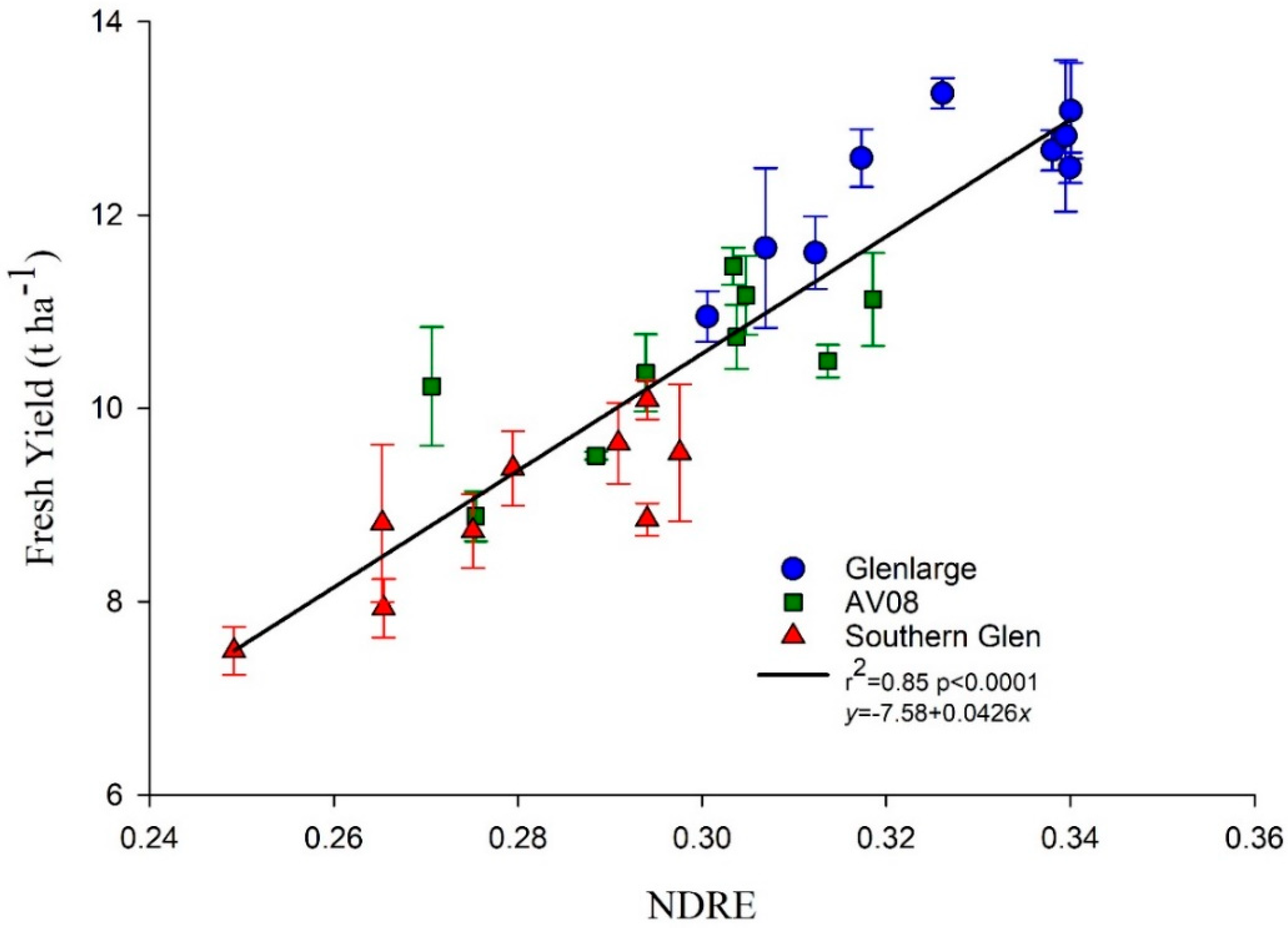
Optimising nitrogen (N) management is crucial for improving garlic (Allium sativum L.) productivity and nitrogen use efficiency (NUE). This study evaluated the effects of N application rate on bulb yield, NUE, and the links between N status, Normalised Difference Eed Edge (NDRE), and yield. A field experiment was conducted using nine N rates (0–360 kg N ha−1) across three garlic varieties (Glenlarge, Southern Glen and AV08). Foliage and bulb N concentrations were measured at key growth stages, and yield components were determined at 185 days after planting (DAP). NDRE values were collected at 147 DAP to evaluate their potential as non-destructive indicators of crop N status and yield. Nitrogen rate significantly affected bulb yield, with maximum yield achieved at 160–240 kg N ha−1. Increasing the N application rate reduced dry matter content and NUE across three garlic varieties. NDRE showed strong positive correlations with N rate (r2 = 0.96), leaf N concentration (r2 ≥ 0.82), and bulb yield (r2 = 0.85), demonstrating its sensitivity to in-season N variability and its potential for yield prediction. This study provides a systematic assessment of NDRE for N status diagnosis in garlic and presents initial evidence of varietal differences in N response, contributing to improving the understanding of management in this crop.

1. Introduction

Garlic growth and bulb weight are greatly affected by nitrogen (N) management [1,2]; therefore, understanding the effect of N supply is critical in maximising yield. Across different growing regions, N application rate for garlic varies considerably, leading to variable effects on garlic yield components [3,4,5,6,7,8]. Across these studies, average fresh bulb weight ranged from 20 g [7] to 68 g bulb−1 [8], and with vastly different amounts of N applied (from 100 to 320 kg ha−1). The study by Harper [8] evaluated the effect of N rate from 0 to 240 kg ha−1 on variety Glenlarge and showed that maximum fresh bulb weight (~68 g bulb−1) was achieved at an application of 240 kg N ha−1. Across a collection of 32 varieties, Nguyen and Wehr [9] measured substantial differences in yield potential ranging from ~25 to 120 g bulb−1. This leads to variation in N uptake and fertiliser-N use efficiency, suggesting that higher-yielding varieties likely require a greater N supply. Therefore, understanding how N application rates affect yield, bulb size, N uptake and N use efficiency (NUE) across varieties is essential for improving N management in garlic.
Although N responses can be assessed through traditional plant and soil assessment, these approaches are destructive and time-consuming, which limits their usefulness for in-season decision making. An emerging tool for monitoring N status in crops is spectral vegetation analysis using unmanned aerial systems (UAS) [10]. This approach offers a non-destructive alternative for monitoring crop N status, enabling rapid and field-scale assessment. A number of studies have explored the use of spectral data and vegetation indices in garlic in relation to fertiliser treatments and yield [11,12]. In a review of unmanned aerial systems (UAS), Poley and McDermid [10] reported strong correlations between the Normalised Difference Red Edge NDRE index and biomass (r2 = 0.70–0.86), with NDRE generally outperforming other indices, such as Normalised Difference Vegetation Index (NDVI) [10]. As a chlorophyll sensitive index, NDRE has proven effective for assessing N status in crops, such as rice [13] and wheat [14]. Although both NDRE and NDVI have been shown to predict yield across genotypes in wheat [15], NRDE is generally more sensitive to N status than NDVI [16] and particularly in the later stages of crop development [17]. In contrast, limited information is available on the application of NDRE for assessing N status in garlic, especially at the varietal level, highlighting a clear knowledge gap. To address this gap, this study used NDRE to assess N status and yield responses across three garlic varieties under different N application rates. In the context of improving N management and precision diagnostics in garlic production systems, this study aimed to evaluate the effects of N application rate on garlic yield and N use efficiency across varieties. In addition, the applicability of the NDRE index was investigated as a tool for diagnosing crop N status and predicting yield under field conditions.

2. Materials and Methods

The N rate experiment was conducted at the Department of Primary Industries, Gatton Research Facility, Queensland, Australia (27°33′ S 152°20′ E) to determine the effect on yield of three garlic varieties. To minimise the soil residual nitrate levels at planting, a site was selected where a barley cover crop had been grown and harvested for hay prior to the garlic trial being planted. The soil was a Dermosol [18], and 20 soil cores were randomly collected for analysis from each block and combined, with four replicate blocks. Soil samples were dried (40 °C for 5 days) and analysed for pH, EC, organic carbon (OC), NO3, and macro- and micro-nutrients (Table A1). The basal nitrate level was low and equivalent to ~30 kg NO3-N at a bulk density of 1.3 and 20 cm depth.
The experimental design was a split-plot randomised complete block factorial, with 4 replications in which the rate of N was the main factor, and varieties were the sub-factors. The selected varieties included Glenlarge, the high-yielding subtropical variety in Australia, Southern Glen, an important late-season sub-tropical variety and AV08 (coded as VFTA287M7 by the World Vegetable Centre), a new developing line with high yield potential. Large healthy seed cloves of garlic varieties Southern Glen, Glenlarge and AV08 were selected from bulbs grown in the previous season.
Nitrogen was applied at rates of 0, 40, 80, 120, 160, 200, 240, 300 and 360 kg ha−1 (Table A2). The rates were selected based on previous nutrient budgeting [8] and included incremental increases from a very low rate to high rates to allow the development of an N response curve and to identify the optimal application rate. The 0 kg N ha−1 treatment was included to allow the calculation of N supplied to the crop through N mineralised from the soil N pool. Urea and Ca(NO3)2 were used as the N sources to maintain a 60:40 ratio of ammonium and nitrate supply. The soil was inherently well supplied with Ca (Table A1) such that the differential treatment supply of Ca as Ca(NO3)2 was not an effect.
The dimensions of the main plots were 3.0 m × 5.0 m, consisting of 2 beds at 1.5 m width (centre to centre of wheel tracks). Each bed consisted of 2 rows of garlic at 0.55 m spacing and a within-row plant spacing of 10 cm, giving a plant population density of 133,000 plants ha−1. The sub-plots included 2 rows of variety Glenlarge and one row each of varieties AV08 and Southern Glen. A buffer of 1 m was allowed at the end of each plot. The trial was irrigated using Rivulis T-Tape 510-20-500 drip irrigation tape with emitter spacing at 20 cm and an output rate of 1 L h−1 per emitter. One line of drip tape was installed on the inside of each row of garlic. Fertiliser treatments and other nutrients were applied through fertigation using a partial flow bypass fertigation tank.
Other nutrients were applied at rates considered sufficient to prevent any limitation to crop growth, viz. 120 kg ha−1 K, 80 kg ha−1 S, 20 kg ha−1 Mg, 0.8 kg ha−1 B, 0.8 kg ha−1 Zn, 0.45 kg ha−1 Cu, and 0.11 kg ha−1 Mo [9]. The types and amount of fertiliser and timing of application are shown in Table A3. P, Mn and Fe were not applied because the soil was inherently high in these nutrients. The soil was also inherently high in Mg; however, MgSO4 was applied to provide sufficient S. Irrigation, pesticides and herbicides were applied as required. The trial was thinned to ensure there were no double plants.

2.1. Sample Collection and Processing

Over the duration of the growing period, whole plant samples of cv. Glenlarge were collected at intervals of about 7–10 days beginning from 40 days after planting until harvest. Due to the limited number of plants, the sampling interval for cv. Southern Glen and AV08 were set at approximately 30 days. The samples were washed to remove soil and fungicide residues, and the fresh weight was recorded. The samples were dried at 70 °C for 7 days, and the dry weight was recorded. The dried samples were ground to a fine powder and analysed for total N using a LECO combustion analyser (LECO Corporation, St Joseph, MI, USA).
At full maturity (at 185 DAP), all remaining plants in each plot were harvested. The harvested plants were cured in a ventilated open shed for four weeks. Bulbs were then separated, weighted and yield was calculated based on a plant population of 133,000 plants ha−1. For nutrient analysis, five medium-sized bulbs were selected from each treatment and sliced into 3 cm pieces. A subsample was collected and weighted for fresh weight (g), then dried at 70 °C for approx. 5 days. Dry weight (DW) (g) was recorded to calculate dry matter (DM) concentration (%). The dry samples were ground into fine powder for nutrient analysis. With the exception of N, mineral nutrients were analysed following digestion using nitric acid-perchloric acid and analysed using inductively coupled plasma optical emission spectroscopy (ICP-OES) (PerkinElmer, Waltham, MA, USA). Nitrogen concentrations were determined using a LECO combustion analyser.
N uptake was determined by total dry biomass multiplied by N concentration (%), then the N use efficiency (NUE) was calculated as the ratio of total plant N uptake to the amount of N applied as fertiliser, expressed as a percentage:
NUE = Total   N   plant   uptake   kg   ha 1 × 100 Applied   N   kg   ha 1

2.2. UAV Imaging

  • Drone-Based Multispectral Imaging and Data Extraction
High-resolution digital imaging of the trial site was conducted at 147 days after planting (DAP), during peak vegetative development. The imaging was performed by a commercial contractor, Airborninsight, using drones equipped for multispectral sensing. To ensure high-quality data extraction, imagery was collected with 75% forward and 75% side overlap for effective photogrammetric stitching. Ground Control Points (GCPs) were installed to enable accurate geolocation of the field trial.
The flight was carried out using a DJI Matrice 100 (M100) UAV (SZ DJI Technology Co., Ltd., Shenzhen, Guangdong, China) equipped with a MicaSense RedEdge multispectral sensor (MicaSense Inc., Seattle, WA, USA) (8 mm lens). The sensor captured five spectral bands, including Blue (475 nm, 20 nm FWHM); Green (560 nm, 20 nm FWHM); Red (668 nm, 10 nm FWHM); Red Edge (717 nm, 10 nm FWHM); near-infrared (NIR) (840 nm, 40 nm FWHM). The drone flight was conducted on a still clear day in August (average August minimum temperature 6 °C and maximum temperature 23 °C, and daylength ~11:09). The drone flew at 40 metres altitude and 2.5 m/s, achieving a ground sampling distance (GSD) of 2.8 cm.
  • Image Processing and Vegetation Index Mapping
Collected imagery was processed using Pix4Dmapper 4.7 photogrammetry software (Pix4D SA, Prilly, Switzerland). The GCPs were used to orthorectify the images and generate five-band orthomosaics. From these, vegetation indices such as NDVI, NDRE, and OSAVI were calculated for each pixel. The resulting maps were uploaded to MicaSense Atlas for visual inspection and index selection. Index calculations were performed in ArcMap 10.8.1 (ArcGIS desktop, Esri, CA, USA) using the Raster Calculator. Each pixel in the resulting data maps represented a vegetation index value.
Rectangular polygons were drawn in ArcMap over each microplot based on treatment, variety, and replicate, ensuring an identical size for all plots and buffers around edges to minimise border effects. Each polygon was assigned a unique identifier. Pixel values within each polygon were extracted, and summary statistics were generated per plot. The NDRE index values were calculated and normalised to a scale from 0.23 to 0.50 based on previous seasons of garlic research (Harper, unpublished) that consistently identified this range and represented variation in vegetation health across treatments and varieties.

2.3. Statistical Analysis

Data for mean values of key parameters were analysed for significance using one-way and two-way ANOVA to test the significance of the main effects of N rate and variety, and the interaction, using Minitab 18.1 software for Windows (Minitab Inc, State College, PA, USA). All ANOVA models satisfied the fundamental assumptions of independence, normality, and homoscedasticity. Significant differences between treatments were determined using Tukey’s Honest Significant Difference (HSD) at p < 0.05. Since N rate is a continuous variable (not strictly categorical), a quadratic regression analysis was conducted on each variety across N rate for the key parameters (bulb weight, bulb yield, DM%, foliage and bulb N concentration, N uptake and NDRE) and the fitted function plotted against mean and standard errors values using SigmaPlot 14.0 software (Systat software Inc., San Jose, CA, USA). Linear regression analysis was conducted on the relationship between Bulb fresh yield and NDRE value, and for the relationship between Foliage N concentration and NDRE value using SigmaPlot 14.0 software (Systat software Inc., San Jose, CA, USA).

2.4. Use of Generative Artificial Intelligence

AI tool (Chat GPT 5.1) was used to assist with drafting a preliminary version of the graphical abstract layout and the manuscript abstract, which was subsequently reviewed and edited by the authors. No generative AI tools were used to produce, modify, or fabricate research data, nor to conduct data analysis or interpretation. All scientific results, conclusions, and interpretations presented in this manuscript are the authors’ own.

3. Results and Discussion

3.1. Effect of Nitrogen Application Rate on Yield Components of Three Garlic Varieties

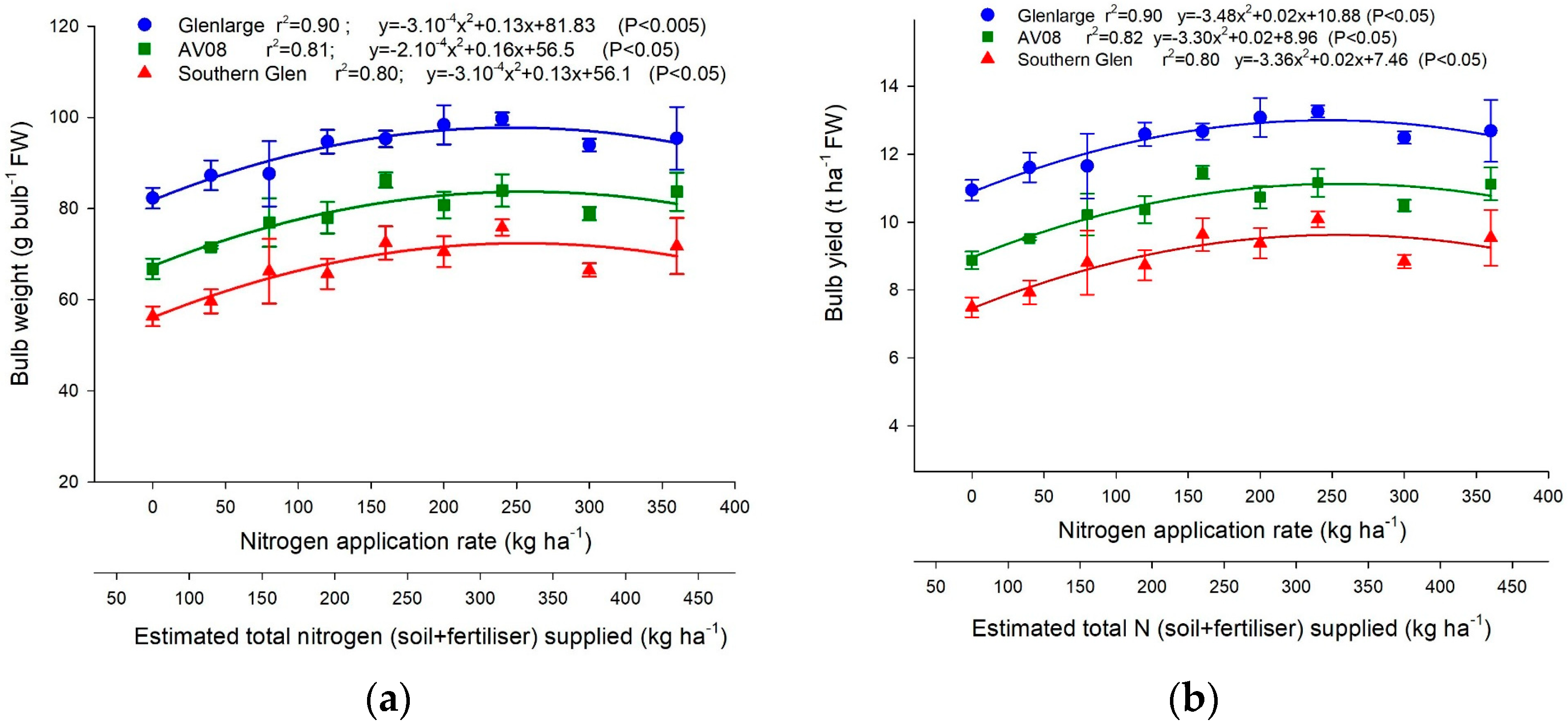
The bulb fresh weight differed significantly (p < 0.05) between N application rates and varieties (Figure 1). All three varieties showed a curvilinear increase with N application, and Glenlarge had a higher mean fresh bulb weight (~100 g bulb−1), compared with AV08 (~84 g bulb−1) and Southern Glen (~75 g bulb−1) (Figure 1). Bulb weight of Glenlarge increased by ~21% (from ~82 to ~100 g bulb−1 (Figure 1a), equivalent to a yield of 10.9 to 13.3 t ha−1 (Figure 1b) when N application was increased from 0 to 240 kg ha−1. Further increasing the N application rate from 240 to 360 kg ha−1 reduced bulb weight by ~10% to 90 g bulb−1 (Figure 1a). Bulb weight of Southern Glen and AV08 followed the same trend as for Glenlarge. The response curve for bulb weight was relatively flat. Hence, the optimal range of N application at which 95–100% maximum yield is recorded ranged from 160 to 240 kg N ha−1. The total N uptake in the 0 N treatment was ~80 kg ha−1, indicating substantial mineralisation of N, so the total estimated N supplied at the optimum application rate of 240 kg ha−1 N was ~320 kg ha−1.
The findings in the current study are in agreement with those of Harper [8], which showed that the bulb weight of Glenlarge was greatest (~68 g bulb−1) at an application of 240 kg N ha−1 and plant population of 133,000 plant ha−1. Other authors reported a similar response of bulb weight to N application rate [3,4,5,6,7]. However, across these studies, the maximum bulb fresh weight varied considerably from ~20 to 61 g bulb−1 with N application rate ranging from 100 to 320 kg ha−1. Notwithstanding, the maximum bulb weight in this study was substantially greater (>~60%) than the highest bulb weight in these other studies.
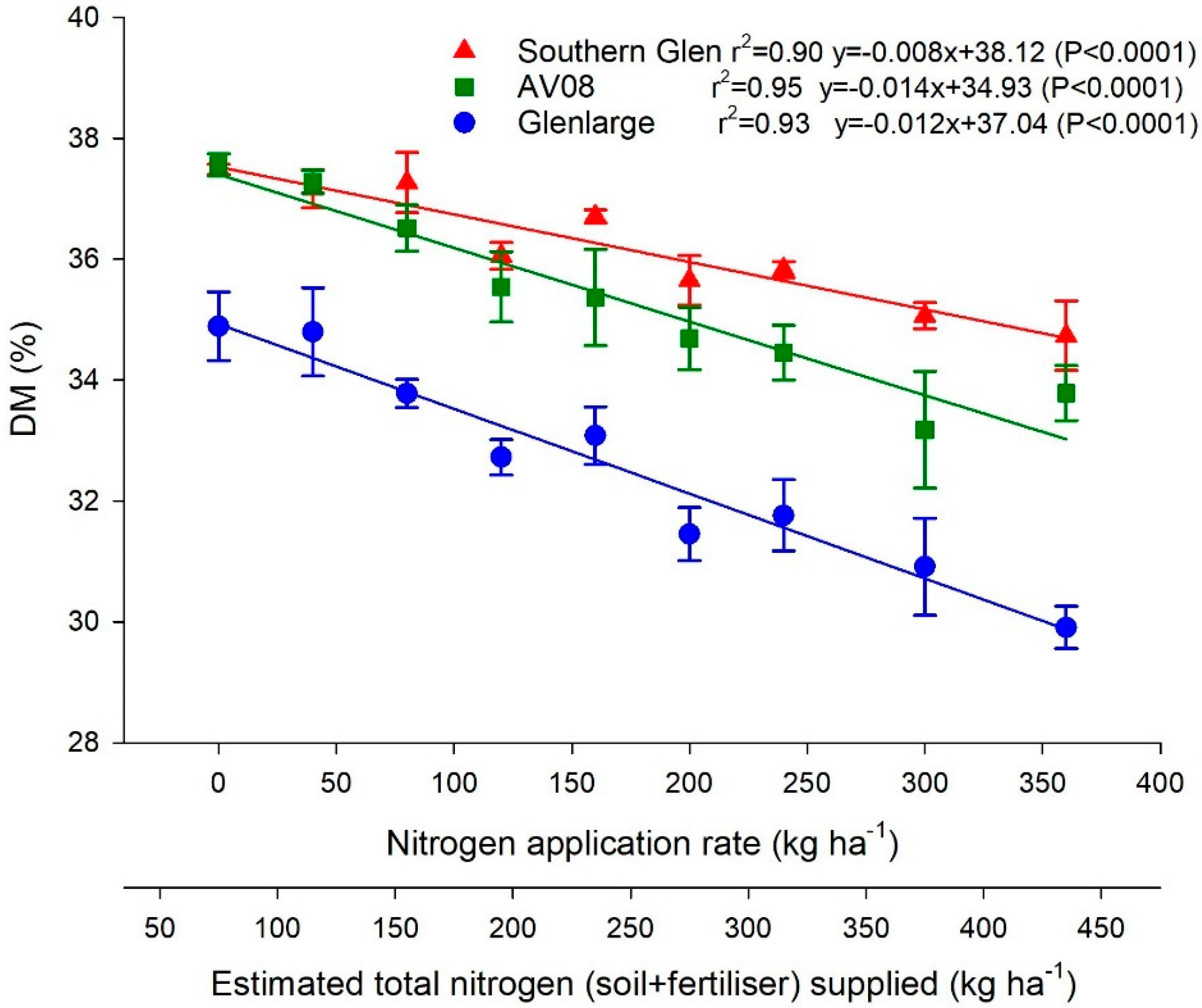
The bulb DM% of the three garlic varieties showed a strongly negative linear response to N application rate (Figure 2). Southern Glen and AV08 had a DM% of 38% at an application rate of 0 kg N ha−1 and decreased to ~34% at a N application rate of 360 kg ha−1 (Figure 2). Glenlarge had the lowest DM%, with DM% decreasing from ~35% at an application rate of 0 kg N ha−1 to ~30% at an application rate of 360 kg N ha−1 (Figure 2). There was a 5% reduction in DM% from 160 kg N ha−1 (33.5% DM%) to 240 kg N ha−1 (32% DM%).
The net decrease in DM% of ~4 DM% units (~9% change) from the lowest to highest N rate in the current study is in agreement with that of Harper [8] where there was a ~4 DM% units (~9% change) from 46% to 42% with an increase in N application rate from 0 to 240 kg ha−1. In contrast, a study by Nakura and Dhaka [5] showed that the bulb DM% decreased substantially (by ~48%) when the N application rate increased from 0 to 200 kg ha−1. The strong negative correlation between N application rate and bulb DM% likely reflects enhanced vegetative growth and water accumulation associated with high N availability. Excess N can stimulate rapid cell expansion and increased tissue hydration, leading to a dilution of DM despite increased fresh biomass [19]. Similar responses have been reported in other horticultural crops where high N supply favours succulent growth rather than dry matter accumulation [20]. Lower DM% can adversely affect bulb storage life of allium crops, such as onion [21] and garlic [2]. However, from a direct marketing perspective, there is no quality factor or specification for garlic dry matter; hence, in this context, a declining DM% with increasing N rate does not affect profitability.

3.2. Effect of N Application Rate on N Concentration over Time

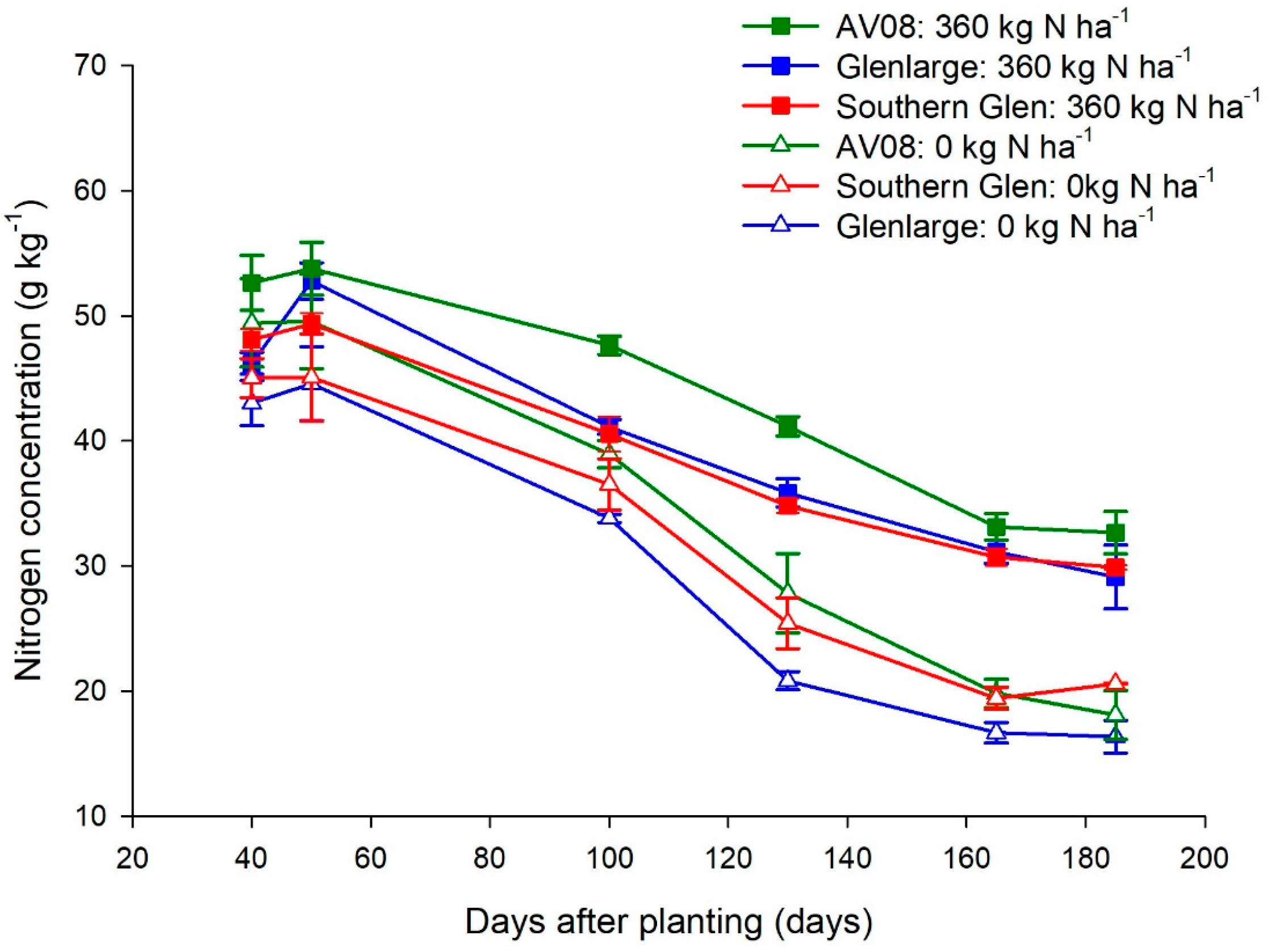
The N concentration in whole garlic plants decreased over time but increased with N application rate (Figure 3). Furthermore, N concentration varied between the three varieties as illustrated for a selection of N application rates (0 and 360 kg ha−1) (Figure 3).
For example, in Glenlarge, in the 0 kg N ha−1 control treatment, the N concentration decreased from 40 g kg−1 at 40 DAP (~30 days after emergence (DAE)) to only ~16 g kg−1 at 185 DAP. At an application rate of 360 kg N ha−1, the N concentration was ~46 g kg−1 at 40 DAP and decreased to 29 g kg−1 at 185 DAP. This finding is in agreement with that of Buwalda [22], who showed that the N concentration in garlic decreased from 35 g kg−1 N at 40 DAP (21 DAE) to just 10 g kg−1 N at 201 DAP without N application.
The change in N concentration over time in the other N treatments (i.e., 40, 120, and 240 kg ha−1) (data not presented) incrementally followed the same trend as that of the treatments 0 and 360 kg N ha−1, and the N concentrations in these treatments were consistently intermediate between the 0 and 360 kg N ha−1 treatments (Figure 3). AV08 had a 10% higher N concentration than Glenlarge and Southern Glen (Figure 3). With increasing N fertiliser application up to 360 kg ha−1, the N concentration in the whole plant increased by a factor of 1.5–2.0 (Figure 3), indicating substantial N accumulation in garlic plant tissue. The current finding is in a trend with the study of Buwalda [22] in which the N concentration in garlic plant foliage increased from 10 g kg−1 to 15 g kg−1 when N application was increased from 0 to 240 kg ha−1. However, in contrast, tissue N concentrations in the present study were substantially greater (~100%) across the three garlic varieties at the same N application rate of 240 kg ha−1, suggesting that genotype or environmental conditions may also influence N accumulation.
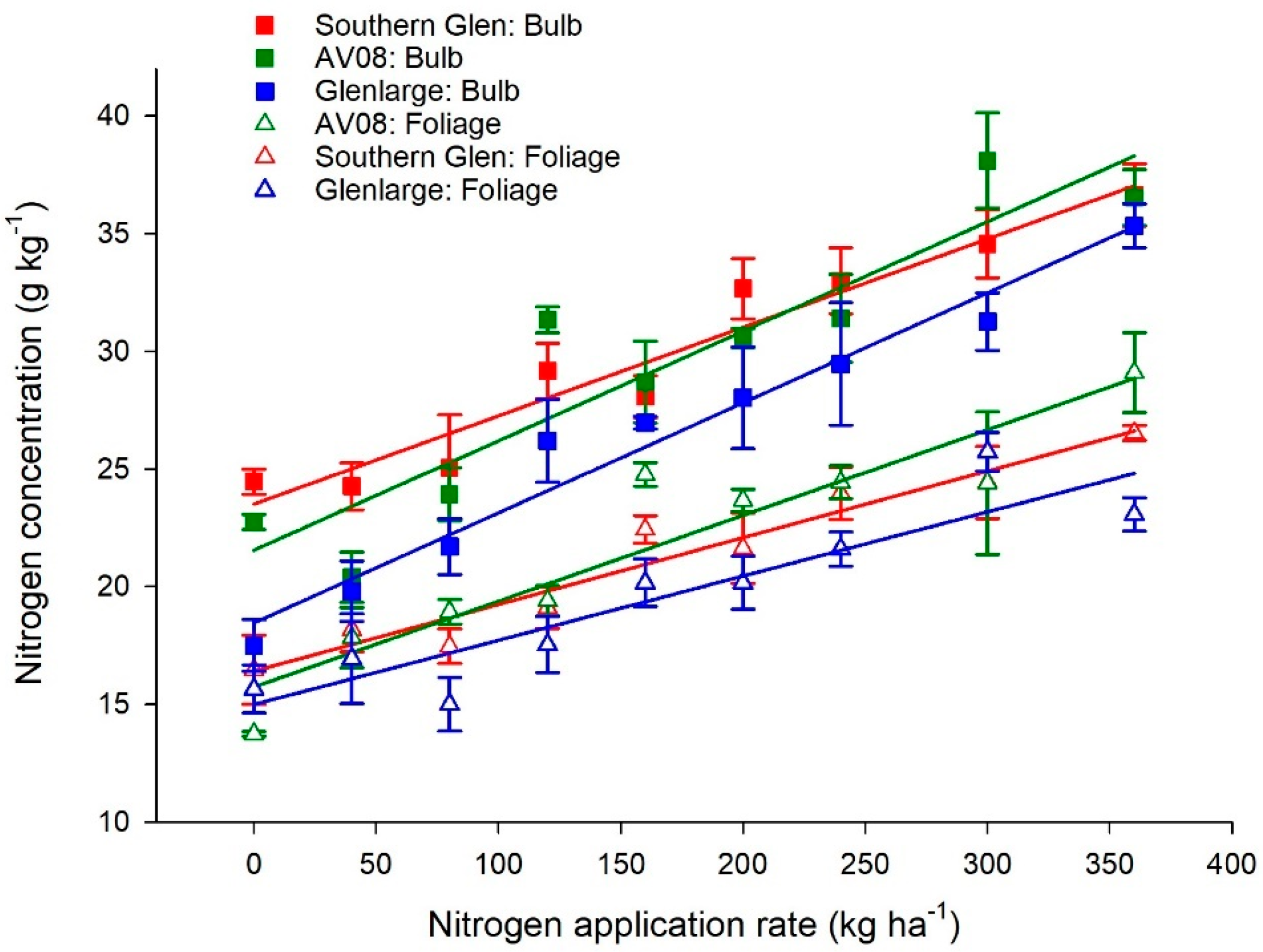
At the harvest stage, there was a strong positive correlation between N application rate and the N concentration in both bulb and foliage tissues across three garlic varieties (Figure 4). The N concentration was consistently greater in the bulb (~18 to ~36 g kg−1) than in the foliage (~14 to ~26 g kg−1). As the N application rate increased from 0 to 360 kg ha−1, bulb N concentration rose from 18 to 22 g kg−1 to ~35–36 g kg−1, whole foliage N concentration increased from ~14 g kg−1 to ~26 g kg−1 (Figure 4). Among the three varieties, Glenlarge exhibited lower N concentrations in both bulb and foliage compared with Southern Glen and AV08 at all N application rates. Lower tissue N concentration observed in the higher-yielding variety (Glenlarge) may reflect a dilution effect where N uptake was distributed across greater biomass and larger bulbs. In contrast, lower-yielding varieties (Southern Glen and AV08) accumulated N in a smaller biomass pool, resulting in higher N concentration.
This finding is consistent with that of the study of Nakura and Dhaka [5], which showed that bulb N concentration increased from 28 g kg−1 to ~35 g kg−1 with an increase in N application from 50 to 200 kg ha−1. Notwithstanding, the bulb N concentration in the study of Nakura and Dhaka [5] was higher than that in the current study, where the bulb N concentration was ~20–24 g kg−1 at a N application of 40 kg ha−1 and increased to ~30 g kg−1 at an application of 200 N kg ha−1 (Figure 4).

3.3. Nitrogen Application Rate Affects Nitrogen Uptake and Nitrogen Use Efficiency

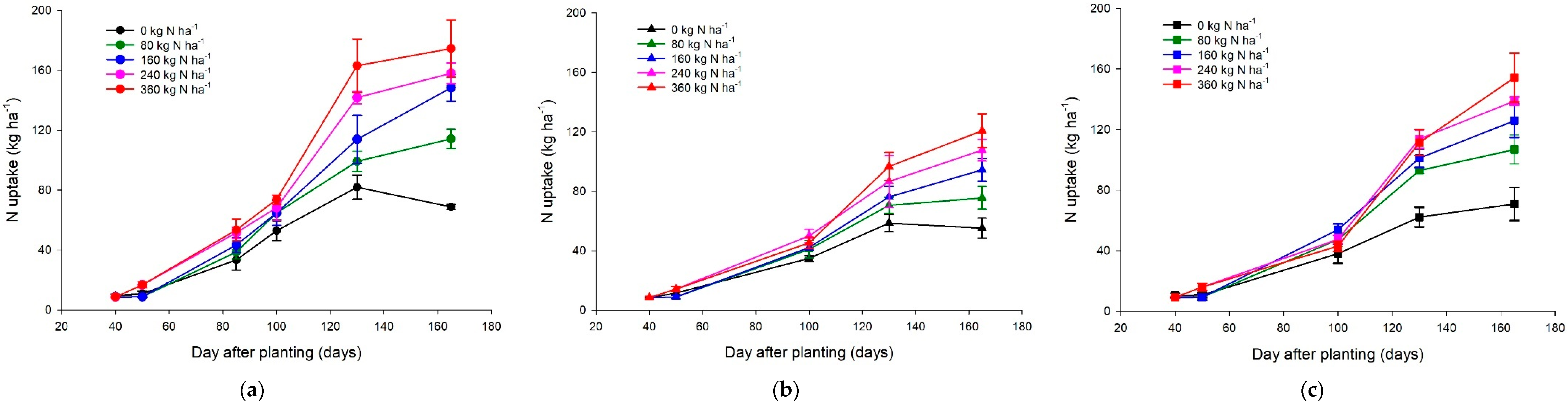
The N uptake over time was calculated by multiplying the N concentration (dry matter basis) for the whole plant sample by the total dry yield. As expected, N uptake increased over time and was considerably higher with increasing N application rate but differed between varieties, as illustrated for a selection of N application rates (0, 80, 160, 240, and 360 kg ha−1) (Figure 5).
Across N treatments for Glenlarge (Figure 5a), N uptake increased from ~9 to 53 kg ha−1 between 40 and 85 DAP, with significant differences between N treatments (p < 0.05). At 100 DAP, N uptake was ~52 kg ha−1 in the 0 kg N ha−1 treatment and increased by about 30% to ~68 kg ha−1 at 165 DAP, while at an application of 360 kg N ha−1, uptake was about ~73 kg ha−1 at 100 DAP, and increased by ~58% to 175 kg ha−1 at 165 DAP. All other N treatments followed the same trend as for the 0 and 360 kg N ha−1 treatments, with intermediate values (Figure 5a).
Both Southern Glen and AV08 showed similar patterns to Glenlarge but with lower net uptake due to reduced plant vigour. At 165 DAP, uptake in Southern Glen ranged from ~55 (0 kg N ha−1) to 120 kg ha−1 (360 kg N ha−1) (Figure 5b), while AV08 ranged from ~70 to 154 kg ha−1 (Figure 5c). Across varieties, N concentration declined over the growth period (Figure 5a–c), while uptake increased, especially between 100 and 165 DAP, reflecting substantial biomass accumulation associated with bulb expansion during the late maturation period.
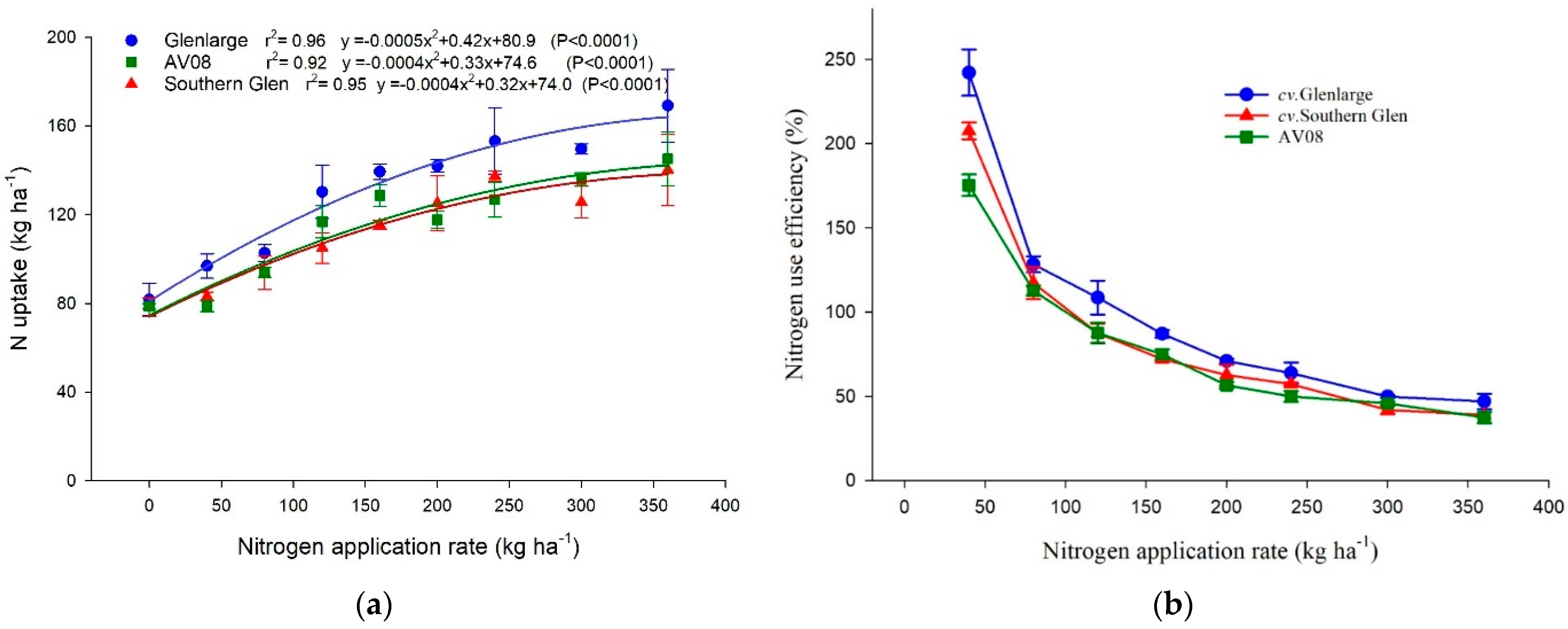
At the harvest stage (185 DAP), the N uptake was strongly positively correlated with N application rate (Figure 6a). At an N application rate of 0 kg ha−1, N uptake was ~78 kg ha−1 across all three garlic varieties. However, at the highest application rate of 360 kg N ha−1, N uptake for Southern Glen and AV08 was ~140 kg ha−1, and considerably lower than that for Glenlarge (~170 kg ha−1). There is no formal literature documenting N uptake by garlic varieties.
The present study showed that increasing the N application rate stimulated N uptake across all three garlic varieties. However, NUE, expressed as the percentage of N taken up by the whole plant against the N applied, decreased substantially with increasing N application rate (Figure 6b). At an application of 40 kg N ha−1, the NUE of Glenlarge was about 250%, which was significantly higher than that of Southern Glen (~200%) and AV08 (175%). With only a small increase in N application from 40 to 80 kg ha−1, the NUE decreased substantially to about 120% and progressively decreased to only ~40% at the highest N application rate of 360 kg ha−1. NUE exceeding 100% indicate that total plant N uptake was greater than the amount of N applied as fertiliser. This reflects the contribution of additional N sources, primarily from soil N pools such as residual inorganic N or mineralised organic N. Across the three varieties, Glenlarge had a significantly higher NUE (p < 0.05) at each N rate compared with either Southern Glen or AV08 (Figure 6b). At an application of 240 kg N ha−1, all three garlic varieties had the highest bulb yield; however, the NUE for each variety at this N rate was only ~50–60% (Figure 6b). This means that increasing the N supply to maximise bulb yield gave a substantial reduction in N use efficiency and increases the potential for adverse environmental effects through N losses. Selection of varieties with genetics for increased NUE would be important in mitigating environmental losses of N.

3.4. Relationship Between N Application Rate, NDRE, Foliage N Concentration and Bulb Yield

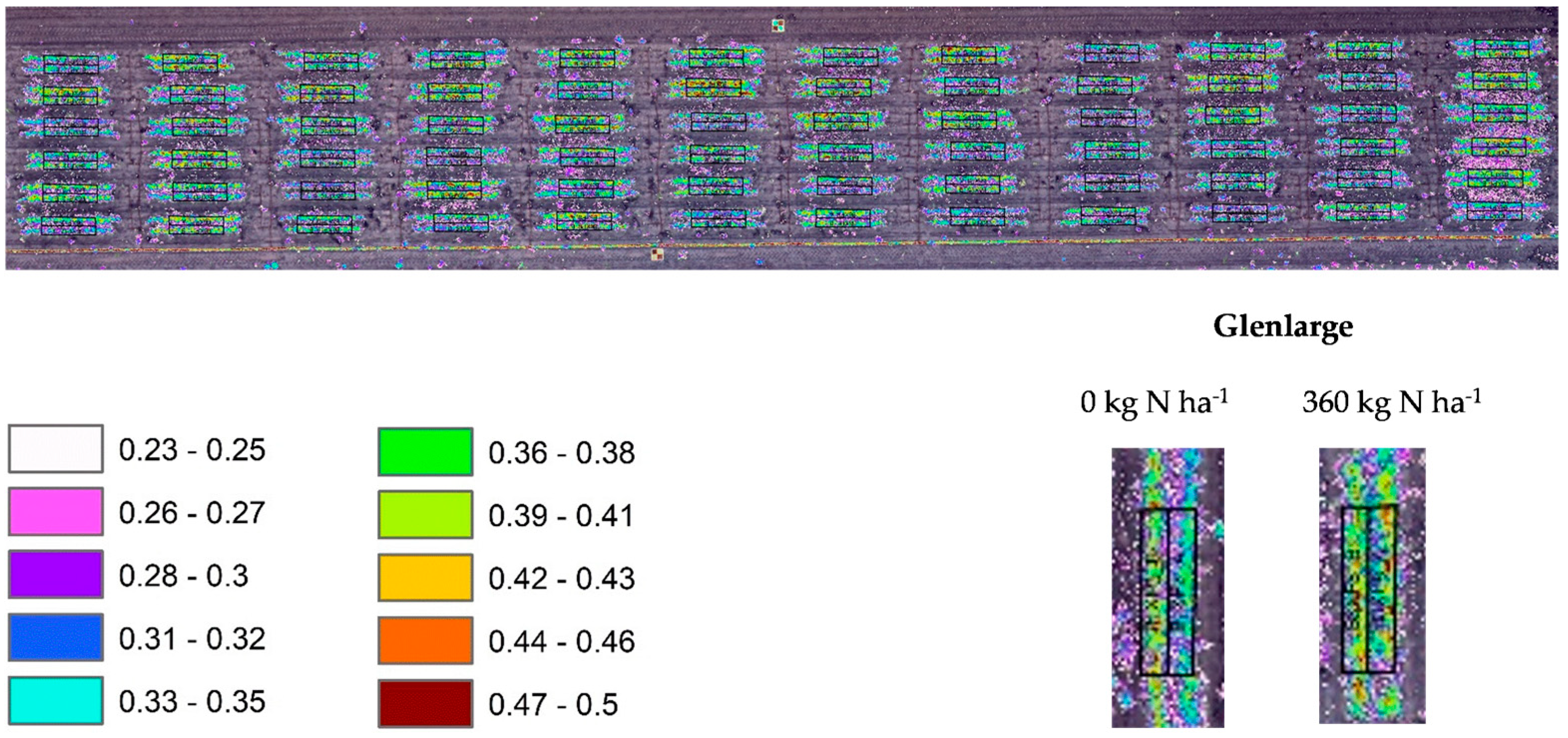
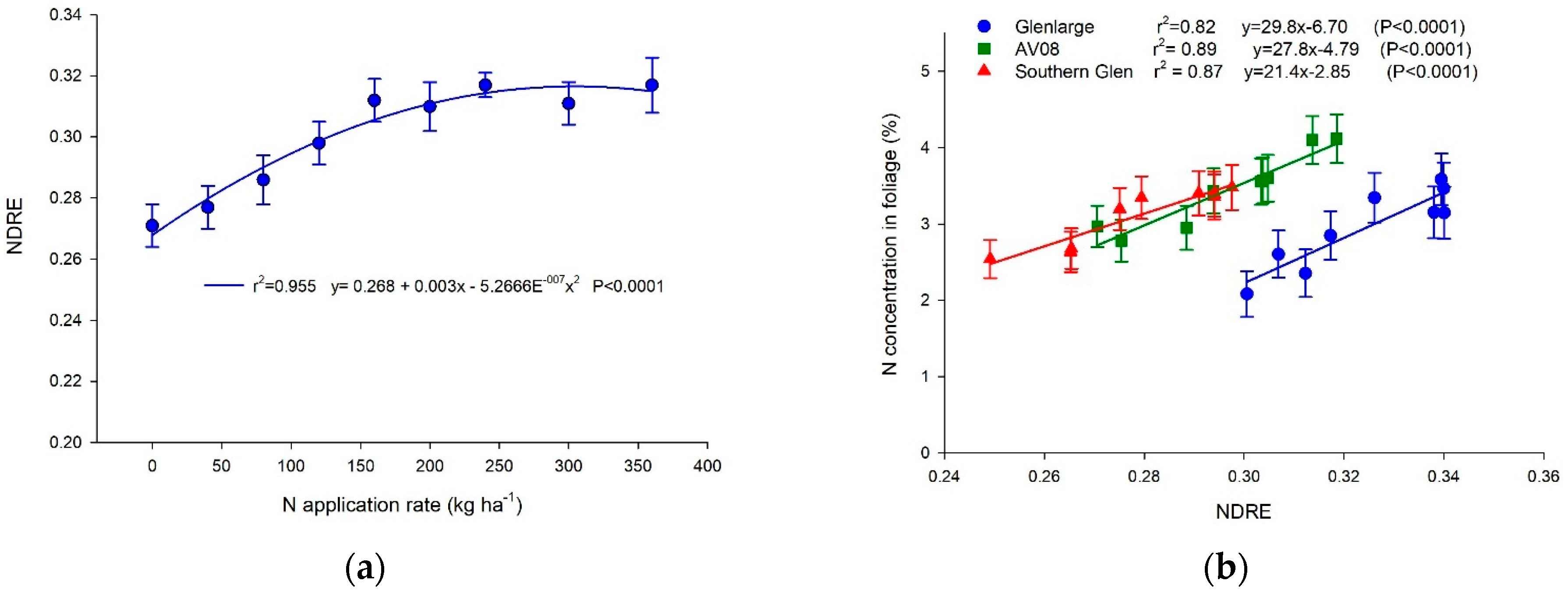
At maximum foliage development (147 DAP), the NDRE showed distinct differences between plots with different N treatments (Figure 7). This was clearly demonstrated in the Glenlarge plots for 0 and 360 kg N ha−1 (Figure 7). The maximum NDRE values differed among varieties, with Glenlarge showing the highest range (~0.30 to ~0.34), followed by AV08 (~0.27 to ~0.32) and Southern Glen (~0.25 to ~0.30) (Figure 8b).
The NDRE values increased with N application rate (0–360 kg N ha−1), reflecting the positive impact of N inputs on canopy vigour (Figure 8a; r2 = 0.96; p < 0.0001). This trend was further supported by the strong positive correlation between NDRE and foliar N concentration across each of the three varieties (Figure 8b; r2 > 0.82; p < 0.0001), confirming NRDE as a reliable indicator of plant N status within a specific variety. Maximum NDRE values differed among varieties (Figure 8b), indicating that variety-specific calibration may be required when establishing thresholds for N status. The varietal differences in NDRE values likely reflect subtle variation in leaf chlorophyll and foliage N concentrations, linked to genetic differences in canopy traits. Importantly, garlic fresh yield was strongly correlated with NDRE values across garlic varieties (Figure 9; r2 = 0.85, p < 0.0001), indicating that variation in spectral response was directly associated with final productivity. Since NDRE is an index of foliar chlorophyll status, its predictive performance is influenced by factors affecting plant vigour, including genotype, plant health, climatic adaptation, and agronomic management. Although strong relationships between NDRE, N status, and yield were observed in this study, defining NDRE thresholds for N deficiency or excess remains challenging due to varietal differences in growth habit, N uptake, and canopy development.
In addition, NDRE measurements in this study were collected at a single time point (147 DAP), which limits the ability to capture temporal dynamics in N status across developmental stages. Earlier or repeated measurements may improve the identification of optimal monitoring windows and strengthen threshold-based diagnosis. Furthermore, differences among garlic varieties and potential impacts of diseases in planting material, particularly viral infections, suggest that species- or variety-specific calibration may be required, rather than reliance on NDRE benchmarks. Further research is therefore needed to refine NDRE thresholds across growth stages and varieties to enable robust N diagnosis and management in garlic production systems.
This is the first study to demonstrate such a relationship for garlic, whereas in onion, the canopy volume from UAS imaging has been demonstrated to be strongly positively correlated with bulb yield [23] (r2 = 0.95).
The strong correlation observed in this study highlights the value of NDRE for integrating nutrient management (N application), physiological status (leaf N concentration), and agronomic performance (yield). NDRE imaging conducted at 147 DAP, approximately five weeks before harvest (185 DAP); therefore, it provides a practical tool for in-season monitoring and yield prediction, with potential to inform variety-specific fertiliser strategies in future crops. Earlier assessments; however, should be conducted to offer greater opportunity for corrective management during crop development and improve N use efficiency.

4. Conclusions

This study showed that although bulb fresh weight differed among garlic varieties, all varieties exhibited a similar yield response to increasing N application, with maximum yields achieved at higher N rates. Increasing N supply consistently reduced dry matter content and NUE across varieties, indicating diminishing returns under excessive N input. Plant N concentration increased with N application rate but declined over the growing season, with N increasingly partitioned into bulbs during maturation. These patterns highlight the importance of synchronising N supply with crop uptake dynamics to optimise yield and NUE in garlic production.

Author Contributions

Conceptualisation, B.T.N., S.M.H. and J.B.W.; methodology, B.T.N., S.M.H., T.J.O., J.B.W. and N.W.M.; software, B.T.N. and S.M.H.; formal analysis, B.T.N. and S.M.H.; investigation, B.T.N.; resource, S.M.H.; data curation, B.T.N., S.M.H. and J.B.W.; writing—original draft preparation, B.T.N.; writing—review and editing, B.T.N., S.M.H., J.B.W., T.J.O. and N.W.M.; supervision, S.M.H. and J.B.W. All authors have read and agreed to the published version of the manuscript.

Funding

This study was funded by ACIAR projects SMCN/2009/056—Sustainable productivity improvements in allium and solanaceous vegetable crops in Indonesia and sub-tropical Australia and SLAM/2018/145—Crop health and nutrient management of shallot-chilli-rice cropping systems in coastal Indonesia.

Data Availability Statement

The data presented in this study are available in the article. Additional datasets generated or analysed during the study are available from the corresponding author on reasonable request.

Acknowledgments

The authors acknowledge the use of ChatGPT (OpenAI, GPT-5.1) during the preparation of this manuscript for assistance with generating ideas for the graphical abstract and manuscript abstract. All AI-assisted outputs were reviewed and edited by the authors, who take full responsibility for the content of this publication.

Conflicts of Interest

Author Johannes B. Wehr was employed by the company Verterra Ecological Engineering Company. The remaining authors declare that the research was conducted in the absence of any commercial or financial relationships that could be construed as a potential conflict of interest.

Abbreviations

The following abbreviations are used in this manuscript:
DAEDays After Emerging
DAPDays After Planting
DMDry Matter
DTPADiethylene-triamine-penta-acetic acid
DWDry Weight
ICP-OESInductively Coupled Plasma Optical Emission Spectroscopy
LECOLaboratory Equipment Corporation
NDRENormalised Difference Red Edge
NDVINormalised Difference Vegetation Index
NUENitrogen Use Efficiency
OCOrganic Carbon

Appendix A

Table A1. Soil properties prior to planting the N rate trial at the Gatton Research Facility in 2019.
Soil Properties and NutrientAnalytical MethodInitial Value (Mean ± SD)
pHAqueous (1:5)7.92 ± 0.01
EC (dS m−1)Aqueous (1:5)0.14 ± 0.006
OC (mg kg−1)Walkley&Black1.13 ± 0.02
NO3 (mg kg−1)Aqueous (1:5) Flow Injection11.7 ± 2.5
P (mg kg−1)Colwell153 ± 5
Cl (mg kg−1)Aqueous (1:5) Flow Injection33.0 ± 8.5
CEC (cmol (+c) kg−1)CEC alcoholic NH4Cl pH 8.5 AA27.7 ± 0.6
Ca (cmol (+c) kg−1)1 M Ammonium Acetate ICP-OES12.6 ± 0.35
Mg (cmol (+c) kg−1)1 M Ammonium Acetate ICP-OES12.6 ± 0.57
K (cmol (+c) kg−1)1 M Ammonium Acetate ICP-OES1.20 ± 0.06
Na (cmol (+c) kg−1)1 M Ammonium Acetate ICP-OES0.85 ± 0.06
S (mg kg−1)ICP-OES7.0 ± 0.0
Fe (mg kg−1)DTPA–ICP-OES17.7 ± 1.7
Cu (mg kg−1)DTPA–ICP-OES4.0 ± 0.4
Zn (mg kg−1)DTPA–ICP-OES2.1 ± 0.3
Mn (mg kg−1)DTPA–ICP-OES31.9 ± 5.2
Table A2. Nitrogen fertilisation schedule (g fertiliser per plot (15 m2)) including timing of application (expressed as days after planting (DAP)), total rate of application (kg N ha−1) and fertiliser form (urea or calcium nitrate).
Treatments
N Target (kg ha−1)
10 DAP30 DAP50 DAP70 DAP90 DAP
UreaCa(NO3)2UreaCa(NO3)2UreaCa(NO3)2UreaCa(NO3)2UreaCa(NO3)2
00000000000
4026177400000000
80261774261774000000
1202617742617742617740000
16026177426177426177426177400
200261774261774261774261774261774
2402617742617745221548261774261774
300261774261774522154852215483911161
360261774261774522154852215487832323
Table A3. Application schedule (kg ha−1) for the non-nitrogen fertiliser.
FertiliserTotal Rate Applied
(kg ha−1)
Increment Application (kg ha−1)
10 DAP30 DAP60 DAP
K2SO4 29086.7115.686.7
MgSO4 20461.281.661.2
ZnSO4·7H2O 5.31.592.121.59
Na2B8O13·4H2O 2.40.720.960.72
CuSO4·5H2O 1.90.570.760.57
Na2MoO4·2H2O0.320.10.130.09

References

  1. David, E.; Sam, S. A Cholesterol-Lowering Extract from Garlic; Rural Industries Research and Development Corporation: Wagga, Australia, 2000. [Google Scholar]
  2. Bloem, E.; Haneklaus, S.; Schnug, E. Storage Life of Field-Grown Garlic Bulbs (Allium sativum L.) as Influenced by Nitrogen and Sulfur Fertilization. J. Agric. Food Chem. 2011, 59, 4442–4447. [Google Scholar] [CrossRef] [PubMed]
  3. Kalar, A.A.; Abdullahzai, M.K.; Saleem, M.; Shah, S.A.Q. Effect of Nitrogenous Fertilizer on Growth and Yield of Garlic. Asian J. Plant Sci. 2002, 1, 544–545. [Google Scholar] [CrossRef]
  4. Usman, M.G.; Fagam, A.S.; Dayi, R.U.; Isah, Z. Phenotypic Response of Two Garlic Varieties to Different Nitrogen Fertilization Grown under Irrigation in Sudan Savannah Ecological Zone of Nigeria. Int. J. Agron. 2016, 2016, 2495828. [Google Scholar] [CrossRef]
  5. Nakura, I.S.; Dhaka, R.S. Effect of row spacing and nitrogen fertilization on growth, yield and composition of bulb in garlic (Allium sativum L.) cultivars. J. Spices Aromat. Crop. 2001, 10, 111–117. [Google Scholar]
  6. Ershadi, A.; Noori, M.; Dashti, F.; Bayat, F. Effect of Different Nitrogen Fertilizers on Yield, Pungency and Nitrate Accumulation in Garlic (Allium sativum L.). In International Symposium on Medicinal and Aromatic Plants—SIPAM2009; International Society for Horticultural Science (ISHS): Korbeek-Lo, Belgium, 2010; Volune 853, pp. 135–138. [Google Scholar]
  7. Fernandes, L.J.C.; Büll, L.T.; Corrêa, J.C.; Pavan, M.A.; Imaizumi, I. Nitrogen fertilization in garlic free of virus cultivated in protected environment. Hortic. Bras. 2010, 28, 97–101. [Google Scholar] [CrossRef]
  8. Harper, S. Sustainable Productivity Improvements in Allium and Solanaceous Vegetable Crops in Indonesia and Sub-Tropical Australia. 2019. Available online: https://www.aciar.gov.au/project/smcn-2009-056 (accessed on 1 June 2019).
  9. Nguyen, B.T.; Wehr, J.B.; Kopittke, P.M.; O’hAre, T.J.; Menzies, N.W.; Hong, H.T.; McKenna, B.A.; Klysubun, W.; Harper, S.M. Benchmarking Bulb Yield, Medicinal Sulfur Compounds, and Mineral Nutrition of Garlic Varieties. ACS Omega 2024, 9, 45240–45250. [Google Scholar] [CrossRef] [PubMed]
  10. Poley, L.G.; McDermid, G.J. A systematic review of the factors influencing the estimation of vegetation aboveground biomass using unmanned aerial systems. Remote Sens. 2020, 12, 1052. [Google Scholar] [CrossRef]
  11. Marcone, A.; Impollonia, G.; Croci, M.; Blandinières, H.; Pellegrini, N.; Amaducci, S. Garlic yield monitoring using vegetation indices and texture features derived from UAV multispectral imagery. Smart Agric. Technol. 2024, 8, 100513. [Google Scholar] [CrossRef]
  12. Chung, H.; Wi, S.; Cho, B.-K.; Lee, H. Classification of Garlic (Allium sativum L.) Crops by Fertilizer Differences Using Ground-Based Hyperspectral Imaging System. Agriculture 2024, 14, 1215. [Google Scholar] [CrossRef]
  13. Brinkhoff, J.; Dunn, B.W.; Robson, A.J.; Dunn, T.S.; Dehaan, R.L. Modeling Mid-Season Rice Nitrogen Uptake Using Multispectral Satellite Data. Remote Sens. 2019, 11, 1837. [Google Scholar] [CrossRef]
  14. Fitzgerald, G.; Rodriguez, D.; O’Leary, G. Measuring and predicting canopy nitrogen nutrition in wheat using a spectral index—The canopy chlorophyll content index (CCCI). Field Crop. Res. 2010, 116, 318–324. [Google Scholar] [CrossRef]
  15. Ali, N.; Mohammed, A.; Bais, A.; Berraies, S.; Ruan, Y.; Cuthbert, R.D.; Sangha, J.S. Field Scale Precision: Predicting Grain Yield of Diverse Wheat Breeding Lines Using High-Throughput UAV Multispectral Imaging. IEEE J. Sel. Top. Appl. Earth Obs. Remote Sens. 2024, 17, 11419–11433. [Google Scholar] [CrossRef]
  16. Boiarskii, B.; Hideo, H. Comparison of NDVI and NDRE Indices to Detect Differences in Vegetation and Chlorophyll Content. J. Mech. Contin. Math. Sci. 2019, 4, 20–29. [Google Scholar] [CrossRef]
  17. Voitik, A.; Kravchenko, V.; Pushka, O.; Kutkovetska, T.; Shchur, T.; Kocira, S. Comparison of NDVI, NDRE, MSAVI and NDSI Indices for Early Diagnosis of Crop Problems. Agric. Eng. (Pol. Soc. Agric. Eng.) 2023, 27, 47–57. [Google Scholar] [CrossRef]
  18. Isbell, R.F.; CSIRO Publishing. The Australian Soil Classification. In Australian Soil and Land Survey Handbooks, Revised ed.; CSIRO Publishing: Collingwood, VIC, Australia, 2002; Volume 4. [Google Scholar]
  19. Jarrell, W.M.; Beverly, R.B. The Dilution Effect in Plant Nutrition Studies. In Advances in Agronomy; Brady, N.C., Ed.; Academic Press: Cambridge, MA, USA, 1981; pp. 197–224. [Google Scholar]
  20. Ncama, K.; Sithole, N.J. The Effect of Nitrogen Fertilizer and Water Supply Levels on the Growth, Antioxidant Compounds, and Organic Acids of Baby Lettuce. Agronomy 2022, 12, 614. [Google Scholar] [CrossRef]
  21. Riekels, J.W. Nitrogen-water Relationships of Onions Grown on Organic Soil1. J. Am. Soc. Hort. Sci. 1977, 102, 139–142. [Google Scholar] [CrossRef]
  22. Buwalda, J.G. Nitrogen nutrition of garlic (Allium sativum L.) under irrigation. Crop growth and development. Sci. Hortic. 1986, 29, 55–68. [Google Scholar]
  23. Ballesteros, R.; Ortega, J.F.; Hernandez, D.; Moreno, M.A. Onion biomass monitoring using UAV-based RGB imaging. Precis. Agric. 2018, 19, 840–857. [Google Scholar] [CrossRef]
Figure 1. The relationship between N application rate and mean bulb fresh weight (a) and mean bulb fresh yield (b) of three garlic varieties at maturity. The bulb yield was calculated by multiplying bulb weight with plant population of 133,000 plants ha−1. The estimated total N supplied was calculated by adding the crop nitrogen uptake recorded in the 0 kg N ha−1 to the fertiliser N application rate. r2 is the coefficient of determination of the fitted equation; values are the mean of 4 replicates with the standard error bars shown, if not obscured by the symbols.
Agronomy 16 00338 g001
Figure 2. Relationship between N application rate (0–360 kg N ha−1) and dry matter (DM%) of three garlic varieties (Glenlarge, Southern Glen and AV08) at harvest stage. The estimated total N supplied was calculated by adding the crop nitrogen uptake recorded in the 0 kg N ha−1 to the fertiliser N application rates. r2 is coefficient of determination of the fitted equation; the error bars present the standard error (n = 4).
Agronomy 16 00338 g002
Figure 3. Change in mean whole plant foliage N concentration (g kg−1 DW) of three varieties (Glenlarge, Southern Glen and AV08) at two selected N application rates (0 and 360 kg N ha−1) at 40, 50, 100, 130, 165, and 185 days after planting.
Agronomy 16 00338 g003
Figure 4. The relationship between N application rate and N concentration (on dry weight basis) in foliage and bulb samples at the harvest stage of three garlic varieties (Glenlarge, Southern Glen, and AV08).
Agronomy 16 00338 g004
Figure 5. Effect of N application rate (0, 80, 160, 240 and 360 kg ha−1) on N uptake during growing stage (40, 50, 85, 100, 130 and 165 DAP) of three garlic varieties: (a) Glenlarge, (b) Southern Glen and (c) AV08. Data are means of four replicates with standard errors shown if not obscured by the symbols.
Agronomy 16 00338 g005
Figure 6. Effect of N application rate (from 0 to 360 kg ha−1) on N uptake (a) and Nitrogen use efficiency (NUE) (b) of three garlic varieties (Glenlarge, Southern Glen, and AV08) at the harvest stage. NUE was calculated as total plant N uptake divided by N applied as fertiliser, expressed as a percentage. r2 is the coefficient of determination of the fitted equation; the error bars present the standard error (n = 4) if the symbols were not obscured.
Agronomy 16 00338 g006
Figure 7. Normalised Difference Red Edge index (NDRE) image of the N rate experiment consisting of nine N application rates (0–360 kg ha−1) and three garlic varieties captured at 147 DAP.
Agronomy 16 00338 g007
Figure 8. The relationship between (a) Normalised Difference Red Edge index (NDRE) (at maximum foliage development (147 DAP)) averaged across three garlic varieties (Glenlarge, AV08 and Southern Glen) with N application rate from 0 to 360 kg ha−1 and (b) NDRE index with N concentration in foliage (at 130 DAP). r2 is coefficient of determination of the fitted equation; the error bars present the standard error (n = 4).
Agronomy 16 00338 g008
Figure 9. The relationship between Normalised Difference Red Edge index (NDRE) and garlic fresh yield for three varieties (Glenlarge, AV08 and Southern Glen) grown over a range of N application rate (0–360 kg N ha−1). r2 is coefficient of determination of the fitted equation; the error bars present the standard error (n = 4).
Agronomy 16 00338 g009
Disclaimer/Publisher’s Note: The statements, opinions and data contained in all publications are solely those of the individual author(s) and contributor(s) and not of MDPI and/or the editor(s). MDPI and/or the editor(s) disclaim responsibility for any injury to people or property resulting from any ideas, methods, instructions or products referred to in the content.