Article

Physiological Changes in and Transcriptome Responses of Asterothamnus centraliasiaticus Leaves in Response to Drought Stress

1
Academy of Animal Science and Veterinary, Qinghai University, Xining 810016, China
2
Qinghai Provincial Key Laboratory of Adaptive Management on Alpine Grassland, Xining 810016, China
3
Key Laboratory of Superior Forage Germplasm in the Qinghai-Tibetan Plateau, Xining 810016, China
*
Author to whom correspondence should be addressed.
Agronomy 2026, 16(3), 337; https://doi.org/10.3390/agronomy16030337
Submission received: 3 December 2025 / Revised: 6 January 2026 / Accepted: 27 January 2026 / Published: 29 January 2026

Abstract

Asterothamnus centraliasiaticus is a key species within the desert ecosystems of the Qinghai–Tibet Plateau. To elucidate the physiological responses and underlying molecular mechanisms of drought tolerance in A. centraliasiaticus, this study employed high-throughput RNA sequencing of leaf tissues to identify key pathways and drought resistance-related genes associated with adaptation to water deficit conditions. Physiological analyses revealed that drought stress significantly enhanced the activities of antioxidant enzymes, increased the accumulation of osmotic adjustment substances and membrane damage indicators, and elevated relative electrical conductivity in leaves. In contrast, total ROS levels were significantly reduced under drought stress, indicating effective activation of antioxidant defense systems. Transcriptome analysis identified 15,010 differentially expressed genes (DEGs) in response to drought stress. GO and KEGG enrichment analyses revealed that these DEGs were predominantly involved in phenylpropanoid biosynthesis, plant hormone signal transduction, and zeatin biosynthesis pathways, which are closely associated with stress perception, signal transduction, and adaptive metabolic regulation. Moreover, qPCR validation of 15 randomly selected genes corroborated the RNA-seq results, confirming the reliability of the transcriptomic data. Collectively, these findings provide a valuable molecular framework for understanding drought response pathways and identifying drought resistance genes in A. centraliasiaticus, thereby offering theoretical support for future studies on xerophytic plant adaptation and molecular breeding for drought tolerance.

1. Introduction

Drought stress is a widespread abiotic factor that severely impairs plant growth, physiological functions, and crop productivity. In response to drought conditions [1,2], plants alleviate these adverse effects through diverse morphological and physiological adaptations [3,4]. For example, stomatal closure functions as an effective strategy to reduce water loss and modulate photosynthetic activity [5,6]. During drought stress, plants counteract the imbalance between the production and scavenging of reactive oxygen species (ROS) by accumulating osmolytes and enhancing antioxidant enzyme activities [7]. Numerous studies have shown that drought tolerance in plants is closely associated with enhanced antioxidant enzyme activities, including superoxide dismutase (SOD, EC1.15.1.1), catalase (CAT, EC1.11.1.6), peroxidase (POD, EC1.11.1.7), and ascorbate peroxidase (APX, EC1.11.1.11), together with the accumulation of osmotic adjustment substances such as soluble sugars (SS), soluble proteins (SP), and free proline (Pro), ultimately leading to reduced ROS accumulation [8,9,10,11]. However, when ROS-induced oxidative damage exceeds the plant’s antioxidant capacity, membrane lipid peroxidation occurs, as evidenced by a significant increase in malondialdehyde (MDA) content [12]. Such oxidative stress severely constrains plant growth and development and, under extreme conditions, can ultimately result in plant death.
Desertification refers to a process of land degradation occurring primarily in arid, semi-arid, and dry sub-humid regions [13]. The primary drivers of desertification include climate change, anthropogenic activities, and their complex interactions [14]. Moreover, desertification is strongly influenced by regional geographical and environmental conditions [15]. In recent decades, desertification has remained a major global environmental challenge. Its continued expansion not only threatens human livelihoods and wildlife habitats [16] but also leads to profound ecological consequences [17]. Consequently, the prevention and control of desertification have become critical priorities for achieving ecological sustainability [18]. Xerophytic plants, as a fundamental component of desert ecosystems, play an essential role in mitigating desertification, reducing soil erosion, and promoting vegetation restoration [19,20].
Asterothamnus centraliasiaticus is a perennial deciduous semi-shrub belonging to the family Asteraceae and is widely distributed across Qinghai, Gansu, Ningxia, Inner Mongolia, Xinjiang, as well as southern Mongolia in China. This species naturally occurs at elevations ranging from 1300 to 3900 m above sea level [21]. It is widely distributed across the Qinghai–Tibet Plateau and represents a key species within the desert ecosystems of this region. Notably, A. centraliasiaticus functions as both a dominant species and an ecological indicator in the Qaidam Basin and adjacent arid and semi-arid regions along the northeastern margin of the Qinghai–Tibet Plateau [22]. To date, research on A. centraliasiaticus has primarily focused on its geographical distribution, community characteristics, and chemical composition, whereas its physiological responses and transcriptomic profiles under drought stress remain largely unexplored.
RNA sequencing (RNA-seq) is a widely used high-throughput approach for generating comprehensive transcriptome profiles, detecting genetic variation, and quantifying gene expression levels [23]. This approach has been successfully applied to elucidate transcriptomic features in Arabidopsis pollen [24], to investigate sex-specific regulation of transcriptional and splicing factors in male and female gametes [25], and to dissect the molecular mechanisms underlying drought tolerance, thereby facilitating the identification and functional characterization of drought-resistance genes [26,27,28]. Collectively, RNA-seq enables a comprehensive molecular understanding of plant responses to environmental stimuli.
In this study, we investigated the physiological and molecular responses of A. centraliasiaticus leaves to drought stress. RNA-seq was employed to identify key metabolic pathways and drought resistance-related genes, and the reliability of the transcriptomic data was validated by qPCR. Furthermore, dynamic physiological and transcriptional datasets from A. centraliasiaticus leaves were integrated. Through systematic association analyses, mechanistic links between gene expression patterns and key physiological traits were established, providing a theoretical foundation for future studies on drought resistance in xerophytes and for the application of molecular breeding strategies in germplasm improvement.

2. Materials and Methods

2.1. Plant Materials, Drought Stress Procedures

Asterothamnus centraliasiaticus is a perennial xerophytic shrub species adapted to desert environments. In 2021, plants were cultivated in plastic pots (50 × 35 cm) filled with a mixture of humus soil and sandy soil at a ratio of 6:4 (v/v). Drought stress experiments were conducted in the third year after planting using A. centraliasiaticus as the experimental material. Each treatment consisted of three biological replicates, with three pots per replicate and two plants per pot. All experiments were performed in a greenhouse to eliminate interference from natural precipitation.
During the vigorous growth stage, irrigation was withheld from the drought treatment group (Drought) to induce progressive soil drying, whereas the control group (Control) was maintained under normal watering conditions. When more than 60% of leaves in drought-treated plants exhibited slight yellowing, soil moisture content at a depth of approximately 10 cm was measured using a soil moisture meter. Soil samples from the same depth were collected and transported to the laboratory for gravimetric determination of soil moisture content using the oven-drying method, with three technical replicates per pot. When soil water content reached 1.5–2.5%, three plants were randomly selected from each replicate for sampling.
Leaf sampling was conducted in two steps. First, three portions of fresh leaves (1 g each) were rapidly weighed, rinsed with distilled water, and placed into 30 mL centrifuge tubes for conductivity measurements. Second, additional fresh leaf samples were placed into labeled cryogenic tubes, immediately frozen in liquid nitrogen, and stored at −80 °C for subsequent physiological assays, transcriptome sequencing, and gene expression analyses.

2.2. Experimental Method

2.2.1. Measurement of Physiological Indices

One gram of leaves was immersed in 30 mL of distilled water for a duration of 24 h, after which the electrical conductivity (R1) of the solution was determined using a digital conductivity meter. Subsequently, the samples were subjected to a boiling water bath at 100 °C for 20 min, followed by cooling to ambient temperature, and the conductivity (R2) was measured. The relative conductivity was calculated as the ratio of R1 to R2, serving as an indicator of the relative permeability of the plasma membrane.
The activities of antioxidant enzymes (SOD, POD, CAT, APX), the contents of osmotic adjustment substances (Pro, SP and SS), and malondialdehyde (MDA) content were determined using commercial physiological assay kits (Suzhou Grace Biotechnology Co., Ltd., Suzhou, China) in combination with a UV-visible spectrophotometer. Total reactive oxygen species (ROS) content was measured using a commercial assay kit (Suzhou Grace Biotechnology Co., Ltd., China) and a multifunctional microplate reader based on fluorescence detection. Three biological replicates were performed for each indicator to ensure experimental reproducibility.

2.2.2. RNA Extraction and Quality Control

Total RNA was extracted from the leaves of A. centraliasiaticus in the control and drought-treated groups using a Servicebio Plant RNA Extraction Kit, following the manufacturer’s instructions. RNA integrity and quality were assessed using an Agilent 2100 Bioanalyzer (Agilent Technologies, Palo Alto, CA, USA), a NanoDrop One spectrophotometer (Thermo Scientific, Waltham, MA, USA), and 1% agarose gel electrophoresis. Subsequently, RNA samples with OD260/280 ratios between 1.8 and 2.2 were sent to Novogene Bioinformatics Technology Co., Ltd. (Beijing, China) for library construction, quality control, and Illumina HiSeq 4000 sequencing.

2.2.3. Data Quality Control

Before differential expression analysis, raw sequencing data in FASTQ forma were filtered to remove adapter-containing reads, reads containing undetermined bases (N), and low-quality reads. Reads in which more than 50% of bases had a Phred quality score ≤ 20 were discarded to ensure data quality and reliability. Meanwhile, quality metrics, including Q20 and Q30 scores as well as GC content, were calculated for the clean reads. Differential expression analysis was subsequently performed using DESeq2 (version 1.26.0).

2.2.4. Expression Quantification and Differential Expression Analysis

Raw RNA-seq reads were de novo assembled using Trinity software (version 2.6.6), which is suitable for transcriptome reconstruction in non-model plant species such as A. centraliasiaticus. Following Trinity assembly, transcript contigs were clustered using Corset to reduce redundancy and refine transcript groupings. Transcript abundance information across samples was incorporated using a hierarchical clustering strategy, enabling the separation of differentially expressed transcripts and thereby improving the accuracy of differential gene expression analysis. The completeness of the assembled transcriptome was assessed using BUSCO (Benchmarking Universal Single-Copy Orthologs) version 3.0.2. Assembly quality was evaluated based on the proportion and completeness of conserved single-copy orthologs.
The Trinity-assembled transcriptome recovered 89.96% complete BUSCOs, whereas the unigene dataset retained 77.64% complete BUSCOs after redundancy reduction. Fragmented and missing BUSCOs accounted for 4.83% and 5.20% in the Trinity assembly and 11.65% and 10.72% in the unigene dataset, respectively. These BUSCO summary values provide transparent and reproducible quality metrics for the transcriptome assembly.
The transcriptome assembled by Trinity (version 2.6.6) was used as the reference sequence (Ref). Clean reads from each sample were aligned to the reference transcriptome, and reads with a mapping quality score below 10 were discarded. Reads that failed to map uniquely or aligned to multiple transcript regions were excluded from downstream analyses. Differential expression analysis between the control and drought-treated groups was performed using the DESeq2 R package (version 1.26.0). Differential gene expression was assessed using a model based on the negative binomial distribution. The p-values were adjusted using the Benjamini–Hochberg method to control the false discovery rate (FDR). Genes with an adjusted p-value ≤ 0.05 and |log2 Fold Change| ≥ 1 were considered significantly differentially expressed.

2.2.5. Differentially Expressed Gene (DEG) Enrichment Analysis

DEGs identified from transcriptome analysis were classified according to functional categories. Gene Ontology (GO) enrichment analysis was performed using the clusterProfiler R package (version 2.32.0), with correction for gene length bias. GO terms with an adjusted p-value ≤ 0.05 were considered significantly enriched, and the number of DEGs associated with each term was calculated. In addition, the clusterProfiler R package (version 2.32.0) was used to evaluate the enrichment of DEGs in Kyoto Encyclopedia of Genes and Genomes (KEGG) pathways. KEGG pathway enrichment analysis was further conducted using KOBAS software (version 3.0) [29]. A hypergeometric test was applied to identify KEGG pathways significantly enriched in DEGs compared with the background of all annotated genes. KEGG pathways with an adjusted p-value ≤ 0.05 were considered significantly enriched.

2.2.6. qPCR Analysis

To validate the reliability of the RNA-seq data, 15 unigenes were selected for quantitative real-time PCR (qPCR) analysis using the Servicebio 2× Universal Blue SYBR Green qPCR Master Mix and a LightCycler 96 Real-Time PCR System. Ribosomal protein S (RPS) [30] was used as the internal reference gene, and all reactions were performed with three biological replicates.
The qPCR reaction mixture (50 μL total volume) consisted of 25 μL 2× Universal Blue SYBR Green qPCR Master Mix, 2 μL of forward and reverse primers, 2 μL of cDNA template, and nuclease-free water. The thermal cycling conditions were as follows: initial denaturation at 95 °C for 30 s, followed by 40 cycles of denaturation at 95 °C for 15 s, annealing at 60 °C for 10 s, and extension at 72 °C for 30 s. Relative gene expression levels were calculated using the 2−ΔΔCT method.

2.2.7. Statistical Analysis

Statistical significance was assessed using Student’s t-test. Three independent biological replicates were used for each measurement, and all data are presented as mean ± standard error of the mean (SEM). Levels of statistical significance were defined as follows: * p < 0.05; ** p < 0.01; *** p < 0.001; **** p < 0.0001; ns, not significant (p > 0.05).

3. Results

3.1. Analysis of Physiological Changes

Several key physiological parameters were measured to characterize the responses of A. centraliasiaticus leaves to drought stress. Under drought stress, the relative electrical conductivity of A. centraliasiaticus leaves increased significantly (Figure 1a). The activities of antioxidant enzymes, including POD, SOD, CAT, and APX, were markedly elevated, with POD and SOD showing the most pronounced increases (Figure 1b–e). In addition, the contents of SP, SS, Pro, and MDA increased significantly, with Pro exhibiting the most substantial accumulation (Figure 1f–i). In contrast, total ROS levels were significantly reduced under drought stress (Figure 1j).

3.2. Transcriptome Analysis

3.2.1. Quality Control of Sequencing Data

RNA sequencing (RNA-seq) was performed on leaf samples of A. centraliasiaticus from the control and drought-treated groups. A total of 39.56 Gb of clean data was generated from six samples, with each sample yielding an average of 6.29 Gb of high-quality clean reads (Table 1). De novo transcriptome assembly yielded 75,956 unigenes, with an average length of 1026 base pairs (bp) and an N50 length of 1546 bp. The proportion of Q30 bases exceeded 93.70%, and GC content ranged from 41.38% to 42.69%. These metrics indicate high sequencing quality and balanced base composition, supporting the reliability of subsequent transcriptome analyses.

3.2.2. Functional Annotation and Classification of Unigenes

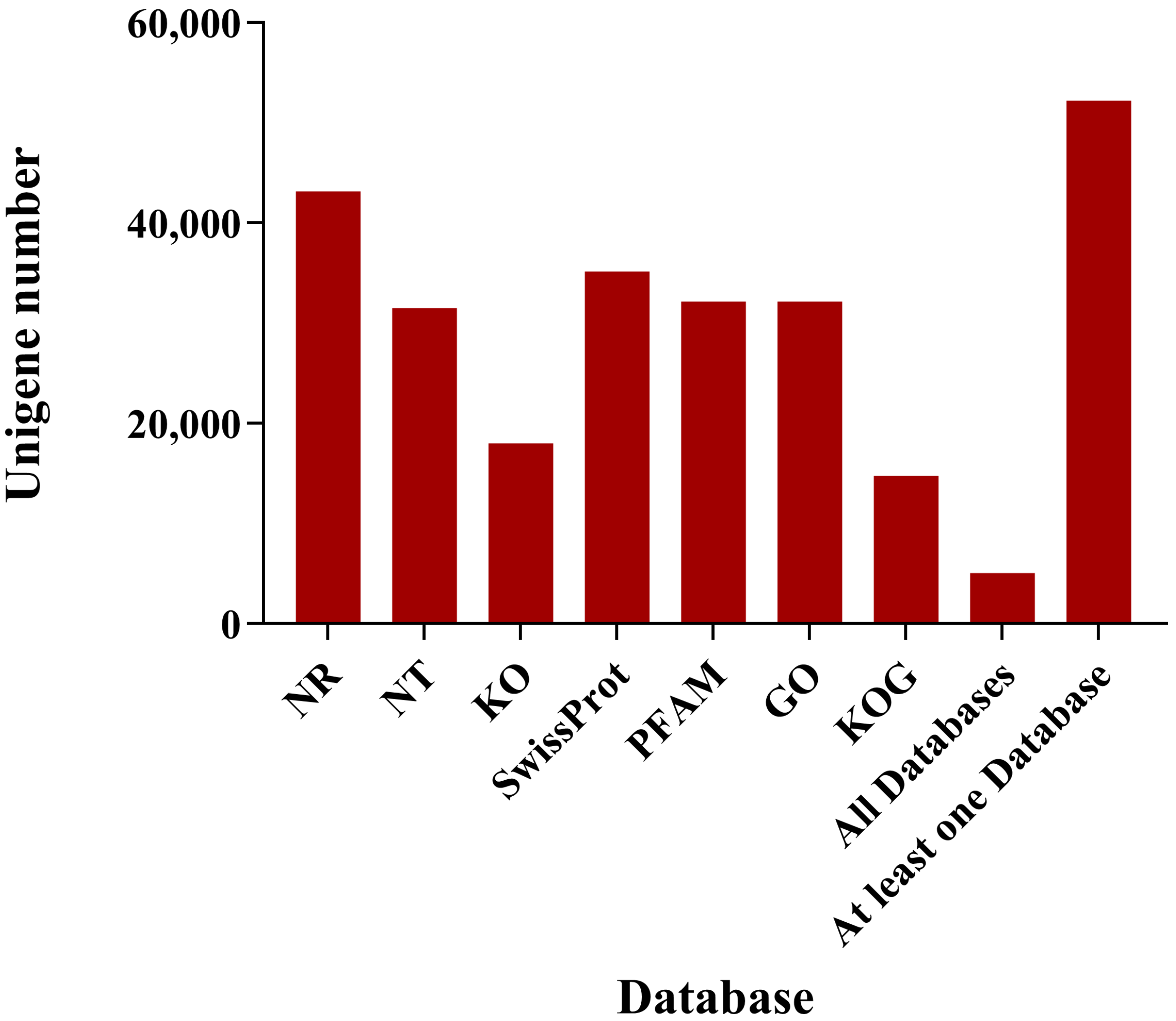
To obtain comprehensive functional annotation, unigenes were annotated against seven public databases (Figure 2), including NR, NT, Pfam, KOG, Swiss-Prot, KEGG, and Gene Ontology (GO). A total of 43,151 (56.81%), 31,543 (41.52%), 32,159 (42.33%), 14,769 (19.44%), 35,176 (46.31%), 18,031 (23.73%), and 32,159 (42.33%) unigenes were annotated in the NR, NT, Pfam, KOG, Swiss-Prot, KEGG, and GO databases, respectively. Among the 75,956 high-quality unigenes, 52,216 (68.74%) were successfully annotated in at least one database, and 5091 (6.70%) were annotated across all seven databases.
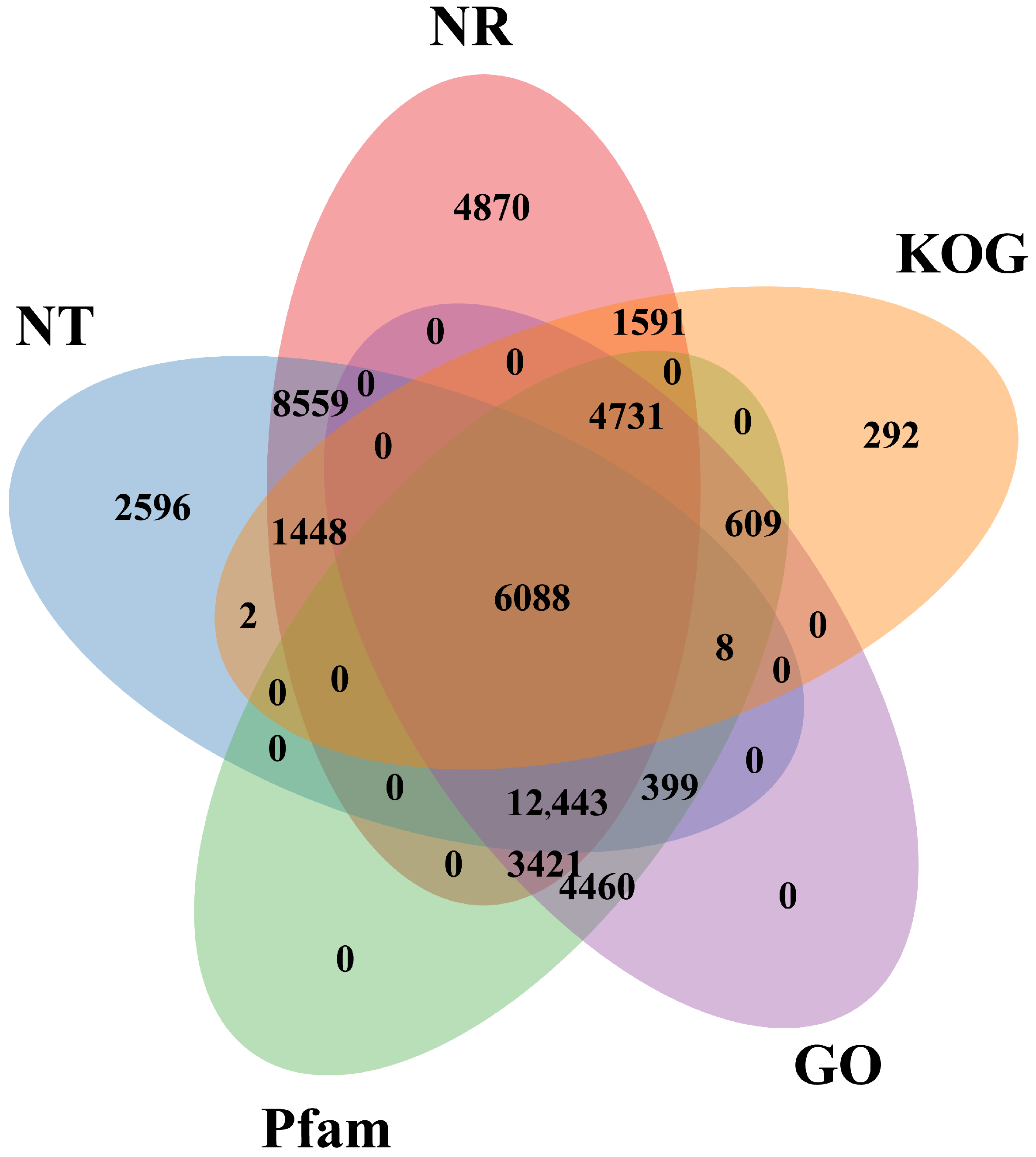
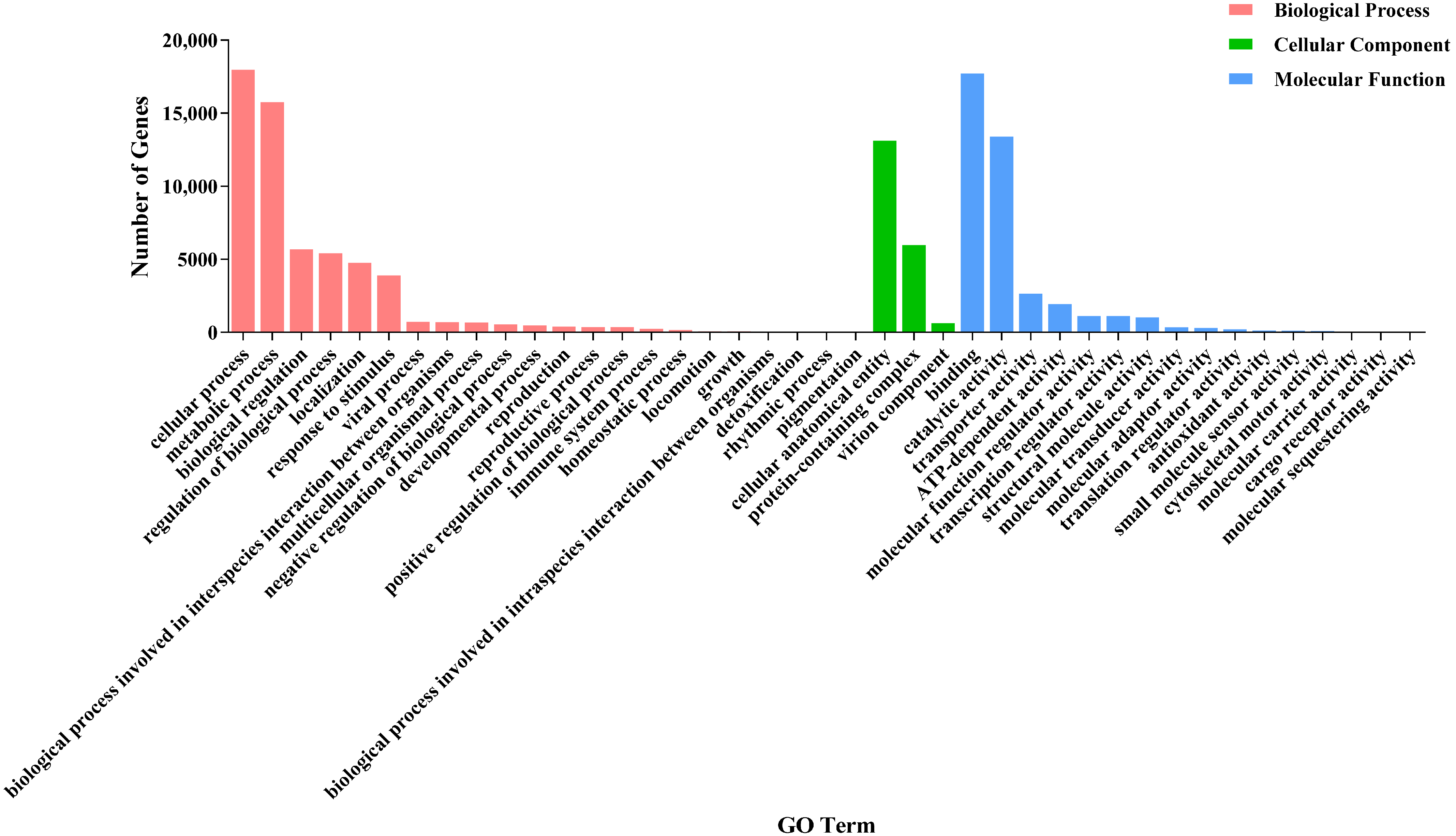
Five major public databases (NT, NR, KOG, GO, and PFAM) were selected to construct a Venn diagram (Figure 3), revealing that a total of 6088 unigenes were commonly annotated across all five databases. GO annotation assigned 32,159 unigenes, which were further classified into second-level terms within the three main GO categories: Biological Process, Cellular Component, and Molecular Function (Figure 4). Within the Biological Process category, the most represented terms were “cellular process”, “metabolic process”, and “biological regulation”. In the Cellular Component category, the dominant terms included “cellular anatomical entity” and “protein-containing complex”. In the Molecular Function category, “binding” and “catalytic activity” were the most abundant functional terms.
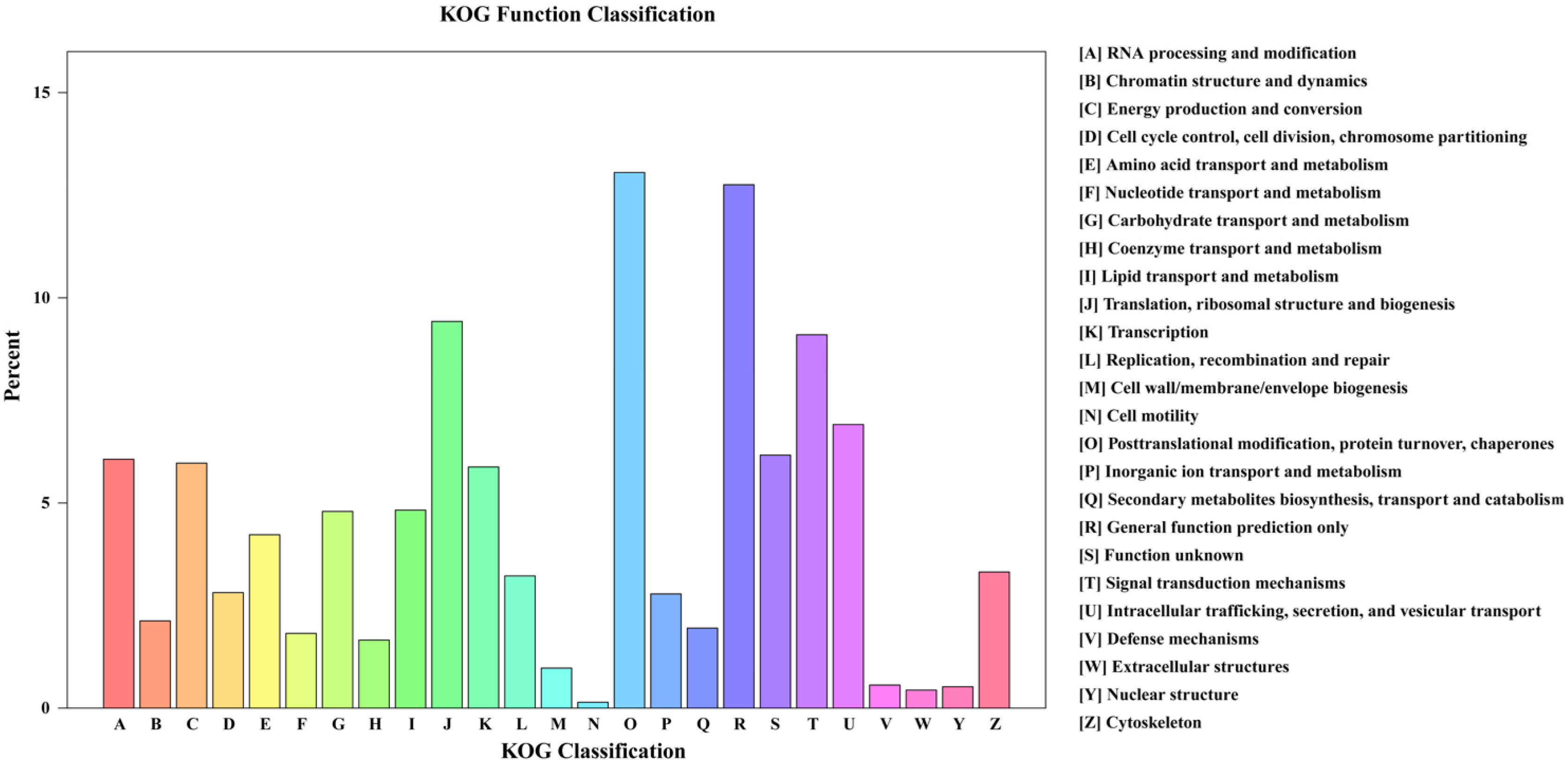
The genes successfully annotated by KOG were classified according to the group of KOG, and the annotation results showed that a total of 14,769 unigenes were classified into 25 KOG clusters (Figure 5). The five largest categories were posttranslational modification, protein turnover, chaperones (1928 unigenes), general function prediction only (1884 unigenes), translation, ribosomal structure and biogenesis (1392 unigenes), signal transduction mechanisms (1344 unigenes) and intracellular trafficking, secretion, and vesicular transport (1021 unigenes).
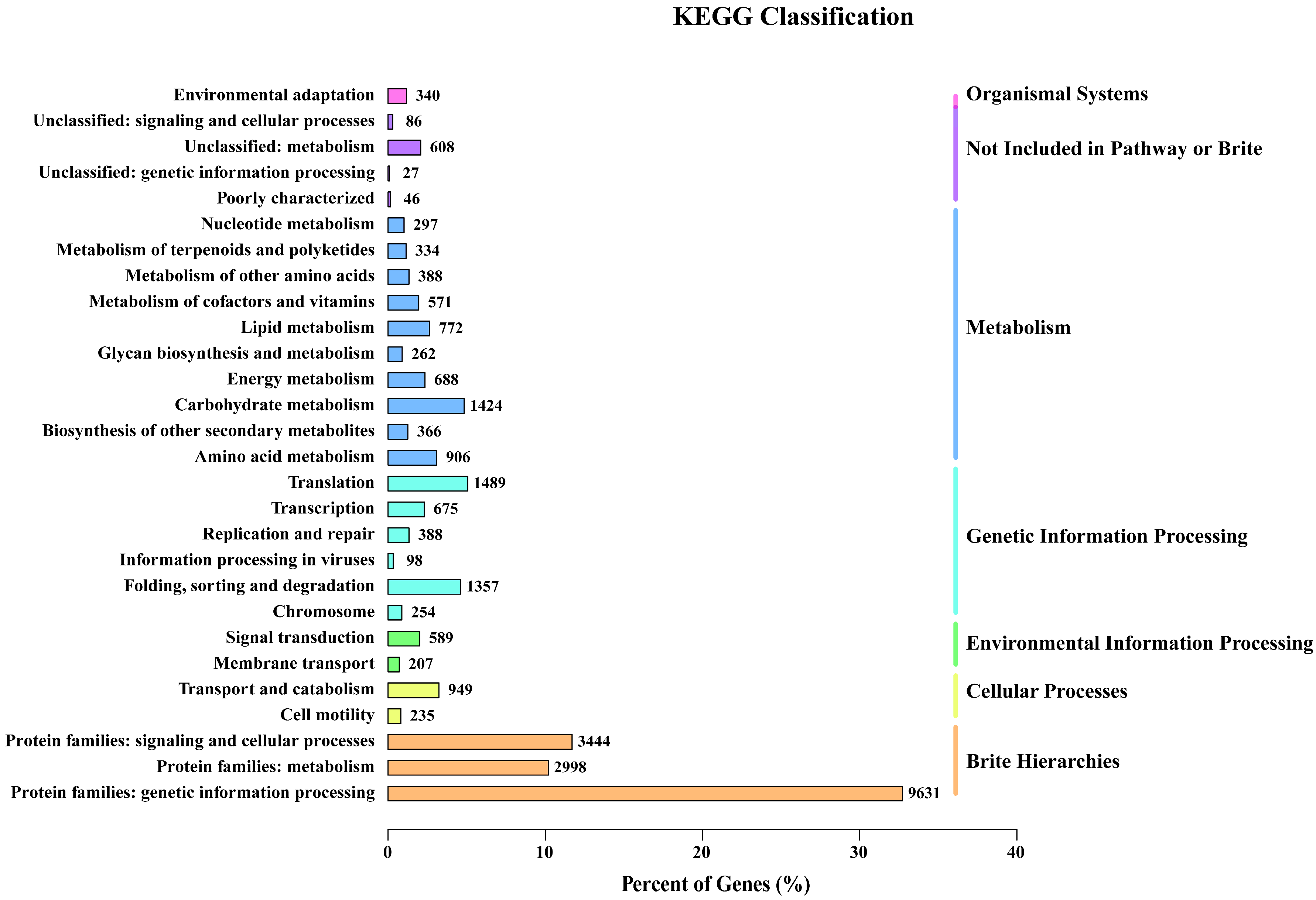
After KO annotation of the genes, they were classified according to the KEGG metabolic pathways they were involved in. A total of 18,031 unigenes were annotated in the KEGG database and assigned to 28 KEGG pathways (Figure 6). The unigenes were divided into five groups according to the KEGG metabolic pathways involved. There were 1184 unigenes in the cellular processes, 796 in the environmental information processing group, 4261 in the genetic information processing group, 6008 in the metabolism group, and 340 in the organismal systems group.

3.2.3. Distribution of Differentially Expressed Genes (DEGs)

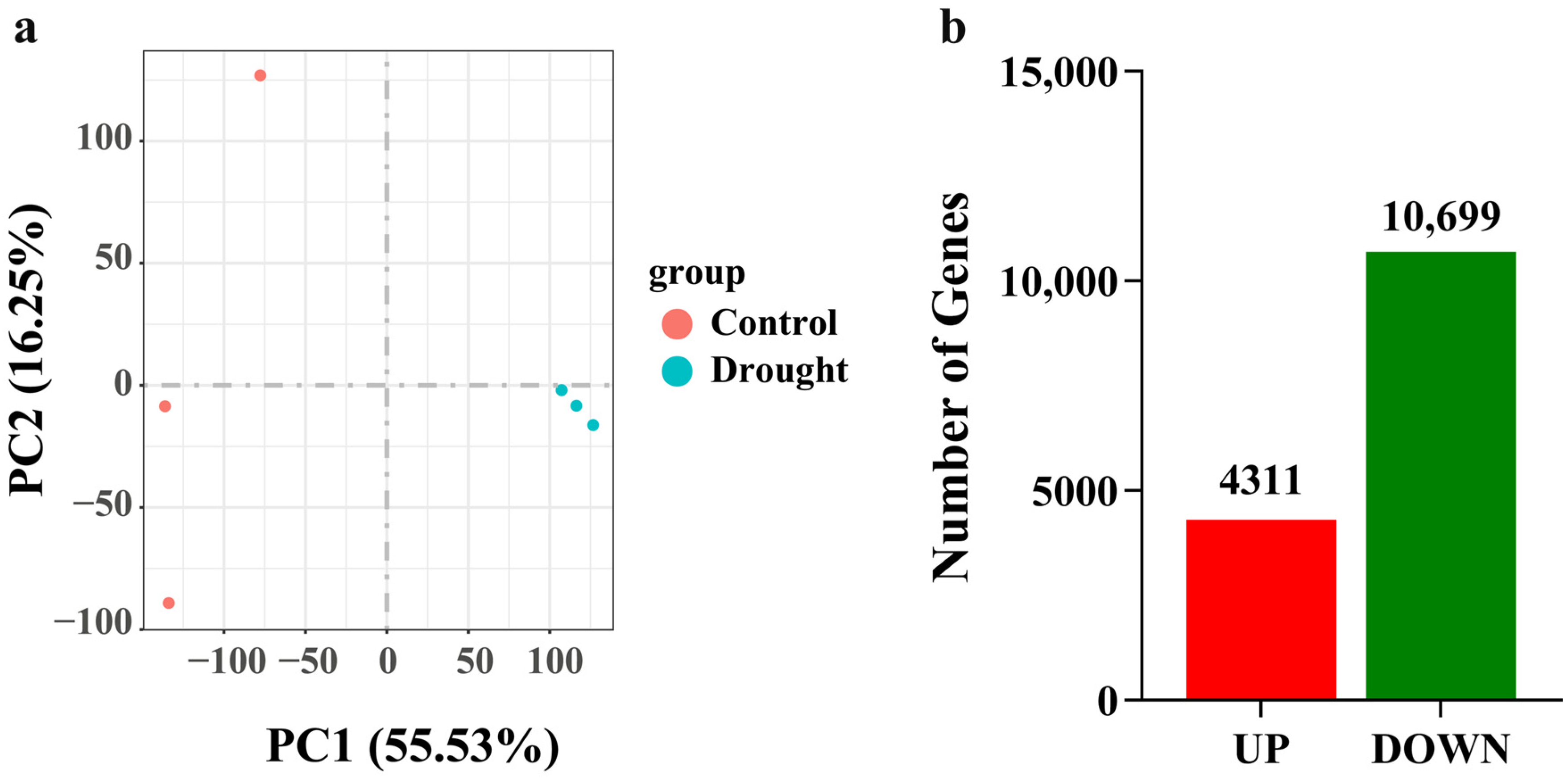
The results of principal component analysis (PCA) showed that the first two principal components explained 71.78% of the total variance, with PC1 and PC2 accounting for 55.53% and 16.25%, respectively. A clear separation between control and drought-treated samples, together with tight clustering of biological replicates, was observed, indicating a robust treatment effect and supporting the suitability of the dataset for downstream differential and functional analyses (Figure 7a). Consistent with the separation observed in the PCA, differential expression analysis revealed extensive transcriptional reprogramming in response to drought treatment. A total of 15,010 DEGs were identified between drought-treated and control samples using the threshold of |log2 Fold Change| ≥ 1 and an adjusted p-value ≤ 0.05 (Figure 7b). Among them, 4311 DEGs were up-regulated and 10,699 DEGs were down-regulated. Among the up-regulated genes, 2555 genes were not detected in the control group (FPKM = 0), but were induced under drought stress. On the contrary, among the down-regulated genes, 9205 genes were expressed to varying degrees in the control group. The significant number and magnitude of these changes further support the PCA results.
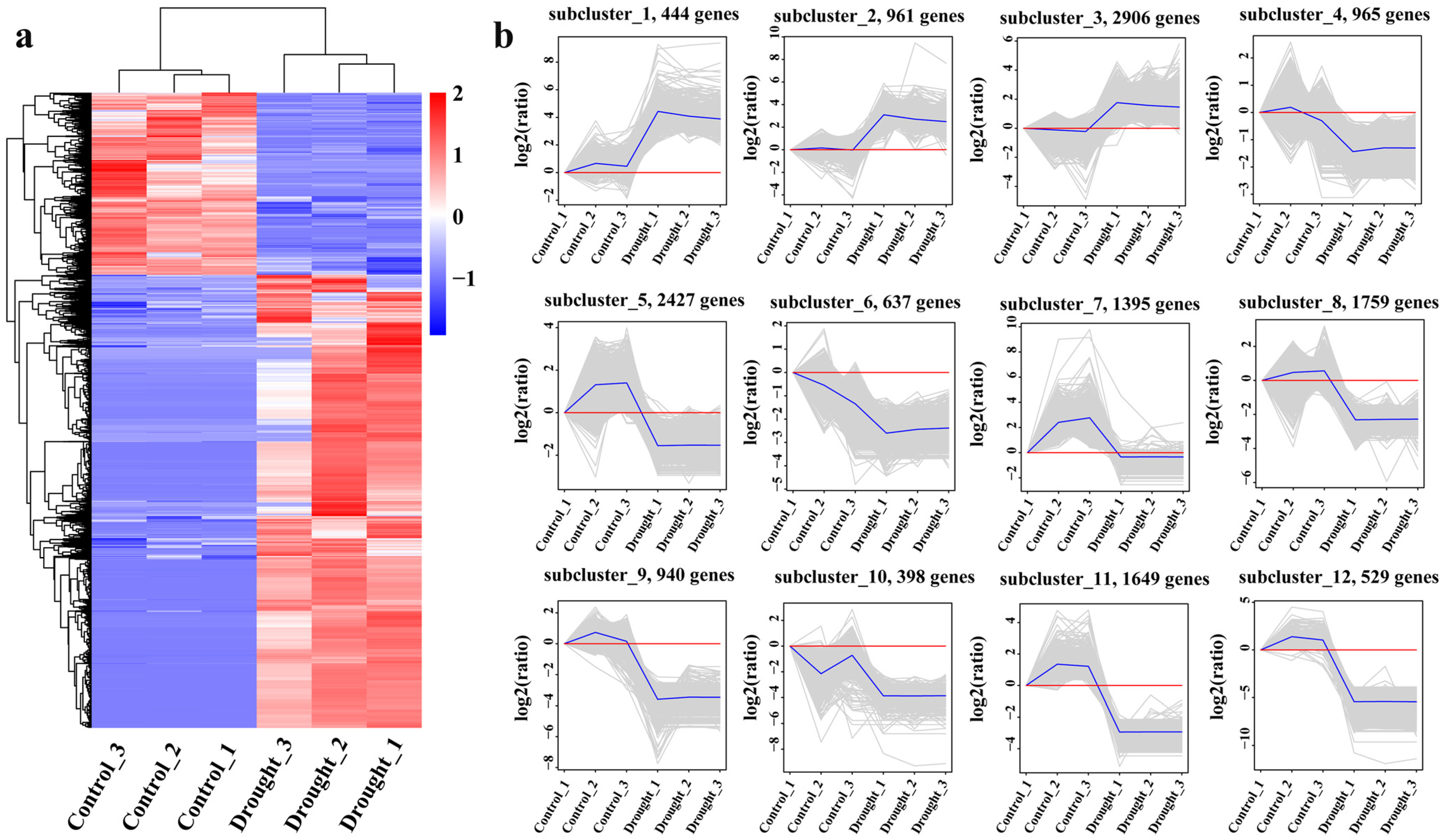
Hierarchical clustering analysis revealed pronounced transcriptional differences among samples, with all samples clearly segregated into two major clusters corresponding to the treatment conditions and strong clustering of biological replicates (Figure 8a). At the gene level, drought-responsive genes were further classified into 12 expression subclusters exhibiting distinct yet coordinated expression patterns (Figure 8b). Among these subclusters, cluster 1 showed the most pronounced upregulation pattern under drought conditions.

3.2.4. GO Enrichment Analysis of DEGs

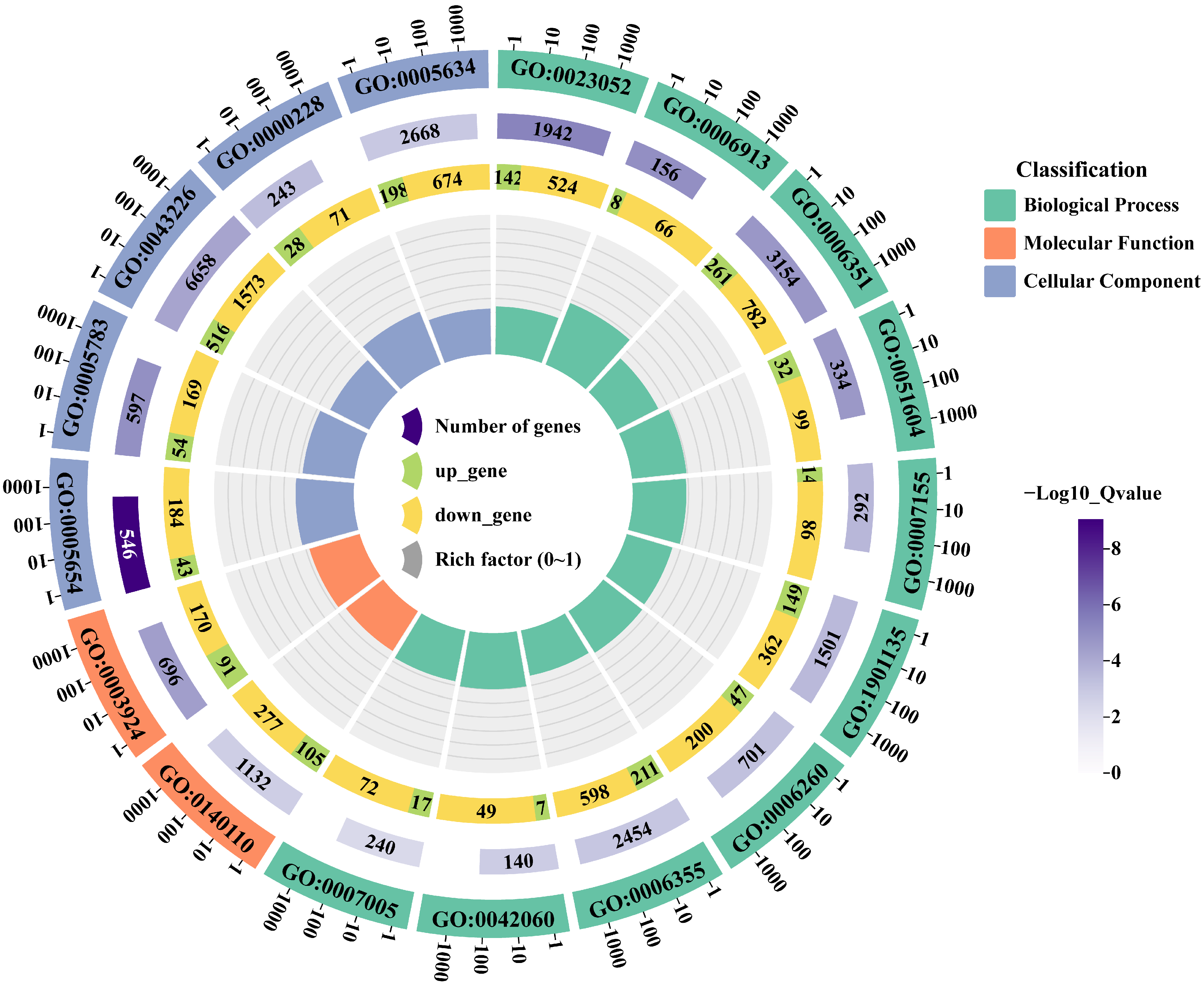
In GO enrichment analysis (Figure 9), it is divided into three categories: biological process (BP), cellular component (CC) and molecular function (MF). Compared with Control group, the differential genes in Drought group in the biological process were mainly enriched in the signaling (GO:0023052), nucleocytoplasmic transport (GO:0006913), transcription, DNA-templated (GO:006351), protein maturation (GO:0051604), cell adhesion (GO:0007155), carbohydrate derivative metabolic process (GO:1901135), DNA replication (GO:0006260), regulation of transcription, DNA-templated (GO:0006355), wound healing (GO:0042060), and mitochondrion organization (GO:0007005). In the CC, differential genes were mainly enriched in nucleoplasm (GO:0005654), endoplasmic reticulum (GO:0005783), organelle (GO:0043226), nuclear chromosome (GO:0000228), and nucleus (GO:0005634). In the MF, differential genes were mainly enriched in GTPase activity (GO:0003924), and transcription regulator activity (GO:0140110).

3.2.5. KEGG Enrichment Analysis of Metabolic Pathways of DEGs

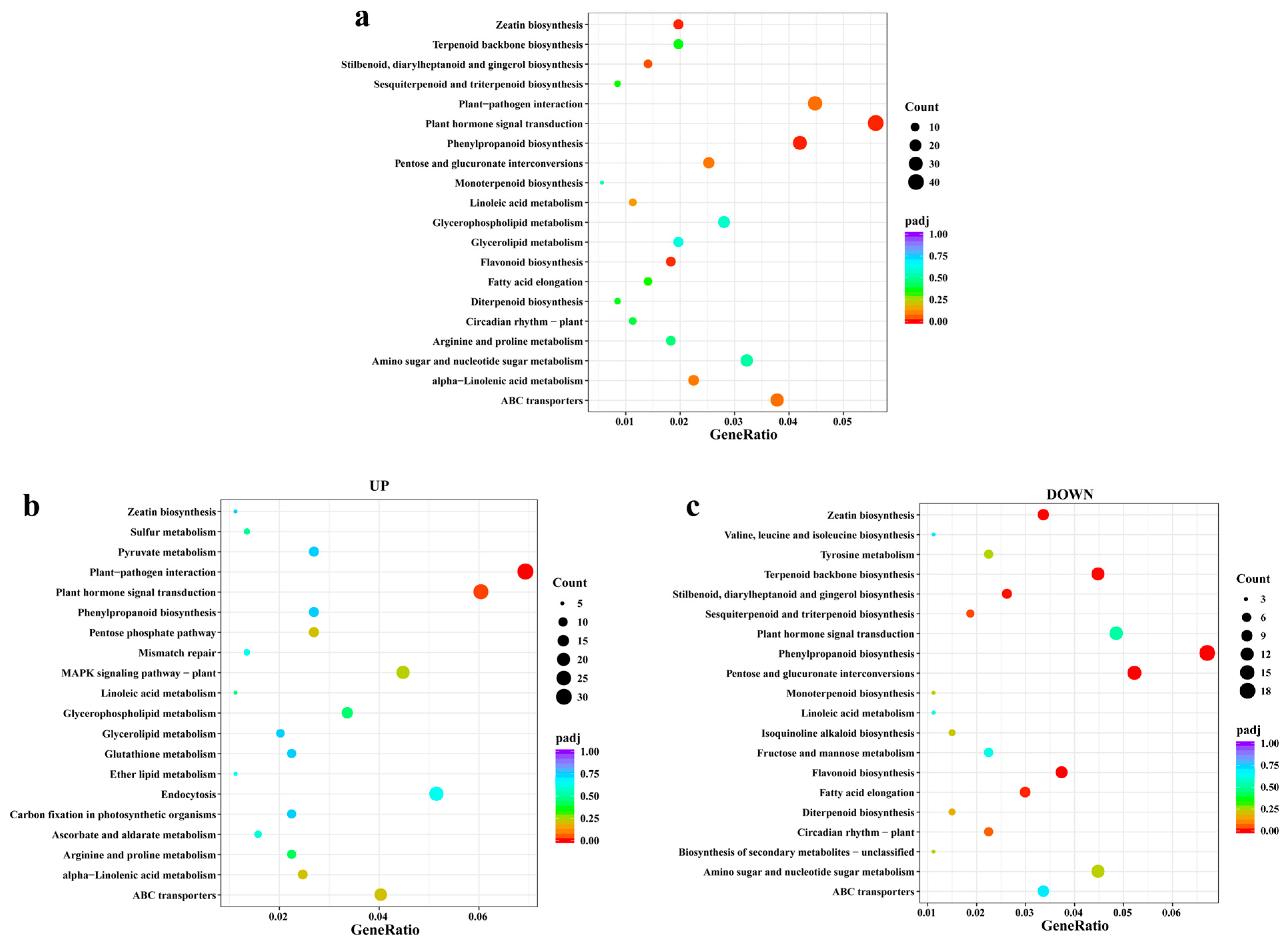
KEGG pathway enrichment analysis was performed to identify key metabolic and signal transduction pathways associated with the DEGs (Figure 10a). KEGG analysis revealed that total DEGs were significantly enriched in phenylpropanoid biosynthesis (30 DEGs), zeatin biosynthesis (14 DEGs), plant hormone signal transduction (40 DEGs), flavonoid biosynthesis (13 DEGs), and stilbenoid, diarylheptanoid and gingerol biosynthesis (10 DEGs).
Separate KEGG enrichment analyses of up-regulated and down-regulated DEGs showed that up-regulated DEGs were significantly enriched in plant-pathogen interaction (31 DEGs) and plant hormone signal transduction (27 DEGs) (Figure 10b). In contrast, down-regulated DEGs were significantly enriched in phenylpropanoid biosynthesis (18 DEGs), flavonoid biosynthesis (10 DEGs), pentose and glucuronate interconversions (14 DEGs), zeatin biosynthesis (9 DEGs), stilbenoid, diarylheptanoid and gingerol biosynthesis (7 DEGs), terpenoid backbone biosynthesis (11 DEGs), fatty acid elongation (8 DEGs), and sesquiterpenoid and triterpenoid biosynthesis (5 DEGs) (Figure 10c). Collectively, these enrichment results indicate that DEGs were predominantly involved in phenylpropanoid biosynthesis, plant hormone signal transduction, and zeatin biosynthesis pathways.
Regulation of Phenylpropanoid Biosynthesis
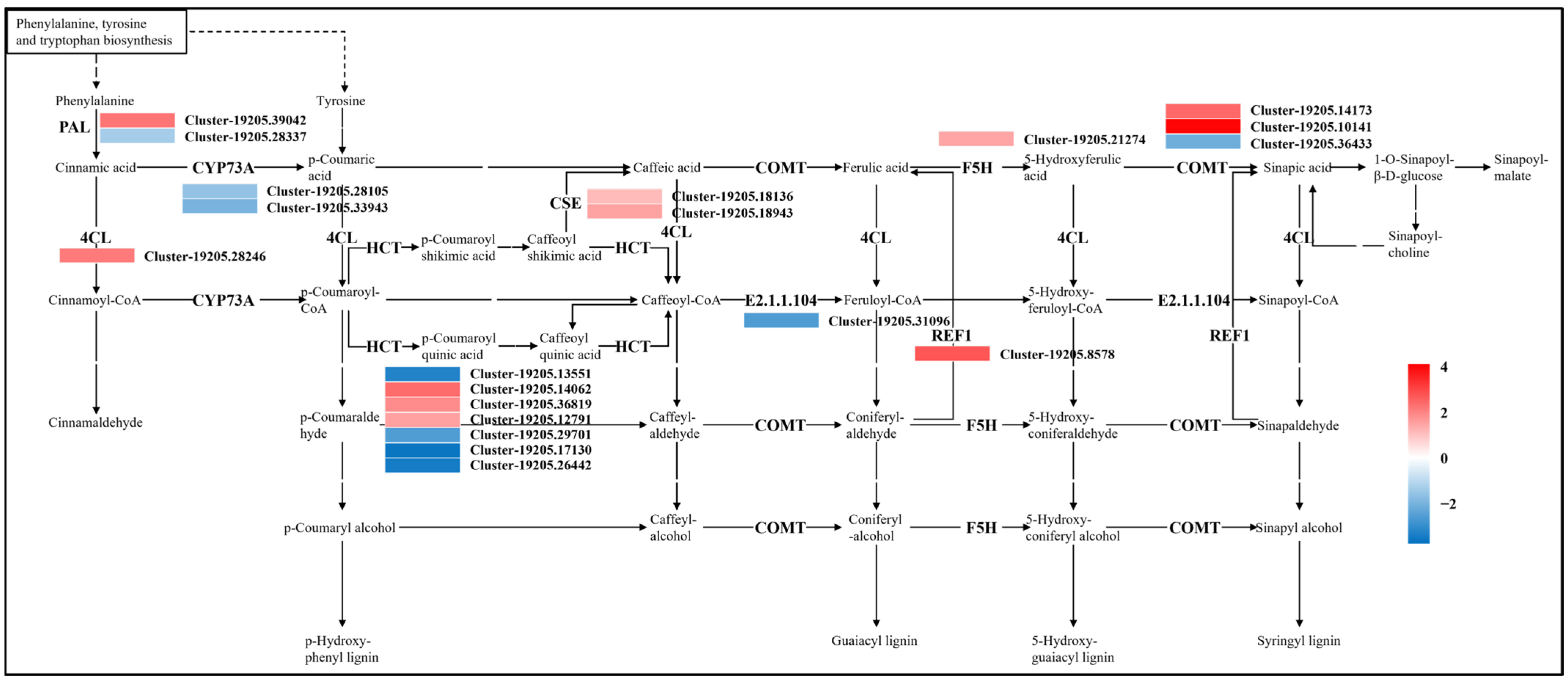
A total of 24 differentially expressed genes (DEGs) were identified as significantly enriched in the phenylpropanoid biosynthesis pathway (Figure 11). Under drought stress, one of the two phenylalanine ammonia-lyase (PAL) genes was up-regulated, potentially enhancing flux through the phenylpropanoid pathway and promoting cinnamic acid accumulation. In addition, one 4-coumarate-CoA ligase (4CL) gene, two of three caffeic acid 3-O-methyltransferase/acetylserotonin O-methyltransferase (COMT) genes, and one ferulate-5-hydroxylase (F5H) gene were up-regulated. Among the seven shikimate O-hydroxycinnamoyltransferase (HCT) genes, three were up-regulated, together with two caffeoylshikimate esterase (CSE) genes and one coniferyl-aldehyde dehydrogenase (REF1) gene. These enzymes collectively catalyze the conversion of cinnamic acid into downstream phenylpropanoid derivatives, including p-coumarol, coniferyl alcohol, and sinapyl alcohol. Consequently, the coordinated upregulation of these genes under drought stress may enhance the biosynthesis of lignin-related alcohol intermediates, thereby contributing to stress adaptation. In contrast, the gene encoding caffeoyl-CoA O-methyltransferase (EC2.1.1.104) was downregulated in response to drought stress.
Regulation of Plant Hormone Signal Transduction
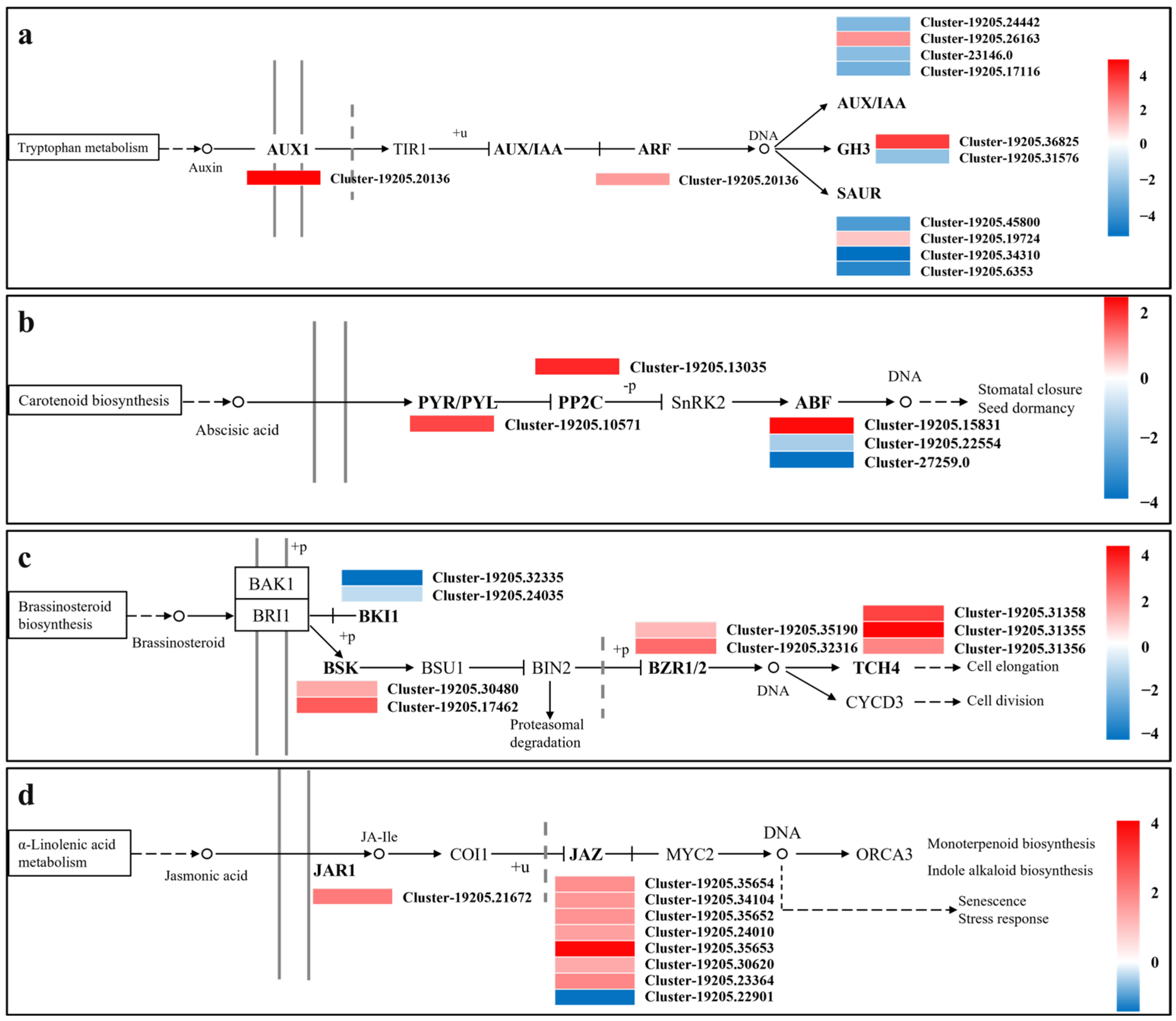
A total of twelve DEGs were identified in the auxin signal transduction pathway (Figure 12a). Among these genes, one gene encoding an auxin influx carrier of the AUX1/LAX family and one gene encoding an auxin response factor (ARF) were up-regulated under drought stress. In contrast, three out of four genes encoding Aux/IAA family proteins, one of two genes from the auxin-responsive GH3 family, and three out of four genes encoding SMALL AUXIN UP RNA (SAUR) family proteins were down-regulated. These results indicate that multiple components of the auxin signaling pathway exhibited transcriptional responses to drought stress.
Five DEGs were identified in the abscisic acid (ABA) signal transduction pathway (Figure 12b). Among these genes, one gene encoding a PYR/PYL family ABA receptor, one gene encoding protein phosphatase 2C (PP2C), and one of three genes encoding ABA-responsive element binding factors (ABFs) were up-regulated under drought stress. The remaining ABA signaling-related genes showed no significant changes in expression. Overall, several core components of the ABA signaling pathway displayed transcriptional alterations in response to drought stress.
In the brassinosteroid (BR) signal transduction pathway (Figure 12c), two genes encoding BRI1 kinase inhibitor 1 (BKI1) were down-regulated under drought stress. In contrast, two genes encoding BR-signaling kinases (BSKs) and two genes encoding brassinosteroid resistant 1/2 (BZR1/2) transcription factors were up-regulated. In addition, three genes encoding xyloglucan endotransglucosylase/hydrolase TCH4 exhibited increased expression. These expression changes indicate that multiple components of the BR signaling pathway were transcriptionally responsive to drought stress.
In the jasmonic acid (JA) signal transduction pathway (Figure 12d), one jasmonic acid-amino synthetase gene (JAR1_4_6) was significantly up-regulated under drought stress. In addition, seven out of eight genes encoding jasmonate ZIM domain-containing (JAZ) proteins also exhibited up-regulated expression. According to the established JA signaling framework, JAR1 encodes an enzyme responsible for the conjugation of jasmonic acid with isoleucine to form the bioactive compound JA-Ile, while JAZ proteins function as key regulators in JA signal transduction. The simultaneous up-regulation of JAR1 and multiple JAZ genes indicates that components of the JA signaling pathway were transcriptionally responsive to drought stress.
Overall, these expression patterns suggest that the JA signaling pathway was activated at the transcriptional level in response to drought stress, implying its potential involvement in the drought response of the studied plants.
Regulation of Zeatin Biosynthesis
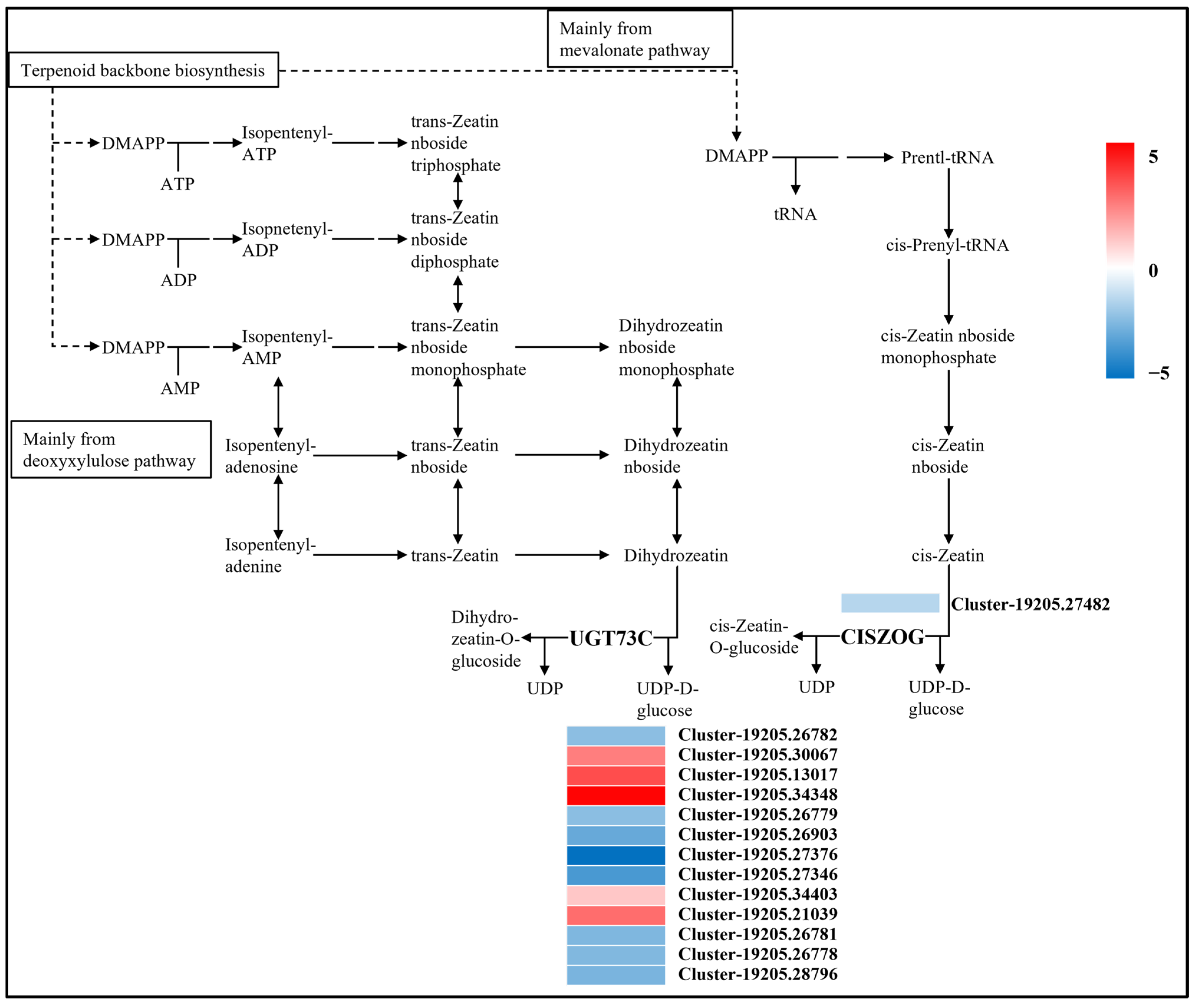
A total of 14 DEGs were significantly enriched in the zeatin biosynthesis pathway (Figure 13). Among these DEGs, 13 genes encoding UDP-glucosyltransferase 73C (UGT73C) family members were identified, of which five were up-regulated and eight were down-regulated under drought stress. In addition, one gene encoding cis-zeatin O-glucosyltransferase (CISZOG) was down-regulated. Overall, genes associated with zeatin biosynthesis and modification exhibited distinct transcriptional responses to drought stress, indicating that multiple components of this pathway were affected at the transcriptional level.

3.3. qPCR Gene Expression Analysis

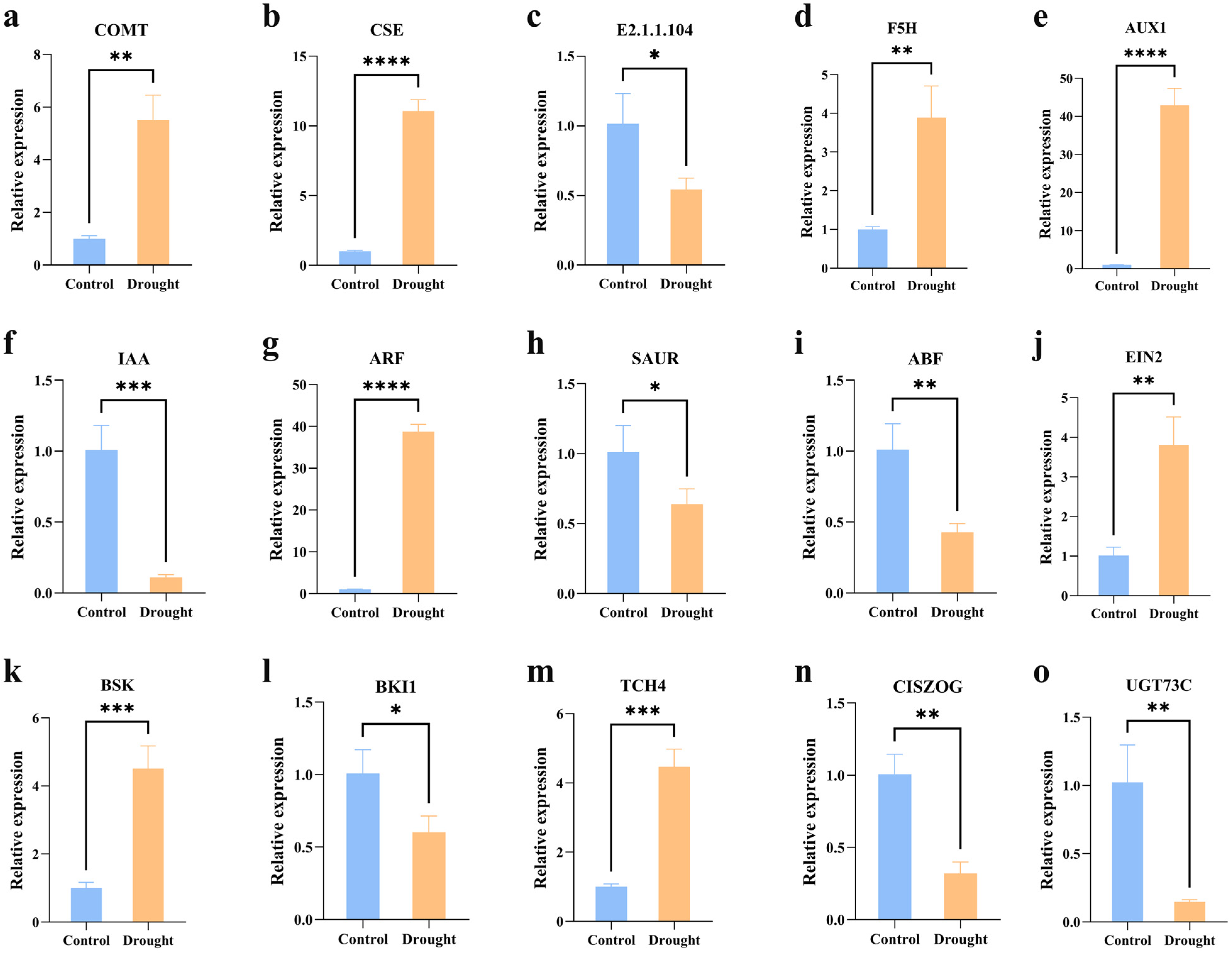
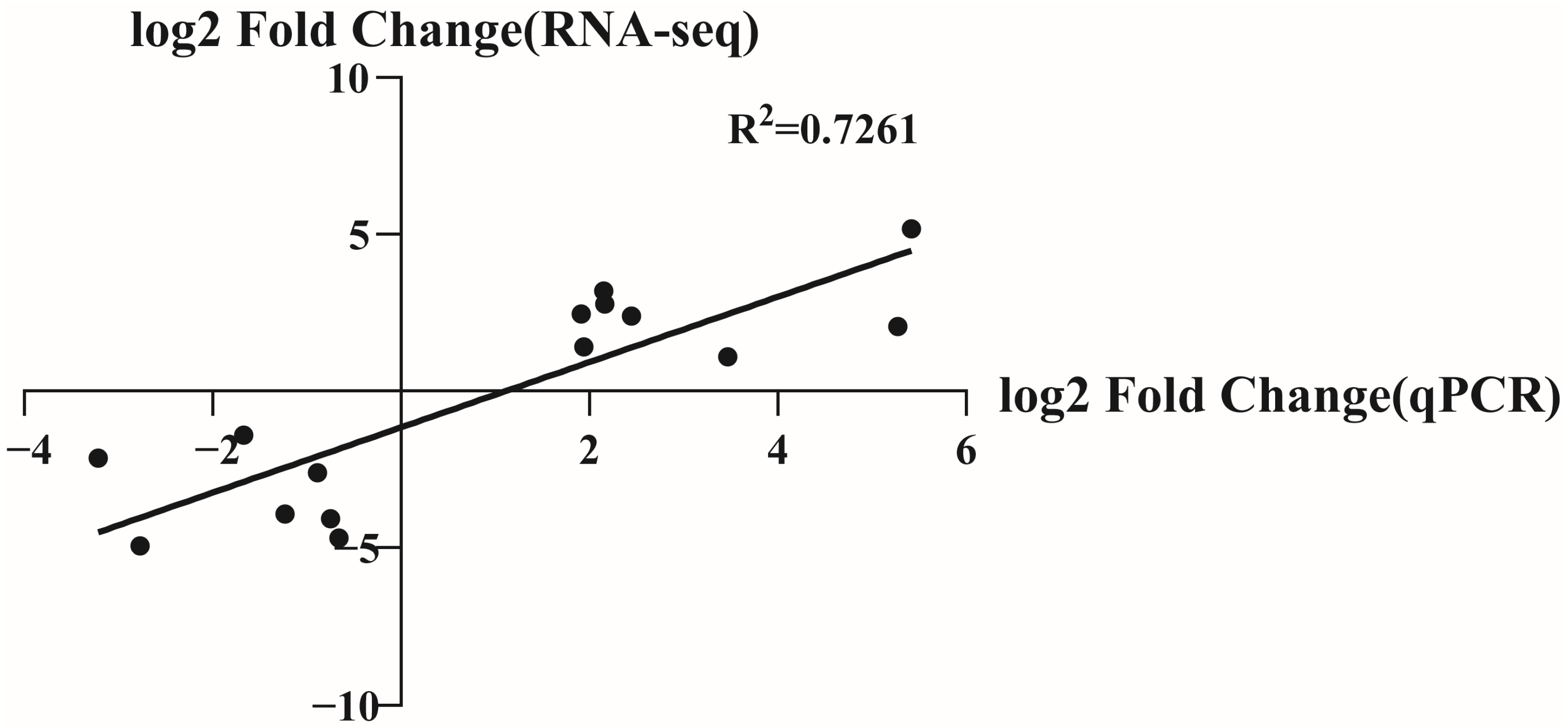
To validate the RNA-seq results, the expression levels of 15 drought resistance-related DEGs in the leaves of A. centraliasiaticus were quantified by qPCR under control and drought stress conditions. The genes COMT, CSE, F5H, AUX1, ARF, EIN2, BSK, and TCH4 were up-regulated, whereas E2.1.1.104, IAA, SAUR, ABF, BKI1, CISZOG, and UGT73C were down-regulated under drought stress (Figure 14). A significant positive correlation was observed between gene expression levels determined by qPCR and FPKM values obtained from RNA-seq analysis (R2 = 0.7261; Figure 15). Overall, qPCR results were highly consistent with the transcriptome data, confirming the reliability of the RNA-seq analysis.

4. Discussion

Transcriptomic data represent a crucial resource for elucidating plant survival and adaptive mechanisms under abiotic stress conditions. At present, transcriptomic studies focusing on the drought stress responses of A. centraliasiaticus remain scarce. Previous research by Li [21] also investigated A. centraliasiaticus; however, that study was mainly limited to the characterization and phylogenetic analysis of its complete chloroplast genome. Therefore, exploring the transcriptomic responses of A. centraliasiaticus to drought stress represents a significant and previously unexplored research direction. In this study, we employed Illumina sequencing to generate high-quality transcriptome data, providing a robust foundation for identifying drought resistance-related genes and elucidating key molecular pathways.

4.1. Physiological Changes Under Drought Stress

Under drought stress, plants exhibit coordinated adjustments at the morphological, physiological, biochemical, and molecular levels to mitigate the detrimental effects of water limitation [3]. These responses include regulating cellular osmotic and water potential, activating antioxidant defense systems, and accumulating osmolytes to maintain cellular homeostasis and sustain growth under such conditions [10]. Disruption of osmotic regulation and antioxidant defense can impair the scavenging of ROS [31], leading to excessive ROS accumulation and subsequent membrane lipid peroxidation. ROS accumulation typically exhibits distinct temporal dynamics in plants. At the early stage of stress, ROS rapidly accumulate, triggering membrane lipid peroxidation and initiating oxidative damage. Subsequently, as a defensive response, enhanced antioxidant enzyme activities together with increased accumulation of osmotic regulators facilitate efficient ROS scavenging, resulting in reduced ROS levels at later stages. However, lipid peroxidation is a self-propagating process, and early oxidative damage can exert cumulative and irreversible effects on membrane integrity. Consequently, although ROS levels were effectively reduced at the sampling stage, the membrane damage caused by the initial oxidative burst persisted, as reflected by decreased ROS content accompanied by increased MDA levels in this study. This pattern indicates effective activation of antioxidant defenses that constrain ongoing oxidative stress, while simultaneously revealing the lasting impact of early oxidative injury. As a result, drought tolerance in plants is closely associated with the efficiency of osmotic adjustment and antioxidant defense mechanisms, which together help preserve cellular integrity and metabolic stability during drought stress.
The cell membrane serves as a selective barrier separating intracellular components from the external environment, thereby maintaining cellular homeostasis [32,33]. Drought stress promotes the accumulation of ROS, largely due to its detrimental effects on photosynthetic organelles [34]. While moderate ROS levels can act as signaling molecules that activate plant defense responses, excessive ROS accumulation leads to increased MDA content and enhanced electrolyte leakage, both of which are indicative of membrane lipid peroxidation and cellular damage [35]. To counteract oxidative stress, plants rely on a core antioxidant defense system composed of key enzymes such as SOD, POD, CAT, and APX, which mitigate ROS induced damage through coordinated redox reactions [36,37,38]. In addition to enzymatic defenses, the accumulation of osmolytes, including SP, SS, and Pro, contributes to stress tolerance by regulating cellular osmotic potential [39]. Previous studies have shown that elevated levels of SS [40] and Pro [41] can alleviate ROS accumulation by supporting physiological processes such as cell expansion, stomatal regulation, and photosynthetic efficiency, as well as maintaining antioxidant enzyme activity and non-enzymatic antioxidant pools. Consequently, these biochemical parameters are widely used as reliable indicators for assessing plant responses and tolerance to drought stress.
Consistent with these physiological responses, transcriptomic analysis based on RNA-seq revealed significant up-regulation of genes encoding SOD (Cluster-19205.9544/8313), CAT (Cluster-19205.11907/9644/28285/12725), and Pro (Cluster-19205.26828) under drought stress. The coordinated transcriptional activation of these genes corroborates the observed increases in antioxidant enzyme activities and osmolyte accumulation, supporting the role of integrated antioxidant defense and osmotic adjustment in drought adaptation. Collectively, these results suggest that A. centralasiaticus mitigates drought-induced damage through coordinated enhancement of antioxidant defenses and osmotic regulation, underscoring its robust drought tolerance.

4.2. Phenylpropanoid Biosynthesis Under Drought Stress

The phenylpropanoid biosynthesis pathway produces a variety of secondary metabolites that play important roles in plant adaptation to biotic and abiotic stresses [42]. These compounds are synthesized through various enzymatic modifications, such as hydroxylation and methylation, originating from a common phenylpropanoid backbone. Phenylalanine ammonia lyase (PAL) functions as the entry-point enzyme and a major regulatory node in this pathway, catalyzing the deamination of phenylalanine to cinnamic acid. PAL expression is often induced by environmental stresses and exhibits pronounced tissue-specific regulation, and previous studies have linked PAL activity and expression to drought tolerance in crops, including soybean [43] and wheat [44]. In the present study, the gene encoding PAL (Cluster-19205.39042) was significantly up-regulated under drought stress, suggesting activation of the phenylpropanoid biosynthesis pathway in response to water deficit. This transcriptional response implies that enhanced phenylpropanoid metabolism may contribute to drought adaptation, potentially through the accumulation of stress-related secondary metabolites involved in antioxidant protection and cellular defense.
4-Coumaric acid coenzyme A ligase (4CL) is a pivotal enzyme linking the general phenylpropanoid pathway with downstream branch pathways, including lignin and flavonoid biosynthesis. Previous studies have demonstrated that overexpression of 4CL contributes to reactive oxygen species (ROS) scavenging and alleviation of oxidative damage [45,46], while simultaneously promoting lignin biosynthesis to enhance drought resistance [47,48]. Several enzymes, including cinnamoyl-CoA reductase (CCR), caffeoyl-CoA O-methyltransferase (CCOMT), caffeic acid O-methyltransferase (COMT) [49,50], ferulic acid 5-hydroxylase (F5H) [51], hydroxycinnamoyl transferase (HCT), and caffeoylshikimate esterase (CSE) [52,53], constitute central components of the lignin-specific biosynthetic pathway. These enzymes act coordinately to promote the synthesis and polymerization of guaiacyl (G) and syringyl (S) lignin monomers, thereby enhancing cell wall rigidity and limiting water loss under drought conditions.
In the present study, genes encoding 4CL, COMT, F5H, HCT, CSE, and REF1 were up-regulated under drought stress. A. centralasiaticus may enhance drought resistance by promoting lignin accumulation. Notably, another gene encoding caffeoyl-CoA O-methyltransferase (EC2.1.1.104) was down-regulated in this study, suggesting a more complex regulatory pattern within the lignin biosynthetic network. Lignin biosynthesis is tightly controlled by multilayered regulatory mechanisms involving transcription factors, microRNAs, and long non-coding RNAs [54]. The observed downregulation of this gene may therefore reflect the action of stress-responsive inhibitory regulatory elements, such as specific miRNAs activated under drought stress. Such differential regulation highlights an adaptive strategy in which plants fine-tune lignin biosynthesis and redistribute metabolic resources to achieve an optimal balance between structural reinforcement and metabolic efficiency under stress environments. Notably, overexpression of the COMT gene has also been associated with enhanced activities of antioxidant enzymes, including SOD, POD, and CAT, as well as increased proline accumulation, contributing to more efficient ROS scavenging [55,56,57]. In addition, COMT has been implicated in the regulation of plant hormone dynamics, suggesting that it may enhance stress tolerance through the integration of lignin biosynthesis, antioxidant defense, and hormonal signaling pathways [58].

4.3. Plant Hormone Signal Transduction Under Drought Stress

Plant hormone signal transduction pathways are highly complex and play essential roles in plant growth, development, and environmental adaptation [59]. Under drought stress, plants modulate hormone signal transduction pathways to perceive stress signals and enhance stress tolerance [60,61,62]. Previous studies have shown that key upregulated genes involved in abscisic acid (ABA), jasmonic acid (JA), and brassinosteroid (BR) signaling, such as PYL, JAZ, and BSK, were significantly enriched in Kentucky bluegrass under drought stress. This was accompanied by marked increases in ABA, JA, and BR contents with prolonged drought duration [63]. Moreover, ABA and JA interact to coordinate defense responses under both biotic and abiotic stresses by reallocating resources toward stress resistance and reducing growth-related energy expenditure [64].
In the present study, numerous genes involved in plant hormone signal transduction were differentially expressed in response to drought stress. Notably, auxin, ABA, brassinosteroid, and JA signaling pathways played prominent roles in mediating drought responses, highlighting the importance of coordinated hormonal regulation in the adaptive strategies of A. centraliasiaticus under water-deficit conditions.
Under drought stress, abscisic acid (ABA), a key plant hormone, plays a central role in stress responses by regulating stomatal closure [65], modulating root development, enhancing antioxidant enzyme activities, and promoting the accumulation of osmotic adjustment substances such as proline (Pro) and soluble sugars (SS) [66,67]. In the ABA signaling pathway, previous studies have shown that overexpression of PYR/PYL genes in tobacco increases SOD, POD, and CAT activities as well as proline content [68], while ABA-responsive element binding factors (ABFs) act as positive regulators in multiple stress responses [69]. In this study, genes encoding PYL (Cluster-19205.10571) and ABF (Cluster-19205.15831) were significantly up-regulated, indicating activation of ABA signaling.
Protein phosphatase 2C (PP2C) serves as a key negative regulator in the ABA signaling pathway, typically modulating response intensity by inhibiting signal transduction [70]. The upregulation of the gene encoding PP2C (Cluster-19205.13035) observed in this study may reflect an adaptive feedback regulatory mechanism [71,72]. Under prolonged drought conditions, sustained ABA accumulation could lead to excessive signaling and resource consumption if PP2C activity were completely suppressed. In this context, the upregulation of certain PP2C genes may help moderately attenuate ABA signaling, thereby establishing a new homeostatic balance between effective defense responses and resource conservation, while preparing the plant for post-stress recovery growth. In addition, members of the PP2C gene family exhibit functional diversity, and the up-regulated expression of specific PP2C genes under drought stress may contribute to tissue- or cell-specific fine-tuning of ABA responses, optimizing overall drought tolerance.
Brassinosteroids have been reported to enhance plant drought tolerance by improving photosynthetic performance, increasing antioxidant enzyme activities (SOD, POD, and CAT), promoting proline accumulation, and reducing malondialdehyde (MDA) content, as demonstrated in maize [73], banana [74], and Lallemantia Iberica [75]. In the brassinosteroid (BR) signal transduction pathway, BR perception is initiated by the plasma membrane receptor BRI1 and its co-receptor BAK1, after which the signal is transduced to BR-signaling kinases (BSKs) through phosphorylation cascades. Activated BSKs further phosphorylate and activate the phosphatase BSU1, which inactivates the negative regulator BIN2 via dephosphorylation, releasing its repression of the transcription factors BZR1/BES1. Activated BZR1/BES1 then translocate into the nucleus to regulate the expression of downstream target genes, such as TCH4, ultimately modulating plant growth, development, and stress responses [76].
In this study, genes encoding BSK (Cluster-19205.30480/17462), BZR1/2 (Cluster-19205.35190/32316), and TCH4 (Cluster-19205.31358/31355/31356) were significantly up-regulated, indicating activation of the BR signaling pathway under drought stress. Notably, TCH4 encodes a cell wall-modifying enzyme, and its up-regulated expression may contribute to enhanced water retention capacity and maintenance of structural integrity under drought conditions [77]. In summary, BR signaling plays an important regulatory role in the drought stress response of A. centraliasiaticus.
Under drought stress, jasmonic acid (JA) has been reported to mitigate oxidative damage by enhancing antioxidant enzyme activities and increasing non-enzymatic antioxidants, such as phenolic compounds, thereby reducing, thereby reducing reactive oxygen species (ROS) accumulation and membrane lipid peroxidation [78,79]. In addition, JA can improve photosynthetic capacity and water use efficiency (WUE), thereby alleviating drought-induced physiological damage [80,81]. In the JA signaling pathway, jasmonic acid-amino acid synthetase (e.g., JAR1) catalyzes the formation of the bioactive conjugate JA-Ile. JA-Ile subsequently binds to the receptor COI1, promoting SCF^COI1^ mediated ubiquitination and degradation of JAZ proteins. The degradation of JAZ repressors relieves repression of the transcription factor MYC2, thereby enabling the activation of genes associated with stress responses and senescence. In this study, the gene encoding JAR1 (Cluster-19205.21672) was up-regulated, and most JAZ genes were also up-regulated, with only one member down-regulated. Upregulation of JAR1 may contribute to increased JA-Ile accumulation and enhanced drought tolerance, consistent with the established role of JAR1 in JA-mediated stress responses [82].
Notably, JAZ proteins function as repressors in the JA signaling pathway, and their overall upregulation may reflect a negative feedback or signal-buffering mechanism [83]. Previous studies have shown that overexpression of specific JAZ genes can enhance drought tolerance by coordinating antioxidant defenses [84] and photosynthetic processes [85]. Moreover, JAZ proteins represent key nodes in the crosstalk between JA and other hormonal signals, such as abscisic acid (ABA) [86]. Their upregulation under drought stress may therefore help fine-tune the balance between JA and ABA signaling, preventing excessive defense activation and enabling an adaptive balance between water conservation and the maintenance of basal photosynthetic activity.
Auxin plays a central regulatory role in plant lateral root development [87]. Under drought stress, plants dynamically regulate auxin biosynthesis, transport, and signaling to regulate lateral root formation in a stage-dependent manner [88] and coordinate growth balance between aboveground and belowground organs through antagonistic interactions with hormones such as cytokinins, thereby enhancing stress adaptability [89]. In addition, auxin has been shown to enhance drought tolerance by increasing soluble sugar accumulation and antioxidant enzyme activities, including SOD and CAT [90]. In the auxin signaling pathway, AUX1/LAX family proteins mediate cellular auxin influx [91], while auxin response factors (ARFs) function as key transcription factors regulating downstream gene expression [92].
In this study, genes encoding AUX1 (Cluster-19205.20136) and ARF (Cluster-19205.37558) were up-regulated. Meanwhile, several auxin early response genes, including Aux/IAA (Cluster-19205.24442/17116; Cluster-23146.0), GH3 (Cluster-19205.31576), and SAUR (Cluster-19205.45800/34310/6353), were generally down-regulated. This expression pattern suggests that auxin signaling may be reprogrammed under drought stress: upregulation of AUX1 and ARF may help maintain auxin perception and transcriptional activation, whereas downregulation of multiple negative feedback regulators (such as Aux/IAA) and auxin metabolism-related genes (such as GH3 and SAUR) may attenuate rapid signal repression and turnover. Consequently, auxin responses may shift toward tolerance-related physiological adjustments rather than promoting cell elongation-associated vegetative growth. Such regulatory reorientation is beneficial for conserving water and energy during drought and prioritizing resource allocation toward defense and adaptive processes.
Cytokinins are central phytohormones involved in the regulation of plant growth, development, and senescence [93]. Among naturally occurring cytokinins, zeatin is subject to tight regulation at both the biosynthetic and metabolic levels through multiple enzymatic steps. In the present study, we found that UDP-glucosyltransferase73C (UGT73C) and cis-zeatin O-glucosyltransferase (CISZOG) were differentially expressed in the zeatin synthesis pathway. Specifically, the gene encoding CISZOG (Cluster-19205.27482) was down-regulated, whereas multiple genes encoding UGT73C family members (Cluster-19205.30067/13017/34348/34403/21039) were up-regulated. UDP-glycosyltransferases (UGTs) constitute a large gene family that modulates the activity, stability, and subcellular distribution of diverse small molecules, including phytohormones, via glycosylation, thereby influencing plant growth, development, and stress responses [94,95]. Previous studies have demonstrated that overexpression of UGT73C and related genes is associated with reduced endogenous cytokinin levels, enhanced root growth, and activation of stress-responsive gene expression, ultimately contributing to improved tolerance to abiotic stresses [96]. Moreover, UGT73C3 overexpression has been reported to facilitate reactive oxygen species scavenging and enhance plant thermotolerance, indicating a broader role of this gene family in stress adaptation [97].
The coordinated upregulation of UGT73C genes observed in this study suggests that glycosylation-mediated modulation of cytokinin homeostasis may occur under drought conditions, potentially enabling fine-tuning of active cytokinin pools and optimization of resource allocation between growth and stress defense. Conversely, the downregulation of CISZOG may further influence the balance between active and inactive forms of zeatin, affecting hormone availability and spatial distribution. Although the regulatory mechanisms governing zeatin biosynthesis and modification during drought stress remain largely unresolved, these findings provide molecular evidence linking cytokinin metabolism to drought responses and lay a foundation for future functional and mechanistic investigations.

5. Conclusions

This study integrated physiological assessments with transcriptomic analyses to investigate drought responses in the leaves of A. centralasiaticus. The observed changes in multiple physiological indices under drought stress indicate that A. centralasiaticus possesses a pronounced capacity to withstand water deficit. RNA-seq analysis identified a total of 15,010 DEGs, including 4311 up-regulated and 10,699 down-regulated genes, highlighting extensive transcriptional reprogramming in response to drought stress. These DEGs were implicated in the regulation of multiple metabolic and signaling pathways associated with drought adaptation.
Subsequent Gene Ontology (GO) and Kyoto Encyclopedia of Genes and Genomes (KEGG) enrichment analyses revealed significant overrepresentation of DEGs in pathways such as phenylpropanoid biosynthesis, zeatin biosynthesis, and plant hormone signal transduction. These enriched pathways and their associated genes represent important molecular components potentially underlying drought resistance in A. centralasiaticus. Collectively, these findings provide a molecular framework for understanding drought tolerance mechanisms in xerophytic plants and offer candidate genes for future functional validation and germplasm improvement through molecular breeding approaches.

Author Contributions

Y.L. designed and supervised the project. J.P. participated in experimental treatment, sample collection, test determination and data collection, and wrote the first draft of the article. Y.L. participated in the revision of the manuscript. All authors have read and agreed to the published version of the manuscript.

Funding

This study was supported by the Chief Scientist Program of Qinghai Province (2024-SF-101).

Data Availability Statement

The original data presented in the study are openly available in the NCBI Sequence Read Archive (SRA) at https://www.ncbi.nlm.nih.gov/bioproject/PRJNA1403392 (accessed on 23 January 2026).

Acknowledgments

In preparation for this work, the author used the Wordvice plug-in and ChatGPT5 to improve syntax and language.

Conflicts of Interest

The authors declare no conflicts of interest.

Abbreviations

The following abbreviations are used in this manuscript:
RECRelative electrical conductivity
SODSuperoxide dismutase
PODPeroxidase
CATCatalase
APXAscorbate peroxidase
SSSoluble sugar
SPSoluble protein
ProProline
MDAMalondialdehyde
ROSReactive oxygen species
NRNCBI non-redundant proteins
NTNCBI non-redundant nucleotide database
KEGGKyoto Encyclopedia of Genes and Genomes
PFAMProtein family
GOGene ontology
KOGEuKaryotic Ortholog Groups
CCCellular component
MFMolecular function
BPBiological process
qPCRQuantitative Real-time PCR

References

  1. Maji, A.K.; Das, S.; Marwaha, S.; Kumar, S.; Dutta, S.; Choudhury, M.R.; Arora, A.; Ray, M.; Perumal, A.; Chinusamy, V. Intelligent decision support for drought stress (IDSDS): An integrated remote sensing and artificial intelligence-based pipeline for quantifying drought stress in plants. Comput. Electron. Agric. 2025, 236, 110477. [Google Scholar] [CrossRef]
  2. Fang, Z.W.; Wang, X.X.; Zhang, X.Y.; Zhao, D.Q.; Tao, J. Effects of fulvic acid on the photosynthetic and physiological characteristics of Paeonia ostii under drought stress. Plant Signal. Behav. 2020, 15, 1774714. [Google Scholar] [CrossRef]
  3. Liao, Z.; Boubakri, H.; Chen, B.; Farooq, M.; Yang, T.; Liu, Q.; Fan, J. Pretreatment approaches for mitigating drought stress in plants. S. Afr. J. Bot. 2025, 184, 709–724. [Google Scholar] [CrossRef]
  4. Wang, X.X.; Shi, M.F.; Zhang, R.Y.; Wang, Y.; Zhang, W.N.; Qin, S.H.; Kang, Y.C. Dynamics of physiological and biochemical effects of heat, drought and combined stress on potato seedlings. Chem. Biol. Technol. Agric. 2024, 11, 109. [Google Scholar] [CrossRef]
  5. Wei, H.; Ruan, J.; Zhou, R.; Bai, Y.; Liu, M.; Jiang, F.; Wu, Z. Screening and Verification of Aquaporin Gene AsPIP1-3 in Garlic (Allium sativum L.) under Salt and Drought Stress. Horticulturae 2024, 10, 738. [Google Scholar] [CrossRef]
  6. Liu, D.; Guo, H.L.; Yan, L.P.; Gao, L.; Zhai, S.S.; Xu, Y. Physiological, Photosynthetic and Stomatal Ultrastructural Responses of Seedlings to Drought Stress and Rewatering. Forests 2024, 15, 71. [Google Scholar] [CrossRef]
  7. Wang, Q.; Lu, X.; Sun, Y.; Yu, J.; Cao, Q.; Xiao, Y.; Jiang, N.; Chen, L.; Zhou, Y. Studies on the physiological response of Hemerocallis middendorffii to two types of drought stresses. Int. J. Mol. Sci. 2024, 25, 13733. [Google Scholar] [CrossRef] [PubMed]
  8. Islam, M.J.; Kim, J.W.; Begum, M.K.; Sohel, M.A.T.; Lim, Y.-S. Physiological and biochemical changes in sugar beet seedlings to confer stress adaptability under drought condition. Plants 2020, 9, 1511. [Google Scholar] [CrossRef]
  9. Ahmad, Z.; Waraich, E.A.; Akhtar, S.; Anjum, S.; Ahmad, T.; Mahboob, W.; Hafeez, O.B.A.; Tapera, T.; Labuschagne, M.; Rizwan, M. Physiological responses of wheat to drought stress and its mitigation approaches. Acta Physiol. Plant. 2018, 40, 80. [Google Scholar] [CrossRef]
  10. Wahab, A.; Abdi, G.; Saleem, M.H.; Ali, B.; Ullah, S.; Shah, W.; Mumtaz, S.; Yasin, G.; Muresan, C.C.; Marc, R.A. Plants’ physio-biochemical and phyto-hormonal responses to alleviate the adverse effects of drought stress: A comprehensive review. Plants 2022, 11, 1620. [Google Scholar] [CrossRef]
  11. Chen, X.; Qiu, L.; Guo, H.; Wang, Y.; Yuan, H.; Yan, D.; Zheng, B. Spermidine induces physiological and biochemical changes in southern highbush blueberry under drought stress. Braz. J. Bot. 2017, 40, 841–851. [Google Scholar] [CrossRef]
  12. Giannakoula, A.; Therios, I.; Chatzissavvidis, C. Effect of lead and copper on photosynthetic apparatus in citrus (Citrus aurantium L.) plants. The role of antioxidants in oxidative damage as a response to heavy metal stress. Plants 2021, 10, 155. [Google Scholar] [CrossRef]
  13. Cloudsley-Thompson, J.L. Problems of desertification. Nature 1977, 270, 548. [Google Scholar] [CrossRef]
  14. Wang, S.; Ma, L.; Yang, L.; Long, X.; Guan, C.; Zhao, C.; Chen, N. Quantifying desertification in the Qinghai Lake Basin. Front. Environ. Sci. 2024, 12, 1309757. [Google Scholar] [CrossRef]
  15. Lan, T.; Luo, X.; Ma, Q.; Jiang, W.; Xia, H. Desertification caused by embankment construction in permafrost environment on the Qinghai-Tibetan Plateau. Arab. J. Sci. Eng. 2023, 48, 583–599. [Google Scholar] [CrossRef]
  16. Han, J.; Wang, J.; Zhao, C.; Yue, C.; Liu, Z. Desertification dynamics and future projections in Qaidam Basin, China. Environ. Monit. Assess. 2025, 197, 293. [Google Scholar] [CrossRef]
  17. Hu, Y.; Wang, H.; Jia, H.; Pen, M.; Liu, N.; Wei, J.; Zhou, B. Ecological niche and interspecific association of plant communities in alpine desertification grasslands: A case study of Qinghai Lake Basin. Plants 2022, 11, 2724. [Google Scholar] [CrossRef] [PubMed]
  18. D’Odorico, P.; Bhattachan, A.; Davis, K.F.; Ravi, S.; Runyan, C.W. Global desertification: Drivers and feedbacks. Adv. Water Resour. 2013, 51, 326–344. [Google Scholar] [CrossRef]
  19. Pang, Y.; Wu, B.; Jia, X.; Xie, S. Wind-proof and sand-fixing effects of Artemisia ordosica with different coverages in the Mu Us Sandy Land, northern China. J. Arid Land 2022, 14, 877–893. [Google Scholar] [CrossRef]
  20. Zhao, G.; Tariq, A.; Zhang, Z.; Nazim, M.; Graciano, C.; Sardans, J.; Dong, X.; Gao, Y.; Peñuelas, J.; Zeng, F. Afforestation With Xerophytic Shrubs Promoted Soil Organic Carbon Stability in a Hyper-Arid Environment of Desert. Land Degrad. Dev. 2025, 36, 655–667. [Google Scholar] [CrossRef]
  21. Li, Z.; Liu, Y.; Ma, Y. Characterization and phylogenetic analysis of the complete chloroplast genome of Asterothamnus centraliasiaticus Novopokr. (Asteraceae: Asterothamnus). Mitochondrial DNA Part B 2024, 9, 168–172. [Google Scholar] [CrossRef] [PubMed]
  22. Li, Z.; Liu, L.; Liu, Y.; Ma, Y. Isolation by environment overrides isolation by distance in Asterothamnus centraliasiaticus across the Qinghai–Tibet Plateau. Glob. Ecol. Conserv. 2025, 63, e03867. [Google Scholar] [CrossRef]
  23. Onda, Y.; Mochida, K. Exploring genetic diversity in plants using high-throughput sequencing techniques. Curr. Genom. 2016, 17, 358–367. [Google Scholar] [CrossRef]
  24. Loraine, A.E.; McCormick, S.; Estrada, A.; Patel, K.; Qin, P. RNA-seq of Arabidopsis pollen uncovers novel transcription and alternative splicing. Plant Physiol. 2013, 162, 1092–1109. [Google Scholar] [CrossRef]
  25. Misra, C.S.; Sousa, A.G.; Barros, P.M.; Kermanov, A.; Becker, J.D. Cell-type-specific alternative splicing in the Arabidopsis germline. Plant Physiol. 2023, 192, 85–101. [Google Scholar] [CrossRef] [PubMed]
  26. Li, X.; Zhao, Y.; Gao, C.; Li, X.; Wu, K.; Lin, M.; Sun, W. Integrated analysis of physiological responses and transcriptome of cotton seedlings under drought stress. Int. J. Mol. Sci. 2025, 26, 7824. [Google Scholar] [CrossRef]
  27. Xu, C.; Xia, C.; Xia, Z.; Zhou, X.; Huang, J.; Huang, Z.; Liu, Y.; Jiang, Y.; Casteel, S.; Zhang, C. Physiological and transcriptomic responses of reproductive stage soybean to drought stress. Plant Cell Rep. 2018, 37, 1611–1624. [Google Scholar] [CrossRef]
  28. Zhao, X.; Li, C.; Wan, S.; Zhang, T.; Yan, C.; Shan, S. Transcriptomic analysis and discovery of genes in the response of Arachis hypogaea to drought stress. Mol. Biol. Rep. 2018, 45, 119–131. [Google Scholar] [CrossRef]
  29. Mao, X.; Cai, T.; Olyarchuk, J.G.; Wei, L. Automated genome annotation and pathway identification using the KEGG Orthology (KO) as a controlled vocabulary. Bioinformatics 2005, 21, 3787–3793. [Google Scholar] [CrossRef]
  30. Pollier, J.; Vanden Bossche, R.; Rischer, H.; Goossens, A. Selection and validation of reference genes for transcript normalization in gene expression studies in Catharanthus roseus. Plant Physiol. Biochem. 2014, 83, 20–25. [Google Scholar] [CrossRef] [PubMed]
  31. Nxele, X.; Klein, A.; Ndimba, B.K. Drought and salinity stress alters ROS accumulation, water retention, and osmolyte content in sorghum plants. S. Afr. J. Bot. 2017, 108, 261–266. [Google Scholar] [CrossRef]
  32. SINGES, S.; Nicolson, G. The fluid mosaic model of the structure of cell membranes. Science 1972, 175, 720–731. [Google Scholar] [CrossRef] [PubMed]
  33. Lodish, H.F.; Berk, A.; Kaiser, C.; Krieger, M.; Bretscher, A.; Ploegh, H.L.; Martin, K.C.; Yaffe, M.B.; Amon, A. Molecular Cell Biology; W.H. Freeman: New York, NY, USA, 2021; Volume 1. [Google Scholar]
  34. Razi, K.; Muneer, S. Drought stress-induced physiological mechanisms, signaling pathways and molecular response of chloroplasts in common vegetable crops. Crit. Rev. Biotechnol. 2021, 41, 669–691. [Google Scholar] [CrossRef]
  35. Hajihashemi, S.; Sofo, A. The effect of polyethylene glycol-induced drought stress on photosynthesis, carbohydrates and cell membrane in Stevia rebaudiana grown in greenhouse. Acta Physiol. Plant. 2018, 40, 142. [Google Scholar] [CrossRef]
  36. Mittler, R. Oxidative stress, antioxidants and stress tolerance. Trends Plant Sci. 2002, 7, 405–410. [Google Scholar] [CrossRef]
  37. Apel, K.; Hirt, H. Reactive oxygen species: Metabolism, oxidative stress, and signal transduction. Annu. Rev. Plant Biol. 2004, 55, 373–399. [Google Scholar] [CrossRef]
  38. Gill, S.S.; Tuteja, N. Reactive oxygen species and antioxidant machinery in abiotic stress tolerance in crop plants. Plant Physiol. Biochem. 2010, 48, 909–930. [Google Scholar] [CrossRef]
  39. Zhu, Y.; Fu, Q.; Zhu, C.; Li, Y.; Yuan, F.; Sun, X.; Fu, J. Review on physiological and molecular mechanisms for enhancing salt tolerance in turfgrass. Grass Res. 2024, 4, e024. [Google Scholar] [CrossRef]
  40. Han, G.-J.; Chen, N.-L.; Li, J.-X.; Zhang, K.; Guo, Y.-H.; Fang, C.-Y. Response of stomatal conductance and osmotic adjustment substances accumulation to rapid drough stress in tomato leaves. Chin. J. Eco-Agric. 2013, 21, 1100–1106. [Google Scholar] [CrossRef]
  41. Jiang, J.; Guo, Z.; Sun, X.; Jiang, Y.; Xie, F.; Chen, Y. Role of proline in regulating turfgrass tolerance to abiotic stress. Grass Res. 2023, 3, 2. [Google Scholar] [CrossRef]
  42. Vogt, T. Phenylpropanoid biosynthesis. Mol. Plant 2010, 3, 2–20. [Google Scholar] [CrossRef]
  43. Rizwan, H.M.; He, J.; Arshad, M.B.; Wang, M. Characterization of phenylalanine ammonia-lyase genes in soybean: Genomic insights and expression analysis under abiotic stress tolerance. Plant Stress 2025, 16, 100896. [Google Scholar] [CrossRef]
  44. Tanbakuyi, F.; Chaichi, M.; Razavi, K.; Sanjarian, F. Tissue-Specific Antioxidant Responses and PAL Gene Expression in Bread Wheat Under Drought Stress. Iran. J. Biotechnol. 2025, 23, e4005. [Google Scholar]
  45. Ma, X.-L.; Gao, Y.-L.; Zhang, Z.-X.; Wang, X.-Y.; Wang, Y.-X. Identification and expression analysis of Jr4CLs gene family based on transcriptome and physiological data in Walnut (Juglans regia). Plant Growth Regul. 2024, 104, 169–186. [Google Scholar] [CrossRef]
  46. Chen, X.; Su, W.; Zhang, H.; Zhan, Y.; Zeng, F. Fraxinus mandshurica 4-coumarate-CoA ligase 2 enhances drought and osmotic stress tolerance of tobacco by increasing coniferyl alcohol content. Plant Physiol. Biochem. 2020, 155, 697–708. [Google Scholar] [CrossRef] [PubMed]
  47. Wang, Y.; Fan, J.; Guo, Z.; Wang, T.; Duan, R.; Luo, Z.; Jiao, P.; Liu, S.; Guan, S. The Zm4CL2 gene regulates drought stress response in Zea mays L. Plant Physiol. Biochem. 2025, 229, 110389. [Google Scholar] [CrossRef] [PubMed]
  48. Sun, S.-C.; Xiong, X.-P.; Zhang, X.-L.; Feng, H.-J.; Zhu, Q.-H.; Sun, J.; Li, Y.-J. Characterization of the Gh4CL gene family reveals a role of Gh4CL7 in drought tolerance. BMC Plant Biol. 2020, 20, 125. [Google Scholar] [CrossRef]
  49. Liu, Y.; Bian, Z.; Jiang, S.; Wang, X.; Jiao, L.; Shao, Y.; Ma, C.; Chu, M. Comparative Genomic Analysis of COMT Family Genes in Three Vitis Species Reveals Evolutionary Relationships and Functional Divergence. Plants 2025, 14, 2079. [Google Scholar] [CrossRef] [PubMed]
  50. Liang, S.; Xu, S.; Qu, D.; Yang, L.; Wang, J.; Liu, H.; Xin, W.; Zou, D.; Zheng, H. Identification and functional analysis of the caffeic acid o-methyltransferase (COMT) gene family in rice (Oryza sativa L.). Int. J. Mol. Sci. 2022, 23, 8491. [Google Scholar] [CrossRef]
  51. Wu, Z.; Wang, N.; Hisano, H.; Cao, Y.; Wu, F.; Liu, W.; Bao, Y.; Wang, Z.Y.; Fu, C. Simultaneous regulation of F5H in COMT-RNA i transgenic switchgrass alters effects of COMT suppression on syringyl lignin biosynthesis. Plant Biotechnol. J. 2019, 17, 836–845. [Google Scholar] [CrossRef]
  52. Ha, C.M.; Escamilla-Trevino, L.; Yarce, J.C.S.; Kim, H.; Ralph, J.; Chen, F.; Dixon, R.A. An essential role of caffeoyl shikimate esterase in monolignol biosynthesis in Medicago truncatula. Plant J. 2016, 86, 363–375. [Google Scholar] [CrossRef]
  53. Wang, X.; Chao, N.; Zhang, A.; Kang, J.; Jiang, X.; Gai, Y. Systematic analysis and biochemical characterization of the caffeoyl shikimate esterase gene family in poplar. Int. J. Mol. Sci. 2021, 22, 13366. [Google Scholar] [CrossRef]
  54. Quan, M.; Du, Q.; Xiao, L.; Lu, W.; Wang, L.; Xie, J.; Song, Y.; Xu, B.; Zhang, D. Genetic architecture underlying the lignin biosynthesis pathway involves noncoding RNA s and transcription factors for growth and wood properties in Populus. Plant Biotechnol. J. 2019, 17, 302–315. [Google Scholar] [CrossRef]
  55. Ma, X.; Luo, H.; Li, J.; Wei, Z.; Gao, Y.; Zhang, Z.; Wang, Y. Genome-Wide Identification of the COMT Gene Family in Juglans regia L. and Response to Drought Stress. Plants 2024, 13, 2690. [Google Scholar] [CrossRef] [PubMed]
  56. Zhang, R.; Wang, Y.; Kang, Y.; Du, Y.; Wang, X.; Jiao, S.; Yang, X.; Liu, Y.; Qin, S.; Zhang, W. Transcriptomics–proteomics analysis reveals StCOMT1 regulates drought, alkali and combined stresses in potato. Plant Cell Rep. 2025, 44, 109. [Google Scholar] [CrossRef]
  57. Li, Y.; Sun, Y.; Cui, H.; Li, M.; Yang, G.; Wang, Z.; Zhang, K. Carex rigescens caffeic acid O-methyltransferase gene CrCOMT confer melatonin-mediated drought tolerance in transgenic tobacco. Front. Plant Sci. 2022, 13, 971431. [Google Scholar] [CrossRef] [PubMed]
  58. Wang, H.; Chen, Z.; Luo, R.; Lei, C.; Zhang, M.; Gao, A.; Pu, J.; Zhang, H. Caffeic acid O-methyltransferase gene family in Mango (Mangifera indica L.) with transcriptional analysis under biotic and abiotic stresses and the role of MiCOMT1 in salt tolerance. Int. J. Mol. Sci. 2024, 25, 2639. [Google Scholar] [CrossRef]
  59. Song, S.; Chang, J.; Ma, C.; Tan, Y.-W. Single-molecule fluorescence methods to study plant hormone signal transduction pathways. Front. Plant Sci. 2017, 8, 1888. [Google Scholar] [CrossRef]
  60. Norhafizah, S.; Tan, B.C.; Sima, T.; Katharina, M.; Teo, C.H. Pandanus amaryllifolius transcriptome under drought stress reveals differential expression profile of genes related to plant hormone signal transduction and MAPK signaling pathways. Braz. J. Bot. 2025, 48, 34. [Google Scholar] [CrossRef]
  61. Qian, Y.; Yu, H.; Lu, S.; Bai, Y.; Meng, Y.; Chen, L.; Wu, L.; Zhou, Y. Transcriptome Analysis Reveals the Role of Plant Hormone Signal Transduction Pathways in the Drought Stress Response of Hemerocallis middendorffii. Plants 2025, 14, 1082. [Google Scholar] [CrossRef]
  62. Li, D.; Zhou, C.; Ma, J.; Wu, Y.; Kang, L.; An, Q.; Zhang, J.; Deng, K.; Li, J.-Q.; Pan, C. Nanoselenium transformation and inhibition of cadmium accumulation by regulating the lignin biosynthetic pathway and plant hormone signal transduction in pepper plants. J. Nanobiotechnol. 2021, 19, 316. [Google Scholar] [CrossRef]
  63. Chen, Y.; Chen, Y.; Shi, Z.; Jin, Y.; Sun, H.; Xie, F.; Zhang, L. Biosynthesis and signal transduction of ABA, JA, and BRs in response to drought stress of Kentucky bluegrass. Int. J. Mol. Sci. 2019, 20, 1289. [Google Scholar] [CrossRef] [PubMed]
  64. Ku, Y.S.; Sintaha, M.; Cheung, M.Y.; Lam, H.M. Plant Hormone Signaling Crosstalks between Biotic and Abiotic Stress Responses. Int. J. Mol. Sci. 2018, 19, 3206. [Google Scholar] [CrossRef]
  65. Ali, S.; Hayat, K.; Iqbal, A.; Xie, L. Implications of abscisic acid in the drought stress tolerance of plants. Agronomy 2020, 10, 1323. [Google Scholar] [CrossRef]
  66. Yang, D.; Chen, Y.; Wang, R.; He, Y.; Ma, X.; Shen, J.; He, Z.; Lai, H. Effects of exogenous abscisic acid on the physiological and biochemical responses of Camellia oleifera seedlings under drought stress. Plants 2024, 13, 225. [Google Scholar] [CrossRef] [PubMed]
  67. Muhammad Aslam, M.; Waseem, M.; Jakada, B.H.; Okal, E.J.; Lei, Z.; Saqib, H.S.A.; Yuan, W.; Xu, W.; Zhang, Q. Mechanisms of abscisic acid-mediated drought stress responses in plants. Int. J. Mol. Sci. 2022, 23, 1084. [Google Scholar] [CrossRef] [PubMed]
  68. Yao, P.; Zhang, C.; Bi, Z.; Liu, Y.; Liu, Z.; Wei, J.; Su, X.; Bai, J.; Cui, J.; Sun, C. Overexpression of Potato PYL16 Gene in Tobacco Enhances the Transgenic Plant Tolerance to Drought Stress. Int. J. Mol. Sci. 2024, 25, 8644. [Google Scholar] [CrossRef]
  69. Fiallos-Salguero, M.S.; Li, J.; Li, Y.; Xu, J.; Fang, P.; Wang, Y.; Zhang, L.; Tao, A. Identification of AREB/ABF gene family involved in the response of ABA under salt and drought stresses in jute (Corchorus olitorius L.). Plants 2023, 12, 1161. [Google Scholar] [CrossRef]
  70. Ruan, Y.; Wang, M.; Xiao, M.; Liu, B.; Zhou, X.; Yang, J.; Ruan, Y.; Huang, Y. Identification and function analysis of PP2C gene family shows that BnaA2.PP2C73 negatively regulates drought and salt stress responses in Brassica napus L. Ind. Crops Prod. 2024, 214, 118568. [Google Scholar] [CrossRef]
  71. Pang, Y.; Cao, L.; Ye, F.; Ma, C.; Liang, X.; Song, Y.; Lu, X. Identification of the maize PP2C gene family and functional studies on the role of ZmPP2C15 in drought tolerance. Plants 2024, 13, 340. [Google Scholar] [CrossRef]
  72. Zhang, P.; Yuan, Z.; Wei, L.; Qiu, X.; Wang, G.; Liu, Z.; Fu, J.; Cao, L.; Wang, T. Overexpression of ZmPP2C55 positively enhances tolerance to drought stress in transgenic maize plants. Plant Sci. 2022, 314, 111127. [Google Scholar] [CrossRef]
  73. Sun, S.; Yao, X.; Liu, X.; Qiao, Z.; Liu, Y.; Li, X.; Jiang, X. Brassinolide can improve drought tolerance of maize seedlings under drought stress: By inducing the photosynthetic performance, antioxidant capacity and ZmMYB gene expression of maize seedlings. J. Soil Sci. Plant Nutr. 2022, 22, 2092–2104. [Google Scholar] [CrossRef]
  74. Helaly, M.N.; El-Hoseiny, H.M.; Elsheery, N.I.; Kalaji, H.M.; de Los Santos-Villalobos, S.; Wróbel, J.; Hassan, I.F.; Gaballah, M.S.; Abdelrhman, L.A.; Mira, A.M. 5-Aminolevulinic acid and 24-epibrassinolide improve the drought stress resilience and productivity of banana plants. Plants 2022, 11, 743. [Google Scholar] [CrossRef]
  75. Naservafaei, S.; Sohrabi, Y.; Moradi, P. Effects of Exogenous Application of 24-Epibrassinolide on Photosynthesis Parameters, Grain Yield, and Protein of Dragon’s Head (Lallemantia iberica) Under Drought Stress Conditions. J. Plant Growth Regul. 2023, 42, 4453–4465. [Google Scholar] [CrossRef]
  76. Kim, E.-J.; Russinova, E. Brassinosteroid signalling. Curr. Biol. 2020, 30, R294–R298. [Google Scholar] [CrossRef]
  77. Tong, P.; Xu, D.; Meng-xi, H.; Yue, W.; Qi-feng, L.; Huan-huan, Y.; Jing-fu, L.; Ting-ting, Z.; Xiang-yang, X. Silencing the SLB3 transcription factor gene decreases drought stress tolerance in tomato. J. Integr. Agric. 2020, 19, 2699–2708. [Google Scholar] [CrossRef]
  78. Zhang, X.; Goatley, M.; Wang, K.; Conner, J.; Brown, I.; Kosiarski, K. Methyl jasmonate enhances salt stress tolerance associated with antioxidant and cytokinin alteration in perennial ryegrass. Grass Res. 2023, 3, 6. [Google Scholar] [CrossRef]
  79. Waheed, A.; Haxim, Y.; Kahar, G.; Islam, W.; Ullah, A.; Khan, K.A.; Ghramh, H.A.; Ali, S.; Asghar, M.A.; Zhao, Q. Jasmonic acid boosts physio-biochemical activities in Grewia asiatica L. under drought stress. Plants 2022, 11, 2480. [Google Scholar] [CrossRef] [PubMed]
  80. Aliakbari, M.; Tahmasebi, S.; Sisakht, J.N. Jasmonic acid improves barley photosynthetic efficiency through a possible regulatory module, MYC2-RcaA, under combined drought and salinity stress. Photosynth. Res. 2024, 159, 69–78. [Google Scholar] [CrossRef]
  81. Ashraf, F.; Siddiqi, E.H. Mitigation of drought-induced stress in sunflower (Helianthus annuus L.) via foliar application of Jasmonic acid through the augmentation of growth, physiological, and biochemical attributes. BMC Plant Biol. 2024, 24, 592. [Google Scholar] [CrossRef] [PubMed]
  82. Mahmud, S.; Ullah, C.; Kortz, A.; Bhattacharyya, S.; Yu, P.; Gershenzon, J.; Vothknecht, U.C. Constitutive expression of JASMONATE RESISTANT 1 induces molecular changes that prime the plants to better withstand drought. Plant Cell Environ. 2022, 45, 2906–2922. [Google Scholar] [CrossRef]
  83. Cho, J.; Lim, C.W.; Kim, D.S.; Lee, S.C. Pepper JAZ Protein CaJAZ1-06 Negatively Regulates Drought Stress and Abscisic Acid Signaling. Physiol. Plant. 2025, 177, e70390. [Google Scholar] [CrossRef] [PubMed]
  84. Pu, Z.; Qin, T.; Wang, Y.; Wang, X.; Shi, N.; Yao, P.; Liu, Y.; Bai, J.; Bi, Z.; Sun, C. Genome-wide analysis of the JAZ gene family in potato and functional verification of StJAZ23 under drought stress. Int. J. Mol. Sci. 2025, 26, 2360. [Google Scholar] [CrossRef]
  85. Meng, L.; Zhang, T.; Geng, S.; Scott, P.B.; Li, H.; Chen, S. Comparative proteomics and metabolomics of JAZ7-mediated drought tolerance in Arabidopsis. J. Proteom. 2019, 196, 81–91. [Google Scholar] [CrossRef]
  86. Zhao, X.; He, Y.; Liu, Y.; Wang, Z.; Zhao, J. JAZ proteins: Key regulators of plant growth and stress response. Crop J. 2024, 12, 1505–1516. [Google Scholar] [CrossRef]
  87. Liu, S.J.; Zhang, H.; Jin, X.T.; Niu, M.X.; Feng, C.H.; Liu, X.; Liu, C.; Wang, H.L.; Yin, W.; Xia, X. PeFUS3 drives lateral root growth via auxin and ABA signalling under drought stress in Populus. Plant Cell Environ. 2025, 48, 664–681. [Google Scholar] [CrossRef]
  88. Wang, C.; Zhao, Y.; Gu, P.; Zou, F.; Meng, L.; Song, W.; Yang, Y.; Wang, S.; Zhang, Y. Auxin is involved in lateral root formation induced by drought stress in tobacco seedlings. J. Plant Growth Regul. 2018, 37, 539–549. [Google Scholar] [CrossRef]
  89. Kurepa, J.; Smalle, J.A. Auxin/cytokinin antagonistic control of the shoot/root growth ratio and its relevance for adaptation to drought and nutrient deficiency stresses. Int. J. Mol. Sci. 2022, 23, 1933. [Google Scholar] [CrossRef] [PubMed]
  90. Verma, S.; Negi, N.P.; Pareek, S.; Mudgal, G.; Kumar, D. Auxin response factors in plant adaptation to drought and salinity stress. Physiol. Plant. 2022, 174, e13714. [Google Scholar] [CrossRef] [PubMed]
  91. Singh, G.; Retzer, K.; Vosolsobě, S.; Napier, R. Advances in understanding the mechanism of action of the auxin permease AUX1. Int. J. Mol. Sci. 2018, 19, 3391. [Google Scholar] [CrossRef]
  92. Wang, Z.; Shang, Q.; Zhang, W.e.; Huang, D.; Pan, X. Identification of ARF genes in Juglans sigillata Dode and analysis of their expression patterns under drought stress. Mol. Biol. Rep. 2024, 51, 539. [Google Scholar] [CrossRef]
  93. Kieber, J.J.; Schaller, G.E. Cytokinin signaling in plant development. Development 2018, 145, dev149344. [Google Scholar] [CrossRef]
  94. Li, Q.; Yu, H.M.; Meng, X.F.; Lin, J.S.; Li, Y.J.; Hou, B.K. Ectopic expression of glycosyltransferase UGT 76E11 increases flavonoid accumulation and enhances abiotic stress tolerance in Arabidopsis. Plant Biol. 2018, 20, 10–19. [Google Scholar] [CrossRef] [PubMed]
  95. Zhao, S.; Dong, G.; Liu, C.; Ding, Y.; Ma, Y.; Ma, X.; Yang, X.; Liu, L.; Hou, B. Two pathogen-inducible UDP-glycosyltransferases, UGT73C3 and UGT73C4, catalyze the glycosylation of pinoresinol to promote plant immunity in Arabidopsis. Plant Commun. 2025, 6, 101261. [Google Scholar] [CrossRef] [PubMed]
  96. Li, Y.; Liu, F.; Li, P.; Wang, T.; Zheng, C.; Hou, B. An Arabidopsis cytokinin-modifying glycosyltransferase UGT76C2 improves drought and salt tolerance in rice. Front. Plant Sci. 2020, 11, 560696. [Google Scholar] [CrossRef] [PubMed]
  97. Jin, Y.; Yan, H.; Zhu, X.; Yang, Y.; Jia, J.; Sun, M.; Najeeb, A.; Luo, J.; Wang, X.; He, M. Single-cell transcriptomes reveal spatiotemporal heat stress response in pearl millet leaves. New Phytol. 2025, 247, 637–650. [Google Scholar] [CrossRef]
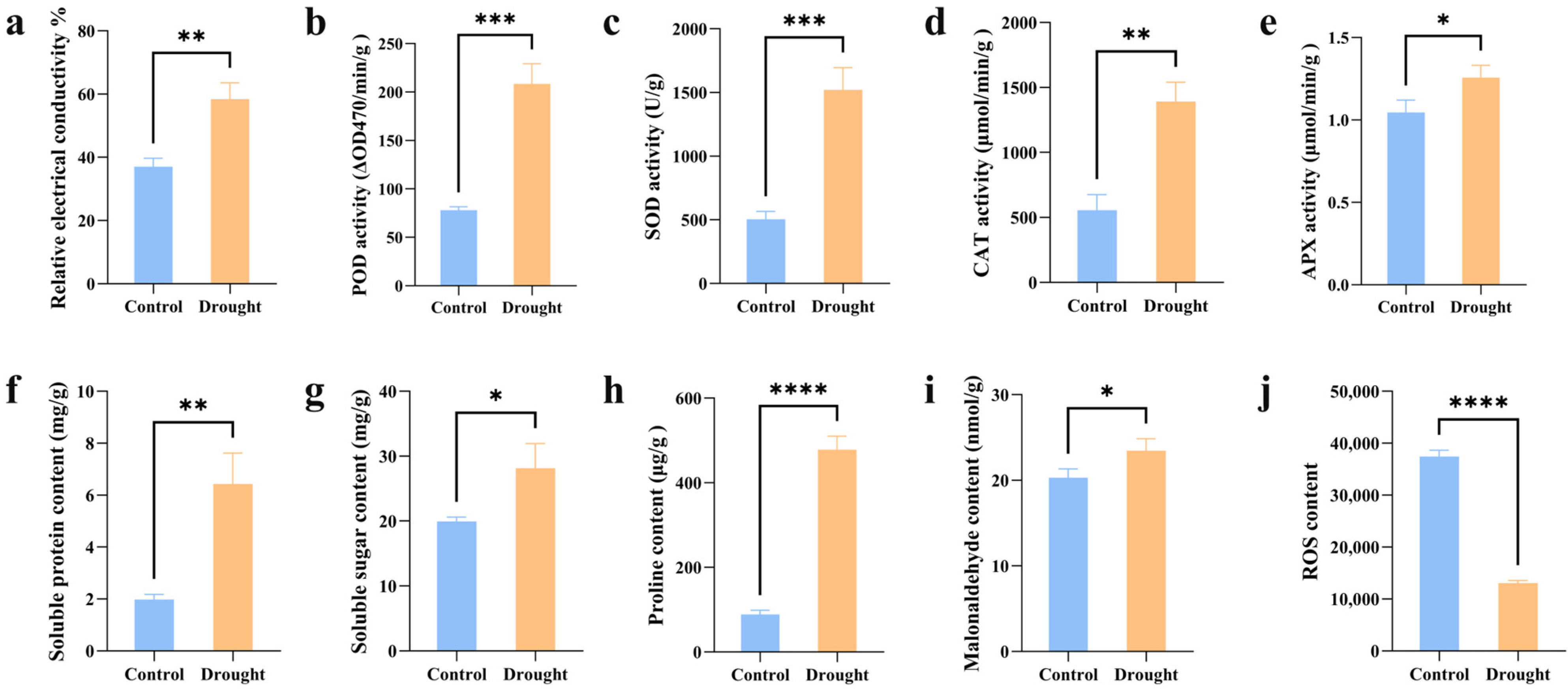
Figure 1. Physiological indexes of A. centraliasiaticus under drought stress. (a) Relative electrical conductivity. (b) The activity of POD. (c) The activity of SOD. (d) The activity of CAT. (e) The activity of APX. (f) The content of SP. (g) The content of SS. (h) The content of Pro. (i) The content of MDA. (j) The content of total ROS. Control, untreated control; Drought, drought treatment. * p < 0.05; ** p < 0.01; *** p < 0.001; **** p < 0.0001.
Agronomy 16 00337 g001
Figure 2. Unigenes matched in seven databases.
Agronomy 16 00337 g002
Figure 3. Venn map of differential databases.
Agronomy 16 00337 g003
Figure 4. GO annotation classification statistical diagram of A. centraliasiaticus. The x-axis represents the GO term, and the y-axis represents the number of DEGs.
Agronomy 16 00337 g004
Figure 5. KOG annotation classification statistics chart of A. centraliasiaticus. The uppercase letters on the x-axis represent the KOG category on the right side of the histogram, and the y-axis represents the percentage of differential genes.
Agronomy 16 00337 g005
Figure 6. KEGG metabolic pathway classification statistics of A. centraliasiaticus. The x-axis represents the percentage of genes in each pathway, and the y-axis represents the pathway category.
Agronomy 16 00337 g006
Figure 7. (a) Gene principal component analysis of all samples. (b) Analysis of the DEGs across comparisons. UP represents up-regulated differentially expressed genes; DOWN represents down-regulated differentially expressed genes.
Agronomy 16 00337 g007
Figure 8. Clustering analysis of the differentially expressed genes (DEGs). (a) Heatmap showing the clustering analysis of drought-responsive DEGs. (b) Expression pattern analysis of DEG subclusters. The number of genes in each cluster is shown at the top of each cluster. Blue lines show the average values for relative expression levels in each subcluster, and gray lines represent the relative expression levels of each gene in each cluster. Control, untreated control; Drought, drought treatment.
Agronomy 16 00337 g008
Figure 9. GO significant enrichment circle of DEGs. From outside to inside, the first circle: the first 17 enrichment pathways, and the number outside the circle is the gene quantitative scale; the second circle: the number of background genes in this pathway and −log10 (Q-value); the third circle: up-regulated in this pathway. And down-regulate the number of DEGs; the fourth circle: the enrichment factor value of each pathway. GO enrichment map was plotted by https://www.chiplot.online/ (last accessed on 4 January 2026), an online platform for data analysis and visualization.
Agronomy 16 00337 g009
Figure 10. KEGG pathway enrichment of DEGs. The graph shows only the top 20 enriched pathways, different colors denote different p-adjs, and the size of the bubble represents the number of DEGs. (a) The enriched pathways of all DEGs; (b) The enriched pathways of up-regulated DEGs; (c) The enriched pathways down-regulated DEGs.
Agronomy 16 00337 g010
Figure 11. Differential regulation of phenylpropanoid biosynthesis pathway in A. centraliasiaticus leaves in drought conditions. The heatmaps show log2FC values of the DEGs. The color of the bars and boxed on the pathway represent the gene(s).
Agronomy 16 00337 g011
Figure 12. Differential regulation of plant hormone signal transduction pathway in A. centraliasiaticus leaves in drought conditions. The heatmaps show log2FC values of the DEGs. The color of the bars and boxed on the pathway represent the gene(s). (a) The auxin signaling pathway; (b) The abscisic acid (ABA) signal transduction pathway; (c) The brassinosteroid (BR) signal transduction pathway; (d) The jasmonic acid (JA) signal transduction pathway.
Agronomy 16 00337 g012
Figure 13. Differential regulation of zeatin biosynthesis pathway in A. centraliasiaticus leaves in drought conditions. The heatmaps show log2FC values of the DEGs. The color of the bars and boxed on the pathway represent the gene(s).
Agronomy 16 00337 g013
Figure 14. qPCR Analysis of 15 genes in A. centraliasiaticus leaves. (a) caffeic acid 3-O-methyltransferase/acetylserotonin O-methyltransferase (COMT); (b) caffeoylshikimate esterase (CSE); (c) caffeoyl-CoA O-methyltransferase (E2.1.1.104); (d) ferulate-5-hydroxylase (F5H); (e) auxin influx carrier (AUX1 LAX family) (AUX1); (f) auxin-responsive protein IAA (IAA); (g) auxin response factor (ARF); (h) SAUR family protein (SAUR); (i) ABA responsive element binding factor (ABF); (j) ethylene-insensitive protein 2 (EIN2); (k) BR-signaling kinase (BSK); (l) BRI1 kinase inhibitor 1 (BKI1); (m) xyloglucan:xyloglucosyl transferase TCH4 (TCH4); (n) cis-zeatin O-glucosyltransferase (CISZOG); (o) UDP-glucosyltransferase 73C (UGT73C). Control, untreated control; Drought, drought treatment. * p < 0.05; ** p < 0.01; *** p < 0.001; **** p < 0.0001.
Agronomy 16 00337 g014
Figure 15. Analysis of the correlation between transcriptome sequencing and qPCR.
Agronomy 16 00337 g015
Table 1. Transcriptome sequencing statics summary.
SamplesRead NumberBase NumberGC Content%Q30Clean ReadsMapped ReadsMapped Ratio
Control-123,242,1796,972,653,70042.3093.8423,242,17918,251,02278.53%
Control-222,717,9866,815,395,80041.5094.0222,717,98617,902,35078.80%
Control-320,969,3946,290,818,20041.3893.9520,969,39416,720,29779.74%
Drought-121,683,3996,505,019,70042.6893.7921,683,39916,167,75774.56%
Drought-221,146,4076,343,922,10042.5493.7021,146,40715,871,95875.06%
Drought-322,110,9276,633,278,10042.6993.7822,110,92716,713,46175.59%
Disclaimer/Publisher’s Note: The statements, opinions and data contained in all publications are solely those of the individual author(s) and contributor(s) and not of MDPI and/or the editor(s). MDPI and/or the editor(s) disclaim responsibility for any injury to people or property resulting from any ideas, methods, instructions or products referred to in the content.