
Article

A Hybrid CNN-Transformer Model for Soil Texture Estimation from Microscopic Images

1
College of Engineering, South China Agricultural University, Guangzhou 510642, China
2
Guangdong Institute of Modern Agricultural Equipment, Guangzhou 510630, China
3
College of Artificial Intelligence and Low-Altitude Technology, South China Agricultural University, Guangzhou 510642, China
4
College of Water Conservancy and Civil Engineering, South China Agricultural University, Guangzhou 510642, China
5
State Key Laboratory of Agricultural Equipment Technology, Guangzhou 510642, China
6
Department of Biosystems Engineering, University of Manitoba, Winnipeg, MB R3T 5V6, Canada
7
Guangdong Engineering Technology Research Center of Rice Transplanting Mechanical Equipment, Guangzhou 510642, China
*
Authors to whom correspondence should be addressed.
Agronomy 2026, 16(3), 333; https://doi.org/10.3390/agronomy16030333

Submission received: 25 December 2025 / Revised: 19 January 2026 / Accepted: 27 January 2026 / Published: 29 January 2026
(This article belongs to the Collection AI, Sensors and Robotics for Smart Agriculture)

Abstract

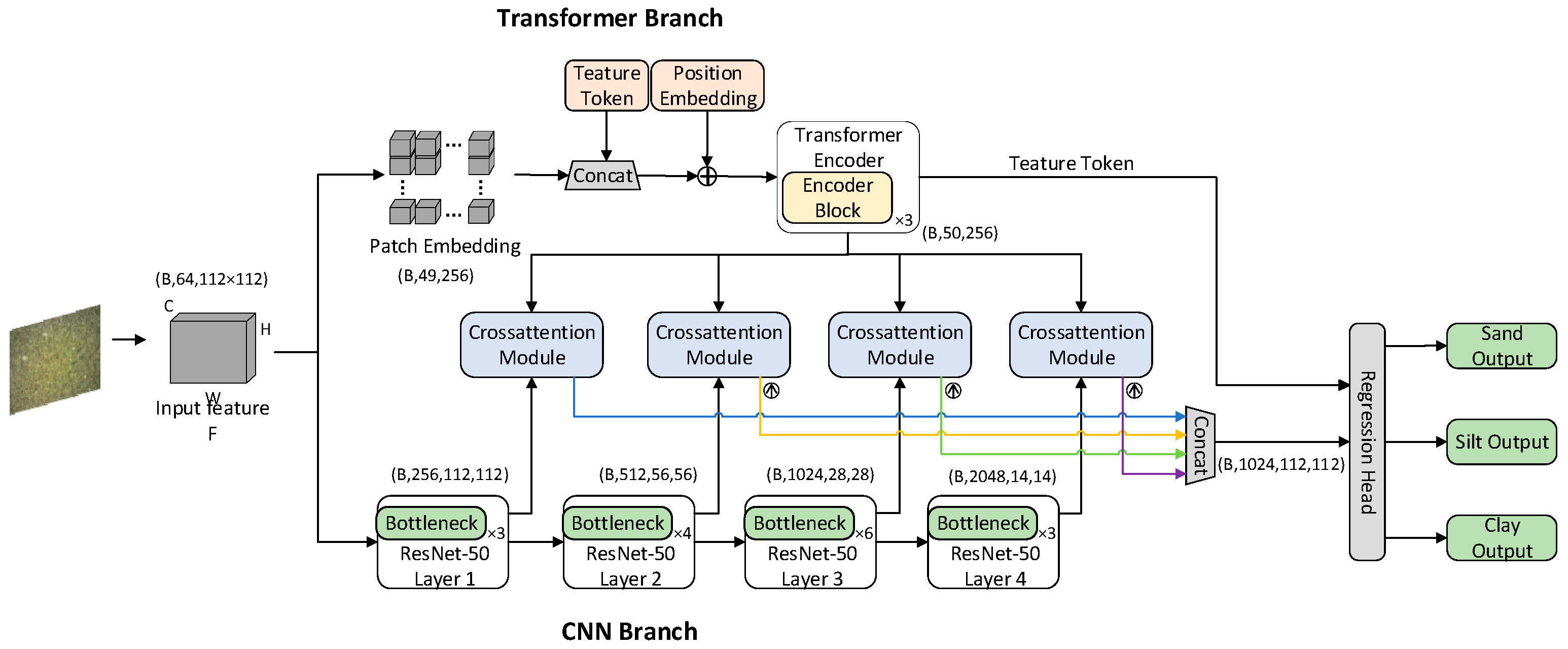
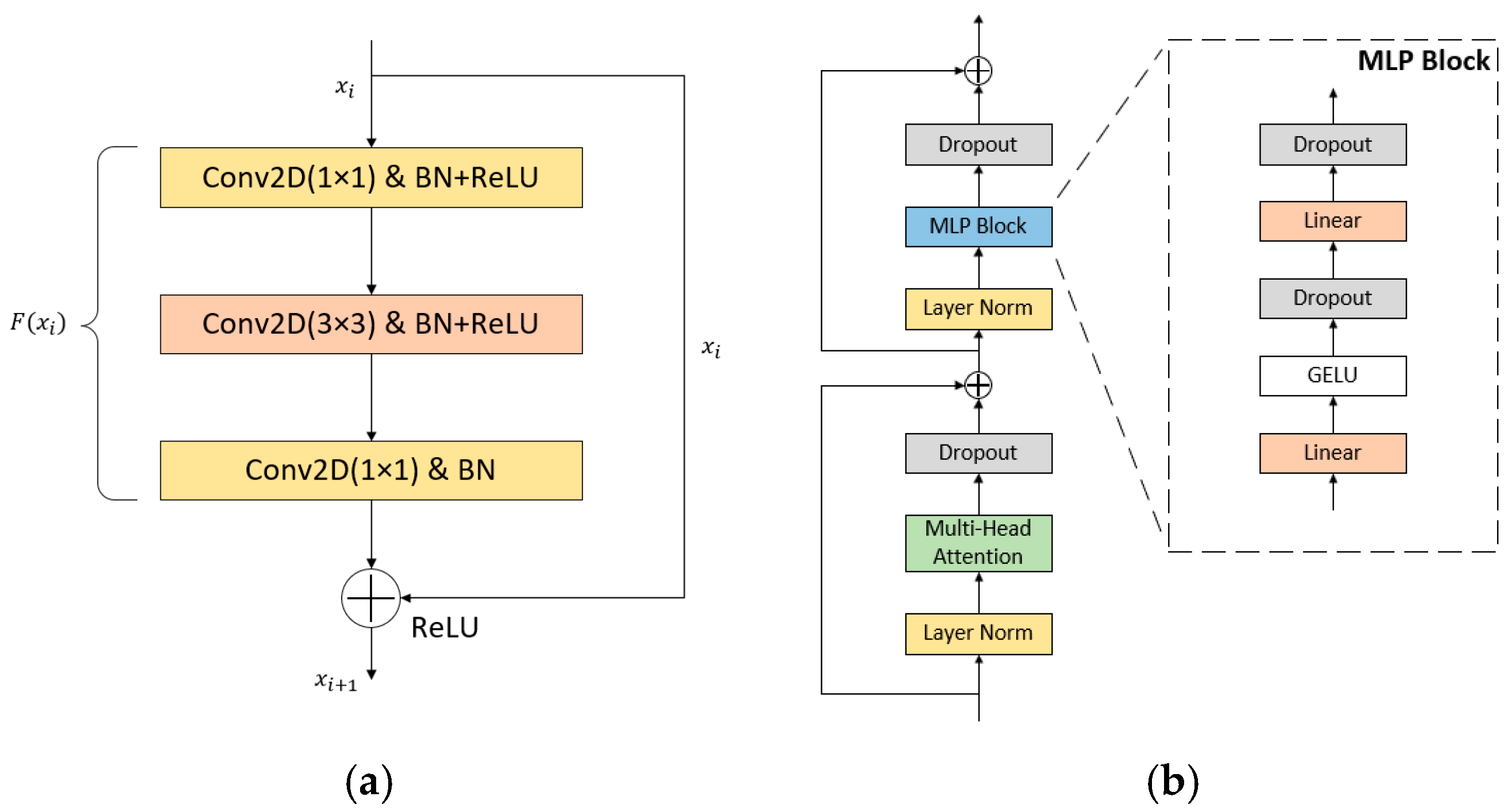
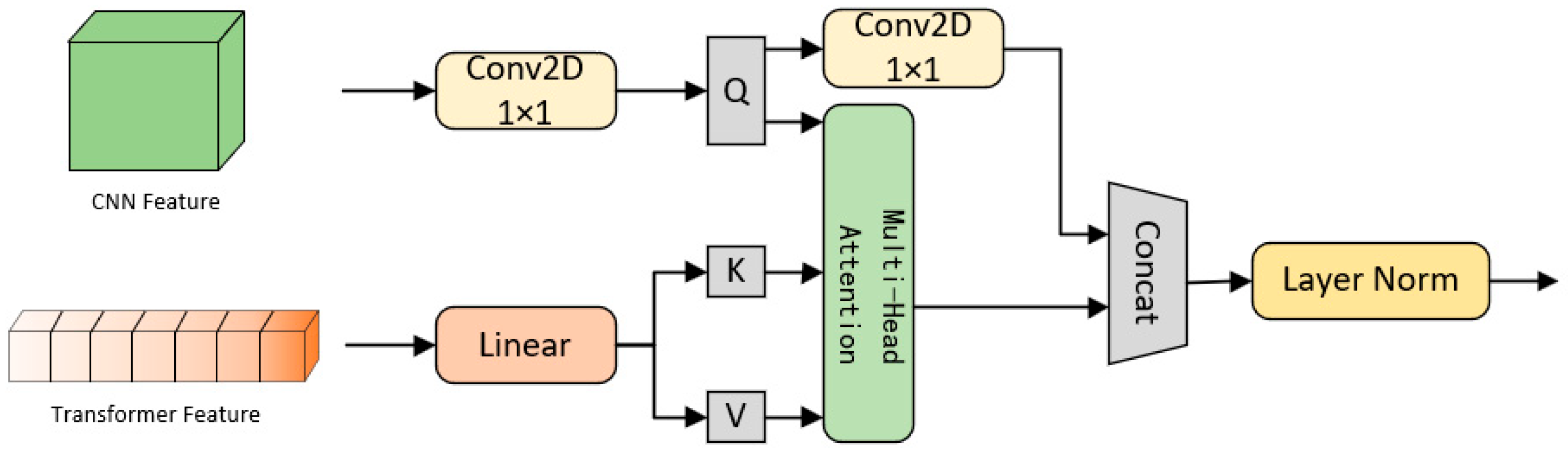
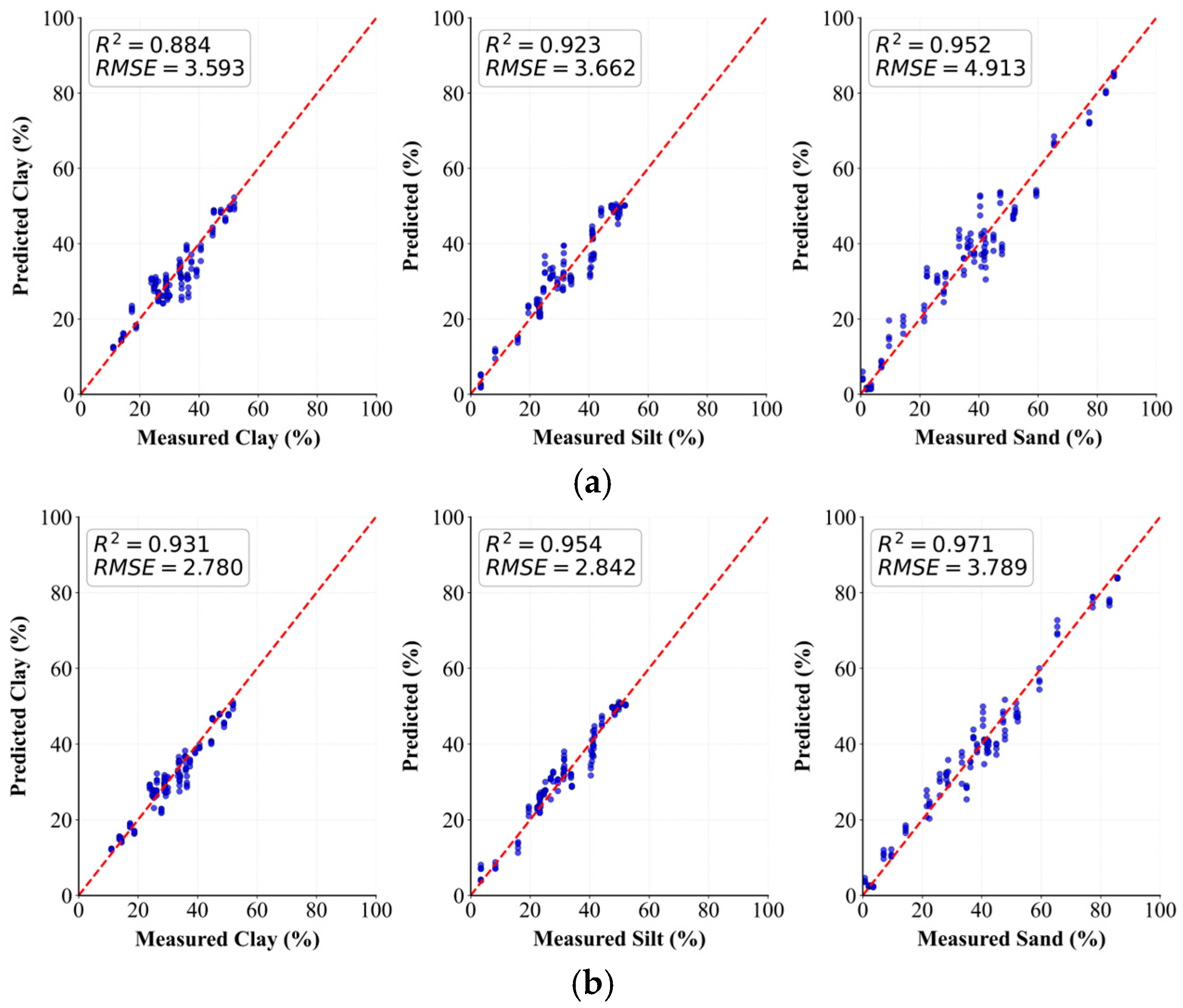
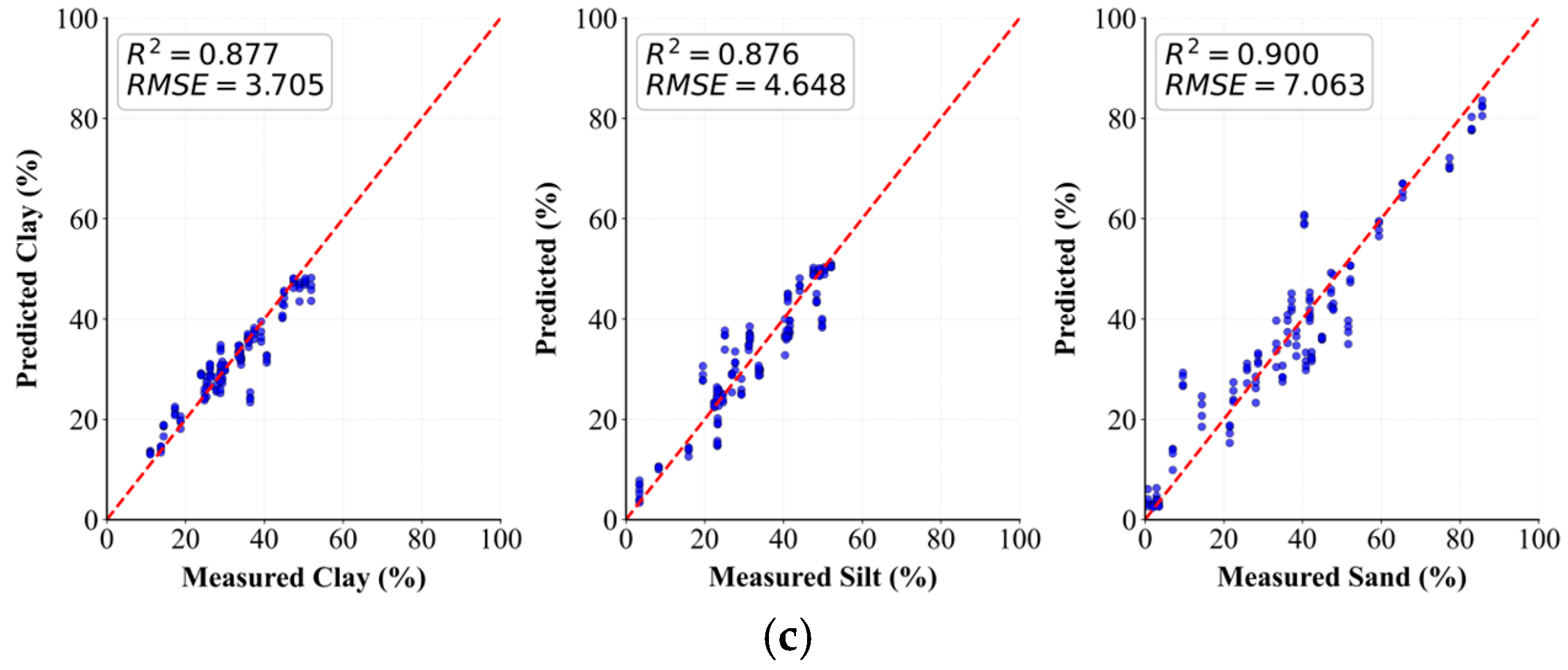
Soil texture is recognised as one of the key physical properties of soil. Although traditional laboratory testing methods can determine soil texture information with high accuracy, they are often considered time-consuming and costly. To achieve rapid and accurate acquisition of soil texture information, this study proposes RVFM, a hybrid deep learning model designed for soil texture detection using microscopic images. The model integrates a CNN branch for extracting multi-dimensional texture features with a Transformer branch for capturing global positional information, fused via a cross-attention module. This architecture effectively captures microscopic distribution characteristics to estimate soil composition proportions. Experimental results demonstrate high precision, with prediction coefficients (R2) for sand, silt, and clay reaching 0.971, 0.954, and 0.931, respectively. Corresponding Root Mean Square Errors (RMSE) were recorded at 3.789, 2.842, and 2.780. The test results outperform those of other classical network models, and the model shows better fitting performance in generalisation tests, demonstrating certain practical value
Keywords: soil texture; microscopic images; feature fusion; detection soil texture; microscopic images; feature fusion; detection