Article

Effects of Nitrogen Addition and Mowing on Plant–Soil Stoichiometric Characteristics and Homeostasis in Degraded Grasslands Dominated by Sophora alopecuroides L.


1
School of Resources and Environment, Yili Normal University, Yining 835000, China
2
Institute of Resources and Ecology, Yili Normal University, Yining 835000, China
*
Authors to whom correspondence should be addressed.
Agronomy 2026, 16(3), 332; https://doi.org/10.3390/agronomy16030332
Submission received: 30 December 2025 / Revised: 21 January 2026 / Accepted: 27 January 2026 / Published: 28 January 2026
(This article belongs to the Section Soil and Plant Nutrition)

Abstract

Grassland degradation, exacerbated by climate change and anthropogenic disturbances, poses a substantial barrier to ecological restoration, largely due to the invasion of toxic weeds. In the degraded grasslands of the Ili River Valley, Xinjiang, Sophora alopecuroides has emerged as the dominant toxic species; yet, its expansion mechanisms and sensitivity to management interventions remain poorly understood. This study utilized a three-year (2023–2025) field experiment to evaluate the impacts of nitrogen addition (N), mowing (M), and their combination (NM) on the stoichiometric characteristics and homeostasis of the plant–soil system. The results demonstrated that while M suppressed aboveground biomass, it facilitated the accumulation of root carbon (RC) and phosphorus (RP). Nitrogen enrichment significantly lowered soil C:N and C:P ratios, thereby alleviating phosphorus limitation. Crucially, the NM treatment effectively counteracted N-induced weed proliferation and mitigated M-induced biomass reductions. Analysis of stoichiometric homeostasis revealed that NM optimized plant adaptive strategies, maintaining strict homeostasis for RC and RP (H > 4) while preserving the sensitivity of the root N:P ratio of S. alopecuroides (RN:P). Structural equation modeling further indicated that soil C:P and N:P indirectly regulated total biomass by modulating the root C:P ratio of S. alopecuroides (RC:P). Consequently, stoichiometric coupling within the plant–soil system is essential for maintaining ecosystem functions. Integrated management (NM) optimizes soil nutrient balance and harnesses compensatory growth to suppress weed expansion, providing a robust scientific framework for the restoration of S. alopecuroides-invaded grasslands.

1. Introduction

Grasslands cover approximately 40.5% of the Earth’s surface, totaling 5.25 billion hectares. As a major component of the terrestrial ecosystem, they provide indispensable ecological functions and services [1]. However, grassland degradation is intensifying worldwide, with nearly 49% of grassland ecosystems experiencing different levels of deterioration [2]. China has the world’s second-largest grassland area, totaling about 265 million hectares of grassland support a vegetation cover of 50.32%. and the Ili River Valley contains extensive natural rangelands and represents a major animal husbandry base in China [3], where grassland productivity is directly linked to local herders’ livelihoods and the sustainable development of the regional livestock economy [4]. Previous studies have indicated that grasslands in the Ili region of Xinjiang are undergoing varying degrees of degradation [5]. Currently, controlling toxic weeds has become a critical component of restoring and managing degraded rangelands in Xinjiang. Previous studies have shown that the spread of toxic weeds increases livestock poisoning-related mortality and reduces grassland productivity, resulting in substantial economic losses in pastoral areas and thereby constraining the development of local grassland-based livestock production [6]. Among these species, Sophora alopecuroides L. is a perennial leguminous herb of the family Fabaceae. The species is native to Central Asia and widely distributed across arid and semi-arid regions of northwestern China, Kazakhstan, Mongolia, and adjacent areas [7]. It commonly occurs in degraded grasslands, sandy soils, river terraces, and other disturbed habitats characterized by low soil fertility and high environmental stress [8]. Morphologically, S. alopecuroides exhibits erect stems, pinnately compound leaves, and dense racemes bearing pale yellow to purplish flowers. The species develops a deep and well-branched taproot system with extensive lateral roots, enabling efficient access to water and nutrients from deeper soil layers. As a perennial hemicryptophyte, S. alopecuroides exhibits high stress tolerance, strong regenerative capacity, and a competitive growth strategy [7,8]. Consequently, it can efficiently acquire soil water and nutrients, gain a competitive advantage for limiting resources, and suppress the growth of high-quality forage grasses [9]. In addition, overgrazing and drought-induced aridification can disrupt native high-quality forage communities, creating ecological niches that facilitate S. alopecuroides invasion, enabling it to rapidly expand and become dominant under harsh environmental conditions [8]. Therefore, investigating management strategies for S. alopecuroides–dominated degraded grasslands is essential for grassland ecological restoration and sustainable management.
Nitrogen (N) is a primary nutrient limiting productivity and ecosystem functioning in grassland ecosystems [10]. Over recent decades, elevated atmospheric N deposition and extensive N fertilizer application have resulted in widespread eutrophication [11], profoundly altering soil microbial communities, vegetation composition, and ecosystem nutrient cycling [12]. Long-term N enrichment has been shown to reduce plant species diversity in grasslands [13], and may even lead to the local extinction of some species, thereby reducing the stability of plant communities [14]. In soils, N deposition provides readily available N sources that can substantially increase soil available N and temporarily alleviate N limitation [15]. However, continuous excessive N inputs can accelerate soil acidification [16], disrupt soil physicochemical conditions and nutrient balance, and ultimately impair the structural and functional integrity of natural grassland ecosystems [17]. Mowing is a widely applied management practice in arid and semi-arid natural grasslands [18]. By removing aboveground plant biomass and residues, mowing alters grassland energy cycling and can cause nutrient losses to far substantially exceed nutrient inputs within the ecosystem [19]. Furthermore, by modifying the availability of resources such as light and nutrients and controlling interspecific competition dynamics, mowing at different frequencies can have divergent effects on plant communities, thereby shaping community structure and function [20]. These effects eventually show up as noticeable changes in important vegetation characteristics, including species diversity, biomass, and functional traits. Previous studies have shown that mowing management may change plant carbon (C), nitrogen (N), and phosphorus (P) concentrations but has relatively limited effects on community-scale root nutrient concentrations, indicating that root nutrient concentrations are more stable than nutrient status in aboveground tissues [21]. Meanwhile, these mowing-induced effects on plant communities can further propagate to soils by modifying litter inputs and root growth dynamics [22]. Given that grasslands are characterized by a high root-to-shoot biomass ratio, such belowground changes can substantially influence soil organic carbon storage, soil physicochemical properties, and nutrient cycling processes [23]. Studies have shown that mowing in mesic grasslands can increase soil organic carbon (SOC) [24], whereas it can decrease SOC in semi-arid grasslands [25], indicating that grassland responses to mowing are strongly ecosystem-type dependent.
Ecological stoichiometry examines the balance of energy and key chemical elements (C, N, and P) in ecosystems and how these balances influence ecological processes. It provides us a single theoretical framework for understanding ecological processes from molecules to the biosphere [26]. A fundamental principle of this theory is that organisms can maintain a relatively stable elemental composition within specific limits, a property known as stoichiometric homeostasis [27]. Therefore, when stoichiometric mismatches arise between organisms and the environmental resources they require, such imbalances can profoundly influence species’ growth strategies, drive interspecific competition, and regulate nutrient cycling processes in ecosystems [28]. In terrestrial ecosystems, the plant–soil system constitutes a central hub of material cycling [29]. Plants extract nutrients from soil, while litter and root exudates return organic matter and nutrients to the soil; this bidirectional exchange shapes the coupling between plant and soil stoichiometric characteristics [30]. Moreover, grasslands are experiencing intensifying anthropogenic disturbances, particularly atmospheric nitrogen deposition and mowing, which may disrupt the original plant–soil stoichiometric balance and thereby alter ecosystem structure and function [31]. Excess nitrogen additions greatly increase soil N availability and reduce C:N ratios in both vegetation and soils, while simultaneously intensifying phosphorus limitation [32]. Additional studies has indicated that nitrogen addition generally elevates ecosystem N:P ratios; when N:P exceeds the stoichiometric requirements of organisms, phosphorus replaces nitrogen as the primary constraint on plant growth and community productivity [33]. Thus, understanding how nitrogen inputs reshape plant–soil stoichiometric interactions is crucial for predicting ecosystem trajectories under global change. Mowing redistributes C, N, and P between vegetation and soils by removing nutrient-rich biomass and altering litter return and root carbon allocation, subsequently affecting soil organic matter accumulation and nutrient mineralization [34,35]. Long-term observations indicate that sustained mowing can increase plant and soil nutrient concentrations and enhance plant–soil nutrient coupling, as reflected in coordinated shifts in C:N:P ratios [36]. Therefore, elucidating plant and soil stoichiometric responses to the combined influences of nitrogen deposition and mowing is essential for improving our understanding of grassland ecosystem responses to global change and developing effective restoration strategies for degraded grasslands.
Currently, the number of studies investigating the plant–soil responses to mowing and nitrogen deposition in S. alopecuroides-dominated degraded grasslands remains insufficient. Therefore, this study aims to investigate how nitrogen addition and mowing disturbance influence plant–soil stoichiometry in degraded grasslands experiencing invasion-driven expansion by S. alopecuroides. We proposed the following hypotheses: (1)The N, M, and NM treatments significantly alter the C, N, and P stoichiometric ratios in soils and in the roots of S. alopecuroides, with exogenous nitrogen input increasing the relative abundance of N in the system and shifting C:P and N:P ratios, while mowing further modulates these changes by modifying biomass removal and nutrient return. (2) The N, M, and NM treatments significantly reshape stoichiometric homeostasis in soils and in the roots of S. alopecuroides, leading to either enhanced or weakened abilities of the roots to maintain stoichiometric stability under soil nutrient fluctuations. (3) The primary mechanism driving changes in C, N, and P stoichiometry in plants and soils is the imbalance in the relative supply of available soil N and P jointly induced by nitrogen addition and mowing, which feeds back to root stoichiometry and aboveground biomass through adjustments in root P acquisition and carbon allocation.

2. Materials and Methods

2.1. Study Site

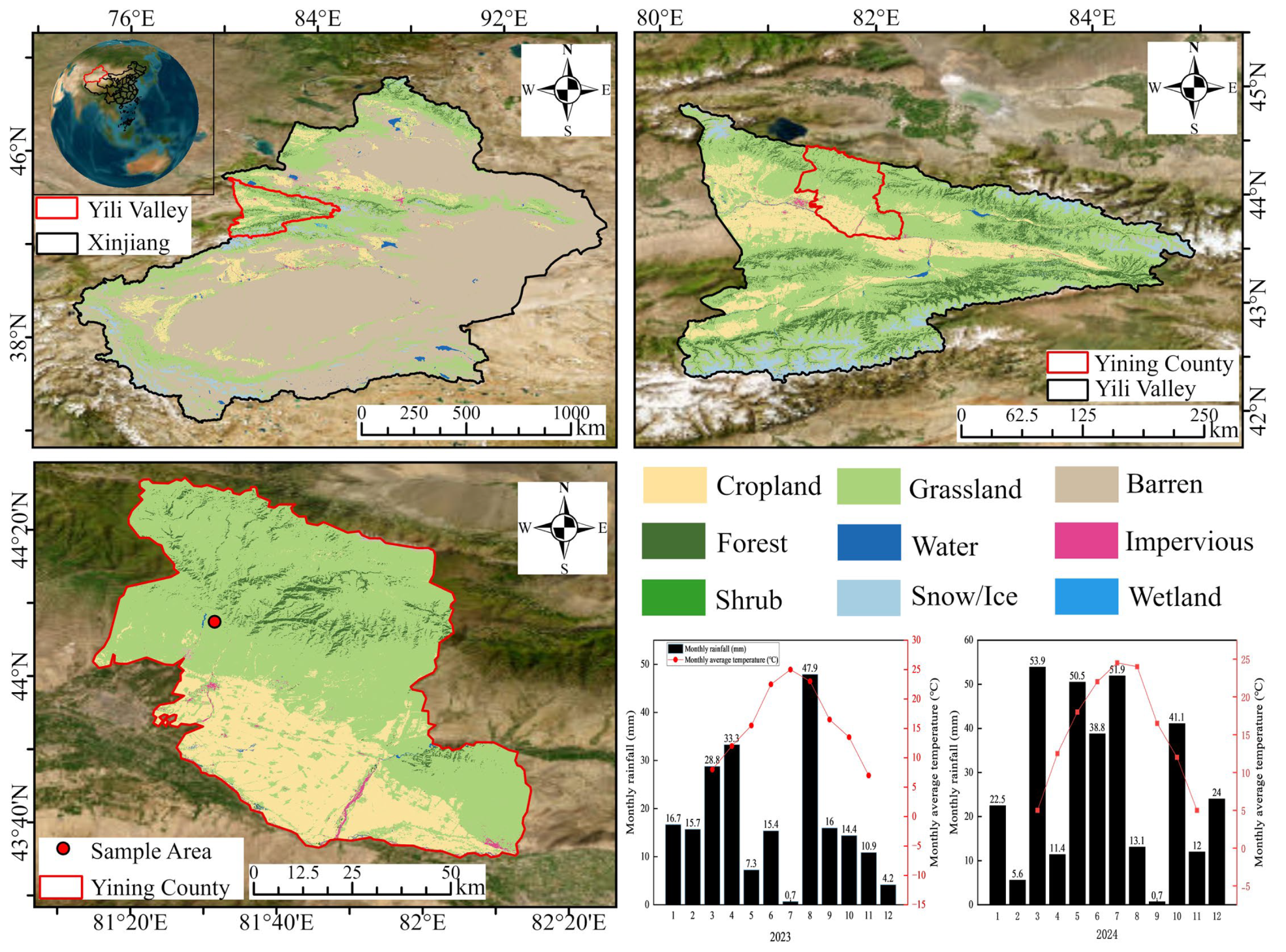
The field experiment was conducted in the Tohulasu Grassland located in the Ili River Valley (81°31′31.8″ E,44°7′24.6″ N), Ili Kazakh Autonomous Prefecture, Xinjiang Uygur Autonomous Region, China (Figure 1; land cover information sourced from Yang et al. [37]). The region is characterized by a temperate continental climate. Meteorological data obtained from local weather stations for 2023–2024 (https://Xj.cma.gov.cn, accessed on 15 June 2025), show that the mean annual air temperatures were 10.5 °C and 10.6 °C, respectively. The frost-free period averages 163 days, and the annual mean precipitation was 211.3 mm in 2023 and 325.5 mm in 2024, with the majority of rainfall occurring between June and September (Figure 2). According to the World Reference Base for Soil Resources [38], soils in the study area are mainly classified as Calcisols, which are widely distributed in arid and semi-arid grasslands of the Ili River Valley. Dominant plant species in the study area include Sophora alopecuroides, Artemisia frigida, Schizachyrium delavayi, and Bromus catharticus, accompanied by several other herbaceous species.

2.2. Experimental Design

In the experimental region, we selected grassland with flat topography that was heavily infested by Sophora alopecuroides as the experimental area; in May 2023, we established a fenced growing-season grazing-exclusion area measuring 40 m × 30 m. Using a randomized complete block design, we set up 20 experimental quadrats, each quadrat 5 m × 3 m, and the quadrat isolation zone was 1 m. Four treatments are: nitrogen addition (N, CO(NH2)2, 10 g m−2 a−1); mowing (M; the height of the mowing stubble was 2 cm); nitrogen addition + mowing (NM); and control (CK; no nitrogen addition, no mowing), with five replicates per treatment. The nitrogen addition rate was determined based on the critical load of nitrogen deposition and set at 10 g·m−2, applied once annually in May. Mowing was conducted once per year during the flowering stage of S. alopecuroides (late June to early July), leaving a stubble height of 2 cm, and all aboveground biomass was removed from the plots. Considering that the optimal mowing period for leguminous herbs generally occurs between the budding and early flowering stages, and that the growth period of S. alopecuroides is relatively short (May–July), a single mowing event per year was considered sufficient. The harvested biomass was not quantitatively measured in this study, and thus the effects of mowing on nutrient input–output patterns were interpreted qualitatively.

2.3. Soil and Plant Collection, Physical–Chemical Property Analyses and Plant Community Surveys

In July 2023–2025, soil samples were collected using a soil auger (50 mm inner diameter). At each plot, five soil cores (0–10 cm depth; approximately 196 cm3 per core) were randomly collected and thoroughly mixed to form one composite soil sample, resulting in a total of 20 composite soil samples. The samples were then homogenized and sieved to determine soil organic carbon (SOC), total nitrogen (TN), total phosphorus (TP), available phosphorus (AP), pH, electrical conductivity (EC), nitrate-nitrogen (NO3-N; mg kg−1), and ammonium-nitrogen (NH4+-N; mg kg−1). In July 2024–2025, 4–5 healthy Sophora alopecuroides individuals per plot were sampled for roots; the roots were placed in correspondingly labeled envelopes and oven-dried at 65 °C for 24 h. The dried S. alopecuroides roots were ground for determining the total carbon, total nitrogen, and total phosphorus contents in the roots of S. alopecuroides. Therefore, the analysis of plant–soil stoichiometric relationships was primarily based on the 2024–2025 data.
Soil organic carbon was determined by the potassium dichromate oxidation–titration method with external heating; total soil nitrogen was measured after perchloric–sulfuric acid digestion using a FOSS 1035 automatic Kjeldahl analyzer(Foss Tecator AB, Höganäs, Sweden); total soil phosphorus was determined by acid digestion, followed by the molybdenum–antimony colorimetric method on an Agilent Cary 60 UV–Vis spectrophotometer(Agilent Technologies, Santa Clara, CA, USA); soil nitrate-N and ammonium-N were extracted with 0.01 mol L−1 CaCl2 and analyzed using a BRAN+LUEBBE AA3 continuous-flow analyzer(BRAN+LUEBBE GmbH, Norderstedt, Germany); available soil phosphorus was extracted with sodium bicarbonate and determined by the molybdenum–antimony colorimetric method on an Agilent Cary 60 UV–Vis spectrophotometer(Agilent Technologies, Santa Clara, CA, USA); and electrical conductivity was measured with a Hanna HI 2315 conductivity meter(Hanna Instruments, Smithfield, RI, USA). The above measurements were performed with reference to Soil Agrochemical Analysis [39].
Plant community surveys comprised the following components: Density was assessed by counting the number of individuals within 0.5 m × 0.5 m quadrats. Cover was quantified as the percentage of ground area occupied by the plant’s projected area. Plant height was measured by selecting three plants per quadrat, measuring their natural height, and taking the mean. Biomass was determined by drying the clipped plants at 65 °C for 48 h and recording the dry mass.

2.4. Data Calculation

The calculation formula of the Shannon–Weiner diversity index (H′) is as follows [40]:
H =   i = 1 S P i × l n P i
where H′ is the Shannon–Weiner diversity index; S is the total number of species present in the quadrat; Pi = Ni/N, where Ni is the number of individuals of the species in the quadrat, and N is the total number of individuals of all species in the quadrat.
The homeostasis index (H) of carbon, nitrogen, phosphorus, and their stoichiometric relationships in soil and roots was calculated using the following formula:
log 10 ( y )   =   log 10 ( c )   +   log 10 ( x ) / H
where y is the root carbon, nitrogen, and phosphorus of S. alopecuroides and their stoichiometric relationships; x is soil carbon, nitrogen, and phosphorus and their stoichiometric relationships; and c is a constant. 1/H is the slope of the regression equation; if the regression is significant (p < 0.1), then H < 1.33 indicates a sensitive state, 1.33 < H < 2 a weakly sensitive state, 2 < H < 4 a weakly stable state, and H > 4 a stable state; If the regression is not significant, the system is considered strictly homeostatic [41].

2.5. Statistical Analysis

All results are presented as mean ± standard error (SE) in figures and tables. Levene’s test was used to assess homogeneity of variances, and two-way ANOVA combined with Duncan’s multiple range test (DMRT) was employed to quantify the significant effects (p < 0.05) of year, treatment, and their interaction on vegetation attributes, soil physicochemical parameters, and soil–plant C:N:P stoichiometric ratios. Because measurements were repeatedly taken from the same plots across years, observations are not fully independent. Therefore, two-way ANOVA was used to explore overall patterns of treatment and year effects, and the results are interpreted as indicative temporal and treatment-related trends. Pearson correlation analysis, redundancy analysis (RDA), and linear regression models were used to elucidate the association patterns of plant–soil nutrient limitation and its key drivers. Model assumptions were evaluated using residual diagnostics, including residual histograms and normal Q–Q plots, which indicated no substantial deviations from normality. Finally, structural equation modeling (SEM) was used to reveal the direct and indirect linkages among treatments and plant and soil stoichiometry. Two-way ANOVA, Pearson correlation analysis, and linear regression modeling were performed and visualized using SPSS 27.0 and Origin 2024. Structural equation modeling (SEM) was conducted using the IBM SPSS Amos 29.0 software package.

3. Results

3.1. Effects of Nitrogen Addition and Mowing on Plant Community Characteristics and Soil Nutrient Dynamics

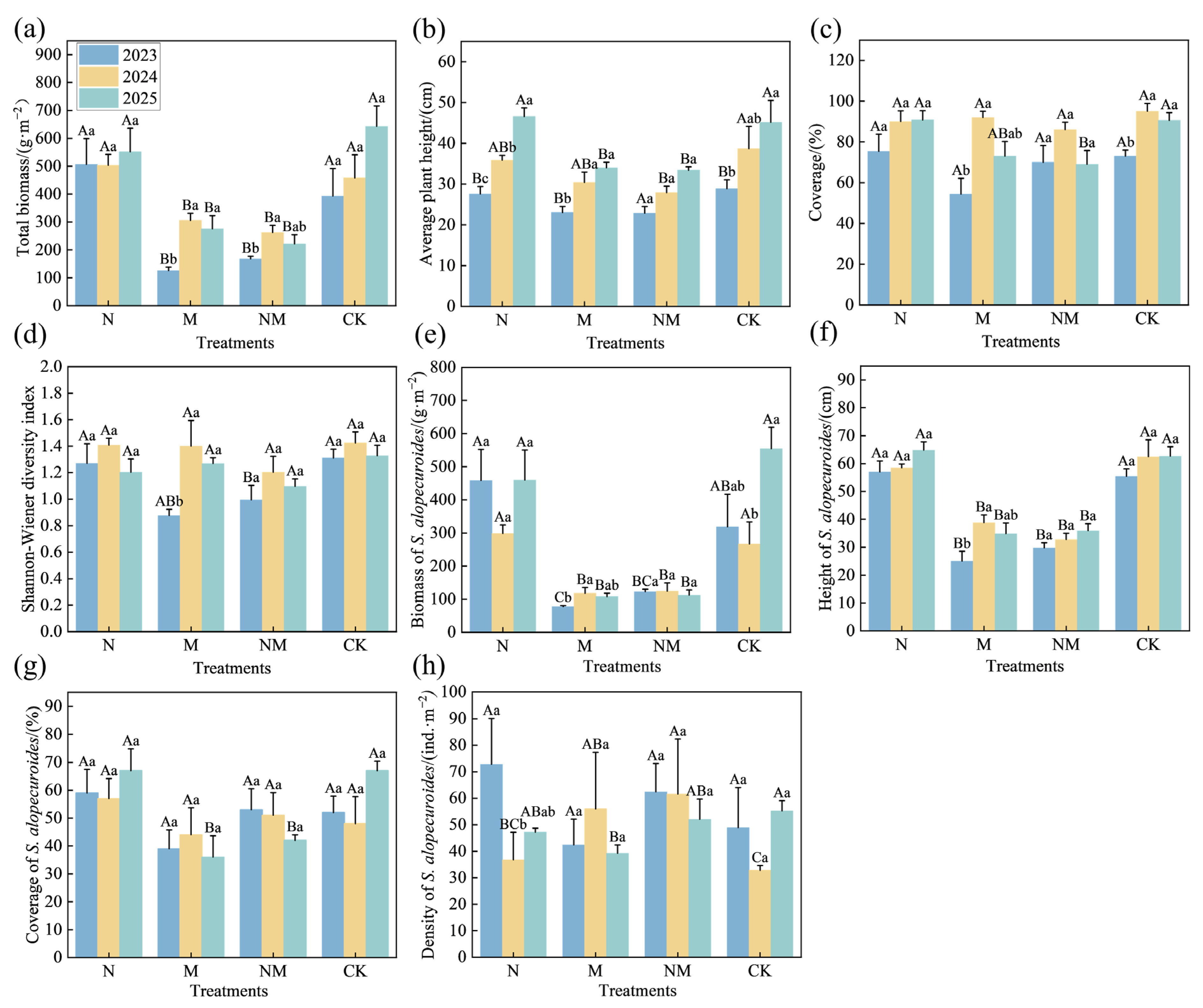
Vegetation characteristics of Sophora alopecuroides varied significantly among treatments and years, whereas no significant treatment × year interaction was detected (Table 1). In contrast, soil physicochemical properties showed pronounced interannual variation and a significant treatment × year interaction. Consistent across all three years, total biomass under the M treatment was significantly lower than that under CK (Figure 1).
As shown in Figure 3, within each year, total biomass under the M treatment was consistently and significantly lower than under CK (Figure 3a). From 2023 to 2024, total biomass in the NM treatment was also significantly reduced compared with CK, and mean plant height under NM declined significantly across all three years (p < 0.05) (Figure 3b). Plant cover under N, M, and NM treatments did not differ significantly from CK. The Shannon–Wiener diversity index (H′) under NM decreased significantly in 2023 (p < 0.05) (Figure 3d). Interannually, total biomass in the NM and M treatments in 2023 was significantly lower than in 2024 and 2025 (p < 0.05). In contrast, mean plant height under the N and M treatments increased significantly with time (p < 0.05), indicating a gradual recovery trend. From 2023 to 2025, H′ showed no significant differences among treatments.
Nitrogen addition, mowing, and their interaction exerted varying influences on the growth performance of the dominant species S. alopecuroides (Figure 3). Within each year, both biomass and plant height of S. alopecuroides under the M and NM treatments were consistently and significantly lower than those under CK across all three years (p < 0.05) (Figure 3e,f). In 2025, the M and NM treatments significantly reduced the coverage of S. alopecuroides (p < 0.05) (Figure 3g). Plant density exhibited contrasting interannual responses: in 2024, density increased under both M and NM treatments, whereas in 2025, mowing alone led to a decline. Interannually, plants subjected to mowing showed greater biomass accumulation and taller growth in 2024 than in 2023. Under nitrogen addition, biomass was highest in 2023 and declined in subsequent years.
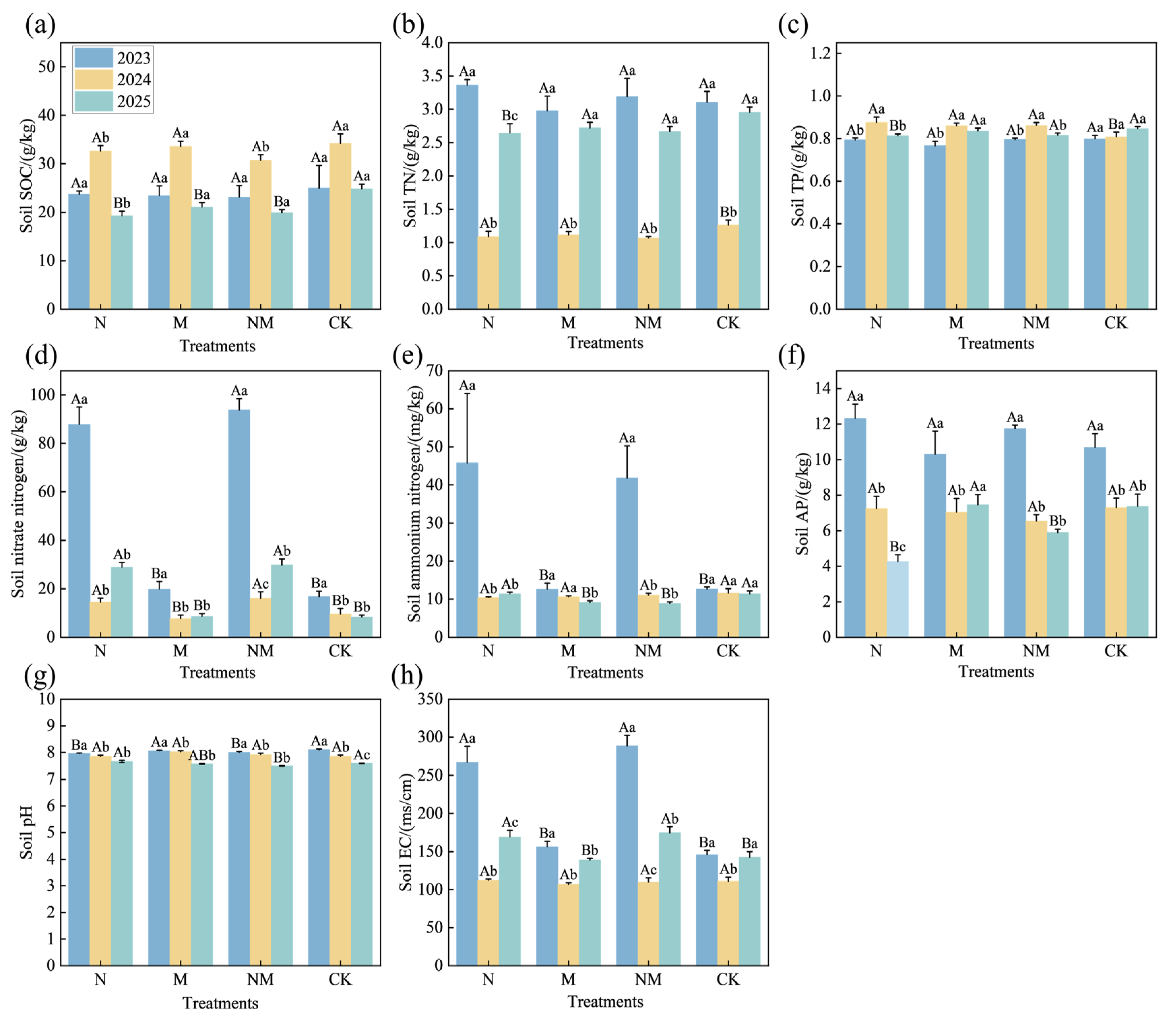
As shown in Figure 4, within each year, soil organic carbon (SOC) under the N, M, and NM treatments was consistently and significantly lower compared with CK (p < 0.05) (Figure 4a). In 2024, the N, M, and NM treatments significantly reduced total nitrogen (TN) (p < 0.05) (Figure 4b), whereas in 2025, only N addition resulted in a significant decrease in TN (p < 0.05). Soil total phosphorus (TP) increased significantly under all treatments in 2024 (p < 0.05) (Figure 4c). From 2023 to 2025, nitrate nitrogen (NO3–N) in soils subjected to N and NM treatments increased significantly (p < 0.05) (Figure 4d). In 2023, ammonium nitrogen (NH4+–N) significantly increased under N and NM treatments (p < 0.05) (Figure 4e), while in 2025, M and NM significantly reduced NH4+–N levels (p < 0.05). Available phosphorus (AP) in 2025 was significantly reduced under N and NM (p < 0.05) (Figure 4f). Interannually, SOC and TP under the N, M, and NM treatments peaked in 2024, while TN reached its minimum in 2024 and recovered in 2025. In contrast, NO3–N, NH4+–N, and AP were highest in 2023 and declined thereafter. Soil pH showed a consistent decreasing trend from 2023 to 2025 under all treatments (Figure 4g). Soil electrical conductivity (EC) under N and NM was lowest in 2023 and highest in 2025 (Figure 4h).

3.2. Effects of Nitrogen and Mowing Treatments on the C:N:P Stoichiometric Characteristics of Soil and Plants

As shown in Table 2, nitrogen addition and mowing significantly altered root nutrient contents of S. alopecuroides, thereby reshaping nutrient input–output patterns within the plant–soil system. In 2024, root carbon (RC) did not differ significantly among treatments relative to CK. However, in 2025, RC increased markedly under the M and NM treatments, with increments of 54.2 g kg−1 and 44.4 g kg−1, respectively. Root nitrogen (RN) was significantly elevated under the NM treatment in 2024, and in 2025 all treatments increased RN relative to CK, following the order NM > N > M. Root phosphorus (RP) was significantly enhanced by mowing in both years, whereas no significant effects were observed under N or NM.
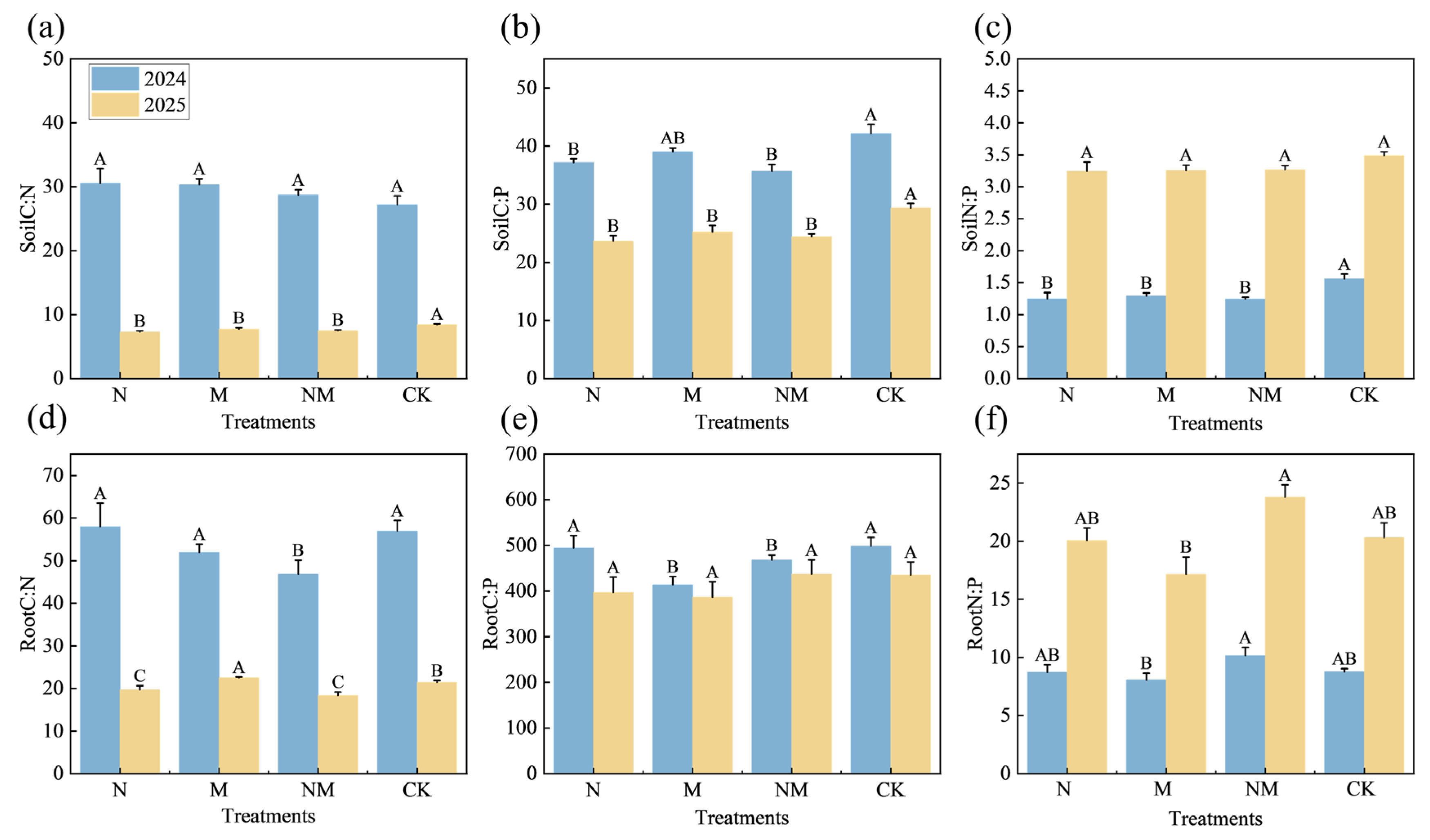
As shown in Figure 5a, soil C:N ratios under all treatments were significantly lower than those under CK in 2025 (p < 0.05), and soil C:N further declined from 2024 to 2025 across all treatments. Compared with CK, the N and NM treatments significantly reduced soil C:P in both years (p < 0.05; Figure 5b). Soil N:P in 2024 was significantly lower in all treatments than in CK (p < 0.05; Figure 5c). Regarding root stoichiometry of S. alopecuroides, root C:N (RC:N) decreased from 2024 to 2025 under all treatments (Figure 5d). RC:N under NM was significantly lower than under CK in both years (p < 0.05). The mowing treatment significantly reduced root C:P (RC:P) in 2024 (p < 0.05; Figure 5e), whereas no treatment effects were observed on RC:P in 2025. In 2024, the NM treatment significantly decreased root N:P (RN:P) compared with CK (p < 0.05; Figure 5f). Across treatments, RN:P values were higher in 2025 than in 2024, indicating a temporal decline in P limitation.

3.3. The Effects of Nitrogen Treatment and Mowing Treatment on the Homeostasis of Soil–Plant Carbon, Nitrogen, and Phosphorus

As shown in Table 3, stoichiometric homeostasis analysis of carbon, nitrogen, phosphorus, and root C:N, C:P, and N:P of S. alopecuroides indicated varying levels of nutrient regulation across treatments. In the N treatment, homeostasis indices (H) for C:N and C:P ranged from 1.3 to 2.0, suggesting weak sensitivity. Regression models for C:P and total phosphorus were highly significant (p < 0.001), with corresponding H values of 1.158 and 0.833, indicating a sensitive homeostasis response. Under mowing (M), the H value for C:N was 1.637, also indicating weak sensitivity. In the NM treatment, C:N exhibited weak sensitivity (H = 1.462), whereas N:P and total nitrogen content showed sensitive homeostasis with H values of 1.137 and 0.918, respectively. For the remaining indicators, non-significant regression slopes revealed strict homeostasis.

3.4. The Correlation Between Plant Indicators and Soil Indicators

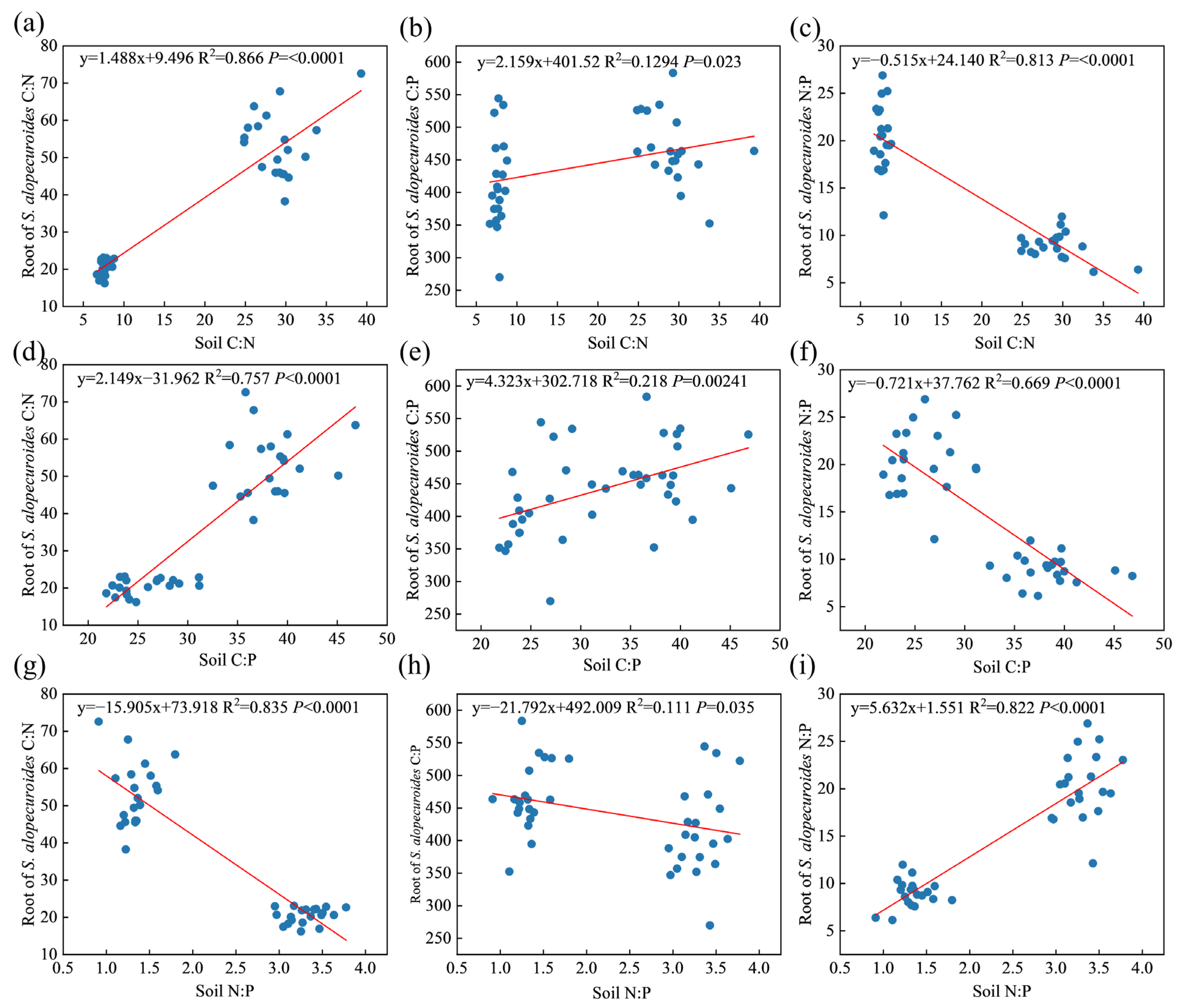
Linear regression analysis indicated a significant correlation between soil stoichiometric ratios and the root stoichiometric characteristics of S. alopecuroides (Figure 6). With increasing in soil C:N, the RC:N and RC:P exhibited significant increases (Figure 6a,b), whereas the RN:P decreased significantly. As soil C:P increased, both RC:N and RC:P also increased significantly (Figure 6d,e), whereas the RN:P significantly decreased. In contrast, as the soil N:P increased, the RC:N and RC:P significantly decreased (Figure 6g,h). Overall, the increase in soil C:N and C:P was accompanied by a significant decrease in RN:P, whereas the increase in soil N:P suppressed the increase in RC:N and RC:P.
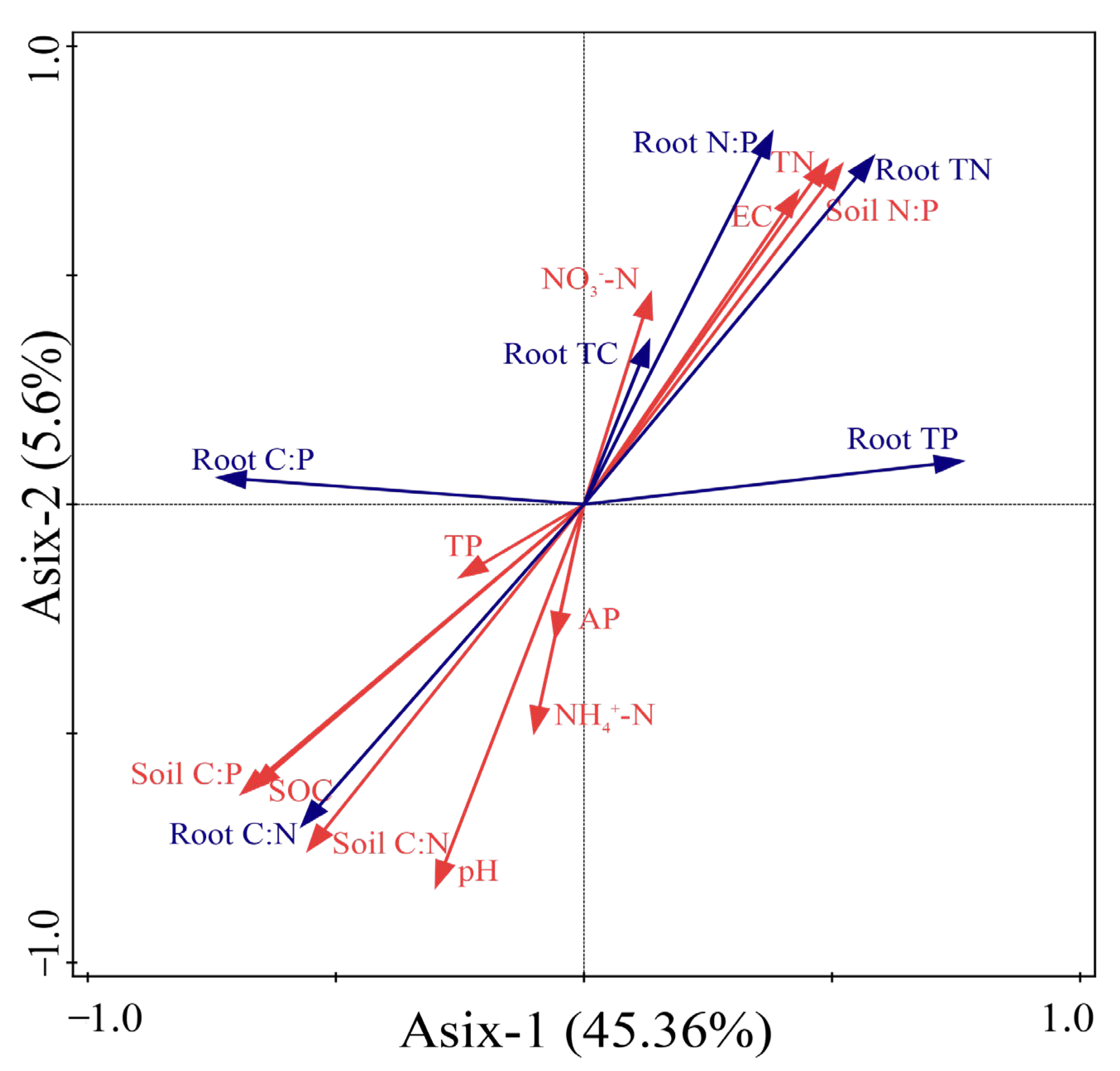
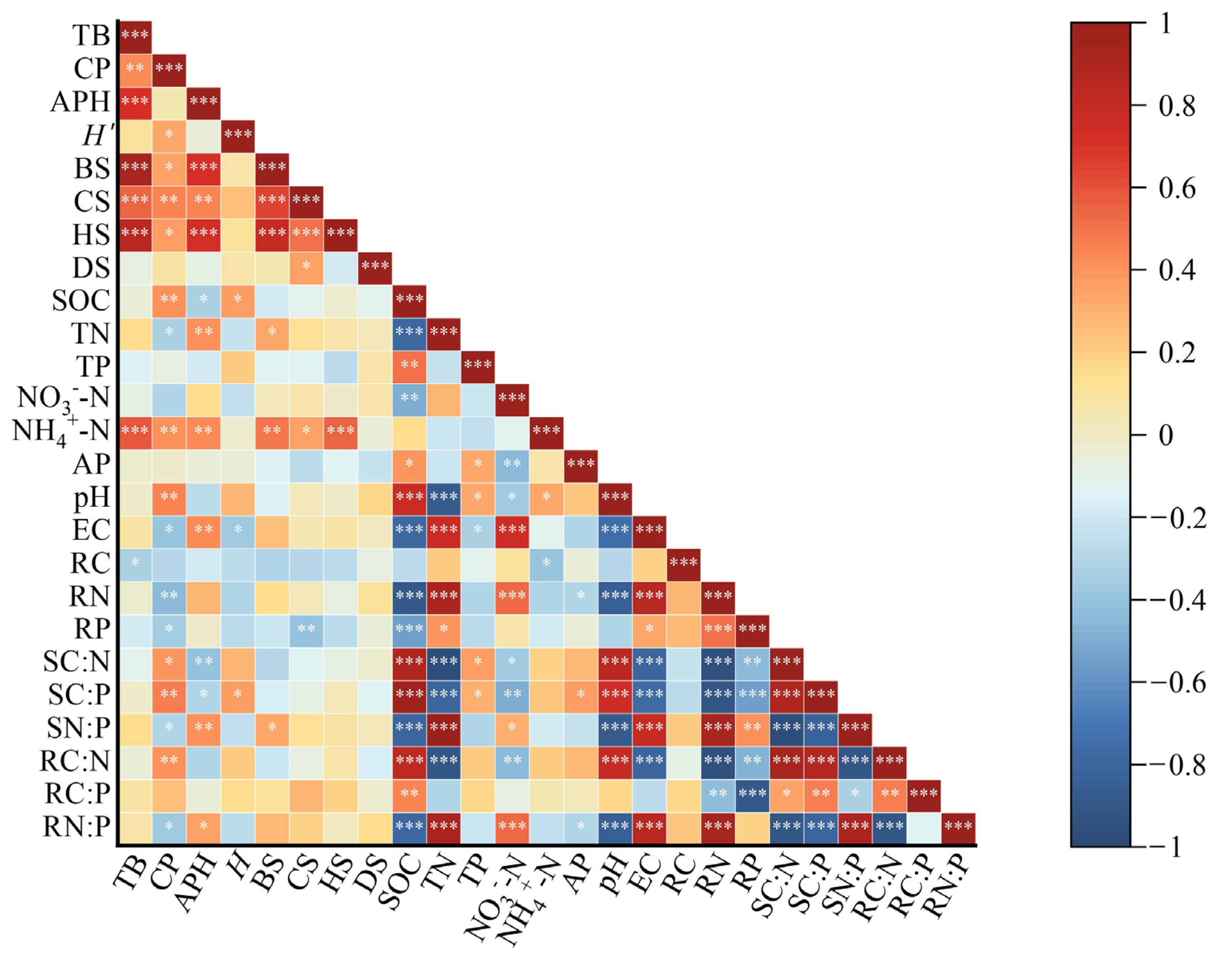
Redundancy analysis (RDA) indicated that environmental factors explained 56% of the total variation in species composition (Figure 7). Axis 1 and Axis 2 accounted for 45.36% and 5.60% of the variation, respectively. Soil C:P and soil organic carbon (SOC) exhibited the greatest explanatory power and together accounted for 64.0% of the total explained variation, showing significant effects (Table 4). Pearson correlation analysis (Figure 8) further revealed that soil total nitrogen (TN) and ammonium nitrogen (NH4+–N) were significantly and positively correlated with RN and RN:P (p < 0.05), suggesting that increased soil nitrogen availability enhances root nitrogen accumulation and elevates root N:P ratios. In addition, SOC and soil C:P were significantly positively correlated with RC:N and RC:P, highlighting a strong coupling between soil C–P dynamics and root carbon metabolism. Moreover, total biomass (TB) and plant coverage (CP) were significantly positively correlated with SOC and TN, demonstrating that soil carbon–nitrogen enrichment directly promotes vegetation growth and coverage in S. alopecuroides–dominated grasslands.
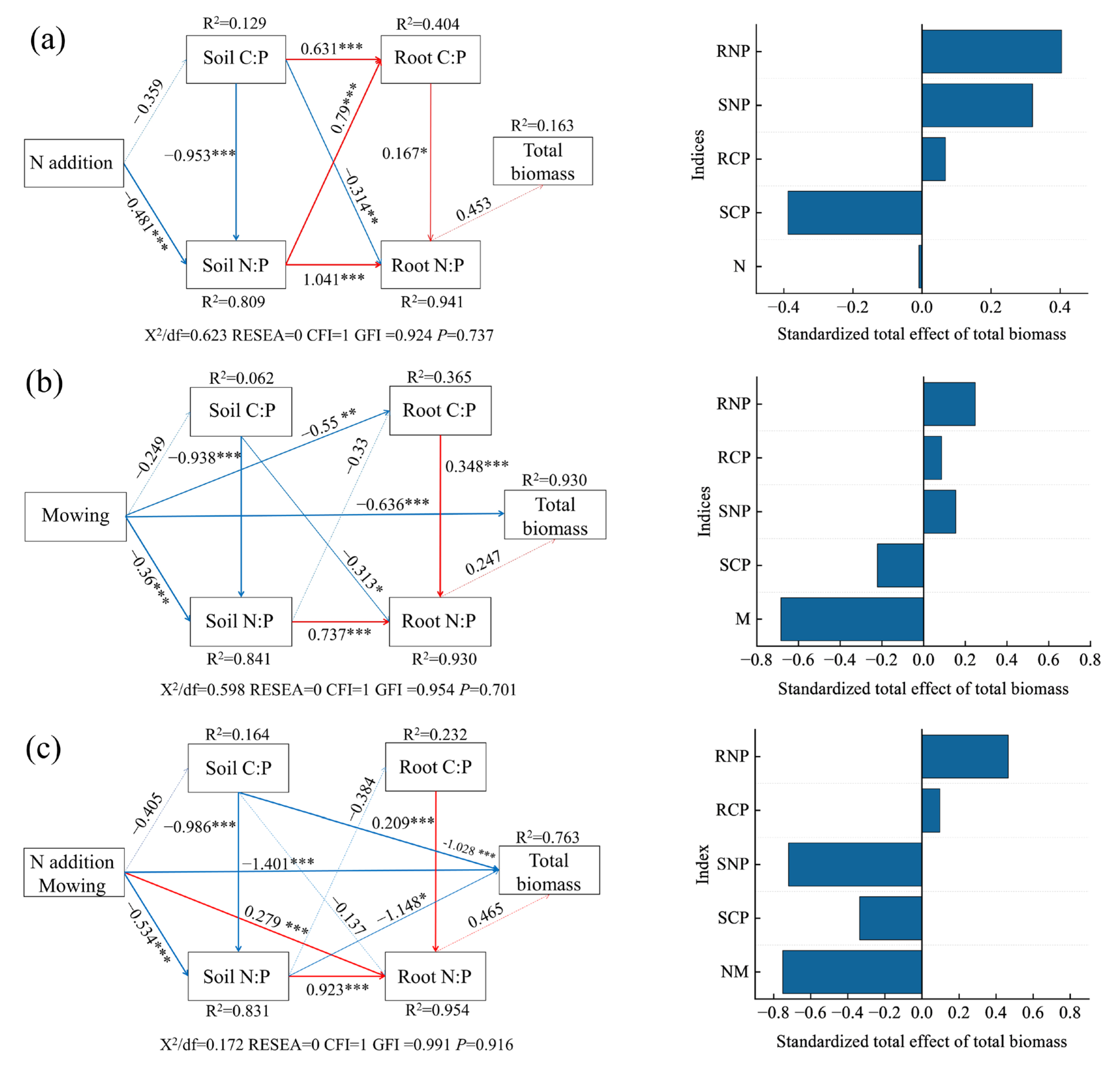
Structural equation modeling (SEM) was used to elucidate the pathways through which nitrogen addition (N), mowing (M), and their combination (NM) influence plant–soil stoichiometry and total biomass. All model fit indices indicated satisfactory performance (Figure 9), suggesting that the hypothesized models adequately represented the observed data.
Under N addition, indirect effects predominated, with nitrogen regulating total biomass primarily via alterations in soil and root stoichiometric ratios (Figure 9a). Soil C:P exerted a negative indirect effect on total biomass by reducing RC:P, whereas soil N:P indirectly enhanced biomass by promoting RC:P accumulation. Total effect analysis indicated that RN:P and RC:P positively contributed to biomass production, while soil C:P had an overall negative effect. In the M treatment, mowing directly modified soil C:P and soil N:P, leading to indirect influences on total biomass (Figure 9b). Specifically, M exhibited significant negative direct effects on soil N:P (−0.36***), RN:P (−0.55**), and total biomass (−0.636***). Soil C:P negatively affected RN:P (−0.313***) and soil N:P (−0.938***), whereas soil N:P positively influenced RN:P (0.737***). Root C:P had significant positive direct effects on RN:P and biomass (both 0.348***), while the direct effect of RN:P on biomass was not significant (0.247). Under NM treatment, nitrogen addition combined with mowing produced strong negative direct effects on soil N:P and total biomass, with standardized path coefficients of −0.534*** and −1.401***, respectively (Figure 9c). Soil C:P negatively influenced soil N:P (−0.986***), and soil N:P positively affected RN:P (0.923***). Additionally, RC:P exerted a significant positive effect on RN:P (0.209***), and RN:P positively influenced total biomass (0.456***).

4. Discussion

4.1. The Effects of Nitrogen Addition and Mowing on Plants

This study demonstrated significant differences in the effects of nitrogen addition (N), mowing (M), and their combination (NM) on vegetation characteristics in S. alopecuroides-dominated degraded grasslands, with notable interannual variations. These results are broadly consistent with global grassland responses to anthropogenic disturbances, while also reflecting the unique ecological conditions of locally degraded rangelands. This aligns with findings from semi-arid grassland ecosystems, where mowing often induces short-term biomass loss due to reduced photosynthetic area [18,42]. In degraded grasslands dominated by S. alopecuroides, high-quality forage grasses, such as Leymus chinensis, Bromus catharticus, and Schizachyrium delavayi, are already competitively disadvantaged. Although these species may exhibit short-term compensatory growth following biomass removal, their limited resource acquisition capacity under strong competition prevents full recovery, ultimately leading to a long-term decline in abundance and community-level contribution. In terms of plant height, both N and M treatments exhibited a gradual recovery trend over time (Figure 3b), whereas the NM treatment consistently resulted in significantly shorter plants than CK. Biomass removal by mowing counteracts the growth stimulation from N fertilization [43], In addition, repeated biomass removal may induce plants to allocate more resources to root systems rather than aboveground structures [44], resulting in a continuous decrease in plant height. In terms of species diversity, compared with CK, the Shannon diversity index (H′) of the NM treatment significantly decreased in 2023, while there were no significant differences in H′ across all treatments from 2023 to 2025 (Figure 3d). This initial decrease in diversity is mainly attributed to nitrogen enrichment, which promotes the rapid growth of nitrogen-favoring dominant plants (e.g., Bromus catharticus, Schizachyrium delavayi, and Setaria viridis) that are common in the study area. These dominant species gain a competitive advantage in resource acquisition, thereby suppressing environmentally sensitive subordinate species [45]. Meanwhile, mowing weakens dominant species by removing canopy biomass, temporarily reducing resource competition and mitigating the negative effects of nitrogen on community diversity [46]. Over time, the community gradually adapted to the disturbance conditions, leading to a new competitive balance between species and pushing the diversity level towards stability [47].
The dominant species S. alopecuroides exhibited significant reductions in biomass and plant height under both M and NM treatments compared with CK across all three years (Figure 3e,f). Moreover, its cover declined significantly in 2025, indicating that mowing effectively suppresses the expansion of S. alopecuroides. As a typical toxic and competitive species, S. alopecuroides maintains dominance not only through rapid shoot growth and spatial occupation but also through allelopathic effects. Specifically, this species produces toxic quinolizidine alkaloids, such as matrine and oxymatrine, which can be released into the soil via root exudates and litter decomposition, thereby inhibiting the germination and growth of neighboring plant species [9]. Mowing removes aboveground tissues, directly reducing photosynthetic capacity and weakening its ability to compete for light and water resources [47], thus suppressing its expansion [48]. Interestingly, biomass and height of S. alopecuroides increased in 2024 relative to 2023 under mowing. This response can be attributed to the substantially higher precipitation recorded in 2024 (with an approximate 54% increase in annual precipitation relative to 2023), which alleviated water limitation and enabled rapid compensatory growth following defoliation. As a deep-rooted legume with strong belowground carbon and nitrogen storage capacity, S. alopecuroides can rapidly reallocate stored reserves to restore shoot tissues when soil moisture improves, temporarily enhancing its competitive ability. Higher water availability may also facilitate nitrogen uptake and intensify interspecific competition. Thus, elevated rainfall in 2024 masked the suppressive effects of mowing and even promoted dominance of this toxic weed [49]. In addition, the density of S. alopecuroides increased significantly in 2024 but declined in 2025 under mowing (Figure 3h). Such fluctuations likely reflect a disturbance-induced shift in reproductive strategy [50]: At the early stage of disturbance, S. alopecuroides compensates for biomass loss through enhanced sexual and asexual regeneration, maintaining population stability. However, repeated mowing exhausts belowground resource reserves, reducing regeneration success and ultimately decreasing density [18]. This dynamic process reflects the adaptive adjustment and trade-off of dominant species in degraded grasslands in response to human disturbance [51]. Previous long-term studies have shown that mowing can sustain compensatory growth and even enhance productivity under appropriate mowing intensity and resource conditions [52]; however, our results suggest that under repeated disturbance in invaded degraded grasslands, the positive regeneration response may be transient and can shift to decline as belowground reserves are depleted.

4.2. Effects of Nitrogen Addition and Mowing on Soil Physicochemical Properties

Compared with CK within the same year, SOC content was significantly reduced under N, M, and NM treatments (Figure 4a), which is consistent with the SOC-decreasing effect of mowing reported in semi-arid ecosystems [23]. Although N addition is often shown to enhance SOC accumulation [53], our results indicate the opposite. This discrepancy may be attributed to two key mechanisms: (1) mowing directly removes aboveground biomass, which is the primary source of SOC input, and (2) severe phosphorus limitation in the study area likely constrained plant growth responses to nitrogen enrichment, resulting in limited additional carbon input to soils [54]. Between different years, the SOC content in 2024 under N, M, and NM treatments was significantly higher than that in 2023 and 2025. This pattern may be explained by the substantially higher rainfall in 2024, which was approximately 54% higher than 2023, alleviating drought constraints on plant growth, promoting rapid vegetation development, and increasing inputs of root residues and exudates into the soil. [55]; the rapid replenishment of plant-derived carbon effectively compensated for losses due to microbial decomposition, thereby increasing SOC content [56]. Significant interannual fluctuations were observed in the TN content, with the TN content in 2024 significantly lower than in 2023 (p < 0.05) (Figure 4b). However, in 2025, the TN content rapidly increased to levels that were not significantly different from those in 2023. This decrease can be attributed to sufficient moisture promoting rapid plant growth, during which roots absorbed and translocated large amounts of nitrogen from the soil to support biomass accumulation [57]. Secondly, heavy rainfall-induced leaching may have transported nitrogen into deeper soil layers, resulting in nitrogen losses from surface soils [58]; Additionally, large amounts of root-derived carbon exudates stimulated microbial activity, accelerating the decomposition of organic nitrogen as microbes adjusted their nutrient requirements [59]. In terms of inorganic nitrogen (nitrate nitrogen NO3–N, ammonium nitrogen NH4+–N), compared with CK, the N and NM treatments significantly increased NO3–N content over the three years. In 2023, the N and NM treatments significantly increased NH4+–N content, while in 2025, the M and NM treatments significantly reduced NH4+–N content. Additionally, the inorganic nitrogen content in 2023 was significantly higher than in 2024 and 2025 (Figure 4d,e). This result indicates that external nitrogen input directly increases soil nitrate and ammonium nitrogen content [60]; the effect of mowing on inorganic nitrogen is time-dependent. In 2023, mowing removed aboveground plant tissue, temporarily cutting off the energy and carbon supply needed for plant protein synthesis, weakening the roots’ ability to absorb ammonium nitrogen, leading to a temporary accumulation of NH4+-N in the soil [61]; However, as the experiment continued until 2025, repeated mowing continually removed nitrogen from the ecosystem, leading to a gradual depletion of the soil nitrogen pool [48]; At the same time, mowing improved soil aeration, which may have stimulated microbial activity, accelerating the conversion of NH4+-N to NO3-N [62]; This long-term output effect combined with the conversion process ultimately led to a significant reduction in NH4+-N content.

4.3. Effects of Nitrogen Addition and Mowing on Plant–Soil C:N:P Stoichiometric Characteristics

The responses of root C, N, and P contents and their stoichiometric ratios of S. alopecuroides to different treatments showed significant differences, with clear interannual dynamics. The study found that the response of RC to different treatments exhibited distinct phase differences. Compared with CK, no significant differences among treatments were observed in 2024 (Table 2), indicating that during the early stage of mowing disturbance, plants prioritize nutrient allocation to aboveground growth recovery, with photosynthetic products preferentially allocated to shoots to compensate for biomass loss [63]. By 2025, the M and NM treatments significantly increased RC content, suggesting that under continuous disturbance pressure, plants adjusted their survival strategies by increasing energy reserves in roots to enhance resistance to disturbance. The response of RN showed that, compared with CK, the N, M, and NM treatments significantly increased RN content in 2025, with the increases following the order NM > N > M. This may be attributed to the N treatment significantly increased RN content, as roots tend to absorb and store nitrogen in excess under nitrogen-rich environments [49]. The M treatment mainly induced a compensatory growth response triggered by mowing [64]. The greatest increase in RN under NM suggests a synergistic enhancement of nitrogen assimilation when external N supply coincides with intensified nutrient demand after biomass removal [65]. Changes in RP were relatively independent of other nutrients. Compared with CK, the M treatment significantly increased RP content in both 2024 and 2025, while no significant differences were observed among other treatments. This response may represent an adaptive strategy to cope with intensified belowground resource competition induced by mowing. The roots may enhance phosphorus acquisition by optimizing root architecture, increasing root hair density, or secreting organic acids [66], ultimately resulting in increased RP content.
Soil C:N, C:P, and N:P ratios, as core indicators reflecting soil nutrient balance, directly affect the material cycling in the plant–soil system and form significant feedback with root stoichiometry [67]. This study found that, compared with CK, soil C:N ratios under all treatments significantly decreased in 2025 (Figure 5a), and were lower than those in 2024. The decrease is mainly attributed to the asynchronous changes in SOC and TN in response to disturbance. Although the N, M, and NM treatments all led to a decrease in SOC and TN content, the reduction in SOC was significantly higher than TN (SOC decreased by 22% and TN decreased by 10% in the N treatment compared to CK in 2025), thereby driving the decline in soil C:N. This pattern likely arises because nitrogen addition alleviates nitrogen limitation for microbes, prompting them to accelerate the decomposition of SOC to obtain carbon sources [68], resulting in the excessive consumption of SOC. Soil C:P responded similarly, with the N and NM treatments significantly decreasing soil C:P in both 2024 and 2025 (Figure 5b). This decrease is consistent with the findings of Gong et al. [69], and may result from nitrogen-stimulated SOC mineralization, which disproportionately decreases the carbon fraction of C:P. Additionally, transient increases in total phosphorus (TP) during 2024 and the greater reduction in SOC compared to TP in 2025 jointly contributed to lower C:P, indicating that SOC depletion is the dominant driver, with TP variation modifying its magnitude [70]. Notably, the reduction in soil C:P was further supported by the significant decrease in available phosphorus (AP) in both 2024 and 2025, suggesting that phosphorus limitation was not fully alleviated. In contrast, M alone did not significantly affect C:P in 2024, suggesting that soil stoichiometry initially maintains homeostasis under mowing disturbance [71]. Soil N:P showed the most complex temporal response: it was significantly lower in treatments than CK in 2024 but increased in 2025 (Figure 5c). The decline in 2024 was driven by microbial mineralization and plant uptake consuming TN more rapidly than TP, causing stoichiometric imbalance under elevated N availability [72]. The subsequent increase in soil N:P in 2025 indicates a delayed regulatory response of the system to nutrient enrichment [73], whereby residual N accumulation and gradual P depletion promote re-equilibration of soil nutrient ratios.
This study found that root stoichiometric characteristics of S. alopecuroides exhibited significant interannual fluctuations and treatment-specific responses. Compared with CK, RC:N under all treatments were lower in 2025 than in 2024, and the NM treatment significantly reduced RC:N in both 2024 and 2025 (Figure 5d). In 2024, the root N:P ratio under the NM treatment significantly decreased, whereas in 2025, RN:P ratios under all treatments were higher than those in 2024 (Figure 5f). These changes reflect the coupling relationships between elements: First, the decrease in RC:N reflects active regulation of its growth potential [74], accumulating nitrogen to enhance ribosome and protein synthesis to support rapid regrowth following disturbance [75]. Second, the RN:P under NM treatment decreased in 2024 and rebounded in 2025. In 2024, mowing-induced compensatory growth forced the roots to act as nitrogen sources, transferring a large amount of nitrogen to the aboveground parts to support the reconstruction of photosynthetic tissues, leading to a temporary decrease in RN:P [74]. By 2025, the stabilization of the aboveground community structure and continuous nitrogen input caused the roots to revert to nitrogen storage, with the accumulation of RN again exceeding RP, driving the rebound of N:P [46,49].
Linear regression, redundancy analysis (RDA), and correlation analyses revealed a significant relationship between soil and root stoichiometric characteristics, and this coupling relationship is a core feature of the material cycling in the plant–soil system. As the soil C:N and C:P increased, the RC:N and RC:P significantly increased, while the RN:P significantly decreased (Figure 6a,b). Normally, plants lower their root C:N ratio to acquire nitrogen; however, in this study, the increase in soil C:N was accompanied by an increase in the RC:N, which may reflect a long-term nitrogen limitation (N:P < 14 indicates the presence of N limitation). Under such conditions, a higher soil C:N further exacerbates nitrogen deficiency, making it difficult for plants to acquire sufficient nitrogen, thereby forcing them to slow down growth [76] and instead accumulate more structural carbon to reinforce the roots, maintaining basic survival form and function. As the soil N:P ratio increased, both the RC:N and RC:P significantly decreased, which is consistent with the results of Chen et al. [34]. This pattern reflects plants’ capacity to regulate their internal nutrient balance. When the N:P ratio in the soil increases, plants actively allocate more resources to phosphorus in the roots, thereby lowering the RC:P [77]. This regulatory mechanism ensures that plants can synergistically utilize both nitrogen and phosphorus, the two key elements. RDA results further showed that soil C:P and SOC were the most influential factors, together explaining 64.0% of the variation in vegetation properties, suggesting that carbon storage and relative P availability are key drivers of plant growth. Additionally, SOC and TN were significantly and positively correlated with total biomass and plant cover, consistent with Zhang et al. [78].

4.4. Differences in C:N:P Contents and Plant–Soil Homeostasis

Ecological stoichiometric homeostasis is a key adaptive mechanism by which plants respond to environmental nutrient fluctuations and maintain physiological functions. Its strength directly determines the plant survival potential and competitive advantage under disturbed environmental conditions [79]. This study indicates that the N treatment significantly enhanced the stoichiometric stability of S. alopecuroides roots, with RC and RP exhibiting absolute homeostasis (Table 3). Carbon serves as the energy basis for plant growth, and phosphorus is a key element regulating metabolic processes. The stable accumulation of both ensures that roots maintain stability during soil nutrient fluctuations, indicating that nitrogen addition enhances the metabolic stability of S. alopecuroides. This homeostatic mechanism may further strengthen its competitive advantage within the plant community. During degraded grassland restoration, nitrogen input alone may promote the expansion of dominant harmful weeds such as S. alopecuroides and therefore requires regulation in combination with other management measures. Under the M treatment, RC, RP, and the RN:P exhibited sensitive homeostasis, indicating that its resource allocation and N–P stoichiometry can rapidly adjust in response to mowing pressure. This is consistent with the findings of Wang et al., which demonstrated that regrowth induced by biomass removal is largely driven by the dynamic redistribution of nitrogen and phosphorus within the root system [49]. This strategy of reduced stability and increased flexibility represents a rapid plant response to external pressures, aiming to compensate for biomass loss through compensatory growth [52]. Consistent with previous studies [80], these findings indicate that mowing can activate plant regenerative potential as a common adaptive response of plants to disturbance. Under the NM treatment, RC and RP exhibted absolute homeostasis, with RC:N in a weakly sensitive state and RN:P in a sensitive state. This combination retained the promoting effect of nitrogen addition on carbon-phosphorus stability while maintaining the sensitivity of roots to nitrogen-phosphorus balance. When facing dual disturbances, S. alopecuroides can maintain basic growth through stable carbon-phosphorus metabolism and respond promptly to soil nutrient changes through sensitive N:P, adjusting its growth strategy [78].

4.5. Driving Mechanisms of the Plant–Soil System

Nutrient coupling and stoichiometric balance within the plant–soil system may represent the fundamental mechanisms sustaining functional stability and productivity in S. alopecuroides-dominated degraded grasslands. Structural equation modeling (SEM) further revealed that soil environmental factors may reshape root stoichiometric characteristics through interactions with other variables, thereby influencing and ultimately determining aboveground biomass accumulation. SEM results showed that soil C:P exerted a significant negative total effect on biomass (Figure 9a), consistent with RDA findings identifying soil C:P as the most influential driver. This suggests that aboveground biomass could be constrained by phosphorus availability, in line with the global synthesis by Hou et al. [81]. As a leguminous species, S. alopecuroides does not rely solely on soil inorganic nitrogen but depends heavily on N fixation, which incurs substantial P costs. Nitrogen enrichment enhances photosynthetic carbon assimilation and increases tissue N, potentially intensifying P limitation [81]. which demonstrated that productivity in natural ecosystems is often limited by P availability. As a leguminous species, S. alopecuroides does not rely solely on soil inorganic nitrogen but depends heavily on N fixation, which incurs substantial P costs. Nitrogen enrichment enhances photosynthetic carbon assimilation and increases tissue N, thereby intensifying P limitation [82], further restricting growth. Under a high soil C:P background, S. alopecuroides might increase phosphorus acquisition through its roots to maintain internal homeostasis, which could increase belowground carbon allocation at the expense of the resources available to aboveground organs, ultimately limiting the accumulation of aboveground biomass. Reducing soil C:P could be primary environmental pathway to alleviate nutrient limitations in the ecosystem and enhance overall community productivity. Moreover, the results of this study found that nitrogen addition had a limited direct effect on total biomass but produced a significant indirect positive effect by regulating soil N:P and RC:P. This effect arises because nitrogen addition increased soil N:P, thereby optimizing the root nutrient status of S. alopecuroides and enabling more efficient soil resource utilization [83]. Given that S. alopecuroides dominates community biomass, improvements in its growth strongly translate into community-scale enhancement. Under NM treatment, both RC:P and RN:P positively influenced total biomass. Combined with the homeostasis analysis, this suggests that S. alopecuroides maintains relatively stable RC:P, ensuring adequate structural investment to improve stress tolerance under repeated mowing, while its sensitive RN:P may facilitate rapid metabolic response to nutrient fluctuations, enabling compensatory growth under dual disturbance [49].
This study elucidated the pathways through which nitrogen addition and mowing regulate plant–soil stoichiometric characteristics using structural equation modeling (SEM); however, several limitations should be acknowledged. First, the experimental duration was relatively short, which constrains our ability to capture long-term ecosystem adjustment processes under chronic nitrogen deposition and sustained mowing disturbance. Extended monitoring is required to verify the temporal stability and ecological relevance of the identified regulatory mechanisms. Second, although this study focused on vegetation and soil physicochemical responses, it did not account for the role of soil microbial communities in mediating nutrient activation, C:P imbalance, and root nutrient acquisition. Given that microorganisms serve as central drivers of biogeochemical cycles, future studies should adopt an integrated soil–microbe–root framework to uncover the mechanisms underlying ecosystem multifunctionality in S. alopecuroides–dominated degraded grasslands, thereby providing a more comprehensive scientific basis for grassland restoration.

5. Conclusions

This study aimed to elucidate how nitrogen addition and mowing interact to regulate plant–soil nutrient balance in S. alopecuroides-dominated degraded grasslands under intensified global nitrogen deposition, and to clarify the ecological mechanisms by which soil environmental changes reshape dominant species traits and thereby enhance community functioning. We found significant interactive effects between nitrogen addition and mowing. Moderate nitrogen input not only replenished the soil nitrogen pool but also markedly reduced soil C:P, relieving phosphorus limitation and partially compensating for biomass loss caused by mowing. Structural equation modeling (SEM) further demonstrated a hierarchical driving pathway from soil environmental reshaping to dominant species stoichiometric adjustments and ultimately to improvements in aboveground biomass. Specifically, S. alopecuroides exhibited a dual root adaptive strategy: maintaining relatively stable RC:P to support disturbance resistance while allowing RN:P to remain sensitive to environmental nutrient shifts, enabling rapid metabolic compensation. From a management perspective, our findings indicate that mowing is effective in suppressing the dominance of the toxic species Sophora alopecuroides, whereas nitrogen addition alone or excessive nutrient inputs may exacerbate stoichiometric imbalance and limit restoration outcomes. Therefore, moderate mowing without excessive fertilization is recommended as a more ecologically sustainable strategy for the restoration and management of S. alopecuroides–invaded degraded grasslands under increasing atmospheric nitrogen deposition.
Overall, plant–soil stoichiometric coupling appears to play an important role in regulating biomass production and short-term ecosystem functioning in these degraded grasslands. These findings provide both theoretical insight into nutrient regulation mechanisms and practical guidance for ecological restoration and sustainable grassland management under intensified nitrogen deposition.

Author Contributions

Conceptualization, H.Y. and D.C.; methodology, S.L.; software, Y.W.; validation, S.L., Z.J., Z.L., Y.H., J.G. and L.L.; investigation, Z.J., Z.L., J.G., L.L. and Y.H.; resources, D.C.; data curation, Y.W.; writing—original draft preparation, Y.W.; writing—review and editing, D.C. and H.Y.; visualization, Y.W., Z.J., Z.L., L.L. Y.H. and J.G.; supervision, D.C. and H.Y.; project administration, D.C.; funding acquisition, D.C. All authors have read and agreed to the published version of the manuscript.

Funding

This research was funded by the National Natural Science Foundation of China (32260272) and the Natural Science Key Project of Yili Normal University to Enhance Comprehensive Discipline Strength (22XKZZ01).

Data Availability Statement

The original contributions presented in this study are included in the article. Further inquiries can be directed to the corresponding author(s).

Acknowledgments

This work was financially supported by the National Natural Science Foundation of China and the Natural Science Key Project of Yili Normal University to Enhance Comprehensive Discipline Strength. The authors extend their sincere appreciation to Lijun Chen, Junqi Liu and other colleagues who contributed to the field experiment. We are also extremely grateful to the reviewers for their invaluable comments and suggestions.

Conflicts of Interest

The authors declare no conflicts of interest. The funders had no role in the design of the study; in the collection, analyses, or interpretation of data; in the writing of the manuscript; or in the decision to publish the results.

Abbreviations

The following abbreviations are used in this manuscript:
SOCSoil organic carbon
TNSoil total nitrogen
TPSoil total phosphorus
APSoil available phosphorus
NO3-NNitrate nitrogen
NH4+-NAmmonium nitrogen
ECElectrical conductivity
RCRoot of S. alopecuroides total carbon
RNRoot of S. alopecuroides total nitrogen
RPRoot of S. alopecuroides total phosphorus
RC:NRoot of S. alopecuroides C:N
RC:PRoot of S. alopecuroides C:P
RN:PRoot of S. alopecuroides N:P

References

  1. Zhang, M.; Zhang, F.; Guo, L.; Dong, P.; Cheng, C.; Kumar, P.; Johnson, B.A.; Chan, N.W.; Shi, J. Contributions of Climate Change and Human Activities to Grassland Degradation and Improvement from 2001 to 2020 in Zhaosu County, China. J. Environ. Manag. 2023, 348, 119465. [Google Scholar] [CrossRef]
  2. Gibbs, H.K.; Salmon, J.M. Mapping the World’s Degraded Lands. Appl. Geogr. 2015, 57, 12–21. [Google Scholar] [CrossRef]
  3. Chen, J.; Biswas, A.; Su, H.; Cao, J.; Hong, S.; Wang, H.; Dong, X. Quantifying Changes in Soil Organic Carbon Density from 1982 to 2020 in Chinese Grasslands Using a Random Forest Model. Front. Plant Sci. 2023, 14, 1076902. [Google Scholar] [CrossRef] [PubMed]
  4. Li, T.; Cui, L.; Lv, W.; Song, X.; Cui, X.; Tang, L. Exploring the Frontiers of Sustainable Livelihoods Research within Grassland Ecosystem: A Scientometric Analysis. Heliyon 2022, 8, e10704. [Google Scholar] [CrossRef] [PubMed]
  5. Zhou, Y.; Li, Y.; Li, W.; Li, F.; Xin, Q. Ecological Responses to Climate Change and Human Activities in the Arid and Semi-Arid Regions of Xinjiang in China. Remote Sens. 2022, 14, 3911. [Google Scholar] [CrossRef]
  6. Li, Y.-Y.; Dong, S.-K.; Liu, S.; Wang, X.; Wen, L.; Wu, Y. The Interaction between Poisonous Plants and Soil Quality in Response to Grassland Degradation in the Alpine Region of the Qinghai-Tibetan Plateau. Plant Ecol. 2014, 215, 809–819. [Google Scholar] [CrossRef]
  7. Rong, W.; Huang, X.; Hu, S.; Zhang, X.; Jiang, P.; Niu, P.; Su, J.; Wang, M.; Chu, G. Impacts of Climate Change on the Habitat Suitability and Natural Product Accumulation of the Medicinal Plant Sophora alopecuroides L. Based on the MaxEnt Model. Plants 2024, 13, 1424. [Google Scholar] [CrossRef]
  8. Zhao, J.; Shi, C.; Wang, L.; Han, X.; Zhu, Y.; Liu, J.; Yang, X. Functional Trait Responses of Sophora alopecuroides L. Seedlings to Diverse Environmental Stresses in the Desert Steppe of Ningxia, China. Plants 2024, 13, 69. [Google Scholar] [CrossRef]
  9. Lei, L.; Zhao, Y.; Shi, K.; Liu, Y.; Hu, Y.; Shao, H. Phytotoxic Activity of Alkaloids in the Desert Plant Sophora alopecuroides. Toxins 2021, 13, 706. [Google Scholar] [CrossRef]
  10. Fay, P.A.; Prober, S.M.; Harpole, W.S.; Knops, J.M.H.; Bakker, J.D.; Borer, E.T.; Lind, E.M.; MacDougall, A.S.; Seabloom, E.W.; Wragg, P.D.; et al. Grassland Productivity Limited by Multiple Nutrients. Nat. Plants 2015, 1, 15080. [Google Scholar] [CrossRef]
  11. Reay, D.S.; Dentener, F.; Smith, P.; Grace, J.; Feely, R.A. Global Nitrogen Deposition and Carbon Sinks. Nat. Geosci. 2008, 1, 430–437. [Google Scholar] [CrossRef]
  12. Borer, E.T.; Stevens, C.J. Nitrogen Deposition and Climate: An Integrated Synthesis. Trends Ecol. Evol. 2022, 37, 541–552. [Google Scholar] [CrossRef] [PubMed]
  13. Farrer, E.C.; Suding, K.N. Teasing Apart Plant Community Responses to N Enrichment: The Roles of Resource Limitation, Competition and Soil Microbes. Ecol. Lett. 2016, 19, 1287–1296. [Google Scholar] [CrossRef] [PubMed]
  14. Zhao, Y.; Yang, B.; Li, M.; Xiao, R.; Rao, K.; Wang, J.; Zhang, T.; Guo, J. Community Composition, Structure and Productivity in Response to Nitrogen and Phosphorus Additions in a Temperate Meadow. Sci. Total Environ. 2019, 654, 863–871. [Google Scholar] [CrossRef]
  15. Li, T.; Cui, L.; Liu, L.; Wang, H.; Dong, J.; Wang, F.; Song, X.; Che, R.; Li, C.; Tang, L.; et al. Characteristics of Nitrogen Deposition Research within Grassland Ecosystems Globally and Its Insight from Grassland Microbial Community Changes in China. Front. Plant Sci. 2022, 13, 947279. [Google Scholar] [CrossRef]
  16. Zhang, L.; Zhao, Z.; Jiang, B.; Baoyin, B.; Cui, Z.; Wang, H.; Li, Q.; Cui, J. Effects of Long-Term Application of Nitrogen Fertilizer on Soil Acidification and Biological Properties in China: A Meta-Analysis. Microorganisms 2024, 12, 1683. [Google Scholar] [CrossRef]
  17. Wu, Q.; Ren, H.; Wang, Z.; Li, Z.; Liu, Y.; Wang, Z.; Li, Y.; Zhang, R.; Zhao, M.; Chang, S.X.; et al. Additive Negative Effects of Decadal Warming and Nitrogen Addition on Grassland Community Stability. J. Ecol. 2020, 108, 1442–1452. [Google Scholar] [CrossRef]
  18. Zhao, T.; Zhang, F.; Suo, R.; Gu, C.; Chen, D.; Yang, T.; Zhao, M. Biennial Mowing Maintains the Biomass and Functional Diversity of Semi-Arid Grassland. Sustainability 2020, 12, 1507. [Google Scholar] [CrossRef]
  19. Díaz, S.; Lavorel, S.; McINTYRE, S.; Falczuk, V.; Casanoves, F.; Milchunas, D.G.; Skarpe, C.; Rusch, G.; Sternberg, M.; Noy-Meir, I.; et al. Plant Trait Responses to Grazing—A Global Synthesis. Glob. Change Biol. 2007, 13, 313–341. [Google Scholar] [CrossRef]
  20. Gillespie, M.A.K.; Buckley, H.L.; Condron, L.; Wratten, S.D. Grassland Plant and Invertebrate Species Richness Increases from Mowing Are Mediated by Impacts on Soil Chemistry. Basic Appl. Ecol. 2022, 63, 152–163. [Google Scholar] [CrossRef]
  21. Liu, J.; Li, L.; Ji, L.; Li, Y.; Li, J.; Li, F.Y. Divergent Effects of Grazing versus Mowing on Plant Nutrients in Typical Steppe Grasslands of Inner Mongolia. J. Plant Ecol. 2023, 16, rtac032. [Google Scholar] [CrossRef]
  22. Wang, J.; Wei, K.; Li, Z.; Wang, Y.; Tang, J.; Zhu, B. Effects of Mowing on Root Biomass, Soil Properties, Microbial Biomass, and Microbial Diversity in Grasslands: A Meta-Analysis. Land Degrad. Dev. 2025, 36, 1483–1491. [Google Scholar] [CrossRef]
  23. Li, L.; Liu, H.; Baoyin, T. Mowing Increases Root-to-Shoot Ratio but Decreases Soil Organic Carbon Storage and Microbial Biomass C in a Semiarid Grassland of North China. Agriculture 2022, 12, 1324. [Google Scholar] [CrossRef]
  24. Guo, X.; Zhou, X.; Hale, L.; Yuan, M.; Feng, J.; Ning, D.; Shi, Z.; Qin, Y.; Liu, F.; Wu, L.; et al. Taxonomic and Functional Responses of Soil Microbial Communities to Annual Removal of Aboveground Plant Biomass. Front. Microbiol. 2018, 9, 954. [Google Scholar] [CrossRef]
  25. Yang, Z.; Minggagud, H.; Baoyin, T.; Li, F.Y. Plant Production Decreases Whereas Nutrients Concentration Increases in Response to the Decrease of Mowing Stubble Height. J. Environ. Manag. 2020, 253, 109745. [Google Scholar] [CrossRef]
  26. Chen, Z.; Xu, X.; Wen, Y.; Cheng, M.; Wang, X. The Critical Role of Soil Ecological Stoichiometric Ratios: How Does Reforestation Improve Soil Nitrogen and Phosphorus Availability? Plants 2024, 13, 2320. [Google Scholar] [CrossRef]
  27. Yu, Q.; Chen, Q.; Elser, J.J.; He, N.; Wu, H.; Zhang, G.; Wu, J.; Bai, Y.; Han, X. Linking Stoichiometric Homoeostasis with Ecosystem Structure, Functioning and Stability. Ecol. Lett. 2010, 13, 1390–1399. [Google Scholar] [CrossRef]
  28. Filipiak, M.; Filipiak, Z.M. Application of Ionomics and Ecological Stoichiometry in Conservation Biology: Nutrient Demand and Supply in a Changing Environment. Biol. Conserv. 2022, 272, 109622. [Google Scholar] [CrossRef]
  29. Pugnaire, F.I.; Morillo, J.A.; Peñuelas, J.; Reich, P.B.; Bardgett, R.D.; Gaxiola, A.; Wardle, D.A.; van der Putten, W.H. Climate Change Effects on Plant-Soil Feedbacks and Consequences for Biodiversity and Functioning of Terrestrial Ecosystems. Sci. Adv. 2019, 5, eaaz1834. [Google Scholar] [CrossRef]
  30. Hobbie, S.E. Plant Species Effects on Nutrient Cycling: Revisiting Litter Feedbacks. Trends Ecol. Evol. 2015, 30, 357–363. [Google Scholar] [CrossRef]
  31. Wang, D.; Chi, Z.; Yue, B.; Huang, X.; Zhao, J.; Song, H.; Yang, Z.; Miao, R.; Liu, Y.; Zhang, Y.; et al. Effects of Mowing and Nitrogen Addition on the Ecosystem C and N Pools in a Temperate Steppe: A Case Study from Northern China. Catena 2020, 185, 104332. [Google Scholar] [CrossRef]
  32. Borer, E.T.; Seabloom, E.W.; Gruner, D.S.; Harpole, W.S.; Hillebrand, H.; Lind, E.M.; Adler, P.B.; Alberti, J.; Anderson, T.M.; Bakker, J.D.; et al. Herbivores and Nutrients Control Grassland Plant Diversity via Light Limitation. Nature 2014, 508, 517–520. [Google Scholar] [CrossRef]
  33. Gu, X.; Zhang, F.; Xie, X.; Cheng, Y.; Xu, X. Effects of N and P Addition on Nutrient and Stoichiometry of Rhizosphere and Non-Rhizosphere Soils of Alfalfa in Alkaline Soil. Sci. Rep. 2023, 13, 12119. [Google Scholar] [CrossRef] [PubMed]
  34. Chen, S.; Zhang, W.; Ge, X.; Zheng, X.; Zhou, X.; Ding, H.; Zhang, A. Response of Plant and Soil N, P, and N:P Stoichiometry to N Addition in China: A Meta-Analysis. Plants 2023, 12, 2104. [Google Scholar] [CrossRef]
  35. Henry, H.A.L.; Cleland, E.E.; Field, C.B.; Vitousek, P.M. Interactive Effects of Elevated CO2, N Deposition and Climate Change on Plant Litter Quality in a California Annual Grassland. Oecologia 2005, 142, 465–473. [Google Scholar] [CrossRef] [PubMed]
  36. Ma, L.; Shi, H.; Su, H.; Hu, X.; Li, S.; Zhang, Q.; Wei, J.; Xu, S.; Zhang, Z.; Shi, Z.; et al. Long-Term Warming and Mowing Shift the Dominant Control of Soil Respiration in an Alpine Meadow of the Tibet Plateau. Plant Soil 2025, 1, 20. [Google Scholar] [CrossRef]
  37. Yang, J.; Huang, X. The 30&thinspm Annual Land Cover Dataset and Its Dynamics in China from 1990 to 2019. Earth Syst. Sci. Data 2021, 13, 3907–3925. [Google Scholar]
  38. Schad, P. World Reference Base for Soil Resources 2022: International Soil Classification System for Naming Soils and Creating Legends for Soil Maps, 4th ed.; International Union of Soil Sciences: Vienna, Austria, 2022. [Google Scholar]
  39. Bao, S. Soil Agrochemical Analysis, 3rd ed.; China Agriculture Press: Beijing, China, 2000. [Google Scholar]
  40. Zhang, J. Quantitative Ecology, 2nd ed.; Science Press: Beijing: China, 2004. [Google Scholar]
  41. Persson, J.; Fink, P.; Goto, A.; Hood, J.M.; Jonas, J.; Kato, S. To Be or Not to Be What You Eat: Regulation of Stoichiometric Homeostasis among Autotrophs and Heterotrophs. Oikos 2010, 119, 741–751. [Google Scholar] [CrossRef]
  42. Hassan, N.; Wang, Z. Paralleled Grazing and Mowing Differentially Affected Plant Community Diversity and Productivity in a Semi-Arid Grassland. Ecol. Process. 2024, 13, 62. [Google Scholar] [CrossRef]
  43. Yang, G.-J.; Lü, X.-T.; Stevens, C.J.; Zhang, G.-M.; Wang, H.-Y.; Wang, Z.-W.; Zhang, Z.-J.; Liu, Z.-Y.; Han, X.-G. Mowing Mitigates the Negative Impacts of N Addition on Plant Species Diversity. Oecologia 2019, 189, 769–779. [Google Scholar] [CrossRef]
  44. Liu, Y.; Cordero, I.; Bardgett, R.D. Defoliation and Fertilisation Differentially Moderate Root Trait Effects on Soil Abiotic and Biotic Properties. J. Ecol. 2023, 111, 2733–2749. [Google Scholar] [CrossRef]
  45. He, M.; Barry, K.E.; Soons, M.B.; Allan, E.; Cappelli, S.L.; Craven, D.; Doležal, J.; Isbell, F.; Lanta, V.; Lepš, J.; et al. Cumulative Nitrogen Enrichment Alters the Drivers of Grassland Overyielding. Commun. Biol. 2024, 7, 309. [Google Scholar] [CrossRef] [PubMed]
  46. Hu, Y.-Y.; Zhang, Z.-W.; Hou, S.-L.; Yang, J.-J.; Lü, X.-T. Annual Mowing Mitigates the Negative Legacy Effects of N Enrichment on Grassland Nutrient Use Efficiency. J. Plant Ecol. 2021, 14, 959–969. [Google Scholar] [CrossRef]
  47. Mori, S.; Irving, L.J. Defoliation Affects the Root Competitive Balance for N between Poa Annua Plants Grown in a Split-Root Box. Grassl. Res. 2022, 1, 94–102. [Google Scholar] [CrossRef]
  48. Zhang, X.; Yang, G.; Ning, Y.; Jiang, L.; Han, X.; Lü, X.-T. Dominant Species Drove the Balance between Biodiversity and Productivity in Mown Grasslands under Nitrogen Fertilization. Ecol. Appl. 2025, 35, e70009. [Google Scholar] [CrossRef]
  49. Wang, R.; Cresswell, T.; Johansen, M.P.; Harrison, J.J.; Jiang, Y.; Keitel, C.; Cavagnaro, T.R.; Dijkstra, F.A. Reallocation of Nitrogen and Phosphorus from Roots Drives Regrowth of Grasses and Sedges after Defoliation under Deficit Irrigation and Nitrogen Enrichment. J. Ecol. 2021, 109, 4071–4080. [Google Scholar] [CrossRef]
  50. Wu, J.; Hou, X.; Xu, L.; Zhou, Q.; Wang, Y.; Guo, Z.; Adomako, M.O.; Ma, Q. Belowground Bud Banks and Land Use Change: Roles of Vegetation and Soil Properties in Mediating the Composition of Bud Banks in Different Ecosystems. Front. Plant Sci. 2024, 14, 1330664. [Google Scholar] [CrossRef]
  51. Qian, J.; Zhang, Z.; Dong, Y.; Ma, Q.; Yu, Q.; Zhu, J.; Zuo, X.; Broderick, C.M.; Collins, S.L.; Han, X.; et al. Responses of Bud Banks and Shoot Density to Experimental Drought along an Aridity Gradient in Temperate Grasslands. Funct. Ecol. 2023, 37, 1211–1220. [Google Scholar] [CrossRef]
  52. Guo, M.; Guo, T.; Zhou, J.; Liang, J.; Yang, G.; Zhang, Y. Restored Legume Acts as a “Nurse” to Facilitate Plant Compensatory Growth and Biomass Production in Mown Grasslands. Agron. Sustain. Dev. 2024, 44, 60. [Google Scholar] [CrossRef]
  53. Ma, X.-H.; Huang, J.-Y.; Yu, H.-L.; Han, C.; Li, B. Soil Organic Carbon and Its Easily Decomposed Components under Precipitation Change and Nitrogen Addition in a Desert Steppe in Northwest China. Chin. J. Plant Ecol. 2024, 48, 1065. [Google Scholar]
  54. Du, L.; Tang, L.; Zheng, X.; Li, Y. A Global Analysis of Plant Nutrient Limitation Affected by Atmospheric Nitrogen and Phosphorous Deposition. Front. Plant Sci. 2024, 15, 1473493. [Google Scholar] [CrossRef] [PubMed]
  55. Zhang, C.; Xi, N. Precipitation Changes Regulate Plant and Soil Microbial Biomass Via Plasticity in Plant Biomass Allocation in Grasslands: A Meta-Analysis. Front. Plant Sci. 2021, 12, 614968. [Google Scholar] [CrossRef] [PubMed]
  56. Yu, Y.; Liu, S.; Pan, J.; Zhu, J.; Zong, N.; Zhang, X.; Wu, H.; An, H.; Diao, H.; Zuo, X.; et al. Extreme Wetness Reduces Soil Microbial Residue Carbon More Substantially Than Extreme Drought Across Grassland Ecosystems. Glob. Change Biol. 2025, 31, e70353. [Google Scholar] [CrossRef] [PubMed]
  57. Wang, X.; Chen, X.; Xu, J.; Ji, Y.; Du, X.; Gao, J. Precipitation Dominates the Allocation Strategy of Above- and Belowground Biomass in Plants on Macro Scales. Plants 2023, 12, 2843. [Google Scholar] [CrossRef]
  58. Liu, W.; Li, M.; Huang, Y.; Makowski, D.; Su, Y.; Bai, Y.; Schauberger, B.; Du, T.; Abbaspour, K.C.; Yang, K.; et al. Mitigating Nitrogen Losses with Almost No Crop Yield Penalty during Extremely Wet Years. Sci. Adv. 2024, 10, eadi9325. [Google Scholar] [CrossRef]
  59. Holz, M.; Paterson, E.; Pausch, J. Rhizosphere Carbon Priming: A Plant Mechanism to Enhance Soil Nitrogen Accessibility? Plant Soil 2023, 488, 175–185. [Google Scholar] [CrossRef]
  60. Jing, G.; Chen, Z.; Lu, Q.; He, L.; Zhao, N.; Zhang, Z.; Li, W. Effects of Nitrogen Addition on Root Traits and Soil Nitrogen in the Long-Term Restored Grasslands. Plant Soil Environ. 2021, 67, 541–547. [Google Scholar] [CrossRef]
  61. He, M.; Chen, S.; Yang, W.; Dai, S.; Zhu, Q.; Wang, W.; Du, S.; Meng, L.; Cai, Z.; Zhang, J.; et al. Priming Effects of Maize Growth and Photosynthetic Substrate Supply on Soil N Mineralization-Immobilization Turnover. Plant Soil 2025, 508, 469–482. [Google Scholar] [CrossRef]
  62. Zhang, X.Y.; Zeng, Y.W.; Tao, R.D.; Zhang, M.; Zheng, M.M.; Qu, M.J.; Mei, Y.J. Analysis of the Microbial Diverisity and the Mechanism of Simultaneous Nitrification and Denitrification in High Nitrogen Environments. Int. J. Environ. Sci. Technol. 2024, 21, 7177–7190. [Google Scholar] [CrossRef]
  63. Yang, J.; Lu, J.; Liu, M.; Dijkstra, F.A. Continuous Remobilization from Below-Ground Provides More than Half of All Carbon and Nitrogen in Regrowing Shoots after Grassland Defoliation. J. Ecol. 2023, 111, 2172–2180. [Google Scholar] [CrossRef]
  64. Wang, R.; Tang, G.; Lu, Y.; Zhang, D.; Cai, S.; He, H.; Zhang, H.; Xiong, Q. Root Physiological and Soil Microbial Mechanisms Underlying Responses to Nitrogen Deficiency and Compensation in Indica and Japonica Rice. Physiol. Plant. 2024, 176, e14549. [Google Scholar] [CrossRef] [PubMed]
  65. Fan, X.; Lu, C.; Khan, Z.; Li, Z.; Duan, S.; Shen, H.; Fu, Y. Mixed Ammonium-Nitrate Nutrition Regulates Enzymes, Gene Expression, and Metabolic Pathways to Improve Nitrogen Uptake, Partitioning, and Utilization Efficiency in Rice. Plants 2025, 14, 611. [Google Scholar] [CrossRef] [PubMed]
  66. Duan, S.; Huo, Y.; Tian, Y.; Yan, W.; George, T.S.; Huang, C.; Feng, G.; Zhang, L. The interplay of direct and mycorrhizal pathways for plants to efficiently acquire phosphorus from soil. Front. Agric. Sci. Eng. 2025, 12, 47. [Google Scholar]
  67. Ning, Y.; Dijkstra, F.A.; Liang, X.-S.; Zhang, X.-J.; Yang, G.-J.; Jiang, L.-C.; Han, X.-G.; Lü, X.-T. Stronger Response of Plant N:P to Nitrogen Enrichment When Considering Roots. Glob. Change Biol. 2025, 31, e70091. [Google Scholar] [CrossRef]
  68. Zheng, Y.; Jin, J.; Wang, X.; Clark, G.J.; Tang, C. Increasing Nitrogen Availability Does Not Decrease the Priming Effect on Soil Organic Matter under Pulse Glucose and Single Nitrogen Addition in Woodland Topsoil. Soil Biol. Biochem. 2022, 172, 108767. [Google Scholar] [CrossRef]
  69. Gong, H.; Li, J.; Liu, Z.; Hou, R.; Zhang, Y.; Xu, Y.; Zhu, W.; Yang, L.; Ouyang, Z. Linkages of Soil and Microbial Stoichiometry to Crop Nitrogen Use Efficiency: Evidence from a Long-Term Nitrogen Addition Experiment. Catena 2024, 240, 107961. [Google Scholar] [CrossRef]
  70. Liu, Y.; Shibistova, O.; Cai, G.; Sauheitl, L.; Xiao, M.; Ge, T.; Guggenberger, G. Microbial Response on Changing C:P Stoichiometry in Steppe Soils of Northern Kazakhstan. Plant Soil 2023, 493, 375–389. [Google Scholar] [CrossRef]
  71. Wang, X.; Yao, B.; Yang, H.; Mou, X.; Li, Y.; Li, Y. Microbial Drivers of Soil C:N:P Stoichiometry Dynamics during Ecological Restoration in Sandy Ecosystems. Appl. Soil Ecol. 2025, 213, 106321. [Google Scholar] [CrossRef]
  72. Hu, Y.; Zhu, B. Effects of Organic Amendments with Different C/N Ratios and Application Rates on N Mineralization–Immobilization in Calcareous Cropland Soil. Agronomy 2025, 15, 2795. [Google Scholar] [CrossRef]
  73. Chavez-Ortiz, P.; Larsen, J.; Olmedo-Alvarez, G.; García-Oliva, F. Control of Inorganic and Organic Phosphorus Molecules on Microbial Activity, and the Stoichiometry of Nutrient Cycling in Soils in an Arid, Agricultural Ecosystem. PeerJ 2024, 12, e18140. [Google Scholar] [CrossRef]
  74. You, C.; Li, J.; Yang, K.; Tan, B.; Yin, R.; Li, H.; Zhang, L.; Cui, X.; Liu, S.; Wang, L.; et al. Variations and Patterns of C and N Stoichiometry in the First Five Root Branch Orders across 218 Woody Plant Species. New Phytol. 2023, 238, 1838–1848. [Google Scholar] [CrossRef] [PubMed]
  75. Wang, Q.; Li, S.; Li, J.; Huang, D. The Utilization and Roles of Nitrogen in Plants. Forests 2024, 15, 1191. [Google Scholar] [CrossRef]
  76. Yin, H.; Zheng, H.; Zhang, B.; Tariq, A.; Lv, G.; Zeng, F.; Graciano, C. Stoichiometry of C:N:P in the Roots of Alhagi sparsifolia Is More Sensitive to Soil Nutrients Than Aboveground Organs. Front. Plant Sci. 2021, 12, 698961. [Google Scholar] [CrossRef] [PubMed]
  77. Zhang, H.; Wang, L.; Fu, W.; Xu, C.; Zhang, H.; Xu, X.; Ma, H.; Wang, J.; Zhang, Y. Soil Acidification Can Be Improved under Different Long-Term Fertilization Regimes in a Sweetpotato–Wheat Rotation System. Plants 2024, 13, 1740. [Google Scholar] [CrossRef]
  78. She, Y.; Li, X.; Zhang, J.; Zhou, H. Effects of Soil Characteristics on Grassland Productivity in Long-Term Artificial Grassland Establishment. Glob. Ecol. Conserv. 2024, 54, e03136. [Google Scholar] [CrossRef]
  79. Dreyer, I.; Hernández-Rojas, N.; Bolua-Hernández, Y.; Tapia-Castillo, V.; de Los, A.; Astola-Mariscal, S.Z.; Díaz-Pico, E.; Mérida-Quesada, F.; Vergara-Valladares, F.; Arrey-Salas, O.; et al. Homeostats: The Hidden Rulers of Ion Homeostasis in Plants. Quant. Plant Biol. 2024, 5, e8. [Google Scholar] [CrossRef]
  80. Piseddu, F.; Bellocchi, G.; Picon-Cochard, C. Mowing and Warming Effects on Grassland Species Richness and Harvested Biomass: Meta-Analyses. Agron. Sustain. Dev. 2021, 41, 74. [Google Scholar] [CrossRef]
  81. Hou, E.; Luo, Y.; Kuang, Y.; Chen, C.; Lu, X.; Jiang, L.; Luo, X.; Wen, D. Global Meta-Analysis Shows Pervasive Phosphorus Limitation of Aboveground Plant Production in Natural Terrestrial Ecosystems. Nat. Commun. 2020, 11, 637. [Google Scholar] [CrossRef]
  82. Zhong, Y.; Tian, J.; Li, X.; Liao, H. Cooperative Interactions between Nitrogen Fixation and Phosphorus Nutrition in Legumes. New Phytol. 2023, 237, 734–745. [Google Scholar] [CrossRef]
  83. Tang, J.; Li, W.; Wei, T.; Huang, R.; Zeng, Z. Patterns and Mechanisms of Legume Responses to Nitrogen Enrichment: A Global Meta-Analysis. Plants 2024, 13, 3244. [Google Scholar] [CrossRef]
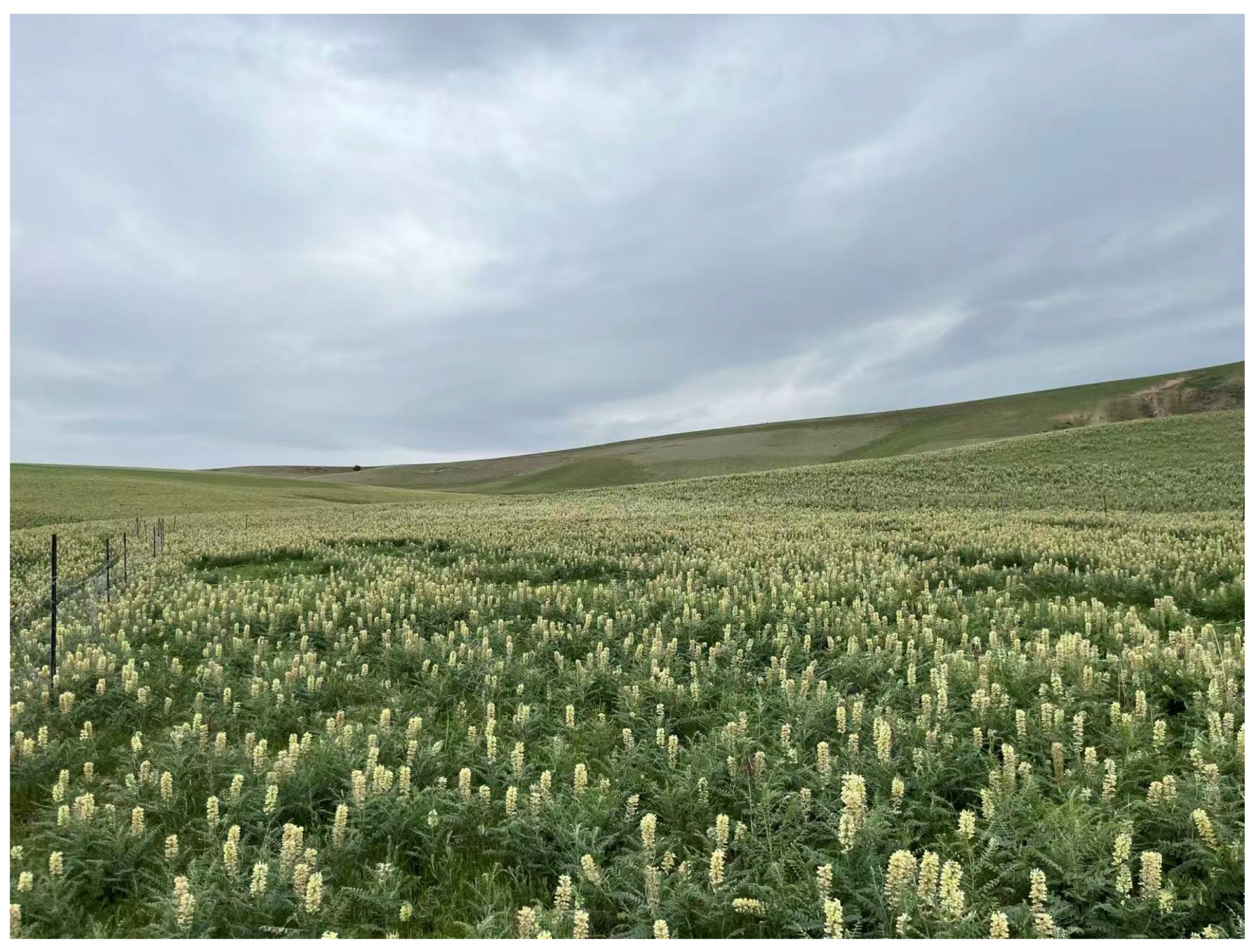
Figure 1. Sophora alopecuroides-invaded grassland.
Agronomy 16 00332 g001
Figure 2. Location of the study area.
Agronomy 16 00332 g002
Figure 3. Effects of nitrogen addition and mowing on vegetation characteristics of Sophora alopecuroides-type degraded grassland. (a) Total aboveground biomass of the plant community; (b) Mean plant height of the plant community; (c) Plant community cover; (d) Shannon–Wiener diversity index (H′); (e) Aboveground biomass of S. alopecuroides; (f) Plant height of S. alopecuroides; (g) Cover of S. alopecuroides; (h) Density of S. alopecuroides. In the figure, different uppercase letters indicate significant differences in plant vegetation characteristics among different treatments in the same year (p < 0.05); different lowercase letters indicate significant differences in plant vegetation characteristics among different years under the same treatment (p < 0.05), while the same letters indicate no significant difference (p > 0.05). N: Nitrogen addition; M: Mowing; NM: Interaction of nitrogen addition and mowing; CK: Control treatment.
Agronomy 16 00332 g003
Figure 4. Study on the effects of nitrogen addition and mowing on soil physical and chemical properties: (a) Soil organic carbon (SOC); (b) Soil total nitrogen (TN); (c) Soil total phosphorus (TP); (d) Soil nitrate nitrogen (NO3–N); (e) Soil ammonium nitrogen (NH4+–N); (f) Soil available phosphorus (AP); (g) Soil pH; (h) Soil electrical conductivity (EC). In the figure, different uppercase letters indicate significant differences in soil physical and chemical properties among different treatments in the same year (p < 0.05); different lowercase letters indicate significant differences in soil physical and chemical properties among different years under the same treatment (p < 0.05), while the same letters indicate no significant difference (p > 0.05). N: Nitrogen addition; M: Mowing; NM: nitrogen addition and mowing; CK: control treatment.
Agronomy 16 00332 g004
Figure 5. Effects of nitrogen addition and mowing on soil and root C:N:P stoichiometric ratios in 2024 and 2025: (a) Soil C:N ratio; (b) Soil C:P ratio; (c) Soil N:P ratio; (d) Root C:N ratio; (e) Root C:P ratio; (f) Root N:P ratio. Bars represent mean ± standard error (SE). Different uppercase letters indicate significant differences among treatments within the same year (p < 0.05).
Agronomy 16 00332 g005
Figure 6. Linear fitting between stoichiometric ratios of carbon, nitrogen and phosphorus in roots of Sophora alopecuroides and those in soil. Relationships between soil C:N and root C:N, C:P, and N:P (ac); between soil C:P and root C:N, C:P, and N:P (df); and between soil N:P and root C:N, C:P, and N:P (gi).
Agronomy 16 00332 g006
Figure 7. Redundancy Analysis (RDA) of Vegetation Community Characteristics, Soil Physicochemical Properties, and C:N:P Stoichiometric Ratios in S. alopecuroides Roots and Soils(Blue arrows represent root-related variables, while red arrows represent soil-related variables).
Agronomy 16 00332 g007
Figure 8. Pearson Correlation Analysis of Vegetation Community Characteristics, Soil Physicochemical Properties, and C:N:P Stoichiometric Ratios in S. alopecuroides Roots and Soils. TB: Total biomass; CP: coverage of plants; APH: Average plant height; H: Shannon–Wiener diversity index; BS: Biomass of S. alopecuroides; CS: Coverage of S. alopecuroides; HS: Height of S. alopecuroides; DS: Density of S. alopecuroides; SOC: Soil organic carbon; TN: Soil total nitrogen; TP: Soil total phosphorus; NO3--N:Nitrate nitrogen; NH4+-N: Ammonium Nitrogen; AP: Soil Available Phosphorus; EC: Electrical conductivity; RC: Root of S. alopecuroides carbon; RN: Root of S. alopecuroides total nitrogen; RP: Root of S. alopecuroides total phosphorus; SC:N: Soil C:N; SC:P: Soil C:P; SN:P: Soil N:P; RC:N: Root of S. alopecuroides C:N; RC:P: Root of S. alopecuroides C:P; RN:P: Root of S. alopecuroides N:P. * indicates a significant correlation at p < 0.05; ** indicates a significant correlation at p < 0.01; *** indicates an extremely significant correlation at p < 0.001.
Agronomy 16 00332 g008
Figure 9. Structural equation models (SEMs) illustrating the pathways through which (a) nitrogen addition (N), (b) mowing (M), and (c) their combined treatment (NM)regulate soil and root stoichiometric characteristics and total biomass of S. alopecuroides–dominated grasslands. Solid arrows indicate significant pathways, while dashed arrows indicate non-significant pathways. Red arrows represent positive correlations, and blue arrows represent negative correlations; the thickness of the arrows is proportional to the strength of the correlations. The values labeled next to the arrows are standardized path coefficients, and the R2 values labeled next to the response variables in the model represent the proportion of explained variance. * p < 0.05; ** p < 0.01; *** p < 0.001.
Agronomy 16 00332 g009
Table 1. Two-way analysis of variance (two-way ANOVA) was used to examine the effects of nitrogen addition, mowing treatment, year, and their interaction effects on vegetation characteristics, vegetation characteristics of Sophora alopecuroides, soil organic carbon (SOC), soil total nitrogen (TN), soil total phosphorus (TP), soil nitrate nitrogen (NO3-N), soil ammonium nitrogen (NH4+-N), available phosphorus (AP), pH, and electrical conductivity (EC). * p < 0.05; ** p < 0.01; *** p < 0.001.
IndicesTreatmentYearTreatment × Year
F-valuep-valueF-valuep-valueF-valuep-value
TB21.707<0.01 **4.3830.018 *1.1630.342
PC4.1610.01115.216<0.001 **1.430.223
PH2.3110.0883.1570.0514.120.002 **
H3.8070.016 *5.8570.005 **1.2720.288
DS1.2920.2841.3470.271.8660.106
HS67.949<0.001 ***6.2440.004 **0.790.582
BS25.591<0.001 ***3.6910.0322.2420.055
CS4.730.006 **0.1810.8351.0450.409
SOC1.8790.14640.823<0.001 ***0.3540.904
TN0.9390.429260.402<0.001 ***1.0660.396
TP0.2380.86917.473<0.001 ***2.8120.02 *
NO3-N114.947<0.001 ***215.808<0.001 ***41.473<0.001 ***
NH4+-N3.120.035 *12.176<0.001 ***3.2310.01 *
AP0.3450.79364.299<0.001 ***3.420.007 **
pH3.5960.02 *211.558<0.001 ***5.259<0.001 ***
EC35.326<0.001 ***134.721<0.001 ***17.805<0.001 ***
Table 2. The effects of nitrogen addition and cutting on plant carbon, nitrogen, and phosphorus. Different uppercase letters in the figure indicate significant differences between treatments for the carbon, nitrogen, and phosphorus content of the root of S. alopecuroides (p < 0.05), while the same letter indicates no significant difference (p > 0.05). N: Nitrogen addition; M: Mowing; NM: nitrogen addition and mowing; CK: control treatment.
TreatmentsTotal Carbon of S. alopecuroides RootsTotal Nitrogen of S. alopecuroides RootsTotal Phosphorus of S. alopecuroides Roots
202420252024202520242025
N396.5 ± 14.68 A403.48 ± 9.25 B7.02 ± 0.52 B20.56 ± 0.78 B0.81 ± 0.04 B1.04 ± 0.07 AB
M396.12 ± 9.79 A438.51 ± 6.84 A7.68 ± 0.34 AB19.49 ± 0.29 BC0.97 ± 0.05 A1.17 ± 0.1 A
NM400.06 ± 10.71 A428.7 ± 4.91 A8.67 ± 0.51 A23.54 ± 1.04 A0.86 ± 0.02 B1 ± 0.06 AB
CK411.45 ± 13.14 A384.3 ± 9.68 B7.24 ± 0.15 B17.94 ± 0.36 C0.83 ± 0.01 B0.89 ± 0.05 B
Table 3. Homeostasis analysis of carbon, nitrogen and phosphorus contents and their stoichiometric ratios in soil and roots of Sophora alopecuroides under different treatments.
TreatmentVariableHR2pHomeostatic Level
xy
NSoil C:NRoot C:N1.3420.939 <0.0001Weak Sensitivity
Soil C:PRoot C:P1.7510.602 0.008Weak Sensitivity
Soil N:PRoot N:P1.1580.966 <0.0001Sensitive
Soil SOCRoot C−24.9250.032 0.619Strictly homeostatic
Soil TNRoot N0.8830.912 <0.0001Sensitive
Soil TPRoot P−0.7660.180 0.221Strictly homeostatic
MSoil C:NRoot C:N1.6370.988 <0.0001Weak Sensitivity
Soil C:PRoot C:P6.1450.058 0.504Strictly homeostatic
Soil N:PRoot N:P1.2270.846 0.0002Sensitive
Soil SOCRoot C−5.1110.530 0.017Sensitive
Soil TNRoot N0.9790.972 <0.0001Sensitive
Soil TPRoot P–0.3860.307 0.097Sensitive
NMSoil C:NRoot C:N1.4620.923 <0.0001Weak Sensitivity
Soil C:PRoot C:P3.9280.215 0.177Strictly homeostatic
Soil N:PRoot N:P1.1370.928 <0.0001Sensitive
Soil SOCRoot C−8.0770.267 0.126Strictly homeostatic
Soil TNRoot N0.9180.952 <0.0001Sensitive
Soil TPRoot P−0.6300.260 0.132Strictly homeostatic
Table 4. The explanatory power of soil physicochemical properties and soil carbon, nitrogen, and phosphorus stoichiometry on vegetation community characteristics and the carbon, nitrogen, and roots phosphorus stoichiometric ratios of S. alopecuroides.
IndexExplains %Contribution %Pseudo-Fp
Soil C:P23.744.611.80.002
pH6.9133.7>0.05
NO3−N2.95.41.60.204
EC2.141.20.282
NH4+−N1.630.9>0.05
TP1.42.70.80.424
SOC10.319.46.50.006
Soil C:N1.42.60.90.38
Soil N:P1.120.7>0.05
AP1.42.60.80.416
TN0.40.70.20.742
Disclaimer/Publisher’s Note: The statements, opinions and data contained in all publications are solely those of the individual author(s) and contributor(s) and not of MDPI and/or the editor(s). MDPI and/or the editor(s) disclaim responsibility for any injury to people or property resulting from any ideas, methods, instructions or products referred to in the content.