Article

Rainfall as the Dominant Trigger for Pulse Emissions During Hotspot Periods of N2O Emissions in Red Soil Sloping Farmland


1
College of Forestry, Jiangxi Agricultural University, Nanchang 330029, China
2
Jiangxi Key Laboratory of Watershed Soil and Water Conservation, Nanchang 330029, China
3
Jiangxi Academy of Water Science and Engineering, Nanchang 330029, China
*
Author to whom correspondence should be addressed.
Agronomy 2026, 16(3), 330; https://doi.org/10.3390/agronomy16030330
Submission received: 22 December 2025 / Revised: 16 January 2026 / Accepted: 26 January 2026 / Published: 28 January 2026
(This article belongs to the Section Farming Sustainability)

Abstract

Farmland N2O emissions exhibit significant fluctuations in subtropical regions due to notable seasonal rainfall and temperature variations. The dominant factors influencing N2O emissions in red-soil sloping farmland, which is widely distributed and actively cultivated in the region, remain uncertain. To investigate N2O emission characteristics of red-soil sloping farmland and responses to meteorological and soil environmental variables and tillage practices, a typical planting system (summer peanut-winter rapeseed rotation system) in southern China was selected. Two common soil micro-environments (conventional tillage, CT, n = 6; and conventional tillage with straw mulching, MT, n = 4) were established within this system, and in situ N2O emissions were monitored over two consecutive years using the static chamber–gas chromatography method. The N2O emission peaks across various growing seasons occurred primarily within 1 to 16 days after fertilization. The N2O emission hotspot periods were observed during the first month following fertilization, accounting for 74.13–91.01% of the total emissions during each growing season. Significant interannual variations in seasonal N2O cumulative emissions were observed, whereas no significant difference in cumulative N2O emissions was observed between MT and CT. Changes in weather and soil environment jointly drive the dynamics of N2O emissions from red soil sloping farmland. Rapeseed-season N2O emissions were driven mainly by rainfall and air temperature, whereas peanut-season N2O emissions were also influenced by soil temperature and NO3-N content at 0–10 cm depths. These findings provide a sound basis for developing eco-agricultural mitigation pathways in subtropical red-soil hilly regions.

1. Introduction

Anthropogenic greenhouse gas emissions have caused a significant increase in the frequency and intensity of extreme weather events, presenting a severe challenge to the sustainable use of agricultural land and impacting human survival [1,2,3,4]. N2O, which is a primary greenhouse gas with a 100-year global warming potential (GWP100) that is 273 times greater than that of carbon dioxide [5], is now the dominant ozone-depleting substance emitted globally [6]. Agricultural activities account for approximately half of the total anthropogenic N2O emissions [7]. Subtropical agroecosystems exhibit notable seasonal precipitation variability (60–70% of rainfall occurs in summer), with mean annual temperatures ranging from 14–24 °C [8]. These edaphic–climatic conditions, combined with nitrogen application rates exceeding 200 kg ha−1 yr−1 in intensive cropping systems, drive N2O emission factors that are 30–60% higher than the global average [7,9]. Therefore, investigating the characteristics of N2O emissions in subtropical croplands is critical to advancing agricultural sustainability and maintaining grain security.
N2O emissions primarily originate from microbial nitrification and incomplete denitrification [10], driven principally by nitrogen fertilization [11], soil wet-dry cycles [12,13], and organic carbon availability [14,15]. Additionally, the N2O emission potential is collectively regulated by agronomic practices (such as tillage and mulching) [16,17] and edaphic factors (temperature, humidity, etc.) [18,19]. Denitrification is the dominant pathway of N2O emissions in subtropical agricultural soils, contributing more than 65% to the total N2O fluxes following nitrogen fertilizer application [20,21,22]. This anaerobic process, which is driven primarily by heterotrophic microbes, sequentially reduces NO3 to N2O and dinitrogen (N2). Red soils, as one of the predominant soil types in subtropical regions, exhibit a clay-rich texture that facilitates the rapid development of suboxic conditions after rainfall, thereby creating anaerobic microsites conducive to denitrification processes [22,23]. Furthermore, their inherent acidity causes the selective inhibition of nitrous oxide reductase (nosZ) activity through proton-mediated enzyme deactivation, thus disrupting the final step of the denitrification cascade and promoting N2O accumulation [24,25]. The enhanced greenhouse effect has intensified the frequency and intensity of global extreme weather events, while such climatic anomalies drive accelerated soil desertification, exacerbated soil erosion, and persistent degradation of ecosystem services. China, a region that has experienced significant climate change impacts [26], faces agricultural challenges in which projected increases in extreme precipitation events may substantially alter nitrogen loss processes in cultivation systems [27,28]. Such extreme precipitation events can trigger rapid transitions in soil moisture regimes, thereby increasing the water-filled pore space (WFPS) beyond 70% and creating transient anaerobic microsites [10]. Crucially, extreme precipitation induces rapid enzymatic activation of nitrate reductases while suppressing nosZ through acidic soil protonation, resulting in transient N2O flux peaks that exceed baseline emissions.
Notably, integrated knowledge of the characteristics of N2O emission and the related regulatory mechanisms in red-soil croplands under scenarios with frequent extreme precipitation is critical for developing adaptive strategies to sustain agricultural resilience, prevent land degradation, and amidst intensifying extreme weather events.
As a vital agricultural resource in hilly and mountainous regions, sloping farmlands are also the primary source of soil erosion. In recent years, the frequent occurrence of extreme rainfall has not only intensified soil erosion but also significantly impacted nitrogen balance by altering soil moisture and nutrient migration processes, further threatening regional ecological security and land sustainability, particularly the maintenance of soil fertility and agricultural productivity. In subtropical regions, surface soils in sloping farmlands exhibit lower moisture stability than those in flat farmlands do [29], whereas fertilization-induced nutrient accumulation in topsoil increases vulnerability to runoff-driven nitrogen losses via increases in raindrop detachment and the transport capacity [30]. Sloping tillage combined plus straw mulching is an effective soil and water conservation practice in sloping farmlands [30,31,32]. In addition to mitigating soil erosion caused by raindrop impact and surface runoff, this tillage practice influences N2O emissions through multiple pathways, such as providing accessible carbon/nitrogen sources and modifying soil hydrothermal conditions [16,33,34]. Long-term straw mulching and fertilizer application significantly influence nirS-type denitrifying microbial communities, with biological responses modulated by the soil NO3 content, total nitrogen level, and organic matter composition [35]. Yao et al. [36] revealed that in the summer maize-winter wheat rotation system in the North China Plain, straw mulching increased crop yields while concurrently reducing N2O emissions by approximately 31%. However, contradictory findings exist, with some studies revealing nonsignificant emission reductions [16,37] or even increased N2O fluxes following straw application [38]. Intra-annual climatic variability drives the notable divergence in the fluctuation characteristics of N2O emissions across distinct growing seasons. The temperature increase in summer enhances soil microbial activity, thereby intensifying the coupled processes of nitrification and denitrification [22]. Elevated soil moisture levels during rainy seasons create suboxic microenvironments that promote denitrification activity, consequently resulting in orders-of-magnitude increases in N2O emission fluxes from farmlands [39]. Moreover, distinct rotational crops adopt varied fertilization regimes, and crops modulate farmland N2O emissions throughout the annual cultivation cycle via their regulatory effects on soil carbon/nitrogen availability, pH gradients, structural properties, and microbiome compositions in agroecosystems [40]. Rapeseed and peanut are globally significant oilseed crops, collectively contributing approximately 30% of edible plant oil production [41]. In subtropical regions, the summer peanut-winter rapeseed rotation system is widely adopted. Therefore, elucidating the response of N2O emissions to soil microenvironment changes induced by straw mulching and characterizing their intra-annual planting seasonal variations (summer peanut-winter rapeseed system) are critical for evaluating the economic and ecological impacts of sloping farmland management strategies.
However, investigations into the synergistic interactions of weather perturbations and soil environmental changes in governing N2O emission dynamics within subtropical red-soil sloping agroecosystems are scarce. To bridge this knowledge gap, we carried out an approximately two-year in situ monitoring experiment in a typical subtropical red-soil sloping farmland area with a summer peanut-winter rapeseed rotation system in southern China, aiming to (i) investigate N2O emission characteristics and hotspot periods, (ii) examine whether meteorological factors (rainfall and air temperature) and soil environmental factors (WFPS, soil NO3 and soil NH4+ concentrations) significantly influence N2O emissions, and (iii) identify key driving factors and their interrelationships during N2O emission hotspot periods.

2. Materials and Methods

2.1. Study Site and Experimental Design

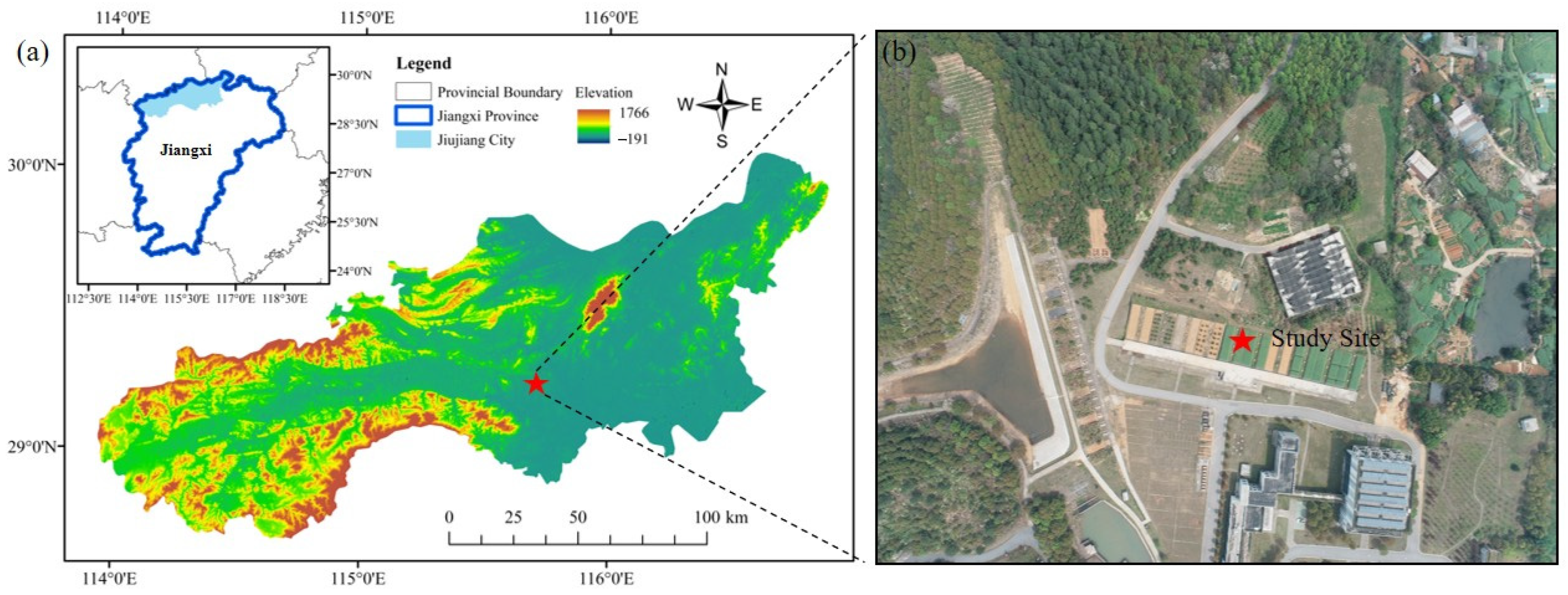
A two-year field experiment was conducted in sloped farmland within the Jiangxi Ecological Park of Soil and Water Conservation (29°16′ N, 115°42′ E) in southern China (Figure 1) from September 2019 to August 2021. The regional climate is subtropical with a monsoon-dominated pattern, and the mean annual precipitation and average annual temperature from 2001 to 2021 were 1443.1 mm and 16.7 °C, respectively. The study site is located in the basin of Poyang Lake, which is the largest freshwater lake in China. Red-soil sloping farmlands, with main crops such as peanuts and rapeseed, are widely distributed, and a summer peanut-winter rapeseed rotation system is usually adopted. This area is the central area of red clay soil produced through the weathering of Quaternary sediments. The tested soil (31.28% clay, 53.67% silt, and 15.05% sand) was classified as silty clay loam (US classification), and its chemical properties (determined in 2019) are detailed in Table 1.
Two typical cropland soil micro-environments were established, corresponding to the following treatments: conventional tillage (CT, n = 6) and conventional tillage plus straw mulching (MT, n = 4). These micro-environments were hosted in multiple experimental plots: the CT micro-environment was replicated across three plots, and the MT micro-environment across two plots. The projected size of each plot is 100 m2 (20 m long and 5 m wide), and the plot was located in sloping farmland with an 8° incline. In accordance with local farming practices, the CT treatment involves soil ploughing along the slope to a depth of approximately 20 cm, with no ridging. With conventional tilling, 1.0 kg/m2 straw is applied after peanut emergence each year in the MT plots. The crop rotations in the study area comprise winter rapeseed (Brassica napus) planted from September to April of the following year, followed by summer peanut (Arachis hypogaea L.) cultivation from May to August. The amount of fertilizer applied was based on the fertilization habits of local farmers and the nutrient requirements of peanuts and rapeseed. Rapeseed was sown on 20 September 2019, with basal fertilizer applied at a rate of 104.70 kg N hm−2. Moreover, top-dressing fertilizer was applied on 18 November 2019, at a rate of 34.50 kg N hm−2, and the crop was harvested on 28 April 2020. Affected by rainfall, rapeseed was transplanted in 2020, and basal fertilizer was applied on 22 October 2020. In addition, top-dressing fertilizer was applied on 29 December, and the crop was harvested on 1 May 2021. The fertilizer application rate was consistent during both winter rapeseed growing seasons. In 2020, peanuts were sown on 5 May, with basal fertilizer applied at a rate of 60.00 kg N hm−2. Moreover, top-dressing fertilizer was applied on 2 June at a rate of 34.50 kg N hm−2, and the crop was harvested on 16 August 2020. In 2021, peanuts were sown, and basal fertilizer was applied on 13 May. In addition, top-dressing fertilizer was applied on 11 June, and the crop was harvested on 23 August 2021. The fertilizer application rate was consistent during both summer peanut growing seasons.

2.2. Meteorological Data and Soil Sampling

Meteorological data for the experimental period (September 2019 to August 2021) were provided by a meteorological station in the park. The meteorological station is located in the center of a flat, open grassland, situated away from factories and other human settlements, and within 1 km of the sampling plots. Its measurements therefore provide representative data of the micro-topographic conditions at the sampling sites. The soil temperature, WFPS, soil NO3 concentration, and soil NH4+ concentration at a depth of 10 cm were synchronously monitored during each N2O sampling step. The soil temperature and volumetric soil water content (SWC) were measured via a TDR150 portable soil moisture meter (Aurora, IL, USA) at three points around each sampling site. Soil temperature and volumetric water content (SWC) were measured at three equidistant points around each sampling site to account for microscale spatial variability. Two sampling points were established in each plot: one on the upper slope and one on the lower slope. Data were aggregated by calculating the mean value for each parameter at each site. Spatial variability was quantified using the coefficient of variation (CV = SD/mean × 100%) and considered negligible (mean CV < 20%) across all sites. The WFPS was calculated from the SWC by the following equation [42]:
WFPS ( % ) = VWC ( % ) TSP ( % ) × 100
where TPS (%) is calculated as 1 − (soil bulk density/2.65), with 2.65 g cm−3 representing the commonly accepted particle density of soil minerals.
Fresh soil samples were extracted with 1 mol/L potassium chloride (KCl) solution at a soil-to-water ratio of 1:5. After 1 h of extraction, the soil suspension was centrifuged, and the supernatant was collected for determination of NO3 and NH4+ content using the Skalar continuous flow analyzer (Breda, The Netherlands). To avoid potential temperature effects on soil ammonium nitrogen concentration during extraction, the extraction process was consistently conducted at 20 ± 2 °C.

2.3. N2O Sampling

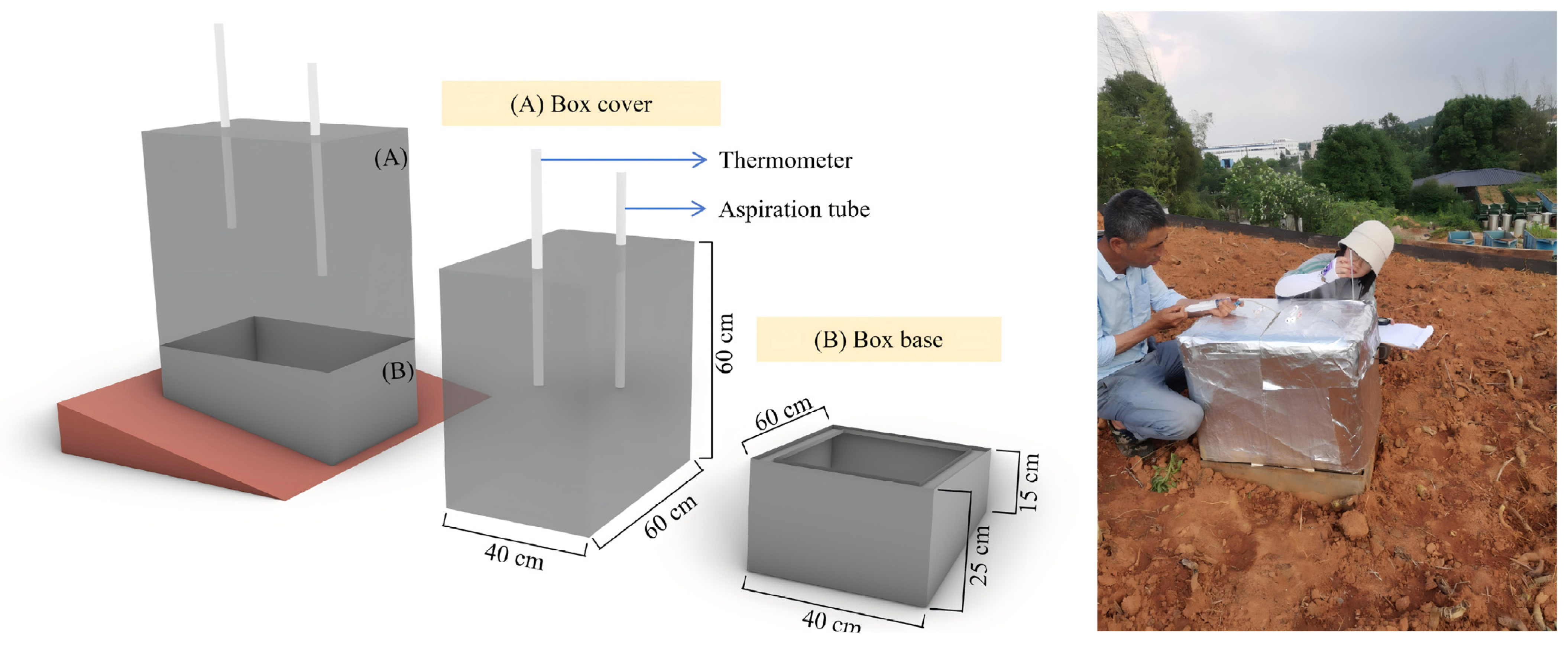
N2O emissions were determined using a static chamber-gas chromatography instrument [43] over a 2-year period from September 2019 to August 2021. The static chamber (Figure 2) was made of stainless steel with surface openings in the lid for connecting a thermometer and an extraction tube. Before crop planting, the box base was placed on the slope with its opening installed horizontally (level), independent of the ground slope. There was a small groove (1 cm deep and 1 cm wide) on the edge of the box base, where water was injected (0.5 cm deep) during sampling to achieve isolation from the atmosphere. During each sampling step, a low-power fan was placed in the chamber base, and the lid on top was inverted to start extraction. N2O sampling was performed between 8 and 10 am. Samples were collected every 20 min, with 4 consecutive sampling steps in each chamber. The temperature in the sampling chamber was recorded simultaneously. In 2019, N2O samples were analysed at Huazhong Agricultural University using an Agilent GC7890A gas chromatograph (Santa Clara, CA, USA). Owing to the impact of the COVID-19 pandemic in 2020 and 2021, samples were analysed using a Shimadzu GC-2010PLUS gas chromatograph (Kyoto, Japan) at the Jiangxi Academy of Agricultural Sciences. N2O collection started immediately after fertilization, with continuous sampling and monitoring for 10 days. After that, sampling was conducted every other day for two weeks. Following this period, the frequency was adjusted to once every two days for another two weeks. Subsequently, sampling frequency was adjusted on the basis of the results, thereby ensuring that sampling occurred at least once a week.

2.4. Statistical Analysis

Statistical analyses and graphical presentations were conducted using R statistical software version 4.3.3 [44] and Origin Pro 2018, respectively. N2O fluxes were calculated via a linear fitting approach. The imputeTS package [45] was employed to calculate missing daily N2O flux values between measurements thorough linear interpolation. Based on the combined analysis of the moving average method and the percentile threshold method, the temporal variation trend of N2O emission flux was examined. The analysis utilized the R package zoo version 1.8-15 for moving average calculations with a window size of 5, while the 75th percentile was adopted as the threshold to identify hotspot periods during which emissions were significantly higher than normal levels. The cumulative N2O emissions were then obtained by summing the daily N2O fluxes over each growing period. Two-way analysis of variance (ANOVA) was performed to determine the significance of the effects of the year and tillage practice on the total amount of N2O emissions. The relationships between the N2O flux and multiple environmental variables (rainfall, air temperature, WFPS, soil temperature, soil NO3 concentration, and soil NH4+ concentration) were investigated via random forest (RF) analysis, generalized additive models (GAMs) and hybrid linear structural equation models (HLSEMs). These analyses were performed using the car, randomForest, mgcv and PiecewiseSEM packages, respectively, in R. RF prioritized and screened variables, GAMs modeled nonlinear trends, and HLSEMs inferred causal structures. Informed by the biogeochemical mechanisms of N2O emissions [46,47], we specified a structural model to test specific pathways. The model specifies that both meteorological and soil environmental factors can have direct effects on N2O, while also exploring the indirect, mediating role of soil variables in the relationship between meteorological conditions and N2O emissions.

3. Results

3.1. Meteorological and Soil Physical Environmental Variables

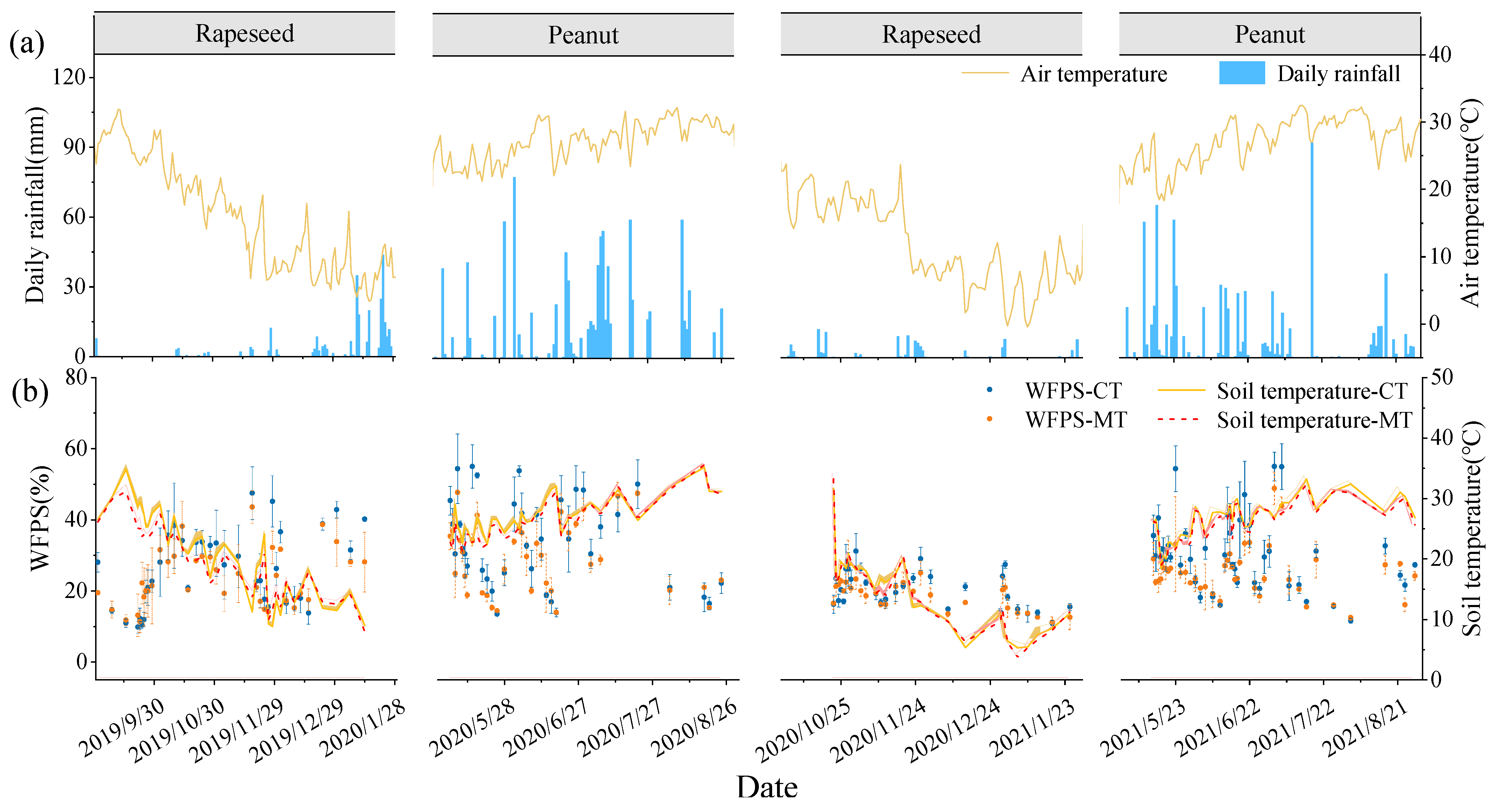
The dynamics of the daily rainfall, air temperature, WFPS and soil temperature over the crop growing season are shown in Figure 3. During the 2019–2020 and 2020–2021 rapeseed growing seasons, the total rainfall amounts (Figure 3a) were 39.50 and 63.70 mm, respectively. Moreover, the overall air temperature showed a fluctuating downward trend, with fluctuation ranges of 6.35 °C to 28.70 °C and −0.45 °C to 23.75 °C, respectively. The amount of rainfall was 928.50 mm, accounting for 50.16% of the annual rainfall, with an average air temperature of 27.03 °C during the 2020 peanut growing season. During the 2021 peanut growing season, the amount of rainfall was 664.30 mm, accounting for 47.41% of the annual rainfall, with an average air temperature of 27.62 °C.
Under the CT treatment, the WFPS values (Figure 3b) at the 10-cm depth ranged from 9.86% to 47.50% during the 2019–2020 rapeseed growing season and from 11.02% to 31.19% during the 2020–2021 rapeseed growing season, with average soil temperatures of 20.56 °C and 14.20 °C, respectively. The WFPS values ranged from 13.52% to 55.02% during the 2020 peanut growing season and from 11.66% to 55.02% during the 2021 peanut growing season, with average soil temperatures of 20.56 °C and 26.79 °C, respectively. Under the MT treatment, the WFPS values varied between 11.42% and 43.57% during the 2019–2020 rapeseed growing season and ranged from 11.24% to 27.47% during the 2020–2021 rapeseed growing season, with average soil temperatures of 19.20 °C and 14.08 °C, respectively. The WFPS values ranged from 14.00% to 47.72% during the 2020 peanut growing season and from 12.49% to 48.88% during the 2021 peanut growing season, with average soil temperatures of 25.71 °C and 26.09 °C, respectively.

3.2. Daily and Cumulative N2O Emissions

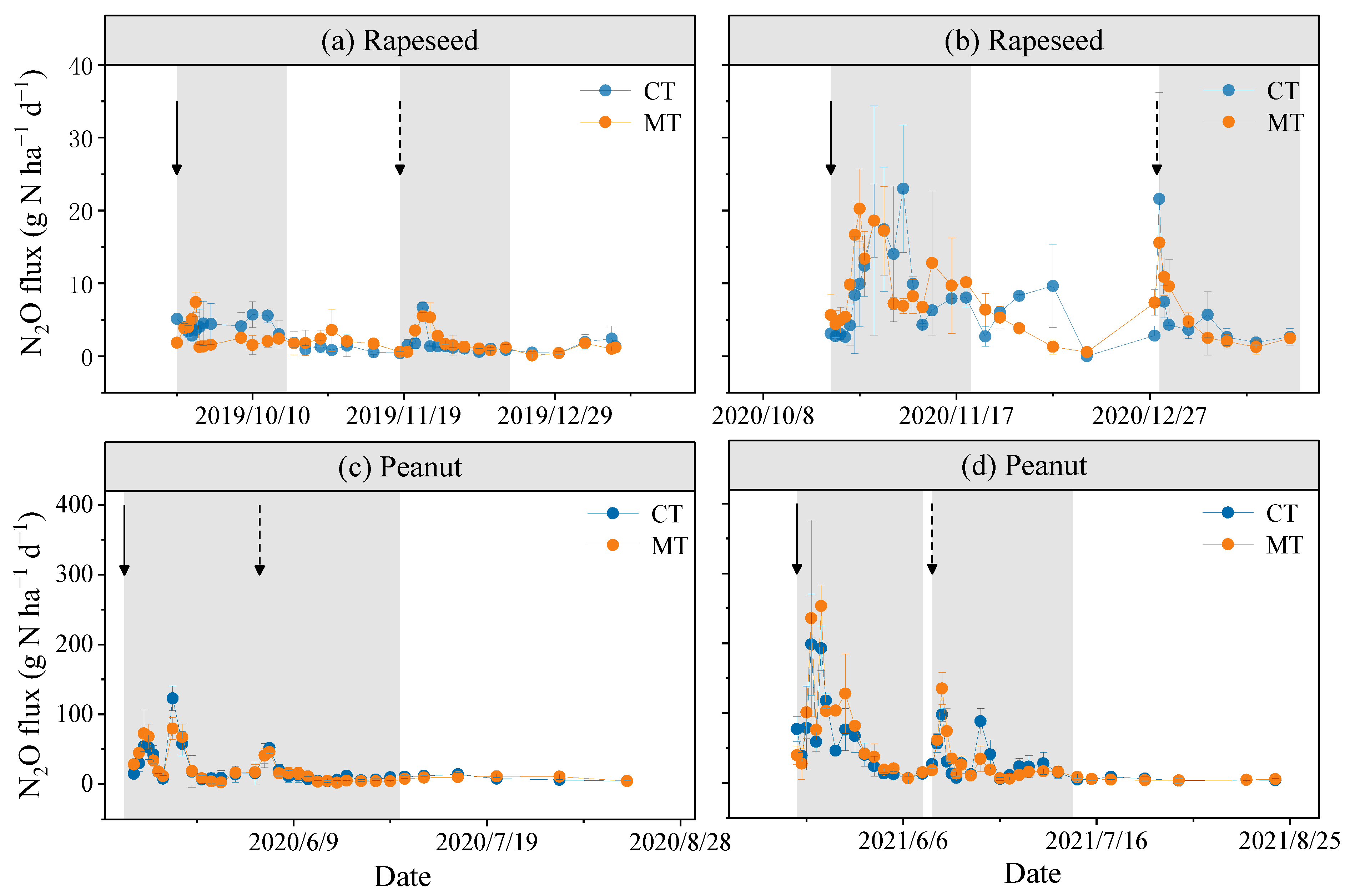
Across the whole experimental observations, the trends in N2O emissions under the different treatments were generally consistent. N2O emissions were mainly concentrated during the first 1–30 days after fertilization. Under the CT treatment, the N2O emission fluxes ranged from 0.45 to 7.88 g N ha−1 d−1 during the 2019–2020 rapeseed growing season and 1.90 to 29.00 g N ha−1 d−1 during the 2020–2021 rapeseed growing season (Figure 4). During the peanut growing season, the N2O emission fluxes ranged from 1.39~122.95 g N ha−1 d−1 in 2020 and from 3.07~198.30 g N ha−1 d−1 in 2021. Under the MT treatment, the N2O emission fluxes ranged from 0.61 to 6.93 g N ha−1 d−1 during the 2019–2020 rapeseed growing season and from 0.29 to 20.27 g N ha−1 d−1 during the 2020–2021 rapeseed growing season. During the peanut growing season, the N2O emission fluxes ranged from 1.21~79.62 g N ha−1 d−1 in 2020 and from 0.29~253.30 g N ha−1 d−1 in 2021.
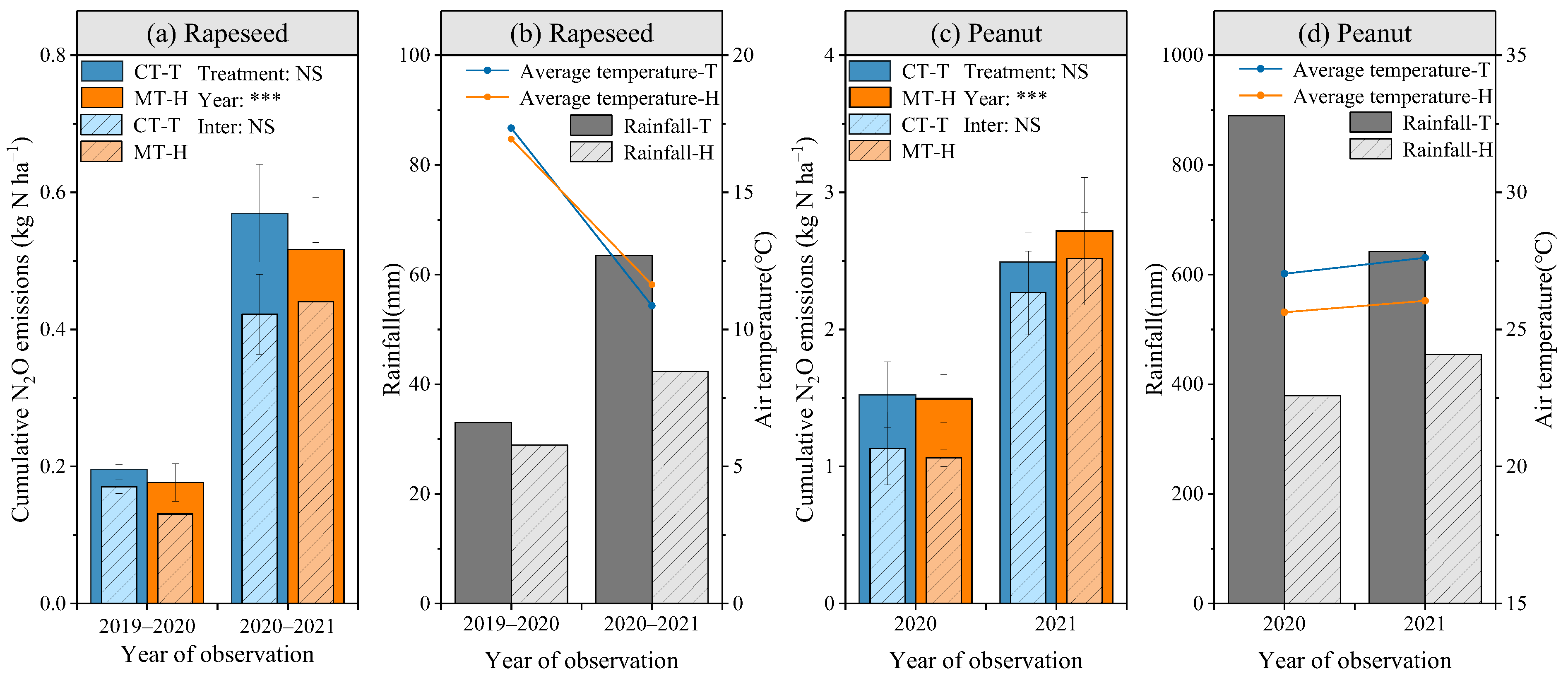
The cumulative N2O emissions did not significantly differ between the two tillage practices during the summer peanut-winter rapeseed cropping season (Figure 5). The cumulative N2O emissions during the 2019–2020 rapeseed growing season ranged from 0.18 ± 0.03 kg ha−1 to 0.20 ± 0.01 kg ha−1, which are significantly lower than those during the 2020–2021 rapeseed growing season (0.52 ± 0.08 kg ha−1 to 0.57 ± 0.07 kg ha−1). During the 2019–2020 rapeseed growing season, the rainfall amount and average temperature were 33.0 mm and 17.34 °C, respectively. In contrast, during the 2020–2021 rapeseed growing season, the rainfall amount and average temperature were 63.5 mm and 10.86 °C, respectively. The cumulative N2O emissions during the 2020 peanut growing season ranged from 1.50 ± 0.17 kg ha−1 to 1.52 ± 0.24 kg ha−1, which are significantly lower than those during the 2021 peanut growing season (2.49 ± 0.22 kg ha−1 to 2.72 ± 0.39 kg ha−1). The rainfall amount and average temperature during the peanut growing season were 889.9 mm and 27.03 °C, respectively, in 2020 and 642.2 mm and 27.62 °C, respectively, in 2021. The hotspot period for N2O emissions in the red-soil sloping farmland, accounting for 74.13% to 91.01% of the total emissions during each rapeseed and peanut cropping season.

3.3. Driving Factors of N2O Emissions During the Emission Hotspot Periods

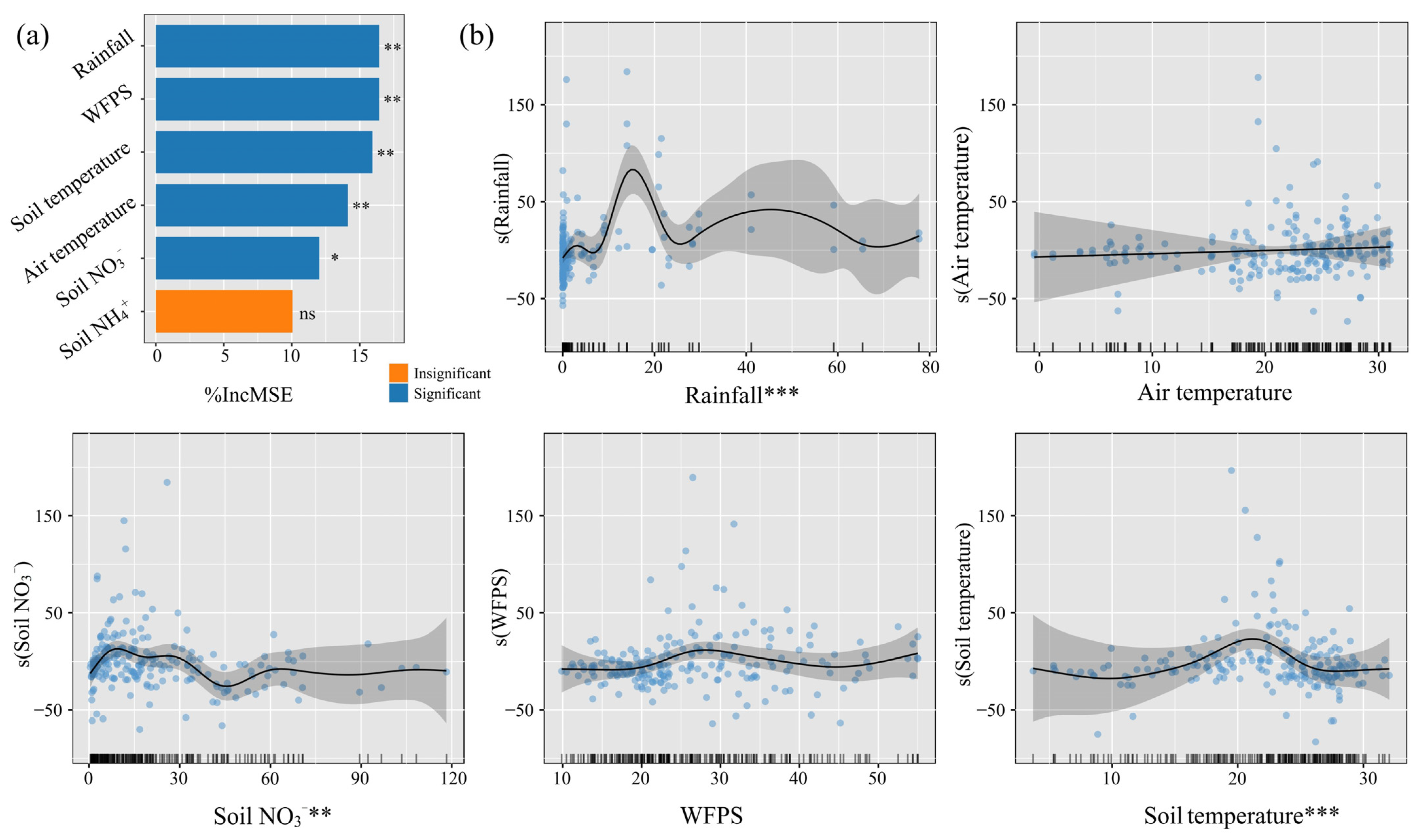
The RF modelling analysis results (Figure 6a) revealed that rainfall, soil WFPS, soil temperature, air temperature and soil NO3 concentration were significant predictors of the N2O flux during the N2O emission hotspot period. The top five predictors of the RF model were nonlinearly fitted via GAMs (Figure 6b). Rainfall, soil temperature and soil NO3 concentration were also notable predictors of N2O in the water column in our GAMs. When rainfall exceeded 8.70 mm, the N2O emission flux increased with increasing rainfall, exhibiting a narrow peak at 15 mm and a broad peak at 46 mm. Within the soil temperature range of 11.87 −24.83 °C, a positive correlation was identified between the soil temperature and N2O emissions, with the maximum emission increase occurring at 21.83 °C. During the observation period, the relationship between the soil NO3 concentration and N2O flux demonstrated a dynamic pattern characterized by initial promotion followed by suppression. Specifically, within the soil NO3 concentration range of 4.19 to 33.14 mg kg−1, a positive correlation with N2O emissions was observed.
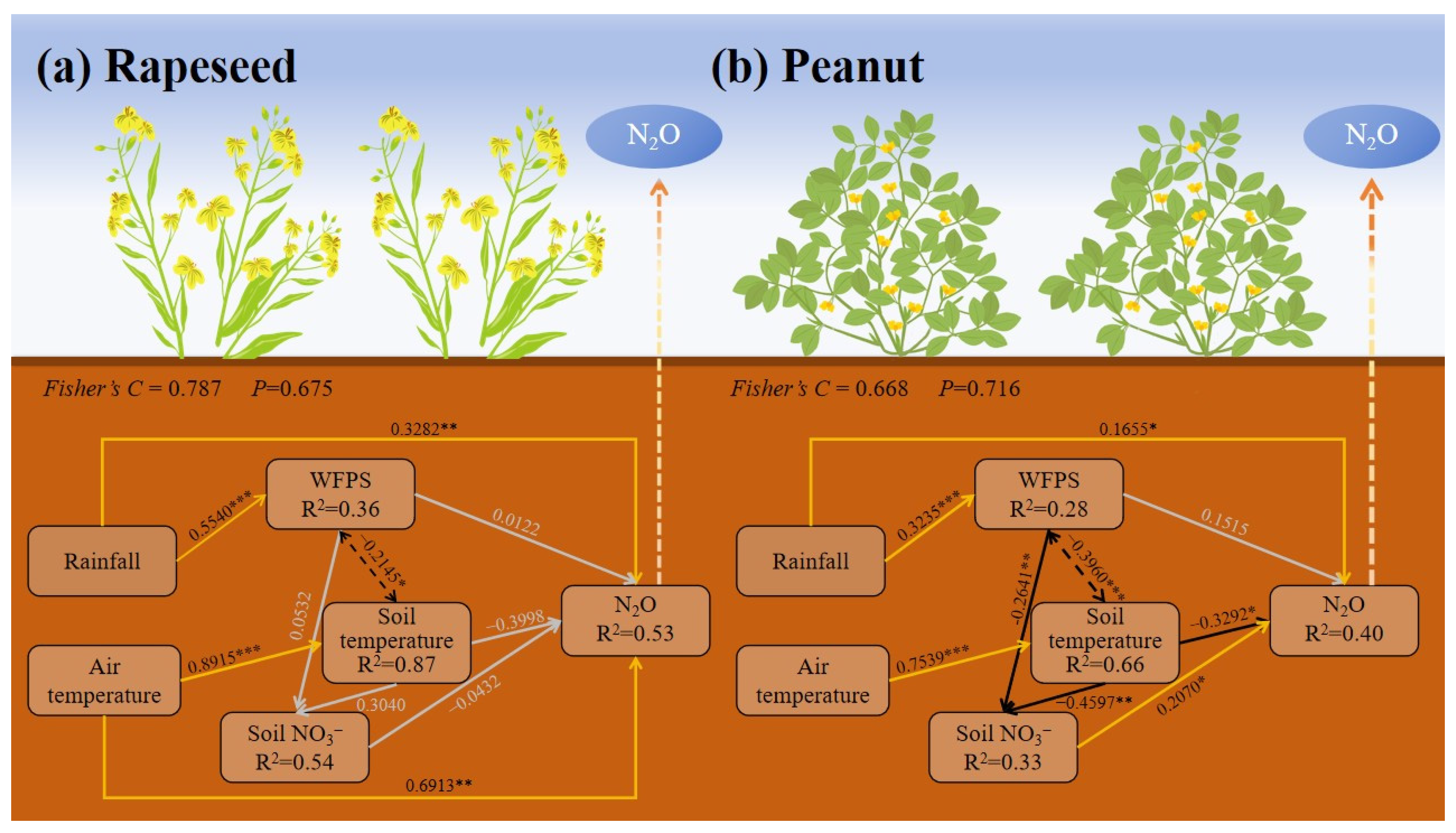
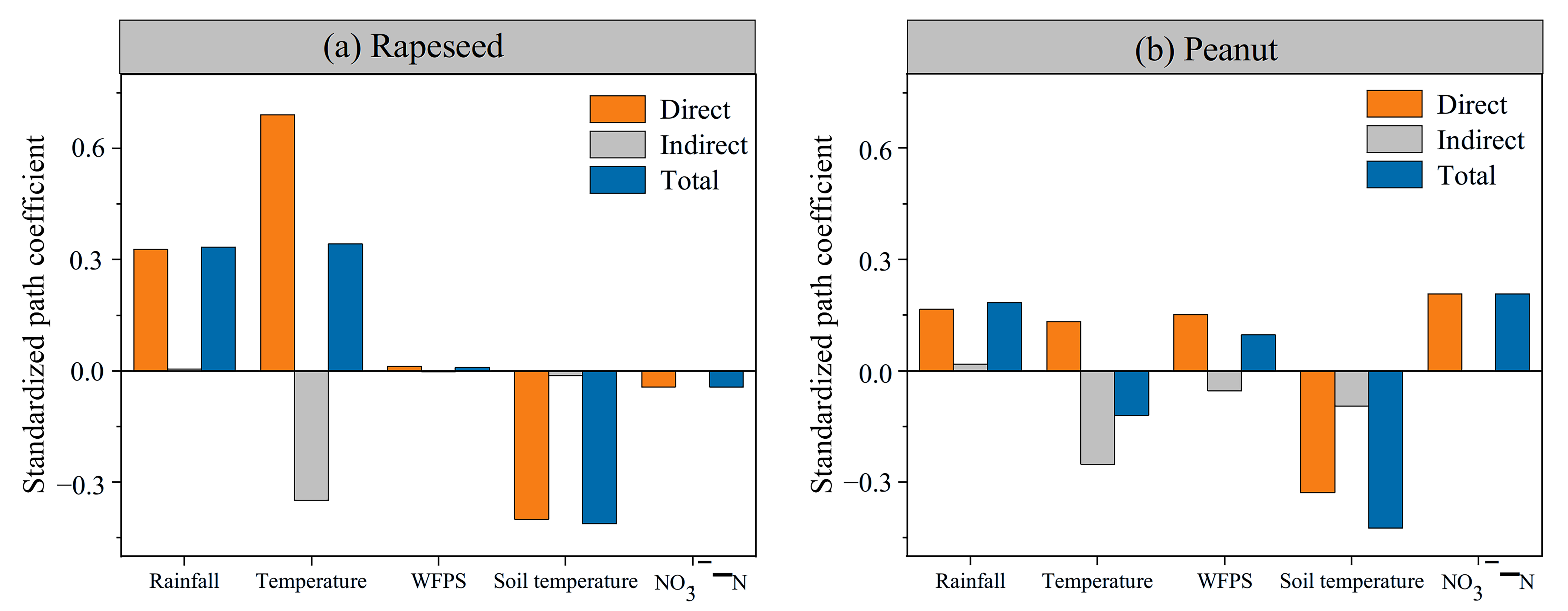
During the rapeseed growing season, HLSEM analysis revealed that rainfall and air temperature directly controlled N2O fluxes (Figure 7a). During the peanut growing season, N2O fluxes were directly controlled by rainfall, the soil NO3 concentration, and the soil temperature. Additionally, WFPS indirectly influenced N2O fluxes by negatively affecting the soil temperature and soil NO3 concentration, whereas the temperature indirectly impacted N2O fluxes through its positive effect on the soil temperature (Figure 7b). In the summer peanut-winter rapeseed rotation system, the total effect of rainfall and WFPS on N2O emission fluxes was positive, whereas the total effect of the soil temperature on N2O emission fluxes was negative. Temperature imposed a positive total effect on N2O emission fluxes during the rapeseed growing season but a negative total effect during the peanut growing season. The soil NO3 concentration negatively affected N2O emissions during the rapeseed growing season, whereas its total effect on N2O emission fluxes was positive during the peanut growing season (Figure 8).

4. Discussion

4.1. Characteristics of N2O Emissions and Emission Hotspot Periods

N2O, a key nitrogenous emission from farmlands, is a potent greenhouse gas that drives global warming, which in turn intensifies the frequency of extreme weather events and rates of land degradation [5,48]. While the seasonal N2O emission patterns were consistent across the cropping cycles in our study (Figure 4 and Figure 5, respectively), the cumulative fluxes did not significantly differ (p > 0.05) between the two tillage-induced micro-environments (CT vs. MT). This can be attributed to the frequent and variable precipitation in the humid subtropical region, coupled with the heavy texture and poor drainage characteristics of red soil. Their combined effects readily lead to prolonged anaerobic conditions in the soil following rainfall events. Meanwhile, the pronounced interannual variations in weather during the study period constitute substantial environmental fluctuations. Such fluctuations, interacting with the inherent anaerobic stress of the soil, likely prevented the differences between MT and CT in shaping soil microenvironments from being fully manifested. This finding conforms with that of [16], who reported that straw mulching increased the water use efficiency and crop yield by 14.2% and 12.8%, respectively, compared with CT practices, whereas no significant differences in N2O emissions were obtained.
Notably, N2O emissions demonstrated characteristic post-fertilization pulses. The interannual differences in cumulative emissions were primarily explained by interannual variations in rainfall patterns and temperature regimes [36,49,50]. Although the fertilizer application rates remained consistent over two consecutive rapeseed growing seasons, notable differences emerged in terms of the emission magnitude. The 2020–2021 season exhibited substantially greater peak daily fluxes (15.57–29.00 g N ha−1 d−1) than those during the 2019–2020 season (5.12–7.88 g N ha−1 d−1), resulting in 2.91–2.92-fold greater cumulative emissions. This divergence likely stems from differential rainfall patterns, as the 2020–2021 observation period (including hotspot emission periods) exhibited significantly greater precipitation than that during the previous season. Rainfall has emerged as a pivotal regulator of agricultural N2O emissions. Under low-temperature conditions, even moderate precipitation events can transiently increase N2O production through combined effects on soil moisture increase and nitrogen availability [51]. Furthermore, the study by Jia et al. [52] revealed that anoxic microsites serve as a key zone for long-term anoxia and the accumulation of denitrification substrates. Intense rainfall event rapidly alters soil moisture and oxygen conditions, activating denitrification within these microsites and thereby triggering N2O peaks that dominate annual emissions. In southern China, red soils are characterized by high clay content and low hydraulic conductivity [53], which favor the formation and persistence of such anoxic microsites. This physical mechanism explains the pronounced rainfall-driven N2O emission pulses observed in red soil regions during spring and summer. These findings highlight the necessity of the formulation of weather-adaptive fertilization strategies, particularly in subtropical systems characterized by high intra-annual rainfall variability [39].
The seasonal N2O emission patterns during the peanut cropping season mirrored those observed during the rapeseed growing season, with consistent emission characteristics across tillage practices but significant interannual variability. Notably, despite the lower total rainfall during the 2021 peanut growing season than during the 2020 peanut growing season, the cumulative N2O emissions increased significantly (Figure 5c,d). This contradiction can be explained by the temporal distribution of precipitation events. Notably, the 2021 season encompassed more frequent rainfall episodes clustered around fertilization periods, with greater precipitation occurring during N2O emission hotspot periods than in 2020 (Figure 3). Extreme rainfall events emerged as a decisive factor, amplifying N2O emission peaks that can account for up to 50% of the total annual emissions [51,54,55]. Furthermore, the high clay content of red soil accelerates the formation of anaerobic conditions following rainfall, thereby increasing the denitrification intensity [22,23]. The record-breaking N2O flux of 253.30 g N ha−1 in 2021, which is 3.18-fold greater than the 2020 peak, coincided with intense precipitation events. In addition to extreme rainfall events, the availability of sufficient reactive substrates after fertilization and thermally optimal conditions collectively drive the emergence of high N2O emission peaks by facilitating the synchronization of nitrification-denitrification coupling processes [47,56]. Elevated soil temperatures amplify the growth and metabolic activity of nitrogen-transforming microbes, thereby increasing both nitrification and denitrification rates, which results in a synergistic increase in N2O flux densities [57]. Notably, despite the higher nitrogen inputs during the rapeseed growing season (September to April; 130.92 kg N hm−2) than during the peanut growing season (May to August; 94.5 kg N hm−2), the latter contributed disproportionately to the annual emissions, accounting for 88.6–89.4% of the total N2O release in the rotation system. Most of the seasonal N2O emission peaks occurred within 16 days after fertilization, with emission hotspots concentrated in the first month (Figure 4 and Figure 6), which is a pattern that is consistent with global observations [46,58,59]. These findings demonstrate that mitigation strategies for red-soil sloping farmland should prioritize the early rainy season (spring–summer), particularly the first month following fertilization, when synergistic environmental conditions maximize the N2O production potential. Implementing real-time monitoring of soil moisture and soil temperature during this critical window could enable precision management of nitrogen transformation processes.

4.2. Weather and Soil Drivers of N2O Emission Hotspot Periods

Meteorological factors influence agricultural N2O emissions through their impact on soil environmental variables. In tropical sugarcane systems, approximately 80% of postfertilization N2O emissions occur when the WFPS value (0–10 cm soil layer) exceeds 75%, as frequent rainfall transitions surface soils into sustained suboxia—a critical threshold for denitrification dominance [47]. Our study corroborates the critical role of rainfall in driving N2O emissions from rapeseed and peanut fields (Figure 6). The direct stimulation of N2O by rainfall is likely mediated by several mechanisms. High-intensity rainfall may trigger instantaneous N2O release by physically displacing gases in soil pores during rapid infiltration. Simultaneously, rainfall can also rapidly elevate the abundance of the denitrification gene nirS, directly boosting the enzymatic reduction of NO3 to N2O [60]. However, the structural equation modelling results revealed an unexpected nonsignificant relationship between the rainfall-mediated WFPS (0–10 cm) and N2O fluxes (Figure 7), which is likely attributable to slope-induced heterogeneity in the surface soil moisture distribution and instability. Soil moisture regulates N2O emissions through multiple pathways, including nitrate mobilization, thermal sensitivity amplification, and nitrifier–denitrifier community restructuring, among other mechanisms [17,47,61]. Additionally, the soil moisture status critically determines the temperature sensitivity of N2O emissions [62]. Our findings highlight the soil temperature as a key determinant of N2O fluxes in red-soil sloping farmlands (Figure 6a). The indirect effect of the temperature on N2O emissions in clay soils is primarily mediated through nosZ gene abundance [61]. Warming conditions accelerate nitrogen transformation processes by altering immobilization-mineralization equilibria, thereby increasing the temperature sensitivity of nitrification-denitrification cascades. During the rapeseed growing season (September–April), the temperature was significantly correlated with N2O emission fluxes, whereas no such significant relationship was obtained during the peanut growing season (May–August). This difference stems from the narrower thermal ranges during peanut cultivation seasons (18.30–32.55 °C) than during cooler, more variable rapeseed growing seasons (−0.45–28.70 °C). Therefore, future research needs to quantify the critical thresholds and interactive timing of weather parameters that modulate N2O pulses. Especially critical is the coupling between rainfall intensity-duration characteristics and post-fertilization N2O emission hotspots provides key indicators for emission prediction and fertilization strategy formulation. Employing high-accuracy rainfall forecasts allows for scheduling fertilizer applications in low-risk weather windows, effectively decoupling nitrogen supply from periods of high emission potential. Furthermore, in anticipation of forecasted high-intensity rainfall clusters, the strategic adoption of enhanced-efficiency fertilizers is advisable.
Nitrification-denitrification processes constitute the predominant sources of agricultural N2O emissions [22,63]. In subtropical regions, thermally humid soil conditions notably increase the dominance of denitrification, establishing it as the principal N2O production mechanism [64]. Denitrification, which constitutes a microbially mediated cascade reaction that promotes the progressive reduction in nitrate to nitrogen gas (N2), exhibits critical environmental dependencies. Our empirical data revealed that the soil nitrate concentration is a key regulator of N2O fluxes in red-soil sloping farmlands during the summer peanut growing season, when positive correlations were observed between nitrate levels and N2O emission rates. Elevated nitrate concentrations induce N2O accumulation by competing for electron donors and suppressing nosZ enzyme activity, thereby inhibiting the final step of N2O reduction to N2 [65]. In contrast, winter rapeseed growing seasons indicated negligible correlations between N2O fluxes and nitrate availability (Figure 7a). Although reduced winter rainfall extends nitrate retention periods through the minimization of leaching losses, low temperatures maintain limited nitrification activity while effectively suppressing denitrification. The observed N2O flux exhibited nonlinear dynamics with soil nitrate–N concentrations from 2019 to 2021 (Figure 6b), a complexity arising not only from the multipathway nature of N2O production but also from coupled weather-soil interactions that amplify process stochasticity. It should be noted that, due to limitations in sampling frequency and field spatial heterogeneity, the estimation of N2O emissions in this study may be subject to a certain degree of underestimation [53]. Furthermore, the driving pathways revealed by the structural equation model represent statistically supported covariance relationships within a predefined hypothetical framework. Additionally, the two-year observation period is insufficient to fully capture the interannual variability of N2O emissions and their response to the increasing frequency and intensity of extreme rainfall events. Therefore, in the context of increasingly frequent extreme weather events, future research urgently requires long-term site-specific monitoring, improvements in traditional observation and analytical methods, and the implementation of climate-adaptive farmland management strategies (e.g., optimized fertilization, tillage, and irrigation) to deepen the understanding of N2O emission mechanisms in subtropical farmland and to provide a scientific basis for developing effective agricultural emission reduction pathways.

5. Conclusions

Based on in situ observations over two complete rotation cycles, this study elucidates the temporal dynamics of N2O emissions from two common soil microenvironments (CT, MT) in a typical summer peanut–winter rapeseed system on subtropical red soil sloping farmland, thereby revealing distinct response patterns to meteorological factors (rainfall and air temperature) and soil environmental variables (WFPS, soil temperature, and soil NO3 and NH4+ concentrations). The results indicate that there was no significant difference in the cumulative seasonal N2O emissions between the two microenvironments (CT and MT) in the red soil sloping farmland, yet they exhibited significant interannual variability due to changes in rainfall and temperature. Emission peaks of N2O consistently occurred within the first month after fertilization, driven primarily by high soil mineral nitrogen content, indicating the existence of a critical mitigation window. During this period, rainfall emerged as the predominant factor influencing pulse-like N2O emissions within the hotspot phase. These insights indicate the necessity of formulating weather-adaptive fertilization management strategies, whose core lies in synchronizing nitrogen availability with crop demand while avoiding N2O emission hotspots. Therefore, by utilizing high-precision rainfall forecasts, fertilization can be scheduled during low-risk weather windows, thereby effectively decoupling nitrogen supply from high-emission periods. To support this strategy, future research should focus on quantifying the critical thresholds of key weather parameters that regulate N2O emission pulses and their interactive timing. Therefore, continuous monitoring of N2O emissions from red soil sloping farmlands is essential to address land degradation exacerbated by extreme rainfall events, thereby providing critical data to refine regional and global N2O emission budgets.

Author Contributions

Conceptualization, H.Z. and J.Z.; methodology, L.Z. and R.M.; software, L.Z. and X.N.; validation, H.Z., J.Z. and R.M.; formal analysis, L.Z.; investigation, L.Z. and X.N.; resources, H.Z. and R.M.; data curation, L.Z. and X.N.; writing—original draft preparation, L.Z.; writing—review and editing, H.Z. and J.Z.; visualization, L.Z.; supervision, H.Z.; project administration, H.Z.; funding acquisition, H.Z. All authors have read and agreed to the published version of the manuscript.

Funding

This work was financially supported by the Double Thousand Plan of Jiangxi Province [No. JXSQ2023201069], and the National Natural Science Foundation of China [grant numbers 42367032].

Data Availability Statement

The original contributions presented in this study are included in the article. Further inquiries can be directed to the corresponding author.

Acknowledgments

We would like to thank Jiangxi Ecological Science Park of Soil and Water Conservation.

Conflicts of Interest

The authors declare no conflicts of interest.

References

  1. Westra, S.; Fowler, H.J.; Evans, J.P.; Alexander, L.V.; Berg, P.; Johnson, F.; Kendon, E.J.; Lenderink, G.; Roberts, N.M. Future changes to the intensity and frequency of short-duration extreme rainfall. Rev. Geophys. 2014, 52, 522–555. [Google Scholar] [CrossRef]
  2. Zhao, Y.S.; Zhu, D.Y.; Wu, Z.G.; Cao, Z. Extreme rainfall erosivity: Research advances and future perspectives. Sci. Total Environ. 2024, 917, 170425. [Google Scholar] [PubMed]
  3. Gao, H.; Zhang, S.B.; Zhang, Z.R.; Chen, X.; Xin, Y.; Huang, W.; Liu, S.D.; Xia, X.H. Warming-induced increase in N2O fluxes decreases with the legacy of agriculture and latitude in abandoned croplands. Agric. Ecosyst. Environ. 2025, 382, 109498. [Google Scholar]
  4. IPCC. Weather and Climate Extreme Events in a Changing Climate, Climate Change 2021: The Physical Science Basis—Working Group I Contribution to the Sixth Assessment Report of the Intergovernmental Panel on Climate Change; Cambridge University Press: Cambridge, UK, 2021; pp. 1513–1766. [Google Scholar]
  5. IPCC. The Earth’s Energy Budget, Climate Feedbacks and Climate Sensitivity, Climate Change 2021—The Physical Science Basis: Working Group I Contribution to the Sixth Assessment Report of the Intergovernmental Panel on Climate Change; Cambridge University Press: Cambridge, UK, 2021; pp. 923–1054. [Google Scholar]
  6. Ravishankara, A.R.; Daniel, J.S.; Portmann, R.W. Nitrous Oxide (N2O): The Dominant Ozone-Depleting Substance Emitted in the 21st Century. Science 2009, 326, 123–125. [Google Scholar]
  7. Tian, H.; Xu, R.; Canadell, J.G.; Thompson, R.L.; Yao, Y. A comprehensive quantification of global nitrous oxide sources and sinks. Nature 2020, 586, 248–256. [Google Scholar] [CrossRef]
  8. Peel, M.C.; Finlayson, B.L.; Mcmahon, T.A. Updated world map of the Köppen-Geiger climate classification. Hydrol. Earth Syst. Sci. 2007, 11, 259–263. [Google Scholar] [CrossRef]
  9. Zhang, X.; Davidson, E.A.; Mauzerall, D.L.; Searchinger, T.D.; Dumas, P.; Shen, Y. Managing nitrogen for sustainable development. Nature 2015, 528, 51. [Google Scholar] [CrossRef]
  10. Butterbachbahl, K.; Baggs, E.M.; Dannenmann, M.; Kiese, R.; Zechmeisterboltenstern, S. Nitrous oxide emissions from soils: How well do we understand the processes and their controls? Philos. Trans. R. Soc. B Biol. Sci. 2013, 368, 20130122. [Google Scholar] [CrossRef]
  11. Hoben, J.P.; Gehl, R.J.; Millar, N.; Grace, P.R.; Robertson, G.P. Nonlinear nitrous oxide (N2O) response to nitrogen fertilizer in on-farm corn crops of the US Midwest. Glob. Change Biol. 2011, 17, 1140–1152. [Google Scholar] [CrossRef]
  12. Friedl, J.; Scheer, C.; Rowlings, D.W.; Mcintosh, H.V.; Grace, P.R. Denitrification losses from an intensively managed sub-tropical pasture—Impact of soil moisture on the partitioning of N2 and N2O emissions. Soil Biol. Biochem. 2016, 92, 58–66. [Google Scholar] [CrossRef]
  13. Vogeler, I.; Thomas, S.; van der Weerden, T. Effect of irrigation management on pasture yield and nitrogen losses. Agric. Water Manag. 2019, 216, 60–69. [Google Scholar] [CrossRef]
  14. Nguyen, L.T.T.; Kravchenko, A.N. Effects of cover crops on soil CO2 and N2O emissions across topographically diverse agricultural landscapes in corn-soybean-wheat organic transition. Eur. J. Agron. 2021, 122, 126189. [Google Scholar] [CrossRef]
  15. Stuchiner, E.R.; Fischer, J.C. Using isotope pool dilution to understand how organic carbon additions affect N2O consumption in diverse soils. Glob. Change Biol. 2022, 28, 4163–4179. [Google Scholar] [CrossRef]
  16. Yin, W.; Gou, Z.W.; Fan, Z.L.; Hu, F.L.; Fan, H.; Zhao, C.; Yu, A.Z.; Chai, Q. No-tillage with straw mulching and re-using old film boost crop yields and mitigate soil N2O emissions in wheat-maize intercropping at arid irrigated regions. Field Crops Res. 2022, 289, 108706. [Google Scholar] [CrossRef]
  17. Zhang, Q.; Niu, W.Q.; Du, Y.D.; Sun, J.; Cui, B.J.; Zhang, E.X.; Wang, Y.B.; Siddique, K.H.M. Effect of aerated drip irrigation and nitrogen doses on N2O emissions, microbial activity, and yield of tomato and muskmelon under greenhouse conditions. Agric. Water Manag. 2023, 283, 108321. [Google Scholar] [CrossRef]
  18. Stevens, R.J.; Laughlin, R.J.; Malone, J.P. Soil pH affects the processes reducing nitrate to nitrous oxide and di-nitrogen. Soil Biol. Biochem. 1998, 30, 1119–1126. [Google Scholar] [CrossRef]
  19. Zhang, Y.; Wang, J.; Dai, S.Y.; Sun, Y.Q.; Chen, J.; Cai, Z.; Zhang, J.; Christoph, M. Temperature effects on N2O production pathways in temperate forest soils. Sci. Total Environ. 2019, 691, 1127–1136. [Google Scholar] [CrossRef]
  20. Williams, P.H.; Jarvis, S.C.; Dixon, E. Emission of nitric oxide and nitrous oxide from soil under field and laboratory conditions. Soil Biol. Biochem. 1998, 30, 1893. [Google Scholar] [CrossRef]
  21. Senbayram, M.; Chen, R.; Mühling, K.H.; Dittert, K. Contribution of nitrification and denitrification to nitrous oxide emissions from soils after application of biogas waste and other fertilizers. Rapid Commun. Mass. Spectrom. 2010, 23, 2489–2498. [Google Scholar] [CrossRef] [PubMed]
  22. Han, B.B.; Yao, Y.Z.; Liu, B.; Wang, Y.N.; Su, X.X.; Ma, L.H.; Liu, D.Y.; Niu, S.L.; Chen, X.P.; Li, Z.L. Relative importance between nitrification and denitrification to N2O from a global perspective. Glob. Change Biol. 2024, 30, e17082. [Google Scholar] [CrossRef] [PubMed]
  23. Lin, S.; Iqbal, J.; Hu, R.G.; Ruan, L.L.; Wu, J.S.; Zhao, J.S.; Wang, P.G. Differences in nitrous oxide fluxes from red soil under different land uses in mid-subtropical China. Agric. Ecosyst. Environ. 2011, 146, 168–178. [Google Scholar] [CrossRef]
  24. Su, X.X.; Wen, T.; Wang, Y.M.; Xu, J.S.; Cui, L.; Zhang, J.B.; Xue, X.M.; Ding, K.; Tang, Y.J.; Zhu, Y.G. Stimulation of N2O emission via bacterial denitrification driven by acidification in estuarine sediments. Glob. Change Biol. 2021, 27, 5564–5579. [Google Scholar] [CrossRef]
  25. Chen, J.J.; Jing, H.W.; Cao, W.C.; Tao, L.; Wang, J.G. Effects of nitrite addition on transcription activity of nitrification and denitrification functional genes and N2O emission in soil. Acta Pedol. Sin. 2023, 60, 726–737. [Google Scholar]
  26. Wang, G.; Zhang, Q.; Yu, H.Q.; Shen, Z.X.; Sun, P. Double increase in precipitation extremes across China in a 1.5 °C/2.0 °C warmer climate. Sci. Total Environ. 2020, 746, 140807. [Google Scholar] [CrossRef]
  27. Zhang, Y.; Liu, D.H.; Jia, Z.K.; Zhang, P. Ridge and furrow rainfall harvesting can significantly reduce N2O emissions from spring maize fields in semiarid regions of China. Soil Tillage Res. 2021, 209, 104971. [Google Scholar] [CrossRef]
  28. Yang, R.X.; Zheng, J.S.; Li, G.F.; Huang, Y.H.; Wang, J.H.; Qiu, F. Effects of rainfall characteristics and sugarcane growth stage on soil and nitrogen losses. Environ. Sci. Pollut. Res. Int. 2023, 30, 87575–87587. [Google Scholar] [CrossRef]
  29. Chen, R.M.; Dou, H.Q.; Lin, Y.Z.; Liu, Q.L.; Jian, W.B. In-situ infiltration-runoff characterization of slopes under the influences of different rainfall patterns and slope gradients. Catena 2024, 247, 108519. [Google Scholar] [CrossRef]
  30. Chen, S.Q.; Zhang, G.H.; Wang, C.S. Temporal variation in soil erodibility indicators of sloping croplands with different straw-incorporation rates. Soil Tillage Res. 2025, 246, 106340. [Google Scholar] [CrossRef]
  31. Jing, X.K.; Li, L.; Chen, S.H.; Shi, Y.L.; Xu, M.X.; Zhang, Q.W. Straw returning on sloping farmland reduces the soil and water loss via surface flow but increases the nitrogen loss via interflow. Agric. Ecosyst. Environ. 2022, 339, 108154. [Google Scholar] [CrossRef]
  32. Yang, J.H.; Liu, H.Q.; Zhang, J.P.; Rahma, A.E.; Lei, T.W. Lab simulation of soil erosion on cultivated soil slopes with wheat straw incorporation. Catena 2022, 210, 105865. [Google Scholar] [CrossRef]
  33. Wang, W.; Han, L.; Zhang, X.; Wei, K. Plastic film mulching affects N2O emission and ammonia oxidizers in drip irrigated potato soil in northwest China. Sci. Total Environ. 2020, 754, 142113. [Google Scholar] [CrossRef] [PubMed]
  34. Huang, T.T.; Wen, S.Y.; Zhang, M.X.; Pan, Y.Y.; Chen, X.P.; Pu, X.; Zhang, M.M.; Dang, P.F.; Meng, M.; Wang, W.; et al. Effect on greenhouse gas emissions (CH4 and N2O) of straw mulching or its incorporation in farmland ecosystems in China. Sustain. Prod. Consum. 2024, 46, 223–232. [Google Scholar] [CrossRef]
  35. Wang, X.Y.; Li, Y.J.; Ciampitti, I.A.; He, P.; Xu, X.P.; Qiu, S.J.; Zhao, S.C. Response of soil denitrification potential and community composition of denitrifying bacterial to different rates of straw return in north-central China. Appl. Soil Ecol. 2022, 170, 104312. [Google Scholar] [CrossRef]
  36. Yao, Z.S.; Yan, G.X.; Zheng, X.H.; Wang, R.; Liu, C.Y.; Butterbach-Bahl, K. Straw return reduces yield-scaled N2O plus NO emissions from annual winter wheat-based cropping systems in the North China Plain. Sci. Total Environ. 2017, 590–591, 174–185. [Google Scholar] [CrossRef]
  37. Zhao, Y.K.; Li, P.F.; Liu, J.J.; Xiao, H.Y.; Zhang, A.F.; Chen, S.; Chen, J.Y.; Liu, H.L.; Zhu, X.Y.; Hussain, Q.; et al. Microbial effects of prolonged nitrogen fertilization and straw mulching on soil N2O emissions using metagenomic sequencing. Agric. Ecosyst. Environ. 2025, 382, 109476. [Google Scholar] [CrossRef]
  38. Cuello, J.P.; Hwang, H.Y.; Gutierrez, J.; Kim, S.Y.; Kim, P.J. Impact of plastic film mulching on increasing greenhouse gas emissions in temperate upland soil during maize cultivation. Appl. Soil Ecol. 2015, 91, 48–57. [Google Scholar] [CrossRef]
  39. Rowlings, D.W.; Grace, P.R.; Scheer, C.; Liu, S. Rainfall variability drives interannual variation in N2O emissions from a humid, subtropical pasture. Sci. Total Environ. 2015, 512–513, 8–18. [Google Scholar] [CrossRef]
  40. Abalos, D.; De Deyn, G.B.; Kuyper, T.W.; Van Groenigen, J.W. Plant species identity surpasses species richness as a key driver of N2O emissions from grassland. Glob. Change Biol. 2013, 20, 265–275. [Google Scholar] [CrossRef] [PubMed]
  41. FAO. FAOSTAT Agriculture Data; FAO: Rome, Italy, 2022. [Google Scholar]
  42. Cheng, Y.; Elrys, A.S.; Wang, J.; Xu, C.; Ni, K.; Zhang, J.B.; Wang, S.Q.; Cai, Z.C.; Pacholski, A. Application of enhanced-efficiency nitrogen fertilizers reduces mineral nitrogen usage and emissions of both N2O and NH3 while sustaining yields in a wheat-rice rotation system. Agric. Ecosyst. Environ. 2022, 324, 107720. [Google Scholar] [CrossRef]
  43. Zou, J.W.; Huang, Y.; Jiang, J.Y.; Zheng, X.H.; Sass, R.L. A 3-year field measurement of methane and nitrous oxide emissions from rice paddies in China: Effects of water regime, crop residue, and fertilizer application. Glob. Biogeochem. Cycles 2005, 19, 1–9. [Google Scholar] [CrossRef]
  44. R Core Team. R: A Language and Environment for Statistical Computing. In R Foundation for Statistical Computing; R Core Team: Vienna, Austria, 2024. [Google Scholar]
  45. Moritz, S.; Bartz-Beielstein, T. imputeTS: Time Series Missing Value Imputation in R. R J. 2017, 9, 207. [Google Scholar] [CrossRef]
  46. Zheng, J.L.; Luo, X.L.; Wang, R.M.; Yu, H.Q.; Xia, G.M.; Elbeltagi, A.; Chi, D.C. Zeolite application coupled with film mulched drip irrigation enhances crop yield with less N2O emissions in peanut field. Soil Tillage Res. 2024, 241, 106130. [Google Scholar] [CrossRef]
  47. Takeda, N.; Friedl, J.; Rowlings, D.; De Rosa, D.; Scheer, C.; Grace, P. Exponential response of nitrous oxide (N2O) emissions to increasing nitrogen fertiliser rates in a tropical sugarcane cropping system. Agric. Ecosyst. Environ. 2021, 313, 107376. [Google Scholar] [CrossRef]
  48. Reeves, S.; Wang, W. Optimum sampling time and frequency for measuring N2O emissions from a rain-fed cereal cropping system. Sci. Total Environ. 2015, 530–531, 219–226. [Google Scholar]
  49. Gao, S.J.; Peng, Q.; Liu, X.R.; Xu, C.Y. The Effect of Biochar and Straw Return on N2O Emissions and Crop Yield: A Three-Year Field Experiment. Agriculture 2023, 13, 2091. [Google Scholar] [CrossRef]
  50. Zhang, W.; Lu, J.S.; Bai, J.; Khan, A.; Liu, S.T.; Zhao, L.; Wang, W.; Zhu, S.G.; Li, X.G.; Tian, X.H.; et al. Introduction of soybean into maize field reduces N2O emission intensity via optimizing nitrogen source utilization. J. Clean. Prod. 2024, 442, 141052. [Google Scholar] [CrossRef]
  51. Kim, D.G.; Vargas, R.; Bond-Lamberty, B.; Turetsky, M.R. Effects of soil rewetting and thawing on soil gas fluxes: A review of current literature and suggestions for future research. Biogeosciences 2012, 9, 2459–2483. [Google Scholar] [CrossRef]
  52. Jia, M.Q.; Lapen, D.R.; Su, D.Y.; Mayer, K.U. Multi-Domain Reactive Transport Modeling of GHG Emissions From Macroporous Agricultural Soils with a Focus on N2O Hotspots and Hot Moments. Water Resour. Res. 2025, 61, e2025WR040588. [Google Scholar] [CrossRef]
  53. Lawrence, N.C.; Tenesaca, C.G.; Vanloocke, A.; Hall, S.J. Nitrous oxide emissions from agricultural soils challenge climate sustainability in the US Corn Belt. Proc. Natl. Acad. Sci. USA 2021, 118, e2112108118. [Google Scholar] [CrossRef] [PubMed]
  54. Zhang, K.R.; Li, M.X.; Yan, Z.Q.; Li, M.; Kang, E.; Yan, L.; Zhang, X.D.; Li, Y.; Wang, J.Z.; Yang, A. Changes in precipitation regime lead to acceleration of the N cycle and dramatic N2O emission. Sci. Total Environ. 2022, 808, 152140. [Google Scholar] [CrossRef]
  55. Li, X.G.; Wang, R.; Du, Y.L.; Han, H.; Guo, S.L.; Song, X.T.; Ju, X.T. Significant increases in nitrous oxide emissions under simulated extreme rainfall events and straw amendments from agricultural soil. Soil Tillage Res. 2025, 246, 106361. [Google Scholar] [CrossRef]
  56. Wang, Y.Y.; Hu, Z.H.; Shang, D.Y.; Xue, Y.; Towfiqul, A.R.M.; Chen, S.T. Effects of warming and elevated O3 concentrations on N2O emission and soil nitrification and denitrification rates in a wheat-soybean rotation cropland. Environ. Pollut. 2020, 257, 113556. [Google Scholar] [CrossRef] [PubMed]
  57. Zhang, W.Z.; Zhou, H.C.; Sheng, R.; Qin, H.L.; Wei, W.X. Differences in the nitrous oxide emission and the nitrifier and denitrifier communities among varying aggregate sizes of an arable soil in China. Geoderma 2021, 389, 114970. [Google Scholar] [CrossRef]
  58. Zaman, M.; Nguyen, M.L.; Blennerhassett, J.D.; Quin, B.F. Reducing NH3, N2O and NO3-N losses from a pasture soil with urease or nitrification inhibitors and elemental S-amended nitrogenous fertilizers. Biol. Fert. Soils 2008, 44, 693–705. [Google Scholar]
  59. Park, S.; Choi, A.; Kim, T.; Lee, B. Zeolite application mitigates NH3 and N2O emissions from pig slurry-applied field and improves nitrogen use efficiency in Italian ryegrass-maize crop rotation system for forage production. J. Environ. Manag. 2024, 357, 120775. [Google Scholar] [CrossRef]
  60. Wang, J.; Liu, Q.; Zhao, S.Y.; He, S.Y.; Yang, B.; Wang, N.; Hou, P.F.; Xue, L.H.; Yang, L.Z. Heavy rainfall stimulates more N2O emissions from wheat fields during basal and overwintering fertilization phases. Agric. Ecosyst. Environ. 2024, 376, 109227. [Google Scholar] [CrossRef]
  61. Cui, P.Y.; Chen, Z.X.; Fan, F.L.; Yin, C.; Song, A.; Li, T.Q.; Zhang, H.C.; Liang, Y.C. Soil texture is an easily overlooked factor affecting the temperature sensitivity of N2O emissions. Sci. Total Environ. 2023, 862, 160648. [Google Scholar] [CrossRef]
  62. Schindlbacher, A.; Zechmeister-Boltenstern, S.; Butterbach-Bahl, K. Effects of soil moisture and temperature on NO, NO2, and N2O emissions from European forest soils. J. Geophys. Res. Atmos. 2004, 109, D17. [Google Scholar] [CrossRef]
  63. Wang, H.; Yan, Z.F.; Ju, X.T.; Song, X.T.; Zhang, J.B.; Li, S.L.; Zhu-Barker, X. Quantifying nitrous oxide production rates from nitrification and denitrification under various moisture conditions in agricultural soils: Laboratory study and literature synthesis. Front. Microbiol. 2023, 13, 1110151. [Google Scholar] [CrossRef]
  64. Zheng, X.; Liu, Q.; Ji, X.F.; Cao, M.M.; Zhang, Y.F.; Jiang, J. How do natural soil NH4+, NO3 and N2O interact in response to nitrogen input in different climatic zones? A global meta-analysis. Eur. J. Soil Sci. 2021, 72, 2231–2245. [Google Scholar] [CrossRef]
  65. Madeline, G.; Nicholas, M.; Baggs, E.M.; Daniell, T.J. Soil nitrate reducing processes—Drivers, mechanisms for spatial variation, and significance for nitrous oxide production. Front. Microbiol. 2012, 3, 407. [Google Scholar]
Figure 1. Location of the study area (a) and the experimental station (b).
Agronomy 16 00330 g001
Figure 2. Schematic diagram of N2O emissions collection device.
Agronomy 16 00330 g002
Figure 3. Daily rainfall and air temperature (a), WFPS and soil temperature (b) during the rapeseed and peanut growing seasons from 2019 to 2021. CT, conventional tillage; MT, conventional tillage plus straw mulching. The error bars denote the standard errors.
Agronomy 16 00330 g003
Figure 4. Temporal variability in N2O fluxes during the rapeseed (a,b) and peanut (c,d) growing seasons from 2019 to 2021. CT, conventional tillage; MT, conventional tillage plus straw mulching. The shaded areas denote the N2O emission hotspot periods (1 to 30 days after fertilization). The black solid and black dashed arrows denote the application of base and top-dressing fertilizers, respectively. The error bars denote the standard errors.
Agronomy 16 00330 g004
Figure 5. Cumulative N2O emissions, rainfall and average temperature for the entire measurement period and the N2O emission hotspot periods for rapeseed (a,b) and peanut (c,d) plants. “T” following tillage practices, average temperature, and rainfall denote the total observation period, whereas “H” denotes the hotspot period for N2O emissions (1 to 30 days after fertilization). The error bars denote the standard errors. *** indicates p < 0.001, and “NS” indicates no significant relationship.
Agronomy 16 00330 g005
Figure 6. Main factors influencing the N2O fluxes during the hotspot period according to random forest modelling analysis (a). The model R2 value was 0.477, with p = 0.01. The N2O flux variation trends with rainfall, air temperature, soil NO3 concentration, WFPS and soil temperature (b) during the hotspot period were analysed by generalized additive models (GAMs). The solid black lines denote the smoothed mean relationships from GAM analysis, and the shaded areas denote 95% confidence intervals. The blue dots denote residual values. The inward-facing tick marks on the horizontal axes denote the data distributions. The model R2 value was 0.433, and the deviance explained 50.6% of the data. *** indicates p < 0.001, ** indicates p < 0.01, * indicates p < 0.05, and “ns” indicates no significant relationship.
Agronomy 16 00330 g006
Figure 7. Hybrid linear structural equation model (HLSEM) describing the effects of the meteorological and soil environmental variables on soil N2O emissions during the emission hotspot periods for rapeseed (a) and peanut (b) plants. The orange and black solid arrows denote positive and negative relationships, respectively. The grey arrows denote nonsignificant relationships. The number next to the arrow is the path coefficient. The numbers next to the arrows indicate the strength of the causal relationship. The significance levels of each predictor are * p < 0.05, ** p < 0.01 and *** p < 0.001. The R2 values denote the amount of variance explained by the model for the response variables.
Agronomy 16 00330 g007
Figure 8. The standardized path coefficients for the direct, indirect and total effects of variables.
Agronomy 16 00330 g008
Table 1. Soil chemical properties for the 0–20 cm soil layer at the experimental site.
OM
(g kg−1)
pHTN
(g kg−1)
TP
(g kg−1)
TK
(g kg−1)
AN
(mg kg−1)
AP
(mg kg−1)
14.015.570.770.1810.7662.431.86
OM, organic matter; TN, total nitrogen; TP, total phosphorus; TK, total potassium; AN, alkaline hydrolysis nitrogen; AP, available phosphorus.
Disclaimer/Publisher’s Note: The statements, opinions and data contained in all publications are solely those of the individual author(s) and contributor(s) and not of MDPI and/or the editor(s). MDPI and/or the editor(s) disclaim responsibility for any injury to people or property resulting from any ideas, methods, instructions or products referred to in the content.