Article

Effect of Growth Substrate on Yield and Chemical Composition of Pot-Grown Portulaca oleracea

by
Nikolaos Polyzos
1,
Antonios Chrysargyris
2,
Nikolaos Tzortzakis
2 and
Spyridon A. Petropoulos
1,*
1
Laboratory of Vegetable Production, Department of Agriculture Crop Production and Rural Environment, University of Thessaly, Fytokou Street, 38446 Volos, Greece
2
Department of Agricultural Sciences, Biotechnology and Food Science, Cyprus University of Technology, Limassol 3603, Cyprus
*
Author to whom correspondence should be addressed.
Agronomy 2026, 16(3), 297; https://doi.org/10.3390/agronomy16030297
Submission received: 28 November 2025 / Revised: 22 January 2026 / Accepted: 23 January 2026 / Published: 24 January 2026
(This article belongs to the Section Horticultural and Floricultural Crops)

Abstract

The use of manure as a growing medium for horticultural crop cultivation is a sustainable practice that may allow a reduction in the production costs and the environmental burden of bulky waste management. For this purpose, the current study investigated the partial substitution of peat with manure at various rates (0% (GS1), 100% (GS2), 80% (GS3), 60% (GS4), 40% (GS5), and 20% (GS6)) in pot-cultivated purslane. Our results indicate that the substitution of peat with manure may increase crop yield by 60% to 80%. Moreover, the nutritional value was improved for specific manure rates; for example, the ash and carbohydrate contents in leaves increased at 60% and 20%, respectively, while the fat and carbohydrate contents in shoots increased at 80% and 20%, respectively. P content increased in both leaves and shoots when manure was added to the growing medium, while application at low rates (e.g., 20%) resulted in decreased N and K content. Finally, regarding leaf total phenol and flavonoid contents, as well as antioxidant activity in 2,2-diphenyl-1-picrylhydrazyl (DPPH) and 2,2′-azinobis-(3-ethylbenzothiazoline-6-sulfonic acid) (ABTS) assays, values increased when manure was added at 40% to 60%; in shoots, increased values were observed for these parameters when manure was applied at 0% or 100%. In conclusion, our results suggest that peat substitution with manure is a viable, sustainable practice in purslane cultivation in pots without compromising the yield and quality parameters of plants. However, more species and different types of manure must be tested to design tailor-made growing media for horticultural crops.

1. Introduction

The intensification of modern crop production to cover the increasing needs for food security has rendered the sustainable use of natural resources of major importance, including the rational exploitation of soil, water, and plant genetic material [1,2,3,4]. For this purpose, substituting conventional growth substrates such as peat moss with more eco-friendly and largely available materials is essential to reduce crop production costs and achieve sustainability goals [5,6,7]. According to Hirschler and Thrän [8], who interviewed growing media stakeholders in Germany, although peat is not considered an environmentally friendly growing medium, it offers economic advantages over other materials; therefore, specific policy measures should be implemented to gradually substitute its use in horticultural crops. The use of material derived from composted agroindustry byproducts and livestock farming or organic materials such as wood fiber, spent coffee grounds, and brewer’s spent grains could provide a feasible and sustainable solution to peat replacement in intensive horticultural crop production [9,10,11,12]. Moreover, such a strategy could reduce the environmental burden of bulky waste and byproduct management, lower the environmental footprint associated with peat excavation, and also improve the added value of crops within a circular economy context [13,14,15].
Hernández et al. [6], who studied the substitution of inorganic fertilizers via the use of composts of different origins (e.g., manure and sewage sludge), reported similar or increased yields in lettuce, while soil physicochemical and microbial properties also improved compared to conventional fertilizers. Similarly, Ondoño et al. [16] reported the potential use of various artificial substrates, such as green compost mixed with porous materials, in the cultivation of Mediterranean endemic species. Česonienė et al. [17] suggested the substitution of peat by up to 45% in growing media mixes using spruce, pine fibers, and perlite without negatively impacting the growth of blueberry saplings. Furthermore, according to Adamczewska-Sowińska [18], peat can be replaced by up to 75% in compost-based media without compromising the growth of cucumber transplants.
Apart from organic waste and byproducts, manure is another promising alternative growing medium due to its physicochemical properties and macronutrient composition, which encourage its use not only as a soil amendment but also as a source of essential nutrients for plant development [19,20,21,22,23]. The use of manure is suitable in organic and sustainable cropping systems as it replaces chemical fertilizers and improves soil health in the long term [24,25,26,27]. For example, Parwada et al. [28] tested the use of manure from different sources (e.g., goats, cattle, and poultry) in baby spinach cultivation and found positive effects on crop performance compared to inorganic fertilizers. Moreover, Hasnain et al. [29] reported that cow manure can effectively substitute inorganic fertilizers by up to 70%, providing improved plant growth and fruit yield in tomato crops. A meta-analysis study by Du et al. [30] suggested that manure application may increase crop yield by up to 7.6%, depending on soil type, growing conditions, and the length of the growing period. Its use has been proposed for various horticultural crops, including fruit vegetables [31,32], leafy greens [33], orchards [34], and aromatic plants [35,36]. However, despite these positive effects of manure application on both crop and soil, a survey by Zhang et al. [37] identified key barriers to widespread application, including high costs, variable availability, existing application technology, and non-standardized composition and quality.
Increasing agrobiodiversity by valorizing under- or unexplored species for commercial crop production helps protect agroecosystems against climate change, while facilitating food security and safety [38,39,40,41]. Wild edible species have traditionally been used in local cuisines worldwide, particularly in rural areas; however, there is increasing consumer interest in integrating alternative functional and healthy foods into modern diets [42,43,44,45]. Purslane is a common weed highly appreciated for its high nutritional value and pharmaceutical properties throughout the centuries [46,47,48]. Recently, several studies have proposed various agronomic protocols to establish best practices for the commercial cultivation of wild edible species [49]. For instance, Nastou et al. [50] studied the impact of nitrogen application at different rates on purslane plants cultivated in a soilless cropping system. Moreover, Montoya-García et al. [51] reported that a fertilization regime may affect the fatty acid content and antioxidant activity of the species.
Carrascosa et al. [52] also recorded higher plant growth for different rates of inorganic fertilizers compared to compost tea fertilizer, but noted that organic fertilizer significantly improved soil microbial diversity and physicochemical properties in the long term. Similarly, Hajisolomou et al. [53] reported that organic fertilizers can improve nutrient and antioxidant compound contents without compromising the growth of field-grown purslane plants.
Currently, peat is the most common material used in horticultural production, either as a growing medium for seedling production or in soilless cropping systems. However, peat is an expensive and less environmentally friendly material that is hardly replenished, leading to significant scientific effort towards its substitution with alternative materials. Moreover, the current trend of valorizing underexploited species as commercial crops necessitates the compilation of best practice guides to facilitate adoption by farmers and improve crop plasticity under climate change conditions. While previous studies have investigated composts and manures as fertilizers or peat substitutes in other leafy vegetables, integrated assessments for P. oleracea in pot substrates remain scarce. Considering the gap of knowledge in the scientific literature for agronomic practices for wild edible species, the aim of the present study was to provide novel information regarding the partial substitution of peat in the growing media of pot-grown P. oleracea plants and its effects on growth parameters, nutritional value, and chemical composition. To this end, we used perlite, peat, and sheep manure in various combinations to test the feasibility of peat replacement and also to identify the substrate compositions that provide optimal growth and quality. Our results provide useful information regarding the soilless cultivation of a novel wild edible green using sustainable and environmentally friendly growing media.

2. Materials and Methods

2.1. Plant Material and Growing Conditions

The trial took place at the experimental farm of the University of Thessaly in Velestino, Greece, between May 2023 and July 2023. Seeds of Portulaca oleracea (Hortus Sementi Srl.; Budrio, Italy) were sown in 2 L pots, which were filled with varied proportions of peat, perlite, and manure, aiming to test the effectiveness of partially substituting peat in the growing medium. In particular, the following treatments were tested: (i) perlite and peat (1:1; v/v) (1 L of perlite and 1 L of peat; GS1); (ii) perlite and manure (1:1; v/v) (1 L of perlite and 1 L of manure; GS2); (iii) perlite, peat, and manure (1:0.2:0.8; v/v) (1 L of perlite, 200 mL of peat, and 800 mL of manure; GS3); (iv) perlite, peat, and manure (1:0.4:0.6; v/v) (1 L of perlite, 400 mL of peat, and 600 mL of manure; GS4); (v) perlite, peat, and manure (1:0.6:0.4; v/v) (1 L of perlite, 600 mL of peat, and 400 mL of manure; GS5); and (vi) perlite, peat, and manure (1:0.8:0.2; v/v) (1 L of perlite, 800 mL of peat, and 200 mL of manure; GS6). The details for each treatment are provided in the following table (Table 1).
There were 20 pots per treatment (n = 20), totaling 120 pots. Peat composition is described in detail by Petropoulos et al. [54], including 140 mg/L of N, 160 mg/L of P (P2O5), 180 mg/L of K (K2O), and a pH of 6.0. Manure was obtained from a sheep farm and included 65% organic matter: 2% N; 1% P; 1%, 1% K; pH 7.1; and EC, 1650 mS/cm. The experiment was laid out according to a Completely Randomized Design (CRD). After seedling establishment, plants were thinned to one plant per pot. Irrigation was performed once or twice per week throughout the growing period, depending on the environmental conditions. Plants were fertigated at regular intervals with a nutrient solution (N:P:K; 200:200:200 ppm N:P:K) at amounts varying between 150 and 200 mL per pot, depending on the growing conditions. Harvest took place prior to flowering initiation on 11 July 2023. The morphological traits evaluated were plant weight (g), shoot weight (g), leaf weight (g), dry matter of plant (%), dry matter of shoots (%), and dry matter of leaves (%). Chlorophyll content of leaves (expressed as Soil Plant Analysis Development (SPAD) values) was recorded before harvesting using portable chlorophyll meter (SPAD 502; Konica Minolta Optics, Osaka, Japan), and fresh weight of whole plants, leaves, and shoots was determined using 20 plants per treatment (n = 20), while dry matter of whole plants, leaves, and shoots and chlorophyll content were evaluated in 5 plants per treatment (n = 5). After harvest, samples of fresh leaves and shoots were placed in air-sealed bags, stored under deep-freezing conditions (−80 °C), then lyophilized and stored again at −80 °C until further analysis.

2.2. Chemical Analyses

2.2.1. Nutritional Value

Νutritional value (including moisture, protein, fat, carbohydrates, and ash content) was determined in three freeze-dried samples of leaves and shoots (n = 3; pooled samples of five plants each) using the AOAC methods [55]. Briefly, nutrient content was determined using the Kjeldahl (N × 6.25), petroleum ether Soxhlet extraction, and incineration (600 °C) methods for protein, fat, and moisture, respectively. The carbohydrate content was calculated by difference, while the energetic value was estimated according to the following Formula (1):
E n e r g y   K c a l 100 g   d r i e d   t i s s u e = 4 × g   o f p r o t e i n 100 g + g   o f c a r b o h y d r a t e 100 g + 9 × g   o f f a t 100 g
Results were presented in g per 100 g of dried tissue.

2.2.2. Mineral Analysis of Leaves and Shoots

Four replicates were analyzed per treatment, with each replicate consisting of a pooled sample from 5 plants. Samples of fresh leaves and shoots were dried to constant weight (at 65 °C for approximately 4 d) and then burned to ash at 450 °C for 6 h. Potassium (K) content was determined by flame photometry (Lasany Model 1832, Lasany International, Panchkula, India) following acid digestion (2 M HCl), while phosphorus (P) content was assessed using the molybdate–vanadate method [56]. Finally, nitrogen (N) was determined via the Kjeldahl method (BUCHI, Digest automat K-439 and Distillation Kjeldahl K-360, Flawil, Switzerland). Data were presented in g per kg of dry weight.

2.2.3. Total Phenols, Total Flavonoids, and Antioxidant Activity Assays

The freeze-dried samples of leaves and shoots (four replicates per treatment consisting of a pooled sample from 5 plants) were weighed (approximately 1 g), milled with methanol 50%, and homogenized using the ULTRA-TURRAX T 25 mixer (IKA-Werke GmbH and Co., Staufen im Breisgau Germany) for 60 s. Extraction took place in a sonication bath for 30 min while stirring (200 rpm) for 1 h. The extracts were then centrifuged for 15 min, at 4 °C and 5000 rpm. Finally, the supernatant from each extract was collected and placed in 15 mL Falcon tubes.
The methanolic plant extracts were used to determine the content of total phenols according to the Folin–Ciocalteu method with slight modifications [56]. Results are presented as gallic acid equivalents per gram of extract.
Total flavonoid content was determined using a modified aluminum chloride (AlCl3) colorimetric assay [56], while results were expressed as Rutin equivalents per g of extract.
Antioxidant activity was evaluated using the following: (i) the ferric reducing antioxidant power (FRAP) assay, with measurements taking place at 593 nm; (ii) the 2,2-diphenyl-1-picrylhydrazyl (DPPH) assay, with measurements at 517 nm; and (iii) the 2,2′-azinobis-(3-ethylbenzothiazoline-6-sulfonic acid) (ABTS) assay, with measurements at 734 nm. For all the abovementioned assays, Trolox ((±)-6-hydroxy-2,5,7,8-tetramethylchromane-2-carboxylic acid) was used as a positive control, and the results are presented as Trolox equivalents (mg Trolox per g of extract) [56].

2.2.4. Lipid Peroxidation and Hydrogen Peroxide

Two oxidative stress markers, namely H2O2 and MDA, were also evaluated. The determination of hydrogen peroxide (H2O2) content (four replicates per treatment consisting of a pooled sample from 5 plants) in leaf and shoot tissue was previously described by Chrysargyris et al. [56]. The absorbance of the standards and samples was measured at 390 nm, and the results are presented as μmol of H2O2 per gram of extract.
Malondialdehyde content (MDA) was measured in four samples per treatment (consisting of a pooled sample from 5 plants) for the assessment of lipid peroxidation following the methodology previously described by Chrysargyris et al. [56] and measured at 532 nm (corrected at 600 nm). MDA content is expressed as nmol of MDA per g of extract.

2.3. Statistical Analysis

All data were checked for normal distribution and homoscedasticity according to the Shapiro–Wilk (at a = 0.05) and Bartlett’s tests (at a = 0.05), respectively. Data were then analyzed with one-way analysis of variance (ANOVA) using JMP v. 16.1 (SAS Institute Inc., Cary, NC, USA) software. Means were compared with Duncan’s Multiple Range test (DMRT) at p = 0.05. The results were expressed as mean values and standard deviations.

3. Results

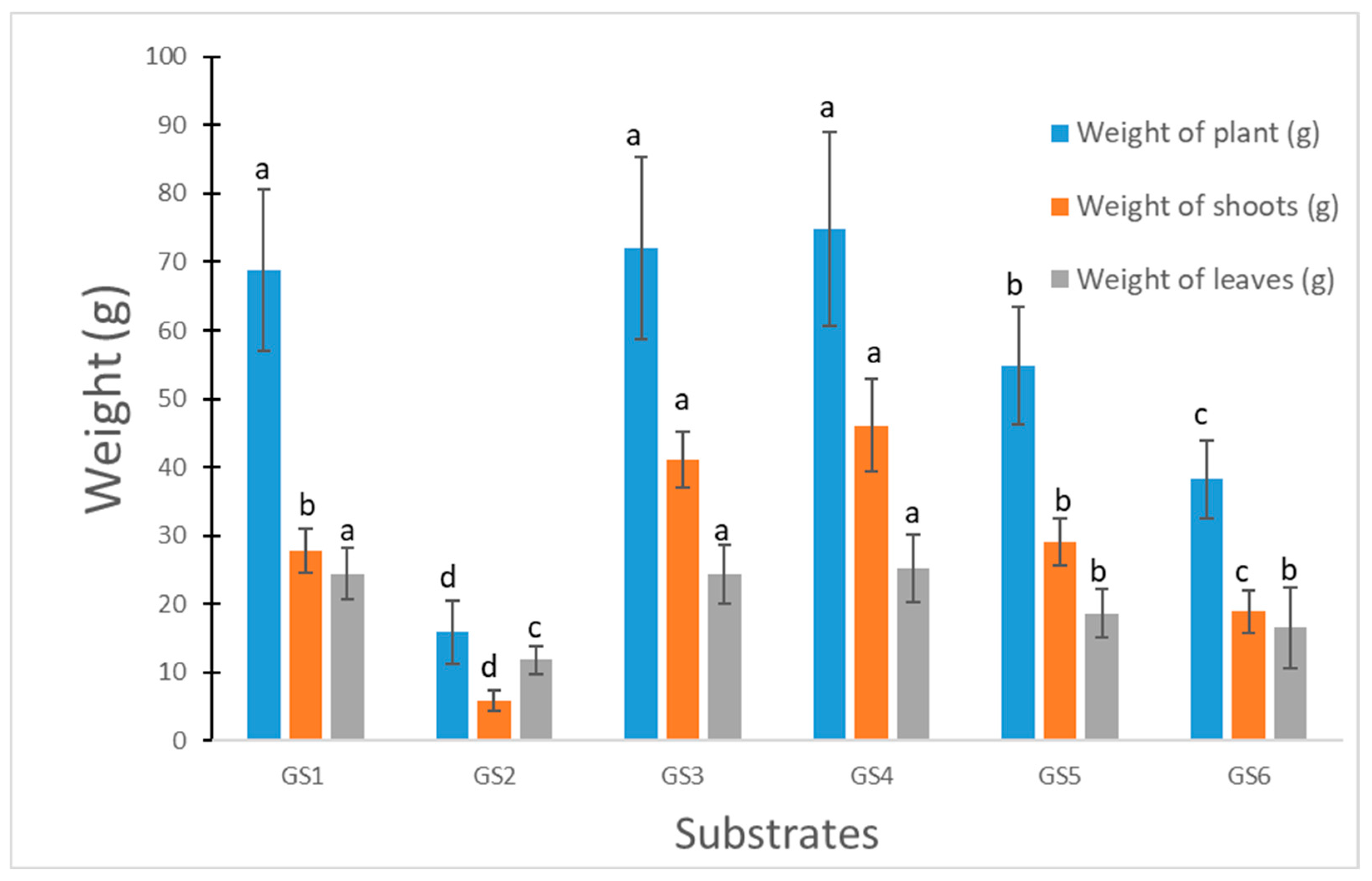
The plant growth parameters are presented in Figure 1 and Table 2, showing that treatments where peat was replaced at 60% or 80% (GS3 and GS4, respectively) consistently resulted in the highest total weight of plants, showing no significant differences from the GS1 treatment, where only peat and perlite were added to the growing medium in similar amounts. On the other hand, these same treatments (e.g., GS3 and GS4) resulted in significantly higher weights of shoots and leaves compared to all the other treatments. Conversely, the treatment where peat was completely replaced by manure (GS2) showed the lowest overall values for all recorded parameters, indicating that excessive manure content in the growing medium impairs plant performance. Moreover, SPAD index values were highest in the treatment where manure completely replaced peat (GS2), while the dry weight of the whole plants increased when manure was applied at rates between 40% and 80% (Table 2). Finally, the dry weight of shoots and leaves benefited from the GS5 treatment, where plants were treated with moderate rates of manure (40%). Our findings suggest that peat substitution with manure is effective at specific application rates (at 60% or 80%), whereas lower rates or complete substitution should be avoided. Plant growth inhibition in these cases may be associated with increased salinity in the growing medium when peat is completely replaced by manure (GS1) or by insufficient nutrient availability at low rates of manure (application at 40% or 20%; GS5 and GS6, respectively).
The proximate composition of the studied samples is presented in Table 3. Our results indicate that the growth medium had a varied effect on the nutritional value of edible plant tissues depending on the substrate composition. In particular, the highest content of protein and fat and the highest energetic value in leaves were recorded in the GS1 treatment (no manure added). Conversely, ash and carbohydrate content in leaves were highest in the GS4 and GS6 treatments, respectively. However, it should be noted that no significant differences were recorded among the studied treatments for ash content (except for the GS1 treatment, where the lowest overall value was measured), nor among the GS1 to GS4 treatments for fat content. On the other hand, profound differences were recorded for protein and carbohydrate content, where the GS1 and GS6 treatments, respectively, were significantly different from the rest of the treatments. Finally, the energetic value of leaves did not differ significantly between the GS1 and GS2 treatments. Regarding the nutritional value of shoots, the ash and protein content were highest in the GS1 treatment; no significant differences were recorded between the GS3 and GS4 treatments for the former parameter (Table 3). Conversely, the fat and carbohydrate contents in shoots were highest in the GS3 and GS6 treatments, respectively, while the latter treatment also showed the highest energetic value. Moreover, the fat and protein contents of leaves were higher than those of shoots across the respective treatments, whereas the opposite trend was recorded in the case of carbohydrates. These findings suggest that the addition of manure to the growth medium does not have a consistent effect on the nutritive value of leaves and shoots, except for carbohydrate content, which was favored by manure, especially at low application rates (20%; GS6 treatment). Moreover, the absence of manure (GS1 treatment) resulted in a higher protein content in both leaves and shoots compared to the rest of the treatments, as well as a higher fat content in the leaves.
The mineral composition of purslane leaves and shoots is presented in Table 4. The nitrogen content, both in leaves and shoots, showed decreasing trends with the addition of manure to the growing medium, especially when manure replaced peat by 40% or 20% (in the case of leaves) or by 80%, 40%, and 20% (in the case of shoots). This finding is consistent with the nutritional value of the purslane plant tissues determined in our study, since protein content was highest in the GS1 treatment for both leaves and shoots, while the treatments with the lowest protein content coincided with those where nitrogen content was the lowest (see Table 3). In contrast, our results showed a beneficial effect of manure addition on P uptake and P content in both leaves and shoots compared to the GS1 treatment, where no manure was added. Specifically, the highest P content was recorded in shoots and leaves with a partial substitution of peat at 20% and 40%, respectively (Table 4). Moreover, the lowest P content was recorded in the GS1 treatment, where no manure was added, both in leaves and shoots. The K content in leaves was highest when peat was completely replaced by manure (GS2 treatment), while lower amounts of manure (40% and 20%) resulted in a significant decrease compared to the control treatment. On the other hand, the K content in shoots was highest in the GS1, GS2, and GS3 treatments without significant differences among them, whereas the lowest rate of manure (20%; GS6) decreased the K content.
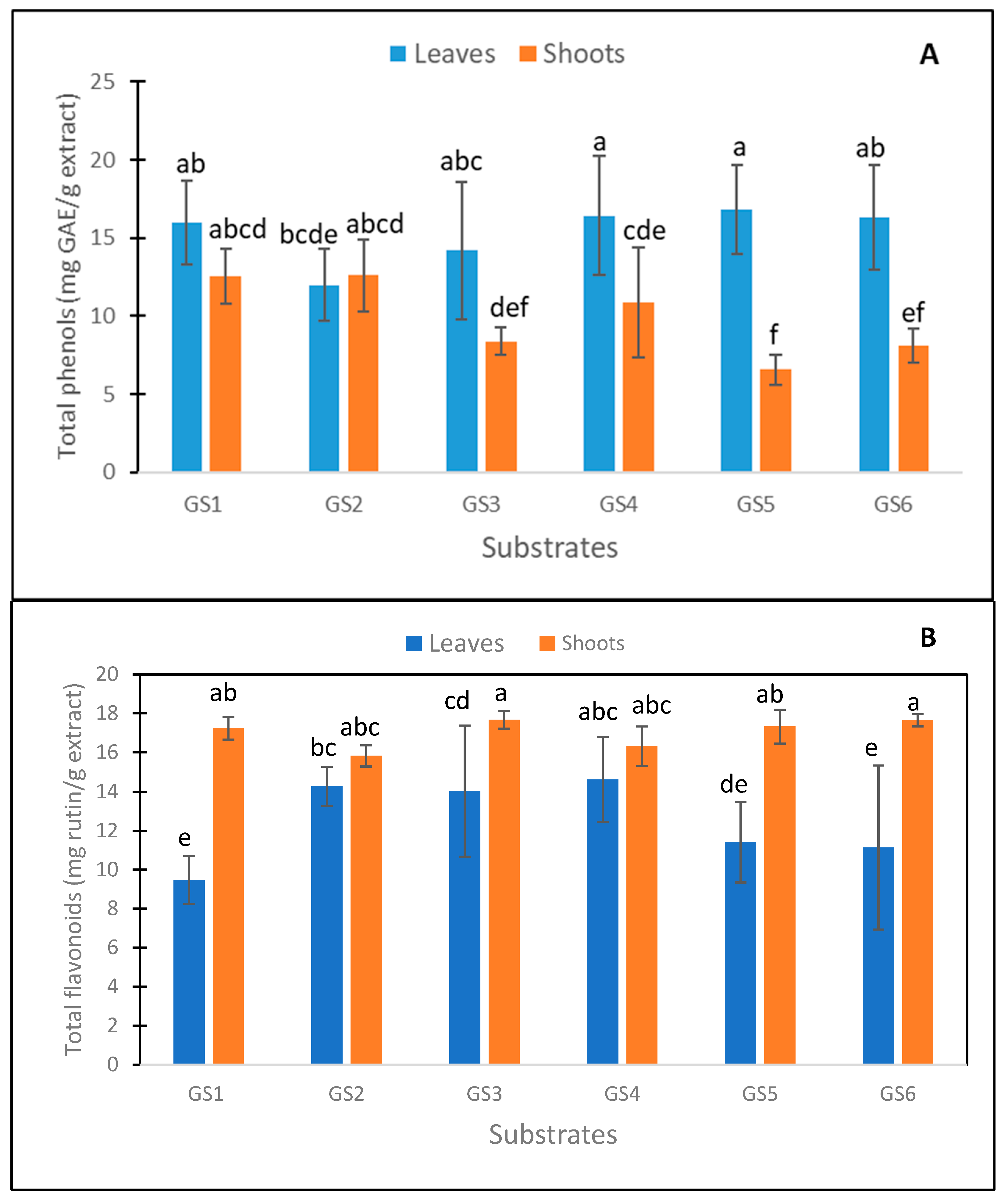
The total phenol and flavonoid contents and the antioxidant activity of the studied samples are presented in Figure 2 and Table 5. A varied response was recorded regarding polyphenol content and antioxidant activity in relation to the growth medium composition. In the case of leaves, the partial substitution of peat with 40% manure (GS5 treatment) resulted in the highest overall content of total phenols, although no significant differences were recorded among the treatments. This finding was also accompanied by the highest antioxidant activity in the DPPH and ABTS assays. Similarly, the GS6 treatment, which also recorded high total phenol content, showed the highest antioxidant activity in the FRAP assay. The flavonoid content was highest in the GS4 treatment (substitution of peat by 60%), whereas the GS1 and GS6 treatments had significantly lower flavonoid contents. In the case of shoots, the total phenol content was highest in the GS1 and GS2 treatments. This finding was also reflected in the antioxidant activity measured by DPPH and ABTS assays, while for the FRAP assay, the highest value was recorded in the GS4 treatment. Finally, the total flavonoid content increased in the GS3 and GS6 treatments, without being significantly different from the rest of the treatments.
The levels of two oxidative stress markers, namely H2O2 and MDA, were also evaluated, and the results are presented in Table 6. These enzymes are associated with oxidative damage, and high concentrations indicate oxidative stress conditions that induce cellular damage. A varied response was observed depending on the growing medium composition and the plant tissue for both markers. In particular, manure application at 100% (GS2 treatment) resulted in a significant decrease in H2O2 content in purslane leaves, whereas the lowest rate of manure (20%, GS6 treatment) increased its content significantly, resulting in the highest overall value. In the case of shoots, low to high rates of manure (20% to 80%) efficiently reduced H2O2 content compared to growing substrates where manure or peat were applied at the highest rates (e.g., GS1 and GS2 treatments, respectively). Specifically, substrates where peat was applied at the highest rate resulted in higher values for both markers. On the other hand, low- to mid-range rates of manure (40%; GS5 treatment) significantly reduced MDA content in both purslane leaves and shoots, whereas the GS3, GS4, and GS1 treatments resulted in the highest content of MDA in leaves and shoots, respectively. Moreover, for both markers, shoots showed a lower content than leaves, regardless of the treatment.

4. Discussion

The increasing loss of biodiversity in agroecosystems due to monoculture or the cropping of a limited number of species has led the scientific community to turn its attention to the exploitation of wild edible species [49,57]. Due to their rich nutritional profiles and high agronomic plasticity, these plants may serve as promising alternatives to conventional crops, particularly within the demanding context of intensified modern horticulture and food security. Investigating these species is essential for conserving agrobiodiversity, which is currently threatened by the prevalence of monocultures, the reliance on high-yielding hybrids, and the disturbance of natural habitats due to anthropogenic activities. Therefore, numerous wild species have been assessed across a variety of cultivation systems during the last few years. Moreover, the intensification of cropping systems is associated with the irrational use and exhaustion of natural resources and inputs. Peat, which is the most common growing medium for horticultural crops, is considered a non-environmentally friendly resource, and several efforts have been made to evaluate the potential use of other materials, such as wood fiber, spent coffee grounds, and brewer’s spent grains, as peat substitutes [8,9,10,11,12]. In the present work we aimed to evaluate the potential use of manure as a peat substitute in the growing medium for purslane cultivation.
The meta-analysis by Du et al. [30] indicates that the application of manure is expected to increase crop yield by an average of 7.6% when compared to mineral fertilizers, which aligns with our study, where the application of manure at 80% or 60% increased yields by 4.8% and 8.9%, respectively, but they were not significantly different from the control. Moreover, Rahimi et al. [58] suggested that the combination of manure with chemical fertilizers resulted in a significant increase in the seed yield and harvest index of milk thistle compared to the sole application of either manure or chemical fertilizers. Hajisolomou et al. [53] also reported that the application of organic fertilizers to purslane plants as a base dressing increased the fresh biomass yield to levels similar to plants treated with base and side dressing of conventional fertilizers. This finding highlights the slower release of nutrients in manure-treated plants, which meets the plants’ requirements throughout the growing period, whereas side dressing is essential with conventional fertilizers, even in plants with a short growth cycle like purslane. The study by Hosseinzadeh et al. [59] also indicates the important role of manure in water retention, since the application of farmyard manure combined with chemical fertilizers and inoculation with arbuscular mycorrhiza fungi (AMF) significantly increased the grain yield in purslane plants grown under deficit irrigation conditions. On the other hand, Ali et al. [60] recorded higher values of dry biomass in Cichorium intybus L. plants when they were fertilized with chemical fertilizers compared to organic manure application, especially before and during the flowering stage, while Carrascosa et al. [52] found a similar trend in purslane plants treated with increasing rates of inorganic fertilizers compared to a compost tea fertilizer. This difference could possibly be due to the higher availability of nutrients in plants treated with high rates of side dressing with chemical fertilizers compared to either untreated plants or plants treated with a base dressing of manure, whereas in our study all plants received the same amounts of nutrients through fertigation, and manure served mostly as a soil-improving agent. Moreover, Ugur and Kocamanoglou [61] tested the effect of peat addition to a perlite-based growing medium at rates between 33% and 100% and reported a significant increase in the yield of purslane plants compared to a growing medium with 100% perlite. Considering that all plants received the same fertilizer treatments, this finding suggests the possible amending properties of peat in the growing medium in terms of water and nutrient availability. Therefore, partial substitution of peat with manure at rates of 60% (GS3) and 80% (GS4) optimizes plant performance, matching or exceeding the productivity of traditional peat–perlite media (GS1), probably due to a better nutrient balance and less stressful conditions. On the other hand, the use of 100% manure as a peat substitute is not recommended since it impairs plant growth, probably due to saline conditions and the poorer physicochemical properties of the growing medium associated with poor aeration and ammonia toxicity.
According to the literature, manure application is expected to improve the nutritional value of the edible parts of vegetables, such as onions, where the addition of poultry manure at 10 t/ha significantly improved the proximate composition of bulbs [62]. Similarly to in our study, poultry manure at 30 kg/ha significantly improved ash and carbohydrate content in the leaves of three amaranth species, while inorganic fertilizers increased protein content [63]. The authors suggested that this finding could be due to the higher availability of nitrogen for plants treated with inorganic fertilizers compared to manure-treated ones. However, it should be noted that in our study, all plants were equally fertigated with a balanced nutrient solution (200 ppm N-P-K); therefore, such an effect could be associated with the higher organic matter content of peat compared to manure, which facilitates better retention of nitrogen within the medium over the growing period, as well as with the microbial immobilization of nitrogen in manure-based substrates [64]. Moreover, Ezeocha et al. [65] suggested that the effects of manure application on the proximate composition of yam depend on the application rate, with excessive amounts of poultry manure having a negative effect on ash and fat content and beneficial effects on protein and fiber content. The positive effects of manure on ash content in purslane leaves recorded in our study could be due to the mineral composition of manure, which facilitates the uptake of nutrients by plants and their deposition in leaves [66]. According to Oluwole et al. [67], the effect of organic manure on the proximate composition of African lettuce (Launaea taraxacifolia (Wild.) Amin Ex. C Jeffrey) varied depending on the type of manure (e.g., poultry and pig manure or cow dung). This finding highlights the importance of manure composition and the availability of nutrients for plant growth and development. Considering that composition may differ even for the same type of manure depending on animal rations, this explains the contradictory results that can be found in the literature. The findings of our study could be associated with better growing conditions in the peat-based substrate compared to sole manure or substrates where peat was partially substituted by manure. Crop performance (e.g., fresh weight of whole plants, shoots, and leaves) increased or was similar to pure peat when peat was replaced with manure by 80% to 60% (GS3 and GS4 treatments), thus indicating probable better nutrient availability and physicochemical properties of the growing medium, which may also regulate the nutritional value of plant tissues. Moreover, our findings suggest a trade-off in the growing medium composition; pure peat substrate (GS1) is superior for protein and fat biosynthesis, while manure-enriched media, especially when applied at low rates (GS6), are more beneficial for carbohydrate content. The inconsistent results of manure on nutritive value also suggest that while peat replacement with manure seems to be an effective sustainable practice for biomass production, the quality of the final products should also be taken into account, and tailor-made fertigation regimes may be required to improve both yield and quality.
In terms of mineral composition, manure application increased nitrogen content in the roots of yellow poplar (Liriodedron tulipifera Lin.) but hardly affected the content of nitrogen in leaves and stems [68]. On the other hand, Geng et al. [69] suggested that manure application increased N uptake and grain yield in maize plants. Therefore, this contradiction could be justified by the longer growing period of maize compared to purslane, which allows for the decomposition of the manure and the increase in nitrogen availability in the plant’s rhizosphere, as well as reduced leaching of nitrogen when mineral fertilizers are partially substituted with organic ones [70]. Moreover, according to Ren et al. [71], the substitution of mineral fertilizers with high rates of manure may result in low crop yield and nitrogen use efficiency, since the mineralization of organic nitrogen takes place over a longer period, thus affecting nitrogen availability. This finding is consistent with our study, where a short growth species such as purslane was tested. Regarding P content, the observed increase in P uptake when manure was added to the growing medium can probably be attributed to better P availability in manure compared to peat, as all treatments received additional fertigation through a nutrient solution. This explains the increase in P content in the leaves and shoots of purslane plants treated with manure at various rates, compared to in plants where no manure was added. Moreover, Lu et al. [72] suggested that the addition of organic matter through manure may increase P availability by improving the overall physicochemical properties of the growing medium. This finding could justify our results, since the partial substitution of peat with manure may improve the overall physicochemical properties of the growing medium compared to media including only peat or only manure (e.g., treatments GS1 and GS2, respectively). It should also be noted that leaves contained higher amounts of N and P and lower amounts of K, regardless of the treatment. This finding is consistent with literature reports where N and P contents were also detected in higher amounts in leaves of purslane plants compared to the shoots, whereas the opposite trend was recorded for K content [53]. The increased levels of N and P in leaves indicate the translocation of these macronutrients from shoots to leaves, which are more photosynthetically active [73], while shoots serve as a K pool to remobilize it from older to newer leaves [74,75]. Therefore, it could be suggested that partial substitution needs further consideration, since high manure application rates (80–60%; GS3 and GS4 treatments) may induce biomass biosynthesis but compromise fat and protein accumulation in plant tissues, whereas lower rates (40–20%; GS5 and GS% treatments) boosted P and carbohydrate accumulation.
According to Chrysargyris et al. [76], partial replacement of peat with organic residues may increase total phenol and flavonoid content in purslane plants, especially when peat is replaced by 40%; this finding is in line with our study for total phenols in leaves only. Moreover, Gholami et al. [77] suggested that manure induces the biosynthesis of shikimic acid, which is the precursor of polyphenols, a finding that could justify the variable content of total phenol and flavonoid under specific manure rates in our study. Our results are also corroborated by the study of Liwanda et al. [78], who found no significant effect of different application rates of cow manure on total phenol content in the aerial parts of purslane plants, whereas all manure application rates yielded a significantly higher content of total flavonoids compared to the control. The same authors suggested a variable response of cow manure rates on antioxidant activity depending on the assay (e.g., DPPH, FRAP, ABTS, CuPRAC). Similarly, Oluwole et al. found a significant increase in total phenols and flavonoids content in L. taraxicifolia for various types of manure compared to the untreated control, while the different manure types had a varied response to total phenol and flavonoid content (e.g., poultry and cow dung had a stronger effect than pig manure on these compounds). In contrast, Hajisolomou et al. [53] reported that the application of organic fertilizers as a base or base and side dressing either decreased or had no significant effect on total phenol and flavonoid content in the aerial parts (leaves and shoots) of purslane plants. In the same line, de Assis et al. [35] did not record a significant effect of organic manure on total phenols content in Melissa officinalis L. leaves, whereas a negative effect on total flavonoids content was observed. Moreover, Alu’datt et al. [79] tested different growing media in purslane cultivation in a closed soilless cultivation system, and they found that increasing the amounts of peat in the growing substrate (combined either with perlite or tuff) decreased the total phenol content in purslane leaves, while the cultivation solely in peat resulted in very low values for both total phenols and flavonoids. The same authors also suggested that polyphenol content was critical for antioxidant activity, and those treatments with the highest total phenol and flavonoid content also recorded the highest antioxidant activity assayed via the DPPH method. According to the literature, polyphenol content is usually associated with antioxidant activity due to the capacity of such compounds to scavenge free radicals [26]. However, considering that the various assays for antioxidant activity determination differ in their reaction mechanisms [80], an increase in polyphenol content is not always accompanied by increased activity across all assays, and a varied response should be expected. This was the case in our study, where the highest antioxidant activity for the FRAP assay did not coincide with the highest polyphenol content. It should be noted that the use of high rates of manure (e.g., 80% of manure; GS3) or pure manure (GS2 treatment) in the growing medium consistently yielded the lowest values of antioxidant activity in leaves for all the assays, which was also accompanied by impaired plant growth, especially for the GS2 treatment. This finding indicates that high manure rates (100%) are probably associated with stress conditions that result in impaired plant growth, while lesser amounts of manure (80%) may induce the defense mechanisms of plants, which mitigate the stress conditions more effectively than the rest of the treatments.
H2O2 and MDA are associated with oxidative damage, and high concentrations indicate oxidative stress conditions that induce cellular damage [81,82]. Moreover, an increase in their content shows that the defense mechanisms of plants are overwhelmed and they cannot scavenge the free radicals produced under stress conditions [83]. Therefore, the increased content of antioxidant compounds, such as polyphenols, may indicate stress conditions that induce the biosynthesis of H2O2 and MDA, leading to their accumulation. This was the case in our study, where a high content of total phenols and flavonoids was associated with high amounts of H2O2 and MDA in both leaves and shoots, although this trend was not consistent across all treatments. Similar results were recorded by Chrysargyris et al. [84] only for the MDA content of the aerial parts of purslane plants grown under different nitrogen levels, while Hajisolomou et al. [53] reported a similar trend for H2O2 in purslane aerial parts treated with conventional and organic fertilizers. These findings indicate the complexity of plants’ defense mechanisms, since, apart from polyphenols, other compounds may also contribute to free radical scavenging. Therefore, it should not be expected that increased levels of H2O2 and MDA will always be accompanied by high polyphenol amounts in the studied tissues, considering that the concentration of other phytochemicals may increase to help support the plant’s defense against stressors. Although manure application is often suggested to mitigate stress conditions and consequently result in reduced levels of H2O2 and MDA [85,86], our results showed a lack of consistency depending on the marker or the plant part. This could be attributed to differences in manure composition or the nature of the studied species, which has a short growth cycle and is considered stress-tolerant.

5. Conclusions

Peat substitution with more environmentally friendly materials in the growing media of horticultural crops is of major importance for the sustainability of crop production. Partial substitution of peat with organic materials such as manure is a promising strategy that may facilitate not only a reduction in the environmental burden of bulky waste but also an increase in the added value of crops within the circular economy context. The adopted schemes should consider the substitution of peat at mid-range levels (substitution of peat by up to 60%), which results in a high yield and high-quality final products. In conclusion, our results highlight that peat substitution in the growing medium for purslane cultivation is a viable agronomic practice that may offer high yields without compromising the quality of the edible product. However, considering the short growth cycle of the species and its resilience against abiotic stressors, more research is needed with additional species and different types of manure to consolidate the positive effects of manure and design tailor-made growing media for horticultural crops.

Author Contributions

Conceptualization, S.A.P.; methodology, N.P., A.C., N.T. and S.A.P.; software, N.P. and A.C.; validation, N.P. and A.C.; formal analysis, N.P. and A.C.; investigation, N.P. and A.C.; resources, N.T. and S.A.P.; data curation, N.P. and S.A.P.; writing—original draft preparation, S.A.P.; writing—review and editing, S.A.P. and N.T.; visualization, S.A.P.; supervision, N.T. and S.A.P.; project administration, S.A.P.; funding acquisition, N.T. and S.A.P. All authors have read and agreed to the published version of the manuscript.

Funding

Financial support was provided by PRIMA (grant Number Prima2019-11, PRIMA/0009/2019, P2P/PRIMA/1218/0006, 01DH20006, Prima2019-12, STDF Valuefarm, 18-3-2021, TUBITAK-119N494, 301/18 October 2020, PCI2020-112091) a program supported by the European Union with co-funding by the Funding Agencies RIF—Cyprus and by the General Secretariat for Research and Technology of Greece.

Data Availability Statement

The original contributions presented in this study are included in the article. Further inquiries can be directed to the corresponding author.

Conflicts of Interest

The authors declare no conflicts of interest.

References

  1. Li, M.; Zhou, S.; Shen, S.; Wang, J.; Yang, Y.; Wu, Y.; Chen, F.; Lei, Y. Climate-smart irrigation strategy can mitigate agricultural water consumption while ensuring food security under a changing climate. Agric. Water Manag. 2024, 292, 108663. [Google Scholar] [CrossRef]
  2. Bacchetta, L.; Visioli, F.; Cappelli, G.; Caruso, E.; Martin, G.; Nemeth, E.; Bacchetta, G.; Bedini, G.; Wezel, A.; van Asseldonk, T.; et al. A manifesto for the valorization of wild edible plants. J. Ethnopharmacol. 2016, 191, 180–187. [Google Scholar] [CrossRef]
  3. Ouda, S.; Zohry, A.E.H.; Noreldin, T. Deficit Irrigation: A Remedy for Water Scarcity; Springer Nature: Cham, Switzerland, 2020; ISBN 9783030355869. [Google Scholar]
  4. Brooker, R.W.; Hawes, C.; Iannetta, P.P.M.; Karley, A.J.; Renard, D. Plant diversity and ecological intensification in crop production systems. J. Plant Ecol. 2023, 16, rtad015. [Google Scholar] [CrossRef]
  5. Gavilanes-Terán, I.; Jara-Samaniego, J.; Idrovo-Novillo, J.; Bustamante, M.A.; Pérez-Murcia, M.D.; Pérez-Espinosa, A.; López, M.; Paredes, C. Agroindustrial compost as a peat alternative in the horticultural industry of Ecuador. J. Environ. Manag. 2016, 186, 79–87. [Google Scholar] [CrossRef]
  6. Hernández, T.; Chocano, C.; Moreno, J.L.; García, C. Use of compost as an alternative to conventional inorganic fertilizers in intensive lettuce (Lactuca sativa L.) crops-Effects on soil and plant. Soil Tillage Res. 2016, 160, 14–22. [Google Scholar] [CrossRef]
  7. Gruda, N.S. Increasing Sustainability of Growing Media Constituents and Stand-Alone Substrates in Soilless Culture Systems. Agronomy 2019, 9, 298. [Google Scholar] [CrossRef]
  8. Hirschler, O.; Thrän, D. Peat Substitution in Horticulture: Interviews with German Growing Media Producers on the Transformation of the Resource Base. Horticulturae 2023, 9, 919. [Google Scholar] [CrossRef]
  9. Zhang, J.-H.; Tian, G.-M.; Zhou, G.-D.; He, M.-M.; Wang, F.; Yao, J.-H. Evaluation of organic solid wastes composts as peat substitutes for seedling production. J. Plant Nutr. 2013, 36, 1780–1794. [Google Scholar] [CrossRef]
  10. Leiber-Sauheitl, K.; Bohne, H.; Böttcher, J. First Steps toward a Test Procedure to Identify Peat Substitutes for Growing Media by Means of Chemical, Physical, and Biological Material Characteristics. Horticulturae 2021, 7, 164. [Google Scholar] [CrossRef]
  11. Sdao, A.E.; Cacini, S.; Loconsole, D.; Conversa, G.; Cristiano, G.; Elia, A.; De Lucia, B. Partial Replacement of Peat: Effects on Substrate Physico-Hydrological Properties and Sage Growth. Plants 2025, 14, 2801. [Google Scholar] [CrossRef] [PubMed]
  12. Chrysargyris, A.; Antoniou, O.; Xylia, P.; Petropoulos, S.; Tzortzakis, N. The use of spent coffee grounds in growing media for the production of Brassica seedlings in nurseries. Environ. Sci. Pollut. Res. 2021, 28, 24279–24290. [Google Scholar] [CrossRef] [PubMed]
  13. Stichnothe, H. Life cycle assessment of peat for growing media and evaluation of the suitability of using the Product Environmental Footprint methodology for peat. Int. J. Life Cycle Assess. 2022, 27, 1270–1282. [Google Scholar] [CrossRef]
  14. Taparia, T.; Hendrix, E.; Nijhuis, E.; De Boer, W.; Van Der Wolf, J. Circular alternatives to peat in growing media: A microbiome perspective. J. Clean. Prod. 2021, 327, 129375. [Google Scholar] [CrossRef]
  15. Almaraz-Sánchez, I.; Amaro-Reyes, A.; Acosta-Gallegos, J.A.; Mendoza-Sánchez, M. Processing Agroindustry By-Products for Obtaining Value-Added Products and Reducing Environmental Impact. J. Chem. 2022, 2022, 3656932. [Google Scholar] [CrossRef]
  16. Ondoño, S.; Martínez-Sánchez, J.J.; Moreno, J.L. Evaluating the growth of several Mediterranean endemic species in artificial substrates: Are these species suitable for their future use in green roofs? Ecol. Eng. 2015, 81, 405–417. [Google Scholar] [CrossRef]
  17. Česonienė, L.; Krikštolaitis, R.; Daubaras, R.; Mažeika, R. Effects of Mixes of Peat with Different Rates of Spruce, Pine Fibers, or Perlite on the Growth of Blueberry Saplings. Horticulturae 2023, 9, 151. [Google Scholar] [CrossRef]
  18. Adamczewska-Sowińska, K.; Sowiński, J.; Jamroz, E.; Bekier, J. The effect of peat replacement in horticulture media by willow (Salix viminalis L.) biomass compost for cucumber transplant production. Front. Plant Sci. 2024, 15, 1348073. [Google Scholar] [CrossRef]
  19. Atiyeh, R.M.; Edwards, C.A.; Subler, S.; Metzger, J.D. Pig manure vermicompost as a component of a horticultural bedding plant medium: Effects on physicochemical properties and plant growth. Bioresour. Technol. 2001, 78, 11–20. [Google Scholar] [CrossRef]
  20. Grigatti, M.; Giorgioni, M.E.; Ciavatta, C. Compost-based growing media: In X uence on growth and nutrient use of bedding plants. Bioresour. Technol. 2007, 98, 3526–3534. [Google Scholar] [CrossRef]
  21. Urra, J.; Alkorta, I.; Garbisu, C. Potential benefits and risks for soil health derived from the use of organic amendments in agriculture. Agronomy 2019, 9, 542. [Google Scholar] [CrossRef]
  22. Verma, A.K.; Yadav, M.K. An overview of the effect of integrated nutrient management on vegetable crops. Agric. Biol. Res. 2024, 40, 1222–1225. [Google Scholar] [CrossRef]
  23. Goldan, E.; Nedeff, V.; Barsan, N.; Culea, M.; Panainte-lehadus, M.; Mosnegutu, E.; Tomozei, C.; Chitimus, D.; Irimia, O. Assessment of Manure Compost Used as Soil Amendment—A Review. Processes 2023, 11, 1167. [Google Scholar] [CrossRef]
  24. Wystalska, K.; Malińska, K.; Sobik-Szołtysek, J.; Dróżdż, D.; Meers, E. Properties of Poultry-Manure-Derived Biochar for Peat Substitution in Growing Media. Materials 2023, 16, 6392. [Google Scholar] [CrossRef] [PubMed]
  25. Vukobratović, M.; Lončarić, Z.; Vukobratović, Ž.; Mužić, M. Use of Composted Manure as Substrate for Lettuce and Cucumber Seedlings. Waste Biomass Valorization 2018, 9, 25–31. [Google Scholar] [CrossRef]
  26. Rostaei, M.; Fallah, S.; Carrubba, A.; Lorigooini, Z. Organic manures enhance biomass and improve content, chemical compounds of essential oil and antioxidant capacity of medicinal plants: A review. Heliyon 2024, 10, e36693. [Google Scholar] [CrossRef]
  27. Krauss, M.; Berner, A.; Perrochet, F.; Frei, R.; Niggli, U.; Mäder, P. Enhanced soil quality with reduced tillage and solid manures in organic farming—A synthesis of 15 years. Sci. Rep. 2020, 10, 4403. [Google Scholar] [CrossRef]
  28. Parwada, C.; Chigiya, V.; Ngezimana, W.; Chipomho, J. Growth and Performance of Baby Spinach (Spinacia oleracea L.) Grown under Different Organic Fertilizers. Int. J. Agron. 2020, 2020, 8843906. [Google Scholar] [CrossRef]
  29. Hasnain, M.; Chen, J.; Ahmed, N.; Memon, S.; Wang, L.; Wang, Y.; Wang, P. The Effects of Fertilizer Type and Application Time on Soil Properties, Plant Traits, Yield and Quality of Tomato. Sustainability 2020, 12, 9065. [Google Scholar] [CrossRef]
  30. Du, Y.; Cui, B.; Zhang, Q.; Wang, Z.; Sun, J.; Niu, W. Effects of manure fertilizer on crop yield and soil properties in China: A meta-analysis. Catena 2020, 193, 104617. [Google Scholar] [CrossRef]
  31. Jahanbakhshi, A.; Kheiralipour, K. Influence of vermicompost and sheep manure on mechanical properties of tomato fruit. Food Sci. Nutr. 2019, 7, 1172–1178. [Google Scholar] [CrossRef] [PubMed]
  32. Bustamante, M.A.; Gomis, M.; Murcia, P.; Gangi, D.; Ceglie, F.G.; Paredes, C.; Pérez-Espinosa, A.; Bernal, M.P.; Moral, R. Use of livestock waste composts as nursery growing media: Effect of a washing pre-treatment. Sci. Hortic. 2021, 281, 109954. [Google Scholar] [CrossRef]
  33. Antonious, G.F.; Turley, E.T.; Hill, R.R.; Snyder, J.C. Chicken manure enhanced yield and quality of field-grown kale and collard greens. J. Environ. Sci. Health Part B Pestic. Food Contam. Agric. Wastes 2014, 49, 299–304. [Google Scholar] [CrossRef] [PubMed]
  34. Fangueiro, D.; Alvarenga, P.; Fragoso, R. Horticulture and Orchards as New Markets for Manure Valorisation with Less Environmental Impacts. Sustainability 2021, 13, 1436. [Google Scholar] [CrossRef]
  35. De Assis, R.M.A.; Carneiro, J.J.; Medeiros, A.P.R.; de Carvalho, A.A.; da Cunha Honorato, A.; Carneiro, M.A.C.; Bertolucci, S.K.V.; Pinto, J.E.B.P. Arbuscular mycorrhizal fungi and organic manure enhance growth and accumulation of citral, total phenols, and flavonoids in Melissa officinalis L. Ind. Crops Prod. 2020, 158, 112981. [Google Scholar] [CrossRef]
  36. Abdipour, M.; Hosseinifarahi, M.; Najafian, S. Effects of Humic Acid and Cow Manure Biochar (CMB) in Culture Medium on Growth and Mineral Concentrations of Basil Plant. Int. J. Hortic. Sci. Technol. 2019, 6, 27–38. [Google Scholar] [CrossRef]
  37. Zhang, T.; Hou, Y.; Meng, T.; Ma, Y.; Tan, M.; Zhang, F.; Oenema, O. Replacing synthetic fertilizer by manure requires adjusted technology and incentives: A farm survey across China. Resour. Conserv. Recycl. 2021, 168, 105301. [Google Scholar] [CrossRef]
  38. Elia, A.; Santamaria, P. Biodiversity in vegetable crops: A heritage to save. The case of the Puglia region. Ital. J. Agron. 2013, 8, 21–34. [Google Scholar] [CrossRef]
  39. Jacobsen, S.E.; Sørensen, M.; Pedersen, S.M.; Weiner, J. Feeding the world: Genetically modified crops versus agricultural biodiversity. Agron. Sustain. Dev. 2013, 33, 651–662. [Google Scholar] [CrossRef]
  40. Thrupp, L.A. Linking agricultural biodiversity and food security: The valuable role of agrobiodiversity for sustainable agriculture. Int. Aff. 2000, 76, 265–281. [Google Scholar] [CrossRef]
  41. De Boni, A.; D’Amico, A.; Acciani, C.; Roma, R. Crop Diversification and Resilience of Drought-Resistant Species in Semi-Arid Areas: An Economic and Environmental Analysis. Sustainability 2022, 14, 9552. [Google Scholar] [CrossRef]
  42. Corrêa, R.C.G.; Di Gioia, F.; Ferreira, I.C.F.R.; Petropoulos, S.A. Wild greens used in the Mediterranean diet. In The Mediterranean Diet: An Evidence-Based Approach; Preedy, V., Watson, R., Eds.; Academic Press: London, UK, 2020; pp. 209–228. ISBN 9788578110796. [Google Scholar]
  43. Geraci, A.; Amato, F.; Di Noto, G.; Bazan, G.; Schicchi, R. The wild taxa utilized as vegetables in Sicily (Italy): A traditional component of the Mediterranean diet. J. Ethnobiol. Ethnomed. 2018, 14, 14. [Google Scholar] [CrossRef]
  44. Chatzopoulou, E.; Carocho, M.; Di Gioia, F.; Petropoulos, S.A. The beneficial health effects of vegetables and wild edible greens: The case of the mediterranean diet and its sustainability. Appl. Sci. 2020, 10, 9144. [Google Scholar] [CrossRef]
  45. Åhlberg, M.K. A profound explanation of why eating green (wild) edible plants promote health and longevity. Food Front. 2021, 2, 240–267. [Google Scholar] [CrossRef]
  46. Srivastava, R.; Srivastava, V.; Singh, A. Multipurpose Benefits of an Underexplored Species Purslane (Portulaca oleracea L.): A Critical Review. Environ. Manag. 2023, 72, 309–320. [Google Scholar] [CrossRef] [PubMed]
  47. Petropoulos, S.A.; Fernandes, Â.; Dias, M.I.; Pereira, C.; Calhelha, R.; Di Gioia, F.; Tzortzakis, N.; Ivanov, M.; Sokovic, M.; Barros, L.; et al. Wild and cultivated Centaurea raphanina subsp. mixta: A valuable source of bioactive compounds. Antioxidants 2020, 9, 314. [Google Scholar] [CrossRef]
  48. Mitroi, C.L. Purslane (Portulaca oleracea)-nutritional value and food uses. J. Agroaliment. Process. Technol. 2024, 30, 357–365. [Google Scholar] [CrossRef]
  49. Petropoulos, S.; Fernandes, Â.; Karkanis, A.; Ntatsi, G.; Barros, L.; Ferreira, I. Successive harvesting affects yield, chemical composition and antioxidant activity of Cichorium spinosum L. Food Chem. 2017, 237, 83–90. [Google Scholar] [CrossRef] [PubMed]
  50. Nastou, E.; Thalassinos, G.; Polyzos, N.; Antoniadis, V.; Petropoulos, S.A. The effect of nitrogen fertilization rate on growth and physiological parameters of three purslane genotypes grown in a soilless cultivation system. Acta Hortic. 2021, 1321, 125–132. [Google Scholar] [CrossRef]
  51. Montoya-García, C.O.; Volke-Haller, V.H.; Trinidad-Santos, A.; Villanueva-Verduzco, C. Change in the contents of fatty acids and antioxidant capacity of purslane in relation to fertilization. Sci. Hortic. 2018, 234, 152–159. [Google Scholar] [CrossRef]
  52. Carrascosa, A.; Pascual, J.A.; López-García, Á.; Romo-Vaquero, M.; De Santiago, A.; Ros, M.; Petropoulos, S.A.; Alguacil, M.D.M. Effects of inorganic and compost tea fertilizers application on the taxonomic and functional microbial diversity of the purslane rhizosphere. Front. Plant Sci. 2023, 14, 1159823. [Google Scholar] [CrossRef]
  53. Hajisolomou, E.; Neofytou, G.; Petropoulos, S.A.; Tzortzakis, N. The Application of Conventional and Organic Fertilizers During Wild Edible Species Cultivation: A Case Study of Purslane and Common Sowthistle. Horticulturae 2024, 10, 1222. [Google Scholar] [CrossRef]
  54. Petropoulos, S.; Fernandes, Â.; Ntatsi, G.; Levizou, E.; Barros, L.; Ferreira, I. Nutritional profile and chemical composition of Cichorium spinosum ecotypes. LWT Food Sci. Technol. 2016, 73, 95–101. [Google Scholar] [CrossRef]
  55. AOAC. Official Methods of Analysis of Association of Official Analytical Chemists; Horwitz, W., Latimer, G., Eds.; AOAC International: Gaithersburg, MD, USA, 2019; ISBN 0935584773. [Google Scholar]
  56. Chrysargyris, A.; Charalambous, S.; Xylia, P.; Litskas, V.; Stavrinides, M.; Tzortzakis, N. Assessing the Biostimulant Effects of a Novel Plant-Based Formulation on Tomato Crop. Sustainability 2020, 12, 8432. [Google Scholar] [CrossRef]
  57. Alexopoulos, A.A.; Marandos, E.; Assimakopoulou, A.; Vidalis, N.; Petropoulos, S.A.; Karapanos, I.C. Effect of Nutrient Solution pH on the Growth, Yield and Quality of Taraxacum officinale and Reichardia picroides in a Floating Hydroponic System. Agronomy 2021, 11, 1118. [Google Scholar] [CrossRef]
  58. Rahimi, A.; Kamali, M. Different planting date and fertilizing system effects on the seed yield, essential oil and nutrition uptake of Milk thistle (Silybum marianum (L.) Gaertn). Adv. Environ. Biol. 2012, 6, 1789–1796. [Google Scholar]
  59. Hosseinzadeh, H.M.; Ghalavand, A.; Boojar, M.M.; Modarres-Sanavy, S.A.M.; Mokhtassi-Bidgoli, A. Application of manure and biofertilizer to improve soil properties and increase grain yield, essential oil and ω 3 of purslane (Portulaca oleracea L.) under drought stress. Soil Tillage Res. 2021, 205, 104633. [Google Scholar] [CrossRef]
  60. Ali, Z.; Ganie, S.H.; Narula, A.; Abdin, M.Z.; Srivastava, P.S. Organic and inorganic fertilizers influence biomass production and esculin content in Cichorium intybus L. J. Phytol. 2012, 4, 55–60. [Google Scholar]
  61. Ugur, A.; Kocamanoglu, C. The effect of growing media and humic acid treatments on some plant properties of purslane (Portulaca oleracea L.). Appl. Ecol. Environ. Res. 2021, 19, 4431–4441. [Google Scholar] [CrossRef]
  62. Falodun, E.J.; Egharevba, R.K.A. Influence of Poultry Manure Rates and Spacing on Growth, Yield, Nutrient Concentration, Uptake and Proximate Composition of Onion (Allium cepa L.). Not. Sci. Biol. 2018, 10, 117–123. [Google Scholar] [CrossRef]
  63. Oyedeji, S.; Animasaun, D.A.; Bello, A.A.; Agboola, O.O. Effect of NPK and Poultry Manure on Growth, Yield, and Proximate Composition of Three Amaranths. J. Bot. 2014, 2014, 828750. [Google Scholar] [CrossRef]
  64. Rijk, I.; Ekblad, A.; Dahlin, A.S.; Enell, A.; Larsson, M.; Leroy, P.; Kleja, D.B.; Tiberg, C.; Hallin, S.; Jones, C. Biochar and peat amendments affect nitrogen retention, microbial capacity and nitrogen cycling microbial communities in a metal and polycyclic aromatic hydrocarbon contaminated urban soil. Sci. Total Environ. 2024, 936, 173454. [Google Scholar] [CrossRef]
  65. Ezeocha, V.C.; Nwogha, J.S.; Ohuoba, A.N.; Chukwu, L.I. Evaluation of Poultry Manure Application Rates on the Nutrient Composition of Dioscorea bulbifera (Aerial yam). Niger. Food J. 2014, 32, 92–96. [Google Scholar] [CrossRef]
  66. Mariangela, D.; Francesco, M. Long-term effects of organic amendments on soil fertility. A review. Agron. Sustain. Dev. 2010, 30, 401–422. [Google Scholar] [CrossRef]
  67. Oluwole, S.O.; Ogun, M.L.; Asokere, S.Y.; Akinbami, Z.O.; Onadipe, A.T.; Shuaib, F.E.E. Comparative Effects of Different Organic Manure on the Growth, Proximate, Mineral and Phytochemical Compositions of Launaea taraxacifolia (Wild.) Amin Ex. C Jeffrey (African Lettuce). J. Plant Sci. 2022, 17, 144–153. [Google Scholar] [CrossRef]
  68. Han, S.H.; An, J.Y.; Hwang, J.; Kim, S.B.; Park, B.B. The effects of organic manure and chemical fertilizer on the growth and nutrient concentrations of yellow poplar (Liriodendron tulipifera Lin.) in a nursery system. For. Sci. Technol. 2016, 12, 137–143. [Google Scholar] [CrossRef]
  69. Geng, Y.; Cao, G.; Wang, L.; Wang, S. Effects of equal chemical fertilizer substitutions with organic manure on yield, dry matter, and nitrogen uptake of spring maize and soil nitrogen distribution. PLoS ONE 2019, 14, e0219512. [Google Scholar] [CrossRef]
  70. Howe, J.A.; Mcdonald, M.D.; Burke, J.; Robertson, I.; Coker, H.; Gentry, T.J.; Lewis, K.L. Influence of fertilizer and manure inputs on soil health: A review. Soil Secur. 2024, 16, 100155. [Google Scholar] [CrossRef]
  71. Ren, K.; Sun, Y.; Zou, H.; Li, D.; Lu, C.; Duan, Y.; Zhang, W. Effect of replacing synthetic nitrogen fertilizer with animal manure on grain yield and nitrogen use efficiency in China: A meta-analysis. Front. Plant Sci. 2023, 14, 1153235. [Google Scholar] [CrossRef] [PubMed]
  72. Lu, Y.; Gao, Y.; Nie, J.; Liao, Y.; Zhu, Q. Substituting chemical P fertilizer with organic manure: Effects on double-rice yield, phosphorus use efficiency and balance in subtropical China. Sci. Rep. 2021, 11, 8629. [Google Scholar] [CrossRef]
  73. Li, L.; Chen, D.; Huang, X.; Liu, Q.; Liang, J.; Hu, J.; Liu, Q. Variations of nitrogen and phosphorus between leaf, stem and root in shrubland biomes and responses to climate and soil factors across the Hendguan mountains, China. Catena 2024, 241, 108008. [Google Scholar] [CrossRef]
  74. Medina, N.H.; Branco, M.L.T.; da Silveira, M.A.G.; Santos, R.B.B. Dynamic distribution of potassium in sugarcane. J. Environ. Radioact. 2013, 126, 172–175. [Google Scholar] [CrossRef]
  75. Ahmad, I.; Maathuis, F.J.M. Cellular and tissue distribution of potassium: Physiological relevance, mechanisms and regulation. J. Plant Physiol. 2014, 171, 708–714. [Google Scholar] [CrossRef]
  76. Chrysargyris, A.; Louka, S.; Petropoulos, S.A.; Tzortzakis, N. Soilless Cultivation of Portulaca oleracea Using Medicinal and Aromatic Plant Residues for Partial Peat Replacement. Horticulturae 2023, 9, 474. [Google Scholar] [CrossRef]
  77. Gholami, H.; Saharkhiz, M.J.; Fard, F.R.; Ghani, A.; Nadaf, F. Humic acid and vermicompost increased bioactive components, antioxidant activity and herb yield of Chicory (Cichorium intybus L.). Biocatal. Agric. Biotechnol. 2018, 14, 286–292. [Google Scholar] [CrossRef]
  78. Liwanda, N.; Nurinayah, I.; Mubayyinah, H.; Rinka, A.R.; Wahyuningrum, T.; Ashari, R.Z.; Aisyah, S.I. Effect of cow manure fertilizer on growth, polyphenol content, and antioxidant activity of purslane plants. Int. J. Clin. Biochem. Sci. 2023, 23, 43–54. [Google Scholar]
  79. Alu’datt, M.H.; Rababah, T.; Alhamad, M.N.; Al-tawaha, A.; Al-tawaha, A.R.; Gammoh, S.; Ereifej, K.I.; Al-karaki, G.; Hamasha, H.R.; Tranchant, C.C.; et al. Herbal yield, nutritive composition, phenolic contents and antioxidant activity of purslane (Portulaca oleracea L.) grown in different soilless media in a closed system. Ind. Crops Prod. 2019, 141, 111746. [Google Scholar] [CrossRef]
  80. Knez, E.; Kadac-Czapska, K.; Grembecka, M. Evaluation of Spectrophotometric Methods for Assessing Antioxidant Potential in Plant Food Samples—A Critical Approach. Appl. Sci. 2025, 15, 5925. [Google Scholar] [CrossRef]
  81. Morales, M.; Munné-bosch, S. Malondialdehyde: Facts and Artifacts. Plant Physiol. 2019, 180, 1246–1250. [Google Scholar] [CrossRef] [PubMed]
  82. Černý, M.; Habánová, H.; Berka, M.; Luklová, M.; Brzobohatý, B. Hydrogen Peroxide: Its Role in Plant Biology and Crosstalk with Signalling Networks. Int. J. Mol. Sci. 2018, 19, 2812. [Google Scholar] [CrossRef]
  83. Chrysargyris, A.; Hajisolomou, E.; Xylia, P.; Tzortzakis, N. Olive-mill and grape-mill waste as a substitute growing media component for unexploded vegetables production. Sustain. Chem. Pharm. 2023, 31, 100940. [Google Scholar] [CrossRef]
  84. Chrysargyris, A.; Xylia, P.; Zengin, G.; Tzortzakis, N. Purslane (Portulaca oleracea L.) Growth, Nutritional, and Antioxidant Status under Different Nitrogen Levels in Hydroponics. Horticulturae 2024, 10, 1007. [Google Scholar] [CrossRef]
  85. Liu, Y.; Lan, X.; Hou, H.; Ji, J.; Liu, X.; Lv, Z. Multifaceted Ability of Organic Fertilizers to Improve Crop Productivity and Abiotic Stress Tolerance: Review and Perspectives. Agronomy 2024, 14, 1141. [Google Scholar] [CrossRef]
  86. Zia, M.; Kamal, U.; Sarker, U.; Roy, S.K.; Alam, M.S.; Azam, M.G.; Miah, Y.; Hossain, N. Manure-biochar compost mitigates the soil salinity stress in tomato plants by modulating the osmoregulatory mechanism, photosynthetic pigments, and ionic homeostasis. Sci. Rep. 2024, 14, 21929. [Google Scholar] [CrossRef] [PubMed]
Figure 1. The effect of growth substrate on the fresh weight of the plant (g; n = 20), shoots, and leaves (g; n = 20), dry matter of the whole, shoots, and leaves (%; n = 5) and chlorophyll content of leaves (SPAD index; n = 5) of Portulaca oleracea plants in relation to growth substrate composition (n = 20; mean ± SD). Vertical lines above each bar indicate standard deviation. Different Latin letters above each bar of the same indicate significant differences (p < 0.05) according to Duncan’s Multiple Range test. The description of the treatments is provided in Table 1.
Agronomy 16 00297 g001
Figure 2. Effect of growth substrate on total phenol (A) and total flavonoid (B) content in purslane leaves and shoots (n = 3; mean ± SD). Vertical lines above each bar indicate standard deviation. Different Latin letters above each bar of the same substrate indicate significant differences (p < 0.05) according to Duncan’s Multiple Range test. The description of the treatments is provided in Table 1.
Agronomy 16 00297 g002
Table 1. Detailed description of the applied treatments.
TreatmentSubstratesComposition (v/v)
GS1Perlite and peat1:1
GS2Perlite and manure1:1
GS3Perlite, peat, and manure1:0.2:0.8
GS4Perlite, peat, and manure1:0.4:0.6
GS5Perlite, peat, and manure1:0.6:0.4
GS6Perlite, peat, and manure1:0.8:0.2
Table 2. The effect of growth substrate on the fresh weight of the plant (g), shoots (g) and leaves (g), dry matter of the plants (%), shoots (%), and leaves (%), and chlorophyll content of leaves (SPAD index) of Portulaca oleracea plants in relation to growth substrate composition (n = 20; mean ± SD).
TreatmentsDry Matter of Whole Plants (%)Dry Matter of Shoots (%)Dry Matter of Leaves (%)SPAD Index
GS18.6 ± 0.1 b7.8 ± 0.4 d7.4 ± 0.3 bc10.4 ± 2.0 ab
GS2 6.3 ± 0.3 c6.3 ± 0.3 e6.1 ± 0.5 d11.0 ± 1.5 a
GS39.5 ± 0.5 a9.3 ± 0.8 bc7.3 ± 0.3 c10.1 ± 1.7 ab
GS49.6 ± 0.8 a9.1 ± 0.8 c7.8 ± 0.4 b9.2 ± 1.4 b
GS59.6 ± 0.6 a10.9 ± 0.1 a9.4 ± 0.5 a8.4 ± 0.7 c
GS68.5 ± 0.3 b10.1 ± 0.4 b6.1 ± 0.4 d7.9 ± 0.3 c
Mean values and standard deviations in the same column followed by different Latin letters are significantly different at p < 0.05 according to Duncan’s Multiple Range test. The description of the treatments is provided in Table 1.
Table 3. Proximate composition of leaves and shoots of purslane plants in relation to growth substrate composition (n = 3; mean ± SD).
TreatmentsAsh (%)Fat (%)Protein (%)Carbohydrates (%)Energy kcal/100 g
Leaves
GS120.02 ± 0.45 cd4.48 ± 0.12 a19.6 ± 0.3 a55.9 ± 0.06 e342.34 ± 2.36 a
GS2 21.08 ± 1.11 abcd4.43 ± 0.09 a13.62 ± 0.08 b60.87 ± 1.10 d337.84 ± 4.87 ab
GS322.63 ± 3.58 ab4.28 ± 1.77 ab10.62 ± 0.36 c62.47 ± 4.66 d330.86 ± 14.89 bcd
GS422.95 ± 0.4 a4.14 ± 1.03 ab10.57 ± 0.3 c62.34 ± 1.59 d328.9 ± 4.51 bcde
GS522.63 ± 0.53 ab2.97 ± 0.48 bcd8.94 ± 0.34 d65.46 ± 1.03 c324.31 ± 2.32 de
GS621.21 ± 0.21 abcd2.37 ± 0.05 cde8.64 ± 0.54 d67.79 ± 0.66 c327.04 ± 1.05 cde
Shoots
GS122.56 ± 0.41 ab1.98 ± 0.55 de9.11 ± 0.42 d66.35 ± 1.33 c319.68 ± 1.89 e
GS2 20.56 ± 1.06 bcd1.97 ± 0.28 de4.95 ± 0.25 e72.53 ± 1.41 b327.6 ± 3.41 cde
GS322.45 ± 0.45 ab3.54 ± 1.29 abc3.02 ± 1.18 g70.98 ± 0.68 b327.9 ± 6.21 bcde
GS421.85 ± 0.36 abc2.44 ± 0.39 cde4.13 ± 0.32 f71.57 ± 0.89 b324.78 ± 0.51 de
GS519.14 ± 0.16 de1.4 ± 0.1 e3.56 ± 0.3 fg75.9 ± 0.3 a330.45 ± 1.1 bcd
GS617.65 ± 0.59 e1.29 ± 0.11 e3.23 ± 0.19 g77.83 ± 0.83 a335.88 ± 1.79 abc
Mean values of leaves and shoots in the same column followed by different Latin letters are significantly different at p < 0.05 according to Duncan’s Multiple Range test. The description of the treatments is provided in Table 1.
Table 4. Mineral composition of leaves and shoots of purslane plants in relation to growth substrate composition (n = 4; mean ± SD).
TreatmentsN (g/kg)P (g/kg)K (g/kg)
Leaves
GS131.36 ± 0.48 a4.49 ± 0.44 e60.47 ± 4.33 de
GS2 21.79 ± 0.13 b6.637 ± 0.61 d74.97 ± 0.95 c
GS317.0 ± 0.57 c10.51 ± 0.65 c69.16 ± 3.27 cd
GS416.91 ± 0.48 c12.64 ± 0.85 b65.5 ± 1.74 d
GS514.31 ± 0.54 d15.82 ± 0.95 a55.19 ± 1.5 ef
GS613.82 ± 0.87 d10.52 ± 0.51 c51.13 ± 0.23 f
Shoots
GS114.58 ± 0.68 d2.75 ± 0.41 g99.06 ± 1.72 a
GS2 7.91 ± 0.41 e3.61 ± 0.2 efg2102.17 ± 4.95 a
GS34.83 ± 1.89 g4.15 ± 0.45 ef88.64 ± 4.44 bc
GS46.61 ± 0.52 f4.67 ± 0.84 e96.95 ± 10.65 a
GS55.69 ± 0.48 fg4.15 ± 0.12 ef76.62 ± 8.5 c
GS65.16 ± 0.3 g3.36 ± 0.59 fg64.42 ± 4.5 d
Mean values of leaves and shoots in the same column followed by different Latin letters are significantly different at p < 0.05 according to Duncan’s Multiple Range test. The description of the treatments is provided in Table 1.
Table 5. Antioxidant activity of purslane leaves and shoots in relation to growth substrate composition (n = 3; mean ± SD).
TreatmentsDPPH
(mg Trolox/g Extract)
FRAP
(mg Trolox/g Extract)
ABTS
(mg Trolox/g Extract)
Leaves
GS114.21 ± 0.55 b27.28 ± 8.28 bc22.60 ± 4.98 bcd
GS2 12.63 ± 1.95 b23.35 ± 4.8 cd23.37 ± 7.31 bcd
GS314.33 ± 2.85 b24.38 ± 3.68 cd21.11 ± 5.76 cde
GS418.05 ± 3.6 a34.85 ± 7.81 ab28.56 ± 5.92 ab
GS519.26 ± 2.7 a35.46 ± 8.51 ab31.56 ± 5.79 a
GS613.92 ± 1.93 b37.72 ± 11.97 a27.0 ± 6.96 abc
Shoots
GS114.33 ± 0.55 b20.59 ± 3.54 cd16.93 ± 2.6 def
GS2 13.83 ± 1.22 b20.53 ± 1.74 cd16.09 ± 1.99 def
GS312.52 ± 0.47 b15.98 ± 1.16 d12.38 ± 0.48 f
GS411.53 ± 2.48 bc23.99 ± 7.04 cd14.99 ± 1.87 ef
GS59.23 ± 1.75 c20.33 ± 6.04 cd12.73 ± 3.49 f
GS68.77 ± 1.29 c18.12 ± 1.71 cd10.51 ± 2.09 f
Mean values of leaves and shoots in the same column followed by different Latin letters are significantly different at p < 0.05 according to Duncan’s Multiple Range test. The description of the treatments is provided in Table 1.
Table 6. Antioxidant enzyme activity of purslane leaves and shoots in relation to growth substrate composition (n = 3; mean ± SD).
TreatmentsH2O2 (μmol/g of Plant Tissue)MDA (nmol/g of Plant Tissue)
Leaves
GS16.36 ± 0.18 e101.32 ± 0.55 b
GS2 5.72 ± 0.08 f95.38 ± 7.41 c
GS36.99 ± 0.14 d109.03 ± 7.58 a
GS47.42 ± 0.21 c106.32 ± 3.4 ab
GS57.73 ± 0.25 b92.02 ± 3.99 cd
GS68.16 ± 0.12 a101.42 ± 2.65 b
Shoots
GS12.84 ± 0.09 g87.02 ± 2.21 d
GS2 2.20 ± 0.46 h63.90 ± 1.69 e
GS31.44 ± 0.05 i53.98 ± 3.35 f
GS41.32 ± 0.04 i45.75 ± 1.30 g
GS51.42 ± 0.11 i41.87 ± 1.66 g
GS61.57 ± 0.12 i32.92 ± 2.87 h
Mean values of leaves and shoots in the same column followed by different Latin letters are significantly different at p < 0.05 according to Duncan’s Multiple Range test. GS1: perlite–peat (1:1; v/v); GS2: perlite–manure (1:1; v/v); GS3: perlite–peat–manure (1:0.2:0.8; v/v); GS4: perlite–peat–manure (1:0.4:0.6; v/v); GS5: perlite–peat–manure (1:0.6:0.4; v/v); GS6: perlite–peat–manure (1:0.8:0.2; v/v).
Disclaimer/Publisher’s Note: The statements, opinions and data contained in all publications are solely those of the individual author(s) and contributor(s) and not of MDPI and/or the editor(s). MDPI and/or the editor(s) disclaim responsibility for any injury to people or property resulting from any ideas, methods, instructions or products referred to in the content.