Article

Genome-Wide Identification and Expression Analysis of the YABBY Gene Family in Watermelon

1
College of Life Sciences, Zhejiang Normal University, Jinhua 321004, China
2
China-Mozambique Belt and Road Joint Laboratory on Smart Agriculture, Zhejiang Normal University, Jinhua 321004, China
3
College of Agriculture, Eduardo Mondlane University, Maputo P.O. Box 257, Mozambique
*
Authors to whom correspondence should be addressed.
These authors contributed equally to this work.
Agronomy 2026, 16(2), 177; https://doi.org/10.3390/agronomy16020177 (registering DOI)
Submission received: 6 December 2025 / Revised: 26 December 2025 / Accepted: 7 January 2026 / Published: 10 January 2026
(This article belongs to the Section Plant-Crop Biology and Biochemistry)

Abstract

The YABBY proteins are a type of transcription factor known to participate in the growth and development of plants. In this study, we analyzed a genome-wide identification of the YABBY gene family in watermelon (Citrullus Lanatus). A total of nine ClaYABBY genes were identified and classified into five subfamilies. Sequence and phylogenetic analyses revealed that segmental duplication contributed to the expansion of this family. Two paralogous gene pairs not only exhibited highly similar sequences but also had relatively consistent expression patterns. RT-qPCR results indicated that ClaYABBY genes exhibited specific expression in different tissues, and most members showed higher expression levels in reproductive organs. Among them, ClaYABBY2 maintained a consistently high expression throughout fruit development, suggesting its potential role in the stage of fruit development. Furthermore, under drought and salt stresses, the expressions of ClaYABBY2, 3, 4, and 9 were upregulated, indicating that they may be involved in abiotic stress in watermelon. This study provides insight for future research on the specific functions of the ClaYABBY gene in fruit development and environmental adaptation of watermelon.

1. Introduction

Transcription factors (TFs) are a class of protein factors that can specifically bind to certain promoter sequences and regulate the expression of target genes at specific times and locations. They act as molecular switches in the intricate networks controlling plant growth, development, and responses to biotic and abiotic stresses [1]. Their biological functions often exhibit tissue specificity, developmental stage specificity, or stimulus dependence [2].
Among the numerous plant-specific TF families, the YABBY family is one of them and is involved in the development of lateral organs such as leaves [3], flowers [4,5], and fruits [6]. Structurally, YABBY proteins are defined by two highly conserved functional domains that are critical to their biological activity: an N-terminal C2C2-type zinc finger domain and a C-terminal helix-loop-helix YABBY domain [7]. The C2C2 zinc finger domain mediates specific binding to DNA, ensuring targeted regulation of downstream genes. The YABBY domain, with its helix–loop–helix fold, similar to the high-mobility group, not only contributes to DNA binding but also facilitates protein–protein interactions, allowing YABBY factors to form regulatory complexes with other TFs [8]. This dual-domain architecture is evolutionarily conserved across land plants, highlighting the fundamental role of YABBY proteins in plant development.
The advancement of genome-wide sequencing technology and identification enables the characterization of the YABBY gene family across a wide spectrum of plant species. In the model plant Arabidopsis thaliana, six YABBY members have been systematically identified, including FLOWER (FIL/YAB1), YAB2, YAB3, CRABS CLAW (CRC), INNER NO OUTER (INO), and YAB5 [7]. There are eight YABBY genes in the rice genome: OsYABBY1 to OsYABBY7, and DL (DROOPING LEAF) [9]. Consistent across multiple studies, nine YABBY family members, designated as SlYABBY1 to SlYABBY9 [6], have been computationally and experimentally validated in the tomato genome. In upland cotton, genome-wide identification revealed a total of 23 YABBY genes, which are unevenly distributed across 15 chromosomes [10]. For Punica granatum, six YABBY genes were identified [11]. Additionally, the YABBY gene family has been identified in Mangifera indica [12], strawberry [13], Vitis vinifera [14], Ananas comosus [15], and so on. These studies collectively demonstrate the wide distribution of the YABBY family in the plant kingdom and its evolutionary significance.
The YABBY gene members have their distinct expression patterns, and they are classified into reproductive-specific and nutritional types [16]. The former includes CRC and INO, playing a role in the development of carpel fusion, nectaries, and growth control as a transcription activator. CRC is a core gene involved in the occurrence and formation of nectaries [8]. The ovule is the main precursor in seeds, thus being crucial for plant reproduction [17]. INO is specifically expressed in regulating the development of the outer integument in the central region of the ovule primordium [10]. The latter includes FIL, YAB2, YAB3, and YAB5 [18]. These genes regulate leaf development and promote the differentiation of the apical meristem into leaf primordia and floral organs [7]. The expression level of AcYABBY4 in Averrhoa carambola gradually increases as the fruit develops, and AcYABBY4 may be a key gene regulating fruit size development [19]. In tomato, SlYAB2 and SlYAB7 are highly expressed during fruit development, and their silencing results in fruit shape alteration and delayed ripening [20]. In Cucumis sativus, CsYAB5 is specifically expressed in the exocarp of young fruits, where it modulates peel development [21], while rice OsYABBY4 is auxin-responsive and regulates vascular tissue differentiation [22], highlighting their role as key nodes in developmental signaling networks.
Abiotic stresses such as drought and salinity not only hinder the growth and development of the plants, but also severely affect crop yield. In response to these extreme environments, plants actively activate their transcriptional regulatory mechanisms to cope with the stress. In Arabidopsis thaliana, the AtCRC gene can directly bind to the promoter regions of KCS7 and KCS15 genes and might regulate the biosynthesis of fatty acids (FAs) [23]; in switchgrass, the YABBY14 gene may be a positive regulatory factor promoting abscisic acid (ABA) stress, helping the plant resist adverse environments [24].
Cucurbitaceae plants are important economic crops and fruits, such as Cucumis sativus, Cucumis melo, Cucurbita moschata, and Citrullus lanatus [25]. Due to its rich nutrition and delicious taste, watermelon is widely preferred by consumers all over the world. China contributes approximately 70% of global production, with the largest cultivated land area. However, in Cucurbitaceae plants, there were very few studies on the YABBY gene family. The YABBY gene in watermelon has already been mentioned in previous studies, but no study has been conducted on its sequence characteristics and expression patterns [26]. Here, we provide whole-genome information of the ClaYABBY gene family and systematically analyze through multiple sequence alignment, collinearity analysis, and expression patterns of YABBY genes across different tissues and developmental stages in watermelon, as well as their responses to drought and salt stress, laying a foundation for future functional studies of YABBY transcription factors in watermelon.

2. Materials and Methods

2.1. Plant Materials and Treatments

The watermelon variety ‘YuLin’ was provided by the Melon and Watermelon Research Group of the College of Horticulture, Northwest A&F University. Roots, stems, leaves, pistils, and stamens of the watermelon were collected from the flowering period. And fruits were sampled at 10, 18, 26, and 34 days after pollination. Moreover, the watermelon seeds were sown in a growth chamber at 23 °C (8 h dark/16 h light), and there were approximately 100 two-week-old seedlings that were divided into two groups and subjected to drought and salt stress treatments. The seedlings were transferred to solutions containing 15% polyethylene glycol 6000 (PEG6000) for drought stress, and 1.2% NaCl for salt stress. After the watermelon seeds had soaked in the corresponding solution, the processed seedlings were sampled biologically three times at 0 h, 6 h, and 12 h, respectively, and snap-frozen in liquid nitrogen to be stored at −80 °C. The samples at 0 h were used as a control, and the expression profiles under drought and salt stress were assayed by RT-qPCR.

2.2. Identification of the YABBY Gene Family in Watermelon

Using the Cucurbit Genomics Database (http://www.cucurbitgenomics.org/, accessed on 1 October 2024), the Arabidopsis YABBY protein amino acid sequences were blasted for YABBY family members in the watermelon genome. SMART [27] (http://smart.embl-heidelberg.de/, accessed on 1 October 2024) was used to scan the YABBY domain of all candidate YABBY proteins in watermelon. Cell-PLoc [28] (http://www.csbio.sjtu.edu.cn/bioinf/Cell-PLoc-2/, accessed on 1 October 2024) was used to predict the subcellular localization of proteins.

2.3. Sequence Analysis of the YABBY Genes and Proteins

Based on gene annotation gff3 files of watermelon from the database (http://www.cucurbitgenomics.org/, accessed on 1 October 2024), ClaYABBY’s gene structure and its chromosome location were visualized using TBtools v1.119 [29]. The common motifs of ClaYABBY proteins were identified by MEME [30] (https://meme-suite.org/meme/, accessed on 1 October 2024). The secondary structure of ClaYABBY proteins was analyzed by SOPMA(https://www.expasy.org/, accessed on 1 October 2024) [31], and the three-dimensional conformation of the proteins was predicted by Phyre2.0 [32].

2.4. Phylogenetic and Syntenic Analysis

The YABBY family protein sequences of Arabidopsis, Solanum lycopersicum, Punica granatum, and Oryza sativa were downloaded from the PlantTFDB transcription factor database (https://planttfdb.gao-lab.org/, accessed on 1 October 2024). A Neighbor-Joining (NJ) phylogenetic tree was constructed with multi-sequence alignment of the YABBY protein using MEGA 7.0 [33]. Bootstrap analysis was performed using 1000 repetitions. The synteny of YABBY genes between watermelon and Arabidopsis was performed with the Multiple Collinearity Scan toolkit (MCScanX v1) [34], and the results were visualized using the TBtools software to show the collinear gene pairs. The genome data of Arabidopsis was downloaded from TAIR (https://www.arabidopsis.org/, accessed on 1 October 2024), and that of watermelon was downloaded from the database (http://www.cucurbitgenomics.org/, accessed on 1 October 2024).

2.5. Expression of the YABBY Genes in Watermelon

The RNA-Seq data of watermelon fruit at different development stages came from the ICuGI database (http://www.cucurbitgenomics.org/, accessed on 1 October 2024). A gene expression heatmap of the YABBY gene family was generated using TBtools.
For RT-qPCR, total RNA was extracted using the EASY spin plus Plant RNA Rapid Extraction Kit (Aidlab, Beijing, China) to synthesize the first-strand cDNA by the Prime Script RT Reagent kit (TaKaRa, Kusatsu, Japan) according to the product instructions. TB Green Premix Ex TaqTMⅡ (Tli RNaseH Plus) Kit (TaKaRa, Japan) was used for qPCR. The volume of reaction solution was 10 µL, containing 5 µL 2×SYBR pre-mix Ex Taq TM II, 3.3 µL ddH2O, 0.5 µL gene-specific primers (Table 1), 0.2 µL ROX reference dye II, and 1 µL cDNA. The qPCR reaction was run on the ABI 7500 Fast Real-Time PCR System (ABI, Vernon, CA, USA) with the following program for a total of 40 cycles: 95 °C for 5 min, 95 °C for 15 s, and 60 °C for 30 s. The β-Actin gene was used as the standardized internal reference [35]. The PCR primer pair of the β-Actin gene was 5′-GTCGTACAACAGGTATTGTG-3′ and 5′-AAGGTCCAGACGGAGGATAG-3′. Gene expression levels were normalized by the housekeeping gene Actin, and three biological replicates were performed.

3. Results

3.1. Identification and Chromosomal Location of YABBYs in Watermelon

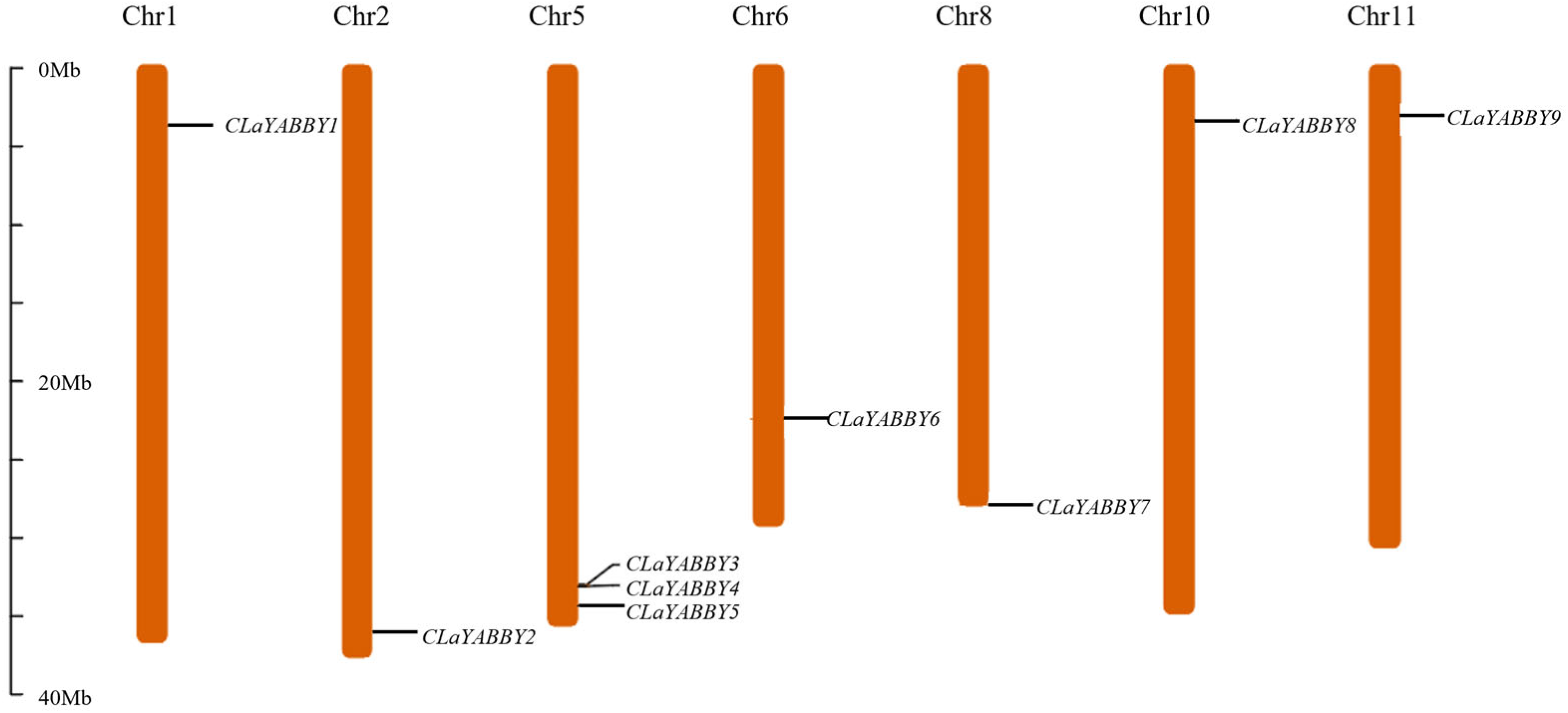
A total of nine YABBY family members were identified in the watermelon genome using the queries of Arabidopsis AtYABBYs with BLAST 2.17.0. According to the position order in chromosomes, the nine watermelon YABBYs were named ClaYABBY1 ~ ClaYABBY9 (Table 2). ClaYABBY3, ClaYABBY4, and ClaYABBY5 are located on chromosome 5, while the other genes are on different chromosomes (Figure 1). The coding sequence (CDS) length of the nine ClaYABBYs ranged from 510 to 729 bp, and the number of encoded amino acids ranged from 169 to 242 aa. Subcellular localization prediction shows that all these proteins may be in the nucleus (Table 2). The genomic DNA of the ClaYABBY genes, CDS sequences, and protein sequences were listed in Supplementary Data S1.

3.2. Gene Structure and Encoding Protein Architecture of ClaYABBYs

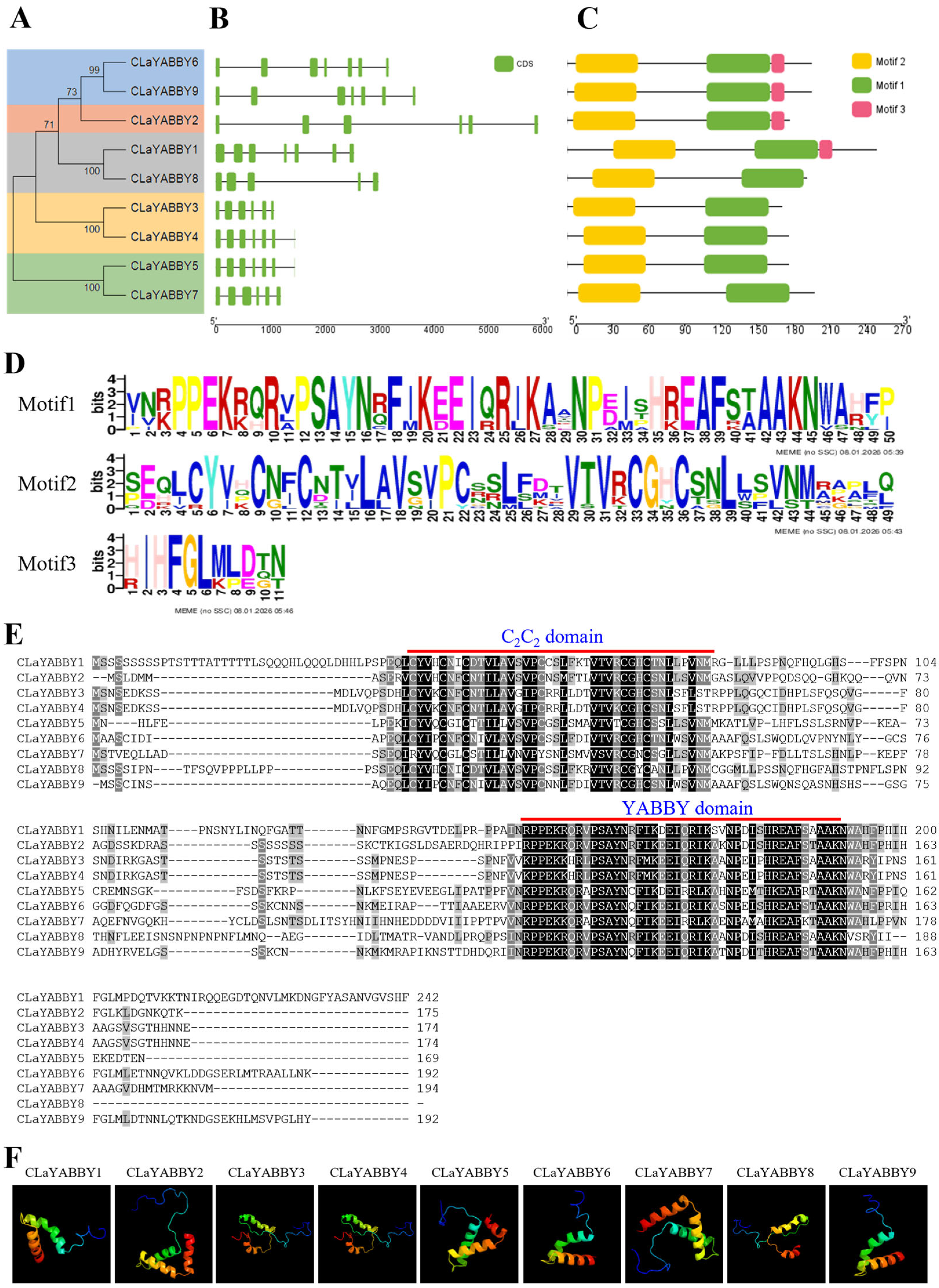
The nine ClaYABBYs were classified into five groups (Figure 2A) according to their encoded protein sequences. The genome size of the members of the watermelon YABBY family ranges from 1 kb to 6 kb, showing a distribution structure of multiple introns and exons (Figure 2B). The protein structures of ClaYABBYs were built from the product of the MEME motif analysis (Figure 2C). To analyze the degree of conservation of each motif, multiple sequence alignments were performed to generate sequence logos (Figure 2D). It showed the high conservation of the amino acids in the motif. By analyzing the alignments of the 9 ClaYABBY protein sequences, it was found that all of them contain an N-terminal C2C2 zinc finger domain and a highly conserved C-terminal YABBY domain (Figure 2E). The predicted analysis revealed that the watermelon YABBY proteins are mainly made of an irregular curl secondary structure, followed by α-helices and a β-corner, which were distributed throughout these proteins. Three-dimensional protein models of ClaYABBYs were predicted, and these nine proteins represented diverse conformations of YABBY proteins (Figure 2F).

3.3. Syntenic and Phylogenetic Analysis of ClaYABBYs

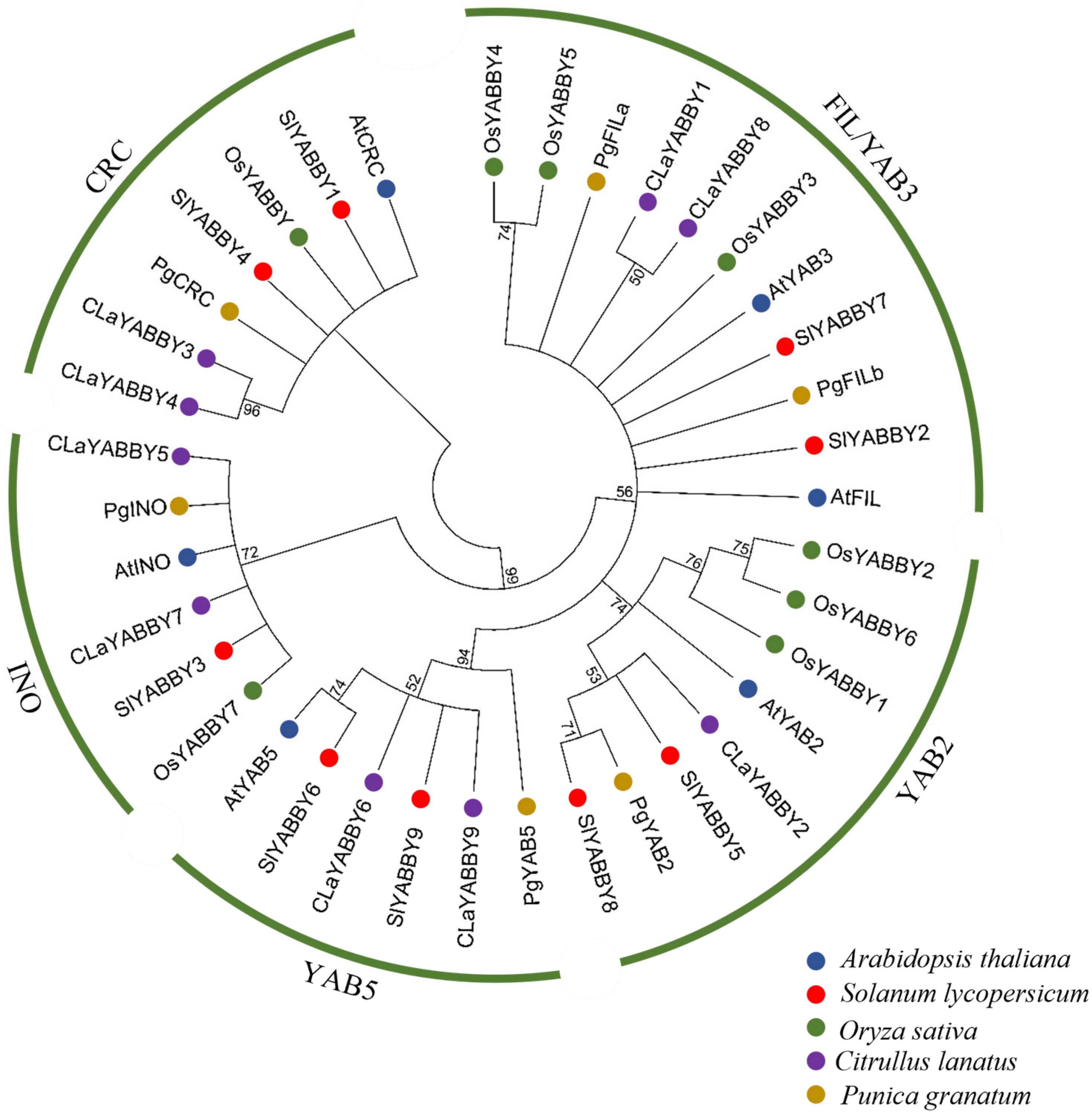
To study the evolutionary relationship of the YABBYs, we constructed a phylogenetic tree of 38 YABBY proteins, of which 9 are from watermelon, 6 are from Arabidopsis [7], 9 are from tomato [6], 8 are from rice [36], and 6 are from pomegranate [11], divided into five subfamilies: CRC, FIL/YAB3, YAB2, YAB5, and INO (Figure 3). All the subfamilies contain two genes of the ClaYABBY except for the YAB2, which has only one ClaYABBY gene. Among these, ClaYABBY3 and ClaYABBY4 belong to the CRC subfamily as a pair of paralogous genes; ClaYABBY1 and ClaYABBY8 are paralogs in the FIL/YAB3 subfamily; ClaYABBY2 is in the YAB2 subfamily; ClaYABBY6 and ClaYABBY9 belong to the YAB5 subfamily; and ClaYABBY5 and ClaYABBY7 are in the INO subfamily. In the YAB2 and YAB5 branches, ClaYABBY2, ClaYABBY6, and ClaYABBY9 show closer genetic relationships with those of tomato and pomegranate, suggesting ClaYABBY genes may share a closer evolutionary relationship with the YABBY genes of dicotyledonous plants.
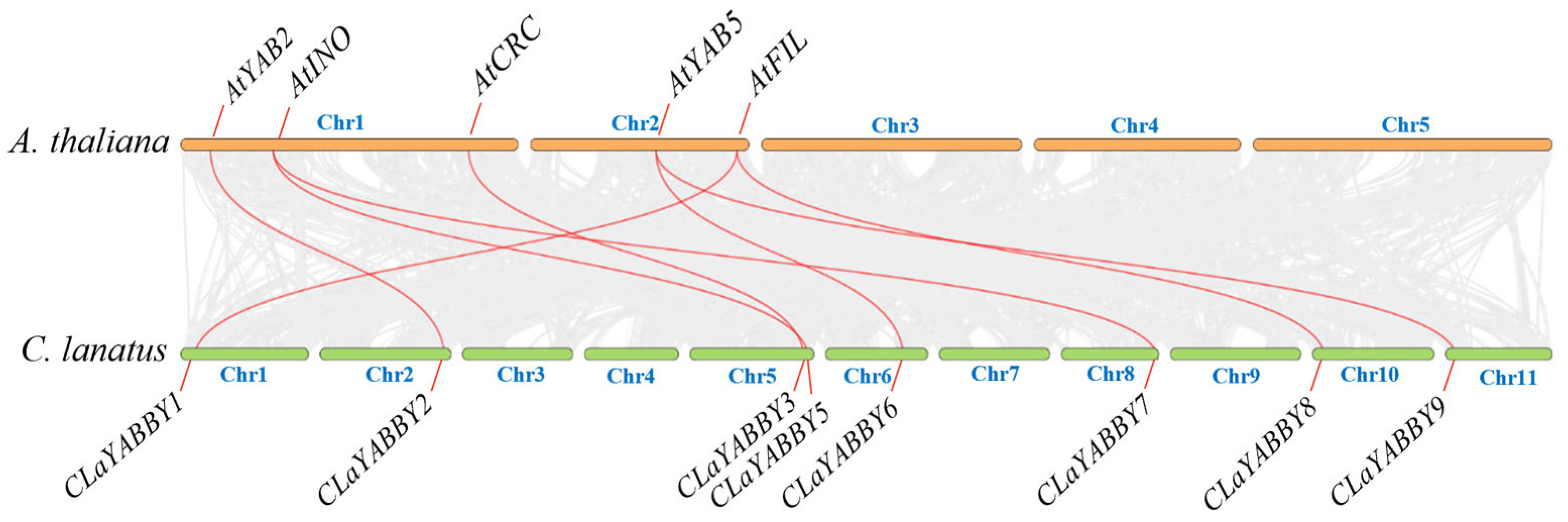
The synteny between the genomes of watermelon and Arabidopsis was assayed. The syntenic relationship between ClaYABBYs and AtYABBYs is displayed in Figure 4. Among them, two Arabidopsis YABBYs have only one orthologous gene in watermelon, AtYAB2 and ClaYABBY2, and AtCRC and ClaYABBY3, while the other three Arabidopsis YABBYs have two to three orthologous genes in watermelon: AtFIL corresponds to ClaYABBY1 and ClaYABBY8; AtINO to ClaYABBY5 and ClaYABBY7; and AtYAB5 to ClaYABBY6 and ClaYABBY9.

3.4. Expression Pattern of ClaYABBYs in Different Tissues

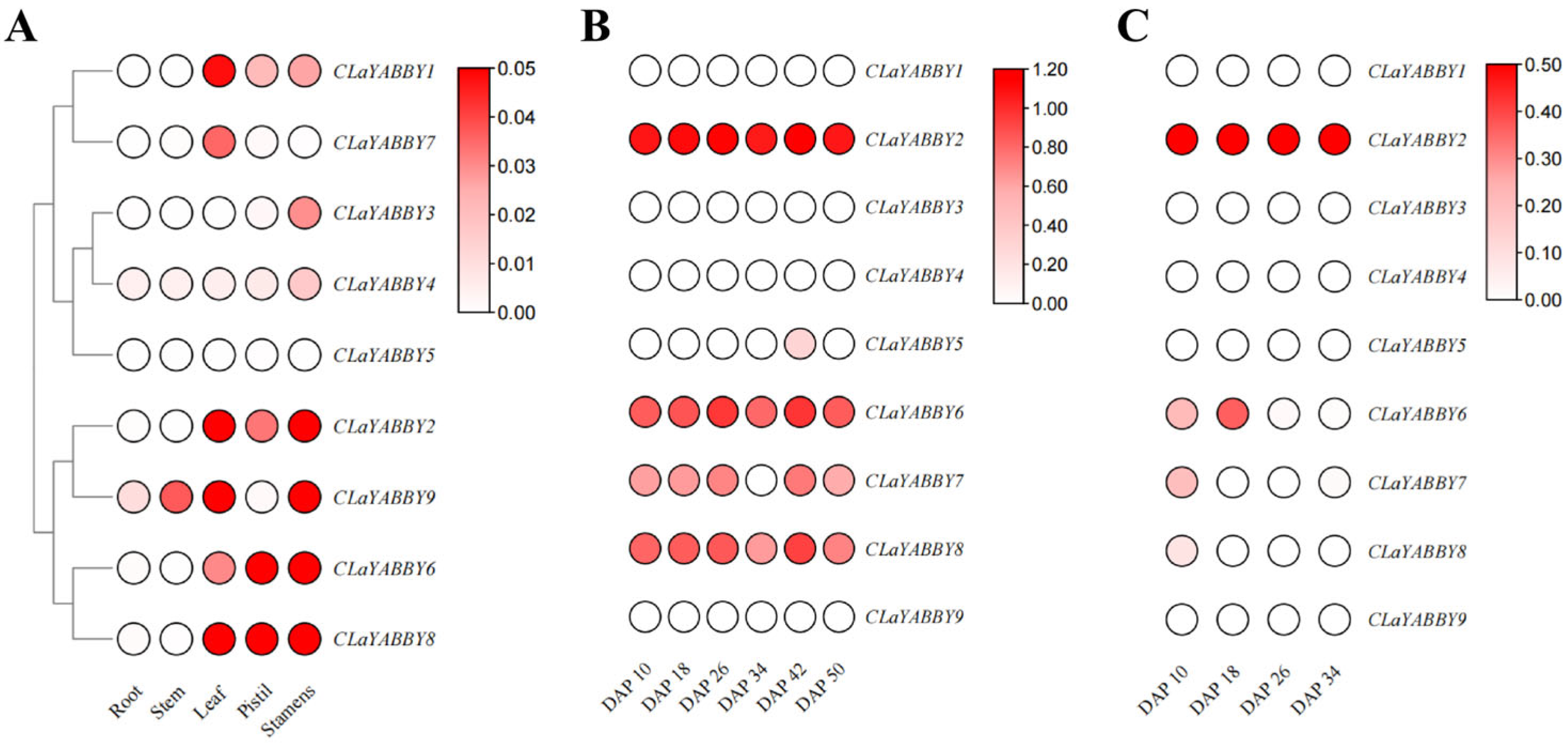
The ClaYABBY expression pattern in the root, stem, leaf, pistil, and stamen was assayed by qRT-PCR. As the results shown in Figure 5A, the expression level of ClaYABBY1, 2, 6, and 8 is extremely low in roots and stems but very high in leaves, pistils, and stamen; ClaYABBY3 and ClaYABBY4 are only expressed highly in stamen but are low in other tissues. Interestingly, ClaYABBY5 was highly expressed in the pistil, whereas ClaYABBY7 was expressed in the leaf (Figure 5A). Since YABBYs were reported to play important roles in fruit development [14,15,19], the expressions of ClaYABBYs at different stages of watermelon fruit were first analyzed by the RNA-seq data from the Cucurbit Genomics Database (Figure 5B). It was found that the expression level of ClaYABBY2, 6, 7, and 8 was prominently expressed during fruit development, among which ClaYABBY2 showed a remarkably higher expression level. These results were further verified by RT-qPCR in developmental stages (10, 18, 26, and 34 days post-pollination) of watermelon fruit, whereas the expression level of ClaYABBY2 remained significantly elevated throughout the entire fruit development process (Figure 5C).

3.5. Expression Patterns of ClaYABBYs Under Drought and Salt Stress

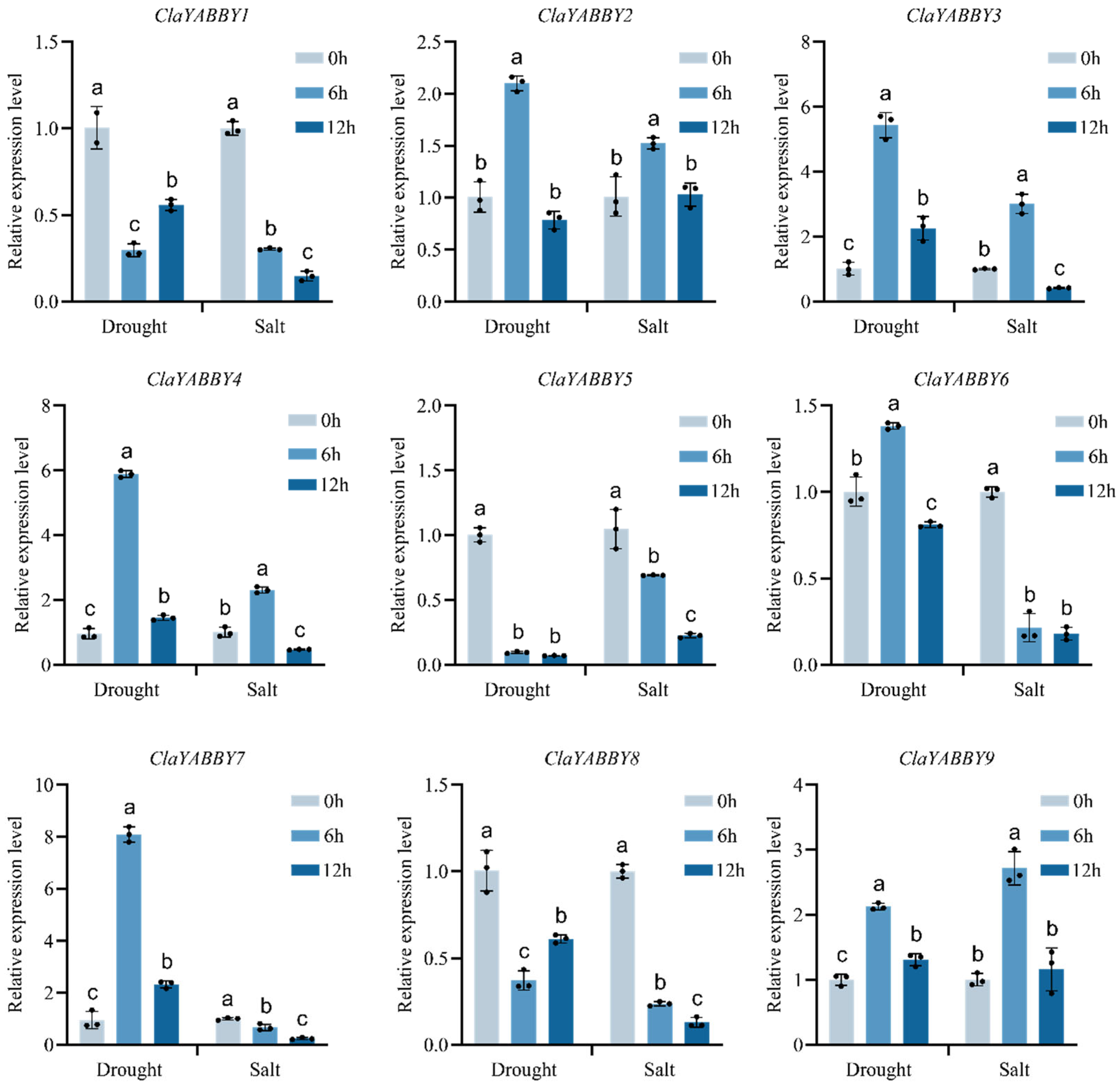
To further understand the role of ClaYABBYs in abiotic stress response, their expression profiles under drought and salt stress at 0, 6, and 12 h were assayed by RT-qPCR (Figure 6). Compared to the control (0 h), after treatment of simulating drought stress using PEG, the expressions of ClaYABBY2, 3, 4, 6, 7, and 9 were induced, while those of ClaYABBY1, 5, and 8 were suppressed. However, the expressions of ClaYABBY2 and ClaYABBY6 showed a downward trend at 12 h after treatment. Under salt stress, the expressions of ClaYABBY2, 3, 4, and 9 were induced, while those of ClaYABBY1, 5, 6, 7, and 8 were suppressed. After 12 h of treatment, the expressions of both ClaYABBY3 and ClaYABBY4 showed a downward trend. Interestingly, ClaYABBY2, 3, 4, and 9 were induced, while ClaYABBY1, 5, and 8 were suppressed both by drought and salt stresses.

4. Discussion

As a type of transcription factor unique to plants, the YABBY gene is crucial for the development of leaves and their derived organs, such as cotyledons and flowers. In this study, we identified the YABBY gene in watermelon (Citrullus lanatus) and found nine ClaYABBY genes, which are more than the six genes found in Arabidopsis thaliana [7]. The protein structures of ClaYABBY1, 2, 6, and 9 all contain motif 3, indicating that these four genes have a closer homology relationship in evolution, especially between ClaYABBY6 and ClaYABBY9. Collinearity analysis revealed that the expansion of the YABBY gene family in watermelons might result from gene duplication events. ClaYABBY2, for example, is orthologous to AtYAB2, while three Arabidopsis YABBY genes each have two corresponding homologous genes in watermelons: AtFIL corresponds to ClaYABBY1 and ClaYABBY8; AtINO pairs with ClaYABBY5 and ClaYABBY7; and AtYAB5 aligns with ClaYABBY6 and ClaYABBY9. These homologous pairs are clustered within the same phylogenetic branches, further supporting their functional relevance and evolutionary conservation.
Phylogenetic analysis divided the nine ClaYABBY genes into five different subfamilies: CRC, FIL/YAB3, YAB2, YAB5, and INO. Notably, there are two homologous genes in the CRC subfamily, ClaYABBY3 and ClaYABBY4. In the FIL/YAB3 subfamily, there are ClaYABBY1 and ClaYABBY8. Gene duplication often leads to functional redundancy, and the high sequence similarity and consistent expression profiles of these homologous genes suggest they may have overlapping or complementary roles. For instance, ClaYABBY3 and ClaYABBY4 exhibited significantly higher expression levels in floral tissues compared to other organs, showing similar expression patterns. Similarly, ClaYABBY1 and ClaYABBY8 showed comparable responses to abiotic stressors in addition to consistent expression patterns across different tissues, indicating that they may have conserved functions or synergistic effects.
According to the RT-qPCR results of watermelon, it was found that generally higher expression in reproductive organs than in vegetative tissues. Notably, ClaYABBY2 showed sustained high expression throughout fruit development, suggesting its crucial role in regulating fruit development in watermelon. This finding is consistent with studies in other species. Similarly, SlYABBY5, which is a paralogous gene of the ClAYABBY2, is highly expressed at the early fruit development stage (5 DAF and 10 DAF) [37]. In pineapple, the expression of AcYABBY3 was at an all-time high in all the stages of development of the organs, including fruits [15]. In Triticum aestivum L., TaYABBY3-2D, TaYABBY7-6A, TaYABBY7-6B, and TaYABBY7-6D become prominently expressed during the process of grain development. The expression of the other genes was low, or there was no expression at all in any of the studied tissues [38]. In Averrhoa carambola, AcYABBY4 expression level steadily increased during fruit development; AcYABBY3 initially exhibited a decreasing trend, later increasing. F-DAP60 expression level was highest [19]. In grapevines, VviYAB1, VviYAB2, VviYAB3, and VviFAS remained relatively highly expressed in immature berries [14]. These cross-species parallels highlight the YABBY genes’ potentially conserved role in fruit development and provide a theoretical foundation for future functional characterization of ClaYABBYs in watermelon.
The plants of watermelon are often exposed to an extremely hot environment. As a water-demanding plant, the study on abiotic stress of drought conditions becomes particularly important. Drought and salt stresses induced the expression of ClaYABBY2, 3, 4, and 9, while suppressing ClaYABBY1, 5, and 8. The consistent expression trends of paralogous pairs, ClaYABBY3 and ClaYABBY4, and ClaYABBY1 and ClaYABBY8, under both stresses further support the notion of functional redundancy in stress response pathways. Moreover, studies have shown that YABBY, as a plant-specific transcription factor, participates in the drought, salt, and ABA stress responses of soybeans [39]. Under salt stress, AcYABBY4 in Arabidopsis has a negative regulatory effect, and overexpression of this gene leads to shortened roots [15]. In upland cotton, YABBY might function as a negative regulatory role in drought stress [10]. In our study, watermelon seedlings also showed wilting under drought and salt stress. Although the regulatory mechanisms of YABBY genes under abiotic stress remain largely unknown, their responsive expression suggests involvement in hormone signaling and stress adaptation and could be a key part of further study of ClaYABBY genes.

5. Conclusions

A total of nine YABBYs were identified in the watermelon genome through this study, and they were grouped into five subgroups established by the phylogenetic analysis and gene structure. Among them, the homologous gene pairs such as ClaYABBY3 and ClaYABBY4, as well as ClaYABBY1 and ClaYABBY8, are likely to have originated from fragmental duplication events. Importantly, the prominent expression of ClaYABBY2 during fruit development highlights its potential as a crucial regulator of fruit morphogenesis. Moreover, the expression response of several of these ClaYABBYs in abiotic stress adaptation lays a solid foundation for future studies on deciphering the molecular pathways involved in watermelon development and stress response mechanisms.

Supplementary Materials

The following supporting information can be downloaded at: https://www.mdpi.com/article/10.3390/agronomy16020177/s1, Supplementary Data S1: ClaYABBY sequence.

Author Contributions

Conceptualization, X.C. and B.M.; methodology, X.X., W.J., and F.W.; software, F.W. and T.Y.; writing—original draft preparation, X.X., W.J., and A.P.; writing—review and editing, Z.G. and A.N.; supervision: X.C.; funding acquisition: B.M. All authors have read and agreed to the published version of the manuscript.

Funding

This work is supported by the National Key Research and Development Program of China (grant number: 2024YFE0214000), the Open Funding of China-Mozambique “Belt and Road” Joint Laboratory on Smart Agriculture (grant number: CMSA-KF202501), and the Program of “Xinmiao” (Potential) Talents in Zhejiang Province (grant number: 2024R404A051).

Data Availability Statement

All data related to this study are open access, and the databases, websites, and software information used have been detailed in the article and are available for interested researchers.

Conflicts of Interest

The authors declare no conflicts of interest.

References

  1. Riechmann, J.L.; Heard, J.; Martin, G.; Reuber, L.; Jiang, C.; Keddie, J.; Adam, L.; Pineda, O.; Ratcliffe, O.J.; Samaha, R.R.; et al. Arabidopsis transcription factors: Genome-wide comparative analysis among eukaryotes. Science 2000, 290, 2105–2110. [Google Scholar] [CrossRef]
  2. Mo, H.; Wang, L.; Ma, S.; Yu, D.; Lu, L.; Yang, Z.; Yang, Z.; Li, F. Transcriptome profiling of Gossypium arboreum during fiber initiation and the genome-wide identification of trihelix transcription factors. Gene 2019, 709, 36–47. [Google Scholar] [CrossRef]
  3. Eckardt, N.A. YABBY genes and the development and origin of seed plant leaves. Plant Cell 2010, 22, 2103. [Google Scholar] [CrossRef]
  4. Ha, C.M.; Jun, J.H.; Fletcher, J.C. Control of Arabidopsis leaf morphogenesis through regulation of the YABBY and KNOX families of transcription factors. Genetics 2010, 186, 197–206. [Google Scholar] [CrossRef] [PubMed]
  5. Yamada, T.; Yokota, S.; Hirayama, Y.; Imaichi, R.; Kato, M.; Gasser, C.S. Ancestral expression patterns and evolutionary diversification of YABBY genes in angiosperms. Plant J. 2011, 67, 26–36. [Google Scholar] [CrossRef] [PubMed]
  6. Han, H.Q.; Liu, Y.; Jiang, M.M.; Ge, H.Y.; Chen, H.Y. Identification and expression analysis of YABBY family genes associated with fruit shape in tomato (Solanum lycopersicum L.). Genet. Mol. Res. 2015, 14, 7079–7091. [Google Scholar] [CrossRef] [PubMed]
  7. Siegfried, K.R.; Eshed, Y.; Baum, S.F.; Otsuga, D.; Drews, G.N.; Bowman, J.L. Members of the YABBY gene family specify abaxial cell fate in Arabidopsis. Development 1999, 126, 4117–4128. [Google Scholar] [CrossRef]
  8. Bowman, J.L.; Smyth, D.R. CRABS CLAW, a gene that regulates carpel and nectary development in Arabidopsis, encodes a novel protein with zinc finger and helix-loop-helix domains. Development 1999, 126, 2387–2396. [Google Scholar] [CrossRef]
  9. Toriba, T.; Harada, K.; Takamura, A.; Nakamura, H.; Ichikawa, H.; Suzaki, T.; Hirano, H.-Y. Molecular characterization the YABBY gene family in Oryza sativa and expression analysis of OsYABBY1. Mol. Genet. Genom. 2007, 277, 457–468. [Google Scholar] [CrossRef]
  10. Yang, Z.; Gong, Q.; Wang, L.; Jin, Y.; Xi, J.; Li, Z.; Qin, W.; Yang, Z.; Lu, L.; Chen, Q.; et al. Genome-Wide study of YABBY genes in upland cotton (Gossypium hirsutum) and their expression patterns under different stresses. Front. Genet. 2018, 9, 33. [Google Scholar] [CrossRef]
  11. Zhao, Y.; Liu, C.; Ge, D.; Yan, M.; Ren, Y.; Huang, X.; Yuan, Z. Genome-wide identification and expression of YABBY genes family during flower development in Punica granatum L. Gene 2020, 752, 144784. [Google Scholar] [CrossRef]
  12. Xia, Y.Q.; Luo, R.X.; Sun, R.Q.; Yang, N.; Pu, J.J.; Gao, A.P.; Zhang, H. Genome-Wide Characterization and Identification of the YABBY Gene Family in Mango (Mangifera indica). Diversity 2022, 14, 861. [Google Scholar] [CrossRef]
  13. Yu, T.; Shen, S.; Xu, Y.; Wang, X.; Yu, Y.; Ma, B.; Chen, X. Identification and expression analysis of the YABBY gene family in strawberry (Fragaria × ananassa). Chin. J. Biotechnol. 2024, 40, 104–121. [Google Scholar] [CrossRef]
  14. Jiu, S.; Zhang, Y.; Han, P.; Han, Y.; Xu, Y.; Liu, G.; Leng, X. Genome-wide identification and expression analysis of VviYABs family reveal its potential functions in the developmental switch and stresses response during grapevine (Vitis vinifera) development. Front. Genet. 2022, 12, 762221. [Google Scholar] [CrossRef]
  15. Li, Z.; Li, G.; Cai, M.; Priyadarshani, S.V.G.N.; Aslam, M.; Zhou, Q.; Huang, X.; Wang, X.; Liu, Y.; Qin, Y. Genome-Wide Analysis of the YABBY Transcription Factor Family in Pineapple (Ananas comosus) and Functional Identification of AcYABBY4 Involvement in Salt Stress. Int. J. Mol. Sci. 2019, 20, 5863. [Google Scholar] [CrossRef] [PubMed]
  16. Liu, X.; Liao, X.Y.; Zheng, Y.; Zhu, M.J.; Yu, X.; Jiang, Y.T.; Zhang, D.; Ma, L.; Xu, X.Y.; Liu, Z.J.; et al. Genome-Wide Identification of the YABBY Gene Family in Seven Species of Magnoliids and Expression Analysis in Litsea. Plants 2021, 10, 21. [Google Scholar] [CrossRef]
  17. Gasser, C.S.; Skinner, D.J. Development and evolution of the unique ovules of flowering plants. Curr. Top. Dev. Biol. 2019, 131, 373–399. [Google Scholar] [CrossRef]
  18. Soundararajan, P.; Won, S.Y.; Park, D.S.; Lee, Y.H.; Kim, J.S. Comparative Analysis of the YABBY Gene Family of Bienertia sinuspersici, a Single-Cell C4 Plant. Plants 2019, 8, 536. [Google Scholar] [CrossRef] [PubMed]
  19. Li, C.; Dong, N.; Shen, L.; Lu, M.; Zhai, J.; Zhao, Y.; Chen, L.; Wan, Z.; Liu, Z.; Ren, H.; et al. Genome-wide identification and expression profile of YABBY genes in Averrhoa carambola. PeerJ 2022, 9, e12558. [Google Scholar] [CrossRef] [PubMed]
  20. Huang, Z.; Van Houten, J.; Gonzalez, G.; Xiao, H.; van der Knaap, E. Genome-wide identification, phylogeny and expression analysis of SUN, OFP and YABBY gene family in tomato (Solanum lycopersicum). Mol. Genet. Genom. 2013, 288, 111–129. [Google Scholar] [CrossRef]
  21. Yin, S.; Li, S.; Gao, Y.; Bartholomew, E.S.; Wang, R.; Yang, H.; Liu, C.; Chen, X.; Wang, Y.; Liu, X.; et al. Genome-Wide Identification of YABBY Gene Family in Cucurbitaceae and Expression Analysis in Cucumber (Cucumis sativus L.). Genes 2022, 13, 467. [Google Scholar] [CrossRef] [PubMed]
  22. Liu, H.L.; Xu, Y.Y.; Xu, Z.H.; Chong, K. A rice (Oryza sativa) YABBY gene, OsYABBY4, preferentially expresses in developing vascular tissue. Dev. Genes Evol. 2007, 217, 629–637. [Google Scholar] [CrossRef] [PubMed]
  23. Wang, W.; Ma, J.; Liu, H.; Wang, Z.; Nan, R.; Zhong, T.; Sun, M.; Wang, S.; Yao, Y.; Sun, F.; et al. Genome-wide analysis of the switchgrass YABBY family and functional characterization of PvYABBY14 in response to ABA and GA stress in Arabidopsis. BMC Plant Biol. 2024, 24, 114. [Google Scholar] [CrossRef]
  24. Han, X.; Yin, L.; Xue, H. Co-expression analysis identifies CRC and AP1 the regulator of Arabidopsis fatty acid biosynthesis. J. Integr. Plant Biol. 2012, 54, 486–499. [Google Scholar] [CrossRef]
  25. de Boer, H.J.; Thulin, M. Synopsis of Trichosanthes (Cucurbitaceae) based on recent molecular phylogenetic data. PhytoKeys 2012, 12, 23–33. [Google Scholar] [CrossRef]
  26. Pan, Y.; Wang, Y.; McGregor, C.; Liu, S.; Luan, F.; Gao, M.; Weng, Y. Genetic architecture of fruit size and shape variation in cucurbits: A comparative perspective. Theor. Appl. Genet. 2020, 133, 1–21. [Google Scholar] [CrossRef] [PubMed]
  27. Letunic, I.; Doerks, T.; Bork, P. SMART 7: Recent updates to the protein domain annotation resource. Nucleic Acids Res. 2012, 40, D302–D305. [Google Scholar] [CrossRef]
  28. Chou, K.C.; Shen, H.B. Plant-mPLoc: A top-down strategy to augment the power for predicting plant protein subcellular localization. PLoS ONE 2010, 5, e11335. [Google Scholar] [CrossRef]
  29. Chen, C.; Chen, H.; Zhang, Y.; Thomas, H.R.; Frank, M.H.; He, Y.; Xia, R. TBtools: An Integrative Toolkit Developed for Interactive Analyses of Big Biological Data. Mol. Plant. 2020, 13, 1194–1202. [Google Scholar] [CrossRef]
  30. Bailey, T.L.; Johnson, J.; Grant, C.E.; Noble, W.S. The MEME Suite. Nucleic Acids Res. 2015, 43, W39–W49. [Google Scholar] [CrossRef]
  31. Geourjon, C.; Deléage, G. SOPMA: Significant improvements in protein secondary structure prediction by consensus prediction from multiple alignments. Bioinformatics 1995, 11, 681–684. [Google Scholar] [CrossRef] [PubMed]
  32. Kelley, L.A.; Sternberg, M.J.E. Protein structure prediction on the Web: A case study using the Phyre server. Nat. Protoc. 2009, 4, 363–371. [Google Scholar] [CrossRef] [PubMed]
  33. Kumar, S.; Stecher, G.; Tamura, K. MEGA7: Molecular Evolutionary Genetics Analysis Version 7.0 for Bigger Datasets. Mol. Biol. Evol. 2016, 33, 1870–1874. [Google Scholar] [CrossRef]
  34. Wang, Y.; Tang, H.; Debarry, J.D.; Tan, X.; Li, J.; Wang, X.; Lee, T.H.; Jin, H.; Marler, B.; Guo, H.; et al. MCScanX: A toolkit for detection and evolutionary analysis of gene synteny and collinearity. Nucleic Acids Res. 2012, 40, e49. [Google Scholar] [CrossRef]
  35. Zhang, Y.; Wu, C.J.; Su, W.Z.; Zhou, C.; Teng, L.Y.; Tu, Z.W.; Zhu, Q.L. Genome-wide identification and stress response analysis of the OSCA gene family in Citrullus lanatus. J. South. Agric. 2021, 52, 3330–3339. [Google Scholar] [CrossRef]
  36. Dong, H.; Li, Y.X.; Wang, T.K.; Song, S.F.; Qiu, M.D.; Zhang, Z.S.; Zhang, L.C.; Fu, Y.F.; Li, L. Genome-wide identification and expression analysis of the YABBY family in Oryza sativa. Mol. Plant Breed. 2020, 18, 4845–4854. [Google Scholar] [CrossRef]
  37. Zhang, L.; Chong, Y.; Yang, X.; Fan, W.; Cheng, F.; Li, Y.; Hou, X.; Zhang, K. Comparative Transcriptome Reveals Conserved Gene Expression in Reproductive Organs in Solanaceae. Int. J. Mol. Sci. 2025, 26, 3568. [Google Scholar] [CrossRef] [PubMed]
  38. Buttar, Z.A.; Yang, Y.; Sharif, R.; Nan Wu, S.; Xie, Y.; Wang, C. Genome Wide Identification, Characterization, and Expression Analysis of YABBY-Gene Family in WHEAT (Triticum aestivum L.). Agronomy 2020, 10, 1189. [Google Scholar] [CrossRef]
  39. Zhao, S.P.; Lu, D.; Yu, T.F.; Ji, Y.J.; Zheng, W.J.; Zhang, S.X.; Chai, S.C.; Chen, Z.Y.; Cui, X.Y. Genome-wide analysis of the YABBY family in soybean and functional identification of GmYABBY10 involvement in high salt and drought stresses. Plant Physiol. Biochem. 2017, 119, 132–146. [Google Scholar] [CrossRef]
Figure 1. Chromosome distribution of ClaYABBY gene family members in watermelon.
Agronomy 16 00177 g001
Figure 2. Sequence characters of ClaYABBYs genes and their encoding proteins. (A) The phylogenetic tree of ClaYABBYs. (B) The exon–intron structures of ClaYABBYs. (C) The motif compositions of ClaYABBY proteins. (D) Seqlogo diagram of conserved motif. (E) Amino acid sequence alignment of the C2C2 zinc finger domain and YABBY domain from ClaYABBYs. The conserved residues are boxed in black or light gray based on the degree of conservation. (F) Three-dimensional structure prediction of ClaYABBY proteins by Phyre 2.0.
Agronomy 16 00177 g002
Figure 3. Phylogenetic tree of ClaYABBY gene families.
Agronomy 16 00177 g003
Figure 4. Collinearity of YABBY gene families between watermelon and Arabidopsis. Yellow boxes (Chr1–Chr5) refer to the 5 chromosomes of A. thaliana, and green boxes (Chr1–Chr11) refer to 11 chromosomes of C. lanatus. Gray lines refer to the collinear region in the genomes of C. lanatus and A. thaliana, and red lines highlight the collinear YABBY gene pairs.
Agronomy 16 00177 g004
Figure 5. Expression pattern of the ClaYABBY gene family in watermelon’s tissues. (A) Gene expression patterns in root, stem, leaf, pistil, and stamen were sampled during the flowering period and by RT-qPCR, using log10-transformed expression data to present the results. (B,C) Gene expression level in different development stages of fruit was analyzed by RNA-seq from the database (http://www.cucurbitgenomics.org/, accessed on 1 October 2024) and by our RT-qPCR, respectively. DAP refers to days after pollination. Error bars represented the standard deviation from three biological replicates.
Agronomy 16 00177 g005
Figure 6. Expression assay of ClaYABBYs under drought and salt stress by RT-qPCR. Two-week-old watermelon seedlings were subjected to drought stress and salt stress at 0, 6, and 12 h. Error bars denote standard deviations from three biological replicates. Statistical analysis was performed using one-way ANOVA followed by Tukey’s HSD post hoc test. Different letters indicate statistically significant differences in gene expression during each time period under drought or salt treatment conditions (p < 0.05).
Agronomy 16 00177 g006
Table 1. The primer pairs for RT-qPCR.
GeneForward Primer (5′-3′)Reverse Primer (5′-3′)
ClaYABBY1CTGTCCTTGCGGTTAGTGTTTAGGTGAAGGCAGAAGAA
ClaYABBY2GCTGGGGATTCAAGTAAGGACATCTATGTTGGTCACGTTCAGCA
ClaYABBY3GTTCAACCTTCCGACCACCTGAATCCCAACCGCAAGGAGA
ClaYABBY4TTCAGTCTCAGGTTGGGTAATTTGGAGAAGGGGACT
ClaYABBY5TTGTACCACCATTTTGTTAATGAAGAGGAACCAGAG
ClaYABBY6TGGAGGAGATTTTCAAGGTGATTGATTCACAACCCTCTCCTCTGC
ClaYABBY7TAAGCCCTCTTTTATCCCGCTGTCCAAGCAGTAGTG
ClaYABBY8CGTTTTAGCGGTGAGTGTTTGAAGAAGGGAGAAGCA
ClaYABBY9TCTTTGACATCGTGACCGTCCGTTTGATGCCTGGGAATTTTGC
Table 2. Information on the ClaYABBY gene family members in watermelon.
Gene NameGene ID 1Chromosome Location (bp) 1CDS Length (bp) 1Protein Length (aa)Subcellular Localization 2
ClaYABBY1Cla97C01G003950Chr01: 3,813,075-3,815,619729242Nucleus
ClaYABBY2Cla97C02G048590Chr02: 36,152,595-36,158,526528175Nucleus
ClaYABBY3Cla97C05G105600Chr05: 33,149,820-33,151,273525174Nucleus
ClaYABBY4Cla97C05G105790Chr05: 33,264,259-33,265,720525174Nucleus
ClaYABBY5Cla97C05G107630Chr05: 34,483,159-34,484,229510169Nucleus
ClaYABBY6Cla97C06G120470Chr06: 22,589,987-22,593,170579192Nucleus
ClaYABBY7Cla97C08G161640Chr08: 28,051,831-28,053,028585194Nucleus
ClaYABBY8Cla97C10G187530Chr10: 3,508,858-3,511,851567188Nucleus
ClaYABBY9Cla97C11G209590Chr11: 3,160,025-3,163,699579192Nucleus
1 from the Watermelon Database (http://www.cucurbitgenomics.org/, accessed on 1 October 2024); 2 subcellular localization of the proteins predicted by the program Cell-PLoc v.2.0.
Disclaimer/Publisher’s Note: The statements, opinions and data contained in all publications are solely those of the individual author(s) and contributor(s) and not of MDPI and/or the editor(s). MDPI and/or the editor(s) disclaim responsibility for any injury to people or property resulting from any ideas, methods, instructions or products referred to in the content.