Article

Development of a Thermal-Time-Based Emergence Model for Echinochloa crus-galli

Department of Bio-Oriental Medicine Resources, Sunchon National University, Suncheon 57922, Republic of Korea
*
Author to whom correspondence should be addressed.
Agronomy 2026, 16(17), 1724; https://doi.org/10.3390/agronomy16171724
Submission received: 15 July 2026 / Revised: 19 August 2026 / Accepted: 1 September 2026 / Published: 4 September 2026
(This article belongs to the Section Weed Science and Weed Management)

Abstract

Climate change-driven increases in temperature and changes in precipitation regimes are altering the timing and patterns of weed emergence in agricultural systems. Consequently, accurately predicting weed emergence and selecting the best timing for control are becoming more crucial over time. Weeds such as Echinochloa crus-galli (barnyardgrass) are particularly problematic due to their widespread adaptability and competition across varying cultivation environments, making an accurate prediction of the timing of emergence crucial for management. The objective of this study was to characterize the emergence pattern of E. crus-galli under diverse environmental conditions and to develop and evaluate a Gompertz-based thermal-time model for predicting seedling emergence. Increased temperatures enhanced emergence rates and speeds in both growth chamber and greenhouse conditions. The effective accumulated temperature required for 50% emergence was relatively consistent (54–69 °C·d). Furthermore, high emergence percentages were maintained at soil moisture levels of 80% or greater. Across years, emergence responses differed substantially under field conditions. Independent validation using a field dataset collected in 2026 demonstrated that the model developed from the 2025 dataset successfully reproduced observed emergence patterns under field conditions (RMSE = 2.7%p, MAE = 2.3%p). Regional emergence analyses suggested a tendency toward earlier emergence under recent temperature conditions, particularly in warmer regions, although these predictions were based on only two years of field observations. Overall, the present study provides a preliminary evaluation of the applicability of a thermal-time-based approach for describing E. crus-galli emergence under Korean environmental conditions. Additional validation across multiple locations and growing seasons would further strengthen the general applicability of the model.

1. Introduction

Weed emergence is an important ecological process that strongly influences weed population establishment and plant stand competition, making it an essential component of crop productivity and a key element in the development of weed management practices [1,2,3,4]. Accurate prediction of weed emergence timing, in particular, is closely related to predicting the correct timing for herbicide applications as well as mechanical control methods and is therefore a key feature in Integrated Weed Management (IWM) programs [5,6]. Weed species have imprinted their seeds to germinate and emerge under a wide range of environmental conditions (e.g., temperature, soil moisture, light), with temperature being one of the most important factors influencing weed seed germination and emergence [7,8,9,10]. Soil moisture is another key factor affecting weed seed germination and emergence; however, its effects are often less consistent and more dependent on location than those of temperature. These environmental factors are quantitatively approximated by models based on thermal time or effective accumulated temperature (EAT). Thermal time, commonly expressed as degree-days (°C·d), represents the cumulative amount of heat accumulated above a specified base temperature and is widely used to describe and predict seed germination and emergence and plant development. These models assume that heat accumulated above a given threshold temperature accounts for the processes of germination and emergence [11,12,13]. Echinochloa crus-galli (barnyardgrass) is an important weed species characterized by rapid growth, high seed production, and strong competitiveness with crops in agricultural systems worldwide [14]. Its wide ecological adaptability and prolific seed production enable rapid population establishment, making timely prediction of emergence particularly important for improving weed management efficiency and reducing crop yield losses. In South Korea, E. crus-galli is one of the most problematic annual grass weeds in rice and upland crop production systems [15]. Its rapid growth and strong competitive ability can substantially reduce crop growth and yield when control measures are delayed. Therefore, accurate prediction of emergence timing is essential for optimizing weed management practices and minimizing yield losses. Prediction of weed emergence is important for maximizing the efficacy of weed control because the timing of control measures is a critical component of integrated weed management programs. Weed emergence has been described using various empirical models, including nonlinear regression models like the Gompertz model, Logistic model, and Weibull model. These models accurately describe the cumulative emergence dynamics with an S-shaped (sigmoidal) curve [2,6,16]. Of them, the Gompertz model is recognized as better describing the gradual emergence of late-emerging individuals and has been said to successfully characterize their emergent behaviors under field conditions.
Several studies have investigated emergence dynamics and thermal regulation of E. crus-galli and reported variability and common threshold parameters among populations from different locations [17,18], whereas Malavert and Batlla [19] developed a thermal dormancy model to predict field emergence timing. These studies demonstrate the importance of temperature-based approaches for understanding and predicting E. crus-galli emergence. In South Korea, thermal-time approaches have also been successfully applied to describe and predict the emergence of several weed species. For example, the emergence of Humulus japonicus was successfully described using the Gompertz model, whereas the development of Monochoria vaginalis and Scirpus juncoides was effectively explained using effective accumulated temperature-based models [20,21]. However, despite these advances, information on the emergence dynamics of E. crus-galli under Korean environmental conditions remains scarce. In particular, the applicability of thermal-time-based emergence models developed elsewhere to Korean environmental conditions has not been adequately evaluated. In addition, regional emergence prediction using agro-meteorological data has received little attention. Consequently, the applicability of thermal-time approaches to the prediction of E. crus-galli emergence under Korean conditions remains uncertain. Moreover, few studies have evaluated the predictive performance of thermal-time models using independent field datasets, limiting confidence in their practical application. Recent climate change has also affected the phenology and geographical distribution of weed emergence, with an earlier emergence and altered patterns reported under elevated temperature conditions [22,23,24]. Climate change has similarly increased the potential for habitat expansion and spread of invasive weeds, and predictive models to assess these changes have been developed [25,26]. In addition to temperature, soil moisture is an important environmental factor influencing seed germination and emergence. Soil water availability can affect seed imbibition, germination success, and seedling establishment, thereby contributing to variation in emergence dynamics under field conditions. Therefore, evaluating emergence responses under different soil moisture conditions is necessary to better understand the environmental requirements of E. crus-galli and to improve interpretation of field emergence patterns. Hydrothermal time concepts integrate the combined effects of temperature and water availability on germination and emergence processes and have been successfully applied to several weed species. Such approaches provide a mechanistic framework for predicting emergence timing under variable environmental conditions. This study is mainly targeted at the seedling emergence stage and early growth characteristics such as plant height and number of leaves were recorded as secondary traits to aid the interpretation of final results in terms of emergence dynamics. However, information on the emergence dynamics of E. crus-galli under Korean environmental conditions remains limited, particularly with respect to thermal-time-based prediction approaches that integrate controlled and field environments. In South Korea, only a limited number of studies have developed thermal-time-based emergence prediction models for weed species [19,20]. We hypothesized that E. crus-galli emergence is primarily regulated by temperature and soil moisture conditions and that effective accumulated temperature can provide a reliable basis for predicting emergence timing across controlled and field environments. Therefore, this study aimed to (i) quantify the effects of temperature and soil moisture on E. crus-galli emergence, (ii) develop a Gompertz-based thermal-time emergence model under controlled and field conditions, (iii) independently validate the developed model using a 2026 field dataset, and (iv) evaluate its potential application for regional emergence prediction using agro-meteorological data.

2. Materials and Methods

2.1. Plant Materials

The Echinochloa crus-galli seeds used in this study were harvested in October 2023 from the experimental field at Suncheon National University. After threshing, the seeds were stored at 4 °C until use. Prior to the experiments, a preliminary germination test was conducted to verify seed viability and germination capacity, and only seed lots exhibiting greater than 90% germination were used in the emergence experiments.

2.2. Assessment of Emergence Percentage Under Growth Chamber and Greenhouse Temperature Conditions

Sandy loam soil was collected from the experimental field of Suncheon National University and sifted through a 100-mesh sieve for use in the experiments. The soil was filled into round pots (200 mL capacity), and 20 E. crus-galli seeds were sown in each pot at a depth of 1.5 cm. Each temperature treatment consisted of three biological replicates, with each replicate represented by one pot containing 20 seeds. In a completely randomized design, growth chamber experiments were carried out in a multi-room incubator (VS-1203PFC-LN) at day/night (14/10 h) temperatures of 20 °C/10 °C, 25/15 °C, 30/20 °C or 35/25 °C. All pots contained the same amount of soil, and were watered daily with an equal amount of water. Greenhouse experiments were carried out following the same procedure, except for temperature conditions. The average temperatures during the experiments were 22.4 °C, 24.6 °C and 25.2 °C respectively. Light intensity was kept at 500 µmol m−2 s−1 (PAR) and relative humidity at 70%. Temperature was measured at 15-min intervals using a temperature data logger (SATO KEIRYOKI MFG. Co., Ltd., Tokyo, Japan, Model SK-L200TH II α), and average values were used to calculate the daily mean temperature. Seed counts for emerged seedlings were recorded daily after sowing, and cumulative emergence percentages were calculated from the cumulative number of emerged seedlings recorded up to each observation date. Nonlinear regression analysis was performed with the Gompertz model to fit emergence percentage data. Thermal time was determined as the sum of daily mean temperatures above the base temperature required for seedling emergence. A preliminary emergence experiment was conducted at constant temperatures of 5, 10, 15, and 20 °C following methods commonly used in hydrothermal emergence studies [27]. Emergence was negligible at 5 and 10 °C, whereas emergence increased to approximately 10% at 15 °C and exceeded 73% at 20 °C (Table A1). Based on preliminary emergence observations and previous thermal-time studies, 10 °C was adopted as an operational threshold for effective accumulated temperature calculations. Because this threshold was not estimated using the reciprocal time-to-t50 regression approach, it should not be interpreted as a biologically determined base temperature. The Gompertz model was applied for the analysis of emergence percentage.
Gompertz model:
Y ( t ) = C e e B ( t m e )
Each parameter is defined as follows: Y, cumulative emergence percentage; C, maximum cumulative emergence percentage; B, relative growth rate; and m, time corresponding to the inflection point of the curve, representing the phase of most rapid emergence and approximately related to the midpoint of emergence. Emergence onset was defined as the time when cumulative emergence reached 5% of maximum emergence according to the fitted Gompertz model. Parameters of the Gompertz model were estimated using nonlinear regression analysis. The Gompertz models were fitted using cumulative emergence data from all individual replicates pooled within each treatment rather than replicate means. For pooled analyses, observations from all treatments within an experiment were combined into a single dataset, and a common Gompertz model was fitted using nonlinear regression to estimate overall emergence parameters. The pooled analyses of growth chamber and greenhouse experiments were conducted only to summarize overall emergence characteristics under controlled environmental conditions and to facilitate comparisons among treatments. These pooled datasets were not used for development of the regional emergence prediction model, which was based exclusively on field-derived effective accumulated temperature thresholds obtained from the 2024 and 2025 field experiments. Model performance was evaluated using the root mean square error (RMSE), standard error of estimate (SEE), and Akaike Information Criterion (AIC). Preliminary comparisons among the Gompertz, Logistic, and Weibull models indicated that the Gompertz model consistently provided the best fit to the emergence data, as evidenced by lower RMSE, SEE, and AIC values in pooled analyses. Therefore, the Gompertz model was selected for subsequent analyses, and only the Gompertz equation and corresponding results are presented in this study.

2.3. Evaluation of Emergence Percentage Under Different Soil Moisture Conditions

Soil moisture treatments were established at volumetric water contents (VWC, % v/v) of 40%, 60%, 80%, and 100%. Each pot was filled with 130 g of air-dried soil. The amount of water required to achieve 100% VWC was first determined, and water corresponding to 40%, 60%, 80%, and 100% of this amount was added to establish the respective soil moisture treatments. Each pot was weighed at the beginning of the experiment, and pot weights were recorded daily thereafter. Water lost through evaporation was replenished to restore the target pot weight and maintain the designated soil moisture level throughout the experiment. Soil preparation, sowing and emergence assessment methods were the same employed above for the temperature condition experiments. This experiment was carried out in a growth chamber at day/night (14/10 h) temperatures set to 30/20 °C. Each soil moisture treatment consisted of three biological replicates.

2.4. Field Emergence and Growth Assessment

Field emergence assessments were conducted using the natural soil seedbank of E. crus-galli. The experimental field had substantial E. crus-galli occurrence during the previous growing season, ensuring the presence of a natural seedbank. No E. crus-galli seeds were artificially sown or introduced during the study. The field experiments were conducted in 2024 and 2025 in a soybean field at the Experimental Farm of Sunchon National University, Suncheon, Jeollanam-do, Republic of Korea (35.02334° N, 127.50308° E). Soybean (Glycine max L. cv. Daewon) was sown three days after tillage according to local conventional cultivation practices. Tillage was conducted in mid-May, late May, and mid-June on the following dates: 17 May, 31 May, and 14 June in 2024 and 14 May, 30 May, and 12 June in 2025. No irrigation was applied during the experimental period, and soil moisture conditions were therefore determined solely by natural rainfall. Soil temperature and moisture content were monitored every half hour using a weather monitoring device (HOBO USB Micro Station Data Logger, ONSET, Bourne, MA, USA) and were averaged to obtain daily mean soil temperature and moisture content. The sensors were installed at a soil depth of 10 cm. Soil temperature was monitored because germination and seedling emergence occur within the soil environment and are therefore influenced by the thermal conditions surrounding the seeds. Accordingly, soil temperature was used to characterize the soil thermal environment associated with field emergence. Experiments were laid out in 2 × 2 m plots using a completely randomized design with four biological replicates. Emergence counting was conducted daily for 20 days post ploughing. Both plant height and the number of leaves were recorded every five days until 40 days after emergence.

2.5. Prediction of Emergence Timing and Use of Weather Data

Daily effective accumulated temperature and cumulative soil moisture were estimated across the time of the experiment. And then the weather data for large areas (Yeoncheon, Hongcheon, Chungju, Gimje and Suncheon) were obtained by Agricultural Weather Information Service (AgWeather 365). Effective accumulated temperature (EAT) was calculated using current-year weather data (2024 and 2025), as well as 5-year and 10-year average temperature datasets. Regional emergence predictions were generated using all three temperature datasets to compare emergence timing based on long-term climatic averages with predictions derived from actual annual weather conditions. For field experiments, EAT accumulation was initiated from the tillage date, which served as the starting point for emergence monitoring from the natural soil seedbank. EAT, expressed as thermal time (°C·d), was calculated as EAT = Σ(T-mean − T-base), where Tmean is the daily mean temperature and Tbase is the base temperature (10 °C). Only days for which Tmean exceeded Tbase were included in the accumulation. No upper temperature threshold was applied in this analysis. These daily thermal time values were summed over time to obtain the EAT. Emergence percentage data as a function of EAT were fitted using the Gompertz model. Based on the fitted model, the EAT required for emergence onset (5% cumulative emergence) and 50% cumulative emergence was estimated. These threshold values were subsequently applied to regional temperature datasets to predict the calendar dates corresponding to emergence onset and 50% emergence in each region. The regional prediction procedure was performed. First, daily mean temperature data were collected for each region from Agricultural Weather Information Service. Second, an effective accumulated temperature was computed using a base temp (10 °C). Third, Gompertz model parameters estimated from experimental data were used to predict emergence percentage as a function of effective accumulated temperature. Finally, the thresholds for basal emergence and 50% maximum emergence were established in each region depending on the annual accumulation of temperature.

2.6. Independent Validation of the Emergence Model

An independent field emergence experiment was conducted in 2026 at the experimental field of Sunchon National University to validate the predictive performance of the Gompertz models developed from the 2024 and 2025 datasets. Field management, emergence assessment, and EAT calculations followed the same procedures described for the 2024 and 2025 field experiments. Daily observed emergence was compared with model predictions, and prediction accuracy was evaluated using RMSE and MAE.

3. Results

3.1. Emergence Characteristics of Barnyardgrass According to Growth Chamber Temperature Conditions

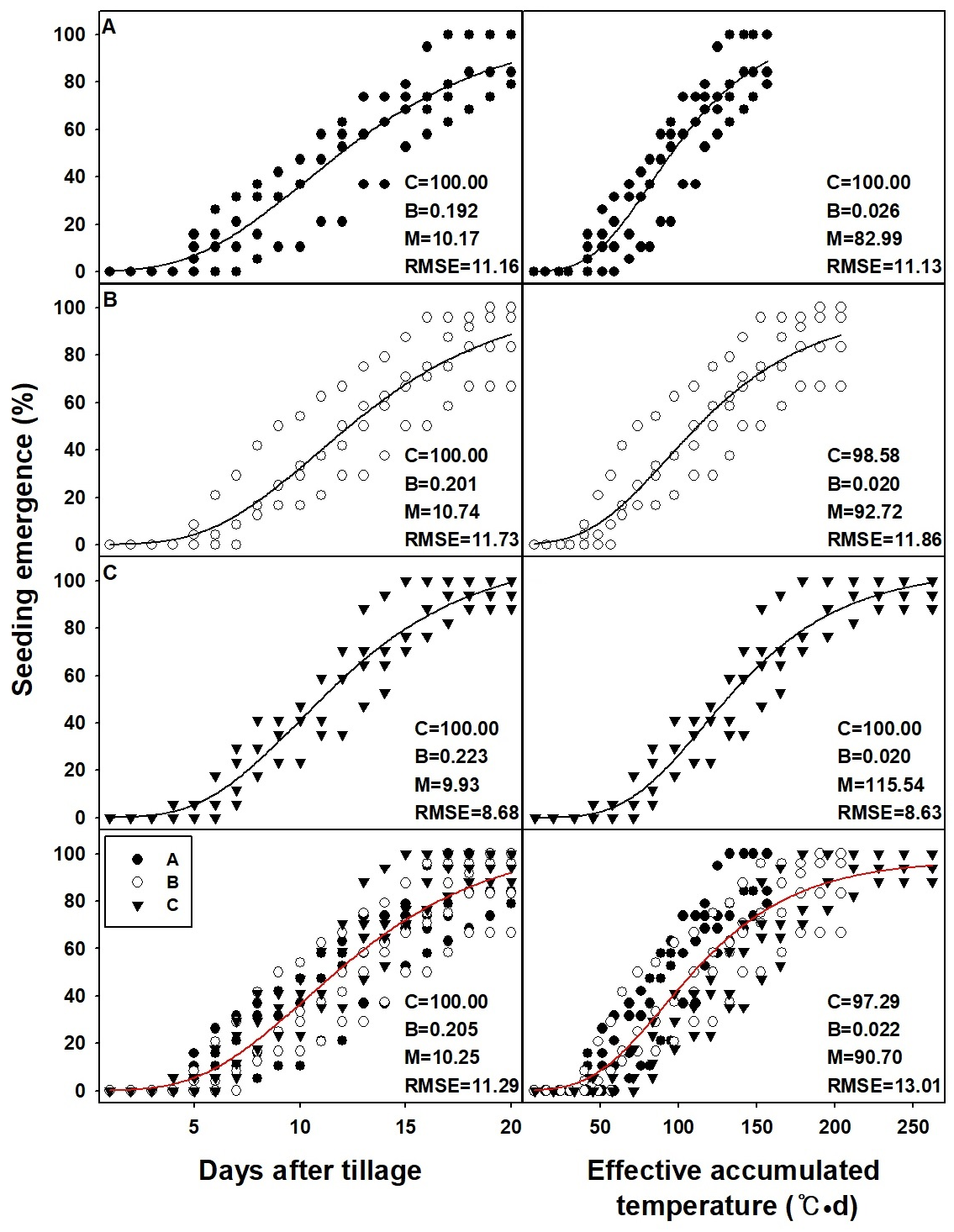
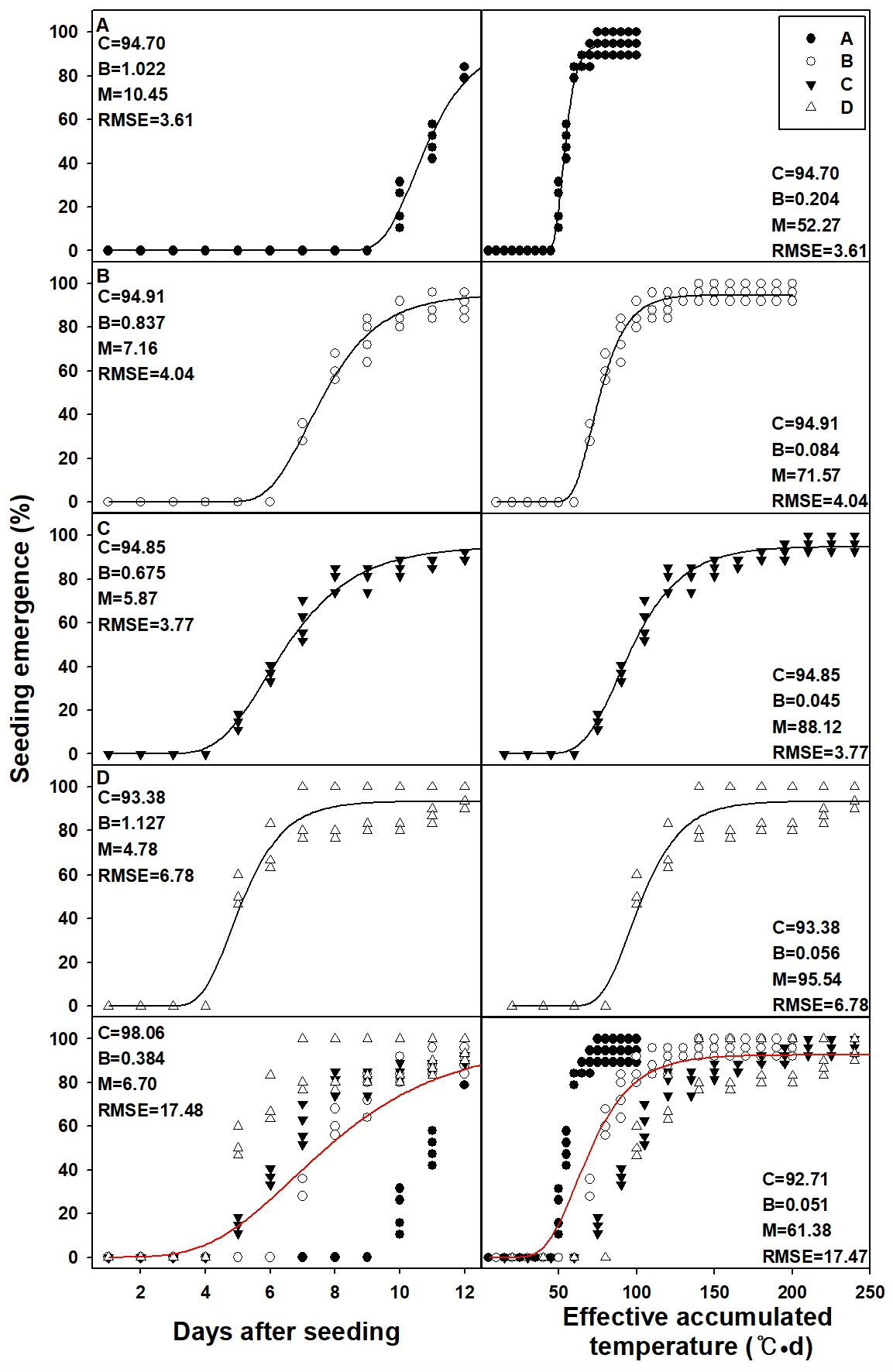
Under four temperature conditions in the growth chamber [20/10 °C; 25/15 °C; 30/20 °C and 35/25 °C], E. crus-galli emergence started between 5 and 10 days after sowing (Figure 1). The highest emergence rate was in the range from 94–98%, and the same tendency of increasing with temperature was showed for emergence rates. The times to reach 50% emergence were 10.4, 7.1, 5.8 and 4.8 days respectively which showed that the higher temperatures increased the rate of emergence speed. Using the Gompertz as a nonlinear regression analysis, we determined that for all temperature conditions accounted for, the average number of days to reach 50% emergence was 6.7 days. The effective accumulated temperature required to reach 50% emergence ranged from 52 to 96 °C·d across temperature treatments, with a pooled estimate of approximately 61 °C·d. Overall, the Gompertz model adequately described emergence patterns across temperature regimes, although model fit was reduced when data from multiple temperature conditions were combined due to increased variability among treatments.

3.2. Growth Chamber Moisture Conditions

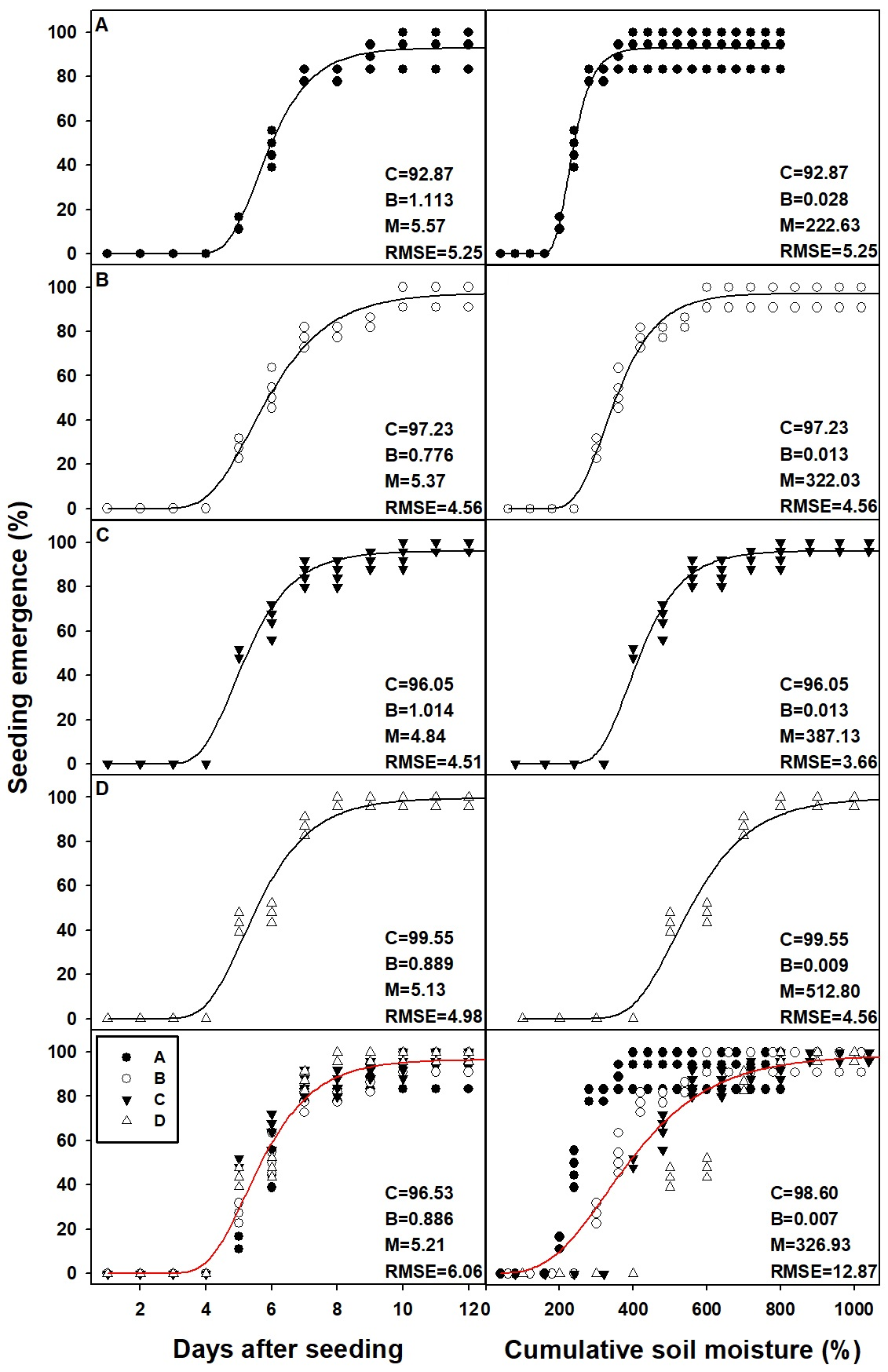
At soil moisture levels of 40%, 60%, 80%, and 100%, the maximum emergence rate of E. crus-galli ranged from 93–100%, suggesting that moisture levels above 40% had little effect on final emergence percentage (Figure 2). The times required to reach 50% emergence were 5.6, 5.4, 4.8, and 5.2 days, respectively, indicating only minor differences in emergence rate among moisture treatments. The Gompertz model analysis revealed an average time of 5.2 days to reach 50% emergence, with a maximum emergence rate of 97%. The Gompertz model adequately described emergence patterns across soil moisture treatments, as indicated by generally low RMSE values. Model fit was slightly reduced in the pooled analysis, reflecting increased variability among moisture conditions.
Cumulative soil moisture was calculated as the sum of daily mean soil moisture values during the emergence period. No baseline soil moisture threshold was applied because cumulative soil moisture was used only as an environmental descriptor of soil water availability. The cumulative soil moisture required to achieve 50% emergence was 223%, 322%, 419%, and 560% under the 40%, 60%, 80%, and 100% soil moisture treatments, respectively. The pooled mean cumulative soil moisture required to achieve 50% emergence was 347%.

3.3. Greenhouse Conditions

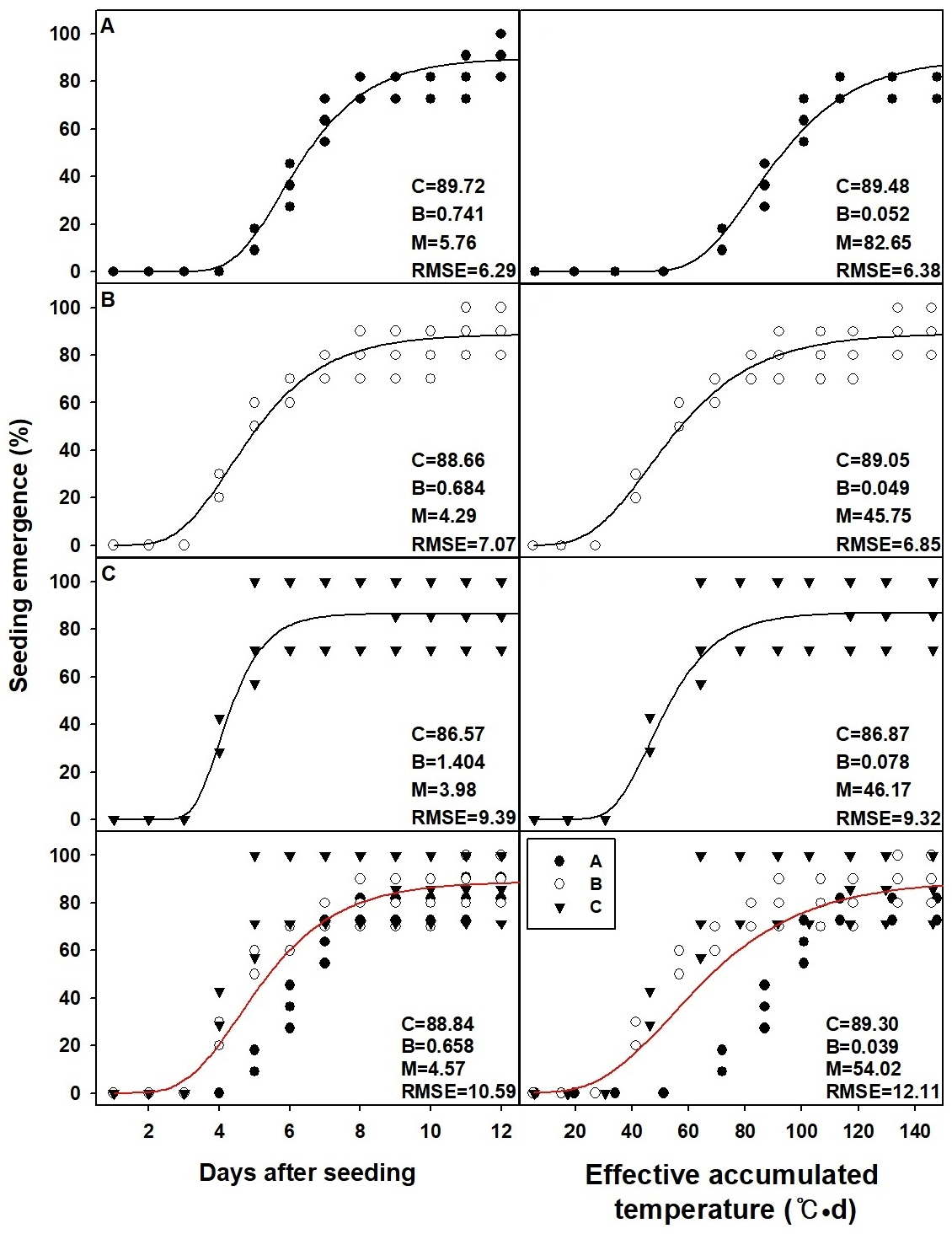
Under greenhouse conditions with average temperatures of 22.4 °C, 24.6 °C, and 25.2 °C, the maximum emergence rate ranged from 87% to 90% (Figure 3). The time required to reach 50% emergence was 5.8, 4.3, and 4.0 days, respectively, indicating faster emergence at higher temperatures. The Gompertz model analysis estimated a pooled maximum emergence rate of 89% and a mean time of 4.6 days to reach 50% emergence. The Gompertz model adequately described emergence patterns under greenhouse conditions, as indicated by relatively low RMSE values. Model fit was slightly reduced in the pooled analysis because of increased variability among temperature conditions. Using effective accumulated temperature analysis, the thermal time required to reach 50% emergence was 83, 46, and 46 °C·d under the three temperature conditions, respectively, with a pooled estimate of 54 °C·d. When growth chamber and greenhouse datasets were combined, E. crus-galli emergence was consistently predicted within an effective accumulated temperature range of approximately 54–69 °C·d.

3.4. Emergence and Growth Characteristics in Field Conditions

3.4.1. 2024 Season

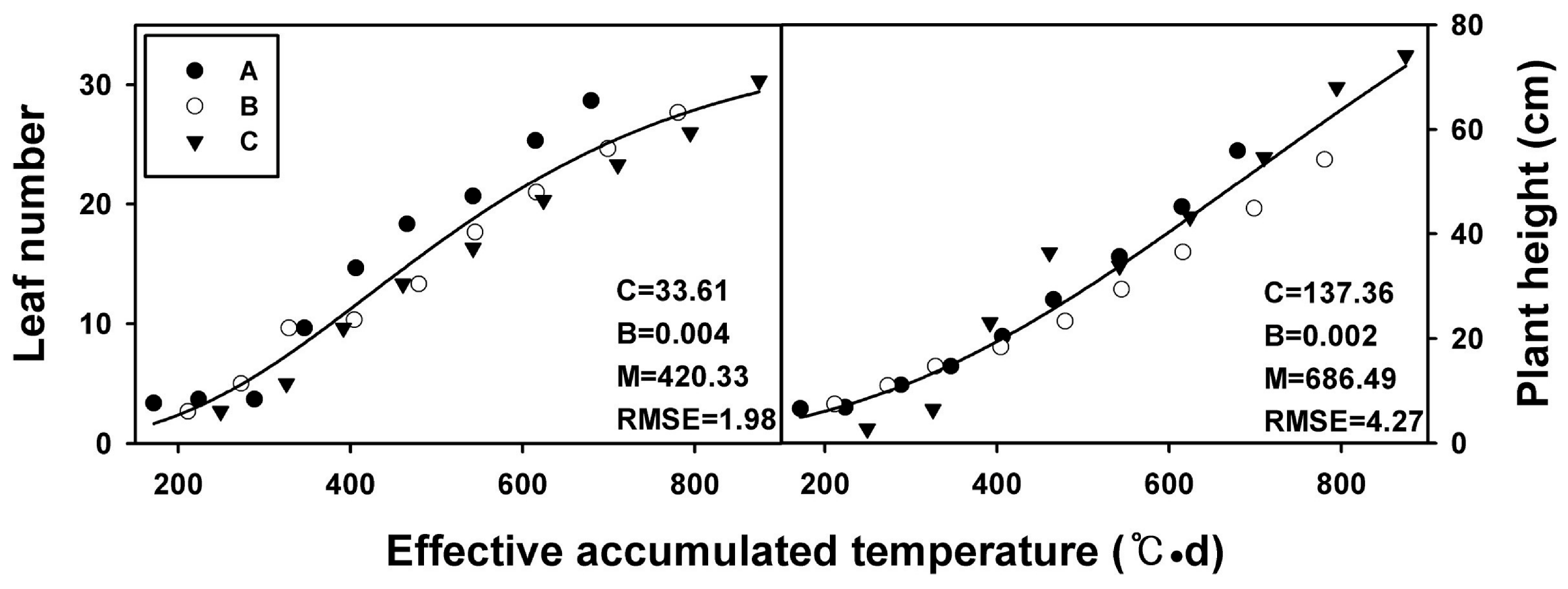
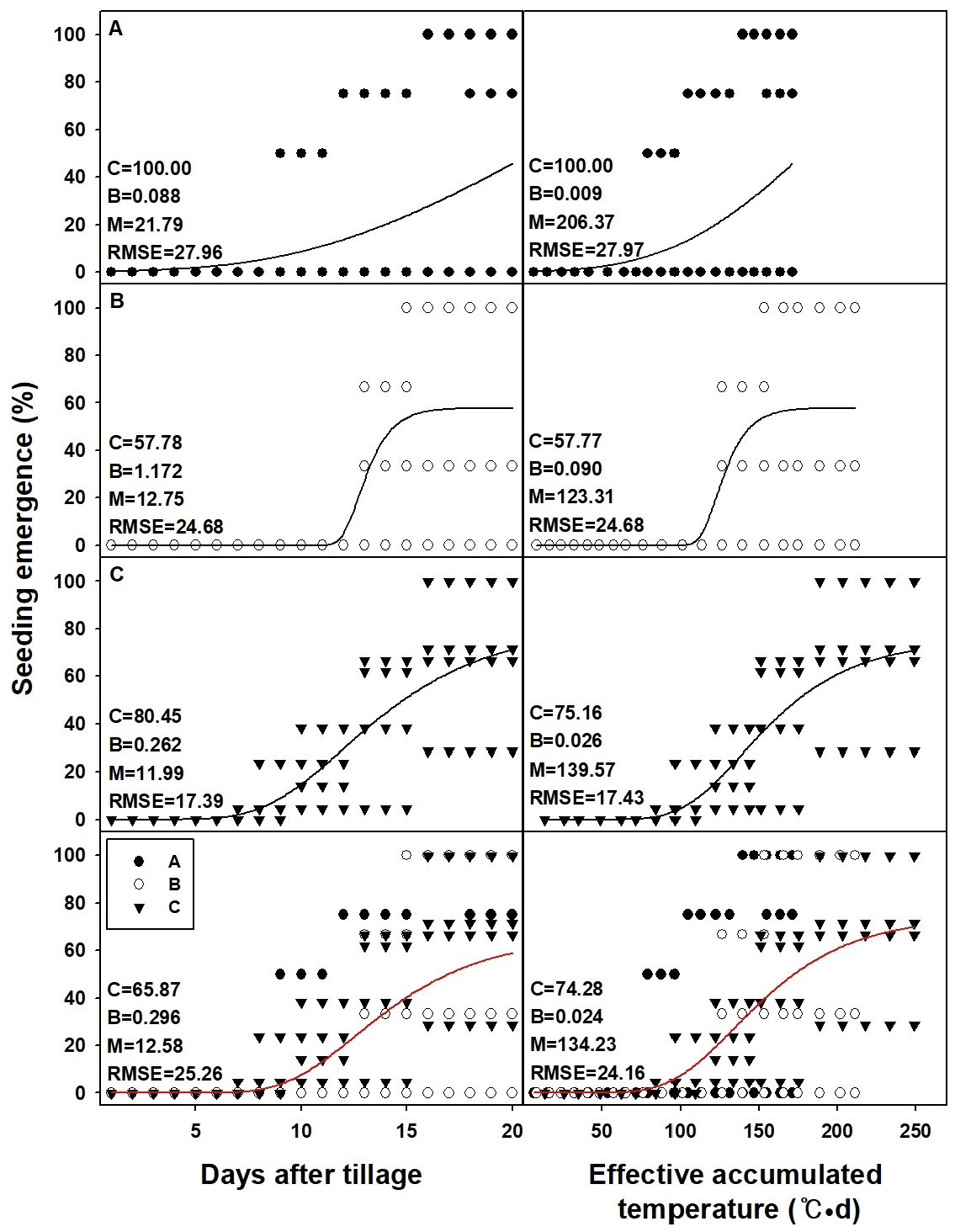
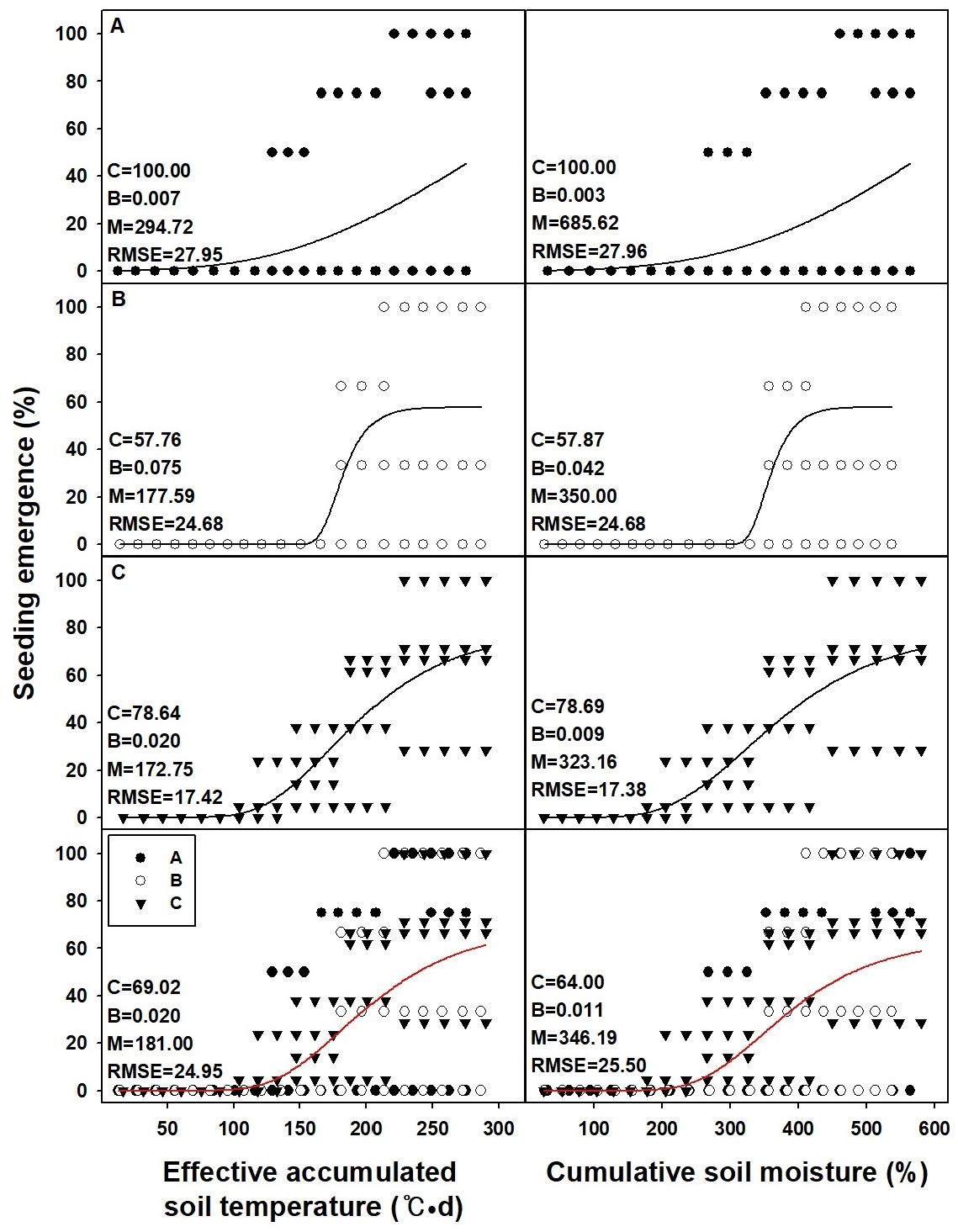
Under field conditions, the upper asymptote parameter (C) of the Gompertz model was constrained to a maximum of 100%. The fitted values of C were 100%, 58%, and 80% for the mid-May, late May, and mid-June tillage timings, respectively (Figure 4). The time required to reach 50% emergence was 21, 13, and 12 days, respectively, indicating that later tillage accelerated emergence. The pooled Gompertz model estimated a maximum emergence rate of 66%, with 50% emergence occurring after approximately 13 days. Model fit under field conditions was poorer than under controlled environments, likely reflecting greater variability among tillage timings and environmental conditions. The effective accumulated temperature required to reach 50% emergence was 206, 123, and 140 °C·d for the three tillage timings, respectively, with a pooled estimate of approximately 134 °C·d. The thermal time requirement for emergence onset (5% cumulative emergence), estimated from the fitted Gompertz model using effective accumulated air temperature, was 111 °C·d. Based on soil temperature, the corresponding effective accumulated temperature averaged approximately 181 °C·d, whereas the cumulative soil moisture index, calculated as the sum of daily mean soil moisture values, reached approximately 346% (Figure 5). Greater variability under field conditions resulted in higher prediction errors than those observed in the growth chamber and greenhouse experiments. The effective accumulated temperature required to reach 50% leaf number and plant height was 420 °C·d and 686 °C·d, respectively (Figure 6). Relatively low RMSE values for leaf number and plant height indicated that the Gompertz model adequately described early growth responses under field conditions.

3.4.2. 2025 Season

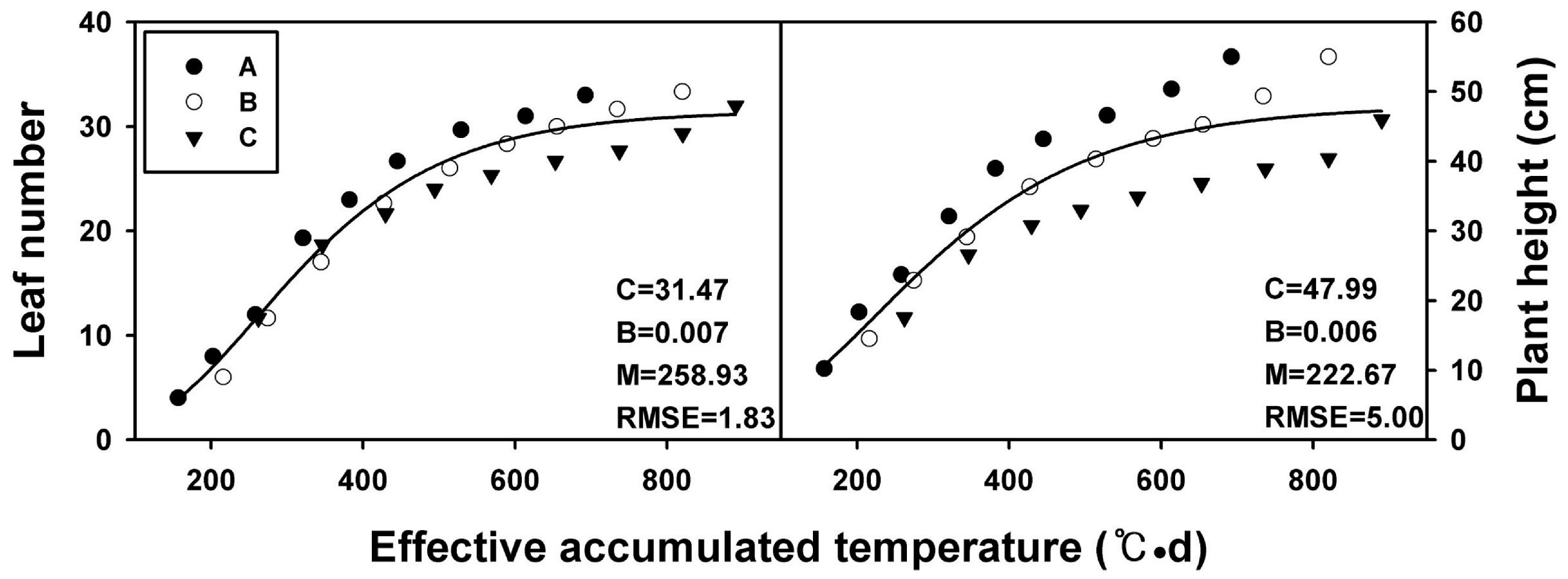
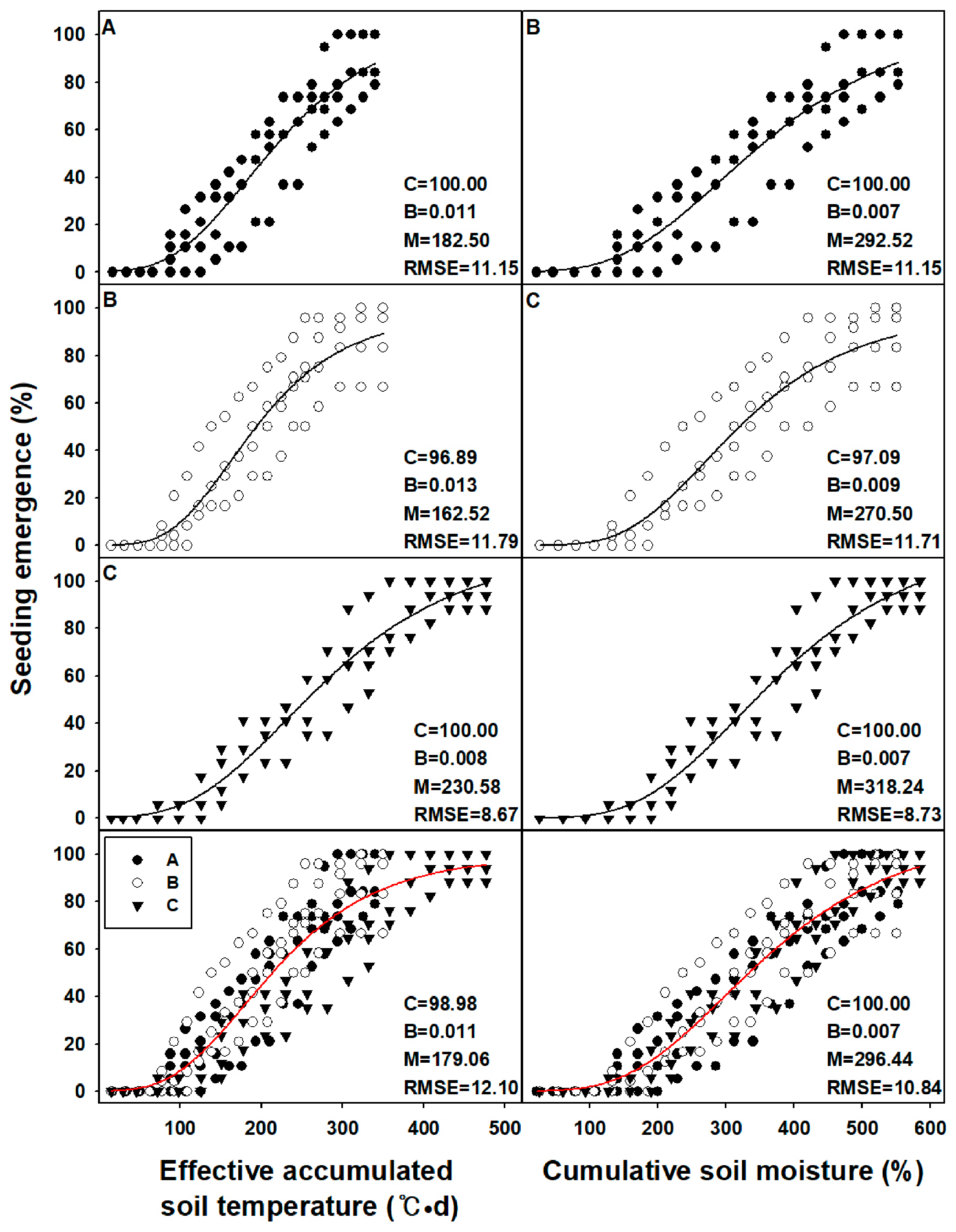
In the 2025 field experiment, the maximum emergence rate (C) was constrained to 100% during Gompertz model fitting, and the time required to reach 50% emergence was approximately 10 days across all tillage timings (Figure 7). The effective accumulated temperature required to reach 50% emergence was 82, 92, and 115 °C·d for the three tillage timings, respectively, with a pooled estimate of approximately 90 °C·d. The Gompertz model adequately described emergence patterns under field conditions, showing moderate prediction errors compared with those observed under controlled environments. Based on soil temperature, the effective accumulated temperature averaged approximately 180 °C·d, whereas cumulative soil moisture reached about 296% (Figure 8). The effective accumulated temperature required to reach 50% leaf number and plant height was 258.9 °C·d and 222.7 °C·d, respectively (Figure 9). Relatively low RMSE values for leaf number and plant height indicated good model performance for early growth characteristics. Emergence responses were relatively uniform among tillage timings, suggesting that the temperature-based emergence model provided consistent predictions under the environmental conditions evaluated in 2025.

3.4.3. Comparison Between Years

Between 2024 and 2025, the effective accumulated temperature needed to achieve 50% emergence was lower (134 °C·d vs. 90 °C·d), as was the average days for emergence (13 aggregate degree days vs. 10 aggregate degree days). Moreover, despite the greater variability and lower explanatory power observed in 2024, emergence responses in 2025 were more consistent and were associated with higher coefficients of determination, suggesting improved predictive performance and practical applicability of the model. The effective accumulated temperature needed to reach the leaf numbers and plant height decreased in terms of growth as well, which was indicative of faster plant growth for 2025. This is believed to be linked to the higher rate of effective accumulated temperature accumulation as temperatures rise.

3.5. Prediction of Barnyardgrass Emergence Timing by Region

3.5.1. 2024 Season

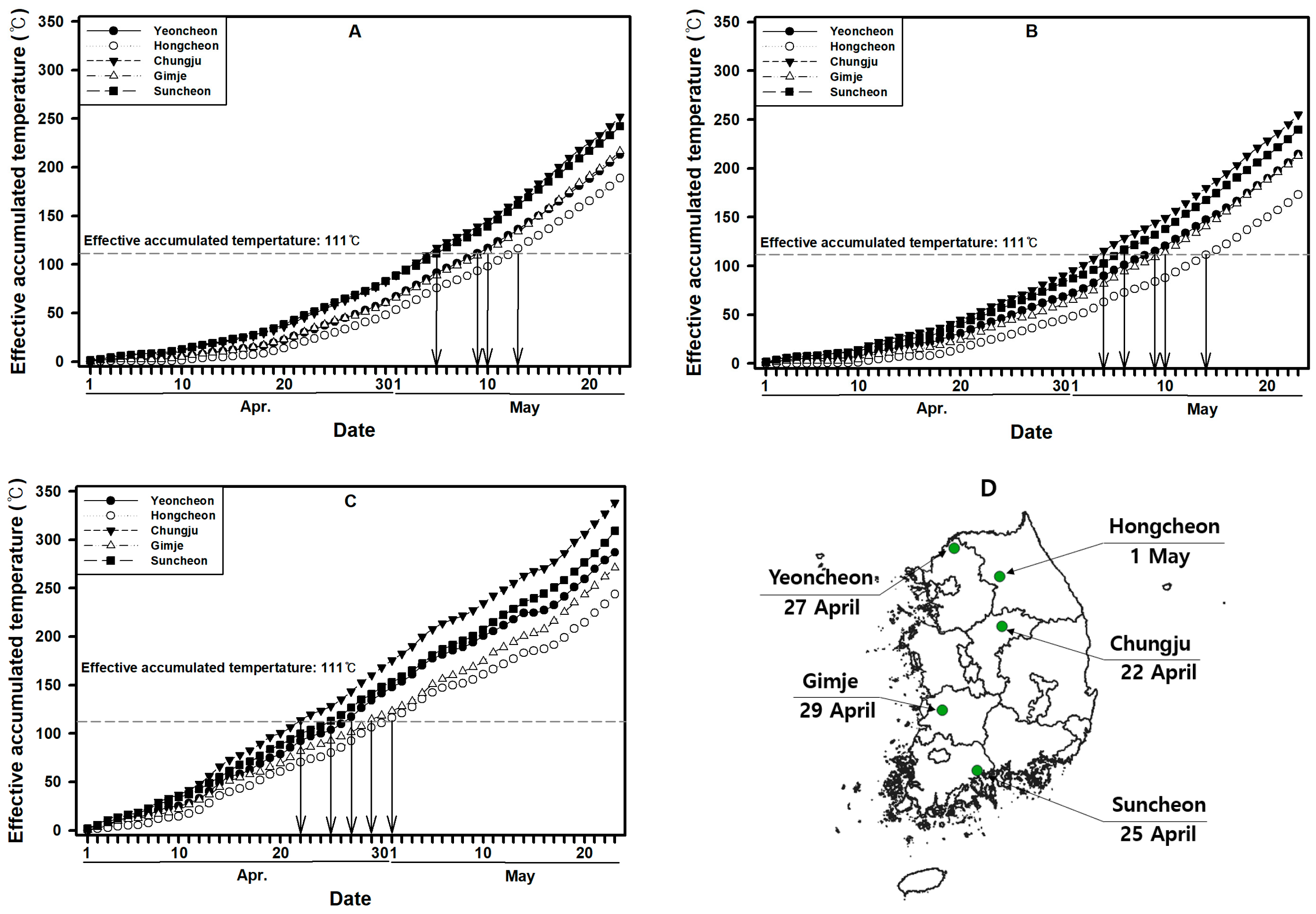
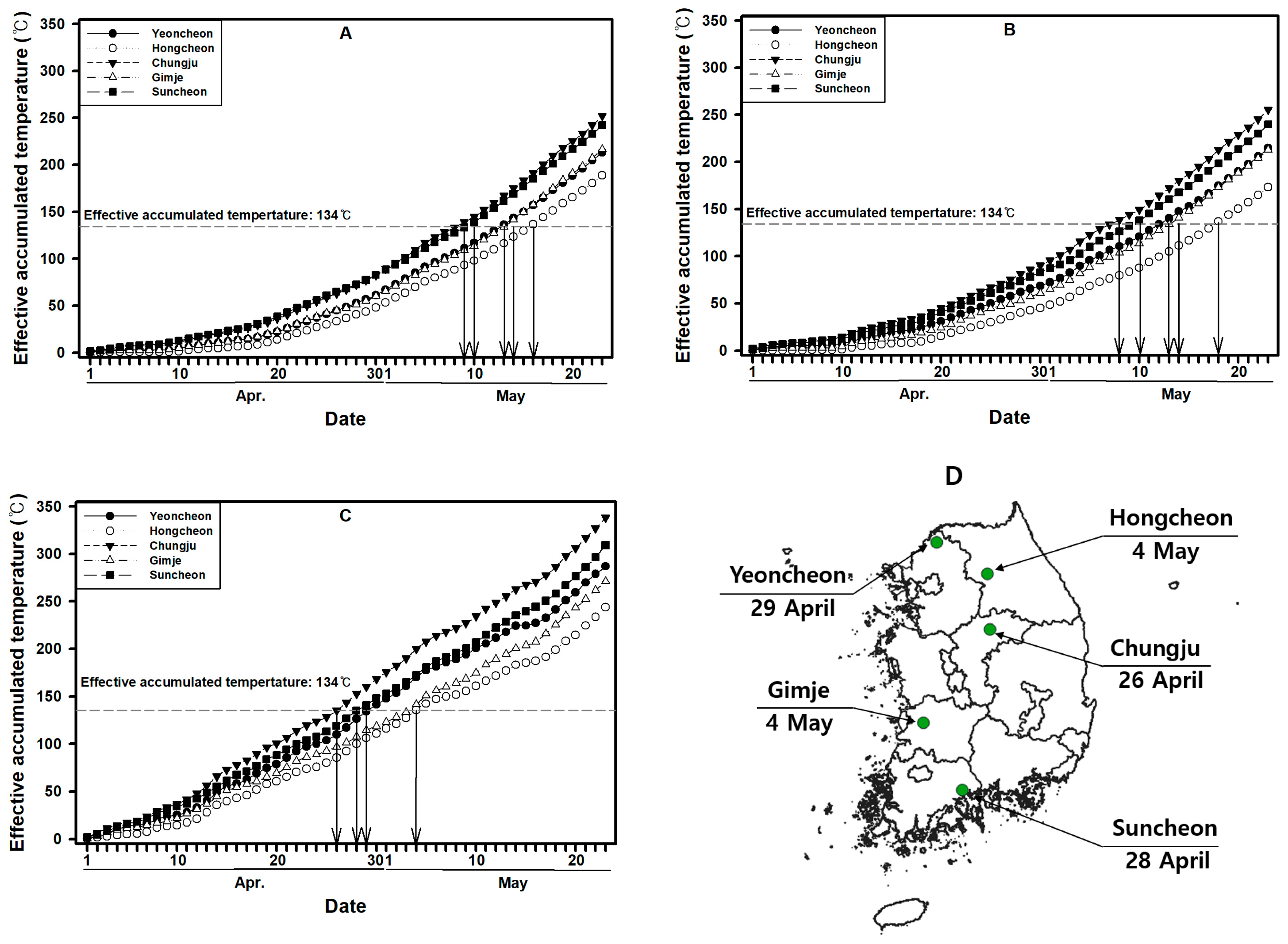
Using the effective accumulated temperature model generated based on field experiments, emergences of E. crus-galli were predicted by regions (Figure 10 and Figure 11). The threshold value of effective accumulated temperature was 111 °C·d for the initiation of emergence and 134 °C for 50% emergence. Based on the 10-year average, the earliest predicted imitation of emergence occurred in Chungju and Suncheon (May 5), followed by Yeoncheon (May 9), Gimje (May 10), and Hongcheon (May 13). Based on the 5-year average showed a similar trend, with Chungju (May 4), Suncheon (May 6), Yeoncheon (May 9), Gimje (May 10) and Hongcheon (May 14). For 2024, the predicted order was Chungju (April 22), Suncheon (April 25), Gimje (April 27), Yeoncheon (April 29) and Hongcheon (May 1). Regarding the timing of 50% emergence, the 10-year average were Chungju (May 9), Suncheon (May 10), Yeoncheon (May 13), Gimje (May 14) and Hongcheon (May 16). The 5-year average were May 8 for Chungju, May 10 for Suncheon, May 13 for Yeoncheon, May 14 for Gimje and May 18 for Hongcheon. In 2024, the order 50% emergence was Chungju (April 26), Suncheon (April 28), Yeoncheon (April 29) and Gimje and Hongcheon (May 4).

3.5.2. 2025 Season

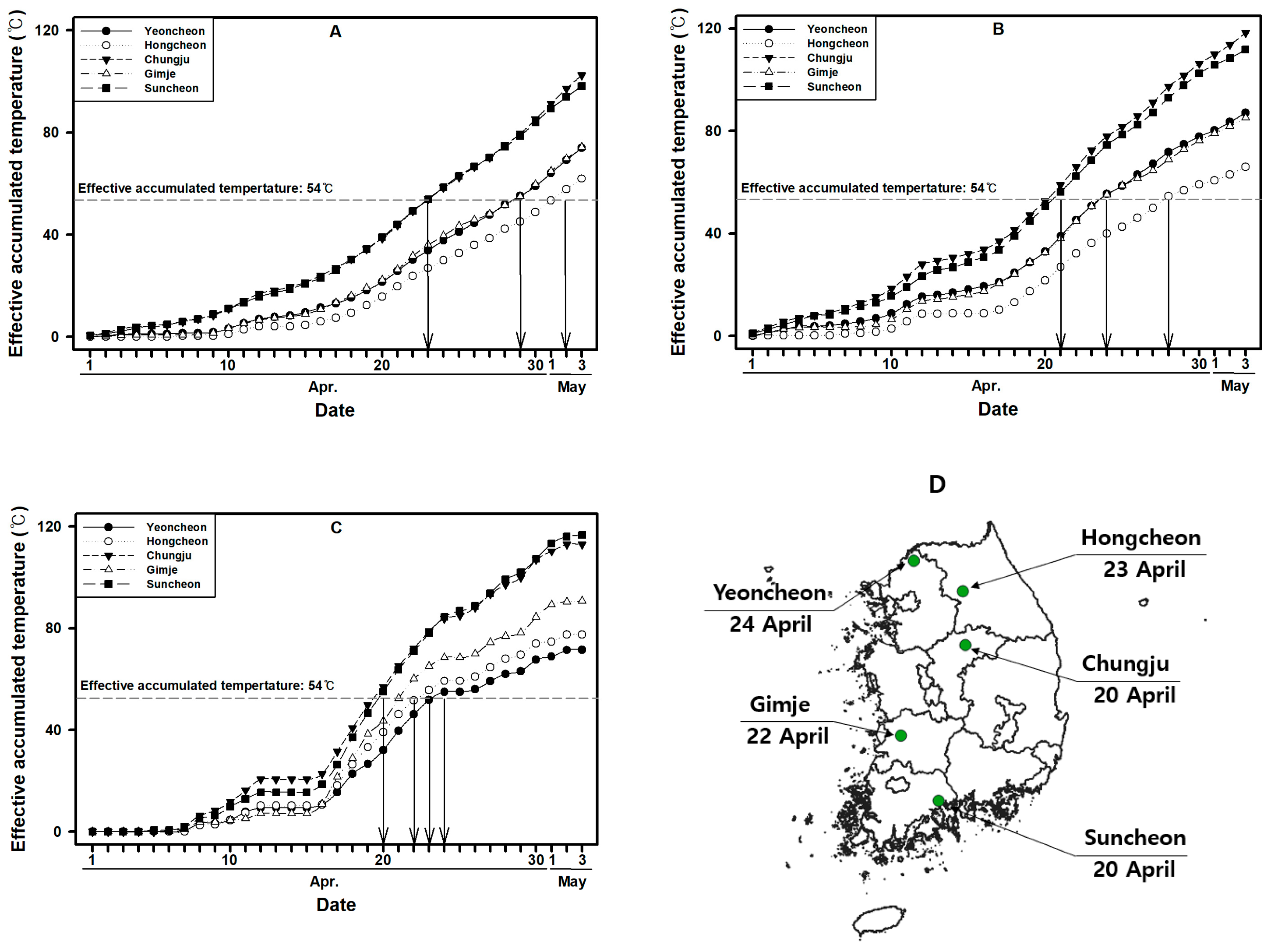
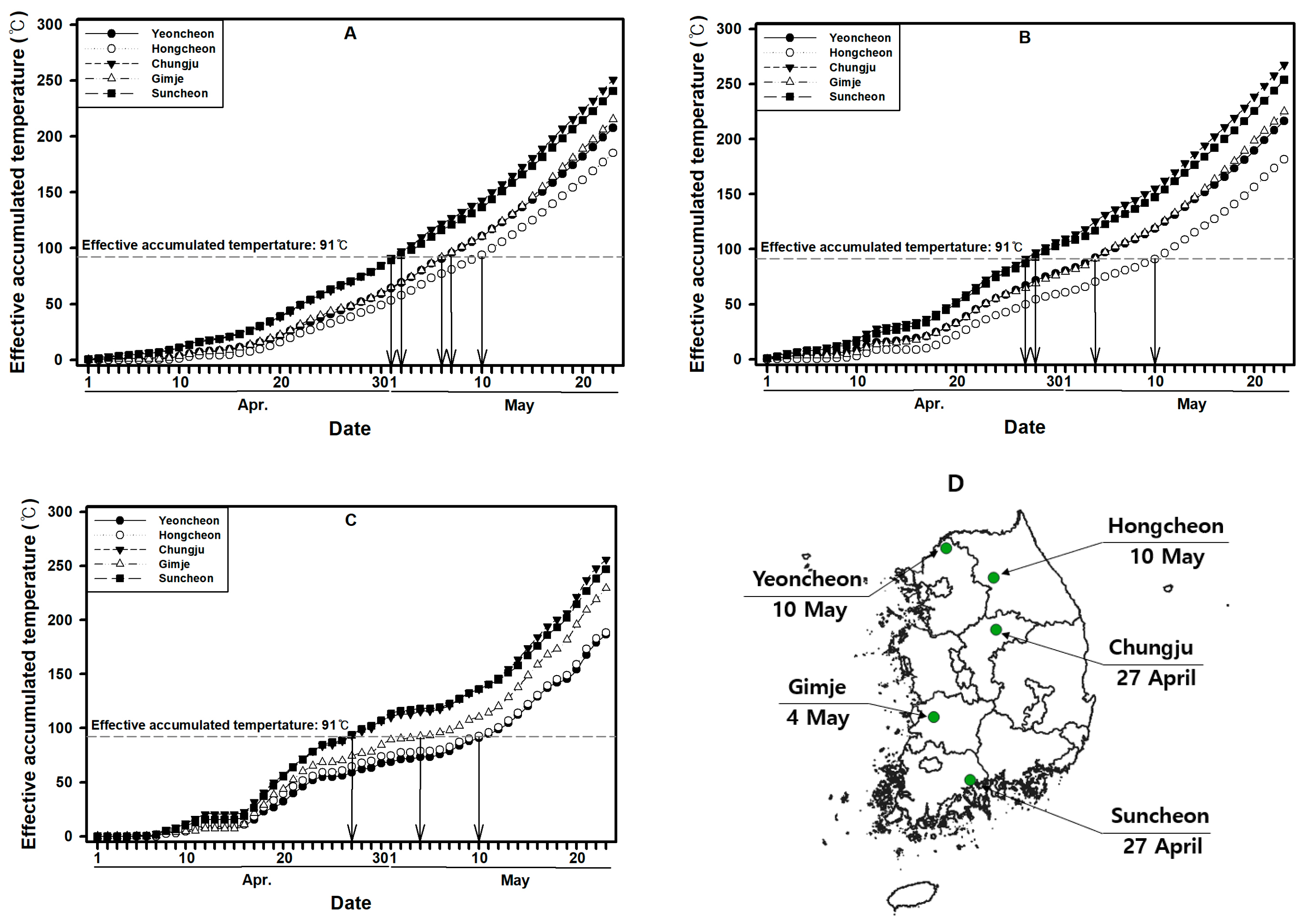
The effective accumulated temperature for the start of emergence was set at 54 °C·d, while the temperature for reaching a 50% emergence rate was set at 91 °C·d (Figure 12). Based on the 10-year average, Chungju and Suncheon showed the earliest start of emergence (April 23), followed by Yeoncheon and Gimje (April 29), and Hongcheon (May 2). Based on the 5-year average, Chungju and Suncheon were the earliest (April 21), followed by Yeoncheon and Gimje (April 24), and Hongcheon (April 28). For 2025 alone, emergence was predicted to start in Chungju and Suncheon on April 20, Gimje on April 22, Hongcheon on April 23, and Yeoncheon on April 24. For the timing of reaching a 50% emergence rate, the 10-year average was Chungju (May 1), Suncheon (May 2), Gimje (May 6), Yeoncheon (May 7), and Hongcheon (May 10) (Figure 13). The 5-year average was Chungju (April 28), Suncheon (April 29), Gimje and Yeoncheon (May 4), and Hongcheon (May 10). For 2025, 50% emergence was predicted to occur in Chungju and Suncheon (April 27), Gimje (May 4), and Yeoncheon and Hongcheon (May 10).

3.5.3. Comparison Between Years

A comparison between 2024 and 2025 indicated substantial year-to-year variability in field emergence responses. Therefore, direct comparisons of field-derived thermal thresholds should be interpreted with caution because they may reflect environmental variability and model-fitting uncertainty. Nevertheless, regional analyses consistently suggested earlier emergence in warmer regions, particularly Chungju and Suncheon, where effective accumulated temperature was reached more rapidly.

3.5.4. Independent Validation of the Emergence Model Using the 2026 Field Dataset

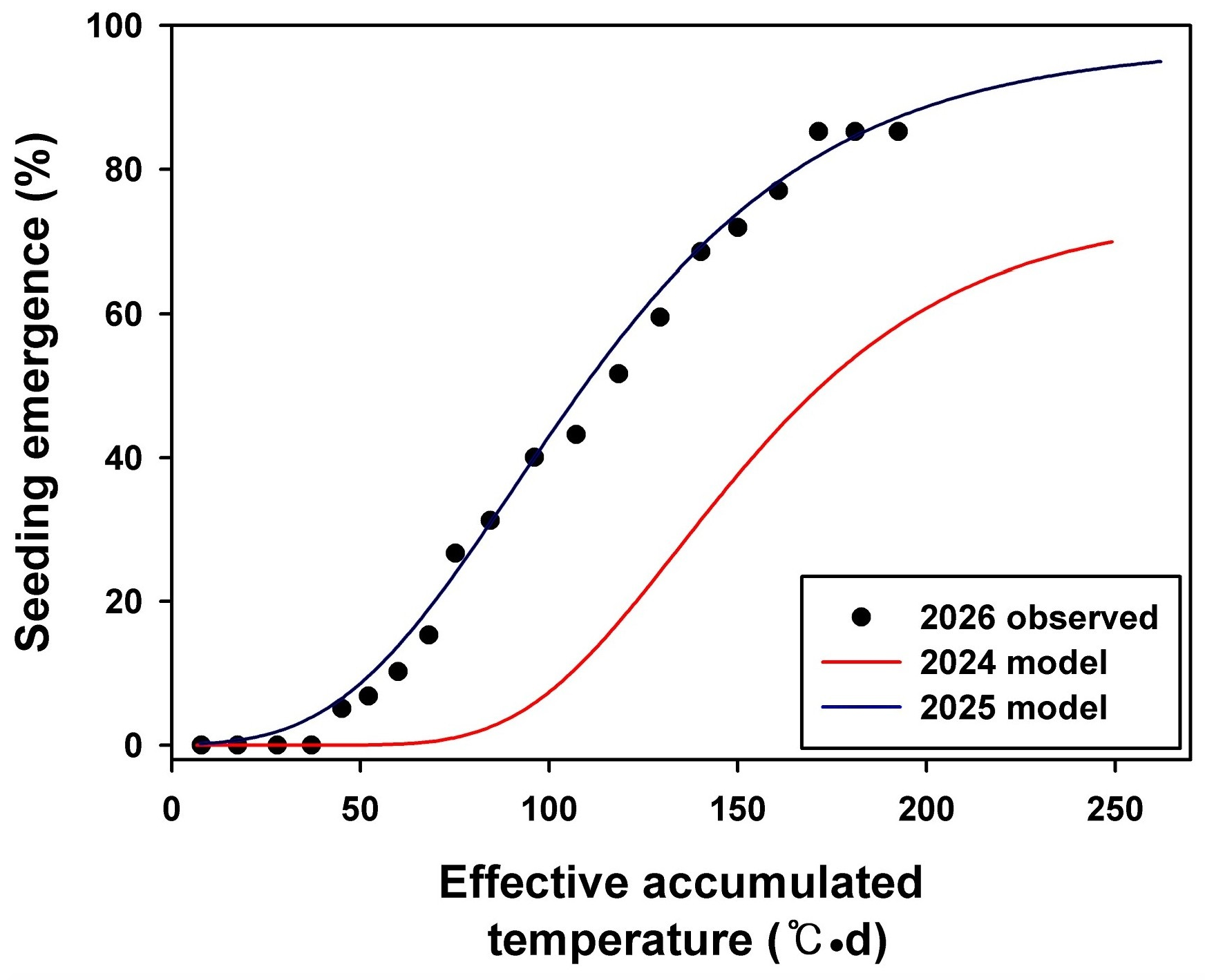
To evaluate the predictive performance of the developed emergence models, observed emergence from an independent field dataset collected in 2026 was compared with predictions generated using the 2024 and 2025 Gompertz models (Table 1, Figure 14). The 2025 model closely reproduced the observed emergence pattern throughout the emergence period, whereas the 2024 model consistently underestimated emergence during the early and intermediate stages. Consequently, prediction errors were substantially lower for the 2025 model (RMSE = 2.7%, MAE = 2.3%) than for the 2024 model (RMSE = 25.7%, MAE = 21.3%), indicating that the 2025 model provided more accurate predictions under independent field conditions.

4. Discussion

4.1. Temperature Effect and Thermal Time Applicability

This study indicated that E. crus-galli emergence and rate of emergence also increased with increased temperature which was consistent with the previous reports that temperature is an important environmental factor determining weed emergence [7,9]. Notably, when thermal time was determined, it was apparent that the heat requirement for 50% emergence ranged between 91 and 134 °C·d, indicating reduced variation across treatments. While statistical significance testing (e.g., p-values) was not performed in this model-based study, the narrow range of variation observed lends support for the thermal time model applicability [2,11,28]. At this point, water is not limiting seedling emergence (soil moisture ≥40%), and the model developed in this study was mainly based on effective accumulated temperature. This supports previous studies that found moisture drives whether emergence is possible, but after an initial threshold is reached temperature regulates the rate of emergence [5,12,29]. Therefore, a thermal-time model was selected rather than a hydrothermal-time model in the present study. Cumulative soil moisture should not be interpreted as a developmental variable analogous to thermal time. Instead, it was used only as an environmental descriptor representing soil water availability during the emergence period. Although hydrothermal-time approaches can improve emergence prediction by integrating temperature and moisture effects, emergence varied only slightly across the soil moisture treatments evaluated in this study, whereas temperature substantially affected emergence rate and timing. Consequently, temperature was considered the primary driver of E. crus-galli emergence under the tested conditions, and a thermal-time-based approach was adopted to develop a practical emergence prediction model. Nevertheless, moisture–temperature interactions have been reported in previous studies [6,28,30]. Notably, the effective accumulated temperature (EAT) required for 50% emergence of seeds at any temperature was not a monotonic decreasing function of increasing temperature (e.g., higher EAT at 22.4 °C than at 24.6 °C and 25.2 °C). The inconsistency may arise from experimental variability, micro-environmental differences or limitations of the model fitting process. Similar departures have been described from thermal time studies in which biological responses do not strictly follow monotonic trends owing to interactions among environmental variables. Independent validation using the 2026 field dataset further supported the reliability of the thermal-time approach, particularly for the model developed from the 2025 field dataset.

4.2. Gompertz Model Fitting and Emergence Pattern

The Gompertz model adequately described the emergence pattern of E. crus-galli and generally showed relatively low RMSE values compared with alternative nonlinear models. This agrees with previous studies reporting that the Gompertz model is appropriate for describing emergence patterns across different weed species [2,6,15]. The S-shaped emergence pattern observed in this study supports earlier findings that weed emergence is a nonlinear function characterized by an initial lag phase, rapid growth, and a subsequent stabilizing plateau phase. The relatively low RMSE values observed under controlled environmental conditions further support the suitability of the Gompertz model for describing E. crus-galli emergence dynamics. However, field-derived thermal thresholds differed considerably between years, with the thermal requirement for 50% emergence decreasing from approximately 134 °C·d in 2024 to approximately 90 °C·d in 2025. This variability likely reflected the combined effects of interannual environmental variation and biological factors affecting field emergence rather than instability of the thermal-time concept itself. Therefore, the observed differences between 2024 and 2025 should be interpreted as interannual variability under field conditions, and the thermal threshold estimated in this study should be regarded as a year-specific estimate rather than a fixed biological constant. Independent validation using the 2026 field dataset demonstrated that the 2025 Gompertz model successfully reproduced the observed emergence pattern under independent field conditions. However, additional multi-location validation would further improve the general applicability of the model.

4.3. Interannual Variation and Model Stability

Field conditions indicated that between-year emergence patterns differed depending on soil environment, tillage timing, seed burial depth, and other environmental factors. These differences were likely associated with temperature fluctuations, soil moisture dynamics, and soil disturbance, all of which influence seed germination and emergence. Although substantial interannual variation was observed between 2024 and 2025, the 2025 model accurately predicted emergence in an independent 2026 field dataset, indicating that the thermal-time approach remained reliable under the environmental conditions evaluated in this study. The relatively high RMSE values observed in 2024 reflected greater variability in emergence responses, whereas the lower RMSE values observed in 2025 and the successful validation using the independent 2026 dataset indicated that the 2025 model more reliably represented field emergence dynamics. Interannual variation was also observed for early growth traits such as leaf number and plant height, likely reflecting differences in environmental conditions and field heterogeneity. Nevertheless, additional validation across diverse environments would further improve the robustness and broader applicability of the proposed emergence model.

4.4. Regional Prediction and Threshold Issues

The observed differences in threshold values across years suggest that utilizing multi-year average thresholds or developing models based on long-term datasets may enhance the stability and generalizability of emergence predictions. Thermal-time models have proven effective for other weed species, such as Japanese hop, and their threshold values may vary among regions [17]. This observation is consistent with the regional emergence patterns observed in the present study. Therefore, thermal-time-based approaches may provide a useful framework for describing weed emergence under different environmental conditions. The present study should be regarded as a preliminary evaluation of the applicability of a thermal-time approach under Korean environmental conditions rather than as the development of a universally applicable predictive model.

4.5. Limitations and Future Directions

However, empirical models based on data collected in specific environments may have limited predictive accuracy when applied across different sites or years [5,6]. One limitation of this study is the absence of statistical significance tests, since the analysis focused on model-based description of emergence patterns rather than inferential comparisons among treatments. Confidence intervals and parameter uncertainty estimates were not included in the present study. Future investigations should incorporate confidence intervals and parameter uncertainty analyses to improve the statistical characterization and predictive reliability of emergence models. Air temperature reflects the aboveground atmospheric environment and is readily available for regional-scale thermal-time calculations, whereas soil temperature more directly represents the thermal environment within the soil where germination and emergence occur. One limitation of this study is that soil temperature was measured at a depth of 10 cm, whereas field emergence originated from a natural soil seedbank with unknown and variable seed burial depths. Consequently, the measured soil temperature should be interpreted as a field-scale indicator of soil thermal conditions rather than an exact estimate of the temperatures experienced by individual seeds. Although the 2025 model was independently validated using a 2026 field dataset, the validation was conducted at a single experimental site. Therefore, additional validation across multiple locations and environmental conditions is still required to confirm the broader applicability of the model. In addition, future studies should estimate the base temperature (Tb) using reciprocal time-to-t50 regression approach [4] across a wider range of temperatures to improve the biological basis of thermal-time calculations. Furthermore, future studies should include datasets collected under diverse environmental conditions and explore new approaches, such as artificial intelligence-based models, to further improve predictive accuracy. Both the timing and rate of emergence are strongly influenced by seed burial depth and soil disturbance [5,6]. While plant height and leaf number are early growth indicators under environmental factors similar to those affecting emergences, they were not directly used for emergence prediction in this study, instead, they were included as supplementary variables to provide additional context related to post-emergence growth. In summary, the present study provides a thermal-time-based emergence model that was independently validated using a 2026 field dataset. Although the results support the predictive capability of the model under the environmental conditions evaluated in this study, additional validation across multiple locations would further strengthen its broader applicability.

4.6. Conclusion Statement

Moreover, the earlier emergence predicted under recent temperature conditions may be consistent with warming trends; however, the present dataset is insufficient to directly attribute these changes to climate change, and further long-term validation is required. Earlier studies have reported that increasing temperatures promote earlier weeds emergence and shift in weed species distributions [22,24,31], while comparable increases in potential ranges and associated risks for invasive plants have also been observed domestically. Overall, the thermal-time-based Gompertz model developed in this study successfully described the emergence dynamics of E. crus-galli. Independent validation using the 2026 field dataset demonstrated that the 2025 Gompertz model accurately predicted E. crus-galli emergence under field conditions. Additional validation across diverse environments and growing seasons would further strengthen the general applicability of the model.

5. Conclusions

This study investigated the emergence characteristics of E. crus-galli under both controlled and field conditions and developed a Gompertz model within a thermal-time framework to predict weed emergence. Higher temperatures increased both the final emergence percentage and the rate of emergence. Under controlled conditions, the thermal time required for 50% emergence ranged from 54 to 69 °C·d, whereas the corresponding field-derived values ranged from 90 to 134 °C·d. At an initial soil moisture content of ≥40%, seedling emergence was not limited by water availability, indicating that effective accumulated temperature alone provided a reliable basis for emergence prediction under the conditions evaluated. Field observations revealed substantial interannual variation in emergence responses, suggesting that thermal-time thresholds may vary depending on environmental conditions. Nevertheless, independent validation using a 2026 field dataset demonstrated that the Gompertz model developed from the 2025 dataset accurately predicted E. crus-galli emergence under independent field conditions, supporting the practical applicability of the thermal-time approach. At the regional scale, the model suggested earlier emergence under recent temperature conditions, particularly in warmer regions. However, because the regional predictions were based on only two years of field observations, additional validation across multiple locations and growing seasons is required to further strengthen the general applicability of the proposed model. Overall, the thermal-time-based Gompertz model provides a practical framework for predicting E. crus-galli emergence and may contribute to improved timing of weed management under field conditions.

Author Contributions

Formal analysis, data curation, writing—original draft preparation, H.H.P. and P.P.W. and writing—review and editing and funding acquisition, Y.I.K. All authors have read and agreed to the published version of the manuscript.

Funding

This research was funded by the Rural Development Administration, Republic of Korea (grant number RS-2024-00398384).

Data Availability Statement

Data are contained within the article.

Conflicts of Interest

The authors declare no conflicts of interest.

Appendix A

Table A1. Preliminary emergence percentages of Echinochloa crus-galli at 5, 10, 15, and 20 °C used to establish the base temperature (Tb) for effective accumulated temperature calculations.
Temperature (°C)Emergence (%)
50
102
1510
2073

References

  1. Benech-Arnold, R.L.; Sánchez, R.A.; Forcella, F.; Kruk, B.C.; Ghersa, C.M. Environmental control of dormancy in weed seed banks in soil. Field Crops Res. 2000, 67, 105–122. [Google Scholar] [CrossRef] [Scilit]
  2. Forcella, F.; Benech-Arnold, R.L.; Sanchez, R.; Ghersa, C.M. Modeling seedling emergence. Field Crops Res. 2000, 67, 123–139. [Google Scholar] [CrossRef] [Scilit]
  3. Ghersa, C.M.; Holt, J.S. Using phenology prediction in weed management: A review. Weed Res. 1995, 35, 461–470. [Google Scholar] [CrossRef] [Scilit]
  4. Masin, R.; Loddo, D.; Benvenuti, S.; Zuin, M.C.; Macchia, M.; Zanin, G. Temperature and water potential as parameters for modeling weed emergence in central-northern Italy. Weed Sci. 2010, 58, 216–222. [Google Scholar] [CrossRef] [Scilit]
  5. Grundy, A.C. Predicting weed emergence: A review of approaches and future challenges. Weed Res. 2003, 43, 1–11. [Google Scholar] [CrossRef] [Scilit]
  6. Gonzalez-Andujar, J.L.; Chantre, G.R.; Morvillo, C.; Blanco, A.M.; Forcella, F. Predicting field weed emergence with empirical models and soft computing techniques. Weed Res. 2016, 56, 415–423. [Google Scholar] [CrossRef] [Scilit]
  7. Baskin, C.C.; Baskin, J.M. Seeds: Ecology, Biogeography, and Evolution of Dormancy and Germination, 2nd ed.; Academic Press: San Diego, CA, USA, 2014. [Google Scholar]
  8. Batlla, D.; Benech-Arnold, R.L. A framework for the interpretation of temperature effects on dormancy and germination in seed populations showing dormancy. Seed Sci. Res. 2015, 25, 147–158. [Google Scholar] [CrossRef] [Scilit]
  9. Bewley, J.D.; Bradford, K.J.; Hilhorst, H.W.M.; Nonogaki, H. Seeds: Physiology of Development, Germination and Dormancy, 3rd ed.; Springer: New York, NY, USA, 2013. [Google Scholar]
  10. Leguizamón, E.S.; Fernández-Quintanilla, C.; Barroso, J.; González-Andújar, J.L. Using thermal and hydrothermal time to model seedling emergence of Avena sterilis ssp. ludoviciana in Spain. Weed Res. 2005, 45, 149–156. [Google Scholar] [CrossRef] [Scilit]
  11. Bradford, K.J. Applications of hydrothermal time to quantifying and modeling seed germination and dormancy. Weed Sci. 2002, 50, 248–260. [Google Scholar] [CrossRef] [Scilit]
  12. Gummerson, R.J. The effect of constant temperatures and osmotic potentials on the germination of sugar beet. J. Exp. Bot. 1986, 37, 729–741. [Google Scholar] [CrossRef] [Scilit]
  13. Roman, E.S.; Murphy, S.D.; Swanton, C.J. Simulation of Chenopodium album seedling emergence. Weed Sci. 2000, 48, 217–224. [Google Scholar]
  14. Chauhan, B.S.; Abugho, S.B. Effects of water regime, nitrogen fertilization, and rice plant density on growth and reproduction of lowland weed Echinochloa crus-galli. Crop Prot. 2013, 54, 142–147. [Google Scholar] [CrossRef] [Scilit]
  15. Moon, B.C.; Cho, S.H.; Kwon, O.D.; Lee, S.G.; Lee, B.W.; Kim, D.S. Modelling rice competition with Echinochloa crus-galli and Eleocharis kuroguwai in transplanted rice cultivation. J. Crop Sci. Biotech. 2010, 13, 121–126. [Google Scholar] [CrossRef] [Scilit]
  16. Dorado, J.; Sousa, E.; Calha, I.M.; González-Andújar, J.L.; Fernández-Quintanilla, C. Predicting weed emergence in maize crops under two contrasting climatic conditions. Weed Res. 2009, 49, 251–260. [Google Scholar] [CrossRef] [Scilit]
  17. Royo-Esnal, A.; Onofri, A.; Taab, A.; Loddo, D.; Necajeva, J.; Uludag, A.; Synowiec, A.; Calha, I.M.; Andersson, L.; Jensen, P.K.; et al. Comparing the emergence of Echinochloa crus-galli populations in different locations. Part II: Similarities and threshold parameters. Weed Res. 2022, 62, 203–214. [Google Scholar] [CrossRef] [Scilit]
  18. Royo-Esnal, A.; Onofri, A.; Loddo, D.; Necajeva, J.; Jensen, P.K.; Economou, G.; Taab, A.; Synowiec, A.; Calha, I.M.; Andersson, L.; et al. Comparing the emergence of Echinochloa crus-galli populations in different locations. Part I: Variations in emergence timing and behaviour of two populations. Weed Res. 2022, 62, 192–202. [Google Scholar] [CrossRef] [Scilit]
  19. Malavert, C.; Batlla, D. Thermal regulation of dormancy in Echinochloa crus-galli (L.) P. Beauv. seeds: Development of a model to predict the temporal ’window’ of emergence in the field. Weed Res. 2024, 64, 158–170. [Google Scholar] [CrossRef] [Scilit]
  20. Song, J.S.; Park, M.W.; Lim, S.H.; Kim, D.S. Prediction of seedling emergence of Humulus japonicus. Korean J. Weed Sci. 2010, 30, 50–57. [Google Scholar] [CrossRef] [Scilit]
  21. Park, M.W.; Kim, J.W.; Lim, S.H.; Lee, I.Y.; Kim, D.S. Prediction of seedling emergence and early growth of Monochoria vaginalis and Scirpus juncoides under elevated temperature. Korean J. Weed Sci. 2010, 30, 103–110. [Google Scholar] [CrossRef] [Scilit]
  22. Bradley, B.A.; Blumenthal, D.M.; Wilcove, D.S.; Ziska, L.H. Predicting plant invasions in an era of global change. Trends Ecol. Evol. 2010, 25, 310–318. [Google Scholar] [CrossRef] [Scilit] [PubMed]
  23. Park, H.H.; Win, P.P.; Kuk, Y.I. Analysis of emergence characteristics and development of prediction model for Setaria pallidefusca and Eclipta prostrata based on Gompertz model. Korean J. Agric. For. Meteorol. 2025, 27, 31–47. [Google Scholar]
  24. Parmesan, C.; Yohe, G. A globally coherent fingerprint of climate change impacts across natural systems. Nature 2003, 421, 37–42. [Google Scholar] [CrossRef] [Scilit] [PubMed]
  25. Lee, Y.H.; Na, C.S.; Hong, S.H.; Sohn, S.I.; Kim, C.S.; Lee, I.Y.; Oh, Y.J. Predicting the potential habitat and risk assessment of Amaranthus patulus using MaxEnt. Korean J. Environ. Biol. 2018, 36, 672–679. [Google Scholar] [CrossRef] [Scilit]
  26. Park, H.H.; Kuk, Y.I. Prediction of regional emergence timing of the exotic weed Amaranthus patulus under climate change. Korean J. Crop Sci. 2025, 70, 40–50. [Google Scholar]
  27. Šoštarčić, V.; Masin, R.; Loddo, D.; Svečnjak, Z.; Rubinić, V.; Šćepanović, M. Predicting the emergence of Echinochloa crus-galli (L.) P. Beauv. in maize crop in Croatia with a hydrothermal model. Agronomy 2021, 11, 2072. [Google Scholar] [CrossRef] [Scilit]
  28. Allen, P.S.; Meyer, S.E.; Khan, M.A. Hydrothermal time as a tool in comparative germination studies. In Seed Biology: Advances and Applications; Black, M., Bradford, K.J., Vázquez-Ramos, J., Eds.; CABI Publishing: Wallingford, UK, 2000; pp. 401–410. [Google Scholar]
  29. Finch-Savage, W.E.; Leubner-Metzger, G. Seed dormancy and the control of germination. New Phytol. 2006, 171, 501–523. [Google Scholar] [CrossRef] [Scilit] [PubMed]
  30. Dahal, P.; Bradford, K.J. Hydrothermal time analysis of tomato seed germination at suboptimal temperature and reduced water potential. Seed Sci. Res. 1994, 4, 71–80. [Google Scholar] [CrossRef] [Scilit]
  31. Patterson, D.T. Weeds in a changing climate. Weed Sci. 1995, 43, 685–701. [Google Scholar] [CrossRef] [Scilit]
Figure 1. Cumulative emergence of barnyardgrass (Echinochloa crus-galli) plotted against days after sowing (left) and effective accumulated temperature (right) under growth chamber temperature regimes: (A) 20/10 °C, (B) 25/15 °C, (C) 30/20 °C, and (D) 35/25 °C. Data points represent cumulative emergence observations, and solid curves indicate Gompertz model predictions. The lower panel presents pooled observations across all temperature treatments (AD) and the corresponding Gompertz model fit used to estimate overall emergence characteristics.
Agronomy 16 01724 g001
Figure 2. Cumulative emergence of barnyardgrass (Echinochloa crus-galli) plotted against days after sowing (left) and cumulative soil moisture (right) under growth chamber soil moisture conditions: (A) 40%, (B) 60%, (C) 80%, and (D) 100%. Data points represent cumulative emergence observations recorded from three biological replicates per treatment, whereas solid curves indicate Gompertz model predictions. The lower panel presents pooled observations across all moisture treatments (AD) and the corresponding Gompertz model fit used to estimate overall emergence characteristics.
Agronomy 16 01724 g002
Figure 3. Cumulative emergence of barnyardgrass (Echinochloa crus-galli) plotted against days after sowing (left) and effective accumulated temperature (right) under greenhouse temperature conditions (mean daily temperature during the experimental period): (A) 22.4 °C, (B) 24.6 °C, and (C) 25.2 °C. Data points represent cumulative emergence observations recorded from three biological replicates per treatment, whereas solid curves indicate Gompertz model predictions. The lower panel presents pooled observations across all temperature treatments (AC) and the corresponding Gompertz model fit used to estimate overall emergence characteristics.
Agronomy 16 01724 g003
Figure 4. Cumulative emergence of barnyardgrass (Echinochloa crus-galli) plotted against days after tillage (left) and effective accumulated temperature (right) under field conditions in the 2024 season with different tillage timings: (A) May 17, (B) May 31, and (C) June 14. Data points represent cumulative emergence observations recorded from four biological replicates per treatment, whereas solid curves indicate Gompertz model predictions. The lower panel presents pooled observations across all tillage timings (AC) and the corresponding Gompertz model fit used to estimate overall emergence characteristics.
Agronomy 16 01724 g004
Figure 5. Cumulative emergence of barnyardgrass (Echinochloa crus-galli) plotted against effective accumulated soil temperature (left) and cumulative soil moisture (right) under field conditions in the 2024 season with different tillage timings: (A) May 17, (B) May 31, and (C) June 14. The lower panel shows pooled data across all treatments (AC). Data points represent cumulative emergence observations recorded from four biological replicates per treatment, whereas solid curves indicate Gompertz model predictions. The lower panel presents pooled observations across all tillage timings (AC) and the corresponding Gompertz model fit used to estimate overall emergence characteristics.
Agronomy 16 01724 g005
Figure 6. Leaf number (left) and plant height (right) of barnyardgrass (Echinochloa crus-galli) plotted against effective accumulated temperature under field conditions in the 2024 season with different tillage timings: (A) May 17, (B) May 31, and (C) June 14.
Agronomy 16 01724 g006
Figure 7. Cumulative emergence of barnyardgrass (Echinochloa crus-galli) plotted against days after tillage (left) and effective accumulated temperature (right) under field conditions in the 2025 season with different tillage timings: (A) May 14, (B) May 30, and (C) June 12. Data points represent cumulative emergence observations recorded from four biological replicates per treatment, whereas solid curves indicate Gompertz model predictions. The lower panel presents pooled observations across all tillage timings (AC) and the corresponding Gompertz model fit used to estimate overall emergence characteristics.
Agronomy 16 01724 g007
Figure 8. Cumulative emergence of barnyardgrass (Echinochloa crus-galli) plotted against effective accumulated soil temperature (left) and cumulative soil moisture (right) under field conditions in the 2025 season with different tillage timings: (A) May 14, (B) May 30, and (C) June 12. Data points represent cumulative emergence observations recorded from four biological replicates per treatment, whereas solid curves indicate Gompertz model predictions. The lower panel presents pooled observations across all tillage timings (AC) and the corresponding Gompertz model fit used to estimate overall emergence characteristics.
Agronomy 16 01724 g008
Figure 9. Leaf number (left) and plant height (right) of barnyardgrass (Echinochloa crus-galli) plotted against effective accumulated temperature under field conditions in the 2025 season with different tillage timings: (A) May 14, (B) May 30, and (C) June 12.
Agronomy 16 01724 g009
Figure 10. Predicted emergence dates of barnyardgrass (Echinochloa crus-galli) across major soybean-growing regions in 2024 based on effective accumulated temperature required for emergence initiation: (A) 10-year average, (B) 5-year average, (C) effective accumulated temperature in 2024, and (D) 2024 single-year data.
Agronomy 16 01724 g010
Figure 11. Predicted dates of 50% emergence of barnyardgrass (Echinochloa crus-galli) across major soybean-growing regions in 2024 based on effective accumulated temperature required to reach 50% emergence: (A) 10-year average, (B) 5-year average, (C) effective accumulated temperature in 2024, and (D) 2024 single-year data.
Agronomy 16 01724 g011
Figure 12. Predicted emergence onset dates of barnyardgrass (Echinochloa crus-galli) across major soybean-growing regions in 2025 based on effective accumulated temperature required for emergence initiation: (A) 10-year average, (B) 5-year average, (C) effective accumulated temperature in 2025, and (D) 2025 single-year data.
Agronomy 16 01724 g012
Figure 13. Predicted dates of 50% emergence of barnyardgrass (Echinochloa crus-galli) across major soybean-growing regions in 2025 based on effective accumulated temperature required to reach 50% emergence: (A) 10-year average, (B) 5-year average, (C) effective accumulated temperature in 2025, and (D) 2025 single-year data.
Agronomy 16 01724 g013
Figure 14. Independent validation of the 2024 and 2025 Gompertz emergence models using an independent field dataset collected in 2026. Black circles indicate observed emergence, whereas red and blue lines represent predictions generated by the 2024 and 2025 models, respectively.
Agronomy 16 01724 g014
Table 1. Independent validation of the 2024 and 2025 Gompertz emergence models using observed barnyardgrass emergence data collected in 2026.
DateCumulative EAT (°C·Day)Observed
Emergence, 2026 (%)
Predicted
Emergence, 2024 Model (%)
Predicted
Emergence, 2025 Model (%)
May 157.90.00.00.2
May 1617.50.00.00.7
May 1728.00.00.01.8
May 1837.00.00.03.7
May 1945.15.10.06.4
May 2052.16.90.19.4
May 2160.010.20.213.6
May 2268.115.30.618.8
May 2375.226.71.223.8
May 2484.431.22.730.8
May 2596.140.16.140.0
May 26107.243.211.048.5
May 27118.551.717.356.6
May 28129.459.524.263.5
May 29140.268.631.269.5
May 30150.071.937.474.2
May 31160.877.043.878.6
June 01171.485.349.382.1
June 02181.185.353.784.8
June 03192.585.358.087.5
RMSE (%p)25.72.7
MAE (%p)21.32.3
Disclaimer/Publisher’s Note: The statements, opinions and data contained in all publications are solely those of the individual author(s) and contributor(s) and not of MDPI and/or the editor(s). MDPI and/or the editor(s) disclaim responsibility for any injury to people or property resulting from any ideas, methods, instructions or products referred to in the content.