The FataAP2-FataAP1-FataTOE Regulatory Cascade Regulates Floral Organ Development in Fagopyrum tataricum

Abstract
1. Introduction
2. Materials and Methods
2.1. Plant Material
2.2. Isolation and Identification of AP2-Type Genes, FataAP1, and Their Promoters from Tartary Buckwheat
2.3. Yeast One-Hybrid Assay
2.4. Dual-Luciferase Reporter Assay
2.5. Expression Analysis of FataAP2, FataTOE, and FataAP1
2.6. VIGS Assay in Tartary Buckwheat
3. Results
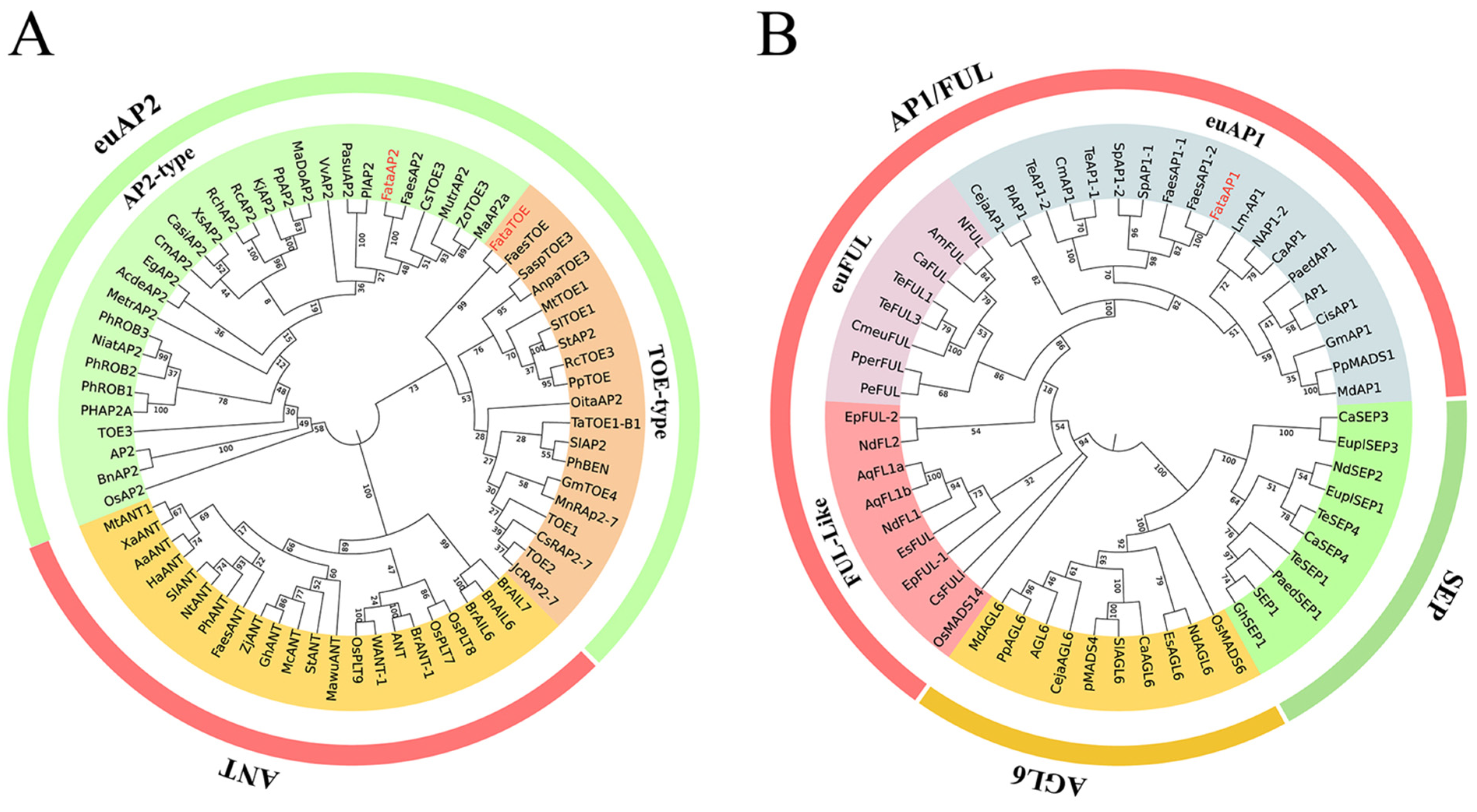
3.1. Isolation and Identification of FataAP2, FataTOE, FataAP1, and Their Promoters from Tartary Buckwheat
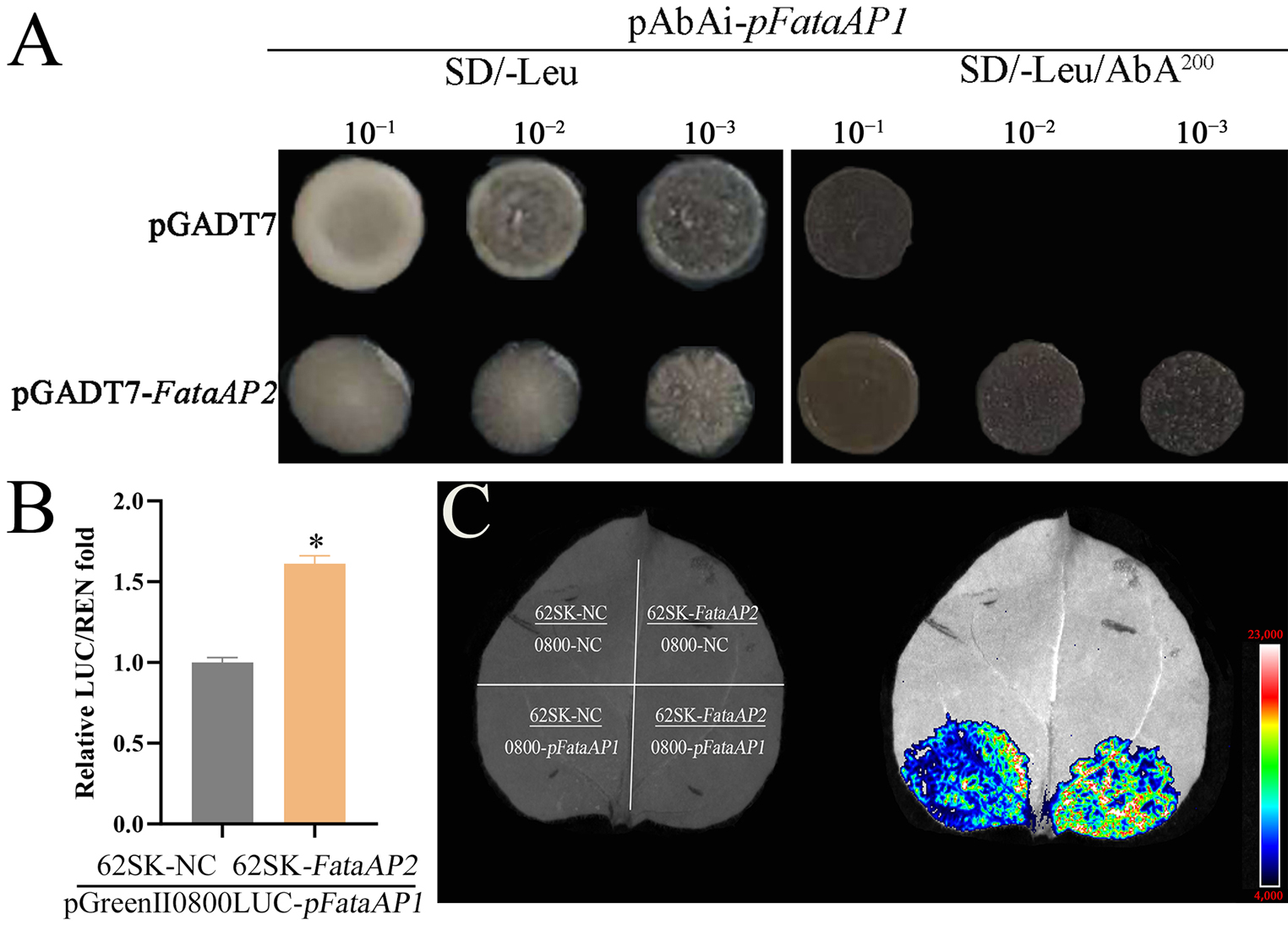
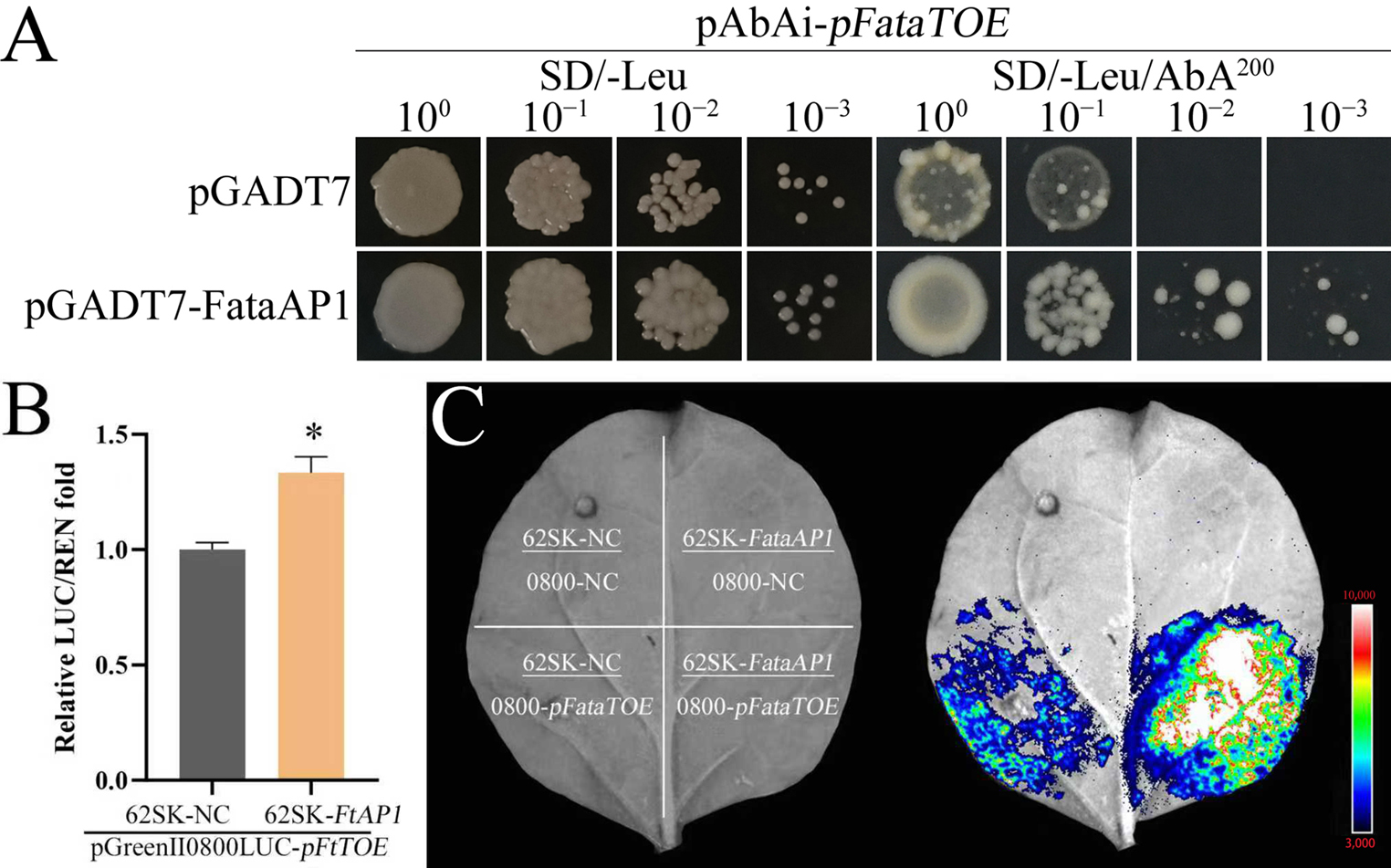
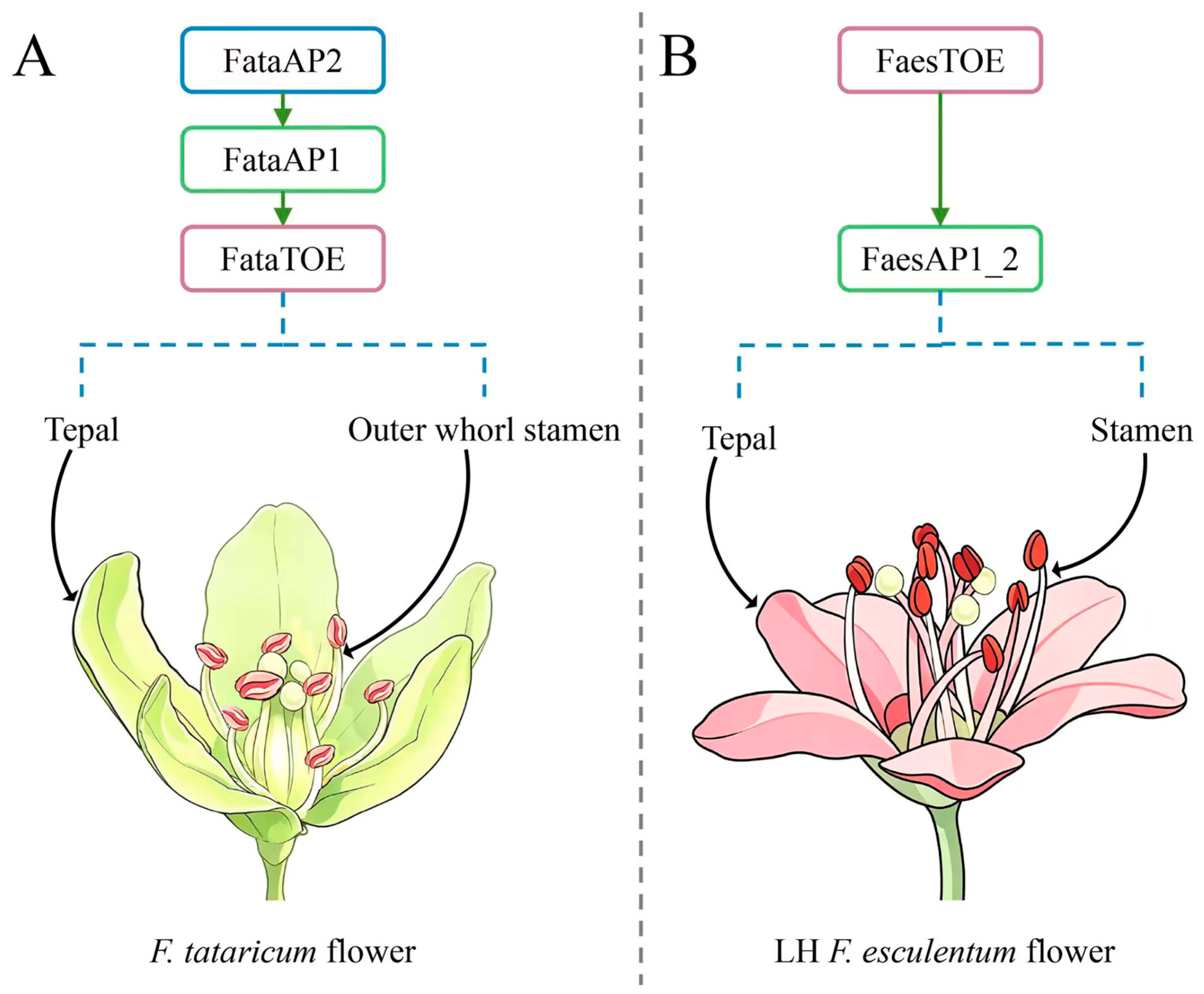
3.2. The FataAP2-FataAP1-FataTOE Module Involved in F. tataricum Floral Development
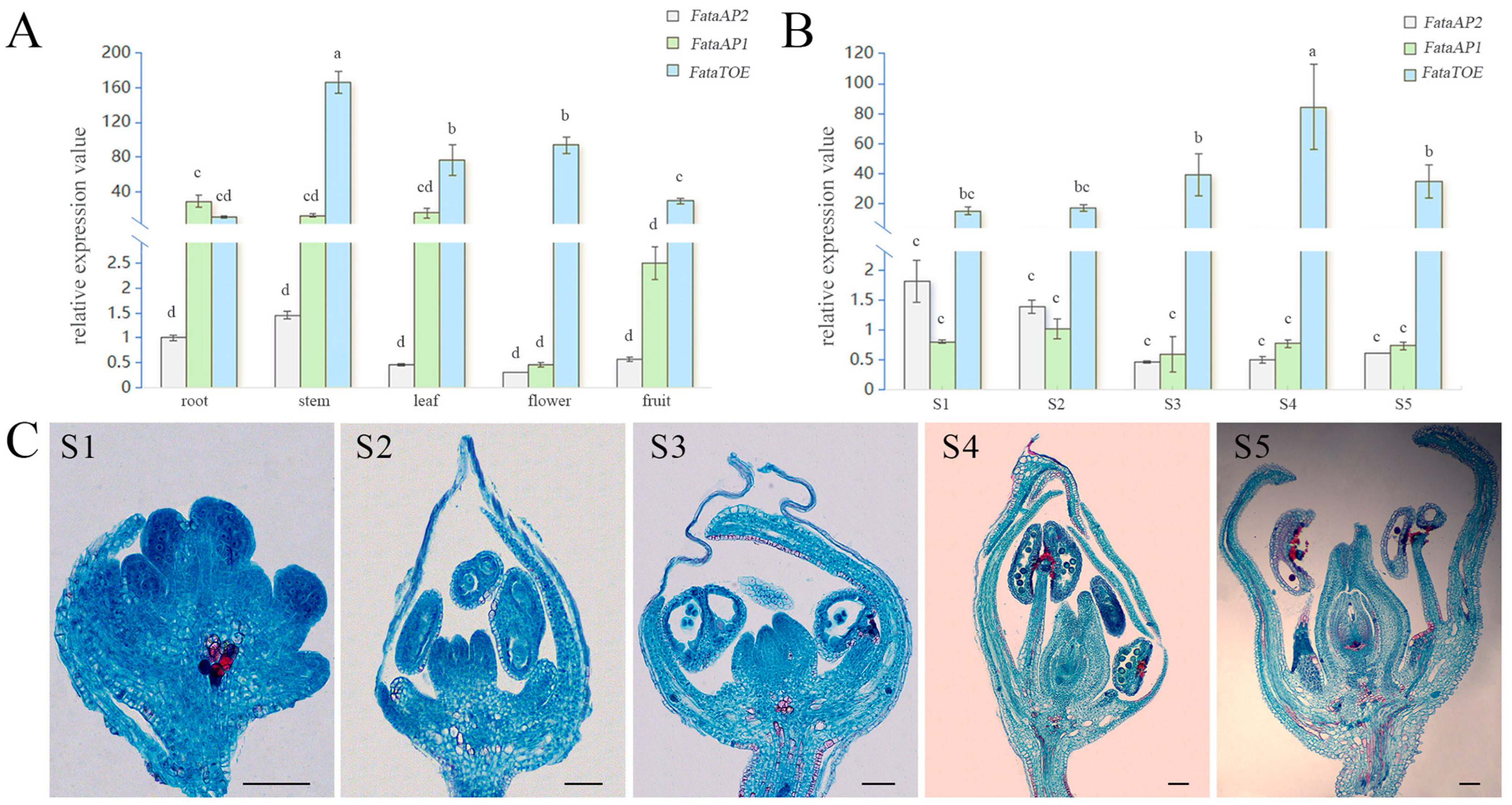
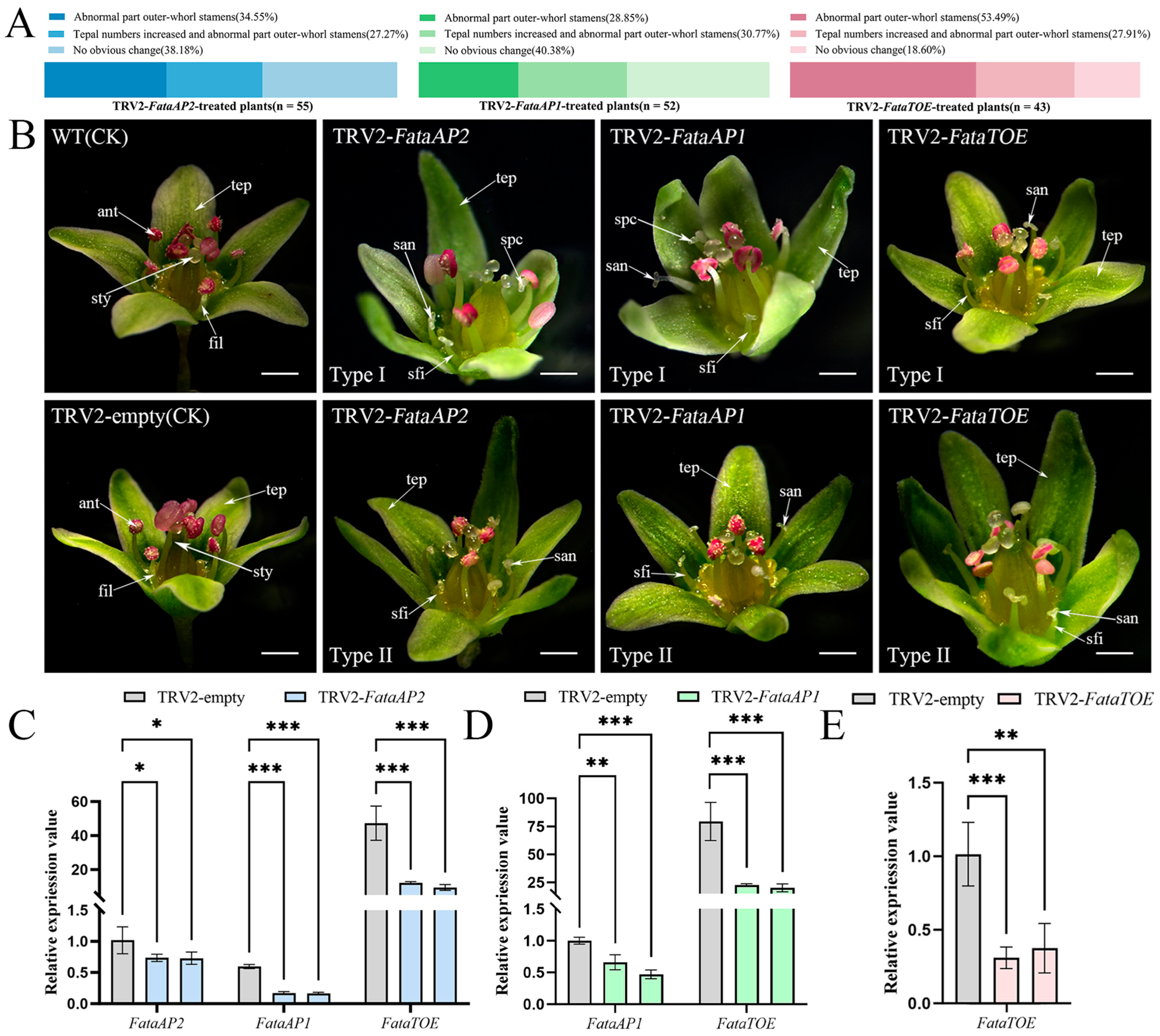
3.3. Expression Analysis of FataAP2, FataTOE, and FataAP1 in Tartary Buckwheat
3.4. Characterization of FataAP2, FataAP1, and FataTOE-Silenced Plants
4. Discussion
5. Conclusions
Supplementary Materials
Author Contributions
Funding
Data Availability Statement
Conflicts of Interest
References
- Bowman, J.L.; Moyroud, E. Reflections on the ABC model of flower development. Plant Cell 2024, 36, 1334–1357. [Google Scholar] [CrossRef] [Scilit]
- Martínez-Fernández, I.; Menezes de Moura, S.; Alves-Ferreira, M.; Ferrándiz, C.; Balanzà, V. Identification of Players Controlling Meristem Arrest Downstream of the FRUITFULL-APETALA2 Pathway. Plant Physiol. 2020, 184, 945–959. [Google Scholar] [CrossRef] [Scilit]
- Kim, S.; Soltis, P.S.; Wall, K.; Soltis, D.E. Phylogeny and domain evolution in the APETALA2-like gene family. Mol. Biol. Evol. 2006, 23, 107–120. [Google Scholar] [CrossRef] [Scilit]
- Morel, P.; Heijmans, K.; Rozier, F.; Zethof, J.; Chamot, S.; Bento, S.R.; Vialette-Guiraud, A.; Chambrier, P.; Trehin, C.; Vandenbussche, M. Divergence of the Floral A-Function between an Asterid and a Rosid Species. Plant Cell 2017, 29, 1605–1621. [Google Scholar] [CrossRef] [Scilit] [PubMed]
- Zumajo-Cardona, C.; Pabón-Mora, N.; Ambrose, B.A. The Evolution of euAPETALA2 Genes in Vascular Plants: From Plesiomorphic Roles in Sporangia to Acquired Functions in Ovules and Fruits. Mol. Biol. Evol. 2021, 38, 2319–2336. [Google Scholar] [CrossRef] [Scilit] [PubMed]
- Zhang, B.; Wang, L.; Zeng, L.; Zhang, C.; Ma, H. Arabidopsis TOE proteins convey a photoperiodic signal to antagonize CONSTANS and regulate flowering time. Genes Dev. 2015, 29, 975–987. [Google Scholar] [CrossRef] [Scilit] [PubMed]
- Kerstens, M.H.L.; Schranz, M.E.; Bouwmeester, K. Phylogenomic analysis of the APETALA2 transcription factor subfamily across angiosperms reveals both deep conservation and lineage-specific patterns. Plant J. 2020, 103, 1516–1524. [Google Scholar] [CrossRef] [Scilit] [PubMed]
- Sánchez-Gerschon, V.; Martínez-Fernández, I.; González-Bermúdez, M.R.; de la Hoz-Rodríguez, S.; González, F.V.; Lozano-Juste, J.; Ferrándiz, C.; Balanzà, V. Transcription factors HB21/40/53 trigger inflorescence arrest through abscisic acid accumulation at the end of flowering. Plant Physiol. 2024, 195, 2743–2756. [Google Scholar] [CrossRef] [Scilit] [PubMed]
- Yant, L.; Mathieu, J.; Dinh, T.T.; Ott, F.; Lanz, C.; Wollmann, H.; Chen, X.; Schmid, M. Orchestration of the Floral Transition and Floral Development in Arabidopsis by the Bifunctional Transcription Factor APETALA2. Plant Cell 2010, 22, 2156–2170. [Google Scholar] [CrossRef] [Scilit] [PubMed]
- Ó’Maoiléidigh, D.S.; van Driel, A.D.; Singh, A.; Sang, Q.; Le Bec, N.; Vincent, C.; de Olalla, E.B.G.; Vayssières, A.; Romera Branchat, M.; Severing, E.; et al. Systematic analyses of the MIR172 family members of Arabidopsis define their distinct roles in regulation of APETALA2 during floral transition. PLoS Biol. 2021, 19, e3001043. [Google Scholar] [CrossRef] [Scilit] [PubMed]
- Du, S.S.; Li, L.; Li, L.; Wei, X.; Xu, F.; Xu, P.; Wang, W.; Xu, P.; Cao, X.; Miao, L.; et al. Photoexcited Cryptochrome2 Interacts Directly with TOE1 and TOE2 in Flowering Regulation. Plant Physiol. 2020, 184, 487–505. [Google Scholar] [CrossRef] [Scilit] [PubMed]
- Kim, H.; Kang, H.W.; Hwang, D.Y.; Lee, N.; Kubota, A.; Imaizumi, T.; Song, Y.H. Low temperature-mediated repression and far-red light-mediated induction determine morning FLOWERING LOCUS T expression levels. J. Integr. Plant Biol. 2024, 66, 103–120. [Google Scholar] [CrossRef] [Scilit] [PubMed]
- Zumajo-Cardona, C.; Pabón-Mora, N. Evolution of the APETALA2 Gene Lineage in Seed Plants. Mol. Biol. Evol. 2016, 33, 1818–1832. [Google Scholar] [CrossRef] [Scilit] [PubMed]
- François, L.; Verdenaud, M.; Fu, X.; Ruleman, D.; Dubois, A.; Vandenbussche, M.; Bendahmane, A.; Raymond, O.; Just, J.; Bendahmane, M. A miR172 target-deficient AP2-like gene correlates with the double flower phenotype in roses. Sci. Rep. 2018, 8, 12912. [Google Scholar] [CrossRef] [Scilit] [PubMed]
- Gattolin, S.; Cirilli, M.; Pacheco, I.; Ciacciulli, A.; Da Silva Linge, C.; Mauroux, J.B.; Lambert, P.; Cammarata, E.; Bassi, D.; Pascal, T.; et al. Deletion of the miR172 target site in a TOE-type gene is a strong candidate variant for dominant double-flower trait in Rosaceae. Plant J. 2018, 96, 358–371. [Google Scholar] [CrossRef] [Scilit] [PubMed]
- Gattolin, S.; Calastri, E.; Tassone, M.R.; Cirilli, M. Mutations overlying the miR172 target site of TOE-type genes are prime candidate variants for the double-flower trait in mei. Sci. Rep. 2024, 14, 7300. [Google Scholar] [CrossRef] [Scilit] [PubMed]
- Yang, T.; Wang, Y.; Li, Y.; Liang, S.; Yang, Y.; Huang, Z.; Li, Y.; Gao, J.; Ma, N.; Zhou, X. The transcription factor RhMYB17 regulates the homeotic transformation of floral organs in rose (Rosa hybrida) under cold stress. J. Exp. Bot. 2024, 75, 2965–2981. [Google Scholar] [CrossRef] [Scilit] [PubMed]
- Zhang, Z.; Liu, J.; Cao, S.; Guo, Q.; Sun, Y.; Niu, D.; Long, C.; Fan, Y.; Li, Y. The RpTOE1-RpFT Module Is Involved in Rejuvenation during Root-Based Vegetative Propagation in Robinia pseudoacacia. Int. J. Mol. Sci. 2022, 23, 5079. [Google Scholar] [CrossRef] [Scilit] [PubMed]
- Huang, L.; Yu, Y.; Luo, Y.; Feng, Y.; Wang, X.; Yin, H. miR172-Mediated Repression of APETALA2-like Genes Regulates Floral Meristem Activity During Double-Flower Formation in Camellia japonica. Int. J. Mol. Sci. 2026, 27, 2769. [Google Scholar] [CrossRef] [Scilit] [PubMed]
- Shah, K.; Zhu, X.; Zhang, T.; Chen, J.; Chen, J.; Qin, Y. Gibberellin-3 induced dormancy and suppression of flower bud formation in pitaya (Hylocereus polyrhizus). BMC Plant Biol. 2025, 25, 47. [Google Scholar] [CrossRef] [Scilit] [PubMed]
- Yang, Q.; Luo, L.; Jiao, X.; Chen, X.; Liu, Y.; Liu, Z. APETALA2-like Floral Homeotic Protein Up-Regulating FaesAP1_2 Gene Involved in Floral Development in Long-Homostyle Common Buckwheat. Int. J. Mol. Sci. 2024, 25, 7193. [Google Scholar] [CrossRef] [Scilit] [PubMed]
- Brockington, S.F.; Rudall, P.J.; Frohlich, M.W.; Oppenheimer, D.G.; Soltis, P.S.; Soltis, D.E. ‘Living stones’ reveal alternative petal identity programs within the core eudicots. Plant J. 2012, 69, 193–203. [Google Scholar] [CrossRef] [Scilit] [PubMed]
- Liu, Z.; Fei, Y.; Zhang, K.; Fang, Z. Ectopic Expression of a Fagopyrum esculentum APETALA1 Ortholog only Rescues Sepal Development in Arabidopsis ap1 Mutant. Int. J. Mol. Sci. 2019, 20, 2021. [Google Scholar] [CrossRef] [Scilit] [PubMed]
- Matsui, K.; Yasui, Y. Buckwheat heteromorphic self-incompatibility: Genetics, genomics and application to breeding. Breed. Sci. 2020, 70, 32–38. [Google Scholar] [CrossRef] [Scilit] [PubMed]
- He, Q.; Ma, D.; Li, W.; Xing, L.; Zhang, H.; Wang, Y.; Du, C.; Li, X.; Jia, Z.; Li, X.; et al. High-quality Fagopyrum esculentum genome provides insights into the flavonoid accumulation among different tissues and self-incompatibility. J. Integr. Plant Biol. 2023, 65, 1423–1441. [Google Scholar] [CrossRef] [Scilit] [PubMed]
- Sun, W.; Huang, W.; Li, Z.; Song, C.; Liu, D.; Liu, Y.; Hayward, A.; Liu, Y.; Huang, H.; Wang, Y. Functional and evolutionary analysis of the AP1/SEP/AGL6 superclade of MADS-box genes in the basal eudicot Epimedium sagittatum. Ann. Bot. 2014, 113, 653–668. [Google Scholar] [CrossRef] [Scilit] [PubMed]
- Morel, P.; Chambrier, P.; Boltz, V.; Chamot, S.; Rozier, F.; Rodrigues Bento, S.; Trehin, C.; Monniaux, M.; Zethof, J.; Vandenbussche, M. Divergent Functional Diversification Patterns in the SEP/AGL6/AP1 MADS-Box Transcription Factor Superclade. Plant Cell 2019, 31, 3033–3056. [Google Scholar] [CrossRef] [Scilit] [PubMed]
- Solovyev, V.V.; Shahmuradov, I.A.; Salamov, A.A. Identification of promoter regions and regulatory sites. Methods Mol. Biol. 2010, 674, 57–83. [Google Scholar] [CrossRef] [Scilit] [PubMed]
- Higo, K.; Ugawa, Y.; Iwamoto, M.; Korenaga, T. Plant cis-acting regulatory DNA elements (PLACE) database: 1999. Nucleic Acids Res. 1999, 27, 297–300. [Google Scholar] [CrossRef] [Scilit] [PubMed]
- Dinh, T.T.; Girke, T.; Liu, X.; Yant, L.; Schmid, M.; Chen, X. The floral homeotic protein APETALA2 recognizes and acts through an AT-rich sequence element. Development 2012, 139, 1978–1986. [Google Scholar] [CrossRef] [Scilit] [PubMed]
- Tang, W.; Perry, S.E. Binding site selection for the plant MADS domain protein AGL15: An in vitro and in vivo study. J. Biol. Chem. 2003, 278, 28154–28159. [Google Scholar] [PubMed]
- Jiao, X.; Li, Y.; Yang, Q.; Chen, X.; Luo, L.; Liu, Y.; Liu, Z. Duplicate MADS-box genes with split roles and a genetic regulatory network of floral development in long-homostyle common buckwheat. Plant Sci. 2025, 350, 112316. [Google Scholar] [CrossRef] [Scilit] [PubMed]
- Liu, Y.; Li, Y.; Zheng, Y.; Li, A.; Liu, Z. R2R3-MYB transcription factor FaesMYB15 controls floral shape and color via regulating ABC-class MADS-box genes in Long-homostyle common buckwheat. Plant Sci. 2026, 364, 112988. [Google Scholar] [CrossRef] [Scilit] [PubMed]
- Liu, Y.; Schiff, M.; Dinesh-Kumar, S.P. Virus-induced gene silencing in tomato. Plant J. 2002, 31, 777–786. [Google Scholar] [CrossRef] [Scilit] [PubMed]
- Wenkel, S.; Turck, F.; Singer, K.; Gissot, L.; Le Gourrierec, J.; Samach, A.; Coupland, G. CONSTANS and the CCAAT Box Binding Complex Share a Functionally Important Domain and Interact to Regulate Flowering of Arabidopsis. Plant Cell 2006, 18, 2971–2984. [Google Scholar] [CrossRef] [Scilit] [PubMed]
- Rogers, H.J.; Bate, N.; Combe, J.; Sullivan, J.; Sweetman, J.; Swan, C.; Lonsdale, D.M.; Twell, D. Functional analysis of cis-regulatory elements within the promoter of the tobacco late pollen gene g10. Plant Mol. Biol. 2001, 45, 577–585. [Google Scholar] [CrossRef] [Scilit] [PubMed]
- Filichkin, S.A.; Leonard, J.M.; Monteros, A.; Liu, P.P.; Nonogaki, H. A novel endo-β-mannanase gene in tomato LeMAN5 is associated with anther and pollen development. Plant Physiol. 2004, 134, 1080–1087. [Google Scholar] [CrossRef] [Scilit] [PubMed]
- Folter, S.; Angenent, G.C. trans meets cis in MADS science. Trends Plant Sci. 2006, 11, 224–231. [Google Scholar] [CrossRef] [Scilit] [PubMed]
- Mena, M.; Cejudo, F.J.; Isabel-Lamoneda, I.; Carbonero, P. A Role for the DOF Transcription Factor BPBF in the Regulation of Gibberellin-Responsive Genes in Barley Aleurone. Plant Physiol. 2002, 130, 111–119. [Google Scholar] [CrossRef] [Scilit] [PubMed]
- Abe, H.; Urao, T.; Ito, T.; Seki, M.; Shinozaki, K.; Yamaguchi-Shinozaki, K. Arabidopsis AtMYC2 (bHLH) and AtMYB2 (MYB) function as transcriptional activators in abscisic acid signaling. Plant Cell 2003, 15, 63–78. [Google Scholar] [CrossRef] [Scilit] [PubMed]
- Solano, R.; Nieto, C.; Avila, J.; Canas, L.; Diaz, I.; Paz-Ares, J. Dual DNA binding specificity of a petal epidermis-specific MYB transcription factor (MYB.Ph3) from Petunia hybrida. EMBO J. 1995, 14, 1773–1784. [Google Scholar] [CrossRef] [Scilit] [PubMed]
- Dunn, M.A.; White, A.J.; Vural, S.; Hughes, M.A. Identification of promoter elements in a low-temperature-responsive gene (blt4.9) from barley (Hordeum vulgare L.). Plant Mol. Biol. 1998, 38, 551–564. [Google Scholar] [CrossRef] [Scilit] [PubMed]
- Wang, D.; Dong, X.; Zhong, M.C.; Jiang, X.D.; Cui, W.H.; Bendahmane, M.; Hu, J.Y. Molecular and genetic regulation of petal number variation. J. Exp. Bot. 2024, 75, 3233–3247. [Google Scholar] [CrossRef] [Scilit] [PubMed]
- Cirilli, M.; Rossini, L.; Chiozzotto, R.; Baccichet, I.; Florio, F.E.; Mazzaglia, A.; Turco, S.; Bassi, D.; Gattolin, S. Less is more: Natural variation disrupting a miR172 gene at the di locus underlies the recessive double-flower trait in peach (P. persica L. Batsch). BMC Plant Biol. 2022, 22, 318. [Google Scholar] [CrossRef] [Scilit] [PubMed]
- Sun, S.; Wang, X.; Liu, Z.; Bai, J.; Song, J.; Li, R.; Cui, X. Tomato APETALA2 family member SlTOE1 regulates inflorescence branching by repressing SISTER OF TM3. Plant Physiol. 2023, 192, 293–306. [Google Scholar] [CrossRef] [Scilit] [PubMed]
- Wang, Q.; Zhang, X.; Lin, S.; Yang, S.; Yan, X.; Bendahmane, M.; Bao, M.; Fu, X. Mapping a double flower phenotype-associated gene DcAP2L in Dianthus chinensis. J. Exp. Bot. 2020, 71, 1915–1927. [Google Scholar] [CrossRef] [Scilit] [PubMed]
- Liu, X.; Qin, Y.; Cao, D.; Deng Chen, S.; Yang, P.; Lin, Z. Identification and characterization of two APETALA2 homolog genes in lotus (Nelumbo nucifera) involved in sepal and petal development. BMC Plant Biol. 2024, 24, 1186. [Google Scholar] [CrossRef] [Scilit] [PubMed]
- Cheng, Y.; Cheng, L.; Hu, G.; Guo, X.; Liu, Z.; Lan, Y. The MADS-box gene CmAP1 promotes flowering and petal development in Chinese chestnut (Castanea mollissima). BMC Plant Biol. 2025, 25, 1035. [Google Scholar] [CrossRef] [Scilit] [PubMed]
- Liu, X.; Wang, Q.; Jiang, G.; Wan, Q.; Dong, B.; Lu, M.; Deng, J.; Zhong, S.; Wang, Y.; Khan, I.A.; et al. Temperature-responsive module of OfAP1 and OfLFY regulates floral transition and floral organ identity in Osmanthus fragrans. Plant Physiol. Biochem. 2023, 203, 108076. [Google Scholar] [CrossRef] [Scilit] [PubMed]


Disclaimer/Publisher’s Note: The statements, opinions and data contained in all publications are solely those of the individual author(s) and contributor(s) and not of MDPI and/or the editor(s). MDPI and/or the editor(s) disclaim responsibility for any injury to people or property resulting from any ideas, methods, instructions or products referred to in the content. |
© 2026 by the authors. Licensee MDPI, Basel, Switzerland. This article is an open access article distributed under the terms and conditions of the Creative Commons Attribution (CC BY) license.
Share and Cite
Li, S.; Yan, Y.; Liu, H.; Wang, A.; Liu, Z. The FataAP2-FataAP1-FataTOE Regulatory Cascade Regulates Floral Organ Development in Fagopyrum tataricum. Agronomy 2026, 16, 1635. https://doi.org/10.3390/agronomy16171635
Li S, Yan Y, Liu H, Wang A, Liu Z. The FataAP2-FataAP1-FataTOE Regulatory Cascade Regulates Floral Organ Development in Fagopyrum tataricum. Agronomy. 2026; 16(17):1635. https://doi.org/10.3390/agronomy16171635
Chicago/Turabian StyleLi, Shengchun, Yuhan Yan, Haonan Liu, Anhu Wang, and Zhixiong Liu. 2026. "The FataAP2-FataAP1-FataTOE Regulatory Cascade Regulates Floral Organ Development in Fagopyrum tataricum" Agronomy 16, no. 17: 1635. https://doi.org/10.3390/agronomy16171635
APA StyleLi, S., Yan, Y., Liu, H., Wang, A., & Liu, Z. (2026). The FataAP2-FataAP1-FataTOE Regulatory Cascade Regulates Floral Organ Development in Fagopyrum tataricum. Agronomy, 16(17), 1635. https://doi.org/10.3390/agronomy16171635