Article

Structural and Functional Responses of Rhizosphere Microbial Communities to Pennisetum giganteum Cultivation in a Dry-Hot Valley: Differential Shifts in Prokaryotic Versus Fungal Communities


1
Institute of Science and Technology, Chuxiong Normal College, Chuxiong 675000, China
2
Animal Husbandry, Veterinary and Fishery Service Center, Shuangbai County, Chuxiong 675100, China
3
Bureau of Agriculture, Rural Affairs and Science and Technology, Xichou County, Wenshan 663500, China
*
Author to whom correspondence should be addressed.
Agronomy 2026, 16(17), 1634; https://doi.org/10.3390/agronomy16171634
Submission received: 26 June 2026 / Revised: 15 August 2026 / Accepted: 18 August 2026 / Published: 27 August 2026
(This article belongs to the Section Farming Sustainability)

Abstract

Understanding the ecological adaptability of Pennisetum giganteum (JUJUNCAO) and its long-term effects on rhizosphere microecology is critical for vegetation restoration in fragile ecosystems. In this study, we investigated the soil physicochemical properties and microbial community structure and function in the rhizosphere of P. giganteum cultivated for 1 and 3 years (Y1, Y3), alongside pre-planting soil (Y0), in a dry-hot valley in Chuxiong, Yunnan, China. Following three years of cultivation, the soil total carbon (TC), organic carbon (SOC), total nitrogen (TN), nitrate nitrogen (NO3-N), total phosphorus (TP), and available phosphorus (AP) showed significant increases of 84.18%, 96.09%, 61.32%, 212.47%, 24.71%, and 22.19%, respectively, whereas the soil pH remained stable. Fungal communities showed significant declines in diversity and richness and a fundamental structural shift as early as one year after planting. In contrast, prokaryotic communities showed a relatively stable structure. Soil carbon and nitrogen variables were the factors most strongly associated with microbial community composition, and long-term cultivation concurrently enriched the arbuscular mycorrhizal fungi Septoglomus and genera containing potential plant pathogens such as Fusarium and Nectria. The relative abundance of Nectria was positively correlated with the soil carbon and nitrogen contents (p < 0.05), suggesting a potential ecological trade-off between beneficial symbiosis and disease risk. Predicted functional pathway composition indicated a shift in microbial metabolism from basal pathways of phospholipid and nucleotide synthesis toward carbon-nitrogen metabolism via PWY-3781 and the glyoxylate shunt, with fungal community turnover more pronounced. Consequently, P. giganteum demonstrates considerable potential for ecological restoration in dry-hot valleys; however, long-term cultivation deserves attention due to potential nitrate loss and the accumulation of taxa containing potential pathogens, with fungal communities serving as sensitive bioindicators of soil health.

1. Introduction

Pennisetum giganteum (JUJUNCAO) is a perennial, high-biomass grass species characterized by broad adaptability, strong stress tolerance, and high forage quality, making it suitable for ruminant and poultry feeding [1,2,3,4,5]. Its robust root system and ability to thrive in degraded and sandy soils have positioned it as a promising candidate for ecological restoration [6,7,8]. Previous studies have demonstrated that P. giganteum cultivation significantly improves soil physical and chemical properties, including reduced bulk density, increased porosity and water-holding capacity, and elevated organic matter and nutrient contents [9]. These improvements are not limited to abiotic parameters but also extend to soil microbial communities, which play a pivotal role in nutrient cycling and ecosystem functioning [10,11].
Rhizosphere microorganisms play a critical role in enhancing plant resilience under abiotic stress conditions. In water-limited environments, beneficial microbes support plant adaptation through mechanisms including nutrient mobilization, phytohormone production, osmotic adjustment, and the induction of stress tolerance pathways. These microbial strategies represent a sustainable frontier in improving plant resilience to drought stress, which is particularly relevant for vegetation restoration in ecologically fragile dry-hot valleys where water scarcity is a major constraint [12]. Understanding the microbial community shifts associated with long-term P. giganteum cultivation may thus provide insights into not only nutrient cycling, but also the potential for microbe-mediated stress tolerance in this challenging environment.
In the dry-hot valley region of Shuangbai County, Chuxiong Prefecture, Yunnan Province, P. giganteum has been promoted for beef cattle production, offering both economic and ecological benefits. Its high biomass and nutritional value support local livestock development, while its dense root system effectively mitigates soil erosion and enhances slope stability. Despite these advantages, the long-term effects of P. giganteum cultivation on soil nutrient dynamics and microbial community succession remain poorly understood [13]. Specifically, the extent to which prolonged planting is associated with changes in soil organic matter, nitrogen and phosphorus cycling, and the structure and composition of rhizosphere microbial communities has not been systematically evaluated.
Given the ecological fragility of the dry-hot valley environment and the increasing scale of P. giganteum promotion, elucidating these microbial responses is essential for assessing the sustainability of this land-use practice. In this study, we investigated the soil physicochemical properties and rhizosphere microbial community structure across three planting durations (0, 1, and 3 years). We aimed to (1) characterize the changes in soil nutrient pools associated with P. giganteum cultivation, (2) compare the compositional responses of prokaryotic and fungal communities to altered soil conditions, and (3) examine the relationships between specific soil properties and the relative abundances of key microbial taxa. These findings offer a theoretical framework for improving soil fertility and restoring degraded lands in vulnerable areas.

2. Materials and Methods

2.1. Site Description and Experimental Design

The field experiment was conducted on floodplain land along the Malong River in Chuxiong Prefecture, Yunnan Province, southwest China (24°53′40.01″ N, 101°15′33.66″ E), at an elevation of 760 m. The area has a typical dry-hot valley climate, with a mean annual temperature of approximately 19.9 °C and annual precipitation ranging from 800 to 1000 mm, most of which occurs during the rainy season (May–October).
The experimental plot was 10 m × 20 m (200 m2), and P. giganteum was planted at a row spacing of 60 cm and a plant spacing of 50 cm. Cattle manure was applied once at 200 g per plant before planting, and thereafter no additional water or fertilizer was supplied after establishment; the aboveground biomass was harvested annually in September. Soil samples were collected before planting (Y0, on 10 August 2022) as the control, and after one (Y1, on 10 August 2023) and three (Y3, on 10 August 2025) years of continuous cultivation. Five healthy and uniform clumps of P. giganteum were randomly selected from the planting area. These clumps had similar plant height (2.5–3.0 m), stem diameter (2–3 cm), and tiller numbers (8–12 tillers per clump), and showed no visible disease symptoms on the leaves or stems. The distance between any two selected clumps was approximately 10–15 m. The top 5 cm of soil was removed, and the roots were gently shaken to dislodge loosely adhering soil. The soil still firmly attached to the roots was then carefully scraped off using a sterile spatula. Approximately 500 g of soil was collected in total from each clump. Root debris and gravel were manually removed, and each sample was divided into two subsamples: one was immediately frozen in liquid nitrogen for microbial community analysis, and the other was stored at 4 °C for soil physicochemical property determination.

2.2. Soil Physicochemical Analysis

Total carbon (TC) was determined using an elemental analyzer (EA2400II, PerkinElmer Inc., Waltham, MA, USA). Total nitrogen (TN) was measured by the Kjeldahl method with a sulfuric acid-catalyst (K2SO4:CuSO4·5H2O = 10:1) [14]. Total phosphorus (TP) was analyzed using the NaOH fusion-molybdenum antimony anti-spectrophotometric method. Available potassium (AK) was extracted with ammonium acetate and determined by flame photometry. Soil pH, available phosphorus (AP), soil organic carbon (SOC), organic matter (OM), ammonium nitrogen (NH4+-N), and nitrate nitrogen (NO3-N) were measured following the procedures described by Zhao et al. [15]. Moisture content (MC) was measured by the oven‑drying method.

2.3. DNA Extraction and Amplicon Sequencing

Total soil DNA was extracted from 0.25 g of each frozen sample using the MO BIO PowerSoil DNA Isolation Kit (MO BIO Laboratories, Inc., Carlsbad, CA, USA) according to the manufacturer’s instructions. The V4–V5 region of the prokaryotic 16S rRNA gene was amplified using primers 515F (5′-GTGCCAGCMGCCGCGGTAA-3′) and 907R (5′-CCGTCAATTCCTTTGAGTTT-3′). The fungal ITS region was amplified using primers ITS5-1737F (5′-GGAAGTAAAAGTCGTAACAAGG-3′) and ITS2-2043R (5′-GCTGCG TTCTTCATCGATGC-3′) [16]. PCR products were purified, quantified, and normalized for library construction, followed by paired-end sequencing on the Illumina MiSeq platform of Shenzhen Weikemeng Technology Group Co., Ltd., Shenzhen, China. Both bacterial and archaeal sequences were retained in the 16S dataset; hence we refer to “prokaryotic” communities.

2.4. Bioinformatic and Statistical Analysis

Paired-end sequences were assembled using FLASHv1.2.7 [17], and quality filtering was performed with Trimmomatic v0.33 [18] using the following parameters: LEADING:3, TRAILING:3, SLIDINGWINDOW:4:15, MINLEN:200. Chimeric sequences were identified and removed using UCHIMEv4.2 [19] with the ‘uchime denovo’ option. Operational taxonomic units (OTUs) were clustered at 97% sequence similarity using USEARCH v10 [20] with singleton OTUs removed. Representative sequences were taxonomically assigned against the Greengenes2 database (v2023.05) [21] for prokaryotic OTUs and the UNITE 8.3+INSD database [22] for fungal OTUs, using the QIIME2 naïve Bayes classifier [23]. Microbial alpha diversity indices for each soil sample were calculated using MOTHUR [24]. Alpha diversity indices (Chao 1, Shannon, and phylogenetic diversity) and beta diversity (based on Bray–Curtis distance and visualized via non-metric multidimensional scaling, NMDS) were calculated using the QIIME2 [21] diversity plugin. Differences in microbial community composition across planting years were assessed via Kruskal–Wallis and ANOVA tests. Linear discriminant analysis effect size (LEfSe) was performed to identify differentially abundant taxa across planting years. Redundancy analysis (RDA) was conducted to examine the relationships between microbial community structure and soil physicochemical variables, using 999 permutations to test significance. For functional prediction, we used PICRUSt2 version 2.5.0 with the MetaCyc pathway database (v24.0) [25]. The predicted relative abundances of the MetaCyc pathways were visualized using a circular plot. To identify differentially abundant pathways among time points, we applied the Kruskal Wallis test followed by Dunn’s post hoc test (p < 0.05). For prokaryotes, 16S OTUs were normalized by copy number. For fungi, ITS OTUs were used with the FunFunGen database (v1.0, the UNITE-associated gene family database); predictions were assessed by the nearest-sequenced taxon index (NSTI) [22]; OTUs with NSTI > 0.5 were excluded. The ITS OTU sequences were compared against the FunFunGen reference database using the PICRUSt2 placement algorithm. The gene family copy numbers for each OTU were inferred based on the phylogenetic placement of the OTU relative to the reference sequences. The overall mean NSTI for fungi was 0.28 ± 0.12, and 92.3% of OTUs were successfully annotated. Cross-validation (leave-one-out) yielded Pearson correlations > 0.85 among replicates. For cross-validation, we performed a leave-one-out analysis at the replicate level: each of the 15 samples was sequentially held out, functional predictions were made based on the remaining 14 samples, and the predicted pathway abundances were correlated with the observed abundances for the held-out sample. The reported Pearson correlation of >0.85 refers to the average correlation between the predicted and observed pathway abundances across all leave-one-out iterations. We acknowledge that ITS-based functional predictions are inferred and require experimental validation; our interpretations are therefore limited to “predicted pathway composition”. Statistical analyses were performed using SPSS 26.0, and graphical visualization was carried out using R (version 4.0) and GraphPad Prism 10.1.

3. Results

3.1. Soil Nutrient Dynamics Under P. giganteum Cultivation

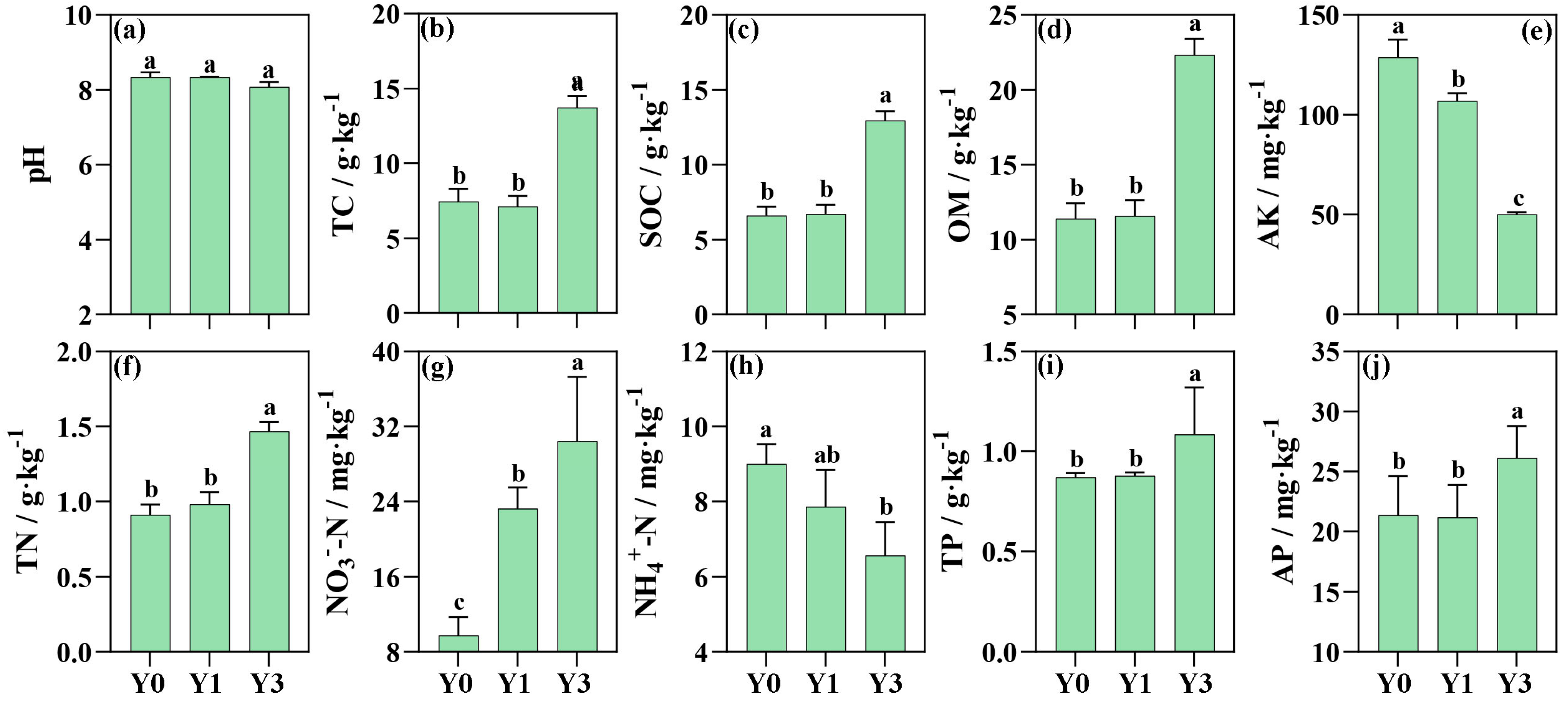
After three years of P. giganteum cultivation, significant increases were observed in soil TC, SOC, SOM, TN, NO3-N, TP, and AP (p < 0.05), with respective increases of 84.18%, 96.09%, 96.27%, 61.32%, 212.47%, 24.71%, and 22.19% (Figure 1). In contrast, AK and NH4+-N decreased significantly by 61.18% and 27.11%, respectively (p < 0.05). Soil pH remained relatively stable across all treatments.

3.2. Diversity and Community Composition of Rhizosphere Microorganisms

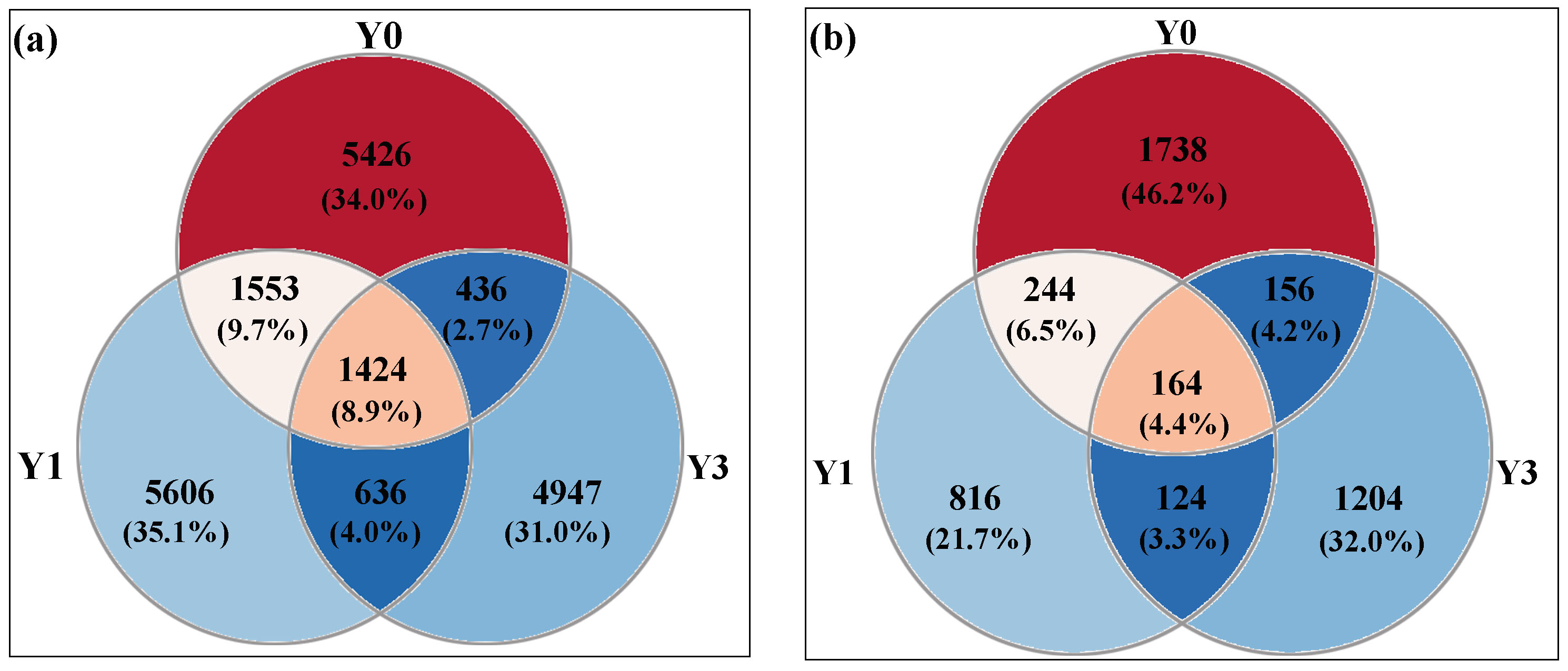
A total of 20,064 prokaryotic OTUs (affiliated with 57 phyla, 126 classes, 349 orders, 537 families, 970 genera, and 884 species) and 4446 fungal OTUs (23 phyla, 59 classes, 123 orders, 255 families, 473 genera, and 627 species) were obtained from the 15 soil samples. The high OTU counts reflect the sequencing depth (approximately 50,000 reads per sample) and the taxonomic complexity of the soil microbial communities, as shown in Figure S1 for the number of OTUs. Core OTUs shared across all years accounted for 8.9% (prokaryotes) and 4.4% (fungi) of the total, while unique OTUs for 0Y, 1Y, and 3Y comprised 34.0%, 35.1%, and 31.0% for prokaryotes, and 46.2%, 21.7%, and 32.0% for fungi, respectively (Figure 2).
Alpha diversity analysis (Table 1) revealed that after three years, prokaryotic Shannon diversity had decreased significantly, while Chao 1 and phylogenetic diversity remained unaffected. In contrast, all three fungal diversity indices (Chao 1, Shannon, and PD) were significantly lower than those in unplanted soil, indicating that fungal communities are more sensitive to P. giganteum cultivation. These statistical comparisons are descriptive and limited to the subsample level, as the five subsamples were collected from a single experimental plot.
Beta diversity analysis via ANOSIM showed that prokaryotic Bray–Curtis distances increased progressively with planting duration, with the Y3 group significantly separated from Y0 and Y1 (Figure S2a). For fungi, a clear structural discontinuity was observed between Y0 and the planted groups (Y1, Y3), with Y1 and Y3 exhibiting much higher median distances from Y0 (Figure S2b). These results indicate directional changes in both prokaryotic and fungal community composition in response to planting, with fungi responding more rapidly and drastically.

3.3. Taxonomic Shifts and Biomarker Taxa

At the phylum level, Proteobacteria, Actinobacteriota, and Acidobacteriota were the dominant prokaryotic taxa across all samples (Figure S3a), while Ascomycota, and Basidiomycota dominated the fungal communities (Figure S3b).
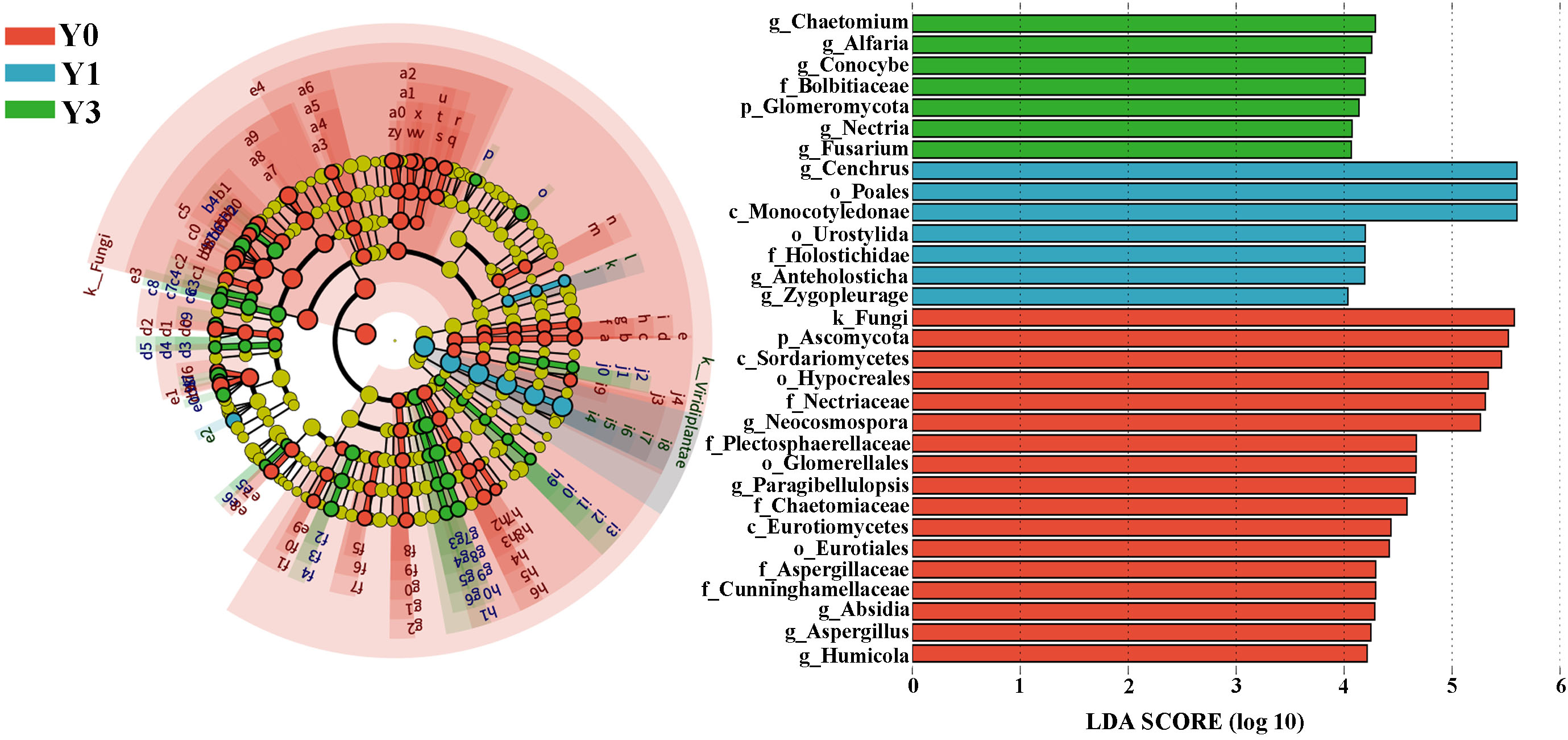
LEfSe analysis (Figure 3 and Figure S4) revealed that unplanted soils were enriched with actinobacterial lineages such as Acidimicrobiia and Thermoleophilia. After three years of cultivation, prokaryotic biomarkers shifted toward ammonia-oxidizing archaea including Nitrososphaerales and Nitrososphaeraceae, indicating an association between long-term planting and the enrichment of nitrifying archaea. For fungi, the unplanted soil biomarkers were predominantly Ascomycota-affiliated genera, Humicola, Aspergillus and Absidia. After three years soil featured the arbuscular mycorrhizal fungus Septoglomus alongside the genera Fusarium and Nectria (LDA > 3.0, p < 0.05, Kruskal–Wallis and Wilcoxon tests).

3.4. Environmental Drivers of Microbial Community Structure

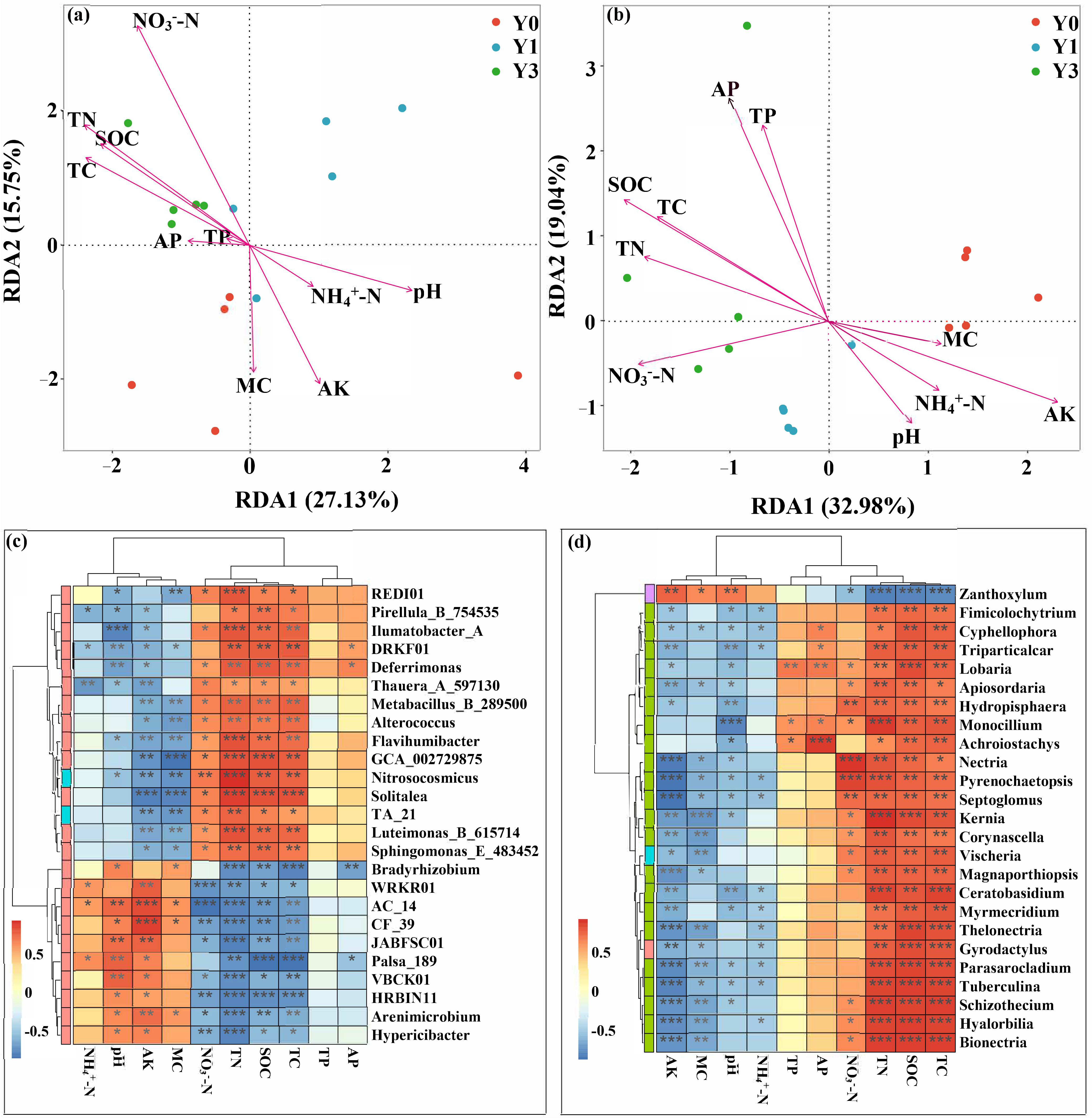
Redundancy analysis (RDA) for prokaryotic communities (Figure 4a) showed that the first two axes explained 42.88% of total variation (RDA1 = 27.13%, RDA2 = 15.75%). Samples from different planting years were clearly separated, with SOC, TC, and TN most strongly associated with the Y3 samples. For fungal communities (Figure 4b), the first two axes explained 52.02% of variation (RDA1 = 32.98%, RDA2 = 19.04%), with a more pronounced separation pattern. NO3-N, TN, TC and SOC were closely associated with Y3, while NH4+-N showed a negative correlation with the Y3 samples, suggesting that these factors exert differential effects on long-term fungal communities.
Correlation heatmaps at the genus level (Figure 4c,d) further demonstrated that prokaryotic taxa such as Nitrosocosmicus and TA_21 were positively correlated with SOC, TC, and TN but negatively with AP and MC. In contrast, fungal genera including saprotrophs, taxa within genera containing potential pathogens (Nectria, Magnaporthiopsis), and mycorrhizal fungi Septoglomus exhibited strong positive correlations with TC, SOC, TN and NO3-N, indicating that elevated carbon and nitrogen concentrations are associated with the co-occurrence of both beneficial and potentially detrimental fungal groups.

3.5. Functional Prediction of Microbial Communities

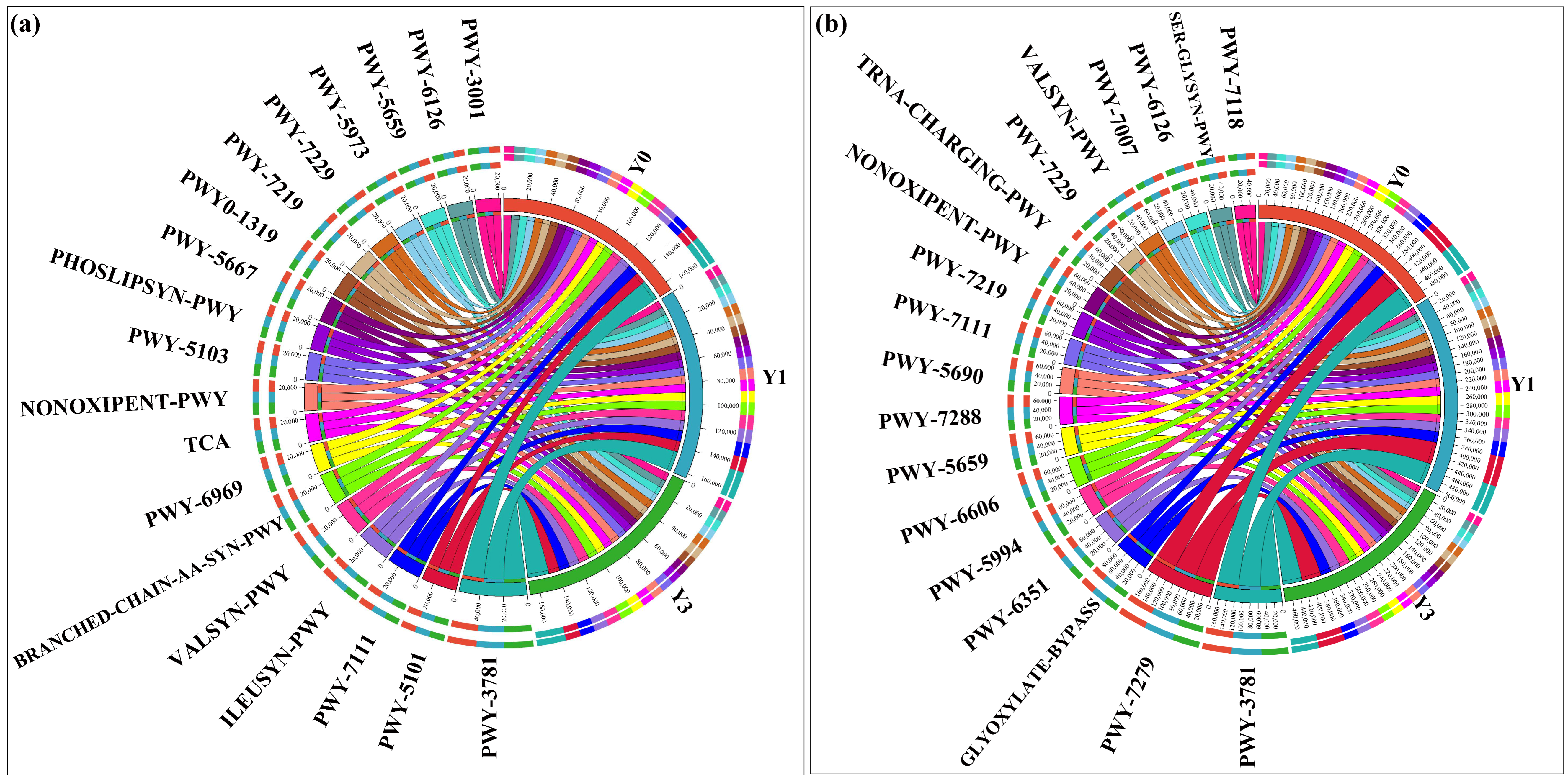
MetaCyc-based functional prediction (Figure 5) revealed distinct successional trajectories between prokaryotes and fungi. In unplanted soils, prokaryotic communities were dominated by the basal metabolic pathway PWY-3001, involved in phospholipid and nucleotide synthesis. After one year, the PWY-3781 and amino acid biosynthesis pathways were enriched, and after three years, the carbon-nitrogen metabolism pathways became more prominent. Fungal communities, however, showed a more drastic shift: Y0 was dominated by PWY-7118 and amino acid metabolism, Y1 exhibited the highest abundance of PWY-3781 and the glyoxylate shunt pathways, and Y3 was characterized by near-complete replacement of the initial pathways by carbon metabolic routes. Overall, PWY-3781 emerged as a core enriched pathway in both communities after one year, but fungi exhibited a more thorough reconfiguration of predicted pathway composition.

4. Discussion

4.1. Nutrient Accumulation and Ecological Restoration Potential

Our results indicate that soils under P. giganteum cultivation in the dry-hot valley had significantly higher soil carbon, nitrogen, and phosphorus pools after three years, with SOC and NO3-N being 96.09% and 212.47% higher, respectively, compared to the pre-planting soils, while soil pH remained relatively stable. This magnitude of nutrient accumulation is greater than that reported for many other perennial grasses [26,27], suggesting that P. giganteum possesses a strong “fertility island” effect even under extreme environmental conditions. The synchronous increases in TC and SOC indicate that carbon accumulation is primarily derived from plant-derived organic inputs, including root exudates and litter decomposition [28,29,30]. The marked increase in NO3-N, coupled with a decline in NH4+-N, points to a fundamental shift in nitrogen transformation, likely driven by enhanced nitrification under the warm and dry conditions typical of the dry-hot valley [31].
RDA showed that soil physicochemical factors collectively explained 42.88% of the variation in prokaryotic communities and 52.02% of the variation in fungal communities, with SOC, TC, TN, and NO3-N being the variables most strongly associated with the separation of long-term planted soils (Y3) from unplanted controls (Y0) and one-year soils (Y1) (Figure 4a,b). The higher explained variation for fungi suggests a closer association between fungal community composition and soil carbon and nitrogen properties than that observed for prokaryotes under this cultivation regime, a pattern consistent with the known sensitivity of fungal taxa to organic matter quality and nitrogen availability [32].
At the genus level, correlation heatmaps revealed distinct association patterns. For prokaryotes, the nitrifying archaeon Nitrosocosmicus and the uncultured lineage TA_21 exhibited significant positive correlations with SOC, TC, and TN while showing negative correlations with AP and moisture content (Figure 4c). This indicates that the relative abundances of these specific lineages co-vary with carbon and nitrogen enrichment, whereas available phosphorus and water content showed inverse relationships with their occurrence. The positive association of Nitrosocosmicus with nitrate-N is consistent with its known role in ammonia oxidation [33]. In contrast, fungal genera displayed a more broadly coordinated response: saprotrophic taxa, potential plant pathogens (Nectria, Magnaporthiopsis), and the arbuscular mycorrhizal fungus Septoglomus all showed strong positive correlations with TC, SOC, TN, and NO3-N (Figure 4d). This uniform positive association suggests that elevated carbon and nitrogen availability is correlated with the simultaneous enrichment of multiple functional guilds of fungi, including both beneficial symbionts and taxa containing potential pathogens, revealing a potential ecological trade-off associated with soil fertility improvement [34].
These correlational analyses demonstrate that the nutrient accumulation associated with P. giganteum is closely correlated with distinct shifts in microbial community composition. Fungal community structure, owing to its stronger statistical association with carbon and nitrogen variables, appears more tightly linked to soil fertility changes than prokaryotic communities, which exhibit a more selective set of correlations with specific edaphic factors. The simultaneous positive correlations of mycorrhizal and potentially pathogenic fungi with high-nutrient conditions underscore the importance of monitoring both beneficial and detrimental microbial components in long-term cultivation systems. However, it must be emphasized that all relationships reported herein are correlational rather than causal; experimental approaches such as controlled mesocosm trials or multi-omics integration are required to establish mechanistic links between specific soil properties and microbial responses. Furthermore, the single-plot design of this study precludes statistical inference regarding a general effect of cultivation duration; our findings should be considered as a time-series case study requiring validation through replicated field experiments.

4.2. Ecological Trade-Off: Enrichment of Mycorrhizal and Potentially Pathogenic Genera

While most previous studies have emphasized the positive effects of P. giganteum on soil properties [35,36,37], our findings reveal a previously overlooked potential ecological trade-off. Long-term cultivation was associated with the concurrent enrichment of both the arbuscular mycorrhizal fungus Septoglomus and genera containing potential plant pathogens, including Fusarium, Nectria, and Magnaporthiopsis. Notably, the relative abundances of Nectria and Magnaporthiopsis exhibited strong positive correlations with the soil carbon (TC, SOC) and nitrogen (TN, NO3-N) contents (Figure 4d), suggesting that the elevated nutrient conditions are correlated with the proliferation of these specific fungal taxa.
The enrichment of Septoglomus is ecologically beneficial, as mycorrhizal symbiosis can enhance phosphorus uptake, improve soil aggregation, and promote nutrient cycling [38,39,40]. While Septoglomus sequences were detected in the rhizosphere, this does not confirm active root colonization or functional mycorrhizal symbiosis. Future studies should employ root staining and colonization rate measurements to verify symbiotic associations. However, the accumulation of Fusarium and Nectria poses a potential risk for root diseases, particularly under continuous monoculture [41,42,43].
This dual enrichment may be explained by the high carbon availability in long-term planted soils [44], which not only supports saprotrophic and mycorrhizal fungi, but also provides an energy source for facultative pathogens with strong cell-wall-degrading enzyme systems [45,46]. We emphasize that genus-level ITS assignments do not demonstrate pathogenicity; experimental isolation and pathogenicity tests are required to confirm disease risk. Future studies should investigate the critical thresholds and regulatory factors governing the proliferation of these genera, potentially through root exudate metabolomics and controlled inoculation experiments, to inform disease management strategies such as crop rotation.

4.3. Functional Prediction: Prokaryotic Stability and Greater Fungal Community Turnover

The functional prediction based on MetaCyc pathways revealed a three-stage succession pattern: from “survival-oriented” basal metabolism in unplanted soils and “growth-oriented” biosynthesis after one year to “decomposition-oriented” carbon metabolism after three years. This trajectory aligns with the resource-driven functional differentiation theory, wherein microbial energy allocation shifts from maintenance to biosynthesis and then to decomposition as carbon availability increases [47,48,49,50].
Notably, prokaryotic functional composition changed gradually, with initial pathways still detectable after three years, whereas the fungal predicted pathways were completely reconfigured, shifting entirely to carbon metabolism. This disparity reflects the contrasting life-history strategies of the two domains: prokaryotes often maintain functional stability through metabolic plasticity and functional redundancy [51,52], while fungi exhibit more holistic pathway changes in response to environmental or substrate shifts [53,54,55].
It is important to acknowledge that our functional predictions for both prokaryotes and fungi are based on amplicon data and PICRUSt2, which may introduce biases [56,57]. Amplicon-based analyses have inherent limitations, and the integration of metagenomics, metatranscriptomics, metaproteomics, and metabolomics is essential for the mechanistic interpretation of plant–microbiome interactions [58]. For fungi, ITS-based prediction is particularly limited because the ITS region does not directly encode protein functions. Therefore, our results should be viewed as hypotheses; future studies should integrate metatranscriptomics or enzymatic assays to validate the actual activities of key pathways. Nevertheless, the comparative functional differences across planting years remain informative for understanding long-term microbial responses to vegetation management.

5. Conclusions

After three years of continuous P. giganteum cultivation in the dry-hot valley of Chuxiong, Yunnan, China, soils accumulated significantly higher carbon, nitrogen, and phosphorus pools compared to pre-planting soils, whereas soil pH remained relatively stable. Soil carbon and nitrogen variables were the factors most strongly associated with microbial community composition, explaining a greater proportion of variation in fungal communities than in prokaryotic communities. The concurrent enrichment of the arbuscular mycorrhizal fungus Septoglomus and genera containing potential plant pathogens (Fusarium, Nectria) was positively correlated with elevated soil nutrients, suggesting a potential ecological trade-off between symbiotic benefits and disease pressure under high-nutrient conditions. Predicted functional pathway composition shifted from basal metabolism toward carbon-nitrogen metabolism, with fungi exhibiting more pronounced changes than prokaryotes. Importantly, all observed patterns are correlational and derived from a single-plot time-series design; therefore, causal relationships and ecological risks require further validation through replicated field trials. Future research should investigate the critical thresholds and regulatory factors governing the proliferation of potentially pathogenic genera, as well as the mechanisms underlying their co-occurrence with beneficial symbionts, through controlled inoculation experiments and multi-omics approaches.

Supplementary Materials

The following supporting information can be downloaded at: https://www.mdpi.com/article/10.3390/agronomy16171634/s1, Figure S1. OTU numbers of prokaryotic (a) and fungal (b) communities in soil under different P. giganteum planting years (Y0, pre-planting bulk soil; Y1 and Y3, rhizosphere soil after 1 and 3 years of cultivation). Number of field subsamples (n = 5). Figure S2. Bray–Curtis distance index of prokaryotic (a) and fungal (b) communities in soil under different P. giganteum planting years (Y0, pre-planting bulk soil; Y1 and Y3, rhizosphere soil after 1 and 3 years of cultivation). Number of field subsamples (n = 5). Figure S3. Relative abundance of prokaryotic (a) and fungal (b) taxa at the phylum level in soil under different P. giganteum planting years (Y0, pre-planting bulk soil; Y1 and Y3, rhizosphere soil after 1 and 3 years of cultivation). Number of field subsamples (n = 5). Figure S4. LEfSe cladogram of prokaryotic communities in soil under different P. giganteum planting years (Y0, pre-planting bulk soil; Y1 and Y3, rhizosphere soil after 1 and 3 years of cultivation). Colored nodes indicate taxa significantly enriched in each year (LDA > 3.0, p < 0.05, Kruskal–Wallis and Wilcoxon tests); yellow nodes indicate non-significant taxa. Number of field subsamples (n = 5).

Author Contributions

Conceptualization, L.Z. and K.Q.; formal analysis, L.Z.; investigation, K.Q., G.L., R.W. and H.W.; resources, L.L. and X.S.; data curation, L.Z. and K.Q.; writing—original draft, L.Z.; writing—review and editing, L.Z., G.L., R.W., H.W. and L.L.; visualization, L.Z. and R.W.; supervision, L.L. and X.S.; funding acquisition, K.Q. and L.L. All authors have read and agreed to the published version of the manuscript.

Funding

This research was funded by the Xingdian Talent Support Program of Yunnan Province (Kaixing QU-2024-2028), the Chuxiong Science and Technology Leading Talent Training Program (CXKJLJRC2023-07 and 2025XCKJLJRC02), and the Special Basic Cooperative Research Programs of Yunnan Provincial Undergraduate Universities’ Association (202401BA070001-138).

Data Availability Statement

The original contributions provided in this study are included in the article and Supplementary Materials. For any further inquiries, please contact the corresponding authors.

Acknowledgments

We wish to thank all individuals who contributed to this research.

Conflicts of Interest

The authors declare no conflicts of interest.

References

  1. Lin, Z.; Lin, D.; Su, D.; Lin, H.; Li, J.; Zheng, D.; Yu, S. Effect of different salt-affected soils on biological characteristics of Pennisetum sp. Southwest China J. Agric. Sci. 2015, 28, 675–680. [Google Scholar] [CrossRef]
  2. Zheng, H.; Zhong, Z.; Shi, M.; Zhang, L.; Lin, L.; Hong, Y.; Fang, T.; Zhu, Y.; Guo, J.; Zhang, L.; et al. Comparative genomic analysis revealed rapid differentiation in the pathogenicity-related gene repertoires between Pyricularia oryzae and Pyricularia penniseti isolated from a Pennisetum grass. BMC Genom. 2018, 19, 927. [Google Scholar] [CrossRef] [Scilit] [PubMed]
  3. Hou, X.; Teng, K.; Guo, Q.; Zhao, C.; Gao, K.; Yue, Y.; Fan, X. Research progress on Pennisetum forages. Chin. Bull. Bot. 2022, 57, 814–825. [Google Scholar] [CrossRef]
  4. He, H.; Lin, Z.; Liu, T.; Lin, D. Research Progress on Forage Yield, Nutritional characteristics of Cenchrus fungigraminus and its comprehensive utilization in livestock and poultry farming. Chin. J. Anim. Nutr. 2025, 37, 2900–2910. [Google Scholar] [CrossRef]
  5. Feng, Y.; Weng, B.; Xu, W.; Wu, S.; Fang, L.; Lu, Y.; Lin, L.; Zhang, W.; Ma, J. The Utilization of Mixed Silage Composed of Pennisetum giganteum and Rice Straw as an Alternative to Maize Silage in Fattening Lambs. Agriculture 2025, 16, 63. [Google Scholar] [CrossRef] [Scilit]
  6. Jiang, F.; He, K.; Lin, J.; Li, H.; Zhan, Z.; Lin, J.; Ge, H.; Wang, M.K.; Huang, Y. A comparison of the effectiveness of the roots of two grass species in reducing soil erosion on alluvial fans in south-east China. Hydrol. Process 2020, 34, 96–110. [Google Scholar] [CrossRef] [Scilit]
  7. Hayat, K.; Zhou, Y.; Menhas, S.; Bundschuh, J.; Hayat, S.; Ullah, A.; Wang, J.; Chen, X.; Zhang, D.; Zhou, P. Pennisetum giganteum: An emerging salt accumulating/tolerant non-conventional crop for sustainable saline agriculture and simultaneous phytoremediation. Environ. Pollut. 2020, 265, 114876. [Google Scholar] [CrossRef] [Scilit] [PubMed]
  8. Liu, Y.; Yu, J.; Wang, Z.; Penttinen, P.; Yu, X.; Zhao, K.; Ma, M.; Xiang, Q.; Gu, Y.; Liu, H.; et al. Bio-Matrix Pot Addition Enhanced the Vegetation Process of Iron Tailings by Pennisetum giganteum. Front. Microbiol. 2022, 13, 825660. [Google Scholar] [CrossRef] [Scilit] [PubMed]
  9. Wang, L.; Li, G.; Zhang, B. Effects of Pennisetum giganteum on soil physical and chemical properties in the introduction area of Inner Mongolia. J.Anhui Agric. Sci. 2023, 51, 58–60. [Google Scholar] [CrossRef]
  10. Wang, P.; Zhang, C.; Woon, K.S.; Li, W.; Pei, X.; Liu, M.; Zhang, K.; Li, W.; Guo, J.; Zhang, Z.; et al. Nitrogen-salt interaction in Pennisetum giganteum: Effects on soil, rhizosphere, and ion transport processes. Appl. Soil Ecol. 2025, 214, 106312. [Google Scholar] [CrossRef] [Scilit]
  11. Yan, S.; Liu, Y.; Sun, Y.; Lin, X.; Luo, H.; Lin, H.; Lin, Z.; Sun, H. Analysis of microbial diversities and enzyme activities of rhizosphere soil of Pennisetum giganteum (giant juncao) under different degrees of saline-alkali stress. Guihaia 2022, 42, 491–500. [Google Scholar] [CrossRef]
  12. Gahlot, K.D. Microbial strategies for drought stress mitigation—A sustainable frontier in plant resilience. Front. Plant Sci. 2026, 16, 1740879. [Google Scholar] [CrossRef] [Scilit] [PubMed]
  13. Hidosa, D.; Adicha, A.; Sultan, M. Production and commercialization status of improved panicum grass cultivation in the lowland livestock production system of South Omo South-Western Ethiopia. Res. World Agric. Econ. 2022, 3, 694. [Google Scholar] [CrossRef] [Scilit]
  14. Nizamutdinov, T.; Kushnov, I.; Vainberg, A.; Abakumov, E. Model experiment on the effect of nanoplastic pollution on the results of routine soil analyses performed by standard operating procedures. Microplastics 2026, 5, 92. [Google Scholar] [CrossRef] [Scilit]
  15. Zhao, L.; Lu, Y.; Miao, C.; Guan, H.; Wang, R.; Wang, H.; Tian, L.; Wei, F.; Xu, W. Mitigating root rot in Panax notoginseng: The synergistic effects of biochar and Chaetomium globosum YIM PH30719. Ind. Crop Prod. 2024, 222, 119805. [Google Scholar] [CrossRef] [Scilit]
  16. Peng, Z.; Qian, X.; Liu, Y.; Li, X.; Gao, H.; An, Y.; Qi, J.; Jiang, L.; Zhang, Y.; Chen, S.; et al. Land conversion to agriculture induces taxonomic homogenization of soil microbial communities globally. Nat. Commun. 2024, 15, 3624. [Google Scholar] [CrossRef] [Scilit] [PubMed]
  17. Magoč, T.; Salzberg, S.L. FLASH: Fast length adjustment of short reads to improve genome assemblies. Bioinformatics 2011, 27, 2957–2963. [Google Scholar] [CrossRef] [Scilit] [PubMed]
  18. Bolger, A.M.; Lohse, M.; Usadel, B. Trimmomatic: A flexible trimmer for Illumina sequence data. Bioinformatics 2014, 30, 2114–2120. [Google Scholar] [CrossRef] [Scilit] [PubMed]
  19. Edgar, R.C.; Haas, B.J.; Clemente, J.C.; Quince, C.; Knight, R. UCHIME improves sensitivity and speed of Chimera detection. Bioinformatics 2011, 27, 2194–2200. [Google Scholar] [CrossRef] [Scilit] [PubMed]
  20. Edgar, R.C. UPARSE: Highly accurate OTU sequences from microbial amplicon reads. Nat. Methods 2013, 10, 996–998. [Google Scholar] [CrossRef] [Scilit] [PubMed]
  21. McDonald, D.; Jiang, Y.; Balaban, M.; Cantrell, K.; Zhu, Q.; Gonzalez, A.; Morton, J.T.; Nicolaou, G.; Parks, D.H.; Karst, S.M.; et al. Greengenes2 unifies microbial data in a single reference tree. Nat. Biotechnol. 2023, 42, 715–718. [Google Scholar] [CrossRef] [Scilit] [PubMed]
  22. Kessy, A.; Allan, Z.; Timo, P.; Raivo, P.; Filipp, I.; Henrik, N.R.; Kõljalg, U. Full UNITE + INSD Dataset for Eukaryotes; UNITE Community: London, UK, 2021. [Google Scholar] [CrossRef]
  23. Bolyen, E.; Rideout, J.R.; Dillon, M.R.; Bokulich, N.A.; Abnet, C.C.; Al-Ghalith, G.A.; Alexander, H.; Alm, E.J.; Arumugam, M.; Asnicar, F.; et al. Reproducible, interactive, scalable and extensible microbiome data science using QIIME 2. Nat. Biotechnol. 2019, 37, 852–857. [Google Scholar] [CrossRef] [Scilit] [PubMed]
  24. Schloss, P.D.; Westcott, S.L.; Ryabin, T.; Hartmann, M.; Hollister, E.B.; Lesniewski, R.A.; Oakley, B.B.; Parks, D.H.; Robinson, C.J.; Sahl, J.W.; et al. Introducing mothur: Open-source, platform-independent, community-supported software for describing and comparing microbial communities. Appl. Environ. Microb. 2009, 75, 7537–7541. [Google Scholar] [CrossRef] [Scilit] [PubMed]
  25. Douglas, G.M.; Maffei, V.J.; Zaneveld, J.R.; Yurgel, S.N.; Brown, J.R.; Taylor, C.M.; Huttenhower, C.; Langille, M.G.I. PICRUSt2 for prediction of metagenome functions. Nat. Biotechnol. 2020, 38, 685–688. [Google Scholar] [CrossRef] [Scilit] [PubMed]
  26. Zhang, L.; Du, H.; Song, T.; Yang, Z.; Peng, W.; Gong, J.; Huang, G.; Li, Y. Conversion of farmland to forest or grassland improves soil carbon, nitrogen, and ecosystem multi-functionality in a subtropical karst region of southwest China. Sci. Rep. 2024, 14, 17745. [Google Scholar] [CrossRef] [Scilit] [PubMed]
  27. Jin, J.; Luo, Y.; Liu, C.; Zhang, J.; Gao, M.; Yuan, L.; Hu, B.; Feng, D.; Li, W. Phosphorous fractions in soils of natural shrub-grass communities and Leucaena leucocephala plantations in a dry-hot valley. Forests 2024, 15, 974. [Google Scholar] [CrossRef] [Scilit]
  28. Ai, L.; Wu, F.; Fan, X.; Yang, Y.; Zhang, Y.; Zheng, X.; Zhu, J.; Ni, X. Different effects of litter and root inputs on soilenzyme activities in terrestrial ecosystems. Appl. Soil Ecol. 2023, 183, 104764. [Google Scholar] [CrossRef] [Scilit]
  29. Abay, P.; Gong, L.; Luo, Y.; Zhu, H.; Ding, Z. Soil extracellular enzyme stoichiometry reveals the nutrient limitations in soil microbial metabolism under different carbon input manipulations. Sci. Total Environ. 2024, 913, 169793. [Google Scholar] [CrossRef] [Scilit] [PubMed]
  30. Wu, T.; Wang, S.; Zhang, X.; Zhang, Y.; Li, Y.; Wang, Z.; Chen, X.; Chen, Z.; Chen, Z.; Jiang, N. Effects of combined stover and biochar return on soil organic matter and microbial characteristics. Agronomy 2026, 16, 61. [Google Scholar] [CrossRef] [Scilit]
  31. Séneca, J.; Pjevac, P.; Canarini, A.; Herbold, C.W.; Zioutis, C.; Dietrich, M.; Simon, E.; Prommer, J.; Bahn, M.; Pötsch, E.M.; et al. Composition and activity of nitrifier communities in soil are unresponsive to elevated temperature and CO2, but strongly affected by drought. ISME J. 2020, 14, 3038–3053. [Google Scholar] [CrossRef] [Scilit] [PubMed]
  32. Zhou, X.; Dai, R.; Liu, S.; Wang, Z.; Bai, Y.; Cao, W. Manure addition improves soil quality in subalpine meadows by affecting fungal diversity and network complexity. Plant Soil 2026, 522, 467–487. [Google Scholar] [CrossRef] [Scilit]
  33. Li, J.; Wang, M.; Yang, W.; Shen, C.; Zhang, L.; Li, Q.; Sun, B.; Qin, Y.; Li, C.; Zhang, J.; et al. Comammox contribute predominantly to ammonia oxidation in maize-soybean rotation systems. Plant Soil 2026. [Google Scholar] [CrossRef] [Scilit]
  34. Pan, H.; Hui, Y.; Wu, W.; Liu, S.; Wei, G.; Jiao, S. Critical thresholds for co-benefits of carbon accumulation and biodiversity conservation under global nitrogen enrichment. Nat. Commun. 2026, 17, 1336. [Google Scholar] [CrossRef] [Scilit] [PubMed]
  35. Cui, J.; Yang, B.; Zhang, M.; Song, D.; Xu, X.; Ai, C.; Liang, G.; Zhou, W. Investigating the effects of organic amendments on soil microbial composition and its linkage to soil organic carbon: A global meta-analysis. Sci. Total Environ. 2023, 894, 164899. [Google Scholar] [CrossRef] [Scilit] [PubMed]
  36. Tamta, S.; Kumar, A.; Kushwaha, D.P. Potential of roots and shoots of Napier grass for arresting soil erosion and runoff of mollisols soils of Himalayas. Int. Soil Water Conserv. Res. 2023, 11, 538–548. [Google Scholar] [CrossRef] [Scilit]
  37. Zhang, B.; Li, X.; Fu, T.; Li, H.; Li, W.; Zhang, Q.; Wang, J.; Chen, B.; Yang, R.; Zhang, B.; et al. Insights into Opposite and Positive Effects of Biochar and Organic Fertilizer on Red Soil Properties and Growth of Pennisetum giganteum. Sustainability 2023, 15, 15142. [Google Scholar] [CrossRef] [Scilit]
  38. Yu, L.; Zhang, H.; Zhang, W.; Liu, K.; Liu, M.; Shao, X. Cooperation between arbuscular mycorrhizal fungi and plant growth-promoting bacteria and their effects on plant growth and soil quality. PeerJ 2021, 10, e13080. [Google Scholar] [CrossRef] [Scilit] [PubMed]
  39. Khaliq, A.; Perveen, S.; Alamer, K.H.; Haq, M.Z.U.; Rafique, Z.; Alsudays, I.M.; Althobaiti, A.T.; Saleh, M.A.; Hussain, S.; Attia, H. Arbuscular mycorrhizal fungi symbiosis to enhance plan-soil interaction. Sustainability 2022, 14, 7840. [Google Scholar] [CrossRef] [Scilit]
  40. Ahmed, N.; Li, J.; Li, Y.; Deng, L.; Deng, L.; Chachar, M.; Chachar, Z.; Chachar, S.; Hayat, F.; Raza, A.; et al. Symbiotic synergy: How Arbuscular Mycorrhizal Fungi enhance nutrient uptake, stress tolerance, and soil health through molecular mechanisms and hormonal regulation. IMA Fungus 2025, 16, e144989. [Google Scholar] [CrossRef] [Scilit] [PubMed]
  41. Coleman, J.J. The Fusarium solani species complex: Ubiquitous pathogens of agricultural importance. Mol. Plant Pathol. 2016, 17, 146–158. [Google Scholar] [CrossRef] [Scilit] [PubMed]
  42. Ha, M.S.; Ryu, H.; Ju, H.J.; Choi, H.W. Diversity and pathogenic characteristics of the Fusarium species isolated from minor legumes in Korea. Sci. Rep. 2023, 13, 22516. [Google Scholar] [CrossRef] [Scilit] [PubMed]
  43. Yu, H.; Hwang, S.; Strelkov, S.E. The Host Range of Fusarium proliferatum in Western Canada. Pathogens 2024, 13, 407. [Google Scholar] [CrossRef] [Scilit] [PubMed]
  44. Zhou, Z.; Zhang, Y.; Li, C.; Chai, X.; He, S.; Lei, Y.; Fu, W. Cellulolytic microbial inoculation enhances sheep manure composting by improving nutrient retention and reshaping microbial community structure. Agronomy 2026, 16, 79. [Google Scholar] [CrossRef] [Scilit]
  45. Manici, L.M.; Caputo, F.; De Sabata, D.; Fornasier, F. The enzyme patterns of Ascomycota and Basidiomycota fungi reveal their different functions in soil. Appl. Soil Ecol. 2024, 196, 105323. [Google Scholar] [CrossRef] [Scilit]
  46. de Vries, R.P. Colony differentiation of saprobic and pathogenic fungi in relation to carbon utilization. Fungal Genet. Biol. 2025, 179, 104001. [Google Scholar] [CrossRef] [Scilit] [PubMed]
  47. Prommer, J.; Zezula, D.; Walker, T.W.N.; Hu, Y.; Wanek, W.; Hofhansl, F.; Braun, J.; Richter, A. Increased microbial growth, biomass, and turnover drive soil organic carbon accumulation at higher plant diversity. Glob. Change Biol. 2019, 26, 669–681. [Google Scholar] [CrossRef] [Scilit] [PubMed]
  48. Zhu, X.; Jackson, R.D.; DeLucia, E.H.; Tiedje, J.M.; Liang, C. The soil microbial carbon pump: From conceptual insights to empirical assessments. Glob. Change Biol. 2022, 26, 6032–6039. [Google Scholar] [CrossRef] [Scilit] [PubMed]
  49. Zheng, T.; Xie, H.; Thompson, G.L.; Bao, X.; Deng, F.; Yan, E.; Zhou, X.; Liang, C. Shifts in microbial metabolic pathway for soil carbon accumulation along subtropical forest succession. Soil Biol. Biochem. 2021, 160, 108335. [Google Scholar] [CrossRef] [Scilit]
  50. Wang, Y.; Gao, Q.; Wang, T.; Sun, G.; Nie, S.A. Shifts in fertilization regime alter carbon cycling in paddy soils: Linking the roles of microbial community, Functional Genes, and Physicochemical Properties. Agronomy 2026, 16, 104. [Google Scholar] [CrossRef] [Scilit]
  51. Banchi, E.; Corre, E.; Negro, P.D.; Celussi, M.; Malfatti, F. Genome-resolved metagenomics of Venice Lagoon surface sediment bacteria reveals high biosynthetic potential and metabolic plasticity as successful strategies in an impacted environment. Mar. Life Sci. Technol. 2024, 6, 126–142. [Google Scholar] [CrossRef] [Scilit] [PubMed]
  52. Cross, K.; Beckman, N.; Jahnes, B.; Sabree, Z.L. Microbiome metabolic capacity is buffered against phylotype losses by functional redundancy. Appl. Environ. Microb. 2025, 91, e2324–e2368. [Google Scholar] [CrossRef] [Scilit] [PubMed]
  53. Gallo, M.; Giovati, L.; Magliani, W.; Pertinhez, T.A.; Conti, S.; Ferrari, E.; Spisni, A.; Ciociola, T. Metabolic Plasticity of Candida albicans in Response to Different Environmental Conditions. J. Fungi 2022, 8, 723. [Google Scholar] [CrossRef] [Scilit] [PubMed]
  54. Wangsanut, T.; Khamto, N.; Alinejad-Rokny, H.; Pongpom, M. Regulatory functions of AcuK and AcuM transcription factors in fungal metabolic adaptation, stress response, and virulence. Front. Cell. Infect. Microbiol. 2025, 15, 1717070. [Google Scholar] [CrossRef] [Scilit] [PubMed]
  55. Zhang, R.; Zhou, L.; Xie, L.; Lu, L.; Zhou, H.; Yang, Y.; Hu, J. Metabolite profiling and adaptation mechanisms of Aspergillus cristatus under pH stress. Front. Microbiol. 2025, 16, 1576132. [Google Scholar] [CrossRef] [Scilit] [PubMed]
  56. Sun, S.; Jones, R.B.; Fodor, A.A. Inference-based accuracy of metagenome prediction tools varies across sample types and functional categories. Microbiome 2020, 8, 46. [Google Scholar] [CrossRef] [Scilit] [PubMed]
  57. Matchado, M.S.; Rühlemann, M.; Reitmeier, S.; Kacprowski, T.; Frost, F.; Haller, D.; Baumbach, J.; List, M. On the limits of 16S rRNA gene-based metagenome prediction and functional profiling. Microb. Genom. 2024, 10, 1203. [Google Scholar] [CrossRef] [Scilit] [PubMed]
  58. Kumar, U.; Raj, S.; Sreenikethanam, A.; Maddheshiya, R.; Kumari, S.; Han, S.; Kapoor, K.K.; Bhaskar, R.; Bajhaiya, A.K.; Gahlot, D.K. Multi-Omics Approaches in Plant–Microbe Interactions Hold Enormous Promise for Sustainable Agriculture. Agronomy 2023, 13, 1804. [Google Scholar] [CrossRef] [Scilit]
Figure 1. Changes in soil physicochemical properties following 3 years of P. giganteum cultivation. pH (a), total carbon (b), soil organic carbon (c), organic matter (d), available potassium (e), total nitrogen (f), nitrate nitrogen (g), ammonium nitrogen (h), total phosphorus (i), and available phosphorus (j) with different planting years. Y0, pre-planting bulk soil; Y1 and Y3, rhizosphere soil at the 1st and 3rd year of cultivation, respectively. Number of field subsamples (n = 5). Different lowercase letters indicate significant differences among planting years (Y0, Y1, and Y3) at the p < 0.05 level.
Agronomy 16 01634 g001
Figure 2. Venn diagrams showing shared and unique OTUs of prokaryotic (a) and fungal (b) communities in soil under different P. giganteum planting years (Y0, pre-planting bulk soil; Y1 and Y3, rhizosphere soil after 1 and 3 years of cultivation). Number of field subsamples (n = 5).
Agronomy 16 01634 g002
Figure 3. LEfSe cladogram of fungal communities in soil under different P. giganteum planting years (Y0, pre-planting bulk soil; Y1 and Y3, rhizosphere soil after 1 and 3 years of continuous P. giganteum cultivation). Colored nodes indicate taxa significantly enriched in each year (LDA > 3.0, p < 0.05, Kruskal–Wallis and Wilcoxon tests); yellow nodes indicate non-significant taxa. Number of field subsamples (n = 5).
Agronomy 16 01634 g003
Figure 4. Correlation analysis between soil environmental factors and microbial community structure in soil after 3 years of P. giganteum cultivation. (a) RDA of prokaryotic communities; (b) RDA of fungal communities; (c) correlation heatmap of the top 30 prokaryotic genera; (d) correlation heatmap of the top 30 fungal genera. p < 0.05 was considered significant. Number of field subsamples (n = 5); *, **, and *** indicate significance at p < 0.05, p < 0.01, and p < 0.001, respectively.
Agronomy 16 01634 g004
Figure 5. Circular plot of predicted MetaCyc pathway abundance in soil under different P. giganteum planting years (Y0, pre-planting bulk soil; Y1 and Y3, rhizosphere soil after 1 and 3 years of cultivation). (a) Metabolic pathways in prokaryotes; (b) metabolic pathways in fungi.
Agronomy 16 01634 g005
Table 1. Alpha diversity indices of prokaryotic and fungal communities in soil under different P. giganteum planting years.
GroupsProkaryotesFungi
Chao 1ShannonPDChao 1ShannonPD
Y02823.27 ± 76.71 a10.52 ± 0.09 a157.91 ± 3.32 a396.40 ± 59.84 a4.21 ± 0.12 a142.15 ± 3.46 a
Y12843.62 ± 245.47 a10.45 ± 0.11 a175.82 ± 13.04 a239.40 ± 44.28 b3.65 ± 0.25 b82.06 ± 9.85 b
Y32569.28 ± 84.01 a9.93 ± 0.19 b153.53 ± 2.59 a247.00 ± 39.46 b3.75 ± 0.23 b99.03 ± 6.44 b
Values are means ± SE of five field subsamples (n = 5) collected within the single experimental plot. Different lowercase letters within the same column indicate significant differences among time points based on one-way ANOVA with Tukey’s HSD. These statistical tests are used descriptively to identify patterns of variation among subsamples and do not imply causal inference at the plot level.
Disclaimer/Publisher’s Note: The statements, opinions and data contained in all publications are solely those of the individual author(s) and contributor(s) and not of MDPI and/or the editor(s). MDPI and/or the editor(s) disclaim responsibility for any injury to people or property resulting from any ideas, methods, instructions or products referred to in the content.