Article

Differential Responses of Soil Thermal Conductivity, Microbial Carbon Use Efficiency, and Soil Organic Carbon to Feedstock-Specific Biochar Under Alternate Drying–Wetting Cycles

1
Inner Mongolia Key Laboratory of Soil Quality and Nutrient Resources, College of Resources and Environment, Inner Mongolia Agricultural University, Hohhot 010018, China
2
Key Laboratory of Agricultural Ecological Security and Green Development, Universities of Inner Mongolia Autonomous, Hohhot 010018, China
3
Inner Mongolia Minzu University, Huolinghe Street 536, Tongliao 028000, China
4
Institute of Agricultural Resources and Environment, Xinjiang Academy of Agricultural Sciences, Urumqi 830091, China
5
Center for Agricultural Water Research in China, China Agricultural University, Beijing 100083, China
6
Key Laboratory of Agricultural Soil and Water Engineering in Arid and Semiarid Areas, Ministry of Education/Northwest A&F University, Yangling 712100, China
7
Department of Plant and Soil Sciences, Oklahoma State University, Stillwater, OK 74078, USA
8
Department of Plant and Environmental Sciences, Faculty of Science, University of Copenhagen, Højbakkegaard Alle 13, 2630 Taastrup, Denmark
*
Authors to whom correspondence should be addressed.
These authors contributed equally to this work.
Agronomy 2026, 16(13), 1262; https://doi.org/10.3390/agronomy16131262

Submission received: 19 May 2026 / Revised: 25 June 2026 / Accepted: 25 June 2026 / Published: 30 June 2026
(This article belongs to the Section Soil and Plant Nutrition)

Abstract

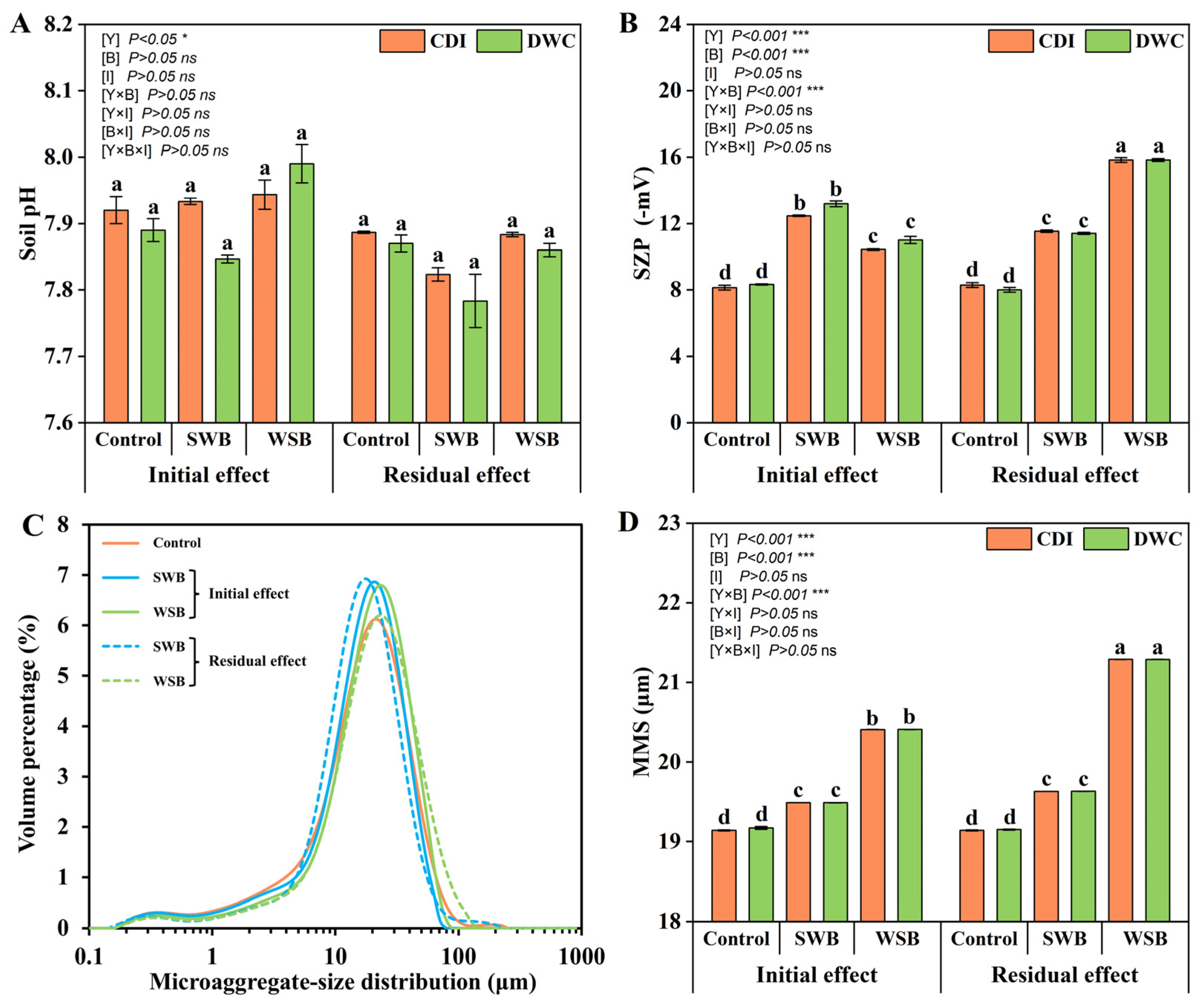
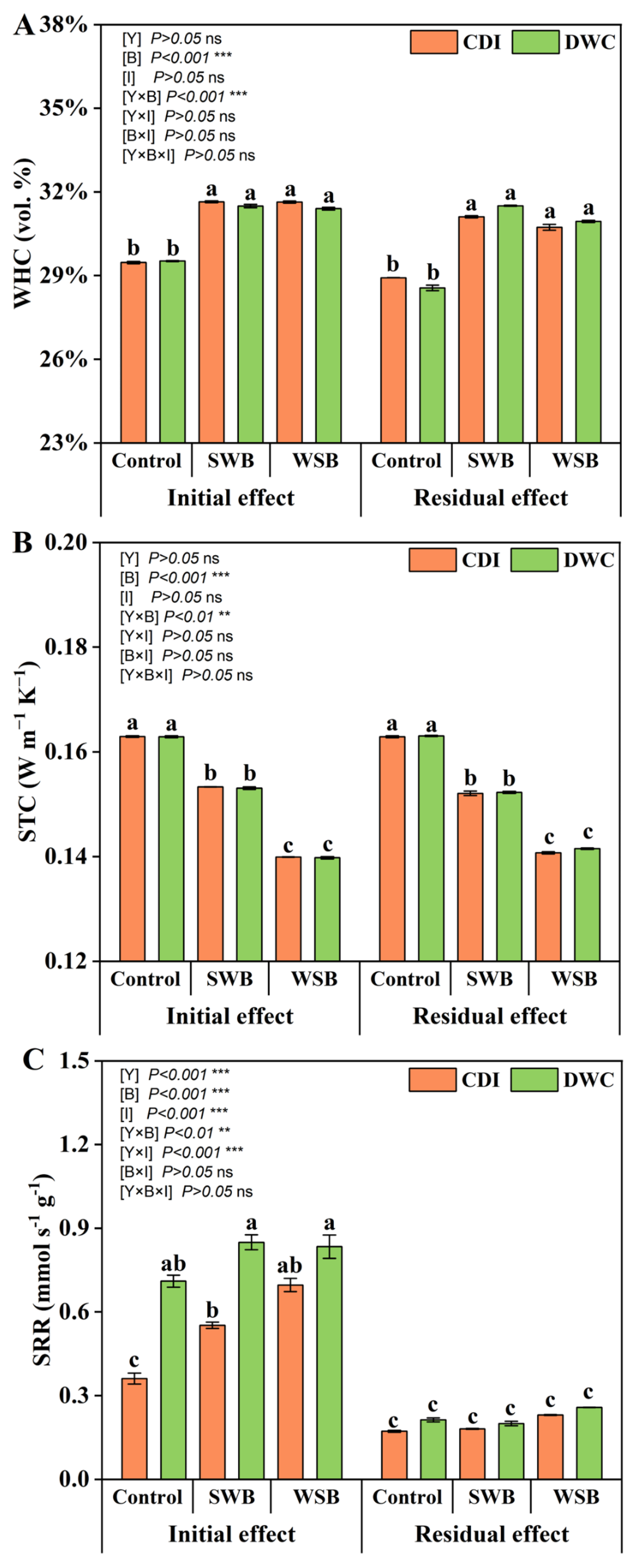
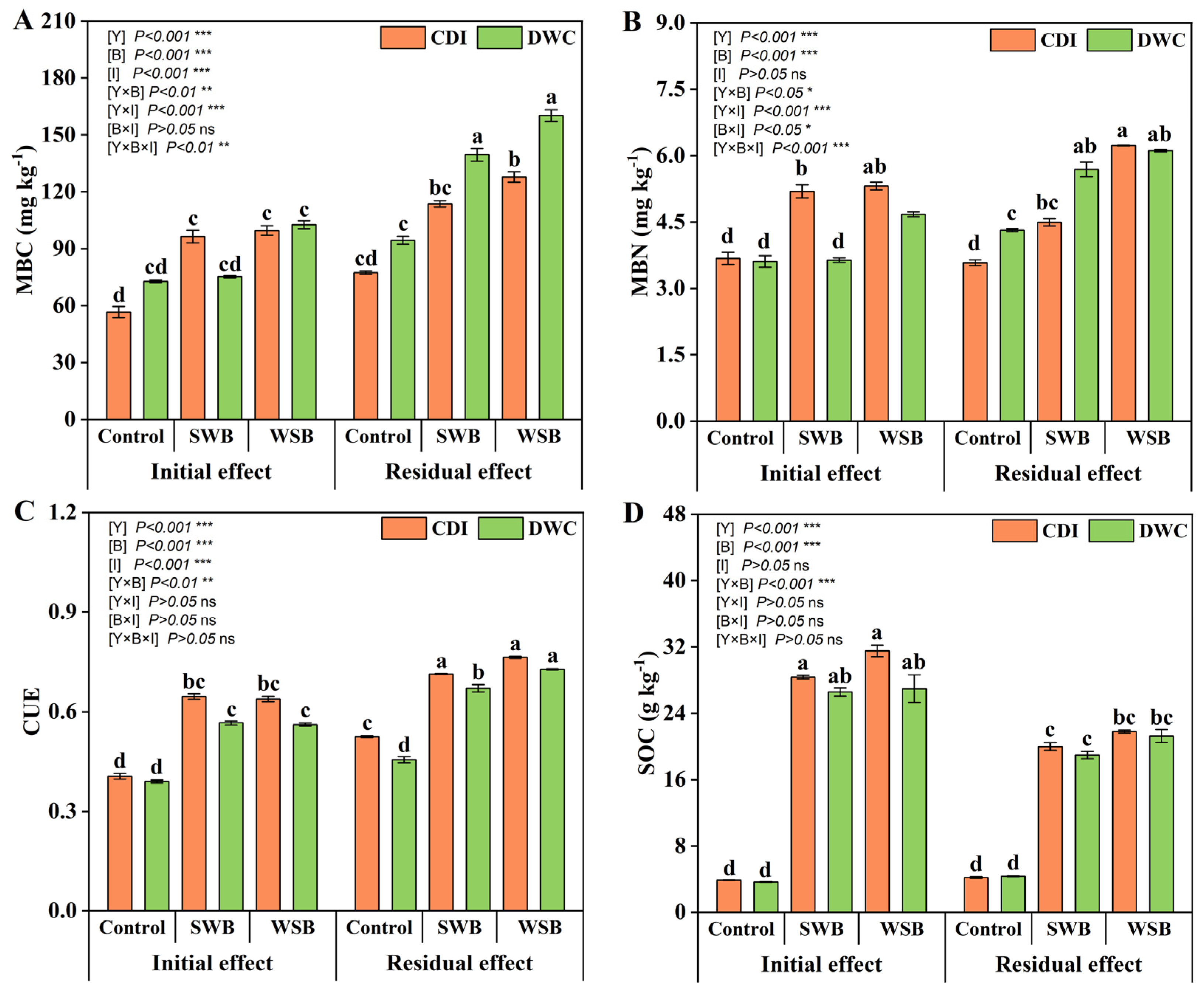
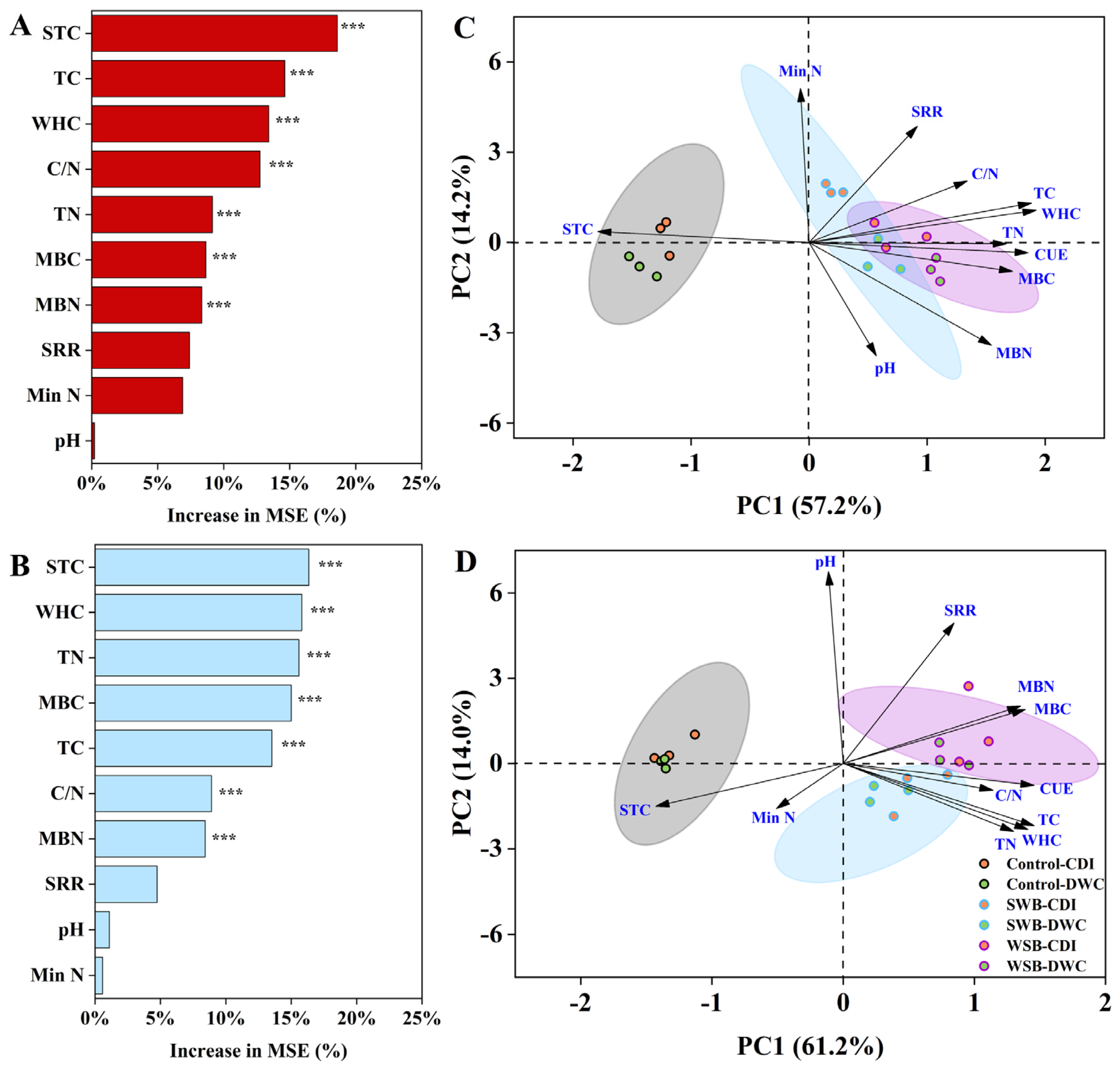
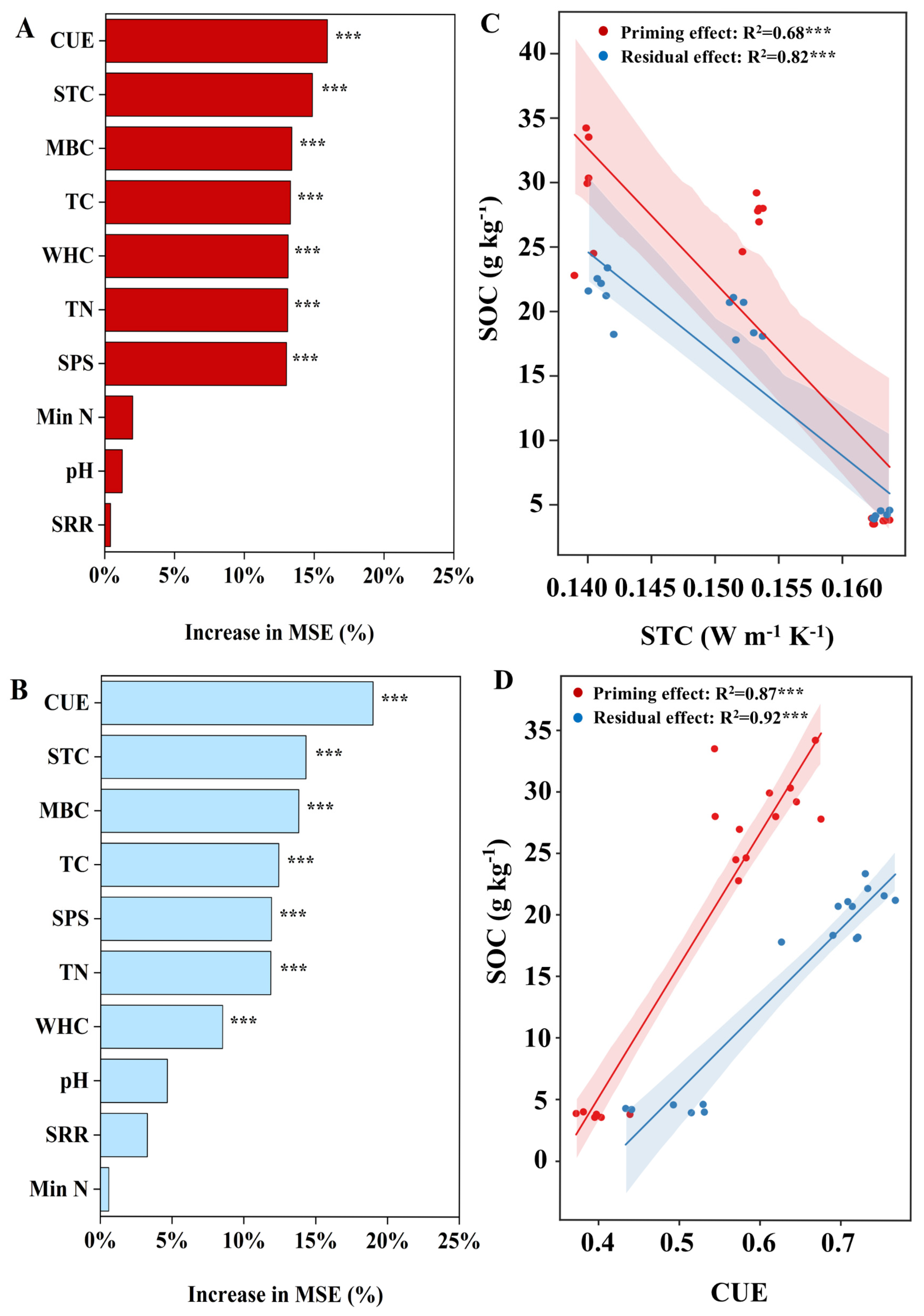
Biochar can alter soil physical conditions, microbial carbon processing, and soil organic carbon (SOC) responses under fluctuating moisture, yet how these changes are coordinated remains insufficiently understood. We conducted a two-season greenhouse pot experiment to examine the initial (first-year) and residual (second-year) effects of wheat-straw biochar (WSB) and softwood biochar (SWB) under conventional deficit irrigation (CDI) and alternate drying–wetting cycles (DWC). Compared with unamended soil, biochar amendment improved water-dispersible microaggregate-size distribution, mean microaggregate size, and water-holding capacity, which contributed to reduced soil thermal conductivity (STC) by 6.0–14.2%. Biochar application also improved microbial carbon use efficiency (CUE) by 41.1–52.3%, with WSB generally showing stronger and more persistent effects than SWB. Relative to CDI, DWC increased soil respiration rate by 14.9–48.8% but decreased CUE by 7.4–10.2% and SOC by 3.0–10.3%, indicating a shift toward greater respiratory carbon loss under repeated moisture fluctuations. Biochar amendment increased SOC across both seasons, particularly under WSB, and partially alleviated the DWC-associated reductions in CUE and SOC. Correlation analyses showed that lower STC was associated with higher CUE and SOC, but these relationships should be interpreted as coordinated associations rather than direct evidence of a causal thermal-regulation mechanism. Principal component and random forest analyses further highlighted STC as a prominent variable associated with variation in CUE and SOC among the measured soil attributes. These findings indicate that biochar-mediated changes in soil physical conditions are closely associated with microbial CUE and SOC responses under drying–wetting cycles, wherein soil thermal properties may represent an important physical dimension of these carbon responses.
Keywords: biochar; alternate drying–wetting cycles; soil physical properties; soil thermal conductivity; microbial carbon use efficiency; soil organic carbon biochar; alternate drying–wetting cycles; soil physical properties; soil thermal conductivity; microbial carbon use efficiency; soil organic carbon