Article

Opuntia ficus-indica Mucilage Coating as a Potential Natural Strategy to Preserve Lemon Quality During Cold Storage


Department of Agricultural Food and Forest Sciences, University of Palermo, Viale delle Scienze, Bldg. 4, 90128 Palermo, Italy
*
Author to whom correspondence should be addressed.
Agronomy 2026, 16(12), 1173; https://doi.org/10.3390/agronomy16121173
Submission received: 26 April 2026 / Revised: 8 June 2026 / Accepted: 12 June 2026 / Published: 16 June 2026

Abstract

The main causes of lemon fruit senescence and deterioration are fungal diseases and postharvest quality loss. Edible coatings have been proposed to delay quality loss in fresh produce by reducing moisture loss and helping preserve external appearance. Natural functional coatings are increasingly being investigated as potential alternatives to synthetic waxes and preservatives due to environmental and consumer safety concerns. The effect of a natural edible coating based on Opuntia ficus-indica mucilage on extending the shelf-life of lemons during cold storage was investigated. Lemon fruits were treated with the mucilage-based edible coating and subsequently stored under controlled cold conditions. Coated and uncoated lemon fruits were evaluated for their physicochemical properties, including weight loss, total soluble solids, pH, titratable acidity, color, and microbiological analysis, as well as total polyphenol content and antioxidant activity, over a 60-day storage period at 5 ± 0.5 °C and 95% relative humidity. The results showed that the mucilage-based coating improved lemon fruit storage performance, effectively preserving key physicochemical and microbiological parameters over 60 days of cold storage (p ≤ 0.05). In particular, the treatment maintained fruit firmness, reduced weight loss (up to 45%), increased juice content (up to 1.8-fold), and delayed microbial decay compared to control samples. Coated fruits also exhibited higher total polyphenolic content and antioxidant activity than control samples at the end of storage. In addition, using mucilage extracted from cactus pear cladode waste provides a sustainable way to add value to the product, with promising industrial applications as an alternative to synthetic fruit coatings.

1. Introduction

Lemon (Citrus limon L.) is a relevant citrus species for the fresh market and juice processing, due to its nutritional composition and distinctive aroma. Global lemon and lime production is above 20 million tons per year, confirming the economic relevance of these fruits in international markets (FAOSTAT, FAO, 2023). As non-climacteric fruits, lemons show relatively low respiratory activity after harvest. This lower respiratory activity slows several biochemical changes usually associated with postharvest ripening, helping to maintain firmness and internal quality during handling and distribution. However, one of the main factors limiting lemon postharvest life is weight loss, mainly due to transpiration, together with peel yellowing. Postharvest losses in lemons may reach 30–50% after 30–60 days of storage, mainly as a consequence of fungal decay and physiological disorders [1]. Excessive dehydration can cause metabolic reactions in lemons, including increased ethylene production, which activates enzymes that break down chlorophyll. This process enhances pigment degradation, leading to visible peel yellowing [2].
Citrus fruit losses after harvest are mainly associated with dehydration, decay, physiological disorders, and reduced marketability. To reduce these losses, cold storage combined with postharvest treatments based on chemical fungicides, synthetic waxes, or their combinations is commonly applied. The continued use of conventional postharvest treatments has several disadvantages, such as the accumulation of chemical residues on the fruit’s surface, environmental problems associated with certain wax formulations, and the progressive development of fungal strains resistant to commonly used fungicide [3]. Among citrus postharvest diseases, green mold (Penicillium digitatum) is the most severe, and responsible for up to 90% of losses, followed by blue mold (Penicillium italicum) and sour rot (Geotrichum citri-aurantii), all significantly affecting fruit quality during storage [4,5,6].
Commercial waxes used on citrus fruits often include synthetic fungicides such as imazalil, thiabendazole, and sodium orthophenylphenate to control postharvest diseases. Although effective, their use raises concerns about consumer safety and regulatory restrictions. These substances are typically applied in combination with waxes to enhance their persistence and effectiveness during storage. Growing consumer concern about food safety, environmental sustainability, and healthier processing alternatives has encouraged the development of natural, biodegradable coating systems designed to replace conventional synthetic additives in postharvest management of citrus fruits. Edible coatings are thin layers applied to food surfaces that behave as semi-permeable barriers, reducing gas and water vapor exchange to slow respiration, delay senescence, and limit weight loss and firmness decay, while also providing antimicrobial effects when bioactive compounds are incorporated [7,8].
The application of edible coatings to fruits and vegetables has been widely investigated in previous research. Valero et al. (2013) [9] reported that chitosan-coated lemons showed reduced weight loss, lower decay incidence, and higher firmness compared to untreated fruits. Similarly, alginate coatings have proven effective in improving lemons’ sensory attributes, such as taste and aroma, while extending shelf life for several weeks under controlled storage conditions. Coatings can help reduce shriveling and wilting while preserving biochemical properties [10]. In addition, coatings can improve texture, preserve color, and extend storage life [11,12]. They may also reduce browning, as well as weight loss and decay [13]. Coating emulsions are generally prepared by combining different concentrations of hydrocolloid components, including lipids, resins, polysaccharides, and proteins.
Opuntia ficus-indica (OFI) mucilage is a natural hydrocolloid mainly composed of polysaccharides, including arabinose, galactose, rhamnose, xylose, and galacturonic acid residues. This composition gives mucilage high water-holding capacity, viscosity, and film-forming ability. These properties are particularly relevant for postharvest applications, as mucilage-based coatings can form semi-permeable layers on the fruit surface, reducing water vapor transfer and gas exchange. In addition, the presence of minerals and bioactive compounds may contribute to maintaining tissue integrity and delaying quality deterioration during storage. The use of OFI mucilage also provides an opportunity for the valorization of cladodes, which are often discarded as agricultural waste after pruning. Their conversion into edible coatings supports circular economy strategies by transforming low-cost biomass into promising bio-based material for postharvest applications [14].
The literature reports numerous investigations on the application of OFI mucilage as an edible coating for different fruit species. However, information on its use for preserving lemon fruits during prolonged refrigerated storage is still limited. In addition, its combined effects on the physicochemical, nutraceutical, microbiological, and visual quality of lemons have not been thoroughly investigated. Several studies have evaluated the application of mucilage-based coatings on different fruits, including strawberries [15], cactus pear [16], loquat [17], kiwi fruit [12], and other species. This study aims to assess the effectiveness of a mucilage-based edible coating, extracted from O. ficus-indica cladode waste, in preserving the physicochemical, nutraceutical, and microbiological quality of lemon fruits during cold storage.

2. Materials and Methods

2.1. Fruit Sample

Lemons (Citrus limon) were collected from the commercial orchard “Agrimam” located in Santa Flavia (PA), Italy. Summer fruits (verdelli) were collected from 6-year-old cv Femminello Zagara Bianca trees grafted onto Citrus aurantium (bitter orange) rootstock, trained to a globe and spaced 5 × 4 m apart; ordinary horticultural care was applied.
Fruit samples were harvested at the same stage of commercial maturity, characterized by a juice content of 20% and typical coloration of the variety [18], from light green to citrine yellow, to obtain a homogeneous and representative batch of fruit for the study.
This maturity stage was determined through a preliminary assessment performed on a representative fruit sample collected from the same orchard and trees used in the experiment. The extractable juice content was determined on this preliminary sample following the analytical procedure described in Section 2.3.
The lemons were hand-picked and rapidly transported to the laboratory for quality analysis. Before analysis, the lemons were washed to remove surface contamination, and fruits were sanitized by immersion in a sodium hypochlorite solution (200 mg kg−1) for 5 min. All processing steps were carried out under hygienic conditions, using only fruits free from visible damage or defects. Work surfaces and equipment were disinfected with sodium hypochlorite solution before and during processing.

2.2. Preparation of Edible Coating and Application

Cladodes, specifically one-year-old segments, were obtained from O. ficus-indica (OFI) plants grown at the experimental station of the Department of Agricultural, Food and Forest Sciences, University of Palermo (coordinates: 38°7′4.0800″ N, 13°22′11.2800″ E; altitude: 29 m a.s.l.). The cladodes used in this study were selected from surplus biomass obtained after pruning in July, representing a way of utilizing post-pruning agricultural residues. After collection, the selected cladodes were transferred to the laboratory, where mucilage was extracted using a modified protocol developed by Du Toit and De Witt (2011) [19], previously applied in other experimental studies. The extraction process yielded approximately 190 g of fresh mucilage per kg of fresh cladodes with an average pH of 4.2.
In order to eliminate spines and residual impurities while enhancing the stability of the extracted mucilage, cladodes were treated by immersion in a chlorinated water solution (200 mg kg−1). The cladodes were then cut into smaller pieces and processed using microwave heating (900 W for 3–5 min), until they reached a softened state suitable for homogenization. To facilitate extraction, the softened cladodes were homogenized using a laboratory mixer (Omni GLH 850 Omni International, Kennesaw, GA, USA) until a uniform pulp was obtained to aid in the separation of the mucilage. The resulting mixture was centrifuged (8117× g, 15 min, 4 °C) using a refrigerated centrifuge (Sigma 6K15, Sigma Laborzentrifugen GmbH, Darmstadt, Germany) to separate the mucilage extract from the residual fibrous content. After centrifugation, the mucilage was collected and placed into a laboratory beaker while the fibrous residue was discarded. The mucilage was applied without dilution (as-extracted), and no further characterization of concentration, viscosity, or coating thickness was performed, as the aim was to evaluate its natural functionality as a minimally processed edible coating. No plasticizers or additional components were incorporated into the formulation.
The lemon fruits were separated into two distinct groups: control (CTR) and coated (EC1, O. ficus-indica mucilage-based edible coating). Each treatment group comprised five replicates (three fruits each) for each sampling interval (0, 15, 30, 45, and 60 days of cold storage), alongside an additional five replicates (three fruits each) for weight loss measurement. Fruits within each replicate were analyzed individually. Lemon fruits of the EC1 group were treated with mucilage-based edible coating by using an atomizing spray system (flow rate: 1 L h−1; air pressure: 50 kPa), achieving uniform coverage of fruit surfaces, while CTR fruits were similarly sprayed with distilled water. Subsequently, lemon samples were dried at 25 °C for one hour, placed in 20 kg ventilated hard boxes with slotted openings on all four sides, stacked in rows with a spacing of 30 cm between them to ensure adequate air circulation, and stored at 5 ± 0.5 °C with 95% relative humidity for 60 days.
The application of distilled water to CTR fruits was included to reproduce the same spraying conditions applied to coated fruits and to exclude any effect related to the spraying procedure itself. Since the water was applied in a limited amount and the fruits were subsequently dried under the same conditions, its effect on the fruit surface microclimate was considered negligible and transient. Moreover, distilled water was not expected to have any antimicrobial effect; therefore, differences observed between treatments were attributed to the presence of the mucilage coating rather than to the spraying procedure. Lemon fruits were evaluated after the coating process (T0, prior to the storage period) and after 15, 30, 45, and 60 days of cold storage.

2.3. Physicochemical Analysis: Firmness, Total Soluble Solid Content, Titratable Acidity, Extractable Juice, Color, and Weight Loss

Lemon fruit quality parameters were assessed immediately after coating (day 0) and subsequently after 15, 30, 45, and 60 days of storage at 5 ± 0.5 °C. At each sampling interval and for each treatment, five samples (three fruits per sample) were randomly chosen for analysis.
Fruit firmness was determined for each treatment on five samples (three fruits per sample) using a digital firmness tester equipped with an 8 mm probe (model 53205, TR Turoni, Forlì, Italy). Total soluble solids (TSS) were analyzed in homogenized lemon pulp with a digital refractometer (Palette PR-32a, Atago Co., Ltd., Tokyo, Japan). Titratable acidity (TA) was quantified by titrating 10 mL of juice with 0.1 N NaOH to a pH endpoint of 8.1, and the results were expressed as citric acid equivalents using a compact titrator (model S, Crison Instruments, Barcelona, Spain).
Extractable juice content was determined using five biological replicates (n = 5 fruits). For each fruit, juice content was calculated as the ratio between the weight of the extracted juice and the fruit weight and expressed as a percentage [3]:
%   E x t r a c t a b l e   J u i c e = J u i c e   w e i g h t   ( g ) F r u i t   w e i g h t   ( g ) 100
The final value reported for each treatment and sampling date was expressed as the mean ± SD of the five biological replicates.
Weight loss was determined on five samples (three fruits each) per treatment and expressed as a percentage of reduction relative to the initial weight, using a digital balance with a precision of two decimal places (Model PCB 2000-1, Kern, Zanè, Italy). The weight loss was calculated using the formula:
% Weight loss = (Wi − Wst)/Wi × 100
where Wi is the initial weight and Wst is the weight measured during storage.
External color was assessed with a Chroma Meter (Model CR-400C, Minolta, Osaka, Japan) according to the CIE (Lab*) system. The L* value represents lightness, while a* and b* coordinates are automatically converted by the instrument into chroma (c) and hue angle (h°). Prior to measurements, the device was calibrated using a standard white reference plate.

2.4. Nutraceutical Attributes

Total polyphenolic content (TPC) and antioxidant activity were determined at harvest (T0) and after 15, 30, 45, and 60 days of cold storage. At each sampling point, for both treatments (EC1 and CTR), five samples (three fruits per sample) were randomly collected and subjected to analysis. TPC was determined using the Folin–Ciocalteu colorimetric method according to Singleton and Rossi, with minor modifications for lemon juice [20]. Fresh lemon juice samples were collected in duplicate for each treatment during storage. For sample preparation, 1 g of fruit was homogenized in 10 mL of methanol (1:10, w/v). The mixture was centrifuged at 7000 rpm for 10 min at 4 °C to obtain a clear supernatant. A 0.25 mL portion of the supernatant was combined with an equal volume of distilled water. The mixture was then treated with 2.5 mL of Folin–Ciocalteu reagent followed by 2 mL of sodium carbonate solution. After incubation at room temperature, absorbance was recorded at 760 nm using a spectrophotometer. Gallic acid served as the calibration standard, and results were expressed as milligrams of gallic acid equivalents per gram of fresh weight (mg GAE/g FW).
Antioxidant activity was assessed through the DPPH (2,2-diphenyl-1-picrylhydrazyl) radical scavenging method, following the procedure described by Rekha et al. (2012) [21]. For the assay, 0.1 mL of diluted juice was added to 3.9 mL of a 60 µM DPPH methanolic solution. The mixture was then kept in the dark for 30 min before analysis. Absorbance was recorded in duplicate at 515 nm using a spectrophotometer (Pasadena, CA, USA). Antioxidant activity was determined from the reduction in DPPH absorbance by comparing the sample values with those of a blank containing only the DPPH solution. DPPH inhibition (%) was calculated according to the following equation:
D P P H   I N H I B I T I O N   % = ( A b l a n k A s a m p l e A b l a n k ) 100
where Ablank is the absorbance of the DPPH solution without sample and Asample is the absorbance of the reaction mixture containing the juice sample. Results were expressed as DPPH inhibition (%).

2.5. Microbiological Analysis

Microbiological analyses were performed on O. ficus-indica mucilage, as well as on untreated (CTR) and coated (EC1) lemon fruit samples. Samples (25 g of lemon or 10 mL of mucilage) were tenfold diluted in sterile Ringer’s solution and homogenized for 3 min using a stomacher (BagMixer® 400, Interscience, Saint Nom, France). The main microbial populations were quantified by plating on selective culture media under specific incubation conditions. Total mesophilic microorganisms (TMM) were enumerated on Plate Count Agar (PCA; Biotec, Grosseto, Italy) at 30 °C for 2 days. Pseudomonads spp. were enumerated on Pseudomonas Agar Base (PAB; Oxoid, Hampshire, UK) supplemented with Cetrimide Fucidin Cephalothin (CFC; Oxoid) and incubated at 25 °C for 2 days. Enterobacteriaceae were counted on Violet Red Bile Glucose Agar (VRBGA; Condalab, Madrid, Spain) after incubation at 37 °C for 24 h. Coagulase-positive staphylococci (CPS) were determined on Baird Parker agar (BP; Oxoid) supplemented with Rabbit Plasma Fibrinogen (RPF; Oxoid) and incubated at 37 °C for 2 days. Escherichia coli was detected on E. coli-Coliforms Chromogenic Medium (CHROM; Condalab) at 37 °C for 24 h, while Listeria monocytogenes was assessed on Agar Listeria Ottaviani & Agosti (ALOA; Biolife, Monza, Italy) under the same temperature conditions. Salmonella spp. were analyzed on Xylose Lysine Deoxycholate (XLD; Liofilchem, Roseto degli Abruzzi, Italy) at 37 °C for 24 h. Yeasts were enumerated on Yeast Peptone Dextrose Agar (YPD; Microbiol Diagnostici, Uta, Italy) supplemented with chloramphenicol (0.1 g/L) and incubated at 30 °C for 2 days, whereas molds were grown on Potato Dextrose Agar (PDA; Microbiol Diagnostici) at 25 °C for 7 days. Microbial counts were expressed as log CFU/mL or g and reported as the mean of three replicates.

2.6. Visual Appearance

Visual quality was assessed for each treatment (CTR, EC1) at every sampling date using five samples (three fruits per sample). The visual score was calculated as the average of peel color, structural integrity, presence of shriveling, visible decay symptoms and overall fruit tissue integrity, evaluated on both whole fruits and lemon slices. Each parameter was rated using a subjective scale from 5 to 1, where 5 = very good, 4 = good, 3 = acceptable, 2 = poor (limit of edibility), and 1 = very poor (inedible) [16].
At each sampling point, fruits were randomly selected from both groups and captured to assess changes in external peel appearance. Furthermore, transverse sections were obtained to allow visual monitoring of internal quality attributes during 60 days of cold storage.

2.7. Mucilage Characterization

The color parameters (L*, a*, b*) of fresh mucilage were determined using a Konica Minolta spectrophotometer (Osaka, Japan) according to the CIEl*ab system, and the color saturation (C*) and hue angle (h) were calculated. All measurements were performed in triplicate. The proximate composition of the mucilage was determined following the method described by Gharbi et al. (2017) [22].
For the hydroalcoholic extraction, 1 g of freeze-dried mucilage was mixed with 10 mL of 80% ethanol and homogenized at 2580× g for 5 min using an Ultra-Turrax T25 (IKA Werke, Staufen im Breisgau, Germany), according to Messina et al. (2021) [23]. The extraction yield was calculated as the ratio between the extract and sample weights, expressed as a percentage. The total polyphenol content (TPC) of the extract was determined by a modified Folin–Ciocalteu method [21], using gallic acid as the calibration standard (5–500 µg/mL), and the results were expressed as milligrams of gallic acid equivalents (GAE) per gram of mucilage dry weight.
The antioxidant activity of the ethanolic extract was evaluated through the DPPH radical scavenging assay [21]. Different extract concentrations (1–10 mg/mL) were reacted with a 0.1 mM DPPH solution for 30 min, and the absorbance was measured at 517 nm. The inhibition percentage (I%) was calculated using the equation I% = [1 − (A_sample/A_blank)] × 100, and the IC50 value, corresponding to the concentration required to reduce 50% of DPPH radicals, was obtained from the linear portion of the inhibition curve.

2.8. Statistical Analyses

The study was conducted using a randomized sampling design. Data related to physical, chemical, and sensory parameters were analyzed by analysis of variance (ANOVA), considering storage time and treatment as sources of variation. Statistical significance was established at p ≤ 0.05. Mean comparisons among treatments and storage times were performed using Tukey’s HSD test. The Tukey test was used to compare mean values. Statistical analysis was performed using a two-way ANOVA model, with treatment and storage time as fixed factors, including their interaction. Individual fruit measurements were considered as experimental units (n = 15 per treatment and sampling time). Data normality and homogeneity of variance were checked prior to analysis to verify ANOVA assumptions. In addition, a Principal Component Analysis (PCA) was performed using R Studio software version 4.5.2 (R Foundation for Statistical Computing, Vienna, Austria) to evaluate the relationships among the measured quality attributes and to visualize sample distribution according to treatment and storage time.

3. Result and Discussion

3.1. Physicochemical Analysis: Firmness, Total Soluble Solid Content, Titratable Acidity, Weight Loss, Color, and Extractable Juice

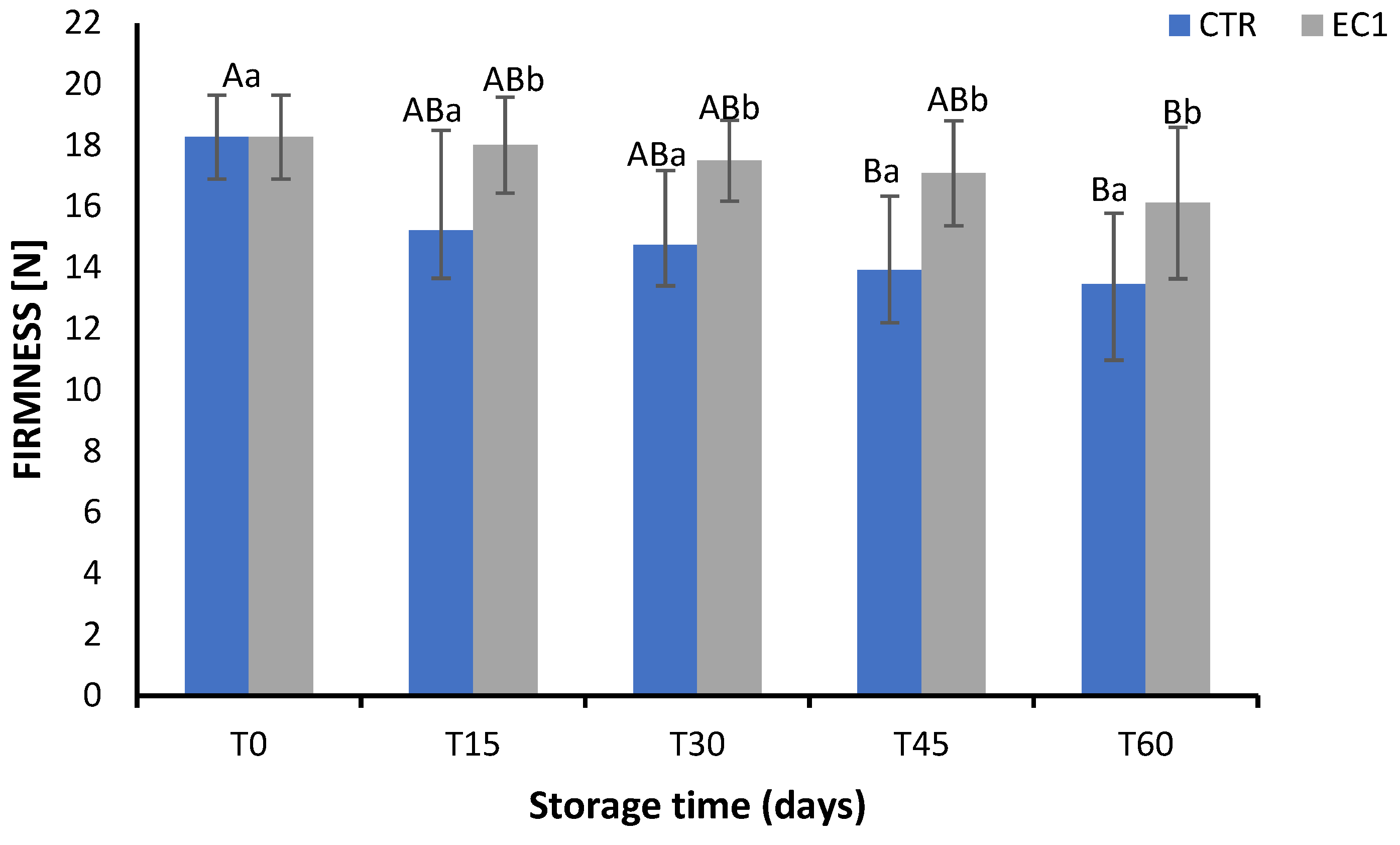
A key factor influencing customer perception and postharvest quality during storage is fruit firmness, which is correlated with ripeness and juice percent content [18]. A gradual decrease in fruit firmness was observed in both coated (EC1) and control (CTR) lemons during cold storage. Significant differences between treatments became evident from day 15 and remained until the end of storage (Figure 1). The CTR samples exhibited the greatest reduction in firmness, with a total loss of 26.4% from T0 to the end of cold storage (Figure 1). In contrast, EC1 fruits maintained higher firmness values throughout storage, showing no significant decline from day 15 to the end of the storage period, which suggests the effectiveness of the OFI mucilage-based coating in preserving fruit cell structure. This effect may be associated with reduced water loss and metabolic activity, leading to slower cell wall degradation. These results are in agreement with those reported by Gheribi et al. (2019) [24], who demonstrated that polysaccharide-based coatings, including those derived from O. ficus-indica, contribute to firmness retention by forming a protective barrier around the fruit surface. This effect could be attributed to the calcium present in cactus mucilage, which interacts with pectic substances in the cell wall to form calcium pectate, thereby helping preserve tissue integrity [25]. In addition, Christopoulos et al. [26] reported that the improved retention of firmness associated with mucilage application may also be linked to higher levels of pectin and protopectin during storage, indicating a reduced activity of cell wall-degrading enzymes.
Total soluble solids (TSS) and titratable acidity (TA) values in coated lemon fruits (EC1) and control fruits (CTR) indicated that there were no significant differences between the two samples (EC1 and CTR) for both TA and TSS, considering the same time intervals (Table 1). Notably, both EC1-treated and control fruits showed a significant decrease in TA during the storage period. The decrease in acidity may be attributed to natural ripening processes and degradation of organic acids, as commonly observed in citrus fruits during postharvest storage [27]. On the other hand, both EC1 and CTR fruits showed a significant increase in TSS over time, a phenomenon commonly reported in postharvest studies on citrus [28,29], which is typically associated with sugar concentration due to water loss during storage (Table 1).
Therefore, the mucilage coating (EC1) did not appear to significantly affect TSS or TA values compared to control fruits, suggesting that the coating did not have a substantial impact on these quality parameters under the experimental conditions used. Therefore, the coating mainly affected external mass transfer processes rather than internal metabolic pathways related to sugar accumulation and organic acid degradation [30,31].
During postharvest storage, fruit weight reduction is primarily associated with water loss from tissues through transpiration, a process that can markedly affect the physical condition and market quality of lemons. After harvest, water is continuously lost as vapor through stomata and the fruit surface, resulting in a progressive decrease in fruit mass [32]. Physiological water loss is crucial in influencing fruit quality and its vulnerability to various postharvest diseases. By limiting moisture loss, reducing respiration, and acting as a barrier to microbial activity, edible coatings can successfully increase the shelf-life and quality of lemon fruits while reducing weight loss during cold storage.
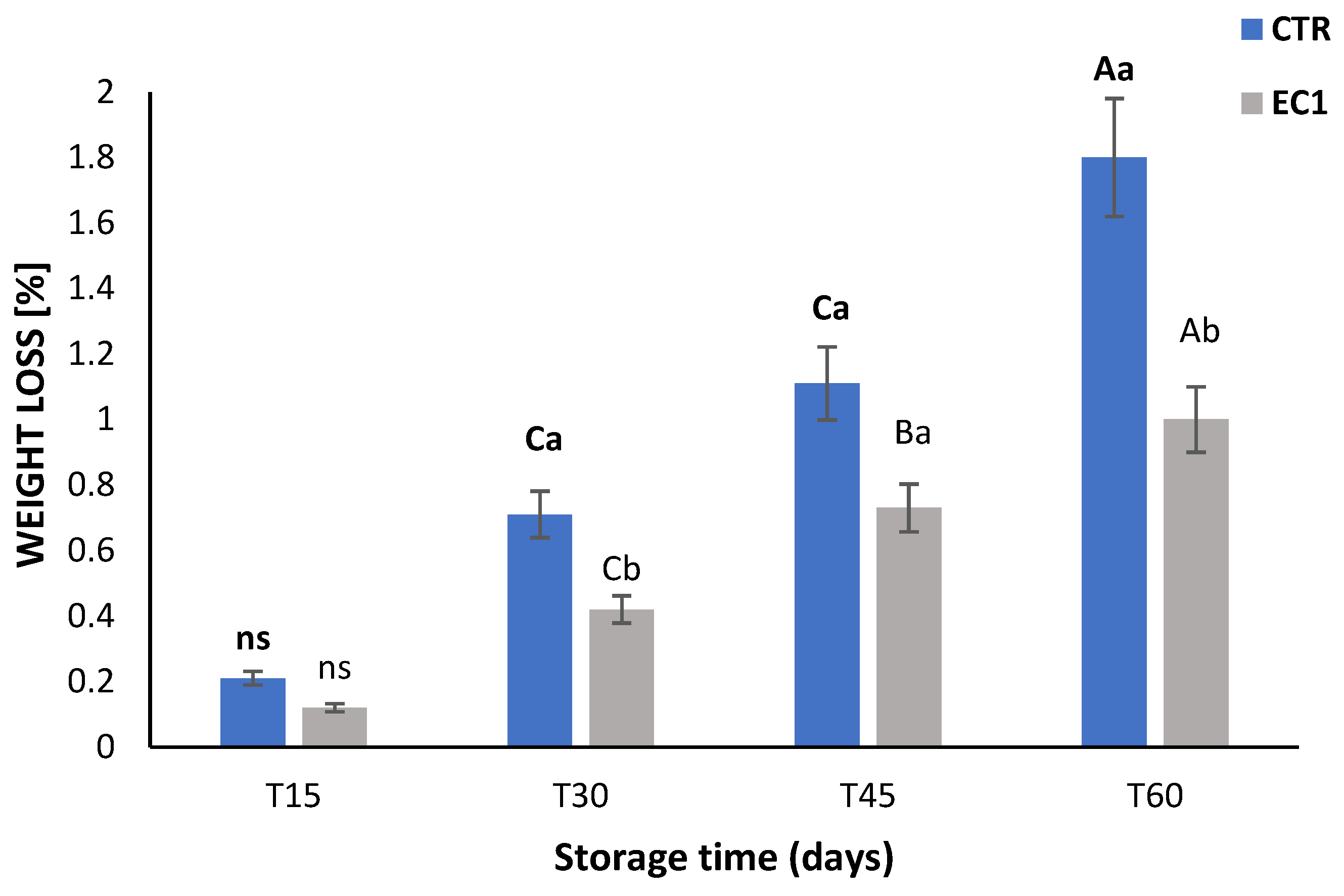
Both coated and uncoated fruits maintained stable weight during the first 15 days of cold storage (Figure 2). However, from day 30 onward, CTR samples exhibited a significantly greater weight loss compared to EC1 fruits, with differences persisting until the end of storage; at the final stage, weight loss in CTR fruits was approximately 1.8-fold higher than in EC1 (Figure 2). The application of the mucilage-based coating effectively limited weight reduction, as EC1 samples showed about 45% lower weight loss than CTR fruits at the end of the storage period (Figure 2). At the end of the storage period, this corresponded to an estimated weight loss of approximately 2.5 g and 1.4 g per fruit in CTR and EC1 samples, respectively, based on the average initial sample weight. Our study showed the beneficial effect of mucilage-based edible coating on lemon fruits during cold storage, with OFI mucilage acting as a barrier reducing transpiration and respiration rate, preserving the weight and maintaining the quality of lemons throughout the cold storage period, as reported by Riaz et al. (2018) [33] on mandarin fruits. This barrier effect reduces water vapor diffusion from the fruit surface, thereby reducing dehydration and associated physiological stress [34,35].
Color is an important factor in the perception of fruit quality. No significant differences were observed between the control (CTR) and treated (EC1) fruits from the 15th day of storage until the end of the experimental period. In particular, the lightness (L*) of the EC1 samples was consistently higher than that of the control samples (Table 2). It was observed that the mucilage-treated lemons (EC1) appeared lighter in color than the control fruits (CTR). The elevated L* values recorded in the coated lemons (EC1) indicate that the mucilage coating helped delay surface darkening, likely due to reduced oxidative reactions at the peel level. This is likely due to reduced oxygen diffusion at the fruit surface, which slows down chlorophyll degradation and pigment oxidation [30]. This behavior is also consistent with the reduced dehydration observed in coated fruits, suggesting that lower water loss may contribute to maintaining peel integrity and visual quality during storage. This effect may be attributed to the barrier properties of the mucilage in preventing oxidative damage [25] and microbial activity, which can lead to a darker, less desirable fruit color during storage [36].
In contrast, the control fruits (CTR), which were not coated, were more exposed to oxidative processes, resulting in lower L* values and a darker color. Moreover, significant differences between CTR and EC1 were also observed for the chromatic parameters a* and b* from the 15th day of storage onward. The a* values of coated fruits remained lower than those of the control, indicating a slower transition toward reddish tones and a delayed degradation of chlorophylls. Similarly, the b* values of EC1 fruits were higher, reflecting a more stable yellow hue during storage. These trends, consistent with the higher L* values observed in treated samples, confirm the efficacy of the mucilage coating in maintaining color brightness and delaying pigment oxidation. Differences in ΔE values below the perceptibility threshold should be considered negligible from a visual standpoint. Overall, these results are in line with previous studies showing that edible coatings can maintain the visual quality of fruits by acting as a barrier to oxidation and moisture loss [37,38], thereby preserving their general appearance during storage [39,40].
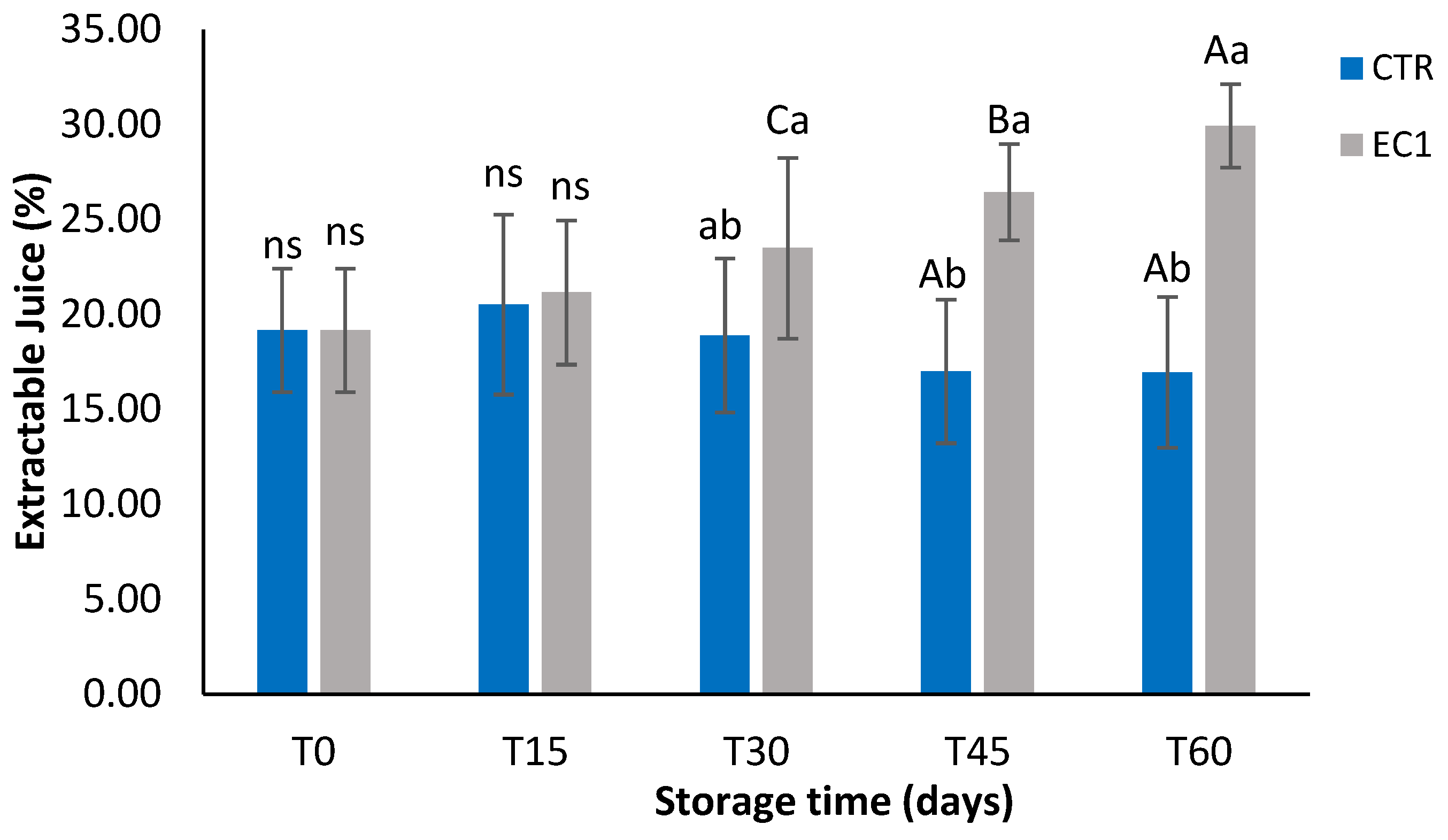
Figure 3 showed that lemon fruit juice content was positively influenced by the mucilage-based edible coating during cold storage, particularly after 30 days. In EC1 samples, the juice content progressively increased until the end of the storage period. In contrast, uncoated fruits (CTR) showed a slight rise (7.15%) from T0 to 15 days of cold storage, followed by a gradual decline until the end of the storage period (Figure 3). Nasrin et al. (2020) [2] reported comparable findings, noting that uncoated fruits tended to lose more juice content, a result linked to their greater susceptibility to dehydration. The coating likely reduced water migration from internal tissues, contributing to higher juice retention in coated fruits. Lemons coated with OFI mucilage showed a gradual increment of juice content with values 1.8 times higher than uncoated ones at the end of the cold storage period (Figure 3). Obeed and Harhash (2006) [41] found similar results to our findings with increments of juice content during storage in lime fruits.
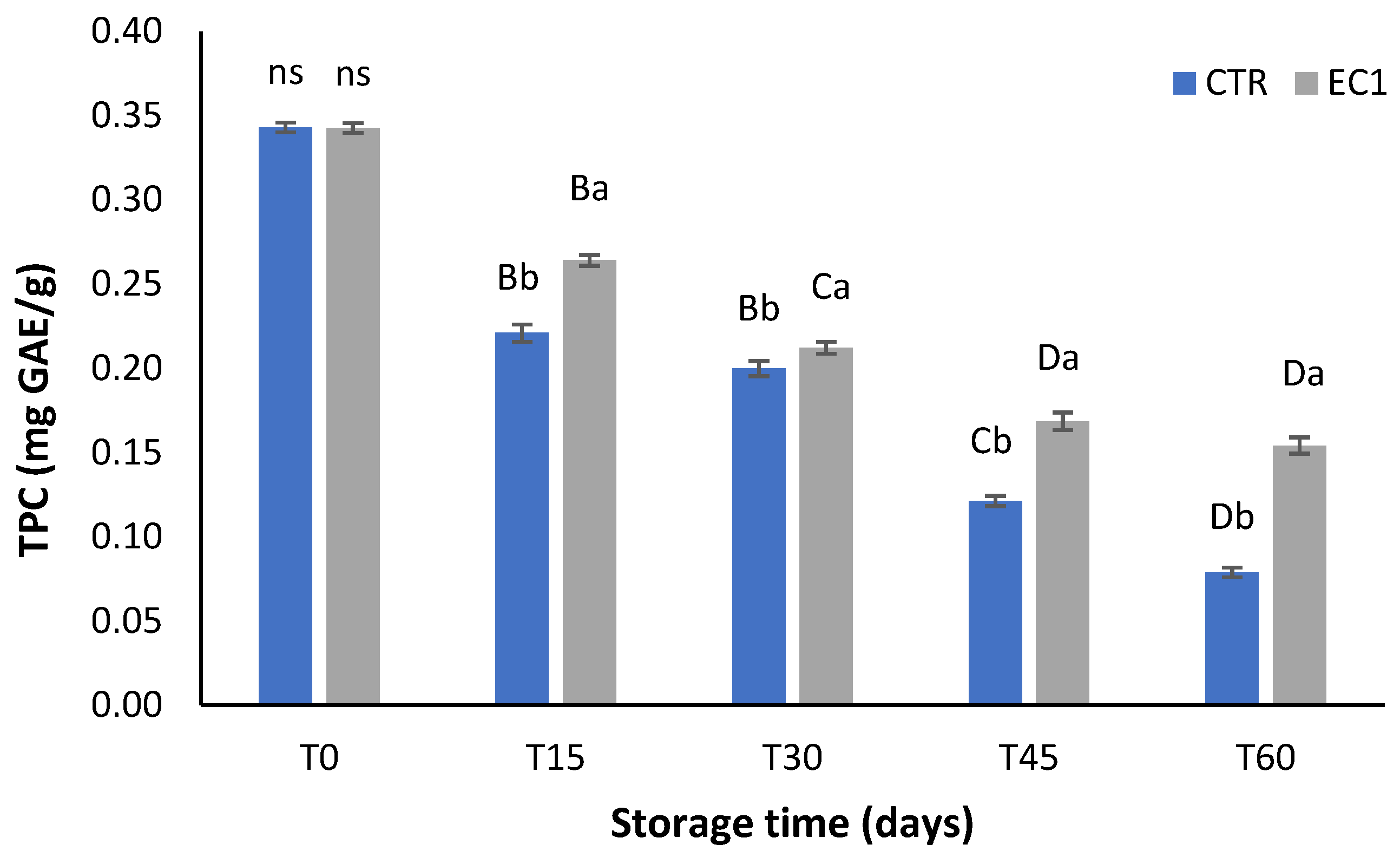
The results indicated that coated fruits maintained significantly higher total polyphenolic content (TPC) (p < 0.05) than control samples throughout cold storage, suggesting a positive effect of the coating on postharvest quality preservation (Figure 4). The observed decline in TPC can be related to the degradation and oxidation of phenolic compounds, likely associated with a reduction in antioxidant activity during storage [32]. The lowest TPC values were recorded in the control samples, whereas the highest were observed in EC1. Despite this, a progressive reduction in TPC was observed in all treatments as storage time increased; however, at the end of cold storage, EC1 samples-maintained values nearly twice as high as those of CTR (Figure 4). This trend is consistent with the higher antioxidant activity observed in coated fruits, suggesting a relationship between total polyphenol content and radical scavenging capacity during storage. By forming a semi-permeable barrier around the fruit, the coating modifies the microenvironment, which in turn influences the retention and stability of phenolic compounds during storage; acting as a protective barrier, this changed environment successfully lowers the rates of phenolic component oxidation and respiration [41]. A major factor contributing to this preservation effect is the suppression of polyphenol oxidase (PPO) activity, the enzyme involved in phenolic oxidation and subsequent browning processes [42]. The natural reduction in phenolic compounds during fruit senescence is consistent with the lower phenolic levels observed in control samples at the end of storage. Comparable findings were reported by Mousavi et al. (2021) [43] for strawberries treated with a chia seed mucilage/bacterial cellulose coating, and by Mohammadi et al. (2024) [44], who observed a general decline in total phenols during storage, although coated Mexican lime fruits (xanthan gum-based coating) retained significantly higher values than uncoated samples.
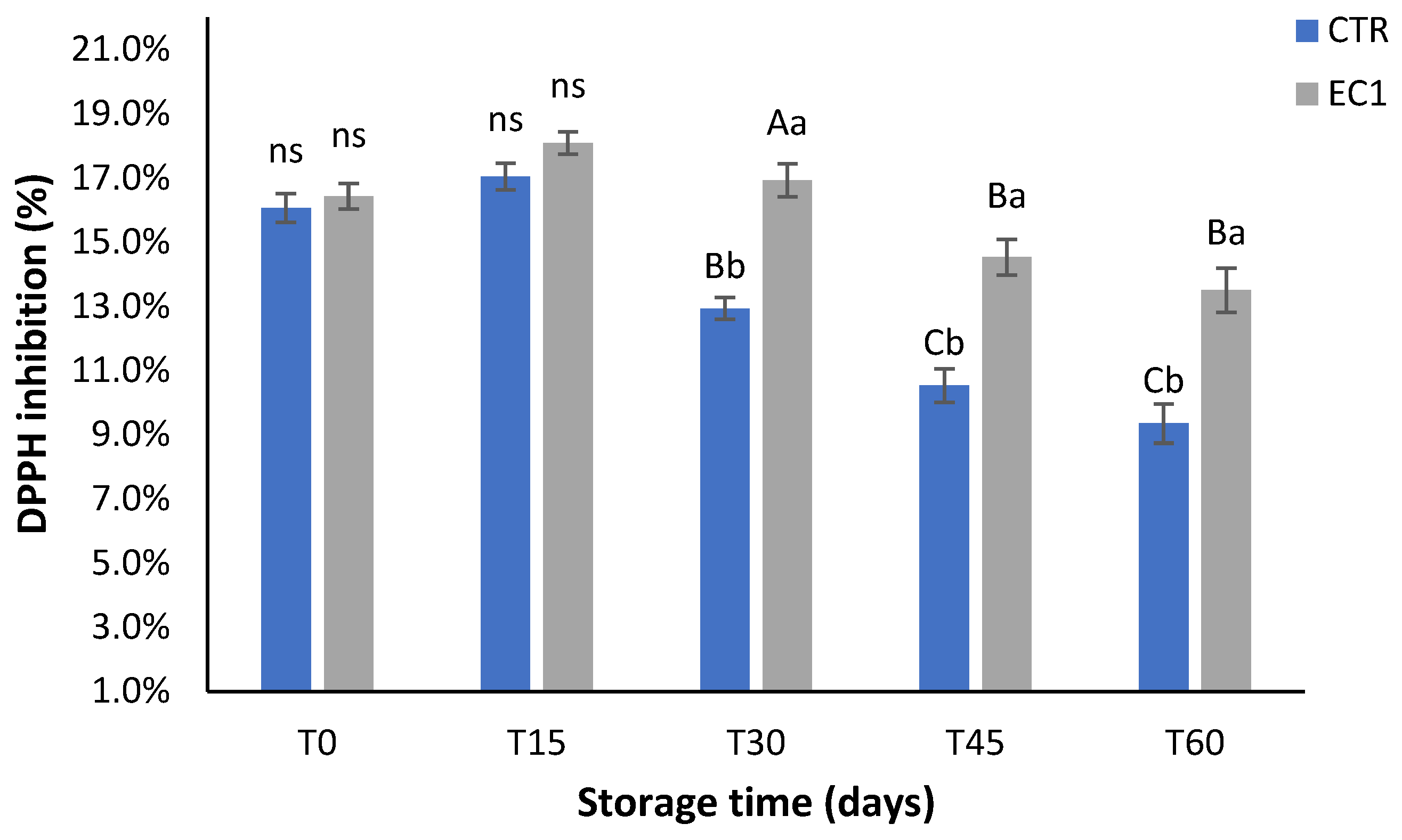
Antioxidant activity (DPPH inhibition) showed a slight increase during the first 15 days of cold storage, followed by a gradual decline until the end of the storage period in both CTR and EC1 samples (Figure 5). In CTR fruits, radical scavenging activity progressively decreased during storage, reaching values approximately 42% lower than the initial level by the end of the storage period (Figure 5). In contrast, EC1 samples maintained relatively stable DPPH values up to 30 days, after which a decrease was observed, with final values about 18% lower than at the beginning of storage (Figure 5). The application of the mucilage-based coating had a beneficial effect on antioxidant activity, as coated fruits showed DPPH values approximately 1.4 times higher than the control samples at the end of cold storage (Figure 5). This behavior could be associated with lower oxidative stress in coated fruits, which contributes to the preservation of antioxidant compounds during storage [45]. These results are in agreement with those reported by de Medeiros et al. (2024) [25], who suggested that cactus mucilage can enhance antioxidant activity by scavenging reactive oxygen species, protecting cell membranes, and limiting peroxidation, thereby contributing to extended shelf life and improved nutritional quality of fruits.

3.2. Microbiological Analysis

Microbiological evaluation, carried out using a culture-dependent approach on O. ficus-indica mucilage, as well as on untreated (CTR) and coated (EC1) lemon samples, focused on the principal undesirable microbial groups typically associated with fruit and vegetable products [3]. The analysis performed on OFI mucilage did not reveal the presence of bacteria, yeasts, and molds. These findings are in agreement with those reported by Liguori et al. (2021) [16], who evaluated O. ficus-indica mucilage as an edible coating for minimally processed cactus pear and loquat fruits. Throughout the entire storage period, none of the lemon fruit samples exhibited detectable levels of pseudomonads and yeasts, microorganisms typically implicated in the spoilage of fresh produce [46]. In addition, E. coli, CPS, L. monocytogenes and Salmonella spp., all recognized as major foodborne pathogens [47], were not detected in any of the analyzed samples. As expected, molds were the only microbial group detected, confirming their role as the primary agents responsible for microbial decay of lemon fruits during storage [48]. Significant differences between treatments became evident after 30 days of refrigerated storage, when mold counts reached approximately 104 CFU/g in CTR samples (Table 3), while in EC1 fruits they remained below the detection limit (<2 log CFU/g) up to 45 days. At the end of the cold storage period (60 d), molds were also revealed in EC1 lemon fruit samples, but a concentration 1 log cycle lower than those estimated for CTR production. These differences support the antimicrobial properties of O. ficus-indica mucilage [49] and its potential use as a natural coating to extend the shelf-life of lemon fruits.
The lower microbial development observed in coated fruits is consistent with the higher visual scores recorded during storage, suggesting a relationship between microbial stability and overall fruit appearance. The lower microbial development observed in coated fruits may be associated with the physical barrier provided by the coating, which could reduce water loss, limit peel damage, and indirectly delay microbial colonization during storage [25,50].

3.3. Visual Score and Visual Appearance

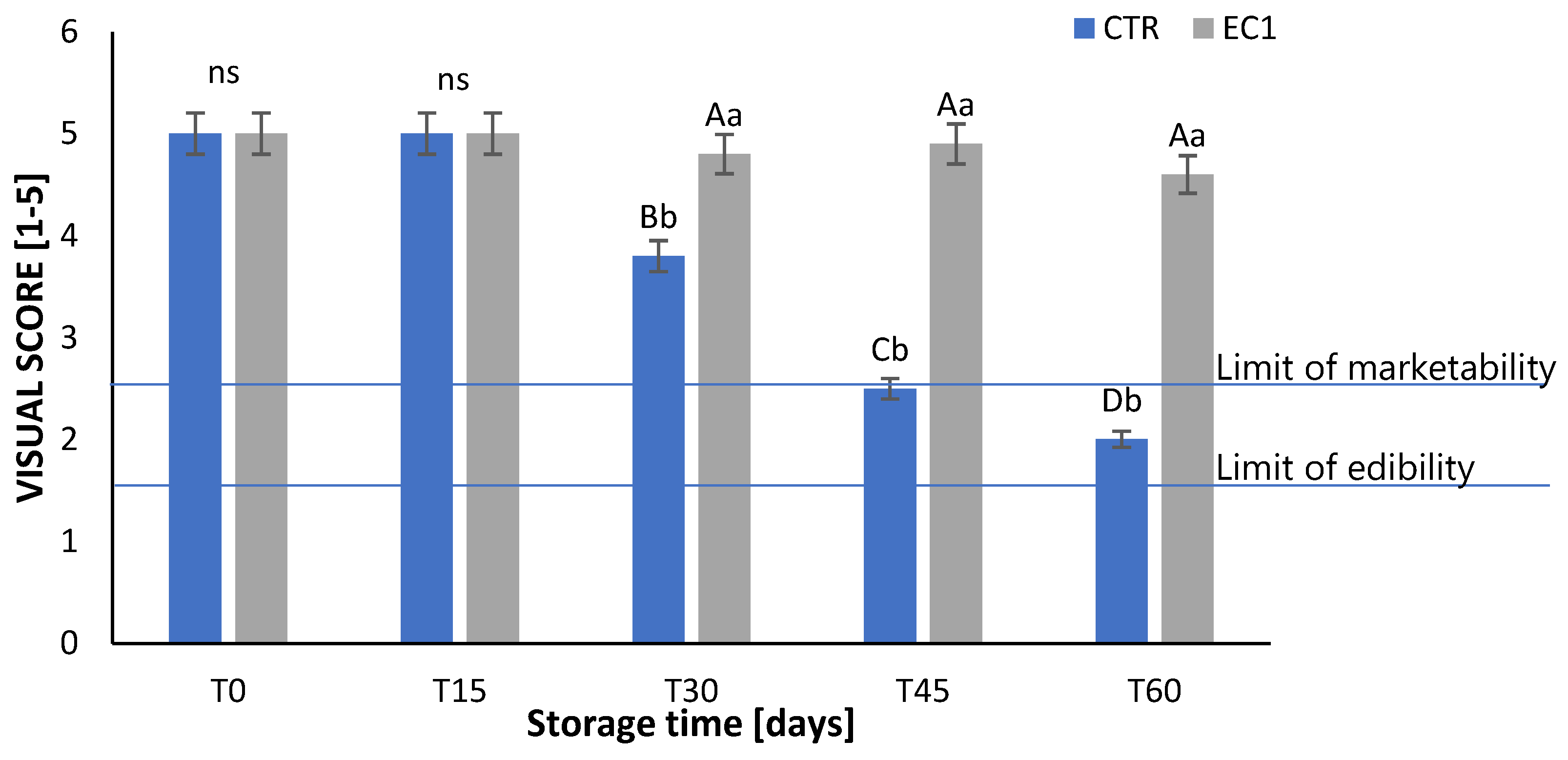
The citrus fruit’s external color is a decisive factor for fruit consumer acceptance. The color is affected mainly by the ratio of pigments, including chlorophylls and carotenoids, which can be influenced by genetic, environmental, and nutritional factors [51]. The visual assessment clearly highlighted the effect of the mucilage-based coating on lemon fruits (Figure 6). In CTR samples, visual quality significantly declined after 30 days of cold storage, falling below the marketability threshold after 45 days. In contrast, EC1 fruits maintained visual scores above the limits of both marketability and edibility throughout the entire storage period (Figure 6).
EC1 samples exhibited significantly higher visual scores than CTR fruits from 30 to 60 days of storage, with values approximately 1.3-, 2.0-, and 2.3-fold higher at 30, 45, and 60 days, respectively (Figure 6). These results are consistent with previous studies reporting that mucilage-based coatings, particularly those derived from O. ficus-indica, improve the visual quality of fruits by preserving firmness, reducing weight loss, and maintaining overall appearance during storage [24].
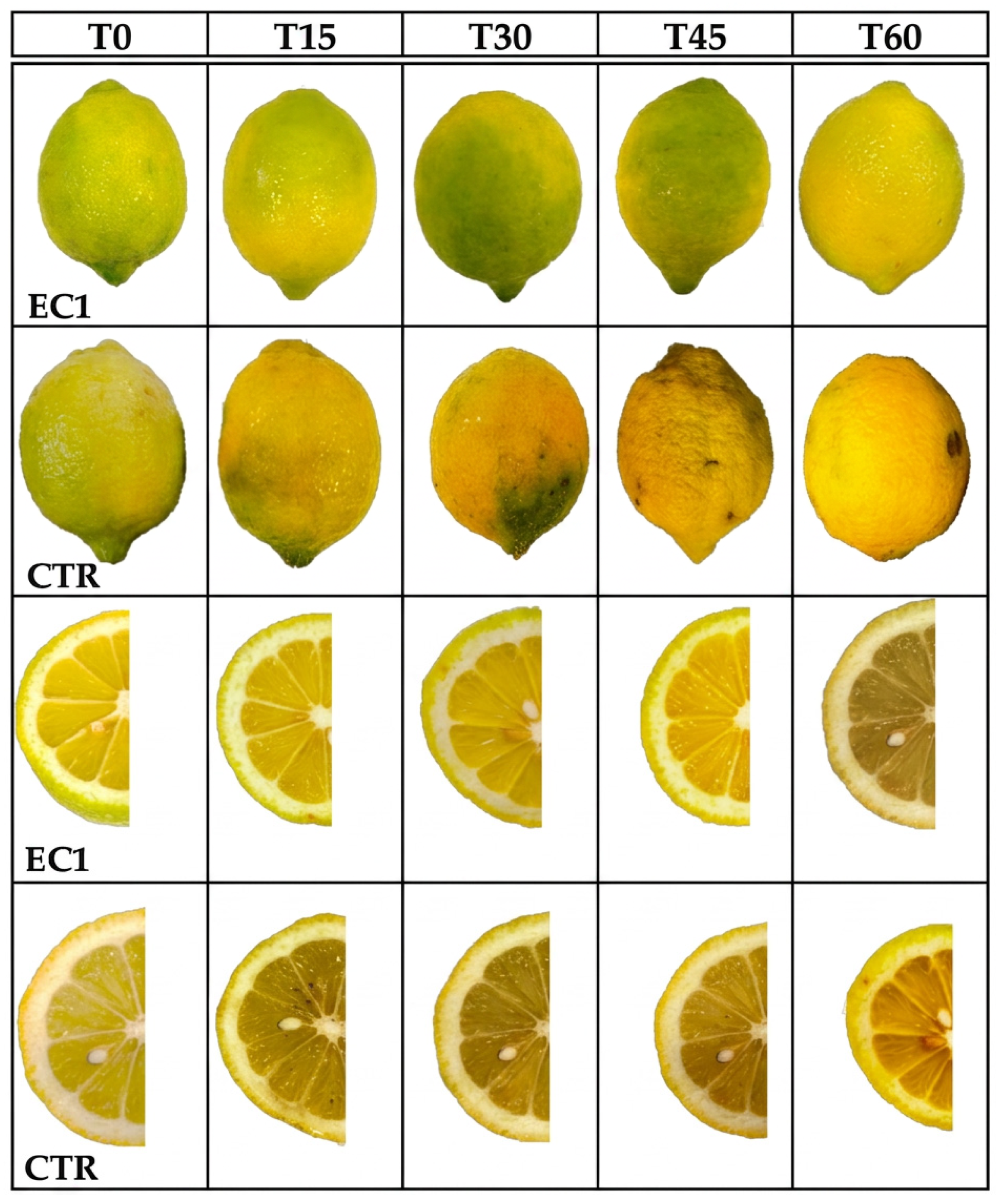
The mucilage-based edible coating reduced the degradation of the chlorophyll and retained the lightness in EC1 lemon fruits until the end of the cold storage period (Figure 7). In contrast, untreated lemon fruits (EC1) showed faster degreening and higher loss of lightness than EC1 samples from the 15th days of cold storage until the end (Figure 7). In Figure 7 CTR lemon fruits samples showed evident dehydration, confirmed by the weight loss data from the 45th days of cold storage, in addition, in CTR lemon fruits samples pitting occurs from the 30th days of cold storage. Peel pitting or staining is a skin disorder that happens a few days after the fruits are processed in the packing line at non-chilling temperatures, this condition results from the fruit peel’s oil glands collapsing and turning dark brown [1]. Once again, the mucilage-based edible coating application acts as a barrier, limiting weight loss, peel disorders, and lightness losses [24], also being effective in lemon fruit shelf-life by reducing decay, preserving appearance, and retaining quality attributes. These effects are mainly associated with reduced dehydration and delayed senescence processes in coated fruits.

3.4. Mucilage Characterization

The mucilage extracted in July exhibited high luminosity and a yellow-green hue (Table 4), indicating a clear and bright appearance typical of hydrated samples. The moisture content was high, while the ash fraction was relatively elevated, and protein and lipid contents were low, confirming the predominance of carbohydrates. The high carbohydrate content is particularly relevant for coating applications, as polysaccharides are known to form semi-permeable films that contribute to reducing water loss and gas exchange in treated fruits [8,52]. The increase in carbohydrate concentration compared with early-season samples was consistent with the reduced water content of the cladodes during the summer period.
The hydroalcoholic extract showed a moderate polyphenol content and high antioxidant capacity (Table 5), evidenced by low DPPH IC50 values and strong reducing power, both positively correlated with carbohydrate concentration. Overall, the mucilage collected in July displayed a translucent appearance, a high proportion of carbohydrates, and notable antioxidant potential. This antioxidant capacity may contribute to delaying oxidative processes in coated fruits, thereby supporting the preservation of quality attributes during storage [53,54].
The physicochemical features and antioxidant capacity of the mucilage confirm its potential as a natural additive for industrial formulations, especially within the framework of biodegradable edible coatings. Overall, the compositional profile of the mucilage is consistent with the observed effects on coated lemon fruits, particularly in terms of reduced weight loss, maintained firmness, and delayed microbial development during storage.

3.5. Principal Component Analysis (PCA)

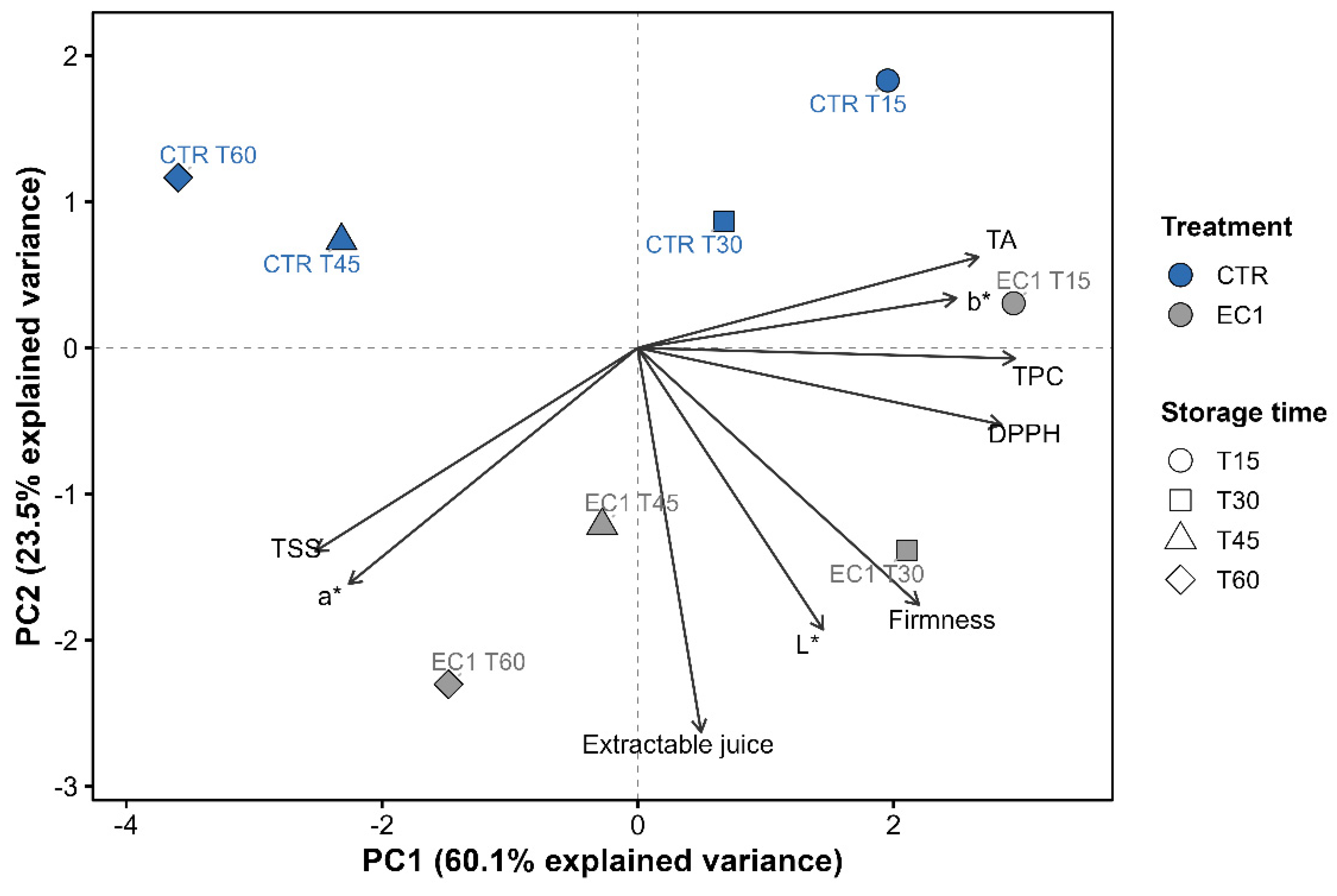
To obtain an overall view of the relationships among the measured quality attributes and to evaluate the effect of the mucilage coating during storage, a principal component analysis (PCA) was performed using the physicochemical and nutraceutical parameters (Figure 8). The PCA biplot was generated using the mean values of each treatment × storage time combination, with each point representing a specific treatment-storage condition (e.g., CTR T15, EC1 T15, CTR T30, and EC1 T30). The vectors represent the contribution of the original variables to sample distribution within the PCA space. Principal component 1 (PC1) explained 60.1% of the total variance, whereas principal component 2 (PC2) accounted for 23.5% (Figure 8). PC1 mainly described the storage-time gradient, with samples progressively shifting from T15 to T60. Positive PC1 values were associated with total polyphenolic content (TPC), DPPH inhibition, titratable acidity (TA), b* values, firmness, and L* values, whereas negative PC1 values were mainly associated with total soluble solids (TSS) and a* values (Figure 8). PC2 contributed to the separation between coated and uncoated fruits. In particular, EC1 samples at advanced storage times were associated with higher firmness, extractable juice content, and L* values, whereas CTR samples were distributed in the opposite region of the PCA space (Figure 8). Overall, the PCA highlighted the ability of the OFI mucilage coating to preserve quality attributes associated with fruit freshness and nutraceutical value during cold storage.

4. Conclusions

Edible coatings derived from O. ficus-indica cladodes significantly preserved lemon quality during cold storage, representing a promising and sustainable alternative to synthetic coatings, which may leave chemical residues on the peel, and reduce suitability for direct consumption. The mucilage-based coating effectively maintained key quality attributes, including total soluble solids (TSS) and titratable acidity (TA), while markedly reducing weight loss. In addition, coated fruits showed higher extractable juice, antioxidant activity, and polyphenol content than the control, even after 60 days of storage at 5 ± 0.5 °C.
Overall, these findings indicate that natural edible coatings can help reduce postharvest losses associated with handling and transportation while preserving the nutritional and visual quality of fresh produce. Such natural and biodegradable coatings represent environmentally friendly solutions that can enhance food security and promote sustainability within the agricultural sector through a more holistic approach to postharvest preservation. However, further studies are needed to clarify the underlying physiological mechanisms and to assess the scalability and industrial applicability of this coating under commercial conditions.

Author Contributions

Research conceptualization, F.G., G.G. and G.L.; methodology, F.G., G.G., and G.L.; validation, F.G., G.G., R.G., L.S. and G.L.; formal analysis, F.G., G.G., F.T., R.G. and G.L.; investigation, F.G., G.G., R.G., F.T. and G.L.; data curation, F.G., G.G., R.G. and G.L.; writing—original draft preparation, F.G., G.G., P.I., R.G., L.S. and G.L.; writing—review and editing, F.G., G.G., F.T., R.G., L.S., P.I. and G.L.; visualization, F.G., G.G., F.T., R.G., L.S., P.I. and G.L.; supervision, G.L. All authors have read and agreed to the published version of the manuscript.

Funding

This research was financially supported by the “PRIMA MEDIET4ALL” project, “A transnational movement to support the sustainable transition towards a healthy and eco-friendly agri-food system through the promotion of MEDIET and its lifestyle in modern society” CUP: B73C23000060001.

Data Availability Statement

The original contributions presented in this study are included in the article. Further inquiries can be directed to the corresponding author.

Conflicts of Interest

The authors declare that they have no conflicts of interest.

References

  1. Strano, M.C.; Altieri, G.; Allegra, M.; Di Renzo, G.C.; Paterna, G.; Matera, A.; Genovese, F. Postharvest Technologies of Fresh Citrus Fruit: Advances and Recent Developments for the Loss Reduction during Handling and Storage. Horticulturae 2022, 8, 612. [Google Scholar] [CrossRef]
  2. Nasrin, T.A.A.; Rahman, M.A.; Arfin, M.S.; Islam, M.N.; Ullah, M.A. Effect of novel coconut oil and beeswax edible coating on postharvest quality of lemon at ambient storage. J. Agric. Food Res. 2020, 2, 100019. [Google Scholar] [CrossRef]
  3. Palou, L.; Valencia-Chamorro, S.A.; Pérez-Gago, M.B. Antifungal edible coatings for fresh citrus fruit: A review. Coatings 2015, 5, 962–986. [Google Scholar] [CrossRef]
  4. Cheng, Y.; Lin, Y.; Cao, H.; Li, Z. Citrus postharvest green mold: Recent advances in fungal pathogenicity and fruit resistance. Microorganisms 2020, 8, 449. [Google Scholar] [CrossRef]
  5. Kanashiro, A.M.; Akiyama, D.Y.; Kupper, K.C.; Fill, T.P. Penicillium italicum: An underexplored postharvest pathogen. Front. Microbiol. 2020, 11, 606852. [Google Scholar] [CrossRef]
  6. Bhatta, U.K. Alternative management approaches of citrus diseases caused by Penicillium digitatum (green mold) and Penicillium italicum (blue mold). Front. Plant Sci. 2022, 12, 833328. [Google Scholar] [CrossRef]
  7. Jama, S.O.; Lufu, R.; Opara, U.L.; Crouch, E.; Tsige, A.A. Edible Coatings for Fresh Fruits: Functional Roles, Optimization Strategies, and Analytical Perspectives. Plants 2026, 15, 132. [Google Scholar] [CrossRef]
  8. Pillai, A.R.; Eapen, A.S.; Zhang, W.; Roy, S. Polysaccharide-based edible biopolymer-based coatings for fruit preservation: A review. Foods 2024, 13, 1529. [Google Scholar] [CrossRef]
  9. Valero, D.; Díaz-Mula, H.M.; Zapata, P.J.; Guillén, F.; Martínez-Romero, D.; Castillo, S.; Serrano, M. Effects of alginate edible coating on preserving fruit quality in four plum cultivars during postharvest storage. Postharvest Boil. Technol. 2013, 77, 1–6. [Google Scholar] [CrossRef]
  10. Ochoa-Reyes, E.; Martínez-Vazquez, G.; Saucedo-Pompa, S.; Montañez, J.; Rojas-Molina, R.; de Leon-Zapata, M.A.; Aguilar, C.N. Improvement of shelf life quality of green bell peppers using edible coating formulations. J. Microbiol. Biotechnol. Food Sci. 2013, 2, 2448–2451. [Google Scholar]
  11. Deng, Z.; Jung, J.; Simonsen, J.; Zhao, Y. Cellulose nanomaterials emulsion coatings for controlling physiological activity, modifying surface morphology, and enhancing storability of postharvest bananas (Musa acuminate). Food Chem. 2017, 232, 359–368. [Google Scholar] [CrossRef]
  12. Allegra, A.; Inglese, P.; Sortino, G.; Settanni, L.; Todaro, A.; Liguori, G. The influence of Opuntia ficus-indica mucilage edible coating on the quality of ‘Hayward’ kiwifruit slices. Postharvest Biol. Technol. 2016, 120, 45–51. [Google Scholar] [CrossRef]
  13. Allegra, A.; Inglese, P.; Guccione, E.; Farina, V.; Sortino, G. Calcium Ascorbate Coating Improves Postharvest Quality and Storability of Fresh-Cut Slices of Coscia and Abate Fétel Pears (Pyrus communis L.). Horticulturae 2022, 8, 227. [Google Scholar] [CrossRef]
  14. Contreras-Padilla, M.; Rodríguez-García, M.E.; Gutiérrez-Cortez, E.; del Carmen Valderrama-Bravo, M.; Rojas-Molina, J.I.; Rivera-Muñoz, E.M. Physicochemical and rheological characterization of Opuntia ficus mucilage at three different maturity stages of cladode. Eur. Polym. J. 2016, 78, 226–234. [Google Scholar] [CrossRef]
  15. Del-Valle, V.; Hernández-Muñoz, P.; Guarda, A.; Galotto, M.J. Development of a cactus-mucilage edible coating (Opuntia ficus indica) and its application to extend strawberry (Fragaria ananassa) shelf-life. Food Chem. 2005, 91, 751–756. [Google Scholar] [CrossRef]
  16. Liguori, G.; Gaglio, R.; Greco, G.; Gentile, C.; Settanni, L.; Inglese, P. Effect of Opuntia ficus-indica mucilage edible coating on quality, nutraceutical, and sensorial parameters of minimally processed cactus pear fruits. Agronomy 2021, 11, 1963. [Google Scholar] [CrossRef]
  17. Liguori, G.; Greco, G.; Gargano, F.; Gaglio, R.; Settanni, L.; Inglese, P. Effect of mucilage-based edible coating enriched with oregano essential oil on postharvest quality and sensorial attributes of fresh-cut loquat. Coatings 2023, 13, 1387. [Google Scholar] [CrossRef]
  18. Lado, J.; Rodrigo, M.J.; Zacarías, L. Maturity indicators and citrus fruit quality. Stewart Postharvest Rev. 2014, 10, 1–6. [Google Scholar]
  19. Du Toit, A.; De Wit, M. A Process for Extracting Mucilage from Opuntia ficus-indica and Aloe Barbadensis. South Africa Patent No. PA153178/P, 12 May 2011. [Google Scholar]
  20. Singleton, V.L.; Rossi, J.A. Colorimetry of total phenolics with phosphomolybdic-phosphotungstic acid reagents. Am. J. Enol. Vitic. 1965, 16, 144–158. [Google Scholar] [CrossRef]
  21. Rekha, C.; Poornima, G.; Manasa, M.; Abhipsa, V.; Devi, J.P.; Kumar, H.T.V.; Kekuda, T.P. Ascorbic acid, total phenol content and antioxidant activity of fresh juices of four ripe and unripe citrus fruits. Chem. Sci. Trans. 2012, 1, 303–310. [Google Scholar] [CrossRef]
  22. Gharbi, S.; Renda, G.; La Barbera, L.; Amri, M.; Messina, C.M.; Santulli, A. Tunisian tomato by-products, as a potential source of natural bioactive compounds. Nat. Product. Res. 2017, 31, 626–631. [Google Scholar] [CrossRef] [PubMed]
  23. Messina, C.M.; Arena, R.; Morghese, M.; Santulli, A.; Liguori, G.; Inglese, P. Seasonal characterization of nutritional and antioxidant properties of Opuntia ficus-indica [(L.) Mill.] mucilage. Food Hydrocoll. 2021, 111, 106398. [Google Scholar] [CrossRef]
  24. Gheribi, R.; Khwaldia, K. Cactus Mucilage for Food Packaging Applications. Coatings 2019, 9, 655. [Google Scholar] [CrossRef]
  25. de Medeiros, V.P.B.; de Oliveira, K.Á.R.; Queiroga, T.S.; de Souza, E.L. Development and application of mucilage and bioactive compounds from cactaceae to formulate novel and sustainable edible films and coatings to preserve fruits and vegetables—A review. Foods 2024, 13, 3613. [Google Scholar] [CrossRef] [PubMed]
  26. Christopoulos, M.V.; Gkatzos, D.; Kafkaletou, M.; Bai, J.; Fanourakis, D.; Tsaniklidis, G.; Tsantili, E. Edible coatings from Opuntia ficus-indica cladodes alongside chitosan on quality and antioxidants in Cherries during storage. Foods 2022, 11, 699. [Google Scholar] [CrossRef]
  27. Sun, X.H.; Xiong, J.J.; Zhu, A.D.; Zhang, L.; Ma, Q.L.; Xu, J.; Cheng, Y.J.; Deng, X.X. Sugars and organic acids changes in pericarp and endocarp tissues of pumelo fruit during postharvest storage. Sci. Hortic. 2012, 142, 112–117. [Google Scholar] [CrossRef]
  28. Shah, S.W.A.; Jahangir, M.; Qaisar, M.; Khan, S.A.; Mahmood, T.; Saeed, M.; Farid, A.; Liaquat, M. Storage stability of kinnow fruit (Citrus reticulata) as affected by CMC and guar gum-based silver nanoparticle coatings. Molecules 2015, 20, 22645–22661. [Google Scholar] [CrossRef] [PubMed]
  29. Devi, L.S.; Mukherjee, A.; Sharma, S.; Katiyar, V.; Dutta, J.; Kumar, S. Natural wax-based edible coatings for preserving postharvest quality of mandarin orange. Food Chem. X 2025, 26, 102302. [Google Scholar] [CrossRef]
  30. Pham, T.T.; Nguyen, L.L.P.; Dam, M.S.; Baranyai, L. Application of edible coating in extension of fruit shelf life. AgriEngineering 2023, 5, 520–536. [Google Scholar] [CrossRef]
  31. Salehi, F. Edible coating of fruits and vegetables using natural gums: A review. Int. J. Fruit. Sci. 2020, 20, S570–S589. [Google Scholar] [CrossRef]
  32. Yang, M.; Zheng, E.; Lin, Z.; Miao, Z.; Li, Y.; Hu, S.; Gao, Y.; Jiang, Y.; Pang, L.; Li, X. Melatonin Rinsing Treatment Associated with Storage in a Controlled Atmosphere Improves the Antioxidant Capacity and Overall Quality of Lemons. Foods 2024, 13, 3298. [Google Scholar] [CrossRef] [PubMed]
  33. Riaz, S.; Sultan, M.T.; Sibt-E-Abass, M.; Imran, M.; Ahmad, R.S.; Hussain, M.B.; Shariati, M.A.; Kosenko, I.; Kleymenova, N.L.; Egorova, G.N. Extraction of Polysaccharides from Opuntia Cactus for Its Potential Application in Edible Coating to Improve the Shelf Life of Citrus (Kinnow Mandarin) Fruit. J. Microbiol. Biotechnol. Food Sci. 2018, 8, 745–750. [Google Scholar] [CrossRef]
  34. Magri, A.; Rega, P.; Capriolo, G.; Petriccione, M. Impact of novel active layer-by-layer edible coating on the qualitative and biochemical traits of minimally processed ‘Annurca Rossa del Sud’ apple fruit. Int. J. Mol. Sci. 2023, 24, 8315. [Google Scholar] [CrossRef]
  35. Ferreira, M.D.; De S. Vitolano, L.E.; Procopio, F.R.; Brexó, R.P.; Duarte, L.G.; Nogueira, P.H.; Bandini, V.P.; Mitsuyuki, M.C.; Paris, E.C. Optimizing Postharvest Edible Coatings for Fruit and Vegetables with Plant-Based Polysaccharides. Foods 2025, 14, 3897. [Google Scholar] [CrossRef]
  36. Sortino, G.; Inglese, P.; Farina, V.; Passafiume, R.; Allegra, A. The use of Opuntia ficus-indica mucilage and aloe arborescens as edible coatings to improve the physical, chemical, and microbiological properties of ‘hayward’ kiwifruit slices. Horticulturae 2022, 8, 219. [Google Scholar] [CrossRef]
  37. Shapawi, Z.I.A.; Ariffin, S.H.; Shamsudin, R.; How, M.S.; Baharom, A.H. The Effect of Edible Coatings (Spirulina and Chitosan) on the Quality and Shelf Life of Starfruit (Averrhoa carambola L. cv. B10) Throughout Storage. Pertanika J. Trop. Agric. Sci. 2023, 46, 707–720. [Google Scholar] [CrossRef]
  38. Babarabie, M.; Sardoei, A.S.; Jamali, B.; Hatami, M. Carnauba wax-based edible coatings retain quality enhancement of orange (Citrus sinensis cv. Moro) fruits during storage. Sci. Rep. 2024, 14, 4133. [Google Scholar] [CrossRef]
  39. Pirozzi, A.; Pataro, G.; Donsì, F.; Ferrari, G. Edible coating and pulsed light to increase the shelf life of food products. Food Eng. Rev. 2021, 13, 544–569. [Google Scholar] [CrossRef]
  40. Ruggeri, E.; Kim, D.; Cao, Y.; Fare, S.; De Nardo, L.; Marelli, B. A multilayered edible coating to extend produce shelf life. ACS Sustain. Chem. Eng. 2020, 8, 14312–14321. [Google Scholar] [CrossRef]
  41. Obeed, R.S.; Harhash, M.M. Impact of postharvest treatments on storage life and quality of “Mexican” lime. J. Adv. Agric. Technol. 2006, 11, 533–549. [Google Scholar]
  42. Hassan, B.; Chatha, S.A.S.; Hussain, A.I.; Zia, K.M.; Akhtar, N. Recent advances on polysaccharides, lipids and protein based edible films and coatings: A review. Int. J. Biol. Macromol. 2018, 109, 1095–1107. [Google Scholar] [CrossRef]
  43. Mousavi, S.R.; Rahmati-Joneidabad, M.; Noshad, M. Effect of chia seed mucilage/bacterial cellulose edible coating on bioactive compounds and antioxidant activity of strawberries during cold storage. Int. J. Biol. Macromol. 2021, 190, 618–623. [Google Scholar] [CrossRef]
  44. Mohammadi, M.; Rastegar, S.; Rohani, A. Enhancing Mexican lime (Citrus aurantifolia cv.) shelf life with innovative edible coatings: Xanthan gum edible coating enriched with Spirulina platensis and pomegranate seed oils. BMC Plant Biol. 2024, 24, 906. [Google Scholar] [CrossRef]
  45. Castro-Cegrí, A.; Ortega-Munoz, M.; Sierra, S.; Carvajal, F.; Santoyo-Gonzalez, F.; Garrido, D.; Palma, F. Application of polysaccharide-based edible coatings to improve the quality of zucchini fruit during postharvest cold storage. Sci. Hortic. 2023, 314, 111941. [Google Scholar] [CrossRef]
  46. Karanth, S.; Feng, S.; Patra, D.; Pradhan, A.K. Linking microbial contamination to food spoilage and food waste: The role of smart packaging, spoilage risk assessments, and date labeling. Front. Microbiol. 2023, 14, 1198124. [Google Scholar] [CrossRef]
  47. Leff, J.W.; Fierer, N. Bacterial communities associated with the surfaces of fresh fruits and vegetables. PLoS ONE 2013, 8, e59310. [Google Scholar] [CrossRef]
  48. Zacarias, L.; Cronje, P.J.; Palou, L. Chapter 21: Postharvest technology of citrus fruits. In The Genus Citrus; Woodhead Publishing: Cambridge, UK, 2020; pp. 421–442. [Google Scholar]
  49. Sortino, G.; Guccione, E.; Casales, F.G.; de Chiara, M.L.V.; Passafiume, R.; Gallotta, A.; Allegra, A. Application of Opuntia ficus-indica Mucilage and Aloe Gel-Based Edible Coating to Enhance Postharvest Quality and Microbiological Aspects of Fresh Figs (Ficus carica L.). Horticulturae 2024, 10, 482. [Google Scholar] [CrossRef]
  50. Davachi, S.M.; Pottackal, N.; Torabi, H.; Abbaspourrad, A. Development and characterization of probiotic mucilage based edible films for the preservation of fruits and vegetables. Sci. Rep. 2021, 11, 16608. [Google Scholar] [CrossRef] [PubMed]
  51. Rodrigo, M.; Alquézar, B.; Alós, E.; Lado, J.; Zacarías, L. Biochemical bases and molecular regulation of pigmentation in the peel of Citrus fruit. Sci. Hortic. 2013, 163, 46–62. [Google Scholar] [CrossRef]
  52. Kocira, A.; Kozłowicz, K.; Panasiewicz, K.; Staniak, M.; Szpunar-Krok, E.; Hortyńska, P. Polysaccharides as edible films and coatings: Characteristics and influence on fruit and vegetable quality—A review. Agronomy 2021, 11, 813. [Google Scholar] [CrossRef]
  53. Messina, C.M.; Arena, R.; Morghese, M.; Santulli, A.; Inglese, P.; Liguori, G. Seasonal characterization of nutritional, technological and antioxidant properties of Opuntia ficus-indica Mill. mucilage. In X International Congress on Cactus Pear and Cochineal: Cactus—The New Green Revolution in Drylands; International Society for Horticultural Science: Brussels, Belgium, 2022; Volume 1343, pp. 443–452. [Google Scholar]
  54. Shinga, M.H.; Fawole, O.A.; Pareek, S. Opuntia ficus-indica mucilage coating prolongs the shelf life of bananas (Musa spp.) by enhancing antioxidant activity and modulating antioxidant enzyme systems. Food Biosci. 2025, 65, 106039. [Google Scholar] [CrossRef]
Figure 1. Changes in Citrus limon fruits’ firmness, untreated (CTR) and mucilage-coated (EC1), during cold storage (60 days at 5 °C). Different lowercase letters indicate significant differences (p ≤ 0.05) between treatments at each sampling time, while different uppercase letters denote significant differences (p ≤ 0.05) among sampling times within the same treatment. Values are reported as mean ± standard deviation.
Agronomy 16 01173 g001
Figure 2. Changes in Citrus limon fruits’ weight loss, untreated (CTR) and coated with mucilage (EC1), during cold storage (60 days at 5 °C). Lowercase letters indicate significant differences (p ≤ 0.05) between treatments at each sampling time, while uppercase letters denote significant differences (p ≤ 0.05) among sampling times within the same treatment. ns means no significance. Values are expressed as mean ± standard deviation.
Agronomy 16 01173 g002
Figure 3. Changes in Citrus limon fruits’ extractable juice content, untreated (CTR) and mucilage-coated (EC1), during cold storage (60 days at 5 °C). Lowercase letters indicate significant differences (p ≤ 0.05) between treatments at each sampling time, whereas uppercase letters denote significant differences (p ≤ 0.05) among sampling times within the same treatment. ns means no significance. Values are reported as mean ± standard deviation.
Agronomy 16 01173 g003
Figure 4. Changes in Citrus limon fruits’ total polyphenolic content (TPC), untreated (CTR) and mucilage-coated (EC1), during cold storage (60 days at 5 °C). Lowercase letters indicate significant differences (p ≤ 0.05) between treatments at each sampling time, whereas uppercase letters denote significant differences (p ≤ 0.05) among sampling times within the same treatment. ns means no significance. Values are expressed as mean ± standard deviation.
Agronomy 16 01173 g004
Figure 5. Changes in Citrus limon fruits’ antioxidant activity (2,2-diphenyl-1-picrylhydrazyl, DPPH) of Citrus limon fruits, untreated (CTR) and mucilage-coated (EC1), during cold storage (60 days at 5 °C). Lowercase letters indicate significant differences (p ≤ 0.05) between treatments at each sampling time, whereas uppercase letters denote significant differences (p ≤ 0.05) among sampling times within the same treatment. ns means no significance. Values are reported as mean ± standard deviation.
Agronomy 16 01173 g005
Figure 6. Changes in Citrus limon fruits’ visual score, untreated (CTR) and mucilage-coated (EC1), during cold storage (60 days at 5 °C). Lowercase letters indicate significant differences (p ≤ 0.05) between treatments at each sampling time, whereas uppercase letters denote significant differences (p ≤ 0.05) among sampling times within the same treatment. ns means no significance. Values are expressed as mean ± standard deviation.
Agronomy 16 01173 g006
Figure 7. Citrus limon fruits’ visual appearance, non-treated (CTR) and treated with mucilage-based edible coating (EC1) during cold storage (60 days at 5 °C).
Agronomy 16 01173 g007
Figure 8. Principal component analysis (PCA) biplot based on the mean values for each treatment × storage-time combination of lemon fruit quality attributes from T15 to T60 during cold storage. Points represent treatment–time combinations of untreated fruits (CTR) and OFI mucilage-coated fruits (EC1). Arrows indicate the contribution of the original variables to the first two principal components. PC1 and PC2 explained 60.1% and 23.5% of the total variance, respectively.
Agronomy 16 01173 g008
Table 1. Changes in Citrus limon fruits’ total soluble solids (TSS) and titratable acidity (TA), untreated (CTR) and mucilage-coated (EC1), during cold storage (60 days at 5 °C). Lowercase letters indicate significant differences (p ≤ 0.05) between treatments at each sampling time, whereas uppercase letters refer to significant differences (p ≤ 0.05) among sampling times within the same treatment; “ns” indicates no significant differences between treatments at a given sampling date. Results are expressed as mean ± standard deviation.
STORAGE TIMETREATMENTSTATSS
(Days) (g Citric Acid 100 g−1)(°Brix)
T0CTR6.64 ± 0.29 A ns7.74 ± 0.66 A ns
T15CTR6.59 ± 0.18 A ns7.89 ± 0.41 A
T30CTR6.35 ± 0.14 AB ns8.36 ± 0.67 AB
T45CTR6.16 ± 0.17 B ns8.54 ± 0.62 CD
T60CTR5.35 ± 0.2 Ca8.61 ± 0.36 BD
T0EC16.64 ± 0.29 A7.74 ± 0.66 A
T15EC16.65 ± 0.11 A8.07 ± 0.47 A
T30EC16.40 ± 0.33 AB8.32 ± 0.58 AB
T45EC16.22 ± 0.26 A8.46 ± 0.44 CD
T60EC15.63 ± 0.18 Bb8.65 ± 0.58 BCD
Table 2. Changes in Citrus limon fruits’ color, untreated (CTR) and mucilage-coated (EC1), during cold storage (60 days at 5 °C). Lowercase letters indicate significant differences (p ≤ 0.05) between treatments at each sampling time, whereas uppercase letters denote significant differences (p ≤ 0.05) among sampling times within the same treatment; “ns” indicates no significant differences between treatments at a given sampling date. Results are expressed as mean ± standard deviation.
Storage TimeTreatmentsCIE L*a*b*
(Days) L*a*b*C*ΔE
T0CTR64.42 ± 2.6 A ns10.99 ± 1.66 BC ns31.63 ± 2.31 C ns33.74 ± 1.96 C ns-
T15CTR57.99 ± 2.73 Ba17.56 ± 1.94 Aa32.45 ± 2.11 B ns47.58 ± 2.13 B ns18.26 ± 1.65 A ns
T30CTR64.83 ± 2.81 Aa16.48 ± 1.63 Aa36.77 ± 2.45 Aa51.63 ± 1.97 A ns12.25 ± 1.74 B ns
T45CTR59.71 ± 3.11 Ba7.29 ± 1.21 Ba24.77 ± 3.02 Ca33.82 ± 2.03 Ca21.05 ± 2.04 Aa
T60CTR56.92 ± 3.83 Ba6.70 ± 1.49 Ca24.8 ± 2.25 Ca31.05 ± 2.25 Ca8.31 ± 2.56 Ba
T0EC164.42 ± 2.6 B10.99 ± 1.66 ABa31.63 ± 2.31 C33.74 ± 1.96 C-
T15EC162.35 ± 3.04 Bb10.60 ± 2.32 Bb40.82 ± 2.56 B49.83 ± 1.85 B19.24 ± 1.68 B
T30EC171.06 ± 2.84 Ab7.80 ± 2.06 Cb45.10 ± 3.12 Ab53.64 ± 1.77 A13.17 ± 1.82 C
T45EC162.16 ± 1.6 Bb7.31 ± 2.14 Cb25.13 ± 2.69 Db31.03 ± 2.88 Db25.42 ± 2.06 Ab
T60EC163.75 ± 2.82 Bb13.20 ± 1.72 Ab25.52 ± 2.15 Db33.89 ± 3.02 Cb7.62 ± 1.54 Db
Table 3. Cell densities of molds on untreated (CTR) and coated lemon fruit (EC1) samples. Lowercase letters indicate significant differences (p ≤ 0.05) between treatments at each sampling time, whereas uppercase letters denote significant differences (p ≤ 0.05) among sampling times within the same treatment. Results are reported as log CFU/g.
STORAGE TIMETREATMENTSMOLDS
(Days)
T0CTR<2 Aa
T15CTR<2 Aa
T30CTR3.65 ± 0.19 Ba
T45CTR3.85 ± 0.11 Ba
T60CTR4.61 ± 0.16 Ca
T0EC1<2 Aa
T15EC1<2 Aa
T30EC1<2 Ab
T45EC1<2 Ab
T60EC13.4 ± 0.07 Bb
Table 4. Measurement of L* a b color parameters and derived parameters (C, h) obtained from O. ficus-indica mucilage. Values are expressed as mean ± standard deviation.
L*abCh
MUCILAGE77.42 ± 1.89(-)5.98 ± 0.435.89 ± 2.5636.78 ± 2.3399.58 ± 0.79
Table 5. Proximate composition (g/100 g ww), total content of polyphenols and DPPH activity (IC 50, mg/mL DW) determined for O. ficus-indica mucilage. Values are expressed as mean ± standard deviation.
ParameterValue
MOISTURE90.01 ± 1.58
ASH0.89 ± 0.00
LIPID0.92 ± 0.00
PROTEIN0.32 ± 0.03
CARBOHYDRATES11.08 ± 0.15
TOTAL POLYPHENOLS13.5 ± 1.44
DPPH11.65 ± 6.25
Disclaimer/Publisher’s Note: The statements, opinions and data contained in all publications are solely those of the individual author(s) and contributor(s) and not of MDPI and/or the editor(s). MDPI and/or the editor(s) disclaim responsibility for any injury to people or property resulting from any ideas, methods, instructions or products referred to in the content.