1. Introduction
Carbon (C) constitutes a core component regulating terrestrial ecosystem functions and is intrinsically tied to plant productivity, nutrient cycling, and the maintenance of ecological stability. As the largest C reservoir in terrestrial ecosystems, soil harbors an immense C stock, estimated between 1500 and 2500 Pg, which is equivalent to the combined total in vegetation (560 Gt) and the atmosphere (760 Gt) [
1,
2]. Thus, even minor fluctuations in soil organic carbon (SOC) can exert a major influence on the concentration of CO
2 in the atmosphere. Grassland ecosystems, covering roughly 40% of the planet’s land area and serving as a vital component of terrestrial ecosystems, play an essential regulatory function in the sequestration of soil C and in mediating global climate change [
3]. It is reported that grasslands store ~34% of the global terrestrial SOC pool, with approximately 90% of the C residing in plant roots and soil [
4]. However, due to both natural (e.g., drought, global warming) and anthropogenic factors (e.g., overgrazing, land reclamation), grassland ecosystems worldwide are facing severe degradation threats [
5]. This degradation, accompanied by biodiversity loss and soil deterioration, has led to a significant reduction in SOC stocks [
6]. Therefore, degraded grassland restoration has increasingly become a pivotal pathway for enhancing SOC sequestration, bolstering the C sink capacity of terrestrial ecosystems, mitigating the rise in atmospheric CO
2 concentrations, addressing global climate change, and finally supporting national C peak and neutrality goals [
7].
The storage of SOC largely hinges on the cycling and buildup of C derived from both plants and microbes [
8]. Lignin, a plant cell wall component accounting for 15–30% of plant dry biomass, serves as a tracer for a fraction of plant-derived C and can be oxidized into syringyl (Sp), vanillyl (Vp), and cinnamyl (Cp) phenols [
9]. Nevertheless, the recently proposed microbial C pump model emphasizes the central role of microbial decomposition and anabolic processes in regulating SOC sequestration [
10,
11]. Microbes residing in the soil release extracellular enzymes to break down plant macromolecular C transported into the soil, converting it into microbial cellular components [
10]. On the contrary, plant-derived low-molecular-weight C can be directly utilized by microorganisms. The microbial residues are produced and subsequently buried through recurring cycles of cell proliferation, maturation, and death, thereby contributing to stable SOC formation through aggregation or mineral association [
10,
12]. Moreover, microbial necromass builds up at a faster rate than SOC, highlighting that the production and retention of microbial necromass serve as a key foundation for soil C sequestration [
13]. It is reported that microbial-derived C constitutes a major source of SOC during grassland restoration, where it was estimated between 4.9 and 13 g kg
−1, while the concentrations of plant-derived C ranged from 1.3 to 2.3 g kg
−1 [
14]. This suggests that C of microbial origin contributes considerably more to the SOC pool than C derived from plants, acknowledging that both biomarker approaches capture only a subset of total SOC.
A variety of environmental factors govern the changes in C derived from plants and microbes. Among these, vegetation restoration serves a key function in modifying both the quantity and chemical makeup of lignin and microbial necromass present in the soil [
15]. Vegetation restoration not only provides C sources by increasing plant litter and root exudates but also promotes the transformation and enrichment of microbial-derived C by shaping microbial diversity and community [
12]. The proportion of C sourced from plants relative to that derived from microorganisms varied significantly across different stages of vegetation restoration. For instance, C in the soil was primarily derived from the direct accumulation of plant litter in the initial phases of grassland restoration on the Loess Plateau [
14]. Moreover, with advancing restoration, the share of microbial necromass C rose markedly: the bacterial necromass contribution increased from approximately 29% to 50%, while that of fungal necromass correspondingly decreased from about 30% to 21%, underscoring the increasingly critical role of microorganisms in C transformation and stabilization [
14]. Vegetation restoration strengthens soil C sequestration not solely by directly introducing plant litter, but also by elevating the fractional contribution of microbial necromass in SOC via microbial uptake and metabolic conversion [
16]. In contrast, as vegetation restoration advanced in tropical coastal and subtropical karst regions, the relative importance of microbial necromass as a source of SOC diminished [
17]. The inconsistency in results could stem from variations in ecosystem types, climatic conditions, soil properties, and other environmental factors. The fluctuations in the quantity and makeup of lignin and microbial necromass, along with their respective inputs to SOC during degraded grassland restoration, remain poorly understood to date. Consequently, this knowledge limitation impedes a more fundamental mechanistic understanding of the build-up and long-term persistence of the soil C reservoir in the context of grassland restoration. We therefore proposed the following working hypothesis: with increasing grassland restoration duration, microbial-derived C would gradually become a major contributor to SOC compared to plant-derived C, and within microbial-derived C, the relative proportion of bacterial necromass was expected to increase compared to that of fungal necromass due to potential shifts in soil properties and microbial community structure.
Inner Mongolia’s landscape is predominantly characterized by grassland, encompassing 78.8 million hectares (equivalent to 74.5% of the total terrestrial area of the region). This region supports livestock production and the livelihoods of millions of herders, making its grassland restoration both socially and economically critical. As an essential part of the ecological system, grassland contributes importantly to water protection, soil conservation, C storage, and biodiversity maintenance [
18]. In recent years, this region has become a hotspot and a significant potential contributor to both global and national soil C sinks [
19]. However, a substantial portion of this area has faced degradation: approximately 46.7 million hectares, representing 74% of Inner Mongolia’s usable natural grassland, are affected to varying degrees. Grazing exclusion using fencing has been considered an effective strategy for the restoration of degraded grasslands. This practice removes anthropogenic disturbances such as grazing, mowing, and sowing, allowing natural vegetation recovery over time. Numerous investigations over the past two decades have reported how SOC dynamics have changed across grassland regions in China, with a particular focus on Inner Mongolia [
20]. However, the majority of existing research has mainly concentrated on examining the content, forms, and influencing factors of SOC [
21,
22], while relatively few have revealed the mechanisms driving SOC storage, based on the perspectives of C sourced from plants and microorganisms. Accordingly, this study aims to: (1) assess the temporal changes in C derived from plants and microbes throughout grassland restoration; (2) evaluate the relative contributions of these two C sources to SOC; and (3) identify the factors driving variations in these C sources and their respective inputs to SOC over the course of grassland restoration. The novelty of this study lies in the simultaneous use of lignin phenols, amino sugars, and PLFA biomarkers along a 25-year restoration chronosequence in a semi-arid typical steppe, which allows us to disentangle the distinct pathways of plant- and microbial-derived C accumulation. We recognize that the chronosequence (space-for-time substitution) design has inherent limitations, including potential spatial variation in initial soil conditions and unmeasured factors such as plant species composition. This work contributes to current knowledge by providing mechanistic insights into long-term SOC sequestration in restored grasslands within semi-arid steppe ecosystems, and informing evidence-based management strategies for grassland restoration in these specific contexts.
2. Materials and Methods
2.1. Study Area
The study area lies within the Xilin River Basin in Inner Mongolia, China (43°31′–43°34′ N, 116°39′–116°43′ E), with elevations varying between 1151 and 1268 m [
23]. The area exhibits a temperate continental monsoon climate and is classified as a classic arid to semi-arid zone.
Mean annual precipitation ranges between 200 and 400 mm, with significant interannual variability. Precipitation is concentrated mainly in summer (June to August), accounting for approximately 70% of the annual total. Annual evaporation ranges from 1600 to 2200 mm. Mean annual temperature is between 0 and 4 °C, with January averaging −21.5 °C and July averaging 18.5 °C. The frost-free period lasts roughly 91 days, and the region receives an average of 2877 h of sunshine annually.
The soil type in this area is classified as Kastanozem (also known as chestnut soil in Chinese and regional classification systems), one of the 32 Reference Soil Groups of the World Reference Base for Soil Resources (WRB) [
23]. It is characterized by a relatively deep soil layer, slightly alkaline pH, loose texture, and good aeration. Due to overgrazing that began in the 1970s–1980s, the grassland experienced severe degradation. Since the 1990s, following government mandates, fencing enclosures for grassland protection and restoration have been successively established.
The vegetation is typical steppe dominated by Leymus chinensis and Stipa grandis. Other dominant species include Filifolium sibiricum, Scutellaria baicalensis, and Stipa krylovii. Common associated species comprise Carex korshinskyi, Artemisia frigida, Allium tenuissimum, Agropyron michnoi, and Cleistogenes squarrosa.
2.2. Sample Collection
In 2024, based on government records, literature review, and field survey results, natural grassland plots with similar topography, geomorphology, slope position, and soil type but differing in restoration duration were selected. The selected plots included grasslands restored for 3 years (enclosed in 2021), 10 years (enclosed in 2014), 19 years (enclosed in 2005), and 25 years (enclosed in 1999), creating a 25-year restoration chronosequence under no anthropogenic disturbance. Before enclosure, all restoration plots were freely grazed grasslands subjected to heavy grazing intensity. We acknowledge that this space-for-time substitution design assumes comparability among sites, and potential limitations (e.g., spatial variation in initial conditions, unmeasured factors such as plant species composition).
Five plots were set up as replicates per restoration stage, giving a total of 20 sampling sites. At each site, five plots of 30 m × 30 m were randomly established for systematic soil collection. Fieldwork, including vegetation surveys and soil sampling, was conducted during the peak growing period in July 2024. Within each plot, five randomly located 1 m × 1 m quadrats were demarcated, and any surface litter was cleared. Two cores (5 cm diameter, 10 cm depth) were collected from each quadrat and combined through thorough mixing, resulting in one pooled sample per quadrat.
Each composite sample was subsequently divided into two portions: one subsample was air-dried for analysis of soil properties, and the other was refrigerated for later determination of microbial necromass and community.
Aboveground biomass (AGB) was measured by clipping all living vascular plants within each 1 m × 1 m quadrat to ground level to assess vegetation recovery across restoration stages. The plant material was oven-dried at 65 °C to constant weight and weighed.
2.3. Laboratory Analysis
2.3.1. Soil Physicochemical Properties
Soil bulk density (BD) was determined by collecting soil cores with a metal ring of known volume, oven-drying the samples to constant weight, and calculating the mass of dry soil per unit volume [
24]. Soil pH was measured in a 1:5 (
w/
v) soil–water suspension using a FE20 pH meter (Mettler Toledo, Oakland, CA, USA). Soil organic carbon (SOC) was quantified by the K
2Cr
2O
7-H
2SO
4 oxidation method. Total nitrogen (TN) was determined by semi-micro Kjeldahl digestion, and total phosphorus (TP) by acid-digestion molybdate colorimetry [
24]. Particle size distribution was measured by laser diffraction [
25]. Nitrate (NO
3−-N) and ammonium (NH
4+-N) were extracted with KCl solution and quantified using a Futura continuous flow analyzer (Alliance, Frepillon, France) [
26]. Available phosphorus (AP) was extracted with NaHCO
3, and TP was extracted by H
2SO
4-HClO
4 digestion; P concentrations were measured at 880 nm using an ultraviolet spectrophotometer (312 UV-Vis, KEWLAB, Melbourne, Australia).
2.3.2. Microbial Biomass Carbon, Nitrogen, and Phosphorus
Microbial biomass carbon (MBC), nitrogen (MBN), and phosphorus (MBP) were determined using the fumigation–extraction method [
27]. Briefly, fresh soil samples (5 g) were fumigated with chloroform for 24 h, while separate non-fumigated samples served as controls. Both sets were extracted with 0.5 M K
2SO
4 by shaking for 1.5 h. After filtration, the filtrates were analyzed for C, N, and P. MBC, MBN, and MBP were calculated as the differences between fumigated and non-fumigated samples.
2.3.3. PLFA Analysis for Microbial Community
To characterize microbial community structure, soil microbial abundance was analyzed by phospholipid fatty acid (PLFA) analysis following a modified protocol [
28]. The procedure consisted of four steps: (i) lipid extraction: 5 g of freeze-dried soil was extracted twice with a chloroform:methanol:citrate buffer mixture (1:2:0.8,
v/
v/
v); (ii) lipid fractionation: the combined organic phase was passed through a silica-bonded solid-phase extraction column to remove glycolipids and neutral lipids, retaining the polar lipid fraction (phospholipids); (iii) derivatization: the retained phospholipids were converted to fatty acid methyl esters (FAMEs) by mild alkaline methanolysis; and (iv) analysis: the FAMEs were identified and quantified by gas chromatography–mass spectrometry (GC-MS). Specific PLFA signatures were used as biomarkers for different microbial groups: i14:0, a15:0, i15:0, i16:0, a17:0, and i17:0 for Gram-positive bacteria (G
+); 16:1ω7c, 16:1ω9c, cy17:0, 18:1ω7c, and cy19:0 for Gram-negative bacteria (G
−); 10Me16:0 and 10Me18:0 for actinomycetes (ACT); and 18:1ω9c and 18:2ω6,9c for fungi, with 16:1ω5c specifically for arbuscular mycorrhizal fungi (AMF). Total bacterial PLFAs were the sum of G
+ and G
−. Total PLFAs represented total microbial biomass. The G
+/G
− and fungal/bacterial (F/B) ratios were calculated to indicate shifts in bacterial community composition and the relative dominance of fungi versus bacteria, respectively.
2.3.4. Amino Sugar Analysis for Microbial Necromass C
To estimate the contribution of microbial residues to SOC, microbial necromass C was determined by quantifying amino sugars (galactosamine, GalN; glucosamine, GluN; and muramic acid, MurN) after acid hydrolysis [
29]. It is important to note that amino sugars are derived from microbial cell walls and accumulate as necromass; thus, the estimated microbial-derived C reported here represents only the microbial necromass fraction, not the total microbial contribution to SOC (which also includes living microbial biomass). Air-dried aliquots were digested in 6 M HCl at 105 °C for 8 h, followed by purification, freeze-drying, and derivatization with hydroxylamine hydrochloride and acetic anhydride. The derivatives were analyzed by gas chromatography. Because muramic acid is absent in fungi, fungal glucosamine was calculated by subtracting the bacterial contribution (using a bacterial muramic acid:glucosamine mass ratio of 1:2). Microbial necromass C was estimated using conversion factors (9 for fungal glucosamine and 45 for muramic acid), following the assumptions proposed by Liang et al. [
11]. These conversion factors are based on empirical relationships and provide estimates of fungal- and bacterial-derived C, not absolute measurements. Total estimated microbial-derived C was calculated as the sum of estimated fungal- and bacterial-derived C, and the calculations were as follows:
where 179.17 and 251.23 are the molecular weights of GluN and MurA, respectively, with 9 serving as the conversion factor from fungal GluN to FNC.
where 45 is the conversion factor from bacterial MurA to BNC. The total MNC was estimated by adding the FNC and BNC.
2.3.5. Lignin Phenol Analysis for Plant-Derived C
To trace plant-derived C in SOC, lignin phenols were quantified following alkaline CuO hydrolysis [
30]. Lignin phenols represent only a fraction of plant-derived C (primarily from woody and vascular tissues) and do not capture other plant components such as cellulose, hemicellulose, or root exudates. Therefore, the estimated plant-derived C reported here is a partial approximation. The combined concentration of vanillyl (Vp, including vanillin, acetovanillone, and vanillic acid), syringyl (Sp, including syringaldehyde, acetosyringone, and syringic acid), and cinnamyl (Cp, including p-coumaric and ferulic acids) phenols gave the total lignin phenol content. The ratios Sp/Vp and Cp/Vp were used to assess lignin transformation, and the acid-to-aldehyde ratios (Ad/Al)Vp and (Ad/Al)Sp served as indicators of lignin degradation. To estimate plant-derived C in SOC, we applied the equation from Chen et al. [
31], which incorporates recovery corrections for CuO oxidation (33.3% for Vp, 90% for Sp, and 100% for Cp) based on previous calibration studies [
32]. The equation was as follows:
As with microbial-derived C, this plant-derived C value is an estimate based on a specific biomarker (lignin) and conversion factors. It does not represent the total plant-derived C in SOC, but rather a lignin-derived fraction. It should be noted that all values for plant- and microbial-derived C presented below are estimates based on biomarker conversion factors, rather than direct measurements. The reported contributions to SOC are approximations, and the sum of estimated plant- and microbial-derived C does not equal 100% of SOC because both methods capture only a subset of total SOC components.
2.4. Statistical Analysis
All statistical analyses were performed in R (version 4.4.1) unless otherwise specified. Statistical significance was set at p < 0.05. Normality of data distribution was assessed using the Shapiro–Wilk test, and homogeneity of variances was tested using Levene’s test.
One-way analysis of variance (ANOVA) followed by the least significant difference (LSD) post hoc test was used to compare soil properties, microbial biomass parameters, PLFA abundances, and estimated plant- and microbial-derived C across the four restoration stages (RS3, RS10, RS19, RS25).
To identify the relative importance of soil properties (e.g., pH, BD, SOC, NO3−-N, AP) in explaining the variation in total PLFAs, bacterial PLFAs, and fungal PLFAs, a random forest model was implemented using the “randomForest” and “rfPermute” packages (version 4.7−1) in R.
Spearman’s rank correlation was used to examine the relationships among AGB, clay content, glucosamine (GluN), galactosamine (GalN), and muramic acid (MurA).
To assess the correlations between two distance matrices (environmental factors vs. plant- and microbial-derived C), we performed Mantel tests using the “vegan” package (version 4.4.1) in R. Specifically, we constructed a Euclidean distance matrix for environmental factors (soil properties, microbial biomass, and PLFA abundances) and another for plant- and microbial-derived C. The Mantel test calculates the correlation between these two distance matrices and tests its significance by permutation (999 randomizations). This method is particularly suitable for our study because it accounts for the intrinsic multivariate structure of the data and does not assume linear relationships or independence among variables, making it more robust than pairwise correlation analyses for complex ecological datasets.
To explore the potential direct and indirect associations linking grassland restoration, soil properties, microbial communities, and SOC via estimated plant- and microbial-derived C, we constructed a structural equation model (SEM). The initial model structure was hypothesized based on ecological theory and previous studies [
33,
34]. The model included the following variables: (1) Exogenous variable: Grassland restoration duration (years of enclosure) as the independent predictor; (2) Endogenous variables: Soil pH (selected because it is a master variable affecting microbial activity and organic matter stability), total PLFAs (as a proxy for total active microbial biomass), microbial biomass C (MBC, as an independent indicator of microbial C pool), estimated plant-derived C, estimated microbial-derived C, and SOC. Paths were specified a priori: restoration duration → soil pH → total PLFAs → microbial-derived C → SOC; restoration duration → MBC → microbial-derived C → SOC; restoration duration → plant-derived C → SOC. Alternative paths (e.g., direct associations of pH with plant-derived C, or soil pH with MBC) were also tested and retained if significant (
p < 0.05) and theoretically justified. Non-significant paths (
p > 0.10) were removed sequentially based on the model simplification criterion. Model fit was evaluated using the chi-square test (
χ2), degrees of freedom (
df), corresponding
p-value, Akaike’s information criterion (AIC), goodness-of-fit index (GFI), and root mean square error of approximation (RMSEA). SEM was conducted using AMOS (version 24.0, IBM Corp., Armonk, NY, USA) [
35].
4. Discussion
Before discussing the detailed mechanisms, it is important to contextualize our findings within the limitations of our space-for-time substitution (chronosequence) design. As we acknowledge throughout this discussion, spatial variation in initial pre-enclosure soil conditions and unquantified differences in plant species composition may have influenced the observed SOC dynamics. Furthermore, all reported C proportions are estimates derived from specific biomarkers that trace only a subset of the total soil C pool. Consequently, the temporal trends and relationships discussed herein should be interpreted as strong associations within this specific semi-arid steppe ecosystem, rather than absolute causal effects or complete C budgets.
4.1. Associations Between Grassland Restoration and Soil Microbial Abundance
Before discussing the changes in microbial communities, it is important to clarify what the different biomarkers represent. Phospholipid fatty acids (PLFAs) are components of living microbial cell membranes and thus reflect the active microbial biomass and community composition at the time of sampling [
28]. In contrast, amino sugars are derived from microbial cell walls and accumulate as microbial necromass (residues) after cell death [
29]. These two pools provide complementary information: PLFAs indicate the potential for microbial activity and substrate utilization, whereas amino sugars reflect the legacy of past microbial turnover and its contribution to stable SOC.
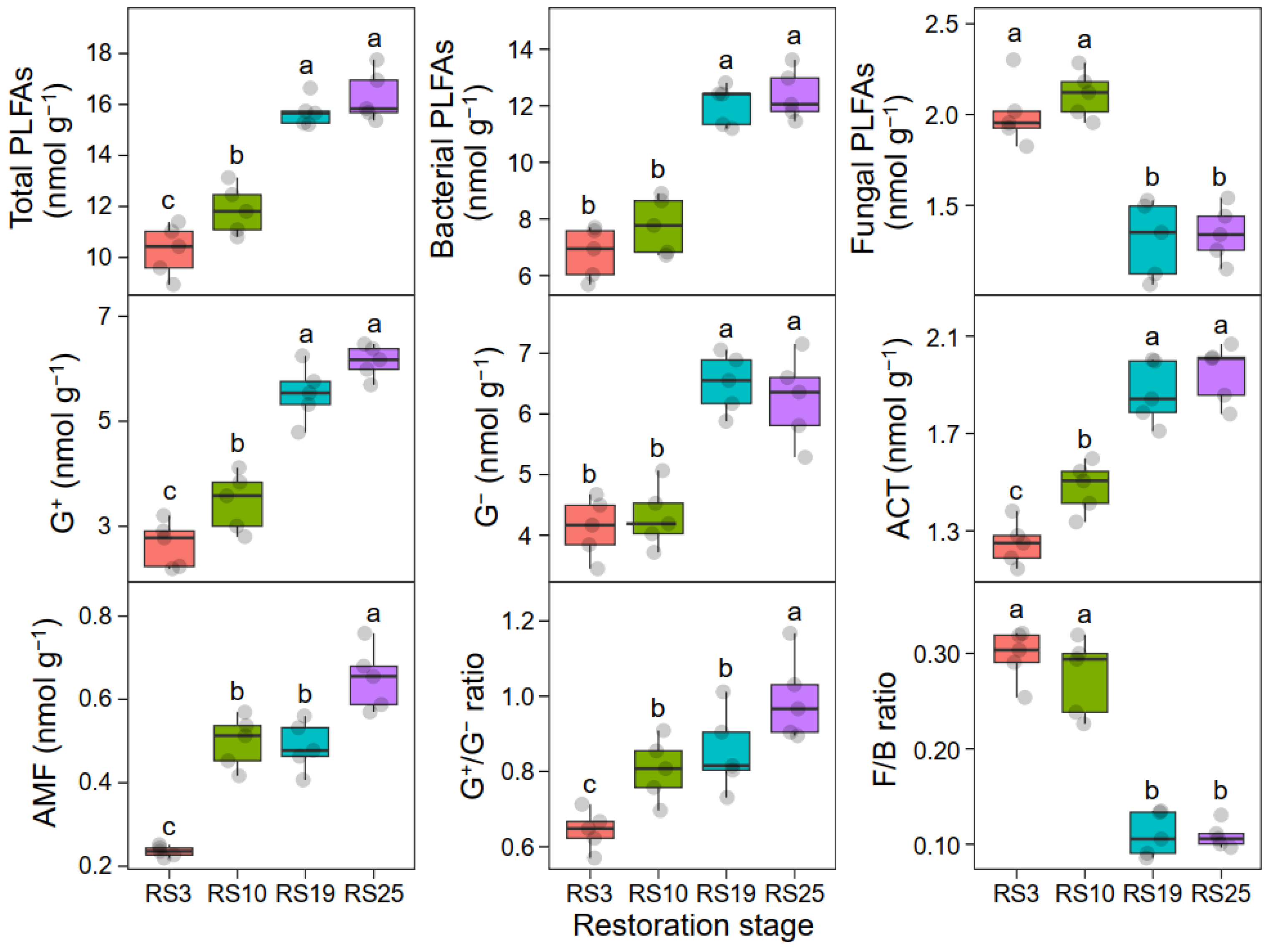
In this study, the F/B ratio decreased significantly during the early restoration period (from RS3 to RS19) but did not change further between RS19 and RS25 (
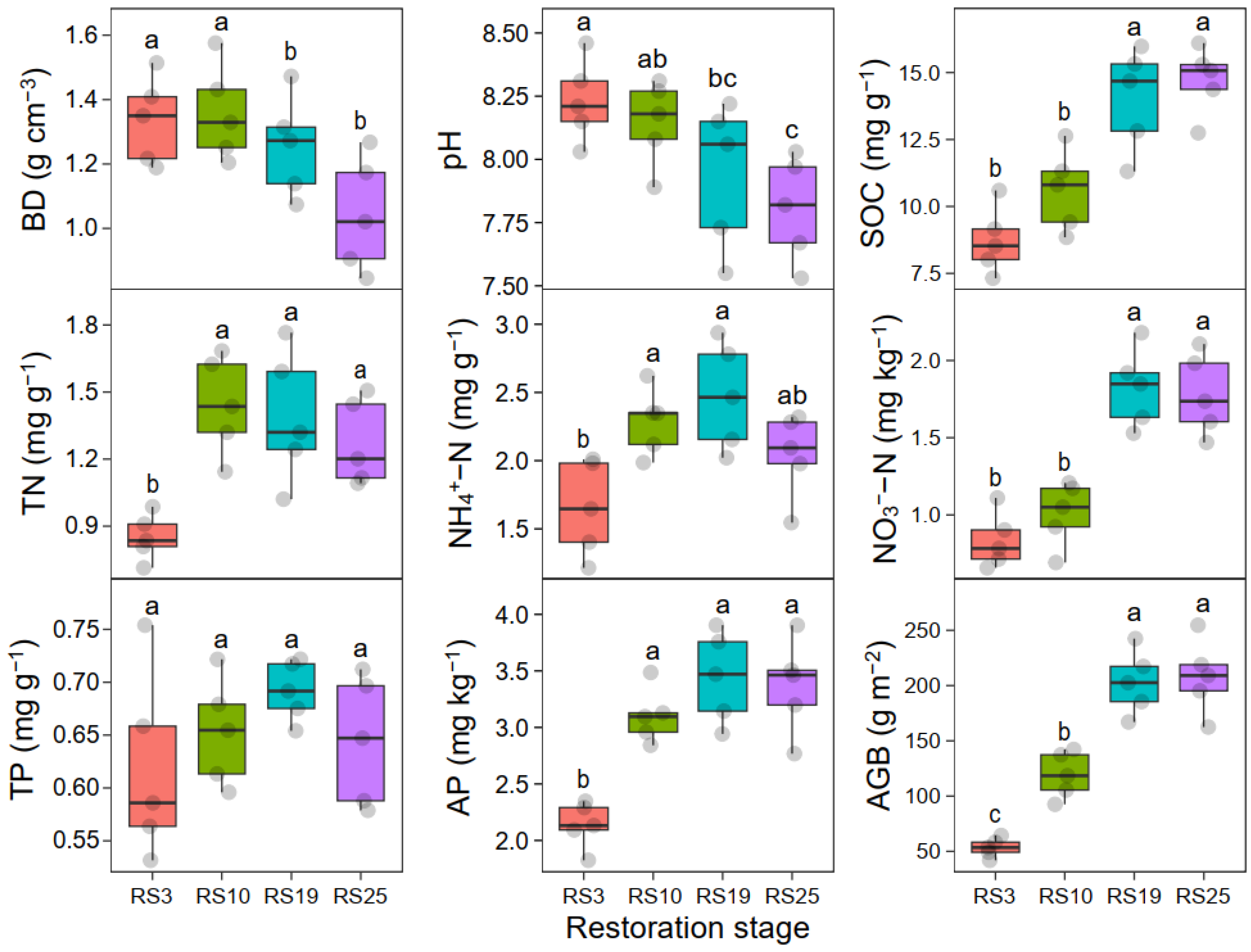
Figure 3). This pattern may suggest a stabilization of the relative dominance of fungi and bacteria after approximately 19 years of enclosure. Several mechanisms could potentially explain this trend. First, as grassland restoration progresses, soil nutrient availability (especially nitrogen and phosphorus) increases (
Figure 1), which may typically favor copiotrophic bacteria over more oligotrophic fungi [
36,
37]. Second, fungi are often more resilient to environmental stress (e.g., low pH, low moisture) and dominate in early successional stages under harsher conditions; with improved soil conditions under long-term enclosure, bacterial communities may catch up and outcompete fungi for labile C substrates [
38]. Third, increased root exudation and fresh litter inputs in later restoration stages provide readily decomposable C that bacteria can rapidly utilize, while the relatively slower-growing fungi benefit less from these transient resources [
39]. The fact that the F/B ratio remained stable in the later stages (RS19–RS25) could indicate that the bacterial and fungal communities reached a new equilibrium under the improved soil environment. These findings are consistent with previous reports that bacterial and fungal abundances increase in parallel during early succession and then stabilize [
40].
The G
+/G
− ratio exhibited a gradually increasing trend throughout the 25-year restoration chronosequence (
Figure 3), suggesting a progressive shift from Gram-negative (G
−) to Gram-positive (G
+) bacterial dominance. G
− bacteria are typically copiotrophic r-strategists that prefer labile C sources originating from fresh plant debris and are more abundant in nutrient-rich environments [
41,
42]. In contrast, G
+ bacteria are oligotrophic k-strategists that grow more slowly and preferentially utilize refractory C compounds from aged organic matter [
41]. Our results show that G
+/G
− increased despite rising nutrient availability (
Figure 1). This apparent contradiction might be resolved by considering that (i) G
+ bacteria possess thicker peptidoglycan layers and are more tolerant to desiccation and nutrient fluctuations, traits that become advantageous as plant biomass accumulates and creates microhabitat heterogeneity [
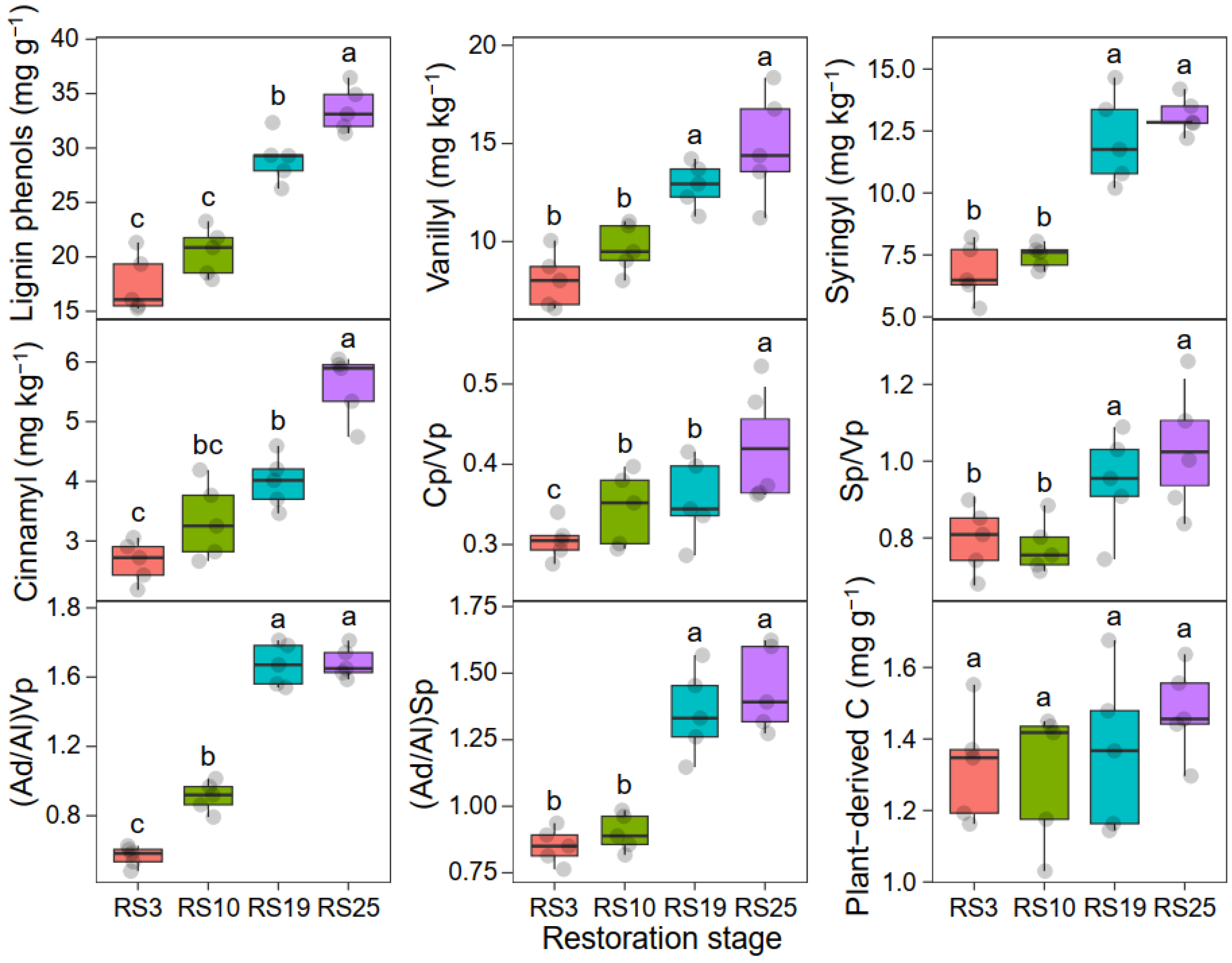
43]; and (ii) the relative proportion of recalcitrant C (e.g., lignin) increases with restoration time (
Figure 4), which could favor G
+ bacteria that are better equipped to degrade such compounds [
44]. Thus, the increase in G
+/G
− may reflect not simply nutrient status but a more complex shift in C quality and micro-environmental conditions.
According to the random forest analysis, NO
3−-N, SOC, and AP were the main factors associated with the contents of total PLFAs and bacterial PLFAs during grassland restoration, whereas fungal PLFAs were primarily associated with NO
3−-N and SOC (
Figure S1). These results are in line with earlier research indicating that vegetation restoration improves the microbial growth environment by increasing nutrient inputs [
45]. Soil NO
3−-N, SOC, and AP contents reflect the availability of energy and material resources for microbial growth. They play essential roles in the synthesis of biological macromolecules such as proteins and nucleic acids, thereby potentially promoting microbial growth [
46]. Fungi typically possess strong decomposition capabilities and can break down relatively complex organic compounds; consequently, they are highly dependent on SOC. In contrast, fungi are relatively less sensitive to soil P availability [
47]. Therefore, during grassland restoration, the increase in SOC and NO
3−-N may directly provide substrates for fungal decomposition and utilization, making them primary factors correlated with fungal abundance.
4.2. Changes in Soil Microbial Necromass During Grassland Restoration
In the current study, the amino sugar content increased with the stage of grassland restoration (
Figure S2), suggesting that grassland restoration was significantly associated with soil amino sugar content and its accumulation. Following grassland restoration, the substantial input of exogenous plant C into the soil, along with improvements in soil nutrient conditions, could provide sufficient nutrients for microbial growth and reproduction. This may enhance microbial activity and accelerates microbial anabolism [
48]. When microorganisms die, substantial quantities of their remains accumulate in the soil as microbial necromass. Moreover, because microbial-derived C generally possesses a relatively low molecular weight and is easily adsorbed onto soil clay particles, a higher clay content in the soil may promote the buildup of amino sugars. The findings of this study reveal that after grassland restoration, soil amino sugar levels showed a positive correlation with both aboveground biomass (AGB) and soil clay content (
Figure S3). As grassland restoration progressed over time, both SOC and amino sugar contents rose. During the later phases of restoration, an elevated microbial turnover rate can persistently enhance soil amino sugar levels, which in turn may facilitate the buildup of SOC.
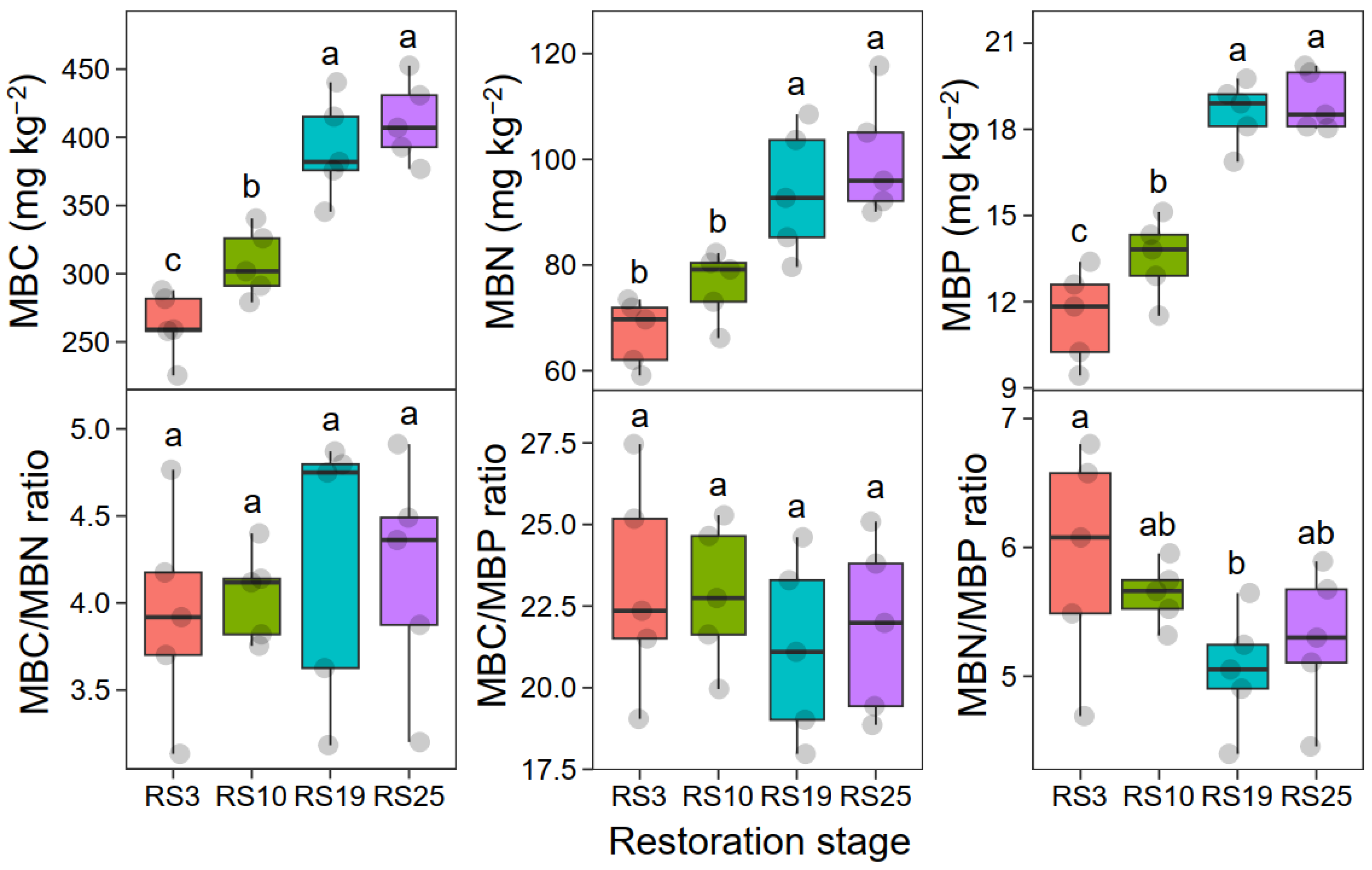
It is also worth noting that NH
4+-N, MBN, and MBP did not show fully synchronous trends across the restoration chronosequence (
Figure 2). All three increased from RS3 to RS19, but at RS25, NH
4+-N declined, MBN continued to rise, and MBP decreased slightly from its peak at RS19. This divergence may reflect different controls on nitrogen and phosphorus cycling: the late-stage decline in NH
4+-N may result from increased plant uptake and nitrification (supported by rising NO
3−-N), while the peak and subsequent decline of MBP might suggest a shift from phosphorus to nitrogen limitation after 19 years of restoration. These patterns, however, do not alter the overall conclusion that microbial biomass and activity increased with grassland restoration.
It is important to note that amino sugars (glucosamine, galactosamine, and muramic acid) are cell wall components of microorganisms and primarily accumulate in soil as microbial necromass after cell death [
11,
29]. Therefore, the microbial-derived C values reported in this study specifically represent the estimated contribution of microbial necromass to SOC, not the total microbial C pool (which includes living microbial biomass). While living microbial biomass (measured by PLFA and MBC) contributes to C dynamics through metabolic activity and turnover, the necromass fraction is considered more stable and directly contributes to long-term SOC storage [
10,
12]. Thus, our focus on necromass is appropriate for assessing SOC sequestration, but readers should be aware that the estimated microbial-derived C does not encompass the entire microbial contribution to SOC.
4.3. SOC Sequestration During Grassland Restoration
Within grassland ecosystems, the primary pathway through which microorganisms add to SOC is microbial necromass [
13,
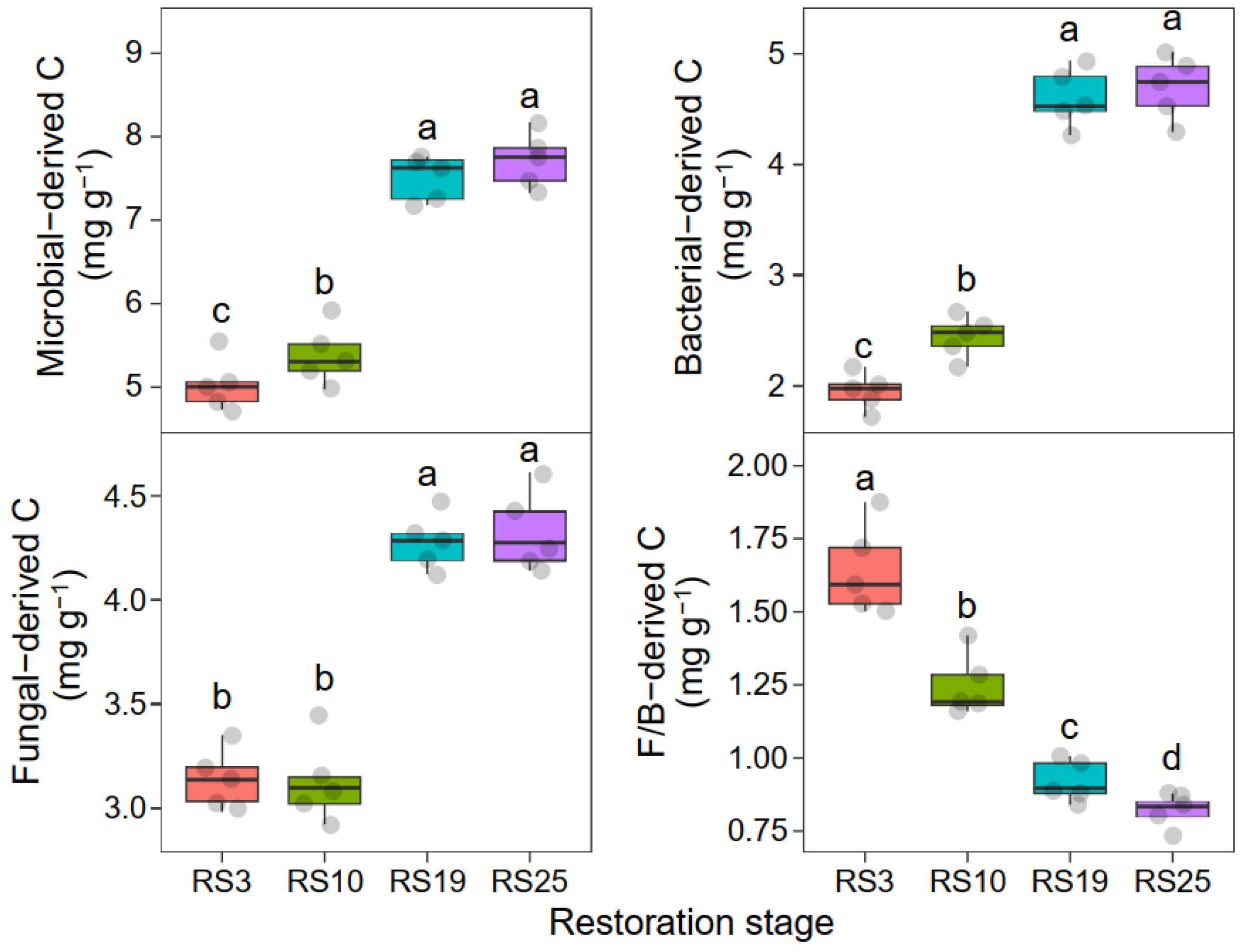
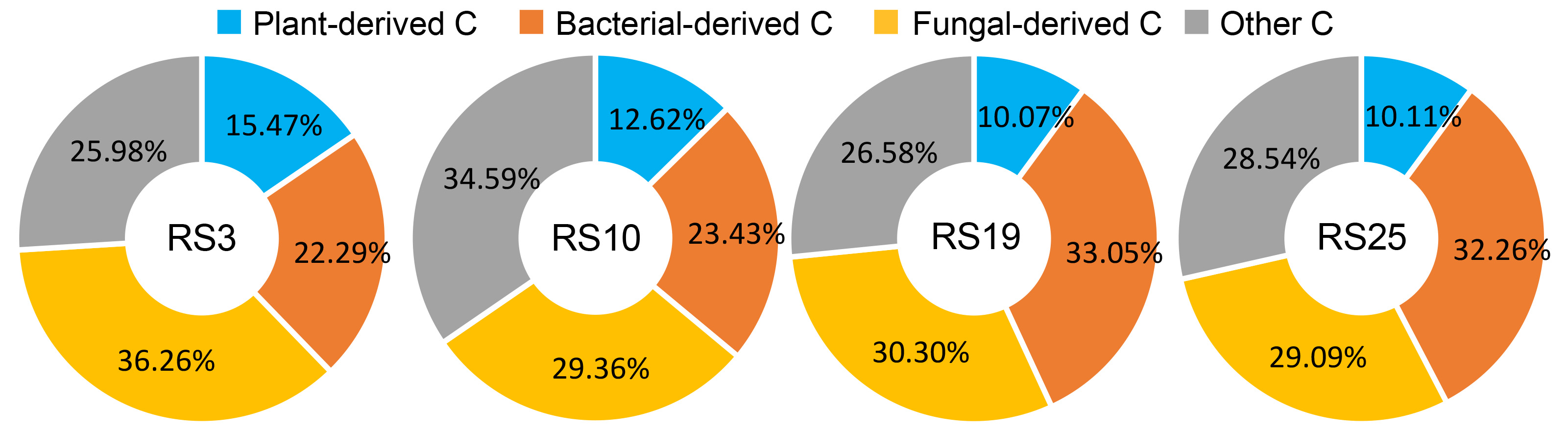
49]. Using lignin phenols and microbial necromass as biomarkers, this study distinguished plant-derived C from microbial-derived C to trace SOC sources. The results revealed that estimated microbial-derived C contributed significantly more to SOC than estimated plant-derived C (
Figure 6). Compared with the initial stages of grassland restoration, more C from microorganisms was estimated to be in the soil, while less C from plants was estimated to be sequestered. Taken together, these findings suggest that microbial-derived C was a major contributor to SOC storage during grassland restoration under the studied conditions.
Grassland restoration is closely linked to SOC by influencing the buildup of C from both plants and microorganisms. The restoration process was associated with a considerable elevation in the content of C sourced from microbes (
Figure 6), which is correlated with SOC buildup [
49,
50]. In temperate regions, microbial necromass contributes over half of SOC in grassland soils (62%) and agricultural soils (56%) [
11]. It is reported that 58% of SOC in croplands came from microbial-derived C [
51], whereas others found that microbial necromass accounts for 50% of grassland SOC [
52]. Moreover, Wang et al. [
53] established that microbial necromass is a major source of SOC worldwide, contributing 51% in croplands, 47% in grasslands, and 35% in forests.
According to our estimates, based strictly on specific biomarker estimates which only track a subset of total C, microbial-origin C made up an estimated 52.8–63.3% of SOC, in contrast to plant-origin C, which constituted merely 10.1–15.5% (
Figure 6). This suggests that estimated microbial-derived C likely may play a greater role in SOC formation than plant-derived materials, based on our biomarker-based estimates. This could be attributed to the following: (i) over the course of grassland restoration, root biomass gradually rises, which in turn may stimulate microbial growth and the accumulation of microbial biomass and necromass [
54,
55]. Thus, the fraction of microbial necromass in SOC gradually increases [
56]; (ii) grassland restoration also increases belowground biomass and litter biomass, thereby supplying sufficient C sources, energy, and nutrients to fuel microbial activity. Consequently, microbial metabolic rates may rise, potentially promoting the storage of larger quantities of C from microbial sources [
12,
57].
4.4. Contribution of Bacterial and Fungal Necromass to SOC
Microbial necromass significantly contributes to SOC storage in terrestrial systems. According to studies, fungi dominate the microbial community in forests and contribute more to the buildup of SOC than do bacteria [
58]. In northeastern China as well, the contribution of fungal necromass to SOC exceeds that of bacterial necromass [
59]. A meta-analysis reported that microbial necromass makes up about 50% of SOC in croplands and grasslands, whereas in forests it comprises only 35% [
51]. Additionally, in agricultural and grassland soils, fungal necromass C exceeded bacterial necromass C by a factor of 2.4 to 2.9. Possible explanations include the dominance of fungi within the microbial community and the higher persistence and decomposition resistance of fungal necromass relative to bacterial necromass [
60,
61].
In our study, despite the relatively low levels of estimated bacterial-derived C, its proportional contribution to SOC rose with increasing grassland restoration (
Figure 6). This suggests that the contribution made by estimated bacterial-derived C to SOC storage may become progressively more important during grassland restoration, a trend consistent with reports from multiple studies [
62,
63]. Despite fungal necromass being chemically more recalcitrant to decay than bacterial necromass [
12,
63], the present study found that with increasing restoration time, fungal PLFAs decreased, whereas bacterial PLFAs increased (
Figure 3). In addition, it is possible that bacterial necromass is more prone to having its decomposition slowed by physical protection via soil microaggregates and clay particles, although this mechanism was not directly tested in our study [
64,
65,
66]. Fungi may have served as the dominant decomposers during the early stages of grassland restoration. With extended restoration, chitinase activity may have gradually increased [
42,
67], which accelerated chitin decomposition and consequently reduced the amount of chitin-based necromass [
68]. Hence, with increasing grassland restoration duration, the relative input of estimated fungal-derived C to SOC steadily fell (
Figure 6).
Several interconnected mechanisms may explain the observed association between restoration and increased bacterial-derived C accumulation. First, increased bacterial biomass and turnover: As restoration progresses, soil nutrient availability (especially N and P) and labile C inputs from roots and litter increase (
Figure 1). These conditions may favor copiotrophic bacteria, leading to higher bacterial PLFA abundance (
Figure 3) and microbial biomass C (
Figure 2). Higher bacterial biomass inevitably results in greater production of bacterial necromass upon cell death [
12,
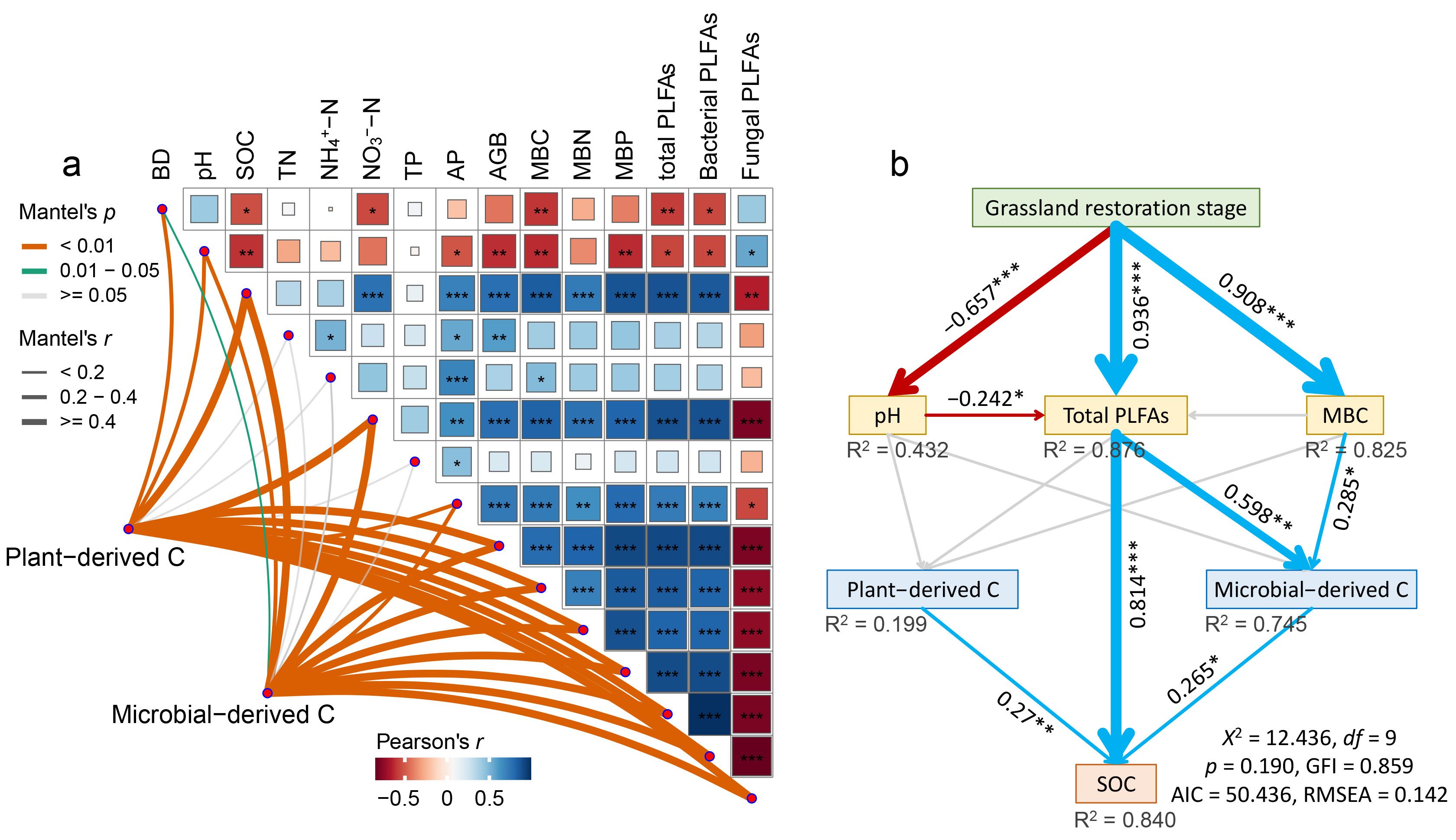
53]. The positive correlation between MBC and bacterial-derived C (
Figure 7a) supports this interpretation. Second, higher bacterial necromass persistence: Bacterial cell wall components (e.g., peptidoglycan, muramic acid) may be more readily stabilized in soil through sorption to clay minerals and occlusion within microaggregates [
65]. This process may be favored in the Kastanozem soil of our study area, which has a relatively high clay content and calcium-rich mineralogy. The increasing G
+/G
− ratio we observed (
Figure 3) may also contribute to bacterial-derived C accumulation, as Gram-positive bacteria have thicker peptidoglycan layers that are more recalcitrant to decomposition [
63]. Third, enhanced microbial C pump (MCP) efficiency: The MCP concept emphasizes that microorganisms transform plant-derived labile C into microbial metabolites and necromass, which then become stabilized through mineral association or aggregation [
10,
11]. Grassland restoration increases plant C inputs (both above- and belowground), providing more substrate for microbial processing. At the same time, improved soil conditions (lower bulk density, near-neutral pH, higher moisture retention) may create a favorable environment for microbial activity and necromass retention [
12]. The concurrent increase in both bacterial PLFAs and bacterial-derived C in our study is consistent with the idea that the MCP operates efficiently under long-term enclosure.
Microbial residues become stable in soil primarily through two pathways: (i) organo-mineral association: necromass components carry charged functional groups that bind to clay minerals and metal oxides, rendering them resistant to further decomposition [
65]; and (ii) aggregate occlusion: microbial residues, together with extracellular polysaccharides, act as binding agents that promote macro- and microaggregate formation, physically protecting organic matter [
12,
65]. In our study, the gradual decline in soil bulk density (
Figure 1) indicates improved soil structure, likely reflecting increased aggregation due to microbial activity and organic matter accumulation. Thus, the increase in estimated microbial-derived C during grassland restoration may be not merely a passive consequence of higher microbial biomass, but an active process of necromass stabilization that enhances long-term SOC storage.
Even though fungal- and bacterial-derived C may contribute differently to SOC buildup, total estimated microbial-derived C showed an increasing trend with grassland restoration, thereby potentially playing an important part in SOC sequestration.
It is worth noting that the combined estimated contributions of plant- and microbial-derived C did not account for the entire SOC pool (
Figure 6). This reflects the fact that our biomarker-based approach selectively targets lignin and amino sugars, leaving other SOC components (e.g., non-lignin plant compounds, pyrogenic C) unquantified. Further studies using complementary tracers are needed to fully close the SOC budget.
4.5. Plant- and Microbial-Derived C Dynamics During Grassland Restoration
Turning to estimated plant-derived C, increased (Ad/Al)Sp and (Ad/Al)Vp ratios (acid-to-aldehyde ratios of syringyl and vanillyl monomers) in lignin phenols are indicative of the degree to which microorganisms have oxidized side chains [
10,
69]. Conversely, the Sp/Vp and Cp/Vp ratios demonstrate the extent of microbial lignin transformation [
11,
49]. The increase in the Cp/Vp ratio (
Figure 5) was consistent with a decrease in the level of oxidative decomposition by microorganisms as grassland restoration duration increased, alongside a reduction in the decomposition degree of plant-derived C [
60,
61]. Throughout all restoration durations, the (Ad/Al)Vp and (Ad/Al)Sp ratios peaked in the 25-year restored grassland, which also had the highest soil microbial biomass C. This pattern suggests that microbial decomposition of lignin may have been reduced and that microbial-derived C accumulated [
63,
64]. In contrast, the lowest values of these ratios were found in the 3-year restored grassland, reflecting slow lignin phenol breakdown. Increased plant biomass (both above- and belowground) may have contributed to the buildup of lignin phenols. Moreover, the higher lignin content itself may have slowed microbial decomposition [
70]. This interpretation is further supported by the increases in Sp/Vp and Cp/Vp ratios as grassland restoration progressed.
According to structural equation modeling, soil properties and microbial communities were strongly associated with estimated microbial- and plant-derived C, with soil pH, microbial biomass, and total PLFAs identified as important correlates (
Figure 7)—a finding consistent with earlier reports [
13,
71]. More precisely, Mantel test analyses revealed close correlations between estimated microbial-derived C, plant-derived C, pH, BD, SOC, and microbial biomass (
Figure 7). Higher microbial biomass was positively correlated with the estimated amounts of plant- and microbial-derived C, and this association was in turn linked to greater SOC accumulation [
50,
64]. Grassland restoration was associated with enhanced microbial growth and increased biomass accumulation, which in turn was linked to SOC sequestration [
13,
57]. According to earlier studies, neutral soil pH conditions are conducive to plant residue accumulation [
72]. The current study found that grassland restoration was associated with a lower soil pH (
Figure 1), which in turn was associated with the proportion of C derived from microorganisms in SOC. A lower pH may provide an environment well-suited for root exudates, potentially promoting the formation of organo-mineral complexes [
65,
66]. Given that microbial biomass and necromass may contribute to additional organo-mineral associations, the estimated content of microbial-origin C tended to increase with decreasing soil pH [
70]. Additionally, reduced soil pH may also influence rhizodeposition of soil C and affect the efficiency of microbial C utilization, potentially leading to higher levels of microbial-derived C [
70,
71,
73].
The SEM and Mantel tests presented in
Figure 7 are correlative analyses. While they reveal significant associations among variables, they do not establish causation. Therefore, the pathways depicted in
Figure 7b (e.g., soil pH → total PLFAs → microbial-derived C → SOC) should be interpreted as statistical relationships that are consistent with, but do not prove, a causal sequence. With this caveat in mind, several plausible mechanisms may explain the observed correlations. First, the negative association between grassland restoration duration and soil pH (
Figure 7b) could facilitate organo-mineral binding, as slightly acidic conditions enhance the reactivity of clay minerals and metal oxides with organic functional groups [
65]. Second, the positive links among total PLFAs, microbial biomass C, and microbial-derived C were consistent with the idea greater microbial biomass and activity may lead to increased necromass production—a core tenet of the microbial C pump [
10,
11]. Third, the direct positive path from microbial-derived C to SOC was consistent with the idea that necromass, once formed, is stabilized through mineral association and aggregate occlusion [
12,
65]. These mechanisms, together with the decline in bulk density (
Figure 1), point to improved soil structure and physical protection as key processes potentially involved in SOC sequestration under long-term grassland restoration.
4.6. Limitations of the Chronosequence Approach
This study employed a space-for-time substitution (chronosequence) design, assuming that the selected grasslands differing in restoration duration (3, 10, 19, and 25 years) were comparable in all other aspects (e.g., soil parent material, topography, land-use history, and climate). While we deliberately chose sites with similar slope position, soil type, and vegetation type, and we measured key soil properties to account for their effects, several inherent limitations of the chronosequence approach should be acknowledged, as emphasized earlier in our interpretations.
First, spatial variation in initial soil conditions (even within the same soil type) may have existed before enclosure, potentially influencing current SOC dynamics. Although we selected sites with comparable soil texture and parent material, we cannot fully rule out that pre-existing differences contributed to the observed patterns. Second, plant species composition and diversity were not quantified in this study. Changes in vegetation community structure (e.g., shifts from grass-dominated to forb-rich assemblages) can alter litter quality and root exudation, thereby affecting microbial communities and C cycling independently of restoration age. Third, climate variability (e.g., interannual differences in precipitation and temperature) over the 25-year period may have influenced plant productivity and microbial activity, but we did not include long-term climate data in our analysis. The study area is within a relatively small geographic region (Xilin River Basin), which minimizes but does not eliminate climatic heterogeneity.
Therefore, while our results provide robust evidence for SOC dynamics along a restoration chronosequence, causal inferences and definitive extrapolations have been intentionally moderated throughout this study. Future studies should complement the space-for-time approach with long-term monitoring of permanent plots and include measurements of plant diversity and local climate variables to further disentangle the effects of restoration age from other environmental drivers.
5. Conclusions
This study reveals three main findings supported by statistically significant differences (p < 0.05) within the context of this specific semi-arid steppe ecosystem: (1) grassland restoration was associated with a significant increase in estimated microbial-derived C (from 5.0 to 8.8 g kg−1, +76%) but a decrease in the estimated relative contribution of plant-derived C to SOC (from 15.5% to 10.1%); (2) within the estimated microbial-derived C, the bacterial fraction increased by 147% (from 1.9 to 4.7 g kg−1) and its estimated contribution to SOC rose from 22.3% to 33.1%, whereas the fungal fraction decreased from 36.3% to 29.1% of SOC based on our specific biomarker approximations; (3) soil pH (r = −0.68, p < 0.01), total PLFAs (r = 0.72, p < 0.01), and microbial biomass C (r = 0.65, p < 0.01) were identified as key factors closely correlated with estimated microbial-derived C, while grassland restoration duration was indirectly associated with SOC through these variables. The novelty of this study lies in the simultaneous estimation and quantification of plant- and microbial-derived C using lignin phenols, amino sugars, and PLFAs along a 25-year restoration chronosequence in a semi-arid typical steppe. Our findings demonstrate that microbial-derived C, particularly from bacteria, is a major contributor to long-term SOC sequestration during grassland restoration in this environment, which advances mechanistic understanding of soil C dynamics and supports grazing exclusion as an effective nature-based solution for grassland restoration in similar semi-arid steppes. However, as noted throughout, these estimations are specific to the semi-arid typical steppe on Kastanozem soil in Inner Mongolia, and extrapolation to other ecosystems, soil types, or interpreting these biomarkers as complete carbon budgets should be made with caution.