1. Introduction
Bacteriophages are the most widely distributed biological entities on Earth. In nature, bacteriophages play a significant role in shaping bacterial communities by modulating their populations and introducing new traits. In recent years, there has been growing interest in bacteriophages due to their biotechnological potential across a wide range of applications, including advanced bacteriophage engineering and synthetic biology, therapeutic strategies, and clinical applications [
1,
2,
3]. However, despite this progress, many aspects of bacteriophage biology remain poorly understood, particularly those related to their biological characteristics and ecological roles. In this context, filamentous bacteriophages represent an underexplored group, especially those infecting phytopathogenic bacteria.
Because of their vast diversity, no single classification system can fully capture their biological complexity. Instead, multiple complementary approaches, such as morphology, infection cycle, taxonomy, and genomic features, are used to classify and compare bacteriophages, allowing researchers to infer potential characteristics based on previously described viruses. The rapid expansion of metagenomic data has further increased the number of known bacteriophage sequences, highlighting both the limitations of current classification systems and the need for integrative frameworks to better understand bacteriophage diversity [
4].
According to the most recent taxonomy established by the International Committee on Taxonomy of Viruses (ICTV) [
5], filamentous bacteriophages are classified within the order
Tubulavirales, which comprises three families:
Inoviridae,
Paulinoviridae, and
Plectroviridae. Despite the increasing number of inovirus sequences identified, only a limited number of members of the family
Inoviridae have been formally classified by the ICTV, highlighting the largely underexplored diversity of filamentous bacteriophages. Currently, this family includes more than 100 described bacteriophages infecting a wide range of bacterial hosts, including several phytopathogenic species such as
Ralstonia solanacearum,
Ralstonia pickettii,
Spiroplasma citri, and various
Xanthomonas spp. [
6]. To date, only approximately thirteen filamentous bacteriophages have been reported to infect bacteria of the genus
Xanthomonas, underscoring the limited characterization of inoviruses within this group.
Inoviruses possess circular single-stranded DNA (ssDNA) genomes enclosed within a cylindrical protein capsid. These virions lack lipid components, and their length is related to genome size. Structurally, inoviruses are characterized by flexible, filamentous particles resembling long, thin filaments [
7,
8,
9]. A defining feature of inoviruses is their ability to establish chronic non-lytic infections, allowing infected bacteria to continue growing and dividing. This infection strategy enables bacteriophage propagation with limited detrimental effects on host viability, although inovirus infection may still influence host physiology, colony morphology, biofilm formation, and, in some cases, pathogenicity [
10].
Moreover, the high host specificity of bacteriophages initially attracted interest in the use of bacteriophages for controlling bacterial pathogens prior to the antibiotic era [
11]. Currently, bacteriophage-based approaches are increasingly recognized as valuable alternatives to conventional antimicrobial strategies in medicine, veterinary applications, and agriculture. In addition, host specificity is a key advantage of bacteriophages which minimize off-target effects, such as disruption of beneficial microbiota [
1,
2,
12,
13].
In agriculture, the use of bacteriophages for disease control represents a rapidly expanding area of plant protection, with the potential to complement or partially replace conventional chemical treatments [
14,
15,
16]. Although some bacteriophage-based products have reached commercial use, including AgriPhage for bacterial spot and speck of tomato and pepper, Erwiphage for fire blight, XylPhi-PD for Pierce’s disease of grapevine, and Biolyse PB for potato soft-rot management, these examples remain restricted to specific crop–pathogen systems and geographic regions [
17]. Moreover, the effectiveness of bacteriophage-based strategies under field conditions depends largely on environmental stability. Factors such as temperature fluctuations, rainfall, desiccation, and solar radiation, particularly ultraviolet (UV) light, can significantly reduce bacteriophage viability on plant surfaces [
18,
19,
20].
Therefore, evaluating bacteriophage tolerance to environmental stresses is an important preliminary step in assessing their practical application. Against this background, further characterization of bacteriophage XaF13 is required to refine our understanding of its genomic architecture and biological properties. In this context, the present study evaluates the basic in vitro physicochemical stability of XaF13 under controlled pH, temperature, UV-C radiation, and chloroform exposure conditions.
Although the genome of XaF13 was previously reported, advances in sequencing technologies provide an opportunity to improve genome resolution and reassess its genetic organization. In this study, we performed hybrid resequencing of the XaF13 genome, followed by comparative genomic and phylogenetic analyses to evaluate its evolutionary placement within filamentous bacteriophages. In addition, we investigated the stability of XaF13 under different physicochemical conditions, including pH, temperature, and ultraviolet (UV) radiation, to better understand its environmental resilience. The novelty of this study lies in the hybrid genome reanalysis of XaF13, the correction of its genome structure, the revised annotation of a complete Zot-like protein, and the integrated comparative placement of this bacteriophage within the family Inoviridae. Together, these approaches provide a refined framework for reassessing the genomic features, taxonomic position, and biological properties of XaF13.
2. Materials and Methods
2.1. Propagation and Purification of Bacteriophage XaF13
The isolation of XaF13 was previously described from soil samples collected in Yurécuaro, Michoacán, México [
21]. For subsequent experiments, XaF13 was propagated in NYG broth (5 g L
−1 peptone, 3 g L
−1 yeast extract, 20 g L
−1 glycerol) inoculated with
Xanthomonas vesicatoria (laboratory strain BV865) and incubated at 28 °C for 24 h. Cellular debris was removed by centrifugation at 9000×
g for 10 min at 4 °C, performed twice (F15-6 × 100y rotor, Thermo Scientific, Langenselbold, Germany). Next, the supernatant was filtered through a 0.22 µm polyethersulfone membrane (Merck-Millipore, Tullagreen, Ireland) to obtain a bacteriophage-containing filtrate.
Bacteriophage particles were concentrated by adding polyethylene glycol 8000 (PEG 8000) to a final concentration of 5% (
w/
v) and NaCl to 0.25 M, followed by overnight incubation at 4 °C. Bacteriophages were then recovered by centrifugation at 16,000×
g for 20 min at 4 °C employing an RC5 rotor (Thermo Scientific, Pittsburgh, PA, USA) [
22]. The resulting pellets were resuspended in 5 mL SM buffer, containing 50 mM Tris–HCl (pH 7.5) 100 mM NaCl, and 50 mM MgSO
4. This mixture was loaded onto a cesium chloride gradient (density range of 1.3 to 1.7 g mL
−1) and centrifuged at 100,000×
g for 18 h at 4 °C using the AH-627/36 rotor (Thermo Scientific—Sorvall, MA, USA) to obtain pure bacteriophages. The recovered bacteriophages were dialyzed three times against SM buffer utilizing a membrane with a molecular weight cutoff of 10,000 (Spectra/Pore, Spectrum Laboratories, Rancho Dominguez, CA, USA).
2.2. Transmission Electron Microscopy
Morphological analysis was performed by placing 2 µL of purified bacteriophage XaF13 suspension (≥1 × 10⁸ PFU mL−1) onto a Formvar–carbon-coated grid (EMS, Hatfield, PA, USA) for 2 min. Negative staining was then performed by applying 5 µL of 2% uranyl acetate for an additional 2 min. The morphology of the purified XaF13 bacteriophage was examined using a Morgagni M-268 transmission electron microscope (FEI/PHILIPS, Eindhoven, The Netherlands).
2.3. Sensitivity of XaF13 to Physicochemical Conditions
Bacteriophage XaF13 was evaluated under various physicochemical conditions including temperature, pH, chloroform exposure, and UV (UV-C) radiation. To assess the thermal stability, a 400 µL aliquot of the bacteriophage suspension (1 × 10⁸ PFU mL−1) was incubated in a water bath at 28, 60, 70 and 80 °C for 5 min, followed by cooling to room temperature.
For pH, 50 µL of bacteriophage suspension (1 × 10⁸ PFU mL−1) was combined with 400 µL of distilled water that had been adjusted to pH levels of 2, 4, 6, 8, 10, 12, and 14 using HCl and NaOH and incubated at 28 °C for 24 h.
In the chloroform assay, 100 µL of XaF13 suspension was combined with 20 µL of chloroform and incubated at 28 °C for 24 h.
To evaluate UV sensitivity, 3 mL of bacteriophage suspension was continuously exposed to UV-C radiation at 254 nm for 90 min in a 12-well plate with a Crosslinker (UVP, Upland, CA, USA). Aliquots were collected every 30 min during exposure. Bacteriophage ØXaF18, which infects
Xanthomonas vesicatoria, was used as a control in the chloroform susceptibility assays [
23]. Bacteriophage titers were determined by performing a double-layer agar assay with soft agar. All experiments were performed in triplicate.
The detection limit of the double-layer agar assay was calculated based on the lowest dilution evaluated (10−2), the plated volume of 10 µL, and two detectable plaques as the minimum observed count, resulting in a practical detection limit of 2 × 10⁴ PFU mL−1.
Data were analyzed by analysis of variance (ANOVA) when assumptions of normality and homoscedasticity were met, followed by Tukey’s test for multiple comparisons (
p ≤ 0.05), using Statgraphics Centurion XVI v16.2.04 (Statgraphics Technologies, Inc., The Plains, VA, USA). When these assumptions were not met, a non-parametric Kruskal–Wallis test followed by a multiple comparison test (
p ≤ 0.05) was performed using InfoStat v2008 [
24].
It should be noted that the stability assays were performed using XaF13 in aqueous suspension under controlled in vitro conditions. These assays were designed to evaluate the basic physicochemical stability of the bacteriophage in a standardized laboratory system and were not intended to assess its persistence outside suspension, on plant surfaces, or under greenhouse or field conditions.
2.4. PCR Assay
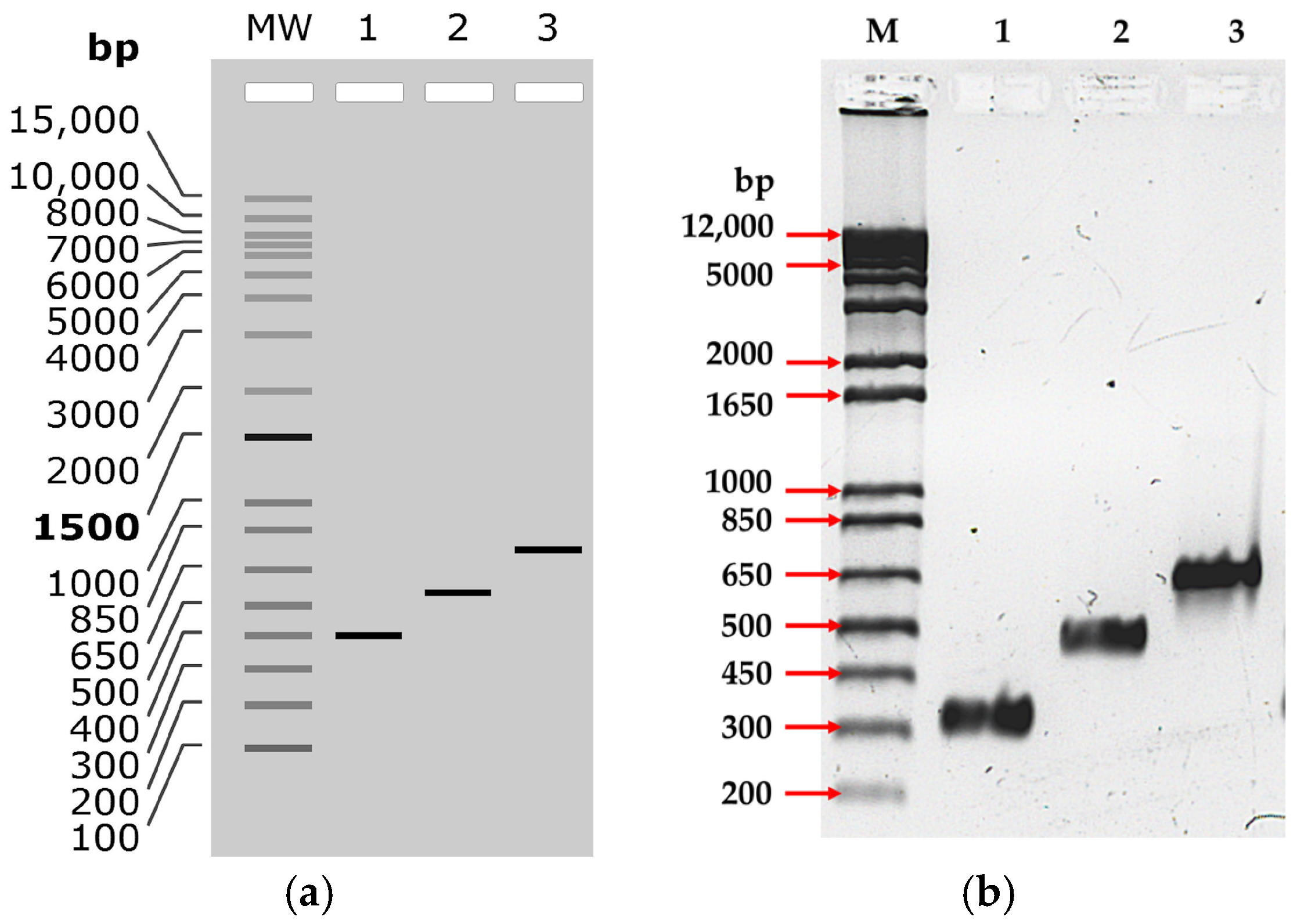
To assess the accuracy of the genome sequence of bacteriophage XaF13 previously reported [
21], a polymerase chain reaction (PCR) assay was carried out. Specific primers were designed with Primer-BLAST (NCBI). The PCR mixture contained 1× high-fidelity PCR buffer (15 mM MgCl
2), 0.2 mM of each dNTP, and 0.1 µM of each primer (F13-01F: 5′-TCTT GCC CTC AGG CGT AAA G-3′; F13-03R: 5′-CGA TCA ATC CAC GCA CGA AC-3′; F13-04F: 5′-GCA TGC CGA AGG CCA TTT AC-3′; F13-04R: 5′-CCT ACC GGT CGC TTT AGG TC-3′).
The reaction also included 0.5 µg of template DNA and 0.5 U of high-fidelity DNA polymerase (Thermo Fisher Scientific, San Francisco, CA, USA), with nuclease-free water added to a final volume of 50 µL. PCR amplification was performed using a C1000 thermal cycler (Bio-Rad, CA, USA). The amplification conditions were as follows: initial denaturation at 94 °C for 3 min, followed by 35 cycles of denaturation at 94 °C for 30 s, annealing at 60 °C for 30 s, and extension at 68 °C for 8 min 30 s, followed by a final extension at 68 °C for 10 min.
To verify repeated sequences, an additional PCR assay was performed using a new set of primers designed with Primer-BLAST, one forward primer, XaF13-8-f 5′-CAC GAT CAA GCC GCG TAT TC-3′ and three reverse primers, XaF13-R-4_rv (5′-ACA TGC AGA TCA GCA TCG GA-3′), XaF13-R-6_rv (5′-GTT CTC ACG CCG TTC GCG-3′), and XaF13-R-5_rv (5′-GCC GCT GCT GGT CAT GTC-3′), under the same reaction conditions, with extension at 68 °C for 30 s.
2.5. Bacteriophage DNA Extraction and Sequencing
DNA was extracted from purified XaF13 particles (>108 PFU mL−1) with a phage-DNA extraction kit (Norgen-Biotek, ON, Canada) following the manufacturer’s instructions. The genome was subsequently sequenced by the Oxford Nanopore Technologies platform (ONT, Oxford, UK). Libraries were prepared with SQK-RBK114.24 kit (Oxford, UK) and sequenced on a MinION device (Oxford, UK) using the R10.4.1 flow cell, (ONT).
Basecalling was conducted with Dorado v0.8.3 (ONT, Oxford, UK) applying duplex model dna_r10.4.1_e8.2_400bps_sup@v5.0.0. Adapter trimming and read preprocessing were carried out with Porechop ver. 0.2.4 [
25]. De novo genome assembly was performed with Flye v2.9.6 [
26] with default parameters.
In addition, a hybrid assembly was generated using SPAdes v4.3.0 [
27,
28] and the careful option, incorporating previously published Illumina reads available in the GenBank database under accession number SRX6866382. A consensus genome was constructed by aligning the sequencing reads and assemblies using Minimap2 ver. 2.30 [
29], and the final consensus sequence was generated via UGENE software ver. 53.0 [
30].
2.6. Phylogenetic Analysis and Genome Comparison
Comparative genomic analysis was performed to assess the relatedness of bacteriophage XaF13 to other members of the family
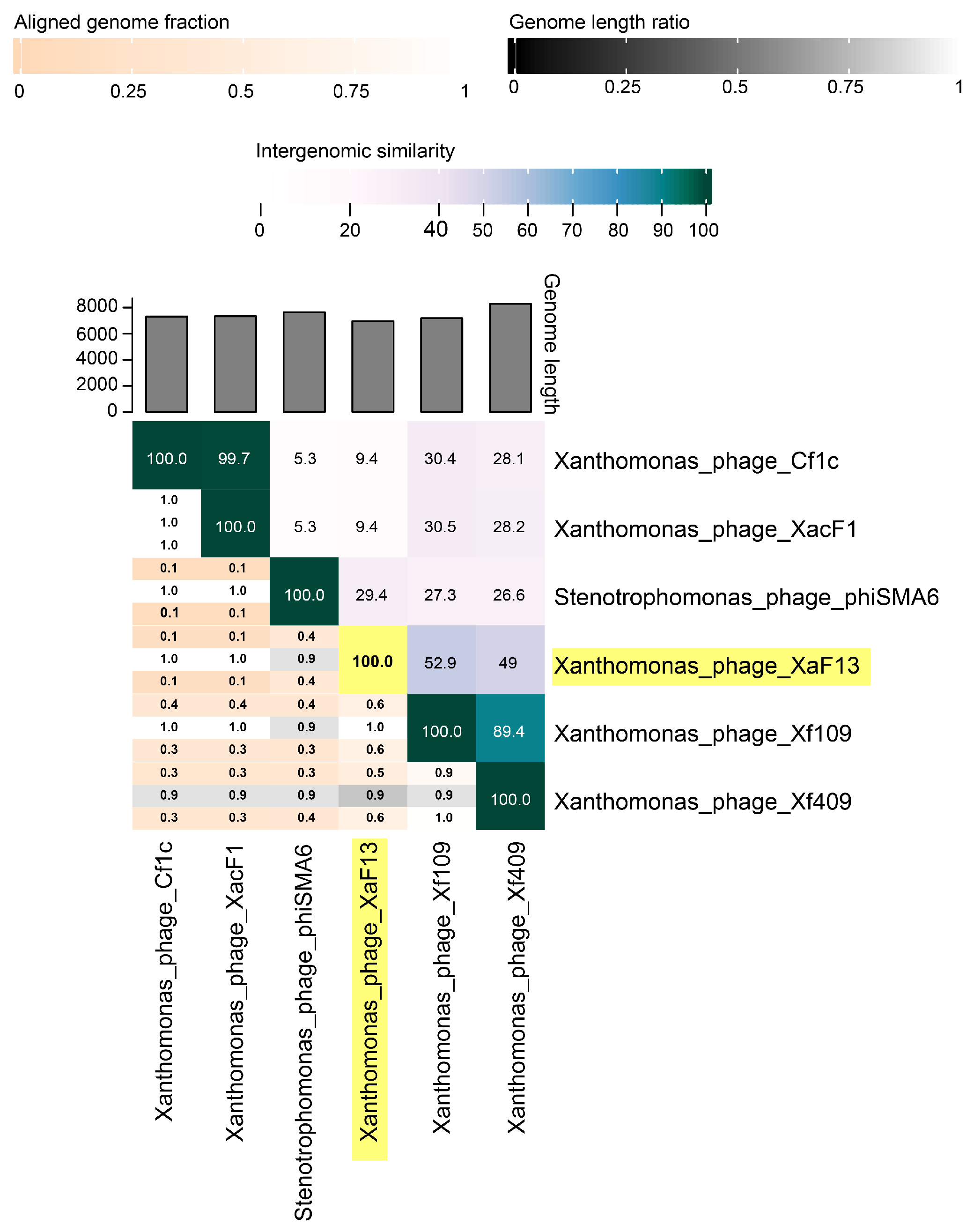
Inoviridae. Pairwise intergenomic similarities were calculated using the VIRIDIC web server [
31], following the recommended parameters for prokaryotic viruses. Sequences of 71 reference inovirus genomes were retrieved from the NCBI database and analyzed together with XaF13, resulting in a dataset of 72 genomes. The resulting similarity matrix was used to generate a heatmap representing pairwise nucleotide identity values among the analyzed genomes. Default VIRIDIC settings were applied, including BLASTN-based comparisons and length-normalized similarity calculations. Heatmap visualization and clustering were performed using the output provided by VIRIDIC. Intergenomic similarity thresholds for species and genus demarcation were interpreted in accordance with current guidelines of the ICTV.
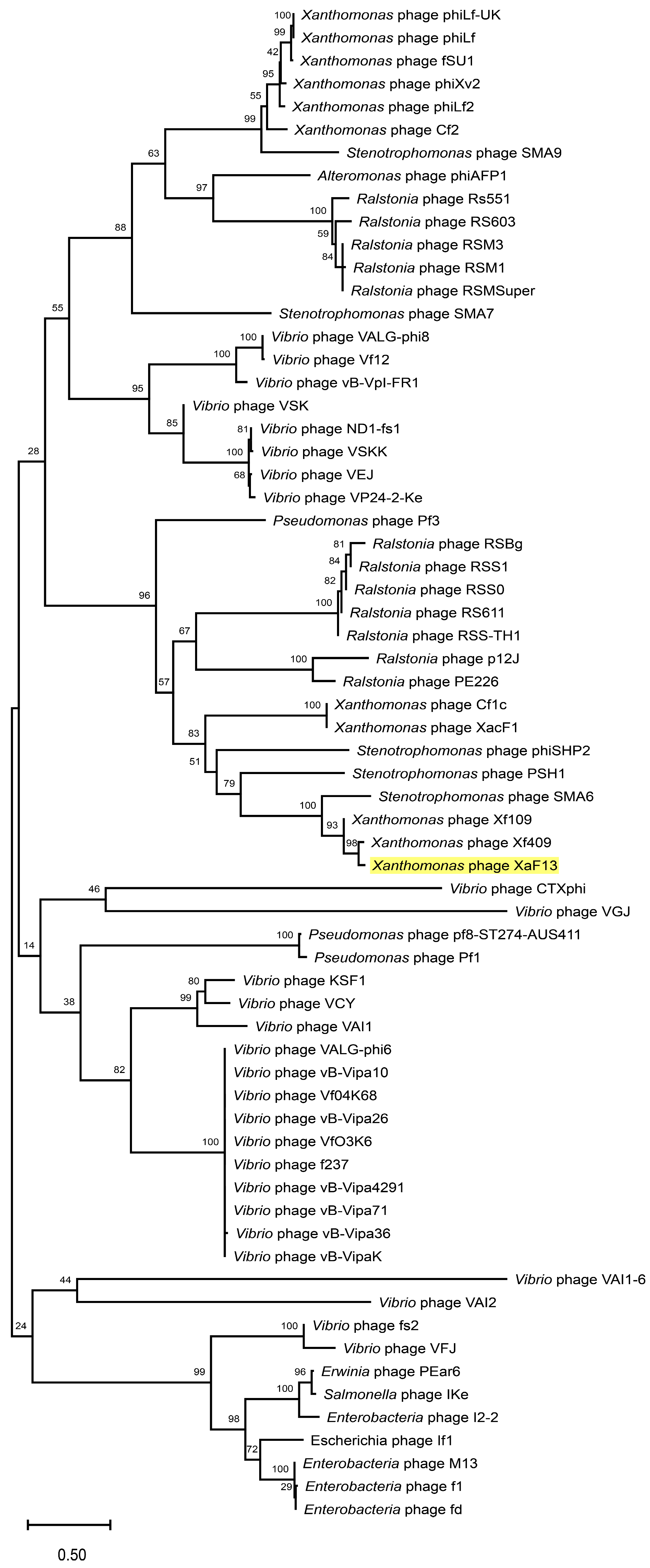
Additionally, phylogenetic analysis of bacteriophage XaF13 was performed using the translated DNA sequence of ORF06 (Zot-like protein). This sequence was compared with 65 homologous sequences from bacteriophages belonging to the family
Inoviridae. Sequence alignment was performed using the MUSCLE algorithm, and phylogenetic reconstruction was conducted using the Neighbor-Joining (NJ) method; both analyses were implemented in MEGA software v12 [
32]. Evolutionary distances were computed using the Poisson amino acid substitution model and are expressed as the number of amino acid substitutions per site. Rate variation among sites was modeled using a gamma distribution (γ = 2.00), and the pattern among lineages was assumed to be homogeneous. Branch support was assessed using the bootstrap method with 1000 replicates. Gaps and missing data were treated using partial deletion, with a site coverage cutoff of 95%.
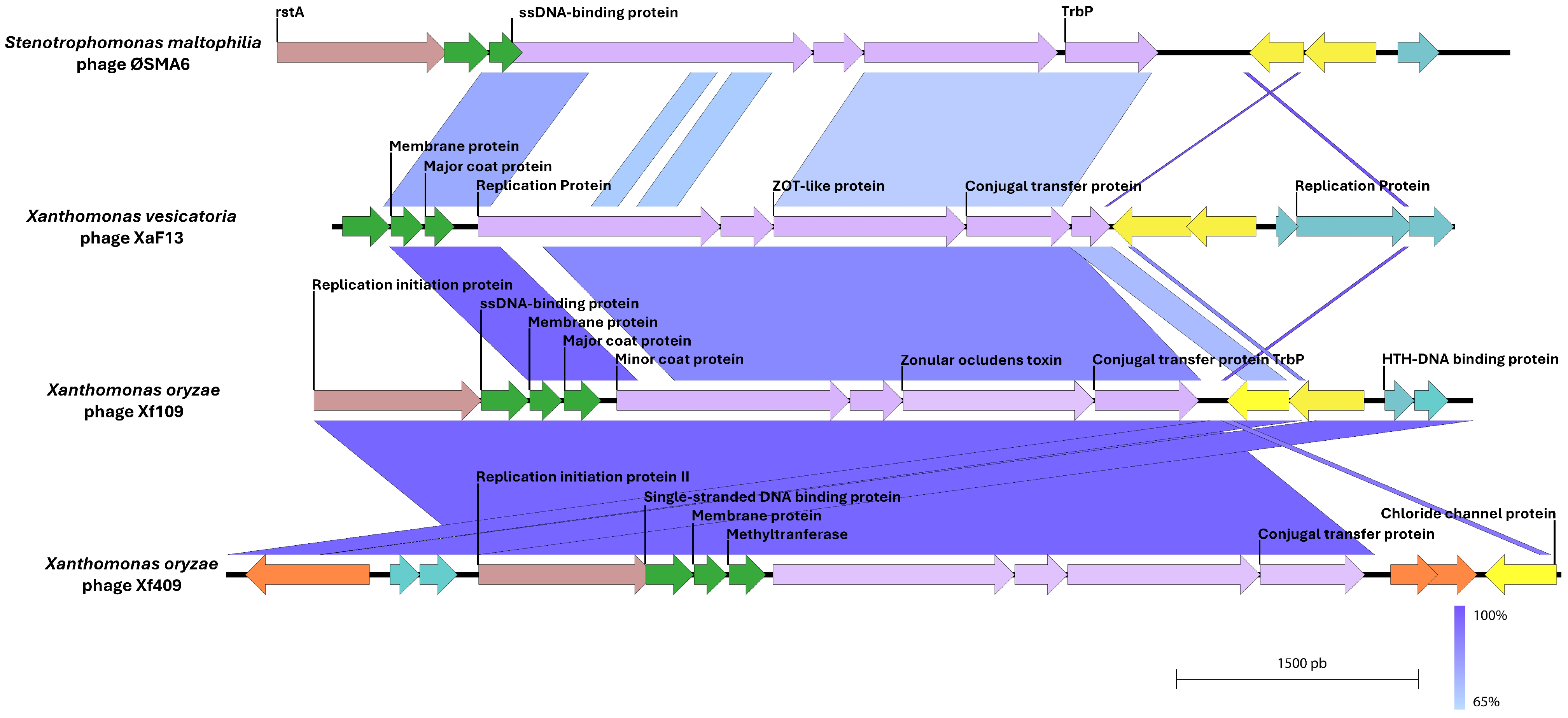
Comparative genomic analyses were performed using Easyfig v2.2.5 [
33] to visualize sequence similarity and gene synteny among bacteriophage genomes. Genome sequences were imported in FASTA and GenBank formats, and pairwise comparisons were conducted using BLAST+ (bastn) ver. 2.17.0. Default parameters were applied, with sequence similarity thresholds adjusted to optimize visualization.
4. Discussion
The distinct genomic features and low intergenomic similarity observed for XaF13 relative to previously described bacteriophages support its classification as a novel member of the family Inoviridae and reinforce the idea that the diversity of filamentous bacteriophages infecting phytopathogenic bacteria remains substantially underestimated.
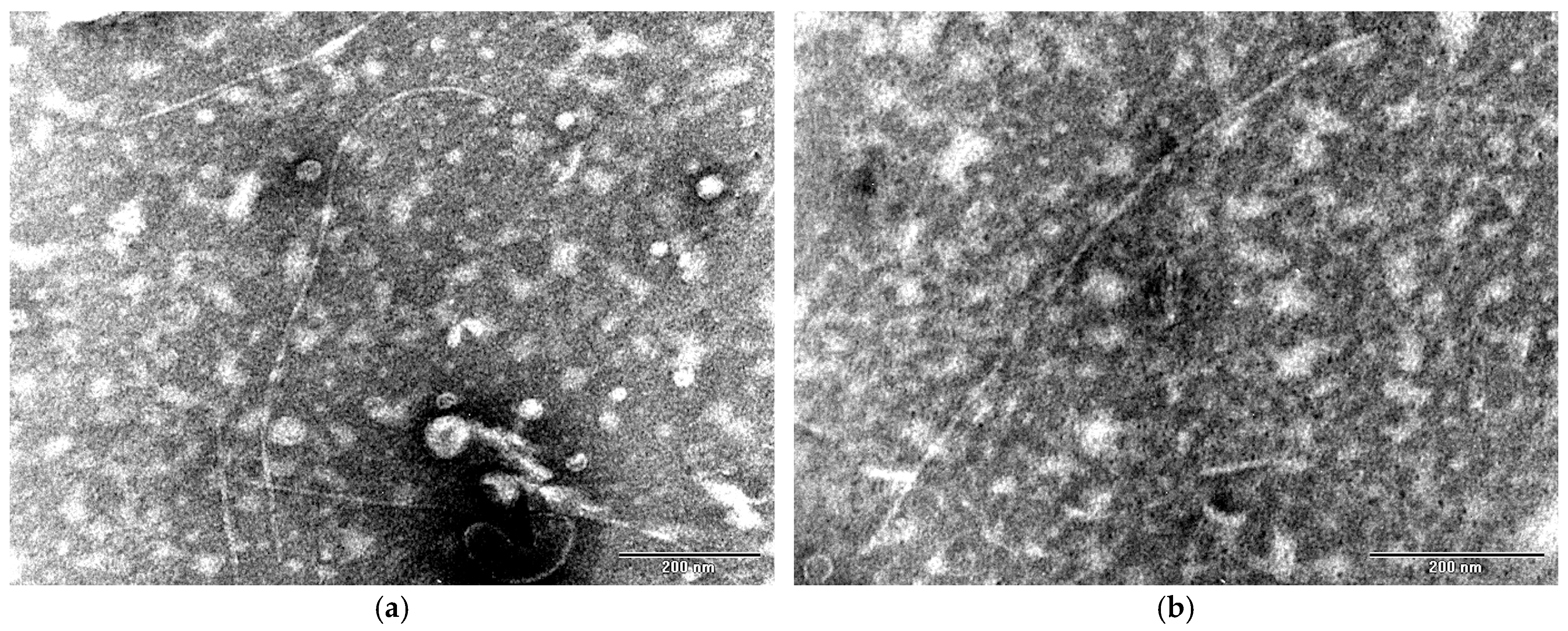
Transmission electron microscopy (TEM) of bacteriophage XaF13 revealed a filamentous morphology with a flexible virion architecture, consistent with its placement within the family
Inoviridae, order
Tubulavirales. Viral classification has traditionally relied, in part, on morphological criteria, which, although not always directly correlated with functional properties, provide a useful framework for understanding structural diversity. Most viruses described to date can be broadly categorized into three major morphological groups: icosahedral, pleomorphic and filamentous forms [
34]. Among bacteriophages, tailed icosahedral phages have been extensively studied, whereas filamentous bacteriophages infecting phytopathogenic bacteria remain comparatively underexplored.
The structural organization observed in XaF13 is consistent with that of inoviruses, a group generally associated with extrusion-based release mechanisms and chronic, non-lytic infections [
35]. Nevertheless, these biological processes were not directly evaluated in the present study. Therefore, the possible extrusion-based release mechanism and chronic infection strategy of XaF13 should be considered putative and inferred from its structural and genomic similarity to other members of the family
Inoviridae. Further studies will be necessary to experimentally determine the infection dynamics, release mechanism, and effects of XaF13 on host physiology.
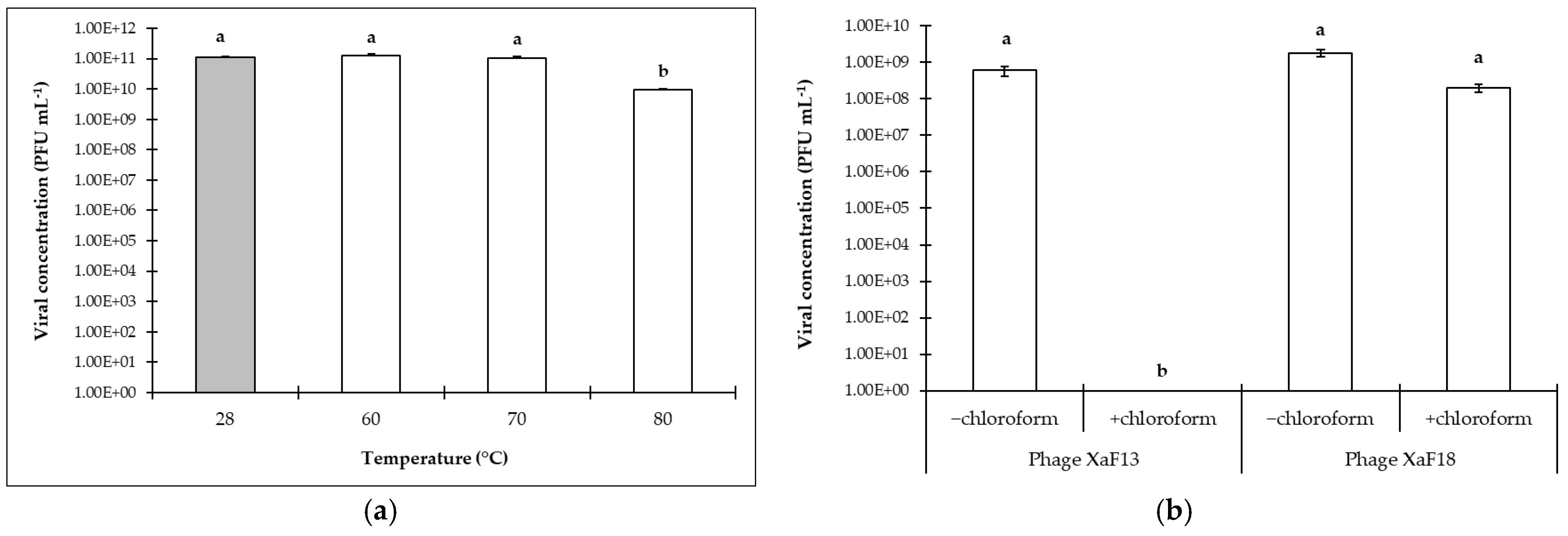
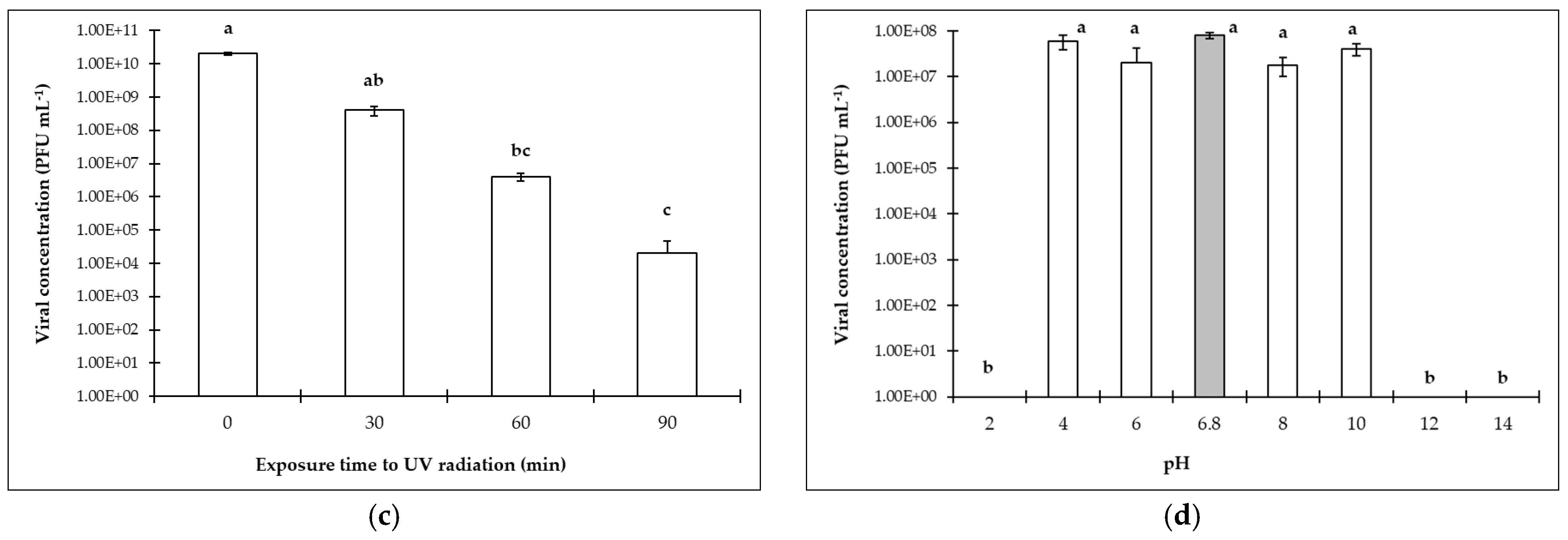
In addition, XaF13 maintained infectivity across a wide pH range and remained detectable after short-term exposure to elevated temperatures, including 80 °C for 5 min, indicating a degree of physicochemical stability under controlled in vitro conditions. Nevertheless, this thermal tolerance should not be interpreted as evidence of adaptation to soil or plant-surface environments, since such temperatures are not representative of typical field conditions. Further studies under environmental conditions are required to determine the ecological relevance of these traits.
Exposure to UV-C radiation caused a marked reduction in XaF13 infectivity, with titers decreasing progressively over time and reaching an approximately 5.6-log10 reduction after 90 min under controlled in vitro conditions. This result indicates that XaF13 is susceptible to UV-C radiation, which may represent a limitation for its persistence in exposed environments and for any future field-oriented application.
Previous studies have suggested that UV sensitivity or tolerance in filamentous bacteriophages may be influenced by the protein composition and structural organization of the viral capsid, including hydrogen bonding and steric interactions within the major capsid protein [
36]. However, UV-C irradiation at 254 nm does not fully mimic natural sunlight exposure, where UV-A and UV-B radiation are more relevant under field conditions.
In this regard, several strategies have been proposed to reduce bacteriophage inactivation caused by UV radiation on foliage. Various protective formulations based on natural compounds, including carrot, red pepper, and beetroot extracts, have been shown to improve bacteriophage viability after UV exposure, likely due to the light-absorbing properties of plant pigments such as carotenoids and betalains, as well as phenolic compounds. Similarly, other substances, including aromatic amino acids, soy peptone, casein, and astaxanthin, have also exhibited UV-protective effects [
37].
In addition, optimized polysorbate 80-kaolin formulations have been shown to improve the UV stability and leaf adsorption of bacteriophages, supporting the importance of formulation design for phage persistence on foliage [
38]. Other formulations, such as skim milk–sucrose, have also improved phage survival under both UV exposure and darkness, allowing phages to persist on leaf surfaces under greenhouse conditions [
39].
The stability assays conducted in this study were performed using XaF13 in aqueous suspension under controlled in vitro conditions. In natural or greenhouse environments, bacteriophage persistence may be influenced by additional factors, including desiccation, UV-A and UV-B radiation, natural sunlight, rainfall, temperature fluctuations, leaf surface properties, and interactions with formulation components. Therefore, these results do not indicate that XaF13 is unable to survive outside a suspension, but they also cannot be directly extrapolated to plant surfaces or field environments.
These findings suggest that protective formulations, UV-protective additives, carrier-based delivery systems, and application strategies such as evening or early-morning application should be explored to reduce UV-mediated loss of XaF13 infectivity. Nevertheless, these approaches should be validated specifically for XaF13 under UV-A/UV-B radiation, natural sunlight, and plant surfaces before any field-oriented conclusions are drawn.
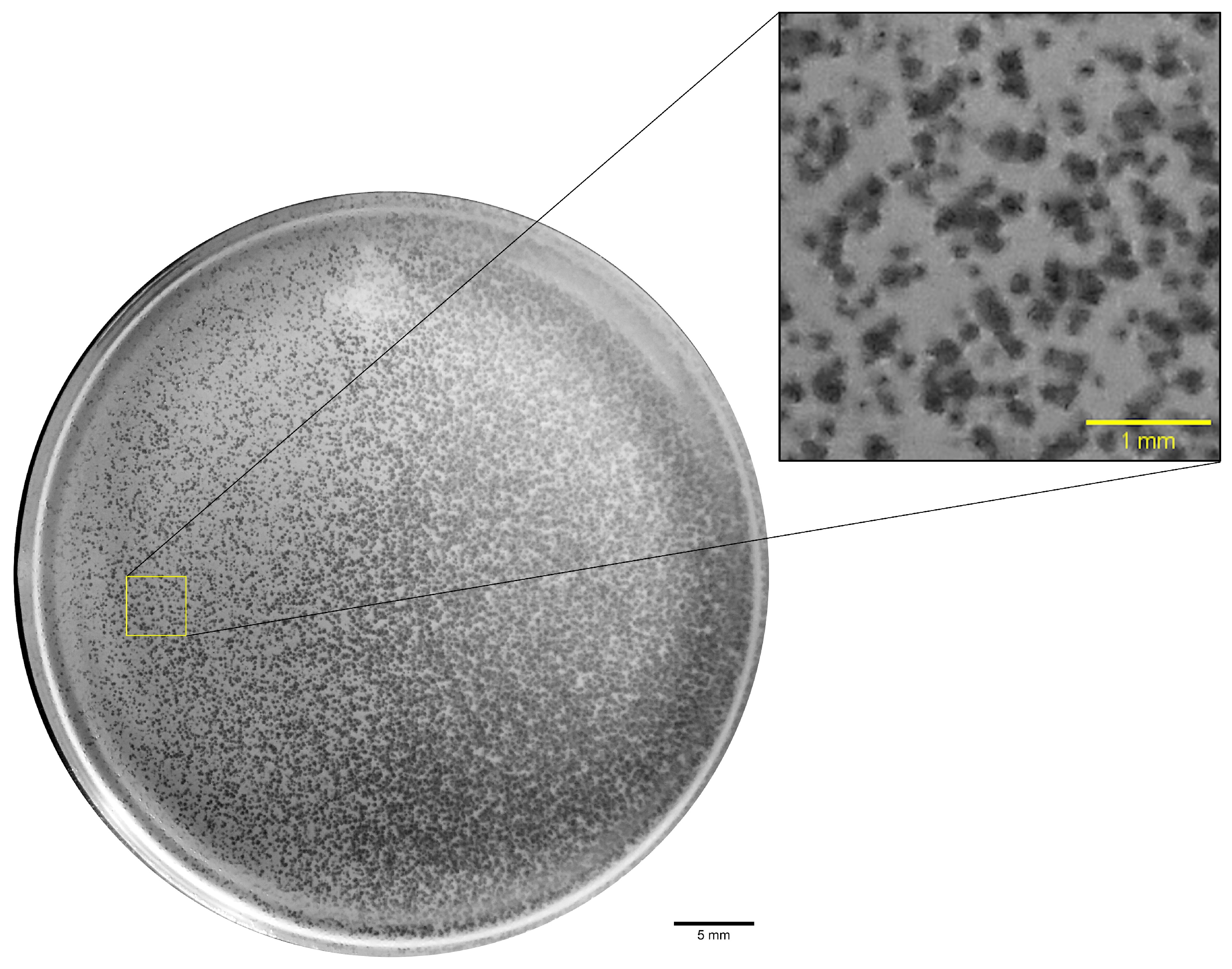
Interestingly, XaF13 produces clear plaques in double-layer agar assays. Filamentous bacteriophages are typically associated with turbid plaques, reflecting chronic infections that do not necessarily result in host cell lysis. Nevertheless, clear plaque formation has been reported for several filamentous bacteriophages, including enterobacteria bacteriophages fd, f1 and M13, as well as
Xanthomonas campestris bacteriophage Cf1t [
40,
41,
42,
43]. In many cases, infections with filamentous bacteriophages yield a mixture of turbid and clear plaques. In contrast, XaF13 consistently produced clear plaques under the conditions tested.
Clear plaque formation in filamentous bacteriophages has been associated with mutations affecting genes involved in replication and virion assembly. For example, mutations in ORFII of bacteriophage Cf1t and in the pI and pIV proteins of bacteriophage f1 have been reported to exert deleterious effects on host cells, leading to clear plaque phenotypes. In Cf1t, two classes of mutations have been described: substitutions at positions 442 and 491 and a single-base deletion at position 442, both located upstream of ORFII. These mutations are thought to influence ORFII expression, thereby affecting plaque turbidity. Similarly, expression of pI and pIV proteins in bacteriophage f1 can be toxic to the host even at low levels, contributing to clear plaque formation [
42,
43].
In XaF13, no homologs of ORFII, pI, or pIV were identified, suggesting that the mechanism underlying clear plaque formation differs from those described for f1 and Cf1t bacteriophages. These observations indicate that XaF13 may employ an alternative mechanism affecting host viability or bacteriophage release dynamics. However, further studies are required to elucidate the molecular basis of this phenotype.
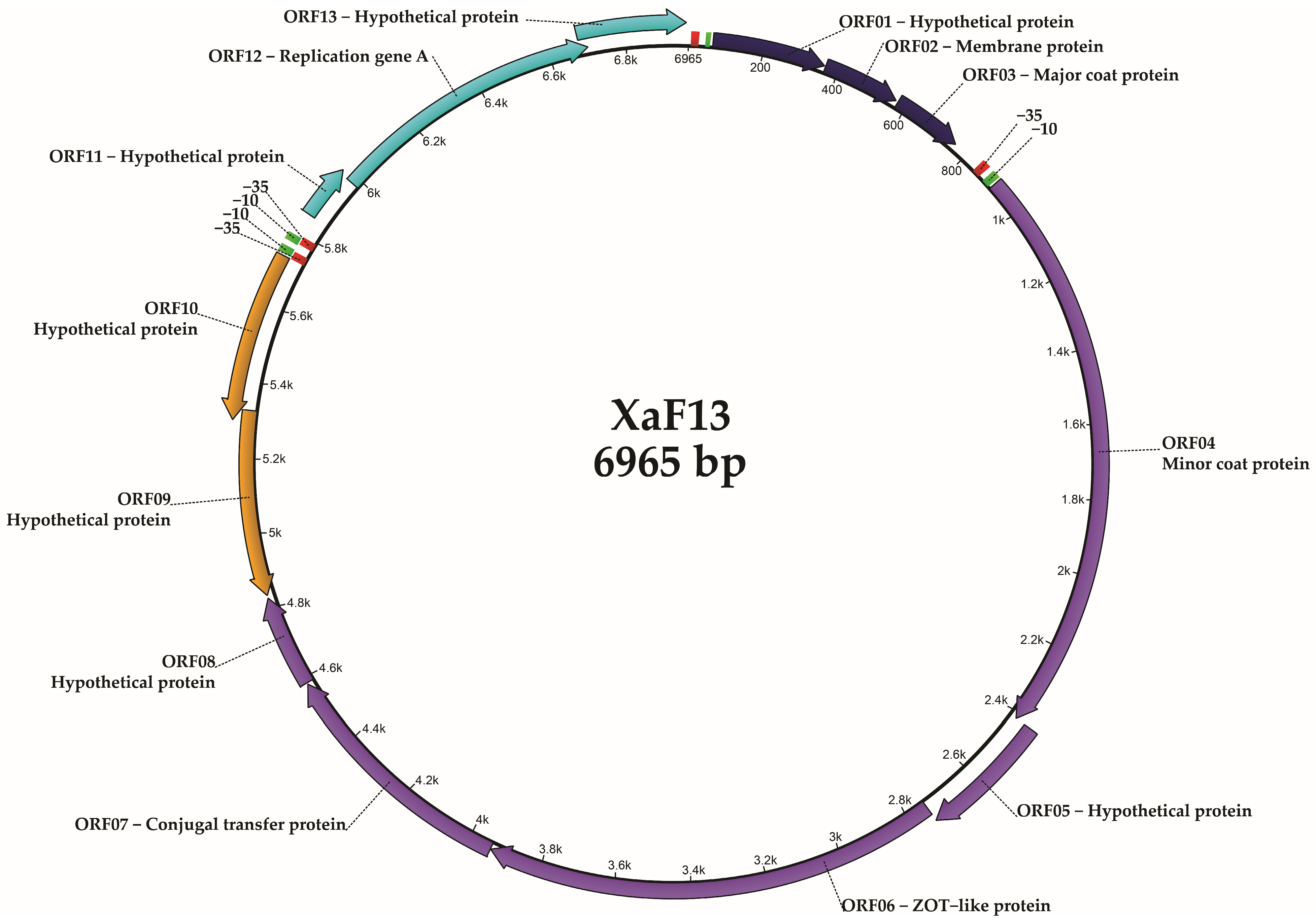
Genome reanalysis through a hybrid sequencing approach resolved a discrepancy in the previously reported sequence. The 80 bp difference corresponded to an assembly-related error involving a repeated region, rather than to an independent annotation error or a deletion identified by the new sequencing data. Correction of this region modified the local coding structure and supported the reannotation of two previously separated ORFs as a single continuous gene encoding a Zot-like protein.
Moreover, the combined genomic and phylogenetic analyses provide a comprehensive framework for understanding the evolutionary placement of bacteriophage XaF13 within filamentous bacteriophages. Intergenomic similarity analysis through VIRIDIC revealed that XaF13 shares relatively low nucleotide identity relative to previously described inoviruses, including those infecting Xanthomonas spp. These values fall below the thresholds commonly used for species demarcation, supporting the classification of XaF13 as a novel species within the family Inoviridae. This observation is consistent with clustering patterns obtained from VIRIDIC, which did not assign XaF13 to any defined species-level group.
Phylogenetic reconstruction based on the Zot-like protein further supports this conclusion. Previous studies have demonstrated that Zot proteins are among the most conserved and phylogenetically informative markers in filamentous bacteriophages; accordingly, analyses based on these proteins provide a robust framework for their classification [
10]. In this context, Zot-based phylogeny placed XaF13 within a broader inovirus lineage comprising bacteriophages infecting
Xanthomonas,
Stenotrophomonas,
Ralstonia, and
Vibrio spp. Notably, as shown in
Figure 7, XaF13 clusters with phages such as Xf109 and Xf409 but forms a distinct branch, supporting its evolutionary divergence despite moderate bootstrap support in some internal nodes.
The phylogenetic placement of XaF13, together with the clear distinction between bacteriophage-associated Zot-like proteins and canonical bacterial Zot-like proteins, suggests that these proteins constitute a specialized evolutionary lineage [
44,
45]. This lineage may have been shaped by horizontal gene transfer and host-specific adaptation. From a functional perspective, the presence of a Zot-like protein in XaF13 suggests potential roles beyond structural or replication-associated functions, possibly contributing to interactions with the bacterial host. In filamentous phages, Zot homologs have been associated with modulation of host physiology and may influence processes such as membrane permeability or virulence-related traits [
10,
44]. In the context of
Xanthomonas spp., which are important phytopathogens, the acquisition or diversification of such genes may have ecological and evolutionary implications, including enhanced adaptability or fitness within plant-associated environments [
46]. Given the central role of Zot proteins in virion morphogenesis, the observed divergence may also reflect structural or functional adaptations influencing bacteriophage assembly and host interaction dynamics [
47,
48,
49].
Comparative genomic analysis revealed conserved genome organization among XaF13 and related filamentous bacteriophages, including Xf109, Xf409, and ØSMA6, particularly within modules associated with replication, structural proteins, and the Zot-like region. Consistent with this observation, inovirus classification increasingly relies on genomic organization rather than nucleotide or amino acid sequence homology, as bacteriophage-encoded genes and proteins are generally poorly conserved, with only a few notable exceptions [
45,
50]. The conservation of gene order and the high similarity observed in core functional regions support a shared evolutionary origin and highlight strong functional constraints on essential genes. In contrast, variability in certain genomic regions suggests the occurrence of horizontal gene transfer events and genome rearrangements, contributing to the plasticity of inoviruses [
51].
This balance between conserved architecture and sequence divergence is consistent with the modular evolution of filamentous bacteriophages, whose compact circular genomes must preserve essential functions while allowing for genetic exchange that facilitates host adaptation [
5,
8]. Thus, the structural conservation observed among XaF13 and related phages does not contradict their low nucleotide similarity; rather, it reflects an evolutionary pattern in which essential modules are maintained while accessory regions diversify under selective pressures.
Together, these findings indicate that XaF13 represents a genetically distinct and evolutionarily divergent member of the family Inoviridae. Overall, the genomic and phylogenetic evidence supports the recognition of XaF13 as a putative novel species, pending formal taxonomic evaluation. Moreover, XaF13 appears to belong to a broader lineage of filamentous bacteriophages that includes phages infecting both Xanthomonas and non-Xanthomonas hosts, such as Stenotrophomonas. These results underscore the importance of integrating complementary analytical approaches to accurately resolve bacteriophage taxonomy and highlight the extensive, yet still underexplored, diversity of filamentous bacteriophages in plant-associated environments.
5. Conclusions
The Xanthomonas vesicatoria bacteriophage XaF13 represents a genetically distinct and evolutionarily divergent member of the family Inoviridae, as supported by concordant evidence from morphological, genomic, and phylogenetic analyses. Hybrid genome reanalysis resolved a previously undetected sequence discrepancy, leading to a refined genome organization and the reannotation of a complete Zot-like protein. This result highlights the importance of combining long- and short-read sequencing approaches for accurate genome reconstruction and annotation, particularly in small viral genomes containing repetitive or structurally complex regions.
The low intergenomic similarity observed between XaF13 and previously described filamentous bacteriophages, together with its distinct phylogenetic placement based on the Zot-like protein, supports the recognition of XaF13 as a putative novel species, pending formal taxonomic evaluation. Although XaF13 is associated with Xanthomonas, its phylogenetic affinity to phages infecting other bacterial genera, such as Stenotrophomonas, suggests that related inoviruses may have diversified across different bacterial hosts. The coexistence of conserved genomic architecture and substantial sequence divergence supports a modular model of evolution in filamentous bacteriophages, in which essential functional modules are maintained while accessory regions diversify under selective pressures.
Moreover, the biological features observed for XaF13, including its plaque phenotype and stability under selected physicochemical conditions, provide useful information for understanding its biology and environmental persistence. However, the ecological and applied significance of these traits remains to be determined. The current findings are supported by genomic analyses and in vitro characterization under controlled conditions. This study did not include in planta disease-control assays, host-range analysis, evaluation of infection dynamics, assessment of the effect of chronic infection on host virulence, formulation stability tests, or field-relevant assays under UV-A/UV-B exposure, natural sunlight, and leaf-surface conditions. Therefore, the potential role of XaF13 in plant disease dynamics or biological disease management should be considered preliminary and requires further validation under greenhouse and field conditions. Overall, this study expands current knowledge of filamentous bacteriophage diversity associated with phytopathogenic bacteria and underscores the need for integrated genomic, phylogenetic, functional, ecological, and plant-based assays to clarify their taxonomy, evolutionary relationships, and biological relevance in plant-associated environments.




 ,
,