Article

Silver Nanoparticles Show Minimal, Transient Effects on Chemical Soil Health Indicators at Realistic Concentration in a Long-Term Laboratory Experiment

by
Anastasiya A. Nikolaeva
1,
Sofiia N. Skriabina
1,
Olga I. Filippova
1,
Anastasia M. Zhirkova
2,
Natalia V. Kostina
1 and
Natalia A. Kulikova
1,*
1
Faculty of Soil Science, Lomonosov Moscow University, Leninskiye Gory 1-12, Moscow 119991, Russia
2
Faculty of Chemistry, Lomonosov Moscow University, Leninskiye Gory 1-3, Moscow 119991, Russia
*
Author to whom correspondence should be addressed.
Agronomy 2026, 16(11), 1030; https://doi.org/10.3390/agronomy16111030
Submission received: 28 April 2026 / Revised: 15 May 2026 / Accepted: 21 May 2026 / Published: 22 May 2026

Abstract

The increasing use of silver nanoparticles (AgNPs) as nanoagrochemicals raises important environmental and toxicological considerations of their usage. AgNPs influence soil microbiome functioning, which regulates essential nutrient availability. However, their effects on key chemical soil health indicators remain unclear, with existing studies limited to concentrations ≥10-fold above predicted environmental levels. The aim of the work was to evaluate the effect of AgNPs at a realistic concentration of 10 μg/kg on the principal chemical soil health indicators, including acidity, redox potential, electrical conductivity, contents of NPK, and soil organic carbon (SOC). In addition, dissolved organic carbon and nitrogen (DOC and DON) and water-extractable elements (Al, Ca, Fe, K, Mg, Na, P, S, and Si) were also examined. The laboratory experiment was carried out for 3 months on Retisol, Chernozem, and Solonetz. AgNPs stabilised with carboxymethylcellulose (AgNP-CMC) or polyvinylpyrrolidone (AgNP-PVP) were used. AgNP-induced changes exhibited non-monotonic patterns, peaking at 2–3 months of incubation. A statistically significant effect observed across all soils following AgNPs application included only increased water-extractable Fe. In addition, AgNPs increased nitrate content 1.1–1.4-fold in Retisol and Chernozem, while available phosphorus increased 1.4-fold in Solonetz. However, changes were transient, indicating no pronounced long-term impact on soil properties. Partial Least Square (PLS) analysis revealed that chemical soil health indicators and water-extractable elements do not reliably discriminate between control soils and soils amended with AgNPs. Although our study shows that AgNPs had neither markedly negative nor positive effects on chemical soil health indicators or water-extractable element contents, future research should prioritise field trials. Model experiments under optimised microbial activity conditions limit direct extrapolation to field scenarios.

1. Introduction

Research into novel nanoagrochemicals represents a leading frontier in modern nanotechnology, serving as a key enabler of sustainable agricultural development [1]. Current data indicate that, in 2026, 95 companies across 29 countries will produce 237 distinct products of 37 types for agricultural applications [2]. Most nanoagrochemicals are nanofertilisers and nanopesticides. Their application has revolutionised contemporary agricultural technologies by boosting yields, protecting crops, enhancing nutrient use efficiency, and improving soil fertility and water availability [3]. However, risks of environmental exposure to nanoagrochemicals have risen with increases in global production, while unresolved environmental impact issues demand further investigation and currently impede their widespread adoption [3,4].
Silver nanoparticles (AgNPs) are among the oldest and most common engineering nanoparticles used commercially, including in the agricultural sector. The use of colloidal silver as a universal antiseptic began in 1897 with the commercial launch of Collargol. In 1954, a colloidal silver-based biocide, Algaedyn, was approved in the United States and is still used as an algicide in private pools [5]. According to some estimates, AgNPs are found in more than 50% of consumer products based on nanotechnology [6]. The annual use of AgNPs currently totals approximately 880 tons and continues to rise [6,7], leading to pollution of natural waters and soils [8] and necessitating risk assessments of their adverse environmental impacts [9]. The risk of soil contamination with AgNPs is rising due to their expanding use in agriculture as nanoagrochemicals [10]. Nowadays, it is widely recognised that AgNPs constitute a persistent anthropogenic factor in soils, exerting a growing burden on soil ecosystems [6].
The primary toxic effects of AgNPs are associated with the release of Ag+ silver ions, which induce oxidative stress leading to the damage of cellular membrane structures and DNA integrity [11], as well as the inhibition of multiple enzyme systems [12]. Under soil conditions, Ag+ release may result in either stimulation or inhibition of diverse microbial populations. The observed effects are contingent upon soil characteristics, nanoparticle dimensions, and the stabilising agent employed [6,9,13]. Data on nanoparticle toxicity to soil microorganisms remains contradictory. Some studies report negative effects of AgNPs on soil microbes at concentrations as low as 15 ng kg−1 [14], while most research identifies the range of 10 μg kg−1 to 100 mg kg−1 as the minimum concentrations eliciting toxicity [15].
Alterations in soil microbiome functioning affect macronutrient (NPK) availability in soil systems. Classical biogeochemical nutrient cycling paradigms identify microorganisms as primary agents that convert recalcitrant element forms into plant-available fractions [16,17]. Soil microorganisms substantially enhance soil fertility through their regulation of available N forms (via nitrogen fixation, ammonification, nitrification, and denitrification), P fractions (through mineral solubilisation and organic phosphorus mineralisation), and K availability (via dissolution of fixed potassium from feldspars and micas alongside mineralisation of organic potassium within plant residues) [16,17]. Conversely, soil microbial biomass constitutes a dynamic nutrient pool that rapidly assimilates available NPK, subsequently liberating these elements during microbial necromass mineralisation [18]. In particular, the partial dissolution of AgNPs leads to the production of Ag+ that could be further reduced by soil organic matter, which was correspondingly oxidised, resulting in the partial breaking of soil aggregates and release of minerals from the AgNPs-loaded soils [19,20].
Despite the established effects of AgNPs on the soil microbiome, it remains unclear whether these translate to changes in soil nutrient status and other chemical indicators of soil health. Research in this area remains limited to rare studies [21,22] employing soil AgNPs concentrations of 1 mg kg−1 and higher, which is at least two orders of magnitude above the maximum predicted environmental concentrations not exceeding 10 μg kg−1 [14].
This study aimed to estimate the effects of AgNPs at a realistic concentration of 10 μg kg−1 on principal chemical indicators of soil health and the content of water-extractable elements under long-term laboratory conditions. Well-established chemical indicators such as pH, electrical conductivity (EC), redox potential Eh, soil organic carbon (SOC), and soil nutrient status were selected for the study as chemical soil health indicators [23,24,25]. In addition, dissolved organic carbon (DOC), dissolved organic nitrogen (DON), and water-soluble forms of some minerals (Al, Ca, Fe, K, Mg, Na, P, S, and Si), which are the most plant-available forms in soils, were also tested [26,27]. Results revealed that although AgNPs produced statistically significant effects on some individual soil properties, the overall impact was neither markedly negative nor positive, as changes proved temporary.

2. Materials and Methods

All chemicals used were of at least analytical grade. Acetic acid, ammonium carbonate, ammonium sulphate, hydrochloric acid, magnesium acetate, potassium dichromate, potassium chloride, and sulfuric acid were acquired from Sigma-Aldrich (Steinheim, Germany). Peptone was purchased from DiaM (Moscow, Russia).

2.1. Silver Nanoparticles

Aqueous colloidal AgNP suspensions (500 mg Ag l−1; M9-Pharm, Tolyatti, Russia) stabilised with carboxymethylcellulose (AgNP-CMC) or polyvinylpyrrolidone (AgNP-PVP) were used for the experiments. The content of CMC or PVP in AgNP suspensions was 0.1% (mass.). CMC and PVP were selected as stabilisers due to their established application in agricultural seed coatings [28,29]. Both AgNPs have a round shape. The hydrodynamic diameter and zeta potential were 5.4 nm and −9.3 mV for AgNP-CMC and 7.9 nm and −18.7 mV for AgNP-PVP, respectively [30].

2.2. Soils

Soil samples comprising Albic Retisol, Endocalcic Chernozem, and Katogleyic Solonetz subsequently were designated as Retisol, Chernozem, and Solonetz, respectively (Table 1). The Solonetz occurred within a Chernozem–Solonetz soil complex. These soils exhibited contrasting properties with respect to acidity, organic matter content, and salinity, which control AgNP stability [15] and their capacity to release bioavailable Ag+ ions [6]. Retisol and Chernozem were silt loam, and Solonetz was loam in texture (Table S1). Cation-exchange capacity (CEC) of Retisol, Chernozem, and Solonetz was 11.7, 27.1, and 26.4 meq 100 g−1, respectively. Samples were collected during the summer of 2024 from the 0–5 cm layer, with each totalling ~6 kg. The sampling depth corresponded to the minimum thickness of the upper organic horizon observed in the Solonetz (5 cm).
Retisol and Chernozem samples were collected from agricultural fields, while Solonetz was sampled from virgin land. Soils were air-dried and sieved (<2 mm) prior to use (Figure 1).
Visual analysis revealed that Solonetz, unlike Retisol and Chernozem, contained substantial undecomposed organic residues.

2.3. Laboratory Incubation Experiment

Soil aliquots of 100 g were placed in a 100 mL polypropylene container without drainage holes. Diluted colloidal suspensions of AgNP-CMC or AgNP-PVP were introduced into the soil to achieve 10 μg Ag kg−1 soil, which corresponds to the maximal expected environmentally relevant concentration [14] and to adjust moisture content to 80% of water holding capacity (WHC), predetermined according to [31]. Control containers received equivalent volumes of distilled water. To evenly incorporate nanoparticles into the soil while maintaining a moisture content of 80% of WHC, diluted suspensions were prepared to achieve a final AgNPs concentration of 10 μg Ag kg−1 soil. For 100 g soil samples, the solution volumes added were 36.0, 39.6, and 43.4 mL for Retisol, Chernozem, and Solonetz, respectively, with corresponding AgNPs concentrations of 27.8, 25.3, and 23.0 μg Ag L−1. No exogenous fertilisers were applied. Containers were weighed for moisture content monitoring, then incubated in darkness at 24 °C. Moisture content was maintained weekly at 80% WHC using distilled water [32]. If sprouts from the soil seed bank emerged in some containers, they were manually removed. After 1, 2, and 3 months of incubation, some of the soil containers were removed for analysis. At the end of the laboratory incubation experiment, an estimation of potential ammonification, nitrification, and denitrification activity was carried out. The experiment was performed in three-fold replications (n = 3), resulting in 81 experimental pots at the start of the incubation.

2.4. Chemical Soil Health Indicators, Dissolved Organic Carbon and Nitrogen

Actual acidity (pHH2O), redox potential (Eh), specific electrical conductivity (EC), and available nitrogen were determined in fresh soil samples on the sampling day. The pH of KCl extract (pHKCl), mobile phosphorus and potassium, soil organic carbon (SOC), dissolved organic carbon (DOC) and nitrogen (DON), and water-extractable mineral elements were analysed in air-dried samples.
To determine pHH2O, pH, Eh, and EC, a 1:5 soil: water suspension was prepared according to [33]. Actual acidity pHH2O was measured potentiometrically using a Hanna Microprocessor pH Metre pH 211 equipped with an HI 1230 electrode (Hanna Instruments Inc., Woonsocket, RI, USA). Redox potential Eh was determined with a platinum redox electrode EPV-1Sr (Gomel ZIP, Gomel, Belarus) and a glass Ag/AgCl reference electrode ESr-10101-3.5 (Gomel ZIP, Gomel, Belarus) filled with saturated KCl solution. The oxidation–reduction potential (ORP) reading was converted to Eh (mV) by adding the reference electrode voltage (199 mV). The relative hydrogen score (rH2) was calculated from pHH2O and Eh data according to [34]:
rH2 = 33.83·Eh + 2 pHH2O,
where Eh is in V.
Specific electrical conductivity (EC) was measured using a portable TDS-EC metre (Moveek, Budapest, Hungary). The pH of the KCl extract was determined according to [35]. SOC was estimated using heated wet digestion of soil with a chromous mixture (0.2 M potassium dichromate solution in diluted (1:1) sulphuric acid) [36].
Available nitrogen was determined according to [36] using 0.25 M Mg(CH3COO)2 extracts. Concentrations of NO3 and NH4+ were measured with ion-selective electrodes ECOM-NO3 and ECOM-NH4 (Econix, Moscow, Russia), respectively. Results were expressed as nitrogen content of available ammonium (N-NH4) and nitrate (N-NO3) ions. Mobile phosphorus and potassium were determined according to [36] using soil-specific extraction methods: 0.2 M HCL for Retisol, 0.2 M CH3COOH for Chernozem, and 0.1 M (NH4)2CO3 for Solonetz, respectively. Phosphorus concentrations were measured by UV-Vis spectrophotometry using a PortLab512 spectrophotometer (Portlab, Oxfordshire, UK) at 710 nm, while potassium concentrations were quantified by flame photometry using a Leki flame photometer (Leki, Turku, Finland) at 770 nm. Results were expressed as the content of available P2O5 and K2O.
Dissolved organic matter was extracted using deionised water (18 MΩ cm−1) according to [37]. Although some studies recommend the term “water-extractable organic matter” for samples obtained via aqueous extraction [38], most employ isolation schemes similar to the one described above to obtain DOC and DON [39,40]. Organic carbon and nitrogen contents were quantified by high-temperature catalytic combustion using a Multi NC 2100 Analyser (Analytik Jena GmbH, Jena, Germany), followed by calculation of the C/N molar ratio.
Water-extractable elements (Al, Ca, Fe, K, Mg, Na, P, S, and Si)—indicative of potential release from soil minerals or organic matter—were extracted from soil at a 1:5 (w/v) ratio using deionised water (resistivity 18 MΩ·cm) as recommended for soil mineralisation studies [41]. Extracts were centrifuged at 1660× g for 35 min (CM-6M, ELMI, Riga, Latvia) to remove colloidal particles. Centrifugation conditions, per Stokes’ equation, sedimented particles ≥0.11 μm, assuming an “averaged” colloid density of 2.65 g cm−3 [42]. Elemental analysis was performed by inductively coupled plasma optical emission spectrometry (ICP-OES) using an Agilent 5110 spectrometer (Agilent Technologies, Penang, Malaysia).

2.5. Enzyme Activity

The determination of potential ammonification activity (PAA) and potential nitrification activity (PNA) was carried out following the procedure described in [43]. Soil samples (5 g) were incubated (80% WHC, 28 °C) for 8 days, after which free ions of NH4+ or NO3 were determined as described above. To initiate ammonification or nitrification, peptone (30 g kg−1) and (NH4)2SO4 (0.2 g kg−1) were used as substrates, respectively.
Potential denitrification activity (PDA) was determined as described in [44] using an approach based on the ability of acetylene to inhibit N2O reductase, thus enabling the estimation of the activity of the denitrification process by N2O accumulation in the gas phase. To determine the denitrification rate, a 5 g sample of soil was placed into 15 mL penicillin flasks, supplied with glucose (2.5 g kg−1) and KNO3 (0.3 g kg−1), hermetically sealed with rubber stoppers, and purged with argon for 1 min. Next, 1 mL of acetylene was added, and the flasks were incubated (60% WHC, 28 °C) for 1 d. The N2O concentration was measured on a Kristall-2000 gas chromatograph (Khromatek, Yoshkar-Ola, Russia) equipped with a Porapak N 80/100 column (1 m × 3 mm) and an electron capture detector (ECD) (Agilent Technologies Inc., Santa Clara, CA, USA). Determination conditions: carrier gas (nitrogen) flow rate of 90 mL min−1, detector temperature of 240 °C, column temperature of 50 °C, and evaporator temperature of 100 °C.
Measurements of enzyme activity were performed in triplicate (n = 3).

2.6. Statistical Analysis

Data is expressed as mean standard deviation, with the number of replicates (n) indicated. Differences between samples were assessed using two-way (treatment × duration of incubation) analysis of variance (ANOVA) followed by post hoc Tukey’s Honestly Significant Difference (HSD) test. To avoid unrestricted pairwise comparisons and to separate data into homogeneous groups (effect of treatment × duration of incubation), a post hoc test was performed only when significant interactions were detected. One-way ANOVA followed by the HSD test was applied to compare enzyme activity between the control and nanoparticle-treated variants. Pearson correlation coefficients (r) assessed the relationships between agrochemical parameters. Partial least squares regression (PLS) was applied to identify the soil properties most associated with AgNPs’ effects. This method is suitable for multidimensional data with multicollinearity and allows you to include categorical variables. Treatment (control, AgNP-CMC, and AgNP-PVP) served as the response variable (Y-matrix); predictors (X-matrix) included soil type (Retisol, Chernozem, and Solonetz), incubation time (1, 2, and 3 months), soil health indicators (pHH2O, pHKCl, EC, Eh, rH2, N-NO3, N-NH4, P2O5, K2O, and SOC), and content of water-extractable elements (DOC, DON, Al, Ca, Fe, K, Mg, Na, P, S, and Si). Analyses were conducted using Statistica 8.0 (StatSoft Inc., Tulsa, OK, USA) with statistical significance set at p < 0.05.

3. Results

3.1. Dynamics of Acidity, Specific Electrical Conductivity, and Redox Conditions

The studied soils matched previously reported properties for similar soils [45]. The pHH2O ranged from acidic in Retisol to near neutral in Chernozem (Table 2). Contrary to the expected alkalinity, Solonetz acidity also neared neutrality, likely due to its association with Chernozem complexes. In ascending pHH2O and pHKCl order, soils formed the series: Retisol < Chernozem < Solonetz. During incubation, control variants showed pHH2O declines, most pronounced in Solonetz (0.95 units), followed by Retisol and Chernozem (~0.5 units each). pHKCl drops were less pronounced and did not exceed 0.2 units.
Values of EC were similar for Retisol and Chernozem but markedly higher in Solonetz, reflecting its salinity. Incubation increased EC across all soils. For control variants of Retisol, Chernozem, and Solonetz, it increased by 1.4-fold, 1.7-fold, and 1.8-fold, respectively. This rise likely relates to the accumulation of ions released due to soil organic matter mineralisation (NO3, NH4+, K+, and Ca2+) as well as probable Al, Fe, and Si cations mobilisation from partial mineral matrix breakdown, which is typical for long-term incubation of soils with moistening and without leaching of salts [46].
The increase in EC was accompanied by a decrease in rH2 in all the studied soils from the first to the third month of incubation. The maximum drop in rH2 was observed in Retisol (3.88), and the minimum in Solonetz (0.88); for Chernozem, an intermediate value was noted (0.98). A decrease in rH2 indicates a possible local course of reduction processes in soils during incubation (microbial respiration, O2 consumption, Fe3+ to Fe2+ transition), although the values of rH2 were always above 27 and corresponded to the predominance of oxidising conditions [47].
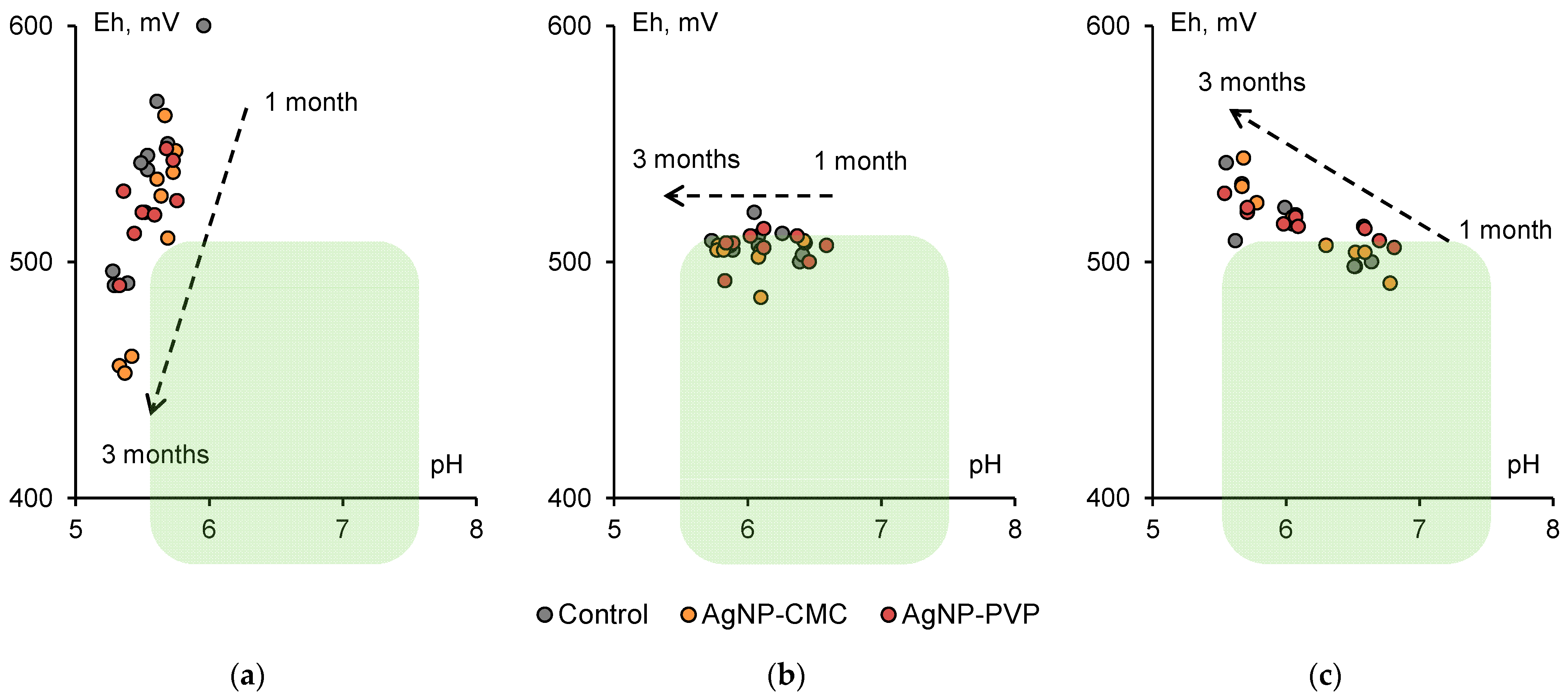
The observed decrease in rH2 in Retisol was due to a decrease in pHH2O by 0.43 units and a decrease in Eh by 81 mV during incubation. For Chernozem and Solonetz, the decrease in rH2 was caused only by acidification: in Chernozem, Eh did not change during incubation, and in Solonetz, an increase in Eh was observed by 29 mV. The constancy of Eh in Chernozem indicates a high buffer capacity of this soil. Eh values during incubation (approx. 0.5 V) indicate aerobic conditions in all studied soils. In general, the Pourbaix diagram demonstrated soil incubation resulted in a shift to an acid-reduced condition in the case of Retisol and to acid oxidised conditions in the case of Solonetz, while in Chernozem, acidification did not accompany an alteration in the redox condition (Figure 2).
The most pronounced changes after the introduction of AgNPs were observed in Retisol, where, during incubation in different months, a statistically significant increase in EC was noted, as well as a decrease in Eh and rH2 (Table 2). The least sensitive was Solonetz, where no significant changes were detected in the presence of AgNPs. The Chernozem occupied an intermediate position, where AgNPs contributed to an increase in EC. For all studied soils, the introduction of nanoparticles did not affect the general trend of the dynamics of redox conditions, namely, an increase in reducing conditions in the Retisol and oxidative conditions in the Solonetz (Figure 2). In addition, non-monotonic patterns of AgNPs-induced changes should be noted, peaking at different months of incubation depending on the studied parameter, the type of nanoparticles, and the soil.

3.2. Dynamics of the Content of DOC and DON

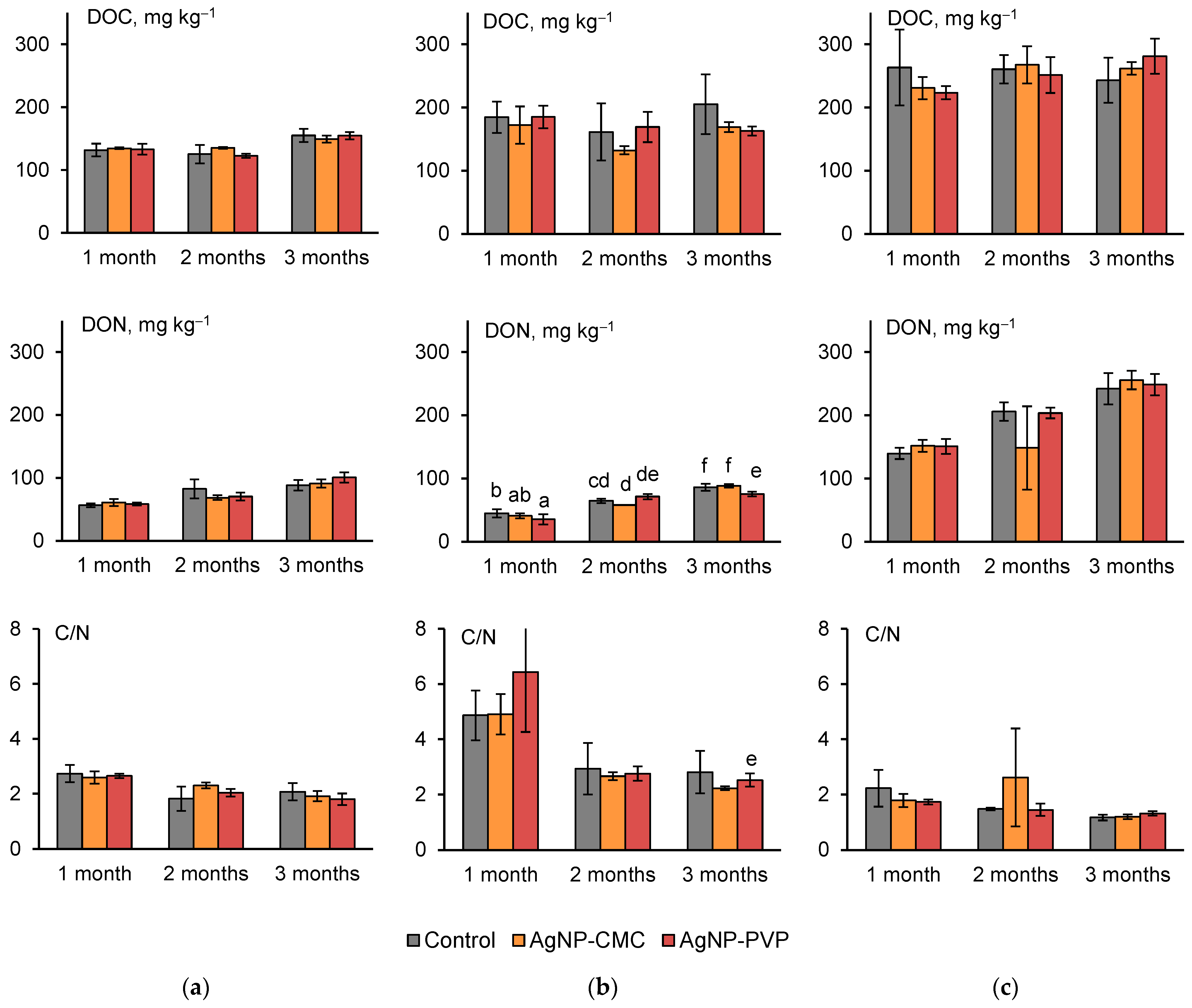
During incubation, the dynamics of the DOC content differed depending on soil: on Retisol, it increased by 1.2 times, while on Chernozem and Solonetz, the DOC content did not change (Figure 3).
In contrast to DOC, DON content increased during incubation in all studied soils, with the largest rise (1.9-fold) in Chernozem and the smallest (1.6-fold) in Retisol. This DON increase lowered the C/N ratio of water-extractable organic matter (Figure 3), indicating an intense microbial transformation of organic soil matter and accumulation of recalcitrant organic compounds due to nitrogen mineralisation [48]. AgNPs had no effect on DOC or DON contents or the C/N ratio in the studied soils.

3.3. Dynamics of Available N, P, K, and SOC

Based on the mineral nitrogen content (Table 3), at the end of the incubation, the studied soils were classified as medium-supply (Chernozem) or high-supply (Retisol and Solonetz) [49]. The extremely high nitrate levels in Solonetz after incubation likely resulted from the high content of organic debris (Figure 1). Phosphorus availability was moderate in Chernozem but increased in Retisol and Solonetz. Potassium content varied most widely: low in Retisol soil, very high in Chernozem, and elevated in Solonetz [36].
Analysis of mobile macronutrient dynamics in control variants revealed nitrate increases during incubation by 1.3-fold (Retisol), 2.6-fold (Chernozem), and 3.2-fold (Solonetz) (Table 3). Ammonium content also rose by 1.6-fold in Chernozem and 1.9-fold in Solonetz. These NO3 and NH4+ increases corresponded well with observed electrical conductivity (EC) rises (Table 2). Pearson correlation coefficients (r) between EC values and nitrate/ammonium contents were 0.94 and 0.61, respectively (significant at p < 0.05).
During incubation, SOC content decreased 1.3-fold only in Chernozem. However, compared to initial values, SOC declined across all soils, ranging from 18% (Solonetz) to 30% (Chernozem), indicating maximum organic matter mineralisation during the first month.
No significant changes occurred in mobile phosphorus or potassium contents across the control soils.
Introduction of nanoparticles resulted in significant nitrate increases (1.1–1.4-fold) after 3 months on Retisol and Chernozem with both AgNPs. Nitrate content in Solonetz rose 1.1-fold after 3 months with nanoparticles (570–573 mg N-NO3 kg−1 vs. 537 mg N-NO3 kg−1 in control), although this was not statistically significant. After 3 months with AgNP-PVP, available phosphorus increased 1.4-fold in Solonetz. As with aqueous extract properties, effects were non-monotonic, peaking at 2–3 months.
Thus, the effect on the available nitrogen content was most pronounced, which is consistent with the data on the high sensitivity of microorganisms involved in the nitrogen cycle [22].

3.4. Dynamics of Water-Extractable Elements

During incubation, water-extractable K and Na contents in control variants remained unchanged; Ca and Mg increased; and Al, Fe, and Si decreased progressively (Table 4). Water-extractable P decreased in sod-podzolic soil and Chernozem, while S increased in all soils.
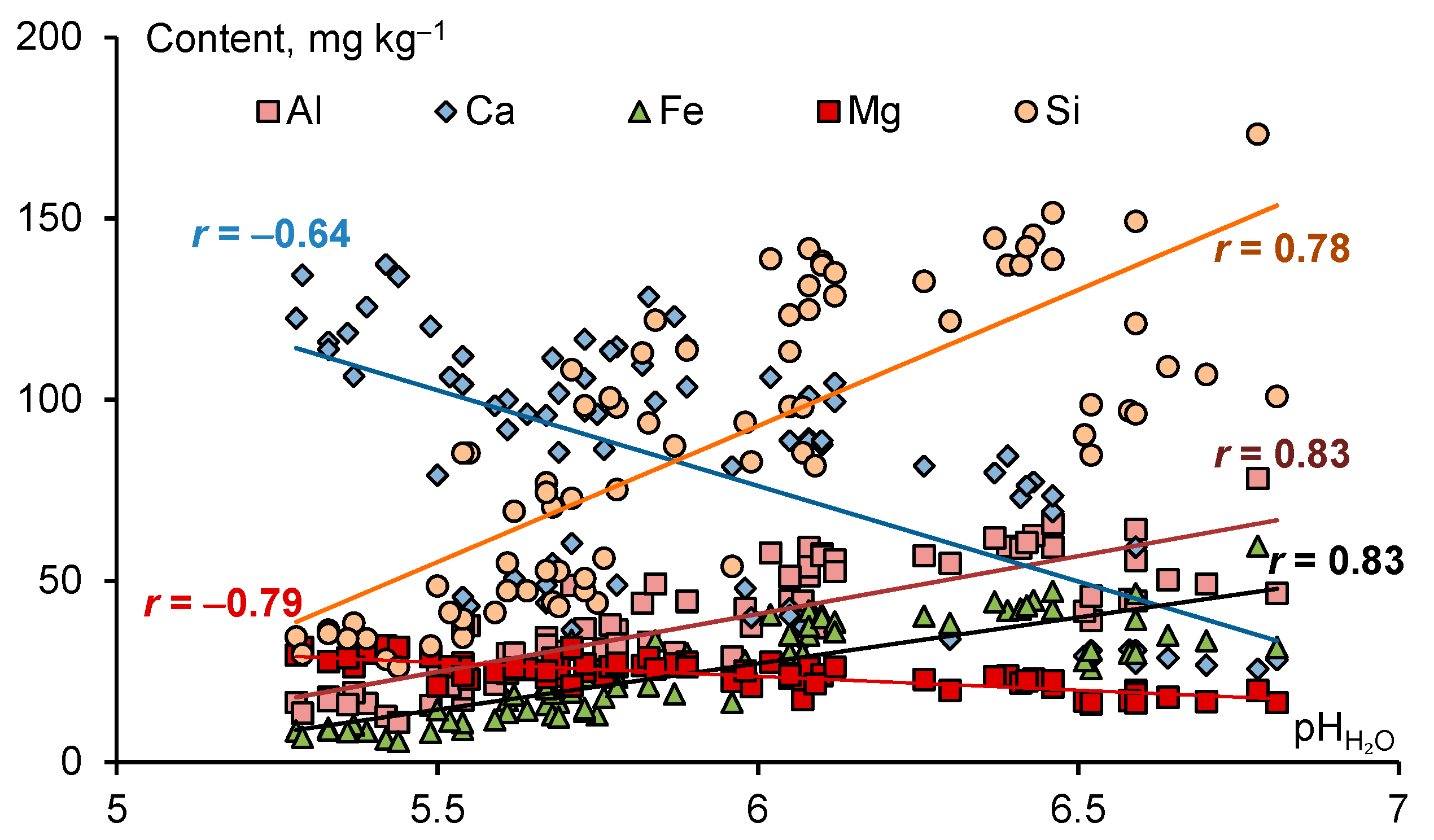
The increases in Ca and Mg likely resulted from soil acidification during incubation (Table 2), consistent with significant negative correlations for Ca–pH (r = −0.64) and Mg–pH (r = −0.79) (Figure 4). The decreases in water-extractable Al, Fe, and Si despite declining pH (Table 2) indicate more complex interactions than simple acid hydrolysis of the soil matrix.
A significant positive correlation was found between specific EC and water-extractable S content (r = 0.91); their increases during incubation likely indicate sulphur release during soil organic matter mineralisation and its oxidation to sulphates. The positive correlation of specific EC with water-extractable P (r = 0.79), alongside the absence of significant correlations with DOC, water-extractable Al, or Fe, suggests no predominant phosphorus influx into the soil solution from organic matter mineralisation or phosphate dissolution and indicates both processes occur concurrently.
The most pronounced changes from AgNPs application occurred in Retisol, where, after 2 months of incubation, increased water-extractable Al, Fe, and Si yields were observed. In Chernozem, Fe yield rose 1 month after incubation with AgNP-PVP; no significant effects on water-extractable Al or Si were observed. Unlike Retisol, nanoparticle addition in Chernozem raised the Ca yield. In Solonetz, AgNPs increased water-extractable Al, Fe, and Si yields after 2 months with AgNPs-CMC.

3.5. Potential Ammonification, Nitrification, and Denitrification Activity

Assessment of PAA, PNA, and PDA after 3 months of incubation revealed that PAA exhibited the highest intensity across all soils (Table 5). The high PAA with relatively low PNA and PDA is well consistent with a decrease in soil pH during incubation to values below 6.0 (Table 2), which inhibits nitrification, as well as with aerobic conditions (Eh ≈ 0.5 V, Table 2), which limit denitrification. It can be assumed that the observed excess of N-NO3 over N-NH4+ (Table 3) is due to the predominant formation of nitrates during the first months of incubation, when they cannot be further leached from the soil or absorbed by plants.
The PAA of the control variants ranged from 7.68 to 10.94 mmol N-NH4+ (kg day)−1. In the presence of AgNPs, the PAA was 71–97% of the control values, and the decrease was statistically significant in the case of AgNP-PVP in Solonetz. A significant negative correlation was found between nitrate content and PAA (r = −0.83).
The PNA varied in the range of 0.21–1.36 mmol N-NO3 (kg day)−1, being the maximum for Retisol and the minimum for Chernozem. As expected, a significant negative correlation was observed between ammonium content and PNA (r = −0.82). The introduction of AgNPs did not affect the PNA.
PDA varied from 0.54 to 0.99 μmol N-N2O (kg day)−1. In ascending PDA order, soils formed the series completely consistent with that for pH: Retisol < Chernozem < Solonetz. This is in line with the findings of a study by Li and co-authors, who found that soil acidification had a negative effect on the denitrifying microbes [50]. The introduction of AgNPs resulted in a decrease in PDA in Retisol but not in Chernozem or Solonetz.

3.6. PLS Analysis

In the PLS analysis, the obtained model explained less than 10% of the response variance (explained variance R2Y = 0.08) and showed negative predictive power (predictive relevance Q2 = −0.62), indicating no reliable group differences or excessive data noise [51]. Thus, the predictors used do not reliably discriminate between groups, suggesting no significant AgNPs effects on soil properties or high data variability masking subtle differences.

4. Discussion

4.1. Dynamics of Soil Properties During Incubation

The results indicate that intensive mineralisation of soil organic matter, which dominated during incubation under the tested conditions, resulted in a decrease in SOC of 18–30% as compared to the initial content before incubation (Table 3). This is also evidenced by NO3 accumulation across all soils as the final oxidation product of organic N (Table 3) and increased water-extractable S (Table 4), likely SO42− from organic S mineralisation [52]. Similar patterns occurred in prior non-leached incubations of mineral [53] and organic [54] soils. These findings underscore the methodological limitations of such model experiments and preclude their direct extrapolation to field conditions, which involve constant fluctuations in moisture and temperature.
Nitrate content increased in the order Retisol < Chernozem < Solonetz, directly correlating with pHH2O, which followed the same sequence. The extremely high nitrate levels in Solonetz after incubation likely resulted from the high content of organic debris (Figure 1). Pearson correlation coefficients (r) between pH and N-NO3 for Retisol, Chernozem, and Solonetz were 0.71, 0.84, and 0.89, respectively. This aligns with the well-known soil acidification during prolonged laboratory incubation due to nitrification. Subsequent pH decline slows nitrification rates and promotes ammonium accumulation [55], as observed in Chernozem and Solonetz (Table 3). With Eh exceeding 500 mV in all cases (Table 2), denitrification was limited [56], further favouring accumulation of organic nitrogen mineralisation intermediates.
During incubation, water-extractable Ca and Mg contents consistently increased (Table 4), driven by a pH decline and elevated nitrate and sulphate levels, which enhanced Ca and Mg leaching [57]. In contrast, water-extractable Al, Fe, and Si contents decreased (Table 4), despite acidity and high microbial activity typically boosting their release via complexation with microbial acids and polyphenols [58]. This effect likely stemmed from Al, Fe, and Si hydrolysis and polymerisation into insoluble compounds [59], overshadowing initial mineral dissolution by microbial acids in the first 24 h [58]. Insoluble compound formation was primarily favoured by oxidative conditions, as indicated by high Eh values (Table 2). Pourbaix diagrams show that, at pH 5.4–6.6 and Eh ≈ 0.5 V, the dominant species for Al, Fe, and Si are poorly soluble aluminium hydroxide Al(OH)3, iron(III) oxohydroxides Fe2O3·nH2O, and metasilicic acid H2SiO3, respectively [60]. In acidic soils, Al and Fe oxohydroxides also react with phosphate ions to form insoluble compounds, reducing water-extractable P [61]. This matches our observed P decline during incubation in Retisol and Chernozem (Table 4).
Thus, during laboratory incubation, aerobic mineralisation of soil organic matter prevailed across all studied soils, albeit with distinct features. In Retisol, intensive nitrification lowered Eh, likely due to rapid oxygen consumption by the soil microbiome [62]. No such Eh decline occurred in Chernozem and Solonetz (Table 2). Unlike Retisol, Chernozem and Solonetz showed ammonium accumulation during incubation (Table 3) and a sharper rise in the C/N ratio of extractable organic matter (Figure 3). These differences highlight soil-specific microbiome characteristics and warrant further investigation. Despite the presumed microbiome diversity in the studied soils, the decrease in rH2 observed in the control variants of all soils indicates an increase in biological activity during prolonged incubation [25], though favourable conditions for plant growth were found only in Chernozem (Figure 2).

4.2. The Effect of AgNPs on Chemical Soil Health Indicators and Content of Water-Extractable Elements

The very low concentration of AgNPs used in our study precluded detailed characterisation of nanoparticle transformations under soil conditions. Specifically, we could not quantify potential Ag+ ion release from nanoparticles or measure bioavailable silver content in soil. Since AgNPs were the sole silver source in our experiments, we attributed the observed effects to “nanoparticles” in the discussion, without distinguishing between the effects of the nanoparticles themselves versus released ions.
The effects of AgNPs on chemical soil health indicators and water-extractable elements in the laboratory incubation experiment showed non-monotonic dynamics largely masked by the ongoing background process of mineralisation of soil organic matter. Peak responses varied by indicator, soil type, and nanoparticle type, underscoring their complex impacts and the need for detailed temporal studies. Notably, however, the PLS analysis demonstrated that the predictors used (i.e., chemical soil health indicators and contents of water-extractable elements) do not reliably discriminate between control soils and soils amended with AgNPs. This finding suggests no significant treatment effects or high data variability masking subtle differences.
Our results showed that among the studied soils, Retisol was the most sensitive to AgNPs compared to Chernozem and Solonetz. Specifically, during the incubation period, Retisol exhibited significant changes in EC, Eh, rH2, the content of N-NO3, and water-extractable Al, Fe, and Si in the presence of nanoparticles. In Chernozem, significant changes were observed only in EC and contents of nitrate and water-extractable Ca and Fe, whereas in Solonetz, they occurred in the content of available P and water-extractable Al, Fe, and Si. This observed difference likely stems from soil-specific properties. Thus, acidic conditions in Retisol promote relatively rapid AgNP dissolution, resulting in Ag+ formation [6,15]. The high organic carbon content in Chernozem, in its turn, facilitates the effective binding of silver ions released from dissolving nanoparticles [6,15]. In contrast, the high ionic strength of the soil solution in Solonetz enhances the colloidal stability of AgNPs-soil colloid heteroaggregates [63]. These interpretations align with existing data on nanoparticle-soil interactions [6,9,15] and the paradigm that the primary toxic effects of AgNPs are associated with Ag+ release [11,12]. They also highlight the need for soil-type-specific risk assessments in agricultural nanomaterial applications. However, to confirm this hypothesis, additional experiments are needed to thoroughly evaluate the transformation of AgNPs in soil and their impacts on the soil microbiome. In addition, the Solonetz used in our study contained more undecomposed plant residues compared to Retisol and Chernozem (Figure 1), which could substantially affect SOC, DOC, DON, and nitrogen mineralisation processes, potentially confounding soil-type effects with land-use effects.
General trends also encompassed nitrate accumulation after three months of incubation (insignificant in the case of Solonetz). This pattern may arise from low-dose Ag+ stimulation of nitrifiers (hormesis) or denitrifier inhibition [22]. A statistically significant inhibition of PDA was observed in Retisol, suggesting that low-dose AgNPs may act as denitrification inhibitors. Further research is needed to prove this hypothesis and to elucidate the mechanism of this phenomenon. Notably, no inhibition of denitrification occurred at pH > 5.5 (Chernozem and Solonetz), highlighting pH-dependent mechanisms.
On the other hand, nitrate accumulation in acidic Retisol in the presence of AgNPs may also risk macronutrient imbalance through relative N enrichment. Excess available N is known to trigger excessive vegetative growth, delayed maturation, lodging, and heightened disease susceptibility [64]. In addition, elevated soil nitrates pose risks of over-accumulation in crops or leaching to groundwater [65], underscoring the need for field trials before agronomic application.

4.3. Limitations of the Study

Our study demonstrates that although AgNPs induce some statistically significant changes in soils under laboratory conditions, their overall effect at a realistic concentration of 10 μg kg−1 cannot be classified as markedly negative or positive. The results do not permit, however, definitive conclusions about the environmental safety of AgNPs at realistic concentrations under field conditions. Laboratory conditions represent a primary limitation: constant temperature and moisture optimal for microorganisms promoted intensive organic matter mineralisation, potentially masking nanoparticle effects. Another important issue is that the structure and conditions of air-dried and sieved soils differ greatly from those under field conditions. The absence of leaching and plant uptake likely led to excessive nitrate accumulation, which would be reduced under field conditions through natural drainage or plant absorption. In addition, the three-month duration prevents the assessment of the longer-term effects of AgNPs. Finally, testing a single concentration of AgNPs precludes establishing dose–response relationships at environmentally relevant low levels of nanoparticles. Future research should prioritise field trials of AgNPs in soils, accounting for potential impacts on plants and nitrogen use efficiency.

5. Conclusions

The expanding use of AgNPs as nanopesticides and nanoagrochemicals has established them as a persistent anthropogenic factor in soils, necessitating environmental risk assessments. Our laboratory incubation experiment evaluated the effects of AgNPs on chemical health indicators and water-extractable element contents in diverse soils at realistic concentrations, revealing neither markedly negative nor positive impacts. We observed statistically significant negative effects (increased water-extractable iron) alongside positive ones (nitrate accumulation). However, these alterations were transient, indicating no pronounced long-term impact on soil chemical health parameters or content of water-soluble elements. PLS analysis demonstrated that the principal chemical soil health indicators and water-extractable elements do not reliably discriminate between control soils and soils amended with AgNPs. This finding suggests no significant treatment effects or high data variability masking subtle differences. Future field studies are needed to assess how natural fluctuations in soil moisture and temperature influence the effects of AgNPs on soil microbiome activity and chemical soil health indicators.

Supplementary Materials

The following supporting information can be downloaded at https://www.mdpi.com/article/10.3390/agronomy16111030/s1. Table S1: Particle-size distribution and texture of the soils used in the study.

Author Contributions

Conceptualization, A.A.N. and N.A.K.; methodology, A.A.N., O.I.F. and N.A.K.; formal analysis, A.A.N., S.N.S. and O.I.F.; investigation, A.A.N., S.N.S., O.I.F., A.M.Z., N.V.K. and N.A.K.; resources, N.V.K. and N.A.K.; writing—original draft preparation, A.A.N. and N.A.K.; writing—review and editing, A.A.N., N.V.K. and N.A.K.; visualisation, A.A.N. and N.A.K. All authors have read and agreed to the published version of the manuscript.

Funding

This research was funded by the Russian Federation, grant number 121041300098-7 (state assignment of Lomonosov Moscow State University “Development and evaluation of a complex of innovative agrochemical agents, ameliorants and growth regulators in the conditions of agro-, technogenesis and urban environment”).

Data Availability Statement

The original contributions presented in this study are included in the article and Supplementary Materials. Further inquiries can be directed to the corresponding author.

Conflicts of Interest

The authors declare no conflicts of interest. The funders had no role in the design of the study; in the collection, analyses, or interpretation of data; in the writing of the manuscript; or in the decision to publish the results.

Abbreviations

The following abbreviations are used in this manuscript:
AgNPsSilver nanoparticles
SOCSoil organic carbon
DOCDissolved organic carbon
DONDissolved organic nitrogen
CMCCarboxymethylcellulose
PVPPolyvinylpyrrolidone
ECElectrical conductivity
WHCWater holding capacity
ICP-OESInductively coupled plasma optical emission spectrometry
PAAPotential ammonification activity
PNAPotential nitrification activity
PDAPotential denitrification activity
ANOVAAnalysis of variance
LSDLeast significant difference
PLSPartial least squares regression
VIPVariable Importance in Projection

References

  1. Wani, T.A.; Rather, G.A.; Ahmad, M.; Kaloo, Z.A. Embodiment of nanobiotechnology in agriculture: An overview. In Nanobiotechnology in Agriculture: An Approach Towards Sustainability; Springer: Cham, Switzerland, 2020; pp. 113–128. [Google Scholar]
  2. Nanotechnology Products Database. Available online: https://product.statnano.com (accessed on 23 April 2026).
  3. Mishra, D.; Khare, P. Emerging nano-agrochemicals for sustainable agriculture: Benefits, challenges and risk mitigation. In Sustainable Agriculture Reviews 50; Kumar Singh, V., Singh, R., Lichtfouse, E., Eds.; Springer: Cham, Switzerland, 2021; pp. 23–260. [Google Scholar] [CrossRef]
  4. Yadav, N.; Garg, V.K.; Chhillar, A.K.; Rana, J.S. Recent advances in nanotechnology for the improvement of conventional agricultural systems: A review. Plant Nano Biol. 2023, 4, 100032. [Google Scholar] [CrossRef]
  5. Nowack, B.; Krug, H.F.; Height, M. 120 years of nanosilver history: Implications for policymakers. Environ. Sci. Technol. 2011, 45, 1177–1183. [Google Scholar] [CrossRef]
  6. Mishra, S.; Yang, X. How to safeguard soil health against silver nanoparticles through a microbial functional gene-based approach. Environ. Int. 2025, 202, 109680. [Google Scholar] [CrossRef]
  7. Sharma, M.M.M.; Kapoor, D.; Loyal, A.; Kumar, R.; Sharma, P.; Husen, A. Plant response to silver nanoparticles in terms of growth, development, production, and protection: An overview. In Plant Response to Silver Nanoparticles; Springer: Singapore, 2024; pp. 1–22. [Google Scholar] [CrossRef]
  8. Du, J.; Tang, J.; Xu, S.; Ge, J.; Dong, Y.; Li, H.; Jin, M. A review on silver nanoparticles-induced ecotoxicity and the underlying toxicity mechanisms. Regul. Toxicol. Pharm. 2018, 98, 231–239. [Google Scholar] [CrossRef]
  9. Kyziol-Komosinska, J.; Dzieniszewska, A.; Czupioł, J. Behavior of silver species in soil: Ag nanoparticles vs. ionic Ag. Molecules 2024, 29, 5531. [Google Scholar] [CrossRef]
  10. Kale, S.K.; Parishwad, G.V.; Husainy, A.S.N.; Patil, A.S. Emerging agriculture applications of silver nanoparticles. ES Food Agrofor. 2021, 3, 17–22. [Google Scholar] [CrossRef]
  11. Akhtar, M.F.; Irshad, M.; Ali, S.; Summer, M.; Noor-ul-ain-Zulfiqar; Akhter, M.F.; Akhtar, G. Understanding the silver nanotoxicity: Mechanisms, risks, and mitigation strategies. J. Nanopart. Res. 2025, 27, 89. [Google Scholar] [CrossRef]
  12. Nie, P.; Zhao, Y.; Xu, H. Synthesis, applications, toxicity and toxicity mechanisms of silver nanoparticles: A review. Ecotoxicol. Environ. Saf. 2023, 253, 114636. [Google Scholar] [CrossRef]
  13. Liu, G.; Zhang, M.; Jin, Y.; Fan, X.; Xu, J.; Zhu, Y.; Fu, Z.; Pan, X.; Qian, X. The effects of low concentrations of silver nanoparticles on wheat growth, seed quality, and soil microbial communities. Water Air Soil Pollut. 2017, 228, 348. [Google Scholar] [CrossRef]
  14. de Oca-Vásquez, G.M.; Solano-Campos, F.; Vega-Baudrit, J.R.; López-Mondéjar, R.; Odriozola, I.; Vera, A.; Moreno, J.L.; Bastida, F. Environmentally relevant concentrations of silver nanoparticles diminish soil microbial biomass but do not alter enzyme activities or microbial diversity. J. Hazard. Mater. 2020, 391, 122224. [Google Scholar] [CrossRef] [PubMed]
  15. Kulikova, N.A. Silver nanoparticles in soil: Input, transformation, and toxicity. Eurasian Soil Sci. 2021, 54, 352–365. [Google Scholar] [CrossRef]
  16. Adal, Y.M. The impact of beneficial microorganisms on soil vitality: A review. Front. Environ. Microbiol. 2024, 10, 45–53. [Google Scholar] [CrossRef]
  17. Bayu, T. Systematic review on the role of microbial activities on nutrient cycling and transformation implication for soil fertility and crop productivity. bioRxiv 2024, preprint. [Google Scholar] [CrossRef]
  18. Dai, Z.; Liu, G.; Chen, H.; Chen, C.; Wang, J.; Ai, S.; Wei, D.; Li, D.; Ma, B.; Tabg, C.; et al. Long-term nutrient inputs shift soil microbial functional profiles of phosphorus cycling in diverse agroecosystems. ISME J. 2020, 14, 757–770. [Google Scholar] [CrossRef] [PubMed]
  19. Soroudi, L.; Abtahi, S.A.; Mahmoudi, S. Movement, accumulation, and transformation of silver nanoparticles in soil. Environ. Nanotechnol. Monit. Manag. 2026, 25, 101136. [Google Scholar] [CrossRef]
  20. Kulikova, N.A.; Volkov, D.S.; Volikov, A.B.; Abroskin, D.P.; Krepak, A.I.; Perminova, I.V. Silver nanoparticles stabilised by humic substances adversely affect wheat plants and soil. J. Nanopart. Res. 2020, 22, 100. [Google Scholar] [CrossRef]
  21. Das, P.; Barua, S.; Sarkar, S.; Karak, N.; Bhattacharyya, P.; Raza, N.; Kim, K.-H.; Bhattacharya, S.S. Plant extract-mediated green silver nanoparticles: Efficacy as soil conditioner and plant growth promoter. J. Hazard. Mater. 2018, 346, 62–72. [Google Scholar] [CrossRef]
  22. Dong, J.; Yang, B.; Wang, H.; Cao, X.; He, F.; Wang, L. Reveal molecular mechanism on the effects of silver nanoparticles on nitrogen transformation and related functional microorganisms in an agricultural soil. Sci. Total Environ. 2023, 904, 166765. [Google Scholar] [CrossRef]
  23. Filep, T.; Rákási, M. Factors controlling dissolved organic carbon (DOC), dissolved organic nitrogen (DON) and DOC/DON ratio in arable soils based on a dataset from Hungary. Geoderma 2011, 162, 312–318. [Google Scholar] [CrossRef]
  24. Raghavendra, M.; Sharma, M.P.; Ramesh, A.; Richa, A.; Billore, S.D.; Verma, R.K. Soil health indicators: Methods and applications. In Soil Analysis: Recent Trends and Applications; Rakshit, A., Ghosh, S., Chakraborty, S., Philip, V., Datta, A., Eds.; Springer: Singapore, 2020; pp. 221–254. [Google Scholar] [CrossRef]
  25. Mattila, T.J. Redox potential as a soil health indicator—How does it compare to microbial activity and soil structure? Plant Soil 2024, 494, 617–625. [Google Scholar] [CrossRef]
  26. Amacher, M.C.; O’Neil, K.P.; Perry, C.H. Soil Vital Signs: A New Soil Quality Index (SQI) for Assessing Forest Soil Health; U.S. Department of Agriculture, Forest Service, Rocky Mountain Research Station: Fort Collins, CO, USA, 2007; p. 12. [Google Scholar]
  27. Sainju, U.M.; Liptzin, D.; Allen, B.L.; Rana-Dangi, S. Soil health indicators and crop yield in a long-term cropping system experiment. Agron. J. 2021, 113, 3675–3687. [Google Scholar] [CrossRef]
  28. Krishnamoorthy, V.; Elumalai, G.; Rajiv, S. Environment friendly synthesis of polyvinylpyrrolidone nanofibers and their potential use as seed coats. New J. Chem. 2016, 40, 3268–3276. [Google Scholar] [CrossRef]
  29. Zaimbashi, F.; Modiri, S.; Yari, H.; Saffari, M.; Rahimi, M. Evaluation of carboxymethyl cellulose-based seed coatings enriched with micro mineral fertilizers for enhancing wheat seed resilience to abiotic stresses. Sci. Rep. 2026, 16, 1484. [Google Scholar] [CrossRef]
  30. Kulikova, N.A.; Filippova, O.I.; Ziganshina, A.R. The effectiveness of priming wheat seeds with silver nanoparticles: The effect of treatment duration and stabilising agent. Probl. Agrochem. Ecol. 2021, 3, 25–31. (In Russian) [Google Scholar] [CrossRef]
  31. Zhurbitsky, Z.I. Theory and Practice of the Vegetative Method; Nauka: Moscow, Russia, 1968; p. 266. (In Russian) [Google Scholar]
  32. Qadeer, A.; Wakeel, A.; Cheema, S.A.; Shahzad, T.; Sanaullah, M. Integrated impacts of soil salinity and drought stresses on the decomposition of plant residues. Sustainability 2024, 16, 5368. [Google Scholar] [CrossRef]
  33. GOST 26423-85; Soils. Methods for Determination of Specific Electrical Conductivity, pH and Solid Residue of Water Extract. Standardinform: Moscow, Russia, 2011; p. 4. (In Russian)
  34. Husson, O.; Husson, B.; Brunet, A.; Babre, D.; Alary, K.; Sarthou, J.P.; Charpentier, H.; Durand, M.; Benada, J.; Henry, M. Practical improvements in soil redox potential (Eh) measurement for characterisation of soil properties. Application for comparison of conventional and conservation agriculture cropping systems. Anal. Chim. Acta 2016, 906, 98–109. [Google Scholar] [CrossRef]
  35. GOST 26490-85; Soils. Determination of Mobile Sulphur by CINAO Method. State Committee of the USSR for Standards: Moscow, Russia, 1985.
  36. Mineev, V.G.; Sychev, V.G.; Amelyanchik, O.A.; Bolysheva, T.N.; Gomonova, N.F.; Durynina, E.P.; Egorov, V.S.; Enrprva, E.V.; Edemskaya, N.L.; Karpova, E.A.; et al. Agrochemistry Practicum: Textbook; Moscow State University Publishing House: Moscow, Russia, 2001; p. 689. [Google Scholar]
  37. Kulikova, N.A.; Kholodov, V.A.; Farkhadov, Y.R.; Ziganshina, A.R.; Zavarzina, A.G.; Karpukhin, M.M. Dissolved organic matter of Chernozems of different use: The Relationship of structural features and mineral composition. Mosc. Univ. Soil Sci. Bull. 2024, 79, 19–27. [Google Scholar] [CrossRef]
  38. Chantigny, M.H. Dissolved and water-extractable organic matter in soils: A review on the influence of land use and management practices. Geoderma 2003, 113, 357–380. [Google Scholar] [CrossRef]
  39. Qin, X.; Yao, B.; Jin, L.; Zheng, X.; Ma, J.; Benedetti, M.F.; Li, Y.; Ren, Z. Characterizing soil dissolved organic matter in typical soils from China using fluorescence EEM-PARAFAC and UV-visible absorption. Aquat. Geochem. 2020, 26, 71–88. [Google Scholar] [CrossRef]
  40. Wang, Y.-H.; Zhang, P.; He, C.; Yu, J.-C.; Shi, Q.; Dahlgren, R.A.; Spencer, R.G.M.; Yang, Z.-B.; Wang, J.-J. Molecular signatures of soil-derived dissolved organic matter constrained by mineral weathering. Fundam. Res. 2023, 3, 377–383. [Google Scholar] [CrossRef] [PubMed]
  41. Visconti, F.; de Paz, J.M.; Rubio, J.L. What information does the electrical conductivity of soil water extracts of 1 to 5 ratio (w/v) provide for soil salinity assessment of agricultural irrigated lands? Geoderma 2010, 154, 387–397. [Google Scholar] [CrossRef]
  42. Yan, Y.; Zhang, X.; Xu, C.; Liu, J.; Hu, F.; Geng, Z. Effect of colloidal particle size on physicochemical properties and aggregation behaviors of two alkaline soils. Soil 2025, 11, 85–94. [Google Scholar] [CrossRef]
  43. Kulikova, N.A.; Filippova, O.I.; Volikov, A.B.; Bychkova, Y.S.; Perminova, I.V. Slow nitrogen release from humic substances modified with aminoorganosilanes. J. Soils Sediments 2018, 18, 1400–1408. [Google Scholar] [CrossRef]
  44. Kostina, N.V.; Gorlenko, M.V.; Mazurov, K.A.; Filippova, O.I.; Plyushchenko, I.V.; Rodin, I.A.; Kulikova, N.A. Glyphosate effects on some characteristics of biological activity and phytotoxicity of soddy-podzolic soil in a short-term model experiment. Eurasian Soil Sci. 2023, 56, 628–638. [Google Scholar] [CrossRef]
  45. Filippova, O.I.; Kholodov, V.A.; Safronova, N.A.; Yudina, A.V.; Kulikova, N.A. Particle-size, microaggregate-size, and aggregate-size distributions in humus horizons of the zonal sequence of soils in European Russia. Eurasian Soil Sci. 2019, 52, 300–312. [Google Scholar] [CrossRef]
  46. Menzies, N.W.; Bell, L.C.; Edwards, D.G. Effects of incubation time and filtration technique on soil solution composition with particular reference to inorganic and organically complexed Al. Aust. J. Soil Res. 1991, 29, 223–238. [Google Scholar] [CrossRef]
  47. Husson, O. Redox potential (Eh) and pH as drivers of soil/plant/microorganism systems: A transdisciplinary overview pointing to integrative opportunities for agronomy. Plant Soil 2013, 362, 389–417. [Google Scholar] [CrossRef]
  48. Cheng, Y.; Wang, J.; Chang, S.X.; Cai, Z.; Mueller, C.; Zhang, J. Nitrogen deposition affects both net and gross soil nitrogen transformations in forest ecosystems: A review. Environ. Pollut. 2019, 244, 608–616. [Google Scholar] [CrossRef]
  49. Gamzikov, G.P. Forecasting soil nitrogen supply and nitrogen fertilizer requirements for field crops. Innov. Food Secur. 2015, 3, 11–20. (In Russian) [Google Scholar]
  50. Li, L.; Yang, M.; Li, J.; Roland, B.; Du, Z.; Wu, D. Potential denitrification activity response to long-term nitrogen fertilization—A global meta-analysis. J. Clean. Prod. 2022, 336, 130451. [Google Scholar] [CrossRef]
  51. Szymańska, E.; Saccenti, E.; Smilde, A.K.; Westerhuis, J.A. Double-check: Validation of diagnostic statistics for PLS-DA models in metabolomics studies. Metabolomics 2018, 8, S13–S16. [Google Scholar] [CrossRef]
  52. Blum, S.C.; Lehmann, J.; Solomon, D.; Caires, E.F.; Alleoni, L.R.F. Sulfur forms in organic substrates affecting S mineralisation in soil. Geoderma 2013, 200, 156–164. [Google Scholar] [CrossRef]
  53. Abbasi, M.K.; Khaliq, A. Nitrogen mineralisation of a loam soil supplemented with organic-inorganic amendments under laboratory incubation. Front. Plant Sci. 2016, 7, 1038. [Google Scholar] [CrossRef]
  54. Maslov, M.N.; Maslova, O.A. Soil nitrogen mineralisation and its sensitivity to temperature and moisture in temperate peatlands under different land-use management practices. CATENA 2022, 210, 105922. [Google Scholar] [CrossRef]
  55. Kemmitt, S.J.; Wright, D.; Jones, D.L. Soil acidification used as a management strategy to reduce nitrate losses from agricultural land. Soil Biol. Biochem. 2005, 37, 867–875. [Google Scholar] [CrossRef]
  56. Wang, J.; Bogena, H.R.; Vereecken, H.; Brüggemann, N. Characterizing redox potential effects on greenhouse gas emissions induced by water-level changes. Vadose Zone J. 2018, 17, 1–13. [Google Scholar] [CrossRef]
  57. Zhou, W.; Wang, Q.; Chen, S.; Chen, F.; Lv, H.; Li, J.; Chen, Q.; Zhou, J.; Liang, B. Nitrate leaching is the main driving factor of soil calcium and magnesium leaching loss in intensive plastic-shed vegetable production systems. Agric. Water Manag. 2024, 293, 108708. [Google Scholar] [CrossRef]
  58. McKeague, J.A.; Cheshire, M.V.; Andreux, F.; Berthelin, J. Organo-mineral complexes in relation to pedogenesis. In Interactions of Soil Minerals with Natural Organics and Microbes; SSSA: Madison, WI, USA, 1986; pp. 549–584. [Google Scholar]
  59. Hodson, M.J.; Evans, D.E. Aluminium/silicon interactions in higher plants. J. Exp. Bot. 1995, 46, 161–171. [Google Scholar] [CrossRef]
  60. Takeno, N. Atlas of Eh-pH Diagrams; Geological Survey of Japan: Tsukuba, Japan, 2005; p. 285. [Google Scholar]
  61. Nyamaizi, S.; Messiga, A.J.; Cornelis, J.T.; Smukler, S.M. Effects of increasing soil pH to near-neutral using lime on phosphorus saturation index and water-extractable phosphorus. Can. J. Soil Sci. 2022, 102, 929–945. [Google Scholar] [CrossRef]
  62. Bohrerova, Z.; Stralkova, R.; Podesvova, J.; Bohrer, G.; Pokorny, E. The relationship between redox potential and nitrification under different sequences of crop rotations. Soil Tillage Res. 2004, 77, 25–33. [Google Scholar] [CrossRef]
  63. Cornelis, G.; Pang, L.; Doolette, C.; Kirby, J.K.; McLaughlin, M.J. Transport of silver nanoparticles in saturated columns of natural soils. Sci. Total Environ. 2013, 463, 120–130. [Google Scholar] [CrossRef] [PubMed]
  64. Sharma, S. Impacts of nitrogen on plant disease severity and plant defense mechanism. Fundam. Appl. Agric. 2020, 5, 303–314. [Google Scholar] [CrossRef]
  65. Bijay-Singh; Craswell, E. Fertilizers and nitrate pollution of surface and ground water: An increasingly pervasive global problem. SN Appl. Sci. 2021, 3, 518. [Google Scholar] [CrossRef]
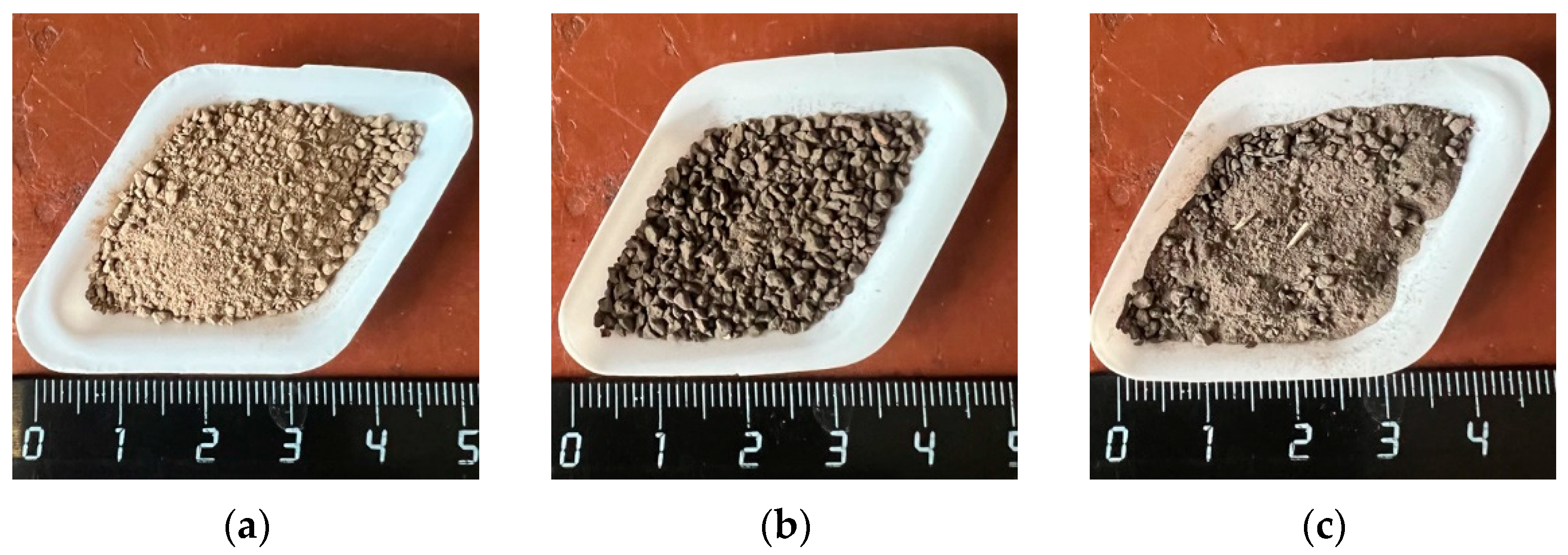
Figure 1. The appearance of soils after sieving through a 2 mm mesh: (a) Retisol, (b) Chernozem, (c) Solonetz.
Agronomy 16 01030 g001
Figure 2. Pourbaix diagram representing control soils (no AgNPs added) and soils treated with AgNPs distribution as a function of the pH and Eh in the course of incubation: (a) Retisol, (b) Chernozem, (c) Solonetz. Green area represents optimum conditions for plant growth (pH 5.5–7.5; Eh 350–500 mV) [47].
Agronomy 16 01030 g002
Figure 3. Dynamics of DOC, DON, and C/N in soils during incubation: (a) Retisol, (b) Chernozem, (c) Solonetz. The error bars correspond to the standard deviation (n = 3). The letters (presented only if the effect “treatment × duration of incubation” is significant at p < 0.05) above columns indicate belonging to a homogeneous group according to the results of ANOVA.
Agronomy 16 01030 g003
Figure 4. The relationship between soil acidity and the content of water-extractable Al, Ca, Fe, Mg, and Si. r is the Pearson correlation coefficient (the critical value is 0.22 at p = 0.05).
Agronomy 16 01030 g004
Table 1. Sampling sites and indexes of the soils used in the study.
IndexSoil Reference Group 1UsageGPS Coordinates, DD
RetisolAlbic Retisol (Aric, Loamic, Cutanic, Ochric)Farmland (hay field)56.0401° N, 37.1660° E
ChernozemEndocalcic Chernozem (Aric Loamic)Farmland (sunflower)53.4881° N, 38.9783° E
SolonetzKatogleyic Katocalcic Solonetz (Loamic, Columnic, Cutanic, Protogleyic)Virgin land (grass-forb steppe)51.1201° N, 40.3712° E
Table 2. Dynamics of pH, electrical conductivity, and redox conditions (mean ± standard deviation, n = 3) of soils during incubation. The letters in the columns (presented only if the effect “treatment × duration of incubation” is significant at p < 0.05) indicate belonging to a homogeneous group according to the results of ANOVA. Values that differ significantly from the control in a certain month of incubation are highlighted in bold, and the direction of change is indicated by arrows.
Incubation, MonthsVariantEC, μSm cm−1pHH2OpHKClEh, mVrH2
Retisol
0Before incubation59 ± 55.80 ± 0.034.77 ± 0.01384 ± 2024.83 ± 0.72
1Control129 ± 7 bc5.75 ± 0.184.75 ± 0.20573 ± 25 d30.88 ± 1.20 e
AgNP-CMC135 ± 19 bc5.69 ± 0.064.94 ± 0.03546 ± 17 c29.83 ± 0.63 d
AgNP-PVP140 ± 5 bcd5.72 ± 0.045.11 ± 0.10539 ± 12 c29.68 ± 0.33 d
2Control73 ± 7 a5.52 ± 0.034.81 ± 0.11542 ± 3 cd29.38 ±0.12 cde
AgNP-CMC106 ± 36 b5.68 ± 0.064.87 ± 0.13528 ± 15 bc29.20 ± 0.53 cd
AgNP-PVP131 ± 13 bc5.54 ± 0.054.89 ± 0.18521 ± 1 bc28.69 ± 0.08 bcd
3Control179 ± 7 d5.32 ± 0.064.61 ± 0.47492 ± 3 b27.30 ± 0.12 b
AgNP-CMC170 ± 7 cd5.37 ± 0.055.05 ± 0.05456 ± 4 a26.18 ± 0.19 a
AgNP-PVP169 ± 7 cd5.38 ± 0.065.01 ± 0.11511 ± 20 bc28.03 ± 0.74 bc
Chernozem
0Before incubation50 ± 26.04 ± 0.035.12 ± 0.10468 ± 928.21 ± 0.27
1Control86 ± 5 ab6.35 ± 0.085.37 ± 0.08505 ± 629.79± 0.09
AgNP-CMC89 ± 11 ab6.44 ± 0.025.46 ± 0.06506 ± 529.98 ± 0.13
AgNP-PVP79 ± 15 a6.47 ± 0.115.46 ± 0.06506 ± 630.06 ± 0.25
2Control94 ± 3 ab6.07 ± 0.024.93 ± 0.13513 ± 729.49 ± 0.22
AgNP-CMC97 ± 4 ab6.09 ± 0.015.07 ± 0.21497 ± 1129.01 ± 0.36
AgNP-PVP108 ± 10 c6.09 ± 0.065.35 ± 0.13510 ± 429.44 ± 0.17
3Control149 ± 3 d5.83 ± 0.095.31 ± 0.07507 ± 228.81 ± 0.11
AgNP-CMC169 ± 3 e5.79 ± 0.035.33 ± 0.12506 ± 128.69 ± 0.05
AgNP-PVP148 ± 6 d5.85 ± 0.035.52 ± 0.13503 ± 928.71 ± 0.36
Solonetz
0Before incubation126 ± 16.82 ± 0.215.52 ± 0.06327 ± 2724.94 ± 0.56
1Control267 ± 86.56 ± 0.075.42 ± 0.07499 ± 129.98 ± 0.18
AgNP-CMC246 ± 176.56 ± 0.045.40 ± 0.03508 ± 630.30 ± 0.26
AgNP-PVP223 ± 206.70 ± 0.115.33 ± 0.06510 ± 430.64 ± 0.08
2Control306 ± 176.04 ± 0.045.15 ± 0.18520 ± 429.65 ± 0.09
AgNP-CMC236 ± 656.38 ± 0.375.20 ± 0.02506 ± 1429.86 ± 0.26
AgNP-PVP301 ± 186.05 ± 0.065.15 ± 0.02517 ± 229.57 ± 0.14
3Control475 ± 255.61 ± 0.065.27 ± 0.10528 ± 1729.09 ± 0.56
AgNP-CMC429 ± 135.71 ± 0.065.27 ± 0.07534 ± 1029.47 ± 0.26
AgNP-PVP458 ± 375.65 ± 0.105.39 ± 0.09524 ± 429.04 ± 0.07
Table 3. Dynamics of the content of mobile forms of NPK and SOC (mean ± standard deviation, n = 3) in soils during incubation. The letters in the columns (presented only if the effect “treatment × duration of incubation” is significant at p < 0.05) indicate belonging to a homogeneous group according to the results of ANOVA. Values that differ significantly from the control in a certain month of incubation are highlighted in bold, and the direction of change is indicated by arrows.
Incubation, MonthsVariantN-NO3N-NH4P2O5K2OSOC, %
mg kg−1
Retisol
0Before incubation7.2 ± 0.214.8 ± 0.4113 ± 5144 ± 41.57 ± 0.03
1Control69.3 ± 16.6 ab1.4 ± 0.4107 ± 763 ± 11.27 + 0.06
AgNP-CMC67.2 ± 3.1 a0.9 ± 0.1111 ± 163 ± 11.26 ± 0.01
AgNP-PVP62.8 ± 7.6 a1.0 ± 0.2111 ± 762 ± 11.29 ± 0.05
2Control67.7 ± 5.5 ab1.6 ± 0.4116 ± 764 ± 11.30 ± 0.08
AgNP-CMC57.4 ± 1.4 a1.3 ± 0.6119 ± 1764 ± 11.35 ± 0.02
AgNP-PVP61.2 ± 9.2 a0.9 ± 0.2113 ± 465 ± 41.23 ±0.04
3Control91.7 ± 8.2 b1.3 ± 0.2107 ± 863 ± 21.37 ±0.05
AgNP-CMC110.8 ± 12.0 cd1.7 ± 0.4118 ± 362 ± 11.30 ± 0.07
AgNP-PVP129.4 ± 6.4 d1.4 ± 0.9105 ± 161 ± 11.27 ± 0.04
Chernozem
0Before incubation7.5 ± 0.211.1 ± 1.112 ± 5268 ± 123.43 ± 0.02
1Control44.5 ± 11.4 a3.0 ± 0.366 ± 14293 ± 23.20 ± 0.09
AgNP-CMC38.4 ± 6.9 a2.8 ± 0.374 ± 1300 ± 43.78 ± 0.93
AgNP-PVP32.1 ± 12.8 a2.7 ± 0.474 ± 11295 ± 82.86 ± 0.21
2Control41.6 ± 1.1 a5.0 ± 0.680 ± 13302 ± 43.16 ± 0.23
AgNP-CMC43.4 ± 1.6 a3.9 ± 0.691 ± 32298 ± 62.77 ± 0.27
AgNP-PVP52.7 ± 1.6 a4.9 ± 1.076 ± 6301 ± 72.81 ± 0.54
3Control117.5 ± 12.3 b4.9 ± 0.266 ± 14300 ± 52.40 ± 0.10
AgNP-CMC149.6 ± 3.8 c4.6 ± 0.485 ± 6299 ± 22.48 ± 0.21
AgNP-PVP134.5 ± 18.3 c5.2 ± 1.164 ± 3297 ± 92.62 ± 0.20
Solonetz
0Before incubation8.0 ± 0.19.7 ± 1.027 ± 1316 ± 22.96 ± 0.06
1Control167.8 ± 22.03.2 ± 0.630 ± 2 a257 ± 132.63 ± 0.39
AgNP-CMC152.9 ± 9.02.8 ± 0.127 ± 2 a261 ± 82.64 ± 0.29
AgNP-PVP149.5 ± 27.82.9 ± 0.327 ± 4 a259 ± 72.36 ± 0.07
2Control225.1 ± 29.56.2 ± 0.631 ± 3 a278 ± 122.71 ± 0.04
AgNP-CMC178.2 ± 22.14.8 ± 0.934 ± 5 ab246 ± 142.11 ± 0.06
AgNP-PVP203.9 ± 8.45.2 ± 0.731 ± 4 a258 ± 102.09 ± 0.29
3Control536.8 ± 17.96.2 ± 0.631 ± 1 a249 ± 282.44 ± 0.05
AgNP-CMC569.5 ± 37.47.2 ± 1.632 ± 4 ab269 ± 212.41 ± 0.41
AgNP-PVP572.7 ± 101.55.9 ± 0.243 ± 7 b274 ± 52.46 ± 0.24
Table 4. Dynamics of the content of some water-soluble elements (mean ± standard deviation, n = 3). The letters in the columns (presented only if the effect “treatment × duration of incubation” is significant at p < 0.05) indicate belonging to a homogeneous group according to the results of the ANOVA. Values that differ significantly from the control in a certain month of incubation are highlighted in bold, and the direction of change is indicated by arrows.
Incubation, MonthsVariantAlCaFeKNaMgPSSi
Mg kg−1
Retisol
0Before incubation27 ± 161 ± 116 ± 120 ± 115 ± 119 ± 13.2 ± 0.115.7 ± 1.251 ± 2
1Control29 ± 1 d86 ± 517 ± 1 d16 ± 115 ± 123 ± 12.2 ± 0.111.4 ± 0.454 ± 1 c
AgNP-CMC26 ± 3 d96 ± 114 ± 1 d15 ± 116 ± 225 ± 12.1 ± 0.112.0 ± 0.748 ± 4 c
AgNP-PVP27 ± 4 d101 ± 1315 ± 3 d15 ± 114 ± 126 ± 22.1 ± 0.110.9 ± 0.649 ± 6 c
2Control18 ± 2 ab112 ± 89 ± 1 ab17 ± 118 ± 128 ± 11.7 ± 0.111.9 ± 0.235 ± 4 a
AgNP-CMC25 ± 2 cd100 ± 314 ± 1 cd17 ± 118 ± 225 ± 12.0 ± 0.111.8 ± 0.447 ± 4 bc
AgNP-PVP23 ± 3 cd96 ± 1413 ± 2 cd16 ± 115 ± 124 ± 32.0 ± 0.111.1 ± 0.247 ± 4 bc
3Control15 ± 2 ab128 ± 68 ± 1 ab15 ± 113 ± 130 ± 11.8 ± 0.112.7 ± 0.333 ± 3 a
AgNP-CMC17 ± 4 ab120 ± 169 ± 2 ab15 ± 114 ± 229 ± 31.9 ± 0.212.9 ± 1.034 ± 5 a
AgNP-PVP15 ± 3 a122 ± 108 ± 2 a14 ± 114 ± 129 ± 21.7 ± 0.212.9 ± 0.932 ± 5 a
Chernozem
0Before incubation100 ± 453 ± 177 ± 337 ± 113 ± 125 ± 13.8 ± 0.19.7 ± 0.2226 ± 7
1Control58 ± 1179 ± 6 ab41 ± 1 c33 ± 215 ± 123 ± 12.8 ± 0.19.6 ± 0.4136 ± 3
AgNP-CMC61 ± 274 ± 4 ab43 ± 1 c34 ± 116 ± 122 ± 12.9 ± 0.19.9 ± 0.3142 ± 3
AgNP-PVP64 ± 271 ± 10 a46 ± 2 d34 ± 115 ± 122 ± 23.0 ± 0.110.3 ± 0.6148 ± 4
2Control54 ± 589 ± 1 abc37 ± 4 c34 ± 115 ± 124 ± 12.7 ± 0.110.5 ± 0.4130 ± 10
AgNP-CMC56 ± 292 ± 8 bc39 ± 2 c37 ± 117 ± 325 ± 12.7 ± 0.110.3 ± 0.4136 ± 4
AgNP-PVP55 ± 3103 ± 4 d38 ± 2 c37 ± 116 ± 127 ± 1 ↑2.6 ± 0.110.8 ± 0.4134 ± 5
3Control37 ± 8118 ± 4 e24 ± 5 a32 ± 216 ± 127 ± 12.2 ± 0.112.8 ± 0.2100 ± 13
AgNP-CMC39 ± 4113 ± 3 de26 ± 3 a33 ± 315 ± 226 ± 12.2 ± 0.111.9 ± 0.5104 ± 8
AgNP-PVP42 ± 8110 ± 16 de28 ± 6 ab33 ± 116 ± 127 ± 22.3 ± 0.212.5 ± 0.4110 ± 15
Solonetz
0Before incubation146 ± 432 ± 1117 ± 343 ± 2218 ± 434 ± 112.4 ± 0.124.1 ± 0.1319 ± 7
1Control44 ± 6 ab30 ± 130 ± 5 ab27 ± 1394 ± 2017 ± 19.6 ± 0.430.2 ± 1.095 ± 13 ab
AgNP-CMC49 ± 6 ab30 ± 233 ± 5 ab28 ± 2379 ± 617 ± 19.5 ± 0.329.3 ± 0.4106 ± 13 ab
AgNP-PVP47 ± 2 ab27 ± 132 ± 2 ab27 ± 1380 ± 916 ± 19.4 ± 0.129.6 ± 0.3101 ± 5 ab
2Control42 ± 4 ab40 ± 228 ± 3 ab33 ± 2471 ± 2822 ± 210.0 ± 0.434.2 ± 1.393 ± 9 a
AgNP-CMC61 ± 15 d33 ± 744 ± 13 c29 ± 3385 ± 11922 ± 210.0 ± 1.334.4 ± 1.8136 ± 33 b
AgNP-PVP39 ± 10 a40 ± 726 ± 2 a29 ± 4455 ± 7421 ± 49.1 ± 0.534.5 ± 2.687 ± 6 a
3Control34 ± 4 a46 ± 421 ± 3 a30 ± 1467 ± 2724 ± 28.8 ± 0.238.3 ± 2.577 ± 8 a
AgNP-CMC32 ± 1 a51 ± 320 ± 1 a32 ± 2495 ± 2827 ± 29.2 ± 0.541.4 ± 2.773 ± 13 a
AgNP-PVP39 ± 9 a47 ± 1226 ± 7 a31 ± 3468 ± 7726 ± 59.4 ± 0.538.6 ± 5.889 ± 18 a
Table 5. Potential ammonification, nitrification, and denitrification activity (mean ± standard deviation, n = 3) after 3 months of incubation. The letters in the columns indicate belonging to a homogeneous group according to the results of the ANOVA (p < 0.05). Values that differ significantly from the control are highlighted in bold, and the direction of change is indicated by arrows.
VariantPAA, mmol N-NH4+ (kg day)−1PNA, mmol N-NO3 (kg day)−1PDA, μmol N-N2O (kg day)−1
Retisol
Control9.99 ± 0.94 a1.33 ± 0.12 a0.54 ± 0.09 b
AgNP-CMC8.80 ± 0.64 a1.36 ± 0.09 a0.46 ± 0.01 a
AgNP-PVP9.36 ± 0.52 a1.31 ± 0.05 a0.42 ± 0.03 a
Chernozem
Control10.94 ± 1.03 a0.21 ± 0.02 a0.67 ± 0.07 a
AgNP-CMC10.57 ± 0.29 a0.29 ± 0.07 a0.70 ± 0.05 a
AgNP-PVP9.63 ± 0.70 a0.22 ± 0.03 a0.69 ± 0.01 a
Solonetz
Control7.68 ± 1.27 b0.53 ± 0.30 a0.99 ± 0.48 a
AgNP-CMC6.53 ± 0.33 ab0.44 ± 0.11 a0.71 ± 0.26 a
AgNP-PVP5.43 ± 0.16 a0.53 ± 0.03 a1.04 ± 0.42 a
Disclaimer/Publisher’s Note: The statements, opinions and data contained in all publications are solely those of the individual author(s) and contributor(s) and not of MDPI and/or the editor(s). MDPI and/or the editor(s) disclaim responsibility for any injury to people or property resulting from any ideas, methods, instructions or products referred to in the content.