Article

Field Evaluation of Tomato Genotypes for Resistance to Tomato Yellow Leaf Curl Disease (TYLCD) in Burkina Faso


by
Sie Salif Sabarikagni Ouattara
1,*,
Moumouni Konate
2,3,
Mathieu Anatole Tele Ayenan
4,
Lys Amavi Aglinglo
4,
Alpha Sidy Traore
5 and
Roland Schafleitner
6
1
World Vegetable Center, West and Central Africa—Dry Regions, Farako-Bâ Research Station, Bobo-Dioulasso 01 BP 910, Burkina Faso
2
Laboratory of Genetics, Plant Biotechnologies and Management of Phytogenetic Resources, Regional Center of Excellence in Fruits and Vegetables, INERA, Farako-Bâ Research Station, Bobo-Dioulasso 01 BP 910, Burkina Faso
3
The Sahel Institute, Permanent Interstate Committee for Drought Control in the Sahel, Bamako BP 1530, Mali
4
World Vegetable Center, West and Central Africa—Coastal and Humid Regions, IITA-Benin Campus, Cotonou Tri Postal 08 BP 0932, Benin
5
World Vegetable Center, West and Central Africa—Dry Regions, Samanko, Bamako BP 320, Mali
6
World Vegetable Center, Mexico Office, CIMMYT Global Headquarters, Carretera México-Veracruz, Km 45, El Batán, Texcoco 56237, Mexico
*
Author to whom correspondence should be addressed.
Agronomy 2026, 16(10), 995; https://doi.org/10.3390/agronomy16100995 (registering DOI)
Submission received: 24 March 2026 / Revised: 6 May 2026 / Accepted: 11 May 2026 / Published: 19 May 2026
(This article belongs to the Section Crop Breeding and Genetics)

Abstract

Tomato is widely produced in Burkina Faso for its culinary, nutritional, and economic value. Tens of thousands of farmers are involved in its production throughout the country. However, they face significant biotic constraints that limit yields and income. In particular, tomato yellow leaf curl virus (TYLCV), a begomovirus transmitted by whiteflies (Bemisia tabaci), severely affects tomato production. This study evaluated the response of 13 tomato genotypes to tomato yellow leaf curl disease (TYLCD), including eight lines with different Ty resistance gene combinations; three local improved varieties, and two commercial varieties in western and central Burkina Faso. All genotypes developed TYLCD symptoms with considerable variability in genotypic responses. Four genotypes carrying a single gene, namely CLN4279O (Ty2), CLN4270I (Ty1/Ty3), CLN4270F (Ty1/Ty3), and CLN4018G (Ty2), exhibited the best field tolerance, with lower disease incidence and severity across sites. In contrast, genotype CLN4078A carrying two resistance genes (Ty1/Ty3 + Ty2), and the checks PETOMECH and ROMA VF were highly susceptible. Hierarchical clustering grouped the genotypes into four classes based on tolerance level and yield. These findings highlight the variability in resistance expression under field conditions and suggest possible interactions between host genotype, environmental factors, and virus populations. Broader multi-site evaluations, supported by molecular diagnostics to identify endemic TYLCV strains, are needed to refine the selection process.

1. Introduction

Tomato (Solanum lycopersicum L.) is one of the most widely cultivated and consumed vegetables worldwide, with an estimated global production of approximately 200 million tons in 2024 [1]. The economic and nutritional value of tomato makes it a highly demanded vegetable worldwide, and its production contributes significantly to food security and poverty alleviation [2]. However, tomato production is constrained by several diseases, particularly tomato yellow leaf curl disease (TYLCD) [3,4,5]. TYLCD is caused by various begomoviruses, among which the tomato yellow leaf curl virus (TYLCV) is one of the most widespread. These viruses are transmitted by the whitefly Bemisia tabaci (Genn.) in a circulative-persistent manner [6,7]. TYLCD is the most important and devastating viral disease of tomato plants, causing curling and yellowing of plant leaves, with yield losses reaching up to 100%, particularly when infection occurs early in development and vector pressure is high [6,7].
In Burkina Faso, where whiteflies are prevalent, TYLCD is a constant threat to tomato farming [8,9,10]. To meet the growing demand for tomatoes, chemical pesticides are the most widely used control method [11,12]. However, even a few whiteflies can spread viral infections across an entire field, thereby limiting the effectiveness of pesticides against viral disease vectors [13,14]. Moreover, excessive use of chemical pesticides can lead to adverse effects on the environment, soil health, and human well-being [15,16]. Promoting sustainable farming practices by using adapted varieties is therefore important to mitigating these risks [15]. To this end, the development and use of resistant varieties to TYLCD is of paramount interest. Unfortunately, most popular tomato varieties cultivated by local farmers in Burkina Faso, such as Cobra 26, Mouna F1, Petomech, and Roma VF, are susceptible to TYLCD [17,18,19,20]. Therefore, genetic improvement for TYLCD resistance is the most sustainable solution.
Resistance to TYLCD has been identified in wild tomato species (S. pimpinellifolium, S. peruvianum, S. chilense, S. habrochaites, and S. cheesmaniae), and major genes, such as Ty-1, Ty-2, Ty-3, Ty-4, Ty-5, and Ty-6, were introgressed into S. lycopersicum [4,21,22,23,24]. These genes, either singly or in combination, can provide varying levels of protection depending on viral strains, vector pressure and environment, highlighting the need for local field evaluation in real climatic conditions [4,25,26,27].
Field evaluation is a critical step in the validation of resistance following the introgression of resistance genes into cultivated tomato. Although resistance to TYLCD is often initially assessed under controlled or greenhouse conditions, such evaluations may not fully capture the complexity of the field environments, as plants are exposed to spontaneous infestations of Bemisia tabaci [28,29]. Such field-based assessments are essential to identify genotypes that combine effective resistance with local adaptation and agronomic performance.
Despite the importance of the disease, little is known about the performance of tomato genotypes carrying different Ty gene combinations under the field conditions of Burkina Faso. Gaining insight into the tolerance status of new tomato lines to TYLCD would guide variety recommendations for disease control. To address this gap, the present study aimed to evaluate the resistance of selected tomato genotypes against TYLCD across two sites. This study identified resistant and locally adapted varieties that could be promoted as part of sustainable tomato production strategies in Burkina Faso.

2. Materials and Methods

2.1. Study Area

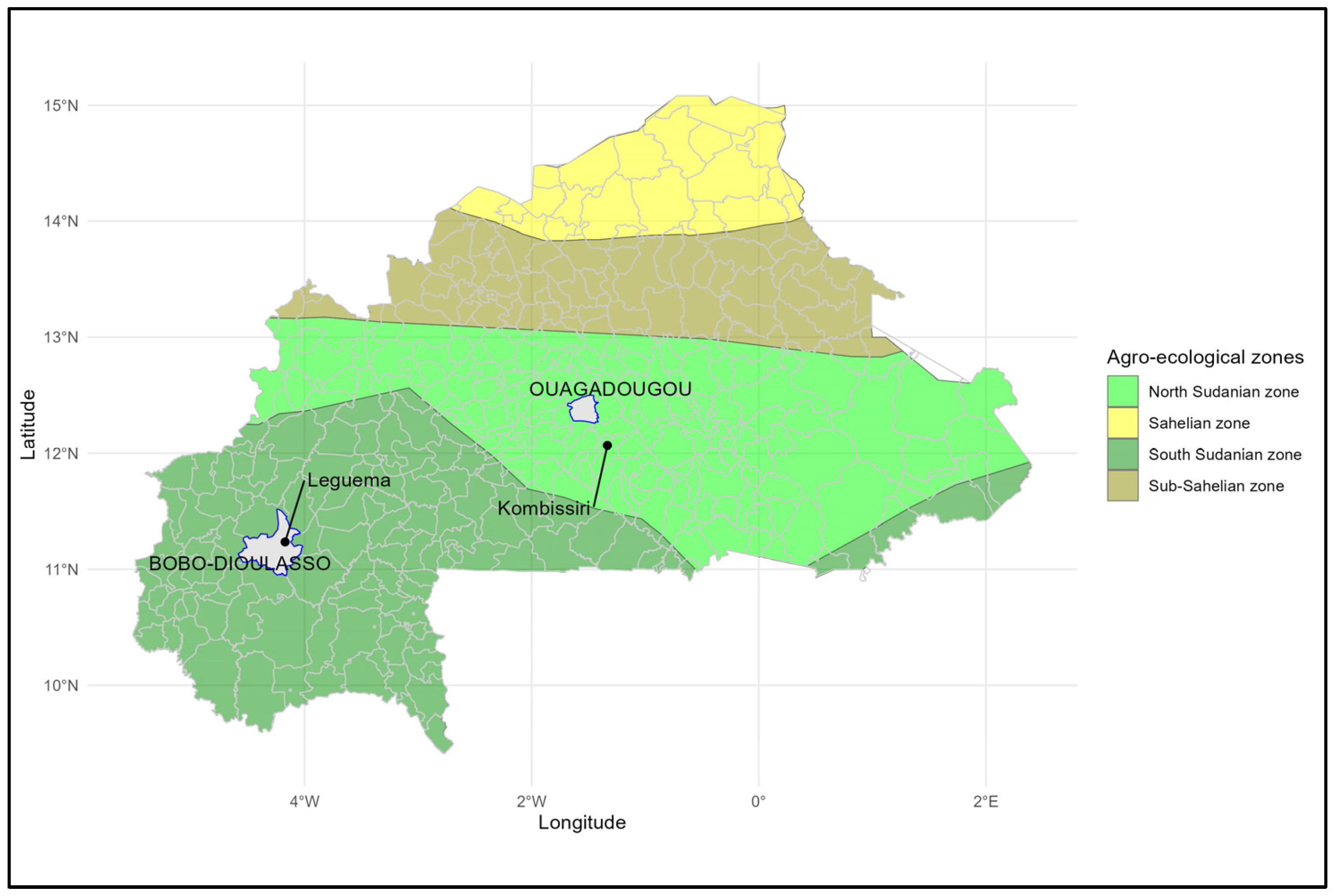
Field trials were conducted during the cool and dry season (November 2022 to February 2023), a period characterized by high whitefly (Bemisia tabaci) population densities in Burkina Faso [11]. The study was carried out at two major vegetable-growing sites in the western (South Sudanian) and the central (North Sudanian) regions of Burkina Faso, within two agroecological zones (Figure 1).
The first site was in Leguema (11.2277431° N, 4.1630214° W, 350 m above sea level), in the South Sudanian zone, where the annual rainfall ranges from 900 to 1200 mm.
The second study site was at Kombissiri (12.03791° N, 1.2799767° W, 292.3 m above sea level), in the North Soudanian zone, with an annual rainfall of 700 to 900 mm.
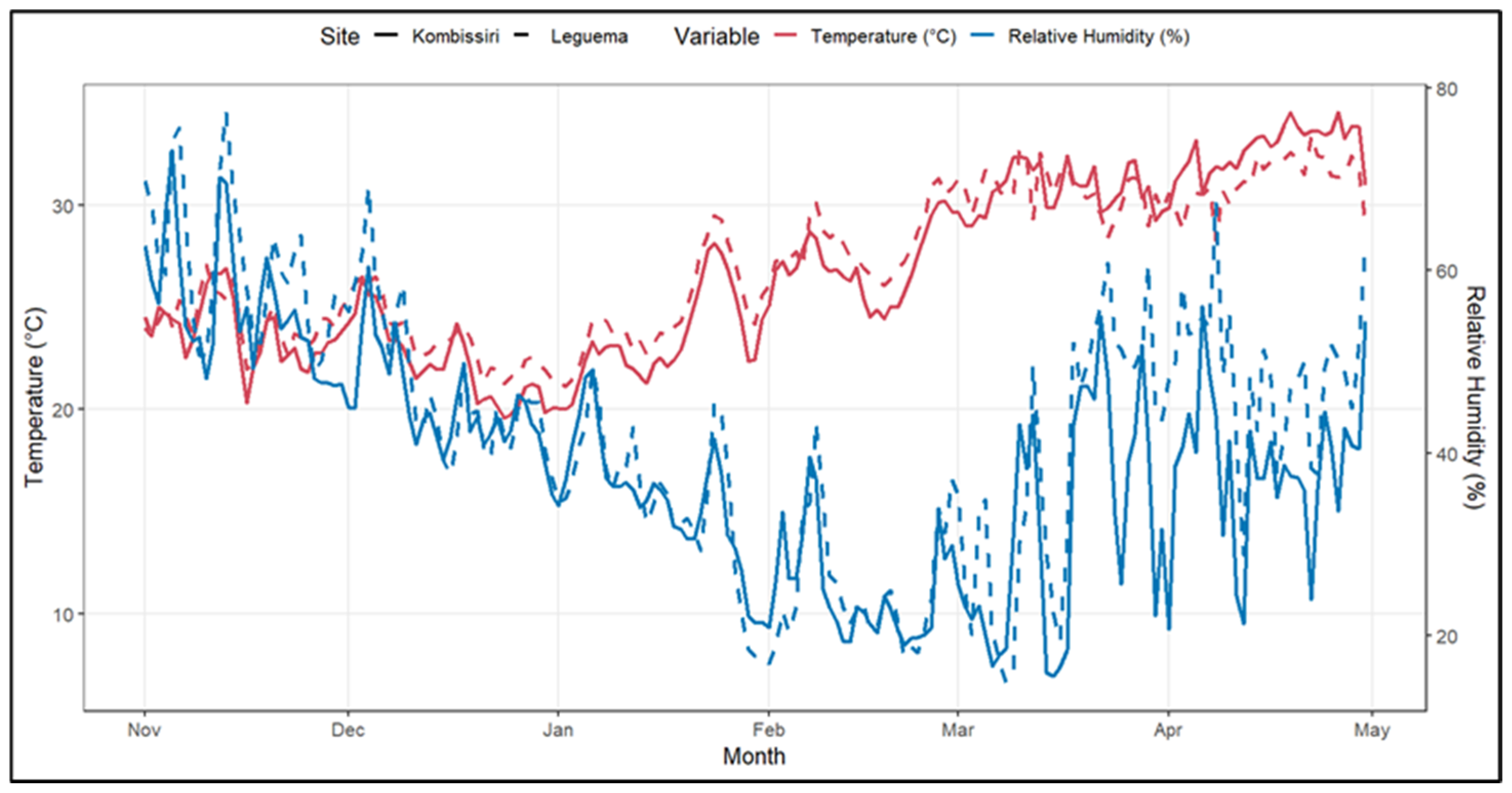
From November 2022 to April 2023, both sites exhibited a typical Sahelian dry-season pattern, characterized by progressively increasing temperatures and declining relative humidity (Figure 2). Mean temperatures during the study period ranged from 21 to 24 °C in November to peaks of 30–33 °C in March–April. Slightly higher temperatures were observed at Kombissiri during the hottest months (32.8 °C in April vs. 31.2 °C in Leguema). Relative humidity followed an opposite trend, decreasing from 56 to 60% in November to 25% in February, before partially recovering in March–April. At Leguema, consistently higher humidity (60.5%) was recorded than in Kombissiri across the period, particularly in November (56%).

2.2. Plant Materials

Thirteen tomato genotypes were evaluated (Table 1). Eight breeding lines from the World Vegetable Center (WorldVeg) carried one or more Ty resistance genes, in combination with bacterial wilt resistance loci (BW12, Bwr6) (Table 1). Additionally, we included three varieties developed by the Institute of Environment and Agricultural Research (INERA, Burkina Faso), with unknown response to TYLCD, and two commercial varieties (PETOMECH and ROMA VF) susceptible to TYLCD [17,18], were used as checks. These materials were selected to represent a diversity of genetic backgrounds and resistance gene combinations.

2.3. Experimental Design and Crop Management

The trial was carried out using a randomized complete block design (RCBD) with three replications at each location. Each block consisted of 13 plots (one per genotype), and the blocks were spaced 1.5 m apart. The plots, spaced 1 m apart, each consisted of three 4 m-long rows. Each plot contained 24 plants, of which five in the central row were used for data collection to minimize border effects.
Nurseries were established in seed trays. Seeds were treated with fungicide, and the nursery was watered twice daily. Seedlings were transplanted 25 days after sowing (DAS) with a distance of 0.8 m between rows and 0.5 m between plants. The plots were plowed, ridged, and watered a few hours before transplanting to facilitate plantlet recovery. We applied organic fertilizer (compost) at a rate of 20 t/ha during land preparation. We applied NPK (14-23-14) at 15 days after transplanting (DAT), at a rate of 250 kg/ha, and urea (46%) at a rate of 100 kg/ha at the flowering stage and 14 days later. To avoid disrupting the vector insect cycle and allow natural occurrence of TYLCD, no pest control method was applied. We staked the plants before the flowering stage, and manually weeded the field three times. The plants were irrigated daily.

2.4. Data Collection and Disease Severity Assessment

Agronomic performance, whitefly prevalence, and disease incidence and severity were recorded.
The agronomic performance included fruit weight (FrW, in g), fruit length (FrLeng, in cm), fruit width (FrWidth, in cm), number of fruits per plant (NF/P), plant height (PH, in cm) and yield(t/ha). Fruits were harvested at physiological maturity from five randomly selected plants per plot. The number of fruits per plant was recorded, and fruit weight was measured using a digital scale on ten fruits randomly selected per plot. Fruit length and width were also measured using a digital caliper on ten fruits randomly selected per plot (two fruits per plant from the five sampled plants). Plant height was measured as the distance from the stem base at the soil surface to the apex of the main stem.
Harvesting was conducted at regular intervals until the end of the production cycle, and the cumulative fruit weight per plot was recorded. Yield (t/ha) was calculated by extrapolating the total fruit weight per plot to a hectare basis, using the planting density of 25,000 plants/ha (0.80 m × 0.50 m spacing).
Adult forms of B. tabaci were counted in the morning between 7:00 and 9:00 a.m., as described previously [17]. This count was taken at 25, 50, and 75 DAT from three randomly selected plants per plot. Leaves were visually inspected by gently turning them over to observe and count the individuals present.
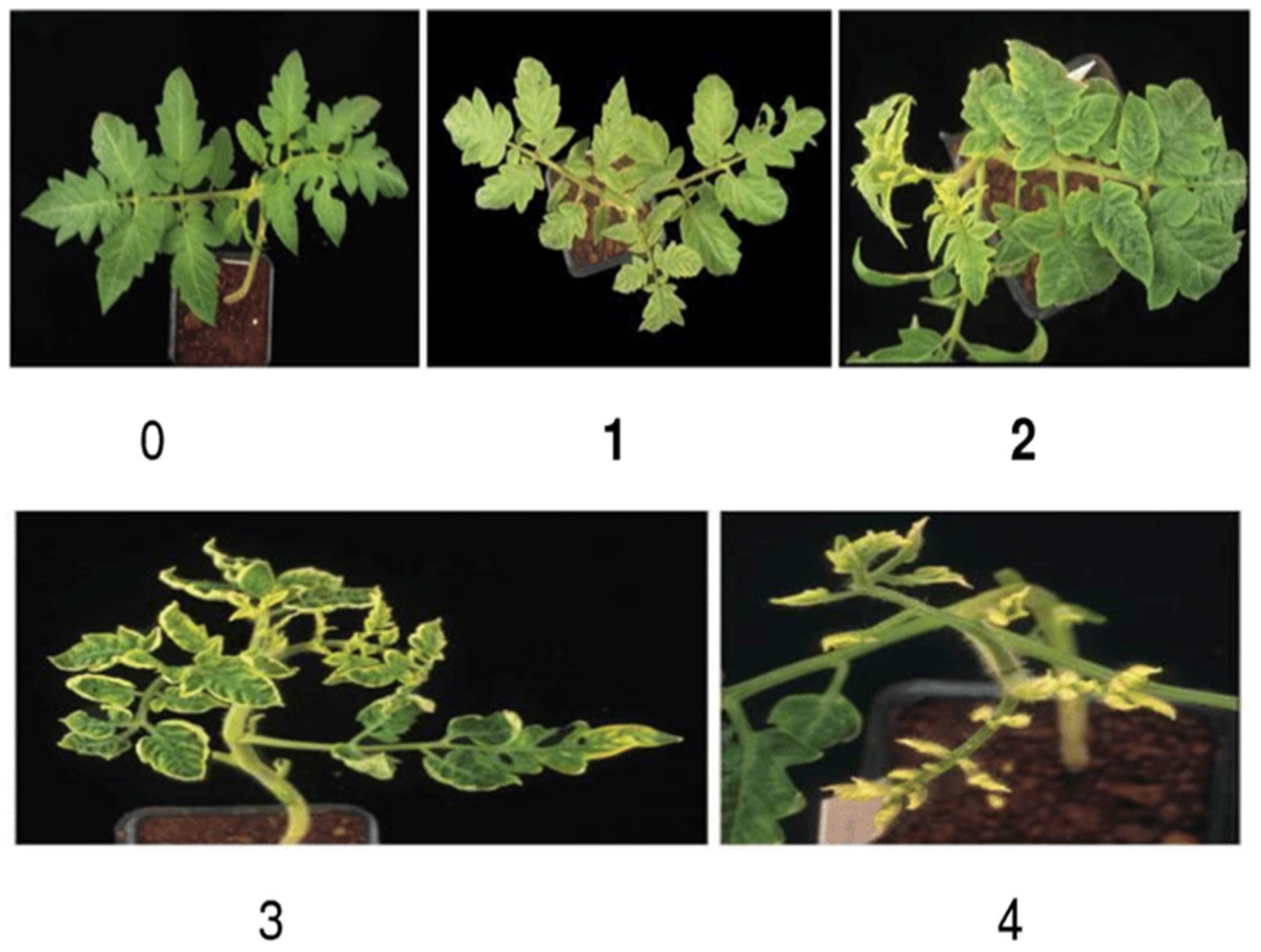
Disease incidence per plot and symptom severity were recorded at 25 and 75 DAT. Disease incidence was calculated using Equation (1) [4]. Symptom severity per plant was assessed using a scale from 0 to 4 (Figure 3) [31], where
0 = No symptoms;
1 = Slight leaf curl;
2 =Substantial leaf curl with or without yellowing;
3 = Pronounced yellowing, curling, and leaf stunting, the plant continues growing;
4 = Severe stunting with leaf curling, the plant ceases to grow.
The average severity (S) for each genotype was calculated using Equation (2) [4].
I (%) = (PA × 100)/PT
Equation (1). Disease Incidence (I = Incidence, PA = number of affected plants, PT = total number of plants).
S = (∑Sn × Ni)/(∑Ni)
Equation (2). Average severity (S) of the genotype (where Sn: scale score, Ni: number of plants rated Sn).

2.5. Data Analysis

Collected data were analyzed to evaluate genotype performance and their responses to TYLCD using R version 4.3.1 [32]. Given the significant departures from normality (Shapiro–Wilk test) and homogeneity of variances (Bartlett’s test), the affected variables were subjected to a square-root transformation to meet the assumptions required for parametric analysis. Analysis of variance (ANOVA) was performed for each site to evaluate differences among genotypes for yield, whitefly prevalence, disease incidence, and disease severity. When significant differences were observed at the 5% α-level, post hoc pairwise comparisons were conducted using Tukey’s Honest Significant Difference (HSD) test. Trait associations were assessed using pairwise Pearson correlation coefficients. Then, a principal component analysis (PCA) was conducted to reduce dimensionality and check for patterns in the data. Biplots were generated to visualize genotype relationships and trait contributions. Finally, a cluster analysis was performed using Euclidean distance computed on the scaled data and Ward’s minimum variance method (Ward.D2) as the clustering algorithm.

3. Results

3.1. TYLCD Incidence on Tomato Genotypes

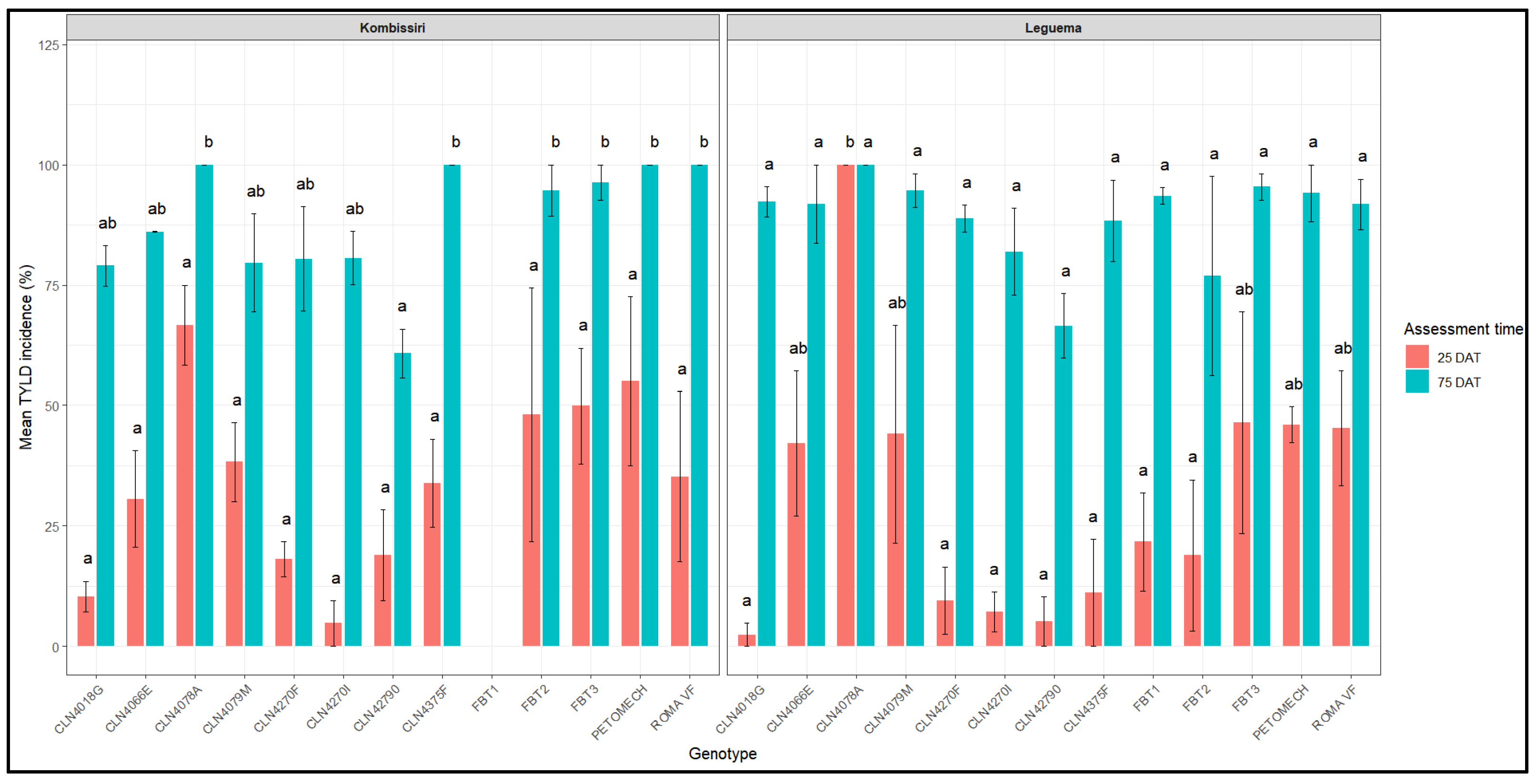
The ANOVA revealed a significant genotypic effect on TYLCD incidence, with variation across sites and time points (Figure 4). At 25 DAT, genotype differences were observed at both Leguema (p = 0.002) and Kombissiri (p = 0.0342). At this time point, CLN4078A recorded the highest incidence (100%) at both sites (Figure 4). In contrast, CLN4270F, CLN4270I, CLN4018G, and CLN4279O showed comparatively lower incidence levels.
At 75 DAT, genotype effects became more significant at Kombissiri (p = 0.000), whereas Leguema showed no statistical differences (p = 0.288).
At Kombissiri, CLN4078A, PETOMECH, and ROMA VF recorded 100% incidence at 75 DAT. CLN4279O (60.76%), CLN4079M (79.59%), CLN4270F (80.44%) and CLN4270I (80.61%) recorded lower incidence relative to the highly susceptible genotypes.

3.2. TYLCD Severity on Tomato Genotypes

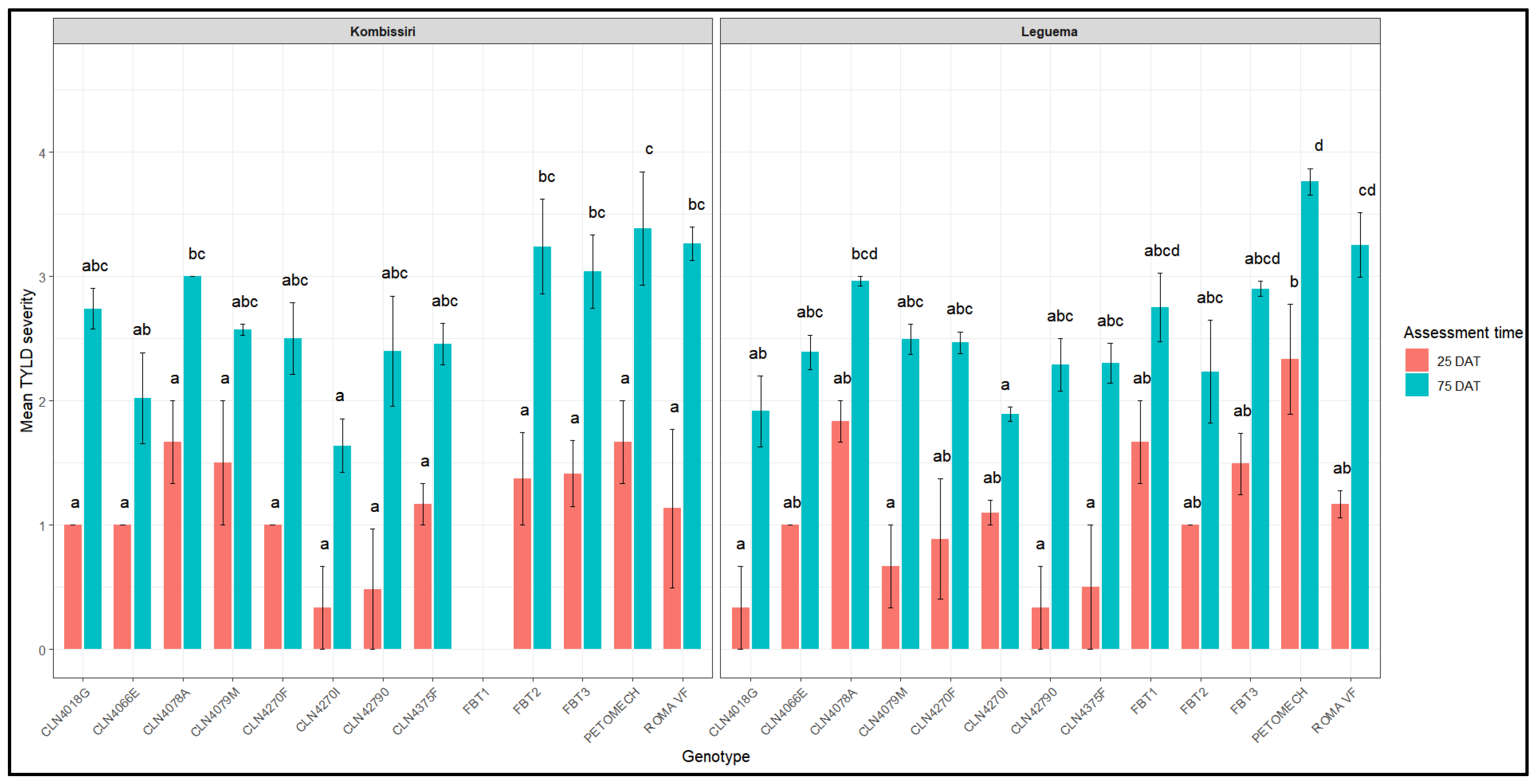
TYLCD symptom severity scores on genotypes assessed at 25 and 75 DAT are presented in Figure 5. None of the evaluated genotypes was symptom-free. At Leguema, significant differences among genotypes were observed at 25 DAT (p = 0.005) and 75 DAT (p = 0.000) for disease severity. At 25 DAT, CLN4279O (0.33) and CLN4018G (0.33) recorded the lowest severity, followed by CLN4375F (0.50). At 75 DAT, CLN4270I recorded the lowest severity (1.80), followed by CLN4018G (1.91) and CLN4279O (2.28). TYLCD severity was higher in the check genotypes (ROMA VF: 3.25; PETOMECH: 3.76).
At Kombissiri, significant differences were also noted at 75 DAT (p = 0.005). Genotype CLN4270I again demonstrated strong resistance (1.63), followed by CLN4279O (2.40) and CLN4066E (2.02). The checks, ROMA VF, and PETOMECH displayed higher severity levels of 3.26 and 3.39, respectively.
Across sites and time points, CLN4270I consistently exhibited the lowest severity. Other promising genotypes included CLN4279O, CLN4018G, CLN4270F, and CLN4375F, which performed significantly better than the checks at both locations. PETOMECH and ROMA VF showed higher TYLCD severity at both sites and timepoints.

3.3. Whitefly Occurrence Across Tomato Genotypes

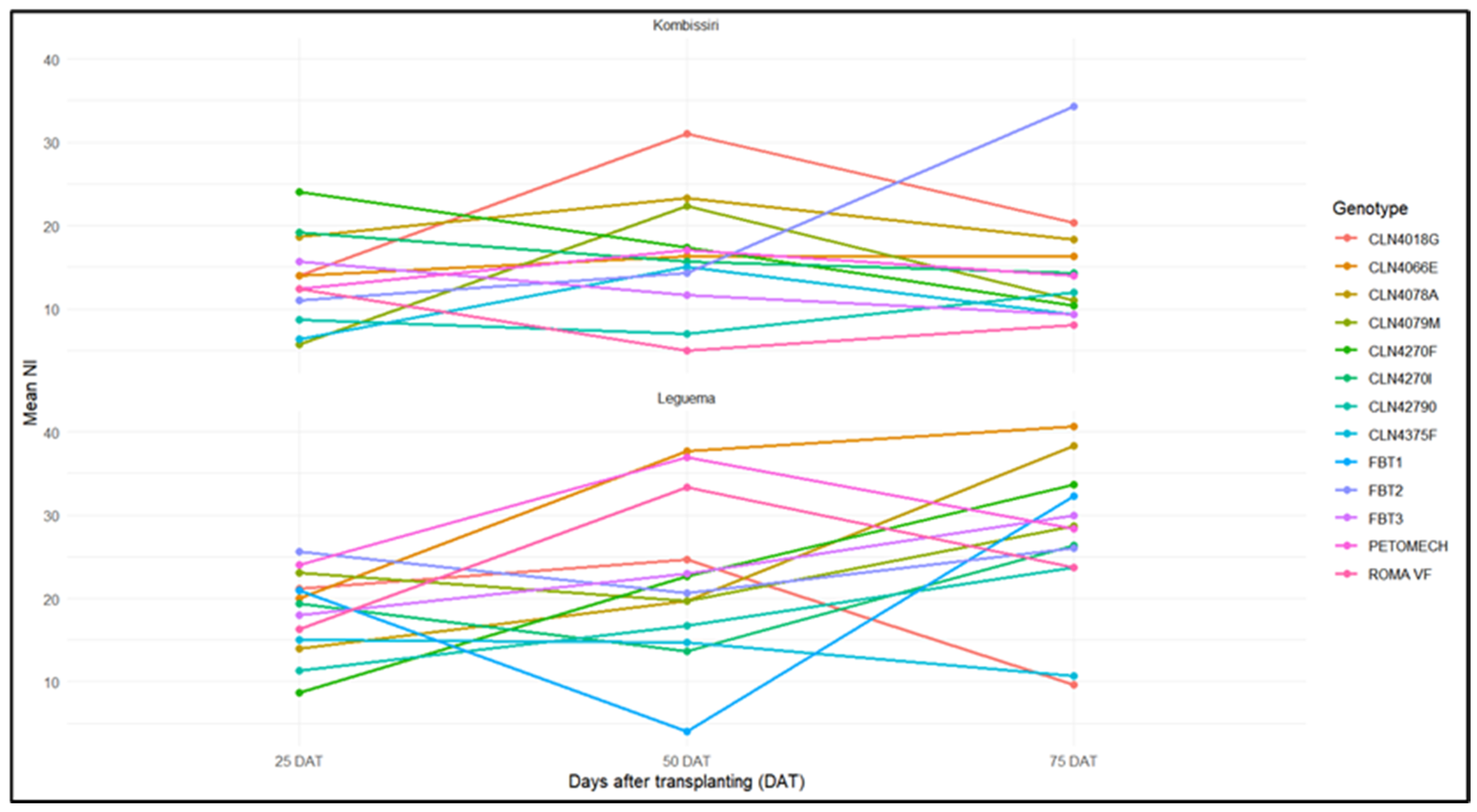
Across both study sites, no significant differences in whitefly abundance were detected among genotypes at 25 (p = 0.98), 50 (p = 0.59), or 75 DAT (p = 0.057) at Leguema, and at 25 (p = 0.44), 50 (p = 0.29), or 75 DAT (p = 0.13) at Kombissiri. Whitefly abundance generally increased from 25 to 50 DAT, followed by stabilization or a slight decline at 75 DAT (Figure 6).

3.4. Agronomic Performance of Tomato Genotypes Across Sites

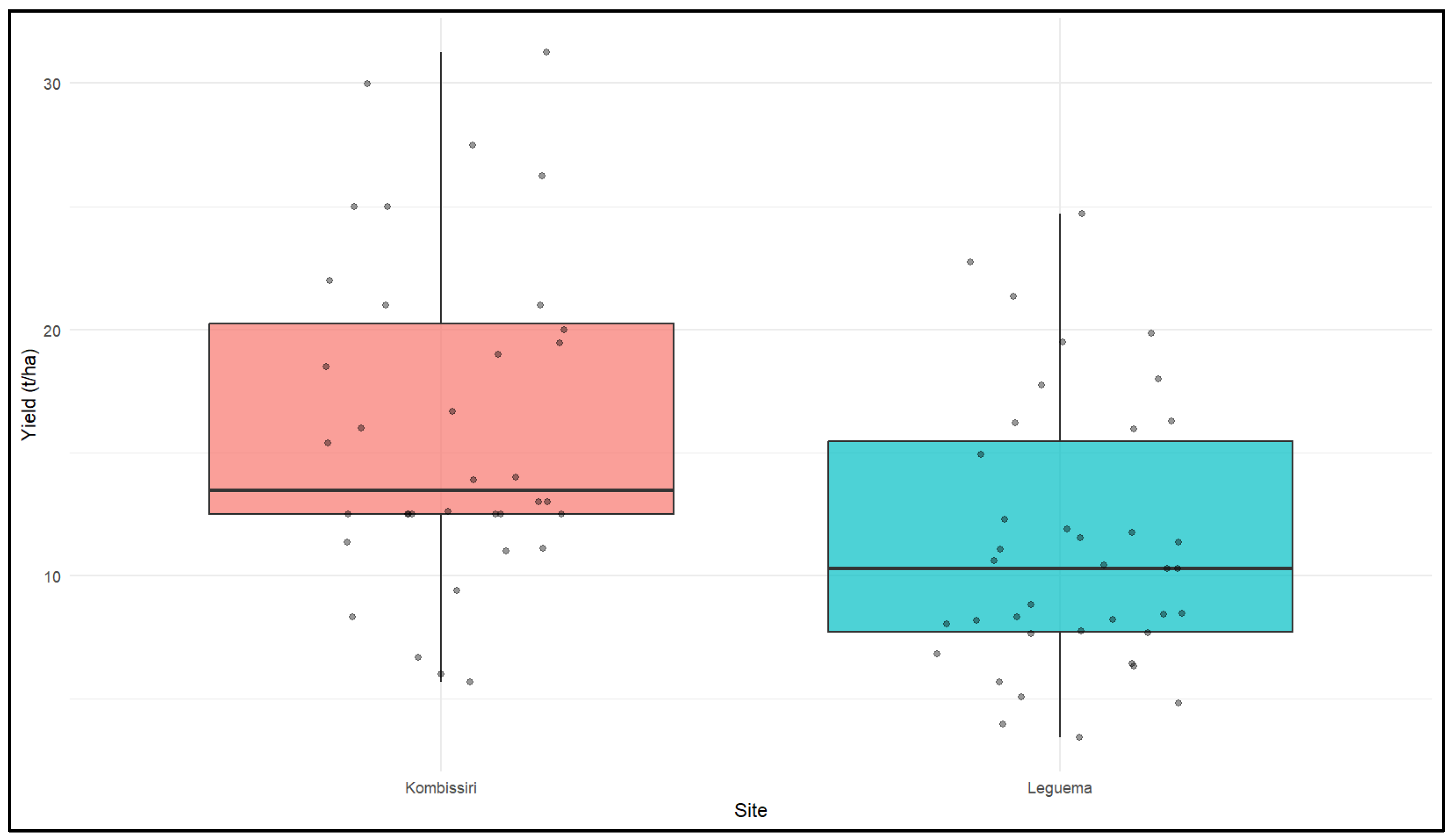
Yield differed significantly between sites (p = 0.000), with a higher mean yield recorded at Kombissiri (16.02 t/ha) compared to Leguema (11.34 t/ha) (Figure 7). Higher yields were recorded at Kombissiri regardless of higher TYLCD incidence and severity, indicating that environmental variables or infection timing may have compensated for viral stress.
At Kombissiri, genotypic effects on yield were significant (p = 0.000). Yields ranged from 8.38 t/ha (CLN4079M) to 29.16 t/ha (CLN4270F) (Table 2). In contrast, no significant genotypic differences were observed at Leguema (p = 0.112), where yields were generally lower. Site and interaction effects were also highly significant. The pooled analysis revealed significant effects of site (p = 0.000), genotype (p = 0.001), and site × genotype interaction (p = 0.006), indicating that genotype performance varied across environments and was not fully consistent between sites. At Kombissiri, CLN4270F recorded the highest yield (29.16 t/ha), followed by CLN4066E (22.66 t/ha) and CLN4375F (21.38 t/ha), whereas PETOMECH (9.00 t/ha) and CLN4079M (8.38 t/ha) were the least productive. Across sites (pooled data), CLN4270F (19.88 t/ha) and CLN4279O (17.40 t/ha) had the highest mean yields, while PETOMECH (8.18 t/ha) and CLN4079M (8.75 t/ha) recorded the lowest overall performance.
Significant genotypic differences (p < 0.001) were observed for plant height and most fruit-related traits (Table 3). Fruit weight ranged from 26.56 g (ROMA VF) to 65.06 g (CLN4279O), while fruit length varied between 4.73 cm and 7.66 cm. Genotypes CLN4279O and CLN4375F produced relatively larger fruits, whereas CLN4078A and PETOMECH were characterized by longer fruits.

3.5. Correlation Between Genotype Performances and Disease Parameters

Pearson’s correlation analysis revealed significant relationships between disease incidence, severity, and genotype performance (Table 4). At 25 DAT, disease incidence and severity were positively correlated (r = 0.6, p < 0.001). Similar patterns were seen at 75 DAT (r = 0.38, p < 0.001). Disease severity at 25 DAT was negatively associated with fruit weight (r = −0.55, p < 0.001). Weak negative correlations were also observed between yield, disease incidence (r = −0.16, p = 0.15), and severity (r = −0.15, p = 0.19) at 25 DAT. In addition, disease incidence (r = −0.37, p = 0.018) and severity (r = −0.27, p = 0.08) were negatively correlated with fruit width.

3.6. Principal Component Analysis

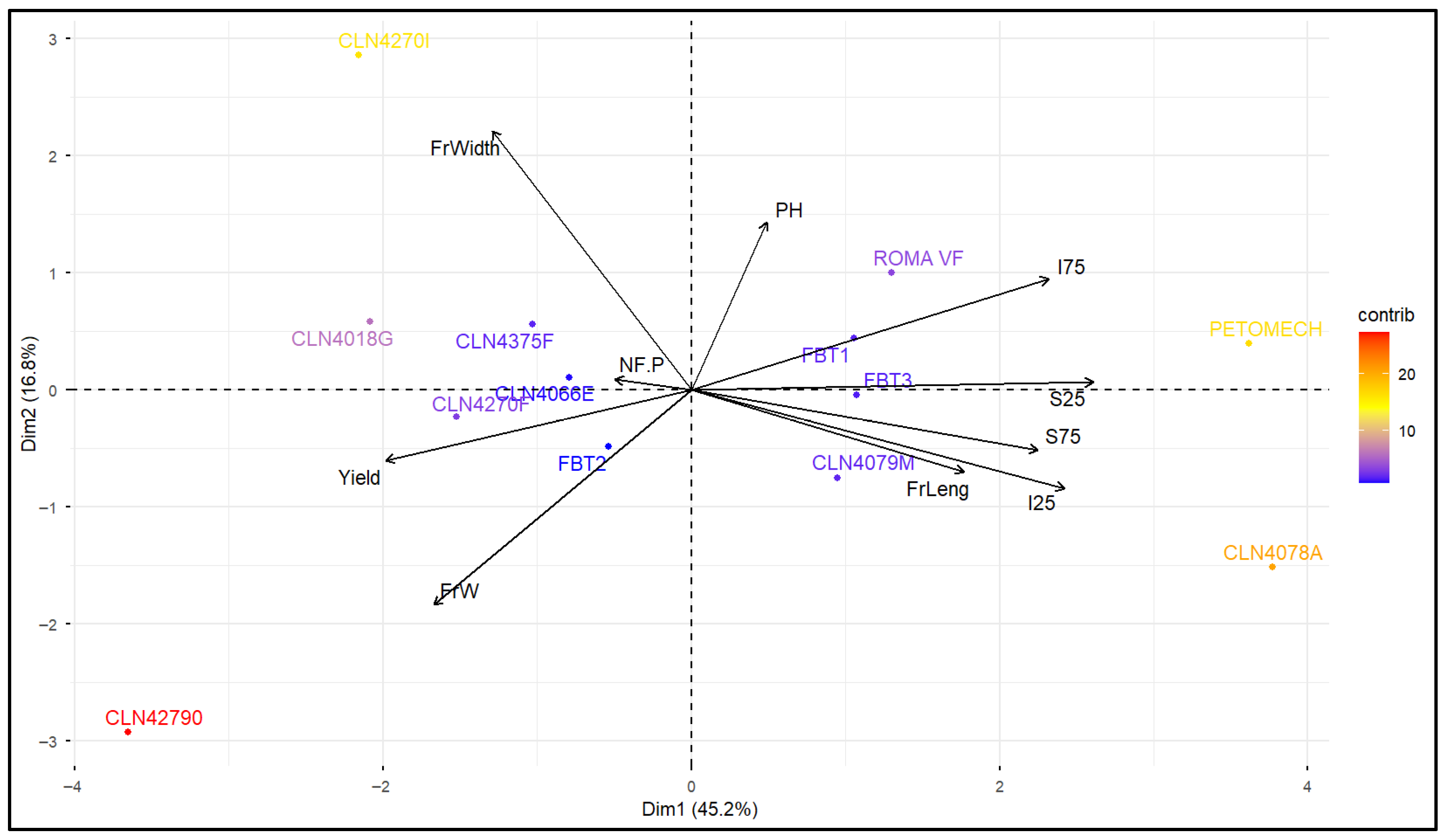
Principal Component Analysis (PCA) identified three principal components (PCs) with eigenvalues exceeding 1, collectively explaining 77.58% of the total variation (Table 5). PC1, PC2, and PC3 accounted for 45.2%, 16.8%, and 15.55% of the variance, respectively. Higher components (PC4–PC10) contributed minimally and were deemed less significant.
Key contributors to PC1 were I25, S25, I75, and S75, with strong squared cosines (cos2 > 0.65). PC1 was strongly associated with disease incidence and severity at both assessment times and represents a disease pressure gradient separating tolerant and susceptible genotypes. PC2 had a high coefficient of variation observed for FrWidth (cos2 = 0.629) and PH (cos2 = 0.264). This axis was mainly influenced by fruit morphological traits. PC3 was associated with productivity traits, such as the number of fruits per plant. The PCA suggests strong interrelationships among disease parameters, while yield-related parameters (FrW, Yield) negatively correlate with disease traits, as evidenced by their opposite loadings. The genotypes are distributed along the principal components based on their scores in the principal component biplot (Figure 8).

3.7. Cluster Analysis

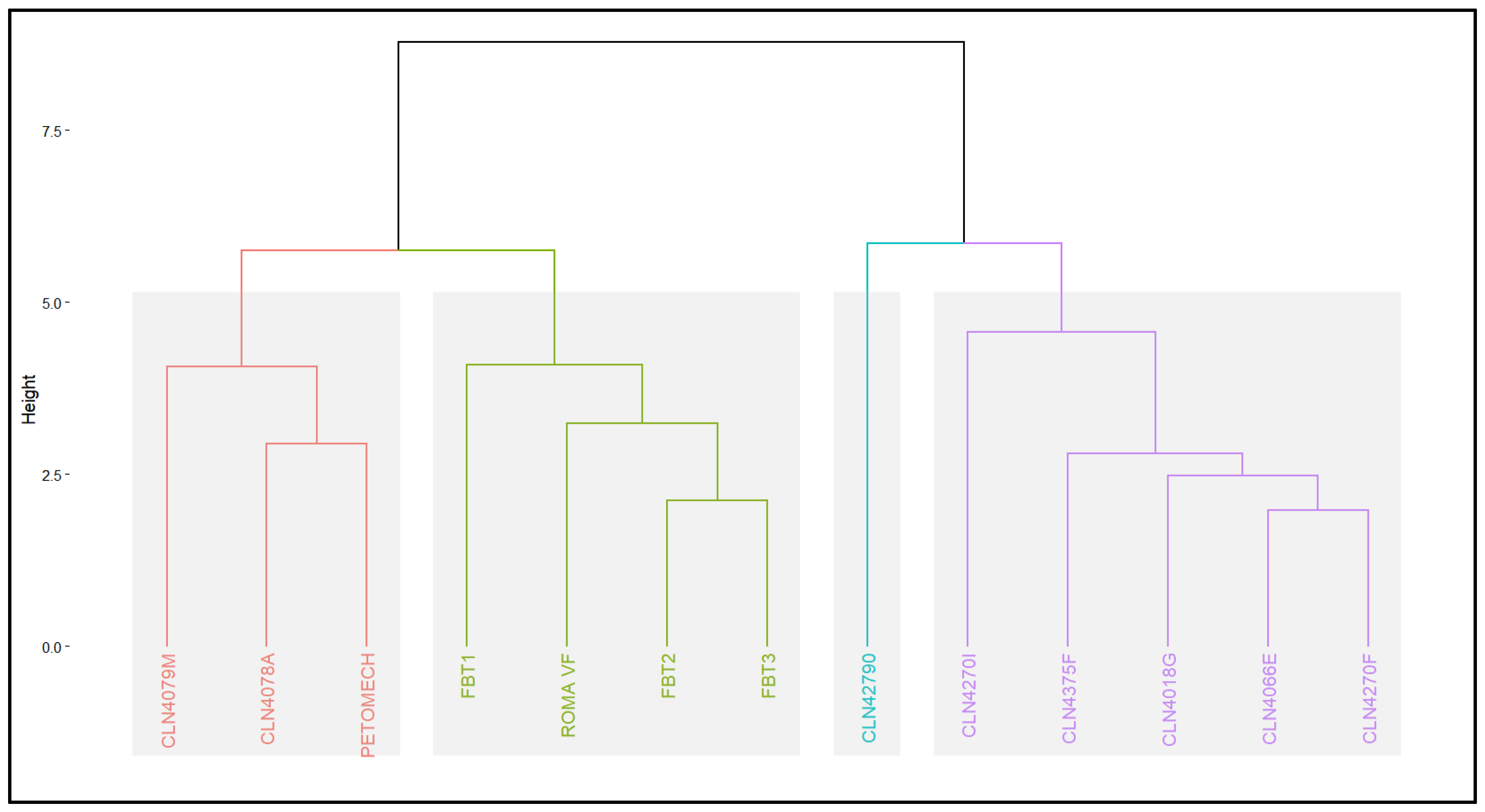
The clustering analysis grouped the genotypes into four clusters (Figure 9). Each cluster represents a group of genotypes with similar characteristics across the given variables (Table 6). Genotypes in cluster 1 have intermediate yields (15.66 t/ha), moderate fruit length (16.84 cm), and higher fruit width (5.1 cm), with fewer fruits per plant (10). This is the largest cluster, with five genotypes: CLN4018G, CLN4066E, CLN4270F, CLN4270I, and CLN4375F. Based on mean trait performance, cluster 1 had the lowest disease incidence at 25 DAT (5–36%) with mild to moderate severity, ranging from 0.4 to 1.6 at 25 DAT and remaining low (1.7–2.5) at 75 DAT. These genotypes exhibit moderate disease resistance with limited progression of severity.
Cluster 2 includes three genotypes, namely CLN4078A, CLN4079M, and PETOMECH. This cluster shows high disease incidence at 25 DAT (41–83%) that remains high at 75 DAT (85–100%), along with moderate disease severity at 25 DAT (1.7–3.6) and a significant increase at 75 DAT (2.5–3.6).
Cluster 3 had only one genotype, CLN4279O, which stands out as the most tolerant genotype, with both low incidence and severity progression. It is also the highest-yielding cluster (17.4 t/ha).
Cluster 4 with FBT1, FBT2, FBT3, and ROMA VF, shows higher susceptibility and severity progression.

4. Discussion

Epidemics of tomato yellow leaf curl disease (TYLCD) have been recurrent in Burkina Faso [11,33]. Therefore, the development or introduction of disease-resistant varieties is one of the most sustainable components of integrated pest management to achieve high tomato productivity [34]. This study assessed the field performance of tomato genotypes carrying Ty resistance genes under natural whitefly pressure in Burkina Faso. Our results showed significant genetic diversity in genotype responses to TYLCD and their agronomic performance, providing valuable insights for selecting adapted, high-yielding, and tolerant varieties for local production [35,36].
TYLCD incidence and severity differed among genotypes, sites, and assessment times. While all tested genotypes exhibited some level of TYLCD symptoms, some lines, including CLN4270I (Ty-1/Ty-3), CLN4270F (Ty-1/Ty-3), CLN4279O (Ty-2), and CLN4018G (Ty-2), displayed consistently lower disease incidence and severity at both sites compared to the susceptible checks, suggesting a relatively higher tolerance than other genotypes. This response can be explained by the underlying mechanisms of Ty resistance genes. Ty-1/Ty-3 are associated with enhanced RNA-dependent RNA polymerase activity, which promotes RNA silencing and reduces viral replication through methylation of viral DNA, conferring tolerance rather than complete immunity, as infected plants may still accumulate low levels of the virus but exhibit reduced or no symptoms [37], while Ty-2 is a resistance gene likely involved in pathogen recognition and activation of defense responses, limiting viral spread within the plant [38,39]. These mechanisms reduce viral accumulation and symptom expression, resulting in lower disease severity and improved plant performance under field conditions. These results are consistent with previous studies demonstrating that resistance genes Ty-1/Ty-3 and Ty-2 confer tolerance to TYLCD [4,18,24,40].
In this study, genotypes carrying the pyramided Ty-1/Ty-3 + Ty-2 genes did not show improved tolerance compared with single-gene carriers and even exhibited greater susceptibility at both study sites. This observation is consistent with some previous reports indicating that combining Ty-2 with other resistance genes does not necessarily enhance resistance [41]. However, genotypes with a single gene might have other unidentified genes in their background [41]. Additionally, the genetic architecture of Ty-2, which is located in a chromosomal region with suppressed recombination, may lead to the co-introduction of linked genomic segments that negatively affect resistance to TYLCD conferred by other Ty genes [41]. In addition, resistance expression is likely influenced by the local epidemiological context [42]. Burkina Faso is characterized by high begomovirus diversity and continuous pressure from Bemisia tabaci, which may affect the effectiveness of specific resistance genes [8,43,44]. In the absence of molecular characterization of viral populations in the study sites, it is possible that strain variability or mixed infections contributed to the reduced performance of pyramided genotypes. Therefore, the lack of viral strain (s) identification and quantification limits the interpretation of resistance responses and highlights the need to integrate molecular diagnostics into future evaluations [45].
Regarding whitefly prevalence, the insect did not exhibit any preference among either growth stages or genotypes as reported earlier [17,46]. However, varietal preferences of whiteflies were observed in tomato crops in Ghana, where some varieties attracted fewer whiteflies than others [18]. This varietal preference was attributed to traits such as leaf size, plant aromas, plant airiness, or biochemical traits such as acyl sugar content and composition [18,47].
The correlation matrix revealed partly significant relationships between disease parameters and genotypes’ performance. Disease incidence and severity in early stages negatively affected fruit weight, size, and yield. Similar trends were reported earlier [4]. The negative correlation between disease severity and yield components shows the importance of early TYLCD management to reduce yield losses [4,24]. Management strategies targeting disease control in nurseries and early after transplanting could significantly mitigate yield and quality losses. However, despite higher TYLCD incidence and severity at Kombissiri, several genotypes produced higher yields at this site. This suggests that visual symptom expression does not always directly translate into proportional productivity loss [48]. The timing of infection, environmental conditions, field history, host–pathogen interactions, and crop management also contributed to yield variation [48].
Multivariate analysis, including PCA and hierarchical clustering, highlighted the role of both disease tolerance and agronomic traits in differentiating genotypes [49,50]. Components with eigenvalues greater than 1 are considered significant [50]; in this study, the first three PCs explained most of the variation among the 13 genotypes. Thus, the primary factors discriminating genotypes were their susceptibility to TYLCD and their yield. The biplot of PC1 and PC2 illustrates the distribution of genotypes and traits, showing distinct groupings of genotypes based on evaluated characteristics. Genotypes CLN4270I, CLN4270F, CLN4018G, and CLN4279O emerged as promising candidates combining yield potential and relative disease tolerance. From an integrated pest management perspective, these genotypes offer potential for integration into sustainable tomato production systems in Burkina Faso.
However, the study relied on visual severity scoring and did not include TYLCV strain identification, whitefly biotype characterization, or quantitative viral load assessment. Moreover, the trials were conducted during a single growing season. Given the high genetic diversity and recombination potential of begomoviruses [7], the presence of different or mixed virus populations across sites may have influenced the observed variation in disease response among genotypes. Future research should include repeated trials across seasons by integrating molecular diagnostics, strain identification, viral load assessment and controlled inoculation assays, thereby strengthening understanding of resistance mechanisms and the durability of Ty genes under Burkina Faso conditions. Despite these limitations, the present study establishes a critical baseline for evaluating and integrating TYLCD-tolerant genotypes into sustainable cropping systems in Burkina Faso.

5. Conclusions

This study evaluated the response of 13 tomato genotypes to TYLCD under field conditions in western and central Burkina Faso. While all genotypes exhibited symptoms of TYLCD to varying degrees, some genotypes demonstrated tolerance to the disease, exhibiting lower incidences and severities (CLN4279O, CLN4270I, CLN4270F, and CLN4018G), while others were more susceptible (CLN4079M, CLN4066E, CLN4078A). All check varieties without Ty resistance genes showed a susceptible reaction (FBT2, FBT3, ROMA VF, PETOMECH, and FBT1). However, the inconsistent performance of genotypes carrying pyramided resistance genes (Ty-1/Ty-3 + Ty-2) shows the complex interaction between host genetic background, viral strain, and possibly other factors that may have influenced overall plant yield. To enhance decision-making, further evaluations under insect-proof net conditions are recommended to assess the yield potential of the genotypes, independent of whitefly pressure. Molecular diagnostics should be conducted to identify the specific TYLCV strains present. Additionally, raising farmers’ awareness through targeted training on TYLCD management will ensure sustainable tomato production and broader adoption of resistant varieties.

Author Contributions

Conceptualization, S.S.S.O., M.K., M.A.T.A., L.A.A., A.S.T. and R.S.; Methodology, S.S.S.O., M.K., M.A.T.A., L.A.A., A.S.T. and R.S.; Investigation, S.S.S.O.; Data curation, S.S.S.O.; Formal analysis, S.S.S.O., M.K. and M.A.T.A.; Supervision, M.K. and R.S.; Writing—original draft preparation, S.S.S.O. and M.K.; Writing—review and editing, M.K., M.A.T.A., L.A.A., A.S.T. and R.S.; Validation, R.S., M.K., L.A.A., A.S.T. and M.A.T.A. All authors have read and agreed to the published version of the manuscript.

Funding

This research was funded by the European Union and the Ministry of Foreign Affairs of the Netherlands through the project “Safe locally produced vegetables for West Africa’s consumers (SafeVeg)”—ID-4000003936, part of the DeSIRA program and implemented by the World Vegetable Center, CIRAD and Wageningen University & Research (WUR), and national partners, the Institut National des Recherches Agricoles du Bénin (INRAB), Institut de l’Environnement et de Recherches Agricoles (INERA, Burkina Faso), and Institut d’Economie Rurale (IER, Mali). We thank the strategic donors of the World Vegetable Center, including Taiwan, the United Kingdom, the United States, Australia, Germany, Thailand, the Philippines, South Korea, and Japan.

Data Availability Statement

The data that support the findings of this study are available upon request.

Conflicts of Interest

The authors declare no conflicts of interest. The funders had no role in the design of the study; in the collection, analyses, or interpretation of data; in the writing of the manuscript; or in the decision to publish the results.

Abbreviations

The following abbreviations are used in this manuscript:
DASDays After Sowing
DATDays After Transplanting
DeSIRADevelopment Smart Innovation through Research in Agriculture
FAOFood and Agriculture Organization of the United Nations
FBTFarako-Bâ Tomate
FrLengFruit Length
FrWFruit Weight
FrWidthFruit Width
I25Disease incidence at 25 days after transplanting
I75Disease incidence at 75 days after transplanting
INERAEnvironment and Agricultural Research Institute
NF/PNumber of Fruits per Plant
PCAPrincipal Component Analysis
PHPlant Height
RCBDRandomized Complete Block Design
S25Disease severity at 25 days after transplanting
S75Disease severity at 75 days after transplanting
SafeVegSafe locally produced vegetables for consumers in West Africa
TYLCDTomato Yellow Leaf Curl Disease
TYLCVTomato Yellow Leaf Curl Virus
WorldVegWorld Vegetable Center

References

  1. FAO. Statistical Database; Food and Agriculture Organization of the United Nations: Rome, Italy, 2025; Available online: http://www.fao.org/faostat/en/#data/QC (accessed on 8 June 2025).
  2. Ouattara, S.S.S.; Konate, M. The Tomato: A Nutritious and Profitable Vegetable to Promote in Burkina Faso. Alex. Sci. Exch. J. 2024, 45, 11–20. [Google Scholar] [CrossRef]
  3. Péréfarres, F.; Thierry, M.; Becker, N.; Lefeuvre, P.; Reynaud, B.; Delatte, H.; Lett, J.M. Biological invasions of geminiviruses: Case study of TYLCV and Bemisia tabaci in Reunion Island. Viruses 2012, 4, 3665–3688. [Google Scholar] [CrossRef]
  4. Elbaz, M.; Peter, H.; Salah, F.; Asma, L. Evaluation of tomato entries with different combinations of resistance genes to tomato yellow leaf curl disease in Tunisia. Plant Breed. 2016, 135, 525–530. [Google Scholar] [CrossRef]
  5. Samaké, I.; Kéïta, G.K.; Diarra, S.; Sidibé, J.; Sidibé, A. Évaluation participative des méthodes de lutte contre la maladie des feuilles jaunes en cuillère de la tomate (TYLCV). Rev. Malienne Sci. Technol. 2020, 1, 103–113. [Google Scholar]
  6. Nzi, J.C.; Kouamé, C.; N’Guetta, A.S.P.; Fondio, L.; Djidji, A.H.; Sangaré, A. Evolution des populations de Bemisia tabaci Genn. selon les variétés de tomate (Solanum lycopersicum L.) au Centre de la Côte d’Ivoire. Sci. Nat. 2010, 7, 31–140. [Google Scholar] [CrossRef]
  7. Ouattara, A. Epidémiologie Moléculaire des Géminivirus Responsables de Maladies Émergentes sur les Cultures Maraîchères au Burkina Faso. Doctoral Dissertation, Université de la Réunion-Université Joseph Ki-Zerbo, Ouagadougou, Burkina Faso, 2017. [Google Scholar]
  8. Ouattara, A.; Tiendrebeogo, F.; Lefeuvre, P.; Hoareau, M.; Claverie, S.; Allibert, A.; Chiroleu, F.; Traoré, E.V.; Barro, N.; Traoré, O. Diversity, distribution and prevalence of vegetable-infecting geminiviruses in Burkina Faso. Plant Pathol. 2020, 69, 379–392. [Google Scholar] [CrossRef]
  9. Gnankine, O.; Mouton, L.; Savadogo, A.; Martin, T.; Sanon, A.; Dabire, R.K.; Vavre, F.; Fleury, F. Biotype status and resistance to neonicotinoids and carbosulfan in Bemisia tabaci (Hemiptera: Aleyrodidae) in Burkina Faso, West Africa. Int. J. Pest Manag. 2013, 59, 95–102. [Google Scholar] [CrossRef]
  10. Son, D.; Somda, I.; Legreve, A.; Schiffers, B. Pratiques phytosanitaires des producteurs de tomates du Burkina Faso et risques pour la santé et l’environnement. Cah. Agric. 2017, 26, 25005. [Google Scholar] [CrossRef]
  11. Ouattara, S.S.S.; Konate, M.; Ayenan, M.A.T.; Zoungrana, M.; Ouédraogo, B.M.B.; Schafleitner, R. Tomato yellow leaf curl disease, prevalent yet misunderstood in Burkina Faso. Ghana J. Agric. Sci. 2025, 59, 62–75. [Google Scholar]
  12. Son, D.; Zerbo, F.K.B.; Bonzi, S.; Legreve, A.; Somda, I.; Schiffers, B. Assessment of Tomato (Solanum lycopersicum L.) Producers′ Exposure Level to Pesticides, in Kouka and Toussiana (Burkina Faso). Int. J. Environ. Res. Public Health 2018, 15, 204. [Google Scholar] [CrossRef] [PubMed] [PubMed Central]
  13. Lapidot, M.; Legg, J.P.; Wintermantel, W.M.; Polston, J.E. Management of whitefly-transmitted viruses in open-field production systems. In Advances in Virus Research; Elsevier: Amsterdam, The Netherlands, 2014; Volume 90, pp. 147–206. [Google Scholar]
  14. Jones, R.A.C. Control of plant virus diseases. Adv. Virus Res. 2006, 67, 205–244. [Google Scholar] [PubMed]
  15. Ricci, P.; Bui, S.; Lamine, C. Répenser la Protection des Cultures: Innovations et Transitions, 1st ed.; Editions Quae: Versailles Cedex, France, 2011; p. 249. [Google Scholar]
  16. Maumy, L.; Harrissart, G.; Dewaele, P.; Aljaber, A.; Bonneau, C.; Rouzier, R.; Eliès, A. Impact des régimes alimentaires sur la mortalité et le risque de récidive de cancer du sein: Revue de la littérature. Bull. Cancer 2020, 107, 61–71. [Google Scholar] [CrossRef]
  17. Soro, S.; Doumbia, M.; Dao, D.; N’da, A.H.B.; Kouakou, A.E.; Girardin, O.; Tschannen, A.; Tano, Y. Evaluation de la sensibilité à Bemisia tabaci (Gen) de 13 variétés de tomate (Lycopersicon esculentum Mill.) et expression des symptômes de la jaunisse en cuillère des feuilles (TYLCV) en Côte d’Ivoire. Agron. Afr. 2007, 19, 241–249. [Google Scholar] [CrossRef]
  18. Segbefia, M.M.; Amoatey, H.M.; Ahiakpa, J.K.; Quartey, E.K.; Appiah, A.S.; Nunoo, J.; Kusi-Adjei, R. Field evaluation of tomato varieties/breeding lines against tomato yellow leaf curl virus disease (TYLCV). Pertanika J. Trop. Agric. Sci. 2018, 41, 423–440. [Google Scholar]
  19. Camara, M.; Mbaye, A.A.; Samba, S.A.N.; Gueye, T.; Noba, K.; Diao, S.; Cilas, C. Etude de la productivité et de la sensibilité de diverses variétés de tomate (Lycopersicon esculentum Mill) à la virose du jaunissement et de l’enroulement en cuillère des feuilles au Sénégal. Int. J. Biol. Chem. Sci. 2013, 7, 2504–2512. [Google Scholar] [CrossRef]
  20. Hossain, M.F.; Akanda, A.M.; Hossain, M.M.; Ahmed, J.U. Screening of tomato genotypes against tomato purple vein virus. Ann. Bangladesh Agric. 2017, 21, 89–97. [Google Scholar]
  21. Ji, Y.; Schuster, D.J.; Scott, J.W. Ty-3, a begomovirus resistance locus near the Tomato yellow leaf curl virus resistance locus Ty-1 on chromosome 6 of tomato. Mol. Breed. 2007, 20, 271–284. [Google Scholar] [CrossRef]
  22. Zamir, D.; Ekstein-Michelson, I.; Zakay, Y.; Navot, N.; Zeidan, M.; Sarfatti, M.; Eshed, Y.; Harel, E.; Pleban, T.; Van-Oss, H.; et al. Mapping and introgression of a tomato yellow leaf curl virus tolerance gene, Ty-1. Theor. Appl. Genet. 1994, 88, 141–146. [Google Scholar] [CrossRef]
  23. Hutton, S.F.; Scott, J.W. Ty-6, a major begomovirus resistance gene located on chromosome 10. Rept. Tomato Genet. Coop. 2014, 64, 14–18. [Google Scholar]
  24. Prabhandakavi, P.; Pogiri, R.; Kumar, R.; Acharya, S.; Esakky, R.; Chakraborty, M.; Pinnamaneni, R.; Palicherla, S.R. Pyramiding Ty-1/Ty-3, Ty-2, ty-5 and ty-6 genes into tomato hybrid to develop resistance against tomato leaf curl viruses and recurrent parent genome recovery by ddRAD sequencing method. J. Plant Biochem. Biotechnol. 2021, 30, 462–476. [Google Scholar] [CrossRef]
  25. De Hoop, S.J. Solanaceous vegetable crop breeding developments in Southeast and South Asia. In Proceedings of the International Conferences on Solanaceae Resistance Breeding Technologies, Genetics and Genomics, Chiangmai, Thailand, 17–19 February 2011; pp. 17–19. [Google Scholar]
  26. Tabein, S.; Behjatnia, S.A.A.; Laviano, L.; Pecchioni, N.; Accotto, G.P.; Noris, E.; Miozzi, L. Pyramiding Ty-1/Ty-3 and Ty-2 in tomato hybrids dramatically inhibits symptom expression and accumulation of tomato yellow leaf curl disease inducing viruses. Arch. Phytopathol. Plant Prot. 2017, 50, 213–227. [Google Scholar] [CrossRef]
  27. Wang, Y.; Jiang, J.; Zhao, L.; Zhou, R.; Yu, W.; Zhao, T. Application of whole genome resequencing in mapping of a tomato yellow leaf curl virus resistance gene. Sci. Rep. 2018, 8, 9592. [Google Scholar] [CrossRef]
  28. Lapidot, M.; Friedmann, M. Breeding for resistance to whitefly-transmitted geminiviruses. Ann. Appl. Biol. 2002, 140, 109–127. [Google Scholar] [CrossRef]
  29. Osei, M.K.; Akromah, R.; Shih, S.L.; Green, S.K. Evaluation of some tomato germplasm for resistance to Tomato yellow leaf curl virus (TYLCV) disease in Ghana. Appl. Biol. 2010, 96, 315–323. [Google Scholar]
  30. NASA Langley Research Center NA and SA. NASA Prediction of Worldwide Energy Resources (POWER)—Daily Mean Temperature and Relative Humidity for Kombissiri and Leguema (November 2022–April 2023); NASA POWER Database; NASA Langley Research Center NA and SA: Hampton, VA, USA, 2025. [Google Scholar]
  31. Lapidot, M.; Ben-Joseph, R.; Cohen, L.; Machbash, Z.; Levy, D. Development of a scale for evaluation of Tomato yellow curl virus resistance level in tomato plants. Phytopathology 2006, 96, 1404–1408. [Google Scholar] [CrossRef]
  32. Team RS. RStudio: Integrated Development Environment for R; RStudio, PBC: Boston, MA, USA, 2023. [Google Scholar]
  33. Sattar, M.N.; Koutou, M.; Hosseini, S.; Leke, W.N.; Brown, J.K.; Kvarnheden, A. First identification of begomoviruses infecting tomato with leaf curl disease in Burkina Faso. Plant Dis. 2015, 99, 732. [Google Scholar] [CrossRef]
  34. Tester, M.; Langridge, P. Breeding technologies to increase crop production in a changing world. Science 2010, 327, 818–822. [Google Scholar] [CrossRef]
  35. Dube, J.; Ddamulira, G.; Maphosa, M. Tomato breeding in sub-Saharan Africa-Challenges and opportunities: A review. Afr. Crop Sci. J. 2020, 28, 131–140. [Google Scholar]
  36. Mahmoud, A.M.A.; Hassan, A.A.; Abdel-Ati, K.E.A.; Osman, N.H.; Mohamed, H.A.A. Exploring Ty resistance genes and genetic diversity in improved tomato lines selected from commercial hybrids. BMC Plant Biol. 2025, 25, 1213. [Google Scholar] [CrossRef]
  37. Verlaan, M.G.; Hutton, S.F.; Ibrahem, R.M.; Kormelink, R.; Visser, R.G.F.; Scott, J.W.; Edwards, J.D.; Bai, Y. The tomato yellow leaf curl virus resistance genes Ty-1 and Ty-3 are allelic and code for DFDGD-class RNA–dependent RNA polymerases. PLoS Genet. 2013, 9, e1003399. [Google Scholar] [CrossRef]
  38. Kim, M.; Park, Y.; Lee, J.; Sim, S.C. Development of molecular markers for Ty-2 and Ty-3 selection in tomato breeding. Sci. Hortic. 2020, 265, 109230. [Google Scholar] [CrossRef]
  39. Yamaguchi, H.; Ohnishi, J.; Saito, A.; Ohyama, A.; Nunome, T.; Miyatake, K.; Fukuoka, H. An NB-LRR gene, TYNBS1, is responsible for resistance mediated by the Ty-2 Begomovirus resistance locus of tomato. Theor. Appl. Genet. 2018, 131, 1345–1362. [Google Scholar] [CrossRef]
  40. Vijeth, S.; Dhaliwal, M.S.; Jindal, S.K.; Sharma, A. Evaluation of tomato hybrids for resistance to leaf curl virus disease and for high-yield production. Hortic. Environ. Biotechnol. 2018, 59, 699–709. [Google Scholar] [CrossRef]
  41. Shimoide, M.; Nakajima, M.; Pohan, N.S.; Kesumawati, E.; Koeda, S. Integration of Ty-1/Ty-3 and Ty-6 confers improved and durable resistance to highly pathogenic begomoviruses in tomato. Euphytica 2026, 222, 67. [Google Scholar] [CrossRef]
  42. Prasanna, H.C.; Sinha, D.P.; Rai, G.K.; Krishna, R.; Kashyap, S.P.; Singh, N.K.; Singh, M.; Malathi, V.G. Pyramiding T y-2 and T y-3 genes for resistance to monopartite and bipartite tomato leaf curl viruses of India. Plant Pathol. 2015, 64, 256–264. [Google Scholar] [CrossRef]
  43. Leke, W.N.; Mignouna, D.B.; Brown, J.K.; Kvarnheden, A. Begomovirus disease complex: Emerging threat to vegetable production systems of West and Central Africa. Agric. Food Secur. 2015, 4, 1. [Google Scholar] [CrossRef]
  44. Avedi, E.K.; Adediji, A.O.; Kilalo, D.C.; Olubayo, F.M.; Macharia, I. Incidence, severity and distribution of yellow leaf curl disease of tomato in Kenya. Afr. Crop Sci. J. 2022, 30, 1–11. [Google Scholar] [CrossRef]
  45. Chen, H.M.; Lin, C.Y.; Yoshida, M.; Hanson, P.; Schafleitner, R. Multiplex PCR for detection of tomato yellow leaf curl disease and root-knot nematode resistance genes in tomato (Solanum lycopersicum L.). Int. J. Plant Breed. Genet. 2015, 9, 44–56. [Google Scholar] [CrossRef]
  46. Pohl, D.; Wege, C. Synergistic pathogenicity of a phloem-limited begomovirus and tobamoviruses, despite negative interference. J. Gen. Virol. 2007, 88, 1034–1040. [Google Scholar] [CrossRef] [PubMed]
  47. Marchant, W.G.; Legarrea, S.; Smeda, J.R.; Mutschler, M.A.; Srinivasan, R. Evaluating Acylsugars-Mediated Resistance in Tomato against Bemisia tabaci and Transmission of Tomato Yellow Leaf Curl Virus. Insects 2020, 11, 842. [Google Scholar] [CrossRef] [PubMed]
  48. Bock, C.H.; Poole, G.H.; Parker, P.E.; Gottwald, T.R. Plant Disease Severity Estimated Visually, by Digital Photography and Image Analysis, and by Hyperspectral Imaging. CRC Crit. Rev. Plant Sci. 2010, 29, 59–107. [Google Scholar] [CrossRef]
  49. Sharma, J.R. Statistical and biometrical techniques in plant breeding. Indian J. Genet. Plant Breed. 2001, 61, 391–392. [Google Scholar]
  50. Bhanupriya, D.B.K.; Satyanarayana, N.H.; Mukherjee, S.; Sarkar, K.K. Genetic diversity of wheat genotypes based on principal component analysis in Gangetic alluvial soil of West Bengal. J. Crop Weed 2014, 10, 104–107. [Google Scholar]
Figure 1. Map of Burkina Faso showing the two study areas, Leguema (South Sudanian zone) and Kombissiri (North Sudanian zone), where field evaluations were conducted.
Agronomy 16 00995 g001
Figure 2. Daily mean temperature (°C) and relative humidity (%) recorded at Kombissiri and Leguema from November 2022 to April 2023. Solid lines represent Kombissiri, while dashed lines represent Leguema. Temperature (°C) is shown in red and relative humidity (%) in blue. The data were obtained from the National Aeronautics and Space Administration (NASA) Langley Research Center’s Prediction Of Worldwide Energy Resources (POWER) project funded through the NASA Earth Science Division, Hampton, VA, USA [30].
Agronomy 16 00995 g002
Figure 3. TYLCV symptom severity scale (0–4) used for disease assessment. 0 = no symptoms; 1 = slight yellowing (mild); 2 = leaf curling and yellowing (moderate); 3 = yellowing, curling and cupping (severe); 4 = severe stunting, curling and cupping, with cessation of plant growth (very severe) [28].
Agronomy 16 00995 g003
Figure 4. Mean tomato yellow leaf curl disease (TYLCD) incidence (%) at 25 and 75 days after transplanting (DAT) for tomato genotypes at Kombissiri and Leguema. Disease incidence was calculated as the proportion of symptomatic plants relative to the total number of plants per plot, expressed as a percentage. Bars represent mean ± standard error. Genotypes sharing the same letter within a given assessment time and site are not significantly different according to Tukey’s HSD (p > 0.05).
Agronomy 16 00995 g004
Figure 5. Mean tomato yellow leaf curl disease (TYLCD) severity at 25 and 75 days after transplanting (DAT) for tomato genotypes at Kombissiri and Leguema. Symptom severity was assessed on a 0–4 scale (0 = no symptoms; 4 = severe stunting and cessation of growth). Bars represent means ± standard error. Genotypes sharing the same letter within a given assessment time and site are not significantly different according to Tukey’s HSD (p > 0.05).
Agronomy 16 00995 g005
Figure 6. Mean number of Bemisia tabaci adults per tomato genotype at Kombissiri and Leguema, recorded at 25, 50 and 75 Days After Transplanting (DAT). Adult whiteflies were counted on three randomly selected plants per plot, and values represent the mean number of adults per plant per genotype at each assessment date. No significant differences among genotypes were observed at each sampling time (p > 0.05).
Agronomy 16 00995 g006
Figure 7. Boxplots showing the distribution of tomato genotypes’ yield (t/ha) at Kombissiri and Leguema. Yield differed significantly between sites (p = 0.001).
Agronomy 16 00995 g007
Figure 8. Biplot based on the first two principal component axes (PC1 and PC2) for 13 tomato genotypes evaluated under field conditions in Burkina Faso. PC1 and PC2 together explain 62.04% of the total variance. Arrows represent trait loadings, and proximity indicates correlation between genotypes and traits. I25: disease incidence at 25 days after transplanting, S25: disease severity at 25 days after transplanting, I75: disease incidence at 75 days after transplanting, S75: disease severity at 75 days after transplanting, PH: plant height, NF/P: Number of fruits per plant, FrW: Average fruit weight, FrLeng: Fruit length, FrWidth: Fruit width.
Agronomy 16 00995 g008
Figure 9. Hierarchical clustering dendrogram of 13 tomato genotypes based on Euclidean distance computed from standardized traits and clustered using Ward’s minimum variance method (Ward.D2).
Agronomy 16 00995 g009
Table 1. Tomato genotypes used in the field evaluation in Burkina Faso and their documented genes of resistance to diseases.
GenotypeResistance Gene (s)SourceStatus
1CLN4018GTy-2, BW12, Bwr6WorldVegTest line
2CLN4066ETy-1/Ty-3, Ty-2 and BW12WorldVegTest line
3CLN4078ATy-1/Ty-3, Ty-2 and BW12WorldVegTest line
4CLN4079MTy-1/Ty-3, Ty-2 and BW12WorldVegTest line
5CLN4270FTy-1/Ty-3, BW12, Bwr6WorldVegTest line
6CLN4270ITy-1/Ty-3, BW12, Bwr6WorldVegTest line
7CLN4279OTy-2, BW12, Bwr6WorldVegTest line
8CLN4375FTy-1/Ty-3, Ty-5 and BW12WorldVegTest line
9FBT1UnknownINERATest line
10FBT2UnknownINERATest line
11FBT3UnknownINERATest line
12PETOMECHUnknownMarketCheck (susceptible)
13ROMA VFUnknownMarketCheck (susceptible)
WorldVeg: World Vegetable Center, INERA: Environment and Agricultural Research Institute (Burkina Faso), Ty = gene conferring resistance to tomato yellow leaf curl disease (TYLCD), BW = gene conferring resistance to bacterial wilt, FBT: Farako-Bâ Tomate.
Table 2. Mean yield (t/ha) of tomato genotypes evaluated in open field at Kombissiri and Leguema, including pooled means across sites.
GenotypesKombissiriLeguemaPooled Data
Yield (t/ha)Yield (t/ha)Yield (t/ha)
CLN4018G14.81 bc12.7 a13.76 abc
CLN4066E22.66 ab8.9 a15.79 abc
CLN4078A12 bc8.79 a10.39 abc
CLN4079M8.38 c9.12 a8.75 bc
CLN4270F29.16 a10.6 a19.88 a
CLN4270I15.62 bc9.41 a12.51 abc
CLN4279O13.46 bc21.34 a17.4 ab
CLN4375F21.38 ab11.32 a16.35 abc
FBT1-9.83 a9.83 abc
FBT215.7 abc15.37 a15.53 abc
FBT316 abc14.94 a15.47 abc
PETOMECH9 c7.36 a8.18 c
ROMA VF14.28 bc7.72 a11 abc
Means followed by the same letter within a column are not significantly different according to Tukey’s HSD test (p < 0.05). FBT = Farako-Bâ Tomate.
Table 3. Plant height and fruit-related traits of tomato genotypes evaluated in Burkina Faso.
GenotypesPH (cm)NF/PFrW (g)FrLeng (cm)FrWidth (cm)
CLN4078A58 a9 a38.85 ab7.66 a3.46 c
PETOMECH56.7 ab10 a28.27 b7 ab4.5 bc
ROMA VF56.1 ab11 a26.56 b4.83 cd4.33 bc
CLN4375F56 ab8 a54.33 ab5.83 abcd4.9 abc
CLN4079M55 abc7 a49.4 ab6.83 ab3.83 bc
CLN4066E54.8 abc8 a43.84 ab5.5 bcd4.66 bc
CLN4270F54.4 abc10 a42.85 ab6 abcd4.66 bc
CLN4270I53 abcd13 a30.76 b6 abcd6.33 a
FBT351.6 abcd17 a34.44 ab6 abcd4.33 bc
CLN4018G50.6 bcd10 a45.06 ab4.73 d4.93 abc
FBT250.28 bcd14 a44 ab5.33 bcd4.33 bc
FBT148.9 cd11 a34.59 ab6.66 abc5.16 ab
CLN4279046.8 d13 a65.06 ab5.75 abcd4.16 bc
Means followed by the same letter within a column are not significantly different according to Tukey’s HSD test (p < 0.05). PH: plant height; NF/P: number of fruits per plant; FrW: fruit weight; FrLeng: fruit length; FrWidth: fruit width.
Table 4. Pearson’s correlation coefficients among disease incidence, severity, and agronomic traits of 13 tomato genotypes evaluated under field conditions in Burkina Faso.
TraitsI25S25I75S75FrWYieldFrLengFrWidth
I25
S250.60 ***
I750.43 ***0.34 **
S750.38 ***0.4 ***0.43 ***
FrW−0.31 *−0.55 ***−0.33 *−0.35 *
Yield−0.16 −0.15−0.09−0.110.56 ***
FrLeng0.52 ***0.53 ***0.140.310.01−0.08
FrWidth−0.37 *0.070.01−0.27−0.23−0.08−0.1
I25: disease incidence at 25 days after transplanting, S25: disease severity at 25 days after transplanting, I75: disease incidence at 75 days after transplanting, S75: disease severity at 75 days after transplanting, FrW: Average fruit weight, FrLeng: Fruit length, FrWidth: Fruit width. *: p < 0.05; **: p < 0.01; ***: p < 0.001.
Table 5. Summary of Principal Component Analysis (PCA) variance contribution of 13 tomato genotypes evaluated in open field in Burkina Faso.
VectorsPC1PC2PC3PC4PC5PC6PC7PC8PC9PC10
Eigenvalues4.521.681.550.940.520.380.190.130.030.02
% of variance45.2216.8115.559.435.233.881.91.320.380.26
Cumulative % of variance45.2262.0477.5887.0292.2596.1498.0499.3699.74100
Table 6. Mean performance of cluster based on Euclidean dissimilarity value using agronomic and disease-related traits on 13 tomato genotypes evaluated under field conditions in Burkina Faso.
Cluster1234
I2516.9858.3212.0135.87
S250.831.610.411.36
I7586.9694.7363.6492.77
S752.233.032.342.93
NF/P10.159.1213.2713.59
FrW43.3738.8565.0634.9
Yield15.669.1117.412.96
FrLeng16.8421.517.2517.125
FrWidth5.13.934.164.54
Genotypes CLN4018G,
CLN4066E,
CLN4270F,
CLN4270I,
CLN4375F
CLN4078A,
CLN4079M, PETOMECH
CLN4279OFBT1, FBT2, FBT3, ROMA VF
I25: disease incidence at 25 days after transplanting, S25: disease severity at 25 days after transplanting, I75: disease incidence at 75 days after transplanting, S75: disease severity at 75 days after transplanting, NF/P: Number of fruits per plant, FrW: Average fruit weight, Yield: Yield per hectare, FrLeng: Fruit length, FrWidth: Fruit width.
Disclaimer/Publisher’s Note: The statements, opinions and data contained in all publications are solely those of the individual author(s) and contributor(s) and not of MDPI and/or the editor(s). MDPI and/or the editor(s) disclaim responsibility for any injury to people or property resulting from any ideas, methods, instructions or products referred to in the content.