Article

Crop Yield Responses to Reduced Solar Radiation in Agrivoltaic Systems: Crop-Specific Patterns and Shading Thresholds


Department of Mathematical & Computational Sciences, The College of Wooster, Wooster, OH 44691, USA
*
Author to whom correspondence should be addressed.
These authors contributed equally to this work.
Agronomy 2026, 16(10), 985; https://doi.org/10.3390/agronomy16100985
Submission received: 4 April 2026 / Revised: 11 May 2026 / Accepted: 12 May 2026 / Published: 15 May 2026
(This article belongs to the Section Precision and Digital Agriculture)

Abstract

Crop yield responses to reduced solar radiation are central to the design of agrivoltaic systems, yet crop-specific patterns and critical shading thresholds remain insufficiently characterized across diverse environments. This study evaluates yield responses across a global dataset of 546 observations from 66 studies, including agrivoltaic, shading, and agroforestry systems. Relative yield was analyzed in relation to reduction in solar radiation (RSR), crop type, and environmental variables using exploratory analysis, multiple linear regression, and tree-based ensemble models. Crop responses varied systematically across crop types. Fruits, berries, and fruity vegetables maintained or increased yield under lower shading levels, while forages, leafy vegetables, cereals, and tubers showed gradual declines, and maize and grain legumes exhibited the strongest sensitivity. Across models, yield responses were non-linear, with relatively stable yields at lower shading levels followed by accelerated declines beyond approximately 50–60% RSR. Climatic conditions further influenced these patterns, with crops in higher-radiation and warmer environments maintaining yields more effectively under partial shade. These findings demonstrate that crop yield responses depend on crop type, shading intensity, and environmental context, providing an agronomic basis for crop selection and agrivoltaic system design.

1. Introduction

Crop productivity is fundamentally governed by the availability of solar radiation, which drives photosynthesis and biomass accumulation. Variations in light intensity influence key physiological processes, including stomatal conductance, carbon assimilation, and resource allocation within the plant [1,2]. Experimental studies across major crops have shown that reduced radiation can alter plant morphology, decrease photosynthetic efficiency, and ultimately affect grain or biomass yield [3,4]. However, the relationship between light availability and yield is not strictly linear. Moderate reductions in radiation may be partially compensated by physiological and structural adjustments, while more severe or prolonged shading can lead to substantial declines in productivity [4]. These findings highlight the importance of understanding how crops respond to varying levels of shade under different environmental conditions.
Shading effects have been widely studied in agroforestry and intercropping systems, where competition for light between plant species can influence crop performance. Research on maize, wheat, and soybean systems has demonstrated that light interception, canopy structure, and spatial arrangement play critical roles in determining yield outcomes under shaded conditions [3,5,6]. While these systems differ from agrivoltaic configurations, they provide important insights into how reduced radiation influences crop growth and resource use efficiency. Such studies establish that crop responses to shading are highly context-dependent, varying with species, developmental stage, and environmental factors [1,2,3,4].
Agrivoltaic systems extend this concept of modified light environments by integrating agricultural production with photovoltaic (PV) energy generation on the same land area [7]. In these systems, solar panels create structured patterns of partial shading that alter microclimatic conditions, including light distribution, temperature, and soil moisture [8,9]. Beyond improving land-use efficiency, agrivoltaics has been shown to influence both agricultural and energy outcomes. Field studies have demonstrated that the presence of PV panels can reduce plant water stress, moderate extreme temperatures, and improve water-use efficiency, particularly in arid and semi-arid environments [10]. These microclimatic modifications position agrivoltaic systems as a promising approach for enhancing the resilience of food and energy systems under changing climatic conditions.
Crop responses to agrivoltaic shading remain highly variable and depend on both environmental conditions and crop characteristics. Experimental studies have reported that some crops, particularly those sensitive to heat and water stress, can maintain or even increase productivity under partial shading, while others experience yield reductions due to insufficient light availability. For example, lettuce grown under PV panels has been shown to maintain productivity through adjustments in radiation use efficiency under partial shade [11]. Similarly, tomatoes and other heat-sensitive crops have been observed to exhibit increased productivity and delayed senescence under moderated radiation conditions [12]. In contrast, light-demanding or fast-growing species may experience yield reductions under reduced radiation, although produce quality may improve in some cases due to reduced sunscald and more favorable microclimatic conditions [9]. These findings indicate that shading in agrivoltaic systems does not have a uniform effect on agricultural productivity, but instead produces a range of outcomes that are strongly crop-specific.
In addition to crop production, agrivoltaic systems can support other agricultural and ecological functions. Grazing systems beneath solar panels have been implemented to reduce vegetation management costs while providing shade that improves animal welfare [13,14]. Agrivoltaic sites may also support biodiversity and ecosystem services, including pollinator habitats that benefit agricultural landscapes [15]. While these applications demonstrate the multifunctional potential of agrivoltaic systems, understanding crop yield response to shading remains central to optimizing system design for agricultural production.
The role of shade is therefore central to agrivoltaic system design, directly influencing both agricultural productivity and energy generation. While moderate shading may benefit certain shade-tolerant crops, higher levels of radiation reduction can lead to substantial yield declines [16]. Despite its importance, current understanding of shade effects remains incomplete. While the meta-analysis by Laub et al. (2022) [16] provides a comprehensive synthesis of crop yield responses to shading, it primarily draws on intercropping and artificial shading experiments, with relatively limited representation of agrivoltaic field systems. Moreover, the aggregation of crop types and experimental conditions can mask variability in crop-specific responses, and the analysis does not explicitly capture interactions between shading and environmental factors such as climate and water availability. In addition, more recent agrivoltaic studies, including those published after 2022, are not comprehensively integrated into existing syntheses. These limitations constrain the ability to derive crop-specific and context-dependent insights needed for optimizing agrivoltaic system design.
This study addresses this gap by analyzing crop yield responses to reduced solar radiation across a global dataset integrating agrivoltaic, artificial shading, and agroforestry systems. This study builds on and extends previous datasets by incorporating additional agrivoltaic field observations, including studies and data published after 2022 and up to October 2024, and integrating diverse experimental systems into a unified analytical framework. We hypothesize that crop yield responses to shading follow consistent, crop-specific patterns characterized by nonlinear responses and identifiable threshold behavior across environmental conditions. Specifically, this study quantifies crop yield responses as a function of reduction in solar radiation (RSR), crop type, and climatic conditions, enabling the identification of crop-specific response functions and critical thresholds in yield decline. In particular, we aim to characterize how yield responses vary across crop groups and environmental contexts, and to identify threshold ranges of RSR beyond which yield reductions become pronounced. The findings provide an agronomic basis for crop selection and system design, supporting more effective and context-specific deployment of agrivoltaic systems.

2. Materials and Methods

2.1. Dataset

The dataset used in this study is mainly adopted from the meta-analysis by Laub et al., “Contrasting yield responses at varying levels of shade suggest different suitability of crops for dual land-use systems” [16]. This meta-analysis provides a comprehensive collection of crop yield responses under varying levels of shade and serves as a strong foundation for evaluating shade–yield relationships in agrivoltaic systems [17].
The original dataset compiled observations from peer-reviewed studies that examined crop yields under controlled shading conditions, with inclusion criteria based on crop type, shading levels, and climatic context. To extend the dataset with a specific focus on agrivoltaic systems, additional data were collected from field-based agrivoltaic experiments.
Additional data were obtained from the National Renewable Energy Laboratory (NREL) InSPIRE Agrivoltaics Data Portal [18]. The portal was filtered to include only field experiments and exclude modeled studies. Studies published between April 2022 and October 2024 were screened, resulting in 114 candidate studies. Inclusion criteria similar to those used by Laub et al. were applied, with the exception that studies from all climatic regions were considered. Data from selected studies were extracted from text, tables, and figures. When numerical values were not explicitly reported, data were digitized from figures using WebPlotDigitizer (version 5.2) [19]. This process yielded an additional 95 observations from eight agrivoltaic studies.
To ensure consistency with the original meta-analysis, crop yields were standardized by defining the unshaded control as 100% yield [17]. This standardization resulted in the response variable “relative yield under shading,” which enables direct comparison across studies. Crops were categorized into the nine crop types defined by Laub et al.’s work: berries, fruits, fruity vegetables, leafy vegetables, C3 cereals, maize, tubers/root crops, grain legumes, and forages (including grasses, forage legumes, and multispecies forage stands).
The final dataset includes 66 studies representing 52 crop species, with a total of 546 observations (395 excluding unshaded controls). Among these, 142 observations correspond to shading from solar panels, allowing for direct analysis of agrivoltaic systems.
Additional environmental and contextual variables were incorporated to account for climatic and site-specific conditions influencing crop performance. These include plant hardiness zone, average temperature, and average daily rainfall. Plant hardiness zones were assigned based on the United States Department of Agriculture (USDA) classifications of average extreme minimum temperatures. When studies reported temperature and rainfall during the experimental period, those values were used directly. If such data were not provided but the study period was specified, temperature and rainfall were estimated using the Open-Meteo Historical Weather API [20]. Observations lacking sufficient temporal or geographic information were retained, with missing values recorded as NA.
A shade measurement variable was included to account for differences in how shading was quantified across studies. Some experiments reported reductions in photosynthetically active radiation (PAR) or total solar radiation, while others reported percentage shade without specifying measurement methods. Additional geographic variables, including city, region, and country, were also incorporated to provide spatial context.
A complete list of studies included in the dataset is provided in Appendix A (Table A1).
Crop yield was treated as the response variable and is expressed as a percentage relative to the unshaded control. This standardized measure, referred to as relative yield under shading, enables comparison of yield responses across studies with differing baseline conditions.
The dataset includes a range of explanatory variables describing crop characteristics, shading conditions, environmental factors, and experimental context. Crop identity is represented both at the species level (52 crops) and through aggregation into nine crop types: berries, fruits, fruity vegetables, leafy vegetables, C3 cereals, maize, tubers/root crops, grain legumes, and forages.
Shading was primarily quantified using RSR, expressed as the percentage reduction in incoming radiation relative to unshaded conditions. Due to variation in reporting across studies, a shade measurement variable was included to distinguish between measurements based on PAR, direct percentage reduction in RSR, or reported shade levels without specified methodology. In addition, shade types were categorized into six groups: solar panel, cloth, nets, nets combined with cloth, intercropping systems, and not specified.
Environmental variables were incorporated to account for climatic influences on crop performance. These include average temperature (°C) during the experimental period and average daily rainfall (mm day−1). Global horizontal irradiance (GHI), measured in kWh m−2, was included as an indicator of total incoming solar radiation. Climate zone was classified using the Köppen–Geiger system, and plant hardiness zone was assigned based on USDA classifications of average extreme minimum temperature.
Experimental context was further described using experiment type, which distinguishes between artificial shading and intercropping systems. Geographic variables, including city, region, and country, were also included to capture spatial variation in environmental conditions.
A summary of classification systems, including climate zone and plant hardiness zone codes, is provided in Appendix B.

2.2. Data Preparation

The dataset was refined to ensure consistency, comparability, and suitability for analysis across studies with differing reporting standards. The climate zone variable, originally recorded as broad categories such as “temperate” and “subtropical”, was reclassified using the Köppen–Geiger climate classification system to provide a more detailed representation of climatic conditions. This system includes five primary climate groups (A, B, C, D, and E), with additional highland classifications included where applicable, further subdivided based on precipitation patterns (f: fully humid, s: dry summer, w: dry winter, m: monsoon) and temperature regimes (a, b, c, d).
Data preprocessing steps were applied to improve clarity and analytical compatibility. Variables not relevant to the analysis were removed, and variable names were standardized to ensure consistency across the dataset and compatibility with statistical software. For the shade type variable, entries recorded as “.” in the original dataset indicated that the corresponding studies did not specify the shading method. To retain these observations, such entries were recoded as “Intercropping” for intercropping experiments and “Not Specified” for artificial shading experiments, rather than being treated as missing values.
Missing environmental data were addressed to enable inclusion of all observations in the modeling framework. Specifically, missing values for temperature and rainfall were imputed using location-specific historical averages obtained from publicly available climate databases (Open-Meteo [20]), corresponding to the study location and typical crop growing period. Imputation was applied only where environmental data were unavailable from source studies. This approach allowed for the incorporation of environmental variability while maintaining a consistent dataset for analysis.

2.3. Analytical Framework

This study combines exploratory data analysis, multiple linear regression, and tree-based ensemble models to examine the effects of shading on crop yield. These approaches were used in a complementary manner to identify, quantify, and validate relationships between yield, shading intensity, and environmental variables.
Exploratory data analysis was first conducted to identify patterns, trends, and potential relationships between variables, and to inform model specification. Crop yield, expressed as relative yield compared to an unshaded control, was treated as the response variable. Predictor variables included RSR, crop type, climatic zone, plant hardiness zone, temperature, rainfall, and other environmental and experimental factors.
Multiple linear regression (MLR) was used to estimate the effects of shading and associated variables on crop yield while controlling for confounding factors. The exploratory analysis informed model specification, including the inclusion of a quadratic temperature term to capture non-linear relationships and interaction terms between RSR and crop type to account for crop-specific responses.
Model selection was performed using stepwise regression based on the Akaike Information Criterion (AIC), with comparison to models selected using the Bayesian Information Criterion (BIC) to evaluate model parsimony. The final model was chosen to balance explanatory power and interpretability, retaining the primary agronomic drivers identified in the exploratory analysis. Climatic variables were evaluated separately due to their importance, and climate zone was included in the final specification based on its contribution to model fit. The final model includes RSR, crop type, climate zone, and the interaction between RSR and crop type.
To improve model assumptions, a square root transformation of yield was applied. Diagnostic plots, including residuals versus fitted values and Q–Q plots, indicated improved normality and reduced heteroscedasticity following transformation, and the final model was fitted using the transformed response variable.
Tree-based ensemble models, including Random Forest, Histogram Gradient Boosting (HGB), and Extreme Gradient Boosting (XGBoost), were applied to capture nonlinear relationships and interactions that may not be fully represented in the regression framework. These models were used to assess the relative importance of predictors and to evaluate the consistency of observed patterns across modeling approaches.
The dataset was randomly partitioned into training and test sets using an 80:20 split to evaluate out-of-sample predictive performance. Model accuracy was quantified using the coefficient of determination ( R 2 ), root mean square error (RMSE), and mean absolute error (MAE). For ensemble models, five-fold cross-validation was additionally performed on the training data to assess model stability and reduce the risk of overfitting. These evaluation procedures ensure that model results reflect generalizable relationships rather than dataset-specific patterns.

3. Results

3.1. Dataset Characteristics

The dataset comprises observations of crop yield responses to varying levels of RSR across a wide range of experimental conditions and environmental settings. A complete list of all studies included in the dataset is provided in Appendix A (Table A1). Five numerical variables were considered: relative yield, RSR, average temperature, average daily rainfall, and GHI.
The mean relative yield across all observations was 85.65% (±31.86), with values ranging from 4% to 292%. RSR had a mean of 29.06% (±25.89), spanning a range from 0% to 94%. Average temperature during the growing period was 19.10 °C (±5.45), with values between 5.3 °C and 29.8 °C. Average daily rainfall had a mean of 2.8 mm (±2.29), ranging from 0.03 mm to 12.15 mm. GHI averaged 1527.1 kWh/m2 (±231.36), with a range of 868.3 to 2137 kWh/m2.
The dataset includes nine crop types, with forages representing the largest proportion of observations (21.43%), followed by grain legumes (19.60%), maize (12.27%), and leafy vegetables (10.44%). Fruity vegetables were the least represented crop type (4.21%).
Experimental conditions were primarily based on artificial shading (76.92% of observations), with the remaining observations derived from intercropping systems (23.08%). A broad range of climatic conditions was represented, with Mediterranean (Csa) climates accounting for the largest share of observations (19.05%), followed by humid subtropical (Cfa and Cwa) and humid continental (Dwa) climates. Plant hardiness zone 6b was the most common, representing 19.05% of observations (see Appendix B for classification details).
Shade type varied across studies, with 33.18% of observations reported as not specified. Among identified categories, cloth (28.5%), nets (25.23%), and solar panels (10.75%) were the most common. Shade measurements were most frequently reported as PAR (38.43%) or general shade percentage (37.84%), while 23.73% of observations explicitly reported RSR.
Overall, the dataset captures substantial variability in crop type, climatic conditions, and shading intensity, providing a strong basis for examining crop yield responses to reduced solar radiation across different agronomic systems.

3.2. General Yield Response to Shading

Yield responses to reductions in solar radiation were compared across different shade types and experimental systems to assess whether observed patterns depend on how shading is implemented.
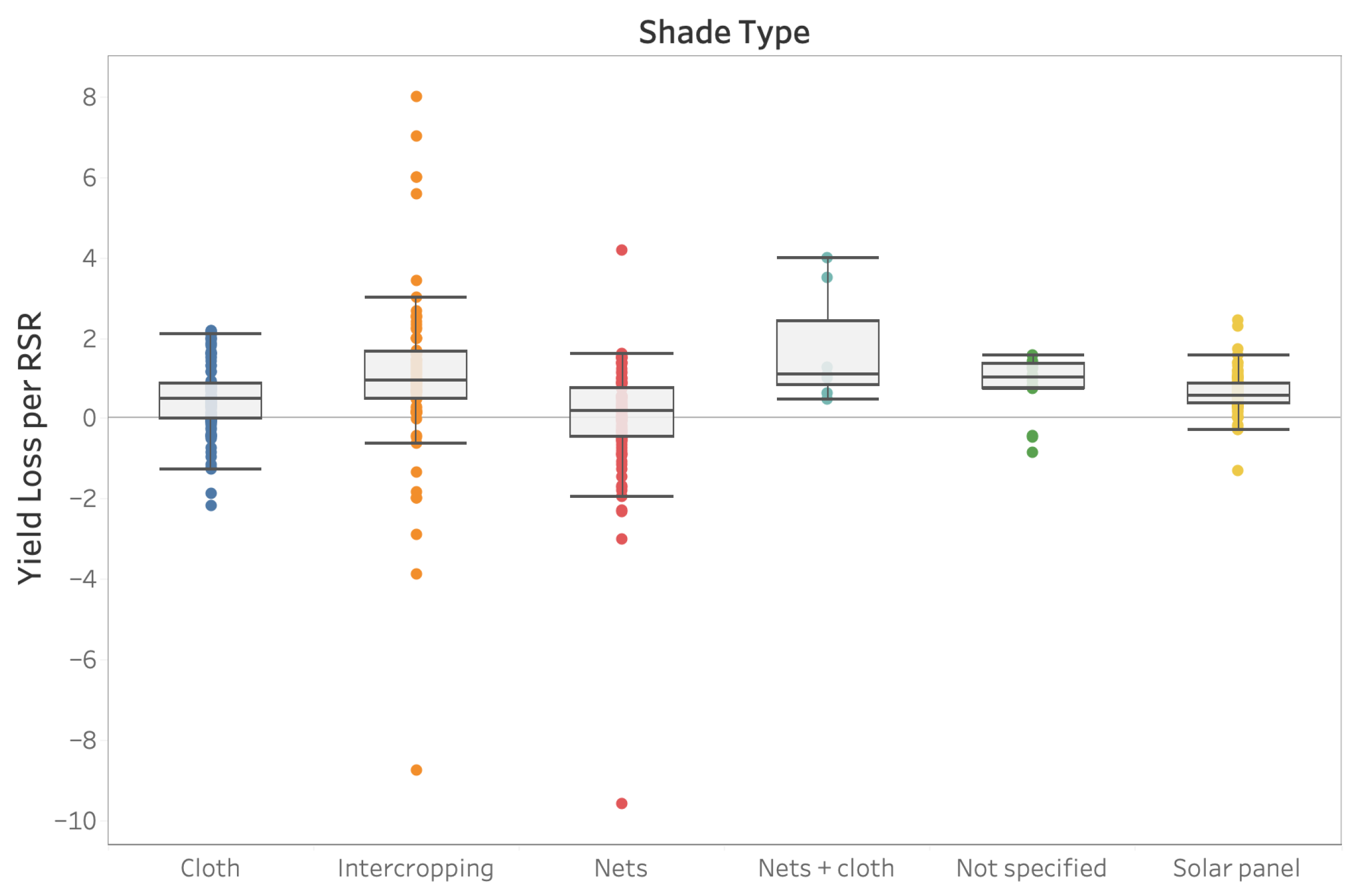
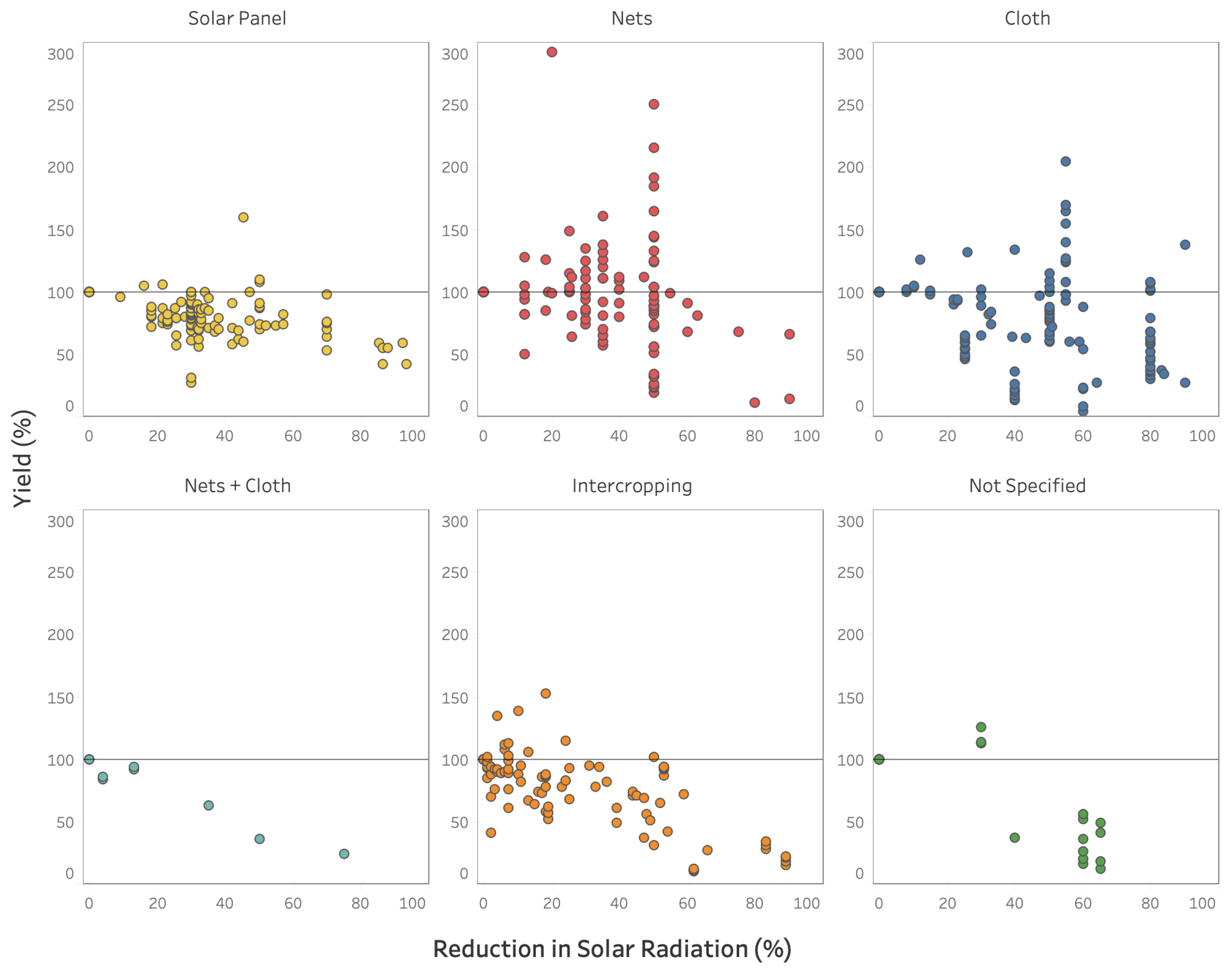
Yield loss per unit RSR shows similar distributions across shade types (Figure 1). The relationship between relative yield and RSR also follows comparable patterns across shading approaches (Figure 2). Minor variation is observed for combined net and cloth systems, though the overall response remains consistent across shading methods.
A one-way ANOVA indicated statistically significant differences in yield loss per unit RSR among shade types ( F = 5.92 , p < 0.001 ). Post hoc comparisons using Tukey’s HSD test showed that these differences were limited to specific pairwise contrasts, primarily involving the “not specified” category, which differed significantly from cloth- and net-based systems. In contrast, most other pairwise comparisons were not statistically significant, indicating substantial overlap in yield response across shading methods. These results suggest that while shading type contributes to variation in yield response, the overall patterns remain broadly comparable across most shading approaches. The distinct behavior of the “not specified” category may reflect variability in reporting methods across studies.
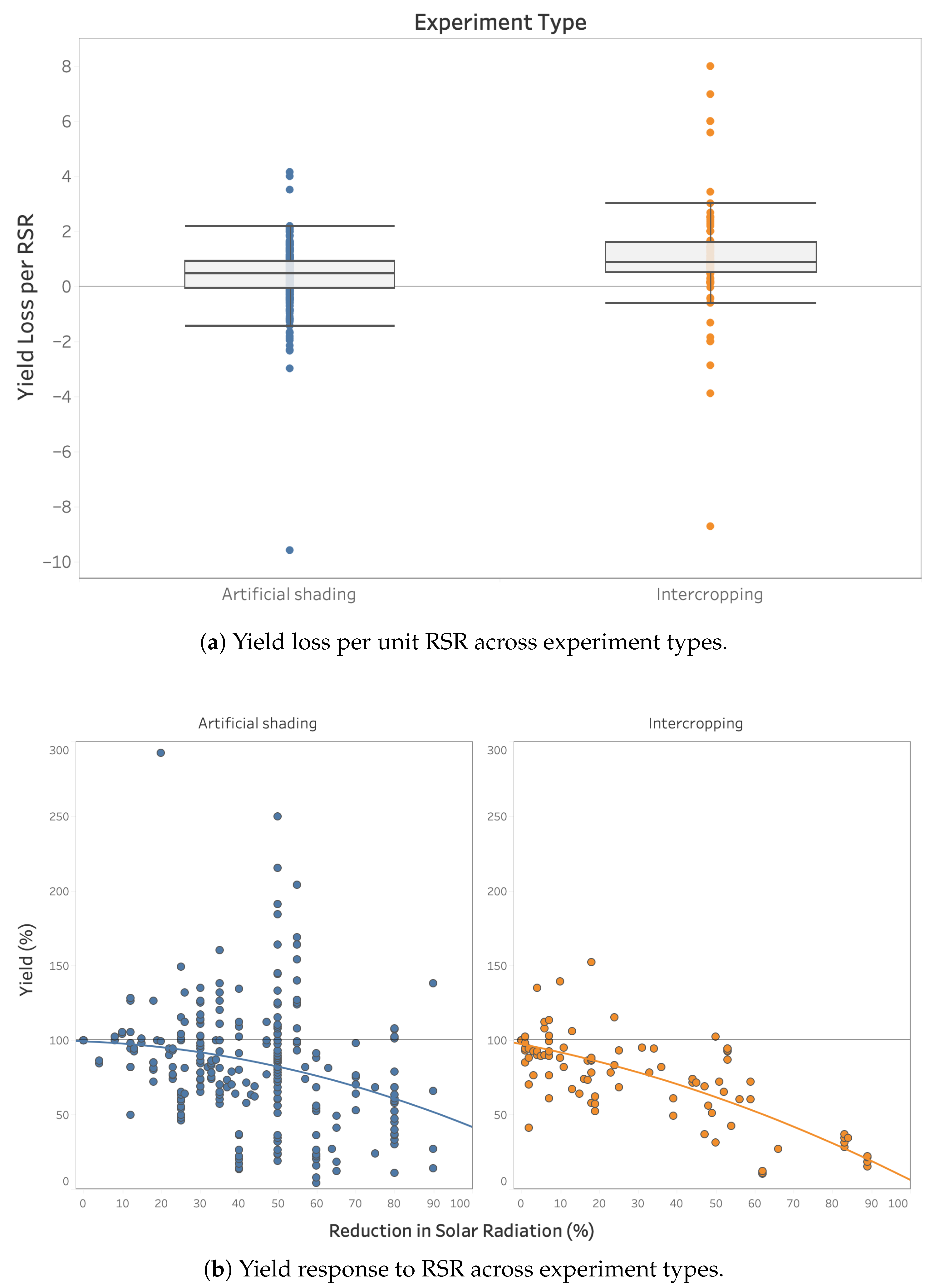
A similar comparison across experimental systems shows consistent patterns (see Appendix C Figure A3). Yield loss distributions and yield–RSR relationships are comparable between artificial shading and intercropping experiments, although yield declines tend to be slightly more pronounced in intercropping systems, where competition for light may intensify the effects of reduced radiation.
Overall, these findings indicate that crop yield responses are primarily associated with the level of RSR rather than the specific shading method or experimental design. This supports combining observations from different study systems when evaluating yield responses under agrivoltaic conditions.

3.3. Crop-Specific Yield Responses to Shading

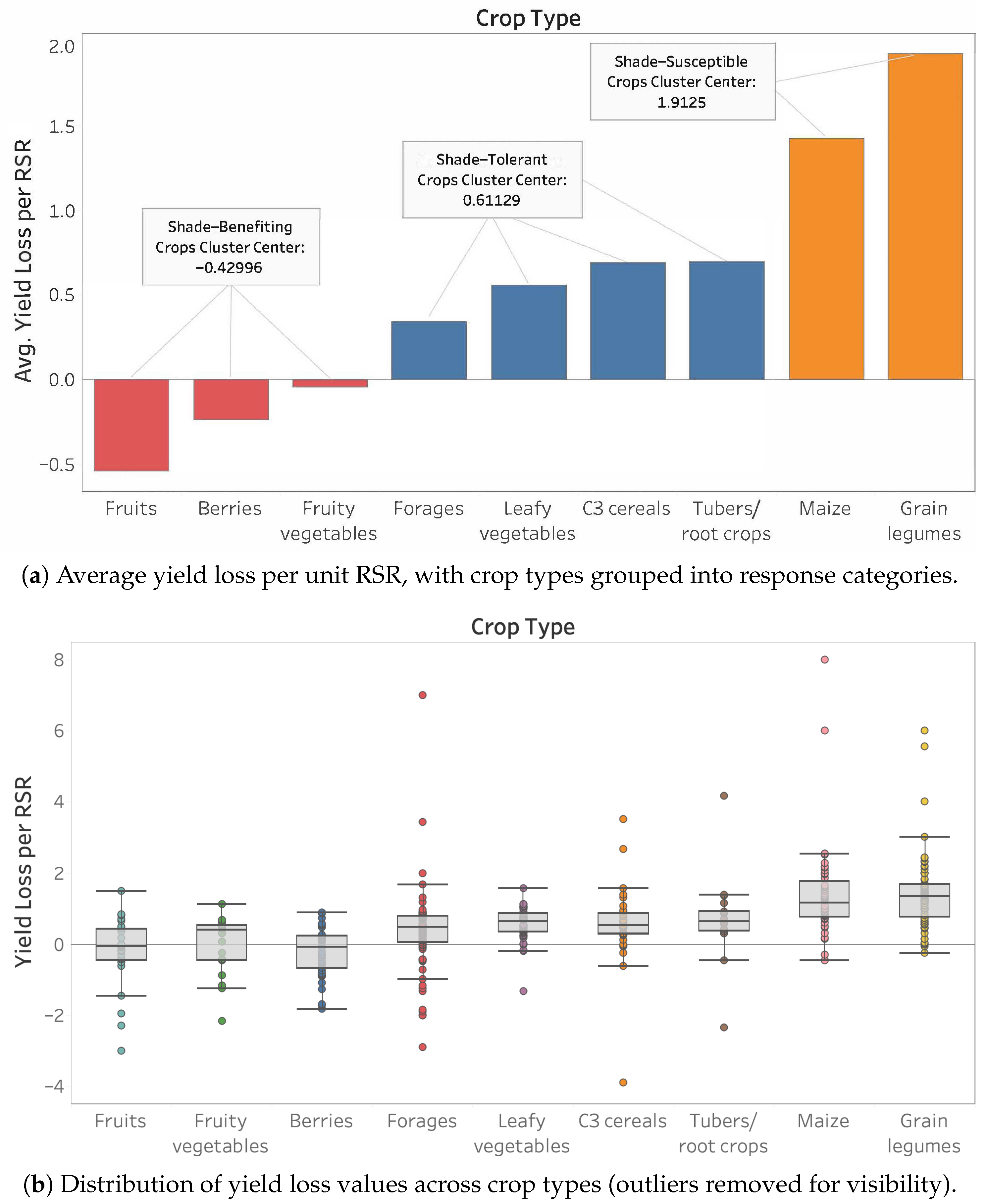
Crop yield responses to RSR vary substantially across crop types. Differences in yield loss per unit RSR are shown in Figure 3.
Fruits, fruity vegetables, and berries exhibit, on average, neutral to positive responses under low to moderate RSR, indicating that these crops can benefit from partial shading. In contrast, maize and grain legumes show the largest yield declines, indicating strong sensitivity to reduced radiation. Forages, leafy vegetables, C3 cereals, and tubers/root crops show intermediate responses, with more gradual reductions in yield.
The variability in response also differs across crop types. Fruity vegetables and maize show a wide range of outcomes, indicating that responses depend on environmental conditions and management practices. Leafy vegetables, in contrast, show relatively consistent responses across observations.
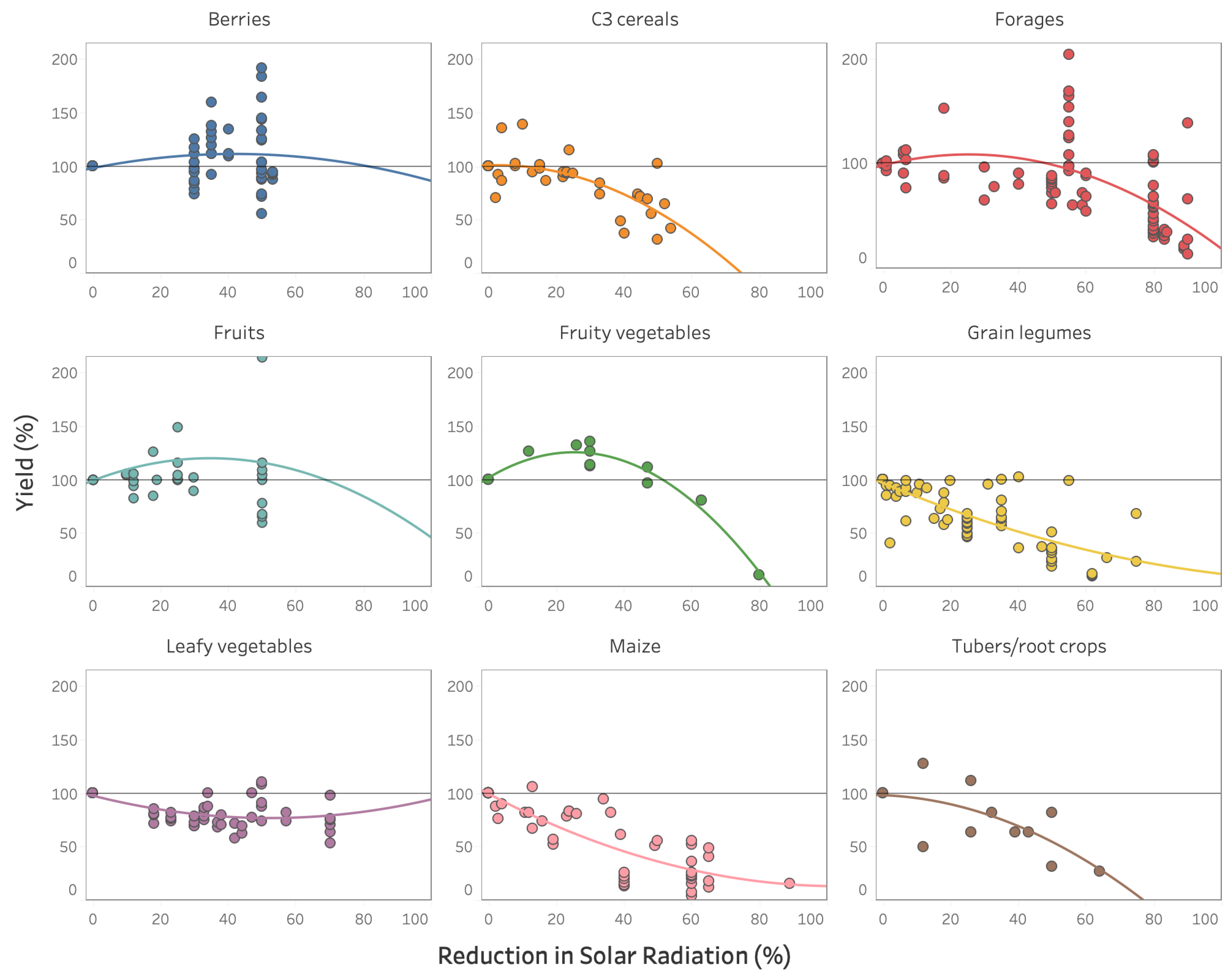
The relationship between yield and RSR further highlights distinct response patterns (Figure 4). Fruits, berries, and fruity vegetables show stable or slightly increasing yield under low to moderate shading, followed by declines at higher levels of radiation reduction. This pattern suggests that moderate shading may reduce environmental stress before light limitation becomes dominant.
In contrast, C3 cereals, grain legumes, maize, and tubers/root crops show immediate declines in yield with increasing shading. Among these, maize and grain legumes exhibit the steepest declines, indicating strong dependence on high radiation levels. Forages and leafy vegetables show more gradual declines, consistent with greater tolerance to reduced light availability.
Based on these patterns, crop types can be grouped into three general response categories (Figure 3). Fruits, fruity vegetables, and berries fall into a shade-benefiting group. Forages, leafy vegetables, C3 cereals, and tubers/root crops form a shade-tolerant group. Maize and grain legumes represent a shade-sensitive group, with rapid declines in yield as radiation decreases.
These results show that crop yield responses to RSR differ systematically across crop types, with consistent patterns observed within each group.

3.4. Influence of Climatic Conditions on Yield Response

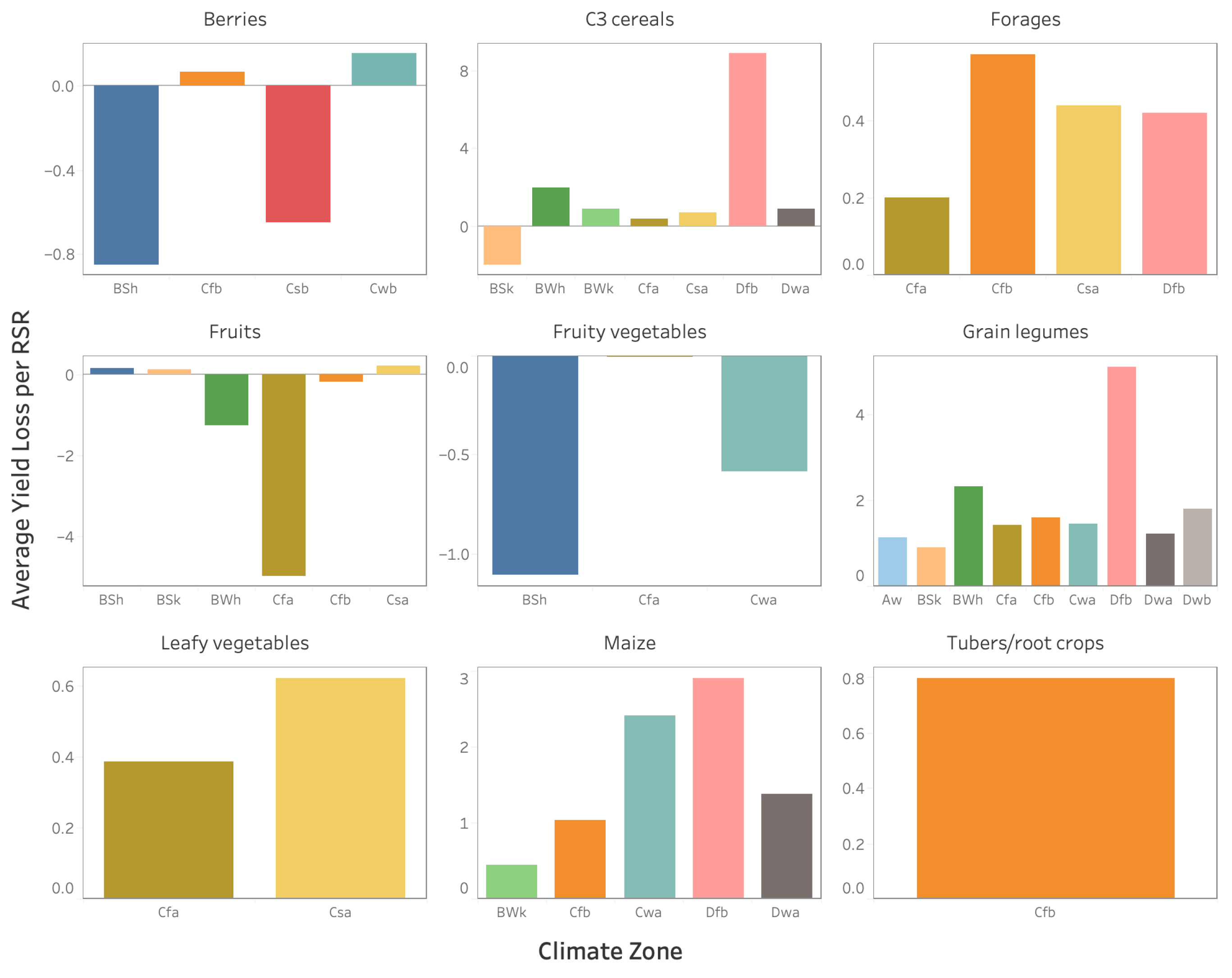
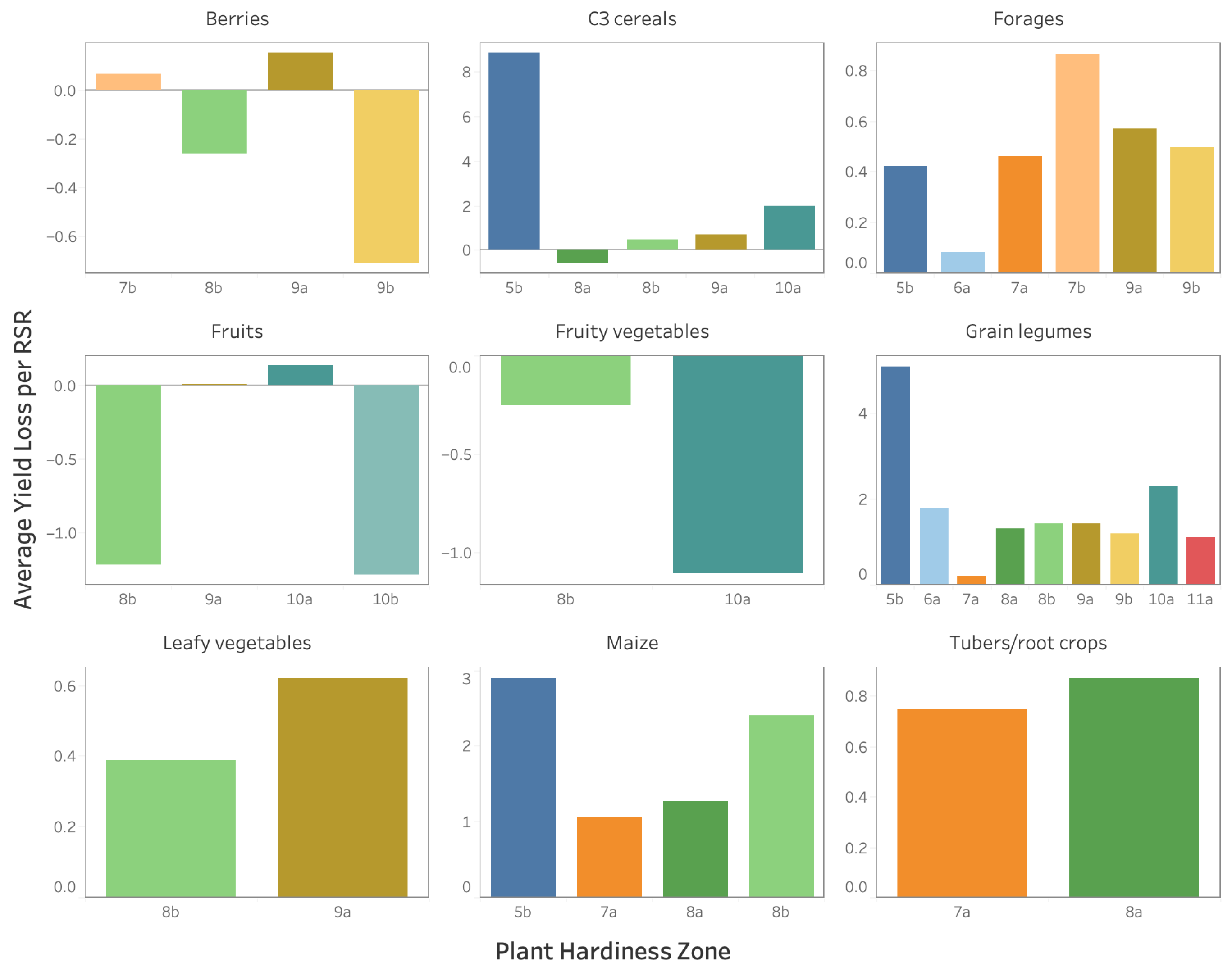
Climatic conditions further shape how crops respond to RSR. Yield loss per unit RSR was evaluated across climate zones and plant hardiness zones for each crop type (see Appendix C Figure A1 and Figure A2).
Differences in yield response across climate zones show that the effect of shading varies with environmental conditions. For several crop types, the magnitude of yield loss per unit RSR differs across climate classifications. Crops grown in warmer and higher-radiation environments tend to maintain more stable yields under moderate shading, whereas crops in cooler or lower-radiation environments show greater sensitivity to reduced radiation.
Patterns across plant hardiness zones show a similar trend. Crops in regions with milder winters and longer growing seasons generally exhibit more gradual yield declines with increasing shading, while those in more temperature-limited environments tend to show steeper reductions.
Although the magnitude of these differences varies among crop types, the overall pattern indicates that climatic conditions interact with radiation reduction to shape yield responses. These results show that crop response to shading is influenced not only by the level of radiation reduction, but also by background environmental conditions such as temperature and baseline irradiance.
Taken together, these findings indicate that crop performance under reduced radiation depends on both crop type and climatic context, highlighting the importance of considering local conditions when evaluating agrivoltaic systems.

Synthesis of Exploratory Findings

The exploratory analysis highlights several consistent patterns in crop yield responses to RSR under agrivoltaic conditions.
Crop types show clear differences in their response to shading. Fruits, fruity vegetables, and berries tend to maintain or increase yield under low to moderate shading. Forages, leafy vegetables, C3 cereals, and tubers/root crops show moderate declines, while maize and grain legumes exhibit the largest reductions as shading increases. These patterns correspond to three general response groups: shade-benefiting, shade-tolerant, and shade-sensitive crops.
Yield responses are also non-linear. Across crop types, moderate levels of shading are often associated with relatively stable yields, whereas higher levels of radiation reduction lead to sharper declines. This indicates that yield responses change with the level of shading rather than following a simple linear trend.
Climatic conditions further influence these responses. Differences across climate zones and plant hardiness zones show that temperature and baseline radiation affect how crops respond to shading. Crops grown in warmer or higher-radiation environments tend to maintain yields more effectively under moderate shading, while those in cooler or lower-radiation environments show greater sensitivity.
Variability in yield response also differs across crop types. Maize and fruity vegetables show a wide range of outcomes, while leafy vegetables display more consistent responses. This suggests differences in how crops adjust to shaded conditions.
Overall, these findings show that crop yield responses depend on crop type, the level of radiation reduction, and climatic conditions. These patterns provide the basis for the modeling approaches presented in the following sections, where these relationships are examined quantitatively.

3.5. Multiple Linear Regression Model

The MLR model was used to quantify the relationships identified in the exploratory analysis. The model explains approximately 58% of the variance in square-rooted yield ( R 2 = 0.5836 , adjusted R 2 = 0.5585 ), indicating a moderate level of explanatory power across different crops and environmental conditions. Model coefficients, standard errors, and confidence intervals are presented in Table 1.
The lack of a statistically significant main effect for RSR indicates that a single uniform relationship between shading and yield is not supported across all crops. Instead, the significant interaction terms between RSR and crop type indicate that the effect of shading varies systematically by crop type.
Clear differences in shade sensitivity were observed across crop groups. Grain legumes and maize show the strongest negative interactions with RSR (p < 0.001), indicating that yield declines rapidly as shading increases. Tubers/root crops and C3 cereals also show significant negative interactions, though with smaller magnitudes. These patterns indicate that these crops are particularly sensitive to reduced radiation.
In contrast, fruits show a positive interaction with RSR, although not statistically significant, suggesting that their yields are less negatively affected by shading compared to the reference group (berries). Leafy vegetables also show relatively stable responses, with non-significant interaction terms indicating a weaker dependence on shading intensity.
Forages and fruity vegetables show intermediate responses. Both exhibit significant negative interactions with RSR, indicating sensitivity to shading, but less pronounced than for maize and grain legumes. These patterns are consistent with the response groupings identified in the exploratory analysis.
Climate zone effects are smaller and not statistically significant at the 0.05 level. However, variation in coefficients and improved model fit with climate zone included suggest that environmental conditions contribute to differences in yield response, even if individual effects are not clearly separated within the dataset.
The consistency of interaction effects and their agreement with ensemble models reinforces the interpretation that crop-specific responses govern yield under reduced radiation.
Overall, the model demonstrates that crop yield responses to shading are primarily driven by crop-specific sensitivity rather than a uniform effect of reduced radiation. The presence of strong interaction effects highlights that agrivoltaic system performance depends on selecting crops with appropriate shade tolerance characteristics. Crops such as maize and grain legumes are more vulnerable to yield reductions under shading, while fruits and certain vegetable crops exhibit greater tolerance and may be more suitable for integration into agrivoltaic systems.

3.6. Tree-Based Ensemble Models

To complement the MLR analysis, three tree-based ensemble models—Random Forest, HGB, and XGBoost—were used to examine relationships between crop yield, shading, and environmental variables. Model performance on the held-out test set is summarized in Table 2.
All three models achieved similar predictive performance, explaining approximately 55–60% of the variation in crop yield. This consistency suggests that the observed relationships are not dependent on a specific modeling approach. Cross-validation results further support this, with comparable performance across models (see Appendix D Table A4).
Across all models, RSR consistently emerged as the most influential predictor of yield. Climatic variables, including rainfall, GHI, and temperature, contributed to secondary variation, followed by crop type and climate zone (see Appendix D Table A5). Despite differences in how importance is measured, the same set of key variables was identified across models.
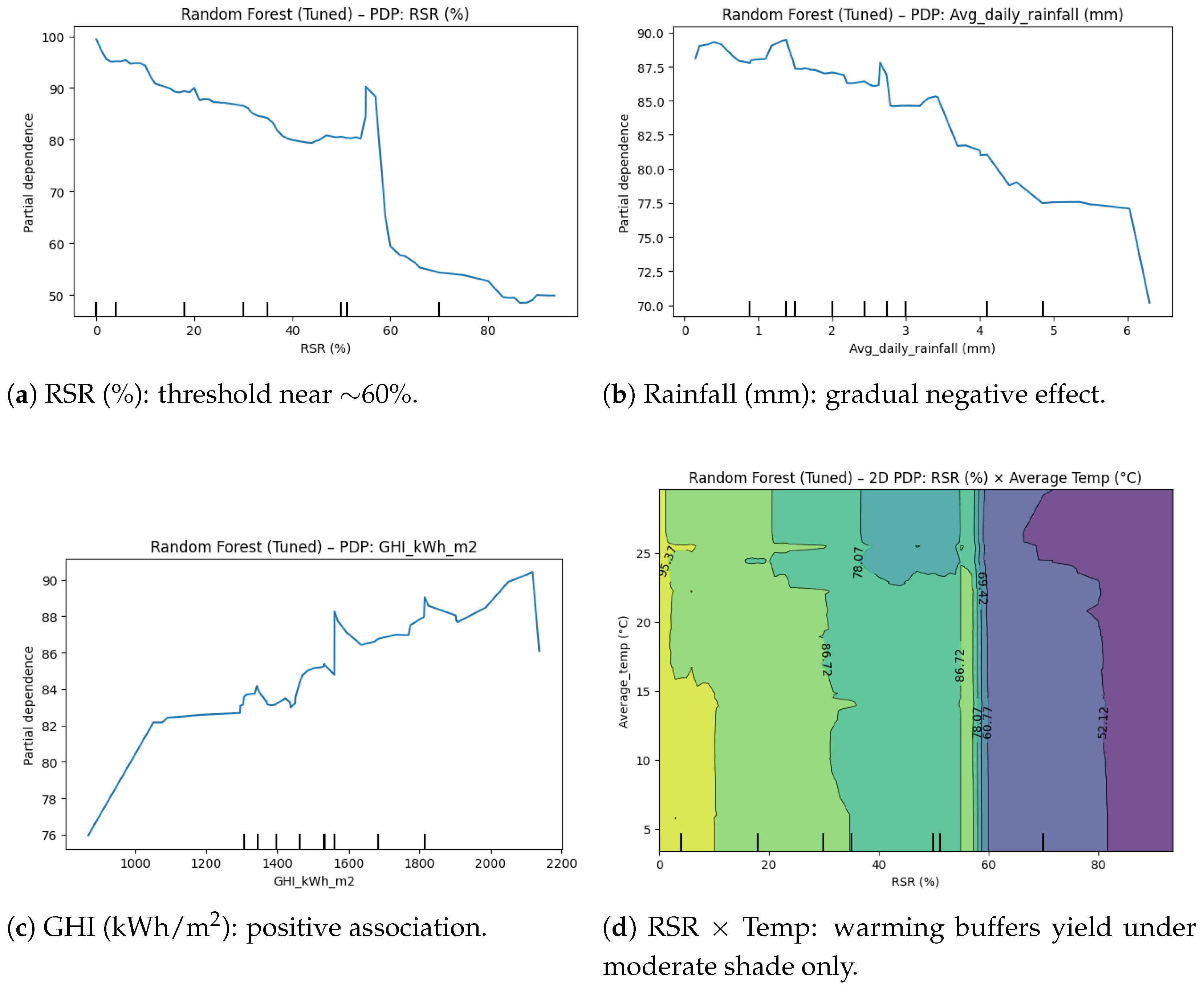
Partial dependence plots (PDPs) (Figure 5) show a clear nonlinear relationship between yield and RSR. Yield remains relatively stable under low to moderate shading, followed by a sharp decline beyond approximately 50–60% RSR. This threshold-like behavior is consistent across models and represents an important pattern for agrivoltaic system design. Although this pattern appears consistently, its magnitude and onset vary by crop type, as indicated by the significant interaction effects in the regression analysis, suggesting that while a general nonlinear response to shading exists, the sensitivity to radiation reduction differs across crops.
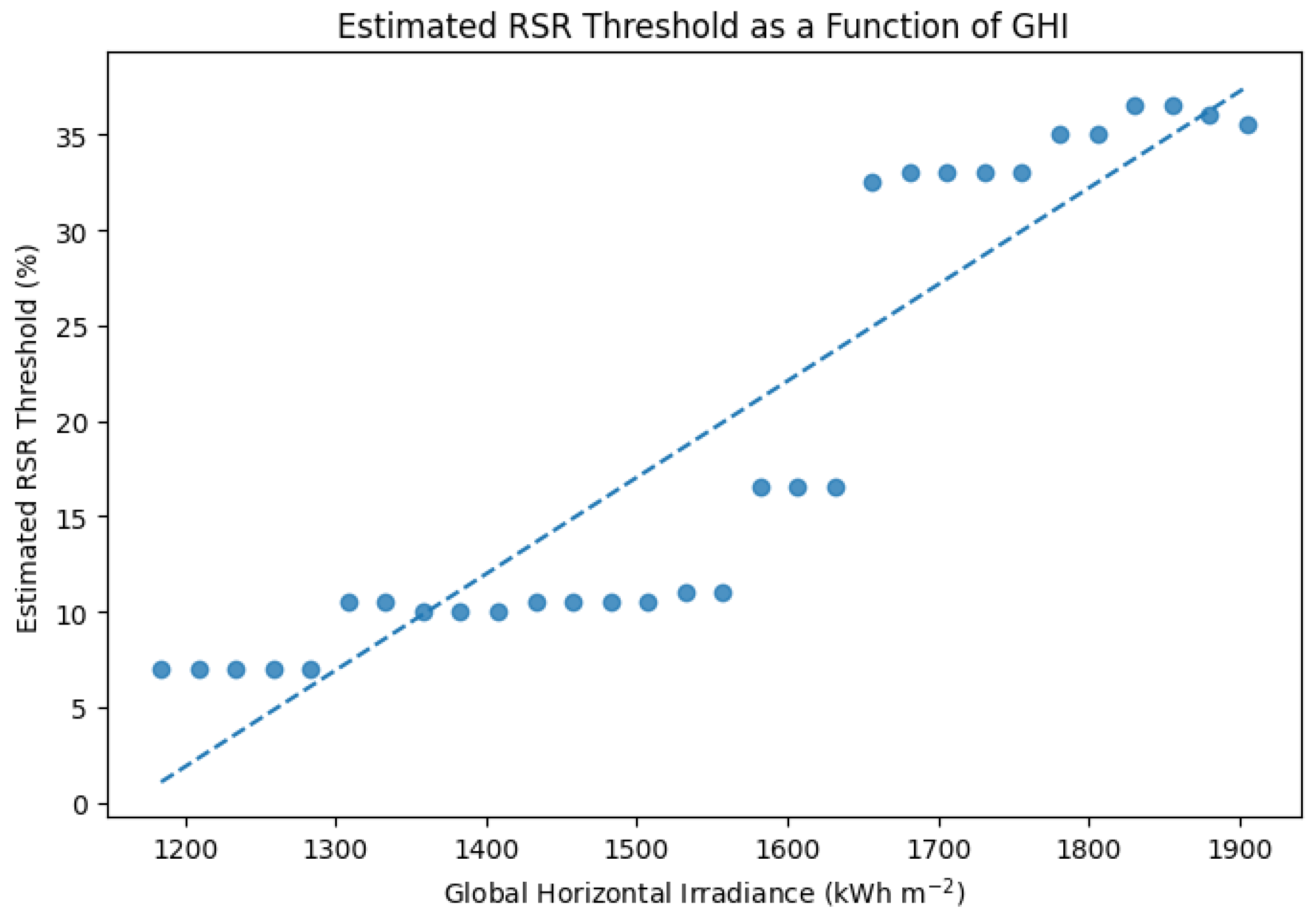
Climatic variables modify this relationship. Higher GHI is associated with improved yield outcomes under shading, indicating that crops in high-radiation environments are better able to maintain yield under partial shade. Threshold analysis based on the Random Forest prediction surface showed that the estimated RSR threshold increased by approximately 5.05 percentage points for every 100 kWh m−2 increase in GHI ( R 2 = 0.846 ), indicating that higher-radiation environments can tolerate greater reductions in solar radiation before yield declines become pronounced. This threshold is defined as the level of radiation reduction at which predicted yield declines by 10% relative to unshaded conditions. This relationship is further illustrated in Appendix D Figure A4.
Interactions between shading and temperature further highlight context-dependent responses. Under moderate shading (approximately 20–50% RSR), higher temperatures are associated with improved yield relative to cooler conditions. However, beyond the identified threshold (approximately 60% RSR), yield declines regardless of temperature, indicating that radiation availability becomes the limiting factor.
Overall, the ensemble models support three main findings. First, shading intensity is the primary driver of crop yield response. Second, crop type and environmental conditions influence how strongly yield responds to shading. Third, yield responses are nonlinear, with a clear threshold beyond which shading leads to substantial yield loss. These results provide quantitative support for selecting crops and designing agrivoltaic systems within appropriate shading ranges, recognizing that while general threshold behavior exists, the response varies across crop types.

4. Discussion

This study provides a comprehensive assessment of crop yield responses to RSR across a wide range of crop types, climatic conditions, and experimental systems. By integrating observations from agrivoltaic, artificial shading, and agroforestry studies into a unified framework, the analysis extends beyond crop- or site-specific studies and enables a broader understanding of crop responses to reduced radiation. Together, these results show that crop yield responses can be interpreted within a unified framework based on radiation reduction, allowing direct comparison across diverse agronomic systems.
A central finding is that crop responses to shading are strongly crop-dependent. Fruits, fruity vegetables, and berries generally maintain or improve yield under low to moderate shading, whereas forages, leafy vegetables, C3 cereals, and tubers/root crops show moderate declines, and maize and grain legumes exhibit the most pronounced yield reductions. These patterns support a classification of crops into shade-benefiting, shade-tolerant, and shade-sensitive groups. Similar distinctions in crop response have been reported in previous studies of shading and agrivoltaic systems [16], and the present analysis extends these findings across a broader range of environments and experimental conditions.
The observed differences across crop types can be interpreted in terms of plant physiological responses to light and microclimate. Moderate shading can reduce canopy temperature and evapotranspiration, improving water-use efficiency and alleviating heat stress, particularly for crops sensitive to high radiation or temperature [1,2]. This helps explain the stable or positive yield responses observed in fruits and certain vegetables. In contrast, crops such as maize and grain legumes are strongly dependent on high radiation levels for photosynthesis and biomass accumulation, making them more susceptible to yield declines under reduced light availability [3,4]. Differences in variability across crop types further suggest variation in physiological plasticity, with some crops better able to adjust to shaded environments than others.
Another key finding is the non-linear nature of yield responses to shading. Across crop types, yields remain relatively stable under low to moderate reductions in solar radiation, followed by increasingly rapid declines at higher levels of shading. This behavior is consistent with previous studies showing that moderate radiation reductions can be partially compensated, while more severe shading leads to substantial productivity losses [1,4]. The identification of an approximate threshold around 50–60% RSR suggests a critical limit beyond which light availability becomes the dominant constraint on crop productivity. This threshold is consistent with previous findings suggesting yield declines under high levels of shading [1,4].
While this threshold-like behavior is consistently observed, its magnitude and onset vary across crop types, reflecting differences in crop-specific sensitivity to reduced radiation. This has direct implications for agrivoltaic system design, as it defines a general operating range within which shading can be applied without substantial yield penalties, while highlighting the need for crop-specific considerations.
Climatic conditions further modify these responses. Crops grown in environments with higher baseline irradiance or warmer temperatures tend to maintain yields more effectively under moderate shading, while those in cooler or lower-radiation environments show greater sensitivity. These findings are consistent with studies showing that microclimatic changes induced by shading, including reduced temperature and altered moisture conditions, can influence crop performance [8,10]. As a result, crop suitability for agrivoltaic systems is likely to vary by location, and site-specific conditions must be considered when evaluating system performance. This interpretation is further supported by quantitative threshold analysis, which shows that the estimated RSR threshold increases by approximately 5 percentage points for every 100 kWh m−2 increase in GHI, indicating that higher-radiation environments can tolerate greater levels of shading before yield declines become pronounced.
The consistency of these patterns across different experimental systems is also notable. Despite differences in how shade is generated, including PV panels, shade nets, and intercropping systems, similar yield responses were observed when expressed as a function of radiation reduction. Comparable effects of reduced radiation have been reported in agroforestry and intercropping studies [5,6], supporting the use of RSR as a common basis for comparing crop responses across systems. Although structural differences exist between agrivoltaic and other shading systems, the consistent response to radiation reduction across systems supports the use of RSR as a unifying variable.
The modeling results reinforce these findings. Both MLR and tree-based ensemble models identified similar relationships between yield, shading, crop type, and environmental variables. Across all models, RSR emerged as the primary driver of yield response, while crop type and climatic conditions influenced the magnitude and direction of this response. The agreement between modeling approaches increases confidence that the observed relationships reflect underlying agronomic processes rather than model-specific artifacts.
The absence of a uniform main effect of shading, combined with strong crop-specific interaction effects, further indicates that shading cannot be treated as a single agronomic factor, but instead operates through crop-dependent responses to radiation reduction.
The consistency of these relationships across modeling approaches indicates that they reflect underlying agronomic processes rather than model-specific artifacts. While yield responses are broadly consistent across shading systems when expressed as a function of radiation reduction, the slightly stronger declines observed in intercropping systems suggest that additional factors beyond simple shading may influence crop performance. In intercropping systems, crops experience direct competition for light, water, and nutrients, as well as structural interactions within the canopy that can amplify the effects of reduced radiation. Unlike agrivoltaic or artificial shading systems, where shading is externally imposed, intercropping introduces biotic competition that may intensify yield reductions under similar levels of radiation reduction. These differences indicate that while RSR serves as a useful unifying variable, system-specific processes such as competition can modify the magnitude of yield responses.
At the same time, the integration of data from multiple experimental systems highlights important considerations for interpretation. Differences in how shading is generated and measured across studies, including variation in light quality and temporal distribution of shade, are not fully captured by a single measure of radiation reduction. In particular, shading from PV panels differs from that of shade nets or cloth in its spectral composition, as PV panels can alter the ratio of red to far-red light reaching the crop canopy. Changes in light quality can influence plant morphogenesis, including stem elongation, leaf expansion, and canopy architecture, which may in turn affect yield responses beyond the effects of radiation reduction alone. In addition, agrivoltaic field studies represent a smaller portion of the available data, with many observations derived from artificial shading or intercropping systems. While this integration enables broader analysis, it also suggests that further work is needed to refine the understanding of crop responses under specific agrivoltaic configurations. As a result, although the analysis captures generalizable responses to reduced radiation, these findings highlight opportunities for further refinement when applying them to specific agrivoltaic system designs that account for system-specific configurations.
Variability in data reporting and environmental measurements across studies also introduces uncertainty. Differences in how radiation, temperature, and rainfall are measured, as well as the need to estimate missing environmental variables in some cases, may influence the precision of model estimates. Similarly, grouping crops into broader categories, while necessary due to limited data for individual species, may mask variation within crop types, including differences among cultivars and management practices.
The results of this study provide direct support for the assumptions outlined in the Introduction. First, crop yield responses to RSR are clearly crop-specific, as evidenced by the distinct response groups observed across crop types. Second, the relationship between yield and radiation reduction is strongly non-linear, with relatively stable yields under lower levels of shading followed by increasingly rapid declines at higher levels. Third, the identification of a consistent threshold range of approximately 50–60% RSR supports the presence of threshold behavior in crop responses to shading. While the exact magnitude and onset of this threshold vary across crop types and environmental conditions, the overall pattern remains consistent, indicating that these assumptions provide a useful framework for understanding crop performance under agrivoltaic systems.
Future research should build on these findings by expanding the availability of field-based agrivoltaic data across a wider range of crops, climates, and system configurations. Controlled experiments that compare different photovoltaic designs under similar environmental conditions would improve understanding of system-specific effects. Incorporating additional environmental variables, such as soil moisture, soil temperature, and evapotranspiration, would further clarify the mechanisms underlying crop responses to shading. Improved standardization in the measurement and reporting of radiation and microclimatic conditions would also strengthen future analyses.
Overall, this study shows that crop yield responses to RSR depend on the interaction between crop characteristics, shading intensity, and climatic context. These findings provide a foundation for selecting appropriate crops and designing agrivoltaic systems that balance energy production with agricultural productivity under diverse environmental conditions.

5. Conclusions

This study provides a comprehensive assessment of crop yield responses to RSR across diverse crop types, climatic conditions, and experimental systems. The results demonstrate that crop responses to shading are strongly crop-dependent and exhibit consistent non-linear behavior, with relatively stable yields under lower levels of shading followed by more rapid declines beyond an approximate threshold of 50–60% RSR.
Climatic conditions further modify these responses, with crops in higher-radiation and warmer environments generally maintaining yields more effectively under moderate shading. The consistency of these patterns across modeling approaches and experimental systems indicates that RSR provides a robust basis for comparing crop responses across agronomic contexts.
These findings highlight the importance of crop-specific and context-dependent design in agrivoltaic systems. Rather than applying uniform shading strategies, system design should consider both crop sensitivity and local environmental conditions to maintain productivity while enabling energy generation. Overall, this study provides a generalizable framework for evaluating crop performance under reduced radiation, supporting the development of more efficient and adaptable dual land-use systems.

Author Contributions

Conceptualization, G.H. and Q.H.; methodology, A.J., G.H. and Q.H.; software, A.J. and G.H.; validation, R.K. and Q.H.; formal analysis, A.J. and G.H.; investigation, A.J. and G.H.; resources, G.H.; data curation, G.H.; writing—original draft preparation, A.J. and G.H.; writing—review and editing, R.K. and Q.H.; visualization, A.J. and G.H.; supervision, Q.H.; project administration, Q.H.; funding acquisition, Q.H. All authors have read and agreed to the published version of the manuscript.

Funding

This work was supported in part by the National Science Foundation LEAPS-MPS Award [grant number DMS-2316631]. This work was supported in part by the Henry Luce III Fund for Distinguished Scholarship award from the College of Wooster [to QH].

Data Availability Statement

The dataset generated and analyzed during this study is publicly available at https://github.com/AditiJha26/Analysis-of-the-Effect-of-Shade-on-Crop-Yield-in-Agrivoltaic-Systems.git (accessed on 11 May 2026). All data sources used to construct the dataset are listed in Appendix A (Table A1).

Acknowledgments

The authors would like to thank the handling editor and reviewers for their helpful comments and suggestions, which improved the presentation of the manuscript. The authors also acknowledge Sophomore Research Support for Su Thoun Myat from The College of Wooster, for her valuable input in data collection and feedback.

Conflicts of Interest

The authors declare no conflicts of interest.

Abbreviations

The following abbreviations are used in this manuscript:
PVPhotovoltaic Panels
RSRReduction in Solar Radiation
PARPhotosynthetically Active Radiation
GHIGlobal Horizontal Irradiance
USDAUnited States Department of Agriculture
NRELNational Renewable Energy Laboratory
MLRMultiple Linear Regression
AICAkaike Information Criterion
BICBayesian Information Criterion
HGBHistogram Gradient Boosting
XGBoostExtreme Gradient Boosting
RMSERoot Mean Square Error
MAEMean Absolute Error
PDPPartial Dependence Plot

Appendix A. Dataset Composition and Study Sources

Appendix A provides a comprehensive list of all studies included in the compiled dataset, categorized by experimental system. The dataset integrates agrivoltaic field experiments, artificial shading studies, agroforestry systems, and horticultural shading experiments, representing a broad synthesis of crop yield responses to reduced radiation across diverse environmental conditions. This compilation forms the empirical basis for the cross-system analysis presented in this study.
In total, the dataset includes 66 studies spanning 52 crop species and 546 observations across multiple climatic regions and experimental systems.
Table A1. Studies included in the agrivoltaic crop yield dataset, grouped by experimental system.
ReferenceCrop/SystemStudy Type
Agrivoltaic Systems
[11]LettuceAgrivoltaic field study
[21]LettuceAgrivoltaic modeling + field
[22]Mixed cropsMobile PV system
[23]CroplandSemi-transparent PV
[24]MaizeAVS field experiment
[25]TomatoAVS field study
[26]Multiple cropsAVS cultivation study
[27]SoybeanAVS modeling study
[28]BroccoliAVS field study
[29]Multiple cropsAVS comparison study
[30]CroplandAVS system design
[31]Ginger, kaleAVS thesis study
Artificial Shading Experiments
[32]MaizeArtificial shading
[33]PotatoArtificial shading
[1]SoybeanControlled light study
[2]MaizeIsotope tracer shading
[4]WheatLong-term shading
[34]WheatShading experiment
[35]MaizeDensity + shading
[36]WheatRadiation reduction
[37]SoybeanShade + irrigation
[38]SoybeanLight manipulation
[39]MaizeLight intensity study
[40]SquashLight + moisture
[41]SoybeanRadiation deficit
[42]BeanShade levels
[43]ChickpeaLight + water stress
Agroforestry and Intercropping Systems
[44]ForagesAgroforestry shading
[45]ForagesAgroforestry study
[46]LegumesShade response
[47]WheatAlley cropping
[48]Apple + cropsIntercropping system
[49]AlfalfaAgroforestry system
[50]ForagesShade comparison
[6]Corn, soybeanTree competition
[51]WheatAgroforestry system
[52]CropsTree-based system
[53]Agroforestry cropsSystem design
[54]Soybean, maizeIntercropping
[55]WheatTree age effects
[56]ForageAlley cropping
[57]CerealsAgroforestry competition
[5]MaizeTree shading
[58]Wheat, lupinWindbreak shading
Horticultural and Shade Net Studies
[59]AppleAnti-hail net shading
[60]BlueberryColored nets
[61]PepperShade study
[62]BlackberryShade nets
[63]BlackberryCanopy shading
[64]AppleNet shading
[65]Sugar beetDynamic shade
[66]CloverShade adaptation
[67]PepperShade levels
[68]AppleShade + water stress
[69]AppleNet protection
[70]Grass-cloverShade material
[71]CitrusHeat + shade
[72]LemonShade screen
[73]StrawberryLight effects
[74]BlackcurrantNet shading
[75]Forage mixShade treatments
[76]GrapevineLight + temperature

Appendix B. Climate and Environmental Classifications

Appendix B summarizes the classification systems used to describe climatic and environmental conditions across studies. Climate zones follow the Köppen–Geiger classification, and plant hardiness zones are based on USDA definitions of average minimum winter temperature.
  • Climate Zone Classification
Table A2. Climate zone classifications and descriptions based on the Köppen–Geiger system.
CodeClimate TypeDescription
AwEquatorial savannaWinter dry season. More than two months with less than 60 mm
precipitation. All monthly temperatures exceed 18 °C.
BWkMid-latitude desertEvaporation exceeds precipitation;
cooler desert climates with winter freezing conditions.
BWhSubtropical desertHot desert climate with minimal rainfall and high temperatures;
frost is rare or absent.
BSkMid-latitude steppeSemi-arid climate with evaporation exceeding precipitation;
cooler than subtropical steppe.
BShSubtropical steppeSemi-arid climate with higher temperatures than BSk;
evaporation exceeds precipitation.
CfaHumid subtropicalMild climate with no dry season and hot summers;
high annual rainfall.
CfbMarine west coastMild climate with no dry season and warm summers;
evenly distributed precipitation.
CsaMediterranean (hot summer)Dry, hot summers and mild, wet winters;
strong seasonal precipitation contrast.
CsbMediterranean (cool summer)Dry summers with moderate temperatures;
mild winters and seasonal rainfall patterns.
CwaHumid subtropical (dry winter)Hot summers with dry winters;
strong seasonal variation in precipitation.
CwbSubtropical highlandMild temperatures with dry winters and
warm summers; typically found at higher elevations.
DfaHumid continental (hot summer)Large seasonal temperature variation
with hot summers and cold winters.
DfbHumid continental (warm summer)Cooler summer variant with no
dry season and cold winters.
DwaHumid continental (dry winter)Hot summers and cold,
dry winters with strong seasonal contrasts.
DwbHumid continental (cool summer, dry winter)Cooler summer temperatures with
dry winters and strong seasonal variability.
  • Plant Hardiness Zones
Table A3. Plant hardiness zones and corresponding ranges of average annual extreme minimum temperatures [77].
Hardiness ZoneTemperature Range (°F)
3b−35 to −30
4b−25 to −20
5a−20 to −15
5b−15 to −10
6a−10 to −5
6b−5 to 0
7a0 to 5
7b5 to 10
8a10 to 15
8b15 to 20
9a20 to 25
9b25 to 30
10a30 to 35
10b35 to 40
11a40 to 45

Appendix C. Climate-Specific Yield Response Patterns

Appendix C presents additional analyses of crop yield response to RSR across climate zones and plant hardiness zones. These figures provide supporting evidence for the climate-dependent patterns described in the Section 3 and illustrate how environmental conditions modulate crop sensitivity to shading.
Figure A1. Average yield loss per unit RSR across climate zones for each crop type. Differences across climate classifications indicate that background climatic conditions influence crop sensitivity to shading, with generally lower yield losses observed in higher-radiation and warmer environments.
Agronomy 16 00985 g0a1
Figure A2. Average yield loss per unit RSR across plant hardiness zones for each crop type. Variations across temperature regimes suggest that crops in milder climates tend to exhibit more gradual yield declines under shading compared to those in cooler regions.
Agronomy 16 00985 g0a2
Figure A3. Yield response to RSR across experimental systems. Panel (a) shows the distribution of yield loss per unit RSR for artificial shading and intercropping systems. Panel (b) shows the relationship between RSR and relative yield across these systems. Patterns are generally consistent across experimental designs, with slightly stronger yield declines observed in intercropping systems.
Agronomy 16 00985 g0a3

Appendix D. Supporting Model Results

Appendix D presents additional model results used to assess the robustness of the relationships identified in the main analysis. These results demonstrate that key patterns—particularly the dominant role of solar radiation reduction and the influence of climatic and crop-specific factors—are consistent across multiple modeling approaches.
Table A4. Five-fold cross-validated R 2 values for the ensemble models. Comparable performance across models indicates that the observed yield–shade relationships are not dependent on a specific modeling approach.
ModelCross-Validated R 2 (Mean ± SD)
Random Forest 0.53 ± 0.16
HGB 0.54 ± 0.15
XGBoost 0.53 ± 0.20
Table A5. Comparison of influential predictors identified across ensemble models. Despite differences in importance metrics, all models consistently identify RSR as the dominant driver of yield variation, followed by climatic variables and crop type.
FeatureRandom ForestHGBXGBoost
(Importance) (Permutation) (Gain)
RSR0.420highest1450
Average daily rainfall0.116moderate
GHI0.104high
Average temperature0.076moderate
Crop type: Fruits0.053moderate2910
Crop type: Grain legumes0.020lower1765
Crop type: Maize0.0161320
Climate zone: Csb0.029lower1650
Climate zone: Cfa0.018lower
Climate zone: Dwa3120
Hardiness zone: 7b0.035lower1780
Hardiness zone: 9a0.012lower
Figure A4. Estimated RSR threshold as a function of GHI, based on Random Forest predictions. Dots represent estimated threshold values, and the dashed line represents the fitted linear trend. The threshold is defined as the level of radiation reduction at which predicted yield declines by 10% relative to unshaded conditions.
Agronomy 16 00985 g0a4

References

  1. Jumrani, K.; Bhatia, V.S. Influence of different light intensities on specific leaf weight, stomatal density photosynthesis and seed yield in soybean. Plant Physiol. Rep. 2020, 25, 277–283. [Google Scholar] [CrossRef]
  2. Gao, J.; Zhao, B.; Dong, S.; Liu, P.; Ren, B.; Zhang, J. Response of summer maize photosynthate accumulation and distribution to shading stress assessed by using 13CO2 stable isotope tracer in the field. Front. Plant Sci. 2017, 8, 1821. [Google Scholar] [CrossRef] [PubMed]
  3. Liu, X.; Rahman, T.; Song, C.; Su, B.; Yang, F.; Yong, T.; Wu, Y.; Zhang, C.; Yang, W. Changes in light environment, morphology, growth and yield of soybean in maize-soybean intercropping systems. Field Crops Res. 2017, 200, 38–46. [Google Scholar] [CrossRef]
  4. Mu, H.; Jiang, D.; Wollenweber, B.; Dai, T.; Jing, Q.; Cao, W. Long-term low radiation decreases leaf photosynthesis, photochemical efficiency and grain yield in winter wheat. J. Agron. Crop Sci. 2010, 196, 38–47. [Google Scholar] [CrossRef]
  5. Ding, S.; Su, P. Effects of tree shading on maize crop within a Poplar-maize compound system in Hexi Corridor oasis, northwestern China. Agrofor. Syst. 2010, 80, 117–129. [Google Scholar] [CrossRef]
  6. Reynolds, P.E.; Simpson, J.A.; Thevathasan, N.V.; Gordon, A.M. Effects of tree competition on corn and soybean photosynthesis, growth, and yield in a temperate tree-based agroforestry intercropping system in southern Ontario, Canada. Ecol. Eng. 2007, 29, 362–371. [Google Scholar] [CrossRef]
  7. Dupraz, C.; Marrou, H.; Talbot, G.; Dufour, L.; Nogier, A.; Ferard, Y. Combining solar photovoltaic panels and food crops for optimising land use: Towards new agrivoltaic schemes. Renew. Energy 2011, 36, 2725–2732. [Google Scholar] [CrossRef]
  8. Ali, N. Agrivoltaic system success: A review of parameters that matter. J. Renew. Sustain. Energy 2024, 16, 022703. [Google Scholar] [CrossRef]
  9. Toledo, C.; Scognamiglio, A. Agrivoltaic systems design and assessment: A critical review, and a descriptive model towards a sustainable landscape vision (three-dimensional agrivoltaic patterns). Sustainability 2021, 13, 6871. [Google Scholar] [CrossRef]
  10. Barron-Gafford, G.A.; Pavao-Zuckerman, M.A.; Minor, R.L.; Sutter, L.F.; Barnett-Moreno, I.; Blackett, D.T.; Thompson, M.; Dimond, K.; Gerlak, A.K.; Nabhan, G.P.; et al. Agrivoltaics provide mutual benefits across the food–energy–water nexus in drylands. Nat. Sustain. 2019, 2, 848–855. [Google Scholar] [CrossRef]
  11. Marrou, H.; Wéry, J.; Dufour, L.; Dupraz, C. Productivity and radiation use efficiency of lettuces grown in the partial shade of photovoltaic panels. Eur. J. Agron. 2013, 44, 54–66. [Google Scholar] [CrossRef]
  12. Al-Agele, H.A.; Proctor, K.; Murthy, G.; Higgins, C. A case study of tomato (Solanum lycopersicon var. Legend) production and water productivity in agrivoltaic systems. Sustainability 2021, 13, 2850. [Google Scholar] [CrossRef]
  13. Kampherbeek, E.W.; Webb, L.E.; Reynolds, B.J.; Sistla, S.A.; Horney, M.R.; Ripoll-Bosch, R.; Dubowsky, J.P.; McFarlane, Z.D. A preliminary investigation of the effect of solar panels and rotation frequency on the grazing behavior of sheep (Ovis aries) grazing dormant pasture. Appl. Anim. Behav. Sci. 2023, 258, 105799. [Google Scholar] [CrossRef]
  14. Widmer, J.; Christ, B.; Grenz, J.; Norgrove, L. Agrivoltaics, a promising new tool for electricity and food production: A systematic review. Renew. Sustain. Energy Rev. 2024, 192, 114277. [Google Scholar] [CrossRef]
  15. Graham, M.; Ates, S.; Melathopoulos, A.P.; Moldenke, A.R.; DeBano, S.J.; Best, L.R.; Higgins, C.W. Partial shading by solar panels delays bloom, increases floral abundance during the late-season for pollinators in a dryland, agrivoltaic ecosystem. Sci. Rep. 2021, 11, 7452. [Google Scholar] [CrossRef]
  16. Laub, M.; Pataczek, L.; Feuerbacher, A.; Zikeli, S.; Högy, P. Contrasting yield responses at varying levels of shade suggest different suitability of crops for dual land-use systems: A meta-analysis. Agron. Sustain. Dev. 2022, 42, 51. [Google Scholar] [CrossRef]
  17. Laub, M.; Pataczek, L.; Feuerbacher, A.; Zikeli, S.; Högy, P. Agrivoltaics Dataset on Crop Yield Responses to Varying Levels of Shade. 2021. Available online: https://zenodo.org/records/5716091 (accessed on 29 March 2025).
  18. National Renewable Energy Laboratory. InSPIRE Agrivoltaics Data Portal; National Renewable Energy Laboratory: Golden, CO, USA, 2024. [Google Scholar]
  19. Rohatgi, A. WebPlotDigitizer Version 5.2. 2022. Available online: https://automeris.io (accessed on 15 August 2025).
  20. Zippenfenig, P. Open-Meteo Historical Weather API. 2023. Available online: https://open-meteo.com (accessed on 15 August 2025).
  21. Elamri, Y.; Cheviron, B.; Lopez, J.M.; Dejean, C.; Belaud, G. Water budget and crop modelling for agrivoltaic systems: Application to irrigated lettuces. Agric. Water Manag. 2018, 208, 440–453. [Google Scholar] [CrossRef]
  22. Valle, B.; Simonneau, T.; Sourd, F.; Pechier, P.; Hamard, P.; Frisson, T.; Ryckewaert, M.; Christophe, A. Increasing the total productivity of a land by combining mobile photovoltaic panels and food crops. Appl. Energy 2017, 206, 1495–1507. [Google Scholar] [CrossRef]
  23. Thompson, E.P.; Bombelli, E.L.; Shubham, S.; Watson, H.; Everard, A.; D’Ardes, V.; Schievano, A.; Bocchi, S.; Zand, N.; Howe, C.J.; et al. Tinted semi-transparent solar panels allow concurrent production of crops and electricity on the same cropland. Adv. Energy Mater. 2020, 10, 2001189. [Google Scholar]
  24. Ramos-Fuentes, I.A.; Elamri, Y.; Cheviron, B.; Dejean, C.; Belaud, G.; Fumey, D. Effects of shade and deficit irrigation on maize growth and development in fixed and dynamic AgriVoltaic systems. Agric. Water Manag. 2023, 280, 108187. [Google Scholar] [CrossRef]
  25. Mohammedi, S.; Dragonetti, G.; Admane, N.; Fouial, A. The impact of agrivoltaic systems on tomato crop: A case study in Southern Italy. Processes 2023, 11, 3370. [Google Scholar] [CrossRef]
  26. Lee, H.J.; Park, H.H.; Kim, Y.O.; Kuk, Y.I. Crop cultivation underneath agro-photovoltaic systems and its effects on crop growth, yield, and photosynthetic efficiency. Agronomy 2022, 12, 1842. [Google Scholar] [CrossRef]
  27. Potenza, E.; Croci, M.; Colauzzi, M.; Amaducci, S. Agrivoltaic system and modelling simulation: A case study of soybean (Glycine max L.) in Italy. Horticulturae 2022, 8, 1160. [Google Scholar] [CrossRef]
  28. Chae, S.H.; Kim, H.J.; Moon, H.W.; Kim, Y.H.; Ku, K.M. Agrivoltaic systems enhance farmers’ profits through broccoli visual quality and electricity production without dramatic changes in yield, antioxidant capacity, and glucosinolates. Agronomy 2022, 12, 1415. [Google Scholar] [CrossRef]
  29. Jo, H.; Asekova, S.; Bayat, M.A.; Ali, L.; Song, J.T.; Ha, Y.S.; Hong, D.H.; Lee, J.D. Comparison of yield and yield components of several crops grown under agro-photovoltaic system in Korea. Agriculture 2022, 12, 619. [Google Scholar] [CrossRef]
  30. Kim, S.; Kim, S. Optimization of the design of an agrophotovoltaic system in future climate conditions in South Korea. Renew. Energy 2023, 206, 928–938. [Google Scholar] [CrossRef]
  31. Quarshie, P.K. Effect of Photovoltaic Panel Shading on the Growth of Ginger and Kale. Master’s Thesis, Ohio University, Athens, OH, USA, 2023. [Google Scholar]
  32. Schulz, V.S.; Munz, S.; Stolzenburg, K.; Hartung, J.; Weisenburger, S.; Mastel, K.; Möller, K.; Claupein, W.; Graeff-Hönninger, S. Biomass and biogas yield of maize (Zea mays L.) grown under artificial shading. Agriculture 2018, 8, 178. [Google Scholar] [CrossRef]
  33. Schulz, V.S.; Munz, S.; Stolzenburg, K.; Hartung, J.; Weisenburger, S.; Graeff-Hönninger, S. Impact of different shading levels on growth, yield and quality of potato (Solanum tuberosum L.). Agronomy 2019, 9, 330. [Google Scholar] [CrossRef]
  34. Li, H.; Jiang, D.; Wollenweber, B.; Dai, T.; Cao, W. Effects of shading on morphology, physiology and grain yield of winter wheat. Eur. J. Agron. 2010, 33, 267–275. [Google Scholar] [CrossRef]
  35. Chen, T.; Song, Z.W.; Zhang, M.; Yan, X.G.; Zhu, P.; Ren, J.; Deng, A.X.; Zhang, W.J. Effects of shading and plant density on ear development and plant productivity of spring maize in Northeast China. J. Appl. Ecol. 2016, 27, 3237–3246. [Google Scholar]
  36. Zheng, Y.f.; Hu, H.; Wu, R.; Xu, W.; Li, J.; Sun, J.; Shi, M.; Gu, K.; Wang, Y. Combined effects of elevated O(3) and reduced solar irradiance on growth and yield of field-grown winter wheat. Shengtai Xuebao/Acta Ecol. Sin. 2013, 33, 532–541. [Google Scholar]
  37. Gholamhoseini, M.; Ebrahimian, E.; Habibzadeh, F.; Ataei, R.; Dezfulizadeh, M. Interactions of shading conditions and irrigation regimes on photosynthetic traits and seed yield of soybean (Glycine max L.). Legume Res. Int. J. 2018, 41, 230–238. [Google Scholar] [CrossRef]
  38. Bing, L.; De-Ning, Q.; Xiao-Mei, Z. The shoot dry matter accumulation and vertical distribution of soybean yield or yield components in response to light enrichment and shading. Emir. J. Food Agric. (EJFA) 2015, 27, 258–265. [Google Scholar] [CrossRef]
  39. Gao Jia, G.J.; Shi JianGuo, S.J.; Dong ShuTing, D.S.; Liu Peng, L.P.; Zhao Bin, Z.B.; Zhang JiWang, Z.J. Effect of different light intensities on root characteristics and grain yield of summer maize (Zea mays L.). Sci. Agric. Sin. 2017, 50, 2104–2113. [Google Scholar]
  40. She-Ni, D.; Gang-Shuan, B.; Yin-Li, L. Effects of soil moisture content and light intensity on the plant growth and leaf physiological characteristics of squash. Chin. J. Appl. Ecol./Yingyong Shengtai Xuebao 2011, 22, 1101–1106. [Google Scholar]
  41. Ghassemi-Golezani, K.; Bakhshi, J.; Dalil, B. Rate and duration of seed filling and yield of soybean affected by water and radiation deficits. Acta Agric. Slov. 2015, 105, 225–232. [Google Scholar] [CrossRef]
  42. Hadi, H.; Ghassemi-Golezani, K.; Khoei, F.R.; Valizadeh, M.; Shakiba, M.R. Response of common bean (Phaseolus vulgaris L.) to different levels of shade. J. Agron. 2006, 5, 595–599. [Google Scholar] [CrossRef]
  43. Verghis, T.; McKenzie, B.; Hill, G. Effect of light and soil moisture on yield, yield components, and abortion of reproductive structures of chickpea (Cicerarietinum), in Canterbury, New Zealand. N. Z. J. Crop Hortic. Sci. 1999, 27, 153–161. [Google Scholar] [CrossRef]
  44. Pang, K.; Van Sambeek, J.; Navarrete-Tindall, N.E.; Lin, C.H.; Jose, S.; Garrett, H. Responses of legumes and grasses to non-, moderate, and dense shade in Missouri, USA. I. Forage yield and its species-level plasticity. Agrofor. Syst. 2019, 93, 11–24. [Google Scholar] [CrossRef]
  45. Lin, C.; McGraw, R.; George, M.; Garrett, H. Shade effects on forage crops with potential in temperate agroforestry practices. Agrofor. Syst. 1998, 44, 109–119. [Google Scholar] [CrossRef]
  46. Mauro, R.; Sortino, O.; Dipasquale, M.; Mauromicale, G. Phenological and growth response of legume cover crops to shading. J. Agric. Sci. 2014, 152, 917–931. [Google Scholar] [CrossRef]
  47. Inurreta-Aguirre, H.D.; Lauri, P.É.; Dupraz, C.; Gosme, M. Yield components and phenology of durum wheat in a Mediterranean alley-cropping system. Agrofor. Syst. 2018, 92, 961–974. [Google Scholar] [CrossRef]
  48. Gao, L.; Xu, H.; Bi, H.; Xi, W.; Bao, B.; Wang, X.; Bi, C.; Chang, Y. Intercropping competition between apple trees and crops in agroforestry systems on the Loess Plateau of China. PLoS ONE 2013, 8, e70739. [Google Scholar] [CrossRef]
  49. Querné, A.; Battie-laclau, P.; Dufour, L.; Wery, J.; Dupraz, C. Effects of walnut trees on biological nitrogen fixation and yield of intercropped alfalfa in a Mediterranean agroforestry system. Eur. J. Agron. 2017, 84, 35–46. [Google Scholar] [CrossRef]
  50. Varella, A.; Moot, D.; Pollock, K.; Peri, P.L.; Lucas, R. Do light and alfalfa responses to cloth and slatted shade represent those measured under an agroforestry system? Agrofor. Syst. 2011, 81, 157–173. [Google Scholar] [CrossRef]
  51. Li, F.; Meng, P.; Fu, D.; Wang, B. Light distribution, photosynthetic rate and yield in a Paulownia-wheat intercropping system in China. Agrofor. Syst. 2008, 74, 163–172. [Google Scholar] [CrossRef]
  52. Carrier, M.; Gonzalez, F.A.R.; Cogliastro, A.; Olivier, A.; Vanasse, A.; Rivest, D. Light availability, weed cover and crop yields in second generation of temperate tree-based intercropping systems. Field Crops Res. 2019, 239, 30–37. [Google Scholar] [CrossRef]
  53. Zhao, Y.; Qiao, J.; Feng, Y.; Wang, B.; Duan, W.; Zhou, H.; Wang, W.; Cui, L.; Yang, C. The optimal size of a Paulownia-crop agroforestry system for maximal economic return in North China Plain. Agric. For. Meteorol. 2019, 269, 1–9. [Google Scholar] [CrossRef]
  54. Peng, X.; Zhang, Y.; Cai, J.; Jiang, Z.; Zhang, S. Photosynthesis, growth and yield of soybean and maize in a tree-based agroforestry intercropping system on the Loess Plateau. Agrofor. Syst. 2009, 76, 569–577. [Google Scholar] [CrossRef]
  55. Zhang, W.; Wang, B.; Gan, Y.; Duan, Z.; Hao, X.; Xu, W.; Li, L. Different tree age affects light competition and yield in wheat grown as a companion crop in jujube-wheat agroforestry. Agrofor. Syst. 2019, 93, 653–664. [Google Scholar] [CrossRef]
  56. Burner, D.M.; Belesky, D.P. Relative effects of irrigation and intense shade on productivity of alley-cropped tall fescue herbage. Agrofor. Syst. 2008, 73, 127–139. [Google Scholar] [CrossRef]
  57. Abbasi Surki, A.; Nazari, M.; Fallah, S.; Iranipour, R.; Mousavi, A. The competitive effect of almond trees on light and nutrients absorption, crop growth rate, and the yield in almond–cereal agroforestry systems in semi-arid regions. Agrofor. Syst. 2020, 94, 1111–1122. [Google Scholar] [CrossRef]
  58. Sudmeyer, R.A.; Speijers, J. Influence of windbreak orientation, shade and rainfall interception on wheat and lupin growth in the absence of below-ground competition. Agrofor. Syst. 2007, 71, 201–214. [Google Scholar] [CrossRef]
  59. Iglesias, I.; Alegre, S. The effect of anti-hail nets on fruit protection, radiation, temperature, quality and probability of Mondial Gala apples. J. Appl. Hortic. 2006, 8, 91–100. [Google Scholar] [CrossRef]
  60. Retamales, J.; Montecino, J.; Lobos, G.; Rojas, L. Colored shading nets increase yields and profitability of highbush blueberries. In Proceedings of the XXVII International Horticultural Congress-IHC2006: International Symposium on Cultivation and Utilization of Asian, 770; ISHS: Brussels, Belgium, 2006; pp. 193–197. [Google Scholar]
  61. Rylski, I.; Spigelman, M. Effect of shading on plant development, yield and fruit quality of sweet pepper grown under conditions of high temperature and radlation. Sci. Hortic. 1986, 29, 31–35. [Google Scholar] [CrossRef]
  62. Rotundo, A.; Forlani, M.; Di Vaio, C. Influence of shading net on vegetative and productive characteristics, gas exchange and chlorophyll content of the leaves in two blackberry (Rubus ulmifolius Schott.) cultivars. In Proceedings of the Symposium on Plant Biotechnology as a Tool for the Exploitation of Mountain Lands 457; ISHS: Brussels, Belgium, 1997; pp. 333–340. [Google Scholar]
  63. Makus, D.J. Weed control and canopy light management in blackberries. Int. J. Fruit Sci. 2010, 10, 177–186. [Google Scholar] [CrossRef]
  64. Amarante, C.D.; Steffens, C.; Argenta, L. Radiation, yield, and fruit quality of ‘Gala’apples grown under white hail protection nets. In Proceedings of the XXVIII International Horticultural Congress on Science and Horticulture for People (IHC2010): International Symposium on 934; ISHS: Brussels, Belgium, 2010; pp. 1067–1074. [Google Scholar]
  65. Artru, S.; Lassois, L.; Vancutsem, F.; Reubens, B.; Garré, S. Sugar beet development under dynamic shade environments in temperate conditions. Eur. J. Agron. 2018, 97, 38–47. [Google Scholar] [CrossRef]
  66. Mauromicale, G.; Occhipinti, A.; Mauro, R.P. Selection of shade-adapted subterranean clover species for cover cropping in orchards. Agron. Sustain. Dev. 2010, 30, 473–480. [Google Scholar] [CrossRef][Green Version]
  67. Díaz-Pérez, J.C. Bell pepper (Capsicum annum L.) crop as affected by shade level: Fruit yield, quality, and postharvest attributes, and incidence of phytophthora blight (caused by Phytophthora capsici Leon.). HortScience 2014, 49, 891–900. [Google Scholar] [CrossRef]
  68. López, G.; Boini, A.; Manfrini, L.; Torres-Ruiz, J.M.; Pierpaoli, E.; Zibordi, M.; Losciale, P.; Morandi, B.; Corelli-Grappadelli, L. Effect of shading and water stress on light interception, physiology and yield of apple trees. Agric. Water Manag. 2018, 210, 140–148. [Google Scholar] [CrossRef]
  69. do Amarante, C.V.T.; Steffens, C.A.; Argenta, L.C. Yield and fruit quality of ‘Gala’and ‘Fuji’ apple trees protected by white anti-hail net. Sci. Hortic. 2011, 129, 79–85. [Google Scholar] [CrossRef]
  70. Ehret, M.; Graß, R.; Wachendorf, M. The effect of shade and shade material on white clover/perennial ryegrass mixtures for temperate agroforestry systems. Agrofor. Syst. 2015, 89, 557–570. [Google Scholar] [CrossRef]
  71. Abd El-Naby, S.; Esmail, A.M.A.M.; Baiea, M.H.M.; Amin, O.; Amr Abdelkhalek, A. Mitigation of heat stress effects by using shade net on Washington navel orange trees grown in Al-Nubaria region, Egypt. Acta Sci. Pol. Hortorum Cultus 2020, 19, 15–24. [Google Scholar] [CrossRef]
  72. García-Sánchez, F.; Simón, I.; Lidón, V.; Manera, F.J.; Simón-Grao, S.; Pérez-Pérez, J.G.; Gimeno, V. Shade screen increases the vegetative growth but not the production in ‘Fino 49’ lemon trees grafted on Citrus macrophylla and Citrus aurantium L. Sci. Hortic. 2015, 194, 175–180. [Google Scholar] [CrossRef]
  73. Sharma, R.; Patel, V.; Krishna, H. Relationship between light, fruit and leaf mineral content with albinism incidence in strawberry (Fragaria x ananassa Duch.). Sci. Hortic. 2006, 109, 66–70. [Google Scholar] [CrossRef]
  74. Djordjevic, B.; Šavikin, K.; Djurovic, D.; Veberic, R.; Mikulič Petkovšek, M.; Zdunić, G.; Vulic, T. Biological and nutritional properties of blackcurrant berries (Ribes nigrum L.) under conditions of shading nets. J. Sci. Food Agric. 2015, 95, 2416–2423. [Google Scholar] [CrossRef]
  75. Kyriazopoulos, A.; Abraham, E.; Parissi, Z.; Koukoura, Z.; Nastis, A. Forage production and nutritive value of Dactylis glomerata and Trifolium subterraneum mixtures under different shading treatments. Grass Forage Sci. 2013, 68, 72–82. [Google Scholar] [CrossRef]
  76. Abeysinghe, S.; Greer, D.; Rogiers, S. The interaction of temperature and light on yield and berry composition of Vitis vinifera ‘Shiraz’ under field conditions. In Proceedings of the XXIX International Horticultural Congress on Horticulture: Sustaining Lives, Livelihoods and Landscapes (IHC2014): IV 1115; ISHS: Brussels, Belgium, 2014; pp. 119–126. [Google Scholar]
  77. USDA. Plant Hardiness Zone Map. World Wide Web. 2023. Available online: https://planthardiness.ars.usda.gov (accessed on 29 March 2025).
Figure 1. Distribution of yield loss per unit RSR across different shade types. Yield loss per unit RSR is calculated as the percentage decrease in relative yield divided by the percentage RSR, representing the sensitivity of crop yield to shading intensity.
Agronomy 16 00985 g001
Figure 2. Yield response to RSR across different shade types.
Agronomy 16 00985 g002
Figure 3. Yield response patterns across crop types under varying levels of solar radiation reduction. Panel (a) shows average yield loss per unit RSR, with crop types grouped into three response categories. Panel (b) shows the distribution of yield loss values across crop types. Yield loss per unit RSR is calculated as the percentage decrease in relative yield divided by the percentage RSR, indicating the rate of yield decline per unit increase in shading.
Agronomy 16 00985 g003
Figure 4. Yield response to increasing RSR for each crop type.
Agronomy 16 00985 g004
Figure 5. Partial dependence of yield on shading and climate covariates for the tuned Random Forest. One-dimensional PDPs (RSR, rainfall, GHI) show nonlinearity and context dependence; the 2D surface (RSR × Temp) shows that warmer conditions modestly mitigate losses under moderate shade but not beyond the ∼60% threshold.
Agronomy 16 00985 g005
Table 1. Estimates, standard errors, p-values, and 95% confidence intervals for each variable in the MLR model. The intercept represents the expected Yield when RSR is 0, the crop type is the reference category, and the climate zone is the reference category.
VariableCoefficientStd. Errorp-Value95% Confidence Interval
Intercept10.0290.837<0.001(8.386, 11.673)
RSR0.0080.0120.505182(−0.015, 0.031)
Crop Type (C3 cereals)0.4260.5770.460817(−0.708, 1.560)
Crop Type (Forages)0.3530.5710.536542(−0.768, 1.474)
Crop Type (Fruits)0.4070.5770.481059(−0.727, 1.541)
Crop Type (Fruity vegetables)1.2530.6880.069209(−0.099, 2.606)
Crop Type (Grain legumes)0.2350.5660.678409(−0.878, 1.347)
Crop Type (Leafy vegetables)−0.2010.6120.732297(−1.412, 0.993)
Crop Type (Maize)0.3100.5880.598447(−0.845, 1.464)
Crop Type (Tubers/root crops)0.3300.6440.608399(−0.935, 1.595)
Climate Zone (BSh)−0.7500.7680.329250(−2.258, 0.758)
Climate Zone (BSk)0.3090.6740.647076(−1.016, 1.634)
Climate Zone (BWh)−0.0480.7430.948901(−1.507, 1.411)
Climate Zone (BWk)0.0510.7880.948586(−1.498, 1.600)
Climate Zone (Cfa)−0.3690.6700.581729(−1.686, 0.947)
Climate Zone (Cfb)−0.2840.6920.682171(−1.644, 1.076)
Climate Zone (Csa)−0.1830.6810.788516(−1.521, 1.155)
Climate Zone (Csb)0.7850.7700.308902(−0.729, 2.298)
Climate Zone (Cwa)−0.1060.6670.873610(−1.417, 1.205)
Climate Zone (Cwb)−0.7160.8840.418647(−2.453, 1.022)
Climate Zone (Dfa)1.0280.7020.143534(−0.351, 2.406)
Climate Zone (Dfb)−0.3970.6790.558775(−1.731, 0.937)
Climate Zone (Dwa)−0.5750.6770.396372(−1.905, 0.755)
Climate Zone (Dwb)−0.8480.7450.255520(−2.313, 0.616)
RSR × Crop Type (C3 cereals)−0.0550.015<0.001(−0.085, −0.025)
RSR × Crop Type (Forages)−0.0450.012<0.001(−0.070, −0.021)
RSR × Crop Type (Fruits)0.0060.0150.699174(−0.024, 0.036)
RSR × Crop Type (Fruity vegetables)−0.0520.014<0.001(−0.080, −0.024)
RSR × Crop Type (Grain legumes)−0.0840.013<0.001(−0.110, −0.058)
RSR × Crop Type (Leafy vegetables)−0.0230.0140.099085(−0.050, 0.004)
RSR × Crop Type (Maize)−0.0830.013<0.001(−0.109, −0.057)
RSR × Crop Type (Tubers/root crops)−0.0590.017<0.001(−0.093, −0.026)
Table 2. Predictive performance of ensemble models on the test dataset. All models show similar performance, indicating consistent relationships between predictors and crop yield.
ModelTest R 2 RMSEMAE
Random Forest0.6017.3211.85
HGB0.5917.5612.20
XGBoost0.5917.6312.18
Disclaimer/Publisher’s Note: The statements, opinions and data contained in all publications are solely those of the individual author(s) and contributor(s) and not of MDPI and/or the editor(s). MDPI and/or the editor(s) disclaim responsibility for any injury to people or property resulting from any ideas, methods, instructions or products referred to in the content.