Article

Spatial Variability of Soil Nutrients in Walnut Orchards in the Middle and Lower Reaches of the Yarlung Zangbo River Valley and Its Association with Fruit Quality

1
College of Agriculture, Yangtze University, Jingzhou 434025, China
2
College of Earth Sciences, Yangtze University, Wuhan 430100, China
*
Author to whom correspondence should be addressed.
Agronomy 2026, 16(10), 952; https://doi.org/10.3390/agronomy16100952 (registering DOI)
Submission received: 10 April 2026 / Revised: 3 May 2026 / Accepted: 8 May 2026 / Published: 11 May 2026
(This article belongs to the Section Horticultural and Floricultural Crops)

Abstract

This study evaluated the multi-scale spatial heterogeneity of soil fertility in walnut orchards in the middle and lower reaches of the Yarlung Zangbo River valley. The investigation focused on Jiacha, Lang, and Milin counties, covering four river terrace levels and three soil depths within the 0–60 cm layer, and further examined the effects of such heterogeneity on walnut fruit quality. Using integrated multivariate statistical approaches and fuzzy comprehensive evaluation, 321 paired soil and fruit samples collected in September and October of 2023 were analyzed. Overall soil fertility was moderate (0.4 ≤ IFI < 0.6) with a mean integrated fertility index (IFI) of 0.527, but showed pronounced spatial variation. PCA-based composite scores indicated the highest fertility in Milin County, followed by Lang County, with Jiacha County ranking lowest. Soil fertility across 11 towns was classified into five grades. Cluster analysis based on ten standardized soil fertility indicators revealed clear regional aggregation patterns, where close towns exhibited similar fertility conditions. Third-level river terraces exhibited significantly higher fertility than other terrace levels. Available phosphorus was widely deficient, while exchangeable magnesium and available zinc were also low, representing key limiting nutrients with strong regional variability. Spatial differences in soil enzyme activities reflected variation in microbially mediated nutrient cycling, with phosphatase activity negatively correlated with available phosphorus, suggesting potential microbial responses to phosphorus-stressed environments. Soil fertility significantly influenced walnut fruit quality, with alkaline hydrolyzable nitrogen, phosphorus, potassium, and exchangeable calcium and magnesium identified as key drivers. These findings provide a theoretical basis for suggesting a zoned precision fertilization strategy, where prioritizing P, Zn, and Mg inputs in deficient areas could be considered alongside organic fertilisation. Such site-specific management strategies are suggested to support the sustainable development of the walnut industry along the Yarlung Zangbo River valley.

1. Introduction

In the Tibetan plateau, the cultivation of walnut (Juglans regia L.) has a long history and is widely distributed in such regions as Shannan, Lingzhi, and Changdu. As one of the main fruit trees in Tibet, walnut cultivation area and yield account for 51.5% and 44.4% of Tibet’s total fruit production, respectively [1]. Tibet is one of China’s primary walnut-producing regions, particularly along the middle and lower reaches of the Yarlung Zangbo River, where walnut trees are mainly concentrated in the river valley areas. The counties of Jiacha, Lang, and Milin in southern Tibet have the highest concentration of walnut cultivation [1]. In these river valley ecosystems, soil nutrient availability serves as the fundamental determinant of tree growth and fruit quality. Therefore, scientifically analyzing and evaluating the spatial distribution of soil fertility, along with appropriate fertilization, is crucial for improving fruit yield and quality [2].
The spatial heterogeneity of soil fertility is influenced by the dual effects of natural factors and anthropogenic activities [3]. At smaller watershed scales, such as valley terraces, land use practices significantly impact soil fertility. The resulting differences in fertility, which become more pronounced under varying altitudes and terrain conditions, may fundamentally regulate fruit development and quality [4]. In the cultivation of economic trees, the management of fertilizer is a crucial agronomic practice that improves soil fertility, increases yield, and optimizes fruit quality. It is also essential for developing a green, healthy, and sustainable industry [5]. While existing research in low-altitude regions has established that macronutrients significantly drive fruit quality [6,7,8], these findings cannot be directly extrapolated to the Tibetan Plateau. The extreme altitudinal gradients and unique mineral weathering processes in this region likely create different nutrient-limiting patterns that remain poorly understood.
Systematic quantitative analysis and evaluation models are needed for soil quality evaluation. Some attempts have been made to apply the Soil Quality Index (SQI) model to evaluate the quality of soil in walnut orchards in conventional agricultural areas. PCA (principal component analysis)-SQI methods have been employed to select the minimum set of indicators for improved evaluation efficiency [9]. Additionally, research combining the Diagnostic and Recommendation Integrated System (DRIS) with principal component analysis (PCA) has been conducted to diagnose nutrient imbalances in walnut trees and guide fertilization [10]. However, there is a critical lack of systematic study on the relationship between micro-topographical variations (specifically river terraces) and fruit quality in walnut orchards under complex plateau conditions.
In primary walnut production areas along the Yarlung Zangbo River in Tibet, extensive management practices and insufficient fertilization are common issues. In fragile soil environments, walnut tree growth is often limited, resulting in lower yields and quality. Previous studies have shown that fruit yield and quality are often severely affected in areas with low soil fertility and fragile ecological environments. For instance, Ye et al. [11] discovered that the yield and quality of pear jujube on the Loess Plateau were impacted by inadequate soil fertility; however, the application of organic fertilizers effectively enhanced fruit quality. Recent studies on related nut species have further quantified these effects, demonstrating that targeted zinc supplementation can increase kernel oil content by approximately 10% and elevate oleic acid proportions to 69% [12]. Furthermore, the combined application of chemical and organic fertilizers has been shown to raise kernel oil and unsaturated fatty acid contents to 72.3% and 97.5%, respectively [13]. Zhou et al. [14] demonstrated that long-term lack of fertilization in tea plantations leads to yield decline and that soil nutrient deficiencies directly impact tea quality. Sun et al. [15] demonstrated the importance of mineral nutrients in orchard soils for tree growth and fruit quality using modeling. While much research has been conducted on soil fertility in economic crops and the relationship between walnut soil fertility and fruit quality [11,16], it is still rare that there is a systematic study on the relationship between soil characteristics and fruit quality in walnut orchards in Tibet’s river valley terraces under complex plateau conditions.
Therefore, this study selected typical walnut sampling sites in Jiacha, Lang, and Milin counties in Tibet. Based on the unique alkaline soil conditions and micro-topography of the Yarlung Zangbo River valley, we hypothesized that: (1) phosphorus and zinc are the primary limiting nutrients for walnuts in these terraces; and (2) higher-level terraces (e.g., third-level) possess significantly better soil quality and fruit attributes compared with lower terraces due to prolonged pedogenesis and organic inputs. To test these hypotheses, soil and walnut fruit samples were collected and analyzed using principal component analysis, fuzzy mathematical evaluation, multiple linear regression, and cluster analysis. This study aims to identify the key soil factors that limit walnut quality in the plateau environment, develop an appropriate soil evaluation model, and provide the theoretical basis and technical guidance necessary for cultivating high-quality walnuts and managing precise fertilization in Tibet.

2. Materials and Methods

2.1. Study Area

Jiacha County (under the jurisdiction of Shannan City), Lang County and Milin County (under the jurisdiction of Lingzhi City) in southern Tibet are located in wide valleys in the middle and lower reaches of the Yarlung Zangbo River, which are the main producing areas of walnuts in Tibet Plateau. The region is characterized by a temperate plateau monsoon climate, with an average annual temperature of approximately 9.4 °C and annual precipitation ranging from 400 to 652 mm, which is primarily concentrated between May and September. The study area topographically features higher elevations in the northern and southern sections and a lower-lying central valley, with diverse landscape that mainly consists of mountainous zones and intermontane river valleys. Elevations in the western part of the region average 3750 m, which is higher than in the east. The valley terraces lie between 2900 and 3300 m. According to the Chinese Soil Taxonomy (CST), the primary soil types are Brown soils and Cinnamon soils, which correspond to Calcic Luvisols and Calcaric Cambisols in the World Reference Base (WRB) for Soil Resources. The soil texture is primarily sandy loam, which is prone to nutrient leaching under concentrated summer rainfall.

2.2. Sampling and Laboratory Analyses

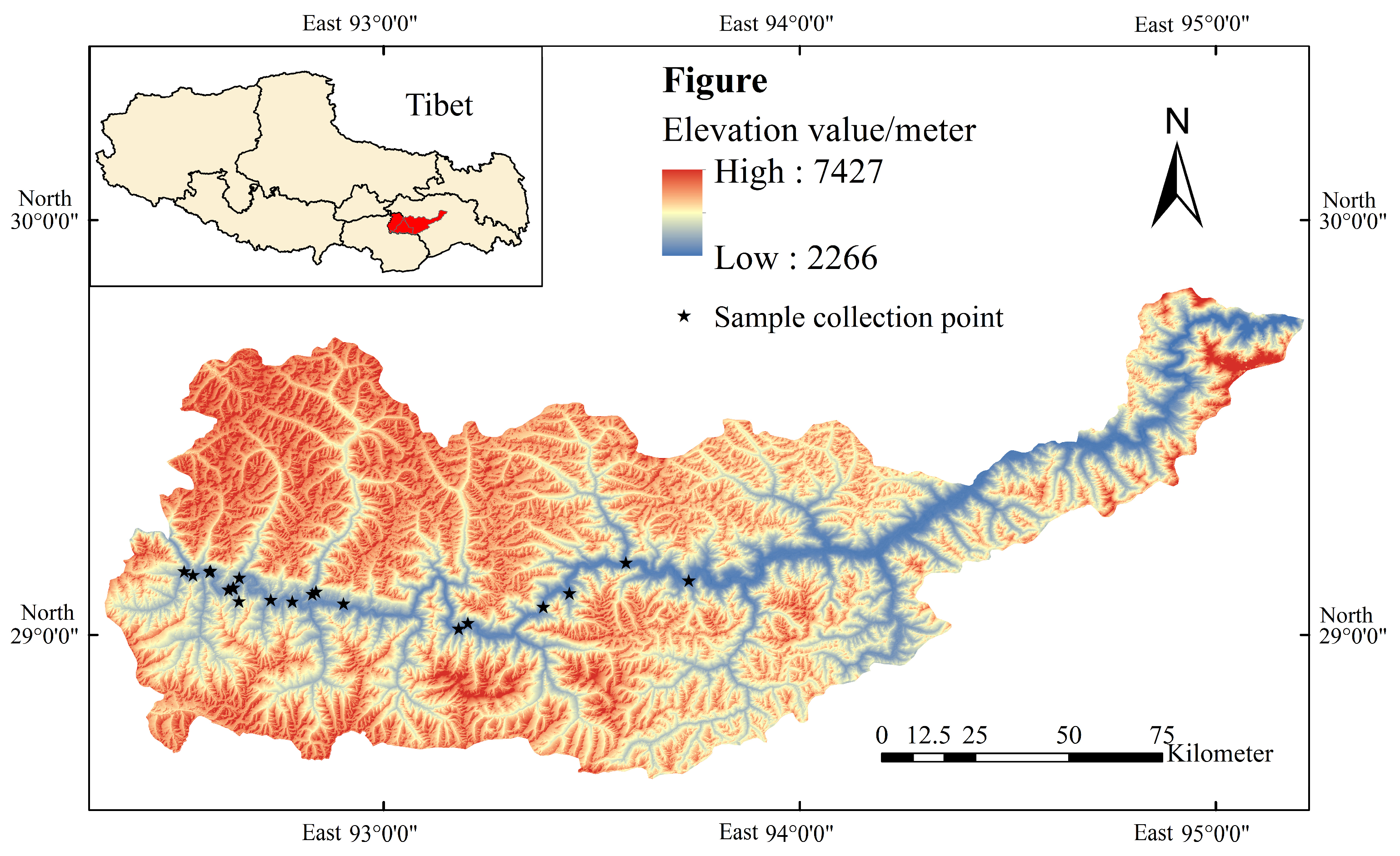
In the study area, walnut trees are predominantly distributed on the river terraces. This study focuses on the soil in the root zones of walnut trees, and soil samples were taken from July to October in 2023. A stratified random sampling strategy was employed to ensure representation across various counties and river terrace levels. Figure 1 illustrates the location of the 20 sampling sites, and 5 study trees were selected at each sampling site. At each site, soil samples were collected from the four cardinal directions (east, south, west, and north) around each walnut tree; sampling depth of soil was 0–60 cm. For each sampling point, mixed soil samples were collected from three soil layers: 0–20 cm, 20–40 cm, and 40–60 cm, resulting in a total of 321 soil samples. The relevant information of the sample site was recorded during sampling period, including the geographical coordinates (latitude and longitude) and elevation of each sampling site.
Soil samples were naturally air-dried after removal of pebbles and plant residues and then passed through 1 mm and 0.149 mm soil sieves for the determination of various physicochemical indices. Soil pH was measured using the glass electrode method (water–soil mass ratio of 2.5:1) [17]. Organic matter (OM) was determined using the dichromate oxidation method [18]. Alkaline hydrolyzable nitrogen (AN) was determined by the alkaline diffusion method [17]. Available phosphorus (AP) was determined by the sodium bicarbonate leach-molybdenum antimony-antimony colourimetric method, and available potassium (AK) was determined by the ammonium acetate leach-flame photometer method [19]. Exchangeable calcium (ECa) and exchangeable magnesium (EMg) were determined by the atomic absorption spectrophotometry method [17]. Available zinc, copper, and iron were determined by the DTPA extraction-atomic absorption spectrophotometry method [20]. The activities of soil β-glucosidase, urease, and phosphatase were determined according to the standard methods provided in the enzyme assay kits (Suzhou Grace Biotechnology Co., Ltd., Suzhou, China). Soluble sugar content in the fruit was determined using the sulfuric acid–anthrone colorimetric method [21]; crude protein in the fruit was determined using the Kjeldahl method [22]; and crude fat in the fruit was determined using the Soxhlet extraction method [23]. Nut and kernel weights were measured with an electronic balance (YINGHENG, Shanghai, China) with a precision of 0.01%. The longitudinal and transverse diameters and shell thickness were measured with a Vernier caliper (SYNTEK, Essen, Germany) with a precision of 0.01 mm. The fruit shape index and kernel ratio were calculated using Formulas (1) and (2), respectively.
Fruit   shape   index = Longitudinal   diameter Transverse   diameter
Kernel   percentage % = kernel   weight nut   weight   ×   100 %

2.3. Research Methods

2.3.1. Principal Component Analysis and Composite Score Construction

To explore the intrinsic structure of soil fertility characteristics, a PCA was conducted on standardised soil fertility indicators (Z-score). To identify the soil layer that best represents the others for further analysis, PCA was performed separately on the fertility indicators of three soil depths: 0–20 cm, 20–40 cm and 40–60 cm. Based on the criterion of eigenvalues ≥1, three principal components (PCs) were extracted. Among the three layers, the 20–40 cm layer had the highest cumulative squared loadings, indicating the strongest internal coherence among the fertility indicators. Subsequent analyses were therefore based on data from this layer. To quantify the contribution of each fertility indicator to the extracted principal components, component score coefficients (uij) were calculated. These coefficients were obtained by dividing the factor loadings (aij) by the square root of their respective eigenvalues ( λ i ). These coefficients represent the normalized weights of the standardized indicators (Z1, Z2, …, Z10) within each component. Accordingly, the following composite score formulas (Equations (3)–(5)) were established:
F1 = −0.335Z1 + 0.424Z2 + 0.303Z3 + 0.406Z4 + 0.094Z5 + 0.361Z6 + 0.335Z7 + 0.185Z8 + 0.206Z9 − 0.351Z10
F2 = 0.273Z1 + 0.147Z2 + 0.447Z3 + 0.206Z4 + 0.608Z5 − 0.041Z6 − 0.218Z7 − 0.286Z8 + 0.128Z9 − 0.378Z10
F3 = 0.419Z1 + 0.152Z2 + 0.076Z3 − 0.065Z4 + 0.068Z5 + 0.224Z6 + 0.323Z7 + 0.487Z8 − 0.578Z9 − 0.248Z10
where F1, F2 and F3 represent the principal component scores for different soil fertility indicators, and Z1, Z2, Z3, …, and Z10 represent the 10 standardized soil fertility indicators, including pH, OM, AN, AP, AK, ECa, EMg, available copper (ACu), available zinc (AZn), and available iron (AFe).
Based on the PCA results, a comprehensive soil fertility score was calculated using the weighted combination of the three principal components (Equation (6)).
F = 0.438 F1 + 0.310 F2 + 0.252 F3

2.3.2. Criteria for Classification of Soil Fertility Indicators

According to the relevant standards of the Second National Soil Census [24] and previous studies [25], the soil fertility class of the study area was classified according to the criteria in Table 1.

2.3.3. Comprehensive Evaluation of Soil Fertility

In this study, ten physicochemical indicators were selected as evaluation parameters for soil fertility, which are soil pH, OM, AN, AP, AK, ECa, EMg, AZn, AFe, and ACu, where pH is modelled using a parabolic membership function, while the remaining indicators are represented using S-shaped membership functions [26].
The expression for the parabolic membership function is as follows:
f x = 1.0 0.9 x x m i n x m a x x 2 x 2 x < x m a x 1.0 x 1 x < x 2 0.9 ( x x m i n ) x 1 x m i n   x m i n x < x 1 0.1 x < x m i n   o r   x > x m a x
The expression for the S-shaped membership function is as follows:
f x = 1.0 x   x m a x 0.9 x x m i n x m a x x m i n + 0.1 x m i n x < x m a x 0.1 x < x m i n                  
where f x   denotes the membership degree of a given indicator (ranging from 0.1 to 1.0); x represents the actual measured value of the soil indicator; x m i n and x m a x are the lower and upper boundary values according to the grading standards (Table 1), respectively. For the parabolic function (Equation (7)), x 1 and x 2 represent the lower and upper optimal range limits. Based on the soil nutrient grading standards (Table 1), the inflection points of the membership function curves for each fertility indicator were determined (Table 2).
Different fertility factors contribute to soil fertility in different ways, so it is necessary to determine the weight of each evaluation indicator. The weight of each indicator (Table 3) was obtained using the coefficient of variation method [27], with the calculation formula as follows:
C V i = σ i μ i × 100 %
where, C V i is the coefficient of variation for the i -th indicator, σ i is the standard deviation of the i -th indicator, and μ i is the mean of the i -th indicator.
The weight coefficient for each evaluation indicator is calculated using the following formula:
W i = C V i i = 1 n C V i
Based on the membership degree ( f i ) and the weight ( W i ) of each fertility indicator (Table 3), the soil fertility index (IFI) is calculated using the formula:
I F I = i = 1 n W i f i
where W i is the weight of the i -th evaluation indicator, f i is the corresponding membership degree, and n is the number of evaluation indicators. The calculated actual fertility index value is then classified into five levels (Table 4).

2.4. Statistical Analyses

Excel 365 was used for original data statistics and processing; SPSS 27 was used for principal component analysis and the construction of multiple linear regression models; SPSSPRO was used for random forest regression analysis (https://www.spsspro.com). To ensure the robustness of the variable importance rankings, the model was run for 50 iterations with different random seeds. The stable mean importance scores were used for final interpretation to minimize the influence of model stochasticity. Origin 2021 was used for Spearman correlation analysis, cluster analysis, and the creation of PCA biplots, correlation heatmaps, cluster dendrograms, violin plots, radar charts, bar graphs, and variable importance plots from random forest analysis; ArcMap 10.7 was used to plot the distribution of sampling points in the study area.

3. Results

3.1. PCA of Soil Fertility Characteristics

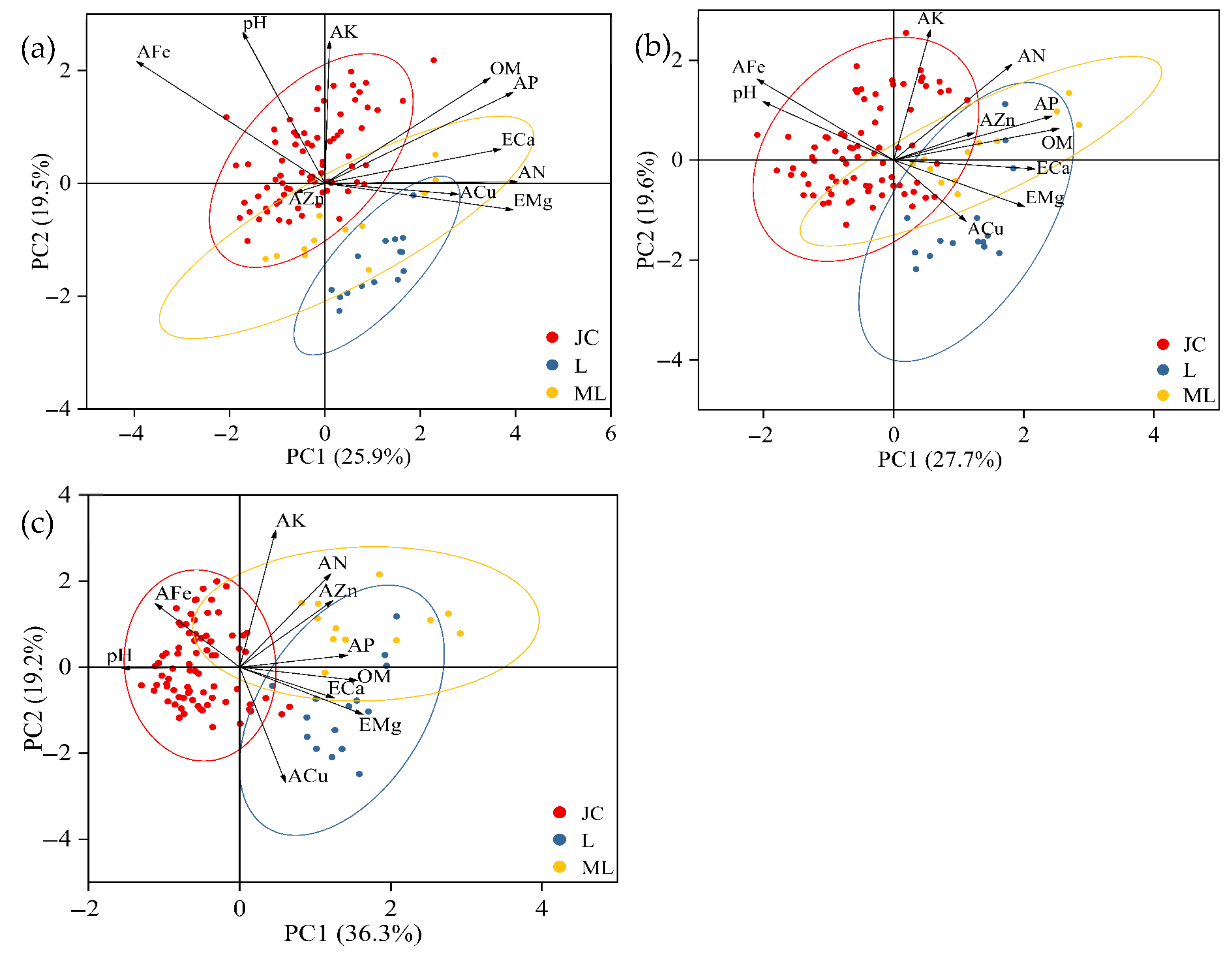
PCA was conducted on soil fertility indicators from soil layers of the 0–20 cm, 20–40 cm and 40–60 cm, respectively, so as to visualize the spatial differentiation of soil fertility across counties (Figure 2). The cumulative variance explained by the first two principal components (PC1 and PC2) was moderate across all layers, though the characteristics of the components varied. A cumulative variance explained by PC1 and PC2 together is 45.4% for topsoil (0–20 cm), and 47.3% for subsoil (20–40 cm). Although the variance of the subsoil was similar to the topsoil, the sample distribution along PC1 was broader, which indicates that organic matter and macronutrients, particularly nitrogen and phosphorus, were the primary drivers of fertility variation at this depth. The deep soil (40–60 cm) exhibited the highest cumulative variance (55.5%) by PC1 and PC2. Soil samples showed strong county-level clustering, suggesting that deeper soil fertility is influenced more by long-term geogenic factors, such as parent material and geological setting. Across all layers of soil, the content of organic matter and macronutrients contributed most to sample variability, while the effect of micronutrients was comparatively smaller. Soil samples from Milin County aligned closely with the vectors for OM, AP and AN, reflecting high soil fertility. On the contrary, the samples from Jiacha County were clustered along the pH vector, indicating that the soil fertility was lower and the soil environment was more alkaline.
Based on the 20–40 cm layer with the strongest internal consistency among fertility indicators, three principal components were extracted. These collectively explained 63.317% of the total variance and served as the basis for subsequent modelling (Table 5). PC1 had an eigenvalue of 2.774 and explained 27.738% of the variance, which showed high loading for OM, AN, AP, ECa, and EMg, and represented “basal nutrient storage”. The PCA-derived comprehensive scores effectively represent the relative differences in soil fertility among the plots. PC2 had an eigenvalue of 1.963, accounting for 19.628% of the variance, and showed strong loadings for AP and AN, reflecting the soil’s nutrient-supplying capacity. Thus, PC2 represented “nutrient supply capacity”. PC3 had an eigenvalue of 1.595, accounting for 15.951% of the variance, and showed substantial loading for ACu, pH, and EMg, which component mainly reflects the “acid-base status and micronutrients”. Taken together, the characteristics of soil fertility can be represented comprehensively by three principal components, which encompass key dimensions such as basal nutrient storage, nutrient supply capacity, soil acid-base status and micronutrients. This simplified yet comprehensive indicator system provides a robust basis for further detailed analyses of the influence of soil fertility on walnut growth and fruit quality.
The comprehensive scores calculated by Equation (6) (Table 6), which rank from highest to lowest is as follows: Wolong, Nie, Jiage, Nuo, Lasui, Anrao, Chongkang, Ri, Gatang, Jiacha, and Lengda. A comparative analysis across the counties of Jiacha, Lang, and Milin revealed that Milin County had the highest overall fertility of soil, followed by Lang County. Jiacha County showed comparatively lower soil fertility levels.

3.2. Fuzzy Comprehensive Evaluation of Soil Fertility

3.2.1. Soil Fertility Characteristics in the Three Counties

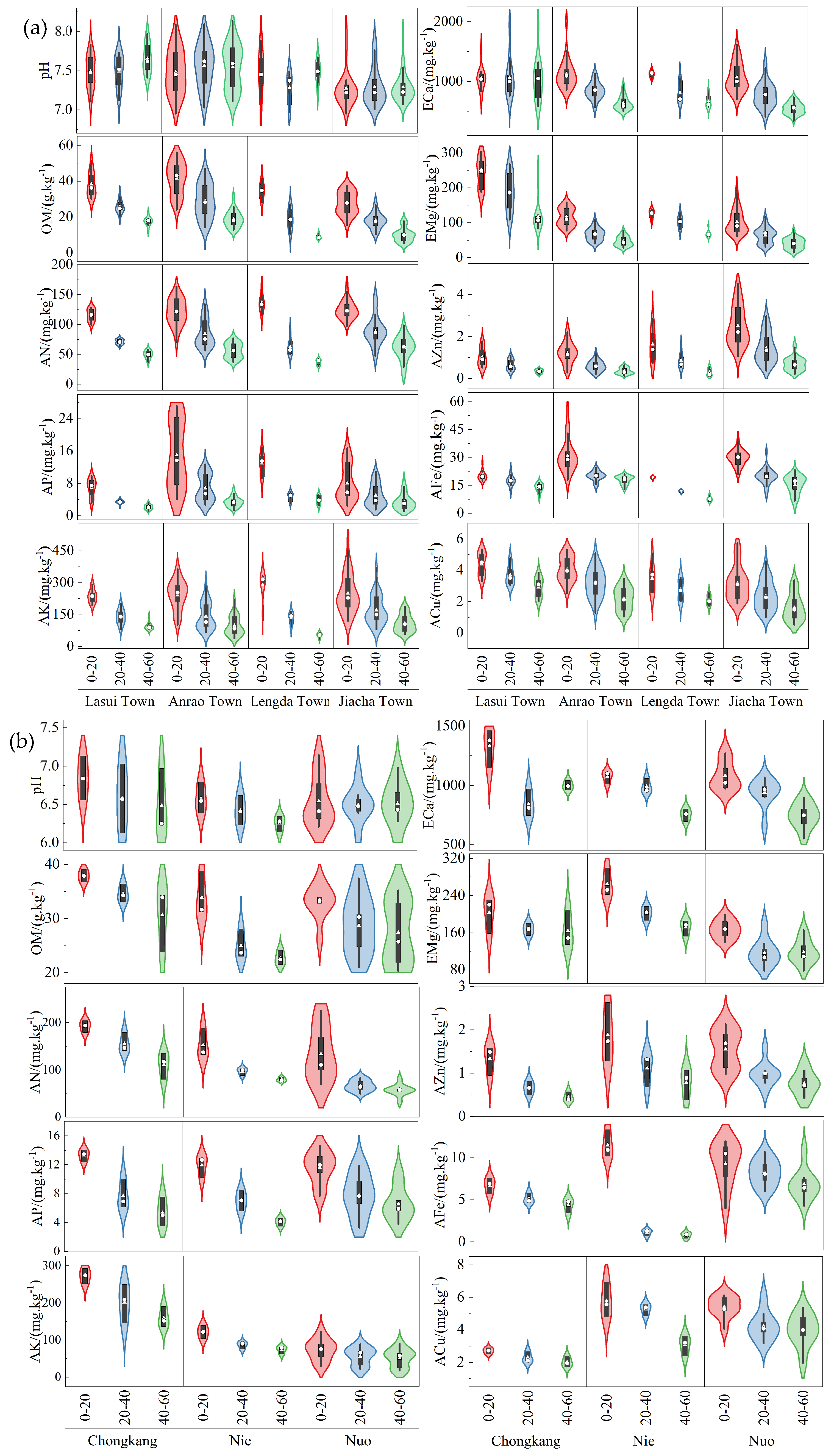
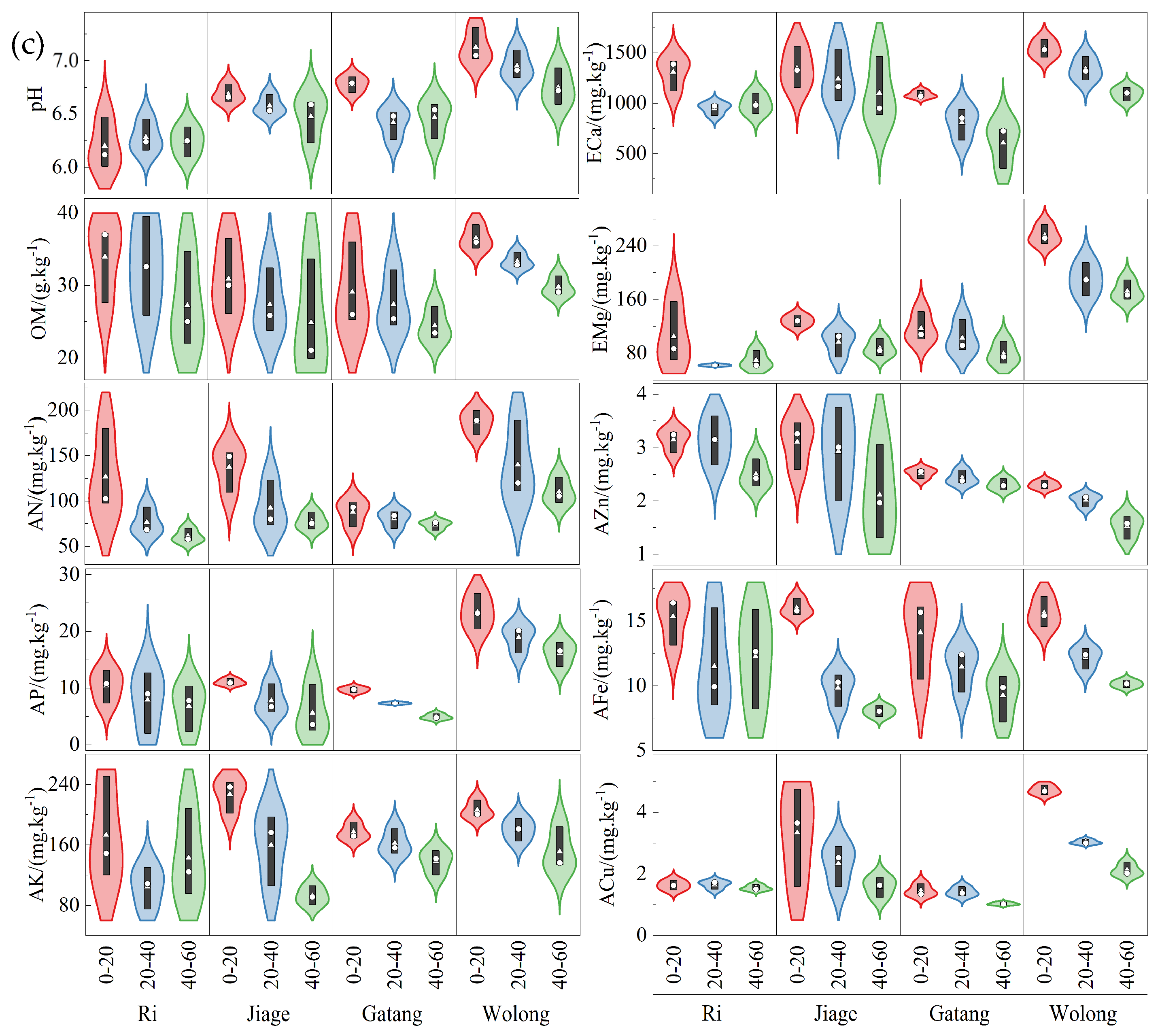
There were significant differences in soil fertility among townships in Jiacha County (Figure 3a). An average of soil pH ranges from 7.27 to 7.65 in the county, indicating generally neutral to slightly alkaline conditions; AN content in soil showed little variation among townships. In Jiacha County, the pH of soil was closer to neutral in Jiacha Town, and where AZn of soil was at relatively high levels; OM in both the topsoil and subsoil was high (18.9–41.5 g·kg−1) in Anrao Town, where AP and AFe were also high in the topsoil; AK of soil in Lengda Township was high in the topsoil and low in the subsoil; soil in Lasui Township is characterized by high EMg and ACu content. Figure S1 indicates that soil fertility was different in different terraces of the river. There were generally higher levels of OM, AN, AP, AK, ECa, and EMg in the second-level, third-level, and fourth-level terraces, which were more than those in first-level terraces; however, there are minimal differences in micronutrient content among the terraces.
In Lang County, soil fertility characteristics differ significantly among villages (Figure 3b), reflecting spatial heterogeneity within the county. The average soil pH ranges from 6.02 to 7.14, indicating neutral to slightly acidic conditions; the OM content ranges from 20.3 to 39.0 g·kg−1. Chongkang Village has a pH closer to neutral and higher contents of OM, AN, AP, AK, and ECa in both soil layers; however, its micronutrient levels are relatively low. As shown in Figure S2, the second-level and third-level terraces have higher nutrient content than first-level terraces, with third-level terraces being particularly rich in OM and macronutrients and second-level terraces having higher levels of micronutrients such as Zn, Fe, and Cu.
Clear differences in soil fertility are also observed among villages in Milin County (Figure 3c). The average soil pH ranges from 6.01 to 7.31, indicating neutral to slightly acidic conditions. pH of soil in Jiage and Wolong villages was closer to neutral, and the OM content ranges from 20.0 to 39.5 g·kg−1. Soil in Wolong Village had the highest levels of macronutrients and mesonutrients. AN and AK of the soil in Jiage Village was particularly high. Differences in AP among villages are minimal, and micronutrient content shows little variation. Third-level terraces have higher overall fertility than second-level terraces, especially with regard to the contents of N, P, and K. Secondary and micronutrient contents were also slightly higher in third-level terraces, though the differences are minor (Figure S3).
Overall, significant spatial variability in soil fertility is observed across Jiacha, Lang, and Milin counties, with pronounced vertical stratification patterns. These differences provide important guidance for regional fertilization strategies and sustainable land use management.

3.2.2. Analysis of the Soil Integrated Fertility Index

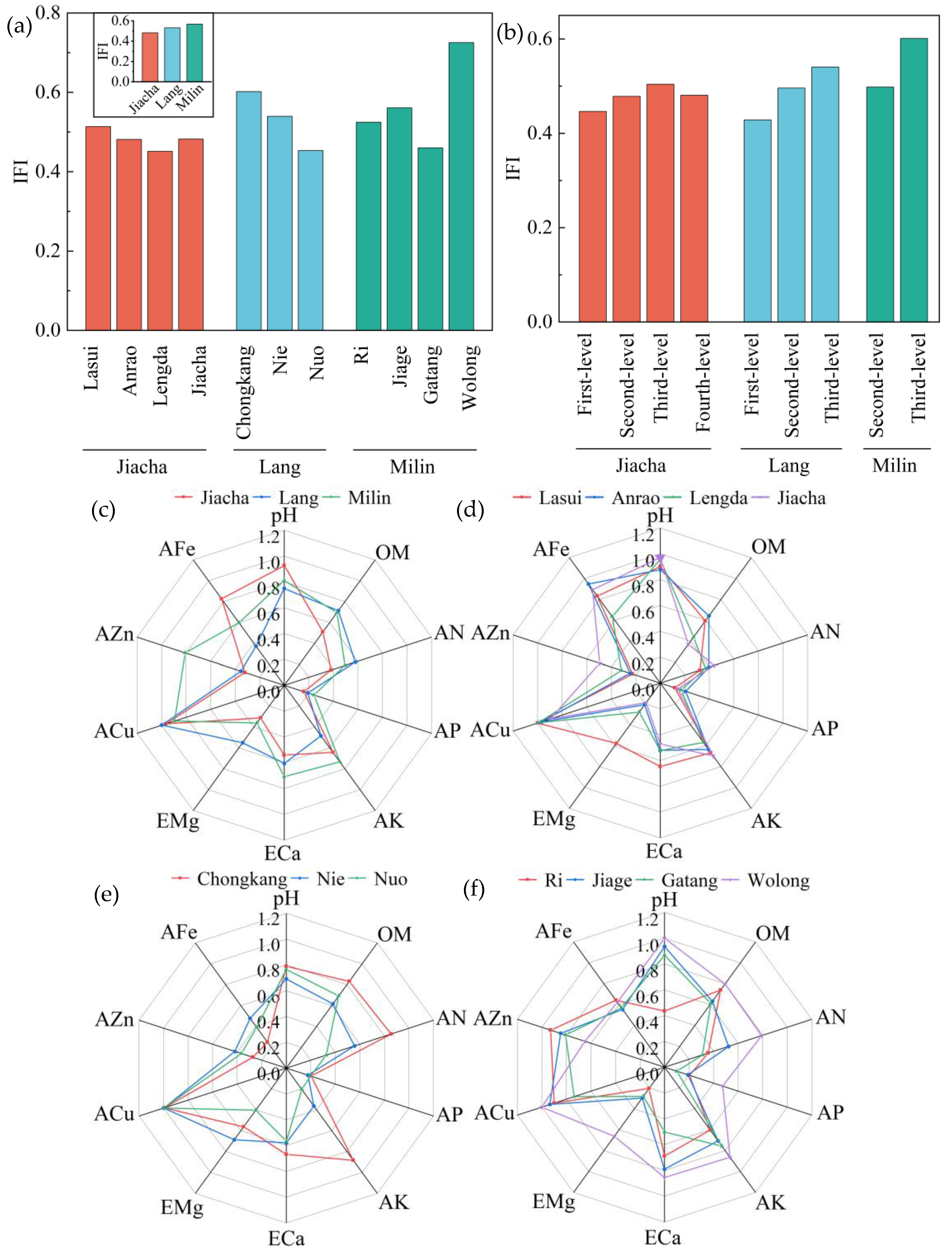
The integrated fertility index (IFI) is a measure of overall soil fertility ranging from 0 to 1, with higher values indicating better conditions. In this study, mean IFI values across soil layers represented the fertility level of each sampling site. As shown in Figure 4a, Wolong Village in Milin County had the highest IFI value (0.725), indicating superior soil fertility. Conversely, Lengda Township in Jiacha County had the lowest IFI value (0.451), suggesting relatively poor fertility. At the county level, Milin County exhibited the highest average IFI (0.568), followed by Lang (0.532) and Jiacha (0.482). However, no significant differences were observed among the three counties (p > 0.05), indicating a relatively consistent overall soil fertility status across the middle and lower reaches of the Yarlung Zangbo River valley. At the terrace scale (Figure 4b), the third-level terraces had the highest IFI value (0.549), followed by the second-level and fourth-level terraces. The first-level terraces had the lowest IFI value (0.446).
Overall, the terraces in the study area reflected a moderate fertility level (Table 4). Further analysis of the fertility components (Figure 4c–f) revealed that ACu and soil pH had the highest average membership values, indicating their strong positive contribution to soil fertility. In contrast, AP had the lowest membership value, identifying it as the primary limiting factor in the region. This was further validated by the fact that over 70% of the sampling sites were classified as “low” or “very low” in available phosphorus according to the Second National Soil Census standards. Limiting factors also varied by county. In Jiacha and Milin counties, EMg was the main constraint. Jiacha and Lang counties were additionally limited by low AZn. In Lang County, AFe also played a key limiting role. These results suggest that, although the overall soil fertility across the three counties is moderate, the controlling factors are region-specific. At the site level, the dominant limiting factors differ, reflecting spatial heterogeneity in soil nutrient composition.

3.2.3. Soil Enzyme Activity Analysis

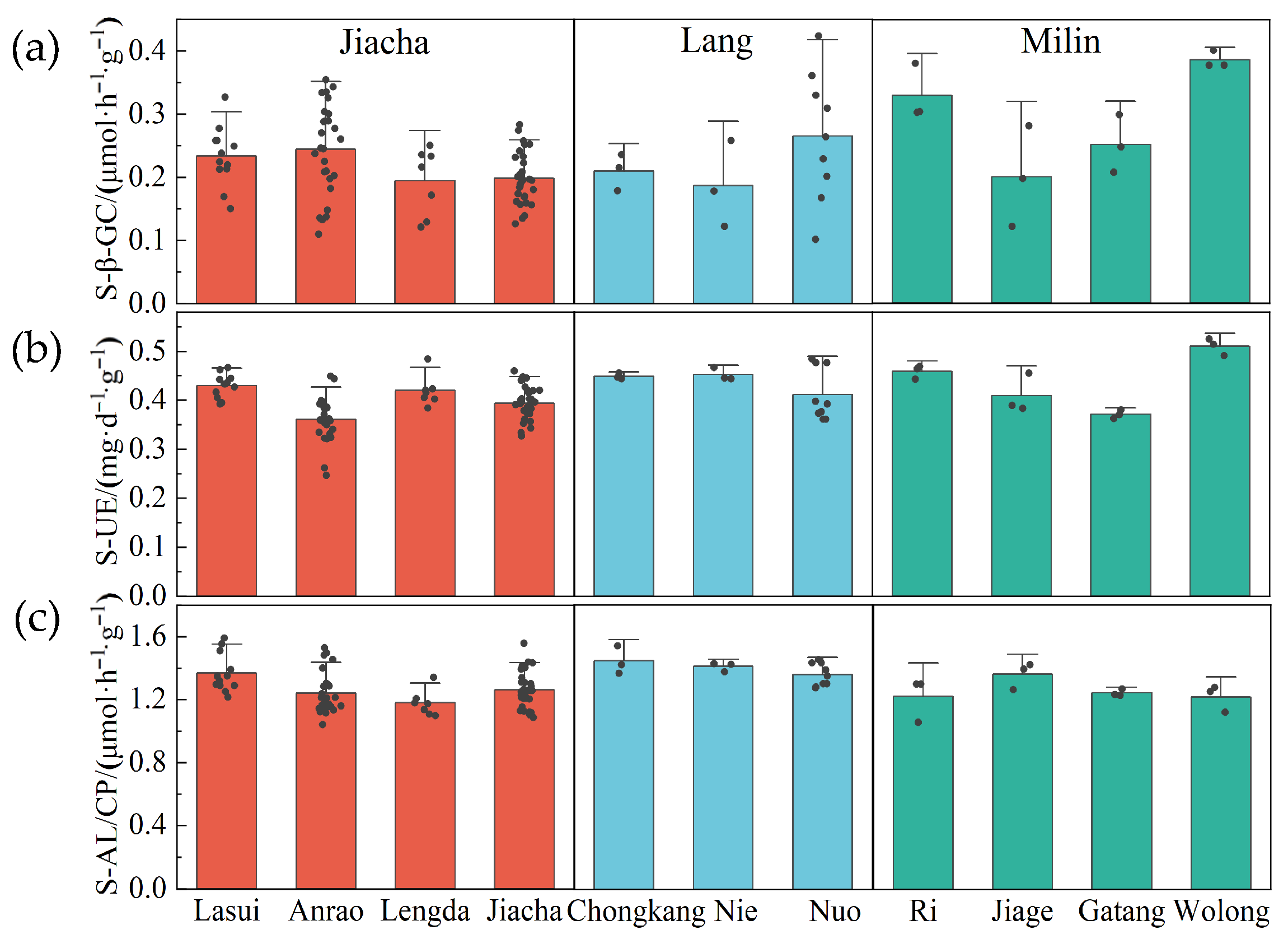
Soil β-GC, UE, and ALP/ACP activities exhibited significant spatial heterogeneity across the three counties (Figure 5). Soils in Milin County exhibited higher β-GC and UE activities (Figure 5a,b), indicating stronger capacities for microbial carbon transformation and nitrogen mineralization. In contrast, phosphatase activity showed minimal variation across the three counties (Figure 5c). Wolong Village (Milin County) exhibited the highest β-GC, UE activities of all the sites, with β-GC reaching 0.386 μmol·h−1·g−1, and UE reaching 0.528 mg·d−1·g−1. Conversely, soils from Lasui Township in Jacha County exhibited the highest phosphatase activity (1.369 μmol·h−1·g−1). Notably, β-GC activity varied widely across sampling sites, whereas UE and ALP/ACP activities were more consistent. The lowest β-GC activity was recorded in Nuo, Lang County (0.266 μmol·h−1·g−1), the lowest UE activity was recorded in Anrao, Jiacha County (0.361 mg·d−1·g−1), and the lowest ALP activity was recorded in Lengda, Milin County (1.179 μmol·h−1·g−1).
These spatial patterns in enzyme activity were associated with regional differences in soil fertility and microbial function. The elevated enzyme activities in Wolong Village suggested enhanced nutrient cycling, which may contribute to the production of high-quality walnut in this area.

3.3. Cluster Analysis

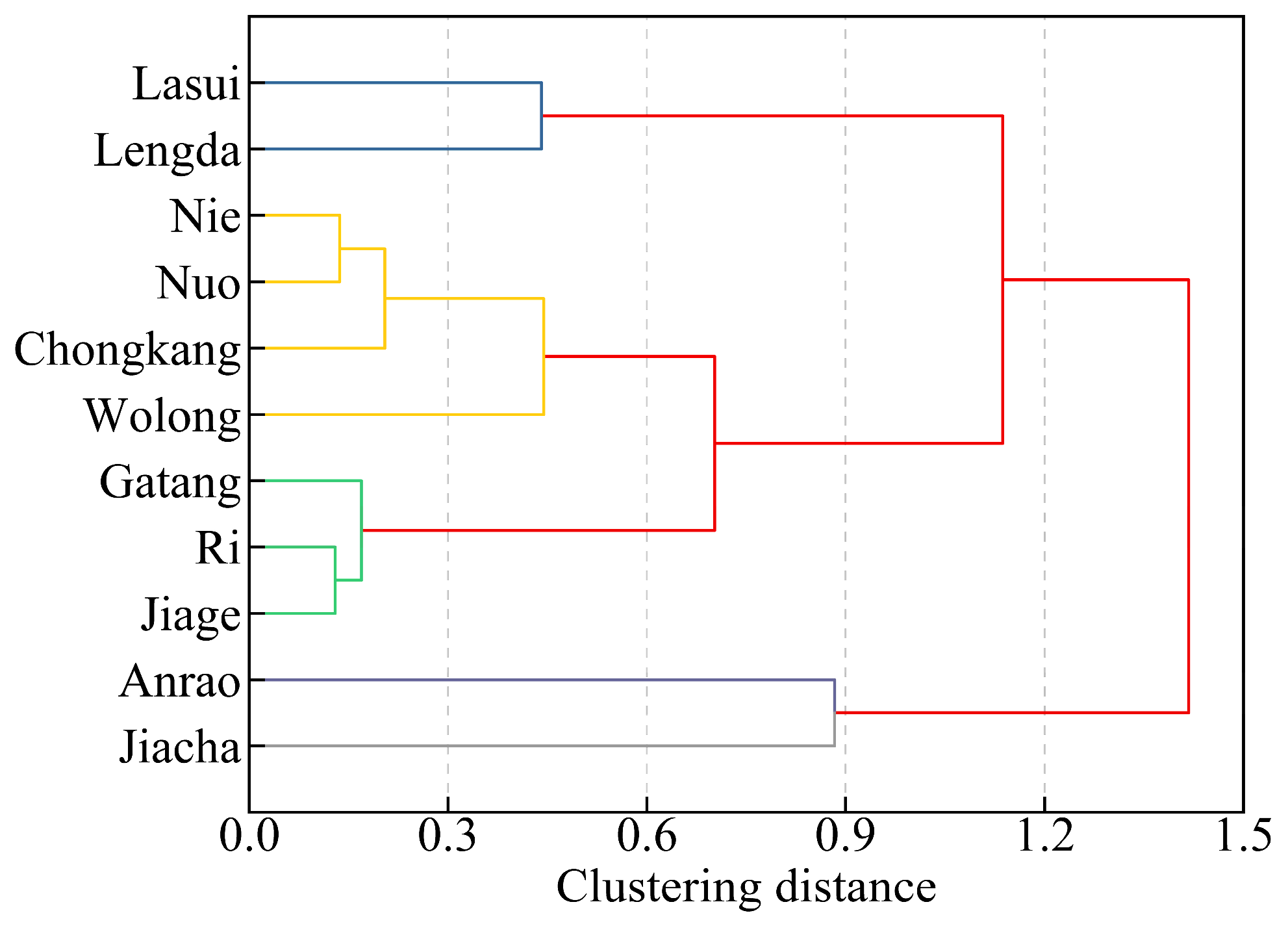
A cluster analysis was performed on the standardized soil fertility indicators (Figure 6). Based on the clustering distance, the 11 villages and towns were classified into five distinct groups. Lasui and Lengda townships formed Group I, Nie, Nuo, Chongkang, and Wolong villages formed Group II, Gatang, Ri, and Jiage villages formed Group III, Anrao Town formed Group IV, and Jiacha Town formed Group V. Villages within the same cluster exhibited high similarity in soil fertility characteristics, indicating a clear pattern of regional aggregation. This suggests that areas in close proximity tend to share similar soil fertility conditions and are thus more likely to be clustered together. These results provide a basis for further investigating the spatial heterogeneity of soil fertility and its underlying causes.

3.4. Walnut Fruit Quality Analysis

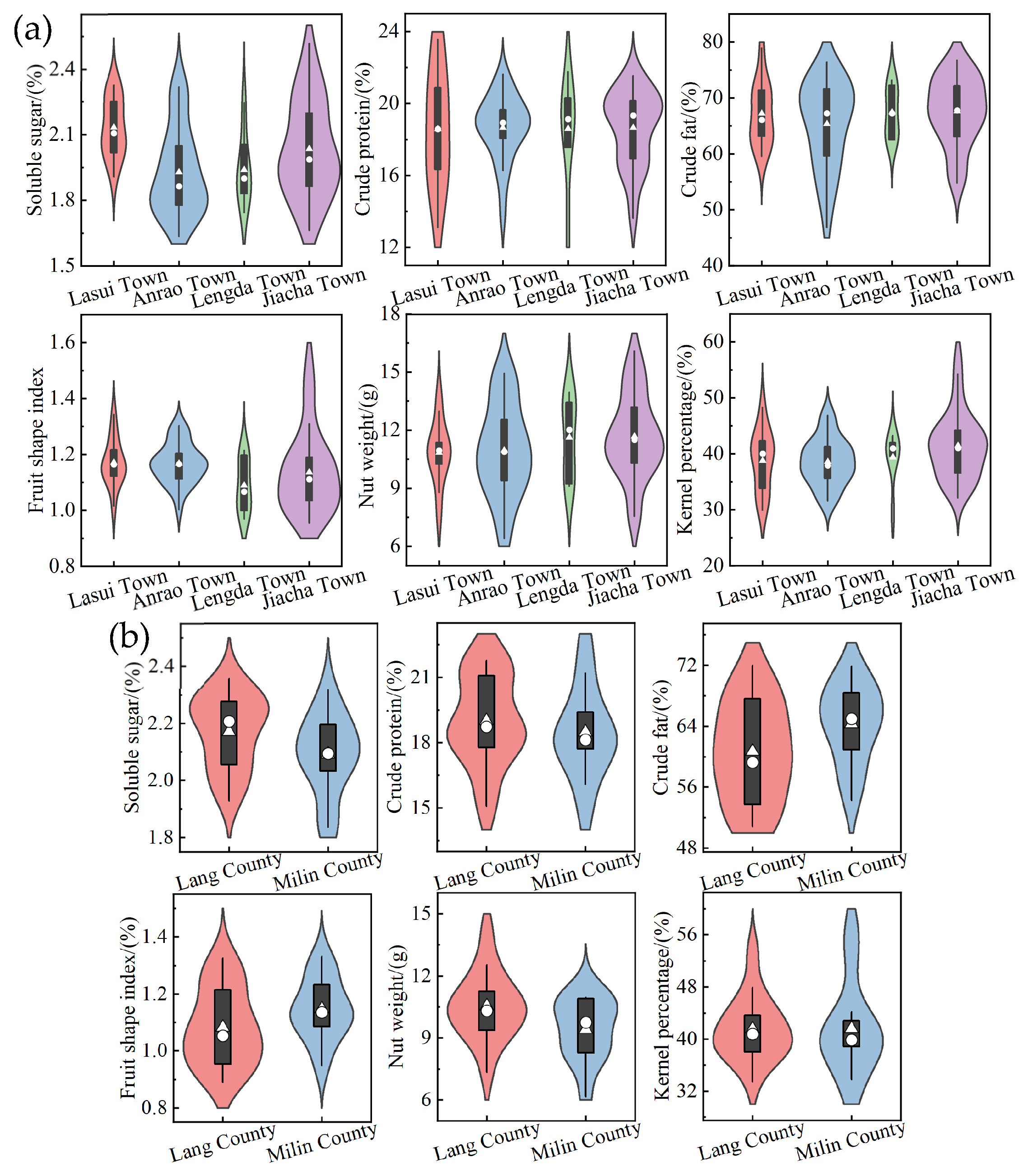
An analysis of walnut quality across townships in Jiacha County revealed the following averages: soluble sugar content, 1.92–2.13%; crude protein, 18.59–18.65%; and crude fat, 65.06–67.63%. The fruit shape index ranged from 1.09 to 1.17; nut weight, from 10.84 g to 11.67 g; and kernel percentage, from 38.30% to 41.46%. Lasui walnuts exhibited relatively high soluble sugar levels but lower nut weight among the townships. Crude protein content showed minimal variation across locations. Walnuts from Anrao had a lower crude fat content; those from Lengda had a lower fruit shape index; and nuts from Jiacha had a higher kernel percentage.
Lang County walnuts had higher average soluble sugar content (2.17%) and crude protein content (18.99%), but lower crude fat content (60.67%). They also had a fruit shape index of 1.08, a nut weight of 10.53 g, and a kernel percentage of 41.52%. Walnuts from Milin County had slightly lower soluble sugar content (2.09%) and crude protein content (18.48%), higher crude fat content (64.34%), a fruit shape index of 1.15, a lighter nut weight (9.41 g), and a marginally higher kernel percentage (41.6%).
Overall, regional variations in walnut quality among the three counties were relatively minor. Although certain trends were observed, such as Jiacha County showing slightly higher crude fat content and nut weight, and Lang and Milin counties exhibiting marginally higher sugar levels and kernel percentages, respectively, the overall quality remained relatively consistent across the study area (Figure 7). Furthermore, quality traits varied across different river terrace levels (Figure S4). Notably, walnuts from the third-level terraces consistently outperformed those from other levels in all measured attributes. Specifically, the crude protein content of the third-level terraces was significantly higher than that of the first- and second-level terraces, while crude fat content was significantly higher than that of the first-level terraces (p < 0.05). These results imply that geographical and ecological factors, such as soil fertility, climate, and cultivation practices, significantly influence walnut quality. The superior performance of walnuts from the third-level terraces provides valuable insights for future cultivar selection and orchard management.

3.5. Correlation Analysis

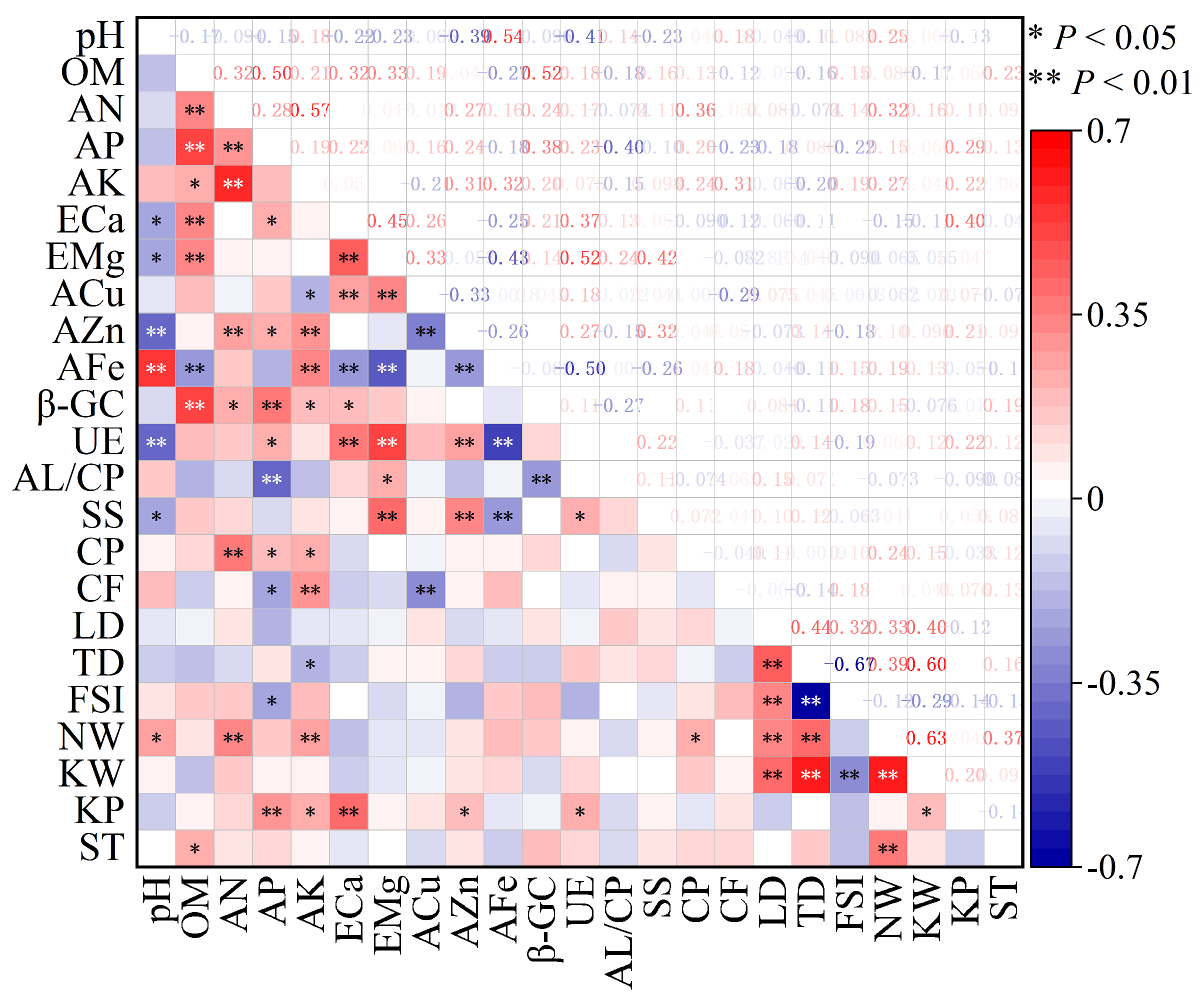
Further analysis revealed that soil fertility indicators exhibited varying degrees of correlation with the quality of walnuts (Figure 8). In terms of nutritional quality, SS content showed a positive correlation with EMg and AZn and a negative correlation with pH and AFe. CP content showed positive correlation with AP, AK and AN. Conversely, CF content was positively related to AK, but negatively related to AP and ACu. Regarding morphological traits, the FSI was negatively correlated with AP, while NW was positively associated with pH, AN and AK. KP was significantly correlated with AP, AK, ECa, and AZn, and ST exhibited a positive correlation with OM. Further analysis of interactions among soil nutrients revealed a complex network of synergistic and antagonistic relationships, with pH acting as a central regulatory factor. pH was positively correlated with AFe and negatively correlated with ECa, EMg, and AZn. OM was positively correlated with most macronutrients and micronutrients, but negatively with AFe. Macronutrients (N, P, K) generally displayed synergistic interactions, whereas among micronutrients, AZn exhibited antagonism with both AFe and ACu. Furthermore, soil enzyme activities, including β-glucosidase, urease and phosphatase, were significantly correlated with their respective nutrient substrates, highlighting the importance of microbial processes in nutrient cycling and transformation.

3.6. Multiple Linear Regression Modeling

Soil fertility is closely linked to the quality of walnuts, but the effects of individual nutrients and their interactions are complex. Although correlation analysis can identify associations between soil and fruit traits, it cannot clarify which soil factors are the main drivers of walnut quality. To address this limitation, this study used regression analysis to quantify the relationship between soil fertility indicators and fruit quality parameters.
Multicollinearity was assessed prior to model construction. All variance inflation factors (VIF) were below 5, indicating that multicollinearity was not a concern and that the data met the assumptions for regression modeling. Significance testing confirmed that the resulting regression models were statistically robust and reliable.
Different quality traits were influenced by different combinations of soil variables (Table 7). Stepwise regression revealed that CP content was primarily affected by AP, AK, and EMg. CP content was closely related to AN and ECa. SS content was mainly influenced by ECa, EMg, and AZn. Overall, the most influential factors in determining walnut quality were AN, AP, ECa, and EMg. These variables had positive and negative effects on different quality traits. However, the multiple linear regression models (Table 7) showed relatively low R2 values (0.215–0.300), indicating that while soil nutrients are significant drivers, they only partially explain the variation in walnut quality; other factors such as microclimate and cultivation practices likely contribute to the remaining variance.
X1–X10 stand for pH, organic matter, alkaline hydrolyzable nitrogen, available phosphorus, available potassium, exchangeable calcium, exchangeable magnesium, available copper, available zinc, available iron, respectively; Y1–Y5 stand for crude fat (CF), crude protein (CP), soluble sugar (SS), nut weight (NW), kernel percentage (KP), respectively.

3.7. Random Forest Regression Analysis

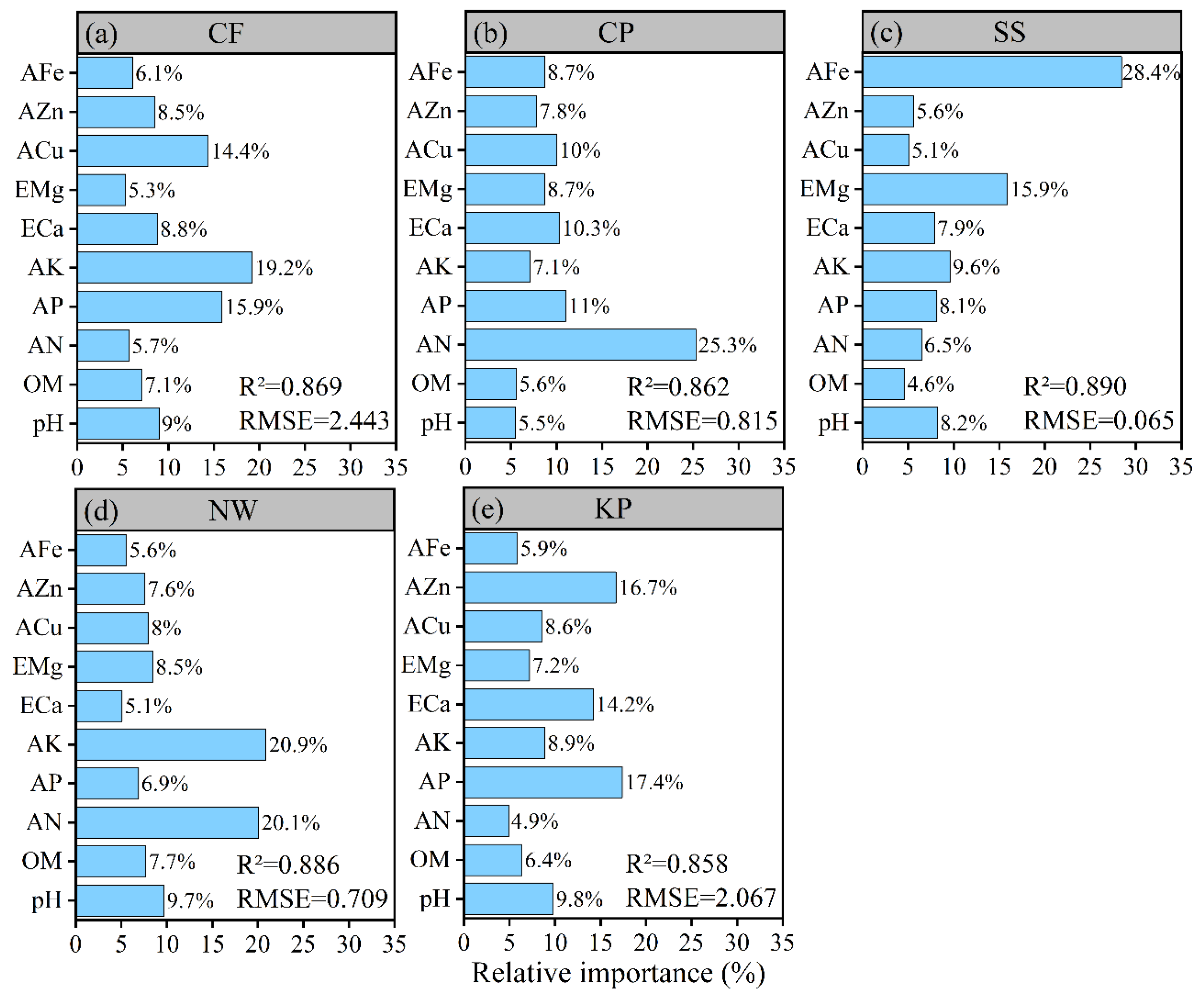
To further identify the key determinants of soil fertility and walnut quality, a random forest regression model was used. The model performance was validated using 10-fold cross-validation and Out-of-Bag (OOB) scores to prevent overfitting. The R2 values (0.858–0.886) indicated robust predictive performance within the validation sets. The results confirm that specific quality traits were primarily influenced by distinct soil fertility factors with complex nonlinear interactions. According to the variable importance rankings (Figure 9), AK emerged as the dominant factor influencing both crude fat (CF) content (19.2%) and nut weight (NW) (20.9%). AN was the key determinant of crude protein (CP) content (25.3%), while AFe was the main driver of soluble sugar (SS) accumulation (28.4%). The kernel percentage (KP) was strongly influenced by AP (17.4%) and AZn (16.7%). These findings emphasise the importance of targeted soil nutrient management strategies to optimise the quality of walnuts based on spatially variable soil fertility conditions.

4. Discussion

4.1. Spatial Differentiation of Soil Fertility and Dominant Factors

The spatiotemporal heterogeneity of soil properties significantly affects nutrient dynamics and their spatial distribution patterns. Accurately characterizing these features is essential for predicting the effects of natural and human-caused factors on soil productivity and for developing effective soil management strategies [28,29]. Using principal component analysis (PCA), fuzzy comprehensive evaluation, multiple linear regression, and random forest regression, our study revealed differences in soil nutrient status across counties, valley terraces, and soil depths in Jiacha, Lang, and Milin counties. This multi-scale variation study is essential for regional soil resource management and walnut industry development.
Our findings confirmed soil fertility heterogeneity at both the county and terrace levels. The PCA biplot (Figure 2) further illustrates the vertical stratification of fertility indicators. Mid-layer soils (20–40 cm) were primarily differentiated by PC1 (OM, N, P, Ca, and Mg), reflecting stable fertility. In contrast, deep-layer soils (40–60 cm) displayed clear county-level clustering and the highest cumulative explained variance. This indicates that deep soil fertility is mainly governed by parent material and geological background, which is helpful for us to understand the formation mechanisms of soil fertility in the plateau valley. As highlighted by Calvache et al. (2025), soil chemical changes with depth are often driven by the interplay between parent material and vertical leaching, where subsoil fertility remains less affected by surface management but more representative of the geogenic background [30]. This vertical stratification in our study area suggests that long-term orchard sustainability must consider the nutrient reserves in deeper layers rather than focusing solely on topsoil. The integrated fertility scores derived from PCA demonstrated a clear spatial distribution pattern. Milin County had the highest fertility, followed by Lang County, while Jiacha County had the lowest fertility. Cluster analysis further validated these regional patterns by grouping 11 villages into five distinct categories with significant fertility differences (Figure 9). Villages within the same cluster exhibited high similarity in soil fertility, which is closely linked to their shared topographic features and land-use intensities. For instance, Group II (including Wolong and Nie villages) primarily comprises orchards located on the third-level terraces, where long-term intensive cultivation and frequent organic manure applications have resulted in a distinct nutrient-rich aggregation. Conversely, clusters showing lower fertility levels were often associated with first-level terraces or areas with higher sand content and greater leaching potential. This regional aggregation suggests that river terrace morphology, acting as a template for sediment deposition and hydrothermal redistribution, is the primary ecological driver shaping the spatial structure of soil fertility in these plateau valleys [31]. This variability was evident not only across counties and terraces but also in relation to the significant altitudinal gradient from west to east (Jiacha–Lang–Milin) and its associated climatic subzones.

4.2. Key Nutrient Constraints and Microbial Response Mechanisms

The overall soil pH in the study area was suitable for walnut growth, providing a favorable foundation. However, there were several key nutrient limitations, including phosphorus availability, exchangeable magnesium and available zinc. Most notably, available phosphorus was generally low or extremely low, constituting the principal limiting factor for soil fertility. Phosphorus is essential for walnut photosynthesis and respiration [32], yet its availability is subject to multiple constraints. In our study, phosphatase activity showed a significant negative correlation with available phosphorus (Figure 7). This finding provides compelling microbial-ecological evidence that soil microorganisms adapt to phosphorus stress by producing phosphatases to break down organic phosphorus [33]. However, this interpretation requires caution, as phosphatase activity is also sensitive to soil moisture and organic carbon levels, which may independently influence microbial enzyme secretion in arid plateau valleys [34]. While this reflects a positive biological response, it also highlights the limited phosphorus supply in the soil. Furthermore, the dry climate and sandy texture of valley terrace soils limit phosphorus retention [32,35,36]. It is worth noting that the effects of drought on phosphorus availability are complex. In some regions, such as the Mediterranean, moderate drought can increase phosphorus availability [37]. Organic and phosphate fertilizers have proven effective in improving phosphorus levels in highly weathered soils [12,38]. This offers valuable guidance for phosphorus management in the study area.
Besides phosphorus, deficiencies of exchangeable magnesium and available zinc also warrant attention. Random forest analysis (Figure 8) identified that zinc is one of the key factors affecting kernel rate, emphasizing the importance of zinc. Walnut trees are highly sensitive to zinc deficiency, which compromises leaf health, photosynthesis, yield, and nut quality [39,40]. Micronutrient availability is influenced by soil organic matter, clay minerals, calcium carbonate, iron oxides, pH, soil moisture, and the interaction between elements [41,42]. Zinc deficiency is common in alkaline, calcareous soils in arid and semi-arid regions [43]. In the study area, the high content of exchangeable calcium may partly explain the low content of available zinc. The widespread Zn deficiency is likely driven by the combination of neutral-to-alkaline soil pH and high exchangeable calcium (ECa) levels. In such alkaline environments, Zn easily precipitates as Zn(OH)2 or ZnCO3, significantly reducing its bioavailability. Furthermore, micronutrient dynamics in these alkaline soils are characterized by complex antagonistic interactions. According to Abreu-Junior et al. (2025), high concentrations of exchangeable Ca and Mg can inhibit the uptake of other micronutrients like Zn and B [44]. Our findings indicate that the widespread Zn deficiency may be exacerbated by the high Ca content in the river terrace soils, necessitating targeted fertilization strategies that account for these nutrient antagonisms to optimize plant performance and fruit quality. Magnesium deficiency was also observed in the study area, which is unusual for slightly alkaline soils, and can be attributed to the strong antagonistic effect of excess Ca and K on Mg uptake. Our correlation analysis (Figure 8) confirmed that ECa was negatively associated with several micronutrients. This may be due to the antagonistic effects of potassium ions on magnesium uptake [45]. Although nutrient-response trials were not conducted in this study, the observed low membership values for Zn and Mg, coupled with the high Ca-background of the river terraces, provide strong indirect evidence that cationic antagonism is a primary driver of these micronutrient imbalances in the study area. To sum up, targeted supplementation with phosphorus, zinc, and magnesium fertilizers is a key strategy for improving walnut yield and quality.
Soil water-heat regimes and leaching intensity, which are influenced by rainfall and topography, also affect micro-scale pH distribution and buffering capacity [46]. High levels of exchangeable calcium were detected in topsoils, which possibly is higher levels of organic matter in the topsoil because negative charges from organic matter enhance calcium adsorption [47,48], and that was also supported by the significant positive correlation between exchangeable calcium and organic matter.
Nutrient analysis also showed a decline in soil fertility with increasing depth, reflecting the combined influence of plateau climate, topography, vegetation, and precipitation [49]. Beyond chemical fertility, biological fertility is equally vital for soil health and ecosystem functioning [50]. In such fragile environments of the Tibetan plateau, the adaptation of soil microorganisms to extreme climates plays a key role in maintaining agricultural sustainability [51]. Soil enzyme activities, as indicators of microbially driven processes, provided further evidence of spatial heterogeneity in fertility. For example, Wolong village in Milin County exhibited significantly higher β-glucosidase and urease activities compared with other sites, which corresponded with higher organic matter and nitrogen contents. These results suggest stronger microbial activity in carbon and nitrogen cycling and higher nutrient turnover efficiency [52]. Thus, enzyme activity reflects functional microbial distributions and soil health status. Soil enzymes reflect microbial status but influence walnut quality indirectly. High β-glucosidase and urease activities accelerate C and N turnover, ensuring a steady nutrient supply for synthesizing fat and protein precursors. Consequently, these enzymes act as biological catalysts, optimizing the nutritional environment to facilitate superior fruit quality [53]. Areas with high enzyme activity, such as Wolong, may support more active nutrient cycling and provide a biological basis for superior walnut quality.

4.3. Linkages Between Soil Fertility and Walnut Quality

Among soil properties, nutrient levels are the most easily regulated and managed [54]. Through the use of correlation analysis, multiple linear regression, and random forest regression, this study identified the significant influence of soil nutrients on walnut fruit quality and clarified the underlying mechanisms. These findings have important implications for walnut production and management in the study area. While differences in walnut quality among villages were minor, differences at the terrace level were more pronounced (Figure S4), closely corresponding with spatial heterogeneity in soil fertility. County-level variation also emerged, for instance, walnuts from Lang County had relatively higher crude protein and soluble sugar content, likely due to local light, temperature, and soil nutrient supply conditions. The linear regression model (Table 7) identified specific soil factors and their linear effects on quality traits; for instance, available phosphorus negatively affected crude fat, while available potassium had a positive effect. Random forest analysis (Figure 9) further highlighted the relative importance of different factors and captured nonlinear relationships. The results show that different quality traits were driven by distinct key factors. Available potassium determined fat content and nut weight, alkaline hydrolyzable nitrogen drove protein synthesis, available iron promoted soluble sugar accumulation, and kernel percentage depended on the supply of both phosphorus and zinc. Notably, phosphorus and zinc, which are commonly deficient, were both significantly positively correlated with kernel percentage. This phenomenon is corroborated by experimental evidence in related nut species, where Zn was found to be a critical driver for embryo development and lipid accumulation, with targeted Zn applications resulting in a 10% increase in oil content [12]. Similarly, the importance of integrated nutrient management is highlighted by studies showing that combined organic-inorganic fertilization can push unsaturated fatty acid levels to as high as 97.5% [13]. Our results suggest that in the alkaline soils of the Yarlung Zangbo River valley, these mineral-quality interactions are even more pronounced due to severe nutrient fixation. The comparison between multiple linear regression and random forest (RF) models provides a more comprehensive view of quality drivers. While regression identified significant linear relationships (e.g., the direct impact of Zn on kernel percentage), the RF model revealed that AK and AN were the most influential factors for fat and protein synthesis. This suggests that certain quality traits are governed by non-linear interactions and threshold effects that RF is better equipped to capture, highlighting the importance of using integrated modeling approaches in soil-plant studies. This underscores the importance of supplementing these nutrients to improve the market value of walnuts. The key factors identified by linear regression (P, Mg, and Zn) corresponded to the region’s limiting nutrients. This explains why supplementing these nutrients is critical for improving walnut quality.

4.4. Limitations and Future Perspectives

This study offers preliminary insights into the spatial variation of soil fertility in walnut orchards along the Yarlung Zangbo River valley and its effect on nut quality. However, there are several limitations, and future research should delve deeper into the following areas.
First, although correlation and regression analyses revealed associations between soil quality and other factors, future work should integrate key ecological constraints using SEM or path analysis. These approaches would quantify the direct and indirect pathways through which soil and environmental factors influence walnut quality, enabling the precise identification of the dominant drivers.
Second, our single-time sampling design could not capture temporal nutrient dynamics or climate influences. Long-term phenological monitoring and the incorporation of meteorological data into climate-adaptive models are necessary to evaluate the impact of climate change and extreme events on walnut quality and yield stability and to improve our understanding of “soil–climate–plant” interactions.
Third, although we measured soil enzyme activities, we did not systematically assess microbial community structure or diversity. Incorporating high-throughput sequencing would allow for a more comprehensive evaluation of biological fertility and identification of key functional groups. It would also allow for a deeper elucidation of the “microbes–nutrient cycling–plant uptake” linkage.
Finally, the Tibetan plateau has a unique high-altitude environment with strong solar radiation and large diurnal temperature variation, which may positively influence walnut quality. Future studies should quantify the independent contributions of these environmental factors, as well as their synergies or trade-offs with soil fertility, to nut quality formation.
The relatively low altitude area in the study area is one of the main grain production areas and population centers in Tibet. Farmlands and villages are concentrated on the third terrace, forming a distinctive agroecosystem that integrates walnut, apple, and grain crops. Frequent tillage and extensive application of farmyard manure help to increase soil fertility on the river terraces. The soil fertility of different river terraces is different; it is the highest for the third terrace, the second for the second and fourth terraces, and the lowest for the first terrace. County-level differences further reflect the combined effects of elevation and hydrothermal conditions on soil formation and nutrient accumulation. Therefore, corresponding management measures should be formulated according to the specific soil fertility level of river terraces. In the third and fourth terraces, with high organic matter and fertility levels, crops or plants with high soil fertility requirements should be preferentially planted. In contrast, nutrient-efficient grasses or legumes can be planted on low-fertility or degraded terraces to maintain fertility.
Targeted fertilization strategies are also necessary, such as maintaining organic inputs on fertile terraces and prioritizing phosphorus, zinc, and magnesium supplementation on nutrient-deficient sites. Cluster analysis of fertility similarities provides a basis for zoning and precision management, enabling villages within the same cluster to implement uniform soil improvement strategies. In the construction of ecological corridors in the Yarlung Zangbo River valleys, it is necessary to combine soil improvement, efficient utilization of water resources and walnut industry development so as to form eco-economic synergies. Addressing these limitations will enable a more comprehensive understanding of soil fertility dynamics, ecological constraints, and the regulatory pathways of walnut quality formation. This will provide scientific support for the sustainable development of the walnut industry and the protection of fragile ecosystems.

5. Conclusions

There is significant multi-scale spatial heterogeneity in soil fertility across the major walnut-producing areas of the middle and lower reaches of the Yarlung Zangbo River valley. At the county level, soil fertility was highest in Milin County, followed by Lang County, and lowest in Jiacha County. At the river-terrace scale, the third-level terraces exhibited the highest fertility, while the first-level terraces exhibited the lowest. Cluster analysis further confirmed the regional aggregation of soil fertility characteristics.
Available phosphorus, exchangeable magnesium, and available zinc were identified as potential key factors constraining soil fertility in the region, particularly given the widespread deficiencies observed across the different terrace levels. Soil fertility indicators showed observable associations with walnut quality traits. While soil factors like AN, AP, and AK were identified as key drivers, the moderate explanatory power of the models suggests that fruit quality is also likely influenced by other environmental and management factors.
The spatial heterogeneity observed in this study provides a theoretical basis for considering zoned nutrient management. Prioritizing P, Zn, and Mg supplementation in identified deficient areas could be a potential strategy to optimize walnut production.

Supplementary Materials

The following supporting information can be downloaded at: https://www.mdpi.com/article/10.3390/agronomy16100952/s1.

Author Contributions

K.Y.: conceptualization, data curation, methodology, formal analysis, investigation, writing—original draft, visualization; W.Y.: formal analysis, methodology, investigation. Y.Z.: data curation, methodology, investigation; Q.Z.: data curation, methodology, investigation; J.Z.: conceptualization, methodology, formal analysis, writing—review & editing, supervision; Q.W.: formal analysis, supervision, validation; X.X.: conceptualization, project administration, funding acquisition. All authors contributed critically to the drafts and gave final approval for publication. All authors have read and agreed to the published version of the manuscript.

Funding

This study was supported by the project “Research on Walnut Industry Technology in the Tibet Plateau” under the scientific and technology to aid Tibet by Hubei Province during the “14th Five-Year Plan” (SCXX-XZCG-22016).

Data Availability Statement

Data will be made available on request from the corresponding author.

Conflicts of Interest

The authors declare that they have no known competing financial interests or personal relationships that could have appeared to influence the work reported in this paper.

References

  1. Yuan, H.; Cheng, M.; Pan, G. Distribution Pattern and Age Study of Ancient Walnut Trees in Tibet. J. Plateau Agric. 2023, 7, 264–272. [Google Scholar] [CrossRef]
  2. Milošević, T.; Milošević, N. Chapter 41—Soil Fertility: Plant Nutrition Vis-à-Vis Fruit Yield and Quality of Stone Fruits. In Fruit Crops; Srivastava, A.K., Hu, C., Eds.; Elsevier: Amsterdam, The Netherlands, 2020; pp. 583–606. [Google Scholar]
  3. Hu, B.; Xie, M.; Li, H.; He, R.; Zhou, Y.; Jiang, Y.; Ji, W.; Peng, J.; Xia, F.; Liang, Z.; et al. Climate and Soil Management Factors Control Spatio-Temporal Variation of Soil Nutrients and Soil Organic Matter in the Farmland of Jiangxi Province in South China. J. Soils Sediments 2023, 23, 2373–2395. [Google Scholar] [CrossRef]
  4. Lu, H.; Yuan, X.; Gong, C.; Liu, J.; Shi, Y.; Xia, X. Spatial Differentiation and Influencing Factors of Heavy Metals in Soils of Typical Counties in Lhasa River Basin. Sci. Rep. 2024, 14, 28818. [Google Scholar] [CrossRef]
  5. Wu, C.; Liu, G.; Huang, C.; Liu, Q. Soil Quality Assessment in Yellow River Delta: Establishing a Minimum Data Set and Fuzzy Logic Model. Geoderma 2019, 334, 82–89. [Google Scholar] [CrossRef]
  6. Hua, L.; Gao, J.; Zhou, M.; Bai, S. Impacts of Relative Elevation on Soil Nutrients and Apple Quality in the Hilly-Gully Region of the Loess Plateau, China. Sustainability 2021, 13, 1293. [Google Scholar] [CrossRef]
  7. Li, Y.; Li, Q.; Yan, Y.; Liu, W.; Xu, C.; Wang, Y.; Nan, L.; Liu, X. Evaluation of Soil Nutrients and Berry Quality Characteristics of Cabernet Gernischet (Vitis vinifera L.) Vineyards in the Eastern Foothills of the Helan Mountains, China. Front. Plant Sci. 2024, 15, 1418197. [Google Scholar] [CrossRef]
  8. Zhang, F.; Liu, P.; Zhou, X.; Yan, M.; Jia, Y.; Ding, X.; Zhang, J.; Huang, A.; Deng, H.; Zhu, Z.; et al. Quality Analysis of Different Kiwifruit Cultivars and Their Relationship with Soil Elements. J. Soil Sci. Plant Nutr. 2025, 25, 4491–4502. [Google Scholar] [CrossRef]
  9. Maulood, P.; Darwesh, D. Soil Quality Index Models for Assessing WalnutOrchards in Northern Erbil Province, Iraq. Pol. J. Environ. Stud. 2020, 29, 1275–1285. [Google Scholar] [CrossRef]
  10. Maulood, P. DRIS Formulas and PCA Approach for Evaluation of the Nutritional Status of Walnut Trees in the Hawraman Area. Passer J. Basic Appl. Sci. 2024, 6, 74–79. [Google Scholar] [CrossRef]
  11. Ye, S.; Peng, B.; Liu, T. Effects of Organic Fertilizers on Growth Characteristics and Fruit Quality in Pear-Jujube in the Loess Plateau. Sci. Rep. 2022, 12, 13372. [Google Scholar] [CrossRef] [PubMed]
  12. Huang, R.; Shen, C.; Wang, S.; Wang, Z. Zinc Content and Fruit Quality of Pecan as Affected by Application of Zinc Sulfate. HortScience 2019, 54, 1243–1248. [Google Scholar] [CrossRef]
  13. Tong, Y.; Wang, Z.; Gong, D.; Huang, C.; Ma, X.; Ma, X.; Yuan, F.; Fu, S.; Feng, C. Enhancing Soil Fertility and Elevating Pecan Fruit Quality through Combined Chemical and Organic Fertilization Practices. Horticulturae 2023, 10, 25. [Google Scholar] [CrossRef]
  14. Zhou, B.; Chen, Y.; Zeng, L.; Cui, Y.; Li, J.; Tang, H.; Liu, J.; Tang, J. Soil Nutrient Deficiency Decreases the Postharvest Quality-Related Metabolite Contents of Tea (Camellia sinensis (L.) Kuntze) Leaves. Food Chem. 2022, 377, 132003. [Google Scholar] [CrossRef] [PubMed]
  15. Sun, H.; Huang, X.; Chen, T.; Zhou, P.; Huang, X.; Jin, W.; Liu, D.; Zhang, H.; Zhou, J.; Wang, Z.; et al. Fruit Quality Prediction Based on Soil Mineral Element Content in Peach Orchard. Food Sci. Nutr. 2022, 10, 1756–1767. [Google Scholar] [CrossRef]
  16. Xu, Y.; Jiang, D.Z.; Li, L.; Wang, R.; Wang, D.; Wang, X.; Wang, Q. The Effects of Different Types of Organic Fertilizers on Soil Properties, Growth Characteristics, and Nut Quality in Walnut Orchards. J. Fruit Sci. 2025, 42, 141–150. [Google Scholar] [CrossRef]
  17. Bao, S. Agrochemical Analysis of Soil; China Agricultural Press: Beijing, China, 2000. [Google Scholar]
  18. Nelson, D.W.; Sommers, L.E. Methods of Soil Analysis, 2nd ed.; American Society of Agronomy: Madison, WI, USA, 1982; pp. 539–577. [Google Scholar]
  19. Miller, R.H.; Keeney, D.R. Methods of Soil Analysis, Part 2: Chemical and Microbiological Properties, 2nd ed.; American Society of Agronomy and Soil Science Society of American: Madison, WI, USA, 1982; pp. 1–129. [Google Scholar]
  20. Lindsay, W.L.; Norvell, W.A. Development of a DTPA Soil Test for Zinc, Iron, Manganese, and Copper. Soil Sci. Soc. Amer. J. 1978, 42, 421–428. [Google Scholar] [CrossRef]
  21. Mo, S.; Qian, C. Colorimetric Determination of Soluble Sugars in Fruits. J. Fruit Sci. 1992, 9, 59–62. [Google Scholar]
  22. GB 5009.5-2016; National Standard for Food Safety, Determination of Protein in Foods. China Standards Press: Beijing, China, 2016.
  23. GB 5009.6-2016; National Standard for Food Safety, Determination of Fat in Foods. China Standards Press: Beijing, China, 2016.
  24. National Soil Census Office. Technical Manual for the Soil Census of China; Agricultural Press: Beijing, China, 1992. [Google Scholar]
  25. Zhao, Z.; Yang, Y.; Dong, B.; Zhang, R.; Chen, G.; Pan, Z.; Du, D. Evaluation of Soil Quality of Pingliang City Based on Fuzzy Mathematics and Cluster Analysis. Agronomy 2024, 14, 1205. [Google Scholar] [CrossRef]
  26. Wang, J.; Yang, L.; Shan, Y. Research on the Application of Fuzzy Mathematics in Soil Quality Evaluation. Acta Pedol. Sin. 2001, 38, 176–183. [Google Scholar]
  27. Pang, J.; Liu, X.; Huang, Q. A new quality evaluation system of soil and water conservation for sustainable agricultural development. Agric. Water Manag. 2020, 240, 106235. [Google Scholar] [CrossRef]
  28. Kosmas, C.; Gerontidis, S.; Marathianou, M. The Effect of Land Use Change on Soils and Vegetation over Various Lithological Formations on Lesvos (Greece). CATENA 2000, 40, 51–68. [Google Scholar] [CrossRef]
  29. Özgöz, E. Long Term Conventional Tillage Effect on Spatial Variability of Some Soil Physical Properties. J. Sustain. Agric. 2009, 33, 142–160. [Google Scholar] [CrossRef]
  30. Calvache, D.F.A.; Mattiello, E.M.; de Castro, G.F.; Cuichán, C.M.V.; de Assis, I.R. Deep Soil Tillage and Mineral and Organic Fertilization for Coffea Canephora Cultivation. Sci. Agric. 2025, 82, e20240133. [Google Scholar] [CrossRef]
  31. Rychtecká, P.; Samec, P.; Rosíková, J. Floodplain forest soil series along the naturally wandering gravel-bed river in temperate submontane altitudes. CATENA 2023, 222, 106830. [Google Scholar] [CrossRef]
  32. Li, H.-P.; Han, Q.-Q.; Liu, Q.-M.; Gan, Y.-N.; Rensing, C.; Rivera, W.L.; Zhao, Q.; Zhang, J.-L. Roles of Phosphate-Solubilizing Bacteria in Mediating Soil Legacy Phosphorus Availability. Microbiol. Res. 2023, 272, 127375. [Google Scholar] [CrossRef]
  33. Janes-Bassett, V.; Blackwell, M.S.A.; Blair, G.; Davies, J.; Haygarth, P.M.; Mezeli, M.M.; Stewart, G. A Meta-Analysis of Phosphatase Activity in Agricultural Settings in Response to Phosphorus Deficiency. Soil Biol. Biochem. 2022, 165, 108537. [Google Scholar] [CrossRef]
  34. Jiang, Y.; Kuang, D.; Li, W.; Han, C.; Deng, H.; Liu, K.; Huang, S.; Zhong, W. Predominant Effects of Soil Organic Carbon Quality on Phosphatase Activity in Upland Ultisols under Long-Term Fertilizations. Geoderma 2025, 454, 117186. [Google Scholar] [CrossRef]
  35. He, M.; Dijkstra, F.A. Drought Effect on Plant Nitrogen and Phosphorus: A Meta-analysis. New Phytol. 2014, 204, 924–931. [Google Scholar] [CrossRef]
  36. Moustakidis, I.V.; Schilling, K.E.; Weber, L.J. Soil Total Phosphorus Deposition and Variability Patterns across the Floodplains of an Iowa River. CATENA 2019, 174, 84–94. [Google Scholar] [CrossRef]
  37. Sardans, J.; Peñuelas, J. Drought Changes Phosphorus and Potassium Accumulation Patterns in an Evergreen Mediterranean Forest. Funct. Ecol. 2007, 21, 191–201. [Google Scholar] [CrossRef]
  38. Abdala, D.B.; Da Silva, I.R.; Vergütz, L.; Sparks, D.L. Long-Term Manure Application Effects on Phosphorus Speciation, Kinetics and Distribution in Highly Weathered Agricultural Soils. Chemosphere 2015, 119, 504–514. [Google Scholar] [CrossRef]
  39. Zhou, S.; Li, N.; Margenot, A.J. Soil Meets Stream: Vertical Distribution of Soil Phosphorus in Streambanks. Geoderma 2022, 424, 115989. [Google Scholar] [CrossRef]
  40. Liu, J.-P.; Deng, Q.-J.; Shang, Y.-J.; Yao, X.-W.; Wang, H.-K.; Tang, Y.-J.; Peng, F.-R.; Tan, P.-P. Effects of Zinc Application on the Growth and Photosynthetic Characteristics of Pecan at the Seedling Stage. Plant Biol. J. 2021, 23, 1149–1156. [Google Scholar] [CrossRef]
  41. Dimkpa, C.O.; Latta, D.E.; McLean, J.E.; Britt, D.W.; Boyanov, M.I.; Anderson, A.J. Fate of CuO and ZnO Nano- and Microparticles in the Plant Environment. Environ. Sci. Technol. 2013, 47, 4734–4742. [Google Scholar] [CrossRef] [PubMed]
  42. Bindraban, P.S.; Dimkpa, C.; Nagarajan, L.; Roy, A.; Rabbinge, R. Revisiting Fertilisers and Fertilisation Strategies for Improved Nutrient Uptake by Plants. Biol. Fertil. Soils 2015, 51, 897–911. [Google Scholar] [CrossRef]
  43. Alloway, B.J. Soil Factors Associated with Zinc Deficiency in Crops and Humans. Environ. Geochem. Health 2009, 31, 537–548. [Google Scholar] [CrossRef]
  44. Abreu-Junior, C.H.; Rocha, J.R.; da Silva Barros, T.H.; Moreira, G.R.; Rezende, V.P.; dos Santos Cagliari, V.N.; da Rocha Junior, C.; Coelho, A.D.; Boaretto, R.M.; Capra, G.F.; et al. Unfolding Boron Dynamics at the Scale of Soil-Water-Fertilizer-Crop Systems in the Tropics: From Soil Availability to Plant Requirements. Sci. Agric. 2025, 82, e20230294. [Google Scholar] [CrossRef]
  45. Farhat, N.; Rabhi, M.; Falleh, H.; Lengliz, K.; Smaoui, A.; Abdelly, C.; Lachaâl, M.; Karray-Bouraoui, N. Interactive Effects of Excessive Potassium and Mg Deficiency on Safflower. Acta Physiol. Plant 2013, 35, 2737–2745. [Google Scholar] [CrossRef]
  46. Sun, W.; Li, S.; Zhang, G.; Fu, G.; Qi, H.; Li, T. Effects of Climate Change and Anthropogenic Activities on Soil pH in Grassland Regions on the Tibetan Plateau. Glob. Ecol. Conserv. 2023, 45, e02532. [Google Scholar] [CrossRef]
  47. Huang, X.R.; Li, H.; Li, S.; Xiong, H.L.; Jiang, X.J. Role of Cationic Polarization in Humus-increased Soil Aggregate Stability. Eur. J. Soil Sci. 2016, 67, 341–350. [Google Scholar] [CrossRef]
  48. Yao, Y.; Chen, J.; Li, F.; Sun, M.; Yang, X.; Wang, G.; Ma, J.; Sun, W. Exchangeable Ca2+ Content and Soil Aggregate Stability Control the Soil Organic Carbon Content in Degraded Horqin Grassland. Ecol. Indic. 2022, 134, 108507. [Google Scholar] [CrossRef]
  49. Wang, X.; Xue, X.; Zhang, Y.; Qin, S.; You, Q.; Duan, Y.; Wang, L.; Chen, J.; Liu, J.; Yao, B.; et al. Divergent Mechanisms Driving Nutrient Stoichiometry in Surface and Deep Soils of Desert Ecosystems on the Qinghai–Tibetan Plateau. CATENA 2024, 246, 108417. [Google Scholar] [CrossRef]
  50. Gao, C.; Bezemer, T.M.; de Vries, F.T.; van Bodegom, P.M. Trade-Offs in Soil Microbial Functions and Soil Health in Agroecosystems. Trends Ecol. Evol. 2024, 39, 895–903. [Google Scholar] [CrossRef] [PubMed]
  51. Sergeevna Kozun, Y.; Shagidullovich Kazeev, K.; Ilich Kolesnikov, S. Climatic Gradients of Biological Properties of Zonal Soils of Natural Lands. Geoderma 2022, 425, 116031. [Google Scholar] [CrossRef]
  52. Yan, Q.; Tian, H.; Huang, Y.; Mu, X.; Tang, G.; Ma, H.; Megharaj, M.; Xu, W.; He, W. Recycled Wheat Straw Biochar Enhances Nutrient-Poor Soil: Enzymatic Kinetics of Carbon, Nitrogen, and Phosphorus Cycling. J. Environ. Manag. 2025, 380, 124950. [Google Scholar] [CrossRef] [PubMed]
  53. Dong, N.; Hu, G.; Zhang, Y.; Qi, J.; Chen, Y.; Hao, Y. Effects of Green-Manure and Tillage Management on Soil Microbial Community Composition, Nutrients and Tree Growth in a Walnut Orchard. Sci. Rep. 2021, 11, 16882. [Google Scholar] [CrossRef]
  54. Shukla, A.K.; Behera, S.K.; Kumar, P.; Mishra, R.; Shukla, V.; Pachauri, S.P.; Sikaniya, Y.; Srivastava, P.C.; Sikarwar, A.; Kumar, D.; et al. Delineation of Management Zones for Site-Specific Soil Nutrient Management for Sustainable Crop Production. Land Degrad. Dev. 2025, 36, 231–248. [Google Scholar] [CrossRef]
Figure 1. Distribution of study areas and sampling points.
Agronomy 16 00952 g001
Figure 2. The distribution of soil samples from different counties across various soil layers is based on principal component analysis. (a) Distribution of soil samples in the 0–20 cm layer. (b) Distribution of soil samples in the 20–40 cm layer. (c) Distribution of soil samples in the 40–60 cm layer. JC: Gyatso County; L: Lang County; ML: Milin County. The different coloured dots in the figure represent distinct sample distributions. Ellipses denote 95% confidence intervals. The length of the arrows representing soil fertility factors indicates their contribution to sample variation—longer arrows signify a greater contribution.
Agronomy 16 00952 g002
Figure 3. Soil fertility indicators at different depths (0–20 cm, 20–40 cm and 40–60 cm) in villages and towns across the three counties. (a) Soil fertility indicators at different depths in the towns of Jiacha County. (b) Soil fertility indicators at different depths in villages in Lang County. (c) Soil fertility indicators at different depths in villages in Milin County.
Agronomy 16 00952 g003aAgronomy 16 00952 g003b
Figure 4. Radar chart showing the comprehensive soil fertility index analysis and the mean membership values of the fertility indicators. (a) The comprehensive soil fertility index for sampling points across villages and towns in the three counties. The inset in the top left shows the comprehensive soil fertility index for all three counties combined. (b) The comprehensive soil fertility index for sampling points at different terrace levels in the three counties. (c) A radar chart showing the soil fertility indicators for the three counties. (d) Soil fertility indicators for Jiacha County. (e) A radar chart showing the soil fertility indicators for Lang County. (f) A radar chart showing soil fertility indicators for Milin County.
Agronomy 16 00952 g004
Figure 5. Soil enzyme activities in the surface layer (0–20 cm) at sampling sites across the three counties. (a) Soil β-glucosidase activity. (b) Soil urease activity. (c) Soil alkaline/acid phosphatase activity.
Agronomy 16 00952 g005
Figure 6. Phylogenetic tree of soil fertility clustering analysis for different walnut sample plots. Connections of the same color indicate sample points classified into the same category.
Agronomy 16 00952 g006
Figure 7. Walnut quality indicators. (a) Quality indicators for walnut fruits at various sampling points in Jiacha County. (b) Quality indicators for walnut fruits in Lang County and Milin County.
Agronomy 16 00952 g007
Figure 8. Correlation analysis between soil fertility factors and walnut fruit quality. OM: Organic matter; AN: Available nitrogen; AP: Available phosphorus; AK: Available potassium; ECa: Exchangeable calcium; EMg: Exchangeable magnesium; ACu: Available copper; AZn: Available zinc; AFe: Available iron; β-GC: β-glucosidase; UE: Urease; AL/CP: Alkaline/Acid phosphatase; SS: Soluble sugar; CP: Crude protein; CF: Crude fat; LD: Longitudinal diameter; TD: Transverse diameter; FSI: Fruit shape index; NW: Nut weight; KW: Kernel weight; KP: Kernel percentage; ST: Shell thickness.
Agronomy 16 00952 g008
Figure 9. Relative importance of soil fertility factors on walnut quality traits based on random forest regression analysis. (ae) represent the relative importance of each soil fertility indicator on quality traits including crude fat, crude protein, soluble sugars, nut weight, and kernel yield, respectively. R2: The closer the value is to 1, the higher the model accuracy. RMSE: Root mean square error; the smaller the value, the higher the model accuracy. The importance rankings shown are mean values derived from 50 model iterations, showing high consistency (CV < 5%) across multiple runs.
Agronomy 16 00952 g009
Table 1. Classification standards for soil fertility indicators.
IndicatorsI
(High)
II
(Relatively High)
III
(Moderate)
IV
(Low)
V
(Very Low)
pH>8.57.5–8.56.5–7.55.5–6.5<5.5
Organic matter (OM)>4030–4020–3010–20<10
Alkaline hydrolyzable nitrogen (AN)>150120–15090–12060–90<60
Available phosphorus (AP)>4020–4010–205–10<5
Available potassium (AK)>200150–200100–15050–100<50
Exchangeable calcium (ECa)>1500800–1500500–800300–500<300
Exchangeable magnesium (EMg)>300200–300100–20050–100<50
Available zinc (AZn)>3.01.0–3.00.5–1.00.3–0.5<0.3
Available iron (AFe)>2010–204.5–102.5–4.5<2.5
Available copper (ACu)>1.81.0–1.80.2–1.00.1–0.2<0.1
Table 2. Values of inflection points for the membership function curves of soil fertility indicators.
Fertility IndicatorsXminX1X2Xmax
pH66.57.58.5
OM (g·kg−1)10//40
AN (mg·kg−1)60//150
AP (mg·kg−1)5//40
AK (mg·kg−1)50//200
ECa (mg·kg−1)300//1500
EMg (mg·kg−1)50//300
AZn (mg·kg−1)0.3//3
AFe (mg·kg−1)2.5//20
ACu (mg·kg−1)0.1//1.8
Table 3. Values of weights for evaluation indicators.
pHOM
(g·kg−1)
AN
(mg·kg−1)
AP
(mg·kg−1)
AK
(mg·kg−1)
ECa
(mg·kg−1)
EMg
(mg·kg−1)
AZn
(mg·kg−1)
AFe
(mg·kg−1)
ACu
(mg·kg−1)
0.1140.0790.0920.1330.0910.0200.0920.1150.1850.078
Table 4. Classification of soil fertility grades.
Soil Integrated Fertility IndexIFI ≥ 0.80.6 ≤ IFI < 0.80.4 ≤ IFI < 0.60.2 ≤ IFI < 0.4IFI < 0.2
Soil fertility classIIIIIIIVV
Soil fertility levelExcellentGoodModerateFairPoor
Table 5. Principal component loadings and contribution.
Fertility CharacteristicsPrincipal Components
123
OM/(g·kg−1)0.7050.2060.192
AP/(mg·kg−1)0.6760.289−0.082
ECa/(mg·kg−1)0.602−0.0580.283
AFe/(mg·kg−1)−0.5840.5300.314
pH−0.5590.3830.529
EMg/(mg·kg−1)0.558−0.3050.407
AK/(mg·kg−1)0.1570.8520.086
AN/(mg·kg−1)0.5040.6270.096
AZn/(mg·kg−1)0.3430.179−0.730
ACu/(mg·kg−1)0.309−0.4000.615
Eigenvalue2.7741.9631.595
Contribution rate/(%)27.73819.62815.951
Cumulative rate/(%)27.73847.36663.317
The values in the table are bolded to highlight the most important contributors for each principal component.
Table 6. Principal component score and comprehensive evaluation ranking.
CountyLocationPrincipal Component ScoreSynthesis
Score
Ranking
F1F2F3
JiachaLasui0.091−0.8071.7160.2225
Anrao−0.5970.5290.8330.1136
Lengda−0.714−0.905−0.203−0.64411
Jiacha−1.1170.800−0.606−0.39410
LangChongkang1.330−1.858−0.395−0.0937
Nie2.285−2.2370.7380.4932
Nuo1.894−1.527−0.1680.3144
MilinRi1.562−0.331−3.133−0.2088
Jiage2.1550.019−1.9960.4473
Gatang0.735−0.114−2.459−0.3339
Wolong4.4671.4090.1252.4251
Table 7. Selection of soil fertility factors influencing quality and construction of a multiple regression model.
Walnut QualitySoil Fertility FactorsRegression EquationR2p Value
CF (%)AP, AK, EMgY1 = 66.785 − 0.435 X4 + 0.035 X5 − 1.185 X70.215<0.001
CP (%)AN, ECaY2 = 17.218 + 0.038 X3 − 0.002 X60.246<0.001
SS (%)ECa, EMg, AZnY3 = 1.926 − 0.0002 X6 + 0.002 X7 + 0.084 X90.259<0.001
NW (g)pH, ANY4 = −2.292 + 1.452 X1 + 0.033 X30.247<0.001
KP (%)AP, ECa, EMgY5 = 30.642 + 0.299 X4 + 0.012 X6 − 0.029 X70.300<0.001
Disclaimer/Publisher’s Note: The statements, opinions and data contained in all publications are solely those of the individual author(s) and contributor(s) and not of MDPI and/or the editor(s). MDPI and/or the editor(s) disclaim responsibility for any injury to people or property resulting from any ideas, methods, instructions or products referred to in the content.