Article

Salt Priming Enhances Salinity Tolerance in Creeping Bentgrass via Glycolipid Remodeling

1
Institute of Animal Science, Jiangsu Academy of Agricultural Sciences, Nanjing 210014, China
2
College of Agro-Grassland Science, Nanjing Agricultural University, Nanjing 210095, China
3
Institute of Animal Sciences, Chinese Academy of Agricultural Sciences, Beijing 100193, China
4
Nanjing Institute of Geology and Palaeontology, Chinese Academy of Sciences, Nanjing 210008, China
*
Authors to whom correspondence should be addressed.
These authors contributed equally to this work.
Agronomy 2026, 16(10), 1006; https://doi.org/10.3390/agronomy16101006
Submission received: 23 March 2026 / Revised: 7 May 2026 / Accepted: 18 May 2026 / Published: 20 May 2026
(This article belongs to the Section Horticultural and Floricultural Crops)

Abstract

Soil salinity is one of the most critical threats to plant development and agricultural productivity. Stress priming enhances plant resilience to subsequent severe stressors through prior exposure to mild stress. Understanding the mechanisms underlying priming-conferred salt tolerance and developing effective strategies are therefore crucial for sustainable agriculture. In the present study, creeping bentgrass (Agrostis stolonifera cv. ‘PennA4’) plants were pretreated with salt priming (150 mM NaCl) for 7 days, followed by exposure to severe salt stress (300 mM NaCl) for 14 days. Salt-primed plants exhibited superior growth performance under salt stress, with significant increases in leaf relative water content, chlorophyll content, and catalase activity, as well as decreases in electrolyte leakage and malondialdehyde content compared to non-primed plants. Lipidomic profiling analysis revealed that salt priming resulted in a 29.05% increase in the total lipid content during the priming stage. During subsequent salt stress, salt-primed plants maintained higher total glycolipid (21.70%) and monogalactosyl diacylglycerol (MGDG) (34.58%) levels than non-primed plants. Furthermore, salt priming increased the contents of specific glycolipid molecular species, including DGDG36:6, MGDG34:3, MGDG34:4, and MGDG36:6, resulting in increased unsaturation levels of digalactosyl diacylglycerol (DGDG) and MGDG. These findings demonstrate that salt priming enhances salinity tolerance by elevating the antioxidant capacity and promoting glycolipid remodeling, which are consistent with the preservation of chloroplast membrane integrity and thylakoid fluidity. This study thus establishes that enhanced antioxidant capacity and glycolipid reprogramming are important mechanisms for priming-induced stress adaptation, providing a theoretical foundation for improving plant resilience in saline soils.

1. Introduction

Salinity stress poses a major concern that severely reduces agricultural productivity and threatens food security [1]. Soil salinity currently degrades nearly 1.4 billion hectares of land and threatens another one billion hectares, primarily due to the climate crisis and poor land management [2]. Soil salinity has already reduced major global crop yields by 50%, causing annual agricultural losses of up to US$27 billion [3]. Therefore, developing effective strategies to enhance plant salt tolerance and investigating salt tolerance mechanisms are of great significance for sustainable agriculture. Recently, plant stress memory has emerged as a new strategy and brought new insights to enhance plant resilience under salt stress conditions [4,5,6,7].
Plant stress memory, defined as the capacity to “remember” past stress exposure and enhance resistance to future stress, is often triggered by stress priming (also termed stress acclimation, preconditioning, or hardening) [8,9]. Priming confers short- or long-term resilience that improves plant tolerance to subsequent stress occurring either within or across generations [10,11,12]. For example, exposure to a moderate abiotic stress can prime plants to withstand subsequent severe challenges, such as salt, heat, cold, or drought stress [13,14,15,16]. For salt priming, pretreatment with low NaCl concentrations (50–150 mM) did not cause significant reductions in grain yield-related traits; however, it could enable plants to establish robust defenses under subsequent salt stress. This enhanced resilience was associated with upregulated glutathione-related gene expression, proline accumulation, and elevated antioxidant enzyme activities [17]. Similarly, priming cotton (Gossypium hirsutum) seeds with 150 mM NaCl alleviated salinity stress at the three-true-leaf stage by modulating genes linked to lipid biosynthesis pathways [16]. Despite evidence that priming with salt could enhance salt tolerance in various plant species, the resistance mechanisms are still far from elucidated [18].
Lipids play pivotal roles in plant stress responses by mediating stress signaling cascades, modulating protein interaction networks, and maintaining membrane integrity and fluidity under abiotic stress conditions [19,20,21]. Membrane lipid remodeling is a key adaptation strategy enabling plants to cope with diverse stressors, including salinity. Consequently, characterizing membrane lipid changes is crucial for improving plant acclimatization abilities to environmental stimuli [22]. For instance, Guo et al. [23] employed membrane-specific lipidomic analysis in a halophyte ice plant (Mesembryanthemum crystallinum) under salt stress conditions and found that lipid profile changes included an increased percentage of the tonoplast bilayer-forming lipid (phosphatidylcholine) concomitant with the accumulation of plasma membrane non-bilayer-forming lipids (phosphatidylethanolamine and phosphatidylserine).
Unlike the tonoplast and plasma membrane, the photosynthetic membranes within plant chloroplasts are uniquely enriched with glycolipids, including two galactolipids [digalactosyl diacylglycerol (DGDG), monogalactosyl diacylglycerol (MGDG)] and a sulfolipid sulfoquinovosyldiacylglycerol (SQDG) [24]. These glycolipids play key roles in preserving thylakoid membrane architecture and enhancing electron transport efficiency [25,26], and their content was perturbed under salt stress, leading to the disassembly of photosynthetic protein complexes, impaired linear electron flow, and elevated reactive oxygen species (ROS) generation [27]. Hu et al. [28] substantiated that pretreatment with acetic acid conferred enhanced salt stress resilience of Carex rigescens by accumulating total glycolipids, including DGDG, MGDG, and SQDG, which stabilized membranes and maintained membrane integrity. Elevated levels of DGDG, specifically the 36:4 and 36:6 molecular species, were associated with enhanced salt tolerance by foliar application of choline in seashore paspalum (Paspalum vaginatum). Loss-of-function of MGDG synthase 1 (MGD1) resulted in impaired membrane structure and caused pale green seedlings in maize (Zea mays) [29], and overexpression of OsMGD1 alleviated salt stress-induced damage to photosynthetic membranes by modulating membrane lipid composition in rice (Oryza sativa) [30]. Arabidopsis atts02 mutant (loss of functional DGDG synthase 1) showed increased susceptibility to heat than the wild-type plants [31]. Unlike DGDG and MGDG, SQDG is an anionic lipid and is crucial for establishing a membrane surface charge, thereby crucially mediating the interactions of lipids and proteins [21,22,32].
Although lipidomics is widely employed to investigate plant lipid remodeling under diverse abiotic stressors [22], which specific lipid classes and molecular species are altered by salt priming, and whether such alterations are retained during subsequent severe salt stress to confer physiological protection, remain largely unexplored. Creeping bentgrass (Agrostis stolonifera), a commonly cultivated perennial turfgrass with moderate salt sensitivity, shows severe growth and quality impairment under salinity stress [33]. Therefore, this study aimed to (1) investigate whether and how salt priming enhances salt tolerance of creeping bentgrass, (2) characterize the changes in lipid content and composition during salt priming and subsequent salt stress, and (3) identify the specific lipid classes and molecular species associated with salt priming-enhanced salt tolerance. We hypothesize that salt priming enhances salt tolerance in creeping bentgrass by inducing sustained physiological adaptations that persist or are rapidly reactivated upon subsequent severe salt stress, that these changes include durable alterations in membrane lipid composition retained during the post-priming period and under subsequent stress, and that specific lipid molecular species selectively accumulated during priming correlate positively with enhanced salt tolerance.

2. Materials and Methods

2.1. Plant Materials and Growth Conditions

Seeds of creeping bentgrass ‘PennA4’ were germinated in plastic Petri dishes for 14 days before being transplanted into uncovered plastic turnover boxes (43 cm × 29.5 cm × 13 cm) containing 1/2 Hoagland’s nutrient solution [34]. Plants were grown on KT foam boards (42 cm × 28 cm × 1 cm) with 2 cm diameter holes. Each board floated on half-strength Hoagland’s nutrient solution and held 40 uniformly distributed plants in a 5 × 8 arrangement. Plants were established in an environment-controlled growth chamber (XBQH-1, Xubang, Jinan, China) under the following conditions: 25/15 °C day/night, 70% relative humidity, and a 14/10-h photoperiod providing 650 μmol m−2 s−1 photosynthetically active radiation.

2.2. Treatments and Experimental Design

After one month of establishment, half of the plants were primed with 150 mM NaCl for 7 days (salt priming), while the other half served as non-primed controls. Subsequently, both non-primed and salt-primed plants were directly transferred to either non-salt control (0 mM NaCl) or salt treatment (300 mM NaCl). The experimental design included four treatments: non-priming control + non-salt control (C-C), salt priming + non-salt control (S-C), non-priming control + salt treatment (C-S), and salt priming + salt treatment (S-S). The nutrient solution was replaced every 3 days to ensure consistent nutrient availability and to maintain stable salt concentrations throughout the treatment period. The experiment was arranged in a randomized complete block design. Each treatment had 3 replicates in 3 turnover boxes, and 40 individual plants for each treatment within each turnover box served as subsamples to ensure sufficient biological material for physiological assays and lipidomic analysis.

2.3. Determination of the Relative Water Content (RWC), Electrolyte Leakage (EL), and Chlorophyll Content

Physiological evaluations, including leaf RWC, EL, and total chlorophyll content were conducted at two time points: upon completion of salt priming and after 14 days of salt stress. Leaf RWC was determined following Barrs and Weatherley [35]. Approximately 0.1 g of the third and fourth fully expanded fresh leaves were excised from seedlings and weighed to obtain the fresh mass. The leaves were then hydrated by submerging in distilled water within 50 mL centrifuge tubes at 4 °C for 24 h to obtain the turgid weight. Leaf samples were then dried in an oven at 80 °C for at least 3 days to obtain the dry weight. Leaf RWC (%) was calculated following the formula: RWC (%) = (Fresh weight − Dry weight)/(Turgid weight − Dry weight) × 100.
Leaf EL was quantified referring to the protocol introduced in Jespersen and Huang [36]. Approximately 0.1 g leaf samples from each biological replicate were collected and placed into 50-mL conical centrifuge tubes containing 35 mL of deionized water. After 24 h of shaking on a horizontal shaker, the initial conductance (Ci) was read by a conductivity meter (YSI Model 32, YSI Incorporated, Yellow Springs, OH, USA). Leaf samples were then killed in an autoclave at 121 °C for 20 min. After another 24 h of continuous shaking, the ultimate saturated conductivity (Cmax) of the solution was determined. EL (%) was derived as the ratio of Ci to Cmax.
The total chlorophyll content was quantified following the method of Barnes et al. [37]. Approximately 0.1 g leaf samples from each biological replicate were cut and soaked in 10 mL of dimethyl sulfoxide and then kept under dark conditions at room temperature for over 72 h to fully extract pigments. The absorbance (A) of the supernatant was detected at 645 nm and 663 nm wavelengths using a spectrophotometer. Samples were then desiccated at 80 °C for at least 72 h in an oven to obtain the dry weight. The chlorophyll content was calculated as follows: total chlorophyll (mg g−1 Dry weight) = (7.49 × A663 + 20.34 × A645) × 10/Dry weight.

2.4. Determination of the Hydrogen Peroxide (H2O2) Content, Malondialdehyde (MDA) Content, and Catalase (CAT) Activity

Fresh leaf samples (0.1 g) were ground to powder in liquid nitrogen and resuspended in 1 mL of 50 mM phosphate buffer (pH 7.8) maintained in an ice bath. After centrifugation at 15,000× g for 30 min at 4°C, the supernatant was isolated for further assays. The MDA content was determined by the thiobarbituric acid reaction system, measuring absorbance at 450, 532, and 600 nm [38]. The CAT activity was measured according to Du et al. [39]. The H2O2 content was quantified via a commercial assay kit A064-1-1 (Jiancheng, Nanjing, China).

2.5. Lipid Profiling Analysis

Leaf samples obtained after 7 days of salt priming and 14 days of salt stress were subjected to lipidomic analysis. Lipids of creeping bentgrass leaves were extracted following the method introduced in Narayanan et al. [26]. To deactivate enzymes, 0.3 g fresh leaf samples were sectioned into 1-cm pieces and transferred into 50 mL glass tubes containing 3 mL of isopropanol with 0.01% butylated hydroxytoluene (BHT). Samples were heated at 75 °C for 15 min, followed by the addition of 1.5 mL chloroform and 0.6 mL deionized water. The mixture was vortex-mixed and shaken on a shaker at 25 °C for 1 h. Afterwards, 4 mL of chloroform/methanol (2/1, v/v) containing 0.01% BHT was added to each sample, and the mixtures were vortex-mixed and shaken at 25 °C for 30 min. This extraction procedure was repeated five times, and the final cycle was extended overnight until complete leaf bleaching was visually confirmed. The supernatants from all extractions were combined and evaporated under nitrogen gas, and lipids were reconstituted in 1 mL of chloroform for storage at −80 °C before lipid profiling analysis. The remaining leaf tissues were dried at 105 °C until a constant weight, and the resulting dry weight was then used for lipid content calculation.
Lipidomic profiling was performed using an Agilent 1100 Series high-performance liquid chromatography instrument (Agilent Technologies, Waldbronn, Germany) coupled to a QtrapTM 4000 Triple Quadrupole Ion Trap mass spectrometer (Applied Biosystems, Foster City, CA, USA). Lipid quantification was carried out at LipidAll Technologies Co., Ltd. (Changzhou, Jiangsu, China). Normal-phase separation of polar lipids was conducted on a TUP-HB silica column (150 mm × 2.1 mm, 3 µm) with mobile phase A (chloroform: methanol: ammonium hydroxide, 89.5/10/0.5, v/v/v) and mobile phase B (chloroform: methanol: ammonium hydroxide: water, 55/39/0.5/5.5, v/v/v/v). For reverse phase LC/MS analysis, a modified RP-HPLC/ESI/MS/MS method was employed using a Phenomenex Kinetex C18 column (2.6 µm, 4.6 mm × 100 mm) with an isocratic mobile phase consisting of chloroform:methanol:0.1 M ammonium acetate (100/100/4, v/v/v) at a flow rate of 300 µL/min for 10 min.
Individual lipid species were quantified by referencing spiked internal standards, including d9-PC32:0 (16:0/16:0), d7-PE33: (15:0/18:1), d31-PS (d31-16:0/18:1), d7-PA33:1 (15:0/18:1), d7-PG33:1 (15:0/18:1), d5-CL72:8 (18:2)4, d7-LPC18:1, d7-LPE18:1, MGDG 34:0, DGDG 36:0, d5-DAG16:0/16:0 and d5-DAG18:1/18:1 (Avanti Polar Lipids, Alabaster, AL, USA), and LIPID MAPS (Metabolites and Pathways Strategy), 16:0-PI (Echelon Biosciences, Inc., Salt Lake City, UT, USA), and d7-PI33:1 (15:0/18:1) (Avanti Polar Lipids). Instrument and overall variability were assessed by repeated injections of a mixed-pooled quality control (QC) sample. The relative standard deviations (RSDs) of normalized peak areas for all detected lipid classes were below 9%. Targeted quantification was performed in multiple reaction monitoring (MRM) mode, and lipid abundance was normalized to the dry weight (μmol g−1 DW). The double bond index (DBI) and acyl chain length (ACL) were calculated as follows: DBI = [∑(N × mol%)]/100, ACL = [∑(C × mol%)]/100, where N is the number of double bonds and C is the number of carbon atoms in the acyl chain.

2.6. Statistical Analysis

The effects of salt priming and salt stress were determined using analysis of variance in SPSS package Ver. 26.0 (IBM SPSS Statistics, Chicago, IL, USA). A one-way and two-way analysis of variance (ANOVA) were used to evaluate the effects of salt priming and salt stress on physiological parameters and lipidomic profiles. Specifically, during the salt priming pretreatment phase, which involved two treatments (C: non-salt control; S: salt priming), a one-way ANOVA was applied. During the subsequent salt stress treatment phase, which involved four treatments (C-C, C-S, S-C, S-S), a two-way ANOVA was used to assess the main effects of priming and stress as well as their interaction. Each treatment consisted of three independent biological replicates, and all data in the figures are presented as the mean ± standard error (SE) of these three replicates. Duncan’s multiple range test at the 0.05 probability level was used to detect differences between the treatments. Principal component analysis (PCA) was conducted to evaluate sample separation; data were standardized prior to analysis, and PCA plots were generated using chiplot.online (www.chiplot.online).

3. Results

3.1. Physiological Parameters of Creeping Bentgrass Regulated by Salt Priming and Salt Stress

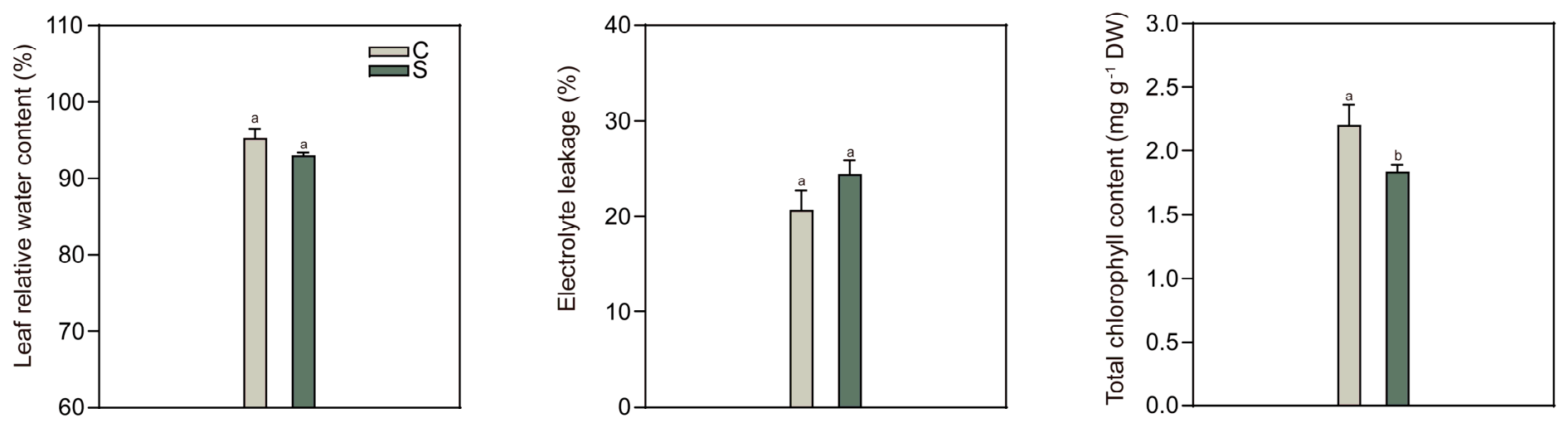
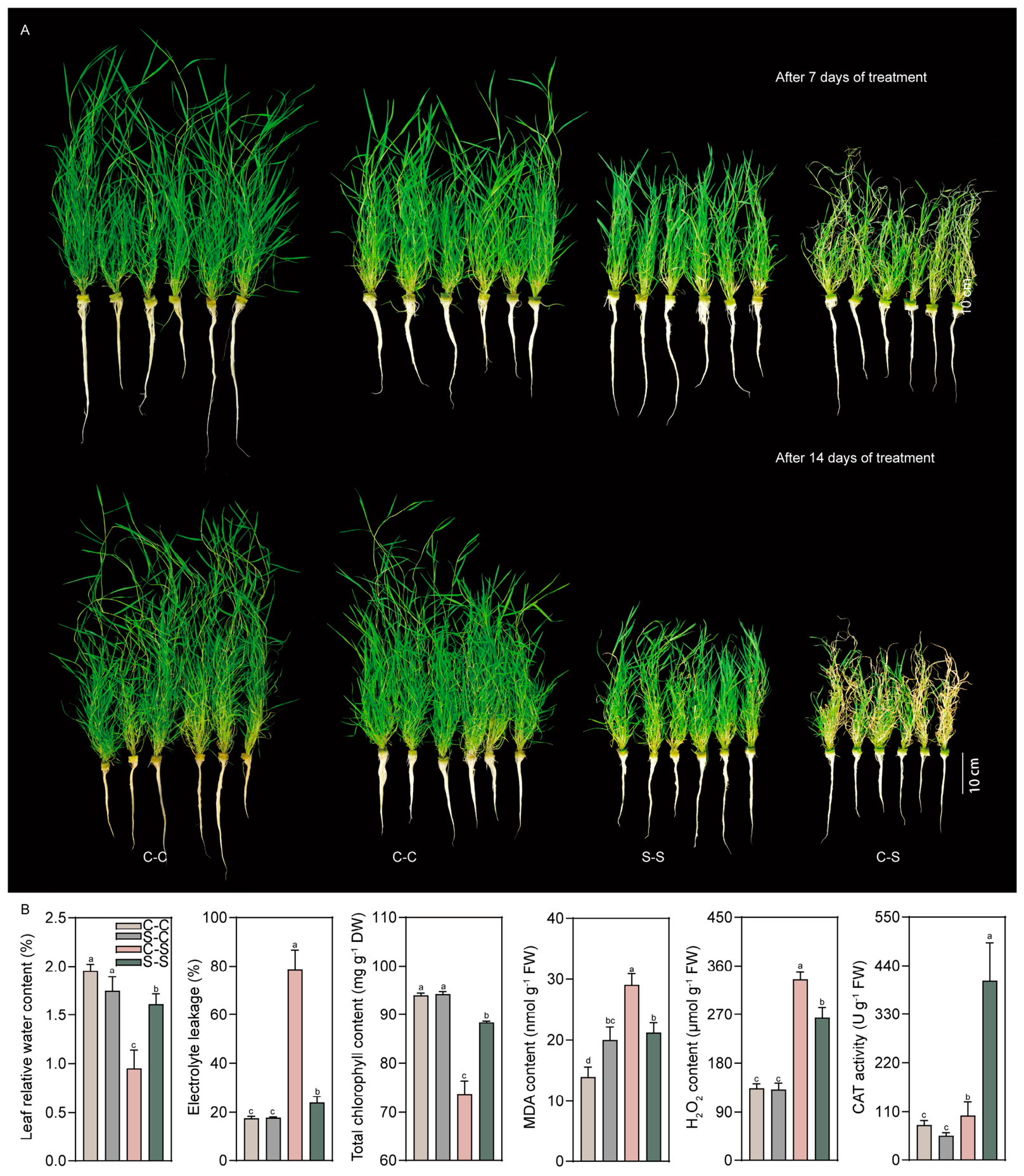
After 7 days of salt priming treatment, salt-primed (S) plants exhibited a significant decrease (−17.15%) in leaf total chlorophyll content compared to non-primed controls (C) (Figure 1). Leaf RWC and EL showed no significant changes in response to salt priming (Figure 1). Salt stress severely inhibited the growth of creeping bentgrass and induced leaf chlorosis (Figure 2A). Compared with non-primed plants (C-S), salt-primed plants (S-S) maintained relatively better growth performance and greener leaves. Salt stress resulted in significant declines in leaf RWC and chlorophyll content but significantly increased EL in creeping bentgrass (Figure 2B). Under non-stress conditions, no significant differences in these physiological parameters were observed between salt-primed (S-C) and non-primed (C-C) plants. Under salt stress, salt-primed plants (S-S) maintained a significantly higher leaf RWC (+19.86%) and chlorophyll content (+69.47%) than non-primed salt stressed plants (C-S) (Figure 2B). Furthermore, after 14 days of salt stress, leaf EL was significantly decreased in salt-primed plants (S-S) compared to non-primed salt-stressed plants (C-S).

3.2. Salt Priming Alleviated Oxidative Stress in Creeping Bentgrass Under Salt Stress

Under non-stress conditions, no significant differences were observed in the H2O2 content or CAT activity between salt-primed (S-C) and non-primed (C-C) treatments. However, the MDA content was significantly higher in S-C compared to C-C (Figure 2B). Under salt stress, salt-primed plants (S-S) exhibited significantly reduced oxidative stress compared to non-primed plants (C-S). Specifically, salt-primed plants (S-S) showed 27.09% and 21.29% lower MDA and H2O2 contents, respectively. Furthermore, salt-primed plants (S-S) exhibited a significant increase in CAT activity (+298.95%) compared to non-primed plants (C-S) under salt stress conditions.

3.3. Salt Priming Modified Lipid Composition in Creeping Bentgrass Under Salt Stress

To elucidate how salt priming enhances salt tolerance in creeping bentgrass via lipid remodeling, a lipidomic analysis comparing salt-primed and non-primed plants under both non-stress control and salt stress conditions was conducted. The lipidomic platform demonstrated excellent stability and reproducibility, with instrument RSD ranging from 5.4% to 8.7%, a median class variability of 8.0%, and QC correlations between 0.996 and 0.998 (Supplementary Figures S1 and S2). Lipidomic profiling identified 15 lipid classes and 253 molecular species in creeping bentgrass leaves, including six phospholipids, six lysophospholipids, and three glycolipids. PCA revealed clear sample clustering under different treatments, with PC1 and PC2 explaining 46.98% and 19.98% of the total variance, respectively (Supplementary Figure S3). The S-S group was clearly separated from the C-S group, highlighting the significant effects of salt priming and salt treatment on sample differentiation.
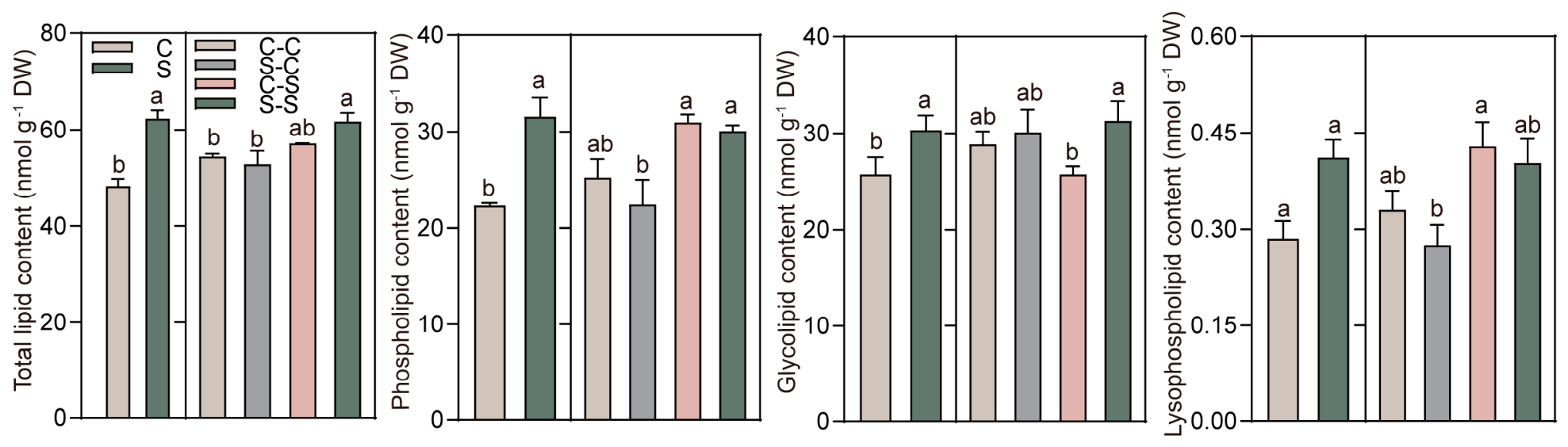
Salt priming for 7 days resulted in a 29.05% increase in the total lipid content (including phospholipids, glycolipids, and lysophospholipids) relative to non-primed controls (Figure 3). Increases were also observed in both phospholipid and glycolipid contents, with phospholipids increased by 41.70% and glycolipids increased by 17.92%. Under non-stress conditions, salt-primed plants (S-C) had lower contents of phospholipids (by 11.18%) and lysophospholipids (by 16.35%) compared with the non-primed control (C-C). No significant variations in total lipids or phospholipids were observed among treatments (Figure 3).
Comparing C-S with C-C, the contents of phospholipids and lysophospholipids increased by 22.81% and 30.14%, respectively (Figure 3). The content of glycolipids decreased by 10.82% due to 14 days of salt stress. Under salt stress, no significant variations in total lipids, phospholipids, and lysophospholipids were observed between non-primed (C-S) and salt-primed (S-S) plants, while salt-primed plants had a significantly higher glycolipid content (+21.70%) compared to non-primed plants.

3.4. Salt Priming Enhanced MGDG Accumulation in Creeping Bentgrass Leaves Under Salt Stress

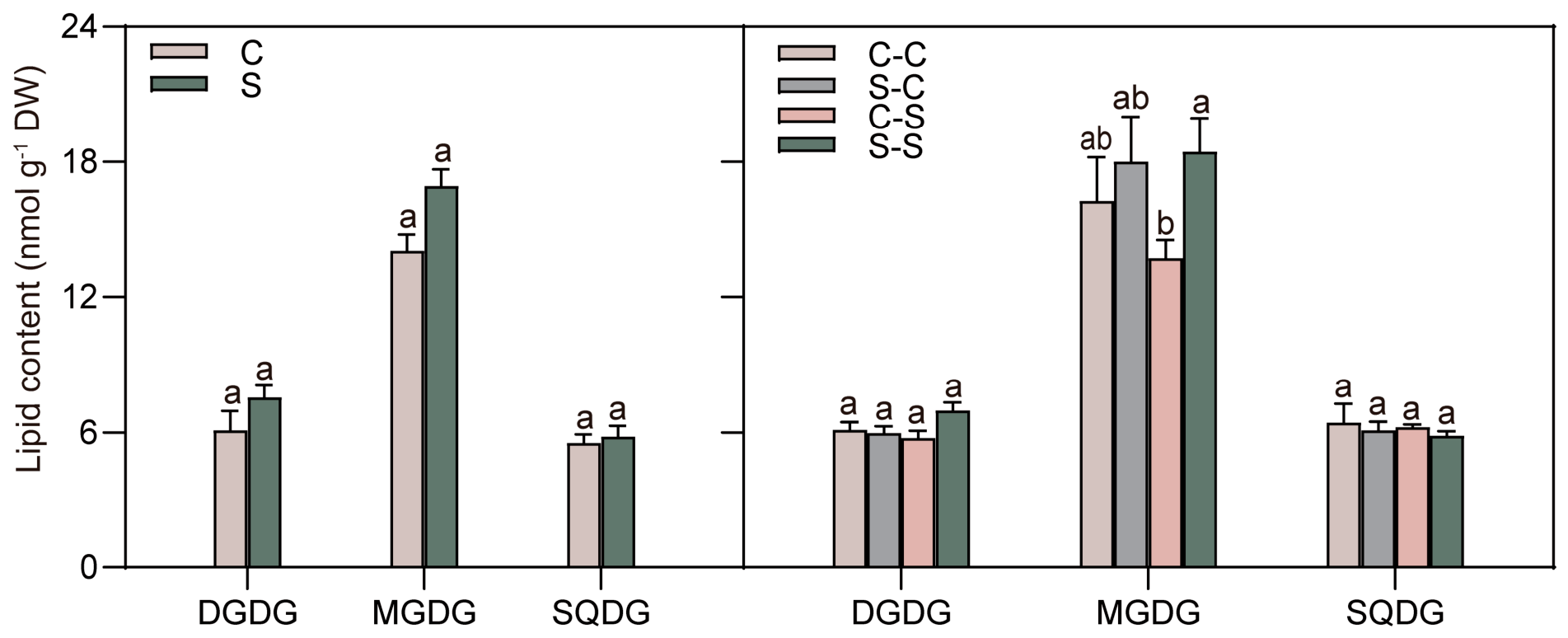
Given that no significant differences in phospholipid or lysophospholipid content were observed between non-primed (C-S) and salt-primed (S-S) plants under salt stress, subsequent analysis focused on glycolipid dynamics regulated by salt priming and salt stress. The results revealed that the contents of DGDG, MGDG, and SQDG were not significantly affected by 7 days of salt priming. Fourteen days of salt stress caused a significant decline (−15.72%) in the MGDG content, whereas the contents of DGDG and SQDG were not significantly affected by salt stress (Figure 4). Compared with C-S plants, salt-primed plants (S-S) maintained a significantly higher (+34.58%) MGDG content after 14 days of salt treatment, and the contents of DGDG and SQDG were not significantly different between these two treatments.

3.5. Salt Priming Regulated Specific Glycolipid Molecular Species in Creeping Bentgrass Leaves Under Salt Stress

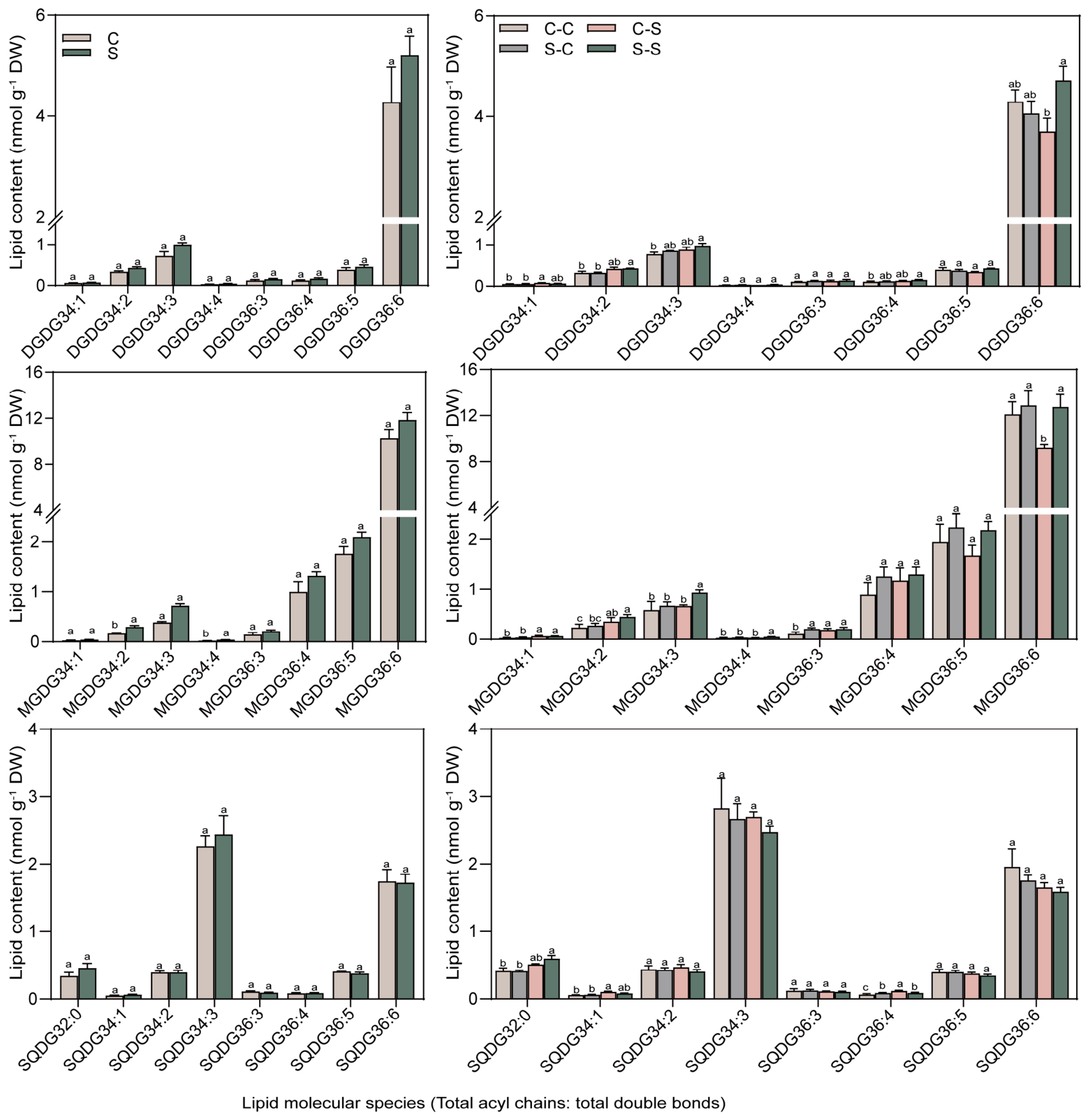
For different glycolipid molecular species, salt priming significantly elevated the contents of MGDG34:2 and MGDG34:4 by 86.99% and 93.23%, respectively, compared to non-primed controls (Figure 5). Following 14 days of salt stress, non-primed plants (C-S) exhibited significant increases in DGDG34:1, MGDG (34:1, 34:2, 36:3), and SQDG (34:1, 36:4) but showed a significant decline in MGDG36:6, relative to non-stressed control plants (C-C). Under non-stress conditions, salt-primed plants (S-C) displayed significantly elevated MGDG36:3 (+86.35%) and SQDG36:4 (+34.77%) compared to C-C plants, with no changes in other glycolipid molecular species. Under salt stress conditions, salt priming (S-S) further significantly enhanced the contents of DGDG36:6 (+27.44%), MGDG34:3 (+39.70%), MGDG34:4 (+66.75%), and MGDG36:6 (+38.62%) but significantly decreased the SQDG36:4 content (−25.23%) relative to non-primed stressed plants (C-S) (Figure 5).
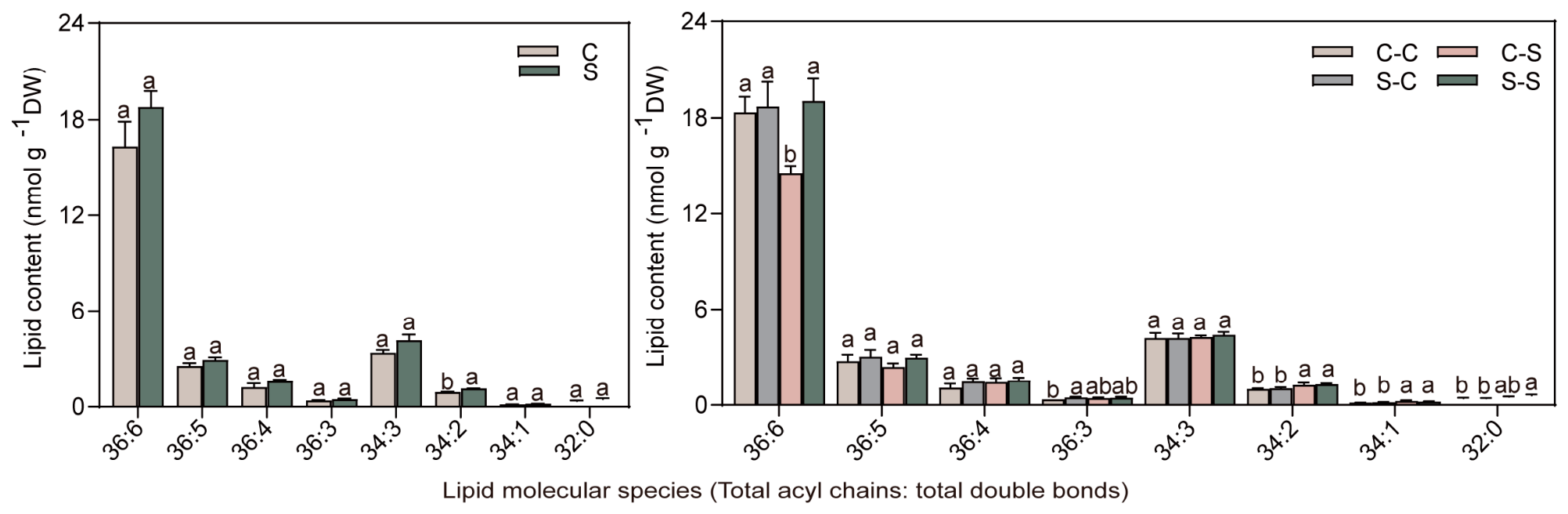
Lipid profiling analysis revealed that the most predominant glycolipid molecular species in creeping bentgrass leaves were 36:6, 36:5, 36:4, 36:3, 34:3, 34:2, 34:1, and 32:0. Salt priming significantly elevated the total glycolipid content of 34:2, whereas subsequent salt stress caused a significant decrease in the content of 36:6 and a significant increase in the contents of 34:2 and 34:1. Compared with non-primed plants, salt primed plants had significantly higher contents of 36:6 molecular species under salt stress (Figure 6).

3.6. Salt Priming Modulated DBI and ACL of Glycolipids in Creeping Bentgrass Leaves Under Salt Stress

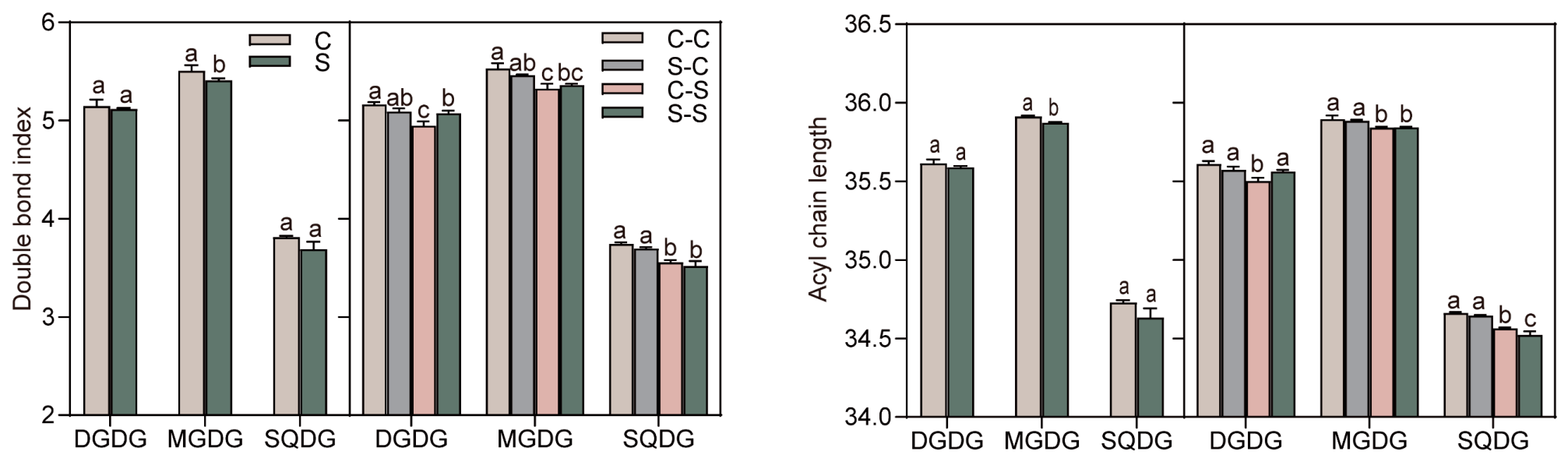
Salt priming reduced the DBI of MGDG (p < 0.05), but did not significantly affect the DBI of DGDG and SQDG (Figure 7). Salt stress significantly decreased the DBI of all three glycolipid species, including DGDG, MGDG, and SQDG. Under non-stress conditions, no significant differences in DBI were observed between salt primed (S-C) and non-primed (C-C) plants. Compared to C-S plants, S-S plants exhibited a significantly elevated DBI of DGDG (Figure 7). Furthermore, salt priming and subsequent salt stress also affected the carbon chain length (i.e., ACL) of glycolipids. As shown in Figure 7, salt priming reduced the ACL of MGDG, while salt stress decreased the ACL of all three glycolipid classes (DGDG, MGDG, and SQDG). Compared to C-S plants, S-S plants showed a significantly higher ACL of DGDG but a significantly lower ACL of SQDG.

4. Discussion

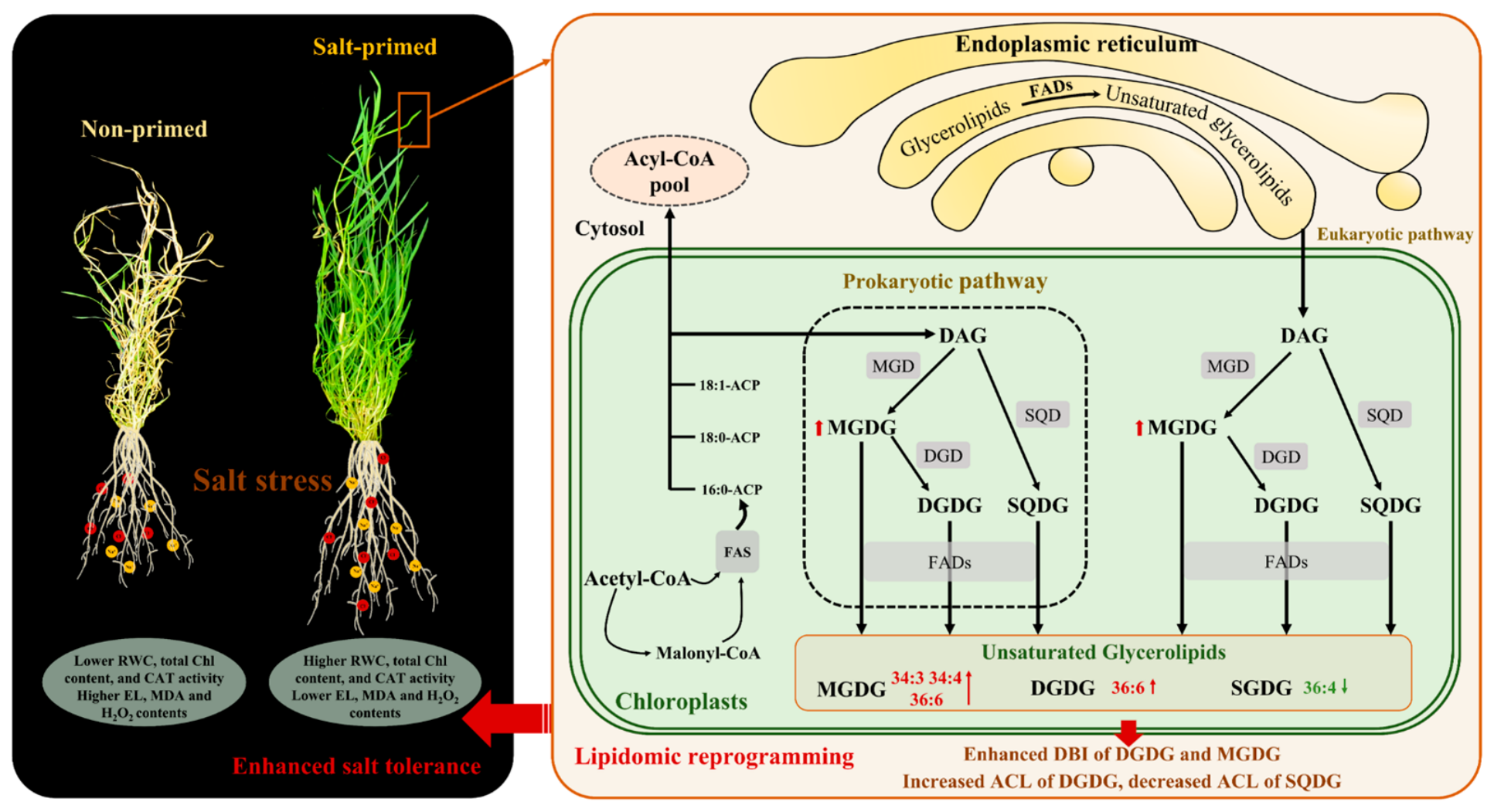
Salt priming improved salinity tolerance in creeping bentgrass, as evidenced by the significantly enhanced leaf RWC, chlorophyll content, and CAT activity, along with reduced EL, MDA, and H2O2 contents in salt-primed plants compared to non-primed controls. Lipidomic analysis demonstrated that salt-primed plants had a significantly higher level of total glycolipids, especially MGDG, and increased contents of specific lipid molecular species (DGDG36:6, MGDG34:3, MGDG34:4, and MGDG36:6), as well as a decreased content of SQDG36:4. The altered accumulation level of glycolipid molecular species contributed to the elevated unsaturation index of DGDG and MGDG, as well as the increased ACL of DGDG and the decreased ACL of SQDG in salt-primed plants (Figure 8). These findings demonstrate that salt priming-enhanced salt tolerance could be associated with antioxidant capacity and glycolipid remodeling, as discussed in detail below.
Stress priming, such as heat pretreatment, has been demonstrated to activate the plant antioxidant enzyme system, including superoxide dismutase (SOD), ascorbate peroxidase (APX), and CAT, thereby effectively scavenging excess ROS and alleviating oxidative damage caused by abiotic stress [40,41,42]. A 7-day suboptimal temperature acclimation was shown to reduce EL and MDA contents, mitigating chilling injury symptoms in watermelon (Citrullus lanatus) seedlings [43]. Similarly, cross-priming under heat stress [8] has been reported to reduce EL and membrane lipid peroxidation, thereby enhancing membrane integrity. In the present study, salt priming significantly reduced the levels of H2O2, EL, and MDA under severe salt stress, while increasing CAT activity. These findings suggest that salt priming effectively enhances the ROS scavenging capacity in plants, which may help to maintain cellular redox homeostasis and protect the photosynthetic apparatus from oxidative damage. It should be noted that, in the present study, the NaCl concentration was increased directly from 150 mM to 300 mM in a single step, which may have imposed a relatively acute osmotic shock. Future studies employing a stepwise salinization protocol (e.g., increasing by 50 mM every 12 h) would better mimic natural field conditions and help distinguish priming effects from acute shock responses.
Plant cell membranes serve as a protective barrier against external stimuli due to their specialized structure and selective permeability [44]. As the essential components of photosynthetic membranes, the remodeling of glycolipids is a critical mechanism for plant adaptation to environmental stress [45,46,47]. Among these, MGDG and DGDG are the predominant uncharged galactolipids, accounting for up to eighty percent of total thylakoid lipids [48,49]. Notably, glycolipid reduction, which decreases the plastidic to non-plastidic lipids ratio, serves as a conserved adaptive response of plants to osmotic stresses [22]. In this study, salt stress elevated the total lipid content but reduced the glycolipid content (particularly MGDG) of creeping bentgrass leaves, while salt-primed plants had significantly higher total glycolipid and MGDG contents under salt stress than non-primed plants. It is presumed that salt priming induced lipid reprogramming, which preferentially accumulates chloroplast membrane components (glycolipids/MGDG), consistent with the role of membrane unsaturation in preserving thylakoid fluidity under salt stress.
The composition of lipid molecular species is defined by their specific fatty acid structures within their molecular backbones, including carbon chain length and degree of unsaturation [50]. Lipidomic analysis revealed that salt-primed plants exhibited significantly higher levels of MGDG34:2 and MGDG34:4 than non-primed controls after 7 days of salt priming; furthermore, under subsequent salt stress, primed plants showed significant increases in DGDG36:6, MGDG34:3, MGDG34:4, and MGDG36:6. In wheat, elevated levels of DGDG (34:6, 36:6) and MGDG (34:6, 34:4, 36:6) correlated with enhanced thylakoid membrane stability during heat stress [26]. Overexpression of a rice MGD significantly increased chlorophyll levels along with MGDG36:6 and DGDG36:6 contents under salt stress in tobacco (Nicotiana tabacum) plants, indicating the critical role of these lipid molecular species in regulating the chloroplast structure and salt stress responses [51]. Similarly, Zhang et al. [52] found that increased MGDG34:4 and MGDG36:6 contents contributed to the enhanced salt tolerance in choline-treated Kentucky bluegrass (Poa pratensis). In addition, significant positive correlations were also observed between the chlorophyll content and MGDG contents (34:4 and 34:3) [53]. Collectively, these results demonstrated that those specific glycolipid species (DGDG36:6, MGDG36:6, and MGDG34:4) contributed to salt priming-enhanced salt tolerance in creeping bentgrass by promoting chlorophyll retention and maintaining the chloroplast structure under salt stress.
Alterations in the ACL and DBI of membrane glycolipids represent a critical adaptive mechanism for preserving membrane fluidity under various abiotic stressors [54,55]. As discussed above, salt priming and salt stress significantly altered the abundance of specific lipid molecular species, resulting in corresponding changes to DBI and ACL of glycolipids. Under stress conditions, elevated membrane lipid unsaturation is essential for preserving membrane fluidity and maintaining proper membrane functions [55,56]. In this study, compared to non-stressed controls, salt stress significantly reduced the DBI of all three glycolipid species. However, S-S plants showed a significantly higher DBI of DGDG than C-S plants, indicating that salt priming alleviated the stress-induced decline in unsaturation for this lipid class. In addition, S-S plants exhibited a significantly lower ACL of SQDG than C-S plants. These changes in membrane lipid unsaturation, particularly the elevated DBI of DGDG, are essential for preserving membrane fluidity under salt stress conditions. This parallels findings in two Cycas species, where the freeze-tolerant C. panzhihuaensis maintained a significantly lower ACL of SQDG under freezing treatment, compared with freeze-sensitive C. bifida [57].

5. Conclusions

Salt priming improved salt tolerance in creeping bentgrass, as indicated by a significantly higher leaf RWC, chlorophyll content, and CAT activity, as well as significantly lower EL, MDA, and H2O2 contents, compared to non-primed control plants under salt stress. Lipidomic analysis revealed that priming-enhanced salt tolerance may be associated with glycolipid reprogramming: (1) elevated total glycolipid and MGDG levels, suggesting that salt-primed plants accumulate chloroplast membrane components to safeguard the photosynthetic apparatus under salt stress; (2) increased abundance of specific molecular species [DGDG36:6, MGDG (34:3, 34:4, 36:6)], which were positively correlated with chlorophyll retention; and (3) enriched 36:6 lipid molecular species and an increased glycolipid unsaturation level, which may help preserve membrane fluidity and maintain proper membrane functions, thereby contributing to salt priming-enhanced salt tolerance.

Supplementary Materials

The following supporting information can be downloaded at: https://www.mdpi.com/article/10.3390/agronomy16101006/s1, Figure S1. Instrument and overall variability (RSD) analysis in lipidomic profiling. Figure S2. Correlation analysis of quality control (QC) samples in lipidomic profiling. Figure S3. Principal component analysis (PCA) of creeping bentgrass under different salt priming and salt stress treatments.

Author Contributions

Conceptualization, M.-N.L. and X.-X.Z. (Xia-Xiang Zhang); methodology, Z.-Z.T. and R.-Y.L.; software, Z.-Z.T. and R.-Y.L.; validation, Z.-Z.T. and R.-Y.L.; formal analysis, Z.-Z.T., X.-X.Z. (Xia-Xiang Zhang), Y.-T.W. and R.-Y.L.; investigation, Z.-Z.T., Y.-T.W. and H.-D.C.; resources, M.-N.L. and X.-X.Z. (Xia-Xiang Zhang); data curation, Z.-Z.T. and X.-X.Z. (Xia-Xiang Zhang); writing—original draft preparation, Z.-Z.T. and R.-Y.L.; writing—review and editing, X.-X.Z. (Xia-Xiang Zhang), X.-X.Z. (Xiao-Xian Zhong), Y.L. and M.-N.L.; visualization, Z.-Z.T. and X.-X.Z. (Xia-Xiang Zhang); supervision, M.-N.L. and X.-X.Z. (Xia-Xiang Zhang); project administration, Z.-Z.T., X.-X.Z. (Xiao-Xian Zhong) and X.-X.Z. (Xia-Xiang Zhang); funding acquisition, Z.-Z.T., X.-X.Z. (Xiao-Xian Zhong) and M.-N.L. All authors have read and agreed to the published version of the manuscript.

Funding

This work was funded by the Hohhot Science and Technology Plan Project, grant number 2024-Unveiled and Leading-agriculture-2-2, the Jiangsu Funding Program for Excellent Postdoctoral Talent to Zhenzhen Tan, grant number 2024ZB830, the Key Laboratory for Crop and Animal Integrated Farming of Ministry of Agriculture and Rural Afairs, Nanjing 210014, the People’s Republic of China, and the foundation of Grass Germplasm Bank from the Jiangsu Forestry Bureau in China.

Data Availability Statement

The original contributions presented in this study are included in the article. Further inquiries can be directed to the corresponding authors.

Acknowledgments

We appreciate the constructive comments and suggestions from the anonymous reviewers, which have greatly improved the quality of this manuscript.

Conflicts of Interest

The authors declare no conflicts of interest.

References

  1. Tang, H.; Du, L.; Xia, C.; Luo, J. Bridging gaps and seeding futures: A synthesis of soil salinization and the role of plant-soil interactions under climate change. iScience 2024, 27, 110804. [Google Scholar] [CrossRef]
  2. Food and Agriculture Organization (FAO). Global Status of Salt-Affected Soils. Main Report; Food and Agriculture Organization (FAO): Rome, Italy, 2024. [Google Scholar]
  3. Ivushkin, K.; Bartholomeus, H.; Bregt, A.K.; Pulatov, A.; Kempen, B.; de Sousa, L. Global mapping of soil salinity change. Remote Sens. Environ. 2019, 231, 111260. [Google Scholar] [CrossRef]
  4. Bilichak, A.; Ilnytskyy, Y.; Wóycicki, R.; Kepeshchuk, N.; Fogen, D.; Kovalchuk, I. The elucidation of stress memory inheritance in Brassica rapa plants. Front. Plant Sci. 2015, 6, 5. [Google Scholar] [CrossRef]
  5. Lämke, J.; Brzezinka, K.; Altmann, S.; Bäurle, I. A hit-and-run heat shock factor governs sustained histone methylation and transcriptional stress memory. EMBO J. 2016, 35, 162–175. [Google Scholar] [CrossRef]
  6. Sun, M.; Jiang, F.; Cen, B.; Wen, J.; Zhou, Y.; Wu, Z. Respiratory burst oxidase homologue-dependent H2O2 and chloroplast H2O2 are essential for the maintenance of acquired thermotolerance during recovery after acclimation. Plant Cell Environ. 2018, 41, 2373–2389. [Google Scholar] [CrossRef]
  7. Urrea Castellanos, R.; Friedrich, T.; Petrovic, N.; Altmann, S.; Brzezinka, K.; Gorka, M.; Graf, A.; Bäurle, I. FORGETTER2 protein phosphatase and phospholipase D modulate heat stress memory in Arabidopsis. Plant J. 2020, 104, 7–17. [Google Scholar] [CrossRef]
  8. Liu, H.; Able, A.J.; Able, J.A. Priming crops for the future: Rewiring stress memory. Trends Plant Sci. 2022, 27, 699–716. [Google Scholar] [CrossRef]
  9. Sharma, M.; Kumar, P.; Verma, V.; Sharma, R.; Bhargava, B.; Irfan, M. Understanding plant stress memory response for abiotic stress resilience: Molecular insights and prospects. Plant Physiol. Biochem. 2022, 179, 10–24. [Google Scholar] [CrossRef] [PubMed]
  10. Fan, Y.; Ma, C.; Huang, Z.; Abid, M.; Jiang, S.; Dai, T.; Zhang, W.; Ma, S.; Jiang, D.; Han, X. Heat priming during early reproductive stages enhances thermo-tolerance to post-anthesis heat stress via improving photosynthesis and plant productivity in winter wheat (Triticum aestivum L.). Front. Plant Sci. 2018, 9, 805. [Google Scholar] [CrossRef]
  11. Janaagal, M.; Pooja, P.; Suresh, G.; Manne, H.; Kumar, V.; Sawariya, M.; Tallapragada, S.; Devi, S.; Arya, S.S.; Zaid, A. Unlocking heat resilience: Strategies for enhancing mungbean (Vigna radiata (L.) Wilczek) thermotolerance with heat priming and salicylic acid foliar treatment. J. Plant Growth Regul. 2026, 45, 427–437. [Google Scholar] [CrossRef]
  12. Wang, W.; Wang, X.; Zhang, J.; Huang, M.; Cai, J.; Zhou, Q.; Dai, T.; Jiang, D. Salicylic acid and cold priming induce late-spring freezing tolerance by maintaining cellular redox homeostasis and protecting photosynthetic apparatus in wheat. Plant Growth Regul. 2020, 90, 109–121. [Google Scholar] [CrossRef]
  13. Di, Q.; Liu, L.; Yan, Y.; Zhou, M.; Wang, J.; He, C.; Li, Y.; Yu, X.; Sun, M. Cold stress memory genes in cucumber are widely regulated by “hit-and-run” model. J. Plant Growth Regul. 2025, 44, 5012–5019. [Google Scholar] [CrossRef]
  14. Wang, X.; Xin, C.; Cai, J.; Zhou, Q.; Dai, T.; Cao, W.; Jiang, D. Heat priming induces trans-generational tolerance to high temperature stress in wheat. Front. Plant Sci. 2016, 7, 501. [Google Scholar] [CrossRef]
  15. Zhang, X.; Xu, Y.; Huang, B. Lipidomic reprogramming associated with drought stress priming-enhanced heat tolerance in tall fescue (Festuca arundinacea). Plant Cell Environ. 2019, 42, 947–958. [Google Scholar] [CrossRef]
  16. Nazir, M.F.; Chen, B.; Umer, M.J.; Sarfraz, Z.; Peng, Z.; He, S.; Iqbal, M.S.; Wang, J.; Li, H.; Pan, Z.; et al. Transcriptomic analysis reveals the beneficial effects of salt priming on enhancing defense responses in upland cotton under successive salt stress. Physiol. Plant. 2023, 175, e14074. [Google Scholar] [CrossRef]
  17. Nasrallah, A.K.; Atia, M.A.M.; Abd El-Maksoud, R.M.; Kord, M.A.; Fouad, A.S. Salt priming as a smart approach to mitigate salt stress in faba bean (Vicia faba L.). Plants 2022, 11, 1610. [Google Scholar] [CrossRef]
  18. Aswathi, K.P.R.; Ul-Allah, S.; Puthur, J.T.; Siddique, K.H.M.; Frei, M.; Farooq, M. The Plant mind: Unraveling abiotic stress priming, memory, and adaptation. Physiol. Plant. 2025, 177, e70372. [Google Scholar] [CrossRef] [PubMed]
  19. Testerink, C.; Munnik, T. Molecular, cellular, and physiological responses to phosphatidic acid formation in plants. J. Exp. Bot. 2011, 62, 2349–2361. [Google Scholar] [CrossRef] [PubMed]
  20. Hou, Q.; Ufer, G.; Bartels, D. Lipid signalling in plant responses to abiotic stress. Plant Cell Environ. 2016, 39, 1029–1048. [Google Scholar] [CrossRef]
  21. Harayama, T.; Riezman, H. Understanding the diversity of membrane lipid composition. Nat. Rev. Mol. Cell Biol. 2018, 19, 281–296. [Google Scholar] [CrossRef]
  22. Liu, X.; Ma, D.; Zhang, Z.; Wang, S.; Du, S.; Deng, X.; Yin, L. Plant lipid remodeling in response to abiotic stresses. Environ. Exp. Bot. 2019, 165, 174–184. [Google Scholar] [CrossRef]
  23. Guo, Q.; Liu, L.; Rupasinghe, T.W.T.; Roessner, U.; Barkla, B.J. Salt stress alters membrane lipid content and lipid biosynthesis pathways in the plasma membrane and tonoplast. Plant Physiol. 2022, 189, 805–826. [Google Scholar] [CrossRef]
  24. Boudière, L.; Michaud, M.; Petroutsos, D.; Rébeillé, F.; Falconet, D.; Bastien, O.; Roy, S.; Finazzi, G.; Rolland, N.; Jouhet, J.; et al. Glycerolipids in photosynthesis: Composition, synthesis and trafficking. Biochim. Biophys. Acta-Bioenerg. 2014, 1837, 470–480. [Google Scholar] [CrossRef]
  25. Su, K.; Bremer, D.; Jeannotte, R.; Welti, R.; Yang, C. Membrane lipid composition and heat tolerance in cool-season turfgrasses, including a hybrid bluegrass. J. Am. Soc. Hortic. Sci. 2009, 134, 511–520. [Google Scholar] [CrossRef]
  26. Narayanan, S.; Tamura, P.J.; Roth, M.R.; Prasad, P.V.V.; Welti, R. Wheat leaf lipids during heat stress: I. High day and night temperatures result in major lipid alterations. Plant Cell Environ. 2016, 39, 787–803. [Google Scholar] [CrossRef] [PubMed]
  27. Zahra, N.; Al Hinai, M.S.; Hafeez, M.B.; Rehman, A.; Wahid, A.; Siddique, K.H.M.; Farooq, M. Regulation of photosynthesis under salt stress and associated tolerance mechanisms. Plant Physiol. Biochem. 2022, 178, 55–69. [Google Scholar] [CrossRef]
  28. Hu, Q.; Cui, H.; Ma, C.; Li, Y.; Yang, C.; Wang, K.; Sun, Y. Lipidomic metabolism associated with acetic acid priming-induced salt tolerance in Carex rigescens. Plant Physiol. Biochem. 2021, 167, 665–677. [Google Scholar] [CrossRef] [PubMed]
  29. Myers, A.M.; James, M.G.; Lin, Q.; Yi, G.; Stinard, P.S.; Hennen-Bierwagen, T.A.; Becraft, P.W. Maize opaque5 encodes monogalactosyldiacylglycerol synthase and specifically affects galactolipids necessary for amyloplast and chloroplast function. Plant Cell 2011, 23, 2331–2347. [Google Scholar] [CrossRef]
  30. Li, S.; Hui, L.; Li, J.; Xi, Y.; Xu, J.; Wang, L.; Yin, L. OsMGD1-mediated membrane lipid remodeling improves salt tolerance in rice. Plants 2024, 13, 1474. [Google Scholar] [CrossRef]
  31. Chen, J.; Burke, J.J.; Xin, Z.; Xu, C.; Velten, J. Characterization of the Arabidopsis thermosensitive mutant atts02 reveals an important role for galactolipids in thermotolerance. Plant Cell Environ. 2006, 29, 1437–1448. [Google Scholar] [CrossRef]
  32. Yu, L.; Zhou, C.; Fan, J.; Shanklin, J.; Xu, C. Mechanisms and functions of membrane lipid remodeling in plants. Plant J. 2021, 107, 37–53. [Google Scholar] [CrossRef]
  33. Fu, J.M.; Koski, A.J.; Qian, Y.L. Responses of creeping bentgrass to salinity and mowing management: Growth and turf quality. HortScience 2005, 40, 463–467. [Google Scholar] [CrossRef]
  34. Hoagland, D.R.; Arnon, D.I. The Water-Culture Method for Growing Plants Without Soil; University of California, College of Agriculture, Agricultural Experiment Station: Berkeley, CA, USA, 1938. [Google Scholar]
  35. Barrs, H.D.; Weatherley, P.E. A re-examination of the relative turgidity technique for estimating water deficits in leaves. Aust. J. Biol. Sci. 1962, 15, 413–428. [Google Scholar] [CrossRef]
  36. Jespersen, D.; Huang, B. Proteins associated with heat-induced leaf senescence in creeping bentgrass as affected by foliar application of nitrogen, cytokinins, and an ethylene inhibitor. Proteomics 2015, 15, 798–812. [Google Scholar] [CrossRef]
  37. Barnes, J.D.; Balaguer, L.; Manrique, E.; Elvira, S.; Davison, A.W. A reappraisal of the use of DMSO for the extraction and determination of chlorophylls a and b in lichens and higher plants. Environ. Exp. Bot. 1992, 32, 85–100. [Google Scholar] [CrossRef]
  38. Heath, R.L.; Packer, L. Photoperoxidation in isolated chloroplasts: I. Kinetics and stoichiometry of fatty acid peroxidation. Arch. Biochem. Biophys. 1968, 125, 189–198. [Google Scholar] [CrossRef] [PubMed]
  39. Du, H.; Zhou, P.; Huang, B. Antioxidant enzymatic activities and gene expression associated with heat tolerance in a cool-season perennial grass species. Environ. Exp. Bot. 2013, 87, 159–166. [Google Scholar] [CrossRef]
  40. Hossain, M.A.; Li, Z.G.; Hoque, T.S.; Burritt, D.J.; Fujita, M.; Munné-Bosch, S. Heat or cold priming-induced cross-tolerance to abiotic stresses in plants: Key regulators and possible mechanisms. Protoplasma 2018, 255, 399–412. [Google Scholar] [CrossRef]
  41. Khanzada, A.; Feng, K.; Wang, X.; Cai, J.; Malko, M.M.; Samo, A.; Hossain, M.N.; Jiang, D. Comprehensive evaluation of high-temperature tolerance induced by heat priming at early growth stages in winter wheat. Physiol. Plant. 2022, 174, e13759. [Google Scholar] [CrossRef]
  42. Ru, C.; Hu, X.; Chen, D.; Wang, W.; Song, T. Heat and drought priming induce tolerance to subsequent heat and drought stress by regulating leaf photosynthesis, root morphology, and antioxidant defense in maize seedlings. Environ. Exp. Bot. 2022, 202, 105010. [Google Scholar] [CrossRef]
  43. Lu, J.; Nawaz, M.A.; Wei, N.; Cheng, F.; Bie, Z. Suboptimal temperature acclimation enhances chilling tolerance by improving photosynthetic adaptability and osmoregulation ability in watermelon. Hortic. Plant J. 2020, 6, 49–60. [Google Scholar] [CrossRef]
  44. Chinnusamy, V.; Zhu, J.; Zhu, J.-K. Cold stress regulation of gene expression in plants. Trends Plant Sci. 2007, 12, 444–451. [Google Scholar] [CrossRef]
  45. Moellering, E.R.; Muthan, B.; Benning, C. Freezing tolerance in plants requires lipid remodeling at the outer chloroplast membrane. Science 2010, 330, 226–228. [Google Scholar] [CrossRef]
  46. Chen, D.; Wang, S.; Qi, L.; Yin, L.; Deng, X. Galactolipid remodeling is involved in drought-induced leaf senescence in maize. Environ. Exp. Bot. 2018, 150, 57–68. [Google Scholar] [CrossRef]
  47. Dace, H.J.W.; Adetunji, A.E.; Moore, J.P.; Farrant, J.M.; Hilhorst, H.W.M. A review of the role of metabolites in vegetative desiccation tolerance of angiosperms. Curr. Opin. Plant Biol. 2023, 75, 102410. [Google Scholar] [CrossRef] [PubMed]
  48. Dorne, A.-J.; Joyard, J.; Douce, R. Do thylakoids really contain phosphatidylcholine? Proc. Natl. Acad. Sci. USA 1990, 87, 71–74. [Google Scholar] [CrossRef] [PubMed]
  49. Kobayashi, K. Role of membrane glycerolipids in photosynthesis, thylakoid biogenesis and chloroplast development. J. Plant Res. 2016, 129, 565–580. [Google Scholar] [CrossRef]
  50. Verma, L.; Kohli, P.S.; Maurya, K.; K B, A.; Thakur, J.K.; Giri, J. Specific galactolipids species correlate with rice genotypic variability for phosphate utilization efficiency. Plant Physiol. Biochem. 2021, 168, 105–115. [Google Scholar] [CrossRef]
  51. Wang, S.; Uddin, M.I.; Tanaka, K.; Yin, L.; Shi, Z.; Qi, Y.; Mano, J.; Matsui, K.; Shimomura, N.; Sakaki, T.; et al. Maintenance of chloroplast structure and function by overexpression of the rice MONOGALACTOSYLDIACYLGLYCEROL SYNTHASE gene leads to enhanced salt tolerance in tobacco. Plant Physiol. 2014, 165, 1144–1155. [Google Scholar] [CrossRef]
  52. Zhang, K.; Lyu, W.; Gao, Y.; Zhang, X.; Sun, Y.; Huang, B. Choline-mediated lipid reprogramming as a dominant salt tolerance mechanism in grass species lacking glycine betaine. Plant Cell Physiol. 2021, 61, 2018–2030. [Google Scholar] [CrossRef]
  53. Zhang, X.; Gao, Y.; Zhuang, L.; Huang, B. Phosphatidic acid priming-enhanced heat tolerance in tall fescue (Festuca arundinacea) involves lipidomic reprogramming of lipids for membrane stability and stress signaling. Plant Growth Regul. 2023, 99, 527–538. [Google Scholar] [CrossRef]
  54. Zheng, G.; Li, L.; Li, W. Glycerolipidome responses to freezing- and chilling-induced injuries: Examples in Arabidopsis and rice. BMC Plant Biol. 2016, 16, 70. [Google Scholar] [CrossRef]
  55. Zheng, G.; Tian, B.; Li, W. Membrane lipid remodelling of Meconopsis racemosa after its introduction into lowlands from an alpine environment. PLoS ONE 2014, 9, e106614. [Google Scholar] [CrossRef]
  56. Azachi, M.; Sadka, A.; Fisher, M.; Goldshlag, P.; Gokhman, I.; Zamir, A. Salt induction of fatty acid elongase and membrane lipid modifications in the extreme halotolerant alga Dunaliella salina. Plant Physiol. 2002, 129, 1320–1329. [Google Scholar] [CrossRef]
  57. Wu, Y.; Zhu, H.; Ling, Z.; Lu, E.; Peng, X.; Zheng, Y. The metabolism of nonstructural carbohydrates, lipids, and energy in two Cycas species with differential tolerance to unexpected freezing stress. Front. Plant Sci. 2023, 14, 1301560. [Google Scholar] [CrossRef]
Figure 1. Effects of salt priming on physiological parameters of creeping bentgrass. C, non-priming control; S, salt priming. Data shown are the mean ± SE of three biological replicates. Data not sharing the same letters above bars indicate statistically significant differences between treatments at p < 0.05.
Agronomy 16 01006 g001
Figure 2. Effects of salt priming and salt stress on the phenotype (A) and physiological parameters (B) of creeping bentgrass. C-C, non-priming control + non-salt control; S-C, salt priming + non-salt control; C-S, non-priming control + salt treatment; S-S, salt priming + salt treatment. Data shown are the mean ± SE of three biological replicates. Data not sharing the same letters above bars indicate statistically significant differences among treatments at p < 0.05.
Agronomy 16 01006 g002
Figure 3. Salt priming alters lipid composition in creeping bentgrass leaves under salt stress. C, non-priming control; S, salt priming; C-C, non-priming control + non-salt control; S-C, salt priming + non-salt control; C-S, non-priming control + salt treatment; S-S, salt priming + salt treatment. Data shown are the mean ± SE of three biological replicates. Data not sharing the same letters above bars indicate statistically significant differences among treatments at p < 0.05.
Agronomy 16 01006 g003
Figure 4. Effects of salt priming and salt stress on glycolipid contents in creeping bentgrass leaves. C, non-priming control; S, salt priming; C-C, non-priming control + non-salt control; S-C, salt priming + non-salt control; C-S, non-priming control + salt treatment; S-S, salt priming + salt treatment. Data shown are the mean ± SE of three biological replicates. Data not sharing the same letters above bars indicate statistically significant differences among treatments at p < 0.05.
Agronomy 16 01006 g004
Figure 5. Effects of salt priming and salt stress on contents of different glycolipid molecular species in creeping bentgrass leaves. C, non-priming control; S, salt priming; C-C, non-priming control + non-salt control; S-C, salt priming + non-salt control; C-S, non-priming control + salt treatment; S-S, salt priming + salt treatment. Data shown are the mean ± SE of three biological replicates. Data not sharing the same letters above bars indicate statistically significant differences among treatments at p < 0.05.
Agronomy 16 01006 g005
Figure 6. Effects of salt priming and salt stress on contents of specific glycolipid molecular species in creeping bentgrass leaves. C, non-priming control; S, salt priming; C-C, non-priming control + non-salt control; S-C, salt priming + non-salt control; C-S, non-priming control + salt treatment; S-S, salt priming + salt treatment. Data shown are the mean ± SE of three biological replicates. Data not sharing the same letters above bars indicate statistically significant differences among treatments at p < 0.05.
Agronomy 16 01006 g006
Figure 7. Effects of salt priming and salt stress on DBI and ACL of different glycolipid species in creeping bentgrass leaves. C, non-priming control; S, salt priming; C-C, non-priming control + non-salt control; S-C, salt priming + non-salt control; C-S, non-priming control + salt treatment; S-S, salt priming + salt treatment. Data shown are the mean ± SE of three biological replicates. Data not sharing the same letters above bars indicate statistically significant differences among treatments at p < 0.05.
Agronomy 16 01006 g007
Figure 8. Schematic diagram of glycolipid remodeling in salt priming-enhanced salt tolerance in creeping bentgrass. Red and green arrows denote increased and decreased lipid species in salt-primed plants under salt stress compared with non-primed plants, respectively. RWC, relative water content; Chl, chlorophyll; EL, electrolyte leakage; RWC, relative water content; Chl, chlorophyll; EL, electrolyte leakage; CAT, catalase; H2O2, hydrogen peroxide; MDA, malondialdehyde; DGDG, digalactosyl diacylglycerol; MGDG, monogalactosyl diacylglycerol; SQDG, sulfolipid sulfoquinovosyldiacylglycerol; ACL, acyl chain length; DBI, double bond index.
Agronomy 16 01006 g008
Disclaimer/Publisher’s Note: The statements, opinions and data contained in all publications are solely those of the individual author(s) and contributor(s) and not of MDPI and/or the editor(s). MDPI and/or the editor(s) disclaim responsibility for any injury to people or property resulting from any ideas, methods, instructions or products referred to in the content.