Article

Bacillus velezensis HZ33 Controls Potato Black Scurf and Improves the Potato Rhizosphere Microbiome and Potato Growth and Yield


1
School of Biological and Pharmaceutical Engineering, Lanzhou Jiaotong University, Lanzhou 730070, China
2
National Engineering Research Center for Efficient Utilization of Soil and Fertilizer Resources, College of Resources and Environment, Shandong Agricultural University, Tai’an 271018, China
3
The UWA Institute of Agriculture, School of Agriculture and Environment, The University of Western Australia, Perth, WA 6009, Australia
*
Authors to whom correspondence should be addressed.
Agronomy 2026, 16(1), 87; https://doi.org/10.3390/agronomy16010087 (registering DOI)
Submission received: 2 December 2025 / Revised: 24 December 2025 / Accepted: 27 December 2025 / Published: 28 December 2025
(This article belongs to the Section Pest and Disease Management)

Abstract

Potato black scurf, caused by Rhizoctonia solani, is a widespread soil-borne disease in major potato-producing regions that reduces potato yield and tuber marketability. This study evaluated the field growth-promoting effects and disease-control efficacy of Bacillus velezensis HZ33 on the potato cultivars Xindaping and Longshu 7 and assessed its impact on rhizosphere microbial communities. Field trials showed that the application of HZ33 significantly enhanced potato growth and increased the chlorophyll content, yield, and commercial tuber rates. HZ33 also raised key soil nutrient levels. Its control efficacy against potato black scurf exceeded that of the chemical fungicide azoxystrobin. Application of HZ33 reduced the relative abundance of Rhizoctonia associated with black scurf and increased the relative abundance of beneficial fungi and bacteria. The microbial community structure correlated with both soil chemical properties and the disease index for potato black scurf. Overall, B. velezensis HZ33 appears to be a promising biocontrol agent for suppressing potato black scurf while improving potato yield.

1. Introduction

Potato (Solanum tuberosum Linnaeus) is the fourth most important staple crop in the world [1]. However, potato production is strongly affected by several soil-borne diseases, particularly potato black scurf caused by R. solani, which often leads to significant yield losses [2,3]. Currently, chemical fungicides are widely used to control potato black scurf, but their long-term application has resulted in prominent issues such as pesticide residues and fungicide resistance [4]. As a result, biological control based on beneficial bacteria is considered an effective strategy for suppressing disease while significantly enhancing soil quality [5,6,7]. A variety of microorganisms have been reported to be effective against potato black scurf, such as Clonostachys spp. [8], Trichoderma spp. [9], Pseudomonas spp. [10], Paenibacillus spp. [11], and Bacillus spp. [5,9,12].
Soil microorganisms not only suppress plant diseases but also drive nutrient cycling and soil structural development [13,14]. They mediate organic carbon mineralization, nutrient turnover, and the dissolution of phosphorus and potassium, processes that sustain soil health [15,16]. Studies show that declines in soil microbial diversity are a primary factor in the emergence of soil-borne diseases in cultivated crops [17]. Potatoes rely heavily on rhizosphere microbes because of their limited root structure and high nutritional needs during tuber formation [18,19]. The biological control of potato black scurf can be improved by introducing beneficial microorganisms, which directly combat pathogens and reshape the structure of the rhizosphere microbial community.
In recent years, Bacillus bacteria have proven highly effective in the biocontrol of several fungal pathogens [5,20,21] and have been studied and commercially used as biofertilizers and biological control agents, due to their ability to form endospores, their large arsenal of secondary metabolites production, their rapid colonization capacity, and their low nutritional requirements [20,22]. Bacillus velezensis is a relatively recently described species within the Bacillus genus that has emerged as an important biological control agent. FZB42T, a strain of B. velezensis, is commercially used as a biocontrol bacterium [23]. Several studies have also reported its potential application toward attenuating agricultural diseases [24,25,26]. Its biological control mechanism is multifaceted and typically includes the production of hydrolytic enzymes (such as chitinases and glucanases), lipopeptides (such as surfactin, fengycin, iturin), and siderophores. These substances can directly inhibit pathogen growth while also inducing systemic resistance (ISR) in the host plant [27]. Although the potential of B. velezensis to resist potato rhizoctonia disease has been well established [12,28], its specific efficacy against R. solani AG-3, which causes potato black scurf, needs to be investigated, particularly under field conditions. More importantly, in addition to directly inhibiting the pathogen, it is also crucial to gain an in-depth understanding of how B. velezensis regulates the potato rhizosphere microbiome, which is now recognized as a key determinant of plant health. A good biocontrol agent should not only possess antimicrobial activity but also be capable of enriching beneficial microbial communities, thereby forming a more adaptive and protective microbiome that supports plant growth and health in a more sustainable manner. However, the effects of B. velezensis HZ33 on the control efficacy of potato rhizoctonia disease in China and upon the composition of its rhizosphere microbial community remain unknown.
Xindaping and Longshu 7 are potato varieties in Gansu Province, China, that are vulnerable to potato black scurf disease. Previous research identified strain HZ33 as having a strong antagonistic effect against R. solani. This study aimed to (1) assess the field growth-promoting effects and control efficacy of B. velezensis HZ33 on these two susceptible potato varieties; (2) examine how strain HZ33 influences the composition and structure of bacterial and fungal communities in the potato rhizosphere through Illumina Hi-Seq sequencing; and (3) investigate potential correlations between microbial communities, disease index, and soil properties.

2. Materials and Methods

2.1. Inoculants and Fungicide

Bacillus velezensis HZ33 was isolated from the potato rhizosphere and was preserved at the China General Microbiological Culture Collection Center (CGMCC) under the accession number CGMCC 35400. HZ33 was cultured in an optimized medium (maltose 24.15, yeast extract 13.14, beef extract 8.0, NaCl 5.0 g/L), with a 4.5% inoculum at 40 °C and 180 rpm for 48 h, followed by centrifugation, washing, and dilution to 1 × 10⁸ CFU/mL as a spore suspension.
A 250 g/L azoxystrobin suspension (Shanxi Lvhai Pesticide Co., Ltd., Yuncheng, China), registered for the control of potato black scurf, was used as the chemical fungicide control.

2.2. Field Experiment Design

In 2024, the field experiment was conducted at the Dingxi Lvdi Potato Farmers’ Professional Cooperative (104°34′ N, 35°28′ E, elevation 2137.4 m) in Tuanjie Town, Anding District, Dingxi City, Gansu Province. The previous crop in the experimental field was potato. The soil is classified as yellow loessial soil, with a pH of 7.78 and an organic matter content of 13.55 g/kg.
The susceptible potato cultivars Xindaping (abbreviated as X) and Longshu 7 (abbreviated as L) were planted in the experimental field. For each cultivar, three treatments were applied with four replicate plots per treatment: (1) potato seeds coated with HZ33 spore suspension at 1 × 10⁸ CFU mL−1 (X-HZ33 and L-HZ33); (2) potato seeds coated with azoxystrobin (X-MJZ and L-MJZ); and (3) potato seeds coated with water as the untreated control (X-CK and L-CK). Potato seeds were sown in April 2024 and harvested in September 2024. The plots were arranged in a randomized block design. The row and plant spacings were 80 cm and 25 cm, respectively, and each plot covered an area of 100 m2 (5 m × 20 m) (Figure S1).

2.3. Soil Sample Collection

In August 2024, symptoms of black scurf were observed on the potatoes, and rhizosphere soil samples were then collected from the different treatments. For each treatment, the rhizosphere soil from five randomly selected plants was combined to form a composite sample [4]. Each composite was sieved, transferred into sterile sampling tubes, transported to the laboratory, and stored at −80 °C until DNA extraction. At the same time, bulk soil adjacent to the rhizosphere for each treatment was collected using the same procedure, sieved, air-dried, and analyzed for chemical properties. Samples were labeled X-HZ33-(1~4), X-MJZ-(1~4), X-CK-(1~4), L-HZ33-(1~4), L-MJZ-(1~4), and L-CK-(1~4).

2.4. Promotion Assay

At the seedling, tuber formation, tuber swelling, and starch accumulation stages, the plant height and taproot length were measured using a ruler, and the stem diameter was measured using a vernier caliper. The fresh shoots and roots were washed and dried to obtain the dry weight (DW). Concurrently, leaves were collected from the different treatments, and the chlorophyll content was measured using a chlorophyll assay kit (Jiangsu Aidisheng Biotechnology Co., Ltd., Yancheng, China).

2.5. Control Efficacy, Yield, and Commercial Rate Assay

At harvest, the total tuber weight was measured from a randomly harvested 2 m2 area in each plot, and potato tubers were classified according to weight: with commercial potatoes defined as those > 75 g. The yield increase rate and commercial rate were calculated using the following formulas: Y i e l d   i n c r e a s e   r a t e % = [ ( A B ) / B ] × 100 , where A represents the yield of the blank control group, and B represents the yield of the treatment group; C o m m e r c i a l   r a t e % = ( E / F ) × 100 , where E represents the weight of each plot commodity potato, and F represents the total weight of the potatoes corresponding to the plot.
Simultaneously, we selected 99 potato tubers randomly from each plot and recorded the disease severity and incidence according to the grading standards (Table S1) [5,11]. The incidence rate, disease index, and control efficacy were then calculated using the following formulas: I n c i d e n c e   r a t e % = A / B × 100 , where A is the number of diseased tubers, and B is the total number of tubers; D i s e a s e   i n d e x ( % ) = ( R × S ) / ( T × 5 ) × 100 , where R is the number of diseased tubers in each grade, S is the disease grade, and T is the total number of tubers assessed; C o n t r o l   e f f i c a c y = [ ( A 1 A 2 ) / A 1 ] × 100 , where A1 is the disease index of the control, and A2 is the disease index of the treatment.

2.6. Determination of Soil Physicochemical Properties

The soil pH was measured using a glass electrode pH meter. The soil total nitrogen (TN), total potassium (TK), total phosphorus (TP), available nitrogen (AN), available potassium (AK), available phosphorus (AP), and organic matter (OM) were determined following the methods described by Liu et al. [4].

2.7. DNA Extraction, PCR Amplification, and Sequencing

Microbial DNA was extracted from soil samples using the E.Z.N.A.® DNA Kit (Omega Bio-tek, Norcross, GA, USA), following the manufacturer’s protocols. PCR amplification targeted the bacterial 16S rRNA gene V1–V9 region with primers 27F and 1492R, while the fungal ITS region was amplified using primers ITS1F and ITS4R. All samples were sent to Shanghai Biozeron Biotechnology Co. Ltd. (Shanghai, China) for PacBio High-Throughput Sequencing.

2.8. Sequencing Data Processing and Analysis

PacBio raw reads were processed using SMRT Link Analysis software version 11.0 and the lima pipeline (Pacific Biosciences barcode decoding software) to remove the barcode and primer sequences, yielding valid sequences. OTUs were clustered with a 98.65% similarity cutoff using UPARSE (v10) [29,30,31]. Alpha diversity was calculated using the “vegan” package. Principal component analysis (PCA), linear discriminant analysis effect size (LEfSe), redundancy analysis (RDA), random forest (RF) analysis, microbial co-occurrence network analysis, and Pearson correlation analysis were conducted using the “FactoMineR,” “indicspecies,” “randomForest,” “ggClusterNet,” and “ggcorrplot” packages, respectively [32,33,34,35]. These results were subsequently visualized in R (v3.5.0) using the “ggplot2” package.

2.9. Statistical Analyses

Analysis of variance (ANOVA) was performed using SPSS software (version 16.0; IBM Corp., Armonk, NY, USA) to evaluate the effects of the treatments on the potato biomass, plant height, stem diameter, root length, chlorophyll content, yield, commercial rate, soil chemical properties, and control of potato black scurf. Differences among means were considered significant at p < 0.05.

3. Results

3.1. Growth-Promoting Effects of B. velezensis HZ33 on Potatoes

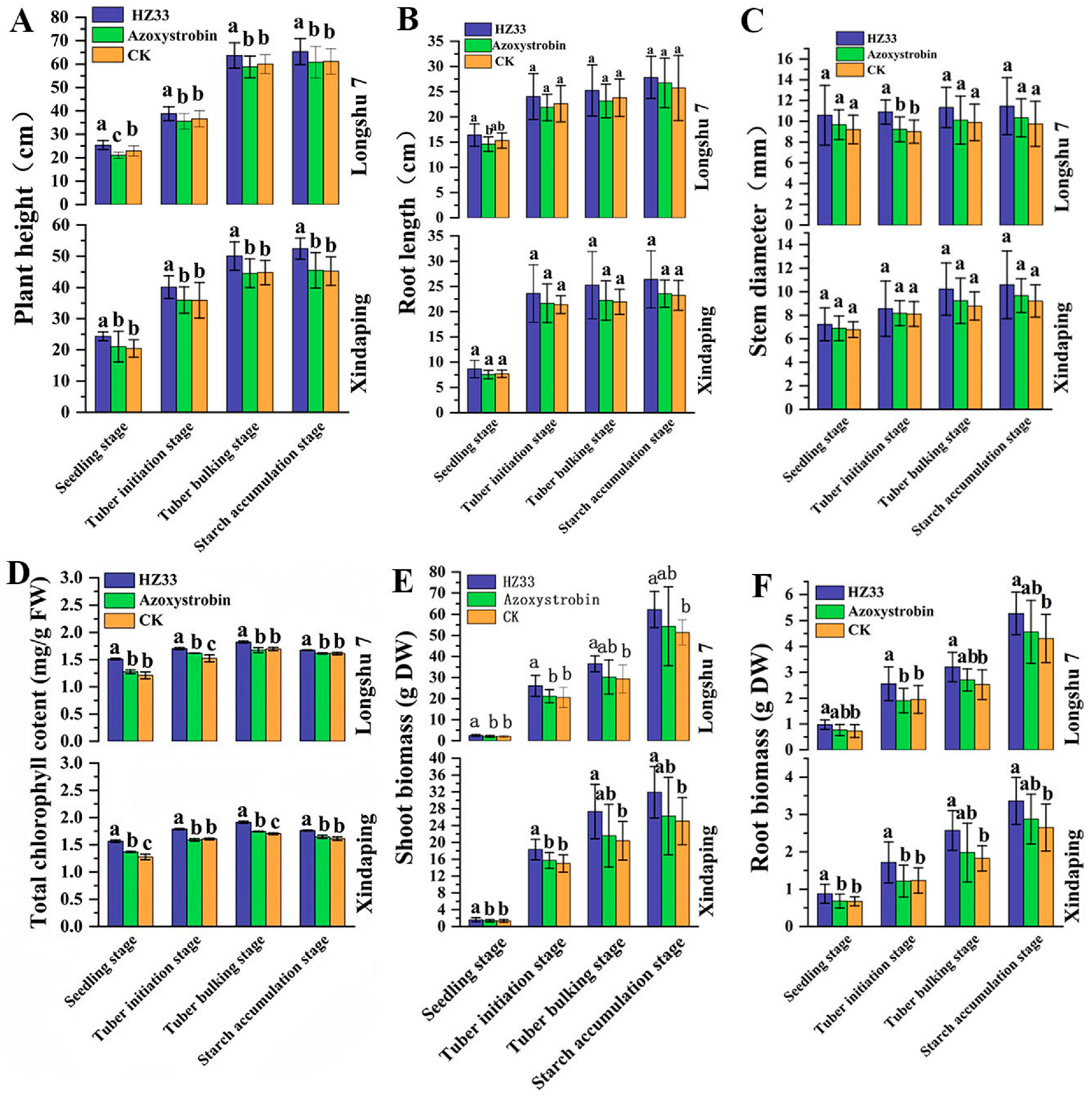
The results indicate that HZ33 application significantly enhanced the growth of both potato varieties at the seedling, tuber initiation, tuber bulking, and starch accumulation stages. Specifically, in the X-HZ33 and L-HZ33 treatments, the plant height, root length, stem diameter, shoot biomass, root biomass, and total chlorophyll content were significantly higher than in the azoxystrobin and CK treatments across all four stages (p < 0.05) (Figure 1A,D–F). In addition, HZ33 significantly increased the root length at the seedling stage and the stem diameter at the tuber formation stage in Longshu 7 (p < 0.05) (Figure 1B,C).

3.2. Field Efficacy of B. velezensis HZ33 Against Potato Black Scurf Disease

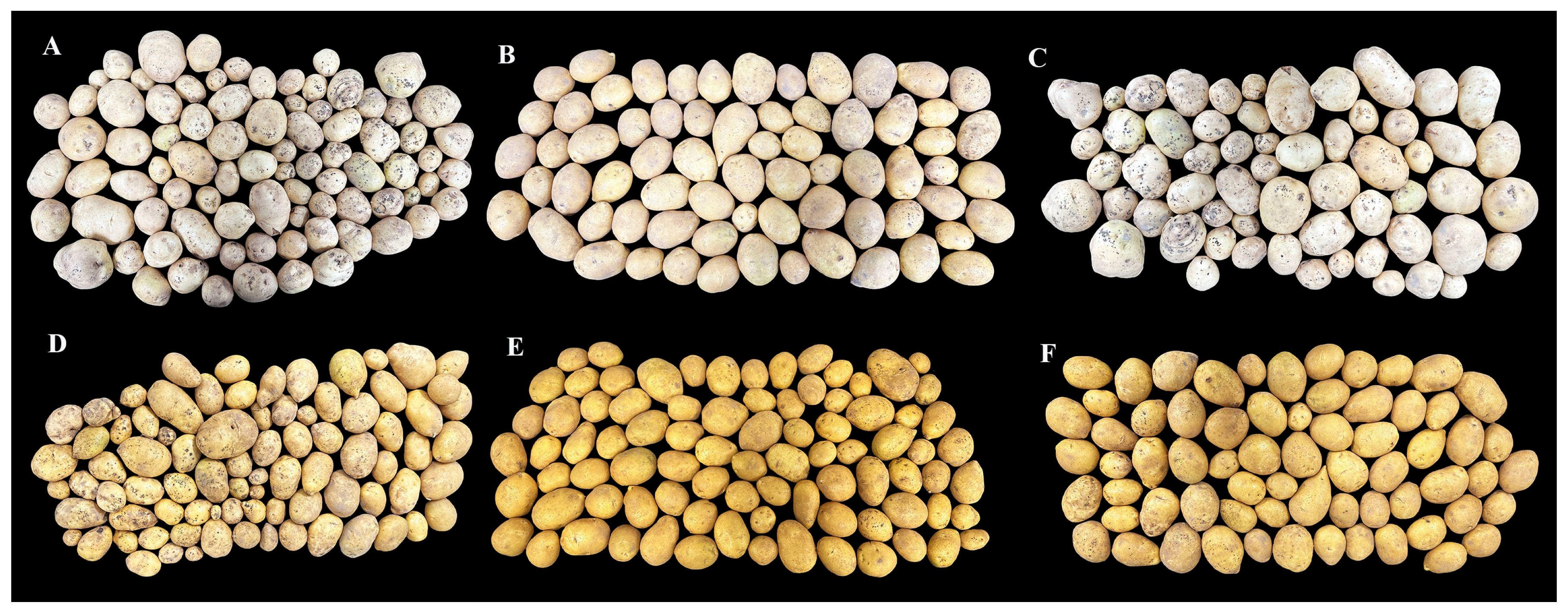
To evaluate the control efficacy of B. velezensis HZ33 against potato black scurf, assessments of the disease incidence, disease index, and control efficacy under different treatments were conducted at harvest. The application of HZ33 and azoxystrobin significantly reduced the disease incidence and disease index in both varieties of potatoes (p < 0.05). Most importantly, the control efficacy of HZ33 against black scurf was 67.72% in Xindaping potatoes and 59.84% in Longshu 7 potatoes, significantly superior to azoxystrobin, which showed control effects of 58.37% and 50.41%, respectively (p < 0.05) (Table 1, Figure 2).

3.3. Effects of Bacillus velezensis HZ33 on the Potato Yield and Commercial Rate

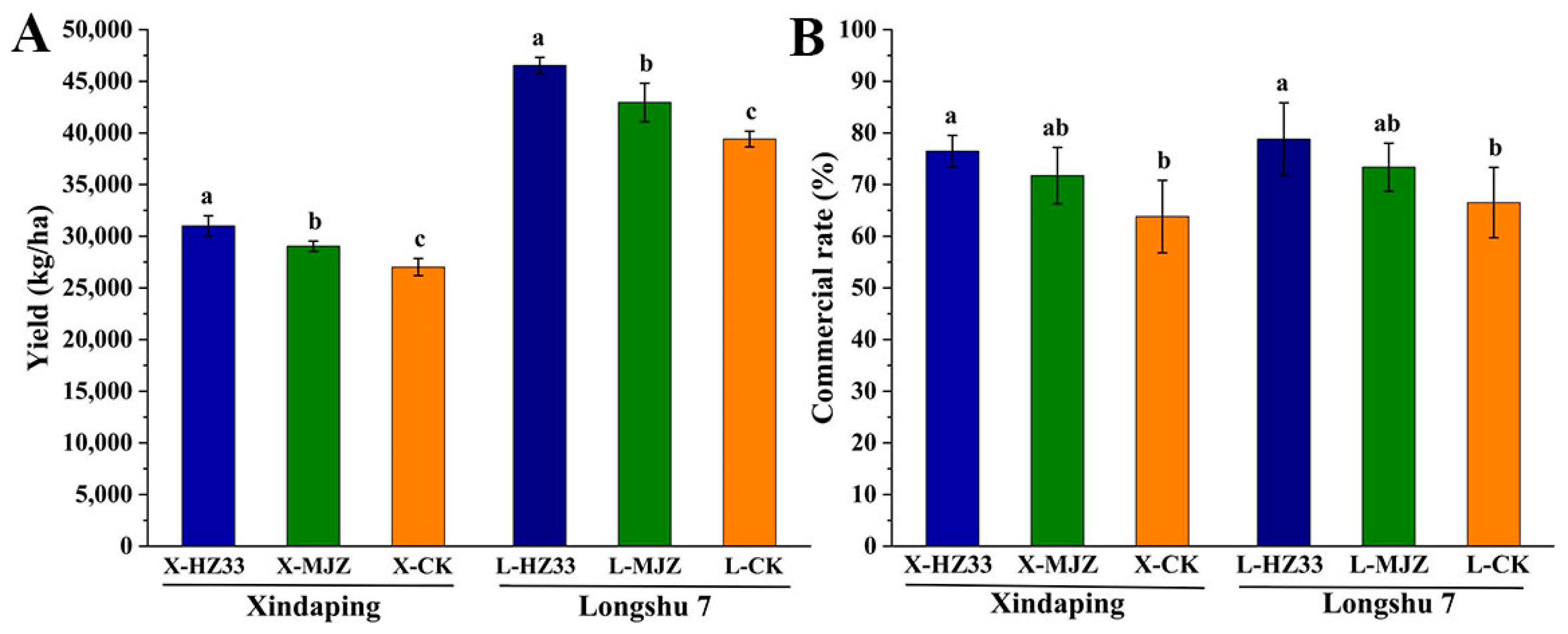
Application of B. velezensis HZ33 markedly increased the potato yield and marketable rate. HZ33 raised the yield and marketable rate by 12.86% and 12.67% in Xindaping and by 18.08% and 12.28% in Longshu 7, respectively. Azoxystrobin also improved these parameters in both cultivars but to a lesser extent than HZ33 (p < 0.05) (Figure 3A,B).

3.4. Effects of B. velezensis HZ33 Application on Soil Chemical Properties

In terms of the soil chemical properties, application of HZ33 significantly increased the soil organic matter (OM), total phosphorus (TP), total potassium (TK), available nitrogen (AN), available phosphorus (AP), and available potassium (AK) by 30.15%, 25.97%, 6.03%, 16.53%, 117.76%, and 14.70% in Xindaping potatoes and by 21.55%, 24.36%, 9.13%, 9.00%, 140.76%, and 9.92% in Longshu 7 potatoes, respectively (p < 0.05) (Table 2). Among these, it exerted the most pronounced influence on the AP. However, in both potato varieties, the azoxystrobin treatment only slightly increased the AK, while the pH and total nitrogen (TN) were similar across all treatments.

3.5. Alpha and Beta Diversity of the Microbial Community in Rhizosphere Soils

Based on a 98.65% sequence similarity threshold, a total of 57,585 bacterial and 22,334 fungal OTUs were identified in Xindaping potatoes, while 54,176 and 19,049 OTUs were identified in Longshu 7 potatoes. Venn diagrams revealed 4319, 5154, and 4502 unique fungal OTUs in the X-HZ33, X-MJZ, and X-CK, respectively, while 9863, 12,749, and 19,974 unique OTUs were detected for bacterial OTUs, respectively. Similarly, the L-HZ33, L-MJZ, and L-CK treatments contained 3837, 4061, and 5179 unique fungal OTUs and 10,652, 11,310, and 12,186 bacterial OTUs, respectively (Figure S2).
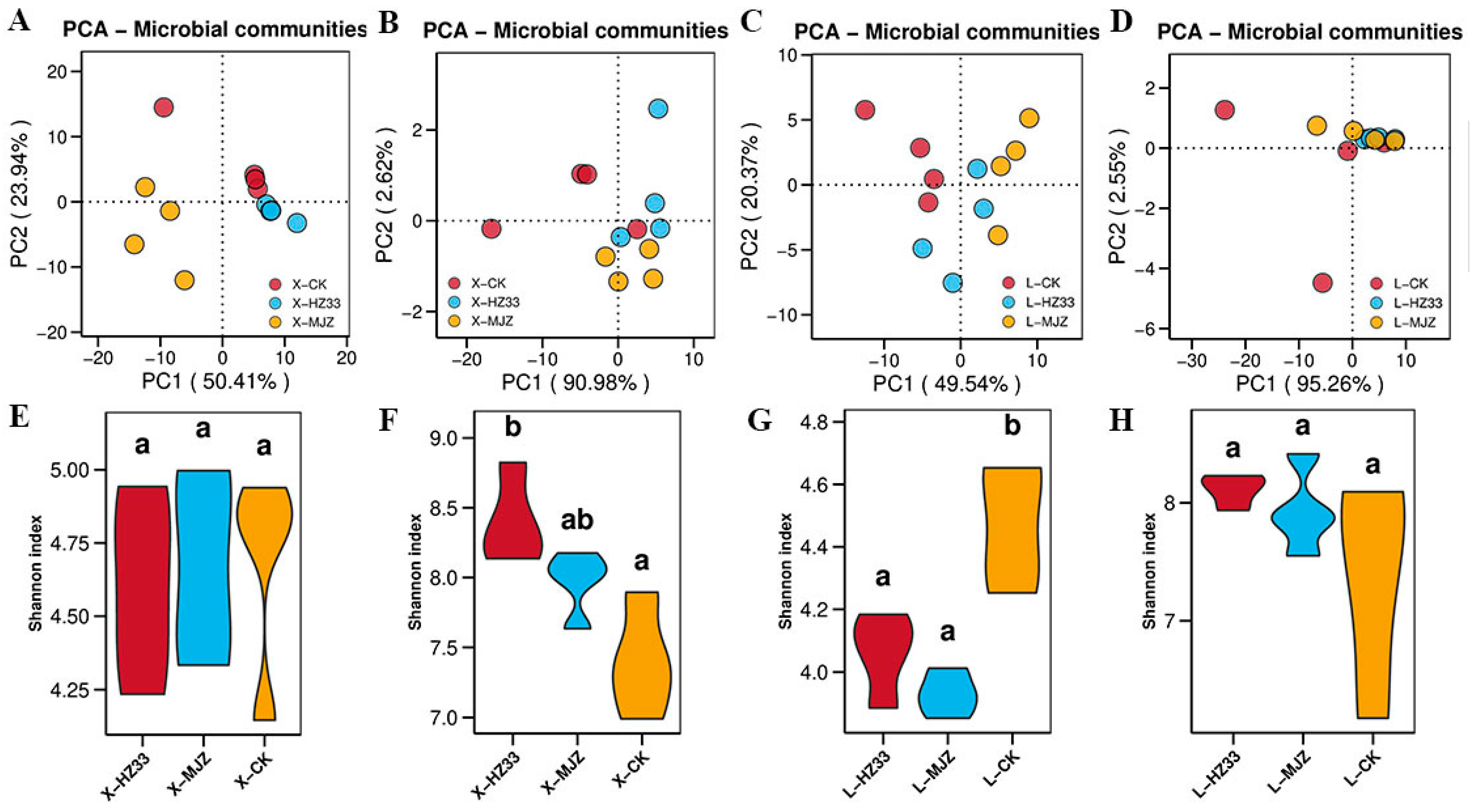
In the alpha-diversity analysis, HZ33 application significantly increased the bacterial Chao1 and ACE indices in the rhizosphere of both potato varieties, while it had no effect on the fungal indices (p < 0.05) (Figure 4C–F; Tables S2 and S3). HZ33 also significantly increased the bacterial Shannon index in Xindaping potatoes and significantly decreased the fungal Shannon index in Longshu 7 potatoes (Tables S2 and S3). Overall, HZ33 tended to increase bacterial diversity.
The PCA results revealed distinct separations in both fungal and bacterial communities among the X-HZ33, X-MJZ, and X-CK treatments in Xindaping potatoes (Figure 4A), while the fungal communities were clearly separated, but the bacterial communities exhibited a degree of convergence between the L-HZ33 and L-MJZ treatments in Longshu 7 potatoes (Figure 4B). To summarize, the application of HZ33 significantly altered the microbial community structure in the rhizosphere.

3.6. Composition of the Rhizosphere Soil Microbial Community at the Phyla Level

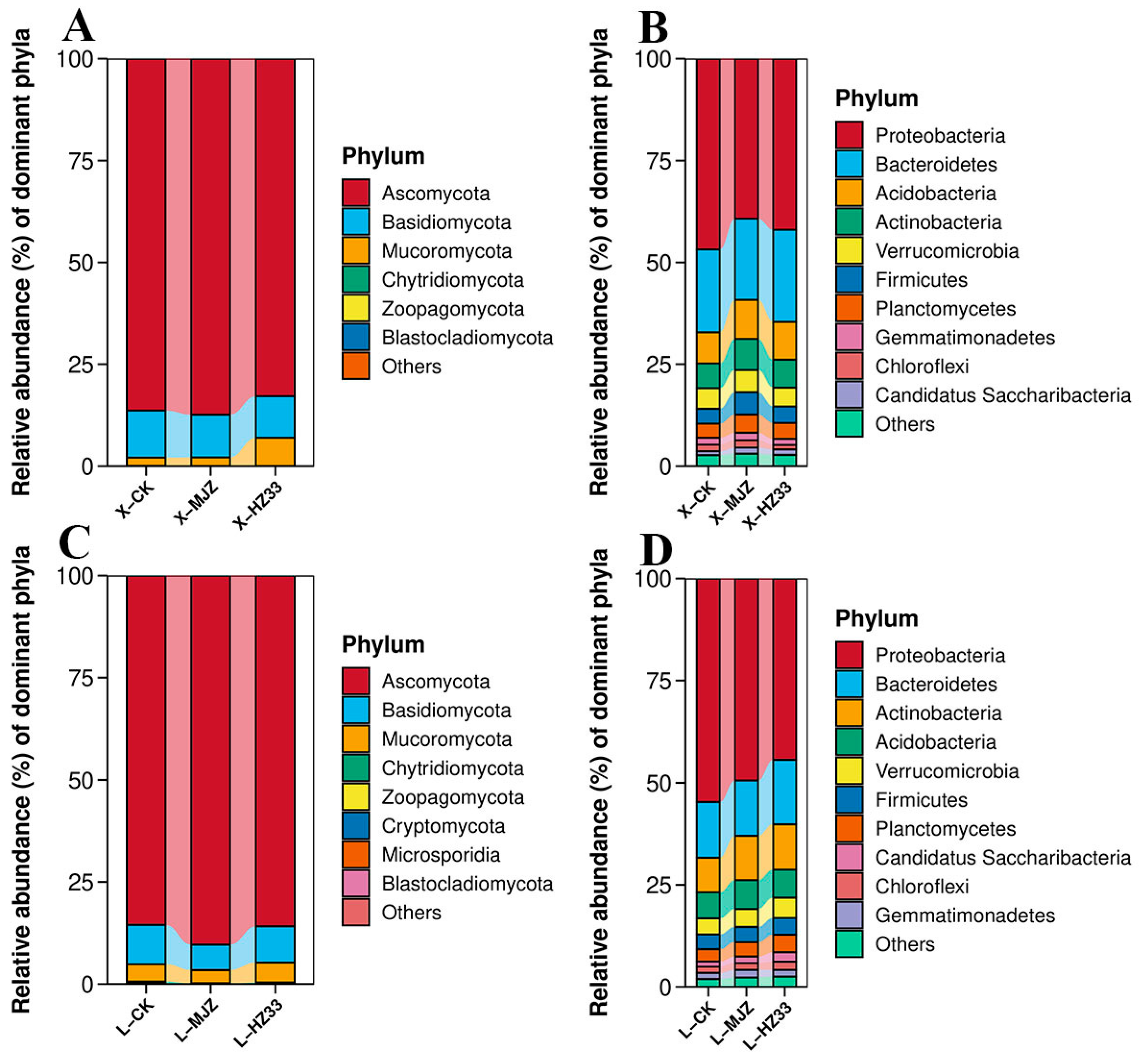
To analyze the effects of HZ33 application on rhizosphere microbial communities, we selected the top-10 abundant bacterial and fungal phyla (Figure 5). In both potato varieties, the HZ33 and azoxystrobin treatments significantly reduced the relative abundance of Basidiomycota at the fungal phyla level and Proteobacteria at the bacterial phyla level.
Additionally, both treatments increased the relative abundance of Acidobacteria and Actinobacteria at the bacterial phyla level. Notably, HZ33 application uniquely increased the abundance of Mucoromycota (beneficial fungi) and Bacteroidetes (beneficial bacteria) at the phylum level in both potato varieties.

3.7. Composition of the Rhizosphere Soil Microbial Community at the Genus Level

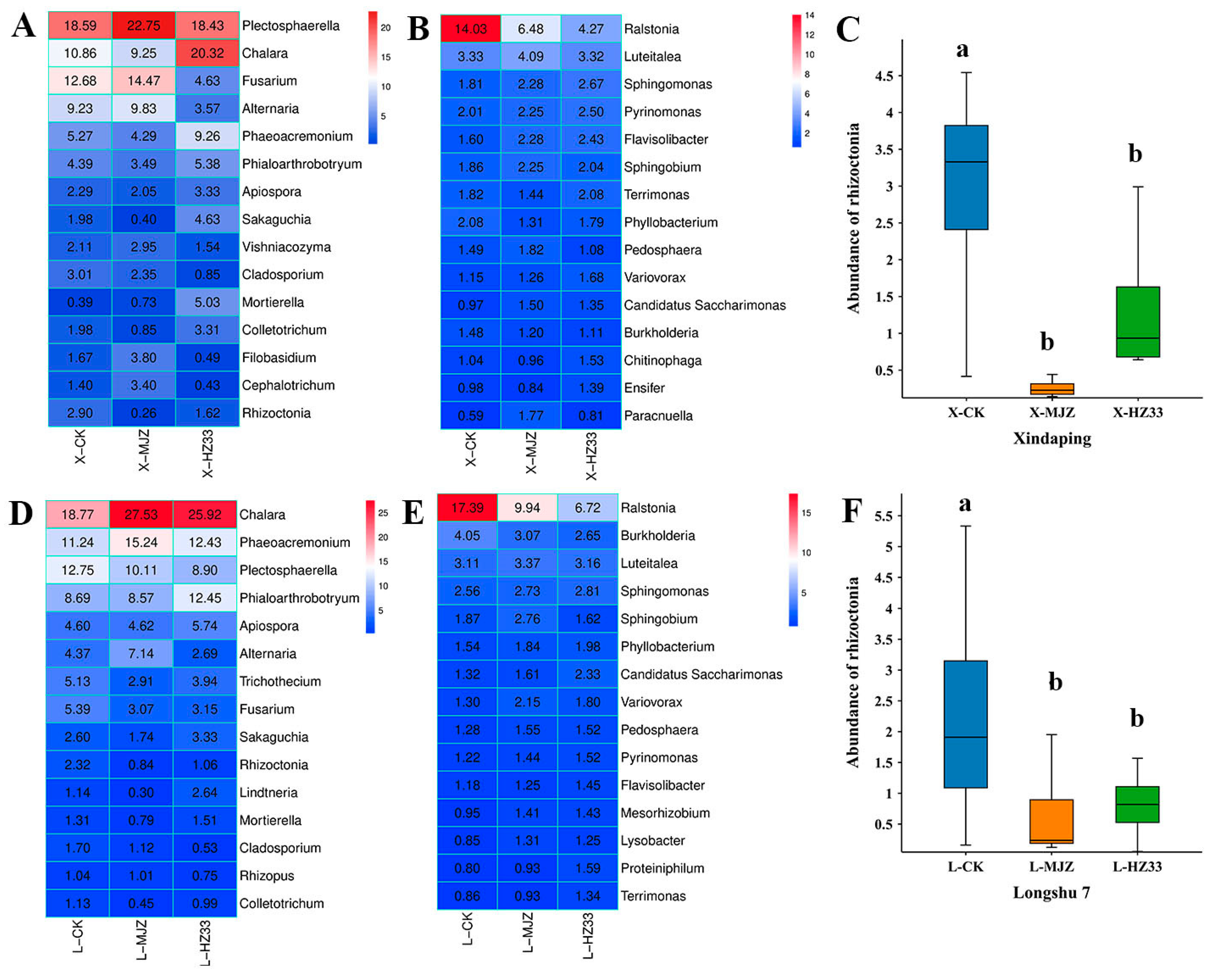
We analyzed the impact of applying HZ33 on the abundance of the top-15 fungal and bacterial genera, revealing several consistent changes across the two potato cultivars. At the fungal genus level, both HZ33 and azoxystrobin treatments significantly reduced the relative abundance of Rhizoctonia (the cause of potato black scurf) (Figure 6C,F), and Fusarium and Alternaria were reduced only in the HZ33 treatment (Figure 6A,D). At the bacterial genus level, a decrease was observed for Ralstonia (the causal agent of bacterial wilt), while Sphingomonas, Pyrinomonas, Flavisolibacter, Variovorax, and Candidatus Saccharimonas increased (Figure 6B,E). Notably, the application of HZ33 uniquely enhanced the abundance of beneficial fungi genera, including Phialoarthrobotryum, Apiospora, Sakaguchia, and Mortierella, as well as the beneficial bacterial genus Terrimonas in both potato varieties.

3.8. LEfSe Analysis of Fungal and Bacterial Communities

LEfSe analysis revealed differences in the biomarkers of the rhizosphere microbial communities of potatoes under different treatments. For fungi (LDA > 3.5), the biomarkers in the CK treatment were predominantly enriched with plant pathogens in the two potato cultivars, including Rhizoctonia solani, Alternaria solani, Fusarium spp., and Plectosphaerella spp.
In contrast, the application of HZ33 enriched beneficial fungi such as Sakaguchia lamellibrachiae, Chaetosphaeriaceae, Cystobasidiomycetes, Lindtneria leucobryophila, and Candida sp. IHEM_2825 (Figure S3A,B).
For bacteria (LDA > 4.0), biomarkers in the control groups (X-CK and L-CK) included pathogenic taxa such as Ralstonia and Pseudomonas corrugata, as well as beneficial taxa such as Serratia plymuthica, Variovorax boronicumulans, and Paenibacillus spp. In contrast, HZ33 application enriched beneficial bacteria, including members of Chitinophagaceae, Lactobacillus, Pseudoxanthomonas, Bdellovibrio bacteriovorus, Planctomycetaceae, and Pedobacter (Figure S3C,D).

3.9. Co-Occurrence Network Analysis

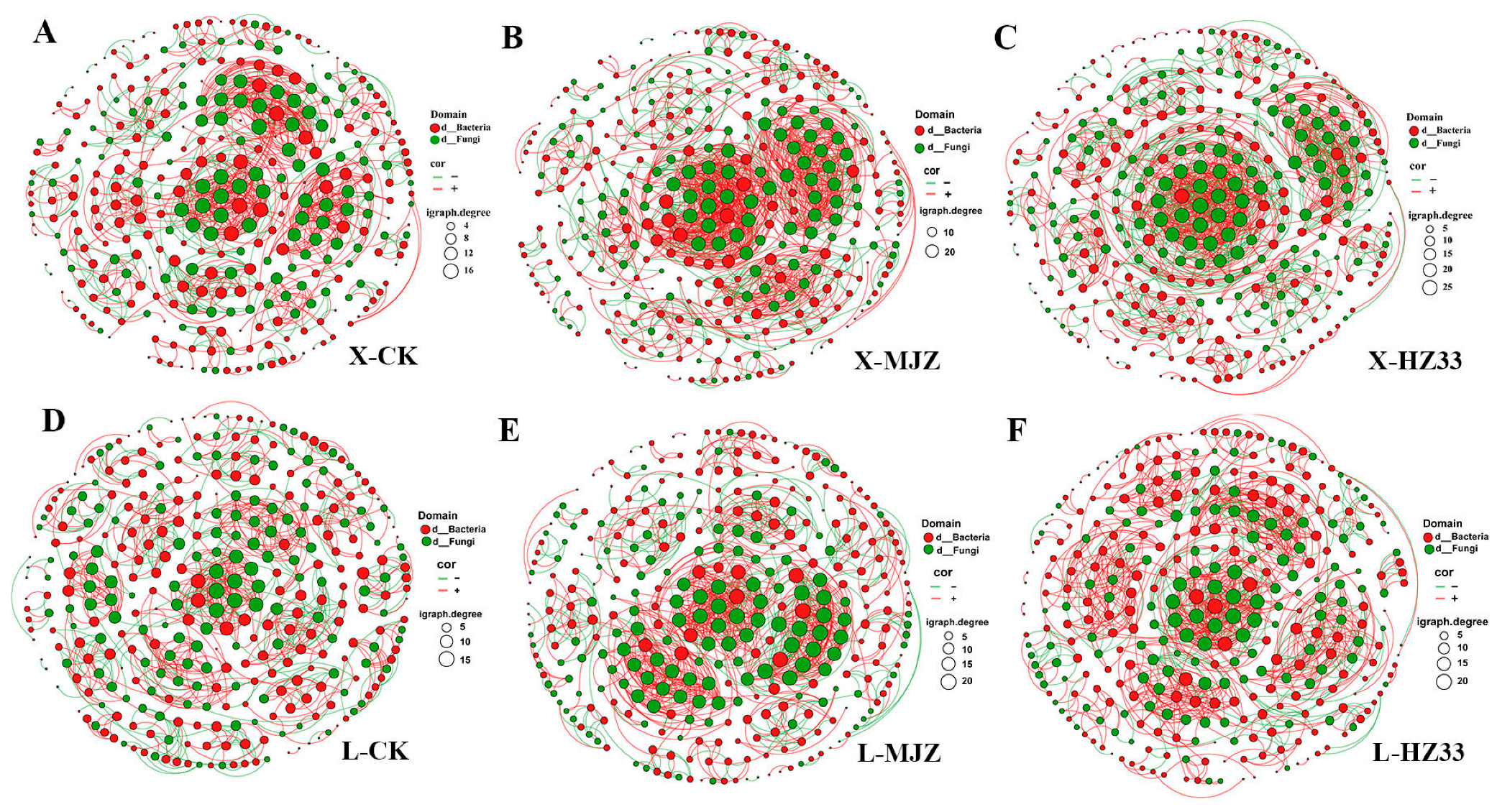
An abundance-based co-occurrence network analysis was performed using the top-150 fungal OTUs and top-200 bacterial OTUs. In both potato cultivars, the co-occurrence network showed more edges (positive edges and negative edges), as well as higher modularity and network density in the HZ33 and azoxystrobin treatments than in the CK treatment. Additionally, the number of nodes was similar under three treatments within each cultivar, but the node sizes (representing degree centrality) of fungi were significantly larger in the HZ33 and azoxystrobin treatments than in the CK treatment and slightly larger for bacteria (Figure 7). Therefore, across the field experiments with the two potato cultivars, application of B. velezensis HZ33 enhanced the complexity of the rhizosphere microbial network in field-grown potatoes, with fungal networks exhibiting higher stability.

3.10. Analysis of Rhizosphere Soil Chemical Properties and Microbial Communities

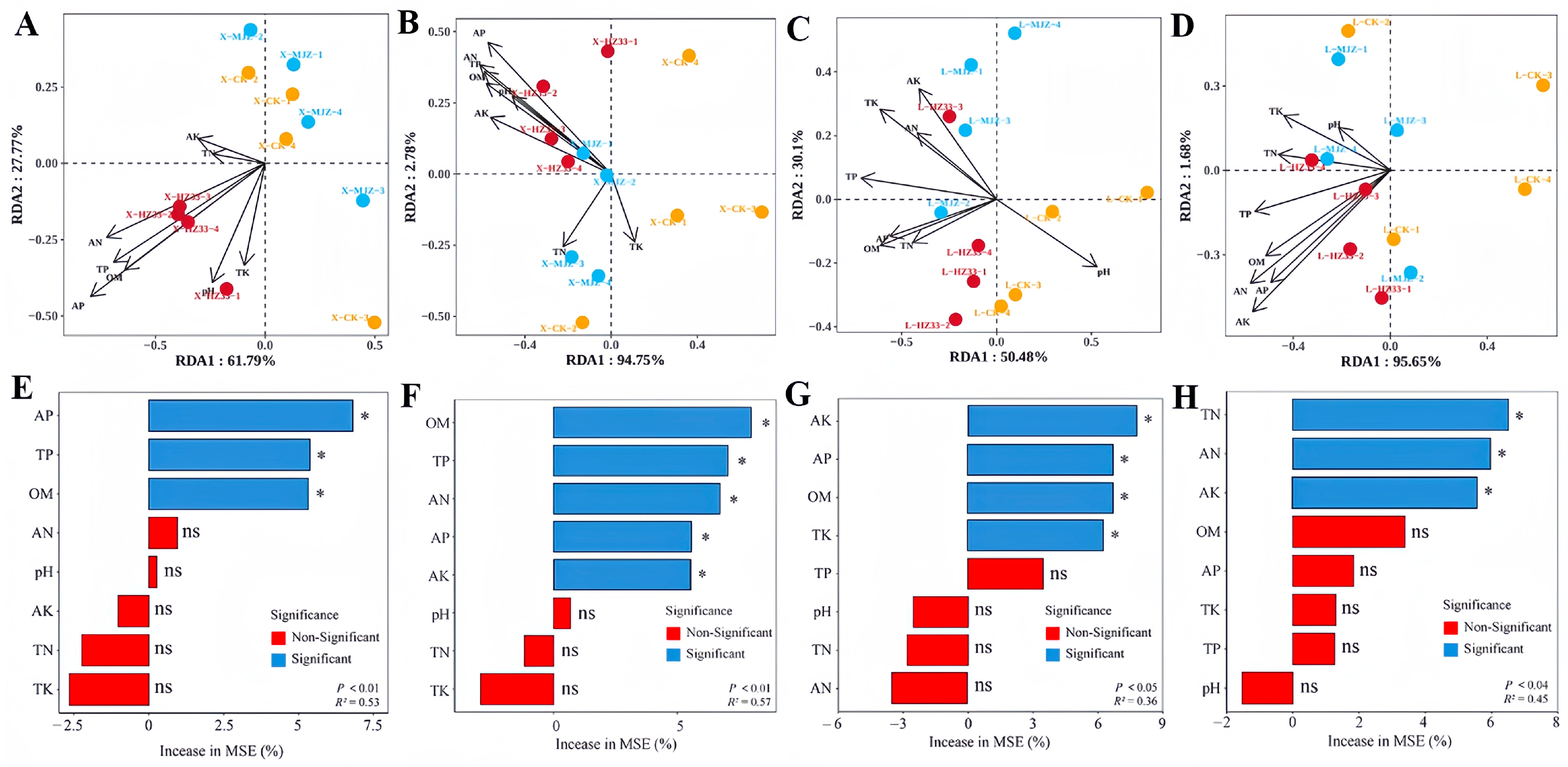
Redundancy analysis (RDA) was performed to examine the relationship between the soil chemical properties and the dominant microbial communities at the genus level. In both potato varieties, the fungal community structure was significantly affected by the soil AP, OM, and TP, while the HZ33 treatment showed a positive correlation with these factors (Figure 8A,C). The bacterial community structure was significantly affected by the soil AP, AN, OM, and AK, and the HZ33 treatment also showed positive associations with these variables (Figure 8B,D).
To further identify the soil chemical properties that significantly influenced the changes in the rhizosphere soil microbial community, we performed a random forest (RF) analysis. The RF model identified AP, TP, and OM as key factors significantly influencing the fungal community structure in the Xindaping potatoes and AK, AP, OM, and TK in the Longshu 7 potatoes (Figure 8E,G). Similarly, the RF model identified OM, TP, AN, AP, and AK as key factors significantly influencing the bacterial community structure in Xindaping and TN, AN, and AK in Longshu 7 (Figure 8F,H).

3.11. Correlation Analysis Between the Microbial Community and Potato Black Scurf Disease Index

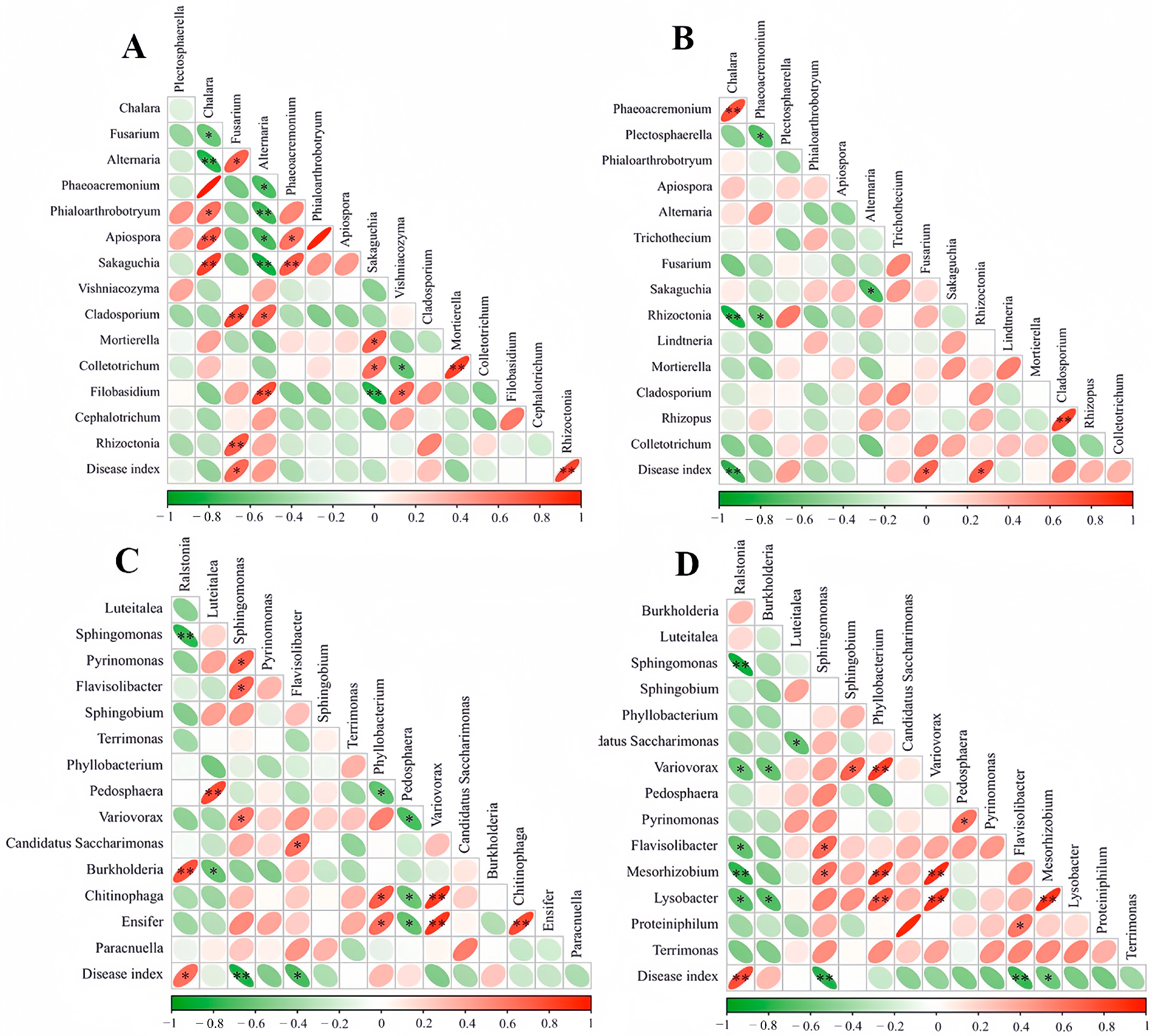
To further investigate the correlation between the disease index and rhizosphere microbial community, we performed a correlation analysis based on the Pearson correlation coefficient (PCC). In both potato varieties, the fungal genera Rhizoctonia and Fusarium and bacterial genus Ralstonia were positively correlated with the disease index, but the bacterial genera Sphingomonas and Flavisolibacter were negatively correlated (Figure 9).

4. Discussion

4.1. Bacillus velezensis HZ33 Promotes the Growth of Potato Plants, Increases the Potato Yield, and Effectively Controls Potato Black Scurf Caused by R. solani

Bacillus is extensively utilized for biological control, with research indicating its ability to directly or indirectly enhance plant growth, improve soil health, and manage various plant diseases [2,22]. Our study revealed that B. velezensis HZ33 notably boosted the growth of two potato varieties, Xindaping and Longshu 7, across the four main growth stages, subsequently increasing both the yield and commercial rate. Additionally, application of HZ33 elevated the chlorophyll content in potato leaves, thereby enhancing photosynthesis, which indirectly fostered potato growth, and starch accumulation in tubers, positively affecting the yield and commercial rate [7,27]. Previous research aligns with our findings, showing B. velezensis and B. amyloliquefaciens promote potato growth by boosting the plant height, stem count per plant, and chlorophyll a content [5]. These attributes underscore HZ33’s significant potential as a plant growth-promoting rhizobacterium in agricultural production.
In our study, applying B. velezensis HZ33 significantly inhibited the spread of R. solani in the rhizosphere of the two potato cultivars, effectively preventing and controlling potato black scurf, and the effect was better than that of the chemical control agent azoxystrobin. This result is consistent with the previous reports on ginseng and pepper [36,37]. Based on its significant disease prevention effect, it ensures the normal growth of potatoes, thereby increasing the yield and commercial rate of potatoes [5]. Importantly, our experiments on the two potato varieties confirm the stability and reliability of its control effect on potato black scurf. In conclusion, B. velezensis HZ33 is a promising biocontrol agent for managing potato black scurf in potato production.

4.2. Application of B. velezensis HZ33 Increases Bacterial Diversity, Suppresses Major Plant Pathogens, and Enriches Beneficial Microbes in the Potato Rhizosphere

Application of B. velezensis HZ33 significantly altered the structure and composition of the microbial community. In the fungal community, both HZ33 and azoxystrobin treatments reduced the relative abundance of Basidiomycota, which includes R. solani, the pathogen responsible for potato black scurf, in the two potato cultivars, explaining the observed reduction in black scurf [38,39]. Notably, HZ33 uniquely increased the abundance of Myxomycota, known for decomposing organic matter and accelerating nutrient cycling in the rhizosphere, aligning with previous studies [40]. In the bacterial community, our study found that HZ33 may reduce the abundance of Proteobacteria in both potato cultivars due to niche competition, while azoxystrobin likely reduces it through non-specific bactericidal effects [41,42]. Meanwhile, the abundances of Acidobacteria and Actinobacteria, which enhance soil fertility and disease resistance, were increased [43,44]. Interestingly, HZ33 specifically increased the abundance of Bacteroidetes, which decomposes organic matter and regulates plant immune responses [45]. These findings indicate that, compared to chemical fungicides, HZ33 significantly enriches beneficial fungal and bacterial communities.
To clarify the roles of rhizosphere microorganisms in disease development and plant health, we analyzed changes in the abundances of the top-15 fungal and bacterial genera following HZ33 application. The results were consistent across the two potato varieties. Both HZ33 and azoxystrobin treatments significantly reduced the relative abundances of the pathogen R. solani (causing potato black scurf) and the bacterial genus Ralstonia (causing potato bacterial wilt). This finding supports the conclusion that HZ33 controls potato black scurf by lowering R. solani abundance in rhizosphere soil, consistent with studies showing that inoculation with biocontrol agents reduces pathogenic taxa in the rhizosphere [4,46]. We also observed that HZ33 uniquely decreased the relative abundances of Alternaria solani (causing potato early blight) and Fusarium (causing potato root rot). This broad-spectrum activity likely reflects multiple disease-suppression mechanisms of B. velezensis HZ33, including the production of diverse antibacterial compounds, competition for ecological niches, and the induction of plant systemic resistance, and these mechanisms may represent key contributing factors to the reduced number of OTUs observed in the HZ33 treatment compared with the azoxystrobin treatment in the Venn diagram [39,47]. Most importantly, applying HZ33 increased the abundances of the beneficial fungal genera such as Phialoarthrobotryum, Apiospora, Sakaguchia, and Mortierella and beneficial bacterial genera such as Terrimonas, Sphingomonas, Pyrinomonas, Flavisolibacter, Variovorax, and Candidatus Saccharimonas in both potato varieties. These genera are well known for roles in nutrient cycling, pathogen suppression, and the promotion of plant health [48,49,50,51,52]. Moreover, our LEfSe analysis largely agrees with the previous studies. The biomarkers associated with B. velezensis HZ33 application were mainly beneficial soil fungi and bacteria. Together, these findings indicate that B. velezensis HZ33 can reshape the rhizosphere microbial community, establish a rhizosphere dominated by beneficial microorganisms, and thereby promote potato growth and control potato black scurf.

4.3. Application of B. velezensis HZ33 Improves the Soil Nutrient Status and Shapes the Rhizosphere Microbial Community Structure

The application of microbial agents can enhance nutrient cycling and organic matter decomposition, increase the availability of soil organic matter and nutrients, and positively affect plant growth and health [53]. Our results align with these findings. Treatment with B. velezensis HZ33 increased the soil OM, TP, TK, AN, AP, and AK in both potato cultivars, Xindaping and Longshu 7, with the largest increase observed for AP. Thus, the improved potato growth in our study is likely linked to the HZ33-mediated enhancement of soil nutrient status via phosphate solubilization and potassium release [41,54].
Soil chemical properties correlate with microbial diversity and thereby shape rhizosphere bacterial and fungal communities [4]. Our RDA showed that, in the two potato varieties, following HZ33 application, AP, OM, and TP were the principal drivers of the fungal community structure, whereas AP, AN, OM, and AK primarily governed the bacterial community structure. These results align with Feng et al., who reported that TN, SOC, pH, and AP influenced soil bacterial and fungal composition [55], and with Yang et al., who found that AK and TP affected bacterial communities, while AP, AK, and pH affected fungal communities [56]. Random forest analysis produced comparable outcomes, identifying AP and OM as the most important predictors for fungal communities and AN and AK as the main predictors for bacterial communities [56]. Together, these findings indicate that HZ33 application can improve the rhizosphere’s physicochemical environment, reshape the microbial community composition, and promote soil nutrient mobilization, which in turn enhances potato growth by increasing plant nutrient uptake efficiency and may indirectly suppress soil-borne diseases [5].

4.4. Application of B. velezensis HZ33 Increases the Complexity of Rhizosphere Fungal–Bacterial Co-Occurrence Networks

Rhizosphere microorganisms form complex interaction networks that sustain plant and soil health [57]. We performed co-occurrence network analysis using the top-150 fungal and top-200 bacterial OTUs. In both potato cultivars, application of B. velezensis HZ33 increased the complexity of the rhizosphere microbial network compared with the control, evidenced by a significant rise in the number of edges representing interactions between fungi and bacteria, as well as increases in the modularity and network density. Previous studies likewise reported that introducing exogenous beneficial microorganisms strengthens rhizosphere network connectivity and increases interaction complexity [57,58]. Our results further indicate that, following HZ33 application, the bacterial network became slightly larger, while the fungal network grew more stable. This pattern may reflect HZ33-driven reductions in rhizosphere plant pathogens, which could stabilize the fungal community and create a more favorable microenvironment for the bacterial community [46,59].

4.5. Major Rhizosphere Pathogens Are Positively Correlated with Potato Black Scurf Severity, Whereas Beneficial Bacteria Show Negative Correlations

To explore the relationships between disease occurrence and the rhizosphere microbial community, we performed Pearson correlation analysis. Previous work has shown that crop infections by soil-borne diseases typically involve consortia of pathogenic microorganisms in the rhizosphere rather than a single pathogen, and these consortia undermine host defenses to trigger disease [60,61]. Our findings align closely with the previous research, consistently observed across potato experiments involving both varieties. The fungal genera Rhizoctonia, causing potato black scurf, and Fusarium, causing potato root rot, along with the bacterial genus Ralstonia, responsible for potato bacterial wilt, exhibited a significant positive correlation with the disease index. These correlations are consistent with their known pathogenic roles and highlight their importance in field disease development under field conditions [4,46]. Conversely, the beneficial bacterial genera Sphingomonas and Flavisolibacter showed a significant negative correlation with the disease index. These taxa, negatively correlated with disease, may form part of a beneficial microbial alliance that inhibits soil-borne pathogens through mechanisms such as competition, antibiosis, or induced systemic resistance [53].

5. Conclusions

Bacillus velezensis HZ33 shows strong promise as both a biocontrol agent and a plant growth promoter in potato cultivation. It not only boosts plant growth and yield but also effectively suppresses potato black scurf by reshaping the rhizosphere microbiome. HZ33 enriches beneficial bacteria and fungi in the rhizosphere, increases soil nutrient availability, and fosters a more complex and stable microbial interaction network. A significant negative correlation between beneficial genera such as Sphingomonas and Flavisolibacter and the disease index highlights the potential of a beneficial microbial alliance that aids in disease suppression. Overall, our findings suggest that HZ33 promotes potato health and productivity through a synergistic approach involving direct antagonism, microbiome modulation, and soil improvement.

Supplementary Materials

The following supporting information can be downloaded at https://www.mdpi.com/article/10.3390/agronomy16010087/s1, Figure S1: Field plot design; Figure S2: Venn diagrams of OTUs bacterial community and fungal community structure in the different treatments; Figure S3: LEfSe analysis of the fungal and bacterial communities; Table S1: Grading criteria for potato black scurf disease; Table S2: Alpha diversity index of fungal communities rhizosphere soil under different treatments; Table S3: Alpha diversity index of bacterial communities rhizosphere soil under different treatments; Table S4: Co-occurrence networks analysis of bacterial and fungal communities under different treatments.

Author Contributions

Conceptualization, Z.L., T.S., C.W. and Y.T. (Yongqiang Tian); methodology, Z.L., J.L., A.D., Y.F. and J.C.; validation, Z.L., C.W. and J.L.; formal analysis, C.W., Y.T. (Yunpeng Tao), Z.L., Z.X. and J.L.; investigation, Z.L., T.S. and J.C.; writing—original draft preparation, Z.L., A.D. and C.W.; writing—review and editing, Z.L., Y.T. (Yunpeng Tao), Z.X. and T.S. All authors have read and agreed to the published version of the manuscript.

Funding

This research was funded by the Key Basic Research Program of Shandong Natural Science Foundation (ZR2025ZD37), the Gansu Jiayuguan city science and technology project (23–26, 25–26), the Gansu Provincial Major Science and Technology Program (24ZDNA009); and the Gansu Major Science and Technology Project (24ZD17F003).

Data Availability Statement

The original contributions presented in this study are included in the article/Supplementary Materials. Further inquiries can be directed to the corresponding authors.

Conflicts of Interest

The authors declare no conflicts of interest.

References

  1. Johnson, C.M.; Auat Cheein, F. Machinery for potato harvesting: A state-of-the-art review. Front. Plant Sci. 2023, 14, 1156734. [Google Scholar] [CrossRef]
  2. Larkin, R.P. Biological control of soilborne diseases in organic potato production using hypervirulent strains of Rhizoctonia solani. Biol. Agric. Heretic. 2020, 36, 119–129. [Google Scholar] [CrossRef]
  3. Chaudhary, S.; Lal, M.; Sagar, S.; Sharma, S.; Kumar, M. Black scurf of potato: Insights into biology, diagnosis, detection, host-pathogen interaction, and management strategies. Trop. Plant Pathol. 2024, 49, 169–192. [Google Scholar] [CrossRef]
  4. Liu, Y.; Tian, Y.; Yue, L.; Constantie, U.; Zhao, X.; Zhou, Q.; Wang, Y.; Zhang, Y.; Chen, G.; Dun, Z.; et al. Effectively controlling Fusarium root rot disease of Angelica sinensis and enhancing soil fertility with a novel attapulgite-coated biocontrol agent. Appl. Soil Ecol. 2021, 168, 104121. [Google Scholar] [CrossRef]
  5. Maslennikova, V.S.; Tsvetkova, V.P.; Shelikhova, E.V.; Selyuk, M.P.; Alkina, T.Y.; Kabilov, M.P.; Dubovskiy, I.M. Bacillus subtilis and Bacillus amyloliquefaciens Mix Suppresses Rhizoctonia Disease and Improves Rhizosphere Microbiome, Growth and Yield of Potato (Solanum tuberosum L.). J. Fungi 2023, 9, 1142. [Google Scholar] [CrossRef]
  6. Zhao, S.; Chen, X.; Deng, S.; Dong, X.; Song, A.; Yao, J.; Fang, W.; Chen, F. The Effects of Fungicide, Soil Fumigant, Bio-Organic Fertilizer and Their Combined Application on Chrysanthemum Fusarium Wilt Controlling, Soil Enzyme Activities and Microbial Properties. Molecules 2016, 21, 526. [Google Scholar] [CrossRef]
  7. Zhang, Y.; Li, W.; Lu, P.; Xu, T.; Pan, K. Three Preceding Crops Increased the Yield of and Inhibited Clubroot Disease in Continuously Monocropped Chinese Cabbage by Regulating the Soil Properties and Rhizosphere Microbial Community. Microorganisms 2022, 10, 799. [Google Scholar] [CrossRef]
  8. Salamone, A.L.; Gundersen, B.; Inglis, D.A. Clonostachys rosea, a potential biological control agent for Rhizoctonia solani AG-3 causing black scurf on potato. Biocontrol Sci. Technol. 2018, 28, 895–900. [Google Scholar] [CrossRef]
  9. Robert, P.L. Impacts of biocontrol products on Rhizoctonia disease of potato and soil microbial communities, and their persistence in soil. Crop Prot. 2016, 90, 96–105. [Google Scholar] [CrossRef]
  10. Mohsin, T.; Sumera, Y.; Fauzia, Y.H. Biological control of potato black scurf by rhizosphere associated bacteria. Braz. J. Microbiol. 2010, 41, 439–451. [Google Scholar] [CrossRef]
  11. Lan, Q.; Liu, Y.; Mu, R.R.; Wang, X.; Zhou, Q.; Islam, R.; Su, X.; Tian, Y. Biological Control Effect of Antagonistic Bacteria on Potato Black Scurf Disease Caused by Rhizoctonia solani. Agronomy 2024, 14, 351. [Google Scholar] [CrossRef]
  12. Debez, I.B.S.; Alaya, A.B.; Karkouch, I.; Khiari, B.; Garcia-Caparros, P.; Alyami, N.M.; Debez, A.; Tarhouni, B.; Djébali, N. In vitro and in vivo antifungal efficacy of individual and consortium Bacillus strains in controlling potato black scurf and possible development of spore-based fungicide. Biol. Control. 2024, 193, 105527. [Google Scholar] [CrossRef]
  13. Kuypers, M.; Marchant, H.; Kartal, B. The microbial nitrogen cycling network. Nat. Rev. Microbiol. 2018, 16, 263–276. [Google Scholar] [CrossRef] [PubMed]
  14. Helliwell, J.R.; Miller, A.J.; Whalley, W.R.; Mooney, S.J.; Sturrock, C.J. Quantifying the impact of microbes on soil structural development and behaviour in wet soils. Soil Biol. Biochem. 2014, 74, 138–147. [Google Scholar] [CrossRef]
  15. Hollister, E.B.; Hu, P.; Wang, A.S.; Hons, F.M.; Gentry, T.J. Differential impacts of brassicaceous and nonbrassicaceous oilseed meals on soil bacterial and fungal communities. FEMS Microbiol. Ecol. 2013, 83, 632–641. [Google Scholar] [CrossRef]
  16. Pedersen, B.S.; Mills, N.J. Single vs. multiple introductions in biological control: The roles of parasitoid efficiency, antagonism and niche overlap. J. Appl. Ecol. 2010, 41, 973–984. [Google Scholar] [CrossRef]
  17. Raaijmakers, J.M.; Paulitz, T.C.; Steinberg, C.; Alabouvette, C.; Mo¨enne-Loccoz, Y. The rhizosphere: A playground and battlefield for soilborne pathogens and beneficial microorganisms. Plant Soil. 2008, 321, 341–361. [Google Scholar] [CrossRef]
  18. Li, F.; Alchanatis, V. The potential of airborne hyperspectral images to detect leaf nitrogen content in potato fields. In Proceedings of the International Conference on Material and Environmental Engineering (ICMAEE 2014), Jiujiang, China, 21–23 March 2014; Atlantis Press: Dordrecht, The Netherlands, 2014; pp. 103–107. [Google Scholar] [CrossRef]
  19. Martins, B.R.; Radl, V.; Treder, K.; Michałowska, D.; Pritsch, K.; Schloter, M. The rhizosphere microbiome of 51 potato cultivars with diverse plant growth characteristics. FEMS Microbiol. Ecol. 2024, 100, fiae088. [Google Scholar] [CrossRef] [PubMed]
  20. Thomloudi, E.E.; Tsalgatidou, P.C.; Baira, E.; Papadimitriou, K.; Venieraki, A.; Katinakis, P. Genomic and metabolomic insights into secondary metabolites of the novel Bacillus halotolerant hil4, an endophyte with promising antagonistic activity against gray mold and plant growth promoting potential. Microorganisms 2021, 9, 2508. [Google Scholar] [CrossRef]
  21. Kim, S.Y.; Lee, S.Y.; Weon, H.Y.; Sang, M.K.; Song, J. Complete genome sequence of Bacillus velezensis M75, a biocontrol agent against fungal plant pathogens, isolated from cotton waste. J. Biotechnol. 2017, 241, 112–115. [Google Scholar] [CrossRef] [PubMed]
  22. Pirttilä, A.M.; Mohammad Parast Tabas, H.; Baruah, N.; Koskimäki, J.J. Biofertilizers and biocontrol agents for agriculture: How to identify and develop new potent microbial strains and traits. Microorganisms 2021, 9, 817. [Google Scholar] [CrossRef]
  23. Borriss, R.; Chen, X.; Rueckert, C.; Blom, J.; Becker, A.; Baumgarth, B.; Fan, B.; Pukall, R.; Schumann, P.; Spröer, C.; et al. Relationship of Bacillus amyloliquefaciens clades associated with strains DSM7T and FZB42T: A proposal for Bacillus amyloliquefaciens subsp. amyloliquefaciens subsp. nov. and Bacillus amyloliquefaciens subsp. plantarum subsp. nov. based on complete genome sequence comparisons. Int. J. Syst. Evol. Microbiol. 2011, 61, 1786–1801. [Google Scholar] [CrossRef] [PubMed]
  24. Ye, M.; Tang, X.; Yang, R.; Zhang, H.; Li, F.; Tao, F.; Li, F.; Wang, Z. Characteristics and Application of a Novel Species of Bacillus: Bacillus velezensis. ACS Chem. Biol. 2018, 13, 500–505. [Google Scholar] [CrossRef] [PubMed]
  25. Kang, T.A.; Lee, G.; Kim, K.; Hahn, D.; Shin, J.H.; Kim, W.C. Biocontrol of peach gummosis by Bacillus velezensis KTA01 and its antifungal mechanism. J. Microbiol. Biotechnol. 2023, 34, 296. [Google Scholar] [CrossRef] [PubMed]
  26. Zhang, R.; Yu, J.; Yang, L.; Qiao, J.; Qi, Z.; Yu, M.; Du, Y.; Song, T.; Cao, H.; Pan, X. Surfactins and Iturins Produced by Bacillus velezensis Jt84 Strain Synergistically Contribute to the Biocontrol of Rice False Smut. Agronomy 2024, 14, 2204. [Google Scholar] [CrossRef]
  27. Mosela, M.; Andrade, G.; Massucato, L.R.; de Araujo Almeida, S.R.; Nogueira, A.F.; de Lima Filho, R.B.; Zeffa, D.M.; Mian, S.; Higashi, A.Y.; Shimizu, G.D.; et al. Bacillus velezensis strain Ag75 as a new multifunctional agent for biocontrol, phosphate solubilization and growth promotion in maize and soybean crops. Sci. Rep. 2022, 12, 15284. [Google Scholar] [CrossRef]
  28. Asaturova, A.; Shternshis, M.; Tsvetkova, V.; Shpatova, T.; Maslennikova, V.; Zhevnova, N.; Homyak, A. Biological control of important fungal diseases of potato and raspberry by two Bacillus velezensis strains. PeerJ 2021, 9, e11578. [Google Scholar] [CrossRef]
  29. Edgar, R.C. Updating the 97% identity threshold for 16S ribosomal RNA OTUs. Bioinformatics 2018, 34, 2371–2375. [Google Scholar] [CrossRef]
  30. Johnson, J.S.; Spakowicz, D.J.; Hong, B.Y.; Petersen, L.M.; Demkowicz, P.; Chen, L.; Leopold, S.R.; Hanson, B.M.; Agresta, H.O.; Gerstein, M.; et al. Evaluation of 16S rRNA gene sequencing for species and strain-level microbiome analysis. Nat. Commun. 2019, 10, 5029. [Google Scholar] [CrossRef]
  31. Gao, F.; Guo, R.; Ma, Q.; Li, Y.; Wang, W.; Fan, Y.; Ju, Y.; Zhao, B.; Gao, Y.; Qian, L.; et al. Stressful events induce long-term gut microbiota dysbiosis and associated post-traumatic stress symptoms in healthcare workers fighting against COVID-19. J. Affect. Disord. 2022, 303, 187–195. [Google Scholar] [CrossRef]
  32. Schloss, P.D.; Westcott, S.L.; Ryabin, T.; Hall, J.R.; Hartmann, M.; Hollister, E.B.; Weber, C.F. Introducing mothur: Open-source, platform-independent, community-supported software for describing and comparing microbial communities. Appl. Environ. Microbiol. 2009, 75, 7537–7541. [Google Scholar] [CrossRef] [PubMed]
  33. Luo, J.; Huang, W.; Zhang, Q.; Wu, Y.; Fang, F.; Cao, J.; Su, Y. Distinct effects of hypochlorite types on the reduction of antibiotic resistance genes during waste activated sludge fermentation: Insights of bacterial community, cellular activity, and genetic expression. J. Hazard. Mater. 2021, 403, 124010. [Google Scholar] [CrossRef] [PubMed]
  34. Qiu, L.; Zhang, Q.; Zhu, H.; Reich, P.B.; Banerjee, S.; van der Heijden, M.G.; Wei, X. Erosion reduces soil microbial diversity, network complexity and multifunctionality. ISME J. 2021, 15, 2474–2489. [Google Scholar] [CrossRef]
  35. Segata, N.; Izard, J.; Waldron, L.; Gevers, D.; Miropolsky, L.; Garrett, W.S.; Huttenhower, C. Metagenomic biomarker discovery and explanation. Genome Biol. 2021, 12, R60. [Google Scholar] [CrossRef]
  36. Qiao, J.; Zhang, R.; Liu, Y.; Liu, Y. Evaluation of the Biocontrol Efficiency of Bacillus subtilis Wettable Powder on Pepper Root Rot Caused by Fusarium solani. Pathogens 2023, 12, 225. [Google Scholar] [CrossRef]
  37. Feng, S.; Wang, C.; Xu, Z.; Dou, B.; Wang, X.; Yang, L.; Lu, B.; Gao, J. Evaluation of the Antifungal and Biochemical Activities of Fungicides and Biological Agents against Ginseng Sclerotinia Root Rot Caused by Sclerotinia nivalis. Microorganisms 2024, 12, 1761. [Google Scholar] [CrossRef] [PubMed]
  38. Cawoy, H.; Bettiol, W.; Fickers, P.; Ongena, M. Bacillus-based biological control of plant diseases. In Pesticides in the Modern World—Pesticides Use and Management; Intech Open: London, UK, 2011; pp. 273–302. [Google Scholar]
  39. Fira, D.; Dimkić, I.; Berić, T.; Lozo, J.; Stanković, S. Biological control of plant pathogens by Bacillus species. J. Biotechnol. 2018, 285, 44–55. [Google Scholar] [CrossRef]
  40. Bonfante, P.; Venice, F. Mucoromycota: Going to the roots of plant-interacting fungi. Fungal Biol. Rev. 2020, 34, 100–113. [Google Scholar] [CrossRef]
  41. Liu, L.; Li, J.; Yue, F.; Yan, X.; Wang, F.; Bloszies, S.; Wang, Y. Effects of arbuscular mycorrhizal inoculation and biochar amendment on maize growth, cadmium uptake and soil cadmium speciation in Cd-contaminated soil. Chemosphere 2018, 194, 495–503. [Google Scholar] [CrossRef]
  42. Shen, Z.; Ruan, Y.; Chao, X.; Zhang, J.; Li, R.; Shen, Q. Rhizosphere microbial community manipulated by 2 years of consecutive biofertilizer application associated with banana Fusarium wilt disease suppression. Biol. Fertil. Soils 2015, 51, 553–562. [Google Scholar] [CrossRef]
  43. Barka, E.A.; Vatsa, P.; Sanchez, L.; Gaveau-Vaillant, N.; Jacquard, C.; Klenk, H.P.; van Wezel, G.P. Taxonomy, physiology, and natural products of Actinobacteria. Microbiol. Mol. Biol. Rev. 2016, 80, 1–43. [Google Scholar] [CrossRef] [PubMed]
  44. Fu, L.; Ruan, Y.; Tao, C.; Li, R.; Shen, Q. Continuous application of bioorganic fertilizer induced resilient culturable bacteria community associated with banana Fusarium wilt suppression. Sci. Rep. 2016, 6, 27731. [Google Scholar] [CrossRef]
  45. Yu, Y.; Wang, H.; Liu, J.; Wang, Q.; Shen, T.; Guo, W.; Wang, R. Shifts in microbial community function and structure along the successional gradient of coastal wetlands in Yellow River Estuary. Eur. J. Soil Biol. 2012, 49, 12–21. [Google Scholar] [CrossRef]
  46. Liu, Q.; Ahmed, W.; Li, G.; He, Y.; Mohanty, M.; Li, Z.; Shen, T. A Novel Plant-Derived Biopesticide Mitigates Fusarium Root Rot of Angelica sinensis by Modulating the Rhizosphere Microbiome and Root Metabolome. Plants 2024, 13, 2180. [Google Scholar] [CrossRef] [PubMed]
  47. Dong, W.; Long, T.; Ma, J.; Wu, N.; Mo, W.D.; Zhou, Z.; Jin, J.; Zhou, H.; Ding, H. Bacillus velezensis GUAL210 control on edible rose black spot disease and soil fungal community structure. Front. Microbiol. 2023, 14, 1199024. [Google Scholar] [CrossRef]
  48. Ozimek, E.; Hanaka, A. Mortierella Species as the Plant Growth-Promoting Fungi Present in the Agricultural Soils. Agriculture 2021, 11, 7. [Google Scholar] [CrossRef]
  49. Larran, S.; Simón, M.R.; Moreno, M.V.; Santamarina Siurana, M.P.; Perelló, A. Endophytes from wheat as biocontrol agents against tan spot disease. Biol. Control 2016, 92, 17–23. [Google Scholar] [CrossRef]
  50. Asaf, S.; Numan, M.; Khan, A.L.; Al-Harrasi, A. Sphingomonas: From diversity and genomics to functional role in environmental remediation and plant growth. Crit. Rev. Biotechnol. 2020, 40, 138–152. [Google Scholar] [CrossRef]
  51. Hassan, M.K.; McInroy, J.A.; Kloepper, J.W. The Interactions of Rhizodeposits with Plant Growth-Promoting Rhizobacteria in the Rhizosphere: A Review. Agriculture 2019, 9, 142. [Google Scholar] [CrossRef]
  52. Joo, E.S.; Cha, S.; Kim, M.K.; Jheong, W.; Seo, T.; Srinivasan, S. Flavisolibacter swuensis sp. nov. isolated from soil. J. Microbiol. 2015, 53, 442–447. [Google Scholar] [CrossRef]
  53. Chauhan, P.; Sharma, N.; Tapwal, A.; Kumar, A.; Verma, G.S.; Meena, M.; Seth, C.S.; Swapnil, P. Soil Microbiome: Diversity, Benefits and Interactions with Plants. Sustainability 2023, 15, 14643. [Google Scholar] [CrossRef]
  54. Ren, H.; Huang, B.L.; Fernandez-Garcia, V.; Miesel, J.; Yan, L.; Lv, C.Q. Biochar and rhizobacteria amendments improve several soil properties and bacterial diversity. Microorganisms 2020, 8, 502. [Google Scholar] [CrossRef] [PubMed]
  55. Feng, G.; Hao, F.; He, W.; Ran, Q.; Nie, G.; Huang, L.; Wang, X.; Yuan, S.; Xu, W.; Zhang, X. Effect of Biogas Slurry on the Soil Properties and Microbial Composition in an Annual Ryegrass-Silage Maize Rotation System over a Five-Year Period. Microorganisms 2024, 12, 716. [Google Scholar] [CrossRef]
  56. Yang, Y.; Huang, X.; Li, Y.; Liu, Y.; Zhang, Y.; Zhu, H.; Xiong, H.; Zhang, S.; Jiang, T. Characteristics of the Soil Microbial Community Structure under Long-Term Chemical Fertilizer Application in Yellow Soil Paddy Fields. Agronomy 2024, 14, 1186. [Google Scholar] [CrossRef]
  57. Wang, B.; Chen, C.; Xiao, Y.; Chen, K.; Wang, J.; Zhao, S.; Liu, N.; Li, J.; Zhou, G. Trophic relationships between protists and bacteria and fungi drive the biogeography of rhizosphere soil microbial community and impact plant physiological and ecological functions. Microbiol. Res. 2024, 280, 127603. [Google Scholar] [CrossRef]
  58. Guo, Y.; Jin, J.; Lu, Y.; Lin, Y.; Liu, Q.; Li, Z. Bacterial diversity loss weakens community functional stability. Appl. Soil Ecol. 2024, 202, 105536. [Google Scholar] [CrossRef]
  59. Huusko, K.; Manninen, O.H.; Myrsky, E.; Stark, S. Soil fungal and bacterial communities reflect differently tundra vegetation state transitions and soil physico-chemical properties. New Phytol. 2024, 243, 407–422. [Google Scholar] [CrossRef]
  60. Li, M.; Pommier, T.; Yin, Y.; Wang, J.; Gu, S.; Jousset, A.; Keuskamp, J.; Wang, H.; Wei, Z.; Xu, Y. Indirect reduction of Ralstonia solanacearum via pathogen helper inhibition. ISME J. 2022, 16, 868–875. [Google Scholar] [CrossRef]
  61. Venkatesh, N.; Koss, M.J.; Greco, C.; Nickles, G.; Wiemann, P.; Keller, N.P. Secreted secondary metabolites reduce bacterial wilt severity of tomato in bacterial–fungal co-infections. Microorganisms 2021, 9, 2123. [Google Scholar] [CrossRef]
Figure 1. Growth-promoting effects of HZ33 on potatoes at different growth stages. (A) Plant height; (B) root length; (C) stem diameter; (D) total chlorophyll content; (E) shoot biomass; (F) root biomass. Error bars for plant height, root length, stem diameter, shoot biomass, and root biomass represent means ± SD for each treatment (N = 20). Error bars for chlorophyll content represent means ± SD for each treatment (N = 4). Different letters above the bars indicate statistically significant differences (p < 0.05).
Agronomy 16 00087 g001
Figure 2. Symptoms of black scurf on potato tubers under different treatments. (A) X-CK (Xindaping, control); (B) X-HZ33 (Xindaping, B. velezensis HZ33 treatment); (C) X-MJZ (Xindaping, azoxystrobin treatment); (D) L-CK (Longshu 7, control); (E) L-HZ33 (Longshu 7, B. velezensis HZ33 treatment); (F) L-MJZ (Longshu 7, azoxystrobin treatment).
Agronomy 16 00087 g002
Figure 3. Potato yield and commercial rate. (A) Yields of different treatments for Xindaping and Longshu 7 potatoes; (B) commercial rate of different treatments for Xindaping and Longshu 7 potatoes. Different letters above the bars indicate statistically significant differences (p < 0.05).
Agronomy 16 00087 g003
Figure 4. Principal component analysis (PCA) and Shannon index of fungal and bacterial communities. PCA of fungal (A) and bacterial (B) communities in Xindaping; PCA of fungal (C) and bacterial (D) communities in Longshu 7; Shannon index of fungal (E) and bacterial (F) communities of X-HZ33, X-MJZ, and X-CK treatments in Xindaping; Shannon index of fungal (G) and bacterial (H) communities of L-HZ33, L-MJZ, and L-CK treatments in Longshu 7. Each treatment consisted of four replicates. Note: Each dot in the PCA plot represents a sample, and samples from the same group are represented by the same color; the width of each violin represents the distribution density of samples within the group at that position, and the lowercase letters above the box plots denote statistically significant differences between groups (p-value < 0.05).
Agronomy 16 00087 g004
Figure 5. The relative abundances of the top-10 classified bacterial phyla and fungal phyla. Relative abundance of the top-10 fungal (A) and bacterial (B) phyla of X-HZ33, X-MJZ, and X-CK treatments in Xindaping; relative abundance of the top-10 fungal (C) and bacterial (D) phyla of L-HZ33, L-MJZ, and L-CK treatments in Longshu 7. Each treatment included four replicates. Note: Each bar represents a group, and the colored blocks represent different species. In the stacked bar chart, the height of each colored block indicates the relative abundance of that species within the corresponding group.
Agronomy 16 00087 g005
Figure 6. The relative abundances of the top-15 classified bacterial genera and fungal genera. Relative abundance of the top-15 fungal (A) and bacterial (B) genera of X-HZ33, X-MJZ, and X-CK treatments in Xindaping; relative abundance of the top-15 fungal (D) and bacterial (E) genera of L-HZ33, L-MJZ, and L-CK treatments in Longshu 7; relative abundance of Rhizoctonia across treatments in Xindaping (C) and Longshu 7 (F). Each treatment comprised four replicates. Different letters above the bars indicate statistically significant differences (p < 0.05). Note: In the heatmap, the behavioral species are listed as columns representing groups, and the color blocks indicate the differences in the relative abundance of species within each group.
Agronomy 16 00087 g006
Figure 7. Co-occurrence network analysis of bacterial and fungal communities under different treatments. (A) X-CK (Xindaping, control); (B) X-MJZ (Xindaping, azoxystrobin treatment); (C): X-HZ33 (Xindaping, B. velezensis HZ33 treatment); (D) L-CK (Longshu 7, control); (E) L-MJZ (Longshu 7, azoxystrobin treatment); (F) L-HZ33 (Longshu 7, B. velezensis HZ33 treatment). Nodes represent microbial genera, and edge represents strong (|r| > 0.8) and significant (p < 0.01) correlations. The size of each node is proportional to the number of connections (edge number). Green lines represent significantly positive, and red lines represent significantly negative correlations. The color of each node represents genus-level classification.
Agronomy 16 00087 g007
Figure 8. RDA and RF of the rhizosphere soil chemical properties and microbial communities. RDA of the fungal communities in Xindaping (A) and Longshu 7 (C) potatoes, RDA of the bacterial communities in Xindaping (B) and Longshu 7 (D) potatoes, RF of the fungal communities in Xindaping (E) and Longshu 7 (G) potatoes, and RF of the bacterial communities in Xindaping (F) and Longshu 7 (H) potatoes. Note: In the RDA, the length of each arrow represents the degree of correlation between a specific environmental factor and community distribution. A longer arrow indicates a stronger correlation, whereas a shorter arrow suggests a weaker one. The angle between a sample and an environmental factor reflects the positive or negative correlation between species and environmental factors (acute angle: positive correlation; obtuse angle: negative correlation; right angle: no correlation). In the RF, “ns” denotes “not significant”, and asterisks indicate significant differences (* p < 0.05).
Agronomy 16 00087 g008
Figure 9. Analysis of correlation between top-20 bacterial–fungal genera and disease index based on Pearson’s correlation coefficient (PCC, p < 0.05). PCC of the fungal communities and disease index in Xindaping (A) and Longshu 7 (B) potatoes; PCC of the bacterial communities and disease index in Xindaping (C) and Longshu 7 (D) potatoes. Asterisks indicate significant differences (* p < 0.05; ** p < 0.01).
Agronomy 16 00087 g009
Table 1. Field control efficacy of HZ33 against potato black scurf.
TreatmentIncidence Rate (%)Disease Index
(%)
Control Efficiency
(%)
X-HZ3331.18 ± 1.36 c9.48 ± 1.19 c67.72 a
X-MJZ38.31 ± 3.72 b12.93 ± 0.92 b55.96 b
X-CK58.37 ± 2.63 a29.35 ± 1.52 a-
L-HZ3328.95 ± 2.18 b8.04 ± 0.74 c59.84 a
L-MJZ30.49 ± 5.64 b9.91 ± 0.63 b50.41 b
L-CK59.48 ± 8.35 a19.99 ± 1.13 a-
Note: Data are presented as mean and standard deviation (SD) (N = 99). Different letters within the same column indicate significant differences at the 0.05 level of Duncan’s new multiple range test.
Table 2. Effects of different treatments on soil chemical properties.
IndexXindapingLongshu 7
X-HZ33X-MJZX-CKL-HZ33L-MJZL-CK
pH7.61 ± 0.24 a7.50 ± 0.18 a7.40 ± 0.01 a7.55 ± 0.08 a7.49 ± 0.04 a7.48 ± 0.05 a
Organic Matter (OM) (g/kg)17.44 ± 1.00 a15.05 ± 1.49 ab13.40 ± 1.06 b18.39 ± 0.20 a16.12 ± 0.56 b15.13 ± 1.25 b
Total Nitrogen (TN) (g/kg)1.02 ± 0.09 a1.02 ± 0.08 a0.99 ± 0.18 a1.15 ± 0.13 a1.08 ± 0.04 a1.04 ± 0.08 a
Total Phosphorus (TP) (g/kg)0.97 ± 0.06 a0.84 ± 0.05 b0.77 ± 0.07 b0.97 ± 0.02 a0.88 ± 0.03 ab0.78 ± 0.09 b
Total Potassium (TK) (g/kg)17.58 ± 0.53 a17.17 ± 0.37 ab16.58 ± 0.48 b17.57 ± 0.27 a16.65 ± 0.23 ab16.10 ± 1.16 b
Available Nitrogen (AN) (mg/kg)65.93 ± 3.24 a59.83 ± 3.65 b56.58 ± 1.33 b57.64 ± 2.49 a55.97 ± 3.10 ab52.88 ± 3.92 b
Available Phosphorus (AP) (mg/kg)49.30 ± 1.23 a23.97 ± 0.38 b22.64 ± 5.14 b49.26 ± 2.13 a28.93 ± 0.51 b20.46 ± 1.68 c
Available Potassium (AK) (mg/kg)155.30 ± 11.60 a152.41 ± 4.57 a135.40 ± 4.36 b140.54 ± 5.71 a140.36 ± 1.94 a127.86 ± 5.99 b
Note: Data are presented as the mean and standard deviation (SD) (N = 4). Different letters within the same column indicate significant differences at the 0.05 level of Duncan’s new multiple range test.
Disclaimer/Publisher’s Note: The statements, opinions and data contained in all publications are solely those of the individual author(s) and contributor(s) and not of MDPI and/or the editor(s). MDPI and/or the editor(s) disclaim responsibility for any injury to people or property resulting from any ideas, methods, instructions or products referred to in the content.