3.1. Description of Continuous Quantitative Morphological Variables
Measurement and analysis of the continuous quantitative variables uncovered extensive genetic variability among the 22 experimental lines and population RL06. The ANOVA values were highly significant, with
p < 0.05 for all quantitative characters (
Table 3). This genetic variability is critical for the development of new varieties with diverse, but desirable, agronomic traits.
For the continuous quantitative morphological variables (
Table 4), the number of leaf serrations (NLT) averaged nine teeth per leaf (CV = 64.9%), indicative of a high degree of variability among lines, with RL09 and RL13 having the highest number of serrations (20 teeth). For petiole length (PEL), 6.83 cm (CV = 19.5%) was the average, with GR09 having the longest petioles (9.7 cm) and GR10 having the shortest (5.3 cm). For leaf length (MLL), the average was 7.1 cm (CV= 26.5%), and line RL10 stood out at 10.6 cm. The average leaf width (MLW) was 6.2 cm (CV = 28.9%), the largest being that of line RL03 (8.85 cm). With respect to these morphological variables, a prior study found slightly higher values: 13.1 (NLT), 7.2 cm (PEL), 8.9 cm (MLL), and 7.8 cm (MLW) [
8].
For stem morphology descriptors, the average number of primary branches (NPB) was 6 per plant (CV = 78.2%), the highest being line RL08 (13 branches). The relative lack of lateral branches is a peculiar characteristic of the
C. berlandieri var.
boscianum ecotype to which lines RL09, RL10, RL11, and RL13 belong, whereas other ecotypes tend to be highly branched [
39]. However, El-Harty et al. [
8] noted that at lower stand densities quinoa plants tended to produce a larger number of lateral branches—a phenomenon the authors have observed in many pitseed goosefoot populations. In addition, Temel et al. [
40] reported that a smaller number of lateral branches will form as the air temperature increases. The main stem diameter (MSD) averaged 1.35 cm (CV =25.7%), with GR09 having the thickest stems (2.06 cm), in contrast to RL07 and RL08 (0.98 and 0.93 cm, respectively). Previous researchers reported thinner stem diameters (0.92 cm) [
9]. Plant height (PH) averaged 143.5 cm (CV = 40.1%), with wild RL11 producing the tallest plants (247.7 cm), in comparison to RL07 and RL08, which were the shortest (87.8 and 81.9 cm, respectively). Similar results were obtained by Craine et al. [
41], whose population was on average 146 cm tall. Nevertheless, El-Harty et al. [
8] reported lower values (107.4 cm).
For panicle traits, the average panicle length (PAL) was 44.4 cm (CV = 34.1%), with lines RL07 and RL08 having the shortest panicles (28–30 cm). Prior studies found longer panicles in an F2:6 population, with averages reaching 66.85 cm [
39], while Lupa-Condo [
11] observed panicles up to 58.88 cm and Shah et al. [
9] measured panicles of 47.5 cm. On the other hand, Anchico-Jojoa et al. [
42] reported panicles averaging 35.18 cm. For panicle diameter (PDI), the average was 17.9 cm (CV = 61.6%), with RL13 having the thickest panicles (39.8 cm) in comparison with the spike-like panicles of GR15 (7.9 cm). In contrast, El-Harty et al. [
8] recorded smaller values for both PAL (22.7 cm) and PDI (8.7 cm). Notably, Hussain et al. [
43] suggested that these two characters are essential yield components.
3.2. Description of Yield Components
Values for the grain descriptors are presented in
Table 5. The average seed diameter (GD) was 1.9 mm (CV = 16.8%), with RL03 and GR03 having the largest seed diameters (2.19 mm) when compared with RL10 (1.24 mm) at the other end of the size spectrum. For grain thickness (GT), the average was 1.05 mm (CV = 19.7%), with lines GR03 and GR15 being those with the thickest seeds (1.24 mm), in contrast to wild genotype RL13, which had the smallest seeds (0.61 mm). De Bock et al. [
44] reported higher values at 1.65–2.25 mm (GD) and 1.50–1.99 mm (GT) in comparison with our findings. Studies conducted by Del Pozo et al. [
45] indicated that quinoa is sensitive to photoperiod and that, during the pollination and grain-filling stages, this sensitivity is even greater than in other growth stages and varies according to genotype. Similarly, research carried out by Golabi et al. [
46] to determine the influence of sowing method and dates on yield components indicated that transplanting can have both positive and negative effects on yield components (GD and GT); in their study, the method of sowing and transplanting at optimal sowing dates reduced grain yield by up to 30%. The authors attributed this effect to the plant’s increased consumption of photo assimilates necessary for adaptation to the new substrate and environmental stress. Other studies, such as those carried out by Dao et al. and Ludvigson et al. [
47,
48], also reported a reduction in grain yield under transplanting compared to direct sowing of cinchona. Similarly, in our study, transplantation could be responsible for reduced grain size compared to other results for this trait.
For the harvest index (HI), the average was 38.73% (CV = 36.4%), with RL08 being the line with the highest index (58.23%), in contrast to Blanca de July at 11.1%. Our results were lower than in prior studies, which measured HI values of 51% [
13]. However, Anchico-Jojoa et al. [
42] reported harvest indices lower than ours, with an overall average of 26.8%. Prior studies performed by the authors of [
49,
50] revealed that identification of lines with a high HI value was a useful way to increase yields in plant breeding programs. In terms of seed yield per plant (SYP), the average was 42.2 g (CV = 64.8%), with line GR10 being the most productive (73.5 g)—in striking contrast to, and far exceeding, the yield of the control variety, Blanca de July (11.1 g).
The average hectoliter seed weight (HW) was 0.62 g cm
−3 (CV = 7.0%), with line GR11 being outstanding at 0.67 g cm
−3 in comparison to lines ER06, GR02, and Blanca de July, which presented the lowest value (0.57 g cm
−3). For thousand-seed weight (W1000G), the average was 2.59 g (CV = 41.6%), with ER03 being the heaviest at 3.8 g and the wild genotype RL10 being the lightest at 0.58 g. The average W1000G in this study was slightly higher than that of Matias et al. [
13], whose average value was 2.51 g. It should be noted that while Tang et al. [
51] found that W1000G was positively correlated with high yields, De Bock et al. [
44] suggested that varietal selection solely on the basis of W1000G would probably not be reliable for increasing yield across many years.
The average yield per hectare (YPH) was 4.7 t ha
−1 (CV = 64.8%), with line GR10 having attained the highest yield at 8.2 t ha
−1 and, ironically, the commercial cultivar Blanca de July being the lowest-yielding line at 1.2 t ha
−1—slightly, though insignificantly, less than even the lowest wild line, RL11, at 1.8 t ha
−1. A prior study focused on yield variability [
52] reported YPH values ranging from 0.5 to 8.5 t ha
−1. Similarly, Alania-Choque et al. [
10] reported yields from 0.35 t ha
−1 to 8.80 t ha
−1. With respect to yield variability, Temel et al. [
40] noted that planting date was crucial in influencing this most important of variables.
Other quantitative variables are also presented in
Table 5. Saponin contents (SEs) were relatively low among the lines in our study, the average being 0.10% (CV = 31.9%). Line GR07 had the highest saponin content (0.13%), while GR02 and the selected sweet variety Blanca de July had the lowest values (0.05%). Based on the quinoa classification scheme of Gomez-Caravaca [
53], 18 of our lines were sweet and 5 were bitter. In addition, the degree of downy mildew infestation (MSE) was highly variable, with the average AUDPC value being 3.99 (CV = 221%). Genotype GR15 stood out as having the highest disease progression value (20.49), while the quinoa genotypes RL07 and RL08 plus wild strains RL09, RL10, RL11, and RL13 had the lowest values, being highly resistant to the fungal disease (AUDPC = 0.00). The high degree of downy mildew resistance in the four wild
C. berlandieri var.
boscianum genotypes was expected, given that they evolved in the heat and extreme humidity of the Gulf of Mexico coastal zone.
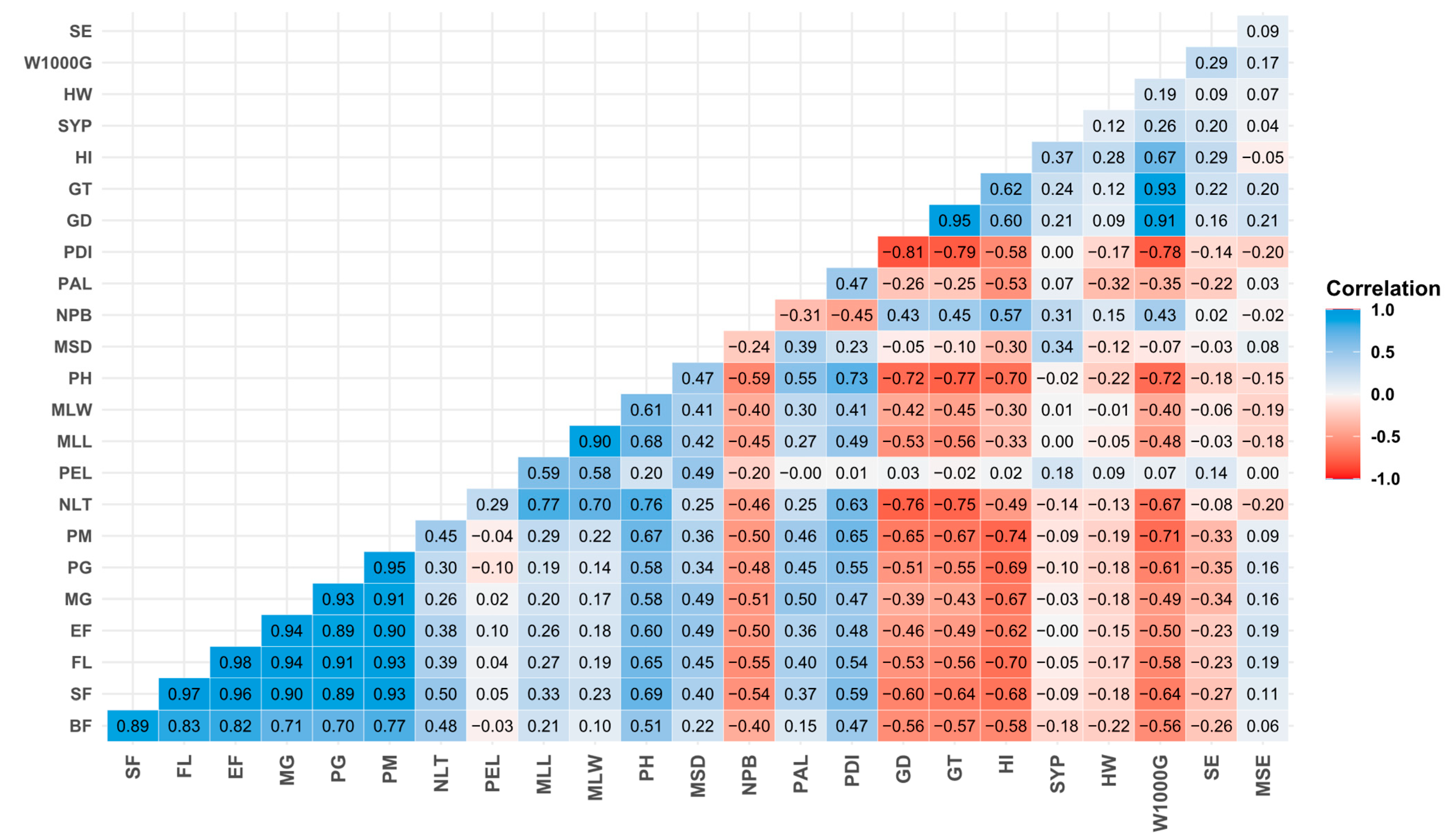
Spearman’s correlation analysis of quantitative variables (
Figure 2) revealed highly significant positive correlations between plant height (PH) and the different phenological phases of the crop (BF, SF, FL, EF, MG, PG, and PM), with r values ranging from 0.51 to 0.69. As anticipated, plants with longer phenological phases were taller. Similar results were reported by other authors, who found equally high correlations between PH and PM, such as Habiyaremye et al. [
54] (r = 0.88) and Pathan et al. [
55] (r = 0.41); likewise, Baldera et al. [
56] reported positive correlations between PH and FL (r = 0.55) and PH and PM (r = 0.48). For seed diameter (GD) and thousand-seed weight (W1000G), an even higher correlation was observed (r = 0.91). Manjarres Hernández et al. [
57] measured similar correlations for GD and W1000G (r = 0.88), as well as between seed thickness (GT) and W1000G (r = 0.93). Previous results substantiate this positive relationship between grain weight and grain size parameters [
44]. Likewise, negative correlations were found between plant height (PH) and yield components: specifically, for seed diameter (GD) a value of r = −0.72 was obtained; for seed thickness (GT), r = −0.77; for harvest index (HI), r = −0.70; and for 1000-grain weight (W1000G), r = −0.72. These results suggest that taller plants had lower yields; however, this was not surprising, since the tallest plants by far were the four wild genotypes, which have small seeds and have never been subjected to artificial selection to improve yield. In contrast, Pathan et al. [
55], who had not included goosefoot lines with wild seeds in their experiment, found that plant height was strongly and positively correlated with higher seed yield.
All phenological phases evaluated showed a positive correlation with each other, as reported by [
56]. In our study, phenological phases showed a significant negative correlation with yield components, specifically GD, DT, HI, and W1000G, indicating that lines with longer cycles were associated with plants with smaller grain dimensions, reduced harvest index, and low grain weight. Our results contradict those reported by Baldera et al. [
56], who reported that W1000G had a positive correlation with FL (r = 0.30) and PM (r = 0.35).
3.4. Description of Qualitative Morphological Variables
Table 7 contains the results of the frequency analysis for qualitative morphological variables. All the lines exhibited herbaceous growth (100%). For growth habit (GC), nine lines had a minimally branched or simple habit (39.1%), five displayed branching in the lower third of the plant (21.7%), four were branched through the middle third (17.4), and five were branched up to the base of the panicle (21.7%). For stem shape (SMS), the predominant form was cylindrical, with 20 lines (86.9%), followed by 3 lines having angular stems (13.1%). While most ecotypes of wild pitseed goosefoot are highly branched, the boscianum ecotype, represented by the five wild strains in this study (RL05, RL09, RL10, RL11, and RL13), tends to be unbranched through the lower two-thirds of the stem.
In terms of axillary pigmentation (PPA), 11 lines were pigmented (47.8%) and the remaining 12 did not display this trait (52.2%). All of the lines possessed stretch marks or stripes in the stem (PST). Branching (PB) was present in 19 lines (82.6%) and absent in 4 (17.4%). The most common branch position (PPB) was oblique, in 14 lines (60.1%), with 5 lines having curved branches (21.7%). The universal leaf shape (LS) was rhomboidal (100%), as previously reported by others [
10,
61]. Dentate leaf margins (LM) predominated (78.3%), followed by serrated (13%) and entire leaf margins (8.7%).
During the panicle stage (PS), half of the lines were observed to be glomerulate (50%) and the remaining half were intermediate (50%). For panicle density (PD), 15 were lax (65.2%) and 8 were intermediate (34.8%). These results differed for accessions from Puno and Cusco, where intermediate panicle density predominated, with either an intermediate or amaranthiform type [
10]. At flowering, male sterility (PMS) was absent in all of the experimental genotypes (100%).
Among the characteristics of the grain, the degree of dehiscence (DH) was mostly regular in 11 lines (47.8%), followed by 9 lines with strong dehiscence (39.1%) and 3 with slight dehiscence (13.1%). López et al. and Rodríguez et al. [
62,
63], in relation to fruit dehiscence before and during physiological maturity, mentioned that this is a natural mechanism of the plant to disperse seeds, but in terms of yields this results in reductions. Rodríguez attributed the high degree of dehiscence to high temperatures, which accelerate physiological maturation. According to López et al. [
62], genetic improvement can enhance cell walls and cell–cell adhesion in abscission zones, resulting in less grain shattering. The perigonium appearance (PA) was closed in 16 lines (69.6%) and semi-open in 7 (30.4%). Pericarp appearance (PCA) was of the ashen type in 12 lines (52.2%) and sugary in 11 (47.8%). The episperm appearance (EA) was vitreous in 9 lines (39.1%) and opaque in 14 (60.9%), this being the most outstanding seed feature. The most common seed shape (GS) was cylindrical, in 18 lines (78.3%), while 5 had lenticular grains (21.7%).
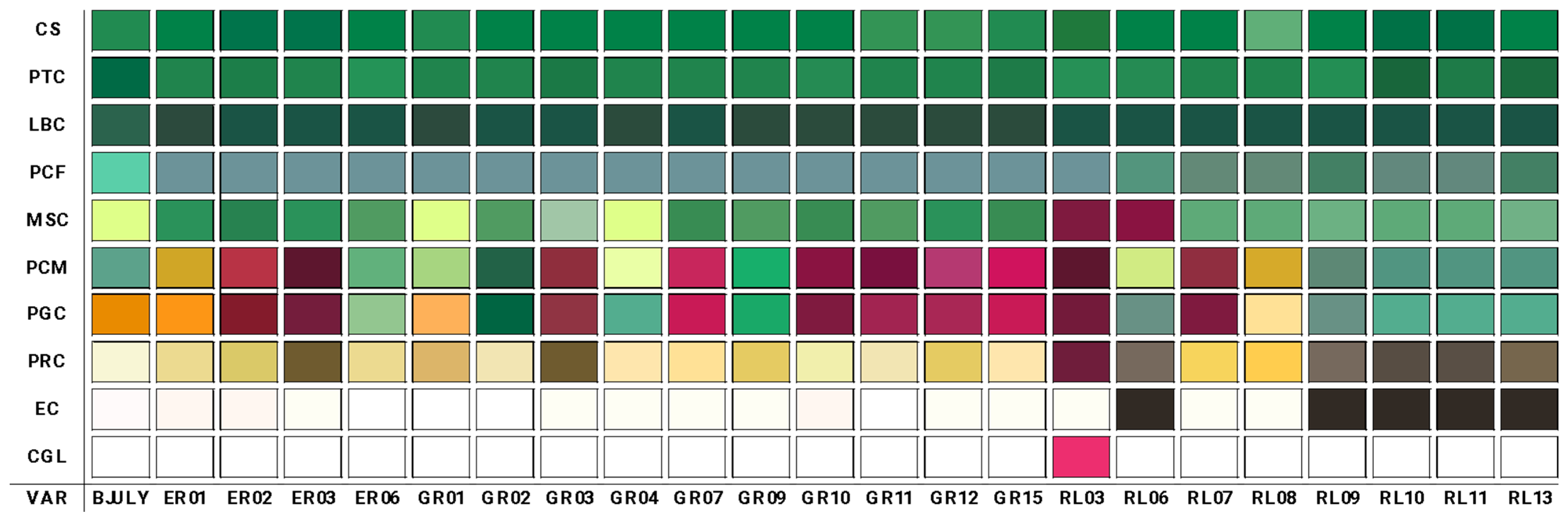
For the color frequency analysis (
Figure 3), stem stripe color (CE) was deep green in 19 lines (8.6%) and deep yellow-green in 4 (17.4%). The predominant petiole color (PTC) was deep green. The vegetative leaf color (LBC) was medium olive-green in 14 lines (60.9%), followed by olive gray-green in 8 (34.8%) and medium yellow-green in 1 (4.3%). At flowering, panicle color (PCF) was pale green in 16 lines (69.6%), yellow gray-green in 4 (17.4%), and medium yellow-green in 3 (13%).
The stem color (MSC) was strong yellowish-green in 11 lines (47.8%), followed by yellowish-green in 7 (30.4%), with light yellow-green being present in 3 lines (13%) and intense purple-red in 2 (8.8%). A predominance to form green or yellow stems has been reported in quinoa trials in the agroecological conditions of Colombia [
61]. At physiological maturity, the panicle color (PCM) was also very diverse: panicles with moderate to intense red and purple tones were observed in eight of our lines (34.8%), with light to strong green and yellow shades in nine lines (39.1%), mild to vivid yellows in five lines (21.7%), and orange in one line (4.4%). Similarly, in Colombia, among 30 quinoa accessions studied in the greenhouse, Manjarres Hernandez et al. [
18] reported abundant variation in panicle color, including pink, yellow, purple, orange, red, green, and mixtures of these colors.
Fruit coloration characters were also variable. For perigonium color (PGC), tones varied from pinks to red-purple in 10 lines (43.5%), followed by yellowish-green to grayish in 9 (39.1%), while pale yellow to deep orange perigonia were present in 4 lines (17.4%). For pericarp color (PRC), the most common color was pale to bright yellow in 15 lines (65.2%), followed by gray tones in 4 (17.4%), 3 that were brown, and 1 having a red pericarp (4.4%). The appearance of yellow pericarps as being most common was also reported by Alania-Choque et al. [
10]. On the other hand, McGinty et al. [
64] found nine types of episperm coloration in 181 genotypes, with beige, cream, and brown being the most common, followed by the less common colors black, gray, red, brownish-red, and yellow. For episperm color (EC), white was most common and was present in 12 lines (52.2%), followed by whitish-yellow in 6 lines (26.1%), with black being present, as expected, in the 5 wild strains (21.7%). Leaf granular trichome color was mainly white, with one line, RL03, having purple-red trichomes (4.4%).
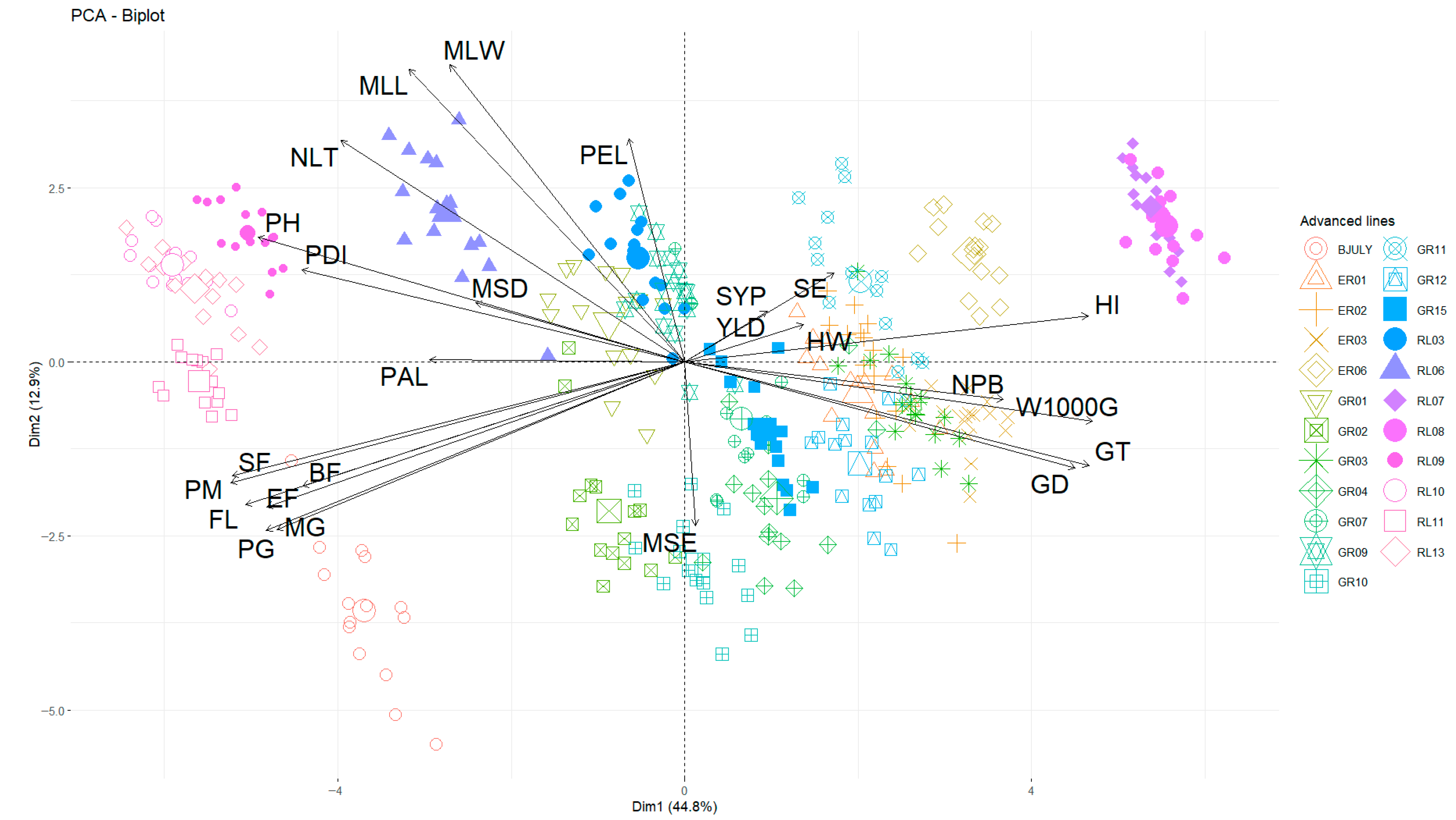
The principal component analysis (PCA) for quantitative variables is displayed in
Figure 4. Of the total variance captured along the two principal components, the first dimension (PC1) accounted for 44.8% and was defined primarily by the harvest index (HI), thousand-seed weight (W1000G), grain thickness (TG) and diameter (GD), and number of primary branches (NPB). Principal component two (PC2) was responsible for 12.9% of the observed variability and was influenced mainly by maximum leaf width (MLW) and length (MLL), number of leaf teeth (NLT), and petiole length (LPE). The sum of PC1 and PC2 accounted for 57.7% of the total variability. In an earlier study characterizing 25 quinoa accessions from Puno and Cusco, the amount of variation captured along the first two axes was 55.3% [
10]. Other studies conducted previously [
8,
61] reported even higher variabilities along the first two dimensions of 65.2% and 70.0%, respectively.
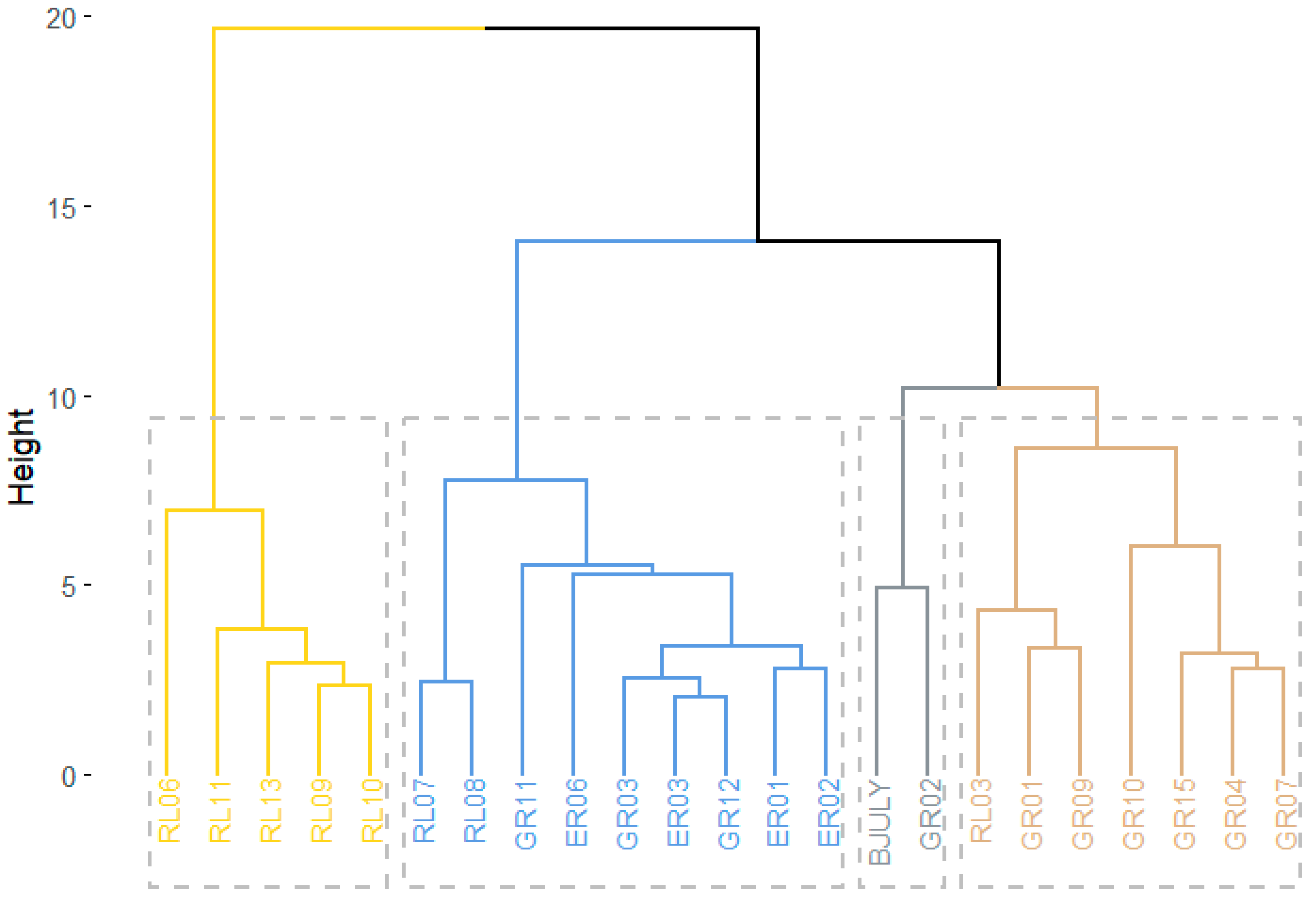
The conglomerate analysis identified four main groups based on 25 evaluated characteristics (
Figure 5). From these results, it is likely that the greatest factor influencing grouping was genetic background. Similar groupings were reported previously [
54].
The first group (I), shown in yellow in
Figure 5, includes the five wild lines: RL06, RL09, RL10, RL11, and RL13, which this study found were relatively late-maturing (119 to 136 DAS). According to Bertero [
65], the maturation character is explainable because quinoa is a plant adapted to short days, and its establishment in long-day environments causes its growth cycle to lengthen. These accessions also had the longest leaves, averaging 8.65 to 10.63 cm in length and 6.67 to 8.29 cm in width. Stem diameters in this group varied between 1.28 and 1.54 cm; in addition, these lines were mostly unbranched except for RL13. These lines included the tallest plants, with averages between 214.7 and 243.6 cm, which again is likely a reflection of their adaptation to flowering under short days. The impressive leaf dimensions could explain both their heights and thick stems, in light of the relationships between plant height (PH) and maximum leaf lengths (MLLs) and widths (MLWs) being highly significant (r > 0.60). As proposed by Sabouri and Sajadi [
66], greater leaf areas afford higher capacity for interception of solar radiation, which translates into higher photosynthetic capacity.
On the other hand, the yield component variables for this group had modest values. For example, panicle length for this group was intermediate, between 41.40 and 53.27 cm, with population RL06 standing out at 88.83 cm. However, panicle diameter for this group was higher than the average (17.95 cm), especially in RL13 (39.80 cm). This group had notably smaller seeds, varying from 1.24 to 1.57 mm in diameter and between 0.61 and 0.94 mm in thickness. The harvest index was lowest for this group, ranging from 13.85 to 27.6%. Also, the thousand-seed weight of this group was lowest, from 0.58 to 1.56 g; not surprisingly, this group had the lowest seed yields. As noted by Tang et al. [
51], low HI values likely indicate that a disproportionate amount of photosynthate is expended in vegetative, rather than reproductive, effort. In summary, it is possible that as these plants were not acclimated to the desert conditions, their physiological compensation came at the expense of seed yield [
67]. The characterization study of Manjarres Hernandez et al. [
18] concluded that their experimental accessions taller than 176.7 cm, their reported average, displayed reduced yields—just as we observed in group I. One positive attribute of this group was its high degree of resistance to downy mildew (AUDCP = 0). Additionally, this group would be classified as sweet in terms of saponin content. The morphology-based dendrogram produced by Bhargava et al. [
68] likewise separated out wild accessions.
The second group (II), colored blue in
Figure 5, consisted of quinoa lines RL07, RL08, GR11, ER06, GR03, ER03, GR12, ER01, and ER02, being early-maturing at 83–112 days to physiological maturity. Lines RL07 and RL08 matured the earliest, at 83 days post-sowing. This characteristic of early maturation may be due to the warm but not overly hot temperatures within the Majes District—as has been observed under desert conditions in Algeria [
58]. This group had the highest number of stem branches, from 7 to 13 per plant, with RL08 being the most highly branched (13), the exception being the unbranched line ER01. The quantity and location of the branches in quinoa is a genetic trait associated not only with the stem, but also with the morphology and density of the panicle [
69]. Consequently, it is important to evaluate the number of panicles on the secondary branches, since these usually form seeds and thus contribute to yield [
70]. Interestingly, this group had the smallest stem diameters, with averages from 0.93 to 1.30 cm, together with the shortest plants at 81.87 to 118.25 cm.
For yield components, this group had the smallest panicles, with lengths between 28.12 and 43.20 cm and diameters from 8.65 to 15.51 cm. This group had larger seeds than the overall average, with line GR03 having the largest (2.19 mm) and ER01 having the thickest seeds (1.20 mm). This group also had the highest harvest indices, averaging between 39.59 and 58.23%, with line RL08 at 58.23%. Numerous studies, including Tang et al.’s [
51], have noted that a high HI is a quality of plants with internal mechanisms capable of mobilizing resources toward seed formation.
The hectoliter and thousand-seed weights were greater in this group than in the others, with line GR11 having the highest hectoliter weight (0.67 g cm
−3) and ER03 the greatest seed weight (3.77 g). In spite of this, the yields per hectare were slightly below the general average (4.68 t ha
−1). It is likely that these lines are well adapted, as with the lines in group IV, to the zone’s climate [
53,
71] and the irrigated production system. In terms of saponin content, this group varied from 0.08 to 0.12%. According to the aforementioned classification of Gomez-Caravaca [
53], this group includes sweet quinoas, except for genotypes ER06 and RL07 (bitter). In terms of mildew resistance, all of the lines in this group were at least moderately susceptible, except for RL07 and RL08.
The third group (III), shown in gray in
Figure 5, consisted of GR02 and Blanca de July. Blanca de July was the later-maturing of the two (NPM =146 días). Petiole length and leaf size (length and width) in this group were below average. Plant height, however, was near the general average (143.52 cm). These lines were both branched, with GR02 averaging five and Blanca de July ten per plant. Their panicle lengths were above average, reaching around 58 cm in both lines, with the diameter approximating the mean (17.9 cm). From the correlation matrix, the negative relationship between panicle size and yield observed in this study was also observed by Manjarres-Hernandez et al. [
18]. The values for harvest index, hectoliter weight, thousand-seed weight, and yield per hectare were all below the general averages for the experimental group. Group III stands out for its low saponin contents, with a value of 0.05% for both lines. As with group III, these two lines showed susceptibility to downy mildew infection.
The fourth group (IV), colored brown in
Figure 5, consists of six hybrid-derived lines (GR01, GR09, GR10, GR04, GR07, and GR15) and RL03. These lines attained physiological maturity from 111 to 146 days, intermediate for the overall experimental group. This attribute of intermediate maturity, in comparison to group II, might be due to the large size of the seeds, which would require more time to fill and reach maturity [
72]. All of these lines had dentate leaf margins, with between six and ten teeth, the exceptions being lines GR01 and GR04, which did not have this trait. The petiole length was above average, ranging from 5.28 to 9.68 cm. Similarly, this group’s stem diameters were greater than average (1.35 cm), with GR01 (1.86 cm) and GR09 (2.06 cm) having the thickest stems—a character recognized as being under genetic control [
73,
74]. All of the group IV lines were branched, except for RL03. Plant height varied in group IV, ranging from 103.7 cm for GR04 to 230.0 cm for RL03 (230.0 cm), and so the group would thus be classified as of intermediate height.
When examining group IV’s panicle dimensions, they were near the experimental means, with panicle length ranging from 38.67 cm (GR04) to 61.13 cm (RL03) and the panicle diameters between 7.91 cm (GR15) and 25.97 cm (GR10). For the size of the grain, both the diameter and thickness were above average, reaching 90 mm and 1.05 mm, respectively. The harvest indices and hectoliter weights were almost equal to the general means, at 38.7% and 0.62 g cm
−3, respectively. The thousand-seed weights ranged from 2.70 g (GR10) to 3.74 g (GR15). Yields per hectare in this group were above average (4.7 t ha
−1), most notably for lines GR07 (7.5 t ha
−1) and GR10 (8.2 t ha
−1). These findings are sustainable, as indicated previously [
51], due to their thick stems, heavy seeds, and large panicles; besides, based on the correlations (
Figure 2), yield showed a strong positive correlation with these variables. Given the uniform climate and management conditions in this study, and in light of other studies [
12,
75], the high yields of these lines were likely positively influenced by the genotype-by-environment interactions. Similarly, the variations in phenological cycle present in these lines (
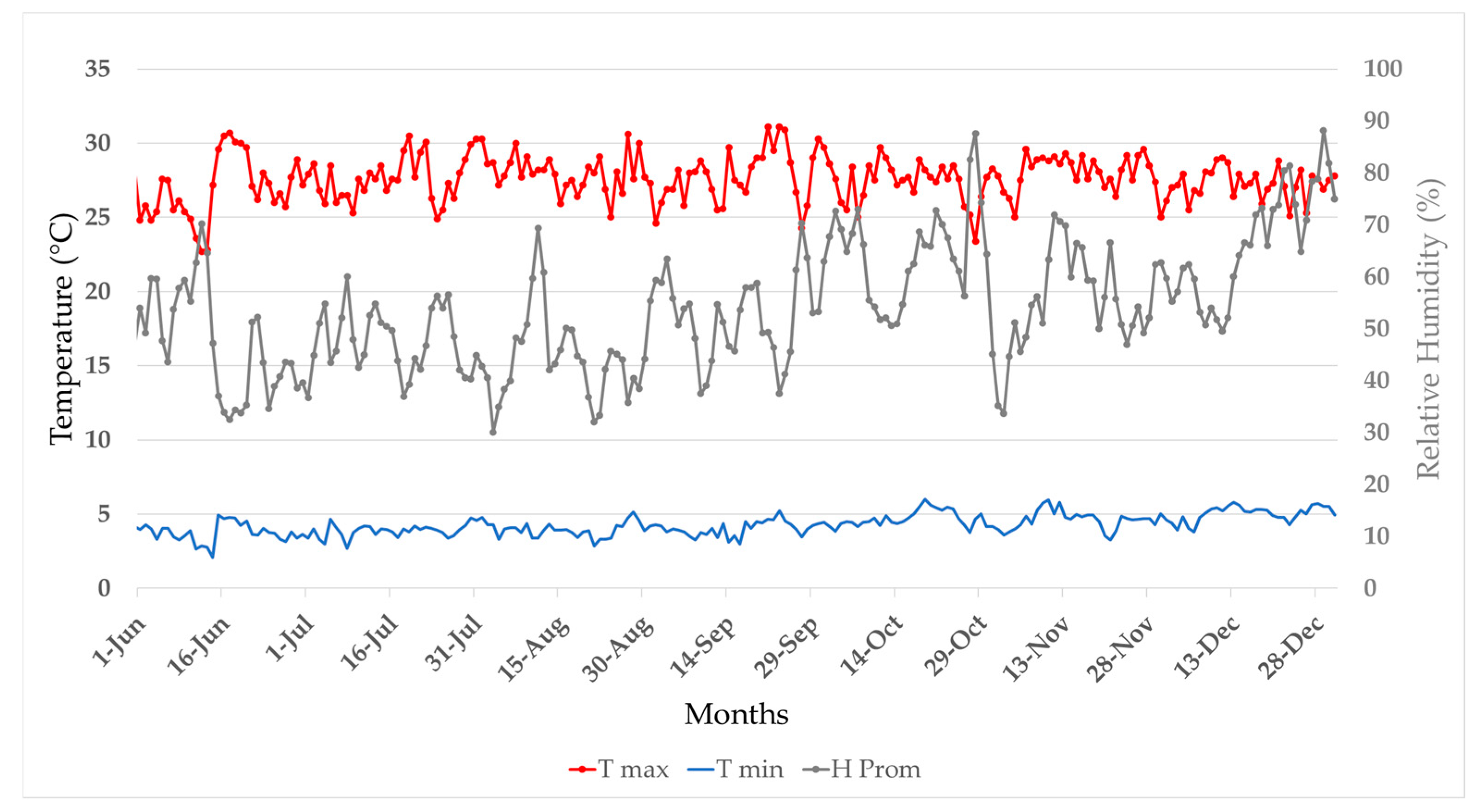
Table 6) affected flowering and seed filling, which in turn could have been influenced by the subtle climatic fluctuations during this study (
Figure 1). From the harvest indices (HIs), six of these were above average, suggesting that the genotypes in this group have mechanisms to divert resources preferentially toward grain filling rather than vegetative growth [
18]. In terms of mildew resistance, they were generally less tolerant of the pathogen, having AUDPC values oscillating between 0.91 and 20.49. Saponin contents in group IV ranged from 0.09 (GR09 and GR15) to 0.13 (GR07).





 ,
,