Rapid Seed Viability Detection Using Laser Speckle Weighted Generalized Difference with Improved Residual Networks

Abstract
1. Introduction
2. Materials and Methods
2.1. Experiment Settings
2.1.1. Laser Speckle Imaging of Seeds
2.1.2. Preprocessing of Seed Speckle Images
2.2. Speckle Feature Extraction Using the WGD Algorithm
2.2.1. Dynamic Weighting Coefficient Design and Weighted Cumulative Feature Generation
2.2.2. Construction of the Classification Model
3. Results
3.1. Experiment Results and Analysis
3.2. Model Prediction Results
4. Discussion
4.1. Core Findings and Mechanistic Insights
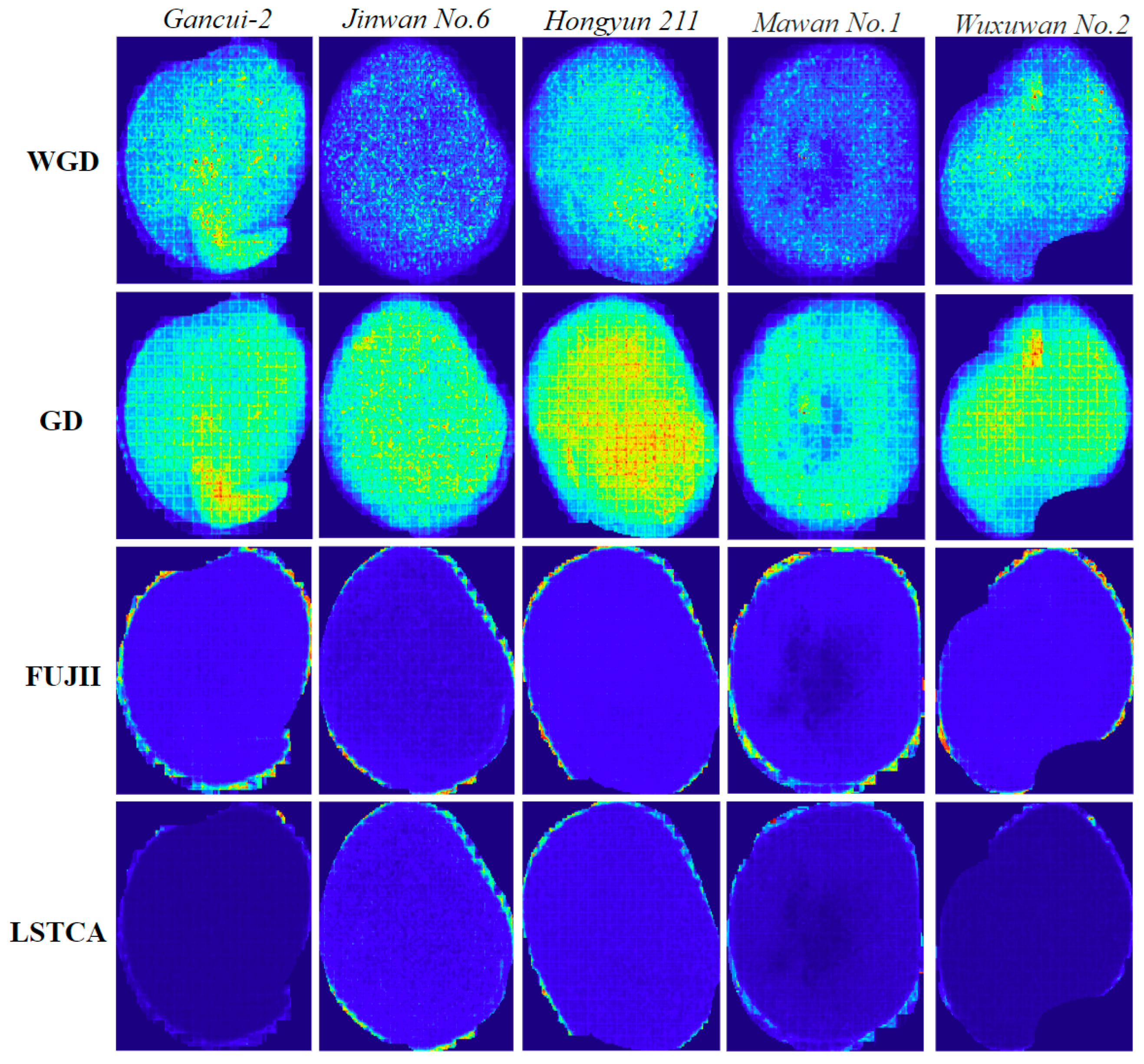
4.1.1. WGD Algorithm: Targeted Enhancement of Dynamic Speckle Features
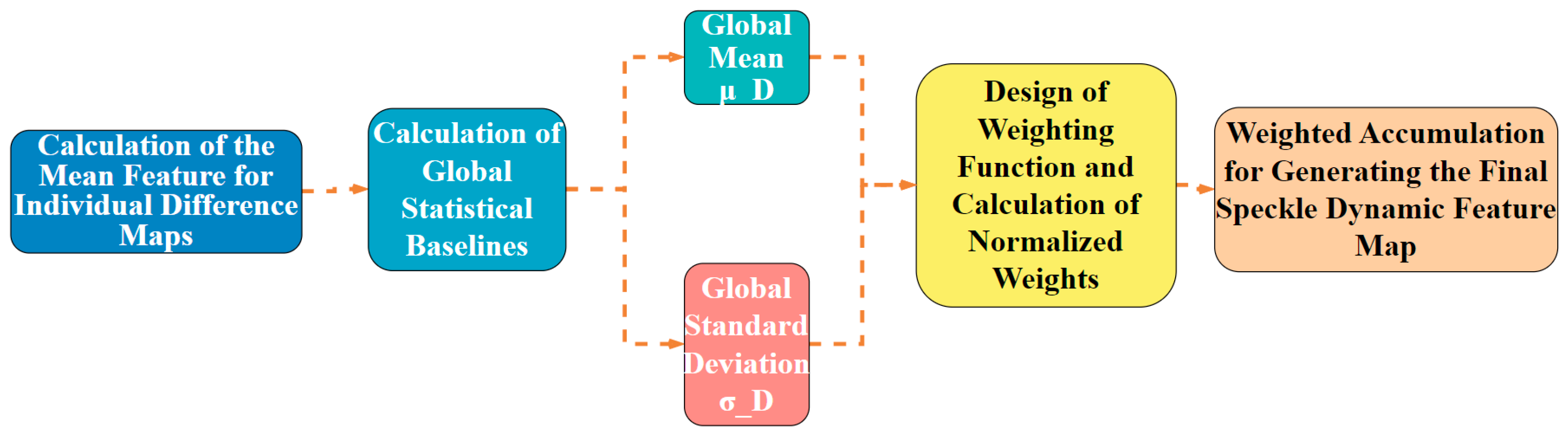
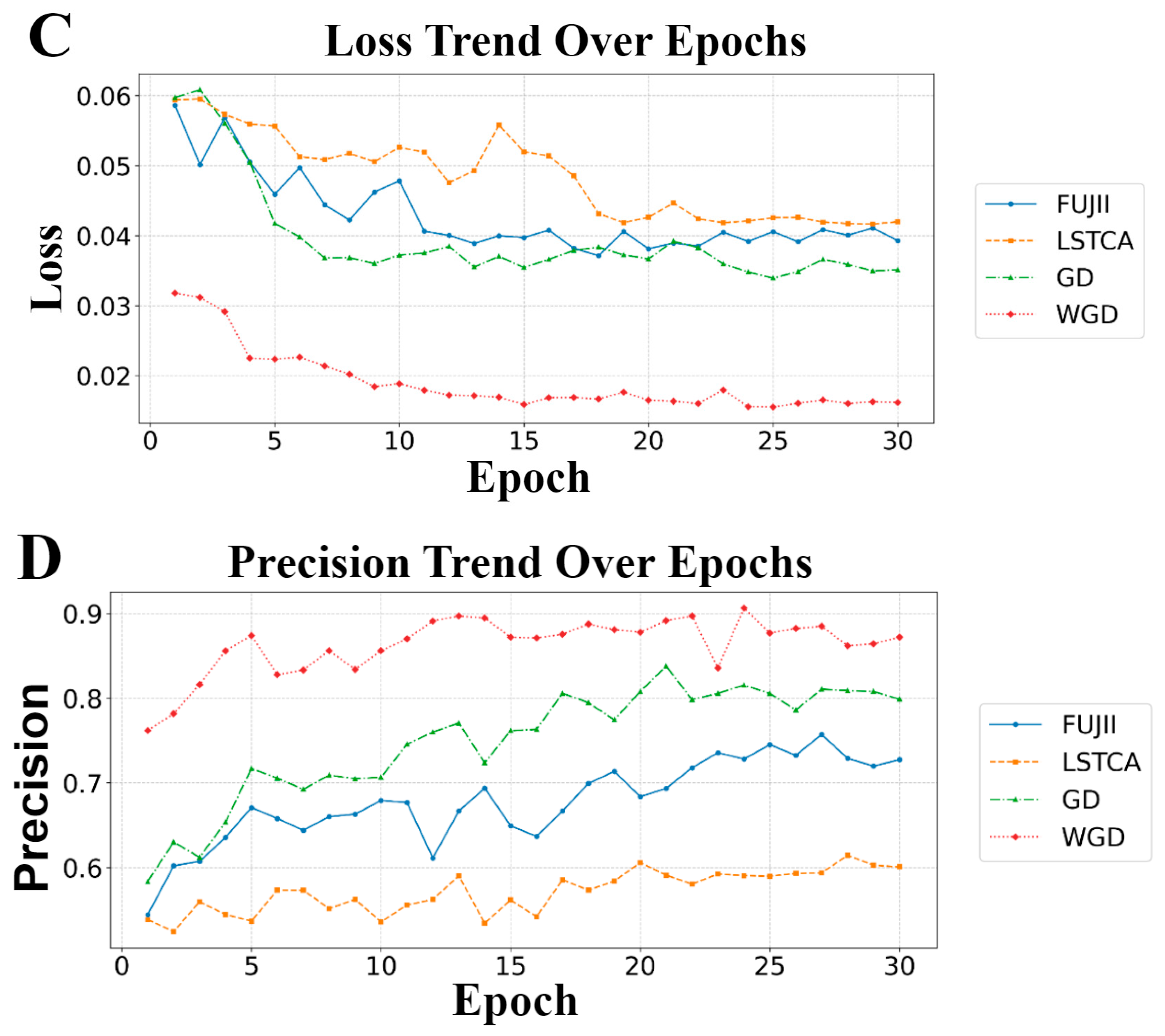
- By computing the global mean () and standard deviation () of inter-frame difference map means (), the algorithm quantifies the “baseline” speckle variation intensity across all frames. Frames with significantly deviating from (i.e., those capturing critical physiological activity) are assigned higher weights, while noise-dominated frames are suppressed.
- As summarized in Table 5, the proposed method demonstrates strong and stable classification performance under 10-fold cross-validation. The model achieves a mean accuracy of 92.24% and a mean macro-F1 score of 92.18%, indicating robust generalization. The Dead class attains slightly higher accuracy and lower variability than the Live class, while the modest variability observed in Live-class recognition suggests potential for further refinement. Overall, these results confirm the effectiveness and stability of the proposed method in capturing class-discriminative features.
4.1.2. Optimized Deep Learning for Speckle Feature Classification
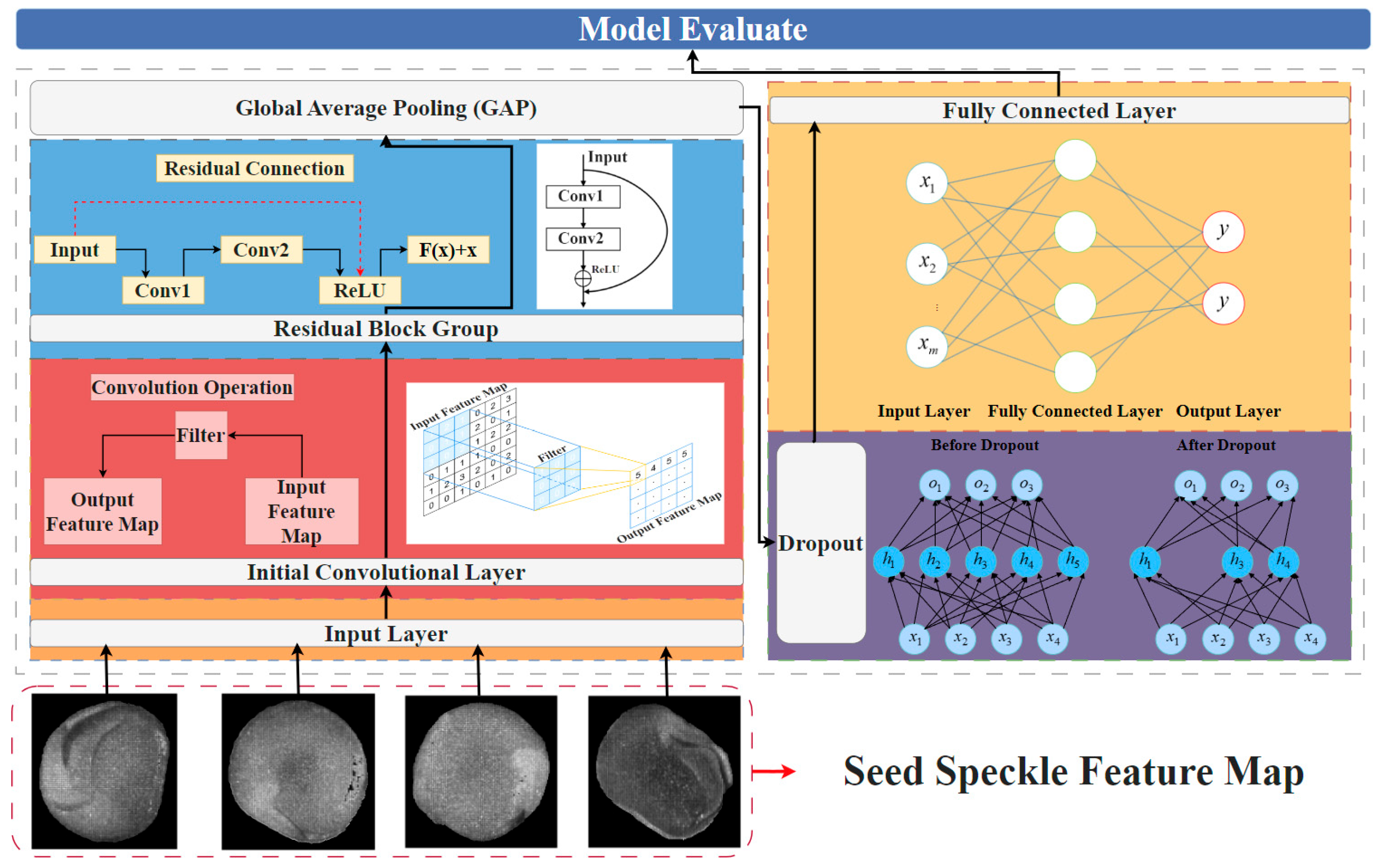
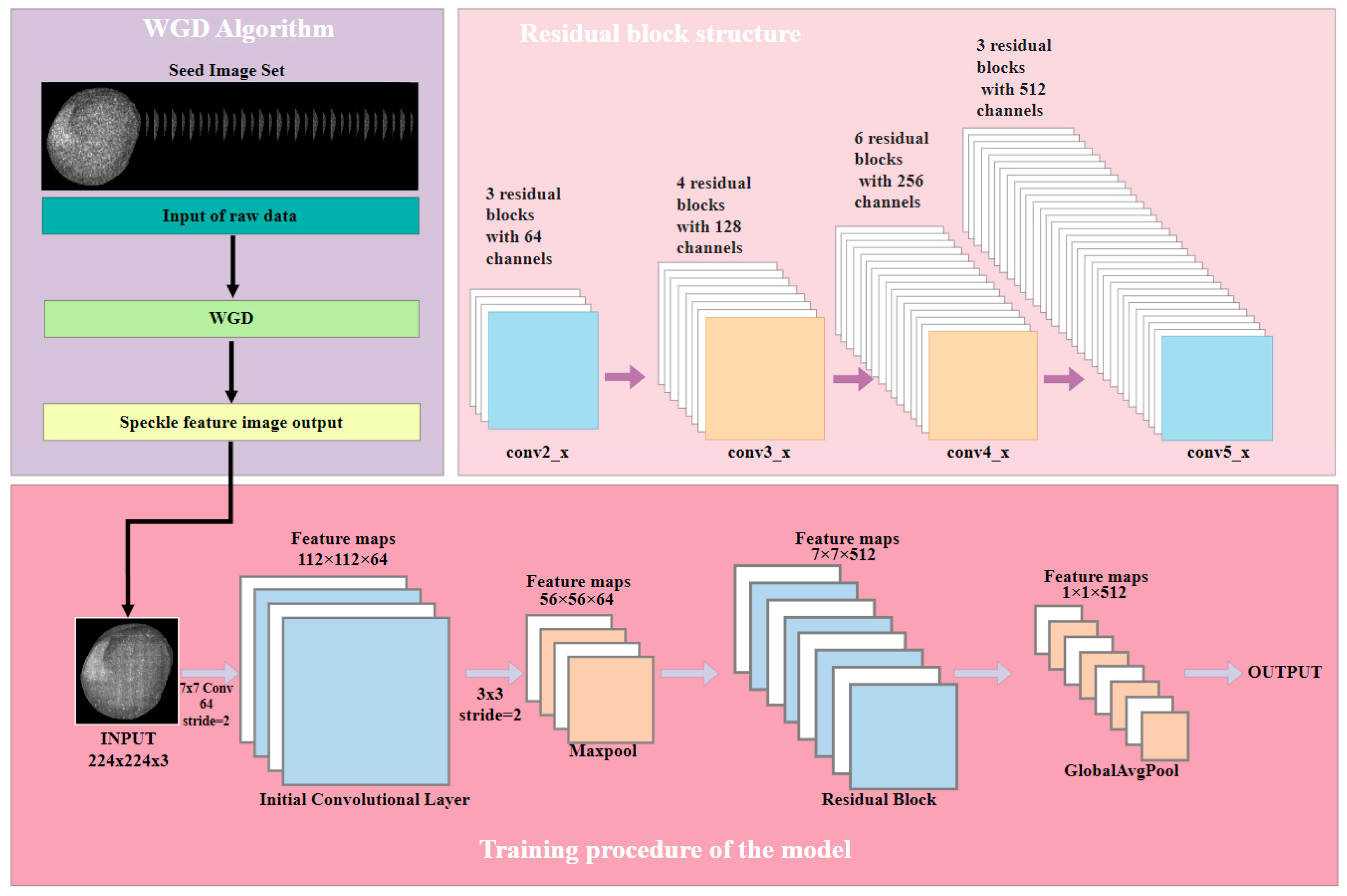
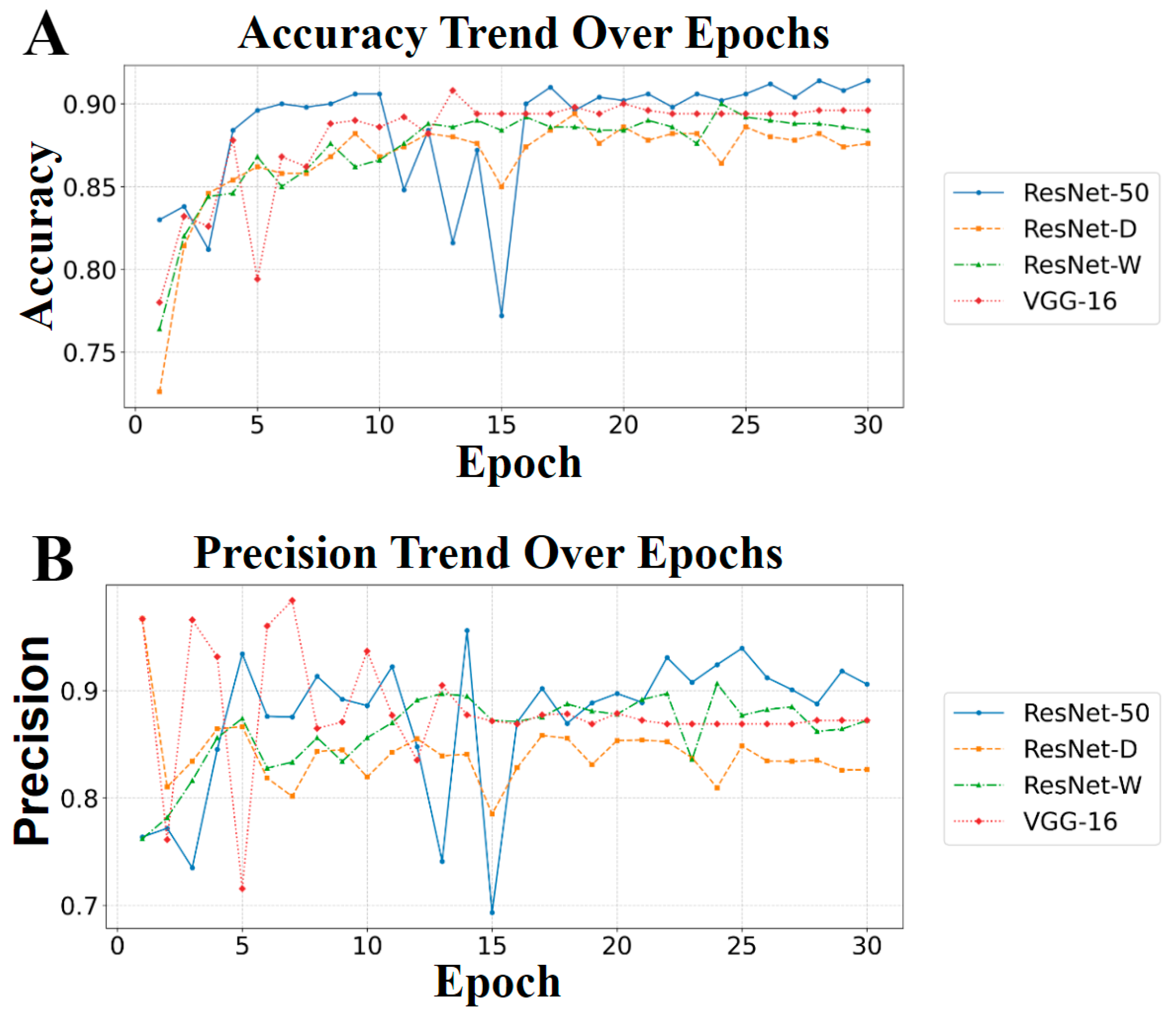
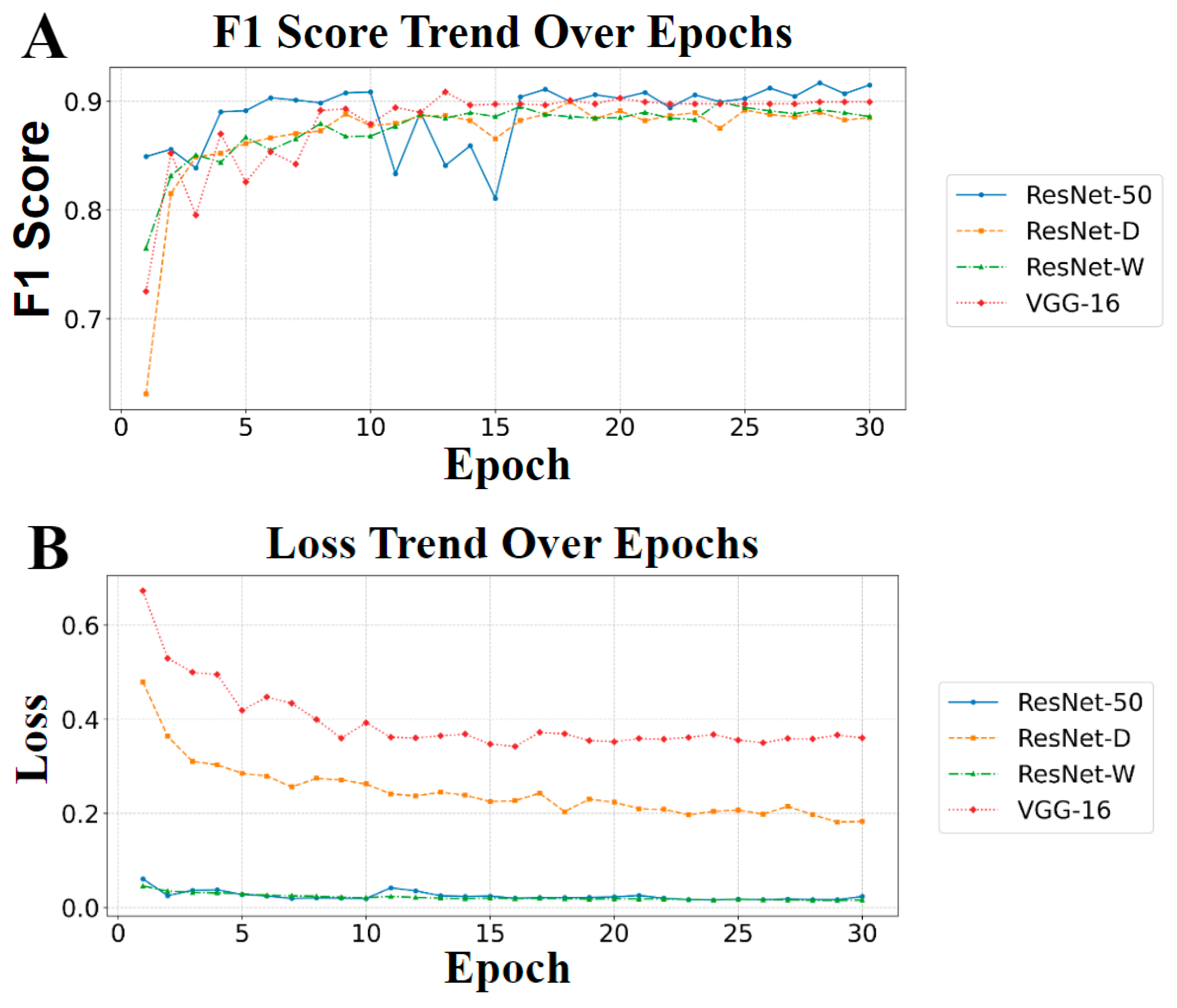
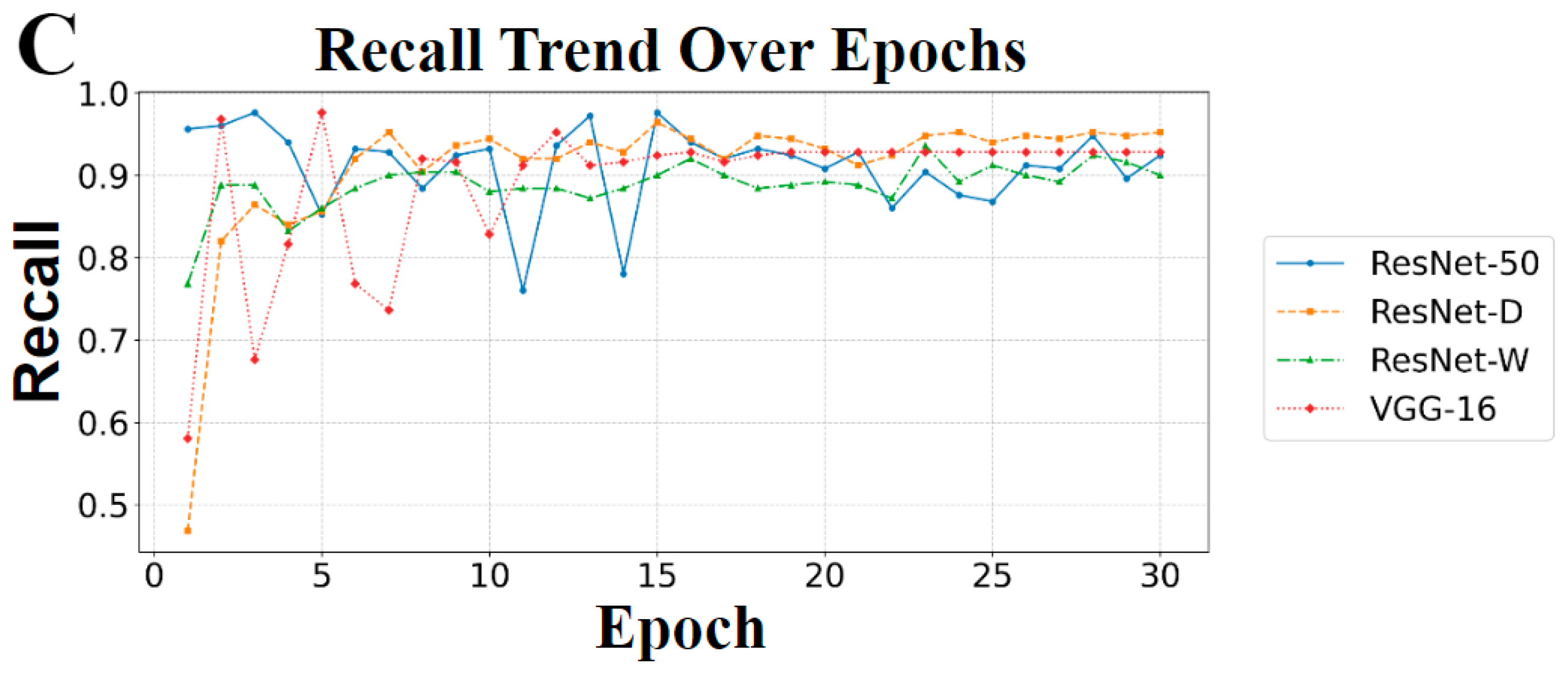
- Replacing ResNet-D’s 1 × 1 average convolution downsampling with “weighted average pooling and 1 × 1 convolution” reduces redundant parameters while preserving fine-grained speckle features. Freezing 25 layers leverages pre-trained generic features to prevent overfitting, while Drop Block regularization further stabilizes training by mitigating over-reliance on local noise.
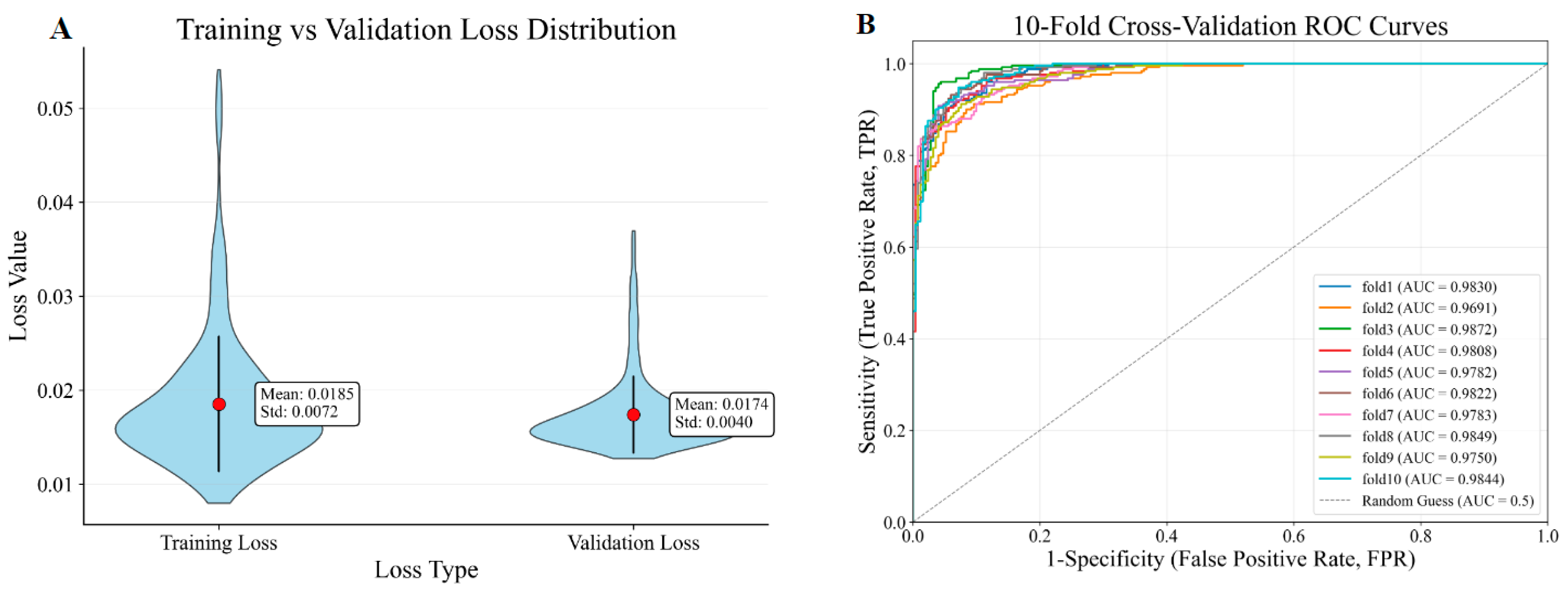
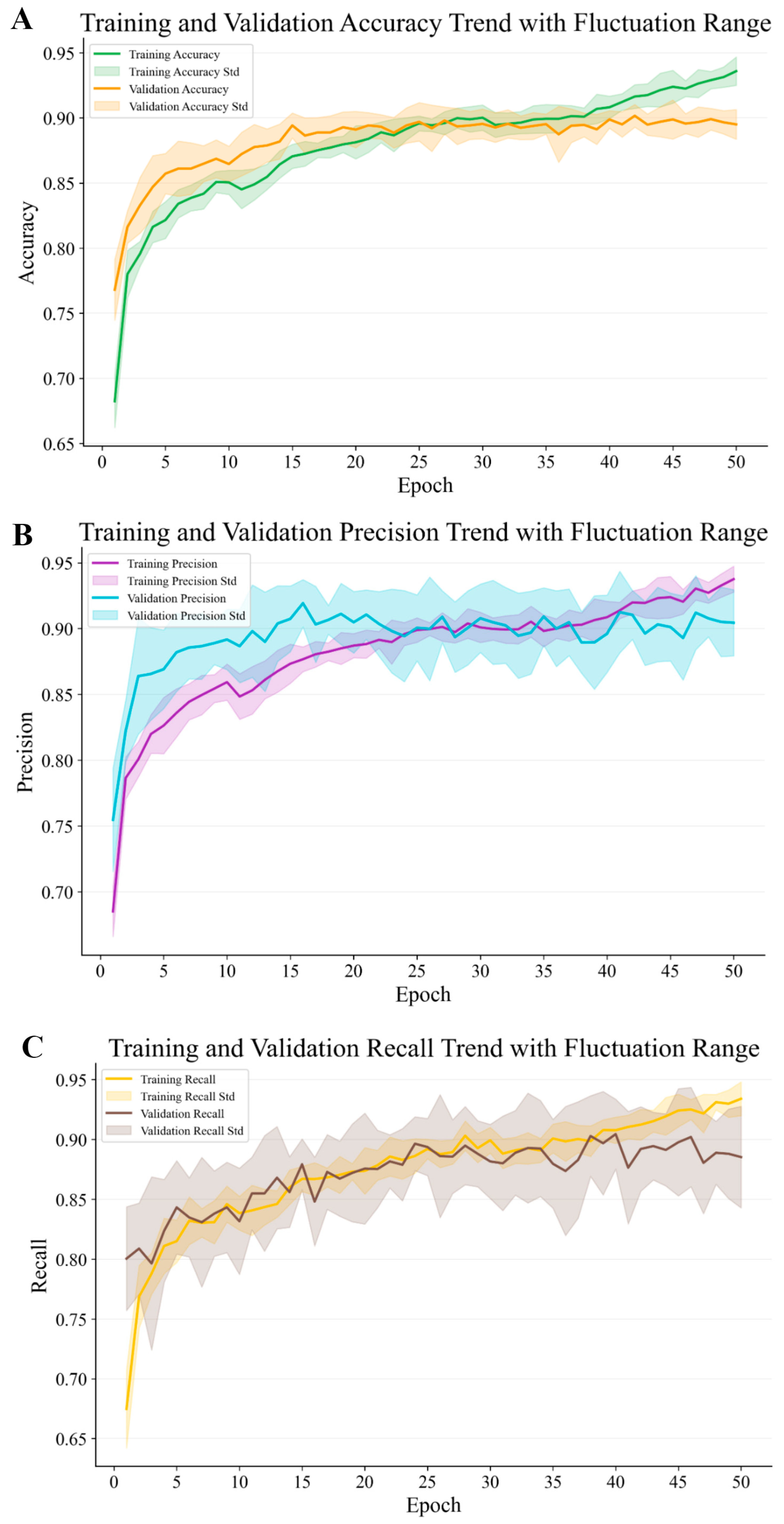
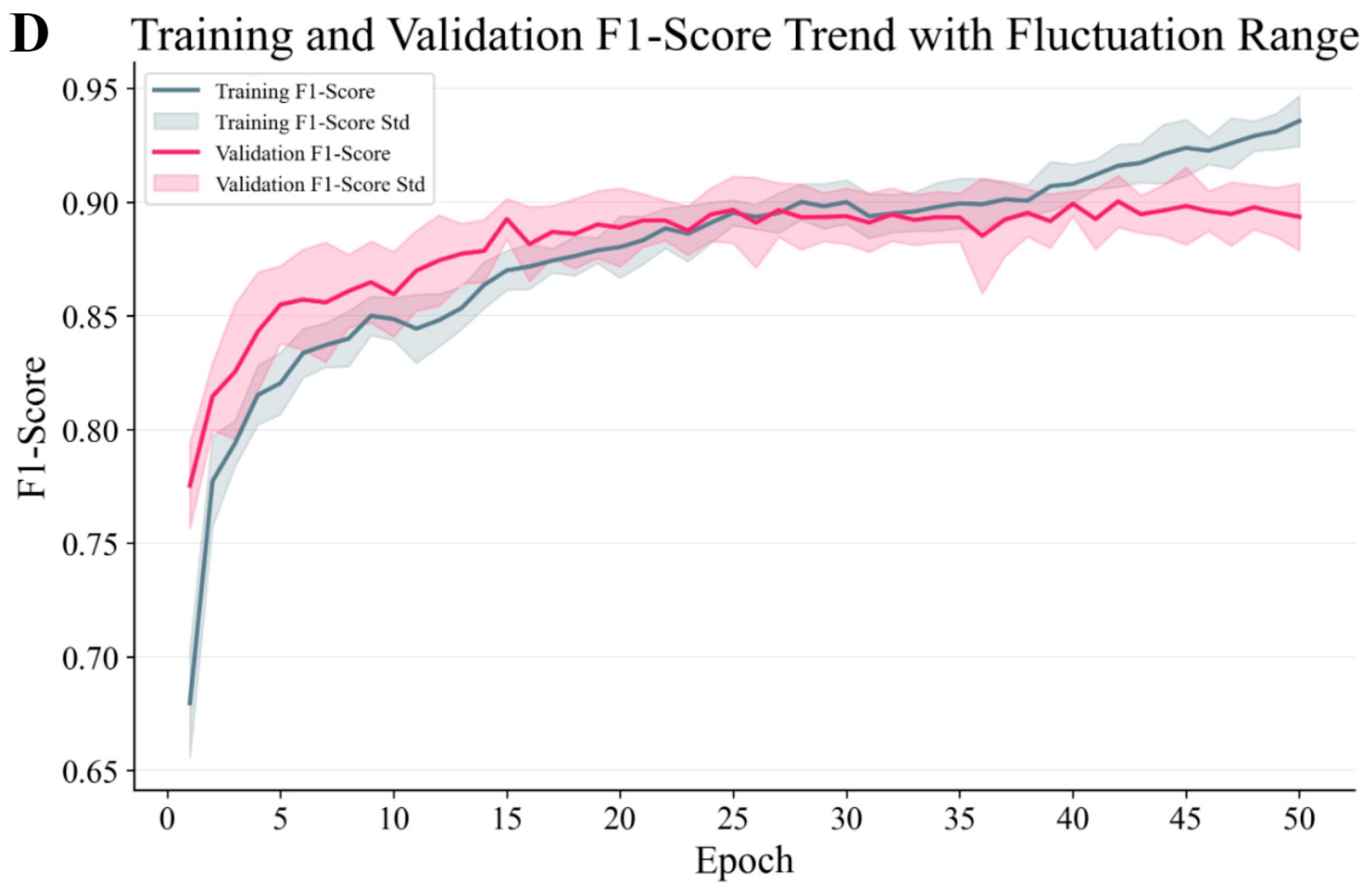
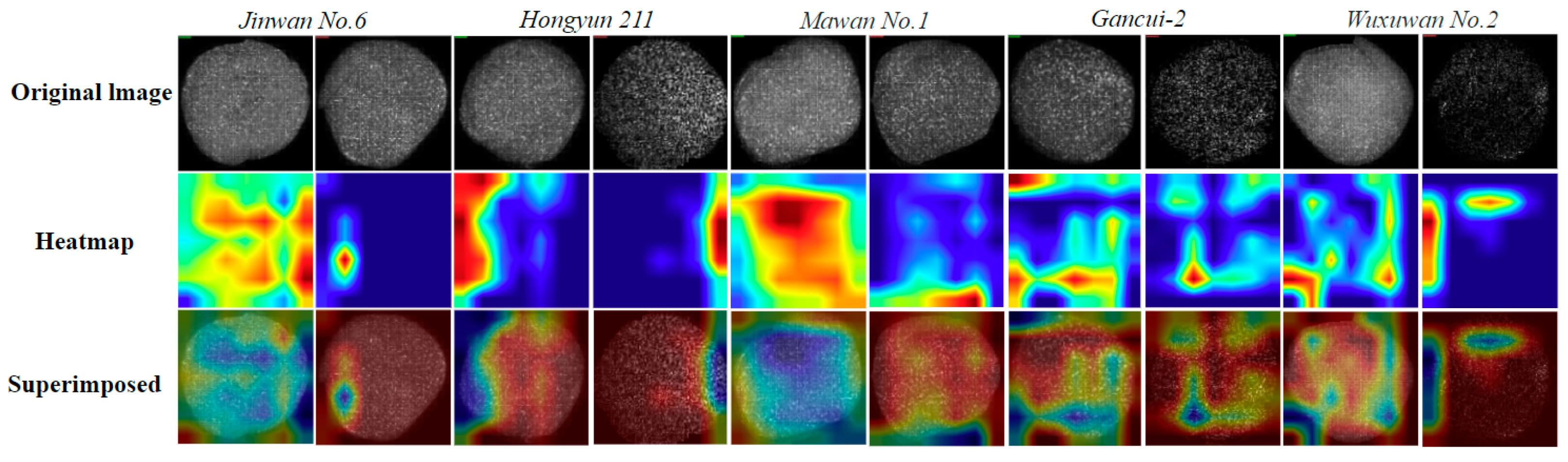
- The proposed model demonstrates robust convergence, balanced precision–recall performance, and strong discriminative capability. The training and validation losses exhibit closely aligned mean values of 0.0185 and 0.0174 with small variances, indicating stable convergence without noticeable overfitting. Consistent with the 10-fold cross-validation results, which yield a mean accuracy of 91.32% and a mean F1-score of 91.38%, the ROC analysis further confirms reliable discrimination across different data splits, with all curves concentrated near the upper-left corner and AUC values ranging from 0.9691 to 0.9872. Overall, the combination of high classification performance, stable training behavior, and low inter-fold variability highlights the effectiveness and generalization robustness of the proposed ResNet-W model, supporting its suitability for practical seed viability detection under resource-constrained conditions.
4.2. Comparison with State-of-the-Art Methods
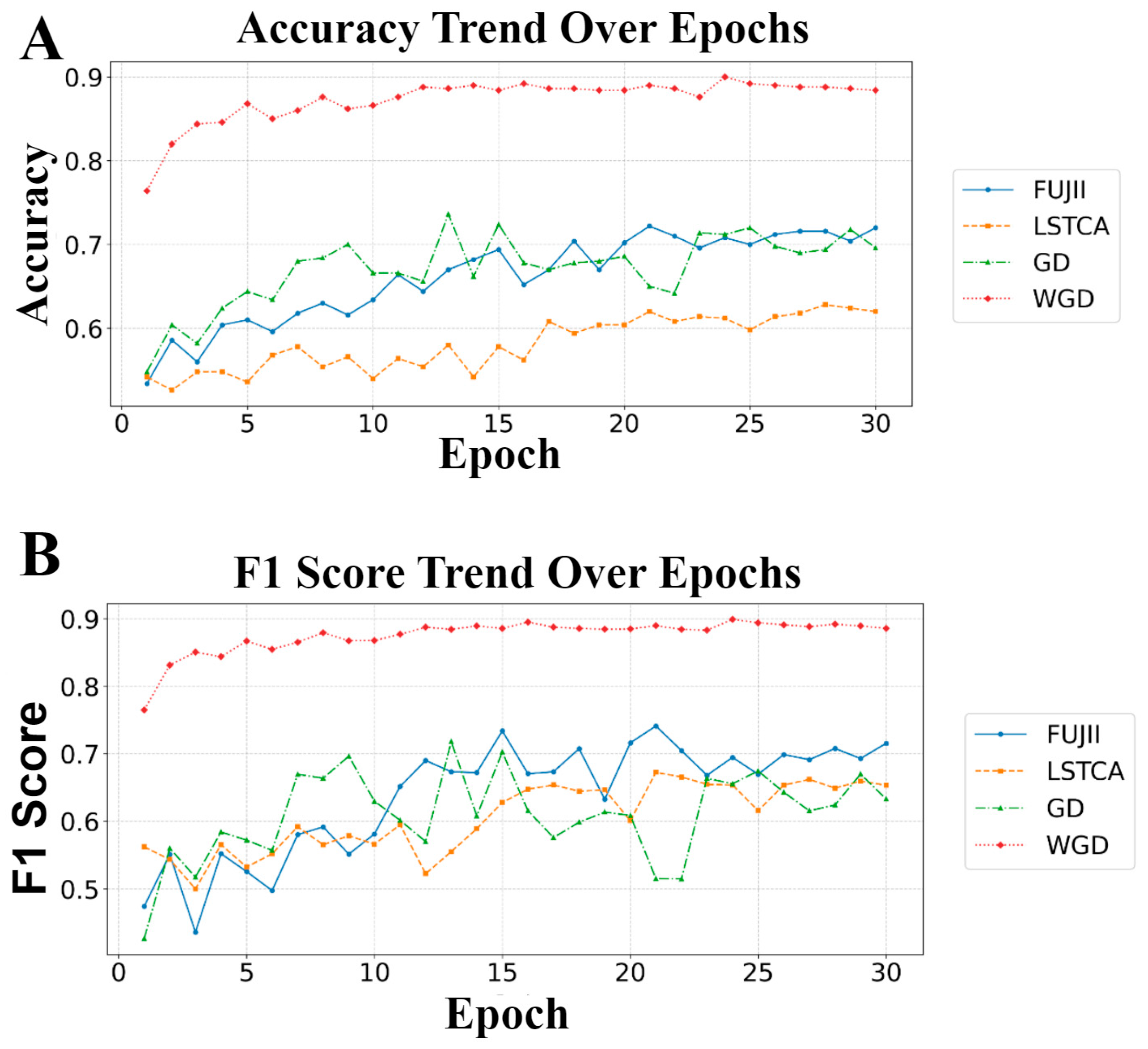
- Higher accuracy, achieved through WGD’s targeted feature enhancement;
- Lower computational cost, enabling real-time detection;
- Stronger noise resistance, demonstrated by stable performance under varying illumination conditions.
4.3. Limitations and Practical Considerations
- Variety-Specific Generalization: The model was validated only on pea seeds. Seeds with different coat thicknesses (e.g., maize, cotton) or dormancy characteristics may exhibit distinct speckle patterns. For instance, thick-coated seeds may scatter laser light more uniformly, reducing WGD’s ability to detect internal activity.
- Sensitivity to Seed Coat Damage: Seeds with damaged coats but intact viability may occasionally be misclassified. Physical damage alters surface scattering properties, generating artificial speckle variations that can mimic or obscure physiological signals.
- Imaging Environment Constraints: While the He–Ne laser and vibration-isolated platform ensure high-quality speckle images in controlled conditions, field applications may encounter challenges that degrade feature quality.
4.4. Future Research Directions
- Multi-Crop and Multi-Modal Optimization: Construct a dataset of 5+ crops (wheat, maize, soybean) to fine-tune the fully connected layer of the ResNet-W model. Integrate NIR imaging with LSI, as NIR can penetrate seed coats more deeply, potentially resolving the seed coat damage issue by directly capturing internal physiological signals.
- Embedded System Development: Port the WGD algorithm and ResNet-W model to edge devices using model quantization. This will reduce latency to <1 s per seed, enabling real-time screening on smallholder farms or in seed processing facilities.
- Physics-Informed Deep Learning: Incorporate the physical model of laser speckle formation into the ResNet-W model’s loss function. This will enhance the model’s interpretability—linking activation heatmaps to specific physiological processes—and improve robustness to environmental noise.
5. Conclusions
- Enhanced Speckle Feature Extraction: The weighted generalized difference (WGD) algorithm is proposed to improve the accuracy and robustness of feature extraction.
- Development of an Enhanced ResNet-W Model: A ResNet-W model specifically tailored for seed viability detection is developed, incorporating structural optimizations for more accurate identification of seed health status from biospeckle data.
- Superior Performance: Experimental results demonstrate that the proposed system significantly improves detection efficiency and classification accuracy, outperforming existing methods.
Author Contributions
Funding
Institutional Review Board Statement
Data Availability Statement
Conflicts of Interest
References
- Reed, R.C.; Bradford, K.J.; Khanday, I. Seed Germination and Viability: Ensuring Crop Sustainability in a Changing Climate. Heredity 2022, 128, 450–459. [Google Scholar] [CrossRef]
- Zhou, X.H.; He, W.M. Climate Warming Facilitates Seed Germination in Native but Not Invasive Solidago Canadensis Populations. Front. Ecol. Evol. 2020, 8, 595214. [Google Scholar] [CrossRef]
- Singh, P.; Chatterjee, A.; Rajput, L.S.; Rana, S.; Kumar, S.; Nataraj, V.; Bhatia, V.; Prakash, S. Development of an Intelligent Laser Biospeckle System for Early Detection and Classification of Soybean Seeds Infected with Seed-Borne Fungal Pathogen (Colletotrichum Truncatum). Biosyst. Eng. 2021, 212, 442–457. [Google Scholar] [CrossRef]
- Qiao, J.; Liao, Y.; Yin, C.; Yang, X.; Tú, H.M.; Wang, W.; Liu, Y. Vigour Testing for the Rice Seed with Computer Vision-Based Techniques. Front. Plant Sci. 2023, 14, 1194701. [Google Scholar] [CrossRef]
- Braga, R.A., Jr.; Contado, J.L.; Ducatti, K.R.; da Silva, E.A.A. Analysis of Seed Vigor Using the Biospeckle Laser Technique. AgriEngineering 2025, 7, 3. [Google Scholar] [CrossRef]
- Liang, Y.; Li, Z.; Shi, J.; Zhang, N.; Qin, Z.; Du, L.; Zhai, X.; Shen, T.; Zhang, R.; Zou, X.; et al. Advances in Hyperspectral Imaging Technology for Grain Quality and Safety Detection: A Review. Foods 2025, 14, 2977. [Google Scholar] [CrossRef]
- Wonggasem, K.; Wongchaisuwat, P.; Chakranon, P.; Onwimol, D. Utilization of Machine Learning and Hyperspectral Imaging Technologies for Classifying Coated Maize Seed Viability: A Case Study on the Assessment of Seed DNA Repair Capability. Agronomy 2024, 14, 1991. [Google Scholar] [CrossRef]
- Balmages, I.; Smite, K.; Bļizņuks, D.; Reinis, A.; Lihachev, A.; Lihacova, I. Adapted Correlation Methods for Laser Speckle Imaging of Microbial Activity: Evaluation and Rationale. Sensors 2025, 25, 5772. [Google Scholar] [CrossRef]
- Thakur, P.S.; Bhatia, V.; Rajput, L.S.; Rana, S.; Prakash, S. Laser Biospeckle Technique for Evaluating Biotic Stress on Seed Germination. In Proceedings of the 2022 Workshop on Recent Advances in Photonics (WRAP 2022), Jaipur, India, 12–14 July 2022; IEEE: Piscataway, NJ, USA, 2022; pp. 78–83. [Google Scholar] [CrossRef]
- Thakur, P.S.; Kumar, A.; Tiwari, B.; Gedam, B.; Bhatia, V.; Rana, S.; Prakash, S. Machine Learning Based Biospeckle Technique for Identification of Seed Viability Using Spatio-Temporal Analysis. In Proceedings of the 2022 Workshop on Recent Advances in Photonics (WRAP 2022), Jaipur, India, 12–14 July 2022; IEEE: Piscataway, NJ, USA, 2022; pp. 102–107. [Google Scholar] [CrossRef]
- Thakur, P.S.; Krejcar, O.; Bhatia, V.; Prakash, S. Deep Learning Based Processing Framework for Spatio-Temporal Analysis and Classification of Laser Biospeckle Data. Opt. Laser Technol. 2024, 169, 110138. [Google Scholar] [CrossRef]
- Thakur, P.S.; Renju, P.B.; Pal, P.; Paswan, M. A Smartphone-Based Platform to Grade Seeds Based on Biological Activity. In Proceedings of the 2024 SPIE Photonics India, New Delhi, India, 18–20 January 2024; SPIE: Bellingham, WA, USA, 2024; PC12879, pp. 1–6. [Google Scholar] [CrossRef]
- Contado, E.W.N.; Pasqual, M.; Dória, J.; Gonzalez-Peña, R.J.; Dupuy, L.X.; Braga, R.A. Assessment of the Use of Infrared Laser for Dynamic Laser Speckle (DLS) Technique. Agriculture 2023, 13, 546. [Google Scholar] [CrossRef]
- Renju, P.B.; Thakur, P.S.; Rai, B.; Pal, P. AgriSPEC: A Smartphone-Based, Compact Biospeckle Imager for Assessing Seed Viability. npj Sustain. Agric. 2025, 3, 54. [Google Scholar] [CrossRef]
- Félix-Quintero, H.; Avila-Gaxiola, J.C.; Millan-Almaraz, J.R.; Yee-Rendón, C.M. Feature Comparison from Laser Speckle Imaging as a Novel Tool for Identifying Infections in Tomato Leaves. Smart Agric. Technol. 2024, 9, 100603. [Google Scholar] [CrossRef]
- Singh, P.; Chatterjee, A.; Bhatia, V.; Prakash, S. Application of Laser Biospeckle Analysis for Assessment of Seed Priming Treatments. Comput. Electron. Agric. 2020, 169, 105212. [Google Scholar] [CrossRef]
- Genze, N.; Bharti, R.; Grieb, M.; Schultheiss, S.J.; Grimm, D.G. Accurate Machine Learning-Based Germination Detection, Prediction and Quality Assessment of Three Grain Crops. Plant Methods 2020, 16, 99. [Google Scholar] [CrossRef]
- Hu, X.; Yang, L.; Zhang, Z. Non-Destructive Identification of Single Hard Seed via Multispectral Imaging Analysis in Six Legume Species. Plant Methods 2020, 16, 59. [Google Scholar] [CrossRef]
- Bouzaouia, S.; Ryckewaert, M.; Héran, D.; Ducanchez, A.; Bendoula, R. Using Dynamic Laser Speckle Imaging for Plant Breeding: A Case Study of Water Stress in Sunflowers. Sensors 2024, 24, 5260. [Google Scholar] [CrossRef] [PubMed]
- Ansari, M.Z.; Ansari, M.Z. Evaluation of Biological Activity via Biospeckle Laser Imaging. Biophys. Rep. 2025, 11, 1. [Google Scholar] [CrossRef]
- Zhang, Q.; Pandit, A.; Liu, Z.; Guo, Z.; Muddu, S.; Wei, Y.; Pereg, D.; Nazemifard, N.; Papageorgiou, C.; Yang, Y.; et al. Non-Invasive Estimation of the Powder Size Distribution from a Single Speckle Image. Light. Sci. Appl. 2024, 13, 15. [Google Scholar] [CrossRef]
- Surkov, Y.; Timoshina, P.; Serebryakova, I.; Stavtcev, D.; Kozlov, I.; Piavchenko, G.; Meglinski, I.; Konovalov, A.; Telyshev, D.; Kuznetcov, S.; et al. Laser Speckle Contrast Imaging with Principal Component and Entropy Analysis: A Novel Approach for Depth-Independent Blood Flow Assessment. Front. Optoelectron. 2025, 18, 143. [Google Scholar] [CrossRef]
- Miao, G.; Ren, X.; Guo, R.; Peng, Z. Application of an Improved Oriented Object Detection Algorithm in Remote Sensing Images. In Proceedings of the 2021 International Conference on Wireless Communications and Smart Grid (ICWCSG 2021), Xi’an, China, 26–28 March 2021; IEEE: Piscataway, NJ, USA, 2021; pp. 34–37. [Google Scholar] [CrossRef]
- Kalibhat, R.; Kulkarni, R.; Mondal, P.K. Laser Speckle Contrast Imaging for Plant and Seed Characterization. In Proceedings of the 2024 IEEE Applied Sensing Conference (APSCON 2024), Bangalore, India, 10–12 April 2024; IEEE: Piscataway, NJ, USA, 2024; pp. 201–206. [Google Scholar] [CrossRef]
- Morales-Vargas, E.; Peregrina-Barreto, H.; Fuentes-Aguilar, R.Q.; Padilla-Martinez, J.P.; Garcia-Suastegui, W.A.; Ramirez-San-Juan, J.C. Improving Blood Vessel Segmentation and Depth Estimation in Laser Speckle Images Using Deep Learning. Information 2024, 15, 185. [Google Scholar] [CrossRef]
- Kaler, N.; Bhatia, V.; Mishra, A.K. Deep Learning-Based Robust Analysis of Laser Bio-Speckle Data for Detection of Fungal-Infected Soybean Seeds. IEEE Access 2023, 11, 89331–89348. [Google Scholar] [CrossRef]
- Tan, M.; Le, Q.V. EfficientNet: Rethinking Model Scaling for Convolutional Neural Networks. In Proceedings of the 36th International Conference on Machine Learning (ICML 2019), Long Beach, CA, USA, 9–15 June 2019; Volume 97, pp. 6105–6114. Available online: https://proceedings.mlr.press/v97/tan19a.html (accessed on 4 November 2025).
- Bello, I.; Zoph, B.; Fedus, W.; Shlens, J.; Le, Q.V. Revisiting ResNets: Improved Training and Scaling Strategies. arXiv 2022, arXiv:2203.07285. [Google Scholar] [CrossRef]
- Wei, Z.; Masouros, C.; Liu, F. Secure Directional Modulation with Few-Bit Phase Shifters: Optimal and Iterative-Closed-Form Designs. IEEE Trans. Commun. 2021, 69, 486–500. [Google Scholar] [CrossRef]
- Chen, X.; He, K. Exploring Simple Siamese Representation Learning. In Proceedings of the 2020 IEEE/CVF Conference on Computer Vision and Pattern Recognition (CVPR 2020), Seattle, WA, USA, 13–19 June 2020; IEEE: Piscataway, NJ, USA, 2020; pp. 1575–1585. [Google Scholar] [CrossRef]
- Li, J.; Xu, F.; Song, S.; Qi, J. A Maize Seed Variety Identification Method Based on Improving Deep Residual Convolutional Network. Front. Plant Sci. 2024, 15, 1382715. [Google Scholar] [CrossRef] [PubMed]
- Yu, H.; Chen, Z.; Song, S.; Chen, M.; Yang, C. Classification of Rice Seeds Grown in Different Geographical Environments: An Approach Based on Improved Residual Networks. Agronomy 2024, 14, 1244. [Google Scholar] [CrossRef]



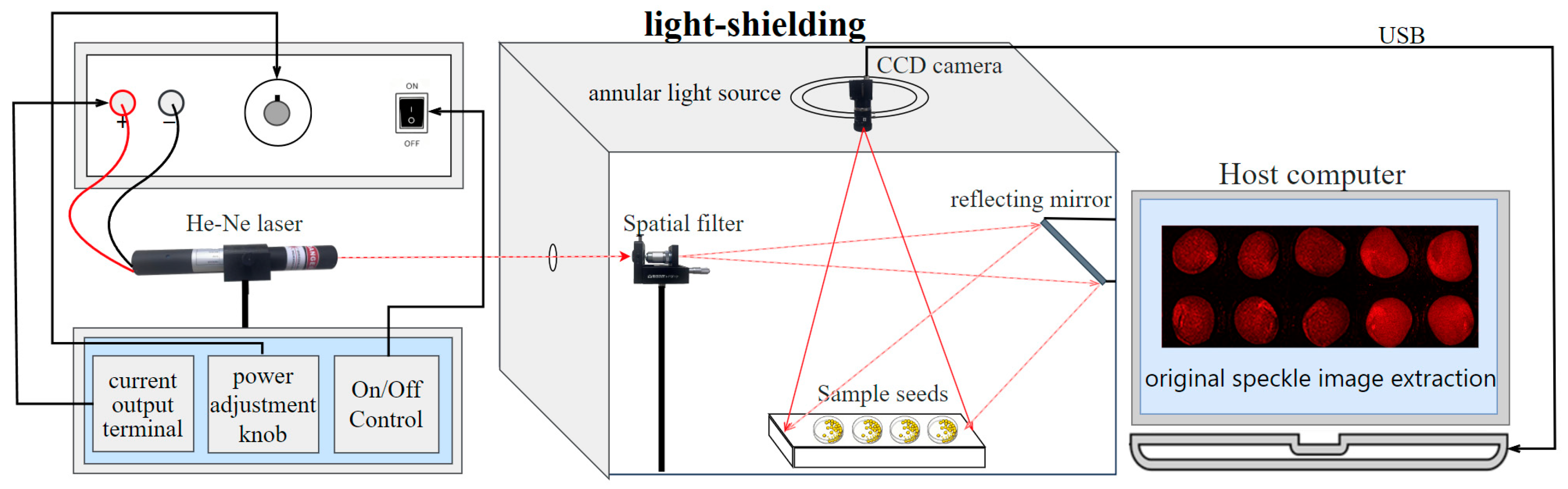
| Equipment Type | Model Number | Key Parameter | Specification Value |
|---|---|---|---|
| He–Ne Laser | 25-LHR-911-230 | Wavelength | 632.8 nm |
| Output Power | 10 mW | ||
| CCD Camera | MV-EM120C | Resolution | 1280 × 960 pixels |
| Frame Rate | 30 fps | ||
| Exposure Time | 10 ms | ||
| Industrial Lens | MVL-KF1624M-25MP | Focal Length | 16 mm |
| Numerical Aperture (NA) Range | 0.03125–0.208 |
| Number of Frozen Layers | Accuracy (%) | Precision (%) | Recall (%) | F1 Score (%) |
|---|---|---|---|---|
| 5 | 59 | 55.2 | 94 | 69.6 |
| 10 | 76 | 76 | 75 | 76 |
| 15 | 82 | 74.2 | 98 | 84.4 |
| 20 | 89 | 85.4 | 94 | 89.5 |
| 25 | 91 | 93.4 | 90 | 91.6 |
| 30 | 88 | 84.3 | 94 | 89.4 |
| Network Module | Sub-Module Composition | Improvement Position | Frozen/Fine-tune |
|---|---|---|---|
| Initial Convolutional Layer | 7 × 7 convolution, followed by Batch Normalization (BN), ReLU activation, and 3 × 3 max pooling | Original structure retained | Frozen |
| Stage 1 (conv2_x) | 3 ordinary, non-downsampling residual blocks: Each block contains 1 × 1 convolution, BN, ReLU, 3 × 3 convolution, BN, ReLU, 1 × 1 convolution, BN, shortcut connection, and ReLU in sequence | No improvement | Frozen |
| Stage 2 (conv3_x) | 4 residual blocks:1st block: Learnable weighted average pooling, followed by 1 × 1 convolution, BN, ReLU, 3 × 3 convolution, BN, ReLU, 1 × 1 convolution, BN, shortcut connection, and ReLU. Last 3 blocks same as the ordinary blocks in Stage | 1st residual block: replaced ResNet-D’s “1 × 1 conv combine average pooling” with “learnable weighted avg pooling combine 1 × 1 convolution” to retain fine-grained speckle features | Frozen |
| Stage 3 (conv4_x) | 6 residual blocks: 1st block: Learnable weighted average pooling, followed by 1 × 1 convolution, BN, ReLU, 3 × 3 convolution, BN, ReLU, 1 × 1 convolution, BN, shortcut connection, and ReLULast 5 blocks same as the ordinary blocks in Stage 1 | 1st residual block: enhances retention of medium-level speckle dynamic features | Frozen |
| Stage 4 (conv5_x) | 3 residual blocks: 1st block: Learnable weighted average pooling, followed by 1 × 1 convolution, BN, ReLU, 3 × 3 convolution, BN, ReLU, 1 × 1 convolutio, BN, shortcut connection, and ReLU. Last 2 blocksame as the ordinary blocks in Stage 1 | 1st residual block: preserves high-level discriminative features | Fine-tune |
| Global Average Pooling | 7 × 7 average pooling | No improvement | Fine-tune |
| Fully Connected Layer | Dropout layer, followed by 2 output neurons and Sigmoid activation | Newly added Dropout layer | Fine-tune |
| Fold | Best Epoch | Loss (×10−3) | Accuracy (%) | Precision (%) | Recall (%) | F1 Score (%) |
|---|---|---|---|---|---|---|
| 1 | 37 | 14.326 | 91.00 | 89.575 | 92.80 | 91.159 |
| 2 | 44 | 16.714 | 90.40 | 92.083 | 88.40 | 90.204 |
| 3 | 45 | 13.798 | 91.80 | 91.968 | 91.60 | 91.784 |
| 4 | 47 | 15.236 | 91.20 | 89.922 | 92.80 | 91.339 |
| 5 | 49 | 16.181 | 91.00 | 88.679 | 94.00 | 91.262 |
| 6 | 28 | 13.144 | 92.60 | 93.117 | 92.00 | 92.555 |
| 7 | 50 | 15.158 | 91.40 | 92.946 | 89.60 | 91.242 |
| 8 | 45 | 13.112 | 92.00 | 89.474 | 95.20 | 92.248 |
| 9 | 45 | 14.464 | 90.80 | 89.844 | 92.00 | 90.909 |
| 10 | 42 | 15.293 | 91.00 | 90.196 | 92.00 | 91.089 |
| Mean | 43.2 | 14.743 | 91.32 | 90.780 | 92.04 | 91.380 |
| Standard Deviation | 6.5 | 1.203 | 0.65 | 1.590 | 1.95 | 0.670 |
| Performance Metrics | Accuracy (%) | F1 Score (%) | Live Class Accuracy (%) | Dead Class Accuracy (%) | Confidence of Correct Predictions (%) |
|---|---|---|---|---|---|
| Mean | 92.24 | 92.18 | 91.08 | 92.94 | 83.86 |
| Standard Deviation | 1.55 | 1.63 | 2.75 | 1.27 | 1.36 |
| Coefficient of Variation | 1.68 | 1.77 | 3.01 | 2.22 | 2.65 |
Disclaimer/Publisher’s Note: The statements, opinions and data contained in all publications are solely those of the individual author(s) and contributor(s) and not of MDPI and/or the editor(s). MDPI and/or the editor(s) disclaim responsibility for any injury to people or property resulting from any ideas, methods, instructions or products referred to in the content. |
© 2025 by the authors. Licensee MDPI, Basel, Switzerland. This article is an open access article distributed under the terms and conditions of the Creative Commons Attribution (CC BY) license.
Share and Cite
Men, S.; Zhang, J.; Liu, X.; Sun, T.; Liu, W. Rapid Seed Viability Detection Using Laser Speckle Weighted Generalized Difference with Improved Residual Networks. Agronomy 2026, 16, 81. https://doi.org/10.3390/agronomy16010081
Men S, Zhang J, Liu X, Sun T, Liu W. Rapid Seed Viability Detection Using Laser Speckle Weighted Generalized Difference with Improved Residual Networks. Agronomy. 2026; 16(1):81. https://doi.org/10.3390/agronomy16010081
Chicago/Turabian StyleMen, Sen, Junhao Zhang, Xinhong Liu, Tianyi Sun, and Wei Liu. 2026. "Rapid Seed Viability Detection Using Laser Speckle Weighted Generalized Difference with Improved Residual Networks" Agronomy 16, no. 1: 81. https://doi.org/10.3390/agronomy16010081
APA StyleMen, S., Zhang, J., Liu, X., Sun, T., & Liu, W. (2026). Rapid Seed Viability Detection Using Laser Speckle Weighted Generalized Difference with Improved Residual Networks. Agronomy, 16(1), 81. https://doi.org/10.3390/agronomy16010081