Hormonal and Environmental Factors Influencing Secondary Somatic Embryogenesis




Abstract
1. Introduction
2. Methods
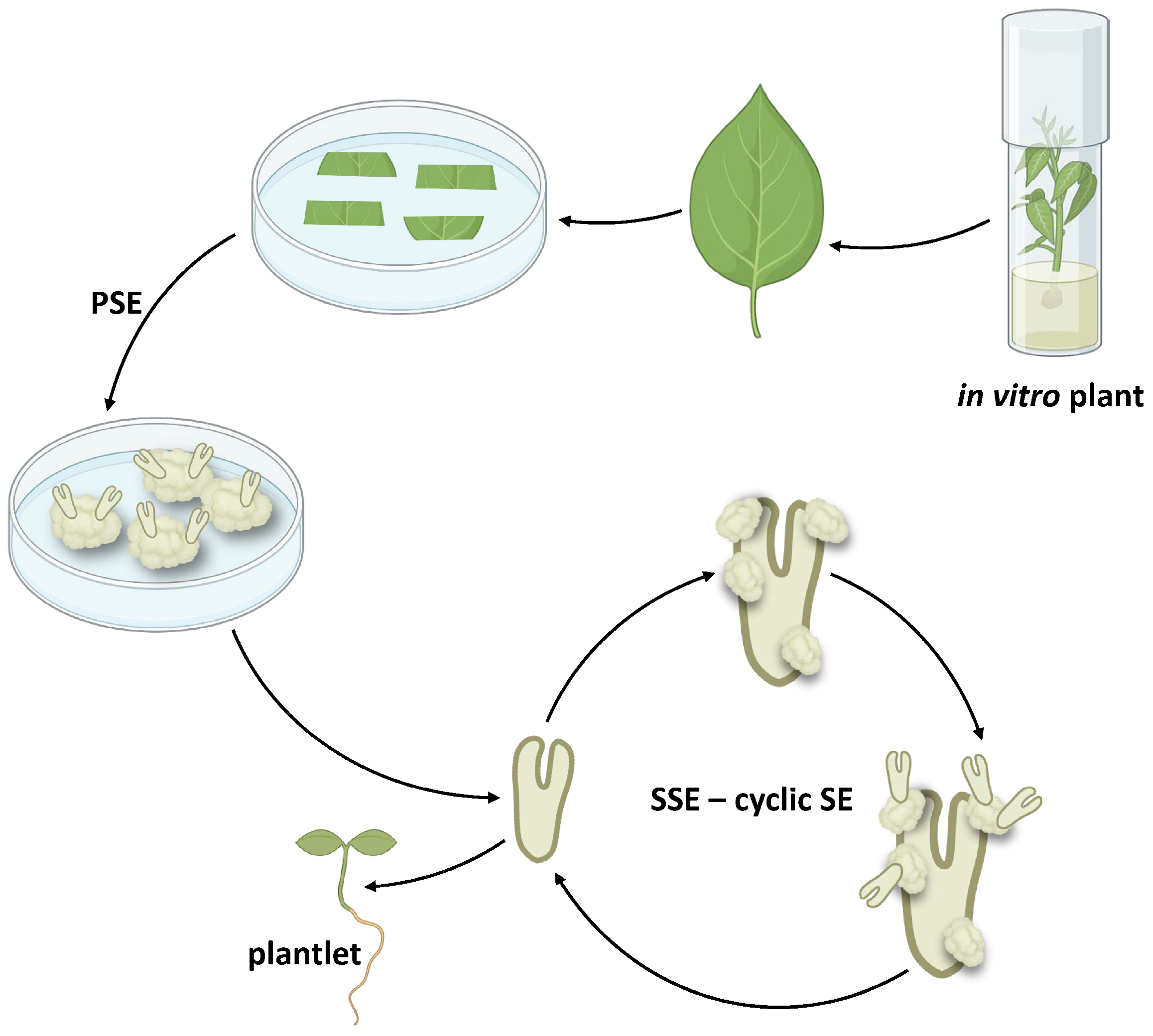
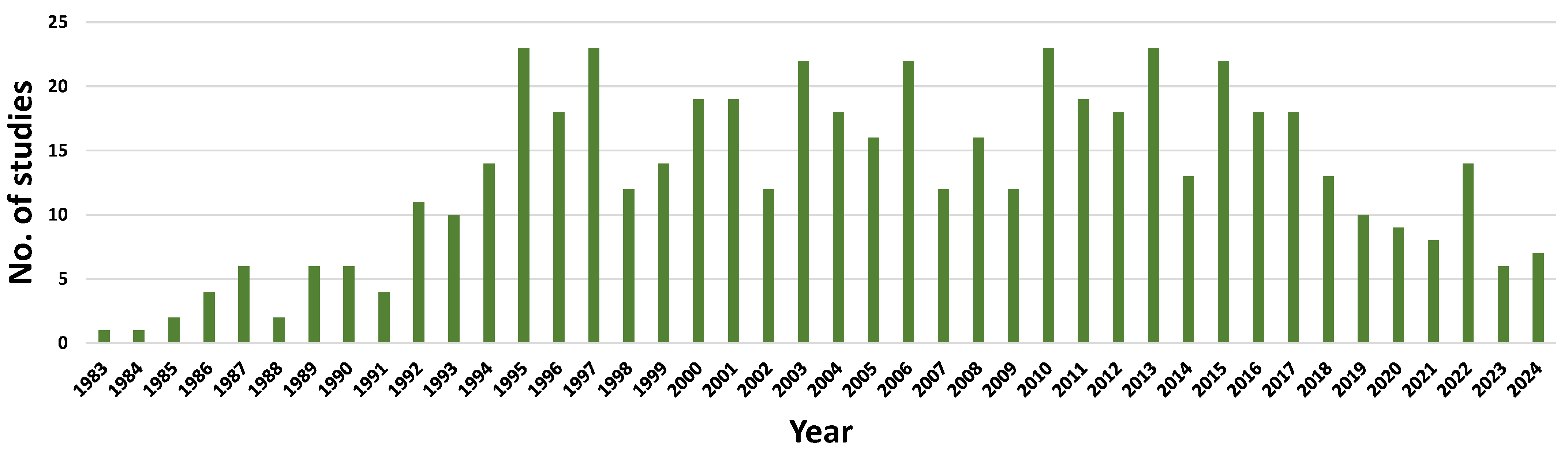
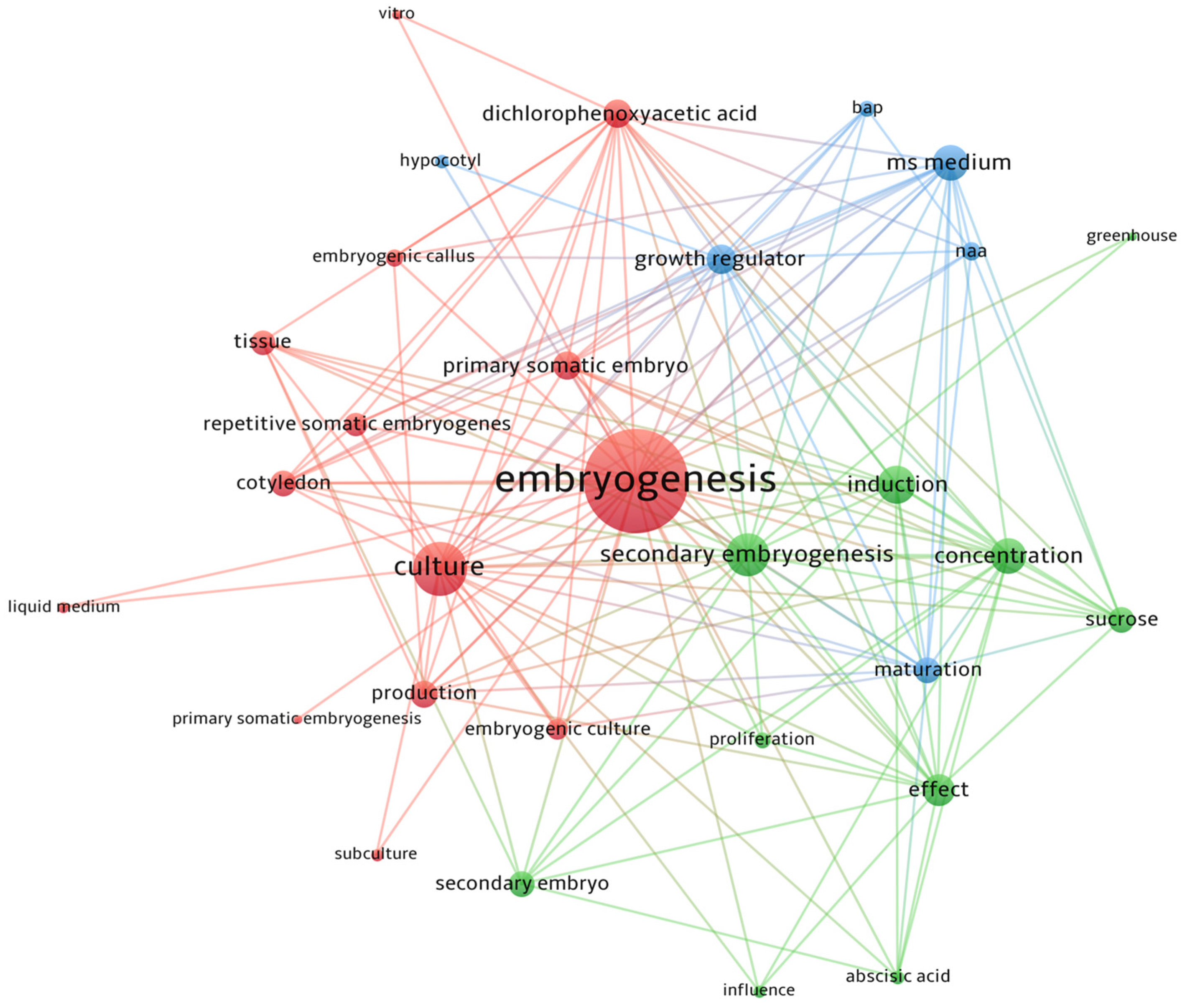
3. Secondary Somatic Embryogenesis: 40 Years of Research
4. Hormonal Regulation: The Role of Auxins and Cytokinins
4.1. Auxins Used in SSE
4.2. Cytokinins Used in SSE
4.3. Other Plant Hormones in SSE
4.4. Complex Interactions Between Exogenous and Endogenous PGRs in SSE
5. Culture Conditions: Optimizing Nutritional Factors
5.1. Mineral Formulations Commonly Used in SSE
5.2. Sugar Types in SSE
5.3. Other Media Supplements in SSE
6. Culture Conditions: Optimizing Physical Factors
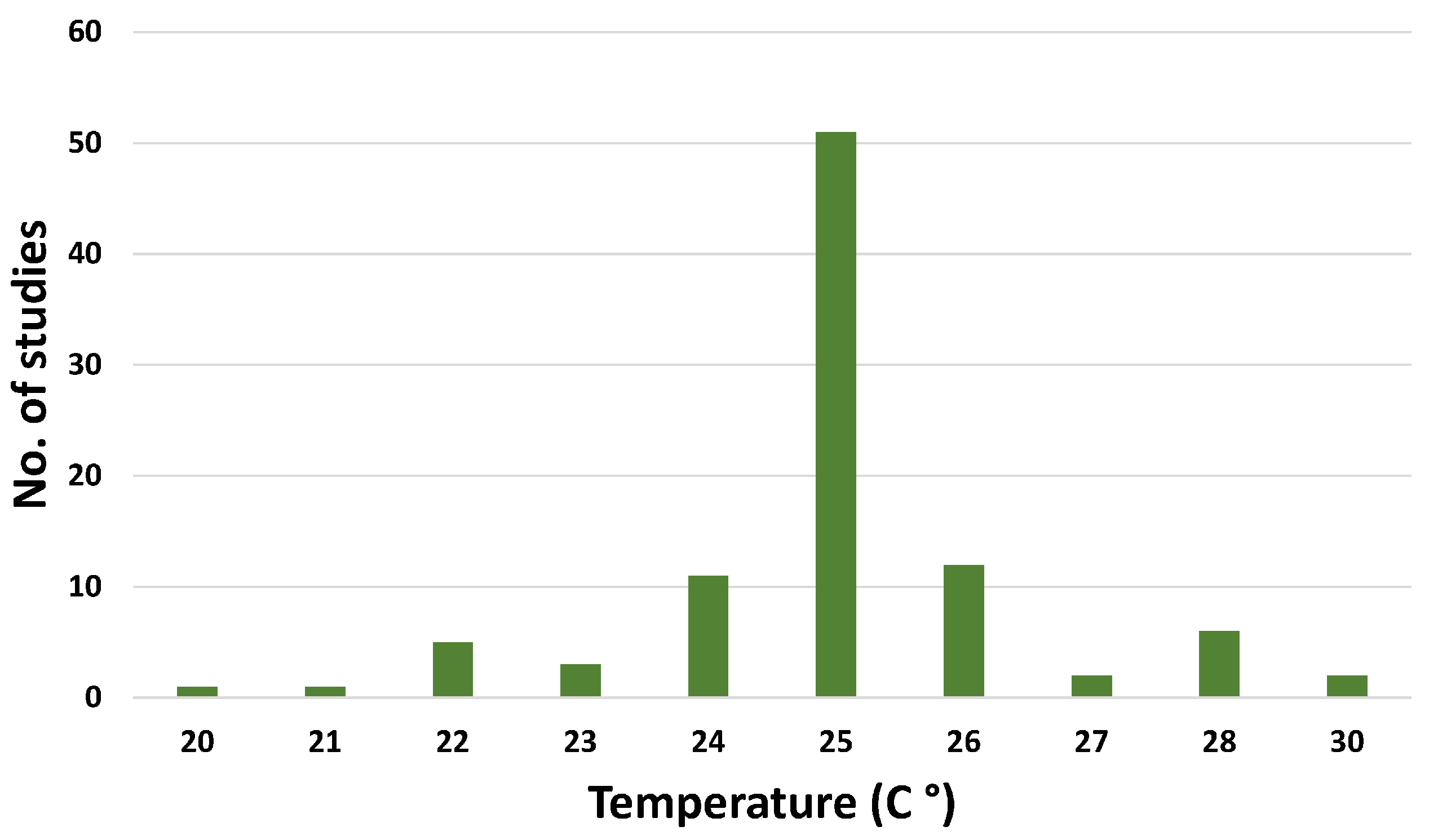
6.1. The Influence of Temperature as a Factor for SSE
6.2. Light Conditions in SSE
6.3. The Importance of Solid and Liquid Media in SSE
7. Explant Selection: The Importance of the Starting Material
8. Challenges and Future Directions: Improving Efficiency and Reliability in SSE Systems
9. Conclusions
Author Contributions
Funding
Data Availability Statement
Conflicts of Interest
Abbreviations
| SE | Somatic embryogenesis |
| SEs | Somatic embryos |
| PSE | Primary somatic embryogenesis |
| SSE | Secondary somatic embryogenesis |
| PSEs | Primary somatic embryos |
| SSEs | Secondary somatic embryos |
| PGRs | Plant growth regulators |
| VOSviewer | Visualization of Similarities software |
| NAA | 1-naphthaleneacetic acid |
| 2,4-D | 2,4-dichlorophenoxyacetic acid |
| IBA | Indole-3-butyric acid |
| IAA | Indole-3-acetic acid |
| NOA | Naphthoxyacetic acid |
| 2,4,5-T | 2,4,5-trichlorophenoxyacetic acid |
| BA/BAP | Benzyladenine/Benzylaminopurine |
| KIN | Kinetin (6-furfurylaminopurine) |
| ZEA | Zeatin |
| 2iP | 6-dimethylallylamino purine |
| TDZ | Thithazuron |
| CPPU | N-2-chloro-4-pyridyl-N’-phenylurea |
| ABA | Abscisic acid |
| GA/GA3 | Gibberellins |
| ACC | 1-aminocyclopropane-1-carboxylic acid |
| JA | Jasmonic acid |
| NBD | 2,5-norbornadiene |
| AC | Activated charcoal |
| PEG | Polyethylene glycol |
| MS | Murashige and Skoog medium |
| WPM | Woody plant medium |
| SH | Schenk and Hildebrandt medium |
| B5 | Gamborg B5 medium |
| DKW | Driver and Kuniyuki Walnut medium |
| MT | Murashige and Tucker medium |
| MH | Basal medium for Hevea culture |
| SCG | Secondary callus growth medium |
| TIS/TIR | Temporary immersion system/reactor |
| EST | Expressed sequence tag |
References
- Guan, Y.; Li, S.-G.; Fan, X.-F.; Su, Z.-H. Application of Somatic Embryogenesis in Woody Plants. Front. Plant Sci. 2016, 7, 938. [Google Scholar] [CrossRef]
- Quiroz-Figueroa, F.R.; Rojas-Herrera, R.; Galaz-Avalos, R.M.; Loyola-Vargas, V.M. Embryo production through somatic embryogenesis can be used to study cell differentiation in plants. Plant Cell Tissue Organ Cult. 2006, 86, 285–301. [Google Scholar] [CrossRef]
- Feher, A.; Pasternak, T.P.; Dudit, D. Transition of somatic plant cells to an embryogenic state. Plant Cell Tissue Organ Cult. 2003, 74, 201–228. [Google Scholar] [CrossRef]
- Bogdanović, M.D.; Ćuković, K.B.; Subotić, A.R.; Dragićević, M.B.; Simonović, A.D.; Filipović, B.K.; Todorović, S.I. Secondary somatic embryogenesis in Centaurium erythraea rafn. Plants 2021, 10, 199. [Google Scholar] [CrossRef]
- Lelu-Walter, M.-A.; Gautier, F.; Eliášová, K.; Sanchez, L.; Teyssier, C.; Lomenech, A.-M.; Le Metté, C.; Hargreaves, C.; Trontin, J.-F.; Reeves, C. High gellan gum concentration and secondary somatic embryogenesis: Two key factors to improve somatic embryo development in Pseudotsuga menziesii [Mirb.]. Plant Cell Tissue Organ Cult. 2018, 132, 137–155. [Google Scholar] [CrossRef]
- Bogdanović, M.D.; Ćuković, K.B. Secondary Somatic Embryogenesis in Plants: From Cellular Mechanisms to Biotechnological Potential. Plants 2025, 14, 3413. [Google Scholar] [CrossRef]
- Paisic-Ramirez, R.; Hernández-Amasifuen, A.D.; Sánchez-Aguilar, W.D.; Corazon-Guivin, M.A.; Bobadilla, L.G.; Mansilla-Córdova, P.J.; Caetano, A.C.; Zuta, M.Z.S.; Guerrero-Abad, J.C. Effect of osmoregulatory on the secondary somatic embryogenesis of cocoa (Theobroma cacao L.). J. Appl. Biol. Biotechnol. 2024, 12, 177–183. [Google Scholar] [CrossRef]
- Gulzar, B.; Mujib, A.; Malik, M.Q.; Sayeed, R.; Mamgain, J.; Ejaz, B. Genes, proteins and other networks regulating somatic embryogenesis in plants. J. Genet. Eng. Biotechnol. 2020, 18, 31. [Google Scholar] [CrossRef]
- Daigny, G.; Paul, H.; Sangwan, R.S.; Sangwan-Norreel, B.S. Factors influencing secondary somatic embryogenesis in Malus × domestica Borkh. (cv ‘Gloster 69’). Plant Cell Rep. 1996, 16, 153–157. [Google Scholar] [CrossRef] [PubMed]
- Bustami, M.U.; Werbrouck, S.P.O. Cyclic Somatic Embryogenesis in Indonesian Elite Theobroma cacao L. Clones. Horticulturae 2024, 10, 24. [Google Scholar] [CrossRef]
- Garcia, C.; Furtado de Almeida, A.-A.; Costa, M.; Britto, D.; Valle, R.; Royaert, S.; Marelli, J.-P. Abnormalities in somatic embryogenesis caused by 2,4-D: An overview. Plant Cell Tissue Organ Cult. 2019, 137, 193–212. [Google Scholar] [CrossRef]
- Nic-Can, G.I.; Loyola-Vargas, V.M. The role of the auxins during somatic embryogenesis. In Somatic Embryogenesis: Fundamental Aspects and Applications; Springer: Berlin/Heidelberg, Germany, 2016; pp. 171–182. [Google Scholar] [CrossRef]
- Li, X.; Krasnyanski, S.F.; Korban, S.S. Somatic embryogenesis, secondary somatic embryogenesis, and shoot organogenesis in Rosa. J. Plant Physiol. 2002, 159, 313–319. [Google Scholar] [CrossRef]
- Liu, W.; Liang, Z.; Shan, C.; Marsolais, F.; Tian, L. Genetic transformation and full recovery of alfalfa plants via secondary somatic embryogenesis. In Vitr. Cell. Dev. Biol. Plant 2013, 49, 17–23. [Google Scholar] [CrossRef]
- Raemakers, C.J.J.M.; Jacobsen, E.; Visser, R.G.F. Secondary somatic embryogenesis and applications in plant breeding. Euphytica 1995, 81, 93–107. [Google Scholar] [CrossRef]
- Kumar, V.; Ramakrishna, A.; Ravishankar, G.A. Influence of different ethylene inhibitors on somatic embryogenesis and secondary embryogenesis from Coffea canephora P ex Fr. In Vitro Cell. Dev. Biol. Plant 2007, 43, 602–607. [Google Scholar] [CrossRef]
- Agarwal, S.; Kanwar, K.; Sharma, D.R. Factors affecting secondary somatic embryogenesis and embryo maturation in Morus alba L. Sci. Hortic. 2004, 102, 359–368. [Google Scholar] [CrossRef]
- Kumar, S.P.; Kumari, B.D.R. Effect of Primary and Secondary Somatic Embryogenesis in Safflower (Carthamus tinctorius L.) at Morphological and Biochemical Levels. Am.-Eurasian J. Agric. Environ. Sci. 2010, 8, 784–792. [Google Scholar]
- Kumar, S.; Nadgauda, R. Control of Morphological Aberrations in Somatic Embryogenesis of Commiphora wightii (Arnott) Bhandari (Family: Bursaraceae) Through Secondary Somatic Embryogenesis. Proc. Natl. Acad. Sci. India Sect. B Biol. Sci. 2015, 85, 281–290. [Google Scholar] [CrossRef]
- Wongtiem, P.; Courtois, D.; Florin, B.; Juchaux, M.; Peltier, D.; Broun, P.; Ducos, J.P. Effects of cytokinins on secondary somatic embryogenesis of selected clone Rayong 9 of Manihot esculenta Crantz for ethanol production. Afr. J. Biotechnol. 2011, 10, 1600–1608. [Google Scholar]
- Kim, Y.J.; Lee, O.R.; Kim, K.T.; Yang, D.C. High frequency of plant regeneration through cyclic secondary somatic embryogenesis in Panax ginseng. J. Ginseng Res. 2012, 36, 442–448. [Google Scholar] [CrossRef]
- Klimaszewska, K.; Noceda, C.; Pelletier, G.; Label, P.; Rodriguez, R.; Lelu-Walter, M.A. Biological characterization of young and aged embryogenic cultures of Pinus pinaster (Ait.). In Vitr. Cell. Dev. Biol. Plant 2008, 45, 20–33. [Google Scholar] [CrossRef]
- Pila Quinga, L.A.; Pacheco de Freitas Fraga, H.; do Nascimento Vieira, L.; Guerra, M.P. Epigenetics of long-term somatic embryogenesis in Theobroma cacao L.: DNA methylation and recovery of embryogenic potential. Plant Cell Tissue Organ Cult. 2017, 131, 295–305. [Google Scholar] [CrossRef]
- Gautier, F.; Eliášová, K.; Leplé, J.-C.; Vondráková, Z.; Lomenech, A.-M.; Le Metté, C.; Label, P.; Costa, G.; Trontin, J.-F.; Teyssier, C.; et al. Repetitive somatic embryogenesis induced cytological and proteomic changes in embryogenic lines of Pseudotsuga menziesii [Mirb.]. BMC Plant Biol. 2018, 18, 164. [Google Scholar] [CrossRef] [PubMed]
- Karami, O.; Deljou, A.; Kordestani, G.K. Secondary somatic embryogenesis of carnation (Dianthus caryophyllus L.). Plant Cell Tissue Organ Cult. 2008, 92, 273–280. [Google Scholar] [CrossRef]
- Bhansali, R.R.; Driver, J.A.; Durzan, D.J. Rapid multiplication of adventitious somatic embryos in peach and nectarine by secondary embryogenesis. Plant Cell Rep. 1990, 9, 280–284. [Google Scholar] [CrossRef] [PubMed]
- Junaid, A.; Mujib, A.; Sharma, M.P.; Tang, W. Growth regulators affect primary and secondary somatic embryogenesis in Madagaskar periwinkle (Catharanthus roseus (L.) G. Don) at morphological and biochemical levels. Plant Growth Regul. 2007, 51, 271–281. [Google Scholar] [CrossRef]
- Tomiczak, K.; Mikuła, A.; Niedziela, A.; Wójcik-Lewandowska, A.; Domżalska, L.; Rybczyński, J.J. Somatic embryogenesis in the family gentianaceae and its biotechnological application. Front. Plant Sci. 2019, 10, 762. [Google Scholar] [CrossRef]
- Simonović, A.D.; Trifunović-Momčilov, M.M.; Filipović, B.K.; Marković, M.P.; Bogdanović, M.D.; Subotić, A.R. Somatic Embryogenesis in Centaurium erythraea Rafn—Current Status and Perspectives: A Review. Plants 2021, 10, 70. [Google Scholar] [CrossRef]
- Elhiti, M.; Stasolla, C. Transduction of Signals during Somatic Embryogenesis. Plants 2022, 11, 178. [Google Scholar] [CrossRef]
- Salaün, C.; Lepiniec, L.; Dubreucq, B. Genetic and Molecular Control of Somatic Embryogenesis. Plants 2021, 10, 1467. [Google Scholar] [CrossRef]
- Burnham, J.F. Scopus database: A review. Biomed. Digit. Libr. 2006, 3, 1. [Google Scholar] [CrossRef] [PubMed]
- Negi, S.; Singh, P.; Trivedi, V.L.; Rawat, J.M.; Semwal, P. The current trends and research progress globally in the plant tissue culture: 90 years of investigation. Plant Cell Tissue Organ Cult. 2024, 157, 73. [Google Scholar] [CrossRef]
- van Eck, N.J.; Waltman, L. Software survey: VOSviewer, a computer program for bibliometric mapping. Scientometrics 2010, 84, 523–538. [Google Scholar] [CrossRef]
- Campos, N.A.; Panis, B.; Carpentier, S.C. Somatic Embryogenesis in Coffee: The Evolution of Biotechnology and the Integration of Omics Technologies Offer Great Opportunities. Front. Plant Sci. 2017, 8, 1460. [Google Scholar] [CrossRef] [PubMed]
- Sax, M.S.; Bassuk, N.; Bridgen, M. Tissue Culture Clonal Propagation of Hybrid White Oaks for the Urban Environment. HortScience 2019, 54, 2214–2223. [Google Scholar] [CrossRef]
- Raemakers, K.; Pereira, I.; van Putten, H.K.; Visser, R. Indirect somatic embryogenesis in cassava for genetic modification purposes. Methods Mol. Biol. 2006, 318, 101–109. [Google Scholar] [CrossRef]
- Remotti, P.C. Primary and secondary embryogenesis from cell suspension cultures of Gladiolus. Plant Sci. 1995, 107, 205–214. [Google Scholar] [CrossRef]
- Szewczyk-Taranek, B.; Pawłowska, B. Recurrent somatic embryogenesis and plant regeneration from seedlings of Hepatica nobilis Schreb. Plant Cell Tissue Organ Cult. 2015, 120, 1203–1207. [Google Scholar] [CrossRef][Green Version]
- Maheswaran, G.; Williams, E.G. Direct secondary somatic embryogenesis from immature sexual embryos of Trifolium repens cultured in vitro. Ann. Bot. 1986, 57, 109–117. [Google Scholar]
- Durham, R.E.; Parrott, W.A. Repetitive somatic embryogenesis from peanut cultures in liquid medium. Plant Cell Rep. 1992, 11, 122–125. [Google Scholar] [CrossRef]
- Weissinger Ii, A.K.; Parrott, W.A. Repetitive somatic embryogenesis and plant recovery in white clover. Plant Cell Rep. 1993, 12, 125–128. [Google Scholar] [CrossRef]
- Murthy, H.N.; Hahn, E.J.; Paek, K.Y. Recurrent somatic embryogenesis and plant regeneration in Coriandrum sativum L. Sci. Hortic. 2008, 118, 168–171. [Google Scholar] [CrossRef]
- Bajpai, A.; Kalim, S.; Chandra, R.; Kamle, M. Recurrent Somatic Embryogenesis and Plantlet Regeneration in Psidium guajava L. Braz. Arch. Biol. Technol. 2016, 59, e16150170. [Google Scholar] [CrossRef]
- Ćosić, T.; Vinterhalter, B.; Vinterhalter, D.; Mitić, N.; Cingel, A.; Savić, J.; Bohanec, B.; Ninković, S. In vitro plant regeneration from immature zygotic embryos and repetitive somatic embryogenesis in kohlrabi (Brassica oleracea var. gongylodes). In Vitro Cell. Dev. Biol. Plant 2013, 49, 294–303. [Google Scholar] [CrossRef]
- Baker, C.M.; Wetzstein, H.Y. Repetitive somatic embryogenesis in peanut cotyledon cultures by continual exposure to 2,4-d. Plant Cell Tissue Organ Cult. 1995, 40, 249–254. [Google Scholar] [CrossRef]
- Bao, Y.; Liu, G.; Shi, X.; Xing, W.; Ning, G.; Liu, J.; Bao, M. Primary and repetitive secondary somatic embryogenesis in Rosa hybrida ‘Samantha’. Plant Cell Tissue Organ Cult. 2012, 109, 411–418. [Google Scholar] [CrossRef]
- Cantelmo, L.; Soares, B.O.; Rocha, L.P.; Pettinelli, J.A.; Callado, C.H.; Mansur, E.; Castellar, A.; Gagliardi, R.F. Repetitive somatic embryogenesis from leaves of the medicinal plant Petiveria alliacea L. Plant Cell Tissue Organ Cult. 2013, 115, 385–393. [Google Scholar] [CrossRef]
- Faizy, E.; Moradi, A.; Masoumi Asl, A. Controlling secondary somatic embryogenesis in Persian Oak (Quercus brantii L.) using hormonal compounds and media. J. Agric. Sci. Technol. 2019, 21, 615–626. [Google Scholar]
- Gyulai, G.; Kiss, E.; Csillag, A.; Heszky, L.E. Developmental analysis of primary and secondary somatic embryogenesis in soybean tissue culture. Acta Biol. Hung. 1993, 44, 189–196. [Google Scholar]
- Ogata, Y.; Iizuka, M.; Nakayama, D.; Ikeda, M.; Kamada, H.; Koshiba, T. Possible involvement of abscisic acid in the induction of secondary somatic embryogenesis on seed-coat-derived carrot somatic embryos. Planta 2005, 221, 417–423. [Google Scholar] [CrossRef]
- Pavlović, S.; Vinterhalter, B.; Zdravković-Korać, S.; Vinterhalter, D.; Zdravković, J.; Cvikić, D.; Mitić, N. Recurrent somatic embryogenesis and plant regeneration from immature zygotic embryos of cabbage (Brassica oleracea var. capitata) and cauliflower (Brassica oleracea var. botrytis). Plant Cell Tissue Organ Cult. 2013, 113, 397–406. [Google Scholar] [CrossRef]
- Saker, M.M. In vitro regeneration of onion through repetitive somatic embryogenesis. Biol. Plant. 1997, 40, 499–506. [Google Scholar] [CrossRef]
- Tokuji, Y.; Mizue, Y.; Masuda, H. Effects of Methyljasmonate and Concanavalin a on Embryogenesis and the Induction of Secondary Somatic Embryos of Carrot. Biosci. Biotechnol. Biochem. 1995, 59, 1675–1678. [Google Scholar] [CrossRef][Green Version]
- Yang, J.; Wu, S.; Li, C. High efficiency secondary somatic embryogenesis in Hovenia dulcis thunb. Through solid and liquid cultures. Sci. World J. 2013, 2013, 718754. [Google Scholar] [CrossRef]
- Zhou, C.; Liu, L.; Li, C. Microarray analysis of siberian ginseng cyclic somatic embryogenesis culture systems provides insight into molecular mechanisms of embryogenic cell cluster generation. PLoS ONE 2014, 9, e94959. [Google Scholar] [CrossRef]
- Borissova, A.; Hvarleva, T.; Bedzhov, I.; Kondakova, V.; Atanassov, A.; Atanassov, I. Agrobacterium-mediated transformation of secondary somatic embryos from Rosa hybrida L. And recovery of transgenic plants. Biotechnol. Biotechnol. Equip. 2005, 19, 70–74. [Google Scholar] [CrossRef]
- Schavemaker, C.M.; Jacobsen, E. Development of a cyclic somatic embryogenesis regeneration system for leek (Allium ampeloprasum L.) using zygotic embryos. Plant Cell Rep. 1995, 14, 227–231. [Google Scholar] [CrossRef]
- Zheng, Q.; Dessai, A.P.; Prakash, C.S. Rapid and repetitive plant regeneration in sweetpotato via somatic embryogenesis. Plant Cell Rep. 1996, 15, 381–385. [Google Scholar] [CrossRef] [PubMed]
- Malik, M.; Bach, A. High-yielding repetitive somatic embryogenesis in cultures of Narcissus L. ‘carlton’. Acta Sci. Pol. Hortorum Cultus 2017, 16, 107–112. [Google Scholar]
- Grewal, S.; Rani, M. Repetitive somatic embryogenesis in aggregated liquid culture of Bunium persicum Boiss. Indian J. Exp. Biol. 1999, 37, 70–74. [Google Scholar]
- Naing, A.H.; Kim, C.K.; Yun, B.J.; Jin, J.Y.; Lim, K.B. Primary and secondary somatic embryogenesis in Chrysanthemum cv. Euro. Plant Cell Tissue Organ Cult. 2013, 112, 361–368. [Google Scholar] [CrossRef]
- Naing, A.H.; Min, J.S.; Park, K.I.; Chung, M.Y.; Lim, S.H.; Lim, K.B.; Kim, C.K. Primary and secondary somatic embryogenesis in Chrysanthemum (Chrysanthemum morifolium) cv. ‘Baeksun’ and assessment of ploidy stability of somatic embryogenesis process by flow cytometry. Acta Physiol. Plant. 2013, 35, 2965–2974. [Google Scholar] [CrossRef]
- Panaia, M.; Bunn, E.; McComb, J. Primary and repetitive secondary somatic embryogenesis of Lepidosperma drummondii (Cyperaceae) and Baloskion tetraphyllum (Restionaceae) for land restoration and horticulture. In Vitr. Cell. Dev. Biol. Plant 2011, 47, 379–386. [Google Scholar] [CrossRef]
- Hua, Y.W.; Huang, T.D.; Huang, H.S. Micropropagation of self-rooting juvenile clones by secondary somatic embryogenesis in Hevea brasiliensis. Plant Breed. 2010, 129, 202–207. [Google Scholar] [CrossRef]
- Opabode, J.T.; Ajibola, O.V.; Oyelakin, O.O.; Akinyemiju, O.A. Somatic embryogenesis and genetic uniformity of regenerated cassava plants from low-temperature preserved secondary somatic cotyledons. Biotechnologia 2015, 96, 246–258. [Google Scholar] [CrossRef]
- Opabode, J.T.; Ajibola, O.V.; Oyelakin, O.O.; Akinyemiju, O.A. Somatic embryogenesis and genetic uniformity of cassava plants regenerated from secondary somatic cotyledons preserved in osmotic agents. Plant Tissue Cult. Biotechnol. 2016, 26, 47–54. [Google Scholar] [CrossRef]
- Raemakers, C.J.J.M.; Jacobsen, E.; Staritsky, G.; Amati, M.; Visser, R.G.F. Cyclic Somatic Embryogenesis and Plant Regeneration in Cassava. Ann. Bot. 1993, 71, 289–294. [Google Scholar] [CrossRef]
- Raemakers, C.J.J.M.; Schavemaker, C.M.; Jacobsen, E.; Visser, R.G.E. Improvements of cyclic somatic embryogenesis of cassava (Manihot esculenta Crantz). Plant Cell Rep. 1993, 12, 226–229. [Google Scholar] [CrossRef]
- Raemakers, K.J.; Jacobsen, E.; Visser, R.G. Direct cyclic somatic embryogenesis of cassava for mass production purposes. Methods Mol. Biol. 1999, 111, 61–70. [Google Scholar] [CrossRef]
- Stamp, J.A.; Henshaw, G.G. Secondary somatic embryogenesis and plant regeneration in cassava. Plant Cell Tissue Organ Cult. 1987, 10, 227–233. [Google Scholar] [CrossRef]
- Heikrujam, M.; Kumar, D.; Kumar, S.; Gupta, S.C.; Agrawal, V. High efficiency cyclic production of secondary somatic embryos and ISSR based assessment of genetic fidelity among the emblings in Calliandra tweedii (Benth.). Sci. Hortic. 2014, 177, 63–70. [Google Scholar] [CrossRef]
- Lai, F.M.; McKersie, B.D. Scale-up of somatic embryogenesis in alfalfa (Medicago sativa L.) I subculture and indirect secondary somatic embryogenisis. Plant Cell Tissue Organ Cult. 1994, 37, 151–158. [Google Scholar] [CrossRef]
- Maximova, S.N.; Alemanno, L.; Young, A.; Ferriere, N.; Traore, A.; Guiltinan, M.J. Efficiency, genotypic variability, and cellular origin of primary and secondary somatic embryogenesis of Theobroma cacao L. In Vitr. Cell. Dev. Biol. Plant 2002, 38, 252–259. [Google Scholar] [CrossRef]
- Khalil, S.; Cheah, K.; Perez, E.; Gaskill, D.; Hu, J. Regeneration of banana (Musa spp. AAB cv. Dwarf Brazilian) via secondary somatic embryogenesis. Plant Cell Rep. 2002, 20, 1128–1134. [Google Scholar] [CrossRef]
- Ramírez-Villalobos, M.; De García, E. Secondary somatic embryogenesis in banana CIEN-BTA-03 (Musa sp. AAAA) and regeneration of plants. Acta Hortic. 2010, 829, 45–50. [Google Scholar] [CrossRef]
- Uma, S.; Karthic, R.; Kalpana, S.; Backiyarani, S.; Kumaravel, M.; Saranya, S.; Saraswathi, M.S.; Durai, P. An efficient embryogenic cell suspension culture system through secondary somatic embryogenesis and regeneration of true-to-type plants in banana cv. Sabri (silk subgroup AAB). Plant Cell Tissue Organ Cult. 2023, 155, 313–322. [Google Scholar] [CrossRef]
- Vilchez P, J.A.; Albany V, N.R.; Kosky, R.G.; Garcia, L. Secondary embryogenesis and plant regeneration in Psidium guajava L. Trop. Agric. 2004, 81, 41–44. [Google Scholar]
- da Silva, M.L.; Pinto, D.L.P.; de Campos, J.M.S.; de Carvalho, I.F.; Rocha, D.I.; Batista, D.S.; Otoni, W.C. Repetitive somatic embryogenesis from wild passion fruit (Passiflora cincinnata Mast.) anthers. Plant Cell Tissue Organ Cult. 2021, 146, 635–641. [Google Scholar] [CrossRef]
- Saly, S.; Joseph, C.; Corbineau, F.; Lelu, M.A.; Côme, D. Induction of secondary somatic embryogenesis in hybrid larch (Larix x leptoeuropaea) as related to ethylene. Plant Growth Regul. 2002, 37, 287–294. [Google Scholar] [CrossRef]
- Li, L.; Qu, R. In vitro somatic embryogenesis in turf-type Bermudagrass: Roles of abscisic acid and gibberellic acid, and occurrence of secondary somatic embryogenesis. Plant Breed. 2002, 121, 155–158. [Google Scholar] [CrossRef]
- Xing, W.; Bao, Y.; Luo, P.; Bao, M.; Ning, G. An efficient system to produce transgenic plants via cyclic leave-originated secondary somatic embryogenesis in Rosa rugosa. Acta Physiol. Plant. 2014, 36, 2013–2023. [Google Scholar] [CrossRef]
- Yang, L.; Wang, J.; Bian, L.; Li, Y.; Shen, H. Cyclic secondary somatic embryogenesis and efficient plant regeneration in mountain ash (Sorbus pohuashanensis). Plant Cell Tissue Organ Cult. 2012, 111, 173–182. [Google Scholar] [CrossRef]
- Bobadilla Landey, R.; Cenci, A.; Georget, F.; Bertrand, B.; Camayo, G.; Dechamp, E.; Herrera, J.C.; Santoni, S.; Lashermes, P.; Simpson, J.; et al. High Genetic and Epigenetic Stability in Coffea arabica Plants Derived from Embryogenic Suspensions and Secondary Embryogenesis as Revealed by AFLP, MSAP and the Phenotypic Variation Rate. PLoS ONE 2013, 8, e56372. [Google Scholar] [CrossRef] [PubMed]
- Fernández-Da Silva, R.; Hermoso-Gallardo, L.; Menéndez-Yuffá, A. Primary and secondary somatic enbryogenesis in leaf sections and cell suspensions of Coffea arabica cv. catimor. Interciencia 2005, 30, 91–103. [Google Scholar]
- Maillot, P.; Lebel, S.; Schellenbaum, P.; Jacques, A.; Walter, B. Differential regulation of SERK, LEC1-Like and Pathogenesis-Related genes during indirect secondary somatic embryogenesis in grapevine. Plant Physiol. Biochem. 2009, 47, 743–752. [Google Scholar] [CrossRef] [PubMed]
- Pandey, M.; Dhar, U.; Samant, S.S.; Shirgurkar, M.V.; Thengane, S.R. Recurrent somatic embryogenesis and plant regeneration in Angelica glauca Edgew., a critically endangered medicinal plant of the Western Himalaya. J. Hortic. Sci. Biotechnol. 2011, 86, 493–498. [Google Scholar] [CrossRef]
- Li, B.; Wolyn, D.J. Abscisic acid and ancymidol promote conversion of somatic embryos to plantlets and secondary embryogenesis in Asparagus officinalis L. In Vitr. Cell. Dev. Biol. Plant 1996, 32, 223–226. [Google Scholar] [CrossRef]
- Saeed, T.; Shahzad, A. High frequency plant regeneration in Indian Siris via cyclic somatic embryogenesis with biochemical, histological and SEM investigations. Ind. Crops Prod. 2015, 76, 623–637. [Google Scholar] [CrossRef]
- Mallón, R.; Covelo, P.; Vieitez, A.M. Improving secondary embryogenesis in Quercus robur: Application of temporary immersion for mass propagation. Trees Struct. Funct. 2012, 26, 731–741. [Google Scholar] [CrossRef]
- Zegzouti, R.; Arnould, M.F.; Favre, J.M. Histological investigation of the multiplication step in secondary somatic embryogenesis of Quercus robur L. Ann. For. Sci. 2001, 58, 681–690. [Google Scholar] [CrossRef]
- Sivanesan, I.; Son, M.S.; Jana, S.; Jeong, B.R. Secondary somatic embryogenesis in Crocus vernus (L.) Hill. Propag. Ornam. Plants 2012, 12, 163–170. [Google Scholar]
- Shi, X.; Dai, X.; Liu, G.; Zhang, J.; Ning, G.; Bao, M. Cyclic secondary somatic embryogenesis and efficient plant regeneration in camphor tree (Cinnamomum camphora L.). In Vitr. Cell. Dev. Biol. Plant 2010, 46, 117–125. [Google Scholar] [CrossRef]
- Pinto, G.; Park, Y.S.; Silva, S.; Neves, L.; Araújo, C.; Santos, C. Factors affecting maintenance, proliferation, and germination of secondary somatic embryos of Eucalyptus globulus Labill.: Basal medium and anti-browning agents. Plant Cell Tissue Organ Cult. 2008, 95, 69–78. [Google Scholar] [CrossRef]
- Mazri, M.A.; Naciri, R.; Belkoura, I. Maturation and conversion of somatic embryos derived from seeds of olive (Olea europaea L.) cv. Dahbia: Occurrence of secondary embryogenesis and adventitious bud formation. Plants 2020, 9, 1489. [Google Scholar] [CrossRef]
- Vooková, B.; Matúšová, R.; Kormuťák, A. Secondary somatic embryogenesis in Abies numidica. Biol. Plant. 2003, 46, 513–517. [Google Scholar] [CrossRef]
- Mondal, T.K.; Bhattacharya, A.; Ahuja, P.S. Induction of synchronous secondary somatic embryogenesis in Camellia sinensis (L.) O. Kuntze. J. Plant Physiol. 2001, 158, 945–951. [Google Scholar] [CrossRef]
- Dai, J.L.; Tan, X.; Zhan, Y.G.; Zhang, Y.Q.; Xiao, S.; Gao, Y.; Xu, D.W.; Wang, T.; Wang, X.C.; You, X.L. Rapid and repetitive plant regeneration of Aralia elata Seem. via somatic embryogenesis. Plant Cell Tissue Organ Cult. 2011, 104, 125–130. [Google Scholar] [CrossRef]
- Śliwińska, A.; Olszowska, O.; Furmanowa, M.; Nosov, A. Rapid multiplication of Polyscias filicifolia by secondary somatic embryogenesis. In Vitr. Cell. Dev. Biol. Plant 2008, 44, 69–77. [Google Scholar] [CrossRef]
- Plata, E.; Ballester, A.; Vieitez, A.M. An anatomical study of secondary embryogenesis in Camellia reticulata. In Vitr. Cell. Dev. Biol. Plant 1991, 27, 183–189. [Google Scholar] [CrossRef]
- Martinelli, L.; Candioli, E.; Costa, D.; Poletti, V.; Rascio, N. Morphogenic competence of Vitis rupestris S. secondary somatic embryos with a long culture history. Plant Cell Rep. 2001, 20, 279–284. [Google Scholar] [CrossRef]
- Thengane, S.R.; Deodhar, S.R.; Bhosle, S.V.; Rawal, S.K. Repetitive somatic embryogenesis and plant regeneration in Garcinia indica Choiss. In Vitr. Cell. Dev. Biol. Plant 2006, 42, 256–261. [Google Scholar] [CrossRef]
- Karami, O.; Deljou, A.; Pour, A.M. Repetitive somatic embryogenesis in carnation on picloram supplemented media. Plant Growth Regul. 2007, 51, 33–39. [Google Scholar] [CrossRef]
- Little, E.L.; Magbanua, Z.V.; Parrott, W.A. A protocol for repetitive somatic embryogenesis from mature peanut epicotyls. Plant Cell Rep. 2000, 19, 351–357. [Google Scholar] [CrossRef]
- Steinmacher, D.A.; Guerra, M.P.; Saare-Surminski, K.; Lieberei, R. A temporary immersion system improves in vitro regeneration of peach palm through secondary somatic embryogenesis. Ann. Bot. 2011, 108, 1463–1475. [Google Scholar] [CrossRef] [PubMed]
- Groll, J.; Mycock, D.J.; Gray, V.M.; Laminski, S. Secondary somatic embryogenesis of cassava on picloram supplemented media. Plant Cell Tissue Organ Cult. 2001, 65, 201–210. [Google Scholar] [CrossRef]
- Baba, A.I.; Nogueira, F.C.S.; Pinheiro, C.B.; Brasil, J.N.; Jereissati, E.S.; Jucá, T.L.; Soares, A.A.; Santos, M.F.; Domont, G.B.; Campos, F.A.P. Proteome analysis of secondary somatic embryogenesis in cassava (Manihot esculenta). Plant Sci. 2008, 175, 717–723. [Google Scholar] [CrossRef]
- Anuradha, T.; Kumar, K.K.; Balasubramanian, P. Cyclic somatic embryogenesis of elite Indian cassava variety H-226. Indian J. Biotechnol. 2015, 14, 559–565. [Google Scholar]
- Tsolova, V.; Atanassov, A. Plant regeneration of Vitis sp. via repetitive embryogenesis. Biotechnol. Biotechnol. Equip. 1996, 10, 32–36. [Google Scholar] [CrossRef]
- Feher, A. Somatic embryogenesis—Stress-induced remodeling of plant cell fate. Biochim. Biophys. Acta 2015, 1849, 385–402. [Google Scholar] [CrossRef] [PubMed]
- Fraga, H.P.F.; Vieira, L.N.; Caprestano, C.A.; Steinmacher, D.A.; Micke, G.A.; Spudeit, D.A.; Pescador, R.; Guerra, M.P. 5-Azacytidine combined with 2,4-D improves somatic embryogenesis of Acca sellowiana (O. Berg) Burret by means of changes in global DNA methylation levels. Plant Cell Rep. 2012, 31, 2165–2176. [Google Scholar] [CrossRef] [PubMed]
- Leljak-Levanić, D.; Bauer, N.; Mihaljević, S.; Jelaska, S. Changes in DNA methylation during somatic embryogenesis in Cucurbita pepo L. Plant Cell Rep. 2004, 23, 120–127. [Google Scholar] [CrossRef]
- Venkatesh, K.; Rani, A.; Baburao, N.; Padmaja, G. Effect of auxins and auxin polar transport inhibitor (TIBA) on somatic embryogenesis in groundnut (Arachis hypogaea L.). Afr. J. Plant Sci. 2009, 3, 288–293. [Google Scholar]
- Eudes, F.; Acharya, S.; Laroche, A.; Selinger, L.B.; Cheng, K.J. A novel method to induce direct somatic embryogenesis, secondary embryogenesis and regeneration of fertile green cereal plants. Plant Cell Tissue Organ Cult. 2003, 73, 147–157. [Google Scholar] [CrossRef]
- Kim, Y.W.; Moon, H.K.; Son, S.G. Repetitive somatic embryogenesis and plant regeneration in Zizyphus jujuba Mill. In Vitr. Cell. Dev. Biol. Plant 2006, 42, 247–251. [Google Scholar] [CrossRef]
- Zdravković-Korać, S.; Ćalić-Dragosavac, D.; Uzelac, B.; Janošević, D.; Budimir, S.; Vinterhalter, B.; Vinterhalter, D. Secondary somatic embryogenesis versus caulogenesis from somatic embryos of Aesculus carnea Hayne.: Developmental stage impact. Plant Cell Tissue Organ Cult. 2008, 94, 225–231. [Google Scholar] [CrossRef]
- Aman, N.; Afrasiab, H. Primary and secondary somatic embryogenesis from leaf explants of rosemary (Rosmarinus officinalis L.—Lamiaceae). Pak. J. Bot. 2014, 46, 903–909. [Google Scholar]
- Ćalić, D.; Zdravković-Korać, S.; Radojević, L. Secondary embryogenesis in androgenic embryo cultures of Aesculus hippocastanum L. Biol. Plant. 2005, 49, 435–438. [Google Scholar] [CrossRef]
- Das Neves, L.O.; Duque, S.R.L.; De Almeida, J.S.; Fevereiro, P.S. Repetitive somatic embryogenesis in Medicago truncatula ssp. Narbonensis and M. truncatula Gaertn cv. Jemalong. Plant Cell Rep. 1999, 18, 398–405. [Google Scholar] [CrossRef]
- Maheswaran, G.; Williams, E.G. Primary and Secondary Direct Somatic Embryogenesis from Immature Zygotic Embryos of Brassica campestris. J. Plant Physiol. 1986, 124, 455–463. [Google Scholar] [CrossRef]
- Parra, R.; Amo-Marco, J.B. Secondary somatic embryogenesis and plant regeneration in myrtle (Myrtus communis L.). Plant Cell Rep. 1998, 18, 325–330. [Google Scholar] [CrossRef]
- You, C.R.; Fan, T.J.; Gong, X.Q.; Bian, F.H.; Liang, L.K.; Qu, F.N. A high-frequency cyclic secondary somatic embryogenesis system for Cyclamen persicum Mill. Plant Cell Tissue Organ Cult. 2011, 107, 233–242. [Google Scholar] [CrossRef]
- Asghar, S.; Ghori, N.; Hyat, F.; Li, Y.; Chen, C. Use of auxin and cytokinin for somatic embryogenesis in plant: A story from competence towards completion. Plant Growth Regul. 2022, 99, 413–428. [Google Scholar] [CrossRef]
- Su, Y.H.; Liu, Y.B.; Zhang, X.S. Auxin-cytokinin interaction regulates meristem development. Mol. Plant 2011, 4, 616–625. [Google Scholar] [CrossRef]
- Altaf, N.; Mohsin Iqbal, M.; Khan Marwat, E.; Bhatti, I.A. Effect of gamma radiation on secondary somatic embryogenesis in nucellus cultures of Citrus cultivars. Pak. J. Bot. 2001, 33, 419–422. [Google Scholar]
- Bharathy, P.V.; Agrawal, D.C. High frequency occurrence of single cotyledonary embryo morphotype and repetitive somatic embryogenesis in ‘Thompson Seedless’ crossed with seven grapevine male parents. Vitis J. Grapevine Res. 2008, 47, 169–174. [Google Scholar]
- Fernández-Guijarro, B.; Celestino, C.; Toribio, M. Influence of external factors on secondary embryogenesis and germination in somatic embryos from leaves of Quercus suber. Plant Cell Tissue Organ Cult. 1995, 41, 99–106. [Google Scholar] [CrossRef]
- Vasic, D.; Alibert, G.; Skoric, D. Protocols for efficient repetitive and secondary somatic embryogenesis in Helianthus maximiliani “Schrader”. Plant Cell Rep. 2001, 20, 121–125. [Google Scholar] [CrossRef]
- Jariteh, M.; Ebrahimzadeh, H.; Niknam, V.; Vahdati, K.; Amiri, R. Antioxidant enzymes activities during secondary somatic embryogenesis in Persian walnut (Juglans regia L.). Afr. J. Biotechnol. 2011, 10, 4093–4099. [Google Scholar] [CrossRef]
- Lardet, L.; Dessailly, F.; Carron, M.P.; Rio, M.A.; Ferrière, N.; Montoro, P. Secondary somatic embryogenesis in Hevea brasiliensis (Müll. Arg.): An alternative process for long-term somatic embryogenesis. J. Rubber Res. 2009, 12, 215–228. [Google Scholar]
- Martínez, M.T.; Vieitez, A.M.; Corredoira, E. Improved secondary embryo production in Quercus alba and Q. rubra by activated charcoal, silver thiosulphate and sucrose: Influence of embryogenic explant used for subculture. Plant Cell Tissue Organ Cult. 2015, 121, 531–546. [Google Scholar] [CrossRef]
- Chen, J.T.; Hong, P.I. Cellular origin and development of secondary somatic embryos in Oncidium leaf cultures. Biol. Plant. 2012, 56, 215–220. [Google Scholar] [CrossRef]
- Vooková, B.; Kormuťák, A. Comparison of induction frequency, maturation capacity and germination of Abies numidica during secondary somatic embryogenesis. Biol. Plant. 2006, 50, 785–788. [Google Scholar] [CrossRef]
- Ben Ali, N.; Benkaddour, R.; Rahmouni, S.; Boussaoudi, I.; Hamdoun, O.; Hassoun, M.; Azaroual, L.; Badoc, A.; Martin, P.; Lamarti, A. Secondary somatic embryogenesis in Cork oak: Influence of plant growth regulators. For. Sci. Technol. 2023, 19, 78–88. [Google Scholar] [CrossRef]
- Su, Y.J.; Chen, J.T.; Chang, W.C. Efficient and repetitive production of leaf-derived somatic embryos of Oncidium. Biol. Plant. 2006, 50, 107–110. [Google Scholar] [CrossRef]
- Parrott, W.A.; Bailey, M.A. Characterization of recurrent somatic embryogenesis of alfalfa on auxin-free medium. Plant Cell Tissue Organ Cult. 1993, 32, 69–76. [Google Scholar] [CrossRef]
- Fleming, A.J.; Hanke, D.E. The regulation of napin gene expression in secondary embryos of Brassica napus. Physiol. Plant. 1993, 87, 396–402. [Google Scholar] [CrossRef]
- Tokuji, Y.; Kuriyama, K. Involvement of gibberellin and cytokinin in the formation of embryogenic cell clumps in carrot (Daucus carota). J. Plant Physiol. 2003, 160, 133–141. [Google Scholar] [CrossRef]
- Belić, M.; Zdravković-Korać, S.; Janošević, D.; Savić, J.; Todorović, S.; Banjac, N.; Milojević, J. Gibberellins and light synergistically promote somatic embryogenesis from the in vitro apical root sections of spinach. Plant Cell Tissue Organ Cult. 2020, 142, 537–548. [Google Scholar] [CrossRef]
- Mira, M.M.; Wally, O.S.; Elhiti, M.; El-Shanshory, A.; Reddy, D.S.; Hill, R.D.; Stasolla, C. Jasmonic acid is a downstream component in the modulation of somatic embryogenesis by Arabidopsis Class 2 phytoglobin. J. Exp. Bot. 2016, 67, 2231–2246. [Google Scholar] [CrossRef]
- Jiménez, V.M.; Thomas, C. Participation of Plant Hormones in Determination and Progression of SomaticEmbryogenesis. In Somatic Embryogenesis; Mujib, A., Šamaj, J., Eds.; Springer: Berlin/Heidelberg, Germany, 2006; pp. 103–118. [Google Scholar] [CrossRef]
- Wang, C.; Zhang, P.; He, Y.; Huang, F.; Wang, X.; Li, H.; Yuan, L.; Hou, J.; Chen, G.; Wang, W.; et al. Exogenous spraying of IAA improved the efficiency of microspore embryogenesis in Wucai (Brassica campestris L.) by affecting the balance of endogenous hormones, energy metabolism, and cell wall degradation. BMC Genom. 2023, 24, 380. [Google Scholar] [CrossRef]
- Ji, W.; Luo, Y.; Guo, R.; Li, X.; Zhou, Q.; Ma, X.; Wang, Y. Abnormal Somatic Embryo Reduction and Recycling in Grapevine Regeneration. J. Plant Growth Regul. 2017, 36, 912–918. [Google Scholar] [CrossRef]
- Ben Ali, N.; Benkaddour, R.; Rahmouni, S.; Hamdoun, O.; Boussaoudi, I.; Hassoun, M.; Azaroual, L.; Badoc, A.; Martin, P.; Lamarti, A. Influence of exogenous polyamines on the secondary somatic embryogenesis of cork oak (Quercus suber L.). Bioengineered 2023, 14, 2288354. [Google Scholar] [CrossRef] [PubMed]
- Celestino, C.; Picazo, M.L.; Toribio, M.; Alvarez-Ude, J.A.; Bardasano, J.L. Influence of 50 Hz electromagnetic fields on recurrent embryogenesis and germination of cork oak somatic embryos. Plant Cell Tissue Organ Cult. 1998, 54, 65–69. [Google Scholar] [CrossRef]
- Holobiuc, I.; Catana, R. Recurrent somatic embryogenesis in long-term cultures of Gentiana lutea L. As a source for synthetic seed production for medium-term preservation. Arch. Biol. Sci. 2012, 64, 809–817. [Google Scholar] [CrossRef]
- Ramakrishnan Nair, R.; Dutta Gupta, S. High-frequency plant regeneration through cyclic secondary somatic embryogenesis in black pepper (Piper nigrum L.). Plant Cell Rep. 2006, 24, 699–707. [Google Scholar] [CrossRef]
- Yadollahi, A.; Abdollahi, M.R.; Moieni, A.; Danaee, M. Effects of carbon source, polyethylene glycol and abscisic acid on secondary embryo induction and maturation in rapeseed (Brassica napus L.) microspore-derived embryos. Acta Physiol. Plant. 2011, 33, 1905–1912. [Google Scholar] [CrossRef]
- Zou, S.; Yao, X.; Zhong, C.; Li, D.; Wang, Z.; Huang, H. Recurrent somatic embryogenesis and development of somatic embryos in Akebia trifoliata (Thunb.) Koidz (Lardizabalaceae). Plant Cell Tissue Organ Cult. 2019, 139, 493–504. [Google Scholar] [CrossRef]
- Loh, C.S.; Ingram, D.S. The Response of Haploid Secondary Embryoids and Secondary Embryogenic Tissues of Winter Oilseed Rape to Treatment with Colchicine. New Phytol. 1983, 95, 359–366. [Google Scholar] [CrossRef]
- Grzyb, M.; Kalandyk, A.; Waligórski, P.; Mikuła, A. The content of endogenous hormones and sugars in the process of early somatic embryogenesis in the tree fern Cyathea delgadii Sternb. Plant Cell Tissue Organ Cult. 2017, 129, 387–397. [Google Scholar] [CrossRef][Green Version]
- Ikeuchi, M.; Favero, D.S.; Sakamoto, Y.; Iwase, A.; Coleman, D.; Rymen, B.; Sugimoto, K. Molecular Mechanisms of Plant Regeneration. Annu. Rev. Plant Biol. 2019, 70, 377–406. [Google Scholar] [CrossRef] [PubMed]
- Wu, G.; Wei, X.; Wang, X.; Wei, Y. Changes and transcriptome regulation of endogenous hormones during somatic embryogenesis in Ormosia henryi Prain. Front. Plant Sci. 2023, 14, 1121259. [Google Scholar] [CrossRef]
- Pérez-Jiménez, M.; Cantero-Navarro, E.; Acosta, M.; Cos-Terrer, J. Relationships between endogenous hormonal content and direct somatic embryogenesis in Prunus persica L. Batsch cotyledons. Plant Growth Regul. 2013, 71, 219–224. [Google Scholar] [CrossRef]
- Wojcik, A.M.; Wojcikowska, B.; Gaj, M.D. Current Perspectives on the Auxin-Mediated Genetic Network that Controls the Induction of Somatic Embryogenesis in Plants. Int. J. Mol. Sci. 2020, 21, 1333. [Google Scholar] [CrossRef]
- Murashige, T.; Skoog, F.K. A revised medium for rapid growth and bio assays with tobacco tissue cultures. Physiol. Plant. 1962, 15, 473–497. [Google Scholar] [CrossRef]
- Akula, A.; Becker, D.; Bateson, M. High-yielding repetitive somatic embryogenesis and plant recovery in a selected tea clone, ‘TRI-2025’, by temporary immersion. Plant Cell Rep. 2000, 19, 1140–1145. [Google Scholar] [CrossRef]
- Fernandez-Da Silva, R.; Menéndez-Yuffá, A. Transient gene expression in secondary somatic embryos from coffee tissues electroporated with the genes gus and bar. Electron. J. Biotechnol. 2003, 6, 26–35. [Google Scholar] [CrossRef]
- Lloyd, G.; McCown, B. Commercially-feasible micropropagation of mountain laurel, Kalmia latifolia, by use of shoot-tip culture. In Combined Proceedings–International Plant Propagator’s Society; IPPS: Carlisle, PA, USA, 1980; pp. 421–427. [Google Scholar]
- Catarina, C.S.; Dos Santos Olmedo, A.; De Andrade Meyer, G.; Macedo, J.; De Amorim, W.; Viana, A.M. Repetitive somatic embryogenesis of Ocotea catharinensis Mez. (Lauraceae): Effect of somatic embryo developmental stage and dehydration. Plant Cell Tissue Organ Cult. 2004, 78, 55–62. [Google Scholar] [CrossRef]
- Schenk, R.U.; Hildebrandt, A.C. Medium and techniques for induction and growth of monocotyledonous and dicotyledonous plant cell cultures. Can. J. Bot. 1972, 50, 199–204. [Google Scholar] [CrossRef]
- Gamborg, O.L.; Miller, R.A.; Ojima, K. Nutrient requirements of suspension cultures of soybean root cells. Exp. Cell Res. 1968, 50, 151–158. [Google Scholar] [CrossRef] [PubMed]
- Abdollahi, M.R.; Ghazanfari, P.; Corral-Martínez, P.; Moieni, A.; Seguí-Simarro, J.M. Enhancing secondary embryogenesis in Brassica napus by selecting hypocotyl-derived embryos and using plant-derived smoke extract in culture medium. Plant Cell Tissue Organ Cult. 2012, 110, 307–315. [Google Scholar] [CrossRef]
- Driver, J.A.; Kuniyuki, A.H. In Vitro Propagation of Paradox Walnut Rootstock. HortScience 1984, 19, 507–509. [Google Scholar] [CrossRef]
- Polito, V.S.; McGranahan, G.; Pinney, K.; Leslie, C. Origin of somatic embryos from repetitively embryogenic cultures of walnut (Juglans regia L.): Implications for Agrobacterium-mediated transformation. Plant Cell Rep. 1989, 8, 219–221. [Google Scholar] [CrossRef] [PubMed]
- Belkoura, I.; Ismaili, M.; Vasseur, J.; Dubois, J.; Dubois, T. Secondary somatic embryogenesis and plant regeneration of Troyer citrange from hypocotyl segments of nucellar embryos. Fruits 1995, 50, 353–358. [Google Scholar]
- Naing, A.H.; Chung, M.Y.; Lim, K.B.; Kim, C.K. Secondary somatic embryogenesis in Chrysanthemum morifolium (Ramat.) cv. Borami. J. Hortic. Sci. Biotechnol. 2013, 88, 762–767. [Google Scholar]
- Vijaya Kumar, J.; Ranjitha Kumari, B.D.; Castaño, E. Cyclic somatic embryogenesis and efficient plant regeneration from callus of safflower. Biol. Plant. 2008, 52, 429–436. [Google Scholar] [CrossRef]
- Ninković, S.; Miljuš-Djukić, J.; Nešković, M. Genetic transformation of alfalfa somatic embryos and their clonal propagation through repetitive somatic embryogenesis. Plant Cell Tissue Organ Cult. 1995, 42, 255–260. [Google Scholar] [CrossRef]
- P D, S.; KR, B.; Nair, A.S. Enhanced Secondary Somatic Embryogenesis in Suspension Culture of Four Diploid Banana Cultivars from Kerala. Int. J. Fruit Sci. 2020, 20, S617–S626. [Google Scholar] [CrossRef]
- Ćuković, K.B.; Todorović, S.I.; Savić, J.M.; Bogdanović, M.D. Transcriptome and Gene Expression Analysis Revealed CeNA1: A Potential New Marker for Somatic Embryogenesis in Common Centaury (Centaurium erythraea Rafn.). Int. J. Mol. Sci. 2024, 25, 13531. [Google Scholar] [CrossRef]



| Latin/Common Name | No. of Studies |
|---|---|
| Manihot esculenta Crantz/cassava | 10 |
| Quercus suber L./cork oak | 5 |
| Medicago sativa L./alfalfa | 4 |
| Brassica napus L./rape | 4 |
| Musa spp./banana | 4 |
| Theobroma cacao L./cacao | 4 |
| Coffea arabica L./Arabian coffee | 3 |
| Arachis hypogaea L./peanut | 3 |
| Rosa hybrida E.H.L.Krause/hybrid tea rose | 3 |
| Hevea brasiliensis (Willd. ex A.Juss.) Müll.Arg./rubber tree | 3 |
| Vitis vinifera L./grapevine | 3 |
| PGR | No. of Studies | Concentration Range (µM) |
|---|---|---|
| 2,4-D | 48 | min. 0.23 [17]–max. 180.96 [42] |
| family | species | |
| Amaryllidaceae | Allium ampeloprasum [58], A. cepa [53], Narcissus [60] | |
| Apiaceae | Bunium persicum [61], Coriandrum sativum [43] | |
| Asteraceae | Chrysanthemum cv. Euro [62], C. morifolium [63] | |
| Brassicaceae | Brassica oleracea var. gongylodes [45] | |
| Caryophyllaceae | Dianthus caryophyllus [25] | |
| Convolvulaceae | Ipomoea batatas [59] | |
| Cyperaceae | Lepidosperma drummondii [64] | |
| Euphorbiaceae | Hevea brasiliensis [65], Manihot esculenta [20,66,67,68,69,70,71] | |
| Fabaceae | Arachis hypogaea [41,46], Calliandra tweedii [72], Medicago sativa [14,73], Trifolium repens [42] | |
| Fagaceae | Quercus brantii [49] | |
| Gentianateae | Centaurium erythraea [4] | |
| Iridaceae | Gladiolus × grandiflorus [38] | |
| Malvaceae | Theobroma cacao [7,74] | |
| Moraceae | Morus alba [17] | |
| Musaceae | Musa spp. [75,76,77] | |
| Myrtaceae | Psidium guajava [78] | |
| Passifloraceae | Passiflora cincinnata [79] | |
| Pinaceae | Larix × leptoeuropaea [80], Pseudotsuga menziesii [5,24] | |
| Poaceae | Cynodon daclylon × Cynodon transvaalensis [81] | |
| Rosaceae | Prunus persica [26], Rosa hybrida [47,57], R. rugosa [82], Sorbus pohuashanensis [83] | |
| Rubiaceae | Coffea arabica [84,85] | |
| Vitaceae | Vitis vinifera [86] | |
| NAA | 21 | min. 0.06 [83]–max. 53.70 [70] |
| Amaryllidaceae | Narcissus [60] | |
| Apiaceae | Angelica glauca [87] | |
| Asparagaceae | Asparagus officinalis [88] | |
| Asteraceae | Catharanthus roseus [27] | |
| Euphorbiaceae | H. brasiliensis [65], M. esculenta [70] | |
| Fabaceae | Albizia lebbeck [89], C. tweedii [72] | |
| Fagaceae | Q. robur [90,91] | |
| Iridaceae | Crocus vernus [92] | |
| Lauraceae | Cinnamomum camphora [93] | |
| Musaceae | Musa spp. [77] | |
| Myrtaceae | Eucalyptus globulus [94] | |
| Oleaceae | Olea europaea [95] | |
| Pinaceae | Abies numidica [96] | |
| Ranunculaceae | Hepatica nobilis [39] | |
| Rosaceae | Malus × domestica [9], P. persica [26], S. pohuashanensis [83] | |
| Rubiaceae | C. arabica [85] | |
| IBA | 7 | min. 0.15 [97]–max. 19.68 [98] |
| Araliaceae | Aralia elata [98], Polyscias filicifolia [99] | |
| Fagaceae | Q. brantii [49], Q. robur [91] | |
| Theaceae | Camellia reticulata [100], C. sinensis [97] | |
| Vitaceae | V. rupestris [101] | |
| IAA | 6 | min. 1.14 [75]–max. 20 [86] |
| Clusiaceae | Garcinia indica [102] | |
| Musaceae | Musa spp. [75,77] | |
| Rubiaceae | C. canephora [16] | |
| Vitaceae | V. rupestris [101], V. vinifera [86] | |
| picloram | 7 | min. 0.8 [103]–max. 124.4 [104] |
| Amaryllidaceae | Narcissus [60] | |
| Arecaceae | Bactris gasipaes [105] | |
| Caryophyllaceae | D. caryopyllus [103] | |
| Euphorbiaceae | M. esculenta [106,107,108] | |
| Fabaceae | A. hypogaea [104] | |
| NOA | 1 | 4.96 [109] |
| Vitaceae | V. rupestris [109] | |
| dicamba | 1 | 83 [104] |
| Fabaceae | A. hypogaea [104] | |
| 2,4,5-T | 1 | 3.91 [10] |
| Malvaceae | T. cacao [10] |
| PGR | No. of Studies | Concentration Range (µM) |
|---|---|---|
| BAP | 56 | min. 0.04 [81]–max. 2.22 [125] |
| family | species | |
| Amaryllidaceae | Narcissus [60] | |
| Apiaceae | Angelica glauca [87] | |
| Araliaceae | Polyscias filicifolia [99] | |
| Asteraceae | Catharanthus roseus [27], Chrysanthemum morifolium [63] | |
| Caryophyllaceae | Dianthus caryophyllus [25] | |
| Clusiaceae | Garcinia indica [102] | |
| Euphorbiaceae | Hevea brasiliensis [65,130], Manihot esculenta [20,66,67,68,69,70,71] | |
| Fabaceae | Calliandra tweedii [72], Trifolium repens [40] | |
| Fagaceae | Quercus alba [131], Q. rubra [131], Q. brantii [49], Q. robur [90,91] | |
| Iridaceae | Crocus vernus [92], Gladiolus × grandiflorus [38] | |
| Malvaceae | Theobroma cacao [7,74] | |
| Moraceae | Morus alba [17] | |
| Musaceae | Musa spp. [75,76] | |
| Myrtaceae | Eucalyptus globulus [94], Psidium guajava [78] | |
| Orchidacae | Oncidium [132] | |
| Passifloraceae | Passiflora cincinnata [79] | |
| Pinaceae | Abies numidica [96,133], Larix × leptoeuropaea [80], Pseudotsuga menziesii [5,24] | |
| Poaceae | Avena sativa [114], Cynodon daclylon x Cynodon transvaalensis [81], Hordeum vulgare [114], Secale cereale [114], Triticum aestivum [114], T. durum [114], T. monococcum [114], T. urartu [114] | |
| Ranunculaceae | Hepatica nobilis [39] | |
| Rhamnaceae | Zizyphus jujuba [115] | |
| Rosaceae | Malus × domestica [9], Prunus persica [26], Rosa hybrida [47], R. rugosa [82] | |
| Rubiaceae | Coffea arabica [84,85], C. canephora [16] | |
| Rutaceae | Citrus [125] | |
| Sapindaceae | Aesculus carnea [116] | |
| Theaceae | Camellia reticulata [100], C. sinensis [97] | |
| Vitaceae | Vitis vinifera [86,126], V. rupestris [109] | |
| KIN | 15 | min. 0.005 [61]–max. 14 [65] |
| Amaryllidaceae | Allium cepa [53] | |
| Apiaceae | Bunium persicum [61] | |
| Asparagaceae | Asparagus officinalis [88] | |
| Asteraceae | Chrysanthemum cv. Euro [62] | |
| Clusiaceae | G. indica [102] | |
| Euphorbiaceae | H. brasiliensis [65,130], M. esculenta [20] | |
| Fabaceae | Medicago sativa [14,73] | |
| Orchidacae | Oncidium [132] | |
| Rosaceae | Malus × domestica [9], P. persica [26] | |
| Rubiaceae | C. arabica [85] | |
| Sapindaceae | Aesculus carnea [116] | |
| ZEA | 3 | min. 0.91 [75]–max. 2.28 [75] |
| Iridaceae | Gladiolus × grandiflorus [38] | |
| Musaceae | Musa spp. [75,76] | |
| 2iP | 5 | min. 0.1 [72]–max. 20 [72] |
| Iridaceae | C. vernus [92] | |
| Fabaceae | C. tweedii [72] | |
| Fagaceae | Q. suber [134] | |
| Oleaceae | Olea europaea [95] | |
| Orchidacae | Oncidium [135] | |
| TDZ | 5 | min. 0.45 [132]–max. 10 [9] |
| Cyperaceae | Lepidosperma drummondii [64] | |
| Orchidacae | Oncidium [132] | |
| Pinaceae | A. numidica [96] | |
| Rhamnaceae | Z. jujuba [115] | |
| Rosaceae | Malus × domestica [9] | |
| CPPU | 1 | min. 0.81 [4]–max. 2.02 [4] |
| Gentianateae | Centaurium erythraea [4] |
| Sugars | No. of Studies | Concentration Range (gL−1) |
|---|---|---|
| sucrose | 102 | min. 10 [56]–max. 80.11 [130] |
| family | species | |
| Amaryllidaceae | Allium ampeloprasum [58], A. cepa [53], Narcissus [60] | |
| Apiaceae | Angelica glauca [87], Coriandrum sativum [43], Daucus carota [54] | |
| Araliaceae | Aralia elata [98], Eleutherococcus senticosus [56], Panax ginseng [21], Polyscias filicifolia [99] | |
| Arecaceae | Bactris gasipaes [105] | |
| Asparagaceae | Asparagus officinalis [88] | |
| Asteraceae | Chrysanthemum cv. Euro [62] C. morifolium [63,167], Carthamus tinctorius [168], Helianthus maximiliani [128] | |
| Brassicaceae | Bssica campestris [120], B. napus [137,148,150,163], B. oleracea var. botrytis [52], B oleracea var. capitata [52], B. oleracea var. gongylodes [45] | |
| Burseraceae | Commiphora wightii [19] | |
| Caryophyllaceae | Dianthus caryophyllus [25,103] | |
| Clusiaceae | Garcinia indica [102] | |
| Convolvulaceae | Ipomoea batatas [59] | |
| Cyperaceae | Lepidosperma drummondii [64] | |
| Euphorbiaceae | Hevea brasiliensis [65,130], Manihot esculenta [20,66,67,68,69,70,71,106,107] | |
| Fabaceae | Albizia lebbeck [89], Arachis hypogaea [41,46,104], Calliandra tweedii [72], Medicago sativa [14,73,136,169], M. truncatula [119], Glycine max [50], Trifolium repens [40,42] | |
| Fagaceae | Quercus alba [131], Q. robur [90] Q. rubra [131], Q. suber [127,145], | |
| Gentianateae | Centaurium erythraea [4] | |
| Iridaceae | Crocus vernus [92], Gladiolus × grandiflorus [38] | |
| Lamiaceae | Rosmarinus officinalis [117] | |
| Lardizabalaceae | Akebia trifoliate [149] | |
| Lauraceae | Cinnamomum camphora [93], Ocotea catharinensis [160] | |
| Malvaceae | Theobroma cacao [7] | |
| Moraceae | Morus alba [17] | |
| Musaceae | Musa spp. [75,77,170] | |
| Myrtaceae | Psidium guajava [44], Myrtus communis [121], Eucalyptus globulus [94] | |
| Oleaceae | Olea europaea [95] | |
| Orchidacae | Oncidium sp. [135] | |
| Passifloraceae | Passiflora cincinnata [79] | |
| Pinaceae | Abies numidica [96,133], Larix x leptoeuropaea [80], Pseudotsuga menziesii [5,24] | |
| Piperaceae | Piper nigrum [147] | |
| Poaceae | Avena sativa [114], Hordeum vulgare [114], Secale cereal [114], Triticum aestivum [114], T. durum [114], T. monococcum [114], T. urartu [114], Cynodon daclylon x Cynodon transvaalensis [81] | |
| Primulaceae | Cyclamen persicum [122] | |
| Ranunculaceae | Hepatica nobilis [39] | |
| Rhamnaceae | Hovenia dulcis [55], Zizyphus jujube [115] | |
| Rosaceae | Malus × domestica [9], Prunus persica [26], Rosa hybrida [13,47], Sorbus pohuashanensis [83] | |
| Rubiaceae | Coffea arabica [158], Coffea canephora [16] | |
| Rutaceae | Citrus [125] | |
| Sapindaceae | Aesculus carnea [116], A. hippocastanum [118] | |
| Theaceae | Camellia reticulata [100], Camellia sinensis [157] | |
| Vitaceae | Vitis rupestris [109], Vitis vinifera [86,109] | |
| glucose | 12 | min. 15.79 [136]–max. 72 [148] |
| Asteraceae | Catharanthus roseus [27] | |
| Brassicaceae | Brassica napus [148] | |
| Fabaceae | Medicago sativa [136] | |
| Fagaceae | Quercus robur [91], Quercus suber [134,144] | |
| Malvaceae | Theobroma cacao [7,10] | |
| Moraceae | Morus alba [17] | |
| Rosaceae | Malus × domestica [9], Rosa hybrida [47], Rosa rugosa [82] | |
| fructose | 4 | min. 15.79 [136]–max. 72 [148] |
| Brassicaceae | Brassica napus [148] | |
| Fabaceae | Medicago sativa [136] | |
| Moraceae | Morus alba [17] | |
| Rosaceae | Malus × domestica [9] | |
| maltose | 14 | min. 15 [114]–max. 120 [9] |
| Asteraceae | Catharanthus roseus [27] | |
| Euphorbiaceae | Manihot esculenta [108] | |
| Fabaceae | Arachis hypogaea [104], Medicago sativa [136], M. truncatula [119], Trifolium repens [42] | |
| Moraceae | Morus alba [17] | |
| Passifloraceae | Passiflora cincinnata [79] | |
| Pinaceae | Abies numidica [96,133], Pseudotsuga menziesii [5,24] | |
| Poaceae | Avena sativa [114], Hordeum vulgare [114], Secale cereal [114], Triticum aestivum [114], T. durum [114], T. monococcum [114], T. urartu [114] | |
| Rosaceae | Malus × domestica [9] | |
| lactose | 1 | 30 [136] |
| Fabaceae | Medicago sativa [136] | |
| xylose | 1 | 0.35 [114] |
| Poaceae | Avena sativa [114], Hordeum vulgare [114], Secale cereal [114], Triticum aestivum [114], T. durum [114], T. monococcum [114], T. urartu [114] | |
| ribose | 1 | 0.35 [114] |
| Poaceae | Avena sativa [114], Hordeum vulgare [114], Secale cereal [114], Triticum aestivum [114], T. durum [114], T. monococcum [114], T. urartu [114] |
Disclaimer/Publisher’s Note: The statements, opinions and data contained in all publications are solely those of the individual author(s) and contributor(s) and not of MDPI and/or the editor(s). MDPI and/or the editor(s) disclaim responsibility for any injury to people or property resulting from any ideas, methods, instructions or products referred to in the content. |
© 2025 by the authors. Licensee MDPI, Basel, Switzerland. This article is an open access article distributed under the terms and conditions of the Creative Commons Attribution (CC BY) license.
Share and Cite
Bogdanović, M.D.; Ćuković, K.B.; Todorović, S.I. Hormonal and Environmental Factors Influencing Secondary Somatic Embryogenesis. Agronomy 2026, 16, 70. https://doi.org/10.3390/agronomy16010070
Bogdanović MD, Ćuković KB, Todorović SI. Hormonal and Environmental Factors Influencing Secondary Somatic Embryogenesis. Agronomy. 2026; 16(1):70. https://doi.org/10.3390/agronomy16010070
Chicago/Turabian StyleBogdanović, Milica D., Katarina B. Ćuković, and Slađana I. Todorović. 2026. "Hormonal and Environmental Factors Influencing Secondary Somatic Embryogenesis" Agronomy 16, no. 1: 70. https://doi.org/10.3390/agronomy16010070
APA StyleBogdanović, M. D., Ćuković, K. B., & Todorović, S. I. (2026). Hormonal and Environmental Factors Influencing Secondary Somatic Embryogenesis. Agronomy, 16(1), 70. https://doi.org/10.3390/agronomy16010070