


Abstract
Branching traits play a critical role in shaping the tree structure of fruit crops and directly influence both yield and fruit quality. Effective and well-managed branching is crucial for maximizing productivity. However, loquat trees typically exhibit weak branching ability, characterized by fewer and longer bearing shoots, along with terminal flower buds, which collectively result in lower yields per unit area. Despite their significance, research on branching characteristics in loquat remains limited. To clarify the factors influencing branching and to provide a rational and effective direction for improving the inherently weak branching performance of current loquat cultivars, we selected the loquat varieties ‘Dawuxing’ and ‘Chunhua 1’, which exhibit significant differences in leaf and branch growth. Compared to ‘Dawuxing’, ‘Chunhua 1’ has longer branches, wider stem and leaf angles, fewer lateral branches, and a looser leaf cell structure. Transcriptome analysis of terminal buds at different developmental stages revealed that differentially expressed genes in the terminal buds of central branches from the spring and summer shoots of the two cultivars were enriched in the plant hormone signal transduction pathway. Hormone-targeted metabolomics identified significant differences in the levels of abscisic acid, auxins, cytokinins, gibberellins, jasmonic acid, and strigolactones in the terminal buds of both cultivars. Through integrated analysis, two candidate genes were identified as potential regulators of branching differences between the two cultivars: EVM0025028 (EjSAPK1), SnRK2 gene a core component of the abscisic acid signaling pathway, and EVM0040331 (EjRMS3), a D14 gene involved in encoding a strigolactone receptor. These findings provide valuable genetic resources for future research on branching regulation in Eriobotrya species and offer a theoretical foundation for enhancing branching management in loquat cultivation.
1. Introduction
Plant architecture is recognized as a complex agronomic trait closely associated with the yield of economically important fruit trees [1]. In higher plants, plant architecture is primarily established through organ development processes that shape plant form throughout the growth period [2]. In this study, the structure that naturally forms during the growth of fruit trees is defined as plant architecture. Taking loquat as an example, key factors influencing its plant architecture include tree height, branch number, the angle between branches and the main trunk, and characteristics of the inflorescence axis (such as the number and compactness of axes). Among these, variation in branching traits is identified as a major contributor to the diversity of plant architecture [3]. Higher branching potential allows more lateral shoots to arise from a single bearing shoot, reducing the structural cost of wood and enabling more efficient allocation of resources to reproductive organs [4]. This architectural trait not only enhances canopy productivity but also contributes to improved economic returns by increasing fruit-bearing units per scaffold branch. Optimized tree architecture plays a critical role in enhancing yield and improving fruit quality in fruit crops. Therefore, investigating branching patterns is essential.
Lateral branching is a key agronomic trait that directly determines plant architecture [3]. Branch development in fruit trees primarily involves changes in meristematic activity, bud initiation, outgrowth, and the subsequent elongation of new shoots [5]. The early formation of meristems and the activation of axillary buds are critical in determining the branching pattern. Under natural conditions, apical buds tend to sprout earlier and more vigorously than axillary buds. This phenomenon, known as apical dominance, refers to the suppression of axillary bud outgrowth by the apical bud and is a key feature in the regulation of branch initiation and development [6]. The apical and axillary buds occupy distinct positions and are exposed to different physiological conditions, primarily reflected in the distribution of plant hormones and sugars. Prior to sprouting, buds generally undergo a series of preparatory processes, such as hormone biosynthesis and cell division. Adequate hormone signaling and energy supply are considered the main factors enabling apical buds to sprout more readily than axillary buds. Apical buds typically complete their preparatory phase before favorable conditions arrive, while axillary bud outgrowth is more dependent on changes in external and internal cues. Due to these supply differences, apical buds usually initiate growth earlier, whereas axillary buds remain dormant until optimal hormonal signals, resource availability, and environmental conditions are met. Only under such optimal conditions does the activation and division of axillary buds occur.
Plant hormones regulate the expression of branching-related genes through complex signaling networks, thereby influencing branch formation. Different hormone types interact to control the number, position, and growth rate of branches. The primary hormones involved in branching or tillering include Auxin (indole-3-acetic acid, IAA), Cytokinin (CK), Gibberellin (GA), Abscisic Acid (ABA), Brassinosteroid (BR), and Strigolactone (SL) [7,8]. Auxin mainly functions in branch development by maintaining apical dominance. Two major hypotheses have been proposed to explain this phenomenon: ‘auxin transport canalization’ and ‘secondary messenger’ models [9,10]. The auxin transport canalization hypothesis suggests that polar auxin transport from the bud to the stem is essential for bud outgrowth [2]. Meanwhile, the second messenger hypothesis emphasizes that auxin can also influence lateral bud growth indirectly by altering the levels and activities of other plant hormones. For example, auxin suppresses the synthesis of cytokinins, which promote lateral bud growth, and enhances the production of strigolactones in the roots, which inhibit shoot branching [11]. Cytokinins promote the growth of new shoots by activating dormant buds through stimulating cell division and expansion [12]. The interaction between cytokinins (CK) and auxin (IAA) plays a key role in determining both the number and orientation of branches [13]. CK helps overcome the inhibitory effect of apical dominance caused by auxin, enabling lateral buds to grow. Higher levels of CK are usually associated with increased branching and more activated dormant buds [14,15]. Abscisic acid (ABA) is considered a negative regulator of plant branching and plays a key role in maintaining bud dormancy. It likely suppresses bud outgrowth by inhibiting the cell cycle as well as the biosynthesis and transport of indole-3-acetic acid (IAA) [16]. ABA also interacts with strigolactones (SLs), as both hormones share carotenoids as common biosynthetic precursors. Some researchers propose that ABA may act as a secondary messenger influenced by IAA, thereby participating in the regulation of plant branching [17]. Moreover, studies on litchi (Litchi chinensis Sonn.), another subtropical evergreen fruit tree similar to loquat, have shown that abscisic acid acts as an important internal factor regulating the alternation between bud growth and dormancy [18]. Brassinosteroids (BRs) are a class of steroid hormones that mainly regulate cell elongation, division, and differentiation in plants. Multiple hormone signaling and metabolic pathways converge on the BR signaling pathway to control branching. Therefore, the BR pathway is considered a potential regulatory mechanism in plant branching [19]. SLs are widely recognized as key hormonal regulators of shoot branching. They directly suppress branch formation, and this inhibitory role is conserved across many plant species [20,21,22]. In the SL signaling pathway, the D14 protein acts as the receptor responsible for perceiving SLs.
Loquat (Eriobotrya japonica Lindl.) is a subtropical fruit tree native to southern China. However, loquat trees exhibit weak branching ability, with few and long fruit-bearing shoots and terminal flower buds, and their yield per unit area is usually low. Despite the agronomic importance of shoot architecture, research on branching characteristics in loquat remains insufficient. In this study, two loquat varieties, ‘Dawuxing’ and ‘Chunhua 1’, which show clear differences in leaf and shoot growth, are used as materials. We investigate their shoot and leaf traits, observe leaf anatomical structures, and measure physiological and biochemical indicators. Transcriptome analysis of apical buds at different growth stages, along with targeted hormone metabolite analysis, is conducted. This study aims to explore the potential reasons for the differences in branching between ‘Dawuxing’ and ‘Chunhua 1’, and to provide a basic understanding for future studies and practical techniques to control branching in loquat production. The objective of this work is to identify key physiological and molecular features associated with branching ability and to elucidate the potential mechanisms that drive cultivar-specific variation in branching ability. This study provides foundational knowledge that may support future breeding efforts and the development of cultivation techniques aimed at improving canopy architecture and increasing loquat yield. In addition, it provides a valuable reference for branching studies in other woody fruit trees with growth characteristics similar to loquat.
2. Materials and Methods
2.1. Plant Materials Growth Conditions and Sample Preparation
This study is conducted using 5-year-old fruiting trees of ‘Chunhua 1’ (CH1) and ‘Dawuxing’ (DWX) loquat at the Loquat Germplasm Resource Garden of Sichuan Agricultural University’s Modern Agriculture Research and Development Base, located in Shengjian Village, Longxing Town, Chongzhou City, Chengdu, Sichuan Province, China (30°33′16.091″ N, 103°39′7.504″ E). ‘Chunhua 1’ is an interspecific hybrid loquat. It was bred from a cross where the common loquat cultivar ‘Dawuxing’ was used as the maternal parent and Eriobotrya prinoides bengalensis Hook.f. served as the paternal parent. In this study, both ‘Dawuxing’ (DWX) and ‘Chunhua 1’ (CH1) were used as grafted scion cultivars, with ‘Dawuxing’ serving as the rootstock for both. The orchard was established with a row spacing of 4 m and a plant spacing of 4 m. Throughout the experiment, all trees were maintained under natural growth conditions without artificial interference.
Nine trees of uniform age and vigor are selected per cultivar for field surveys and sampling. From each tree, four central branches located at the canopy edges facing east, south, west, and north are chosen. Mature functional leaves nearest to the apical bud of the central branches are collected during the following developmental stages for both cultivars: pre-swelling stage before bud break of central shoots (S1), bud break stage of spring shoots (S2), rapid growth stage of spring shoots (S3), growth cessation stage of spring shoots, bud break stage of summer shoots (S4), rapid growth stage of summer shoots (S5), and growth cessation stage of summer shoots (Table 1). During growth cessation stages, mature leaves are sampled from the middle part of the new shoots. Apical buds of both cultivars are collected for transcriptomic and targeted hormone metabolomic analyses. All samples are immediately chopped, frozen in liquid nitrogen, and stored at −80 °C until further use.
Table 1.
Developmental stages of apical buds on central shoots in ‘Chunhua 1’ and ‘Dawuxing’ loquat.
2.2. Measurement of Agronomic Traits
In the fixed experimental plot, nine trees of each cultivar with uniform growth vigor are selected as standard trees before the spring-shoot apical buds begin to swell. On each tree, four new shoots are randomly chosen from the middle–upper canopy periphery, and labeled for continuous observation. A total of 36 labeled shoots per cultivar (72 in total) are monitored until the end of summer shoot growth.
For each labeled shoot, the bud break time, shoot type, length, and stem diameter are recorded from the initiation of the earliest spring apical bud sprouting (17 February 2024) through the completion of summer-shoot vegetative growth and into the stage when floral bud morphological differentiation became observable. Data measurements were conducted at 10-day intervals, and the developmental status of shoots was documented throughout the tracking period by photograph, with each photographic interval not exceeding 10 days. During the growth cessation stage, measurements are also taken from the spring, summer, autumn, and winter shoots of each standard tree, including shoot length, stem diameter, type and number of lateral branches, number of internodes, internode length, and leaf traits (length, width, petiole length, petiole width, thickness, and leaf area).
Shoot and leaf lengths are measured with a measuring tape (±0.1 cm), while stem diameter, leaf width, petiole length and width, and leaf thickness are measured using a digital caliper (±0.01 mm). For each cultivar, more than 90 shoots and their corresponding leaves are evaluated.
2.3. Anatomical Sectioning and Microscopic Examination of Leaves
The longitudinal structure of leaves is examined following the standard paraffin sectioning protocol. Leaf samples are first thoroughly rinsed with distilled water, and rectangular tissue blocks (10 mm × 5 mm) are excised from the mid-region on both sides of the main leaf vein, with the long axis perpendicular to the vein direction. Samples are immediately transferred into 20% FAA fixative for infiltration and fixation. Paraffin embedding and sectioning are carried out according to the standard protocol. Sections are stained with safranin and fast green, producing continuous slices with a thickness of 5 μm. Micromorphological analysis is performed using an inverted optical microscope (PH-XDS5, Phenix, Jiangxi, China) equipped with the Case Viewer image analysis system, with a focus on quantifying anatomical parameters of loquat leaves.
The epidermal microstructure and stomatal morphology are observed using the acetic acid–hydrogen peroxide method. For each sample, three leaf squares (5 mm × 5 mm) are randomly excised and immediately placed into the acetic acid–hydrogen peroxide solution to separate the upper and lower epidermis. When surface bubbles disappear, the leaf turns white, and the two epidermal layers visibly detach, the layers are separated in distilled water and stored in 60% ethanol for later observation. Microscopic examination is conducted using an optical microscope, and images are captured with Phmias 3.0 software. Terminology for describing microstructures follows the standards outlined by Dilcher and Baranova [23,24].
2.4. Transcriptome Sequencing and Analysis
Total RNA is extracted from the apical bud samples of both loquat cultivars using the RNA Prep Pure Plant Kit (Tiangen, Beijing, China), with three biological replicates per group. RNA purity (OD260/280 ratio) and concentration are measured using a NanoDrop 2000 spectrophotometer (NanoDrop™ One, Thermo Scientific, Waltham, MA, USA), with strict quality control criteria set at an OD260/280 ratio between 1.8 and 2.2 and a concentration ≥ 50 ng/μL. RNA integrity is further verified by 1% agarose gel electrophoresis, where clear, intact bands without signs of degradation are required before proceeding to sequencing.
Transcriptome sequencing is performed on the Illumina HiSeq 2500 platform. Raw reads are quality-checked using Fastp v0.19.3, and adapter-containing reads are removed. The resulting clean reads are used for subsequent analyses and mapped to the reference genome Y [25]. Gene expression levels are normalized using the FPKM (Fragments Per Kilobase per Million mapped reads) method. Differentially expressed genes (DEGs) are identified using DESeq with a threshold of |log2FoldChange| ≥ 1 and a false discovery rate (FDR)-adjusted p-value < 0.05.
The identified DEGs are subjected to Gene Ontology (GO) annotation through the DAVID online tool and to metabolic pathway enrichment analysis based on the KEGG database, with a significance threshold set at p < 0.05.
2.5. Extraction of Endogenous Hormones and ESI-HPLC-MS/MS
Loquat bud samples stored at ultra-low temperatures are ground into a fine powder in liquid nitrogen using a grinder (30 Hz, 1 min). A total of 50 mg of powdered bud tissue is weighed and mixed with 10 μL of an internal standard solution (100 ng/mL) and 1 mL of extraction solvent (methanol/water/formic acid, 15:4:1, v/v/v). Internal standard solution prepared by diluting the standard compound purchased from Olchemim (Olomouc, Czech Republic)/isoReag (Shanghai, China) (1 mg/mL in methanol). The mixture is vortexed for 10 min and centrifuged for 5 min at 12,000 rpm and 4 °C. The supernatant is collected and concentrated. The residue is re-dissolved in 100 μL of 80% methanol/water, filtered through a 0.22 μm membrane, and transferred into sample vials for LC-MS/MS analysis.
Plant hormones are analyzed using a UPLC-ESI-MS/MS system in multiple reaction monitoring (MRM) mode. The electrospray ionization (ESI) source temperature is set at 550 °C. The ion spray voltage is 5500 V in positive ion mode and −4500 V in negative ion mode. The curtain gas (CUR) pressure is maintained at 35 psi. In the Q-Trap 6500+ mass spectrometer (SCIEX, Shanghai, China), each ion pair is detected using optimized declustering potential (DP) and collision energy (CE) parameters.
2.6. Validation by Quantitative Real-Time PCR (Qrt-PCR)
Coding sequences (CDS) of candidate genes are used to design primers with the online tool Primer3Plus (Table A1). Total RNA is reverse-transcribed into cDNA using the gDNA Eraser Perfect Real Time Kit (TaKaRa, Dalian, China). The first-strand cDNA serves as a template for PCR amplification. The PCR program is set as follows: initial denaturation at 95 °C for 30 s; 40 cycles of 95 °C for 5 s and annealing at the specific temperature for 30 s; followed by 95 °C for 10 s, 65 °C for 5 s, and 95 °C for 0.5 s. Gene expression is analyzed on a CFX96 Real-Time PCR Detection System (Bio-Rad, Hercules, CA, USA). The reaction mixture is prepared as described in Table A2. Relative gene expression levels are calculated using the 2−ΔΔCt method.
2.7. Statistical Analysis
Data processing and analysis are performed using Excel 2016, ImageJ 1.54d, and SPSS 26.0 (IBM, Chicago, IL, USA). Data visualization is carried out with OriginPro 2021 (OriginLab, Hampton, VA, USA) and GraphPad Prism 9.5.0. Student’s t-test is used to evaluate differences in means at significance levels of p < 0.05 or p < 0.01 for all datasets except transcriptomic data. Results are expressed as the mean ± standard deviation (SD). Principal component analysis (PCA) is conducted in OriginPro 2021.
3. Results
3.1. The Manifestations of ‘Dawuxing’ and ‘Chunhua 1’ Loquat Shoot Development
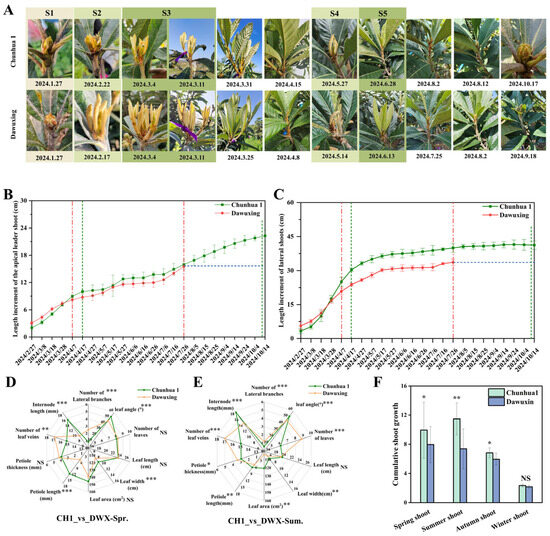
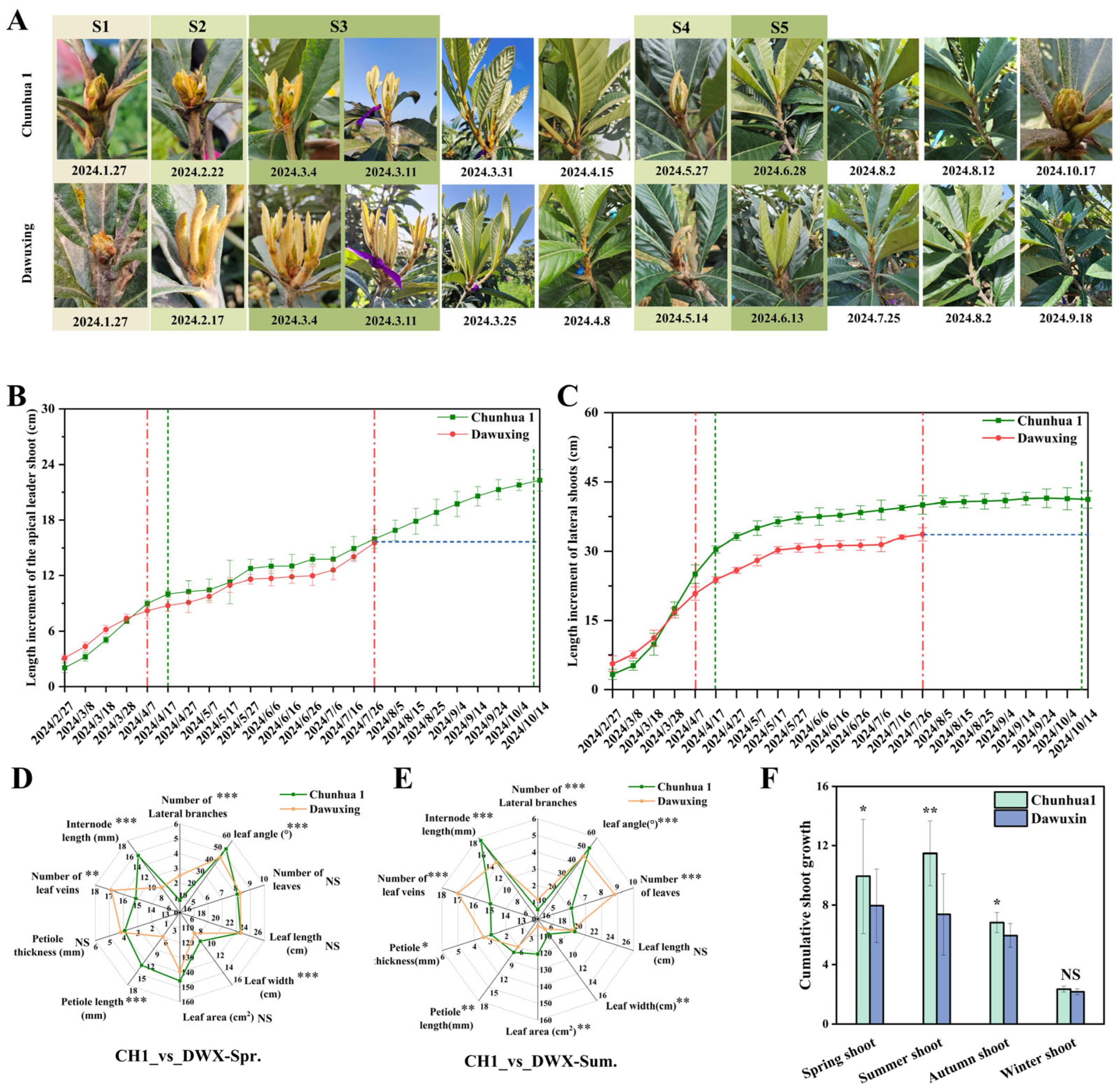
Significant differences are observed in the spring and summer shoot growth characteristics between ‘Dawuxing’ and ‘Chunhua 1’ (Figure 1A). The spring and summer branches are the main bearing branches of loquat. The germination, growth, and floral bud morphological differentiation of spring and summer shoots in ‘Chunhua 1’ loquat occurred 5 to 30 days later than in ‘Dawuxing’ loquat (Figure 1A–C). The growth of the spring and summer shoots indicates that the growing period of branches in ‘Chunhua 1’ is longer than in ‘Dawuxing’. The growing period of spring and summer shoots in ‘Chunhua 1’ loquat is 5 days and 68 days longer than in ‘Dawuxing’ loquat, respectively (Figure 1B). The apical leader branch of ‘Dawuxing’ loquat takes 45 days from germination to cessation of growth in spring, while the apical leader branch of ‘Chunhua 1’ loquat takes 50 days (Figure 1B). In summer, the apical leader branch of ‘Dawuxing’ loquat takes 110 days, whereas the apical leader branch of ‘Chunhua 1’ loquat takes 178 days. ‘Dawuxing’ and ‘Chunhua 1’ loquats enter the floral bud differentiation stage in early August and early October, respectively (Figure 1B). Overall, the growth and development duration of the spring and summer shoots in ‘Chunhua 1’ loquat is longer than in ‘Dawuxing’ loquat, with delayed cessation of growth and later onset of floral bud morphological differentiation (Figure 1A–C). The length of the apical leader branch in the spring and summer shoots of ‘Chunhua 1’ loquat is significantly greater than that of ‘Dawuxing’ loquat (Figure 1B). As the spring shoots of both varieties slow in growth, the apical leader branch length stabilizes, with average lengths of 9.94 cm for ‘Dawuxing’ and 7.96 cm for ‘Chunhua 1’ (Figure 1B,F). By the time both varieties enter the floral bud differentiation stage, the apical leader branch growth in the summer shoots reaches 11.48 cm for ‘Chunhua 1’ and 7.37 cm for ‘Dawuxing’ (Figure 1B,F).
Figure 1.
Developmental Characteristics of Shoots in ‘Dawuxing’ and ‘Chunhua 1’ Loquat. (A) Growth of spring and summer shoots in ‘Chunhua 1’ and ‘Dawuxing’. (B) Elongation dynamics of apical leader shoots in ‘Chunhua 1’ and ‘Dawuxing’. The green dashed lines indicate the seasonal growth cessation of ‘Chunhua 1’, with the left green dashed line marking the end of spring-shoot growth and the right green dashed line marking the end of summer-shoot growth. The red dashed lines indicate the seasonal growth cessation of ‘Dawuxing’, with the left red dashed line marking the end of spring-shoot growth and the right red dashed line marking the end of summer-shoot growth. (C) Thickening growth dynamics of apical leader shoots in ‘Chunhua 1’ and ‘Dawuxing’. The meaning of the red and green dashed lines in this figure is consistent with that in (B). (D) Spring shoot and leaf traits in ‘Chunhua 1’ and ‘Dawuxing’. (E) Summer shoot and leaf traits in ‘Chunhua 1’ and ‘Dawuxing’. (F) Cumulative elongation of apical leader shoots across seasons in ‘Chunhua 1’ and ‘Dawuxing’. Note: *, **, and *** indicate significant differences at p < 0.05, p < 0.01, and p < 0.001, respectively; NS indicates no significant difference.
Furthermore, a comparison of the main characteristics of shoots and their corresponding leaves reveals significant differences in leaf angle, number of lateral branches, and internode length between ‘Dawuxing’ and ‘Chunhua 1’ loquats (Figure 1D,E). In both the spring and summer seasons, the apical leader branch of ‘Chunhua 1’ loquat shows fewer lateral branches, longer internodes, and larger leaf angles compared to ‘Dawuxing’ loquat (Figure 1D,E).
3.2. Analysis of Micromorphological Characteristics of Leaves in ‘Dawuxing’ and ‘Chunhua 1’ Loquat
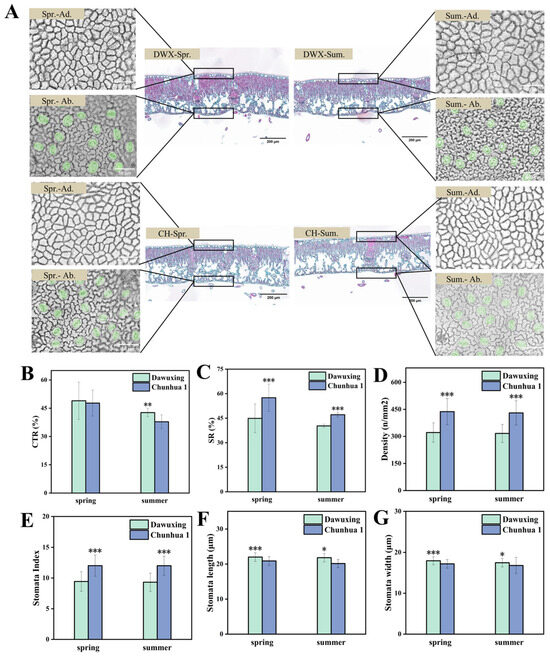
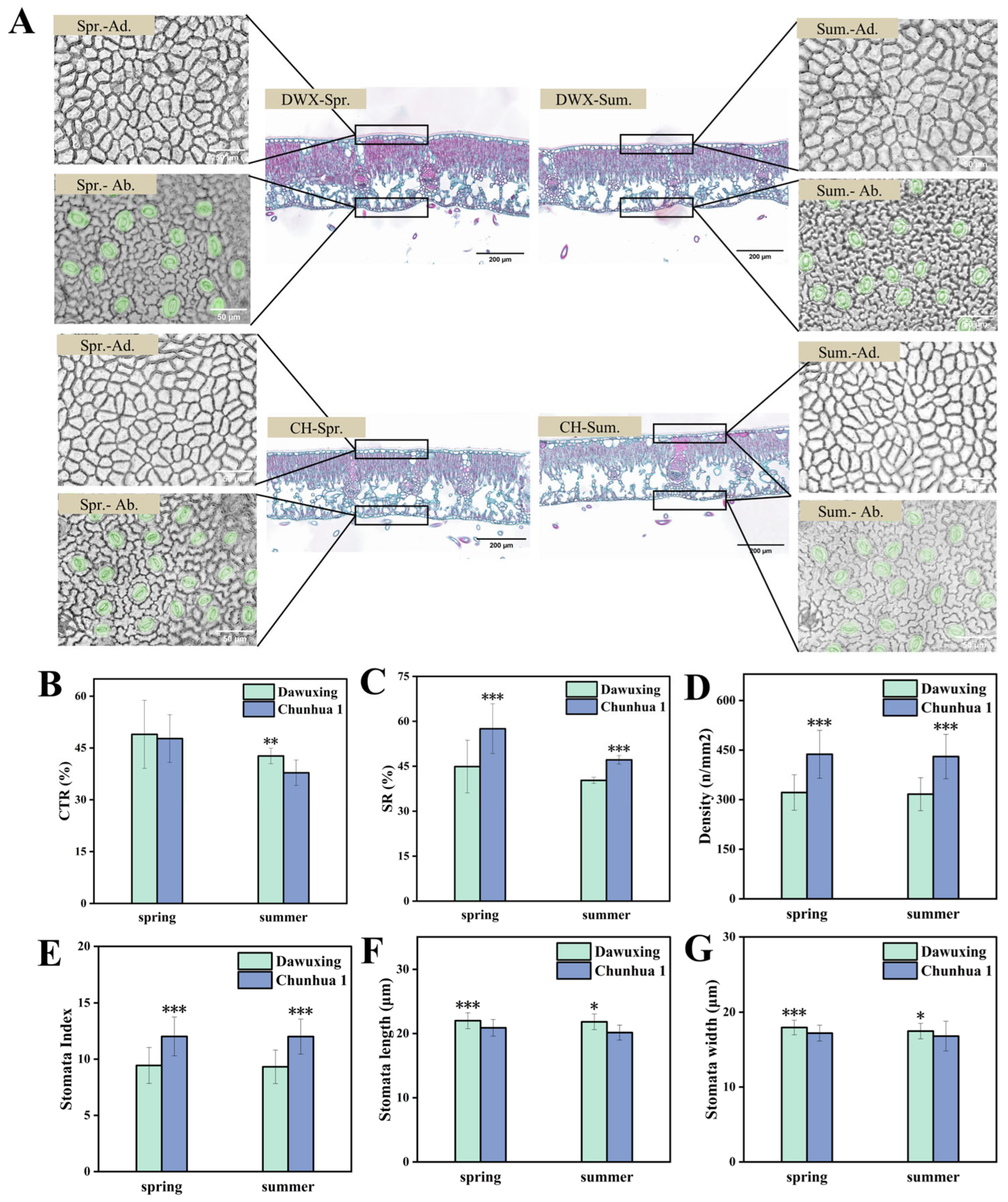
To further investigate the growth differences between the ‘Dawuxing’ and ‘Chunhua 1’ varieties, the structures of their main nutrient-storing organ, the leaves, were examined and compared. As a result, during spring and summer, the palisade tissue of ‘Chunhua 1’ loquat leaves is significantly thinner than that of ‘Dawuxing’ (Figure 2A,B), whereas the spongy tissue is thicker (Figure 2A,C). Consequently, the cell arrangement in ‘Chunhua 1’ loquat leaves is more loosely organized, while that of ‘Dawuxing’ loquat leaves is more tightly packed.
Figure 2.
Micromorphological Characteristics of Leaves in ‘Dawuxing’ and ‘Chunhua 1’ Loquat. (A) Longitudinal leaf sections of ‘Dawuxing’ and ‘Chunhua 1’. Enlarged views of the epidermis are shown in black boxes. (B) Palisade Tightness Ratio (CTR, %) of mature spring and summer leaves. (C) Sponginess Ratio (SR, %) of mature spring and summer leaves. (D) Stomatal density on the abaxial surface of mature spring and summer leaves. (E) Stomatal index on the abaxial surface of mature spring and summer leaves. (F) Stomatal length on the abaxial surface of mature spring and summer leaves. (G) Stomatal width on the abaxial surface of mature spring and summer leaves. Note: *, **, and *** indicate significant differences at p < 0.05, p < 0.01, and p < 0.001, respectively.
The stomatal apparatuses of both ‘Dawuxing’ and ‘Chunhua 1’ loquat are distributed on the lower epidermis of the leaves (Figure 2A). Notably, the stomatal density and stomatal index in mature ‘Chunhua 1’ leaves are significantly higher than those in ‘Dawuxing’ (Figure 2A,D,E). In contrast, the length and width of the stomatal apparatus in mature ‘Chunhua 1’ leaves are distinctly shorter than in ‘Dawuxing’ leaves (Figure 2A,F,G). These results indicate distinct differences in the leaf microstructures of ‘Dawuxing’ and ‘Chunhua 1’.
3.3. Transcriptomic Differences in ‘Chunhua 1’ and ‘Dawuxing’ Loquat Apical Bud
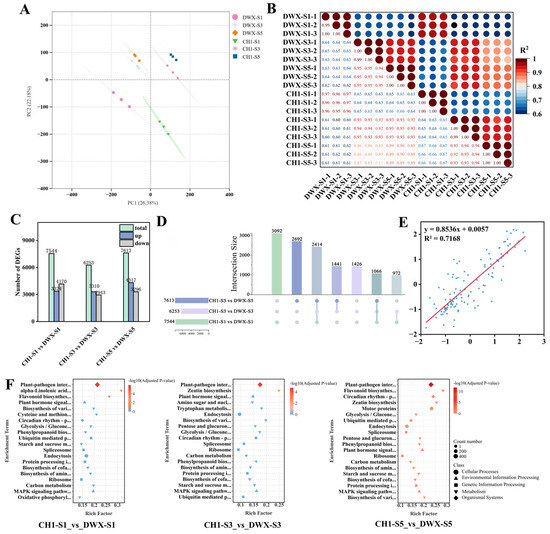
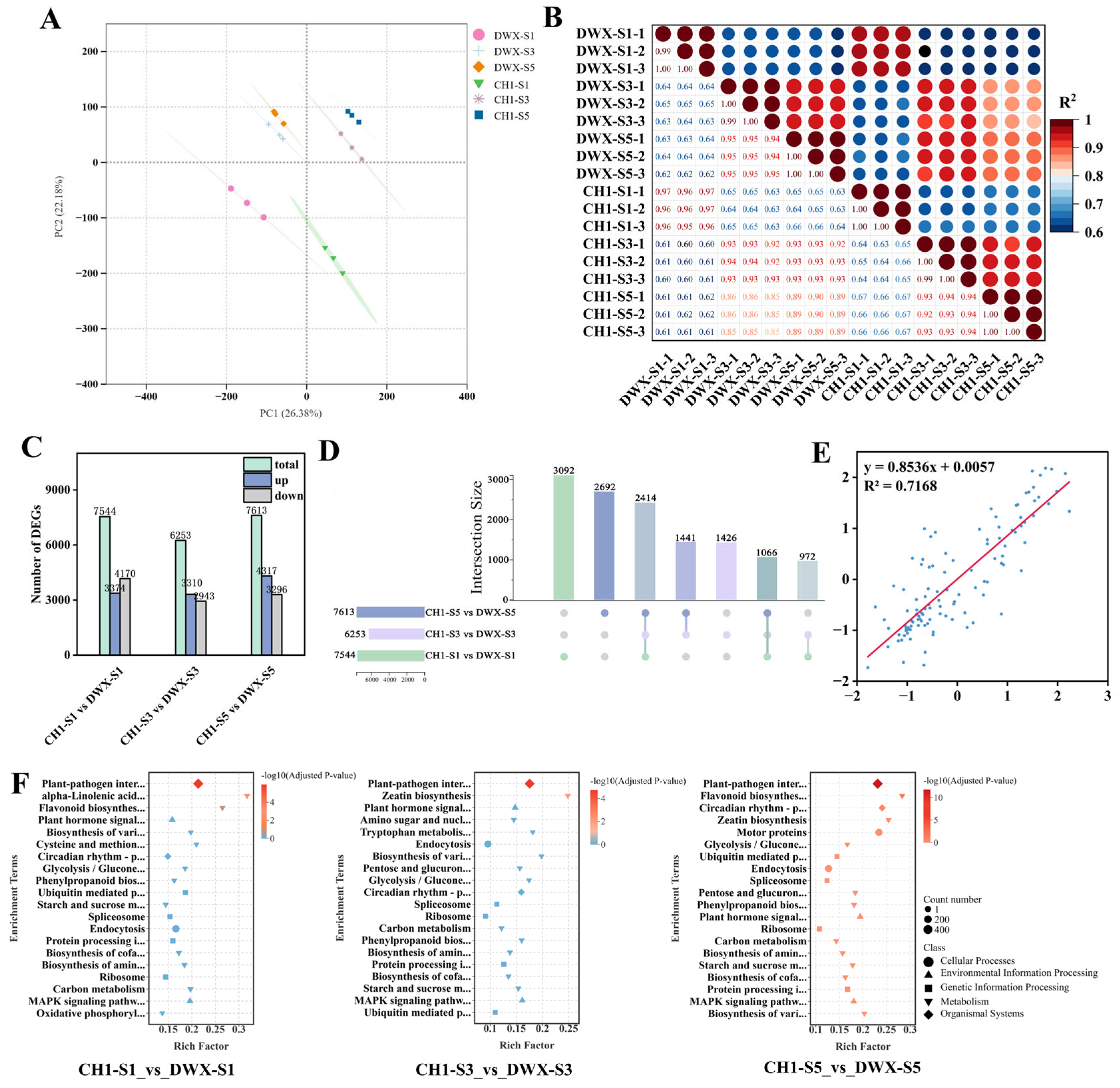
To further investigate the potential molecular mechanisms underlying shoot growth differences between ‘Chunhua 1’ and ‘Dawuxing’ loquat, RNA-seq was conducted to analyze the transcriptional data of the apical leader buds at three growth stages in ‘Chunhua 1’ and ‘Dawuxing’. The average clean data for each sample exceeds 6.04 Gb, with Q20 values above 98.66% and Q30 values exceeding 95.83%, ensuring adequate sequencing accuracy and quality. Principal component analysis (PCA) of gene expression across all samples reveals clear separation between ‘Dawuxing’ and ‘Chunhua 1’ loquat, highlighting strong consistency within groups and significant differences between the two varieties (Figure 3A). The R2 values between biological replicates are ≥ 0.99, confirming the reliability of the transcriptomic data (Figure 3B). Furthermore, qRT-PCR on 20 randomly selected genes validates the accuracy of the RNA-seq data. The squared correlation coefficient (R2) between the RNA-seq and qRT-PCR data is 0.7168, indicating that most gene expression trends align with the RNA-seq results (Figure 3E). The transcriptomic data are reliable and suitable for further analysis.
Figure 3.
Transcriptome Overview of Apical Buds in ‘Chunhua 1’ and ‘Dawuxing’ Loquat. (A) PCA of RNA-seq data showed differences in varieties and stages. (B) Correlation Heatmap of RNA-seq data showed consistency within groups. (C) The number of DEGs during different stages for CH1_vs_DWX (D). Upset diagram of the DEGs: the circles of different colors represent different gene sets, and the values represent the number of common and unique genes between different gene sets. (E) Linear Regression Between RNA-seq and qRT-PCR Data. (F) Top twenty pathways enriched according to the KEGG for the DEGs: The vertical axis represents the pathway name, and the horizontal axis represents the ratio of the number of genes enriched in the pathway (sample number) to the number of annotated genes (background number). The larger the rich factor, the greater the degree of enrichment. The size of the point indicates the number of genes in that pathway, and its color corresponds to different p-adjust ranges. The complete enrichment terms can be found in Table A3.
Genes with |log2FoldChange| ≥ 1 and an FDR-adjusted p-value < 0.05 are defined as differentially expressed genes (DEGs). The comparisons CH1-S1_vs_DWX-S1, CH1-S3_vs_DWX-S3 and CH1-S5_vs_DWX-S5 revealed 7544 (3374 upregulated and 4170 downregulated), 6253 (3310 upregulated and 2943 downregulated) and 7613 (4317 upregulated and 3296 downregulated) DEGs (Figure 3C). Among them, 2414 DEGs show differential expression across all three periods (Figure 3D). A total of 3092 genes exhibit differential expression only in the S1 period (Figure 3D). 1441 genes are differentially expressed in both S3 and S5, while 1426 genes show specific differential expression only in the S3, and 2692 genes exhibit specific differential expression only in the S5 period (Figure 3C,D).
To further analyze the functions of the DEGs, the Kyoto Encyclopedia of Genes and Genomes (KEGG) pathway annotations were performed for the DEGs at the three growth stages of shoot development (Figure 3F). the KEGG pathway enrichment analysis of ‘Chunhua 1’ and ‘Dawuxing’ samples indicated that the DEGs were primarily enriched in several pathways, including those related to “Plant hormone signal transduction”, and “MAPK signaling pathway—plant” (Figure 3F). At stages S1, S3, and S5, the plant hormone signal transduction pathway is enriched with 191, 178, and 234 DEGs, respectively, while the MAPK signaling pathway–plant pathway is enriched with 163, 134, and 150 DEGs, respectively (Figure 3F).
3.4. Determination of Plant Hormones in ‘Dawuxing’ and ‘Chunhua 1’
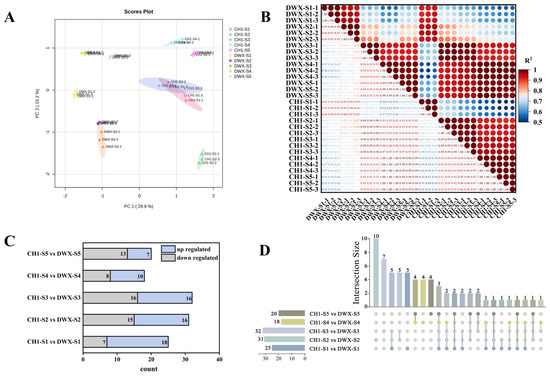
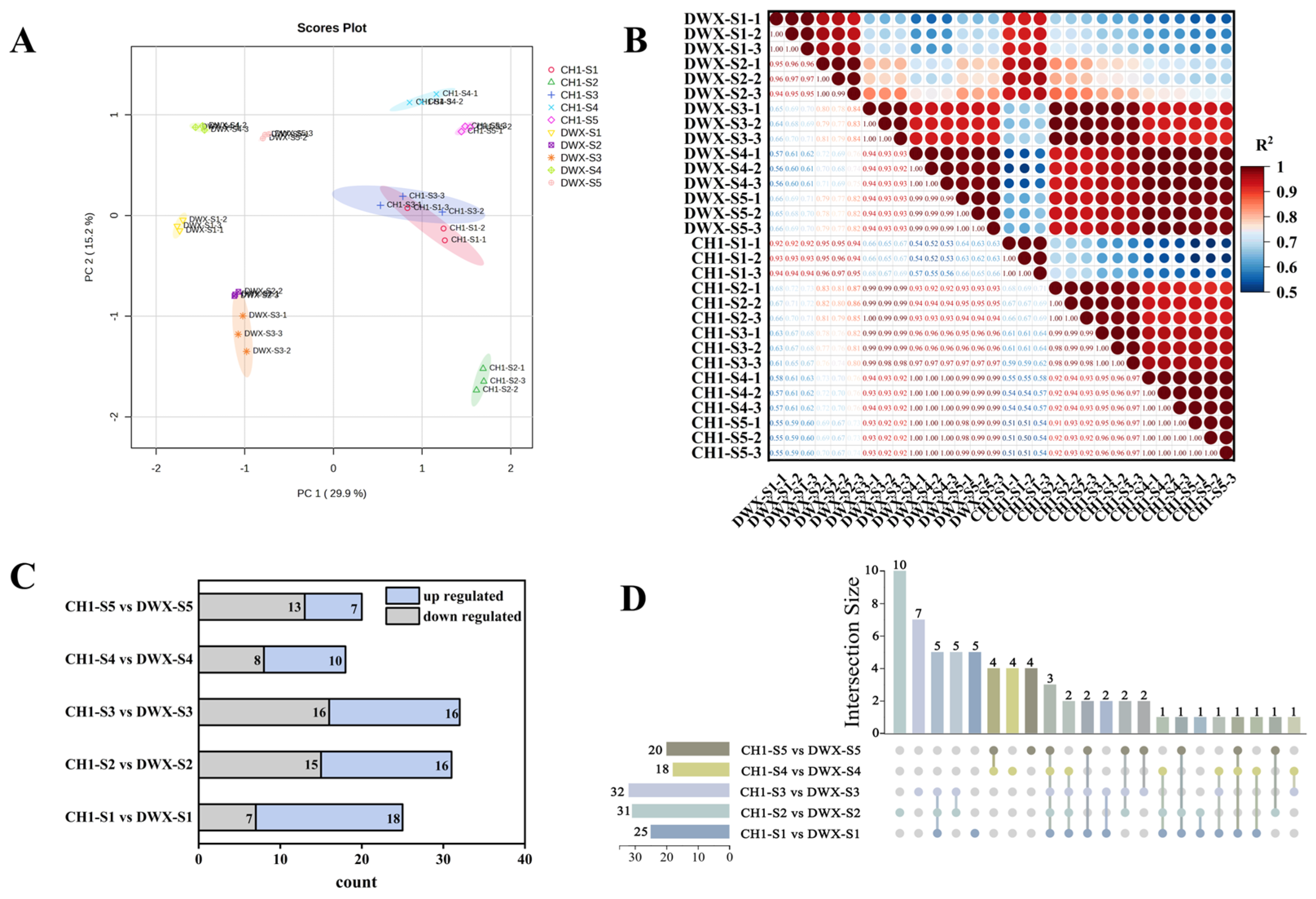
Transcriptomic data reveal that a large number of DEGs are enriched in plant hormone signal transduction pathways (Figure 3F). Therefore, contents of endogenous hormones in the apical leader branch buds of ‘Dawuxing’ and ‘Chunhua 1’ loquat at the S1, S2, S3, S4, and S5 stages were further examined (Figure 4). Principal component analysis (PCA) shows clear separation between ‘Dawuxing’ and ‘Chunhua 1’, with high repeatability within each group (Figure 4A). Similarly to the transcriptomic results, the R2 values between biological replicates are ≥0.98, confirming the data’s reliability (Figure 4B).
Figure 4.
Hormone-Targeted Metabolomics Overview of Apical Buds in ‘Chunhua 1’ and ‘Dawuxing’ Loquat. (A) PCA of the content of plant hormones showed differences in varieties and stages. (B) Correlation Heatmap of content of plant hormones showed consistency within groups. (C) The number of differential plant hormones during different stages for CH1_vs_DWX. (D) Upset diagram of the differential plant hormones: the circles of different colors represent different groups, and the values represent the number of common and unique genes between different gene sets.
Plant hormones with |log2FoldChange| ≥ 1 and FDR-adjusted p-value < 0.05 are defined as differential plant hormones. As shown in Figure 4, 25 differential plant hormones are identified in S1, with 18 upregulated and 7 downregulated (Figure 4C,D). In S2, 31 differential plant hormones are identified, with 16 upregulated and 15 downregulated (Figure 4C,D). In S3, 16 upregulated and 16 downregulated plant hormones are identified, totaling 32 (Figure 4C,D). In S4, 18 differential plant hormones are identified, with 10 having higher levels in the apical leader branch buds of ‘Chunhua 1’ than in ‘Dawuxing’ loquat, and 8 having lower levels in ‘Chunhua 1’ (Figure 4C,D). In S5, 20 differential plant hormones are identified. 7 plant hormones are relatively upregulated, and 13 are relatively downregulated (Figure 4C,D).
A comparative analysis compared the levels of active endogenous hormones and their derivatives involved in plant hormone signal transduction pathways (Table 2). 13 active endogenous hormones and their derivatives are detected across the five stages of apical leader branch development in both varieties, including those related to Indole-3-acetic acid (IAA), Indole-3-butyric acid (IBA), trans-zeatin (tZ), Dihydrozeatin (DZ), N6-isopentenyladenine (IP), trans-Zeatin riboside (tZR), Gibberellin A3 (GA3), Gibberellin A4 (GA4), jasmonic acid (JA), Salicylic acid (SA), abscisic acid (ABA), Strigol (ST), and 5-deoxy-stachyose (5DS) (Table 2).
Table 2.
Endogenous Hormone Content in Shoot Tips of ‘Chunhua 1’ and ‘Dawuxing’ at Different Stages.
In S1, a total of 11 active endogenous hormones and their derivatives are detected. The content of ABA is the highest (Table 2). The levels of auxins (IAA + IBA), ABA, JA, SA, and 5DS in the apical buds of ‘Chunhua 1’ are significantly higher than those in ‘Dawuxing’ (Table 2). IBA and 5DS are detected only in the apical buds of ‘Chunhua 1’ (Table 2). In S2, 11 active endogenous hormones and their derivatives are detected in both varieties, and the levels of auxins (IAA), cytokinins (tZ, DZ, IP, tZR), and gibberellins (GA3, GA4) in the apical buds of ‘Chunhua 1’ are significantly lower than those in ‘Dawuxing’. 5DS is detected only in the apical buds of ‘Chunhua 1’ in S2 (Table 2). In S3, 10 active endogenous hormones and their derivatives are detected in both varieties, and the levels of auxins (IAA), cytokinins (tZ, DZ, IP, tZR), and gibberellins (GA3, GA4) in the apical buds of ‘Chunhua 1’ are significantly higher than those in ‘Dawuxing’ (Table 2). In S4, 9 active endogenous hormones and their derivatives are detected in both varieties, with ABA levels in the apical buds of ‘Chunhua 1’ being significantly higher than those in ‘Dawuxing’ (Table 2). The levels of cytokinins (tZ, DZ, IP, tZR) in the apical buds of ‘Chunhua 1’ are lower than those in ‘Dawuxing’ (Table 2). In S5, 9 active endogenous hormones and their derivatives are detected in both varieties (Table 2). The IAA levels in the apical buds of ‘Chunhua 1’ are significantly higher than those in ‘Dawuxing’, while the total levels of cytokinins (tZ, DZ, IP, tZR) in the apical buds of ‘Chunhua 1’ are lower than those in ‘Dawuxing’ (Table 2).
In the five stages of new shoot development for both loquat varieties, tZR is identified as the most abundant active substance among the cytokinins (tZ, DZ, IP, tZR) (Table 2). The tZR content in the apical buds of ‘Dawuxing’ loquat is consistently higher than that in ‘Chunhua 1’. However, during the formation and germination of axillary meristems (S1 and S2), the abscisic acid content in ‘Dawuxing’ apical buds is lower than that in ‘Chunhua 1’ (Table 2). Thus, the higher number of lateral branches in ‘Dawuxing’ loquat compared to ‘Chunhua 1’ is likely attributed to the lower cytokinin levels and higher levels of abscisic acid and strigolactones.
3.5. Expression Clustering of Differential Plant Hormone
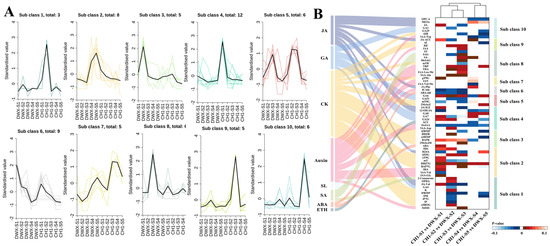
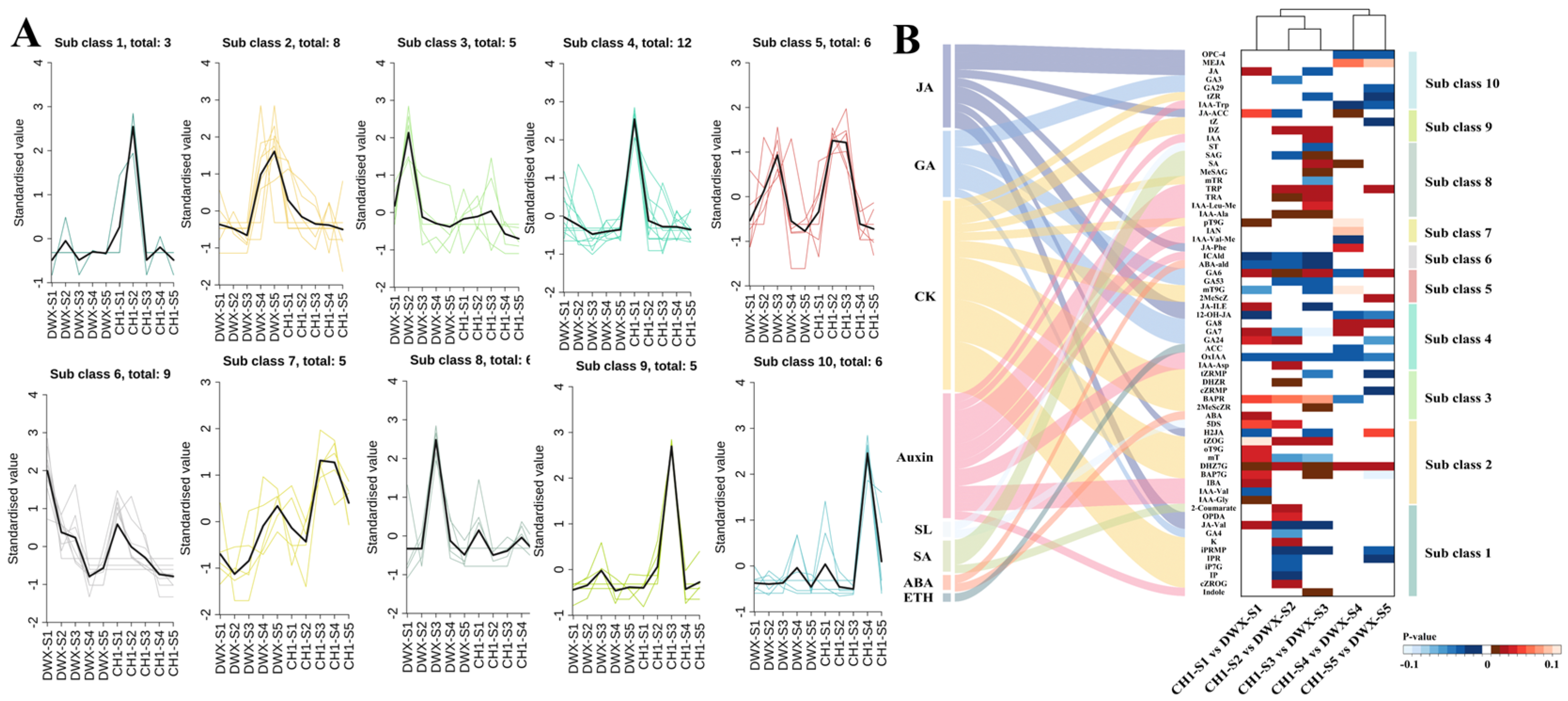
To further visualize the trends in differential plant hormone changes, trend analysis was conducted on the differential plant hormones, and heatmaps were generated based on different plant hormone categories (Figure 5). The trend analysis reveals that 65 differential plant hormones are classified into 10 groups based on the similarity of their content trends (Figure 5A). Among them, class 2 and class 9 contain plant hormones that exhibit significant varietal differences during the early stage of apical bud swelling (S1) (Figure 5A). The metabolites grouped in class 2 include: IAA-Gly, IAA-Val, IBA, BAP7G, DHZ7G, mT, oT9G, tZOG, H2JA, and 5DS. The metabolites in class 9 include: IAA, DZ, tZ, and JA-ACC. The active hormones and their derivatives include auxins (IAA, IBA), stachyose lactone (5DS), and cytokinins (DZ, tZ) (Figure 5B).
Figure 5.
Classification and Annotation of Differential Plant Hormones. (A) K-means cluster analysis of differential plant hormones during the S1–S5 of CH1_vs_DWX. (B) Heatmap of differential hormone contents between ‘Chunhua 1’ and ‘Dawuxing’ (CH1_vs_DWX) from S1 to S5. Red indicates higher hormone levels in ‘Chunhua 1’ compared to ‘Dawuxing’, while blue indicates lower levels. Deeper color intensity reflects a greater difference in phytohormone content between the two cultivars.
3.6. Hormone-Related Genes That May Be Involved in Apical Buds
To further elucidate the potential molecular mechanisms by which hormones influence branching differences between ‘Dawuxing’ and ‘Chunhua 1’ loquat. Correlation analysis was performed between the levels of differential plant hormones in S1 and FPKM of differentially expressed genes enriched in plant hormone signal transduction pathways. The Pearson correlation coefficient and p-value were calculated, and results with an absolute correlation coefficient greater than 0.08 and a p-value less than 0.05 were selected for trend analysis (Figure A2).
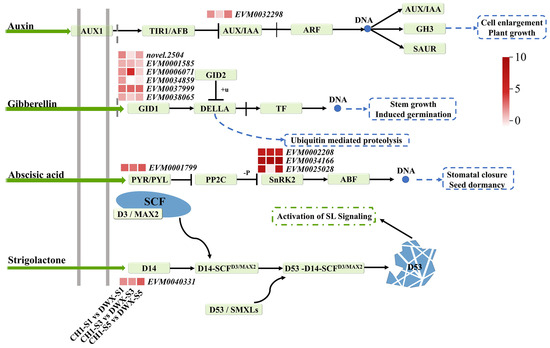
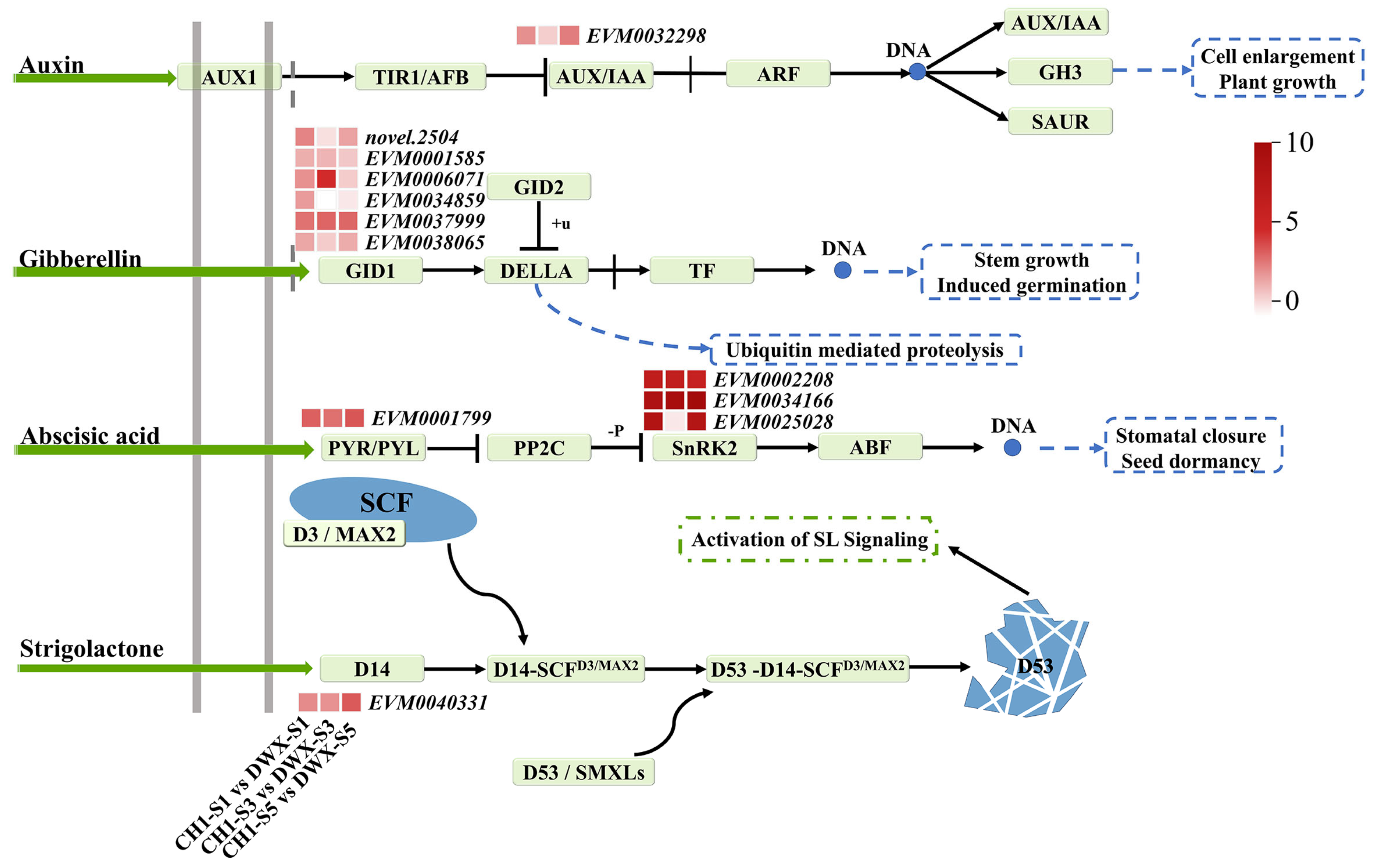
A trend comparison is conducted between the levels of IBA, GA7, 5DS, and ABA and the expression changes in differential genes in the plant hormone signal transduction pathways (Figure 6, Table A4, Table A5, Table A6 and Table A7). The results show that 12 genes exhibit expression patterns consistent with the corresponding changes in hormone content. These candidate genes are described by their functions (Figure 6, Table A8). Among the 12 candidate genes, one is involved in the auxin signal transduction pathway (AUX/IAA, auxin-responsive protein IAA), six are involved in the gibberellin signal transduction pathway (GID1, gibberellin receptor), four are involved in the abscisic acid signal transduction pathway (PYR/PYL, abscisic acid receptor PYR/PYL family), and one encodes D14 of the strigolactone signal transduction pathway (Figure 6). D14 gene encoding a strigolactone receptor.
Figure 6.
Schematic Representation of Plant Hormone Signaling Pathways. Candidate genes involved in the plant hormone signaling pathways include: AUX/IAA (auxin/indole-3-acetic acid proteins), GID1 (a soluble gibberellin receptor protein), PYR/PYL (ABA receptor proteins), SnRK2 (Type 2C Protein Phosphatase), D14 (karrikin receptor protein).
3.7. The Qrt-PCR of Candidate Genes
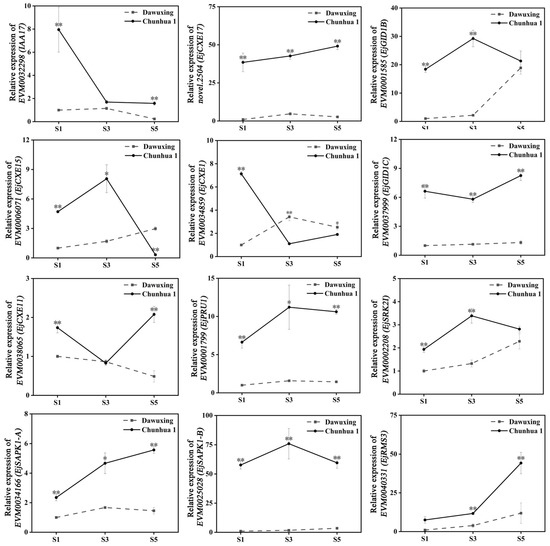
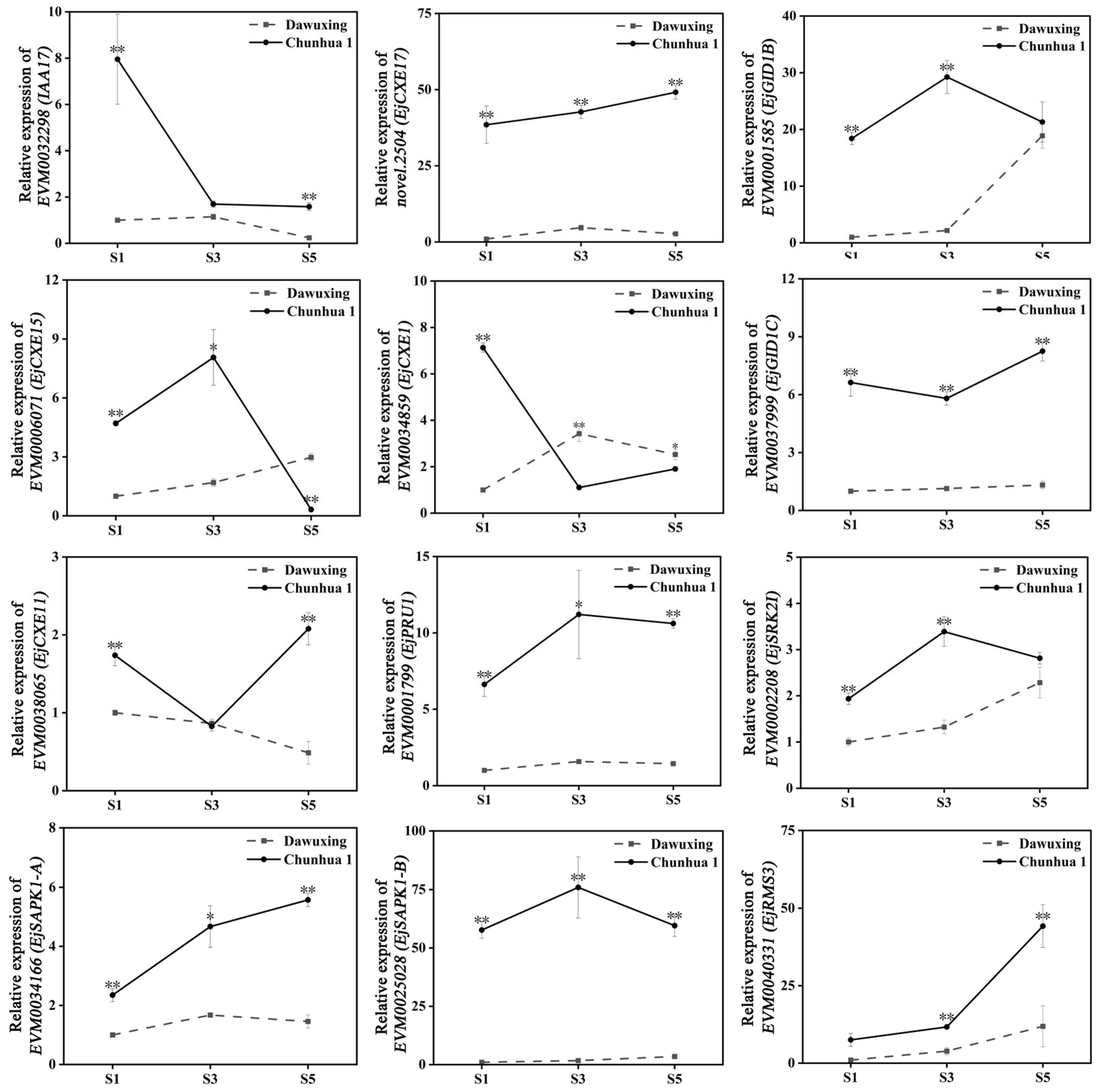
The 12 differential expression genes were identified using qRT-PCR (Figure 7). AUX/IAA is an early auxin response gene that plays an important role in the growth process involved in the auxin signal transduction pathway. The relative expression of EVM0032298 (EjIAA17) in the apical buds of ‘Chunhua 1’ is significantly higher than in ‘Dawuxing’ during S1, S3, and S5 (Figure 7). In S1, the relative expression of EVM0032298 (EjIAA17) in ‘Chunhua 1’ is approximately 8 times higher than in ‘Dawuxing’. This high expression is likely linked to the high content of IBA in the apical bud of ‘Chunhua 1’ before swelling. Six GID1-encoding genes, novel.2504 (EjCXE17), EVM0001585 (EjGID1B), EVM0006071 (EjCXE15), EVM0034859 (EjCXE1), EVM0037999 (EjGID1C), and EVM0038065 (EjCXE11), exhibit significantly higher expression levels in ‘Chunhua 1’ S1 compared to ‘Dawuxing’, consistent with the high content of GA3 (Figure 7). EVM0001799 (EjPRU1) encodes an abscisic acid receptor that activates downstream transcription factors. Its expression pattern is similar in both ‘Chunhua 1’ and ‘Dawuxing’, with higher expression levels during the growing period and the highest in S3 (Figure 7). The expression level of ‘Chunhua 1’ EVM0001799 (EjPRU1) is significantly higher at all stages compared to ‘Dawuxing’ (Figure 7). SnRK2 is a core regulatory point in ABA response, regulating ABA signal transduction through phosphorylation. The homologous genes encoding SnRK2 in ‘Chunhua 1’ loquat, EVM0002208 (EjSRK2I), EVM0034166 (EjSAPK1), and EVM0025028 (EjSAPK1), show significantly higher relative expression in S1 compared to ‘Dawuxing’ loquat (Figure 7). Previous studies identify the α/β-hydrolase D14 (DWARF14) and its homologs as strigolactone receptors. In loquat, the homologous gene EVM0040331 (EjRMS3) shows a similar expression pattern in both ‘Chunhua 1’ and ‘Dawuxing’. Its relative expression level is relatively low in S1, increases during the growing period, and peaks in S5, which is higher than that in S3. In all stages, the expression levels of ‘Chunhua 1’ EVM0040331 (EjRMS3) are significantly higher than those in ‘Dawuxing’ (Figure 7).
Figure 7.
Expression Trends in Candidate Genes. Note: * and ** indicate significant differences at p < 0.05, p < 0.01, respectively.
RT-qPCR shows that EVM0025028 (EjSAPK1) and EVM0040331 (EjRMS3) display the largest relative expression differences among the 12 genes, suggesting that they may be key regulatory genes responsible for the branching differences between ‘Chunhua 1’ and ‘Dawuxing’ (Figure 7).
4. Discussion
To investigate the overall responses of ‘Chunhua 1’ and ‘Dawuxing’ loquat to environmental conditions and endogenous factors, we quantify key growth-related parameters during the spring and summer shoot development stages, which represent the primary periods of vegetative growth (Figure 1B–F). We also analyze stem and leaf structure to identify morphological differences between the two cultivars (Figure 1D,E). A comparison of bud sprouting times reveals that ‘Chunhua 1’ undergoes a longer quiescent phase before bud break in spring, with both apical and lateral buds breaking later than those of ‘Dawuxing’ (Figure 1A–C). The fruit of ‘Chunhua 1’ also matures later. After fruit harvest, ‘Chunhua 1’ quickly initiates summer shoot growth, indicating a tightly coordinated transition between reproductive and vegetative development (Figure 1B). However, when summer shoot development in ‘Chunhua 1’ coincides with the fruit bulking stage in May to June, the shoot growth rate declines sharply. This finding suggests strong competition between vegetative and reproductive growth during this period (Figure 1B). This is particularly important because summer shoots serve as the main bearing shoots in loquat. When nutrients are distributed between shoot and fruit development, both processes tend to be compromised, often leading to inadequate nutrient accumulation or incomplete fruit growth [26]. In this study, we observe that ‘Chunhua 1’ develops fewer lateral branches and forms thinner, weaker shoots compared to ‘Dawuxing’ (Figure 1D,E). These shoot characteristics are less favorable for fruit production than short, thick, and well-branched shoots, which is consistent with previous findings [4,27]. Stem diameter is widely regarded as an indicator of stem vigor and a reliable predictor of field performance, with a strong positive correlation to yield. In sorghum (Sorghum bicolor L. Moench), trait association analysis reveals that stem diameter is significantly and positively correlated with grain yield at the plant level [28]. Thicker and stronger shoots tend to support a greater number and size of fruits. For example, in walnut trees, larger shoot diameter and length, together with greater leaf area, are directly associated with higher fruit yield and size [27]. Similarly, in olives, cultivars with denser branching and more leaves per unit of wood show a lower wood-to-leaf biomass ratio, which improves the shoot’s capacity to export carbon and contributes to better fruit productivity [4]. Lateral branches expand the photosynthetic area, enhance carbon assimilation, and ensure a sufficient carbon supply for fruit development. The limited number of lateral branches in ‘Chunhua 1’ reduces the availability of both robust and adequate numbers of shoots needed to support flower bud placement and nutrient supply (Figure 1D,E).
Leaf traits also differ significantly between the two cultivars (Figure 1D,E). ‘Chunhua 1’ displays a notably wider leaf angle, which likely reduces leaf overlap and broadens canopy spatial distribution, thereby enhancing light interception. This suggests that ‘Chunhua 1’ has a stronger ability to capture light compared to the cultivated variety ‘Dawuxing’ (Figure 1D,E). Leaf angle is known to explain a substantial proportion of variation in canopy light interception [29]. In sorghum, for instance, leaf angle accounts for 36% of the variation in the canopy light extinction coefficient, indicating that wider (more horizontal) angles can markedly improve light interception at the canopy level [30,31]. While no significant difference is observed in mature leaf area during spring, the summer shoot leaves of ‘Chunhua 1’ are significantly larger than those of ‘Dawuxing’ (Figure 1D,E). In both cultivars, spring shoot leaves are larger than summer shoot leaves, likely due to the nutrient drain caused by fruit maturation, which limits assimilate availability during summer leaf development.
The anatomical structure of plant leaves serves as the site for photosynthesis and transpiration, and is critical for overall photosynthetic performance. The anatomical structure of mature leaves in ‘Chunhua 1’ and ‘Dawuxing’ was examined to identify phenotypic differences at a microscopic level (Figure 2A). Compared with ‘Dawuxing’, the leaves of ‘Chunhua 1’ exhibit a low palisade-to-spongy tissue ratio (Figure 2A). The palisade tissue is thinner with relatively shorter cells, while the proportion of spongy tissue is increased, resulting in a looser mesophyll structure (Figure 2A–C). This loose mesophyll facilitates gas exchange and water transpiration, conferring greater CO2 diffusion capacity (mesophyll conductance). In addition, the reduced number of structural tissue layers allows light to penetrate more easily, and together with the larger leaf area, enhances light interception. Research on leaf stomata is crucial for revealing the mechanisms that drive phenotypic changes in growth mutants. Previous studies have shown that stomatal traits in seedlings can help predict the growth performance of mature trees. In Eucalyptus and Quercus species, stomatal length and density measured at an early stage are closely related to later height growth and overall tree size [32,33]. For example, in Eucalyptus ovata, seedlings with longer stomata showed faster early growth, which was linked to better survival and performance in maturity [32]. In oaks, genetic regions (QTLs) that affect stomatal density were also found to influence growth traits. Alleles related to higher stomatal density were generally connected to taller and larger trees, suggesting that stomatal traits and growth share a common genetic basis [33]. Research on Eucalyptus pauciflora and other species further supports the idea that early selection based on stomatal and related leaf traits can improve later growth and survival by promoting strong early development [34]. In ‘Chunhua 1’, stomatal density and stomatal index are significantly higher than in ‘Dawuxing’, whereas stomatal size is significantly smaller. The stomata are arranged in a pattern characterized by high density and small pore size (Figure 2D–G).
To further explore the molecular mechanisms underlying branching differences, we performed transcriptome sequencing on ‘Chunhua 1’ and ‘Dawuxing’ loquat. The results showed a marked enrichment in plant hormone signal transduction pathways, indicating their critical role in regulating branching (Figure 3F). Consequently, we measured the levels of plant hormones. The hormones showing significant differences between the two cultivars included Auxins, Cytokinins, Gibberellins, Jasmonates, Strigolactones, and Abscisic Acid (Figure A1B; Table 2). These hormone categories are broadly consistent with those previously reported to be associated with branching in plants [35]. Auxins, gibberellins, abscisic acid, and strigolactones show a negative correlation with branch number, whereas cytokinins show a positive correlation, consistent with previous research findings (Figure A1C; Table 2) [36]. The differential plant hormones that can enter the signal transduction pathway in an active form include indole-3-butyric acid (IBA), gibberellin A7 (GA7), abscisic acid (ABA), and 5-deoxystrigol (5DS). In ‘Chunhua 1’, the levels of these four endogenous hormones in apical buds during the early stage of bud swelling are significantly higher than in ‘Dawuxing’ (Table 2). During the growth and development of spring and summer shoots, the auxin-to-cytokinin ratio in ‘Chunhua 1’ is significantly higher than that in ‘Dawuxing’ at most stages (Table 2). However, a lower auxin-to-cytokinin ratio is generally considered more favorable for the formation of meristematic tissues. In Lilium lancifolium, for example, a lower IAA (auxin) to ZR (cytokinin) ratio was found to promote axillary meristem development, which supports this general principle [37]. Therefore, the high auxin and low cytokinin levels in ‘Chunhua 1’ are likely one of the reasons for its limited branch production. In ‘Dawuxing’, the apical buds of spring shoots show a high auxin-to-cytokinin ratio during the bud swelling stage (Table 2). Based on it, this stage is likely to have completed the development of meristematic tissue, indicating that the material preparation is finished before bud swelling and marking a key period for lateral branch initiation. Abscisic acid (ABA) signaling also plays an important role in regulating plant branching [38,39]. In species such as Arabidopsis [16], potato [40], and cucumber [39], high levels of ABA in axillary buds suppress their outgrowth. This suppression is achieved by downregulating genes related to the cell cycle and auxin pathways. ABA acts downstream of key branching regulators, including BRC1, and helps integrate environmental and hormonal signals to adjust branching responses [38,41]. When ABA levels are reduced or its signaling is weakened through genetic methods or enhanced ABA breakdown, axillary bud outgrowth is promoted. In contrast, when ABA levels or signaling strength increase, branching is suppressed [16,39,40]. Strigolactones are important signals that regulate plant branching [11]. They interact with other hormones, especially auxin and cytokinin, to coordinate the control of branching [42]. The D14 gene encodes a strigolactone receptor and is involved in strigolactone signal transduction [43]. Mutants of D14 show increased branching, and this effect cannot be reversed by applying external strigolactone. This confirms that D14 is essential for receiving the strigolactone signal that inhibits shoot branching [44,45]. In other species, such as alfalfa and cotton, silencing or mutating D14 homologs also results in more branches. These results support the conserved function of D14 in strigolactone signaling and shoot structure [26,46]. In this study, the candidate gene related to branching differences in loquat, EVM0040331, is annotated as the D14 gene that encodes the loquat strigolactone receptor, and there is correlation with the number of branches of loquat. (Table A8, Figure A1C,D). It is likely to play a role in controlling branching in loquat, in line with findings from previous studies.
Through screening differentially expressed genes associated with plant hormone signal transduction, twelve hormone-related genes were identified as potential regulatory factors. Among them, EVM0025028 (EjSAPK1) and EVM0040331 (EjRMS3) are proposed as key candidates underlying the branching differences observed between ‘Chunhua 1’ and ‘Dawuxing’. These findings provide a theoretical basis for advancing branching-regulation strategies in loquat. However, several limitations should be noted. Functional verification of EjSAPK1 and EjRMS3 has not yet been completed, and additional pathway-related genes within the candidate set may also contribute to branching regulation. Moreover, this study was conducted on only two loquat cultivars, and whether the identified regulatory mechanisms are conserved across other germplasm remains to be validated. Further investigations are therefore required to elucidate the precise roles of these genes and to determine the broader applicability of these findings.
5. Conclusions
In this study, we provide evidence that ‘Chunhua 1’ loquat produces fewer branches compared to ‘Dawuxing’, yet exhibits more shoot growth each season. This suggests that ‘Chunhua 1’ allocates more nutrients toward shoot elongation rather than shoot number. The ratio between branch number and xylem area can reflect the plant’s growth focus. A higher number of new branches during the shoot development stage provides more sites for fruit production and better structural support for future yield. However, analyzing xylem-to-branch ratios only at the shoot level does not fully capture the condition of the entire tree. By examining the structure of the leaves, which act as the main source organs for carbon supply, we find that ‘Chunhua 1’ has looser leaf tissue. This suggests that the timing and capacity of carbon export at the whole-canopy level may be affected. Importantly, we also observe that the carbon export ability of ‘Chunhua 1’ leaves is not significantly reduced. These results indicate that the major factor influencing branching differences between the two cultivars is the internal allocation of metabolic resources. Further transcriptomic analysis confirms that plant hormone signaling pathways play a key role in shoot growth in both cultivars. Integrating quantification data identified twelve hormone-related signaling genes as potential regulators, with EVM0025028 (EjSAPK1) and EVM0040331 (EjRMS3) proposed as key genes governing the branching differences between ‘Chunhua 1’ and ‘Dawuxing’. These conclusions provide a theoretical foundation for the development of branch regulation techniques in loquat cultivation.
Author Contributions
X.L.: Conceptualization, Data curation, Visualization, Writing—original draft, Writing—review & editing. C.F.: Investigation, Data collection, Visualization. R.S.: Investigation, Formal analysis, Literature search. P.S.: Investigation, Data collection, Visualization. X.P.: Investigation, Data collection, Data analysis. J.Z.: Investigation, Literature search, Visualization. Y.L.: Writing-review & editing, Supervision. Q.D.: Conceptualization, Funding acquisition, Project administration, Supervision. All authors have read and agreed to the published version of the manuscript.
Funding
This study was funded by the Sichuan Science and Technology Support Program 14th Five-Year Breeding Projects (2021YFYZ0023-07), the program of the Fruit Innovation Team of Sichuan Province within the National Modern Agricultural Industrial Technology System (SCCXTD-2024-4), and Sichuan Provincial Finance Department Project for Promoting High-Quality Agricultural Development: Tianfu Superior Seed Varieties Extension Project (035-2412129349).
Data Availability Statement
The data presented in this study are available on request from the corresponding authors due to privacy concerns.
Conflicts of Interest
The authors declare that they have no competing interests.
Appendix A
Figure A1.
(A) Transcription Factor Family Analysis of ‘Chunhua 1’ and ‘Dawuxing’ at Different Developmental Stages. (B) Classification statistics of differential plant hormones of different stages. (C) Heatmap of the Correlation Between Plant Hormone Content and the Number of Branches in Spring and Summer branches of Loquat. (D) Heatmap of the Correlation Between key DEGs and the Number of Branches in Spring and Summer branches. (E) Heatmap of the Correlation Between key DEGs and Plant Hormone Content. Note: CS denotes spring shoots, and XS denotes summer shoots. Note: *, **, and *** indicate significant differences at p < 0.05, p < 0.01, and p < 0.001, respectively.
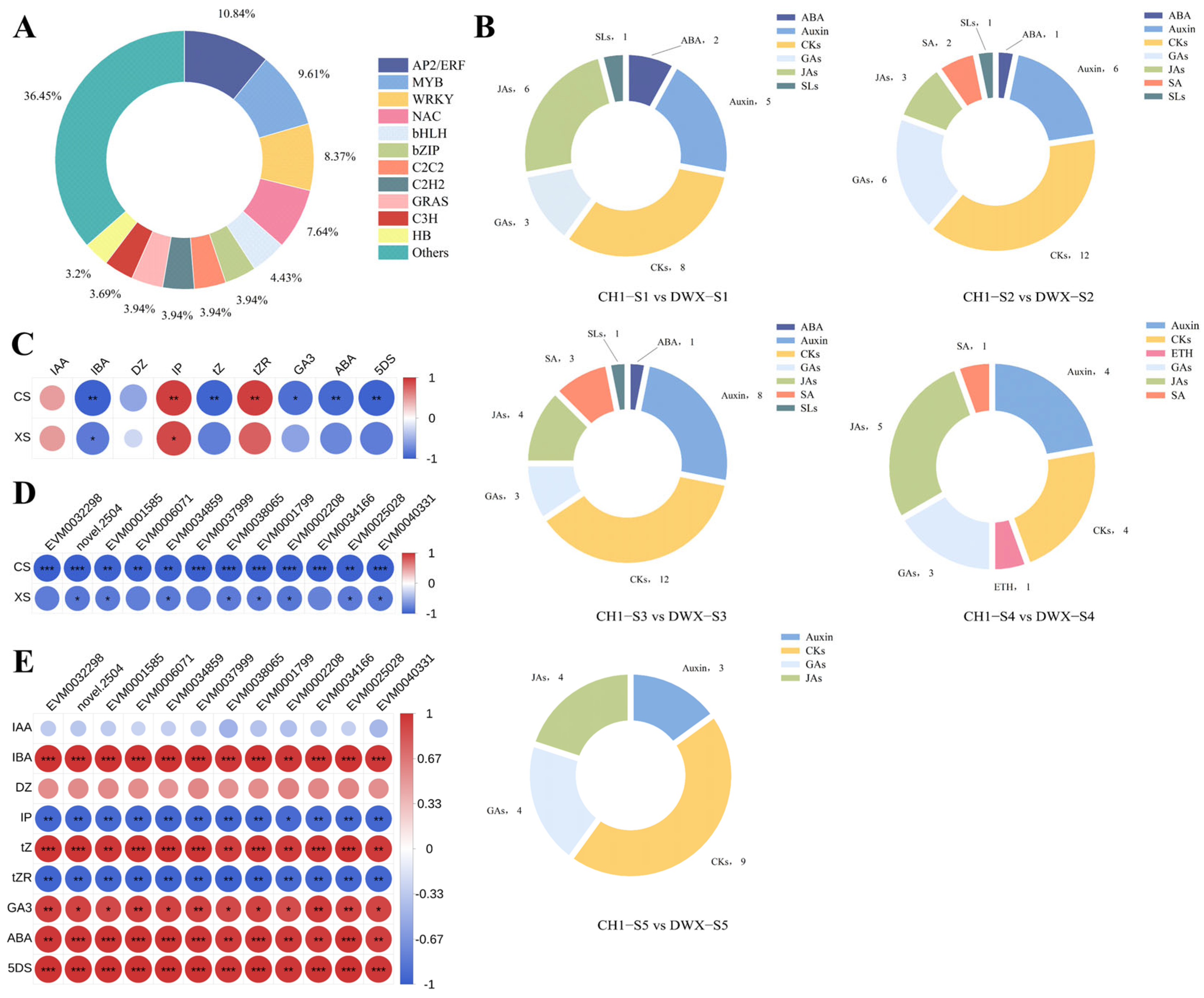
Figure A2.
Nine-quadrant plot of differential plant hormone and differential gene correlation.
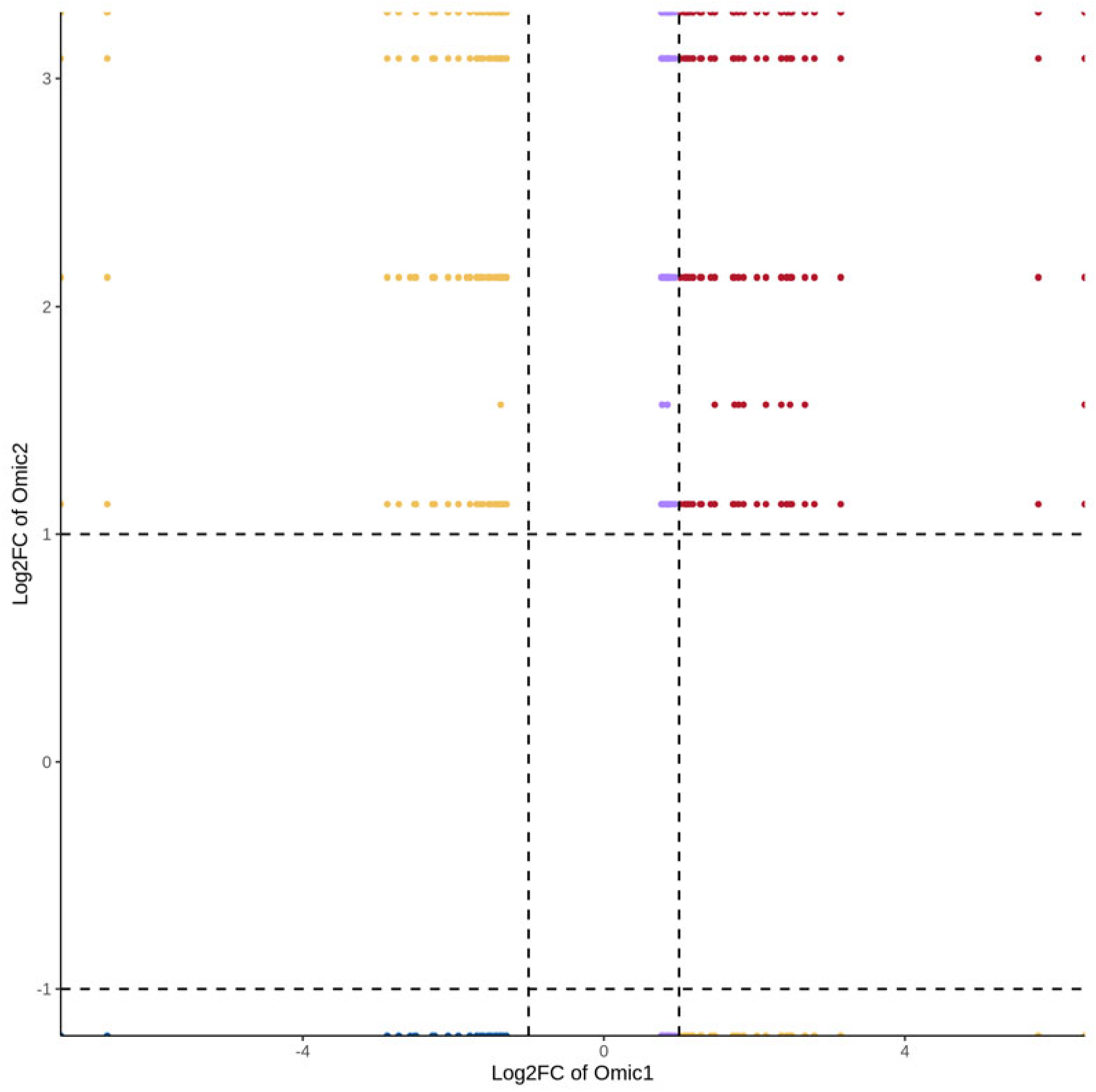
Table A1.
Primer for qRT-PCR.
Table A2.
System configuration of qPT-PCR Reaction.
Table A3.
The pathway name of Enrichment Terms.
Table A4.
DEGs associated with IBA content in auxin signal transduction pathway.
Table A5.
DEGs associated with GA7 content in gibberellin signal transduction pathway.
Table A6.
DEGs associated with ABA content in abscisic acid signal transduction pathway.
Table A7.
DEGs associated with 5DS content in Strigolactone signal transduction pathway.
Table A8.
The annotation of candidate genes related to plant hormone signal transduction pathway.
References
- Rosati, A.; Paoletti, A.; Lodolini, E.; Famiani, F. Cultivar ideotype for intensive olive orchards: Plant vigor, biomass partitioning, tree architecture and fruiting characteristics. Front. Plant Sci. 2024, 15, 1345182. [Google Scholar] [CrossRef] [Scilit]
- Wang, B.; Smith, S.M.; Li, J. Genetic regulation of shoot architecture. Annu. Rev. Plant Biol. 2018, 69, 437–468. [Google Scholar] [CrossRef] [Scilit] [PubMed]
- Wang, H.; Liu, S.; Ma, S.; Wang, Y.; Yang, H.; Liu, J.; Li, M.; Cui, X.; Liang, S.; Cheng, Q.; et al. Characterization of the molecular events underlying the establishment of axillary meristem region in pepper. Int. J. Mol. Sci. 2023, 24, 12718. [Google Scholar] [CrossRef] [Scilit]
- Rosati, A.; Paoletti, A.; Al Hariri, R.; Famiani, F. Fruit production and branching density affect shoot and whole-tree wood to leaf biomass ratio in olive. Tree Physiol. 2018, 38, 1278–1285. [Google Scholar] [CrossRef] [Scilit]
- McSteen, P.; Leyser, O. Shoot branching. Annu. Rev. Plant Biol. 2005, 56, 353–374. [Google Scholar] [CrossRef] [Scilit]
- Thimann, K.V.; Skoog, F. Studies on the growth hormone of plants: III. The inhibiting action of the growth substance on bud development. Proc. Natl. Acad. Sci. USA 1933, 19, 714–716. [Google Scholar] [CrossRef] [Scilit] [PubMed]
- Hill, J.L.; Hollender, C.A. Branching out: New insights into the genetic regulation of shoot architecture in trees. Curr. Opin. Plant Biol. 2019, 47, 73–80. [Google Scholar] [CrossRef] [Scilit]
- Yang, L.; Zhu, S.; Xu, J. Roles of auxin in the inhibition of shoot branching in ‘Dugan’ fir. Tree Physiol. 2022, 42, 1411–1431. [Google Scholar] [CrossRef] [Scilit]
- Beveridge, C.A.; Dun, E.A.; Rameau, C. Pea has its tendrils in branching discoveries spanning a century from auxin to strigolactones. Plant Physiol. 2009, 151, 985–990. [Google Scholar] [CrossRef] [Scilit] [PubMed]
- Domagalska, M.A.; Leyser, O. Signal integration in the control of shoot branching. Nat. Rev. Mol. Cell Biol. 2011, 12, 211–221. [Google Scholar] [CrossRef] [Scilit]
- Dun, E.A.; Brewer, P.B.; Beveridge, C.A. Strigolactones: Discovery of the elusive shoot branching hormone. Trends Plant Sci. 2009, 14, 364–372. [Google Scholar] [CrossRef] [Scilit] [PubMed]
- Müller, D.; Leyser, O. Auxin, cytokinin and the control of shoot branching. Ann. Bot. 2011, 107, 1203–1212. [Google Scholar] [CrossRef] [Scilit]
- Müller, D.; Waldie, T.; Miyawaki, K.; To, J.P.; Melnyk, C.W.; Kieber, J.J.; Kakimoto, T.; Leyser, O. Cytokinin is required for escape but not release from auxin mediated apical dominance. Plant J. 2015, 82, 874–886. [Google Scholar] [CrossRef] [Scilit]
- Cárdenas-Aquino, M.D.R.; Sarria-Guzmán, Y.; Martínez-Antonio, A. Isoprenoid and aromatic cytokinins in shoot branching. Plant Sci. 2022, 319, 111240. [Google Scholar] [CrossRef] [Scilit]
- Salam, B.; Barbier, F.; Danieli, R.; Teper-Bamnolker, P.; Ziv, C.; Spíchal, L.; Aruchamy, K.; Shnaider, Y.; Leibman, D.; Shaya, F.; et al. Sucrose promotes stem branching through cytokinin. Plant Physiol. 2021, 186, 1572–1586. [Google Scholar] [CrossRef] [Scilit]
- Yao, C.; Finlayson, S.A. Abscisic acid is a general negative regulator of Arabidopsis axillary bud growth. Plant Physiol. 2015, 169, 611–626. [Google Scholar] [CrossRef] [Scilit]
- Cline, M.G.; Oh, C. A reappraisal of the role of abscisic acid and its interaction with auxin in apical dominance. Ann. Bot. 2006, 98, 891–897. [Google Scholar] [CrossRef] [Scilit]
- Ma, M.M.; Zhang, H.F.; Tian, Q.; Wang, H.C.; Zhang, F.Y.; Tian, X.; Zeng, R.F.; Huang, X.M. MIKC-type MADS-box transcription factor LcSVP2 is involved in dormancy regulation of the terminal buds in evergreen perennial litchi (Litchi chinensis Sonn.). Hortic. Res. 2024, 11, uhae150. [Google Scholar] [CrossRef] [Scilit]
- Xia, X.; Dong, H.; Yin, Y.; Song, X.; Gu, X.; Sang, K.; Zhou, J.; Shi, K.; Zhou, Y.; Foyer, C.H.; et al. Brassinosteroid signaling integrates multiple pathways to release apical dominance in tomato. Proc. Natl. Acad. Sci. USA 2021, 118, e2004384118. [Google Scholar] [CrossRef] [Scilit] [PubMed]
- Gomez-Roldan, V.; Fermas, S.; Brewer, P.B.; Puech-Pagès, V.; Dun, E.A.; Pillot, J.P.; Letisse, F.; Matusova, R.; Danoun, S.; Portais, J.C.; et al. Strigolactone inhibition of shoot branching. Nature 2008, 455, 189–194. [Google Scholar] [CrossRef] [Scilit] [PubMed]
- Liang, J.; Zhao, L.; Challis, R.; Leyser, O. Strigolactone regulation of shoot branching in chrysanthemum (Dendranthema grandiflorum). J. Exp. Bot. 2010, 61, 3069–3078. [Google Scholar] [CrossRef] [Scilit] [PubMed]
- Dun, E.; De Saint Germain, A.; Rameau, C.; Beveridge, C. Dynamics of strigolactone function and shoot branching responses in Pisum sativum. Mol. Plant. 2013, 6, 128–140. [Google Scholar] [CrossRef] [Scilit]
- Dilcher, D.L. Approaches to the identification of angiosperm leaf remains. Bot. Rev. 1974, 40, 1–157. Available online: https://www.jstor.org/stable/4353863 (accessed on 14 October 2025). [CrossRef] [Scilit]
- Baranova, M.A. Historical development of the present classification of morphological types of stomates. Bot. Rev. 1987, 53, 53–79. [Google Scholar] [CrossRef] [Scilit]
- Wang, Y. A draft genome, resequencing, and metabolomes reveal the genetic background and molecular basis of the nutritional and medicinal properties of loquat (Eriobotrya japonica (Thunb.) Lindl). Hortic. Res. 2021, 8, 231. [Google Scholar] [CrossRef] [Scilit]
- Wang, F.; Xu, X.; Jia, Z.; Hou, X.; Chen, Q.; Sha, J.; Liu, Z.; Zhu, Z.; Jiang, Y.; Ge, S. Nitrification inhibitor 3,4-dimethylpyrazole phosphate application during the later stage of apple fruit expansion regulates soil mineral nitrogen and tree carbon–nitrogen nutrition, and improves fruit quality. Front. Plant Sci. 2020, 11, 764. [Google Scholar] [CrossRef] [Scilit] [PubMed]
- Valdebenito, D.; Farias, D.; Oyanedel, E.; Castro, M.; Lampinen, B.; Tixier, A.; Saa, S. The morphology of a walnut (Juglans regia L.) shoot is affected by its position in the canopy and correlated to the number and size of its fruits. Sci. Hortic. 2017, 220, 303–309. [Google Scholar] [CrossRef] [Scilit]
- Tawa, D.L.; Pathak, S.; Roy, A. Variability and correlation coefficient analysis studies in promising germplasm of sorghum (Sorghum bicolor (L.) Moench). Ecol. Environ. Conserv. 2024, 30, S56–S62. [Google Scholar] [CrossRef] [Scilit]
- Yang, X.; Li, R.; Jablonski, A.; Stovall, A.; Kim, J.; Yi, K.; Ma, Y.; Beverly, D.; Phillips, R.; Novick, K.; et al. Leaf angle as a leaf and canopy trait: Rejuvenating its role in ecology with new technology. Ecol. Lett. 2023, 26, 801–814. [Google Scholar] [CrossRef] [Scilit]
- Zhi, X.; Tao, Y.; Jordan, D.; Borrell, A.; Hunt, C.; Cruickshank, A.; Potgieter, A.; Wu, A.; Hammer, G.; George-Jaeggli, B.; et al. Genetic control of leaf angle in sorghum and its effect on light interception. J. Exp. Bot. 2021, 72, 7615–7627. [Google Scholar] [CrossRef] [Scilit]
- Mantilla-Perez, M.; Fernandez, M. Differential manipulation of leaf angle throughout the canopy: Current status and prospects. J. Exp. Bot. 2017, 68, 5699–5717. [Google Scholar] [CrossRef] [Scilit]
- Silva, J.C.; Potts, B.M.; Prober, S.M. Performance-based inference of selection on stomatal length and specific leaf area varies with climate-of-origin of the forest tree, Eucalyptus ovata. Perspect. Plant Ecol. Evol. Syst. 2023, 62, 125765. [Google Scholar] [CrossRef] [Scilit]
- Gailing, O.; Langenfeld-Heyser, R.; Polle, A.; Finkeldey, R. Quantitative trait loci affecting stomatal density and growth in a Quercus robur progeny: Implications for the adaptation to changing environments. Glob. Change Biol. 2008, 14, 1934–1946. [Google Scholar] [CrossRef] [Scilit]
- Silva, J.; Potts, B.M.; Wiehl, G.; Prober, S.M. Linking leaf economic and hydraulic traits with early-age growth performance and survival of Eucalyptus pauciflora. Front. Plant Sci. 2022, 13, 973087. [Google Scholar] [CrossRef] [Scilit]
- Rameau, C.; Bertheloot, J.; Leduc, N.; Andrieu, B.; Foucher, F.; Sakr, S. Multiple pathways regulate shoot branching. Front. Plant Sci. 2015, 5, 741. [Google Scholar] [CrossRef] [Scilit] [PubMed]
- Yang, Y.; Hu, Y.; Li, P.; Hancock, J.T.; Hu, X.Y. Research progress and application of plant branching. Phyton 2023, 92, 680–689. [Google Scholar] [CrossRef] [Scilit]
- Tang, Y.; Luo, K.; Bai, J.; Zhang, W.; Ming, J. Development of an in vitro bulbil-induction system for Lilium lancifolium and the impact of exogenous auxin on bulbil formation. Sci. Hortic. 2024, 340, 113885. [Google Scholar] [CrossRef] [Scilit]
- Zhan, J.; Chu, Y.; Wang, Y.; Diao, Y.; Zhao, Y.; Liu, L.; Wei, X.; Meng, Y.; Li, F.; Ge, X. The miR164-GhCUC2-GhBRC1 module regulates plant architecture through abscisic acid in cotton. Plant Biotechnol. J. 2021, 19, 1839–1851. [Google Scholar] [CrossRef] [Scilit]
- Chen, J.; Liu, L.; Wang, G.; Chen, G.; Liu, X.; Li, M.; Han, L.; Song, W.; Wang, S.; Li, C.; et al. The AGAMOUS-LIKE 16-GENERAL REGULATORY FACTOR 1 module regulates axillary bud outgrowth via catabolism of abscisic acid in cucumber. Plant Cell 2024, 36, 2689–2708. [Google Scholar] [CrossRef] [Scilit]
- Liu, T.; Dong, L.; Wang, E.; Liu, S.; Cheng, Y.; Zhao, J.; Xu, S.; Liang, Z.; Ma, H.; Nie, B.; et al. StHAB1, a negative regulatory factor in abscisic acid signaling, plays crucial roles in potato drought tolerance and shoot branching. J. Exp. Bot. 2023, 74, 6708–6721. [Google Scholar] [CrossRef] [Scilit] [PubMed]
- Holalu, S.V.; Reddy, S.K.; Blackman, B.; Finlayson, S.A. Phytochrome interacting factors 4 and 5 regulate axillary branching via bud abscisic acid and stem auxin signaling. Plant Cell Environ. 2020, 43, 2224–2238. [Google Scholar] [CrossRef] [Scilit] [PubMed]
- Dun, E.A.; Brewer, P.B.; Gillam, E.J.; Beveridge, C.A. Strigolactones and shoot branching: What is the real hormone and how does it work? Plant Cell Physiol. 2023, 64, 967–983. [Google Scholar] [CrossRef] [Scilit]
- Beveridge, C.A.; Kyozuka, J. New genes in the strigolactone-related shoot branching pathway. Curr. Opin. Plant Biol. 2010, 13, 34–39. [Google Scholar] [CrossRef] [Scilit]
- Wen, C.; Xi, L.; Gao, B.; Wang, K.; Lv, S.; Kou, Y.; Ma, N.; Zhao, L. Roles of DgD14 in regulation of shoot branching in chrysanthemum (Dendranthema grandiflorum ‘Jinba’). Plant Physiol. Biochem. 2015, 96, 241–253. [Google Scholar] [CrossRef] [Scilit]
- Yao, R.; Ming, Z.; Yan, L.; Li, S.; Wang, F.; Yu, C.; Ma, S.; Yang, M.; Chen, L.; Chen, L.; et al. DWARF14 is a non-canonical hormone receptor for strigolactone. Nature 2016, 536, 469–473. [Google Scholar] [CrossRef] [Scilit] [PubMed]
- Ma, L.; Zhang, Y.; Wen, H.; Liu, W.; Zhou, Y.; Wang, X. Silencing of MsD14 resulted in enhanced forage biomass through increasing shoot branching in alfalfa (Medicago sativa L.). Plants 2022, 11, 939. [Google Scholar] [CrossRef] [Scilit] [PubMed]

Disclaimer/Publisher’s Note: The statements, opinions and data contained in all publications are solely those of the individual author(s) and contributor(s) and not of MDPI and/or the editor(s). MDPI and/or the editor(s) disclaim responsibility for any injury to people or property resulting from any ideas, methods, instructions or products referred to in the content. |
© 2025 by the authors. Licensee MDPI, Basel, Switzerland. This article is an open access article distributed under the terms and conditions of the Creative Commons Attribution (CC BY) license.