Article

Foliar Spray Application of an Extract from Klebsormidium sp. K39 Retrieved by Phycoremediation Process: Biochemical Response to Drought Stress on Tomato Plants


Department of Agriculture, Food and Environment, University of Catania, 95123 Catania, Italy
*
Author to whom correspondence should be addressed.
Agronomy 2026, 16(1), 36; https://doi.org/10.3390/agronomy16010036
Submission received: 24 November 2025 / Revised: 16 December 2025 / Accepted: 18 December 2025 / Published: 22 December 2025
(This article belongs to the Section Horticultural and Floricultural Crops)

Abstract

One of the main objectives of agriculture is to improve crop production and mitigate oxidative damage caused by climate change, such as water stress. This study evaluated the potential use of Klebsormidium sp. K39 extract (Kleb), obtained by phycoremediation treatment, to address these agricultural challenges. The experimental trials involved the application of Kleb at 1 mg Corg L−1 through foliar spray, under standard or water stress (WS) conditions. The effect of Kleb was evaluated by monitoring growth parameters, antioxidant activities, and lipid peroxidation. The quality parameters of the tomato fruits were also evaluated. The results demonstrated that the application of Klebsormidium extract enhanced tomato growth while maintaining root development and canopy cover under water stress conditions. These findings suggest that Kleb may act as a biostimulant to improve crop resilience. Moreover, treated plants under water stress conditions had an increase in yield of around 35% with respect to untreated stressed plants. Although fruit quality parameters were not significantly affected, in Kleb-treated plants lycopene content increased only under standard conditions, while polyphenol content significantly increased under both WS and standard conditions. In treated plants, lipid peroxidation decreased by 58% in the leaves and 19% in the fruits under WS conditions, suggesting a significant reduction in oxidative damage. In the fruits, correlation analysis revealed positive relationships among key stress markers. These findings suggest that Kleb extract enhances resilience to water stress in tomato plants by modulating antioxidant responses and secondary metabolite production, making it an eco-friendly approach to sustainable crop management under climate-related stressors.

1. Introduction

The global demand for food has recently grown significantly due to population increase and the farming sector is under pressure to produce enough food to ensure world food security [1]. Climate change negatively impacts the yield of agricultural crops, which is significantly limiting global food security, making it difficult to produce enough food for the growing population of the world [2].
Crop performance is influenced by abiotic stressors, such as drought, salinity, and temperature, which limit their potential production [3]. In particular, in many Mediterranean regions, water deficit represents a major problem for crop production under climate change conditions [1]. Sicily represents one of the most affected regions by climate change’s effects, due to its location in the middle of the Mediterranean Sea. The seasonal variability of rainfall in this area is connected to the behavior of the surrounding climatic systems, displaying unusual rainfall behavior and unexpected extreme drought during the summer months [4]. In this context, the combination of extreme heat and drought stress has caused a negative impact on agricultural production in recent years. The European Commission (https://climate.ec.europa.eu/climate-change/consequences-climate-change_en, accessed on 20 October 2025) estimated that major economic losses of around EUR 9 billion are the result of climate change and drought [5].
Morphological characteristics, limited growth and development, and disorders in primary and secondary plant metabolisms are all effects of water deficit [6]. Environmental stress conditions, such as water stress, cause an accumulation of reactive oxygen species (ROS) and toxic molecules within the plants, which damage cellular components. Normally, plants control ROS through scavenging molecules, but stress disrupts this balance, causing excessive ROS accumulation. Plants have evolved complex defense mechanisms to tolerate environmental stress and survive. These antioxidant systems involve enzymatic defenses, such as ascorbate peroxidase (APX), catalase (CAT), and superoxide dismutase (SOD) and non-enzymatic defenses such as ascorbate, carotenoids, and tocopherol accumulation. The enzymatic defense decreases ROS levels by removing O2 with SOD acting in chloroplasts, peroxisomes, and mitochondria. CAT and APX are enzymes that degrade H2O2 into H2O and O2, but CAT is principally present in peroxisomes, while APX is found in chloroplasts, the cytosol, and the mitochondria [7,8]. Furthermore, phenylalanine ammonia lyase (PAL) plays a crucial role, coordinating the response of plants to biotic and abiotic stress and representing a biochemical marker of plant resistance. Moreover, PAL activity promotes defense against physiological diseases during the post-harvest period of fruits [9,10].
To counteract environmental stress conditions, in organic farming, often the use of biostimulants is resorted to. The different types of biostimulants include fungi, plant-growth-promoting rhizobacteria, seaweed extracts, humic substances, protein hydrolysates, and chitosan.
Several studies have demonstrated the use of microalgae extracts for the mitigation of abiotic stress, in addition to promoting plant nutrition and growth [11,12,13,14,15]. La Bella et al. [16] confirmed the importance of microalgae-based products for growth promotion, due to the presence of micro and macronutrients that are essential for agriculture, including N, P, and K. Moreover, different microalgae species, such as Chlorella vulgaris, Scenedesmus quadricauda, and Klebsormidium sp. K39, have been used for wastewater remediation for their dual role of removing pollutants while increasing their biomass [14]. In particular, the application of Klebsormidium sp. K39 cells into the soil showed a higher or equivalent yield of lettuce plants compared to the standard application of recommended doses of mineral fertilizers [14]. Metabolites derived from microalgae have shown promising potential for improving soil fertility, strengthening plant resistance to abiotic stress, eliciting defense responses, and increasing nutrient uptake [17,18]. Despite, the metabolic pathways involved in their action and their impact on plant physiology are still unclear; it is well known that the growth-promoting action associated with microalgae products is due to their biomolecule content, including phytohormones, amino acids, phenols, terpenoids, and polysaccharides [19]. The use of microalgae-based products to mitigate abiotic stress has attracted the attention of researchers and worldwide biostimulant producers due to their richness in bioactive compounds, growth enhancers, antioxidants, and other molecules supporting plant growth [20,21,22].
The tomato (Solanum lycopersicum L.) is an economically important crop throughout the world, particularly in Sicily [23,24]. However, the tomato plant is particularly susceptible to water stress that can cause limited growth and yield. Drought has an important effect on vegetative and reproductive stages, which inhibits seed development and reduces stem and fruit growth [25].
To tackle this challenge, innovative strategies are required to enhance plant resilience to water stress and optimize resource utilization. Based on this need, we hypothesized that foliar application of a Klebsormidium K39 extract could improve the tolerance of tomato plants to water stress and help maintain yield and fruit quality under reduced irrigation conditions. Therefore, this study aims to evaluate the effects of the microalgal extract by monitoring the fruit yield and quality, as well as the morpho-biometric and biochemical responses of tomato plants subjected to water-stress conditions.

2. Materials and Methods

2.1. Microalgae Cultivation and Extract Preparation

The microalgae used in this study were Klebsormidium sp. K39, grown in urban wastewater during a phycoremediation treatment. The microalgae growth was determined as the cell number by Burker’s counting chamber and the initial concentration inoculated into wastewater was 1.1 × 10⁶ cell L−1.
After 20 days of cultivation in wastewater, the biomass was collected and separated by centrifugation (at 4000 rpm for 10 min), washed with distilled water (of a conductivity < 200 µS cm−1), and freeze-dried [26]. The biomass was used as starting material for extract preparation. Microalgal extract stock solution was prepared as described in La Bella et al. [27]. Briefly, microalgae cells were collected and centrifuged at 5000 rpm for 15 min. The final pellet, obtained from biomass, was treated with methanol to lyse the cell wall to obtain the intracellular extract. After centrifugation and evaporation of the organic solvent, the extract was freeze-dried and collected with distilled water to obtain the microalgae extract stock solution [28].
The Klebsormidium sp. K39 was obtained by and maintained in the algal collection of the Department of Agriculture, Food and Environment (Di3A) (University of Catania, Italy), as described in La Bella et al. [29].

2.2. Spectroscopic Characterization

The solid-state 13C MAS NMR spectra were recorded and fully proton-decoupled on a Bruker Avance II 400 MHz (9.4 T) (Bruker Corp., The Woodlands, TX, USA) instrument operating at 100.63 MHz. Rotors with a 7 mm diameter were filled with about 50 mg of the sample; the spinning rate was 8000 Hz s−1. The experimental parameters adopted were as follows: a spectral width of 20,000 Hz, 2 K data points, 100,000 scans, a 5 μs duration, 90 degrees of excitation pulse, and 4 s of relaxation delay. The HPDEC pulse sequence was used with a decoupling power of 300 W (9H). The FID was zero-filled and processed with 5 Hz line broadening. The degree of hydrophobicity was determined according to Barone et al. [28] for humic substances, as follows: HB/HI = [(0–45) + (95–160)/(45–95) + (160–195)].
The main chemical characteristics of wastewater before and after the phycoremediation process by Klebsormidium sp. K39 are reported in the Supplementary Table S2. The microalgal growth increased over the course of the phycoremediation process, reaching a final concentration of 10.6 × 10⁶ cell L−1 after 20 days.
The distribution of the different carbon forms in the microalgal biomass and extract, classified according to the chemical shift regions of the NMR spectra as described by Baglieri et al. [30]—aliphatic (0–45 ppm), N- and O-alkyl (45–95 ppm), aromatic (95–160 ppm), and carboxylic (160–195 ppm)—is presented in Table 1. The NMR spectrum of the Klebsormidium sp. K39 biomass differs in both shape (Supplementary Materials, Figure S2) and carbon composition compared to its corresponding extract. Overall, the distribution of carbon functionalities revealed that the extract contains a higher proportion of alkyl and aromatic carbon compared to the original algal biomass. In contrast, the extract exhibits a lower proportion of carbohydrate- and protein-associated carbon (N- and O-alkyl regions) relative to the biomass. As a result, the extract displayed a higher hydrophobicity index (HB/HI) than the respective biomass from which it was derived (Table 1).

2.3. Experimental Conditions and Plant Material

The experiment was carried out in a greenhouse located in Scoglitti (Sicily) in a period between April to July. Tomato plants (cv. Zannyno), an indeterminate cultivar, were grown under standard agronomic practices. Plants were trellised and pruned regularly to support vertical growth. The planting density was 1 m between rows and 0.4 m between plants within each row (1 × 0.4 m). Irrigation and fertilization were applied to maintain optimal soil moisture and nutrient supply throughout the growing season. Pest and disease management followed integrated pest management guidelines. The greenhouse was a plastic-covered structure with metal frames and a natural ventilation system, designed to maximize sunlight and protect plants from wind and excessive heat. It was provided with a drip irrigation system to guarantee uniform water supply. The climate is semi-arid and Mediterranean, with temperate winters and arid summers. To record the climate data, a data logger Elitech GSP-6 (Elitech, Guangzhou, China) was installed in the greenhouse and the daily temperature of the soil and the relative humidity levels of the air were reported (Supplementary Materials, Figure S1A). Moreover, data from the SIAS (Service informative Agrometeorological Sicilian) was requested and reported (Supplementary Materials, Figure S1B).
A characterization of the soil was carried out before the experimental period. The analyses were determined following the analytical methods described in Puglisi et al. [31] and they are reported in Supplementary Table S1.
The microalgae extract was tested at a concentration calculated based on the organic carbon (Corg) content of the extract, Corg = 1 mg Corg L−1, according to La Bella et al. [14]. The application of the microalgae-based extract was carried out through foliar spray on tomato plants. Moreover, the effect of biostimulants was evaluated by simulating water stress by a 30% reduction of the irrigation water and monitoring the oxidative stress of the plants.
The first application of biostimulants was performed 15 days after transplantation and was repeated every 15 days thereafter, for a total of three treatments. The set-up was a completely random block design. The experimental trials were composed of 3 replicates for treatment and each replicate was made up of 30 plants. The treatments were as follows: (i) control with a standard water supply (CTRL), (ii) treatment with 1 mg Corg L−1 Klebsormidium sp. K39 extract, with a standard water supply (Kleb), (iii) control exposed to water stress (WS CTRL), (iv) treatment with 1 mg Corg L−1 Klebsormidium sp. K39 extract, exposed to water stress (WS Kleb). A standard mineral fertilization was performed before planting, according to the standard production process of tomatoes, with a solid ternary fertilizer NPK made of NH4 NO3, KH2 PO4, and KNO3. Moreover, fertigation was performed once a week.
Tomato cultivation was carried out for 4 months and at the end of the experimental trial fresh leaves were sampled, frozen with liquid nitrogen, and stored at −80 °C for further analysis. The fruits were collected during three harvesting events and analyzed. All reagents used in this activities are provided by Sigma-Aldrich, St. Louis, MO, USA.

2.4. Measurements of Yield and Quality of Fruits

During the experimental trials, the following observations and measurements of plant growth were performed: canopy cover, plant vigor, N-test, root surface. Canopy cover was expressed as a percentage [32]. Further, plants’ visual vigor values were determined on a sample scoring scale ranging from 1 (weak plant) to 10 (vigorous plant). Plant vigor is a commonly used indicator of overall plant health and growth performance, reflecting the combined effect of environmental conditions, nutrient availability, and applied treatments on plant development. Monitoring plant vigor allows the detection of differences in growth responses among treatments. The N-test (Konica, Minolta, Tokyo, Japan) is a non-destructive assessment of the nitrogen status of the plant. It provides an estimation of N content and hence the nutritional status by measuring the color, or chlorophyll index, of the leaf. The root surface was evaluated using the app Canopeo (v1.1.7, Mathworks, Inc., Natick, MA, USA) as a percentage of root area against a green paper sheet placed under the roots, which makes it easier for the app to distinguish between the roots and the background, ensuring a more accurate percentage calculation [33].
During the ripening period, the fruits were harvested to determine the total fruit weight and quality measurements. Fruit weight was measured by digital weighing balance and the average was expressed in kilograms.
The total weight of the fruits was calculated by the following equation: kg marketable fruits + kg unmarketable fruit−1 (kg plants−1).
Twenty ripened fruits were randomly selected for laboratory analyses as described by Shao et al. [34]. The fruit firmness (kg cm−2) was detected by penetrometer, Digital Texture Analyser mod. TA-XT2 (Stable Micro Systems, Godalming, UK). The total soluble solids (TSS) of the tomato juice was detected with a refractometer Carl Zeiss 16531 (Zeiss, Oberkochen, Germany) and expressed as °Brix. The titratable acidity (TA) was determined by titrating 10 mL of juice with 0.1 N NaOH [35]. The ripening index (RI) was measured as the ratio of TSS:TA.

2.5. Lycopene and Polyphenol Determination in Tomato Fruits

Lycopene was extracted from the tomato fruits with a hexane–ethanol–acetone (2:1:1) mixture following the Sharma and Le Maguer [36] method. A sample of 1 g of blended tomato was mixed with 25 mL of the mixture and then placed on the rotary mixer for 30 min. Thereafter, distilled water was added and the mixing continued for another 2 min. The obtained solution was separated into polar and no-polar layers. The blank was hexane and the absorbance was measured at 502 nm (Jasco V-530 UV–vis spectrophotometer, JASCO, Tokyo, Japan). The lycopene content was calculated using its specific extinction coefficient of 3150 (E 1%, 1 cm) and expressed as mg 100 g−1 FW.
The total polyphenol content of the tomato fruits was determined following the Folin–Ciocalteu colorimetric method [37]. The extract was prepared with 10 g of blended tomato and 70% ethyl alcohol (v/v). After 2 h at 25 °C, the mixture was filtered. The extract was diluted 1/10 and used for analysis. The reaction mixture was 0.5 mL of tomato extract, the Folin–Ciocalteu reagent (diluted 1:10 with water), and sodium carbonate (7.5%). For calibration curve preparation, aqueous gallic acid solution was used in the range of 0.2–1.2 µM mL−1. After an incubation of 2 h at 20 °C, the absorption was measured at 740 nm (Jasco V-530 UV–vis spectrophotometer, JASCO, Tokyo, Japan). The activity was expressed as mg of gallic acid equivalents 100 g−1 FW.

2.6. Total Protein Extraction from Tomato Leaves and Fruits

The total protein extraction from the leaves was determined following the method used by Puglisi et al. [38]. Frozen tomato leaves were ground with an extraction buffer containing 220 mM of mannitol, 10 mM of cysteine, 1 mM of EGTA, and 5 of mM HEPES_KOH (pH 7.5) in a 1:1.25 w/v ratio. The homogenate was then filtered and centrifuged at 13,000 rpm for 30 min at 4 °C and the supernatant was again precipitated and recovered with solid (NH4)2 SO4 at 55% saturation.
The protein extraction from the fruit was determined from 0.5 g of fruit with potassium phosphate buffer 50 mM (pH 7.6) and 0.1 mM of disodium ethylenediaminetetraacetate. Then, the mixture was centrifugated for 15 min at 15,000× g and the supernatant fraction was used for enzymatic assays of catalase, superoxide dismutase, and ascorbate peroxidase. The protein extraction for phenylalanine ammonia-lyase activity was performed from 5 g of fruit using sodium borate buffer (pH 8.5) and 5 mM of β-mercaptoethanol as an extractant solution. The extracts were then homogenized and centrifuged at 27,000× g at 4 °C for 40 min. The supernatants were used for PAL assay.
The total protein content was determined by the Bradford [39] method, using Bovine Serum Albumin (BSA) as a standard curve, and expressed as mg protein g−1 FW [39].

2.7. Enzyme Activities in Tomato Tissues

The enzymatic activities of the tomato leaves were measured using the total protein extract, as previously described. An aliquot (1 mL) was centrifuged at 15,000 rpm for 30 min at 4 °C and the pellet was dissolved in the smallest volume possible with the appropriate buffer for each enzymatic activity. The measurements of the enzymatic activities of the tomato fruits were performed on fresh extracts. All activities were performed using three replicates and were compared with a blank.
The catalase (CAT) activity of the tomato extracts was determined according to the method by Aebi [40]. The reaction mixture, with a final volume of 3 mL, contained 50 mM of potassium phosphate (pH 7.8), 10 mM of H2O2, and 50 µL of enzyme extract. For fruit determination, the potassium phosphate buffer was at pH 7. The samples were read at 240 nm (Jasco V-530 UV–vis spectrophotometer), monitoring the decomposition of H2O2 for 1 min. The molar extinction coefficient was 36 mM−1 cm−1.
Measurement of the superoxide dismutase (SOD) activity was carried out as described in Flohè et al. [41]. The assay mixture (3 mL) was made of 0.1 M of sodium phosphate buffer (pH 7.6), H2O, 3 mM of EDTA, 1500 mM of sodium carbonate, 360 mM of L-methionine, 7.5 mM of NTB (nitro blue tetrazolium chloride), 1.5 mM of riboflavin and 100 µL of enzyme extract. The mixture was incubated for 15 min, and the samples were read at 560 nm (Jasco V-530 UV–vis spectrophotometer) and were expressed as units of activity per mg protein−1.
The ascorbate peroxidase (APX) activity was assayed by monitoring the initial ascorbate oxidation by H2O2 [42]. For the reaction, with a final volume of 3 mL, 100 µL of enzyme extract solution was added to the assay mixture, containing 0,1 M of potassium phosphate buffer (pH 7), 5 mM of ascorbic acid, 3 mM of EDTA, 9.7 mM of H2O2. The activity was spectrophotometrically (Jasco V-530 UV–vis spectrophotometer) determined at 290 nm, monitored for 2 min, and used a molar extinction coefficient of 2.8 mM−1 cm−1. APX activity was expressed as µM C6H8O6 mg−1 protein.
The phenylalanine ammonia-lyase (PAL) activity on leaves was measured as reported in Mori et al. [43]. The final mixture (1 mL) contained 100 mM of Tris-HCL buffer (pH 8.8), 40 mM of phenylalanine, and the enzyme extract. The reaction mixture was incubated for 30 min at 37 °C, then stopped with 25% (v/v) TCA and was centrifuged at 10,000 rpm for 15 min at 4 °C. Then, the absorbance of the supernatant was read at 280 nm (Jasco V-530 UV–vis spectrophotometer). For PAL fruit determination, the assay was carried out as described in Assis et al. [44]. 1 mL of enzyme extract was incubated for 60 min at 37 °C with 50 mM of borate buffer (pH 8.8) and 20 mM of L-phenylalanine. The activity was determined using a molar extinction coefficient of 16,890 L mol−1 cm−1 and was expressed as nmol cinnamic acid h−1mg−1 protein.
All enzymatic activities were measured using three replicates, following separate extractions.

2.8. Determination of Proline and Malondialdehyde

The proline content of the leaves was determined following the ninhydrin method of Bates et al. [45], modified by Khedr et al. [46]. The frozen tomato leaves (1 g) were homogenized in 3% aqueous sulphosalicylic acid. The supernatant was separated from the pellet by centrifugation at 12,000× g for 10 min and it was mixed with glacial acetic acid and a ninhydrin reagent in a 1:1 (v/v) ratio. The reaction mixture was incubated at 100 °C for 1 h. Toluene, alongside other additions, was used for extraction, and the absorbance of the organic phase was read at 520 nm (Jasco V-530 UV–vis spectrophotometer), using toluene as a blank. The proline concentration was determined from a standard curve using D-proline and the activity was expressed as µmolg−1 protein.
Malondialdehyde (MDA) content as a lipid peroxidation index was measured according to Heath and Packer [47] for leaves. Samples (of 1 g) were homogenized in 10% trichloroacetic acid (w/v). The mixture was centrifuged at 4000× g for 20 min. The supernatant was recovered (2 mL) and was mixed with 0.67% 2-thiobarbituric acid. The reaction mixture was incubated (at 95–100 °C) for 15 min and centrifuged at 4000× g for 20 min. The MDA content of the tomato fruit was determined following the method of Hu et al. [48]. Fruit samples (of 5 g) were homogenized in 0.1% trichloroacetic acid. After centrifugation (at 10,000× g for 20 min), 0.5 mL of supernatant was recovered and mixed with 20% trichloroacetic acid (containing 0.5% thiobarbituric acid). The reaction mixture was incubated at 100 °C for 30 min, stopped with ice, and then centrifugated at 15,000× g for 10 min. The absorbance was measured in spectrophotometer (Jasco V-530 UV–vis) at two different wavelengths, 532 and 660 nm, respectively. The MDA content was calculated based on the extinction coefficient of 155 mM−1 cm−1 and expressed in µmol g−1 FW.

2.9. Statistical Analysis

The data were analyzed by one-way analysis of variance (ANOVA). The means were compared using Tukey’s HSD test of least significant difference (p ≤ 0.05). The calculations were carried out on Excel version 2019 (Microsoft Corporation, Redmond, WA, USA) and SPSS for Analytics (version 29.0.0 (241), IBM SPSS for Analytics, IBM, Crayon Group, Kuala Lumpur, Malaysia). A Pearson’s correlation test was conducted among the leaf and fruit data separately, using SPSS software, integrating Excel.

3. Results

The morpho-biometric parameters of the tomato plants were monitored and the results are shown in Table 2. No significant differences were observed in canopy cover, N-test, or root surface. On the contrary, the plant vigor was significantly different between the CTRL and Kleb groups under the standard growth condition, respective to their values in the water stressed plants (WS CTRL and WS Kleb).
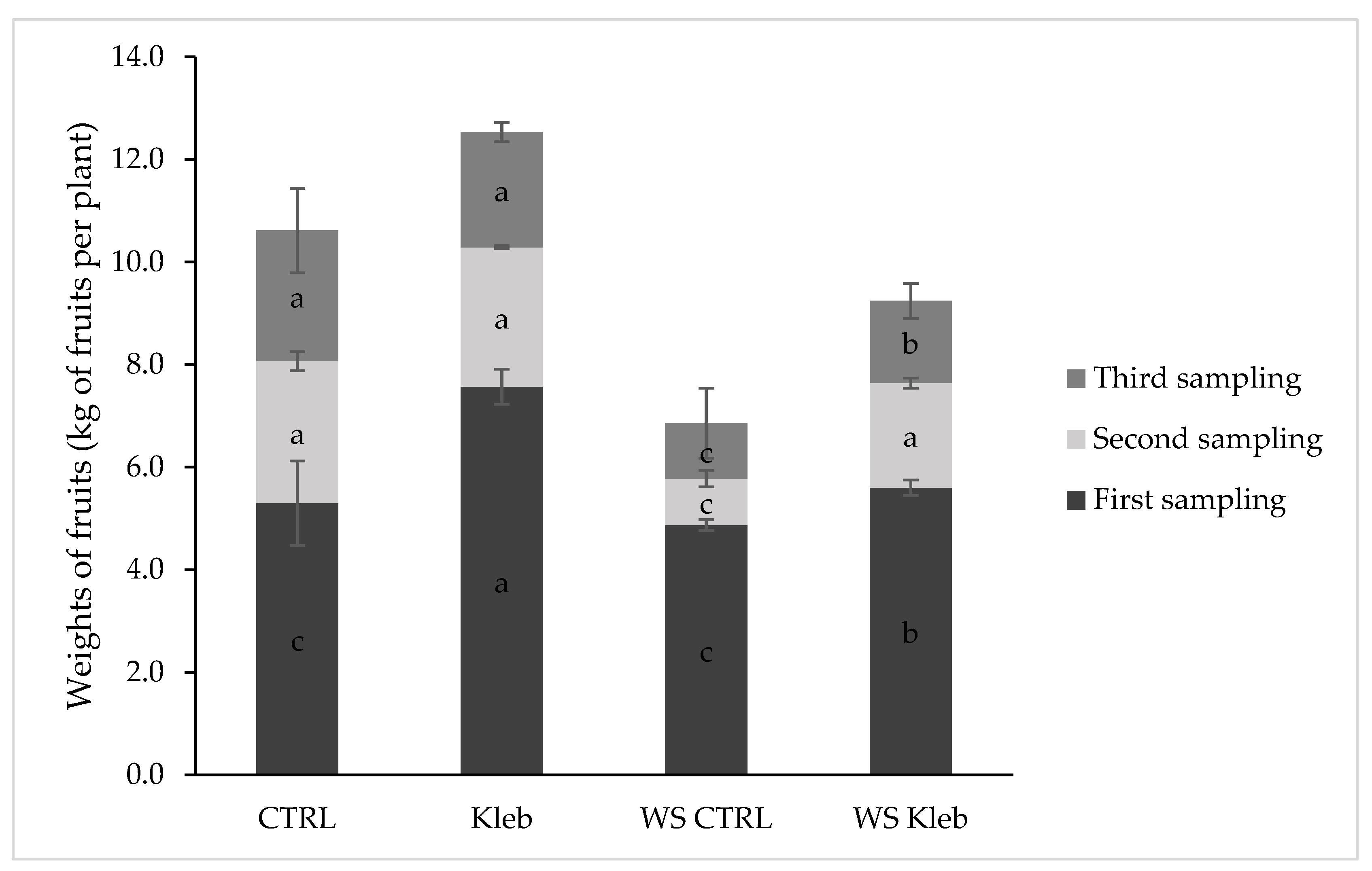
Klebsormidium sp. K39 extract positively affects the yield traits of tomato plants, as the total weight of fruits from the treated plants was always significantly greater than that of the control (Figure 1). As expected, the control plants grown under standard conditions produced more marketable fruits than those under water stress. The treatment with Kleb, in cumulative samples of tomato, determined an increase in tomato yield of around 19% respective to the control. Interestingly, the cumulative weight of the fruits grown under water stress and treated with the microalgae extract (WS Kleb) was 35% higher than that of the not-treated plants (WS CTRL) and significant in their similarity to the unstressed control (CTRL). The statistical analyses for each sample are reported in Supplementary Table S3.
Table 3 reports the tomato fruit quality parameters—TA, TSS, the ratio between soluble sugar and total acidity (RI), and firmness—and shows no significant differences among the treatments.
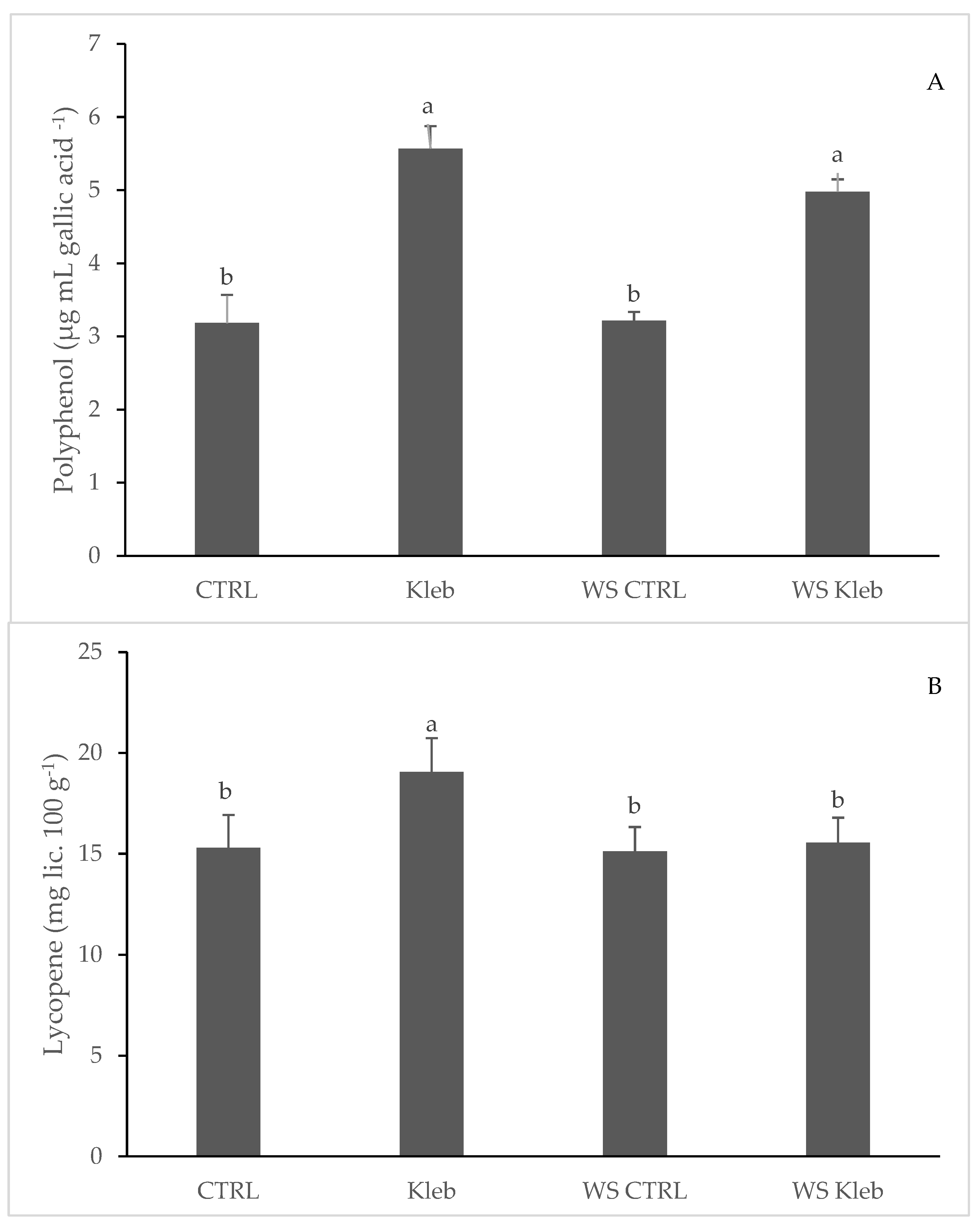
The lycopene and polyphenol contents were determined for the tomato fruits (Figure 2). The lycopene content (Figure 2A) was not affected by water stress, but a significant increase of around 25% was recorded in Kleb-treated plants compared to the control plants. In contrast, polyphenol content (Figure 2B) significantly increased in plants treated with Kleb in both water supply conditions, reaching an increase of around 42% and 35% in Kleb and WS Kleb, respectively.
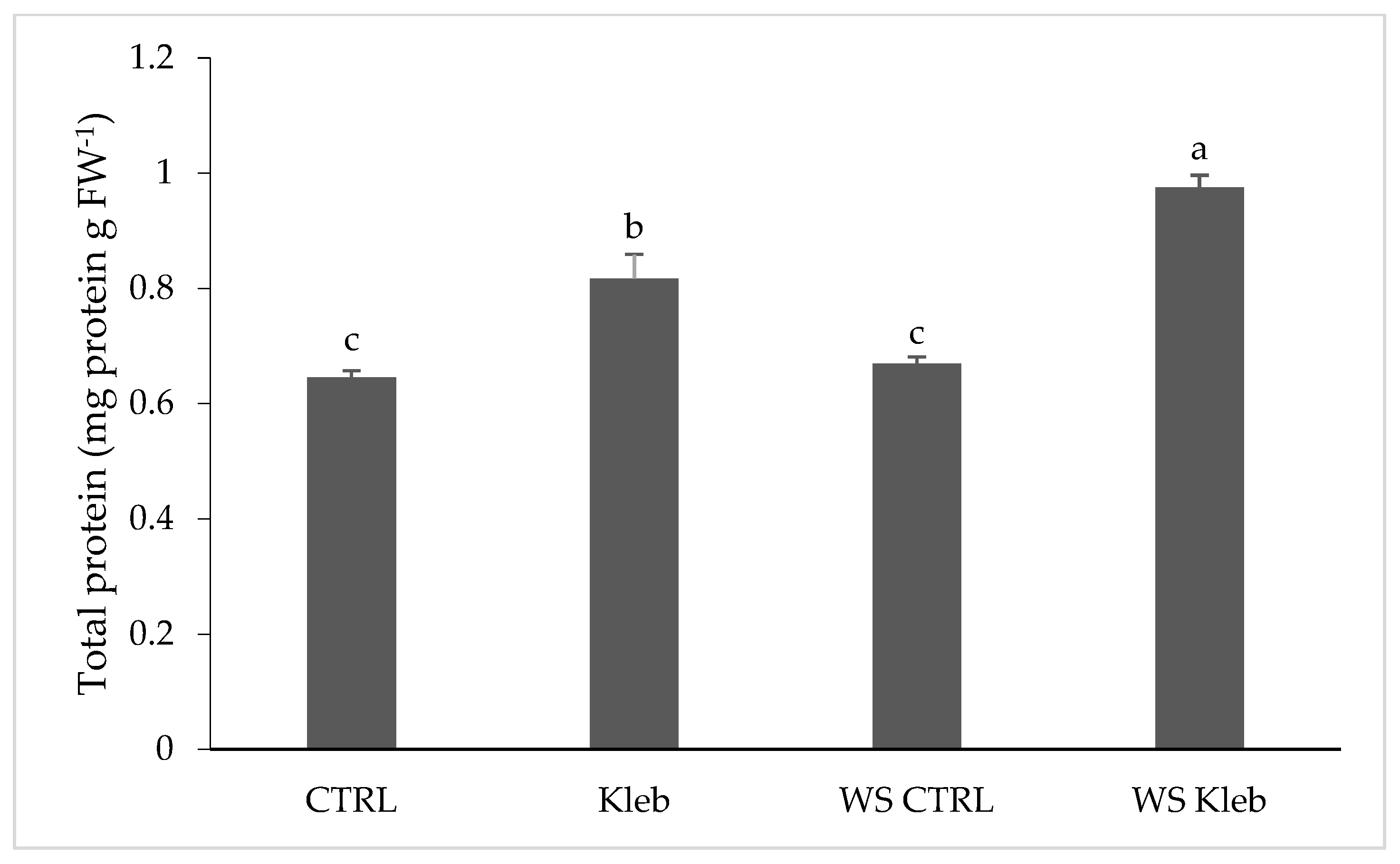
The total protein content in the tomato leaves (Figure 3) was significantly influenced by extract application, more evidently under the water stress condition (WS Kleb), reaching an increase of around 30% compared to the stressed control. On the contrary, no significant differences occurred in the control conditions, in either the stressed or not stressed plants.
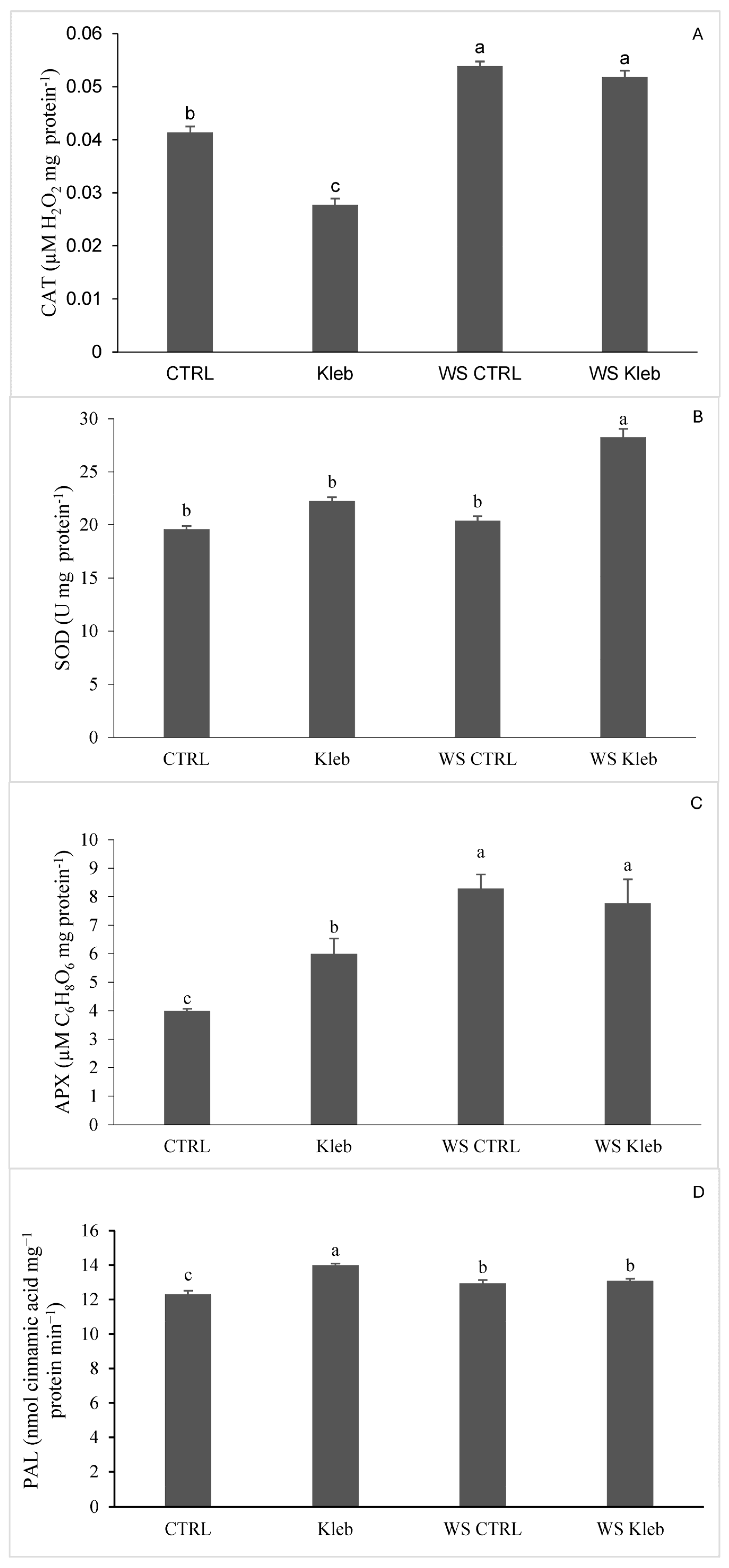
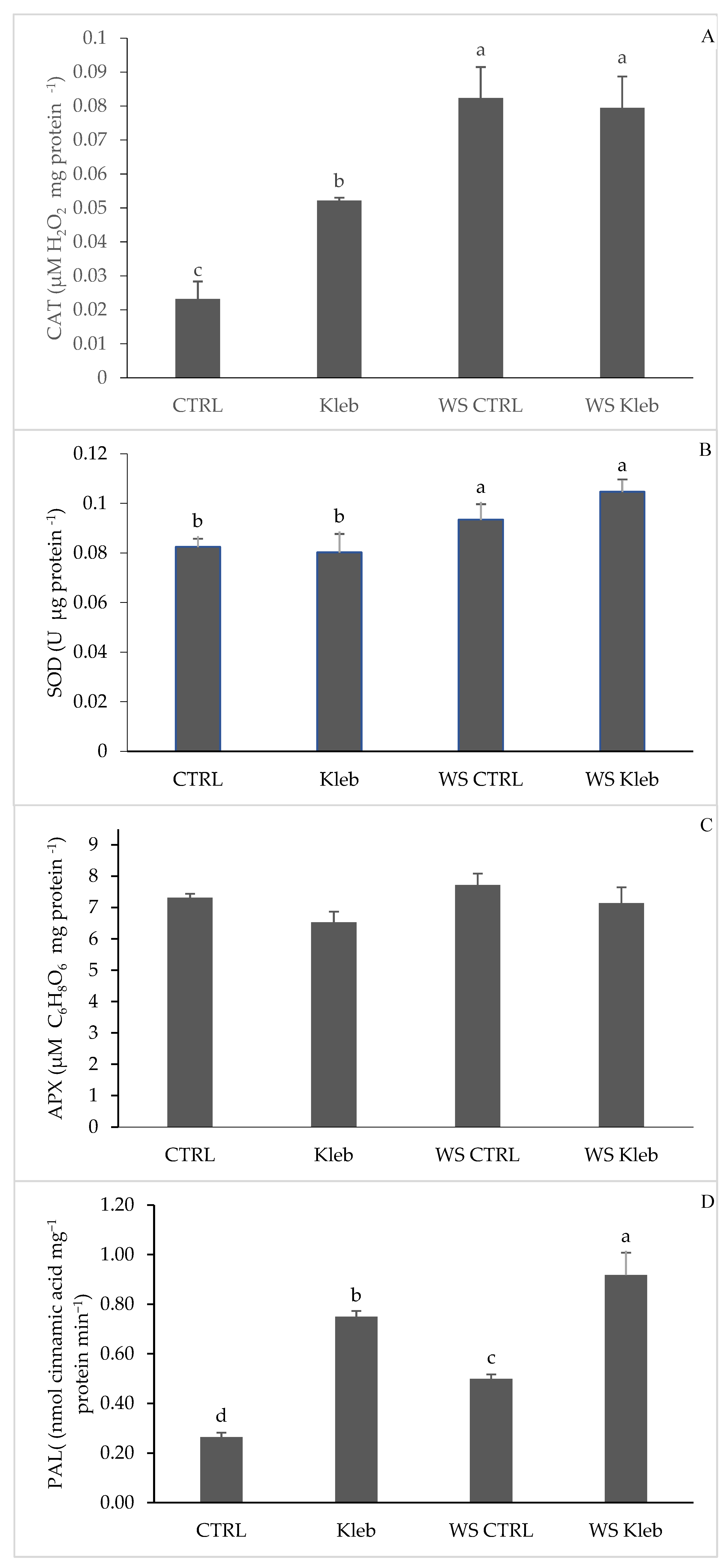
The CAT activity in the leaves of the tomato plants under the stress conditions was considerably higher than that recorded in plants cultivated under regular conditions (Figure 4A).
The analysis of the SOD activity in the leaves is shown in Figure 4B. Plants exposed to water stress and treated with Klebsormidium (WS Kleb) extract showed significantly higher activity, around 30%, with respect to the WS CTRL.
The APX activity in the tomato leaves is reported in Figure 4C. The activity of APX was higher in plants exposed to water stress compared to those that were not stressed.
The PAL activity in the tomato leaves (Figure 4D) showed the highest value in the not stressed plants treated with Kleb, reaching an increase of 13,6% with respect to the control. The stressed plants showed comparable activity levels, in both cases higher than the value observed in the not-stressed control plants.
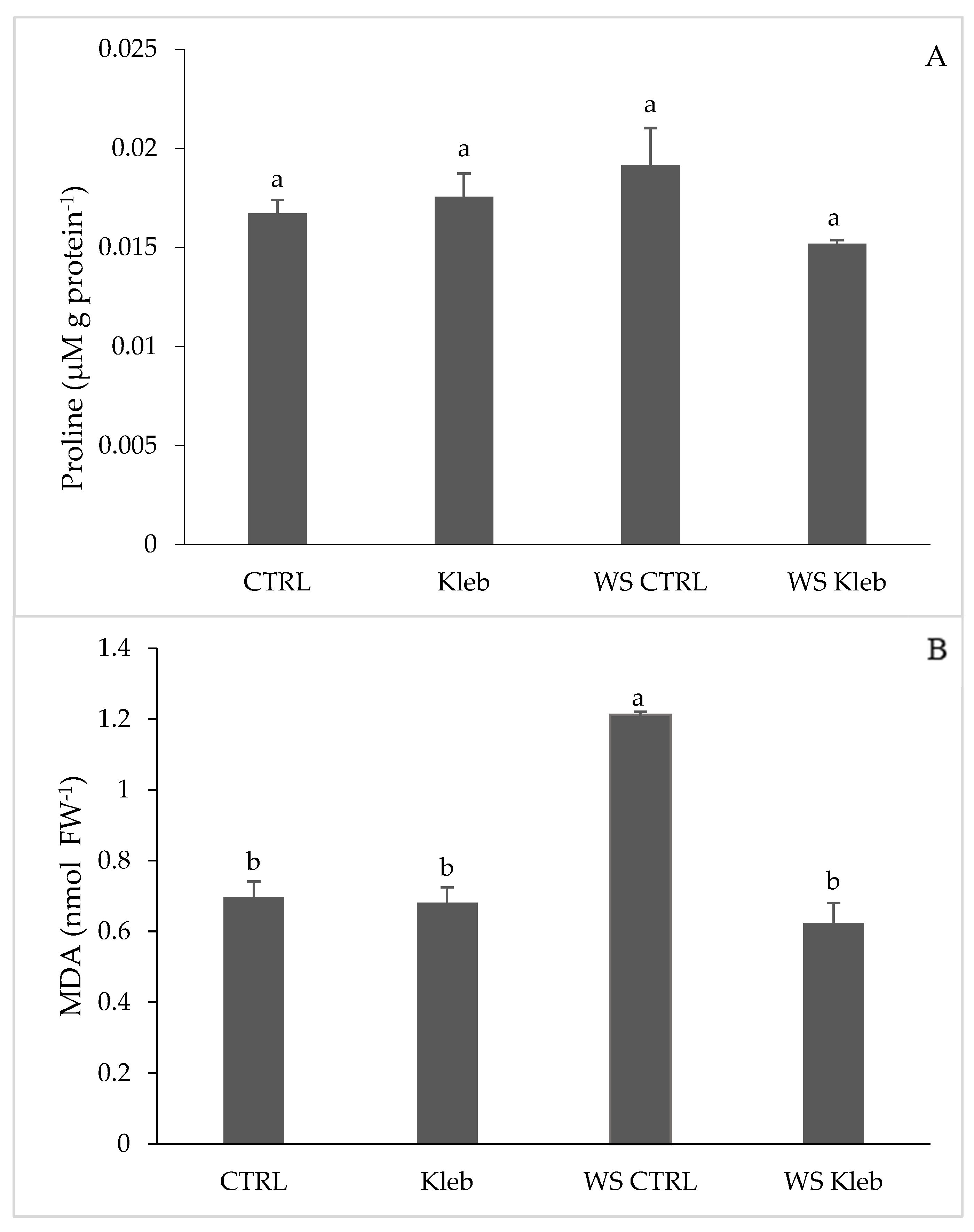
As reported in Figure 5A, treatment with microalgae extract under water stress conditions did not significantly influence the proline content.
On the contrary, Kleb treatments strongly influenced the MDA levels of tomato plants under stress water conditions. In particular, WS Kleb plants showed a decrease in MDA content of approximately 58% compared to the stressed control plants. Interestingly, the WS Kleb value was statistically similar to that of the CTRL and Kleb conditions (Figure 5B).
The effect of the treatments on the antioxidant enzymatic activities in the tomato fruits was also evaluated and is reported in Figure 6.
The CAT activity in the tomato fruits under stress conditions was considerably higher than that of the control plants cultivated under regular settings and was not significantly different between the microalgae-treated and untreated plants. Moreover, under standard conditions, Kleb-treated plants showed a value significantly higher (around 124%) compared to the CTRL condition (Figure 6A).
The analysis of the SOD activity is shown in Figure 6B. Microalgae-treated and untreated plants exposed to water stress displayed significantly increased SOD values with respect to the not stressed ones. On the contrary, in the APX activities, no significant differences occurred (Figure 6C).
Finally, the PAL activity (Figure 6D) showed higher values for microalgae-treated plants in both the stressed and non-stressed conditions. In particular, the Kleb condition showed around 188% higher PAL activity respective to the control and the WS Kleb condition had an activity around 84% higher than the WS CTRL condition.
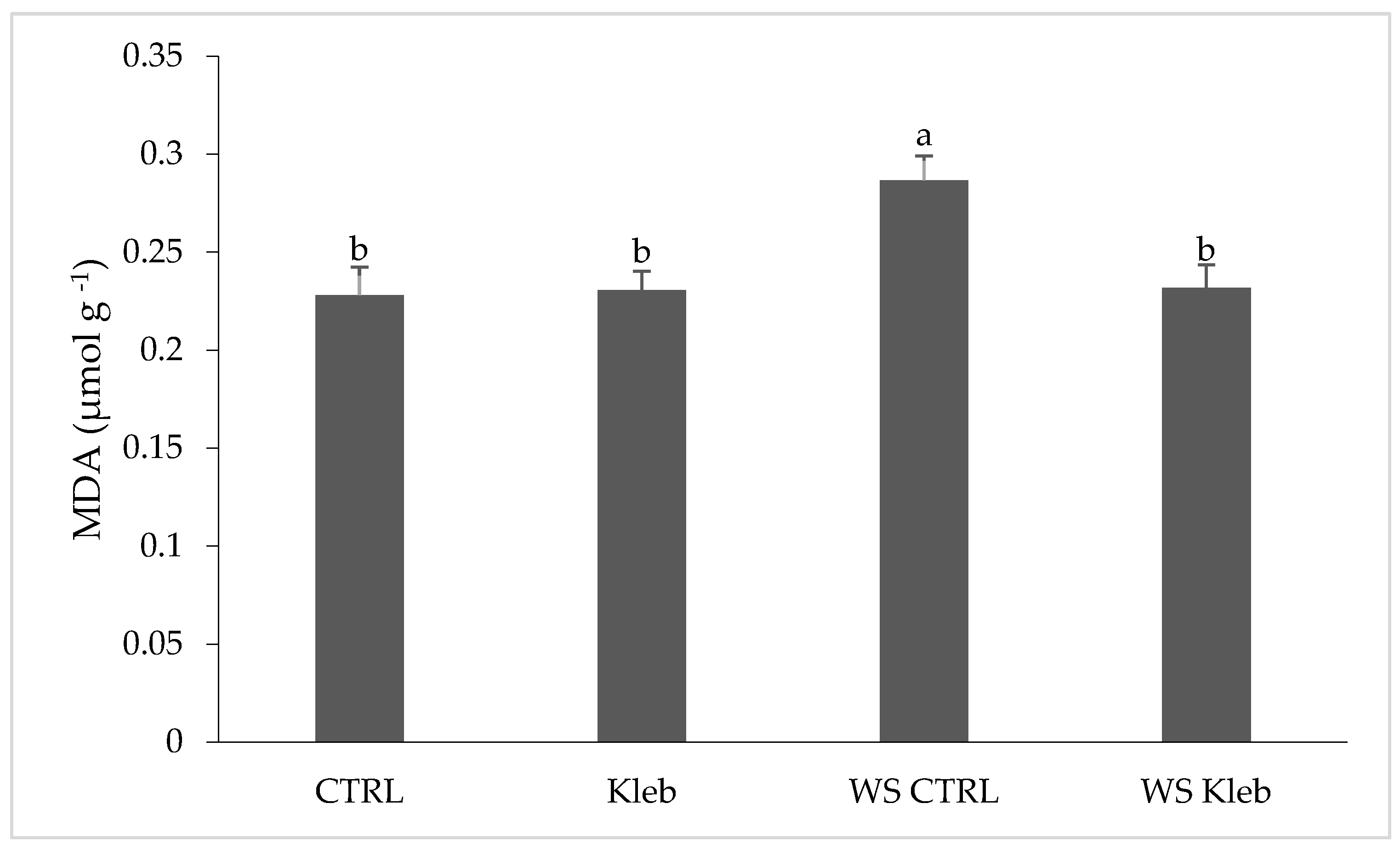
Klebsormidium extract treatments strongly influenced the MDA content in the fruits of tomato plants under water stress conditions. In particular, the WS Kleb condition led to a decrease in MDA levels of approximately 19% compared to the stressed control. Interestingly, the WS Kleb value was significantly similar to that of the CTRL and Kleb conditions (Figure 7).
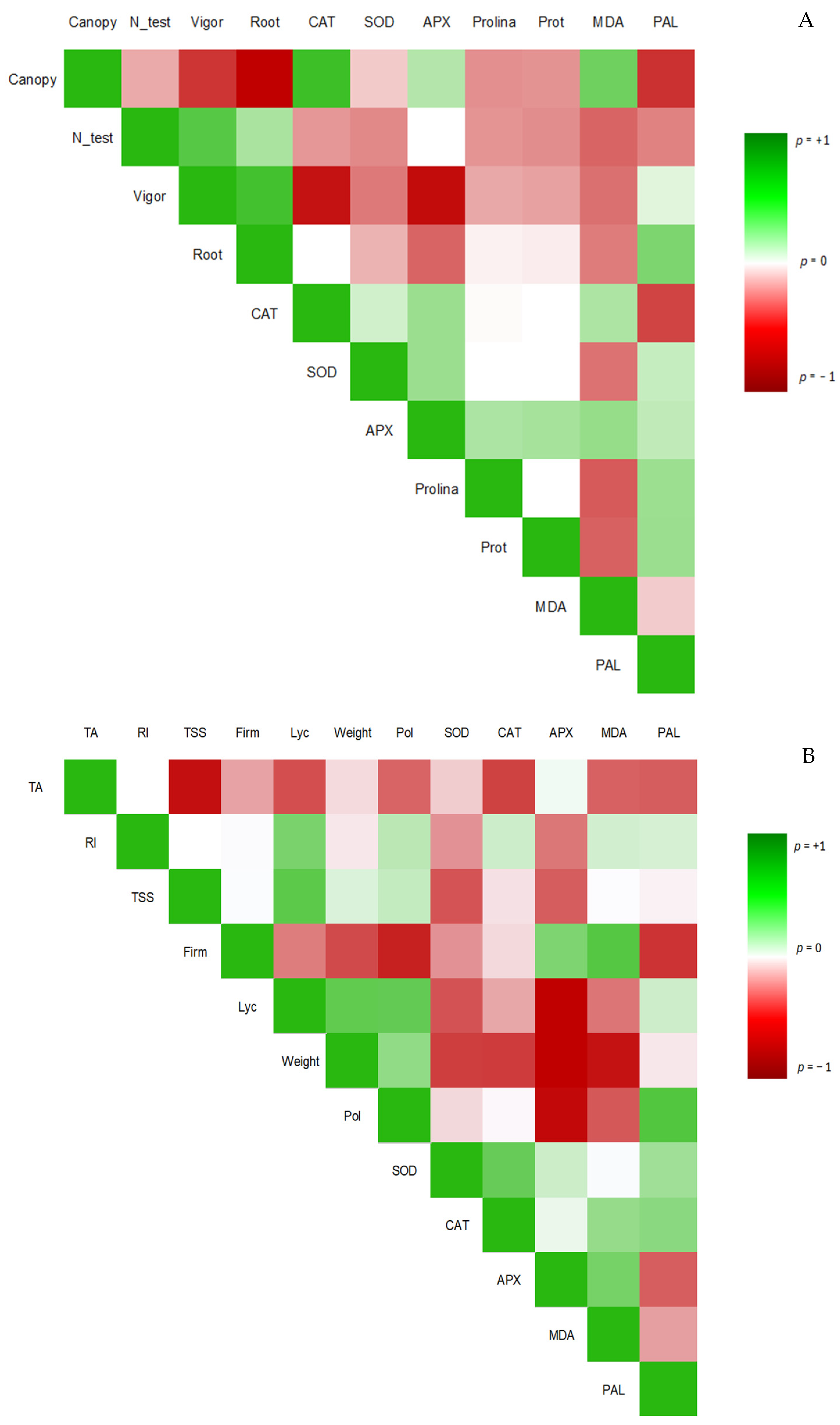
Correlations among the different parameters measured in tomato tissues were analyzed and displayed in two separate heatmaps, for the leaves (Figure 8A) and for the fruits (Figure 8B).
Regarding the leaves (Figure 8A), the plant vigor parameter was positively correlated to the root surface and N-test values (r > 0.7). Instead, when plant vigor was plotted vs. biochemical parameters, in particular, CAT (r = −0.85) and APX (r = −0.87), a negative correlation was detected. Canopy cover showed a negative correlation with vigor (r = −0.71), root surface (r = −0.92) and PAL activity (r = −0.73).
Protein content was found to be negatively correlated to MDA level (r = −0.55) and positively related to PAL activity (r = 0.50).
SOD activity was correlated with CAT (r = 0.25) and APX (r = 0.48) activity. When these activities were plotted vs. the PAL activity, they showed different relationships. SOD and APX activity were positively related, with r = 0.29 and 0.32, respectively. On the contrary, CAT activity was negatively related to PAL activity (r = −0.66). A moderate positive correlation of APX activity was found with proline and protein content and with MDA and PAL activity (0.32 < r < 0.51).
When the proline content was plotted vs. the MDA content, a negative correlation was found (r = −0.58).
Regarding the tomato fruits (Figure 8B), the TSS showed a positive correlation with the lycopene content (r = 0.81) and the RI (r = 0.95) and somewhat with the weight of fruits (r = 0.34) and the polyphenols (r = 0.42). On the contrary, when the TSS were plotted vs. the TA, a negative correlation was detected (r = −0.84).
The weight parameter was found to be negatively correlated to the enzyme activity, such as that of SOD, CAT and APX, and the MDA content (−0.91 < r < −0.65).
Lycopene content was positively correlated to the weight and the polyphenols (r = 0.79) and somewhat with PAL activity (r = 0.39).
Polyphenols, in turn, were positively correlated to PAL activity (r = 0.85) and negatively related to firmness (r = −0.77), TA (r = −0.46) and APX activity (r = −0.88).
When the antioxidant enzymes were plotted vs. each other, SOD and CAT showed a positive correlation, in particular, SOD is positively correlated with CAT activity (r = 0.77). In addition, CAT activity was also correlated with the MDA content (r = 0.60) and PAL activity (r = 0.64).

4. Discussion

Water stress is an important environmental factor that could influence the physiological and biochemical responses of plants [31]. Several studies have evaluated the effect of different types of microalgae and macroalgae extracts on several crops, but the effect of Klebsormidium sp. K39 extract on tomato cultivation has never been tested before. The distribution of 13C observed in the extract and the hydrophobicity index determined for Klebsormidium sp. K39 (Table 1) are consistent with the findings reported by Barone et al. [28] for Chlorella vulgaris and Scenedesmus quadricauda. These results confirm that microalgal extracts are more hydrophobic than the corresponding biomass, a property that has been associated with enhanced biostimulant activity in sugar beet [28].
In this study, regardless of water stress or microalgae extract treatment, no significant effects on morpho-biometric parameters were detected (Table 2). Only plant vigor showed differences between standard and stress conditions, as the water stress significantly reduced this parameter (Table 2). The negative relationships between plant vigor and enzyme activities (SOD, CAT, APX) and the proline, protein, and MDA content suggest that less vigorous plants activate antioxidant stress-response mechanisms due to adverse conditions (Figure 8A). Instead, the positive relationship of plant vigor vs. root surface indicates that more vigorous plants enhance the development of their root surface, improving water and nutrient uptake and reducing stress defense. These data are confirmed by the evidence that drought stress strongly affects vigor in tomato seedlings, depending on tolerant tomato genotypes [49]. Furthermore, Machado et al. [50] found that, in young tomato plants grown under 50% water stress, plant vigor decreased when the enzymes SOD, CAT, and APX were activated, confirming the negative relationship between vigor and antioxidant responses.
Moreover, the results showed a significant increase in the yield of tomato fruits from plants treated with Klebsormidium extract, either in standard or water stress conditions (Figure 1). This improvement suggests a positive effect of the microalgae extract, improving nutrient uptake and stimulating plant fruit production, as indicated by the increased quantity of marketable fruit obtained in the treated plants (Figure 1). The results showed that the treated stressed plants reached a fruit yield comparable to that of non-stressed control plants, thus suggesting a potential role of the extract in improving plant resilience. The positive effects observed on tomato yield under water stress conditions with Klebsormidium extract are in accordance with other findings, reporting that microalgae-based biostimulants significantly improved plant performance, enhanced nutrient uptake, and allowed the achievement of a fruit yield in the water stressed plants comparable to the well-irrigated ones [51,52].
Although quality parameters such as TA, TSS, RI, and firmness were not significantly affected (Table 3), differences in the secondary metabolite contents of fruits such as lycopene and polyphenols were observed (Figure 2). While lycopene content increased in plants treated with the microalgae extract under standard conditions only (Figure 2A), polyphenol content significantly increased in the fruits treated with the microalgae extract under stressed conditions, also (Figure 2B). This suggests that the microalgal treatment may activate the phenylpropanoid pathway, promoting the accumulation of these bioactive compounds [19]. A positive relationship was also found between lycopene and polyphenols suggesting that, although they are involved in different metabolic pathways, their biosynthesis may be affected by oxidative stress and microalgae application. The negative relationship observed between polyphenols and firmness and TA suggests that high polyphenol levels are related to mature fruits, justifying minor levels of firmness and acid content in fruits. Farid et al. [53] supported this hypothesis, showing that foliar application of polysaccharides extracted from Chlorella vulgaris and Chlorella sorokiniana can significantly increase both lycopene and polyphenol concentrations in tomato fruits under both water stress and standard conditions. Although the accumulation of lycopene and polyphenols does not seem to be correlated to the water stress, it seems strictly related to the microalgae extract treatment, posing a positive trait of the nutritional quality of the fruits as these bioactive constituents have antioxidant, anti-mutagenic, anti-proliferative, anti-inflammatory, and anti-atherogenic activities, playing a protective role in humans against various degenerative diseases [54].
The increase in total protein content in the leaves of tomato under WS Kleb treatment suggests that the application of microalgae extracts enhances protein accumulation and this may have a potential role in mitigating the negative effects of water stress on the protein metabolism of tomato plants (Figure 3). These results are in accordance with the previous studies of Marques et al. [55], who have demonstrated the role of microalgae in activating metabolic pathways related to protein synthesis and stress response in plants. In fact, plants have defense mechanisms that include increased protein levels in tissues. Some proteins are essential for reactive oxygen species (ROS-sequestering ability), protecting the cell membranes [55]. This suggests that the increase in protein synthesis induced by microalgae application directly influences the plant’s ability to support its resilience. Indeed, microalgae are known for their ability to produce bioactive compounds that can act as elicitors of defense and adaptation responses in plants [56]. Furthermore, in leaves, a negative correlation was found when protein content was plotted vs. MDA (Figure 8A). MDA is a biomarker of lipid peroxidation and oxidative stress; this negative correlation suggests that the higher protein levels can reduce oxidative damage. Moreover, a positive correlation of protein vs. PAL activity suggests a potential correlation between protein synthesis and the activation of phenylpropanoids compound synthesis.
Plants have defenses against oxidative damage including physiological and biochemical status changes, which may be enhanced by using biostimulants to facilitate protection and improve plant tolerance to abiotic stress [57]. In this study, the ability to counteract water stress was also evaluated by monitoring the activities of the antioxidant enzymes CAT, SOD, and APX in leaves (Figure 4A–C). As expected, CAT activity significantly increased under water stress conditions but decreased in microalgae-treated plants under standard conditions, suggesting a potential mitigating effect of microalgal extracts on oxidative stress under regular growth conditions of tomato plants. These results are in accordance with Silva et al. [58], who reported that in tomato plants treated with a natural antioxidant peptide, CAT activity decreased under well-watered conditions, while remaining elevated under water stress conditions, indicating treatment-specific modulation of antioxidant responses. SOD is another important antioxidant enzyme that increases the recovery of the plant after a period of water stress, catalyzing the dismutation of superoxide anion into hydrogen peroxide and molecular oxygen. Subsequently, other antioxidant enzymes, including CAT, detoxify hydrogen peroxide to water [59]. In this experiment, the SOD activity in tomato plants exposed to water stress and treated with Klebsormidium extract (WS Kleb) was significantly higher than the stressed control and all other treatments (Figure 4B), thus suggesting that the extract may enhance the ability of tomato plants to neutralize the free radicals generated during water stress via increased SOD activity. It is well-known that SOD plays a key role in mitigating oxidative damage under water stress conditions, although the antioxidant response to stress is rather complex. For instance, in tomato plants, an increase in SOD activity under water-deficit stress has been consistently observed, highlighting its central function in scavenging superoxide radicals and initiating cellular defense [60,61,62]. Saed-Moucheshi et al. [63] demonstrated that SOD was the most responsive antioxidant enzyme under water deficit, confirming its predominant role, and Patanè et al. [64] showed a correlation between SOD activity and water stress. Moreover, in tomato plants, CAT and SOD activity can respond differently to abiotic stresses depending on the different genotype. While SOD activity generally increases under water deficit across various tomato genotypes, CAT activity shows a more variable response and is often correlated with stress tolerance in specific genotypes only [65,66].
Accordingly to the other antioxidant activities, APX activity was higher in tomato plants under water stress than in plants under normal conditions. The application of microalgae extract did not significantly influence APX activity in stress conditions, whereas the microalgae treatment increased APX activity in the standard control conditions (Figure 4C). As mentioned above regarding CAT, SOD represents the first line of defense from ROS and APX, as well as CAT, can show a more variable response. This variability depends on different factors such as the availability of ascorbate as substrate, intracellular localization, and the hydrogen peroxide levels. Consequently, APX activity could not always mirror SOD activity, highlighting the complexity and dynamic nature of the plant’s antioxidant defense system under stress conditions [67]. PAL activity results (Figure 4D), in leaves, suggesting that treatment with Klebsormidium sp. K39 extract enhances this enzymatic response under standard conditions, whereas under water stress conditions the level of PAL activity does not differ significantly between treated and untreated plants, although their values are always greater than the unstressed control. These results are according to previous studies that have demonstrated the role of microalgae in increasing content of total phenolics compound [68,69].
The correlation analysis in leaves showed a positive relationship between the three antioxidant activities (CAT, SOD, and APX), confirming their cooperative role in the antioxidant system to mitigate oxidative damage under water stress conditions (Figure 8A). Additionally, the negative correlation between CAT and PAL activity contrasts with the positive correlation observed when APX was plotted vs. PAL activity. This different response may be explained by the different roles of catalase and superoxide dismutase/ascorbate peroxidase. Several studies confirmed that H2O2 activates the phenylpropanoid pathway and its concentration upregulates PAL expression in response to stress [70]. This suggests that CAT activity rapidly detoxifies H2O2, preventing the necessary signaling required for PAL activation. Instead, APX modulates H2O2 levels gradually [71], suggesting a possible action of the activation of the phenylpropanoid pathway.
Proline content in leaves (Figure 6A) was not affected by water stress conditions, thus suggesting that the metabolic pathway involved in the response to stress does not involve this amino acid [31]. In fact, although proline accumulation plays a crucial role in water stress tolerance, the constant proline level in leaves under water stress suggests that proline accumulation is not the primary metabolic pathway involved in the plant’s immediate response to the stress [72]. Instead, MDA concentration indicates the severity of damage occurring, because it is one of the consequences of the peroxidation of polyunsaturated fatty acids in cells [64]. In this study, MDA level was significantly increased in stressed plant leaves (Figure 6B). Interestingly, a significant decrease of around 58% was observed in treated plants, reducing MDA levels to those of the control under standard conditions (CTRL). This suggests a potential antioxidant effect of Klebsormidium extract in reducing oxidative stress in tomato plants. Indeed, as confirmed by other studies, MDA is a strong indicator of stress-induced oxidative damage [2,8]. The correlation analysis showed a positive relationship between proline content and APX activity and a negative correlation when proline content was plotted vs. MDA level, thus suggesting that APX plays an important role in mitigating oxidative damage. On the contrary, the negative correlation of proline content vs. MDA level supports the idea that proline has a protective action. Despite no significant differences in proline content, its relationship with APX activity and MDA level suggests an indirect role in enhancing the plant’s resilience to abiotic stress.
A high level of ROS can decrease the quality of tomato fruits by promoting oxidative damage to cellular structures such as membranes, pigments, and enzymes. However, the presence of antioxidant enzyme activities improves the primary and secondary metabolisms, enhancing both shelf-life and overall quality of fruits during ripening [60,73]. In this study, the antioxidant enzymes in tomato fruits were also determined (Figure 6) in order to better understand their role in counteracting oxidative damage and maintaining fruit quality under water deficit conditions. Regardless of Klebsormidium extract application, according to Dere et al. [60], the activity of SOD and CAT increased under water stress conditions, suggesting that the microalgae extract treatment does not significantly influence fruit response. This confirms the role of CAT in detoxifying H2O2 during oxidative damage in fruits. SOD activity was influenced by oxidative stress in fruits, in contrast to the response observed in leaves, indicating a tissue-specific regulation and severity of the oxidative stress [74]. For APX activity, fruits showed no significant difference despite the microalgae extract treatment and stress, suggesting that the APX response in fruits is less sensitive to water stress and microalgae application than in leaves. Moreover, previous studies showed that APX activity can be influenced by the localization and H2O2 levels [71]. The positive correlation between SOD and other enzymatic activities in fruits (Figure 8B) suggests a coordinated and complex response to oxidative stress. Moreover, CAT activity showed a positive relationship with PAL activity, thus suggesting a key role of secondary metabolism for fruits to mitigate oxidative damage. However, lycopene showed a negative correlation with CAT, SOD, and APX activities, suggesting that in mature fruits, the enzymatic antioxidant defense declines and other protective mechanisms increase, such as the production of no-enzymatic antioxidant compounds [75]. Probably, this shift reflects a transition from active enzymatic stress protection to passive chemical defense as fruits reach their full ripeness.
PAL activity in fruits demonstrated a significant increase in microalgae-treated plants under water stress (Figure 6D). This suggests the enzyme’s involvement in the mitigation of stress by enhancing secondary metabolism, which improves fruit quality. Positive correlation between PAL activity and polyphenol content confirmed the biological and biochemical correlation (Figure 8B). In fact, PAL is the key enzyme in the phenylpropanoid pathway, driving the synthesis of polyphenols as a protective antioxidant mechanism, which can also improve the resilience and nutritional value of fruits. However, the negative correlation of PAL with TA and firmness suggests that PAL increases during ripening and stress responses. In fact, during fruit maturation, organic acids are metabolized, causing a decline in acidity content. Therefore, although PAL is beneficial for stress tolerance, its upregulation may accelerate certain ripening-associated processes, which potentially may shorten postharvest stability [76].
Our results showed that MDA is accumulated in tomato fruits during water stress (Figure 7), in accordance with the findings of Azuma et al. [74]. However, the Klebsormidium extract is successful in causing a significant reduction in MDA levels, decreasing cell membrane damage by around 19%, hence reducing the oxidative damage also at the fruit level. Notably, these results suggest that this microalgae biostimulant may confer partial membrane protection by enhancing antioxidant defenses or reducing ROS generation, thus highlighting its potential role in improving plant stress tolerance and promoting crop quality under water stress conditions.
Finally, a preliminary cost–benefit consideration highlights the negligible cost of the microalgal input used in this study. Based on the application volumes (750 L ha−1 followed by two applications of 1000 L ha−1), the total carbon supplied corresponds to 2.75 g Corg ha−1, equivalent to approximately 5.5 g of dry microalgal biomass. When contextualized within current techno-economic analyses (TEA), this amount of biomass represents an extremely small economic input. Large-scale TEA studies report minimum biomass production costs of 1.38–2.04 USD kg−1 (depending on Current Change, CC, EUR 1.18–1.74 kg−1) for batch cultivation in open raceway ponds [1]. Industrial production in tubular photobioreactors followed by downstream processing is more expensive, with reported values of USD 60–65 kg−1 (CC EUR 51.12–55.38 kg−1 [2]. Even under the most conservative of these scenarios, in our study the 5.5 g of biomass applied to the 14.280 plants ha−1 (considering the density used in this experimental trial) corresponds to a microalgal extract cost around USD 0.35 ha−1 (CC EUR 0.30 ha−1), although under our experimental conditions the costs associated with CO2 supply and nutrient provision should not be considered. When compared with the yield improvements (~19% in non-stressed plants and ~35% in stressed plants), it becomes evident that the agronomic benefit exceeds the microalgal extract input cost, supporting the economic feasibility of this innovative microalgae-based plant biostimulant. Indeed, considering that growers obtain approximately USD 0.59 kg−1 of fresh tomatoes (CC EUR 0.50 kg−1), and assuming an average surplus yield of about 2 kg of tomatoes per plant under both standard and stress conditions (Figure 1), the estimated additional economic return amounts to approximately USD 16.850 ha−1 (CC EUR 14.280 ha−1).

5. Conclusions

The innovative aspect of this work is related to its application of a novel microalgal extract from Klebsormidium sp. K39, derived from a cost-effective biomass obtained by phycoremediation of wastewater, as a biostimulant in the mitigation of water stress,. It is remarkable that this study represents the first investigation reporting the use of Klebsormidium extract for increasing the response of tomato plants to water stress.
Overall, the results obtained confirm our initial hypothesis that the foliar application of the Klebsormidium K39 extract can enhance tomato tolerance to water stress, improving yield performance and modulating key antioxidant enzyme responses, thus supporting its potential use as an innovative and sustainable biostimulant. In fact, the extract improved tomato yield under water stress and enhanced specific antioxidant and secondary metabolic responses, indicating its potential to boost plant resilience.
In conclusion, Klebsormidium extract emerges as a promising and sustainable strategy to improve tomato productivity under water-limited conditions, while microalgae cultivation in wastewater reduces production costs. To fully exploit its potential, further research is required to clarify the underlying mechanisms and evaluate its long-term effectiveness across different tomato cultivars and other crops.

Supplementary Materials

The following supporting information can be downloaded at: https://www.mdpi.com/article/10.3390/agronomy16010036/s1, Figure S1: Climate data; Figure S2: 13C NMR spectra; Table S1: Chemical analysis of the soil; Table S2: Main chemical and biological properties of wastewater; Table S3: ANOVA effects of single sampling of tomato fruits.

Author Contributions

Conceptualization, I.P. and A.B.; methodology, R.S., E.L.B., F.F., G.B., and E.S.; validation, I.P. and A.B.; formal analysis, R.S., E.L.B., F.F., G.B., and E.S.; investigation, R.S.; resources, I.P. and A.B.; data curation, R.S.; writing—original draft preparation, R.S.; writing—review and editing, I.P. and A.B.; visualization, R.S.; supervision, I.P. and A.B.; funding acquisition, I.P. and A.B. All authors have read and agreed to the published version of the manuscript.

Funding

This study was conducted within a PhD research program in Agricultural, Food and Environmental Science (cycle XL) by Rossella Saccone (Scientific Tutors: Andrea Baglieri and Ivana Puglisi), who received a grant from the University of Catania. This study was carried out within the Agritech National Research Center and received funding from the European Union Next-GenerationEU (PIANO NAZIONALE DI RIPRESA E RESILIENZA (PNRR)- MISSIONE 4 COMPONENTE 2, INVESTIMENTO 1,4—D.D. 1032 17/06/2022, CN00000022) and SAMOTHRACE—Sicilian Micronanotech Research and Innovation Center (ECS00000022). This manuscript reflects only the authors’ views and opinions, neither the European Union nor the European Commission can be considered responsible for them.

Data Availability Statement

The original contributions presented in the study are included in the article.

Conflicts of Interest

On behalf of all authors, the corresponding author states that there are no conflicts of interest.

References

  1. Fernandes, Â.; Chaski, C.; Pereira, C.; Kostić, M.; Rouphael, Y.; Soković, M.; Barros, L.; Petropoulos, S.A. Water stress alleviation effects of biostimulants. Horticulturae 2022, 8, 645. [Google Scholar] [CrossRef]
  2. Cabello, G.G.C.; Rodríguez, A.R.; Gondal, A.H.; Areche, F.O.; Corilla Flores, D.D.; Astete, J.A.Q.; Camayo-Lapa, B.F.; Yapias, R.J.M.; Jabbar, A.; Saldarriaga, J.Y.; et al. Plant adaptability to climate change and drought stress for crop growth and production. CAB Rev. 2023. [Google Scholar] [CrossRef]
  3. Kopecká, R.; Kameniarová, M.; Černý, M.; Brzobohatý, B.; Novák, J. Abiotic stress in crop production. Int. J. Mol. Sci. 2023, 24, 6603. [Google Scholar] [CrossRef]
  4. Borzì, I. Assessing impacts of climate crisis on water distribution systems through service inefficiency indicator. J. Water Clim. Change 2025, 16, 307–321. [Google Scholar] [CrossRef]
  5. Cavalcante, L.; Walker, D.W.; Kchouk, S.; Neto, G.R.; Carvalho, T.M.N.; de Brito, M.M.; Pot, W.; Dewulf, A.; van Oel, P.R. From insufficient rainfall to livelihoods: Understanding the cascade of drought impacts and policy implications. Nat. Hazards Earth Syst. Sci. 2025, 25, 1993–2005. [Google Scholar] [CrossRef]
  6. Hura, T.; Hura, K.; Ostrowska, A. Drought-stress induced physiological changes in plants. Int. J. Mol. Sci. 2022, 23, 4698. [Google Scholar] [CrossRef]
  7. Mansoor, S.; Wani, O.A.; Lone, J.K.; Manhas, S.; Kour, N.; Alam, P.; Ahmad, A.; Ahmad, P. Reactive oxygen species in plants: From source to sink. Antioxidants 2022, 11, 225. [Google Scholar] [CrossRef]
  8. Kusvuran, S. Microalgae (Chlorella vulgaris Beijerinck) alleviates drought stress of broccoli plants by improving nutrient uptake, secondary metabolites, and antioxidative defense system. Plant J. 2021, 7, 221–231. [Google Scholar] [CrossRef]
  9. Li, C.; Liang, Y.; Miao, Q.; Ji, X.; Duan, P.; Quan, D. The influence of microalgae fertilizer on soil water conservation and soil improvement: Yield and quality of potted tomatoes. Agronomy 2024, 14, 2102. [Google Scholar] [CrossRef]
  10. Medda, S.; Dessena, L.; Mulas, M. Monitoring of the PAL enzymatic activity and polyphenolic compounds in leaves and fruits of two myrtle cultivars during maturation. Agriculture 2020, 10, 389. [Google Scholar] [CrossRef]
  11. Nephali, L.; Piater, L.A.; Dubery, I.A.; Patterson, V.; Huyser, J.; Burgess, K.; Tugizimana, F. Biostimulants for plant growth and mitigation of abiotic stresses: A metabolomics perspective. Metabolites 2020, 10, 505. [Google Scholar] [CrossRef] [PubMed]
  12. Wozniak, E.; Blaszczak, A.; Wiatrak, P.; Canady, M. Biostimulant mode of action. In The Chemical Biology of Plant Biostimulants; John Wiley & Sons, Ltd.: Hoboken, NJ, USA, 2020. [Google Scholar] [CrossRef]
  13. Mostafa, M.M.; Hammad, D.M.; Reda, M.M.; El-Sayed, A.E.B. Water extracts of Spirulina platensis and Chlorella vulgaris enhance tomato (Solanum lycopersicum L.) tolerance against saline water irrigation. Biomass Convers. Biorefin. 2023, 14, 21181–21191. [Google Scholar] [CrossRef]
  14. La Bella, E.; Baglieri, A.; Fragalà, F.; Saccone, R.; Salvagno, E.; Terrazzino, S.; Puglisi, I. Influence of microalgae biomasses retrieved from phycoremediation of wastewaters on yield of lettuce, soil health, and nitrogen environmental fate. J. Soil Sci. Plant Nutr. 2024, 24, 4880–4897. [Google Scholar] [CrossRef]
  15. Bello, A.S.; Saadaoui, I.; Ben-Hamadou, R. Beyond the source of bioenergy: Microalgae in modern agriculture as a biostimulant, biofertilizer and anti-abiotic stress. Agronomy 2021, 11, 1610. [Google Scholar] [CrossRef]
  16. La Bella, E.; Baglieri, A.; Fragalà, F.; Puglisi, I. Multipurpose agricultural reuse of microalgae biomasses employed for the treatment of urban wastewater. Agronomy 2022, 12, 234. [Google Scholar] [CrossRef]
  17. Gonçalves, A.L. The use of microalgae and cyanobacteria in the improvement of agricultural practices: A review on their biofertilising, biostimulating and biopesticide roles. Appl. Sci. 2021, 11, 871. [Google Scholar] [CrossRef]
  18. Yang, T.; Samarakoon, U.; Altland, J.; Ling, P. Photosynthesis, biomass production, nutritional quality, and flavor-related phytochemical properties of hydroponic-grown arugula (Eruca sativa Mill.) ‘standard’ under different electrical conductivities of nutrient solution. Agronomy 2021, 11, 1340. [Google Scholar] [CrossRef]
  19. Puglisi, I.; La Bella, E.; Rovetto, E.I.; Stevanato, P.; Fascella, G.; Baglieri, A. Morpho-biometric and biochemical responses in lettuce seedlings treated by different application methods of Chlorella vulgaris extract: Foliar spray or root drench? J. Appl. Phycol. 2022, 34, 889–901. [Google Scholar] [CrossRef]
  20. Rachidi, F.; Benhima, R.; Sbabou, L.; El Arroussi, H. Microalgae polysaccharides bio-stimulating effect on tomato plants: Growth and metabolic distribution. Biotechnol. Rep. 2020, 25, e00426. [Google Scholar] [CrossRef] [PubMed]
  21. Barsanti, L.; Coltelli, P.; Gualtieri, P. Paramylon treatment improves quality profile and drought resistance in Solanum lycopersicum L. cv. Micro-Tom. Agronomy 2019, 9, 394. [Google Scholar] [CrossRef]
  22. Mutale-Joan, C.; Rachidi, F.; Mohamed, H.A.; El Mernissi, N.; Aasfar, A.; Barakate, M.; Mohammed, D.; Sbabou, L.; El Arroussi, H.E. Microalgae-cyanobacteria–based biostimulant effect on salinity tolerance mechanisms, nutrient uptake and tomato plant growth under salt stress. J. Appl. Phycol. 2021, 33, 3779–3795. [Google Scholar] [CrossRef]
  23. Gerszberg, A.; Hnatuszko-Konka, K. Tomato tolerance to abiotic stress: A review of most often engineered target sequences. Plant Growth Regul. 2017, 83, 175–198. [Google Scholar] [CrossRef]
  24. Distefano, M.; Mauro, R.P.; Page, D.; Meneguzzo, F.; Bertin, N.; Leonardi, C. Aroma Volatiles in Tomato Fruits: The Role of Genetic, Preharvest and Postharvest Factors. Agronomy 2022, 12, 376. [Google Scholar] [CrossRef]
  25. Seleiman, M.F.; Al-Suhaibani, N.; Ali, N.; Alotaibi, M.; Refay, Y.; Dindaroglu, T.; Abdul-Wajid, H.H.; Battaglia, M.L. Drought stress impacts on plants and different approaches to alleviate its adverse effects. Plants 2021, 10, 259. [Google Scholar] [CrossRef] [PubMed]
  26. Puglisi, I.; Barone, V.; Sidella, S.; Coppa, M.; Broccanello, C.; Gennari, M.; Baglieri, A. Biostimulant activity of humic-like substances from agro-industrial waste on Chlorella vulgaris and Scenedesmus quadricauda. Eur. J. Phycol. 2018, 53, 433–442. [Google Scholar] [CrossRef]
  27. La Bella, E.; Baglieri, A.; Rovetto, E.I.; Stevanato, P.; Puglisi, I. Foliar spray application of Chlorella vulgaris extract: Effect on the growth of lettuce seedlings. Agronomy 2021, 11, 308. [Google Scholar] [CrossRef]
  28. Barone, V.; Baglieri, A.; Stevanato, P.; Broccanello, C.; Bertoldo, G.; Bertaggia, M.; Cagnin, M.; Pizzeghello, D.; Moliterni, V.M.; Mandolino, G.; et al. Root morphological and molecular responses induced by microalgae extracts in sugar beet (Beta vulgaris L.). J. Appl. Phycol. 2018, 30, 1061–1071. [Google Scholar] [CrossRef]
  29. La Bella, E.; Occhipinti, P.S.; Puglisi, I.; Fragalà, F.; Saccone, R.; Russo, N.; Randazzo, C.L.; Caggia, C.; Baglieri, A. Comparative phycoremediation performance of three microalgae species in two different magnitude of pollutants in wastewater from farmhouse. Sustainability 2023, 15, 11644. [Google Scholar] [CrossRef]
  30. Baglieri, A.; Cadili, V.; Monterumici, C.M.; Gennari, M.; Tabasso, T.; Montoneri, E.; Nardi, S.; Negre, M. Fertilization of bean plants with tomato plants hydrolysates. Effect on biomass production, chlorophyll content and N assimilation. Sci. Hortic. 2014, 176, 194–199. [Google Scholar] [CrossRef]
  31. Puglisi, I.; Nicolosi, E.; Vanella, D.; Piero, A.R.L.; Stagno, F.; Saitta, D.; Roccuzzo, G.; Consoli, S.; Baglieri, A. Physiological and biochemical responses of orange trees to different deficit irrigation regimes. Plants 2019, 8, 423. [Google Scholar] [CrossRef]
  32. Cetin, Ö.; Uygan, D.; Boyaci, H. Tomato irrigation scheduling improved by using percent canopy cover and crop developmental stage. Aust. J. Agric. Res. 2008, 59, 1113–1120. [Google Scholar] [CrossRef]
  33. Hale, G.; Yuan, N.; Mendu, L.; Ritchie, G.; Mendu, V. Canopeo app as image-based phenotyping tool in controlled environment utilizing Arabidopsis mutants. PLoS ONE 2024, 19, e0300667. [Google Scholar] [CrossRef]
  34. Shao, G.C.; Deng, S.; Liu, N.; Wang, M.H.; She, D.L. Fruit quality and yield of tomato as influences by rain shelters and deficit irrigation. J. Agric. Sci. Technol. 2015, 17, 691–704. [Google Scholar]
  35. Williams, S.W. Standard Official Methods of Analysis of the Association of Analytical Chemists; Association of Official Analytical Chemists: Washington, DC, USA, 1984; p. 121. [Google Scholar]
  36. Sharma, S.K.; Le Maguer, M. Kinetics of lycopene degradation in tomato pulp solids under different processing and storage conditions. Food Res. Int. 1996, 29, 309–315. [Google Scholar] [CrossRef]
  37. Singleton, V.L.; Orthofer, R.; Lamuela-Raventós, R.M. Analysis of total phenols by Folin-Ciocalteu reagent. Methods Enzymol. 1999, 299, 152–178. [Google Scholar] [CrossRef]
  38. Puglisi, I.; La Bella, E.; Rovetto, E.I.; Lo Piero, A.R.; Baglieri, A. Biostimulant effect and biochemical response in lettuce seedlings treated with a scenedesmus quadricauda extract. Plants 2020, 9, 123. [Google Scholar] [CrossRef] [PubMed]
  39. Bradford, M.M. A rapid and sensitive method for the quantitation of microgram quantities of protein-utilizing the principle of protein-dye binding. Anal. Biochem. 1976, 72, 248–254. [Google Scholar] [CrossRef] [PubMed]
  40. Aebi, M. Catalase in vitro. Methods Enzymol. 1984, 105, 121–126. [Google Scholar] [CrossRef] [PubMed]
  41. Flohé, L.; Ötting, F. Superoxide dismutase assay. Methods Enzymol. 1984, 105, 93–104. [Google Scholar] [CrossRef]
  42. Nakano, Y.; Asada, K. Hydrogen peroxide is scavenged by ascorbate-specific peroxidase in spinach chloroplasts. Plant Cell Physiol. 1981, 22, 867–880. [Google Scholar] [CrossRef]
  43. Mori, T.; Sakurai, M.; Sakuta, M. Effects of conditioned medium on activities of PAL, CHS, DAHP synthase (DS-Co and DS-Mn) and anthocyanin production in suspension cultures of Fragaria ananassa. Plant Sci. 2001, 160, 355–360. [Google Scholar] [CrossRef]
  44. Assis, J.S.; Maldonado, R.; Muñoz, T.; Escribano, M.I.; Merodio, C. Effect of high carbon dioxide concentration on PAL activity and phenolic contents in ripening cherimoya fruit. Postharvest Biol. Technol. 2001, 23, 33–39. [Google Scholar] [CrossRef]
  45. Bates, L.S.; Waldren, R.P.; Teare, I.D. Rapid determination of free proline for water-stress studies. Plant Soil 1973, 39, 205–207. [Google Scholar] [CrossRef]
  46. Khedr, A.H.; Abbas, M.A.; Wahid, A.A.; Quick, W.P.; Abogadallah, G.M. Proline induces expression of salt stress responsive proteins and may improve the adaptation of Pancratium maritimum L. to salt-stress. J. Exp. Bot. 2003, 54, 2553–2562. [Google Scholar] [CrossRef] [PubMed]
  47. Heath, R.L.; Packer, L. Photoperoxidation in isolated chloroplasts. I. Kinetics and stoichiometry of fatty acid peroxidation. Arch. Biochem. Biophys. 1968, 125, 189–198. [Google Scholar] [CrossRef] [PubMed]
  48. Hu, L.Y.; Hu, S.L.; Wu, J.; Li, Y.H.; Zheng, J.L.; Wei, Z.J.; Liu, J.; Wang, H.L.; Liu, Y.S.; Zhang, H. Hydrogen sulfide prolongs postharvest shelf life of strawberry and plays an antioxidative role in fruits. J. Agric. Food Chem. 2012, 60, 8684–8693. [Google Scholar] [CrossRef]
  49. Akram, S.; Saleem, Y.; Khan, A.R.; Wadood, A.; Hameed, A.; Sajjad, S. Identification of drought-tolerant tomato genotypes using multi-trait index at early growth stage. J. Soil Sci. Plant Nutr. 2024, 24, 2456–2468. [Google Scholar] [CrossRef]
  50. Machado, J.; Vasconcelos, M.W.; Soares, C.; Fidalgo, F.; Heuvelink, E.; Carvalho, S.M.P. Enzymatic and non-enzymatic antioxidant responses of young tomato plants (cv. micro-tom) to single and combined mild nitrogen and water deficit: Not the sum of the parts. Antioxidants 2023, 12, 375. [Google Scholar] [CrossRef]
  51. Li, S.; Zheng, Y.; Li, M.; Zeng, L.; Sang, Y.; Liu, Q.; Zhang, H.; Lin, H.; Fan, Z. Quantitative analyses of major enzyme activities in postharvest fruit. Future Postharvest Food 2024, 1, 219–221. [Google Scholar] [CrossRef]
  52. Kanojia, A.; Lyall, R.; Sujeeth, N.; Alseekh, S.; Martínez-Rivas, F.J.; Fernie, A.R.; Gechev, T.S.; Petrov, V. Physiological and molecular insights into the effect of a seaweed biostimulant on enhancing fruit yield and drought tolerance in tomato. Plant Stress 2024, 14, 100692. [Google Scholar] [CrossRef]
  53. Farid, R.; Mutale-Joan, C.; Redouane, B.; Mernissi Najib, E.L.; Abderahime, A.; Laila, S.; Arroussi Hicham, E.L. Effect of microalgae polysaccharides on biochemical and metabolomics pathways related to plant defense in Solanum lycopersicum. Appl. Biochem. Biotechnol. 2019, 188, 225–240. [Google Scholar] [CrossRef]
  54. Chaudhary, P.; Sharma, A.; Singh, B.; Nagpal, A.K. Bioactivities of phytochemicals present in tomato. J. Food Sci. Technol. 2018, 55, 2833–2849. [Google Scholar] [CrossRef]
  55. Marques, H.M.C.; Mógor, A.F.; Amatussi, J.O.; Bocchetti de Lara, G.; Mógor, G.; Sant’Anna-Santos, B.F. Use of microalga Asterarcys quadricellularis in common bean. J. Appl. Phycol. 2023, 35, 2891–2905. [Google Scholar] [CrossRef]
  56. Bhaskar, R.; Xavier, L.S.E.; Udayakumaran, G.; Kumar, D.S.; Venkatesh, R.; Nagella, P. Biotic elicitors: A boon for the in-vitro production of plant secondary metabolites. Plant Cell Tissue Organ Cult. 2022, 149, 7–24. [Google Scholar] [CrossRef]
  57. Singh, D.P.; Prabha, R.; Yandigeri, M.S.; Arora, D.K. Chyanobacteria-mediated phenylpropanoids and phytohormones in rice (Oryza sativa) enhance plant growth and stress tolerance. Antonie Leeuwenhoek 2011, 100, 557–568. [Google Scholar] [CrossRef] [PubMed]
  58. Silva, S.; Teixeira, C.; Dias, M.C.; Pereira, R.B.; Gomes, P.; Silva, A.M. Bioprospecting a natural antioxidant peptide for tomato biostimulation under water limitations: Physiological approach. J. Plant Growth Regul. 2024, 44, 2569–2582. [Google Scholar] [CrossRef]
  59. Rady, M.M.; Boriek, S.H.K.; Abd El-Mageed, T.A.; Seif, E.l.; Yazal, M.A.; Ali, E.F.; Hassan, F.A.S.; Abdelkhalik, A. Exogenoues gibberellic acid or diluite bee honey boosts drought stress tolerance in Vicia faba by rebalancing osmoprotectants, antioxidants, nutrients, and phytohormones. Plants 2021, 10, 748. [Google Scholar] [CrossRef]
  60. Dere, S.; Kusvuran, S.; Dasgan, H.Y. Does drought increase the antioxidant nutrient capacity of tomatoes? Int. J. Food Sci. Technol. 2022, 57, 10. [Google Scholar] [CrossRef]
  61. Mishra, N.; Jiang, C.; Chen, L.; Paul, A.; Chatterjee, A.; Shen, G. Achieving abiotic stress tolerance in plants through antioxidative defense mechanisms. Front. Plant Sci. 2023, 14, 110622. [Google Scholar] [CrossRef] [PubMed]
  62. Rao, M.J.; Duan, M.; Zhou, C.; Jiao, J.; Cheng, P.; Yang, L.; Wei, W.; Shen, Q.; Ji, P.; Yang, Y.; et al. Antioxidant defense system in plants: Reactive oxygen species production, signaling, and scavenging during abiotic stress-induced oxidative damage. Horticulturae 2025, 11, 477. [Google Scholar] [CrossRef]
  63. Saed-Moucheshi, A.; Sohrabi, F.; Fasihfar, E.; Baniasadi, F.; Riasat, M.; Akbar Mozafari, A. Superoxide dismutase (SOD) as a selection criterion for triticale grain yield under drought stress: A comprehensive study on genomics and expression profiling, bioinformatics, heritability, and phenotypic variability. BMC Plant Biol. 2021, 21, 148. [Google Scholar] [CrossRef] [PubMed]
  64. Patanè, C.; Cosentino, S.L.; Romano, D.; Toscano, S. Relative water content, proline, and antioxidant enzymes in leaves of long shelf-life tomatoes under drought stress and rewatering. Plants 2022, 11, 3045. [Google Scholar] [CrossRef]
  65. Hasanuzzaman, M.; Nahar, K.; Alam, M.M.; Roychowdhury, R.; Fujita, M. Physiological, biochemical, and molecular mechanisms of heat stress tolerance in plants. Int. J. Mol. Sci. 2013, 14, 9643–9684. [Google Scholar] [CrossRef] [PubMed]
  66. Sharma, P.; Jha, A.B.; Dubey, R.S.; Pessarakli, M. Reactive oxygen species, oxidative damage, and antioxidative defense mechanism in plants under stressful conditions. J. Bot. 2012, 2012, 217037. [Google Scholar] [CrossRef]
  67. Hasanuzzaman, M.; Bhuyan, M.B.; Zulfiqar, F.; Raza, A.; Mohsin, S.M.; Mahmud, J.A.; Fujita, M.; Fotopoulos, V. Reactive oxygen species and antioxidant defense in plants under abiotic stress: Revisiting the crucial role of a universal defense regulator. Antioxidants 2020, 9, 681. [Google Scholar] [CrossRef]
  68. Jalalian, S.; Ebrahimzadeh, A.; Zahedi, S.M.; Becker, S.J.; Hayati, F.; Hassanpouraghdam, M.B.; Rasouli, F. Chlamydomonas sp. extract meliorates the growth and physiological responses of ‘Camarosa’ strawberry (Fragaria × ananassa Duch) under salinity stress. Sci. Rep. 2024, 14, 22436. [Google Scholar] [CrossRef]
  69. Park, Y.J.; Park, J.E.; Truong, T.Q.; Koo, S.Y.; Choi, J.H.; Kim, S.M. Effect of Chlorella vulgaris on the growth and phytochemical contents of “red russian” kale (Brassica napus var. Pabularia). Agronomy 2022, 12, 2138. [Google Scholar] [CrossRef]
  70. Du, M.; Lian, L.; Zhang, Y.; Lin, H.; Wang, J. Roles of ROS metabolism and phenylpropanoid pathway in quality maintenance of postharvest Pleutorus eryngii under hyperoxia stress. Postharvest Biol. Technol. 2024, 207, 112617. [Google Scholar] [CrossRef]
  71. Li, S. Novel insight into functions of ascorbate peroxidase in higher plants: More than a simple antioxidant enzyme. Redox Biol. 2023, 64, 102789. [Google Scholar] [CrossRef]
  72. Meena, M.; Divyanshu, K.; Kumar, S.; Swapnil, P.; Zehra, A.; Shukla, V.; Yadav, M.; Upadhyay, R.S. Regulation of L-proline biosynthesis, signal transduction, transport, accumulation and its vital role in plants during variable environmental conditions. Heliyon 2019, 5, e02952. [Google Scholar] [CrossRef]
  73. Wadood, A.; Hameed, A.; Akram, S.; Ghaffar, M. Unraveling the impact of water deficit stress on nutritional quality and defense response of tomato genotypes. Front. Plant Sci. 2024, 15, 1403895. [Google Scholar] [CrossRef] [PubMed]
  74. Azuma, R.; Ito, N.; Nakayama, N.; Suwa, R.; Nguyen, N.T.; Larrinaga-Mayoral, J.A.; Esaka, M.; Fujiyama, H.; Saneoka, H. Fruits are more sensitive to salinity than leaves and stems in pepper plants (Capsicum annum L.). Sci. Hortic. 2010, 125, 171–178. [Google Scholar] [CrossRef]
  75. Gulcin, İ. Antioxidants: A comprehensive review. Arch. Toxicol. 2025, 99, 1893–1997. [Google Scholar] [CrossRef] [PubMed]
  76. Batista-Silva, W.; Nascimento, V.L.; Medeiros, D.B.; Nunes-Nesi, A.; Ribeiro, D.M.; Zsögön, A.; Araújo, W.L. Modifications in organic acid profiles during fruit development and ripening: Correlation or causation? Front. Plant Sci. 2018, 9, 1689. [Google Scholar] [CrossRef]
Figure 1. The yield of tomato fruits from each sampling event. CTRL: control with a standard water supply; Kleb: treatment with Klebsormidium extract with a standard water supply; WS CTRL: control exposed to water stress; WS Kleb: treatment with Klebsormidium extract, exposed to water stress. Different letters indicate significance according to Tukey’s HSD test (p = 0.05). Error bars indicate the standard error of the mean.
Agronomy 16 00036 g001
Figure 2. The lycopene (A) and polyphenol (B) contents of the tomato fruit samples. CTRL: control with a standard water supply; Kleb: treatment with Klebsormidium extract with a standard water supply; WS CTRL: control exposed to water stress; WS Kleb: treatment with Klebsormidium extract, exposed to water stress. Different letters indicate significance according to Tukey’s HSD test (p = 0.05). Error bars indicate the standard error of the mean.
Agronomy 16 00036 g002
Figure 3. The total protein content in the leaves of the tomato plants. CTRL: control with a standard water supply; Kleb: treatment with Klebsormidium extract with a standard water supply; WS CTRL: control exposed to water stress; WS Kleb: treatment with Klebsormidium extract, exposed to water stress. Different letters indicate significance according to Tukey’s HSD test (p = 0.05). Error bars indicate the standard error of the mean.
Agronomy 16 00036 g003
Figure 4. The catalase (CAT) activity (A), the superoxide dismutase (SOD) activity (B), the peroxide ascorbate (APX) activity (C), and the phenylalanine ammonia lyase activity (D) in the leaves of the tomato plants. CTRL: control with a standard water supply; Kleb: treatment with Klebsormidium extract with a standard water supply; WS CTRL: control exposed to water stress; WS Kleb: treatment with Klebsormidium extract, exposed to water stress. Different letters indicate significance according to Tukey’s HSD test (p = 0.05). Error bars indicate the standard error of the mean.
Agronomy 16 00036 g004
Figure 5. The proline (A) and MDA (B) content of the leaves of the tomato plants. CTRL: control with a standard water supply; Kleb: treatment with Klebsormidium extract, with a standard water supply; WS CTRL: control exposed to water stress; WS Kleb: treatment with Klebsormidium extract, exposed to water stress. Different letters indicate significance according to Tukey’s HSD test (p = 0.05). Error bars indicate the standard error of the mean.
Agronomy 16 00036 g005
Figure 6. The catalase (CAT) activity (A), the superoxide dismutase (SOD) activity (B), the peroxide ascorbate (APX) activity (C), and the phenylalanine ammonia-lyase (PAL) activity (D) in the fruits of the tomato plants. CTRL: control with a standard water supply; Kleb: treatment with Klebsormidium extract with a standard water supply; WS CTRL: control exposed to water stress; WS Kleb: treatment with Klebsormidium extract, exposed to water stress. Different letters indicate significance according to Tukey’s HSD test (p = 0.05). Absence of letters indicates no significant differences. Error bars indicate the standard error of the mean.
Agronomy 16 00036 g006
Figure 7. The malondialdehyde content of tomato fruits subjected to microalgae treatments. CTRL: control with a standard water supply; Kleb: treatment with Klebsormidium extract with a standard water supply; WS CTRL: control exposed to water stress; WS Kleb: treatment with Klebsormidium extract, exposed to water stress. Different letters indicate significance according to Tukey’s HSD test (p = 0.05). Error bars indicate the standard error of the mean.
Agronomy 16 00036 g007
Figure 8. Pearson’s correlation coefficients of all the analyzed parameters of the leaves in the experimental trials. Dataset: Canopy: canopy cover, N_test: N-test, Vigor: plant vigor, Root: root surface, CAT: catalase, SOD: superoxide dismutase, APX: ascorbate peroxidase, Prol: proline, Prot: protein, MDA: malondialdehyde, PAL: phenylalanine ammonia-lyase (A). Pearson’s correlation coefficients of all the analyzed parameters of the fruits in the experimental trials. Dataset: TA: total acidity, RI: refractometer index, TSS: total soluble solids, Firm: firmness, Lyc: lycopene, Weight: total weight of fruits, Pol: polyphenols, SOD: superoxide dismutase, CAT: catalase, APX: ascorbate peroxidase, MDA: malondialdehyde, PAL: phenylalanine ammonia-lyase (B).
Agronomy 16 00036 g008
Table 1. Distribution of C intensity of 13C NMR in biomass of Klebsormidium sp. K39 and extract.
AlkylN- and O-AlkylAromaticCarboxylHB/HI
0–45 ppm45–95 ppm95–160 ppm160–195 ppm
Kleb biomass28.4950.638.2812.600.6
Kleb extract61.8220.7711.146.272.7
Table 2. The morpho-biometric parameters of the tomato plants at the end of the experimental trials. CTRL: control with a standard water supply; Kleb: treatment with Klebsormidium extract with a standard water supply; WS CTRL: control exposed to water stress; WS Kleb: treatment with Klebsormidium extract, exposed to water stress.
CTRLKlebWS CTRLWS Kleb
Canopy cover (%)15.64 ± 1.0315 ± 0.3316 ± 1.4615.6 ± 0.41
Plant vigor9 a ± 0.089.18 a ± 0.266.90 b ± 0.216.98 b ± 0.17
N-test754.50 ± 146.8696 ± 158.90652.5 ± 131.25673.25 ± 126.79
Root surface (%)44.63 ± 1.3450.25 ± 3.7440.82 ± 2.6941.22 ± 3.37
Different letters within each column indicate significant differences according to Tukey’s HSD test (p = 0.05). Absence of letters indicates no significant differences.
Table 3. The quality parameters of the tomato fruits. CTRL: control with a standard water supply; Kleb: treatment with Klebsormidium extract with a standard water supply; WS CTRL: control exposed to water stress; WS Kleb: treatment with Klebsormidium extract, exposed to water stress.
SamplesCTRLKlebWS CTRLWS Kleb
TA (% Citric Acid)0.43 ± 0.060.38 ± 0.03 0.39 ± 0.050.41 ± 0.07
TSS (°Brix)7.07 ± 1.857.62 ± 0.817.36 ± 0.537.05 ± 0.13
RI (TSS/TA)16.34 19.81 18.89 17.21
Firmness (kg cm2)2.78 ± 0.172.73 ± 0.462.88 ± 0.862.67 ± 0.50
Absence of letters indicates no significant differences.
Disclaimer/Publisher’s Note: The statements, opinions and data contained in all publications are solely those of the individual author(s) and contributor(s) and not of MDPI and/or the editor(s). MDPI and/or the editor(s) disclaim responsibility for any injury to people or property resulting from any ideas, methods, instructions or products referred to in the content.