Article

Shifts in Fertilization Regime Alter Carbon Cycling in Paddy Soils: Linking the Roles of Microbial Community, Functional Genes, and Physicochemical Properties


1
College of Resources, Hunan Agricultural University, Changsha 410128, China
2
Hunan Institute of Agricultural Soil and Eco-Environment, Changsha 410125, China
*
Authors to whom correspondence should be addressed.
Agronomy 2026, 16(1), 104; https://doi.org/10.3390/agronomy16010104 (registering DOI)
Submission received: 1 December 2025 / Revised: 26 December 2025 / Accepted: 28 December 2025 / Published: 31 December 2025
(This article belongs to the Special Issue Soil Microbial Functions Affecting Soil Carbon Cycling)

Abstract

Fertilization regimes impact the carbon cycle processes in paddy soils. However, the effects of shifting fertilization regimes on the structure of microbial communities and functional genes involved in soil carbon (C)-cycling remain unclear. A long-term field experiment was established with three paired fertilization shift treatments: chemical fertilizer (CF) and CF to normal-rate organic fertilizer (CF-NOM); normal-rate organic fertilizer (NOM) and NOM to CF (NOM-CF); high-rate organic fertilizer (HOM) and HOM to CF (HOM-CF). Metagenomic sequencing and bioinformatics analysis were employed to investigate the effects of fertilization shifts on soil C-cycling microbial community structure, functional genes, and environmental factors. The results showed that compared to CF treatment, CF-NOM significantly increased soil organic carbon (SOC), mineral-associated organic carbon (MAOC), particulate organic carbon (POC), microbial biomass carbon (MBC), dissolved organic carbon (DOC), and the emissions of CO2 and CH4 (p < 0.05). The NOM-CF led to significant reductions in MAOC, MBC, DOC, and CO2 and CH4 emissions. The HOM-CF shift caused significant decreases in SOC, MAOC, POC, MBC, DOC, and CO2 and CH4 emissions. Fertilization shifts had no significant effect on the α-diversity of C-cycling microbial communities (p > 0.05), but β-diversity showed a significant restructuring of community composition. Network analysis indicated that fertilization shifts increased positive microbial correlations while reducing network modularity. C-cycling functional genes responded sensitively to fertilization disturbances, especially key genes in the carbon fixation pathway (cdhDE, cooS). Redundancy analysis indicated that soil bulk density (BD) and POC are key environmental factors regulating functional differences in carbon metabolism, which collectively influenced microbial community structure and functional gene abundance along with other factors. We concluded that the C-cycling process in paddy soil was greatly altered by shifts in fertilization regimes, influenced by microbial diversity, functional genes, and network structure linked to soil characteristics.

1. Introduction

Paddy soils are a critical component of global agroecosystems, underpinning staple food production and playing a pivotal role in the global carbon balance [1]. Due to periodic flooding and drying cycles, the carbon cycle in paddy soils functions as both a carbon sink and a carbon source. The organic carbon pool in paddy soils is central to this process, and its dynamic changes directly influence atmospheric CO2 concentrations and emissions of methane and other greenhouse gases [2,3]. Therefore, understanding the biogeochemical mechanisms of carbon cycling in paddy soils is essential for improving soil carbon storage, lowering greenhouse gas emissions from farmland, and substantially reaching agricultural carbon neutrality goals. It is also crucial for deepening our understanding of carbon budgets in agricultural ecosystems, forecasting climate change feedbacks, and developing sustainable soil management strategies [4].
Soil microorganisms, as key drivers of the soil carbon cycle, directly influence the decomposition and transformation of organic matter through their community structure and functional genes [5,6]. For instance, methanotrophs mediate methane oxidation and carbon transformation by expressing key enzymes (MMO) and their encoding genes [7,8]. However, isolated analyses of individual functional genes or microorganisms struggle to fully elucidate the synergistic regulatory mechanisms among functional genes, microbial communities, and environmental factors. Advances in metagenomics have revealed close links between multifunctional genes in C-cycling and microbial communities. This enables further analysis of the synergistic response dynamics between microbial communities and functional genes, as well as their feedback mechanisms to environmental disturbances (such as shifts in fertilization regime). This facilitates the elucidation of the intrinsic patterns of multifactorial coupling that drive soil carbon sequestration and greenhouse gas emissions.
Agricultural management practices, particularly fertilization patterns, are key external factors influencing soil C-cycling [9]. Chemical fertilizers and organic fertilizers, as the primary methods of fertilizing farmland soils, significantly impact soil carbon turnover processes. While chemical fertilizer application can boost crop yields in the short term, it may lead to soil acidification and nutrient imbalance, resulting in soil carbon loss. Organic fertilizer application, by increasing soil organic carbon and readily available nutrients, improves soil physicochemical properties and promotes the proliferation of beneficial microorganisms, thereby enhancing the stability of soil ecosystems [10]. Current research predominantly focuses on the response mechanisms of soil microorganisms under long-term fixed fertilization regimes. However, actual production practices often employ “shifting fertilization” strategies, such as optimizing the ratio and alternating between chemical and organic fertilizers, or dynamically adjusting organic fertilizer application rates [11]. Therefore, further research is needed on the changes in key soil nutrients, adaptive adjustments of microbial communities, responses of functional genes, and the synergistic relationships among these three factors resulting from alternating between organic and inorganic fertilization regimes.
This study used a 30-year-long fixed-site rice paddy field as the research location. While maintaining the original fertilization patterns, partial fertilization treatments were altered, and a 12-year transition period was implemented. Using metagenomic sequencing combined with bioinformatics analysis, we examined changes in functional genes related to C-cycling, microbial community abundance, diversity, and network topology before and after the fertilization pattern was altered. By integrating physicochemical properties, we uncovered the interactive mechanisms among C-cycling functional genes, microorganisms, and environmental factors, providing a theoretical foundation for optimizing fertilization strategies and paddy soil carbon management.

2. Materials and Methods

2.1. Experimental Design and Fertilization Treatments

The experiment was conducted at the long-term paddy soil fertility monitoring site on the campus of Hunan Agricultural University (28°10′58″ N, 113°4′37″ E). Each plot measured 1.44 m2, with a pond depth of 1.5 m. The bottom layer was paved with a 15 cm layer of pebbles and coarse sand. Initiated in 1982, the experiment originally comprised three treatments—chemical fertilizer (CF), normal-rate organic fertilizer (NOM), and high-rate organic fertilizer (HOM)—each with six replicates. The cropping system was rice–rice–winter fallow, and the soil was paddy soil developed from Quaternary red clay. Since 2012, three additional fertilization treatments have been randomly selected from each of the original three to form new treatments: chemical fertilizer to normal-rate organic fertilizer treatment (CF-NOM), normal-rate organic fertilizer to chemical fertilizer treatment (NOM-CF), and high-rate organic fertilizer to chemical fertilizer treatment (HOM-CF). This altered fertilization treatment was maintained for 12 years. Consequently, the study included six treatments—chemical fertilizer CF, CF-NOM, NOM, NOM-CF, HOM, and HOM-CF—each with three replicates.
During the experiment, chemical fertilizers were applied in the forms of urea, superphosphate, and potassium chloride, while the organic fertilizer source was ground corn stover. All treatments received equal nitrogen application rates, with 150 kg·ha−1 of nitrogen applied per rice season. The N:P2O5:K2O application ratio was 1:0.5:1. Detailed fertilization specifications for each treatment are presented in Table 1. In the NOM treatment, organic nitrogen constituted one-third of the total nitrogen input, whereas in the HOM treatment, organic nitrogen accounted for two-thirds of the total nitrogen. To maintain consistent nutrient inputs across all treatments, deficits in nitrogen, phosphorus, and potassium in the organic fertilizer plots were supplemented with chemical fertilizers. All fertilizers were applied to the soil in a single application before rice transplanting. Except for fertilization, all other field management practices were identical across plots.

2.2. Soil Sampling and Physicochemical Analysis

At the rice maturity stage (July 2024), soil samples from the plow layer (0–20 cm) were collected from each plot using the five-point sampling method. The samples were sealed in sterile zip-lock bags, placed in an ice box, and immediately transported to the laboratory. One portion of each sample was stored at −80 °C for molecular biological analysis. Another portion was kept at 4 °C for NH4+-N, NO3-N, and microbial biomass carbon analysis. The remaining soil was air-dried at room temperature and then sieved through 2 mm, 0.28 mm, and 0.149 mm nylon meshes for subsequent chemical analyses. Undisturbed soil core samples were also collected using cutting rings.
Soil physicochemical properties were determined following the procedures described in Methods of Soil Agricultural Chemical Analysis [12]. Soil pH was measured potentiometrically at a water-to-soil ratio of 2.5:1 (V/m). Soil bulk density (BD) was determined using the cutting ring method. Soil organic carbon (SOC) was quantified by the potassium dichromate oxidation-external heating method. Soil total nitrogen (TN) was measured using the Kjeldahl digestion method. Soil ammonium nitrogen (NH4+-N) and nitrate nitrogen (NO3-N) were extracted with KCl and analyzed by a continuous flow analyzer. Soil available phosphorus (AP) was determined by molybdenum-antimony anti-colorimetry, and soil available potassium (AK) was extracted with ammonium acetate and measured via flame photometer.
To investigate the effects of fertilization regime shifts on C-cycling, carbon-related chemical indicators were emphasized. Soil dissolved organic carbon (DOC) was extracted with deionized water, filtered, and measured using a total organic carbon analyzer. Easily oxidizable carbon (EOC) was determined by the potassium permanganate oxidation method. Microbial biomass carbon (MBC) was quantified using the chloroform fumigation-extraction method. Particulate organic carbon (POC) and mineral-associated organic carbon (MAOC) were extracted with sodium hexametaphosphate. Soil CO2 and CH4 fluxes were measured using the static chamber method, and gas concentrations were analyzed by gas chromatography before flux calculation.

2.3. DNA Extraction and Metagenomic Sequencing

Total DNA was extracted from soil samples according to the E.Z.N.A.® Soil DNA Kit (Omega Bio-Tek, Norcross, GA, USA) protocol. DNA quality was assessed by 1% agarose gel electrophoresis, and concentration was measured using a Qubit fluorometric system. Qualified samples were stored at −20 °C. Subsequent library preparation and sequencing were conducted by Manxiu Biotechnology Co., Ltd. (Fuzhou, China). DNA was fragmented to approximately 400 bp using a Covaris M220 ultrasonicator (Covaris, Woburn, MA, USA). Library construction involved end repair, A tailing, adapter ligation, purification, and PCR amplification steps. Libraries were initially quantified with Qubit 2.0, diluted to 2 ng/μL, and the Insert fragments were verified using Agilent 2100 (Agilent Technologies, Santa Clara, CA, USA). The effective library concentration was accurately quantified by qPCR to ensure quality. Qualified libraries were pooled according to effective concentration and target sequencing depth, followed by paired-end sequencing (PE150) on an Illumina NovaSeq platform. The raw sequencing data have been deposited in the National Center for Biotechnology Information (NCBI) Sequence Read Archive (SRA) under accession number PRJNA1242716 and will be made publicly available upon publication of this article.
After quality control of paired-end reads, high-quality reads were obtained. The MEGAHIT (version 1.1.2) platform was employed to assemble optimized sequences based on succinct de Bruijn graphs.
Contigs longer than 500 bp were selected as the final assembly. A non-redundant gene catalog was constructed, and Bowtie 2 (https://bowtie-bio.sourceforge.net/bowtie2/index.shtml, accessed on 27 December 2025) was used to perform strict alignment for each sample. Gene abundance was calculated based on the number of mapped reads and gene length, calculated as shown in Formula (1).
T P M i = ( R i / L i ) × 10 6 1 n ( R j / L j )
TPM represents transcripts per million, Ri and Li denote the number of reads mapped to gene i and the length of gene i, respectively, and the summation includes all genes j (j = 1, 2, …, n) in the catalog.
Taxonomic annotation was performed by aligning the non-redundant gene set against the NCBI NR database using DIAMOND 0.8.35 (BLASTP, e-value ≤ 1.0 × 10⁻⁵). Taxonomic assignments were obtained using the lowest common ancestor (LCA) algorithm, and subsequent diversity analyses were conducted in QIIME 2. Functional annotation of C-cycling genes was achieved by comparing the amino acid sequences against the Metabolic database and a custom carbon cycling database. The abundance of C-cycling functions was calculated as the sum of the abundances of all genes associated with specific biogeochemical processes.

2.4. Statistical Analysis

Data were statistically analyzed using Microsoft Excel 2019. Data analysis and visualization were performed in R (v4.4.1), including box plots and scatter plots. Statistical analyses were carried out with SPSS 26.0; group differences were assessed using the Mann–Whitney U test, with a significance threshold set at p < 0.05. Bar charts and bubble plots were generated using Origin 2021. Microbial co-occurrence network analysis was conducted in Gephi (v0.9.2). Redundancy analysis (RDA) examining relationships among soil microbial communities, functional genes, and physicochemical properties was performed using Canoco 5.0.

3. Results

3.1. Basic Properties and Carbon Cycling-Related Chemical Indicators of Paddy Soil

Twelve years of shifted fertilization regimes altered the fundamental physicochemical properties of the paddy soil (Table 2). Compared to the CF treatment, the CF-NOM treatment significantly increased the contents of SOC, TN, and AK, while reducing BD and AP (p < 0.05). The NOM-CF treatment significantly decreased NO3-N and AK content but increased AP. In the HOM-CF treatment, SOC, TN, NO3-N, and AK were significantly lower than those under the HOM treatment, whereas BD and AP were significantly higher. Overall, organic fertilizer treatments (CF-NOM, NOM, and HOM) exhibited higher SOC, TN, NO3-N, and AK levels compared to chemical fertilizer treatments (CF, NOM-CF, and HOM-CF). BD and AP showed an opposite trend. No significant differences were observed in soil pH or NH4+-N content among the treatments (p > 0.05).
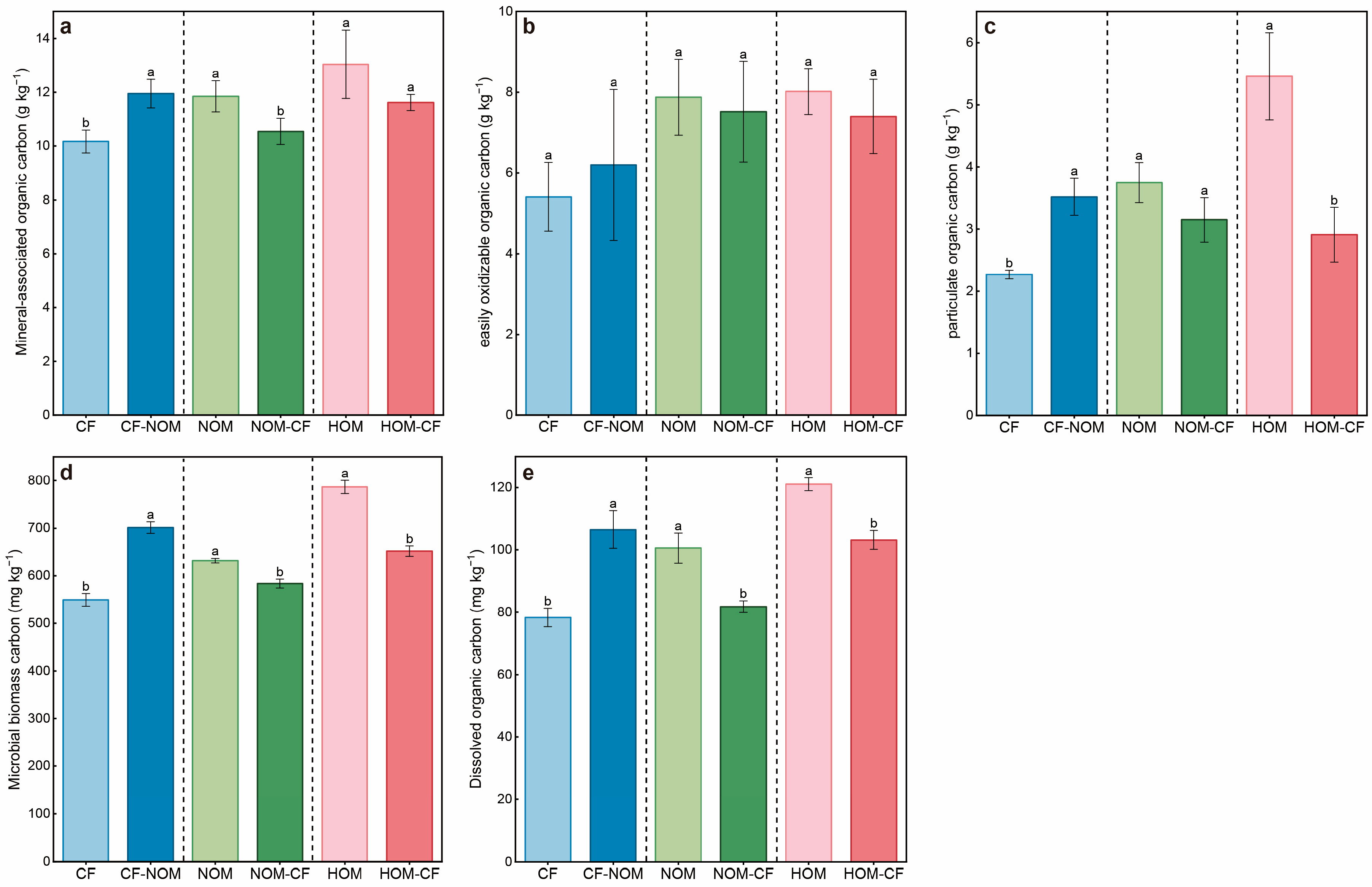
Twelve years of shifted fertilization regimes significantly altered soil C-cycling chemical indicators (Figure 1). Except for EOC, which exhibited no statistically significant differences (p > 0.05), all other carbon fractions showed significant responses to fertilization shifts (p < 0.05). The CF-NOM treatment significantly enhanced the contents of MAOC, POC, MBC, and DOC. In contrast, NOM-CF treatment caused significant reductions in MAOC, MBC, and DOC. Similarly, HOM-CF treatment led to a decrease in soil carbon pool components, with particularly significant declines in POC, MBC, and DOC.
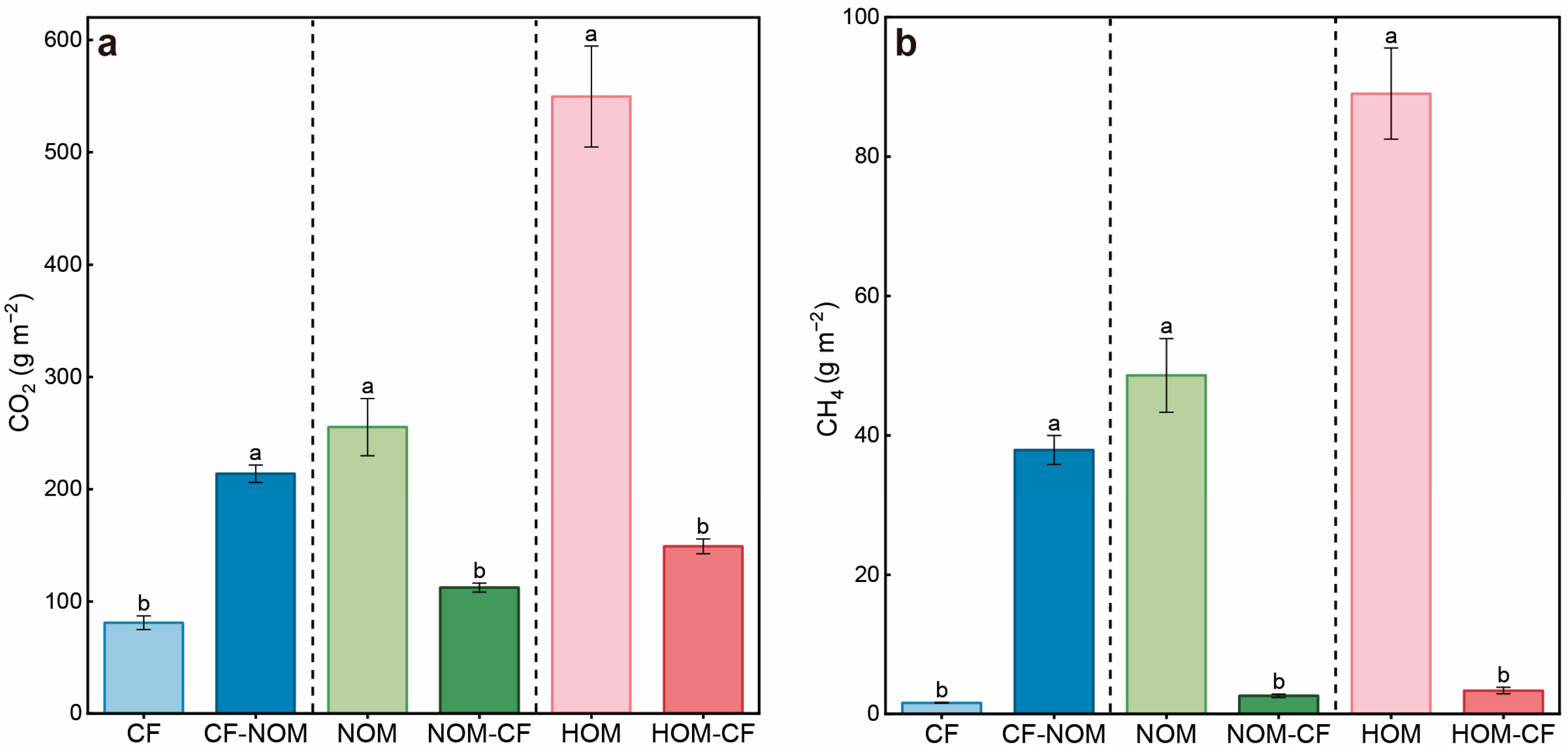
Shifts in fertilization regimes influenced greenhouse gas emissions from paddy soils (Figure 2). The CF-NOM treatment significantly increased annual cumulative emissions of both CO2 and CH4. In contrast, the NOM-CF and HOM-CF treatments resulted in a pronounced reduction in greenhouse gas emissions (p < 0.05). Overall, the application of chemical fertilizers in place of organic fertilizers (NOM-CF and HOM-CF) not only diminished the accumulation of various soil carbon pool components but also considerably reduced the emission intensities of CO2 and CH4. By comparison, CF-NOM treatment effectively enhanced C-cycling related soil properties, underscoring the positive role of organic fertilizers in facilitating soil carbon turnover and enhancing carbon sink functions.

3.2. Carbon Cycling Microbial Communities in Paddy Soil

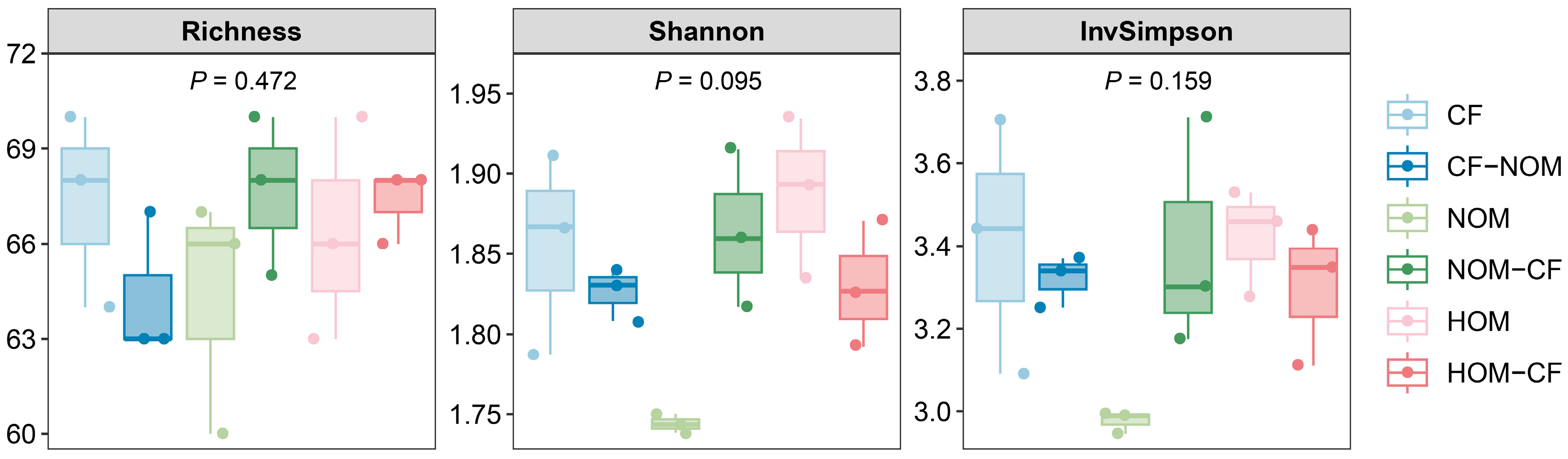
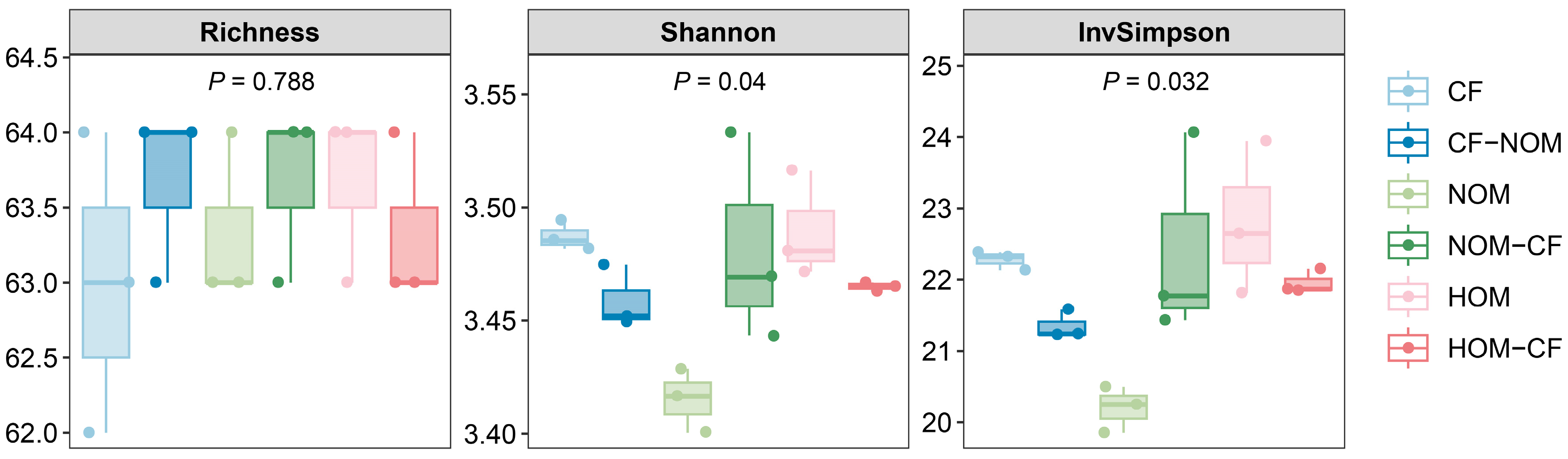
The alpha diversity of the soil C-cycling microbial community was evaluated using the Richness, Shannon, and InvSimpson indices (Figure 3). Overall, shifts between organic and chemical fertilization influenced microbial alpha diversity, though no statistically significant differences were observed (p > 0.05). Richness values in organic fertilizer treatments (CF-NOM, NOM, and HOM) were generally lower than those in chemical fertilizer treatments. Microbial diversity in the normal-rate organic amendment treatments (CF-NOM and NOM) was also lower than that in the chemical fertilizer treatments (CF and NOM-CF). Comparisons before and after the fertilization shift revealed that the CF-NOM treatment led to decreases in microbial richness and diversity. In contrast, NOM-CF increased the alpha diversity of the soil microbial community. The HOM-CF treatment resulted in reduced diversity indices but an increased richness.
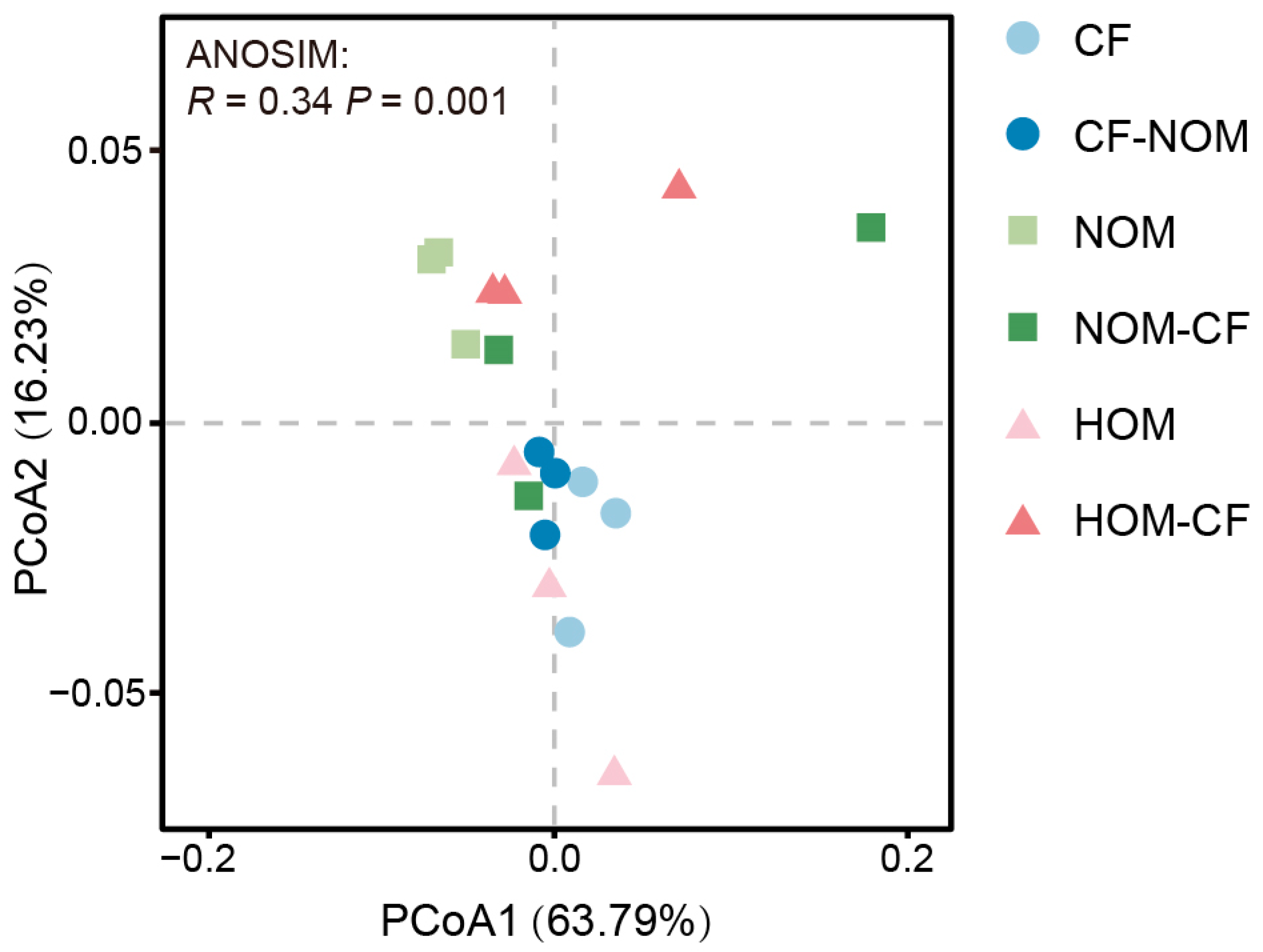
PCoA and ANOSIM were performed based on the Bray–Curtis distance matrix to assess the microbial community structure under different fertilization regimes (Figure 4). The microbial communities under the various fertilization treatments exhibited clear separation along the first two principal coordinates, which together explained 80.02% of the total variance. The ANOSIM test further confirmed significant differences in microbial community structure among treatments (R = 0.34, p = 0.001), indicating that the between-treatment variation was substantially greater than the within-treatment random fluctuation (R > 0).
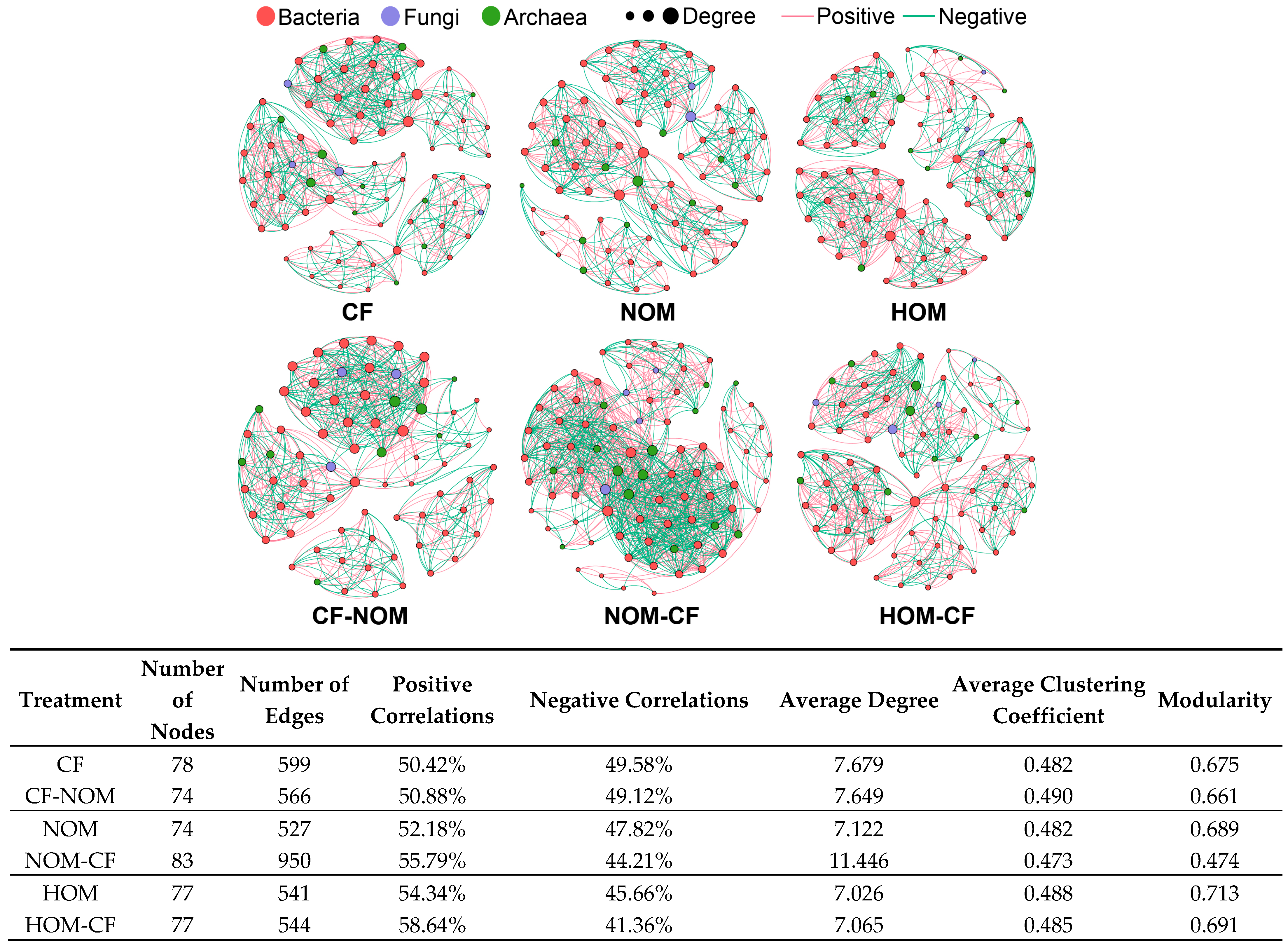
Co-occurrence networks of soil microbial communities were constructed to assess the stability and complexity of C-cycling related microorganisms in paddy soils under different fertilization regimes (Figure 5). Each point represents a node in the network, with its size indicating abundance, and edge colors denote the types of interaction. Overall, bacteria dominated the microbial communities, comprising more than 80% in each network, whereas fungi and archaea were relatively scarce but showed noticeable variations across treatments. Among the treatments, the NOM-CF treatment exhibited the highest number of nodes, edges, and average degree, along with the lowest modularity. The HOM treatment displayed the highest modularity. The HOM-CF treatment showed a greater proportion of positive correlations than other treatments, while the CF treatment had the lowest. The average clustering coefficient remained relatively stable across treatments.
Comparative analysis of microbial co-occurrence networks before and after fertilization shifts. Relative to the CF treatment, the CF-NOM treatment exhibited reduced node number, edge count, average degree, and modularity, while demonstrating increased average clustering coefficient and proportion of positive correlations. The NOM-CF treatment resulted in a higher node number, edge count, average degree, and positive correlation ratio, but a lower average clustering coefficient and modularity than the NOM treatment. Similarly, the HOM-CF treatment resulted in decreased average clustering coefficient and modularity relative to the HOM treatment, whereas edge count, average degree, and positive correlation ratio increased. These topological shifts indicate that the altered fertilization regimes enhanced synergistic microbial interactions (evidenced by increased positive correlations) but reduced network resistance to disturbance (reflected by decreased modularity).

3.3. Carbon Cycling Functional Genes in Paddy Soil

Alpha diversity analysis was performed on soil C-cycling functional genes (Figure 6). Overall, shifts between organic and chemical fertilization affected the alpha diversity of C-cycling functional genes, with the Shannon and InvSimpson indices reaching significant levels (p < 0.05), while no significant differences were observed in the Richness index among treatments (p > 0.05). Comparisons before and after the fertilization regime shifts showed that the CF-NOM and HOM-CF treatments reduced both the Shannon and InvSimpson indices of soil C-cycling functional genes. In contrast, the NOM-CF treatment increased the diversity indices of functional genes.
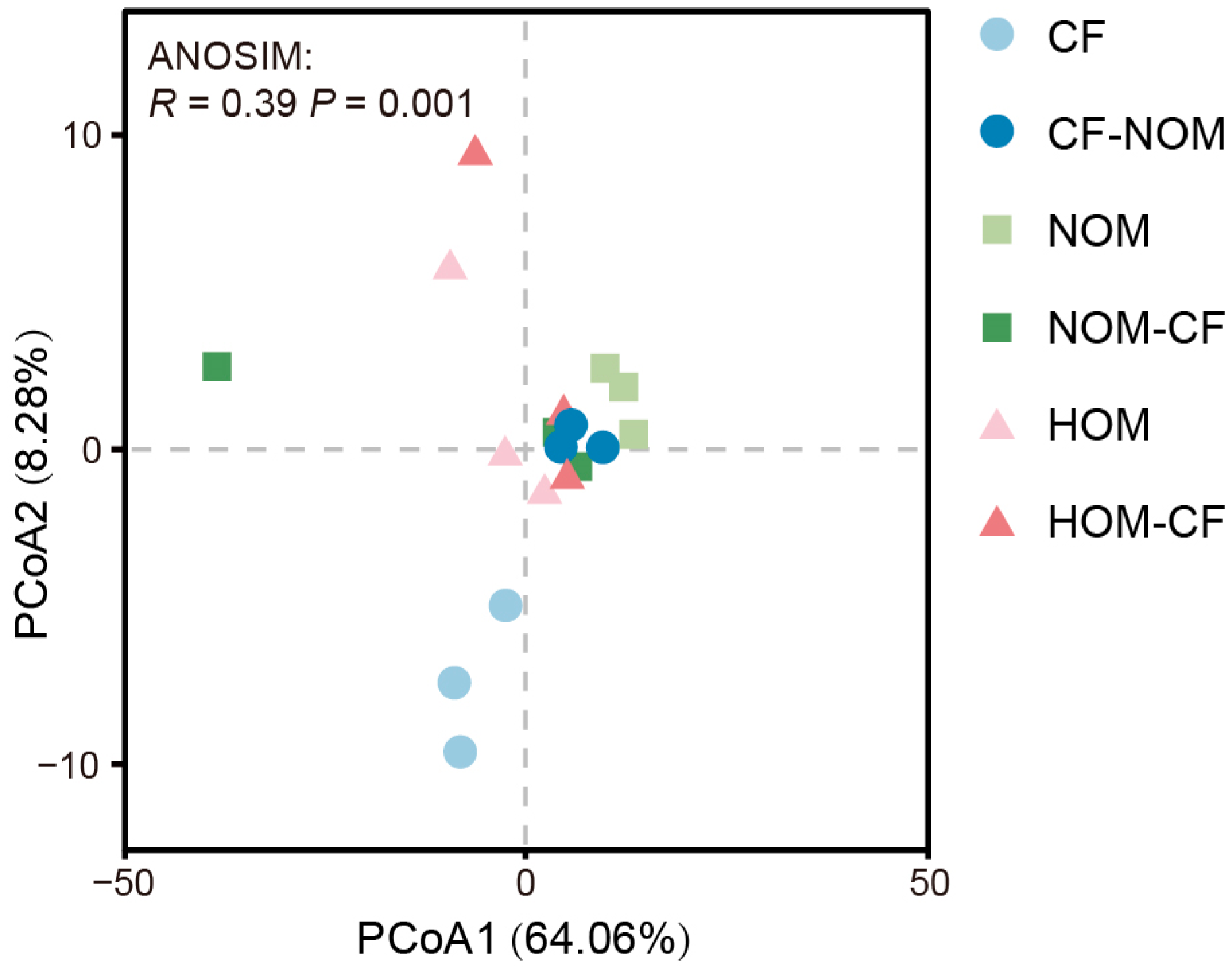
Principal coordinate analysis (PCoA) based on the Bray–Curtis distance matrix further revealed the effects of different fertilization treatments on the composition of soil C-cycling functional gene communities (Figure 7). The PCoA results indicated a clear separation in functional gene community structure among the different treatments, with the first two principal coordinates cumulatively explaining 72.34% of the total variance. ANOSIM confirmed that the differences in functional gene community structure between fertilization treatments were statistically significant (R = 0.39, p = 0.001), demonstrating that inter-treatment variations exceeded intra-treatment variations.
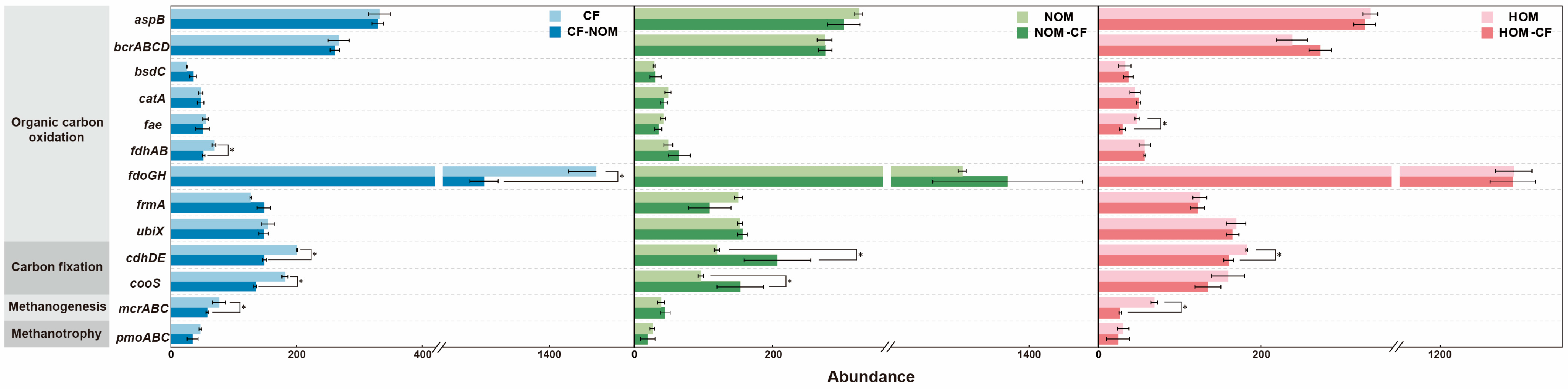
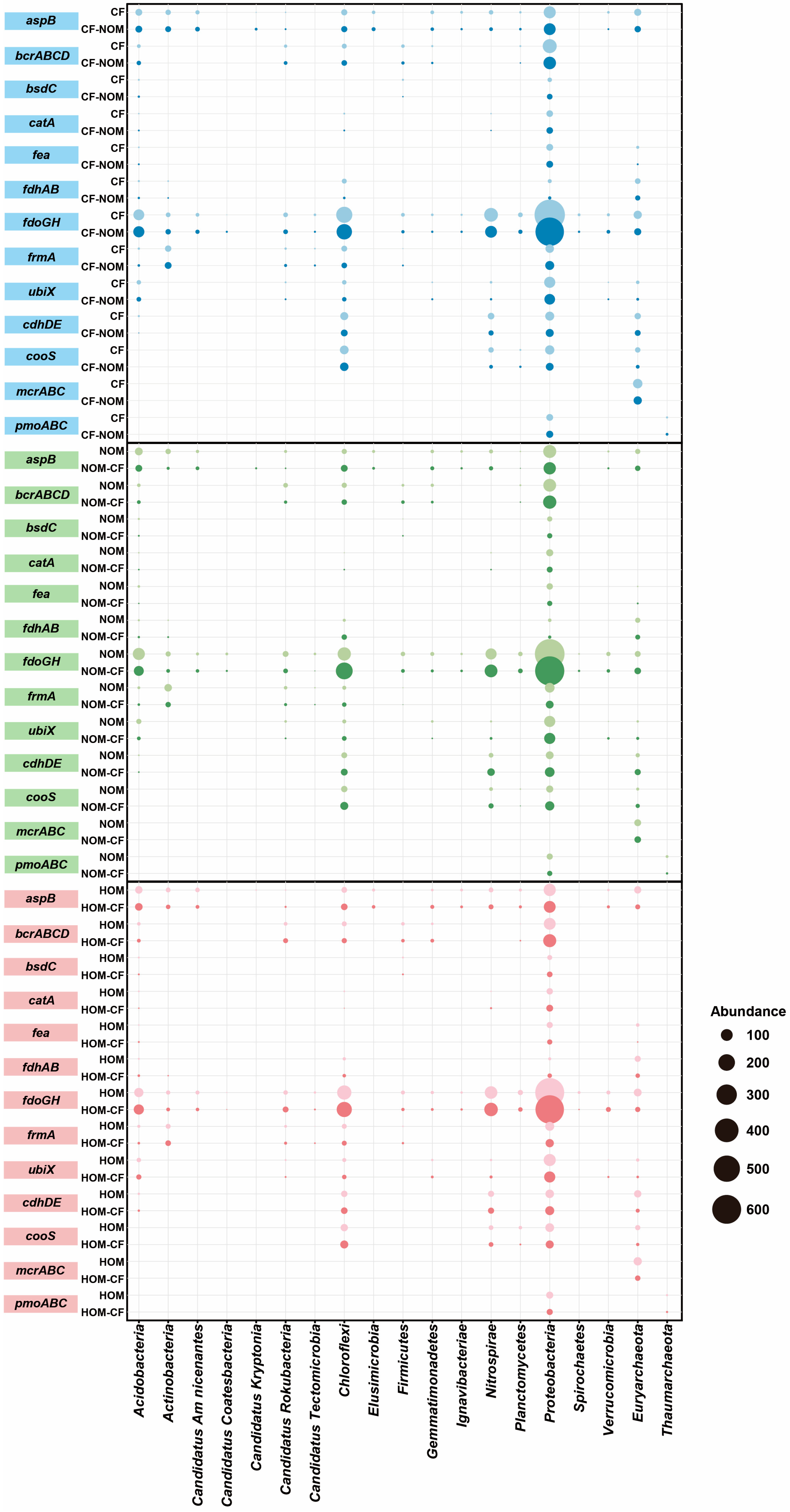
Based on the aforementioned functional gene diversity analysis, to further clarify the impact of fertilization regime shifts on C-cycling processes and related functional genes in paddy soil, this study focused on key C-cycling processes, including organic carbon oxidation, carbon fixation, methanogenesis, and methanotrophy. A total of 64 candidate genes were detected. Through further screening, genes encoding enzymes were excluded, gene sequences with an abundance value below 10 TPM were removed, and genes belonging to the same functional gene cluster were merged. Ultimately, 13 core functional genes were identified (Figure 8). Abundance analysis and subsequent interaction analysis of these genes were performed to reveal the response mechanisms of C-cycling functional modules and their potential ecological functional linkages under different fertilization treatments.
Shifts in fertilization regimes altered the abundance of functional genes (Figure 8). The CF-NOM treatment reduced the total abundance of functional genes across all processes and significantly decreased the abundance of fdhAB, fdoGH, cdhDE, cooS, and mcrABC genes. The NOM-CF treatment increased the total functional gene abundance, significantly raising cdhDE and cooS abundance. For the HOM-CF treatment, the abundances of fae, cdhDE, and mcrABC were significantly lower than those in the HOM treatment, and the total abundance was also reduced. Overall, fdoGH, aspB, and bcrABCD genes exhibited relatively high abundance levels across all treatments, and the abundance of carbon fixation process functional genes was the most noticeably affected by fertilization regime shifts.

3.4. Associations Among Carbon Cycling Microorganisms, Functional Genes, and Environmental Factors

Following taxonomic identification and removal of microbial taxa with cumulative abundance below 10 TPM across all treatments, 19 phyla were identified from the 13 functional genes (Figure 9). Shifts in fertilization regimes affected the distribution of functional genes at the microbial phylum level. Proteobacteria, as the most relatively abundant microbial taxon in all treatments (Table S1), carried 12 key functional genes excluding mcrABC. Acidobacteria and Chloroflexi carried 10 and 9 functional genes related to organic carbon oxidation and carbon fixation processes, respectively, but neither phylum contained genes associated with methane metabolism. fdoGH was the most highly expressed functional gene, detected across 16 phyla, and was predominantly carried by Proteobacteria in all treatments. Its expression in this phylum decreased after fertilization shifts. aspB was detected in 14 phyla, primarily in Proteobacteria, and its expression at the phylum level declined across all altered fertilization regimes. mcrABC genes were exclusively carried by the archaeal phylum Euryarchaeota, and their expression decreased after fertilization changes. pmoABC genes were carried by both Proteobacteria and Thaumarchaeota. Their expression increased under the CF-NOM treatment but decreased under the NOM-CF and HOM-CF treatments.
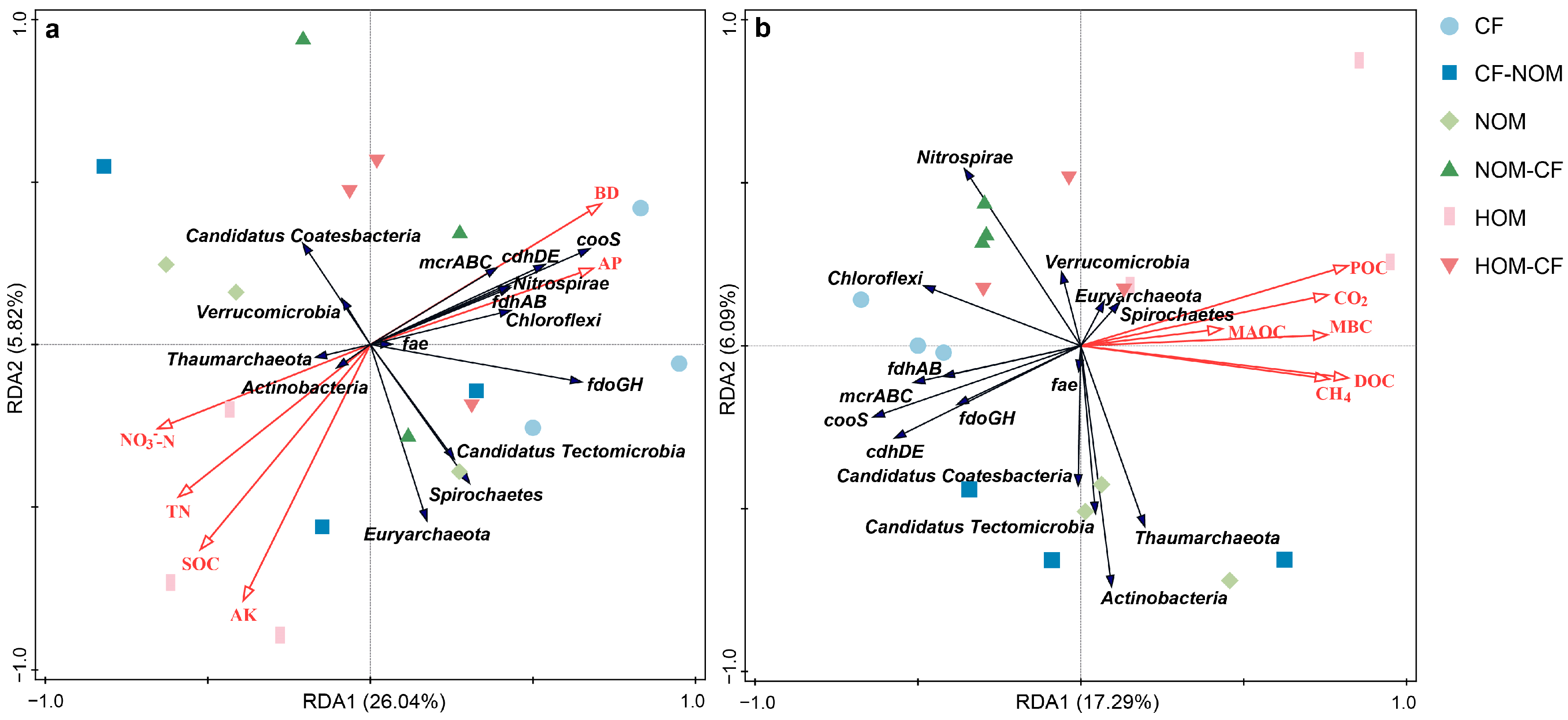
Further analysis identified six functional genes and nine microorganisms whose abundance changed significantly following fertilization regime shifts. Redundancy analysis (RDA) was employed to investigate their coupling relationships with environmental factors (Figure 10). In the RDA with basic soil physicochemical properties (Figure 10a), the first two axes collectively explained 31.86% of the total variation. BD was the dominant environmental factor, contributing 41.3% to the total explained variation in the model, which was significantly higher than other variables. BD showed positive correlations with multiple C-cycling functional genes, including organic carbon oxidation genes (fae, fdhAB, fdoGH), carbon fixation genes (cdhDE, cooS), and methanogenesis genes (mcrABC). An increase in BD was also associated with the enrichment of Chloroflexi and Nitrospirae. TN and NO3-N contributed 14.7% and 10.4% to the total model, respectively, indicating that nitrogen dynamics are also important factors regulating functional genes and microbial communities. Both were positively correlated with Actinobacteria and Thaumarchaeota. SOC contributed 13.7% and showed positive correlations with Actinobacteria, Euryarchaeota, and Thaumarchaeota.
Figure 10b illustrates the relationships between soil carbon components, greenhouse gas emissions, functional genes, and microbial communities. The first two axes cumulatively explained 23.38% of the total variation. POC was the dominant environmental factor driving the differentiation of C-cycling functional genes and microbial communities (contribution rate 43.4%), followed by CO2 and CH4, which contributed 17.4% and 13.0%, respectively, while DOC contributed 13.9%. All six key carbon-related factors clustered on the positive side of the first axis (RDA1), forming a distinct environmental factor cluster. This indicates significant positive correlations among these factors, which collectively influence the microbial community structure and the expression of functional genes.

4. Discussion

4.1. Impacts of Fertilization Regime Shifts on Carbon Cycling Microbial Communities in Paddy Soil

Different fertilization regimes altered the structure and composition of C-cycling microbial communities in paddy soil. While these shifts did not significantly affect alpha diversity (Figure 3), they led to a substantial restructuring of the communities [13], as evidenced by changes in beta diversity (Figure 4) and co-occurrence network architecture (Figure 5). Regarding α-diversity, in the two treatments involving reciprocal shifts between NOM and CF, the CF treatment exhibited higher values for the Richness, Shannon, and InvSimpson indices compared to the NOM treatment. Since chemical fertilizers do not directly supply easily utilizable organic carbon sources, microorganisms primarily depend on complex carbon pools derived from plant root exudates, root deposits, and inherent soil organic matter [14]. This multi-source heterogeneous carbon environment facilitates differentiation among microbial functional groups, providing broader ecological niches for diverse taxa such as aerobic, facultative anaerobic, and obligate anaerobic bacteria, thereby increasing soil microbial Richness [15,16]. While the application of normal-rate organic fertilizer increased the soil organic carbon pool (Figure 1), it may also have induced competitive exclusion, leading to the expansion of dominant microbial communities and consequently reducing species diversity and evenness [17]. Following the HOM-CF treatment, the Shannon and InvSimpson indices decreased. The substantial input of high-rate organic fertilizer significantly raised the levels of DOC and POC in soil (Figure 1). When fertilization shifted to chemical fertilizers, the long-term adapted microecological equilibrium was disrupted. The microbial community, experiencing reduced functional redundancy and constricted niche breadth, failed to respond rapidly to this abrupt environmental shift, ultimately resulting in a marked decline in diversity indices [18,19]. These dynamic shifts reflect microbial regulatory mechanisms that modulate soil ecosystem stability [20,21]. Although changes in fertilization regimes did not significantly alter species richness or evenness, β-diversity analysis further revealed significant segregation in microbial community structure among different fertilization treatments. This restructuring indicates fundamental shifts in the relative proportions and interactions among microbial taxa, reflecting that microbial communities may maintain apparent stability through functional redundancy among species [22]. For instance, the total abundance of genes such as aspB and ubiX showed no significant change before and after fertilization shifts (Figure 8), while the dominant microbial phyla harboring these genes underwent significant migration (Figure 9). This indicates that identical ecological functions can be performed by different microbial groups, with fertilization shifts selecting for microbial taxa better adapted to altered soil conditions to execute these functions. Thus, the profound impact of fertilization regime shifts on microbial community assembly arises not through substantial alterations in species diversity, but by driving community structural reorganization. This reorganization triggers the turnover of key functional groups, ultimately leading to shifts in carbon cycling functional gene expression and metabolic pathways.
Shifts in fertilization regimes altered the network topological features (Figure 5), reflecting adaptive microbial strategies to environmental disturbance and dynamic adjustments in ecological functions [23]. The NOM-CF treatment exhibited the highest number of nodes, edges, and average degree, along with the lowest modularity, revealing the profound impact of nutrient resource heterogeneity and availability on microbial network topology [24]. When long-term normal-rate organic fertilizers were converted to chemical fertilizer input, the dominant forms of available nutrients shifted from organic compounds requiring mineralization to directly utilizable inorganic ions [17]. This transition rapidly activated the proliferation of eutrophic microorganisms, which generally possess broader ecological niche width and stronger environmental adaptability. Simultaneously, the abrupt shift in nutrient forms disrupted existing niche differentiation, forcing microbial taxa originally dependent on specific organic substrates to compete for newly introduced nutrients, thereby increasing microbial interactions. Notably, the decrease in average clustering coefficient and the decline in modularity in the NOM-CF treatment were intrinsically linked. After organic fertilizers were replaced by chemical fertilizers, high concentrations of readily available nutrients weakened functional dependencies among microorganisms. This led to the gradual disintegration of previously well-defined modular structures, resulting in diminished community resistance to disturbance and a trend toward homogenization of the competitive network [25]. The HOM treatment displayed the highest modularity, indicating that its microbial community formed highly differentiated functional modules. This structure originated from the diverse ecological niches created by persistent high organic carbon inputs [26]. As a direct source of organic carbon input, straw releases complex organic compounds such as cellulose, hemicellulose, and lignin during its degradation [27,28], which are decomposed by distinct microbial functional groups (e.g., cellulolytic bacteria, lignin-degrading fungi) [29]. These groups form tightly interconnected sub-networks through positive interactions. The HOM-CF treatment modularity decreased significantly while the proportion of positive correlations increased. This indicates that the fertilization shift disrupted the original module boundaries and prompted the community structure from a specialized modular architecture toward a generalized interaction pattern. Although this shift enhanced synergistic interactions among microorganisms, the reduction in modularity may weaken the system’s resistance to local perturbations [30]. These results confirm that agricultural management practices, by rationally regulating nutrient types and application rates to maintain moderate network modularity and functional redundancy, thereby contribute to the construction of more stable microbial community networks [31]. In summary, shifts in fertilization regimes drive soil C-cycling by regulating the abundance, diversity, and network interactions of microbial functional groups [32].

4.2. Effects of Fertilization Regime Shifts on Carbon Cycling Functional Genes in Paddy Soil

Shifts between organic and chemical fertilization significantly affected the Shannon and InvSimpson indices of soil C-cycling functional genes (p < 0.05), whereas the Richness index showed no significant change (p > 0.05). This indicates that fertilization regime shifts primarily influenced the evenness of functional gene distribution across treatments rather than the total gene count. The consistent trends in functional gene indices and microbial community diversity indices demonstrate a close linkage between microbial community composition (diversity) and functional potential (functional genes) [33]. PCoA revealed significant separation of functional gene community structure among different fertilization treatments (ANOSIM: R = 0.39, p = 0.001), with the principal coordinates cumulatively explaining 72.34% of the total variance (Figure 7), confirming that shifts in fertilization regimes are a key driver of functional gene community restructuring in the carbon cycle.
The key genes involved in the organic carbon oxidation—fae, fdhAB, and fdoGH—exhibited significant changes in abundance following shifts in fertilization regimes (Figure 8, p < 0.05). Specifically, the abundance of the fae gene decreased significantly after the shift from high organic to chemical fertilizer. Under HOM treatment, the persistent input of complex carbon sources (e.g., lignin, cellulose) releases formaldehyde through lignin degradation or methane oxidation pathways, inducing high expression of the fae gene associated with formaldehyde metabolism [34,35,36]. After conversion to chemical fertilizer, the interruption of external complex carbon inputs led to a shortage of lignocellulosic substrates, causing a sharp decline in formaldehyde production and consequently reducing the transcriptional demand for the fae gene. Metagenomic studies have confirmed that when soil management shifts from organic to inorganic fertilization, the abundance of genes involved in the decomposition of lignin, cellulose, and hemicellulose decreases significantly [37]. Following the shift from chemical to normal-rate organic fertilizer, the abundance of fdhAB and fdoGH genes decreased significantly. This phenomenon is attributed to adaptive adjustments of microbial metabolic pathways to carbon source diversity [38]. Organic fertilizer inputs increase readily degradable carbon sources (e.g., sugars, organic acids), driving the microbial community to shift from the formate oxidation pathway toward the EMP-TCA pathway, which yields higher ATP production [39]. In accordance with the microbial “optimal foraging theory” [40], the community preferentially adopts metabolic pathways with higher energy efficiency. This pathway gradually replaces the less efficient formate oxidation pathway under competitive conditions, thereby leading to a significant decline in the abundance of fdhAB and fdoGH genes associated with formate oxidation and metabolism.
The cdhDE and cooS genes jointly participate in the core pathway of soil carbon fixation—the anaerobic acetyl-CoA pathway (Wood-Ljungdahl Pathway, WL) [41]—and exhibit high sensitivity to fertilization regime shifts (Figure 8, p < 0.05). In particular, the abundance of the cdhDE gene changed significantly across all three shifted treatment pairs. This indicates that the carbon fixation pathway in paddy soil is substantially influenced by soil nutrient fluctuation. In the reciprocal shifts between NOM and CF, the CF treatment consistently showed higher abundances of both cdhDE and cooS genes. Chemical fertilizers provide readily available inorganic nutrients, supplying stable energy and carbon sources for chemolithoautotrophic microorganisms (e.g., acetogens and sulfate-reducing bacteria involved in the WL pathway) [42,43], promoting their proliferation. These microorganisms rely on the WL pathway for CO2 fixation, leading to significantly increased abundances of the key functional genes cdhDE and cooS under CF treatment. In contrast, organic fertilizer inputs complex organic carbon sources, stimulating the growth of heterotrophic microorganisms [44]. These heterotrophs preferentially utilize easily degradable organic carbon for fermentative metabolism, which suppresses autotrophic pathways [45] and results in decreased abundance of cdhDE and cooS genes. Notably, cdhDE and cooS genes exhibited synchronous variation trends across three treatment pairs, demonstrating their tight functional coupling. This coupling stems from their synergistic roles in the WL pathway: cooS catalyzes the oxidation of CO to CO2 while providing electrons [46], and cdhDE utilizes these electrons to reduce CO2 to acetyl-CoA. Furthermore, both genes may be regulated by similar environmental factors (Figure 10).
Different fertilization practices influenced the abundance of functional genes related to methane metabolism by modulating soil environmental factors [47]. The abundance of the methanogenesis gene mcrABC decreased significantly in CF-NOM and HOM-CF treatments. The abundance of the methane oxidation gene pmoABC varied among treatments but without statistical significance (Figure 8). Generally, the application of organic fertilizer increases soil CH4 production and emissions [48], which is consistent with our results (Figure 2). While the mcrABC genes abundance is typically expected to correlate positively with CH4 flux [48,49], our findings did not support such a relationship. A possible reason is that the complex organic carbon sources in organic fertilizers are preferentially utilized by heterotrophic microorganisms, thereby reducing substrates essential for methanogens (e.g., H2, CO2, and acetate) and suppressing their growth and reproduction [48]. Additionally, rice cultivation may influence the abundance of methane metabolism genes as well as CH4 oxidation and production processes. Therefore, further investigation is needed to clarify the relationship between methane metabolism genes and CH4 emissions, while considering the influence of external conditions and their complex interactions [50,51].
Comprehensive analysis indicates that the fdoGH (46.48–48.98%), aspB (10.78–12.23%), and bcrABCD (8.56–10.37%) genes exhibited high abundance levels across all fertilization treatments. This may be attributed to their fundamental functional roles, central positions in metabolic networks, and broad environmental adaptability. Furthermore, the bubble plot demonstrates the distribution of functional genes at the microbial phylum level (Figure 9), confirming that fdoGH, aspB, and bcrABCD genes have a wide host distribution among microbial communities, thereby accounting for their notably high proportional abundance under all treatment conditions. The significant changes in the abundance of different functional genes before and after fertilization shifts, together with the alterations in total gene abundance, indicate that chemical fertilization exerts a positive influence on C-cycling microorganisms and functional genes in paddy soil to a certain extent [52]. Hence, shifts in fertilization regimes significantly altered the diversity and abundance of C-cycling functional genes in paddy soil, accompanied by a restructuring of their interaction relationships. This further demonstrates that shifts between organic and chemical fertilization exert a pronounced impact on C-cycling processes in paddy soils.

4.3. Multidimensional Relationships Among Microorganisms, Functional Genes, and Environmental Factors in Paddy Soil

Based on the distribution characteristics of core carbon metabolic functional genes at the microbial phylum level (Figure 9). fdoGH, as the most abundant functional gene, was widely present across 16 phyla. Other functional genes, such as mcrABC, were detected in only one archaeal phylum, demonstrating distinct taxonomic distributions of these functional genes [53]. Although the total abundance of genes such as aspB and ubiX did not change significantly following shifts in fertilization regimes (Figure 8), the microbial taxa carrying these genes responded markedly to fertilization changes (Figure 9). This indicates that the impact of fertilization disturbance may not directly alter the abundance of certain carbon metabolic genes but can influence the taxonomic composition of the associated microbial communities [53,54]. Environmental disturbances, such as fertilization shifts, may induce horizontal gene transfer of C-cycling genes within microbial ecosystems [55]. These findings further underscore the close interrelationship among functional genes, microorganisms, and environmental factors. Changes in microbial community structure serve as a critical bridge connecting environmental disturbances with functional responses in carbon metabolism [56].
RDA revealed coupling relationships among environmental factors, microbial taxa, and C-cycling functional genes under shifted fertilization regimes (Figure 10). BD and POC were the core environmental drivers of functional differentiation in carbon metabolism. BD contributed the most to the total explained variation in the model (41.3%) and was positively correlated with all core functional genes, accompanied by the enrichment of Chloroflexi and Nitrospirae (Figure 10a). Increased BD often reduces soil porosity, thereby expanding anaerobic microhabitats in paddy soil. This creates a suitable habitat for anaerobic microorganisms and promotes the growth of functional groups, such as Chloroflexi and Nitrospirae [57,58]. Concurrently, this physical constraint forces microorganisms to utilize small-molecule substrates (e.g., formate, CO2/H2), activating the formate oxidation pathway and driving high expression of fdhAB and fdoGH (Figure 10a). It also supports anaerobic photoautotrophs in fixing CO2 via the WL pathway, leading to increased abundance of carbon fixation genes cdhDE and cooS (Figure 10a) [59]. These demonstrate the decisive influence of soil physical structure on microbial niches and functional genes [60]. Figure 10b further emphasizes the regulatory role of active carbon components in carbon metabolism. As the dominant factor (contribution 43.4%), POC exhibited a significant synergistic effect with CO2 and CH4 emissions as well as other active components (all distributed on the positive half axis of RDA1), explaining the markedly elevated CO2 and CH4 emissions under organic fertilizer treatments [61]. Notably, the HOM treatment consistently maintained the highest carbon storage and greenhouse gas emissions (Figure 2), highlighting the “double-edged sword” of humic substances in the carbon cycle [62]. It is hypothesized that environmental factors may indirectly regulate functional gene expression by filtering specific microbial taxa rather than acting directly on individual genes. In optimizing fertilization strategies for paddy soil carbon management, coordinated regulation of soil physical structure and active carbon composition is essential to balance soil carbon sequestration and emission reduction goals.

5. Conclusions

In summary, this study reveals the roles of C-cycling microbial community structure, functional gene expression, and their interactions with environmental factors in a paddy soil with shifts in fertilization regimes. Although fertilization shifts did not significantly alter microbial α-diversity, β-diversity analysis showed significant separation of microbial community structure. After the fertilization changes, synergistic interactions among microorganisms were enhanced, but network modularity decreased, indicating compromised community resistance to disturbance. Functional genes were sensitive to fertilization regimes, with genes involved in the carbon fixation pathways showing the most pronounced response. The reciprocal shifts between NOM and CF suggest that chemical fertilizer input has a positive regulatory potential for C-cycling microorganisms and functional genes. Fertilization disturbances indirectly regulate functional gene expression by driving microbial community reassembly. Further studies should focus on elucidating the underlying mechanisms responsible for the divergent responses of C-cycling processes to shifts in fertilization regimes.

Supplementary Materials

The following supporting information can be downloaded at: https://www.mdpi.com/article/10.3390/agronomy16010104/s1. Table S1: Microbial community composition of paddy soil at the phylum level under different fertilization regimes (TPM).

Author Contributions

Conceptualization, Y.W. and S.N.; methodology, Y.W.; software, Y.W.; validation, G.S. and S.N.; formal analysis, Y.W.; investigation, Y.W., Q.G., T.W. and G.S.; resources, G.S. and S.N.; data curation, Y.W. and T.W.; writing—original draft, Y.W.; writing—review and editing, Y.W., Q.G., G.S. and S.N.; visualization, Y.W. and Q.G.; supervision, G.S. and S.N.; funding acquisition, S.N. All authors have read and agreed to the published version of the manuscript.

Funding

This research was funded by the Degree and Postgraduate Education Reform Research Project of Hunan Province (2023JGYB144), the Scientific Research Fund of Hunan Provincial Education Department (23A0185) and the National Natural Science Foundation of China (42177288).

Data Availability Statement

The original contributions presented in this study are included in the article/Supplementary Materials. Further inquiries can be directed to the corresponding authors.

Acknowledgments

We thank all individuals who contributed to this work.

Conflicts of Interest

The authors declare no conflicts of interest.

References

  1. Franklin, L.; Limmer, M.A.; Ebling, A.M.; Seyfferth, A.L. Rice husk and husk biochar soil amendments store soil carbon while water management controls dissolved organic matter chemistry in well-weathered soil. J. Environ. Manag. 2023, 339, 117936. [Google Scholar] [CrossRef] [PubMed]
  2. Tang, H.; Liu, Y.; Li, X.; Muhammad, A.; Huang, G. Carbon sequestration of cropland and paddy soils in China: Potential, driving factors, and mechanisms. Greenh. Gases Sci. Technol. 2019, 9, 872–885. [Google Scholar] [CrossRef]
  3. Chen, Z.; Ma, J.; Wang, F.; Ma, J.; Zou, P.; Sun, W.; Yu, Q.; Wang, Q. Long-term phosphorus addition enhances the contributions of plant lignin and microbial necromass to soil organic carbon in a rice–wheat rotation. Appl. Soil Ecol. 2025, 209, 106010. [Google Scholar] [CrossRef]
  4. Lu, X.; Zhang, X.; Wang, Z.; Li, S. Carbon budget of paddy ecosystems in China simulated by denitrification-decomposition model. Ecosphere 2024, 15, e4926. [Google Scholar] [CrossRef]
  5. Schimel, J.P.; Schaeffer, S.M. Microbial control over carbon cycling in soil. Front. Microbiol. 2012, 3, 348. [Google Scholar] [CrossRef]
  6. Xiao, Q.; Huang, Y.; Wu, L.; Tian, Y.; Wang, Q.; Wang, B.; Xu, M.; Zhang, W. Long-term manuring increases microbial carbon use efficiency and mitigates priming effect via alleviated soil acidification and resource limitation. Biol. Fertil. Soils 2021, 57, 925–934. [Google Scholar] [CrossRef]
  7. Meiling, Z.; Ming, W.; Yantong, Z.; Ming, J.; Guodong, W. Variations in Concentration and Carbon Isotope Composition of Methanotroph Biomarkers in Sedge Peatlands Along the Altitude Gradient in the Changbai Mountain, China. Front. Microbiol. 2022, 13, 892430. [Google Scholar] [CrossRef]
  8. Xu, W.; Liu, W.; Tang, S.; Yang, Q.; Meng, L.; Wu, Y.; Wang, J.; Wu, L.; Wu, M.; Xue, X.; et al. Long-term partial substitution of chemical nitrogen fertilizer with organic fertilizers increased SOC stability by mediating soil C mineralization and enzyme activities in a rubber plantation of Hainan Island, China. Appl. Soil Ecol. 2023, 182, 104691. [Google Scholar] [CrossRef]
  9. Song, H.; Yang, B.; Liang, Y.; Yang, L.; Song, J.; Li, T. Combined Application of Balanced Chemical and Organic Fertilizers on Improving Crop Yield by Affecting Soil Macroaggregation and Carbon Sequestration. Agronomy 2024, 14, 2813. [Google Scholar] [CrossRef]
  10. Hailu, F.; Hassen, S.; Hussen, S.; Belete, E.; Alemu, T. Evaluation of different fertilizer sources for sustainable carrot production in Tehuledere district, northern Ethiopia. Heliyon 2024, 10, e29693. [Google Scholar] [CrossRef] [PubMed]
  11. Zhu, W.; Yin, B.; Su, L.; Liu, C.; Zhang, L.; Wang, L. The improvement of soil properties in rice cropping systems using an integrated fertilization method to increase rice yield. Soil Use Manag. 2024, 40, e13073. [Google Scholar] [CrossRef]
  12. Rukun, L. Methods of Soil Agricultural Chemical Analysis; China Agricultural Science and Technology Press: Beijing, China, 2000. [Google Scholar]
  13. Zhao, S.; Qiu, S.; Xu, X.; Ciampitti, I.A.; Zhang, S.; He, P. Change in straw decomposition rate and soil microbial community composition after straw addition in different long-term fertilization soils. Appl. Soil Ecol. 2019, 138, 123–133. [Google Scholar] [CrossRef]
  14. Zhao, S.; Li, K.; Zhou, W.; Qiu, S.; Huang, S.; He, P. Changes in soil microbial community, enzyme activities and organic matter fractions under long-term straw return in north-central China. Agric. Ecosyst. Environ. 2016, 216, 82–88. [Google Scholar] [CrossRef]
  15. Nunan, N.; Schmidt, H.; Raynaud, X. The ecology of heterogeneity: Soil bacterial communities and C dynamics. Philos. Trans. R. Soc. London. Ser. B Biol. Sci. 2020, 375, 20190249. [Google Scholar] [CrossRef] [PubMed]
  16. Li, S.; Yang, S.; Wei, X.; Jiao, S.; Luo, W.; Chen, W.; Wei, G. Reduced trace gas oxidizers as a response to organic carbon availability linked to oligotrophs in desert fertile islands. ISME J. 2023, 17, 1257–1266. [Google Scholar] [CrossRef] [PubMed]
  17. Ding, J.; Yu, S. Impacts of Land Use on Soil Nitrogen-Cycling Microbial Communities: Insights from Community Structure, Functional Gene Abundance, and Network Complexity. Life 2025, 15, 466. [Google Scholar] [CrossRef]
  18. Biggs, C.R.; Yeager, L.A.; Bolser, D.G.; Bonsell, C.; Dichiera, A.M.; Hou, Z.; Keyser, S.R.; Khursigara, A.J.; Lu, K.; Muth, A.F.; et al. Does functional redundancy affect ecological stability and resilience? A review and meta-analysis. Ecosphere 2020, 11, e03184. [Google Scholar] [CrossRef]
  19. Bebber, D.P.; Richards, V.R. A meta-analysis of the effect of organic and mineral fertilizers on soil microbial diversity. Appl. Soil Ecol. 2022, 175, 104450. [Google Scholar] [CrossRef]
  20. Tian, W.; Wang, L.; Li, Y.; Zhuang, K.; Li, G.; Zhang, J.; Xiao, X.; Xi, Y. Responses of microbial activity, abundance, and community in wheat soil after three years of heavy fertilization with manure-based compost and inorganic nitrogen. Agric. Ecosyst. Environ. 2015, 213, 219–227. [Google Scholar] [CrossRef]
  21. Zhang, Y.; Luo, Z.; Li, L.; Nian, L.; Li, L.; Niu, Y.; He, R.; Liu, J. Nitrogen Fertilization Shapes Soil Microbial Diversity and Ecosystem Multifunctionality by Modulating Soil Nutrients. Microorganisms 2025, 13, 540. [Google Scholar] [CrossRef]
  22. Rafael, A.; Beatriz, M.; Martin, A.; Silvia, W.; Belén, R.A.; Eugenia, R.M.; Emilio, B. Role of Agricultural Management in the Provision of Ecosystem Services in Warm Climate Vineyards: Functional Prediction of Genes Involved in Nutrient Cycling and Carbon Sequestration. Plants 2023, 12, 527. [Google Scholar] [CrossRef]
  23. Ma, B.; Wang, H.; Dsouza, M.; Lou, J.; He, Y.; Dai, Z.; Brookes, P.C.; Xu, J.; Gilbert, J.A. Geographic patterns of co-occurrence network topological features for soil microbiota at continental scale in eastern China. ISME J. 2016, 10, 1891–1901. [Google Scholar] [CrossRef] [PubMed]
  24. Guseva, K.; Darcy, S.; Simon, E.; Alteio, L.V.; Montesinos-Navarro, A.; Kaiser, C. From diversity to complexity: Microbial networks in soils. Soil Biol. Biochem. 2022, 169, 108604. [Google Scholar] [CrossRef]
  25. Hernandez, D.J.; David, A.S.; Menges, E.S.; Searcy, C.A.; Afkhami, M.E. Environmental stress destabilizes microbial networks. ISME J. 2021, 15, 1722–1734. [Google Scholar] [CrossRef]
  26. Wu, W.; Zhang, Y.; Turner, B.L.; He, Y.; Chen, X.; Che, R.; Cui, X.; Liu, X.; Jiang, L.; Zhu, J. Organic amendments promote soil phosphorus related functional genes and microbial phosphorus cycling. Geoderma 2025, 456, 117247. [Google Scholar] [CrossRef]
  27. Zhao, H.; Jiang, Y.; Ning, P.; Liu, J.; Zheng, W.; Tian, X.; Shi, J.; Xu, M.; Liang, Z.; Shar, A.G. Effect of Different Straw Return Modes on Soil Bacterial Community, Enzyme Activities and Organic Carbon Fractions. Soil Sci. Soc. Am. J. 2019, 83, 638–648. [Google Scholar] [CrossRef]
  28. Chen, X.; Tang, Z.; Weng, Y.; Cai, H.; Wu, Y.; Zheng, B.; Li, J. Effects of 15-year straw incorporation on soil carbon composition and microbial community under wheat–maize rotation system in the Huang-Huai-Hai Plain. BMC Plant Biol. 2025, 25, 522. [Google Scholar] [CrossRef] [PubMed]
  29. Li, P.; He, C.; Li, G.; Ding, P.; Lan, M.; Gao, Z.; Jiao, Y. Biological pretreatment of corn straw for enhancing degradation efficiency and biogas production. Bioengineered 2020, 11, 251–260. [Google Scholar] [CrossRef]
  30. Zhou, H.; Gao, Y.; Jia, X.; Wang, M.; Ding, J.; Cheng, L.; Bao, F.; Wu, B. Network analysis reveals the strengthening of microbial interaction in biological soil crust development in the Mu Us Sandy Land, northwestern China. Soil Biol. Biochem. 2020, 144, 107782. [Google Scholar] [CrossRef]
  31. Xiao, Y.; Wang, J.; Wang, B.; Fan, B.; Zhou, G. Soil microbial network complexity predicts soil multifunctionality better than soil microbial diversity during grassland-farmland-shrubland conversion on the Qinghai-Tibetan Plateau. Agric. Ecosyst. Environ. 2025, 379, 109356. [Google Scholar] [CrossRef]
  32. Yu, T.; Yang, R.; Jie, X.; Lian, T.; Zang, H.; Zeng, Z.; Yang, Y. Organic management improved the multifunctionality in recolonization soil by increasing microbial diversity and function. Funct. Ecol. 2024, 38, 2207–2219. [Google Scholar] [CrossRef]
  33. Chen, H.; Ma, K.; Huang, Y.; Fu, Q.; Qiu, Y.; Lin, J.; Schadt, C.W.; Chen, H. Lower functional redundancy in “narrow” than “broad” functions in global soil metagenomics. SOIL 2022, 8, 297–308. [Google Scholar] [CrossRef]
  34. Hakemian, A.S.; Rosenzweig, A.C. The Biochemistry of Methane Oxidation. Annu. Rev. Biochem. 2007, 76, 223–241. [Google Scholar] [CrossRef] [PubMed]
  35. Lee, J.A.; Stolyar, S.; Marx, C.J. Aerobic Methoxydotrophy: Growth on Methoxylated Aromatic Compounds by Methylobacteriaceae. Front. Microbiol. 2022, 13, 849573. [Google Scholar] [CrossRef]
  36. Halder, M.; Islam, M.U.; Liu, S.; Guo, Z.; Zhang, Z.; Peng, X. Organic materials quality to control soil aggregation: A meta-analysis. J. Soil Sci. Plant Nutr. 2024, 24, 1857–1870. [Google Scholar] [CrossRef]
  37. Zhou, Z.; Liao, Y.; Zhang, Q.; Xiong, Z.; Tang, J.; Tian, J.; Chang, X.; Zhang, H.; Xiang, J.; Lin, Z.; et al. Insights into soil carbon metabolism and carbon sequestration capacity under organic fertilizer substitution model. Appl. Soil Ecol. 2025, 213, 106235. [Google Scholar] [CrossRef]
  38. Zhu, M.; Song, Y.; Gao, S.; Gong, C.; Liu, Z.; Ma, X.; Yuan, J.; Yang, X. Diversity Characteristics of Soil Microbial Carbon Source Metabolism in Wetlands with Different Vegetation Types in the Sanjiang Plain. Ecol. Environ. Sci. 2022, 31, 2310–2319. [Google Scholar] [CrossRef]
  39. Dong, W.; Zhang, Y.; Ma, H. Research advances in the role of central carbon metabolic pathways in plant growth, development and stress responses. Pratacultural Sci. 2025, 42, 1709–1720. [Google Scholar] [CrossRef]
  40. Manzoni, S.; Chakrawal, A.; Ledder, G. Decomposition rate as an emergent property of optimal microbial foraging. Front. Ecol. Evol. 2023, 11, 1094269. [Google Scholar] [CrossRef]
  41. Liew, F.; Henstra, A.M.; Winzer, K.; Köpke, M.; Simpson, S.D.; Minton, N.P. Insights into CO2 Fixation Pathway of Clostridium autoethanogenum by Targeted Mutagenesis. mBio 2016, 7, e00427-16. [Google Scholar] [CrossRef]
  42. Ragsdale, S.W. Enzymology of the wood-Ljungdahl pathway of acetogenesis. Ann. N. Y. Acad. Sci. 2008, 1125, 129–136. [Google Scholar] [CrossRef]
  43. Borrel, G.; Adam, P.S.; Gribaldo, S. Methanogenesis and the Wood–Ljungdahl Pathway: An Ancient, Versatile, and Fragile Association. Genome Biol. Evol. 2016, 8, 1706–1711. [Google Scholar] [CrossRef] [PubMed]
  44. PerlaMunguia-Fragozo, P.; Alatorre-Jacome, O.; Rico-Garcia, E.; Torres-Pacheco, I.; Cruz-Hernandez, A.; Ocampo-Velazquez, R.V.; Garcia-Trejo, J.F.; Guevara-Gonzalez, R.G. Perspective for Aquaponic Systems: “Omic” Technologies for Microbial Community Analysis. BioMed Res. Int. 2015, 2015, 480386. [Google Scholar] [CrossRef] [PubMed]
  45. Al-Ani, S.; Kim, Y. Carbon preference by Cupriavidus necator for growth and accumulation phases: Heterotrophic vs. autotrophic metabolisms. J. Power Sources 2025, 626, 235797. [Google Scholar] [CrossRef]
  46. Jain, S.; Katsyv, A.; Basen, M.; Müller, V. The monofunctional CO dehydrogenase CooS is essential for growth of Thermoanaerobacter kivui on carbon monoxide. Extremophiles 2021, 26, 4. [Google Scholar] [CrossRef]
  47. Liu, A.; Yin, W.; Ma, D.; Wang, X.; Kan, S. Vertical distribution patterns and potential activities of methanogenic and methanotrophic communities in permafrost peatlands of Greater Khingan Mountains. Ecol. Indic. 2025, 175, 113539. [Google Scholar] [CrossRef]
  48. Nwokolo, N.L.; Enebe, M.C. Methane production and oxidation–-A review on the pmoA and mcrA gene abundances for understanding the functional potentials of agricultural soils. Pedosphere 2025, 35, 161–181. [Google Scholar] [CrossRef]
  49. Zheng, S.; Deng, S.; Ma, C.; Xia, Y.; Qiao, H.; Zhao, J.; Gao, W.; Tu, Q.; Zhang, Y.; Rui, Y.; et al. Type I methanotrophs dominated methane oxidation and assimilation in rice paddy fields by the consequence of niche differentiation. Biol. Fertil. Soils 2024, 60, 153–165. [Google Scholar] [CrossRef]
  50. Ding, Y.; Wang, M.; Du, X.; He, X.; Xu, T.; Liu, X.; Song, F. The impact of elevated CO2 on methanogen abundance and methane emissions in terrestrial ecosystems: A meta-analysis. iScience 2024, 27, 111504. [Google Scholar] [CrossRef] [PubMed]
  51. Wu, Y.; Mao, X.; Mao, X.; Xia, L.; Tang, W.; Yu, H.; Zhang, Z.; Xiao, F.; Ji, H.; Ma, Y. Controlling Methane Ebullition Flux in Cascade Reservoirs of the Upper Yellow River by the Ratio of mcrA to pmoA Genes. Water 2024, 16, 2565. [Google Scholar] [CrossRef]
  52. Huo, C.; Mao, J.; Zhang, J.; Yang, X.; Gao, S.; Li, J.; He, Q.; Tang, G.; Xie, X.; Chen, Z. Fertilization- and Irrigation-Modified Bacterial Community Composition and Stimulated Enzyme Activity of Eucalyptus Plantations Soil. Int. J. Mol. Sci. 2024, 25, 1385. [Google Scholar] [CrossRef]
  53. Sun, R.; Wang, F.; Hu, C.; Liu, B. Metagenomics reveals taxon-specific responses of the nitrogen-cycling microbial community to long-term nitrogen fertilization. Soil Biol. Biochem. 2021, 156, 108214. [Google Scholar] [CrossRef]
  54. Ziheng, P.; Xun, Q.; Yu, L.; Xiaomeng, L.; Hang, G.; Yining, A.; Jiejun, Q.; Lan, J.; Yiran, Z.; Shi, C.; et al. Land conversion to agriculture induces taxonomic homogenization of soil microbial communities globally. Nat. Commun. 2024, 15, 3624. [Google Scholar] [CrossRef]
  55. Li, Z.; Zhao, C.; Mao, Z.; Zhang, F.; Dong, L.; Song, C.; Chen, Y.; Fu, X.; Ao, Z.; Xiong, Y.; et al. Structure and metabolic function of spatiotemporal pit mud microbiome. Environ. Microbiome 2025, 20, 10. [Google Scholar] [CrossRef] [PubMed]
  56. Rana, M.S.; Alshehri, D.; Wang, R.; Imran, M.; Abdellah, Y.A.Y.; Rahman, F.U.; Alatawy, M.; Ghabban, H.; Abeed, A.H.A.; Hu, C. Effect of molybdenum supply on crop performance through rhizosphere soil microbial diversity and metabolite variation. Front. Plant Sci. 2024, 15, 1519540. [Google Scholar] [CrossRef]
  57. Vuillemin, A.; Friese, A.; Alawi, M.; Henny, C.; Nomosatryo, S.; Wagner, D.; Crowe, S.A.; Kallmeyer, J. Geomicrobiological Features of Ferruginous Sediments from Lake Towuti, Indonesia. Front. Microbiol. 2016, 7, 1007. [Google Scholar] [CrossRef] [PubMed]
  58. Du, M.; Zhang, J.; Wang, G.; Liu, C.; Wang, Z. Response of bacterial community composition and co-occurrence network to straw and straw biochar incorporation. Front. Microbiol. 2022, 13, 999399. [Google Scholar] [CrossRef]
  59. Kadnikov, V.V.; Mardanov, A.V.; Beletsky, A.V.; Karnachuk, O.V.; Ravin, N.V. Microbial Life in the Deep Subsurface Aquifer Illuminated by Metagenomics. Front. Microbiol. 2020, 11, 572252. [Google Scholar] [CrossRef] [PubMed]
  60. Hartmann, M.; Six, J. Soil structure and microbiome functions in agroecosystems. Nat. Rev. Earth Environ. 2023, 4, 4–18. [Google Scholar] [CrossRef]
  61. Bankole, O.O.; Danso, F.; Zhang, N.; Zhang, J.; Zhang, K.; Dong, W.; Lu, C.; Zhang, X.; Li, G.; Raheem, A.; et al. Integrated Effects of Straw Incorporation and N Application on Rice Yield and Greenhouse Gas Emissions in Three Rice-Based Cropping Systems. Agronomy 2024, 14, 490. [Google Scholar] [CrossRef]
  62. Zhang, L.; Xue, W.; Sun, H.; Hu, Y.; Wu, R.; Tian, Y.; Chen, Y.; Ma, L.; Chen, Q.; Du, Y.; et al. Can the Blended Application of Controlled-Release and Common Urea Effectively Replace the Common Urea in a Wheat–Maize Rotation System? A Case Study Based on a Long–Term Experiment. Plants 2023, 12, 4085. [Google Scholar] [CrossRef] [PubMed]
Figure 1. Carbon cycling-related physicochemical properties of paddy soil under different fertilization regimes. (a) Mineral-associated organic carbon (MAOC); (b) Easily oxidizable carbon (EOC); (c) Particulate organic carbon (POC); (d) Microbial biomass carbon (MBC); (e) Dissolved organic carbon (DOC). Treatment abbreviations are defined in Table 1. Different lowercase letters indicate significant differences (p < 0.05).
Agronomy 16 00104 g001
Figure 2. Greenhouse gas emissions from paddy soils under different fertilization regimes. (a) Carbon dioxide (CO2) flux; (b) Methane (CH4) flux. Treatment abbreviations are defined in Table 1. Different lowercase letters indicate significant differences (p < 0.05).
Agronomy 16 00104 g002
Figure 3. Diversity indices of rice paddy soil microbial communities under different fertilization regimes. Treatment abbreviations are defined in Table 1.
Agronomy 16 00104 g003
Figure 4. PCoA analysis of microbial community structure in paddy soil under different fertilization regimes. Treatment abbreviations are defined in Table 1.
Agronomy 16 00104 g004
Figure 5. Co-occurrence network of microbial communities in paddy soils under different fertilization regimes. Red nodes represent bacteria, purple nodes represent fungi, and green nodes represent archaea. The edges between nodes indicate positive (red lines) and negative (green lines) correlations. The table represents topological properties of the co-occurrence networks. Treatment abbreviations are defined in Table 1.
Agronomy 16 00104 g005
Figure 6. Diversity indices of carbon-cycling functional genes under different fertilization regimes. Treatment abbreviations are defined in Table 1.
Agronomy 16 00104 g006
Figure 7. PCoA of functional genes in paddy soil under different fertilization regimes. Treatment abbreviations are defined in Table 1.
Agronomy 16 00104 g007
Figure 8. Abundance of carbon cycling functional genes in paddy soil under different fertilization regimes. Gene abundance is expressed as Transcripts Per Million (TPM). Data are presented as mean ± standard error (n = 3). * p < 0.05. Treatment abbreviations are defined in Table 1.
Agronomy 16 00104 g008
Figure 9. Distribution of carbon cycling functional genes in the paddy soil at the phylum level. Treatment abbreviations are defined in Table 1.
Agronomy 16 00104 g009
Figure 10. RDA of carbon-cycling microbial communities, functional genes, and environmental factors in paddy soil. Only factors showing significant differences between treatments were retained for analysis. (a) The relationships between basic soil physicochemical properties, functional genes, and microbial communities. (b) The relationships between soil carbon components, greenhouse gas emissions, functional genes, and microbial communities. For abbreviations of treatments and soil properties, refer to Table 1 and Section 2.2, respectively.
Agronomy 16 00104 g010
Table 1. Application rates of straw and fertilizer for different treatments in positioning experimental plots.
TreatmentMaize Straw/
(kg·ha−1)
Urea Fertilizer/
(kg·ha−1)
CaH2PO4/
(kg·ha−1)
KCl/
(kg·ha−1)
Experimental Period
CF/321.53322.92193.7542
CF-NOM4861.11213.89200.69149.3112
NOM4861.11213.89200.69149.3142
NOM-CF/321.53322.92193.7512
HOM9722.22106.9478.47104.1742
HOM-CF/321.53322.92193.7512
CF denotes chemical fertilizer; CF-NOM represents the shift from chemical fertilizer to normal-rate organic fertilizer; NOM represents normal-rate organic fertilizer; NOM-CF indicates the shift from normal-rate organic fertilizer to chemical fertilizer; HOM denotes high-rate organic fertilizer; HOM-CF represents the shift from high-rate organic fertilizer to chemical fertilizer.
Table 2. Basic physicochemical properties of paddy soil under different fertilization regimes.
TreatmentpHBD
(g cm−3)
SOC
(g kg−1)
TN
(g kg−1)
NH4+-N
(mg kg−1)
NO3-N
(mg kg−1)
AP
(mg kg−1)
AK
(mg kg−1)
CF5.06 ± 0.09 a1.06 ± 0.03 a12.43 ± 0.48 b1.36 ± 0.09 b10.74 ± 1.38 a0.45 ± 0.20 a26.77 ± 3.27 a169.67 ± 10.11 b
CF-NOM5.13 ± 0.05 a0.96 ± 0.03 b15.47 ± 0.61 a1.78 ± 0.07 a14.70 ± 2.81 a0.79 ± 0.26 a18.23 ± 3.46 b242.67 ± 23.02 a
NOM5.12 ± 0.01 a0.95 ± 0.03 a15.60 ± 0.89 a1.63 ± 0.06 a12.18 ± 1.70 a1.89 ± 0.20 a14.10 ± 2.47 b234.33 ± 26.14 a
NOM-CF5.10 ± 0.04 a1.01 ± 0.03 a13.70 ± 0.85 a1.55 ± 0.03 a12.06 ± 0.98 a0.62 ± 0.14 b26.20 ± 2.26 a150.00 ± 12.58 b
HOM5.22 ± 0.02 a0.85 ± 0.03 b19.37 ± 1.07 a2.02 ± 0.11 a21.57 ± 2.15 a1.49 ± 0.15 a6.70 ± 0.90 b359.33 ± 22.10 a
HOM-CF5.19 ± 0.06 a0.97 ± 0.03 a14.53 ± 0.35 b1.64 ± 0.06 b20.07 ± 3.56 a0.40 ± 0.09 b18.33 ± 2.87 a207.67 ± 18.02 b
Mean ± standard error (n = 3). Different lowercase letters indicate significant differences (p < 0.05) between treatments before and after fertilization regime alterations. For abbreviations of treatments and soil properties, refer to Table 1 and Section 2.2, respectively.
Disclaimer/Publisher’s Note: The statements, opinions and data contained in all publications are solely those of the individual author(s) and contributor(s) and not of MDPI and/or the editor(s). MDPI and/or the editor(s) disclaim responsibility for any injury to people or property resulting from any ideas, methods, instructions or products referred to in the content.