Research on Detection Methods for Major Soil Nutrients Based on Pyrolysis-Electronic Nose Time-Frequency Domain Feature Fusion and PSO-SVM-RF Model

Abstract
1. Introduction
2. Materials and Methods
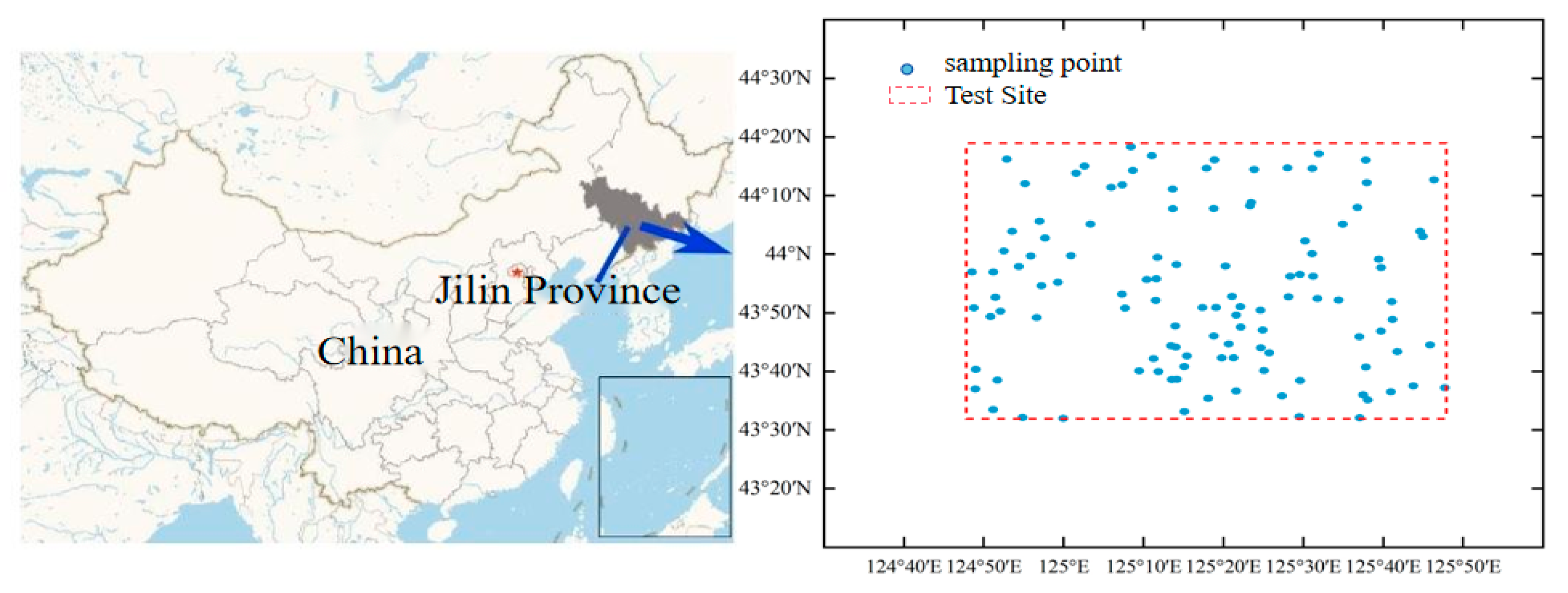
2.1. Research Area Overview and Soil Sample Collection
2.1.1. Basic Characteristics of the Study Area
2.1.2. Soil Sample Collection and Processing
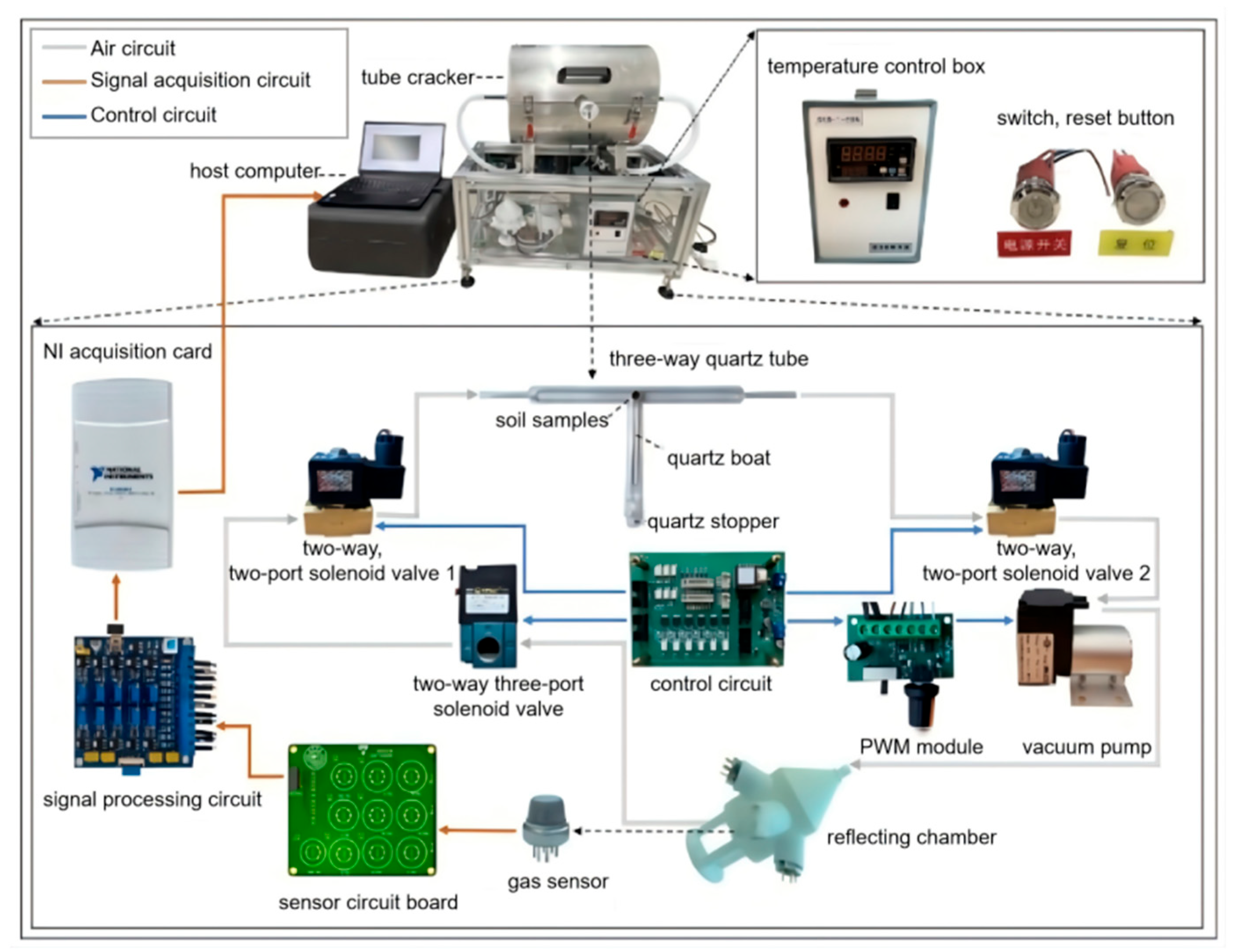
2.2. Electronic Nose System Configuration
2.3. Data Collection Process
2.4. Time Domain Feature Extraction
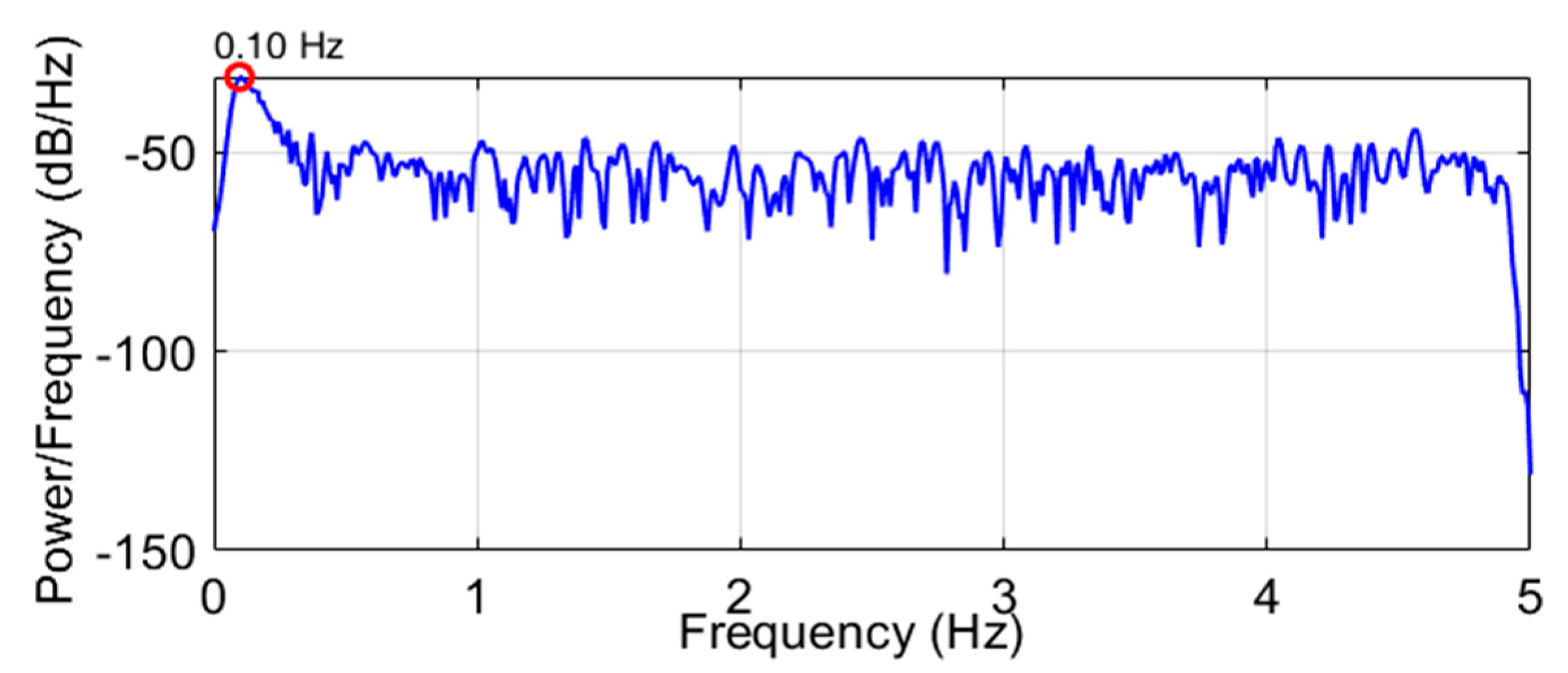
2.5. Frequency Domain Feature Extraction
2.6. Time and Frequency Domain Feature Fusion Method Based on Pearson Correlation Coefficient
2.6.1. Feature Type Importance Evaluation Based on PCC
2.6.2. Feature Type Redundancy Elimination
2.7. Feature Space Optimization
2.8. Machine Learning Model
2.9. Model Evaluation Indicators
3. Results and Discussion
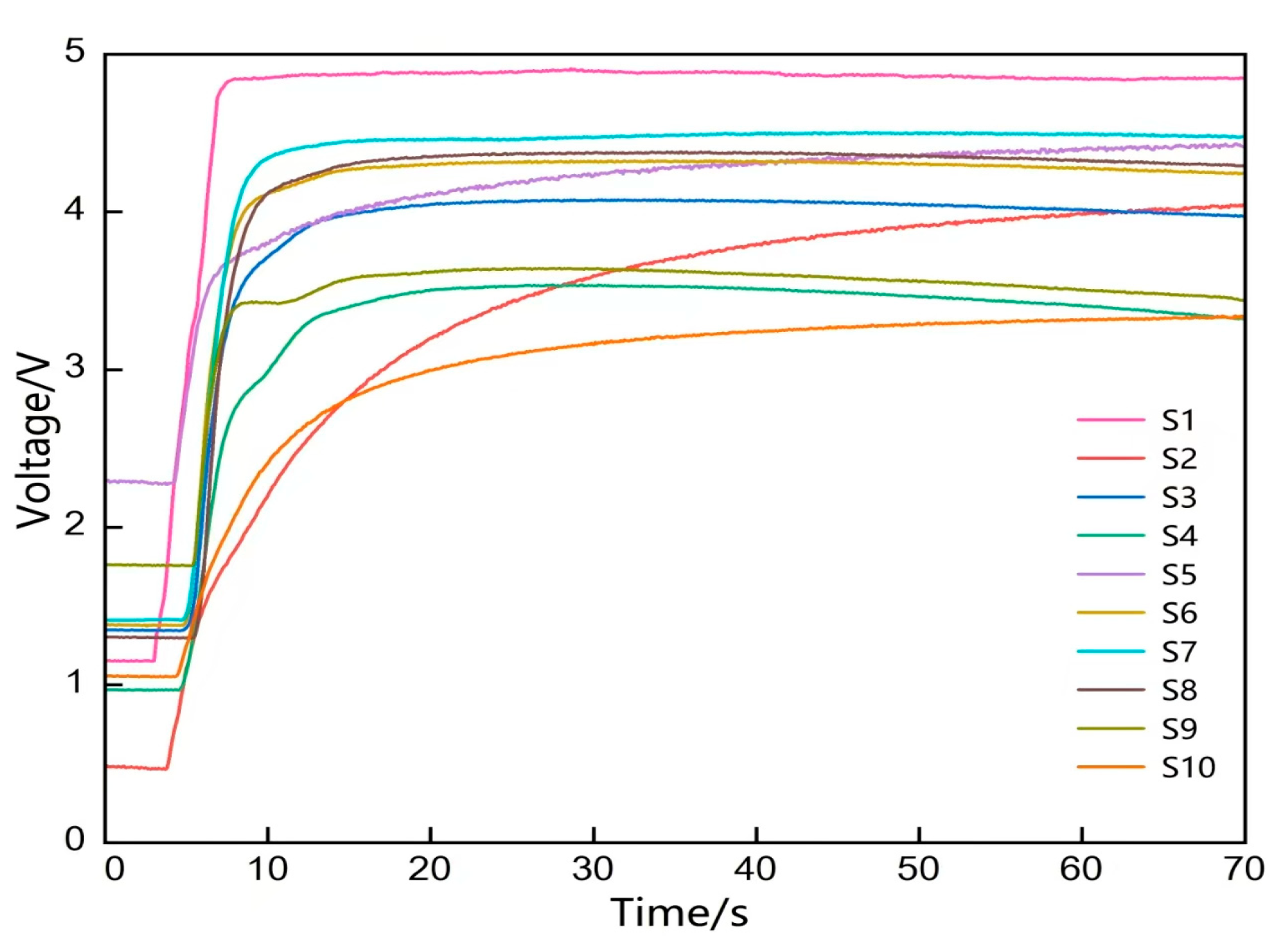
3.1. Sensor Response Signal Analysis
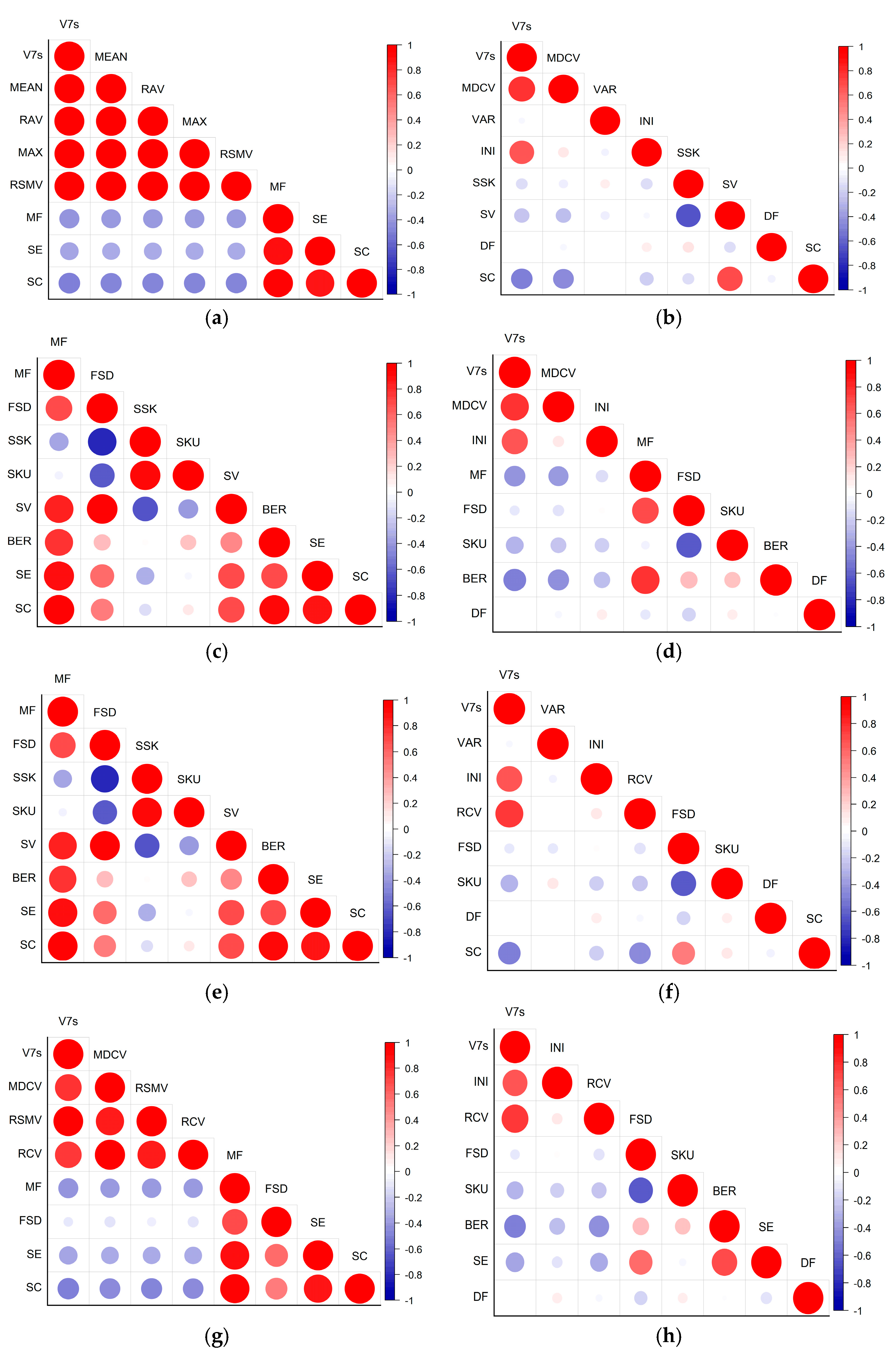
3.2. Results of Time-Frequency Domain Feature Fusion Based on PCC
3.2.1. Importance Assessment Results of Characteristic Types
3.2.2. Feature Type Redundancy Elimination Results
3.3. Feature Space Optimization Results
3.4. Performance Comparison of Prediction Models
3.4.1. Comparison of Modeling Results of Different Feature Types
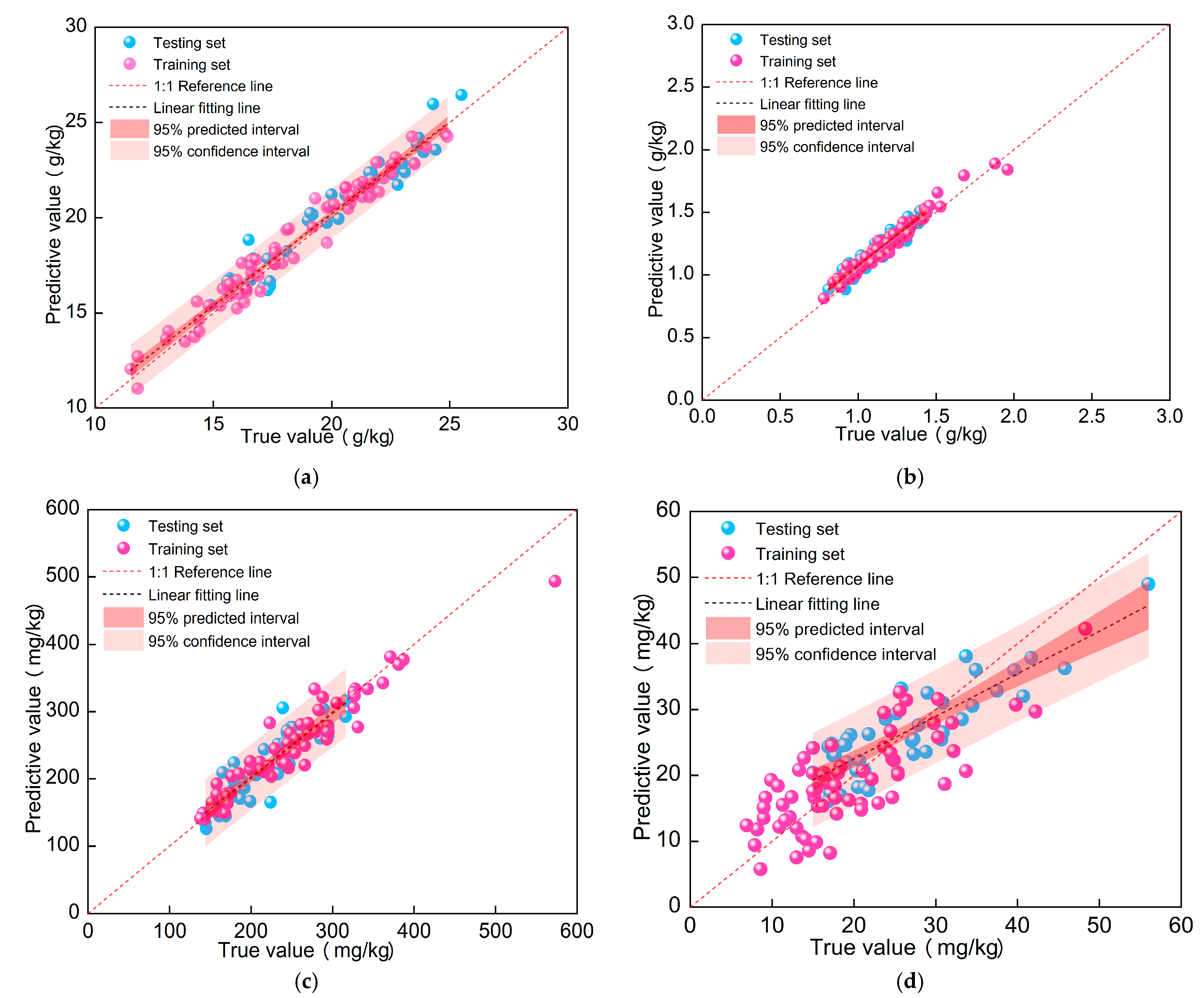
3.4.2. Comparison of Prediction Results of Different Models
4. Conclusions
- The time-frequency domain feature fusion strategy effectively enhances signal representation integrity by integrating dynamic response information from time-domain features with latent patterns from frequency-domain features, thereby constructing a more discriminative feature system. Pearson correlation analysis further indicates significant differences in key feature types dependent on different nutrients, reflecting specific release and response mechanisms during pyrolysis-sensing processes.
- The dual “importance-redundancy” feature optimization framework (combining Pearson Correlation Coefficient with Redundancy-Free Extraction of Common Variables) constructs high-performance feature subsets. This approach preserves critical discriminative information while significantly reducing feature dimensions and model complexity, thereby enhancing model generalization capability and computational efficiency. It provides a reliable feature engineering pathway for processing high-dimensional sensing data.
- The PSO-SVM-RF model demonstrated optimal performance among various machine learning models, achieving high-precision predictions for both soil SOM and TN, with particularly outstanding results for AK and A. Its prediction R2 values for AK and AP reached 0.78 and 0.74, respectively, representing an improvement of over 8.8% in R2 and a reduction of over 21.6% in RMSE compared to the traditional SVM model. Compared to Liu et al.’s [51] method, the R2 for AK increased from 0.71 to 0.78. Compared to Liu et al.’s [40] method, the R2 for AP rose from 0.6 to 0.74, surpassing the quantitative application threshold of 0.7. The RPD values for AK and AP reached 1.98 and 1.96, respectively, approaching practical standards. This demonstrates the hybrid model’s strong adaptability for nutrient detection under medium-to-low nutrient conditions in Northeast China’s black soil region, providing reliable technical support for precision fertilization in this area.
Author Contributions
Funding
Data Availability Statement
Conflicts of Interest
References
- Ismail, H.; Zebari, G.; Ibrahim, I.; Al-Zebari, A. A multi-task learning framework for soil fertility assessment and nutrient prediction using machine learning. Model. Earth Syst. Environ. 2025, 11, 453. [Google Scholar] [CrossRef]
- Pratt, C.; Kingston, K.; Laycock, B.; Levett, I.; Pratt, S. Geo-Agriculture: Reviewing Opportunities through Which the Geosphere Can Help Address Emerging Crop Production Challenges. Agronomy 2020, 10, 971. [Google Scholar] [CrossRef]
- Mondal, P.B.; Sahoo, N.R.; Das, B.; Ahmed, N.; Bandyopadhyay, K.K.; Mukherjee, J.; Arora, A.; Ali Moursy, A.R. Comparison of multivariate machine learning models for major soil nutrients prediction using laboratory-based and airborne (AVIRIS-NG) visible near-infrared spectroscopy. Eur. J. Agron. 2025, 170, 127726. [Google Scholar] [CrossRef]
- Zhang, H.L.; Xie, C.Y.; Tian, P.; Zhan, B.; Chen, Z.; Luo, W.; Liu, X. Measurement of soil organic matter and total nitrogen based on visible/near-infrared spectroscopy and data-driven machine learning methods. Spectrosc. Spect. Anal. 2023, 43, 2226–2231. [Google Scholar]
- Smith, J.; Johnson, A.; Doe, R. Advances in Soil Assessment Techniques. Soil Sci. Soc. Am. J. 2015, 79, 714–725. [Google Scholar]
- Traoré, S.; Thiombiano, L.; Millogo, J.R.; Guinko, S. Carbon and nitrogen enhancement in Cambisols and Vertisols by Acacia spp. in eastern Burkina Faso: Relation to soil respiration and microbial biomass. Appl. Soil Ecol. 2007, 35, 660–669. [Google Scholar] [CrossRef]
- Kasim, N.; Sawut, R.; Qingdong, S. Estimation of soil organic matter content based on optimized spectral index. Trans. Chin. Soc. Agric. Mach. 2018, 49, 155–163. [Google Scholar]
- Wang, J.; He, T.; Lv, C. Mapping soil organic matter based on land degradation spectral response units using Hyperion images. Int. J. Appl. Earth Obs. Geoinf 2010, 12, S171–S180. [Google Scholar] [CrossRef]
- Siderhurst, S.M.; Bartel, D.W.; Hoover, G.A.; Lacks, S.; Lehman, M.G. Rapid headspace analysis of commercial spearmint and peppermint teas using volatile ‘fingerprints’ and an electronic nose. J. Sci. Food Agric. 2024, 105, 1365–1374. [Google Scholar] [CrossRef]
- Kong, C.; Ren, L.; Shi, X.; Chang, Z. Soil pesticides pollution detection and specific recognition using electronic nose. Sens. Actuators B Chem. 2024, 408, 135492. [Google Scholar] [CrossRef]
- Wang, J.H.; Zhao, C.J. Application Research of Electronic Nose in Soil Quality Evaluation. Trans. Chin. Soc. Agric. Mach. 2020, 51, 180–188. [Google Scholar]
- Maria, K.; Dmitry, K.; Subrata, S.; Mukherjee, S.; Ashina, J.; Bhattacharyya, N.; Chanda, S.; Bandyopadhyay, R.; Legin, A. One shot evaluation of NPK in soils by “electronic tongue”. Comput. Electron. Agric. 2021, 186, 106208. [Google Scholar] [CrossRef]
- Li, M.Z.; Zheng, L.H. Bottlenecks and Breakthrough Pathways in Rapid Soil Nutrient Detection Technologies. Trans. Chin. Soc. Agric. Eng. 2022, 38, 1–10. [Google Scholar]
- Zheng, L.H.; Li, M.Z. Challenges and Innovative Directions in Rapid Detection Sensor Technology for Soil Nutrients. Trans. Chin. Soc. Agric. Mach. 2023, 54, 1–12. [Google Scholar]
- Fu, L.; Liu, S.; Huang, D.; Wang, J.; Jiang, X.; Wang, G. Utilizing the Fusion Characteristics of Multispectral and Electronic Noses to Detect Soil Main Nutrient Content. Agriculture 2024, 14, 605. [Google Scholar] [CrossRef]
- Zhang, S.J.; Yang, W.D. Comparative Study on Time-Domain Feature Extraction Methods for Soil Sensing Signals. Trans. Chin. Soc. Agric. Mach. 2020, 51, 210–217. [Google Scholar]
- El-Hagarey, S.; Vanclooster, M.; Verbist, K. Time-domain reflectometry signal analysis for soil moisture and nutrient monitoring. Comput. Electron. Agric. 2021, 187, 106352. [Google Scholar]
- Liu, J.R.; Guo, Y.Y.F. Wind turbine tower frequency monitoring scheme and implementation. Control Inf. Technol. 2025, 1, 122–127. [Google Scholar]
- Yang, Z.; Zhou, H.; Tian, Y.; Liu, G.; Zhang, B.; Qin, Y.; Li, P.; Huang, W. Cascaded Detection Method for Ship Targets Using High-Frequency Surface Wave Radar in the Time–Frequency Domain. Remote Sens. 2025, 17, 2580. [Google Scholar] [CrossRef]
- Chen, M.; Wang, Z.H. Frequency Domain Feature Analysis of Soil Sensing Signals Based on Short-Time Fourier Transform. J. Sens. Technol. 2024, 37, 221–227. [Google Scholar]
- Jia, S.C.; Huang, G.Y.; Song, Y.M.; Sang, Y. Hybrid model based on recursive feature elimination with cross validation and Tradaboost for workpiece surface topography prediction of five-axis flank milling. Int. J. Adv. Manuf. Technol. 2022, 120, 2331–2344. [Google Scholar] [CrossRef]
- HJ/T 166-2004; Technical Specification for Soil Environmental Monitoring. State Environmental Protection Administration of China: Beijing, China, 2004.
- GB/T 33469-2016; Gradation of Cultivated Land Quality. Ministry of Agriculture of the People’s Republic of China: Beijing, China, 2016.
- Bruun, E.W.; Ambus, P.; Egsgaard, H.; Hauggaard-Nielsen, H. Effects of slow and fast pyrolysis biochar on soil C and N turnover dynamics. Soil Biol. Biochem. 2012, 46, 73–79. [Google Scholar] [CrossRef]
- Binson, V.A.; Subramoniam, M.; Mathew, L. Detection of COPD and Lung Cancer with electronic nose using ensemble learning methods. Clin. Chim. Acta 2021, 523, 231–238. [Google Scholar] [CrossRef]
- White, D.; Beyer, L. Pyrolysis gas chromatography mass spectrometry and pyrolysis gas chromatography flame ionization detection analysis of three Antarctic soils. J. Anal. Appl. Pyrolysis 1999, 50, 63–76. [Google Scholar] [CrossRef]
- Chae, M.; Lee, D.; Kim, D.H. Low-Power Consumption IGZO Memristor-Based Gas Sensor Embedded in an Internet of Things Monitoring System for Isopropanol Alcohol Gas. Micromachines 2023, 15, 77. [Google Scholar] [CrossRef]
- Wang, Y.G. Research on NH3 and NO2 Sensors Based on Metal Oxide Nanomaterials. Ph.D. Thesis, Zhejiang University, Hangzhou, China, 2023. [Google Scholar]
- Qiu, L.; Chen, X.X.; Liu, T.H.; Liu, F.Z.; Ouyang, Y.F.; Huang, S.Y.; Zhang, Z.Y.; Luo, X.H.; Qiu, X.L. Application progress of biomass carbon materials in gas sensing detection. Acta Mater. Compos. Sin. 2025, 42, 1722–1738. [Google Scholar]
- Li, M.W. Research on Detection Methods of Soil Organic Matter and Total Nitrogen Based on Pyrolysis and Artificial Olfaction. Ph.D. Thesis, Jilin University, Changchun, China, 2022. [Google Scholar]
- Zou, J.; Qiu, W.; Liu, Z.; Su, J.; Chen, T.; Liu, Q. Fault Diagnosis Method for Rotating Machinery Based on FFT-CNN-Transformer-CrossAttention. Int. J. High Speed Electron. Syst. 2025. [Google Scholar] [CrossRef]
- Gong, M.; Lu, C.; Qi, Y.; Wang, X.; Tian, X.; Li, J. CNN-ECA based classification of natural earthquakes and quarry blasting. J. Seismol. 2025, 29, 795–812. [Google Scholar] [CrossRef]
- Hesari, S.; Ghaffari, R.H.; Rezaee, K. DEF-DSVM: A deep ensemble feature learning and deepSVM approach for multifaceted analysis and diagnosis of Alzheimer’s disease from EEG signals. Methods 2025, 242, 169–186. [Google Scholar] [CrossRef]
- Redwan, G.U.; Zaman, T.; Mizan, B.H. Spatio-temporal CNN-BiLSTM dynamic approach to emotion recognition based on EEG signal. Comput. Biol. Med. 2025, 192, 110277. [Google Scholar] [CrossRef] [PubMed]
- Ren, F.T.; Feng, B.Z.; Zhang, Y.; Ren, T.F.; Feng, Z.B.; Zhang, Y.; Zhang, X.; Jiang, L.; Ning, Y.L.; Wang, J.Y.; et al. A Seismic Multi-Attribute Sandbody Identification Method Based on the LightGBM-RFECV Coupling Algorithm. Appl. Geophys. 2025, 22, 1–13. [Google Scholar] [CrossRef]
- Mei, X.; Chen, Z.; Sun, R.; He, Y. Detection and analysis of Spartina alterniflora in Chongming East Beach using Sentinel-2 imagery and image texture features. Acta Oceanol. Sin. 2025, 44, 1–11. [Google Scholar] [CrossRef]
- Kennard, R.W.; Stone, L.A. Computer Aided Design of Experiments. Technometrics 1969, 11, 137–148. [Google Scholar] [CrossRef]
- Kadri, A.; Benzagouta, S.M. Heterogeneous oil reservoirs characterization using artificial intelligence techniques: Application to the Hassi Messaoud oil field in the Algerian-Saharan platform. J. Appl. Geophys. 2025, 242, 105878. [Google Scholar] [CrossRef]
- Xiong, P.; Bian, G.; Liu, Q.; Jin, S.; Yin, X. A Prediction Model of Marine Geomagnetic Diurnal Variation Using Machine Learning. Appl. Sci. 2024, 14, 4369. [Google Scholar] [CrossRef]
- Yang, K.; Cui, D.; Wang, C.; Tang, Q.; Miao, L. Intelligent assessment of habitat quality based on multiple machine learning fusion methods. Eng. Appl. Artif. Intell. 2025, 162, 112395. [Google Scholar] [CrossRef]
- Díaz-Romero, D.J.; Van den Eynde, S.; Sterkens, W.; Engelen, B.; Zaplana, I.; Dewulf, W.; Goedeme, T.; Peeters, J. Simultaneous mass estimation and class classification of scrap metals using deep learning. Resour. Conserv. Recycl. 2022, 181, 106272. [Google Scholar] [CrossRef]
- Liu, H. Design and Optimization of Soil Main Nutrient Detection System Based on Pyrolysis and Olfactory Information. Ph.D. Thesis, Jilin University, Changchun, China, 2023. [Google Scholar]
- Wang, X.; Li, Y.; Wang, H.T. Analysis of Pyrolysis Gas Sensing Signals from Soil Organic Matter Based on Power Spectrum Density. J. Jilin Univ. (Eng. Sci.) 2024, 54, 658–665. [Google Scholar]
- Zhang, H.; Li, M.; Zheng, L. Frequency-domain feature extraction of electronic nose signals for soil nutrient detection. Sensors 2023, 23, 5120–5134. [Google Scholar] [CrossRef]
- Xie, J.Y.; Wu, Z.Z.; Zheng, Q.Q. An adaptive 2D feature selection algorithm based on information gain and Pearson correlation coefficient. J. Shaanxi Norm. Univ. (Nat. Sci. Ed.) 2020, 48, 69–81. [Google Scholar]
- Wang, K.; Shi, J.; Qiu, R.; Wan, Q.; Zhang, Z.; Pan, G. An Automatic Feature Selection Method for Laser-Induced Breakdown Spectroscopy Quantitative Analysis. J. Optoelectron. Laser 2022, 33, 187. [Google Scholar]
- Sheng, H.; Wei, J.J.; Hu, Y.D.; Xu, M.M.; Cui, J.Y.; Zheng, H.X. Wetland information extraction based on multifeature optimization of multitemporal Sentinel-2 images. Mar. Sci. 2023, 47, 102–112. [Google Scholar]
- Liu, Y.; Zhang, X.; Wang, Z. Rapid and Simultaneous Detection of Soil Nutrients Based on Electronic Nose and Time-Frequency Feature Fusion. Sensors 2024, 24, 1689–1702. [Google Scholar]
- Zhang, M.; Wang, H.T.; Li, M.Z. Detection Method and Feature Optimization for Soil Total Nitrogen Based on Pyrolysis and Electronic Nose. Trans. Chin. Soc. Agric. Mach. 2022, 53, 189–197. [Google Scholar]
- Zheng, W.R.; Li, S.W.; Han, Y.L.; Shi, S.Q.; Zhu, X.Z.; Jin, X. Study on Near-Infrared Transfer Learning Method for Predicting Soil Available Phosphorus. J. Anal. Test. 2020, 39, 1274–1281. [Google Scholar]
- Manjunath, M.; Abhay, D. Description and Identification of Soil Quality Measuring Development using UAV’s and E-Nose System. Int. J. Recent Technol. Eng. 2019, 8, 1–6. [Google Scholar]
- Wei, G.; Zhao, J.; Feng, Y.; He, A.; Yu, J. A Novel Hybrid Feature Selection Method Based on Dynamic Feature Importance. Appl. Soft Comput. 2020, 93, 13. [Google Scholar] [CrossRef]
- Liu, S.; Chen, X.; Xia, X.; Jin, Y.; Wang, G.; Jia, H.; Huang, D. Electronic Sensing Combined with Machine Learning Models for Predicting Soil Nutrient Content. Comput. Electron. Agric. 2024, 221, 108947. [Google Scholar] [CrossRef]
- Gutiérrez, A.; Fernández, A.; Pardo, X. Time-domain feature-based soil property detection using electronic nose. Sens. Actuators B Chem. 2022, 365, 131987. [Google Scholar]
- Liu, M.; Wang, J.H.; Li, J. Electronic nose detection of soil available potassium and available phosphorus based on time-domain features and SVM. Trans. Chin. Soc. Agric. Eng. 2021, 37, 169–175. [Google Scholar]
- Chen, L.; Zhang, H.; Wang, Y. Feature selection for soil sensor data based on single RFECV algorithm and its application in nutrient prediction. Comput. Electron. Agric. 2022, 198, 107089. [Google Scholar]
- Kuang, F.; Liu, J.; Zhao, X. Soil organic matter prediction using support vector machine with spectral features. J. Soil Water Conserv. 2020, 75, 456–463. [Google Scholar]



| Sensor Number | Sensor Type | Test Substance | Measurement Range (ppm) | VH (V) | VC (V) | Uncertainty | Resolution (ppm) |
|---|---|---|---|---|---|---|---|
| S1 | GM102B | nitrogen dioxide | 0.1–10 | ≤24 | 1.8 ± 0.1 | ≤5.6%(k = 2) | 0.01 |
| S2 | GM202B | Alcohol, smoke | 10~1000 | ≤24 | 2.5 ± 0.1 | ≤4.0%(k = 2) | 1 |
| S3 | GM302B | Ethanol vapor | 1–500 | ≤24 | 2.5 ± 0.1 | ≤4.0%(k = 2) | 0.1 |
| S4 | GM402B | Methane, propane | 1–10,000 | ≤24 | 2.8 ± 0.1 | ≤3.6%(k = 2) | 0.5 |
| S5 | GM502B | Xylene, acetone, etc | 1–500 | ≤24 | 2.5 ± 0.1 | ≤4.0%(k = 2) | 0.1 |
| S6 | GM512B | Hydrogen sulfide, etc | 0.5–50 | ≤24 | 2.5 ± 0.1 | ≤4.0%(k = 2) | 0.05 |
| S7 | GM602B | Hydrogen sulfide, etc | 0.5–50 | ≤24 | 1.9 ± 0.1 | ≤5.3%(k = 2) | 0.05 |
| S8 | GM702B | carbon monoxide | 5–5000 | ≤24 | 2.5 ± 0.1 | ≤4.0%(k = 2) | 0.5 |
| S9 | GM802B | Ammonia gas, etc | 1–300 | ≤24 | 2.0 ± 0.1 | ≤5.0%(k = 2) | 0.1 |
| S10 | GM2021B | hydrogen | 0.1–1000 | ≤24 | 2.5 ± 0.1 | ≤4.0%(k = 2) | 0.01 |
| Soil Nutrient | Feature Type Importance Ranking |
|---|---|
| SOM | V7s, RAV, MEAN, RSMV, SC, MF, MAX, SE |
| TN | BER, SC, MF, FSD, SSK, SKU, SV, SE |
| AK | SC, FSD, MF, BER, SE, SKU, SV, SSK |
| AP | SE, RCV, MDCV, MF, SC, V7s, RSMV, FSD |
| Soil Nutrient | Redundancy Elimination Results |
|---|---|
| SOM | V7s, SC, MDCV, SV, SSK, INI, DF, VAR |
| TN | BER, MF, FSD, SKU, V7s, MDCV, INI, DF |
| AK | SC, FSD, SKU, RCV, INI, V7s, DF, VAR |
| AP | SE, RCV, V7s, FSD, INI, SKU, BER, DF |
| Soil Nutrient | Number of Sensors | Number of Features | Feature ID |
|---|---|---|---|
| SOM | 8 | 27 | MF3, SE3, SE5, SC3, MF1, MF5, V7s1, V7s3, RSMV9, SC5, RAV3, SE1, V7s9, RAV9, RSMV4, SC1, MAX1, RAV5, RAV7, V7s2, RAV2, SC2, SE4, RAV1, MF9, RAV6, SE2 |
| TN | 9 | 30 | V7s3, MDCV9, INI9, MDCV3, INI8, V7s8, V7s9, INI1, BER2, BER3, MDCV5, BER10, FSD2, SKU3, SKU4, V7s1, INI3, V7s4, MDCV4, SKU5, MDCV1, INI4, DF7, MDCV8, MF3, INI2, SKU1, MF2, BER7, V7s5 |
| AK | 9 | 22 | VAR4, INI4, VAR3, INI3, V7s4, SC3, V7s3, RCV2, DF2, INI8, SC2, SC9, V7s9, VAR7, RCV3, V7s2, INI9, VAR5, DF1, RCV5, SC5, RCV6 |
| AP | 9 | 25 | RCV9, SE9, INI6, BER6, BER1, SKU6, FSD1, V7s1, V7s2, FSD10, SKU5,V7s6, SKU3, BER9, SKU1, SE8, BER4, INI1, SKU4, V7s9, FSD3, BER8, INI3, DF9, RCV1 |
| Soil Nutrient | Whether to Consider the Redundancy of Feature Types | Training Set | Testing Set | ||||||
|---|---|---|---|---|---|---|---|---|---|
| R2 | RMSE | MAE | RPD | R2 | RMSE | MAE | RPD | ||
| SOM | deny | 0.95 | 0.89 | 0.64 | 3.66 | 0.90 | 1.01 | 0.79 | 3.31 |
| yes | 0.96 | 0.74 | 0.59 | 3.76 | 0.92 | 0.82 | 0.75 | 3.45 | |
| TN | deny | 0.95 | 1.08 | 0.09 | 3.31 | 0.89 | 1.18 | 0.1 | 3.01 |
| yes | 0.94 | 0.94 | 0.08 | 3.46 | 0.92 | 0.98 | 0.09 | 3.13 | |
| AK | deny | 0.76 | 28.95 | 27.62 | 1.92 | 0.70 | 33.65 | 30.65 | 1.73 |
| yes | 0.76 | 27.54 | 26.53 | 1.86 | 0.73 | 29.78 | 28.45 | 1.76 | |
| AP | deny | 0.72 | 5.69 | 4.85 | 1.92 | 0.64 | 5.98 | 4.96 | 1.71 |
| yes | 0.74 | 4.95 | 4.75 | 2.03 | 0.67 | 5.13 | 4.64 | 1.87 | |
| Model | Soil Nutrient | Number of Sensors | Number of Features | Training Set | Testing Set | ||||||
|---|---|---|---|---|---|---|---|---|---|---|---|
| R2 | RMSE | MAE | RPD | R2 | RMSE | MAE | RPD | ||||
| SVM | SOM | 8 | 27 | 0.94 | 0.09 | 0.74 | 3.51 | 0.89 | 1.02 | 0.8 | 3.35 |
| TN | 8 | 30 | 0.91 | 1.02 | 0.08 | 3.45 | 0.89 | 1.2 | 0.1 | 3.01 | |
| AK | 9 | 22 | 0.86 | 29.04 | 25.23 | 2.73 | 0.71 | 31.65 | 27.55 | 1.72 | |
| AP | 9 | 25 | 0.69 | 5.65 | 4.92 | 1.69 | 0.68 | 5.87 | 4.83 | 1.74 | |
| SVM-RF | SOM | 8 | 27 | 0.94 | 0.64 | 0.68 | 3.89 | 0.92 | 0.8 | 0.74 | 3.55 |
| TN | 8 | 30 | 0.96 | 0.92 | 1.02 | 3.92 | 0.92 | 1.0 | 0.09 | 3.43 | |
| AK | 9 | 22 | 0.81 | 25.37 | 22.19 | 2.25 | 0.74 | 27.68 | 25.32 | 1.83 | |
| AP | 9 | 25 | 0.72 | 5.06 | 4.23 | 1.79 | 0.70 | 4.96 | 4.42 | 1.87 | |
| PSO-SVM-RF | SOM | 8 | 27 | 0.96 | 0.65 | 0.43 | 4.26 | 0.94 | 0.72 | 0.54 | 3.96 |
| TN | 8 | 30 | 0.98 | 0.69 | 0.06 | 4.36 | 0.94 | 0.75 | 0.07 | 3.84 | |
| AK | 9 | 22 | 0.89 | 19.86 | 18.73 | 3.23 | 0.78 | 23.63 | 21.25 | 1.98 | |
| AP | 9 | 25 | 0.69 | 4.80 | 3.92 | 1.82 | 0.74 | 4.60 | 3.83 | 1.96 | |
Disclaimer/Publisher’s Note: The statements, opinions and data contained in all publications are solely those of the individual author(s) and contributor(s) and not of MDPI and/or the editor(s). MDPI and/or the editor(s) disclaim responsibility for any injury to people or property resulting from any ideas, methods, instructions or products referred to in the content. |
© 2025 by the authors. Licensee MDPI, Basel, Switzerland. This article is an open access article distributed under the terms and conditions of the Creative Commons Attribution (CC BY) license (https://creativecommons.org/licenses/by/4.0/).
Share and Cite
Lin, L.; Huang, D.; Zhao, C.; Liu, S.; Zhang, S. Research on Detection Methods for Major Soil Nutrients Based on Pyrolysis-Electronic Nose Time-Frequency Domain Feature Fusion and PSO-SVM-RF Model. Agronomy 2025, 15, 2916. https://doi.org/10.3390/agronomy15122916
Lin L, Huang D, Zhao C, Liu S, Zhang S. Research on Detection Methods for Major Soil Nutrients Based on Pyrolysis-Electronic Nose Time-Frequency Domain Feature Fusion and PSO-SVM-RF Model. Agronomy. 2025; 15(12):2916. https://doi.org/10.3390/agronomy15122916
Chicago/Turabian StyleLin, Li, Dongyan Huang, Chunkai Zhao, Shuyan Liu, and Shuo Zhang. 2025. "Research on Detection Methods for Major Soil Nutrients Based on Pyrolysis-Electronic Nose Time-Frequency Domain Feature Fusion and PSO-SVM-RF Model" Agronomy 15, no. 12: 2916. https://doi.org/10.3390/agronomy15122916
APA StyleLin, L., Huang, D., Zhao, C., Liu, S., & Zhang, S. (2025). Research on Detection Methods for Major Soil Nutrients Based on Pyrolysis-Electronic Nose Time-Frequency Domain Feature Fusion and PSO-SVM-RF Model. Agronomy, 15(12), 2916. https://doi.org/10.3390/agronomy15122916