Article

Identification of the Chalcone Synthase Gene Family: Revealing the Molecular Basis for Floral Colour Variation in Wild Aquilegia oxysepala in Northeast China


by
Dan Chen
,
Yongli Cheng
,
Tingting Ma
,
Haihang Yu
,
Yun Bai
,
Yunwei Zhou
* and
Yuan Meng
*
College of Horticulture, Jilin Agricultural University, Changchun 130118, China
*
Authors to whom correspondence should be addressed.
These authors contributed equally to this work.
Agronomy 2025, 15(12), 2883; https://doi.org/10.3390/agronomy15122883
Submission received: 13 November 2025 / Revised: 6 December 2025 / Accepted: 11 December 2025 / Published: 15 December 2025
(This article belongs to the Section Horticultural and Floricultural Crops)

Abstract

Aquilegia (Ranunculaceae), a genus of perennial herbs characterized by elegant leaves and unique flowers, exhibits promising application prospects in Northeast China. Chalcone synthase participates in the first enzymatic reaction of the anthocyanin biosynthesis pathway and plays a crucial role in flower color formation. In the present study, eight AoCHSs were identified and a comprehensive analysis of AoCHSs was then carried out, considering physical and chemical properties, conservative motifs, phylogenetic relationships, and cis-acting elements. The expression patterns of the AoCHSs were analyzed based on the transcriptome of A. oxysepala, which differs in sepal color between two species, to identify the candidate genes involved in flower color variation. AoCHS2/3/5 expression levels were found to be upregulated at PrA stage in A. oxysepala with dark purple sepals, while remaining consistently low in the pale-yellow species. Combining KEGG annotations and expression patterns, AoCHS5 was identified as a key gene for anthocyanin biosynthesis in Aquilegia that could play a role in the variation in flower color. The results of correlation network analysis showed that AoCHS5 was highly associated with MYB, bHLH, and WRKY. These results provided genetic resources for accelerating the molecular breeding of innovative Aquilegia flower colors.

1. Introduction

It is evident that flower color is a pivotal ornamental trait, serving as a primary determinant of the commercial value [1]. Paeonia suffruticosa is renowned worldwide as a cut flower plant and is recognized to possess extremely high ornamental and economic value [2]. The color and fragrance of Rose flowers were shown to affect their commercial value [3]. While in natural conditions, flowers exhibit a remarkable spectrum of hues that not only provide guidance for insect-mediated pollination but also adapt to the environmental stress factors such as UV-B, heavy metals, and extreme temperatures. For example, in a systematic analysis of the dual functions of flower color (pollinator attraction and stress adaptation), it was clarified that not only did flower color convey signals to pollinators through the spectral characteristics of pigments, but these pigments also served as “molecular shields” for plants to cope with environmental stresses [4]. In studies of Helianthus annuus, flower coloration was prioritized for optimizing pollinator attraction under low-stress conditions, whereas the synthesis of defensive pigments was increased under high-stress conditions [5]. In Malus, anthocyanins and flavonoids were found to form an “ultraviolet (UV)-absorbing layer” [6]. The flower color of Impatiens uliginosa was affected by different copper concentrations [7]. In Chrysanthemum under high-temperature stress, the expression levels of anthocyanins biosynthesis genes in petals were upregulated, leading to increased anthocyanins content and darkened flower color. Attractiveness to butterflies was enhanced by this phenomenon, achieving a win–win situation for “pollinator attraction” and “high-temperature defense” [8]. Anthocyanins are among the most widespread pigments in the plant kingdom, which determine the color of flowers or tissues. In studies on Chrysanthemum morifolium, flower color changes were induced by the synergistic effect of flavonols and anthocyanins [9]. In studies on Rosa rugosa, it was demonstrated that the total anthocyanin content was the key factor affecting flower color diversity and the formation of red hue, with the total anthocyanin content in red petals being significantly higher than that in pink–purple and white petals [10]. With the deepening of flower color, the anthocyanin content in Lagerstroemia indica was found to increase exponentially [11]. In Orychophragmus violaceus, the anthocyanin biosynthesis pathway was disrupted, and a white petal phenotype was exhibited due to the lack of anthocyanin content [12]. In the anthocyanin biosynthesis process, the main enzymes involved are chalcone synthase (CHS), chalcone flavonoid isomerase (CHI), flavonoid 3-hydroxylase (F3H), dihydroflavonol 4-reductase (DFR), anthocyanin synthase (ANS), and flavonoid glucosyltransferase (UGT) [13]. Of these, CHS catalyzes the initial step in anthocyanin biosynthesis, utilizing malonyl-CoA and p-coumaroyl-CoA to synthesize chalcone [14]. CHS belongs to the PKS (plant-specific type III polyketide synthase) superfamily, exhibits high sequence similarity, and consists of 4 residues: Cys-His-Asn-Phe [15]. To date, researchers have identified CHS members across a range of diverse species in Aquilegia. In A. chrysantha, A. longissima, and A. pubescens, the expression of CHS was detected. It was found that CHS expression was initiated at the green bud (Bud) in petals and sepals, and reached a stable level from the old bud stage to pre-anthesis (PrA) [16]. Homologous genes of CHS were identified by searching the EST sequencing data of hybrids between A. formosa and A. pubescens, with Arabidopsis thaliana genes as references [17]. However, no relevant reports on the detailed bioinformatics analysis of the CHS gene family in Aquilegia had been published prior to this study. Different members of the CHS gene family have been identified in plants such as Camellia [18] and Dendrobium catenatum [19]. Furthermore, it was demonstrated in previous studies that CHS was regulated by transcription factors (TFs). In Chrysanthemum, the MYB-binding site “AACTTA” within the promoter of CmCHS was identified by CmMYB9a [20], and the production of anthocyanins was suggested to be inhibited by CmMYB73 through the suppression of CmCHS expression [21]. In Humulus lupulus, chs_H1 could be regulated by a complex formed by HlMyb2, HlbHLH2 and HlWDR1 [22].
Aquilegia (Ranunculaceae) is a genus of perennial herbs that display a high degree of genetic diversity, characterized by attractive foliage and distinctive floral organs [23]. It occupies an evolutionary position between well-investigated model plants like Arabidopsis and Oryza sativa [24]. Findings from previous studies have demonstrated that the adaptive radiation events exhibited by Aquilegia suggest that it could serve as an excellent system for investigating the adaptation of flower color. Aquilegia oxysepala, a wild ornamental plant widely distributed in the Changbai Mountain region, exhibits dark purple sepals; in contrast, its natural variant, Aquilegia oxysepala f. pallidiflora, exhibits pale-yellow sepals [25]. As demonstrated in previous studies, anthocyanins have been identified as pivotal pigments within the sepals of A. oxysepala. However, investigations into the key enzyme CHS in A. oxysepala remain inadequate [26]. To find the core CHS involved in flower coloration, the reference genome and transcriptome were used to identify the CHS members. The sequence structure characteristics and phylogenetic relationships were then elucidated through bioinformatics methods. Furthermore, transcriptome data of A. oxysepala and A. oxysepala f. pallidiflora were used to investigate the patterns of gene expression of CHSs in distinct stages of flower development.
Members of the A. oxysepala AoCHS gene family were identified through bioinformatics analysis, and key AoCHSs were uncovered by examining their expression patterns in this study. Genetic resources and a theoretical basis were provided for elucidating the molecular mechanisms underlying anthocyanin formation in A. oxysepala and advancing molecular breeding of Aquilegia.

2. Materials and Methods

2.1. Sample Collection

The A. oxysepala and A. oxysepala f. pallidiflora individuals from the Ornamental Plant Resources and Utilization Research Group (Jilin Agricultural University, Changchun City, China) served as the material for this research. Field sampling was conducted from May to June 2025 (125°24′37.39″ E, 43°48′57.42″ N). Three individuals exhibiting consistent growth conditions and free from signs of disease or pest infestation were selected for each of two A. oxysepala species. At three different stages of plant growth (Bud, PrA, and PoA), fresh sepal tissue samples were collected by randomly selecting different flower stems and flowers, with each sample weighing 2 g. A total of 18 samples were obtained in this way, and these samples were used for subsequent joint analysis (Figure 1). These samples were frozen in liquid nitrogen and stored at −80 °C.

2.2. Identification of AoCHS Members

The conserved motifs PF00195 and PF02797 were retrieved from Pfam (http://pfam.xfam.org/) (accessed on 22 April 2024) [27]. The reference genome of Aquilegia was retrieved from NCBI (https://ftp.ncbi.nlm.nih.gov/genomes/all/GCA/002/738/505/GCA_002738505.1_Aquilegia_coerulea_v1/) (accessed on 22 April 2024) [28]. The protein files were searched using hidden Markov models (HMM) [29], genes with an E-value < 1 × 10⁻¹⁰ were identified as candidate genes [30]. Sequences lacking a start or stop codon were removed. The sequences with Chal_stisynt-N and Chalsti_stynt-C domains were selected for further research. SMART (https://smart.embl.de/) (accessed on 26 April 2024) was used to further confirm the CHS proteins [31]. Subsequently, AoCHSs were used as the probe to identify target genes with a coverage of ≥ 90% from the transcriptome using BLAST (version 2.16) [32].

2.3. Sequence Feature Analysis

The amino acid (aa) count, mass of the molecule and theoretical isoelectric point of the AoCHSs were computed by EXPASy (https://web.expasy.org/protparam/) (accessed on 30 June 2024) [33]. The subcellular localization was predicted by Plant-mPLoc (http://www.csbio.sjtu.edu.cn/bioinf/plant-multi/) (accessed on 30 June 2024) [34]. Based on the genomic information, the chromosome location map of the AoCHSs was visualized with TBtools (version II) [35], and the genes were named based on the location information of the chromosomes. MEME (https://meme-suite.org/) (accessed on 22 October 2024) was employed to examine the conserved sequence [36]. The parameters used were a maximum number of 10 motifs, a minimum motif width of 6, and a maximum motif width of 50; the occurrence model was set to Classic mode [37]; and ChiPlot (https://www.chiplot.online/) (accessed on 22 October 2024) was used to visualize sequence motifs. Based on the full genome GFF sequence file, sequences were retrieved based on the screened gene IDs (Supplementary Table S1), and the 2000 bp fragment upstream of the start codon ATG was extracted as the promoter sequence. Their cis-acting elements were examined using PlantCARE (https://bioinformatics.psb.ugent.be/webtools/plantcare/html/) (accessed on 05 January 2025) [38] and mapped using TBtools (version II) [39]. After the protein sequence of AtCHS was retrieved from TAIR (https://www.arabidopsis.org/) (accessed on 05 January 2025) [40], the AtCHS and AoCHS protein sequences were aligned using the ClustalW algorithm integrated in MEGA (version 11) [41]. For sequence alignment analysis, the parameters were set as follows: a gap opening penalty of 10 and a gap extension penalty of 0.1 were applied for pairwise alignment; for multiple alignment, the gap opening penalty was 10, the gap extension penalty was 0.2, the “Use Negative Matrix” option was set to OFF, and the delay divergent cutoff was set to 30% [42]. Additionally, the multiple sequence alignment (MSA) was visualized using DNAMAN (version 6.0).

2.4. Phylogenetic and Evolutionary Analysis

To analyze the evolutionary relationships between A. oxysepala, Vitis davidii, Cerasus pseudocerasus, Gerbera hybrida, Arabidopsis thaliana, Solanum lycopersicum and Malus crabapple, their CHS aa sequences were first compared via the MEGA (version 11). Subsequently, a phylogeny was generated using the neighbor-joining method, with 1000 Bootstrap replicates [43]. Finally, the phylogeny was refined and beautified using ChiPlot (https://www.chiplot.online/) (accessed on 20 January 2025).

2.5. Real-Time Fluorescence Quantitative PCR

Total RNA was extracted from the sepals of the Bud, PrA, and PoA of A. oxysepala and A. oxysepala f. pallidiflora using the RNApure Plant Kit (CWBIO, Taizhou, China); cDNA was generated using the NoVoScript plus All-in-one 1st Strand EBNA synthesis SuperMix kit (Novoprotein, Suzhou, China) with reverse transcriptase, and then quantitative real-time PCR (qPCR) was conducted. The expression levels of the AoCHSs were detected with NovoScript SYBR qPCR SuperMix Plus kit (Novoprotein, Suzhou, China). Quantitative detection was performed using the qPCRsoft instrument (Version 4.0, Jena, Germany). Each sample was subjected to three biological replicates and two technical replicates, and values with Ct > 35 were defined as abnormal data and excluded [26]. The Bud stage served as the control, and the relative expression levels were quantified via the 2−ΔΔCt method [44]. Primers were designed using Oligo (version 7.0), and IPP2 was used as the reference gene [26] (Supplementary Table S2). The detailed qPCR total reaction volume, primer concentrations, and cycling program are provided in Supplementary Tables S3 and S4.

2.6. Correlation Network Between AoCHS5 and TFs

To reveal the prospective regulatory relationships between AoCHS5 and TFs, the previously conducted transcriptome of A. oxysepala and A. oxysepala f. pallidiflora was used [45]. The Pearson correlation coefficient between the expression level of AoCHS5 and the relative content of anthocyanins was calculated by Metware Cloud (https://cloud.metware.cn/#/data-collection/preview-center/) (accessed on 20 January 2025). Finally, the correlation network was visualized by Cytoscape (version 3.9.0) [46]. The p-values and correlation coefficients between AoCHS5 and TFs were provided in Supplementary Table S5.

3. Results

3.1. Identification and Characterization of AoCHSs

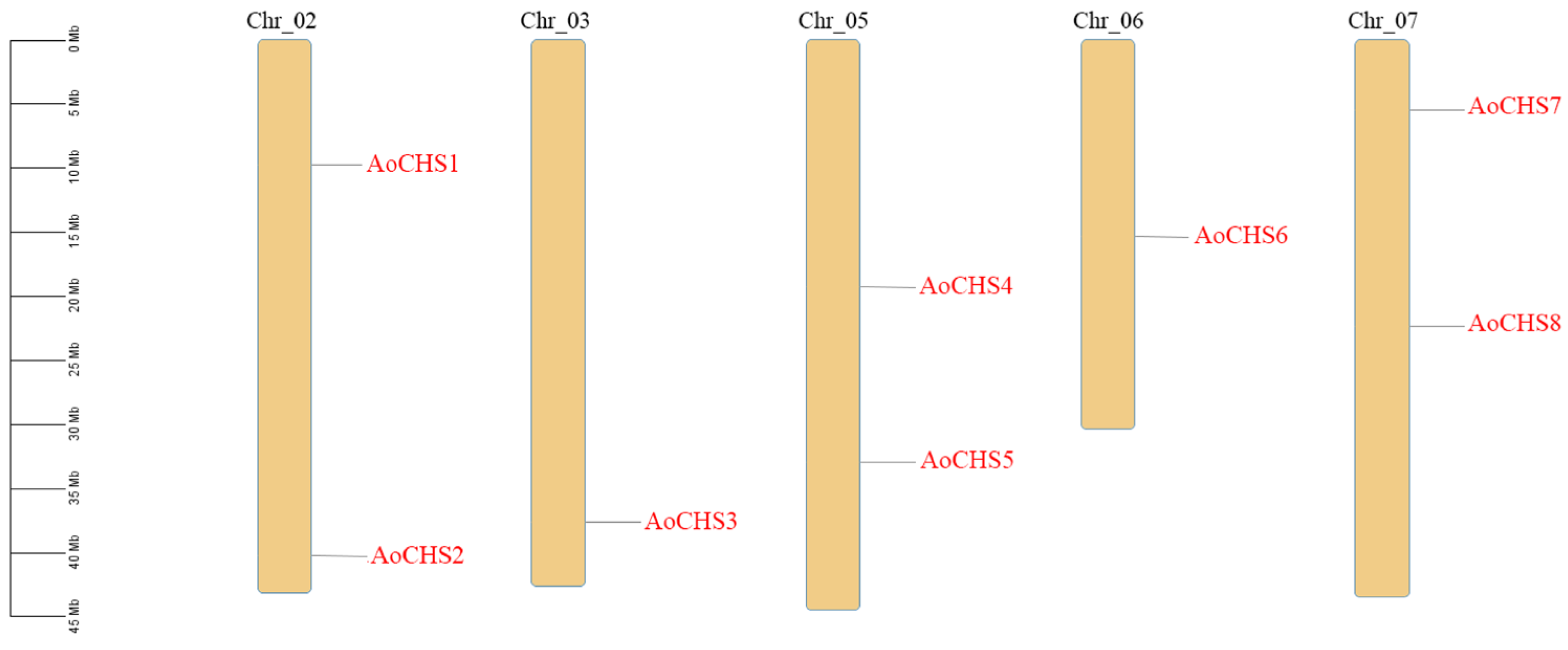
A total of eight AoCHSs were screened by HMM. According to their positions on the chromosomes, they were sequentially named from AoCHS1 to AoCHS8. Physicochemical property analysis was performed, which revealed that the aa sequence lengths of AoCHSs ranged from 358 to 520 aa, with AoCHS8 being the longest at 520 aa and AoCHS7 the shortest at 358 aa. The molecular weight of the proteins encoded by the AoCHSs ranged from 38 to 60 kDa, the smallest was AoCHS7 (38.71363 kDa); and the largest was AoCHS8 (58.2433 kDa); the molecular weights of AoCHS1 to AoCHS6 ranged from 42 to 44 kDa. The isoelectric points of the AoCHSs ranged from 5.16 to 8.79, and AoCHS8 exhibited the highest value of 8.79. Moreover, the average values of the hydrophobicity indicators (GRAVY) of these proteins were found to be negative, indicating that the AoCHSs exhibit hydrophilic characteristics. In addition, subcellular localization prediction demonstrated that AoCHS1 to AoCHS7 were localized to the cytoplasm, and AoCHS8 was localized to the plasma film (Supplementary Tables S6 and S7). Chromosomal localization analysis indicated that the AoCHSs were distributed across five chromosomes; one gene was localized on each of chr_03 and chr_06; two genes were localized on each of chr_02, chr_05, and chr_07 (Figure 2).

3.2. Analysis of Motifs and Gene Structure

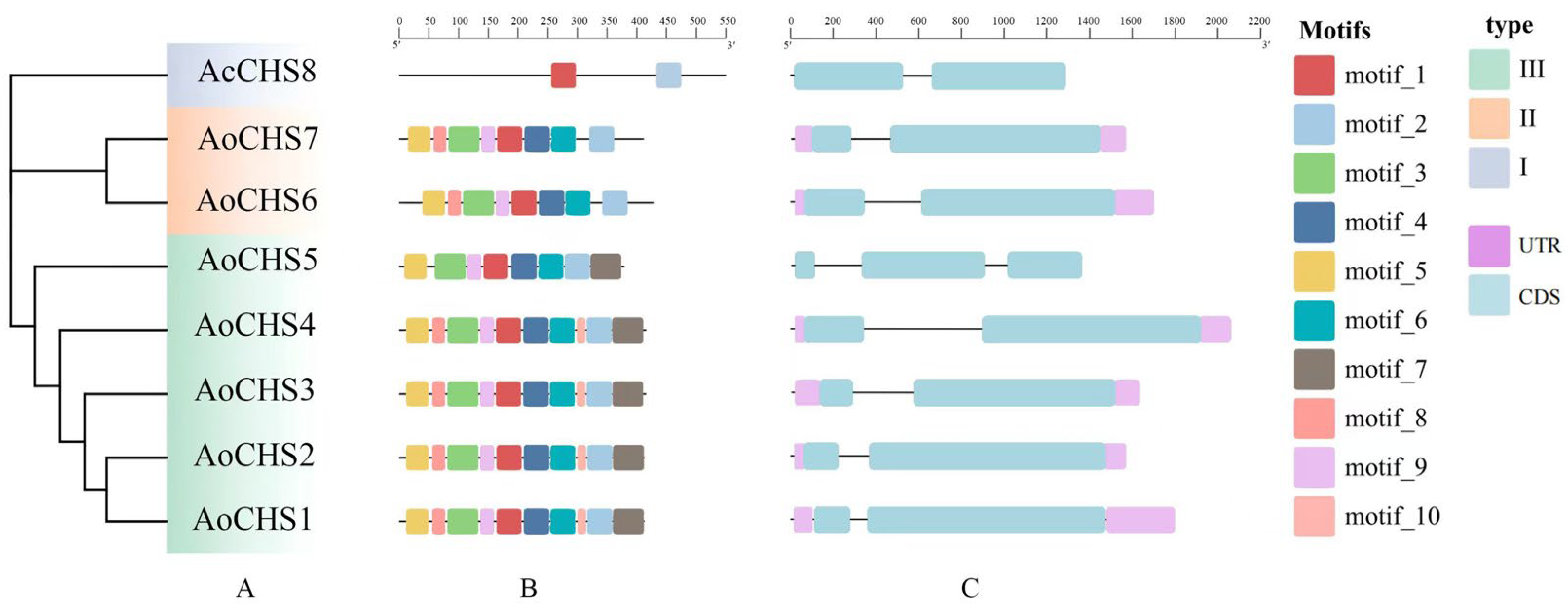
Based on cluster analysis, AoCHSs were classified into three subgroups (Figure 3A). The analysis of sequence structure revealed the lack of certain motifs in the C-terminus of AoCHS6/7. In contrast, AoCHS8 exhibited motifs absent from both the N-terminus and C-terminus (Figure 3B). The conserved motifs of AoCHS1/2/3/5 were found to be complete. Among them, all AoCHSs contained motif 1 as well as motif 2. In addition, two exons were found in AoCHS8 and three exons were found in AoCHS4; two exons and two introns were found in each of the AoCHS1/2/3/5/6/7 (Figure 3C). MSA analysis revealed that the core conserved structure Cys-His-Asn-Phe was present in AoCHSs, and that Malonyl-CoA binding sites and signature sequences were also identified. Mutated sites were observed in AoCHS8, including Cys140A, His213I, His411F, Asn161S, Asn268A, Asn269H, Asn384P and Phe407F. The Asn-mutated site in AoCHS6/7 was identified as Asn161Y; a mutation at Phe342M was detected in AoCHS7, a deletion at Phe342 was observed in AoCHS4, whereas no mutations were found at the Cys-His-Asn-Phe sites of AoCHS1/2/3/5 (Supplementary Figure S1).

3.3. Analysis of the Components of Cis-Acting Elementss

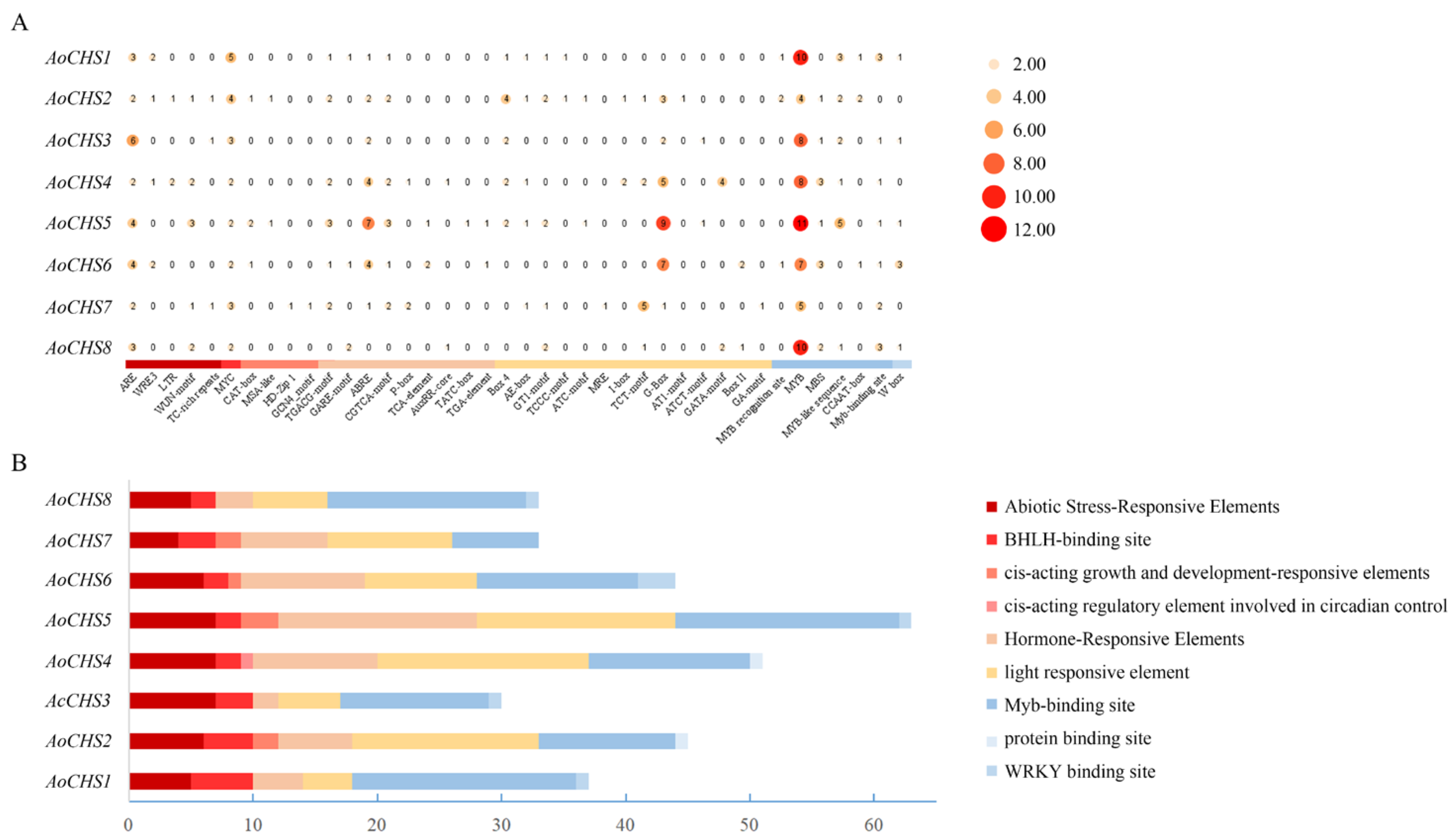
The promoters of AcCHSs contained multiple types of elements, including light-responsive elements, stress-responsive elements, hormone-responsive elements, plant growth and development-related elements, and promoter binding sites (Supplementary Figure S2). The results showed that all members contained light-responsive elements (I-box, AE-box, Box 4, and MRE); stress-responsive elements (ARE and LTR); wound-responsive elements (WR3, WUN-motif, and TC-rich repeats); hormone-responsive elements (ERE, TGACG-motif, ABRE, and TCA-element). Additionally, plant growth and development (PGD)-responsive elements (MSA-like and CAT-box) were identified in AoCHS2/5/6/7. In addition, it was found that the number of transcriptional regulatory elements of AoCHSs was greater than that of other types of regulatory elements, and all AoCHSs promoters were found to contain Myb-binding sites (Figure 4A,B). Moreover, except for AoCHS7, AoCHS1/2/3/4/5/6/8 were found to contain more than 10 Myb-binding sites. Among them, the highest number of Myb-binding sites (18) were contained in AoCHS1/5, while only 7 Myb-binding sites (the lowest number) were contained in AoCHS7. The number of light-responsive elements in AoCHS2/4/5/6 was higher than that in AoCHS1/3/8, and all AoCHSs were found to contain no less than 4 abiotic stress-responsive elements. Among all cis-acting elements, the number of light-responsive elements, hormone-responsive elements, and Myb-binding sites in the promoter of AoCHS5 was higher than that in the promoters of other AoCHS members.

3.4. Phylogenetic and Expression Pattern Analysis

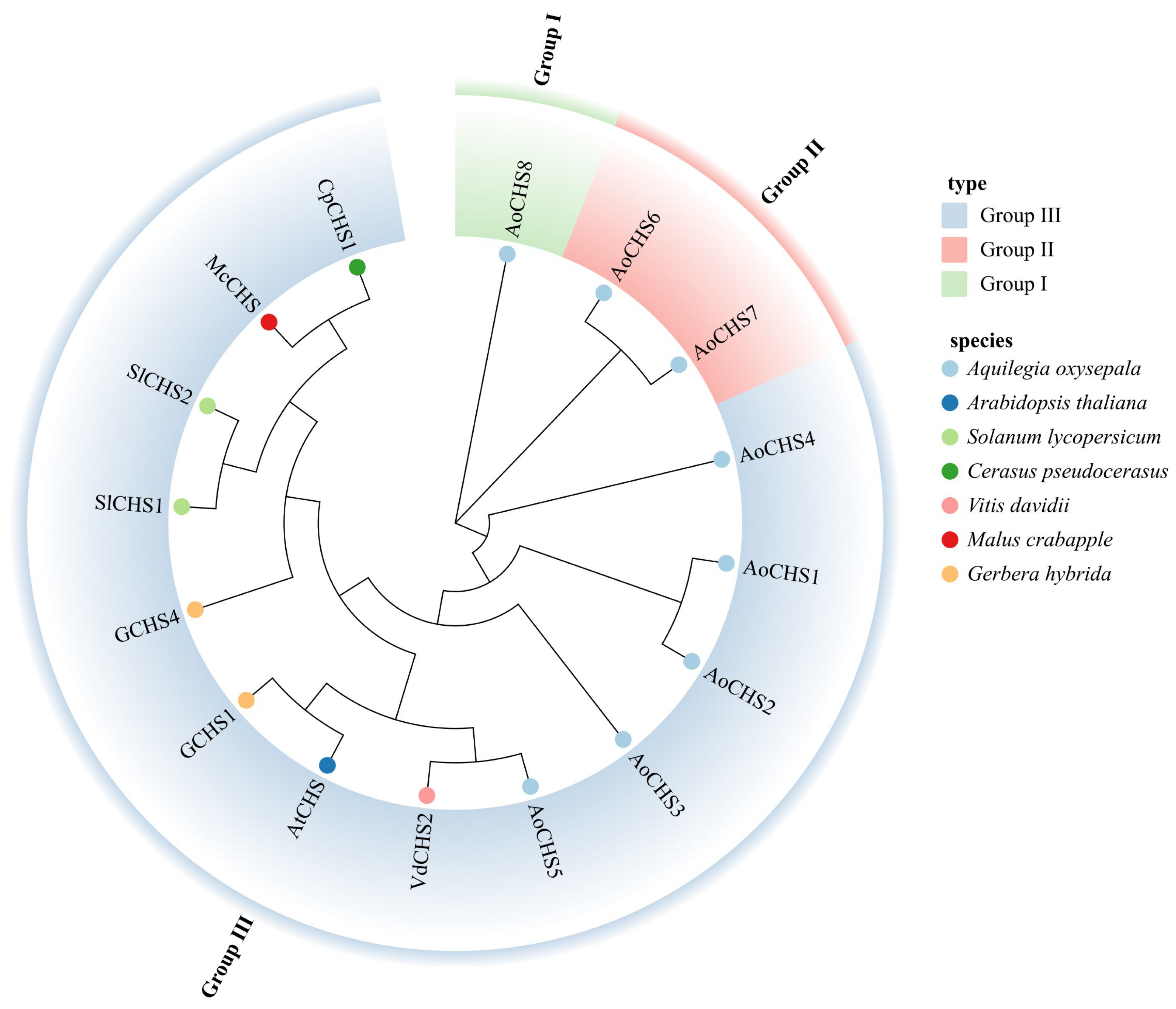
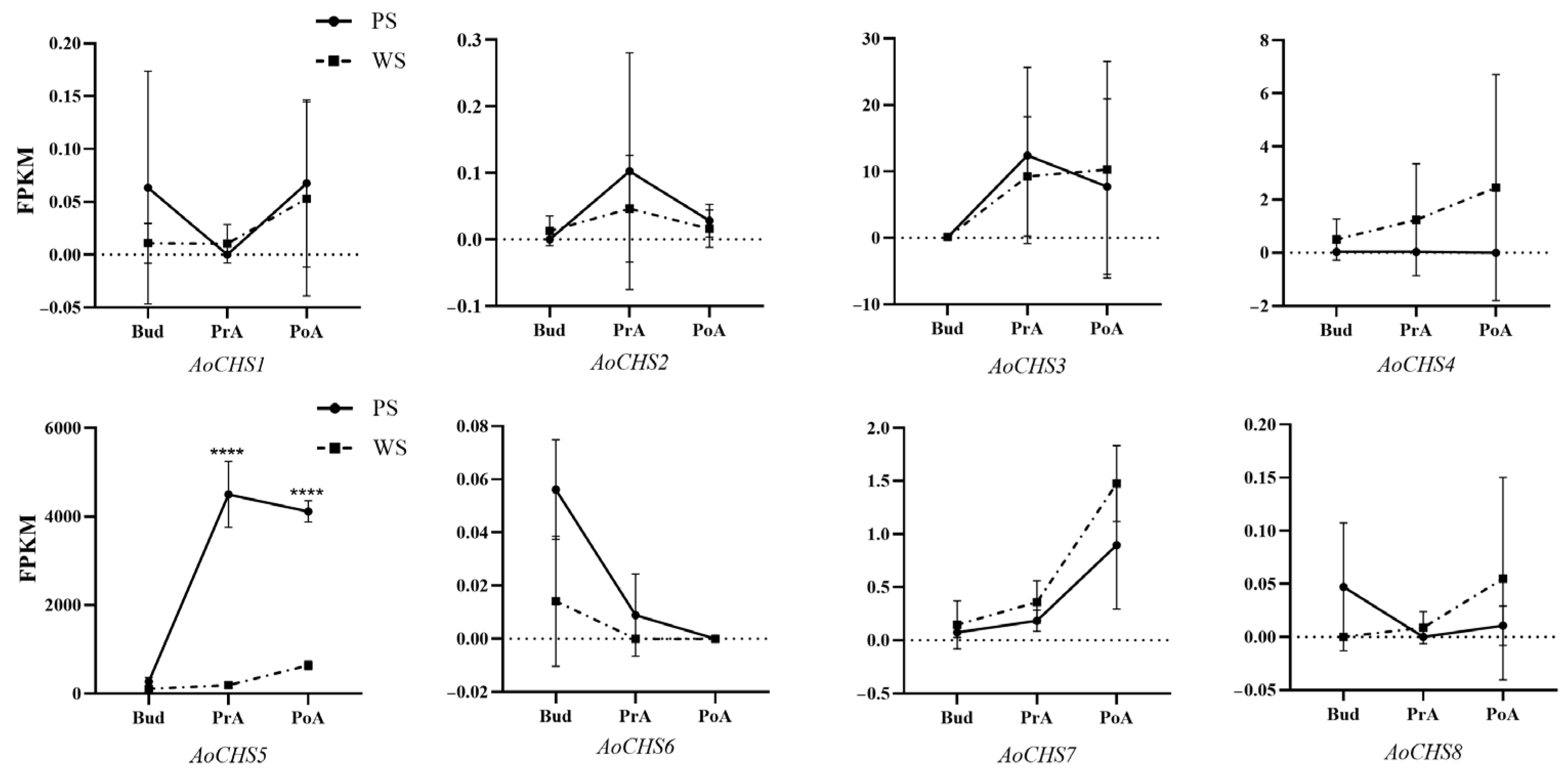
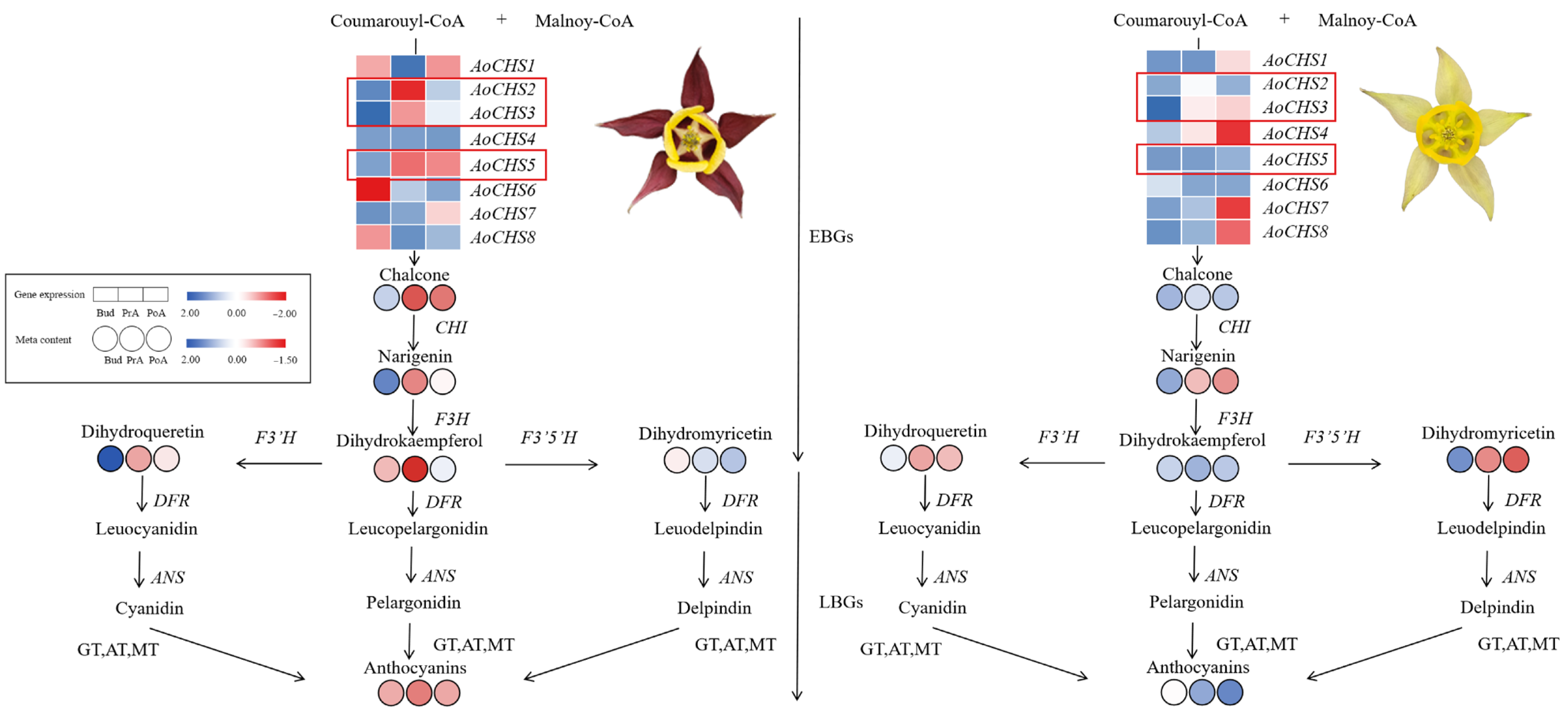
Based on the phylogenetic cluster analysis of AoCHSs, GCHS1/4, VdCHS2, McCHS, CpCHS1, AtCHS, and SlCHS1/2, AoCHSs were classified into three subfamilies (I, II, and III) (Figure 5). Among them, the Subfamily III contained the most AoCHSs, including AoCHS1/2/3/4/5. AoCHS5 was found to be clustered with AtCHS, GCHS1 and VdCHS2 in the same branch, exhibiting a closer evolutionary relationship. Combined with our previous transcriptomic and metabolomic profiles (Figure 6 and Figure 7), the AoCHS1~8 exhibited different expression patterns during flower development. The expression levels of AoCHS2/3/5 in the sepals of A. oxysepala were higher than those in A. oxysepala f. pallidiflora during the PrA stage, among these, AoCHS5 exhibited the highest expression level and was significantly higher than that in A. oxysepala f. pallidiflora. It was observed that there was a differential content of the AoCHSs catalytic product, chalcone. In A. oxysepala, chalcone levels were higher in the PrA stages compared to A. oxysepala f. pallidiflora. In subsequent steps of the anthocyanin biosynthesis pathway, both dihydrokaempferol and anthocyanins exhibited higher concentrations in A. oxysepala than in A. oxysepala f. pallidiflora.
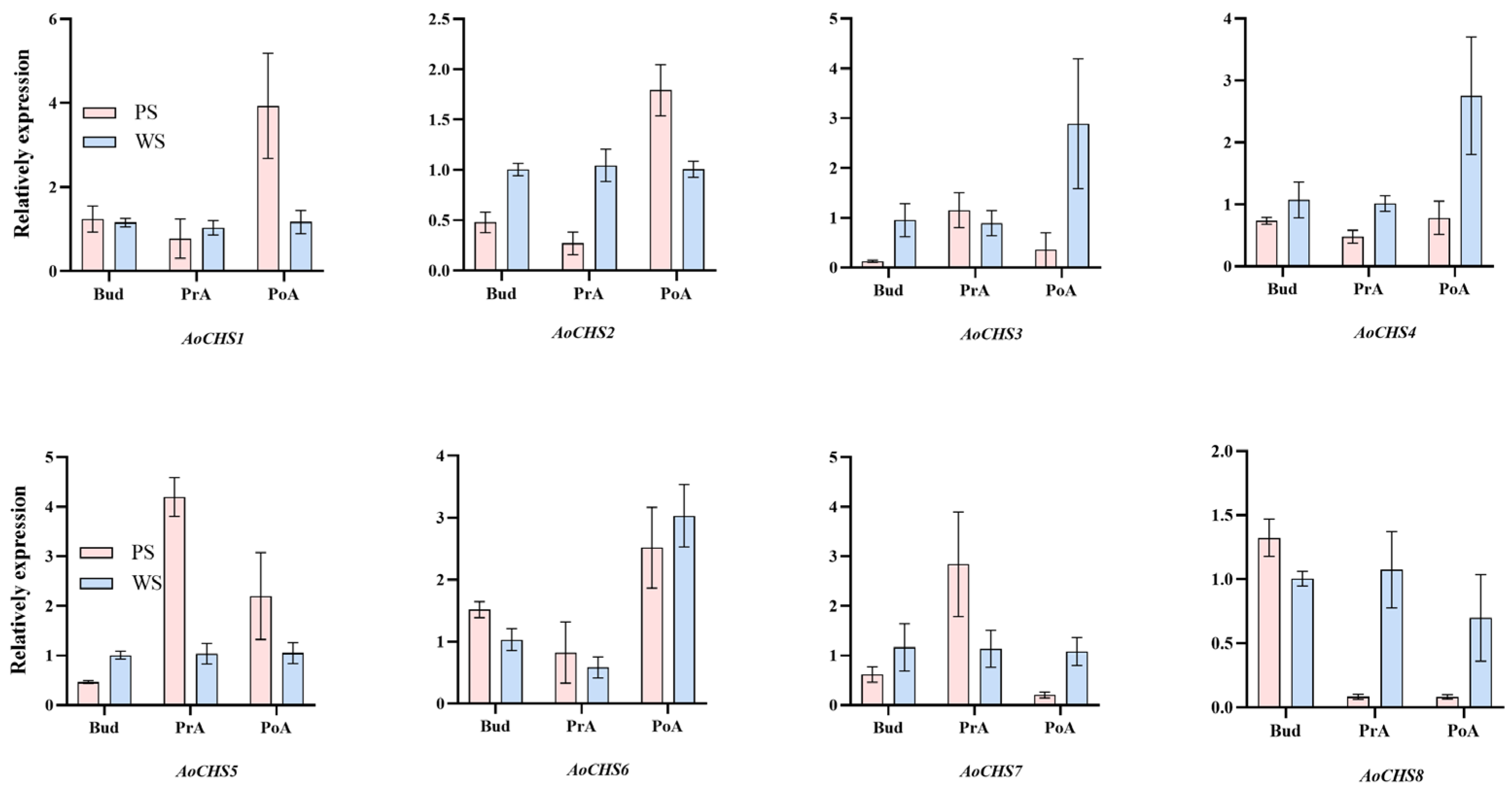
The results of qPCR showed that, compared to the Bud stage, AoCHS5 and AoCHS7 were significantly upregulated in A. oxysepala during the PrA stage, while AoCHS7 was downregulated in the PoA stage of A. oxysepala. AoCHS5/7 exhibited relatively low expression levels throughout the flowering stage in A. oxysepala f. pallidiflora, while AoCHS2/6 exhibited high expression levels in the PoA stage of both A. oxysepala and A. oxysepala f. pallidiflora, AoCHS3/8 exhibited a downward trend in A. oxysepala, and the expression differences in the three periods of A. oxysepala f. pallidiflora were not significant. Remarkably, the expression level of AoCHS5 in A. oxysepala was significantly higher than that in A. oxysepala f. pallidiflora in the PrA stage. Throughout the expression profiles of AoCHSs, the expression trend of AoCHS5 was aligned with that of the transcriptome (Figure 6 and Figure 8).

3.5. Potential Regulatory Mechanisms of AoCHS5

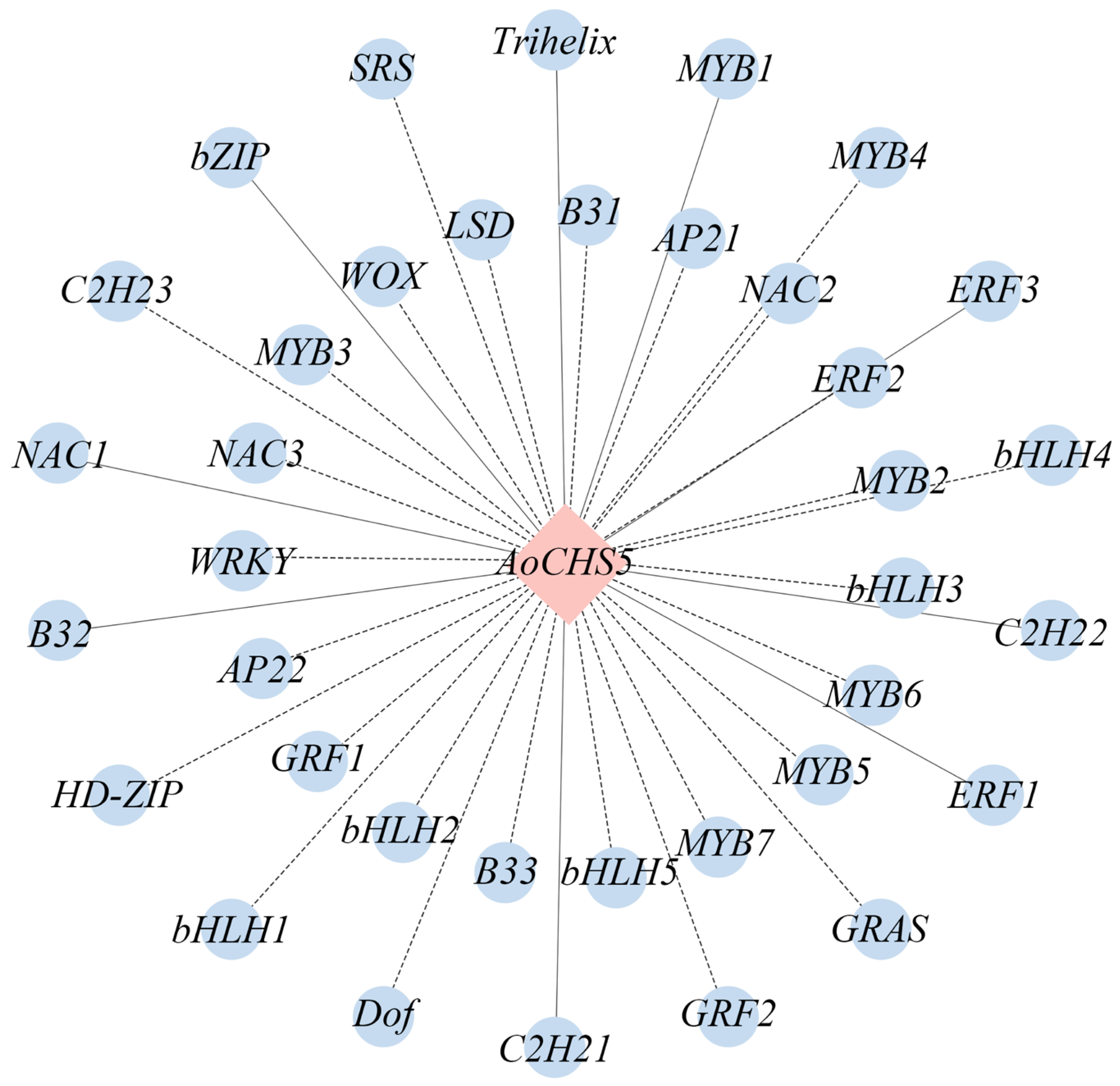
The results of correlation network analysis showed that AoCHS5 was correlated with multiple TFs such as MYB, Trihelix, and bHLH. A total of 37 TFs were correlated with AoCHS5. Among them, MYB exhibited the highest number (7), followed by bHLH (5), NAC (3), B3 (3), ERF (3), and C2H2 (3). A total of 9 TFs, including gene-AQUCO_02400067v1 (bZIP), gene-AQUCO_04100154v1 (MYB), gene-AQUCO_02300131v1 (Trihelix), gene-AQUCO_01700038v1 (C2H2), gene-AQUCO_01000437v1 (C2H2), gene-AQUCO_01400941v1 (NAC), gene-AQUCO_01300434v1 (ERF), gene-AQUCO_01000625v1 (ERF), and gene-AQUCO_01000340v1 (B3), were positively correlated with AoCHS5, and the rest of them were negatively correlated with AoCHS5. Among them, gene-AQUCO_04100154v1 (MYB) had a maximum association with AoCHS5 in the related network analysis (Figure 9). Moreover, the expression trends of gene-AQUCO_04100154v1 (MYB) at different stages of the sepal were similar to that of AoCHS5 (Supplementary Figure S3). The p-values and correlation coefficients between AoCHS5 and TFs are provided in Supplementary Table S5.

4. Discussion

Eight AoCHS enzymes were identified in this study, which were further grouped into three subgroups. AoCHSs were primarily regulated by light signals, MYB TFs, and plant hormones. Among the expression profiles of AoCHSs, the expression trend of AoCHS5 was consistent with that reported in the transcriptome. It is proposed that AoCHS5 may be transcriptionally regulated by WRKY, MYB, and bHLH. In previous studies, 16 CnCHSs were identified in Chrysanthemum nankingense, and they could be divided into three subgroups [47]. In Brassica rapa [48], Zea mays [49], and Oryza sativa [50], 10 BrCHSs, 68 ZmCHSs, and 27 OsCHSs were identified, respectively, and they were classified into 2, 3, and 4 subgroups. In contrast, AoCHSs were categorized into three subgroups in this study, confirming that the grouping of CHS is diverse. In addition, although homologous genes of CHS had been identified from the EST sequencing data of hybrids between A. formosa and A. pubescens [17], more comprehensive members of the gene family were identified in this study through genomic data. Eight AoCHSs were identified in A. oxysepala via genomic and transcriptomic screening. Through phylogenetic and sequence analysis, it was found that the encoded AoCHSs could be divided into three categories. CHSs show a high degree of sequence conservation [15,51]. In this study, the conserved Cys-His-Asn-Phe structure and malonyl-CoA binding site were identified via MSA, and the conserved sequence characteristics of AoCHSs were demonstrated. It has been shown in previous studies that these sites play a key role in protein folding, catalysis, or ligand binding [52]. The Cys-His-Asn-Phe motif was identified as one of the hallmark motifs of the CHS family [16], and it was confirmed to be crucial for the condensation reaction between 4-coumaroyl-CoA and malonyl-CoA in anthocyanin biosynthesis. Furthermore, this conserved motif was proposed to be a key factor underlying the stable inheritance of AoCHSs in the flower coloration of both A. oxysepala and A. oxysepala f. pallidiflora.
Cis-regulatory elements, which are sequences that regulate gene expression at different developmental stages, include enhancers, promoters, silencers, and insulators and these elements can be used to construct synthetic expression cassettes [53]. Previous studies showed that gene expression regulation was mainly influenced by the cis-acting elements situated upstream of the transcriptional start site [54]. Within this study, the promoter regions of AoCHSs were found to harbor TF-responsive elements, PGD-responsive elements, light-responsive elements, and hormone-responsive elements. Among these, transcriptional regulatory elements were the most abundant. In Phyllostachys edulis, all promoters of PeCHSs were confirmed to contain MYB and MYC elements [55], which revealed the potential role of PeCHSs in regulatory mechanisms. Previous studies have shown that MYB transcription factors bind to target gene promoters and drive the biosynthesis of flavonoids and anthocyanins [56,57,58,59]. In Glycine max, GmMYB176 was found to be capable of recognizing a motif containing the sequence TAGT(T/A)(A/T) within the GmCHS8 promoter region [60]. The MwMYB-1 transcription factor from Magnolia wufengensis was shown to bind to a specific motif (AAGAGAG) located in the third exon of the Arabidopsis thaliana AtMYB75, which thereby activated the gene expression and promoted anthocyanin accumulation [61]. MsMYB741 from Medicago sativa was shown to bind to the promoters of MsPAL1 and MsCHI, thereby promoting flavonoid accumulation [62]. In the present study, multiple TF binding sites were identified in AoCHSs, among which the number of Myb-binding sites was the highest. Furthermore, more Myb-binding sites were detected in AoCHS5 than in other AoCHS. It was hypothesized that MYB might bind to the promoter region of AoCHS5, thereby regulating anthocyanin biosynthesis and leading to the difference in flower color between A. oxysepala and A. oxysepala f. pallidiflora. As a light-responsive component, the G-box element is ubiquitous in plants and serves as a key cis-acting element mediating ABA-regulated gene transcription [63] and an essential element involved in methyl jasmonate (MJ)-responsive signaling [64]. The G-box element was identified as a key component that links transcription factors to target genes in the crosstalk between ABA and light signaling pathways in Arabidopsis thaliana [65]. Moreover, since the promoters of PcCHS in Petroselinum crispum were found to contain light response elements (TATA distal light-responsive), the expression of PcCHSs could be modulated by light, thereby affecting the secondary metabolic process [66]. In this study, the promoters of AoCHSs were found to contain G-box, AE-Box, Box4, I-box, and MRE response elements, and it was inferred that AoCHSs expression might be modulated by light signals. Among the light-responsive elements in AoCHS5, multiple G-box elements were identified. It is speculated that these G-box elements respond to various hormones and light signals, which may regulate the growth and development of Aquilegia. In previous studies, the CAT-box, as a key regulatory element in the promoter region of SoAtpC from Spinacia oleracea, was mediated by cytokinins, thereby affecting the processes of plant growth and development [67]. The NtNACK1/2 promoters contained MSA elements, which could be activated after binding with NtmybA1/A2 in the late G2/M phase of the cellular cycle in Nicotiana tabacum [68]. The MSA-like element and CAT-box element were identified in AoCHS5 promoters, and it was inferred that AoCHS5 might participate in the modulation of plant growth and development. Therefore, AoCHS5 might be regulated by TFs, light signal, and abiotic stresses, leading to variations in the flower color of Aquilegia.
To date, the roles of CHS have been verified in different species. In Petunia hybrida, introduction of the PhCHS transgene resulted in the co-suppression of both the transgenes and the endogenous PhCHS. Due to the reduced anthocyanin synthesis, the flowers were observed to be white or pale-colored [69]. GCHS1/4 in Gerbera hybrida inflorescences were individually silenced via virus-induced gene silencing (VIGS). It was shown that GCHS4 in Gerbera hybrida was the only CHS expressed in anthocyanin-containing vegetative tissues, while GCHS1 was involved in the flavonoid biosynthesis of the species [70]. VdCHS2 was successfully transformed into Vitis davidii fruit, and the total anthocyanin content was increased by 60% [71]. When CpCHS1 from Cerasus pseudocerasus was overexpressed in N. tabacum, the seed germination rate of N. tabacum was enhanced in response to drought stress. The function of the flavonoid synthesis in cherries under drought stress was clarified [72]. SlCHS1/2 silencing resulted in tomato fruit coloration shifting from red to pink [73]. In Arabidopsis thaliana, more anthocyanins were accumulated due to the overexpression of AtCHS [74]. In Malus crabapple, transgenic N. tabacum harboring McCHS exhibited higher anthocyanin accumulation and darker red petals [75]. In the present study, through phylogenetic analysis, it was found that AoCHS5 clustered in the same clade as VdCHS2, AtCHS, and GCHS1. Thus, it was speculated that AoCHS5 had a similar function to them and also played a vital role in anthocyanin synthesis and flavonoid synthesis.
Throughout flower development, the expression of functional genes was altered. In Clivia miniata, it was found that flower development was divided into four stages. Among these stages, the anthocyanin content was determined to be the highest at the bud just after anthesis stage [76]. For Lonicera japonica, the pigment distribution, pigment content, and color variations at the bud stage, three green stages, two white stages, the silver stage, and the golden stage were compared and analyzed by the researchers. It was found that the distribution and variation in pigments were critical factors affecting the flower color of Lonicera japonica, and the pigment content increased rapidly during the golden period [77]. In the current study, transcriptome analysis indicated that the expression levels of AoCHS2/3/5 in PrA of A. oxysepala were higher than those in A. oxysepala f. pallidiflora. Among these, the expression difference in AoCHS5 was most pronounced, suggesting that AoCHS5 may be a core regulatory gene, thereby leading to variations in dihydrokaempferol and anthocyanin content. It has been indicated in previous studies that high expression of the CHS gene directly drives anthocyanin synthesis. Eight anthocyanins that were detected in the integrated transcriptome and metabolome data—including cyanidin glucoside and delphinidin glucoside—were found to exhibit significantly higher levels in A. oxysepala compared to A. oxysepala f. pallidiflora [45]. Combined with qPCR results, the expression level of AoCHS5 in PrA of A. oxysepala was found to be significantly higher than that in A. oxysepala f. pallidiflora (p ≤ 0.05). Moreover, the expression patterns show a high degree of consistency with the transcriptome. Additionally, according to KEGG annotation, AoCHS5 was precisely annotated to the flavonoid biosynthesis pathway (ko00941) and anthocyanin biosynthesis pathway (ko00942). It was identified as a key early structural gene in anthocyanin synthesis and was responsible for catalyzing the condensation of 4-coumaroyl-CoA with malonyl-CoA to form chalcone (a precursor of anthocyanins) [14,15,45]. Combined with the results of phylogenetic cluster analysis, AoCHS5 was clustered into the same clade as previously reported key flower color regulatory genes, such as VdCHS5 and AtCHS [71,74]. Furthermore, AoCHS5 was specifically highly expressed in the petal reproductive area (PrA) of A. oxysepala during the rapid pigment accumulation stage [33], while the low expression of this gene in A. oxysepala f. pallidiflora was fully consistent with the phenotype of significantly reduced anthocyanin content in the sepals (Figure 1, Figure 5 and Figure 6). In conclusion, AoCHS5 was specifically highly expressed in A. oxysepala. Via its conserved catalytic domain, efficient participation in the key steps of anthocyanin biosynthesis was achieved, and core precursors for sepal pigment accumulation were provided. Thus, AoCHS5 was identified as a key functional gene that determined the flower color difference between A. oxysepala and A. oxysepala f. pallidiflora. A theoretical basis was thereby provided for deciphering the genetic basis underlying flower color variation in Aquilegia.
Previous studies have shown that CHS could be regulated by various TFs. In Malus domestica, MdbHLH130 directly bound to the promoter of MdCHS and regulated flavonoid biosynthesis [78]. In Pyrus, the W-box (TTTGACG) in the promoter of PbCHS3 could be bound by PbWRKY18, which led to the enhancement of PbCHS3 expression [79]. In Vaccinium corymbosum, VcbHLHs could specifically bind in the G-box (CACGTG) in VcCHS21, and the expression of VcCHS21 was thereby regulated [80]. In Gossypium hirsutum, it was confirmed that GhMYB5 could directly bind to GhCHS1, thereby establishing a regulatory node in the proanthocyanidin biosynthesis pathway [81]. In this study, correlation network analysis showed that AoCHS5 was correlated with different TFs. Combined with cis-acting element analysis and correlation network results, AoCHS5 might be potentially regulated by multiple TFs including MYB, bHLH, and WRKY. Further investigations into the regulatory mechanisms between AoCHSs and TFs are required.
The analysis of AoCHS5 in this study is still in the preliminary exploration stage, with certain limitations: the current conclusions are primarily derived from gene family identification, gene expression difference analysis, pathway annotation, and correlation network analysis. Functional validation of AoCHS5 was still lacking, and the direct interactions and regulatory relationships between MYB, bHLH, and AoCHS5 had not been experimentally verified. To further clarify the function and regulatory network of AoCHS5, future work will focus on the following aspects: first, verifying the direct effect of AoCHS5 on flower color phenotypes through gene overexpression; second, validating the binding specificity to and regulatory efficiency of TFs on the AoCHS5 promoter using yeast one-hybrid (Y1H) assay and dual-luciferase reporter gene assay. These studies will provide more direct experimental evidence for the comprehensive decipherment of the flower color regulatory mechanism mediated by AoCHS5 in Aquilegia.

5. Conclusions

Based on the reference genome and transcriptome, eight AoCHSs were identified, and the sequence characteristics of AoCHSs were then analyzed. According to cluster analysis, AoCHSs could be grouped into three subfamilies. Cis-element analysis indicated that AoCHSs could be regulated by light signals, MYBs, and plant hormones. We further integrated the phylogenetic analysis of A. oxysepala and found that AoCHS5 showed a closer evolutionary relationship to VdCHS2, AtCHS, and GCHS1. Combining phylogenetic tree clustering results, the expression levels of AoCHS5 and KEGG annotation, AoCHS5 was identified as a key gene that participates in flower coloration. In addition, AoCHS5 might be modulated by multiple TFs, including MYB, bHLH, and WRKY. This study offers new information for the CHS family and lays the foundation for the innovative flower color breeding of Aquilegia.

Supplementary Materials

The following supporting information can be downloaded at: https://www.mdpi.com/article/10.3390/agronomy15122883/s1, Figure S1: Multiple sequence alignment analysis of AoCHSs and AtCHS protein sequences was performed; Figure S2: Promoter cis-acting element analysis of AoCHSs: distribution of response elements in promoter sequences; Figure S3: Transcription factor transcriptome expression analysis; Table S1: Retrieval Table of Genome and Transcriptome Gene IDs; Table S2. The quantitative real-time PCR primer information; Table S3. Quantitative real-time PCR reaction system; Table S4. Quantitative real-time PCR reaction program; Table S5. P-values and correlation coefficients between AoCHS5 and TFs; Table S6. Physical and chemical properties and subcellular localization of AoCHSs; Table S7. Prediction of the secondary structure of AoCHSs.

Author Contributions

D.C.: visualization, methodology, validation, software, investigation, writing—original draft, data curation, writing—review and editing. Y.C.: methodology, validation, data curation, investigation, software, visualization, writing—review and editing, writing—original draft. H.Y.: investigation, methodology, writing—review and editing, data curation. T.M.: investigation, methodology, writing—review and editing, data curation. Y.B.: Writing—review and editing, project administration, supervision, conceptualization, funding acquisition, data curation. Y.M.: resources, conceptualization, writing—review and editing, project administration, supervision. Y.Z.: conceptualization, project administration, resources, writing—review and editing, supervision, funding acquisition. All authors have read and agreed to the published version of the manuscript.

Funding

This work was supported by the Natural Science Foundation of Jilin Province (20240101208JC) and the Scientific Research Start-up Funds of Jilin Agricultural University (202023298).

Data Availability Statement

The original contributions presented in this study are included in the article/Supplementary Material. Further inquiries can be directed to the corresponding author.

Acknowledgments

We would like to express our gratitude to the Ornamental Plant Resources Research Lab of Jilin Agricultural University for the equipment support. We also sincerely appreciate Jiayi Yin, Tianshu Wang, and Shuheng Wang for their valuable assistance in the literature retrieval and screening process.

Conflicts of Interest

The authors declare no conflicts of interest.

References

  1. Zhao, D.; Tao, J. Recent advances on the development and regulation of flower color in ornamental plants. Front. Plant Sci. 2015, 6, 261. [Google Scholar] [CrossRef]
  2. Luan, Y.; Tao, J.; Zhao, D. Synergistic actions of 3 MYB transcription factors underpin blotch formation in tree peony. Plant Physiol. 2024, 196, 1869–1886. [Google Scholar] [CrossRef]
  3. Liu, X.; Han, Y.; Luo, L.; Pan, H.; Cheng, T.; Zhang, Q. Multiomics analysis reveals the mechanisms underlying the different floral colors and fragrances of Rosa hybrida cultivars. Plant Physiol. Bioch. 2023, 195, 101–113. [Google Scholar] [CrossRef]
  4. Trunschke, J.; Lunau, K.; Pyke, G.H.; Ren, Z.X.; Wang, H. Flower Color Evolution and the Evidence of Pollinator-Mediated Selection. Front. Plant Sci. 2021, 12, 617851. [Google Scholar] [CrossRef] [PubMed]
  5. Todesco, M.; Bercovich, N.; Kim, A.; Imerovski, I.; Owens, G.L.; Ruiz, Ó.D.; Holalu, S.V.; Madilao, L.L.; Jahani, M.; Légaré, J.S.; et al. Genetic basis and dual adaptive role of floral pigmentation in sunflowers. eLife 2022, 11, e72072. [Google Scholar] [CrossRef] [PubMed]
  6. Ding, R.; Che, X.; Shen, Z.; Zhang, Y. Metabolome and transcriptome profiling provide insights into green apple peel reveals light-and UV-B-responsive pathway in anthocyanins accumulation. BMC Plant Biol. 2021, 21, 351. [Google Scholar] [CrossRef] [PubMed]
  7. Tan, Y.; Zhang, X.; Li, Q.; Li, X.; Luo, L.; He, H.; Liang, G.; Huang, H.; Huang, M. Transcriptomic Analysis of Flower Color Changes in Impatiens uliginosa in Response to Copper Stress. Horticulturae 2024, 10, 412. [Google Scholar] [CrossRef]
  8. Shi, Z.; Han, X.; Wang, G.; Qiu, J.; Zhou, L.; Chen, S.; Fang, W.; Chen, F.; Jiang, J. Transcriptome analysis reveals chrysanthemum flower discoloration under high-temperature stress. Front. Plant Sci. 2022, 13, 1003635. [Google Scholar] [CrossRef]
  9. Wang, Y.; Zhou, L.; Wang, Y.; Liu, S.; Geng, Z.; Song, A.; Jiang, J.; Chen, S.; Chen, F. Functional identification of a flavone synthase and a flavonol synthase genes affecting flower color formation in Chrysanthemum morifolium. Plant Physiol. Bioch. 2021, 166, 1109–1120. [Google Scholar] [CrossRef]
  10. Zan, W.; Wu, Q.; Dou, S.; Wang, Y.; Zhu, Z.; Xing, S.; Yu, Y. Analysis of flower color diversity revealed the co-regulation of cyanidin and peonidin in the red petals coloration of Rosa rugosa. Plant Physiol. Bioch. 2024, 216, 109126. [Google Scholar] [CrossRef]
  11. Ni, L.; Wang, J.; Zhou, F.; Chen, Z. Integrated multi-omics reveals Li-miR828z-LiMYB114 regulatory module controlling anthocyanin biosynthesis during flower color development in Lagerstroemia indica. Ind. Crop. Prod. 2025, 234, 121524. [Google Scholar] [CrossRef]
  12. Liu, Y.; Xie, L.; Zhu, Z.; Tan, C.; Gao, L.; Shen, W.; Wan, S.; Ge, X.; Chen, D.; Zhu, B. Fine-Mapping of OvANS: A Novel Gene Controlling White Flowers in Orychophragmus violaceus. Biology 2025, 14, 1669. [Google Scholar] [CrossRef]
  13. He, G.; Zhang, R.; Jiang, S.; Wang, H.; Ming, F. The MYB transcription factor RcMYB1 plays a central role in rose anthocyanin biosynthesis. Hortic. Res. 2023, 10, uhad080. [Google Scholar] [CrossRef] [PubMed]
  14. Ferrer, J.L.; Jez, J.M.; Bowman, M.E.; Dixon, R.A.; Noel, J.P. Structure of chalcone synthase and the molecular basis of plant polyketide biosynthesis. Nat. Struct. Mol. Biol. 1999, 6, 775–784. [Google Scholar] [CrossRef]
  15. Sukma, D.; Handini, A.S.; Sudarsono, S. Isolation and characterization of chalcone synthase (CHS) gene from Phalaenopsis and Doritaenopsis orchids. Biodivers. J. Biol. Divers. 2020, 21, 5054–5064. [Google Scholar] [CrossRef]
  16. Whittall, J.B.; Voelckel, C.; Kliebenstein, D.J.; Hodges, S.A. Convergence, constraint and the role of gene expression during adaptive radiation: Floral anthocyanins in Aquilegia. Mol. Ecol. 2006, 15, 4645–4657. [Google Scholar] [CrossRef]
  17. Gould, B.; Kramer, E.M. Virus-induced gene silencing as a tool for functional analyses in the emerging model plant Aquilegia (columbine, Ranunculaceae). Plant Methods 2007, 3, 6. [Google Scholar] [CrossRef]
  18. Yang, J.B.; Tian, X.; Li, D.Z.; Guo, Z.H. Molecular composition and evolution of the chalcone synthase (CHS) gene family in five species of camellia (Theaceae). J. Integr. Plant Biol. 2003, 45, 659. [Google Scholar]
  19. Yang, T.; Zhang, T.; Li, Y.; Kang, Y.; Wang, P.; Liu, W.; Zhou, Y. Genome-wide identification and expression analysis of the chalcone synthase (CHS) gene family in Dendrobium catenatum. Agronomy 2023, 13, 1488. [Google Scholar] [CrossRef]
  20. Zhou, L.J.; Peng, J.; Chen, C.; Wang, Y.; Wang, Y.; Li, Y.; Song, A.; Jiang, J.; Chen, S.; Chen, F. CmBBX28-CmMYB9a Module Regulates Petal Anthocyanin Accumulation in Response to Light in Chrysanthemum. Plant Cell Environ. 2025, 48, 3750–3765. [Google Scholar] [CrossRef]
  21. Geng, Z.; Zhou, L.; Wang, Y.; Wang, Y.; Shi, Z.; Sun, D.; He, Y.; Wang, H.; Jiang, J.; Chen, S.; et al. AU-box E3 ubiquitin ligase CmPUB15 targets CmMYB73 to regulate anthocyanin biosynthesis in response to low temperatures in chrysanthemum. New Phytol. 2025, 248, 1304–1320. [Google Scholar] [CrossRef]
  22. Matoušek, J.; Kocábek, T.; Patzak, J.; Füssy, Z.; Procházková, J.; Heyerick, A. Combinatorial analysis of lupulin gland transcription factors from R2R3Myb, bHLH and WDR families indicates a complex regulation of chsH1 genes essential for prenylflavonoid biosynthesis in hop (Humulus lupulus L.). BMC Plant Biol. 2012, 12, 27. [Google Scholar] [CrossRef] [PubMed]
  23. Kramer, E.M. Aquilegia: A New Model for Plant Development, Ecology, and Evolution. Annu. Rev. Plant Biol. 2009, 60, 261–277. [Google Scholar] [CrossRef]
  24. Han, M.; Zhu, Q.Q.; Sun, L.; Niu, C.Y.; Li, Y.; Wang, N.; Ren, Y. Petal ontogeny, floral structure, and pollination system of four Aquilegia species in Midwest China. Flora 2021, 286, 151987. [Google Scholar] [CrossRef]
  25. Sharma, B.; Pandher, M.K.; Alcaraz Echeveste, A.Q.; Bravo, M.; Romo, R.K.; Ramirez, S.C. Comparative case study of evolutionary insights and floral complexity in key early-diverging eudicot Ranunculales models. Front. Plant Sci. 2024, 15, 1486301. [Google Scholar] [CrossRef] [PubMed]
  26. Meng, Y.; Si, W.; Ma, T.; Chen, D.; Zhou, Y.; Bai, Y. Physiological and biochemical basis of flower coloration in Aquilegia oxysepala with a functional study of AoDFR08. BMC Plant Biol. 2025, 25, 1147. [Google Scholar] [CrossRef]
  27. Yang, L.; Zhang, S.; Chu, D.; Wang, X. Exploring the evolution of CHS gene family in plants. Front. Genet. 2024, 15, 1368358. [Google Scholar] [CrossRef]
  28. Schoch, C.L.; Ciufo, S.; Domrachev, M.; Hotton, C.L.; Kannan, S.; Khovanskaya, R.; Leipe, D.; Mcveigh, R.; O’Neill, K.; Robbertse, B.; et al. NCBI Taxonomy: A comprehensive update on curation, resources and tools. Database 2020, 2020, baaa062. [Google Scholar] [CrossRef]
  29. Söding, J. Protein homology detection by HMM–HMM comparison. Bioinformatics 2005, 21, 951–960. [Google Scholar] [CrossRef]
  30. Ling, J.; Jiang, W.; Zhang, Y.; Yu, H.; Mao, Z.; Gu, X.; Huang, S.; Xie, B. Genome-wide analysis of WRKY gene family in Cucumis sativus. BMC Genom. 2011, 12, 471. [Google Scholar] [CrossRef]
  31. Letunic, I.; Khedkar, S.; Bork, P. SMART: Recent updates, new developments and status in 2020. Nucleic Acids Res. 2021, 49, D458–D460. [Google Scholar] [CrossRef] [PubMed]
  32. Dong, Y.; Wang, Y.; Tang, M.; Chen, W.; Chai, Y.; Wang, W. Bioinformatic analysis of wheat defensin gene family and function verification of candidate genes. Front Plant Sci. 2023, 14, 1279502. [Google Scholar] [CrossRef] [PubMed]
  33. Duvaud, S.; Gabella, C.; Lisacek, F.; Stockinger, H.; Ioannidis, V.; Durinx, C. Expasy, the Swiss Bioinformatics Resource Portal, as designed by its users. Nucleic Acids Res. 2021, 49, W216–W227. [Google Scholar] [CrossRef] [PubMed]
  34. Chou, K.C.; Shen, H.B. Plant-mPLoc: A top-down strategy to augment the power for predicting plant protein subcellular localization. PLoS ONE 2021, 5, e11335. [Google Scholar] [CrossRef]
  35. Chen, C.; Wu, Y.; Xia, R. A painless way to customize Circos plot: From data preparation to visualization using TBtools. Imeta 2022, 1, e35. [Google Scholar] [CrossRef]
  36. Bailey, T.L.; Johnson, J.; Grant, C.E.; Noble, W.S. The MEME suite. Nucleic Acids Res. 2015, 43, W39–W49. [Google Scholar] [CrossRef]
  37. Akbudak, M.A.; Filiz, E. Genome-wide investigation of proline transporter (ProT) gene family in tomato: Bioinformatics and expression analyses in response to drought stress. Plant Physiol. Bioch. 2020, 157, 13–22. [Google Scholar] [CrossRef]
  38. Wang, Z.; Zhang, H.; Yang, J.; Chen, Y.; Xu, X.; Mao, X.; Li, C. Phylogenetic, expression, and bioinformatic analysis of the ABC1 gene family in Populus trichocarpa. Sci. World J. 2013, 785070. [Google Scholar] [CrossRef]
  39. Lescot, M.; Déhais, P.; Thijs, G.; Marchal, K.; Moreau, Y.; Van de Peer, Y.; Rouzé, P.; Rombauts, S. PlantCARE, a database of plant cisacting regulatory elements and a portal to tools for in silico analysis of promoter sequences. Nucleic Acids Res. 2002, 30, 325–327. [Google Scholar] [CrossRef]
  40. Swarbreck, D.; Wilks, C.; Lamesch, P.; Berardini, T.Z.; Garcia-Hernandez, M.; Foerster, H.; Li, D.; Meyer, T.; Muller, R.; Ploetz, L.; et al. The Arabidopsis Information Resource (TAIR): Gene structure and function annotation. Nucleic Acids Res. 2007, 36, D1009–D1014. [Google Scholar] [CrossRef]
  41. Kumar, S.; Tamura, K.; Nei, M. MEGA: Molecular evolutionary genetics analysis software for microcomputers. Bioinformatics 1994, 10, 189–191. [Google Scholar] [CrossRef] [PubMed]
  42. Cheng, L.; Shi, N.; Du, X.; Huang, T.; Zhang, Y.; Zhao, C.; Shen, H. Bioinformatics Analysis and Expression Profiling Under Abiotic Stress of the DREB Gene Family in Glycyrrhiza uralensis. Int. J. Mol. Sci. 2025, 26, 9235. [Google Scholar] [CrossRef] [PubMed]
  43. Wang, X.; Cheng, F.; Rohlsen, D.; Bi, C.; Wang, C.; Xu, Y.; Wei, S.; Ye, Q.; Yin, T.; Ye, N. Organellar genome assembly methods and comparative analysis of horticultural plants. Hortic. Res. 2018, 5, 3. [Google Scholar] [CrossRef] [PubMed]
  44. Livak, K.; Schmittgen, T.D. Analysis of relative gene expression data using real-time quantitative PCR and the 2-ΔΔCT method. Methods 2001, 25, 402–408. [Google Scholar] [CrossRef]
  45. Meng, Y.; Bai, Y.; Chen, D.; Ma, T.; Si, W.; Yuan, Y.; Chen, L.; Zhou, Y. Integration of transcriptome and metabolome reveals key regulatory mechanisms affecting sepal color variation in Aquilegia oxysepala. Sci. Hortic. 2024, 334, 113334. [Google Scholar] [CrossRef]
  46. Shannon, P.; Markiel, A.; Ozier, O.; Baliga, N.S.; Wang, J.T.; Ramage, D.; Amin, N.; Schwikowski, B.; Ideker, T. Cytoscape: A software environment for integrated models of biomolecular interaction networks. Genome Res. 2003, 13, 2498–2504. [Google Scholar] [CrossRef]
  47. Zhu, L.; Ding, Y.; Wang, S.; Wang, Z.; Dai, L. Genome-Wide Identification, Characterization, and Expression Analysis of CHS Gene Family Members in Chrysanthemum nankingense. Genes 2022, 13, 2145. [Google Scholar] [CrossRef]
  48. Han, Y.; Ding, T.; Su, B.; Jiang, H. Genome-wide identification, characterization and expression analysis of the chalcone synthase gene family in Chinese cabbage. Int. J. Mol. Sci. 2016, 17, 161. [Google Scholar] [CrossRef]
  49. Wang, X.; Wu, J.; Li, H.; Zhu, L.; Long, Y. Genome-wide identification, evolution, and expression and metabolic regulation of the maize CHS gene family under abiotic stress. BMC Genom. 2025, 26, 581. [Google Scholar] [CrossRef]
  50. Ahmad, S.; Jeridi, M.; Siddiqui, S.; Shah, A.Z.; Ali, S. Genome-wide identification, characterization, and expression analysis of the Chalcone Synthase gene family in Oryza sativa under Abiotic Stresses. Plant Stress 2023, 1, 100201. [Google Scholar] [CrossRef]
  51. Wang, Z.; Yu, Q.; Shen, W.; El Mohtar, C.A.; Zhao, X.; Gmitter, F.G., Jr. Functional study of CHS gene family members in citrus revealed a novel CHS gene affecting the production of flavonoids. BMC Plant Biol. 2018, 18, 189. [Google Scholar] [CrossRef]
  52. Wang, W.K.; Schaal, B.A.; Chiou, Y.M.; Murakami, N.; Ge, X.J.; Huang, C.C.; Chiang, T.Y. Diverse selective modes among orthologs/paralogs of the chalcone synthase (Chs) gene family of Arabidopsis thaliana and its relative A. hallerissp. gemmifera. Mol. Phylogenet. Evol. 2007, 44, 503–520. [Google Scholar] [CrossRef] [PubMed]
  53. Biłas, R.; Szafran, K.; Hnatuszko-Konka, K.; Kononowicz, A.K. Cis-regulatory elements used to control gene expression in plants. Plant Cell Tiss. Org. (PCTOC) 2016, 127, 269–287. [Google Scholar] [CrossRef]
  54. Hernandez-Garcia, C.M.; Finer, J.J. Identification and validation of promoters and cis-acting regulatory elements. Plant Sci. 2014, 217, 109–119. [Google Scholar] [CrossRef] [PubMed]
  55. Su, S.; Xuan, X.; Tan, J.; Yu, Z.; Jiao, Y.; Zhang, Z.; Ramakrishnan, M. Analysis of the CHS Gene Family Reveals Its Functional Responses to Hormones, Salinity, and Drought Stress in Moso Bamboo (Phyllostachys edulis). Plants 2025, 14, 161. [Google Scholar] [CrossRef]
  56. Du, H.; Zhai, Z.; Pu, J.; Liang, J.; Wang, R.; Zhang, Z.; Zhang, C. Two tandem R2R3 MYB transcription factor genes cooperatively regulate anthocyanin accumulation in potato tuber flesh. Plant Biotechnol. J. 2025, 23, 1521–1534. [Google Scholar] [CrossRef]
  57. Quattrocchio, F.; Verweij, W.; Kroon, A.; Spelt, C.; Mol, J.; Koes, R. PH4 of Petunia is an R2R3 MYB protein that activates vacuolar acidification through interactions with basic-helix-loop-helix transcription factors of the anthocyanin pathway. Plant Cell 2006, 18, 1274–1291. [Google Scholar] [CrossRef]
  58. Tang, Q.; Chi, F.M.; Liu, H.D.; Zhang, H.J.; Song, Y. Single-molecule real-time and illumina sequencing to analyze transcriptional regulation of flavonoid synthesis in blueberry. Front. Plant Sci. 2021, 12, 754325. [Google Scholar] [CrossRef]
  59. Liu, Y.; Lin-Wang, K.; Espley, R.V.; Wang, L.; Li, Y.; Liu, Z.; Allan, A.C. StMYB44 negatively regulates anthocyanin biosynthesis at high temperatures in tuber flesh of potato. J. Exp. Bot. 2019, 70, 3809–3824. [Google Scholar] [CrossRef]
  60. Yi, J.; Derynck, M.R.; Li, X.; Telmer, P.; Marsolais, F.; Dhaubhadel, S. A single-repeat MYB transcription factor, GmMYB176, regulates CHS8 gene expression and affects isoflavonoid biosynthesis in soybean. Plant J. 2010, 62, 1019–1034. [Google Scholar] [CrossRef]
  61. Liu, X.P.; Luo, M.; Liu, X.Q.; Hao, L.Y.; Zhu, C.; Wang, L.; Ma, L.Y. MYB-1 regulates anthocyanin biosynthesis in Magnolia wufengensis. Plant Physiol. Bioch. 2024, 217, 109283. [Google Scholar] [CrossRef] [PubMed]
  62. Su, L.; Lv, A.; Wen, W.; Fan, N.; Li, J.; Gao, L.; Zhou, P.; An, Y. MsMYB741 is involved in alfalfa resistance to aluminum stress by regulating flavonoid biosynthesis. Plant J. 2022, 112, 756–771. [Google Scholar] [CrossRef] [PubMed]
  63. Vasil, V.; Marcotte, W.R., Jr.; Rosenkrans, L.; Cocciolone, S.M.; Vasil, I.K.; Quatrano, R.S.; McCarty, D.R. Overlap of Viviparous1 (VP1) and abscisic acid response elements in the Em promoter: G-box elements are sufficient but not necessary for VP1 transactivation. Plant Cell 1995, 7, 1511. [Google Scholar] [CrossRef] [PubMed]
  64. Kim, S.R.; Choi, J.L.; Costa, M.A.; An, G. Identification of G-box sequence as an essential element for methyl jasmonate response of potato proteinase inhibitor II promoter. Plant Physiol. 1992, 99, 627–631. [Google Scholar] [CrossRef]
  65. Qi, L.; Liu, S.; Li, C.; Fu, J.; Jing, Y.; Cheng, J.; Li, J. Phytochrome-interacting factors interact with the ABA receptors PYL8 and PYL9 to orchestrate ABA signaling in darkness. Mol. Plant 2020, 13, 414–430. [Google Scholar] [CrossRef]
  66. Schulze-Lefert, P.; Becker-Andre, M.; Schulz, W.; Hahlbrock, K.; Dangl, J.L. Functional architecture of the light-responsive chalcone synthase promoter from parsley. Plant Cell 1989, 1, 707–714. [Google Scholar] [CrossRef]
  67. Kusnetsov, V.; Landsberger, M.; Meurer, J.; Oelmüller, R. The assembly of the CAAT-box binding complex at a photosynthesis gene promoter is regulated by light, cytokinin, and the stage of the plastids. J. Biol. Chem. 1999, 274, 36009–36014. [Google Scholar] [CrossRef]
  68. Ito, M.; Araki, S.; Matsunaga, S.; Itoh, T.; Nishihama, R.; Machida, Y.; Doonan, J.H.; Watanabe, A. G2/M-phase–specific transcription during the plant cell cycle is mediated by c-Myb–like transcription factors. Plant Cell 2001, 13, 1891–1905. [Google Scholar] [CrossRef]
  69. Van der Krol, A.; Mur, L.; Beld, M.; Mol, J.; Stuitje, A. Flavonoid genes in petunia: Addition of a limited number of gene copies may lead to a suppression of gene expression. Plant Cell 1990, 2, 291–299. [Google Scholar] [CrossRef]
  70. Deng, X.; Bashandy, H.; Ainasoja, M.; Kontturi, J.; Pietiäinen, M.; Laitinen, R.A.; Albert, V.A.; Valkonen, J.P.; Elomaa, P.; Teeri, T.H. Functional diversification of duplicated chalcone synthase genes in anthocyanin biosynthesis of Gerbera hybrida. New Phytol. 2014, 201, 1469–1483. [Google Scholar] [CrossRef]
  71. He, L.; Lai, G.; Lin, J.; Guo, A.; Yang, F.; Pan, R.; Che, J.; Lai, C. VdCHS2 Overexpression Enhances Anthocyanin Biosynthesis, Modulates the Composition Ratio, and Increases Antioxidant Activity in Vitis davidii Cells. Antioxidants 2024, 13, 1472. [Google Scholar] [CrossRef] [PubMed]
  72. Hou, Q.; Li, S.; Shang, C.; Wen, Z.; Cai, X.; Hong, Y.; Qiao, G. Genome-wide characterization of chalcone synthase genes in sweet cherry and functional characterization of CpCHS1 under drought stress. Front. Plant Sci. 2022, 13, 989959. [Google Scholar] [CrossRef] [PubMed]
  73. Heredia, A.; Heredia-Guerrero, J.; Domínguez, E. CHS silencing suggests a negative cross-talk between wax and flavonoid pathways in tomato fruit cuticle. Plant Signal. Behav. 2014, 10, e1019979. [Google Scholar] [CrossRef] [PubMed]
  74. Zhang, X.H.; Zheng, X.T.; Sun, B.Y.; Peng, C.L.; Chow, W.S. Over-expression of the CHS gene enhances resistance of Arabidopsis leaves to highlight. Environ. Exp. Bot. 2018, 154, 33–43. [Google Scholar] [CrossRef]
  75. Tai, D.; Tian, J.; Zhang, J.; Song, T.; Yao, Y. A Malus crabapple chalcone synthase gene, McCHS, regulates red petal color and flavonoid biosynthesis. PLoS ONE 2017, 9, e110570. [Google Scholar] [CrossRef]
  76. Li, Y.; Gao, R.; Zhang, J.; Wang, Y.; Kong, P.; Lu, K.; Adnan; Liu, M.; Ao, F.; Zhao, C.; et al. The biochemical and molecular investigation of flower color and scent sheds lights on further genetic modification of ornamental traits in Clivia miniata. Hortic. Res. 2022, 9, uhac114. [Google Scholar] [CrossRef]
  77. Li, J.; Lian, X.; Ye, C.; Wang, L. Analysis of flower color variations at different developmental stages in two honeysuckle (Lonicera Japonica Thunb.) cultivars. HortScience 2019, 54, 779–782. [Google Scholar] [CrossRef]
  78. Wang, X.; Chai, X.; Gao, B.; Deng, C.; Günther, C.; Wu, T.; Zhang, X.; Xu, X.; Han, Z.; Wang, Y. Multi-omics analysis reveals the mechanism of bHLH130 responding to low-nitrogen stress of apple rootstock. Plant Physiol. 2023, 191, 1305–1323. [Google Scholar] [CrossRef]
  79. Wang, X.; Qiao, Q.; Zhao, K.; Zhai, W.; Zhang, F.; Dong, H.; Huang, X. PbWRKY18 promotes resistance against black spot disease by activation of the chalcone synthase gene PbCHS3 in pear. Plant Sci. 2024, 341, 112015. [Google Scholar] [CrossRef]
  80. Zhang, Z.; Qu, P.; Hao, S.; Li, R.; Zhang, Y.; Zhao, Q.; Wen, P.; Cheng, C. Characterization and Functional Analysis of Chalcone Synthase Genes in Highbush Blueberry (Vaccinium corymbosum). Int. J. Mol. Sci. 2023, 24, 13882. [Google Scholar] [CrossRef]
  81. Chen, L.; Cheng, S.; Sun, X.; Gao, J.; Li, D.; Zhang, Y.; Guo, N. An R2R3 MYB transcription factor GhMYB5: Regulator of CHS expression and proanthocyanin synthesis in brown cotton (Gossypium hirsutum L.). BMC Genom. 2025, 26, 884. [Google Scholar] [CrossRef]
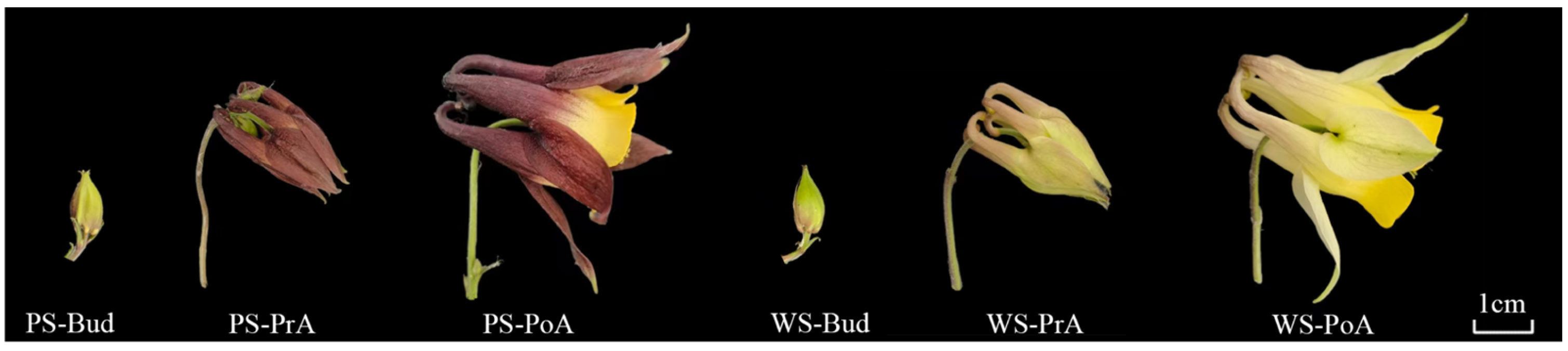
Figure 1. Three floral development stages: Bud (bud), PrA (pre-anthesis), and PoA (post-anthesis) stages of PS (A. oxysepala) and WS (A. oxysepala f. pallidiflora).
Agronomy 15 02883 g001
Figure 2. Chromosome distributions of AoCHSs.
Agronomy 15 02883 g002
Figure 3. Conserved motifs and analysis of AoCHSs structure; (A) clustering analysis of AoCHSs; (B) analysis of motifs in the AoCHSs; (C) analysis of gene structure in the AoCHSs.
Agronomy 15 02883 g003
Figure 4. Promoter cis-acting element analysis of AoCHSs; (A) heatmap of quantities of response elements on AoCHSs promoter sequences; (B) the total number of different elements in the promoter sequence of AoCHSs.
Agronomy 15 02883 g004
Figure 5. Phylogenetic relationship analysis between AoCHSs, GCHS1/4, VdCHS2, McCHS, CpCHS1, AtCHS, and SlCHS1/2 is shown. Circles of different colors represent different species.
Agronomy 15 02883 g005
Figure 6. Expression patterns obtained from transcriptomic data: Bud, PrA, and PoA represent bud stage, pre-flowering stage and full-bloom stage, respectively. PS represents A. oxysepala; WS represents A. oxysepala f. pallidiflora. (Significant differences are shown as ****, indicating p ≤ 0.05).
Agronomy 15 02883 g006
Figure 7. Anthocyanin biosynthesis pathway in A. oxysepala and A. oxysepala f. pallidiflora. Among these, data on Chalcone, Dihydrokaempferol, Naringenin, Dihydroquercetin, and Dihydromyricetin were published previously. The genes selected within the red box were defined as those that had exhibited differential expression during the PrA stage in the transcriptomes of A. oxysepala and A. oxysepala f. pallidiflora.
Agronomy 15 02883 g007
Figure 8. Quantitative real-time PCR results of Bud, PrA and PoA represent bud stage, pre-flowering stage, and full-bloom stage, respectively. PS represents A. oxysepala; WS represents A. oxysepala f. pallidiflora.
Agronomy 15 02883 g008
Figure 9. Correlation network of AoCHS5 and TFs: The diameter of a node indicates the number of associations; nodes in blue represent TFs, and nodes in red represent functional genes; solid lines and dashed lines represent a positive correlation and a negative correlation, respectively.
Agronomy 15 02883 g009
Disclaimer/Publisher’s Note: The statements, opinions and data contained in all publications are solely those of the individual author(s) and contributor(s) and not of MDPI and/or the editor(s). MDPI and/or the editor(s) disclaim responsibility for any injury to people or property resulting from any ideas, methods, instructions or products referred to in the content.