Article

Mapping Yield and Fusarium Wilt on Green Bean Combining Vegetation Indices in Different Management Zones


1
Department of Bioscience and Technologies for Food, Agriculture and Environment, University of Teramo, Via Balzarini, 1, 64100 Teramo, Italy
2
Diagram Group, Via Cavicchini 9, 44037 Jolanda di Savoia, Italy
3
Italian National Research Council (CNR), Institute of BioEconomy (IBE), 40129 Bologna, Italy
*
Author to whom correspondence should be addressed.
Agronomy 2025, 15(12), 2848; https://doi.org/10.3390/agronomy15122848
Submission received: 13 November 2025 / Revised: 5 December 2025 / Accepted: 9 December 2025 / Published: 11 December 2025

Abstract

Legumes are sensitive to soil heterogeneity and disease pressure, particularly from Fusarium oxysporum, which causes severe yield losses worldwide. This study examined the relationships between soil properties, disease incidence, and yield variability within management unit zones (MUZs) to support site-specific management strategies. Two field experiments were conducted in central Italy, in two different growing seasons, using synthetic images of bare soil and clusters to delineate MUZs. Soil samples were analyzed for texture, organic carbon, and nitrogen content, while disease incidence and severity were assessed in relation to symptoms on foliar, root, and hypocotyl tissues. Furthermore, pathogen isolations were carried out from the altered hypocotyl and root tissue. Vegetation indices, including NDVI and PRI derived from Sentinel-2 images, were integrated with field observations to map disease and yields spatially. The results highlighted the almost exclusive presence of F. oxysporum on the altered tissues. MUZ-3, characterized by lower organic carbon content and higher sand content, consistently exhibited the highest incidence and severity of Fusarium wilt. In contrast, MUZ-1, richer in clay and organic carbon, supported healthier plant growth and higher productivity. The integration of vegetation indices with field data proved effective in detecting spatial variability, allowing the delimitation of productivity zones and supporting precision farming strategies aimed at mitigating Fusarium-related yield losses.

1. Introduction

The impact of global warming, environmental constraints, and the rising demand for food due to a growing world population necessitate urgent improvements in crop management, ensuring the efficient use of farming resources, such as fertilizers and agrochemicals, while simultaneously increasing crop yields [1,2,3]. Besides management practices, crop yields are primarily influenced by abiotic factors such as climate and soil properties. While climate impacts crop uniformly at the field level, variations in soil properties create yield heterogeneity within managed stands [4]. With arable land decreasing and the population expected to surpass 9 billion, sustainable farming practices are more critical than ever [5]. Precision agriculture (PA) has emerged as a transformative solution, offering sustainable and efficient farming practices through advanced data-driven approaches [6]. To increase farmers’ profitability and environmental protection, management practices need to adapt to variable site conditions [7,8], following the principles of PA of considering its spatial variability [9]. A relevant topic on PA is the use of management unit zones (MUZs), which are defined as sub-regions of a field and within which the effects on the crop of seasonal differences in weather, soil, management, etc., are expected to be uniform [10,11]. By understanding yield variability within MUZs, farmers gain insights into field heterogeneity, enabling site-specific soil management and precise decision making to improve efficiency and maximize yield [12,13]. Farm management decisions rely on MUZs to determine where and how much to apply inputs [14]. MUZ’s delineation is crucial for the application of precision agriculture because farm management decisions are based on it [15,16]. Therefore, understanding soil variability and its impact on crop yields is crucial for enhancing productivity and optimizing inputs, as reported by other researchers [4,17,18]. In green bean (Phaseolus vulgaris L.) production, analyzing yield fluctuations across different MUZs is particularly vital, as this crop is susceptible to variations in soil fertility, moisture levels, and disease pressures [19,20,21]. While soil properties and environmental factors play a significant role in yield variability, plant diseases further complicate the situation. Fusarium oxysporum Schltdl., a soil-borne fungal pathogen, is one of the most damaging threats to green bean production worldwide [22]. This pathogen causes Fusarium wilt, a devastating vascular disease characterized by symptoms such as stunted growth, chlorosis, premature leaf defoliation, necrosis in vascular tissues, wilting, and eventual plant death [18]. Fusarium wilt not only severely impacts plant health but also results in significant yield loss, from seedling to pre-harvest stages [22,23,24]. The disease poses a considerable economic threat to bean production due to its ability to affect crops at multiple stages of growth [24]. Naseri et al. [25] reported that infections by pathogens like Fusarium solani, Rhizoctonia solani J.G. Kühn, and F. oxysporum resulted in yield losses ranging from 3.3% to 67% in pod numbers per plant and 3.8% to 76% in seed numbers per plant in common bean. de Toledo-Souza et al. [26] also observed a significant decrease in the yield of common bean plants infected with F. oxysporum f. sp. phaseoli. These findings are consistent with other studies that emphasize the negative impact of Fusarium on growth parameters within the Fabaceae family [23,24]. The spread and severity of F. oxysporum are closely linked to soil conditions, including organic matter content, nitrogen levels, pH, and moisture, which vary across different management zones [27,28]. Furthermore, soil properties, particularly pH and nitrogen levels, affect Fusarium wilt severity [28]. They demonstrated that a lower pH combined with higher nitrogen levels accelerated infection and stunted plant growth. These findings suggest that soil management can help mitigate the impacts of Fusarium wilt.
Given the importance of the above factors, the aim of this work was: (i) to investigate yield variability within homogeneous management zones, (ii) identify the pathogen via isolations from the altered hypocotyl and root tissues, (iii) verify under natural infection, the disease severity and the impact of the pathogen on green bean production in the different management zones, to develop a more effective and site-specific management strategy.

2. Materials and Methods

2.1. Study Area and Field Management

The work was carried out within an area typical for green bean (P. vulgaris L.) cultivation, located in the Sant’Omero municipality (TE), Italy. Two field experiments on green beans, grown in two different experimental fields and growing seasons, were carried out (named Exp. F1 and Exp. F2, respectively); Experiment F1 (Figure 1A) was sown on 1 June 2023 and harvested on 9 August 2023, while Experiment F2 (Figure 1D) was sown on 2 September 2023 and harvested on 2 November 2023. The green bean varieties were Rimember (Cora Seeds, Cesena, Italy) and Pike (Roberto Bertolino sementi, Moncalieri, Italy), for experiment F1 and F2, respectively. Spinach represented the previous crop for both fields. Green bean was sown at a seeding rate of 45 seeds m2. NPK fertilizer (11.20.16—YaraMila Power, Oslo, Norway) was applied as ammonium nitrate in a single application before sowing at a rate of 300 kg ha−1.

2.2. Definition of Management Unit Zones and Soil Analysis

Three homogeneous areas were identified following the methodology proposed by Petito et al. [29], which involves generating a Synthetic Bare Soil Image (SYSI) from a time series of Sentinel-2 images (2017–2022), extracting reflectance values and the most relevant bare soil indices, determining the optimal number of clusters, and subsequently applying the K-Means clustering algorithm. As a result of this process, three classes were obtained (Figure 1B,E, Table 1). For each zone, soil samples were collected to define the associated physical and chemical characteristics. A total of 9 soil samples were taken from each homogeneous area (Figure 1C,F), and laboratory analyses provided data on Sand (g/kg), Silt (g/kg), Clay (g/kg), Organic Carbon (%), and Nitrogen content (g/kg) to define Management Unit Zones (MUZs). The chemical–physical analyses were determined following the methods of chemical and physical analysis of the soil reported on Gazzetta Ufficiale Italiana [30].

2.3. Incidence and Severity of Fusarium Wilt Leaf Symptoms, Evaluation of Yield Losses, and Correlation Between Root and Leaf Symptoms

In each of the three MUZs, 9 window plots of 1 m2 were randomly selected, each containing 45 plants. At harvest, for Exp. F1 and Exp. F2, the incidence and severity of foliar symptoms, on each plant in each window plot, were recorded. The incidence was calculated by dividing the number of plants with symptoms by the total number of observed plants and multiplying by 100. The severity was calculated using the formula SN × 100/(Y × Z), where SN = sum of symptom severity values; Y = number of the monitored plants; and Z = maximum value of the symptom scale [31]. The symptom severity was calculated using a visual scale ranging from 1 (no visible disease symptoms) to 9 (approximately 75% or more of the leaves exhibit severe wilting, stunting, and necrosis often resulting in plants dying), designed to detect symptoms of Fusarium wilt [32].
In each MUZ, the pod number and weight of each pod produced by each plant in each window plot were measured, keeping symptomatic pods, not suitable for marketing, separated from the marketable healthy pods. Therefore, in each area, the total number and weight of healthy and symptomatic pods per m2 of soil area were calculated.
Immediately after the survey of leaf symptoms, 15 plants were randomly collected for each of the foliar symptom severity classes, on the Fusarium wilt scale, observed in the field [32]. In the survey of Exp. F1, plants classified in classes 2 to 5 of the leaf symptom scale were present, whereas in the survey of Exp. F2 plants classified in classes 2 to 9 were present. Therefore, a total of 60 plants were harvested in the first survey and 120 in the second. Necroses on roots and hypocotyl were observed in each plant and classified using a visual scale developed for the survey of such symptoms in bean plants affected by Root rots [32]. The collected data were used to verify the possible correlation between the severity of leaf symptoms and the severity of root and hypocotyl symptoms.

2.4. Isolation of Pathogens from Symptomatic Plants

At harvest, 30 green bean plants with symptoms on the leaves and on the hypocotyl and roots collected from the field were stored in the refrigerator overnight before proceeding with the isolation of the pathogens. On each plant, the presence on average of 4–5 brownish lesions on the hypocotyl and root was preliminarily verified. Plants were washed with water after removing stems and leaves. The hypocotyl and the root were then superficially sterilized by immersing in sodium hypochlorite (5%) for 1 min and rinsed in sterile water. Overall, 135 tissue fragments with necrotic lesions were excised and placed on Potato Dextrose Agar (PDA, Difco, Detroit, MI, USA) in 90 cm diameter Petri dishes. The plates were placed at 18 °C with a photoperiod of 16:8, light–dark. After 4 weeks, colonies were considered by morphological characteristics. The percentage of isolation of the fungal species was calculated as the number of tissue fragments colonized by each fungus on the total number of tissue fragments analyzed.
The conidia were quantified using the Bürker counting chamber (Electron Microscopy Science, Hatfield, PA, USA). For each fungus, serial dilutions were performed until conidia could be quantified in each of the nine large squares of the chamber. The number of conidia was multiplied by the specific conversion factor of the chamber (200) to obtain the concentration of conidia per ml. Five dilutions per fungus were evaluated and averaged.
For each type of isolate, a monoconidial culture was obtained by preparing a suspension of approximately 103 conidia/mL of sterile water. A well-defined colony was taken from each plate and transferred to a cellophane disk, 10 cm in diameter, positioned on a plate containing PDA.
The mycelium was lyophilized for 8 h, placed in a tube with tungsten beads and ground in liquid nitrogen using a homogenizer (Tissue Lyser, QIAGEN, Hilden, Germany). DNA was extracted using the CTAB method [33]. For each colony, an aliquot of DNA was amplified in 25 µL of PCR mixture containing 200 µM of forward ITS1 and reverse ITS4 primers [34] and 1 unit of TaqGo polymerase (Promega, Madison, WI, USA). PCR was carried out using a Primus 96 advanced thermocycler (PEQLAB Biotechnologie Gmbh, Erlanger, Germany) according to the following protocol: initial denaturation at 96 °C for 4 min; 35 cycles at 96 °C for 40 s, 55 °C for 40 s, 72 °C for 40 s at 72 °C; and final elongation at 72 °C for 5 min.
Amplicon was purified in 3M sodium acetate pH 5.2 + 98% ethanol, and precipitated for 1 h at −20 °C. The sample was centrifuged at 13,000 rpm for 10 min at 5 °C and washed two times with 70% ethanol, and the supernatant was removed. For each colony, forward and reverse Sanger sequencing was performed, with the same primers in a final volume of 11 µL, using an Applied Biosystems® ABI3130XL sequencer (Thermo Fisher Scientific, Waltham, MA, USA).
The identification of the fungal species was performed by analyzing sequences with the BLAST program of the National Center of Biotechnology (NCBI, NIH, Bethesda, MD, USA). For molecular recognition, sequences that aligned 99 or 100% were considered.

2.5. Disease Mapping

The spatial analysis conducted in QGIS followed a well-structured methodology for the cartographic representation of disease incidence and severity in an agricultural area. The first step involved identifying MUZs, defined based on agronomic and spatial criteria to ensure adequate representativeness of local conditions. These MUZs were delineated using a polygonal vector layer, to which a unique identification code was assigned in the attribute table. Subsequently, field data on disease incidence and severity were collected at 27 random sampling points, with a distribution of nine observations per MUZ. Once georeferenced, the sampling points were imported into QGIS as a point vector layer, and incidence and severity values were associated with the attribute table. After data insertion, an average value was calculated for each MUZ to obtain a representative estimate for each area. This was performed using the “Zonal Statistics” tool in QGIS, which allowed each polygon to be assigned the mean value of the points contained within it. These mean values were then used to create two thematic maps: one for incidence and one for severity. The incidence map was represented using a color scale from yellow (low values) to orange (high values). Here as well, interval-based classification with three color categories (yellow, light orange, and orange) was adopted to facilitate the spatial interpretation of the phenomenon. To obtain a continuous representation of spatial variables, an interpolation raster was applied using the Inverse Distance Weighting (IDW) method, allowing for the estimation of unsampled values based on the distance from observation points. Similarly, the severity map was constructed using a color scale ranging from light blue, representing the lowest values, to magenta, indicating the highest values. The classification was performed using interval-based categorization with three color classes (light blue, indigo, and magenta) to highlight the distribution of severity across the study area. Furthermore, to enhance data interpretation and spatialization, Photochemical Reflectance Index (PRI [35,36] maps at harvest were generated to assess vegetation physiological status. PRI is based on the change in reflectance in the green (560 nm), which is influenced by photosynthetic pigments, in particular xanthophylls. Xanthophylls are pigments present in leaves that aid in plant photoprotection. Under stress conditions (e.g., drought, intense light), plants convert violaxanthin into zeaxanthin, changing light absorption and thus reflectance. This change can be detected by satellites by comparing the reflectance in blue (B2) and green (B3).
PRI = (B3 − B2)/(B3 + B2)
where B2 is Blue, at 490 nm, 10 m resolution, and B3 is Green, at 560 nm, 10 m resolution. The PRI was derived from the processing of satellite images. The analysis was based on the use of multispectral images acquired by the Sentinel-2 satellite of the European Space Agency (ESA). The data was processed using Google Earth Engine (GEE), a cloud platform that enables large-scale geospatial analysis. These maps were overlaid with incidence and severity layers, allowing a better correlation between field data and information derived from vegetation indices. The interpolated raster for incidence and severity, along with PRI maps, was then superimposed onto the base map to improve data readability and visual interpretation. Finally, to validate the results, the generated maps were compared with field data to verify the spatial consistency of interpolated values.

2.6. Yield Mapping

The methodology used for the creation of yield maps in QGIS was based on an integrated approach that combined field-collected yield data with satellite imagery for normalized difference vegetation index (NDVI) calculation. The process began with the subdivision of the study area into MUZs, each characterized by nine sampling points. At each point, the yield value was recorded, and subsequently, an average yield value was calculated for each zone based on the mean of the nine points. After obtaining the average yield values for each zone, satellite imagery analysis was performed to calculate the NDVI.
NDVI = (B8 − B4)/(B8 + B4)
where B8 is Near-Infrared (842 nm, 10 m resolution) and B4 is Red (665 nm, 10 m resolution). This vegetation index, which measures the density and vigor of plant cover, was then associated with the yield data through a thematic mapping process. The color assignment in the maps was carried out using a quantile classification method, which divides the data into equal-sized intervals, allowing for a balanced representation of the spatial variability in yield. Specifically, the yield values were sorted and divided into three main classes: low, medium, and high productivity, corresponding to the colors green, yellow, and red, respectively. This color scheme follows an intuitive and well-established logic in cartographic representation: green indicates low-yield zones, yellow represents areas with intermediate productivity, and red identifies high-yield zones. To define class boundaries, the yield values were sorted in ascending order and divided into three groups of equal size according to the quantile method. This ensured that each class contained approximately one-third of the total observations, guaranteeing a balanced distribution and optimal map readability. The color scheme was then applied using the graduated symbology function in QGIS, which allowed for a clear visualization of spatial differences in yield.

2.7. Statistical Analysis

In both experiments, the incidence and severity of leaf symptoms recorded in the different areas of the field were compared at harvest using chi-square tests at p = 0.05. The correlation between severity of leaf symptoms and severity of root and hypocotyl symptoms was verified by Pearson’s correlation at p = 0.05. A one-way analysis of variance (ANOVA) was applied for the chemical–physical parameters and for the number and weight of pods in each experiment. When significant differences emerged, means separation was performed by Tukey’s honest significant difference (HSD) test at p = 0.05. Statistical analysis was performed using XLSTAT 2021 (Addinsoft, Paris, France).

3. Results

3.1. Meteorological Data

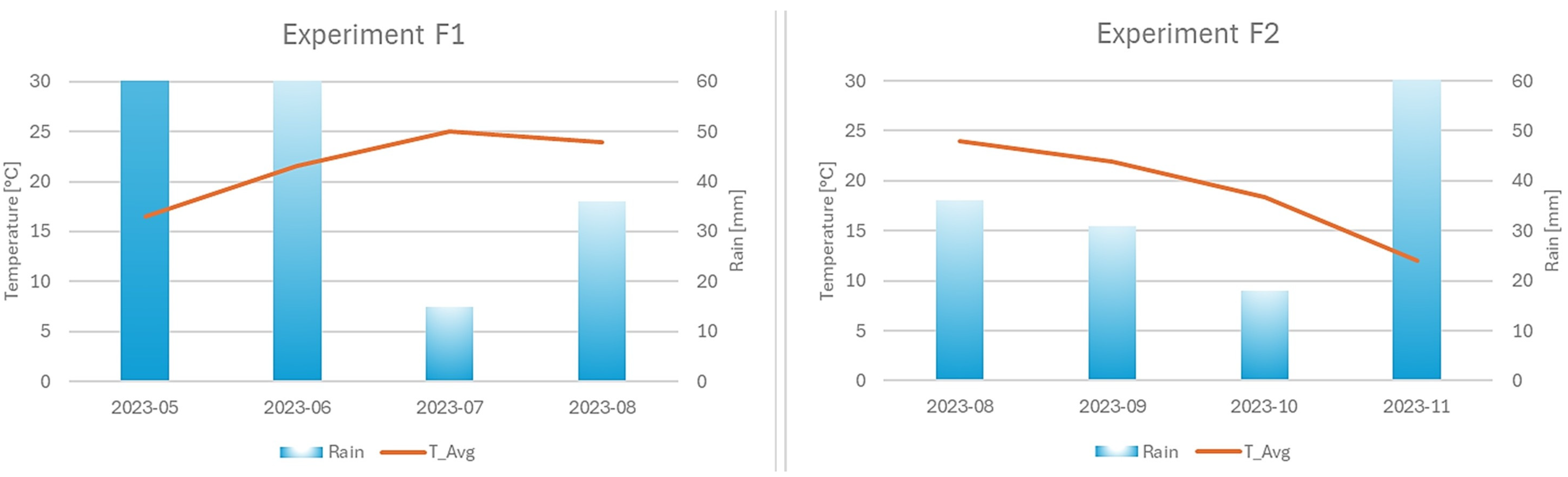
The meteorological conditions during the two growing periods showed marked differences (Figure 2). In the first experiment (F1), sown on 1 June 2023, the crop experienced high rainfall during the initial stages of development. May and June recorded cumulative precipitation of 181.2 mm and 86.9 mm, respectively, with average temperatures of 17.21 °C and 21.31 °C. In contrast, July—corresponding to flowering and pod development—was characterized by markedly reduced rainfall (17.5 mm) and the highest average temperature of the entire period (25.21 °C). August, during pod maturation and harvest, saw a return to wetter conditions (75.3 mm) and slightly lower average temperatures (23.46 °C). The second experiment (F2), sown on 2 September 2023, took place under markedly drier conditions. Both September and October recorded low precipitation levels (19.8 mm and 6.0 mm, respectively), with average temperatures gradually decreasing from 21.26 °C to 18.75 °C.

3.2. Soil Characteristics

To define the homogeneous areas identified by multi-time bare-soil analysis, soil chemical and physical parameters within the areas were calculated. To highlight significant differences among the zones, Tukey’s test was conducted for the soil parameters under examination (Table 2). In experiment F1, for the sand fraction, MUZ-3 showed a significantly higher content than MUZ-1 (314.44 g/kg and 284.67 g/kg, respectively). MUZ-2 (291.89 g/kg) had no statistically significant differences from MUZ-1 or MUZ-3. The silt fraction (MUZ-1: 346.78 g/kg; MUZ-2: 354.44 g/kg; MUZ-3: 359.78 g/kg) did not show significant differences among the three MUZs. For the clay component, the separation was more distinct: MUZ-1 was significantly richer in clay than MUZ-3 (368.56 g/kg and 325.78 g/kg, respectively), while MUZ-2 (353.67 g/kg) was again intermediate, with no apparent differences from either. Organic carbon content followed a similar pattern: the MUZ-1 (9.52%) had significantly higher values than MUZ-3 (8.79%), while MUZ-2 (9.18%) again occupied an intermediate position. Finally, total nitrogen content (MUZ-1: 1.06 g/kg; MUZ-2: 0.99 g/kg; MUZ-3: 0.98 g/kg) showed no statistically significant differences among the zones.
In experiment F2, for the sand fraction, the MUZ-1 zone showed a significantly lower content compared to MUZ-2 (141.89 g/kg and 188.22 g/kg, respectively) and MUZ-3 (222.22 g/kg), which did not differ from each other. This suggests a clearer distinction between MUZ-1 and the other two zones than was observed in F1. As in F1, the silt fraction (MUZ-1: 417.11 g/kg; MUZ-2: 437.44 g/kg; MUZ-3: 431.33 g/kg) did not show significant differences among the zones. Conversely, the clay fraction (MUZ-1: 441.00 g/kg; MUZ-2: 374.33 g/kg; MUZ-3: 346.44 g/kg) showed a clear separation: the MUZ-1 zone had a significantly higher clay content than MUZ-2 and MUZ-3, which were similar to each other. Organic carbon (MUZ-1: 8.31%; MUZ-2: 8.04%; MUZ-3: 7.96%) exhibited a consistent trend with the clay fraction: MUZ-1 was significantly different from MUZ-2 and MUZ-3, suggesting a correlation between clay content and organic matter. Finally, total nitrogen content (MUZ-1: 1.19 g/kg; MUZ-2: 1.06 g/kg; MUZ-3: 1.03 g/kg) showed a significant distinction, with MUZ-1 presenting higher values than MUZ-2 and MUZ-3, which did not differ from one another.

3.3. Survey of Symptoms of Fungal Diseases

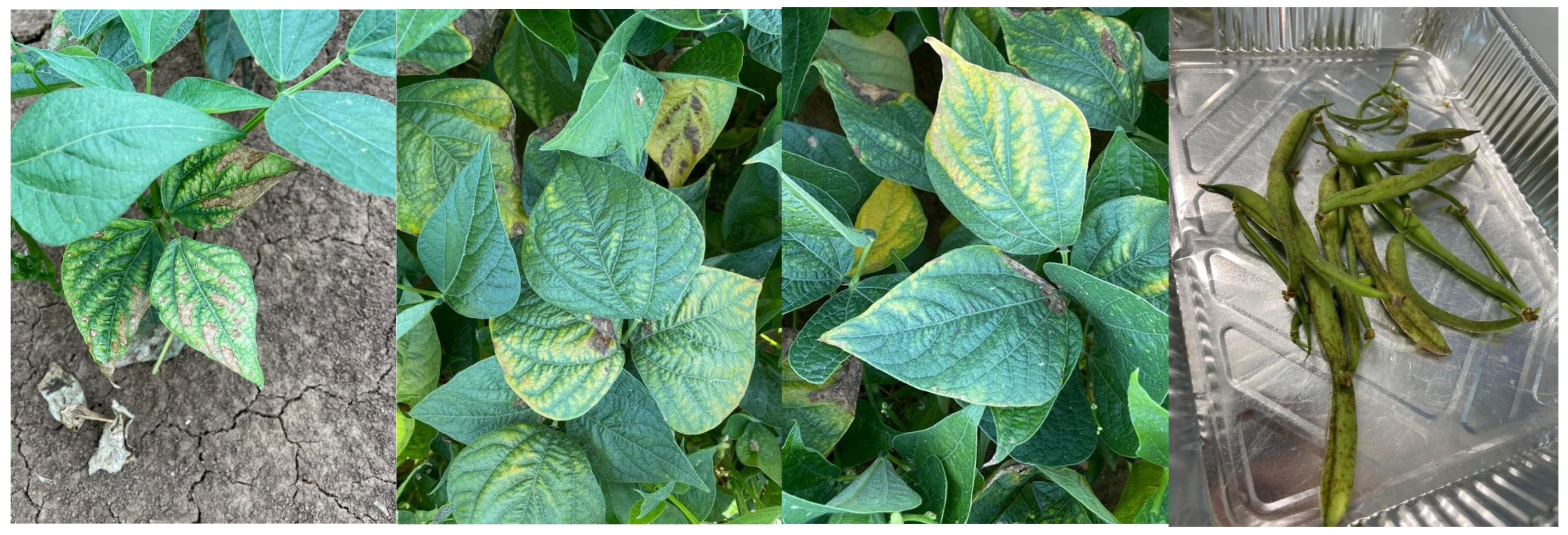
Both experiments showed a statistically significant increase in the incidence and severity of Fusarium wilt leaf symptoms in plants in the MUZ-3 compared to those in the other two MUZs (Table 3, Figure 3). The incidence and severity of leaf symptoms were never significantly different between MUZ-2 and MUZ-1 and remained quite low in these MUZs in Exp. F1. However, as the symptoms increased, as observed in F2, when the incidence of symptoms reached 88% in the MUZ-3, the incidence rates were around 45% in the MUZ-1 and MUZ-2. Nevertheless, in such areas, the severity of symptoms did not exceed 15% at harvest.
In the MUZ-3, the total number of pods produced and the number and weight of marketable pods were significantly lower than those detected in other MUZs (Table 4). The decrease in marketable pods in the MUZ-3 was linked in particular to the significant increase in symptomatic pods compared to the measurements carried out in the MUZ-1 and MUZ-2 (Table 4, Figure 3). The number of marketable pods was similar or slightly higher in the MUZ-1 than in the MUZ-2. However, the weight of marketable pods was significantly higher in the MUZ-1.
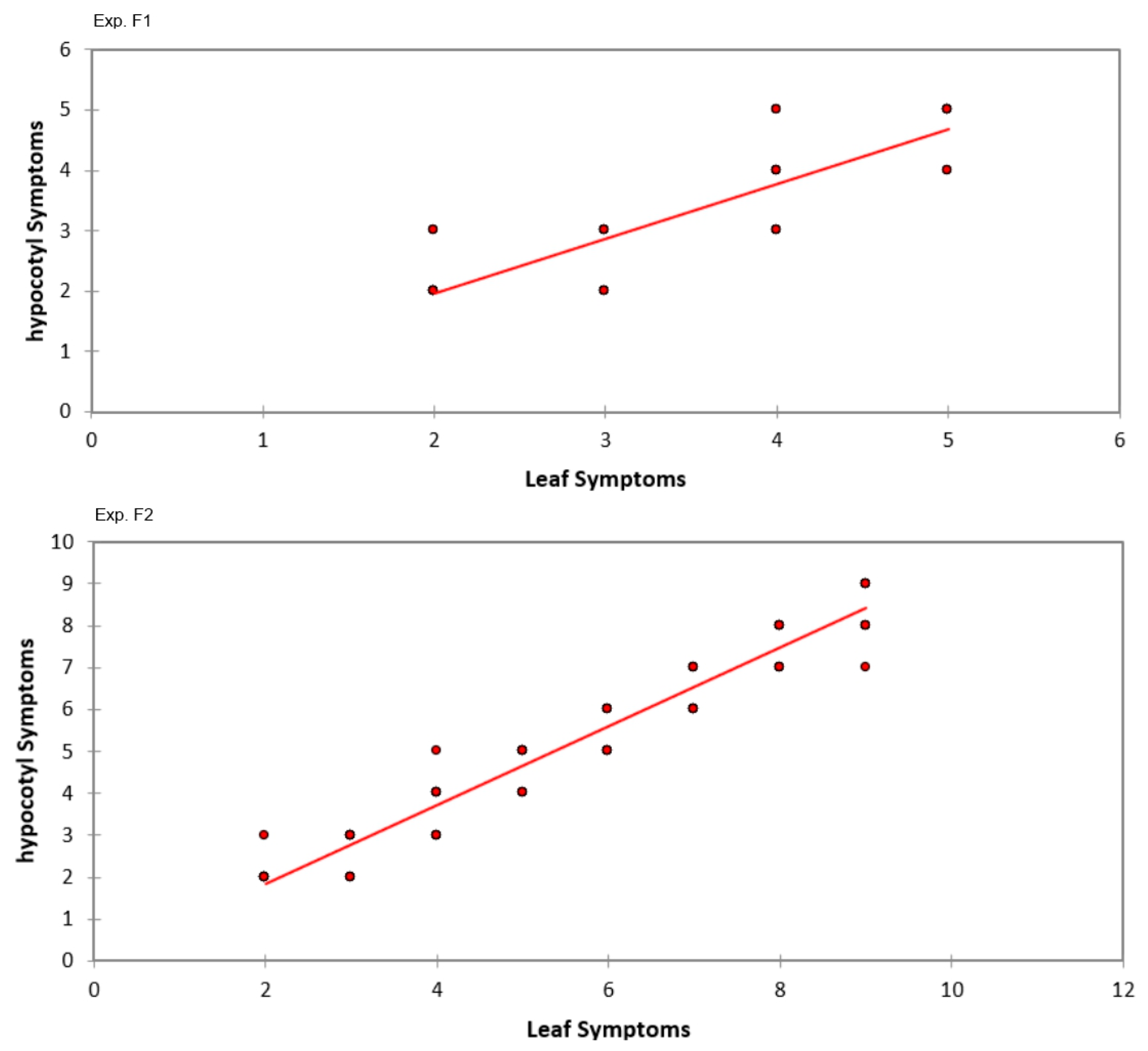
In both experiments, the severity of symptoms on roots and hypocotyl was significantly correlated with the severity of leaf symptoms with a Pearson correlation coefficient and its probability of 0.871 and p < 0.005 in Exp. F1, and 0.973 and p < 0.005, in Exp. F2 (Figure 4 and Figure 5).

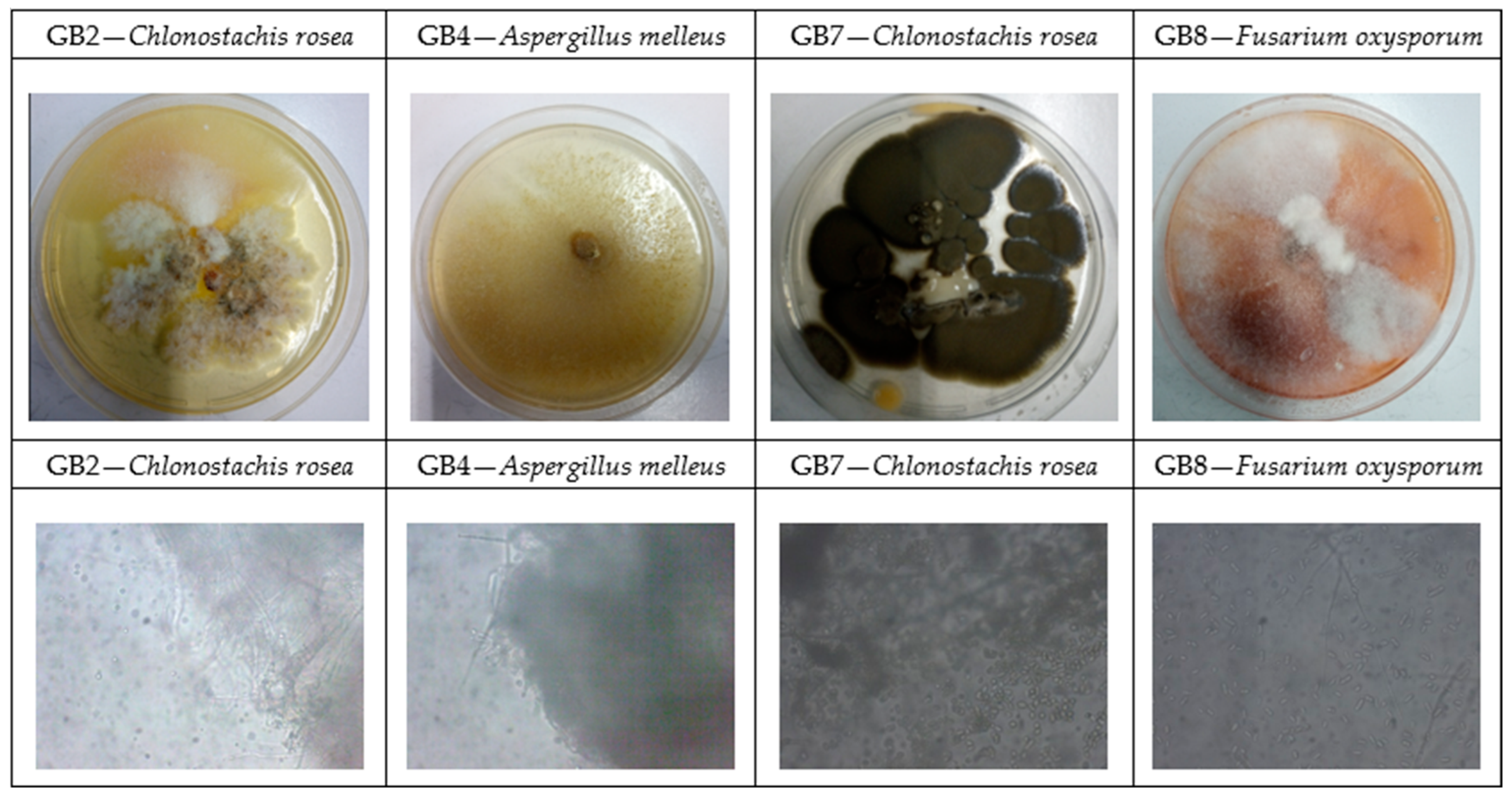
3.4. Isolation and Identification of Fungal Species

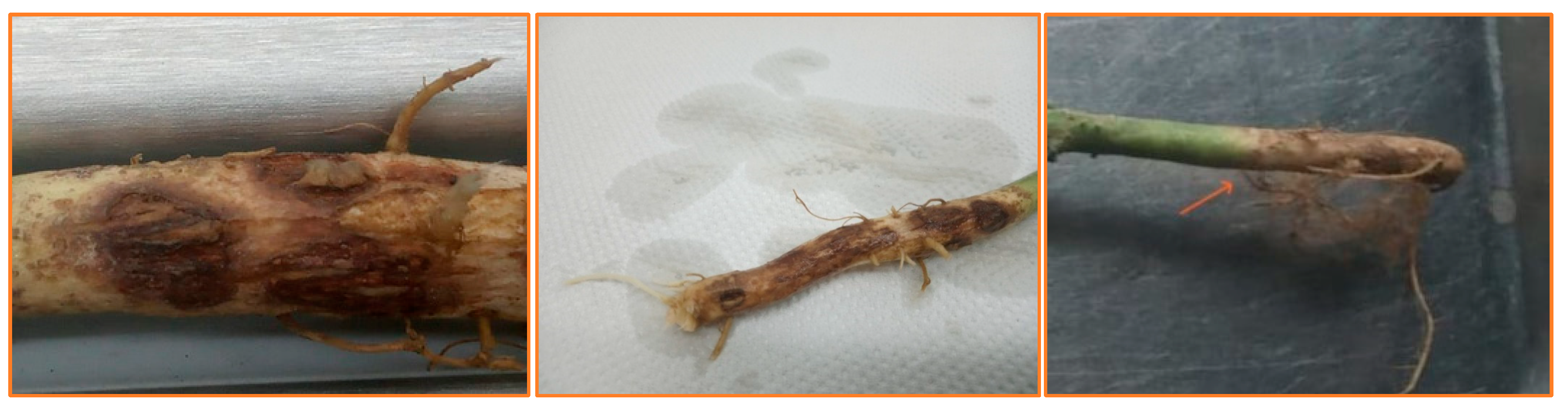
All fragments from the altered hypocotyl and root tissue were found to be fertile for fungal colonies (Figure 4 and Figure 6). Results are summarized in Table 5. The fragments gave rise to colonies with four different morphological characteristics. The most frequent colonies (signed as GB8) were isolated in 97.78% of cases and were classified as F. oxysporum. Molecular investigations on the GB2 and GB7 colony typology, which were morphologically different from each other, allowed to identify in both cases Chlonostachis rosea (Link) Schroers, Samuels, Seifert & W. Gams, fungal species, which was therefore isolated in 1.48% of cases. The colony GB4 was isolated from 0.74% of fragments and was classified as Aspergillus melleus Yukawa.

3.5. Disease Mapping

The analyses of the incidence and severity of Fusarium wilt leaf symptoms in the Exp. F1 and Exp. F2 maps were based on a combination of field data, incidence and severity overlaid on PRI, processed through QGIS to achieve effective thematic mapping (Figure 7 and Figure 8).
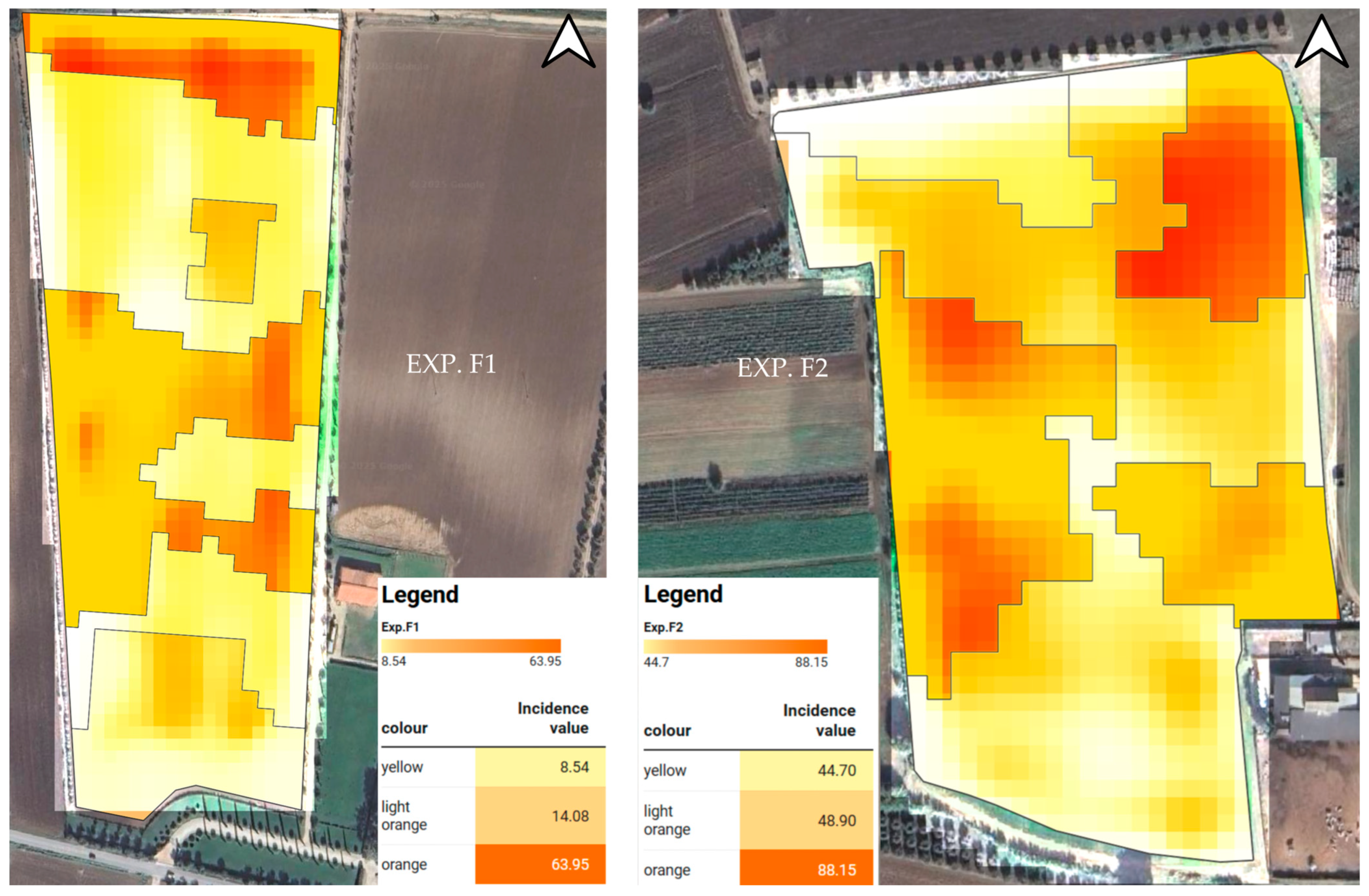
The analysis of the incidence of Fusarium wilt leaf symptoms in the two experimental fields (Figure 7) showed a heterogeneous spatial distribution, with distinct and localized severity levels, visualized using three color classes: yellow for low incidence, light orange for moderate incidence, and dark orange for high incidence. The legends of the two maps provided initial numerical data useful for interpretation: field F1 showed an incidence ranging from 8.54 to 63.95%, while F2 showed significantly higher values, between 44.70 and 88.15. These differences clearly indicate that F2 is more severely affected by the disease, both in terms of absolute values and the extent of high-incidence areas.
In detail, field F1 is characterized by generally contained incidence rates. Most of the surface is colored yellow, indicating a low presence of the disease. At the same time, the dark orange areas, indicative of high incidence, are concentrated exclusively in the south-west and northwest quadrants. This distribution suggests the presence of localized outbreaks rather than a uniform spread of the disease.
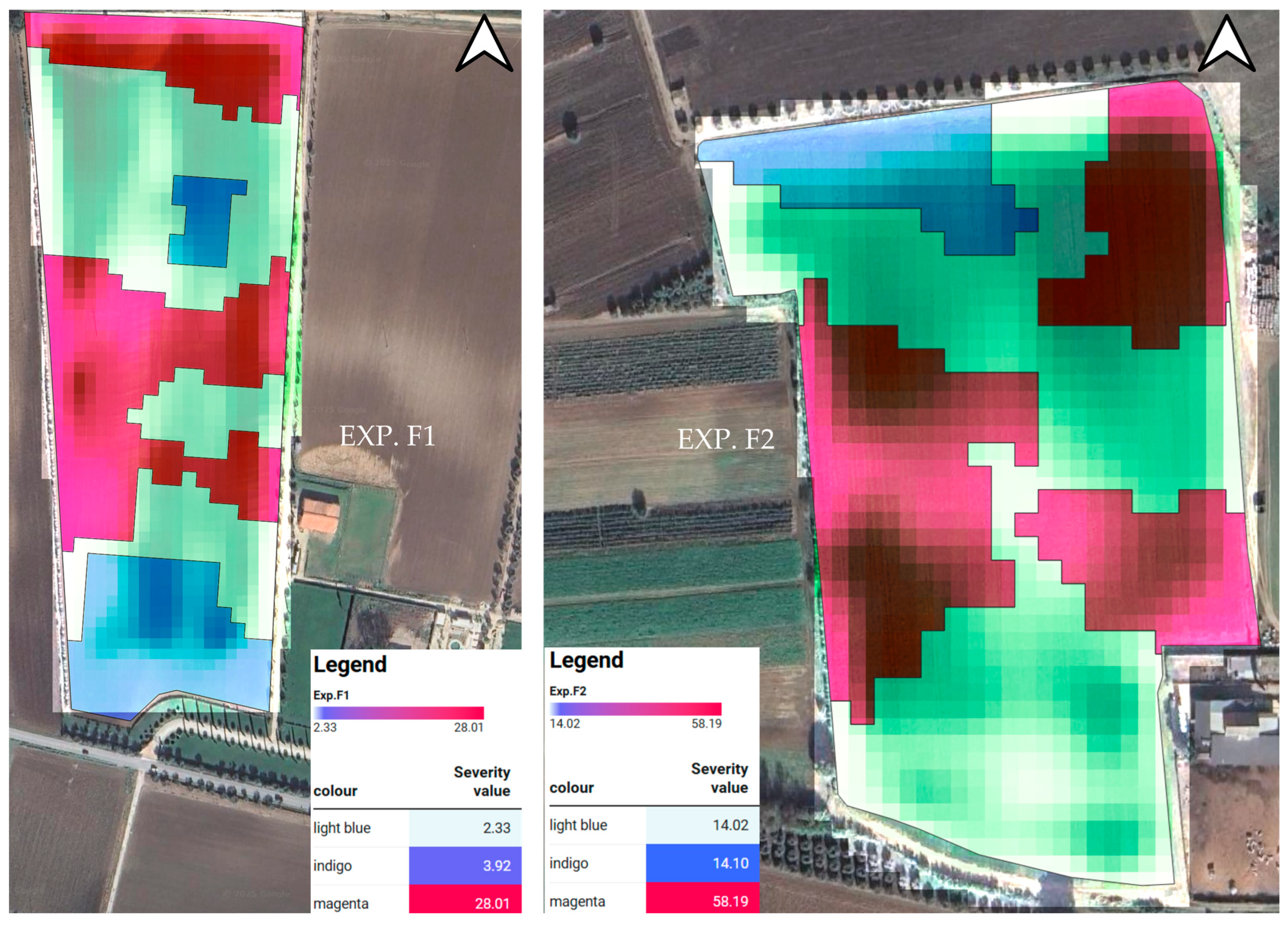
The data on severity presented in the map showed three MUZ for each field experiment, with average severity values, providing a spatial representation of the distribution of disease leaf symptoms in green bean fields across two different growing seasons. The color tones indicated different severity classes, with light blue denoting low disease incidence and magenta marking areas with the highest infection levels. The analysis of the maps showed evident heterogeneity in the spread of the disease within the two field experiments (Figure 8). In Exp. F1, severity ranged between 2.33 and 28.01%, with a relatively balanced distribution between healthy and affected areas. The most impacted zones are primarily located in the central part. In Exp. F2, severity is higher (14.02–58.19%), suggesting more favorable conditions for fungal proliferation. The most severely affected zones are distributed in a fragmented manner, with a high concentration in some central regions and in areas with a higher sand fraction.

3.6. Yield Mapping

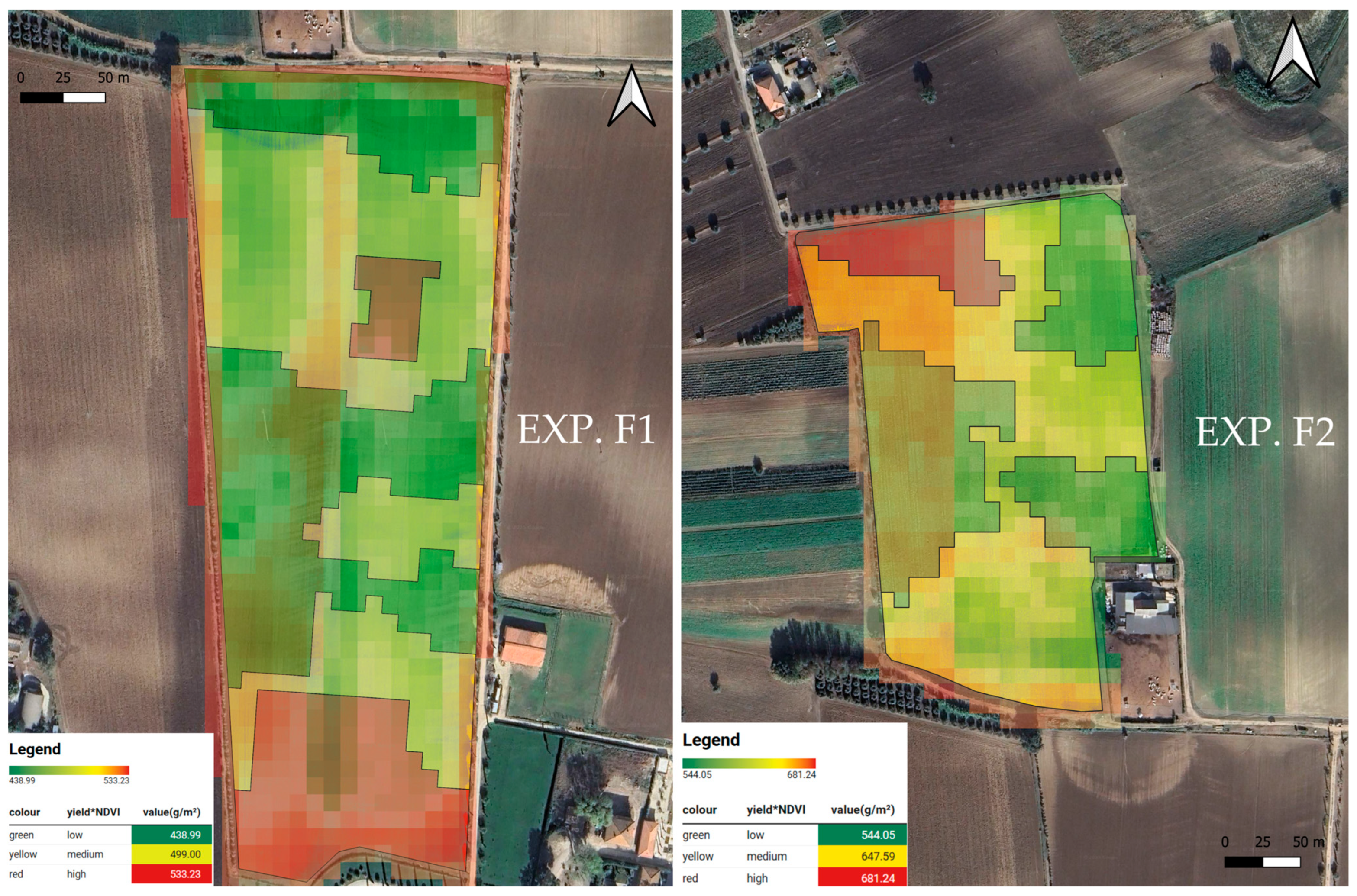
The analysis of the yield maps F1 and F2 showed a differentiated yield distribution in relation to the MUZs (Figure 9). In both maps, MUZ-1 corresponded to high-yield areas, MUZ-2 represented an intermediate condition between high- and low-yield areas, and MUZ-3 coincided with low-yield areas, characterized by lower yield values in both maps. The relation with NDVI was clear; areas with a higher vegetative index corresponded to denser vegetation cover and better photosynthetic efficiency. In Exp. F2, yield values ranged from 544.05 g/m2 to a maximum yield of 681.24 g/m2, and in Exp. F1, yield values ranging from 438.99 g/m2 to 533.23 g/m2 were observed (Figure 9, Table 4).

4. Discussion

This work concerned a green bean disease that is spreading widely in central Italy and causes heavy production losses. Given the remarkable similarity of necrosis on hypocotyl caused by F. oxysporum and other pathogens, such as R. solani in particular, isolations were made from infected plant tissues in the experimental fields, which ascertained the exclusive presence of F. oxysporum [37].
The analysis of Fusarium wilt leaf symptoms in the two experimental fields revealed a heterogeneous spatial distribution, with distinct and localized levels of incidence and severity. Field F2 showed a higher incidence and severity compared to F1, indicating a more critical phytosanitary situation. While F1 exhibited a relatively contained incidence, with most of the surface showing a low presence of the disease and only localized areas affected, F2 displayed a more widespread and uniform distribution of symptoms across the majority of its location. The central and western portions of F2 were particularly affected, suggesting a more systemic spread of the disease. These findings are consistent with previous studies by Navas-Cortés et al. [38], who indicated that the density of inoculum in the soil is a key factor in the expansion of the disease: a low initial infection pressure significantly limits its spatial spread.
This spatial configuration suggests a more uniform and systemic spread of the disease. The presence of persistent inoculum in the soil—likely due to a lack of crop rotations—may have contributed to the pathogen’s spread, as demonstrated by Gatch and du Toit [39], who report that Fusarium can persist in the soil even in the absence of the host plant for several years. Furthermore, the different varietal response between F1 and F2 could have played a significant role: Lanubile et al. [40] emphasize that susceptible cultivars are subjected to significantly higher disease severity levels compared to resistant ones, suggesting that F2 may host varieties less tolerant to the disease.
From a spatial perspective, the distribution of disease symptoms suggests two different epidemiological models. In F1, the affected areas are isolated, indicating localized outbreaks, potentially resulting from mechanically introduced inoculum (infected tools, crop residues, contaminated propagation material). In F2, however, the widespread high symptom incidence and severity levels suggest an aggregated pattern, compatible with transmission via irrigation water or movement of infected soil. Byamukama et al. [41] indeed observe that F. oxysporum can spread rapidly through irrigation networks or under soil saturation conditions, causing a systemic and persistent infection. Water stress may also be an additional predisposing factor. According to Schuerger & Mitchell [42], plants under water or environmental stress show reduced resistance to fungal colonization, thereby facilitating pathogen entry and spread.
Additionally, soil analysis reveals significant differences between the two experimental fields, which may contribute to the observed disease patterns. Both F1 and F2 had a soil texture characterized by a higher sand content, particularly in MUZ-3, which could affect soil drainage and microbial activity, potentially limiting the spread of the pathogen but exposing the green bean plant to lower resistance to abiotic and biotic stresses. This is particularly evident in F1 and F2 MUZ-1, which has the highest organic carbon and total nitrogen content, which helps the green bean to resist the pathogen better.
The pod analysis further emphasizes the impact of soil properties on the disease’s spatial distribution. In both experimental fields, the number of symptomatic pods was higher in MUZ-3, where the incidence and severity of leaf symptoms of the disease were most severe. This zone also exhibited lower total production and marketable pod quality, indicating that Fusarium infection severely affects both the quantity and quality of the yield. The higher presence of disease symptoms in MUZ-3 suggests that the soil in this area is more permissive to Fusarium, supporting the idea that soil texture, organic carbon, and nitrogen levels play a significant role in determining the severity of disease and the resulting yield loss. Previous studies [43,44,45] had shown that soil water stress and nutritional imbalances can increase the incidence of physiological symptoms in legumes, which may further explain the higher leaf symptom incidence and severity observed in MUZ-3. The comparison between F1 and F2 highlights the critical importance of managing soil properties to mitigate F. oxysporum infections. In Exp. F1, agronomic practices such as crop rotation, resistant cultivars, and targeted pest management may be effective in controlling the disease. Webb et al. [46] note that integrated management at an early stage can help avoid less sustainable measures. In F2, however, the high disease severity requires more intense and systemic phytosanitary measures, such as soil disinfection, varietal replacement, and a complete revision of irrigation techniques, to reduce the pathogen spread and improve crop health. The presence of F. oxysporum as a disease agent in green bean plants highlighted in this study will lead to progress in the development of an effective control strategy, which in turn will be improved by the use of C. rosea, isolated from the diseased plant, as a biocontrol agent towards F. oxysporum [47]. Moreover, the correlation between severity of symptoms on roots and hypocotyl and severity of leaf symptoms has shown that the assessment of leaf symptoms is an effective means to evaluate the severity of the disease in the field. According to Lanubile et al. [40], a detailed understanding of disease severity allows for targeted control measures, reducing the use of plant protection products. Furthermore, the increased spread of the disease in MUZ-3 could suggest growing green beans in less disease-permissive soils, to improve the efficacy of control measures.
In addition, as reported by Ali et al. [48], NDVI was directly related to plant biomass and photosynthetic capacity. Plants with higher NDVI values showed greater leaf coverage and more efficient photosynthesis, which resulted in higher biomass accumulation and ultimately greater yields. Accordingly, the yield patterns observed in the two experiments were linked to the raster visualization of the NDVI, which enabled the assessment of its spatial distribution across the MUZs and its correlation with yield. These findings suggest that yield data could be used as an indicator for distinguishing homogeneous zones according to NDVI values. NDVI analysis proved to be an important tool for subdividing fields into yield-based zones, thereby reducing spatial variability and supporting more efficient agronomic management. Furthermore, approaches based on hierarchical clustering and density, as highlighted by Giordani et al. [49], allowed a more accurate delineation of productivity zones compared with simpler methods relying solely on past yield observations.

5. Conclusions

This study aimed to integrate disease assessment, yield mapping, and the use of vegetation indices. This combination provided information on the spatial variability of green bean production under natural infection by F. oxysporum. The results confirmed that homogeneous management zones, identified through synthetic images of bare soil, effectively captured differences in soil properties, which in turn influenced both yield and disease severity. In both field experiments, MUZ-3 recorded the highest incidence and severity of Fusarium wilt leaf symptoms, with a reduced yield and lower marketable pod weight. In addition, these results showed the strong correlation between soil texture, organic carbon, and nutrient content with disease severity and yield losses. In contrast, MUZ-1, characterized by higher organic carbon and nitrogen content, promoted healthier plants, lower disease severity, and higher productivity.
The integration of NDVI analysis with yield data further confirmed the value of vegetation indices as proxies for biomass accumulation and crop performance. Furthermore, the correlation observed between foliar and root symptoms suggests that foliar assessments can serve as a reliable field-scale indicator of disease severity.
These results have several implications for the specific management of the site. MUZ-3 is a high-risk, low-productivity area where strategies such as soil quality improvement and appropriate irrigation may be necessary in order to reduce the disease incidence and severity. In contrast, MUZ-1 may require fewer corrective measures and can serve as a reference for optimal soil conditions and plant response. The combined use of MUZ classification and NDVI-based monitoring provides an effective framework for reducing spatial variability. This approach enabled more precise delineation of productivity zones and offered an additional step for future site-specific agronomic management.

Author Contributions

Conceptualization, G.P., F.C. and M.P. (Michele Pisante); methodology, G.P., F.C., L.A., S.D.M., F.O. and M.P. (Matteo Petito); software, G.P., L.A. and M.P. (Matteo Petito); validation, G.P., F.C., L.A. and M.P. (Michele Pisante); formal analysis, G.P., L.A. and M.P. (Matteo Petito); investigation, G.P., F.C., L.A., A.L., N.O. and M.P. (Michele Pisante); resources G.P., F.S. and M.P. (Michele Pisante); data curation, G.P., F.C., L.A., M.P. (Matteo Petito), S.D.M., F.O. and M.P. (Michele Pisante); writing—original draft preparation, G.P., F.C., L.A., M.P. (Matteo Petito), S.D.M., F.O., A.N., A.L., N.O., F.S. and M.P. (Michele Pisante); writing—review and editing, G.P., F.C., L.A., M.P. (Matteo Petito), S.D.M., F.O., A.N., A.L., N.O., F.S. and M.P. (Michele Pisante); visualization, G.P., F.C., L.A., M.P. (Matteo Petito), S.D.M., F.O., A.N., A.L., N.O., F.S. and M.P. (Michele Pisante); supervision, G.P., F.C. and M.P. (Michele Pisante); project administration, G.P., F.S. and M.P. (Michele Pisante); funding acquisition, G.P., F.S. and M.P. (Michele Pisante). All authors have read and agreed to the published version of the manuscript.

Funding

This work has been funded by the European Union—NextGenerationEU, Mission 4, Component 1, under the Italian Ministry of University and Research (MUR) National Innovation Ecosystem grant ECS00000041-VITALITY-CUP: C43C22000380007.

Data Availability Statement

Data are contained within the article.

Acknowledgments

We would like to thank the Centro Funzionale and the Hydrology, Hydrography, and Tide Gauge Office—Civil Protection Agency of the Abruzzo Region for providing meteorological data to our agronomy research center.

Conflicts of Interest

The authors declare no conflicts of interest.

References

  1. Katalin, T.G.; Rahoveanu, T.; Magdalena, M.; István, T. Sustainable new agricultural technology—Economic aspects of precision crop protection. Procedia Econ. Financ. 2014, 8, 729–736. [Google Scholar] [CrossRef]
  2. Mulla, D.J. Twenty five years of remote sensing in precision agriculture: Key advances and remaining knowledge gaps. Biosyst. Eng. 2013, 114, 358–371. [Google Scholar] [CrossRef]
  3. Schimmelpfennig, D. Crop production costs, profits, and ecosystem stewardship with precision agriculture. J. Agric. Appl. Econ. 2018, 50, 81–103. [Google Scholar] [CrossRef]
  4. Groß, J.; Gentsch, N.; Boy, J.; Heuermann, D.; Schweneker, D.; Feuerstein, U.; Brunner, J.; von Wirén, N.; Guggenberger, G.; Bauer, B. Influence of small-scale spatial variability of soil properties on yield formation of winter wheat. Plant Soil 2023, 493, 79–97. [Google Scholar] [CrossRef]
  5. Kumar, L.; Chhogyel, N.; Gopalakrishnan, T.; Hasan, M.K.; Jayasinghe, S.L.; Kariyawasam, C.S.; Kogo, B.K.; Ratnayake, S. Climate Change and Future of Agri-Food Production. In Future Foods; Elsevier: Amsterdam, The Netherlands, 2022; pp. 49–79. [Google Scholar]
  6. Zhao, G.; Miao, Y.; Wang, H.; Su, M.; Fan, M.; Zhang, F.; Jiang, R.; Zhang, Z.; Liu, C.; Liu, P.; et al. A preliminary precision rice management system for increasing both grain yield and nitrogen use efficiency. Field Crops Res. 2013, 154, 23–30. [Google Scholar] [CrossRef]
  7. Colaço, A.F.; Bramley, R.G.V. Do crop sensors promote improved nitrogen management in grain crops? Field Crops Res. 2018, 218, 126–140. [Google Scholar] [CrossRef]
  8. Alemán-Montes, B.; Serra, P.; Zabala, A.; Masó, J.; Pons, X. A near real-time spatial decision support system for improving sugarcane monitoring through a satellite mapping web browser. Smart Agric. Technol. 2025, 12, 101084. [Google Scholar] [CrossRef]
  9. ISPAG Precision Ag Definition. Available online: https://www.ispag.org (accessed on 1 October 2025).
  10. Castrignanò, A.; Buttafuoco, G.; Quarto, R.; Parisi, D.; Rossel, R.A.V.; Terribile, F.; Langella, G.; Venezia, A. A geostatistical sensor data fusion approach for delineating homogeneous management zones in precision agriculture. Catena 2018, 167, 293–304. [Google Scholar] [CrossRef]
  11. Peralta, N.R.; Costa, J.L. Delineation of management zones with soil apparent electrical conductivity to improve nutrient management. Comput. Electron. Agric. 2013, 99, 218–226. [Google Scholar] [CrossRef]
  12. Jabro, J.D.; Stevens, W.B.; Evans, R.G.; Iversen, W.M. Spatial variability and correlation of selected soil properties in the ap horizon of a crp grassland. Appl. Eng. Agric. 2010, 26, 419–428. [Google Scholar] [CrossRef]
  13. Ramirez-Gonzalez, D.A.; Chokmani, K.; Cambouris, A.N.; D’Souza, M.L. Delineation of management zones based on the agricultural potential concept for potato production using optical satellite images. Remote Sens. 2025, 17, 3709. [Google Scholar] [CrossRef]
  14. de Oliveira Ferreira Silva, C.; Manzione, R.L.; de Medeiros Oliveira, S.R. Exploring 20-year applications of geostatistics in precision agriculture in Brazil: What’s next? Precis. Agric. 2023, 24, 2293–2326. [Google Scholar] [CrossRef]
  15. de Oliveira Ferreira Silva, C.; Grego, C.R.; Manzione, R.L.; Oliveira, S.R.D.M.; Rodrigues, G.C.; Rodrigues, C.A.G.; Speranza, E.A.; Luchiari, A.; Koenigkan, L.V. Summarizing soil chemical variables into homogeneous management zones—Case study in a specialty coffee crop. Smart Agric. Technol. 2024, 7, 100418. [Google Scholar] [CrossRef]
  16. Lanucara, S.; Praticò, S.; Pioggia, G.; Di Fazio, S.; Modica, G. Web-based spatial decision support system for precision agriculture: A tool for delineating dynamic management unit zones (MUZs). Smart Agric. Technol. 2024, 8, 100444. [Google Scholar] [CrossRef]
  17. Yao, R.J.; Yang, J.S.; Zhang, T.J.; Gao, P.; Wang, X.P.; Hong, L.Z.; Wang, M.W. Determination of site-specific management zones using soil physico-chemical properties and crop yields in coastal reclaimed farmland. Geoderma 2014, 232–234, 381–393. [Google Scholar] [CrossRef]
  18. Lasaponara, R.; Abate, N.; Masini, N. Early Identification of Vegetation Pest Diseases Using Sentinel 2 NDVI Time Series 2016–2023: The Case of Toumeyella Parvicorvis at Castel Porziano (Italy). IEEE Geosci. Remote. Sens. Lett. 2024, 21, 1–5. [Google Scholar] [CrossRef]
  19. Geleta, R.J.; Roro, A.G.; Terfa, M.T. Phenotypic and yield responses of common bean (Phaseolus vulgaris L.) varieties to different soil moisture levels. BMC Plant Biol. 2024, 24, 242. [Google Scholar] [CrossRef] [PubMed]
  20. Shohag, M.J.I.; Salgado, E.M.; Gluck, M.C.; Liu, G. Evaluating the impact of phosphorus and solid oxygen fertilization on snap bean (Phaseolus vulgaris L.): A two-year field study. Plants 2024, 13, 3384. [Google Scholar] [CrossRef]
  21. Karavidas, I.; Ntatsi, G.; Vougeleka, V.; Karkanis, A.; Ntanasi, T.; Saitanis, C.; Agathokleous, E.; Ropokis, A.; Sabatino, L.; Tran, F.; et al. Agronomic practices to increase the yield and quality of common bean (Phaseolus vulgaris L.): A systematic review. Agronomy 2022, 12, 271. [Google Scholar] [CrossRef]
  22. Galdino, A.C.S.; de Freitas, M.B.; de Borba, M.C.; Stadnik, M.J. Phenolic and flavonoid content in roots and hypocotyls of resistant and susceptible bean plants (Phaseolus vulgaris L.) during early stage of colonization by Fusarium oxysporum f. sp. Phaseoli. Trop. Plant Pathol. 2021, 46, 553–558. [Google Scholar] [CrossRef]
  23. Xue, R.F.; Wu, J.; Wang, L.F.; Blair, M.W.; Wang, X.M.; Ge, W.D.; Zhu, Z.D.; Wang, S.M. Salicylic acid enhances resistance to Fusarium oxysporum f. sp. Phaseoli in common beans (Phaseolus vulgaris L.). J. Plant Growth Regul. 2014, 33, 470–476. [Google Scholar] [CrossRef]
  24. de Borba, M.C.; de Freitas, M.B.; Stadnik, M.J. Ulvan enhances seedling emergence and reduces Fusarium wilt severity in common bean (Phaseolus vulgaris L.). Crop Prot. 2019, 118, 66–71. [Google Scholar] [CrossRef]
  25. Naseri, B. Root rot of common bean in Zanjan, Iran: Major pathogens and yield loss estimates. Australas. Plant Pathol. 2008, 37, 546. [Google Scholar] [CrossRef]
  26. de Toledo-Souza, E.D.; da Silveira, P.M.; Café-Filho, A.C.; Junior, M.L. Fusarium wilt incidence and common bean yield according to the preceding crop and the soil tillage system. Pesqui. Agropecu. Bras. 2012, 47, 1031–1037. [Google Scholar] [CrossRef]
  27. Singh, B.K.; Jiang, G.; Wei, Z.; Sáez-Sandino, T.; Gao, M.; Liu, H.; Xiong, C. Plant pathogens, microbiomes, and soil health. Trends Microbiol. 2025, 33, 887–902. [Google Scholar] [CrossRef]
  28. Segura-Mena, R.A.; Stoorvogel, J.J.; García-Bastidas, F.; Salacinas-Niez, M.; Kema, G.H.J.; Sandoval, J.A. Evaluating the potential of soil management to reduce the effect of Fusarium oxysporum f. sp. Cubense in banana (Musa AAA). Eur. J. Plant. Pathol. 2021, 160, 441–455. [Google Scholar] [CrossRef]
  29. Petito, M.; Barca, E.; Pagnani, G.; Ranghetti, L.; Messori, F.; Antonucci, L.; Occhipinti, N.; Lorenzo, A.; Pisante, M. A geospatial framework for soil characterization: Integrating multitemporal remote sensing with advanced statistical methods. Smart Agric. Technol. 2025, 12, 101488. [Google Scholar] [CrossRef]
  30. MiPAAFT Gazzetta Ufficiale Supplemento Ordinario No. 248 Del 21/10/1999, Istituto Poligrafico e Zecca Dello Stato, Rome, Italy. Methods VII.3 and XIV.2 + XIV.3. 1999. Available online: https://www.gazzettaufficiale.it (accessed on 1 October 2025).
  31. McKinney, H.H. Influence of soil temperature and moisture on infection of wheat seedlings by Helminthosporium sativum. J. Agric. Res. 1923, 26, 195–218. [Google Scholar]
  32. Van Schoonhoven, A. Standard System for Evaluation of Bean Germplasm; CIAT, Ed.; CIAT: Cali, Colombia, 1987. [Google Scholar]
  33. Doyle, J.J.; Doyle, J.L. A rapid dna isolation procedure for small quantities of fresh leaf tissue. Phytochem. Bull. 1987, 19, 11–15. [Google Scholar]
  34. White, T.J.; Bruns, T.; Lee, S.J.W.T.; Taylor, J. Amplification and direct sequencing of fungal ribosomal RNA genes for phylogenetics. In PCR Protocols: A Guide to Methods and Applications; Innis, M.A., Gelfand, D.H., Sninsky, J.J., White, T.J., Eds.; Academic Press: NewYork, NY, USA, 1990; pp. 315–322. [Google Scholar]
  35. Gamon, J.A.; Peñuelas, J.; Field, C.B. A narrow-waveband spectral index that tracks diurnal changes in photosynthetic efficiency. Remote Sens. Environ. 1992, 41, 35–44. [Google Scholar] [CrossRef]
  36. Peñuelas, J.; Filella, I.; Gamon, J.A. Assessment of photosynthetic radiation-use efficiency with spectral reflectance. New Phytol. 1995, 131, 291–296. [Google Scholar] [CrossRef]
  37. Parajuli, P.; Yadav, R.K.; Manandhar, H.K.; Parajulee, M.N. Management of root rot (Rhizoctonia solani Kühn) of common bean using host resistance and consortia of chemicals and biocontrol agents. Biology 2025, 14, 235. [Google Scholar] [CrossRef]
  38. Navas-Cortés, J.A.; Landa, B.B.; Méndez-Rodríguez, M.A.; Jiménez-Díaz, R.M. Quantitative modeling of the effects of temperature and inoculum density of Fusarium oxysporum f. sp. Ciceris races 0 and 5 on development of Fusarium wilt in chickpea cultivars. Phytopathology 2007, 97, 564–573. [Google Scholar] [CrossRef]
  39. Gatch, E.W.; du Toit, L.J. Limestone-mediated suppression of Fusarium wilt in spinach seed crops. Plant Dis. 2017, 101, 81–94. [Google Scholar] [CrossRef]
  40. Lanubile, A.; Muppirala, U.K.; Severin, A.J.; Marocco, A.; Munkvold, G.P. Transcriptome profiling of soybean (Glycine max) roots challenged with pathogenic and non-pathogenic isolates of Fusarium oxysporum. BMC Genom. 2015, 16, 1089. [Google Scholar] [CrossRef] [PubMed]
  41. Byamukama, E.; Robertson, A.E.; Nutter, F.W. Quantifying the within-field temporal and spatial dynamics of bean pod mottle virus in soybean. Plant Dis. 2011, 95, 126–136. [Google Scholar] [CrossRef] [PubMed]
  42. Schuerger, A.C.; Mitchell, D.J. Effects of temperature, hydrogen ion concentration, humidity, and light quality on disease caused by Fusarium solani f. sp. Phaseoli in mung bean. Can. J. Bot. 1992, 70, 1798–1808. [Google Scholar] [CrossRef]
  43. Fageria, N.K. Nutrient management for sustainable dry bean production in the tropics. Commun. Soil Sci. Plant Anal. 2002, 33, 1537–1575. [Google Scholar] [CrossRef]
  44. Fageria, N.K.; Moreira, A.; Coelho, A.M. Nutrient uptake in dry bean genotypes. Commun. Soil Sci. Plant Anal. 2012, 43, 2289–2302. [Google Scholar] [CrossRef]
  45. Hossain, A.; Sabagh, A.E.L.; Erman, M.; Fahad, S.; Islam, T.; Bhatt, R.; Hasanuzzaman, M. Nutrient management for improving abiotic stress tolerance in legumes of the family Fabaceae. In The Plant Family Fabaceae; Springer: Singapore, 2020; pp. 393–415. [Google Scholar]
  46. Webb, K.M.; Brenner, T.; Jacobsen, B.J. Temperature effects on the interactions of sugar beet with Fusarium yellows caused by Fusarium oxysporum f. sp. Betae. Can. J. Plant Pathol. 2015, 37, 353–362. [Google Scholar] [CrossRef]
  47. Sun, Z.B.; Li, S.D.; Ren, Q.; Xu, J.L.; Lu, X.; Sun, M.H. Biology and applications of Clonostachys rosea. J. Appl. Microbiol. 2020, 129, 486–495. [Google Scholar] [CrossRef] [PubMed]
  48. Ali, A.; Rondelli, V.; Martelli, R.; Falsone, G.; Lupia, F.; Barbanti, L. Management zones delineation through clustering techniques based on soils traits, NDVI data, and multiple year crop yields. Agriculture 2022, 12, 231. [Google Scholar] [CrossRef]
  49. Giordani, P.; Ferraro, M.B.; Martella, F. Hierarchical clustering. In An Introduction to Clustering with R; Springer: Singapore, 2020; pp. 9–73. [Google Scholar]
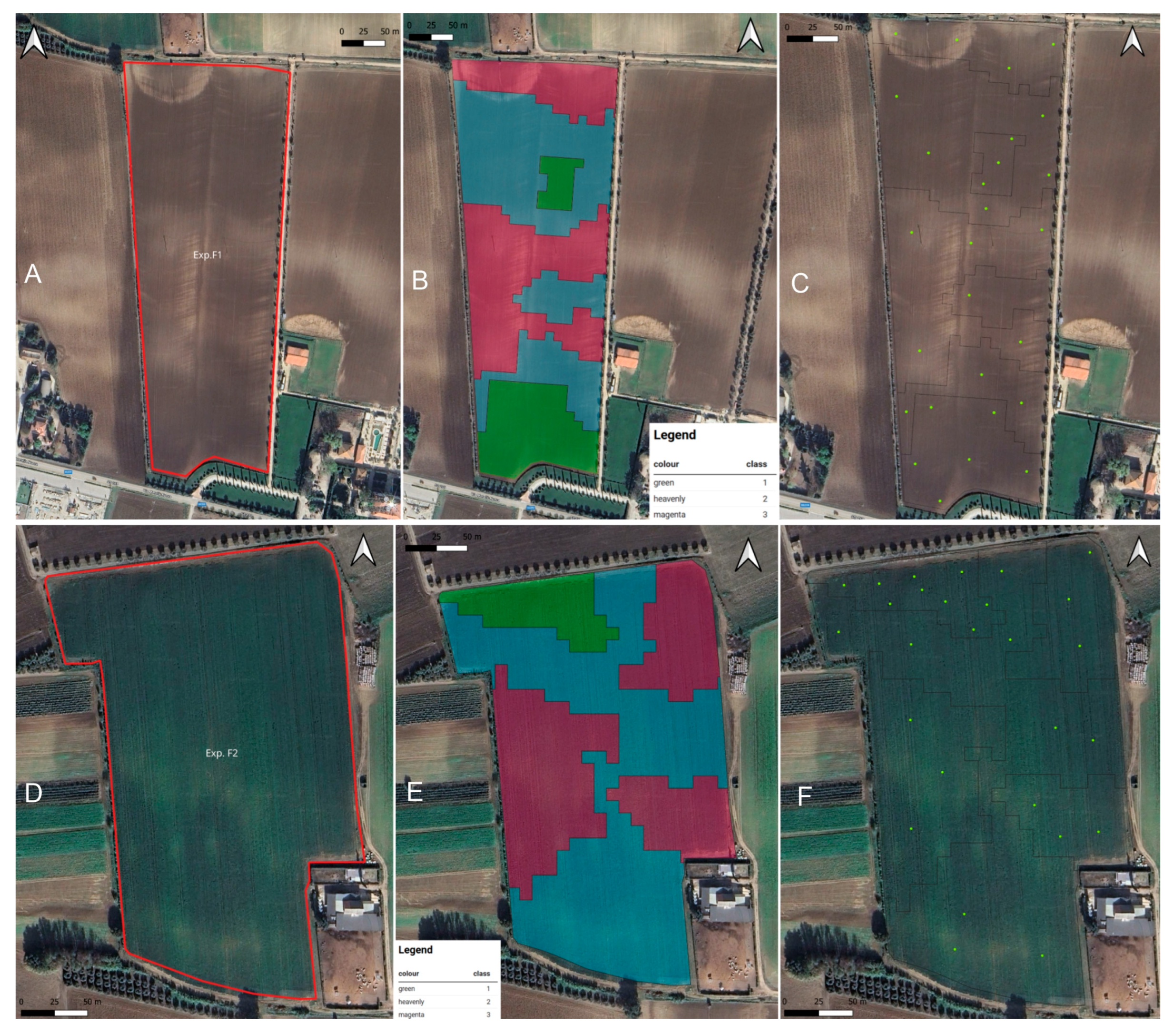
Figure 1. Delimitation of experimental fields ((A)—Experiment F1, (D)—Experiment F2), identification of soil management areas based on bare soil indices (Green = MUZ-1; Heavenly = MUZ-2; Magenta = MUZ-3—(B,E), and random selection of sampling points within the areas (C,F).
Agronomy 15 02848 g001
Figure 2. Meteorological conditions observed during the two green bean growing periods (Exp. F1 and Exp. F2). Monthly cumulative precipitation (mm) was shown as blue dotted line, while average temperatures (°C) were reported as orange lines.
Agronomy 15 02848 g002
Figure 3. Leaf and pod symptoms of Fusarium wilt on green bean plants.
Agronomy 15 02848 g003
Figure 4. Necrotic lesions on green bean hypocotyl (left and center) and root (right, orange arrow).
Agronomy 15 02848 g004
Figure 5. Pearson correlation coefficient between hypocotyl and leaf symptoms.
Agronomy 15 02848 g005
Figure 6. Different morphological typologies of fungal colonies (mycelium and conidia).
Agronomy 15 02848 g006
Figure 7. Mapping of Fusarium wilt incidence in green bean fields integrated with the Photochemical Reflectance Index (PRI) derived from Sentinel-2 imagery. Homogeneous management zones were delineated, and disease incidence values were aggregated within each zone (Yellow = MUZ-1; Light Orange = MUZ-2; Orange = MUZ-3).
Agronomy 15 02848 g007
Figure 8. Mapping of Fusarium wilt severity in green bean fields integrated with the Photochemical Reflectance Index (PRI) derived from Sentinel-2 imagery. Homogeneous management zones were delineated, and disease severity values were aggregated within each zone (Light Blue = MUZ-1; Indigo = MUZ-2; Magenta = MUZ-3).
Agronomy 15 02848 g008
Figure 9. Yield mapping of green bean fields obtained by integrating field-collected yield data with NDVI from Sentinel-2 imagery. Homogeneous management zones were delineated, and yield values averaged across nine sampling points per zone (Red = MUZ-1; Yellow = MUZ-2; Green = MUZ-3).
Agronomy 15 02848 g009
Table 1. Area size and number of random soil samples assigned to zones based on their georeferencing for Exp. F1 and Exp. F2.
Exp. F1
MUZsSoil Sampling PointsHectares
191.37
293.26
392.85
Total277.48
Exp. F2
MUZsSoil Sampling PointsHectares
190.49
292.99
392.23
Total275.71
Table 2. Result of soil texture (sand, silt, and clay), organic carbon (OC), and total nitrogen (N) analysis recorded before sowing the green bean. The table shows the chemical and physical characteristics of the three classes identified through the multi-temporal images to define MUZs.
ExperimentMUZsSand (g/kg)Silt (g/kg)Clay (g/kg)OC (g/kg)N (g/kg)
Exp. F1
1284.67 b346.78 a368.56 a9.52 a1.06 a
2291.89 ab354.44 a353.67 ab9.18 ab0.99 a
3314.44 a359.78 a325.78 b8.79 b0.98 a
Exp. F2
1141.89 a417.11 a441.00 a8.31 a1.19 a
2188.22 a437.44 a374.33 b8.04 b1.06 b
3222.22 b431.33 a346.44 b7.96 b1.03 b
For each column values followed by the same letter do not differ statistically according to Tukey’s honest significant difference (HSD) test at p = 0.05.
Table 3. Incidence and severity of Fusarium wilt leaf symptoms (%) recorded at harvest in the three Management Unit Zones (MUZs) during experiments F1 and F2. Values are mean percentages of nine randomized samplings (1 sampling = 1 m2 with 45 plants). Different letters within rows indicate significant differences according to the chi-square test (p < 0.05).
Exp. F1
Chi-Square TestMUZs
Chi-SquareProb > Chi-Square123
Incidence (%)33.250.0514.07 b8.64 b63.95 a
Severity (%)39.190.053.92 b2.33 b28.01 a
Exp. F2
Chi Square TestMUZs
Chi-SquareProb > Chi-Square123
Incidence (%)28.860.0544.69 b48.88 b88.15 a
Severity (%)34.370.0514.07 b14.02 b58.18 a
Table 4. Total number of pods at harvest split into symptomatic pods and marketable pods. The measures are mean values of nine randomized samplings for each MUZ (1 sampling = 1 m2 with 45 plants). Statistical analyses were performed according to Tukey’s honest significant difference (HSD) test. For each column, different letters represent significant differences at p < 0.05.
Exp. F1
MUZsTotal Pod (n.)Symptomatic PodsMarketable Pods
NumberWeight (g m2)NumberWeight (g m2)
1252 a7 b16.18 b243 a533.23 a
2251 a11 b19.87 b240 a500.00 b
3244 b53 a135.15 a191 b438.99 c
Exp. F2
MUZsTotal Pod (n.)Symptomatic PodsMarketable Pods
NumberWeight (g m2)NumberWeight (g m2)
1290 a22 b57.43 b267 a681.24 a
2284 b27 b49.49 b257 b647.59 b
3267 c66 a234.54 a201 c544.05 c
Table 5. Percentages of isolation and identification of fungal species isolated from necrotic lesions of green bean hypocotyl and root.
Colony Typology *Colony Isolation ** (%)Fungal SpeciesIdentity of Alignment (%)
GB20.74Clonostachys rosea99
GB40.74Aspergillus melleus99
GB70.74Clonostachys rosea99
GB897.78Fusarium oxysporum100
sterile0.00//
* The typology of the colony was based on morphological characteristics. ** Percentage of colonies isolated from necrotic fragments.
Disclaimer/Publisher’s Note: The statements, opinions and data contained in all publications are solely those of the individual author(s) and contributor(s) and not of MDPI and/or the editor(s). MDPI and/or the editor(s) disclaim responsibility for any injury to people or property resulting from any ideas, methods, instructions or products referred to in the content.