Article

Investigation of the Migration of Antibiotic Resistance Genes in Soil–Millet System

by
Zhiping Liu
1,
Ziyuan Guo
1,
Zongyi Wang
1,
Jin Hua
2,
Wenyan Xie
1,
Zhenxing Yang
1,
Liyan He
1,
Xueping Wu
3,
Deli Chen
4 and
Huaiping Zhou
1,*
1
College of Resource and Environment, Shanxi Agricultural University, Key Laboratory of Sustainable Dryland Agriculture of Shanxi Province, Taiyuan 030031, China
2
Taiyuan Customs Technology Center, Taiyuan 030021, China
3
State Key Laboratory of Efficient Utilization of Arid and Semi-Arid Arable Land in Northern China, Institute of Agricultural Resources and Regional Planning, Chinese Academy of Agricultural Sciences, Beijing 100081, China
4
School of Agriculture, Food and Ecosystem Sciences, Faculty of Science, The University of Melbourne, Parkville, VIC 3010, Australia
*
Author to whom correspondence should be addressed.
Agronomy 2025, 15(12), 2849; https://doi.org/10.3390/agronomy15122849
Submission received: 10 November 2025 / Revised: 5 December 2025 / Accepted: 10 December 2025 / Published: 11 December 2025
(This article belongs to the Section Innovative Cropping Systems)

Abstract

The overuse of antibiotics has led to the dissemination of antibiotic resistance genes (ARGs) in agricultural ecosystems, posing a threat to food safety. While current research on ARG transfer in soil–crop systems mainly concerns raw-consumed vegetables like lettuce, its impact on staple crops remains insufficiently studied. This study investigates how organic fertilizer affects ARG dissemination in the soil–millet system. Four fertilization treatments were established: no fertilization (CK), chemical fertilizer only (F), chemical fertilizer combined with manure (FM1), and chemical fertilizer combined with double amount of manure (FM2). Samples were collected from millet rhizosphere soil, roots, stems, leaves, and grains. High-throughput quantitative PCR was employed to investigate the transfer and dissemination of ARGs across the soil–millet system. Results showed that a total of 130 ARGs and 13 mobile genetic elements (MGEs), belonging to 17 gene families, were detected across all samples. The number of unique ARGs was higher in treatments FM1 and FM2 with manure. The accumulated absolute abundances of ARGs, MGEs and gene families all showed an order of FM1 > CK > FM2 > F. Pearson correlation analysis showed a close correlation among ARGs and MGEs. Although organic fertilizer application increased the absolute abundance of ARG-related genes in the rhizosphere soil and millet tissues, posing a potential threat to food safety, the rational strategy employed in the FM1 treatment effectively reduced ARG accumulation in millet leaves and grains. Therefore, this optimized application rate is recommended for millet production.

1. Introduction

Since their discovery, antibiotics have been widely used in animal husbandry, agriculture, aquaculture, human healthcare, etc., playing a crucial role in the treatment of infectious diseases in humans and livestock as well as in promoting the growth of animals [1,2,3]. However, 30–90% of ingested antibiotics are not fully absorbed and are instead excreted via animal feces and urine in the form of parent compounds or secondary metabolites [4,5]. As a result, the long-term and excessive use of antibiotics has accelerated the emergence and dissemination of antibiotic resistance genes (ARGs) and antibiotic-resistant bacteria (ARB), even leading to the development of “superbacteria” [6,7], thereby posing increasingly severe environmental and public health challenges.
ARGs are difficult to eliminate due to their ability to propagate and disseminate among microbial communities via horizontal gene transfer (HGT) and vertical gene transfer (VGT), often mediated by mobile genetic elements (MGEs), carriers capable of facilitating the transfer of ARGs among bacterial strains of the same or different species, such as plasmids, integrons, transposons, phages, integrative conjugative elements, etc. [4,8]. Consequently, ARGs has been identified by the World Health Organization (WHO) as one of the most critical public health threats of the 21st century [9]. According to reports, in 2019, antibiotic resistance directly caused 1.27 million deaths globally and contributed to 4.95 million deaths, which is a significant challenge to public health [10,11].
In soil environments, ARGs carried by bacteria primarily originate from the application of inadequately treated organic fertilizers, sewage sludge, livestock wastewater, irrigation with reclaimed water, and rainfall runoff. Among these pathways, organic fertilizer application is considered the major source of ARGs in agricultural soils [12,13,14,15,16,17]. A recent research indicates that the composting process may not effectively eliminate ARGs in manure. Conversely, microbial community shifts during the thermophilic phase can even promote ARG proliferation, leading to an increased abundance in the final compost [18]. As a result, the application of livestock manure to agricultural land further introduces ARGs into farmland soils [19,20,21].
Once introduced into soil, manure-derived ARGs can migrate into and accumulate within plant tissues alongside their bacterial hosts [22]. The translocation of soil-borne ARGs into plants is primarily driven by two mechanisms: (1) HGT from soil bacteria to plant-associated bacteria, facilitating their integration into the plant microbiome [23,24,25]; and (2) direct bacterial invasion, where ARG-carrying bacteria from the rhizosphere colonize the roots as endophytes, thereby introducing ARGs into plant tissues [26,27,28].
The migration of ARGs into plants alongside their bacterial hosts establishes a pathway for dissemination through the food chain, posing potential risks to human health [27,29,30,31,32]. Numerous studies have reported the detection of various ARGs in crops such as maize, wheat, rice, lettuce, onion, tomato, etc., grown in soils amended with organic fertilizers [20,25,33,34,35,36]. For instance, a study by Chen et al. demonstrated that manure amendment elevated the prevalence and abundance of ARGs in maize phyllosphere [20]. Jauregi et al. detected ARG concentrations ranging from 4.04 × 10⁹ to 1.47 × 10¹⁰ copies g−1 in wheat grains following manure application [36]. Zhang et al. identified 25 shared ARGs across rhizosphere soil, root endophytes, and leaf endophytes in lettuce, indicating potential ARG transfer from soil into plant tissues [31]. These findings collectively confirm the risk of ARG dissemination within the soil–plant continuum.
Millet (Setaria italica), a characteristic minor cereal crop of Shanxi Province, is well-adapted to arid and nutrient-poor conditions, with high water use efficiency and broad ecological adaptability [37]. Dehulled millet grains are rich in nutrients and possess a well-balanced amino acid profile, making them valuable for dietary nutrition and health [38]. To improve the nutritional quality and palatability of millet, manure application is a common agricultural practice. However, whether the application of organic fertilizer facilitates the transmission of ARGs within the soil–millet organ system remains unclear. Therefore, it is of great importance to assess the migration patterns and driving factors of ARGs in the soil–millet system to safeguard ecosystem health and ensure food safety. Traditionally, ARG detection has relied on real-time quantitative PCR (qPCR), which is limited by low throughput and high cost. In contrast, high-throughput qPCR (HT-qPCR) functional gene arrays have recently emerged as a more efficient method, enabling the simultaneous detection of up to 144 genes, thereby offering a comprehensive overview of ARG and MGE profiles in environmental samples. To investigate the effects of cattle manure on the dissemination of ARGs from soil to millet organs, a field experiment was implemented under different fertilization regimes in Shouyang County, Shanxi Province. The objectives were to (a) characterize the ARG profiles across this continuum, and (b) identify optimal fertilization practices to minimize ARG transfer to millet grains. The findings are expected to facilitate a comprehensive risk assessment of antibiotic resistance within soil–millet agroecosystems.

2. Materials and Methods

2.1. Experimental Design

The field experiment was in the “Field Scientific Observation and Experimental Station” in Shouyang, Shanxi Province, Northern China (28°15′20″ N, 116°55′30″ E). The study area is situated in a mid-latitude zone characterized by a temperate-warm, semi-humid to arid continental monsoon climate with distinct seasonal variation. The mean annual temperature is 7.4 °C, and the region experiences a frost-free period of approximately 130 days. Average yearly precipitation amounts to around 500 mm, while potential evaporation ranges between 1600 and 1800 mm, indicating a notable moisture deficit. The experimental site is underlain by deep sandy loam cinnamon soil, classified as Calcaric Fluvisols Cambisols according to the World Reference Base for Soil Resources (WRB). Groundwater is located at a depth of approximately 50 m.
In 2023, the field experiment was conducted using foxtail millet (Setaria italica) cultivar ‘Jingu 59’. The crop was sown in late April and harvested in early October, with a planting density of 420,000 plants per hectare. Four fertilization treatments involving chemical and organic amendments were established: (1) CK–no fertilizer application; (2) F–chemical fertilizer only; (3) FM1–chemical fertilizer combined with organic amendment at 17,000 kg ha−1; and (4) FM2–chemical fertilizer combined with organic amendment at 34,000 kg ha−1. The four treatments were arranged in a randomized block design with three replications, with each plot being 100 m2. All fertilized treatments received chemical fertilizers at locally recommended rates: 225 kg ha−1 of nitrogen (N), 112.5 kg ha−1 of phosphorus pentoxide (P2O5), and 135 kg ha−1 of potassium oxide (K2O). The sources of chemical fertilizers were urea (46% N), superphosphate (12% P2O5), and potassium chloride (60% K2O). The organic amendment used was cattle manure that had undergone natural composting. The experimental design and fertilization rates are shown in Table 1. The SOC amount in FM1 and FM2 were 1538 kg ha−1 and 3077 kg ha−1, respectively.
Prior to sowing, all fertilizers (both chemical and organic) were uniformly broadcast onto the soil surface, followed by deep plowing and rotary tillage to incorporate the amendments and prepare the seedbed under moisture-conserving conditions.

2.2. Sample Collection

At harvest period in October 2023, rhizosphere soil (RS) samples were collected along with plant tissues including root (R), stem (S), leaf (L) and grain (G) for subsequent analysis. Specifically, five millet plants were randomly selected from each plot and carefully uprooted as whole plants. After shaking off the bulk soil, the soil adhering to the root surface was gently brushed off using a sterile brush and collected as rhizosphere soil. The roots, stems, leaves, and grains were then separated using sterilized scissors. Following surface sterilization by wiping with cotton balls soaked in 75% ethanol, all plant parts and rhizosphere soil samples were placed into sterile self-sealing plastic bags, transported to the laboratory in a portable cooler, and stored at −20 °C for subsequent analyses.

2.3. DNA Extraction

A total of 100 mg each of foxtail millet root, stem, leaf, and grain tissues were weighed and thoroughly ground in a mortar using liquid nitrogen. Genomic DNA was subsequently extracted using a commercial Plant DNA Extraction Kit (Ark Biosafety Technology Co., Ltd., Guangzhou, China) according to the manufacturer’s instructions. After removing impurities such as plant roots, soil DNA was extracted using the FastDNA SPIN Kit for Soil (MP Biomedicals, Santa Ana, CA, USA) according to the manufacturer’s protocol. The quality and integrity of the extracted DNA were verified by 0.7% agarose gel electrophoresis. DNA concentration was subsequently quantified using a NanoDrop ND-1000 micro-volume UV-Vis spectrophotometer (Thermo Fisher Scientific, Waltham, MA, USA).
Qualified DNA samples were sent to Magigene Biotechnology Co., Ltd. (Shenzhen, China) for high-throughput quantitative PCR (HT-qPCR) analysis and subsequent bioinformatics processing.

2.4. High-Through qPCR for ARGs

Quantitative analysis of antibiotic resistance genes (ARGs) in soil under different treatments was performed using the SmartChip Real-Time PCR platform (Warfergen Inc., Fremont, CA, USA) [39]. The details of primers can be found in Table S1. This high-throughput qPCR array included 133 known ARGs, 10 mobile genetic elements (MGEs), and 1 taxonomic marker gene (16S rRNA), which are closely associated with the presence and mobility of ARGs.
The reactions were conducted using SYBR Green dye-based chemistry in a 100 nL reaction volume, which consisted of 1× LightCycler 480 SYBR Green I Master Mix (Roche, Basel, Switzerland), 1 mg/mL bovine serum albumin (BSA), 0.5 μmol/L of each forward and reverse primer, and 5 ng/μL of DNA template. The thermal cycling conditions were as follows: initial denaturation at 95 °C for 10 min; followed by 40 cycles of denaturation at 95 °C for 30 s, annealing at 60 °C for 30 s, and extension at 72 °C for 15 s.
All reactions were performed with three technical replicates per sample, and no-template controls were included for each primer pair to monitor contamination. The detection status and threshold cycle (Ct) values of each gene in all samples were obtained using the Canoco 5 analysis software. A Ct threshold of 31 was set, and reactions with Ct values > 31 were considered non-detectable.
A standard plasmid containing the 16S rRNA gene was constructed to generate a standard curve (y = kx + b) based on known concentrations. Ct values of the samples were substituted into the standard curve equation to obtain the abundance of target genes. The gene copy numbers in each sample were then calculated accordingly. Detailed procedures can be found in reference [40]. Using 16S rRNA as an internal reference, the Ct values were normalized according to the following formulas to obtain relative quantification data for each gene in the respective samples:
Relative copy number = 10(31−Ct)/(10/3)
Gene relative quantification = Gene relative copy number/16S rRNA relative copy number.
Based on the absolute quantification data of 16S rRNA obtained from Roche instrument detection, the absolute quantification of other genes was derived via the proportional relationship:
16S rRNA relative quantification/16S rRNA absolute quantification = Gene relative quantification/Gene absolute quantification.

2.5. Bioinformatics Analysis

Based on the relative quantitative abundance table, four diversity indices (Chao1, ACE, Shannon, and Simpson) were calculated using the vegan package in R 4.5.1 software. Venn diagrams illustrating the distribution of ARG-associated genes under different treatments were generated using the “VennDiagram” package in R. Principal component analysis (PCA) of ARG profiles across different samples was performed using the “ggplot2” package. Bar charts representing the abundance of ARGs, MGEs, and ARGs families were created using Origin 2021. The Pearson correlation between ARGs and MGEs was visualized using Origin 2021.

2.6. Statistical Analysis

The normality and homogeneity of variance of ARGs data were assessed using SPSS software (version 19). One-way analysis of variance (ANOVA) was then performed to evaluate treatment effects. Significant differences among means were determined using the least significant difference (LSD) test at the p = 0.05 level.

3. Results

3.1. Alpha-Diversity of ARGs in Soil–Millet System

The ACE and Chao1 indices were used to represent the richness of ARGs, while the Simpson and Shannon indices were employed to assess the evenness of ARGs. As shown in Table 2, the trends of the ACE, Chao1, Simpson, and Shannon indices were generally consistent, with the highest values observed in the rhizosphere soil. These indices generally decreased across the root, stem, leaf, and grain of millet, exhibiting a wave-like pattern, with inflection points of increase appearing in the stem and grain. The diversity indices exhibited distinct treatment-specific patterns across all sample types: in rhizosphere soil, Simpson’s index under F and FM1 was significantly higher than under FM2, and Shannon’s index in these two treatments also exceeded those of CK and FM2; in millet roots, all four indices (ACE, Chao1, Simpson and Shannon) in FM1 were significantly greater than in any other treatment; in millet stems, the F and FM1 treatments exhibited a significantly higher Simpson’s and Shannon’s indices compared to CK, and both Simpson’s and Shannon’s indices in these treatments also surpassed those in FM2; in millet leaves, Shannon’s index in FM1 surpassed that in FM2 significantly; and in millet grains, FM1 yielded the highest ACE index of all treatments and a Shannon index significantly greater than those in CK and F. In summary, the FM1 treatment resulted in generally higher alpha-diversity indices throughout the soil and plant tissues relative to other treatments.

3.2. Venn Diagram of ARGs in Soil–Millet System

Figure 1 presents Venn diagrams of ARGs detected in four treatments across five compartments: rhizosphere soil (RS), root (R), stem (S), leaf (L) and grain (G). The rhizosphere soil contained the largest number of shared ARGs, and its unique ARG count peaked under the FM2 treatment with double amount of manure. In millet roots, stems, leaves, and grains, the shared ARG pool comprised approximately 60 ARGs; however, the number of unique ARGs first increased and then declined with the increase in fertilizer application, reaching its maximum under the FM1 treatment. Specifically, in rhizosphere soil, 107 ARGs were common to all treatments, while CKRS, FRS, FM1RS and FM2RS harbored 2, 3, 3 and 5 unique ARGs, respectively. In millet roots, 8 ARGs were shared by all treatments; unique ARG counts were 3 in CKR, 5 in FR, 16 in FM1R and 1 in FM2R. Stem samples exhibited 62 shared ARGs, with CKS containing 1 unique gene, FS 2, FM1S 11 and FM2S 12. Leaves showed 60 ARGs conserved across treatments, and unique ARG numbers of 2 in CKL, 3 in FL, 6 in FM1L and 2 in FM2L. Finally, grain samples shared 64 ARGs overall, with CKG, FG, FM1G and FM2G possessing 2, 2, 12 and 3 treatment-specific genes, respectively.

3.3. Beta-Diversity of ARGs in Soil–Millet System

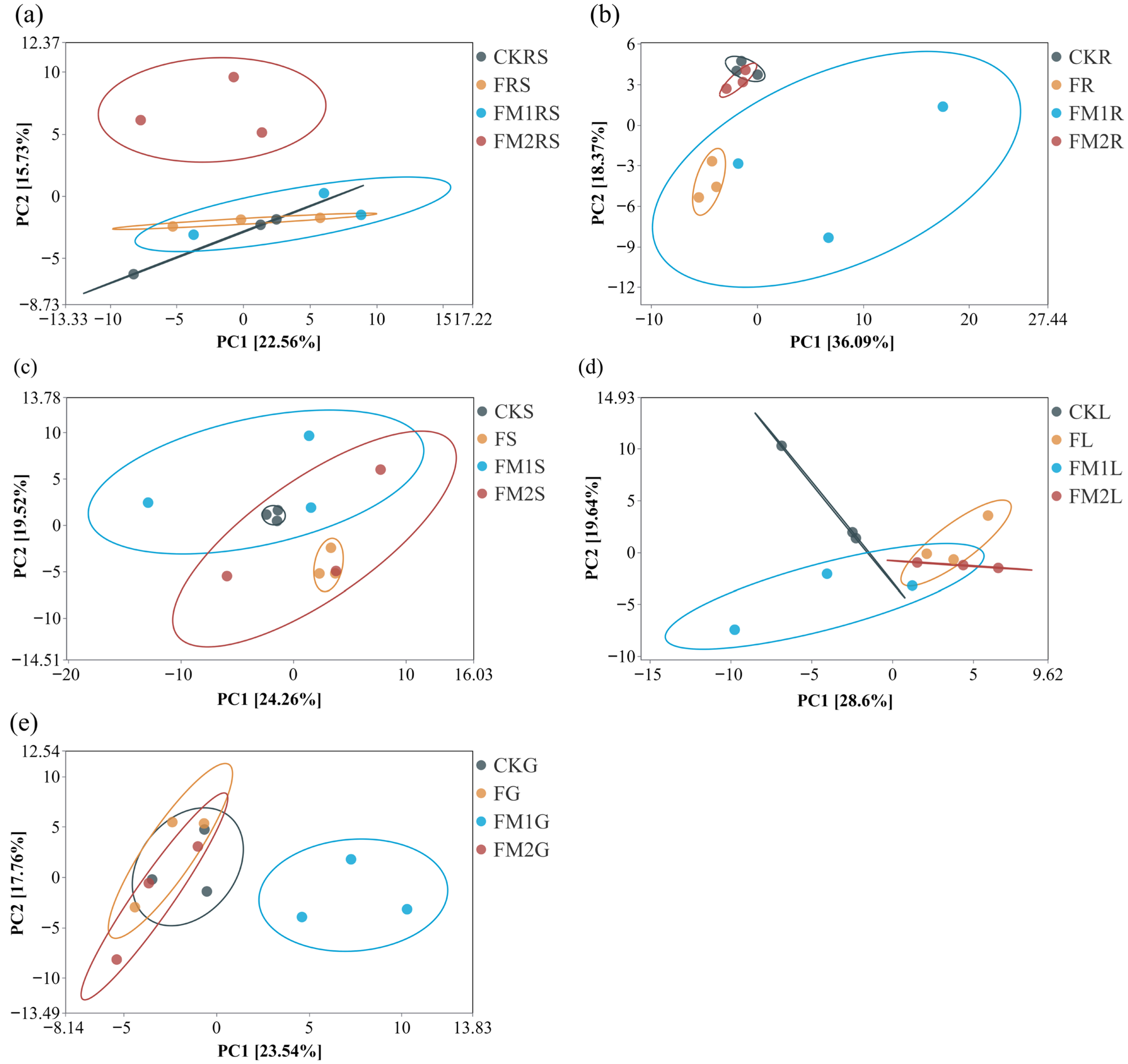
PCA of ARG profiles revealed treatment-specific clustering within each compartment (Figure 2). Fertilization exerted distinct effects on ARG assemblages in rhizosphere soil and across millet roots, stems, leaves, and grains. In rhizosphere soil, the first two components (PC1 = 22.56%, PC2 = 15.73% of variance) distinctly separated FM2RS samples in the upper-left quadrant from FM1RS along the positive PC1 axis, while FRS and CKRS overlapped near the origin. In millet roots, PC1 (36.09%) and PC2 (13.78%) clearly discriminated FM1R along the positive PC1 axis, whereas CKR and FR formed a tight cluster near the coordinate center. Stem samples exhibited a strong dichotomy on PC1 (24.26%) and PC2 (19.52%): FM1S and FM2S were positioned on the right-hand side of the plot opposite CKS and FS, indicating divergent ARG assemblages. Leaves, plotted on PC1 (28.60%) and PC2 (19.64%), showed CKL isolated in the negative PC1 domain, with FL, FM1L and FM2L grouping in the positive PC1/PC2 region. Finally, grain samples (PC1 = 23.54%, PC2 = 17.61%) demonstrated a pronounced separation of FM1G on the right of the PC1 axis, whereas CKG, FG and FM2G overlapped in the left-hand quadrant.

3.4. Absolute Abundance of ARGs in the Soil–Millet System

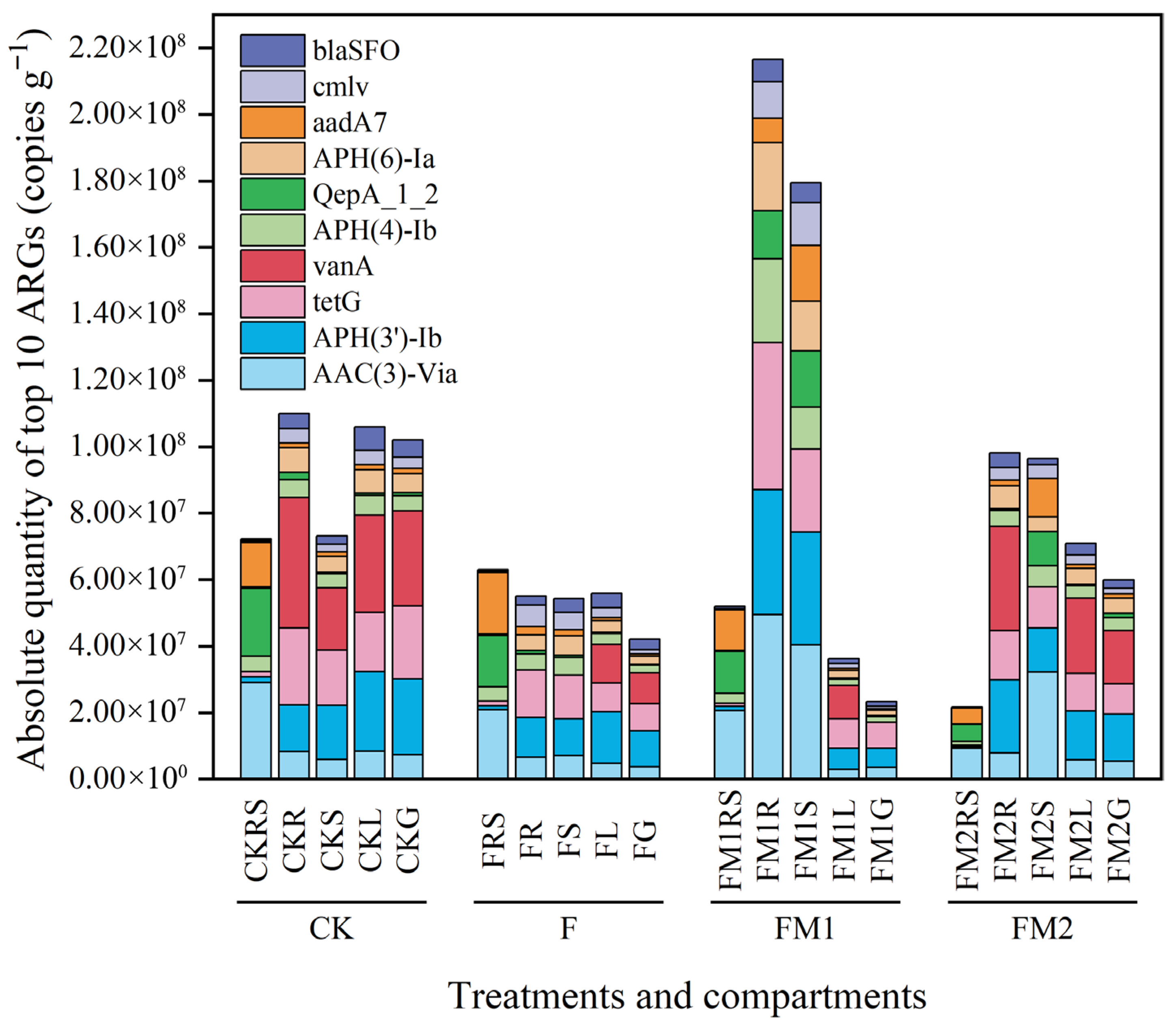
Across all samples, a total of 130 ARGs were identified. As illustrated in Figure 3, the top ten ARGs with the highest absolute abundance—AAC(3)-Via, APH(3′)-Ib, tetG, vanA, APH(4)-Ib, QepA_1_2, APH(6)-Ia, aadA7, cmlv, and blaSFO—together represented nearly 70% of the total ARG count. The cumulative ARG abundance in CK, F, FM1, and FM2 treatments reached 4.6 × 10⁸, 2.7 × 10⁸, 5.1 × 10⁸, and 3.5 × 10⁸ copies g−1, respectively, following the order FM1 > CK > FM2 > F. Compared to the CK group, ARG levels declined by 41.7% and 25.1% in the F and FM2 treatments, respectively, but increased by 9.5% in FM1. In comparison to the F treatment, ARG abundances were elevated by 87.7% in FM1 and by 28.4% in FM2. When FM2 was compared with FM1, a 31.6% reduction was observed. Across all fertilization regimes, millet roots consistently harbored the greatest ARG loads, exhibiting approximately 2.3-fold higher levels than rhizosphere soils. A downward gradient in ARG abundance was evident from roots to stems, leaves, and grains, with respective reductions of 15.8%, 43.9%, and 52.6% when compared to roots. The absolute abundance of various ARGs in rhizosphere soil and millet organs exhibited three primary patterns: enrichment, reduction, and bell-shaped variation. For instance, the gene vanA was exclusively detected in millet organs and was absent in the rhizosphere soil, suggesting its specific association with plant tissues. Compared with the rhizosphere soil, APH(3′)-Ib was markedly enriched in millet organs, with an average increase ranging from 11- to 30-fold, while tetG showed an 8- to 13-fold enrichment. In contrast, AAC(3)-Via exhibited a decreased abundance in millet organs under the CK and F treatments relative to the rhizosphere soil. However, under FM1 and FM2 treatments, AAC(3)-Via displayed a bell-shaped distribution, peaking in millet roots (FM1) and stems (FM2). Similarly, aadA7 was reduced in millet organs under CK and F treatments but demonstrated a bell-shaped trend in FM1 and FM2, with the highest abundance observed in millet stems under both treatments.

3.5. Absolute Abundance of MGEs in the Soil–Millet System

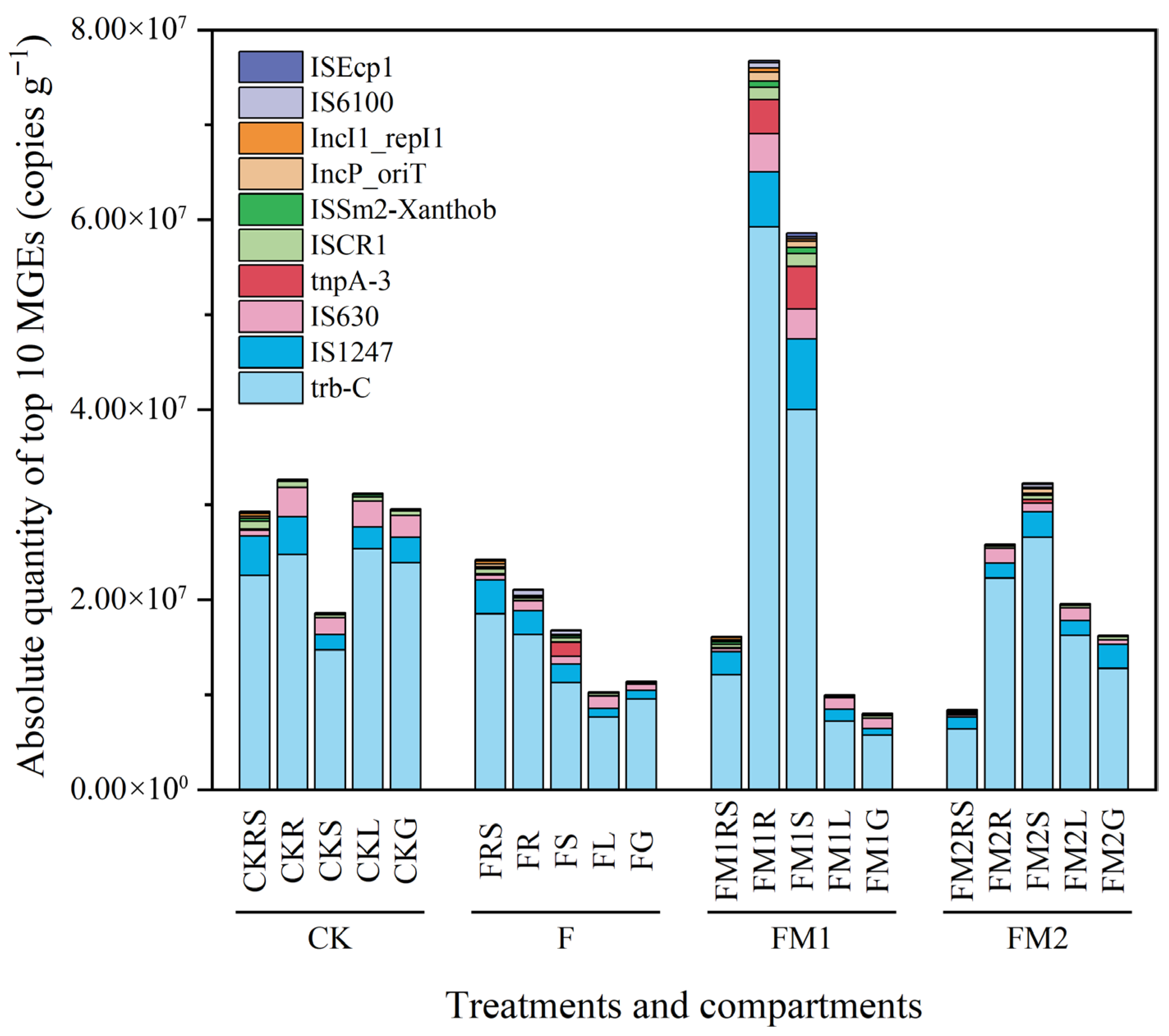
A total of 13 MGEs were detected throughout the sample set. According to Figure 4, the ten most abundant MGEs—trb-C, IS1247, IS630, tnpA-3, ISCR1, ISSm2-Xanthob, IncP_oriT, IncI1_repI1 and IS6100—accounted for approximately 99% of the total MGE pool. The total MGE copy numbers for CK, F, FM1, and FM2 treatments were 1.4 × 10⁸, 8.4 × 10⁷, 1.7 × 10⁸, and 1.0 × 10⁸ copies g−1, respectively, ranking as FM1 > CK > FM2 > F. Relative to CK, F and FM2 treatments exhibited decreases of 40.6% and 27.5% in MGE abundance, while FM1 showed a 20.0% increase. Compared with F, MGE quantities rose significantly in FM1 (102.1%) and modestly in FM2 (22.1%). FM2 presented a 39.6% lower MGE level than FM1. The highest MGE loads were consistently observed in millet roots across all fertilization treatments, with quantities averaging 1.8 times those in the rhizosphere soil. A decreasing trend was evident from roots to stems, leaves, and grains, with reductions of 9.2%, 4.9%, and 5.3%, respectively. MGEs exhibited distinct distribution patterns across different treatments and plant compartments. For instance, IS630 was consistently enriched in millet organs, with a 2- to 4-fold increase in absolute abundance compared to the rhizosphere soil. Both Trb-C and IS1247 showed similar dynamic trends under different treatments and compartments: their abundances initially decreased and then increased in the CK and F treatments, whereas they first increased and subsequently decreased in the FM1 and FM2 treatments. Notably, IncP_oriT was exclusively detected in rhizosphere soils under CK and F treatments and was absent in all millet organs. Furthermore, under FM1 and FM2 treatments, IncP_oriT was not detected in millet leaves or grains, indicating a compartment- and treatment-specific distribution.

3.6. Absolute Abundance of Gene Families in the Soil–Millet System

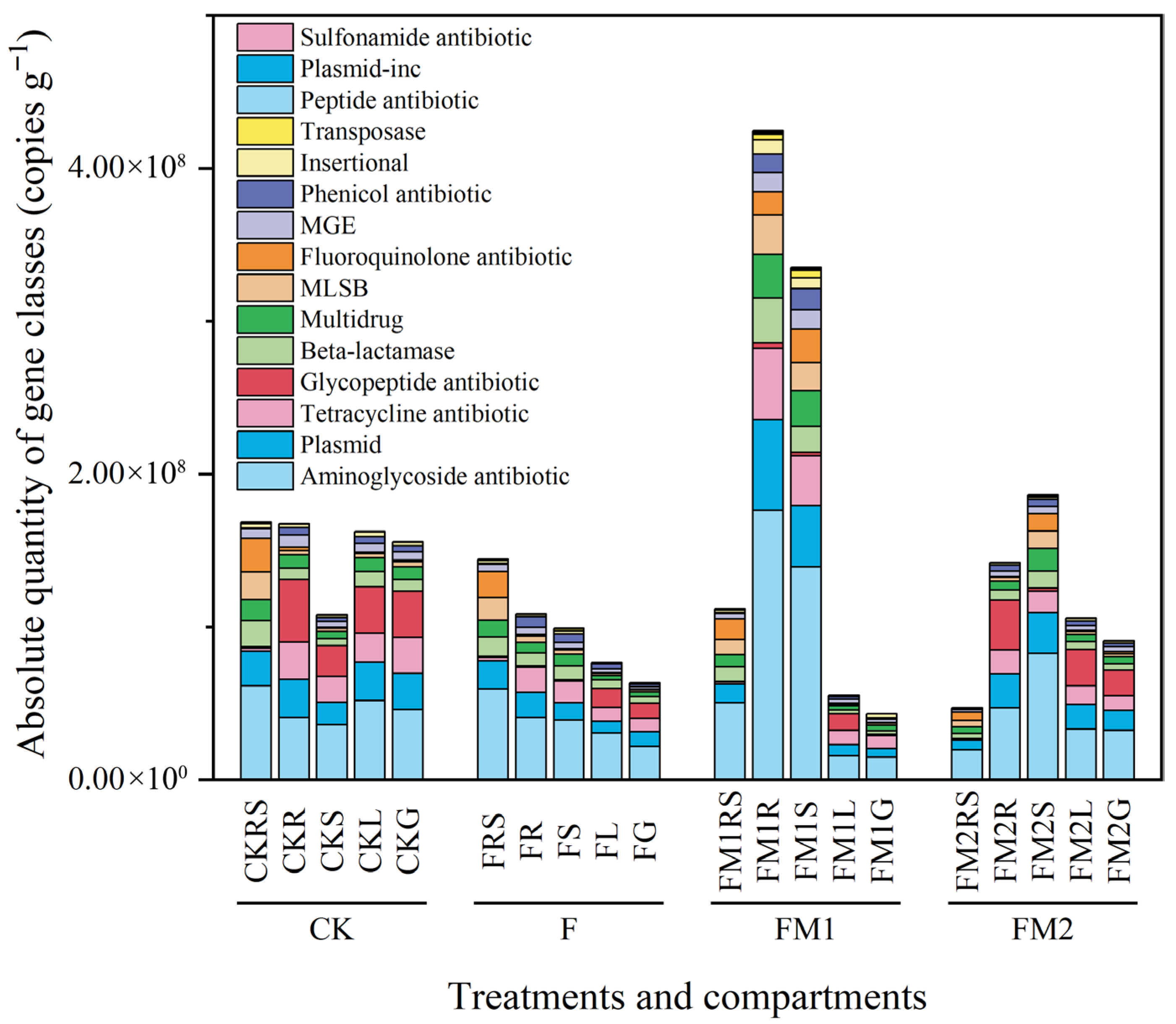
Seventeen gene families encompassing both ARGs classes and MGEs classes were classified. As depicted in Figure 5, the fifteen most prevalent gene families—including ten ARGs families (aminoglycoside, tetracycline, glycopeptide, beta-lactamase, multidrug, MLSB, fluoroquinolone, phenicol, peptide, sulfonamide) and five MGEs (plasmid, MGE, insertional, transposase and plasmid-inc)—collectively comprised roughly 99% of the total gene families. The overall gene family copy numbers were 7.6 × 10⁸ copies g−1 in CK, 4.9 × 10⁸ copies g−1 in F, 9.7 × 10⁸ copies g−1 in FM1, and 5.7 × 10⁸ copies g−1 in FM2, exhibiting the pattern FM1 > CK > FM2 > F. Compared to CK, gene family abundance declined by 35.4% in F and 24.9% in FM2, while FM1 showed a 27.3% increase. Relative to F, FM1 and FM2 treatments led to rises of 97.1% and 16.2%, respectively. A 41.0% reduction was observed in FM2 when compared to FM1. Among all fertilization regimes, millet roots displayed the highest gene family densities, approximately 1.8 times those in rhizosphere soils. A consistent decline was observed from roots to aerial parts, with decreases of 13.6% in stems, 5.3% in leaves, and 5.8% in grains relative to roots. Under CK and F treatments, the absolute abundance of aminoglycoside, plasmid, beta-lactamase and multidrug classes in millet organs were lower than that in the rhizosphere soil, indicating a reduction trend during translocation. In contrast, under FM1 and FM2 treatments, the abundance of these gene families displayed a bell-shaped distribution across different compartments, including the rhizosphere soil, roots, stems, leaves, and grains. Specifically, the highest levels were observed in the roots under FM1 treatment, whereas the peak abundance was detected in the stems under FM2 treatment. The absolute abundance of tetracycline and glycopeptide antibiotics in millet organs were found to be elevated by approximately 6–18-fold and 8–52-fold, respectively, compared to those in the rhizosphere soil. A decreasing trend in the absolute abundance of MLSB and fluoroquinolone antibiotics was observed in millet organs under both CK and F treatments, relative to those in the rhizosphere soil. In contrast, under the FM1 and FM2 treatments, the absolute abundances of MLSB and fluoroquinolone antibiotics exhibited fluctuations, with the highest levels detected in millet roots under FM1 and in millet stems under FM2.

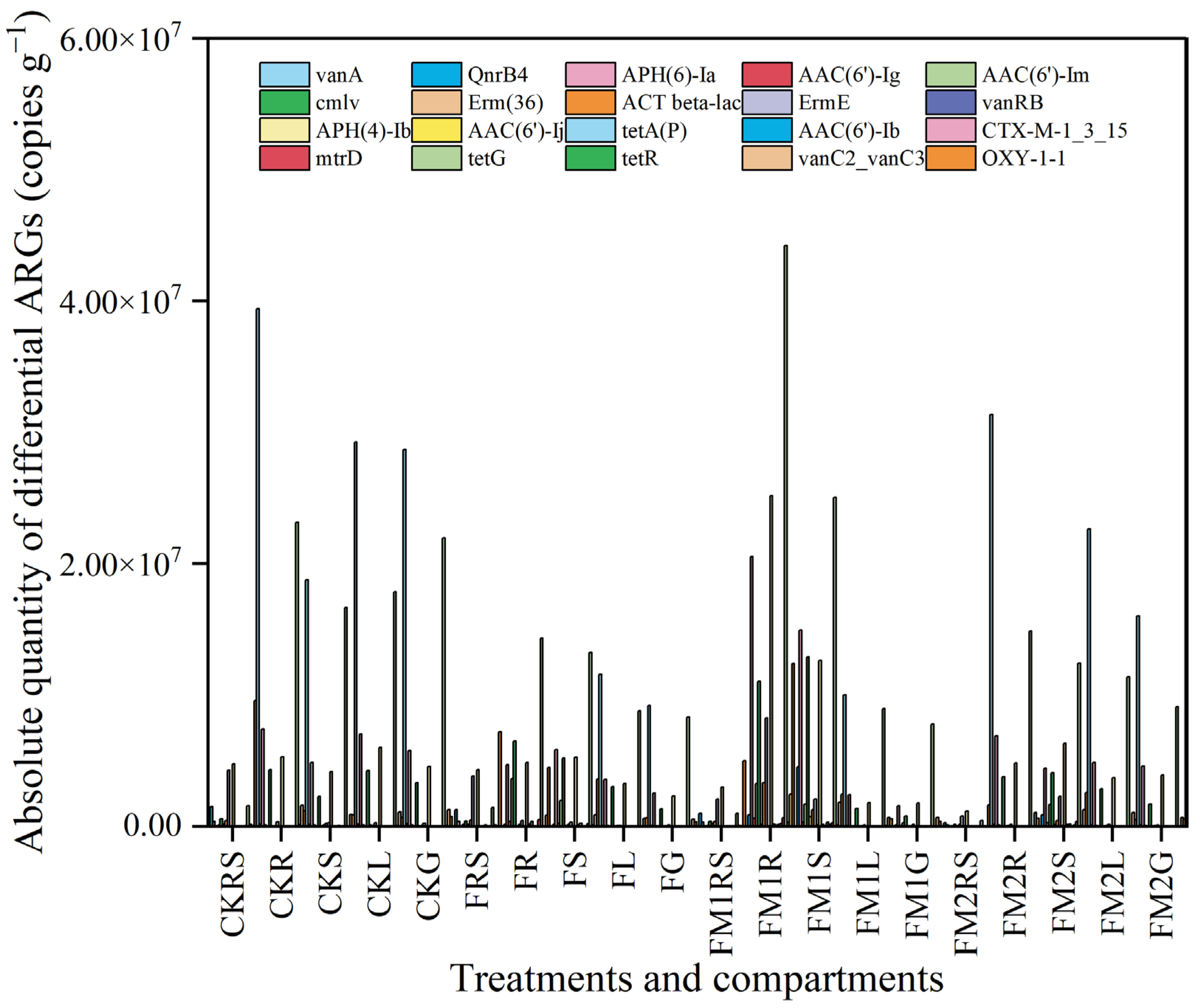
3.7. Differential ARGs

Figure 6 displays the twenty ARGs with the most pronounced differences in absolute abundance across treatments. These genes are categorized into the following resistance classes: Glycopeptide antibiotics (vanA, vanRB, vanC2/vanC3), Fluoroquinolone antibiotics (QnrB4), Aminoglycoside antibiotics (APH(6)-Ia, AAC(6′)-Ig, AAC(6′)-Im, APH(4)-Ib, AAC(6′)-Ij, AAC(6′)-Ib), MLSB (Erm(36), ErmE), Phenicol antibiotics (cmlv), Beta-lactamases (ACT beta-lac, CTX-M-1/3/15, OXY-1-1), Tetracycline antibiotics (tetA(P), tetG, tetR), and Multidrug resistance genes (mtrD).

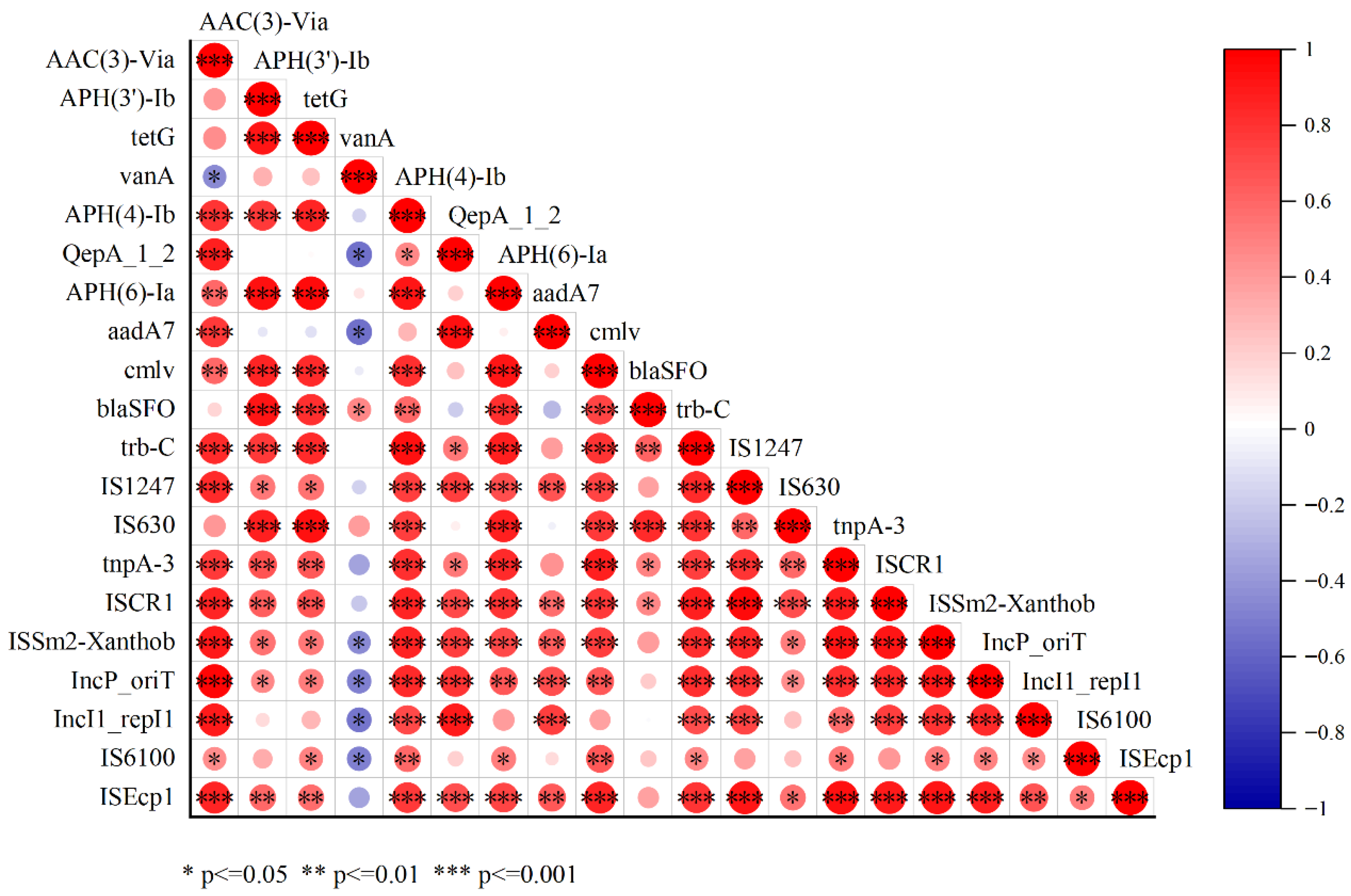
3.8. Correlation of ARGs and MGEs

Figure 7 illustrates the Pearson correlation analysis between the top ten most abundant ARGs and MGEs. The majority of ARGs demonstrated significant positive associations with MGEs. Specifically, AAC(3)-Via exhibited extremely significant positive correlations with all MGEs (p < 0.001) except IS630 (not significant) and IS6100 (p < 0.05), whereas APH(3′)-Ib was significant positively correlated with all MGEs excluding IncI1_repI1 and IS6100 (not significant). TetG also showed broad positive associations, with the exception of IncI1_repI1. APH(4)-Ib was extremely significant positively correlated with all MGEs (p < 0.05). In contrast, vanA displayed significant negative correlations with ISSm2-Xanthob, IncP_oriT, IncI1_repI1, and IS6100, suggesting a divergent relationship pattern compared to other dominant ARGs.

4. Discussion

4.1. The Influence of Fertilization on the Distribution and Migration of ARGs and MGEs in Soil–Millet System

Fertilization influenced the distribution and migration of ARGs within the soil–millet system. PCA indicated that the fertilization treatments influenced the distribution patterns of ARGs in the soil–millet system (Figure 2), which was largely attributable to the significant variations in ARG profiles (Figure 6). Across all treatments, the number of unique ARGs and MGEs was the lowest under the CK treatment, followed by the F treatment, and highest in treatments combining chemical and organic fertilizers. These results suggest that the addition of organic fertilizers increased the diversity of ARGs and MGEs, which aligns well with the previous research [22]. The cattle manure used in this study underwent natural composting, during which ARGs may not have been completely eliminated [18]. The migration of ARGs along with their host bacteria from soil into plants could pose a potential threat to human health [27]. Additionally, studies have shown that long-term application of manure increases the abundance of ARGs and MGEs in soil and lettuce tissues, carrots, radishes, tomatoes, etc. [41,42,43]. In this study, however, as the fertilizer input increased, the absolute abundances of the top 10 ARGs and MGEs, together with those of the top 15 gene families, consistently showed a trend of initial decline, followed by an increase, and then a subsequent decline, reaching their highest levels under the FM1 treatment (Figure 3, Figure 4 and Figure 5). This pattern may be attributed to the more favorable soil microenvironment for microbial proliferation and gene replication under the FM1 treatment. Millet is relatively tolerant to nutrient-poor conditions [44]; thus, although manure application enhances ARG abundance, an excessive application of organic fertilizer in the FM2 treatment may have inhibited plant growth, thereby limiting microbial recruitment and the transmission of ARGs and MGEs. In the F treatment, where only chemical fertilizer was applied, the microbial abundance was relatively low, which may have resulted in the lowest absolute abundance of ARGs, MGEs and gene families. The ubiquitous presence of the dominant ARGs and MGEs across all fertilization treatments, including the control (CK), indicates their origin from the native soil reservoir. Conversely, the detection of certain genes (e.g., vanA) exclusively in millet tissues, and not in the rhizosphere soil, suggests a potential seed-borne origin [45].

4.2. The Distribution of ARGs and MGEs in Soil–Millet System and Their Correlation

Research indicates that the plant compartment is a primary driver shaping the composition of the plant-associated microbiota [46] and the host exerts a stronger genetic control over the aboveground microbiota than it does over its root or rhizosphere counterparts [47]. Under different fertilization treatments, the translocation patterns of ARGs within the soil–millet system varied. In the CK treatment, the abundance of the top ten ARGs in millet roots was higher than that in the rhizosphere soil, decreased in the stems, but increased again in the leaves and grains, exhibiting a fluctuating trend. This may be attributed to the relatively large surface area of the leaves and grains, which facilitates the deposition of ARGs from aerosols, pollen, and insects [22,46,48,49]. In the FM1 and FM2 treatments, ARG abundance in the roots and stems increased obviously compared to the rhizosphere soil—particularly in the FM1 treatment—while it decreased in the leaves and grains, showing a reduction pattern. Compared with the CK treatment, fertilization contributed to reducing the absolute abundance of ARGs and MGEs in leaves and grains, which may be attributed to the enhanced ability of millet to restrict the translocation of ARGs and MGEs to leaves and grains under fertilization. In FM1 and FM2 treatments, the application of organic fertilizer increased the accumulation of ARGs and MGEs in the roots and stems of millet, which were consistent with the previous studies [33,50]. For instance, Li et al. reported a striking enrichment of ARGs in tomato xylem, with levels exceeding those in the rhizosphere soil by a factor of 2.4 to 6.9, highlighting its role as a key reservoir [34]. Another study has also found that ARGs can also translocate from soil amended with pig manure and enriched in rice roots [50]. Directly exposed to the soil, roots are readily colonized by a substantial number of microorganisms, leading to the significant accumulation of both ARGs and MGEs [35,45,46,51]. Relative to the F treatment, the FM1 treatment reduced the enrichment of ARGs and MGEs in millet leaves and grains, whereas the FM2 treatment increased their accumulation in these tissues. A plausible explanation is that the amount of organic fertilizer applied in the FM1 treatment was optimal, effectively inhibiting the translocation of ARGs and MGEs to leaves and grains [52].
Numerous studies have demonstrated that the dissemination of ARGs within soil–crop systems is closely associated not only with fundamental factors such as soil physicochemical properties and microbial communities but also with trace elements [34,53,54,55,56] and MGEs [22,57]. The translocation of ARGs is influenced by multiple factors, among which MGEs serve as a key factor. In this study, Pearson correlation analysis revealed significant positive correlations between the absolute abundance of most ARGs and MGEs, further demonstrating that the movement of ARGs is significantly influenced by MGEs.

5. Conclusions

HT-qPCR was employed to investigate the effects of different fertilization treatments—including no fertilizer, chemical fertilizer alone, and chemical fertilizer combined with varying amounts of organic amendments—on the migration of ARGs within the soil–millet system. The findings further confirm that manure-derived ARGs can migrate from soil into millet grains, posing a threat to human health. Although the combined application of organic and chemical fertilizers increased the number of unique ARGs, the highest cumulative absolute abundance of ARGs was observed in treatment FM1, with their greatest enrichment observed particularly in the roots and stems of the millet. Conversely, FM1 treatment resulted in the most effective interception and filtration of ARGs, MGEs, and gene families in the leaves and grains. Pearson correlation analysis revealed that MGEs played a significant role in the dissemination of ARGs within the soil–millet system, although other influencing factors remain to be investigated. In conclusion, the application of chemical fertilizer combined with a moderate amount of organic fertilizer is recommended in millet cultivation to mitigate the risk of ARG contamination. Rational fertilization practices help limit the accumulation of ARGs in millet leaves and grains, contributing to enhancing food safety.

Supplementary Materials

The following supporting information can be downloaded at: https://www.mdpi.com/article/10.3390/agronomy15122849/s1, Table S1: Primer sets of antibiotic resistance genes used in the study.

Author Contributions

Conceptualization, H.Z.; methodology, X.W.; software, L.H.; validation, W.X.; formal analysis, Z.Y.; data curation, Z.G.; writing—original draft preparation, Z.L.; writing—review and editing, Z.L. and J.H.; visualization, Z.W.; supervision, D.C. All authors have read and agreed to the published version of the manuscript.

Funding

This study was financially supported by the Science and Technology Innovation and Promotion Project of Shanxi Agricultural University (CXGC2023025), the Basic Research Program of Shanxi Province (202403021221095), the project of Shanxi Province key lab construction (Z135050009017-1-2), Major agricultural science and technology Project of Shanxi Province (NYGG07-5), the open project of State Key Laboratory of Efficient Utilization of Arid and Semi-arid Arable Land in Northern China, the Institute of Agricultural Resources and Regional Planning, Chinese Academy of Agricultural Sciences (EUAL-2023-09), the National Key Research and Development Program of China (2023YFD1900503-02, 2023YFD1900402, 2021YFD1900705).

Data Availability Statement

The original contributions presented in this study are included in the article. Further inquiries can be directed to the corresponding author.

Acknowledgments

We are grateful to the staff in the experimental station who helped to manage the field experiment. We are also grateful to Xiangjun Wang for her efforts in downloading and organizing the studies.

Conflicts of Interest

The authors declare no conflicts of interest.

References

  1. Zhou, L.J.; Ying, G.G.; Liu, S.; Zhang, R.Q.; Lai, H.J.; Chen, Z.F.; Pan, C.G. Excretion masses and environmental occurrence of antibiotics in typical swine and dairy cattle farms in China. Sci. Total Environ. 2013, 444, 183–195. [Google Scholar] [CrossRef] [PubMed]
  2. Sarmah, A.K.; Meyer, M.T.; Boxall, A.B. A global perspective on the use, sales, exposure pathways, occurrence, fate and effects of veterinary antibiotics (VAs) in the environment. Chemosphere 2006, 65, 725–759. [Google Scholar] [CrossRef] [PubMed]
  3. Ali Syed, M. Antibiotics: Past, Present and Future. J. Biomol. Res. Ther. 2016, 5, 1000e149. [Google Scholar] [CrossRef]
  4. Heuer, H.; Schmitt, H.; Smalla, K. Antibiotic resistance gene spread due to manure application on agricultural fields. Curr. Opin. Microbiol. 2011, 14, 236–243. [Google Scholar] [CrossRef]
  5. Puckowski, A.; Mioduszewska, K.; Lukaszewicz, P.; Borecka, M.; Caban, M.; Maszkowska, J.; Stepnowski, P. Bioaccumulation and analytics of pharmaceutical residues in the environment: A review. J. Pharm. Biomed. Anal. 2016, 127, 232–255. [Google Scholar] [CrossRef]
  6. Martinez, J.L.; Coque, T.M.; Baquero, F. What is a resistance gene? Ranking risk in resistomes. Nat. Rev. Microbiol. 2015, 13, 116–123. [Google Scholar] [CrossRef]
  7. Finley, R.L.; Collignon, P.; Larsson, D.G.; McEwen, S.A.; Li, X.Z.; Gaze, W.H.; Reid-Smith, R.; Timinouni, M.; Graham, D.W.; Topp, E. The scourge of antibiotic resistance: The important role of the environment. Clin. Infect. Dis. 2013, 57, 704–710. [Google Scholar] [CrossRef]
  8. Jechalke, S.; Schreiter, S.; Wolters, B.; Dealtry, S.; Heuer, H.; Smalla, K. Widespread dissemination of class 1 integron components in soils and related ecosystems as revealed by cultivation-independent analysis. Front Microbiol. 2014, 4, 420. [Google Scholar] [CrossRef]
  9. Wang, F.; Stedtfeld, R.D.; Kim, O.S.; Chai, B.; Yang, L.; Stedtfeld, T.M.; Hong, S.G.; Kim, D.; Lim, H.S.; Hashsham, S.A.; et al. Influence of Soil Characteristics and Proximity to Antarctic Research Stations on Abundance of Antibiotic Resistance Genes in Soils. Environ. Sci. Technol. 2016, 50, 12621–12629. [Google Scholar] [CrossRef]
  10. Zhang, C.; Fu, X.; Liu, Y.; Zhao, H.; Wang, G. Burden of infectious diseases and bacterial antimicrobial resistance in China: A systematic analysis for the global burden of disease study 2019. Lancet Reg. Health West Pac. 2024, 43, 100972. [Google Scholar] [CrossRef]
  11. Pruden, R.A.; Pei, R.; Storteboom, H. Antibiotic resistance genes as emerging contaminants: Studies in northern Colorado. Environ. Sci. Technol. 2006, 40, 7445–7450. [Google Scholar] [CrossRef] [PubMed]
  12. Wang, L.L.; Oda, Y.; Grewal, S.; Morrison, M.; Michel, F.C.; Yu, Z.T. Persistence of resistanceto erythromycin and tetracycline in swine manure during simulatedcomposting and lagoon treatments. Microb. Ecol. 2011, 63, 32–40. [Google Scholar] [CrossRef] [PubMed]
  13. Binh, C.T.; Heuer, H.; Kaupenjohann, M.; Smalla, K. Piggery manure used for soil fertilization is a reservoir for transferable antibiotic resistance plasmids. FEMS Microbiol. Ecol. 2008, 66, 25–37. [Google Scholar] [CrossRef] [PubMed]
  14. Binh, C.T.; Heuer, H.; Kaupenjohann, M.; Smalla, K. Diverse aadA gene cassettes on class 1 integrons introduced into soil via spread manure. Res. Microbiol. 2009, 160, 427–433. [Google Scholar] [CrossRef]
  15. Tiedje, J.M.; Wang, F.; Manaia, C.M.; Virta, M.; Sheng, H.; Ma, L.; Zhang, T.; Topp, E. Antibiotic Resistance Genes in the Human-Impacted Environment: A One Health Perspective. Pedosphere 2019, 29, 273–282. [Google Scholar] [CrossRef]
  16. Lima, T.; Domingues, S.; Da Silva, G.J. Manure as a Potential Hotspot for Antibiotic Resistance Dissemination by Horizontal Gene Transfer Events. Vet. Sci. 2020, 7, 110. [Google Scholar] [CrossRef]
  17. Checcucci, A.; Trevisi, P.; Luise, D.; Modesto, M.; Blasioli, S.; Braschi, I.; Mattarelli, P. Exploring the Animal Waste Resistome: The Spread of Antimicrobial Resistance Genes Through the Use of Livestock Manure. Front. Microbiol. 2020, 11, 1416. [Google Scholar] [CrossRef]
  18. Su, J.Q.; Wei, B.; Ou-Yang, W.Y.; Huang, F.Y.; Zhao, Y.; Xu, H.J.; Zhu, Y.G. Antibiotic resistome and its association with bacterial communities during sewage sludge composting. Environ. Sci. Technol. 2015, 49, 7356–7363. [Google Scholar] [CrossRef]
  19. Bondarczuk, K.; Markowicz, A.; Piotrowska-Seget, Z. The urgent need for risk assessment on the antibiotic resistance spread via sewage sludge land application. Environ. Int. 2016, 87, 49–55. [Google Scholar] [CrossRef]
  20. Chen, Q.L.; An, X.L.; Zheng, B.X.; Ma, Y.B.; Su, J.Q. Long-term organic fertilization increased antibiotic resistome in phyllosphere of maize. Sci. Total Environ. 2018, 645, 1230–1237. [Google Scholar] [CrossRef]
  21. Tien, Y.C.; Li, B.; Zhang, T.; Scott, A.; Murray, R.; Sabourin, L.; Marti, R.; Topp, E. Impact of dairy manure pre-application treatment on manure composition, soil dynamics of antibiotic resistance genes, and abundance of antibiotic-resistance genes on vegetables at harvest. Sci. Total Environ. 2017, 581–582, 32–39. [Google Scholar] [CrossRef] [PubMed]
  22. Chen, Q.; An, X.; Li, H.; Su, J.; Ma, Y.; Zhu, Y.G. Long-term field application of sewage sludge increases the abundance of antibiotic resistance genes in soil. Environ. Int. 2016, 92–93, 1–10. [Google Scholar] [CrossRef] [PubMed]
  23. Rossi, F.; Rizzotti, L.; Felis, G.E.; Torriani, S. Horizontal gene transfer among microorganisms in food: Current knowledge and future perspectives. Food Microbiol. 2014, 42, 232–243. [Google Scholar] [CrossRef] [PubMed]
  24. Bezanson, G.S.; MacInnis, R.; Potter, G.; Hughes, T. Presence and potential for horizontal transfer of antibiotic resistance in oxidase-positive bacteria populating raw salad vegetables. Int. J. Food Microbiol. 2008, 127, 37–42. [Google Scholar] [CrossRef]
  25. Shen, Y.; Ryser, E.T.; Li, H.; Zhang, W. Bacterial community assembly and antibiotic resistance genes in the lettuce-soil system upon antibiotic exposure. Sci. Total Environ. 2021, 778, 146255. [Google Scholar] [CrossRef]
  26. Chen, P.; Yu, K.; He, Y. The dynamics and transmission of antibiotic resistance associated with plant microbiomes. Environ. Int. 2023, 176, 107986. [Google Scholar] [CrossRef]
  27. Chen, Q.L.; Cui, H.L.; Su, J.Q.; Penuelas, J.; Zhu, Y.G. Antibiotic Resistomes in Plant Microbiomes. Trends Plant Sci. 2019, 24, 530–541. [Google Scholar] [CrossRef]
  28. Cerqueira, F.; Matamoros, V.; Bayona, J.M.; Berendonk, T.U.; Elsinga, G.; Hornstra, L.M.; Pina, B. Antibiotic resistance gene distribution in agricultural fields and crops. A soil-to-food analysis. Environ. Res. 2019, 177, 108608. [Google Scholar] [CrossRef]
  29. Liu, W.; Cheng, Y.; Guo, J.; Duan, Y.; Wang, S.; Xu, Q.; Liu, M.; Xue, C.; Guo, S.; Shen, Q.; et al. Long-term manure inputs induce a deep selection on agroecosystem soil antibiotic resistome. J. Hazard. Mater. 2022, 436, 129163. [Google Scholar] [CrossRef]
  30. Song, T.; Teng, H.; Li, Y.; Wang, J.; He, C.; Li, B.; Zhou, T.; Wang, X.; Li, B.; Li, H. Exploring potential ecological risks of antibiotic–resistance genes in soil–plant systems caused by manure application. Sustain. Horiz. 2025, 14, 100128. [Google Scholar] [CrossRef]
  31. Zhang, Y.J.; Hu, H.W.; Chen, Q.L.; Singh, B.K.; Yan, H.; Chen, D.; He, J.Z. Transfer of antibiotic resistance from manure-amended soils to vegetable microbiomes. Environ. Int. 2019, 130, 104912. [Google Scholar] [CrossRef]
  32. Wang, F.H.; Qiao, M.; Chen, Z.; Su, J.Q.; Zhu, Y.G. Antibiotic resistance genes in manure-amended soil and vegetables at harvest. J. Hazard. Mater. 2015, 299, 215–221. [Google Scholar] [CrossRef] [PubMed]
  33. Li, W.J.; Li, H.Z.; Xu, J.; Gillings, M.R.; Zhu, Y.G. Sewage Sludge Promotes the Accumulation of Antibiotic Resistance Genes in Tomato Xylem. Environ. Sci. Technol. 2024, 58, 10796–10805. [Google Scholar] [CrossRef] [PubMed]
  34. Pan, J.; Zheng, N.; An, Q.; Li, Y.; Sun, S.; Wang, S.; Ji, Y.; Li, N. The effects of cadmium-copper stress on the accumulation of antibiotic-resistance genes in soil and pakchoi leaves. Soil Biol. Biochem. 2024, 191, 109362. [Google Scholar] [CrossRef]
  35. Zhao, Z.; Luo, B.; Cao, T.; Bai, T.; Sun, Y.; Liu, H.; Zhang, L.; Xie, J.; Wang, J.; Li, H.; et al. Livestock manure-based organic fertilization facilitates the transmission of antibiotic resistance genes across the soil-onion continuum: A significant contribution from root exudates. Soil Biol. Biochem. 2025, 209, 109910. [Google Scholar] [CrossRef]
  36. Jauregi, L.; Epelde, L.; Alkorta, I.; Garbisu, C. Antibiotic Resistance in Agricultural Soil and Crops Associated to the Application of Cow Manure-Derived Amendments From Conventional and Organic Livestock Farms. Front. Vet. Sci. 2021, 8, 633858. [Google Scholar] [CrossRef]
  37. Diao, X.M. Progresses in stress tolerance and field cultivation studies of orphan cereals in China. Sci. Agric. Sin. 2019, 52, 3943–3949. [Google Scholar]
  38. Du, Y.W.; Zhao, J.F.; Wang, G.H.; Li, Y.F.; Zhao, G.Y.; Yan, X.F. Effects of different density and row spacing on agronomic traits and yield of spring millet. J. Shanxi Agric. Sci. 2019, 47, 49–52. [Google Scholar]
  39. Stedtfeld, R.D.; Guo, X.P.; Stedtfeld, T.M. Primer set 2.0 for highly parallel qPCR array targeting antibiotic resistance genes and mobile genetic elements. FEMS Microbiol. Ecol. 2018, 94, 9. [Google Scholar] [CrossRef]
  40. Li, S.; Yao, Q.; Liu, J.J. Profiles of antibiotic resistome with animal manure application in black soils of northeast China. J. Hazard. Mater. 2020, 384, 121216. [Google Scholar] [CrossRef]
  41. Dong, Z.; Wang, J.; Wang, L.; Zhu, L.; Wang, J.; Zhao, X.; Kim, Y.M. Distribution of quinolone and macrolide resistance genes and their co-occurrence with heavy metal resistance genes in vegetable soils with long-term application of manure. Environ. Geochem. Health 2021, 44, 3343–3358. [Google Scholar] [CrossRef] [PubMed]
  42. Rahube, T.O.; Marti, R.; Scott, A.; Tien, Y.C.; Murray, R.; Sabourin, L.; Zhang, Y.; Duenk, P.; Lapen, D.R.; Topp, E. Impact of fertilizing with raw or anaerobically digested sewage sludge on the abundance of antibiotic-resistant coliforms, antibiotic resistance genes, and pathogenic bacteria in soil and on vegetables at harvest. Appl. Environ. Microbiol. 2014, 80, 6898–6907. [Google Scholar] [CrossRef] [PubMed]
  43. Marti, R.; Scott, A.; Tien, Y.C.; Murray, R.; Sabourin, L.; Zhang, Y.; Topp, E. Impact of manure fertilization on the abundance of antibiotic-resistant bacteria and frequency of detection of antibiotic resistance genes in soil and on vegetables at harvest. Appl. Environ. Microbiol. 2013, 79, 5701–5709. [Google Scholar] [CrossRef] [PubMed]
  44. Li, S.G.; Liu, F.; Liu, M.; Cheng, R.H.; Xia, E.J.; Diao, X.M. Current status and future prospective of foxtail millet production and seed industry in China. Sci. Agric. Sin. 2021, 54, 459–470. [Google Scholar]
  45. Li, X.Y.; Wu, W.F.; Wu, C.Y.; Hu, Y.; Xiang, Q.; Li, G.; Lin, X.Y.; Zhu, Y.G. Seeds Act as Vectors for Antibiotic Resistance Gene Dissemination in a Soil-Plant Continuum. Environ. Sci. Technol. 2023, 57, 21358–21369. [Google Scholar] [CrossRef]
  46. Trivedi, P.; Leach, J.E.; Tringe, S.G.; Sa, T.; Singh, B.K. Plant-microbiome interactions: From community assembly to plant health. Nat. Rev. Microbiol. 2020, 18, 607–621. [Google Scholar] [CrossRef]
  47. Wagner, M.R.; Lundberg, D.S.; Del Rio, T.G.; Tringe, S.G.; Dangl, J.L.; Mitchell-Olds, T. Host genotype and age shape the leaf and root microbiomes of a wild perennial plant. Nat. Commun. 2016, 7, 12151. [Google Scholar] [CrossRef]
  48. Bulgarelli, D.; Schlaeppi, K.; Spaepen, S.; Ver Loren van Themaat, E.; Schulze-Lefert, P. Structure and functions of the bacterial microbiota of plants. Annu. Rev. Plant Biol. 2013, 64, 807–838. [Google Scholar] [CrossRef]
  49. Vorholt, J.A. Microbial life in the phyllosphere. Nat. Rev. Microbiol. 2012, 10, 828–840. [Google Scholar] [CrossRef]
  50. Xu, M.; Wang, F.; Stedtfeld, R.D.; Fu, Y.; Xiang, L.; Sheng, H.; Li, Z.; Hashsham, S.A.; Jiang, X.; Tiedje, J.M. Transfer of antibiotic resistance genes from soil to rice in paddy field. Environ. Int. 2024, 191, 108956. [Google Scholar] [CrossRef]
  51. Xie, W.Y.; Wang, Y.T.; Yuan, J.; Hong, W.D.; Niu, G.Q.; Zou, X.; Yang, X.P.; Shen, Q.; Zhao, F.J. Prevalent and highly mobile antibiotic resistance genes in commercial organic fertilizers. Environ. Int. 2022, 162, 107157. [Google Scholar] [CrossRef]
  52. Wu, J.; Liu, X.Y.; Hu, X.J.; Ling, W.T. Migration and reduction of antibiotic resistance genes in soil-vegetable systems. J. Agro-Environ. Sci. 2025, 44, 605–615. [Google Scholar]
  53. Xu, H.; Chen, Z.; Huang, R.; Cui, Y.; Li, Q.; Zhao, Y.; Wang, X.; Mao, D.; Luo, Y.; Ren, H. Antibiotic Resistance Gene-Carrying Plasmid Spreads into the Plant Endophytic Bacteria using Soil Bacteria as Carriers. Environ. Sci. Technol. 2021, 55, 10462–10470. [Google Scholar] [CrossRef]
  54. Xiao, R.; Huang, D.; Du, L.; Song, B.; Yin, L.; Chen, Y.; Gao, L.; Li, R.; Huang, H.; Zeng, G. Antibiotic resistance in soil-plant systems: A review of the source, dissemination, influence factors, and potential exposure risks. Sci. Total Environ. 2023, 869, 161855. [Google Scholar] [CrossRef]
  55. Zhang, J.; Sui, Q.; Tong, J.; Zhong, H.; Wang, Y.; Chen, M.; Wei, Y. Soil types influence the fate of antibiotic-resistant bacteria and antibiotic resistance genes following the land application of sludge composts. Environ. Int. 2018, 118, 34–43. [Google Scholar] [CrossRef]
  56. Zhu, B.; Chen, Q.; Chen, S.; Zhu, Y.G. Does organically produced lettuce harbor higher abundance of antibiotic resistance genes than conventionally produced? Environ. Int. 2017, 98, 152–159. [Google Scholar] [CrossRef]
  57. Baker, M.; Zhang, X.; Maciel-Guerra, A.; Babaarslan, K.; Dong, Y.; Wang, W.; Hu, Y.; Renney, D.; Liu, L.; Li, H.; et al. Convergence of resistance and evolutionary responses in Escherichia coli and Salmonella enterica co-inhabiting chicken farms in China. Nat. Commun. 2024, 15, 206. [Google Scholar] [CrossRef]
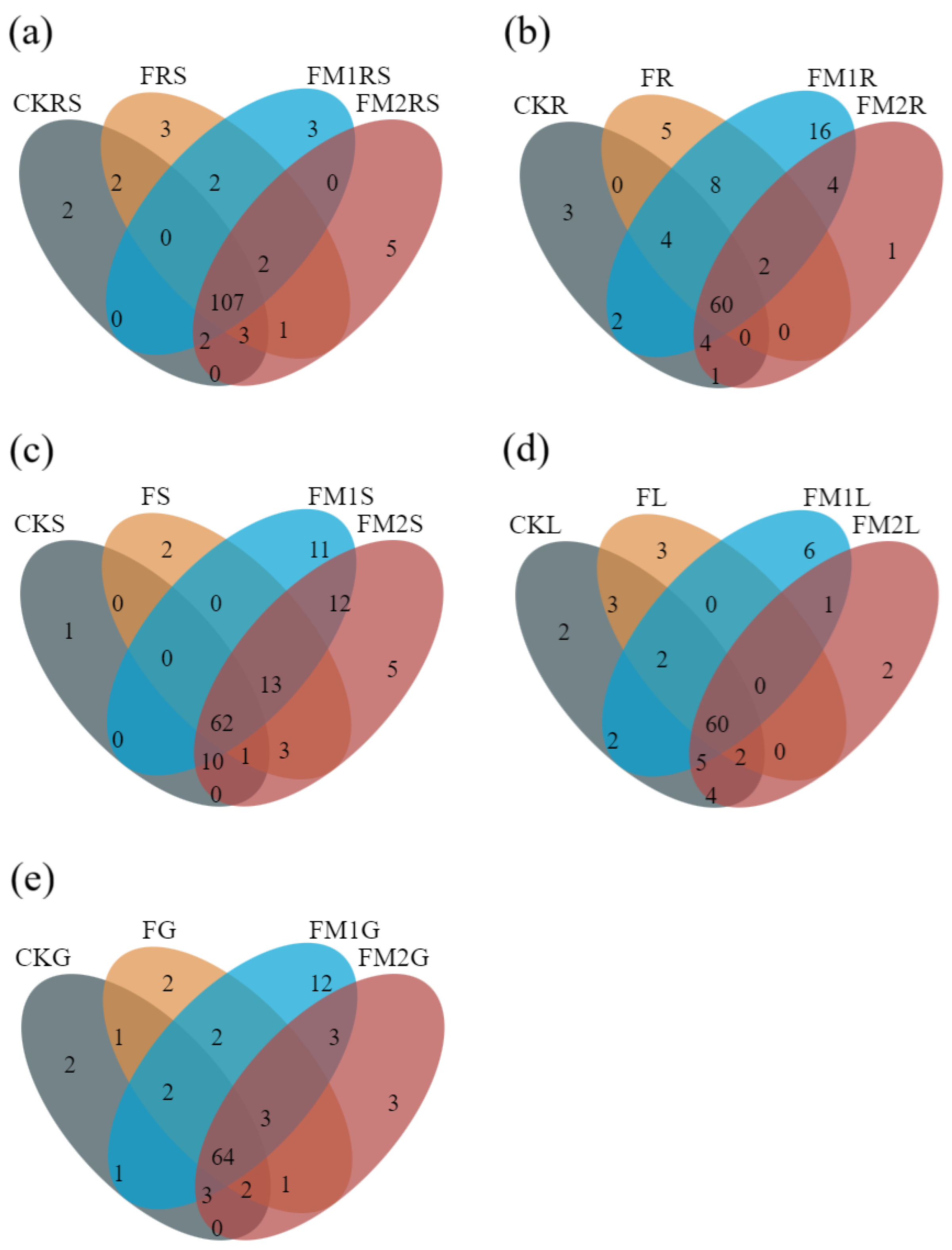
Figure 1. Venn Diagram of ARGs in (a) rhizosphere soil, (b) millet roots, (c) stems, (d) leaves and (e) grains. CK: no fertilizer; F: chemical fertilizer alone; FM1: chemical fertilizer + manure; FM2: chemical fertilizer + double amount of manure; RS: rhizosphere soil; R: root; S: stem; L: leaf; G: grain.
Agronomy 15 02849 g001
Figure 2. PCA of ARGs in (a) rhizosphere soil, (b) millet roots, (c) stems, (d) leaves and (e) grains. CK: no fertilizer; F: chemical fertilizer alone; FM1: chemical fertilizer + manure; FM2: chemical fertilizer + double amount of manure; RS: rhizosphere soil; R: root; S: stem; L: leaf; G: grain.
Agronomy 15 02849 g002
Figure 3. Stack diagram of top ten ARGs. CK: no fertilizer; F: chemical fertilizer alone; FM1: chemical fertilizer + manure; FM2: chemical fertilizer + double amount of manure; RS: rhizosphere soil; R: root; S: stem; L: leaf; G: grain.
Agronomy 15 02849 g003
Figure 4. Stack diagram of top ten MGEs. CK: no fertilizer; F: chemical fertilizer alone; FM1: chemical fertilizer + manure; FM2: chemical fertilizer + double amount of manure; RS: rhizosphere soil; R: root; S: stem; L: leaf; G: grain.
Agronomy 15 02849 g004
Figure 5. Stack diagram of gene classes. CK: no fertilizer; F: chemical fertilizer alone; FM1: chemical fertilzer + manure; FM2: chemical fertilizer + double amount of manure; RS: rhizosphere soil; R: root; S: stem; L: leaf; G: grain.
Agronomy 15 02849 g005
Figure 6. Top ten differential ARGs among treatments and compartments. CK: no fertilizer; F: chemical fertilizer alone; FM1: chemical fertilzer + manure; FM2: chemical fertilizer + double amount of manure; RS: rhizosphere soil; R: root; S: stem; L: leaf; G: grain.
Agronomy 15 02849 g006
Figure 7. Pearson’s Correlation of top 10 ARGs and MGEs.
Agronomy 15 02849 g007
Table 1. Experimental design and fertilizing amount (kg ha−1).
TreatmentsChemical FertilizerManureTotal Nutrients
NP2O5K2ONP2O5K2ONP2O5K2O
CK000000000
F225112.5135000225112.5135
FM1225112.513513090285355202.5420
FM2225112.5135260180570485682.5705
Table 2. α-diversity of ARGs in rhizosphere soil and millet organs under different fertilizers.
ACEChao1SimpsonShannon
CKRS100.49 a102.83 a11.89 ab4.40 b
FRS109.45 a121.27 a12.83 a4.51 a
FM1RS116.50 a121.38 a12.34 a4.51 a
FM2RS103.02 a99.28 a11.04 b4.40 b
CKR63.89 b66.33 b8.70 b3.87 bc
FR70.25 b64.92 b9.24 b4.07 b
FM1R92.36 a 94.31 a14.62 a4.61 a
FM2R59.24 b60.87 b8.40 b3.77 c
CKS78.16 a93.88 a9.36 b3.93 c
FS75.77 a72.94 a14.02 a4.52 a
FM1S82.31 a86.06 a13.24 a4.49 a
FM2S83.94 a81.03 a10.48 ab4.24 b
CKL47.70 a44.39 a9.50 a3.95 ab
FL51.41 a41.38 a9.46 a3.91 ab
FM1L47.16 a50.11 a10.03 a4.03 a
FM2L41.88 a35.51 a8.93 a3.88 b
CKG51.57 b52.65 a9.05 a3.90 b
FG52.55 b74.46 a9.65 a3.94 b
FM1G62.79 a64.00 a11.41 a4.24 a
FM2G51.33 b51.02 a10.13 a4.00 ab
Note: CK: no fertilizer; F: chemical fertilizer alone; FM1: chemical fertilzer + manure; FM2: chemical fertilizer + double amount of manure; RS: rhizosphere soil; R: root; S: stem; L: leaf; G: grain. Different letters in the same column indicate significant differences (ANOVA followed by LSD post hoc test, n = 3, p < 0.05, average value, SD standard deviation).
Disclaimer/Publisher’s Note: The statements, opinions and data contained in all publications are solely those of the individual author(s) and contributor(s) and not of MDPI and/or the editor(s). MDPI and/or the editor(s) disclaim responsibility for any injury to people or property resulting from any ideas, methods, instructions or products referred to in the content.