Article

Foliar Fertilization-Induced Rhizosphere Microbial Mechanisms for Soil Health Enhancement

1
State Key Laboratory of Soil Pollution Control and Safety, Zhejiang University, Hangzhou 310058, China
2
Zhejiang Provincial Key Laboratory of Agricultural, Resources and Environment, College of Environmental and Resource Science, Zhejiang University, Hangzhou 310058, China
3
Longquan Municipal Bureau of Agriculture and Rural Affairs, Longquan 32370, China
4
Tonglu County Bureau of Agriculture and Rural Affairs, Hangzhou 311500, China
5
Ecological College, Lishui University, Lishui 323000, China
*
Authors to whom correspondence should be addressed.
These authors contributed equally to this work.
Agronomy 2025, 15(12), 2837; https://doi.org/10.3390/agronomy15122837
Submission received: 7 November 2025 / Revised: 4 December 2025 / Accepted: 8 December 2025 / Published: 10 December 2025
(This article belongs to the Section Soil and Plant Nutrition)

Abstract

Foliar fertilization can influence soil health by altering soil physicochemical properties and nutrient cycling processes; however, its underlying mechanisms remain insufficiently understood. Here, we compared soils under two treatments—foliar fertilizer application (YMF) and no foliar fertilizer (CK)—and elucidated their effects on paddy soil health and associated microbial mechanisms. Comprehensive analyses of soil physicochemical properties, microbial diversity, and functional gene profiles were also conducted. We found that foliar fertilization enhanced soil physicochemical and biological properties, particularly pH, CEC, SOM, TN, AP, and MBC, resulting in an increase in the soil health index (SHI) from 0.805 to 0.906. Metagenomic analysis further revealed that foliar fertilization enriched functional microbial taxa such as Actinomycetes, Defluviilinea, Roseovarius, and Bradyrhizobium, which enhanced the activities of key nutrient cycling pathways, including carbon stabilization (K14469, MDH sdhB), nitrogen metabolism (narY, nxrA, hdh), and phosphorus mineralization (htxA, phnH). These findings provide mechanistic insights into the microbial processes underlying foliar fertilizer–induced improvement in soil health and offer theoretical support for the development of precision fertilization and sustainable soil health management strategies in agricultural systems.

1. Introduction

Soil health is a fundamental pillar of agricultural sustainability [1], playing a crucial role in maintaining ecological functions, promoting plant growth, and ensuring environmental quality [2]. Soil health influences critical ecosystem services, including water retention, nutrient cycling, and carbon sequestration, which are essential for maintaining agricultural productivity and ecosystem resilience. Healthy soils provide a range of services that support plant growth, enhance biodiversity, and regulate climate by sequestering carbon [2,3]. They also contribute to maintaining soil fertility, which is essential for crop yield stability and the long-term viability of agricultural systems. Enhancing soil health through precise nutrient management is essential for maintaining crop productivity and ecosystem resilience [4,5]. While conventional root fertilization directly provides nutrients, its long-term overuse often leads to soil acidification, reduced microbial diversity, and nutrient imbalance [6], with ammonium-based fertilizers being a known contributor to acidification due to the production of hydrogen ions during nitrification. Over-reliance on synthetic fertilizers can degrade soil structure and reduce soil organic matter content, weakening the soil’s natural fertility and resilience [5,6]. This degradation compromises the soil’s ability to perform critical ecological functions, such as nutrient cycling and supporting beneficial microbial communities, which in turn diminishes the effectiveness of soil management practices [6]. Furthermore, the loss of soil biodiversity, driven by nutrient imbalances and soil disturbance, reduces the soil’s functional diversity, leading to lower resilience in the face of environmental stresses such as drought or pest outbreaks [5].
In contrast, foliar fertilization, as a supplementary approach to conventional fertilization, delivers water-soluble nutrients directly to the leaves [7], enabling rapid and efficient nutrient uptake by crops [8,9]. This not only reduces the burden on the soil and mitigates nutrient imbalances but also helps slow down soil degradation and maintain soil health. This method allows nutrients to bypass the soil nutrient limitations often encountered in conventional root fertilization [7]. Unlike traditional root fertilization, which depends on the soil’s nutrient reservoir and can lead to nutrient imbalances or soil degradation over time, foliar fertilization offers a more targeted, immediate, and efficient method for delivering essential nutrients directly to plants [8]. By promoting rapid plant growth, foliar fertilization may also help in reducing the loss of nutrients to leaching and surface runoff, thus minimizing environmental disturbance while improving plant performance [7]. In addition to promoting plant growth, foliar fertilization reduces nutrient loss to leaching and surface runoff, minimizing environmental impact. This is particularly beneficial in preventing over-fertilization, which often causes nutrient loss and water pollution in traditional fertilization [9]. By allowing more precise nutrient delivery during key growth stages, foliar fertilization ensures optimal nutrient availability and reduces risks associated with excess soil nutrients [7].
Microorganisms are central to soil health [10], driving organic matter decomposition, nitrogen fixation, and phosphorus mineralization [11,12]. However, while most studies have focused on short-term physicochemical changes in response to fertilization practices, there is a growing need to investigate the microbial functional responses that underlie soil health improvements and nutrient cycling efficiency. This focus on microbial functionality allows for a deeper understanding of how soil management practices can enhance or disrupt soil ecosystem services [11]. Foliar fertilization may indirectly regulate rhizosphere microbial communities by enhancing plant growth and altering root exudation, thus reshaping nutrient cycling processes [8,13]. Root exudates, which include sugars, amino acids, and organic acids, provide a direct link between plant nutrient uptake and microbial activity, further affecting soil microbial communities [13]. These exudates not only supply microorganisms with essential carbon sources but also affect microbial community composition and functionality, fostering the proliferation of specific microbial taxa that drive nutrient cycling processes. In rice systems, rhizosphere microorganisms such as Bacillus subtilis and Rhodopseudomonas palustris play important roles in promoting carbon, nitrogen, and phosphorus cycling [14,15], accelerating nutrient transformation and improving plant performance [16]. Nutrients absorbed through foliar application can be translocated via the phloem to roots, where they influence microbial composition and activity [13], fostering the enrichment of functional taxa (e.g., Bacillus, Rhodopseudomonas) and activating C-, N-, and P-cycling pathways [17].
In intensive rice production systems, paddy soils are subject to repeated flooding–drainage cycles and high fertilizer inputs, making soil structure, nutrient dynamics, and microbial functioning particularly sensitive to management practices [18,19,20]. Foliar fertilization has been widely adopted in rice cultivation to rapidly correct nutrient deficiencies and improve grain yield; however, most studies have focused on aboveground responses such as plant nutrition, photosynthetic performance, or yield gains [21,22,23]. In many cases, soil responses either are not measured or are limited to a few bulk physicochemical indicators, without an integrated assessment of soil health [24,25]. Moreover, the potential for foliar nutrient inputs to alter rhizosphere carbon allocation, root exudation patterns, and belowground microbial processes in flooded paddy soils remains poorly understood, and existing results are sometimes inconsistent across crops and environments [26,27,28]. Consequently, it is still unclear whether, and to what extent, foliar fertilization can enhance or impair soil health and microbial functioning in rice paddies, particularly when evaluated using a standardized soil health index framework [25,27].
Here, we compared rhizosphere soils from paddy fields with and without foliar fertilization to elucidate how foliar nutrient inputs modulate the plant–microbe–soil interaction network and influence soil health. Because foliar fertilization primarily alters plant nutritional status and canopy physiology, we expected consequent changes in root growth, rhizodeposition, and rhizosphere nutrient availability to feed back on microbial community structure and function. Based on the Farmland Soil Health Evaluation standard (T/JAASS 145-2024) [29], we constructed a soil health index for paddy soils that integrates key physicochemical and biological parameters. Specifically, we asked the following questions: (i) Does foliar fertilization improve overall soil health relative to basal fertilization alone? (ii) How does foliar fertilization reshape the composition and diversity of rhizosphere bacterial and fungal communities? and (iii) Are particular functional taxa and metabolic pathways involved in C, N, and P cycling preferentially enriched under foliar fertilization? We hypothesized that foliar fertilization would enhance soil health and selectively promote microbial groups and metabolic functions that underpin nutrient turnover in rice paddies. By linking changes in soil health index scores to microbial taxonomic and functional shifts, our study reveals the microbial and metabolic mechanisms by which foliar nutrient application regulates nutrient turnover and soil functionality. Collectively, these findings provide mechanistic insights into the role of foliar fertilization in optimizing nutrient cycling and advancing precision fertilization strategies for sustainable rice production.

2. Materials and Methods

2.1. Experimental Design and Soil Sampling

The field experiment was conducted at the Longyang farmland demonstration site for efficient and green quota fertilization technology, located in Xiaomei Town, Longquan City, Zhejiang Province, China (34.17 N 108.41E). The site is a reclaimed mining area that has been converted to irrigated rice cultivation and managed as conventional paddy farmland for multiple rice-growing seasons, with a total experimental area of 300 m2. Within this 300 m2 field, two fertilization treatments were established: a foliar fertilizer treatment (YMF) and a control without foliar fertilization (CK). Both treatments received the same basal fertilization regime. The basal N–P–K input consisted of a formulated rice compound fertilizer with an N–P2O5–K2O ratio of 25–10–16, applied at 20 kg·mu−1 (≈300 kg·ha−1), in which nitrogen was supplied as urea, phosphorus as monopotassium phosphate (KH2PO4), and potassium as potassium chloride (KCl). In addition, a conventional organic fertilizer (organic matter content 42%; total nutrients 4%, including N 1.7%, P2O5 0.83%, and K2O 1.52%) was applied uniformly across the experimental field at 20 kg·mu−1 (≈300 kg·ha−1). Thus, the only difference between treatments was the additional foliar fertilization in the YMF treatment.
In the YMF treatment, a commercial amino acid rice-specific water-soluble foliar fertilizer (“Dao Huangjin”, Zhejiang, China) was applied, with nutrient contents of N 120 g·L−1, P2O5 80 g·L−1, K2O 150 g·L−1, SiO2 ≥ 40 g·L−1, and amino acids ≥ 60 g·L−1. The foliar fertilizer was applied once at the panicle initiation stage on 14 August 2024, in the late afternoon under clear weather conditions (air temperature 31 °C, relative humidity 71%, wind force 1–2). The product was applied at 500 mL·mu−1, diluted 800-fold, corresponding to 40 kg of spray solution per mu, i.e., 0.06 L·m−2; for the 300 m2 experimental field, this equated to a total spray volume of 18 L. Foliar fertilizer was applied only to the area assigned to the YMF treatment using an agricultural unmanned aerial vehicle flying at a height of 2.5–3.0 m and a speed of 4.5 m·s−1, with an effective spray swath of 4.5 m, a droplet size of 150–200 μm, and a droplet density of at least 20 droplets·cm−2. A single foliar application over the experimental field required 15 s of spraying time.
Within the 300 m2 experimental field, twelve equal-area sampling subplots were delineated, with six assigned to the YMF treatment and six to the CK treatment. Soil sampling was conducted at the rice maturity stage in 2024. In each sampling subplot, a chessboard (grid) sampling strategy was used: ten soil cores were collected from the 0–20 cm layer at regularly spaced positions within the subplot and then composited into a single mixed soil sample. For each treatment, six composite samples were thus obtained and used as the observational units for subsequent analyses of soil physicochemical properties and microbial communities, whereas individual soil cores were treated as subsamples rather than independent replicates. The basal soil properties are shown in the Table S1.

2.2. Experimental Methods

2.2.1. Determination of Soil Physicochemical Properties

Soil pH was measured using a glass electrode method with a soil-to-water ratio of 1:2.5 [30]. Soil moisture content was determined by oven-drying samples at 105–110 °C and calculating the mass loss before and after drying [31]. Soil organic carbon (SOC) was quantified using the potassium dichromate–sulfuric acid external heating oxidation method followed by titration with ferrous sulfate [32]. Total nitrogen (TN) was measured using the Kjeldahl digestion and distillation method after sulfuric acid–catalyst digestion [32], whereas available phosphorus (AP) was extracted with a hydrochloric acid–ammonium fluoride (HCl–NH4F) solution and quantified using the molybdenum–antimony colorimetric method [33]. Available potassium (AK) was extracted with neutral ammonium acetate solution and quantified using a flame photometer [34,35].

2.2.2. Metagenomic Analysis of Soil Microbial Communities

Total DNA was extracted from approximately 300 mg of soil using the E.Z.N.A.® Soil DNA Kit (Omega Bio-tek, Norcross, GA, USA) according to the manufacturer’s instructions. Metagenomic shotgun sequencing libraries were prepared using the Illumina TruSeq Nano DNA LT Library Preparation Kit (Illumina, San Diego, CA, USA) with 200 ng of input DNA per sample. Sequencing was performed on an Illumina NovaSeq 6000 platform (PE150 mode), generating approximately 5 Gb of paired-end reads per sample (see Supplementary Table S1 for sample details).

2.3. Data Analysis

2.3.1. Bioinformatic Analyses

Based on the metagenomic sequencing data, the composition and functional characteristics of soil microbial communities were systematically analyzed. All bioinformatic procedures were performed in a Linux environment and included three major steps: (i) quality control and assembly, (ii) taxonomic annotation and abundance estimation, and (iii) functional gene annotation. Raw paired-end FASTQ reads were first processed using fastp v0.23.2 to trim adapters and filter low-quality or ambiguous reads [36]. Clean reads were then assembled with MEGAHIT v1.2.9 using the parameters --min-contig-len 300 --k-min 21 --k-step 10, and only contigs ≥ 300 bp were retained for downstream analyses [37]. Open reading frames (ORFs) were predicted using Prodigal, and nonredundant protein sequences were aligned against the KEGG [38], eggNOG [39], NcycDB [40], and PCycDB [41] databases using DIAMOND v2.0.2 [42] to obtain functional gene annotations. To quantify the functional potential of microbial communities, quality-controlled reads were mapped to representative contigs and ORFs using the BWA-MEM v1.0.6 [43] algorithm. Gene abundance was calculated with CoverM v0.7.0 based on the RPKM method, applying stringent mapping thresholds (--min-read-percent-identity 0.99 --min-read-aligned-percent 0.75) to ensure accuracy [44]. Functional gene annotations, taxonomic classifications, and abundance profiles were subsequently analyzed and visualized in R v4.2.1 to evaluate the effects of foliar fertilization on soil microbial community composition and metabolic function [45].

2.3.2. Calculation of the Soil Health Index (SHI)

To quantitatively assess the overall soil health status under foliar fertilization, the Soil Health Index (SHI) was constructed following the Technical code for soil health assessment in farmland (T/JAASS 145-2024). A factor analysis approach was used to determine the integrated weights of evaluation indicators, enabling a comprehensive comparison of soil health between the foliar fertilizer (YMF) and control (CK) treatments.
The indicator system included physicochemical parameters—pH, cation exchange capacity (CEC), soil organic matter (SOM), total nitrogen (TN), available phosphorus (AP), available potassium (AK), and microbial biomass carbon (MBC)—as well as biological parameters represented by bacterial and fungal Shannon diversity indices. All indicators were normalized using the Z-score method and adjusted for directionality according to their ecological interpretation. Weight coefficients (Wi) were determined based on the standard weighting scheme in T/JAASS 145-2024. The SHI was calculated as a weighted sum of standardized indicator scores according to the following formula:
S H I = i = 1 n W i × S i
where SHI is the soil health index, n is the number of indicators, Wᵢ is the weight of the ith indicator, and Sᵢ is the corresponding standardized score. The improvement in soil health for each treatment was evaluated relative to the control (CK) (based on the Technical Specification for Farmland Soil Health Evaluation issued by the Jiangsu Society of Agronomy, China).

3. Results

3.1. Physicochemical and Microbial Characteristics of Soil

To evaluate the effects of foliar fertilization on soil quality, we measured a series of soil physicochemical properties, which revealed marked improvements across multiple indicators (Figure 1). Compared with the control (CK), the foliar fertilizer treatment (YMF) significantly reduced soil bulk density (BD) (p < 0.01, t-test), while pH, cation exchange capacity (CEC), soil organic matter (SOM), total nitrogen (TN), available phosphorus (AP), available potassium (AK), and microbial biomass carbon (MBC) all increased significantly (p < 0.001, t-test). Among these parameters, the most pronounced improvements were observed in CEC, SOM, and TN, which increased by approximately 15–20%, indicating that foliar fertilization effectively enhanced soil nutrient retention capacity and promoted organic matter accumulation.
In addition, the Shannon diversity index of fungi (FUN_Shannon) increased significantly under foliar fertilizer application, whereas that of bacteria (BAC_Shannon) remained unchanged, suggesting that fungal communities were more responsive to foliar fertilization.

3.2. Soil Health Index (SHI) Analysis

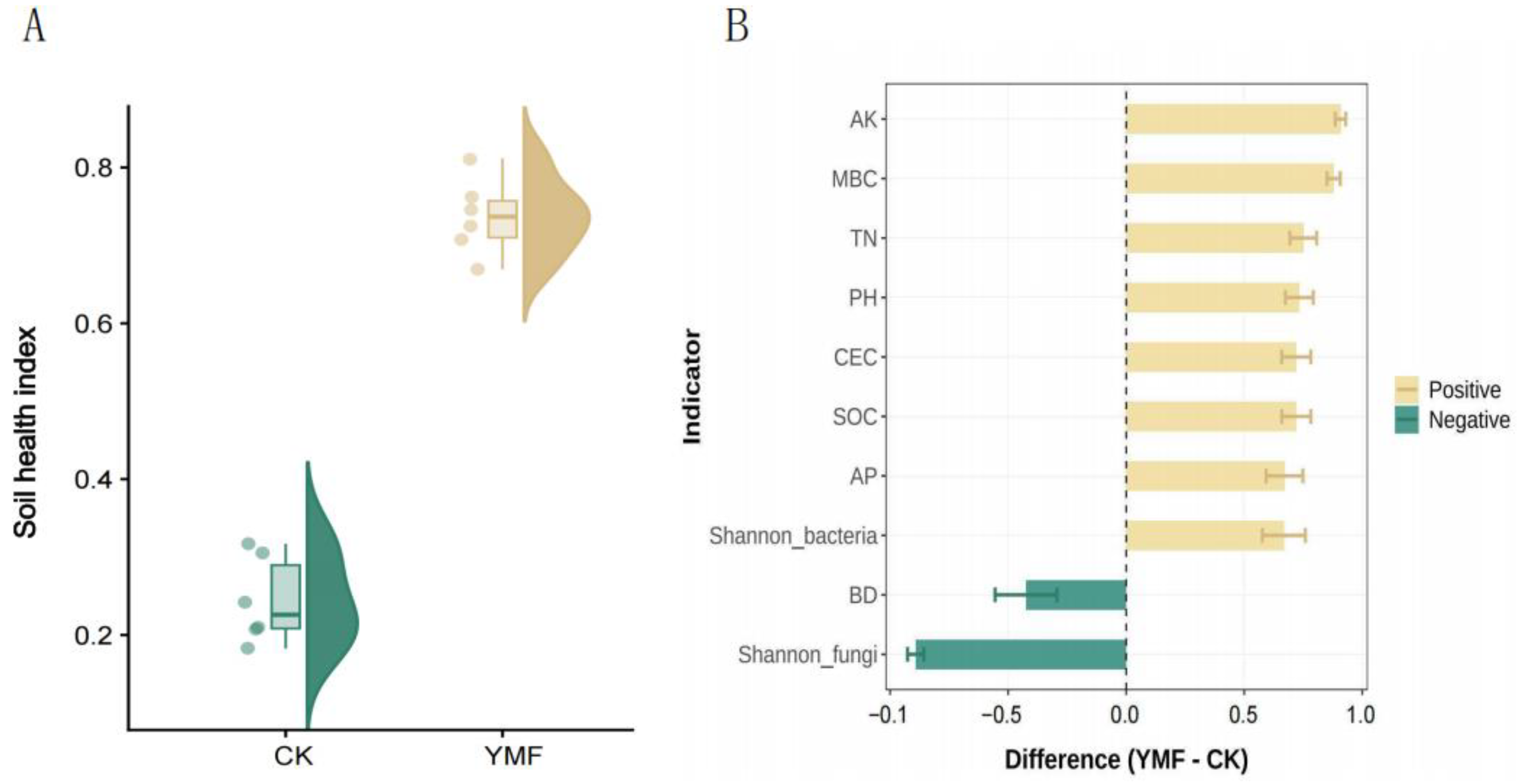
To quantitatively assess the overall soil health status, we calculated the soil health index (SHI) based on key biological and physicochemical parameters using a standardized weighted integration method. The results showed that the SHI value of the foliar fertilizer treatment (YMF) was 0.906, significantly higher than that of the control (CK, 0.805, p < 0.05, t-test), indicating that foliar fertilization markedly enhanced the overall soil health status (According to the Technical Specification for Farmland Soil Health Evaluation (T/JAASS 145-2024), soils with SHI values ranging from 1 to 0.5 are classified as having an extremely high level of soil health). Weight analysis (Figure 2B) revealed that physicochemical parameters such as cation exchange capacity (CEC), soil organic matter (SOM), total nitrogen (TN), and available phosphorus (AP), together with microbial indicators including microbial biomass carbon (MBC) and microbial diversity, contributed most strongly to the overall evaluation system (Figure 2). These findings suggest that foliar fertilization improved SHI primarily by enhancing key soil physicochemical properties and stimulating microbial activity, thereby jointly driving the optimization of soil health.

3.3. Differential Functional Gene Analysis and Taxonomic Annotation

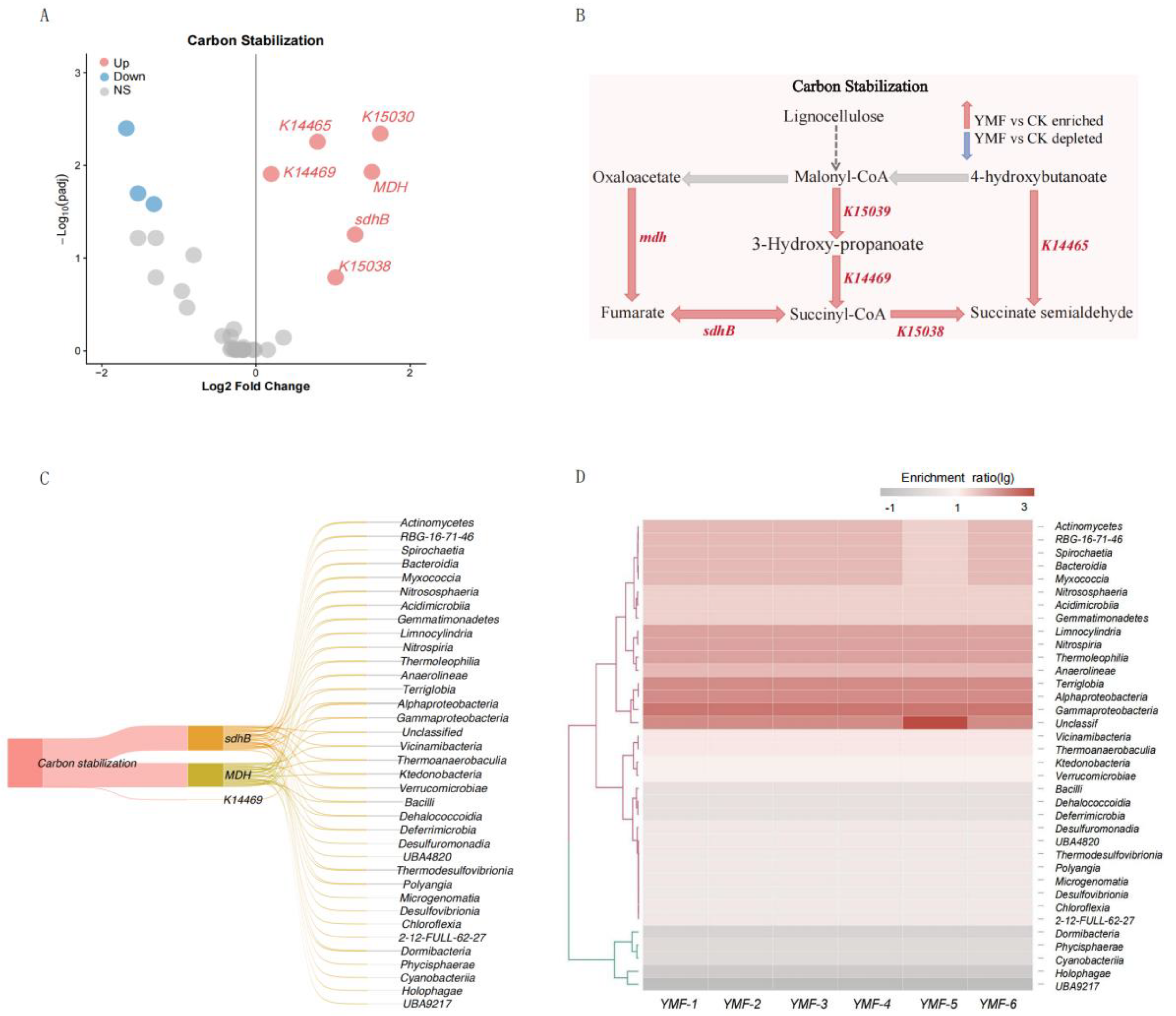
This study examined carbon metabolism–related genes and their microbial drivers to determine the effects of foliar fertilization. Our analysis revealed significant shifts in gene abundance and enrichment of key carbon stabilization microorganisms. We found that carbon stabilization-related genes, including K14469, MDH, and sdhB, were significantly upregulated under the YMF treatment (Figure 3A), suggesting a robust enhancement of carbon stabilization pathways. These genes are involved in various carbon metabolic pathways, including the conversion of lignocellulose and malonyl-CoA to succinic semialdehyde, which is crucial for the stabilization of soil organic carbon. Notably, K14469 is involved in the degradation of 3-hydroxypropanoate, a key intermediate in lignocellulose metabolism, While MDH is integral to the malate dehydrogenase pathway, catalyzing the oxidation of malate to oxaloacetate, is critical in the tricarboxylic acid (TCA) cycle, facilitating the conversion of fumarate to succinate—a major step in carbon fixation and stabilization [46,47]. The upregulation of these genes was primarily driven by functional microbial taxa such as Actinomycetes, Thermoleophilia, Alphaproteophilia and Gammaproteobacteria [48,49,50,51,52,53]. At the species level, the K14469 gene was primarily driven by Alphaproteophilia, which cooperatively promoted the decomposition of complex plant polymers such as cellulose and lignin. The MDH gene was predominantly driven by Alphaproteobacteria, promoting anaerobic carbon stabilization in the rhizosphere. In contrast, the sdhB gene was primarily driven by Gammaproteobacteria (notably Pseudomonadales and affiliated taxa) and Actinomycetes. These taxa, collectively enriched under foliar fertilization (Figure 3C,D), indicating that YMF treatment enhanced lignocellulose turnover and the incorporation of carbon into stable soil organic matter. The specific enrichment of functional microbial taxa evaluates that foliar fertilization reshaped the composition of carbon-metabolizing microorganisms, enhanced soil carbon stabilization potential, and thereby promoted soil carbon cycling processes [54,55].
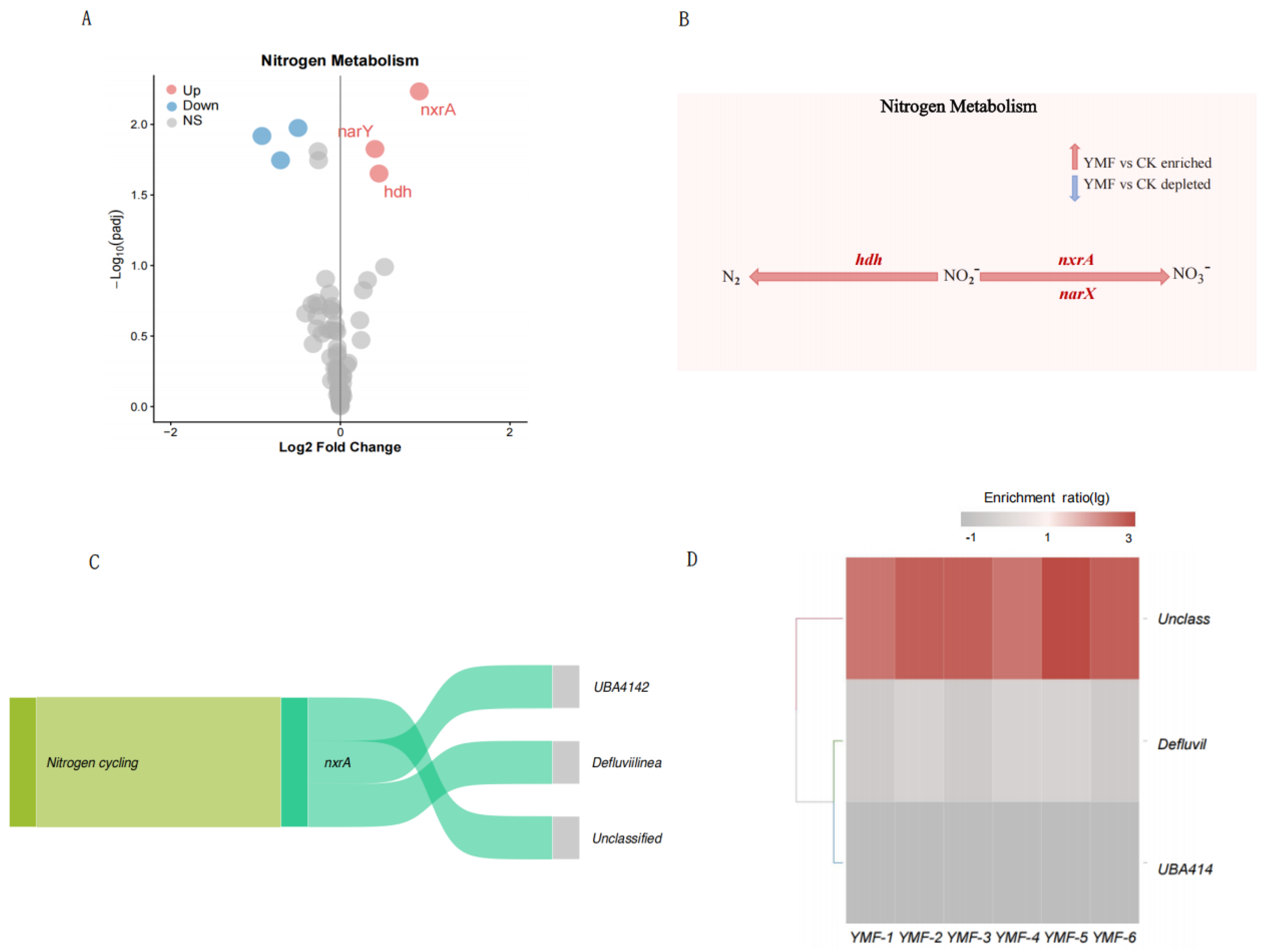
In addition, we found that foliar fertilization exerted a pronounced regulatory effect on the nitrogen cycle. Analysis of nitrogen metabolic pathways showed that key functional genes involved in nitrification, denitrification, and anaerobic ammonium oxidation—including narY, nxrA, and hdh—were all significantly upregulated in the YMF treatment. These genes correspond to nitrate reduction, nitrite oxidation, and nitrogen gas formation, respectively, suggesting an overall enhancement of nitrogen metabolism rates and fluxes, which helps maintain the balance between nitrogen input and loss [56]. Further taxonomic annotation revealed that Defluviilinea was the dominant nitrogen-metabolizing genus, promoting nitrite oxidation through the expression of the nxrA gene [56]. The relative abundance of Defluviilinea was markedly higher under foliar fertilization than in the control (Figure 4D), indicating that foliar fertilizer may promote efficient nitrogen cycling by enriching this functional group and activating the narX–nirA–hdh co-metabolic network [56].
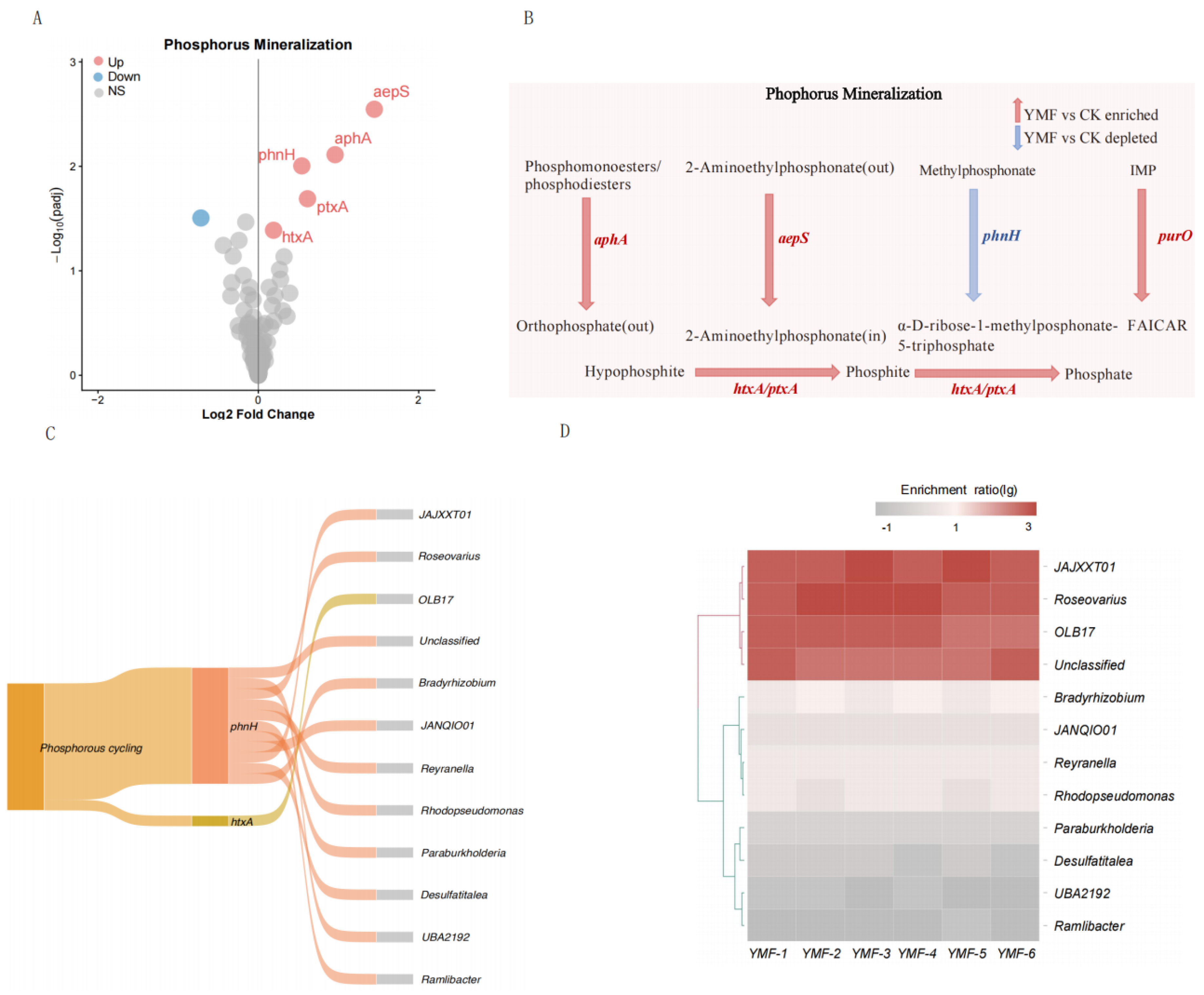
Compared with the control, we observed that the foliar fertilizer treatment also significantly enriched functional genes related to organic phosphorus hydrolysis and reduction, including aphA (encoding phosphomonoesterase), aepS (encoding aminoethylphosphonate synthase), htxA/ptxA (encoding phosphite dehydrogenase), and phnH (encoding methylphosphonate hydrolase) [57,58]. These genes participate in the degradation and transformation of organic phosphorus compounds such as phosphomonoesters, phosphodiesters, and 2-aminoethylphosphonic acid, thereby facilitating plant uptake of otherwise poorly soluble phosphorus [57]. Meanwhile, the nucleotide metabolism–related gene purO was significantly downregulated under YMF, suggesting a reduction in cellular nucleotide metabolism. As the demand for nucleotide synthesis decreases, phosphate consumption is correspondingly reduced, leading to the release of organic phosphorus in the soil. This released organic phosphorus then participates in the phosphorus mineralization process, thereby enhancing soil phosphorus mineralization [59]. The overall upregulation of aphA, phnH, and htxA suggests that foliar fertilization enhances the activity of phosphorus-metabolizing microorganisms, improving phosphorus use efficiency and soil P availability [57]. Further taxonomic annotation revealed that foliar fertilization significantly enriched phosphorus-metabolizing microorganisms encoding the phnH gene, including Paraburkholderia, Roseovarius, and Reyranella (Figure 5). These genera likely contribute to the solubilization of insoluble phosphorus and the mineralization of organic phosphorus compounds through the secretion of organic acids, phosphatases, and other hydrolytic enzymes, thereby enhancing available phosphorus levels and nutrient activation in soil [60,61].
Overall, foliar fertilization significantly enriched key functional microorganisms—such as Actinomycetes, Thermoleophilia, Alphaproteophilia, Gammaproteobacteria, Defluviilinea, Paraburkholderia, Roseovarius, and Reyranella—and strengthened the activity of core metabolic pathways associated with carbon stabilization (K14469, MDH, sdhB), nitrogen metabolism (narY, nxrA), and phosphorus mineralization (htxA, phnH, hdh). Consequently, these coordinated microbial and genetic responses led to a substantial improvement in the soil health index (SHI). Collectively, the results reveal the microbial mechanisms by which foliar fertilization regulates functional microbial communities and their metabolic genes to promote nutrient cycling and enhance soil health.

3.4. Foliar Fertilization–Mediated Mechanisms of C–N–P Cycling

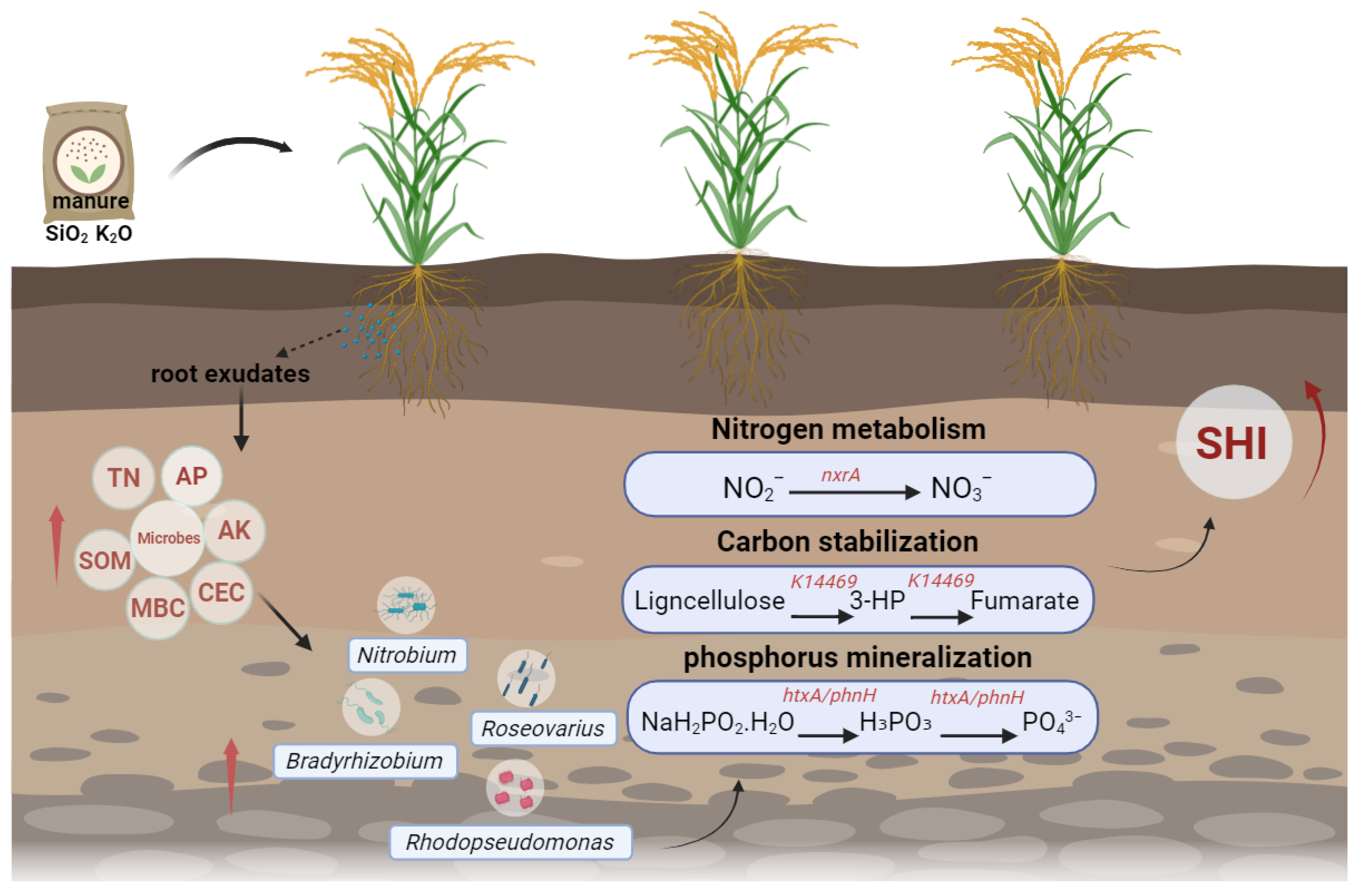
This study demonstrated through integrative analysis that foliar fertilization enhances soil health by enriching functional microbes and activating key genes mediating C, N, and P cycling (Figure 6). Foliar fertilizer application promoted rice growth and significantly increased the contents of TN, AP, and AK in the rhizosphere, while simultaneously elevating SOM, MBC, and CEC. These changes collectively improved the nutrient and energy supply environment in the rhizosphere. Under these improved soil conditions, functional microbial taxa such as Bradyrhizobium, Rhodopseudomonas, and Roseovarius were markedly enriched in the foliar fertilizer treatment. These microorganisms contributed to nutrient cycling through the expression of key metabolic genes involved in carbon stabilization (K14469), nitrogen metabolism (narX), and phosphorus mineralization (phnH), collectively promoting efficient nutrient conversion and regeneration, which in turn enhanced the soil health index (SHI). Taken together, these findings demonstrate that foliar fertilization establishes a cascade regulatory mechanism in which foliar nutrient inputs improve the rhizosphere microenvironment, promote the enrichment of functional microbial taxa, and enhance nutrient cycling efficiency, thereby achieving a systematic improvement in paddy soil health.

4. Discussion

Here, our study demonstrated that foliar fertilization improved soil health by promoting rice growth, reshaping the rhizosphere environment, and enriching microorganisms mediating C, N, and P cycling. Notably, the activation of these microbial groups and their key metabolic genes established a coordinated “plant–microbe–soil” feedback mechanism that collectively enhanced nutrient turnover efficiency and overall soil health [62,63].
Foliar fertilization significantly increased soil physicochemical parameters, including pH, CEC, SOM, TN, AP, AK, and MBC. These improvements indicate that foliar nutrient input enhanced rice growth and strengthened root exudation, thereby improving rhizosphere soil conditions [13]. Previous studies have reported similar effects, showing that the SiO2 and K2O contained in foliar fertilizers act synergistically to improve plant physiological performance [13,64,65,66]. Si deposition in root epidermal cells enhances mechanical stability and stress tolerance [67], while foliar-absorbed K can be translocated to roots via the xylem, maintaining guard cell turgor, ionic balance, and promoting ATP synthesis and energy metabolism [68,69]. Consequently, active root exudation releases carbon-rich compounds such as sugars, organic acids, and phenolics, which improve soil aggregation and cation exchange environments while serving as substrates for microbial metabolism and functional differentiation [70,71,72].
Metagenomic evidence indicated that foliar fertilization markedly altered the functional structure of soil microbial communities. By selectively enriching taxa harboring genes related to carbon, nitrogen, and phosphorus metabolism, it enhanced nutrient cycling processes at both genetic and ecological levels [10,73]. For carbon cycling, foliar fertilization promoted the enrichment of carbon-metabolizing taxa such as Actinomycetes, Bacteroidia, Thermolephilia, Alphaproteophilia, Anaerolineae, Gemmaproteobacteria, Gemmatimonadetes, which harbor key genes (K14469, MDH, and sdhB) involved in organic matter degradation, anaerobic metabolism, and the conversion of carbon intermediates [74,75,76,77]. Specifically, these enriched taxa and genes play significant roles in the conversion of lignocellulose into the carbon-stabilizing product, fumarate [50,51,74,75]. Fumarate has been shown in previous studies to play a key role in promoting mineral binding with metal ions (such as calcium, iron, and aluminum) [78] in soils, forming organic–mineral complexes that stabilize organic carbon and reduce carbon oxidation [79,80,81]. Ultimately, this process may contribute to the sustained retention and stabilization of carbon in soils, suggesting a potential beneficial impact of foliar fertilization on soil carbon cycling [82,83].
Regarding nitrogen cycling, the application of foliar fertilizer significantly enriched microbial taxa carrying the nxrA gene, such as UBA4142 and Defluviilinea within the Chloroflexota–Anaerolineae lineage [56,84]. The increased carbon availability in the rhizosphere provided energy to drive nitrogen transformation, thereby activating heterotrophic nitrifiers and denitrifiers (e.g., Defluviilinea and related Anaerolineae), which jointly promoted nitrogen conversion and regeneration [85,86,87].
For phosphorus cycling, foliar fertilization enriched microorganisms carrying the key functional genes phnH and htxA, including Bradyrhizobium, Rhodopseudomonas, Roseovarius, Reyranella, Paraburkholderia, Ramlibacter, and Desulfatitalea. These microorganisms contribute to soluble phosphorus release and reutilization via C–P bond cleavage, organic phosphorus mineralization, and high-affinity phosphate transport systems [59,88]. Improved soil pH and organic C levels under foliar fertilization provided a favorable energy and substrate environment for these phosphorus-solubilizing taxa, enabling the formation of an efficient rhizosphere mineralization system that enhanced available phosphorus content and overall P cycling efficiency [41,89]. Collectively, foliar fertilization not only improved soil physicochemical properties but also activated functional microbial communities carrying key metabolic genes. These changes acted synergistically to strengthen carbon, nitrogen, and phosphorus cycling processes, thereby providing a microbiological foundation for improved soil health [90,91].
Although the experimental field is located within a reclaimed mining area, it has been under continuous rice cultivation and conventional paddy management for multiple seasons. Thus, our comparison between foliar fertilization (YMF) and the control (CK) reflects treatment effects under a typical managed paddy system rather than acute responses of freshly disturbed mine substrates. Nevertheless, the specific reclamation and management history of the site should be considered when extrapolating these findings to other soil types or regions.
In summary, foliar fertilization enhanced rhizosphere conditions by promoting “plant–microbe–soil” interactions. It also selectively enriched microbial groups harboring genes related to carbon stabilization, nitrogen metabolism, and phosphorus mineralization, which in turn accelerated nutrient cycling and improved overall soil functionality [63]. Future studies should integrate rhizosphere exometabolomics, metabolic flux analysis, and time-resolved metagenomics to elucidate the dynamic mechanisms governing material and energy flow between plant, rhizosphere, and microbial systems [63,84]. Moreover, isotope tracing and metabolic modeling could be applied to quantify the specific contributions of different functional microbial groups to nutrient transformation [92]. The integration of ecological network analysis and synthetic community experiments may further reveal higher-order coordination within the “nutrient–microbe–host” system and its long-term implications for soil health evolution [93]. Overall, this study provides empirical evidence that foliar fertilization enhances soil health by regulating functional microbial communities and activating key metabolic genes. These findings establish a conceptual and theoretical framework for integrating multi-omics and modeling approaches to optimize plant–microbe interactions and promote sustainable nutrient management in agricultural ecosystems [62,63,90].

5. Conclusions

Our findings demonstrate that foliar fertilization substantially improves soil health by enhancing SOM, AP, and TN levels, thereby elevating the soil health index (SHI) from 0.805 to 0.906. This improvement is supported by the upregulation of genes related to carbon stabilization, nitrogen metabolism, and phosphorus mineralization, and by the enrichment of Actinomycetes, Thermoleophilia, Alphaproteophilia, Gammaproteobacteria, Defluviilinea, Bradyrhizobium, Rhodopseudomonas, Paraburkholderia and Reyranella as core taxa driving C, N, and P cycling. Consequently, functional microorganisms collectively promoted efficient nutrient cycling, enhancing carbon, nitrogen, and phosphorus turnover, while simultaneously contributing to the overall improvement of soil health under foliar fertilizer treatment.

Supplementary Materials

The following supporting information can be downloaded at: https://www.mdpi.com/article/10.3390/agronomy15122837/s1. Table S1: Basal characteristics of soils subjected to different fertilization.

Author Contributions

Conceptualization: H.X., X.S., X.Z., Q.Z., Y.L., F.D., C.Z., B.M. and Y.Z. (Yunyou Zheng); Methodology: H.X., Y.Z. (Yuzhuo Zhao), X.S., X.Z., Y.Z. (Yunyou Zheng), B.M. and L.L.; Software: B.M., Y.Z. (Yuzhuo Zhao), X.S. and L.L.; Formal Analysis: B.M., Y.Z. (Yuzhuo Zhao), X.S. and L.L.; Investigation: H.X., X.S., Y.Z. (Yuzhuo Zhao), X.Z., Y.Z. (Yunyou Zheng), Y.L., F.D., C.Z., Y.L., F.D., C.Z., L.L. and B.M.; Writing—Original Draft Preparation: H.X., B.M. and X.S.; Project Administration: S.Z., Y.L., F.D., C.Z. and X.S.; Writing—Review and Editing: H.X. and X.S. All authors have read and agreed to the published version of the manuscript.

Funding

This study was supported by the Key R&D Program of Zhejiang Province (2023C02004), National Natural Science Foundation of China (42090060), Key R&D Program of Ningbo (2024Z267).

Data Availability Statement

The data presented in this study are openly available in National Genomics Data Center at https://ngdc.cncb.ac.cn/bioproject/browse/PRJCA050810, (The data is accessible on 11 November 2025), reference number: PRJCA050810.

Acknowledgments

Regarding the use of AI tools, we confirm that AI was used only for minor spelling and grammatical corrections during the final polishing stage. No AI tools were involved in the generation of content, data analysis, or interpretation of results. The server resources for the bioinformatics analyses in this article are supported by the National Supercomputing Center in Zhengzhou.

Conflicts of Interest

The authors declare that they have no known competing financial interests or personal relationships that could have appeared to influence the work reported in this paper.

References

  1. Doran, J.W.; Zeiss, M.R. Soil Health and Sustainability: Managing the Biotic Component of Soil Quality. Appl. Soil. Ecol. 2000, 15, 3–11. [Google Scholar] [CrossRef]
  2. Kibblewhite, M.G.; Ritz, K.; Swift, M.J. Soil Health in Agricultural Systems. Philos. Trans. R. Soc. Lond. B Biol. Sci. 2008, 363, 685–701. [Google Scholar] [CrossRef] [PubMed]
  3. Xu, J.; Ren, C.; Zhang, X.; Wang, C.; Wang, S. Soil health contributes to variations in crop production and nitrogen use efficiency. Nat. Food 2025, 6, 597–609. [Google Scholar] [CrossRef] [PubMed]
  4. Khambalkar, P.A.; Agrawal, S.; Dhaliwal, S.S.; Yadav, S.S.; Sadawarti, M.J.; Singh, A.; Yadav, I.R.; Yadav, K.; Shivansh; Prasad, D.; et al. Sustainable Nutrient Management Balancing Soil Health and Food Security for Future Generations. Appl. Food Res. 2025, 5, 101087. [Google Scholar] [CrossRef]
  5. Duan, J.; Liu, H.; Zhang, X.; Ren, C.; Wang, C.; Cheng, L.; Xu, J.; Gu, B. Agricultural Management Practices in China Enhance Nitrogen Sustainability and Benefit Human Health. Nat. Food 2024, 5, 378–389. [Google Scholar] [CrossRef]
  6. Williams, J. Improving Nutrient Use Efficiencies with Foliar Applied Nutrients. Integr. Soils 2023, v190829. [Google Scholar]
  7. Balachandra, Y.; Tej, M.K.; Raju, S.J.; Reddy, B.J. Foliar Fertilization for Nutrient Use Efficiency. Int. J. Agric. Nutr. 2025, 7, 96–101. [Google Scholar] [CrossRef]
  8. Ishfaq, M.; Kiran, A.; Ur Rehman, H.; Farooq, M.; Ijaz, N.H.; Nadeem, F.; Azeem, I.; Li, X.; Wakeel, A. Foliar Nutrition: Potential and Challenges under Multifaceted Agriculture. Environ. Exp. Bot. 2022, 200, 104909. [Google Scholar] [CrossRef]
  9. Fu, Y.; Liu, W.; Chen, Z.; Redmile-Gordon, M.; Liang, C.; Tang, C.; Guggenberger, G.; Yan, S.; Yin, L.; Peng, J.; et al. Microbial Metabolisms Determine Soil Priming Effect Induced by Organic Inputs. Soil Biol. Biochem. 2025, 209, 109885. [Google Scholar] [CrossRef]
  10. Delgado-Baquerizo, M.; Maestre, F.T.; Reich, P.B.; Jeffries, T.C.; Gaitan, J.J.; Encinar, D.; Berdugo, M.; Campbell, C.D.; Singh, B.K. Microbial Diversity Drives Multifunctionality in Terrestrial Ecosystems. Nat. Commun. 2016, 7, 10541. [Google Scholar] [CrossRef]
  11. Kamal, N.; Saharan, B.S. Microbial Dynamics in Soil: Impacts on Fertility, Nutrient Cycling, and Soil Properties for Sustainable Geosciences—People, Planet, and Prosperity. Arab. J. Geosci. 2025, 18, 34. [Google Scholar] [CrossRef]
  12. Yang, X.; Yuan, J.; Li, N.; Franks, A.E.; Shentu, J.; Luo, Y.; Xu, J.; He, Y. Loss of Microbial Diversity Does Not Decrease γ-HCH Degradation but Increases Methanogenesis in Flooded Paddy Soil. Soil Biol. Biochem. 2021, 156, 108210. [Google Scholar] [CrossRef]
  13. Fernandez, V.; Brown, P.H. From Plant Surface to Plant Metabolism: The Uncertain Fate of Foliar-Applied Nutrients. Front. Plant Sci. 2013, 4, 289. [Google Scholar] [CrossRef] [PubMed]
  14. Liu, A.; Wang, W.; Chen, X.; Zheng, X.; Fu, W.; Wang, G.; Ji, J.; Guan, C. Rice-Associated with Bacillus sp. DRL1 Enhanced Remediation of DEHP-Contaminated Soil and Reduced the Risk of Secondary Pollution Through Promotion of Plant Growth, Degradation of DEHP in Soil and Modulation of Rhizosphere Bacterial Community. J. Hazard. Mater. 2022, 440, 129822. [Google Scholar] [CrossRef]
  15. Liu, Y.-W.; Guan, D.-X.; Qiu, L.-X.; Luo, Y.; Liu, F.; Teng, H.H.; Kuzyakov, Y.; Ma, L.Q. Spatial Dynamics of Phosphorus Mobilization by Mycorrhiza. Soil Biol. Biochem. 2025, 206, 109797. [Google Scholar] [CrossRef]
  16. Gui, Y.; Gu, C.; Xiao, X.; Gao, Y.; Zhao, Y. Microbial Inoculations Promoted the Rice Plant Growth by Regulating the Root-Zone Bacterial Community Composition and Potential Function. J. Plant Nutr. Soil Sci. 2023, 23, 5222–5232. [Google Scholar] [CrossRef]
  17. Sabir, M.S.; Shahzadi, F.; Ali, F.; Shakeela, Q.; Niaz, Z.; Ahmed, S. Comparative Effect of Fertilization Practices on Soil Microbial Diversity and Activity: An Overview. Curr. Microbiol. 2021, 78, 3644–3655. [Google Scholar] [CrossRef]
  18. Bouman, B.A.M.; Humphreys, E.; Tuong, T.P.; Barker, R. Rice and Water. In Advances in Agronomy; Elsevier: Amsterdam, The Netherlands, 2007; Volume 92, pp. 187–237. [Google Scholar] [CrossRef]
  19. Dobermann, A.; Fairhurst, T. Rice: Nutrient Disorders & Nutrient Management; International Rice Research Institute: Los Baños, Philippines, 2000. [Google Scholar]
  20. Zhang, S.; Shen, T.; Yang, Y.; Li, Y.C.; Wan, Y.; Zhang, M.; Tang, Y.; Allen, S.C. Controlled-Release Urea Reduced Nitrogen Leaching and Improved Nitrogen Use Efficiency and Yield of Direct-Seeded Rice. J. Environ. Manag. 2018, 220, 191–197. [Google Scholar] [CrossRef]
  21. Fageria, N.K.; Filho, M.P.B.; Moreira, A.; Guimarães, C.M. Foliar Fertilization of Crop Plants. J. Plant Nutr. 2009, 32, 1044–1064. [Google Scholar] [CrossRef]
  22. Jifon, J.L.; Lester, G.E. Foliar Potassium Fertilization Improves Fruit Quality of Field-Grown Muskmelon on Calcareous Soils in South Texas. J. Sci. Food Agric. 2009, 89, 2452–2460. [Google Scholar] [CrossRef]
  23. Ling, F.; Silberbush, M. Response of maize to foliar vs. soil application of nitrogen-phosphorus-potassium fertilizers. J. Plant Nutr. 2002, 25, 2333–2342. [Google Scholar] [CrossRef]
  24. Bünemann, E.K.; Bongiorno, G.; Bai, Z.; Creamer, R.E.; De Deyn, G.; de Goede, R.; Fleskens, L.; Geissen, V.; Kuyper, T.W.; Mäder, P.; et al. Soil Quality—A Critical Review. Soil Biol. Biochem. 2018, 120, 105–125. [Google Scholar] [CrossRef]
  25. Bai, Z.; Caspari, T.; Gonzalez, M.R.; Batjes, N.H.; Mäder, P.; Bünemann, E.K.; de Goede, R.; Brussaard, L.; Xu, M.; Ferreira, C.S.S.; et al. Effects of Agricultural Management Practices on Soil Quality: A Review of Long-Term Experiments for Europe and China. Agric. Ecosyst. 2018, 265, 1–7. [Google Scholar] [CrossRef]
  26. Trap, J.; Bonkowski, M.; Plassard, C.; Villenave, C.; Blanchart, E. Ecological Importance of Soil Bacterivores for Ecosystem Functions. Plant Soil 2016, 398, 1–24. [Google Scholar] [CrossRef]
  27. Nunes, M.R.; Karlen, D.L.; Veum, K.S.; Moorman, T.B.; Cambardella, C.A. Biological Soil Health Indicators Respond to Tillage Intensity: A US Meta-Analysis. Geoderma 2020, 369, 114335. [Google Scholar] [CrossRef]
  28. Wang, F.; Chen, S.; Qin, S.; Sun, R.; Zhang, Y.; Wang, S.; Hu, C.; Hu, H.; Liu, B. Long-Term Nitrogen Fertilization Alters Microbial Community Structure and Denitrifier Abundance in the Deep Vadose Zone. J. Soils Sediments 2021, 21, 2394–2403. [Google Scholar] [CrossRef]
  29. T/JAAASS 145-2024; Technical Code for Soil Health Assessment in Farmland. Jiangsu Society of Agricultural Science: Nanjing, China, 2024.
  30. Pansu, M.; Gautheyrou, J. (Eds.) pH Measurement. In Handbook of Soil Analysis: Mineralogical, Organic and Inorganic Methods; Springer: Berlin/Heidelberg, Germany, 2006; pp. 551–579. [Google Scholar] [CrossRef]
  31. Pansu, M.; Gautheyrou, J. (Eds.) Water Content and Loss on Ignition. In Handbook of Soil Analysis: Mineralogical, Organic and Inorganic Methods; Springer: Berlin/Heidelberg, Germany, 2006; pp. 3–13. [Google Scholar] [CrossRef]
  32. Pansu, M.; Gautheyrou, J. (Eds.) Organic and Total C, N (H, O, S) Analysis. In Handbook of Soil Analysis: Mineralogical, Organic and Inorganic Methods; Springer: Berlin/Heidelberg, Germany, 2006; pp. 327–370. [Google Scholar] [CrossRef]
  33. Fixen, P.E.; Grove, J.H. Testing Soils for Phosphorus. In Soil Testing and Plant Analysis; John Wiley & Sons, Ltd.: Hoboken, NJ, USA, 1990; pp. 141–180. [Google Scholar] [CrossRef]
  34. Haby, V.A.; Russelle, M.P.; Skogley, E.O. Testing Soils for Potassium, Calcium, and Magnesium. In Soil Testing and Plant Analysis; John Wiley & Sons, Ltd.: Hoboken, NJ, USA, 1990; pp. 181–227. [Google Scholar] [CrossRef]
  35. Das, D.; Sahoo, J.; Raza, M.B.; Barman, M.; Das, R. Ongoing Soil Potassium Depletion under Intensive Cropping in India and Probable Mitigation Strategies. A Review. Agron. Sustain. Dev. 2022, 42, 4. [Google Scholar] [CrossRef]
  36. Chen, S.; Zhou, Y.; Chen, Y.; Gu, J. Fastp: An Ultra-Fast All-in-One FASTQ Preprocessor. Bioinformatics 2018, 34, i884–i890. [Google Scholar] [CrossRef]
  37. Li, D.; Liu, C.-M.; Luo, R.; Sadakane, K.; Lam, T.-W. MEGAHIT: An Ultra-Fast Single-Node Solution for Large and Complex Metagenomics Assembly via Succinct de Bruijn Graph. Bioinformatics 2015, 31, 1674–1676. [Google Scholar] [CrossRef]
  38. Kanehisa, M.; Sato, Y.; Kawashima, M.; Furumichi, M.; Tanabe, M. KEGG as a Reference Resource for Gene and Protein Annotation. Nucleic Acids Res. 2016, 44, D457–D462. [Google Scholar] [CrossRef]
  39. Huerta-Cepas, J.; Szklarczyk, D.; Heller, D.; Hernández-Plaza, A.; Forslund, S.K.; Cook, H.; Mende, D.R.; Letunic, I.; Rattei, T.; Jensen, L.J.; et al. eggNOG 5.0: A Hierarchical, Functionally and Phylogenetically Annotated Orthology Resource Based on 5090 Organisms and 2502 Viruses. Nucleic Acids Res. 2019, 47, D309–D314. [Google Scholar] [CrossRef] [PubMed]
  40. Tu, Q.; Lin, L.; Cheng, L.; Deng, Y.; He, Z. NCycDB: A Curated Integrative Database for Fast and Accurate Metagenomic Profiling of Nitrogen Cycling Genes. Bioinformatics 2019, 35, 1040–1048. [Google Scholar] [CrossRef] [PubMed]
  41. Zeng, J.; Tu, Q.; Yu, X.; Qian, L.; Wang, C.; Shu, L.; Liu, F.; Liu, S.; Huang, Z.; He, J.; et al. PCycDB: A Comprehensive and Accurate Database for Fast Analysis of Phosphorus Cycling Genes. Microbiome 2022, 10, 101. [Google Scholar] [CrossRef]
  42. Buchfink, B.; Xie, C.; Huson, D.H. Fast and Sensitive Protein Alignment Using DIAMOND. Nat. Methods 2015, 12, 59–60. [Google Scholar] [CrossRef] [PubMed]
  43. bwa-mem2. bwa-mem2/README.md at Master·bwa-mem2/bwa-mem2. GitHub. Available online: https://github.com/bwa-mem2/bwa-mem2/blob/master/README.md (accessed on 21 October 2025).
  44. Woodcroft, B.J.; Singleton, C.M.; Boyd, J.A.; Evans, P.N.; Emerson, J.B.; Zayed, A.A.F.; Hoelzle, R.D.; Lamberton, T.O.; McCalley, C.K.; Hodgkins, S.B.; et al. Genome-Centric View of Carbon Processing in Thawing Permafrost. Nature 2018, 560, 49–54. [Google Scholar] [CrossRef]
  45. Okoye, K.; Hosseini, S. Introduction to R Programming and RStudio Integrated Development Environment (IDE). In R Programming: Statistical Data Analysis in Research; Okoye, K., Hosseini, S., Eds.; Springer Nature: Singapore, 2024; pp. 3–24. [Google Scholar] [CrossRef]
  46. Wolyniak, M.J.; Frazier, R.H.; Gemborys, P.K.; Loehr, H.E. Malate Dehydrogenase: A Story of Diverse Evolutionary Radiation. Essays Biochem. 2024, 68, 213–220. [Google Scholar] [CrossRef]
  47. Oudijk, L.; Gaal, J.; de Krijger, R.R. The Role of Immunohistochemistry and Molecular Analysis of Succinate Dehydrogenase in the Diagnosis of Endocrine and Non-Endocrine Tumors and Related Syndromes. Endocr. Pathol. 2019, 30, 64–73. [Google Scholar] [CrossRef]
  48. Zhou, Z.; Liu, Y.; Pan, J.; Cron, B.R.; Toner, B.M.; Anantharaman, K.; Breier, J.A.; Dick, G.J.; Li, M. Gammaproteobacteria Mediating Utilization of Methyl-, Sulfur- and Petroleum Organic Compounds in Deep Ocean Hydrothermal Plumes. ISME J. 2020, 14, 3136–3148. [Google Scholar] [CrossRef]
  49. Dyksma, S.; Bischof, K.; Fuchs, B.M.; Hoffmann, K.; Meier, D.; Meyerdierks, A.; Pjevac, P.; Probandt, D.; Richter, M.; Stepanauskas, R.; et al. Ubiquitous Gammaproteobacteria Dominate Dark Carbon Fixation in Coastal Sediments. ISME J. 2016, 10, 1939–1953. [Google Scholar] [CrossRef]
  50. Javed, Z.; Tripathi, G.D.; Mishra, M.; Dashora, K. Actinomycetes—The Microbial Machinery for the Organic-Cycling, Plant Growth, and Sustainable Soil Health. Biocatal. Agric. Biotechnol. 2021, 31, 101893. [Google Scholar] [CrossRef]
  51. Vijayakumar, R.; Gopika, G.; Dhanasekaran, D.; Saravanamuthu, R. Isolation, Characterisation and Antifungal Activity of Marine Actinobacteria from Goa and Kerala, the West Coast of India. Arch. Phytopathol. Plant Prot. 2012, 45, 1010–1025. [Google Scholar] [CrossRef]
  52. de Oliveira, T.B.; Rodrigues, A. Ecology of Thermophilic Fungi. In Fungi in Extreme Environments: Ecological Role and Biotechnological Significance; Tiquia-Arashiro, S.M., Grube, M., Eds.; Springer International Publishing: Cham, Switzerland, 2019; pp. 39–57. [Google Scholar] [CrossRef]
  53. Garritano, A.N.; Song, W.; Thomas, T. Carbon Fixation Pathways across the Bacterial and Archaeal Tree of Life. PNAS Nexus 2022, 1, pgac226. [Google Scholar] [CrossRef]
  54. Berg, I.A. Ecological Aspects of the Distribution of Different Autotrophic CO2 Fixation Pathways. Appl. Environ. Microbiol. 2011, 77, 1925–1936. [Google Scholar] [CrossRef]
  55. Hügler, M.; Sievert, S.M. Beyond the Calvin Cycle: Autotrophic Carbon Fixation in the Ocean. Annu. Rev. Mar. Sci. 2011, 3, 261–289. [Google Scholar] [CrossRef] [PubMed]
  56. Daims, H.; Lebedeva, E.V.; Pjevac, P.; Han, P.; Herbold, C.; Albertsen, M.; Jehmlich, N.; Palatinszky, M.; Vierheilig, J.; Bulaev, A.; et al. Complete Nitrification by Nitrospira Bacteria. Nature 2015, 528, 504–509. [Google Scholar] [CrossRef] [PubMed]
  57. Chen, J.; Xu, H.; Seven, J.; Zilla, T.; Dippold, M.A.; Kuzyakov, Y. Microbial Phosphorus Recycling in Soil by Intra- and Extracellular Mechanisms. ISME Commun. 2024, 3, 135. [Google Scholar] [CrossRef]
  58. Dai, Z.; Liu, G.; Chen, H.; Chen, C.; Wang, J.; Ai, S.; Wei, D.; Li, D.; Ma, B.; Tang, C.; et al. Long-Term Nutrient Inputs Shift Soil Microbial Functional Profiles of Phosphorus Cycling in Diverse Agroecosystems. ISME J. 2020, 14, 757–770. [Google Scholar] [CrossRef]
  59. Wang, X.; Guo, H.; Wang, J.; He, P.; Kuzyakov, Y.; Ma, M.; Ling, N. Microbial Phosphorus-Cycling Genes in Soil under Global Change. Glob. Change Biol. 2024, 30, e17281. [Google Scholar] [CrossRef]
  60. Zhang, J.; Thomas, B.W.; Yang, Y.; Wei, Y.; Xu, W.; Chang, X.; Huang, R.; Wang, M.; Shi, X.; Zhang, Y. Phosphorus Cycling Genes, Enzyme Activities and Microbial Communities Shift Based on Green Manure Residues and Soil Environment. Pedosphere 2025, S1002016025000657. [Google Scholar] [CrossRef]
  61. Deng, P.; Zhou, Y.; Chen, W.; Tang, F.; Wang, Y. Microbial Mechanisms for Improved Soil Phosphorus Mobilization in Monoculture Conifer Plantations by Mixing with Broadleaved Trees. J. Environ. Manag. 2024, 359, 120955. [Google Scholar] [CrossRef]
  62. Lehmann, J.; Bossio, D.A.; Kögel-Knabner, I.; Rillig, M.C. The Concept and Future Prospects of Soil Health. Nat. Rev. Earth Environ. 2020, 1, 544–553. [Google Scholar] [CrossRef] [PubMed]
  63. Trivedi, P.; Leach, J.E.; Tringe, S.G.; Sa, T.; Singh, B.K. Plant–Microbiome Interactions: From Community Assembly to Plant Health. Nat. Rev. Microbiol. 2020, 18, 607–621. [Google Scholar] [CrossRef]
  64. Mohammadi, H.; Abdollahi-Bastam, S.; Aghaee, A.; Ghorbanpour, M. Foliar-Applied Silicate Potassium Modulates Growth, Phytochemical, and Physiological Traits in Cichorium intybus L. under Salinity Stress. BMC Plant Biol. 2024, 24, 288. [Google Scholar] [CrossRef] [PubMed]
  65. da Silva, A.C.Z.; Pereira, R.F.; da Silva Ferreira, R.; Alves, S.B.; de Sousa, F.S.; Rodrigues, S.S.; de Brito Neto, J.F.; de Melo, A.S.; da Silva, R.M.; de Mesquita, E.F. Silicon and Potassium Synergistically Alleviate Salt Stress and Enhance Soil Fertility, Nutrition, and Physiology of Passion Fruit Seedlings. Front. Plant Sci. 2025, 16, 1685221. [Google Scholar] [CrossRef]
  66. El-Mogy, M.; Abdeldaym, E.A.; Abdelaziz, S.M.; Ismail, A.M.; El-Beltagi, H.S.; Ramadan, K.M.A.; Mahmoud, A.W.M.; Mottaleb, S.A. Foliar Application of Calcium, Silicon, and Potassium Nanoparticles Improves Growth, and Fruit Quality of Drought-Stressed Cucumber Plants through Modulation of Osmolytes, Antioxidant Enzymes, Photosynthesis Efficiency, and Phytohormones. Not. Bot. Horti Agrobot. Cluj-Napoca 2025, 53, 14470. [Google Scholar] [CrossRef]
  67. Ma, J.F.; Yamaji, N. Silicon Uptake and Accumulation in Higher Plants. Trends Plant Sci. 2006, 11, 392–397. [Google Scholar] [CrossRef] [PubMed]
  68. Pettigrew, W.T. Potassium Influences on Yield and Quality Production for Maize, Wheat, Soybean and Cotton. Physiol. Plant. 2008, 133, 670–681. [Google Scholar] [CrossRef]
  69. Hasanuzzaman, M.; Bhuyan, M.H.M.B.; Nahar, K.; Hossain, M.S.; Mahmud, J.A.; Hossen, M.S.; Masud, A.A.C.; Moumita; Fujita, M. Potassium: A Vital Regulator of Plant Responses and Tolerance to Abiotic Stresses. Agron. J. 2018, 8, 31. [Google Scholar] [CrossRef]
  70. Jones, D.L.; Nguyen, C.; Finlay, R.D. Carbon Flow in the Rhizosphere: Carbon Trading at the Soil–Root Interface. Plant Soil 2009, 321, 5–33. [Google Scholar] [CrossRef]
  71. Haichar, F.E.Z.; Santaella, C.; Heulin, T.; Achouak, W. Root Exudates Mediated Interactions Belowground. Soil Biol. Biochem. 2014, 77, 69–80. [Google Scholar] [CrossRef]
  72. Liu, Y.; Ding, C.; Xu, X.; Wang, K.; Li, Y.; Pan, H.; Zhang, Q.; Dumont, M.G.; Di, H.; Xu, J.; et al. Atmospheric Methane Oxidation Is Affected by Grassland Type and Grazing and Negatively Correlated to Total Soil Respiration in Arid and Semiarid Grasslands in Inner Mongolia. Soil Biol. Biochem. 2022, 173, 108787. [Google Scholar] [CrossRef]
  73. Long, X.; Li, J.; Liao, X.; Zhang, W.; Wang, K.; Zhao, J. Linking Microbial Metabolism and Ecological Strategies to Soil Carbon Cycle Function in Agroecosystems. Soil Till. Res. 2025, 251, 106562. [Google Scholar] [CrossRef]
  74. Kolton, M.; Sela, N.; Elad, Y.; Cytryn, E. Comparative Genomic Analysis Indicates That Niche Adaptation of Terrestrial Flavobacteria Is Strongly Linked to Plant Glycan Metabolism. PLoS ONE 2013, 8, e76704. [Google Scholar] [CrossRef] [PubMed]
  75. Pan, X.; Raaijmakers, J.M.; Carrión, V.J. Importance of Bacteroidetes in Host–Microbe Interactions and Ecosystem Functioning. Trends Microbiol. 2023, 31, 959–971. [Google Scholar] [CrossRef] [PubMed]
  76. Mujakić, I.; Piwosz, K.; Koblížek, M. Phylum Gemmatimonadota and Its Role in the Environment. Microorganisms 2022, 10, 151. [Google Scholar] [CrossRef]
  77. Payne, P.E.; Knobbe, L.N.; Chanton, P.; Zaugg, J.; Mortazavi, B.; Mason, O.U. Uncovering Novel Functions of the Enigmatic, Abundant, and Active Anaerolineae in a Salt Marsh Ecosystem. mSystems 2024, 10, e01162-24. [Google Scholar] [CrossRef]
  78. Rowley, M.C.; Grand, S.; Verrecchia, É.P. Calcium-Mediated Stabilisation of Soil Organic Carbo. Biogeochemistry 2018, 137, 27–49. [Google Scholar] [CrossRef]
  79. Wen, H.; Yang, F.; Sun, Z.; Miao, Z.; Hu, J.; Zhang, G. Asymmetric Responses of Soil Organic Carbon Stability to Shifting Dominance of pH-Mediated Metal-Bound Organic Carbon. Commun. Earth Environ. 2025, 6, 574. [Google Scholar] [CrossRef]
  80. Liu, H.; Hassan, M.; Bo, X.; Guo, L. Fumarate-Based Metal-Organic Framework/Mesoporous Carbon as a Novel Electrochemical Sensor for the Detection of Gallic Acid and Luteolin. J. Electroanal. Chem. 2019, 849, 113378. [Google Scholar] [CrossRef]
  81. Fu, Y.; Luo, Y.; Tang, C.; Li, Y.; Guggenberger, G.; Xu, J. Succession of the Soil Bacterial Community as Resource Utilization Shifts from Plant Residues to Rhizodeposits. Soil Biol. Biochem. 2022, 173, 108785. [Google Scholar] [CrossRef]
  82. Jia, Z.; Kuzyakov, Y.; Myrold, D.; Tiedje, J. Soil Organic Carbon in a Changing World. Pedosphere 2017, 27, 789–791. [Google Scholar] [CrossRef]
  83. Fu, Y.; Xu, Y.; Wang, Q.; Van Zwieten, L.; Liang, C.; Xu, J.; Guggenberger, G.; Luo, Y. Deciphering the Microbial Players Driving Straw Decomposition and Accumulation in Soil Components of Particulate and Mineral-Associated Organic Matter. Soil Biol. Biochem. 2025, 209, 109871. [Google Scholar] [CrossRef]
  84. Louca, S.; Parfrey, L.W.; Doebeli, M. Decoupling Function and Taxonomy in the Global Ocean Microbiome. Science 2016, 353, 1272–1277. [Google Scholar] [CrossRef] [PubMed]
  85. Klotz, M.G.; Stein, L.Y. Nitrifier Genomics and Evolution of the Nitrogen Cycle. FEMS Microbiol. Lett. 2008, 278, 146–156. [Google Scholar] [CrossRef]
  86. Kuypers, M.M.M.; Marchant, H.K.; Kartal, B. The Microbial Nitrogen-Cycling Network. Nat. Rev. Microbiol. 2018, 16, 263–276. [Google Scholar] [CrossRef]
  87. Ma, Q.; Pan, W.; Tang, S.; Sun, X.; Xie, Y.; Chadwick, D.R.; Hill, P.W.; Si, L.; Wu, L.; Jones, D.L. Maize and Soybean Experience Fierce Competition from Soil Microorganisms for the Uptake of Organic and Inorganic Nitrogen and Sulphur: A Pot Test Using 13C, 15N, 14C, and 35S Labelling. Soil Biol. Biochem. 2021, 157, 108260. [Google Scholar] [CrossRef]
  88. Huang, Y.; Dai, Z.; Tang, C.; Xu, J. Labile and Recalcitrant Carbon Inputs Differ in Their Effects on Microbial Phosphorus Transformation in a Flooded Paddy Soil with Rice (Oryza Sativa L.). Appl. Soil Ecol. 2024, 198, 105372. [Google Scholar] [CrossRef]
  89. Mitra, D.; Anđelković, S.; Panneerselvam, P.; Senapati, A.; Vasić, T.; Ganeshamurthy, A.N.; Chauhan, M.; Uniyal, N.; Mahakur, B.; Radha, T.K. Phosphate-Solubilizing Microbes and Biocontrol Agent for Plant Nutrition and Protection: Current Perspective. Commun. Commun. Soil Sci. Plant Anal. 2020, 51, 645–657. [Google Scholar] [CrossRef]
  90. Bardgett, R.D.; van der Putten, W.H. Belowground Biodiversity and Ecosystem Functioning. Nature 2014, 515, 505–511. [Google Scholar] [CrossRef]
  91. van der Heijden, M.G.A.; Bardgett, R.D.; van Straalen, N.M. The Unseen Majority: Soil Microbes as Drivers of Plant Diversity and Productivity in Terrestrial Ecosystems. Ecol. Lett. 2008, 11, 296–310. [Google Scholar] [CrossRef]
  92. Nizamani, M.M.; Hughes, A.C.; Qureshi, S.; Zhang, Q.; Tarafder, E.; Das, D.; Acharya, K.; Wang, Y.; Zhang, Z.-G. Microbial Biodiversity and Plant Functional Trait Interactions in Multifunctional Ecosystems. Appl. Soil Ecol. 2024, 201, 105515. [Google Scholar] [CrossRef]
  93. Dini-Andreote, F.; van Elsas, J.D. Back to the Basics: The Need for Ecophysiological Insights to Enhance Our Understanding of Microbial Behaviour in the Rhizosphere. Plant Soil 2013, 373, 1–15. [Google Scholar] [CrossRef]
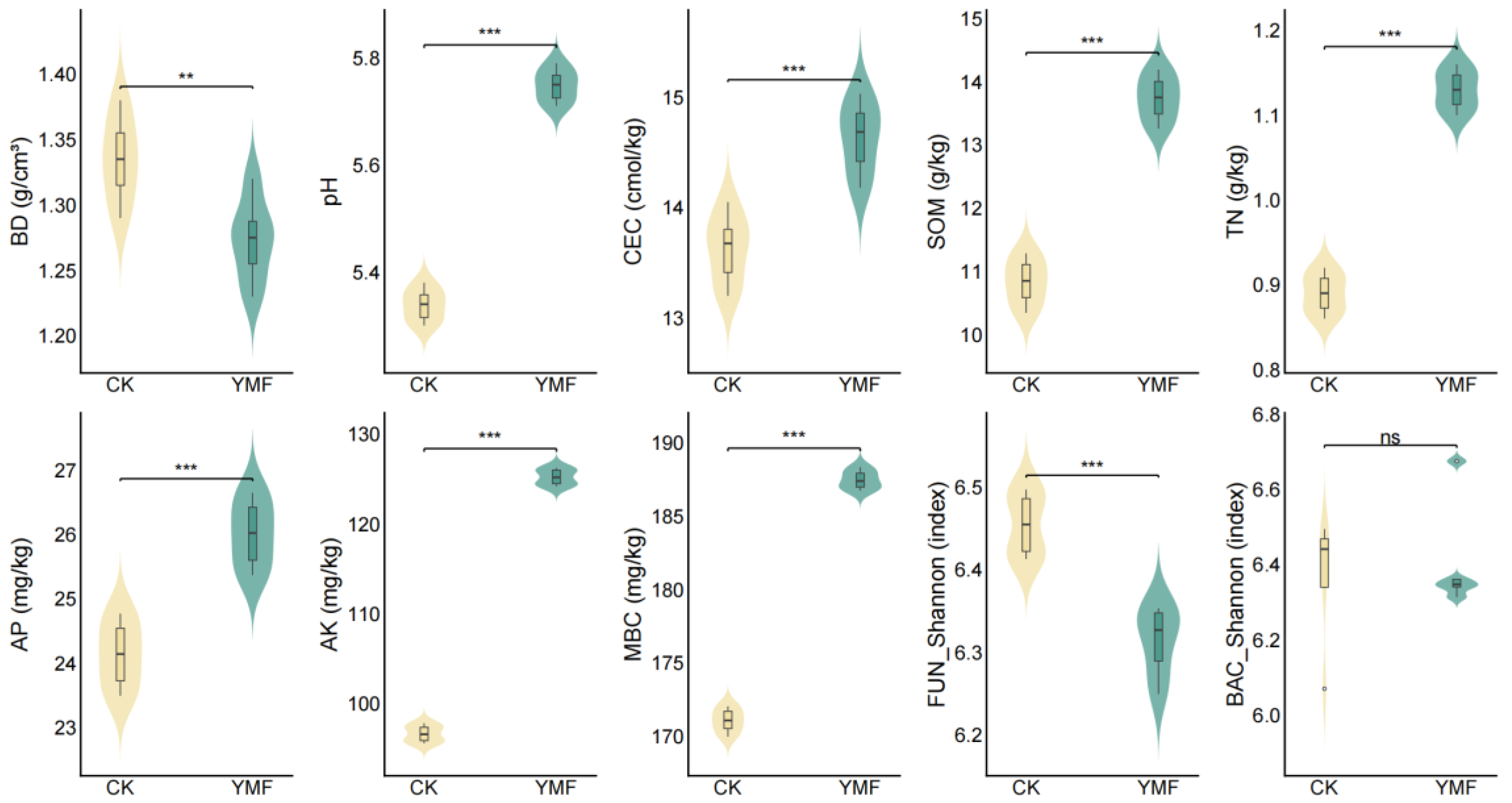
Figure 1. YMF application alters soil physicochemical properties in comparison with control. The data are presented as boxplots with overlaid violin plots, showing the distribution of soil properties between the CK (control) and YMF (treatment) groups. Statistical significance is indicated by p-values: ns = not significant, p < 0.01 (**), and p < 0.001 (***). The parameters measured include bulk density (BD), pH, cation exchange capacity (CEC), soil organic matter (SOM), total nitrogen (TN), available phosphorus (AP), available potassium (AK), microbial biomass carbon (MBC), fungal Shannon index (FUN), and bacterial Shannon index (BACS).
Agronomy 15 02837 g001
Figure 2. Soil health index and indicator differences under YMF amendment. (A) Soil health index (SHI) distributions for two treatments (CK—control; YMF—amended treatment), shown as boxplots within a violin plot. Each dot is a replicate; boxes span quartiles, whiskers show range, visualizing SHI variability between treatments. (B) Bar chart comparing YMF vs. CK for key soil health indicators. Positive bars (yellow) mean YMF increased the indicator relative to CK; negative bars (teal) mean a decrease. The dashed line at zero marks no change. Key: AK = available potassium; MBC = microbial biomass carbon; TN = total nitrogen; PH = soil pH; CEC = cation exchange capacity; SOC = soil organic carbon; AP = available phosphorus; BD = bulk density.
Agronomy 15 02837 g002
Figure 3. Differential expression of carbon cycling genes and pathway enrichment induced by YMF (A) Differential gene analysis for carbon functions; (B) Pathways of carbon-metabolism-related differential genes under foliar fertilizer application; (C) Carbon-metabolism-related functional species enriched by foliar fertilizer; (D) Enrichment ratios of carbon metabolism functional species (Treatment/Control).
Agronomy 15 02837 g003
Figure 4. Differential expression of nitrogen cycling genes and pathway enrichment induced by YMF (A) Differential gene analysis for nitrogen functions; (B) Pathways of nitrogen-metabolism-related differential genes under foliar fertilizer application; (C) Nitrogen-metabolism-related functional species enriched by foliar fertilizer; (D) Enrichment ratios of nitrogen metabolism functional species (Treatment/Control).
Agronomy 15 02837 g004
Figure 5. Differential expression of phosphorus cycling genes and pathway enrichment induced by YMF (A) Differential gene analysis for phosphorus functions; (B) Pathways of phosphorus metabolism-related differential genes under foliar fertilizer application; (C) Phosphorus metabolism-related functional species enriched by foliar fertilizer; (D) Enrichment ratios of phosphorus metabolism functional species (Treatment/Control).
Agronomy 15 02837 g005
Figure 6. Mechanistic insights into soil health improvement through foliar fertilizer application.
Agronomy 15 02837 g006
Disclaimer/Publisher’s Note: The statements, opinions and data contained in all publications are solely those of the individual author(s) and contributor(s) and not of MDPI and/or the editor(s). MDPI and/or the editor(s) disclaim responsibility for any injury to people or property resulting from any ideas, methods, instructions or products referred to in the content.