Article

Safety Evaluation of Herbicides in Maize and Soybean and Their Antioxidant Defense Responses to Thifensulfuron-Methyl and Flufenacet

1
Sichuan Engineering Research Center for Crop Strip Intercropping System, College of Agronomy, Sichuan Agricultural University, Chengdu 611130, China
2
College of Agriculture, Sichuan Agricultural University, Chengdu 611130, China
*
Author to whom correspondence should be addressed.
Agronomy 2025, 15(12), 2833; https://doi.org/10.3390/agronomy15122833 (registering DOI)
Submission received: 11 October 2025 / Revised: 24 November 2025 / Accepted: 5 December 2025 / Published: 10 December 2025
(This article belongs to the Special Issue Effects of Herbicides on Crop Growth and Development)

Abstract

Intercropping of maize (Zea mays) and soybean (Glycine max) is a sustainable practice, but herbicide safety is critical for weed control without crop injury. This study evaluated the safety of pre-emergence (acetochlor and flufenacet) and post-emergence (2,4-D iso-octyl ester, sulfentrazone, and thifensulfuron-methyl) herbicides on seven maize and eight soybean varieties under greenhouse conditions. Greenhouse results showed that flufenacet had lower growth inhibition rates (~32% maize and ~4% soybean) compared to acetochlor (~35% maize and ~24% soybean). Among the post-emergence herbicides, thifensulfuron-methyl caused minimal inhibition (~4% maize and ~25% soybean), while 2,4-D and sulfentrazone showed higher phytotoxicity (up to 74% soybean). For thifensulfuron-methyl, soybean exhibited increased antioxidant enzyme activity (SOD, CAT, APX, and POD) at the highest concentration, reaching 35–40% above control levels. In contrast, maize had higher enzyme activity (SOD, CAT, APX, and POD) at the highest herbicide dose for flufenacet. This suggests that maize’s antioxidant induction was insufficient to fully counteract flufenacet’s phytotoxicity at elevated doses. In conclusion, flufenacet demonstrated superior crop safety and weed control compared to post-emergence herbicides, making it more suitable for maize–soybean intercropping systems.

1. Introduction

Intercropping, a sustainable agricultural practice, involves cultivating two or more crops within the same field to promote resource complementarity and ecological balance [1]. Among different systems, maize–soybean intercropping (MSI) has been widely studied and applied in many countries. Research in the United States, Brazil, and Asia has shown that MSI increases land-use efficiency and enhances the stability of production systems [2,3]. Previous studies have shown that maize–soybean strip intercropping improves resource-use efficiency, suppresses weed growth, and enhances overall productivity compared with monocropping systems, making it a sustainable strategy under resource-limited and high weed pressure conditions [4]. One of the main advantages of MSI is its ability to increase soybean yield under limited land resources. Soybean, as a legume, fixes atmospheric nitrogen, improving soil fertility and reducing the need for external N fertilizers [5]. When intercropped with maize, soybean benefits from reduced competition for light and nutrients because of the differences in canopy structure and root distribution. Long-term field trials in China demonstrated that MSI increased soybean yields by 20–35% compared with sole soybean cultivation, while maintaining stable maize production [6,7]. Similarly, studies in Iowa, USA, reported that maize–soybean systems improved soil organic carbon by 15–20% compared with continuous maize, further supporting soybean productivity [8]. Another advantage is that maize (a C4 crop) and soybean (a C3 crop) have complementary growth characteristics and overlapping sowing seasons, which facilitates mechanized farming and harvesting [9,10]. For smallholder farmers in regions with scarce land resources, MSI provides a practical way to expand soybean output without expanding farmland, thereby improving household income and food security. Overall, maize–soybean intercropping not only optimizes land-use and resource efficiency but also serves as an effective strategy to boost soybean production under land constraints in both domestic and international contexts. Weed control is a critical challenge in maize–soybean intercropping systems because invasive species compete with crops for nutrients, water, and sunlight, ultimately reducing yield and quality. Since the early 1990s, herbicides have become the dominant weed management tool in China due to rising labor costs and the demand for efficient control [11]. Currently, farmers rely heavily on chemical control, with herbicides accounting for nearly half of the global pesticide use [12]. According to the China Pesticide Information Network, sixteen herbicide active ingredients are currently approved for pre-emergence soil application in both maize and soybean [13]. In maize fields, acetochlor, atrazine, mesotrione, and nicosulfuron are the primary herbicides applied, while soybean farmers often use acifluorfen, fomesafen, or mixtures with S-metolachlor and chlorimuron to achieve post-emergence control [14,15,16]. However, in intercropping systems, weed management is more complex because maize and soybean are physiologically distinct crops, and very few herbicides or application techniques are simultaneously safe for both. This limitation forces growers to either compromise on weed control or risk crop injury, particularly for soybeans, which are more sensitive to post-emergence herbicides applied at later growth stages [17,18]. Moreover, the overreliance on chemical control has accelerated the evolution of herbicide-resistant weeds, further complicating management [7]. Currently, growers apply high doses of post-emergence herbicides to control weeds effectively, but farmers also have a major concern about crop injury, which has a negative impact on the health and yield of the main crop [18]. Research confirmed that maize showed tolerance to post-emergence herbicides applied; they were applied from the 7- to 9-leaf growth stage, while soybean farmers, who desire late post-emergence application, spraying a high dose, must consider care when selecting herbicides, as soybean is more vulnerable to post-emergence application [18]. It is has already been reported that soybean injury because of late herbicide application can affect late canopy formation, which can lead to increased weed germination [19]. Recent work has also shown that herbicide drift, such as fluroxypyr from maize fields, can cause measurable phytotoxicity to neighboring soybean plants, highlighting the importance of defining safe thresholds for herbicide use in maize–soybean systems [20]. Therefore, the lack of broad-spectrum, crop-safe herbicides and suitable application strategies remain a major barrier to effective weed control in maize–soybean intercropping systems.
Oxidative stress occurs when plants are exposed to certain biotic and abiotic stresses, which naturally increases the ROS level above the normal level [21]. Herbicide exposure and weed competition trigger oxidative stress in plants, elevating ROS production (e.g., H2O2 and O2) and lipid peroxidation (MDA levels), while simultaneously modulating antioxidant enzymes (SOD, CAT, APX, and POD) as a detoxification response [22]. The whole cellular antioxidant machinery of a plant includes both enzymatic and non-enzymatic antioxidants, which play an essential role in the elimination of reactive oxygen species (ROS), as well as maintaining redox homeostasis within the cell [10]. Investigation on antioxidant response to herbicide-induced stress has been a recent focus in both crops and weeds [23]. Herbicide application activates the production of antioxidant compounds in plants as a defensive response to stress. Herbicides have been shown to alter the activities of enzymatic antioxidants in both crops and weeds, which can also lead to lipid peroxidation [24]. Even though selective herbicides are designed to only induce weed growth suppression, foliar application could cause oxidative damage and electron transport interruption in photosynthetic reactions of non-target crops [25].
Laboratory toxicity assessments often employ precision tools such as bioassay spray towers to accurately evaluate pesticide toxicity and selectivity toward target and non-target organisms [26]. Laboratory toxicity assessments facilitate the precise control of herbicide dosages, concentrations, and deposition amounts and then establish dose–response relationship models [27]. Maize–soybean strip intercropping faces unique challenges in weed management because maize and soybean differ in their physiological characteristics and herbicide sensitivities, making it difficult to identify herbicides and application methods that are safe for both crops. At present, the lack of reliable crop-selective herbicides and application strategies restrict the sustainable adoption of this system. To address these issues, our study evaluated the safety of different maize and soybean cultivars under greenhouse conditions, conducted pot experiments to assess herbicide tolerance, and investigated the biochemical responses of both crops to flufenacet and thifensulfuron-methyl exposure. In particular, antioxidant enzyme activities (SOD, CAT, APX, and POD) were measured to clarify the defense mechanisms activated under herbicide stress.
In recent years, substantial progress has been made in understanding herbicide selectivity, tolerance, and physiological responses in maize and soybean. Numerous studies have focused on the safe application of pre- and post-emergence herbicides, such as acetochlor, metolachlor, flufenacet, glyphosate, and thifensulfuron-methyl, to achieve efficient weed control while minimizing crop injury. Recent research has also examined the combined effects of herbicide application and environmental factors on crop growth and yield performance, emphasizing the need for integrated weed management strategies that ensure both crop safety and sustainability. Despite these advances, limited studies have compared the biochemical and physiological herbicide responses of maize and soybean under similar experimental conditions, particularly within intercropping systems. The present study aims to fill this gap by evaluating the safety and biochemical responses of maize and soybean cultivars to pre- and post-emergence herbicides under controlled greenhouse conditions. Through these studies, we aim to answer the key scientific questions of how maize and soybean respond differently to herbicide stress in intercropping, what physiological and biochemical indicators reflect crop tolerance, and which herbicide treatments can be considered safe for dual-crop systems. The overall objective is to provide a scientific basis for the safe and effective use of herbicides in maize–soybean strip intercropping. Ultimately, our findings will guide the rational selection and application of herbicides and ensure weed control while protecting crop growth and yield, thereby supporting the sustainable development of this intercropping model.

2. Material and Methods

2.1. Planting Material for Greenhouse Experiment

The greenhouse experiment was conducted at Sichuan Agricultural University, Wenjiang Campus, Chengdu, China, during the months of April to September 2023. Plants were grown under controlled environmental conditions with an average day/night temperature of 28 ± 2 °C/22 ± 2 °C, relative humidity of 65–75%, and a photoperiod of approximately 14 h light/10 h dark. Natural sunlight was supplemented with artificial lighting when necessary to maintain uniform light intensity. The experiment was laid out in plastic pots with 10 cm diameter and 9 cm depth. Pots were filled with a 70:30 (v/v) mixture of sterilized nutritious soil and sieved farmyard soil (2 mm mesh), providing balanced water retention and nutrient availability. “Nutritious soil” refers to sterilized commercial potting substrate rich in organic matter to provide balanced nutrients and minimize variability in herbicide behavior due to soil differences. All pots were arranged according to a completely randomized design (CRD).
Five seeds of maize and seven seeds of soybean were sown in each pot. All plants were watered according to the need of the plants to avoid the risk of water stress in the greenhouse. Plants were irrigated as needed to maintain approximately 60–70% soil moisture, with watering performed gently by hand. Irrigation was withheld for 24 h after herbicide application to prevent wash-off. A total of five herbicides were used to determine the tolerance of eight types of maize and seven types of soybeans against selected herbicides. Two pre-emergence herbicides (Harness®, Chengdu, China, 90EC acetochlor 84.3% (2-Chloro-N-(ethoxy methyl)-N-(2-ethyl-6-methylphenyl) acetamide) and Terano®, Chengdu, China, flufenacet 41% (N-(4-Fluorophenyl)-N-(1-methylethyl)-2-[[5-(trifluoromethyl)-1,3,4-thiadiazol-2-yl] oxy] acetamide) and three post-emergence herbicides (Weedar®, Chengdu, China, 64 2-4 D iso-octyl ester 87.5% (2,4-Dichlorophenoxyacetic acid iso-octyl ester), Harmony® SG, Chengdu, China, thifensulfuron-methyl 25% (Methyl 3-[(4-methoxy-6-methyl-1,3,5-triazin-2-yl)amino] carbonyl]amino]sulfonyl]-2-thiophenecarboxylate) and Spartan® 4F, Chengdu, China, sulfentrazone 75% (2′,4′-Dichloro-5′-(4-difluoromethyl-4,5-dihydro-3-methyl-5-oxo-1H-1,2,4-triazol-1-yl) methane sulfonanilide) were used to see their toxic effect on both maize and soybean plants.
Maize cultivars used: Mián dān 333; Mián dān 53; Chuān dān 99; Chéng dān 716; Zhèng hóng 325; Huá shì 919; Huá shì 99; Zhòng yù 3.
Soybean cultivars used: Chuān nóng xià dòu 4 hào; Nán xià dòu 25; Nán xià dòu 30; Chuān nóng xià dòu 1 hào; Gòng qiū dòu 5 hào; Chuān nóng xià dòu 3 hào; Nán dòu 12.

2.2. Pre-Emergence Herbicides

After filling and sowing the seeds in each pot, pre-emergence herbicides were applied right after sowing the seeds by using 5 mL spray bottles. Because the pot surface area was extremely small, precise application required a fine handheld sprayer to deliver uniform coverage and avoid runoff. Pre-emergence herbicides are usually used to control weeds even before their germination. For pre-emergence herbicides, three treatments and one control were used. The concentrations used for acetochlor 84.3% were conc 1 = 2 mL/L, conc 2 = 3 mL/L, conc 3 = 6 mL/L and those used for flufenacet 41% were conc 1 = 2 mL/L, conc 2 = 2.5 mL/L, and conc 3 = 5 mL/L. For each herbicide, concentration 1 (lower field dose) and concentration 2 (higher field dose) represent the recommended application rates, while concentration 3 (2× concentration 2) was used to evaluate elevated stress effects. These concentrations were selected based on recommended field application rates in China, while the highest level (2×) was included to simulate potential over-application or drift exposure conditions to evaluate crop tolerance thresholds. For the pot experiment, four replications for each concentration were used and there were four replications for the control as well.

2.3. Post-Emergence Herbicides

After filling and sowing the seeds in each pot, plants were irrigated to maintain the soil moisture required and kept in the greenhouse to obtain soybean seedlings (2–3 leaves) and maize seedlings (3–5 leaves) for further safety evaluations. After obtaining 2–3 leaves for soybean and 3–5 leaves for maize, post-emergence herbicides (2-4 D isooctyl ester, thifensulfuron-methyl, and sulfentrazone) were sprayed on the leaves and stem by using 5 mL spray bottles. For the post-emergence herbicides, three treatments and one control were used. The concentrations used for thifensulfuron-methyl 25% were conc 1 = 15 g/L, conc 2 = 20 g/L, and conc 3 = 40 g/L; those for 2-4 D iso-octyl ester 87.5% were conc 1 = 1.75 g/L, conc 2 = 2 g/L, and conc 3 = 4 g/L; and those for sulfentrazone 75% were conc 1 = 0.8 g/L, conc 2 = 1.2 g/L, and conc 3 = 2.4 g/L. For each herbicide, concentration 1 (lower field dose) and concentration 2 (higher field dose) represent recommended application rates, while concentration 3 (2× concentration 2) was used to evaluate elevated stress effects. These concentrations were selected based on recommended field application rates for maize and soybean in China, while the highest level (2×) was included to simulate potential over-application or drift exposure conditions to evaluate crop tolerance thresholds. For this pot experiment, four replications for each concentration were used and four replications were used for the control as well.

2.4. Measurement of Growth Parameters

Pre-emergence: Both maize and soybean were harvested after obtaining 3–4 leaves for soybean and 4–5 leaves for maize. After harvesting, plants roots were washed with water to completely remove soil from their roots. We measured the plant height in centimeters (cm) from the base of the stem to the top of the canopy for both maize and soybean. Fresh weight of each plant was measured in grams. Post-emergence: Both maize and soybean were harvested at 12–14 DAS (days after spraying) of post-emergence herbicides. Then, plant height and fresh weight were measured right after harvesting.

2.5. Determination of Antioxidant Activity

In this study, flufenacet (pre-emergence) and thifensulfuron-methyl (post-emergence) were selected for antioxidant assays based on preliminary trials: flufenacet showed consistent safety for both crops, while thifensulfuron-methyl caused the least injury among other post-emergence herbicides. One representative maize (Chéng dān 716) and soybean (Nán xià dòu 25) variety were selected from eight maize and seven soybean varieties, as all varieties showed consistent herbicide responses. The activities of superoxidase dismutase (SOD), peroxidase (POD), catalase (CAT), and ascorbate peroxidase (APX) were measured. For flufenacet, the herbicide was applied right after the sowing of seeds and then leaves for both maize and soybean were collected after 14 days of herbicide application. For thifensulfuron-methyl, the herbicide was applied after maize and soybean reached to 2–3 leaves and then leaf samples were collected after 14 days of herbicide application. Three replications for each concentration were used, and a control group was used as well. Leaves were crushed into a fine powder by using a mortar and pestle; after crushing, the enzyme extraction buffer was added accordingly. Enzyme activity assays were conducted under ice bath conditions. The Nanjing Jincheng Bioengineering Institute sold enzyme activity kits, and the manufacturer’s recommendations were followed while measuring the enzyme’s activities.

2.6. Statistical Analysis

Growth inhibition rate (%) was calculated for both the weight and height of treated plants of both maize and soybean. The growth inhibition rate (%) formula used = (control Av. Height − Treated Plant Height or Weight/control Av. Height or Weight × 100). Statistical analysis was conducted using statistics 27.0 (IBM SPSS Statistics 27). Significant differences among all treatments were measured by using ANOVA (one-way) in combination with the LSD (least significant difference) test. The significance of differences was evaluated at the five percent probability level (p < 0.05). All regression analyses were conducted with the use of SigmaPlot software (version 10.0; Systat Software Inc., San Jose, CA, USA).

3. Results

3.1. Effect of Pre-Emergence Herbicide on Maize and Soybean Growth Under Greenhouse Conditions

Two pre-emergence herbicides, acetochlor and flufenacet, were applied to see their effect on the main crops. Plant height and weight were measured after harvesting using a ruler and weighing balance. For acetochlor, late germination was recorded for both maize and soybean at all concentrations, about 2–3 days later compared to the control. For maize, crop injury, like stunted growth, was observed at the initial seedling stage and crop injury increased with the increase in concentration (Figure 1). The results showed that acetochlor had a significant inhibitory effect on the plant height and fresh weight of maize and soybean.
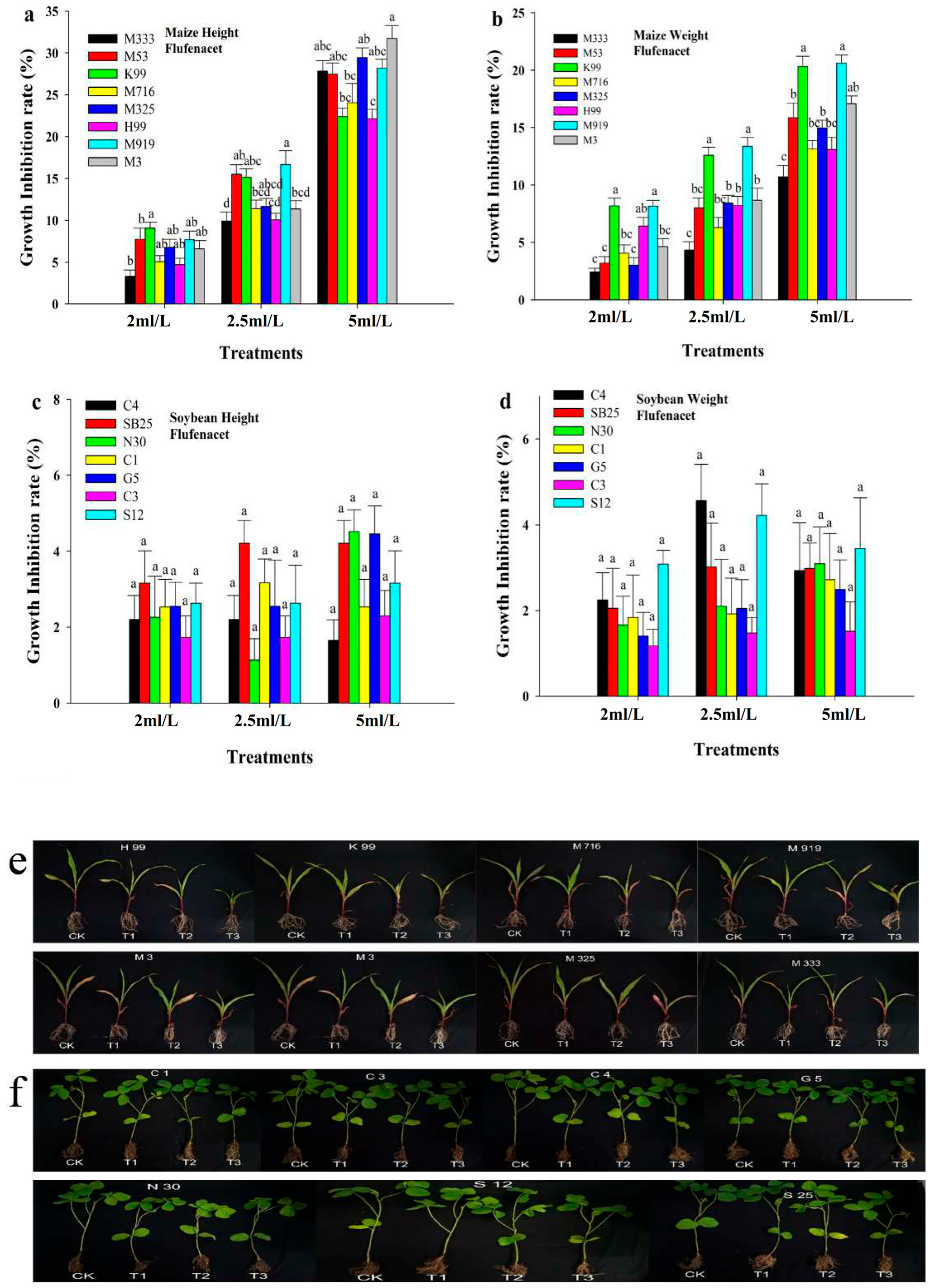
For flufenacet, late germination was observed for maize at all concentrations but for soybean, there was no delay in germination; the herbicide had no significant effect on soybean at all (Figure 2). Regarding both pre-emergence herbicides, flufenacet provided more crop safety to soybean and maize compared to acetochlor.

3.2. Effect of Post-Emergence Herbicide on Maize and Soybean Growth Under Greenhouse Conditions

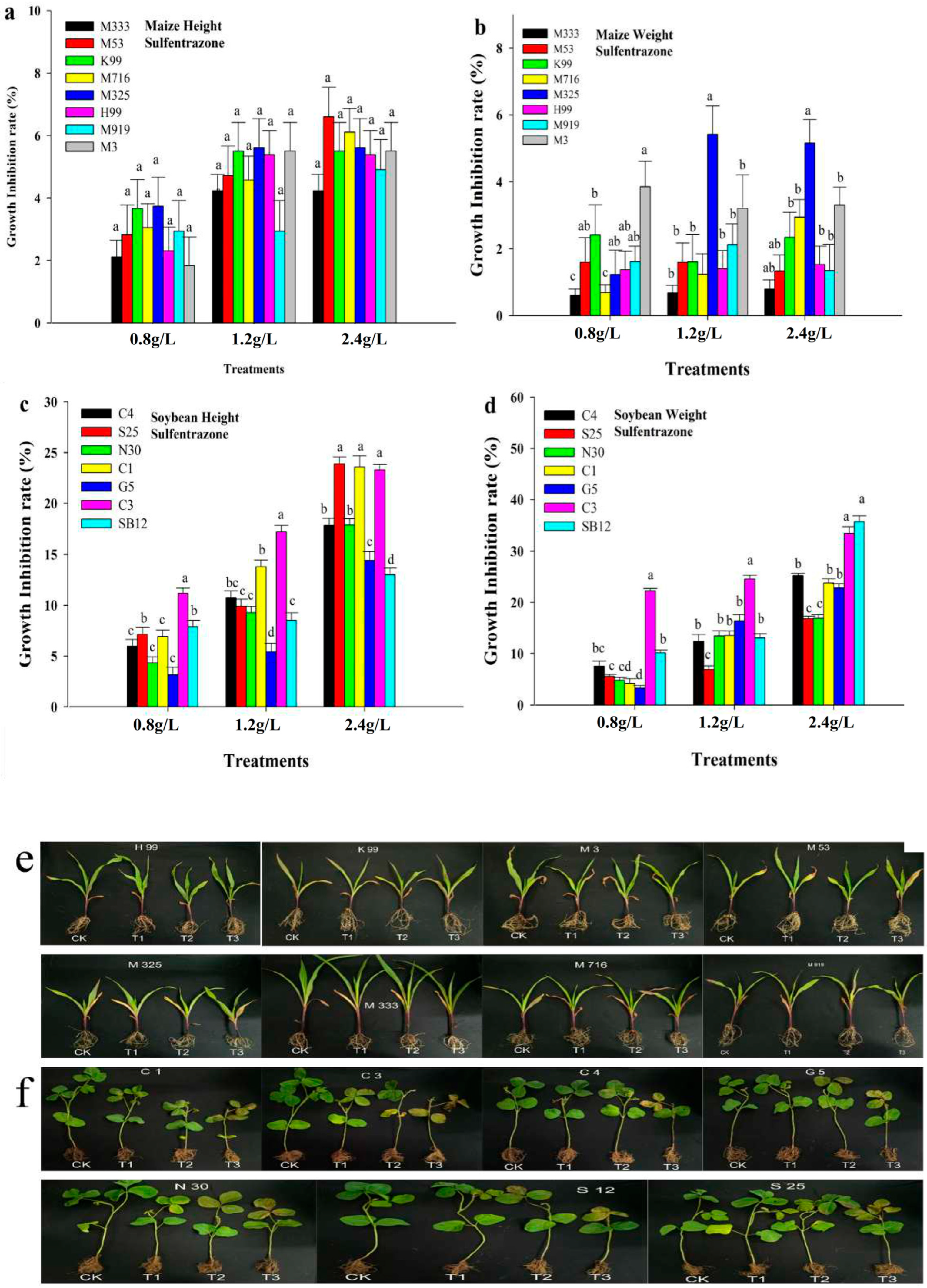
Post-emergence herbicides were applied after obtaining 2–3 leaves for soybean and 3–5 leaves for maize. For sulfentrazone, maize showed tolerance against all concentrations. For soybean, crop injury was observed as leaves started to burn due to the effects of the herbicide at all concentrations. Both maize and soybean were harvested to collect data 10 days after spraying the herbicide (Figure 3). The results showed that sulfentrazone had no effect on the plant height and fresh weight of all maize varieties.
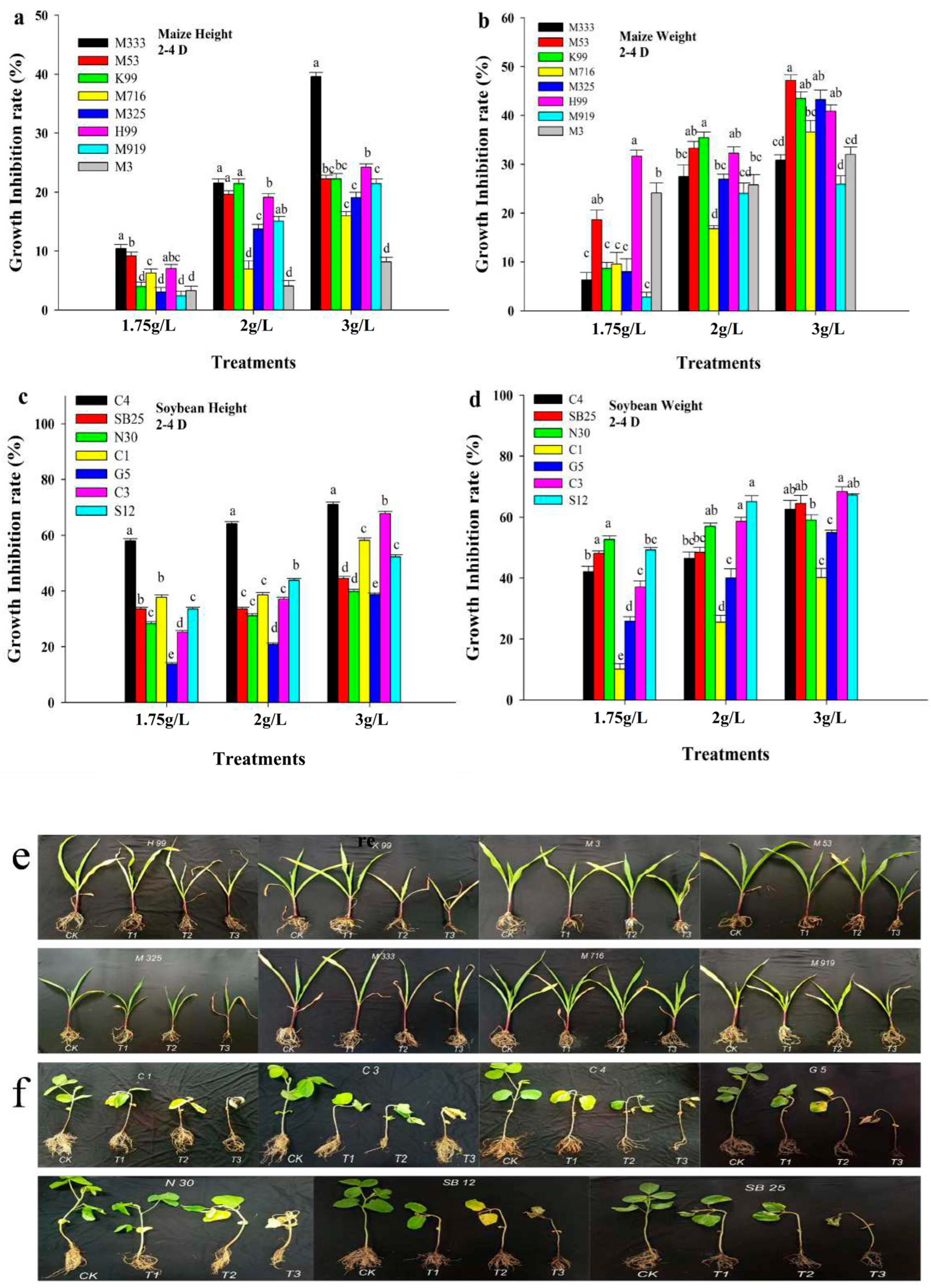
For 2-4 D isooctyl ester, all concentrations affected maize and soybean, meanwhile the higher concentration affected maize more. Soybean was affected at all concentrations compared to the control. The results showed that 2,4-D iso octyl ester had significant effects on plant height and fresh weight of maize (Figure 4).
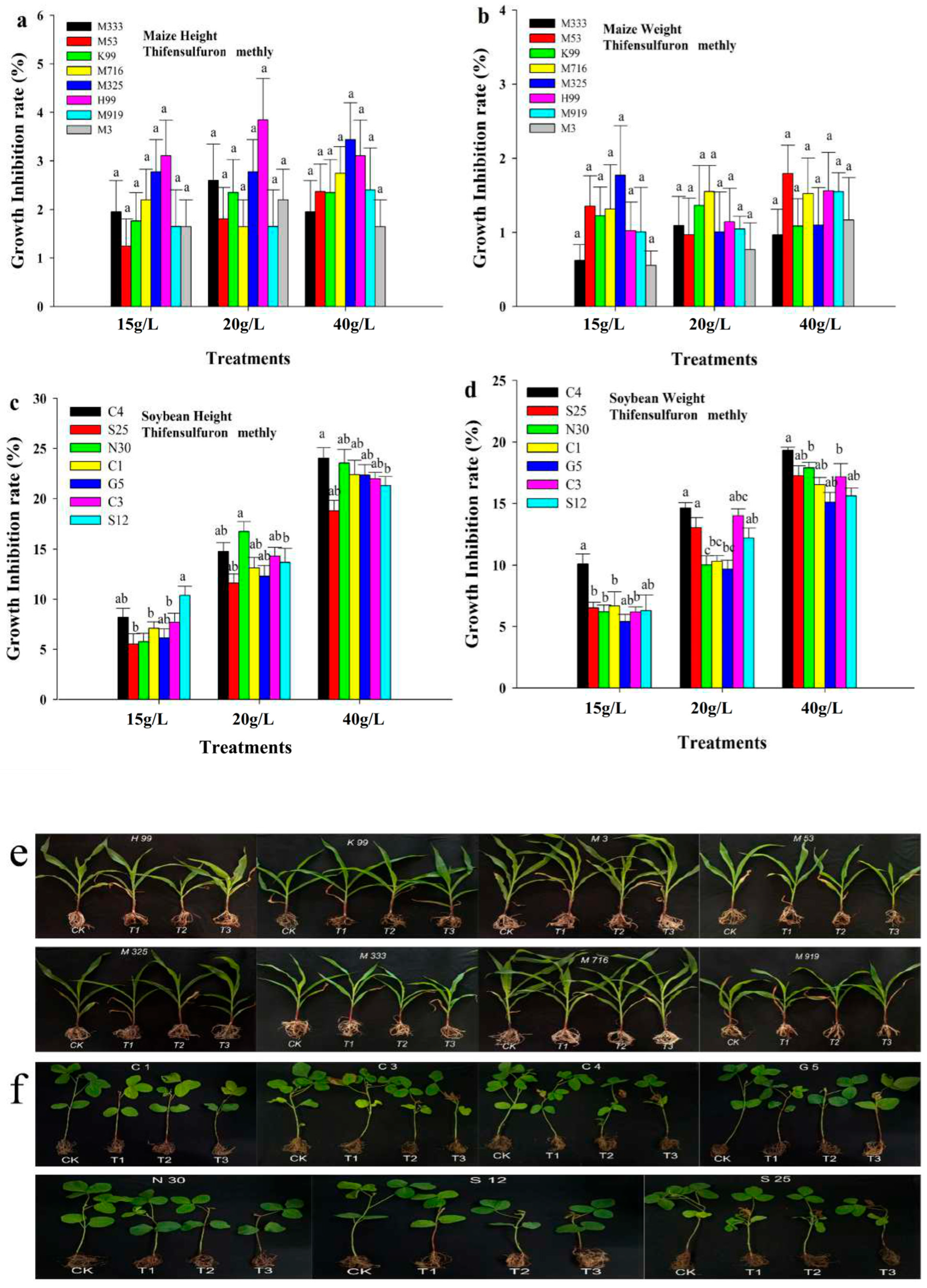
For the thifensulfuron-methyl herbicide, maize showed exceptional tolerance against herbicide at all concentrations, whereas herbicidal injury for soybean was shown at high concentrations. Soybean injury increased with the increase in concentration (Figure 5). These differential responses highlight the critical need for species-specific herbicide management. Farmers adopting these evidence-based adjustments could maintain weed control efficacy while preventing economically damaging soybean yield penalties, particularly in regions where intercropping is prevalent.

3.3. Effect of Flufenacet and Thifensulfuron-Methyl Herbicide on Antioxidant Enzyme Activities

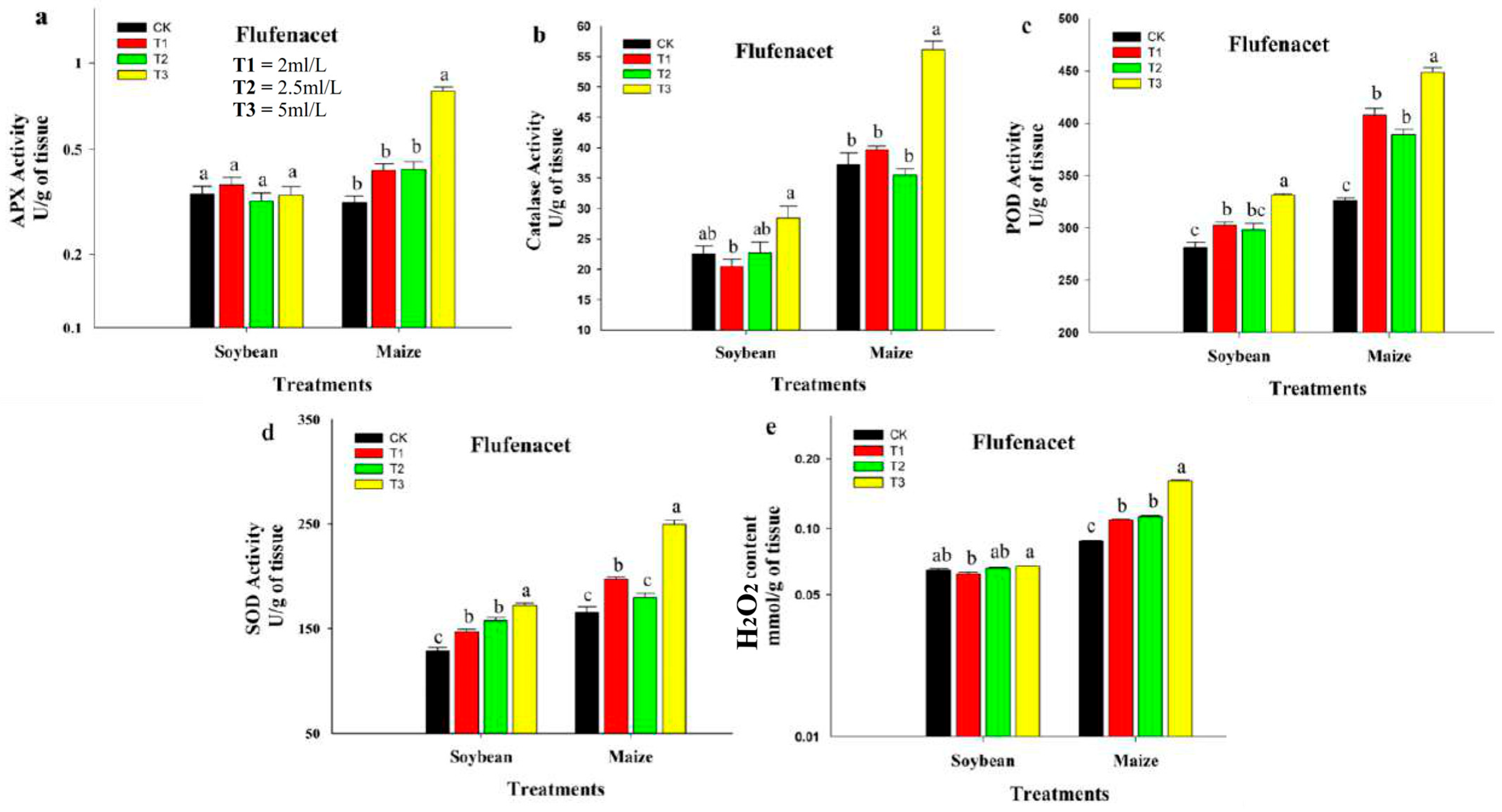
For the pre-emergence herbicide flufenacet, the results showed that for soybean, there were no significant differences recorded for SOD, APX, CAT, and POD activities at all concentrations, compared to the control. However, in the case of maize, the highest activities for SOD, APX, CAT, and POD were recorded at the highest concentration, compared to the control and other concentrations (Figure 6). This suggests that maize’s antioxidant induction was insufficient to fully counteract flufenacet’s phytotoxicity at elevated doses.
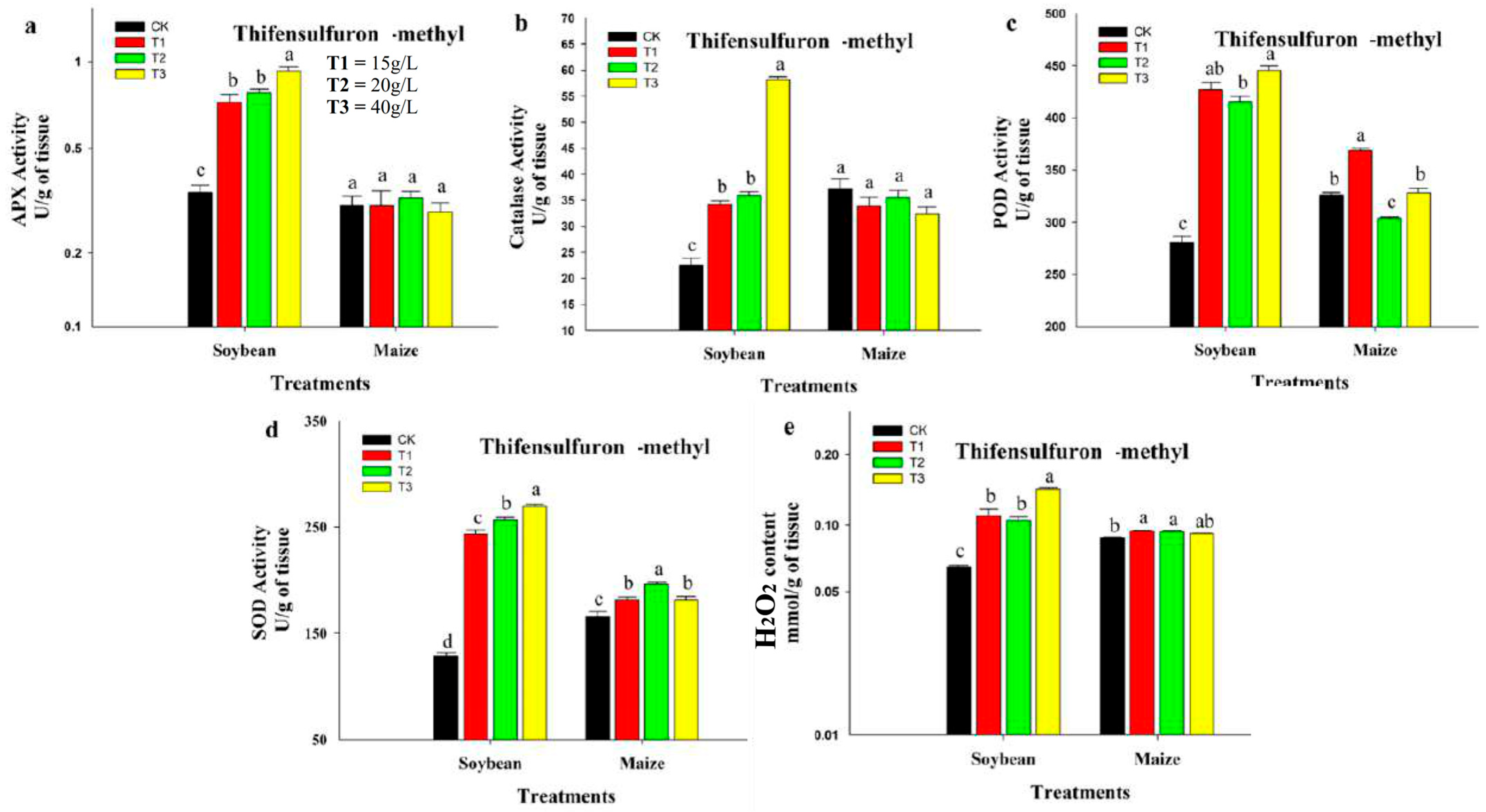
For the post-emergence herbicide thifensulfuron-methyl, the results showed that for soybean, the highest activities for SOD, APX, CAT, and POD were recorded at the highest concentration, compared to the control and other concentrations. However, in case of maize, there was no significant difference recorded among the control and concentrations group. For thifensulfuron-methyl, soybean exhibited increased antioxidant enzyme activity (SOD, CAT, APX, and POD) at the highest concentration, reaching 35–40% above control levels. However, this was accompanied by visible leaf burns and significant growth reductions. In contrast, maize showed no significant changes in either antioxidant activity or growth measurements across all treatment concentrations, demonstrating complete tolerance to this herbicide. Field results indicated that soybean’s temporary antioxidant boost was observed after thifensulfuron-methyl application, while leaf burn was not prevented, it appeared to have protected the plant’s ability to recover. Though older leaves showed damage, the antioxidant response likely shielded vital growth points, allowing for new leaves to emerge within two weeks. By harvest, these plants had largely regained their canopy, suggesting that the enzyme’s activity provided them with critical time for regeneration. This difference highlights how antioxidant measurements can help predict recovery potential after herbicide stress. H2O2 content for maize increased with the highest concentration of the flufenacet herbicide, and for soybean, H2O2 content increased with the highest concentration of thifensulfuron-methyl herbicide, while other concentrations of H2O2 content did not change much compared to the control group, which can be seen in Figure 7.

4. Discussion

Herbicides are indispensable tools in modern agriculture, playing a critical role in weed suppression and ensuring food security. However, their safe application remains a primary concern, especially in maize–soybean strip intercropping systems where crop-specific tolerance differs. Our study addressed this by combining pot safety evaluations with physiological and biochemical analyses (Figure 1, Figure 2, Figure 3, Figure 4, Figure 5, Figure 6 and Figure 7), providing complementary evidence for optimizing herbicide use in intercropping. Our pot experiments showed that maize generally exhibits greater herbicide tolerance than soybean, and the safety profiles of flufenacet and thifensulfuron-methyl (Figure 2, Figure 5, Figure 6 and Figure 7) largely align with previous findings. Soybean exhibited higher sensitivity to thifensulfuron-methyl (Figure 5 and Figure 7), while maize showed minimal visible injury under the same treatments. This observation is consistent with [18], who reported significant soybean injury under sequential POST applications of thifensulfuron-methyl and imazethapyr, whereas maize tolerated similar applications with only minor damage. Flufenacet, on the other hand, demonstrated dual safety for both crops (Figure 2 and Figure 6), aligning with [28,29], who reported its safety as a PRE herbicide in monocropping systems. Minor differences in injury levels between our study and prior reports may be attributed to environmental factors, herbicide formulations, or soil properties, highlighting the importance of site-specific validation in intercropping systems. These findings reaffirm that herbicide selection and dose adjustment are critical in maize–soybean strip systems. While maize allows for greater flexibility in herbicide use, soybean management requires more precise application strategies to minimize phytotoxic risk.
Plants respond to herbicide-induced oxidative stress by activating antioxidant defense systems that scavenge reactive oxygen species (ROS) and minimize cellular damage [30,31]. The enzymatic network including SOD, CAT, APX, and POD is crucial in mitigating ROS toxicity, where SOD converts O2 to H2O2, and CAT and APX detoxify H2O2 to H2O and O2 [32]. The extent and efficiency of these responses largely determine a crop’s tolerance to herbicide stress. In our study, maize exhibited stronger antioxidant induction under herbicide stress, with significant increases in SOD, CAT, APX, and POD activities under flufenacet exposure (Figure 2 and Figure 6). This robust response helped maintain ROS homeostasis, reducing lipid peroxidation (low MDA levels); this correlates with the visible safety observed in pot experiments. Similar patterns have been reported in wheat, pea, and maize, where elevated SOD and CAT activities under herbicide exposure mitigated oxidative damage [33]. Conversely, soybean showed weaker or inconsistent enzyme activation, leading to higher MDA accumulation and more severe leaf injury, consistent with [34], who found that soybean under POST herbicide stress often fails to sustain effective ROS detoxification (Figure 5 and Figure 7). This biochemical vulnerability likely underpins the greater phytotoxicity observed in soybean compared to maize and provides a mechanistic explanation for the crop-specific differences in herbicide safety (Figure 2, Figure 5, Figure 6 and Figure 7). Across studies, herbicide stress commonly triggers a rapid rise in SOD (dismutation of O2 to H2O2) followed by detoxification via CAT and APX; when CAT and APX induction are insufficient or inhibited, H2O2 and lipid peroxidation accumulate and visible injury increases [35,36]. In soybean, POST herbicides (e.g., thifensulfuron-methyl and imazethapyr) have frequently been associated with significant injury and weaker or inconsistent CAT, APX responses, whereas maize often shows stronger CAT and SOD induction and better tolerance [37]. In our study, this pattern largely held maize under flufenacet showed marked increases in SOD, CAT, APX, and POD, while soybean under thifensulfuron-methyl exhibited modest SOD changes, subdued CAT, APX, and higher H2O2, aligning with greater leaf injury. Thus, the differential SOD, CAT, and APX kinetics between maize and soybean mechanistically underpin the observed crop-safety gap and justify the recommendation of flufenacet as a PRE option for both crops and a 20–30% post-dose reduction in thifensulfuron-methyl in soybean.
The study revealed contrasting species-specific responses to flufenacet (pre-emergence) and thifensulfuron-methyl (post-emergence). Flufenacet caused delayed maize germination and dose-dependent growth inhibition, with the highest concentration triggering elevated SOD, APX, CAT, and POD activity alongside increased H2O2 levels, suggesting oxidative stress consistent with reduced plant height and fresh weight (Figure 2 and Figure 6). Soybean, however, remained largely unaffected. Conversely, thifensulfuron-methyl induced no stress in maize at any concentration, while soybean exhibited herbicidal injury (leaf burn and growth reduction) and elevated antioxidant enzyme activity (35–40% above control) at high doses. Although H2O2 accumulation and transient damage occurred, soybean showed partial canopy recovery (Figure 5 and Figure 7). Physiological parameters further confirmed these trends, linking antioxidant responses to growth outcomes: maize’s efficient enzymatic mitigation of flufenacet toxicity aligned with better growth performance, whereas soybean’s transient antioxidant surge post-thifensulfuron-methyl likely facilitated partial recovery despite initial injury. These results underscore the central role of oxidative defense in determining herbicide resilience.
These dual-level findings regarding pot safety and antioxidant defense offer valuable insights for precise herbicide management in maize–soybean strip intercropping; flufenacet is a compatible PRE herbicide, offering broad-spectrum weed control with minimal crop injury. Thifensulfuron-methyl can be safely applied in maize but requires a 20–30% dose reduction in soybean to avoid significant injury. Antioxidant enzyme activity patterns can serve as early biomarkers of herbicide stress, allowing farmers to adjust practices before yield loss occurs. By integrating crop-specific biochemical insights with field safety assessments, these findings provide a theoretical foundation for safe, efficient, and sustainable herbicide use in maize–soybean intercropping systems. This approach not only enhances crop protection but also supports resistance management and long-term agroecosystem stability. Although the present study provides valuable insights into the physiological and biochemical responses of maize and soybean to pre- and post-emergence herbicides, it was conducted exclusively under controlled greenhouse conditions. The absence of natural environmental variability such as soil heterogeneity, rainfall, and microbial dynamics may limit the direct extrapolation of these results to field conditions. Moreover, the experimental design involved individually grown maize and soybean plants, rather than true intercropping systems where both species interact competitively and physiologically. Consequently, the findings reflect herbicide responses at the single-plant level and do not fully capture the complex plant–plant interactions that occur in actual intercropping environments. Although the pot experiments provided controlled conditions for assessing the differential responses of soybean and maize to the tested herbicides, such systems cannot fully simulate field environments. Therefore, the findings should be considered as preliminary indications of crop selectivity and physiological responses. These results can guide herbicide choice, help identify potentially safe active ingredients, and serve as a basis for subsequent field-scale validation under realistic agronomic management conditions. Future field-based studies incorporating true maize–soybean intercropping systems are therefore necessary to validate these results and to refine herbicide management strategies for sustainable crop production systems.

5. Conclusions

In the present study, different herbicides (pre-emergence and post-emergence) were investigated to evaluate their safety against eight cultivars of maize and seven cultivars of soybean under greenhouse and field conditions. Based on greenhouse results, two herbicides were selected and used to investigate an antioxidative defense system in maize and soybean leaves when treated with herbicides. The results showed that flufenacet provided crop safety to both maize and soybean, as much less crop injury was observed at all concentrations and also controlled weeds until 30 days after herbicide application, while thifensulfuron-methyl provided more crop safety to maize compared to soybeans. Soybean was affected due to thifensulfuron-methyl herbicide application but was able to recover in several days. Higher antioxidative enzyme activity can be linked with stress induced by herbicide application on maize and soybean leaves in order to cope with herbicide-induced oxidative damage. For maize, flufenacet and thifensulfuron-methyl can be safely used at their label rates, given the crop’s strong antioxidant defense and minimal growth impact. For soybean, it is recommended to reduce thifensulfuron-methyl doses by 20–30% or consider alternative herbicides to prevent significant yield loss. In intercropping systems, it is recommended to implement targeted herbicide applications or use maize as a buffer crop to protect sensitive soybean plants. The study found that the pre-emergence herbicide flufenacet offers better crop safety compared to other herbicides for maize and soybean intercropping.

Author Contributions

S.H.: Data curation, Formal Analysis, Investigation, Methodology, Validation, Visualization, Writing—Original Draft, and Writing—Review and Editing. J.Y.: Investigation and Writing—Review and Editing. L.Y.: Investigation and Writing—Review and Editing. J.S.: Investigation, and Writing—Review and Editing. W.Y.: Investigation and Writing—Review and Editing. X.W.: Funding Acquisition, Conceptualization, Investigation, Project Administration, Supervision, and Writing—Review and Editing. All authors have read and agreed to the published version of the manuscript.

Funding

This study was funded by the Key R&D Program of Sichuan Province (2023YFN0018) and the National Modern Agricultural Industry Technology System Sichuan Province Innovation Team Project (No. SCCXTD-2025-20).

Data Availability Statement

The raw data supporting the conclusions of this article will be made available by the authors on request.

Conflicts of Interest

The authors declare no potential conflicts of interest with respect to the research, authorship, and/or publication of this article.

References

  1. Lithourgidis, A.S.; Vlachostergios, D.N.; Dordas, C.A.; Damalas, C.A. Dry matter yield, nitrogen content, and competition in pea–cereal intercropping systems. Eur. J. Agron. 2011, 34, 287–294. [Google Scholar] [CrossRef]
  2. Echarte, L.; Della, M.A.; Cerrudo, D.; Gonzalez, V.H.; Abbate, P. Yield response to plant density of maize and sunflower intercropped with soybean. Field Crops Res. 2011, 121, 423–429. [Google Scholar] [CrossRef]
  3. Inal, A.; Gunes, A.; Zhang, F.; Cakmak, I. Peanut/maize intercropping induced changes in rhizosphere and nutrient concentrations in shoots. Plant Physiol. Biochem. 2005, 45, 350–356. [Google Scholar] [CrossRef]
  4. Ali, A.; Ahmed, S.; Laghari, G.M.; Laghari, A.H.; Soomro, A.A.; Jabeen, N. Effect of maize (Zea mays) and soybean (Glycine max) cropping systems on weed infestation and resource use efficiency. Agronomy 2024, 14, 2801. [Google Scholar] [CrossRef]
  5. Li, X.; Mu, Y.; Cheng, Y.; Liu, X.; Nian, H. Effects of intercropping sugarcane and soybean on growth; rhizosphere soil microbes; nitrogen and phosphorus availability. Acta Physiol. Plant. 2013, 35, 1113–1119. [Google Scholar] [CrossRef]
  6. Iqbal, N.; Hussain, S.; Ahmed, Z.; Yang, F.; Wang, X. Comparative analysis of maize-soybean strip intercropping systems: A review. Plant Prod. Sci. 2019, 22, 131–142. [Google Scholar] [CrossRef]
  7. Young, G.B. Changes in herbicide use patterns and production practices resulting from glyphosate-resistant crops. Weed Technol. 2006, 20, 301–307. [Google Scholar] [CrossRef]
  8. Xu, Z.; Li, C.; Zhang, C.; Yu, Y.; van der Werf, W.; Zhang, F. Intercropping maize and soybean increases efficiency of land and fertilizer nitrogen use; A meta-analysis. Field Crops Res. 2020, 246, 107661. [Google Scholar] [CrossRef]
  9. Kocsy, G.; Tóth, B.; Berzy, T.; Szalai, G.; Jednákovits, A.; Galiba, G. Glutathione reductase activity and chilling tolerance are induced by a hydroxylamine derivative BRX-156 in maize and soybean. Plant Sci. J. 2001, 160, 943–950. [Google Scholar] [CrossRef] [PubMed]
  10. Yang, F.; Huang, S.; Gao, R.; Liu, W.; Yong, T. Growth of soybean seedlings in relay strip intercropping systems in relation to light quantity and red: Far-red ratio. Field Crops Res. 2014, 155, 245–253. [Google Scholar] [CrossRef]
  11. Sondhia, S. Herbicides residues in soil, water, plants and non-targeted organisms and human health implications: An Indian perspective. Indian. J. Weed Sci. 2014, 46, 66–85. [Google Scholar]
  12. Riedo, J.; Wettstein, F.E.; Rösch, A.; Herzog, C.; Banerjee, S.; Büchi, L. Widespread occurrence of pesticides in organically managed agricultural soils-the ghost of a conventional agricultural past? Environ. Sci. Technol. 2021, 55, 2919–2928. [Google Scholar] [CrossRef] [PubMed]
  13. Yuan, H.; Liu, P.; Wang, X.; Jiang, M.; Wu, X.; Wu, C.; Tang, Q. Effect of soil sealing treatment on control of broadleaf weeds in soybean corn compound planting field. Plant Health Med. 2022, 1, 102–106, (In Chinese with English Abstract). [Google Scholar]
  14. Alptekin, H.; Ozkan, A.G.; Kulak, M. Management of weeds in maize by sequential or individual applications of pre-and post-emergence herbicides. Agriculture 2023, 13, 421. [Google Scholar] [CrossRef]
  15. Yang, L.; ZhiHong, M.; BingRu, L.; Hua, P.; Meng, Z. Registration status and existing problems of herbicides in the major crops in China. J. Food Qual. 2018, 9, 4483–4488. [Google Scholar]
  16. Priess, L.G.; Norsworthy, K.J.; Roberts, L.T.; Gbur, E.E. Impact of postemergence herbicides on soybean injury and canopy formation. Weed Technol. 2020, 34, 727–734. [Google Scholar] [CrossRef]
  17. Baghestani-Meybodi, M.A.; Eskandar, Z.; Soufizadeh, S.; Rahimian, M. Morphological and physiological characteristics which enhance competitiveness of winter wheat (Triticum aestivum) against Goldbachia laevigata. Iran. J. Weed Sci. 2005, 1, 111–126. [Google Scholar]
  18. Mahoney, K.J.; Nurse, E.R.; Everman, J.W.; Sprague, L.C.; Sikkema, H.P. Tolerance of corn (Zea mays L.) to early and late glyphosate applications. Am. J. Plant Sci. 2014, 5, 4034–4042. [Google Scholar] [CrossRef]
  19. Nelson, A.K.; Renner, A.K. Soybean growth and development as affected by glyphosate and postemergence herbicide tank mixtures. J. Agron. 2001, 93, 428–434. [Google Scholar] [CrossRef]
  20. Zhou, Q.; Zhang, S.; Lin, T.; Jiao, Y.; Cai, C.; Xue, C.; Ye, J.; Xue, X. The impact of fluroxypyr drift on soybean phytotoxicity and the safety drift thresholds. Agriculture 2024, 14, 2203. [Google Scholar] [CrossRef]
  21. Boulahia, K.; Carol, P.; Planchais, S.; Abrous, B.O. Phaseolus vulgaris seedlings exposed to prometryn herbicide contaminated soil trigger an oxidative stress response. J. Agric. Food Chem. 2016, 64, 3150–3160. [Google Scholar] [CrossRef] [PubMed]
  22. Suzuki, N.; Koussevitzky, S.; Mittler, R.; Miller, G. ROS and redox signaling in the response of plants to abiotic stress. Plant Cell Environ. 2012, 35, 259–270. [Google Scholar] [CrossRef]
  23. Gill, S.; Tuteja, N. Reactive oxygen species and antioxidant machinery in abiotic stress tolerance in crop plants. Plant Physiol. Biochem. 2010, 48, 909–930. [Google Scholar] [CrossRef]
  24. Zhang, J.J.; Lu, Y.; Zhang, J.; Tan, R.L.; Yang, H. Accumulation and toxicological response of atrazine in rice crops. Ecotoxicol. Environ. Saf. 2014, 102, 105–112. [Google Scholar] [CrossRef] [PubMed]
  25. Caverzan, A.; Piasecki, C.; Chavarria, G.; Neal Stewart, C.; Vargas, L. Defenses against ROS in crops and weeds: The effects of interference and herbicides. Int. J. Mol. Sci. 2019, 20, 1086. [Google Scholar] [CrossRef] [PubMed]
  26. Bhowmick, T.; Sen, G.; Mukherjee, J.; Das, R. Assessing the effect of herbicide diuron on river biofilm: A statistical model. Chemosphere 2021, 282, 131104. [Google Scholar] [CrossRef] [PubMed]
  27. Jiao, Y.; Zhang, S.; Zhou, Q.; Xue, C.; Ye, J.; Ye, S.; Wu, C.; Han, H.; Mao, Z.; Ding, S.; et al. Experimental study of Quizalofop-p-Ethyl herbicide drift damage to corn and the safety amount of drift deposition. Agronomy 2023, 13, 2890. [Google Scholar] [CrossRef]
  28. Jiang, L.; Yang, H. Prometryne-induced oxidative stress and impact on antioxidant enzymes in wheat. Ecotoxicol. Environ. Saf. 2009, 72, 1687–1693. [Google Scholar] [CrossRef]
  29. Vasilakoglou, B.I.; Eleftherohorinos, G.I. Persistence; efficacy; and selectivity of amide herbicides in corn. Weed Technol. 2003, 17, 381–388. [Google Scholar] [CrossRef]
  30. Hassan, M.N.; Nemat-Alla, M.M. Oxidative stress in herbicide-treated broad bean and maize plants. Acta Physiol. Plant. 2005, 27, 429–438. [Google Scholar] [CrossRef]
  31. Harre, T.N.; Nie, H.; Jiang, Y.; Young, G.B. Differential antioxidant enzyme activity in rapid-response glyphosate-resistant Ambrosia trifida. Pest Manag. Sci. 2018, 74, 2125–2132. [Google Scholar] [CrossRef]
  32. De Freitas-Silva, L.; Rodríguez-Ruiz, M.; Houmani, H.; da-Saliva Campos, L.; Corpas, F. Glyphosate-induced oxidative stress in Arabidopsis thaliana affecting peroxisomal metabolism and triggers activity in the oxidative phase of the pentose phosphate pathway (OxPPP) involved in NADPH generation. J. Plant Physiol. 2017, 218, 196–205. [Google Scholar] [CrossRef]
  33. dos-Santos Moura, C.; de-Almeida Silva, M. Physiological and biochemical responses of sugarcane to oxidative stress induced by water deficit and paraquat. Acta Physiol. Plant. 2015, 37, 172. [Google Scholar] [CrossRef]
  34. Zhu, J.; Patzoldt, L.W.; Radwan, O.; Tranel, P.; Clough, S. Effects of photosystem-II-interfering herbicides atrazine and bentazon on the soybean transcriptome. Plant Genome 2014, 2, 191–205. [Google Scholar] [CrossRef]
  35. Wang, Q.; Que, X.; Zheng, R.; Pang, Z.; Li, C. Phytotoxicity assessment of atrazine on growth and physiology of three emergent plants. Environ. Sci. Pollut. Res. 2015, 22, 9646–9657. [Google Scholar] [CrossRef] [PubMed]
  36. Liu, N.; Zhong, G.; Zhou, J.; Liu, Y.; Pang, Y. Separate and combined effects of glyphosate and copper on growth and antioxidative enzymes in Salvinia natans (L.). Sci. Total Environ. 2019, 655, 1448–1456. [Google Scholar] [CrossRef]
  37. Pandey, S.; Fartyal, D.; Agarwal, A.; Shukla, T.; James, D. Abiotic stress tolerance in plants: Myriad roles of ascorbate peroxidase. Front. Plant Sci. 2017, 8, 581. [Google Scholar] [CrossRef]
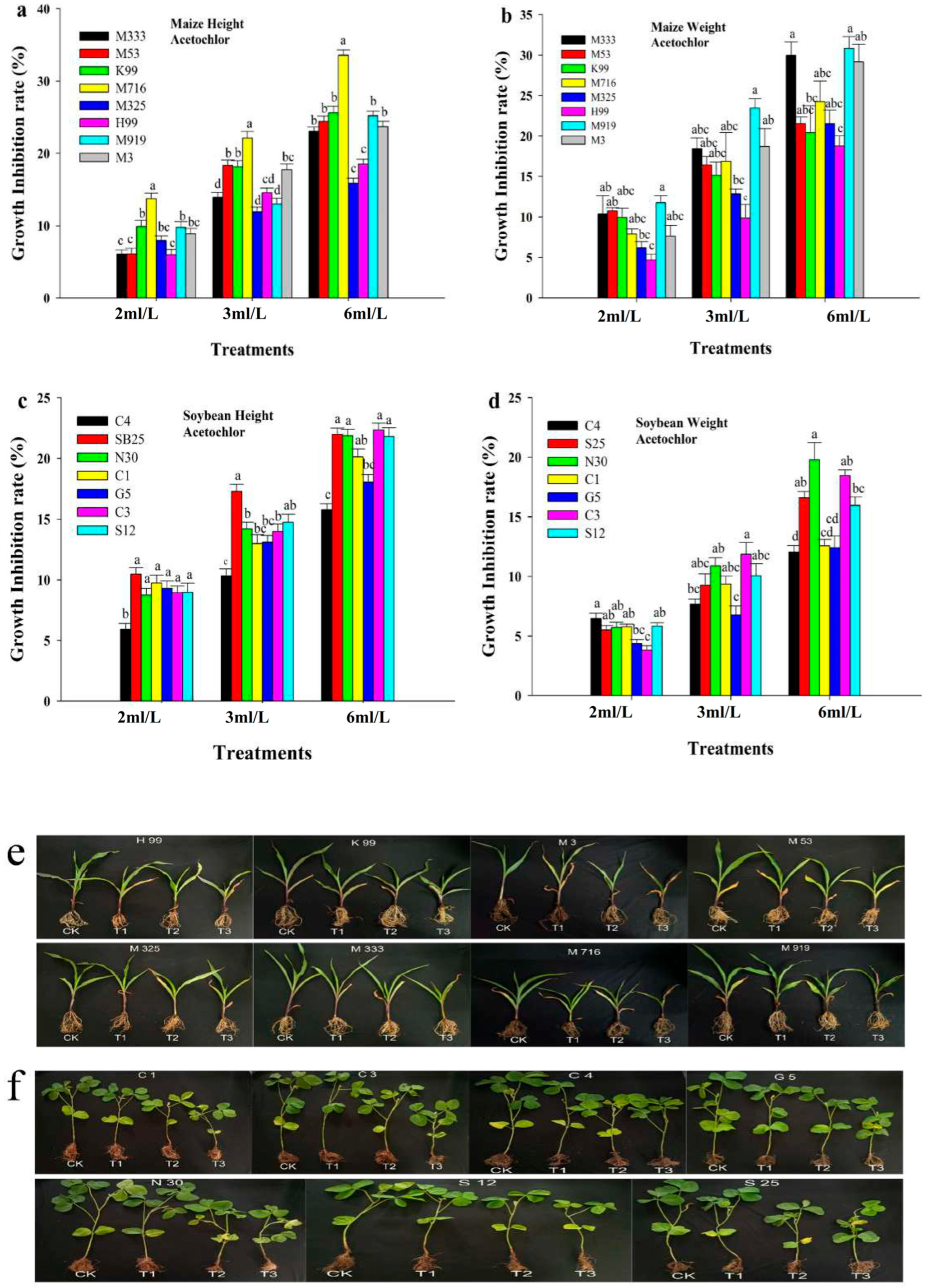
Figure 1. The growth and weight inhibitions of acetochlor on maize and soybean. (a) Growth inhibition rate for maize height; (b) growth inhibition rate for maize weight; (c) growth inhibition rate for soybean height; (d) growth inhibition rate for soybean weight; (e) pictures taken for maize cultivars against acetochlor herbicide at different concentrations; (f) pictures taken for soybean cultivars against acetochlor herbicide at different concentrations while letters in the figure represent statistically significant differences. The concentrations used for acetochlor 84.3%: conc 1 = 2 mL/L; conc 2 = 3 mL/L; and conc 3 = 6 mL/L. A one-way ANOVA revealed no significant differences among groups for T1 (F7;24 = 12.75; p < 0.01); T2 (F7;24 = 20.39; p < 0.01); and T3 (F7;24 = 56.77; p < 0.01) for maize height. A one-way ANOVA revealed significant differences among groups for T1 (F7;24 = 4.44; p < 0.05); T2 (F7;24 = 4.77; p < 0.05); and T3 (F7;24 = 5.70; p < 0.01) for maize weight. Error bars represent standard error of the mean (n = 4 replicates). Maize cultivars used: Mián dān 333 (M333); Mián dān 53 (M53); Chuān dān 99 (K99); Chéng dān 716 (M716); Zhèng hóng 325 (M325); Huá shì 99 (H99); Huá shì 919 (M919); Zhòng yù 3 (M3). A one-way ANOVA revealed significant differences among groups for T1 (F6;21 = 5.74; p < 0.01); T2 (F6;21 = 11.45; p < 0.01); and T3 (F6;21 = 17.51; p < 0.01) for soybean height. A one-way ANOVA revealed significant differences among groups for T1 (F6;21 = 6.53; p < 0.01); T2 (F6;21 = 4.75; p < 0.05); and T3 (F6;21 = 14.32; p < 0.01) for soybean weight. Error bars represent standard error of the mean (n = 4 replicates). Soybean cultivars used: Chuān nóng xià dòu 4 hào (C4); Nán xià dòu 25 (SB25); Nán xià dòu 30 (N30); Chuān nóng xià dòu 1 hào (C1); Gòng qiū dòu 5 hào (G5); Chuān nóng xià dòu 3 hào (C3); Nán dòu 12 (S12).
Agronomy 15 02833 g001
Figure 2. The growth and weight inhibitions of flufenacet on maize and soybean. (a) Growth inhibition rate for maize height; (b) growth inhibition rate for maize weight; (c) growth inhibition rate for soybean height; (d) growth inhibition rate for soybean weight; (e) pictures taken for maize cultivars against flufenacet herbicide at different concentrations; (f) pictures taken for soybean cultivars against flufenacet herbicide at different concentrations while letters in the figure represent statistically significant differences. The concentrations used for flufenacet 41%: conc 1 = 2 mL/L; conc 2 = 2.5 mL/L; and conc 3 = 5 mL/L. A one-way ANOVA revealed significant differences among groups for T1 (F7;24 = 4.05; p = 0.05); T2 (F7;24 = 5.65; p < 0.01); and T3 (F7;24 = 6.00; p < 0.01) for maize height. A one-way ANOVA revealed no significant differences among groups for T1 (F7;24 = 13.08; p < 0.01); T2 (F7;24 = 13.29; p < 0.01); and T3 (F7;24 = 15.27; p < 0.01) for maize weight. Error bars represent standard error of the mean (n = 4 replicates). Maize cultivars used: Mián dān 333 (M333); Mián dān 53 (M53); Chuān dān 99 (K99); Chéng dān 716 (M716); Zhèng hóng 325 (M325); Huá shì 99 (H99); Huá shì 919 (M919); Zhòng yù 3 (M3). A one-way ANOVA revealed no significant differences among groups for T1 (F6;21 = 0.35; p > 0.05); T2 (F6;21 = 1.61; p > 0.05); and T3 (F6;21 = 2.87; p > 0.05) for soybean height. A one-way ANOVA revealed no significant differences among groups for T1 (F6;21 = 0.85; p > 0.05); T2 (F6;21 = 2.10; p > 0.05); and T3 (F6;21 = 0.45; p > 0.05) for soybean weight. Error bars represent standard error of the mean (n = 4 replicates). Soybean cultivars used: Chuān nóng xià dòu 4 hào (C4); Nán xià dòu 25 (SB25); Nán xià dòu 30 (N30); Chuān nóng xià dòu 1 hào (C1); Gòng qiū dòu 5 hào (G5); Chuān nóng xià dòu 3 hào (C3); Nán dòu 12 (S12).
Agronomy 15 02833 g002
Figure 3. The growth and weight inhibitions of sulfentrazone on maize and soybean. (a) Growth inhibition rate for maize height; (b) growth inhibition rate for maize weight; (c) growth inhibition rate for soybean height; (d) growth inhibition rate for soybean weight; (e) pictures taken for maize cultivars against sulfentrazone herbicide at different concentrations; (f) pictures taken for soybean cultivars against sulfentrazone herbicide at different concentrations while letters in the figure represent statistically significant differences. The concentrations for sulfentrazone 75%: conc 1 = 0.8 g/L; conc 2 = 1.2 g/L; and conc 3 = 2.4 g/L. A one-way ANOVA revealed significant differences among groups for T1 (F7;24 = 0.65; p > 0.05); T2 (F7;24 = 1.13; p > 0.05); and T3 (F7;24 = 0.69; p > 0.05) for maize height. A one-way ANOVA revealed no significant differences among groups for T1 (F7;24 = 0.65; p > 0.05); T2 (F7;24 = 1.13; p > 0.05); and T3 (F7;24 = 0.69; p > 0.05) for maize weight. Error bars represent standard error of the mean (n = 4 replicates). Maize cultivars used: Mián dān 333 (M333); Mián dān 53 (M53); Chuān dān 99 (K99); Chéng dān 716 (M716); Zhèng hóng 325 (M325); Huá shì 99 (H99); Huá shì 919 (M919); Zhòng yù 3 (M3). A one-way ANOVA revealed significant differences among groups for T1 (F6;21 = 15.27; p < 0.01); T2 (F6;21 = 29.26; p < 0.01); and T3 (F6;21 = 35.47; p < 0.01) for soybean height. A one-way ANOVA revealed significant differences among groups for T1 (F6;21 = 89.51; p < 0.01); T2 (F6;21 = 29.23; p < 0.01); and T3 (F6;21 = 69.06; p < 0.01) for soybean weight. Error bars represent standard error of the mean (n = 4 replicates). Soybean cultivars used: Chuān nóng xià dòu 4 hào (C4); Nán xià dòu 25 (SB25); Nán xià dòu 30 (N30); Chuān nóng xià dòu 1 hào (C1); Gòng qiū dòu 5 hào (G5); Chuān nóng xià dòu 3 hào (C3); Nán dòu 12 (S12).
Agronomy 15 02833 g003
Figure 4. The growth and weight inhibitions of 2-4 D on maize and soybean. (a) Growth inhibition rate for maize height; (b) growth inhibition rate for maize weight; (c) growth inhibition rate for soybean height; (d) growth inhibition rate for soybean weight; (e) pictures taken for maize cultivars against 2-4 D herbicide at different concentrations; (f) pictures taken for soybean cultivars against 2-4 D herbicide at different concentrations while letters in the figure represent statistically significant differences. The concentrations used for 2-4 D iso-octyl ester 87.5%: conc 1 = 1.75 g/L; conc 2 = 2 g/L; and conc 3 = 4 g/L. A one-way ANOVA revealed significant differences among groups for T1 (F7;24 = 16.27; p < 0.01); T2 (F7;24 = 58.94; p < 0.01); and T3 (F7;24 = 133.69; p < 0.01) for maize height. A one-way ANOVA revealed no significant differences among groups for T1 (F7;24 = 29.51; p < 0.01); T2 (F7;24 = 21.23; p < 0.01); and T3 (F7;24 = 79.06; p < 0.01) for maize weight. Error bars represent standard error of the mean (n = 4 replicates). Maize cultivars used: Mián dān 333 (M333); Mián dān 53 (M53); Chuān dān 99 (K99); Chéng dān 716 (M716); Zhèng hóng 325 (M325); Huá shì 99 (H99); Huá shì 919 (M919); Zhòng yù 3 (M3). A one-way ANOVA revealed significant differences among groups for T1 (F6;21 = 379.09; p < 0.01); T2 (F6;21 = 333.28; p < 0.01); and T3 (F6;21 = 295.03; p < 0.01) for soybean height. A one-way ANOVA revealed significant differences among groups for T1 (F6;21 = 107.02; p < 0.01); T2 (F6;21 = 42.30; p < 0.01); and T3 (F6;21 = 20.07; p < 0.01) for soybean weight. Error bars represent standard error of the mean (n = 4 replicates). Soybean cultivars used: Chuān nóng xià dòu 4 hào (C4); Nán xià dòu 25 (SB25); Nán xià dòu 30 (N30); Chuān nóng xià dòu 1 hào (C1); Gòng qiū dòu 5 hào (G5); Chuān nóng xià dòu 3 hào (C3); Nán dòu 12 (S12).
Agronomy 15 02833 g004
Figure 5. The growth and weight inhibitions of thifensulfuron-methyl on maize and soybean. (a) Growth inhibition rate for maize height; (b) growth inhibition rate for maize weight; (c) growth inhibition rate for soybean height; (d) growth inhibition rate for soybean weight; (e) pictures taken for maize cultivars against thifensulfurone herbicide at different concentrations; (f) pictures taken for soybean cultivars against thifensulfurone herbicide at different concentrations while letters in the figure represent statistically significant differences. The concentrations used for thifensulfuron-methyl 25%: conc 1 = 15 g/L; conc 2 = 20 g/L; and conc 3 = 40 g/L. A one-way ANOVA revealed no significant differences among groups for T1 (F7;24 = 0.93; p > 0.05); T2 (F7;24 = 1.11; p > 0.05); and T3 (F7;24 = 0.74; p > 0.05) for maize height. A one-way ANOVA revealed significant differences among groups for T1 (F F7;24 = 0.73; p > 0.05); T2 (F7;24 = 0.32; p > 0.05); and T3 (F7;24 = 0.46; p > 0.05) for maize weight. Error bars represent standard error of the mean (n = 4 replicates). Maize cultivars used: Mián dān 333 (M333); Mián dān 53 (M53); Chuān dān 99 (K99); Chéng dān 716 (M716); Zhèng hóng 325 (M325); Huá shì 99 (H99); Huá shì 919 (M919); Zhòng yù 3 (M3). A one-way ANOVA revealed significant differences among groups for T1 (F6;21 = 3.48; p < 0.05); T2 (F6;21 = 8.98; p < 0.05); and T3 (F6;21 = 4.10; p < 0.05) for soybean height. A one-way ANOVA revealed significant differences among groups for T1 (F6;21 = 3.69; p < 0.05); T2 (F6;21 = 2.66; p < 0.05); and T3 (F6;21 = 2.46; p < 0.05) for soybean weight. Error bars represent standard error of the mean (n = 4 replicates). Soybean cultivars used: Chuān nóng xià dòu 4 hào (C4); Nán xià dòu 25 (SB25); Nán xià dòu 30 (N30); Chuān nóng xià dòu 1 hào (C1); Gòng qiū dòu 5 hào (G5); Chuān nóng xià dòu 3 hào (C3); Nán dòu 12 (S12).
Agronomy 15 02833 g005
Figure 6. The effects of flufenacet on antioxidant enzyme activity in maize and soybean. (a) APX activity of maize and soybean leaves when treated with flufenacet; (b) CAT activity of maize and soybean leaves when treated with flufenacet; (c) POD activity of maize and soybean leaves when treated with flufenacet; (d) SOD activity of maize and soybean leaves when treated with flufenacet; (e) H2O2 content of maize and soybean leaves when treated with flufenacet. Data represents mean ± SE (n = 3) while letters in the figure represent statistically significant differences. Different superscript letters within columns indicate no significant differences (LSD test; p < 0.05). The concentrations used for flufenacet 41%: T1 = 2 mL/L; T2 = 2.5 mL/L; T3 = 5 mL/L; CK represents the control without herbicide treatment. One representative maize (Chéng dān 716) was selected for antioxidant enzyme analysis. One representative soybean (Nán xià dòu 25) was selected for antioxidant enzyme analysis.
Agronomy 15 02833 g006
Figure 7. The effects of thifensulfuron-methyl on antioxidant enzyme activity in maize and soybean. (a) APX activity of maize and soybean leaves when treated with thifensulfuron-methyl; (b) CAT activity of maize and soybean leaves when treated with thifensulfuron-methyl; (c) POD activity of maize and soybean leaves when treated with thifensulfuron-methyl; (d) SOD activity of maize and soybean leaves when treated with thifensulfuron-methyl; (e) H2O2 content of maize and soybean leaves when treated with thifensulfuron-methyl. Data represents mean ± SE (n = 3) while letters in the figure represent statistically significant differences. Different superscript letters within columns indicate no significant differences (LSD test; p < 0.05). The concentrations used for thifensulfuron-methyl 25%: T1 = 15 g/L; T2 = 20 g/L; T3 = 40 g/L; CK represents the control without herbicide treatment. One representative maize (Chéng dān 716) was selected for antioxidant enzyme analysis. One representative soybean (Nán xià dòu 25) was selected for antioxidant enzyme analysis.
Agronomy 15 02833 g007
Disclaimer/Publisher’s Note: The statements, opinions and data contained in all publications are solely those of the individual author(s) and contributor(s) and not of MDPI and/or the editor(s). MDPI and/or the editor(s) disclaim responsibility for any injury to people or property resulting from any ideas, methods, instructions or products referred to in the content.