1. Introduction
Drought is a natural hazard. Agricultural drought is caused by a convergence of factors: deficient precipitation (meteorological drought), insufficient moisture content in the soil, and decreased groundwater or water storage levels necessary to support irrigation (hydrological drought) [
1]. Global warming has led to an increased frequency and intensity of meteorological hazards, resulting in more frequent and severe agricultural droughts. This will lead to a significant reduction in agricultural production throughout. According to FAO [
1], the losses in agriculture due to drought are the highest compared with other hazards, accounting for over 60%, and crops are the most sensitive subsector, accounting for 49%.
Legumes (Fabaceae) hold the second position after cereals in food production. They can be considered one of the most promising components of the Climate Smart Agriculture concept. When cultivated in rotation with cereals, legumes contribute to preventing soil erosion, reducing soil pathogens, and improving the soil’s nutrient composition. Legumes are also sensitive to drought. Typically, they depend on rainfall and are susceptible to drought stress throughout their vegetative and reproductive growth phases. Regarding the common bean, yield loss was up to 60.8% with a 60–65% soil water deficit, followed by the green gram and cow pea, with losses of 45.3 and 44.3%, respectively [
2]. In addition, the faba bean (
Vicia faba L.) showed decreases in the chlorophyll content, soluble sugars, ascorbate peroxidase, activity of catalase, and activity of peroxidase, as well as increases in the malondialdehyde and H
2O
2 accumulation at a 40% field capacity [
3]. The soybean cultivars also exhibited reductions in photosynthetic efficiency, stomatal conductance, and the transpiration rate [
4].
To mitigate such adverse effects, plant-fungal associations, such as arbuscular mycorrhizal fungi, plant growth-promoting fungi, dark septate endophytes (DSEs), and other endophytic fungi groups, have been increasingly recognized as a promising biological strategy for enhancing plant performance under drought conditions. Recent advances have highlighted the important role of DSEs in particular, as many members of this group can improve plant drought tolerance through multiple physiological pathways. In particular, DSE colonization has been shown to enhance root systems, strengthen osmotic regulation, and stabilize cellular function under water-deficient conditions [
5,
6]. He et al. [
7] further demonstrated that inoculation with
Neocamarosporium phragmitis or
Microascus alveolaris increased glutathione (GSH) levels and superoxide dismutase (SOD) activity in
Lycium ruthenicum, indicating a stronger capacity to detoxify reactive oxygen species and enhanced drought tolerance. Likewise, in wheat seedlings, inoculation with the desert-derived DSE
Paraphoma radicina improved photosynthetic rate, maintained higher chlorophyll content, and reinforced antioxidant activity under drought, leading to reduced physiological damage [
8]. In
Artemisia ordosica, DSE symbiosis with
Paraphoma chrysanthemicola and
Acrocalymma vagum promoted deeper and more extensive root development, facilitating greater water and nutrient acquisition and contributing to improved plant performance in water-limited environments [
9].
DSEs represent a polyphyletic group of root-associated fungi, primarily belonging to the phylum Ascomycota, characterized by melanized, septate hyphae, and the formation of microsclerotia within host roots [
10,
11]. Over the past few decades, several genera have been frequently reported and studied regarding for their symbiotic roles with plants, including
Phialocephala,
Phialophora,
Leptodontidium, and
Periconia [
10,
12]. These fungi colonize roots both inter- and intracellularly but usually remain asymptomatic to the host [
13,
14]. In addition to their endophytic lifestyle, many DSEs are also capable saprotrophs involved in litter decomposition and nutrient cycling in soils, with the ability to degrade cellulose, hemicellulose, and pectin [
15,
16]. Genomic analyses of representative DSE taxa, including
Cadophora sp. and
Periconia macrospinosa, have revealed expanded repertoires of carbohydrate-active enzymes (CAZymes), particularly plant cell-wall-degrading enzymes, supporting the hypothesis that numerous DSEs may function primarily as saprotrophs that secondarily colonize plant roots [
17].
The genus
Cercophora (Lasiosphaeriaceae, Sordariales) comprises ascomycetous fungi commonly isolated from soil, dung, and decaying plant materials [
18,
19,
20]. Traditionally,
Cercophora species have been regarded as saprobic fungi. Members of this genus are typically characterized by large, dark-colored ascomata with membranous to leathery walls and hyaline, cylindrical ascospores that develop a distinct, swollen, pigmented tip [
18]. Although
Cercophora has historically been viewed as a non-endophytic, free-living saprobe, recent molecular and culture-based studies have reported its occurrence within plant roots, suggesting that some members may also adopt a root-associated or endophytic fungi [
21,
22]. As mentioned above, some DSE taxa are known to combine saprotrophic capabilities with root endophytism, and their ability to degrade organic substrates has been linked to plant-beneficial functions under abiotic stress. Given that
Cercophora shares similar saprotrophic traits and has recently been detected inside roots, it remains unclear whether members of this genus may also exhibit DSE-like functional attributes. Despite these emerging observations, the functional potential of
Cercophora in plant–fungus interactions remains virtually unexplored. In particular, there is a lack of evidence on whether
Cercophora species can establish stable endophytic associations that promote host plant growth or improve stress tolerance. Therefore, investigating
Cercophora as a potential endophyte could provide new insights into whether members of this genus also possess DSE-like traits that contribute to legume growth under drought stress.
This study aims to isolate and characterize Cercophora sp. isolates from legume roots grown in agricultural soils, and evaluate their potential to promote legume growth under drought stress. Specifically, the objectives were to:
- (1)
identify and describe the morphological and molecular characteristics of Cercophora sp. isolates and assess their drought tolerance;
- (2)
evaluate their effects on the early vegetative growth of legumes; and
- (3)
determine whether inoculation with Cercophora sp. enhances plant physiological performance under drought conditions.
By setting these objectives, this research provides new insights into the ecological and functional roles of Cercophora sp. as members of the endophytic fungal community.
2. Materials and Methods
2.1. Fungi Isolation
A baiting experiment was conducted using soil samples collected in July 2023 from conventional fields with seven different fertilizer histories at the Tsukuba Plant Innovation Research Center, Tsukuba City, Ibaraki Prefecture, Japan (36.119112° N, 140.093240° E). Soil samples were collected from the topsoil (0–30 cm) following a five-point diagonal sampling method, and the subsamples were homogenized to obtain one composite sample per treatment. The soil type at the sampling site is classified as sandy loam. The baseline physicochemical properties of the soil (no fertilizer treatment) were as follows: EC, 0.057 ± 0.003 dS m−1; pH, 5.687 ± 0.012; total carbon, 2.127 ± 0.021%; total nitrogen, 0.176 ± 0.003%; and available phosphorus, 0.025 ± 0.003 g kg−1. The seven fertilizer treatments included no fertilizer (control), non-potassium (NK), non-nitrogen (NN), non-phosphorus (NP), a compound fertilizer containing nitrogen, phosphorus, and potassium (NPK), compost (Com), and a combination of NPK and compost (NPKC).
Seeds of the mung bean (
Vigna radiata; Greenfield Project Organic Seeds, Kanagawa, Japan) were surface-sterilized by immersion in 70% ethanol for 1 min, followed by 1% sodium hypochlorite for 8 min. The seeds were then rinsed three times with sterilized distilled water (SDW) for 3 min each time, dried overnight, and placed on 1.5% water agar (WA; 15 g·L
−1 Bacto agar (BD Difco, Sparks, MD, USA)) in 90 mm Petri dishes. After three days, seedlings (one per pot) were transplanted into 90 mm-diameter pots containing 150 g of soil (three pots per treatment) and grown for one month under ambient conditions with temperatures ranging from 30 to 35 °C, and optimal soil moisture, in August 2023. After one month, watering was withheld until the leaves wilted (approximately 4–5 days). The roots of mung bean plants from all treatments were surface-sterilized following the method of Narisawa et al. [
23]. Roots were washed under running tap water to remove soil particles and cut into approximately 1 cm segments. Twenty root segments were randomly selected from each plant, washed three times in 0.005% Tween 20 (J.T. Baker Chemical Co., Phillipsburg, NJ, USA) for 1 min each time, and rinsed three times with SDW for 1 min each time. A total of twenty root segments per plant (sixty segments per treatment) were air-dried overnight and plated on nutrient agar containing 25 g·L
−1 cornmeal (Infusion form; BD Difco, Sparks, MD, USA) and 15 g·L
−1 Bacto agar.
The plated roots were incubated at room temperature (approximately 24 °C) for one week. Emerging mycelia from root fragments were transferred to 50 mm Petri dishes containing half-strength cornmeal malt yeast extract (½ CMMY; 25 g·L−1 cornmeal, 15 g·L−1 Bacto agar, 10 g·L−1 malt extract (BD Difco, Sparks, MD, USA), 2 g·L−1 yeast extract (BD Difco, Sparks, MD, USA)) agar to obtain pure colonies. The plates were incubated at 24 °C for 3 weeks.
2.2. DNA Extraction, Sequencing, and Phylogenetic Analysis
Genomic DNA was extracted from fungal mycelia using PrepMan™ Ultra (Thermo Fisher Scientific, Waltham, MA, USA). The internal transcribed spacer (ITS) region of the nuclear ribosomal DNA was amplified and sequenced using the primer pair ITS1F/ITS4 [
24,
25]. PCR amplification was performed in a 50 µL reaction mixture (1 µL of genomic DNA (~100 ng), 2.5 µL of 10 µM of each primer, 4 µL of 2.5 mM deoxynucleoside triphosphates (dNTP) mixture (Takara Bio Inc., Shiga, Japan), 5 µL of 10× Ex taq buffer (Takara Bio Inc., Shiga, Japan), 0.15 µL of 5 U/µL of Ex taq HS (Takara Bio Inc., Shiga, Japan), and 34.85 µL of SDW). PCR was conducted in a Takara PCR Thermal Cycler Dice (Takara Bio Inc., model TP 600, Kusatsu, Japan) according to the manufacturer’s instructions with the following cycling conditions: initial denaturation at 94 °C for 4 min; 35 cycles of 94 °C for 35 s, 52 °C for 55 s, and 72 °C for 2 min; followed by a final extension at 72 °C for 10 min for ITS. PCR products were purified using a mixture of 12 µL of 3 M sodium acetate (pH 4.8), 30 µL of 40% polyethylene glycol (PEG), and 1.5 µL of 200 mM magnesium chloride (MgCl
2). Sequencing reactions were carried out in a 10 µL mixture (0.32 µL of 0.2 µM of each primer, 1.5 µL of 5× sequencing buffer (Applied Biosystems™, Thermo Fisher Scientific, Waltham, MA, USA), 0.5 µL of BigDye Terminator v3.1 (Applied Biosystems™, Thermo Fisher Scientific, Waltham, MA, USA), 6.68 µL of SDW, and 1.0 µL of purified DNA). The cycling conditions were as follows: initial denaturation at 96 °C for 2 min; 25 cycles of 96 °C for 30 s, 50 °C for 15 s, and 60 °C for 3 min. Sequencing products were purified as previously described, resuspended in 20 µL of Hi-Di™ formamide (Applied Biosystems
TM, Thermo Fisher Scientific, Waltham, MA, USA), and analyzed using a the BigDye Terminator v3.1 sequencing system.
The obtained sequences were edited with MEGA version 12. The resulting ITS sequences were compared with reference sequences in the NCBI database
https://blast.ncbi.nlm.nih.gov/Blast.cgi (accessed on 15 October 2025) using the BLAST algorithm.
2.3. Preliminary Screening of Plant Growth Promotion
Total sixteen fungal isolates showing diverse morphologies were grown on inorganic oatmeal agar (IOMA; 10 g·L−1 oatmeal, 15 g·L−1 Bacto agar, 1 g·L−1 magnesium sulfate heptahydrate (MgSO4·7H2O; Fujifilm Wako Pure Chemical Corporation, Osaka, Japan), 1.5 g·L−1 potassium dihydrogen phosphate (KH2PO4; Fujifilm Wako Pure Chemical Corporation, Osaka, Japan), 1 g·L−1 sodium nitrate (NaNO3; Fujifilm Wako Pure Chemical Corporation, Osaka, Japan)), and on ½ CMMY in 50 mm Petri dishes at room temperature.
Seeds of clover (Trifolium repens; Sakata Seed, Kanagawa, Japan) were surface-sterilized by immersion in 70% ethanol for 1 min, followed by 1% sodium hypochlorite for 1 min. The seeds were then rinsed three times with SDW, dried overnight, and placed on WA in 90 mm Petri dishes. After two weeks, 3-day-old clover seedlings (two per plate) were transplanted onto each fungal colony grown on IOMA.
Seeds of the mung bean were surface-sterilized and dried, as described previously. The seeds were then placed individually on 50 mm Petri dishes containing Murashige and Skoog agar (MSA; 1 bag Murashige and Skoog plant salt mixture (Nippon Pharmaceutical Co., Osaka, Japan), and 15 g·L−1 Bacto agar). The plates were incubated at room temperature. After three days, the entire MSA block containing the germinated seedling was transferred onto a fungal colony grown on ½ CMMY.
Clover seedlings and MSA blocks placed on non-inoculated media served as controls. All plates were placed in sterile culture pots (CB-1; As One, Osaka, Japan) and incubated in a clean room at room temperature under a 16 h photoperiod for two weeks.
Plant symptoms were observed, and the length of shoots and roots were measured. The samples were oven-dried at 35 °C until they reached a constant weight, and their dry mass was recorded for comparison with the control plants.
To verify the colonization of the mung bean roots by the fungal isolates, fresh root fragments from 2-week-old inoculated seedlings receiving each treatment were washed and cross-sectioned. The roots were then cleared in 10% (v/v) potassium hydroxide at 80 °C for 20 min in a dry bath, acidified with 1 N hydrochloric acid at 80 °C for 20 min, and subsequently stained with 0.005% cotton blue in 50% acetic acid at room temperature overnight. Observations were performed using a light microscope (BX51; Olympus, Tokyo, Japan) equipped with a 100× magnification/1.30 oil-immersion objective.
2.4. Fungal Morphology
Microscopic morphological characteristics were examined for the identification of fungal isolates. Pure fungal cultures were grown at room temperature on 50 mm-diameter Petri dishes containing ½ CMMY. For optimal microscopic observation, slide cultures were prepared. Small agar blocks (approximately 3 × 3 mm) of IOMA and pure fungal colonies on ½ CMMY were sandwiched between two 18 × 18 mm cover glasses (Matsunami Glass Ind., Osaka, Japan) and placed on a 50 mm water agar (WA) plate to maintain humidity. After 2–4 weeks of incubation at room temperature, when the cultures had developed sufficiently, IOMA was carefully removed and the cover glasses were mounted on 76 × 26 mm microscope slides using Polyvinyl-Lactic-Glycerol mounting medium (PVLG; 16.6 g polyvinyl alcohol (Fujifilm Wako Pure Chemical Corporation), 100 mL lactic acid (Fujifilm Wako Pure Chemical Corporation), 10 mL glycerin (Fujifilm Wako Pure Chemical Corporation), and 100 mL distilled water). Mycelium and conidia were visualized using a light microscope equipped with a 100× magnification/1.30 oil-immersion objective.
2.5. Fungal Colonization Frequency
Endophyte inoculum was prepared following the method of Innosensia et al. [
26]. A fully grown fungal isolate on ½ CMMY medium was cut into small pieces and transferred into a 250 mL Erlenmeyer flask containing 150 mL of 2% malt extract broth (3 g malt extract in 150 mL distilled water). The culture was incubated in a shaking incubator (Bio-Shaker BR-300LF; Taitec, Saitama, Japan) at 25 °C and 120 rpm for one month. After incubation, the fungal mycelia were harvested, homogenized with a sterile blender, and diluted with SDW to obtain a mycelial suspension. A total of 10 mL of each suspension was added to twice-sterilized (121 °C, 30 min) endophyte substrate composed of 50 g wheat bran, 50 g rice bran, 150 g fermented leaves, and 170 mL distilled water. The inoculated substrates were incubated at room temperature for one month in sealed plastic bags.
Commercial organic seedling soil (Yuki Soil; Sakata Seed, Kanagawa, Japan) was sterilized twice by autoclaving at 121 °C for 30 min before use. Each endophyte inoculum was mixed into the soil at 10% (w/w). The inoculated soil mixtures were transferred into 9 cm-diameter pots, and mung bean seedlings, prepared as described previously, were sown in each pot. The pots (four replicates) were placed in a growth chamber for four weeks under a temperature regime of 30 °C during the day and 25 °C at night, with a 16 h light and 8 h dark photoperiod. The pots were watered once daily to maintain the plants under optimal soil moisture conditions.
Roots of mung bean plants were collected, surface-sterilized, cultured, and incubated as described in
Section 2.1. The re-isolation frequency was calculated as the mean number of root segments colonized by the fungus per replicate.
2.6. Screening of Fungal Tolerance to Drought
Pure fungal isolates cultured on ½ CMMY medium were cut into 8 mm-diameter plugs using sterilized straws. The plugs were placed on IOMA medium plus four different concentrations (0, 5, 10, and 15%) of polyethylene glycol (PEG-8000; 0, 50, 100, and 150 g·L−1, respectively; MP Biomedicals, Solon, OH, USA), with three replicates for each isolate concentration for three weeks. Colony diameters were measured every seven days for three weeks.
2.7. Evaluation of Legume Vegetative Development in Soil Under Drought Stress
The inoculated soil mixtures, and mung bean seedlings were prepared following the procedure described in
Section 2.5. The control treatment consisted of twice-sterilized soil mixed with sterilized endophyte materials without fungal inoculation. The 9 cm-diameter pots containing the soil mixtures and seedlings were then placed in a growth chamber for four weeks under the same environmental conditions described previously.
Each treatment, with five replicates, was tested under two conditions: optimal watering (60% soil water-holding capacity) and drought stress (30% soil water-holding capacity). After one month of incubation, plants were harvested, and growth parameters were recorded. Shoot dry mass and root dry mass were determined after oven-drying at 35 °C until they reached a constant weight. The chlorophyll content of the first three trifoliate leaves was measured using a hand-held chlorophyll meter (SPAD-502; Minolta Camera Co., Osaka, Japan).
2.8. Statistical Analysis
Raw data were compiled in Microsoft Excel (Microsoft Office Home and Business 2021). Statistical analyses were conducted using one-way analysis of variance (ANOVA), followed by Dunnett’s post hoc test at a 5% significance level for the preliminary screening of plant growth promotion. Regarding the screening of fungal tolerance to drought, and the evaluation of legume vegetative development in soil under drought stress, statistical analyses were conducted using one-way analysis of variance (ANOVA), followed by Tukey’s post hoc test at a 5% significance level. All statistical analyses were performed using R software (version 4.4.0).
4. Discussion
A diverse assemblage of root-associated fungi was successfully isolated from mung bean roots grown in soils with six different fertilizer histories under artificial drought, except for the unfertilized soil, representing taxa from multiple orders within Ascomycota. Among the identified isolates, members of
Scolecobasidium,
Podospora,
Chaetothyriales, and
Entrophospora were predominant. These taxa are generally recognized as saprobic or facultatively endophytic fungi inhabiting soil, plant litter, and plant tissues [
27].
Interestingly,
Cercophora sp. NPKC241 was isolated from the mung bean root grown in soil amended with NPKC fertilizer. Its DNA sequence showed 100% sequence identity to
Cercophora sp. HQ631039.1. Members of this genus have typically been regarded as saprobic ascomycetes associated with soil, dung, or decaying plant litter [
18,
19,
20]. However, the findings of Gehring et al. [
21] provide evidence that
Cercophora species may also occur as root-associated fungi. They isolated
Cercophora sp. from the root of pinyon pine (
Pinus edulis E.), where it accounted for only 2% of the root-associated microbial community. The isolation of
Cercophora sp. NPKC241 from fertilized treatments may suggest that nutrient-enriched conditions or organic amendments could influence the likelihood of detecting this taxon in mung bean roots. Its presence in the rhizosphere might indicate a possible ecological tendency toward a facultatively symbiotic association rather than a strictly saprobic lifestyle.
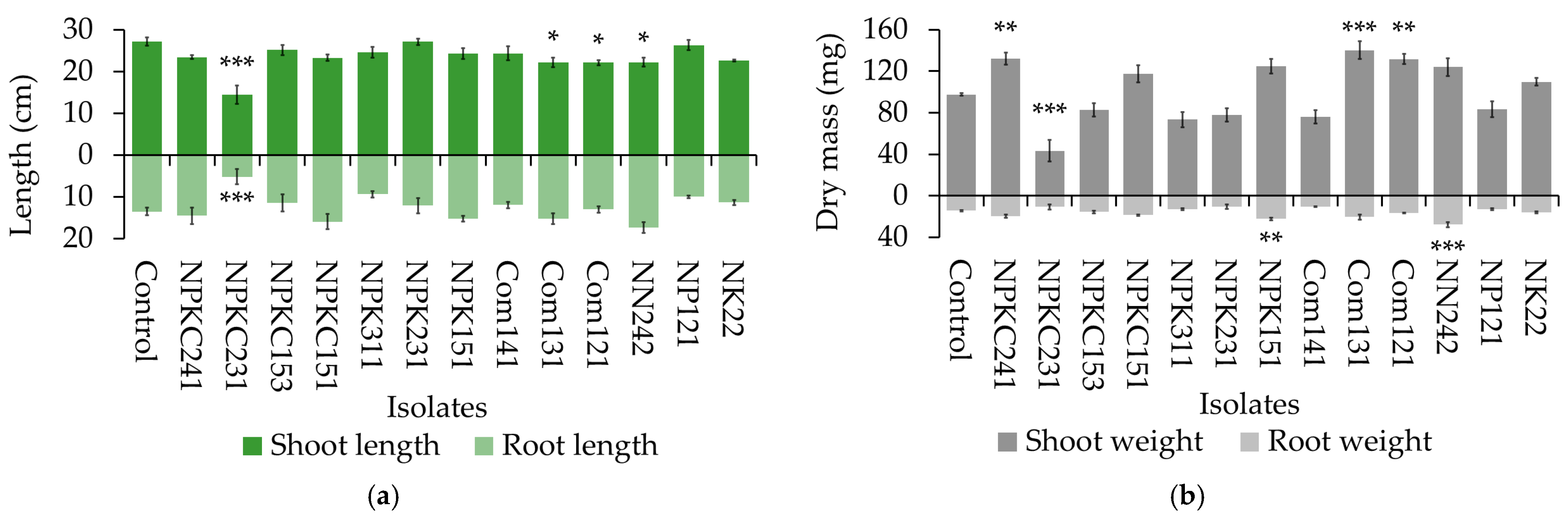
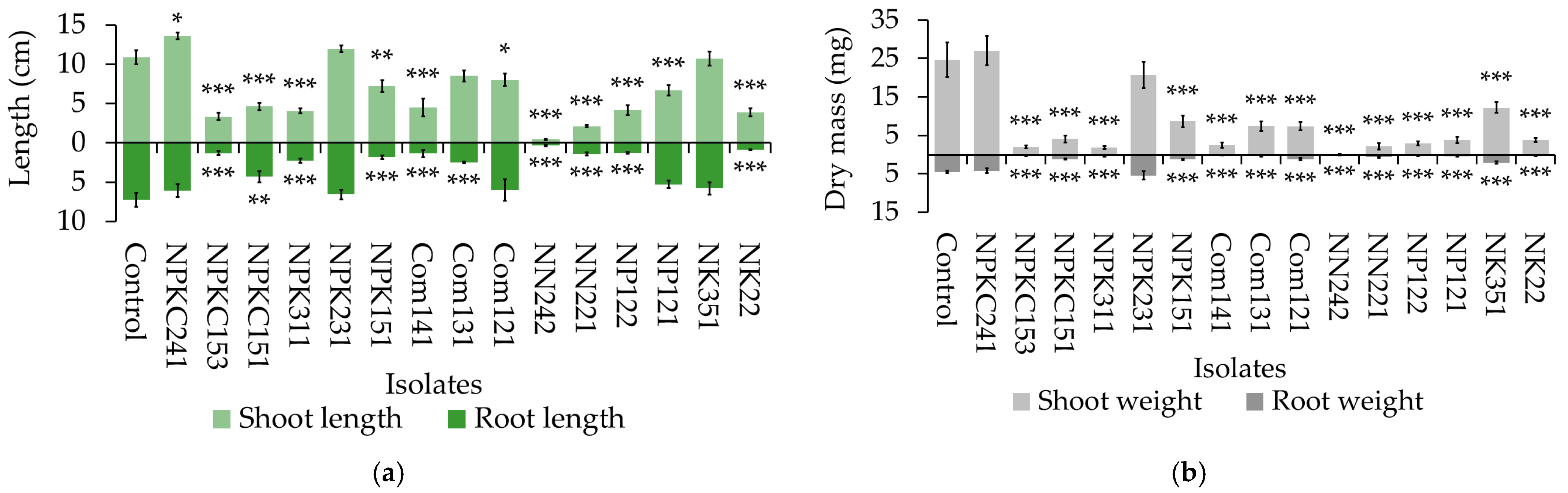
In the preliminary potted screening experiments, several fungal isolates, including
Chaetothyriales sp. NPK151,
Podospora bizantiorum Com131,
Scolecobasidium constrictum Com121, and
Poaceascoma aquaticum NN242, enhanced certain growth parameters in the mung bean, and
Cercophora sp. NPKC241 further promoted growth in both mung bean and clover. However, the growth responses induced by these isolates were inconsistent compared with those of
Cercophora sp. NPKC241. For instance, although
P. bizantiorum Com131 and
S. constrictum Com121 significantly increased shoot dry mass and NN242 enhanced root dry mass in the mung bean, the shoot lengths of these treatments were markedly shorter than those of the control, and
P. aquaticum NN242-treated plants exhibited darkened roots, suggesting potential physiological stress or partial incompatibility with the host.
Chaetothyriales sp. NPK151 increased root dry mass and displayed higher shoot dry mass in the mung bean, yet these improvements were not consistently significant across the two plant species tested. In contrast,
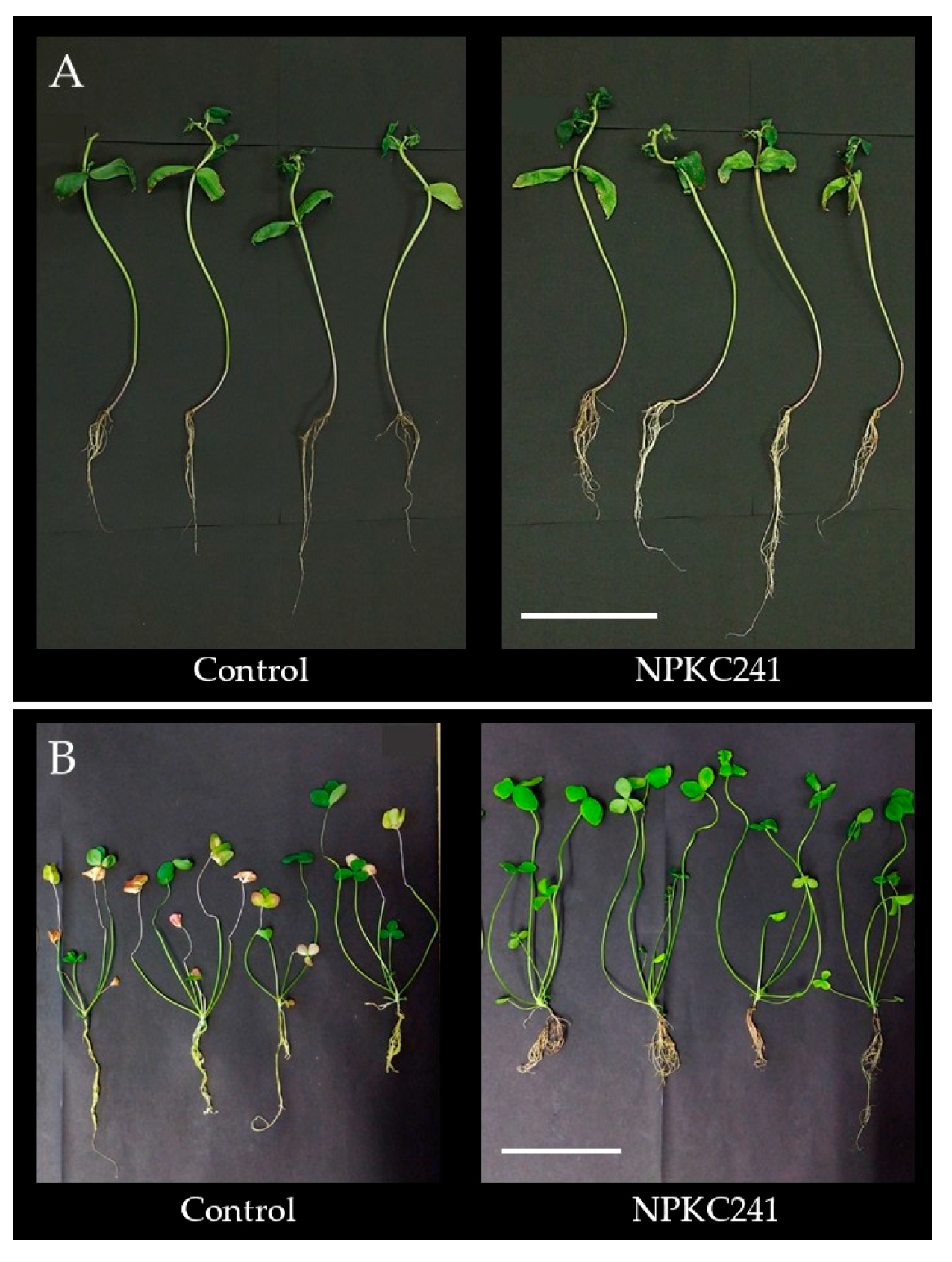
Cercophora sp. NPKC241 simultaneously enhanced multiple growth traits, including shoot and root elongation and biomass accumulation, across both host plants. In the mung bean,
Cercophora sp. NPKC241 increased root length as well as shoot and root dry mass relative to the control, with a significant improvement in the shoot dry mass. In clover,
Cercophora sp. NPKC241 also significantly promoted shoot elongation, producing the highest shoot length and shoot dry mass among all treatments. Moreover, plants inoculated with
Cercophora sp. NPKC241 exhibited visibly healthier morphology, without the chlorosis observed in uninoculated clover and the root darkening seen in
P. aquaticum NN242-treated mung bean. The consistent and multi-trait enhancement produced by
Cercophora sp. NPKC241 suggests that this isolate may possess a broader symbiotic potential across multiple host plant species or a more stable functional capacity than the other fungi tested. These results indicate that
Cercophora sp. NPKC241, isolated from fertilized soils, can positively influence early vegetative growth, possibly through improved nutrient uptake or the production of growth-promoting metabolites. Similar beneficial effects of DSEs on host plant biomass accumulation were reported by Vergara et al. [
14], who demonstrated that DSE colonization enhances tomato acquisition of macronutrients (nitrogen, phosphorus, potassium, calcium, and magnesium) and micronutrients (iron, manganese, and zinc), particularly under organic nitrogen supply, thereby promoting plant growth. The observed increases in shoot and root mass and length following inoculation further indicate that these isolates may establish a compatible association with host roots. The consistent performance of
Cercophora sp. NPKC241 in the two different legume hosts suggests a broad symbiotic potential rather than host-specific interaction. Overall, these findings provide preliminary evidence that
Cercophora sp. NPKC241 may function as a beneficial root-associated fungus capable of enhancing legume growth. It was selected for further morphological characterization and inoculation experiments to evaluate its potential endophytic role in promoting plant growth under drought stress.
The present study demonstrated that
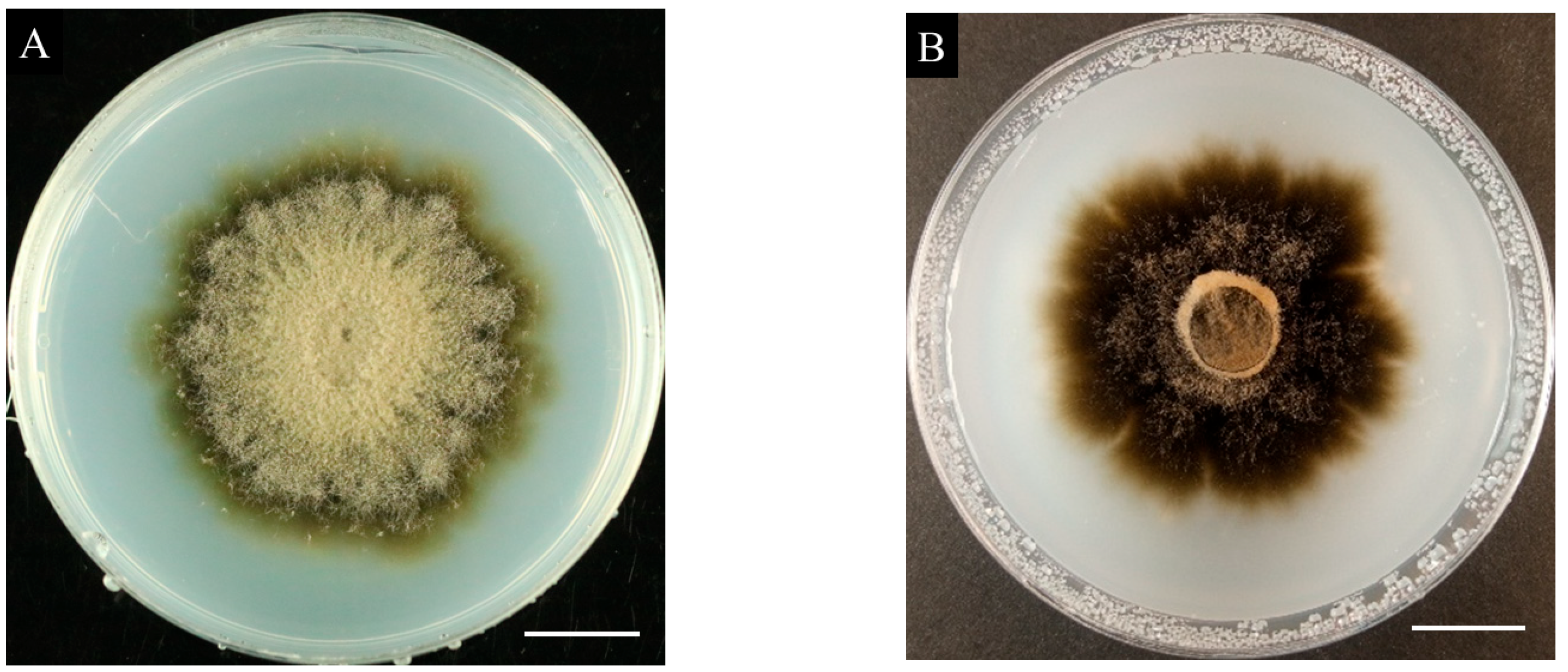
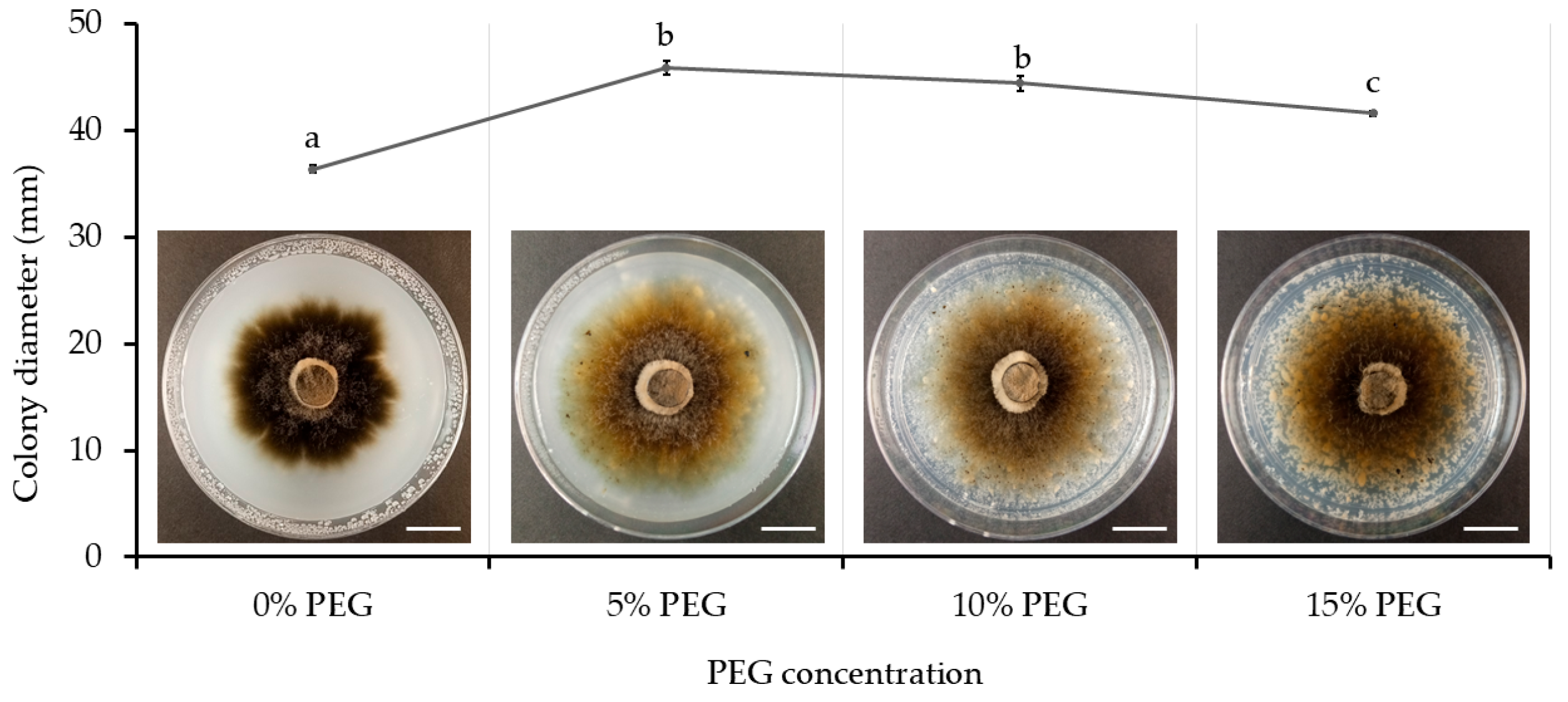
Cercophora sp. NPKC241 exhibited distinct morphological and physiological characteristics associated with DSEs. The colony morphology varied across media, with dark, velvety pigmentation on IOMA and floccose brown aerial mycelia on ½ CMMY, indicating phenotypic plasticity in response to the nutrient composition. The colony growth was slow, being 36.38 ± 0.35 mm after 21 days on IOMA at room temperature. In addition, the colonization frequency of
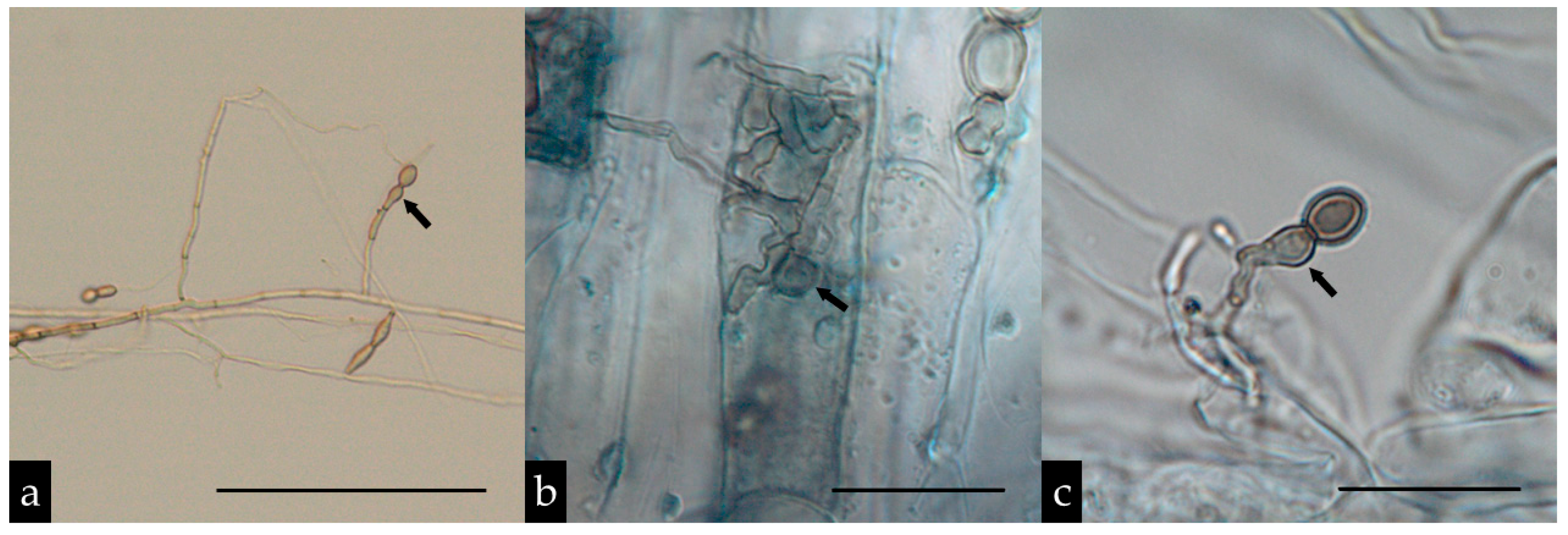
Cercophora sp. NPKC241 in mung bean roots reached 51.25 ± 8.51%, and microscopic observations confirmed that the fungus successfully established a stable association with the host at the vegetative stage. Microscopic images revealed septate, hyaline hyphae with melanized cell walls, and intercalary, oval conidiogenous cells producing blastic conidia-features typical of ascomycetous endophytes. These characteristics closely resemble those described for
Cercophora rugulosa,
C. striata, and
C. atropurpurea by Miller and Huhndorf [
18]. All three
Cercophora species possess typical ascomycetous hyphal structures characterized by pigmented, septate, and interwoven hyphae forming the perithecial wall or subiculum-features comparable to the dark, septate hyphae commonly observed in DSEs.
C. rugulosa and
C. striata were also reported as slow-growing fungi, producing colonies of approximately 21–39 mm in diameter on nutrient-poor substrates (WA, corn meal agar, and oatmeal agar) after 21 days. Furthermore,
C. atropurpurea and
C. striata exhibit phialidic conidiation with conspicuous collarettes;
C. atropurpurea additionally produces large blastoconidia directly from hyphae, while
C. striata forms clustered phialides with short, flared necks and sclerotium-like structures. These asexual morphs closely resemble
Phialophora-type anamorphs, which are typical of many DSE lineages.
In a previous study,
Cercophora palmicola [
20], collected from decaying palm wood, produced hyphae that penetrated bark tissues without degrading host cell walls, indicating a non-destructive mode of colonization even on decomposing substrates. In the present research, the presence of microsclerotia structures within the root cortex of the mung bean without causing visible necrosis confirmed an endophytic rather than pathogenic association, consistent with previous reports on DSEs promoting host plants [
10,
12]. These findings collectively support the notion that certain
Cercophora species, including
Cercophora sp. NPKC241, may adopt an endophytic or weakly saprobic lifestyle, maintaining structural integrity of host tissues while establishing stable associations similar to those described for DSE fungi.
The PEG-induced osmotic stress test further revealed that
Cercophora sp. NPKC241 tolerated moderate drought conditions, with colony growth stimulated at 5–10% PEG and only slightly inhibited at 15%. Such tolerance suggests that the fungus can maintain metabolic activity under conditions with a low water potential, a key trait promoting its survival in drought-affected soils. In addition, chitin and melanin, present in dark hyphae, may reinforce the cell wall structure and provide protection against various environmental stresses, including drought, heat, salinity, heavy metals, and radiation [
28,
29]. According to Gaber et al. [
29], the ability of root endophytes to tolerate stress is essential for establishing effective symbiotic relationships with plants under adverse conditions, suggesting that fungi adapted to harsh environments are more capable of enhancing plant tolerance to abiotic stress than those originating from non-stressed habitats. Similar adaptive responses have been documented in other DSE, such as
Periconia macrospinosa, which possesses melanized cell walls that confer protection against salinity [
30]. Overall, the morphological and physiological attributes of
Cercophora sp. NPKC241 indicate its potential role as a drought-tolerant endophyte capable of establishing mutualistic interactions with legumes under water-deficient conditions.
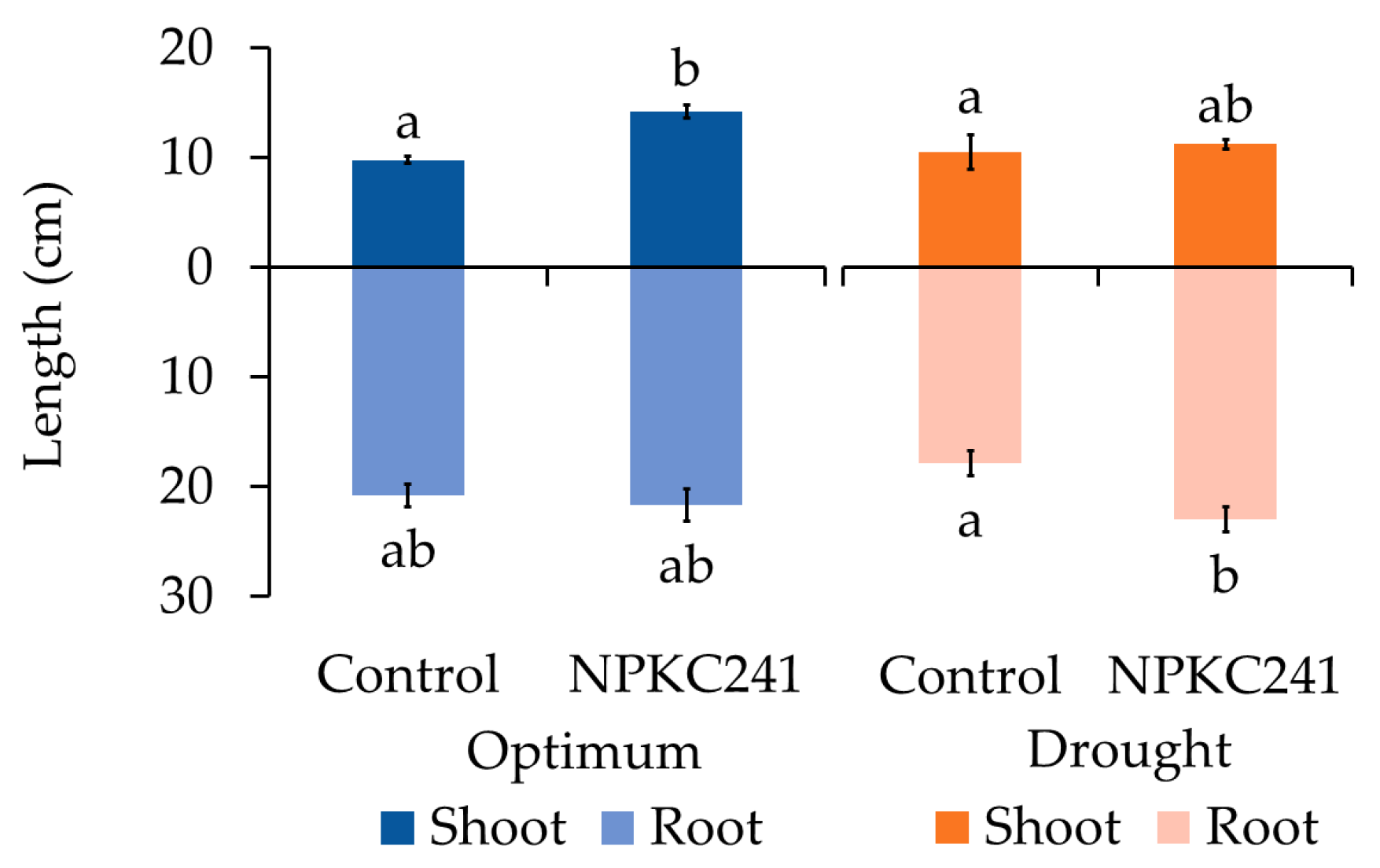
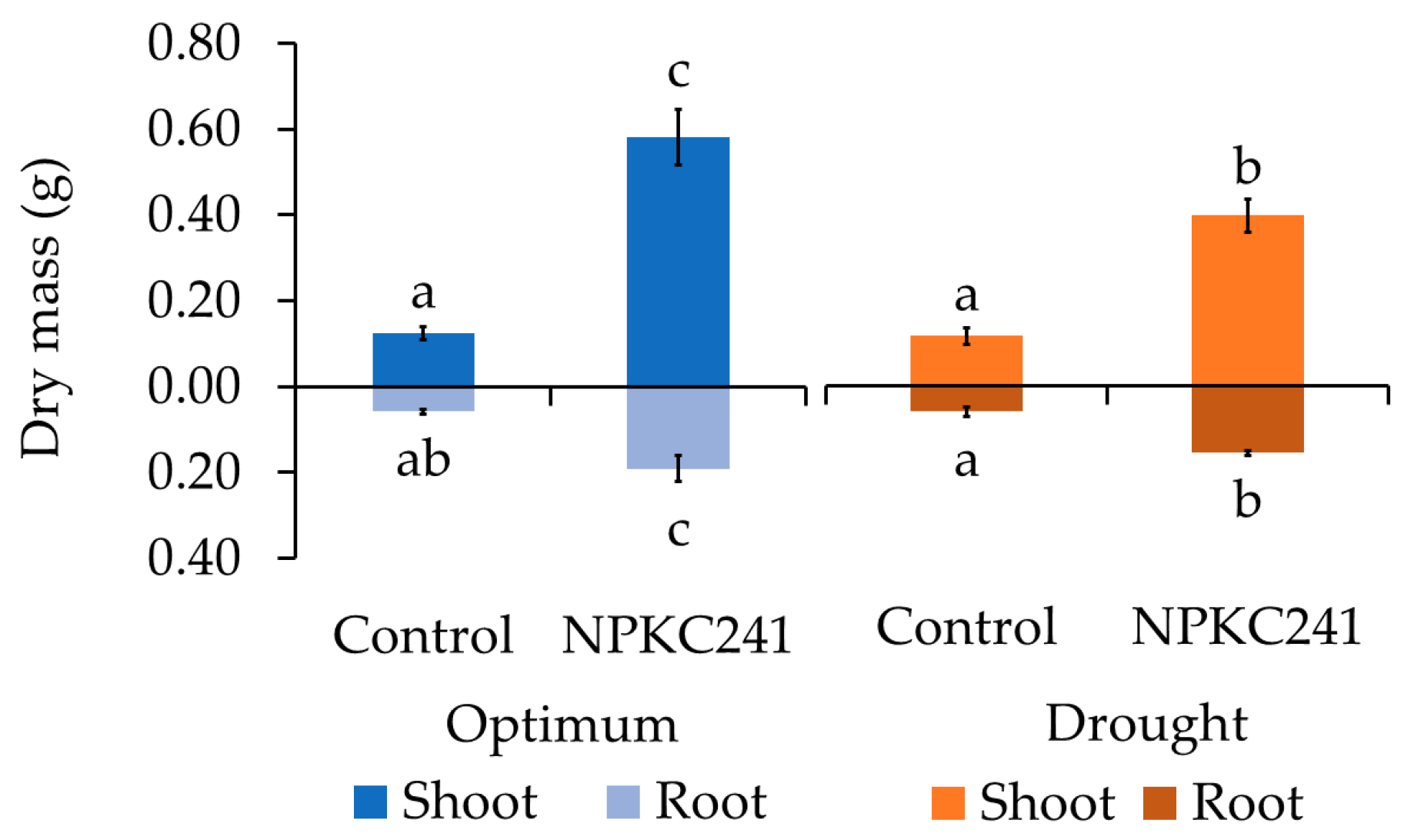
The inoculation of the mung bean plants with
Cercophora sp. NPKC241 markedly enhanced growth performance under both optimal and drought conditions, indicating its potential as a beneficial root-associated fungus. The significant increases in shoot and root dry mass, particularly the fivefold rise in shoot dry mass under optimal conditions, suggest that
Cercophora sp. NPKC241 may enhance nutrient acquisition or modulate plant growth through bioactive metabolites such as auxins and gibberellins, as previously reported for other DSE species. Vergara et al. [
31] demonstrated that DSE inoculation in rice enhanced
15N recovery, increased nutrient accumulation, and stimulated root plasma membrane H
+-ATPase activity via induction of OsA5 and OsA8 isoforms, thereby improving plant growth. Similarly, Innosensia et al. [
26] showed that
Cladophialophora chaetospira SK51 and
Veronaeopsis simplex Y34, promoted soybean growth by increasing the number of fully expanded trifoliate leaves, nodule formation, and total biomass.
Under drought stress,
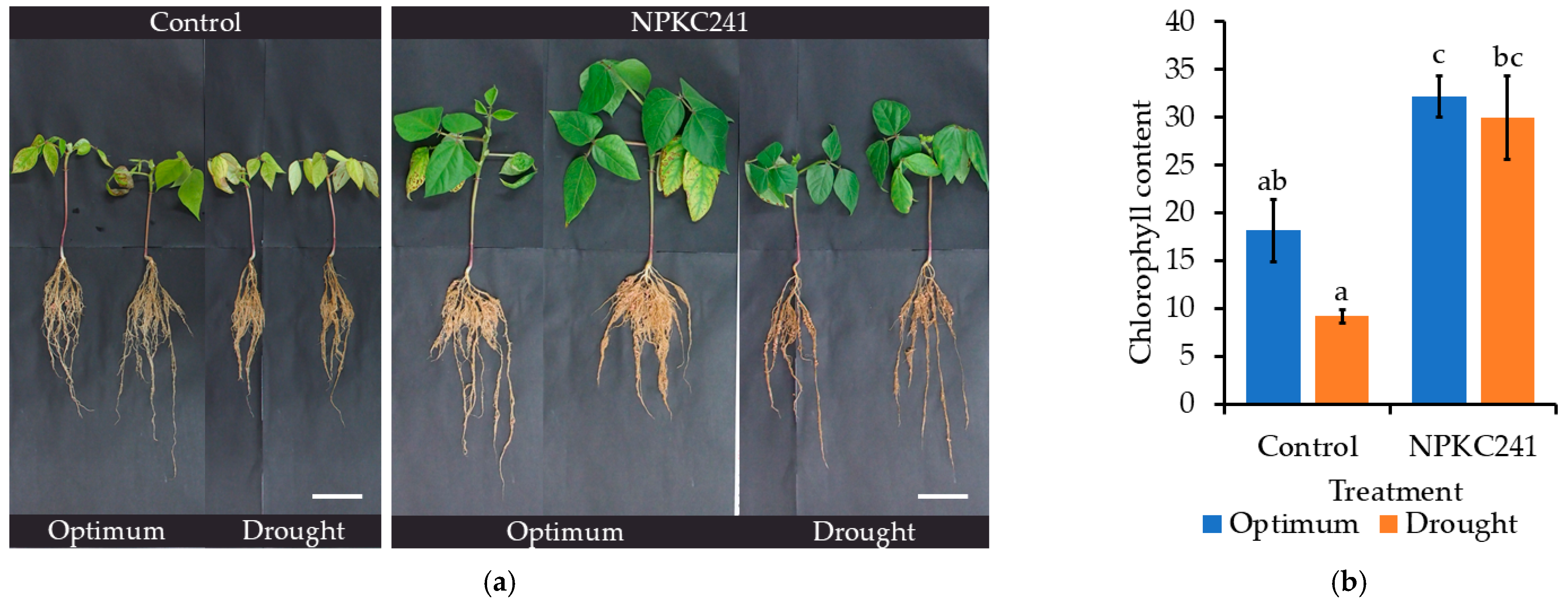
Cercophora sp. NPKC241-inoculated plants maintained significantly higher shoot and root dry mass values compared with the uninoculated controls. Comparable growth-enhancing effects have also been observed in
Scolecobasidium humicola [
27] and
Periconia macrospinosa [
30], taxa known to improve plant vigor under organic nitrogen sources or stressful conditions by enhancing root system, osmotic adjustment through compatible solutes, and antioxidant and phytohormonal responses [
5,
32,
33]. Such effects also parallel findings in
Cadophora sp., which mitigates drought impacts by promoting root elongation and osmotic balance [
34]. Moreover, DSEs may also modulate plant hormone homeostasis; for example,
Exophiala sp. LHL08 produces gibberellins (GA
3 and GA
4) and increases salicylic acid accumulation, thereby enhancing cucumber tolerance to drought- and salinity-induced osmotic and cellular stress [
32]. Additionally, certain DSEs increase host antioxidant enzymes (peroxidase, superoxide dismutase, and catalase) and osmolyte accumulation, reducing oxidative damage under water deficit [
6].
The maintenance of a high chlorophyll content in
Cercophora sp. NPKC241-treated plants under drought stress further supports its role in stabilizing photosynthetic performance. Whereas chlorophyll content in non-inoculated plants declined by approximately half under drought, inoculated plants maintained nearly unchanged chlorophyll levels. This indicates that
Cercophora sp. NPKC241 may help sustain the photosynthetic apparatus, potentially by reducing oxidative stress or maintaining nutrient balance, as reported in other DSE-host systems [
35]. Preservation of chlorophyll is a well-recognized indicator of drought resilience, and in this study, it may reflect the role of
Cercophora sp. NPKC241 in reducing stress-induced senescence and maintaining the carbon-assimilating capacity. In general, while previous studies on DSEs mainly focus on well-known genera such as
Cadophora,
Periconia,
Scolecobasidium, and
Veronaeopsis, this study identifies an isolate of
Cercophora, a genus traditionally regarded as saprobic rather than endophytic, as a potential plant-beneficial fungus. In which earlier research on
Cercophora has primarily focused on taxonomic classification based on PCR-based DNA sequencing and morphological characterization [
18,
19,
20] or on the identification of secondary metabolites, such as mitrafungidione, maristachone F, and several other compounds, derived from cultured
Cercophora samala isolated from
Mitragyna inermis [
22], rather than on their functional roles in plant growth or stress tolerance. Thus, the classification of the isolated
Cercophora strain through PCR-based DNA sequencing and morphological characterization, together with its demonstrated ability to colonize and promote its host in the present study, represents the first experimental indication that a member of this genus may possess endophytic and plant-beneficial capabilities.
Despite belonging to a genus not typically linked to endophytism, Cercophora sp. NPKC241 exhibited growth-promoting and drought-mitigating effects similar to those reported for classical DSE taxa, including enhanced shoot and root development, increased biomass, and maintenance of chlorophyll content under drought. These responses align with mechanisms described for other DSE–host interactions, although this study did not directly assess nutrient uptake, phytohormone modulation, or antioxidant activity. Besides, the PEG assay further suggested the osmotic tolerance of Cercophora sp. NPKC241, but the physiological processes underlying its drought resistance have also not been clarified. Therefore, future studies focusing on physiological responses will be essential to elucidate the underlying mechanisms of Cercophora sp. NPKC241 drought tolerance, and the Cercophora sp. NPKC241-plant association to confirm whether Cercophora sp. NPKC241 represents a novel endophytic lineage within the DSE functional group. These beneficial findings in this study provide an innovative contribution, suggesting that Cercophora sp. NPKC241 represents a previously overlooked fungal partner with agronomic potential.