Article

Effects of Exogenous Hormones on Endophytic Rhizobial Proliferation and Growth Promotion in Alfalfa

1
Key Laboratory of Grassland Ecosystem, Gansu Agricultural University, Ministry of Education, Lanzhou 730070, China
2
Pratacultural College, Gansu Agricultural University, Lanzhou 730070, China
*
Authors to whom correspondence should be addressed.
Agronomy 2025, 15(12), 2799; https://doi.org/10.3390/agronomy15122799 (registering DOI)
Submission received: 3 November 2025 / Revised: 29 November 2025 / Accepted: 3 December 2025 / Published: 5 December 2025
(This article belongs to the Section Grassland and Pasture Science)

Abstract

Endophytic rhizobia have the functions of dissolving organic phosphorus, secreting auxin, fixing nitrogen, and promoting growth. The proliferation of endophytic rhizobia in alfalfa and their symbiotic nodulation with alfalfa seedlings are regulated by various plant hormones. In this study, the alfalfa seeds (Medicago sativa L.) containing CFP-labeled rhizobium R.gn5f (isolated from the seeds of Gannong No.5 alfalfa) were used as materials, and the concentrations of 3-indoleacetic acid (3-IAA), 6-benzylaminopurine (6-BA) and homobrassinolide (HBR) suitable for the growth of R.gn5f were used for seed soaking treatment, and distilled water was used as the control. The proliferation of endophytic rhizobium, plant nodulation, nitrogen fixation performance and plant growth ability of alfalfa at different growth stages were determined. The effects of hormone types and concentrations on the proliferation and nitrogen fixation of endophytic rhizobia were analyzed to provide a theoretical basis for accurately promoting the nodulation, nitrogen fixation and growth-promoting ability of endophytic rhizobia in seeds. The results showed that the optimal concentrations of 3-IAA, 6-BA and HBR were 12 mg·L−1, 16 mg·L−1 and 2.47 mg·L−1, respectively. The nitrogen fixation performance of endophytic rhizobium plants containing three hormones was higher at the branching stage and budding stage. The growth ability of the plant was better at the flowering stage. The hormone 2.47 mg·L−1 of HBR was beneficial to the proliferation, nodulation, nitrogen fixation and plant growth of endophytic rhizobia in alfalfa at the vegetative and reproductive growth stages, and the number of R.gn5 f in the seeds of HBR plants at the mature stage was the largest (281.25 CFU·g−1). Therefore, the hormone 2.47 mg·L−1 of HBR was better for the proliferation of endophytic rhizobia R.gn5 f and plant growth in alfalfa. These findings provide a theoretical basis for precisely leveraging the nodulation and nitrogen-fixing capabilities of seed-borne endophytic rhizobia, thereby laying a foundation for the symbiotic breeding of alfalfa and rhizobia.

1. Introduction

Alfalfa (Medicago sativa L.) is a perennial forage grass, known as the ‘king of forage grass’. It has many excellent characteristics, such as cold resistance, drought resistance, strong adaptability, salt and alkali resistance, and soil improvement. It has great value in maintaining water and soil, increasing fertilizer efficiency and other aspects, and is of great significance to economic development and sustainable development [1].
Nitrogen is an essential nutrient for plant survival and growth, and it is also the main factor limiting crop yield [2]. Nowadays, the extensive use of industrial nitrogen fertilizer not only greatly increases the cost of agricultural production, but also brings a series of environmental problems. N2 in the atmosphere cannot be directly utilized by plants, and N2 can only be absorbed and utilized after it is fixed under the catalysis of nitrogenase [3,4].
Biological nitrogen fixation is the process whereby nitrogen-fixing microorganisms convert free atmospheric nitrogen into nitrogen-containing compounds that can be absorbed by plants [5,6]. There are three main types of biological nitrogen fixation in nature: symbiotic nitrogen fixation, free-living nitrogen fixation, and associative nitrogen fixation [7]. The symbiotic nitrogen fixation system formed by legumes and rhizobia accounts for more than 65% of the total biological nitrogen fixation in the world, and is the most efficient nitrogen fixation system with the largest total nitrogen fixation [8,9,10]. Rhizobium is a kind of symbiotic nitrogen-fixing bacteria widely distributed in soil. It can form nodules with plants and transform inorganic nitrogen in the atmosphere into compound nitrogen that can be absorbed and utilized by plants [11].
Auxin accumulation is essential at various stages of nodule development. Research indicates that in the epidermis, auxin promotes the infection process while cytokinin inhibits it, revealing a delicate antagonistic balance between the two hormones. Nonetheless, both hormones positively regulate the initiation and maintenance of cell division during root nodule organogenesis [12]. Zhang Shuqing found that indole acetic acid could increase the colonization of exogenous rhizobia in alfalfa stems, but reduce the colonization of endophytic rhizobia in stems and cotyledons [13]. In addition, studies have found that the use of auxin to induce root nodules in maize enhances nitrogen fixation in nodule-forming roots, and it has been noted that plants with nodulation treatment show higher chlorophyll content in leaves and higher yield in the plant [14].
Cytokinin is a central regulator of both nodule organogenesis and root hair infection. Mounting evidence in recent years has demonstrated that cytokinins play a positive regulatory role in the division of cortical cells and the formation of root nodule primordia [15]. Research on the role of cytokinin signaling components in nodulation has primarily focused on cytokinin receptors. Current understanding can be summarized as follows: the receptor LjLHK1 plays a major role. Studies in Lotus japonicus and Medicago truncatula have confirmed that LjLHK1 is essential for nodulation. Furthermore, activation of this receptor is sufficient to trigger spontaneous nodulation even in the absence of rhizobia [16]. At the same time, studies have also found that cytokinins can promote the nitrogen fixation ability of peas [17].
Research indicates that brassinosteroid (BR) exerts complex, dual effects on nodule development. Mutations in BR biosynthesis genes result in BR deficiency, which reduces rhizobial colonization in tomato, rice, and pea mutants. Grafting experiments in peas further revealed that BR likely influences nodulation through shoot-derived signals. Specifically, regardless of root BR production, plants with impaired BR biosynthesis in the shoot system developed fewer nodules than those with wild-type shoots [18].
Therefore, a variety of plant hormones play a regulatory role in the formation and development of nodules, and are involved in the positive and negative regulation of nodule formation in legume plants. They act on different stages of nodule formation and development, and various hormones coordinate with each other to regulate the formation and development of nodules. Among them, gibberellin, cytokinin and auxin play a positive regulatory role in the formation and development of root nodules; hormones that play a negative regulatory role include ethylene, abscisic acid, salicylic acid, jasmonic acid, etc. [19].
To date, aside from the work by Zhang et al. [13] on auxin’s effect on endophytic rhizobia, most related studies—including those on cytokinins and brassinosteroids—have focused exclusively on exogenous rhizobia. Therefore, a systematic investigation into how auxin, cytokinin, and brassinolide influence the proliferation and plant-growth-promoting effects of endophytic rhizobia is warranted to lay the foundation for alfalfa-rhizobium symbiotic breeding.

2. Materials and Methods

2.1. Experimental Materials

2.1.1. Bacterial Strains

Ensifer meliloti LZgn5f (R.gn5f) was a CFP-labeled Chinese rhizobium strain. The original strain was Ensifer meliloti LZgn5 (an endogenous rhizobium isolated from the seeds of Medicago sativa cv. Gan No.5 and identified by sequencing from the Center for Microbial Identification and Preservation, Chinese Academy of Sciences). It was a fast-growing acid-producing rhizobium [13].

2.1.2. Plant Hormones

The hormones used were 3-indoleacetic acid (auxin), 6-benzylaminopurine (cytokinin) and homobrassinolide (brassinosteroid), which were purchased from Shanghai Aladdin Biochemical Technology Co., Ltd. (Shanghai, China).

2.1.3. Plant Materials

The seeds used in the assay were from the third generation and harbored the endophytic rhizobium sp. R.gn5f, which was tagged with a fluorescent marker. The first-generation (G1) seeds were harvested from alfalfa plants that had been inoculated with the labeled rhizobium strain R.gn5f during early growth stages in the laboratory [20]. The third-generation (G3) of alfalfa seeds incorporating fluorescently labeled endophytic rhizobia R.gn5f was harvested in August 2022 and designated A.GN5 + R.gn5f [21]. Quantification via fluorescence detection revealed a bacterial load of 10~20 CFU seed−1 in these seeds.

2.1.4. Culture Media

TY liquid medium contained the following per liter of distilled water (final pH 7.0) [22]:
Tryptone (Sinopharm Chemical Reagent Co., Ltd., Shanghai, China): 5.0 g
Yeast extract (Sinopharm Chemical Reagent Co., Ltd., Shanghai, China): 3.0 g
CaCl2·6H2O (Sinopharm Chemical Reagent Co., Ltd., Shanghai, China): 1.3 g
YMA (Yeast Mannitol Agar) solid medium was prepared as described previously [23] with the following composition per liter of distilled water (final pH 7.0):
K2HPO4·3H2O (Sinopharm Chemical Reagent Co., Ltd., Shanghai, China): 0.5 g
MgSO4·7H2O (Sinopharm Chemical Reagent Co., Ltd., Shanghai, China): 0.2 g
NaCl (Sinopharm Chemical Reagent Co., Ltd., Shanghai, China): 0.1 g
Mannitol (Sinopharm Chemical Reagent Co., Ltd., Shanghai, China): 10.0 g
Yeast extract: 1.0 g
Congo red solution (2.5 g/L) (Sinopharm Chemical Reagent Co., Ltd., Shanghai, China): 10.0 mL
Agar (Sinopharm Chemical Reagent Co., Ltd., Shanghai, China): 15.0 g

2.2. Experimental Procedures

2.2.1. Preparation of Exogenous Hormone Solutions at Different Concentrations

Aliquots of 2 mg of homobrassinolide, 5 mg of 3-indoleacetic acid, and 5 mg of 6-benzylaminopurine were placed in separate sterile Erlenmeyer flask. Each was dissolved in a small volume of alcohol and filter-sterilized through a 0.22 μm membrane. The solutions were then adjusted to a final volume of 10 mL with sterile water to prepare stock solutions. These stock solutions were subsequently diluted to the required concentrations as described below:
The concentrations of 3-indoleacetic acid were set at 10, 12, 14, 16, and 18 mg·L−1, with distilled water used as the control [24];
The concentrations of 6-benzylaminopurine were set at 12, 14, 16, 18, and 20 mg·L−1, with distilled water used as the control [24];
The concentrations of homobrassinolide were set at 0.98, 1.48, 1.98, 2.47, and 2.97 mg·L−1, with distilled water used as the control [25].

2.2.2. Activation of Rhizobium Strains

Following activation on TY solid medium, single colonies of the fluorescently labeled rhizobium strain R.gn5f (from a −80 °C glycerol stock) were selected and transferred to TY liquid medium. The culture was incubated at 28 °C with shaking at 120 r·min−1 until an OD600 of 1 × 10⁹ CFU·mL−1 was achieved [26].

2.2.3. Determination of the Optimal Hormone Concentration for the Growth of Fluorescently Labeled Rhizobia

Following the addition of the three hormones to 40 mL of bacterial solution at the designated concentrations, the culture was incubated at 28 °C with shaking at 120 r·min−1. The number of viable bacteria in each treatment was measured on days 1, 3, 5, and 7 [20]. The optimal hormone concentration for the growth of the endophytic rhizobium R.gn5f was determined by comparison with a control group that received no hormone treatment.

2.2.4. Hormone Treatment and Alfalfa Plant Culture

The experiment was carried out in May 2023 at Gansu Agricultural University. Alfalfa seeds containing cyan fluorescently labeled endophytic rhizobia were surface-sterilized by soaking in iodophor (purchased from Lanzhou Boyu Biotechnology Co., Ltd., Lanzhou, China; available iodine content: 0.45–0.55%) for 3 min in a sterile 50 mL Erlenmeyer flask. This was followed by four 1-min rinses with sterile water. All operations were performed under aseptic conditions on a laminar flow bench.
The sterilized seeds were subjected to a 2-h soak in solutions of 3-indoleacetic acid (3-IAA), 6-benzyladenine (6-BA), or homobrassinolide (HBR) at their designated concentrations. A separate group of seeds soaked in distilled water was included as the control (CK).
Nutrient soil was placed into 18 cm (diameter) × 18 cm (height) flowerpots, which were then positioned in a hydroponic box. Twenty-five treated seeds were sown per pot. After the alfalfa seedlings developed true leaves, 20 uniform seedlings were retained per pot, with six replicates per treatment. During the seedling and branching stages, sterile distilled water was supplied as needed. The plants were subsequently moved outdoors for the reproductive growth phase.

2.2.5. Determination Indexes and Methods

(1)
Method for Detecting Fluorescently Labeled Endophytic Rhizobia
Three plants were randomly selected from each treatment. The roots, stems, leaves, and pods were separated, and samples of 1 g (for vegetative tissues) along with 10 flowers and seeds were weighed. These samples were placed in a sterile 50 mL Erlenmeyer flask and surface-sterilized by immersion in medical-grade iodophor (Sinopharm Chemical Reagent Co., Ltd., Shanghai, China) for 2 min with shaking in an ultra-clean bench. This was followed by four rinses with sterile water until the rinse solution was clear and foam-free. A sterility check was performed by placing the surface-sterilized plant tissues on solid medium for 30 min. After incubation of the medium at 28 °C for 48 h revealed no microbial contamination, the tissues were triturated in a sterile mortar with 2 mL of sterile water. The homogenate was centrifuged at 8000 r·min−1 for 20 min. An aliquot (0.2 mL) of the supernatant was plated onto YMA medium containing Congo red; for root samples, the supernatant was serially diluted (10−1, 10−2, 10−3) prior to plating. Incubation proceeded at 28 °C for 48 h. Upon completion of the incubation period, cyan fluorescently labeled rhizobia were quantified under dark conditions using a portable UV lamp (model WFH-204B, wavelength 336 nm). The bacterial count per gram of plant tissue was subsequently calculated [18].
(2)
Assessment of Nodulation Traits
During the seedling and branching stages, five plants per treatment were randomly excavated, ensuring root system integrity. Following careful removal of the nutrient soil via washing, the fresh weight and diameter of single nodules were subsequently measured.
(3)
Assessment of Nitrogen Fixation Activity
Nitrogenase activity: Nitrogenase activity was determined using the acetylene reduction assay [20]. Freshly harvested nodules were weighed and placed in an 8 mL penicillin bottle. The bottle was sealed with a septum, and 0.8 mL of the headspace air was replaced with an equal volume of acetylene gas using a microsyringe (Shanghai High Pigeon Scientific Instrument Enterprise Store, Shanghai, China). After a 2-h incubation, a 10 μL gas sample was withdrawn from the headspace and injected into a gas chromatograph for analysis.
C 2 H 4   levels   ( μ m o l · g 1 · h 1 ) = C × h x × V h s × 1000 × 22.4 × t × m × 10 6
Leghemoglobin content: Hemoglobin content was determined according to methods described by Wang Shuqi et al. and Zuo Yuanmei et al. [27,28].
(4)
Determination of Plant Biomass
Five plants per treatment replicate were randomly harvested. For each plant, the height and the number of compound leaves were measured. The plants were subsequently dried in an oven to determine the dry biomass [29].

2.3. Statistic Analysis

Data were analyzed using one-way ANOVA followed by Tukey’s HSD test (p < 0.05), and graphed with Microsoft Office 2019 (Microsoft Corporation, Redmond, WA, USA) and Prism 8 software (GraphPad Software, San Diego, CA, USA). The effects of exogenous hormone treatments on endophytic rhizobia proliferation, nodule nitrogen fixation capacity, and plant biomass were examined by analysis using SPSS 25.0 software (IBM Corporation, Armonk, NY, USA).

3. Results

3.1. Effects of Exogenous Hormone Concentrations on the Growth of the Fluorescently Labeled Rhizobium Strain R.gn5f

3.1.1. 3-Indoleacetic Acid

As shown in Figure 1, the growth of the exogenous marker rhizobium R.gn5f was significantly enhanced by an appropriate concentration of 3-IAA. 3-IAA at 12 mg·L−1 significantly promoted the growth of R.gn5f compared to the control group (p < 0.05). The OD600 values on days 1, 3, 5, and 7 were 0.3437, 0.4073, 0.4318, and 0.4172, respectively, representing increases of 17.75%, 26.50%, 49.75% and 45.17% over the control. Thus, the optimal concentration of 3-IAA for the growth of rhizobium R.gn5f was determined to be 12 mg·L−1.

3.1.2. 6-Benzyladenine

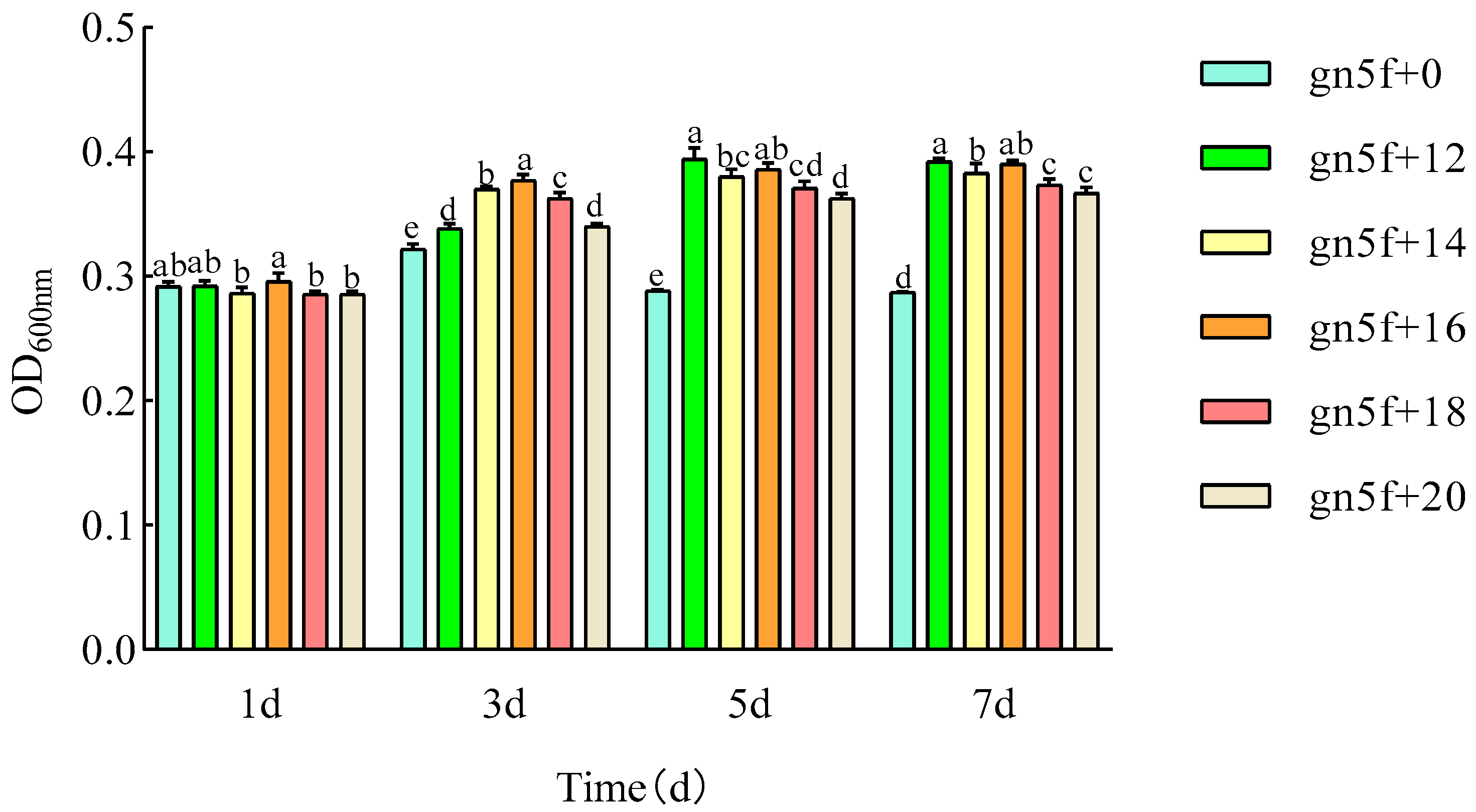
As presented in Figure 2, the growth of the exogenous labeled rhizobium R.gn5f was significantly enhanced by an optimal concentration of 6-BA. From day 1 to day 3, 16 mg·L−1 6-BA exerted the strongest stimulatory effect, yielding OD600 values of 0.2959 and 0.3774, respectively, both significantly higher than the control (p < 0.05). From day 5 to day 7, the promotive effect of 16 mg·L−1 6-BA on labeled rhizobia was second only to that of the 12 mg·L−1 6-BA, yet remained significantly higher than the control (p < 0.05). The OD600 values for the two concentrations were 0.3859 and 0.3903 (16 mg·L−1), and 0.3943 and 0.3925 (12 mg·L−1), respectively. Comprehensive analysis indicates that 16 mg·L−1 is the optimal concentration of 6-BA for promoting the proliferation of the exogenous marker rhizobium strain R.gn5f.

3.1.3. Homobrassinolide

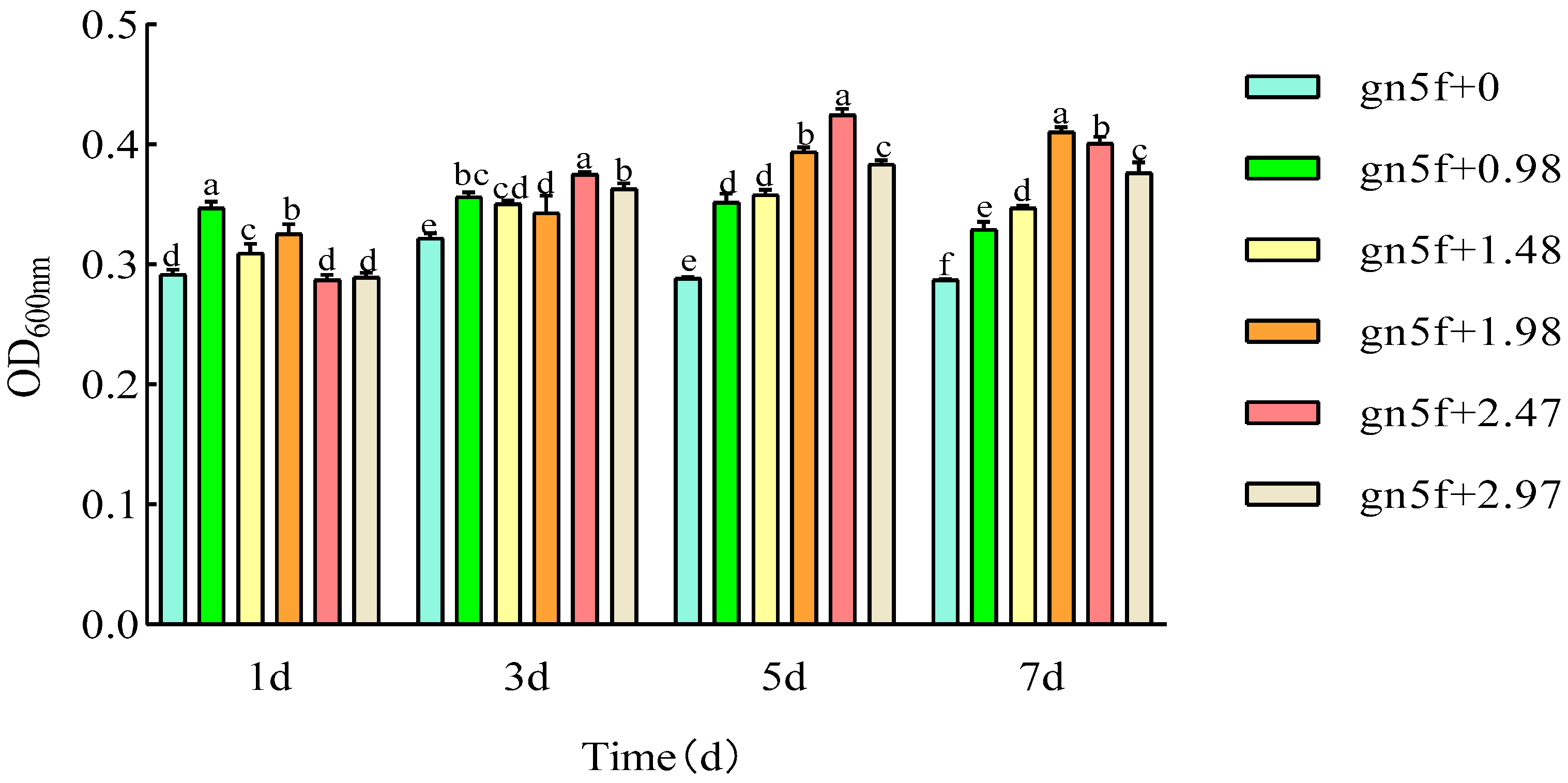
Appropriate concentration of HBR promoted the growth of exogenous fluorescently labeled rhizobium R.gn5f (Figure 3). The effect of 2.47 mg·L−1 HBR on the growth of rhizobium R.gn5 f was the most obvious from 3 d (OD600 = 0.3750) to 5 d (OD600 = 0.4250), and was significantly higher than that of the control (p < 0.05), which was 16.46% and 47.35% higher than that of the control, respectively. On the 7th day, the strongest promoting effect was 1.98 mg·L−1 HBR (OD600 = 0.4105), followed by 2.47 mg·L−1 HBR (OD600 = 0.4012), which was significantly higher than that of the control (p < 0.05), and increased by 42.81% and 39.60% respectively compared with the control. Therefore, the optimum concentration of HBR for the growth of Rhizobium R.gn5f was 2.47 mg·L−1.

3.2. Effects of Exogenous Hormones on the Proliferation of Endophytic Rhizobium R.gn5f and Seedling Growth During the Vegetative Stage

3.2.1. Effects of Exogenous Hormones During the Vegetative Growth Stage on the Proliferation of Endophytic Rhizobia R.gn5f in Alfalfa

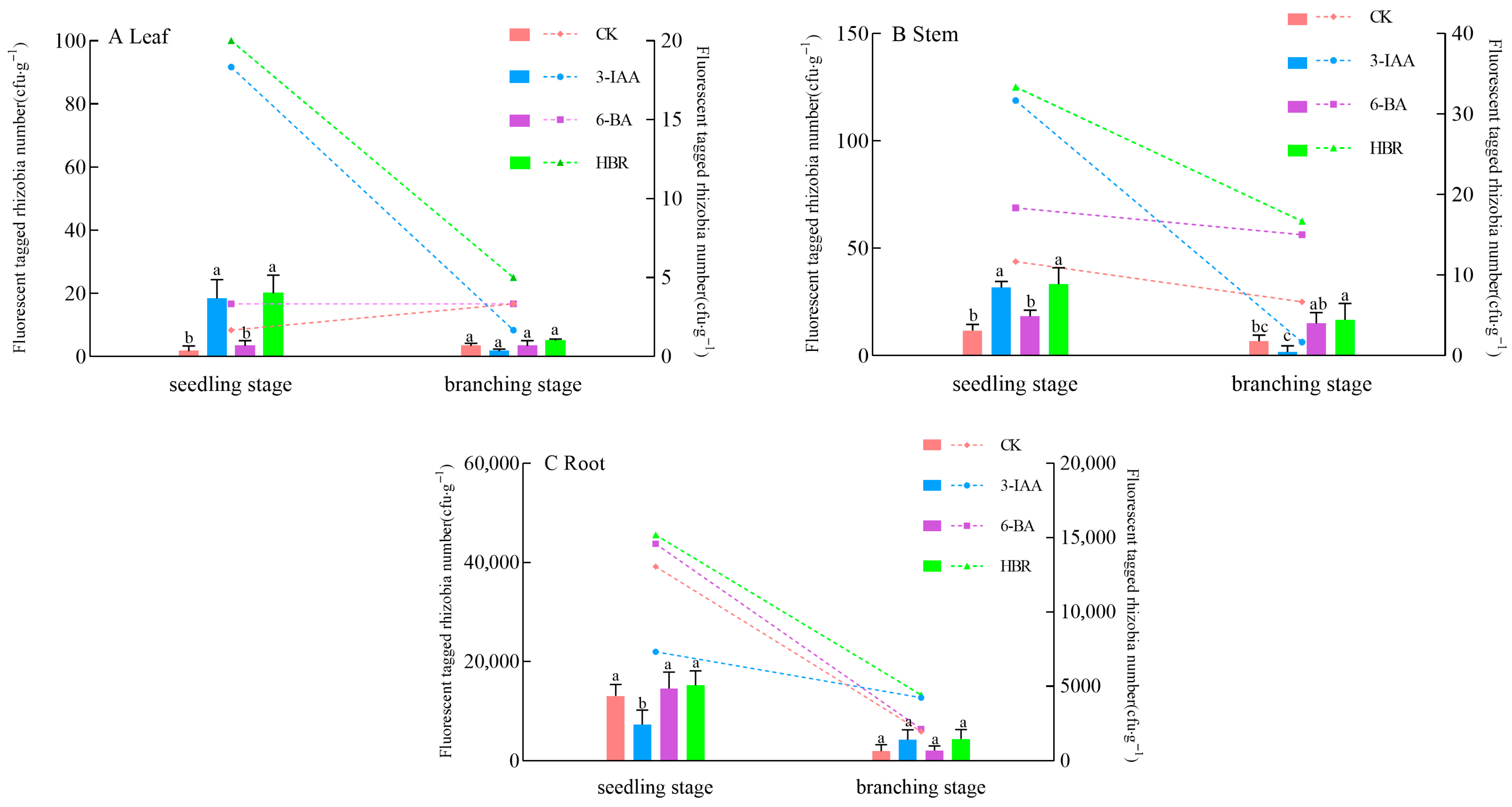
Seeds containing the labeled endophytic rhizobium R.gn5f were treated by soaking in the three hormones at their respective optimal concentrations. The quantity of the endophytic rhizobium in various plant tissues at both the seedling and branching stages are presented in Figure 4.
In the leaves, 3-IAA, 6-BA, and HBR promoted the proliferation of endophytic rhizobium R.gn5f at the seedling stage (Figure 4A). Specifically, the 3-IAA and HBR treatment groups (both 20.00 CFU·g−1) showed significant increases compared to the CK (1.67 CFU·g−1), representing an approximately 11-fold enhancement (p < 0.05). At the branching stage, however, the population of labeled endophytic rhizobia did not differ significantly between any treatment and the CK (p ≥ 0.05), with the HBR group exhibiting the highest numerical value (5.00 CFU·g−1).
In the stem at the seedling stage Figure 4B), both 3-IAA (33.33 CFU·g−1) and HBR (31.67 CFU·g−1) significantly promoted the colonization of labeled endophytic rhizobia compared to the CK (11.67 CFU·g−1; p < 0.05), representing increases of 185.6% and 171.4%, respectively. At the branching stage, a different pattern emerged. Both 6-BA (15.00 CFU·g−1) and HBR (16.67 CFU·g−1) significantly enhanced rhizobial proliferation over the 3-IAA treatment (1.67 CFU·g−1; p < 0.05), corresponding to remarkable increases of approximately 798% and 898%, respectively.
At the seedling stage, the number of marked endophytic rhizobia in roots of HBR (15183.33 CFU·g−1) was the highest, which was significantly higher than that of 3-IAA (7333.33 CFU·g−1) (p < 0.05), and increased by 115.64%. At the branching stage, the number of endophytic rhizobia in the roots of the treatment group was not significant compared with the control group, but the number of endophytic rhizobia in the roots of the HBR group was the highest, which was 4433.33 CFU·g−1 (Figure 4C).
As shown in Figure 4, among all treatments, 2.47 mg·L−1 HBR most effectively promoted the proliferation of endophytic rhizobia R.gn5f in the roots, stems, and leaves. The promotive effect of HBR exhibited a clear tissue specificity, decreasing in the order: leaf > stem > root. Consequently, its effect was most pronounced in leaves, where the rhizobial population was 400.00%, 25.00%, and 274.81% higher than that in the CK, 3-IAA, and 6-BA treatments, respectively.
Collectively, HBR exerted a more pronounced promotive effect on the colonization of marked endophytic rhizobia during the vegetative growth stage.

3.2.2. Effects of Exogenous Hormones During the Vegetative Growth Stage on Nodulation and Nitrogen Fixation in Alfalfa Inoculated with Endophytic Rhizobium R.gn5f

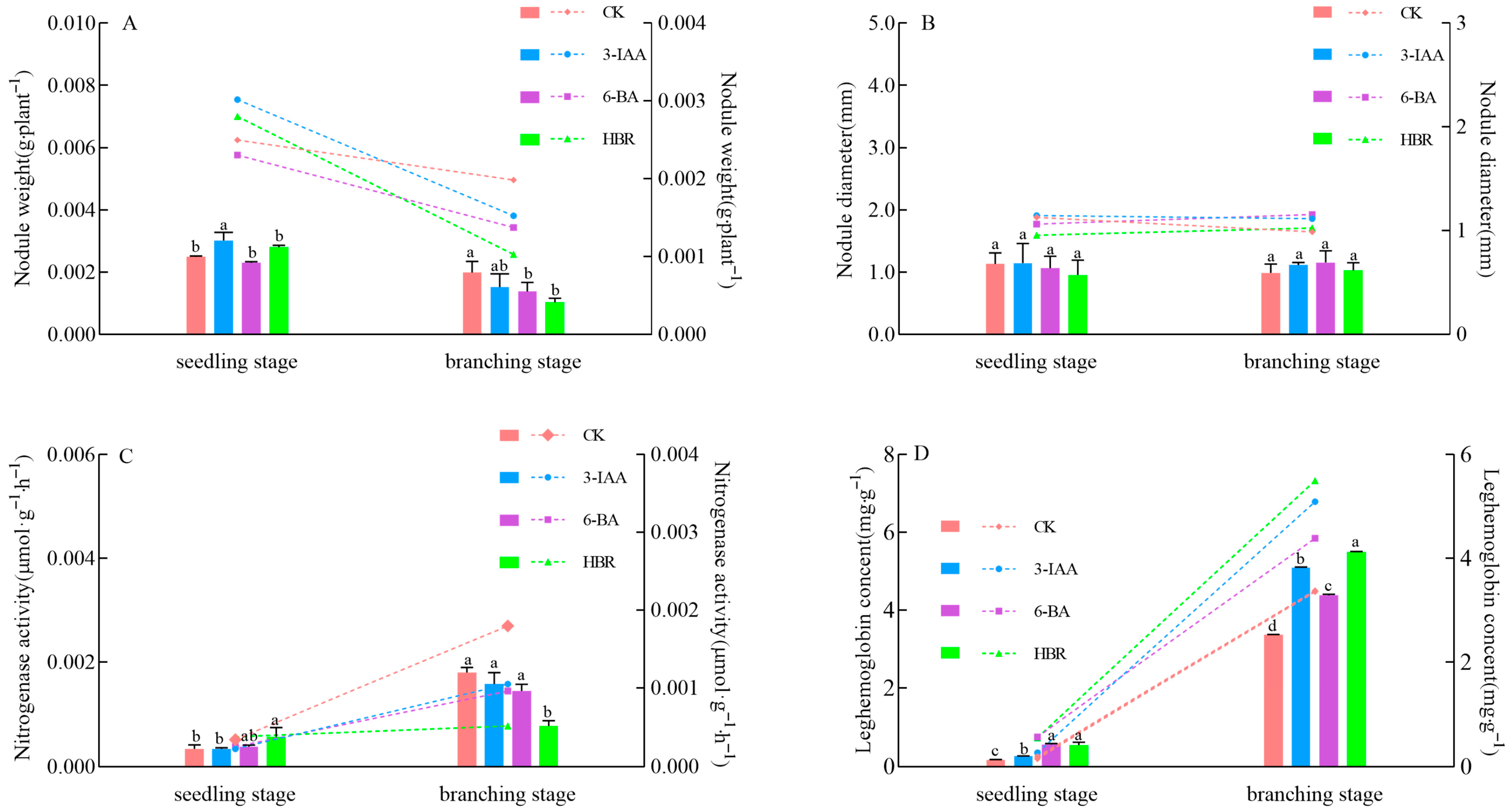
As shown in Figure 5A, regarding single nodule weight at the seedling stage, the 3-IAA treatment (13.9 × 10⁻³ g·plant−1) was significantly higher than the CK (1.7 × 10⁻³ g·plant−1), 6-BA (5.0 × 10⁻³ g·plant−1), and HBR (1.5 × 10⁻³ g·plant−1) (p < 0.05). This represents increases of 717.65%, 178.00%, and 800.00%, respectively; at the branching stage, the single nodule weight of the CK (12.7 × 10⁻³ g·plant−1) was significantly higher than that of the 6-BA (6.5 × 10⁻³ g·plant−1) and HBR (4.0 × 10⁻³ g·plant−1) treatments (p < 0.05), representing increases of 95.38% and 217.50%, respectively. However, there was no significant difference between the CK and the 3-IAA group (8.2 × 10⁻³ g·plant−1) (p ≥ 0.05); It can be seen from Figure 5B that the effects of 3-IAA, 6-BA and HBR on nodule diameter were not significant (p ≥ 0.05).
In terms of nitrogenase activity at the seedling stage, the HBR treatment (5.71 × 10⁻⁴ μmol·g−1·h−1) was significantly higher than the CK (3.44 × 10⁻⁴ μmol·g−1·h−1) and 3-IAA (3.43 × 10⁻⁴ μmol·g−1·h−1) (p < 0.05), representing increases of 65.99% and 66.47%, respectively. However, no significant difference was observed between HBR and 6-BA (3.82 × 10⁻⁴ μmol·g−1·h−1) (p ≥ 0.05). At the branching stage, The CK (18.00 × 10⁻⁴ μmol·g−1·h−1) exhibited significantly higher nitrogenase activity than the HBR treatment (7.80 × 10⁻⁴ μmol·g−1·h−1) (p < 0.05), being 130.77% greater. No significant differences were detected among the CK, 3-IAA (15.77 × 10⁻⁴ μmol·g−1·h−1), and 6-BA (14.44 × 10⁻⁴ μmol·g−1·h−1) treatments (p ≥ 0.05) (Figure 5C).
As analyzed from Figure 5D, at the seedling stage, the leghemoglobin content in the 6-BA (0.57 mg·g−1) and HBR (0.55 mg·g−1) treatments was significantly higher than that in the CK (0.17 mg·g−1) and 3-IAA (0.27 mg·g−1) groups (p < 0.05). Specifically, 6-BA increased the content by 235.29% and 111.11% compared to the CK and 3-IAA, respectively, while HBR increased it by 223.53% and 103.70%; at the branching stage, the leghemoglobin content in the HBR treatment (5.50 mg·g−1) was significantly higher than that in the CK (3.37 mg·g−1), 3-IAA (5.09 mg·g−1), and 6-BA (4.39 mg·g−1) groups (p < 0.05), representing increases of 63.20%, 8.05%, and 25.46%, respectively.
Collectively, the results from Figure 5 demonstrate that HBR exerted a more consistent and pronounced promotive effect on single nodule weight at the seedling stage and on leghemoglobin content throughout the vegetative growth period.
In summary, HBR has a positive effect on the nodulation ability of alfalfa plants containing labeled endophytic rhizobium R.gn5f.

3.2.3. Effects of Exogenous Hormones on Alfalfa Seedling Growth Inoculated with Marked Endophytic Rhizobium R.gn5f

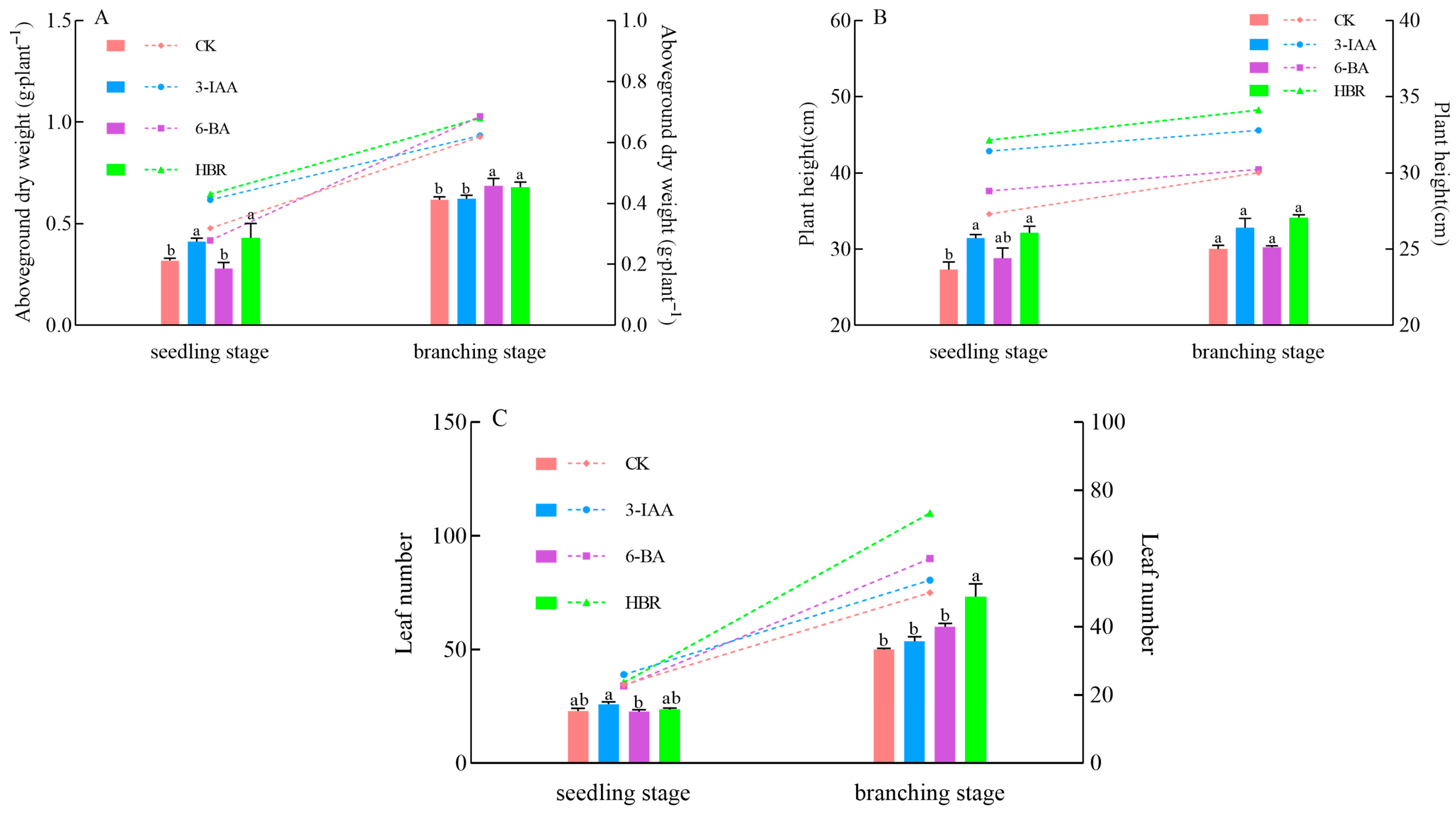
In terms of aboveground dry weight at the seedling stage, the 3-IAA (0.41 g·plant−1) and HBR (0.43 g·plant−1) treatments were significantly higher than the CK (0.32 g·plant−1) and 6-BA (0.28 g·plant−1) treatments (p < 0.05), representing increases of 28.13% and 34.38% over the CK, respectively. At the branching stage, with the 6-BA (0.69 g·plant−1) and HBR (0.68 g·plant−1) treatments being significantly higher than the CK (0.62 g·plant−1) and 3-IAA (0.62 g·plant−1) treatments (p < 0.05), corresponding to increases of 11.29% and 9.68%, respectively (Figure 6A).
Analysis of Figure 6B showed that at the seedling stage, the plant height under 3-IAA (31.78 cm) and HBR (32.20 cm) treatments was significantly greater than that of the CK (27.58 cm), representing increases of 15.23% and 20.38%, respectively. At the branching stage, the plant height in the HBR treatment (33.16 cm) remained significantly higher than that of the CK (29.16 cm). Regarding the number of leaves per plant at the seedling stage (Figure 6C), the 3-IAA treatment (26.00) was significantly higher than the 6-BA treatment (22.27; p < 0.05), representing a 16.75% increase. However, no significant differences were observed among the CK (23.00), 3-IAA, and HBR (23.67) treatments (p ≥ 0.05). At the branching stage, the HBR treatment (73.33) significantly outperformed the CK (50.00), 3-IAA (53.57), and 6-BA (60.00) treatments (p < 0.05), with increases of 46.66%, 36.89%, and 22.22%, respectively.
As shown in Figure 6, treatment with optimal hormone concentrations promoted the growth of alfalfa plants inoculated with the endophytic rhizobium R.gn5f across both vegetative growth stages, with a more pronounced effect at the branching stage than at the seedling stage. Among the treatments, HBR demonstrated superior efficacy in promoting both plant height and the number of leaves per plant.
Collectively, the hormone HBR significantly enhanced the biomass of alfalfa plants harboring the fluorescently labeled endophytic rhizobium R.gn5f.

3.3. Effects of Exogenous Hormones on Endophytic Rhizobium R.gn5f Proliferation and Plant Growth During the Reproductive Stage

3.3.1. Effects of Exogenous Hormones During the Reproductive Growth Stage on the Proliferation of Endophytic Rhizobium R.gn5f in Alfalfa

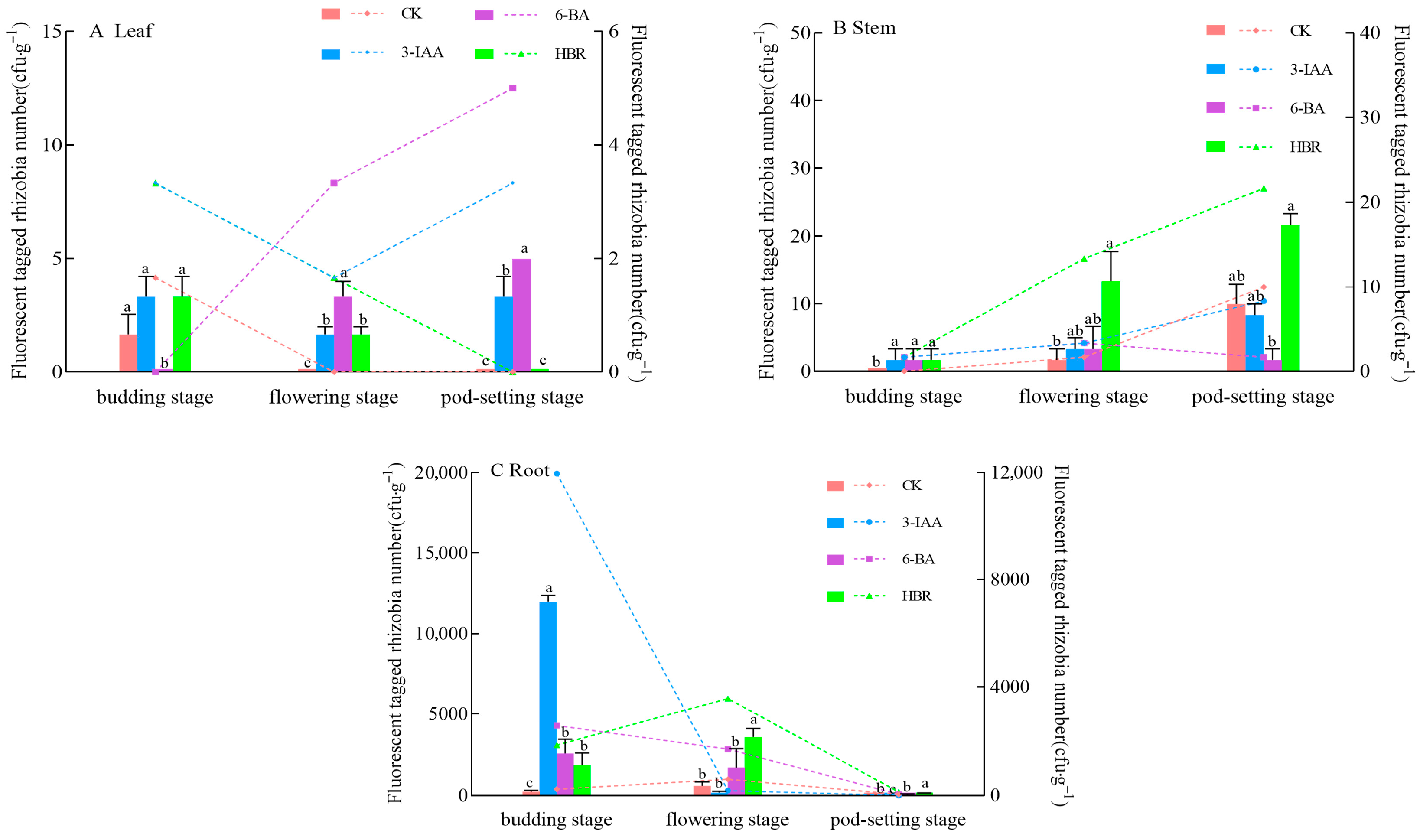
As shown in Figure 7A, at the squaring stage, the populations of R.gn5f in the leaves under 3-IAA (3.33 CFU·g−1) and HBR (3.33 CFU·g−1) treatments were higher than that of the CK (1.67 CFU·g−1), but the difference was not statistically significant (p ≥ 0.05). At the flowering stage, the populations in the 3-IAA (1.67 CFU·g−1), 6-BA (3.33 CFU·g−1), and HBR (1.67 CFU·g−1) treatments were all significantly higher than that in the CK (p < 0.05). By the podding stage, significant promotional effects were observed for the 3-IAA (3.33 CFU·g−1) and 6-BA (5.00 CFU·g−1) treatments compared to the CK (p < 0.05).
In the stem (Figure 7B), at the budding stage, the populations of R.gn5f under the 3-IAA, 6-BA, and HBR treatments (all 1.67 CFU·g−1) were significantly higher than that of the CK (p < 0.05). At the flowering stage, the population in the HBR treatment (13.33 CFU·g−1) was significantly higher than that in the CK (1.67 CFU·g−1), representing a 698.20% increase (p < 0.05). By the podding stage, the population in the HBR treatment (21.67 CFU·g−1) was significantly higher than that in the 6-BA treatment (1.67 CFU·g−1) (p < 0.05).
Analysis of Figure 7C showed that at the budding stage, the populations of endophytic rhizobia in the roots under the 3-IAA (11,966.67 CFU·g−1), 6-BA (1850.00 CFU·g−1), and HBR (2566.67 CFU·g−1) treatments were all significantly higher than that in the CK (233.33 CFU·g−1) (p < 0.05). At the flowering stage, the population in the HBR treatment (3566.67 CFU·g−1) remained significantly higher than that in the CK (183.33 CFU·g−1) (p < 0.05). By the podding stage, the population in the HBR treatment (133.33 CFU·g−1) was significantly higher than those in both the CK (50.00 CFU·g−1) and the 6-BA (50.00 CFU·g−1) treatments (p < 0.05), representing a 166.66% increase over both.
As shown in Figure 7, the HBR treatment resulted in the highest populations of endophytic rhizobia R.gn5f across multiple plant tissues and reproductive stages: specifically in the leaves at the squaring stage, in the stems throughout the reproductive growth period, and in the roots during both the flowering and podding stages.
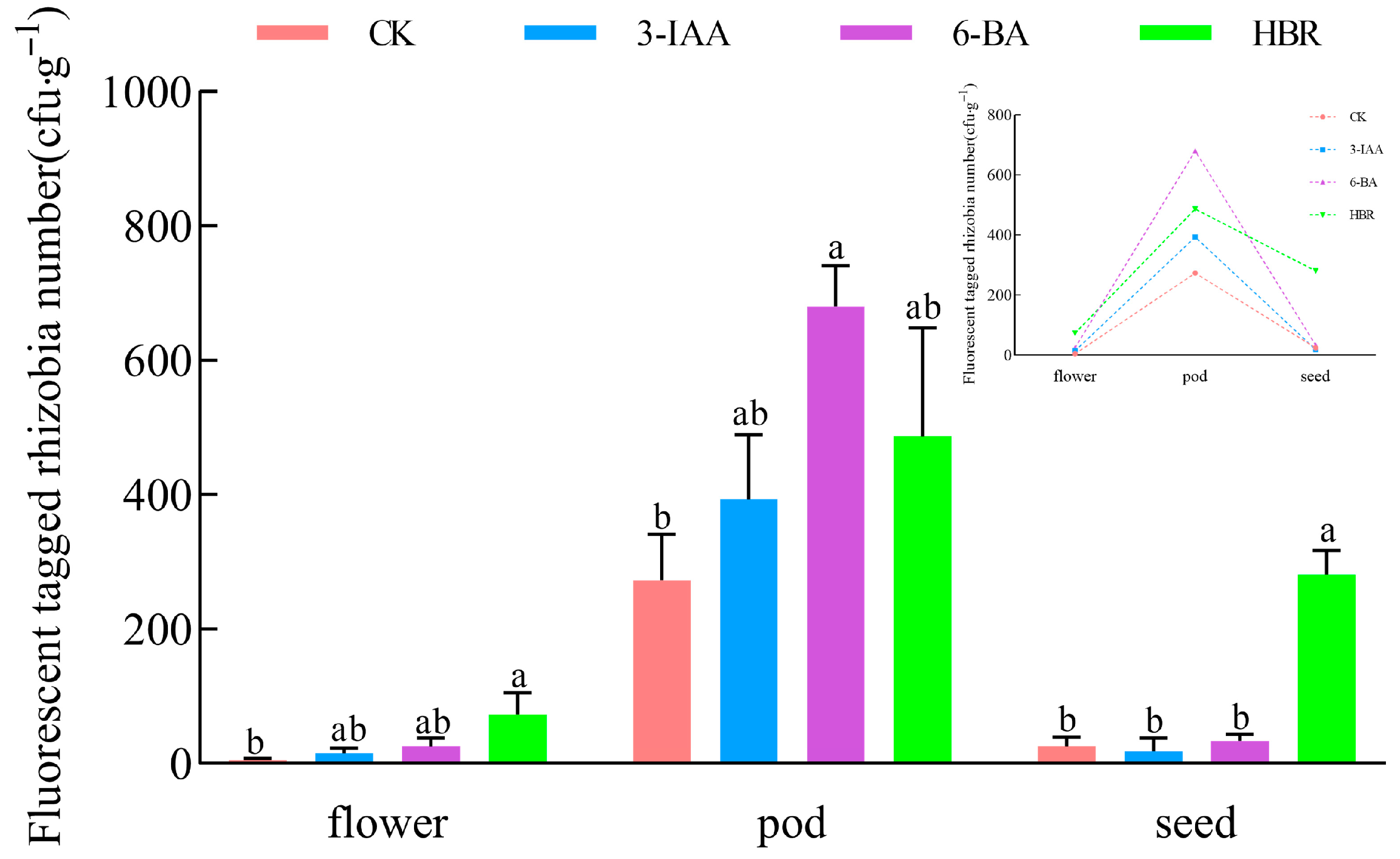
According to Figure 8, the pod contained the highest population of endophytic rhizobia among the reproductive organs. Specifically, the population under the 6-BA treatment (680.00 CFU·g−1) was significantly higher than that of the CK (273.33 CFU·g−1), representing a 148.78% increase (p < 0.05), but was not significantly different from the 3-IAA (393.33 CFU·g−1) and HBR (486.67 CFU·g−1) treatments (p ≥ 0.05). In contrast, the populations in flowers and seeds were lower. Notably, in seeds, the HBR treatment resulted in a population (281.25 CFU·g−1) significantly higher than those in the CK (25.00 CFU·g−1), 3-IAA (18.75 CFU·g−1), and 6-BA (33.33 CFU·g−1) treatments (p < 0.05).
Therefore, the optimal hormone for the proliferation of endophytic rhizobia during the reproductive growth period of alfalfa plants is the appropriate concentration of HBR.

3.3.2. Effects of Exogenous Hormones During the Reproductive Growth Stage on Nodulation and Nitrogen Fixation in Alfalfa Inoculated with Endophytic Rhizobium R.gn5f

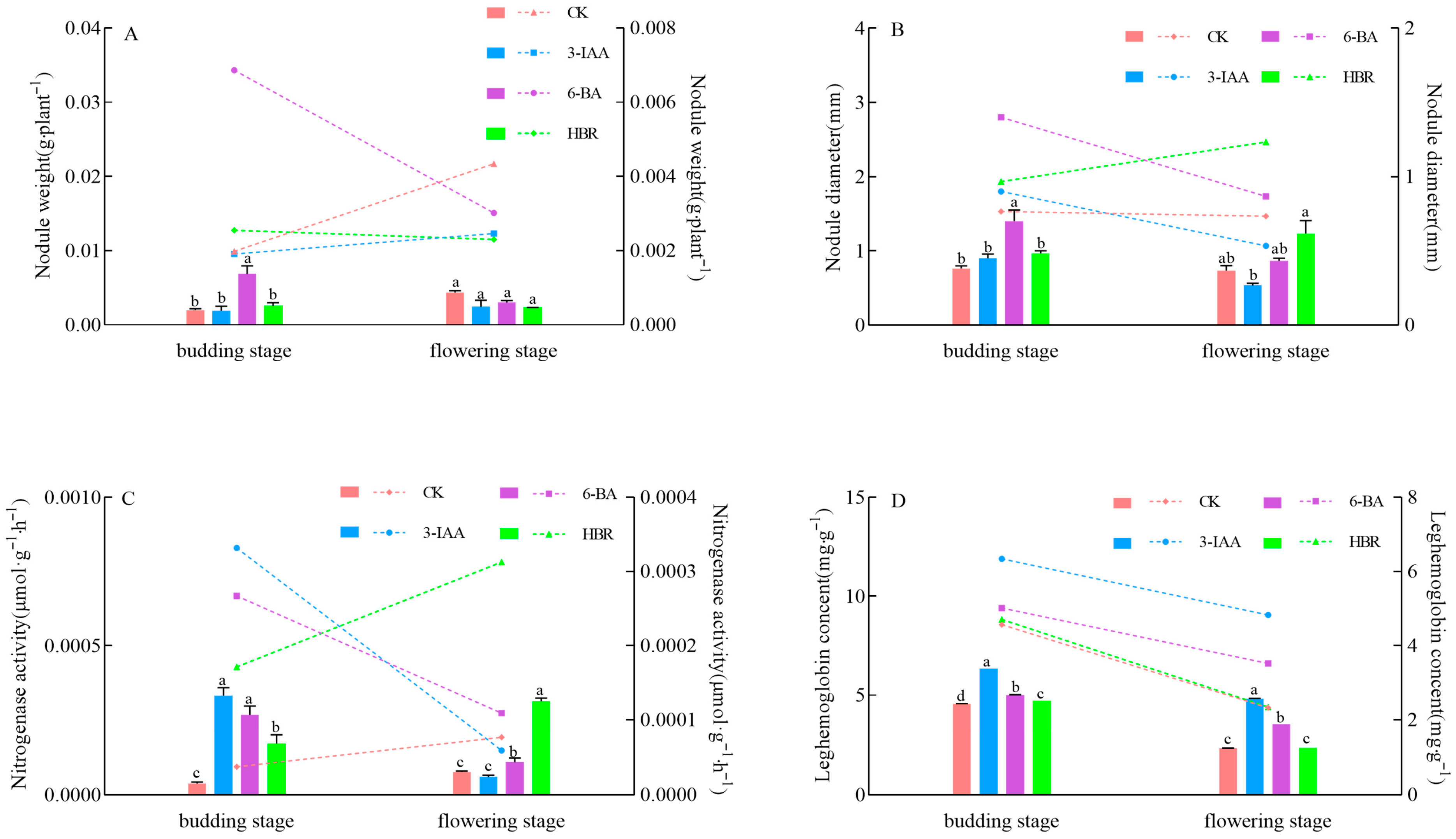
As shown in Figure 9A, for single nodule weight at the budding stage, the 6-BA treatment (6.86 × 10⁻³ g·plant−1) was significantly higher than the CK (1.98 × 10⁻³ g·plant−1), 3-IAA (1.91 × 10⁻³ g·plant−1), and HBR (2.55 × 10⁻³ g·plant−1) treatments (p < 0.05), representing increases of 246.46%, 259.16%, and 169.02%, respectively. The HBR treatment yielded the second-highest weight. At the flowering stage, no significant differences were observed between any treatment group and the CK (p ≥ 0.05).
In terms of nodule diameter at the squaring stage (Figure 9B), the 6-BA treatment (1.47 mm) was significantly greater than that of the CK (0.93 mm), 3-IAA (0.88 mm), and HBR (0.82 mm) treatments (p < 0.05), representing increases of 58.06%, 67.05%, and 79.27%, respectively. At the flowering stage, the nodule diameter in the HBR treatment (0.92 mm) was significantly larger than that in the 3-IAA treatment (0.58 mm) (p < 0.05), constituting a 58.62% increase.
As shown in Figure 9C, for nitrogenase activity at the budding stage, all treatment groups were significantly higher than the CK (p < 0.05). At the flowering stage, the nitrogenase activity in the HBR treatment (3.13 × 10⁻⁴ μmol·g−1·h−1) was significantly higher than that in the 6-BA, CK, and 3-IAA groups (p < 0.05), representing increases of 128.64%, 306.50%, and 430.51%, respectively. In terms of leghemoglobin content at the budding stage, all treatment groups were significantly higher than the CK (p < 0.05). At the flowering stage, the leghemoglobin content in the 3-IAA treatment (4.83 mg·g−1) was significantly higher than that in the CK (2.33 mg·g−1), 6-BA (3.53 mg·g−1), and HBR (2.35 mg·g−1) treatments (p < 0.05), representing increases of 107.30%, 36.83%, and 105.53%, respectively (Figure 9D).
As shown in Figure 9, HBR had better promotion effect on nodule diameter and nitrogenase activity at flowering stage. In summary, the optimal concentration of HBR played a better role in the nitrogen fixation performance and nodulation of alfalfa plants during the reproductive growth period.

3.3.3. Effects of Exogenous Hormones on the Growth of Alfalfa Plants Inoculated with Endophytic Rhizobium R.gn5f

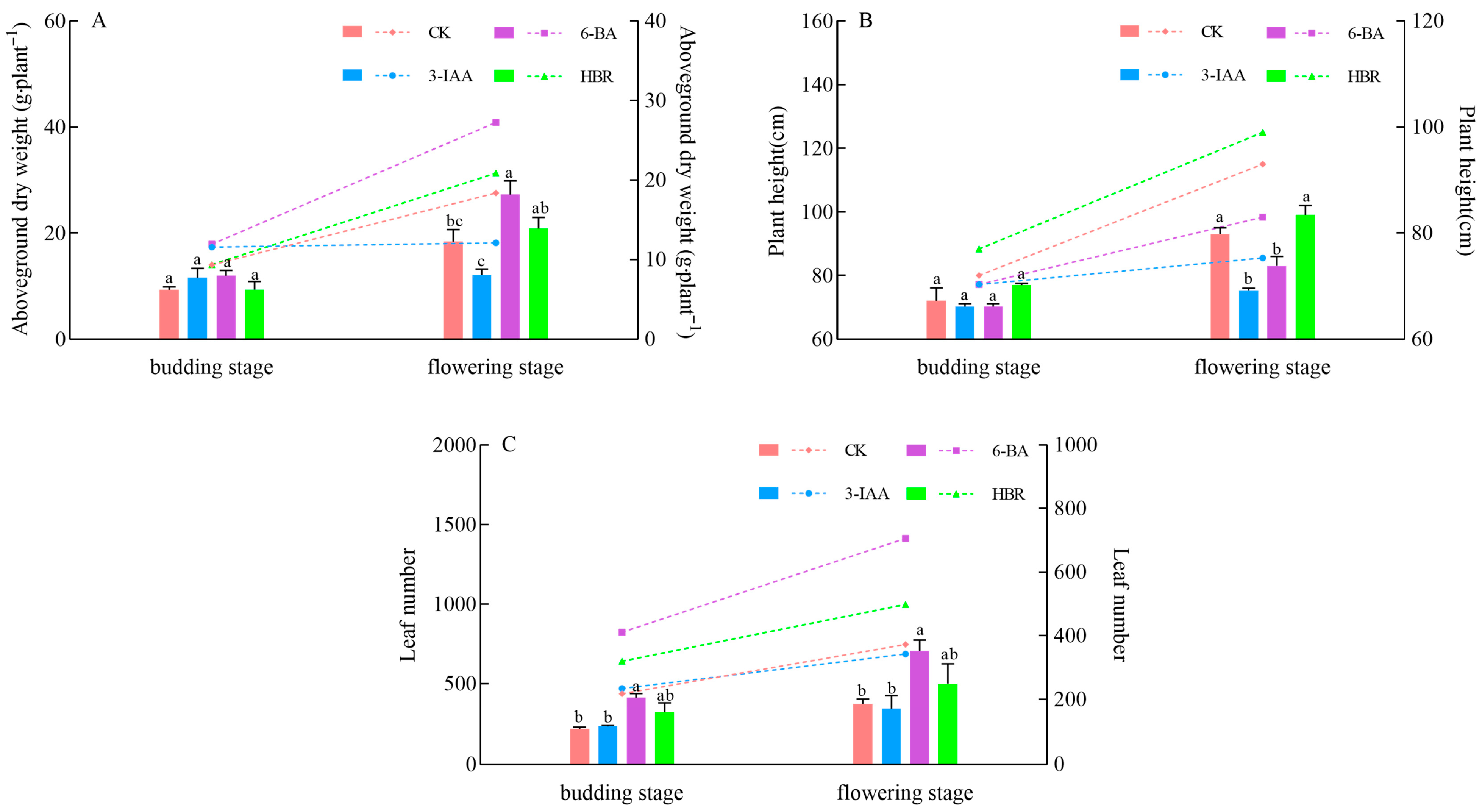
Analysis of Figure 10A showed that at the budding stage, the aboveground dry weight did not differ significantly between any treatment group and the CK (p ≥ 0.05). At the flowering stage, the aboveground dry weight under the 6-BA treatment (27.26 g·plant−1) was significantly higher than that of the CK (18.39 g·plant−1) and the 3-IAA treatment (12.10 g·plant−1), representing increases of 48.23% and 125.29%, respectively (p < 0.05). The HBR treatment (20.89 g·plant−1) resulted in the second-highest biomass.
At the budding stage, plant height showed no significant differences between the treatment groups and the control. However, at the flowering stage, the plant height in the HBR treatment (99.00 cm) was significantly greater than that in both the 3-IAA (75.33 cm) and 6-BA (83.00 cm) treatments (p < 0.05), representing increases of 31.42% and 19.28%, respectively (Figure 10B). In terms of the number of leaves per plant at the budding stage, the value for the 6-BA treatment (411.00) was not significantly different from that of the HBR treatment (320.67) (p ≥ 0.05), but was significantly higher than those of the CK (218.00) and 3-IAA (234.33) treatments (p < 0.05), representing increases of 88.53% and 75.39%, respectively. At the flowering stage, the value for the 6-BA treatment (706.00) was significantly higher than those of the CK (372.67) and 3-IAA (342.67) treatments, representing increases of 89.44% and 106.02%, respectively, while the HBR treatment (498.33) resulted in the second-highest value (Figure 10C).
As shown in Figure 10, plant growth capacity exhibited an upward trend throughout the reproductive growth period. Specifically, 6-BA demonstrated superior efficacy in promoting aboveground dry weight and the number of leaves per plant, whereas HBR was more effective in enhancing plant height.
Thus, during the reproductive growth period, the optimal concentration of 6-BA demonstrated superior efficacy in promoting above-ground dry weight, while the optimal concentration of HBR was most effective in enhancing plant height. The promotive effect of HBR on the number of leaves per plant was secondary only to that of 6-BA.

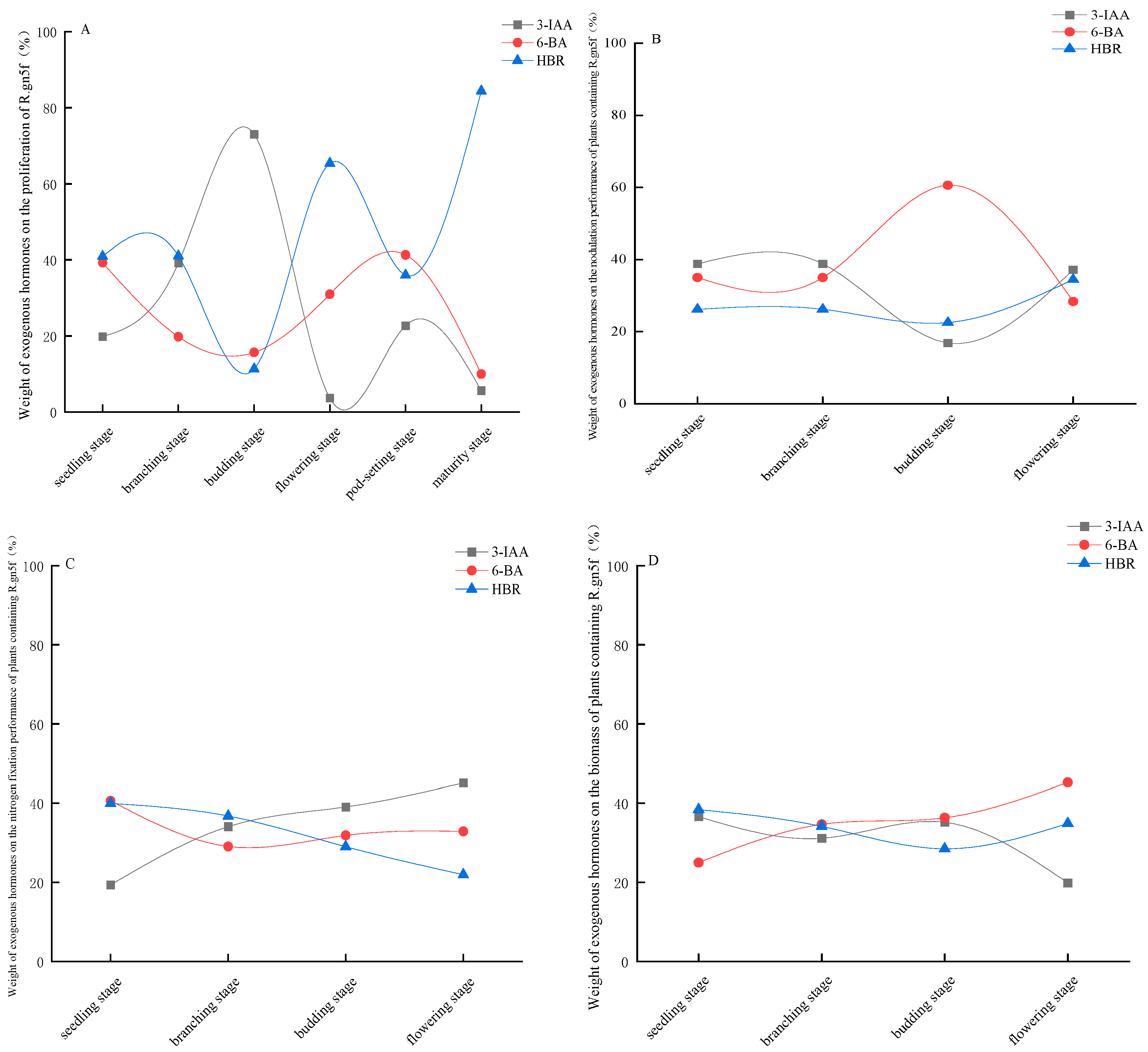
3.4. Contribution of Exogenous Hormones to the Proliferation of Endophytic Rhizobium R.gn5f and the Nitrogen Fixation Performance and Biomass of Alfalfa Plants

As shown in Figure 11, the endophytic rhizobium R.gn5f proliferated during the seedling stage. Hormone HBR made the highest contribution to the nitrogen fixation performance and plant biomass, with contribution rates of 40.92%, 39.97%, and 38.39%, respectively. In contrast, 3-IAA showed the highest contribution rate (38.81%) to nodulation performance.
At the branching stage of alfalfa plants harboring endophytic rhizobia R.gn5f, HBR exhibited the highest contribution rates to the proliferation of endophytic rhizobia (41.02%) and to plant nitrogen fixation performance (36.80%). For other traits, 3-IAA contributed most to nodulation performance (34.67%), while 6-BA showed the highest contribution to plant biomass (34.67%), closely followed by HBR (34.17%).
At the budding stage, 3-IAA demonstrated the highest contribution to the proliferation (73.01%) of endophytic rhizobia and nitrogen fixation (39.08%). For the other traits, 6-BA showed the highest contribution rates to both nodulation performance and plant biomass.
At the flowering stage, HBR exhibited the highest contribution (65.36%) to the proliferation of endophytic Rhizobium R.gn5f. 3-IAA contributed most to nitrogen fixation performance (45.11%), followed by 6-BA (32.92%) for nitrogen fixation. In terms of plant biomass, 6-BA showed the highest contribution (45.21%), with HBR ranking second (34.89%).
At the podding stage, 6-BA showed the highest contribution (41.31%) to the proliferation of R.gn5f, followed by HBR (35.98%). At the mature stage, the contribution of 6-BA to the proliferation of the fluorescently labeled endophytic rhizobium R.gn5f was even more pronounced, reaching 84.37%.
Collectively, the suitable concentration of HBR demonstrated a higher and more sustained contribution to the proliferation of endophytic rhizobia, as well as to the nodulation, nitrogen fixation performance, and biomass of alfalfa plants containing the labeled R.gn5f strain.
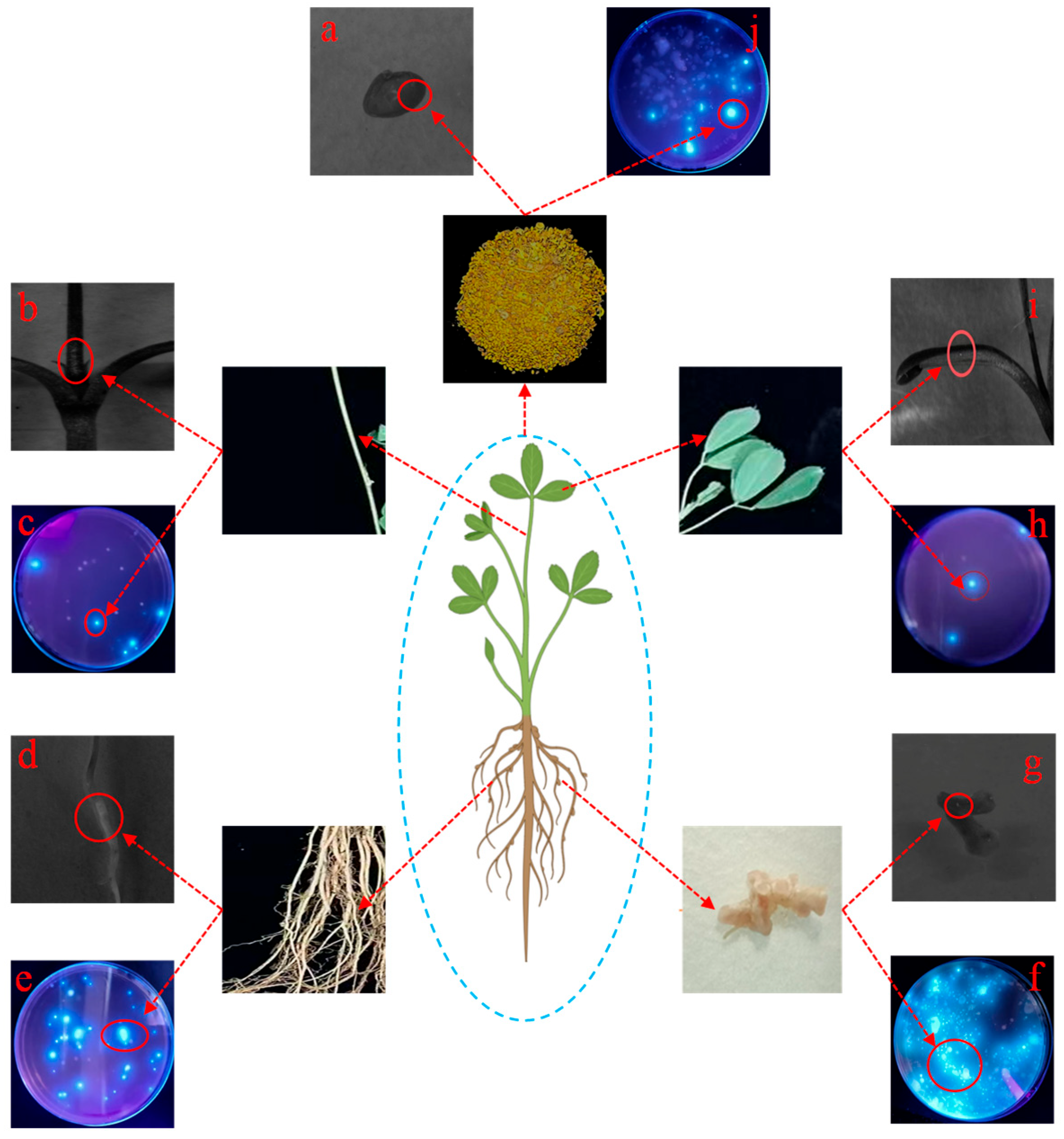
As shown in Figure 12, panels c, e, f, h, and j show the fluorescently labeled rhizobia under UV light; panels a, b, d, g, and i show them under a stereomicroscope.

4. Discussion

4.1. Effects of Auxin on the Proliferation of Endophytic Rhizobia and Plant Growth

The first discovered plant hormone is auxin, which is widely involved in various stages of plant growth and development, and plays an important role in the early growth, development and morphogenesis of plants [30,31,32,33,34,35]. The application of exogenous auxin is one of the most effective means to promote the growth of terrestrial plants. For example, it has been reported in crop production such as apple ripening, wheat tillering and sunflower growth [36,37]. Auxin affects the production of cytokinins and also affects the growth and elongation of plants [38]. In this study, it was found that auxin promoted the growth index of labeled endophytic rhizobia. In this study, auxin was observed to enhance certain growth indices of inoculated endophytic rhizobia during specific growth stages. However, its promoting effects on alfalfa—such as dry weight, leaf number, and plant height—were not consistently significant. A possible explanation is that the stimulatory role of 3-indoleacetic acid (3-IAA) in the proliferation of endophytic rhizobia was transient. This short-lived enhancement may have subsequently diminished the nitrogen-fixing capacity of the alfalfa plants, thereby limiting the sustained contribution of 3-IAA to alfalfa growth.
Auxin is crucial for nodule organogenesis [39]. Furthermore, auxin transport is involved in the rhizobial infection process [40]. Legumes engineered to express auxin biosynthetic genes exhibit enhanced nodulation, producing a greater number of nodules [41]. The role of auxin is precisely regulated, depending on the specific stage of nodule development and its spatial distribution within the plant [42]. Zhang [13] found that indoleacetic acid can increase the number of exogenous rhizobia colonized in alfalfa stems, but reduce the number of endophytic rhizobia colonized in stems. This study demonstrated that 3-IAA at concentrations ranging from 10 to 18 mg·L−1 promoted the proliferation of the exogenous rhizobium R.gn5f, a finding consistent with the report by Zhang [13]. The optimum concentration of 3-IAA for the proliferation of R.gn5f was 12 mg·L−1. Auxin orchestrates plant organ formation through tightly controlled localization, transport, and accumulation [43]. Leguminous plants infected by rhizobium containing auxin biosynthesis gene can produce more nodules [44]. In this study, the effect of auxin on the proliferation of endophytic rhizobia in plants did not continue to promote, which may be caused by the requirement of auxin on the development stage of nodules and the location of auxin required by plants [45].

4.2. Effects of Cytokinin on the Proliferation of Endophytic Rhizobia and Plant Growth

Cytokinin, classified as one of the five classical phytohormones alongside auxin, gibberellin, ethylene, and abscisic acid, is a crucial growth regulator that extensively modulates plant growth and development. It comprises both natural and synthetic forms [46,47]. Appropriate concentration of cytokinin can significantly increase the crude protein, crude fiber, chlorophyll content and yield of alfalfa [48]. In this study, the appropriate concentration of 6-BA has different degrees of promoting effect on the aboveground dry weight, leaf number per plant and plant height of alfalfa plants containing endophytic rhizobia at different stages. The reason is that the appropriate concentration of cytokinin can promote seed germination, bud differentiation, stem elongation and root growth [49].
Liu Yao [50] found that cytokinin can promote the proliferation of rhizobia in legumes. In legumes, cytokinin is the central node factor of root nodule organogenesis and root hair infection, which plays a positive role in the division of cortical cells and the formation of nodule primordium [15]. This study demonstrated that 6-BA (a synthetic cytokinin) at concentrations of 12, 14, 16, 18, and 20 mg·L−1 positively influenced the proliferation of the exogenous rhizobium R.gn5f. The optimal concentration for proliferation was determined to be 16 mg·L−1. Nandwal et al. [17] reported that cytokinin enhanced the nitrogen fixation capacity in peas. They observed that a high cytokinin concentration reduced nodule number, whereas a low concentration increased it, suggesting the existence of an optimal concentration range for cytokinin activity in nodulation. In this study, it was found that the appropriate concentration of 6-BA had different degrees of promoting effect on the nodulation ability of alfalfa plants containing labeled endophytic nodule R.gn5 f at different stages, which was similar to the results of Mens C. et al. [51].

4.3. Effects of Brassinosteroid on the Proliferation of Endophytic Rhizobia and Plant Growth

Brassinosteroid (BR) is a class of plant hormones widely recognized for their high efficiency, broad-spectrum activity, and low toxicity [52]. They function in promoting cell division, elongation, and delaying senescence [53]. The influence of BR on nodule development is complex, exhibiting both promotive and inhibitory effects. Mutations in BR biosynthetic genes, resulting in BR deficiency, lead to reduced rhizobium colonization in species such as tomato, rice, and pea. Grafting studies in peas suggest that BR may influence nodulation through shoot-derived signals [53], while endogenous BR levels are also critical for nodule development [54]. The application of BR can exert inhibitory effects; for instance, root-applied BR suppressed nodulation and nitrogen fixation in soybeans. Furthermore, foliar application or root injection of brassinolide specifically inhibited nodule formation and root development in supernodulating soybean mutants but not in their wild-type parents [54]. BR is a natural sterol plant hormone, which plays a very important role in plant growth and development, response to biotic and abiotic stress [55]. The appropriate concentration of BR can quickly and effectively affect the growth of alfalfa, which is of great significance in increasing yield and improving growth traits [56]. In this study, HBR at a concentration of 2.47 mg·L−1 had a more lasting effect on the nitrogen fixation performance and plant growth of alfalfa plants containing the marker endophytic rhizobium R.gn5 f than other hormones.
A positive promotional effect on the proliferation of exogenous rhizobia was observed with HBR at concentrations of 0.98, 1.48, 1.98, 2.47, and 2.97 mg·L−1, a finding consistent withthe results reported by Anuradha et al. [25]. The optimum concentration of HBR for the proliferation of R.gn5f was 2.47 mg·L−1. HBR promoted the proliferation of the marked endophytic rhizobium R.gn5f in various tissues and at different growth stages of alfalfa plants, a finding consistent with the report by Vardhini B V [57]. Furthermore, compared to the other hormones tested, HBR exhibited a more sustained promotive effect on R.gn5f proliferation. However, in some tissues of the plant, the proliferation of endophytic rhizobia by HBR was lower than that of other treatments in some periods, which may be related to the type or concentration of BR or the way in which BR was added. There is no clear molecule to prove the specific role of BR in nodule formation, so further research is needed [54]. The effect of brassinosteroids on nodule development is complex, exhibiting both positive and negative regulatory roles [18]. This is exemplified by contrasting reports: seed soaking with different concentrations of HBR reduced nodule number in Polygala tatarinowii, whereas treatment of Pisum sativum seeds with 24-epibrassinolide increased nodule number, nodule fresh/dry weight, and nitrogenase activity. These findings indicate that the effects of brassinosteroids are highly dependent on the specific compound, its concentration, and the plant species [48]. This study found that HBR had different promoting effects on the nodulation ability and nitrogen fixation performance of R.gn5 f in different periods, The possible reason is that HBR has different promoting effects on the proliferation of endophytic rhizobia at different times, which leads to different manifestations of the plant’s nodule formation and nitrogen fixation capabilities at different times.

5. Conclusions

The application of 2.47 mg·L−1 HBR during both the vegetative and reproductive growth stages promoted the proliferation of the marked endophytic rhizobium R.gn5f, as well as nodulation, nitrogen fixation, and overall growth in alfalfa. Notably, seeds from plants treated with 2.47 mg·L−1 HBR at maturity contained the highest population of R.gn5f (281.25 CFU·g−1). The appropriate concentrations of 3-IAA and 6-BA did not promote the endophytic rhizobia in plant seeds. But among them, the appropriate concentration of 6-BA effectively promoted the biomass of plants during the reproductive growth period. During the vegetative growth period, HBR treatment resulted in superior contributions to plant biomass, reaching 38.39% and 34.17% at two key stages. At flowering, the contribution of HBR (34.89%) was second only to that of 6-BA. This outcome establishes a foundation for developing novel alfalfa germplasm enriched with CFP-labeled rhizobia and enhanced symbiotic efficiency. Thus, 2.47 mg·L−1 HBR was identified as the optimal concentration for promoting both the proliferation of the endophytic rhizobium R.gn5f and the growth of alfalfa plants.

Author Contributions

Conceptualization, Y.-Y.D., S.-L.S. and W.-J.K.; methodology, Y.-Y.D.; software, Y.-Y.D., Y.-L.H., J.G., B.-F.L. and B.W.; validation, Y.-Y.D., Y.-L.H., J.G., B.-F.L. and B.W.; formal analysis, Y.-Y.D., Y.-L.H., J.G., B.-F.L., B.W., S.-L.S. and W.-J.K.; investigation, Y.-L.H., J.G., B.-F.L. and B.W.; resources, S.-L.S. and W.-J.K.; data curation, Y.-Y.D., Y.-L.H., J.G., B.-F.L. and B.W.; writing—original draft preparation, Y.-Y.D.; writing—review and editing, Y.-Y.D., S.-L.S. and W.-J.K.; visualization, S.-L.S. and W.-J.K.; supervision, S.-L.S. and W.-J.K.; project administration, S.-L.S. and W.-J.K.; funding acquisition, S.-L.S. and W.-J.K. All authors have read and agreed to the published version of the manuscript.

Funding

This study was supported by the National Natural Science Foundation of China Regional Science Foundation Project: Analysis of the Mechanism of Symbiotic Nitrogen Fixation between Alfalfa and Rhizobia Driven by Sugar and Fatty Acids (32560916); the National Modern Agricultural Industry System (CARS-34) and Research Project of Targeted Support of China Agricultural University (No. GSAU-DKZY-2024-002).

Data Availability Statement

The data presented in this study are available on request from the corresponding authors.

Acknowledgments

We extend our sincere gratitude to the College of Pratacultural Science at Gansu Agricultural University and the Key Laboratory of Pratacultural Ecosystems, Ministry of Education, for their invaluable support in facilitating our experimental platform.

Conflicts of Interest

The authors declare no conflicts of interest.

References

  1. Li, Y. Development and utilization and biological characteristics of Medicago sativa L. J. Anhui Agric. Sci. 2007, 35, 3. [Google Scholar] [CrossRef]
  2. Grant, C.A.; Wu, R.; Selles, F.; Harker, K.N.; Clayton, G.W.; Bittman, S.; Zebarth, B.J.; Lupwayi, N.Z. Crop yield and nitrogen concentration with controlled release urea and split applications of nitrogen as compared to non-coated urea applied at seeding. Field Crops Res. 2012, 127, 170–180. [Google Scholar] [CrossRef]
  3. He, R.W. Isolation and Characterization of Early Symbiosis Signal Pathway Genes in Soybean. Master’s Thesis, Huazhong Agricultural University, Wuhan, China, 2016. [Google Scholar] [CrossRef]
  4. Wang, X.Y. Symbiotic Nitrogen Fixation Systems in Plants. China Foreign Med. Treat. 2006, 6, 41–42. [Google Scholar] [CrossRef]
  5. Burgess, B.K.; Lowe, D.J. Mechanism of Molybdenum Nitrogenase. Chem. Rev. 1996, 96, 2983–3012. [Google Scholar] [CrossRef] [PubMed]
  6. Seefeldt, L.C.; Hoffman, B.M.; Dean, D.R. Mechanism of Mo-Dependent Nitrogenase. Annu. Rev. Biochem. 2009, 78, 701–722. [Google Scholar] [CrossRef] [PubMed]
  7. Zhang, Q.L.; Lin, M.; Ping, S.Z. Biological Nitrogen Fixation and Its Application in Sustainable Agriculture. Biotechnol. Bull. 2008, 2, 1–4. [Google Scholar]
  8. Zeng, S.H.; Hu, Y.G. Review on studies on the important role of symbiotic nitrogen fixation in agriculture and livestock production and the factors affecting its efficiency. Chin. J. Eco-Agric. 2006, 14, 21–24. [Google Scholar]
  9. Zhao, L. Biological Nitrogen Fixation and Eco-Agriculture. Acta Agric. Jiangxi 2006, 18, 166–168. [Google Scholar] [CrossRef]
  10. Zhang, M.; Zhou, Y.; Li, C.; Yuan, C.; Shan, M.; Fan, Y.; Yu, Z.; Ren, L.; Cui, L.; Wang, C. Effects of Different Intertillage Practices on Soil Biochemical Properties and Soybean Yield in Soybean Fields. Agronomy 2025, 15, 146. [Google Scholar] [CrossRef]
  11. Huang, J.X. Identification of Alfalfa Rhizobia and Their Correlations with Soil Physical and Chemical Properties. Master’s Thesis, Ningxia University, Yinchuan, China, 2022. [Google Scholar] [CrossRef]
  12. Ke, M.Y. Mechanism of Auxin Transport in Salicylic Acid-Induced Immune Response and Soybean Nodulation. Ph.D. Thesis, Fujian Agriculture and Forestry University, Fuzhou, China, 2022. [Google Scholar] [CrossRef]
  13. Zhang, S.Q. Migration of Rhizobia Inside Alfalfa Plants and Influencing Factors. Ph.D. Thesis, Gansu Agricultural University, Lanzhou, China, 2012. [Google Scholar]
  14. Saikia, S.P.; Srivastava, G.C.; Jain, V. Nodule-Like Structures Induced on the Roots of Maize Seedlings by the Addition of Synthetic Auxin 2, 4-D and Its Effects on Growth and Yield. Cereal Res. Commun. 2004, 32, 83–89. [Google Scholar] [CrossRef]
  15. Liu, W.; Zhao, Z.F.; Feng, Y.J.; Wu, C.X. Regulation of Plant Hormones on the Formation and Development of Legumes Root Nodules. Soybean Sci. 2013, 32, 262–266. [Google Scholar] [CrossRef]
  16. Lin, J.; Frank, M.; Reid, D. No Home Without Hormones: How Plant Hormones Control Legume Nodule Organogenesis. Plant Commun. 2020, 1, 100104. [Google Scholar] [CrossRef] [PubMed]
  17. Nandwal, A.S.; Bharti, S. Effect of Kinetin and Indole Acetic Acid on Growth, Yield and Nitrogen Fixing Efficiency of Nodules in Pea (Pisum sativum L.). Indian J. Plant Physiol. 1982, 25, 358–363. [Google Scholar]
  18. McGuiness, P.N.; Reid, J.B.; Foo, E. The Role of Gibberellins and Brassinosteroids in Nodulation and Arbuscular Mycorrhizal Associations. Front. Plant Sci. 2019, 10, 269. [Google Scholar] [CrossRef]
  19. Liu, X.J. Nodule Development and Self-Regulation in Legume Plants. J. Anhui Agric. Sci. 2013, 41, 13110–13114. [Google Scholar] [CrossRef]
  20. Miao, Y.Y. Effects of Exogenous Materials on the Migration and Colonization of Rhizobia in Alfalfa Plants. Ph.D. Thesis, Gansu Agricultural University, Lanzhou, China, 2017. [Google Scholar]
  21. Liu, C.; Shi, S.L.; Kang, W.J.; Miao, Y.Y.; Wu, F. Effects of storage methods on the transmissibility of endophytic rhizobia from alfalfa seeds. Grassl. Turf 2022, 42, 18–27. [Google Scholar] [CrossRef]
  22. Huo, P.H. Antimicrobial-Resistant Rhizobia Screening and Effect Verification of Undesired Microbe Control in the Prepared Rhizobia Inoculant. Ph.D. Thesis, Gansu Agricultural University, Lanzhou, China, 2014. [Google Scholar]
  23. Ji, Y.L. Study on Growth-promoting Effect of Robinia pseudoacacia Rhizobia on Platycodon gradiflorus. Acta Agric. Jiangxi 2014, 26, 72–75. [Google Scholar] [CrossRef]
  24. Song, J.Q.; Wang, Y.X.; Zhang, B. Effects of Endogenous Hormone Change and Exogenous Auxin on the Germination Process of Alfalfa Seed. Acta Agrestia Sin. 2018, 26, 691–696. [Google Scholar]
  25. Anuradha, S.; Rao, S.S.R. Effect of brassinosteroids on salinity stress induced inhibition of seed germination and seedling growth of rice (Oryza sativa L.). Plant Growth Regul. 2001, 33, 151–153. [Google Scholar] [CrossRef]
  26. Kang, W.J. Biotype Classification of Medicago sativa Rhizobia and Its Transcriptome Analysis. Ph.D. Thesis, Gansu Agricultural University, Lanzhou, China, 2019. [Google Scholar] [CrossRef]
  27. Wang, S.Q.; Han, X.Z.; Qiao, Y.F.; Yan, J.; Li, X.H. Effects of low molecular organic acids on nitrogen accumulation, nodulation, and nitrogen fixation of soybean (Glycine max L.) under phosphorus deficiency stress. Chin. J. Appl. Ecol. 2009, 20, 1079–1084. [Google Scholar] [CrossRef]
  28. Zuo, Y.M.; Liu, Y.X.; Zhang, F.S. Effects of Improvement of Iron Nutrition by Mixed Cropping with Maize on Nodule Microstructure and Leghaemoglobin Content of Peanut. Physiol. Mol. Biol. Plants 2003, 29, 33–38. [Google Scholar] [CrossRef]
  29. Che, B.; Jin, C.; Zhang, S.; Li, C.; Zhang, Q.; Liang, M.; Li, D.; Cui, Z.; Wang, S. Expression and Identification of Replication and Transcription-competent Ebola Virus-like Particles. Chin. J. Virol. 2017, 33, 325–330. [Google Scholar] [CrossRef]
  30. Santelia, D.; Henrichs, S.; Vincenzetti, V.; Sauer, M.; Bigler, L.; Klein, M.; Bailly, A.; Lee, Y.; Friml, J.; Geisler, M.; et al. Flavonoids Redirect PIN-Mediated Polar Auxin Fluxes During Root Gravitropic Responses. J. Biol. Chem. 2008, 283, 31218–31226. [Google Scholar] [CrossRef]
  31. Zhao, Y. Auxin Biosynthesis and Its Role in Plant Development. Annu. Rev. Plant Biol. 2010, 61, 49–64. [Google Scholar] [CrossRef]
  32. Ding, Z.; Friml, J. Auxin Regulates Distal Stem Cell Differentiation in Arabidopsis Roots. Proc. Natl. Acad. Sci. USA 2010, 107, 12046–12051. [Google Scholar] [CrossRef]
  33. Pattison, R.J.; Csukasi, F.; Catalá, C. Mechanisms Regulating Auxin Action During Fruit Development. Physiol. Plant. 2014, 151, 62–72. [Google Scholar] [CrossRef]
  34. Guo, F.; Huang, Y.; Qi, P.; Lian, G.; Hu, X.; Han, N.; Wang, J.; Zhu, M.; Qian, Q.; Bian, H. Functional Analysis of Auxin Receptor Ostir1/Osafb Family Members in Rice Grain Yield, Tillering, Plant Height, Root System, Germination, and Auxinic Herbicide Resistance. New Phytol. 2021, 229, 2676–2692. [Google Scholar] [CrossRef]
  35. Prigge, M.J.; Platre, M.; Kadakia, N.; Zhang, Y.; Greenham, K.; Szutu, W.; Pandey, B.K.; Bhosale, R.A.; Bennett, M.J.; Busch, W.; et al. Genetic Analysis of the Arabidopsis TIR1/AFB Auxin Receptors Reveals Both Overlapping and Specialized Functions. eLife 2020, 9, e54740. [Google Scholar] [CrossRef]
  36. Wang, J.; Liu, D.; Guo, X.; Zhang, A. Research Advances in Auxin Biosynthesis. Chin. Bull. Bot. 2012, 47, 292–301. [Google Scholar]
  37. Fässler, E.; Evangelou, M.W.; Robinson, B.H.; Schulin, R. Effects of Indole-3-Acetic Acid(IAA)on Sunflower Growth and Heavy Metal Uptake in Combination with Ethylene Diamine Disuccinic Acid(EDDS). Chemosphere 2010, 80, 901–907. [Google Scholar] [CrossRef] [PubMed]
  38. Teale, W.D.; Paponov, I.A.; Palme, K. Auxin in action: Signalling, transport and the control of plant growth and development. Nat. Rev. Mol. Cell Biol. 2006, 7, 847–859. [Google Scholar] [CrossRef] [PubMed]
  39. Velandia, K.; Reid, J.B.; Foo, E. Right Time, Right Place: The Dynamic Role of Hormones in Rhizobial Infection and Nodulation of Legumes. Plant Commun. 2022, 3, 100327. [Google Scholar] [CrossRef]
  40. Yang, J.; Liu, C.W.; Li, X.; Tian, C.F.; Xie, F.; Cao, Y.R.; Wang, E.T. Advances in the legume–rhizobia symbiosis. Plant Physiol. J. 2023, 59, 1407–1435. [Google Scholar] [CrossRef]
  41. Cope-Selby, N.; Cookson, A.; Squance, M.; Donnison, I.; Flavell, R.; Farrar, K. Endophytic Bacteria in Miscanthus Seed: Implications for Germination, Vertical Inheritance of Endophytes, Plant Evolution and Breeding. GCB Bioenergy 2017, 9, 57–77. [Google Scholar] [CrossRef]
  42. Compant, S.; Clcbment, C.; Sessitsch, A. Plant Growth-Promoting Bacteria in the Rhizo- And Endosphere of Plants: Their Role, Colonization, Mechanisms Involved and Prospects for Utilization. Soil Biol. Biochem. 2010, 42, 669–678. [Google Scholar] [CrossRef]
  43. Benková, E.; Michniewicz, M.; Sauer, M.; Teichmann, T.; Seifertová, D.; Jürgens, G.; Friml, J. Local, Efflux-Dependent Auxin Gradients as a Common Module for Plant Organ Formation. Cell 2003, 115, 591–602. [Google Scholar] [CrossRef]
  44. Pii, Y.; Crimi, M.; Cremonese, G.; Spena, A.; Pandolfini, T. Auxin and Nitric Oxide Control Indeterminate Nodule Formation. BMC Plant Biol. 2007, 7, 21. [Google Scholar] [CrossRef]
  45. Ferguson, B.J.; Mathesius, U. Phytohormone Regulation of Legume-Rhizobia Interactions. J. Chem. Ecol. 2014, 40, 770–790. [Google Scholar] [CrossRef]
  46. Ding, M.J.; Huang, P.; Zhou, X.; Ran, M. Good Helper for Plant Growth: Cytokinins. Chin. J. Chem. Educ. 2024, 45, 1–8. [Google Scholar] [CrossRef]
  47. Han, H.B.; Zhang, G.H.; Wang, G.D. Progress on Cytokinin Signaling in Plant Vascular Development. Plant Physiol. J. 2015, 51, 996–1002. [Google Scholar] [CrossRef]
  48. Liu, D.L.; Gu, W.Y.; Qin, Y.L.; Lv, Y.; Wu, M.; Wang, L.X. Effects of exogenous CTK on the growth and character of alfalfa (Medicago sativa) plants. Pratacult. Sci. 2005, 22, 36–40. [Google Scholar] [CrossRef]
  49. Shang, X.Y.; Zhou, L.F.; Shi, X.Y.; Wang, M.D.; Zhang, T.J.; Chao, Y.H.; Zhao, Y. Self-activation Detection and Expression Analysis of Cytokinin Response Regulator ARR9 of Medicago truncatula. Chin. J. Grassl. 2021, 43, 1–10. [Google Scholar] [CrossRef]
  50. Liu, Y. Transcriptional Analysis of Differentially Expressed Genes Involved in Selective Nodulation in Bradyrhizobium diazoeficiens at the Presence of Soybean Root Exudates. Ph.D. Thesis, Chinese Academy of Agricultural Sciences, Beijing, China, 2018. [Google Scholar]
  51. Mens, C.; Li, D.; Haaima, L.E.; Gresshoff, P.M.; Ferguson, B.J. Local and Systemic Effect of Cytokinins on Soybean Nodulation and Regulation of Their Isopentenyl Transferase (IPT) Biosynthesis Genes Following Rhizobia Inoculation. Front. Plant Sci. 2018, 9, 1105. [Google Scholar] [CrossRef]
  52. Du, Y.; Wang, M.; Tong, M.; Wu, D.; Chu, J.; Yao, X. Sucrose and Brassinolide Alleviated Nitrite Accumulation, Oxidative Stress and the Reduction of Phytochemicals in Kale Sprouts Stored at Low Temperature. Postharvest Biol. Technol. 2024, 208, 112634. [Google Scholar] [CrossRef]
  53. Hamed, M.A.; Abdullah, B. Effect of Brassinolide Levels on Some Growth of Sunflower Hellanthus annuus L. IOP Conf. Ser. Earth Environ. Sci. 2021, 761, 012084. [Google Scholar] [CrossRef]
  54. Ferguson, B.J.; Lin, M.H.; Gresshoff, P.M. Regulation of Legume Nodulation by Acidic Growth Conditions. Plant Signal. Behav. 2013, 8, e23426. [Google Scholar] [CrossRef]
  55. Baghel, M.; Nagaraja, A.; Srivastav, M.; Meena, N.K.; Kumar, M.S.; Kumar, A.; Sharma, R.R. Pleiotropic Influences of Brassinosteroids on Fruit Crops: A Review. Plant Growth Regul. 2019, 87, 375–388. [Google Scholar] [CrossRef]
  56. Wang, W.J.; Ma, D.M.; Zhao, L.J.; Ma, Q.L. Effects of 2,4-table Brassinolide on Enzyme Activity and Root ion Distribution and Absorption in Alfalfa Seedlings. Acta Agrestia Sin. 2021, 29, 1363–1368. [Google Scholar] [CrossRef]
  57. Vardhini, B.V.; Rao, S.S.R. Effect of Brassionosteriods on Nodulation and Nitrogenase Activity in Groundnut (Arachis hypogaea L.). Plant Growth Regul. 1999, 28, 165–167. [Google Scholar] [CrossRef]
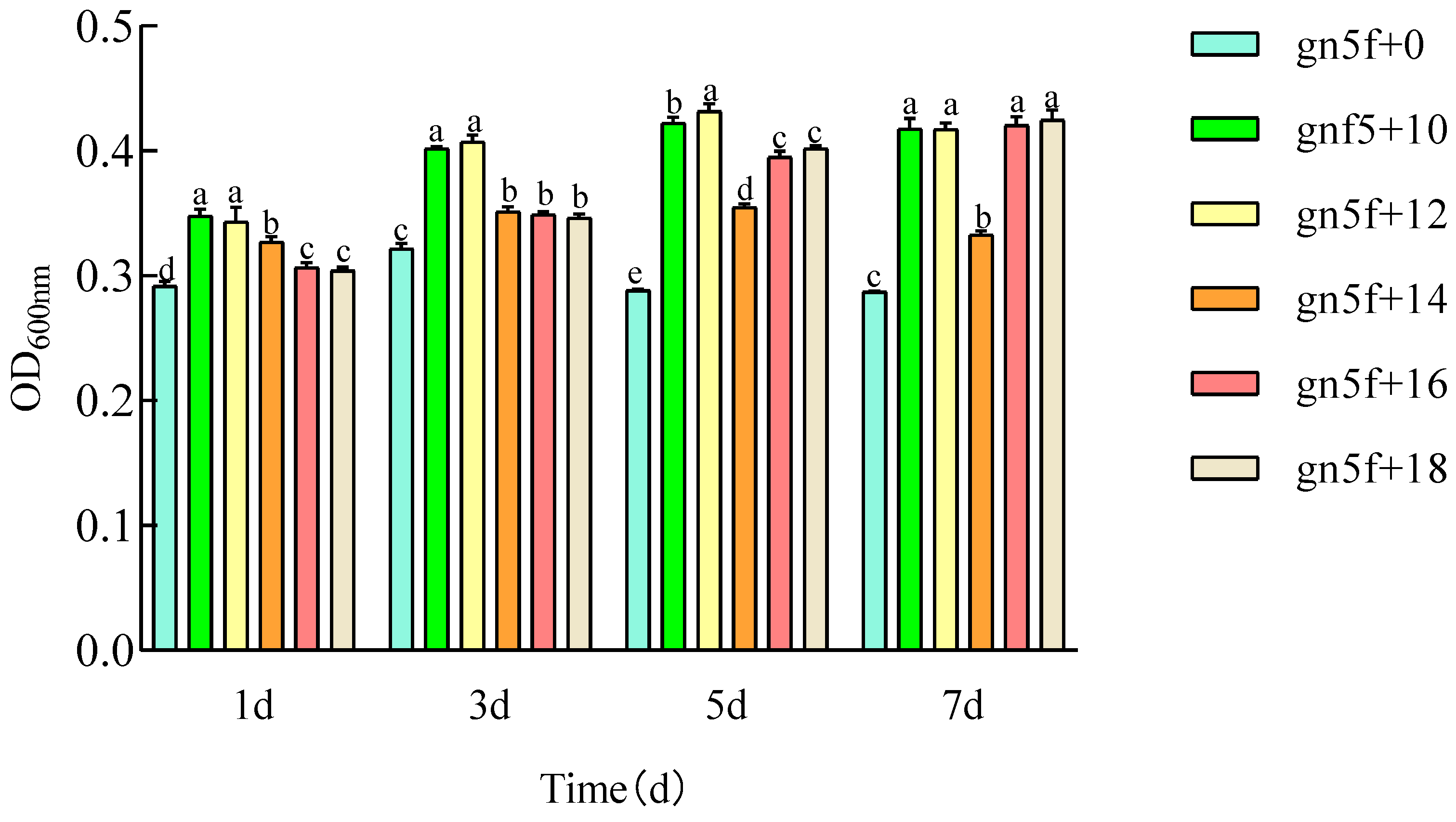
Figure 1. Effect of 3-IAA treatment on the proliferation of R.gn5f. The legend in the figure is preceded by the strain name and followed by the added concentration. Different lowercase letters within the same detection time indicate significant differences (p < 0.05).
Agronomy 15 02799 g001
Figure 2. Effect of 6-BA on the proliferation of R.gn5f. The legend in the figure is preceded by the strain name and followed by the added concentration. Different lowercase letters within the same detection time indicate significant differences (p < 0.05).
Agronomy 15 02799 g002
Figure 3. Effect of HBR on R.gn5f. The legend in the figure is preceded by the strain name and followed by the added concentration. Different lowercase letters within the same detection time indicate significant differences (p < 0.05).
Agronomy 15 02799 g003
Figure 4. Number of labeled endogenous rhizobia R.gn5f in alfalfa plant tissues during the vegetative growth stage. (A) represents the quantity of R.gn5f in the leaves during the vegetative growth stage of the plant; (B) represents the quantity of R.gn5f in the stems during the vegetative growth stage of the plant; (C) represents the quantity of R.gn5f in the roots during the vegetative growth stage of the plant. The different lowercase letters in the figure indicate significant differences in the same strain under different hormone treatments (p < 0.05), the same below.
Agronomy 15 02799 g004
Figure 5. Nodulation and nitrogen fixation capacity of alfalfa plants inoculated with R.gn5f during the vegetative growth stage. (A) represents single nodule weight; (B) represents nodule diameter; (C) represents nitrogenase activity; (D) represents leghemoglobin.
Agronomy 15 02799 g005
Figure 6. Biomass of alfalfa plants inoculated with R.gn5f during the vegetative growth stage. (A) represents the above-ground dry weight; (B) represents the plant height; (C) represents the number of leaves per plant.
Agronomy 15 02799 g006
Figure 7. Quantity of labeled endophytic rhizobium R.gn5f in alfalfa plant tissues during reproductive growth stage. (A) represents the quantity of R.gn5f in the leaves; (B) represents the quantity in the stems; (C) represents the quantity in the roots.
Agronomy 15 02799 g007
Figure 8. Quantity of labeled endophytic Rhizobium R.gn5f in reproductive organs. The different lowercase letters in the figure indicate significant differences in the same strain under different hormone treatments (p < 0.05).
Agronomy 15 02799 g008
Figure 9. Nodulation and nitrogen fixation capacity of R.gn5f-inoculated alfalfa plants during the reproductive growth stage. (A) represents single nodule weight; (B) represents nodule diameter; (C) represents nitrogenase activity; (D) represents leghemoglobin. The different lowercase letters in the figure indicate significant differences in the same strain under different hormone treatments (p < 0.05).
Agronomy 15 02799 g009
Figure 10. Biomass of R.gn5f-inoculated alfalfa plants during the reproductive growth stage. (A) represents the above-ground dry weight; (B) represents the plant height; (C) represents the number of leaves per plant. The different lowercase letters in the figure indicate significant differences in the same strain under different hormone treatments (p < 0.05).
Agronomy 15 02799 g010
Figure 11. Weight analysis of exogenous hormones on the proliferation, nitrogen—fixing performance and growth of R.gn5f plants. (A) represents the weight of exogenous hormones on the proliferation of R.gn5f; (B) represents their weight on the nodulation performance of plants containing R.gn5f; (C) represents their weight on the nitrogen fixation performance of plants containing R.gn5f; and (D) represents their weight on the biomass of plants containing R.gn5f.
Agronomy 15 02799 g011
Figure 12. Population dynamics of the fluorescent tagged rhizobia in alfalfa with the UV lamp and stereo fluorescence microscope detection method. Panels c, e, f, h, and j show the fluorescently labeled rhizobia under UV light; panels a, b, d, g, and i show them under a stereomicroscope.
Agronomy 15 02799 g012
Disclaimer/Publisher’s Note: The statements, opinions and data contained in all publications are solely those of the individual author(s) and contributor(s) and not of MDPI and/or the editor(s). MDPI and/or the editor(s) disclaim responsibility for any injury to people or property resulting from any ideas, methods, instructions or products referred to in the content.