
Article

Effect of Selected Factors on the Prediction Accuracy of Plant-Available Phosphorus and Potassium: A Global Meta-Analysis for Infrared Spectroscopy Protocol


by
Sithembiso Bethwell Fakude
1,
Puffy Soundy
1 and
Nondumiso Zanele Sosibo
2,*
1
Department of Crop Sciences, Tshwane University of Technology, Private Bag X680, Pretoria 0001, South Africa
2
Agricultural Research Council-Natural Resources and Engineering (Soil Climate and Water), Private Bag X79, Pretoria 0001, South Africa
*
Author to whom correspondence should be addressed.
Agronomy 2025, 15(12), 2771; https://doi.org/10.3390/agronomy15122771 (registering DOI)
Submission received: 4 November 2025 / Revised: 22 November 2025 / Accepted: 27 November 2025 / Published: 30 November 2025
(This article belongs to the Section Precision and Digital Agriculture)

Abstract

Chemical methods are reliable for soil testing, but they can be both time-consuming and expensive. This reason makes them unsuitable for quick analysis, especially for many soil samples. Infrared spectroscopy is a cutting-edge technique that offers promising alternative methods that are fast, cheaper, and environmentally friendly. Research findings show contradicting accuracy levels for the infrared protocol when predicting phosphorus (P) and potassium (K). For this reason, the study employed meta-analysis to investigate the effect of selected factors on the prediction accuracy of P and K. Studies that tested P and K in the laboratory using the protocol were selected. The results showed that concentration and soil sample size can significantly (p < 0.001) affect the prediction accuracy of these plant-available nutrients. A positive correlation was observed between the coefficient of determination (r2), sample size (r2 = 0.75 P, r2 = 0.68 K), and concentration (r2 = 0.62 P, r2 = 0.64 K). The variation observed in the dependent variable (r2) was explained mostly by sample size and concentration. This could be the source of the overall low prediction accuracy observed from the studies [r2 = 0.46, RPD = 1.44 (P) and r2 = 0.55, RPD = 1.55 (K)].

1. Introduction

Measurement of plant-available phosphorus (P) and potassium (K) is important for efficient and adequate fertilizer application to achieve optimum crop growth [1]. Soil nutrient measurement can be conducted using either chemical methods or infrared spectroscopy. Chemical methods are reliable but expensive and time-consuming when analyzing large numbers of soil samples. In contrast, infrared spectroscopy offers quick, cheap, and environmentally friendly alternatives [2]. However, the accuracy of the infrared spectroscopy protocol still needs to be investigated, especially for plant-available P and K.
Accuracy in spectroscopy refers to how close results are to the actual values (reference data), while precision is the degree of reproducibility of the results, regardless of accuracy [3]. The accuracy of an infrared spectroscopy protocol is mainly assessed in terms of overall accuracy and precision using validation tests or statistics from a particular or selected regression model. The validation results of the regression model typically include the coefficient of determination (r2), the ratio of performance to deviation (RPD), and the root-mean-square error (RMSE). The r2 measures the proportion of the total variation explained by the model; the RPD is the ratio of the standard deviation of the reference data to the RMSE in the calibration or validation dataset [3,4]. The RMSE quantifies the difference between model-predicted and measured values [5].
Researchers have established assessment standards for the overall performance of a model and for ensuring accurate and precise results when analyzing soil samples [6,7,8]. The main benchmarks include, but are not limited to, r2 > 0.9 and RPD > 3 (very reliable); r2 = 0.7–0.9 and RPD = 1.75–3 (reliable); and r2 < 0.7 and RPD < 1.75 (less reliable). The validation results for phosphorus and potassium measured using infrared spectroscopy are generally classified as less reliable in most reported studies. For P, the coefficient of determination obtained from various soils [8,9,10,11,12,13,14,15] is below the recommended threshold (r2 < 0.64–0.0) in most cases. Similarly, K validation results show comparable trends (r2 < 0.65–0.0) [16,17,18,19,20,21,22].
It has been noted that poor P and K predictions can be attributed to factors related to sample preparation, spectrum acquisition, spectral pre-treatment, soil texture, geological heterogeneity, reference methods, calibration methods, and instrument type [23]. However, many of these factors can be controlled to improve prediction accuracy. For instance, a portion of studies have achieved reliable validation results (r2 > 0.70) for plant-available phosphorus [24,25] and potassium [26,27,28] despite these challenges.
The accuracy of reference data (concentrations) is the most limiting factor, whereas other aspects, such as the quality of soil spectral data, can be improved using powerful computer software [3]. Research findings indicate that the concentration of soil properties can significantly influence prediction accuracy [29]. For example, soil samples with a wide range (0–120%) of P and K concentrations were tested, and the results showed inconsistent predictions for both P and K, indicating that concentration is a major factor affecting prediction accuracy when using the protocol [30]. Concentration is measured from a variety of soils or soil sample sizes, typically from 10% of the total soil sample [31]. A limited number of studies have investigated the effect of concentration and sample size on the prediction accuracy of P and K when using the infrared spectroscopy protocol. Therefore, the current study aimed to investigate the poor prediction accuracy of P and K in soils by examining the effects of P and K concentration and soil sample size on prediction accuracy using a global meta-analysis.

2. Methodology

2.1. Meta-Analysis

Meta-analysis is a quantitative method for comparing and linking results from independent studies in order to estimate treatment effects and variability, and identify patterns among study results [32]. This study used meta-analysis to analyze the effect of P and K concentration and soil sample size on the prediction accuracy (r2) of infrared spectroscopy protocol. Infrared spectroscopy is generally a measure of the interaction between light and a sample [33], following the steps displayed in Figure 1.

2.2. Literature Search Strategy

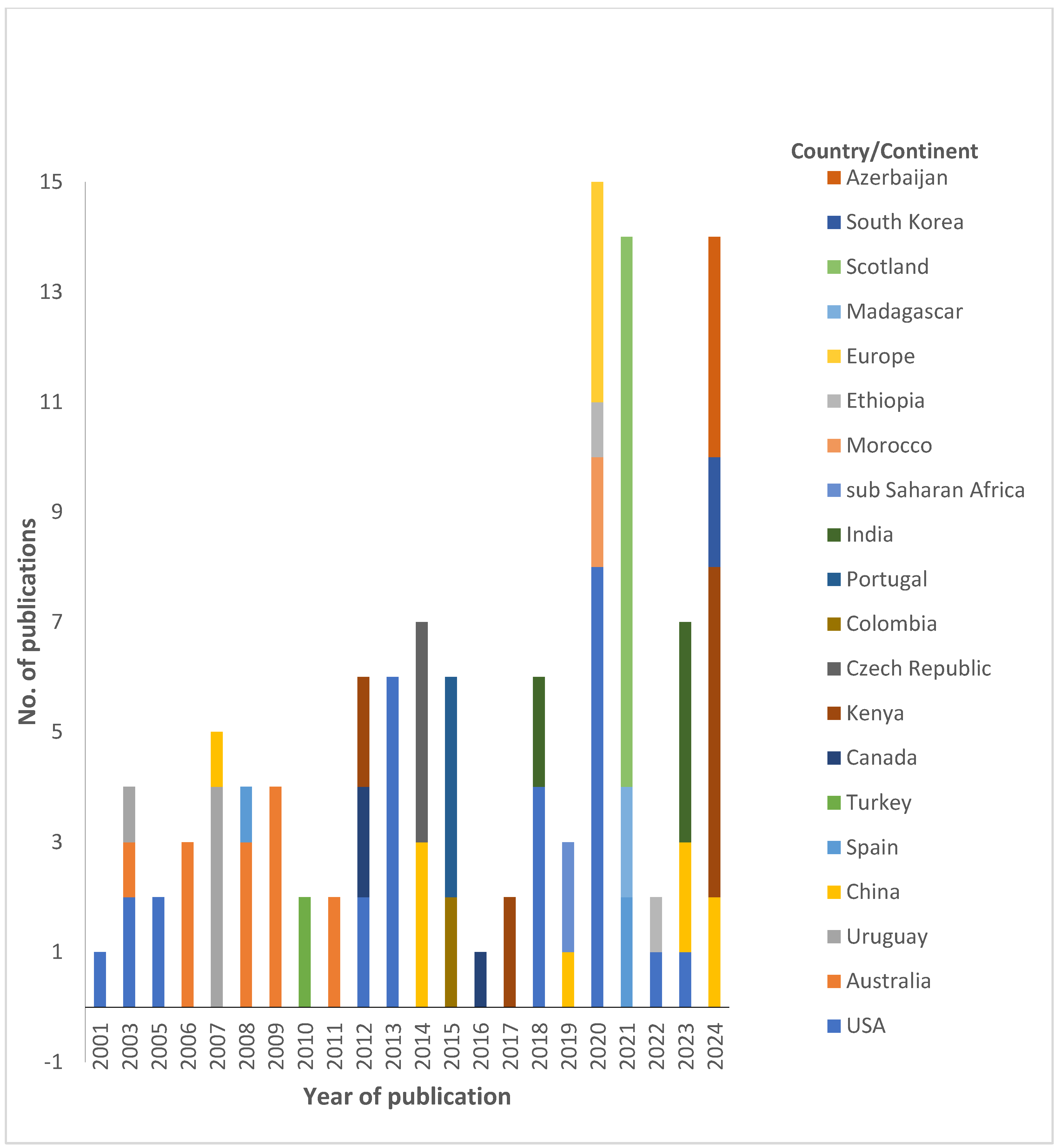
A systematic literature search was conducted manually to identify peer-reviewed studies that used infrared spectroscopy to predict soil phosphorus (P) and potassium (K) in the laboratory (ex situ), using soil samples collected in the field or archive soil samples (spectral library). Electronic searches of peer-reviewed articles were carried out in Google Scholar, ScienceDirect and ResearchGate across the globe (Figure 2) using keywords such as
  • Infrared spectroscopy and soil nutrients;
  • Spectroscopy and soil fertility;
  • Prediction of soil properties;
  • Visible near-infrared, near-infrared, mid-infrared and soil P and K;
  • Calibration models and prediction of soil properties.

2.3. Selection Criteria

Selection of studies was not limited to a year or geographic location. Studies were selected if they met the following criteria:
  • Used infrared spectroscopy to predict soil properties in the laboratory;
  • Reported reference chemical methods and soil analysis results;
  • Reported validation prediction statistics (r2, RMSE, and RDP);
  • Predicted plant-available phosphorus and potassium;
  • Provided soil sample sizes;
  • Conducted experimental research.

2.4. Data Extraction

Data was collected from the Abstract, Materials and Methods, Results, and Discussion sections of each article. For each selected study the following data was extracted:
  • Author names, year of publication, place of research (country);
  • Treatment means for P and K measured using chemical methods;
  • Soil sample size;
  • Validation statistics (r2, RMSE, and RPD) for either P or K;
  • Type and name of instruments;
  • Chemical methods;
  • Infrared regions;
  • Regression models.

2.5. Data Sorting

Data were captured and sorted in Microsoft Excel. Treatment means for P and K concentration were uniformly standardized to milligrams per kilogram of soil (mg/kg). Thereafter, the coefficient of determination (r2), RPD, and RMSE values were linked to the soil sample size and nutrient concentration for each study. The entire dataset was arranged using custom sorting, with concentration ordered from the smallest to the largest value for each nutrient. The data were cleaned by removing duplicates and correcting spelling errors in the meta-data (countries, instruments, chemical methods, infrared regions, and regression models).

2.6. Statistical Analysis

Microsoft Excel, IBM SPSS Statistics version 20, and Jamovi version 2.5 were used for data analysis in this study. Microsoft Excel was used to clean, sort, and analyze the data (Figure 2), as well as to examine the relationships among r2, RPD, and RMSE (Figures 7 and 8). The meta-data (Table 1) was analyzed using frequency distributions (%) in IBM SPSS Statistics version 20. Jamovi version 2.5 was used to analyze the correlation between prediction accuracy (r2), soil sample size and concentration generated from the selected studies. The software was used not only for correlation analysis but also for data reduction. Some studies were identified as non-influential, contained repeated values, and these were removed from the analysis. Influential studies were identified by evaluating changes in the r-estimate or the Fisher r-to-z–transformed correlation coefficient Equation (1) when individual studies were excluded. Also, the model fails to run when finite xlim values are present in the dataset.
Z = 1 2       I n 1 + r 1 r
Equation (1) Fisher r-to-z transformed correlation coefficient.
The Fisher r-to-z transformation corrects non-normally distributed correlation coefficients by converting them into values that follow an approximately normal distribution. Its primary purpose is to normalize the distribution of correlation coefficients and stabilize their variances, thereby making meta-analytic methods more robust and reliable [35]. A random-effects model was fitted to the data, and the correlation effect size was selected. The studies were weighed against the overall mean for sample size and concentration for both P and K. Significant differences were determined using the Z-score, which measures the distance from the mean, where Z = 0 indicates no significant difference.

3. Results and Discussion

3.1. Meta-Data

Relevant or selected articles were published between 2001 and 2024. The number of publications increased steadily over this period (Figure 2), with Africa recording the lowest number of studies. Most publications investigated multiple factors such as sample size, infrared regions, models, and chemical methods within a single study. A total of 118 experiments were extracted for the meta-analysis, including 58 for phosphorus and 60 for potassium (Table A1). The selected studies measured soil P and K using infrared spectroscopy protocols (Figure 1) in the laboratory or ex situ. Soil samples were air-dried and finely ground to less than 2 mm to eliminate moisture and texture as confounding factors [14]. Soil spectra were measured in the visible near- or mid-infrared regions, mainly using Fourier transform infrared spectrometers.
Vis–NIR contributed 20.5% of P and 17.9% of K predictions, while MIR contributed 18.8% for both P and K. The slightly higher Vis-NIR is mostly a contribution from older studies. In recent years, researchers are shifting to MIR because of its known advantage in capturing fundamental vibrational absorptions associated with mineral and organic functional groups, which are often strongly correlated with nutrient availability. In contrast, the lower contribution of NIR-only studies (24%) suggests that NIR alone is less frequently adopted, likely because it captures weaker overtones and combination bands. The most frequently used spectrometers were FT-IR instruments, contributing 41.4% of all data, with similar shares for P (19.8%) and K (21.6%). This supports the trend towards MIR-based spectroscopy, as FT-IR devices are commonly used for MIR measurements. The ASD Field Spec instruments represent 25.0% of the data, indicating a lower value when compared to FT-IR instruments. ASD can be used in the field or laboratory (portable Vis–NIR instruments). The scope of the search focused more on laboratory studies, which limited studies that used field spectrometers for plant-available P and K.
Partial least squares regression was the primary modeling approach, applied in 66.7% of the studies to analyze soil spectral data for P and K. Reference data were obtained mainly using the Mehlich-3 method (34.9%). However, the variation in reference methods for P Mehlich 3 (19.8%), Olsen-P (12.8%), and Bray-P (8.1%), and K ammonium acetate extraction (15.1%), and Mehlich 3 (15.1%) demonstrates the lack of global standardization for soil P and K testing. The results for meta-data, which includes infrared regions, spectrometers, regression models, and chemical reference methods are summarized in Table 1.

3.2. Effect of Soil Sample Size and Concentration on the Prediction Accuracy of P and K

Table 2 summarizes the meta-analytic statistics for phosphorus and potassium prediction performance after fitting the random-effects (RE) model, allowing comparison of the effect of sample size and soil nutrient concentration on the prediction accuracy of the infrared protocol. The table presents the pooled correlation coefficients (r), Fisher’s z-transformed effect sizes (Z), and the corresponding heterogeneity statistics used to evaluate the variability among studies.
The statistical analysis at the 95% confidence interval (CI) indicated a highly significant RE model and substantial heterogeneity (p < 0.001). These results demonstrate that both sample size and nutrient concentration significantly influence the prediction accuracy of plant-available phosphorus and potassium (Table 2). The significant heterogeneity suggests that the included studies were conducted under diverse conditions, such as differences in soil types, analytical instruments, and methodological approaches. This is further supported by the Z-scores, all of which were greater than zero, indicating meaningful differences among studies.
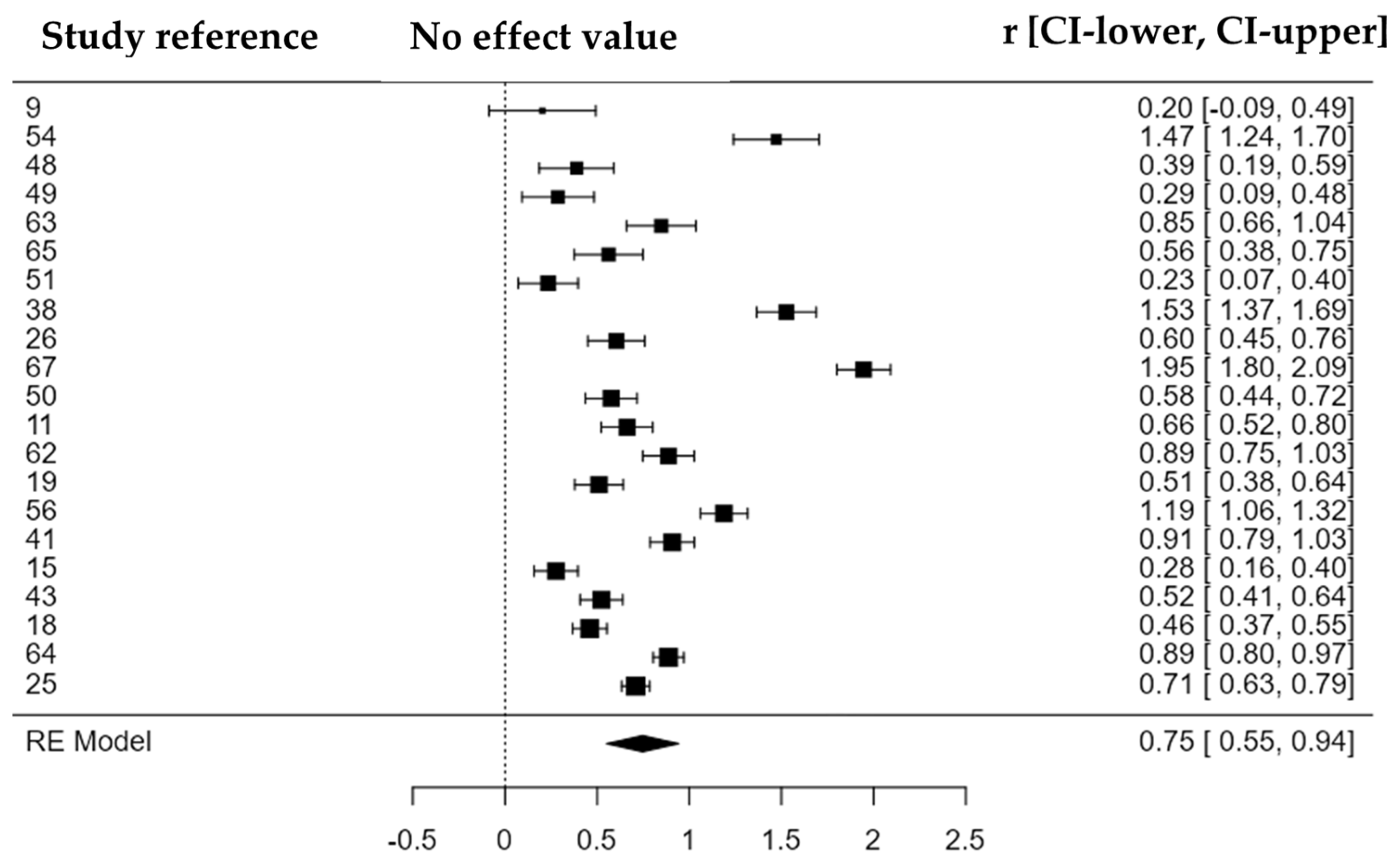
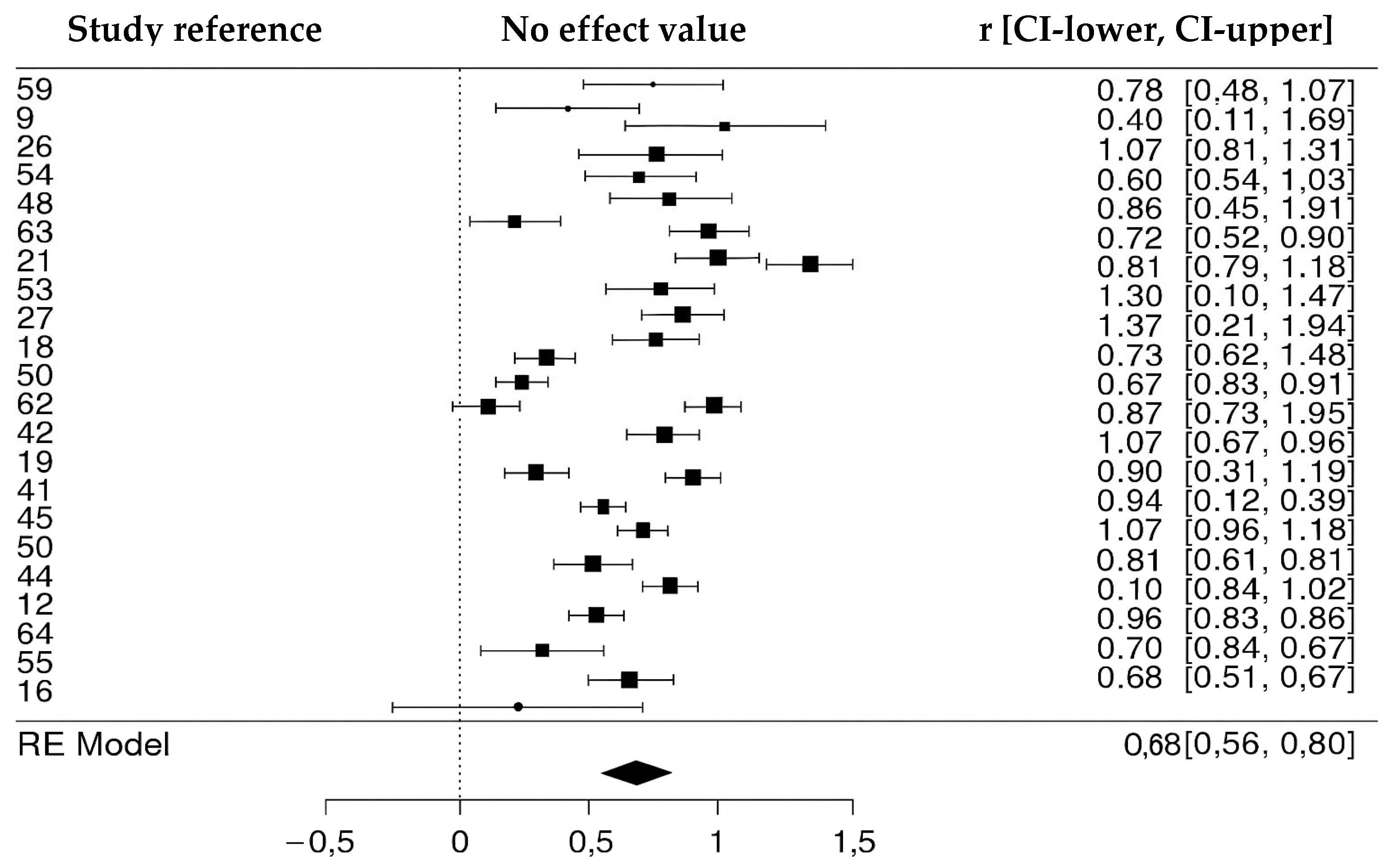
The pooled prediction accuracy was higher for P (75%) than that for K (68%), with a combined average accuracy of 72%, suggesting that P prediction is more sensitive to sample size and related soil characteristics. A positive effect was also observed for nutrient concentration; however, accuracy values were relatively similar for P (62%) and K (64%). Overall, sample size emerged as the most influential factor affecting prediction accuracy for both nutrients, yielding the highest average accuracy (73%) compared with nutrient concentration (63%).

3.2.1. Soil Sample Size

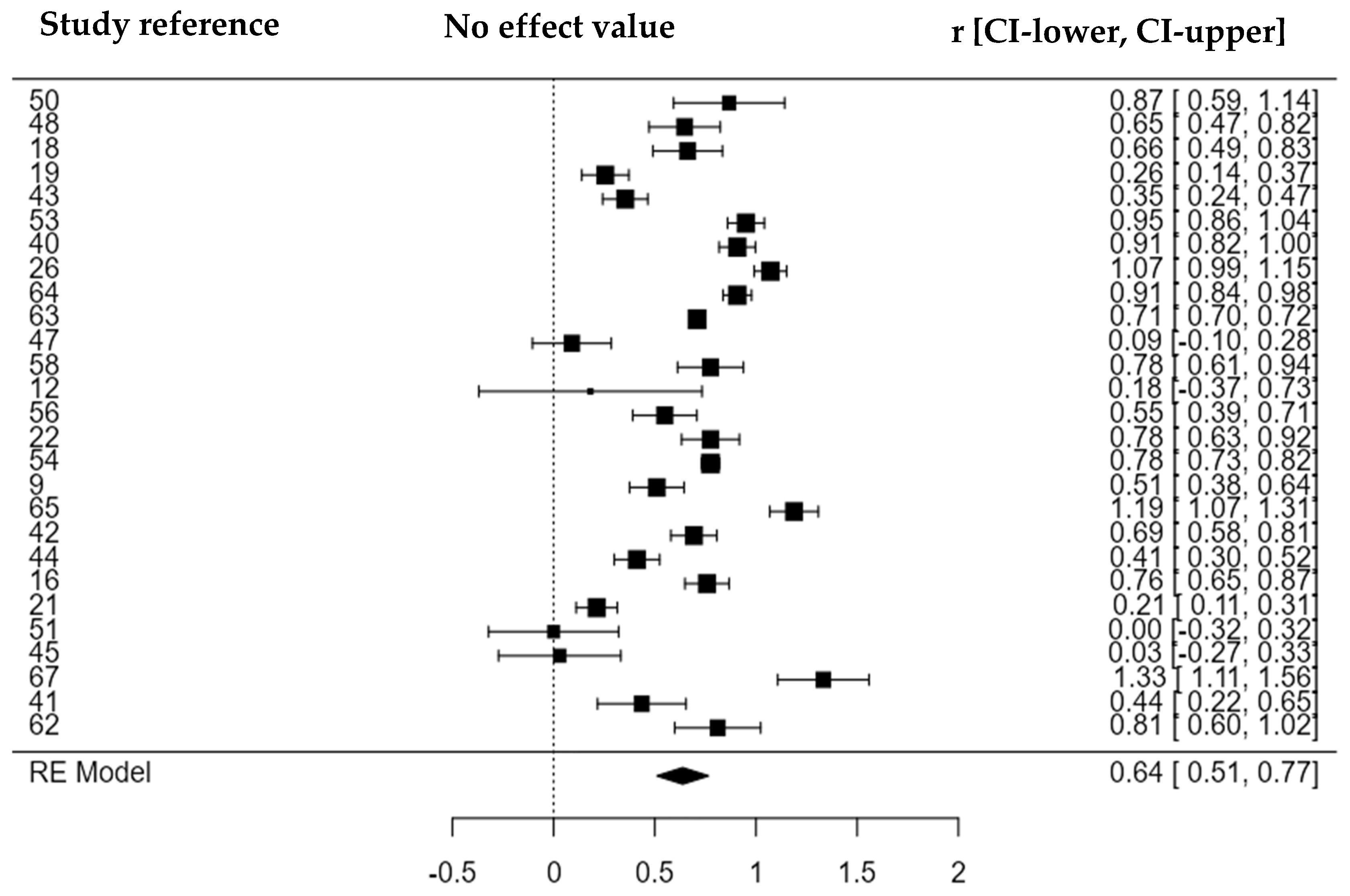
The results presented in Section 3.2 are summarized using forest plots shown in Figure 3, Figure 4, Figure 5 and Figure 6. Each forest plot is divided into three components: the study reference, the line of no effect, and the correlation coefficients (r) accompanied by their 95% confidence intervals, CI-lower and CI-upper limits. Phosphorus (P) sample sizes ranged from 35 to 660, while potassium (K) sample sizes ranged from 48 to 908. Based on these ranges, twenty-one (21) studies for P and twenty-six (26) studies for K were included in the generation of the forest plots. Overall, the forest plots revealed a positive effect of soil sample size on prediction accuracy. The results demonstrating the influence of sample size on the prediction accuracy for P and K are presented in Figure 3 and Figure 4.
The heterogeneity observed for sample size was consistent with the statistical analysis presented in Figure 3 and Figure 4 and was further supported by the results in Table 2. The effect of sample size on prediction accuracy was significant and varied across studies, with the exception of two studies whose confidence intervals overlapped the line of no effect, indicating non-significance. The variation observed among the studies was expected and aligns with published empirical findings [36]. Soil samples are inherently variable in their physical and chemical properties. For example, soil color can indicate the presence of organic matter, iron oxides, and carbonates, all of which influence light reflectance and can ultimately affect prediction accuracy [37]. In addition, the size, shape, and arrangement of soil particles can influence light transmission paths and the resulting spectra [16]. The number of soil samples is therefore important to ensure that the full range of soil variability is captured by the regression model, leading to more reliable and accurate predictions. However, larger sample sizes do not always translate into higher prediction accuracy. Some studies with relatively large sample sizes still reported poor prediction performance for both P and K, indicating that other factors such as data quality, spectral pre-processing, model choice, and soil heterogeneity also play critical roles.

3.2.2. Soil Nutrient Concentration

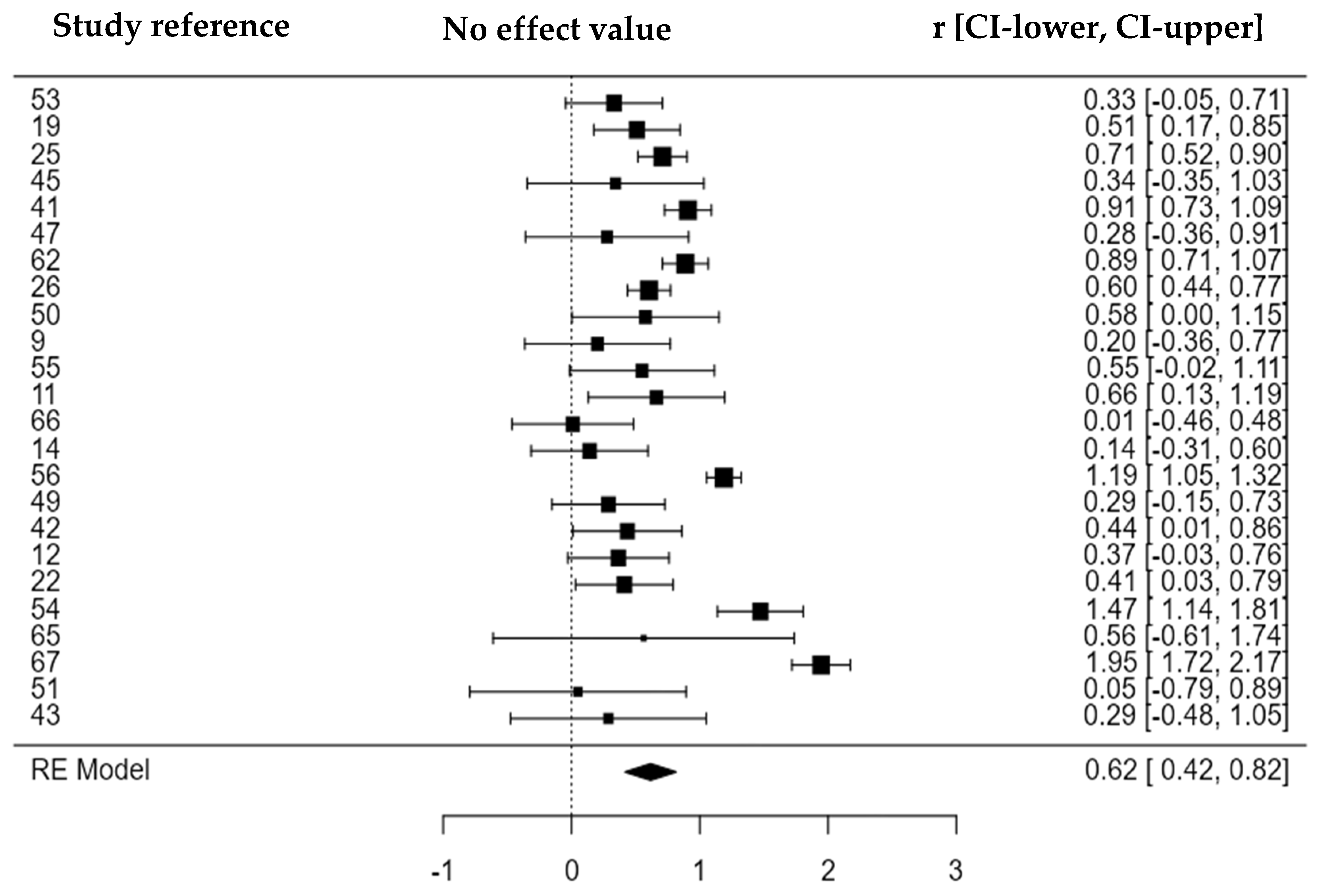
Soil nutrient concentrations varied widely across the studies, ranging from 8.4 to 215 mg/kg for phosphorus (P) and from 15.64 to 600 mg/kg for potassium (K). A total of twenty-four (24) studies for P and twenty-seven (27) studies for K were included in the forest plot analysis. The results were consistent with the statistical findings presented in Table 2, showing that nutrient concentration significantly affected prediction accuracy for both P and K (p < 0.001; see Figure 5 and Figure 6).
Approximately ten (10) P studies showed no significant effect, as indicated by error bars overlapping the line of no effect. These studies also had small square sizes and wide confidence intervals, reflecting their limited influence on the overall effect size. Despite the presence of these non-significant studies, phosphorus concentration still explained 62% of the variation in prediction accuracy.
For potassium, only four (4) studies showed no effect (Figure 6), which aligns with the slightly higher correlation coefficient (64%) observed for K. Significant heterogeneity (p < 0.001) was detected among studies for both nutrients, reflecting natural variability in soil concentration levels. Such variability is expected because soil nutrient concentrations are strongly influenced by local agronomic practices, which differ across regions and management practices.

3.3. Accuracy of the Infrared Spectroscopy Protocol

The study evaluated the effectiveness of the infrared protocol for predicting soil phosphorus (P) and potassium (K) concentrations using the ratio of performance to deviation (RPD). RPD quantifies model performance by comparing the standard deviation of reference (chemically measured) values with the root mean square error (RMSE) of predictions. The coefficient of determination values (r2) reported in earlier sections were analyzed alongside the corresponding RPD and RMSE values. However, some publications did not report RPD and RMSE; only a subset of the extracted studies could be used to assess the predictive accuracy of the protocol for P and K.
Chemical methods are regarded as the true or reference values for nutrient concentrations [38]. Therefore, predictions that are closer to the actual values are known to be accurate. The closeness of measured values (chemical methods) and predicted values (models) can be estimated using both RMSE and RPD. A smaller RMSE and RPD > 2 represent a reliable or accurate model [39]. The observed average RPD recorded from the studies was below the standard (<2 RPD) for a reliable regression model [39]. In this study, the average RPD values obtained from the reviewed publications were below this threshold (<2), indicating weak model performance. The regression models produced RPD values of 1.41 for P and 1.55 for K, suggesting that the protocol predicted K more accurately than P. The overall prediction performance was r2 = 0.46 for P and r2 = 0.55 for K.
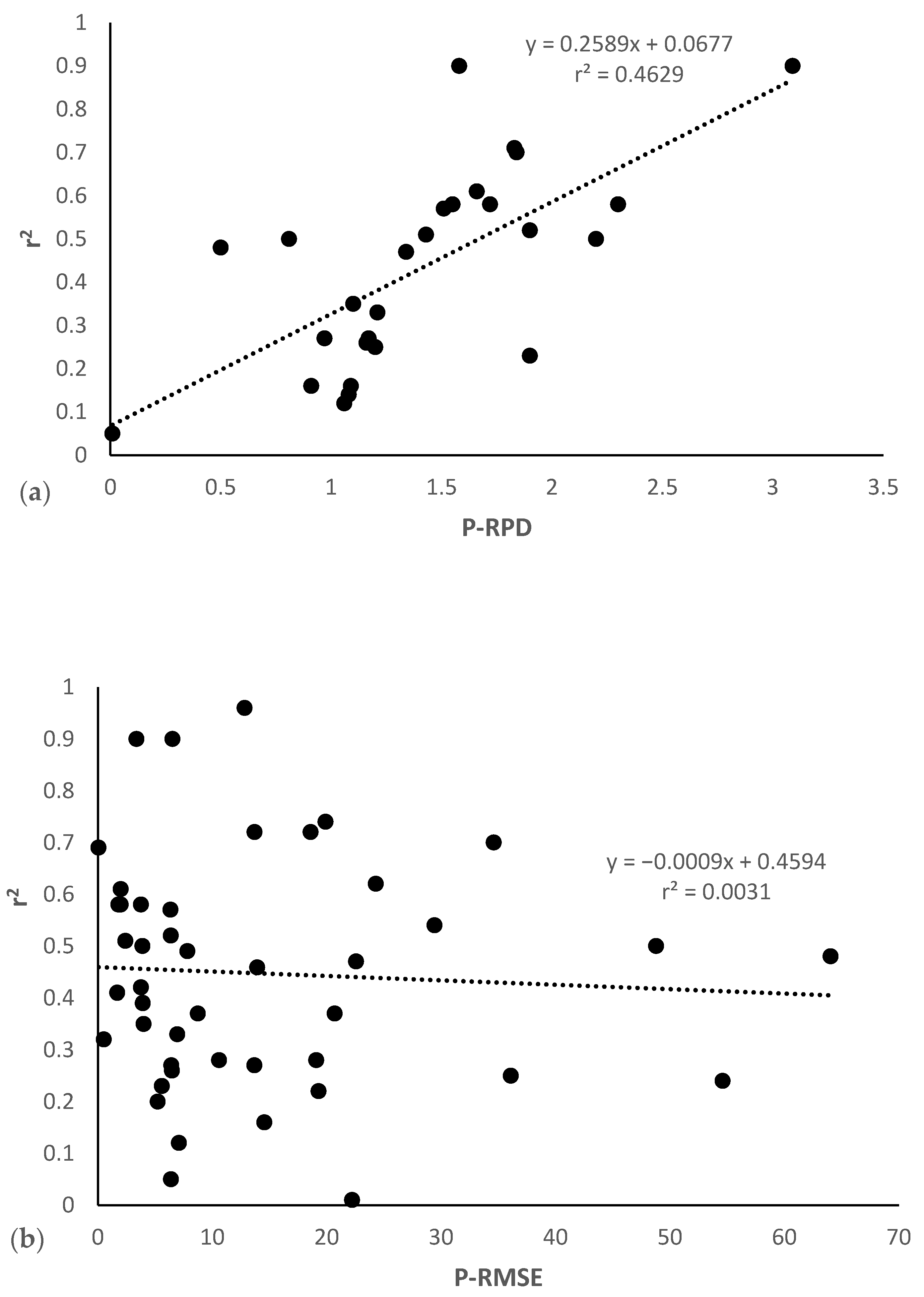
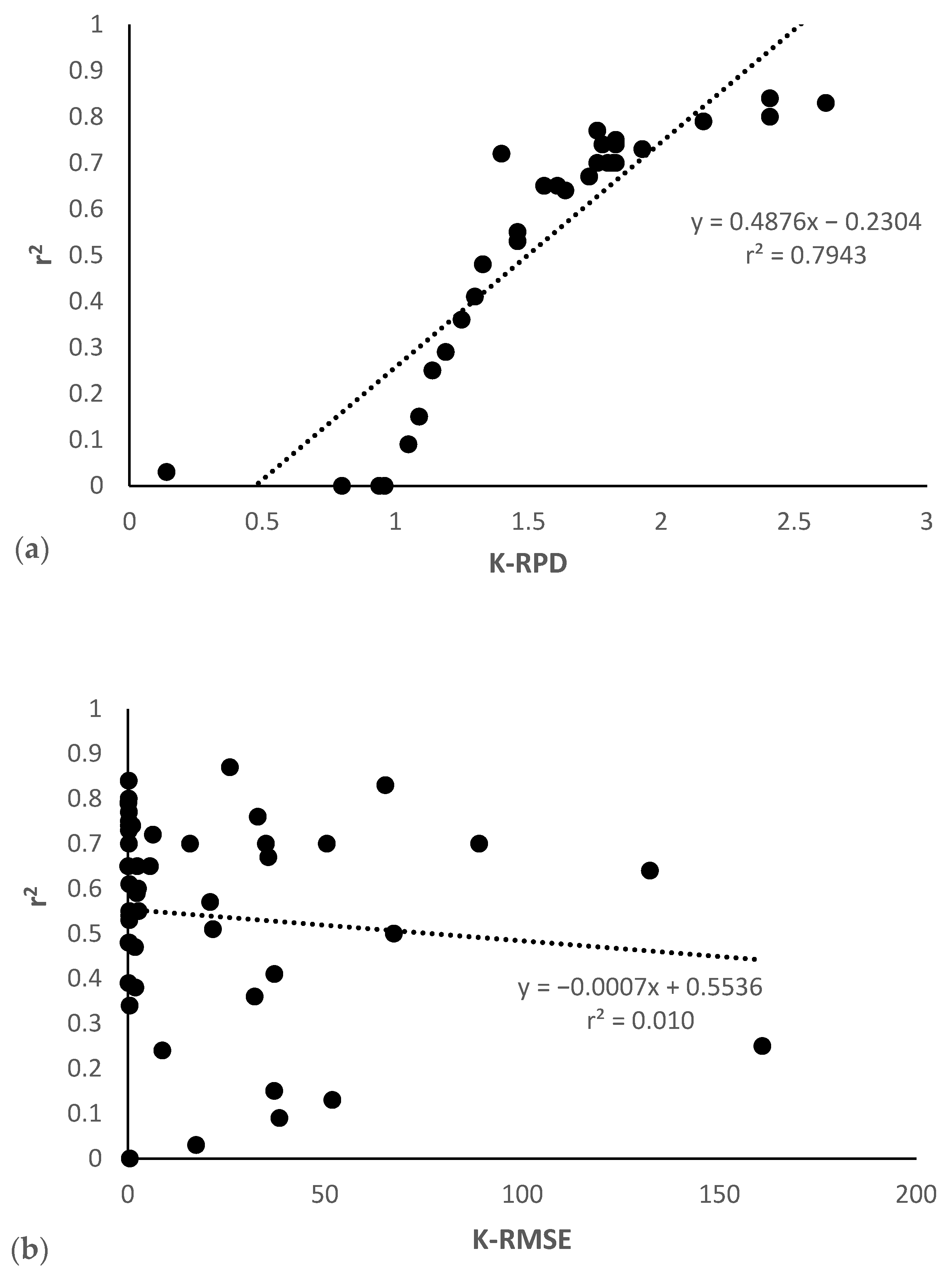
As established in the preceding sections, soil sample size and nutrient concentration were the primary drivers of the observed low prediction accuracy. The poor predictive performance for P and K can be further attributed to their relatively low concentrations in soils [28], as well as differences in nutrient mobility within the soil solution, both of which influence spectral detectability. The correlation analyses among r2, RPD, and RMSE are presented in Figure 7 and Figure 8.

3.3.1. Phosphorus

Phosphorus reference data (chemical methods) were extracted mainly using Olsen-P, Bray-P, Mehlich 1, and Mehlich 3 (Table 1). Accurate P predictions are most likely to be observed from the Mehlich 3 and Olsen-P methods [16,24]. The results showed a positive linear relationship (Figure 7a) between the r2 and RPD values [12] and a negative relationship (Figure 7b) between r2 and RMSE. An increase in the phosphorus RPD (P-RPD) values corresponded to an increase in the coefficient of determination, while the inverse was observed for the phosphorus RMSE (P-RMSE). The observed error (RMSE) decreased as the prediction performance (r2) of the protocol increased, hence the negative correlation (Figure 7b). Increasing the number of soil samples can reduce the observed error or RMSE [4]. Despite the relatively low predictability of P, the positive correlation between r2 and RPD values, which reflects the agreement between measured and predicted results, indicates that the protocol is accurate. However, further investigation is required to explore the effect of P concentration levels on the prediction performance of the protocol.

3.3.2. Potassium

The reference data for potassium were extracted mainly using ammonium acetate and Mehlich 3 (Table 1). Reference data obtained using Mehlich 3 generally provided more accurate predictions than those extracted using ammonium acetate [16]. The coefficient of determination (r2) from the validation results was correlated with the potassium RPD (K-RPD) and potassium RMSE (K-RMSE) values. The correlation patterns were similar to those observed for phosphorus (Section 3.3.1). A positive linear relationship between r2 and K-RPD was observed (Figure 8a), indicating that K-RPD increased proportionally with prediction performance. Likewise, a downward trend was detected in the K-RMSE results (Figure 8b), where prediction accuracy decreased as RMSE increased, as expected.
Overall, the protocol demonstrated higher accuracy for predicting potassium than phosphorus. A strong relationship (r2 = 0.79) was found between K-RPD and r2, compared with the weaker association for phosphorus (P-RPD; r2 = 0.46). These results align with the findings of [27], who also reported more accurate predictions for K (r2 = 0.68) than for P (r2 = 0.46). Collectively, the findings confirm that the protocol is reliable for predicting both P and K. However, further refinement and a deeper understanding of the protocol are required to improve prediction accuracy, particularly for phosphorus.

4. Conclusions

This study identified two key factors, sample size and nutrient concentration, that substantially influence the accuracy of predicting plant-available phosphorus (P) and potassium (K) using infrared spectroscopy. The results demonstrate that the performance of the protocol is sensitive to the diversity and representation of soil samples used to build the spectral library. Although larger sample sizes broaden the range of soil variability, they did not consistently yield higher prediction accuracy, indicating that sample quality and representativeness may be more critical than quantity alone.
Nutrient concentration also emerged as an important factor influencing prediction accuracy. In cropland systems, nutrient levels are difficult to control due to continuous crop uptake, inherent soil variability, and fluctuations in climatic conditions. As a result, soil nutrient concentrations are often highly variable. This variability contributed to a higher number of studies showing no significant effect in the forest plots for concentration compared to sample size. The findings therefore highlight a research gap regarding the role of P and K concentration levels in shaping the predictive performance of infrared spectroscopy. Overall, the protocol appears to reliably measure what it is intended to measure. The positive relationship observed between r2 and RPD indicates a meaningful correspondence between chemically measured and model-predicted values, confirming that the infrared protocol can effectively predict P and K concentrations.

Author Contributions

Conceptualization, Methodology, Data Collection, Data Analysis and Writing—Original Draft S.B.F.; Review, Editing and Writing P.S.; Conceptualization, Design, Review, Editing and Writing N.Z.S. All authors have read and agreed to the published version of the manuscript.

Funding

There was no funding received for this research.

Data Availability Statement

The original contributions presented in this study are included in the article. Further inquiries can be directed to the corresponding author.

Acknowledgments

The authors are grateful to Tshwane University of Technology and the Agricultural Research Council of South Africa for giving them the platform and necessary resources to support this research project.

Conflicts of Interest

The authors declare no conflicts of interest.

Appendix A

Table A1. The studies used to extract meta-data and experimental data for analysis.
NO.Year of PublicationStudy Reference
1.2001[16]
2.2003[4]
3.2003[40]
4.2003[41]
5.2005[38]
6.2006[9]
7.2007[27]
8.2007[11]
9.2007[7]
10.2008[42]
11.2008[26]
12.2009[12]
13.2009[43]
14.2010[44]
15.2010[45]
16.2012[18]
17.2012[19]
18.2012[46]
19.2013[47]
20.2014[48]
21.2014[49]
22.2014[50]
23.2015[28]
24.2015[51]
25.2016[52]
26.2017[53]
27.2018[14]
28.2018[54]
29.2019[15]
30.2019[55]
31.2020[25]
32.2020[21]
33.2020[22]
34.2020[56]
35.2021[57]
36.2021[58]
37.2021[59]
38.2022[60]
39.2022[61]
40.2023[62]
41.2023[63]
42.2024[64]
43.2024[65]
44.2024[66]
45.2024[67]

References

  1. Goswami, B.; Pariyar, B.; Pariyar, A. Precision Nutrient Management in Organic Cabbage Cultivation. Ecol. Environ. Conserv. 2025, 31, 72–80. [Google Scholar] [CrossRef]
  2. Kock, A.L.; Ramphisa-Nghondzweni, P.D.; Van Zijl, G. Development of soil spectroscopy models for the Western Highveld region, South Africa: Why do we need local data? Eur. J. Soil Sci. 2024, 75, e70014. [Google Scholar] [CrossRef]
  3. Nduwamungu, C.; Ziadi, N.; Parent, L.É.; Tremblay, G.F.; Thuriès, L. Opportunities for, and limitations of, near infrared reflectance spectroscopy applications in soil analysis: A review. Can. J. Soil Sci. 2009, 89, 531–541. [Google Scholar] [CrossRef]
  4. Islam, K.; Singh, B.; McBratney, A. Simultaneous estimation of several soil properties by ultra-violet, visible, and near-infrared reflectance spectroscopy. Soil Res. 2003, 41, 1101–1114. [Google Scholar] [CrossRef]
  5. Stevens, A. Changes in soil organic carbon at regional scales: Strategies to cope with spatial variability. Ph.D. Dissertation, Universite Catholique de Louvain, Louvain-la-Neuve, Belgium, 2008. [Google Scholar]
  6. Malley, D.F.; Martin, P.D.; Ben-Dor, E. Application in analysis of soils. Near-Infr. Spec. Agric. 2004, 44, 729–784. [Google Scholar]
  7. Mouazen, A.M.; Maleki, M.R.; De Baerdemaeker, J.; Ramon, H. On-line measurement of some selected soil properties using a VIS–NIR sensor. Soil Tillage Res. 2007, 93, 13–27. [Google Scholar] [CrossRef]
  8. Hati, K.M.; Sinha, N.K.; Mohanty, M.; Jha, P.; Londhe, S.; Sila, A.; Towett, E.; Chaudhary, R.S.; Jayaraman, S.; Vassanda Coumar, M.; et al. Mid-infrared reflectance spectroscopy for estimation of soil properties of Alfisols from eastern India. Sustainability 2022, 14, 4883. [Google Scholar] [CrossRef]
  9. Rossel, R.V.; Walvoort, D.J.J.; McBratney, A.B.; Janik, L.J.; Skjemstad, J.O. Visible, near infrared, mid infrared or combined diffuse reflectance spectroscopy for simultaneous assessment of various soil properties. Geoderma 2006, 131, 59–75. [Google Scholar] [CrossRef]
  10. Cohen, M.; Mylavarapu, R.S.; Bogrekci, I.; Lee, W.S.; Clark, M.W. Reflectance spectroscopy for routine agronomic soil analyses. Soil Sci. Soc. Am. J. 2007, 172, 469–485. [Google Scholar] [CrossRef]
  11. Morón, A.; Cozzolino, D. Measurement of phosphorus in soils by near infrared reflectance spectroscopy: Effect of reference method on calibration. Commun. Soil Sci. Plant Anal. 2007, 38, 1965–1974. [Google Scholar] [CrossRef]
  12. Minasny, B.; Tranter, G.; McBratney, A.B.; Brough, D.M.; Murphy, B.W. Regional transferability of mid-infrared diffuse reflectance spectroscopic prediction for soil chemical properties. Geoderma 2009, 153, 155–162. [Google Scholar] [CrossRef]
  13. Kuang, B.; Mouazen, A.M. Calibration of visible and near infrared spectroscopy for soil analysis at the field scale on three European farms. Eur. J. Soil Sci. 2011, 62, 629–636. [Google Scholar] [CrossRef]
  14. Wijewardane, N.K.; Ge, Y.; Wills, S.; Libohova, Z. Predicting physical and chemical properties of US soils with a mid-infrared reflectance spectral library. Soil Sci. Soc. Am. J. 2018, 82, 722–731. [Google Scholar] [CrossRef]
  15. Johnson, J.M.; Vandamme, E.; Senthilkumar, K.; Sila, A.; Shepherd, K.D.; Saito, K. Near-infrared, mid-infrared or combined diffuse reflectance spectroscopy for assessing soil fertility in rice fields in sub-Saharan Africa. Geoderma 2019, 354, 113840. [Google Scholar] [CrossRef]
  16. Chang, C.W.; Laird, D.A.; Mausbach, M.J.; Hurburgh, C.R. Near-infrared reflectance spectroscopy–principal components regression analyses of soil properties. Soil Sci. Soc. Am. J. 2001, 65, 480–490. [Google Scholar] [CrossRef]
  17. McCarty, G.W.; Reeves, J.B. Comparison of near infrared and mid infrared diffuse reflectance spectroscopy for field-scale measurement of soil fertility parameters. Soil Sci. 2006, 171, 94–102. [Google Scholar] [CrossRef]
  18. Abdi, D.; Tremblay, G.F.; Ziadi, N.; Bélanger, G.; Parent, L.É. Predicting soil phosphorus-related properties using near-infrared reflectance spectroscopy. Soil Sci. Soc. Am. J. 2012, 76, 2318–2326. [Google Scholar] [CrossRef]
  19. Kinoshita, R.; Moebius-Clune, B.N.; van Es, H.M.; Hively, W.D.; Bilgili, A.V. Strategies for soil quality assessment using visible and near-infrared reflectance spectroscopy in a Western Kenya chronosequence. Soil Sci. Soc. Am. J. 2012, 76, 1776–1788. [Google Scholar] [CrossRef]
  20. Debaene, G.; Niedźwiecki, J.; Pecio, A.; Żurek, A. Effect of the number of calibration samples on the prediction of several soil properties at the farm-scale. Geoderma 2014, 214, 114–125. [Google Scholar] [CrossRef]
  21. Takele, C.; Iticha, B. Use of infrared spectroscopy and geospatial techniques for measurement and spatial prediction of soil properties. Heliyon 2020, 6, e03488. [Google Scholar] [CrossRef]
  22. Tsakiridis, N.L.; Keramaris, K.D.; Theocharis, J.B.; Zalidis, G.C. Simultaneous prediction of soil properties from VNIR-SWIR spectra using a localized multi-channel 1-D convolutional neural network. Geoderma 2020, 367, 114258. [Google Scholar] [CrossRef]
  23. Nocita, M.; Stevens, A.; van Wesemael, B.; Aitkenhead, M.; Bachmann, M.; Barthès, B.; Ben-Dor, E.; Brown, D.J.; Clairotte, M.; Csorba, A.; et al. Soil spectroscopy: An alternative to wet chemistry for soil monitoring. Adv. Agron. 2015, 132, 139–159. [Google Scholar]
  24. Iznaga, A.C.; Orozco, M.R.; Alcantara, E.A.; Pairol, M.C.; Sicilia, Y.E.D.; De Baerdemaeker, J.; Saeys, W. Vis/NIR spectroscopic measurement of selected soil fertility parameters of Cuban agricultural Cambisols. Biosyst. Eng. 2014, 125, 105–121. [Google Scholar] [CrossRef]
  25. Reda, R.; Saffaj, T.; Itqiq, S.E.; Bouzida, I.; Saidi, O.; Yaakoubi, K.; Lakssir, B.; El Mernissi, N.; El Hadrami, E.M. Predicting soil phosphorus and studying the effect of texture on the prediction accuracy using machine learning combined with near-infrared spectroscopy. Spectrochim. Acta Part A Mol. Biomol. Spectrosc. 2020, 242, 118715. [Google Scholar] [CrossRef]
  26. Zornoza, R.; Guerrero, C.; Mataix-Solera, J.; Scow, K.M.; Arcenegui, V.; Mataix-Beneyto, J. Near infrared spectroscopy for determination of various physical, chemical and biochemical properties in Mediterranean soils. Soil Biol. Biochem. 2008, 40, 1923–1930. [Google Scholar] [CrossRef]
  27. He, Y.; Huang, M.; García, A.; Hernández, A.; Song, H. Prediction of soil macronutrients content using near-infrared spectroscopy. Comput. Electron. Agric. 2007, 58, 144–153. [Google Scholar] [CrossRef]
  28. Bonett, J.P.; Camacho-Tamayo, J.H.; Ramírez-López, L. Mid-infrared spectroscopy for the estimation of some soil properties. Agron. Colomb. 2015, 33, 99–106. [Google Scholar] [CrossRef]
  29. Fang, Q.; Hong, H.; Zhao, L.; Kukolich, S.; Yin, K.; Wang, C. Visible and near-infrared reflectance spectroscopy for investigating soil mineralogy: A review. J. Spectrosc. 2018, 2018, 3168974. [Google Scholar] [CrossRef]
  30. Hu, G.; Sudduth, K.A.; He, D.; Myers, D.B.; Nathan, M.V. Soil phosphorus and potassium estimation by reflectance spectroscopy. Trans. ASABE 2016, 59, 97–105. [Google Scholar] [CrossRef]
  31. Kennard, R.W.; Stone, L.A. Computer aided design of experiments. Technometrics 1969, 11, 137–148. [Google Scholar] [CrossRef]
  32. Lin, Y.; Watts, D.B.; Van Santen, E.; Cao, G. Influence of poultry litter on crop productivity under different field conditions: A meta-analysis. Agron. J. 2018, 110, 807–818. [Google Scholar] [CrossRef]
  33. Theophile, T. Infrared spectroscopy: Materials science, engineering and technology. In BoD–Books on Demand; Theophile, T., Ed.; InTech: Rijeka, Croatia, 2012. [Google Scholar]
  34. Paz-Kagan, T.; Shachak, M.; Zaady, E.; Karnieli, A. A spectral soil quality index (SSQI) for characterizing soil function in areas of changed land use. Geoderma 2014, 230, 171–184. [Google Scholar] [CrossRef]
  35. Shelby, L.B.; Vaske, J.J. Understanding meta-analysis: A review of the methodological literature. Leis. Sci. 2008, 30, 96–110. [Google Scholar] [CrossRef]
  36. Shepherd, K.D.; Walsh, M.G. Development of reflectance spectral libraries for characterization of soil properties. Soil Sci. Soc. Am. J. 2002, 66, 988–998. [Google Scholar] [CrossRef]
  37. Ben-Dor, E.; Irons, J.R.; Epema, G.F. Soil reflectance. Remote Sens. Earth Sci. Man. Remote Sens. 1999, 3, 111–188. [Google Scholar]
  38. Bogrekci, I.; Lee, W.S. Spectral phosphorus mapping using diffuse reflectance of soils and grass. Biosyst. Eng. 2005, 91, 305–312. [Google Scholar] [CrossRef]
  39. Lee, K.S.; Lee, D.H.; Sudduth, K.A.; Chung, S.O.; Kitchen, N.R.; Drummond, S.T. Wavelength identification and diffuse reflectance estimation for surface and profile soil properties. Trans. ASABE 2009, 52, 683–695. [Google Scholar] [CrossRef]
  40. Cozzolino, D.; Moron, A. The potential of near-infrared reflectance spectroscopy to analyse soil chemical and physical characteristics. J. Agric. Sci. 2003, 140, 65–71. [Google Scholar] [CrossRef]
  41. Lee, W.S.; Sanchez, J.F.; Mylavarapu, R.S.; Choe, J.S. Estimating chemical properties of Florida soils using spectral reflectance. Trans. ASAE 2003, 46, 1443–1453. [Google Scholar] [CrossRef]
  42. Rossel, R.V.; Jeon, Y.S.; Odeh, I.O.A.; McBratney, A.B. Using a legacy soil sample to develop a mid-IR spectral library. Soil Res. 2008, 46, 1–16. [Google Scholar] [CrossRef]
  43. Janik, L.J.; Forrester, S.T.; Rawson, A. The prediction of soil chemical and physical properties from mid-infrared spectroscopy and combined partial least-squares regression and neural networks (PLS-NN) analysis. Chemom. Intell. Lab. Syst. 2009, 97, 179–188. [Google Scholar] [CrossRef]
  44. Bilgili, A.V.; Van Es, H.M.; Akbas, F.; Durak, A.; Hively, W.D. Visible-near infrared reflectance spectroscopy for assessment of soil properties in a semi-arid area of Turkey. J. Arid Environ. 2010, 74, 229–238. [Google Scholar] [CrossRef]
  45. Djuuna, I.A.F.; Abbott, L.; Russell, C. Determination and prediction of some soil properties using partial least square (PLS) calibration and mid-infrared (MIR) spectroscopy analysis. J. Trop. Soils 2013, 16, 93–98. [Google Scholar] [CrossRef]
  46. Sudduth, K.A.; Kremer, R.J.; Kitchen, N.R.; Myers, D.B. Estimating soil quality indicators with diffuse reflectance spectroscopy. In Proceedings of the 10th International Conference on Precision Agriculture, Denver, CO, USA, 22–25 July 2012. [Google Scholar]
  47. Hu, G.; Sudduth, K.A.; Myers, D.B.; He, D.; Nathan, M.V. Factors Affecting Soil Phosphorus and Potassium Estimation by Reflectance Spectroscopy. In Proceedings of the 2013 ASABE Annual International Meeting, Kansas City, MO, USA, 21–24 July 2013. [Google Scholar]
  48. Vašát, R.; Kodešová, R.; Borůvka, L.; Klement, A.; Jakšík, O.; Gholizadeh, A. Consideration of peak parameters derived from continuum-removed spectra to predict extractable nutrients in soils with visible and near-infrared diffuse reflectance spectroscopy (VNIR-DRS). Geoderma 2014, 232, 208–218. [Google Scholar] [CrossRef]
  49. Wenjun, J.; Zhou, S.; Jingyi, H.; Shuo, L. In situ measurement of some soil properties in paddy soil using visible and near-infrared spectroscopy. PLoS ONE 2014, 9, e105708. [Google Scholar] [CrossRef] [PubMed]
  50. Jia, S.; Yang, X.; Zhang, J.; Li, G. Quantitative analysis of soil nitrogen, organic carbon, available phosphorous, and available potassium using near-infrared spectroscopy combined with variable selection. Soil Sci. 2014, 179, 211–219. [Google Scholar] [CrossRef]
  51. Araújo, S.R.; Söderström, M.; Eriksson, J.; Isendahl, C.; Stenborg, P.; Demattê, J.M. Determining soil properties in Amazonian Dark Earths by reflectance spectroscopy. Geoderma 2015, 237, 308–317. [Google Scholar] [CrossRef]
  52. Ji, W.; Adamchuk, V.I.; Biswas, A.; Dhawale, N.M.; Sudarsan, B.; Zhang, Y.; Rossel, R.A.V.; Shi, Z. Assessment of soil properties in situ using a prototype portable MIR spectrometer in two agricultural fields. Biosyst. Eng. 2016, 152, 14–27. [Google Scholar] [CrossRef]
  53. Sila, A.; Pokhariyal, G.; Shepherd, K. Evaluating regression-kriging for mid-infrared spectroscopy prediction of soil properties in western Kenya. Geoderma Reg. 2017, 10, 39–47. [Google Scholar] [CrossRef]
  54. Vibhute, A.D.; Kale, K.V.; Mehrotra, S.C.; Dhumal, R.K.; Nagne, A.D. Determination of soil physicochemical attributes in farming sites through visible, near-infrared diffuse reflectance spectroscopy and PLSR modeling. Ecol. Process. 2018, 7, 26. [Google Scholar] [CrossRef]
  55. Ma, F.; Du, C.W.; Zhou, J.M.; Shen, Y.Z. Investigation of soil properties using different techniques of mid-infrared spectroscopy. Eur. J. Soil Sci. 2019, 70, 96–106. [Google Scholar] [CrossRef]
  56. Sanderman, J.; Savage, K.; Dangal, S.R. Mid-infrared spectroscopy for prediction of soil health indicators in the United States. Soil Sci. Soc. Am. J. 2020, 84, 251–261. [Google Scholar] [CrossRef]
  57. Kawamura, K.; Nishigaki, T.; Andriamananjara, A.; Rakotonindrina, H.; Tsujimoto, Y.; Moritsuka, N.; Rabenarivo, M.; Razafimbelo, T. Using a one-dimensional convolutional neural network on visible and near-infrared spectroscopy to improve soil phosphorus prediction in Madagascar. Remote Sens. 2021, 13, 2359. [Google Scholar] [CrossRef]
  58. Haghi, R.K.; Pérez-Fernández, E.; Robertson, A.H.J. Prediction of various soil properties for a national spatial dataset of Scottish soils based on four different chemometric approaches: A comparison of near infrared and mid-infrared spectroscopy. Geoderma 2021, 396, 115073. [Google Scholar] [CrossRef]
  59. Rodríguez-Pérez, J.R.; Marcelo, V.; Pereira-Obaya, D.; García-Fernández, M.; Sanz-Ablanedo, E. Estimating soil properties and nutrients by visible and infrared diffuse reflectance spectroscopy to characterize vineyards. Agronomy 2021, 11, 1294. [Google Scholar] [CrossRef]
  60. Lelago, A.; Bibiso, M. Performance of mid infrared spectroscopy to predict nutrients for agricultural soils in selected areas of Ethiopia. Heliyon 2022, 8, e08733. [Google Scholar] [CrossRef] [PubMed]
  61. Ng, W.; Minasny, B.; Jones, E.; McBratney, A. To spike or to localize? Strategies to improve the prediction of local soil properties using regional spectral library. Geoderma 2022, 406, 115508. [Google Scholar] [CrossRef]
  62. Singha, C.; Swain, K.C.; Sahoo, S.; Govind, A. Prediction of soil nutrients through PLSR and SVMR models by VIs-NIR reflectance spectroscopy. Egypt. J. Remote Sens. Space Sci. 2023, 26, 901–918. [Google Scholar] [CrossRef]
  63. Yu, B.; Yan, C.; Yuan, J.; Ding, N.; Chen, Z. Prediction of soil properties based on characteristic wavelengths with optimal spectral resolution by using Vis-NIR spectroscopy. Spectrochim. Acta Part A Mol. Biomol. Spectrosc. 2023, 293, 122452. [Google Scholar] [CrossRef] [PubMed]
  64. Jeon, S.H.; Jang, H.J.; Ng, W.; Minasny, B.; Kim, S.H.; Shim, J.H.; Roh, A.; Kwon, S.I.; Yun, J.J. Predicting soil properties for fertiliser recommendation in South Korea using MIR spectroscopy. Geoderma Reg. 2024, 39, e00871. [Google Scholar] [CrossRef]
  65. Mammadov, E.; Denk, M.; Mamedov, A.I.; Glaesser, C. Predicting Soil Properties for Agricultural Land in the Caucasus Mountains Using Mid-Infrared Spectroscopy. Land 2024, 13, 1416. [Google Scholar] [CrossRef]
  66. Mitu, S.M.; Smith, C.; Sanderman, J.; Ferguson, R.R.; Shepherd, K.; Ge, Y. Evaluating consistency across multiple NeoSpectra (compact Fourier transform near-infrared) spectrometers for estimating common soil properties. Soil Sci. Soc. Am. J. 2024, 88, 1324–1339. [Google Scholar] [CrossRef]
  67. Zhong, K.; Li, Y.; Huan, W.; Weng, X.; Wu, B.; Chen, Z.; Liang, H.; Feng, H. A novel near infrared spectroscopy analytical strategy for soil nutrients detection based on the DBO-SVR method. Spectrochim. Acta Part A Mol. Biomol. Spectrosc. 2024, 315, 124259. [Google Scholar] [CrossRef] [PubMed]
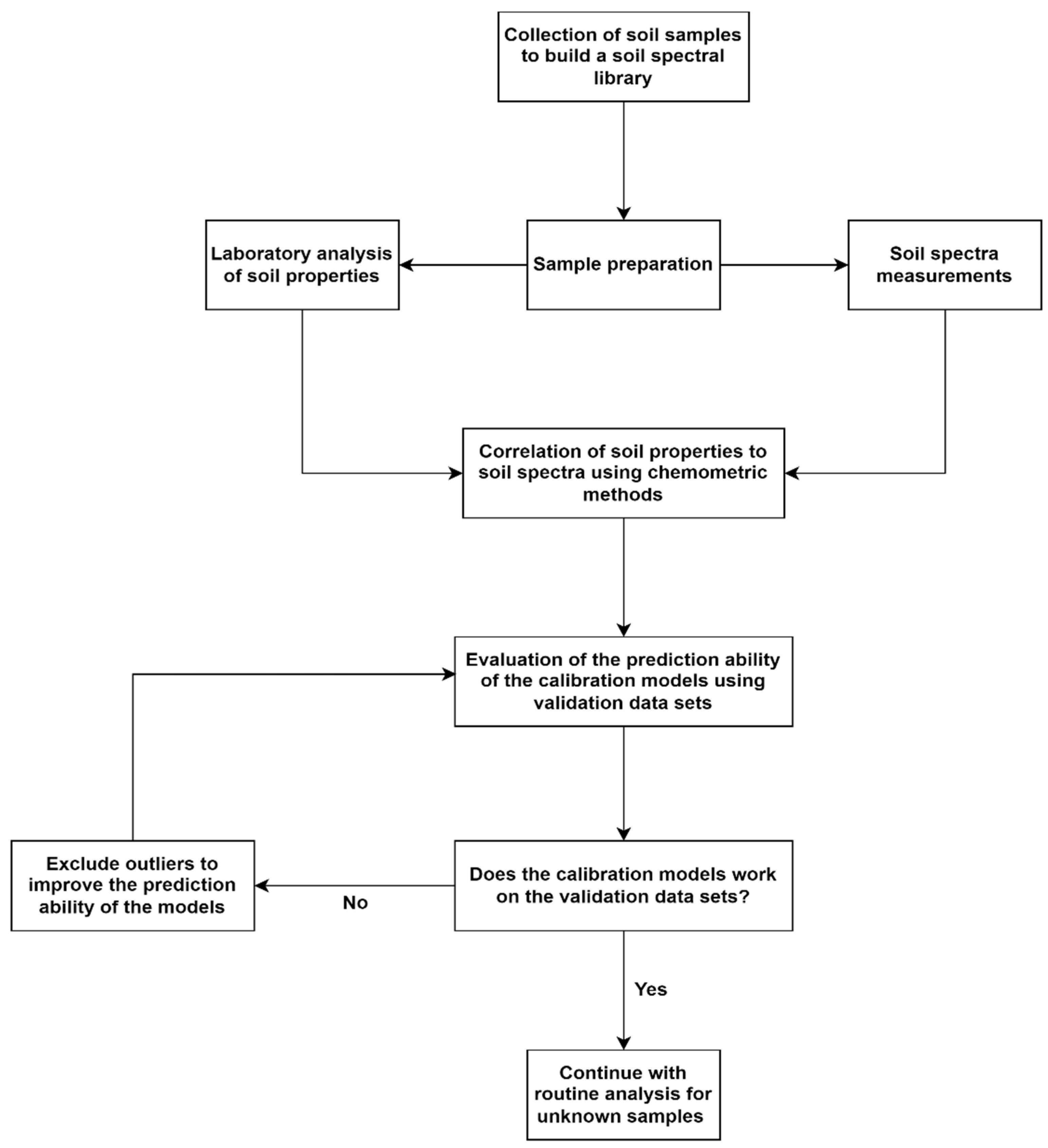
Figure 1. Steps for implementing the infrared spectroscopy protocol [3,4,34].
Agronomy 15 02771 g001
Figure 2. Selected studies used for extracting P and K experimental data (Table A1).
Agronomy 15 02771 g002
Figure 3. Forest plot showing the effect of sample size on the prediction accuracy of P at 95% (CI) represented by the error bars. The effect of each study is demonstrated using the size of each square Agronomy 15 02771 i001. The diamond Agronomy 15 02771 i002 denotes the overall effect (r) of the sample size on the prediction accuracy.
Agronomy 15 02771 g003
Figure 4. Forest plot showing the effect of sample size on the prediction accuracy of K at 95% (CI) represented by the error bars. The effect of each study is demonstrated using the size of each square Agronomy 15 02771 i001. The diamond Agronomy 15 02771 i002 denotes the overall effect (r) of the sample size on the prediction accuracy.
Agronomy 15 02771 g004
Figure 5. Forest plot showing the effect of concentration (mg/kg soil) on the prediction accuracy of P at 95% (CI) represented by the error bars. The effect of each study is demonstrated using the size of each square Agronomy 15 02771 i001. The diamond Agronomy 15 02771 i002 denotes the overall effect (r) of concentration on the prediction accuracy.
Agronomy 15 02771 g005
Figure 6. Forest plot showing the effect of concentration (mg/kg soil) on the prediction accuracy of K at 95% (CI) represented by the error bars. The effect of each study is demonstrated using the size of each square Agronomy 15 02771 i001. The diamond Agronomy 15 02771 i002 denotes the overall effect (r) of concentration on the prediction accuracy.
Agronomy 15 02771 g006
Figure 7. (a) Correlation between the coefficient of determination (r2) and ratio of performance to deviation (RPD) values for phosphorus validation results, and (b) correlation between the coefficient of determination (r2) and root-mean-square error (RMSE) for phosphorus validation results.
Agronomy 15 02771 g007
Figure 8. (a) Correlation between the coefficient of determination (r2) and ratio of performance to deviation (RPD) values for potassium validation results, and (b) correlation between the coefficient of determination (r2) and root-mean-square error (RMSE) for potassium validation results.
Agronomy 15 02771 g008
Table 1. A summary of chemical methods, infrared regions, models, and spectrometers used in the selected studies.
Infrared RegionP (%)K (%)Total (%)
Visible near-infrared20.517.938.4
Near-infrared10.313.724
Mid-infrared18.818.837.6
Spectrometer
Carry 5001.71.73.4
NIRS 65004.33.47.8
FT-IR-Spectrometer19.821.641.4
ASD Field Spec12.912.125.0
NIR portable spectrometer1.70.01.7
XDS rapid content analyzer4.34.38.6
Foss NIRS 50000.93.44.3
Neo spectra2.63.46.0
NIR-M-R20.90.91.7
Regression Model
Principal component regression0.92.23.1
Partial least squares34.232.566.7
Multiple linear regression5.12.17.2
Convolutional neural network2.63.46
Cubist3.41.75.1
Artificial neural networks1.71.73.4
Support vector regression3.42.66.0
Multivariate adaptive regression splines0.00.90.9
Chemical method
Mehlich 15.81.27.0
Mehlich 319.815.134.9
Ammonium fluoride1.20.01.2
Ammonium acetate1.215.116.3
Ammonium oxalate2.30.02.3
Calcium acetate0.02.32.3
Ammonium chloride0.03.53.5
Bray-P8.10.08.1
Olsen-P12.80.012.8
Resins2.30.02.3
Silver-thiourea0.02.32.3
Water extraction1.20.01.2
Bicarbonate extractable3.51.24.7
Lancaster method1.20.01.2
Table 2. Effect of sample size and concentration on the prediction accuracy of P and K.
StatisticsSample SizeConcentration (mg/kg Soil)
PKAveragePKAverage
r75%68%72%62%64%63%
Z7.4810.89.146.069.846.45
Heterogeneity (p-value)<0.001<0.001<0.001<0.001<0.001<0.001
RE model (p-value)<0.001<0.001<0.001<0.001<0.001<0.001
Disclaimer/Publisher’s Note: The statements, opinions and data contained in all publications are solely those of the individual author(s) and contributor(s) and not of MDPI and/or the editor(s). MDPI and/or the editor(s) disclaim responsibility for any injury to people or property resulting from any ideas, methods, instructions or products referred to in the content.