Review

Progress and Prospects of Research on the Role of Phosphatidic Acid in Response to Adverse Stress in Plants

1
College of Grassland Science, Nanjing Agricultural University, Nanjing 210095, China
2
College of Plant Protection, Nanjing Agricultural University, Nanjing 210095, China
3
Inner Mongolia Pratacultural Technology Innovation Center Co., Ltd., Hohhot 010070, China
*
Author to whom correspondence should be addressed.
These authors contributed equally to this work.
Agronomy 2025, 15(12), 2758; https://doi.org/10.3390/agronomy15122758 (registering DOI)
Submission received: 4 November 2025 / Revised: 26 November 2025 / Accepted: 27 November 2025 / Published: 29 November 2025
(This article belongs to the Special Issue Plant Stress Tolerance: From Genetic Mechanism to Cultivation Methods)

Abstract

Lipid signaling plays a crucial role in how plants perceive and respond to environmental challenges. Among the various lipid mediators, phosphatidic acid (PA) serves as a key metabolic intermediate and second messenger that links membrane dynamics with stress signaling. It is produced rapidly through the coordinated actions of phospholipase C, phospholipase D and diacylglycerol kinase, and its transient accumulation enables plants to adjust defense and acclimation responses with remarkable precision. Recent studies have shown that PA participates in immune signaling, osmotic regulation, and redox control, functioning at the intersection of membrane remodeling and intracellular signal transduction. Through interactions with hormone signaling, calcium fluxes, and reactive oxygen species production, PA integrates multiple stress-responsive pathways, thereby helping to maintain physiological homeostasis under adverse conditions. This review summarizes current understanding of the biosynthetic regulation and signaling roles of PA, and discusses emerging perspectives that highlight its central role in plant immunity and stress adaptation.

1. Introduction

Plants endure various stressors during growth, including drought, high salinity, extreme temperatures, and pests and diseases. Global climate change is exacerbating these challenges, which severely impact plant growth, development, crop yield, and quality. In order to acclimatize to the environment [1], plants have evolved sophisticated signal transduction networks to sense and respond to external stress stimuli, and lipid signals regulate gene expression and activate acclimation processes in plants through dependent signaling cascades. Phosphatidic acid (PA) is the simplest membrane glycerophospholipid, consisting of a glycerol backbone, two hydrophobic fatty acid side chains, and a negatively charged phosphoric acid head [2]. The hydrophilic phosphate head and hydrophobic fatty acid chains confer its characteristic surfactant properties [2]. PA is a component of plant cell membranes and a key signalling intermediate in plant signalling processes [3,4], which is involved in the regulation of plant responses to various biotic and abiotic stresses [5]. In this review, we summarize how PA is involved in plant responses to biotic and abiotic stresses.

2. PA Biosynthesis, Metabolic Pathway

Lipids are important structural components of plants, and play an important role in plant cell growth, development and signal transduction. PA, a type of glycerophospholipid, accumulates mainly in cell membranes, acts as a key factor in the biosynthesis of various complex lipids and is additionally identified as a pivotal molecule in lipid signaling processes within plants [6,7,8,9,10].

2.1. Synthesis Pathway

PA, as a signaling molecule, is primarily produced by two distinct phospholipase pathways at the plasma membrane [6].
One of the phospholipase pathways is the phosphorylation of diacylglycerol (DAG) by diacylglycerol kinase (DGK) in the phospholipase C (PLC) pathway [11], where PLC hydrolyzes phosphatidylinositol 4,5-bisphosphate [PtdIns(4,5)P2] to inositol 1,4,5-trisphosphate [Ins(1,4,5)P3] and DAG (Figure 1). Ins(1,4,5)P3 diffuses into the cytoplasm while DAG remains in the membrane where it is rapidly phosphorylated to PA by DGK. This phosphorylation represents a major pathway for PA production, accounting for approximately 80% [12].
An alternative phospholipase-mediated route involves phospholipase D (PLD)-catalyzed hydrolysis of membrane phospholipids, particularly phosphatidylcholine (PC) and phosphatidylethanolamine (PE), yielding PA. This stress-inducible enzymatic activity selectively targets structural phospholipids at the membrane interface (Figure 1) [13]. The Arabidopsis PLD family has 12 members [14], most of which possess the C2 structural domain near the N-terminus, called the C2-PLD [16], and the C2 structural domain is required for the enzyme activation of PLD [14]. C2-PLDs vary in their substrate preferences and activation conditions, resulting in PAs with different acyl composition [17].
The PA family comprises various molecular species that play distinct and specific roles in signal transduction. The diversity of PA molecules stems from variations in fatty acid chain length and degree of unsaturation, which also governs their binding to target proteins, thereby activating entirely different signaling pathways [18]. PA synthesized via the PLD pathway tends to utilize PC as a substrate, producing unsaturated PAs that predominantly generate downstream stress signals such as oxidative bursts and general membrane remodeling. In contrast, the PLC pathway primarily employs DAG derived from PIP2 as a substrate, yielding PAs with greater signaling specificity that are typically associated with precisely regulated processes like immune responses and cell proliferation [19]. The distinct substrate specificities of PLC and PLD pathways enable discrimination of PA origin through fatty acid profiling during signal transduction events [20].

2.2. Metabolic Pathway

PA plays a pivotal role in plant cells via its dynamic degradation and metabolic transformation. Acting as a central node in lipid turnover, PA connects membrane lipid metabolism with multiple signaling pathways. Its interconversion is tightly controlled by a series of lipid-modifying enzymes that determine both the duration and specificity of PA-mediated signaling. These enzymatic processes not only regulate the cellular pool of PA but also generate a spectrum of bioactive lipid intermediates that participate in membrane remodeling, signal relay, and stress adaptation [21].
Degradation of PA is accomplished by enzymes such as phospholipase A (PLA) and phosphatidic acid phosphatase (PAP). PLA releases free fatty acids (FFA) and forms lysophosphatidic acid (LPA) by hydrolyzing the ester bond at the sn-1 or sn-2 sites of PA (Figure 1) [14], which further affects the fluidity and stability of the cell membrane. This degradation process plays an important role in plant response to stress and the regulation of cell membrane stability [21,22]. PLA is activated during pathogen infection. The degradation products of PA are involved in regulating the immune response [23].
Within plant systems, PA undergoes phosphorylation through the action of PA kinase (PAK), resulting in its conversion to diacylglycerol pyrophosphate (DGPP) (Figure 1) [15]. Additionally, PA can be dephosphorylated by PAP to yield DAG and PI. DAG served as an intermediate in triacylglycerol (TAG) biosynthesis for energy reservoir formation (Figure 1), and as a regulatory component in membrane-associated processes, performing dual physiological functions [24]. The simultaneously generated PI serves as a core structural component of plant cell membranes [25]. These resultant lipid derivatives collectively orchestrate essential physiological mechanisms, including signal propagation pathways and the maintenance of membrane fluidity equilibrium in plant systems.

2.3. Cross-Talk Between Different Pathways Involved in PA Synthesis and Metabolism

In plant cells, the distinct pathways responsible for PA synthesis and metabolism do not operate in isolation but instead form a complex, interconnected regulatory network. This cross-talk is crucial for the cell’s precise control over the intensity, duration, spatial localization, and molecular diversity of PA signaling [26].
PLD hydrolyzes structural phospholipids (such as PC) to produce PA. PA here can be converted by PAP and generate DAG [27]. The resulting DAG can then serve as a substrate for DGK to be rephosphorylated into PA. Cells can rapidly adjust the levels of PA and DAG in membranes through this PA cycle without requiring de novo synthesis. This cycle also links the structural and signaling functions of phospholipids [28].
As mentioned earlier, phospholipids generated through different pathways undergo distinct downstream reactions, while also exhibiting synergistic effects where they can activate or inhibit each other. PLC hydrolyzes PIP2 to produce IP3, leading to elevated cytoplasmic Ca2+ concentrations that subsequently activate the PLD pathway, thereby amplifying lipid-derived signaling cascades to achieve coordinated responses [29,30]. ROS generated from PA or other pathways can oxidize and activate both PLD and DGK. This forms a positive feedback loop that is crucial for plant immunity and stress responses [31]. Concurrently, the synthesis of PA is subject to cross-pathway regulation. Under plant phosphorus starvation stress, the PLC pathway, PLD pathway, and lysophosphatidylserine–GDP–diphosphate pathway form a metabolic network [32]. This coordination ensures phospholipid homeostasis under phosphate limitation [32].

3. Effects of PA on Plant Membrane Systems

PA adopts a conical molecular geometry characterized by a compact phosphohead group, which carries a net charge of −1.5 to −2 under physiological pH, and two acyl chains -either saturated or unsaturated- that occupy a larger cross-sectional area [33]. This structural arrangement induces negative curvature stress in lipid bilayers, promoting outward membrane bending and facilitating processes such as membrane fusion and endocytic vesicle formation. PA-enriched regions reduce the energetic cost of membrane fission and cooperate with dynamic protein assemblies to sculpt membrane topology [26]. As negatively charged anionic phospholipids, the protonated state of PA’s phosphoric acid groups and their intermolecular interactions enable specific interactions with various lipids, significantly influencing membrane physical properties, phase behavior, and signal transduction functions [18].
Hydrogen bond-mediated interactions between PA and PE represent a fundamental mechanism regulating membrane structure. The primary amine group (–NH3+) of PE serves as a potent hydrogen bond donor, forming strong intermolecular hydrogen bonds with the phosphomonoester headgroup of PA. Through this hydrogen bonding, PE withdraws electrons density from the oxygen atom of the phosphate group, destabilizing the second proton of PA and promoting its deprotonation, which results in a marked decrease in the pKa2 value of PA [34,35]. Within PE bilayers, the pKa2 of PA is substantially lower than that observed in phosphatidylcholine (PC) environments, leading to an increased negative charge density at physiological pH. Notably, PA-PE complexes act synergistically to induce negative membrane curvature, thereby facilitating both membrane fusion and fission processes. Molecular dynamics simulations further demonstrate that PE stabilizes the conical conformation of PA, enhancing its intrinsic negative curvature stress [34]. Simultaneously, the incorporation of cholesterol into PA-enriched membrane domains markedly increases the surface negative zeta potential, which promotes PA deprotonation and subsequently strengthens electrostatic interactions with PA-binding proteins [36].
Additionally, the charge state of PA is influenced by the local pH. Under acidic conditions, PA undergoes a reduction in net negative charge, accompanied by compaction of its head group and enhanced prominence of its conical molecular geometry. These structural changes promote preferential binding to divalent cations such as Ca2+ and Mg2+, effectively neutralizing the remaining negative charge [37]. This sensitivity to pH and the ability of PA to bind cations enables it to act as a molecular sensor, detecting changes in the local cellular microenvironment and translating these changes into alterations in membrane physical properties. Protonated PA exhibits reduced affinity for its binding protein Opi1, which translocates to the nucleus to inhibit phospholipid biosynthesis [37].
Beyond influencing membrane biophysical properties, PA also acts as an important signaling molecule linking changes in membrane status to intracellular pathways [16,38,39,40,41]. When PA accumulates, it can bind to a range of target proteins—including kinases, phosphatases, and other regulatory components—and modulate their activity [42]. PA further interacts with calcium and reactive oxygen species (ROS) signaling, providing additional layers of regulation [43,44,45]. Through these combined actions, PA helps convert external stimuli into appropriate physiological responses, forming a basis for the plant’s adaptation to the various biotic and abiotic stresses described in the following sections.

4. Role of PA in Abiotic Stresses

Environmental fluctuations induce diverse physiological acclimatization in plants, with predominant abiotic stressors comprising water deficit, salinity, and low-temperature conditions. Distinct classes of plant hormones elicit specialized signaling cascades to mediate these adaptive responses [46]. These abiotic stressors activate several molecular signalling pathways, among which the lipid signalling pathway driven by PA is the most prevalent pathway in the phenomenon of plant resistance to environmental stress [35,47].

4.1. PA Is Involved in the Regulation of Drought Stress in Plants

Drought stress inhibits plant development by affecting various physiological and biochemical processes. Lipid-derived signaling mediators exert essential regulatory functions in modulating plant water homeostasis, enhancing drought resistance, and facilitating prolonged aridity acclimation. Their dehydration-induced upregulation significantly influences these physiological processes [48]. The rice R3-MYB transcription factors OsTCL1 and OsTCL2 modulate germination capacity under water-deficit conditions. Mutant analyses reveal corresponding tcl1/tcl2 genotypes exhibit downregulated PLD gene expression profiles. Reduced PA biosynthesis impairs the rapid conversion of environmental stress signals into physiological responses, as PA acts as a second messenger, thereby impairing the precise regulation of seed germination timing and success under adverse conditions [49].
Stomatal transpiration constitutes the primary route of water loss in plants, making its regulation critical for maintaining hydration under water deficit conditions. PLD functions as a central coordinator of abiotic stress responses, orchestrating fundamental acclimatization processes at the molecular level. The PA produced by PLDα1 in Arabidopsis binds to the ABI1 protein phosphatase 2C to signal abscisic acid (ABA)-promoted stomatal closure [50]. The interaction between PLDα1 and the Gα subunit of heterotrimeric G-proteins facilitates abscisic acid-dependent suppression of stomatal aperture, thereby modulating hydraulic regulation in plants [50]. Heterologous expression of PbrPLD2 from Pyrus bretschneideri in both Arabidopsis and pear confers elevated drought resistance, manifested through optimized stomatal regulation and upregulation of stress-responsive genetic elements [51]. In perennial ryegrass (Lolium perenne), LpPLDδ3 displays distinct expression patterns among PLD gene family members, showing ABA-mediated downregulation while being upregulated under drought and thermal stress conditions. Heterologous expression of LpPLDδ3 in Arabidopsis enhances osmotic and thermotolerance phenotypes [52].
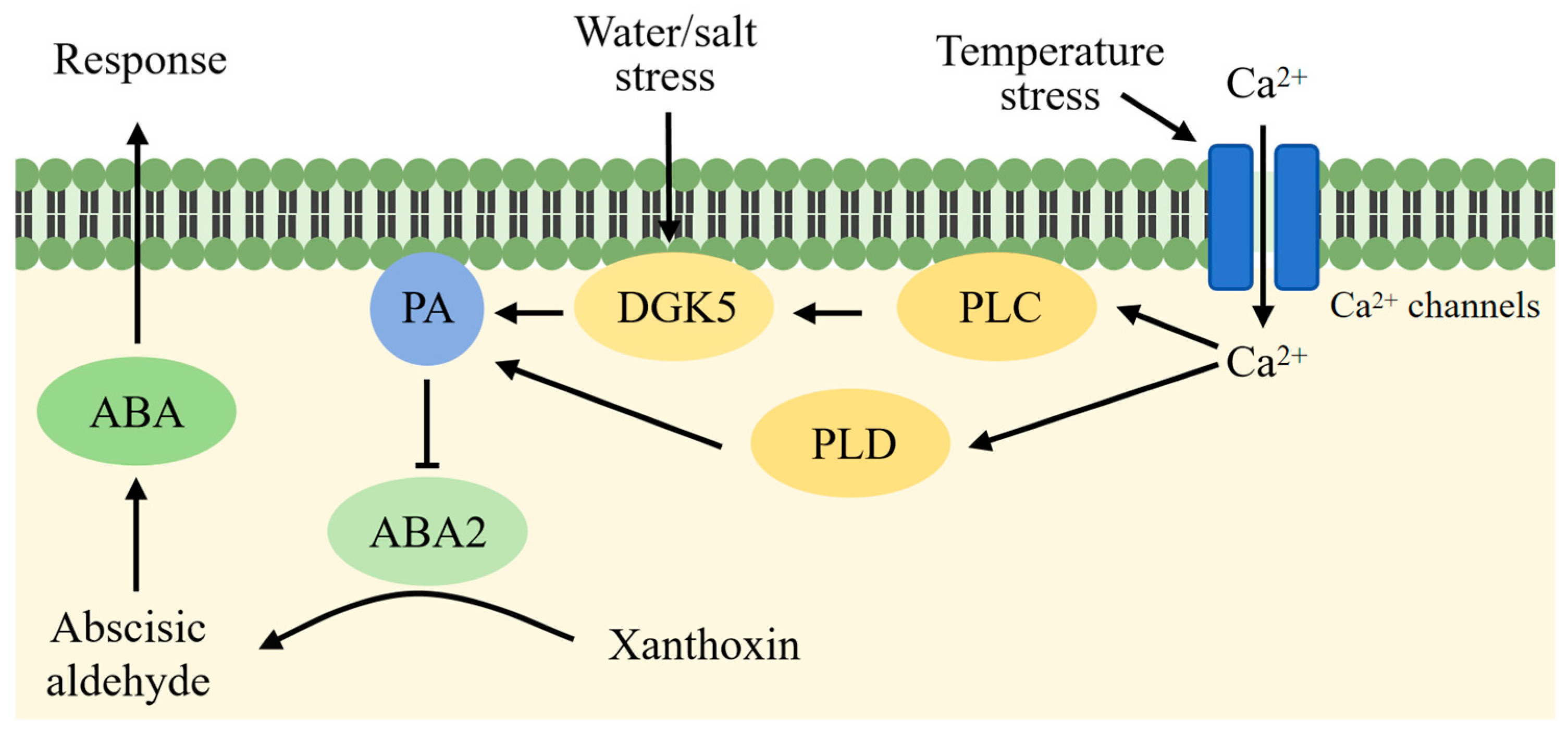
The PLC/DGK pathway significantly contributes to ABA-dependent drought responses via PA production [53]. In Arabidopsis, ABA-deficient 2 (ABA2) catalyzes ABA synthesis while paradoxically reducing stress tolerance. DGK5 and its lipid product PA suppress ABA biosynthesis through direct interaction with ABA2, consequently improving plant resilience to drought and high-salinity conditions (Figure 2) [54].

4.2. PA Is Involved in the Regulation of Plant Cold Stress

Cold stress mainly damages the cell membrane of plant tissue [56], resulting in cell dehydration and leaf wilting. Cellular homeostasis in plants depends fundamentally on precise protein composition and membrane fluidity regulation [57], rendering low-temperature responsiveness a physiologically pivotal acclimatization. Cold-induced membrane perturbations trigger calcium influx and elevate PA biosynthesis through coordinated PLD and PLC-DGK pathway activation (Figure 2) [51]. Exposure of Arabidopsis to non-lethal cold stress induced distinct alterations in phospholipid profiles, characterized by reduced PC, PE, and phosphatidylglycerol (PG) content alongside elevated PA and lysophospholipid accumulation [12].
The expression of the gene encoding PLDα1 in Arabidopsis was induced by cold. Knocking down this isoform had no significant effect on the accumulation of PA in response to cold, suggesting that multiple PLDs are involved in PA production [12]. Arabidopsis PLDδ mutant analysis revealed a 20% reduction in PA accumulation accompanied by diminished cold tolerance relative to wild-type counterparts. In contrast, transgenic overexpression lines exhibited improved freezing resistance, demonstrating PLDδ’s functional involvement in cold stress acclimatization [58].
Low-temperature conditions impair root system growth and functionality, compromising hydraulic and mineral acquisition [59]. Root-synthesized PA partially alleviates these cold-induced physiological constraints. Arbuscular Mycorrhizal (AM) symbiosis increases PA and Ca2+ signalling, as well as the expression of genes related to low (LT) and high temperature (HT) stress in perennial ryegrass roots. It also regulates antioxidant enzyme activities, reduces lipid peroxidation, and inhibited growth inhibition induced by LT and HT stresses [60]. During the recovery process from prolonged cold stress, researchers observed a significant increase in PLD activity in barley (Hordeum vulgare L.) roots. PA and PLD modulate mitochondrial proline dehydrogenase activity and proline accumulation through direct and indirect mechanisms, facilitating barley’s acclimatization to prolonged cold exposure [61]. Cold stimulation triggers immediate cold-responsive gene expression while concurrently inducing PtdInsP phosphorylation to yield PtdIns(4,5)P2. This phosphoinositide is subsequently cleaved to generate Ins(1,4,5)P3 and DAG, with DGK-mediated ATP-dependent DAG phosphorylation producing PA [62]. The PLC/DGK pathway was activated in Arabidopsis cell suspensions under cold stimulation, and the expression of AtDGK1 and AtDGK2 genes was up-regulated, and the expression of DGK genes was also upregulated in maize (Zea mays L.) roots and leaves within 30 min of cold stress [63,64]. The study by Tan et al. showed that the genes DGAT1, DGK2, DGK3 and DGK5 are all involved in the response to cold response in Arabidopsis [65]. Compared to the wild type, the DGAT1 mutant showed increased sensitivity to freezing. Lipid profiling revealed that freezing significantly increased the PA and DAG levels and decreased TAG levels in DGAT1 mutants. PA accumulation enhances nicotinamide adenine dinucleotide phosphate (NADPH) oxidase function, elevating respiratory burst oxidase homolog D (RBOHD)-dependent H2O2 generation [65]. Arabidopsis lines with DGK2, DGK3, and DGK5 gene disruptions exhibited improved freezing tolerance concomitant with reduced PA biosynthesis [65].

4.3. PA Is Involved in the Regulation of Salt Stress in Plants

Drought and elevated salinity constitute primary sources of osmotic stress in plants. Salinity stress disrupts cellular osmotic equilibrium, leading to physiological dehydration and impaired hydraulic conductivity. Concurrently, ionic disequilibrium and oxidative damage emerge [66], collectively constraining plant development. Within this context, phospholipid-mediated signaling represents a critical regulatory mechanism for salt stress acclimatization [67], with stress-induced PA serving as a molecular transducer coordinating salinity response pathways. Under saline conditions, plants exhibit substantial PA accumulation with distinct tissue-specific distribution patterns [57,68], mediated through coordinated PLD and DGK enzymatic activities [69]. This lipid messenger modulates root development, as evidenced by impaired root elongation upon DGK functional disruption [70]. Biochemical studies reveal PA targets GAPDH in both barley [71] and Arabidopsis [72] roots during salt stress through the PLC-DGK pathway [73], while simultaneously activating SnRK2 protein kinase in Arabidopsis under similar conditions [74]. Some gene expression profiling studies have shown the important role of DGK genes in salt tolerance (Figure 2) [55]. Using the DGK inhibitor R59022 in Arabidopsis affected the activity and PA production of AtDGK2 and AtDGK7, and the altered growth and development of the plant confirmed this result [75].
In Populus euphratica, NADP-ME interacts with PePLDδ in Arabidopsis to stimulate PLD-mediated PA production and subsequent signaling cascades, thereby enhancing Na+ extrusion, suppressing ROS accumulation, and improving salinity tolerance [76]. Lipidomic profiling revealed substantial modifications in both compositional and structural features of membrane lipids within rice root cells following salt exposure. Quantitative lipid profiling demonstrated marked accumulation of predominant phospholipid species, notably PA, concomitant with modified membrane biophysical properties that enhanced salinity acclimatization in rice root systems [77]. PC treatment of Prunus persica seedlings enhanced cellular PLD activity, stimulating phospholipid degradation and subsequent PA accumulation. The resultant PA functioned as a lipid mediator, attenuating oxidative damage through suppression of salt-induced ROS and peroxide accumulation [78]. In addition, the MAPK signaling cascade demonstrates significant involvement in plant salinity acclimatization. Salt stress conditions induced PA binding to PpMPK6 in transgenic Arabidopsis overexpressing this kinase, resulting in salt-overly-sensitive 1 protein activation that enhanced Na+ extrusion capacity and improved salt tolerance phenotypes [79].

5. Role of PA in Biotic Stresses

Plants have evolved multifaceted strategies to counteract biotic challenges, particularly pathogenic invasions. Beyond constitutive physical deterrents like cuticular and cell wall barriers, plants employ intricate internal defense systems. Notably, even upon breaching of these structural defenses, immunological activation occurs through sophisticated intracellular recognition mechanisms [80]. Pattern-triggered immunity (PTI) constitutes the primary plant defense response, representing an evolutionarily conserved innate immune mechanism [81]. This nonspecific recognition system involves plasma membrane-localized pattern recognition receptors (PRRs) that detect MAMPs, subsequently initiating intracellular phosphorylation cascades and downstream signal transduction [82].
Effector-triggered immunity (ETI) represents a specialized defense mechanism activated through direct recognition of pathogen effectors by plant resistance proteins. This highly specific response involves intracellular NLR receptors containing nucleotide-binding and leucine-rich repeat domains, culminating in a localized hypersensitive reaction at infection sites [81]. Despite distinct activation mechanisms, pattern- and effector-triggered immunities converge on shared physiological responses. These conserved defense components encompass ROS generation, cytosolic calcium influx, pathogenesis-related protein synthesis, MAPK cascade induction, and phytohormone signaling-collectively constituting fundamental plant immune processes [83].
PA, a central glycerolipid metabolite, mediates oxidative burst responses during plant-pathogen interactions. NADPH oxidase-dependent ROS generation [84] involves PA binding to RBOHD, thereby modulating oxidative bursts during both PTI and ETI. Arabidopsis maintains PA homeostasis through DGK5 phosphorylation, which modulates ROS generation. This DGK5-dependent PA biosynthesis enhances plant defense against microbial pathogens, including both bacterial and fungal challenges [39]. In Arabidopsis DGK5 modulates both pattern- and effector-triggered immunity. The receptor-like cytoplasmic kinase BIK1, inducible by Botrytis cinerea and membrane-associated, interacts with multiple PRRs. Upon activation by PRR complexes, BIK1 phosphorylates RBOHD to control ROS generation and targets cyclic nucleotide-gated channels to elevate cytosolic calcium concentrations [85].

5.1. DGK5 Regulates PA to Influence Plant Immunity

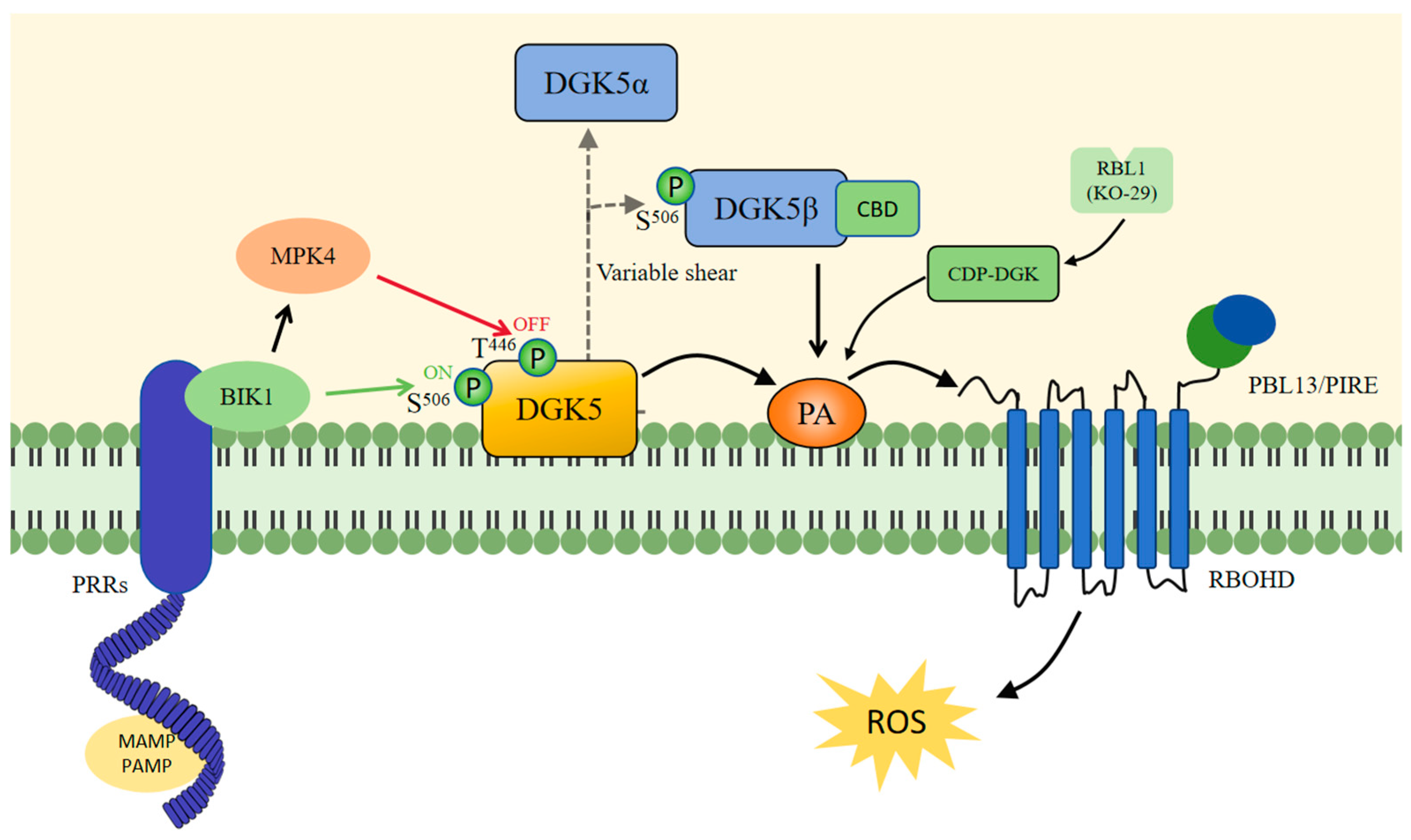
DGK5 constitutes a critical component in flagellin-triggered immune responses and pathogen defense mechanisms [86], the PA generated through DGK5 activity facilitates NADPH oxidase activation, thereby initiating ROS-mediated signaling during biotic stress acclimatization (Figure 3) [87]. Transgenic tobacco expressing OsBIDK1 exhibits enhanced resistance to both tobacco mosaic virus and the oomycete pathogen Phytophthora parasitica var. nicotianae [88]. Pathogen challenge triggers coordinated upregulation of specific PLA2 isoforms and DGK activity, driving rapid PA biosynthesis during plant immune activation [89].
Current research identifies DGK5 as a BIK1-interacting protein, with flagellin-derived flg22 peptide inducing DGK5 dual phosphorylation that modulates immune signaling cascades in plants [86]. The receptor-like cytoplasmic kinase BIK1 phosphorylates DGK5 at Ser506 triggering rapid PA accumulation and immune activation. Conversely, MPK4-mediated Thr446 phosphorylation suppresses DGK5 enzymatic function and PA biosynthesis, resulting in downregulated defense responses (Figure 3). Opposing phosphorylation events mediated by BIK1 and MPK4 maintain cytosolic PA homeostasis through DGK5 regulation, thereby controlling ROS generation and coordinating two branches of plant immunity [90].
PA stabilizes RBOHD through suppression of vesicular degradation, amplifying chitin-triggered ROS generation. These oxidative bursts critically mediate pathogen defense responses [90]. DGK5 loss-of-function mutations disrupt diacylglycerol phosphorylation, compromising both PA biosynthesis and subsequent ROS production during chitin perception. Alternative splicing generates two DGK5 isoforms (α and β), with DGK5β containing a C-terminal calmodulin-binding domain absent in DGK5α. While dispensable for subcellular targeting, this domain facilitates PA biosynthesis and RBOHD stabilization. Consequently, DGK5β-derived PA preferentially associates with RBOHD [42]. The DGK5β isoform rescues the impaired PA biosynthesis, ROS generation, and Botrytis cinerea resistance observed in dgk5-1 mutants. Ser506 phosphorylation within DGK5β’s C-terminal calmodulin-binding domain enhances its catalytic activity, promoting PA production (Figure 3). Chitin perception initiates DGK5β phosphorylation, which stimulates PA biosynthesis while concurrently stabilizing RBOHD through vesicular degradation suppression, ultimately enhancing ROS production [42].

5.2. RBL1-Mediated Reprogramming of Lipid Metabolism Enhances Rice Immune Response by Regulating PA Accumulation

Sha et al. identified a 29-bp deletion in the RBL1 locus conferring broad-spectrum disease resistance while reducing crop productivity by roughly 95% [91]. Targeted genome editing generated the RBL1Δ12 allele, which provides broad-spectrum pathogen resistance in rice while maintaining crop yield. The RBL1-encoded enzyme catalyzes PA conversion to cytidine diphosphate-diacylglycerol (CDP-DAG), representing a key step in phospholipid biosynthesis (Figure 3) [92]. RBL1 mutations substantially decreased PI and phosphatidylinositol 4,5-bisphosphate [PtdIns(4,5)P2] content while elevating PA accumulation. Lipidomic profiling demonstrated significantly increased PA and DAG levels in RBL1 mutants compared to japonica controls, accompanied by 71% and 49% reductions in PI and PG, respectively [91]. Certain phosphoinositides function as molecular determinants of disease susceptibility in plants [93]. Notably, PtdIns(4,5)P2 accumulates in rice membrane compartments involved in pathogenic effector secretion and fungal colonization, implicating this lipid species in susceptibility mechanisms.
From a mutagenized Oryza sativa population displaying hypersensitive response-like lesions (a programmed cell death phenotype), Gong et al. identified a lesion-mimic mutant (LMM) exhibiting disease resistance [94]. Chemical complementation assays demonstrated that exogenous PI delayed lesion formation in RBL1 mutants, while PA accelerated this phenotype. Notably, diphenyliodonium chloride-mediated inhibition of RBOH activity similarly suppressed LMM development [94]. OsPAH2 overexpression in RBL1 mutants (OsPAH2::rbl1) reestablished normal PA concentrations without markedly affecting lesion formation frequency [95]. The modest attenuation of pathogenesis-related gene suppression implies PA elevation contributes minimally to immune enhancement in this genetic background [96].

5.3. PLD, PLA and PA Responses in Plant Biotic Stresses

PLD and PA play crucial roles in signal transduction cascades in plants subjected to biotic stress. In Arabidopsis, they accumulate at pathogen entry sites. Then, PA recruits different proteins, such as NADPH oxidase, which initiates PA-related defense signals and prevents pathogen penetration [96]. PA constitutes a principal lipid category exhibiting rapid responsiveness to Potato virus Y (PVY) during initial infection phases. In Nicotiana benthamiana, PLDα1 mediates PA accumulation following PVY challenge, demonstrating significant antiviral activity. The PVY-encoded 6K2 transmembrane protein physically associates with NbPLDa1, resulting in increased PA accumulation. This interaction additionally triggers MAPK cascade activation. Notably, exogenous PA application similarly induces MAPK signaling, suggesting a conserved mechanism of pathway stimulation [97]. PLDδ in Arabidopsis potentiates both basal immunity and non-host resistance against Blumeria graminis f. sp. Hordei (Bgh) through regulation of PA biosynthesis and subsequent signaling cascades [97]. PLDδ-deficient Arabidopsis exhibits delayed induction of chitin-responsive genes following stimulation [98]. Conversely, PLDα1 activity suppresses host resistance against Bgh [98].
PLA catalyzes phospholipid hydrolysis, yielding lysophospholipids that are subsequently converted to PA [14]. Pathogen infection enhances PLA activity, with the resultant PA serving as a critical mediator of immune activation, including antimicrobial biosynthesis and defense gene expression [99]. Specifically, PA directly interacts with and stimulates WIPK/SIPK kinase activity, triggering downstream defense gene activation and antimicrobial biosynthesis [97]. This signaling pathway represents a crucial plant defense strategy against pathogen invasion, with PA functioning as a lipid mediator that orchestrates diverse immunological processes.

5.4. PA and Actin Remodeling in Biotic Stress Response

The actin cytoskeleton undergoes dynamic reorganization during plant-microbe interactions, with PLD and PA serving as critical regulators of these structural changes and associated defense responses [100,101]. Fungal and oomycete invasion sites exhibit distinct actin bundle formation [102], with cytoskeletal reorganization facilitating essential defense processes including cytoplasmic streaming and directed mobilization of antimicrobial agents [103]. Pathogen challenge induces actin filament reorganization in plant cells [104], with both pathogenic and non-pathogenic bacteria eliciting transient actin bundling in Arabidopsis epidermal tissues [105]. The capping protein (CP) functions as a pervasive inhibitory factor modulating actin filament dynamics in plant systems. By associating with filament barbed termini, CP obstructs progressive polymerization, thereby enhancing filament stability [106]. Unlike other variants, the plant CP exhibits pronounced binding selectivity toward PA. The energetically active PA generated during immune responses suppresses CP function through direct interaction, destabilizing filament termini by inducing their dissociation [107]. Furthermore, exposure to n-butanol disrupts actin filament organization in plants by suppressing PLD function, leading to diminished PA concentrations. Conversely, elevated PA levels enhance actin filament bundling and reinforce the structural integrity of the actin network.

6. Role of PA in the Regulation of Phytohormones

Phytohormones are a chemically diverse group of signaling molecules synthesized during developmental processes and stress responses [108]. Their structural diversity encompasses adenine derivatives (cytokinins), terpenoid compounds (gibberellins, ABA), polyhydroxylated steroids (brassinosteroids), phenolic moieties (salicylic acid), and oxidized fatty acid derivatives (jasmonates) [109]. Phytohormones orchestrate diverse developmental and physiological processes through complex signaling networks. These regulatory pathways are modulated by lipid-derived messengers, with PA emerging as a key mediator of multiple hormonal signaling cascades [18,110].
Arabidopsis subjected to 4-h hormonal exposure exhibited differential expression of phospholipid biosynthetic genes [111]. Transcriptomic analysis demonstrated hormone-responsive modulation of phosphoglycerolipid pathway enzyme-encoding genes, implicating their protein products in hormonal signal transduction [111].

6.1. PA in Regulation of ABA

ABA is a hemiterpene plant hormone that plays a central role in plant stress responses, seed dormancy, and stomatal closure [9]. In addition to the aforementioned involvement of ABA in regulating osmotic stress including drought and high salinity, ABA deficiency also impairs root and stem growth in plants [112]. The accumulation of ABA in plant cells enhances the regulation of Ca2+ flux, which affects its role in defending cellular abscisic acid signalling through a specific mechanism [113]. In Arabidopsis, the primary ABA biosynthesis initiates with zeaxanthin epoxidation catalyzed by ABA1, generating xanthophyll intermediates subsequently converted to abscisic aldehyde via ABA2 dehydrogenase activity. Final ABA production requires sequential modification of this aldehyde by both ABA3 and abscisic aldehyde oxidase 3 enzymatic activities (Figure 2) [114]. Arabidopsis expresses AtLPP2 and AtLPP3, encoding lipidphosphatephosphatases, during seed germination. ABA treatment elevated both PA and DGPP accumulation in germinating seeds. The AtLPP2 insertion mutant exhibited enhanced ABA sensitivity during germination inhibition relative to wild-type plants, concomitant with elevated PA accumulation. This correlation implicates PA in ABA-mediated regulation of seed germination [115]. Similarly, in rice, the expression of α-amylase, a key step in germination, was inhibited when seeds were treated with PA [50]. PLD activity likely generates the PA pool mediating ABA-dependent germination suppression. Rice PLDβ1 loss-of-function mutants displayed attenuated ABA responses, manifesting as both reduced germination inhibition and diminished α-amylase suppression [116].

6.2. PA in Regulation of Auxin (IAA)

IAA governs plant morphogenesis via polar auxin transport mechanisms. The PIN-formed family proteins, serving as auxin efflux carriers, mediate this process through their asymmetric membrane localization, which critically determines IAA distribution and physiological activity [117]. PA coordinates with calcium signaling to modulate auxin transport through direct interaction with regulatory proteins. Specifically, PA activates calcium-dependent protein kinase CPK29, whose absence impairs PIN-mediated auxin efflux and subsequent IAA redistribution [118]. Meanwhile, PA helps plants maintain growth and development under adverse conditions by regulating IAA redistribution [119]. For example, under saline conditions, concurrent activation of PLDα1 and PLDδ generates PA that stimulates pinoid (PID) kinase activity. This PA-PID interaction enhances PIN2 phosphorylation, increasing its auxin efflux capacity and facilitating IAA redistribution in root apices to sustain growth during salt stress [119].
Disrupted PA-mediated auxin regulation impairs multiple aspects of plant morphogenesis. Arabidopsis phospholipase AtPI-PLC2 participates in auxin signal transduction pathways [120], with PLC2 knockout lines displaying characteristic auxin deficiency phenotypes: reduced primary root elongation, compromised gravitropic responses, and diminished root hair development. NO-mediated auxin signaling induces accumulation of PA, PI phosphate, and PI diphosphate in cucumber explants. This lipid remodeling, facilitated by PLD activity, promotes PA biosynthesis and subsequent adventitious root formation, mirroring the effects observed with exogenous PA application [121], Plant 3’-phosphoinositide-dependent kinase 1 functions as a central signaling node, integrating upstream PA cues to phosphorylate downstream AGC family kinases and modulate auxin efflux [122]. Arabidopsis PLDζ2-generated PA similarly mediates auxin responsiveness, evidenced by attenuated IAA sensitivity in both PLDζ2 knockout mutants and transgenic knockdown lines [123].

6.3. PA in Regulation of Salicylic Acid (SA)

SA orchestrates initial biotic stress responses and systemic acquired resistance establishment, triggering immune activation upon pathogen challenge [124]. PA enhances SA biosynthesis via stimulation of isochorismate synthase activity or regulation of phenylalanine ammonia-lyase-mediated pathways [125]. PA modulates SA signaling by regulating pivotal transcriptional regulators, including NPR1 [126]. Conversely, SA suppresses basal PI-specific PLC activity in Arabidopsis suspension cultures, leading to marked reduction in PA levels [127]. Concurrently, SA stimulates in vivo phosphatidylinositol phosphorylation [128]. In addition, modulates plant defense responses through self-regulatory inhibition at elevated concentrations [126]. By suppressing PA production, SA coordinates developmental processes with stress acclimatization, enabling optimal resource allocation between growth and defense mechanisms during pathogen infection [129].

6.4. PA in Regulation of Other Plant Hormones

Brassinosteroids (BR) are a crucial class of steroidal phytohormones that orchestrate fundamental aspects of plant morphogenesis and physiological development [130,131]. PA modulates BR signal transduction through direct interactions with core BR pathway components. PA potentially influences BR perception and signaling initiation by binding to either the BR receptor kinase BRI1 or its co-receptor BAK1 [132]. Under adverse conditions, BR is also able to help plants maintain growth and developmental homeostasis by inhibiting PA synthesis [132].
Ethylene (ET) signaling cascade plays a pivotal role in plant hypoxia acclimatization [133,134]. PA enhances ET signal transduction through direct interaction with con-insensitive 1 (CTR1), a negative regulator of this pathway. By suppressing CTR1 kinase activity, PA potentiates ET-mediated hypoxia responses in plants [135,136].
Jasmonic acid (JA), a class of oxylipin derivatives, serve as critical mediators of plant defense activation, morphogenesis, and environmental acclimatization [137]. These oxylipin derivatives arise from unsaturated fatty acid metabolism through sequential PLA and PLD enzymatic reactions. Phospholipase A-mediated cleavage of PA at sn-1 or sn-2 positions yields lysophosphatidic acid and α-linolenic acid [14]. which serves as the direct biosynthetic precursor for jasmonate production. A variety of membrane lipids release oxylipins in response to PLA and PLD under stress conditions [138], and mutations in Arabidopsis PLDα1 and PLDβ1 impair JA biosynthesis [139].

7. Outlook on the Future Research Direction of PA

7.1. Application and Limitations of Traditional Research Methods

Early research on PA relied on biochemical analysis methods such as thin-layer chromatography (TLC) to separate and identify phospholipid species, combined with radiolabeling technology to track the direction of PA anabolic substrates, but the limited resolution of TLC makes it difficult to accurately differentiate between structurally similar lipid molecules, and radiolabeling is cumbersome to perform and poses a safety risk [140]. Although enzyme activity assays can indirectly reflect the function of PA-related enzymes, it is difficult to monitor dynamic changes in enzyme activity in situ and in real time, and it is impossible to accurately interpret the spatial and temporal patterns of PA action in complex stress environments [141].

7.2. The Development and Breakthrough of New Modern Technologies

The rapid advancement of biotechnology and instrumental analysis has revitalized PA research through several cutting-edge technologies. Lipidomic technology using mass spectrometry (LC-MS/MS) can detect the lipid molecular panorama in different tissues of plants at different stages of stress with high sensitivity and high throughput, accurately quantify changes in PA and its metabolites, and combine with multivariate statistical analysis to reveal lipid metabolism characteristics closely related to stress resistance [142,143]. Gene editing technologies, such as CRISPR/Cas9, to achieve targeted knockout, mutation or overexpression of genes involved in PA production and metabolism, and direct analysis of gene functions in model plants and crops to elucidate their contribution to plant stress tolerance [144,145]. Fluorescent probe labelling and microscopic imaging technologies to develop fluorescent probes that specifically recognize PA and to visualize in real time the dynamic intracellular distribution of PA [146], its transporter and its interaction with target proteins, so as to visually represent the microscopic scenario of PA signalling in plant stress tolerance and to expand the understanding of PA at all levels, from the molecular to the cellular to the whole plant level. This will enhance our understanding of PA-mediated resistance mechanisms at the molecular, cellular, and whole-plant levels [18].
The PAleon sensor designed by Li et al. utilized FRET technology to achieve real-time monitoring of PA in living cells for the first time, revealing the second response characteristics of PA in the early stage of stress [67]. This innovative tool not only overcame the limitations of traditional methods, but also revealed for the first time the function of PA as a pH sensor, which provided a new theoretical basis for the study of plant adversity biology. Meanwhile, the integration of multi-omics techniques, such as lipomics, transcriptomics and proteins, helped to resolve the spatial and temporal distribution of PA and its role in plant immunity.

7.3. Future Research Directions and Challenges

As a star molecule in the field of plant resistance, PA runs through the whole process of plant acclimatization to adversity, from basic biosynthesis and metabolism to complex signalling and defense response, and the existing research results have laid a solid foundation for understanding the nature of plant resistance, but there are still many unknowns to be explored in the field of PA in plant resistance.
On the one hand, the mechanism of interactive dialog between PA and other signaling molecules (e.g., Ca2+, ROS, hormones, etc.) is not completely clear, and the mechanism of PA action in different organelles (e.g., mitochondrion, nucleus) is also spatio-temporally specific. We need to analyze the complex signaling network nodes with the help of multi-omics joint analysis and biophysical means to clarify the synergistic regulation mode and precisely manipulate the plant stress response. On the other hand, the molecular details of PA action need to be deeply excavated, and the regulatory mechanism of PA may involve synergistic or antagonistic effects under the conditions of compound adversity (e.g., drought and high temperature). Future studies need to probe deeply into the response mechanism of PA under multi-stress conditions to reveal its integrated regulatory role in plant adversity acclimatization. In addition, for practical applications, enhancing PA signaling pathway activity in crops through gene editing may bring about a new round of agricultural green revolution, and editing PA-related genes using CRISPR technology can breed new varieties with stronger adversity acclimatization ability, bring into play the great application potential of PA in crop stress tolerance improvement, and translate research results in the laboratory into practical applications. In terms of genetic engineering targets, regulating the expression of PLD isoforms or PA metabolizing enzymes can enhance plant tolerance to drought, salinity and low oxygen. With more PA-related studies, we expect to fully reveal the central position of this important signaling molecule in plant biology and its potential applications.

Author Contributions

Conceptualization, B.Y. and S.X.; writing—original draft preparation, B.Y. and S.X.; writing—review and editing, Y.Z. (Yao Zhao), M.T. and Z.G.; funding acquisition, B.Y. and Y.Z. (Yarong Zhang). All authors have read and agreed to the published version of the manuscript.

Funding

This work was supported by the National Center of Pratacultural Technology Innovation (under way) Special fund for innovation platform construction (CCPTZX2024QN12), National Natural Science Foundation of China (32471759, 32302315) and the Fundamental Research Funds for the Central Universities (YDZX2024035).

Data Availability Statement

Data sharing is not applicable. No new data were created or analysed in this study.

Conflicts of Interest

The authors declare no conflicts of interest.

Abbreviations

The following abbreviations are used in this manuscript:
ABAAbscisic acid
ABA2ABA-DEFICIENT 2
BghBlumeria graminis f. sp. Hordei
BIK1Botrytis cinerea-inducible kinase 1
BROleoresin lactones
CaMCalmodulin
CBDCalmodulin-binding domain
CDP-DAGCytidine diphosphate-diacylglycerol
CPCapping protein
CTR1Con-insensitive 1
DAGDiacylglycerol
DGKDiacylglycerol kinase
DGPPDiglycerol pyrophosphate
ETEthylene
FFAsFree fatty acids
GAPDHGlyceraldehyde-3-phosphate dehydrogenase
HTHigh temperature
IAAAuxin
JAJasmonic acid
LMMLesion-mimicking mutant
LPALysophosphatidic acid
LPPLipid phosphatase
LTLow temperature
MAMPMicrobe-associated molecular patterns
MAPKMitogen-activated protein kinase
MPK4Mitogen-activated protein kinase 4
NADPHnicotinamide adenine dinucleotide phosphate
NLRNucleotide-binding leucine-rich repeat receptor
NOnitric oxide
OEEctopic overexpression
OsBIDK1Rice diacylglycerol kinase
PAPhosphatidic acid
PAKPhosphatidic acid kinase
PAMPPathogen-associated molecular patterns
PAPPhosphodiesterase
PCPhosphatidylcholine
PEPhosphatidylethanolamine
PGPhosphatidylglycerol
PIPhosphatidylinositol
PLAPhospholipase A
PLCPhospholipase C
PLDPhospholipase D
PRRsPattern recognition receptors
PTIPattern-triggered immunity
PVYPotato virus Y
RBL1Blast1 resistance
RBOHDRespiratory burst oxidase homolog D
RGS1Regulatory G protein signaling protein
ROSReactive oxygen species
SASalicylic acid
WTWild-type

References

  1. Dai, Y.J.; Luo, X.F.; Zhou, W.G.; Chen, F.; Shuai, H.W.; Yang, W.Y.; Wang, J.; Shu, K. Plant systemic signaling under biotic and abiotic stresses conditions. Chin. Bull. Bot. 2019, 54, 255–264. [Google Scholar] [CrossRef]
  2. Zhukovsky, M.A.; Filograna, A.; Luini, A.; Corda, D.; Valente, C. Phosphatidic acid in membrane rearrangements. FEBS Lett. 2019, 593, 2428–2451. [Google Scholar] [CrossRef]
  3. Noack, L.C.; Jaillais, Y. Functions of anionic lipids in plants. Annu. Rev. Plant Biol. 2020, 71, 71–102. [Google Scholar] [CrossRef]
  4. Munnik, T.; Mongrand, S.; Zársky, V.; Blatt, M. Dynamic membranes–the indispensable platform for plant growth, signaling, and development. Plant Physiol. 2021, 185, 547–549. [Google Scholar] [CrossRef]
  5. Colin, L.A.; Jaillais, Y. Phospholipids across scales: Lipid patterns and plant development. Curr. Opin. Plant Biol. 2020, 53, 1–9. [Google Scholar] [CrossRef]
  6. Pokotylo, I.; Kravets, V.; Martinec, J.; Ruelland, E. The phosphatidic acid paradox: Too many actions for one molecule class? Lessons from plants. Prog. Lipid Res. 2018, 71, 43–53. [Google Scholar] [CrossRef] [PubMed]
  7. Furt, F.; Simon-Plas, F.; Mongrand, S. Lipids of the plant plasma membrane. In The Plant Plasma Membrane; Murphy, A.S., Schulz, B., Peer, W., Eds.; Springer: Berlin/Heidelberg, Germany, 2011; Volume 9, pp. 3–13. [Google Scholar] [CrossRef]
  8. Bin, Y.; Wakao, S.; Fan, J.L.; Benning, C. Loss of plastidic lysophosphatidic acid acyltransferase causes embryo-lethality in Arabidopsis. Plant Cell Physiol. 2004, 45, 503–510. [Google Scholar] [CrossRef] [PubMed]
  9. Testerink, C.; Munnik, T. Molecular, cellular, and physiological responses to phosphatidic acid formation in plants. J. Exp. Bot. 2011, 62, 2349–2361. [Google Scholar] [CrossRef]
  10. Testerink, C.; Munnik, T. Phosphatidic acid: A multifunctional stress signaling lipid in plants. Trends Plant Sci. 2005, 10, 368–375. [Google Scholar] [CrossRef]
  11. Arisz, S.A.; Munnik, T. Distinguishing phosphatidic acid pools from de novo synthesis, PLD, and DGK. Methods Mol. Biol. 2013, 1009, 55–62. [Google Scholar] [CrossRef]
  12. Welti, R.; Li, W.; Li, M.; Sang, Y.; Biesiada, H.; Zhou, H.E.; Rajashekar, C.B.; Williams, T.D.; Wang, X. Profiling membrane lipids in plant stress responses: Role of phospholipase Dα in freezing-induced lipid changes in Arabidopsis. J. Biol. Chem. 2002, 277, 31994–32002. [Google Scholar] [CrossRef]
  13. Altúzar-Molina, A.R.; Muñoz-Sánchez, J.A.; Vázquez-Flota, F.; Monforte-González, M.; Racagni-Di Palma, G.; Hernández-Sotomayor, S.M.T. Phospholipidic signaling and vanillin production in response to salicylic acid and methyl jasmonate in Capsicum chinense J. cells. Plant Physiol. Biochem. 2011, 49, 151–158. [Google Scholar] [CrossRef]
  14. Wang, X.M.; Devalah, S.P.; Zhang, W.H.; Welti, R. Signaling functions of phosphatidic acid. Prog. Lipid Res. 2006, 45, 250–278. [Google Scholar] [CrossRef]
  15. Van Schooten, B.; Testerink, C.; Munnik, T. Signalling diacylglycerol pyrophosphate, a new phosphatidic acid metabolite. Biochim. Biophys. Acta 2006, 1761, 151–159. [Google Scholar] [CrossRef]
  16. Zhang, H.; Yu, Y.; Wang, S.; Yang, J.; Ai, X.; Zhang, N.; Zhao, X.; Liu, X.; Zhong, C.; Yu, H. Genome-wide characterization of phospholipase D family genes in allotetraploid peanut and its diploid progenitors revealed their crucial roles in growth and abiotic stress responses. Front. Plant Sci. 2023, 14, 1102200. [Google Scholar] [CrossRef]
  17. Wang, X. Regulatory functions of phospholipase D and phosphatidic acid in plant growth, development, and stress responses. Plant Physiol. 2005, 139, 566–573. [Google Scholar] [CrossRef] [PubMed]
  18. Drabik, D.; Czogalla, A. Simple does not Mean Trivial: Behavior of phosphatidic acid in lipid mono- and bilayers. Int. J. Mol. Sci. 2021, 22, 11523. [Google Scholar] [CrossRef] [PubMed]
  19. Kolesnikov, Y.; Kretynin, S.; Bukhonska, Y.; Pokotylo, I.; Ruelland, E.; Martinec, J.; Kravets, V. Phosphatidic acid in plant hormonal signaling: From target proteins to membrane conformations. Int. J. Mol. Sci. 2022, 23, 3227. [Google Scholar] [CrossRef]
  20. Pandey, S. Heterotrimeric G-protein regulatory circuits in plants: Conserved and novel mechanisms. Plant Signal Behav. 2017, 12, e1325983. [Google Scholar] [CrossRef]
  21. Wang, X.M. Lipid signaling. Curr. Opin. Plant Biol. 2004, 7, 329–336. [Google Scholar] [CrossRef] [PubMed]
  22. Zhao, J. Phospholipase D and phosphatidic acid in plant defence response: From protein-protein and lipid-protein interactions to hormone signalling. J. Exp. Bot. 2015, 66, 1721–1736. [Google Scholar] [CrossRef]
  23. Yang, W.Y.; Devaiah, S.P.; Pan, X.; Isaac, G.; Welti, R.; Wang, X. AtPLAI is an acyl hydrolase involved in basal jasmonic acid production and Arabidopsis resistance to Botrytis cinerea. J. Biol. Chem. 2007, 282, 18116–18128. [Google Scholar] [CrossRef]
  24. Xu, Y.; Caldo, K.M.P.; Pal-Nath, D.; Ozga, J.; Lemieux, M.J.; Weselake, R.J.; Chen, G. Properties and biotechnological applications of acyl-coa: Diacylglycerol acyltransferase and phospholipid: Diacylglycerol acyltransferase from terrestrial plants and microalgae. Lipids 2018, 53, 663–688. [Google Scholar] [CrossRef]
  25. Waghule, T.; Saha, R.N.; Alexander, A.; Singhvi, G. Tailoring the multi-functional properties of phospholipids for simple to complex self-assemblies. J. Control. Release 2022, 349, 460–474. [Google Scholar] [CrossRef]
  26. Zhou, H.; Huo, Y.; Yang, N.; Wei, T. Phosphatidic acid: From biophysical properties to diverse functions. FEBS J. 2024, 291, 1870–1885. [Google Scholar] [CrossRef]
  27. Shulga, Y.V.; Topham, M.K.; Epand, R.M. Regulation and functions of diacylglycerol kinases. Chem. Rev. 2011, 111, 6186–6208. [Google Scholar] [CrossRef]
  28. Liu, J.; Ma, J.; Zhang, Y.; Li, J.; Yang, Y.; Yin, P.; Wan, X.; Ma, S.; Shang, D. DGKs in lipid signaling and disease intervention: Structural basis, pathological mechanisms, and emerging therapeutic strategies. Cell Discov. 2025, 30, 129. [Google Scholar] [CrossRef] [PubMed]
  29. Naor, Z. Signaling by G-protein-coupled receptor (GPCR): Studies on the GnRH receptor. Front. Neuroendocrinol. 2009, 30, 10–29. [Google Scholar] [CrossRef]
  30. Hisatsune, C.; Nakamura, K.; Kuroda, Y.; Nakamura, T.; Mikoshiba, K. Amplification of Ca²⁺ signaling by diacylglycerol-mediated inositol 1,4,5-trisphosphate production. J. Biol. Chem. 2005, 280, 11723–11730. [Google Scholar] [CrossRef]
  31. Ding, L.; Xu, H.; Yi, H.; Yang, L.; Kong, Z.; Zhang, L.; Xue, S.; Jia, H.; Ma, Z. Resistance to hemi-biotrophic F. graminearum infection is associated with coordinated and ordered expression of diverse defense signaling pathways. PLoS ONE 2011, 6, e19008. [Google Scholar] [CrossRef] [PubMed]
  32. Amokrane, L.; Pokotylo, I.; Acket, S.; Ducloy, A.; Troncoso-Ponce, A.; Cacas, J.-L.; Ruelland, E. Phospholipid signaling in crop plants: A field to explore. Plants 2024, 13, 1532. [Google Scholar] [CrossRef]
  33. Maraschin, F.; Kulcheski, F.R.; Segatto, A.; Trenz, T.S.; Barrientos-Diaz, O.; Margis-Pinheiro, M.; Margis, R.; Turchetto-Zolet, A.C. Enzymes of glycerol-3-phosphate pathway in triacylglycerol synthesis in plants: Function, biotechnological application and evolution. Prog. Lipid Res. 2019, 73, 46–64. [Google Scholar] [CrossRef]
  34. Kooijman, E.E.; Chupin, V.; de Kruijff, B.; Burger, K.N.J. Spontaneous curvature of phosphatidic acid and lysophosphatidic acid. Biochemistry 2005, 44, 2097–2102. [Google Scholar] [CrossRef] [PubMed]
  35. Young, B.P.; Loewen, C.J.R. Putting the pH into phosphatidic acid signaling. BMC Biol. 2010, 8, 85. [Google Scholar] [CrossRef]
  36. Ogawa, R.; Nagao, K.; Taniuchi, K.; Tsuchiya, M.; Kato, U.; Hara, Y.; Inaba, T.; Kobayashi, T.; Sasaki, Y.; Akiyoshi, K.; et al. Development of a novel tetravalent synthetic peptide that binds to phosphatidic acid. PLoS ONE 2015, 10, e0131668. [Google Scholar] [CrossRef] [PubMed]
  37. Young, B.P.; Shin, J.J.; Orij, R.; Chao, J.T.; Li, S.C.; Guan, X.L.; Khong, A.; Jan, E.; Wenk, M.R.; Prinz, W.A.; et al. Phosphatidic acid is a pH biosensor that links membrane biogenesis to metabolism. Science 2010, 329, 1085–1088. [Google Scholar] [CrossRef]
  38. Eichmann, T.O.; Lass, A. DAG tales: The multiple faces of diacylglycerol-stereochemistry, metabolism, and signaling. Cell. Mol. Life Sci. 2015, 72, 3931–3952. [Google Scholar] [CrossRef]
  39. Hong, Y.Y.; Zhao, J.; Guo, L.; Kim, S.C.; Deng, X.J.; Wang, G.L.; Li, M.; Wang, X. Plant phospholipases D and C and their diverse functions in stress responses. Prog. Lipid Res. 2016, 62, 55–74. [Google Scholar] [CrossRef]
  40. Cao, C.Y.; Wang, P.P.; Song, H.D.; Jing, W.; Shen, L.K.; Zhang, Q.; Zhang, W. Corrigendum to: Phosphatidic acid binds to and regulates guanine nucleotide exchange factor 8 (GEF8) activity in Arabidopsis. Funct. Plant Biol. 2021, 48, 359. [Google Scholar] [CrossRef]
  41. Choudhury, S.R.; Pandey, S. Phosphatidic acid binding inhibits RGS1 activity to affect specific signaling pathways in Arabidopsis. Plant J. 2017, 90, 466–477. [Google Scholar] [CrossRef]
  42. Qi, F.; Li, J.; Ai, Y.; Shangguan, K.; Li, P.; Lin, F.; Wang, Y. DGK5β-derived phosphatidic acid regulates ROS production in plant immunity by stabilizing NADPH oxidase. Cell Host Microbe 2024, 32, 425–440.e7. [Google Scholar] [CrossRef]
  43. Hepler, P.K. Calcium: A central regulator of plant growth and development. Plant Cell 2005, 17, 2142–2155. [Google Scholar] [CrossRef]
  44. Li, M.Y.; Hong, Y.Y.; Wang, X.M. Phospholipase D- and phosphatidic acid-mediated signaling in plants. Biochim. Biophys. Acta Mol. Cell Biol. Lipids 2009, 1791, 927–935. [Google Scholar] [CrossRef] [PubMed]
  45. Taj, G.; Giri, P.; Tasleem, M.; Kumar, A. Approaches to plant stress and their management. In Plant Biology and Biotechnology; Bahadur, B., Venkat Rajam, M., Sahijram, L., Krishnamurthy, K.V., Eds.; Springer: New Delhi, India, 2014. [Google Scholar] [CrossRef]
  46. Liu, C.; Jiang, X.; Yuan, Z. Plant responses and adaptations to salt stress: A review. Horticulturae 2024, 10, 1221. [Google Scholar] [CrossRef]
  47. Maryam, A.; Khan, R.I.; Abbas, M.; Hussain, K.; Muhammad, S.; Sabir, M.A.; Ahmed, T.; Khalid, M.F. Beyond the membrane: The pivotal role of lipids in plants abiotic stress adaptation. Plant Growth Regul. 2025. [Google Scholar] [CrossRef]
  48. Gasulla, F.; Vom Dorp, K.; Dombrink, I.; Zähringer, U.; Gisch, N.; Dörmann, P.; Bartels, D. The role of lipid metabolism in the acquisition of desiccation tolerance in Craterostigma plantagineum: A comparative approach. Plant J. 2013, 75, 726–741. [Google Scholar] [CrossRef]
  49. Yi, Y.; Lin, C.; Peng, X.Y.; Zhang, M.S.; Wu, J.M.; Meng, C.M.; Ge, S.C.; Liu, Y.F.; Su, Y. R3-MYB proteins OsTCL1 and OsTCL2 modulate seed germination via dual pathways in rice. Crop J. 2023, 11, 1752–1761. [Google Scholar] [CrossRef]
  50. Zhang, Y.Y.; Zhu, H.Y.; Zhang, Q.; Li, M.Y.; Yan, M.; Wang, R.; Wnag, L.L.; Welti, R.; Zhang, W.; Wang, X. Phospholipase Dα1 and phosphatidic acid regulate NADPH oxidase activity and production of reactive oxygen species in ABA-mediated stomatal closure in Arabidopsis. Plant Cell 2009, 21, 2357–2377. [Google Scholar] [CrossRef] [PubMed]
  51. Lin, L.K.; Yuan, K.L.; Huang, X.S.; Zhang, S.L. Genome-wide identification of the Phospholipase D (PLD) gene family in Chinese white pear (Pyrus bretschneideri) and the role of PbrPLD2 in drought resistance. Plant Sci. 2025, 350, 112286. [Google Scholar] [CrossRef]
  52. Yang, D.; Wang, W.L.; Fang, Z.F.; Wu, S.M.; Chen, L.L.; Chen, J.; Zhang, W.; Wang, F.; Sun, T.; Xiang, L.; et al. Genome-wide analysis of the phospholipase Ds in perennial ryegrass highlights LpABFs-LpPLDδ3 cascade modulated osmotic and heat stress responses. Plant Cell Environ. 2025, 48, 1115–1129. [Google Scholar] [CrossRef]
  53. Guo, L.; Devaiah, S.P.; Narasimhan, R.; Pan, X.Q.; Zhang, Y.Y.; Zhang, W.H.; Wang, X.M. Cytosolic glyceraldehyde-3-phosphate dehydrogenases interact with phospholipase Dδ to transduce hydrogen peroxide signals in the Arabidopsis response to stress. Plant Cell 2012, 24, 2200–2212. [Google Scholar] [CrossRef]
  54. Li, J.W.; Yao, S.B.; Kim, S.C.; Wang, X.M. Lipid phosphorylation by a diacylglycerol kinase suppresses ABA biosynthesis to regulate plant stress responses. Mol. Plant 2024, 17, 342–358. [Google Scholar] [CrossRef]
  55. Zimmermann, P.; Bleuler, S.; Laule, O.; Martin, F.; Ivanov, N.V.; Campanoni, P.; Oishi, K.; Lugon-Moulin, N.; Wyss, M.; Hruz, T.; et al. ExpressionData-A public resource of high quality curated datasets representing gene expression across anatomy, development and experimental conditions. Biodata Min. 2014, 7, 18. [Google Scholar] [CrossRef]
  56. Feng, Y.; Li, Z.; Kong, X.; Khan, A.; Ullah, N.; Zhang, X. Plant coping with cold stress: Molecular and physiological adaptive mechanisms with future perspectives. Cells 2025, 14, 110. [Google Scholar] [CrossRef] [PubMed]
  57. Martinière, A.; Shvedunova, M.; Thomson, A.J.W.; Evans, N.H.; Penfield, S.; Runions, J.; McWatters, H.G. Homeostasis of plasma membrane viscosity in fluctuating temperatures. New Phytol. 2011, 192, 228–237. [Google Scholar] [CrossRef]
  58. Li, W.Q.; Li, M.Y.; Zhang, W.H.; Welti, R.; Wang, X.M. The plasma membrane-bound phospholipase Dδ enhances freezing tolerance in Arabidopsis thaliana. Nat. Biotechnol. 2004, 22, 427–433. [Google Scholar] [CrossRef]
  59. Ritonga, F.N.; Chen, S. Physiological and molecular mechanism involved in cold stress tolerance in plants. Plants 2020, 9, 560. [Google Scholar] [CrossRef]
  60. Wei, H.J.; Wang, Z.H.; Wang, J.J.; Mao, X.J.; He, W.Y.; Hu, W.T.; Tang, M.; Chen, H. Mycorrhizal and non-mycorrhizal perennial ryegrass roots exhibit differential regulation of lipid and Ca2+ signaling pathways in response to low and high temperature stresses. Plant Physiol. Biochem. 2024, 216, 109099. [Google Scholar] [CrossRef] [PubMed]
  61. Margutti, M.P.; Vilchez, A.C.; Sosa-Alderete, L.; Agostini, E.; Villasuso, A.L. Lipid signaling and proline catabolism are activated in barley roots (Hordeum vulgare L.) during recovery from cold stress. Plant Physiol. Biochem. 2024, 206, 108208. [Google Scholar] [CrossRef]
  62. Xiong, L.M.; Schumaker, K.S.; Zhu, J.K. Cell signaling during cold, drought, and salt stress. Plant Cell 2002, 14, S165–S183. [Google Scholar] [CrossRef] [PubMed]
  63. Ruelland, E.; Cantrel, C.; Gawer, M.; Kader, J.C.; Zachowski, A. Activation of phospholipases C and D is an early response to a cold exposure in Arabidopsis suspension cells. Plant Physiol. 2002, 130, 999–1007. [Google Scholar] [CrossRef]
  64. Sui, Z.H.; Niu, L.Y.; Yue, G.D.; Yang, A.F.; Zhang, J.R. Cloning and expression analysis of some genes involved in the phosphoinositide and phospholipid signaling pathways from maize (Zea mays L.). Gene 2008, 426, 47–56. [Google Scholar] [CrossRef]
  65. Tan, W.J.; Yang, Y.C.; Zhou, Y.; Huang, L.P.; Xu, L.; Chen, Q.F.; Yu, L.J.; Xiao, S. Diacylglycerol acyltransferase and diacylglycerol kinase modulate triacylglycerol and phosphatidic acid production in the plant response to freezing stress. Plant Physiol. 2018, 177, 1303–1318. [Google Scholar] [CrossRef]
  66. Ali, M.; Khan, S.A.; Abbas, A.; Hussain, S.; Rehman, A.; Iqbal, J.; Ahmad, F. Drought and salinity effects on plant growth: A comprehensive review. SABRAO J. Breed. Genet. 2024, 56, 2331–2340. [Google Scholar] [CrossRef]
  67. Julkowska, M.M.; Testerink, C. Tuning plant signaling and growth to survive salt. Trends Plant Sci. 2015, 20, 586–594. [Google Scholar] [CrossRef]
  68. Li, W.; Song, T.; Wallrad, L.; Kudla, J.; Wang, X.; Zhang, W. Tissue-specific accumulation of pH-sensing phosphatidic acid determines plant stress tolerance. Nat. Plants 2019, 5, 1012–1021. [Google Scholar] [CrossRef]
  69. Darwish, E.; Testerink, C.; Khalil, M.; El-Shihy, O.; Munnik, T. Phospholipid signaling responses in salt-stressed rice leaves. Plant Cell Physiol. 2009, 50, 986–997. [Google Scholar] [CrossRef]
  70. Yuan, S.; Kim, S.C.; Deng, X.J.; Hong, Y.Y.; Wang, X.M. Diacylglycerol kinase and associated lipid mediators modulate rice root architecture. New Phytol. 2019, 223, 261–276. [Google Scholar] [CrossRef]
  71. McLoughlin, F.; Testerink, C. Phosphatidic acid, a versatile water-stress signal in roots. Front. Plant Sci. 2013, 4, 54. [Google Scholar] [CrossRef] [PubMed]
  72. McLoughlin, F.; Arisz, S.A.; Dekker, H.L.; Kramer, G.; de Koster, C.G.; Haring, M.A.; Munnik, T.; Testerink, C. Identification of novel candidate phosphatidic acid-binding proteins involved in the salt-stress response of Arabidopsis thaliana roots. Biochem. J. 2013, 450, 573–581. [Google Scholar] [CrossRef]
  73. Kim, S.C.; Guo, L.; Wang, X.M. Phosphatidic acid binds to cytosolic glyceraldehyde-3-phosphate dehydrogenase and promotes its cleavage in Arabidopsis. J. Biol. Chem. 2013, 288, 11834–11844. [Google Scholar] [CrossRef]
  74. Boudsocq, M.; Barbier-Brygoo, H.; Laurière, C. Identification of nine sucrose nonfermenting 1-related protein kinases 2 activated by hyperosmotic and saline stresses in Arabidopsis thaliana. J. Biol. Chem. 2004, 279, 41758–41766. [Google Scholar] [CrossRef]
  75. Gómez-Merino, F.C.; Arana-Ceballos, F.A.; Trejo-Téllez, L.I.; Skirycz, A.; Brearley, C.A.; Dörmann, P.; Mueller-Roeber, B. Arabidopsis AtDGK7, the smallest member of plant diacylglycerol kinases (DGKs), displays unique biochemical features and saturates at low substrate concentration: The DGK inhibitor R59022 differentially affects AtDGK2 and AtDGK7 activity in vitro and alters plant growth and development. J. Biol. Chem. 2005, 280, 34888–34899. [Google Scholar] [CrossRef] [PubMed]
  76. Zhang, Y.; Zhao, Z.Y.; Liu, Z.; Yao, J.; Yin, K.X.; Yan, C.X.; Zhang, Y.; Liu, J.; Li, J.; Zhao, N.; et al. Populus euphratica PeNADP-ME interacts with PePLD δ to mediate sodium and ROS homeostasis under salinity stress. Plant Physiol. Biochem. 2024, 210, 108600. [Google Scholar] [CrossRef] [PubMed]
  77. Xue, Y.; Zhou, C.; Feng, N.; Zheng, D.; Shen, X.; Rao, G.; Huang, Y.; Cai, W.; Liu, Y.; Zhang, R. Transcriptomic and lipidomic analysis reveals complex regulation mechanisms underlying rice roots’ response to salt stress. Metabolites 2024, 14, 244. [Google Scholar] [CrossRef] [PubMed]
  78. Sun, M.X.; Liu, X.L.; Gao, H.F.; Zhang, B.B.; Peng, F.T.; Xiao, Y.S.; Wu, X. Phosphatidylcholine enhances homeostasis in peach seedling cell membrane and increases its salt stress tolerance by phosphatidic acid. Int. J. Mol. Sci. 2022, 23, 2585. [Google Scholar] [CrossRef]
  79. Sun, M.X.; Liu, X.L.; Zhang, B.B.; Yu, W.; Xiao, Y.S.; Peng, F.T.; Li, H.; Zhang, X. Lipid metabolomic and transcriptomic analyses reveal that phosphatidylcholine enhanced the resistance of peach seedlings to salt stress through phosphatidic acid. J. Agric. Food Chem. 2023, 71, 8846–8858. [Google Scholar] [CrossRef]
  80. Wolf, S. Cellwall signaling in plant development and defense. Annu. Rev. Plant Biol. 2022, 73, 323–353. [Google Scholar] [CrossRef]
  81. Zhou, J.; Zhang, Y. Plant immunity: Danger perception and signaling. Cell 2020, 181, 978–989. [Google Scholar] [CrossRef]
  82. Ngou, B.P.M.; Jones, J.D.G.; Ding, P.T. Plant immune networks. Trend. Plant Sci. 2022, 27, 255–273. [Google Scholar] [CrossRef]
  83. Vlot, A.C.; Sales, J.H.; Lenk, M.; Bauer, K.; Brambilla, A.; Sommer, A.; Chen, Y.; Wenig, M.; Nayem, S. Systemic propagation of immunity in plants. New Phytol. 2021, 229, 1234–1250. [Google Scholar] [CrossRef] [PubMed]
  84. Sagi, M.; Fluhr, R. Production of reactive oxygen species by plant NADPH oxidases. Plant Physiol. 2006, 141, 336–340. [Google Scholar] [CrossRef]
  85. DeFalco, T.A.; Zipfel, C. Molecular mechanisms of early plant pattern-triggered immune signaling. Mol. Cell 2021, 81, 3449–3467. [Google Scholar] [CrossRef] [PubMed]
  86. Kalachova, T.; Skrabálková, E.; Pateyron, S.; Soubigou-Taconnat, L.; Djafi, N.; Collin, S.; Sekereš, J.; Burketová, L.; Potocký, M.; Pejchar, P.; et al. Diacylglucerol kinase 5 participates in flagellin-induced signaling in Arabidopsis. Plant Physiol. 2022, 190, 1978–1996. [Google Scholar] [CrossRef]
  87. De Jong, C.F.; Laxalt, A.M.; Bargmann, B.O.R.; De Wit, P.; Joosten, M.; Munnik, T. Phosphatidic acid accumulation is an early response in the Cf-4/Avr4 interaction. Plant J. 2004, 39, 1–12. [Google Scholar] [CrossRef]
  88. Zhang, W.D.; Chen, J.; Zhang, H.J.; Song, F.M. Overexpression of a rice diacylglycerol kinase gene OsBIDK1 enhances disease resistance in transgenic tobacco. Mol. Cells 2008, 26, 258–264. [Google Scholar] [CrossRef]
  89. Laxalt, A.M.; Munnik, T. Phospholipid signalling in plant defence. Curr. Opin. Plant Biol. 2002, 5, 332–338. [Google Scholar] [CrossRef]
  90. Kong, L.; Ma, X.; Zhang, C.; Kim, S.I.; Li, B.; Xie, Y.; Yeo, I.; Thapa, H.; Chen, S.; Devarenne, T.P.; et al. Dual phosphorylation of DGK5-mediated PA burst regulates ROS in plant immunity. Cell 2024, 187, 609–623. [Google Scholar] [CrossRef] [PubMed]
  91. Sha, G.; Sun, P.; Kong, X.J.; Han, X.Y.; Sun, Q.P.; Fouillen, L.; Zhao, J.; Li, Y.; Yang, L.; Wang, Y.; et al. Genome editing of a rice CDP-DAG synthase confers multipathogen resistance. Nature 2023, 618, 1017–1023. [Google Scholar] [CrossRef]
  92. Liu, L.; Waters, D.L.E.; Rose, T.J.; Bao, J.S.; King, G.J. Phospholipids in rice: Significance in grain quality and health benefits: A review. Food Chem. 2013, 139, 1133–1145. [Google Scholar] [CrossRef]
  93. Shimada, T.L.; Betsuyaku, S.; Inada, N.; Ebine, K.; Fujimoto, M.; Uemura, T.; Takano, Y.; Fukuda, H.; Nakano, A.; Ueda, T. Enrichment of phosphatidylinositol 4,5-bisphosphate in the extra-invasive hyphal membrane promotes colletotrichum infection of Arabidopsis thaliana. Plant Cell Physiol. 2019, 60, 1514–1524. [Google Scholar] [CrossRef]
  94. Gong, Q.W.; Yao, S.B.; Wang, X.M.; Li, G.T. Fine-tuning phosphatidic acid production for optimal plant stress responses. Trends Biochem. Sci. 2024, 49, 663–666. [Google Scholar] [CrossRef]
  95. Lorrain, S.; Vailleau, F.; Balaqué, C.; Roby, D. Lesion mimic mutants: Keys for deciphering cell death and defense pathways in plants? Trends Plant Sci. 2003, 8, 263–271. [Google Scholar] [CrossRef]
  96. Pinosa, F.; Buhot, N.; Kwaaitaal, M.; Fahlberg, P.; Thordal-Christensen, H.; Ellerström, M.; Andersson, M.X. Arabidopsis phospholipase Dδ is involved in basal defense and nonhost resistance to powdery mildew fungi. Plant Physiol. 2013, 163, 896–906. [Google Scholar] [CrossRef]
  97. Lin, J.Y.; Zhao, J.P.; Du, L.L.; Wang, P.K.; Sun, B.J.; Zhang, C.; Shi, Y.; Li, H.; Sun, H. Activation of MAPK-mediated immunity by phosphatidic acid in response to positive-strand RNA viruses. Plant Commun. 2024, 5, 100659. [Google Scholar] [CrossRef]
  98. Zhang, Q.; Berkey, R.; Blakeslee, J.J.; Lin, J.S.; Ma, X.F.; King, H.; Liddle, A.; Guo, L.; Munnik, T.; Wang, X.; et al. Arabidopsis phospholipase Dα1 and Dδ oppositely modulate EDS1-and SA-independent basal resistance against adapted powdery mildew. J. Exp. Bot. 2018, 69, 3675–3688. [Google Scholar] [CrossRef] [PubMed]
  99. Maduka, C.V.; Alhaj, M.; Ural, E.; Habeeb, O.M.; Kuhnert, M.M.; Smith, K.; Makela, A.V.; Pope, H.; Chen, S.; Hix, J.M.; et al. Polylactide degradation activates immune cells by metabolic reprogramming. Adv. Sci. 2023, 10, e2304632. [Google Scholar] [CrossRef] [PubMed]
  100. Pleskot, R.; Potocky, M.; Pejchar, P.; Linek, J.; Bezvoda, R.; Martinec, J.; Valentová, O.; Novotná, Z.; Žárský, V. Mutual regulation of plant phospholipase D and the actin cytoskeleton. Plant J. 2010, 62, 494–507. [Google Scholar] [CrossRef]
  101. Zou, M.X.; Guo, M.M.; Zhou, Z.Y.; Wang, B.X.; Pan, Q.; Li, J.J.; Zhou, J.; Li, J. MPK3-and MPK6-mediated VLN3 phosphorylation regulates actin dynamics during stomatal immunity in Arabidopsis. Nat. Commun. 2021, 12, 6474. [Google Scholar] [CrossRef] [PubMed]
  102. Schmidt, S.M.; Panstruga, R. Cytoskeleton functions in plant-microbe interactions. Physiol. Mol. Plant Pathol. 2007, 71, 135–148. [Google Scholar] [CrossRef]
  103. Yang, L.; Qin, L.; Liu, G.S.; Peremyslov, V.V.; Dolja, V.V.; Wei, Y.D. Myosins XI modulate host cellular responses and penetration resistance to fungal pathogens. Proc. Natl. Acad. Sci. USA 2014, 111, 13996–14001. [Google Scholar] [CrossRef]
  104. Li, J.; Staiger, C.J. Understanding cytoskeletal dynamics during the plant immune response. Annu. Rev. Phytopathol. 2018, 56, 513–533. [Google Scholar] [CrossRef] [PubMed]
  105. Henty-Ridilla, J.L.; Shimono, M.; Li, J.J.; Chang, J.H.; Day, B.; Staiger, C.J. The plant actin cytoskeleton responds to signals from microbe-associated molecular patterns. PLoS Pathog. 2013, 9, e1003290. [Google Scholar] [CrossRef]
  106. Huang, S.J.; Blanchoin, L.; Kovar, D.R.; Staiger, C.J. Arabidopsis capping protein (AtCP) is a heterodimer that regulates assembly at the barbed ends of actin filaments. J. Biol. Chem. 2003, 278, 44832–44842. [Google Scholar] [CrossRef] [PubMed]
  107. Pleskot, R.; Li, J.J.; Zársky, V.; Potocky, M.; Staiger, C.J. Regulation of cytoskeletal dynamics by phospholipase D and phosphatidic acid. Trends Plant Sci. 2013, 18, 496–504. [Google Scholar] [CrossRef] [PubMed]
  108. Munné-Bosch, S. Phytohormones revisited: What makes a compound a hormone in plants. Trends Plant Sci. 2025. [Google Scholar] [CrossRef]
  109. Bajguz, A.; Piotrowska-Niczyporuk, A. Biosynthetic pathways of hormones in plants. Metabolites 2023, 13, 884. [Google Scholar] [CrossRef]
  110. Weng, J.K.; Ye, M.L.; Li, B.; Noel, J.P. Co-evolution of hormone metabolism and signaling networks expands plant adaptive plasticity. Cell 2016, 166, 881–893. [Google Scholar] [CrossRef]
  111. Janda, M.; Planchais, S.; Djafi, N.; Martinec, J.; Burketova, L.; Valentova, O.; Zachowski, A.; Ruelland, E. Phosphoglycerolipids are master players in plant hormone signal transduction. Plant Cell Rep. 2013, 32, 839–851. [Google Scholar] [CrossRef]
  112. Lin, P.C.; Hwang, S.G.; Endo, A.; Okamoto, M.; Koshiba, T.; Cheng, W.H. Ectopic expression of abscisic acid 2/glucose insensitive 1 in Arabidopsis promotes seed dormancy and stress tolerance. Plant Physiol. 2007, 143, 745–758. [Google Scholar] [CrossRef]
  113. Brandt, B.; Munemasa, S.; Wang, C.; Nguyen, D.; Yong, T.M.; Yang, P.G.; Poretsky, E.; Belknap, T.F.; Waadt, R.; Alemán, F.; et al. Calcium specificity signaling mechanisms in abscisic acid signal transduction in Arabidopsis guard cells. Elife 2015, 4, e03599. [Google Scholar] [CrossRef]
  114. González-Guzmán, M.; Apostolova, N.; Bellés, J.M.; Barrero, J.M.; Piqueras, P.; Ponce, M.R.; Micol, J.L.; Serrano, R.; Rodríguez, P.L. The short-chain alcohol dehydrogenase ABA2 catalyzes the conversion of xanthoxin to abscisic aldehyde. Plant Cell 2002, 14, 1833–1846. [Google Scholar] [CrossRef]
  115. Katagiri, T.; Ishiyama, K.; Kato, T.; Tabata, S.; Kobayashi, M.; Shinozaki, K. An important role of phosphatidic acid in ABA signaling during germination in Arabidopsis thaliana. Plant J. 2005, 43, 107–117. [Google Scholar] [CrossRef]
  116. Li, G.; Lin, F.; Xue, H.W. Genome-wide analysis of the phospholipase D family in Oryza sativa and functional characterization of PLDβ1 in seed germination. Cell Res. 2007, 17, 881–894. [Google Scholar] [CrossRef]
  117. Kleine-Vehn, J.; Friml, J. Polar targeting and endocytic recycling in auxin-dependent plant development. Annu. Rev. Cell Dev. Biol. 2008, 24, 447–473. [Google Scholar] [CrossRef]
  118. Lee, H.; Ganguly, A.; Baik, S.; Cho, H.T. Calcium-dependent protein kinase 29 modulates PIN-formed polarity and Arabidopsis development via its own phosphorylation code. Plant Cell 2021, 33, 3513–3531. [Google Scholar] [CrossRef] [PubMed]
  119. Wang, P.; Shen, L.; Guo, J.; Jing, W.; Qu, Y.; Li, W.; Bi, R.; Xuan, W.; Zhang, Q.; Zhang, W. Phosphatidic acid directly regulates PINOID-dependent phosphorylation and activation of the PIN-formed2 auxin efflux transporter in response to salt stress. Plant Cell 2019, 31, 250–271. [Google Scholar] [CrossRef]
  120. Chen, X.; Li, L.; Xu, B.; Zhao, S.; Lu, P.; He, Y.; Ye, T.; Feng, Y.; Wu, Y. Phosphatidylinositol-specific phospholipase C2 functions in auxin-modulated root development. Plant Cell Environ. 2019, 42, 1441–1457. [Google Scholar] [CrossRef]
  121. Lanteri, M.L.; Laxalt, A.M.; Lamattina, L. Nitric oxide triggers phosphatidic acid accumulation via phospholipase D during auxin-induced adventitious root formation in cucumber. Plant Physiol. 2008, 147, 188–198. [Google Scholar] [CrossRef] [PubMed]
  122. Tan, S.T.; Zhang, X.X.; Kong, W.; Yang, X.L.; Molnár, G.; Vondráková, Z.; Filepová, R.; Petrášek, T.; Friml, J.; Xue, H.-W. The lipid code-dependent phosphoswitch PDK1-D6PK activates PIN-mediated auxin efflux in Arabidopsis. Nat. Plants 2020, 6, 556–569. [Google Scholar] [CrossRef] [PubMed]
  123. Li, G.; Xue, H. Arabidopsis PLDζ2 regulates vesicle trafficking and is required for auxin response. Plant Cell 2007, 19, 281–295. [Google Scholar] [CrossRef]
  124. Peng, Y.; Yang, J.; Li, X.; Zhang, Y. Salicylic acid: Biosynthesis and signaling. Annu. Rev. Plant Biol. 2021, 72, 761–791. [Google Scholar] [CrossRef] [PubMed]
  125. Xu, D.W.; Yang, L. Regeneration and defense: Unveiling the molecular interplay in plants. New Phytol. 2025, 246, 2484–2494. [Google Scholar] [CrossRef]
  126. Tian, H.; Xu, L.; Li, X.; Zhang, Y. Salicylic acid: The roles in plant immunity and crosstalk with other hormones. J. Integr. Plant Biol. 2024, 67, 773–785. [Google Scholar] [CrossRef]
  127. Ruelland, E.; Pokotylo, I.; Djafi, N.; Cantrel, C.; Repellin, A.; Zachowski, A. Corrigendum: Salicylic acid modulates levels of phosphoinositide dependent-phospholipase C substrates and products to remodel the Arabidopsis suspension cell transcriptorne. Front. Plant Sci. 2016, 7, 36. [Google Scholar] [CrossRef]
  128. Kalachova, T.; Puga-Freitas, R.; Kravets, V.; Soubigou-Taconnat, L.; Repellin, A.; Balzergue, S.; Zachowski, A.; Ruelland, D. The inhibition of basal phosphoinositide-dependent phospholipase C activity in Arabidopsis suspension cells by abscisic or salicylic acid acts as a signalling hub accounting for an important overlap in transcriptome remodelling induced by these hormones. Environ. Exp. Bot. 2016, 123, 37–49. [Google Scholar] [CrossRef]
  129. Van Butselaar, T.; Van Den Ackerveken, G. Salicylic acid steers the growth-immunity tradeoff. Trends Plant Sci. 2020, 25, 566–576. [Google Scholar] [CrossRef]
  130. Kagale, S.; Divi, U.K.; Krochko, J.E.; Keller, W.A.; Krishna, P. Brassinosteroid confers tolerance in Arabidopsis thaliana and Brassica napus to a range of abiotic stresses. Planta 2007, 225, 353–364. [Google Scholar] [CrossRef]
  131. Sharma, I.; Kaur, N.; Pati, P.K. Brassinosteroids: A promising option in deciphering remedial strategies for abiotic stress tolerance in rice. Front. Plant Sci. 2017, 8, 2151. [Google Scholar] [CrossRef] [PubMed]
  132. Wang, L.; Yang, R.; Sun, J. Regulation of crop agronomic traits and abiotic stress responses by brassinosteroids: A review. Sheng Wu Gong Cheng Xue Bao 2022, 38, 34–49. [Google Scholar] [CrossRef] [PubMed]
  133. Hartman, S.; Liu, Z.G.; Van Veen, H.; Vicente, J.; Reinen, E.; Martopawiro, S.; Zhang, H.; Dongen, N.; Bosman, F.; Bassel, G.W.; et al. Ethylene-mediated nitric oxide depletion pre-adapts plants to hypoxia stress. Nat. Commun. 2019, 10, 1720. [Google Scholar] [CrossRef] [PubMed]
  134. Hartman, S.; Sasidharan, R.; Voesenek, L. The role of ethylene in metabolic acclimations to low oxygen. New Phytol. 2021, 229, 64–70. [Google Scholar] [CrossRef]
  135. Kooijman, E.E.; Tieleman, D.P.; Testerink, C.; Munnik, T.; Rijkers, D.T.S.; Burger, K.N.J.; Kruijff, B.D. An electrostatic/hydrogen bond switch as the basis for the specific interaction of phosphatidic acid with proteins. J. Biol. Chem. 2007, 282, 11356–11364. [Google Scholar] [CrossRef] [PubMed]
  136. Xie, L.J.; Zhou, Y.; Chen, Q.F.; Xiao, S. New insights into the role of lipids in plant hypoxia responses. Prog. Lipid Res. 2021, 81, 101072. [Google Scholar] [CrossRef]
  137. Andersson, M.X.; Hamberg, M.; Kourtchenko, O.; Brunnström, A.; McPhail, K.L.; Gerwick, W.H.; Göbel, C.; Feussner, I.; Ellerström, M. Oxylipin profiling of the hypersensitive response in Arabidopsis thaliana: Formation of a novel oxo-phytodienoic acid-containing galactolipid, arabidopside E. J. Biol. Chem. 2006, 281, 31528–31537. [Google Scholar] [CrossRef]
  138. Vu, H.S.; Tamura, P.; Galeva, N.A.; Chaturvedi, R.; Roth, M.R.; Williams, T.D.; Wang, X.; Shah, J.; Shah, J.; Welti, R. Direct infusion mass spectrometry of oxylipin-containing Arabidopsis membrane lipids reveals varied patterns in different stress responses. Plant Physiol. 2012, 158, 324–339. [Google Scholar] [CrossRef]
  139. Shi, H.; Shen, Q.; Qi, Y.; Yan, H.; Nie, H.; Chen, Y.; Zhao, T.; Katagiri, F.; Tang, D. BR-signaling kinase1 physically associates with flagellin sensing2 and regulates plant innate immunity in Arabidopsis. Plant Cell 2013, 25, 1143–1157. [Google Scholar] [CrossRef]
  140. Bou Khalil, M.; Hou, W.; Zhou, H.; Elisma, F.; Swayne, L.A.; Blanchard, A.P.; Yao, Z.; Bennett, S.A.L.; Figeys, D. Lipidomics era: Accomplishments and challenges. Mass. Spectrom. Rev. 2010, 29, 877–929. [Google Scholar] [CrossRef]
  141. Yang, C.; Wang, Q.; Ding, W. Recent progress in the imaging detection of enzyme activities in vivo. RSC Adv. 2019, 9, 25285–25302. [Google Scholar] [CrossRef] [PubMed]
  142. Tarazona, P.; Feussner, K.; Feussner, I. An enhanced plant lipidomics method based on multiplexed liquid chromatography-mass spectrometry reveals additional insights into cold- and drought-induced membrane remodeling. Plant J. 2015, 84, 621–633. [Google Scholar] [CrossRef] [PubMed]
  143. Okazaki, Y.; Kamide, Y.; Hirai, M.Y.; Saito, K. Plant lipidomics based on hydrophilic interaction chromatography coupled to ion trap time-of-flight mass spectrometry. Metabolomics 2013, 9, 121–131. [Google Scholar] [CrossRef] [PubMed]
  144. Cai, Y.; Liang, Y.; Shi, H.; Cui, J.; Prakash, S.; Zhang, J.; Anaokar, S.; Chai, J.; Schwender, J.; Lu, C. Creating yellow seed Camelina sativa with enhanced oil accumulation by CRISPR-mediated disruption of Transparent Testa 8. Plant Biotechnol. J. 2024, 22, 2773–2784. [Google Scholar] [CrossRef] [PubMed]
  145. Huang, W.; Jiao, R.; Cheng, H.; Cai, S.; Liu, J.; Hu, Q.; Liu, L.; Li, B.; Wang, T.; Li, M.; et al. Targeted mutations of BnPAP2 lead to a yellow seed coat in Brassica napus L. J. Integr. Agric. 2020, 23, 724–730. [Google Scholar] [CrossRef]
  146. Zewe, J.P.; Hammond, G.R.V. Click chemistry and optogenetic approaches to visualize and perturb phosphatidic acid signaling. Curr. Opin. Chem. Biol. 2022, 298, 101810. [Google Scholar] [CrossRef]
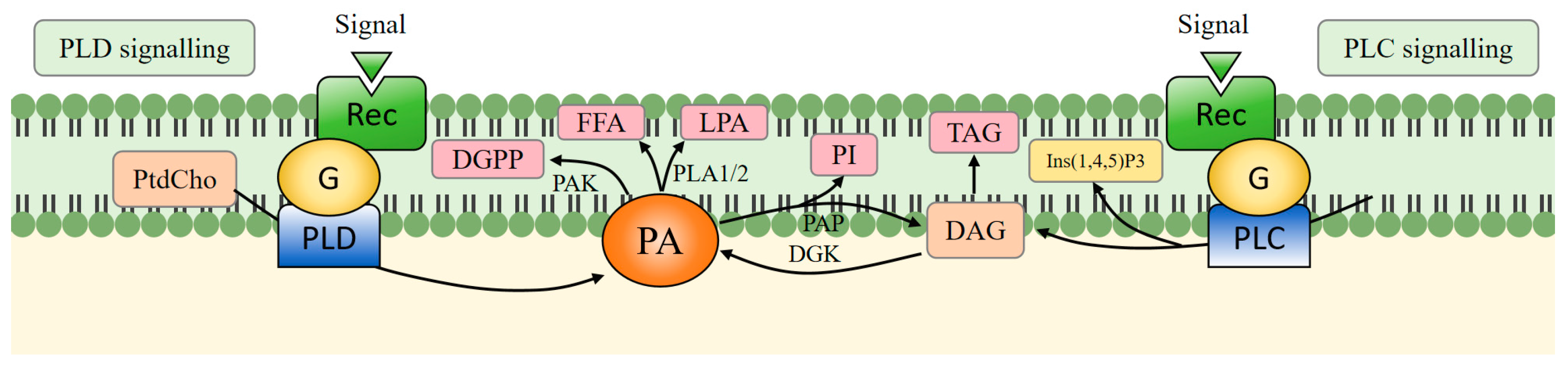
Figure 1. PA is produced through the activation of two different signaling pathways: PLC and PLD. PLC hydrolyzes PtdIns(4,5)P2 to Ins(1,4,5)P3 and DAG, which is phosphorylated to PA by DAG kinase. PLD produces PA directly by hydrolyzing structural lipids such as phosphatidylcholine. PA undergoes phosphorylation through the action of PAK, resulting in its conversion to DGPP, or be dephosphorylated by PAP to yield DAG and PI. PLA releases FFAs and forms LPA by hydrolyzing the ester bond at the sn-1 or sn-2 sites of PA [13,14,15]. Solid black arrow meanings: synthesis or degradation.
Agronomy 15 02758 g001
Figure 2. Cold stress induces PA synthesis through PLD and PLC/DGK pathways. Water or salt stress activates DGK5 to produce PA, DGK5 and PA bind to and inhibit the activity of the ABA biosynthetic enzyme ABA2, and the production of abscisic aldehyde by xanthoxin, which in turn generates ABA, is inhibited, affecting the response of the plant body to abiotic stresses [54,55]. Solid black arrow meanings: synthesis or combination.
Agronomy 15 02758 g002
Figure 3. PRRs-activated protein kinase BIK1 phosphorylates the Ser506 site of DGK5 to activate the burst of DGK5 and PA, MPK4 inhibits DGK5 activity by phosphorylating the Thr446 site, and dual phosphorylation of DGK5 regulates PA homeostasis. PA binds to RBOHD, stabilizes RBOHD by inhibiting the interaction of PBL13 with PIRE, mediated RBOHD vesicle degradation, and increases its plasma membrane localization to promote ROS production. DGK5 contributes to PA production and RBOHD production by DGK5β rather than DGK5α in the two transcripts generated by DGK5 as a result of variable shear control of protein stability, and the calmodulin-binding structural domain is critical for DGK5β function. The RBL1 gene encodes CDP-DAG, a key enzyme in phospholipid biosynthesis, and the 29-base-pair deletion of the RBL1 gene exhibits broad-spectrum resistance [42,90,91]. Arrow meanings: solid black arrow, synthesis or combination; dotted arrow, transcription; green arrow, phosphorylation promotion; red arrow, phosphorylation inhibition.
Agronomy 15 02758 g003
Disclaimer/Publisher’s Note: The statements, opinions and data contained in all publications are solely those of the individual author(s) and contributor(s) and not of MDPI and/or the editor(s). MDPI and/or the editor(s) disclaim responsibility for any injury to people or property resulting from any ideas, methods, instructions or products referred to in the content.