Diversified Crop Rotation Improves Soil Quality by Increasing Soil Organic Carbon in Long-Term Continuous Cotton Fields

Abstract
1. Introduction
2. Materials and Methods
2.1. Overview of the Experimental Zone
2.2. Experimental Design
2.3. Sampling
2.4. Determination Items and Methods
2.4.1. Determination of Soil Organic Carbon and Its Active Components
2.4.2. Key Enzyme Activities for Soil Carbon Sequestration
2.4.3. Alpha Diversity of Soil Bacteria and Alpha Diversity of Soil Fungi
2.4.4. Calculate Soil Quality Index
2.4.5. Calculation Indicators
2.5. Data Analysis
3. Results
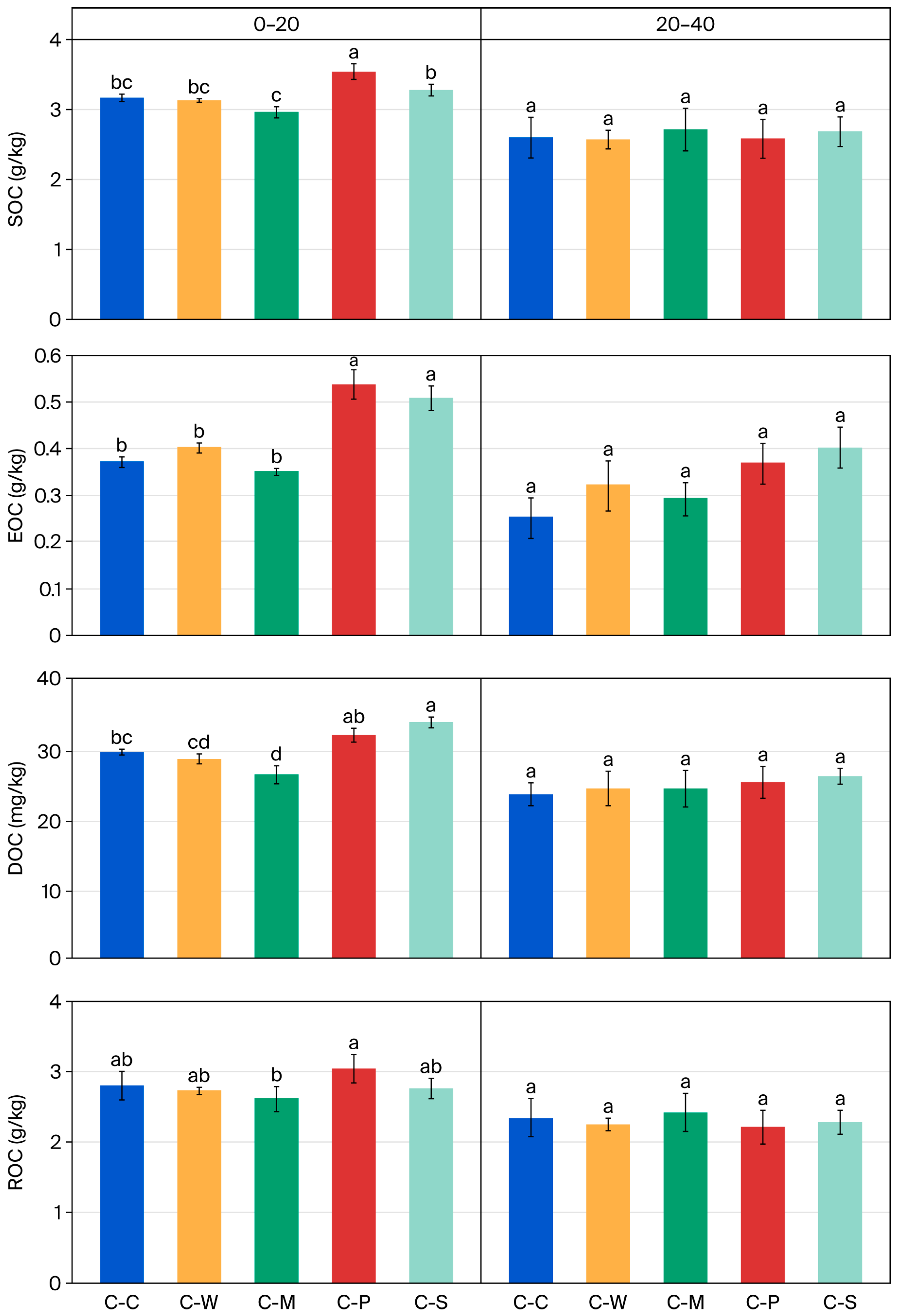
3.1. Soil Organic Carbon and Its Pool Components
3.2. Soil Carbon Pool Index
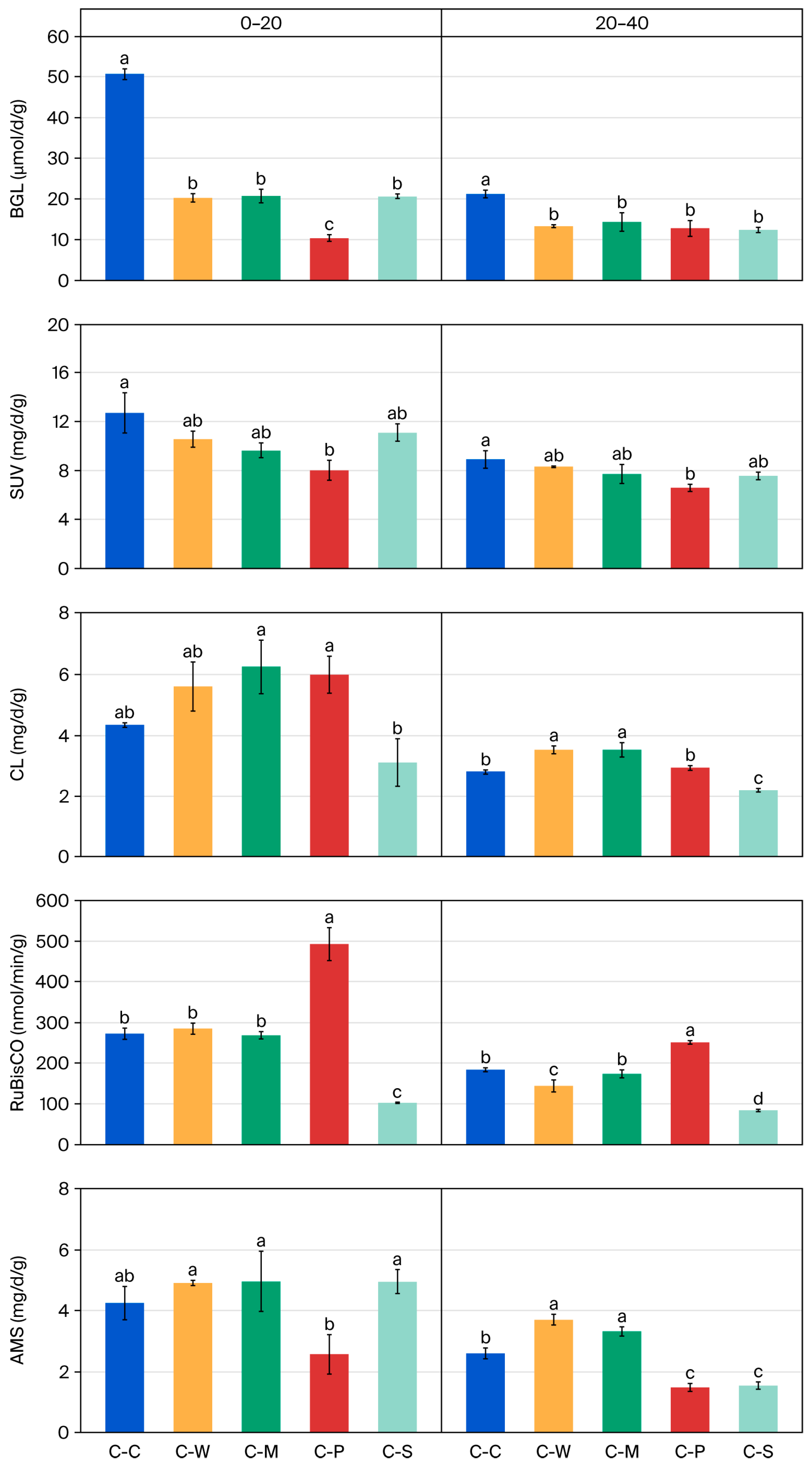
3.3. Soil Enzyme Activity
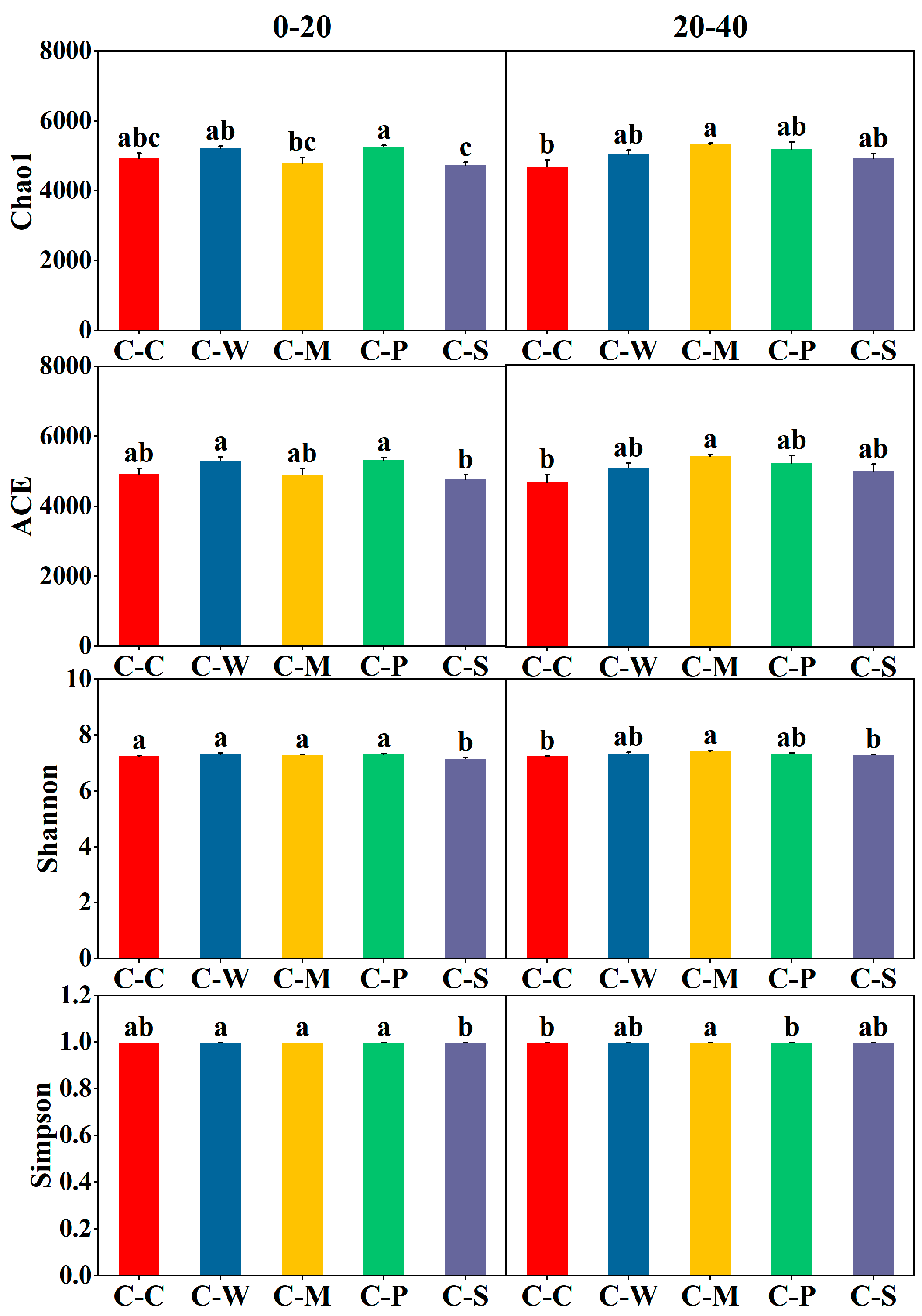
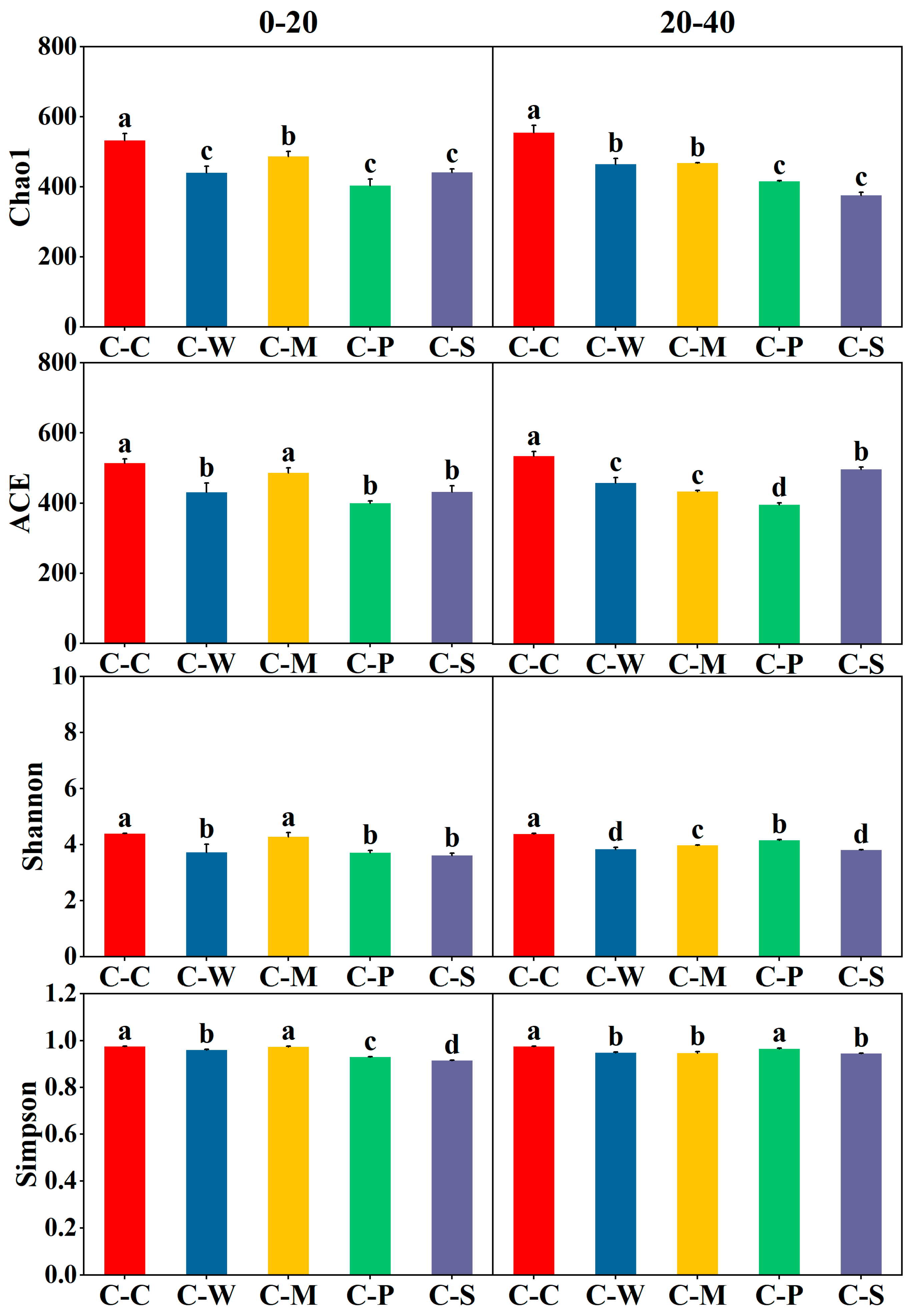
3.4. Microbial Diversity
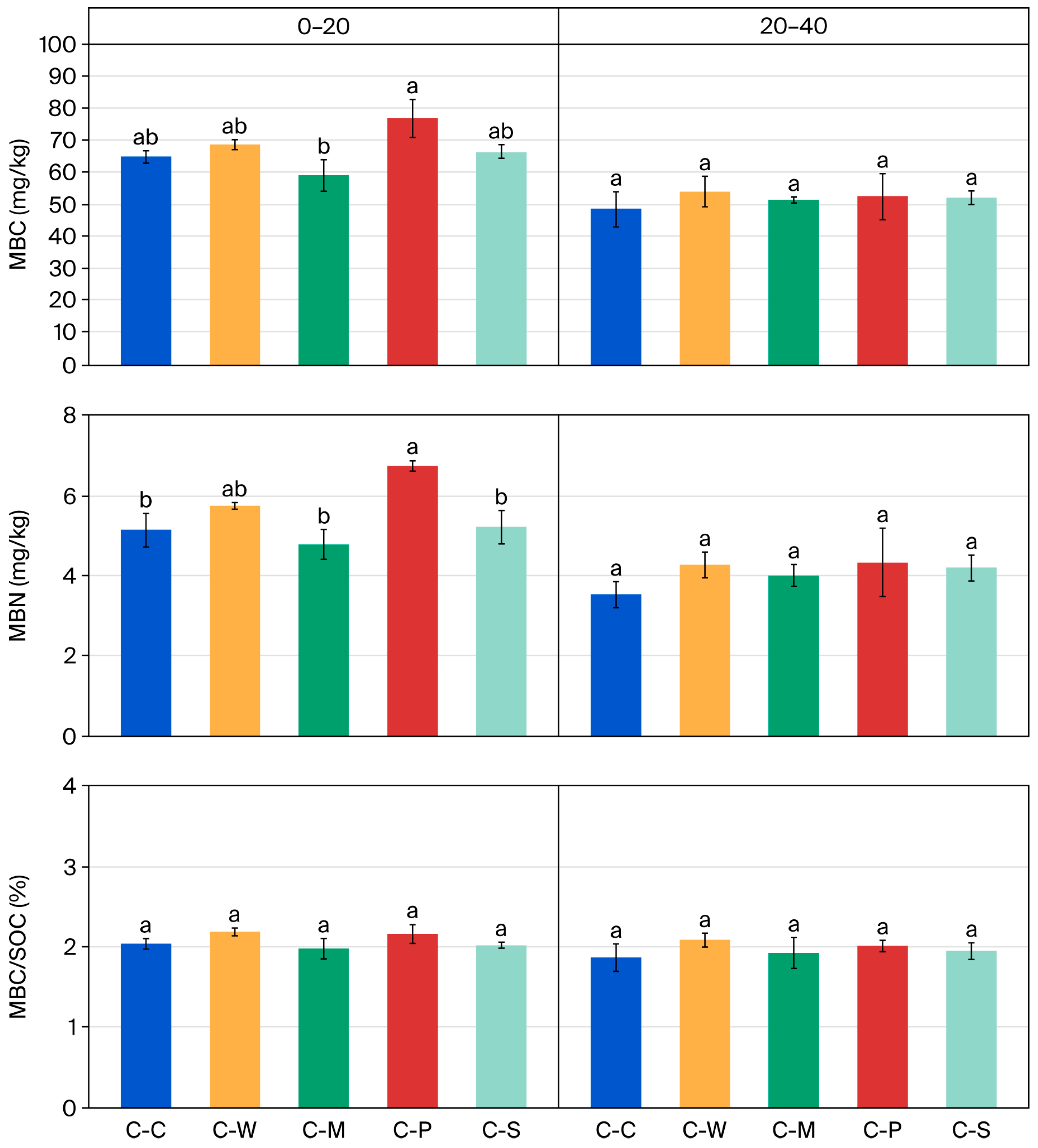
3.5. Soil Microbial Biomass
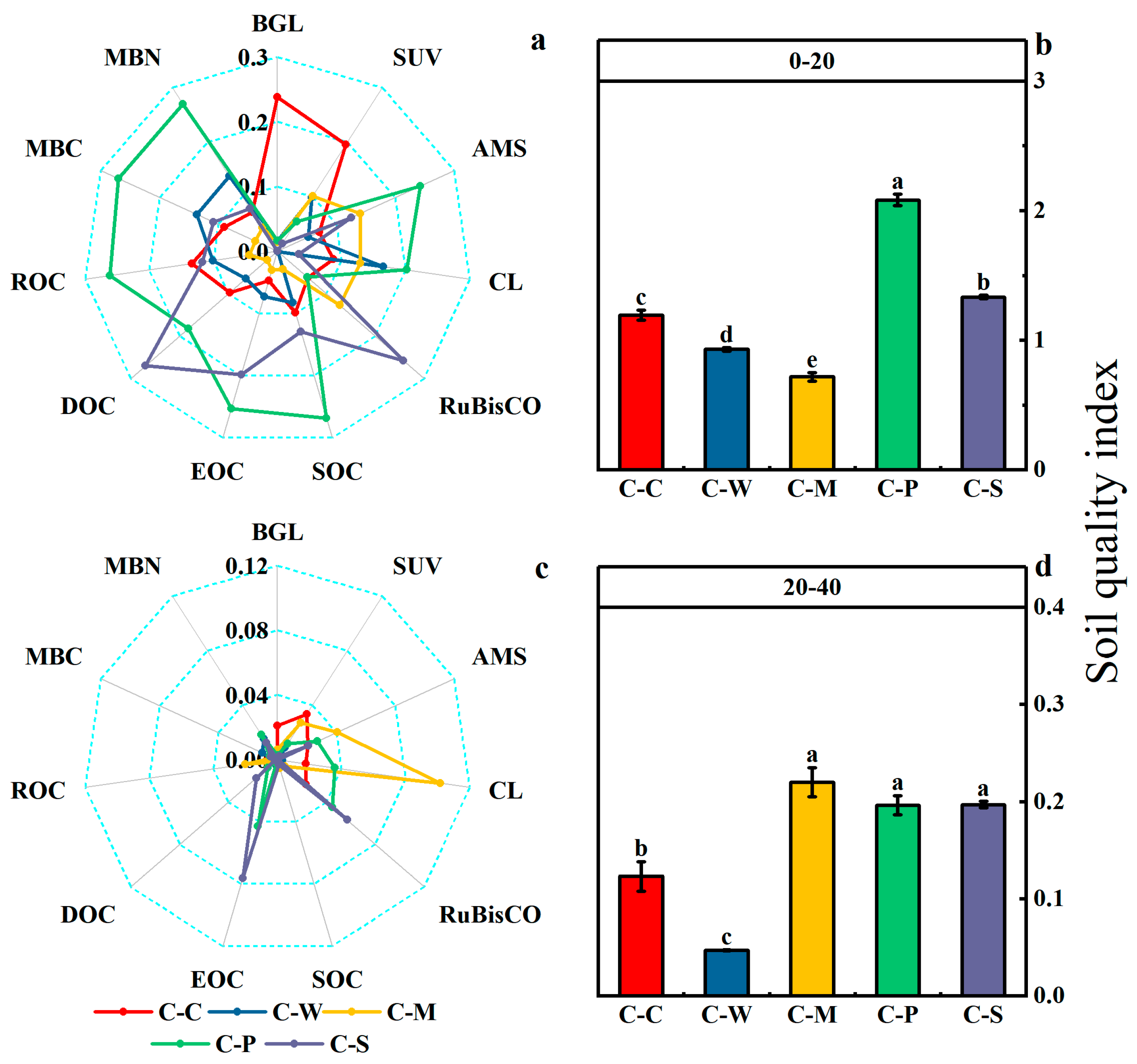
3.6. Soil Quality Index
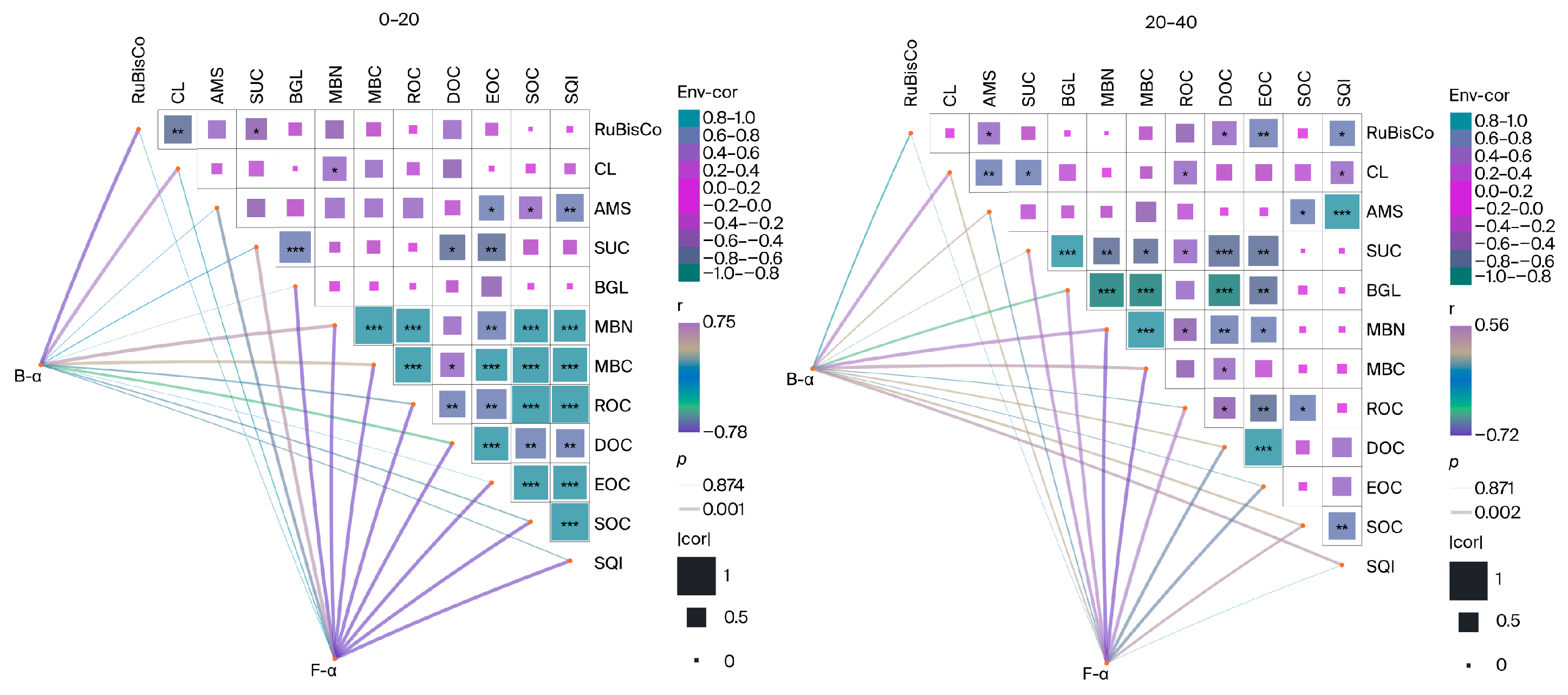
3.7. Correlation Analysis
4. Discussion
4.1. Enhancement of Soil Organic Carbon Components by Diversified Crop Rotation
4.2. Diversified Crop Rotation Patterns Have Increased the Activity of Soil Enzymes
4.3. The Diversified Rotation Model Has Increased the Diversity of Soil Microorganisms
4.4. Research Limitations and Future Directions
5. Conclusions
Author Contributions
Funding
Data Availability Statement
Conflicts of Interest
Abbreviations
| C-C | continuous cotton |
| C-W | cotton–maize |
| C-M | cotton–wheat |
| C-S | cotton–soybean |
| C-P | cotton–peanut |
| SOC | soil organic carbon |
| EOC | easily oxidized organic carbon |
| DOC | dissolved organic carbon |
| MBC | microbial biomass carbon |
| MBN | microbial biomass nitrogen |
| ROC | Refractory organic carbon |
| L | carbon pool activity |
| LI | carbon pool activity index |
| CPI | carbon pool index |
| CMPI | carbon pool management index |
| SUV | sucrase |
| CL | amylase |
| AMS | cellulase |
| BGL | β-1, 4-glucosidase |
| RuBisCo | ribulose-1,5-bisphosphate carboxylase |
References
- Feng, L.; Dai, J.; Tian, L.; Zhang, H.; Li, W.; Dong, H. Review of the technology for high-yielding and efficient cotton cultivation in the northwest inland cotton-growing region of China. Field Crops Res. 2017, 208, 18–26. [Google Scholar] [CrossRef]
- Feng, L.; Wan, S.; Zhang, Y.; Dong, H. Xinjiang cotton: Achieving super-high yield through efficient utilization of light, heat, water, and fertilizer by three generations of cultivation technology systems. Field Crops Res. 2024, 312, 109401. [Google Scholar] [CrossRef]
- Wei, Z.; Yu, D. Rhizosphere fungal community structure succession of Xinjiang continuously cropped cotton. Fungal Biol. 2019, 123, 42–50. [Google Scholar] [CrossRef]
- Yang, L.; Zhang, F.; Luo, Y.; Tang, P. Continuous cotton cropping affects soil micro-food web. Appl. Soil Ecol. 2022, 171, 104304. [Google Scholar] [CrossRef]
- Chen, H.; Yang, L.; Mickan, B.S.; Li, Z.; Zhang, F. Long–term (25 years) continuous cotton cropping combined with residue incorporation affects the fungal communities in reclaimed saline soil. Pedobiologia 2024, 102, 150928. [Google Scholar] [CrossRef]
- Liu, Z.; Liu, J.; Yu, Z.; Li, Y.; Hu, X.; Gu, H.; Li, L.; Jin, J.; Liu, X.; Wang, G. Archaeal communities perform an important role in maintaining microbial stability under long term continuous cropping systems. Sci. Total Environ. 2022, 838, 156413. [Google Scholar] [CrossRef]
- Li, N.; Zhang, Y.; Qu, Z.; Liu, B.; Huang, L.; Ming, A.; Sun, H. Mixed and continuous cropping eucalyptus plantation facilitated soil carbon cycling and fungal community diversity after a 14-year field trail. Ind. Crop Prod. 2024, 210, 118157. [Google Scholar] [CrossRef]
- Bai, Z.; Xie, C.; Yu, J.; Bai, W.; Pei, S.; Li, Y.; Li, Z.; Zhang, F.; Fan, J.; Yin, F. Effects of irrigation and nitrogen levels on yield and water-nitrogen-radiation use efficiency of drip-fertigated cotton in south Xinjiang of China. Field Crops Res. 2024, 308, 109280. [Google Scholar] [CrossRef]
- Zhang, Y.; Gao, W.; Huang, S.; Li, C.; Tang, J.; Zhang, Q.; Li, M.; Wang, Y.; Ai, C. Long-term manure and straw addition enhance protistan diversity and stimulate soil microbial interactions and nutrient mineralization in vegetable field. Appl. Soil Ecol. 2025, 212, 106170. [Google Scholar] [CrossRef]
- Yao, W.; Yang, Y.; Beillouin, D.; Zhao, J.; Olesen, J.E.; Zhou, J.; Smith, P.; Zeng, Z.; Lambers, H.; Rillig, M.C.; et al. Legume-rice rotations increase rice yields and carbon sequestration potential globally. One Earth 2025, 8, 101170. [Google Scholar] [CrossRef]
- Yang, C.; Wang, X.; Li, J.; Zhang, G.; Shu, H.; Hu, W.; Han, H.; Liu, R.; Guo, Z. Straw return increases crop production by improving soil organic carbon sequestration and soil aggregation in a long-term wheat–cotton cropping system. J. Integr. Agr. 2024, 23, 669–679. [Google Scholar] [CrossRef]
- Witcombe, A.M.; Tiemann, L.K.; Chikowo, R.; Snapp, S.S. Diversifying with grain legumes amplifies carbon in management-sensitive soil organic carbon pools on smallholder farms. Agric. Ecosyst. Environ. 2023, 356, 108611. [Google Scholar] [CrossRef]
- Luo, B.; Zhou, J.; Yao, W.; Wang, Y.; Guillaume, T.; Yuan, M.; Han, D.; Bilyera, N.; Wang, L.; Zhao, L.; et al. Maize and soybean rotation benefits soil quality and organic carbon stock. J. Environ. Manag. 2024, 372, 123352. [Google Scholar] [CrossRef]
- Dharumarajan, S.; Harikaran, G.K.; Lalitha, M.; Moharana, P.C.; Vasundhara, R.; Kalaiselvi, B.; Kumari, S.; Suputhra, A.; Srinivasan, R.; Pradeep, C.M.; et al. Chapter 14—Estimating Soil Quality Index (SQI) of arid region of south India using machine learning algorithms. In Remote Sensing of Soils; Dharumarajan, S., Kaliraj, S., Adhikari, K., Lalitha, M., Kumar, N., Eds.; Elsevier: Amsterdam, The Netherlands, 2024; pp. 213–227. [Google Scholar]
- Desjardins, M.; Ippolito, J.A.; Bary, A.I.; Cappellazzi, S.B.; Liptzin, D.; Griffin-LaHue, D. Long-term biosolids applications improve key soil health functions for semi-arid dryland systems. Sci. Total Environ. 2025, 997, 180130. [Google Scholar] [CrossRef]
- Jabed, M.A.; Azmi Murad, M.A. Crop yield prediction in agriculture: A comprehensive review of machine learning and deep learning approaches, with insights for future research and sustainability. Heliyon 2024, 10, e40836. [Google Scholar] [CrossRef]
- Napoletano, P.; Barbarisi, C.; Maselli, V.; Rippa, D.; Arena, C.; Volpe, M.G.; Colombo, C.; Fulgione, D.; De Marco, A. Quantifying the Immediate Response of Soil to Wild Boar (Sus scrofa L.) Grubbing in Mediterranean Olive Orchards. Soil Systems 2023, 7, 38. [Google Scholar] [CrossRef]
- Askari, M.S.; Holden, N.M. Quantitative soil quality indexing of temperate arable management systems. Soil Tillage Res. 2015, 150, 57–67. [Google Scholar] [CrossRef]
- Gao, X.; Liu, J.; Lin, H.; Javed, T.; Yin, F.; Chen, R.; Wen, Y.; Zhang, J.; Yi, K.; Wang, Z. Using machine learning techniques to evaluate the impact of future climate change on wheat yields in Xinjiang, China. Agr. Water Manag. 2025, 317, 109646. [Google Scholar] [CrossRef]
- Guo, X.; Liu, W.; Yang, Y.; Liu, G.; Ming, B.; Xie, R.; Wang, K.; Li, S.; Hou, P. Matching the light and nitrogen distributions in the maize canopy to achieve high yield and high radiation use efficiency. J. Integr. Agr. 2025, 24, 1424–1435. [Google Scholar] [CrossRef]
- Barman, A.; Pooniya, V.; Zhiipao, R.R.; Biswakarma, N.; Kumar, D.; Das, T.K.; Shivay, Y.S.; Rathore, S.S.; Das, K.; Babu, S.; et al. Integrated crop management for long-term sustainability of maize-wheat rotation focusing on productivity, energy and carbon footprints. Energy 2024, 311, 133304. [Google Scholar] [CrossRef]
- Li, Y.; Feng, X.; Huai, Y.; Hassan, M.U.; Cui, Z.; Ning, P. Enhancing crop productivity and resilience by promoting soil organic carbon and moisture in wheat and maize rotation. Agric. Ecosyst. Environ. 2024, 368, 109021. [Google Scholar] [CrossRef]
- Song, Y.; Xie, Y.; Zhang, C.; Ning, H.; Zhang, X.; Yang, G.; Liu, H. Reducing the Sodium Adsorption Ratio Promotes Cotton Growth and Development by Enhancing Antioxidant Enzyme Activities and the Plant’s Potassium–Sodium Ratio Under Brackish-Water Irrigation. Agronomy 2025, 15, 2092. [Google Scholar]
- Zan, Z.; Ma, R.; Wang, J.; Liu, L.; Ning, T.; Jiao, N. Co-Ridge Planting Enhances Yield Advantages of Maize Intercropping with Peanut by Improving Soil Aggregate Stability and the Ecological Stoichiometric Characteristics of Carbon, Nitrogen, and Phosphorus. Agronomy 2025, 15, 2227. [Google Scholar] [CrossRef]
- Zhang, W.; Zhao, Y.; Li, G.; Shen, L.; Wei, W.; Li, Z.; Tuerti, T.; Zhang, W. The Effects of Maize–Soybean and Maize–Peanut Intercropping on the Spatiotemporal Distribution of Soil Nutrients and Crop Growth. Agronomy 2025, 15, 2527. [Google Scholar] [CrossRef]
- Deng, Y.; Li, X.; Shi, F.; Zhang, Y. Divergent controlling factors of freeze–thaw-induced changes in dissolved organic carbon and microbial biomass carbon between topsoil and subsoil of cold alpine grasslands. CATENA 2024, 241, 108063. [Google Scholar] [CrossRef]
- Li, B.; Xiang, G.; Huang, G.; Jiang, X.; He, L. Self-exothermic reaction assisted green synthesis of carbon dots for the detection of para-nitrophenol and β-glucosidase activity. Arab. J. Chem. 2023, 16, 104820. [Google Scholar] [CrossRef]
- Fang, J.; Wang, Y.; Sui, J.; Liu, C.; Liu, R.; Xu, Z.F.; Han, X.; Zhang, T.; Zhang, Q.; Chen, C. Response of ginseng rhizosphere microbial communities and soil nutrients to phosphorus addition. Ind. Crops Prod. 2025, 226, 120687. [Google Scholar] [CrossRef]
- Wagner, D.; Salnikow, J.; Otto, A.; Thiede, B.; Vater, J. A protein chemical analysis of the heterogeneity of the small subunit of ribulose-1,5-bisphosphate carboxylase/oxygenase from Zea mays. Plant Sci. 1996, 113, 13–20. [Google Scholar] [CrossRef]
- Yu, L.; Li, R.; Peng, D.; Liu, T.; Yu, T.; Tian, X. Rapid transition from complete nitrification to partial nitrification-anammox at low temperatures via thermal inactivation of nitrite oxidoreductase. Chem. Eng. J. 2024, 490, 151762. [Google Scholar] [CrossRef]
- Chen, S.; Gao, J.; Dong, B.; Xu, Z. Use of sludge stabilization products for remediation of heavy metal (loid)s-contaminated mine tailings: Physicochemical, biochemical and microbial mechanisms. Chem. Eng. J. 2024, 488, 150640. [Google Scholar] [CrossRef]
- Wu, G.; Huang, H.; Jia, B.; Hu, L.; Luan, C.; Wu, Q.; Wang, X.; Li, X.; Che, Z.; Dong, Z.; et al. Partial organic substitution increases soil quality and crop yields but promotes global warming potential in a wheat-maize rotation system in China. Soil Tillage Res. 2024, 244, 106274. [Google Scholar] [CrossRef]
- Liu, B.; Zhang, J.; Shu, C.; Cheng, Q.; Chen, Q.; Xie, H.; Shi, Y.; Tie, X.; Wang, J.; Liu, N.; et al. Coupling of straw returning and nitrogen-water integration on rice nitrogen recovery and soil carbon pool. J. Agr. Food Res. 2025, 22, 102150. [Google Scholar] [CrossRef]
- Yang, L.; Wang, L.; Chu, J.; Zhao, H.; Zhao, J.; Zang, H.; Yang, Y.; Zeng, Z. Improving soil quality and wheat yield through diversified crop rotations in the North China Plain. Soil Tillage Res. 2024, 244, 106231. [Google Scholar] [CrossRef]
- Arunrat, N.; Sereenonchai, S.; Kongsurakan, P.; Hatano, R. Assessing Soil Organic Carbon, Soil Nutrients and Soil Erodibility under Terraced Paddy Fields and Upland Rice in Northern Thailand. Agronomy 2022, 12, 537. [Google Scholar] [CrossRef]
- Lal, R. Soil Carbon Sequestration Impacts on Global Climate Change and Food Security. Science 2004, 304, 1623–1627. [Google Scholar] [CrossRef]
- Six, J.; Bossuyt, H.; Degryze, S.; Denef, K. A history of research on the link between (micro)aggregates, soil biota, and soil organic matter dynamics. Soil Tillage Res. 2004, 79, 7–31. [Google Scholar] [CrossRef]
- Bronick, C.J.; Lal, R. Soil structure and management: A review. Geoderma 2005, 124, 3–22. [Google Scholar] [CrossRef]
- Huang, N.; He, H.Y.; Fan, R.; Li, X.Y.; Zhao, C.M.; Li, J.H. Planting of nitrogen-fixing shrubs promote soil carbon sequestration by increasing mineral-associated organic fraction. Geoderma 2025, 457, 117282. [Google Scholar] [CrossRef]
- Yu, L.; Zhang, Y.; Wang, Y.; Yao, Q.; Yang, K. Effects of slow-release nitrogen and urea combined application on soil physicochemical properties and fungal community under total straw returning condition. Environ. Res. 2024, 252, 118758. [Google Scholar] [CrossRef] [PubMed]
- Li, Z.; Dou, H.; Zhang, W.; He, Z.; Li, S.; Xiang, D.; Zhang, Y. The root system dominates the growth balance between the aboveground and belowground parts of cotton. Crop Environ. 2023, 2, 221–232. [Google Scholar] [CrossRef]
- Rumpel, C.; Kögel-Knabner, I. Deep soil organic matter—A key but poorly understood component of terrestrial C cycle. Plant Soil 2011, 338, 143–158. [Google Scholar] [CrossRef]
- Kell, D.B. Breeding crop plants with deep roots: Their role in sustainable carbon, nutrient and water sequestration. Ann. Bot. 2011, 108, 407–418. [Google Scholar] [CrossRef]
- Kuzyakov, Y. Priming effects: Interactions between living and dead organic matter. Soil Biol. Biochem. 2010, 42, 1363–1371. [Google Scholar] [CrossRef]
- Méndez-Líter, J.A.; de Eugenio, L.I.; Hakalin, N.L.S.; Prieto, A.; Martínez, M.J. Production of a β-Glucosidase-Rich Cocktail from Talaromyces amestolkiae Using Raw Glycerol: Its Role for Lignocellulose Waste Valorization. J. Fungi 2021, 7, 363. [Google Scholar] [CrossRef]
- German, D.P.; Marcelo, K.R.B.; Stone, M.M.; Allison, S.D. The Michaelis–Menten kinetics of soil extracellular enzymes in response to temperature: A cross-latitudinal study. Global Change Biol. 2012, 18, 1468–1479. [Google Scholar] [CrossRef]
- Kubartová, A.; Ranger, J.; Berthelin, J.; Beguiristain, T. Diversity and Decomposing Ability of Saprophytic Fungi from Temperate Forest Litter. Microb. Ecol. 2009, 58, 98–107. [Google Scholar] [CrossRef] [PubMed]
- Liang, C.; Balser, T.C. Microbial production of recalcitrant organic matter in global soils: Implications for productivity and climate policy. Nat. Rev. Microbiol. 2011, 9, 75. [Google Scholar] [CrossRef]
- Cotrufo, M.F.; Soong, J.L.; Horton, A.J.; Campbell, E.E.; Haddix, M.L.; Wall, D.H.; Parton, W.J. Formation of soil organic matter via biochemical and physical pathways of litter mass loss. Nat. Geosci. 2015, 8, 776–779. [Google Scholar] [CrossRef]
- Zhang, N.; Bai, L.; Wei, X.; Li, T.; Tang, Y.; Zeng, X.; Lei, Z.; Wen, J.; Su, S. Promoted decomposition in straw return to double-cropped rice fields controls soil acidity, increases soil fertility and improves rice yield. Chem. Eng. J. 2025, 509, 161309. [Google Scholar] [CrossRef]
- Wang, H.; Chen, J.; Du, M.; Ruan, Y.; Guo, J.; Shao, R.; Wang, Y.; Yang, Q. In-depth insights into carbohydrate-active enzyme genes regarding the disparities in soil organic carbon after 12-year rotational cropping system field study. Eur. J. Soil Biol. 2024, 123, 103694. [Google Scholar] [CrossRef]
- Sun, Q.; Zheng, Y.; Li, S.; Yang, J.; Zhao, X.; Du, L.; He, K.; Liu, J. Diversified crop rotation: Synergistically enhancing peanut yield and soil organic carbon stability. Agric. Ecosyst. Environ. 2025, 382, 109497. [Google Scholar] [CrossRef]
- Rodríguez, M.P.; Domínguez, A.; Gabbarini, L.A.; Escudero, H.J.; Wall, L.G.; Bedano, J.C. Earthworms mediate the effect of diversifying crop rotations on soil organic carbon incorporation, soil structure formation and microbial activity. Agric. Ecosyst. Environ. 2025, 391, 109751. [Google Scholar] [CrossRef]
- Ma, L.; Zhang, J.; Li, H.; Xu, M.; Zhao, Y.; Shi, X.; Shi, Y.; Wan, S. Key microbes in wheat maize rotation present better promoting wheat yield effect in a variety of crop rotation systems. Agric. Ecosyst. Environ. 2025, 379, 109370. [Google Scholar] [CrossRef]
- Stone, B.W.; Li, J.; Koch, B.J.; Blazewicz, S.J.; Dijkstra, P.; Hayer, M.; Hofmockel, K.S.; Liu, X.A.; Mau, R.L.; Morrissey, E.M.; et al. Nutrients cause consolidation of soil carbon flux to small proportion of bacterial community. Nat. Commun. 2021, 12, 3381. [Google Scholar] [CrossRef]
- Yang, F.; Wu, J.; Zhang, D.; Chen, Q.; Zhang, Q.; Cheng, X. Soil bacterial community composition and diversity in relation to edaphic properties and plant traits in grasslands of southern China. Appl. Soil Ecol. 2018, 128, 43–53. [Google Scholar] [CrossRef]
- Fang, X.; Zheng, R.; Guo, X.; Fu, Q.; Fan, F.; Liu, S. Yak excreta-induced changes in soil microbial communities increased the denitrification rate of marsh soil under warming conditions. Appl. Soil Ecol. 2021, 165, 103935. [Google Scholar] [CrossRef]
- Dou, Y.; Yu, S.; Liu, S.; Cui, T.; Huang, R.; Wang, Y.; Wang, J.; Tan, K.; Li, X. Crop rotations reduce pathogenic fungi compared to continuous cropping. Rhizosphere 2025, 34, 101074. [Google Scholar] [CrossRef]
- Xu, Y.; Fu, T.; You, G.; Yang, S.; Liu, S.; Huang, W.; Peng, D.; Ji, J.; Zhang, J.; Zhang, J.; et al. Niche differentiation shaped the evolution of rhizobacterial antibiotic resistance in paddy fields: Evidences from spatial-temporal and chemical-biological scaling. J. Hazard Mater. 2025, 491, 137924. [Google Scholar] [CrossRef]
- Bui, A.; Orr, D.; Lepori-Bui, M.; Konicek, K.; Young, H.S.; Moeller, H.V. Soil fungal community composition and functional similarity shift across distinct climatic conditions. FEMS Microbiol. Ecol. 2020, 96, fiaa193. [Google Scholar] [CrossRef]
- Lam, S.K.; Suter, H.; Davies, R.; Bai, M.; Mosier, A.R.; Sun, J.; Chen, D. Direct and indirect greenhouse gas emissions from two intensive vegetable farms applied with a nitrification inhibitor. Soil Biol. Biochem. 2018, 116, 48–51. [Google Scholar] [CrossRef]
- Wang, Q.; Zhou, D.; Chu, C.; Zhao, Z.; Ma, M.; Wu, S. The choice of rice rotation system affects the composition of the soil fungal community and functional traits. Heliyon 2024, 10, e24027. [Google Scholar] [CrossRef] [PubMed]
- Song, R.; Lv, B.; He, Z.; Li, H.; Wang, H. Rhizosphere metabolite dynamics in continuous cropping of vineyards: Impact on microflora diversity and co-occurrence networks. Microbiol. Res. 2025, 296, 128134. [Google Scholar] [CrossRef] [PubMed]
- Zhang, L.; Liu, C.; Yao, W.; Shao, J.; Peixoto, L.; Yang, Y.; Zeng, Z.; Olesen, J.E.; Zang, H. Legume-based rotation benefits crop productivity and agricultural sustainability in the North China Plain. Soil Tillage Res. 2025, 250, 106502. [Google Scholar] [CrossRef]
- Fierer, N.; Schimel, J.P.; Holden, P.A. Variations in microbial community composition through two soil depth profiles. Soil Biol. Biochem. 2003, 35, 167–176. [Google Scholar] [CrossRef]
- Mu, C.; Mu, M.; Wu, X.; Jia, L.; Fan, C.; Peng, X.; Ping, C.; Wu, Q.; Xiao, C.; Liu, J. High carbon emissions from thermokarst lakes and their determinants in the Tibet Plateau. Global Change Biol. 2023, 29, 2732–2745. [Google Scholar] [CrossRef]
- Zang, H.; Yang, X.; Feng, X.; Qian, X.; Hu, Y.; Ren, C.; Zeng, Z. Rhizodeposition of Nitrogen and Carbon by Mungbean (Vigna radiata L.) and Its Contribution to Intercropped Oats (Avena nuda L.). PLoS ONE 2015, 10, e121132. [Google Scholar] [CrossRef]





| Rotation Crop | Variety (Key Trait Indication) | Planting Pattern (Technical Features) | Planting Density (Unit and Value) |
|---|---|---|---|
| Cotton | Tahe 2 | One-film six-row | 26 × 104 plants·hm−2 |
| Soybean | Xindadou 27 | One-film six-row | 27.2 × 10⁴ plants·hm−2 |
| Peanut | Huayu 25 | One-film three-row two-belt | 18.0 × 10⁴ plants·hm−2 |
| Spring Wheat | Xinchun 22 | Drill seeding | 450,000 grains·hm−2 |
| Spring Maize | Denghai 618 | One-film four-row | 108,000 plants·hm−2 |
| Treatment | CPI | L | LI | CMPI | |
|---|---|---|---|---|---|
| 0–20 | C-C | 1.00 ± 0.01 c | 0.12 ± 0.002 c | 1.00 ± 0.01 c | 100.00 ± 1.36 d |
| C-W | 0.98 ± 0.01 d | 0.13 ± 0.001 b | 1.10 ± 0.01 b | 107.96 ± 0.97 c | |
| C-M | 0.91 ± 0.01 e | 0.12 ± 0.001 c | 1.03 ± 0.01 c | 93.58 ± 0.36 e | |
| C-P | 1.13 ± 0.01 a | 0.15 ± 0.002 a | 1.27 ± 0.01 a | 143.30 ± 1.48 a | |
| C-S | 1.03 ± 0.01 b | 0.15 ± 0.004 a | 1.28 ± 0.04 a | 131.35 ± 3.82 b | |
| 20–40 | C-C | 1.00 ± 0.01 c | 0.10 ± 0.001 d | 1.00 ± 0.01 d | 100.00 ± 0.83 e |
| C-W | 0.99 ± 0.01 d | 0.11 ± 0.002 c | 1.13 ± 0.02 c | 111.37 ± 2.15 c | |
| C-M | 1.04 ± 0.01 a | 0.10 ± 0.003 d | 1.03 ± 0.03 d | 107.08 ± 2.89 d | |
| C-P | 0.99 ± 0.01 d | 0.14 ± 0.001 b | 1.46 ± 0.01 b | 144.77 ± 1.06 b | |
| C-S | 1.03 ± 0.01 b | 0.15 ± 0.001 a | 1.55 ± 0.01 a | 160.24 ± 1.18 a | |
Disclaimer/Publisher’s Note: The statements, opinions and data contained in all publications are solely those of the individual author(s) and contributor(s) and not of MDPI and/or the editor(s). MDPI and/or the editor(s) disclaim responsibility for any injury to people or property resulting from any ideas, methods, instructions or products referred to in the content. |
© 2025 by the authors. Licensee MDPI, Basel, Switzerland. This article is an open access article distributed under the terms and conditions of the Creative Commons Attribution (CC BY) license (https://creativecommons.org/licenses/by/4.0/).
Share and Cite
Ren, Q.; Wang, J.; Qiao, H.; Du, M.; Hu, Q.; Wan, S.; Dong, H.; Zhang, J.; Dong, Z.; Li, T.; et al. Diversified Crop Rotation Improves Soil Quality by Increasing Soil Organic Carbon in Long-Term Continuous Cotton Fields. Agronomy 2025, 15, 2698. https://doi.org/10.3390/agronomy15122698
Ren Q, Wang J, Qiao H, Du M, Hu Q, Wan S, Dong H, Zhang J, Dong Z, Li T, et al. Diversified Crop Rotation Improves Soil Quality by Increasing Soil Organic Carbon in Long-Term Continuous Cotton Fields. Agronomy. 2025; 15(12):2698. https://doi.org/10.3390/agronomy15122698
Chicago/Turabian StyleRen, Qiuyu, Jinbin Wang, Hang Qiao, Mingwei Du, Qiang Hu, Sumei Wan, Hongqiang Dong, Jialiang Zhang, Zhenlin Dong, Tiantian Li, and et al. 2025. "Diversified Crop Rotation Improves Soil Quality by Increasing Soil Organic Carbon in Long-Term Continuous Cotton Fields" Agronomy 15, no. 12: 2698. https://doi.org/10.3390/agronomy15122698
APA StyleRen, Q., Wang, J., Qiao, H., Du, M., Hu, Q., Wan, S., Dong, H., Zhang, J., Dong, Z., Li, T., Cui, Z., & Chen, G. (2025). Diversified Crop Rotation Improves Soil Quality by Increasing Soil Organic Carbon in Long-Term Continuous Cotton Fields. Agronomy, 15(12), 2698. https://doi.org/10.3390/agronomy15122698