Article

Impact of Biochar Application and Nitrogen Fertilization on Soil Aggregates and Aggregate Organic Carbon in Irrigated Areas of Northern Xinjiang


1
College of Agronomy, Xinjiang Agricultural University, Urumqi 830052, China
2
College of Landscape Architecture and Art, Northwest A&F University, Taicheng Rd, No. 3, Xianyang 712100, China
*
Author to whom correspondence should be addressed.
Agronomy 2025, 15(11), 2626; https://doi.org/10.3390/agronomy15112626
Submission received: 29 September 2025 / Revised: 13 November 2025 / Accepted: 14 November 2025 / Published: 15 November 2025
(This article belongs to the Section Farming Sustainability)

Abstract

This study evaluates the impact of applying biochar alongside nitrogen fertilizer on soil aggregates and aggregate-associated carbon through a two-year experiment under irrigated conditions in North Xinjiang. In 2021, a randomized block design established 36 experimental plots. The experiment employed a factorial design with three levels of nitrogen fertilizer and four levels of biochar. Measurements of soil aggregates and aggregate-associated organic carbon were taken in 2022. This study’s objectives were to quantify biochar’s effect on soil aggregation and stability and to determine the distribution of SOC across different aggregate sizes. The results indicated that macroaggregates (>2 mm and 0.25–2 mm) were most common (N2B1, N2B2, and N2B3), making up 75.57–78.46% of all aggregates. In treatments with reduced nitrogen and biochar (N2B1, N2B2, and N2B3), soil aggregate refractory organic carbon content was significantly higher compared to other treatments. Generally, applying reduced nitrogen with moderate biochar (N2B2) significantly increased soil organic carbon and refractory organic carbon levels, aiding carbon fixation and improving soil carbon storage. Thus, biochar application effectively enhances carbon storage in agricultural soils, offering valuable insights for improving soil fertility in irrigated regions of northern Xinjiang.

1. Introduction

Soil is the largest pool of terrestrial organic carbon (OC), and thus plays an important role in the global C cycle [1]. Carbon sequestration by soils helps stabilize the atmospheric CO2 content, enhance soil fertility, and improve soil quality and structure [2]. Various factors influence soil organic carbon (SOC) content. Soil aggregate is a fundamental property of soil structure that mediates many physical, chemical, and biological soil processes [3]. Generally, there is a positive relationship between soil aggregate formation and SOC sequestration [4,5,6]. Well-aggregated soil not only increases crop production but also mitigates climate change through long-term C sequestration in soil [7]. However, soil carbon sequestration is closely related to the C turnover by microbial mineralization of organic materials [8,9]. SOC in each aggregate size class was protected from microbial decomposition, which is affected by agricultural management operations (such as soil tillage, fertilizer application, etc.). Therefore, evaluating the sequestration and mineralization of organic C in aggregates is vital for a deeper understanding of organic C stability in soil.
Long-term use of chemical fertilizer would destroy soil structure and jeopardize SOC sequestration [10,11]. The combination of organic materials such as biochar and chemical fertilizer improves stability of soil aggregate, increases SOC sequestration and enhances soil quality [12]. The porosity and sorption capacity of biochar are the key properties that favor its use as a fertilizer component [13,14,15,16,17,18]. It contributes to the enhancement and stabilization of carbon sequestration and has a “carbon fixation” effect through its participation in biogeochemical cycles within the soil [19,20,21]. The results obtained from the integrated study demonstrate that the utilization of biochar results in a diverse array of increases in soil organic carbon, with values ranging from 14.3% to 101.6% [21,22]. However, reports regarding the effects of biochar application on soil aggregation are contrasting and inconsistent. For example, some previous studies pointed out that soil aggregation could be improved by biochar application on sandy [23,24], loam [25,26] and clay soils [27,28], while no response or even a decrease in soil aggregation after biochar application were also reported across different soils [29,30,31,32,33]. The application of biochar to soil aggregates appears to be inconsistent in different studies, as it has been carried out under diverse biochar and soil properties and experimental conditions. Consequently, further targeted investigations are needed.
The irrigation lands in North Xinjiang are a typical example of an agricultural oasis in the Xinjiang Uygur Autonomous Region. Despite high cereal productivity in these regions, constraints such as declining soil organic matter content and inadequate soil fertility remain a problem. Excessive applications of nitrogen fertilizer can reduce the amount of organic matter returned to the soil by crops, which adversely affects the SOC content [34]. Increasing the SOC content in the soil is crucial for both carbon sequestration and crop yield enhancement. Many studies have explored the use of various fertilizers to reintroduce organic materials to farmland and to ensure the stability and turnover of soil organic carbon in irrigated areas. Research indicates that applying biochar offers multiple benefits, including the formation of soil aggregates, reducing soil bulk density [35], and improving the nutrient and water absorption of the soil [36]. Moreover, it can improve the soil microbial community composition [37], enhance the N and P uptake by crops [38], reduce the occurrence of soil-borne diseases in crops [39], and significantly increase crop yield and biomass [40]. However, research information is lacking about mineralization of organic C in aggregates. Thus, it is essential to conduct a comprehensive assessment to determine the potential use of biochar in agricultural ecosystems.
In our previous study, we have investigated the combination effect of nitrogen fertilizer and biochar on wheat soil nutrients, soil aggregate stability, and yield, which showed that the application of reduced nitrogen in combination with biochar could increase soil nutrient levels, improve soil aggregate stability, and lead to a higher wheat yield [41,42]. Based on these results, we would like to know the impact of nitrogen fertilizer and varying amounts of biochar on soil organic carbon distribution and its components in this study. The specific objectives of this study were as follows: (i) to quantify the effects of biochar amendment on the soil aggregation and aggregate stability, and (ii) to determine the distribution of SOC within different aggregate fractions. We hypothesized that (i) An optimal amount of biochar and N fertilizer improves macroaggregate formation; and (ii) depending on the amount of biochar, soil aggregate stability increases with biochar amendment. The results will provide a scientific basis for the formulation of organic fertilizers based on biochar and compost for sustainable nutrient management in irrigated areas.

2. Materials and Methods

2.1. Description of the Study Fields

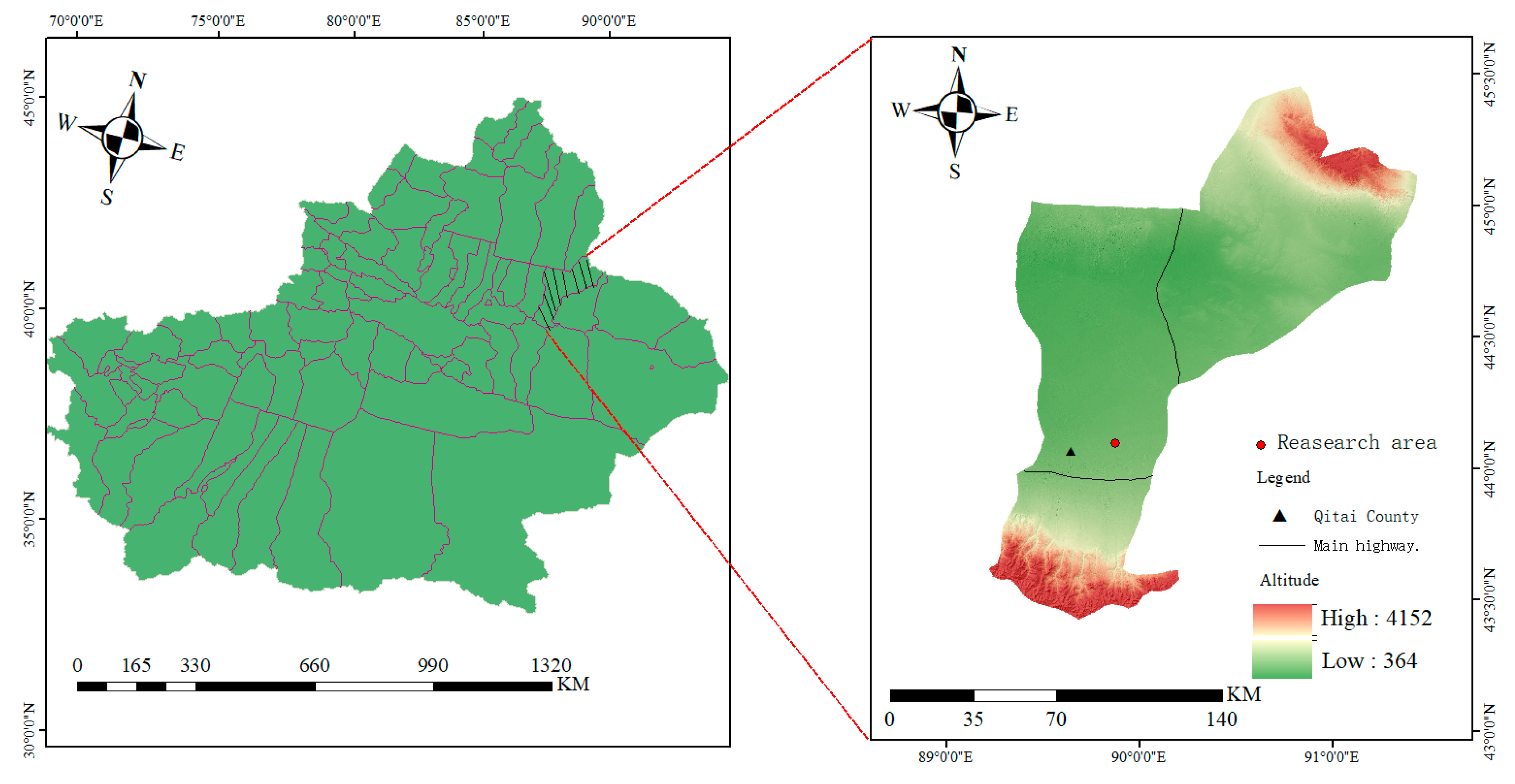
A field experiment was conducted at the Qitai Wheat Experiment Statio (42°45′–45°29′ N, 89°13′–91°22′ E) (Figure 1). This region has a continental temperate climate, with an annual average temperature of 5.5 °C. In July and January, the average temperature of it is 22.6 °C and −18.9 °C, respectively, while the yearly maximum reaches approximately 39 °C. The region has a mean annual relative humidity of 60% and an average of 153 frost-free days, ranging from late April to early October. The annual average rainfall is 269.4 mm. The test site has sandy loam soil, with 15.15 g·kg−1 organic matter in the 0–20 cm soil layer. The basic properties of the soil are as follows: pH 8.2, salt content 1.4 g·kg−1, organic matter content 42.9 g·kg−1, total nitrogen content 2.2 g·kg−1, rapidly available phosphorus content 11.4 mg·kg−1, rapidly available potassium content 147.0 mg·kg−1, and alkaline hydrolysis nitrogen content 128.7 mg·kg−1.

2.2. Field Experimental Design

A total of 36 plots, each measuring 35 m2, were established at the research station following a completely randomized factorial design. The experiment consisted of 3 levels of nitrogen fertilizer, no fertilizer (N0: 0 kg·ha−1), a standard level (N1: 300 kg·ha−1), and a lower level with a 15% reduction (N2: 255 kg·ha−1), and 4 biochar levels: (B0: 0 t·ha−1, B1: 10 t·ha−1, B2: 20 t·ha−1, and B3: 30 t·ha−1). Thus 12 treatments were set up, each with 3 replicates. Urea served as the nitrogen fertilizer, with a recommended application rate of 300 kg N/ha for the region. Initially, biochar was manually spread over the designated plots in a single application before sowing. It was then thoroughly integrated into the 30 cm soil layer. Biochar was applied only once at the start of the experiment (2021) and was not reapplied in the next years. Urea application (46% pure nitrogen) was performed once in the designated plots. The nitrogen fertilizer was split into two equal portions, with 50% applied as a basal fertilizer and the remaining 50% applied during the elongation and booting stages in a ratio of 6:4. Strip sowing was carried out at a density of 4.5 million plants per hectare, with row spacing of 20 cm. All other agricultural practices followed the standard protocols for high-yield farmland in the region.

2.3. Biochar Characterization

Biochar application to the soil was performed by Jinhefu Shenyang Agricultural Technology Development Corporation, Shenyang, China. The biochar used in this study was prepared through the pyrolysis of corn straw for 4 h at 450 °C, in the absence of oxygen. Its key properties included a surface area of 0.8 m2g−1, mean particle diameter of 0.004–3.7 mm, ash content of 45%, total carbon content of 59.84%, C/N ratio of 38.59, and pH of 9.3. Before application, biochar was sieved using a 2 mm sieve.

2.4. Soil Sampling and Quantification of Aggregates

(1)
Soil sampling:
1.
After the wheat was harvested in July, five soil cores were randomly collected from each plot to a depth of 0–20 cm and 20–40 cm, respectively.
2.
The samples were blended, packaged, and air-dried.
3.
Subsequently, they were fragmented manually into pieces with a diameter of less than 1 cm, in accordance with the natural fissures.
4.
Finally, an 8 mm screen (Shaoxing Shangyu Zhangxing Gauze Sieve Factory, Zhejiang, China) was employed to sieve these fragments in order to remove any remaining plant material, stones, or extraneous substances.
(2)
The soil aggregate sieving process:
1.
A dry-sieving method was employed to obtain soil aggregates using a 500 g air-dried soil sample.
2.
The sample was manually sieved for 2–3 min using a set of sieves with different mesh sizes (2 mm, 0.25 mm, and 0.053 mm (Shaoxing Shangyu Zhangxing Gauze Sieve Factory, Zhejiang, China)).
3.
After sieving, the samples were allowed to settle for 1 min.
4.
The soil aggregates retained on each sieve surface were then collected, weighed, and placed into individual bags for storage.

2.5. Determination of Carbon Fractions and Related Indices

(1)
Measurement of the soil organic carbon:
SOC represents the largest reservoir of organic carbon in the terrestrial biosphere, and it plays an important role in the global carbon cycle. It has been suggested that SOC sequestration is of fundamental importance in agricultural soils because it transfers and stores atmospheric carbon dioxide (CO2) into the soil and enhances soil fertility [43].
The contents of the soil organic carbon in the aggregates of all the particle sizes were measured using the potassium dichromate-sulfuric acid dilution heat method [44].
(2)
Measurement of the soil refractory organic carbon:
ROC, the sediment organic carbon that remains after acid hydrolysis, represents the relatively stable organic carbon pool, which is resistant to microbial decomposition [45]. The concentrated H2SO4 hydrolysis method was used [46].
1.
Initially, a 1.00 g soil sample (<0.15 mm) was hydrolyzed with 20 mL of 2.5 mol L−1 H2SO4 (Guangdong Qikang Industrial Development Co., Ltd., Dongguan, Guangdong, China) in an oil bath at 105 °C for 30 min.
2.
The mixture was then transferred to a centrifuge tube. After centrifugation, the supernatant was discarded.
3.
The residue was washed with distilled water, centrifuged multiple times, and dried at 60 °C.
4.
Then, 2 mL of 13 mol L−1 H2SO4 was added, and the sample was continuously shaken at room temperature for 10 h.
5.
It was then diluted with water to an H2SO4 concentration of 1 mol L−1 and heated at 105 °C for 3 h.
6.
Following shaking, the solution underwent two rounds of centrifugation and subsequent washing.
7.
Afterwards, the residual soil sample contained within the centrifuge tube underwent a comparable rinsing process utilizing distilled water.
8.
Finally, the sample was transferred to a plastic container and subjected to a drying procedure at a temperature of 60 °C, with the remaining substance identified as a resistant fraction.

2.6. Determination of Soil Carbon Indices

The aggregate carbon reserve was calculated using the formula below:
soil total organic carbon = (c(V0 − V) × 10−3 ×3.0 × 1.33)/Drying soil weight × 1000
V0—titration volume of ferrous sulfate in blank control (mL); V—titration volume of ferrous sulfate (mL), 3.0 Molar mass of 1/4 carbon atom (g·mol−1); 10−3—conversion factor from milliliters to liters.
Aggregate carbon reserve = soil layer depth (mm) × soil bulk density (g·cm−3) × soil organic carbon (g·kg−1) × 0.001
The active fraction of soil organic carbon was calculated using Equation (2):
Active fraction of soil organic carbon = total organic carbon in the soil − refractory organic carbon in the soil
The labile index of the soil organic carbon (LIc) and recalcitrance index (RIc) were calculated using the formulae below [46]:
LIc (%) = (active organic carbon fraction/total organic carbon) × 100
RIc (%) = (refractory organic carbon/total organic carbon) × 100

2.7. Statistical Analysis

The statistical software programs Excel 2019 and DPS 7.05 were employed to conduct a two-factor analysis. The obtained data were subjected to significance testing, and graphical representations were created using Origin 2021 software. Mean separation was carried out using Duncan’s New Multiple Range Method at a 5% probability level whenever significant differences among treatment means were detected. Except otherwise stated, all data presented in the tables are means of the parameters  ± standard deviation (Duncan). The map was generated using ArcMap 10.7.

2.8. Quality Control

To ensure the accuracy and precision of the analytical data, the following quality control measures were implemented:
All determinations of soil organic carbon and recalcitrant organic carbon included duplicate analyses. The reported values represent the mean, with the relative standard deviation between duplicates maintained below 5%.
We performed blank tests for the potassium dichromate titration to correct for any potential interference from reagent.

3. Results

3.1. The Soil Aggregates and Organic Carbon Variations

3.1.1. Patterns of the Soil Aggregates

The distribution of soil aggregates was significantly influenced by nitrogen fertilizer, biochar, and their interaction, as detailed in Table 1. The soil aggregates > 2 mm and 0.25–2 mm demonstrated the highest frequency, whereas the concentration of aggregates <0.053 mm was determined to be the lowest. The application of nitrogen fertilizer alone in the 0–20 cm soil layer resulted in an increase in the contents of 0.25–2 mm and <0.053 mm aggregates. In comparison with the N1B0, the nitrogen with biochar groups (N1B1, N1B2, and N1B3) had reduced 0.053–0.25 mm and <0.053 mm in aggregate contents. When compared with the reduced nitrogen-only group (N2B0), the reduced nitrogen with biochar groups (N2B1, N2B2, and N2B3) had increased in >2 mm and 0.25–2 mm aggregate contents, respectively. Additionally, the differences in the >2 mm aggregate contents between the groups were significant (p < 0.05). Within the 20–40 cm soil layer, the application of only nitrogen fertilizer and biochar resulted in a reduction in soil aggregate contents of 0.053–0.25 mm and <0.053 mm. On the other hand, there was a substantial increase (p < 0.05) in the content of >2 mm aggregates. In comparison to the group treated with reduced nitrogen only (N2B0), the groups treated with reduced nitrogen and biochar (N2B1, N2B2, and N2B3) exhibited a significant increase in the content of >2 mm aggregates. Conversely, there was a notable decrease in the content of 0.053–0.25 mm aggregates. Significant statistical differences were observed between the groups (p < 0.05).

3.1.2. The Soil Organic Carbon

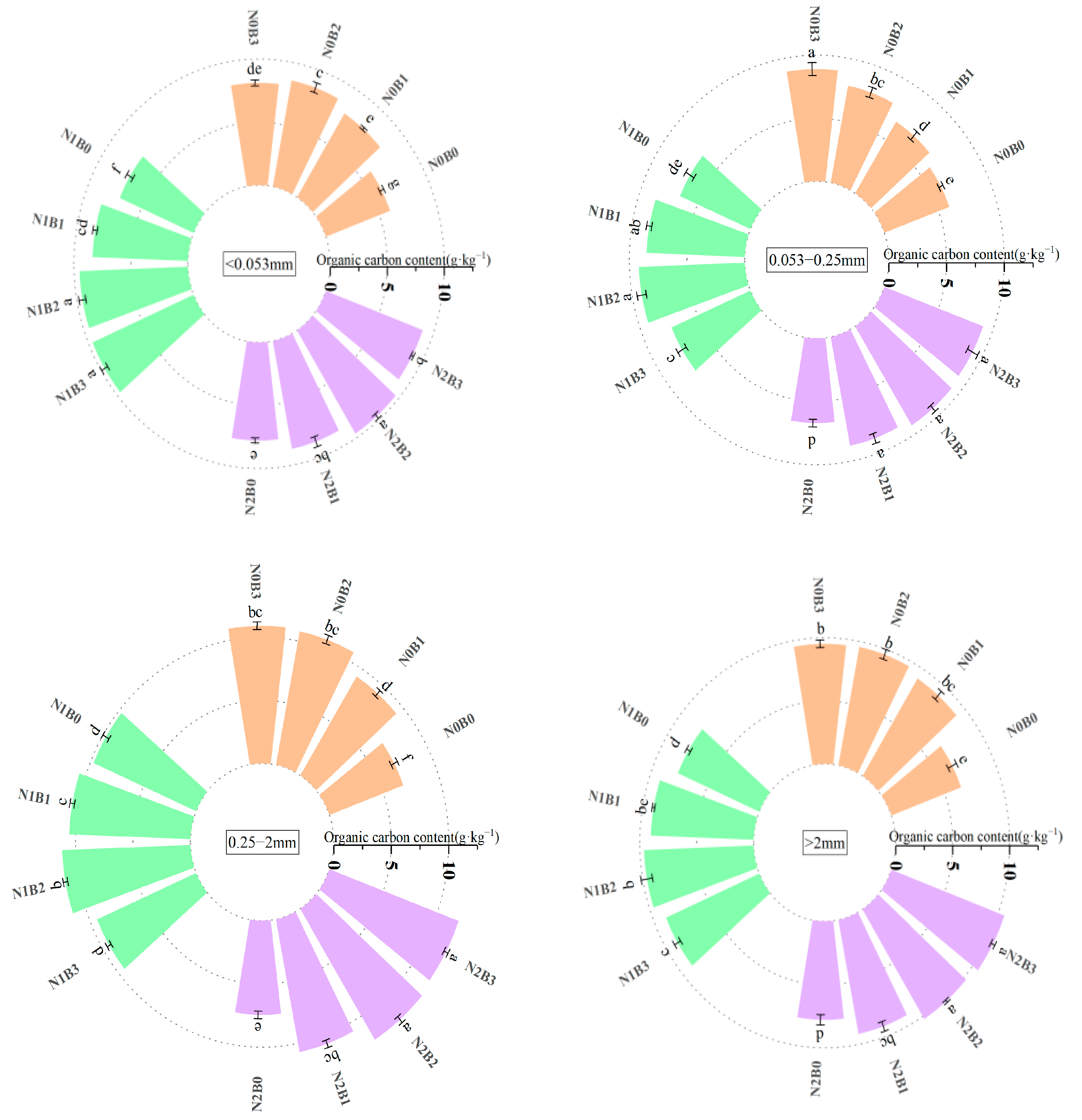
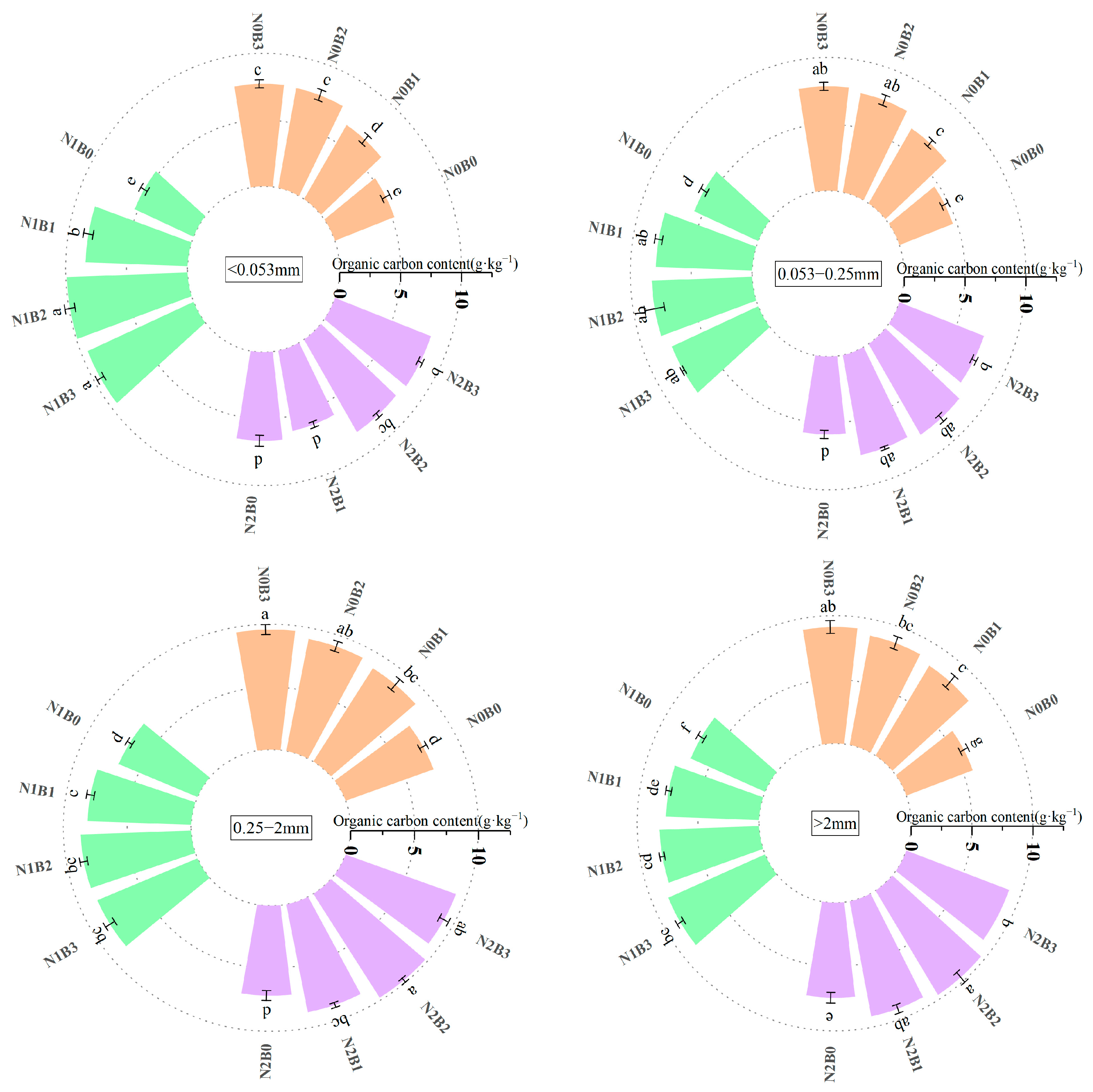
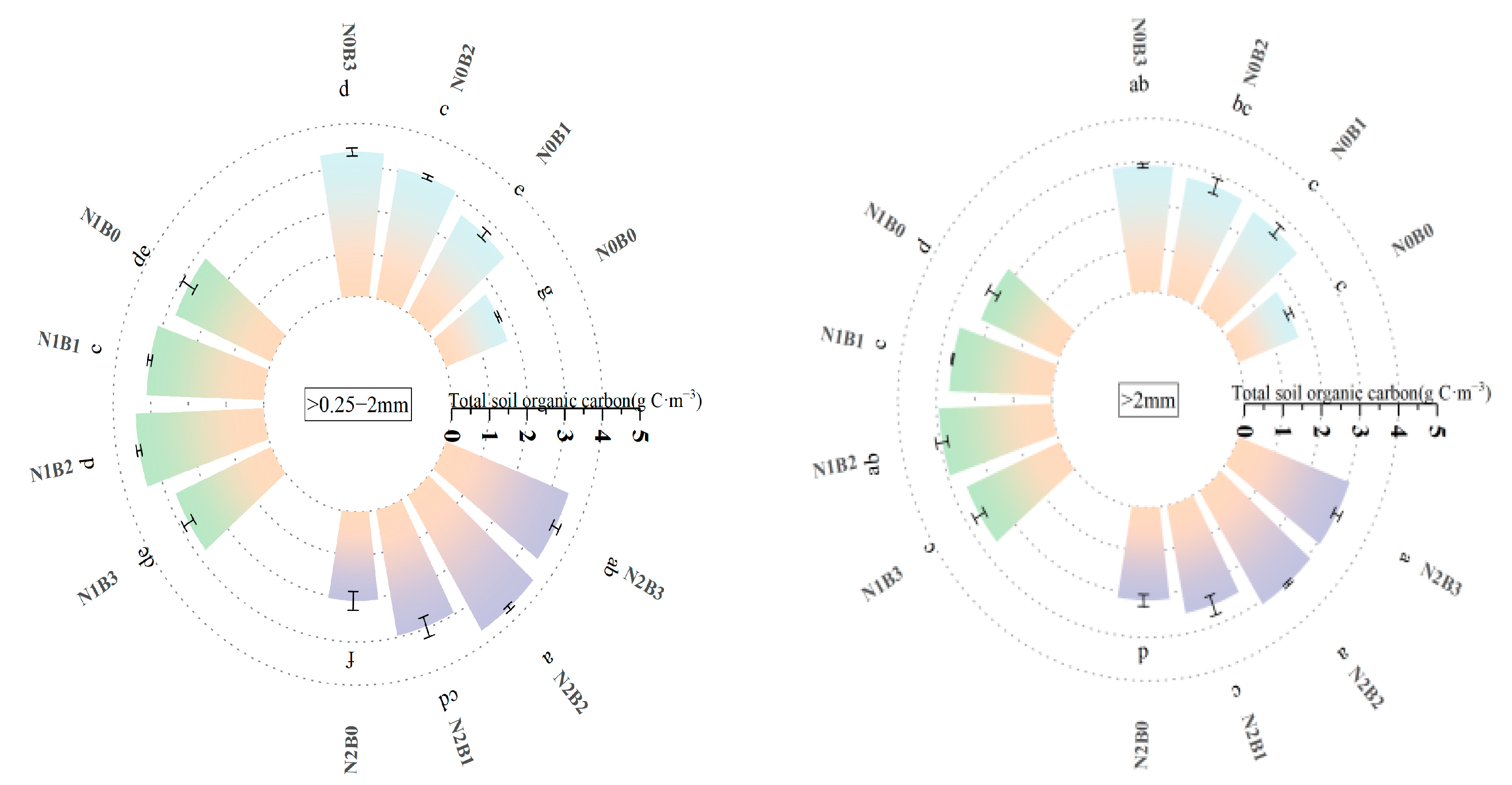
The soil aggregates of different particle sizes exhibited varied organic carbon levels among the three fertilizer treatment groups, as depicted in Figure 2 and Figure 3. The >2 mm and 0.25–2 mm soil aggregates exhibited a higher organic carbon content, followed by the 0.053–0.25 mm aggregates. Conversely, the <0.053 mm soil aggregates had the lowest organic carbon content. In general, the soil organic carbon concentration in the 0–20 cm soil layer exhibited greater levels compared to the 20–40 cm soil layer.
As shown in Figure 2, when compared with the no-nitrogen-fertilizer group (N0B0), the biochar-only groups (N0B1, N0B2, and N0B3) had an increased organic carbon content in the soil aggregates with different particle sizes in the 0–20 cm soil layer, and significant differences were found between groups (p < 0.05). In the groups with normal nitrogen combined with biochar (N1B1, N1B2, and N1B3), the N1B2 group exhibited the highest levels of organic carbon in <0.053 mm soil aggregates, showing an increase of 23.91% for >2 mm aggregates, 15.04% for 0.25–2 mm aggregates, and 38.05% for 0.053–0.25 mm aggregates, when compared to N1B0. For the group with the reduced nitrogen combined with biochar (N2B1, N2B2, and N2B3), the organic carbon content in the <0.053 mm soil aggregates was the highest in the N2B2 group, with an increase of 31.62% (>2 mm), 64.04% (0.25–2 mm), and 39.88% (0.053–0.25 mm) when compared with the reduced nitrogen-only group (N2B0). In comparison to the group with regular nitrogen combined with biochar, the reduced nitrogen with biochar group had a greater propensity for enhancing the organic carbon content in soil aggregates of varying particle sizes despite the application of an equivalent amount of carbon.
It is observed that the organic carbon content in soil aggregates of different particle sizes in the 0–20 cm soil layer within the same treatment group relatively increased in the >2 mm aggregates (Figure 2). Conversely, the organic carbon content in soil aggregates 0.25–2 mm decreased in the 20–40 cm soil layer (Figure 3). In comparison to the group N0B0, the groups, like N0B1, N0B2, and N0B3, exhibited a statistically significant enhancement in the organic carbon content of soil aggregates with varying particle sizes in 20–40 cm soil layer (p < 0.05). In addition, the organic carbon concentration in the soil aggregates of varying particle sizes exhibited a steady augmentation as the quantity of biochar application increased. The organic carbon content in the 0.053–0.25 mm aggregates and <0.053 mm aggregates was the highest under the N1B2 group, and the content of organic carbon in the >2 mm and 0.25–2 mm soil aggregates was the highest under the N2B2 group, with an increase of 88.76%, 44.23%, 29.40%, and 36.21%, respectively, in relation to the normal nitrogen application group. When comparing the application of equal quantities of biochar, it was observed that the reduced nitrogen groups exhibited higher levels of organic carbon content in the soil aggregates >2 mm and 0.25–2 mm. Conversely, the organic carbon content in the 0.053–0.25 mm soil aggregates and <0.053 mm soil aggregates decreased in the reduced nitrogen groups compared to the normal nitrogen group.

3.1.3. The Organic Carbon Reserve

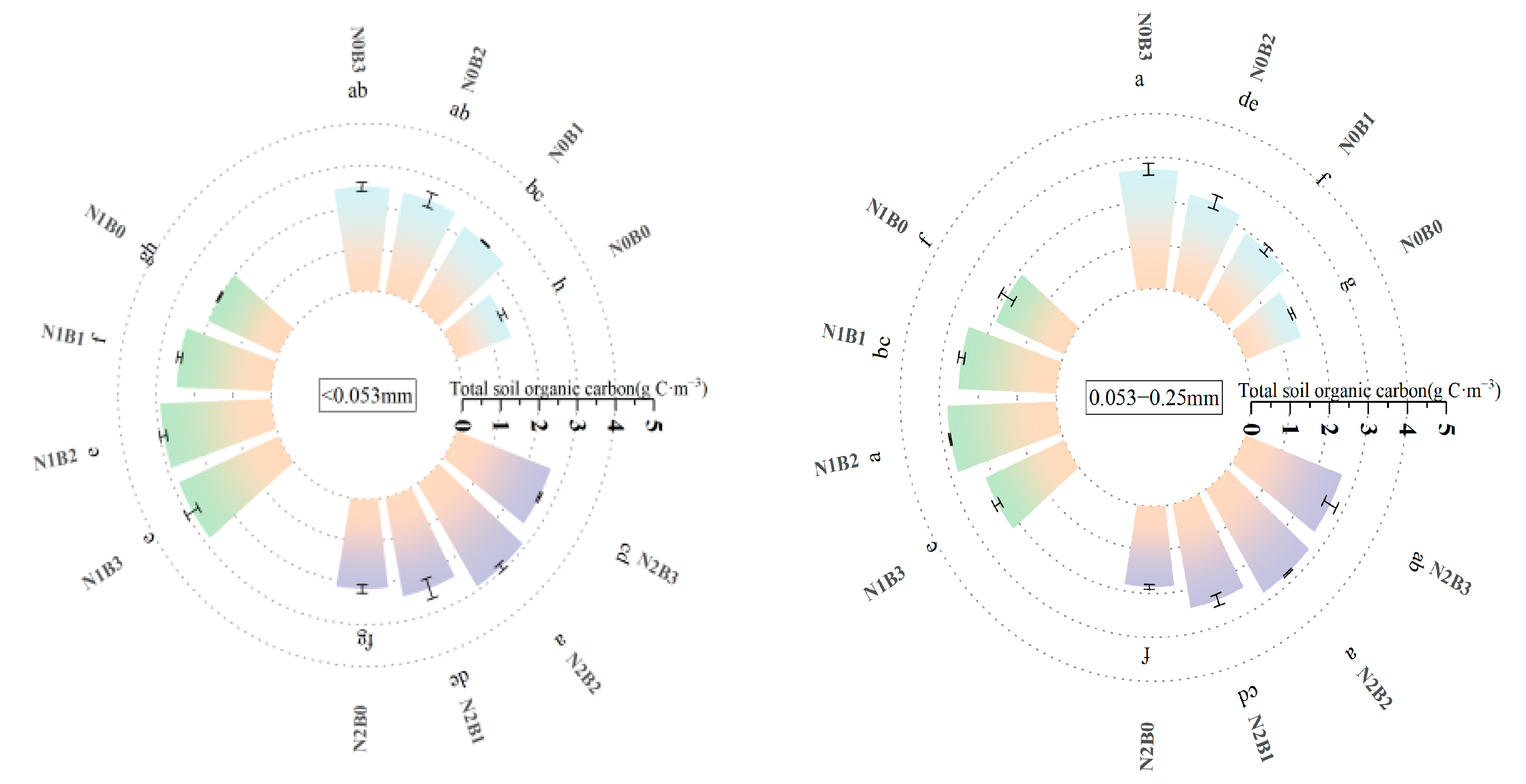
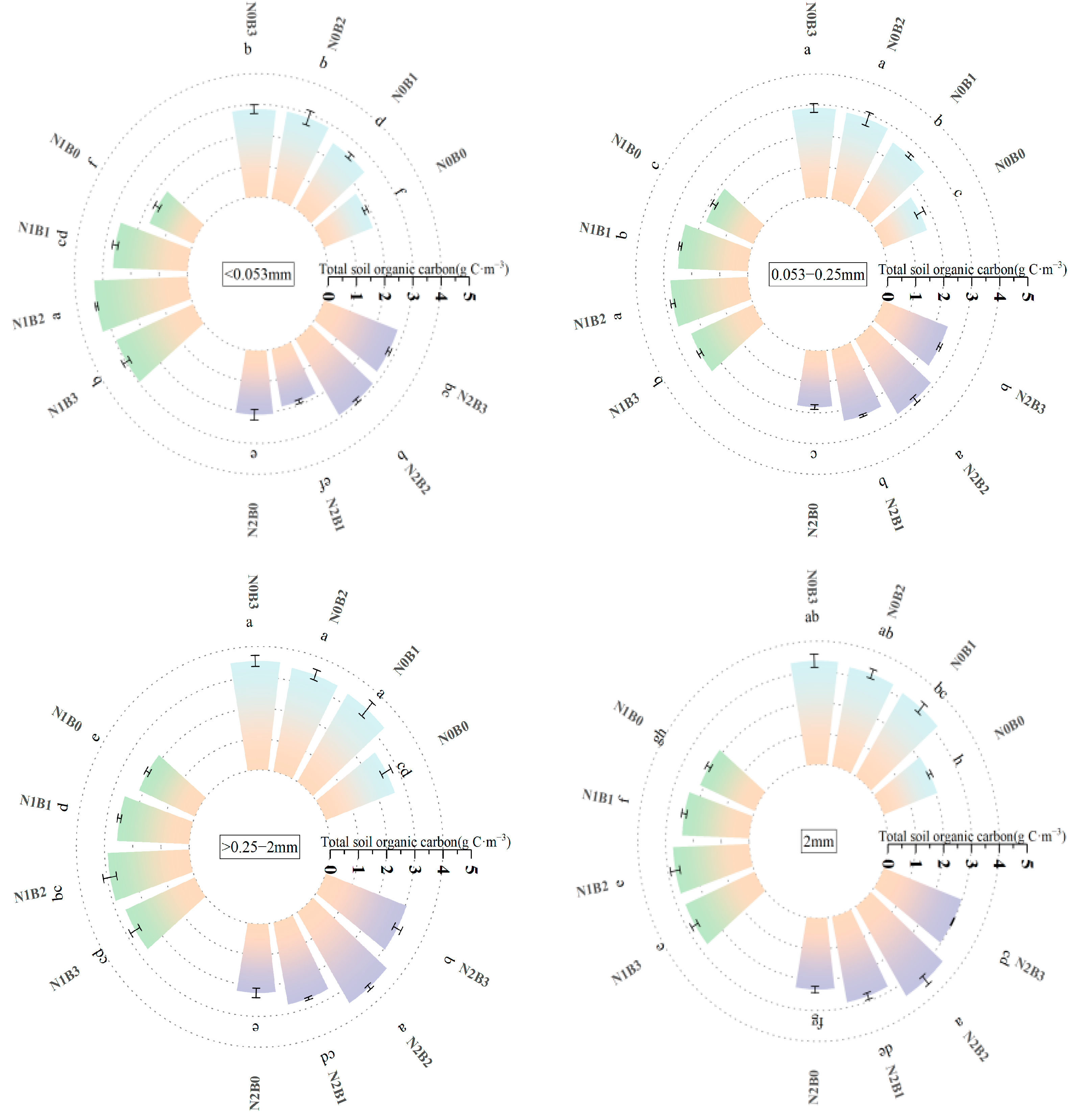
The soil aggregates of diverse particle sizes exhibited distinct variations in organic carbon reserves among different groups. According to the data presented in Figure 4 and Figure 5, it is apparent that the organic carbon storage in soil aggregates of varying particle sizes exhibited a substantial improvement (p < 0.05) in both the biochar-only treatment groups and the nitrogen and biochar combination group when compared to N0B0. Furthermore, it was observed that the soil organic carbon reserve exhibited a general rise in the biochar-only groups (N0B1, N0B2, and N0B3) as the quantity of biochar increased. In the nitrogen fertilizer-only groups, the reduced nitrogen group (N2B0) had an increased organic carbon reserve in the <0.053 mm aggregates, while a decreasing trend was found in the >2 mm, 0.25–2 mm and 0.053–0.25 mm aggregates in the 0–20 cm soil layer (Figure 4). Additionally, the organic carbon reserve increased in the 0.053–0.25 mm aggregates and decreased in the >2 mm, 0.25–2 mm, and <0.053 mm aggregates in the 20–40 cm soil layer (Figure 5).
In Figure 4, in the 0–20 cm layer, in contrast with the no-fertilizer group (N0B0), the nitrogen-fertilizer-only group significantly improved the organic carbon reserve in the soil aggregates with different particle sizes (p < 0.05). In addition, the nitrogen and biochar treatment groups exhibited enhanced levels of organic carbon reserve in soil aggregates of varying particle sizes, as compared to the groups treated solely with nitrogen fertilizer (N1B0 and N2B0). Notably, the differences in organic carbon reserve were statistically significant (p < 0.05) for soil aggregates with particle sizes other than 0.25–2 mm. The organic carbon reserve values were the largest in the N2B2 group, with an increase of 43.72% (>2 mm), 50.81% (0.053–0.25 mm), and 1.86% (< 0.053 mm) when compared with the reduced nitrogen only group (N2B0).
In Figure 5, the biochar-only group significantly increased the organic carbon reserves in soil aggregates of different particle sizes compared to the no-fertilizer group (N0B0) that was in the 20–40 cm soil layer. In comparison to the biochar-only groups (N0B1, N0B2, and N0B3), both the nitrogen-fertilizer-only groups and the combination of nitrogen and biochar exhibited a decrease in the organic carbon reserve within soil aggregates <0.053 mm. In comparison to the group that received nitrogen fertilizer alone, the combination of nitrogen and biochar group exhibited a notable increase in the organic carbon reserve within the soil aggregates of varying particle sizes. This increase was shown to be statistically significant (p < 0.05). Furthermore, the organic carbon reserve in the soil aggregates of varying particle sizes exhibited an initial rise followed by a subsequent decline as the quantity of biochar application increased. Notably, the highest level of organic carbon reserve was observed in the medium biochar treatment group. In addition, the organic carbon reserve was the highest in the reduced nitrogen with a medium level of biochar group (N2B2), which had an increase of 47.84% (>2 mm), 55.36% (0.25–2 mm), and 57.14% (0.053–0.25 mm) more than the reduced nitrogen only group (N2B0). Overall, the organic carbon reserve in the 0.25–2 mm aggregates was the highest, which was followed by the >2 mm aggregates and <0.053 mm soil aggregates.
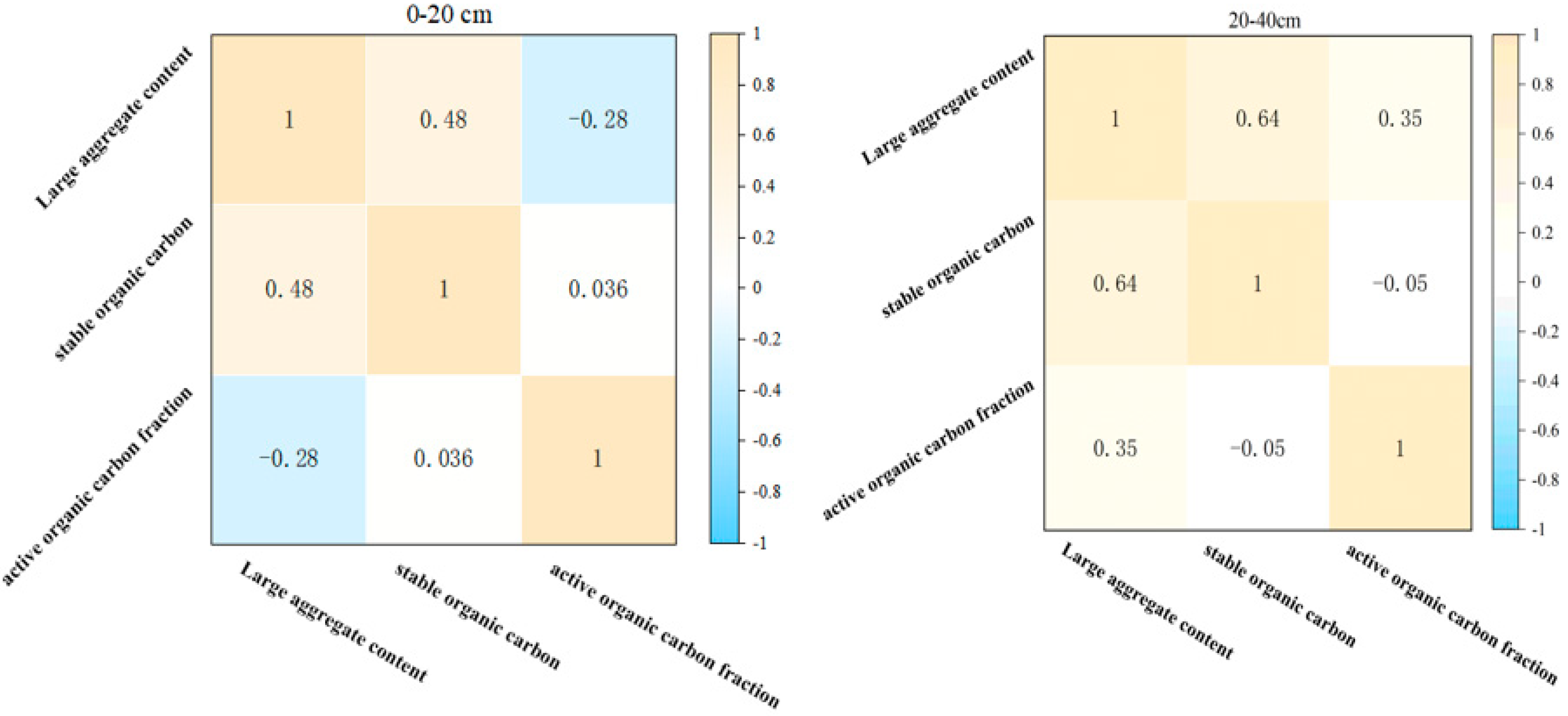
As depicted in Figure 6, in the 0–20 cm soil layer, macroaggregate content showed a significant positive correlation with stable organic carbon and a negative correlation with active organic carbon fraction. In the 20–40 cm soil layer, macroaggregate content was significantly positively correlated with both stable and active organic carbon fraction. Thus, soil macroaggregate content is influenced by both stable and active organic carbon fractions.

3.2. Changes in the Organic Carbon Fractions in Soil

3.2.1. The Organic Carbon Fractions in Soil

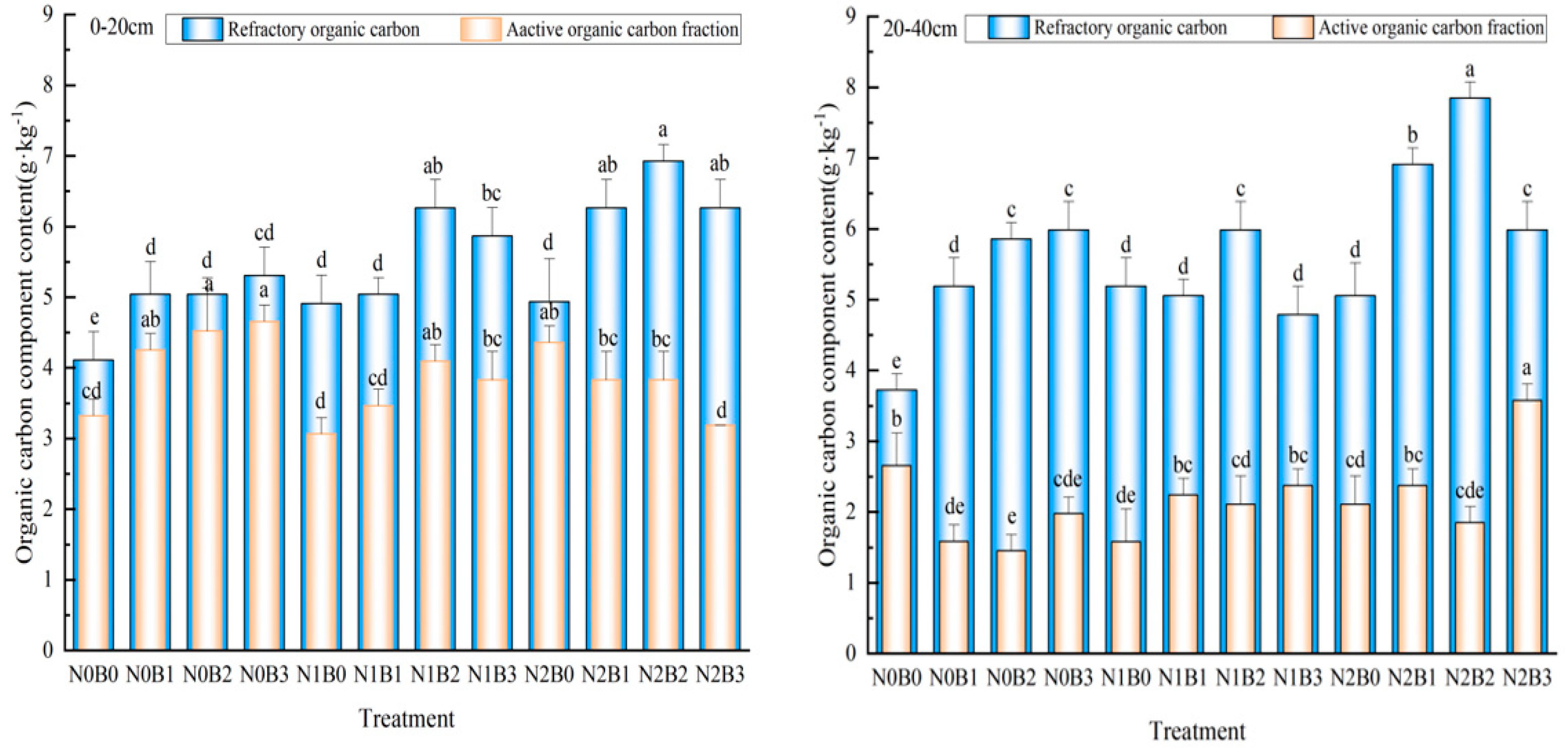
In Figure 7, the refractory organic carbon content was higher than that of the active organic carbon fraction in the 0–40 cm soil layer. The combined application of nitrogen fertilizer and biochar resulted in a substantial augmentation in the refractory organic carbon concentration. Within the identical group, the concentration of active organic carbon fraction in the 0–20 cm layer exhibited a greater magnitude compared to the 20–40 cm layer.
In the 0–20 cm soil layer, when contrasted with the no-fertilizer group (N0B0), none of the nitrogen fertilizer groups showed an increase in the organic carbon fraction contents. However, a substantial improvement in the refractory organic carbon was found (p < 0.05). In the groups in which only biochar was applied, the soil organic carbon fraction contents exhibited an increase trend corresponding to the amount of biochar applied. Additionally, significant differences (p < 0.05) were observed in the group where no fertilizer was used (N0B0). In the nitrogen group (N1B0), the carbon content showed an initial rise followed by a subsequent decline with increasing amounts of biochar applied, with the N1B2 group exhibiting the highest carbon content. In the N2B3 group, which had a high level of biochar, the active organic carbon fraction was 3.19 g·kg−1, representing a 36.68% decrease when compared with the N2B0 group (p < 0.05). Moreover, adding biochar to the reduced-nitrogen group resulted in a notable enhancement in the refractory organic carbon content compared to the reduced nitrogen-only (N2B0, p < 0.05). Additionally, the refractory organic carbon content exhibited an initial increased first and then decreased with increasing amount of biochar. The N2B2 group demonstrated the highest value, experiencing a significant increase of 40.58%.
The active organic carbon fraction in the 20–40 cm soil layer exhibited distinct fluctuation patterns in response to varying levels of nitrogen fertilizer and biochar. All nitrogen fertilizer groups, except for the one with a high level of biochar (N2B3), showed a decrease in active organic carbon content compared to the group without fertilizer (N0B0). Furthermore, the nitrogen fertilizer groups experienced a decrease in active organic carbon fraction, while no significant differences were observed between groups. The group treated with a moderate amount of biochar (B2) showed the lowest level of active organic carbon fraction when the same amount of nitrogen was given. In addition, all groups which received nitrogen fertilizer exhibited a noteworthy enhancement in refractory organic carbon content in comparison to N0B0 (p < 0.05), with the largest increase observed in the group that received reduced nitrogen. Furthermore, the soil organic carbon content exhibited an initial rise followed by a decline as the quantity of biochar increased. Notably, the highest concentration was seen in the N1B2 group, which consisted of nitrogen fertilizer with a moderate level of biochar. The nitrogen-only group (N2B0) experienced a considerable rise of 55.44% as compared to the decreased group (p < 0.05).

3.2.2. The Organic Carbon Index in Soil

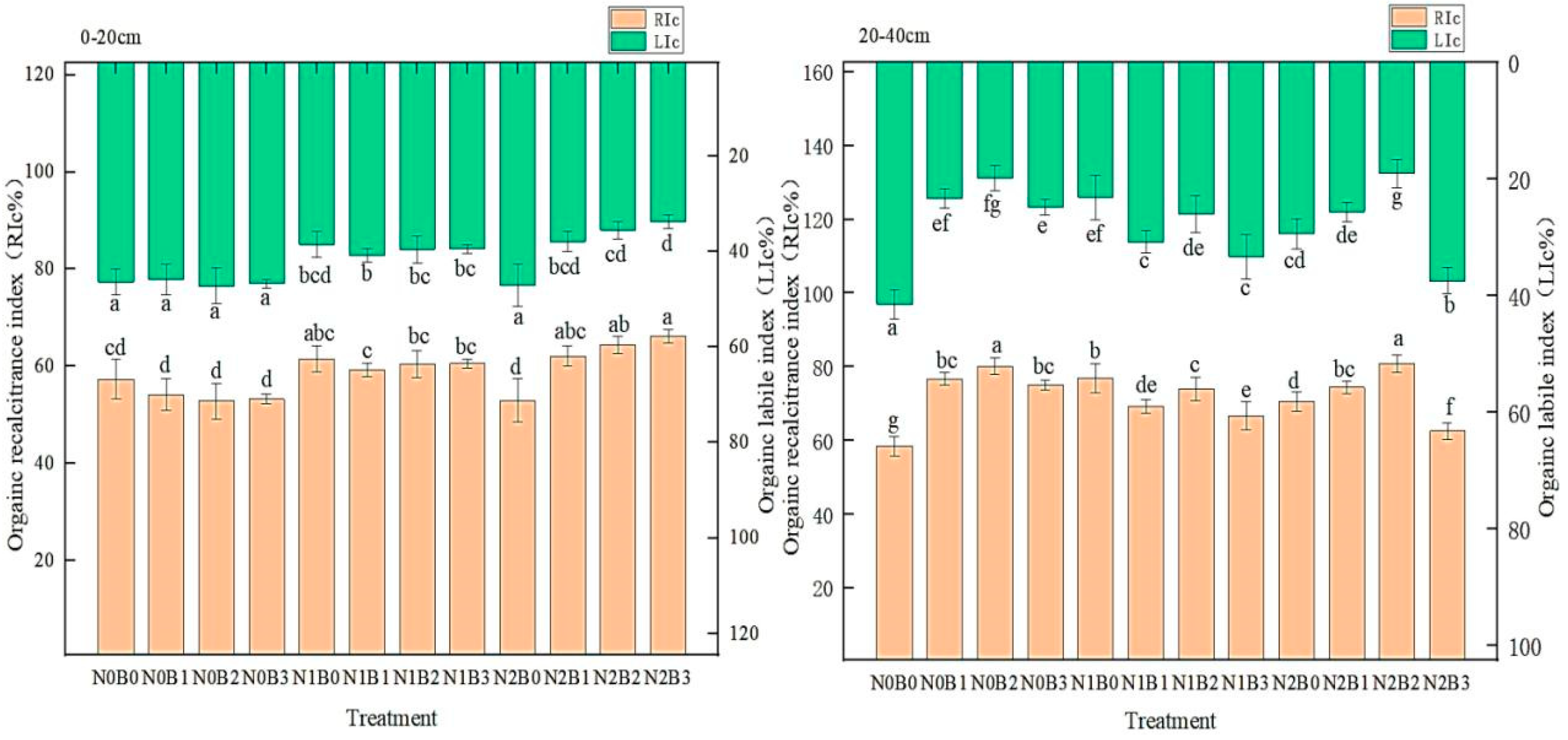
The Labile Index (LIc) is utilized to assess the active organic carbon fraction distribution within the soil organic carbon, whereas the Resistant Index (RIc) is employed to evaluate the recalcitrance of the organic carbon. Overall, this study indicated that the rise in RIc of organic carbon was greater than the decrease in LIc of organic carbon in the 0–40 cm soil layer (Figure 8). The organic carbon in the 20–40 cm layer exhibited a greater RIc value compared to the 0–20 cm layer. Conversely, the LIc value of the organic carbon in the 20–40 cm layer was lower than that in the 0–20 cm layer. These findings suggest that the organic carbon in the 20–40 cm layer is more stable. The organic carbon indices of the different groups exhibited variation within the 0–20 cm layer. The groups that involved reduced nitrogen with biochar (N2B1, N2B2, and N2B3) demonstrated that the LIc had the lowest values. This finding was in line with the levels of active organic carbon fraction present, as depicted in Figure 7. Additionally, a negative correlation was found between the LIc and the biochar applied.
The LIc values in the groups treated with reduced nitrogen and biochar (N2B1, N2B2, and N2B3) showed significant decreases of 24.08%, 32.36%, and 39.07% (p < 0.05), respectively, compared to the group with reduced nitrogen only (N2B0). Compared to the groups that only received nitrogen fertilizer (N1B0 and N2B0), adding biochar had a notable impact on the RIc value, with statistical significance (p < 0.05). Among the groups with a high level of biochar, the group that received reduced nitrogen (N2B3) had the highest RIc value, showing a 21.71% increase compared to the group that only received reduced nitrogen (N2B0). In the 20–40 cm layer, the nitrogen fertilizer groups showed a significant decrease in the LIc value when compared to the no-fertilizer group (N0B0) (p < 0.05). Among the nitrogen fertilizer groups, the N2B2 group had the lowest LIc value for organic carbon, measuring 19.07%. The reduced nitrogen group (N2B0) enhanced the LIc value by 27.11% compared to the regular nitrogen application (N1B0). In the groups in which nitrogen was coupled with biochar, the RIc value increased first, and then decreased as biochar increased. In contrast, the LIc value exhibited a reverse pattern. In comparison to the conventional nitrogen group, the utilization of reduced nitrogen led to a reduction in the respiration index of the organic carbon. This study shows that the groups of nitrogen with biochar experienced the greatest increase in the RIc value when nitrogen reduced and a moderate amount of biochar was used (N2B2). More precisely, the relative increase in the RIc value in the N2B2 group was determined to be 14.55% higher when compared to the group that only used reduced nitrogen (N2B0).

4. Discussion

Direct application of straw or its biochar derivative to soil has been shown to significantly increase the SOC content [47,48]. This study demonstrated that a single application of biochar significantly increased the SOC content in wheat field soils, with the increase being proportional to the amount of biochar applied. Biochar that is rich in carbon can directly contribute to the SOC content [49,50]. The application of biochar also improves the soil environment, the stability of the soil structure, and the stability of the organic carbon pool [51]. Although biochar demonstrates great potential for improving the soil structure and increasing carbon content, its combination with nitrogen fertilizer affects the C/N ratio in soil, which can influence the SOC content. This study indicated that adopting a reduced amount of nitrogen fertilizer combined with biochar also increased the SOC content, with no significant difference compared to the conventional amount of N fertilizer combined with biochar. This indicated that the appropriate N fertilizer application could improve soil fertility while reducing the nitrogen fertilizer loss. SOC can be categorized into different types based on density and particle size [52], with soil POC primarily consisting of undecomposed or semi-decomposed plant, animal, and root residues. This form of SOC has a rapid turnover rate in the soil and is considered part of the soil’s active organic carbon fraction pool [53]. A moderate reduction in nitrogen fertilizer application combined with biochar could increase the POC content in the soil by promoting the formation of coarse aggregates and enhancing the protection of organic carbon [54]. This increase was attributed to the high C/N ratio of biochar, which promoted significant carbon fixation by microorganisms during decomposition, resulting in a higher MOC content in the soil. Additionally, the biochar provided a substantial carbon source for microorganisms, enhanced the rhizosphere microbial activity, accelerated the nutrient turnover, and facilitated the combination of organic matter with soil minerals [55,56], thereby promoting SOC accumulation.
Soil aggregates and organic carbon are both crucial parameters for assessing soil quality and fertility [57]. According to Zhao et al. [58], biochar can enhance soil quality, increase soil fertility, stimulate soil aggregate formation, and impact the storage of organic carbon in soil aggregates of different sizes. This study suggests that using biochar for two years led to the formation of macroaggregates (>2 mm) and mesoaggregates (0.25–2 mm). Furthermore, the groups that received biochar and reduced nitrogen (N2B1, N2B2, and N2B3) exhibited an increase in the amount of macroaggregates in the 0–40 cm layer, while the content of microaggregates (0.053–0.25 mm) decreased in the 20–40 cm layer. This finding implies that the combination of reduced nitrogen and biochar has the ability to promote the transformation of microaggregates into macroaggregates [59]. The group that had a high level of biochar exhibited the highest content of >0.25 mm aggregates. This implies that in cases of low soil fertility or when reduced nitrogen is provided, the utilization of medium or high amounts of biochar is more advantageous for the formation and stability of large aggregates [60]. Nevertheless, the exclusive utilization of biochar did not yield a substantial enhancement in the development of sizable aggregates. Two potential variables that may have contributed to this phenomena were identified. Firstly, the soil contained a restricted quantity of inorganic colloids, which impeded the large aggregates formation [61]. Furthermore, the utilization of biochar was of comparatively short duration, therefore restricting its capacity to significantly improve the physical characteristics of the soil in the immediate period. In this study, the time of the biochar application may affect the formation of soil aggregates [62,63].
In this study, biochar application significantly increased the organic carbon content in the >2 mm and 0.25–2 mm soil aggregates in the 0–20 cm and 20–40 cm layers (p < 0.05). Biochar possesses organic carbon, which can function as a binding agent to consolidate micro-aggregates into larger aggregates [64]. It is worth noting that larger aggregates typically harbor a greater abundance of fungal hyphae compared to aggregates of smaller particle sizes. Consequently, the decomposition of these hyphae can contribute to an elevated concentration of organic carbon within the larger aggregates [65]. The 0.25–2 mm aggregates exhibited the highest organic carbon content in the 0–40 cm layer. This suggested that biochar, as an external source of organic carbon, tends to be concentrated within the larger-sized aggregates [60]. This observation aligns with the results reported in earlier research [66]. Applying biochar in the 0–40 cm layer resulted in an augmentation in the soil organic carbon reserves. The aggregates measuring >2 mm and 0.25–2 mm showed the highest organic carbon storage due to their larger proportion and their primary function as carries of organic carbon. Furthermore, it can be concluded that the development of larger aggregates in wheat field soil provides a kind of physical protection for the organic carbon present. This defense mechanism is therefore able to reduce the microbial degradation of the organic carbon present in the soil [59].
The recalcitrance of the soil organic carbon reflects the stability of the soil organic carbon and determines the organic carbon fixation and storage capacities of the soil [66,67]. The active organic carbon fractions of the soil are extremely sensitive and serve as indicators of soil quality and production [68]. The present research revealed that the application of nitrogen fertilizer in combination with biochar resulted in a substantial enhancement in the refractory organic carbon levels in the soil. The impact was particularly significant when reduced nitrogen was combined with biochar, resulting in a substantial rise in refractory organic carbon concentration. Brodowski et al. [61] found that soil under low-nitrogen conditions had a high carbon-to-nitrogen ratio, which partially hindered the microbial breakdown rate of organic materials and organic debris. As a result, the soil included a substantial quantity of partially decomposed remnants, such as straw and root debris. This event led to a reduction in the decomposition and transformation of refractory organic carbon into easily decomposable organic carbon, which promoted the storage of organic carbon in a chemically stable form in the soil [69].
Furthermore, biochar-only application raised the active organic carbon fraction content in the 0–20 cm layer substantially. This is due to the fact that biochar application increases the carbon source for microbes, boosts microbial development, enhances microbial activity, and facilitates organic material decomposition, hence increasing the active organic carbon fraction in the soil [66,70]. The LIc of the organic carbon indicates its level of activity or bio-degradability [68], whereas the RIc of the soil reflects the chemical recalcitrance of the organic carbon. Due to the recalcitrance of the organic carbon fractions and their relatively minor variations in the short to medium term, the RIc holds significant importance for the long-term storage or sequestration of soil carbon [71]. The application of biochar and nitrogen fertilizer had no significant influence on the LIc of organic carbon, indicating that biochar application enhanced soil organic carbon content primarily via increasing the refractory organic carbon content [62,70]. Therefore, to examine the potential of biochar to enhance carbon sequestration in wheat field, it is crucial to consider the essential amounts of active organic carbon fraction required for optimal crop yield.
This research significantly enhances the optimization of biochar application and nitrogen fertilization practices. It concentrates on assessing soil aggregates and the organic carbon associated with these aggregates, rather than mechanisms like microbial activity. Therefore, further development is necessary, especially in various soil and plant environments with distinct characteristics, as well as the long-term impacts of biochar application on soil.

5. Conclusions

The application of biochar and nitrogen fertilizer over two years resulted in increased refractory organic carbon levels in the soil, fostering the stabilization of soil organic carbon. Using a lower amount of nitrogen combined with medium biochar (N2B2: N255 kg·ha−1 + B20 t·ha−1) in the irrigated areas of North Xinjiang is effective for boosting organic carbon in soil aggregates and improving carbon sequestration.
However, this study has certain limitations. The effects were evaluated over a relatively short term, and the persistence of these benefits requires verification through long-term monitoring.
Furthermore, the underlying microbial mechanisms driving aggregate formation and carbon sequestration were not investigated. Future research should, therefore, focus on: (i) long-term field experiments to validate the sustainability of this practice and its impact on soil organic carbon dynamics; and (ii) investigating the soil microbial community composition and activity in response to biochar and nitrogen interactions to elucidate the biological mechanisms involved.

Author Contributions

The present report was conducted by Z.W. and L.Z. (Liyue Zhang). under the guidance and supervision of W.Y. The studies were carefully selected, and the data was subjected to analysis by W.Y., M.Y., L.Z. (Lining Zhao), P.L., Z.W. and L.Z. (Liyue Zhang), W.Y. and J.Z. drafted the report and subsequently evaluated and reviewed it by W.Y. and P.L. All authors have read and agreed to the published version of the manuscript.

Funding

This project was financially supported by the Tianshan Talent Training Program (2023TSYCCX0085), the Regional Science Fund Project of the Natural Science Foundation of China (32260326), and the earmarked fund for the Xinjiang Agriculture Research System (XJARS-01).

Data Availability Statement

The datasets generated during and/or analyzed during the present study are available from the corresponding author upon reasonable request.

Conflicts of Interest

The authors declare that they have no known competing financial interests or personal relationships that could have appeared to influence the work reported in this paper.

References

  1. Qi, P.; Chen, J.; Wang, X.; Zhang, R.; Cai, L.; Jiao, Y.; Li, Z.; Han, G. Changes in soil particulate and mineral-associated organic carbon concentrations under nitrogen addition in China—A meta-analysis. Plant Soil. 2023, 489, 439–452. [Google Scholar] [CrossRef]
  2. Hatano, R.; Mukumbuta, I.; Shimizu, M. Soil Health Intensification through Strengthening Soil Structure Improves Soil Carbon Sequestration. Agriculture 2024, 14, 1290. [Google Scholar] [CrossRef]
  3. Zhang, W.; Munkholm, L.J.; Liu, X.; An, T.; Xu, Y.; Ge, Z.; Xie, N.; Li, A.; Dong, Y.; Peng, C.; et al. Soil aggregate microstructure and microbial community structure mediate soil organic carbon accumulation: Evidence from one-year field experiment. Geoderma 2023, 430, 116324. [Google Scholar] [CrossRef]
  4. Kan, Z.R.; Ma, S.T.; Liu, Q.Y.; Liu, B.Y.; Virk, A.L.; Qi, J.Y.; Zhao, X.; Lal, R.; Zhang, H.L. Carbon sequestration and mineralization in soil aggregates under long-term conservation tillage in the North China Plain. Catena 2020, 188, 104428. [Google Scholar] [CrossRef]
  5. Zhang, P.; Wang, Y.; Xu, L.; Sun, H.; Li, R.; Zhou, J. Factors controlling the spatial variability of soil aggregates and associated organic carbon across a semi-humid watershed. Sci. Total Environ. 2022, 809, 151155. [Google Scholar] [CrossRef] [PubMed]
  6. Naresh, R.K.; Timsina, J.; Bhaskar, S.; Gupta, R.K.; Singh, A.K.; Dhaliwal, S.S.; Rathore, R.S.; Kumar, V.; Singh, P.; Singh, S.P.; et al. Effects of tillage, residue and nutrient management on soil organic carbon dynamics and its fractions, soil aggregate stability and soil carbon sequestration: A review. EC Nutr. 2017, 12, 53–80. [Google Scholar]
  7. Ma, Y.; Woolf, D.; Fan, M.; Qiao, L.; Li, R.; Lehmann, J. Global crop production increase by soil organic carbon. Nat. Geosci. 2023, 16, 1159–1165. [Google Scholar] [CrossRef]
  8. Li, Z.; Duan, X.; Guo, X.; Gao, W.; Li, Y.; Zhou, P.; Zhu, Q.; O’Donnell, A.G.; Dai, K.; Wu, J. Microbial metabolic capacity regulates the accrual of mineral-associated organic carbon in subtropical paddy soils. Soil. Biol. Biochem. 2024, 195, 109457. [Google Scholar] [CrossRef]
  9. Li, Z.W.; Wang, G.Y.; Khan, K.; Yang, L.; Chi, Y.X.; Wang, Y.; Zhou, X.B. Irrigation combines with nitrogen application to optimize soil carbon and nitrogen, increase maize yield, and nitrogen use efficiency. Plant Soil 2024, 499, 605–620. [Google Scholar] [CrossRef]
  10. Wang, G.Y.; Hu, Y.X.; Liu, Y.X.; Ahmad, S.; Zhou, X.B. Effects of supplement irrigation and nitrogen application levels on soil carbon–nitrogen content and yield of one-year double cropping maize in subtropical region. Water 2021, 13, 1180. [Google Scholar] [CrossRef]
  11. Shahid, M.; Nayak, A.K.; Puree, C.; Tripathi, R.; Lal, B.; Gautam, P.; Bhattacharyya, P.; Mohanty, S.; Kumar, A.; Panda, B.B.; et al. Carbon and nitrogen fractions and stocks under 41 years of chemical and organic fertilization in a sub-humid tropical rice soil. Soil. Tillage Res. 2017, 170, 136–146. [Google Scholar] [CrossRef]
  12. Li, J.; Wen, Y.; Li, X.; Li, Y.; Yang, X.; Lin, Z.; Song, Z.; Cooper, J.M.; Zhao, B. Soil labile organic carbon fractions and soil organic carbon stocks as affected by long-term organic and mineral fertilization regimes in the North China Plain. Soil. Tillage Res. 2018, 175, 281–290. [Google Scholar] [CrossRef]
  13. Hansen, D.S.; Turcios, A.E.; Klamt, A.M.; Wieth, C.; Reitzel, K.; Thomsen, M.H.; Papenbrock, J. Characterization of biochar produced from sewage sludge and its potential use as a substrate and plant growth improver. J. Environ. Manag. 2023, 348, 119271. [Google Scholar] [CrossRef] [PubMed]
  14. Bai, X.; McKnight, M.M.; Neufeld, J.D.; Parker, W.J. Nitrogen removal pathways during simultaneous nitrification, denitrification, and phosphorus removal under low temperature and dissolved oxygen conditions. Bioresour. Technol. 2022, 354, 127177. [Google Scholar] [CrossRef]
  15. Gwenzi, W.; Nyambishi, T.J.; Chaukura, N.; Mapope, N. Synthesis and nutrient release patterns of a biochar-based N–P–K slow-release fertilizer. Int. J. Environ. Sci. Technol. 2018, 15, 405–414. [Google Scholar] [CrossRef]
  16. Melo, L.C.A.; Lehmann, J.; Carneiro, J.S.D.S.; Camps-Arbestain, M. Biochar-based fertilizer effects on crop productivity: A meta-analysis. Plant Soil 2022, 472, 45–58. [Google Scholar] [CrossRef]
  17. Sun, Y.; Xiong, X.; He, M.; Xu, Z.; Hou, D.; Zhang, W.; Ok, Y.S.; Rinklebe, J.; Wang, L.; Tsang, D.C. Roles of biochar-derived dissolved organic matter in soil amendment and environmental remediation: A critical review. Chem. Eng. J. 2021, 424, 130387. [Google Scholar] [CrossRef]
  18. Abbruzzini, T.F.; Moreira, M.Z.; de Camargo, P.B.; Conz, R.F.; Cerri, C.E.P. Increasing rates of biochar application to soil induce stronger negative priming effect on soil organic carbon decomposition. Agric. Res. 2017, 6, 389–398. [Google Scholar] [CrossRef]
  19. Chen, Y.; Sun, K.; Yang, Y.; Gao, B.; Zheng, H. Effects of biochar on the accumulation of necromass-derived carbon, the physical protection and microbial mineralization of soil organic carbon. Crit. Rev. Environ. Sci. Technol. 2024, 54, 39–67. [Google Scholar] [CrossRef]
  20. Liang, Y.; Fu, R.; Sailike, A.; Hao, H.; Yu, Z.; Wang, R.; Peng, N.; Li, S.; Zhang, W.; Liu, Y. Soil labile organic carbon and nitrate nitrogen are the main factors driving carbon-fixing pathways during vegetation restoration in the Loess Plateau, China. Agric. Ecosyst. Environ. 2021, 378, 109283. [Google Scholar] [CrossRef]
  21. Zhang, N.; Ye, X.; Gao, Y.; Liu, G.; Liu, Z.; Zhang, Q.; Liu, E.; Sun, S.; Ren, X.; Jia, Z.; et al. Environment and agricultural practices regulate enhanced biochar-induced soil carbon pools and crop yield: A meta-analysis. Sci. Total Environ. 2023, 905, 167290. [Google Scholar] [CrossRef] [PubMed]
  22. Jiang, J.; Zhang, R.Z.; Wu, J.; Cai, L.Q.; Dong, B. Effect of different biochar application rates on soil organic carbon in the semi-arid Loess Plateau, China. Commun. Soil Sci. Plant Anal. 2021, 52, 423–431. [Google Scholar] [CrossRef]
  23. Amoakwah, E.; Frimpong, K.A.; Arthur, E. Corn cob biochar improves aggregate characteristics of a tropical sandy loam. Soil. Sci. Soc. Am. J. 2017, 81, 1054–1063. [Google Scholar] [CrossRef]
  24. Fu, Q.; Zhao, H.; Li, H.; Li, T.; Hou, R.; Liu, D.; Ji, Y.; Gao, Y.; Yu, P. Effects of biochar application during different periods on soil structures and water retention in seasonally frozen soil areas. Sci. Total Environ. 2019, 694, 133732. [Google Scholar] [CrossRef] [PubMed]
  25. Han, L.; Zhang, B.; Chen, L.; Feng, Y.; Yang, Y.; Sun, K. Impact of biochar amendment on soil aggregation varied with incubation duration and biochar pyrolysis temperature. Chemosphere 2021, 3, 339–347. [Google Scholar] [CrossRef]
  26. Dong, X.; Guan, T.; Li, G.; Lin, Q.; Zhao, X. Long-term effects of biochar amount on the content and composition of organic matter in soil aggregates under field conditions. J. Soil. Sediments 2016, 16, 1481–1497. [Google Scholar] [CrossRef]
  27. Burrell, L.D.; Zehetner, F.; Rampazzo, N.; Wimmer, B.; Soja, G. Long-term effects of biochar on soil physical properties. Geoderma 2016, 282, 96–102. [Google Scholar] [CrossRef]
  28. Pituello, C.; Dal Ferro, N.; Francioso, O.; Simonetti, G.; Berti, A.; Piccoli, I.; Pisi, A.; Morari, F. Effects of biochar on the dynamics of aggregate stability in clay and sandy loam soils. Eur. J. Soil. Sci. 2018, 69, 827–842. [Google Scholar] [CrossRef]
  29. Islam, M.U.; Jiang, F.; Guo, Z.; Peng, X. Does biochar application improve soil aggregation? A meta-analysis. Soil. Tillage Res. 2021, 209, 104926. [Google Scholar] [CrossRef]
  30. Rahman, M.T.; Zhu, Q.H.; Zhang, Z.B.; Zhou, H.; Peng, X. The roles of organic amendments and microbial community in the improvement of soil structure of a Vertisol. Appl. Soil Ecol. 2017, 111, 84–93. [Google Scholar] [CrossRef]
  31. Zhou, H.; Fang, H.; Zhang, Q.; Wang, Q.; Chen, C.; Mooney, S.J.; Peng, X.; Du, Z. Biochar enhances soil hydraulic function but not soil aggregation in a sandy loam. Eur. J. Soil. Sci. 2019, 70, 291–300. [Google Scholar] [CrossRef]
  32. Lusiba, S.; Odhiambo, J.; Ogola, J. Effect of biochar and phosphorus fertilizer application on soil fertility: Soil physical and chemical properties. Arch. Agron. Soil. Sci. 2017, 63, 477–490. [Google Scholar] [CrossRef]
  33. Teutscherova, N.; Lojka, B.; Benito, M.; Masaguer, A.; Vázquez, E. Biochar reduces the stability of soil aggregates during intensive leaching experiment. Agronomy 2020, 10, 1910. [Google Scholar] [CrossRef]
  34. Li, S.; Wang, S.; Shangguan, Z. Combined biochar and nitrogen fertilization at appropriate rates could balance the leaching and availability of soil inorganic nitrogen. Agric. Ecosyst. Environ. 2019, 276, 21–30. [Google Scholar] [CrossRef]
  35. Zhang, Y.; Dang, Y.; Wang, J.; Huang, Q.; Wang, X.; Yao, L.; Vinay, N.; Yu, K.; Wen, X.; Xiong, Y.; et al. A synthesis of soil organic carbon mineralization in response to biochar amendment. Soil. Boil. Biochem. 2022, 175, 108851. [Google Scholar] [CrossRef]
  36. Tafti, N.; Wang, J.; Gaston, L.; Park, J.H.; Wang, M.; Pensky, S. Agronomic and environmental performance of biochar amendment in alluvial soils under subtropical sugarcane production. Agrosyst. Geosci. Environ. 2021, 4, e20209. [Google Scholar] [CrossRef]
  37. Liu, Y.; Lu, H.; Yang, S.; Wang, Y. Impacts of biochar addition on rice yield and soil properties in a cold waterlogged paddy for two crop seasons. Field Crops Res. 2016, 191, 161–167. [Google Scholar] [CrossRef]
  38. Lu, Y.; Silveira, M.L.; O’Connor, G.A.; Vendramini, J.M.; Erickson, J.E.; Li, Y.C. Assessing the impacts of biochar and fertilizer management strategies on N and P balances in subtropical pastures. Geoderma 2021, 394, 115038. [Google Scholar] [CrossRef]
  39. Ge, S.; Gao, J.; Chang, D.; He, T.; Cai, H.; Wang, M.; Li, C.; Luo, Z.E.Y.; Meng, J.; Gao, M. Biochar contributes to resistance against root rot disease by stimulating soil polyphenol oxidase. Biochar 2023, 5, 55. [Google Scholar] [CrossRef]
  40. Kumar, A.; Kumari, M.; Azim, U.; Vithanage, M.; Bhattacharya, T. Garbage to Gains: The role of biochar in sustainable soil quality improvement, arsenic remediation, and crop yield enhancement. Chemosphere 2023, 344, 140417. [Google Scholar] [CrossRef]
  41. Yang, W.; Wang, Z.; Guo, S.; Yang, M.; Zhao, L.; Zhao, H.; Jia, H.; Xu, W. Evaluation of soil fertility quality under biochar combined with nitrogen in an irrigated wheat field in Northern Xinjiang, China. Agronomy 2023, 13, 2518. [Google Scholar] [CrossRef]
  42. Yang, W.; Wang, Z.; Zhao, H.; Li, D.; Jia, H.; Xu, W. Biochar application influences the stability of soil aggregates and wheat yields. Plant Soil Environ. 2024, 70, 125. [Google Scholar] [CrossRef]
  43. Jiang, M.; Li, C.; Gao, W.; Cai, K.; Tang, Y.; Cheng, J. Comparison of long-term effects of biochar application on soil organic carbon and its fractions in two ecological sites in karst regions. Geoderma Reg. 2022, 28, e00477. [Google Scholar] [CrossRef]
  44. Tabatabai, M.A. Soil organic matter testing: An overview. Soil Org. Matter Anal. Interpret. 1996, 46, 1–9. [Google Scholar] [CrossRef]
  45. Lu, Z.; Xiao, K.; Wang, F.; Wang, Y.; Yu, Q.; Chen, N. Salt marsh invasion reduces recalcitrant organic carbon pool while increases lateral export of dissolved inorganic carbon in a subtropical mangrove wetland. Geoderma 2023, 437, 116573. [Google Scholar] [CrossRef]
  46. Rovira, P.; Vallejo, V.R. Labile and recalcitrant pools of carbon and nitrogen in organic matter decomposing at different depths in soil: An acid hydrolysis approach. Geoderma 2002, 107, 109–141. [Google Scholar] [CrossRef]
  47. Situ, G.M.; Zhao, Y.L.; Zhang, L.; Yang, X.; Chen, D.; Li, S.; Wu, Q.; Xu, Q.; Chen, J.; Qin, H. Linking the chemical nature of soil organic carbon and biological binding agent in aggregates to soil aggregate stability following biochar amendment in a rice paddy. Sci. Total Environ. 2022, 847, 157460. [Google Scholar] [CrossRef]
  48. Yang, X.; Wang, D.; Lan, Y.; Meng, J.; Jiang, L.; Sun, Q.; Cao, D.; Sun, Y.; Chen, W. Labile organic carbon fractions and carbon pool management index in a 3-year field study with biochar amendment. J. Soils Sediments 2018, 18, 1569–1578. [Google Scholar] [CrossRef]
  49. Leng, L.J.; Huang, H.J.; Li, H.; Li, J.; Zhou, W. Biochar stability assessment methods: A review. Sci. Total Environ. 2019, 647, 210–222. [Google Scholar] [CrossRef]
  50. Jing, F.; Sun, Y.; Liu, Y.; Wan, Z.; Chen, J.; Tsang, D.C. Interactions between biochar and clay minerals in changing biochar carbon stability. Sci. Total Environ. 2022, 809, 151124. [Google Scholar] [CrossRef]
  51. Azeem, M.; Hayat, R.; Hussain, Q.; Ahmed, M.; Pan, G.; Tahir, M.I.; Irfan, M.; Hassan, M.U. Biochar improves soil quality and N2-fixation and reduces net ecosystem CO2 exchange in a dryland legume-cereal cropping system. Soil Tillage Res. 2019, 186, 172–182. [Google Scholar] [CrossRef]
  52. Giannetta, B.; Plaza, C.; Galluzzi, G.; Benavente-Ferraces, I.; García-Gil, J.C.; Panettieri, M.; Gascó, G.; Zaccone, C. Distribution of soil organic carbon between particulate and mineral-associated fractions as affected by biochar and its co-application with other amendments. Agric. Ecosyst. Environ. 2024, 360, 108777. [Google Scholar] [CrossRef]
  53. Wu, J.J.; Zhang, H.; Pan, Y.T.; Cheng, X.; Zhang, K.; Liu, G. Particulate organic carbon is more sensitive to nitrogen addition than mineral-associated organic carbon: A meta-analysis. Soil. Tillage Res. 2023, 232, 105770. [Google Scholar] [CrossRef]
  54. Ontl, A.T.; Cambardella, A.C.; Schulte, A.L.; Kolka, R.K. Factors influencing soil aggregation and particulate organic matter responses to bioenergy crops across a topographic gradient. Geoderma 2015, 255–256, 1–11. [Google Scholar] [CrossRef]
  55. Wu, W.X.; Yang, M.; Feng, Q.B.; McGrouther, K.; Wang, H.; Lu, H.; Chen, Y. Chemical characterization of rice straw-derived biochar for soil amendment. Biomass Bioenergy 2012, 47, 268–276. [Google Scholar] [CrossRef]
  56. Liu, Y.X.; Yang, M.; Wu, Y.; Wang, H.; Chen, Y.; Wu, W. Reducing CH4 and CO2 emissions from waterlogged paddy soil with biochar. J. Soils Sediments 2011, 11, 930–939. [Google Scholar] [CrossRef]
  57. Badagliacca, G.; Petrovičovà, B.; Pathan, S.I.; Roccotelli, A.; Romeo, M.; Monti, M.; Gelsomino, A. Use of solid anaerobic digestate and no-tillage practice for restoring the fertility status of two Mediterranean orchard soils with contrasting properties. Agric. Ecosyst. Environ. 2022, 300, 107010. [Google Scholar] [CrossRef]
  58. Zhao, H.; Wang, Z.; Liu, H.; Xiao, H.; Gao, M. Water-stable aggregates and aggregate-associated organic carbon after two years of biochar application. Arch. Agron. Soil. Sci. 2023, 69, 2218–2232. [Google Scholar] [CrossRef]
  59. Yang, X.; Ren, W.; Sun, B.; Zhang, S. Effects of contrasting soil management regimes on total and labile soil organic carbon fractions in a loess soil in China. Geoderma 2012, 177, 49–56. [Google Scholar] [CrossRef]
  60. Wang, Q.Y.; Sun, J.Y.; Hu, N.W.; Wang, T.Y.; Yue, J.; Hu, B.; Yu, H.W. Effects of soil aging conditions on distributions of cadmium distribution and phosphatase activity in different soil aggregates. Sci. Total Environ. 2022, 834, 155440. [Google Scholar] [CrossRef]
  61. Brodowski, S.; John, B.; Flessa, H.; Amelung, W. Aggregate-occluded black carbon in soil. Eur. J. Soil. Sci. 2006, 57, 539–546. [Google Scholar] [CrossRef]
  62. Borchard, N.; Siemens, J.; Ladd, B.; Möller, A.; Amelung, W. Application of biochars to sandy and silty soil failed to increase maize yield under common agricultural practice. Soil. Tillage Res. 2014, 144, 184–194. [Google Scholar] [CrossRef]
  63. Li, Y.; Li, Y.; Chang, S.X.; Yang, Y.; Fu, S.; Jiang, P.; Luo, Y.; Yang, M.; Chen, Z.; Hu, S.; et al. Biochar reduces soil heterotrophic respiration in a subtropical plantation through increasing soil organic carbon recalcitrancy and decreasing carbon-degrading microbial activity. Soil Biol. Biochem. 2018, 122, 173–185. [Google Scholar] [CrossRef]
  64. Li, L.; Yuan, Z.; Li, F. Changes in soil aggregates composition stabilization and organic carbon during deterioration of alpine grassland. IOP Conf. Ser. Earth Environ. Sci. 2019, 237, 032068. [Google Scholar] [CrossRef]
  65. Ding, X.; Li, G.; Zhao, X.; Lin, Q.; Wang, X. Biochar application significantly increases soil organic carbon under conservation tillage: An 11-year field experiment. Biochar 2023, 5, 28. [Google Scholar] [CrossRef]
  66. Abulaiti, A.; She, D.; Liu, Z.; Sun, X.; Wang, H. Application of biochar and polyacrylamide to revitalize coastal saline soil quality to improve rice growth. Environ. Sci. Pollut. Res. Int. 2023, 30, 18731–18747. [Google Scholar] [CrossRef]
  67. Qu, J.F.; Tan, M.; Le Hou, Y.; Ge, M.Y.; Wang, A.N.; Wang, K.; Shan, J.X.; Chen, F. Effects of the stability of reclaimed soil aggregates on organic carbon in coal mining subsidence areas. Appl. Eng. Agric. 2018, 34, 843–854. [Google Scholar] [CrossRef]
  68. Pérès, G.; Cluzeau, D.; Menasseri, S.; Soussana, J.F.; Bessler, H.; Engels, C.; Habekost, M.; Gleixner, G.; Weigelt, A.; Weisser, W.W.; et al. Mechanisms linking plant community properties to soil aggregate stability in an experimental grassland plant diversity gradient. Plant Soil 2013, 373, 285–299. [Google Scholar] [CrossRef]
  69. Liu, Y.X.; Pan, Y.Q.; Yang, L.; Ahmad, S.; Zhou, X.B. Stover return and nitrogen application affect soil organic carbon and nitrogen in a double-season maize field. Plant Biol. 2022, 24, 387–395. [Google Scholar] [CrossRef] [PubMed]
  70. Hu, R.; Liu, Y.; Chen, T.; Zheng, Z.; Peng, G.; Zou, Y.; Tang, C.; Shan, X.; Zhou, Q.; Li, J. Responses of soil aggregates, organic carbon, and crop yield to short-term intermittent deep tillage in Southern China. J. Clean. Prod. 2021, 298, 126767. [Google Scholar] [CrossRef]
  71. Falloon, P.D.; Smith, P. Modelling refractory soil organic matter. Biol. Fertil. Soils 2000, 30, 388–398. [Google Scholar] [CrossRef]
Figure 1. Study site, with a green area representing the Xinjiang Uygur Autonomous Region of China.
Agronomy 15 02626 g001
Figure 2. The organic carbon in the 0–20 cm soil layer for different treatments. Note: Different small letters in the figure indicate significant differences among different treatments (p < 0.05).
Agronomy 15 02626 g002
Figure 3. The organic carbon in the 20–40 cm soil layer for different treatments. Note: Different small letters in the figure indicate significant differences among different treatments (p < 0.05).
Agronomy 15 02626 g003
Figure 4. The organic carbon reserve in the 0–20 cm soil layer for different treatments. Note: Different small letters in the figure indicate significant differences among different treatments (p < 0.05).
Agronomy 15 02626 g004aAgronomy 15 02626 g004b
Figure 5. The organic carbon reserve in the 20–40 cm soil layer for different treatments. Note: Different small letters in the figure indicate significant differences among different treatments (p < 0.05).
Agronomy 15 02626 g005
Figure 6. The relationship between macroaggregate content and soil organic carbon fractions.
Agronomy 15 02626 g006
Figure 7. The organic carbon fractions in the soil across the different treatments. Note: N0B0, N0B1, N0B2, N0B3 stands for no fertilizer (N0: 0 kg·ha−1) combined with biochar (B0: 0 t·ha−1, B1: 10 t·ha−1, B2: 20 t·ha−1, and B3: 30 t·ha−1), N1B0, N1B1, N1B2, N1B3 stands for a standard nitrogen level (N1: 300 kg·ha−1) combined with biochar (B0: 0 t·ha−1, B1: 10 t·ha−1, B2: 20 t·ha−1, and B3: 30 t·ha−1), N2B0, N2B1, N2B2, N2B3 stands for a lower nitrogen level with a 15% reduction (N2: 255 kg·ha−1) combined with biochar (B0: 0 t·ha−1, B1: 10 t·ha−1, B2: 20 t·ha−1, and B3: 30 t·ha−1). Different lowercase letters indicate significant differences between different treatments (p < 0.05).
Agronomy 15 02626 g007
Figure 8. The organic carbon index for different treatments. Different lowercase letters indicate significant differences between different treatments (p < 0.05).
Agronomy 15 02626 g008
Table 1. The soil aggregates for different treatments (%).
Soil LayerTreatmentsParticle Size of Soil Aggregate
>2 mm0.25–2 mm0.053–0.25 mm<0.053 mm
0–20 cmN0B026.69 cd45.40 ab22.40 ab5.50 de
N0B126.75 cd45.10 b22.37 ab5.79 cd
N0B224.03 f46.06 ab23.67 a6.24 a
N0B325.01 ef45.60 ab22.87 ab6.85 a
N1B025.81 de45.46 ab23.26 a5.47 de
N1B127.04 cd46.61 ab21.54 bc4.61 gh
N1B227.23 cd47.09 a20.66 cd5.02 fg
N1B324.96 ef46.13 ab23.24 a5.67 cd
N2B026.86 cd46.41 ab20.82 cd5.98 bc
N2B128.76 b46.81 ab19.77 d4.66 gh
N2B231.15 a46.89 a17.40 e4.42 h
N2B327.85 bc46.72 ab20.37 cd5.16 ef
20–40 cmN0B024.06 f44.01 bc26.97 a4.96 a
N0B126.98 de43.99 bc25.56 ab3.47 b
N0B229.24 c46.54 a20.78 d3.44 b
N0B325.66 e45.41 ab25.15 b3.78 ab
N1B025.74 de44.45 bc25.72 ab4.10 ab
N1B125.95 de44.86 ab25.89 ab3.31 b
N1B227.28 d45.52 ab22.17 cd5.03 a
N1B326.85 de45.51 ab23.45 c4.18 ab
N2B030.24 c43.94 bc22.36 c3.45 b
N2B131.72 b44.90 ab18.78 e4.60 ab
N2B231.94 b46.51 a17.71 e3.84 ab
N2B334.42 a42.80 c18.43 e4.34 ab
Analysis of variance
Nns**ns**
FB*ns**ns
N × B**ns****
Note: In the same column, different lowercase letters indicate significant differences between treatments (p < 0.05), * and ** indicated significant levels of 0.05 and 0.01, ns indicates no significant difference at p < 0.05 level, respectively. The same as below. N0B0, N0B1, N0B2, N0B3 stands for no fertilizer (N0: 0 kg·ha−1) combined with biochar (B0: 0 t·ha−1, B1: 10 t·ha−1, B2: 20 t·ha−1, and B3: 30 t·ha−1), N1B0, N1B1, N1B2, N1B3 stands for a standard nitrogen level (N1: 300 kg·ha−1) combined with biochar (B0: 0 t·ha−1, B1: 10 t·ha−1, B2: 20 t·ha−1, and B3: 30 t·ha−1), N2B0, N2B1, N2B2, N2B3 stands for a lower nitrogen level with a 15% reduction (N2: 255 kg·ha−1) combined with biochar (B0: 0 t·ha−1, B1: 10 t·ha−1, B2: 20 t·ha−1, and B3: 30 t·ha−1). Except otherwise stated, all letters presented in other figures mean the same.
Disclaimer/Publisher’s Note: The statements, opinions and data contained in all publications are solely those of the individual author(s) and contributor(s) and not of MDPI and/or the editor(s). MDPI and/or the editor(s) disclaim responsibility for any injury to people or property resulting from any ideas, methods, instructions or products referred to in the content.