Article

The Quantity and Quality of White Mustard (Sinapis alba L.) Seed Depending on Nitrogen Fertilization and Soil Enzyme Activity

1
Department of Biogeochemistry, Soil Science and Irrigation and Drainage, Faculty of Agriculture and Biotechnology, Bydgoszcz University of Science and Technology, Bernardyńska 6, 85-029 Bydgoszcz, Poland
2
Division of Biochemistry, Faculty of Medicine, Bydgoszcz University of Science and Technology, Bernardyńska 6, 85-029 Bydgoszcz, Poland
3
Department of Biotechnology, Faculty of Agriculture and Biotechnology, Bydgoszcz University of Science and Technology, Bernardyńska 6, 85-029 Bydgoszcz, Poland
*
Author to whom correspondence should be addressed.
Agronomy 2025, 15(11), 2582; https://doi.org/10.3390/agronomy15112582
Submission received: 2 October 2025 / Revised: 29 October 2025 / Accepted: 1 November 2025 / Published: 10 November 2025
(This article belongs to the Section Farming Sustainability)

Abstract

The aim of this research was to determine the response of white mustard (Sinapis alba L.) cultivated in 2021–2022 in Lucim (53°23′06″ N 17°50′08″ E) in Poland to the soil nitrogen doses: N40—40 kg N·ha−1, N60—60 kg N·ha−1, N80—(40 + 40)-80 kg N·ha−1, as well as the method of its foliar application (0%—no foliar fertilization, 50%—half of the nitrogen dose and 75%—⅔ of the nitrogen dose). The effect of mustard cultivation on the activity of soil dehydrogenase, arylsulfatase, and rhodanese was examined. The highest white mustard seed yield was obtained after application of 80 kg N·ha−1 (1.577, 1.597 Mg·ha−1) and after application of Multi-N50% (1.490, 1.515 Mg·ha−1). Total nitrogen (50 g·kg−1) content was highest in seeds from treatments fertilized with 80 kg N·ha−1. Similar total nitrogen content in seeds was obtained using a 50% dose of foliar nitrogen. Increasing nitrogen doses resulted in a decrease in the crude fat yield in seeds. However, a significant increase in this nutrient content was observed after application of 50% foliar nitrogen. Soil nitrogen fertilization increased the enzymatic activity of dehydrogenases, particularly at the N80 dose. The activity of this enzyme was positively correlated with the obtained mustard seed yield, as well as with its quality measured by total phosphorus and crude fat content.

1. Introduction

White mustard (Sinapis alba L.) is a popular spice plant, whose seeds are used primarily for the production of mustard, are a component of herbal pepper, and an ingredient in sauces, preserves, marinades, salads, meat, fish, and egg dishes [1,2]. This species was already known in ancient times, and the first mustard recipes appeared in the 13th–14th centuries under the name “senapium” [3]. This plant is also used in phytotherapy. Oilseeds can also be an alternative and renewable source of biodiesel, as an important feedstock used in energy and transportation [4,5]. These seeds can contain over 40% oil, in which the dominant fatty acids are oleic acid (C18:1), linoleic acid (C18:2), and erucic acid (C22:1) [6]. The seeds contain sinalbin glucosinolate, sinapine, mucilaginous compounds, proteins, fatty oil, mineral salts, and essential oils, making them a valuable herbal resource. They exhibit anti-inflammatory, coating, digestive, and diuretic properties. Aqueous extracts from the seeds are used for gastrointestinal diseases and inflammations of the oral cavity [7,8]. Mustard improves the structure of the soil: it loosens it, creates a lumpy structure, promotes the development of earthworms, improves hydration and aeration, prevents water evaporation, and has a phytosanitary function, reducing diseases and pests.
This species has a significant nitrogen demand [9]. Reducing the soil dose of this nutrient in field crops aims to reduce nitrogen losses and improve fertilization efficiency [10]. This can be achieved by dividing the nitrogen dose, using slow-release fertilizers, selecting the appropriate fertilizer and fertilization timing, and foliar fertilization. Foliar fertilization, by optimizing access to nitrogen and increasing its utilization by plants, can contribute to reducing the soil doses of this nutrient, which in turn has ecological benefits and leads to improved yield size and quality [9,10].
The research hypothesis assumes that the method of fertilizer application significantly modifies the chemical composition of seeds and differentiates the activity of soil enzymes. The aim of the study was to determine the effect of varying doses of nitrogen applied to the soil and through foliar application on the yield and chemical composition of white mustard seeds. It was also important to understand its effect on the activity of enzymes involved in soil sulfur metabolism in a plant with a high demand for this nutrient.

2. Materials and Methods

2.1. Experiment Location

The field experiment was conducted in 2021–2022 on a farm in Lucim (53°23′06″ N 17°50′08″ E), located approximately 10 km northwest of Koronowo and 36 km north of Bydgoszcz.

2.2. Characteristics of the Experiment

The seeds of white mustard (Sinapis alba L.) Bamberka cultivar comprised the research material. ‘Bamberka’ is the first Polish mustard variety that does not contain erucic acid in its oil, which is harmful to human health. It is primarily intended for seed cultivation but can also be grown as a stubble catch crop for fodder or green manure. This variety has lower soil requirements and exhibits a low tolerance to soil acidity. The field experiments were conducted on a medium soil of typical quality class IVa, belonging to a very good rye complex, classified according to IUSS Working Group WRB [11] as haplic luvisol (Cutanic) with a reaction close to neutral.
This soil was characterized by an average content of available forms of phosphorus (51 mg P kg−1 soil), potassium (125 mg K kg−1 soil), and magnesium (62 mg Mg kg−1 soil). The content of the sulfate form (VI) S-SO42− (14.2 mg SO42− kg−1 soil) qualified it as a soil with a low content of this element [12]. The forecrop for mustard in the years of the study was winter wheat, and mustard sowing was performed at the beginning of April.
The study was conducted using a two-factor randomized block field experiment. It included nine fertilizer treatments with a plot area of 20 m2 in three field replications.
The first-order factor (A) was the soil nitrogen dose (n = 3):
-
N40—40 kg N·ha−1;
-
N60—60 kg N·ha−1;
-
N80—(40 + 40)-80 kg N·ha−1.
The second-order factor (B) was the method of nitrogen application (n = 3):
-
0%—without foliar fertilization,
-
50%—half the nitrogen dose was applied foliarly:
-
20 kg N·ha−1 applied to the soil + 3 × 6.7 kg N·ha−1 applied foliarly,
-
30 kg N·ha−1 applied to the soil + (3 × 10 kg N·ha−1 applied foliarly),
-
40 N·ha−1 applied to the soil + (3 × 13.3 kg N·ha−1 applied foliarly),
75%—⅔ the nitrogen dose was applied foliarly:
-
13.3 kg N·ha−1 applied to the soil + (3 × 8.9 kg N·ha−1 applied foliarly),
-
20.00 kg N·ha−1 applied to the soil + (3 × 13.33 kg N·ha−1 applied foliarly),
-
26.68 kg N·ha−1 applied to the soil + (3 × 17.77 kg N·ha−1 applied foliarly).
Nitrogen was applied to the soil manually in the form of ammonium nitrate and foliarly (three times during the growing season—in the third week of May, the first week of June, and the second week of June) in the form of the fertilizer Multi-N, containing 12.6% ammonium nitrogen, 12.6% urea nitrogen, 19.2% sulfur trioxide, and 7.7% elemental sulfur. The fertilizer was applied using a backpack sprayer (Stihl, Waiblingen, Germany) during the mustard branching and stem elongation stages (BBCH 2,3). The application of this multicomponent fertilizer aimed to intensify nitrogen metabolism, thereby increasing the protein content in the seeds. Seed and soil samples were collected from each experimental plot for laboratory analysis.
The seed supplier was Seed Enterprise “ROLNAS” Limited Liability Company from Bydgoszcz, Poland.
Mustard seeds were sown in the first ten days of April at a rate of 10 kg ha−1, with a row spacing of 25 cm, and harvested at full seed maturity on August 11 and 14 in consecutive years.
Nitrogen was applied to the soil in the form of ammonium nitrate and foliarly (three times during the growing season) in the form of Multi-N fertilizer containing 12.6% ammonium nitrogen, 12.6% urea nitrogen, 19.2% sulfur trioxide, and 7.7% elemental sulfur. The fertilizer was applied during the tillering and stem elongation stages (BBCH 2,3). The multi-component fertilizer was intended to intensify nitrogen metabolism and thus increase the amount of protein in the seeds. Seed and soil samples were collected from each experimental site for laboratory analysis.

2.3. Chemical Determinations

After harvesting, the crude fat content of the mustard seeds was determined using the Soxhlet extraction method [13], and after mineralization in concentrated sulfuric acid, the following contents were determined:
-
Total nitrogen—by the Kjeldahl method using flow colorimetry [14],
-
Potassium, magnesium—by atomic absorption spectrometry [15],
-
Total phosphorus—by flow colorimetry [15]. Metal concentrations were determined using Atomic Absorption Spectroscopy (AAS) with a Varian SpectrAA spectrometer (Varian Inc., Mulgrave, Australia). The samples’ colorimetry was analyzed using a Scalar Flow Injection Analyzer (Scalar SAN++ System).
To determine the efficiency of converting the absorbed nitrogen into seed yield, the following formula was used:
N U t E = G r a i n   y i e l d T o t a l   N   u p t a k e   b y   t h e   p l a n t [ k g   g r a i n · k g   N 1 ] ,
where NUtE—Nitrogen Utilization Efficiency [16].
Soil samples were collected twice during the growing season of cultivated mustard (after the beginning of vegetation and after harvest). Dried soils were sieved through a 2 mm sieve; visible plant debris was removed. Selected physicochemical properties were determined, such as the pH in 1 M KCl [17], total organic carbon (TOC), and total nitrogen (TN) using a Skalar TOC Primacs analyzer (Skalar, Breda, The Netherlands). The sulfate content was determined turbidimetrically according to the Bardsley–Lancaster method [18]. Soil samples were extracted (CH3COONH4 dissolved in CH3COOH) by shaking. The filtrate was mixed with HCl, BaCl2 was added, and the solution was stirred. The samples were left at room temperature for 15 min. After this time, the turbidity was measured spectrophotometrically at 440 nm. The sulfate sulfur content was measured turbidimetrically using the Bardsley–Lancaster method with the COMN-IUNG modification [18].

2.4. Enzyme Activity in Soil

The assay of arylsulfatase activity (AR; EC.3.1.6.1) is based on the determination of the released p-nitrophenol after the incubation of soil with ρ-nitrophenyl-D-sulfide solution for 1 h at 37 °C. The color intensity can be measured with an Evolution 201 UV-Visible spectrophotometer (Thermo Fisher, Shanghai, China) at 400 nm [19]. One unit of arylsulfatase activity was defined as the number of µmols of p-nitrophenol released by 1 g of soil at 37 °C per hour (µM pNP·g−1·h−1). Rhodanese activity (RDN, EC 2.8.1.1) was determined by incubating the soil with buffered substrate solutions of S2O32− and CN at 37 °C for 1 h, SCN; the formation of the Fe–S2O3—SCN complex was determined colorimetrically using a spectrophotometer (460 nm) [20]. The unit of RDN activity was defined as the number n moles of SCN released by 1 g of soil at 37 °C per hour (nM SCN·g−1·h−1). Dehydrogenase activity (DH; EC 1.1.) was determined with substrates glucose and 2,3,5-triphenyltetrazolium chloride (TTC), after incubation at 37 °C. The formed triphenylformazan was extracted and spectrophotometrically evaluated at 540 nm [21].

2.5. Soil Enzyme Indices

The results of the enzyme activity were used to calculate the soil indices:
For dehydrogenase activity, the DEI index was calculated by modifying the enzymatic index proposed by Muntean et al. [22]:
DEI   =   A t ( i ) A m a x ( i ) ,
where DEI—enzymatic index of dehydrogenases; At(i)—actual individual activity value, measured by the intensity of activity after the incubation period, in our case the sum of the four terms of enzyme activity measurement; Amax(i)—maximum theoretical individual activity value depending on the amount of substrate added to the reaction mixture (for DH activity, it is 13.45 mg of triphenylformazan).
For arylsulfatases and rhodanese activities, the geometric mean enzyme activity (GMea) was calculated using the method proposed by Hinojosa et al. [23].
M e a = ( A R × R D N × D H ) 1 / 3 ,
where AR, RDN—average arylsulfatase and rhodanese activity from four soil sampling dates.
The total enzyme activity index (TEI) was calculated using the following equation [24]:
T E I = n = 1 i x x ¯   ( n = 1 ,   2 ,   3 ) ,
where x is the soil enzyme activity, and x ¯ is the average enzyme activity in all samples.

2.6. Statistical Analysis

The obtained analytical results were statistically processed in MS Excel, Statistica 13.3. This program was also used to determine the effect of soil properties and the activity of the selected soil enzymes on the seed composition by calculating the correlation coefficients, which are presented in the form of a correlogram. Tukey’s two-factor analysis of variance was performed for the results at a significance level of p = 0.05.

2.7. Weather Conditions

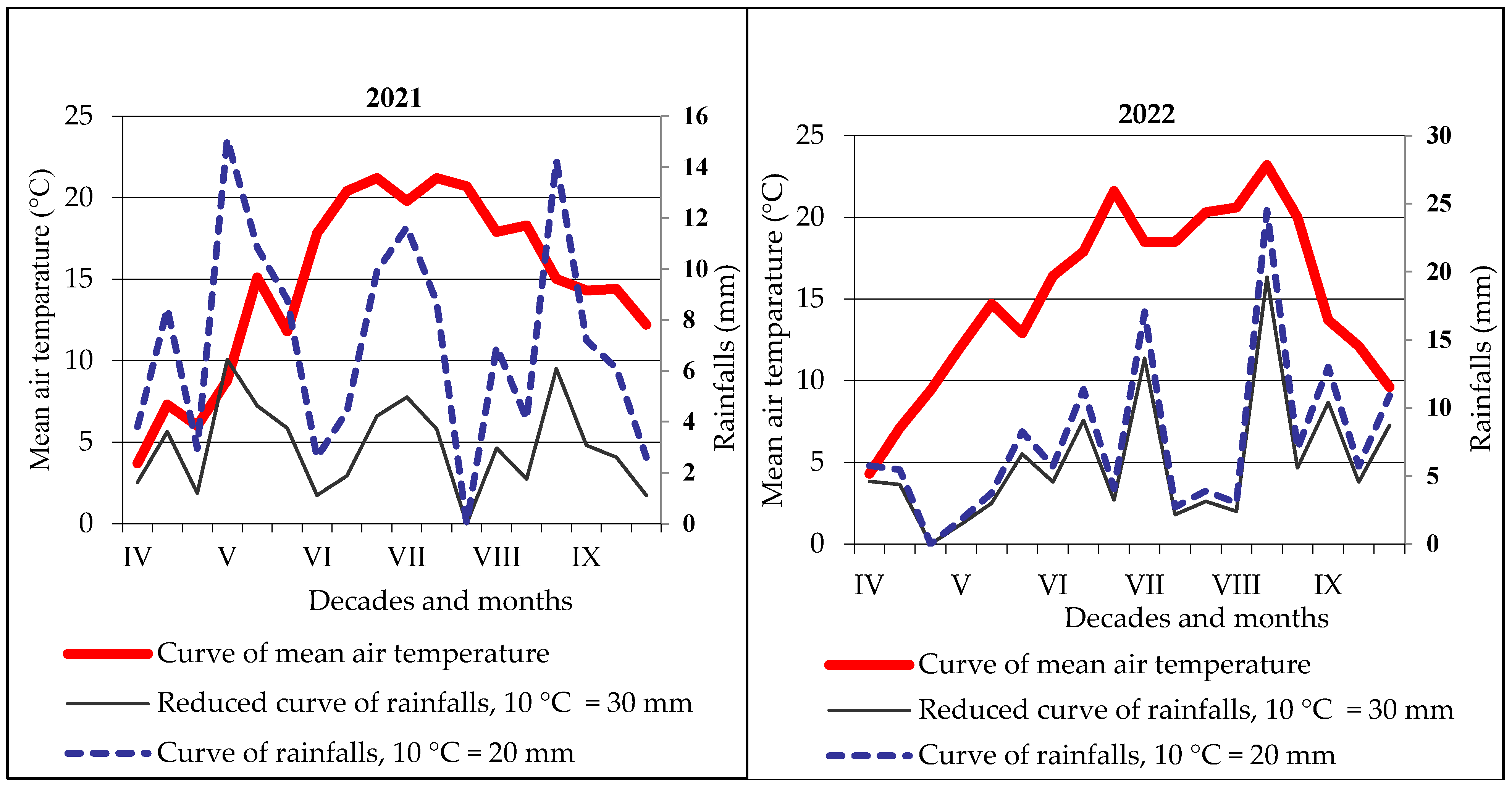
During the study period, the weather conditions varied, both in terms of the air temperature and precipitation (Table 1 and Figure 1) present the meteorological conditions during the study years (2021–2022) in the form of Walter climate diagrams [25].
Lower precipitation totals were recorded in 2022 (225 mm). Particularly significant differences between years, favoring 2021, occurred in May and July. Although the average temperatures during the mustard growing seasons were similar, the individual months differed. Particularly significant differences in temperature between years were observed in July and August.

3. Results and Discussion

3.1. Chemical Compositions

Soil pH is the main factor defining the decomposition of soil organic matter, among others, because it influences the composition and activity of microbial communities, including enzyme activity, and also defines the mechanisms of SOM stabilization and destabilization [26]. According to the authors, the highest values of the effects of accelerating the decomposition of soil organic matter were common in soils with a pH between 5.5 and 7.5. In the humus horizon, the pH of the tested haplic luvisol ranged from slightly acidic to neutral and was within the pH range enabling the decomposition of organic matter. The total organic carbon (TOC) content ranged from 5.96 to 10.05 g kg−1 (average 7.90 g kg−1) in the soil samples collected in the first year of the study. In the next year, its content decreased on average by about 10% and ranged from 5.51 to 8.26 g kg−1 (Table 2).
The tested soil was classified as very low TOC soil, according to the European Soil Database [27]. Organic matter in the soil, both natural and introduced in fertilizers, and its products resulting from the activity of microflora and mesofauna have a beneficial effect on the physical, chemical, and biological properties of the soil [28]. The low organic matter content in Polish soils is primarily due to climatic and soil conditions. The main factor is drought, which inhibits the inflow of organic matter and slows the mineralization process due to water shortages in the soil [29]. With increasing foliar fertilizer application, a decrease in the average content of both the TOC and TN was observed. The highest TOC content (10.05 g kg−1) was determined in the treatments fertilized with the highest dose of ammonium nitrate (N80). Similar relationships were observed in the soil. A trend of decreasing TOC content by approximately 10% and TN content by approximately 7% was also observed in the second year of the study (2022).
The carbon-to-nitrogen ratio is an indicator of the degree of organic matter decomposition. In the tested soil, the C:N ratio in the topsoil was approximately 10, indicating natural mineralization. Sulfur release from soil organic compounds occurs when the C:S ratio in the substance being decomposed by microorganisms is less than 200. The N:S ratio in soils is considered an indicator of the availability of sulfur for plants [30]. Typically, the N:S value in soils is in the range of 6.7–11.1:1. According to Brady et al. [31], the C:N:S ratio, as an indicator describing the possibility of releasing sulfur from organic matter in mineral soils, should be 100:8:1. In the analyzed soils, the C:N:S ratio value was almost half lower than the optimal conditions enabling the mineralization of sulfur from organic matter, which indicates a low content of available sulfur in the tested soil.
In the soil environment, S occurs in significant amounts in the organic form (95–98%) [32], but plants take up S in the form of sulfate [31]. In soils, inorganic sulfur can occur in various oxidation states from −2 to +6 as: sulfide (S2−), elemental sulfur (S0), thiosulfate (S2O32−), tetrathionate (S4O62−), sulfite (SO32−) and sulfate (SO42−). Biological oxidation of hydrogen sulfide (H2S) to sulfate (SO42−) is the main S transformation in the biogeochemical sulfur cycle [33,34]. Prokaryotes primarily oxidize reduced inorganic sulfur, and the main by-product of this oxidation is SO42− (VI). Microbes are primarily responsible for the mineralization, immobilization, oxidation, and reduction processes occurring in soil when sulfates are converted to other forms [34,35]. Under the soil and climatic conditions of Poland, the total sulfur content in mineral soils not subject to significant anthropogenic pressure generally does not exceed 2 g·kg−1 [36]. The sulfur content in the tested soils was in the range of 0.136–0.186 g·kg−1 of soil. According to the classification of limiting sulfur content in the surface layer of soils (0–20 cm), the tested soils belonged to the category of soils with medium total sulfur content, which indicates that they are not enriched with sulfur from anthropogenic sources [36].
In the first year of the study, the total sulfur content was approximately 8% higher than in the following year, and the effect of fertilization on its content was observed (Table 3). The highest sulfur content—0.178 g·kg−1 soil—was determined in soil collected from the plot fertilized with the highest dose of nitrogen—N80. A higher total sulfur content was found in plots where lower doses of foliar fertilizer were applied. In the first year of the study, the highest sulfur content was found in soil collected from plots without foliar fertilization and after application of Multi-N50%.
In the second year of the study, however, no effect of either soil or foliar fertilization on the total sulfur content in the soil was observed. The effect of nitrogen fertilization on soil sulfur content is multifaceted, as confirmed by numerous studies [37,38,39,40,41,42,43,44] Nitrogen application may limit the availability and transformation of sulfur in the soil, which is crucial for yield and quality. According to Lošák et al. [37] and Suran et al. [38], increasing nitrogen doses may lead to better sulfur uptake by plants, as observed in studies on onion and maize.
No effect of fertilization on the sulfate sulfur content in the studied soil was observed (Table 3). A reduction of approximately 3% in the available sulfur content in the soil was observed in the second year of the study. The sulfur contained in the applied foliar fertilizer, in the form of sulfur trioxide and elemental sulfur, most likely intensified the processes of yield development and improved its quality, which is related to the low sulfate (VI) content for plants.
According to the proposed limit values [12] for sulfate sulfur content in mineral soils, the tested soils with an average sulfur content of 4871 mg·kg−1 in 2021 and 4731 mg·kg−1 in 2022 are classified as soils with very low SO42− content. According to Lipiński et al. [12], the tested soil for growing Brassicace plants should be enriched with sulfur at a dose of 100 kg·ha−1. Nitrogen fertilization can increase the sulfur availability, while excess nitrogen without adequate sulfur can lead to imbalances, potentially worsening the soil conditions and crop quality in the long term. This highlights the importance of balanced fertilization strategies in agricultural practices.

3.2. Mustard Seed Yield

A significant effect of the different nitrogen levels of fertilization on white mustard seed yield was found (Table 4). The highest average seed yields were obtained after soil application of 80 kg N·ha−1—3.15 and 3.19 kg·plot−1. These yields were higher by 21.6 and 18.6%, respectively, compared to treatments obtained using 40 kg N·ha−1. When replacing part of the soil nitrogen dose with foliar fertilizer, a higher seed yield, in the first and second years of the study, was harvested from treatments where 50% of the total nitrogen dose was replaced with foliar fertilizer. The differences were 2.8 and 9.0%, respectively. The yield-forming effect of this dose was comparable to that of soil-applied nitrogen at 60 kg·ha−1. Obtaining a seed yield of the highest quality requires a modern approach to fertilization. It is important to note that drought conditions often occur during plant development, making applying nitrogen to the soil pointless. Ammonium nitrate dissolves very easily, but at high temperatures it gasifies and evaporates. Complete elimination is not possible, but losses can be minimized through foliar fertilization.
Climatic conditions, particularly water availability during the vegetation period, exert a decisive influence on the efficiency of nitrogen fertilizer utilization and the yield performance of white mustard (Sinapis alba L.). The 2021 growing season, characterized by a higher cumulative precipitation, promoted improved nutrient uptake by plants and enhanced the utilization of the applied nitrogen. In contrast, the water deficit recorded in 2022 during critical developmental stages—especially flowering and seed filling—restricted both nitrogen mineralization in the soil and its translocation within the plant. Consequently, water availability constitutes a key determinant of nitrogen use efficiency. Moreover, the partial substitution of soil-applied nitrogen with foliar application appears to be an effective agronomic strategy to mitigate the adverse effects of water stress on seed yield and quality, as evidenced by the results obtained in this study.
The sulfur present in the applied foliar fertilizer probably also contributed to the increase in mustard seed yield. According to Szulc [39], the high yielding efficiency of sulfur can only be achieved under conditions of its deficiency. The yield of cultivated plants is determined, among other things, by the interaction of sulfur and other fertilizer components. Among the studies addressing this issue, most concern the effect of sulfur and nitrogen interactions [40,41,42]. Under conditions of sulfur deficiency in the soil, the yield-forming efficiency of nitrogen is reduced, and intensifying fertilization with this element deepens the sulfur deficit, which in turn inhibits nitrogen uptake by plants, limiting their growth and development [43].
According to Motowicka-Terelak and Terelak [44], the proper supply of sulfur to plants is important not only for production but also for ecological reasons. In conditions of deficiency of this nutrient in the soil, nitrogen fertilizer does not perform optimally, and the introduction of additional doses intensifies this deficit, causing a further reduction in yields and deterioration of their quality. Efficient use of nitrogen by plants is also important for environmental protection, because in conditions of sulfur deficiency, losses may occur as a result of nitrates (V) penetrating into groundwater, as well as the release of gaseous forms (NOx) into the atmosphere [45,46].
Kocoń’s [47] study demonstrated that foliar fertilization of rapeseed with urea and microelements intensified photosynthesis and nitrogen use efficiency, ultimately leading to higher yields. Budzyński and Jankowski [48] found that a single foliar application of nitrogen at a dose of 30 kg·ha−1, performed at the beginning of budding, was the most yield-enhancing method of feeding white mustard. It was also demonstrated that applying a portion of the nitrogen (25 + 5 kg·ha−1) in the form of urea produced the same yields as a single application of the entire dose of this nutrient (30 kg N·ha−1) in soil form. A higher nitrogen dose (60 kg·ha−1) did not increase the seed yields.
Nitrogen applied to the soil generally caused a significant reduction in the crude fat content in mustard seeds compared to the N40 dose (Table 4). The differences were 2.2% (N60) and 3.0% (N80) in the first year, respectively, and 0.9% (N80) in the second year. Regardless of the nitrogen doses applied to the soil, foliar application of this nutrient did not significantly affect its content in mustard seeds in the first year of the study. In the second year, a statistically confirmed increase in the amount of fat in seeds was observed in the treatment where 75% of the nitrogen dose was applied foliarly, compared to the treatment without foliar fertilization. The difference was 1.7%.
Similar results were obtained by Paszkiewicz-Jasińska [9]. Using increasing nitrogen doses (30–120 kg N·ha−1), she found a decrease in fat content in white mustard seeds. Jarecki and Bobrecka-Jamro [49] did not demonstrate any effect of foliar nitrogen application on the fat content in spring rapeseed.
A significant increase in the total nitrogen content in seeds was observed under the influence of soil-applied doses of this nutrient compared to the N40 dose, as well as a result of foliar nitrogen application, compared to the treatment where foliar nitrogen was not applied (Table 4). It is worth emphasizing that a similar total nitrogen content, of which the appropriate content in seeds is an important parameter of crop quality, was obtained after application of the N60 dose and in the treatments where half of the soil dose was replaced with foliar nitrogen. This is ecologically beneficial. It reduces the risk of nitrogen losses in the soil, caused by leaching into groundwater or volatilization into the atmosphere, which translates into less environmental pollution. The use of fertilizers containing sulfur affects the efficiency of nitrogen use. These elements determine the seed yield and lead to changes in their chemical composition. Sulfur affects protein quality, as it is a component of sulfur amino acids. It activates enzymes and participates in enzymatic reactions, thus influencing photosynthetic activity and increasing the protein, carbohydrate, and fat content in plants [50,51,52]. Sulfur also determines the fatty acid profile [53]. Studies by Poisson et al. [54] have shown that sulfur and nitrogen synergistically affect plant metabolism when used at optimal doses. However, excessively high doses of one of the above elements antagonistically affect the utilization of the other. Therefore, it is important to adjust sulfur doses so that this element interacts with nitrogen and stimulates high yields and seed quality achieved in a sustainable manner, especially in the context of reducing the amount of fertilizers used [55,56,57].
In both years of the study, the nitrogen utilization efficiency (NUtE) was significantly the highest in the seeds of plants fertilized with a dose of 40 kg N ha−1—amounting to 20.98 and 21.22 kg kg−1, respectively. For the other soil-applied nitrogen doses (60 and 80 kg N ha−1), significantly higher values of this index were recorded after the application of 60 kg N ha−1, with the obtained values being 20.95 and 20.87 kg kg−1, respectively. Similar nitrogen utilization was observed in treatments where half of the soil-applied nitrogen dose (N50%) was replaced with foliar fertilization. The obtained values were 20.61 and 20.42 kg kg−1, respectively, indicating that the plants effectively utilized the absorbed nitrogen for yield formation, and that its partial foliar application is a good method to reduce losses of this nutrient. The nitrogen utilization efficiency in the N75% treatments was generally the lowest and did not directly translate into an increase in seed yield. A decrease in nitrogen utilization efficiency (NUtE) with increasing nitrogen availability was also reported by Roussis [58]. High nitrogen losses in agriculture are the reason for conducting many studies aimed at improving nitrogen use efficiency (NUE) by developing fertilization management strategies based on better synchronization between nitrogen supply and crop demand [59,60].
In the study by Blecharczyk et al. [55], similar to our own research, rapeseed responded with an increase in total nitrogen content in seeds under the influence of increasing nitrogen doses. In the study by Garcia et al. [61], foliar fertilization of winter rapeseed with nitrogen resulted in an increase in the content of this nutrient in seeds, and its content depended on the year of study.
Soil-applied nitrogen did not affect the amount of magnesium in mustard seeds (Table 5). This relationship was observed in both years of the study. Foliar fertilization with nitrogen caused a significant reduction in the magnesium content in seeds compared to the treatment without foliar application. This reduction was significant in each year of study and occurred in all fertilization treatments.
In the first year of the study (2021), the N60 and N80 doses caused a significant reduction in the total phosphorus content in mustard seeds compared to the N40 dose, which were 14.5 and 13.5%, respectively (Table 5). In the second year (2022), these differences were 4.5 and 8%. Similar trends were found when replacing part of the soil dose with foliar fertilization in both years of the study.
In the study conducted by Rotkiewicz et al. [62], the application of nitrogen at doses of 40, 80, and 120 kg·ha−1 had no effect on the total phosphorus content in rapeseed.
The soil application of nitrogen did not significantly change the amount of potassium in mustard seeds (Table 6). Significant inter-subject differences were found in 2021 between the treatments sprayed with N50% and N75% and the control.
Nitrogen is a fundamental yield-forming factor that modifies the quantity and quality of seed yields. A negative consequence of this nutrient’s increased yield is the “dilution effect,” which reduces the mineral content of the seeds, compromising their quality. White mustard seed yield was found to be negatively correlated with the magnesium and potassium content. However, a significant interaction was demonstrated between the nitrogen dose and application method for mustard seed yield and its chemical composition.
Brassicace seeds differ in their requirement and sensitivity to sulfur deficiency [63]. According to De Kok et al. [64], to ensure optimal growth and production, one part of sulfur should be used for 15–20 parts of nitrogen in plant tissue. In the first year of the study, the total sulfur content in seeds ranged from 5.708 g·kg−1 to 15.282 g·kg−1. In the next year, an increase in the sulfur content of approximately 26% was observed, ranging from 8.974 g·kg−1 to 13.023 g·kg−1. In the first year of the study, the highest sulfur content in seeds (10,919 g·kg−1) was observed after soil application of ammonium nitrate at the lowest dose (N40) (Table 6).
The foliar application of nitrogen in the form of fertilizer that also contained sulfur significantly changed the content of this element in mustard seeds in both years of the study. In the first year, a 23% increase in sulfur content was observed in the treatment where 75% of the total dose was applied foliarly. In the following year, this difference was lower, approximately 15%, after the application of Multi-N50. The sulfur content in white mustard seeds fertilized with the N50 dose was similar to that in the treatment fertilized with the N40 dose, which is beneficial for utilitarian and environmental reasons. The highest total sulfur content was observed in mustard seeds after foliar application of fertilizer that contained sulfur in addition to nitrogen, which likely enabled the incorporation of this element into both protein and secondary metabolites, which are sulfur-rich glucosinolates [65].

3.3. Enzymatic Activity

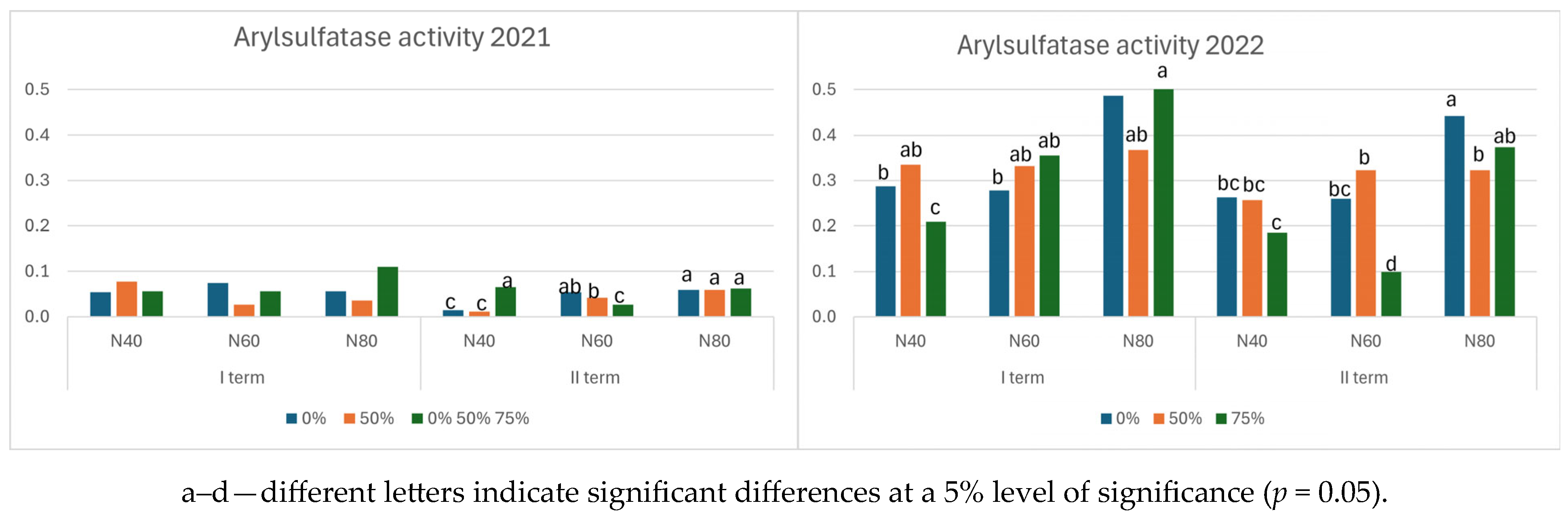
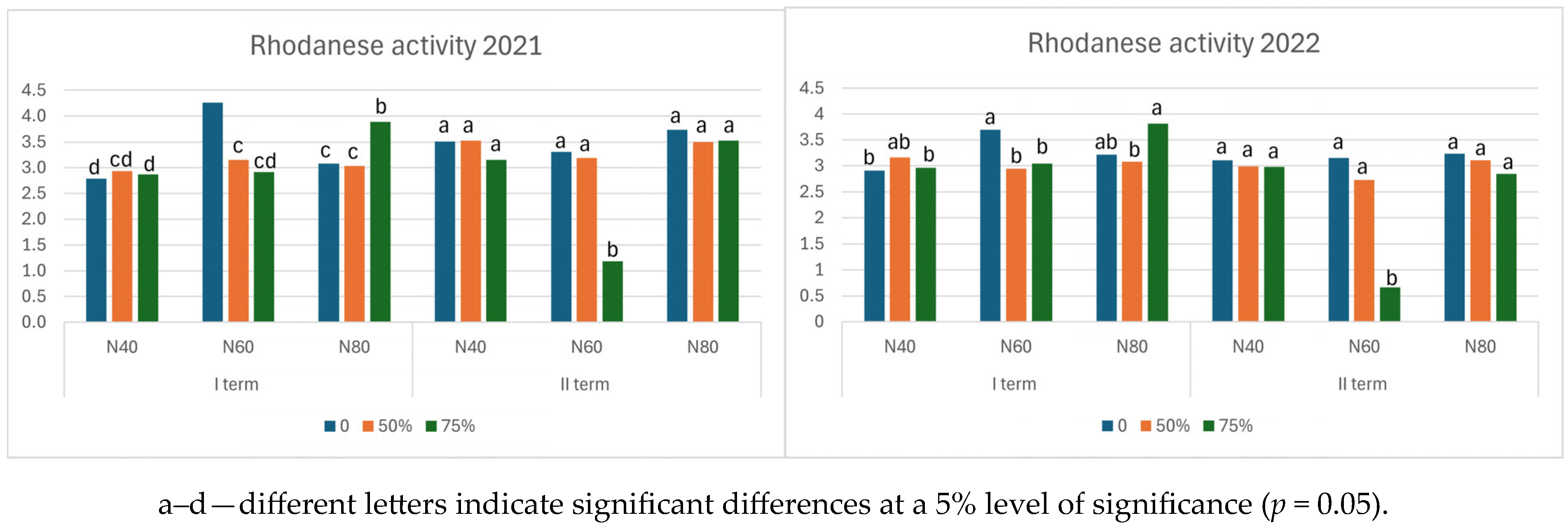
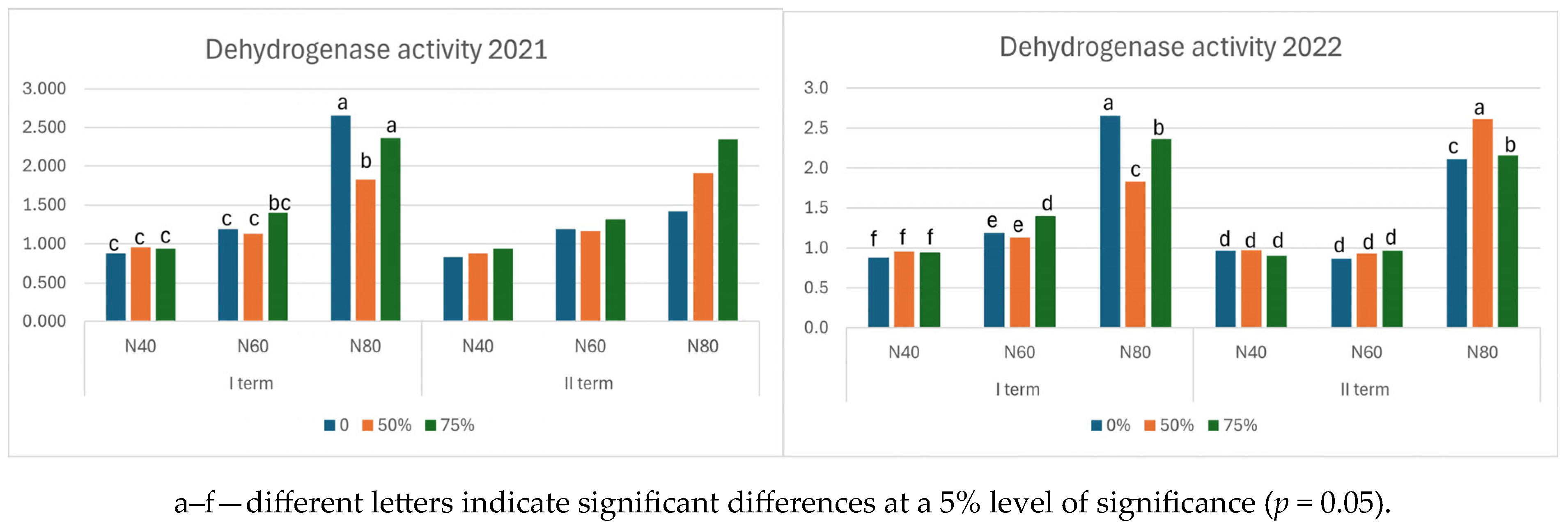
The enzyme activity is presented in Figure 2, Figure 3 and Figure 4. The results show that the applied doses and forms of mineral fertilizers significantly changed the soil enzymatic activity during the white mustard growing seasons.
Higher RDN and DH activity was found in the soil sampled in 2021. Such results can be explained, among other things, by the distribution of precipitation in the discussed growing seasons. In 2021, there was 13% higher precipitation. According to Manzoni et al. [66] and Ren et al. [67], soil water availability enables the mobility of dissolved substances and facilitates the supply of the substrate for organisms that decompose organic matter. Arylsulfatase activity was higher on average by about 80% in the following year of mustard cultivation. Arylsulfatase (EC 3.1.6.1) catalyzes the hydrolysis of organic sulfate esters to sulfate sulfur (VI) [68]. The sources of this enzyme in soil are mainly fungi and bacteria but include plants and animals [69]. Therefore, it is believed that both extracellular and intracellular arylsulfatase activity can be distinguished [70]. Most likely, at such a low level of sulfate sulfur content in the soil, both microorganisms and cultivated mustard induced the secretion of this enzyme, stimulating a higher sulfate content in the soil.
The activity of the studied enzymes varied during the mustard growing seasons. AR activity was higher in soil collected in the first growing season by 28% and in the next by 20%. In 2022, a higher activity of rhodanese and dehydrogenases was observed in the first growing season by 14% and 22%, respectively. Dehydrogenase activity varied the least between the growing seasons—10% in the first year of the study (2021) and 1.2% in the following year. Higher enzyme activity at the beginning of the growing season may result from heavy spring rainfall and increased soil temperature and moisture, which accelerate the transformation of carbon and other organic matter components in the soil and improve the ability of soil microorganisms to metabolize enzymes [71]. These environmental factors also indirectly regulate enzyme activity through their effects on microbial proliferation and substrate accessibility [71]. Dehydrogenases (EC1.1.1.) are intracellular enzymes; therefore, their amount is directly related to the number of living microorganisms and is considered one of the most important parameters for the overall assessment of soil condition [72,73,74].
Both soil and foliar nitrogen fertilization affected the activity of the studied enzymes. The effect of the highest soil dose of fertilizer was particularly observed, which stimulated AR activity on the first sampling date both in 2021 and especially in 2022, when it reached the highest value of 0.505 mM pNP·kg−1·h−1. Soil nitrogen fertilization also resulted in an increase in the enzymatic activity of dehydrogenases (Figure 5). In both 2021 and 2022, a stimulating effect of ammonium nitrate at the N80 dose was observed, especially on the first soil sampling date. Similar results were obtained by Rutkowski et al. [75], who found that nitrogen fertilization had a significant effect on dehydrogenase activity in a cherry orchard in spring. Most likely, the N80 dose was a sufficient amount of nitrogen to enable plant development, which translated into the proliferation of microorganisms in the rhizosphere. According to Sawicka et al. [76], excessively high nitrogen doses (100 kg·ha−1) contribute to the inhibition of dehydrogenase activity. The inhibitory effect of fertilizer was also observed in our study, in which foliar application of fertilizer in the first term inhibited DH activity.
Rhodanese (EC 2.8.1.1) is a transferase that takes part in transforming the sulfate sulfur from thiosulfate to cyanide, forming the less toxic thiocyanate and sulfite [77]. Tukey’s analysis of variance showed that both soil and foliar nitrogen fertilization affected the RDN activity in samples collected in both years of the study. After mustard harvest, in treatments where N80% soil nitrogen and N75% foliar nitrogen were applied, inhibition of this enzyme activity generally occurred. Rhodanese is a sulfur transferase that catalyzes cyanide detoxification. It is synthesized by various plant and animal species, and its activity is modulated by a number of factors, including species differences, organ differences, gender, and age [77].
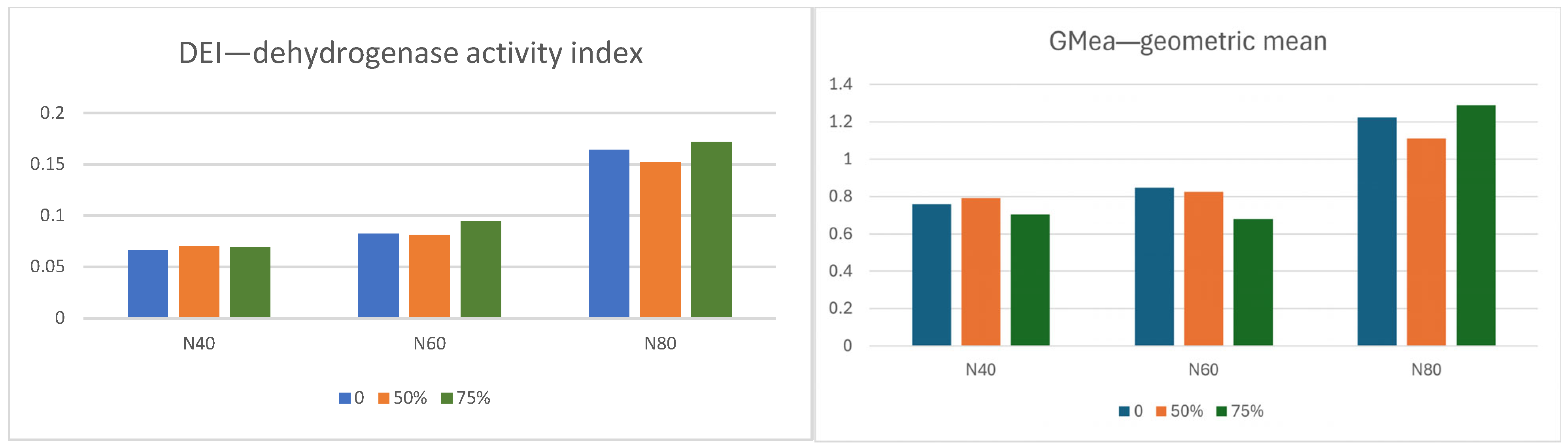
According to Muntean et al. [22], the EI index can theoretically take values from 0 (when there is no activity in the tested samples) to 1 (when all actual individual values are equal to the maximum theoretical value of all individual activities), similarly to the DEI calculated by us. The values of the calculated DEI were in the low range of 0.067 to 0.172 (Figure 5). Dehydrogenase activity in the soil is used as a biological indicator of the overall microbial respiratory activity of soils, because DH is used by microorganisms in the soil to break down organic matter [78]. In our study, the highest DEI activity was obtained in foliar fertilization treatments (N75%). These results suggest that mustard root exudates enabled the proliferation of microorganisms in the rhizosphere. The fertilizer with the highest nitrogen dose (N80) increased the DEI 1.9 and 2.3 times the value of these indicators of N60 and N40, respectively. Dehydrogenase activity is used to determine the microbiological-based respiration [79]. Soil respiration (SR) is the main mechanism by which terrestrial ecosystems release CO2 into the atmosphere through the oxidation of soil organic matter [80]. The highest dose of nitrogen assessment contributed to an increase in the rate of aerobic metabolism and enhanced the basal respiration of microorganisms. The impact of the application of mineral fertilizers on soil respiration and enzyme activities was demonstrated in earlier studies [81].The geometric mean was used to determine the medium-term rate of change. The GMea coefficient values calculated for AR and RDN activity ranged from 0.5119 to 0.9615. During the two-year study period, it was observed that the mineralization processes of organic matter containing sulfur were most intense in the treatments with the highest dose of foliar nitrogen (N75%). This suggests a stimulating effect of foliar fertilizer application, which also included sulfur compounds. According to Kondratowicz-Maciejewska et al. [82], higher GMea coefficient values indicate higher soil quality and can be used to determine qualitative changes in the soil, disregarding its physicochemical properties.
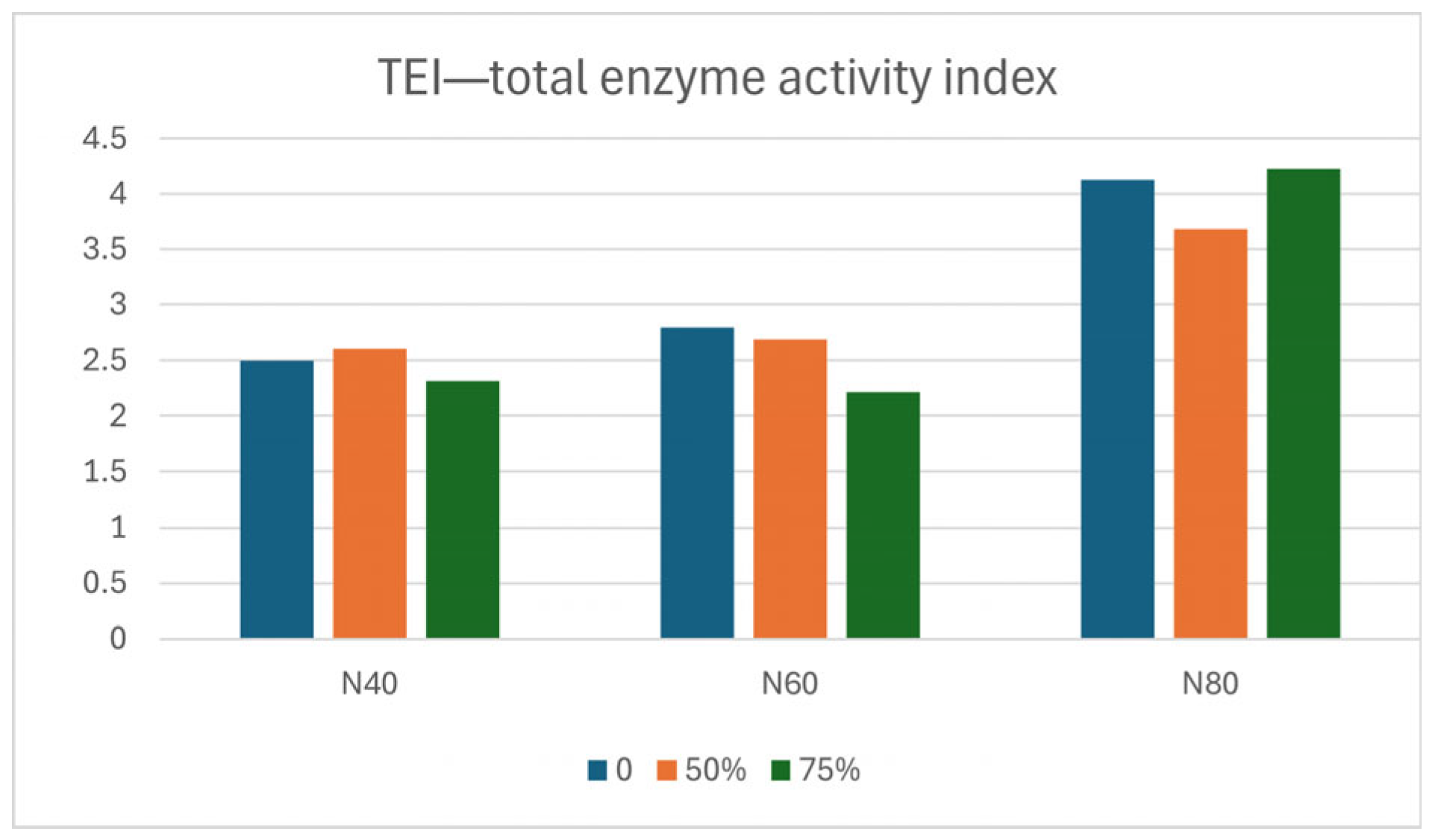
To assess the total enzyme activity in the tested soil, the total enzyme activity index (TEI) was calculated. Its value varied, depending on the soil and foliar fertilization applied. The highest TEI values were observed after the application of N80 (average 4.0); other soil nitrogen doses translated into lower values of this index: N40—2.5 and N60—2.6, respectively (Figure 6).
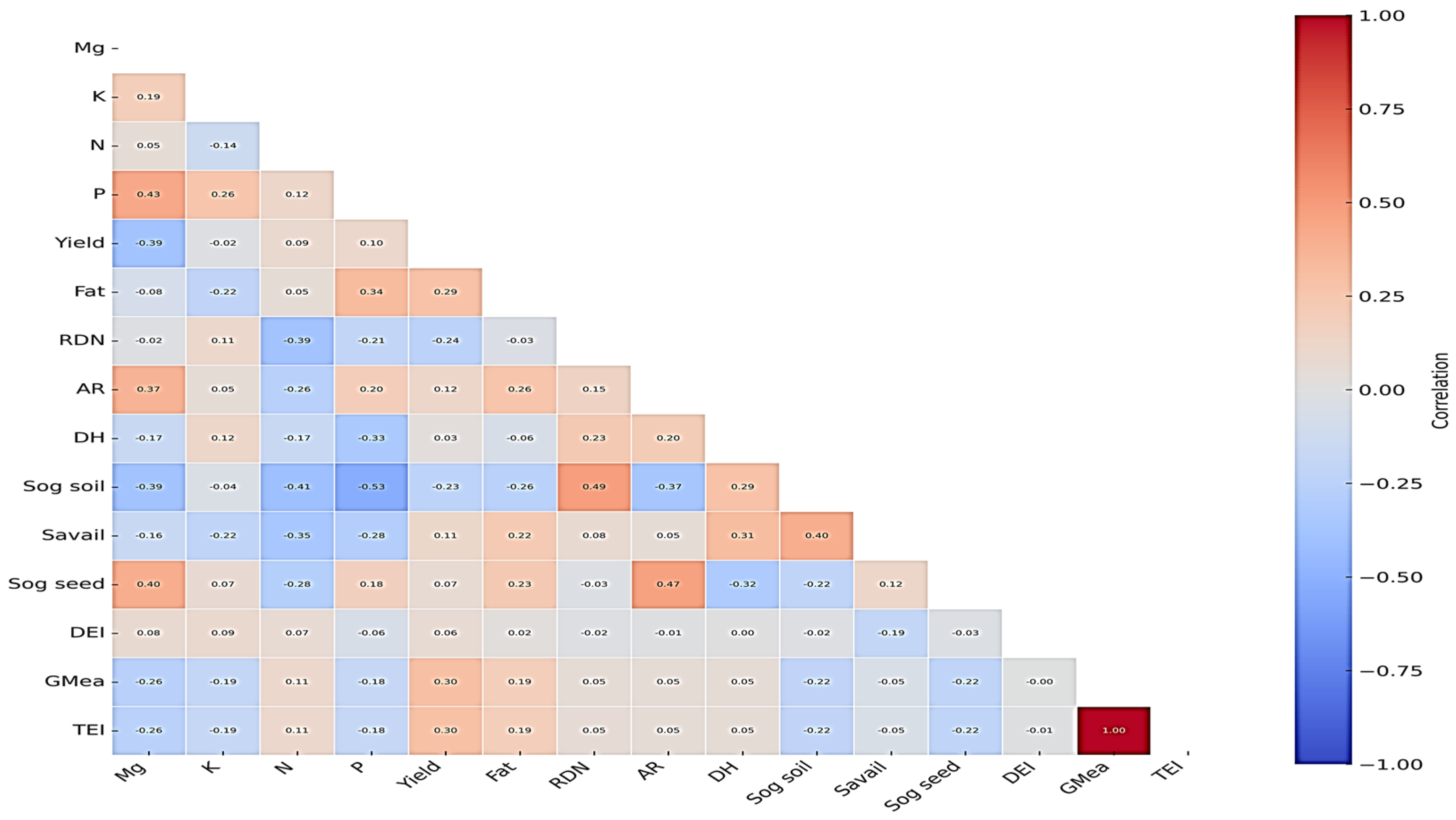
RDN activity showed a moderate correlation between the sulfate content in the soil (r = 0.49, p = 0.05) and AR activity (r = 0.31, p = 0.05) (Figure 7). The study also obtained a positive correlation between the activities of individual AR and RDN enzymes (r = 0.33, p = 0.05) as well as between RDN and DH (r = 0.33, p = 0.05). The correlation between enzymes confirms the mutual interactions between enzymes and their participation in sulfur transformations in the soil, also found by Siwik-Ziomek and Szczepanek [83]. According to Jat et al. [84], interactions between enzymes have important implications for the nutrient availability to plants, because, upon decomposition, crop residues release nutrients that could help save precious nutrients applied externally, in addition to improving the overall soil quality and carbon enrichment.


4. Summary

A significant interaction of the experimental factors was demonstrated to shape the yield and quality of white mustard. The biofumigation potential of mustard results from its unique sulfur metabolites. Grown as a main crop or as a catch crop, it improves the soil structure and fertility. Our research has shown that replacing 50% of the soil-applied nitrogen dose with foliar fertilizer modified the yield and quality of mustard seeds, giving results comparable to the application of 80 kg N·ha−1 applied to the soil. This approach is environmentally beneficial, reducing nitrogen losses and limiting pollution. The soil enzyme activity depended on the nitrogen application method and weather conditions. The highest dehydrogenase enzymatic index (DEI) was obtained in the foliar-fertilized treatments (N75%). Similarly, the highest GMea values calculated for arylsulfatase and rhodanese activity values in these treatments indicate the intensified mineralization of sulfur-containing compounds. The positive correlations among the studied enzymes confirm their interaction and role in sulfur transformations in soil.

Author Contributions

Conceptualization W.K. and A.S.-Z.; methodology. W.K. and A.S.-Z.; software. W.K. and A.S.-Z.; validation A.F. and T.K.; formal analysis. W.K. and A.S.-Z.; investigation. W.K. and A.S.-Z.; resources. A.F. and T.K.; data curation. A.F. and T.K.; writing—original draft preparation. A.S.-Z. and W.K.; writing—review and editing. W.K. and T.K.; visualization: W.K., A.S.-Z., A.F. and T.K.; supervision. W.K. and A.S.-Z. All authors have read and agreed to the published version of the manuscript.

Funding

This research received no external funding.

Data Availability Statement

The original contributions presented in this study are included in the article. Further inquiries can be directed to the corresponding author.

Conflicts of Interest

The authors declare no conflicts of interest.

Abbreviations

The following abbreviations are used in this manuscript:
TOCtotal organic carbon
TNtotal nitrogen
NUtEnitrogen utilization efficiency
DHdehydrogenase activity
ARarylsulfatase activity
RDNrhodanese activity
DEIdehydrogenase activity index
GMeageometric mean index
TEItotal enzyme activity index

References

  1. Hemingway, J.S. The mustard species: Condiment and food ingredient use and potential as oilseed crops. In Brassica Oilseeds: Production and Utilization; CAB International: Wallingford, UK, 1995; pp. 373–383. [Google Scholar]
  2. Nguyen, T.; Nandasiri, R.; Fadairo, O.; Eskin, N.M. Phenolics of mustard seeds: A review on composition. processing effect and their bioactvities. J. Am. Oil Chem. Soc. 2024, 101, 5–21. [Google Scholar] [CrossRef]
  3. Sawicka, B.; Kotiuk, E. Evaluation of health safety of mustards in the obligatory norms. Acta Sci. Pol. Technol. Aliment. 2006, 5, 165–177. [Google Scholar]
  4. Shahzadi, I.; Sadaf, S.; Iqbal, J.; Ullah, I.; Bhatti, H.N. Evaluation of mustard oil for the synthesis of biodiesel: Pretreatment and optimization study. Environ. Prog. Sustain. Energy 2018, 37, 1829–1835. [Google Scholar] [CrossRef]
  5. Aydin, F.; Oguz, H.; Ogut, H. Fuel property investigation of diesel and mustard oil biodiesel mixtures at different ratios. Int. J. Eng. Trends Technol. 2014, 18, 99–102. [Google Scholar] [CrossRef][Green Version]
  6. Issariyakul, T.; Dalai, A.K.; Desai, P. Evaluating esters derived from mustard oil (Sinapis alba) as potential diesel additives. J. Am. Oil Chem. Soc. 2011, 88, 391–402. [Google Scholar] [CrossRef]
  7. Lietzow, J. Biologically active compounds in mustard seeds: A toxicological perspective. Foods 2021, 10, 2089. [Google Scholar] [CrossRef]
  8. Poyil, T.; Rasane, P.; Singh, J.; Kaur, S.; Kaur, J.; Gunjal, M.; Avinashe, H.; Dubey, N.; Mahato, D.S. Bioactive compounds of mustard. its role in consumer health and in the development of potential functional foods. Curr. Nutr. Food Sci. 2023, 19, 950–960. [Google Scholar] [CrossRef]
  9. Paszkiewicz-Jasińska, A. The effect of selected agrotechnical factors on development, yielding and quality of white mustard I. The effect of nitrogen fertilization and sowing density on the development and yielding of white mustard (Sinapis alba L.). Oilseed Crops 2005, 26, 451–465. [Google Scholar]
  10. Barłóg, P. Improving fertilizer use efficiency—Methods and strategies for the future. Plants 2023, 12, 3658. [Google Scholar] [CrossRef]
  11. IUSS Working Group WRB. World Reference Base for Soil Resources 2014; Update 2015; World Soil Resources Reports No. 106; FAO: Rome, Italy, 2015. [Google Scholar]
  12. Lipiński, W.; Terelak, H.; Motowicka-Terelak, T. Suggestion for limiting values of sulphate sulphur content in mineral soils for fertilization advisory needs. Rocz. Gleb. 2003, 54, 79–84. [Google Scholar]
  13. PN-EN ISO 9831:2005; Animal Feeding Stuffs, Animal Products, and Faeces or Urine—Determination of Gross Calorific Value—Bomb Calorimeter Method. Polish Committee for Standardization: Warszawa, Poland, 2005.
  14. PN-R-64766:1994; Feed—Cereal Bran. Polish Committee for Standardization: Warszawa, Poland, 1994.
  15. PN-R-04013:1988; Chemical and Agricultural Analysis of Plants—Determination of Air Dry and Dry Mass. Polish Committee for Standardization: Warszawa, Poland, 1988.
  16. Roussis, I.; Kakabouki, I.; Beslemes, D.; Tigka, E.; Kosma, C.; Triantafyllidis, V.; Mavroeidis, A.; Zotos, A.; Bilalis, D. Nitrogen uptake, use efficiency, and productivity of Nigella sativa L. in response to fertilization and plant density. Sustainability 2022, 14, 3842. [Google Scholar] [CrossRef]
  17. PN-ISO 10290; Textiles—Cotton Yarn—Requirements. Polish Committee for Standardization: Warszawa, Poland, 1997.
  18. Bardsley, C.E.; Lancaster, J.D. Determination of reserve sulfur and soluble sulfates in soil. Soil Sci. Soc. Am. Proc. 1960, 24, 265–268. [Google Scholar] [CrossRef]
  19. Tabatabai, M.A.; Bremner, J.M. Arylsulfatase activity of soils. Soil Sci. Soc. Am. J. 1970, 34, 225–229. [Google Scholar] [CrossRef]
  20. Tabatabai, M.A.; Singh, B.B. Rhodanese activity of soils. Soil Sci. Soc. Am. J. 1976, 40, 381–385. [Google Scholar] [CrossRef]
  21. Thalmann, A. Zur methodic derestimung der Dehydrogenaseaktivität und Boden mittels Triphenyltetrazoliumchlorid (TTC). Landwirtsch. Forsch. 1968, 21, 249–25822. [Google Scholar]
  22. Muntean, V.; Crisan, R.; Paşca, D.; Kiss, S.; Drăgan-Bularda, M. Enzymological classification of salt lakes in Romania. Int. J. Salt Lake Res. 1996, 1, 35–44. [Google Scholar] [CrossRef]
  23. Hinojosa, M.B.; Garcia-Ruiz, R.; Viñegla, B.; Carreira, J.A. Microbiological rates and enzyme activities as indicators of functionality in soils affected by the Aznalcóllar toxic spill. Soil Biol. Biochem. 2004, 36, 1637–1644. [Google Scholar] [CrossRef]
  24. Tan, X.; Xie, B.; Wang, J.; He, W.; Wang, X.; Wei, G. County-scale spatial distribution of soil enzyme activities and enzyme activity indices in agricultural land: Implications for soil quality assessment. Sci. World J. 2014, 2014, 535768. [Google Scholar] [CrossRef]
  25. Rolbiecki, R.; Rolbiecki, S.; Figas, A.; Jagosz, B.; Stachowski, P.; Sadan, H.A.; Prus, P.; Pal-Fam, F. Requirements and effects of surface drip irrigation of mid-early potato cultivar courage on a very light soil in central Poland. Agronomy 2021, 11, 33. [Google Scholar] [CrossRef]
  26. Wang, C.; Kuzyakov, Y. Soil organic matter priming: The pH effects. Glob. Change Biol. 2024, 30, e1734927. [Google Scholar] [CrossRef]
  27. Pikuła, D. Environmental aspects of managing the organic matter in agriculture. Econ. Reg. Stud. 2015, 8, 98–112. [Google Scholar]
  28. Fließbach, A.; Oberholzer, H.R.; Gunst, L.; Mäder, P. Soil organic matter and biological soil quality indicators after 21 years of organic and conventional farming. Agric. Ecos. Environ. 2007, 118, 273–284. [Google Scholar] [CrossRef]
  29. Zimnoch, U.; Bogusz, P.; Brodowska, M.S.; Michalak, J. The trend of changes in soil organic carbon content in Poland over recent years. Arch. Environ. Prot. 2024, 50, 35–44. [Google Scholar] [CrossRef]
  30. Kovar, J.L.; Grant, C.A. Nutrient cycling in soils: Sulfur. In Soil Management: Building a Stable Base for Agriculture; Wiley Online Library: Hoboken, NJ, USA, 2011; pp. 103–115. [Google Scholar]
  31. Brady, N.C.; Weil, R.R. The Nature and Properties of Soils; Prentice Hall: Upper Saddle River, NJ, USA, 2008; Volume 13, pp. 662–710. [Google Scholar]
  32. Solomon, D.; Lehmann, J.; de Zarruk, K.K.; Dathe, J.; Kinyangi, J.; Liang, B.; Machado, S. Speciation and long-and short-term molecular-level dynamics of soil organic sulfur studied by X-ray absorption near-edge structure spectroscopy. J. Environ. Qual. 2011, 40, 704–718. [Google Scholar] [CrossRef]
  33. Scherer, H.W. Sulfur in soils. J. Plant Nutr. Soil Sci. 2009, 172, 326–335. [Google Scholar] [CrossRef]
  34. Zenda, T.; Liu, S.; Dong, A.; Duan, H. Revisiting sulphur—The once neglected nutrient: It’s roles in plant growth. metabolism. stress tolerance and crop production. Agriculture 2021, 11, 626. [Google Scholar] [CrossRef]
  35. Mazid, M.; Khan, Z.H.; Quddusi, S.; Khan, T.A.; Mohammad, F. Significance of sulphur nutrition against metal induced oxidative stress in plants. J. Stress. Physiol. Biochem. 2011, 7, 165–184. [Google Scholar]
  36. Motowicka-Terelak, T.; Terelak, H.; Witek, T. Limit values for the evaluation of sulfur content in soils and plants. In Assessment of the Degree of Soil and Plant Contamination with Heavy Metals and Sulfur. Framework Guidelines for Agriculture; Kabata-Pendias, A., Motowicka-Terelak, T., Piotrowska, M., Eds.; IUNG: Puławy, Poland, 1993; pp. 15–19. [Google Scholar]
  37. Lošák, T.; Hlušek, J.; Kráčmar, S.; Mårtensson, A. Effect of nitrogen and sulphur fertilisation on yields. nitrates and cysteine and methionine content in onion (Allium cepa L.). Acta Hortic. 2010, 852, 297–304. [Google Scholar] [CrossRef]
  38. Suran, P.; Balík, J.; Kulhánek, M.; Sedlář, O.; Černý, J. Influence of long-term organic fertilization on changes in the content of various forms of sulfur in the soil under maize monoculture. Agronomy 2023, 13, 957. [Google Scholar] [CrossRef]
  39. Szulc, W. The Requirements for Crop Plant Fertilization with Sulfur and the Methods for Their Determination; Rozprawy i Monografie No. 332; SGGW: Warsaw, Poland, 2008; Available online: https://bw.sggw.edu.pl/info/book/WULS4143d56354c749dba23180864be86ff2/ (accessed on 31 October 2025).
  40. Phillips, S.B.; Mullins, G.L. Foliar burn and wheat grain yield responses following topdress-applied nitrogen and sulphur fertilizers. J. Plant Nutr. 2004, 27, 921–930. [Google Scholar] [CrossRef]
  41. Podleśna, A.; Cacak-Pietrzak, G. Formation of spring wheat yield as well as its baking and milling by nitrogen and sulphur fertilization. Pam. Puł 2006, 142, 381–392. [Google Scholar]
  42. Przygocka-Cyna, K.; Grzebisz, W. Yield and technological quality of malting barley in response to elemental sulphur application. Fertil. Fertil. 2006, 8, 5–17. [Google Scholar]
  43. Lošak, T.; Hrivna, L.; Richter, R. Effect of increasing doses of nitrogen and sulphur on yields. quality and chemical composition of winter rape. Adv. Agric. Sci. Probl. Iss. 2003, 472, 481–487. [Google Scholar]
  44. Motowicka-Terelak, T.; Terelak, H. Sulfur in Polish soils—Status and threats. In Environmental Monitoring Library; IEP-NRI: Warsow, Poland, 1998. [Google Scholar]
  45. Schnug, E.; Haneklaus, S. Significance of interactions between sulphur nitrogen supply for growth and quality of crop plants. In Sulphur Nutrition and Sulphur Assimilation in Higher Plants; Brunold, C., Ed.; Paul Haupt: Bern, Switzerland, 2000; pp. 345–347. [Google Scholar]
  46. Griffiths, M.W.; Kettlewell, P.S.; Hocking, T.J. Effects of foliarapplied sulphur and nitrogen on grain growth. grain sulphur and nitrogen concentrations and yield of winter wheat. J. Agric. Sci. 1995, 125, 331–339. [Google Scholar] [CrossRef]
  47. Kocoń, A. Foliar top dressing efficiency of winter wheat and rape of chosen fertilizers in optimal fertilization and soil moisture conditions. Ann. Univ. Mariae Curie-Skłodowska 2009, 64, 23–28. [Google Scholar] [CrossRef]
  48. Budzyński, W.; Jankowski, K. Effect of fertilization with sulphur, magnesium and nitrogen on growing and yield of white and Indian mustard seeds. Oilseed Crops 2001, 22, 45–58. [Google Scholar]
  49. Jarecki, W.; Bobrecka-Jamro, D. The reaction of the Huzar cultivar of spring oilseed rape to the density of sowing and to leaf feeding with urea. Oilseed Crops 2011, 22, 117–126. [Google Scholar]
  50. Scherer, H.W. Sulphur in crop production. Eur. J. Agron. 2001, 14, 81–111. [Google Scholar] [CrossRef]
  51. Maathuis, F.J.M. Physiological functions of mineral macronutrients. Curr. Opin. Plant Biol. 2009, 12, 250–258. [Google Scholar] [CrossRef] [PubMed]
  52. Gaj, R.; Klikocka, H. The multifunctional action of sulfur in plants—From nutrition to protection. Progr. Plant Prot. 2011, 51, 33–44. [Google Scholar]
  53. Fismes, J.; Vong, P.C.; Guckert, A.; Frossard, E. Influence of sulphur on apparent N-use efficiency. yield and quality of oilseed rape (Brassica napus L.) grown on a calcareous soil. Europ. J. Agron. 2000, 12, 127–141. [Google Scholar] [CrossRef]
  54. Poisson, E.; Trouverie, J.; Brunel-Muguet, S.; Akmouche, Y.; Pontet, C.; Pinochet, X.; Avice, J.-C. Seed yield components and seed quality of oilseed rape are impacted by sulfur fertilization and its interactions with nitrogen fertilization. Front. Plant Sci. 2019, 10, 458. [Google Scholar] [CrossRef] [PubMed]
  55. Blecharczyk, A.; Paszkowski, A.; Dudzińska, A. Yield of winter oilseed rape grown in the second year of the following effects of legumes depending on the tillage and nitrogen fertilization. Fragm. Agron. 2020, 37, 38–46. [Google Scholar]
  56. Prasad, R.; Shivay, Y.S. Sulphur in soil. plant and human nutrition. Proc. Natl. Acad. Sci. India Sect. B Biol. Sci. 2018, 88, 429–434. [Google Scholar] [CrossRef]
  57. Chahal, H.S.; Sing, A.; Malhi, G.S. Role of sulphur nutrition in oilseed crop production—A review. J. Oilseed Brass. 2020, 11, 95–102. [Google Scholar]
  58. Jarecki, W.; Skrobacz, K.; Lachowski, T. Effect of foliar fertilization on the yield and chemical composition of winter oilseed rape (Brassica napus L.) seeds. Agron. Sci. 2022, 77, 49–59. [Google Scholar] [CrossRef]
  59. Catuchi, T.A.; Soratto, R.P.; Francisquini Junior, A.; Aranda, E.A.; Guidorizzi, F.V.; Tiritan, C.S. Nitrogen management, nitrogen use efficiency, and seed yield and quality of creeping signalgrass. Crop Sci. 2017, 57, 2865–2874. [Google Scholar] [CrossRef]
  60. Johnson, E.N.; Malhi, S.S.; Hall, L.M.; Phelps, S. Effects of nitrogen fertilizer application on seed yield, N uptake, N use efficiency, and seed quality of Brassica carinata. Can. J. Plant Sci. 2013, 93, 1073–1081. [Google Scholar] [CrossRef]
  61. Garcia, G.; Treccarichi, S.; Calì, R.; Arena, D.; Tribulato, A.; Branca, F. Nitrogen Use Efficiency of Microbial and Amino Acid Treatments for Organic Broccoli (Brassica oleracea L. var. italica Plenk) Seed Production. Horticulturae 2025, 11, 253. [Google Scholar] [CrossRef]
  62. Rotkiewicz, D.; Konopka, I.; Ojczyk, T.; Marmiński, T. Influence of nitrogen fertilisation on the phosphorus compounds content in the spring oilseed rape. Oilseed Crops 1999, 20, 144–149. [Google Scholar]
  63. Malhi, S.S.; Schoenau, J.J.; Grant, C.A. A review of sulphur fertilizer management for optimum yield and quality of canola in the Canadian Great Plains. Can. J. Plant Sci. 2005, 85, 297–307. [Google Scholar] [CrossRef]
  64. De Kok, L.J.; Castro, A.; Durenkamp, M.; Stuiver, C.E.E.; Westerman, S.; Yang, L.; Stulen, I. Sulphur in plant physiology. In Proceedings-International Fertiliser Society; IFS: Linköping, Sweden, 2002. [Google Scholar]
  65. Paszkiewicz-Jasińska, A. The effect of selected agrotechnical factors on development, yielding and quality of white mustard. II. The effect of nitrogen fertilization and sowing density on chemical composition of white mustard (Sinapis alba L.). Oilseed Crops 2005, 26, 467–478. [Google Scholar]
  66. Manzoni, S.; Schimel, J.P.; Porporato, A. Responses of soil microbial communities to water stress: Results from a meta-analysis. Ecology 2012, 93, 930–938. [Google Scholar] [CrossRef]
  67. Ren, C.; Chen, J.; Lu, X.; Doughty, R.; Zhao, F.; Zhong, Z.; Ren, G. Responses of soil total microbial biomass and community compositions to rainfall reductions. Soil Biol. Biochem. 2018, 116, 4–10. [Google Scholar] [CrossRef]
  68. George, J.R.; Fitzgerald, J.W. Tyramine-mediated enhancement of bacterial arylsulphatase activity. FEMS Microb. Lett. 1978, 3, 253–257. [Google Scholar] [CrossRef]
  69. Tabatabai, M. Soil enzymes. Methods Soil Anal Part 2. Microbiol. Biochem. Prop. 1994, 5, 775–833. [Google Scholar]
  70. Li, X.; Sarah, P. Arylsulfatase activity of soil microbial biomass along a Mediterranean-arid transect. Soil Biol. Biochem. 2003, 5, 925–934. [Google Scholar]
  71. Wang, X.; Yan, B.; Fan, B.; Shi, L.; Liu, G. Temperature and soil microorganisms interact to affect Dodonaea viscosa. growth on mountainsides. Plant Ecol. 2018, 219, 759–774. [Google Scholar] [CrossRef]
  72. Gul, S.; Whalen, J.K.; Thomas, B.W.; Sachdeva, V.; Deng, H. Physico-chemical properties and microbial responses in biochar-amended soils: Mechanisms and future directions. Agric. Ecosyst. Environ. 2015, 206, 46–59. [Google Scholar] [CrossRef]
  73. Furtak, K.; Gajda, A.M. Activity of dehydrogenases as an indicator of soil environment quality. Pol. J. Soil Sci. 2017, 50, 33–40. [Google Scholar] [CrossRef]
  74. Dick, R.P. Soil Enzyme Activities as Integrative Indicators of Soil Health. In Biological Indicators of Soil Health; CAB International: Wallingford, UK, 1997; pp. 121–156. [Google Scholar]
  75. Rutkowski, K.; Łysiak, G.P.; Zydlik, Z. Effect of nitrogen fertilization in the sour cherry orchard on soil enzymatic activities, microbial population, and fruit quality. Agriculture 2022, 12, 2069. [Google Scholar] [CrossRef]
  76. Sawicka, B.; Pszczółkowski, P.; Wójcikowska-Kapusta, A.; Skiba, D.; Barbaś, P. Impact of the cultivation system and pre-sprouting of selected potato cultivars on the physico-chemical properties and enzymatic activity of soil in the conditions of Central-Eastern Poland. Agronomy 2022, 12, 2207. [Google Scholar] [CrossRef]
  77. Saidu, Y. Physicochemical features of rhodanese: A review. Afr. J. Biotech. 2004, 3, 370–374. [Google Scholar]
  78. Salazar, S.; Sanchez, L.; Alvarez, J.; Valverde, A.; Galindo, P.; Iqual, J.; Peix, A.; Santa-Regina, I. Correlation among soil enzyme activities under different forest system management practices. Ecol. Eng. 2011, 37, 1123. [Google Scholar] [CrossRef]
  79. Nannipieri, P.; Ascher, J.; Ceccherini, M.T.; Landi, L.; Pietramellara, G.; Renella, G. Microbial diversity and soil functions. Eur. J. Soil Sci. 2003, 68, 12–26. [Google Scholar] [CrossRef]
  80. Hou, T.; Wang, Y.; Guo, F.; Jia, Q.; Wu, X.; Wang, E.; Hong, J. Soil respiration characteristics and influencing factors for apple orchards in different regions on the Loess Plateau of Shaanxi Province. Sustainability 2021, 13, 4780. [Google Scholar] [CrossRef]
  81. Iovieno, P.; Morra, L.; Leone, A.; Pagano, L.; Alfani, A. Effect of organic and mineral fertilizers on soil respiration and enzyme activities of two Mediterranean horticultural soils. Biol. Fert. Soil. 2009, 45, 555–561. [Google Scholar] [CrossRef]
  82. Kondratowicz-Maciejewska, K.; Lemanowicz, J.; Jaskulska, I. Effects of long-term multi-treatment experiments on organic matter and enzymatic activity in sandy soil. Sustainability 2025, 17, 3252. [Google Scholar] [CrossRef]
  83. Siwik-Ziomek, A.; Szczepanek, M. Soil enzyme activity and sulphur uptake by oilseed rape depending on fertilization and biostimulant application. Acta Agric. Scand. Sect. B—Soil Plant Sci. 2017, 68, 50–56. [Google Scholar] [CrossRef]
  84. Jat, H.S.; Datta, A.; Choudhary, M.; Sharma, P.C.; Dixit, B.; Jat, M.L. Soil enzymes activity: Effect of climate smart agriculture on rhizosphere and bulk soil under cereal based systems of north-west India. Eur. J. Soil Biol. 2021, 103, 103292. [Google Scholar] [CrossRef] [PubMed] [PubMed Central]
Figure 1. Climatic diagram for meteorological conditions from April to September (IV–IX) in 2021 and 2022.
Agronomy 15 02582 g001
Figure 2. Effect of various doses of ammonium nitrate on arylsulfatase (µg pNP·g−1 h−1).
Agronomy 15 02582 g002
Figure 3. Effect of various doses of ammonium nitrate on rhodanese (µg SCN·g−1·h−1).
Agronomy 15 02582 g003
Figure 4. Effect of various doses of ammonium nitrate on dehydrogenase (mg TPF·g−1·h−1).
Agronomy 15 02582 g004
Figure 5. Effect of various doses of ammonium nitrate on dehydrogenase activity index (DEI) and geometric mean index (GMea).
Agronomy 15 02582 g005
Figure 6. Effect of various doses of ammonium nitrate on total enzyme activity index (TEI).
Agronomy 15 02582 g006
Figure 7. Correlogram of the soil variables.
Agronomy 15 02582 g007
Table 1. Precipitation (mm)and air temperature (°C) in 2021–2022, during the study in the Bydgoszcz region *.
YearDecadeMonthMean
IVVVIVIIVIIIIXIV–IX
1991–2020
PrecipitationI–III25.855.156.677.460.349.2324.4
Air temperatureI–III8.313.216.718.918.213.314.8
2021
PrecipitationI7.630.25.223.313.90
II16.921.78.817.48.230.5
III5.917.619.8028.55.2
I–III30.469.533.840.750.635.7260.7
Air temperatureI3.78.817.819.817.914.3
II7.315.120.421.218.314.4
III6.011.821.220.715.012.2
I–III5.711.919.820.617.013.614.8
2022
PrecipitationI11.53.611.434.16.026.0
II10.97.522.75.449.011.4
III016.58.17.814.021.8
I–III22.427.642.247.369.059.2267.7
Air temperatureI4.312.116.418.520.613.7
II7.114.717.918.523.212.1
III9.412.921.620.320.09.6
I–III6.913.218.619.221.211.815.2
2021–2022
PrecipitationMean26.448.5538.044.059.847.5264.2
Difference to multi-year average+0.6−6.6−18.6−33.4−0.5−1.7−60.2
Air temperatureMean6.312.619.219.919.112.715.0
Difference to multi-year average−2.0−0.7+2.5+1.0+0.9−0.6+0.2
* station located in Mochełek.
Table 2. Effects of various doses of nitrogen on TOC (g kg−1), TN (g kg−1), values of C/N and C/N/S, and pH of soil.
FertilizationTOCTNC/NC/N/SpH
N40N60N80MeanN40N60N80MeanN40N60N80N40N60N80N40N60N80
Before experience
6.910.721046/4/16.02
2021
Multi-N06.888.849.508.410.720.820.890.8110111142/4/151/5/152/5/16.526.046.70
Multi-N50%7.57.458.307.750.670.730.780.7311101144/4/144/4/151/5/16.576.616.52
Multi-N75%5.966.5910.057.530.520.640.780.6511101342/4/141/4/154/4/16.386.626.58
Mean6.787.639.287.900.640.730.820.7311101143/4/145/4/152/5/1
2022
Multi-N08.056.858.167.690.750.680.750.7311101157/5/140/4/160/5/16.666.526.76
Multi-N50%6.726.657.196.850.630.660.700.6611101040/4/143/4/145/5/16.716.516.73
Multi-N75%5.516.678.266.810,500.650.810.6511101041/4/146/4/150/4/16.106.756.50
Mean6.766.727.877.120.630.660.750.6811101042/4/151/4/152/5/1
Table 3. Effect of various doses of nitrogen on total and sulfate sulfur content (g kg−1) in soil.
FertilizationN40N60N80Mean
total sulfur2021
Multi-N00.1630.1750.1830.174 a
Multi-N50%0.1720.1680.164 b0.168 a
Multi-N75%0.1420.1610.1860.163 b
Mean0.159 c0.168 b0.178 a
2022
Multi-N00.1420.1710.1370.150
Multi-N50%0.1680.1550.1610.161
Multi-N75%0.1360.1460.1650.149
Mean0.1490.1570.154
sulfur sulfate2021
Multi-N05.8045.5795.6345.672
Multi-N50%4.7354.7343.3814.283
Multi-N75%3.4385.1845.3544.658
Mean4.6595.1654.790
2022
Multi-N03.4694.6784.3954.180
Multi-N50%5.9183.7765.7485.147
Multi-N75%3.6065.0155.9744.865
Mean4.3314.4905.372
a, b, c—different letters indicate statistically significant differences in nitrogen fertilization and the method of foliar fertilizer application.
Table 4. Effect of various doses of nitrogen on seed yield [Mg·ha−1], crude fat content [%], and NUtE [kg grain·kg N−1].
FertilizationN40N60N80Mean
seed yield2021
Multi-N01.4251.4401.4801.450 a
Multi-N50%1.1851.6801.6001.490 b
Multi-N75%1.2751.1651.6501.365 c
Mean1.295 a1.428 b1.577 c
2022
Multi-N01.205 1.4551.5151.390 a
Multi-N50%1.4001.5401.6101.515 b
Multi-N75%1.4251.3951.6651.495 a
Mean1.343 a1.463 a1.597 b
2021
crude fat Multi-N024.0920.7421.0321.95
Multi-N50%24.3621.5319.9721.95
Multi-N75%23.1322.6321.5122.42
Mean23.86 a21.63 b20.84 b
2022
Multi-N022.6321.0922.0021.90 a
Multi-N50%22.2122.4321.522.04 a
Multi-N75%23.9124.1822.5723.55 c
Mean22.92 b22.57 b22.01 a
NUtE2021
Multi-N021.5920.8720.5621.01 a
Multi-N50%20.7921.5419.5120.61 b
Multi-N75%20.5620.4419.8820.29 c
Mean20.98 a20.95 a19.98 b
2022
Multi-N021.1421.0920.4720.90 a
Multi-N50%21.8819.7419.6320.42 b
Multi-N75%20.6521.8019.2420.56 b
Mean21.22 a20.87 b19.78 c
a, b, c—different letters indicate statistically significant differences in nitrogen fertilization and the method of foliar fertilizer application.
Table 5. Effect of various doses of nitrogen on total nitrogen content [g·kg−1] and magnesium content [g∙kg−1].
FertilizationN40N60N80Mean
total nitrogen2021
Multi-N046.6347.5548.4147.53 a
Multi-N50%47.9850.0550.9749.67 b
Multi-N75%48.2749.2250.0949.19 b
Mean47.63 a48.94 b49.82 b
2022
Multi-N047.3547.5846.2147.05 a
Multi-N50%45.4050.6150.8448.95 b
Multi-N75%48.0646.1749.9448.06 c
Mean46.94 a48.12 b50.00 c
magnesium 2021
Multi-N04.134.364.044.17 a
Multi-N50%3.743.633.783.72 b
Multi-N75%4.193.933.873.99 c
Mean4.023.973.90
2022
Multi-N04.704.184.484.52 a
Multi-N50%4.154.273.914.11 b
Multi-N75%3.934.063.933.97 c
Mean4.264.174.11
a, b, c—different letters indicate statistically significant differences in nitrogen fertilization and the method of foliar fertilizer application.
Table 6. Effect of various doses of nitrogen on total phosphorus content [g∙kg−1], potassium content [g·kg−1], and total sulfur content (mg·kg−1) in grain.
Nitrogen FertilizationN40N60N80Mean
phosphorus2021
Multi-N011.5510.6011.0311.06 a
Multi-N50%11.969.6810.5110.72 b
Multi-N75%11.9910.049.1610.39 b
Średnia11.83 a10.11 b10.23 b
2022
Multi-N012.5512.3310.4211.77 a
Multi-N50%11.6110.6111.3411.19 b
Multi-N75%11.4611.0411.0111.17 b
Mean11.87 a11.33 b10.92 c11.37
potassium2021
Multi-N08.639.319.199.04 a
Multi-N50%8.408.109.238.58 ac
Multi-N75%8.528.418.088.34 bc
Mean8.528.618.83
2022
Multi-N08.608.569.108.75 a
Multi-N50%8.828.588.568.65 a
Multi-N75%8.868.638.788.76 a
Mean8.768.598.81
total sulfur2021
Multi-N07.5486.2327.7017.160 c
Multi-N50%9.9267.9166.3428.061 b
Multi-N75%15.2827.0585.7089.349 a
Mean10.919 a7.068 b6.584 c
2022
Multi-N08.97412.19610.72810.633 b
Multi-N50%11.50712.88913.02312.473 a
Multi-N75%12.5808.4909.06010.043 b
Mean11.02011.19210.937
a, b, c—different letters indicate statistically significant differences in nitrogen fertilization and the method of foliar fertilizer application.
Disclaimer/Publisher’s Note: The statements, opinions and data contained in all publications are solely those of the individual author(s) and contributor(s) and not of MDPI and/or the editor(s). MDPI and/or the editor(s) disclaim responsibility for any injury to people or property resulting from any ideas, methods, instructions or products referred to in the content.