Article

Melatonin Improves Drought Tolerance in Zinnia elegans Through Osmotic Adjustment and Stomatal Regulation


by
Ester dos Santos Coêlho
1,
João Everthon da Silva Ribeiro
1,*,
Elania Freire da Silva
1,
John Victor Lucas Lima
1,
Ingrid Justino Gomes
1,
Pablo Henrique de Almeida Oliveira
1,
Antonio Gideilson Correia da Silva
1,
Bruno Caio Chaves Fernandes
1,
Ana Paula Rodrigues
2,
Lindomar Maria da Silveira
1 and
Aurélio Paes Barros Júnior
1
1
Agricultural Sciences Center, Federal Rural University of the Semi-Arid Region, Mossoró 59625-900, Brazil
2
Earth Sciences Department of NOVA School of Sciences and Technology, Campus de Caparica, 2829-516 Caparica, Portugal
*
Author to whom correspondence should be addressed.
Agronomy 2025, 15(11), 2571; https://doi.org/10.3390/agronomy15112571

Submission received: 13 October 2025 / Revised: 5 November 2025 / Accepted: 6 November 2025 / Published: 7 November 2025
(This article belongs to the Section Water Use and Irrigation)

Abstract

Water stress is the main abiotic factor that limits the development and commercial quality of ornamental plants, such as Zinnia elegans. This study aimed to evaluate the ability of exogenous melatonin (MEL) to attenuate the deleterious effects of water deficit by modulating stomatal physiological, biochemical and structural parameters. Z. elegans plants were subjected to four water regimes (80% FC, 20% FC, early stress and late stress) with (1.0 mM) and without MEL application. Severe water stress (20% FC) drastically reduced the rate of CO2 assimilation (A) by 43.81% and stomatal conductance (gs) by 68.96%. However, the application of MEL significantly mitigated this damage, resulting in an increase in A of 26.99% gs of 43.75%, and relative water content of 28% in plants under severe stress compared with those in untreated stressed plants. The mechanism of action of MEL involves the modulation of stomatal motion and, as suggested, the promotion of osmotic fit and the protection of membrane integrity and photochemical efficiency. Exogenous melatonin acts as an effective bioregulator, improving the tolerance of Z. elegans to water deficit and sustaining its physiological performance and ornamental potential under stress conditions.

1. Introduction

Climate change has intensified over the past few decades, leading to significant changes in temperature, precipitation, atmospheric pressure, and air humidity, which have resulted in extreme weather events [1]. These changes directly impact agriculture by intensifying abiotic stresses and compromising the physiological, morphological, and molecular mechanisms of plants [2]. Among the abiotic factors, water scarcity stands out as one of the most significant challenges to agricultural activity, significantly affecting crop yields and quality [3,4]. Water deficit mainly affects arid and semiarid regions because of low and irregular rainfall, high temperatures, and high evaporation rates [5]. In Brazil, this condition is especially critical in semiarid regions, which are considered the most populous in the world among those with a dry climate and one of the most vulnerable to drought [6]. Disturbances in atmospheric patterns, associated with deforestation and agricultural expansion, further exacerbate the effects of drought. A greater frequency of these disturbances has been linked to reduced plant growth and soil degradation, thereby intensifying desertification processes [7].
Water scarcity poses significant challenges to plants, ranging from senescence and leaf abscission to biochemical changes that limit biomass accumulation [8]. Among the most harmful effects are the overproduction of reactive oxygen species (ROS), such as hydrogen peroxide (H2O2) and superoxide anion radicals (O2), which compromise photosynthetic functions, cause lipid peroxidation, increase the frequency of programmed cell death, and inhibit plant growth [9]. In terms of morphology, dehydration caused by water stress affects production components, leading to leaf wilting and the inhibition of leaf expansion, which in turn reduces the area of light capture [10]. Additionally, stomatal leaf development is continually adjusted in response to adverse conditions, such as water stress [11,12]. Each stomatal complex is composed of guard cells, subsidiary cells, and the stomatal pore (ostiole), which are responsible for gas exchange mediated by stomatal movement and transpiration regulation, thereby directly influencing water potential and the efficiency of water use [12,13,14].
To cope with these conditions, plants activate complex physiological mechanisms, including hydraulic signals, peptides, and the accumulation of abscisic acid (ABA), particularly in the leaf vasculature, where, together with H2O2, they induce stomatal closure [15]. This closure reduces transpiration and water loss to the atmosphere, increasing the efficiency of water use. However, it also leads to a sharp drop in stomatal conductance and net CO2 assimilation [16,17]. In addition, morphophysiological adaptations, such as reducing stomatal density and leaf size, help maintain the water balance [18]. Moreover, physiological and biochemical mechanisms are activated, such as the accumulation of compatible solutes, including proline and sugars, which help maintain cell turgor under conditions of water deficit [19,20].
Ornamental plants are essential for landscaping, as they not only contribute to their aesthetic value but also play a role in maintaining their ecological balance [21]. In this context, considering the impact of water deficit on ornamental plants, which are widely used in various settings for their ability to restore natural landscapes, aid in environmental air conditioning, and enhance the aesthetics of urban, peri-urban, and rural areas, water deficit is relevant [22]. However, many of these commercially cultivated species have low tolerance to abiotic stresses, especially water limitation, which directly affects their quality and productivity [23]. Studies have reported that irrigation deficit or severe water stress reduces the ornamental value of flowers and their yield, leading to bud abscission or stem curvature in floral species [24,25]. Such responses are directly linked to underlying structural and anatomical adjustments. Under water stress, significant changes in leaf anatomy were observed in Lantana and Ligustrum [26] and Passiflora alata [27]. This characteristic is crucial, as it is related to vital aspects such as CO2 diffusion to intercellular spaces, photosynthetic capacity, chlorophyll content, and mechanisms to prevent water loss [28].
Zinnia (Zinnia elegans Jacq., Asteraceae), a species native to Central America and Mexico, stands out in landscaping because of the wide variety of shapes and colors of its flowers [29]. The annual crop adapts well to mild and tropical climates, in addition to having high postharvest longevity, which can reach 21 days when it is used as a cut flower [30]. However, water deficit is one of the primary obstacles to commercial cultivation of this species and can cause significant morphophysiological changes, including reduced leaf area, impaired floral capitula formation, and decreased stem vigor [31,32]. Recent studies have sought to understand the responses of Z. elegans to various abiotic stresses, including heavy metal phytotoxicity [33], salinity [34], and water deficit [32]. Despite the ornamental and agronomic importance of this species, few studies have proposed practical strategies to mitigate the adverse effects of water scarcity on its development.
The application of bioactive substances has shown promise in enhancing physiological and biochemical aspects in various crops. For example, melatonin (N-acetyl-5-methoxytryptamine) (MEL) has been widely used in ornamental plants subjected to water deficit, promoting significant improvements in reproductive structures [35,36]. Promising results were observed in Rosa centifolia following the foliar application of MEL, which promoted increases in growth, biomass, and physiological variables, including the photosynthetic rate, stomatal conductance, and concentration of photosynthetic pigments [36]. MEL has been recognized for its protective effects on plants subjected to water stress, acting to preserve redox homeostasis, regulate carbon and nitrogen metabolism, and induce antioxidant and osmoprotective systems [37]. In addition to mitigating oxidative damage, this bioactive substance modulates genes associated with antioxidant enzyme activity, proline biosynthesis, and metabolic pathways related to photosynthesis, energy production, and structural strength [38].
Therefore, the hypotheses are as follows: (1) the water stress caused by water restriction affects the photosynthetic capacity of Z. elegans through the destabilization of gas exchange caused by stomatal closure; (2) drought stress affects photosynthetic pigments and chlorophyll fluorescence, reinforcing the damage caused by this stress to photosynthetic metabolism; (3) the integrity of membranes, water relationships and structural characteristics of the stomata are altered by the occurrence of water stress; and (4) the presence of MEL attenuates the deleterious effects of drought on physiological aspects, whether early or late stress. The present study aimed to evaluate the exogenous application of MEL as an attenuator of water deficit in Z. elegans through the regulation of physiological, biochemical, hydric and stomatal structural parameters.

2. Materials and Methods

2.1. Experiment Site and Climatic Conditions

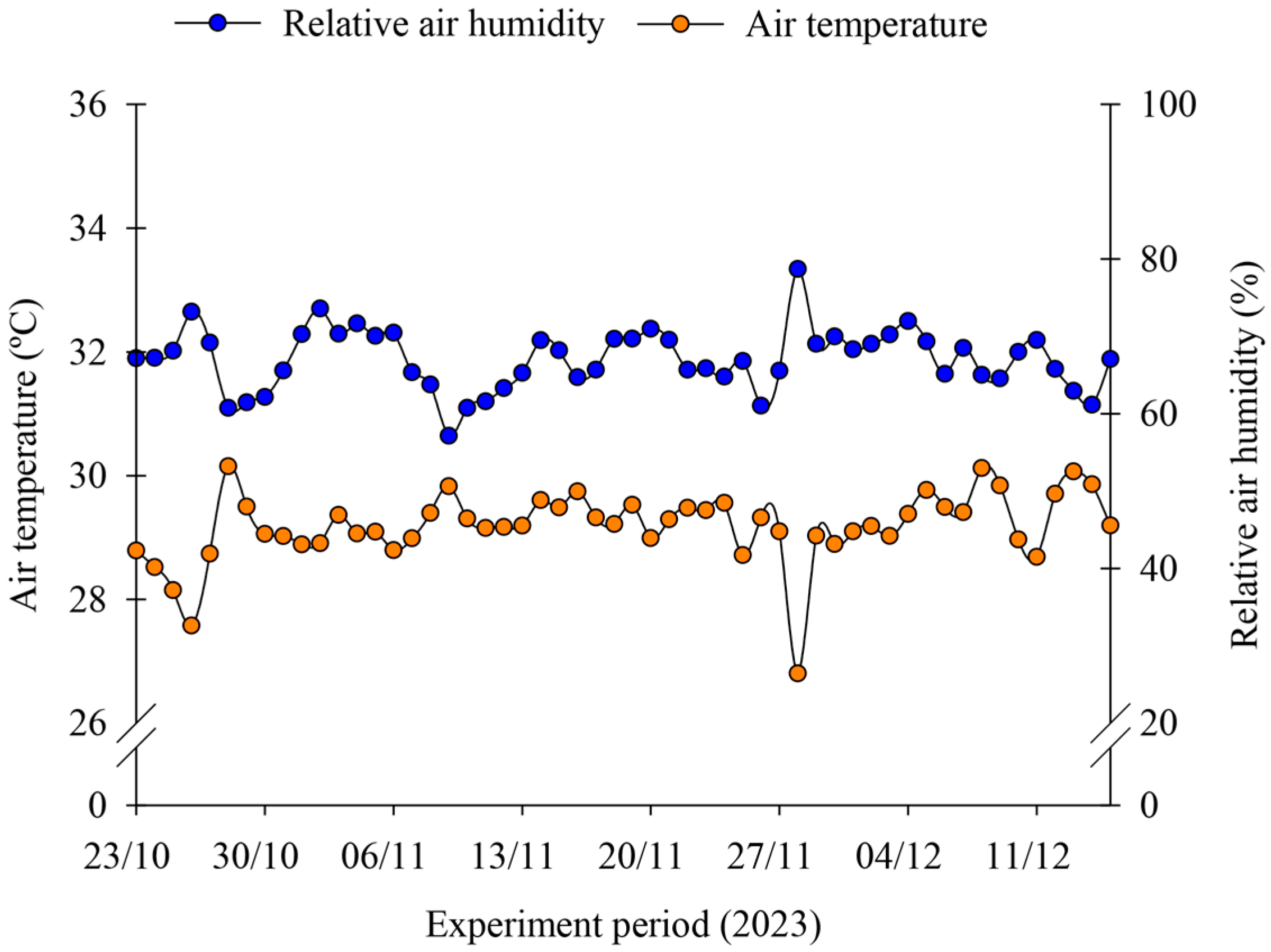
The study was conducted in a greenhouse belonging to the Department of Agronomic and Forestry Sciences of the Federal Rural University of the Semi-Arid (UFERSA), in Mossoró, RN, Brazil (5°11′56″ S, 37°20′23″ W), from 23 October to 15 December 2023. The region has a hot, semiarid climate, classified as BSh according to the Köppen classification [39], characterized by a prolonged dry season and concentrated rainfall in the summer months. A digital thermohygrometer (Minipa MT-241) monitored the microclimatic conditions of the greenhouse daily during the trial, and we calculated the average temperature and relative humidity of the air, as shown in Figure 1.

2.2. Plant Material and Design

We germinated Z. elegans ‘Lilliput’ seeds in 162-cell polyethylene trays filled with a 1:1 (v/v) mixture of soil and commercial substrate (composed of peat moss and pine bark, with an electrical conductivity of 0.50 ± 0.30, pH 6.00 ± 0.50, maximum moisture content of 58%, and density of 310 kg m−3). Ten days after sowing (DAS), at the stage of the first pair of expanded leaves, we transplanted the seedlings into 5.0 dm3 plastic pots. We had previously filled these pots with moist soil to field capacity (FC). Table S1 presents the physicochemical characterization of the soil, which is based on analyses conducted by the Laboratory of Water, Soil, and Plants of the Semiarid Region at UFERSA.
The experimental design was randomized blocks, with a factorial arrangement of 4 × 2, four water regimes [(80% FC, 20% FC, early stress: 20% FC up to 20 DAS followed by 80% FC up to 52 DAS (EWR); and late stress: 80% FC up to 32 DAS followed by 20% FC up to 52 DAS (LRW)] and two MEL levels: a control (CK, without MEL) and 1.0 mM MEL. This concentration was selected based on previous studies demonstrating its effectiveness in mitigating abiotic stress [40,41,42,43]. Each combination had five replications, totaling 40 experimental units. Each experimental unit consisted of one pot containing one plant (Figure S1).
We used a lysimeter to conduct daily irrigation, adjusting water replacement according to water losses in each treatment [44]. We applied MEL exclusively via manual foliar spraying once a week, using a volume of 20 mL per plant and covering both leaf surfaces until we reached the wetting point. In total, we performed eight applications. We prepared the solutions using deionized water and Tween 80 (0.05%) as an adjuvant. MEL was first dissolved in 10 mL of 95% ethanol before dilution. The control (CK) consisted of the corresponding solvent solution (deionized water + Tween 80 at 0.05% and ethanol at the same final concentration), without MEL.

2.3. Variables Analyzed

2.3.1. Gas Exchange

We determined the net CO2 assimilation rate (A, μmol CO2 m−2 s−1), stomatal conductance (gs, mol m−2 s−1), transpiration (E, mmol H2O m−2 s−1), and internal CO2 concentration (Ci, μmol mol−1) via gas exchange analyses. From these variables, we calculated the instantaneous water use efficiency (WUE, obtained from the A/E ratio), the intrinsic water use efficiency (iWUE, A/gs), and the instantaneous carboxylation efficiency (iCE, A/Ci). Additionally, we calculated the vapor pressure deficit (VPD, kPa). We carried out the measurements on fully expanded, healthy leaves located in the middle third of the plants. To this end, we used a portable infrared gas analyzer (IRGA, model LI-6400XT, LI-COR Inc., Lincoln, NE, USA) under appropriate environmental conditions (open sky, full sunlight) between 8:00 a.m. and 10:00 a.m. We configured the equipment with a 6 cm2 leaf chamber, a natural radiation sensor, an air flow of 300 μmol s−1, an atmospheric CO2 concentration of 400 μmol mol−1, and a relative humidity between 50% and 60%.

2.3.2. Photosynthetic Pigments

We determined the indices of chlorophyll a (Chl a), chlorophyll b (Chl b), and total chlorophyll (T chl) using a portable chlorophyll meter (ClorofiLOG® CFL 1030, Falker, Porto Alegre, RS, Brazil) on four fully expanded leaves located in the middle third of the plants. From these data, we established the relationships between the chlorophyll a and b (Chl a/Chl b) index. We expressed the obtained values according to the Falker chlorophyll index (FCI).

2.3.3. Chlorophyll a Fluorescence

We performed chlorophyll fluorescence analyses in conjunction with gas exchange measurements via a fluorometer coupled with an infrared gas analyzer (IRGA, LI-COR, model LI-6400-40 LCF). We subjected the leaves to saturation light pulses, accompanied by radiation in the far-red spectrum, to induce photochemical responses. From these measurements, we obtained the values of initial fluorescence (Fo′), maximum fluorescence (Fm′), variable fluorescence (Fv′), maximum potential efficiency of PSII (Fv′/Fm′), effective quantum efficiency of PSII (ΦPSII), photochemical (qP) and nonphotochemical (qN) quenching coefficients, and the electron transport rate (ETR).

2.3.4. Morphofunctional Attributes and Relative Water Content

To evaluate the morpho-functional attributes of the leaves, we collected leaf discs with an area of 0.6 cm2, taken from the middle third of the plants, between 5:00 a.m. and 6:00 a.m. to ensure greater cell turgor and reduced water loss through transpiration. We packed the samples in plastic bags and transported them to the laboratory for analysis. First, we determined the fresh mass (FM) on an analytical scale (0.0001 g). Then, we hydrated the discs in distilled water for 24 h at room temperature to obtain the turgid mass (TM). We subsequently dried the samples in a forced circulation oven at 65 °C for 72 h to obtain the dry mass (DM). On the basis of these values, we calculated the following values: leaf mass per unit area (LMA, g m−2), obtained by the ratio between dry mass and disc area [45]; leaf succulence (Suc, g m−2), determined by the difference between turgid mass and dry mass in relation to the disc area [46]; and the relative water content (RWC, %), estimated by the following equation: RWC = [(FM − DM)/(TM − DM)] × 100 [47].

2.3.5. Electrolyte Leakage

We quantified electrolyte leakage (EL) concurrently with morpho-functional analyses, following the methodology proposed by Bajji et al. [48]. For this purpose, we collected 10 leaf discs per individual (with an area of 0.6 cm2), washed them immediately after cutting, dried them on absorbent paper, and placed them in lidded test tubes containing 10 mL of distilled water. We maintained the tubes at 25 °C for 6 h under occasional agitation and then measured the initial electrical conductivity (EC1) via a portable conductivity meter (CD-850, Instrutherm, São Paulo, Brazil). Then, we subjected the samples to 90 °C for 60 min, and after cooling, we recorded the final electrical conductivity (EC2). We expressed the EL value (%) as a percentage, which was calculated as the ratio of EC1 to EC2.

2.3.6. Stomatal Traits

We performed stomatal analyses on the abaxial epidermis of the leaves, collecting two leaves from the middle region of each plant. We obtained 10 micrographs from each leaf, which we used to determine the stomatal density (number of stomata per mm2). For the morphological characterization, we selected five stomata in each image, from which we measured the length (SL), width (SW), and stomatal area (SA), as well as the length (SPL), width (SPW), and stomatal pore area (SPA).
We performed the measurements via the ImageJ v.1.54g program (National Institutes of Health, Bethesda, MD, USA). We calibrated the program against the scale bar present in each micrograph, allowing the conversion of measurements from pixels to micrometers (μm) and square micrometers (μm2).
For sample preparation, we fixed the leaf fragments to carbon strips on metal stubs, metallized them with a 9 nm layer of gold (Quorum Technologies, model Q150R), and subsequently analyzed them via a scanning electron microscope (Pfeiffer Vacuum, D-35614 Asslar, Germany) operating at 30 kV. We saved the images in TIFF format.

2.3.7. Biochemical Traits

The soluble protein content was determined via the Bradford method [49], which uses a specific reagent and readings at a wavelength of 595 nm. The results are expressed as mg of dry mass protein g−1 (DM). The total soluble sugar (TSS) content was obtained via the anthrone colorimetric method [50], with readings at 620 nm and results expressed in mg of TSS g−1 DM. Reducing sugars (RS) were quantified via the 3,5-dinitrosalicylic acid (DNS) method, whose reaction was monitored at 540 nm, with values expressed in mg of RS g−1 DM [51]. Proline was estimated according to Bates et al. [52] by reacting with an acid ninhydrin solution, with readings at 520 nm, and the results are expressed in mmol of proline g−1 DM. All absorbance readings were performed using a spectrophotometer (Model ESPEC-UV-5100, Technal, Piracicaba, SP, Brazil).

2.4. Statistical Analysis

We initially subjected the data to the Shapiro–Wilk normality test and the Bartlett homogeneity of variances test to verify compliance with the statistical assumptions. Next, we performed an analysis of variance and compared the means via Tukey’s test at the 5% significance level. In addition, we performed principal component analysis and Pearson’s correlation to identify the patterns of association between the evaluated variables. We conducted all the statistical analyses via the R software v. 4.3.2 [53].

3. Results

3.1. Gas Exchange

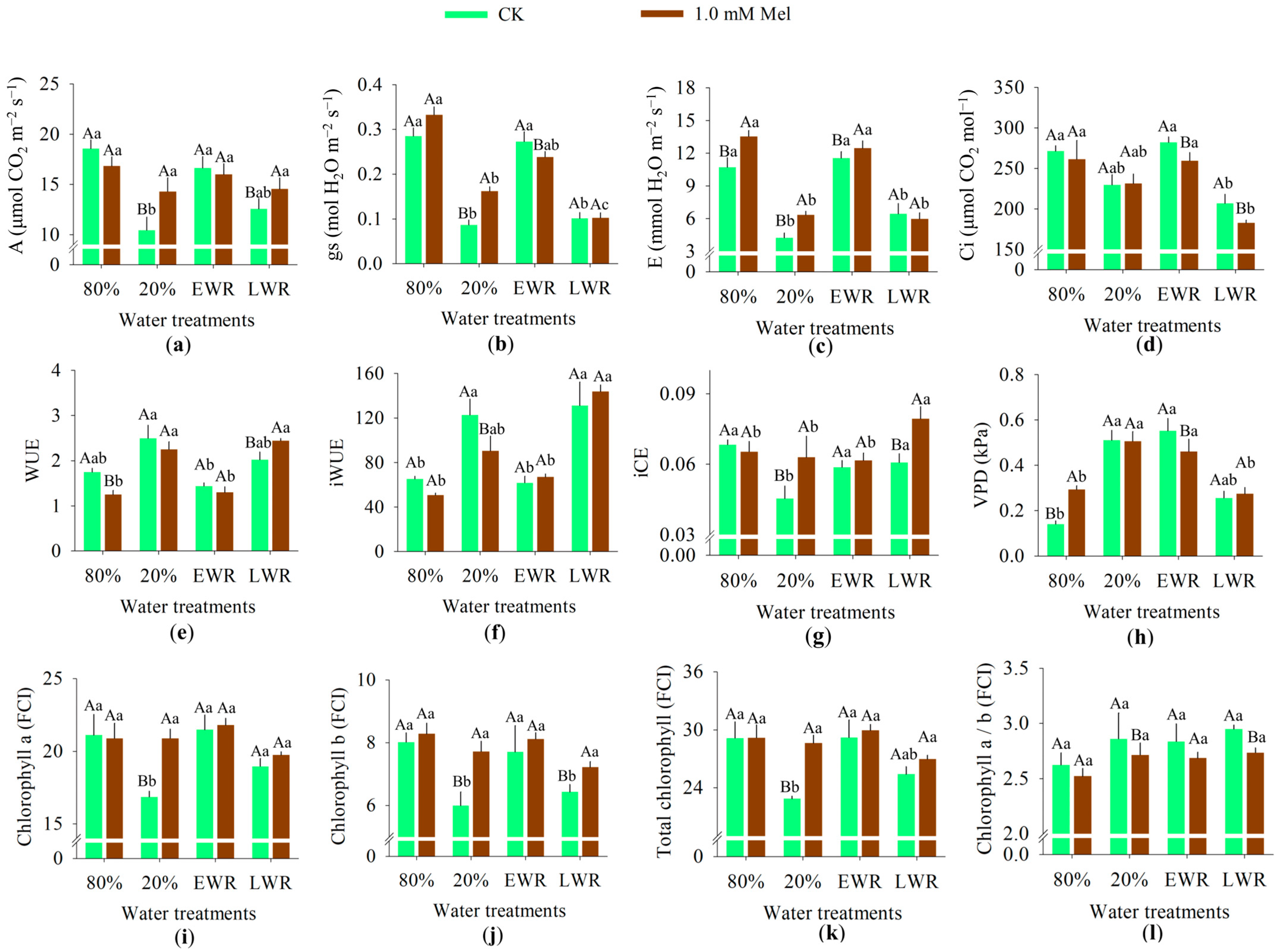
The gas exchange of Z. elegans responded differently to the different water regimes applied (Figure 2). Compared with that under nonstress conditions (80% field capacity–FC), the net assimilation rate of CO2 (A) was 43.81% lower under severe stress (20% FC) and 32.29% lower under delayed stress (LWR) (Figure 2a). The application of MEL resulted in increases of 26.99% and 13.53% in these same treatments, respectively (Figure 2a). Stomatal conductance (gs) was lower by 68.96% in the 20% FC treatment and 65.51% in the LWR treatment than in the control, with an increase of 43.75% in the MEL treatment under severe stress (Figure 2b).
The transpiration rate (E) was similar to that of A and gs, with values 60.54% and 40% lower in the 20% FC and LWR treatments, respectively. However, it increased by 33.28% with the application of MEL at the same stress level (Figure 2c). The internal concentration of CO2 (Ci) decreased by 15.63% and 23.81% under 20% FC and LWR, respectively (Figure 2d). MEL did not influence this variable under severe stress but induced an 11.63% reduction in the LWR (Figure 2d). Under early water stress (EWR), the variables remained stable in relation to those of the control, with changes associated with the application of MEL (Figure 2d).
Compared with the well-irrigated control (80% FC, no MEL), the water use efficiency (WUE) was 30% lower under severe stress (20% FC) and 17.71% lower under EWR, whereas it increased by 13.36% in the LWR treatment (Figure 2e). The application of MEL increased the WUE by 17.55% under LWR but reduced this parameter by 28.57% in the control (Figure 2e). The intrinsic water use efficiency (iWUE) followed a similar trend, with a 46.76% reduction in 20% FC compared with the control, which was increased by 26.28% by MEL within the same regime (Figure 2f). In the LWR treatment, the iWUE was 50.2% greater than that in the control, with an increase of 8.78% with the regulator (Figure 2f). The instantaneous carboxylation efficiency (iCE) remained stable between treatments, except in the LWR with MEL, which presented a value 12.5% greater than that of the control (Figure 2g). The vapor pressure deficit (VPD) varied among the treatments, with values 72.54% and 74.54% higher than those of the control at 20% FC and EWR, respectively (Figure 2h). In the LWR treatment, the increase was 46.15% in relation to that in the control (Figure 2h). The application of MEL did not result in any significant changes in this variable (Figure 2h).

3.2. Photosynthetic Pigments

We recorded changes in the contents of photosynthetic pigments in response to water treatment and MEL application in Z. elegans (Figure 2). Compared with those under nonstress conditions (80% FC), the contents of chlorophyll a, b, and total chlorophyll were reduced by 20.11%, 25.28%, and 21.5%, respectively, under severe stress (20% FC) (Figure 2i–k). Compared with the same treatment without MEL, the application of MEL at 20% FC promoted increases of 18.37% in chlorophyll a, 22.38% in chlorophyll b and 20% in total chlorophyll (Figure 2i–k). In the LWR, MEL increased the contents of chlorophyll a, b, and total chlorophyll by 3.89%, 10.92%, and 5.81%, respectively (Figure 2i–k). The chlorophyll a/b ratio was slightly reduced with MEL at 20% FC and LWR, with decreases of 4.89% and 7.11%, respectively, in relation to the groups without MEL application (Figure 2l).

3.3. Chlorophyll a Fluorescence

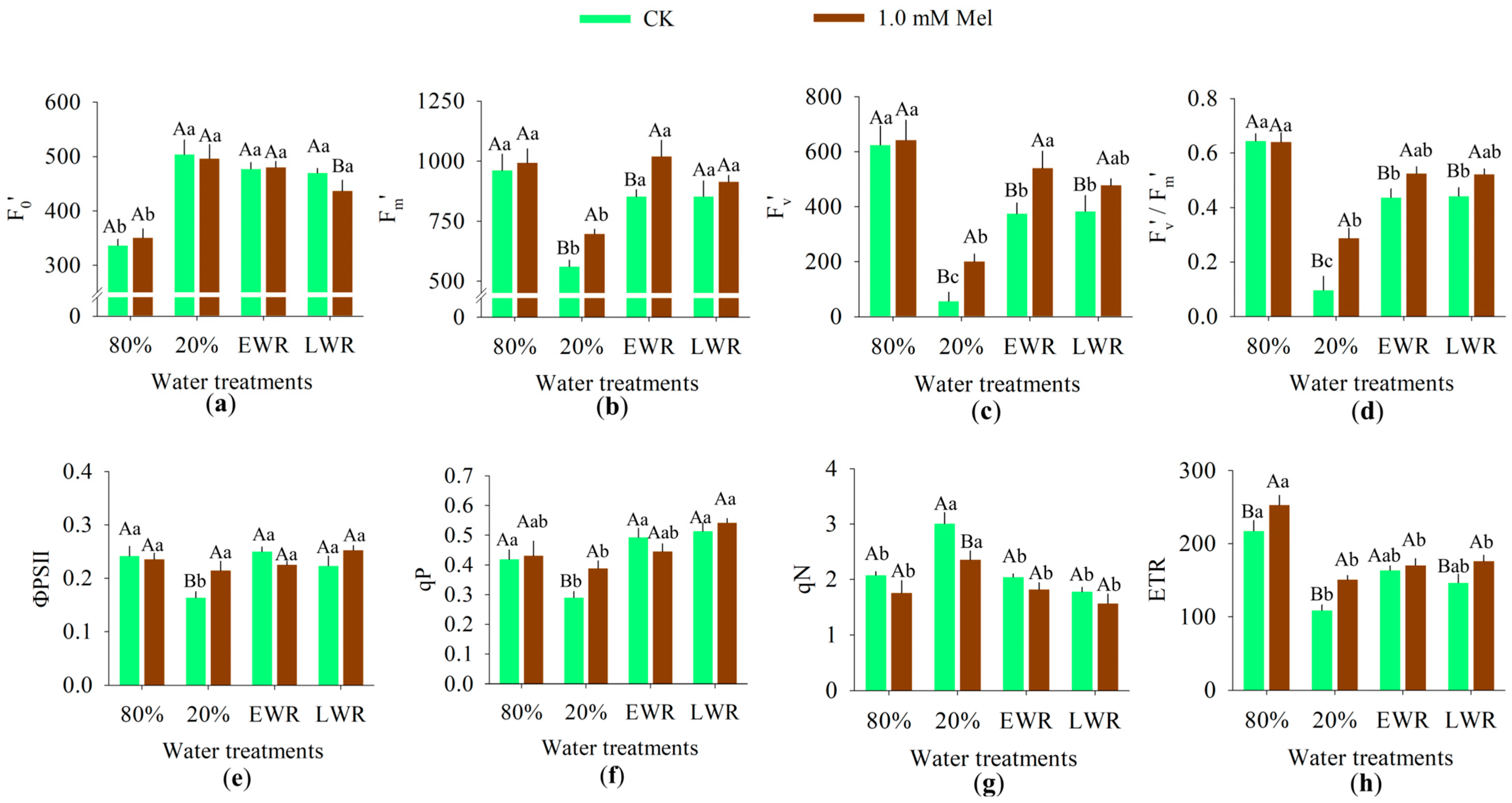
The water regime and MEL application had a significant influence on the chlorophyll fluorescence variables (Figure 3). Compared with that of the control (80% FC without MEL), the initial fluorescence (F0′) was 33.19% lower in the 20% FC with MEL application (Figure 3a). In the LWR treatment with MEL, the F0′ value varied by 7.19% compared with that of the same treatment without the attenuating agent, remaining close to that of the control (Figure 3a). For maximum fluorescence (Fm′), the lowest value occurred at 20% FC without MEL, representing a 41.7% reduction compared with that of the control (Figure 3b). The application of MEL at this same stress level increased Fm′ by 19.58% (Figure 3b). The variable fluorescence (Fv′) presented the lowest value under 20% FC without MEL, decreasing by 90.94% compared with that of the control, and MEL restored it, resulting in a 67.88% increase in the same treatment (Figure 3c). The maximum potential efficiency of PSII (Fv′/Fm′) followed a similar trend, with a reduction of 84.37% at 20% FC without MEL and an increase of 65.51% with the regulator in the same treatment (Figure 3d).
The analysis of parameters related to photochemical activity revealed differences between the water treatments and a moderate influence of MEL (Figure 3). ΦPSII remained stable in the EWR and LWR, with values similar to those of the control, but increased by 23.8% with MEL at 20% FC compared with those of the same treatment without MEL application (Figure 3e). The qP also responded positively to MEL in this treatment, with an increase of 25.64% in relation to the absence of MEL (Figure 3f). On the other hand, the qN was greater under 20% FC without MEL, presenting lower values in the other treatments, regardless of whether MEL was applied (Figure 3g). The ETR was reduced by 50% under severe stress without MEL, which was the treatment with the lowest photochemical performance (Figure 3h). The application of the regulator restored this activity, resulting in a 27.82% increase in ETR under the same treatment (Figure 3h). In the other water regimes, the ETR maintained values close to those of the well-irrigated control (Figure 3h).

3.4. Morphofunctional Aspects, Water Responses and Membrane Integrity

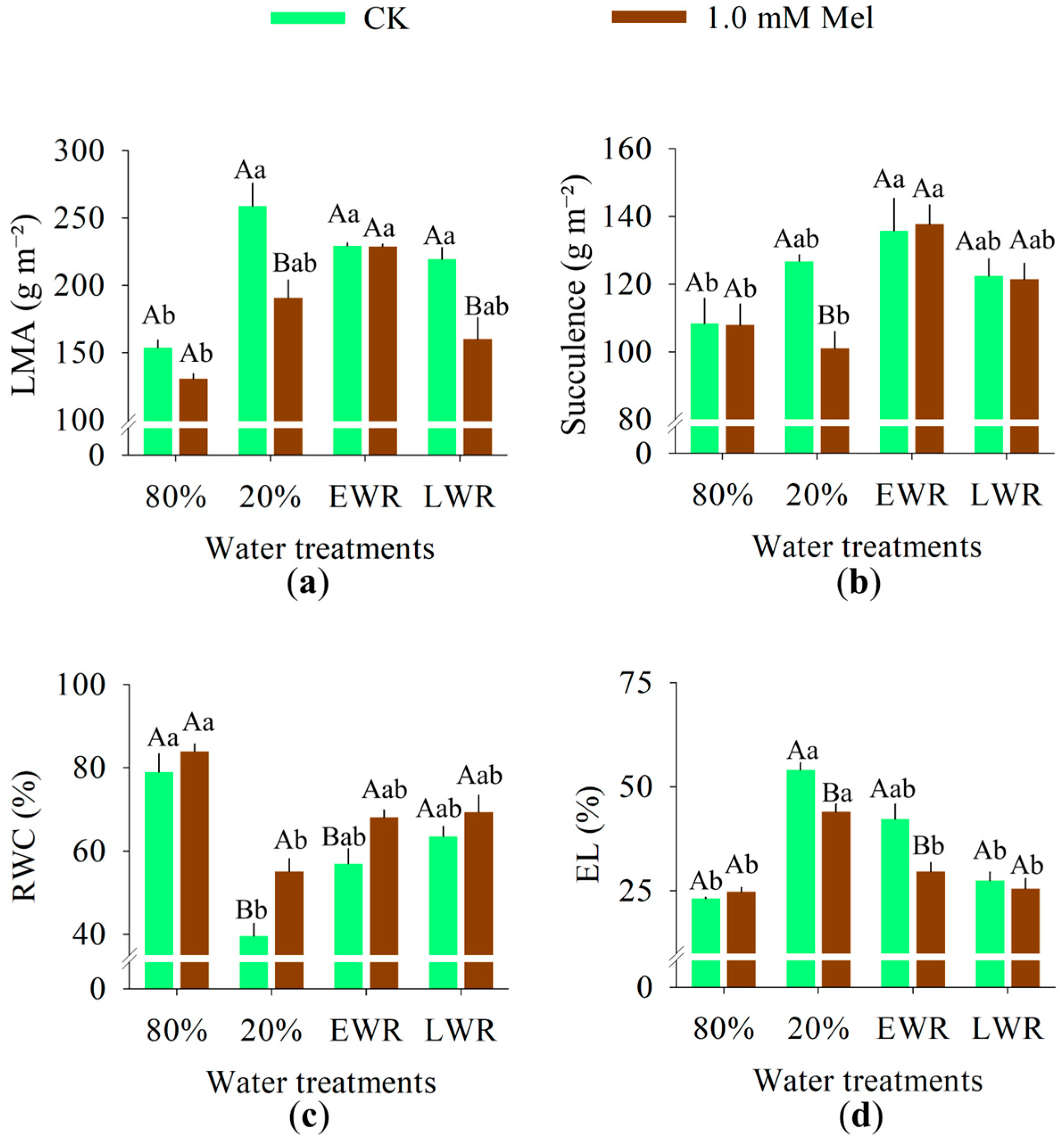
The water level and MEL treatment significantly influenced the water relationships of Z. elegans (Figure 4). The leaf mass per unit area was greater under severe stress (20% of field capacity—FC) in the EWR and LWR (Figure 4a). Thus, we found increases of 49.56% in the severe stress treatment (20% FC), 43.05% in the EWR, and 40.55% in the LWR in the untreated plants (Figure 4a). With the application of 1 mM MEL, a reduction of 26.31% in severe stress and 27.11% in LWR was obtained (Figure 4a). Under severe stress, we observed a marked reduction in succulence in plants treated with MEL, with a decrease of 20.35% (Figure 4b). In terms of the relative water content (RWC), the highest values were observed in the control treatment (80% FC), with a mean ranging from 78–83% (Figure 4c). As water restriction increased, we found a reduction in RWC, especially in untreated plants (Figure 4c). In severely stressed, untreated plants, we observed a 52.75% decrease; however, the application of MEL caused a 28% increase in RWC under these conditions (Figure 4c). In plants under early stress (EWR), the application of MEL resulted in a 16.31% increase (Figure 4c). Electrolyte leakage (EL) was greater in plants subjected to severe stress and early stress (EWR) (Figure 4d). However, the application of MEL under these conditions resulted in decreases of 18.61% and 29.81%, respectively (Figure 4d).

3.5. Stomatal Traits

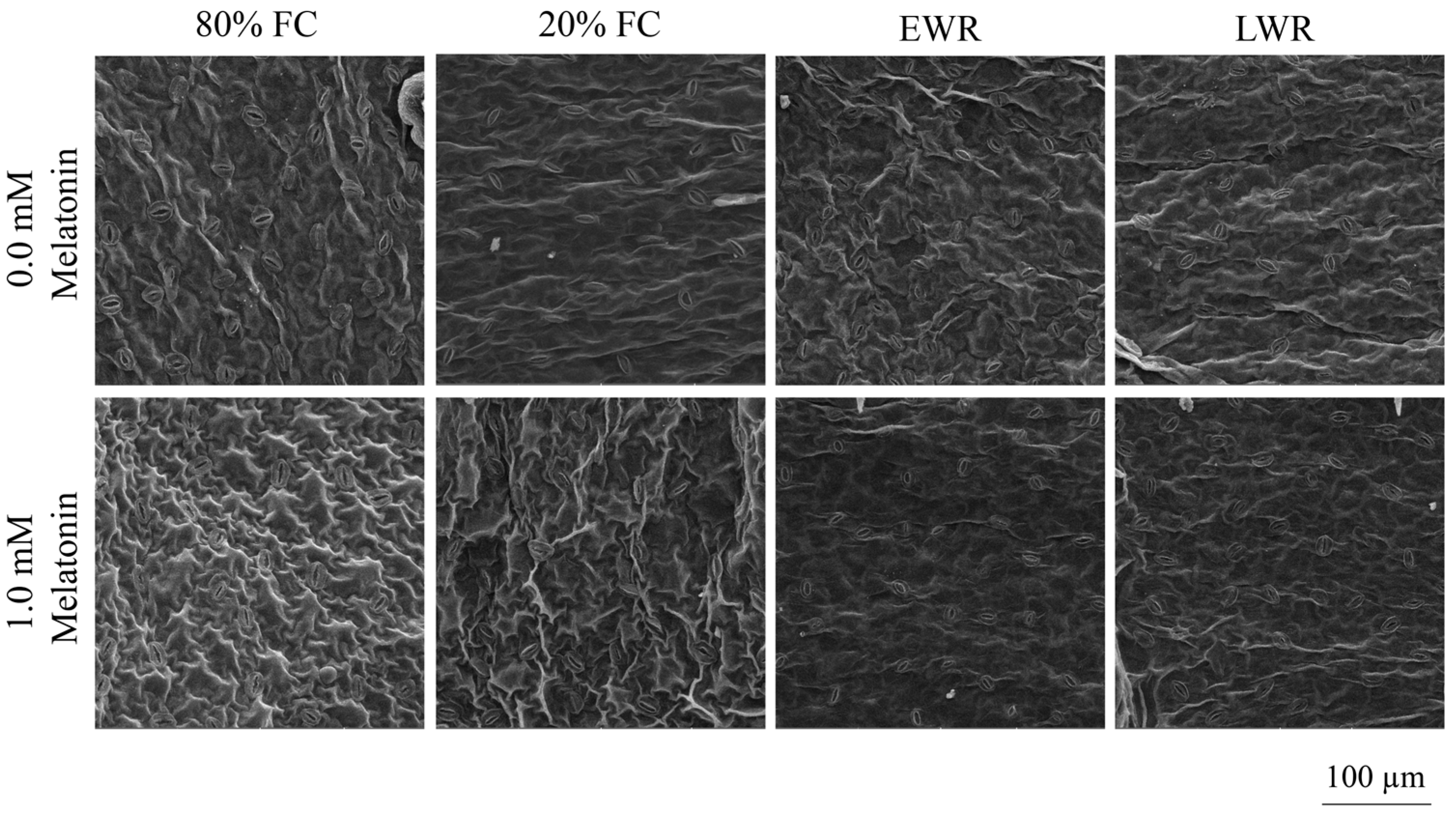
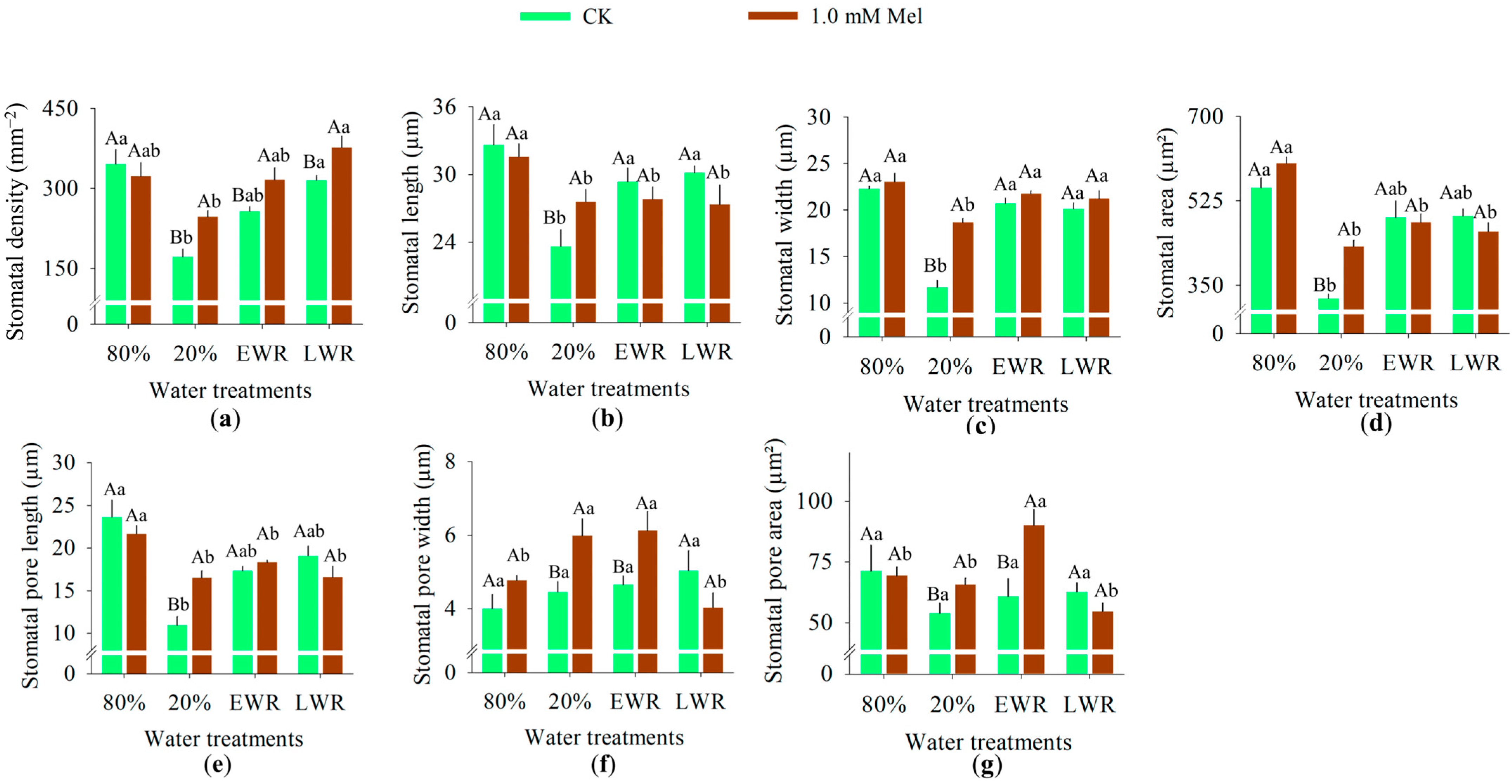
The treatments tested had a significant influence on the stomatal variables of Z. elegans (Figure 5 and Figure 6). MEL increased the stomatal density under all stress conditions, whereas the stomatal density of the untreated plants decreased by up to 50.33% (Figure 5a). The increase in stomatal density observed with the application of MEL reached 30.41% (20% FC), 18.63% (EWR), and 16.23% (LWR) (Figure 5a). In untreated plants under severe stress, the stomatal length decreased by 49.31% (Figure 5b). In plants under early stress (EWR) and late stress (LWR), MEL reduced stomatal length by 5.25% and 9.39%, respectively (Figure 5b). Stomatal width followed the same trend, with a marked reduction in this variable under severe stress (Figure 5c). At 20% FC, the number of untreated plants decreased by 37.48% (Figure 5c). The other treatments did not significantly differ (Figure 5c). Under severe stress, the stomatal area decreased by 15.77% in the untreated plants (Figure 5d). As with the other stomatal variables, the stomatal area under the EWR and LWR in the plants treated with MEL slightly decreased by 1.99% and 6.5%, respectively (Figure 5d).
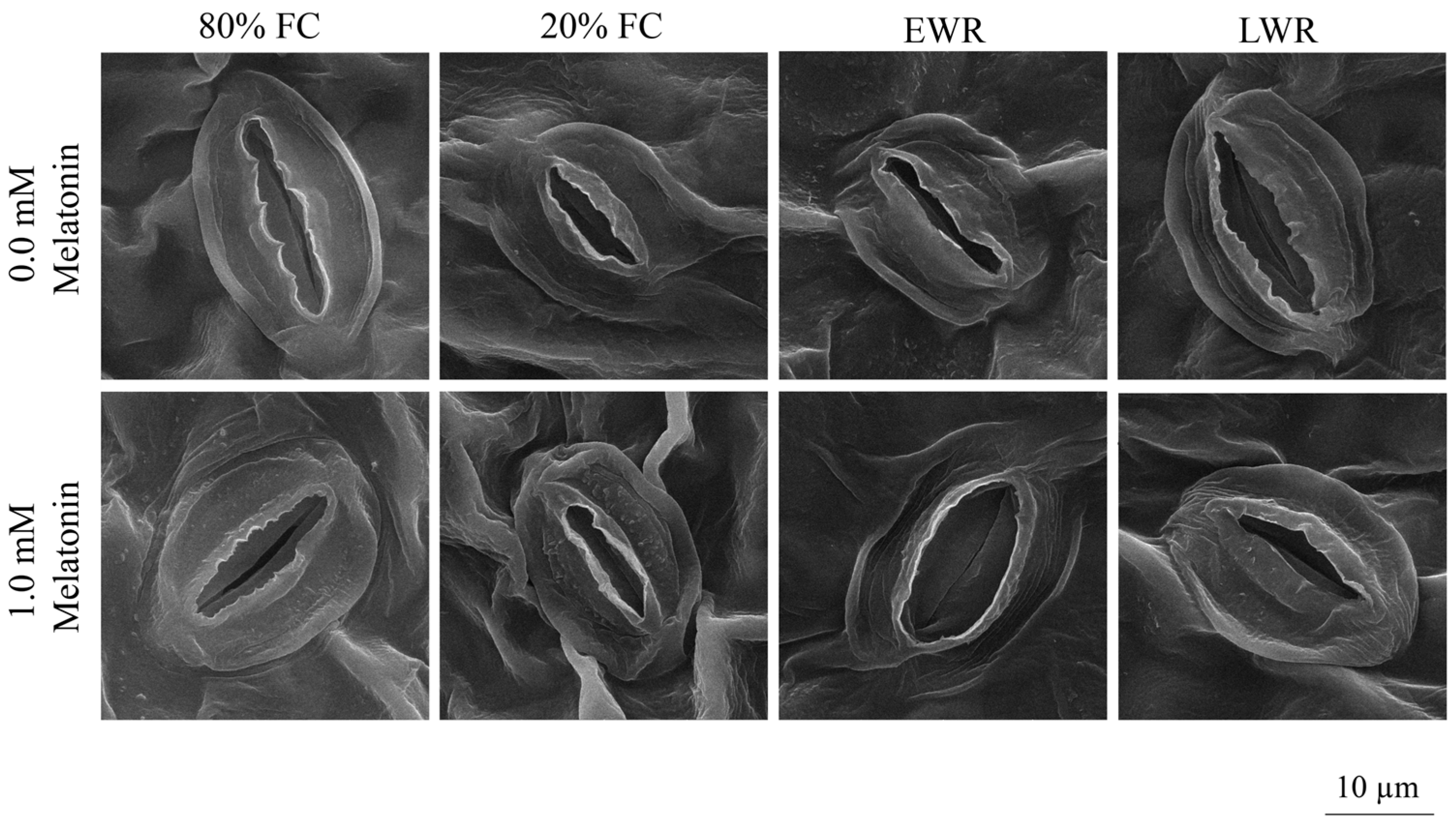
The water regime and the application of MEL significantly influenced the characteristics of the stomatal pores (Figure 5 and Figure 7). Pore length under severe stress decreased by 53.73% in untreated plants and by 30.17% in plants treated with 1 mM MEL (Figure 5e). The stomatal pore width of the plants treated with MEL increased by 25.59% under severe stress (20% FC) and 24.02% under early stress (EWR) (Figure 5f). In the control treatment (80% FC), the increase in stomatal pore width in the plants treated with MEL was 16.15% (Figure 5f). However, under late stress (LWR), the untreated plants presented higher values, with an increase of 19.89% (Figure 5f). In terms of the stomatal pore area, we observed a similar trend, where plants treated with MEL under severe and early stress presented increases of 17.94% and 32.52%, respectively (Figure 5g). Under late stress, the plants treated with MEL presented a 12.86% reduction in the stomatal pore area (Figure 5g).

3.6. Biochemical Traits

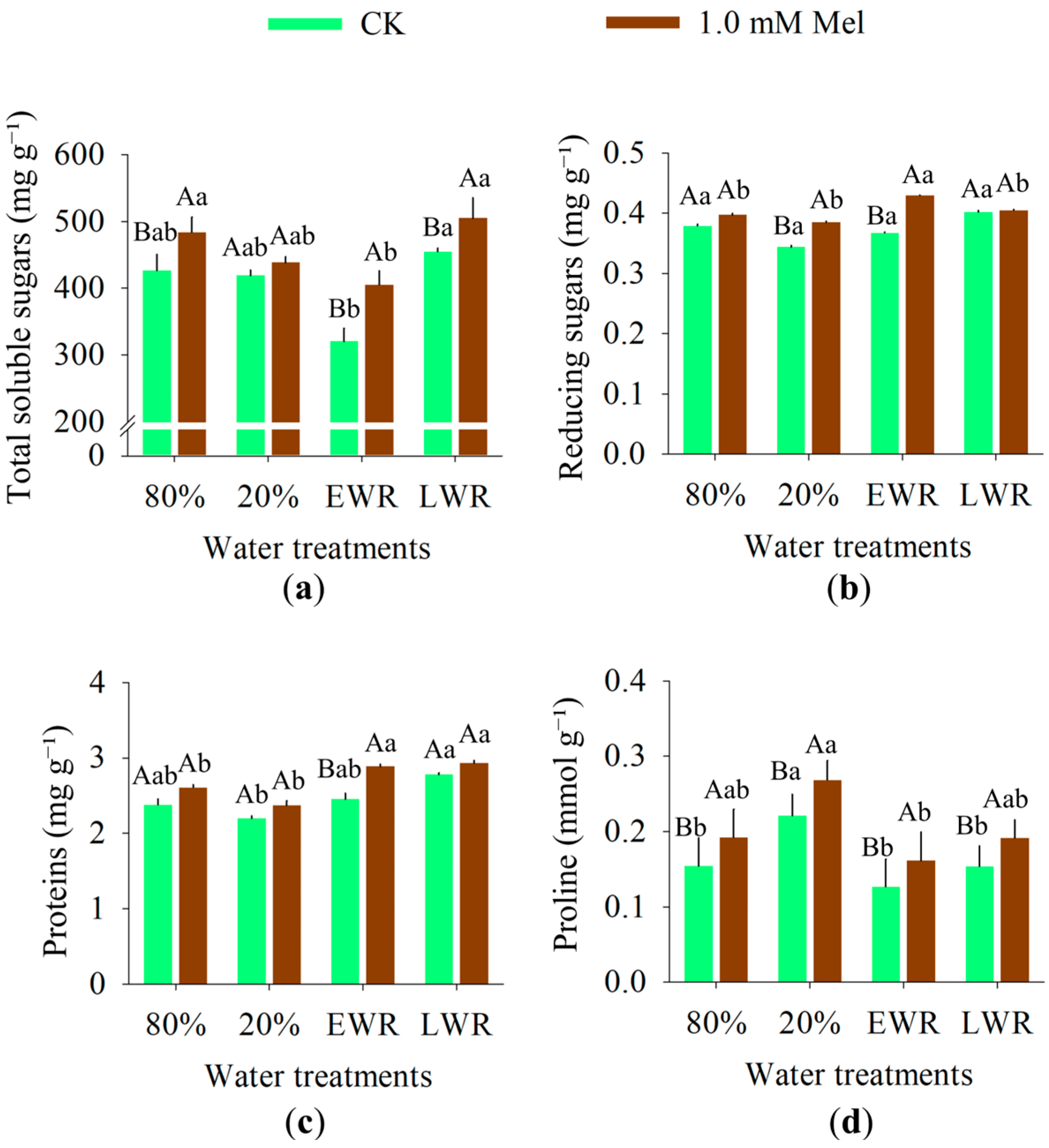
Water treatments and MEL application caused significant changes in the biochemical variables of Z. elegans (Figure 8). Under early stress, the plants treated with MEL presented increases in total soluble sugars of 20.93% and 9.88% (Figure 8a). The same trend was observed under ideal conditions (80% FC), where the number of plants treated with MEL also increased (Figure 8a). The content of reducing sugars was greater in the plants treated with MEL than in the control plants under all the water regimes (Figure 8b). Under severe stress (20% FC) and early stress (EWR), there were increases of 10.42% and 14.46%, respectively (Figure 8b). Thus, treatment with 1 mM MEL provided values similar to those of the control for total soluble sugars and reducing sugars (Figure 8a,b). For proteins, under ideal conditions (80% FC) and early stress (EWR), MEL increased by 8.70% and 14.92%, respectively (Figure 8c). In the other treatments, no significant differences were observed (Figure 8c). The application of MEL resulted in an increase in the proline content in all the treatments tested (Figure 8d). The increases in the proline content obtained with the attenuating agent were 19.77% (80% FC), 17.54% (20% FC), 21.36% (EWR) and 19.67% (LWR) (Figure 8d).

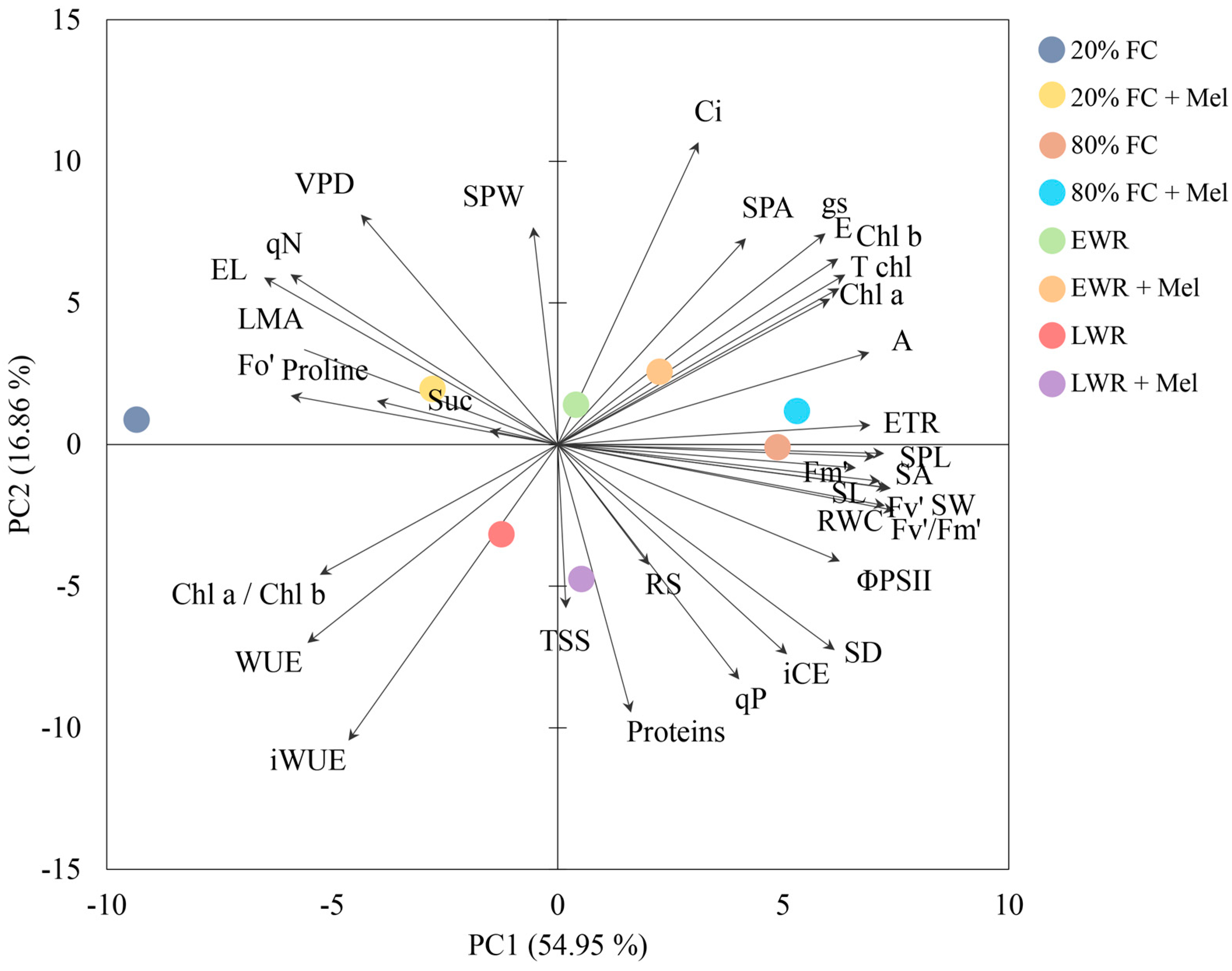
3.7. Principal Component Analysis and Pearson Correlation

The principal component analysis (PCA) resulted in a sum of 71.75% of the total variance of the data (Figure 9). PC1 contributed 54.95% of the total inertia, where we found that the grouping of the treatments along this axis indicated that the plants subjected to ideal irrigation (80% FC) with or without MEL presented a positive correlation with the net assimilation rate (A), relative water content (RWC), electron transport rate (ETR), chlorophyll a fluorescence variables (Fm, Fv′, and Fv′/Fm′) and with stomatal variables (SA, SL, SW, SPL) (Figure 9). Plants subjected to late stress with MEL (LWR+MEL) presented positive correlations with stomatal density (SD), instantaneous carboxylation efficiency (iCE), reducing sugars (RS), total soluble sugars (TSS), proteins, and photochemical quenching (qP) (Figure 9). However, untreated plants subjected to late stress (LWR) presented negative correlations with intrinsic water use efficiency (iWUE), water use efficiency (WUE), and the Chl a/Chl b ratio (Figure 9). Plants subjected to early stress with or without MEL (EWR, EWR + MEL) presented positive correlations with photosynthetic pigment variables (Chl a, Chl b, and T chl), gas exchange variables (transpiration, stomatal conductance, and internal carbon) and the stomatal pore area (SPA) (Figure 9). PC2 contributed 16.86% of the total inertia, where we found that the grouping of the treatments along this axis indicates that the plants subjected to severe stress with or without MEL (20% FC) presented positive correlations with proline, succulence (Suc), initial fluorescence (F0′), leaf mass per unit area (LMA), nonphotochemical quenching (qN), electrolyte leakage (EL), vapor pressure deficit (VPD), and stomatal pore width (SPW) (Figure 9).
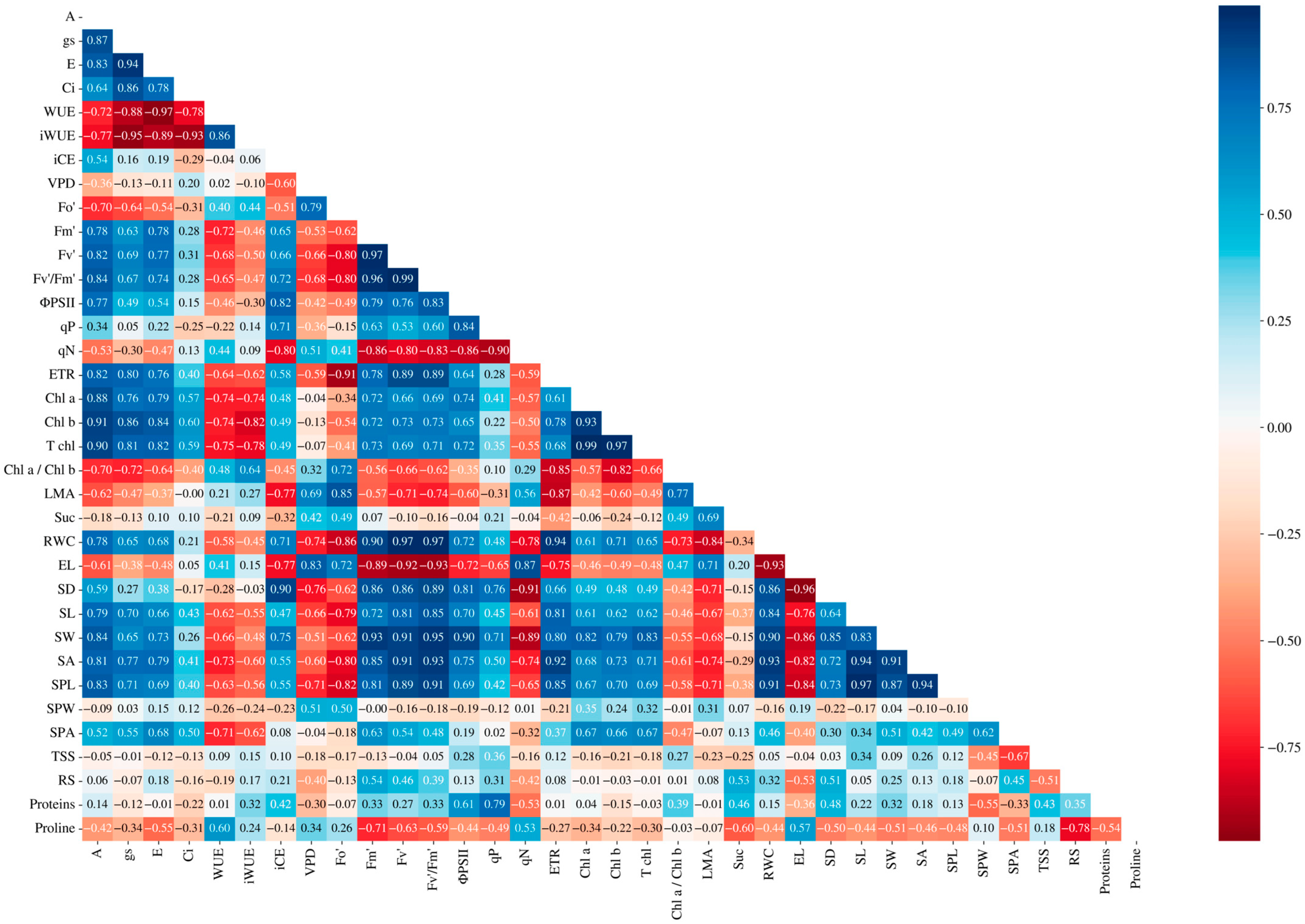
Pearson’s correlation analysis revealed strong correlations between physiological, biochemical, and structural variables (Figure 10). The net assimilation rate of CO2 (A) was strongly positively correlated with stomatal conductance (gs, r = 0.87), transpiration (E, r = 0.83), and photochemical efficiency (ΦPSII, r = 0.77; ETR, r = 0.82) (Figure 10). On the other hand, water use efficiency (WUE) was negatively correlated with A, gs, and E (ranging from −0.72 to −0.97). The accumulation of osmoprotective compounds showed the opposite behavior: proline was negatively correlated with A (r = −0.42), gs (r = −0.34), and ETR (r = −0.27), whereas total soluble sugars were negatively correlated with stomatal pore width and area (r = −0.45 and r = −0.67) (Figure 10).

4. Discussion

The good establishment of ornamental plants, as reflected in their growth and development, is directly related to proper water management [54]. In this context, water stress hurts plant species by altering their morphological growth characteristics, photosynthetic metabolism, photosynthetic pigment content, water status, and biochemical aspects [55].
The progression of drought in the present study, which used Z. elegans, strongly reduced the net assimilation rate (A) under severe and late stress. This finding confirms the photosynthetic damage caused by water restriction [22]. However, the mitigation effect of MEL was evident in the net assimilation rate (A), where we obtained values similar to those of the control treatment in plants treated with this attenuant. The participation of MEL in photosynthesis involves the protection of photosynthetic proteins and the transcription of photosystem genes, thereby increasing the adaptive capacity of plants under stress [56].
Despite the exogenous use of MEL in the present study, research has indicated that the synthesis of phytomelatonin in chloroplasts induced by abiotic stress favors protection against oxidative damage to the photosynthetic machinery, thus increasing the net assimilation rate (A) [20]. Under water stress, plants close their stomata to reduce water loss [57]. Confirming this fact, the behavior observed in the gs reflects that under severe and late stress, Z. elegans closes the stomata. However, the increase observed in 20% FC in plants treated with MEL is evidence of the effect of this regulator on stomatal conductance (gs). Several studies have confirmed the involvement of MEL in stomatal regulation [58,59,60]. The influence of MEL on gs is associated with structural features such as increased stomatal opening, length, and width, as well as abscisic acid (ABA) signaling [56,61]. The similarity of the results found for transpiration (E) and stomatal conductance (gs) confirms the direct relationship between these parameters. The increases observed in E, especially in plants treated with MEL, support the maintenance of water status. Jahan et al. [62] reported improved transpiration efficiency in plants treated with MEL, noting that tomato plants treated with this regulator exhibited better drought tolerance through increased stomatal conductivity, increased photosynthetic rate, and reduced transpiration.
MEL increases the expression of genes involved in ABA catabolism. It decreases the activity of a vital enzyme (NCED) involved in ABA production, thereby reducing the ABA content under stress conditions [63]. In addition, the influence of MEL on transpiration-mediated water maintenance can be attributed to its effect on the expression of aquaporin genes, which are responsible for the hydraulic conductivity of roots [64].
An increase in photosynthesis, a key factor in water use efficiency, primarily mediates drought tolerance [65]. These efficiencies (WUE and iWUE) reflect the carbon capacity fixed per unit of water lost and are also correlated with stomatal regulation. The evidence revealed that MEL under LWR promoted increased photosynthetic efficiency. Under conditions of water stress, it is common for vegetable plants to reduce water loss through transpiration to maintain a sufficient water status for survival. This regulation can compromise the assimilation of carbon required for the production of triose-phosphate [66]. Thus, adaptive changes in density and stomatal opening balance this paradoxical relationship [67]. A decrease in the internal concentration of carbon (Ci) in radish plants treated with MEL increased the instantaneous carboxylation efficiency (iCE) and the regulation of photosynthesis under water stress [68]. Maleki et al. [69] reported that an increase in Ci during periods of stress can be directly related to metabolic damage in photosynthesis.
The decrease in chlorophyll observed in severely water-restricted (20% FC) untreated plants highlights the effects of stress on the degradation of these pigments. Chlorophylls a and b are responsible for the absorption, transmission, and transformation of chemical and light energy into photochemistry, with chlorophyll a being the central pigment of photosynthetic reactions [70]. Quantifying this parameter is essential for understanding the efficient function of the photosynthetic process. In the present work, we observed that under severe stress, MEL promoted a considerable increase in photosynthetic pigments. Jahan et al. [65] reported that under stressful conditions, MEL increases the chlorophyll content and inhibits the degradation of this molecule. The role of MEL in inhibiting chlorophyll degradation is explained by its ability to repress the expression of catabolism genes and enzymes, such as chlorophyllase and pheophytase [71].
On the other hand, MEL not only increases chlorophyll content but also accelerates chlorophyll synthesis by regulating the expression of genes such as protochlorophyllide oxidoreductase (POR), chlorophyll a oxygenase (CAO), and chlorophyll synthase (CHL G) [56]. In addition, MEL participates in the regulation of other hormones essential for the regulation of chlorophyll metabolism, such as abscisic acid (ABA) and jasmonic acid (JA) [72,73]. In ornamental plants, chlorophyll degradation precedes the appearance of chlorosis, which decreases their aesthetic value and reduces their photosynthetic capacity and energy production [57]. Research evaluating the effects of drought without mitigating agents on other ornamental plants, such as Euonymus japonicus, Berberis thunbergii, Bugainvillea spp., and Zelkova schneideriana, has revealed greater sensitivity to chlorosis induced by water restriction and has shown that this stress reduces visual appeal and physiological functions [74,75].
The results obtained for the chlorophyll fluorescence variables demonstrate the function of PSII under stress conditions. Therefore, the reduction in fluorescence parameters (Fm′, Fv′, and Fv′/Fm′) under severe stress in untreated Z. elegans plants indicates damage to the photosynthetic apparatus, low efficiency of the photosynthetic process, and a negative impact of water stress [76]. PSII contains the reaction centers (CRs) of thylakoid membranes; water restriction strongly affects these units [77]. This fact compromises the collection of light required for photosynthesis and the functioning of the D1 protein, reducing electron transport in PSII and generating oxidative stress through the formation of reactive oxygen species in the thylakoid membrane [78]. Considering these harms, the relief provided by the MEL treatment observed in the present study is essential. MEL may have a specific role in the transcription of photosynthesis-related genes, as well as in the posttranscriptional regulation of chloroplast proteins essential for the proper functioning of PSII [79]. Zhou et al. [80] provided an example of MEL’s performance, confirming that it neutralizes the decline in D1 protein synthesis, thereby accelerating the recovery of the photosynthetic process. The closure of CRs caused by severe stress can lead to photoinhibition and damage to the integrity of the PSII subunits; however, the immediate relief of MEL found in the present study ensures the maintenance of these components [60]. The distinct variation observed in the variable F0′ indicates that, in the control treatment, the CRs were more stable. In contrast, under severe stress, the EWR and LWR increased, likely due to possible damage to PSII proteins and greater energy dissipation in the form of heat [81].
Water stress causes changes in the photosynthetic performance of plants, leading to a decrease in PSII protein synthesis, inactivation of PSI and PSII CRs, and destabilization of PSII-LHCII complex subunits [76,82]. In the present study, Z. elegans plants presented a reduction in ΦPSII, qP, and ETR in untreated plants, confirming the ability of drought to compromise photosynthesis and heat dissipation resulting from photooxidation. Therefore, we show that the application of MEL favored these parameters, avoiding the decrease in the availability of electron acceptors that can limit the regeneration of RuBisCO (ribulose-1,5-bisphosphate carboxylase oxygenase) and thus contribute to the energy balance in PSII by directing light energy to the proper functioning of photochemical activity. Under severe stress (20% FC), qP increased with MEL, where this variable corresponds to the fraction of PSII CRs that remain active and the adequate number of electrons transferred to quinone, indicating the ability to maintain electron flow and the production of ATP and NADPH [83]. The results obtained for qN, on the other hand, reinforce the assumption that water stress promotes greater energy dissipation in the form of heat, thus indicating that untreated plants have lower energy use associated with the activation of the xanthophyll cycle [78,84].
Water-related parameters are among the physiological characteristics that are influenced by water stress and present distinct responses that may reflect drought adaptation mechanisms [85]. However, the LMA results suggest greater leaf thickening in untreated plants, which may reflect limitations in terms of cell growth [86]. With the application of MEL and the reduction in this variable, we can observe that this attenuating factor contributes to structural adjustment, favoring leaf mesophyll turgidity and cell expansion [87]. The succulence of Z. elegans plants treated with reduced MEL under severe stress may indicate a modulation of water status, as provided by the regulator [88]. In the present study, the results obtained for RWC, a direct indicator of water status in leaves, revealed significant changes in untreated plants and the alleviation of these effects with MEL. Moustafa-Farag et al. [89] addressed the role of this regulator in water relations and reported that MEL favors the accumulation of osmolytes, water retention, and the maintenance of turgor in leaves. In addition to osmotic adjustment, MEL helps maintain the functioning of membranes, providing structural support, as evidenced by the results of electrolyte leakage. The ability of MEL to situate itself between the polar heads of polyunsaturated fatty acids in cell membranes and to react with peroxidation radicals explains this phenomenon [90,91].
In this study, the optimal water distribution ensured greater density and greater degree of stomatal opening in Z. elegans plants. Drought stress (20% FC) reduced the opening of the stomata and the visual pattern of the mesophyll of plants not treated with MEL. Yang et al. [92] reported that cuticle modification in response to water stress can be an adaptation mechanism in these plants, increasing the thickness of the cuticle and thereby improving energy reflection and reducing water loss through transpiration. For the stomata, the observed closure is the primary response of plants subjected to water restriction [93]. However, the use of mitigators, such as MEL, maintains stomatal functionality even under stress conditions. The tolerance provided by MEL is essential for maintaining vital physiological activities, as water stress influences direct parameters [94]. David et al. [95] reported that under drought conditions, MEL increases the number of intercellular spaces and buliform cells, alters the structural characteristics of the stomata (length, width, and area), and elongates the leaf mesophyll cells. Such modifications in the mesophyll and stomata can facilitate gas exchange.
Stomata are essential for regulating the efficient use of water to maintain survival in the face of abiotic stresses. In leaf mesophiles, both environmental factors (including light, relative humidity, and atmospheric CO2 concentration) and plant factors (such as ABA accumulation) influence stomatal density and pore characteristics [96]. Some studies have shown that water availability is a superior factor in determining stomatal closure [97,98]. In addition, the stomatal response speed in plants subjected to adverse conditions results in several histological modifications aimed at maximizing carbon fixation and reducing water loss. Our results on stomatal regulation show that, under severe water stress, MEL improves stomatal density, thus favoring gas exchange. Driesen et al. [99] reported that improving the stomatal density and morphological characteristics of stomata are essential for efficient CO2 assimilation and increasing drought tolerance, as observed in our results with plants treated with MEL. We mentioned above the effects of MEL on gs. However, it is worth noting that this regulator can also act on the epidermal differentiation of the leaf and thus alter the parameters of stomatal morphology [99].
This study confirms the effects of water stress and MEL, revealing a correlation between the increase in stomatal structural characteristics and increased gs, which consequently improved photosynthetic metabolism. Khan et al. [100] reported that drought stress induces the formation of ROS, which in turn causes differentiations in the movement of stomatal pores. Notably, osmotic stress tends to reduce stomatal opening as an adaptive response in Z. elegans. However, in addition to regulating stomatal closure, MEL alters the morphological characteristics of pore and guard cells. Some studies have demonstrated that pretreatment with foliar application of MEL promotes histological modifications in stomata [101,102,103].
We can understand several aspects of the role of MEL in preserving the integrity of the leaf mesophyll and stomata. Under water stress, Ahmad et al. [104] suggested that MEL acts as a neutralizer of ROS in guard cells, thereby favoring the optimal functioning of stomatal pores. With this antioxidant protection, as found in the present study, MEL promotes the maintenance of stomatal cell turgidity. In addition, MEL has a direct effect on the accumulation of osmolytes, which helps guard cells maintain their osmotic potential and prevents structural deformation of the stomata [105]. Kang et al. [106] noted that the action of MEL on the deposition of cell wall components (pectin, lignin, cellulose, and hemipectin) may also be responsible for drought tolerance, increasing the mechanical resistance of stomatal organelles under these conditions.
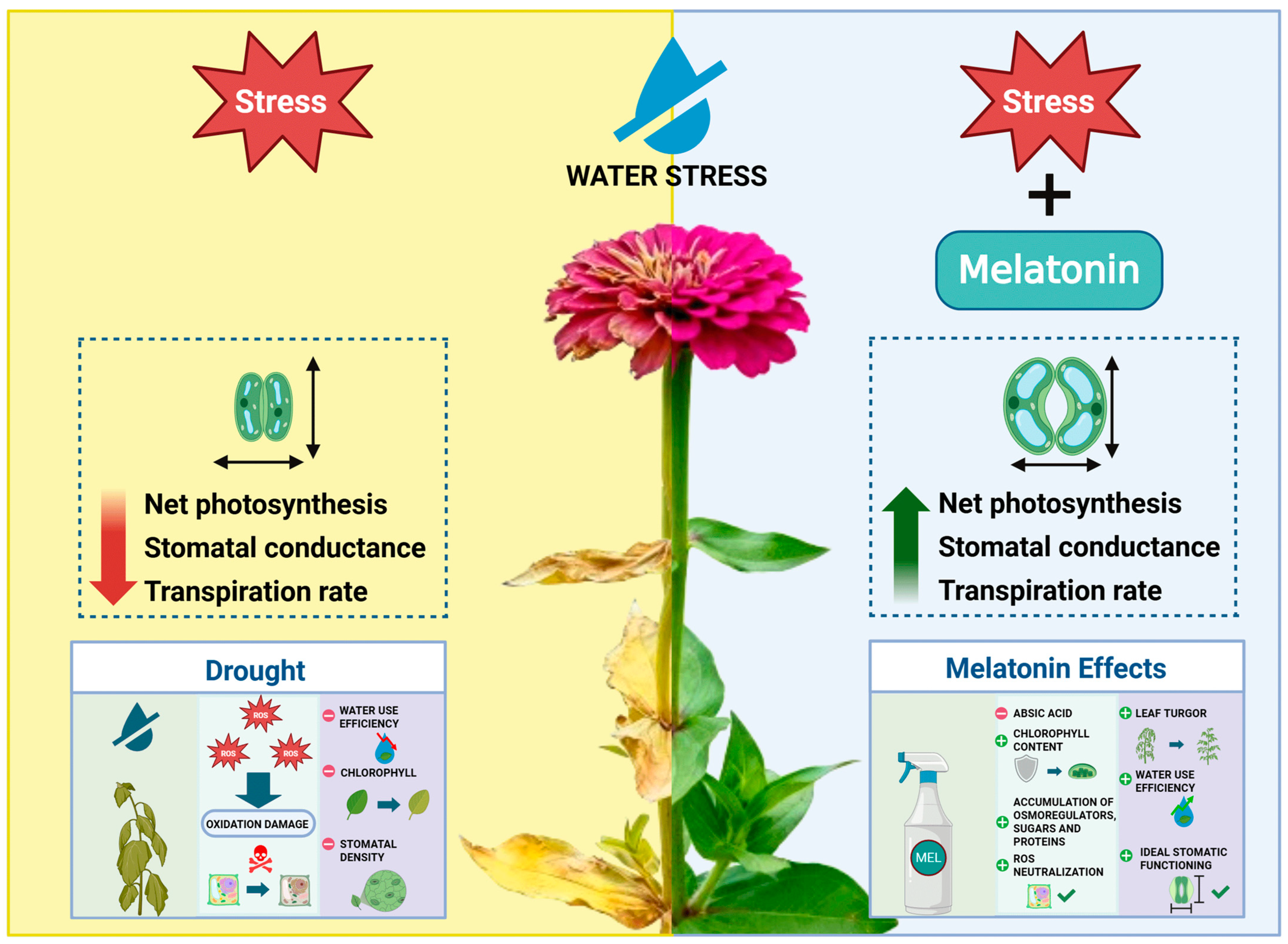
Plants exposed to water stress tend to increase the expression of genes responsible for sugar synthesis, classifying these genes as part of the acclimatization mechanisms [107]. Previous studies reported an increase in the content of total and reducing sugars in the present study, with the authors stating that the improvement in photosynthetic efficiency provided by MEL increases the final production of photoassimilates, resulting in higher levels of carbohydrates [104,108]. Liu et al. [109] reported the importance of this regulator in the metabolism and transport of sugars, revealing the increase in catabolism and sugar transport genes promoted by MEL. In this context, Cao et al. [110] reported in their study on water stress that MEL increased the contents of osmoregulators, sugars, and proteins. Our findings confirmed this increase in total and reducing sugars, total proteins, and proline in the MEL-treated Z. elegans plants under water stress. The increase caused by exogenous MEL can be attributed to its ability to protect macromolecules and plant structures, thereby increasing drought tolerance [111]. A proteomic study by Cui et al. [112] revealed that MEL regulates proteins associated with the water stress response, as we observed in the present study. Here, we demonstrate that the observed increase in biochemical parameters can explain the resilience of Z. elegans plants treated with MEL, thereby improving their adaptive mechanisms. MEL plays an active role in several metabolic pathways, including antioxidant defense, carbon fixation, carbohydrate metabolism, and free amino acid metabolism, which determine the acclimation responses of plants under stress [105,112]. The main effects of melatonin on Z. elegans plants under water deficit are summarized in the graphical abstract (Figure 11).

5. Conclusions

The exogenous application of melatonin (MEL) has proven to be a highly effective strategy for mitigating the negative impacts of water deficit on Z. elegans, supporting the central hypothesis of this study. The benefit of MEL lies mainly in stomatal modulation, which allows for greater opening of the stomata under conditions of water scarcity and, consequently, increases the net assimilation of CO2 and the electron transport rate. This action resulted in improved water balance and photochemical efficiency, resulting in a better overall physiological status. Additionally, MEL optimized the plant’s biochemical defense mechanisms, promoting the accumulation of compatible solutes (such as proline) and protecting the integrity of its cell membranes. In summary, exogenous melatonin works as a biostimulant that enhances the resilience of Z. elegans. In view of these findings, we recommend the use of 1.0 mM MEL as a promising management practice to ensure the ornamental quality and productivity of Z. elegans in cropping systems exposed to water stress, particularly under deficient irrigation regimes.

Supplementary Materials

The following supporting information can be downloaded at: https://www.mdpi.com/article/10.3390/agronomy15112571/s1, Table S1: Chemical attributes of the soil used in the experiment; Figure S1: Overview of the experimental setup and arrangement of zinnia elegans ‘lilliput’ plants in the greenhouse, showing the vegetative (A) and flowering (B) stages.

Author Contributions

E.d.S.C.: Investigation, Data curation, Formal analysis, Visualization, Writing—original draft; J.E.d.S.R.: Conceptualization, Methodology, Formal analysis, Visualization, Writing—review & editing, Supervision, Project administration; E.F.d.S.: Investigation, Data curation; J.V.L.L.: Investigation, Data curation; I.J.G.: Investigation, Data curation; P.H.d.A.O.: Investigation, Data curation; A.G.C.d.S.: Investigation, Data curation; B.C.C.F.: Investigation, Data curation; A.P.R.: Methodology, Resources, Validation; L.M.d.S.: Supervision, Resources, Funding acquisition, Writing—review & editing; A.P.B.J.: Supervision, Resources, Funding acquisition, Writing—review & editing. J.E.d.S.R. is the corresponding author. All authors have read and agreed to the published version of the manuscript.

Funding

This work was supported by the Coordenação de Aperfeiçoamento de Pessoal de Nível Superior (CAPES; Finance Code 001) and by the Conselho Nacional de Desenvolvimento Científico e Tecnológico (CNPq).

Data Availability Statement

The original data presented in the study are openly available in Zenodo at https://doi.org/10.5281/zenodo.17361777.

Acknowledgments

The authors gratefully acknowledge the financial support provided by the Coordenação de Aperfeiçoamento de Pessoal de Nível Superior (CAPES) and the Conselho Nacional de Desenvolvimento Científico e Tecnológico (CNPq) for providing the necessary facilities for the execution of this study.

Conflicts of Interest

The authors declare no conflicts of interest.

References

  1. Raihan, A. A review of the global climate change impacts, adaptation strategies, and mitigation options in the socio-economic and environmental sectors. J. Environ. Sci. Econ. 2023, 2, 36–58. [Google Scholar] [CrossRef]
  2. Elsisi, M.; Elshiekh, M.; Sabry, N.; Aziz, M.; Attia, K.; Islam, F.; Chen, J.; Abdelrahman, M. The genetic orchestra of salicylic acid in plant resilience to climate change induced abiotic stress: Critical review. Stress Biol. 2024, 4, 31. [Google Scholar] [CrossRef] [PubMed]
  3. Wang, X.; Li, X.; Zhao, W.; Hou, X.; Dong, S. Current views of drought research: Experimental methods, adaptation mechanisms and regulatory strategies. Front. Plant Sci. 2024, 15, 1371895. [Google Scholar] [CrossRef]
  4. Cataldo, E.; Fucile, M.; Manzi, D.; Masini, C.M.; Doni, S.; Mattii, G.B. Sustainable soil management: Effects of clinoptilolite and organic compost soil application on eco-physiology, quercitin, and hydroxylated, methoxylated anthocyanins on Vitis vinifera. Plants 2023, 12, 708. [Google Scholar] [CrossRef]
  5. Rezende, L.F.; Alves, L.; Barbosa, A.A.; Sales, A.T.; Pedra, G.U.; Menezes, R.S.C.; Arcoverde, G.F.; Ometto, J.P. Greening and Water Use Efficiency during a period of high frequency of droughts in the Brazilian semi-arid. Front. Water 2023, 5, 1295286. [Google Scholar] [CrossRef]
  6. Marengo, J.A.; Galdos, M.V.; Challinor, A.; Cunha, A.P.; Marin, F.R.; Vianna, M.d.S.; Alvala, R.C.S.; Alves, L.M.; Moraes, O.L.; Bender, F. Drought in Northeast Brazil: A review of agricultural and policy adaptation options for food security. Clim. Resil. Sustain. 2022, 1, e17. [Google Scholar] [CrossRef]
  7. Barbosa, H.A. Understanding the rapid increase in drought stress and its connections with climate desertification since the early 1990s over the Brazilian semi-arid region. J. Arid Environ. 2024, 222, 105142. [Google Scholar] [CrossRef]
  8. Wu, J.; Wang, J.; Hui, W.; Zhao, F.; Wang, P.; Su, C.; Gong, W. Physiology of plant responses to water stress and related genes: A review. Forests 2022, 13, 324. [Google Scholar] [CrossRef]
  9. Sun, Y.; Wang, C.; Chen, H.Y.H.; Ruan, H. Response of plants to water stress: A meta-analysis. Front. Plant Sci. 2020, 11, 978. [Google Scholar] [CrossRef] [PubMed]
  10. Chen, J.-J.; Sun, Y.; Kopp, K.; Oki, L.; Jones, S.B.; Hipps, L. Effects of water availability on leaf trichome density and plant growth and development of Shepherdia× utahensis. Front. Plant Sci. 2022, 13, 855858. [Google Scholar] [CrossRef]
  11. Caine, R.S.; Yin, X.; Sloan, J.; Harrison, E.L.; Mohammed, U.; Fulton, T.; Biswal, A.K.; Dionora, J.; Chater, C.C.; Coe, R.A. Rice with reduced stomatal density conserves water and has improved drought tolerance under future climate conditions. New Phytol. 2019, 221, 371–384. [Google Scholar] [CrossRef]
  12. Pitaloka, M.K.; Caine, R.S.; Hepworth, C.; Harrison, E.L.; Sloan, J.; Chutteang, C.; Phunthong, C.; Nongngok, R.; Toojinda, T.; Ruengphayak, S. Induced genetic variations in stomatal density and size of rice strongly affects water use efficiency and responses to drought stresses. Front. Plant Sci. 2022, 13, 801706. [Google Scholar] [CrossRef]
  13. Bertolino, L.T.; Caine, R.S.; Gray, J.E. Impact of stomatal density and morphology on water-use efficiency in a changing world. Front. Plant Sci. 2019, 10, 225. [Google Scholar] [CrossRef]
  14. Cataldo, E.C.; Salvi, L.S.; Paoli, F.P.; Fucile, M.F.; Masciandaro, G.M.; Manzi, D.M.; Masini, C.M.M.; Mattii, G.B.M. Effects of natural clinoptilolite on physiology, water stress, sugar, and anthocyanin content in Sanforte (Vitis vinifera L.) young vineyard. J. Agric. Sci. 2021, 159, 488–499. [Google Scholar] [CrossRef]
  15. Takahashi, F.; Kuromori, T.; Urano, K.; Yamaguchi-Shinozaki, K.; Shinozaki, K. Drought stress responses and resistance in plants: From cellular responses to long-distance intercellular communication. Front. Plant Sci. 2020, 11, 556972. [Google Scholar] [CrossRef]
  16. Asargew, M.F.; Masutomi, Y.; Kobayashi, K.; Aono, M. Water stress changes the relationship between photosynthesis and stomatal conductance. Sci. Total Environ. 2024, 907, 167886. [Google Scholar] [CrossRef] [PubMed]
  17. Yang, Y.J.; Bi, M.H.; Nie, Z.F.; Jiang, H.; Liu, X.D.; Fang, X.W.; Brodribb, T.J. Evolution of stomatal closure to optimize water-use efficiency in response to dehydration in ferns and seed plants. New Phytol. 2021, 230, 2001–2010. [Google Scholar] [CrossRef]
  18. Seleiman, M.F.; Al-Suhaibani, N.; Ali, N.; Akmal, M.; Alotaibi, M.; Refay, Y.; Dindaroglu, T.; Abdul-Wajid, H.H.; Battaglia, M.L. Drought stress impacts on plants and different approaches to alleviate its adverse effects. Plants 2021, 10, 259. [Google Scholar] [CrossRef] [PubMed]
  19. Ilyas, M.; Nisar, M.; Khan, N.; Hazrat, A.; Khan, A.H.; Hayat, K.; Fahad, S.; Khan, A.; Ullah, A. Drought tolerance strategies in plants: A mechanistic approach. J. Plant Growth Regul. 2021, 40, 926–944. [Google Scholar] [CrossRef]
  20. Yang, X.; Lu, M.; Wang, Y.; Wang, Y.; Liu, Z.; Chen, S. Response mechanism of plants to drought stress. Horticulturae 2021, 7, 50. [Google Scholar] [CrossRef]
  21. Mircea, D.-M.; Boscaiu, M.; Sestras, R.E.; Sestras, A.F.; Vicente, O. Abiotic stress tolerance and invasive potential of ornamental plants in the Mediterranean area: Implications for sustainable landscaping. Agronomy 2024, 15, 52. [Google Scholar] [CrossRef]
  22. Toscano, S.; Ferrante, A.; Romano, D. Response of Mediterranean ornamental plants to drought stress. Horticulturae 2019, 5, 6. [Google Scholar] [CrossRef]
  23. Song, C.; Liu, X.; Xu, M.; Ying, M.; Fu, J.; Zhang, C. Germplasm resource and genetic breeding of Zinnia: A review. Ornam. Plant Res. 2025, 5, e015. [Google Scholar] [CrossRef]
  24. Mao, H.; Sun, Y.; Müller, R.; Liu, F. Effects of soil water deficits on three genotypes of potted Campanula medium plants during bud formation stage. Sci. Hortic. 2014, 166, 91–96. [Google Scholar] [CrossRef]
  25. Caser, M.; Lovisolo, C.; Scariot, V. The influence of water stress on growth, ecophysiology and ornamental quality of potted Primula vulgaris ‘Heidy’plants. New insights to increase water use efficiency in plant production. Plant Growth Regul. 2017, 83, 361–373. [Google Scholar]
  26. Toscano, S.; Ferrante, A.; Tribulato, A.; Romano, D. Leaf physiological and anatomical responses of Lantana and Ligustrum species under different water availability. Plant Physiol. Biochem. 2018, 127, 380–392. [Google Scholar] [CrossRef]
  27. Souza, P.U.; Lima, L.K.S.; Soares, T.L.; de Jesus, O.N.; Coelho Filho, M.A.; Girardi, E.A. Biometric, physiological and anatomical responses of Passiflora spp. to controlled water deficit. Sci. Hortic. 2018, 229, 77–90. [Google Scholar] [CrossRef]
  28. Giordano, M.; Petropoulos, S.A.; Cirillo, C.; Rouphael, Y. Biochemical, physiological, and molecular aspects of ornamental plants adaptation to deficit irrigation. Horticulturae 2021, 7, 107. [Google Scholar] [CrossRef]
  29. Qayyum, M.M.; Hussain, I.; Ali, H.; Saeed, T.; Umar, M.; Imtiaz, A.; Noor, S.; Ali, I.; Naz, R.M.M.; Ali, K. Effect of compost on the growth, flowering attributes, and vase life of different varieties of zinnia (Zinnia elegans). J. Appl. Res. Plant Sci. 2024, 5, 259–268. [Google Scholar] [CrossRef]
  30. Martins, R.; Pêgo, R.G.; da Cruz, E.S.; Bueno, M.M.; de Carvalho, D.F. Postharvest quality of cut zinnia flowers cultivated under different irrigation levels and growing seasons. J. Agric. Stud. 2021, 9, 303–319. [Google Scholar] [CrossRef]
  31. Martins, R.d.C.F.; Pêgo, R.G.; Cruz, E.S.d.; Abreu, J.F.G.; Carvalho, D.F.d. Production and quality of zinnia under different growing seasons and irrigation levels. Ciência E Agrotecnologia 2021, 45, e033720. [Google Scholar] [CrossRef]
  32. Toscano, S.; Romano, D. Morphological, physiological, and biochemical responses of zinnia to drought stress. Horticulturae 2021, 7, 362. [Google Scholar] [CrossRef]
  33. Ahsan, M.; Younis, A.; Raheel, M.; Khalid, I.; Abbas, H.T.; Ashraf, W.; Mihoub, A.; Radicetti, E.; Saeed, M.F.; Ali, S. Morpho-physiological and enzymatic responses of zinnia (Zinnia elegans L.) to different metal hoarded wastewaters. J. Soil Sci. Plant Nutr. 2024, 24, 2910–2923. [Google Scholar] [CrossRef]
  34. Hada, W. Expression of Genes Involved in Phenolics and Lignin Biosynthesis in Zinnia elegans under Saline Stress. J. Sib. Fed. Univ.-Biol. 2023, 16, 193–205. [Google Scholar]
  35. Hassan, M.U.; Mahmood, A.; Awan, M.I.; Maqbool, R.; Aamer, M.; Alhaithloul, H.A.S.; Huang, G.; Skalicky, M.; Brestic, M.; Pandey, S. Melatonin-induced protection against plant abiotic stress: Mechanisms and prospects. Front. Plant Sci. 2022, 13, 902694. [Google Scholar] [CrossRef]
  36. Ahsan, M.; Younis, A.; Jamal, A.; Alshaharni, M.O.; Algopishi, U.B.; Al-Andal, A.; Sajid, M.; Naeem, M.; Khan, J.A.; Radicetti, E. Melatonin induces drought stress tolerance by regulating the physiological mechanisms, antioxidant enzymes, and leaf structural modifications in Rosa centifolia L. Heliyon 2025, 11, e41236. Heliyon 2025, 11, e41236. [Google Scholar] [CrossRef]
  37. Abdoli, M.; Amerian, M.R.; Heidari, M.; Ebrahimi, A. Synergistic effects of melatonin and 24-epibrassinolide on chickpea water deficit tolerance. BMC Plant Biol. 2024, 24, 671. [Google Scholar] [CrossRef]
  38. Moustafa-Farag, M.; Elkelish, A.; Dafea, M.; Khan, M.; Arnao, M.B.; Abdelhamid, M.T.; El-Ezz, A.A.; Almoneafy, A.; Mahmoud, A.; Awad, M. Role of melatonin in plant tolerance to soil stressors: Salinity, pH and heavy metals. Molecules 2020, 25, 5359. [Google Scholar] [CrossRef]
  39. Alvares, C.A.; Stape, J.L.; Sentelhas, P.C.; Gonçalves, J.L.d.M.; Sparovek, G. Köppen’s climate classification map for Brazil. Meteorol. Z. 2013, 22, 711–728. [Google Scholar] [CrossRef]
  40. Oliveira, P.H.d.A.; Sá, S.A.d.; Ribeiro, J.E.d.S.; da Silva, J.P.P.; Lima, F.F.d.; Silva, I.; Silveira, L.M.d.; Barros Júnior, A.P. Exogenous application of melatonin mitigates salt stress in soybean. Rev. Caatinga 2025, 38, e12698. [Google Scholar] [CrossRef]
  41. Oliveira, P.H.d.A.; Lima, F.F.d.; Silva, J.P.P.d.; Silva, I.B.M.; Silva, T.I.d.; Silveira, L.M.d.; Barros, A.P.; Ribeiro, J.E.d.S. Growth and water status of cowpea under salt stress and exogenous melatonin application. Rev. Bras. De Eng. Agrícola E Ambient. 2025, 29, e293009. [Google Scholar] [CrossRef]
  42. Coêlho, E.d.S.; Ribeiro, J.E.d.S.; Oliveira, P.H.d.A.; da Silva, E.F.; da Silva, A.G.C.; de Oliveira, A.K.S.; dos Santos, G.L.; da Silva, T.I.; Rodriguez, R.M.; Bezerra, A.L. Application of Biostimulants Modulates Photosynthesis Responses, and Chlorophyll Fluorescence Under Salt Stress in Radish. J. Plant Growth Regul. 2025, 44, 5063–5078. [Google Scholar] [CrossRef]
  43. Ribeiro, J.E.d.S.; da Silva, A.G.C.; Coêlho, E.d.S.; Oliveira, P.H.d.A.; Silva, E.F.d.; de Oliveira, A.K.S.; Santos, G.L.d.; Lima, J.V.L.; Silva, T.I.d.; Silveira, L.M.d. Melatonin mitigates salt stress effects on the growth and production aspects of radish. Rev. Bras. De Eng. Agrícola E Ambient. 2024, 28, e279006. [Google Scholar] [CrossRef]
  44. Girardi, L.B.; Peiter, M.X.; Bellé, R.A.; Robaina, A.D.; Torres, R.R.; Kirchner, J.H.; Ben, L.H.B. Evapotranspiration and crop coefficients of potted Alstroemeria × hybrida grown in greenhouse. IRRIGA 2016, 24, 817. [Google Scholar] [CrossRef]
  45. Witkowski, E.T.F.; Lamont, B.B. Leaf specific mass confounds leaf density and thickness. Oecologia 1991, 88, 486–493. [Google Scholar] [CrossRef]
  46. Mantovani, A. A method to improve leaf succulence quantification. Braz. Arch. Biol. Technol. 1999, 41, 9–14. [Google Scholar] [CrossRef]
  47. Barrs, H.D.; Weatherley, P.E. A re-examination of the relative turgidity technique for estimating water deficits in leaves. Aust. J. Biol. Sci. 1962, 15, 413–428. [Google Scholar] [CrossRef]
  48. Bajji, M.; Kinet, J.-M.; Lutts, S. The use of the electrolyte leakage method for assessing cell membrane stability as a water stress tolerance test in durum wheat. Plant Growth Regul. 2002, 36, 61–70. [Google Scholar] [CrossRef]
  49. Bradford, M.M. A rapid and sensitive method for the quantitation of microgram quantities of protein utilizing the principle of protein-dye binding. Anal. Biochem. 1976, 72, 248–254. [Google Scholar] [CrossRef]
  50. Yemm, E.W.; Willis, A.J. The estimation of carbohydrates in plant extracts by anthrone. Biochem. J. 1954, 57, 508. [Google Scholar] [CrossRef]
  51. Miller, G.L. Use of dinitrosalicylic acid reagent for determination of reducing sugar. Anal. Chem. 1959, 31, 426–428. [Google Scholar] [CrossRef]
  52. Bates, L.S.; Waldren, R.P.A.; Teare, I.D. Rapid determination of free proline for water-stress studies. Plant Soil 1973, 39, 205–207. [Google Scholar] [CrossRef]
  53. R Core Team. R Development Core Team R: A Language and Environment for Statistical Computing; R Foundation for Statistical Computing: Vienna, Austria, 2023. [Google Scholar]
  54. Franceschi, E.; Moser-Reischl, A.; Honold, M.; Rahman, M.A.; Pretzsch, H.; Pauleit, S.; Rötzer, T. Urban environment, drought events and climate change strongly affect the growth of common urban tree species in a temperate city. Urban For. Urban Green. 2023, 88, 128083. [Google Scholar] [CrossRef]
  55. Detti, C.; Gori, A.; Azzini, L.; Nicese, F.P.; Alderotti, F.; Piccolo, E.L.; Stella, C.; Ferrini, F.; Brunetti, C. Drought tolerance and recovery capacity of two ornamental shrubs: Combining physiological and biochemical analyses with online leaf water status monitoring for the application in urban settings. Plant Physiol. Biochem. 2024, 216, 109208. [Google Scholar] [CrossRef]
  56. Yang, S.; Zhao, Y.; Qin, X.; Ding, C.; Chen, Y.; Tang, Z.; Huang, Y.; Reiter, R.J.; Yuan, S.; Yuan, M. New insights into the role of melatonin in photosynthesis. J. Exp. Bot. 2022, 73, 5918–5927. [Google Scholar] [CrossRef]
  57. Chachar, S.; Ahmed, N.; Hu, X. Drought-induced aesthetic decline and ecological impacts on ornamentals: Mechanisms of damage and innovative strategies for mitigation. Plant Biol. 2025, 27, 1–23. [Google Scholar] [CrossRef]
  58. Wei, Z.; Li, C.; Gao, T.; Zhang, Z.; Liang, B.; Lv, Z.; Zou, Y.; Ma, F. Melatonin increases the performance of Malus hupehensis after UV-B exposure. Plant Physiol. Biochem. 2019, 139, 630–641. [Google Scholar] [CrossRef]
  59. Dai, L.; Li, J.; Harmens, H.; Zheng, X.; Zhang, C. Melatonin enhances drought resistance by regulating leaf stomatal behaviour, root growth and catalase activity in two contrasting rapeseed (Brassica napus L.) genotypes. Plant Physiol. Biochem. 2020, 149, 86–95. [Google Scholar] [CrossRef]
  60. Siddiqui, M.H.; Alamri, S.; Khan, M.N.; Corpas, F.J.; Al-Amri, A.A.; Alsubaie, Q.D.; Ali, H.M.; Kalaji, H.M.; Ahmad, P. Melatonin and calcium function synergistically to promote the resilience through ROS metabolism under arsenic-induced stress. J. Hazard. Mater. 2020, 398, 122882. [Google Scholar] [CrossRef]
  61. Khan, M.N.; Zhang, J.; Luo, T.; Liu, J.; Rizwan, M.; Fahad, S.; Xu, Z.; Hu, L. Seed priming with melatonin coping drought stress in rapeseed by regulating reactive oxygen species detoxification: Antioxidant defense system, osmotic adjustment, stomatal traits and chloroplast ultrastructure perseveration. Ind. Crops Prod. 2019, 140, 111597. [Google Scholar] [CrossRef]
  62. Leghari, S.J.; Wahocho, N.A.; Laghari, G.M.; HafeezLaghari, A.; MustafaBhabhan, G.; HussainTalpur, K.; Bhutto, T.A.; Wahocho, S.A.; Lashari, A.A. Role of nitrogen for plant growth and development: A review. Adv. Environ. Biol. 2016, 10, 209–219. [Google Scholar]
  63. Zhang, H.J.; Zhang, N.A.; Yang, R.C.; Wang, L.; Sun, Q.Q.; Li, D.B.; Cao, Y.Y.; Weeda, S.; Zhao, B.; Ren, S. Melatonin promotes seed germination under high salinity by regulating antioxidant systems, ABA and GA 4 interaction in cucumber (Cucumis sativus L.). J. Pineal Res. 2014, 57, 269–279. [Google Scholar] [CrossRef]
  64. Rajora, N.; Vats, S.; Raturi, G.; Thakral, V.; Kaur, S.; Rachappanavar, V.; Kumar, M.; Kesarwani, A.K.; Sonah, H.; Sharma, T.R. Seed priming with melatonin: A promising approach to combat abiotic stress in plants. Plant Stress 2022, 4, 100071. [Google Scholar] [CrossRef]
  65. Jahan, E.; Sharwood, R.E.; Tissue, D.T. Effects of leaf age during drought and recovery on photosynthesis, mesophyll conductance and leaf anatomy in wheat leaves. Front. Plant Sci. 2023, 14, 1091418. [Google Scholar] [CrossRef]
  66. Zhou, K.; Li, Y.; Hu, L.; Zhang, J.; Yue, H.; Yang, S.; Liu, Y.; Gong, X.; Ma, F. Overexpression of MdASMT9, an N-acetylserotonin methyltransferase gene, increases melatonin biosynthesis and improves water-use efficiency in transgenic apple. Tree Physiol. 2022, 42, 1114–1126. [Google Scholar] [CrossRef] [PubMed]
  67. Harrison, E.L.; Arce Cubas, L.; Gray, J.E.; Hepworth, C. The influence of stomatal morphology and distribution on photosynthetic gas exchange. Plant J. 2020, 101, 768–779. [Google Scholar] [CrossRef]
  68. Fu, Y.; Li, P.; Liang, Y.; Si, Z.; Ma, S.; Gao, Y. Effects of exogenous melatonin on wheat quality under drought stress and rehydration. Plant Growth Regul. 2024, 103, 471–490. [Google Scholar] [CrossRef]
  69. Maleki, M.; Shojaeiyan, A.; Mokhtassi-Bidgoli, A.; Tamadoni-Saray, M. Melatonin Enhances Drought Tolerance and Recovery Capability in Two Contrasting Fenugreek (Trigonella foenum-graecum L.) Landraces Through Improved Photosynthetic Apparatus Protection and Carboxylation Efficiency. J. Plant Growth Regul. 2024, 43, 4588–4607. [Google Scholar] [CrossRef]
  70. Luo, Y.; Hu, T.; Huo, Y.; Wang, L.; Zhang, L.; Yan, R. Effects of exogenous melatonin on chrysanthemum physiological characteristics and photosynthesis under drought stress. Horticulturae 2023, 9, 106. [Google Scholar] [CrossRef]
  71. Wu, S.; Wang, Y.; Zhang, J.; Gong, X.; Zhang, Z.; Sun, J.; Chen, X.; Wang, Y. Exogenous melatonin improves physiological characteristics and promotes growth of strawberry seedlings under cadmium stress. Hortic. Plant J. 2021, 7, 13–22. [Google Scholar] [CrossRef]
  72. Arnao, M.B.; Hernández-Ruiz, J. Melatonin in flowering, fruit set and fruit ripening. Plant Reprod. 2020, 33, 77–87. [Google Scholar] [CrossRef] [PubMed]
  73. Li, H.; Guo, Y.; Lan, Z.; Zhang, Z.; Ahammed, G.J.; Chang, J.; Zhang, Y.; Wei, C.; Zhang, X. Melatonin antagonizes ABA action to promote seed germination by regulating Ca2+ efflux and H2O2 accumulation. Plant Sci. 2021, 303, 110761. [Google Scholar] [CrossRef] [PubMed]
  74. Cirillo, C.; Rouphael, Y.; Caputo, R.; Raimondi, G.; De Pascale, S. The influence of deficit irrigation on growth, ornamental quality, and water use efficiency of three potted Bougainvillea genotypes grown in two shapes. HortScience 2014, 49, 1284–1291. [Google Scholar] [CrossRef]
  75. Sun, Y.; Gong, L.; Liu, X.; Hu, J.; Lu, X.; Xu, J. Genome-Wide Profiling of the Genes Related to Leaf Discoloration in Zelkova schneideriana. Forests 2024, 15, 1146. [Google Scholar] [CrossRef]
  76. Song, X.; Zhou, G.; He, Q.; Zhou, H. Stomatal limitations to photosynthesis and their critical water conditions in different growth stages of maize under water stress. Agric. Water Manag. 2020, 241, 106330. [Google Scholar] [CrossRef]
  77. Chen, Y.-E.; Cui, J.-M.; Su, Y.-Q.; Zhang, C.-M.; Ma, J.; Zhang, Z.-W.; Yuan, M.; Liu, W.-J.; Zhang, H.-Y.; Yuan, S. Comparison of phosphorylation and assembly of photosystem complexes and redox homeostasis in two wheat cultivars with different drought resistance. Sci. Rep. 2017, 7, 12718. [Google Scholar] [CrossRef]
  78. Lin, S.; Song, X.-F.; Mao, H.-T.; Li, S.-Q.; Gan, J.-Y.; Yuan, M.; Zhang, Z.-W.; Yuan, S.; Zhang, H.-Y.; Su, Y.-Q. Exogenous melatonin improved photosynthetic efficiency of photosystem II by reversible phosphorylation of thylakoid proteins in wheat under osmotic stress. Front. Plant Sci. 2022, 13, 966181. [Google Scholar] [CrossRef] [PubMed]
  79. Zhang, X.; Feng, Y.; Jing, T.; Liu, X.; Ai, X.; Bi, H. Melatonin promotes the chilling tolerance of cucumber seedlings by regulating antioxidant system and relieving photoinhibition. Front. Plant Sci. 2021, 12, 789617. [Google Scholar] [CrossRef]
  80. Zhou, X.; Zhao, H.; Cao, K.; Hu, L.; Du, T.; Baluška, F.; Zou, Z. Beneficial roles of melatonin on redox regulation of photosynthetic electron transport and synthesis of D1 protein in tomato seedlings under salt stress. Front. Plant Sci. 2016, 7, 1823. [Google Scholar] [CrossRef]
  81. Medina, I.R.; Rocha, G.H.d.; Pereira, E.G. Photosynthetic adjustments and proline concentration are probably linked to stress memory in soybean exposed to recurrent drought. Ciência E Agrotecnologia 2023, 47, e015322. [Google Scholar] [CrossRef]
  82. Huang, B.; Chen, Y.-E.; Zhao, Y.-Q.; Ding, C.-B.; Liao, J.-Q.; Hu, C.; Zhou, L.-J.; Zhang, Z.-W.; Yuan, S.; Yuan, M. Exogenous melatonin alleviates oxidative damages and protects photosystem II in maize seedlings under drought stress. Front. Plant Sci. 2019, 10, 677. [Google Scholar] [CrossRef]
  83. Jardim, A.M.d.R.F.; Santos, H.R.B.; Alves, H.K.M.N.; Ferreira-Silva, S.L.; de Souza, L.S.B.; Júnior, G.d.N.A.; de Sá Souza, M.; de Araújo, G.G.L.; de Souza, C.A.A.; da Silva, T.G.F. Genotypic differences relative photochemical activity, inorganic and organic solutes and yield performance in clones of the forage cactus under semi-arid environment. Plant Physiol. Biochem. 2021, 162, 421–430. [Google Scholar] [CrossRef]
  84. Chen, Y.E.; Mao, J.J.; Sun, L.Q.; Huang, B.; Ding, C.B.; Gu, Y.; Liao, J.Q.; Hu, C.; Zhang, Z.W.; Yuan, S. Exogenous melatonin enhances salt stress tolerance in maize seedlings by improving antioxidant and photosynthetic capacity. Physiol. Plant. 2018, 164, 349–363. [Google Scholar] [CrossRef] [PubMed]
  85. Guizani, A.; Askri, H.; Amenta, M.L.; Defez, R.; Babay, E.; Bianco, C.; Rapaná, N.; Finetti-Sialer, M.; Gharbi, F. Drought responsiveness in six wheat genotypes: Identification of stress resistance indicators. Front. Plant Sci. 2023, 14, 1232583. [Google Scholar] [CrossRef]
  86. Alonso-Forn, D.; Peguero-Pina, J.J.; Ferrio, J.P.; García-Plazaola, J.I.; Martín-Sánchez, R.; Niinemets, Ü.; Sancho-Knapik, D.; Gil-Pelegrín, E. Cell-level anatomy explains leaf age-dependent declines in mesophyll conductance and photosynthetic capacity in the evergreen Mediterranean oak Quercus ilex subsp. rotundifolia. Tree Physiol. 2022, 42, 1988–2002. [Google Scholar] [CrossRef]
  87. Ye, M.; Zhang, Z.; Huang, G.; Xiong, Z.; Peng, S.; Li, Y. High leaf mass per area Oryza genotypes invest more leaf mass to cell wall and show a low mesophyll conductance. AoB Plants 2020, 12, plaa028. [Google Scholar] [CrossRef] [PubMed]
  88. Li, Q.; Zhang, Y.; Liu, Y.; Li, T.; Xu, H.; Wei, Q.; Zeng, H.; Ni, H.; Li, S. Multiple functions of exogenous melatonin in cucumber seed germination, seedling establishment, and alkali stress resistance. BMC Plant Biol. 2025, 25, 359. [Google Scholar] [CrossRef] [PubMed]
  89. Moustafa-Farag, M.; Mahmoud, A.; Arnao, M.B.; Sheteiwy, M.S.; Dafea, M.; Soltan, M.; Elkelish, A.; Hasanuzzaman, M.; Ai, S. Melatonin-induced water stress tolerance in plants: Recent advances. Antioxidants 2020, 9, 809. [Google Scholar] [CrossRef]
  90. Banerjee, A.; Chattopadhyay, A.; Bandyopadhyay, D. Melatonin and biological membrane bilayers: A never ending amity. Melatonin Res. 2021, 4, 232–252. [Google Scholar] [CrossRef]
  91. Malmir, M.; Naderi Noreini, S.; Ghafarizadeh, A.; Faraji, T.; Asali, Z. Ameliorative effect of melatonin on apoptosis, DNA fragmentation, membrane integrity and lipid peroxidation of spermatozoa in the idiopathic asthenoteratospermic men: In vitro. Andrologia 2021, 53, e13944. [Google Scholar] [CrossRef]
  92. Yang, J.; Li, C.; Kong, D.; Guo, F.; Wei, H. Light-mediated signaling and metabolic changes coordinate stomatal opening and closure. Front. Plant Sci. 2020, 11, 601478. [Google Scholar] [CrossRef]
  93. Badigannavar, A.; Teme, N.; de Oliveira, A.C.; Li, G.; Vaksmann, M.; Viana, V.E.; Ganapathi, T.R.; Sarsu, F. Physiological, genetic and molecular basis of drought resilience in sorghum [Sorghum bicolor (L.) Moench]. Indian J. Plant Physiol. 2018, 23, 670–688. [Google Scholar] [CrossRef]
  94. Bargunam, S.; Roy, R.; Amisha, S.H.; Shetty, D.; Babu, V.S. Deciphering regulatory role of melatonin in foliar nastic movements of Portulaca oleracea: Visual insights from histology and anatomy. J. Plant Growth Regul. 2025, 44, 2058–2072. [Google Scholar] [CrossRef]
  95. David, O.A.; Labulo, A.H.; Adejayan, M.T.; Adeleke, E.A.; Adeniyi, I.M.; Terna, A.D. Anatomical adaptation of water-stressed Eugenia uniflora using green synthesized silver nanoparticles and melatonin. Microsc. Res. Tech. 2023, 86, 648–658. [Google Scholar] [CrossRef]
  96. Clark, J.W.; Harris, B.J.; Hetherington, A.J.; Hurtado-Castano, N.; Brench, R.A.; Casson, S.; Williams, T.A.; Gray, J.E.; Hetherington, A.M. The origin and evolution of stomata. Curr. Biol. 2022, 32, R539–R553. [Google Scholar] [CrossRef]
  97. Hõrak, H.; Kollist, H.; Merilo, E. Fern stomatal responses to ABA and CO2 depend on species and growth conditions. Plant Physiol. 2017, 174, 672–679. [Google Scholar] [CrossRef]
  98. Plackett, A.R.G.; Emms, D.M.; Kelly, S.; Hetherington, A.M.; Langdale, J.A. Conditional stomatal closure in a fern shares molecular features with flowering plant active stomatal responses. Curr. Biol. 2021, 31, 4560–4570. [Google Scholar] [CrossRef]
  99. Driesen, E.; De Proft, M.; Saeys, W. Drought stress triggers alterations of adaxial and abaxial stomatal development in basil leaves increasing water-use efficiency. Hortic. Res. 2023, 10, uhad075. [Google Scholar] [CrossRef] [PubMed]
  100. Khan, T.A.; Saleem, M.; Fariduddin, Q. Melatonin influences stomatal behavior, root morphology, cell viability, photosynthetic responses, fruit yield, and fruit quality of tomato plants exposed to salt stress. J. Plant Growth Regul. 2023, 42, 2408–2432. [Google Scholar] [CrossRef]
  101. Meng, J.F.; Xu, T.F.; Wang, Z.Z.; Fang, Y.L.; Xi, Z.M.; Zhang, Z.W. The ameliorative effects of exogenous melatonin on grape cuttings under water-deficient stress: Antioxidant metabolites, leaf anatomy, and chloroplast morphology. J. Pineal Res. 2014, 57, 200–212. [Google Scholar] [CrossRef]
  102. Wei, J.; Li, D.X.; Zhang, J.R.; Shan, C.; Rengel, Z.; Song, Z.B.; Chen, Q. Phytomelatonin receptor PMTR 1-mediated signaling regulates stomatal closure in Arabidopsis thaliana. J. Pineal Res. 2018, 65, e12500. [Google Scholar] [CrossRef]
  103. Shomali, A.; Aliniaeifard, S.; Didaran, F.; Lotfi, M.; Mohammadian, M.; Seif, M.; Strobel, W.R.; Sierka, E.; Kalaji, H.M. Synergistic effects of melatonin and gamma-aminobutyric acid on protection of photosynthesis system in response to multiple abiotic stressors. Cells 2021, 10, 1631. [Google Scholar] [CrossRef] [PubMed]
  104. Ahmad, S.; Muhammad, I.; Wang, G.Y.; Zeeshan, M.; Yang, L.; Ali, I.; Zhou, X.B. Ameliorative effect of melatonin improves drought tolerance by regulating growth, photosynthetic traits and leaf ultrastructure of maize seedlings. BMC Plant Biol. 2021, 21, 368. [Google Scholar] [CrossRef]
  105. Mumithrakamatchi, A.K.; Alagarswamy, S.; Anitha, K.; Djanaguiraman, M.; Kalarani, M.K.; Swarnapriya, R.; Marimuthu, S.; Vellaikumar, S.; Kanagarajan, S. Melatonin imparts tolerance to combined drought and high-temperature stresses in tomato through osmotic adjustment and ABA accumulation. Front. Plant Sci. 2024, 15, 1382914. [Google Scholar] [CrossRef]
  106. Kang, D.; Zeng, J.; Lu, D.; Yue, L.; Zhong, M.; Kang, Y.; Guo, J.; Yang, X. Melatonin maintains postharvest quality by modulating the metabolisms of cell wall and sugar in flowering Chinese cabbage. Sci. Rep. 2025, 15, 5396. [Google Scholar] [CrossRef] [PubMed]
  107. Kobylińska, A.; Borek, S.; Posmyk, M.M. Melatonin redirects carbohydrates metabolism during sugar starvation in plant cells. J. Pineal Res. 2018, 64, e12466. [Google Scholar] [CrossRef]
  108. Sher, A.; Hassan, M.U.; Sattar, A.; Ul-Allah, S.; Ijaz, M.; Hayyat, Z.; Bibi, Y.; Hussain, M.; Qayyum, A. Exogenous application of melatonin alleviates the drought stress by regulating the antioxidant systems and sugar contents in sorghum seedlings. Biochem. Syst. Ecol. 2023, 107, 104620. [Google Scholar] [CrossRef]
  109. Liu, Y.; Feng, Y.; Chen, S.; Pan, Y.; Xu, J.; Yu, W.; Li, C. Revealing the significance of melatonin in postharvest quality of tomato fruit, especially in sugar metabolism and transport. Postharvest Biol. Technol. 2026, 231, 113909. [Google Scholar] [CrossRef]
  110. Cao, J.-F.; Zhao, B.; Huang, C.-C.; Chen, Z.-W.; Zhao, T.; Liu, H.-R.; Hu, G.-J.; Shangguan, X.-X.; Shan, C.-M.; Wang, L.-J. The miR319-targeted GhTCP4 promotes the transition from cell elongation to wall thickening in cotton fiber. Mol. Plant 2020, 13, 1063–1077. [Google Scholar] [CrossRef]
  111. Luo, C.; Min, W.; Akhtar, M.; Lu, X.; Bai, X.; Zhang, Y.; Tian, L.; Li, P. Melatonin enhances drought tolerance in rice seedlings by modulating antioxidant systems, osmoregulation, and corresponding gene expression. Int. J. Mol. Sci. 2022, 23, 12075. [Google Scholar] [CrossRef]
  112. Cui, G.; Sun, F.; Gao, X.; Xie, K.; Zhang, C.; Liu, S.; Xi, Y. Proteomic analysis of melatonin-mediated osmotic tolerance by improving energy metabolism and autophagy in wheat (Triticum aestivum L.). Planta 2018, 248, 69–87. [Google Scholar] [CrossRef] [PubMed]
Figure 1. Average temperature and relative humidity during the experimental period.
Agronomy 15 02571 g001
Figure 2. Net CO2 assimilation rate (A, (a)), stomatal conductance (gs, (b)), transpiration rate (E, (c)), internal CO2 concentration (Ci, (d)), water use efficiency (WUE, (e)), intrinsic water use efficiency (iWUE, (f)), instantaneous carboxylation efficiency (iCE, (g)) and vapor pressure deficit (VPD, (h)), Chlorophyll a (i), chlorophyll b (j), total chlorophyll (k) and the chlorophyll a/b ratio (l) in Z. elegans subjected to different water regimes: 80% field capacity (80% FC—nonstress conditions), 20% FC (severe water stress), EWR (early water stress: 20% FC for 15 days followed by 80%) and LWR (late water stress: 80% FC for 45 days followed by 20%), with (1.0 mM Mel) and without melatonin application (CK). The columns represent the means ± standard errors (n = 5 replications). Capital letters compare the water regimes within each melatonin concentration; lowercase letters compare the application or not of melatonin within each water regime (Tukey, p ≤ 0.05).
Agronomy 15 02571 g002
Figure 3. Initial fluorescence (F0′, (a)), maximum fluorescence (Fm′, (b)), variable fluorescence (Fv′, (c)), maximum potential efficiency of PSII (Fv′/Fm′, (d)), effective quantum efficiency of PSII (ΦPSII, (e)), photochemical dissipation coefficient (qP, (f)), nonphotochemical dissipation coefficient (qN, (g)) and electron transport rate (ETR, (h)) in Z. elegans subjected to different water regimes: 80% field capacity (80% FC—nonstress conditions), 20% FC (severe water stress), EWR (early water stress: 20% FC for 15 days followed by 80%) and LWR (late water stress: 80% FC for 45 days followed by 20%), with (1.0 mM Mel) and without melatonin application (CK). The columns represent the means ± standard errors (n = 5 replications). Capital letters compare the water regimes within each melatonin concentration; lowercase letters compare the application or not of melatonin within each water regime (Tukey, p < 0.05).
Agronomy 15 02571 g003
Figure 4. Leaf mass per unit area (LMA, (a)), succulence (b), relative water content (RWC, (c)) and electrolyte leakage (EL, (d)) in Z. elegans subjected to different water regimes: 80% field capacity (80% FC—nonstress conditions), 20% FC (severe water stress), EWR (early water stress: 20% FC for 15 days followed by 80%) and LWR (late water stress: 80% FC for 45 days followed by 20%), with (1.0 mM Mel) and without melatonin application (CK). The columns represent the means ± standard errors (n = 5 replications). Capital letters compare the water regimes within each melatonin concentration; lowercase letters compare the application or not of melatonin within each water regime (Tukey, p ≤ 0.05).
Agronomy 15 02571 g004
Figure 5. Stomatal density (a), stomatal length (b), stomatal width (c), stomatal area (d), Stomatal pore length (e), stomatal pore width (f) and stomatal pore area (g) in Z. elegans subjected to different water regimes: 80% field capacity (80% FC—nonstress condition), 20% FC (severe water stress), EWR (early water stress: 20% FC for 15 days followed by 80%) and LWR (late water stress: 80% FC for 45 days followed by 20%), with (1.0 mM Mel) and without melatonin application (CK). The columns represent the means ± standard errors (n = 5 replications). Capital letters compare the water regimes within each melatonin concentration; lowercase letters compare the application or not of melatonin within each water regime (Tukey, p ≤ 0.05).
Agronomy 15 02571 g005
Figure 6. Scanning electron microscopy (SEM) images of the abaxial leaf epidermis of Z. elegans subjected to different water regimes: 80% field capacity (80% FC–nonstress condition), 20% FC (severe water stress), EWR (early water stress: 20% FC for 15 days followed by 80% FC) and LWR (late water stress: 80% FC for 45 days followed by 20% FC), with (1.0 mM Mel) and without melatonin application (CK). The images illustrate differences in stomatal density under the conditions evaluated. Scale bar = 100 μm.
Agronomy 15 02571 g006
Figure 7. Scanning electron microscopy (SEM) images of the abaxial leaf epidermis of Z. elegans, showing the morphology of the stomatal pores under different water regimes: 80% field capacity (80% FC—nonstress condition), 20% FC (severe water stress), EWR (early water stress: 20% FC for 15 days followed by 80% FC) and LWR (late water stress: 80% FC for 45 days followed by 20% FC), with (1.0 mM Mel) and without melatonin application (CK). The images were used to quantify the length, width, and area of the stomatal pores. Scale bar = 10 μm.
Agronomy 15 02571 g007
Figure 8. Total soluble sugars (a), reducing sugars (b), proteins (c) and proline (d) in Z. elegans subjected to different water regimes: 80% field capacity (80% FC—nonstress condition), 20% FC (severe water stress), EWR (early water stress: 20% FC for 15 days followed by 80%) and LWR (late water stress: 80% FC for 45 days followed by 20%), with (1.0 mM Mel) and without melatonin application (CK). The columns represent the means ± standard errors (n = 5 replications). Capital letters compare the water regimes within each melatonin concentration; lowercase letters compare the application or not of melatonin within each water regime (Tukey, p ≤ 0.05).
Agronomy 15 02571 g008
Figure 9. Principal component analysis between treatments and variables analyzed.
Agronomy 15 02571 g009
Figure 10. Pearson’s correlation analysis between the variables analyzed.
Agronomy 15 02571 g010
Figure 11. Overview of water stress in Z. elegans and the mitigating effect of melatonin. The graphical abstract illustrates the physiological impacts of water stress (left panel), highlighting oxidative damage, reduced stomatal conductance, and decreased net photosynthesis. The (right panel) demonstrates the mitigating role of exogenous melatonin (MEL), which promotes tolerance by enhancing osmotic adjustment (accumulation of sugars and proteins), neutralizing ROS, maintaining chlorophyll content, and improving stomatal function, ultimately sustaining plant physiological performance. Created with BioRender.com.
Agronomy 15 02571 g011
Disclaimer/Publisher’s Note: The statements, opinions and data contained in all publications are solely those of the individual author(s) and contributor(s) and not of MDPI and/or the editor(s). MDPI and/or the editor(s) disclaim responsibility for any injury to people or property resulting from any ideas, methods, instructions or products referred to in the content.